
Intelligence Squared
1,654 episodes — Page 30 of 34
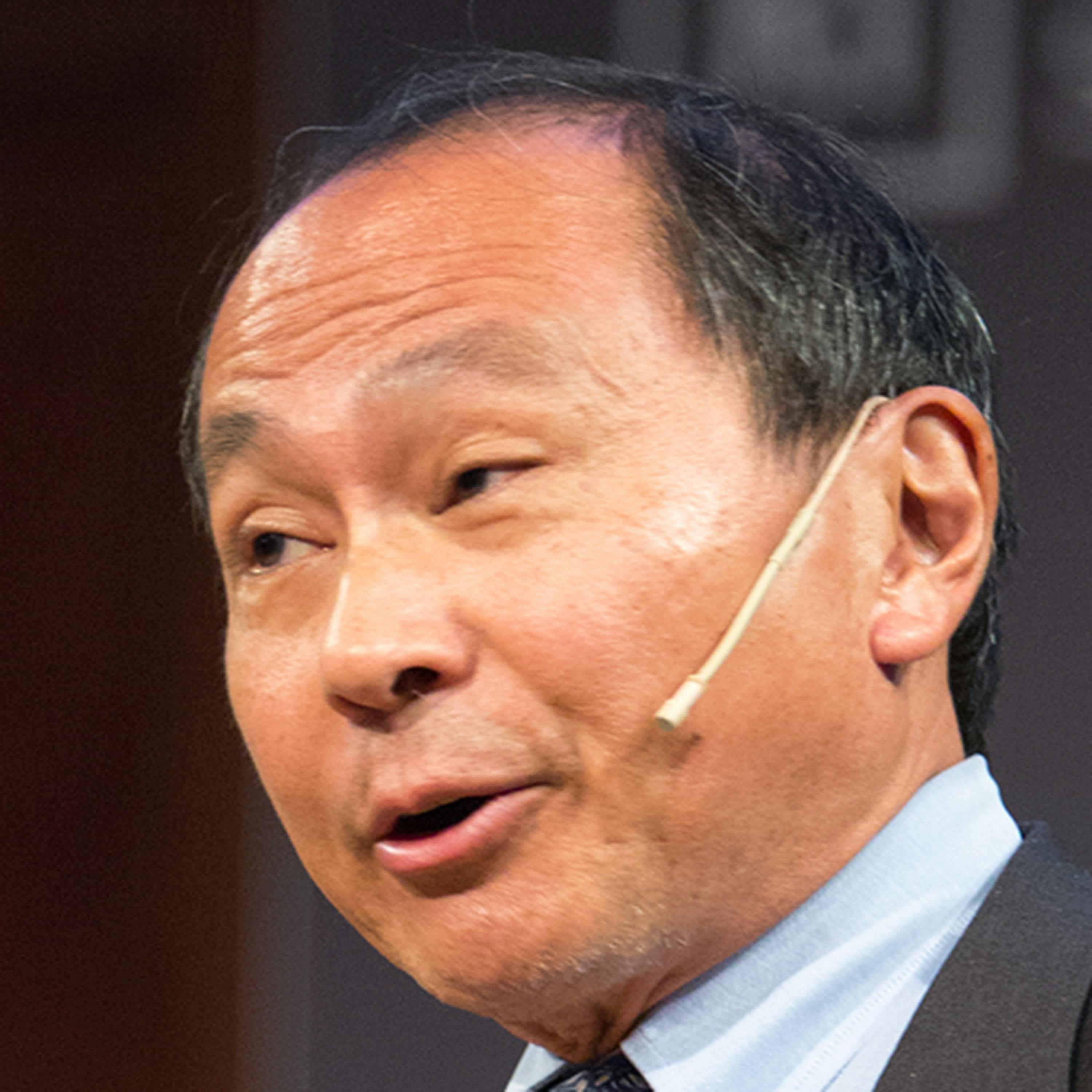
Francis Fukuyama with David Runciman - Democracy: Even the Best Ideas Can Fail
In September 2014, Professor Francis Fukuyama came to the Intelligence Squared stage to square up with one of Britain’s most brilliant political thinkers, David Runciman, to assess how democracy is faring in 2014. We certainly haven’t attained the rosy future that some thought Fukuyama was predicting in his book 'The End of History and The Last Man' in 1992: authoritarianism is entrenched in Russia and China, in the last decade the developed democracies have experienced severe financial crises and rising inequality, and Islamic State militants are wreaking havoc in Iraq and Syria. Is religion becoming the new politics? How will the technological revolution continue to impact our politics? And in the West are we in danger of becoming complacent about the challenges to democracy that we face? Support this show http://supporter.acast.com/intelligencesquared. See acast.com/privacy for privacy and opt-out information. Learn more about your ad choices. Visit podcastchoices.com/adchoices

Naomi Klein on Donald Trump and the new shock politics
Earlier this week we recorded a special episode of the Intelligence Squared podcast at the Acast studio in east London. We were joined by author and activist Naomi Klein and BBC economics editor Kamal Ahmed as they discussed Klein's bestselling new book 'No Is Not Enough'. In this wide-ranging discussion, Klein sets out her view of Trump as the ultimate megabrand. To her, Trump’s presidency is not an aberration – it's the culmination of recent political trends and amounts to nothing less than a giant corporate takeover of America. Will Trump-style politics become the new normal, or – however unstable the world feels right now – can progressives unite to to defeat what Klein calls the new politics of shock and fear? Support this show http://supporter.acast.com/intelligencesquared. See acast.com/privacy for privacy and opt-out information. Learn more about your ad choices. Visit podcastchoices.com/adchoices

Sheryl Sandberg, Malala Yousafzai and Adam Grant on Facing Adversity, Building Resilience And Finding Joy
‘I learned about the depths of sadness and the brutality of loss. But I also learned that when life sucks you under, you can kick against the bottom, break the surface and breathe again.’ – Sheryl Sandberg Sheryl Sandberg is the COO at Facebook and international bestselling author of 'Lean In'. In 2015 disaster struck when her husband, Dave Goldberg, died suddenly at the age of 47. Sheryl and her two young children were devastated, and she was certain that their lives would never have real joy or meaning again. Just weeks later, Sandberg was talking with a friend about the first father-child activity without a father. They came up with a plan for someone to fill in. ‘But I want Dave,’ she cried. Her friend put his arm around her and said, ‘Option A is not available. So let’s just kick the shit out of Option B.’ Everyone experiences some form of Option B. We all deal with loss: jobs lost, loves lost, lives lost. The question is not whether these things will happen but how we face them when they do. Sandberg’s new book, 'Option B', weaves her experiences of coping with adversity with new findings from her co-author, the award-winning psychologist Adam Grant, and other social scientists. The book features stories of people who recovered from personal and professional hardship, including illness, injury, divorce, job loss, sexual assault and imprisonment. These people did more than recover – many of them became stronger. In this special Intelligence Squared event on June 24th, Sandberg was joined by Malala Yousafzai, the Pakistani schoolgirl who was shot by the Taliban for speaking up for women’s education. She refused to be silenced, and her recovery, bravery and stoicism have made her an international role model. In 2014 she became the youngest ever winner of the Nobel Peace Prize. Sandberg and Yousafzai, in conversation with Grant, will explore how even after the most devastating events, we can learn to find deeper meaning and appreciation in our lives and rediscover joy. They will discuss how we can help others in crisis, raise strong children, and create resilient families, communities, and workplaces. Many of these lessons can be applied to our everyday struggles, allowing us to brave whatever lies ahead. Support this show http://supporter.acast.com/intelligencesquared. See acast.com/privacy for privacy and opt-out information. Learn more about your ad choices. Visit podcastchoices.com/adchoices

Ep 202Daniel Dennett on Tools To Transform Our Thinking
Daniel Dennett is one of the world's most original and provocative thinkers. A philosopher and cognitive scientist, he is known as one of the 'Four Horseman of New Atheism' along with Richard Dawkins, Sam Harris and the late Christopher Hitchens. In 2013 he came to Intelligence Squared to share the insights he has acquired over his 40-year career into the nature of how we think, decide and act. Dennett revealed his favourite thinking tools, or 'intuition pumps', that he and others have developed for addressing life's most fundamental questions. As well as taking a fresh look at familiar moves - Occam's Razor, reductio ad absurdum - he discussed new cognitive solutions designed for the most treacherous subject matter: evolution, meaning, consciousness and free will. — We’d love to hear your feedback and what you think we should talk about next, who we should have on and what our future debates should be. Send us an email or voice note with your thoughts to [email protected] or Tweet us @intelligence2. And if you’d like to support our mission to foster honest debate and compelling conversations, as well as ad-free podcasts, exclusive bonus content, early access and much more, become a supporter of Intelligence Squared.. Just visit intelligencesquared.com/membership to find out more. Learn more about your ad choices. Visit podcastchoices.com/adchoices

It's time to bring Russia in from the cold: Rapprochement is in the West's best interests
Is it in the West’s interests to bring Russia in from the cold? Or should we be on our guard against an ascendant, belligerent country on Europe’s borders? For this major debate, Intelligence Squared put together a stellar line-up. Making the case for rapprochement with Russia was Vladimir Pozner, one of Russia’s best known television journalists and a former advocate for the Soviet Union, and Domitilla Sagramoso, a leading expert on security in Russia; arguing against them were Michael Hayden, former director of both the CIA and the NSA, and Radek Sikorski, who was Poland’s foreign minister from 2007 to 2014. Support this show http://supporter.acast.com/intelligencesquared. See acast.com/privacy for privacy and opt-out information. Learn more about your ad choices. Visit podcastchoices.com/adchoices

Europe on the Edge
What’s happening to Europe? The fall of the Berlin Wall in 1989 was seen as a triumph for liberal democracy. True, the ‘end of history’ narrative didn’t play out across the world as many predicted. But in Europe political liberalism seemed unshakable, supported as it was by international business and transnational organisations such as the EU and NATO. But now Europe stands at a precarious moment. Anti-establishment and anti-EU political parties are on the rise. Brexit and the presidency of Donald Trump add to the uncertainty. Europe seems to face a near near-constant threat of terrorist attacks. And while Marine Le Pen didn’t sweep to victory in the recent French presidential election, the new president Emmanuel Macron faces an uphill battle to fix the French economy and reform the EU’s institutions. If he fails, Le Pen could be well set to win the presidency in 2022. How can we account for this surge of support for far-right and populist parties in Europe? Conventional wisdom has it that it is only in times of economic hardship and high unemployment that these groups begin to gain ground. That may be true of France, which took a serious knocking in the 2008 crash and has a high rate of joblessness. But the Dutch sit comfortably high in all the OECD rankings for income levels, employment and life satisfaction. And look at Poland, a country initially seen by the west as a post-communist success story. Although it has been largely unaffected by the Eurozone crisis and has no immigration as such, a xenophobic, authoritarian government is now in charge. In this major Intelligence Squared event, we brought together a star panel to explore the reasons behind the rise of populism in Europe and to discuss where the continent is heading next. Are terrorist attacks the new normal in Europe? How will the continent deal with the effects of continuing large-scale immigration and its entrenched economic woes? Support this show http://supporter.acast.com/intelligencesquared. See acast.com/privacy for privacy and opt-out information. Learn more about your ad choices. Visit podcastchoices.com/adchoices

Can innovation transform London into a carbon neutral city?
Could London be the first carbon neutral city? Listen to this exciting debate hosted by Intelligence Squared. Gadget guru Jason Bradbury is the chair, plus guests including award winning actor and broadcaster Richard Ayoade. Support this show http://supporter.acast.com/intelligencesquared. See acast.com/privacy for privacy and opt-out information. Learn more about your ad choices. Visit podcastchoices.com/adchoices

Fake News: The Facts
There are lies, damn lies, and then there’s fake news. Manipulating the facts for political gain is as old as politics itself, but due to the rise of social media and search engine algorithms false stories can now spread like wildfire. In the run-up to the US presidential election, more people on Facebook engaged with fake news than they did with fact-checked media outlets. And according to a study by Stanford University, fabricated news items favouring Donald Trump were shared 30 million times during the campaign. In the recent French elections, a quarter of the political stories shared on Twitter were based on deliberate misinformation. Fake news was even broadcast live on television during the second-round debate, when Marine Le Pen alluded to a false online story that her rival Emmanuel Macron had an offshore bank account in the Bahamas. Welcome to the world of ‘alternative facts’, where conspiracy theories, false claims and dodgy statistics proliferate. This phenomenon doesn’t just undermine the work of the mainstream media: it may have devastating consequences for democracy itself. Our system depends on citizens making electoral decisions based on facts. What happens when people don’t know what to believe? Fake news – often linked to Russian interests – has become an increasingly effective instrument of propaganda to create chaos and weaken the public’s trust in democratic institutions. Can anything be done to combat the new post-truth politics? Tech giants such as Google, Facebook and Twitter are hosting, propagating and monetising ‘clickbait’ stories. Will they eventually come to acknowledge that they are no longer neutral platforms directing traffic to news sites and admit that they are media organisations with all the responsibilities that implies? Support this show http://supporter.acast.com/intelligencesquared. See acast.com/privacy for privacy and opt-out information. Learn more about your ad choices. Visit podcastchoices.com/adchoices

How to Think Like a Freak: Learn How to Make Smarter Decisions with the authors of "Freakonomics"
The books 'Freakonomics' and 'SuperFreakonomics' have been worldwide sensations, selling tens of millions of copies. They have come to stand for challenging conventional wisdom using data rather than emotion. Questions they examine are typically: Which is more dangerous, a gun or a swimming pool? How much do parents really matter? Why is chemotherapy prescribed so often if it’s so ineffective? Now the books’ two authors, Steven D. Levitt and Stephen J. Dubner, have turned what they’ve learned into a readable and practical toolkit for thinking smarter, harder, and different – thinking, that is, like a Freak. On 28th May they came to Intelligence Squared to discuss their new Frequel, 'Think Like a Freak'. By analysing the plans we form and the morals we choose, they showed how their insights can be applied to help us make smarter decisions in our daily lives. Support this show http://supporter.acast.com/intelligencesquared. See acast.com/privacy for privacy and opt-out information. Learn more about your ad choices. Visit podcastchoices.com/adchoices

Between You and I The English Language Is Going To The Dogs
Speaking and writing correct English are the hallmarks of an intelligent person. No one who cares about language wants to be caught splitting an infinitive or muddling up ‘infer’ and ‘imply’. Which is why the bestseller lists are regularly topped by books on 'good' English by the likes of Daily Mail polemicist Simon Heffer and Today programme presenter John Humphrys - both of whom defend the motion in this debate. Taking them on are Mary Beard, Professor of Classics at Cambridge, and Oliver Kamm, top commentator at The Times. No one would dare describe either as lacking in grey matter or being insensitive to good English. So why the disagreement with Heffer and Humphrys? Because people on their side of the argument believe that our language can take care of itself, and that it certainly doesn’t need a bunch of self-appointed rule-book sticklers to make others feel insecure about how they speak and write. Good style matters, they argue, and can be taught but the pedants should stop confusing their pet peeves with ‘correct’ English. This was originally recorded at The Royal Geographic society on the 5th March 2014 in London, and was produced by Executive Producer Hannah Kaye. — We’d love to hear your feedback and what you think we should talk about next, who we should have on and what our future debates should be about. Send us an email or voice note with your thoughts to [email protected] or Tweet us at @intelligence2. At Intelligence Squared we’ve got our own online streaming platform, Intelligence Squared+ and we’d love you to give it a go. It’s packed with more than 20 years’ worth of video debates and conversations on the world’s most important topics as well as exclusive podcast content. Tune in to live events, ask your questions or watch on-demand, totally ad-free with hours of discussion to dive into. Visit intelligencesquaredplus.com to start watching today Learn more about your ad choices. Visit podcastchoices.com/adchoices

An Evening with Slavoj Žižek
Radical philosopher, polymath, film star, cult icon, and author of over 30 books, Slavoj Žižek is one of the most controversial and leading contemporary public intellectuals, simultaneously acclaimed as the ‘Elvis of cultural theory’ and denounced as ‘the most dangerous philosopher in the West’. In this special lecture for Intelligence Squared from July 2011, Žižek argues that global capitalism is fast approaching its terminal crisis and that our collective responses to economic Armageddon correspond to the five stages of grief – ideological denial, explosions of anger, attempts at bargaining, followed by depression and finally acceptance of change. Referencing everything from Kafka, the "Hollywood Marxism" of Avatar, the Arab Spring and WikiLeaks, he presents a roadmap for finding a way beyond the madness. Support this show http://supporter.acast.com/intelligencesquared. See acast.com/privacy for privacy and opt-out information. Learn more about your ad choices. Visit podcastchoices.com/adchoices

Trump is Making America Great Again
As Donald Trump approaches the first 100 days of his presidency, things couldn’t be worse. His administration has been more gaffe-prone, incompetent and unstable than any other in American history. Trump has been engulfed in a scandal over his campaign’s links to Russia, his first choice for National Security Advisor, Michael Flynn, was forced to resign within weeks, and other senior officials remain under investigation for dodgy dealings with the Kremlin. And what of Trump’s key policies? Despite a Republican majority, his efforts to repeal Obamacare foundered in Congress, while his controversial ‘travel ban’ was deemed unconstitutional and blocked twice in the courts. Meanwhile, Trump has kept busy bragging about the size of his inauguration crowd and tweeting crackpot wiretapping allegations. And when it comes to foreign policy, he has been just as reckless and haphazard as his critics predicted. He has flip-flopped on NATO and has taken a bizarrely belligerent stance against longstanding allies such as Germany and Mexico. Make America great again? Quite the reverse – Trump is leading the USA towards disaster and decline. That’s the hand-wringing liberals’ view of Trump, but have they got him right? In the eyes of his supporters, he’s the first president in history to actually follow through on his campaign promises. Trump pledged to shake up the system and put America first. He vowed to withdraw from disastrous trade deals which harm blue-collar workers like the Trans-Pacific Partnership, to protect America’s borders with hardline immigration policies and to get tough on China and North Korea. And that’s what he’s done. And while the Washington establishment has tried to block him at every step, he has prevailed. But moderates need not despair. Trump was initially deplored for his isolationist foreign policy, but he is proving himself to be remarkably flexible. He has finally reasserted American global leadership by enforcing the ‘red line’ against chemical weapons and retaliating against Assad’s barbaric attacks. After standing up to Assad and Russia where Obama never dared, Trump has proved himself to be no Kremlin lackey. So will Trump restore America to greatness? Or will he send it to the dogs? Support this show http://supporter.acast.com/intelligencesquared. See acast.com/privacy for privacy and opt-out information. Learn more about your ad choices. Visit podcastchoices.com/adchoices

Anne-Marie Slaughter on Our Hyper-Networked World
Anne-Marie Slaughter is one of the world’s top foreign policy thinkers, admired by influential global leaders such as Joe Biden, Condoleeza Rice and Eric Schmidt. A former senior adviser to Hillary Clinton in the State Department, she hit the headlines in 2012 when she published an article in The Atlantic called ‘Why Women Still Can’t Have It All’. The piece went viral and sparked off a massive debate about the future of work-life balance. But long before this, Slaughter was hailed in political circles for her understanding of the emerging world of networks. She was among the first to see how networks are overturning traditional hierarchies, upending international diplomacy and transforming patterns of global power and politics. Now once again, with the launch of her new book 'The Chessboard and the Web', she has moved ahead of conventional thinking and came to the Intelligence Squared stage to share her insights. The power of networks, she explained, has grown so quickly with the advance of digital technology that we have barely begun to fully understand it and see how it can transform our world. Take government, which has traditionally been a vertical and closed system (apart from periodic elections). Why not embrace a ‘wiki’ model of power, using digital networks to make government decision-making truly open and participatory? In other words, government with the people rather than government for the people. Or take the tech world, which has become dominated by a handful of giants with closed business models. Counterintuitively, Slaughter will argue, these companies would benefit if they were to loosen up and open their platforms to other parties, thereby benefiting from the robustness of the whole network, rather than concentrating power in a single hub. Or look at how ordinary citizens are using peer-driven networks, such as Occupy or Black Lives Matter, to effect change in society, or using data to help the authorities with crisis communications in disaster zones. At a time when so many of us feel that our voices aren’t being heard where it matters, could progress lie in Slaughter’s prescription for a more open, participatory world where governments and citizens, armed with 21st century technology, come together to forge a new social and political contract? Slaughter was joined by former Foreign Secretary Jack Straw and connectivity expert Geoff Mulgan. Steering the conversation was the Guardian’s Jonathan Freedland. Support this show http://supporter.acast.com/intelligencesquared. See acast.com/privacy for privacy and opt-out information. Learn more about your ad choices. Visit podcastchoices.com/adchoices

Has the Political Establishment Failed America?
Has the political establishment failed America? Whether they voted for Trump or Sanders or none of the above, millions of Americans say the answer is yes – and that the system benefits the elites at the expense of everyone else. Others say that despite its flaws, the political establishment has been a force for unparalleled stability, prosperity and equality — and that it is now the only thing standing between America and the abyss. Is it time for the old guard to come to the rescue or to make way for a new political reality? Arguing in favour of the motion were Michael Eric Dyson of Georgetown University and William Howell of UChicago. Arguing against the motion were Jennifer Rubin of the Washington Post and Eric Oliver of UChicago. Support this show http://supporter.acast.com/intelligencesquared. See acast.com/privacy for privacy and opt-out information. Learn more about your ad choices. Visit podcastchoices.com/adchoices

Whose Prosperity? How Can We Build Inclusive and Sustainable Economies?
A debate on the eve of the Second PAGE Ministerial Conference (http://bit.ly/2jhYyaX). Filmed at the Federal Ministry for the Environment, Nature Conservation, Building and Nuclear Safety (BMUB) in Berlin on March 26th 2017. Globalisation has created wealth across the world, lifting hundreds of millions out of extreme poverty. But has too much of the wealth ended up in the hands of too few? How can our model for globalisation be reconfigured to promote more equal, stable economies which do not overstretch environmental resources? Our current socio-economic system, many argue, is increasing inequalities and accelerating climate change and destruction of the environment. The Sustainable Development Goals — the UN’s roadmap to prosperity for all on a healthy planet — will require considerable financial resources. Many experts are now calling for a change to our entire model of doing business, by measuring national prosperity beyond GDP, sharing wealth equitably, and shifting economies to an inclusive, sustainable model. But how can these goals be met, and what are the risks to an increasingly strained global jobs market and the needs of developing nations? We were joined on stage in Berlin Barbados' Minister of Labour and Social Security, Minister Esther Byer-Suckoo; Executive Director of Oxfam International, Winnie Byanyima; UN Assistant Secretary-General and head of the UN Environment Programme’s New York Office, Elliott Harris; Chairman of the Supervisory Board of Heraeus Holding, Dr Jürgen Heraeus and Professor of Sustainable Development at the University of Surrey, Tim Jackson. The event was hosted by our Senior Producer Robert Collins. Support this show http://supporter.acast.com/intelligencesquared. See acast.com/privacy for privacy and opt-out information. Learn more about your ad choices. Visit podcastchoices.com/adchoices
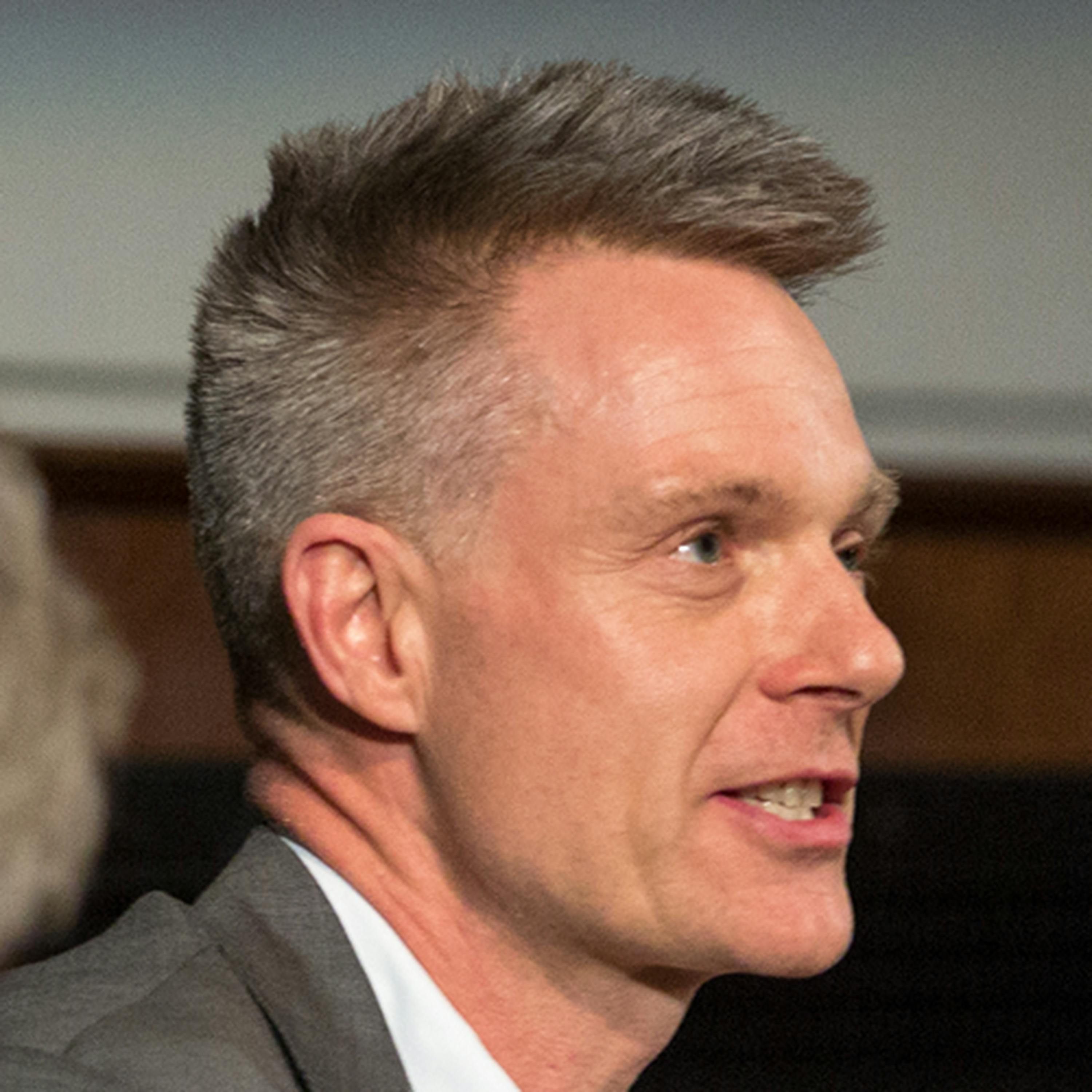
Social Media is Killing Art
Social media is like fast food – rapidly consumed for instant gratification. No wonder social media demeans art. Artworks that instantly seduce online become tedious when contemplated over time in the flesh. Once art goes viral, it gains traction, particularly in the market, and becomes unjustifiably acclaimed. Museums may be keen to reach new audiences, but can great masterpieces really be appreciated on the miniature canvas of your mobile phone screen? Shrink art and you shrink its power – no one can really believe they've experienced an artwork without examining the ideas and the artist's mastery of their medium. And this is an even bigger issue when it comes to experiential artworks such as performance or virtual reality. What nostalgic nonsense, say digital art fans. Attacking social media is like attacking photography in the 19th century. The internet is the medium of the age. To ignore it is to reject the future. For existing masterpieces, social media is the key to all the world’s museums and galleries. No longer are works hidden away in dusty storage rooms in another country. With a simple swipe of your finger you can explore artworks you never knew existed, prompted by suggestions from people you admire. Commercially, the online art market is estimated to have grown to over $3 billion in 2016. At last, art has become truly democratic, open to all to view and buy. This debate took place in Hong Kong on 23rd March 2017. Arguing for the motion were internationally acclaimed artist Ryan Gander and curator for the Encounters sector of Art Basel Hong Kong Alexie Glass-Kantor. Arguing against the motion were the Director of Indonesia's Museum of Modern and Contemporary Art in Nusantara, Aaron Seeto, and international art advisor and founder of FSA Art Advisory, Lisa Schiff. The debate was chaired by Tim Marlow, Director of London's Royal Academy of Arts. Support this show http://supporter.acast.com/intelligencesquared. See acast.com/privacy for privacy and opt-out information. Learn more about your ad choices. Visit podcastchoices.com/adchoices

Niall Ferguson On The Six Killer Apps Of Western Civilisation
Niall Ferguson is the most brilliant British historian of his generation. In this talk from February 2011, based on his book 'Civilisation: The West and the Rest', he asks how Western civilization came to dominate the rest of the world. His answer is that the West developed six “killer applications” that the Rest lacked: competition, science, democracy, medicine, consumerism and the Protestant work ethic. The key question today is whether or not the West has lost its monopoly on these six things. If it has and the Rest of the world can successfully download these apps, we may be living through the end of Western ascendancy. Support this show http://supporter.acast.com/intelligencesquared. See acast.com/privacy for privacy and opt-out information. Learn more about your ad choices. Visit podcastchoices.com/adchoices

Don’t give them what they want: Terrorists should be starved of the oxygen of publicity
Why do they do it? Again and again, after every attack, our media react by giving the terrorists exactly what they want – maximum publicity. Of course, the public should be told that an atrocity has taken place. But each attack dominates the news for days at a stretch. The TV networks go into overdrive, flying out their journalists to the scene of the attack and saturating their airtime. All this plays into the hands of terrorist organisations, allowing their killers to be glorified in the eyes of their supporters. In addition, the wall-to-wall news coverage creates a climate of fear and fuels the more authoritarian and xenophobic strands of our politics. President Trump’s recent actions – banning refugees and appearing to reference fictional terrorist attacks in Sweden – might be seen as an inevitable consequence of this hysteria. We should get things into proportion. After all, you’re more likely to fatally slip in the shower than be killed in a terrorist attack. This is the line that was taken by former Times editor and Guardian columnist Simon Jenkins. He was joined by Fawaz Gerges, a prominent expert on ISIS and al-Qaeda who has extensively researched the historical roots of jihadi extremism on the ground in the Middle East. Gerges explained how the West has played into the narrative of terrorists by portraying them as an existential danger, rather than as mere common criminals. But for national security commentator Douglas Murray, the only way to defeat terrorism is to tackle it head on, speaking plainly about the true scale of the threat. The recent wave of attacks by ISIS was just the beginning, he argued. Over a thousand foreign fighters have recently returned from Syria to Europe, and are highly likely to pose a risk to our security. It’s vital that our media and authorities keep the public fully aware about the terrorist threat and encourage everyone to be vigilant. Honest reporting is absolutely crucial, especially when society itself is under attack. As for ISIS, how they are portrayed in the mainstream media is a matter of indifference to them – their publicity strategy is all about broadcasting their attacks on social media to an audience of millions, not headlines in the press. Does publicising terrorism play into the hands of the perpetrators or does it help keep us on the alert against further attack? Support this show http://supporter.acast.com/intelligencesquared. See acast.com/privacy for privacy and opt-out information. Learn more about your ad choices. Visit podcastchoices.com/adchoices
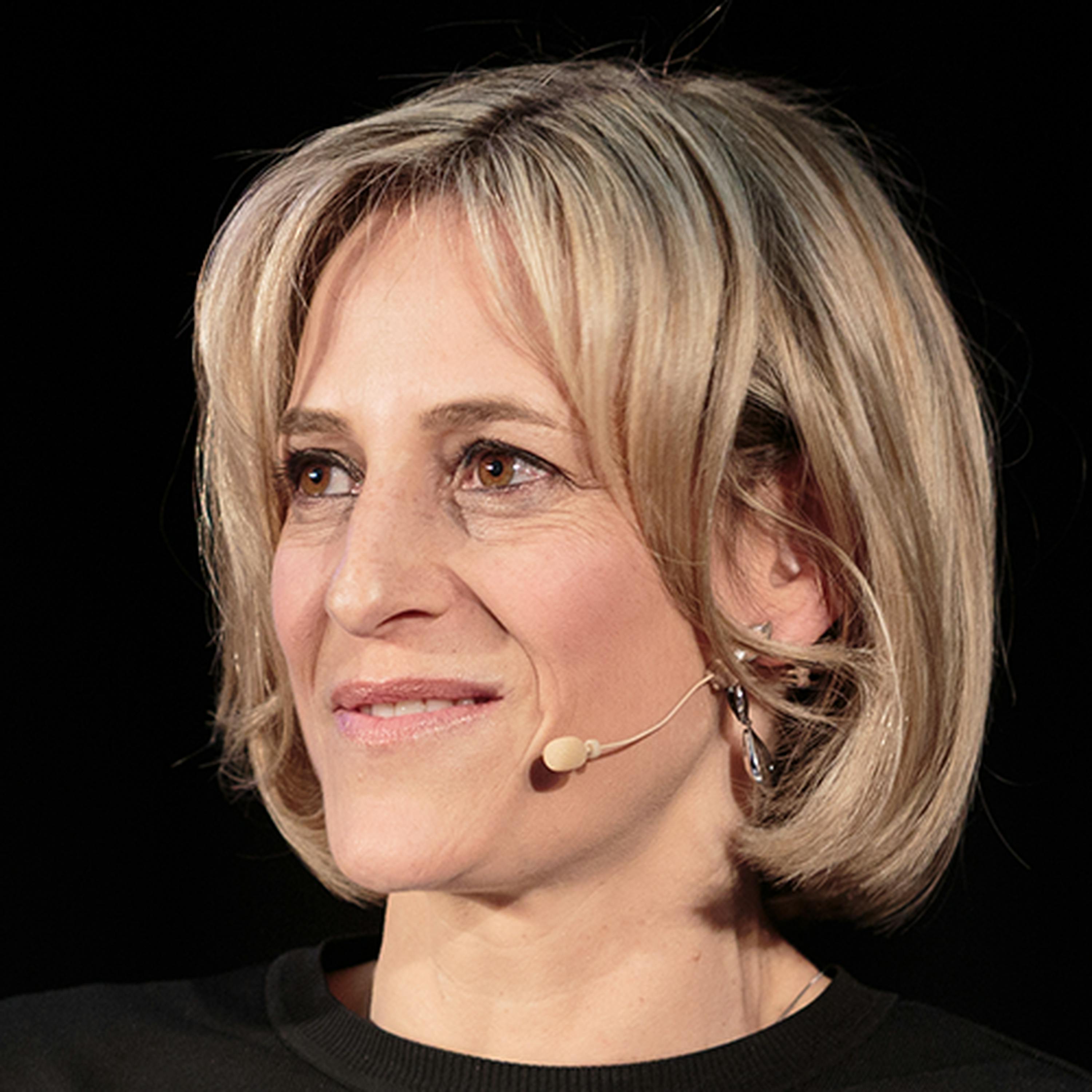
Feminism Is For Everyone
A year ago, you could have been forgiven for thinking that gender equality was on an unstoppable trajectory. America stood poised to elect its first female president. On this side of the Atlantic, members of the political and cultural establishment proudly sported ‘This Is What a Feminist Looks Like’ T-shirts. Had you told a Hillary Clinton supporter or one of those T-shirt campaigners that a year later the US president would be Donald Trump, a man with an abysmal record of sexually harassing women, and that women over the world would be defending their basic rights, including access to abortion, they would have barely believed it. How did we end up here? Has feminism become trapped, as some claim, in its own elitist ‘lean-in’ bubble? The recent Women’s Marches may have seen millions take to the streets in a tide of popular outrage. But some feminist commentators argue that the marches only demonstrated just how much middle-class liberal aspirations have become over-represented in the gender equality movement. Feminism, for these critics, has failed ‘ordinary’ women by focusing almost exclusively on the advancement of women at the top. According to a new report, while female CEOs’ salaries are rising, the gender pay gap across the globe is actually wider today than it was in 2008. If the gender equality project is to move beyond the needs and concerns of the so-called ‘elite’, what are the blindspots it needs to address? What can feminism do to expand the conversation beyond the ‘politically correct’ classes? How can we bring men into the conversation, and involve them in a project that stands to benefit everyone? To explore how gender equality can be made more accessible, Intelligence Squared is bringing together a brilliant panel to put forward their practical solutions. Speakers will include Jess Phillips, the outspoken MP described as ‘Labour’s future red queen’, and Catherine Mayer, bestselling author and co-founder of the Women’s Equality Party. They will be joined by writer and TV star David Baddiel, and teenage activist and journalist June Eric-Udorie, named one of the BBC’s 100 Women of 2016. Join us on March 8th, International Women’s Day, hear the arguments, and put your questions to our speakers. Support this show http://supporter.acast.com/intelligencesquared. See acast.com/privacy for privacy and opt-out information. Learn more about your ad choices. Visit podcastchoices.com/adchoices
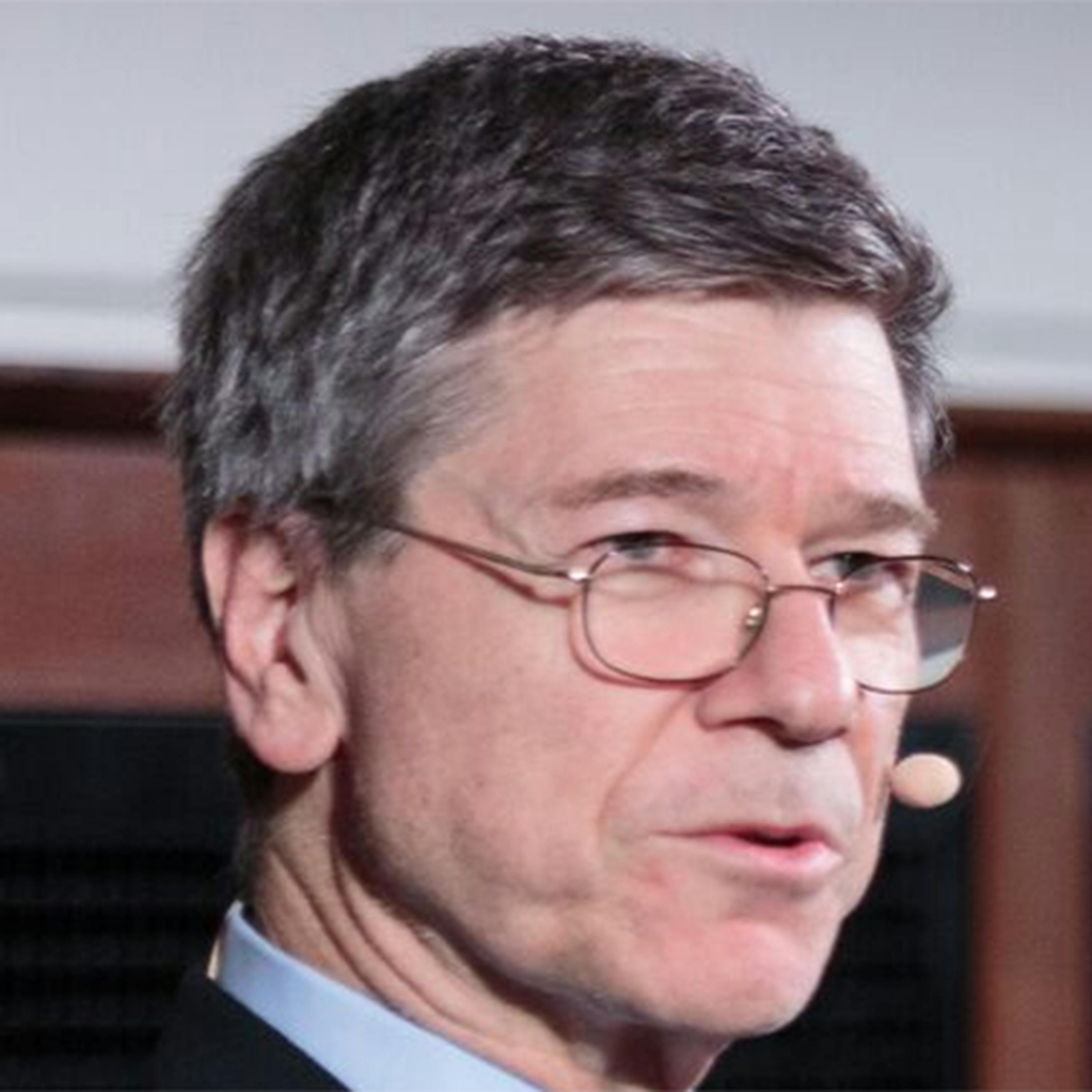
Jeffrey Sachs on America and a New World Order
'America first!' Donald Trump hammered out this message over and again in his inauguration speech a week ago today. He promised tariffs, a crackdown on immigration, and a restoration of American military might. He entered the White House as the least popular incoming president in 40 years. Not every liberal thinker, however, is in a state of despair. Jeffrey Sachs was recently ranked by The Economist as one of the world’s most influential political scientists. No Trump supporter himself, he came to the Intelligence Squared stage to explain why there may be silver linings to the Trump cloud, and to set out a new world order. Take trade. Trump has threatened to tear up Nafta and slam huge taxes on Mexican imports, and has already withdrawn the US from the Trans-Pacific Partnership to bring jobs back to the heartlands of America. While this strikes fear amongst free-trade supporters, there is a case to be made that globalisation has been moving faster than is politically sustainable, dividing rich from poor. Or take Trump’s proposal to invest $1 trillion in infrastructure. Sachs has described this promise to rebuild America’s decrepit inner cities, highways, schools and hospitals as 'a valid, indeed uplifting perspective’, provided it is done in a smart and fair way. Trump’s programme could be viewed as a Keynesian fiscal policy to boost competitiveness and job creation. It may, Sachs believes, be Trump’s great legacy. And then there’s foreign policy. As Sachs pointed out, Trump has filled his administration not just with protectionists but also with business people like himself, who enjoy making a buck (in fact, billions of them) and who have profitably invested for years in Russia, China, and other emerging economies. So while the rhetoric may be all about American primacy and trade protection, we shouldn’t rule out some friendly deal-making with other countries. And while Trump’s future relations with Vladimir Putin remain obscure, would it necessarily be a dangerous move if he pursues a conciliatory line with Russia? From a Russian perspective, America’s meddling in Ukraine and its attempts to bring that country into NATO, which would take the US-led military alliance right up to Russia’s border, look like aggression in its own historical sphere of influence. Isn’t it time there were a better understanding between both countries? Sachs argued that we are entering not a new tripolar world, dominated by the US, China and Russia, but what he calls ‘the World Century’, in which the rapid spread of technology and the sovereignty of nation states mean that no single country or region will dominate the world. For Sachs, the great foreign policy challenge will be to manage cooperation among regions, and face up to our common environmental and health crises. The idea that one place or people should have primacy over any other should be as antiquated as slavery or empire, and guard us against the senseless descent into violence. Support this show http://supporter.acast.com/intelligencesquared. See acast.com/privacy for privacy and opt-out information. Learn more about your ad choices. Visit podcastchoices.com/adchoices

Daniel Dennett on the Evolution of the Mind, Consciousness and AI
How come there are conscious minds? How do language and culture evolve? Should we still teach children things which computers can do better? Will our smart electronic devices rob us of our intelligence? Will human intelligence and AI co-evolve? These are some of the intriguing questions that Daniel Dennett, one of the most influential and provocative thinkers of modern times, sought to answer when he came to the Intelligence Squared stage to discuss his lifetime’s work on the evolution of the human mind. Dennett’s cross-disciplinary approach – encompassing neuroscience, evolutionary biology and artificial intelligence – has been widely acclaimed and helped redefine the role of the philosopher for our age. In this exclusive event, Dennett explored the major themes of his forthcoming book, 'From Bacteria to Bach and Back', including how our minds came into existence, how our brains work, and how ideas are culturally transmitted. He explorede many of the notions we take for granted about how we think – such as the idea of the individual – offering instead a bold new explanation of human consciousness which views it largely as a product of cultural evolution built up over millennia. Sharing the stage with Dennett were key figures from the next generation of scientists, AI experts, philosophers and artists, with whom he engaged on what it means to be human. Support this show http://supporter.acast.com/intelligencesquared. See acast.com/privacy for privacy and opt-out information. Learn more about your ad choices. Visit podcastchoices.com/adchoices

The Bittersweet Truth About What We Eat
What should we be eating to live a long and healthy life? How is it that some people can eat absolutely anything and stay slim, while others on a ‘healthy’ diet get fat? Why is it that Cubans are much healthier than Americans, despite eating on average twice the amount of sugar? To unpack the truth behind the often confusing information about the food we eat, Intelligence Squared brought together some of the world’s leading experts on the science of human nutrition and health. Sugar has recently replaced saturated fat as the nutritional enemy number one. The theory is that it messes with our metabolism and causes heart disease, obesity and diabetes. Arguing that sugar is the tobacco of the new millennium in our event was acclaimed science writer Gary Taubes, whose new book The Case Against Sugar has been making waves on both sides of the Atlantic. No one doubts that consuming a lot of sugar is unhealthy, but does the ‘sugar is poison’ theory really tell the whole story? A different explanation lies in a subject that has been getting a lot of attention recently – our gut microbiome. This is made up of the trillions of bacteria that inhabit our intestines and help digest our food and keep us healthy. The bad news is that the diversity of our microbes has plummeted in recent years due to the narrower range of foods and the predominance of processed junk in the Western diet. Research indicates that, rather than any single foodstuff being to blame for the rise of obesity and other modern diseases, the root of the problem lies in our depleted microbiomes. Setting out the new research on our gut bacteria and debunking many popular myths about diet was Tim Spector, an award-winning scientist who runs the British Gut project. What makes the subject even more fascinating is that we all have a very individual cocktail of bacteria in our gut, and research shows that the way we respond to food relates more to our own specific set of microbes than the calories in the food itself. Joining us was Eran Segal, one of world’s leading scientists in this field, who will explain how his lab can wire you up and predict precisely which carbohydrates you should and shouldn’t eat so as to prevent weight gain and be healthy. The results can be surprising. In 60% of cases, they show that you can enjoy sugary ice-cream but should avoid rice. A sharp critic of many of the ‘fashionable’ theories about diet and wellbeing is Sarah Jarvis, a GP who appears regularly on BBC radio and television. Her goal is to help her patients and the general public get the best quality information on nutrition and lifestyle so that they can make the informed decisions they need to be in control of their health. Chairing the event was Xand van Tulleken, a medical doctor and popular television broadcaster, who with his twin brother Chris, has presented a number of documentaries, often testing various diets on their identical genes. Support this show http://supporter.acast.com/intelligencesquared. See acast.com/privacy for privacy and opt-out information. Learn more about your ad choices. Visit podcastchoices.com/adchoices

Steven Pinker on Good Writing, with Ian McEwan
Steven Pinker is one of the world’s leading authorities on language, mind and human nature. A professor of psychology at Harvard, he is the bestselling author of eight books and regularly appears in lists of the world’s top 100 thinkers. In 2014 he returned to the Intelligence Squared stage to discuss his latest publication 'The Sense of Style', a short and entertaining writing guide for the 21st century. Pinker argued that bad writing can’t be blamed on the internet, or on “the kids today”. Good writing has always been hard: a performance requiring pretence, empathy, and a drive for coherence. He answered questions such as: how can we overcome the “curse of knowledge”, the difficulty in imagining what it’s like not to know something we do? And how can we distinguish the myths and superstitions about language from helpful rules that enhance clarity and grace? Pinker showed how everyone can improve their mastery of writing and their appreciation of the art. Professor Pinker was in conversation with Ian McEwan, one of Britain’s most acclaimed novelists, who has frequently explored the common ground between art and science. This event took place on the 25th September 2014 at the Royal Geographical Society in London. The original producer was Executive Producer Hannah Kaye, with editing by Executive Producer Rowan Slaney and Daisy Moll. Producer Catharine Hughes was your host. — We’d love to hear your feedback and what you think we should talk about next, who we should have on and what our future debates should be about. Send us an email or voice note with your thoughts to [email protected] or Tweet us at @intelligence2. At Intelligence Squared we’ve got our own online streaming platform, Intelligence Squared+ and we’d love you to give it a go. It’s packed with more than 20 years’ worth of video debates and conversations on the world’s most important topics as well as exclusive podcast content. Tune in to live events, ask your questions or watch on-demand, totally ad-free with hours of discussion to dive into. Visit intelligencesquaredplus.com to start watching today Learn more about your ad choices. Visit podcastchoices.com/adchoices

Thomas Friedman on Thriving in the Age of Acceleration
He has been called ‘the most influential columnist in America’, and is read by everyone from small-business owners to President Obama. As a star columnist of The New York Times, Thomas Friedman has won the Pulitzer Prize three times. Although he has been dubbed ‘the high priest of globalisation’, Friedman is well aware that it is the tensions created by globalisation which have paved the way for the election of Donald Trump. Nevertheless, when he comes to the Intelligence Squared stage, Friedman will argue that contrary to Trump’s promises of walls and tariffs, it is openness to trade and ideas that will allow us all to thrive amid the rapid, startling changes sweeping through the world. Given the dizzying whirlwind of technological change which has wiped out jobs and transformed workplaces, it is no wonder that electorates have reached for Trump’s protectionist solutions in the US and nativist retrenchment in the UK. But, as Friedman will argue, the forces of globalisation needn't spell disaster. Instead, it is how we respond to these accelerating changes that will determine whether we falter or flourish. Both the EU referendum and the US presidential election were contests not between left and right, but between what Friedman calls ‘Wall People’ — those who feel their identity threatened by globalisation — and ‘Web People’: those who instinctively embrace the current pace of change and are keen to collaborate in a world without walls. In this major event, Friedman will offer his guide to updating our lives and institutions for the accelerating changes of the 21st century. For example: We need to innovate not just technologically, but politically: moral leadership in a complex world is becoming ever more essential Political leaders should be accelerating local start-ups in both the economic sector and the social sector, to build resilient and prospering citizens The ideal skill set for the jobs of the future is ‘stempathy’: science, technology, maths — and empathy Join us on January 24th, and hear how the new asset class is not information but ‘human capital talent’, and how we can all thrive in the age of acceleration. Support this show http://supporter.acast.com/intelligencesquared. See acast.com/privacy for privacy and opt-out information. Learn more about your ad choices. Visit podcastchoices.com/adchoices
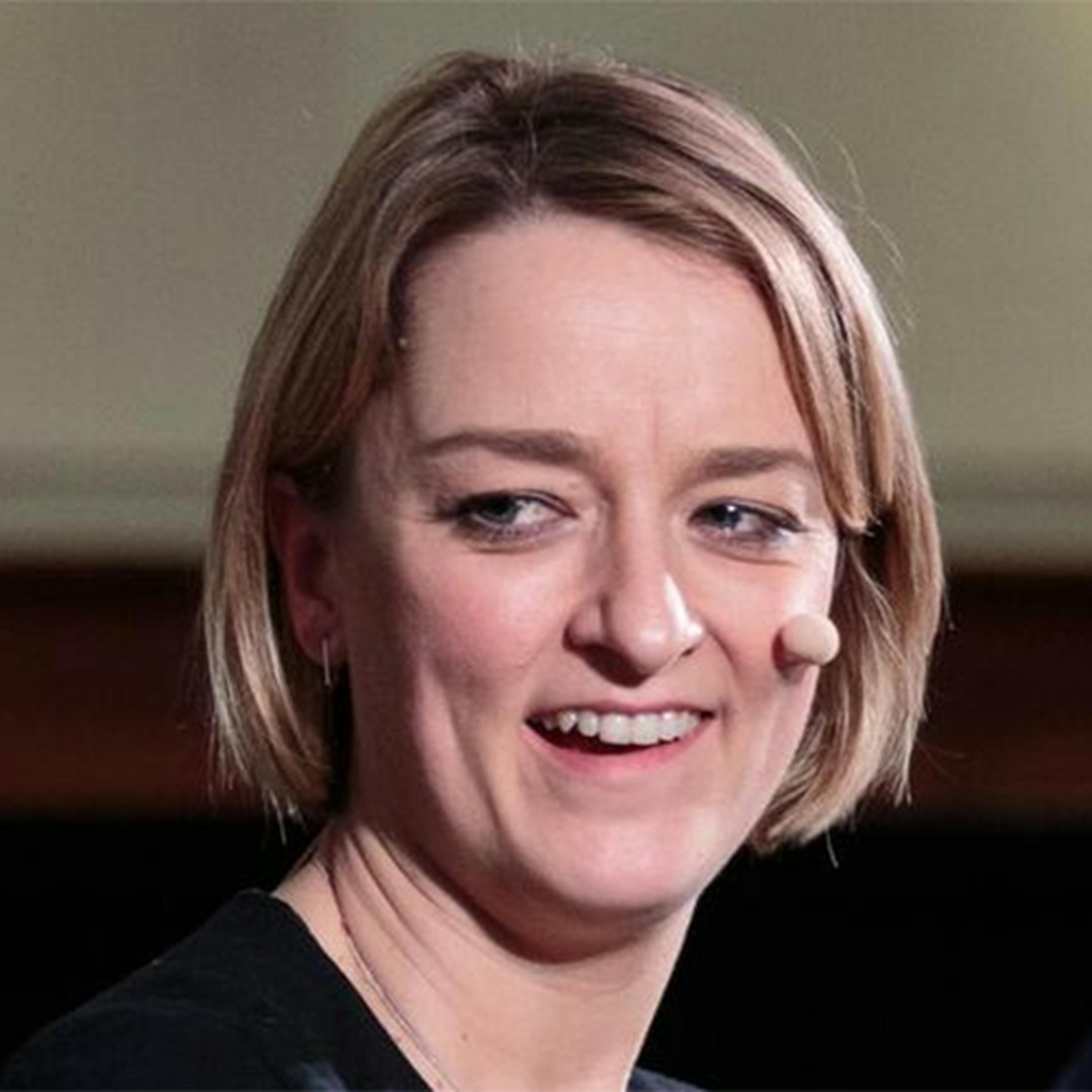
The New Optimism, with Matt Ridley, Johan Norberg, David Runciman and Laura Kuenssberg
Are you an optimist or a pessimist? And why should it matter? After what for many of us has been an annus horribilis in 2016, pessimists seem to have all the best tunes. Terror attacks, horror headlines from Syria, a tide of hatred and resentment poisoning our politics: the world looks increasingly grim. But what about the actual facts? If you step back and examine the data, it’s clear that life is better today for the majority of people than at any previous time in history. And we’re not just talking about the developing world, where progress has been remarkable. Here in the West, most of us have never had it so good. Just look at the improvements in health and longevity, the breadth of entertainment available, and the opportunities to travel that we blithely take for granted. In this special Intelligence Squared event, we examined two fundamentally opposing worldviews. In the optimists’ corner were Matt Ridley, author of the prize-winning The Rational Optimist, and Johan Norberg, whose latest book is Progress: Ten Reasons to Look Forward to the Future. They argued that the progress that has been made over the past centuries – whether in education, child labour, poverty or violent deaths – is now running at an unprecedented pace and that there is every reason to think that it will continue for decades to come. But is their essentially rationalist approach one that can really explain what appears to be the conflict-ridden world we live in? After all, many of us have never felt so gloomy and perplexed. This tension is not new. It has run through mainstream political thought since the Enlightenment. It set rationalists such as Adam Smith and J. S. Mill against those who sought to interpret the darker side of human nature such as Rousseau and Dostoevsky. They have been joined more recently by behavioural economists such as Daniel Kahneman and Richard Thaler. For these latter thinkers, rationalism will always fail to give a full account of human behaviour. Exploring this line of thought in our event was the acclaimed political scientist David Runciman. And steering the discussion was be the BBC’s star political editor Laura Kuenssberg. Optimist or pessimist? Some say that pessimism is dangerous, as it’s the emotions of fear and nostalgia that are fertile breeding grounds for populist demagogues. Others argue that too optimistic a view can blind us to the real threats facing our freedoms and democracy. Support this show http://supporter.acast.com/intelligencesquared. See acast.com/privacy for privacy and opt-out information. Learn more about your ad choices. Visit podcastchoices.com/adchoices

Steven Pinker on The Better Angels of Our Nature
In 2011, we welcomed world renowned American cognitive scientist Steven Pinker to the Intelligence Squared stage. He argued that, contrary to popular belief, we are living in the least violent period of history, and that even the horrific carnage of the last century, compared to primitive societies, is part of this trend. Pinker claimed that, thanks to the spread of government, literacy and trade, we are actually becoming better people. He was in conversation with Matt Ridley, One of the UK’s most popular science writers, whose books - including the award-winning 'The Rational Optimist' - have sold over a million copies and been translated into 30 languages. Support this show http://supporter.acast.com/intelligencesquared. See acast.com/privacy for privacy and opt-out information. Learn more about your ad choices. Visit podcastchoices.com/adchoices

The Hand that Rocks the Cradle Cannot Rock the Boardroom
Is it a myth that women can have it all, all of the time? Or do the rising numbers of female executives in Hong Kong and around the world suggest otherwise? Does the glass ceiling exist as a barrier to the boardroom, or is the only limitation to a woman’s professional success her personal ambition? To celebrate International Women’s Day this year, Intelligence Squared Asia brought together four experts to ask whether a good mother has time to be a good CEO. In this debate, which took place in Hong Kong on 3 March 2014, award-winning journalist and author Allison Pearson and author of “Wonder Women: Sex, Power, and the Quest for Perfection” Debora Spar proposed the motion. CEO of Newton Investment Helena Morrissey and CEO of SOHO Property Zhang Xin opposed the motion. Support this show http://supporter.acast.com/intelligencesquared. See acast.com/privacy for privacy and opt-out information. Learn more about your ad choices. Visit podcastchoices.com/adchoices

William Gibson on 'Zero History', with Cory Doctorow
On 5th October 2010, Intelligence Squared paired author William Gibson with popular blogger and science fiction writer Cory Doctorow in a wide-ranging conversation that gives a fascinating insight into the mind of the man heralded as the "architect of cool". Support this show http://supporter.acast.com/intelligencesquared. See acast.com/privacy for privacy and opt-out information. Learn more about your ad choices. Visit podcastchoices.com/adchoices

S1 Ep 177Dan Pink on the Science of Buoyancy
It happens to all of us every day. You get rejected. Your customer doesn’t buy. Your boss doesn’t agree. Your crush doesn’t say yes. In this provocative and entertaining talk, exclusive to Intelligence Squared, American author Daniel H. Pink harvested a rich trove of social science to explain the theory and practice of bouncing back. He showed why questioning your abilities is often more effective than affirming them; why being positive (but not too positive) can improve your performance; and how to explain failure in ways that prepare you for your next encounter. Dan Pink is the author of the New York Times and BusinessWeek bestsellers A Whole New Mind and Drive. His 18-minute lecture on the science of motivation is one of the twenty most-viewed TED Talks of all time. He has written for the New York Times, Harvard Business Review, Fast Company and Wired, where he is a contributing editor. He has provided analysis for CNN, CNBC, ABC, NPR and other networks in the U.S. and abroad. Pink lectures on economic... — We’d love to hear your feedback and what you think we should talk about next, who we should have on and what our future debates should be. Send us an email or voice note with your thoughts to [email protected] or Tweet us @intelligence2. And if you’d like to support our mission to foster honest debate and compelling conversations, as well as ad-free podcasts, exclusive bonus content, early access and much more, become a supporter of Intelligence Squared.. Just visit intelligencesquared.com/membership to find out more. Learn more about your ad choices. Visit podcastchoices.com/adchoices

Tim Harford on the Importance of Being Messy
Have the forces of tidiness marched too far? Would we all benefit from being a bit messy? That’s the big question that the FT’s star economist Tim Harford will be asking in this exclusive Intelligence Squared event. In Harford’s view, we need to be tidy up to a point. But in some areas of life, too much order makes things rigid, fragile and sterile. Take the office, where research shows that people are more productive and creative if they are allowed to surround themselves with a bit of clutter. Or take Donald Trump. There’s no shortage of accounts that explain how this brash reality TV star, who began his campaign for the Republican nomination as a 150/1 no-hoper, ended up as President-elect of the United States. But Harford has his own theory. Trump’s rivals were tidy-minded career politicians, surrounded by lumbering professional messaging operations. Trump deployed a strategy of chaos and improvisation, confounding his enemies with his late-night tweets and moving on before they had even had time to... Support this show http://supporter.acast.com/intelligencesquared. See acast.com/privacy for privacy and opt-out information. Learn more about your ad choices. Visit podcastchoices.com/adchoices

Trump: An American Tragedy?
It’s one month since we woke up to the shock news that the next president of the United States will be Donald Trump, and the whole world is trying to read the runes and work out what the next four years will hold for America and the rest of the world. Many are decrying Trump’s election as the end of democracy and the beginning of fascism. Others, observing that he is already watering down many of his more extreme threats, are willing to see a silver lining in at least some of his avowed policies. To weigh up these conflicting attitudes and gauge what a Trump presidency might actually look like, Intelligence Squared are bringing together a high-profile cast of Republicans, Democrats, historians and former political advisers. Given what we know of Trump’s character (he’s been described by clinical psychologists as a case-book narcissist), perhaps the most pressing question is how much power he will actually be able to wield in office. To what extent will he be able to take executive action to push through... Support this show http://supporter.acast.com/intelligencesquared. See acast.com/privacy for privacy and opt-out information. Learn more about your ad choices. Visit podcastchoices.com/adchoices

The Rise of Populism and the Backlash Against the Elites, with Jonathan Haidt and Nick Clegg
What is going on in the Western democracies? From Britain’s vote for Brexit, to Donald Trump’s election victory in America and the growth of populist movements across Europe, voters are expressing their dissatisfaction with the status quo. Economic anxieties go some way to explain the phenomenon, but as with the Brexit decision, people are voting in ways that seem – at least to their critics – likely to harm their own material interests just to give the establishment a bloody nose. In this special Intelligence Squared event, renowned American social psychologist Jonathan Haidt and politician Nick Clegg will examine the complex web of social, moral and political concerns that are driving the unrest. How can we explain the new illiberalism that is growing on both left and right, as authoritarian trends spread across campuses throughout the Anglosphere (the no-platforming of speakers being a typical example)? How should we understand the new ‘culture war’ emerging in Britain, America and elsewhere between the ‘globalists’ and ‘nationalists’? As deputy prime minister during the Coalition government, Clegg witnessed the upheaval in British politics from the inside. Haidt, author of the acclaimed bestseller 'The Righteous Mind', has long been studying the moral and cultural drives that divide people into different political camps. Support this show http://supporter.acast.com/intelligencesquared. See acast.com/privacy for privacy and opt-out information. Learn more about your ad choices. Visit podcastchoices.com/adchoices

No Backsliding On Brexit: Britain Should Prioritise Controlling Its Borders Over Staying In The European Single Market
Intelligence Squared brought out the big guns for our debate on what a post-referendum deal between Britain and the EU should look like. Douglas Carswell, Patrick Minford, Anna Soubry and Alexander Stubb did battle over this all-important decision, and star BBC World News presenter Zeinab Badawi was in the chair. So-called ‘hard Brexiters’ like Douglas Carswell are adamant that Britain must regain its status as a sovereign nation with full control of its borders, laws, money and trade. Anything less would be a betrayal of the majority who voted Leave in the referendum last June. If that means severe restrictions on Britain’s access to the single market, so be it. We don’t have to heed the warnings of the doom-mongerers: Britain is the world’s fifth largest economy and other countries, whether in or out of the EU, are going to want to do business with us. What’s more, Europe is beginning to look like a ticking time bomb. The eurozone is in crisis and Britain’s relatively healthy growth and unemployment figures show what a wise move it was not to sign up to the euro in 2002. And now things are looking decidedly scary, with Angela Merkel’s rashly generous immigration policies fuelling voter discontent across the continent, and populist parties on the rise in every member state. The response from EU leaders such as Jean-Claude Juncker to this disgruntlement? Ever closer integration, the very thing that the voters are rejecting. If the EU implodes, we’ll be grateful to have put ourselves at a safe distance. This is rubbish, according to those who think the Leave vote was a mistake. If we have to go through with Brexit, then the UK should do everything it can to salvage our current relationship with our EU partners – and that means keeping access to the single market. Withdrawing from it would do untold damage to British jobs and prosperity, especially in our car industry and financial services. Countries such as Norway show that it is perfectly possible to be inside the single market but outside the EU, even if there is a price to pay in terms of membership dues and some compromise over freedom of movement from the member states. And let’s not kid ourselves that keeping out foreign workers will provide more jobs for British citizens. Our economy depends heavily on migrant workers, and if we don’t bring them in from outside we risk exporting many of our manufacturing jobs to foreign countries with cheaper labour. This is the case that Anna Soubry and Alexander Stubb will be making. As Britain redefines its place in the world, major decisions will have to be made on what our priority should be – controlling our borders with Europe or keeping our markets open to it. Support this show http://supporter.acast.com/intelligencesquared. See acast.com/privacy for privacy and opt-out information. Learn more about your ad choices. Visit podcastchoices.com/adchoices

One size doesn’t fit all: Democracy is not always the best form of government
Democracy is the worst form of government except all the others that have been tried. So said Winston Churchill and who would disagree? One man, one vote, the rule of law, equality and a free press. These are the Enlightenment principles the West has developed over the centuries and fought tooth and nail in countless wars to preserve or to propagate. But is the assumption that democracy always leads to a more liberal and tolerant society correct? Many would argue that it can lead to quite illiberal outcomes especially where there is profound ethnic division. Take for example Yugoslavia. Slobodan Milosevic – the democratically elected president – left a legacy of more than 200,000 dead in Bosnia and ethnically cleansed more than 800,000 Albanians from their homes in Kosovo. And what if democracy were installed in Syria? It’s not hard to imagine the outcome for the minority groups who for decades have enjoyed the protection of Assad’s regime. Is democracy always the best outcome? Arguing in favour of the... Support this show http://supporter.acast.com/intelligencesquared. See acast.com/privacy for privacy and opt-out information. Learn more about your ad choices. Visit podcastchoices.com/adchoices

Let Them Eat Meat: There is Nothing Wrong With Rearing and Killing Animals for Human Consumption
This event took place on the 31st of October at the Royal Institution in London. CHAIR: Afua Hirsch - Writer and broadcaster SPEAKERS FOR THE MOTION: AA Gill - The Sunday Times’s star restaurant and TV critic AGAINST THE MOTION: George Monbiot - Guardian columnist, environmental campaigner and author of Regenesis: Feeding the World without Devouring the Planet Fancy a nice juicy steak? Most of us do from time to time, and we don’t trouble our consciences too much with the rights and wrongs of eating meat. Others, while vaguely aware that we ought to go vegan, just can’t face the rest of our lives denying ourselves bacon, beef, butter etc. But once we start looking into the arguments for veganism, it becomes difficult to justify the omnivore diet. Take the environment for starters. Livestock farming has a massive impact on the planet, producing around 14% of carbon dioxide equivalent emissions according to the UN. That’s roughly the same as the total amount of global transport emissions. Animals are extremely inefficient processors of the maize and soya that farmers grow to feed them. If we ate those crops ourselves instead of feeding them to livestock, we could free up hundreds of millions of hectares of rainforests, savannahs and wetlands where wild animals could flourish instead. And then there are the arguments about animal welfare. Recent scientific research indicates what many of us feel we already know – that animals have complex emotional lives not dissimilar to our own. Intensive farming – the kind that confines hens, pigs and cattle to squalid indoor pens – thwarts their instincts to move around freely and build social bonds with their group. Tens of billions of animals exist in this way, and that’s before their short lives are ended in the horror house of the abattoir. As for those who say a vegan diet isn’t healthy, elite athletes who have made the switch, including world tennis No 1 Novak Djokovic, prove you don’t need animal protein to excel at the highest levels in sport. On the other side of the argument we developed as omnivores and every human culture has its culinary traditions, based on the taste and aesthetics of meat and dairy. Do we really want to live in a world where there is no beef Wellington or cheese soufflé? As for the environmentalist arguments, omnivores now have some serious eco-credentials behind them. A study at Cornell University shows that a diet that includes a few small portions of grass-fed meat a week may actually be greener than eating no animal products at all. And when it comes to animal welfare, rather than abandoning animal products altogether, couldn’t we do more good by pressing for genuinely transparent labelling of our meat and dairy? If consumers really know what they are getting, fewer people might be willing to buy the £3 chicken produced in the barbaric conditions of the agricultural industry. As for a vegan diet being healthier, we should stop giving airtime to self-appointed health experts and lifestyle bloggers. Some dieticians argue that there are nutrients we need that we just can’t get from plants alone. Yes, we can get calcium from kale and iron from beans, but the quantity, quality and bio-availability of such elements are far better when we get them from animal rather than plant sources. — We’d love to hear your feedback and what you think we should talk about next, who we should have on and what our future debates should be. Send us an email or voice note with your thoughts to [email protected] or Tweet us @intelligence2. And if you’d like to support our mission to foster honest debate and compelling conversations, as well as ad-free podcasts, exclusive bonus content, early access and much more, become a supporter of Intelligence Squared today. Just visit intelligencesquared.com/membership to find out more. Learn more about your ad choices. Visit podcastchoices.com/adchoices

Ep 170An Anatomy Of Truth: Conversations on Truth-Telling
Not everyone tells the truth. ‘Read my lips: no new taxes.’ ‘This isn’t going to hurt.’ ‘I see no ships, my lord.’ ‘Of course I love you.’ When can we know what to believe? Four out of five of us don’t think politicians tell the truth, according to a recent MORI poll. But is telling the truth always the right or best thing to do? If it isn’t, what happens to trust? If it is, are there different kinds of truth? Do we always want to hear the truth? Do different professions need to have systemically different attitudes to truth-telling? Is there a moral difference between outright lies, falsehoods, deceits, dissimulation and just plain old ‘economy with the actualité’? In October 1013, Intelligence Squared headed to London's Westminster Abbey to discuss truth with a politician (Jack Straw), a journalist (Max Hastings), a scientist (Professor Robert Winston) and a poet (Wendy Cope). — We’d love to hear your feedback and what you think we should talk about next, who we should have on and what our future debates should be. Send us an email or voice note with your thoughts to [email protected] or Tweet us @intelligence2. And if you’d like to support our mission to foster honest debate and compelling conversations, as well as ad-free podcasts, exclusive bonus content, early access and much more, become a supporter of Intelligence Squared.. Just visit intelligencesquared.com/membership to find out more. Learn more about your ad choices. Visit podcastchoices.com/adchoices

S1 Ep 169Pornography is Good For Us: Without it We Would Be a Far More Repressed Society
EHooray for porn! What would we be without it? Bored, repressed, frustrated. Porn allows the timid to indulge fantasies they’d never live out in real life and the adventurous to experiment with new forms of pleasure. Now that it has stepped down from the top shelf and waltzed across the internet we can all enjoy it. All we need to do is stop pretending it’s something dirty and come straight out and salute it. Or maybe not. Porn after all is selling a lie: that women are always eager to engage in extreme practices, that bodies are always tanned and buffed, orgasms explosive. Isn’t this a recipe for frustration and disappointment? And to attract the restless voyeur, porn is always having to up the ante – cyber-sex is getting ever more degrading and extreme. Men are finding it harder to be satisfied with their real world partners, women are feeling inadequate and pressured to live up to the cyber-competition – this is the reality of pornland. So which is it – the great liberator of the libido or a blight on... — We’d love to hear your feedback and what you think we should talk about next, who we should have on and what our future debates should be. Send us an email or voice note with your thoughts to [email protected] or Tweet us @intelligence2. And if you’d like to support our mission to foster honest debate and compelling conversations, as well as ad-free podcasts, exclusive bonus content, early access and much more, become a supporter of Intelligence Squared.. Just visit intelligencesquared.com/membership to find out more. Learn more about your ad choices. Visit podcastchoices.com/adchoices

PJ O'Rourke on the US Presidential Clash
As Donald Trump faces Hillary Clinton in what has been one of the most vitriolic and unpredictable races in recent US election history, we were joined by America’s leading political satirist PJ O’Rourke, just a month ahead of US election day, as he cast his merciless eye over both candidates. He is known for taking no prisoners on either side of the political divide. He has already called Trump ‘a flying monkey’ and Clinton ‘Jimmy Carter in a pantsuit’. As author of such bestsellers as 'Don’t Vote: It Only Encourages the Bastards', and with more citations in 'The Penguin Dictionary of Humorous Quotations' than any other living writer, O’Rourke has been lambasting American politics for some 40 years. Such is his stature that even President Nixon conceded: ‘Whether you agree with him or not, PJ writes a helluva piece.’ O’Rourke will delved into why, in his own words, ‘America is experiencing the most severe outbreak of mass psychosis since the Salem witch trials of 1692’. As a sign of how the race for the... Support this show http://supporter.acast.com/intelligencesquared. See acast.com/privacy for privacy and opt-out information. Learn more about your ad choices. Visit podcastchoices.com/adchoices

The Gene: Unlocking the Human Code, with Siddhartha Mukherjee
Genetics has revolutionised not just how we think of biology but how we think of ourselves. We are, in the words of one geneticist, the first organism that has ‘learned to read its own instructions’. Now, with the breakthrough of gene-editing technology — whose precision allows us to alter a single letter of DNA — we can now not only decipher but rewrite our genetic code. We may soon be able to treat diseases such as cancer not simply with drugs, but with genetic manipulation. Yet behind this medical revolution lies the prospect of something altogether more worrying. Already, we possess the technology to add to our genetic code at will, and thus create the world’s first generation of ‘transgenic’ humans. As we intervene genetically on ourselves with ever more accuracy, do we risk changing what it means to be human? In a potential quest for the genetically ‘normal’, will we risk annihilating the very diversity and mutations on which evolution depends? These are some of the questions that the Pulitzer... Support this show http://supporter.acast.com/intelligencesquared. See acast.com/privacy for privacy and opt-out information. Learn more about your ad choices. Visit podcastchoices.com/adchoices

Karl Marx Was Right
We can’t say Karl Marx didn’t warn us: capitalism contains the seeds of its own destruction. In their chase for ever higher profits, the capitalists shed workers for machines. The higher return on capital means that the share of profits rises and the share of wages falls, and soon the mass of the population isn’t earning enough to buy the goods capitalism produces. And that’s exactly what’s been happening over the past four years of the Great Recession: ever increasing income inequality, leading to ever weaker aggregate demand – temporarily disguised by an unsustainable credit binge – leading to collapse. You don’t have to be a communist to see that this is so. We should all be Marxists now. Or should we? Every time capitalism hits an inevitable bad patch, Marx’s name is invoked with wearisome regularity. But no serious economist or political thinker – with the possible exception of Gordon Brown – has ever suggested capitalism can break free of booms and busts. Once bust, as we’ve seen time and again, the... Support this show http://supporter.acast.com/intelligencesquared. See acast.com/privacy for privacy and opt-out information. Learn more about your ad choices. Visit podcastchoices.com/adchoices

The End of Antibiotics?
This panel discussion took place at the New York Academy of Sciences in September 2016 and was produced by Intelligence Squared, in partnership with the World Health Organisation and the Wellcome Trust. There’s a time bomb ticking that is going to affect us all. Whether you are a sub-Saharan subsistence farmer or a New Yorker buying a super-smoothie in Wholefoods, there will be no escape. The threat? An invisible army of super-resistant bacteria is on the march. Antibiotics, the drugs that have saved millions of lives and are critical for the world’s health and wellbeing, have become a victim of their own success. Their overuse and misuse have helped bacteria and other infectious bugs to develop resistance to them, meaning that many infections are no longer effectively treatable by current medicines. Every year 700,000 people die of drug-resistant infections, and experts predict that this number could rise to 10 million. On top of this, recent research points to a possible link between antibiotics and... Support this show http://supporter.acast.com/intelligencesquared. See acast.com/privacy for privacy and opt-out information. Learn more about your ad choices. Visit podcastchoices.com/adchoices

Yuval Noah Harari on the Myths we Need to Survive
Myths. We tend to think they’re a thing of the past, fabrications that early humans needed to believe in because their understanding of the world was so meagre. But what if modern civilisation were itself based on a set of myths? This is the big question posed by Professor Yuval Noah Harari, author of 'Sapiens: A Brief History of Humankind', which has become one of the most talked about bestsellers of recent years. In this exclusive appearance for Intelligence Squared, Harari argued that all political orders are based on useful fictions which have allowed groups of humans, from ancient Mesopotamia through to the Roman empire and modern capitalist societies, to cooperate in numbers far beyond the scope of any other species. Support this show http://supporter.acast.com/intelligencesquared. See acast.com/privacy for privacy and opt-out information. Learn more about your ad choices. Visit podcastchoices.com/adchoices
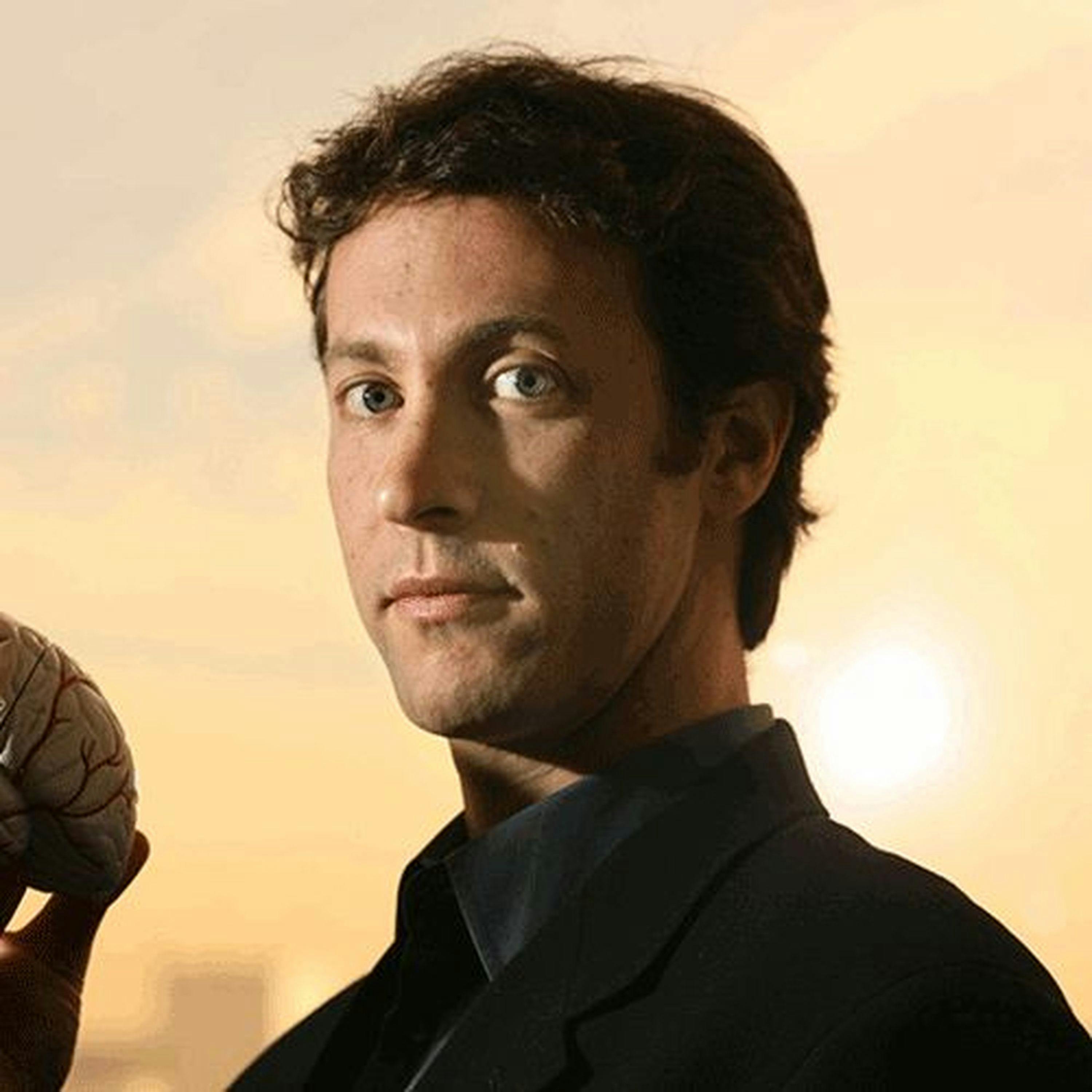
S1 Ep 163David Eagleman on the Science of De- (and Re-) Humanisation (and Why it Matters)
Which side were you on? The Jets or the Sharks? The Capulets or the Montagues? The Greeks or the Trojans? Antony or Caesar? William or Harold? And so the list goes on ... Indeed, maybe the whole of human history is the story of group-making and group-breaking. The passions of loyalty and love for the in-group are matched by the de-humanising indignation and hatred for the out-group. But what's actually going on in the chemical soup of the brain when Agamemnon gathers his heros-to-be and sets sail after Helen? Will peering into that soup - as neuroscientist David Eagleman is now doing - actually give peace a chance? Maybe utopia can come out of the lab. Will a scientific understanding of love and hate deliver social programmes that undermine the nastiness without sacrificing the good? — We’d love to hear your feedback and what you think we should talk about next, who we should have on and what our future debates should be. Send us an email or voice note with your thoughts to [email protected] or Tweet us @intelligence2. And if you’d like to support our mission to foster honest debate and compelling conversations, as well as ad-free podcasts, exclusive bonus content, early access and much more, become a supporter of Intelligence Squared.. Just visit intelligencesquared.com/membership to find out more. Learn more about your ad choices. Visit podcastchoices.com/adchoices

Yuval Noah Harari on the Rise of Homo Deus
“Studying history aims to loosen the grip of the past… It will not tell us what to choose, but at least it gives us more options.” – Yuval Noah Harari Yuval Noah Harari is the star historian who shot to fame with his international bestseller 'Sapiens: A Brief History of Humankind'. In that book Harari explained how human values have been continually shifting since our earliest beginnings: once we placed gods at the centre of the universe; then came the Enlightenment, and from then on human feelings have been the authority from which we derive meaning and values. Now, using his trademark blend of science, history, philosophy and every discipline in between, Harari argues in his forthcoming book 'Homo Deus: A Brief History of Tomorrow', our values may be about to shift again – away from humans, as we transfer our faith to the almighty power of data and the algorithm. In conversation with Kamal Ahmed, the BBC’s economics editor, Harari examined the political and economic revolutions that look set to... Support this show http://supporter.acast.com/intelligencesquared. See acast.com/privacy for privacy and opt-out information. Learn more about your ad choices. Visit podcastchoices.com/adchoices

Museums are Bad at Telling us Why Art Matters
Museums are our new churches, as is commonly agreed. Millions of people flock to them to be uplifted, inspired, or distracted from everyday cares for an hour or two by encountering magnificent art. But while churches know exactly how to present art in order to foster faith and remind us of the Christian virtues, couldn't our museums do a better job at displaying art in a way that fully engages our emotions? Aren’t all those academic categories – “the 19th century”, “the Northern Italian School” – dry and dull? Aren't museums just places where great art goes to die? Why can't museums organize their collections in such a way as to convey art’s life-enhancing possibilities and even inspire us to become better people? But isn't that taking the "art as religion" line a bit too seriously? It implies that museums have a social function, even a didactic role to play. Do we want to visit museums in order to be told by invisible curators to think and feel in a certain way? And while it may be the case that... Support this show http://supporter.acast.com/intelligencesquared. See acast.com/privacy for privacy and opt-out information. Learn more about your ad choices. Visit podcastchoices.com/adchoices

P J O'Rourke: The Funniest Man in America
P.J. O'Rourke is America's premier political satirist and has more citations in 'The Penguin Dictionary of Humorous Quotations' than any other living writer. In this live appearance for Intelligence Squared in 2010, he discussed his new book, 'Don't Vote — It Just Encourages the Bastards', a brilliant, hilarious and ultimately sobering look at why politics and politicians are a necessary evil — but only just barely necessary. Moving from Adam Smith to Milton Friedman to a late-night girls' boarding school game called Kill-F*@k-Marry, O'Rourke explored the nature of the social contract. For him the essential elements are power, freedom and responsibility: the people like the freedom part, politicians like the power part, and hardly anyone wants to hear the responsibility part. This leads him to postulate the "Death, Sex and Boredom Theory of Politics." Support this show http://supporter.acast.com/intelligencesquared. See acast.com/privacy for privacy and opt-out information. Learn more about your ad choices. Visit podcastchoices.com/adchoices

Brexit Britain – Our Divided Nation
This panel session was part of Brexit Britain, an afternoon of debate and discussion produced by BBC Newsnight in partnership with Intelligence Squared at the Royal Geographical Society in London. In this, the first session of the day, folk singer/songwriter and left-wing activist Billy Bragg, Director of Resolution think tank Torsten Bell, UKIP parliamentary spokesperson Suzanne Evans and Vice-Chair of Migration Watch UK Alp Mehmet, discussed what the referendum - and the campaigning that preceded it - have taught us about Britain. The discussion was chaired by Newsnight's lead presenter Evan Davis. Support this show http://supporter.acast.com/intelligencesquared. See acast.com/privacy for privacy and opt-out information. Learn more about your ad choices. Visit podcastchoices.com/adchoices

Brexit Britain - Political Fallout
This panel session was part of Brexit Britain, an afternoon of debate and discussion produced by BBC Newsnight in partnership with Intelligence Squared at the Royal Geographical Society in London. In this, the second session of the day, Guardian columnist Owen Jones, Kwasi Kwarteng MP, former Northern Ireland secretary Theresa Villiers, and former advisor to the Chancellor Catherine Macleod, discussed the political fallout of the Brexit vote. The discussion was chaired by Newsnight's political editor Nick Watt. Support this show http://supporter.acast.com/intelligencesquared. See acast.com/privacy for privacy and opt-out information. Learn more about your ad choices. Visit podcastchoices.com/adchoices

Carlo Rovelli and Christophe Galfard on the Architecture of the Universe
Does time exist? Was our universe born from a Big Bang, or from a Big Bounce triggered by a former universe imploding? Is this the only universe, or are there infinite ones, all expanding in parallel and out of sight of each other? These are just some of the questions that were tackled by world-renowned physicists Carlo Rovelli and Christophe Galfard when they came to the Intelligence Squared stage, in this event chaired by BBC science star Helen Czerski. Theoretical physics deals with matters at the very limits of human understanding. Einstein was once prompted to tell a student: ‘If you have understood me, then I haven’t been clear.’ In the face of this complexity, Rovelli and Galfard have found a way of explaining the mysteries of physics that has made them the most popular science communicators in their countries. In Italy, Rovelli has consistently outsold Fifty Shades of Grey with his book 'Seven Brief Lessons on Physics', which last year became a Sunday Times bestseller. Galfard — who gained his... Support this show http://supporter.acast.com/intelligencesquared. See acast.com/privacy for privacy and opt-out information. Learn more about your ad choices. Visit podcastchoices.com/adchoices

Richard Dawkins: The Rational Revolutionary
In the 1960s and 70s, a revolution took place in the way we understand human nature. Out went Marx and Freud, and in came a rational, scientific approach to the way we see ourselves. At the vanguard of that revolution was Richard Dawkins, the evolutionary biologist whose book 'The Selfish Gene' changed the thinking not just of other scientists but of all of us, and propelled its author to intellectual stardom as the modern heir to Darwin. To mark the 40th anniversary of 'The Selfish Gene' and Dawkins’ 75th birthday, Intelligence Squared staged a global event, bringing together luminaries from the worlds of science, philosophy and culture to engage with Dawkins about his life and work. Steven Pinker, celebrated cognitive scientist, and Daniel Dennett, philosopher and fellow ‘New Atheist’, were beamed in live from America. On-stage guests included the illusionist Derren Brown, an avowed fan of Dawkins’ theories about the workings of the mind, the science writer Susan Blackmore, who has further developed... Support this show http://supporter.acast.com/intelligencesquared. See acast.com/privacy for privacy and opt-out information. Learn more about your ad choices. Visit podcastchoices.com/adchoices