
Institute for Government
542 episodes — Page 5 of 11
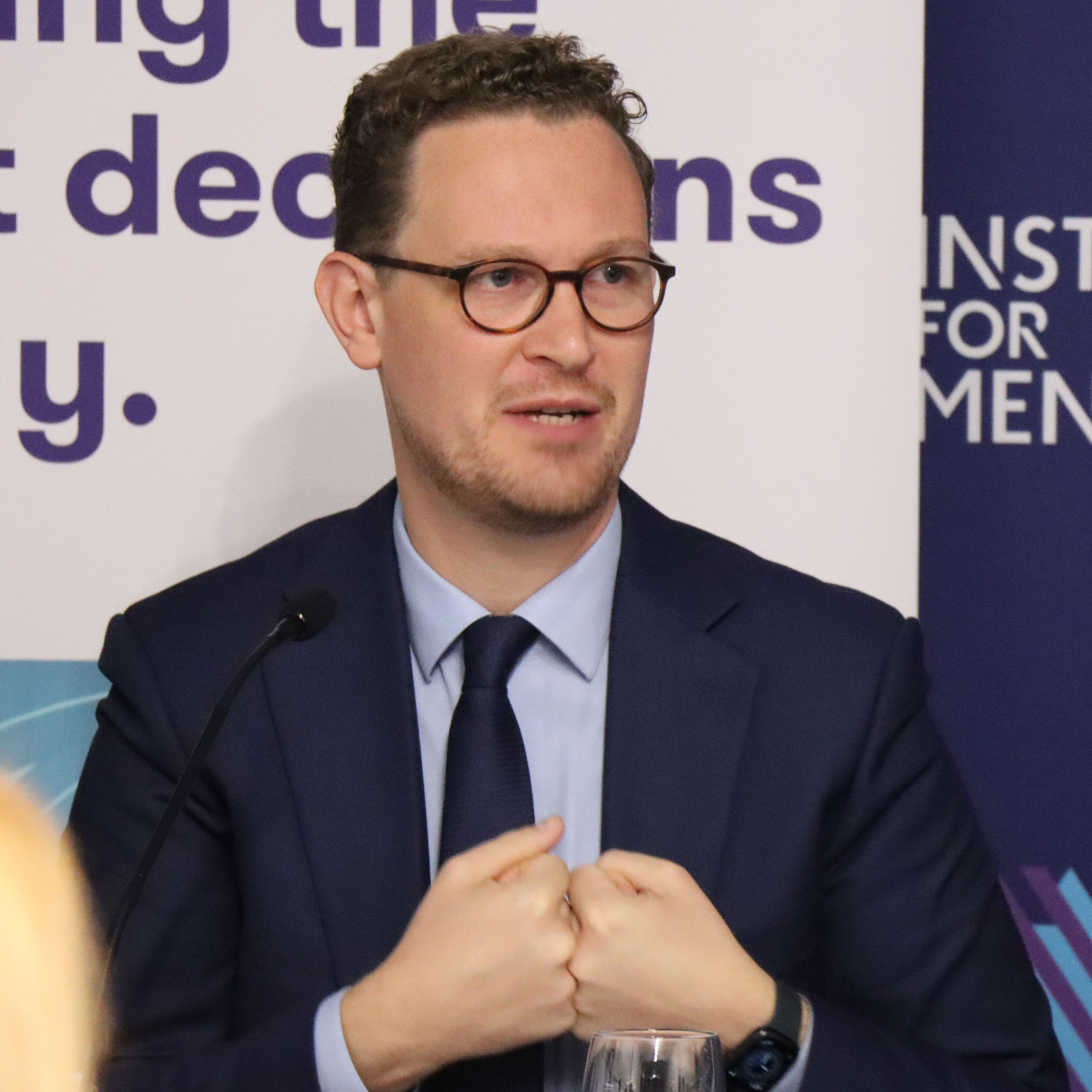
How can a Labour government ensure it invests well in public services?
This event was held at the 2024 Labour Party Conference in Liverpool. Speakers: Rt Hon Darren Jones MP, Chief Secretary to the Treasury Anita Charlesworth, Director of Research and the REAL Centre (Research and Economic Analysis for the Long term) at the Health Foundation Thomas Pope, Deputy Chief Economist at the Institute for Government Phillip Woolley, Partner at Grant Thornton UK LLP This event was chaired by Dr Gemma Tetlow, Chief Economist at the Institute for Government. This event was in partnership with Grant Thornton UK LLP.
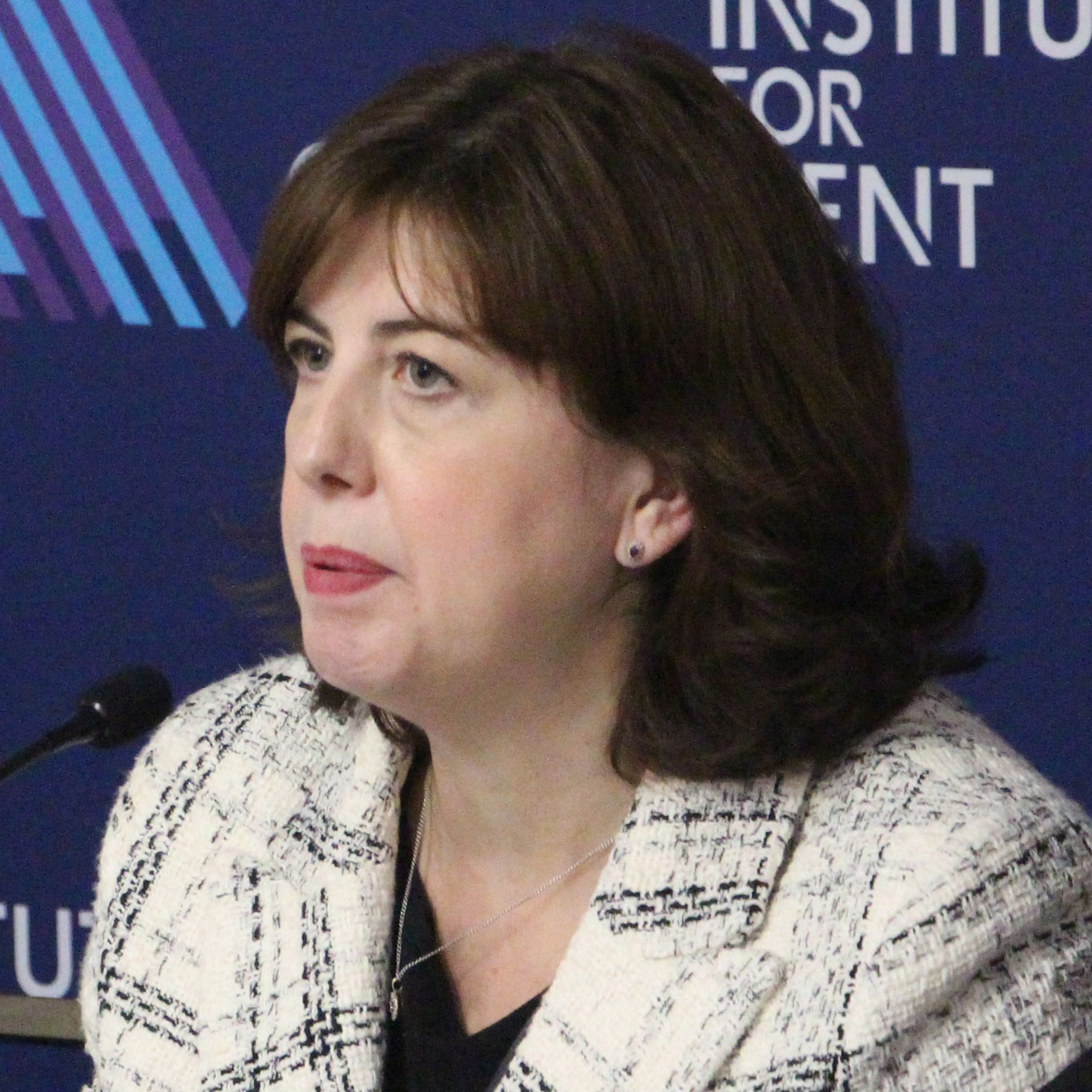
How can Labour reset standards in public life and improve trust in our politics?
With Labour seeking to reassert its credentials around upholding public standards - and avoid standards issues distracting from its wider agenda for government – a significant reset is required. This event explored how key reforms such as the creation of the long-promised Ethics and Integrity Commission and establishment of the Modernisation Committee will work and what else needs to be done to restore trust in politics. Speakers: Rt Hon Lucy Powell MP, Leader of the House of Commons Stephen Bush, Associate Editor and Columnist at the Financial Times Tim Durrant, Programme Director at the Institute for Government Duncan Hames, Director of Policy and Programmes at Transparency International UK Dr Susan Hawley, Executive Director of Spotlight on Corruption This event will be chaired by Dr Hannah White, Director and CEO of the Institute for Government. This event is in partnership with Spotlight on Corruption, Transparency International UK, and the UK Anti-Corruption Coalition.
How can the new government’s industrial strategy help boost productivity?
The UK’s productivity record since the financial crisis has been dismal. In the long term, the country cannot become more prosperous and afford the public services it needs without reversing this trend. The new Labour government has committed to boosting growth as one of its five missions for government and set out its intention to put industrial strategy at the heart of its policy making. But how can industrial strategy help to restore productivity growth? This event explored the relationship between growth and industrial strategy.
How can the Liberal Democrats deliver a fair deal for housing?
Britain’s housing market is unfair. House prices are over eight times average earnings. Social housebuilding rates have sharply declined, and homelessness is high. How can the Liberal Democrats ensure the government delivers the sustainable and affordable housing Britain needs? Speakers: Lee Dillon MP, Member of Parliament for Newbury Max Wilkinson MP, Member of Parliament for Cheltenham Anna Clarke, Director of Policy and Public Affairs at The Housing Forum Sophie Metcalfe, Researcher at the Institute for Government Tristan Robinson, Director of External Affairs and Social Value at Thakeham This event was chaired by Nehal Davison, Programme Director at the Institute for Government.
How should government use AI?
Civil servants are already using AI for a variety of purposes, from summarising and analysing data to drafting correspondence. The new Labour government sees AI as a route to greater productivity and growth, both within government and beyond. Bringing together the themes of two private roundtables hosted by the Institute for Government in partnership with Scott Logic, this public event explored the use of AI in policy and communications, and for civil service effectiveness. How are public servants making use of AI in their work? How should government’s own use of AI inform its broader approach to AI’s development and regulation? And how can government distinguish between panic, hype and useful applications of AI and other emerging technologies? To discuss these questions and more, this event brought together an expert panel featuring: Duncan Brown, Head of Software Engineering at the Incubator for AI Matthew Gill, Programme Director at the Institute for Government Jess McEvoy, Principal Consultant at Scott Logic Jeni Tennison, Founder and Executive Director of Connected by DataThe event was chaired by Gavin Freeguard, Associate at the Institute for Government.
Outside influence: How to build external voices into the centre of government
The biggest challenges UK government faces, from tackling low economic growth to addressing regional inequalities, adapting to climate change and transforming public service performance, will need to be addressed by harnessing the insight and expertise of people from outside government itself. So what can be done to bring more external expertise into the heart of government? This event explored a core conclusion of the IfG Commission on the Centre of Government – that external voices need to be more embedded in decision making in No.10, the Cabinet Office and the Treasury. The Commission's final report concluded that successive governments had failed to do enough to systemically recruit talented people from outside government and use their skills and insight. On Tuesday 10 September, we reflected on the Commission’s recommendations and discuss how to improve decision making by amplifying expert voices from outside government. The panel were: Baroness Diana Barran, former Minister for Civil Society Sir Ian Cheshire, Chair of Channel 4 and former government lead non-executive director Neil Heslop, Chief Executive of the Charities Aid Foundation Dame Helen Stephenson, former Chief Executive of the Charity Commission for England and Wales The panel was chaired by Dr Hannah White, Director and CEO of the Institute for Government.
What does the Procurement Act mean for public bodies and suppliers?
The government’s approach to procurement is entering a new era. Significant reforms to the UK's post-Brexit procurement legislation, set out in the Procurement Act, will redefine how public sector organisations acquire goods, services, and human resources as new rules and opportunities emerge. So with almost £400bn a year spent on public procurement, how ready are public bodies and suppliers for the Procurement Act’s profound implications? Drawing on IfG's extensive research and analysis on government procurement and outsourcing, this event convened a panel of experts to explore the following key questions: What are the main changes that will be implemented under the new Procurement Act? How prepared are public bodies and suppliers for these changes? What impact will the changes have on procurement practice? What are the key risks and opportunities for public bodies and suppliers? We were joined by an expert panel, including: Lindsay Maguire, Deputy Director for Procurement Reform Implementation at the Cabinet Office Andy Milner, Chief Executive Officer of Amey Peter Schofield, Head of Integrated Commissioning and Procurement at Manchester City Council Laura Wisdom, Partner at Burges Salmon The event was chaired by Nick Davies, Programme Director at the Institute for Government. The event is a follow-up to a previous briefing on the Procurement Bill in 2022.
What can we learn from the IfG’s Ministers Database?
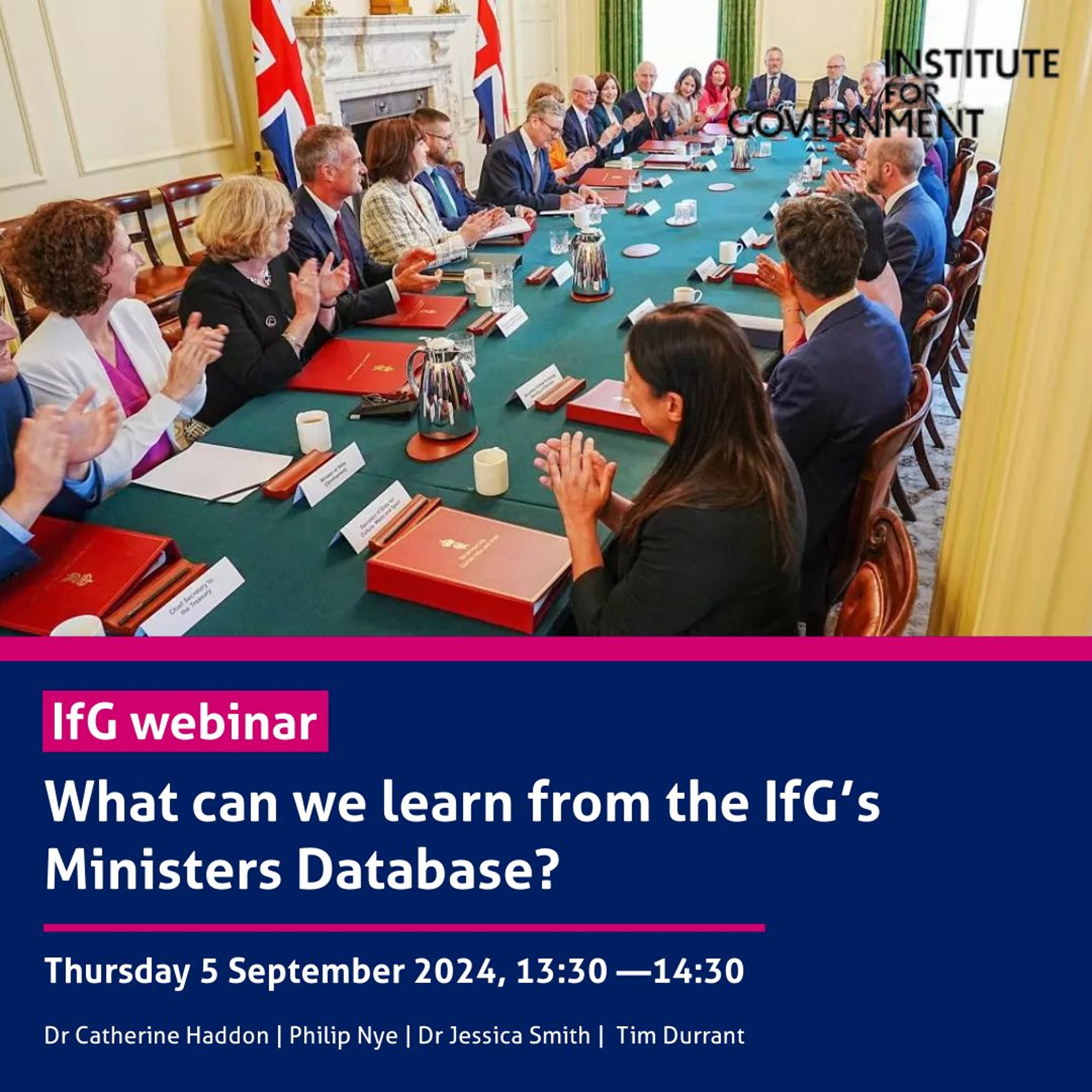
Keir Starmer has appointed more than 100 ministers to his government since Labour won the general election on 4 July. Some were ministers in the last Labour government; for many this was their first time in ministerial office. So, who makes up this latest generation of government ministers? And who held office before them? The Institute for Government’s brand new Ministers Database holds information about all government ministers since 1979 – who served as a minister, in what role, and for how long. On Thursday 5 September the IfG launched the database for public use, so that everyone can benefit from this unrivalled source of information and use it in their work. So what can we learn from the IfG’s Ministers Database? Which ministerial roles have seen the most churn? How has turnover among ministers changed over time, and what does it mean for government? And how can academics, journalists and others use the IfG Ministers Database in their work? To explore these questions and more, we were joined on this webinar by an expert panel, including: Dr Catherine Haddon, Programme Director at the Institute for Government Philip Nye, Senior Data Scientist at the Institute for Government Dr Jessica Smith, Lecturer in Politics with Quantitative Methods at the University of Edinburgh The event was chaired by Tim Durrant, Programme Director at the Institute for Government. Release date: 5 September 2024
How can public spending do better at improving wellbeing?
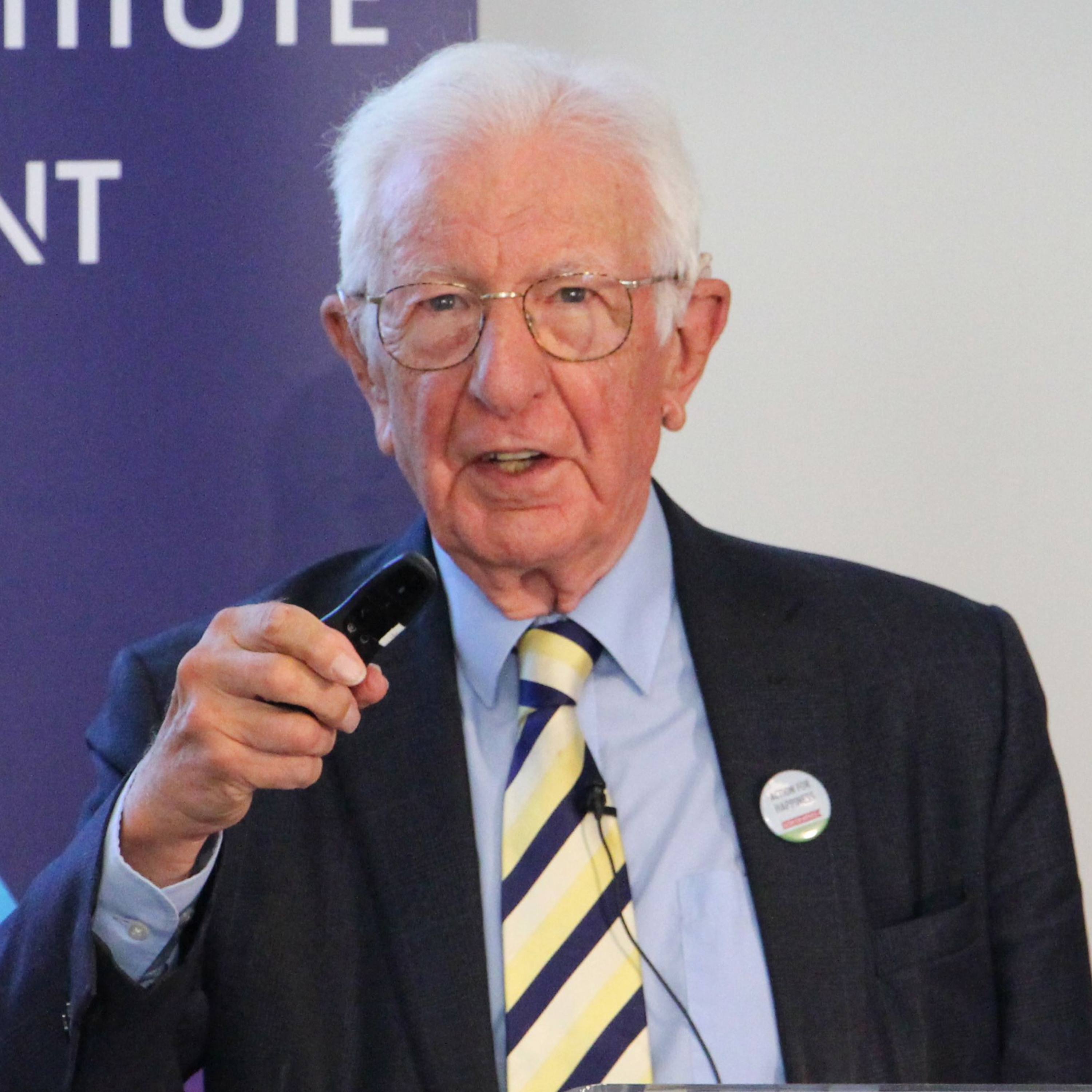
Spending reviews, which decide how at least half a trillion pounds of annual public spending should be allocated across different public services, are one of the most consequential processes in government. The new government has announced a new review, to conclude in Spring 2025, that will determine departmental budgets for much of the current parliament. But how should ministers choose how to prioritise for spending? Should more money be spent on roads, skills, or police? What is the best way to judge the costs and benefits of each decision? A new report from the London School of Economics, Value for Money calls for a radical change in policy making. It argues that policies should be judged using a cost-benefit analysis which includes a comprehensive valuation of their effects on wellbeing. The report argues that, judged this way, therapies for mental health and guaranteed apprenticeships give much better value for money than most new roads. To discuss this topic, we were joined by a panel, including: Professor Lord Richard Layard, Co-Director of the Community Wellbeing Programme at the Centre for Economic Performance, London School of Economics and co-author of Value for Money Lord Gus O’Donnell, former Cabinet Secretary Amanda Rowlatt, former Chief Economist at the Department for Transport, Department for Business, Innovation and Skills, and Department for Work and Pensions Conrad Smewing, Director General of Public Spending in His Majesty's Treasury and Joint-Head of the Government Finance Function The panel was chaired by Gemma Tetlow, Chief Economist at the Institute for Government.
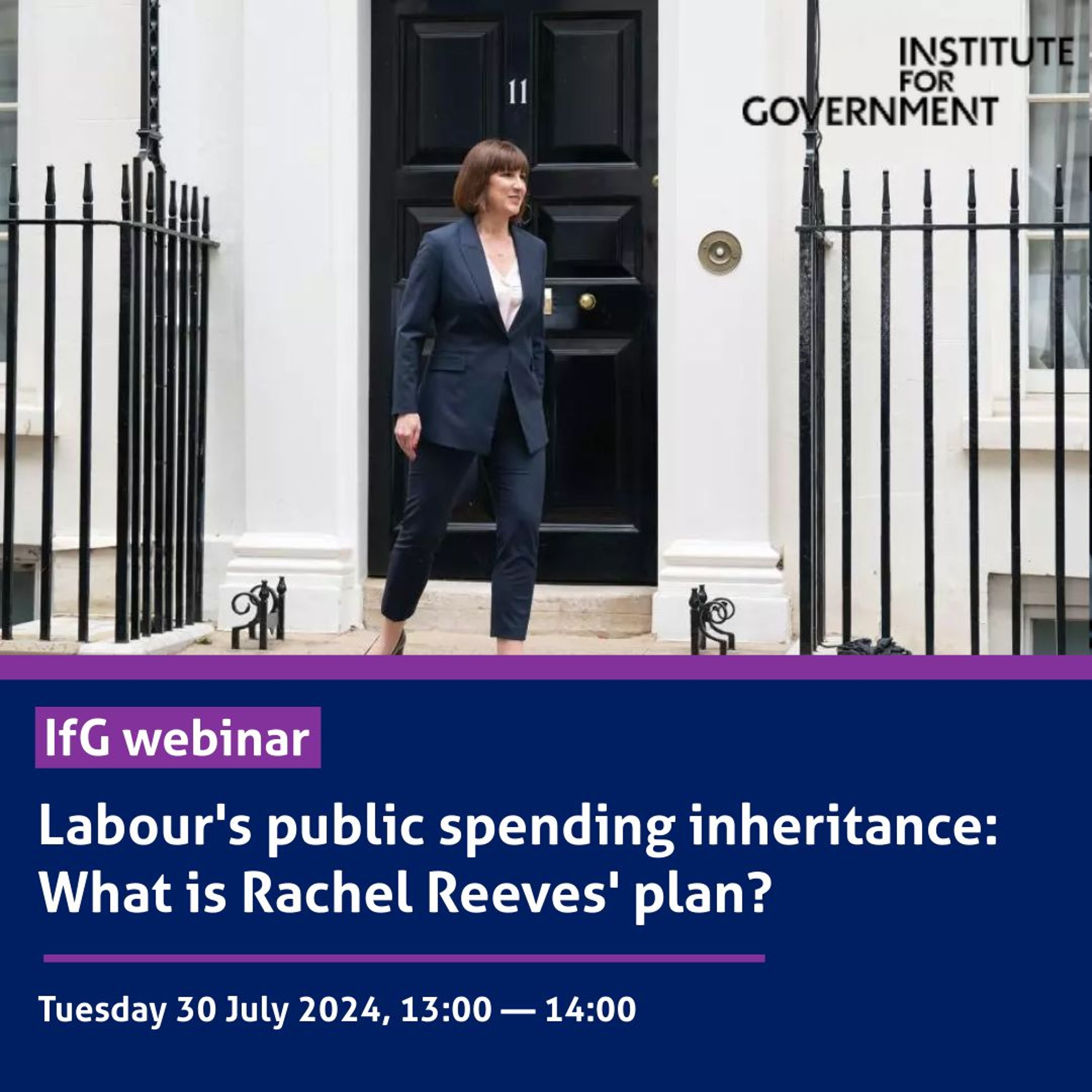
Labour's public spending inheritance: What is Rachel Reeves' plan?
The chancellor has set out her audit of public spending to MPs. Revealing what she calls a multi-billion pound “black hole” in the government finances, Rachel Reeves has vowed “to fix the mess we inherited” from the Conservative government. So do these sums add up and what do they mean for public services? Should this inheritance come as a surprise to Labour and what does it mean for the party’s manifesto pledges? And what is Rachel Reeves’ plan – which could involve tax rises or spending cuts – for dealing with the problem? To discuss these questions and more, we were joined by an expert panel, including: Olly Bartrum, Senior Economist at the Institute for Government Nick Davies, Programme Director at the Institute for Government Gemma Tetlow, Chief Economist at the Institute for Government The webinar was chaired by Hannah White, Director and CEO of the Institute for Government.

What should the Labour government’s public service priorities be?
A daunting public services to-do list awaits Keir Starmer and his newly-elected Labour government. Most services are performing worse than on the eve of the pandemic and substantially worse than in 2010, but future funding is set to be tight. Ministers will need to make best use of existing budgets and carefully choose targets for any additional investment. So what are the most pressing public services issues facing the new government? What will happen to service performance if Labour sticks to existing spending plans? How can services be improved without substantial spending increases? And where should any extra funding be prioritised? To discuss these questions, and a new Institute for Government and Nuffield Foundation report on the topic, this event brought together an expert panel featuring: Nick Davies, Programme Director at the Institute for Government Sam Freedman, Author of Failed State: Why Nothing Works and How We Fix It Patricia Hewitt, Chair of Norfolk & Waveney NHS and former Secretary of State for Health The event was chaired by Gemma Tetlow, Chief Economist at the Institute for Government.
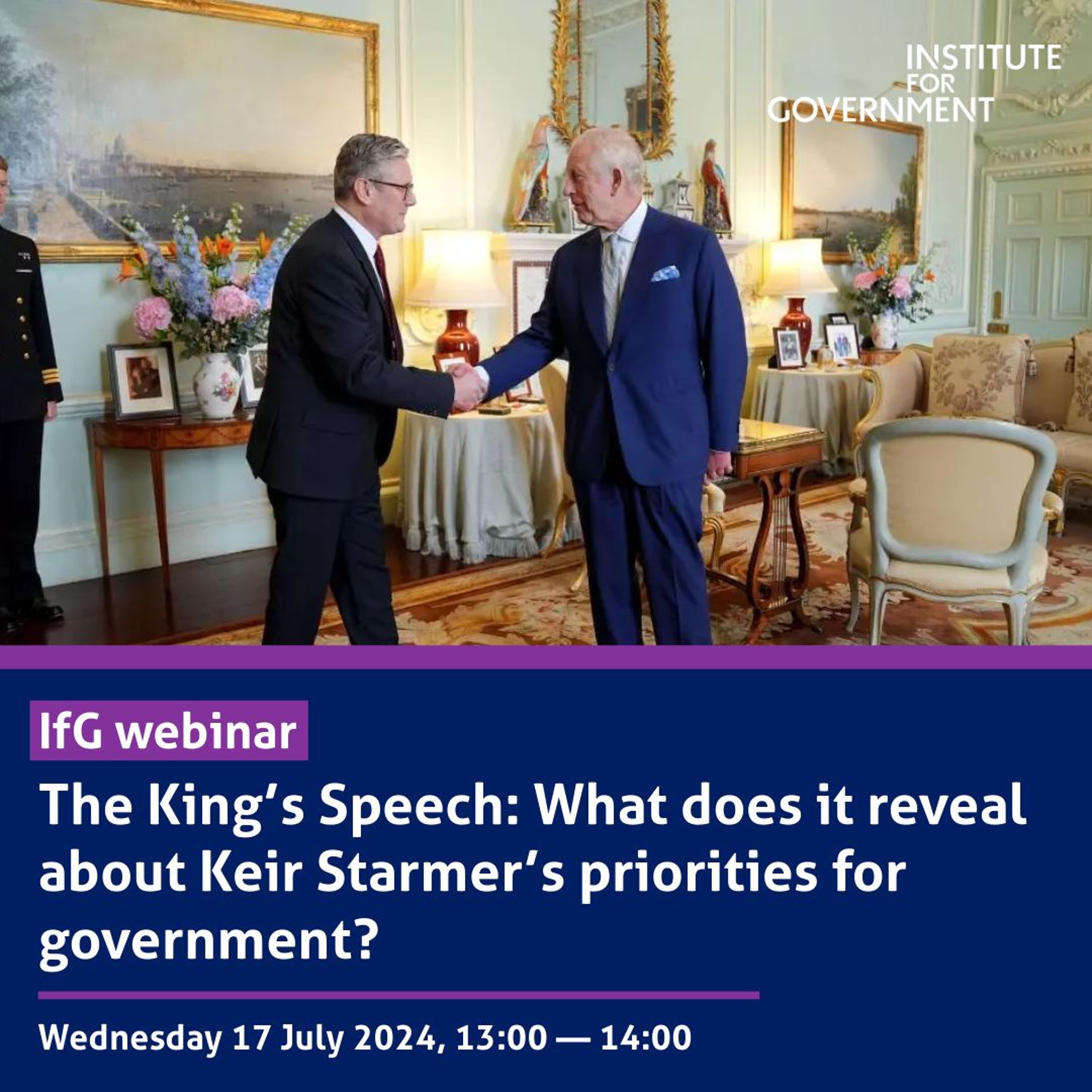
The King’s Speech: What does it reveal about Keir Starmer’s priorities for government?
The King’s Speech on 17 July set out Sir Keir Starmer’s legislative agenda for government and revealed his priorities for the parliamentary session. While Labour’s attention and resources have been focused on the general election campaign, Starmer and his team will also have been preparing for this major constitutional moment. Legislation to nationalise the railways, reform planning, and establish Great British Energy are all expected, but could the government spring some surprises? Will there be any Conservative policies – such as the smoking ban – that Labour might resurrect? Following the State Opening of Parliament, this IfG webinar – with guest Chris White, who for half a decade was responsible for managing and planning the last government’s legislative programme – explored what the King’s Speech reveals about Keir Starmer’s plans for government. What are the most controversial bills? Where might Labour face opposition in parliament? And what lessons should Starmer take from the legislative programmes of previous administrations? To discuss these questions and more, we will be joined by an expert panel, including: Jill Rutter, Senior Fellow at the Institute for Government Alex Thomas, Programme Director at the Institute for Government Chris White, former special adviser in both the Leader of the Commons and Government Chief Whips’ offices between 2009 and 2015 The webinar was chaired by Hannah White, Director and CEO of the Institute for Government.
How can the government rethink the approach to public services capital spending?
Since 2010 the UK’s capital spending on prisons, hospitals and schools has been consistently lower than many other countries – leading to crumbling buildings, creaking IT and a lack of equipment. But the size of the budgets is only part of the problem – these budgets have also been badly spent. This will continue to hamper public service performance unless the new government takes a new approach to capital spending. So what could it do differently to achieve better outcomes? How can ministers, select committees, the Treasury, and other central government departments rethink their approach? And what steps could be taken in the next multi-year spending review? The event began with a short presentation from Thomas Pope, outlining the main findings of a recent IfG and Grant Thornton report on this topic, Capital spending in public services: Fixing how the government invests in the NHS, schools and prisons. To discuss these questions and more, we were joined by an expert panel, including: Wayne Butcher, Director at Grant Thornton UK Anita Charlesworth, Director of Research at the Health Foundation Sir Jon Coles, Group Chief Executive of United Learning and former Director General for Schools at the Department for Education Thomas Pope, Deputy Chief Economist at the Institute for Government. The panel was chaired by Gemma Tetlow, Chief Economist at the Institute for Government. We would like to thank Grant Thornton UK for kindly supporting this event.

How can new ministers be supported to succeed in government?
A general election brings the appointment of a whole host of new ministers, and on day one in government they begin a job like no other. Former shadow ministers may be familiar with their new policy portfolio, but ministerial life is very different to opposition. The switch from leading a small team to heading up departments with hundreds or thousands of civil servants, and from issuing press releases to making life-changing policy decisions, happens overnight. But ministers too often overlook how they can move beyond ‘on the job’ learning and get the most out of their ministerial careers. So how can ministers get the support they need to succeed in government? What benefits are there in investing in professional development? What skills do ministers and other executives need to be effective leaders? And what support is available to ministers seeking to develop their skills in government? To explore these questions and more, we were joined by an expert panel, including: Rt Hon Baroness Armstrong of Hill Top, former Chief Whip Dr Paul Chapman, Senior Fellow at Saïd Business School, University of Oxford Rt Hon Chloe Smith, former Secretary of State for Science, Innovation and Technology Ruth Turner, Senior Director at the Forward Institute and former Director of Government Relations in the Prime Minister’s Office The event was chaired by Tim Durrant, Programme Director at the Institute for Government.
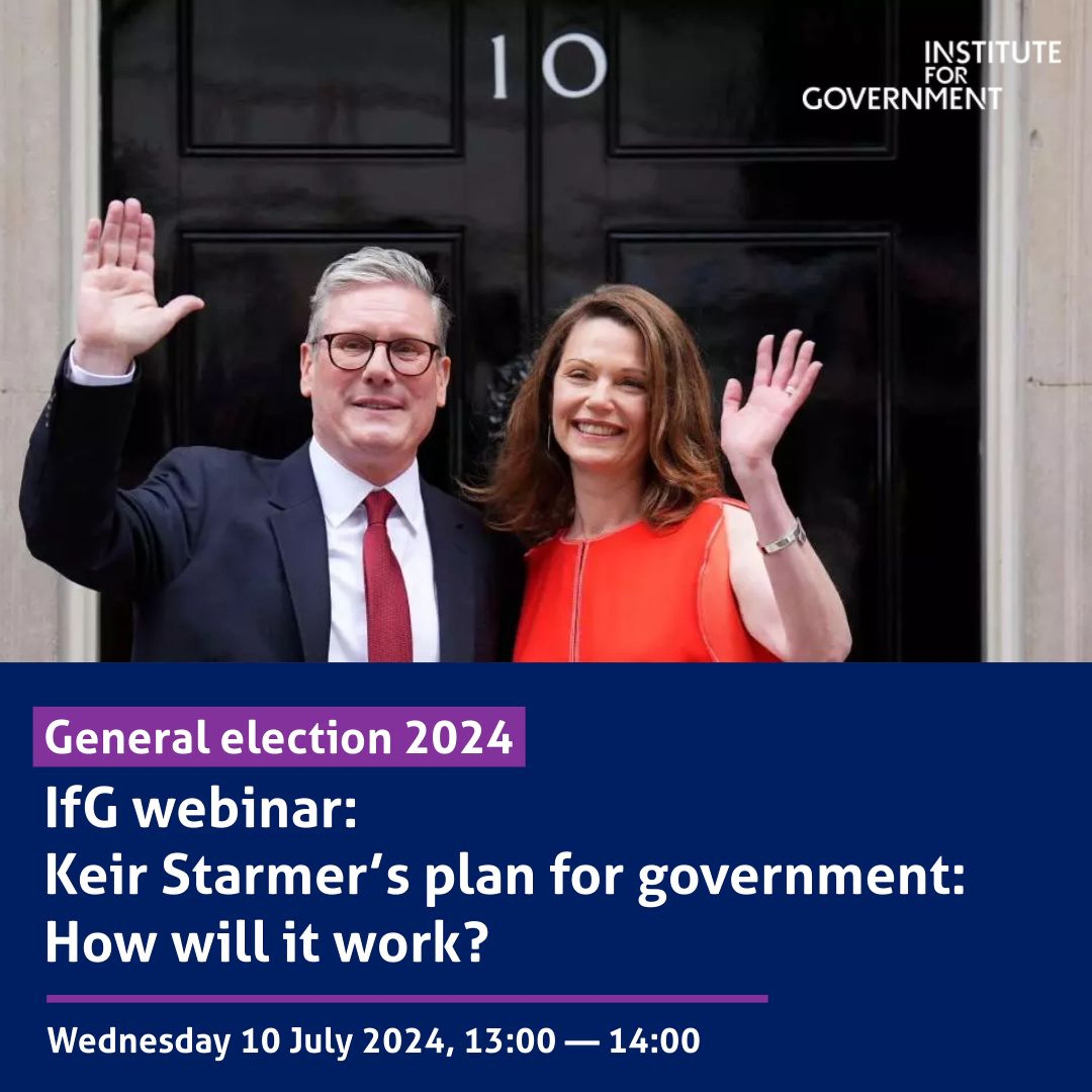
Keir Starmer's plan for government: How will it work?
Keir Starmer used his first speech as prime minister to declare that the “work of change begins immediately”. But how will the Labour government approach the complex policy challenges that it has inherited? And how will it start making progress on new promises? From freeing up space in crowded prisons to turning around struggling public services, delivering clean energy and kickstarting economic growth, the government’s to-do list is daunting. Labour has promised to “change how Britain is governed” in order to deliver its aims in government – but how will this work in practice? What does Labour’s ‘mission-led’ approach mean for the way government operates? How will central government work with locally elected mayors? And what do Keir Starmer’s cabinet appointments – and the way he has structured his centre of government – tell us about how his plan for government will work? This Institute for Government webinar will look at what Keir Starmer’s first week as prime minister tells us about how he intends to govern Britain. To explore these questions and more, we were joined by an expert panel, including: Emma Norris, Deputy Director of the Institute for Government Joe Owen, Director of Impact at the Institute for Government Jen Williams, Northern England correspondent at the Financial Times The event was chaired by Hannah White, Director and CEO of the Institute for Government.
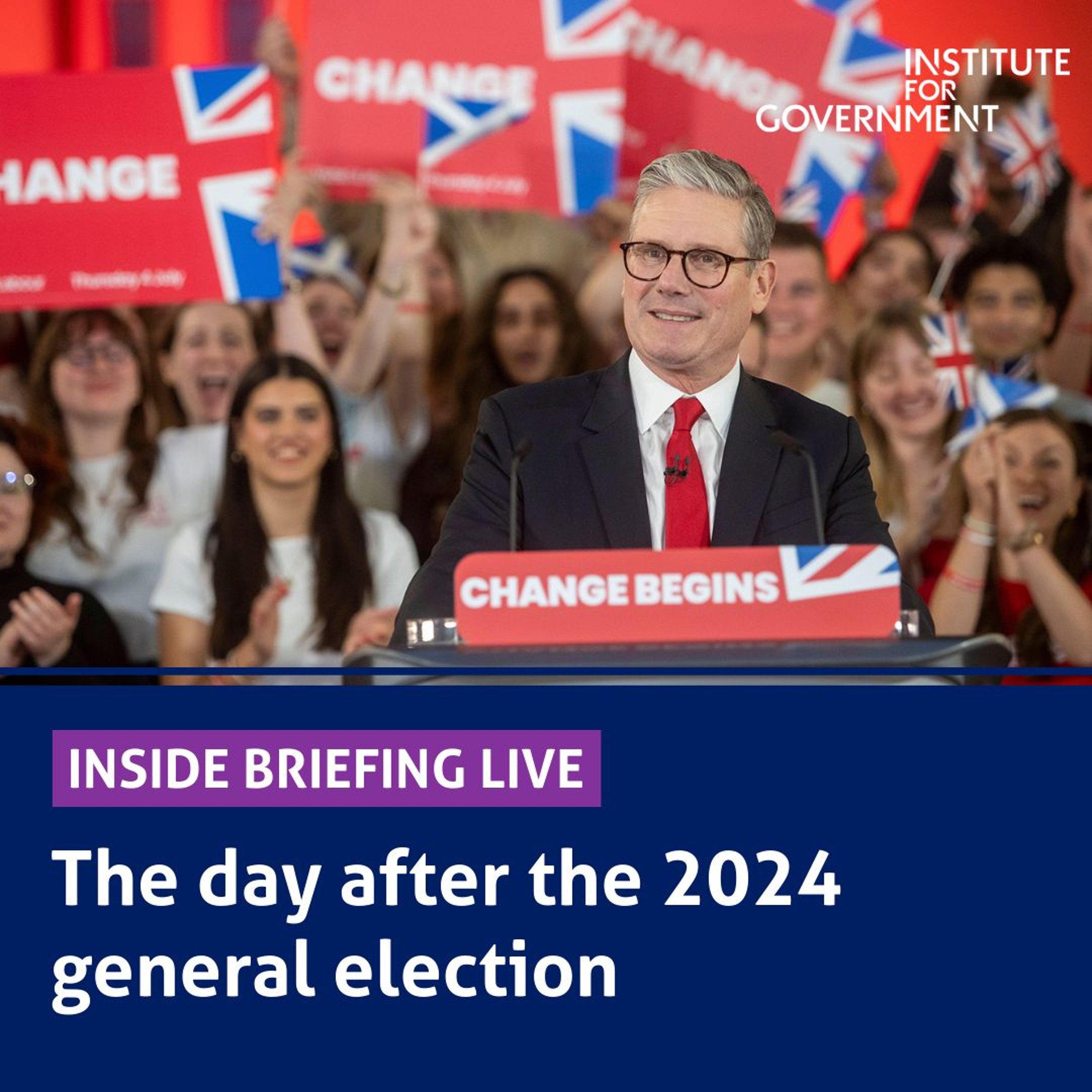
Inside Briefing LIVE: The day after the 2024 general election
Follow our live-blog for all our general election coverage: https://www.instituteforgovernment.org.uk/live-blog/general-election-2024 We hosted a special livestreamed recording of the Institute for Government podcast, as a team of IfG experts – bleary eyed but full of coffee – gathered in the podcast studio to make sense of a momentous night in British politics. What does the general election result mean for how the UK will be governed? What decisions and duties await the prime minister over the next days and weeks? How are governments formed and what does it mean civil servants? And what are the big challenges facing the government – and how can it meet them? Hannah White, Giles Wilkes, Tim Durrant and Catherine Haddon share their instant reaction, expert analysis, and essential insights.
General election 2024: What happens on day one for a new government?
This Friday will be day one in government for the winner of the general election. But there will be no chance for anyone to catch their breath after a gruelling campaign. The job begins at once. So what should civil servants be braced to expect as ministers are appointed to their new roles? How can special advisers best prepare for that frenetic first 24 hours? And what actually awaits a prime minister as they step through that famous No10 door? This IfG webinar will take you behind the scenes of the first day in government after a general election – and reveals what civil servants, officials and ministers can expect to happen next. Read our explainer on the first 72 hours of a new prime minister here: https://www.instituteforgovernment.org.uk/explainer/new-prime-minister-first-72-hours-general-election
Preparing for Power – Episode 6: First days in government
Episode 6 explores the first days, weeks and months of a new government. We speak to those who've entered No.10 alongside the prime minister on day one, found themselves suddenly running a government department, or have welcomed a brand new political team into office as a senior civil servant, including: Ed Balls, Jonathan Powell, Gus O'Donnell, Harriet Harman, Polly Mackenzie and Nick Macpherson. What actually happens on a prime minister’s first day? How can a new government make the most of the first months in office? And what’s it like for civil servants, adjusting to having a whole new team of politicians in charge?
Preparing for Power – Episode 5: Making manifestos
Episode 5 explores the role that manifestos play in – and after – an election campaign. How do political parties write their manifestos? What does a good manifesto look like? What are the questions that Rishi Sunak and Keir Starmer will be considering when signing off on their manifestos for the 2024 general election? And how hard is it to deliver manifesto promises once a government is formed? Packed with insight and revelations from key figures behind past manifestos – including Oliver Letwin, Jonathan Powell and Polly Mackenzie – and former civil servants who were asked to turn manifesto pledges into workable policy, this episode of Preparing for Power reveals the inside story of this key part of a general election campaign.
Preparing for Power – Episode 4: The governing party
Episode 4 explores how the governing party prepares for an election while continuing to govern, with ministers, civil servants and special advisers – including Oliver Letwin, Harriet Harman, Gus O'Donnell, Polly Mackenzie and Nick Macpherson – revealing how they approached the work of government during an election campaign. How does a governing party balance a gruelling campaign alongside running the country? What are the advantages of being the party in power as the election approaches? And how can a governing party make the most of those final months before polling day? Veterans of the 2010 and 2015 elections share their stories.
Preparing for Power - Episode 3: The opposition
Episode 3 explores how opposition parties prepare for a potential transition of government, with ministers, civil servants and advisers, including Jonathan Powell, Harriet Harman, Gus O’Donnell and Oliver Letwin, revealing how they got ready for the possibility of a change of government. How does an opposition develop policies that would actually work once they are in office? How can shadow teams ready themselves for taking over departments? What is the role of the chief of staff in these preparations? And what lessons could the approaches of Tony Blair and David Cameron provide for opposition parties preparing for the possibility of being in government? Veterans of the 1997 and 2010 transitions share their recollections – and their advice for Keir Starmer’s Labour party as a general election approaches.
Preparing for Power – Episode 2: The civil service
Episode 2 explores how the civil service prepares for a potential transition of government, with five former permanent secretaries revealing how they readied themselves and their departments for a potential change in their political bosses. How does Whitehall prepare for a change in the party in power? What can civil servants do to get ready for a hung parliament? And how do they continue to serve the current government while these preparations are going on? In this episode of Preparing for Power, we speak to former senior civil servants to discover how they prepared for that all important election result and its aftermath, hear their secrets, and work out the lessons for 2024.
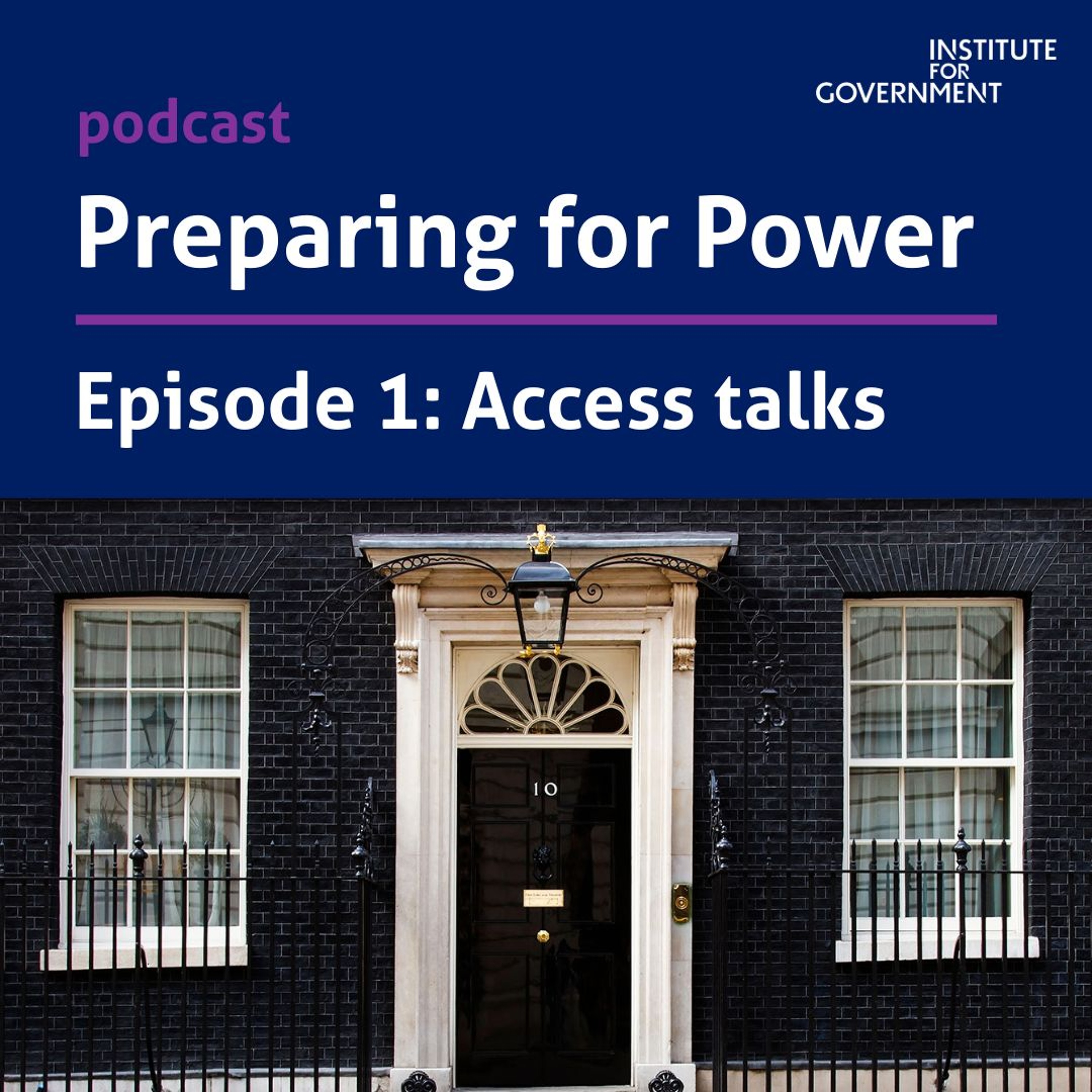
Preparing for Power – Episode 1: Access talks
Whoever forms the next government will need to be prepared. The job begins almost as soon as the votes have been counted. So what is it like to go from opposition to government overnight? How do civil servants get ready for the possibility of a transition of power or a hung parliament? And what is it like for a governing party to continue in power after a bruising campaign? In this six-part series, the Institute for Government takes you behind the scenes to find out how our politicians, their advisers and officials block out the noise of a general election campaign to get ready for being in government. We’ll be speaking to former ministers, special advisers and senior civil servants to discover how they prepared for that all important election result and its aftermath, to hear their secrets, and to work out the lessons for 2024.
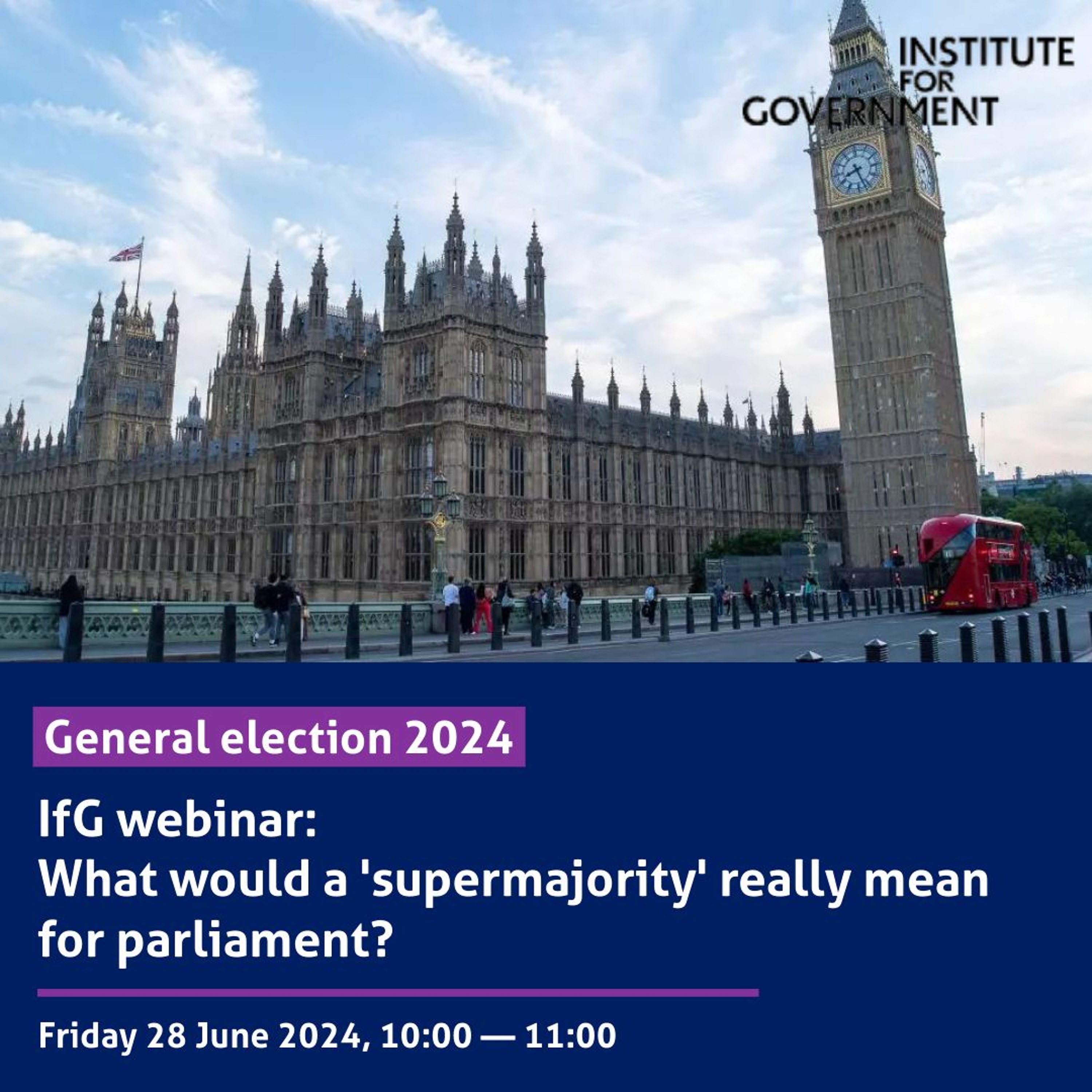
General election 2024: What would a 'supermajority' really mean for parliament?
The Conservatives have been warning voters of the 'dangers' of Labour winning a huge – or 'super' – majority at the general election on Thursday. But what exactly is a supermajority, and do these warnings add up? With just under a week to go until polling day, this Institute for Government webinar explores the Conservatives' claims – and set out what a government with a large majority would mean for parliament and British politics. Does it really make a difference if the government has a majority of 100 or more? How hard is it to be a small opposition party? And what is most important in enabling parliament to scrutinise government properly and hold it to account?
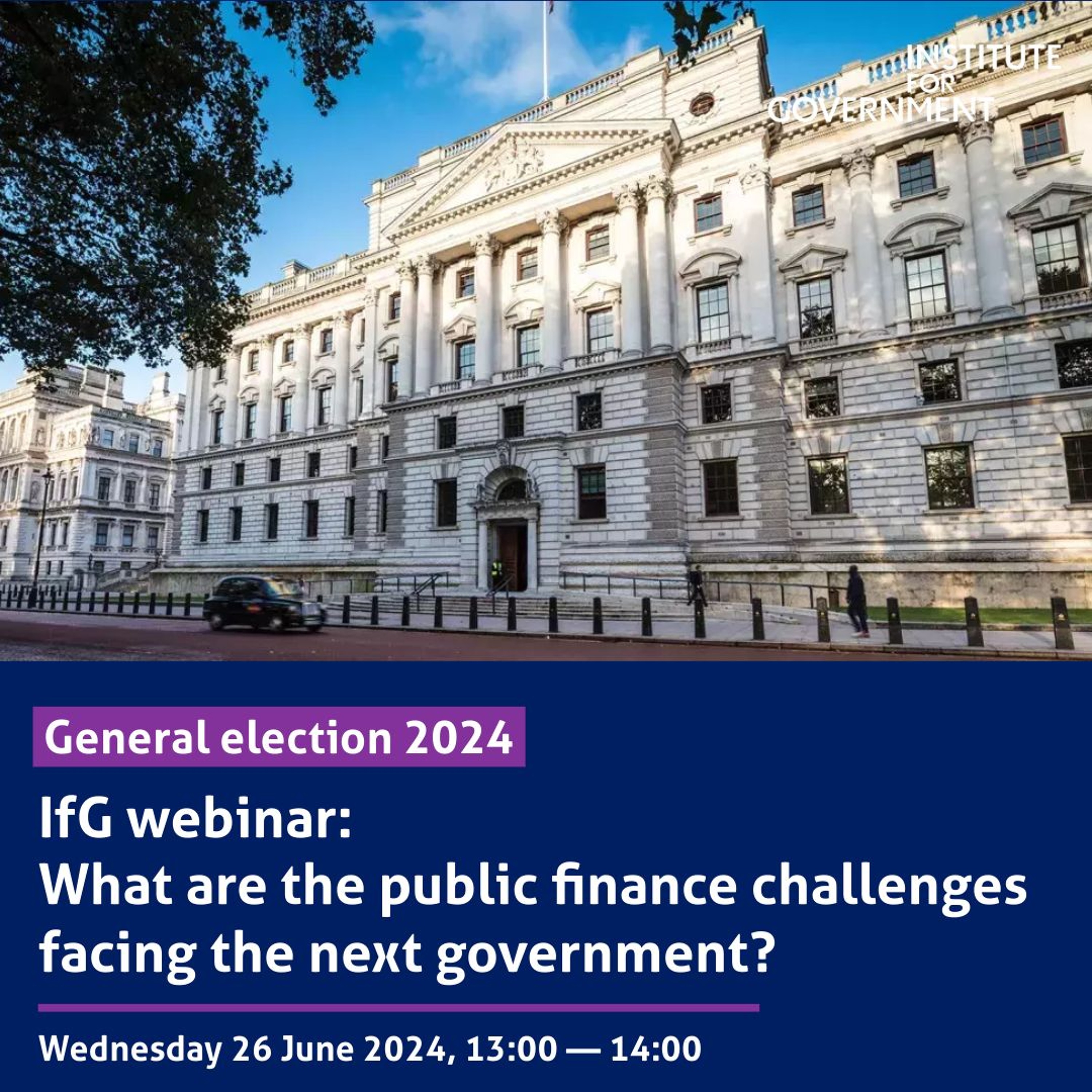
General election 2024: What are the public finance challenges facing the next government?
Despite historically large tax increases since 2019, the current government’s plans imply debt continuing to rise for several years and only barely beginning to fall in five years’ time – and then only on the basis of implausible plans for public spending and rises in fuel duty that no government since 2011 has managed to implement. Drawing on Ipsos polling, this Institute for Government event discussed: What are the problems that will face a new government? How would the public like the next government to address these issues? How can the next government make progress on delivering its ambitions while maintaining fiscal sustainability?
General election 2024: How are public services performing across the country?
Public services are a key election battleground. The NHS is consistently cited in surveys as one of the top two issues facing the country, while social care and schools have played a critical role in deciding recent elections. Rishi Sunak made improving NHS performance one of his key pledges, Keir Starmer included healthcare and schools in his six “first steps”, and both the Conservatives and Labour will use their manifestos to set out their public services policies. So just how well are public services performing across the country – and what impact could they have on the election campaign? In this expert briefing, the Institute for Government and Ipsos UK presented analysis of how public service performance and public satisfaction have changed over this parliament. What are the key public services challenges facing an incoming government? How much variation is there in public service performance across the country? And how does public satisfaction with services differ by constituency? To discuss these questions and more, we were joined by an expert panel, including: Nick Davies, Programme Director at the Institute for Government Zoë Grünewald, Westminster Editor of the Lead UK and a freelance political journalist and broadcaster Gideon Skinner, Head of Politics, Public Affairs at Ipsos UK Phillip Woolley, Partner at Grant Thornton The event was chaired by Emma Norris, Deputy Director at the Institute for Government.
General election 2024: What is in the Labour manifesto?
Manifesto launches are a significant moment in any general election campaign, and Thursday’s publication of Labour’s manifesto is a big chance for Keir Starmer to set out how his party would govern if it wins the general election on 4 July. So how plausible are the manifesto’s plans? What are the big dividing lines with the Conservatives? How would a Labour government pay for public services? And what does the manifesto tell us about the priorities of a Labour government after 14 years in opposition? In this General Election 2024 webinar, the Institute for Government gives an expert briefing on what is in the Labour manifesto – and what it would mean for government. Panellists included: Sam Freedman, author of Failed State Stuart Hoddinott, Senior Researcher at the Institute for Government Gemma Tetlow, Chief Economist at the Institute for Government Emma Norris, Deputy Director of the Institute for Government (chair) For further IfG insight and analysis on the Labour manifesto, read our comment piece, 'Ten things we learned from the Labour manifesto': https://www.instituteforgovernment.org.uk/comment/general-election-2024-labour-manifesto
General election 2024: What is in the Conservative manifesto?
Manifesto launches are a significant moment in any general election campaign, and Tuesday’s publication of the Conservative manifesto is a big opportunity for Rishi Sunak’s party to set out its vision for government if it wins the general election on 4 July. So what are the flagship policies? Do the tax and spending numbers add up? How plausible and credible are the manifesto’s plans? And, after 14 years of power, how much of a break is this manifesto from previous Conservative policies and priorities? In this general election 2024 webinar, the Institute for Government gives you an essential expert briefing on what is in the Conservative manifesto – and what it would mean for government. Panellists included: Nick Davies, Programme Director at the Institute for Government Jill Rutter, Senior Fellow at the Institute for Government Giles Wilkes, Senior Fellow at the Institute for Government Dr Hannah White, Director and CEO of the Institute for Government (chair) For further IfG insight and analysis on the Conservative manifesto, read our comment piece, 'Seven things we learned from the Conservative manifesto': https://www.instituteforgovernment.org.uk/comment/general-election-2024-conservative-manifesto
General election 2024: What should civil servants do during the general election campaign?
With attention focused on politicians, and politicians focused on winning votes, a general election campaign is an unusual time for civil servants. Their top priority remains serving the government of the day, but they must also prepare for a potential transition of power, and be ready to work with whoever forms the next government. Civil service activity is also restricted during the formal ‘pre-election period’, with civil service impartiality protected by government guidance and measures to stop public funds being used for campaigning purposes. So how should civil servants navigate this period of heightened political sensitivity? How does the work of the civil service change in the campaign? And what can civil servants do to prepare for a potential transition of power? Ahead of the general election on 4 July, this IfG webinar explored all these questions and more, and asked what lessons can be learned from previous election campaigns and past transitions of power. To discuss these questions and more, we were joined by: Sir David Bell KCB DL, Vice-Chancellor of the University of Sunderland and former Permanent Secretary Catherine Haddon, Programme Director at the Institute for Government Alex Thomas, Programme Director at the Institute for Government and former senior civil servant The event was chaired by Jill Rutter, Senior Fellow, Institute for Government.
Productivity Pitches #3: Health and social care
So what can be done to improve productivity? By highlighting outstanding examples of innovation across public services, Productivity Pitches, a new series of events hosted by the IfG, aims to share and support ways to improve performance levels. This event was the third in the series and focussed on health and social care. Each speaker had 10 minutes to present their innovation, followed by 10 minutes of audience questions. The chair and a guest from The Productivity Institute – who are kindly supporting this event series – then brought together the common themes from the pitches and discussed the lessons for improving productivity.
How can the government move to a preventative approach to public services?
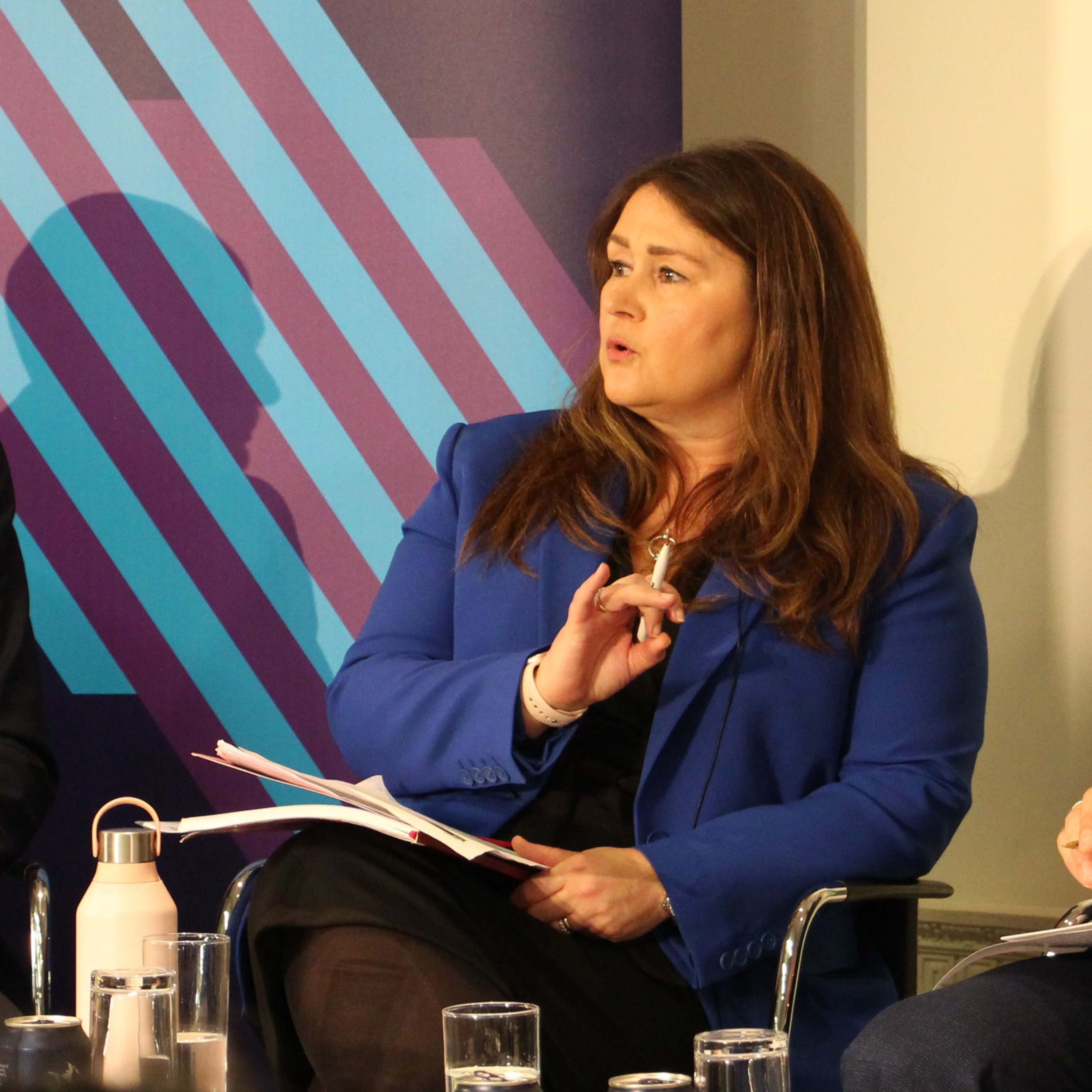
Preventative public services are designed to deal with problems before they develop, or before they become more complicated to manage. Evidence suggests that children in particular benefit from investment whether that’s in the early years, or earlier in their life cycle, helping to prevent problems from determining their outcomes later in life. The Labour Party has put prevention at the centre of its plans for public services, promising a ‘prevention first revolution’. And the government has identified increased prevention as a key contributor towards improved public sector productivity. However, high demand for acute services means governments have often found it difficult to invest in prevention. So what can be done to bring about a change of approach? This event brought together a panel of experts to discuss: What are preventative services and how has investment in them changed over time? What evidence is there that preventative services improve outcomes and deliver savings? What are the barriers to government taking a preventative approach? How could government funding be shifted towards preventative services? What can be learnt from previous examples of preventative approaches? To discuss these questions and more, we were joined by an expert panel, including: Stuart Hoddinott, Senior Researcher at the Institute for Government Rt Hon Sir Sajid Javid MP, former Chancellor of the Exchequer and Secretary of State for Health and Social Care Donna Molloy, Deputy Chief Executive at Foundations Lynn Perry MBE, Chief Executive of Barnardo’s The event was chaired by Nick Davies, Programme Director at the Institute for Government. We would like to thank Barnardo’s for kindly supporting this event.
Keynote speech: Rt Hon David Lammy MP, Shadow Foreign Secretary
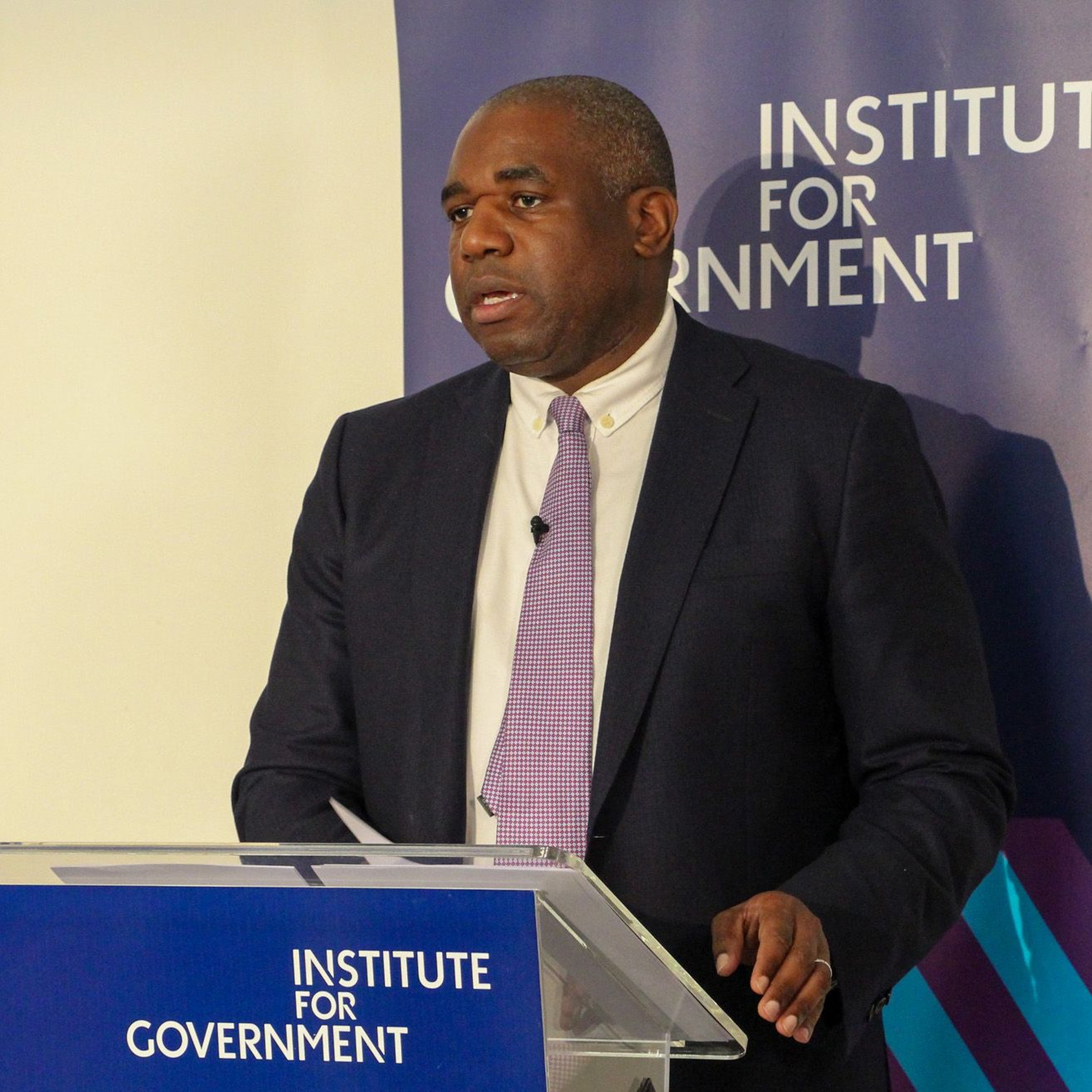
The Rt Hon David Lammy MP set out how a foreign policy lens of 'progressive realism' might affect the practice of diplomacy, should Labour win the election. The discussion covered the evolution of the Foreign Office as an institution, under both Labour and Conservative governments. It focused in particular on the balance between traditional diplomatic activity and the new demands created by climate change, global health challenges and the regulation of emerging technologies. The Shadow Foreign Secretary also explored the convergence between domestic economic and foreign policy and its implications for how Labour's mission-driven approach would shape how Whitehall works on international issues. Following his speech, David Lammy was in conversation with Dr Hannah White, Director of the Institute for Government, and took questions from the audience.
Parliament and regulators: How can scrutiny be improved?
Parliament and regulators: How can scrutiny be improved? by Institute for Government
Keynote speech: Lucy Powell MP, Shadow Leader of the Commons
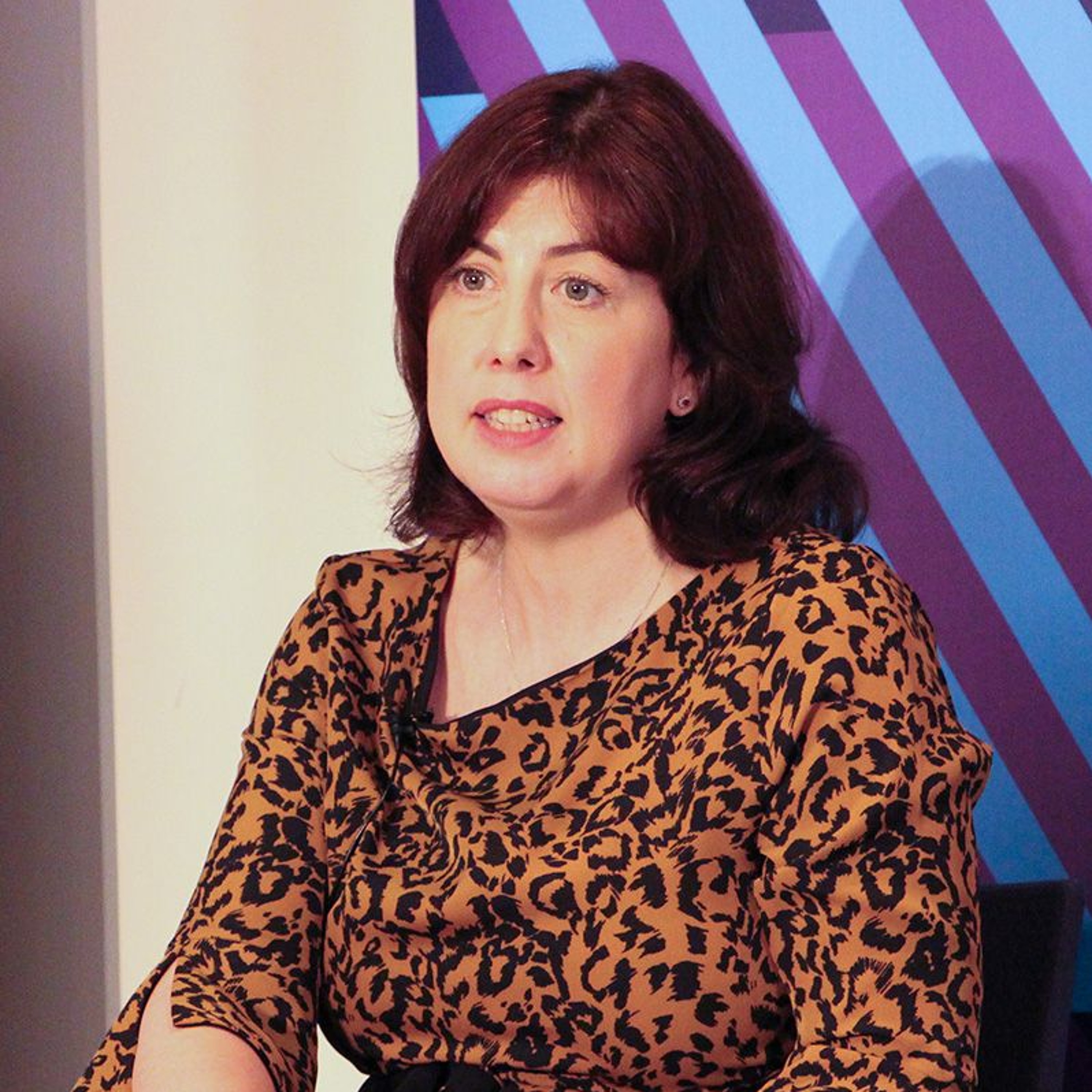
The Institute for Government welcomed Lucy Powell MP, the Shadow Leader of the Commons, to give a keynote speech on how a Labour government would approach parliament, the legislative process, and the role of MPs. With Westminster hit by a series of scandals in recent years, what can be done to restore parliament's image? How can the legislative process be improved? And how would Labour, if elected, approach the way that MPs work in parliament? Following her speech, Lucy Powell was in conversation with Dr Hannah White, Director of the Institute for Government. She then took part in an audience Q&A.
General election: What makes a successful communications strategy?
General election: What makes a successful communications strategy? by Institute for Government
Bringing in the best: How can the civil service recruit and retain top talent?
The success of the civil service has always depended on the recruitment and retention of exceptional individuals – and this means bringing in talented outsiders with particular skills and capabilities. It is 170 years since the Northcote-Trevelyan report argued that people “of the highest abilities should be selected for the highest posts” in Whitehall, while the government’s most recent reform plan, the 2021 Declaration on Government Reform, argued that more external recruits were needed. So, who are the officials at the very top of the civil service – and is enough being done to recruit the best outside talent? Permanent secretaries Cat Little, Sarah Munby and Gareth Davies joined us to discuss the benefits of external recruitment to the civil service.
Local and mayoral elections 2024: Why they matter and what to look out for
On Thursday 2 May 2024, voters across England and Wales will head to the polls in a major set of local and mayoral elections. The highest-profile contests will be the election of 10 influential metro mayors – including in Greater London and across the north and the midlands. Together these leaders will be responsible for over £25bn of public spending and will play a vital role in shaping the fortunes of the places they represent. Thousands of councillors in over 100 local areas across England are also up for election, with the successful candidates taking responsibility for key public services at a time of acute financial pressures across local government. Voters will also elect 37 police and crime commissioners and the 25 members of the London Assembly. These elections are far more important than just providing a straw in the wind for the general election to come. To discuss why these elections matter and what to expect, the Institute for Government hosted a public event with expert panellists including: Sarah Calkin, Editor of the Local Government Chronicle Sir John Curtice, Professor of Politics at Strathclyde University and Senior Research Fellow at the National Centre for Social Research Akash Paun, Programme Director at the Institute for Government The event was chaired by Emma Norris, Deputy Director at the Institute for Government.

Does London need a new devolution deal?
The establishment of the mayor of London and the London Assembly in 2000 was a milestone moment for English devolution. With a budget of over £20bn and responsibility for key functions – including transport, policing and economic development – the mayor of London is one of the most powerful and high-profile figures in British politics. The UK government has gone on to devolve powers to other cities and regions across England and in some cases – such as the ‘trailblazer’ deals offered to Greater Manchester and the West Midlands – these powers have gone further than London’s deal. So is it time to reopen London’s own devolution settlement? Is there a case for further devolution to the capital – and if so of which powers? How could the role of the mayor change in the future? And is wider reform of London’s institutions also needed? Ahead of the May 2024 mayoral and assembly elections, the Institute for Government – in partnership with OnLondon.co.uk – was pleased to host this event to consider where devolution to London goes next. We were joined by an expert panel, comprised of: Alison Griffin, Chief Executive of London Councils Alexander Jan, Chair of the Central District Alliance and Hatton Garden BIDs Antonia Jennings, Chief Executive of Centre for London Professor Tony Travers, Director of LSE London The event was chaired by Akash Paun, Programme Director for Devolution at the Institute for Government. We would like to thank the Central District Alliance BID, the London Heritage Quarter and Primera for kindly supporting this event.
Beyond the dark arts: what next for the Whips’ Office?
From little black books to pet tarantulas, MPs being dragged out of ambulances to vote and tantalising promises of ministerial office, the alleged ‘dark arts’ of the government Whips’ Office have a fearsome reputation. But in reality a government whip is an important conduit between backbenchers and No.10, while also playing an increasingly large role in supporting the wellbeing of MPs. After the election, whips will have to help a large intake of new MPs navigate the Commons – and keep an eye out for any potential ministerial talent. Following the IfG’s recent interviews with former government whips, this event considered how the role has evolved over recent decades. What makes an effective whip? Are whipping practices fit for the 2020s? And how should the role of a government whip change in the future? To explore these questions and more, we were joined by an expert panel, including: Rt Hon Alistair Carmichael MP, former Liberal Democrat Chief Whip Rt Hon Anne Milton, former Deputy Chief Whip Dr Emma Peplow, Head of Oral History at the History of Parliament Trust Chris White, Co-Head, Advocacy at SEC Newgate and former special adviser The event was chaired by Tim Durrant, Programme Director at the Institute for Government.
General election: How can the parties improve ethical standards in government?
Trust in government and politicians continues to fall, and this parliament has seen many ethical scandals, from partygate to bullying. Over the last few years, various organisations including the IfG have called for major reforms to the way ethical standards are upheld in public life, but the government has only made piecemeal changes. Labour has criticised the Conservatives for their performance on this issue, but has recently been less vocal on the topic. With an election due in the coming months, will the political parties make ethical standards an issue during the campaign? To discuss the IfG’s proposals on rebuilding trust in public life, how things can be improved, and why this topic matters ahead of the election, we were pleased to welcome a great panel: Tim Durrant, Programme Director at the Institute for Government Rt Hon Nick Thomas-Symonds MP, Shadow Minister Without Portfolio (Cabinet Office) and Labour MP for Torfaen Esther Webber, Senior UK Correspondent at Politico Rt Hon Sir Jeremy Wright MP, Conservative MP for Kenilworth and Southam and former Attorney General The event was chaired by Dr Hannah White, Director of the Institute for Government.
General election: What role does polling play in shaping political strategy?
Less than a year out from a general election, the significance of opinion polls in shaping public perception and political strategy is increasingly prominent. Political pundits, parties, journalists and members of the public look to opinion polls to give them a picture of what people are thinking about parties and politicians, their priorities and concerns, and how they might vote. Crucially, public opinion will inform political parties’ election strategies and the public’s voting decisions. But with multiple companies publishing a range of different polls, it can be a confusing landscape. To interpret polling results, understanding the methodologies behind opinion polls, including sampling, margin of error and the all-important question framing, is more important than ever. And for those trying to understand party strategies, it is essential to understand the role polling plays. To explore these questions and more, we were joined by an expert panel including: Kelly Beaver MBE, Chief Executive of Ipsos in the UK and Ireland Christabel Cooper, Director of Research at Labour Together Rob Ford, Senior Fellow at UK in a Changing Europe Tom Lubbock, Founding Partner of JL Partners The event was chaired by Jill Rutter, Senior Fellow at the Institute for Government. We would like to thank UKICE for kindly supporting this event.
Keynote speech: Lord McFall of Alcluith, Lord Speaker
The question of how to reform the House of Lords dominates discussions about the upper house, with less attention focused on its day-to-day activities. Since his election as Lord Speaker in 2021, Lord McFall of Alcluith has sought to champion its important role of revising legislation and advising the government, while ensuring the Lords remains on the path of modernisation. Lord McFall has focused on parliamentary outreach and prioritised communicating the value of the House of Lords externally, bringing the devolved parliaments and Westminster closer. He has also worked with schools and universities, and launched a podcast, to demystify the upper house. What are public perceptions of the upper chamber and how have they changed? How has the Lords changed its ways of working? What kinds of links does it have with the devolved parliaments? And what might all of this mean for discussions about reform of the Lords? Lord McFall addressed these questions and more in a keynote speech at the Institute for Government, before taking part in a discussion with the IfG’s Director Dr Hannah White and an audience Q&A. Lord McFall of Alcluith became Lord Speaker in 2021, having served as senior deputy speaker for five years. He entered the Lords in 2010 after spending 23 years in the Commons as Labour MP for Dumbarton and later West Dumbartonshire. There, he served as a minister in the Northern Ireland Office, a government whip, and chaired the Treasury Select Committee between 2001 and 2010, including during the global financial crisis. Before entering politics, Lord McFall worked for over a decade as a teacher.
General election: How big a threat is AI and disinformation to elections in 2024?
AI-generated ‘deepfake’ audio clips of both London mayor Sadiq Khan and leader of the opposition Sir Keir Starmer have circulated on social media. A faked robocall impersonating Joe Biden was sent to voters before a primary election. The number of AI-enhanced images of politicians is increasing. In a year when over two billion people in more than 50 countries will vote in elections, the use of AI technology – more widely accessible than ever – and disinformation could have a major impact on trust and integrity. So what can be done to tackle this growing problem? What can political parties, government, media companies and civil society do to mitigate the risks of AI and ensure electoral integrity? And what steps can be taken ahead the elections of 2024 and then in the longer term. We were joined by an expert panel, including: Professor Joe Burton, Professor of International Security in the Department of Politics, Philosophy and Religion at Lancaster University Louise Edwards, Director of Regulation and Digital Transformation at the Electoral Commission Chris Morris, Chief Executive of Full Fact Simon Staffell, Director of Government Affairs at Microsoft The event was chaired by Jill Rutter, Senior Fellow at the Institute for Government. We would like to thank Lancaster University for kindly supporting this event.
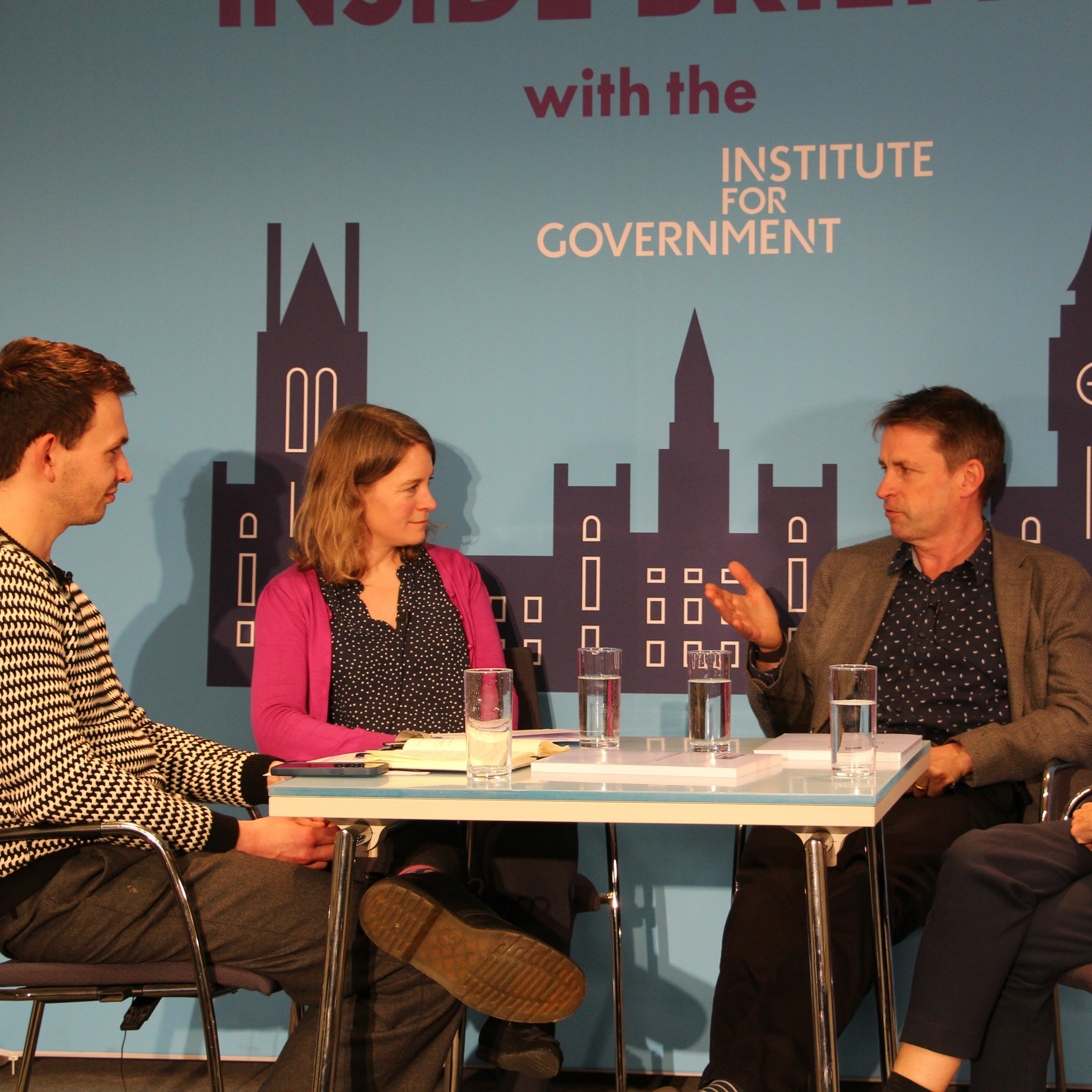
Inside Briefing LIVE -The General Election Budget
Just a few hours after Jeremy Hunt sets out his spring budget, a team of Institute for Government experts gathered in the IfG studio to record a special edition of the Inside Briefing podcast. Olly Bartrum, Jill Rutter, Dr Gemma Tetlow and Giles Wilkes gave their instant reaction to the budget and shared expert analysis of a major day for the country. What have we learned from the chancellor’s big announcements and what choices did he make? What did the new OBR forecasts show about the UK’s economic prospects? What did it mean for public services? How did Labour respond? And how might this budget shape the battles on the economy at the next general election – and when that election might be held?
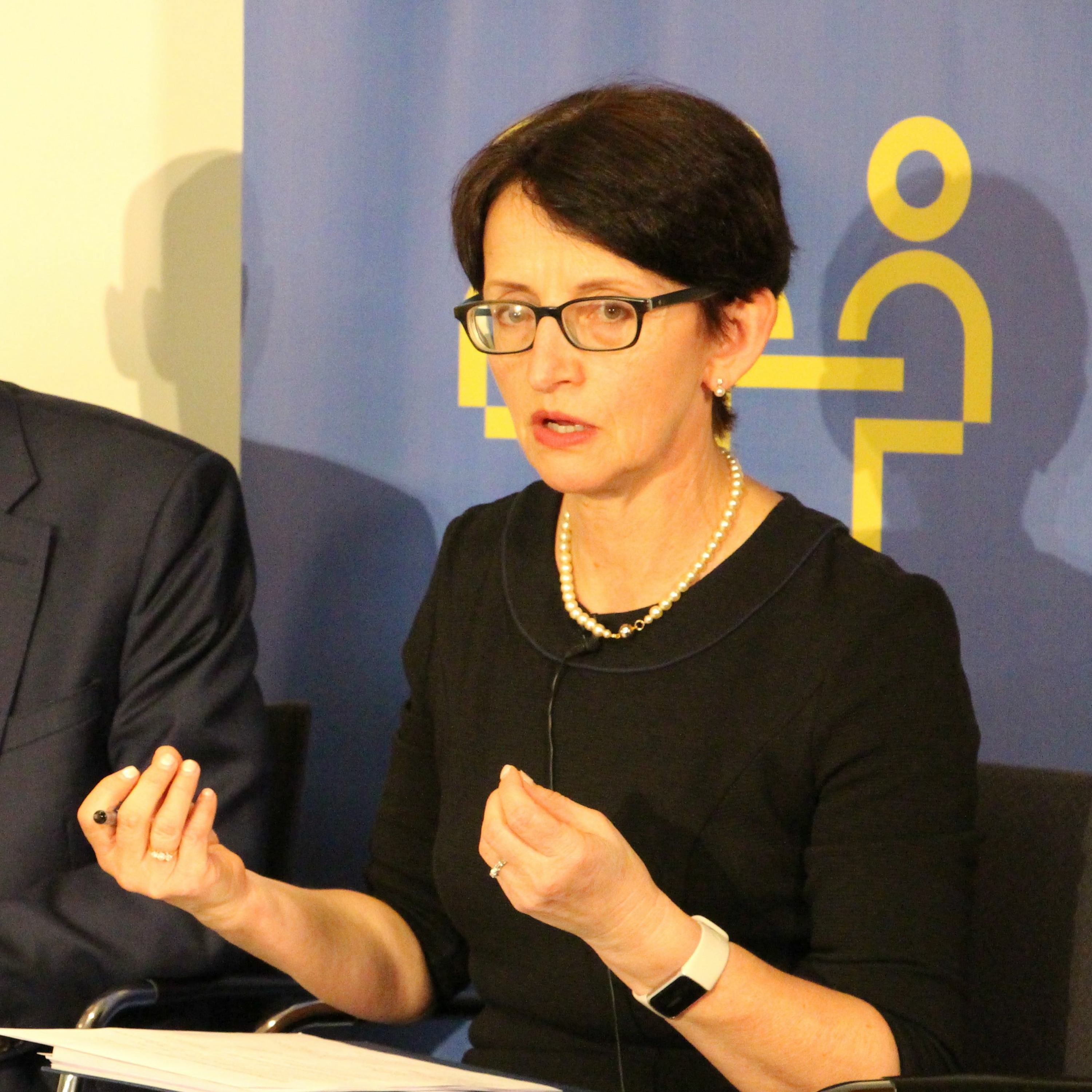
How can public sector strikes be solved more effectively?
Public services have faced the greatest level of disruption from strikes in more than a quarter of a century. Over the past year nurses, ambulance drivers, teachers, junior doctors, consultants, and civil servants, among others, have all staged walkouts to protest against pay and working conditions. While improved pay offers from Rishi Sunak’s government have resolved many disputes, some staff are still on the picket line and other disputes could flare up again. So what impact has recent industrial disputes had on public service performance? What skills do ministers, civil servants, frontline public sector leaders and unions need to effectively negotiate with each other and resolve disputes – and what mechanisms can be used to resolve entrenched disputes? How effective are pay review bodies and do they need to be reformed? And to what extent will the Strikes (Minimum Service Levels) Act help or hinder the management of industrial dispute? To discuss these questions and more, we were joined by an expert panel, including: Mike Clancy, General Secretary at Prospect Baroness Finn, former Government Adviser on Industrial Relations Raj Jethwa, Chief Executive at UCEA Kate Nowicki, Director of Dispute Resolution at Acas The event was chaired by Nick Davies, Programme Director at the Institute for Government.

Does the Treasury wield too much power over government?
The Treasury is perhaps the most powerful department in Whitehall. Its ownership of public spending means it has direct control over the money available to the rest of government, while the Treasury’s responsibility for tax policy gives it enormous influence over the finances of households and businesses. But criticism of the department’s influence on government policy is almost as old as the institution itself, with frequent complaints about the “dead hand of the Treasury” or attacks on the department’s “orthodoxy”. However, a recent IfG report found many of the fiercest criticisms to be overblown: many simply represent a dislike of a budget constraint. The department plays an important function in effectively managing public spending and guarding against financial disorder. It has also consistently been a champion of economic growth, though there is debate about how that is managed against its responsibility for managing government spending. While the department has clear strengths, there are clearly problems with how it functions. The Treasury often takes a short-term approach, is frequently accused of micromanaging other departments, and wields excessive influence over government policy relative to the rest of the centre. So how can these problems be addressed? How much are they due to the relative weakness of other departments or the incentives facing Treasury ministers? And just what impact does the Treasury have on government policy making? Our expert panel exploring these issues and more featured: James Bowler CB, Permanent Secretary of HM Treasury Anita Charlesworth, Director of Research at the Health Foundation and former Director of Public Spending at HM Treasury David Gauke, former Chief Secretary to the Treasury, Lord Chancellor and Secretary of State for Work and Pensions Giles Wilkes, Senior Fellow at the Institute for Government and co-author of Treasury orthodoxy, and former No 10 special adviser for industrial strategy The event was chaired by Dr Gemma Tetlow, Chief Economist at the Institute for Government.
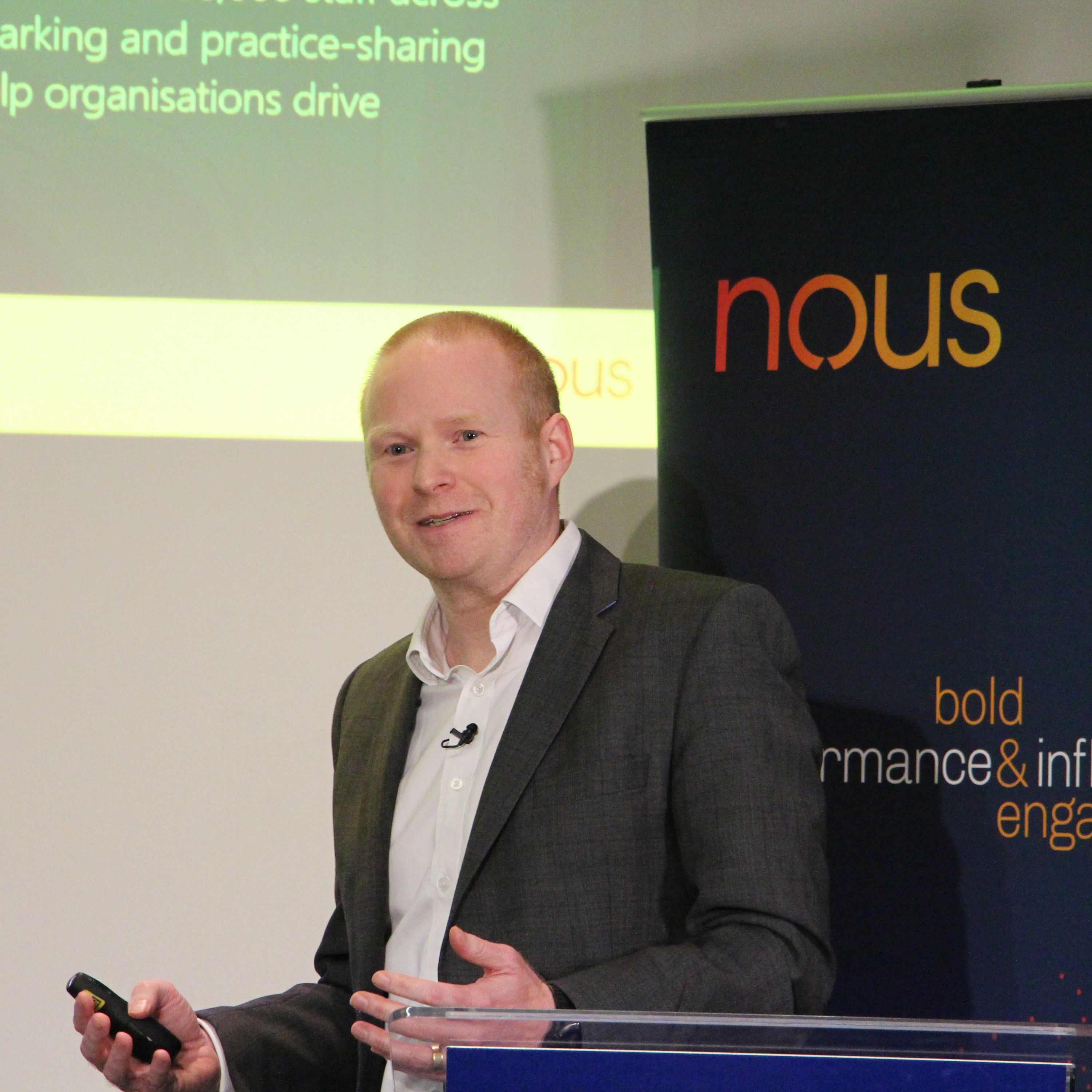
Data Bites #49: Getting things done with data in government
Better use of data is key to more effective government. Across government, teams are doing fascinating work with data. But those projects don’t get the attention they deserve. Data Bites aims to change that. This event was the 49th in our series, where the speakers present their work in an exciting, quickfire format.
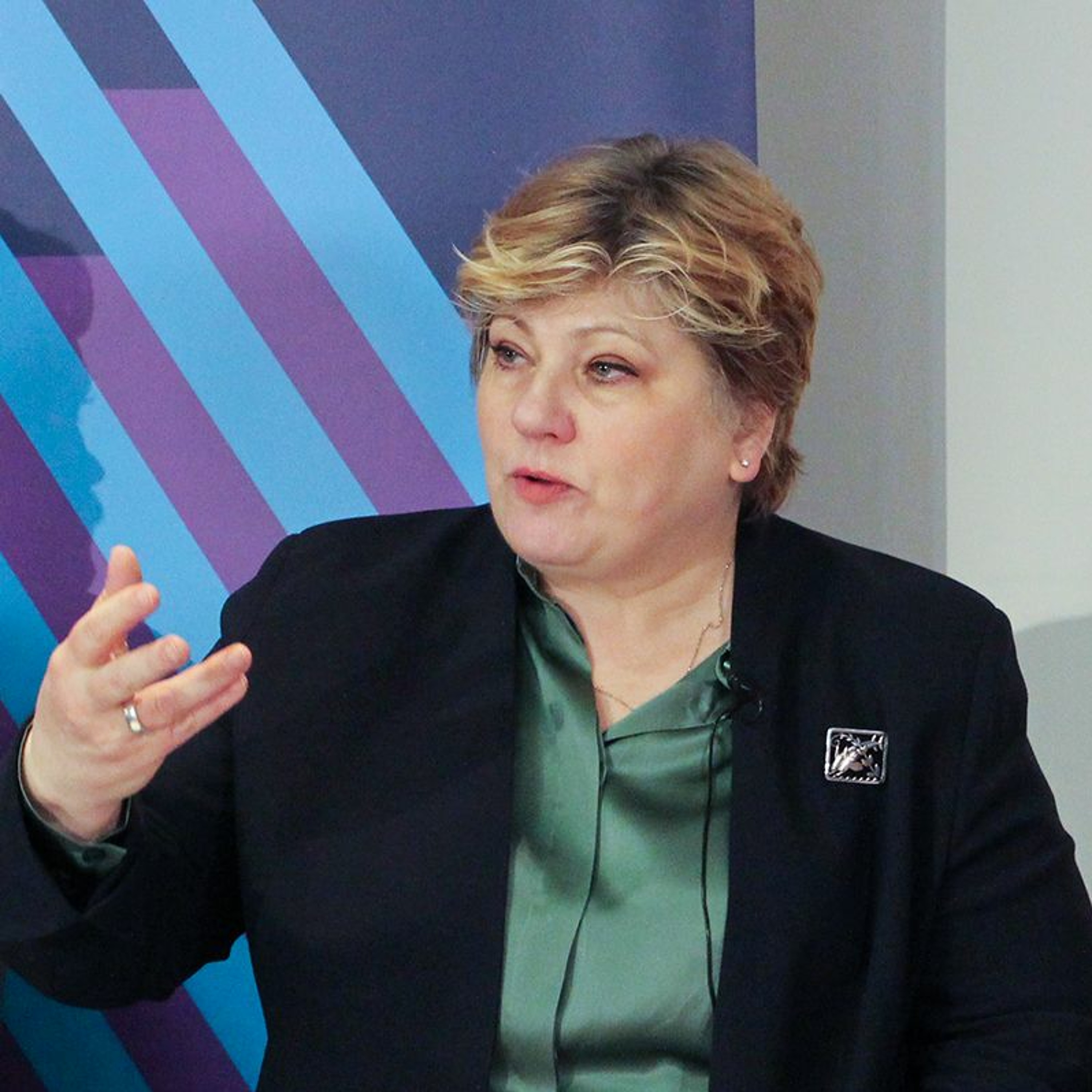
How can government tackle fraud?
Fraud is the UK’s most common crime. But despite 3.5 million incidents reported in 2022/23, 40% of all reported crimes, only one in a thousand results in a charge or summons. So why is there such a huge gap between preventing, detecting and prosecuting this crime – and what can be done to fix the problem? A wide range of organisations have responsibility for tackling fraud, including the Home Office, National Crime Agency, Serious Fraud Office, City of London Police, Metropolitan Police Service, Financial Conduct Authority and the National Cyber Security Centre. However, there are problems with coordination, capacity and capability. So what can government and others do to help prevent fraud? How can coordination among the various agencies responsible for tackling fraud be improved? And what steps could be taken to help increase detection and prosecution rates? We were joined by an expert panel, including: Francesca Carlesi, CEO of Revolut UK Adrian Searle, Director of the National Economic Crime Centre Nick Stapleton, Co-Presenter of BBC Scam Interceptors Rt Hon Emily Thornberry MP, Shadow Attorney General The event was chaired by Nick Davies, Programme Director at the Institute for Government. We would like to thank Revolut for kindly supporting this event.
In conversation with Alex Chisholm
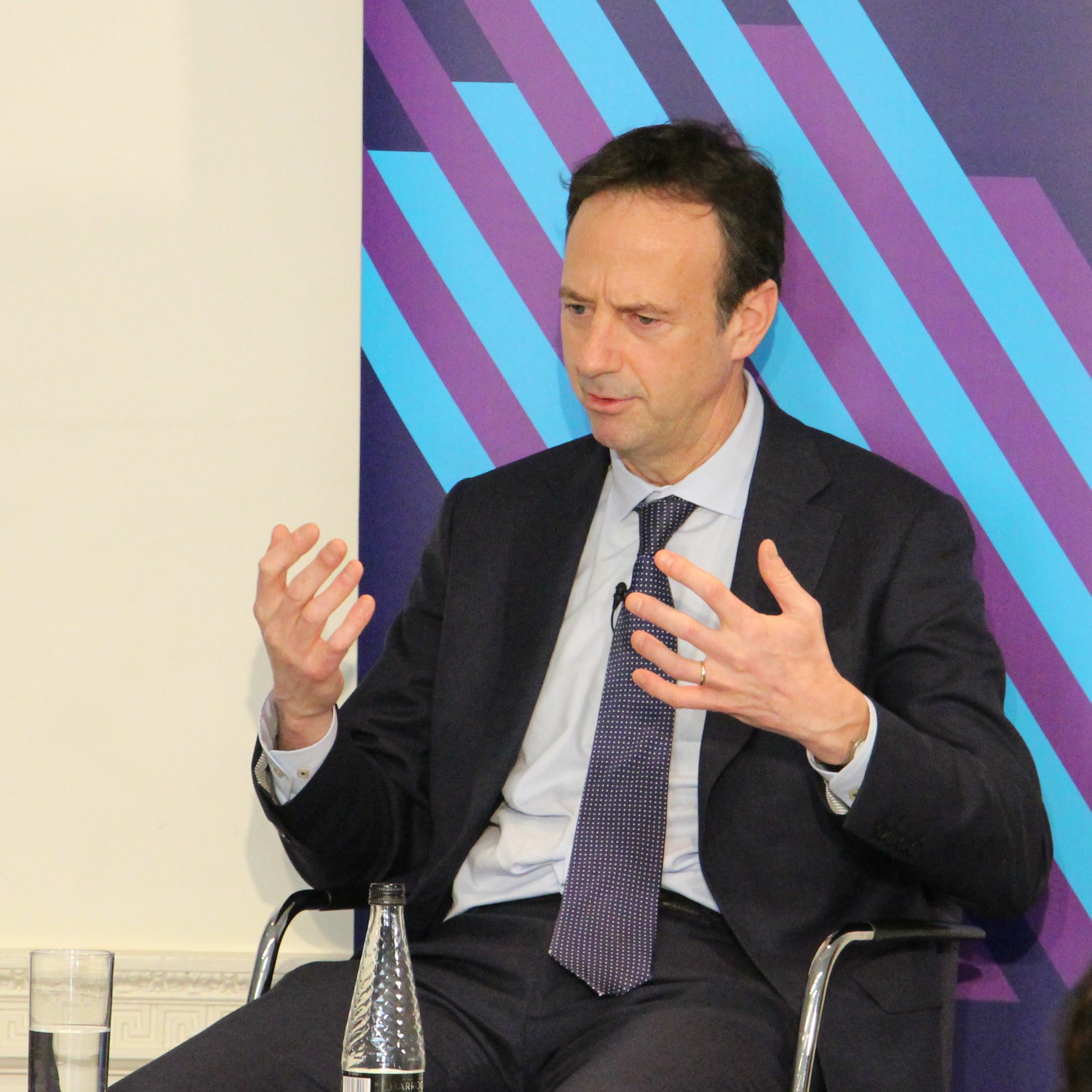
As he prepares to step down as Chief Operating Officer for the Civil Service and Permanent Secretary for the Cabinet Office, Alex Chisholm spoke at the Institute for Government for his final time as a civil servant. During nearly a decade at the top of the civil service as a permanent secretary, Alex served four prime ministers and worked with three cabinet secretaries, covering eventful and tumultuous times. After four years as permanent secretary at the Department for Business, Energy and Industrial Strategy, in 2020 Alex moved to his current role at the heart of the civil service. Having played a leading part in the civil service reform agenda, Alex reflected on the scheme to relocate parts of the civil service from London, efforts to improve Whitehall’s use of data and digital and to overhaul cross-departmental working, and his reflections on the government’s response during the Covid-19 pandemic. At the event, Alex Chisholm was in conversation with IfG Director Dr Hannah White and will take part in an audience Q&A.
How can government improve its approach to asylum policy making?
The future of the UK asylum system could dominate the 2024 general election campaign. The prime minister has made his controversial Rwanda plan a flagship part of the government’s agenda, while Labour has committed to reforming the asylum system as part of its plan to tackle Channel crossings. Rishi Sunak pledged to clear the legacy asylum backlog by the end of 2023, but the sizeable backlog of people waiting for a decision remains – with the government struggling to deal with new asylum cases and problems elsewhere in the system. So what are these problems? Does the government have a coherent plan to bring down the backlog? And what can be done to improve the UK’s asylum system in the long term? This panel examined what steps the government can take to ensure the asylum system is fit for purpose in the long term. We were joined by an expert panel, including: Alvina Tamara Chibhamu, Ambassador at the VOICES network Sal Copley, Executive Director of Communications and External Affairs at the British Red Cross Lizzie Dearden, Home affairs journalist and author Sir Philip Rutnam, former Permanent Secretary at the Home Office The event was chaired by Joe Owen, Director of Impact at the Institute for Government. We would like to thank the British Red Cross for kindly supporting this event.