IEA Podcast
402 episodes — Page 5 of 9

Trump's "Beautiful Bill" & a New UK Tax Raid? | IEA Podcast
In this Institute of Economic Affairs Podcast, Callum Price hosts a discussion with Daniel Freeman (Managing Editor) and Kristian Niemietz (Editorial Director) examining fiscal responsibility challenges facing both the UK and US governments. The conversation focuses heavily on the UK government's U-turn on winter fuel payment cuts for pensioners - a £1.5 billion Treasury measure that faced significant political backlash and contributed to Labour's poor performance in local elections. The panelists explore why this relatively small spending cut proved politically impossible to sustain, despite the UK's mounting fiscal pressures and expanding state expenditure.The discussion delves into the broader problems with universal benefits and middle-class welfare, explaining how these programs create fiscal illusions where politicians redistribute money from taxpayers back to themselves while appearing to provide "free" benefits. Kristian Niemietz argues that age-related benefits are particularly difficult to reform because pensioners act as a focused political lobby, unlike the diverse working-age population. The conversation also examines how the economic position of pensioners has dramatically improved over the past 25-30 years, with many now having higher disposable income than working-age people, yet public perception remains outdated.The episode then shifts to comparing different fiscal approaches, contrasting the UK's high-tax, high-spend model with Trump's "Big Beautiful Bill" in America - a massive deficit-financed package combining tax cuts with increased spending on border security and defence. While the US has historically leveraged its reserve currency status to sustain larger deficits, the panelists warn that even America faces limits, with rising interest costs now exceeding defence spending. They conclude that sustainable fiscal policy requires addressing spending first before considering tax cuts, rather than relying on optimistic growth projections to balance the books.The Institute of Economic Affairs is an educational charity, it does not endorse or give support for any political party in the UK or elsewhere. Our mission is to improve understanding of the fundamental institutions of a free society by analysing and expounding the role of markets in solving economic and social problems. This is a public episode. If you'd like to discuss this with other subscribers or get access to bonus episodes, visit insider.iea.org.uk/subscribe

Britain's 15-Years of Stagnation & What to Do | Sam Bowman | IEA Interview
In this Institute of Economic Affairs Podcast, IEA Executive Director Tom Clougherty interviews Sam Bowman, founding editor of Works in Progress magazine, head of publishing at Stripe, and board member at the Mercatus Centre at George Mason University. The conversation explores Bowman's journey from his early days at the Adam Smith Institute to his current work promoting progress studies - a movement focused on economic, technological and scientific advancement. They discuss the cultural shift against material progress in developed countries, comparing it to the more optimistic, improvement-focused mindsets still prevalent in Central and Eastern Europe, East Asia, and parts of the United States.The interview delves into Bowman's controversial thesis that Britain should be understood as a developing country rather than a frontier economy, arguing that the UK's growth problems stem primarily from barriers to building housing, infrastructure and energy projects rather than lack of technological innovation. They examine how housing shortages constrain economic growth by preventing people from moving to more productive locations, particularly in knowledge-based industries where proximity and agglomeration effects are crucial. The conversation also covers the decline of economic thinking on the political right, the rise of "keyhole solutions" as an alternative to elite persuasion, and the regulatory constraints that prevent Britain from catching up with more successful countries.The discussion concludes with Bowman's concerns about Europe's economic stagnation and intellectual complacency, contrasting this with his optimism about technology's potential to solve seemingly intractable problems - from obesity through new medications to the transformative possibilities of artificial intelligence. Throughout, both speakers emphasise that many of Britain's economic challenges could be addressed through relatively straightforward policy changes focused on removing barriers to construction and development, rather than requiring breakthrough innovations or complex new technologies.The Institute of Economic Affairs is an educational charity, it does not endorse or give support for any political party in the UK or elsewhere. Our mission is to improve understanding of the fundamental institutions of a free society by analysing and expounding the role of markets in solving economic and social problems. This is a public episode. If you'd like to discuss this with other subscribers or get access to bonus episodes, visit insider.iea.org.uk/subscribe
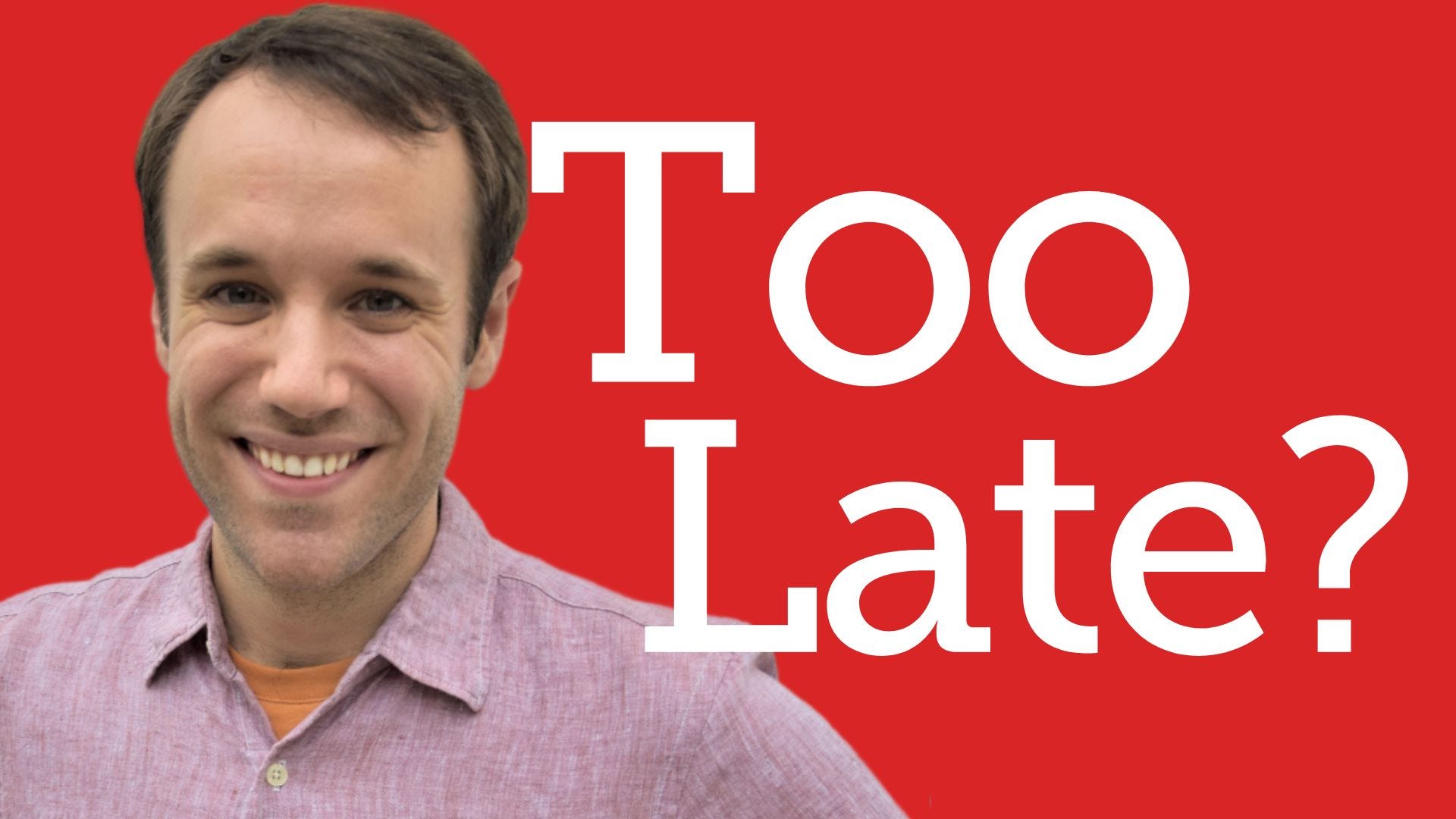
The Western Population Crisis | Lyman Stone | IEA Interviews
In this Institute of Economic Affairs Podcast, Daniel Freeman interviews Lyman Stone, demographer and senior fellow at the Institute of Family Studies. The conversation explores the global decline in birth rates, examining why people across the developed world are having fewer children than they desire. Stone explains how skills-biased technical change, delayed marriage, and reduced in-person socialising have contributed to fertility rates falling below replacement levels, with countries like South Korea now experiencing particularly dramatic declines. Stone presents compelling evidence that people genuinely want more children than they're having, citing longitudinal survey data and studies of IVF patients that show undershooting fertility goals leads to decreased happiness and higher rates of depression. He argues this represents a genuine welfare loss rather than simply changing preferences. The discussion covers various policy responses, including cash transfers for families, which Stone demonstrates can effectively increase birth rates at a cost of roughly $200-400,000 per marginal child - a figure he argues represents good value given the economic benefits children bring to society. The interview concludes with an examination of non-fiscal policy solutions that can help close the fertility gap. Stone discusses research showing how economic freedom, particularly labour market flexibility, strongly correlates with higher fertility rates. He also explores how regulatory reforms around childcare, housing policy, and even seemingly minor issues like car seat requirements can collectively impact family formation. Stone advocates for deregulation in areas like childminding and emphasises that while cash transfers are effective, removing regulatory barriers offers a cost-effective complement to fiscal policy in supporting families who want more children.The Institute of Economic Affairs is an educational charity, it does not endorse or give support for any political party in the UK or elsewhere. Our mission is to improve understanding of the fundamental institutions of a free society by analysing and expounding the role of markets in solving economic and social problems. This is a public episode. If you'd like to discuss this with other subscribers or get access to bonus episodes, visit insider.iea.org.uk/subscribe
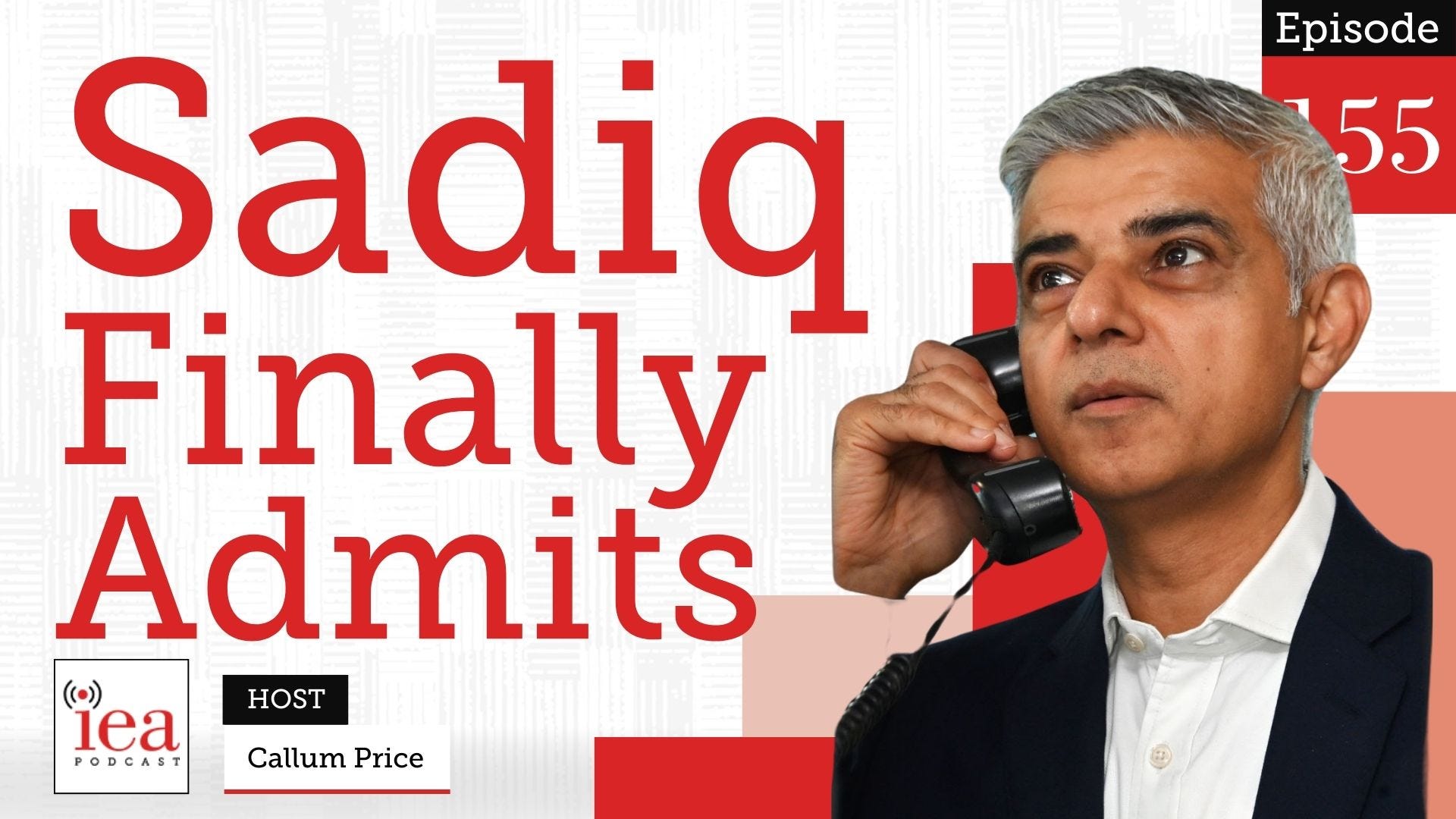
Britain's Growth Delusion: The Numbers Don't Lie | IEA Podcast
In this Institute of Economic Affairs podcast, host Callum Price is joined by Communications Manager Reem Ibrahim and Editorial Director Kristian Niemietz to discuss the UK's recent economic performance and growth prospects. The conversation examines the first quarter's 0.7% growth figure - exceeding expectations by 41% - though the panel expresses caution about future performance given incoming challenges like increased employer National Insurance contributions and Trump's tariff policies. They analyse Labour's pivot to prioritising growth while noting the contradictions between their pro-growth rhetoric and policies like the Employment Rights Bill that may constrain economic expansion. The discussion moves to housing policy, particularly Sadiq Khan's recent acknowledgment that London needs to build on the greenbelt to meet its 80,000 annual housing target. Niemietz points out this reality should have been obvious years ago, referencing a decade-old Shelter report titled "Brownfield Isn't Enough." The panel explores how the greenbelt designation - much of which isn't actually green space - has artificially constrained London's growth since the 1950s, unlike other European cities like Paris that have expanded significantly. They debate whether Khan's announcement represents genuine reform or merely political positioning, noting his track record on affordable housing delivery remains poor. The final segment covers the 2025 Nanny State Index, revealing the UK has risen from 11th to 7th place among European countries for lifestyle restrictions, ranking first for tobacco regulations. Ibrahim highlights the lack of correlation between nanny state policies and public health outcomes, noting that economic growth shows stronger links to life expectancy than regulatory restrictions. The discussion emphasises how countries like Sweden achieve better smoking cessation rates through harm reduction approaches rather than punitive regulations, and warns that upcoming legislation like the Tobacco and Vapes Bill will likely push the UK even higher up the nanny state rankings.The Institute of Economic Affairs is an educational charity, it does not endorse or give support for any political party in the UK or elsewhere. Our mission is to improve understanding of the fundamental institutions of a free society by analysing and expounding the role of markets in solving economic and social problems. This is a public episode. If you'd like to discuss this with other subscribers or get access to bonus episodes, visit insider.iea.org.uk/subscribe
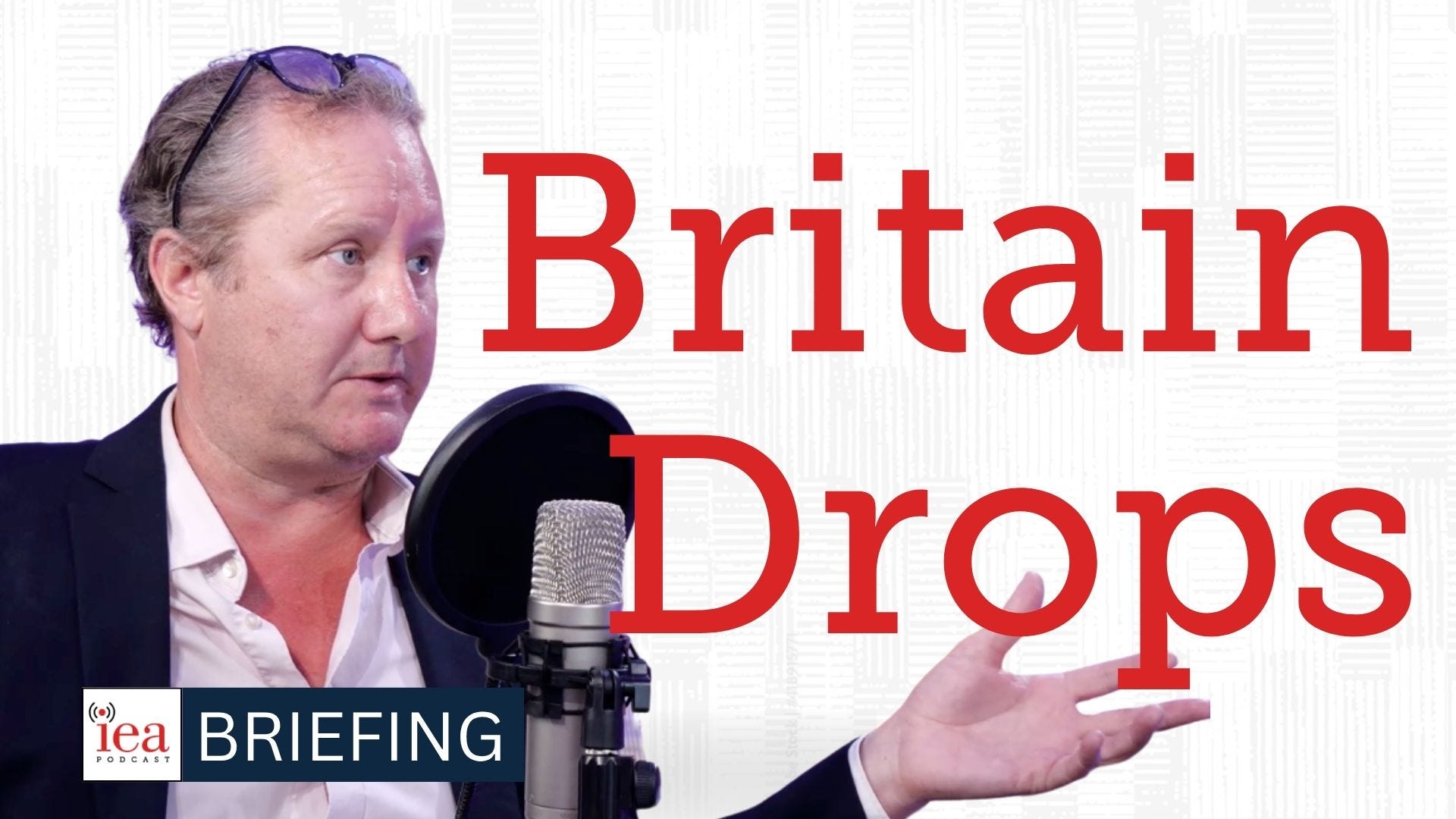
Why Britain Leads Europe in Lifestyle Restrictions | Nanny State Index 2025 | IEA Briefing
In this Institute of Economic Affairs Briefing, IEA Communications Manager Reem Ibrahim is joined by Dr. Christopher Snowdon, Head of Lifestyle Economics at the IEA, to discuss the newly published 2025 Nanny State Index. The conversation explores this comprehensive ranking of European countries based on their paternalistic policies across nicotine products, food, soft drinks, and alcohol, examining how these regulations impact consumer freedom across 29 nations. Dr. Snowdon explains the methodology behind the index, which weighs various restrictions and taxes implemented for paternalistic rather than standard consumer protection reasons. Germany holds its position as the least restrictive country, while Turkey tops the rankings as the most paternalistic, followed by Lithuania, Hungary, Finland, and Ireland. The UK has risen from 11th to 7th place since the last index, marking a concerning trend towards greater lifestyle restrictions. The interview concludes with an analysis of why wealthier countries tend to have healthier populations - not due to nanny state policies, but because of higher GDP per capita. Dr. Snowdon highlights the lack of correlation between strict lifestyle regulations and improved health outcomes, noting that political motivations often include revenue generation and appearing to "do something" about public health issues. He warns that without public pushback and making high nanny state rankings a source of shame rather than pride, this trend towards increased paternalism is likely to continue across Europe.The Institute of Economic Affairs is an educational charity, it does not endorse or give support for any political party in the UK or elsewhere. Our mission is to improve understanding of the fundamental institutions of a free society by analysing and expounding the role of markets in solving economic and social problems. This is a public episode. If you'd like to discuss this with other subscribers or get access to bonus episodes, visit insider.iea.org.uk/subscribe
The Real Reason Britain Is Poorer Now Than America's Poorest State | Douglas Carswell | IEA Interview
In this Institute of Economic Affairs podcast, IEA Communications Manager Reem Ibrahim interviews Douglas Carswell, President and CEO of the Mississippi Centre for Public Policy, former MP, and co-founder of Vote Leave. The conversation examines Mississippi's remarkable economic transformation, where the state has achieved per capita GDP that now exceeds the UK, with both Germany in its sights. Carswell explains how Mississippi accomplished this through three key reforms: implementing a flat rate income tax that will be completely abolished by 2037, radical labour market deregulation including the elimination of most occupational licensing restrictions, and maintaining cheap energy by avoiding green policies that have negatively impacted other regions.The discussion moves to Carswell's educational expertise, particularly Mississippi's educational improvements through phonics-based reading instruction and mandatory grade retention for underperforming students. He highlights the school choice revolution sweeping America, with 15-16 states now offering universal school choice options, allowing parents to direct their per-pupil funding to any school of their choice. Carswell argues that this market-based approach to education could significantly improve standards and give parents genuine control over their children's education, drawing parallels to Milton Friedman's voucher system proposals.The interview concludes with Carswell outlining his comprehensive plan for Britain's economic revival, detailed in his recent work "Milestones: Nine Steps to Restore Britain." He diagnoses the UK's problems as stemming from 28 years of "Blairite" governance characterised by technocratic overreach, monetary stimulus as a substitute for genuine economic reform, and the belief that human nature is interchangeable. His proposed solutions include dramatic cuts to public spending by reducing welfare dependency, fundamental tax reforms including moves toward flat taxation, abolition of restrictive legislation like the Equality Act and Human Rights Act, and comprehensive planning reform to address the housing crisis. Carswell emphasises that Britain's problems are not merely economic but represent a deeper moral and cultural crisis requiring politicians to address forgotten communities who feel their country has been taken from them.The Institute of Economic Affairs is an educational charity, it does not endorse or give support for any political party in the UK or elsewhere. Our mission is to improve understanding of the fundamental institutions of a free society by analysing and expounding the role of markets in solving economic and social problems. This is a public episode. If you'd like to discuss this with other subscribers or get access to bonus episodes, visit insider.iea.org.uk/subscribe
David Friedman Explains Why Trump's Tariffs Will Fail | IEA Live
In this Institute of Economic Affairs Podcast, IEA Executive Director Tom Clougherty interviews David Friedman, renowned economist and author of "The Machinery of Freedom." The conversation explores Friedman's critique of modern trade policy discussions, which he compares to using "Ptolemaic astronomy" for contemporary issues. Friedman systematically dismantles common misconceptions about trade deficits, tariffs, and international commerce while explaining how exchange rates naturally balance trade between nations.David shares his insights on how tariffs harm both importing and exporting industries within a country, making the entire nation poorer by forcing less efficient production methods. The discussion also covers recent political developments, including Trump's trade policies, Argentina's economic reforms, and the prospects for libertarian principles in modern governance. Friedman explains why free market ideas often struggle politically despite their economic soundness.The interview concludes with an examination of immigration policy, private cities, and alternative governance systems. Friedman offers his perspective on monarchy as a governance structure and critiques various approaches to libertarian politics. Throughout the conversation, he demonstrates his characteristic analytical approach, drawing from both economic theory and historical examples to illustrate complex concepts in accessible terms.The Institute of Economic Affairs is an educational charity, it does not endorse or give support for any political party in the UK or elsewhere. Our mission is to improve understanding of the fundamental institutions of a free society by analysing and expounding the role of markets in solving economic and social problems. This is a public episode. If you'd like to discuss this with other subscribers or get access to bonus episodes, visit insider.iea.org.uk/subscribe

India & US Trade Deals: Do They REALLY Benefit Britain? | IEA Podcast
In this episode of the Institute of Economic Affairs Podcast, host Reem Ibrahim, Communications Manager and Linda Whetstone Scholar, is joined by Tom Clougherty, Executive Director, and Kristian Niemietz, Editorial Director, to discuss the recent US & India UK trade deals and Northern Ireland's new approach to the National Health Service.The discussion begins with an analysis of the UK-India trade deal, which eliminates 99% of tariffs for the UK and 90% for India. The panel examines the economic benefits of the agreement while expressing disappointment about how some politicians, particularly on the right, focused heavily on National Insurance exemptions for Indian workers rather than celebrating the trade benefits. The conversation then shifts to the US-UK trade agreement, which removes tariffs on steel, aluminium, and establishes quotas for beef and cars, though the panel notes it falls short of a comprehensive free trade agreement.The final segment examines Northern Ireland's new NHS policy that allows patients on long waiting lists to seek treatment abroad, initially in the Republic of Ireland with plans to extend to the EU, and claim reimbursement up to what treatment would have cost in Northern Ireland. The panel discusses how this approach expands patient choice and could relieve pressure on the Northern Irish NHS, though it currently applies to a limited list of treatments and requires patients to pay upfront before claiming costs back.The Institute of Economic Affairs is an educational charity, it does not endorse or give support for any political party in the UK or elsewhere. Our mission is to improve understanding of the fundamental institutions of a free society by analysing and expounding the role of markets in solving economic and social problems. This is a public episode. If you'd like to discuss this with other subscribers or get access to bonus episodes, visit insider.iea.org.uk/subscribe
Britain's Energy Disaster & How Innovation Could Turn It Around | Matt Ridley
In this IEA Podcast, Andy Mayer, COO and Energy Analyst, interviews Matt Ridley, former businessman, conservative peer, and author of books including "The Rational Optimist" and "How Many Light Bulbs Does It Take to Change the World." They discuss the recent power grid failure in Spain and Portugal, exploring how increasing reliance on intermittent energy sources like wind and solar may contribute to grid instability. Ridley explains the technical challenges of maintaining grid frequency when traditional "spinning" power generation is replaced by renewable sources.The conversation shifts to Britain's energy policy and high electricity costs, which Ridley claims are now the highest in the developed world for both industrial and domestic users. They examine nuclear power's potential role in energy security and the regulatory barriers that have made nuclear plants increasingly expensive and time-consuming to build. Ridley advocates for small modular reactors that could be manufactured at scale rather than the current approach of building nuclear plants as "one-off" projects.Ridley also discusses his theories on innovation and evolution, drawing parallels between biological evolution and technological development. He argues that innovation flourishes in environments with regulatory freedom, faster decision-making, and "permissionless" systems that allow ideas to develop from the bottom up rather than through top-down government planning. Despite his criticisms of current UK energy policy, Ridley maintains his identity as a "rational optimist" about global technological development and human progress, while lamenting the lost opportunities from what he sees as misguided energy transition strategies.The Institute of Economic Affairs is an educational charity, it does not endorse or give support for any political party in the UK or elsewhere. Our mission is to improve understanding of the fundamental institutions of a free society by analysing and expounding the role of markets in solving economic and social problems. This is a public episode. If you'd like to discuss this with other subscribers or get access to bonus episodes, visit insider.iea.org.uk/subscribe

Europe Goes Dark & Trump's 100 Days | IEA Podcast
In this episode of the IEA Podcast, host Callum Price (Director of Communications) is joined by Tom Clougherty (Executive Director) and Andy Mayer (Energy Analyst) to discuss Trumps’ first 100 days, London housing crisis and recent energy issues. They examine the blackouts in the Iberian Peninsula, where approximately 60% of Spain's power was coming from solar energy before system failures occurred. Andy Mayer explains how this demonstrates the systemic risks of relying too heavily on renewable energy without proper balancing measures, and critiques the UK government's announcement requiring solar panels on all new builds.The conversation shifts to London's housing crisis, referencing an article in The Economist about brownfield sites with planning permission that remain undeveloped. Tom Clougherty explains how approximately 400,000 homes could be built on these sites, but development is hindered by requirements like affordable housing quotas and biodiversity targets that make projects financially unviable. The team discusses how these regulations prevent market-led development in a city desperately needing more housing.The podcast concludes with analysis of Donald Trump's first 100 days in office and UK local election results. They examine the economic implications of Trump's tariff policies and question whether Elon Musk's Department of Government Efficiency will achieve meaningful reductions in government spending. The conversation finishes with reflections on Reform UK's recent by-election win against Labour and discussions about whether Reform will develop a coherent policy platform or remain primarily a protest party.The Institute of Economic Affairs is an educational charity, it does not endorse or give support for any political party in the UK or elsewhere. Our mission is to improve understanding of the fundamental institutions of a free society by analysing and expounding the role of markets in solving economic and social problems. This is a public episode. If you'd like to discuss this with other subscribers or get access to bonus episodes, visit insider.iea.org.uk/subscribe

Jacob Rees-Mogg on Why The UK's Economic System Is Broken | IEA Interviews
In this Institute of Economic Affairs podcast, IEA Executive Director Tom Clougherty interviews Sir Jacob Rees-Mogg, former Minister of State for Brexit Opportunities and Government Efficiency, and former Business Secretary. The conversation covers the exodus of wealth creators from Britain, examining how tax policies - particularly changes to non-dom status initiated by successive governments - have driven wealthy individuals and businesses overseas. They also discuss the broader issues of high taxation, economic growth, and government inefficiency.Sir Jacob shares his views on government spending and the need for substantial reforms, identifying specific areas like overseas aid, carbon capture and storage, and Bank of England quantitative easing as targets for cuts. He criticises the civil service as "bloated" and argues for reforming capital taxes, especially inheritance tax which he believes should be abolished. The discussion also covers missed Brexit opportunities, including the gutting of the retained EU law bill after Boris Johnson's departure from government.The interview concludes with an examination of the UK housing crisis and planning reform. Sir Jacob advocates for a market-focused approach to housing that would meet actual demand for larger homes with gardens rather than high-density developments. He criticises the current planning system as overly bureaucratic and argues for scrapping the 1947 Town and Country Planning Act. The conversation ends with thoughts on the future of right-wing politics in Britain and whether a unified conservative agenda could emerge from the current political landscape.The Institute of Economic Affairs is an educational charity, it does not endorse or give support for any political party in the UK or elsewhere. Our mission is to improve understanding of the fundamental institutions of a free society by analysing and expounding the role of markets in solving economic and social problems. This is a public episode. If you'd like to discuss this with other subscribers or get access to bonus episodes, visit insider.iea.org.uk/subscribe

Why Millionaires Are Fleeing the UK & Do Women Have Better Sex Under Socialism? IEA Podcast
In this episode of the IEA Podcast, Reem Ibrahim, Communications Manager at the Institute for Economic Affairs, is joined by Matthew Lesh, Public Policy Fellow and Country Manager of Freshwater Strategy, and Dr. Kristian Niemietz, the IEA's Editorial Director. They discuss the IMF's recent economic forecasts showing UK growth downgraded to 1.1%, examining how domestic factors like increased bills and labor market regulations have contributed to this outlook alongside global concerns about Trump's tariffs.The conversation then turns to millionaires leaving the UK, with around 10,000 high-net-worth individuals having departed last year following changes to the non-dom tax regime. The panel explores how tax policies impact behaviour, with wealthy individuals increasingly relocating to more tax-friendly jurisdictions, and discusses the potential consequences for UK tax revenue and investment when top earners leave the country.Finally, the trio examines Dr. Niemietz's latest read, "Why Women Have Better Sex Under Socialism," critically analysing the book's claims that socialist systems provide women with greater economic independence and better intimate relationships. The panelists challenge the book's methodology and underlying assumptions, arguing that capitalism actually provides women with more financial freedom and independence than socialist systems.The Institute of Economic Affairs is an educational charity, it does not endorse or give support for any political party in the UK or elsewhere. Our mission is to improve understanding of the fundamental institutions of a free society by analysing and expounding the role of markets in solving economic and social problems. This is a public episode. If you'd like to discuss this with other subscribers or get access to bonus episodes, visit insider.iea.org.uk/subscribe

The Corporate Playbook Debunked | Dr. Christopher Snowdon | IEA Briefing
In this new IEA briefing, Reem Ibrahim, Communications Manager and Linda Whetstone Scholar at the IEA, sits down with Dr. Christopher Snowdon, Head of Lifestyle Economics. Dr. Snowdon discusses his recently published IEA Discussion Paper "The Corporate Playbook," which critically examines how public health academics characterise industry tactics.Dr. Snowdon argues that what public health activists label as the "corporate playbook" or "tobacco playbook" actually consists of ordinary political activities used by all policy stakeholders - including the public health community itself. These common tactics include media engagement, commissioning research, lobbying, holding public events, and critiquing opposing evidence. He demonstrates that public health advocates employ identical methods while using pejorative language to delegitimise the same activities when performed by industries they oppose.The conversation highlights the irony that while public health activists accuse various industries of following a "tobacco playbook," they themselves follow an "anti-tobacco blueprint" - systematically applying the same incremental regulatory approach to new sectors like food and alcohol that was previously used for tobacco. Dr. Snowdon notes that this represents both projection and a continuation of the mission creep and slippery slope that public health advocates previously denied would occur.The Institute of Economic Affairs is an educational charity, it does not endorse or give support for any political party in the UK or elsewhere. Our mission is to improve understanding of the fundamental institutions of a free society by analysing and expounding the role of markets in solving economic and social problems. This is a public episode. If you'd like to discuss this with other subscribers or get access to bonus episodes, visit insider.iea.org.uk/subscribe

What the Media Gets WRONG About Islam and Democracy | Mustafa Akyol | IEA Interviews
Join Communications Manager Reem Ibrahim from the Institute of Economic Affairs as she interviews Mustafa Akyol, senior fellow at the Centre for Global Liberty and Prosperity at the Cato Institute. In this thought-provoking conversation, Akyol, author of "Islam Without Extremes: A Muslim Case for Liberty," "Why, As a Muslim, I Defend Liberty," and "The Islamic Mesa," discusses the crucial distinction between Islam as a faith and political Islamism as an ideology.Throughout the interview, Akyol provides profound insights into the compatibility between classical liberalism and Islamic principles, tracing how concepts of free markets, limited government, and religious freedom have historical roots in Islamic tradition. He explores how liberal democratic states, rather than so-called "Islamic states," often provide better environments for Muslims to practice their faith according to their beliefs, citing examples from various countries and historical periods.The conversation addresses important questions about social cohesion in Western societies, challenging both far-right anti-Muslim sentiment and illiberal Islamist ideologies. Akyol offers valuable perspective on how preserving liberal democratic principles benefits both Muslim communities and Western societies, emphasizing that plurality, free exchange, and religious freedom represent timeless values that allow diverse communities to flourish together.The Institute of Economic Affairs is an educational charity, it does not endorse or give support for any political party in the UK or elsewhere. Our mission is to improve understanding of the fundamental institutions of a free society by analysing and expounding the role of markets in solving economic and social problems. This is a public episode. If you'd like to discuss this with other subscribers or get access to bonus episodes, visit insider.iea.org.uk/subscribe

The Future of British Conservatism & UK Politics | Simon Heffer | IEA Briefing
Join Reem Ibrahim, Communications Director at the Institute of Economic Affairs, for a conversation with Simon Heffer, Telegraph columnist and Professor of Modern British History at the University of Buckingham. In this briefing, they discuss the current state of British conservatism, the challenges of public sector unions and bureaucracy, and their perspectives on Donald Trump's tariff policies and potential implications for the UK.Heffer shares his views on how conservatism has lost its philosophical roots during the 2010-2024 Conservative governments and what Kemi Badenoch might bring as party leader. He draws parallels between the current economic situation and the 1970s, particularly regarding trade unions and public spending, suggesting that a future Conservative government would need to conduct an audit of public sector jobs to reduce bureaucracy.The discussion also covers the potential future direction of the Conservative Party, with Heffer predicting that Badenoch will likely adopt a Thatcherite approach focusing on smaller government and lower taxation. Heffer also recalls his memorable first meeting with Friedrich Hayek at the IEA in 1981, providing a personal connection to the think tank's intellectual foundations.The Institute of Economic Affairs is an educational charity, it does not endorse or give support for any political party in the UK or elsewhere. Our mission is to improve understanding of the fundamental institutions of a free society by analysing and expounding the role of markets in solving economic and social problems. This is a public episode. If you'd like to discuss this with other subscribers or get access to bonus episodes, visit insider.iea.org.uk/subscribe

The Cost of Economic Nationalism & Political Realignment | IEA Podcast
In this episode of the Institute of Economic Affairs podcast, host Callum Price, Director of Communications, speaks with Stephen Davies, Senior Education Fellow, and returning guest Dr. Kristian Niemietz, the IEA's Editorial Director. The conversation explores Donald Trump's tariff policies, the decline of globalisation, and political realignment theory. Stephen Davies argues that the Prime Minister's claim that "globalisation is dead" may be accurate, especially considering the MAGA movement's push for economic nationalism. The discussion examines how globalisation's benefits have been unevenly distributed, creating economic and cultural disquiet in former industrial regions while metropolitan areas thrived. Davies highlights the tension within the MAGA coalition between Trump's trade advisers and tech figures like Elon Musk, noting that Wall Street and the financial sector are viewed as enemies by many Trump voters. Niemietz offers a more optimistic perspective, suggesting that Trump's trade policies might be temporary rather than signalling the permanent end of globalisation. The conversation concludes by exploring potential futures for American politics and global trade. Davies expresses concern about geopolitical competition with China moving beyond trade wars, while Niemietz suggests that a post-Trump Republican Party might take a more agnostic approach to trade policy. The panelists note that classical liberal economic ideas are finding unexpected allies as previously anti-free-trade voices suddenly discover the downsides of protectionist policies when implemented by Trump.The Institute of Economic Affairs is an educational charity, it does not endorse or give support for any political party in the UK or elsewhere. Our mission is to improve understanding of the fundamental institutions of a free society by analysing and expounding the role of markets in solving economic and social problems. This is a public episode. If you'd like to discuss this with other subscribers or get access to bonus episodes, visit insider.iea.org.uk/subscribe
The Carbon Market Time Bomb | Free the Power
Join us for the second episode of "Free the Power," the IEA series exploring market-based solutions to the UK's energy challenges. Host Andy Mayer sits down with Nicholas Leighton-Hall, Energy Consultant and Author of The Marginal Cost of Everything SubStack, to examine the UK's problematic emissions trading scheme.In this revealing discussion, Leighton-Hall exposes how the UK's post-Brexit carbon market has created a "structural fragility" for British industry. He explains how financial institutions with "deep pockets" can corner this artificially constrained market, potentially driving carbon prices to £100 per tonne and adding £50 per megawatt hour to electricity costs. Leighton-Hall warns this system is making UK energy "prohibitively expensive" while failing to achieve efficient decarbonization.This is the second instalment of our series examining energy policies through a free market lens. Subscribe to catch future episodes featuring leading thinkers who challenge conventional wisdom on market interventions, government price controls, and sustainable energy economics. Can the UK fix its broken carbon market, or will political manipulation of energy markets lead to economic disaster?The Institute of Economic Affairs is an educational charity, it does not endorse or give support for any political party in the UK or elsewhere. Our mission is to improve understanding of the fundamental institutions of a free society by analysing and expounding the role of markets in solving economic and social problems. This is a public episode. If you'd like to discuss this with other subscribers or get access to bonus episodes, visit insider.iea.org.uk/subscribe

Who Will Pay More Tax? IFS Paul Johnson | IEA Interview
In this interview, former Institute for Fiscal Studies Director Paul Johnson joins IEA Executive Director Tom Clougherty to discuss the major fiscal policy trends in Britain over Johnson's 14-year tenure. Johnson offers a comprehensive analysis of how the UK tax system has evolved under Conservative governments, highlighting the surprising increase in tax progressivity and the record-high tax burden as a percentage of national income, which has risen from around 33-34% historically to 38% today.The discussion explores challenging fiscal realities facing the UK, including rising public debt, increasing demands on public services, and the impact of recent global economic shocks. Johnson provides thoughtful commentary on the structural issues within the UK tax system, including problematic thresholds, the "impoverishment" of high earners, and what he calls the "tyranny of the status quo" that prevents meaningful reform despite broad expert consensus on what changes are needed.As he prepares to step down from the IFS this summer, Johnson shares his perspective on growth-enhancing reforms, the significant constraints on public spending reduction, and his assessment of the current government's rhetoric versus action on economic policy. Drawing on insights from his book "Follow the Money," Johnson offers viewers a balanced and informed examination of Britain's fiscal challenges and potential paths forward in an increasingly uncertain global economic environment.The Institute of Economic Affairs is an educational charity, it does not endorse or give support for any political party in the UK or elsewhere. Our mission is to improve understanding of the fundamental institutions of a free society by analysing and expounding the role of markets in solving economic and social problems. This is a public episode. If you'd like to discuss this with other subscribers or get access to bonus episodes, visit insider.iea.org.uk/subscribe

Trump vs Markets: The Financial Crisis & His Tariff Retreat | IEA Podcast
In this episode of the IEA podcast, host Callum Price, Director of Communications, is joined by Tom Clougherty, Executive Director, and Dr. Kristian Niemietz, Editorial Director, to discuss recent economic developments. The conversation begins with an analysis of President Trump's tariff policies, including his recent 90-day pause on certain tariff increases beyond the 10% base rate. They then examine Westminster City Council's controversial proposal to seize properties left empty for over six months, and finally discuss the economic implications of the newly approved Universal theme park in Bedford, debating whether it should be required to use exclusively British steel.The discussion delves into the unpredictable nature of Trump's trade approach, exploring whether it represents a coherent economic nationalist vision or a more capricious policy stance. The conversation then shifts to examine Westminster Council's empty homes proposal, with the hosts arguing that undermining property rights is a dangerous approach to addressing housing shortages.Finally, they debate the merits of government intervention in the steel industry amid news of the Universal theme park development, questioning whether nationalisation of steel production is economically viable and if theme park construction should be tied to supporting domestic steel manufacturing.We bring you a public affairs podcast with a difference. We want to get beyond the headlines and instead focus on the big ideas and foundational principles that matter to classical liberals.The Institute of Economic Affairs is an educational charity, it does not endorse or give support for any political party in the UK or elsewhere. Our mission is to improve understanding of the fundamental institutions of a free society by analysing and expounding the role of markets in solving economic and social problems. This is a public episode. If you'd like to discuss this with other subscribers or get access to bonus episodes, visit insider.iea.org.uk/subscribe

Britain's Economic COLLAPSE: From Global Leader to 27th Place | Lord Moynihan | IEA Live
In this IEA Live event interview, Executive Director Tom Clougherty sits down with Lord Moynihan of Chelsea to explore the key themes from his two-volume work "Return to Growth." Lord Moynihan presents his analysis of what he calls "the three devils" preventing UK economic growth: excessive government spending, high taxation, and burdensome regulation. Throughout their conversation, they explore how the UK has moved from a position of economic strength to facing stagnant growth, with current GDP per capita growth effectively at zero. Lord Moynihan offers a stark assessment of Britain's economic decline, arguing that the country has transitioned from a free market economy toward an increasingly extractive state system. He suggests that returning to policies similar to those of early Blair-era Britain, when government spending was around 30% of GDP rather than today's 45%, could help restore annual growth to 3%. The conversation delves into specific issues such as energy policy, employment regulations, and the challenges posed by Wagner's Law—the tendency of democracies to demand ever-expanding government services. The discussion also explores broader cultural factors affecting growth, including the exodus of entrepreneurial talent from the UK and the psychological differences between "head" and "heart" decision-making that influence political choices. Lord Moynihan concludes with a sobering analysis of how difficult meaningful reform might be given the entrenched regulatory state but maintains that a shift in the Overton Window of acceptable political discourse could eventually create the conditions for change, similar to what happened before the Thatcher revolution of the 1980s.The Institute of Economic Affairs is an educational charity, it does not endorse or give support for any political party in the UK or elsewhere. Our mission is to improve understanding of the fundamental institutions of a free society by analysing and expounding the role of markets in solving economic and social problems. This is a public episode. If you'd like to discuss this with other subscribers or get access to bonus episodes, visit insider.iea.org.uk/subscribe
Green Hydrogen & the "Crime Against Thermodynamics" Policy | Free the Power
Join us for the premiere episode of "Free the Power," the new IEA series exploring market-based solutions to the UK's energy challenges. Host Andy Mayer sits down with David Turver, Independent Energy Analyst and Author of the Eigen Values SubStack, to unpack the government's controversial green hydrogen strategy.In this first episode, Trevor explains why green hydrogen costs 7 times more than natural gas and reveals how the government's "gas shipper obligation" could add up to £216 annually to domestic bills while nearly doubling industrial energy costs. Trevor calls the plan "a crime against thermodynamics" and questions why the UK is pursuing an energy strategy abandoned by major oil companies and unviable in free markets.This is the first installment of our series examining energy policies through a free market lens. Subscribe to catch future episodes featuring leading thinkers who challenge conventional wisdom on renewable subsidies, grid reliability, and affordable energy solutions. Is the UK's energy transition headed for disaster or can market principles provide a better path forward? This is a public episode. If you'd like to discuss this with other subscribers or get access to bonus episodes, visit insider.iea.org.uk/subscribe
From Nudges to Bans: The Dangerous Path of Behavioral Economics | Prof. Mario Rizzo | IEA Live
In this IEA In Conversation event, Dr. Christopher Snowdon, Head of Lifestyle Economics, hosts Prof. Mario Rizzo of New York University for an incisive examination of behavioural economics and its paternalistic implications. Prof. Rizzo, co-author of the acclaimed "Escaping Paternalism" and co-director of the Classical Liberal Institute at NYU, challenges the fundamental premises of behavioural public policy with sharp precision and intellectual rigor. The lecture delves into the limitations of behavioural economics' approach to policy-making, exploring how context-dependent biases are, why quantifying them accurately is nearly impossible, and how government intervention may inadvertently weaken individuals' capacity for self-regulation. Prof. Rizzo dissects Cass Sunstein's provocative claim that Friedrich Hayek might have approved of some behavioural interventions, revealing the flawed assumptions underlying this hypothesis. Following the lecture, Dr. Snowdon leads a stimulating Q&A session exploring practical applications of these ideas, from pension auto-enrollment to food positioning, organ donation policies, and the reality of slippery slope concerns in regulation. Throughout, Prof. Rizzo offers a compelling case that while acknowledging human fallibility is important, the contextual nature of decision-making and our limited knowledge of individual circumstances make paternalistic interventions fundamentally problematic. This is a public episode. If you'd like to discuss this with other subscribers or get access to bonus episodes, visit insider.iea.org.uk/subscribe

Trump's New Tariff Plan Explained, UK Savings & Wealth Inequality | IEA Podcast
In this episode of the IEA podcast, host Callum Price, Director of Communications, is joined by Tom Clougherty, Executive Director, and Dr. Kristian Niemietz, Editorial Director, to discuss recent economic developments. The conversation begins with an analysis of former President Trump's newly announced tariff plan, which imposes varying rates from 10% to 46% on different countries, with the UK subject to the minimum 10% rate. The guests examine the formula behind these tariffs and the potential impact on international trade.The podcast then shifts to domestic UK issues, focusing on potential changes to cash ISAs (Individual Savings Accounts) by Chancellor Rachel Reeves. Tom explains the rumored plans to limit how much can be saved in cash ISAs versus stocks and shares, discussing why this interference in consumer choice is problematic despite Britons potentially under-investing in equities. The conversation also addresses wealth inequality in the UK, with Kristian noting that contrary to popular belief, wealth inequality hasn't significantly increased in recent decades.The discussion concludes with Tom challenging the narrative that Britain doesn't tax wealth enough, presenting OECD data showing the UK actually taxes property, inheritance, and capital gains at higher rates than many competitor countries. The guests argue that supply-side reforms rather than redistributive measures are needed to address the UK's growth challenges.We bring you a public affairs podcast with a difference. We want to get beyond the headlines and instead focus on the big ideas and foundational principles that matter to classical liberals.The Institute of Economic Affairs is an educational charity, it does not endorse or give support for any political party in the UK or elsewhere. Our mission is to improve understanding of the fundamental institutions of a free society by analysing and expounding the role of markets in solving economic and social problems. This is a public episode. If you'd like to discuss this with other subscribers or get access to bonus episodes, visit insider.iea.org.uk/subscribe

Left vs Right: Both Anti-Freedom | Yaron Brook | IEA Interviews
In this IEA briefing, Communications Manager Reem Ibrahim sits down with Yaron Brook, Chairman of the Ayn Rand Institute, to discuss free trade and its economic importance. Brook criticises President Trump's tariff policies, explaining how they contradict fundamental principles of economic freedom. He argues that trade barriers make Americans poorer by restricting individual rights to voluntary exchange and dismisses the notion that "Freedom Day" has anything to do with actual freedom. The conversation explores the theoretical foundations of free trade, examining how specialisation and comparative advantage create wealth. Brook emphasises that voluntary trade is always win-win and criticises political interests that lobby for protectionist policies. The discussion turns to UK trade policy post-Brexit, with Brook suggesting Britain missed an opportunity to become a model for global free trade by maintaining EU regulations while pursuing limited trade agreements. In the final segment, Brook introduces viewers to Objectivism, Ayn Rand's philosophical system. He outlines its comprehensive approach to values, explaining how it promotes individual liberty grounded in a morality of rational self-interest. Brook describes Objectivism's view of government as limited to protecting individual rights through police, military, and judiciary functions while leaving people free to pursue their own values without interference. This is a public episode. If you'd like to discuss this with other subscribers or get access to bonus episodes, visit insider.iea.org.uk/subscribe

Analysis: What the Chancellor SHOULD Have Done
IEA Executive Director Tom Clougherty analyses Chancellor Rachel Reeves's Spring Budget statement of March 26, 2025. With economic forecasts worsening since October, the government's fiscal headroom has disappeared, leading to cuts in welfare and departmental spending alongside another effort to tackle tax avoidance. The budget appears to be an exercise in meeting minimum fiscal targets rather than addressing fundamental economic issues. Clougherty criticises how fiscal events have become focused on gaming OBR forecasts five years out rather than implementing principled long-term policymaking. Growth forecasts have been halved to just 1% for 2025, with lacklustre projections through the forecast window. He notes that 2024 and 2025 are essentially "lost years" in terms of per capita economic growth, with productivity improvements still being anticipated despite failing to materialise since the financial crisis. While the Chancellor's rhetoric around pro-growth policies is promising, Clougherty questions whether the substance matches the vision. He argues that a more radical approach to supply-side liberalisation is needed, pointing out that if minor planning reforms can boost GDP by 0.2% at no fiscal cost, more comprehensive reforms across planning, financial regulation, and energy could deliver significantly greater growth benefits that the UK economy desperately needs. This is a public episode. If you'd like to discuss this with other subscribers or get access to bonus episodes, visit insider.iea.org.uk/subscribe

Time for a New Economic Measurement? IEA Briefing
Download the full paper here: https://iea.org.uk/publications/44943/ In this new IEA Briefing, Communications Manager Reem Ibrahim sits down with independent economist Damian Pudner to discuss the new IEA paper "Rethinking Monetary Policy." Pudner explains why the Bank of England's current 2% inflation targeting system fails to provide a balanced approach during supply shocks like the COVID-19 pandemic, forcing interest rate hikes that exacerbated the cost of living crisis while hampering economic growth and recovery. Pudner presents a compelling alternative: nominal GDP targeting, which would require the Bank of England to consider both inflation and economic growth simultaneously. This more holistic approach could prevent unnecessary interest rate increases during supply shocks, giving businesses more stability and breathing room to invest and recover. Using examples like Scott Sumner's nominal GDP futures contracts, Pudner outlines practical implementation methods that align with free market principles while potentially delivering the current government's "growth, growth, growth" mission. With historical context showing that monetary policy regimes typically evolve over time, Pudner argues the Bank of England has an opportunity to lead monetary innovation as it did in the early 1990s with inflation targeting. Discover why this shift could create a more stable macroeconomic environment and how it might reshape Britain's economic landscape. Read Pudner's complete paper "Rethinking Monetary Policy" at iea.org.uk and learn more about the IEA's work at insider.iea.org.uk. This is a public episode. If you'd like to discuss this with other subscribers or get access to bonus episodes, visit insider.iea.org.uk/subscribe
The Truth About Britain's Welfare State & Peak Woke? | IEA Podcast
In this episode of the IEA Podcast, Communications Manager Reem Ibrahim is joined by Tom Clougherty, Executive Director, and Dr. Kristian Niemietz, Editorial Director at the Institute for Economic Affairs. The team discusses whether the left has turned against woke ideology, examining how socialist figures are now distancing themselves from identity politics to refocus on class struggle. The conversation shifts to Kemi Badenoch's recent speech rejecting net zero targets, with Tom arguing that while abandoning the 2050 goal is sensible, the issue isn't that net zero is impossible but rather that it's undesirable at the necessary cost. The panel explores how nuclear energy could play a larger role in Britain's energy mix if planning reforms were implemented. The podcast concludes with an analysis of the government's new welfare benefit reforms, addressing the concerning rise in long-term sickness benefits. Tom notes that Britain is uniquely experiencing this trend and discusses how pandemic-era policies, remote assessments, and changing attitudes toward state support have contributed to 2.8 million people now claiming these benefits. We bring you a public affairs podcast with a difference. We want to get beyond the headlines and instead focus on the big ideas and foundational principles that matter to classical liberals.The Institute of Economic Affairs is an educational charity, it does not endorse or give support for any political party in the UK or elsewhere. Our mission is to improve understanding of the fundamental institutions of a free society by analysing and expounding the role of markets in solving economic and social problems. This is a public episode. If you'd like to discuss this with other subscribers or get access to bonus episodes, visit insider.iea.org.uk/subscribe

Is Bitcoin the Future of Money? Why the UK Is Falling Behind | Bitcoin Policy UK | IEA Interview
In this interview, host Jamie Legg speaks with Susie Ward and Freddie New from Bitcoin Policy UK about Bitcoin's potential and the regulatory challenges it faces in the United Kingdom. They explain how Bitcoin Policy UK advocates for better legislation while the UK falls behind other countries in crypto adoption. The conversation covers why they focus specifically on Bitcoin rather than other cryptocurrencies, highlighting its security, decentralisation, and market dominance. The guests address common criticisms of Bitcoin, including volatility, its deflationary nature, and perceived lack of intrinsic value. They also discuss how mainstream media often portrays Bitcoin negatively without proper understanding of the technology. Ward and New offer compelling insights about Bitcoin's role in providing financial access in countries with authoritarian regimes and how it serves as a lifeline for people experiencing banking restrictions. A significant portion of the interview explores Bitcoin mining's relationship with renewable energy, particularly how mining can utilise excess wind and hydroelectric power that would otherwise be wasted. The guests explain how Bitcoin mining can balance electrical grids, create new revenue streams from otherwise curtailed energy, and even heat homes through recycled mining heat - potentially revolutionising how we think about energy consumption while advancing renewable adoption. This is a public episode. If you'd like to discuss this with other subscribers or get access to bonus episodes, visit insider.iea.org.uk/subscribe

NHS England Abolished, DEI Quotas Scrapped & Tobacco Crisis | IEA Podcast
In this episode of the IEA Podcast, host Callum Price, Director of Communications, discusses recent policy developments with Reem Ibrahim, Communications Manager, and Dr. Kristian Niemietz, Editorial Director at the Institute of Economic Affairs. The team analyses the recent abolition of NHS England, exploring whether this represents meaningful change or simply shifts bureaucracy from one department to another. The conversation then turns to financial regulators backing away from diversity and inclusion targets for regulated bodies, with the panel examining whether this represents a broader cultural shift or merely a response to government pressure to focus on growth. Finally, they discuss recent tobacco duty figures showing a 41% drop in legal sales while smoking rates remain unchanged, highlighting how high taxation has fuelled black market growth and questioning the effectiveness of proposed smoking bans.We bring you a public affairs podcast with a difference. We want to get beyond the headlines and instead focus on the big ideas and foundational principles that matter to classical liberals.The Institute of Economic Affairs is an educational charity, it does not endorse or give support for any political party in the UK or elsewhere. Our mission is to improve understanding of the fundamental institutions of a free society by analysing and expounding the role of markets in solving economic and social problems. This is a public episode. If you'd like to discuss this with other subscribers or get access to bonus episodes, visit insider.iea.org.uk/subscribe
How The Black Death Increased Worker's Wages: Medieval England's Economic Revolution | IEA Interview
In this IEA interview, Dr Jordan Claridge, Assistant Professor at LSE's Department of Economic History, discusses medieval England's economy with Daniel Freeman, IEA Managing Editor. The conversation explores England in the 13th-15th centuries, examining how the highly commercialized pre-plague economy transformed when the Black Death wiped out approximately 50% of the population.Dr Claridge details how England shifted from a land-scarce, labor-abundant economy to the opposite after 1348, leading to rising wages, changing agricultural practices, and new opportunities for peasants. The discussion covers medieval market systems, monetization, labor dynamics, and the critical transition from feudal management to leasing arrangements that fostered proto-entrepreneurship.The interview concludes by examining the crucial but overlooked role of horses in medieval economic development. Dr. Claridge reveals how peasant-driven horse breeding and adoption created significant productivity improvements despite elite skepticism, highlighting how these agricultural advances helped set England on a path toward its later economic transformation. This is a public episode. If you'd like to discuss this with other subscribers or get access to bonus episodes, visit insider.iea.org.uk/subscribe

Peter Schiff: Trump & The Truth About America's Fake Prosperity? | IEA Interview
Join IEA Executive Director Tom Clougherty as he sits down with renowned economist and investor Peter Schiff for a compelling discussion on economic principles, government policy, and financial markets. Schiff, who predicted the 2008 financial crisis, explains his free-market Austrian School economics perspective and why he believes current monetary policies are creating dangerous economic bubbles that are leading toward a severe dollar and sovereign debt crisis. The conversation explores Schiff's criticisms of cryptocurrency, particularly Bitcoin, arguing that unlike gold, it skips the commodity phase essential for sound money. Schiff also offers pointed critique of US trade deficits, arguing they signal fundamental economic weaknesses rather than strengths, and explains why he believes American economic dominance is built on unsustainable debt. Throughout the interview, Schiff advocates for a return to the gold standard and dramatically smaller government. Schiff doesn't hold back on controversial views, suggesting even that America might have been better off with a constitutional monarchy than its current system. For those interested in alternative economic perspectives that challenge mainstream consensus, this interview provides deep insights into Austrian economic thinking and Schiff's predictions for the inevitable consequences of current monetary policies. This is a public episode. If you'd like to discuss this with other subscribers or get access to bonus episodes, visit insider.iea.org.uk/subscribe

The Uncomfortable Truth About Welfare, Housing & Unions In Britain Today | IEA Podcast
In this episode of the Institute of Economic Affairs podcast, Callum Price (Director of Communications) is joined by Tom Clougherty (Executive Director) and Dr. Kristian Niemietz (Editorial Director) to discuss recent political developments. The team examines Rachel Reeves' proposed welfare cuts, highlighting the dramatic increase in benefits claims since COVID and questioning whether the system's incentives have deteriorated over time. The conversation shifts to planning reform, analysing whether the government's approach will effectively address the UK's housing shortage. They discuss the merits of moving from a discretionary planning system to zoning, while examining the historical context of UK planning laws and how the 1947 changes fundamentally altered property rights. Finally, the team critically evaluates the government's Employment Rights Bill, suggesting it prioritises union interests over workers' rights and economic growth. They debate how the legislation might impact the UK labour market and question its timing given current economic conditions. We bring you a public affairs podcast with a difference. We want to get beyond the headlines and instead focus on the big ideas and foundational principles that matter to classical liberals. Articles mentioned: * https://capx.co/labours-employment-crusade-could-kill-jobs * https://www.economist.com/britain/2025/03/04/britains-government-may-be-about-to-waste-its-best-chance-of-success * https://www.ft.com/content/37053b2b-ccda-4ce3-a25d-f1d0f82e7989The Institute of Economic Affairs is an educational charity, it does not endorse or give support for any political party in the UK or elsewhere. Our mission is to improve understanding of the fundamental institutions of a free society by analysing and expounding the role of markets in solving economic and social problems. This is a public episode. If you'd like to discuss this with other subscribers or get access to bonus episodes, visit insider.iea.org.uk/subscribe
Lord Hannan on Britain's Economic Crisis and the Path to Recovery | IEA Interview
In this IEA interview, IEA Director of Communications Callum Price sits down with Lord Hannan of Kingsclere, Newspaper Columnist and President of the Institute for Free Trade. They discuss the current state of classical liberalism and the serious structural challenges facing the UK economy. Lord Hannan recalls his personal journey from supporting tariffs to becoming a champion of free trade, explains the need for fundamental constitutional reform in Britain, and analyses why economic growth remains stagnant despite repeated political promises. The conversation examines why meaningful economic reform typically requires a crisis, with Lord Hannan drawing direct parallels between Britain's current situation and the 1976 IMF bailout that set the stage for Thatcher's reforms. He provides a frank assessment of both President Trump's economic policies and the Labour government's approach, arguing that confronting the "blob" of unelected regulators and officials is absolutely necessary for implementing policies that promote growth. Lord Hannan concludes by recommending a Singapore-style healthcare system as his top policy priority, emphasises the importance of teaching classical liberal ideas rather than assuming people understand them, and outlines how Britain's fractured political right might find enough common ground to effectively challenge the current government. This comprehensive interview provides essential context for anyone interested in Britain's economic challenges and the potential for free market solutions.The Institute of Economic Affairs is an educational charity, it does not endorse or give support for any political party in the UK or elsewhere. Our mission is to improve understanding of the fundamental institutions of a free society by analysing and expounding the role of markets in solving economic and social problems. This is a public episode. If you'd like to discuss this with other subscribers or get access to bonus episodes, visit insider.iea.org.uk/subscribe

1934's Lost UK Socialist Blueprint | IEA Briefing
In this episode of the IEA Briefing, Editorial Director Dr. Kristian Niemietz discusses a fascinating 1934 book he discovered in a Wetherspoons pub. Written by G.R. Mitchison, "The First Workers Government" imagines a socialist Britain from the perspective of 1980, looking back at a revolution that began in 1936. Niemietz explores how the book details a gradual nationalisation program that would transform Britain's economy. Unlike modern socialist writers who focus mainly on critiquing capitalism, Mitchison provided an incredibly detailed blueprint for how nationalisation would work, including specific legislation and industry-by-industry plans. The book proposed a "polite British revolution" where business owners would receive compensation over 25 years, avoiding the violence seen in other socialist transitions. However, Niemietz points out the author's naive belief that central planning would automatically lead to massive efficiency gains. The discussion then examines which of Mitchison's predictions came true, particularly comparing them to the post-war Attlee government's nationalisation program. While some elements like the NHS and land use planning emerged in different forms, the full socialist transformation Mitchison envisioned never materialised. Niemietz notes that the debate over nationalisation remains relevant today, with recent polls showing continued public support for nationalising various industries. This is a public episode. If you'd like to discuss this with other subscribers or get access to bonus episodes, visit insider.iea.org.uk/subscribe
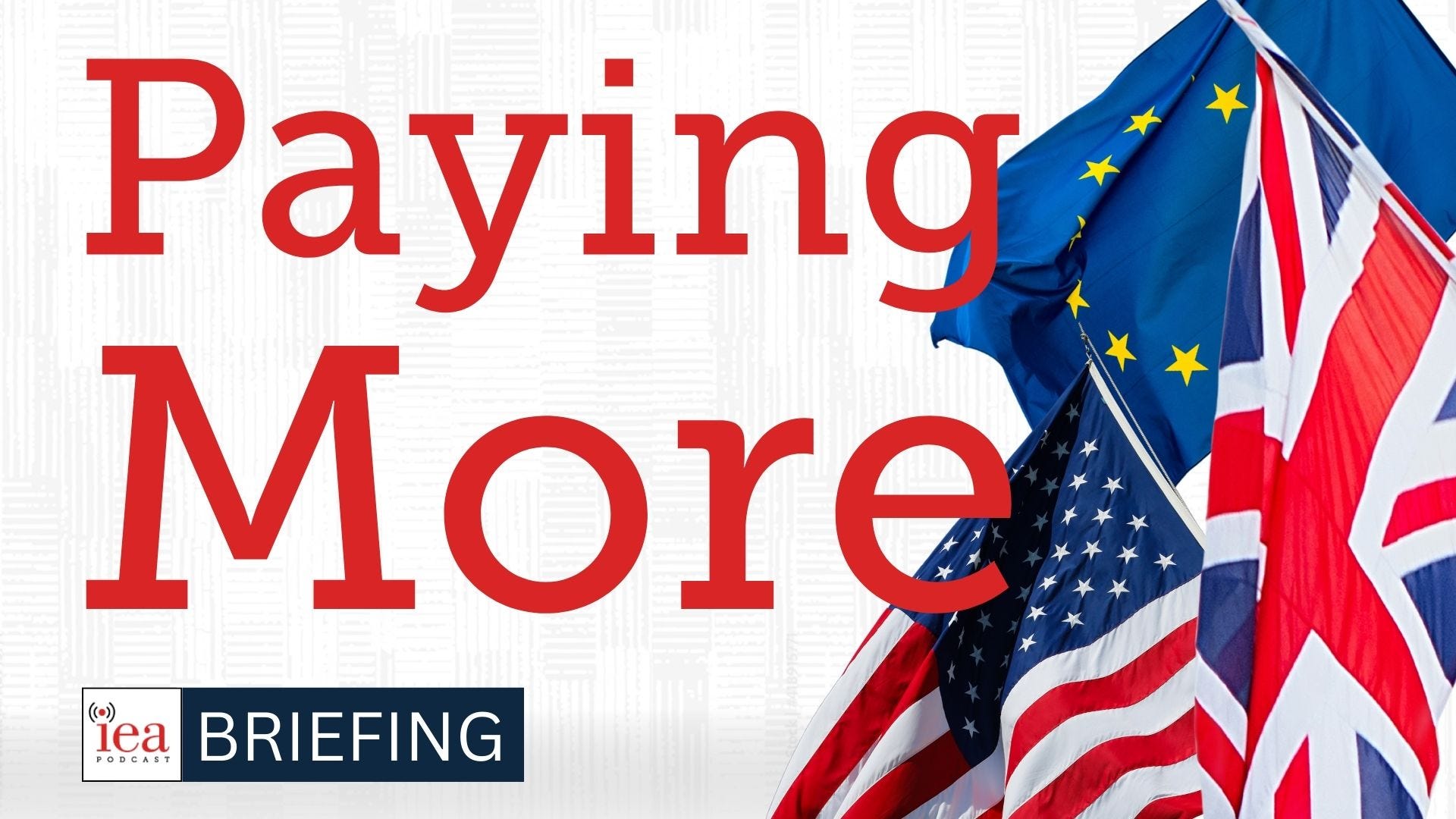
How EU Rules Still Force British Consumers to Pay Premium Prices | IEA Briefing
In this IEA Briefing, Callum Price, Director of Communications at the Institute of Economic Affairs, discusses the new publication "Parallel Universe: How Ending Parallel Import Restrictions Benefits Consumers" with co-author Martin Howe KC, a leading intellectual property barrister. The paper, authored by Howe and Matthew Lesh, examines how parallel import restrictions - a complex trade issue inherited from EU law - prevent retailers from importing genuine branded goods from countries outside the EU, even when those products are significantly cheaper. Howe illustrates this with examples like Tesco being blocked from selling genuine Levi's jeans they bought more cheaply in North America. Despite leaving the EU, the UK maintains these import restrictions in an inconsistent way - allowing parallel imports from EU countries but not from nations like the US, Canada, or Australia. Howe argues this makes no economic sense and primarily benefits multinational companies while forcing UK consumers and public services to pay higher prices. He notes that when parallel imports were allowed within the EU single market, the NHS saved over £800 million on pharmaceuticals over five years. Howe suggests that while some specific restrictions might make sense (like for pharmaceuticals sold cheaply to developing countries), most parallel import restrictions should be abolished. He dismisses common arguments against removal, including concerns about quality standards and humorously notes British publishers' worries about American cookbooks with imperial measurements confusing UK consumers. The discussion provides a clear look at how removing these trade barriers could lower prices for British consumers without spending public money. This is a public episode. If you'd like to discuss this with other subscribers or get access to bonus episodes, visit insider.iea.org.uk/subscribe

Government Funded Activism, British DOGE & Manufacturing Nostalgia | IEA Podcast
Join the IEA Podcast as host Callum Price, Director of Communications at the Institute of Economic Affairs, sits down with Dr Christopher Snowdon, Head of Lifestyle Economics, and Dr Kristian Niemietz, Editorial Director, to discuss recent revelations about government waste and inefficiency, including the shocking story of Rory Stewart's Turquoise Mountain organisation losing $1 million in US aid money. They explore whether the UK needs its own version of a "DOGE" - someone to tackle bureaucratic bloat and wasteful spending - and debate if such an approach would actually work in practice. The conversation delves into the problem of state-funded pressure groups and NGOs, with Snowdon highlighting his research on "sock puppet" organisations that use taxpayer money to lobby for controversial policies. The team examines how the European Commission funds environmental groups specifically to lobby MEPs, creating what they describe as a self-perpetuating cycle of government lobbying government. The discussion then turns to calls for UK reindustrialisation amid concerns about military readiness and manufacturing capacity. While acknowledging valid concerns about how net zero policies have impacted British industry, the panel pushes back against manufacturing nostalgia, noting that the UK still maintains significant manufacturing output - just with fewer workers due to automation and efficiency gains. We bring you a public affairs podcast with a difference. We want to get beyond the headlines and instead focus on the big ideas and foundational principles that matter to classical liberals.The Institute of Economic Affairs is an educational charity, it does not endorse or give support for any political party in the UK or elsewhere. Our mission is to improve understanding of the fundamental institutions of a free society by analysing and expounding the role of markets in solving economic and social problems. This is a public episode. If you'd like to discuss this with other subscribers or get access to bonus episodes, visit insider.iea.org.uk/subscribe

In Defence of Unfair Competition | IEA Briefing
In this IEA Briefing, Communications Director Callum Price sits down with Editorial Director Kristian Niemietz to discuss his new SubStack piece "In Defence of Unfair Competition: Why it is a fallacy to treat market competition like a sports competition." Niemietz explains that while sports require standardised rules and level playing fields, markets thrive on natural advantages and different approaches to solving problems. Using examples from wine production to international trade, he shows why "unfair" advantages in business - whether from geography, climate, or even government policies - shouldn't necessarily be "corrected." The discussion is particularly timely given Donald Trump's recent calls for "level playing fields" in international trade, with Niemietz arguing that attempts to equalise trading conditions through tariffs ultimately harm consumers. When higher-priced domestic products are protected from cheaper foreign competition, consumers end up paying more and have less to spend elsewhere in the economy, making the whole country poorer. Drawing on historical examples, Niemietz contrasts the success of free-trading economies like Hong Kong and Singapore with the poor performance of protectionist Latin American countries in the 20th century. He challenges Trump's narrative about 19th century American protectionism, citing research showing that less protected industries actually performed better. The key takeaway: while large economies like the US might be able to "get away with" protectionism, the evidence suggests free trade produces better outcomes. This is a public episode. If you'd like to discuss this with other subscribers or get access to bonus episodes, visit insider.iea.org.uk/subscribe

Reform UK's Energy Policy & New Towns | IEA Podcast
In this episode of the IEA Podcast, host Reem Ibrahim sits down with Tom Clougherty and Kristian Niemietz to dive into the latest policy developments across the UK. The discussion kicks off with an analysis of the government's ambitious new towns initiative, examining whether central planning is the right approach to solving Britain's housing crisis. The conversation then shifts to Reform UK's recently announced energy policies, including their controversial windfall tax on renewable power and ban on battery storage systems. The guests critique these measures from a free market perspective, arguing that they represent an "authoritarian approach" that could make energy more expensive rather than achieving the stated goal of affordability. The episode concludes with a sobering look at public sector productivity, particularly focusing on the NHS which is now 20% less productive than before the pandemic. Tom and Kristian explore the structural issues behind declining productivity in nationalised services and discuss potential market-based solutions to these challenges. We bring you a public affairs podcast with a difference. We want to get beyond the headlines and instead focus on the big ideas and foundational principles that matter to classical liberals.The Institute of Economic Affairs is an educational charity, it does not endorse or give support for any political party in the UK or elsewhere. Our mission is to improve understanding of the fundamental institutions of a free society by analysing and expounding the role of markets in solving economic and social problems. This is a public episode. If you'd like to discuss this with other subscribers or get access to bonus episodes, visit insider.iea.org.uk/subscribe
Will Reform UK's Energy Policies Cut Prices? | IEA Briefing
In this IEA Briefing, we analyse Reform UK's newly announced energy policies with Andy Mayer, the IEA's energy analyst and CEO. The discussion covers four key policies: a windfall tax on renewable power, a solar farm tax, a ban on battery energy storage systems, and legislation to force National Grid to underground cable installation. Andy breaks down each policy, explaining that while Reform UK has been making sensible points about net zero's challenges, their proposed solutions raise concerns. He discusses how the windfall tax largely duplicates existing legislation, questions the food security argument behind the solar farm tax, challenges the logic of banning battery storage systems, and highlights the enormous costs of mandatory underground cable installation. The conversation provides valuable context around energy market regulations, subsidy schemes, and the importance of technology-neutral approaches. Andy emphasises that the focus should be on deregulation and letting energy markets work efficiently, rather than creating new restrictions for specific industries. This is a public episode. If you'd like to discuss this with other subscribers or get access to bonus episodes, visit insider.iea.org.uk/subscribe

The Uncomfortable Truth About Why British Government Is Failing | Sam Freedman | IEA Book Club
In this IEA Book Club event, Sam Freedman, Senior Fellow at the Institute for Government, discusses his new book "Failed State: Why Nothing Works and How to Fix It" with IEA Executive Director Tom Clougherty. Freedman, who previously served as a Senior Policy Adviser to Michael Gove and Executive Director of Teach First, presents a stark analysis of Britain's governance crisis. Freedman argues that decades of increasing centralisation, executive dominance, and media-driven policymaking have created a state that is fundamentally unable to deliver effective governance. Through concrete examples and detailed analysis, he illustrates how the concentration of power in Westminster, combined with the hollowing out of local government and the constant pressure of the 24-hour news cycle, has led to institutional paralysis. The discussion explores potential solutions, from meaningful devolution of power to reform of Parliament and the civil service. Freedman makes the case that without fundamental changes to how Britain is governed, no government – regardless of political persuasion – will be able to effectively implement its agenda. The conversation also delves into the challenges of institutional reform and the prospects for meaningful change in the current political environment. This is a public episode. If you'd like to discuss this with other subscribers or get access to bonus episodes, visit insider.iea.org.uk/subscribe

Are Actually Creating More Discrimination | IEA Briefing
IEA's new discussion paper "Liberalising Discrimination Law" examines how anti-discrimination legislation in the UK has evolved since the 1960s, with particular focus on the Equality Act 2010. Daniel Freeman, one of the paper's authors, breaks down how the law has shifted from addressing direct discrimination to increasingly complex regulations around indirect discrimination and group outcomes. The discussion explores real-world examples, including the Next retail case where warehouse workers' higher pay compared to shop staff led to discrimination claims, and how Birmingham City Council faced £700 million in backpay due to equal pay disputes. Freeman explains how current legislation can create unintended economic distortions and burden employers with complex compliance requirements. Watch as Freeman and host Reem Ibrahim examine the paper's core argument for stripping back the Equality Act to focus primarily on direct discrimination, while questioning whether policies meant to address historical inequalities may sometimes work against individual fairness. They also discuss potential future trends in discrimination law, drawing parallels with recent developments in the United States. This is a public episode. If you'd like to discuss this with other subscribers or get access to bonus episodes, visit insider.iea.org.uk/subscribe

Trade Wars Return: What Trump's Tariffs Mean for the World
Donald Trump is threatening 25% tariffs on allies - from Canada to Europe. The Bank of England has halved its growth forecasts. And the government is pushing nuclear power forward. We break down what this all means and why it matters. In this episode of the IEA podcast, Director of Communications Callum Price is joined by Editorial Director Kristian Niemietz and Executive Director Tom Clougherty. Kristian Niemietz explains why Trump's protectionist instincts could damage global trade and make everyone poorer. Then we dive into the UK's productivity crisis with Executive Director Tom Clougherty, exploring why output per worker is falling. Finally, we look at nuclear energy - why has it gotten more expensive over time, and what can be done to fix it? From trade wars to energy policy, we cut through the noise to explain the week's big economic stories and what they mean for our prosperity and freedom. Join us for a deep dive into the policies shaping our world. We bring you a current affairs podcast with a difference. We want to get beyond the headlines and instead focus on the big ideas and foundational principles that matter to classical liberals.The Institute of Economic Affairs is an educational charity, it does not endorse or give support for any political party in the UK or elsewhere. Our mission is to improve understanding of the fundamental institutions of a free society by analysing and expounding the role of markets in solving economic and social problems. This is a public episode. If you'd like to discuss this with other subscribers or get access to bonus episodes, visit insider.iea.org.uk/subscribe
Environmental Groups Are Blocking The Best Climate Solutions | IEA Briefing
In this segment from our longer "Not Invented Here" interview, Dr Christopher Snowdon examines the environmental movement's puzzling resistance to proven climate solutions. He focuses on two key examples: nuclear power and GM foods, where environmental groups consistently oppose technologies that could help achieve their stated goals. The discussion reveals how historical events like Chernobyl shaped anti-nuclear sentiment, despite nuclear power being one of the most effective tools for fighting climate change. Snowdon points out the stark contrast between environmentalists' embrace of climate science and their rejection of scientific consensus on nuclear safety, noting that Chernobyl's death toll pales in comparison to ongoing deaths from coal pollution. The conversation extends to GM foods, particularly golden rice, where activist opposition has prevented a solution to malnutrition in developing nations. Snowdon argues this resistance stems from environmentalists' romanticised view of organic farming rather than scientific evidence, highlighting how ideological preferences can block practical solutions to urgent global challenges. This is a public episode. If you'd like to discuss this with other subscribers or get access to bonus episodes, visit insider.iea.org.uk/subscribe
3 Ways to SAVE Britain's Economy | Tyler Goodspeed
In this extract from the IEA Ralph Harris Centenary Lecture, Tyler Goodspeed, former Acting Chairman of the Council of Economic Advisers, outlines three critical steps to revive UK economic growth. Beginning with the principle of "first, do no harm," Goodspeed argues that Britain must stop undermining sectors where it historically held competitive advantages - particularly in financial services and energy production. His second point focuses on the importance of personnel in policymaking, particularly at the Bank of England. Goodspeed notes that appointments to key committees have remained remarkably consistent regardless of which party is in power, suggesting that changing the people making decisions could be an "easily remedial problem." He emphasises the vital role of institutions like the IEA in cultivating the next generation of economic policy talent. Finally, Goodspeed contrasts the US and UK political systems to illustrate his third point about the necessity of strong political leadership. Using Texas's successful shale revolution as an example, he explains how America's dispersed power structure allows good ideas to succeed despite opposition. In contrast, he argues that the UK's concentration of power around the Prime Minister creates a risk-averse culture that stifles change. He concludes with a call for leadership that recognises growth as a moral imperative, stating that Britain has succeeded at this challenge before. This is a public episode. If you'd like to discuss this with other subscribers or get access to bonus episodes, visit insider.iea.org.uk/subscribe

Analysing Reeves' Growth Strategy and Brexit's Legacy | IEA Podcast
In this episode, Reem Ibrahim is joined by Tom Clougherty and Dr Kristian Niemietz to analyse Rachel Reeves' recent growth-focused speech and Keir Starmer's commitment to deregulation. The team examines the apparent contradiction between Labour's pro-growth rhetoric and their policies on employment law, environmental regulations, and taxation - drawing interesting parallels with the French economic model. The conversation shifts to reflect on the five-year anniversary of Brexit, evaluating its outcomes against the original promises and aspirations. While Britain has technically "taken back control," the panel discusses how regulatory power has often simply shifted from Brussels bureaucrats to UK quangos, with limited progress on promised deregulation. They explore the surprising dynamics of post-Brexit immigration and consider what opportunities may have been missed during years of Brexit-dominated politics. Looking back at the IEA's history, the discussion turns to how economic challenges have evolved since the organisation's early days. While the Institute once focused on combating clear ideological opponents like Keynesianism and Marxism, today's barriers to growth - such as the planning system and infrastructure bottlenecks - often stem from complex institutional structures and interest groups rather than pure ideology. We bring you a public affairs podcast with a difference. We want to get beyond the headlines and instead focus on the big ideas and foundational principles that matter to classical liberals.The Institute of Economic Affairs is an educational charity, it does not endorse or give support for any political party in the UK or elsewhere. Our mission is to improve understanding of the fundamental institutions of a free society by analysing and expounding the role of markets in solving economic and social problems. This is a public episode. If you'd like to discuss this with other subscribers or get access to bonus episodes, visit insider.iea.org.uk/subscribe
They Said Britain Was FINISHED - Then The IEA Radicals Changed Everything
The IEA Ralph Harris Centenary Lecture features an opening address by Brian Kingham, Founder and Chairman of Reliance Security Group, who shares his personal experiences with Ralph Harris and the Institute of Economic Affairs during Britain's turbulent 1970s. As a 25-year-old entrepreneur employing 500 people, Kingham discovered the IEA's innovative market-based solutions while navigating a hostile business environment characterised by trade union power, excessive regulation, and punitive taxation reaching 83%. Kingham vividly describes the economic challenges of the era: businesses operating by candlelight during the three-day week, compulsory trade union membership, and a pervasive pessimism among Conservative politicians who saw Britain's decline as inevitable. Against this backdrop, he recounts finding Ralph Harris and Arthur Seldon "not 3 minutes from here," leading a small group of thinkers who offered an alternative vision for Britain's future through free-market principles. The talk culminates with Kingham's reflection on the IEA's pivotal role in shaping Margaret Thatcher's economic thinking. He describes how Harris and his "dangerous radicals" helped convince Thatcher of their approach, leading to what he calls "a complete intellectual triumph" that influenced economic policy worldwide. The lecture, marking the centenary of Ralph Harris's birth, celebrates his legacy as a public servant whose ideas helped lift millions out of poverty and continue to influence economic thinking today. This is a public episode. If you'd like to discuss this with other subscribers or get access to bonus episodes, visit insider.iea.org.uk/subscribe

The Painful Reality of Britain's Benefits Crisis
IEA's Communications Officer Reem Ibrahim discusses the UK's welfare system challenges, noting that 10% of working-age adults receive out-of-work benefits, many citing mental health reasons after the pandemic. The discussion references a documentary where a JobCentre discouraged a benefits claimant from job training, suggesting it could risk their existing benefits. Ibrahim argues that signing people off work for mental health issues may hinder rather than help their recovery. The conversation explores how pension costs now exceed twice the Ministry of Defence's budget. Ibrahim points to a case where a single mother received £40,000 in combined benefits, well above the UK's average £30,000 salary, highlighting problems in the current system. This is a public episode. If you'd like to discuss this with other subscribers or get access to bonus episodes, visit insider.iea.org.uk/subscribe

Starmer's Dilemma: Can Labour Save the Economy Without Killing Net Zero? | IEA Podcast
In this IEA podcast, host Callum Price, Director of Communications, joins Executive Director Tom Clougherty and Editorial Director Kristian Niemietz to analyse Labour's potential economic strategy. They examine Rachel Reeves and Keir Starmer's rhetoric around supply-side reforms, critically assessing whether the party's current approach can genuinely drive economic growth. The discussion explores the UK's net zero commitments against the backdrop of changing global environmental policies. With the US potentially shifting away from aggressive green initiatives, the podcast evaluates the economic implications of the UK's current decarbonisation strategy and its potential impact on national competitiveness. The episode also delves into market efficiency, specifically examining airport landing slots and infrastructure allocation. By proposing market-driven mechanisms, the podcast suggests ways to introduce competition and optimise resource utilisation in sectors currently dominated by established players. We bring you a public affairs podcast with a difference. We want to get beyond the headlines and instead focus on the big ideas and foundational principles that matter to classical liberals.The Institute of Economic Affairs is an educational charity, it does not endorse or give support for any political party in the UK or elsewhere. Our mission is to improve understanding of the fundamental institutions of a free society by analysing and expounding the role of markets in solving economic and social problems. This is a public episode. If you'd like to discuss this with other subscribers or get access to bonus episodes, visit insider.iea.org.uk/subscribe
The REAL Reason America Became an Economic Superpower (It's Not Tariffs) | IEA History
Join IEA Managing Editor Daniel Freeman as he explores how trade tariffs shaped America with Professor Alexander Klein. In 1870, the US had a massive 45% average tariff on imported goods - compared to just 2% today. Professor Klein breaks down why the US adopted such high tariffs after the Civil War, and what this history tells us about current debates around trade protection. From intense lobbying battles between Northern and Southern states to surprising findings about productivity, this conversation challenges common assumptions about America's economic development. In this wide-ranging discussion, Freeman and Klein examine how even successful American companies pushed for trade protection, using the argument "other industries get tariffs, why shouldn't we?" Klein explains why high tariffs actually reduced productivity across most industries, despite creating more jobs - a tradeoff that's still relevant in today's policy debates. They explore how America's huge domestic market, natural resources, and waves of immigration were more important to its industrial success than trade barriers. As politicians today call for higher tariffs to protect American jobs, this historical perspective offers important lessons. Klein's research shows how trade protection can become politically addictive, even when it doesn't help economic growth. He also highlights the dangers of rising trade barriers during economic crises, drawing parallels between the Great Depression and current debates about globalization and industrial policy. This is a public episode. If you'd like to discuss this with other subscribers or get access to bonus episodes, visit insider.iea.org.uk/subscribe

WATCH: 'This Can't Go On' - IEA Director's Urgent Warning for Britain's Future
In this GB News interview, Institute of Economic Affairs Executive Director Tom Clougherty discusses Britain's economic challenges and the need for new radical ideas to overcome them. Addressing years of high taxes and low growth, he explains how many young Brits in their twenties and thirties have never experienced real economic growth, with incomes remaining stagnant since 2007.Rather than pointing to a single solution, Clougherty argues that Britain needs hundreds of changes across the economy. He discusses the need to reform energy policy, housing, and what he calls a "bureaucratic state" that's suffocating growth.Clougherty also discusses the IEA's role and mission to develop the ideas we need to overcome the greatest challenges we face today. The IEA will be at the forefront of the drive for fresh thinking and radical change required to return economic dynamism back to Britain. This is a public episode. If you'd like to discuss this with other subscribers or get access to bonus episodes, visit insider.iea.org.uk/subscribe