IEA Podcast
402 episodes — Page 4 of 9
Why China's Economy is Failing | Ian Williams | IEA Interview
Join IEA Managing Editor Daniel Freeman in conversation with Ian Williams, author of "Vampire State: The Rise and Fall of the Chinese Economy," for an analysis of China's mounting economic challenges. Williams, a veteran journalist with 20 years of experience covering China as a foreign correspondent for Channel 4 News and NBC, delivers a chilling account of how the world's second-largest economy is facing an unprecedented crisis of sustainability.In this wide-ranging discussion, Williams exposes the fundamental flaws in China's economic model - from the burst property bubble that once accounted for a third of the economy to the systematic manipulation of growth statistics that he likens to "one of the greatest works of contemporary Chinese fiction." The conversation explores Xi Jinping's shift from economic pragmatism to authoritarian control, the ghost cities littering China's landscape, and why the Communist Party has effectively "criminalised pessimism" about economic data. Williams argues that China's leaders have created a system so dependent on unsustainable drivers like property speculation and wasteful infrastructure investment that transition to genuine innovation-led growth may be impossible under current leadership.The discussion also delves into China's use of economic coercion as a geopolitical weapon, the demographic time bomb facing the nation, and why Xi Jinping's ambitious plan to make China a football superpower serves as a perfect metaphor for the limitations of top-down innovation in an authoritarian system. This is essential viewing for anyone seeking to understand the real state of China's economy beyond the official propaganda.Buy Vampire State here. This is a public episode. If you'd like to discuss this with other subscribers or get access to bonus episodes, visit insider.iea.org.uk/subscribe
The Splintering of British Politics: Left and Right in Crisis
In this Institute of Economic Affairs podcast, Communications Director Callum Price interviews Executive Director Tom Clougherty and Editorial Director Kristian Niemietz. The conversation examines Conservative leader Kemi Badenoch's offer to help Labour cut the welfare bill and her party's return to fiscal conservatism. They discuss whether this represents genuine commitment to balanced budgets or political positioning, questioning how radical the Conservatives are prepared to be when they refuse to touch entitlements for older voters like the state pension and triple lock.The discussion turns to Labour's internal divisions as the party faces a deputy leadership contest that exposes tensions between pro-growth and spending-focused factions. They analyse how Labour's abundance agenda has stalled, with policies like the Employment Rights Bill and Renters Rights Bill undermining growth objectives. The hosts examine whether Labour's early optimism about deregulation was merely skin deep, and explore the emerging split between the Treasury's fiscal conservatism and other departments' regulatory expansion.The conversation concludes with an examination of the Competition and Markets Authority's plans to target Google and Apple under new strategic market status powers. Tom Clougherty argues this represents a fundamental misstep in competition policy, focusing on static market share measures rather than dynamic innovation. They discuss how Britain missed the opportunity for post-Brexit regulatory divergence, instead adopting even more interventionist approaches than the EU. The broader theme emerges of Britain's shift from central planning to bureaucratic control, with the regulatory state strangling entrepreneurship and innovation across multiple sectors. This is a public episode. If you'd like to discuss this with other subscribers or get access to bonus episodes, visit insider.iea.org.uk/subscribe
Rory Sutherland on Wealth Inequality, Housing Crisis & Economic Solutions | IEA Podcast
In this Institute of Economic Affairs podcast, IEA Communications Director Callum Price interviews Rory Sutherland, Vice Chairman of Ogilvy Group and prolific commentator on economics and society. The conversation explores how markets function as discovery mechanisms, with Sutherland arguing that capitalism's greatest strength lies not in efficiency but in its ability to uncover valuable innovations that couldn't be predicted in advance - from his own unexpected TikTok success to products like Red Bull that would never have survived central planning. They discuss how businesses can create value by triangulating the interests of customers, employees, investors, and society, with examples from companies like Dyson and Costco that demonstrate the commercial benefits of exceptional customer service. Sutherland examines the housing market as a complex system with multiple contributing factors, from planning restrictions to psychological behaviors around property purchasing. He analyses how technological advancement has made consumer goods dramatically more affordable while housing costs have risen, creating new economic dynamics where wealth increasingly flows toward property ownership. The discussion covers innovative policy solutions including Japanese-style planning reform, land value capture to fund infrastructure, and flexible working arrangements that could help people escape geographic constraints on housing costs. The conversation addresses broader institutional challenges including the bureaucratisation of decision-making, the balance between process fairness and practical outcomes, and the importance of preserving space for human judgment and humour in increasingly regulated environments. Sutherland advocates for localised governance, innovation prizes for practical problem-solving, and policies that recognise different forms of value creation. Throughout, he maintains his characteristic blend of advertising industry insights, behavioural economics, and pragmatic policy thinking, offering constructive approaches to complex economic and social challenges while celebrating entrepreneurial innovation and market-driven solutions. This is a public episode. If you'd like to discuss this with other subscribers or get access to bonus episodes, visit insider.iea.org.uk/subscribe
The Real Cost of China's Communist Economy | Mary Kissel | IEA Interview
In this Institute of Economic Affairs interview, our Managing Editor Daniel Freeman interviews Mary Kissel, Executive Vice President at investment bank Stephens and former Senior Advisor to US Secretary of State Mike Pompeo. The conversation examines the current state of US-China relations, China's economic challenges under Xi Jinping, and the national security threats posed by Chinese infiltration of Western infrastructure. They discuss how the Trump administration's 2017-2018 national security strategy marked a shift from viewing China as a competitor to recognising it as an adversary, particularly following China's handling of Covid-19 and ongoing cyberattacks like the Salt Typhoon hack.Kissel argues that economic interdependence has failed to liberalise China politically, describing Xi Jinping as a pure expression of Communist Party control rather than an aberration. She explains how US companies are increasingly divesting from China following the lessons learned from Russia's invasion of Ukraine, though Fortune 500 companies with significant investments remain committed. The discussion covers China's military buildup, including its million-man army and 600 nuclear weapons, alongside domestic repression including the treatment of Uyghurs and the use of 1.5 million police to monitor Chinese citizens.The interview concludes with an examination of Hong Kong's transformation and the case of imprisoned newspaper proprietor Jimmy Lai, whom Kissel describes as a friend facing life imprisonment for peaceful protests and press freedom. She criticises Britain's response to Lai's detention as inadequate and argues that Hong Kong now serves as a preview of what a China-led world order would look like. Kissel emphasises that Western democracies must move beyond "strategic narcissism" to understand China's true intentions and take coordinated action to protect critical infrastructure and democratic values. This is a public episode. If you'd like to discuss this with other subscribers or get access to bonus episodes, visit insider.iea.org.uk/subscribe
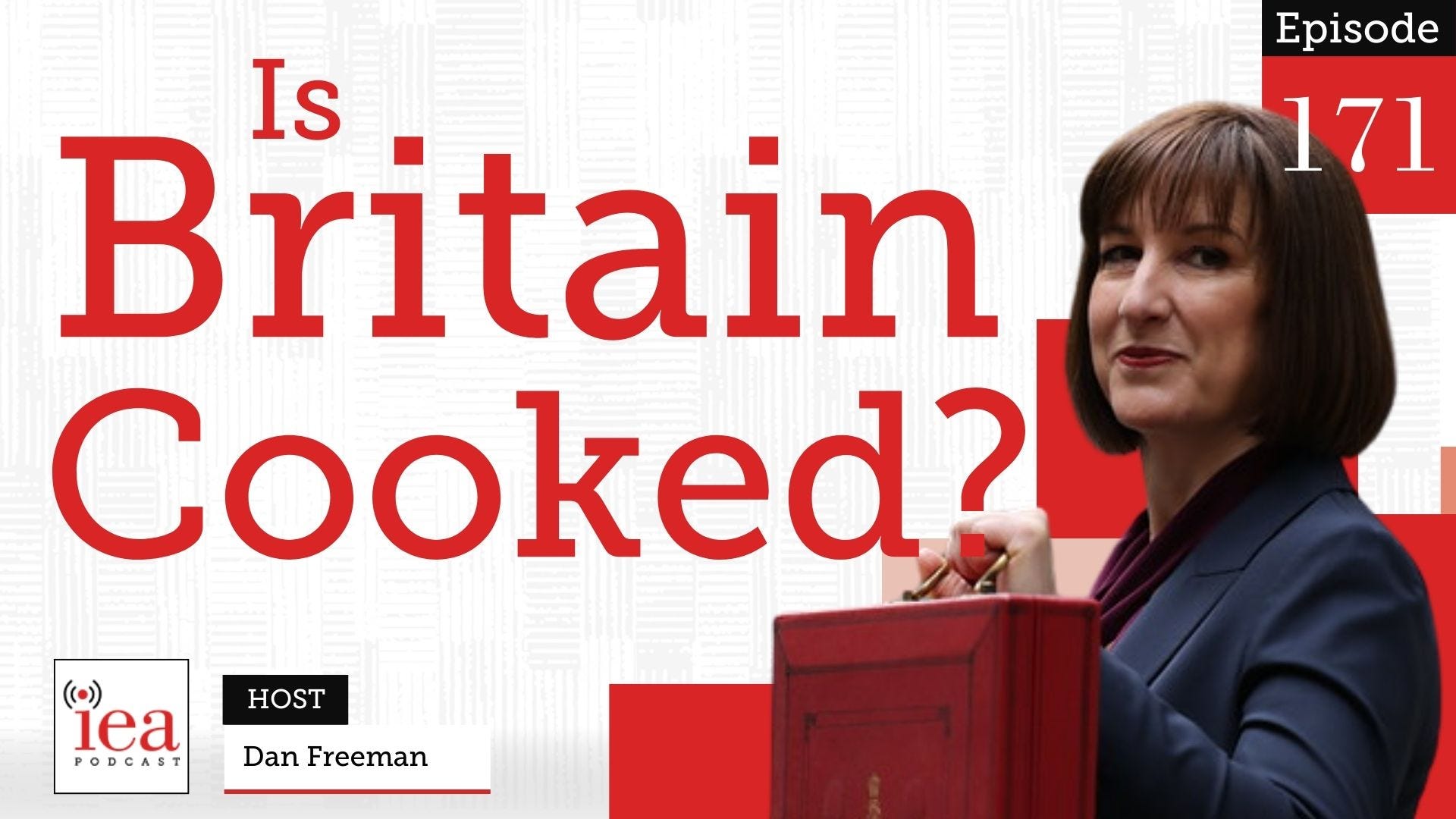
Is Britain Really Going Broke? The Truth About Our 'Fiscal Crisis' | IEA Podcast
In this Institute of Economic Affairs Podcast, Managing Editor Daniel Freeman is joined by Executive Director Tom Clougherty and Editorial Director Kristian Niemietz to examine whether Britain is truly facing fiscal meltdown or if the doom-mongering has been overblown. The conversation unpacks Chris Giles' Financial Times analysis arguing that Britain's fiscal situation, while problematic, may not be as catastrophic as commonly portrayed. They discuss how Britain's deficit compares favourably to the United States, why UK borrowing costs remain stubbornly high despite relatively better fundamentals, and whether the endless cycle of fiscal speculation created by having two budget events per year is contributing to market pessimism.The discussion turns to how government policy is actively undermining growth through a proposed dramatic increase in landfill duties that could add tens of thousands of pounds to housing construction costs. Freeman, Clougherty and Niemietz explore the cascade of new building regulations, safety requirements, and bureaucratic hurdles that have caused London housebuilding to collapse to just 2,158 new homes started in the first half of 2025. They examine how dual-aspect flat requirements, second staircase rules, and a building safety regulator with a 70% rejection rate are combining with planning constraints and affordable housing targets to make construction economically unviable in areas with the highest housing demand.The podcast concludes with an examination of free speech in Britain following the high-profile arrest of comedian Graham Linehan at Heathrow Airport for allegedly anti-trans tweets posted while in America. The hosts discuss why this case has attracted cross-party criticism, the disproportionate police response involving five armed officers, and whether the increasing frequency of social media arrests signals a need for stronger legislative protection of free expression. They consider how both progressive and conservative voices are beginning to recognise that current speech laws may be creating a chilling effect that extends beyond their intended targets. This is a public episode. If you'd like to discuss this with other subscribers or get access to bonus episodes, visit insider.iea.org.uk/subscribe
Britain Blackout: Can Renewables Keep the Lights On? | Kathryn Porter | Free the Power
In this episode of Free the Power, the IEA’s COO and resident Energy Analyst Andy Mayer interviews Kathryn Porter, independent energy consultant and founder of Watt-Logic. The conversation examines the devastating blackouts that hit Spain and Portugal on April 28th, 2025, when the entire Iberian Peninsula went offline for ten hours, resulting in eleven fatalities. Porter provides detailed analysis of how renewable energy systems contributed to the cascade failure, starting with a malfunctioning solar inverter that created voltage oscillations across the grid.Porter explains the complex physics behind grid stability, revealing how conventional power stations with heavy spinning turbines provide essential inertia that keeps electricity systems stable, while renewable sources using electronic inverters create vulnerabilities. She details how widespread non-compliance with grid codes by renewable generators caused frequency deviations that ultimately triggered the system-wide collapse. The discussion covers the dangerous ten-hour "black start" process required to restore power, where engineers must carefully synchronise power stations one by one to avoid damaging equipment.The interview concludes with warnings about similar risks facing Britain's electricity system. Porter identifies critical vulnerabilities including inadequate demand forecasting that hasn't been updated in decades, aging infrastructure from the 1970s nearing end-of-life, and over-reliance on imports from European neighbours who are themselves facing energy shortages. She criticises National Grid ESO and Ofgem for prioritising net zero messaging over system security, arguing that current policies are creating dangerous conditions that could lead to blackouts costing lives.Check out Kathryn’s work here. This is a public episode. If you'd like to discuss this with other subscribers or get access to bonus episodes, visit insider.iea.org.uk/subscribe
The Building Crisis Destroying Britain | Sam Richards | IEA Interview
In this Institute of Economic Affairs interview, our Director of Communications Callum Price interviews Sam Richards, CEO of Britain Remade and former special adviser at 10 Downing Street. The conversation examines Britain's fundamental growth problem - the country's inability to build essential infrastructure. Richards argues that underpinning Britain's economic challenges, from the world's highest industrial energy costs to London being Europe's most expensive city for housing, is the fact that Britain has effectively banned building across energy, transport and housing sectors.Richards traces the roots of Britain's building crisis back to the 1947 Town and Country Planning Act, which he describes as creating a uniquely restrictive system where the state has veto power over private land use. The discussion covers the absurd costs of environmental regulations, including the £121 million bat tunnel and 80,000-page planning applications for 3.3 miles of railway track. He criticises the current environmental protection system as failing both development and nature, with all natural indicators in decline despite blocking essential infrastructure. The conversation also addresses Scotland's nuclear ban, despite nuclear being the safest form of energy, and the need for zonal pricing to incentivise local energy infrastructure acceptance.The interview concludes with an assessment of the current Labour government's planning reforms, which Richards argues fail to deliver the radical wholesale changes needed. Despite rhetoric about backing builders over blockers, he suggests the government's planning bill merely adds another regulatory layer rather than fundamentally reforming the discretionary system. Richards advocates for three key changes: scrapping habitats regulations for strategic conservation, shifting to a zonal planning system, and unbanning nuclear power in Scotland to unlock Britain's economic growth potential.Find Britain Remade here. This is a public episode. If you'd like to discuss this with other subscribers or get access to bonus episodes, visit insider.iea.org.uk/subscribe
Britain's Doom Loop: Why We Can't Stop Borrowing | IEA Podcast
In this Institute of Economic Affairs Podcast, Director of Communications Callum Price hosts a discussion with IEA Executive Director Tom Clougherty and Managing Editor Daniel Freeman on Britain's escalating fiscal crisis and the government's response. The conversation examines why UK borrowing costs have reached their highest levels since 1997 - famously dubbed "the highest since Geri Halliwell left the Spice Girls" - making Britain consistently the worst performer among G7 countries for government debt costs.The panel dissects the three key factors driving this crisis: declining investor confidence in fiscal policy credibility following government U-turns on Winter Fuel Payments and benefit reforms, the Bank of England's continued quantitative tightening programme, and persistently high UK inflation rates. With annual interest payments now reaching £110 billion - five times the entire policing budget and double defence spending - the government faces a potential £25-50 billion fiscal gap. Clougherty explains how this creates a dangerous "fiscal doom loop" where higher borrowing costs force more borrowing, which drives rates even higher. The discussion explores proposed solutions including National Insurance contributions on landlords' rental income, though Freeman warns this could drive more landlords from the market and worsen housing supply. They also examine proposals for windfall taxes on banks' quantitative easing reserves, with Clougherty arguing this resembles "bank robbers' modus operandi" and could increase borrowing costs for ordinary consumers.The podcast concludes with analysis of Trump's dramatic shift toward state capitalism, including government stakes in Intel and profit-sharing deals with Nvidia. Clougherty highlights how this represents a fundamental departure from free market principles, with Trump explicitly stating he will help companies "willing to make lucrative deals" with his administration. The panel discusses how this personalised industrial policy transforms business-government relations and marks a significant cultural shift in the Republican Party, with formerly mainstream conservative voices now reluctant to criticise state intervention in private markets. This is a public episode. If you'd like to discuss this with other subscribers or get access to bonus episodes, visit insider.iea.org.uk/subscribe
Former Obama Administrator: Is Liberalism Dead? | IEA Interview
In this Institute of Economic Affairs interview, our Executive Director Tom Clougherty interviews Professor Cass Sunstein, former Obama administration official and co-author of "Nudge", discussing his new book "On Liberalism: In Defence of Freedom". The conversation explores Sunstein's "big tent liberalism" that encompasses figures from Reagan to Roosevelt, examining how liberalism can unite diverse political perspectives around core commitments to pluralism, freedom, and the rule of law while accommodating different views on economic policy and social issues.Sunstein defends his concept of "experiments in living" as central to liberal philosophy, drawing from John Stuart Mill's ideas to argue that liberalism should protect people's freedom to pursue different ways of life, from entrepreneurial ventures to alternative communities. He discusses how this principle applies to both social freedoms and economic liberty, criticising excessive occupational licensing restrictions that prevent people from pursuing their chosen paths. The conversation also examines Hayek's contributions to liberal economics, particularly his insights about dispersed knowledge and the price system, while exploring how behavioural economics can complement rather than contradict Hayekian thinking.The interview concludes with Sunstein's defence of "nudging" as a liberal approach to policy-making that respects individual choice while helping people make better decisions for themselves. He addresses criticisms from both libertarians who see nudges as paternalistic and progressives who want more aggressive interventions, arguing that educative and architectural approaches can guide people toward better outcomes without coercion. Despite challenges from both illiberal left and right movements, Sunstein remains optimistic about liberalism's future, suggesting that threats to liberal values are causing people to rediscover their importance.Pre-order “On Liberalism: In Defence of Freedom” here. This is a public episode. If you'd like to discuss this with other subscribers or get access to bonus episodes, visit insider.iea.org.uk/subscribe
Britain to Face BIGGEST Tax Rise in Decades? | IEA Podcast
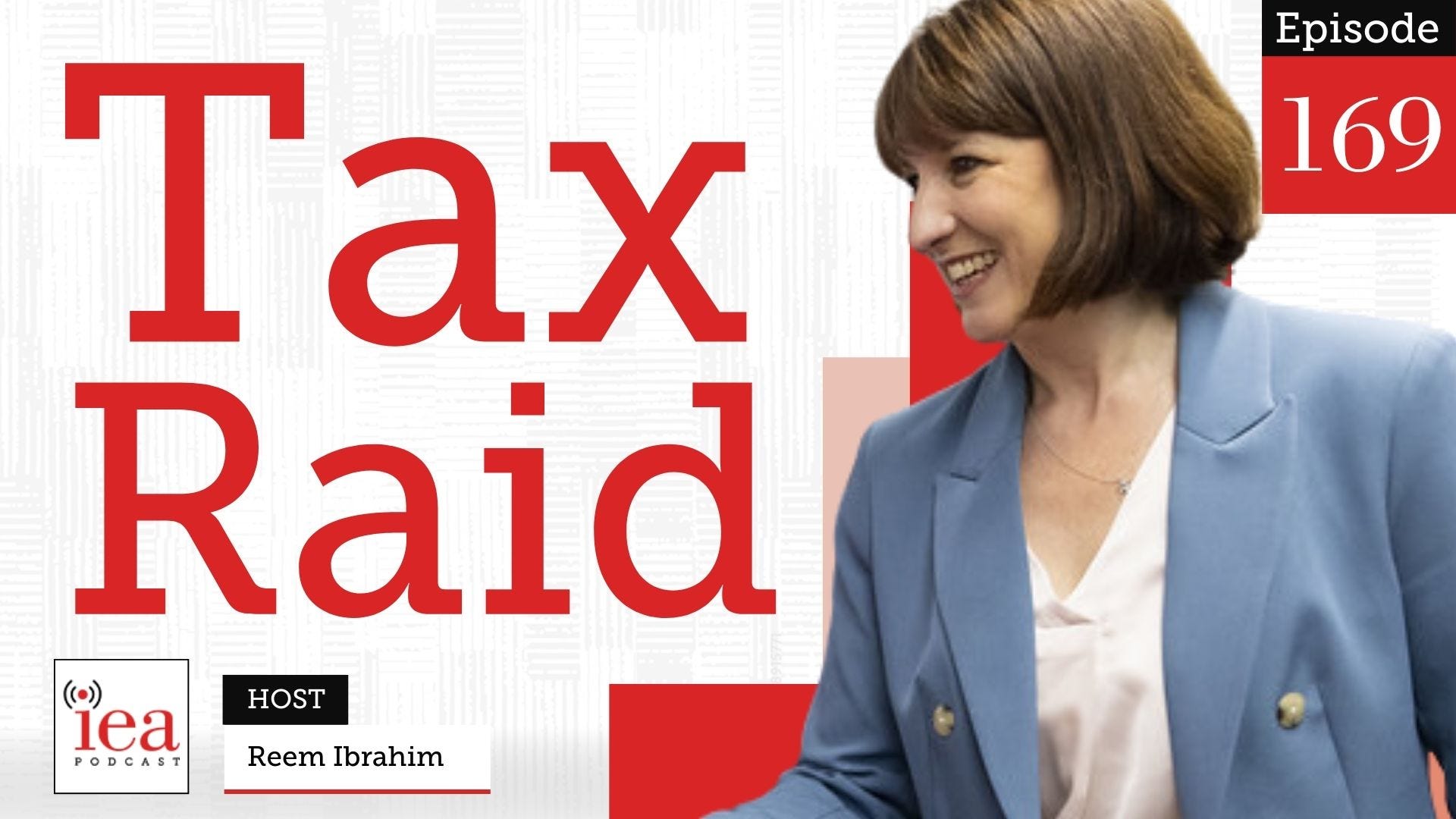
In this Institute of Economic Affairs Podcast, Head of Media Reem Ibrahim hosts a discussion with IEA Executive Director Tom Clougherty and Managing Editor Daniel Freeman on the government's upcoming budget and various tax policy proposals currently being floated. The conversation covers a "tax proposal extravaganza" including potential reforms to property taxation, capital gains tax on primary residences, pension lump sum changes, and inheritance tax modifications. They examine how these proposals might affect the UK's fiscal position ahead of the anticipated autumn budget, with the government facing a significant fiscal gap of potentially up to £50 billion.The discussion delves into the economic impacts of stamp duty and why replacing it with a proportional property tax could benefit the housing market, though the political challenges remain substantial. Clougherty explains how stamp duty creates harmful distortions by discouraging property transactions and keeping people in unsuitable homes, while Freeman highlights the contradiction between economically damaging taxes often being less politically unpopular. They also analyse proposals for capital gains tax on primary residences, concluding it would likely raise little revenue due to its similar distortionary effects to stamp duty, and examine potential changes to pension tax relief and inheritance tax rules.The podcast concludes with an examination of recent research on universal basic income trials in the United States, where studies have shown disappointing results despite significant financial investment. Freeman explains how these trials, involving hundreds of participants receiving up to $1,000 monthly, failed to produce the expected improvements in health, education, or mental wellbeing outcomes, with the only consistent effect being reduced work hours. The discussion touches on how these findings relate to the UK's current benefit system and the importance of work requirements and conditionality in welfare provision. This is a public episode. If you'd like to discuss this with other subscribers or get access to bonus episodes, visit insider.iea.org.uk/subscribe
Fighting Back Against Health Authoritarianism | IEA Briefing
In this Institute of Economic Affairs briefing, our Head of Media, Reem Ibrahim, interviews Chris Snowdon, Head of Lifestyle Economics, about his new discussion paper "Anti-Capitalism and Public Health." The conversation examines how public health discourse has evolved from targeting specific industries like "big tobacco" and "big food" to attacking what academics call "commercial determinants of health" - essentially any profit-making enterprise. They discuss how major institutions including The Lancet, British Medical Journal, and World Health Organisation have embraced anti-capitalist rhetoric, with some academics viewing economic growth itself as harmful to public health.Snowdon explains how public health experts have expanded their scope beyond traditional health concerns to critique free trade, economic growth, and commercial activities generally. He highlights concerning examples, including a former WHO advisor who praised China's Covid lockdowns as proof that "switching off capitalism protects us from ourselves." The discussion reveals how this movement draws inspiration from "Doughnut Economics" and promotes policies that would fundamentally reshape economic systems rather than address specific health issues.The interview concludes with concerns about the political influence of public health campaigning on British policy. Snowdon argues that politicians have proven susceptible to activists claiming scientific authority while pursuing anti-business agendas, resulting in policies like minimum alcohol pricing, sugar taxes, and generational tobacco bans. He warns that the public should understand the ideological motivations behind campaigns presented as neutral, evidence-based public health interventions.Read the full publication here.Read the press release here. This is a public episode. If you'd like to discuss this with other subscribers or get access to bonus episodes, visit insider.iea.org.uk/subscribe
UK Economy in "Doom Loop" | Sir Simon Clarke | IEA Interview
In this Institute of Economic Affairs interview, the IEA’s Director of Communications Callum Price sits down with Sir Simon Clarke, former Conservative MP, Treasury Chief Secretary, and current Director of Onward. The conversation tackles Britain's housing crisis, with Clarke arguing the UK is 4-5 million homes short and criticising government climbdowns on planning reform. He advocates for densifying cities while challenging the "brownfield only" mindset, calling for a more realistic approach to building on lower-value countryside sites including golf courses and poor agricultural land.Clarke delivers a stark assessment of Britain's economic challenges, warning that the state is spending too much and describing a cultural shift where wealth creation has become viewed with suspicion rather than celebrated. He identifies a "doom loop" where excessive spending requires higher taxes on wealth creators, damaging growth and necessitating even more spending. The discussion covers welfare reform, with Clarke highlighting that 1.2 million more people are now on health-related benefits since February 2020, calling this statistically implausible and economically damaging.The interview concludes with Clarke's prescription for economic revival: aggressive housing supply reform, curbing state spending including scrapping the pension triple lock, tax cuts starting with reversing National Insurance increases, and regulatory reset embracing Brexit opportunities. He argues the next Conservative government must leave the European Convention on Human Rights to restore democratic control and calls for a fundamental cultural reset similar to the 1980s transformation, warning that Britain cannot assume prosperity as of right but must actively pursue policies that enable success. This is a public episode. If you'd like to discuss this with other subscribers or get access to bonus episodes, visit insider.iea.org.uk/subscribe
Trump's Trade Disaster Just Made America POORER | Stan Veuger | IEA Interview
In this Institute of Economic Affairs podcast, the IEA’s Head of Media Reem Ibrahim interviews Stan Veuger, Senior Fellow in Economic Policy Studies at the American Enterprise Institute. The conversation examines the dramatic shift in Trump's second-term trade policy, including unprecedented 25% tariffs on Canada and Mexico, the "reciprocal tariffs" announced in April affecting virtually every country globally, and the resulting economic turbulence that saw US GDP growth slow from 2.8% to just 1.2%. Veuger explains how these policies represent Trump's longstanding mercantilist worldview rather than strategic negotiating tactics, and discusses the ongoing legal challenges that could potentially overturn the tariff regime.The discussion explores the macroeconomic consequences of both trade and immigration restrictions, with Veuger detailing how the administration has effectively reduced net migration to near zero through deportation efforts and eliminating legal pathways like humanitarian parole programs. He argues this represents a significant drag on economic growth, contributing to the broader slowdown alongside trade disruptions. The conversation covers which industries are most affected, from manufacturing sectors dependent on intermediate goods imports to service industries that rely on immigrant labor.Veuger concludes by examining the political landscape around these policies, noting the limited Congressional appetite for challenging Trump's approach and why legal challenges may offer the best hope for rolling back protectionist measures. He discusses the fiscal implications of tariff revenue collection, the constitutional questions around executive power in trade policy, and offers his predictions for potential policy reversals under future administrations. The interview provides crucial insights into how economic nationalism is reshaping American trade and immigration policy with global implications. This is a public episode. If you'd like to discuss this with other subscribers or get access to bonus episodes, visit insider.iea.org.uk/subscribe
Crime, Tax Traps & Speech Police: Britain's Triple Crisis | IEA Podcast
In this Institute of Economic Affairs podcast, Director of Communications Callum Price is joined by Editorial Director Kristian Niemietz and Managing Editor Daniel Freeman for a wide-ranging discussion on Britain's current challenges. The conversation covers the heated debate around Fraser Nelson's controversial Times article on crime statistics, examining why public perception of rising crime clashes with data showing overall decreases, and the role of social media and visible crimes like shoplifting in shaping these perceptions.The discussion moves to economic policy constraints, analysing Stephen Bush's Financial Times piece on the post-Truss fallout and Britain's relationship with OBR forecasts. Niemietz and Freeman examine whether the UK has become too slavish to independent economic projections and how the obsession with "progressive" tax policies creates dangerous distortions in the system. They debate the Resolution Foundation mindset that every policy must benefit lower earners more than higher earners, even when this creates cliff edges and economic inefficiencies.The podcast concludes with a critical examination of Britain's deteriorating free speech landscape, triggered by the US State Department's human rights report citing the UK for restrictions on expression. From the Online Safety Act to 12,000 annual arrests for online speech, the hosts discuss how well-meaning legislation has created a self-reinforcing spiral of censorship. They argue that without principled defence of free speech from political leaders, Britain risks sliding further into authoritarianism through the accumulation of seemingly reasonable individual restrictions.Fraser Nelson’s Times article can be found here.Stephen Bush’s FT article can be found here.Read more about the US State Department’s human rights report here. This is a public episode. If you'd like to discuss this with other subscribers or get access to bonus episodes, visit insider.iea.org.uk/subscribe
Britain's Energy Market U-Turn | Free the Power
In this Institute of Economic Affairs Free the Power podcast, the IEA’s Andy Mayer interviews Nicholas Leighton-Hall from the Marginal Cost of Everything blog about the recent government decision to reject zonal pricing for UK electricity markets. The conversation examines how political considerations overtook economic rationality in this crucial energy policy decision, exploring the complex dynamics between electricity generation in Scotland, demand in southern England, and the costly constraint payments that result from current market structures.Nick explains how zonal pricing could have addressed fundamental inefficiencies in the UK's electricity system, including the billions spent annually on constraint payments - where wind farms are paid not to generate electricity when transmission infrastructure can't move power from Scotland to high-demand areas in the south. The discussion reveals how this policy could have been a genuine leveling-up measure, with lower electricity prices in more deprived northern areas and higher prices in affluent southern constituencies.The interview explores the behavioural economics behind the government's decision-making, examining how loss aversion and political pressures from previous U-turns on winter fuel payments and welfare reforms created a pattern of backing down from difficult decisions. They discuss how the government's alternative of "reformed national pricing" using transmission charges attempts to replicate zonal pricing benefits through central planning rather than market mechanisms, and why this approach may prove ineffective in practice. This is a public episode. If you'd like to discuss this with other subscribers or get access to bonus episodes, visit insider.iea.org.uk/subscribe
The Death of British Prosperity: What Went Wrong? | IEA Live
In this Institute of Economic Affairs panel discussion, Dr. Kristian Niemietz chairs a conversation on "Government and Economic Growth in the 21st Century" with Dr. Stephen Davies, Senior Education Fellow, Julian Jessop, Economics Fellow, and Cento Veljanovski, IEA Law and Economics Fellow. The discussion examines Britain's 18-year period of economic stagnation since 2007, exploring why an entire generation has never experienced meaningful economic growth. The panel addresses the political consequences of zero-sum economics, where distributional conflicts have poisoned political discourse as politicians promise benefits without the growth needed to fund them sustainably. The conversation covers the productivity puzzle affecting most Western economies, with Julian Jessop highlighting how Britain's debt could explode to 649% of GDP within 50 years without productivity improvements. Stephen Davies argues that politics has shifted from economic efficiency arguments toward identity-based divisions between nationalism and cosmopolitanism, while noting that most voters across the spectrum still expect government spending without corresponding taxes. The panel discusses the distortive effects of prolonged ultra-low interest rates and quantitative easing, which created zombie companies and asset price bubbles while encouraging fiscal complacency. Cento Veljanovski draws on Hayek's work to examine where the line should be drawn between market and state, arguing that liberalism faces an identity crisis in an era where big government is blamed on "neoliberalism" despite extensive state intervention since 2008. The discussion concludes with debate over potential solutions, from radical reforms like abolishing central banks to addressing the "shadow public sector" of bureaucratic gatekeepers. The panel expresses pessimism about coalition-building with populist movements, suggesting that economic arguments alone may no longer be sufficient to advance liberal reforms in the current political climate. This is a public episode. If you'd like to discuss this with other subscribers or get access to bonus episodes, visit insider.iea.org.uk/subscribe
Britain's £50 Billion Black Hole: Beyond the Point of No Return? | IEA Podcast
In this IEA podcast, Managing Editor Daniel Freeman interviews Tom Clougherty, Executive Director, and Dr. Stephen Davies, Senior Education Fellow. The conversation examines Britain's looming £50 billion fiscal black hole identified by the National Institute of Economic and Social Research, exploring why Rachel Reeves will miss her fiscal targets and what this means for the UK's financial future. They discuss the structural problems driving persistent deficits, from an ageing population to productivity failures, and why traditional austerity approaches have failed to solve the underlying issues.The discussion covers potential solutions to Britain's fiscal crisis, including radical reforms to pensions, healthcare, and welfare systems. Tom advocates for broad-based VAT reform as the least distortive way to raise significant revenue, while Steve argues for fundamental restructuring of how the state operates. They examine why politicians struggle to implement necessary changes and whether the UK has moved beyond the point where incremental reforms can make any meaningful difference to the public finances.The conversation concludes with analysis of Labour's socio-economic duty proposals and their impact on civil service recruitment and school admissions. They also explore a new report on AI's role in HR departments and whether this signals the beginning of widespread automation of white-collar professional jobs. The discussion touches on whether technological disruption will create mass unemployment or simply transform the nature of work in Britain's economy. This is a public episode. If you'd like to discuss this with other subscribers or get access to bonus episodes, visit insider.iea.org.uk/subscribe
Why Nuclear Power Will Save The World | Free The Power
In this Free the Power podcast, the IEA's Andy Mayer interviews Tim Gregory, author of "Going Nuclear: How the Atom Will Save the World" and nuclear scientist at Sellafield. The conversation tackles radiophobia and public misconceptions about nuclear safety, examining how accidents like Chernobyl and Fukushima have shaped public perception despite nuclear power being statistically as safe as wind and solar energy. Gregory shares his personal experience working with radioactive materials daily and even swimming off the coast of Sellafield, demonstrating how those who work closest to radiation are least afraid of it. The discussion reveals why nuclear construction has become so expensive and slow, with Gregory pointing to overregulation through models like the linear no-threshold approach that assumes no safe level of radiation exposure. They explore the promising emergence of small modular reactors that can be mass-produced like "IKEA furniture" and deployed at industrial sites to provide both electricity and heat for manufacturing processes. Gregory explains how this technology could revolutionise decarbonisation efforts by addressing the often-overlooked need for high-temperature industrial heat in sectors like steel production, ammonia synthesis, and food processing. Beyond power generation, Gregory reveals fascinating applications including nuclear medicine where radioactive isotopes target cancer cells, essentially making tumours radioactive to destroy them from within. He argues that nuclear waste should be viewed as a valuable resource rather than just waste, containing materials essential for medical isotopes and space exploration. The conversation covers how radioactive power sources enable spacecraft missions beyond Jupiter and could power future lunar and Mars habitats, with Gregory highlighting that the UK's nuclear waste stockpile contains enough material to fuel an "essentially infinite supply" of space batteries for solar system exploration. This is a public episode. If you'd like to discuss this with other subscribers or get access to bonus episodes, visit insider.iea.org.uk/subscribe
We Called It: The Online Safety Bill Debacle | IEA Briefing
In this Institute of Economic Affairs briefing, host Callum Price interviews Matthew Lesh, IEA Public Policy Fellow and author of a 2022 briefing paper on the Online Safety Bill. The discussion covers the implementation of the Online Safety Act and its impact on free speech, examining how age-gating requirements are now forcing platforms to hide legal political content behind age verification systems. They explore how genuine political debate, grooming gang trial transcripts, and war coverage from Ukraine and Gaza are being censored by default, creating what Lesh describes as "censorship by design" where users must prove they're adults to access legal speech. The conversation delves into the broader consequences of the legislation, including smaller platforms and forums withdrawing from the UK market due to compliance costs, the rise in VPN usage to circumvent restrictions, and the paradox of hiding political content from 16-17 year olds while simultaneously discussing giving them voting rights. Lesh explains how the act's "duty of care" model treats speech as equivalent to physical harm, creating unprecedented regulatory burdens on platforms and incentivising over-censorship to avoid massive fines of up to 10% of global revenues. Looking ahead, they discuss Ofcom's expanded enforcement powers, the potential for further restrictions on private messaging through backdoor requirements for encrypted platforms like WhatsApp, and the concerning precedent of treating psychological harm as grounds for government censorship. The interview concludes with Lesh arguing for complete repeal of the act, describing its fundamental approach as incompatible with a free and open liberal society, while noting the political challenges facing any future reform efforts. This is a public episode. If you'd like to discuss this with other subscribers or get access to bonus episodes, visit insider.iea.org.uk/subscribe
The UK Government Just Made a MASSIVE Mistake | IEA Podcast
In this Institute of Economic Affairs podcast, host Callum Price interviews Executive Director Tom Clougherty and Editorial Director Kristian Niemietz. The conversation examines the immediate impact of the Online Safety Act's age verification requirements, which have led to widespread content blocking, a 1400% surge in VPN downloads, and legitimate websites restricting UK access. They discuss how the legislation mirrors previous regulatory failures like the banking anti-money laundering scandal, creating false positives that harm innocent users while failing to achieve its stated objectives.The discussion moves to Ofgem's controversial proposal to make energy standing charges progressive based on income or wealth, as green transition costs drive up bills. Clougherty argues this represents dangerous mission creep in policymaking, shielding voters from the consequences of net zero policies while undermining market price signals. With UK household energy bills 20% above European averages and industrial bills 90% higher, they examine how policy choices rather than external factors account for over half of recent bill increases, creating political pressure for increasingly interventionist solutions.The episode concludes with a debate over whether Britain is truly "broken," responding to recent commentary about national decline. While acknowledging serious policy failures across multiple areas, both Clougherty and Niemietz push back against catastrophist narratives from both left and right. They argue that Britain's problems stem from poor policy choices rather than inevitable decline, emphasising the country's untapped potential and the availability of practical liberal solutions to current challenges, from planning reform to competitive taxation.Timestamps: 01:33 - Online Safety Act & Age Verification Chaos 24:57 - Progressive Energy Bills & Net Zero Costs36:07 - Is Britain Really Broken? This is a public episode. If you'd like to discuss this with other subscribers or get access to bonus episodes, visit insider.iea.org.uk/subscribe
How the USSR Fell | Part 3 | Rise & Fall of the Soviet Economy
In this Institute of Economic Affairs podcast, Managing Editor Dan Freeman interviews Aymen Aulaiwi, DPhil student at Lincoln College, Oxford, in the final part of a three-part series examining the Soviet economy's rise, peak and downfall. The conversation explores how the Soviet Union's collapse began not with Gorbachev's reforms, but with Khrushchev's dual promise of political liberalisation and consumer goods that the command economy could never deliver. Aulaiwi recounts a revealing train journey across Russia where he discovered the real reason for Soviet nostalgia through a conversation with Tatiana, a former Soviet factory worker, who explained that when the USSR fell, "we got washing machines" - consumer goods that represented individual choice and liberation, particularly for women who controlled household shopping and queuing.The discussion traces the evolution from Khrushchev's "thaw" and his obsession with corn, through Brezhnev's stable but stagnant "golden age" that was funded by Siberian oil discoveries and sustained by vodka sales that comprised 18% of government revenue by 1985. Aulaiwi explains how the Soviet system survived the 1970s through what he calls a "latent crisis" - using oil profits to import Western consumer goods while allowing a massive "second economy" to flourish, with 72% of workers buying shoes on the black market as early as 1935. He describes how Soviet youth developed an "imaginary West" through smuggled Beatles records pressed on X-ray films and Western movies, while the Komsomol organised discotheques where young people danced to ABBA while ignoring communist propaganda.The episode concludes with an analysis of why Gorbachev's perestroika reforms came "too little, too late," and why the Soviet model ultimately failed where Chinese market socialism succeeded. Aulaiwi argues that the fundamental flaw was ideological - the system demanded individual sacrifice for an abstract common good, while people simply wanted the personal liberation symbolised by labor-saving devices like washing machines. He contends that women, not young dissidents, drive real social change because they comprised over 50% of the population and controlled household economics. The conversation demonstrates how the Soviet Union's collapse was primarily an economic story about unfulfilled consumer promises rather than a democratic revolution, with profound implications for understanding how centrally planned economies inevitably fail when they cannot satisfy individual human desires. This is a public episode. If you'd like to discuss this with other subscribers or get access to bonus episodes, visit insider.iea.org.uk/subscribe
UK's Productivity Crisis: Why Britain Can't Grow | Vicky Pryce | IEA Interview
In this Institute of Economic Affairs podcast, Callum Price, Director of Communications, interviews Vicky Pryce, Chief Economic Adviser at the Centre for Economic and Business Research and former Director General for Economics at the Department for Business, Innovation and Skills. The conversation examines the UK's persistent growth challenges, focusing on the country's productivity crisis that has plagued the economy since the financial crash. They discuss how the UK's failure to encourage investment, particularly in manufacturing sectors like chemicals, pharmaceuticals, and steel, has led to economic stagnation despite increased employment levels.Pryce identifies the critical role of uncertainty in deterring investment, from global trade tensions and Trump's tariff policies to Brexit's ongoing impact on skills shortages, particularly in construction where 40% of London's workforce previously came from the EU. The discussion covers supply-side reforms, including planning system failures and procurement problems that have made infrastructure projects like HS2 enormously expensive. They explore how different government departments need to work together more effectively, drawing on Pryce's experience of inter-departmental coordination during the previous Labour government in the 2000s.The interview concludes with an examination of the UK's mounting fiscal challenges, with the OBR projecting debt could reach 270% of GDP by 2070. Pryce outlines her three-point plan for immediate economic recovery: reversing Jeremy Hunt's National Insurance cuts, rebalancing employer National Insurance increases with income tax adjustments, and pursuing much closer trade relations with Europe. She argues that without serious productivity improvements and stronger trade partnerships, the UK faces continued economic decline and an unsustainable fiscal trajectory. This is a public episode. If you'd like to discuss this with other subscribers or get access to bonus episodes, visit insider.iea.org.uk/subscribe

Milei Model for UK, Wealth Tax Warning & the Extremist Youth Poll | IEA Podcast
In this Institute of Economic Affairs podcast, host Reem Ibrahim, Head of Media and Linda Whetstone Scholar, with guests Tom Clougherty, Executive Director, and Kristian Niemietz, Editorial Director. The conversation covers the UK's deteriorating fiscal situation with June borrowing hitting £21 billion - £7 billion more than last year - and the growing pressure on Chancellor Rachel Reeves to raise taxes. They examine new research on wealth taxes by Dan Neidle, showing how a UK wealth tax would likely be more damaging than similar policies in other countries due to the mobile nature of Britain's wealthy population and the absence of exemptions that make other systems workable.The discussion moves to Conservative Party leader Kemi Badenoch's comments about Argentina's Javier Milei being "the template," exploring what radical spending cuts could look like in the UK context. Clougherty and Niemietz analyse Milei's 30% real-terms reduction in public spending through department closures, mass public sector layoffs, and subsidy elimination. They debate whether Britain needs to hit rock bottom before implementing fundamental reforms, examining the political constraints around pension spending, the triple lock, and the broader challenge of government overload where politicians take responsibility for far more than they can effectively deliver.The conversation concludes with concerning polling data showing 40% of young people have a positive view of communism and 25% support fascism, extending into people's thirties and forties. They explore how economic stagnation, housing unaffordability, and government failure are driving political radicalisation toward both extremes. The hosts discuss why people blame capitalism or immigration rather than government restrictions on housing supply and economic growth, arguing that addressing these fundamental policy failures is essential to prevent further drift toward authoritarian ideologies on both left and right. This is a public episode. If you'd like to discuss this with other subscribers or get access to bonus episodes, visit insider.iea.org.uk/subscribe
Stalin's Economic Nightmare | Part 2 | Rise & Fall of the Soviet Economy
In this Institute of Economic Affairs podcast, Managing Editor Dan Freeman interviews Aymen Aulaiwi, DPhil student at Lincoln College, Oxford, in the second part of a three-part series examining the Soviet economy's rise, peak and downfall. The conversation explores how Stalin transformed the Soviet Union's economy starting in 1928, synthesising earlier Bolshevik policies into a brutal command system. They discuss Stalin's collectivisation drive that forced peasants to "socialise their cows" and surrender private plots to collective farms, leading to the liquidation of the kulaks - the most productive farmers - and the devastating Holodomor famine that killed an estimated 8.5 million people by 1932.The discussion examines the mechanics of Stalin's command economy through the Five-Year Plans, where Gosplan set production targets for heavy industry while ignoring consumer demand. Aulaiwi explains the three fundamental problems with command economies: information asymmetries that made central planning impossible, soft budget constraints that eliminated efficiency incentives, and principal-agent problems that led to widespread lying and shirking. He illustrates these concepts through relatable examples, from why you can't buy sheets of steel at a catalogue to how the fictional hero Stakhanov was used to manipulate workers, and explains why Stalin paradoxically became "history's most brutal capitalist" by suppressing consumption to fund industrial investment.The episode concludes with an assessment of Stalin's economic legacy, challenging the common defence that industrialisation was necessary to defeat Nazi Germany. Aulaiwi presents evidence showing that agricultural output actually declined during collectivisation, with Soviet children growing at only 6% the rate of American children by the mid-1930s. He describes Stalin's economy as "an empire of rusting steel and rotting corpses," exemplified by projects like the Belomor Canal where 25,000 prisoners died building a waterway too shallow for real shipping. The conversation demonstrates how Stalin's command economy prioritized impressive-sounding output figures over actual human welfare, producing goods nobody wanted while imposing enormous human costs. This is a public episode. If you'd like to discuss this with other subscribers or get access to bonus episodes, visit insider.iea.org.uk/subscribe

Former Chief Goldman Sachs Economist Lord O'Neill: Why Britain is Stagnant | IEA Interview
In this Institute of Economic Affairs podcast, Executive Director Tom Clougherty interviews Lord Jim O'Neill, former Chief Economist at Goldman Sachs and the economist who coined the term "BRICS." The conversation covers Britain's decade-long economic stagnation, examining whether the 2008 financial crisis exposed deep-seated problems or created new ones. O'Neill discusses his work on regional inequality and the Northern Powerhouse initiative, explaining why cities like Manchester, Leeds, and Liverpool fail to demonstrate the productivity gains seen in other countries' major urban centres.O'Neill shares insights from his time developing the Northern Powerhouse concept, highlighting Greater Manchester's recent productivity improvements and his belief that "not enough people at Goldman go on the tube." The discussion explores how centralized decision-making from Whitehall has coincided with geographic inequality, and why local authorities need real powers over skills policy and transport. O'Neill advocates for an "Elizabeth line for the North" that could create a single labor market of 9 million people, potentially rivaling London's economic impact.The interview concludes with O'Neill's views on global governance, discussing how the BRICS vs G7 standoff has created dysfunction in international cooperation. He argues that "leaders are good at creating additional things, but they're not very good at getting rid of them," and suggests that financial markets may eventually force the UK to undertake serious reforms on welfare, housing, and planning. Despite the challenges, O'Neill remains cautiously optimistic about emerging signs of change in both regional productivity and housing market dynamics. This is a public episode. If you'd like to discuss this with other subscribers or get access to bonus episodes, visit insider.iea.org.uk/subscribe
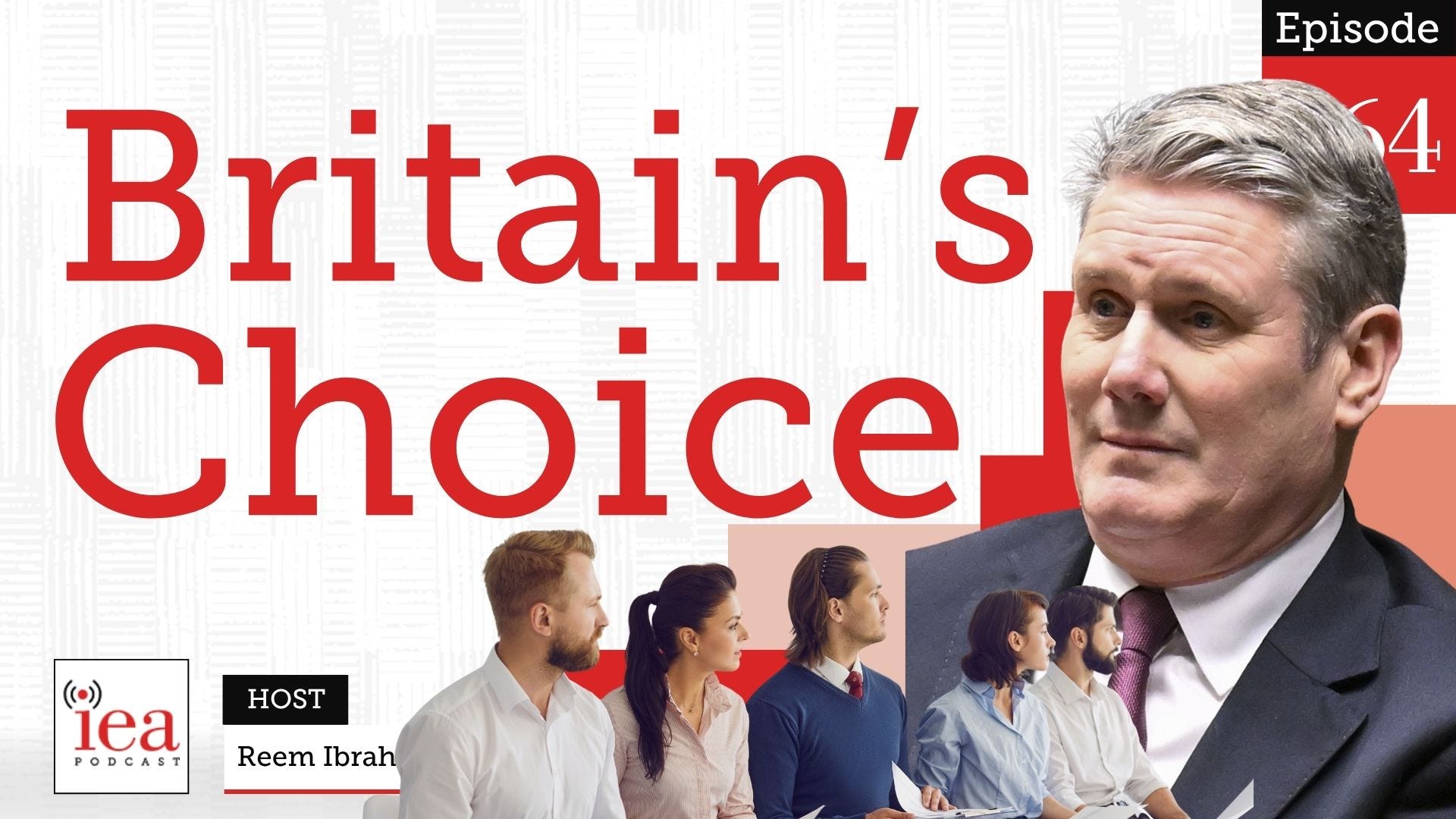
Financial Deregulation, Job Losses & Tax Reality: Britain's Economic Crossroads | IEA Podcast
In this Institute of Economic Affairs podcast, IEA Head of Media Reem Ibrahim interviews Tom Clougherty, the IEA Executive Director, and Kristian Niemietz, the IEA's Editorial Director. The conversation covers Rachel Reeves' recent speech on financial regulation, examining both the positive moves toward deregulation and concerning developments like government-backed mortgage guarantees. They also analyse the latest labour market statistics showing 178,000 job losses since June 2024 and the alarming rise in economic inactivity, with 21% of working-age adults now economically inactive.The discussion explores how employer National Insurance contribution increases and tighter employment regulation are creating significant headwinds for job creation and wage growth. Tom and Kristian argue that the UK's historically flexible labour market advantage is being eroded through cumulative regulatory burdens, comparing the situation to slowly boiling a frog. They examine how both Conservative and Labour governments have contributed to this regulatory creep, moving Britain away from the labour market flexibility that once distinguished it from continental Europe.The interview concludes with an examination of public attitudes toward taxation and spending, drawing on new research showing that when people understand how much tax they actually pay, support for tax cuts increases by 12% while support for spending cuts rises dramatically by 22 percentage points. With public spending approaching 50% of GDP, they discuss the political and economic challenges facing Britain as fiscal pressures mount and the traditional assumption that voters want higher taxes for better public services comes under question. This is a public episode. If you'd like to discuss this with other subscribers or get access to bonus episodes, visit insider.iea.org.uk/subscribe
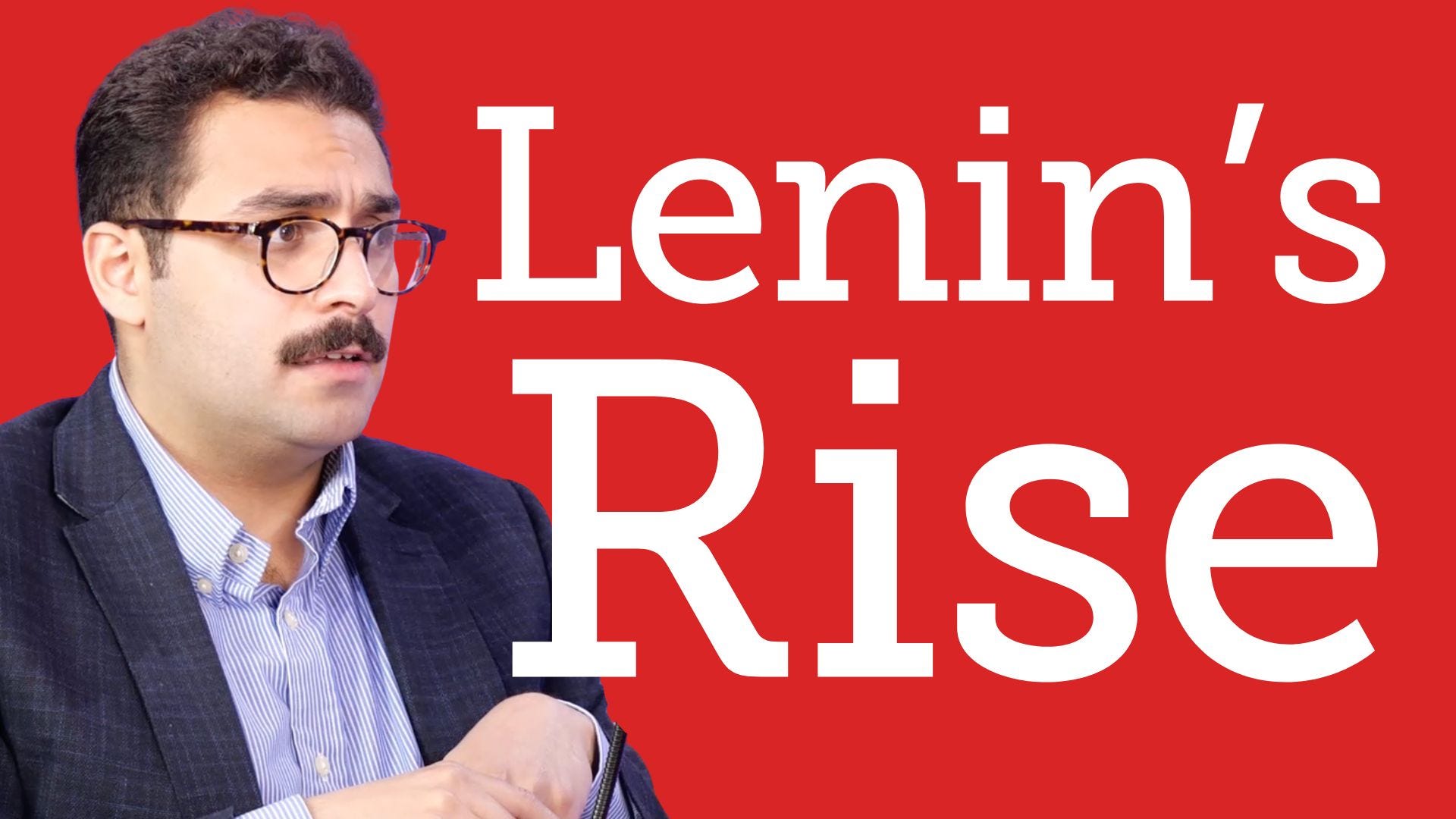
The Rise & Fall of the Soviet Economy Part 1: From Tsarist Russia to Lenin's NEP
In this Institute of Economic Affairs Podcast, Managing Editor Dan Freeman interviews Aymen Aulaiwi, DPhil student at Lincoln College, Oxford, in the first of a three-part series examining the Soviet economy's rise, peak and downfall. The conversation begins with an analysis of Russia's economic state in 1900, exploring the autocratic tsarist system, the dominance of agriculture with over 80% of the population working the land, and early signs of industrial progress driven by foreign investment and state-directed policy under Finance Minister Sergei Witte. They discuss the limitations of serfdom's abolition in 1861, the challenges of the village commune system (mir), and Stolypin's land reforms that attempted to create private agricultural plots.The discussion covers the devastating economic impact of World War One on Russia's underdeveloped manufacturing capacity and infrastructure, leading to the February Revolution of 1917 and the collapse of the tsarist regime. Aulaiwi explains the complex power-sharing arrangement between the Provisional Government and the Petrograd Soviet, examining the different socialist factions including the Social Revolutionaries, Mensheviks, and Bolsheviks. The conversation explores Lenin's theoretical justification for bypassing traditional Marxist stages of development, drawing on Marx's own correspondence about Russia's potential to leap from feudalism to socialism through peasant communes and international revolution.The episode concludes with an examination of War Communism (1918-1921), where the Bolsheviks nationalised industry, requisitioned grain from peasants, and launched class warfare against the kulaks while attempting to abolish money during the civil war period. They discuss how this radical programme led to economic collapse and famine, forcing Lenin to introduce the New Economic Policy (NEP) in 1921 - a mixed economy approach that allowed private enterprise in small businesses and free markets in agriculture while maintaining state control of major industries. The conversation ends with the tensions this created within the party, setting up the ideological battle between Bukharin's support for gradual development and Trotsky's call for primitive socialist accumulation that would ultimately shape Stalin's approach. This is a public episode. If you'd like to discuss this with other subscribers or get access to bonus episodes, visit insider.iea.org.uk/subscribe
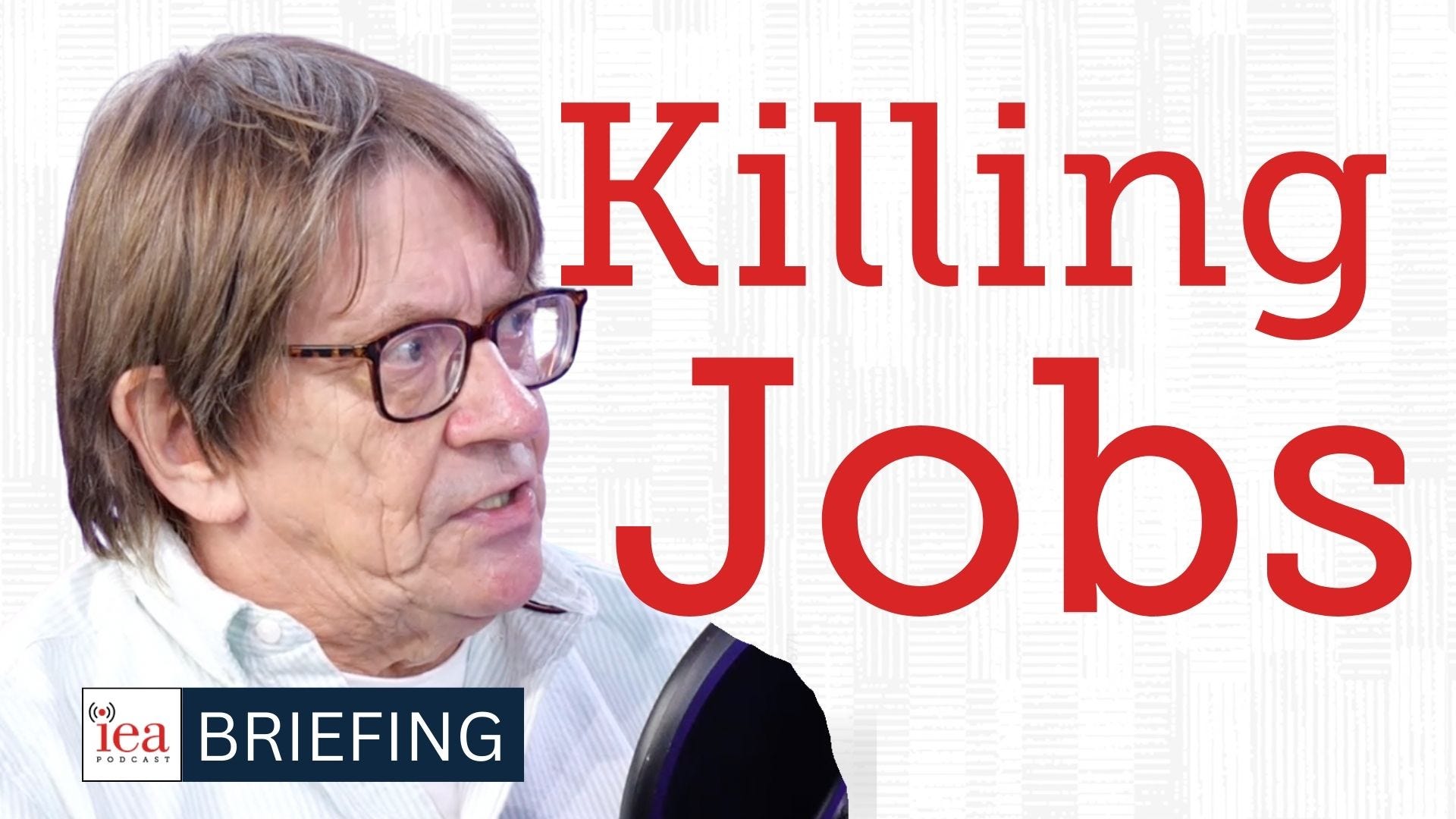
Liberating Britain's Labour Market | IEA Briefing
In this Institute of Economic Affairs briefing, Director of Communications Callum Price interviews Professor Len Shackleton, IEA Editorial and Research Fellow, about his latest discussion paper "Liberating the Labour Market." The conversation examines how Britain's labour market operates, with around 65% of workers employed by private businesses, 20% in the public sector, and the remainder in charities and nonprofits. They discuss how increasing employment regulation over the past 40 years has created a growing "wedge" between what employers pay and what employees receive, with compliance costs now supporting nearly half a million human resources workers compared to far fewer four decades ago.Professor Shackleton traces the evolution from the Thatcher-era trade union reforms of the 1980s to the current Employment Rights Bill, which spans 299 pages and carries an estimated £5 billion cost. He argues that employment mandates - requirements for employers to provide benefits like parental leave - function as stealth taxes that ultimately reduce worker pay over time. The discussion covers how these regulations have eroded Britain's traditionally flexible labour market advantage compared to heavily regulated European economies, with particular concern about the impact on youth employment opportunities as businesses face higher costs for hiring young workers.The briefing concludes with Shackleton's reform proposals, including scrapping the apprenticeship levy and reviewing occupational regulation requirements that force workers to obtain formal qualifications for jobs like estate agency - a requirement unique to Britain among European countries. He warns that the Employment Rights Bill's union-friendly provisions, including extended strike mandates and easier recognition processes, could lead to increased public sector militancy. Despite these challenges, Shackleton maintains optimism about the private sector's ability to generate employment, pointing to the post-COVID job creation surge as evidence of business adaptability when not constrained by excessive regulation. This is a public episode. If you'd like to discuss this with other subscribers or get access to bonus episodes, visit insider.iea.org.uk/subscribe

UK Smoking Ban & the Black Market Chaos | IEA Live
In this Institute of Economic Affairs explainer, former Justice Secretary Sir Robert Buckland, IEA Head of Lifestyle Economics Christopher Snowdon, and former ASH Director Clive Bates examine the UK government's proposal to introduce a “generational tobacco ban” as part of the Tobacco and Vapes Bill. The panel explores the legal, economic, and public health implications of a policy that would raise the legal smoking age year by year — effectively banning tobacco for future generations.The discussion delves into the legal vulnerabilities of the legislation, including potential challenges under the Equality Act and the European Convention on Human Rights. Buckland outlines how the bill may conflict with the Windsor Framework and create constitutional difficulties in Northern Ireland. Snowdon highlights the unintended consequences of prohibition, drawing on recent examples from Australia where overregulation has led to black market violence and arson attacks. Bates critiques the policy's negligible health impact, arguing that it distracts from more effective harm reduction strategies.The panel also assesses the government's failure to conduct adequate regulatory and equalities impact assessments, the risks of increasing criminalisation, and the broader political motivations behind the bill. They compare the UK’s approach with international examples such as Sweden, which has achieved the lowest adult smoking rates in Europe not through prohibition but by promoting safer alternatives like nicotine pouches and snus.The speakers conclude that the generational ban is unlikely to achieve meaningful health outcomes, may exacerbate the illicit tobacco trade, and undermines adult choice while ignoring the six million existing smokers. Instead, they call for a pragmatic, evidence-based approach focused on enabling safer alternatives rather than coercive bans. This is a public episode. If you'd like to discuss this with other subscribers or get access to bonus episodes, visit insider.iea.org.uk/subscribe
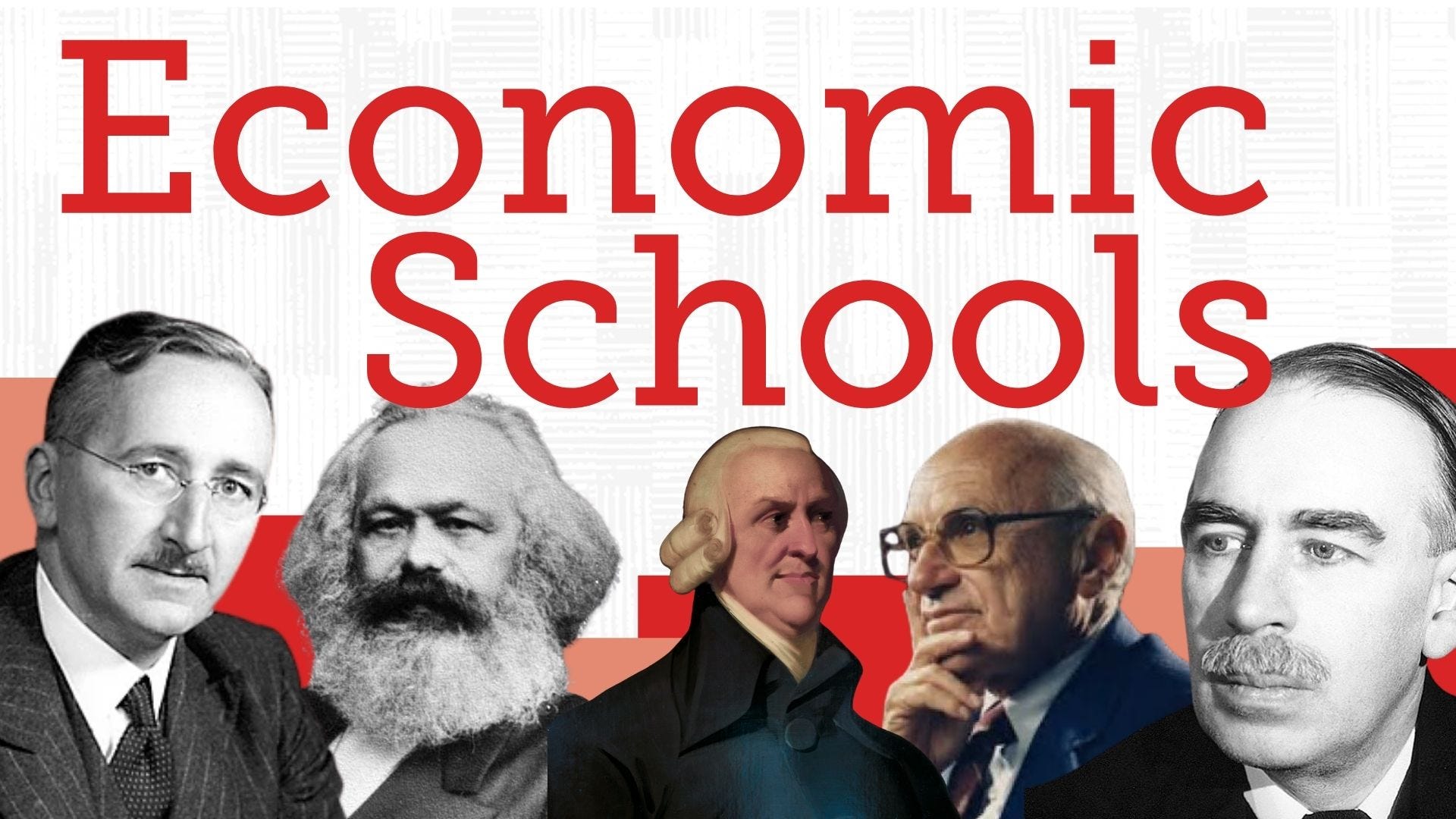
Economic Schools of Thought Explained | Dr Eamonn Butler | IEA Explained
In this Institute of Economic Affairs explainer, IEA Director Eamonn Butler discusses his new book "An Introduction to Schools of Economic Thought" and explores the major economic theories that have shaped our understanding of how resources are created and distributed. Butler examines the evolution from pre-classical economics through Adam Smith's revolutionary ideas about wealth creation, Karl Marx's labour theory of value, and the Austrian School's emphasis on individual choice and subjective value.The discussion covers how different schools approached fundamental economic questions, from the classical economists who challenged mercantilism to the Austrian School's critique of central planning. Butler explains the Keynesian revolution and its focus on government management of the macro economy, the Chicago School's monetarism and economic approach to human behaviour, and the neoclassical synthesis that attempted to mathematise economic theory. He also examines Public Choice economics and its sceptical view of government action, along with modern Behavioural Economics and its insights into human decision-making biases.Butler concludes by emphasising the importance of understanding these different schools of thought to grasp the historical context of economic ideas and to develop better frameworks for understanding economic life. He demonstrates how studying various economic approaches allows us to compare and contrast different explanations, potentially leading to improved economic thinking that builds upon the strengths of previous schools while addressing their limitations. This is a public episode. If you'd like to discuss this with other subscribers or get access to bonus episodes, visit insider.iea.org.uk/subscribe

Labour's First Year & Socialism's Return | IEA Podcast
In this Institute of Economic Affairs podcast, Director of Communications Callum Price hosts a discussion with Executive Director Tom Clougherty and Editorial Director Kristian Niemietz on Labour's first year in government since their July 2024 election victory. The conversation examines Labour's economic performance, focusing on their growth mission, fiscal challenges, and supply-side reforms. They assess the government's struggles with their pro-growth agenda, the impact of their tax-and-spend budget that raised taxes by £40 billion while increasing spending by £70 billion, and the recent market turbulence around gilt yields and the pound.The discussion explores Britain's fiscal fragility, with debt interest payments exceeding £100 billion annually and conventional debt measures at 100% of GDP. Clougherty and Niemietz analyse how the government's inability to control spending within their own coalition has created a challenging political cycle, while examining whether Labour could adopt a supply-side abundance agenda similar to progressive movements in the US. They also address the housing crisis, noting how regulatory burdens are undermining development viability even in high-demand areas like London, and discuss the broader implications for economic growth and political stability.The conversation concludes with an examination of the re-emergence of socialism through figures like Jeremy Corbyn and international examples such as the recent electoral victory in New York, alongside practical policy discussions on fuel duty reform and price transparency in petrol retail. The hosts explore whether Britain faces a potential political realignment between nationalist populism and radical socialism, leaving classical liberals potentially marginalised, while considering the role of economic pressures like housing costs in driving support for more extreme political alternatives. This is a public episode. If you'd like to discuss this with other subscribers or get access to bonus episodes, visit insider.iea.org.uk/subscribe
Adam Smith's American Revolution | Dan Klein | IEA Interview
In this IEA podcast episode, Reem Ibrahim sits down with Professor Daniel Klein to unravel why Adam Smith-writing in 1776 as revolution erupted-predicted America would become "one of the greatest and most formidable empires that ever was in the world." Starting with Smith's remarkable GDP forecast that America would overtake Britain within a century (which proved dead right), they trace how the Scottish economist saw five liberal principles emerging in colonial thought that would drive unprecedented prosperity.Daniel walks us through Smith's analysis of American thinkers like James Otis and John Adams, revealing how subsidiarity, religious freedom, limited government, free trade, and virtuous governance aligned with Smith's own philosophical framework. The discussion explores milestone moments-from Thomas Paine's Common Sense appearing months before The Wealth of Nations, to Smith's 1778 memo showing intimate knowledge of American affairs, and his prescient observation that "from shopkeepers, tradesmen and attorneys, they are become statesmen and legislators."They examine Smith's radical insight about religious free markets - how Pennsylvania's pluralistic approach would produce "candor and moderation" better than established churches - and his conviction that America's "Don't Tread on Me" spirit reflected a healthy recognition that "government is the institutionalization of coercion." The conversation reveals hidden connections between Edinburgh Enlightenment thinkers and the Founding Fathers, showing how David Hume, Edmund Burke, and Smith himself favoured a "let them go" approach to American independence.Looking to today's politics, they debate whether Smith would recognise his liberal hopes in modern America's centralised state, vast bureaucracy, and eroding constitutional checks. From Trump's tariffs to expanding federal power, Klein argues Smith would be "a lot less optimistic" about America's trajectory toward the subsidiarity and natural liberty he once celebrated. If you care about classical liberalism, constitutional design, or why the Scottish Enlightenment saw America as humanity's great experiment, this conversation is for you. Like, subscribe and hit the bell to catch future IEA podcast episodes. This is a public episode. If you'd like to discuss this with other subscribers or get access to bonus episodes, visit insider.iea.org.uk/subscribe
How Nuclear Power Went From Cheap to Impossibly Expensive | Free the Power
In this Free the Power episode, IEA Andy Mayer sits down with writer and policy analyst Alex Chalmers (Trauma Machine Substack & Works in Progress) to unravel why nuclear power went from cheap and fast-to-build in the 1960s to eye-wateringly expensive today. Starting with fruit-fly radiation studies that won Hermann Muller a Nobel Prize and seeded the “no safe dose” dogma, they trace the cascading effects of U.S. weapons-testing mishaps, the birth of ALARA/ALARP regulation, and how a safety culture of ever-thicker concrete, cable and paperwork priced private builders out of the market. Alex walks us through milestone moments—the Castle Bravo fallout scare, Three Mile Island’s zero-fatality meltdown, and the UK’s decision to demand extra HVAC filters on an advanced boiling-water reactor that would have reduced public exposure by less than “the radiation you get from eating one banana.” The discussion sets out the hidden trade-offs regulators ignore (fossil-fuel particulates kill far more people than low-dose radiation) and why cost escalations of 176 % in a decade were largely debt-finance and delay, not engineering fate. Looking ahead, they debate ways to break the ratchet—smarter risk thresholds, local benefit-sharing, and the UK government’s new Nuclear Regulatory Task Force, which could let Britain reclaim its 1960s lead in affordable, abundant, low-carbon power. If you care about climate targets, energy bills or technological optimism, this conversation is for you. Like, subscribe and hit the bell to catch future Free the Power episodes. This is a public episode. If you'd like to discuss this with other subscribers or get access to bonus episodes, visit insider.iea.org.uk/subscribe

Why Both Left and Right Have Failed on Growth | Julia Willemyns
In this Institute of Economic Affairs podcast, IEA Executive Director Tom Clougherty interviews Julia Willemyns, co-founder of the Centre for British Progress. The conversation explores the Centre's mission to promote pro-growth policies from a progressive perspective, examining how the centre-left can embrace economic growth and supply-side liberalisation. Willemyns discusses the organisation's evolution from UK Day One, their focus on addressing barriers to progress in Britain, and their belief that economic growth is essential for human progress and social mobility.The discussion covers key policy areas including planning reform, energy policy, and market dynamism. Willemyns advocates for "system resets" and regulatory simplification, drawing on examples from countries like Denmark's flexicurity model and innovative approaches to housing development in Houston and Israel. She argues for nuclear energy as crucial for Britain's energy independence and abundance, while critiquing both traditional left-wing approaches of regulation and redistribution, and the right's failure to deliver meaningful reform despite pro-growth rhetoric.The interview concludes with Willemyns' optimism about Britain's human capital and talent, while addressing the challenge of retaining high-skilled individuals. She emphasises the need for institutional reform that empowers rather than hollows out the state, advocating for policies that create opportunities for entrepreneurship and innovation. The conversation highlights the Centre for British Progress's approach of loving institutions enough to want them to work effectively, distinguishing their reform agenda from populist "slash and burn" approaches. This is a public episode. If you'd like to discuss this with other subscribers or get access to bonus episodes, visit insider.iea.org.uk/subscribe

NHS Waste, Welfare Traps & Failed Industrial Strategy: Britain's Triple Crisis | IEA Podcast
In this Institute of Economic Affairs podcast, Communications Manager Reem Ibrahim is joined by Executive Director Tom Clougherty and Editorial Director Kristian Niemietz. The conversation covers NHS productivity challenges, the government's welfare reform U-turn, and Labour's new industrial strategy. They examine how the NHS struggles to convert financial resources into productive medical inputs, despite having adequate funding compared to OECD averages, and discuss the need for decentralised decision-making and increased capital investment in healthcare.The discussion turns to the government's retreat on welfare reforms, particularly around Personal Independence Payments, after facing political pressure. They analyse the dramatic rise in disability benefit claims since the pandemic, with 63,000 people moving directly from student status to long-term sickness benefits without entering the labour market. The hosts explore why current welfare systems create perverse incentives that trap people in economic inactivity, and examine Steve Davies' proposals for moving beyond the welfare state towards community-based mutual aid solutions.The episode concludes with an examination of Labour's industrial strategy, which the panel views as ineffective government intervention in markets. They criticise the approach of subsidising specific businesses while maintaining high energy costs for everyone else, arguing that successful economic policy requires broad supply-side reforms rather than targeted industrial picking. The conversation highlights how governments lack the market knowledge necessary to effectively direct economic resources, referencing Hayek's insights on the knowledge problem in central planning. This is a public episode. If you'd like to discuss this with other subscribers or get access to bonus episodes, visit insider.iea.org.uk/subscribe
New Government Alcohol Advertising Ban | IEA Briefing
In this Institute of Economic Affairs briefing, Communications Manager Reem Ibrahim interviews Dr. Christopher Snowdon, Head of Lifestyle Economics, about the government's consideration of new restrictions on alcohol advertising. The discussion examines why ministers are exploring these plans, potentially to create a "level playing field" with the upcoming junk food advertising ban, and Dr. Snowdon's analysis of why such restrictions would be ineffective and economically damaging. Dr. Snowdon presents comprehensive evidence challenging the effectiveness of alcohol advertising bans, citing Cochrane Reviews and real-world studies that show no meaningful impact on consumption or health outcomes. He explains how advertising primarily affects brand choice and market share rather than overall consumption levels, noting that even substantial increases in advertising spending over recent decades haven't changed drinking patterns. The conversation explores the flawed methodology of recall studies commonly used to justify such bans and why problem drinkers are unlikely to be influenced by advertising restrictions. The briefing concludes with an examination of the unintended consequences of advertising bans, including reduced competition in the alcohol industry and significant financial impacts on broadcasters and media platforms already struggling with declining advertising revenues. Dr. Snowdon argues that if products are legal, they should be advertised freely, provided the advertisements meet standards of honesty and decency. The discussion highlights the broader trend of successive advertising bans across multiple sectors and questions where such restrictions might end. This is a public episode. If you'd like to discuss this with other subscribers or get access to bonus episodes, visit insider.iea.org.uk/subscribe
Government in Crisis Over Exploding Welfare Bill | Dr Stephen Davies | IEA Interview
In this Institute of Economic Affairs Podcast interview, IEA Communications' Callum Price interviews Dr. Steve Davies, Senior Education Fellow, on the growing crisis of state welfare spending in the UK. Davies explains how the welfare bill has ballooned to approximately 12% of government expenditure (excluding pensions and healthcare), with incapacity and disability benefits alone expected to reach £100 billion by 2030 - up 25% since 2019. The discussion explores how Gordon Brown's well-intentioned income supplement system has created a welfare trap, where means-tested benefits impose effective marginal tax rates of 80% that discourage people from increasing their work hours or seeking better-paid employment. Davies argues that the current system is both financially unsustainable and socially destructive, trapping people in dependency while failing to address underlying structural problems like housing costs and low productivity. He critiques the limitations of technocratic reforms, explaining how attempts to tighten eligibility criteria often simply displace demand to other, more expensive programmes. The conversation covers the explosive growth in mental health problems among young people and the geographical mobility constraints caused by housing costs that keep people stuck in areas with limited employment opportunities. The interview concludes with Davies proposing radical alternatives to the current state-dominated system, including a return to mutual aid and voluntary collective action rather than traditional charity or market-based solutions. He advocates for either a minimal state safety net or universal basic services model, combined with locally-controlled, community-based welfare provision that draws on tacit local knowledge. Davies warns that without fundamental reform, the UK risks creating an even more punitive welfare system following a future financial crisis, and calls for honest political conversation about the severity of the challenges facing the current approach to social support. This is a public episode. If you'd like to discuss this with other subscribers or get access to bonus episodes, visit insider.iea.org.uk/subscribe

Tax Expert Dan Neidle: Why Wealth Taxes Will Backfire Spectacularly | IEA Interview
In this Institute of Economic Affairs Podcast Interview, IEA Executive Director Tom Clougherty interviews Dan Neidle, founder of Tax Policy Associates and one of the UK's most respected tax experts. The conversation covers the fundamental problems with Britain's tax system, examining public misunderstanding of how tax thresholds work, the challenges of pro-growth tax reform, and why wealth taxes are likely to fail. They also discuss the absurd cliff edges in income tax that discourage people from earning between £100,000-£125,000, creating effective marginal rates of up to 62%. Dan explains why current tax policy is made through "political theatre" rather than rational design, leading to a system he describes as "pure rabbit" above £200,000 in earnings. The discussion covers the economic incidence of taxation, revealing how taxes legally paid by businesses often fall on workers and consumers. They examine specific reform proposals including full expensing for business investment, radical VAT base broadening, and replacing stamp duty with annual land value taxes. Dan also critiques popular wealth tax proposals, arguing they would apply punitive effective rates of up to 75% on a highly mobile group of around 10,000 wealthy individuals. The interview concludes with analysis of the government's likely approach to raising taxes in the autumn budget. Dan argues that while politicians prefer targeting "other people" with complex loophole closures, the most honest approach would be putting a percentage point on income tax rates. Throughout the conversation, both speakers emphasize areas where tax experts across the political spectrum agree on rational reforms, even while disagreeing on overall tax levels and the size of the state. This is a public episode. If you'd like to discuss this with other subscribers or get access to bonus episodes, visit insider.iea.org.uk/subscribe

HS2 Billions, Trump's Tax Chaos & The Liberal Identity Crisis | IEA Podcast
In this Institute of Economic Affairs Podcast, IEA Executive Director Tom Clougherty is joined by Managing Editor Daniel Freeman and Editorial Director Kristian Niemietz for a wide-ranging discussion covering three major policy areas. The conversation examines the spiralling costs and delays of HS2, which now has no fixed opening date despite ballooning to over £100 billion for a truncated route that no longer reaches Manchester or Leeds. They also debate whether classical liberals should abandon the term "liberal" in response to Rod Liddle's argument that the word has been captured by progressive movements, and conclude with an analysis of Donald Trump's proposed tax legislation extending the 2017 reforms. The discussion reveals how Britain's planning system makes infrastructure projects vastly more expensive than comparable European examples, with the French TGV between Tours and Bordeaux costing under €8 billion for the same distance as HS2's London-Birmingham route. The hosts argue that excessive consultation processes, environmental regulations, and multiple veto players have created a system where Britain struggles to build anything efficiently. On the liberal terminology debate, Niemietz pushes back against claims that "liberal" now means "woke," arguing that in Britain the term retains its classical meaning and that progressives themselves reject the liberal label. The Trump tax bill analysis highlights the contradiction between extending pro-growth measures from 2017 while introducing distortionary new provisions like exempting tips and overtime from taxation, plus car loan deductions for American vehicles only. Most concerning is the proposed withholding tax on foreign investment, which could undermine America's ability to attract international capital while simultaneously running massive deficits. The hosts suggest this reflects the administration's inconsistent approach to trade deficits and foreign investment, potentially threatening the dollar's reserve currency status that enables such fiscal flexibility. This is a public episode. If you'd like to discuss this with other subscribers or get access to bonus episodes, visit insider.iea.org.uk/subscribe
Britain is Paying for Wind Power It Can't Even Use | Guy Newey | Free the Power
In this Free the Power podcast, the IEA's occasional series on free market solutions to energy challenges, Chief Operating Officer Andy Mayer interviews Guy Newey, Chief Executive of the Energy Systems Catapult. The conversation explores the contentious debate over locational pricing in UK energy markets - a technical reform that could fundamentally reshape how Britain prices and distributes electricity. They discuss the transition from a centralised system of large coal and gas power stations to a distributed network of intermittent renewables, electric vehicles, heat pumps, and smart devices that requires millions of actors rather than dozens. Guy explains how Britain's current single national electricity price is becoming increasingly inefficient as the system evolves, leading to billions in constraint costs where wind farms are paid to switch off while other generators are paid to switch on elsewhere. He advocates for zonal or nodal pricing systems that would create regional electricity prices reflecting local supply and demand, potentially offering Scotland some of the cheapest energy in Western Europe while incentivising efficient placement of generation and storage. The discussion covers fierce industry opposition from renewable developers concerned about investment uncertainty, the potential for £3-4 billion in annual system efficiency gains, and the successful implementation of similar systems in markets like Texas. The interview concludes with an examination of the political challenges facing Energy Secretary Ed Miliband, who must balance Clean Power 2030 ambitions against industry warnings about slowed renewable investment. Guy argues that locational pricing could drive industrial revival, tackle fuel poverty, and position Britain as a leader in affordable clean energy. He emphasises that decarbonisation will only succeed at the necessary pace if clean energy solutions become cheaper and better than fossil fuel alternatives, making this pricing reform crucial for the UK's energy transition and economic competitiveness. This is a public episode. If you'd like to discuss this with other subscribers or get access to bonus episodes, visit insider.iea.org.uk/subscribe
The Death of Neoliberalism and the Rise of Populism | IEA Briefing
In this Institute of Economic Affairs Briefing, Communications Manager Reem Ibrahim interviews Christopher Snowdon, Head of Lifestyle Economics, about Quinn Slobodian's book "Hayek's B******s: The Neoliberal Roots of the Populist Right." The discussion examines Slobodian's controversial thesis that traces intellectual connections between free-market economists like Friedrich Hayek and Ludwig von Mises to the modern populist right movement, including figures like Donald Trump and Marine Le Pen. Snowdon critiques Slobodian's methodology, arguing that the author has worked backwards from his conclusion to cherry-pick tenuous connections between libertarian think tanks and populist politicians. The conversation explores how Slobodian mischaracterises key figures like Mises, who was consistently pro-open borders and anti-racist, and fails to acknowledge that modern populism fundamentally rejects core neoliberal principles like free trade and globalization. Snowdon highlights the irony that populist movements actually share more common ground with left-wing critics of neoliberalism than with free-market advocates. The interview concludes with analysis of why Slobodian's timing was particularly unfortunate, publishing just as Trump's return to power with explicitly protectionist policies undermines any supposed connection to Hayekian economics. Snowdon argues that rather than being disciples of free-market thought, today's populists represent a complete rejection of neoliberal principles, making Slobodian's central thesis fundamentally flawed. This is a public episode. If you'd like to discuss this with other subscribers or get access to bonus episodes, visit insider.iea.org.uk/subscribe
Chancellor's Spending Review: All Money, No Vision | IEA Podcast
In this Institute of Economic Affairs podcast, Communications Director Callum Price is joined by Executive Director Tom Clougherty and Editorial Director Kristian Niemietz to examine the government's latest spending review. The conversation covers Rachel Reeves' announcement of increased NHS funding - another 3% real terms increase annually - while implementing spending cuts across most other departments through what they describe as "classic salami slicing" rather than genuine zero-based budgeting. They discuss how the government has abandoned any meaningful NHS reform agenda, reverting to simply throwing money at the health service despite previous promises of structural change.The hosts analyse the broader economic context, noting that GDP shrank 0.3% in April while national debt sits at around 100% of GDP with over £100 billion spent annually on debt interest. With taxation at generational highs and borrowing costs extremely elevated, they argue the government faces an inevitable fiscal black hole that may require further tax increases come autumn. The discussion critiques the government's approach to capital spending, which focuses heavily on defence and social housing rather than growth-generating infrastructure.The conversation concludes with an examination of missed opportunities for genuine economic reform, particularly in housing and planning where the government could deliver significant growth through deregulation rather than subsidies. They argue that despite Labour's stated focus on growth as their "number one mission," the actual policies - from employment rights legislation to continued planning restrictions - point in the opposite direction. The hosts express frustration at the government's failure to pursue supply-side reforms that could address the UK's fundamental economic challenges without requiring additional public spending. This is a public episode. If you'd like to discuss this with other subscribers or get access to bonus episodes, visit insider.iea.org.uk/subscribe

The NHS Was NEVER The Best Healthcare System In The World | IEA Briefing
In this Institute of Economic Affairs briefing, Communications Manager Reem Ibraham interviews Kristian Niemietz, Editorial Director, who has written a piece in The Telegraph entitled "The NHS Truths the Left Don't Want You to Hear." The conversation examines whether the NHS was ever truly the best healthcare system in the world, with Niemietz arguing that it never was, despite popular belief in a "lost golden age." They discuss how the NHS has consistently lagged behind other developed countries' healthcare systems across measurable clinical outcomes, avoidable mortality rates, and cancer survival rates, challenging the narrative that recent funding cuts are responsible for current failings. Niemietz debunks the myth of systematic NHS defunding, explaining that while budget growth slowed in the 2010s, the system was never actually starved of funds as commonly claimed. He argues that the assertion of deliberate underfunding to enable privatisation makes no theoretical sense, as poor NHS performance typically leads to calls for more spending rather than privatisation. The discussion covers how Health Secretary Wes Streeting initially presented himself as a radical reformer but has since moved away from fundamental institutional changes, focusing instead on minor adjustments around the edges. The interview concludes with Niemietz outlining his vision for genuine NHS reform, drawing on examples from countries like the Czech Republic, Slovakia, and East Germany that successfully transitioned from NHS-type systems to social insurance models. He proposes a gradual transformation that would maintain current arrangements as a default option while opening up new choices for those who want them, allowing the system to evolve over time without disrupting care for those who prefer the status quo. Niemietz argues that such transitions have been accomplished elsewhere in less than a decade without significant disruption to patients. This is a public episode. If you'd like to discuss this with other subscribers or get access to bonus episodes, visit insider.iea.org.uk/subscribe
New Zealand's Deputy PM David Seymour: "That's a Fight Worth Having" | IEA Interview
In this Institute of Economic Affairs podcast, IEA Director of Communications Callum Price interviews David Seymour, New Zealand's Deputy Prime Minister, Minister for Regulation and leader of the ACT Party. The conversation covers New Zealand's productivity challenges and Seymour's landmark Regulatory Standards Bill, which would establish statutory principles for good regulation based on protecting liberty and property rights. They discuss how New Zealand is tackling government bloat through fiscal restraint, cutting spending growth to just 0.9% while facing significant demographic pressures from an aging population.Seymour explains his approach to welfare reform, arguing that one in six working-age New Zealanders being on benefits is unsustainable, and outlines plans to raise the pension age incrementally. The discussion explores how his government has successfully introduced charter schools outside union control, allowing innovative employment models and tripling staff-to-teacher ratios in some cases. He criticises the education system's prioritisation of union interests over children's outcomes and describes the rapid implementation of seven new charter schools within 15 months of taking office.The interview concludes with Seymour's analysis of New Zealand's planning reform, replacing sustainability-based resource management law with property rights-focused legislation. He argues that current planning systems have become so restrictive they're "destroying who we are as a country," citing how the climbing walls where Sir Edmund Hillary supposedly learned to climb have been closed for health and safety reasons. Seymour advocates for a system where property owners can develop freely unless they materially impact others' property rights, moving away from subjective sustainability assessments that cost billions and create massive uncertainty. This is a public episode. If you'd like to discuss this with other subscribers or get access to bonus episodes, visit insider.iea.org.uk/subscribe
Winter Fuel U-Turn & Britain's Fiscal Time Bomb | IEA Podcast
In this Institute of Economic Affairs podcast, Communications Director Callum Price hosts Executive Director Tom Clougherty and Editorial Director Kristian Niemietz for a wide-ranging discussion on three major political and economic issues facing Britain. The conversation covers the government's troubled handling of winter fuel payment reforms, examining how Labour's partial U-turn reveals the deeper political challenges of reforming old-age benefits in an ageing society. They also explore Conservative leader Kemi Badenoch's new focus on tackling "lawfare" and her party's plans to potentially withdraw from the European Convention on Human Rights, discussing how legal activism and judicial overreach are constraining democratic governance and economic decision-making. The discussion delves into the concerning fiscal projections showing Britain faces an additional 11% of GDP in spending on elderly care, pensions and benefits - equivalent to doubling income tax bills. Niemietz explains how ageing demographics create powerful political incentives that make meaningful reform extremely difficult, even for governments with large majorities. The hosts examine how the current system of fiscal churn sees almost everyone both paying high taxes and receiving benefits simultaneously, arguing for more fundamental integration of the tax and benefit systems along the lines of Milton Friedman's negative income tax proposals. The conversation concludes by analysing recent economic speeches from Rachel Reeves, Mel Stride and Nigel Farage, revealing the tensions within each party's approach. They discuss Labour's contradictory mix of industrial strategy rhetoric constrained by fiscal reality, Reform's populist tax cuts funded by questionable savings projections, and the Conservatives' renewed focus on supply-side reforms while grappling with their poor track record in government. The hosts argue that Britain needs fundamental state transformation rather than incremental changes, but question whether any current political party truly grasps the scale of reform required to restore economic dynamism. This is a public episode. If you'd like to discuss this with other subscribers or get access to bonus episodes, visit insider.iea.org.uk/subscribe
Why Britain's Cannabis Laws Make No Sense | IEA Interview
In this Institute of Economic Affairs podcast, Communications Manager and Linda Whetstone Scholar Reem Ibrahim interviews Mike Morgan-Giles, CEO of the Cannabis Industry Council and Liberal Democrat District Councillor. The conversation covers the current state of medical cannabis regulation in the UK, examining how 2018 law changes have created a growing private prescription market of around 50-60,000 patients while NHS access remains severely limited by NICE guidelines. Mike explains the stark differences between UK cannabis policy and more liberal approaches in countries like Germany, Canada and Australia, where GPs can prescribe cannabis medicines. They discuss the scientific evidence supporting medical cannabis for chronic pain and other conditions, addressing common misconceptions about cannabis use versus misuse. The interview also explores the regulatory barriers preventing GP prescribing, the Home Office's role in medical policy, and why doctors are more comfortable prescribing opioids than cannabis despite safety profiles. The discussion extends to industrial hemp's potential for decarbonising construction through products like hempcrete, which offers superior insulation and carbon capture compared to traditional building materials. Mike outlines the Cannabis Industry Council's policy priorities including moving regulation from the Home Office to health departments, enabling GP prescribing, reforming research restrictions, and updating NICE guidelines to accept real-world evidence. The conversation concludes with analysis of political positions across parties and the broader case for evidence-based drug policy reform, including emerging research on psilocybin for depression treatment. This is a public episode. If you'd like to discuss this with other subscribers or get access to bonus episodes, visit insider.iea.org.uk/subscribe
How to Save Western Civilisation | Johan Norberg | IEA Interview
In this Institute of Economic Affairs podcast, IEA Executive Director Tom Clougherty interviews Johan Norberg, author of the new book "Peak Human: What We Can Learn From the Rise and Fall of Golden Ages." Norberg, a prominent figure in the global freedom movement since his 2001 work "In Defence of Global Capitalism," explores what makes civilizations flourish and why they eventually decline. The conversation examines the essential preconditions for golden ages throughout history, including the importance of openness to other cultures, innovation, rule of law, and a crucial psychological element - the cultural optimism and self-belief that drives societies toward progress.The discussion covers fascinating historical case studies from Norberg's book, including the Abbasid Caliphate in Baghdad, the Dutch Republic, and the Anglosphere golden age that began with the Glorious Revolution. Norberg argues that successful civilisations both imitate and innovate, learning from other cultures while creating new combinations of ideas and technologies. He identifies concerning parallels between today's populist right and woke left, both of which reject the cultural openness that has historically driven progress. The conversation also explores the accumulation of veto powers and interest groups that gradually stifle innovation, drawing connections to theories by economists like Mancur Olson.The interview concludes with an examination of whether our current golden age can be sustained indefinitely. Norberg discusses the threats facing Western civilisation, including aging populations, excessive regulation, and the potential retreat of American global leadership. However, he maintains cautious optimism, arguing that civilisations decline through choices rather than natural aging, and that the classical liberal emphasis on individual agency and institutional reform offers hope. The conversation touches on the Industrial Revolution's true legacy, the importance of urbanisation for progress, and the challenge of making liberalism inspiring in an age of quick political fixes. This is a public episode. If you'd like to discuss this with other subscribers or get access to bonus episodes, visit insider.iea.org.uk/subscribe

Doctors Strike & UK's 60% Tax Rate |IEA Podcast
In this Institute of Economic Affairs podcast, Communications Manager Reem Ibrahim hosts Executive Director Tom Clougherty and Editorial Director Kristian Niemietz for a wide-ranging discussion on Britain's broken systems. The conversation begins with Nigel Farage's proposal for transferable tax allowances between married couples, examining how the UK's individual taxation system creates massive inequities for families. They reveal the shocking reality that households with identical incomes can pay wildly different tax rates depending on how earnings are split, with some families facing effective tax rates of 60% due to the £100,000 personal allowance cliff edge.The discussion moves to junior doctors threatening fresh strikes over demands for a 29% pay increase, despite already receiving 22% rises in recent years. The hosts examine how the BMA's radical wing has taken control of negotiations and why the union opposes physician associates who could ease NHS pressures. They explore the fundamental problem of government-controlled healthcare where salaries aren't determined by market forces, creating a system prone to strikes as the only form of negotiation. The conversation reveals how public support for these strikes has significantly declined as patients suffer from cancelled appointments and procedures.The episode concludes with an examination of the booming space economy, now worth hundreds of billions and predicted to reach $1.8 trillion by 2035. Kristian reveals how space exploration has returned to its historical roots as a private sector-driven industry, with companies like SpaceX revolutionising costs and capabilities through competition rather than government "cost-plus" contracts. They discuss how innovations like Starlink are already transforming global internet access and explore future possibilities including asteroid mining and space-based energy that could fundamentally change life on Earth. This is a public episode. If you'd like to discuss this with other subscribers or get access to bonus episodes, visit insider.iea.org.uk/subscribe
Your Professor Lied to You About Capitalism | Yaron Brook | IEA Live
In this Institute of Economic Affairs event, Education Programs Manager Sam Cruickshank hosts Dr. Yaron Brook, Chairman of the Ayn Rand Institute and co-author of bestselling books including "Free Market Revolution" and "Equal Is Unfair." Dr. Brook delivers a compelling presentation on "The Morality of Capitalism," exploring why capitalism faces persistent moral objections despite its proven economic success. The discussion covers the fundamental conflict between society's condemnation of self-interest and capitalism's reliance on self-interested behaviour, examining how this moral framework undermines support for free markets.Dr. Brook argues that the root challenge facing capitalism isn't economic but philosophical - people reject capitalism not because it doesn't work, but because they perceive it as immoral. He traces this back to deeply ingrained cultural beliefs that label self-interest as evil and sacrifice as virtuous, leading to the welfare state and regulatory framework that constrains economic freedom. Brook presents Ayn Rand's alternative morality of rational self-interest, arguing that individuals should pursue their own long-term rational values and that true self-interest actually promotes productive, peaceful cooperation rather than exploitation.The presentation concludes with an extensive Q&A session covering immigration policy, the compatibility of Christianity with capitalism, monopolies in free markets, corporate responsibility in cases like tobacco companies, and equality of opportunity. Dr. Brook addresses concerns about Islamic immigration in Europe, defends the morality of allowing individuals to make their own choices about harmful products, and challenges conventional thinking about equality. Throughout, he maintains that only by embracing a morality that celebrates individual achievement and rational self-interest can capitalism be properly defended and implemented. This is a public episode. If you'd like to discuss this with other subscribers or get access to bonus episodes, visit insider.iea.org.uk/subscribe
How to SAVE Britain | Robert Jenrick MP | IEA Live
In this Institute of Economic Affairs event, Head of Communications Callum Price interviews Robert Jenrick MP, Shadow Secretary of State for Justice and former Minister of State for Immigration and Secretary of State for Housing. The conversation covers the biggest barriers to economic growth in the UK, examining how persistent low growth has been exacerbated by Labour's recent policies and the need for radical conservative solutions. Jenrick discusses his advocacy for fundamentally different energy policy focused on cheap and reliable energy, arguing that net zero by 2050 amounts to "unilateral economic disarmament" that is impoverishing Britain and deindustrialising the country. The discussion moves to planning reform and the housing crisis, with Jenrick explaining how "you cannot have economic growth if you can't build things" and advocating for massive densification of cities. He reveals shocking statistics about London's housing construction, noting that in the first three months of 2025, 23 out of 33 London boroughs didn't start building a single home. Jenrick also addresses the link between mass migration and the housing crisis, arguing that 80-90% of the housing deficit stems from immigration policies of the last 25 years. The conversation covers his views on judicial reform, the need to restore parliamentary sovereignty, and his criticism of activist judges who campaign against laws passed by Parliament. The interview concludes with audience questions on topics including conservative party renewal, welfare reform, tax policy, and energy strategy including fracking. Jenrick discusses the need for the Conservative Party to become a "radical party" that can address Britain's economic and societal decline, the importance of reaching young voters through social media, and his vision for supply-side reforms that go beyond simple tax cuts. He emphasises the moral case for conservatism and the urgency of political reform given competition from Reform UK on the right of British politics.The Institute of Economic Affairs is an educational charity, it does not endorse or give support for any political party in the UK or elsewhere. Our mission is to improve understanding of the fundamental institutions of a free society by analysing and expounding the role of markets in solving economic and social problems. This is a public episode. If you'd like to discuss this with other subscribers or get access to bonus episodes, visit insider.iea.org.uk/subscribe