IEA Podcast
402 episodes — Page 3 of 9
The Russian Economist Putin Wants Dead | IEA Interview
Join Daniel Freeman in conversation with Professor Sergei Guriev, one of the world’s leading experts on the Russian economy and a man officially designated as a ‘terrorist’ by the Kremlin. From his early days as rector of Moscow’s New Economic School and informal adviser to Dmitri Medvedev, to his current position as a political exile and dean of London Business School, Guriev provides unparalleled insights into Putin’s Russia. This conversation traces his remarkable journey from respected Moscow economist to someone Putin’s regime considers a threat, revealing how Russia’s political transformation fundamentally reshaped economic policy and prosperity.Guriev explains how the 1990s’ chaotic transition created conditions for Putin’s rise, and why the early Putin years delivered genuine economic growth through market reforms and integration with the West. However, he details how everything changed after Putin’s return to the presidency in 2012, when economic policy became subordinate to political control. The conversation explores how Putin deliberately chose stagnation over growth, preferring a 1970s Soviet-style economy with high oil prices and tight political control rather than the competitive markets that would generate prosperity but also political demands from business elites.Looking ahead, Guriev outlines potential scenarios for Russia’s future, drawing parallels with the ‘Death of Stalin’ and post-Mao China. He argues that whilst Putin may cling to power until 2035, the regime’s inherent instability means Russia’s political and economic trajectory could shift dramatically once he’s gone. The conversation offers a masterclass in understanding how authoritarian economics works, why Putin fears competition more than stagnation, and what Russia’s future might hold.The Institute of Economic Affairs is a registered educational charity. It does not endorse or give support for any political party in the UK or elsewhere. Our mission is to improve understanding of the fundamental institutions of a free society by analysing and expounding the role of markets in solving economic and social problems.The views represented here are those of the speakers alone, not those of the Institute, its Managing Trustees, Academic Advisory Council members or senior staff. This is a public episode. If you'd like to discuss this with other subscribers or get access to bonus episodes, visit insider.iea.org.uk/subscribe
How the UK Is Blocking Its Own Growth (And How to Fix It) | Shanker Singham | IEA Podcast
In this conversation, Reem Ibrahim sits down with Shanker Singham, one of the world’s leading international trade and competition lawyers, to discuss his newly published book “International Trade Regulation, the Global Economy, and the Impact of Anti-Competitive Market Distortions.” Shanker reveals groundbreaking research showing that a 15% improvement in domestic competition and regulation could increase GDP per capita by 8-11% - nearly double the impact of trade liberalisation alone. He challenges the prevailing narrative around tariffs and protectionism, demonstrating why fixing market distortions at home matters more than reciprocal trade barriers.Shanker explains the concept of “anti-competitive market distortions”, a term he coined 25 years ago, covering everything from regulatory barriers and state subsidies to intellectual property violations. Drawing on econometric analysis of 120 countries over 13 years, he breaks down the three pillars that drive economic growth: trade policy, domestic competition, and property rights protection. Perhaps most provocatively, his research suggests domestic regulatory reform is twice as powerful as trade liberalisation for boosting prosperity. He also discusses his innovative work applying quantum mechanics principles to model the probability of voluntary exchange in markets.From Brexit negotiations to Trump’s tariffs, China’s state capitalism to the UK’s growth stagnation, this conversation covers the most pressing issues in international trade and competition policy. Shanker serves as CEO of Competere and Chairman of the Growth Commission, and is a fellow at the IEA where he previously directed the International Trade and Competition Unit. Whether you’re interested in trade policy, economic modeling, or practical solutions to boost growth, this episode offers crucial insights for understanding how governments distort markets - and how to fix them.\The Institute of Economic Affairs is a registered educational charity. It does not endorse or give support for any political party in the UK or elsewhere. Our mission is to improve understanding of the fundamental institutions of a free society by analysing and expounding the role of markets in solving economic and social problems.The views represented here are those of the speakers alone, not those of the Institute, its Managing Trustees, Academic Advisory Council members or senior staff. This is a public episode. If you'd like to discuss this with other subscribers or get access to bonus episodes, visit insider.iea.org.uk/subscribe
Britain's Growth Crisis: The Model That Explains Everything | Patrick Minford
Professor Patrick Minford explains why Britain has barely grown richer since 2007, with average incomes only 4% higher in real terms over 18 years—an unprecedented period of stagnation. Drawing on decades of research, Minford traces the UK’s economic transformation from the “sick man of Europe” in the 1970s through the Thatcher-era liberalization that saw Britain overtake France and Germany in living standards, to today’s return to high regulation and taxation. He presents a causal model showing how entrepreneurial incentives, tax rates, and labor market regulation drive growth—and warns that current government policies are doing precisely the opposite of what the evidence suggests works.In this wide-ranging conversation with Kristian Niemietz, Minford discusses his econometric analysis of UK growth from 1970-2010, explains why rich entrepreneurs are crucial for economic dynamism, and critiques the wealth tax proposals that he argues would harm rather than help growth. He also addresses Brexit’s economic impact, compares Britain’s regulatory environment to France’s, and offers a stark assessment of Labour’s current economic policies. With over 50 years of experience analyzing UK economic policy, including collaboration with the IEA since the 1970s, Minford provides a provocative challenge to conventional thinking about inequality and growth.This is essential viewing for anyone interested in understanding Britain’s productivity puzzle and the policy choices that could reverse decades of stagnation, or make it worse.The Institute of Economic Affairs is a registered educational charity. It does not endorse or give support for any political party in the UK or elsewhere. Our mission is to improve understanding of the fundamental institutions of a free society by analysing and expounding the role of markets in solving economic and social problems.The views represented here are those of the speakers alone, not those of the Institute, its Managing Trustees, Academic Advisory Council members or senior staff. This is a public episode. If you'd like to discuss this with other subscribers or get access to bonus episodes, visit insider.iea.org.uk/subscribe
Stop Taxing Christmas: How the Nanny State Ruined Mince Pies | IEA Briefing
In this special Christmas edition Institute of Economic Affairs briefing, Head of Media Reem Ibrahim interviews Dr. Christopher Snowdon, Head of Lifestyle Economics. The conversation examines how government regulations and taxes affect traditional Christmas foods and drinks, from mince pies to mulled wine, exploring the expanding scope of nanny state restrictions.Dr. Snowdon explains the impact of recent regulations including display bans in supermarkets, advertising restrictions before 9pm, and promotional deal prohibitions on foods deemed high in fat, sugar, and salt. They discuss the ultra-processed food debate, calorie labelling requirements, and how items like mince pies and chocolates face similar regulatory treatment to tobacco products. The briefing also covers alcohol duties, the upcoming disposable vape ban, and cigarette taxation where over 80% of the price is tax.The discussion concludes by questioning whether these interventions actually improve public health outcomes, with Dr. Snowdon pointing to economic growth and prosperity as stronger determinants of health than regulatory restrictions. They examine the nanny state index findings showing no correlation between regulatory intensity and health outcomes, while highlighting the connection between GDP per capita and life expectancy. The message: stop taxing and regulating Christmas festivities and instead focus on policies that deliver economic growth.The Institute of Economic Affairs is a registered educational charity. It does not endorse or give support for any political party in the UK or elsewhere. Our mission is to improve understanding of the fundamental institutions of a free society by analysing and expounding the role of markets in solving economic and social problems.The views represented here are those of the speakers alone, not those of the Institute, its Managing Trustees, Academic Advisory Council members or senior staff. This is a public episode. If you'd like to discuss this with other subscribers or get access to bonus episodes, visit insider.iea.org.uk/subscribe
Inside Labour's Economic Strategy: Supply-Side Vision & Political Reality | IEA Interview
In this Institute of Economic Affairs podcast, IEA Director of Communications Callum Price interviews Morgan Wild, Chief Policy Adviser at Labour Together. Morgan explains how Labour Together operates as a private company that exists purely to help the Labour Party govern and win elections, combining deep public opinion research with policy expertise to provide political solutions rather than purely technocratic answers. The conversation covers Labour’s pivot from post-financial crisis demand-side economics to a supply-side growth agenda focused on policy stability, land use regulation, and public investment.Morgan discusses Britain’s fundamental problems - the lack of ability to build anything and weak growth in second cities - and assesses Labour’s performance on planning reform and infrastructure. He argues that markets generate enormous wealth and are the best mechanism for allocating scarce resources, a view he suggests most in the Labour Party share. The discussion covers the political calculations behind economic policy decisions, with Morgan explaining why some technically sound reforms like VAT base-broadening may not be worth the political pain despite their economic benefits.The interview concludes with debates on wealth taxation, stamp duty reform, and the triple lock pension. Morgan dismisses popular wealth tax proposals as unworkable because capital is mobile, instead advocating for property and land value taxation reforms. He acknowledges the triple lock as an incredible long-term liability that any government will ultimately have to reform, and endorses proposals for gradual stamp duty replacement with annual property taxes over a ten-year transition period.The Institute of Economic Affairs is a registered educational charity. It does not endorse or give support for any political party in the UK or elsewhere. Our mission is to improve understanding of the fundamental institutions of a free society by analysing and expounding the role of markets in solving economic and social problems.The views represented here are those of the speakers alone, not those of the Institute, its Managing Trustees, Academic Advisory Council members or senior staff. This is a public episode. If you'd like to discuss this with other subscribers or get access to bonus episodes, visit insider.iea.org.uk/subscribe
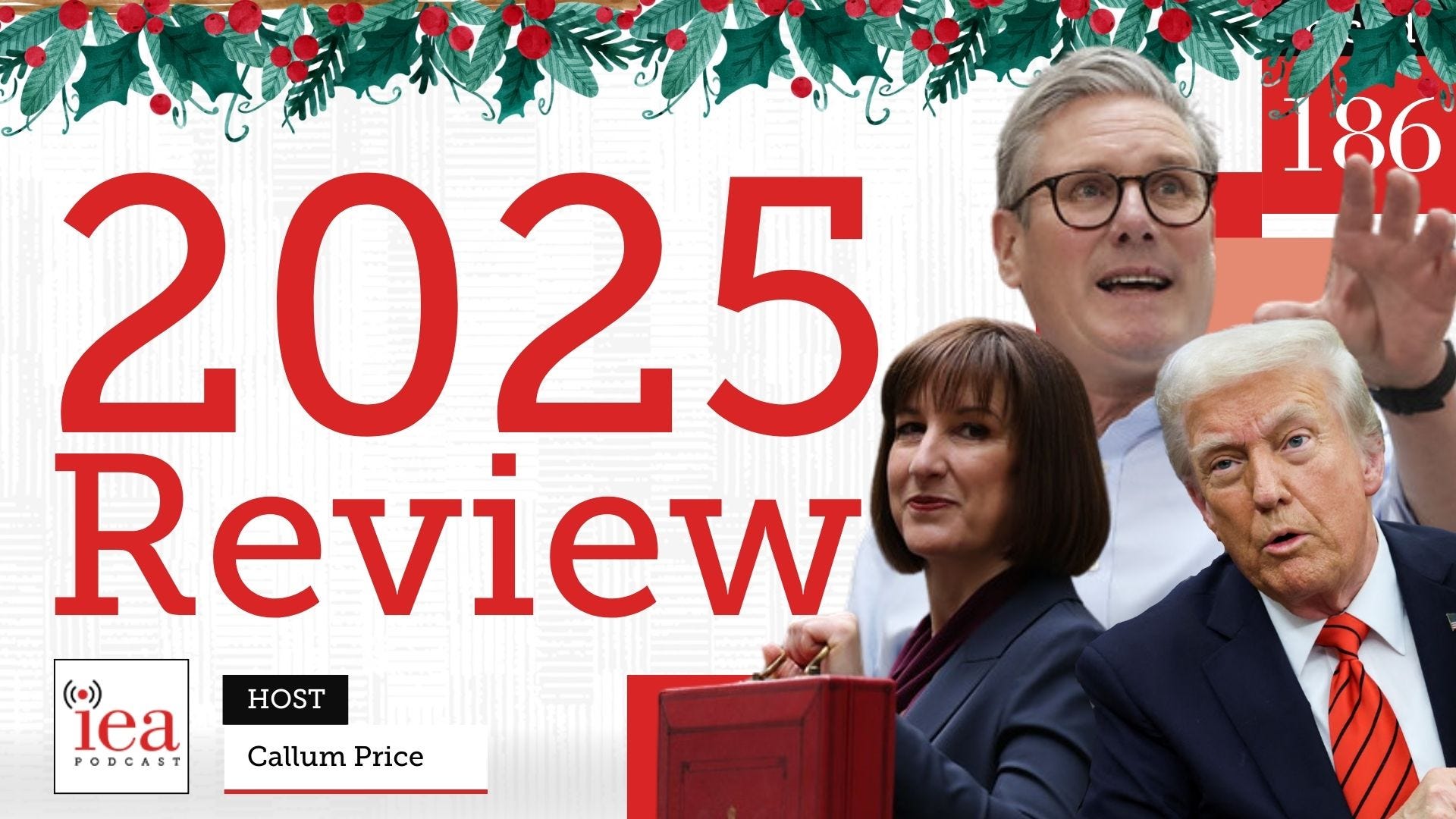
Christmas Special 2025: Year in Review | IEA Podcast
In this Institute of Economic Affairs Christmas special podcast, Director of Communications Callum Price is joined by Managing Editor Daniel Freeman and Editorial Director Kristian Niemietz for a year-in-review discussion covering the highs and lows of 2025. The conversation examines nuclear regulation reform, the John Fingleton review’s recommendations to reduce the UK’s status as the most expensive place in the world to build nuclear projects, and how overregulation has weakened Britain’s competitiveness. They also discuss the Hinkley Point fish protection system that cost £700 million to save several hundred salmon, working out at roughly £250,000 per fish saved.The discussion moves to economic policy frustrations including Rachel Reeves’ budget, the inheritance tax changes affecting farmers, and the broader tax burden reaching its highest levels since World War Two. They examine Labour’s growth strategy contradictions, the productivity gap between the UK and other developed nations, and why Britain continues to struggle with infrastructure delivery costs. The hosts also debate the perverse incentives in the benefits system that discourage work, with particular focus on housing benefit traps and the political challenges of meaningful welfare reform.The podcast concludes with reflections on Trump’s tariff policies and their impact on global trade, Brexit’s unexpected benefit in securing better US trade terms than the EU, and concerns about the long-term political economy of protectionism. They discuss how tariff policies become entrenched as domestic industries adapt, making future liberalisation politically difficult. The hosts praise the UK government for resisting retaliatory tariffs despite political pressure, maintaining a commitment to free trade principles.The Institute of Economic Affairs is a registered educational charity. It does not endorse or give support for any political party in the UK or elsewhere. Our mission is to improve understanding of the fundamental institutions of a free society by analysing and expounding the role of markets in solving economic and social problems.The views represented here are those of the speakers alone, not those of the Institute, its Managing Trustees, Academic Advisory Council members or senior staff. This is a public episode. If you'd like to discuss this with other subscribers or get access to bonus episodes, visit insider.iea.org.uk/subscribe
The Shocking History of Wealth Taxes
In this Institute of Economic Affairs podcast, IEA Director of Communications Callum Price speaks with Kristian Niemietz, IEA Editorial Director, about the surprising history of wealth taxes. The conversation explores Niemietz’s recent article questioning whether wealth taxes are actually a left-wing idea, revealing that historically, support for wealth taxes came from across the political spectrum, including reactionary conservatives, Prussian aristocrats, and even proto-Thatcherites in the 1960s and 70s.Niemietz explains how the old Prussian wealth tax of the 1890s was introduced by ultra-right-wing conservatives, and how Winston Churchill supported a post-World War One “capital levy” as a pragmatic measure to prevent social unrest and signal shared sacrifice. The discussion examines modern contradictions in wealth tax arguments, with proponents like Gary Stevenson and Zach Polanski simultaneously claiming it will raise massive revenue, reduce inequality, and shift the tax burden from workers to wealth owners - goals that cannot all be achieved at once. Niemietz contrasts these claims with Switzerland’s wealth tax, which raises only about 1% of GDP, far less than transformational.The conversation concludes with a classical liberal perspective on wealth taxation, distinguishing between ideological opposition and practical objections. Niemietz argues that wealth taxes are not inherently worse than income or consumption taxes from a liberal standpoint, and explores how land value taxes could represent a less distortionary alternative. The key insight is that Switzerland’s wealth tax works because it substitutes for other taxes in a generally light tax system, rather than being added on top of existing burdens. The podcast reveals how historical supporters like proto-Thatcherites favored wealth taxes to encourage “popular capitalism” and prod lazy inherited wealth into more productive investment, though Niemietz ultimately finds these arguments unconvincing due to practical implementation problems.The Institute of Economic Affairs is a registered educational charity. It does not endorse or give support for any political party in the UK or elsewhere. Our mission is to improve understanding of the fundamental institutions of a free society by analysing and expounding the role of markets in solving economic and social problems.The views represented here are those of the speakers alone, not those of the Institute, its Managing Trustees, Academic Advisory Council members or senior staff. This is a public episode. If you'd like to discuss this with other subscribers or get access to bonus episodes, visit insider.iea.org.uk/subscribe
The UK's £20 Billion Budget Gamble Explained | IEA Interview
In this Institute of Economic Affairs podcast, IEA Director of Communications Callum Price interviews Joe Mayes, UK political correspondent for Bloomberg and author of “Can You Run the Economy?” - an interactive choose-your-own-adventure book where readers take on the role of chancellor. The conversation examines Rachel Reeves’ November budget, exploring how she prioritised fiscal headroom and bond market stability over immediate public approval, increasing fiscal room from £9.9 billion to over £20 billion. They discuss the trade-offs between economic stability and political popularity, analysing why Reeves opted for a smorgasbord of tax rises rather than a bold income tax increase.Mayes explains the constant pressures facing chancellors, particularly the threat of financial markets inflicting higher borrowing costs at any moment. The discussion covers why the UK currently has the highest borrowing costs in the G7 and how this forces chancellors to prioritise bond markets over voters who can’t hurt them until the next election. They explore whether Britain is permanently in a “Mexican standoff” with financial markets given current debt-to-GDP levels, and examine the political risks of a leftward shift that could trigger negative market reactions.The interview concludes by looking ahead to the challenges facing Reeves before the next budget, including potential leadership threats, international geopolitical risks, and the critical question of whether the government’s domestic growth plan will deliver results. They discuss the difficulty of making economic growth a public totem that resonates with voters in the same way fiscal headroom matters to markets, and whether technological revolution rather than policy will ultimately drive the growth Britain needs.The Institute of Economic Affairs is a registered educational charity. It does not endorse or give support for any political party in the UK or elsewhere. Our mission is to improve understanding of the fundamental institutions of a free society by analysing and expounding the role of markets in solving economic and social problems.The views represented here are those of the speakers alone, not those of the Institute, its Managing Trustees, Academic Advisory Council members or senior staff. This is a public episode. If you'd like to discuss this with other subscribers or get access to bonus episodes, visit insider.iea.org.uk/subscribe
Trump vs Europe, Brexit Customs Debate & The Welfare Reform Challenge | IEA Podcast
In this Institute of Economic Affairs podcast, Director of Communications Callum Price is joined by Managing Editor Daniel Freeman and Economics Fellow Julian Jessop to discuss Trump’s recent criticism of Europe, the renewed customs union debate in Parliament, and Kemi Badenoch’s welfare speech. The conversation examines Trump’s characterization of Europe as “a decaying group of nations with weak leaders” and his criticism of European energy policy and defense spending, questioning whether European politicians are still acting as if growth happens automatically while relying on the US for security.The discussion then shifts to the tied parliamentary vote on rejoining the customs union. Julian explains why the economic benefits would be limited given the UK’s existing trade agreement with the EU, while the costs include losing independence on trade policy and disrupting new deals with countries like the US and India. The panel analyzes polling showing support for rejoining the EU, arguing it reflects general economic dissatisfaction rather than genuine support once people understand what EU membership actually entails.The podcast concludes with Kemi Badenoch’s welfare reform speech and her “Benefits Street” framing of Labour’s budget. Julian and Daniel welcome her challenge to relative poverty measures and her emphasis on getting people into work rather than simply redistributing income, though they note the glaring omission of any discussion about pension spending, which represents the largest and fastest-growing component of the welfare budget. This is a public episode. If you'd like to discuss this with other subscribers or get access to bonus episodes, visit insider.iea.org.uk/subscribe
AI Won't Save Socialism | Prof Peter Boettke | IEA Interview
In this Institute of Economic Affairs interview, IEA Editorial Director Kristian Niemietz speaks with Professor Peter Boettke, professor of economics at George Mason University. The conversation explores artificial intelligence and what it means for both capitalism and socialism, starting with a deep dive into the original socialist calculation debate of the 1920s and 1930s between Ludwig von Mises and socialist economists.Professor Boettke explains how Mises demonstrated that without private property and market prices, socialist planners cannot make rational economic calculations to distinguish between technologically feasible and economically viable projects. This fundamental inability to “produce more with less” meant socialism could never achieve its promised burst of productivity, instead leading to economic deprivation and political tyranny. The discussion covers the historical figures involved, from Marx’s critique of capitalism to Bukharin’s New Economic Policy, and why the economic calculation problem wasn’t about bad leaders but inherent systemic flaws.The conversation then turns to modern concerns about “techno-socialism” and whether AI changes the calculation debate. Professor Boettke argues that while AI improves data processing, it doesn’t solve the fundamental problem of needing market-generated prices to guide resource allocation. He contrasts invention with innovation, emphasising that innovation requires the creative powers of a free society rather than committee-based planning. The interview concludes with thoughts on AI in education, the difference between human capital building and signalling, and why technological advancement depends on allowing dissenters and outsiders to innovate freely. This is a public episode. If you'd like to discuss this with other subscribers or get access to bonus episodes, visit insider.iea.org.uk/subscribe
Debunking Wealth Inequality & Britain's Planning Crisis | IEA Podcast
In this Institute of Economic Affairs podcast, IEA Head of Media Reem Ibrahim is joined by Editorial Director Kristian Niemietz and Managing Editor Daniel Freeman. The conversation covers Labour’s recent budget announcements, particularly the decision to spend £48 million over three years hiring 350 additional town and country planners. They examine whether throwing more money and more bureaucrats at the planning system will actually solve Britain’s housing crisis, or whether the fundamental problem lies with the regulatory framework itself.Kristian discusses research by Mark Pennington showing that between 1960 and 1990, spending on planning officers increased sevenfold while housing applications only increased by 28%, with a striking correlation showing that every 1% increase in planning expenditure resulted in a 1% decrease in housing output. The panel argues that Labour has become a last-minute convert to YIMByism without understanding the underlying issues, comparing their approach to Gorbachev’s attempts to fix the Soviet system by hiring more bureaucrats rather than addressing the fundamental regulatory problems.The discussion then shifts to Kristian’s recent debate experience on wealth inequality, where he challenged the prevailing narrative that inequality is dramatically increasing. The panel examines the flawed methodology behind wealth inequality statistics, discusses Britain’s flat income inequality since the early 1990s despite having one of the most progressive tax systems in the OECD, and argues that what matters for the poor is economic growth and employment opportunities rather than the size of the gap between rich and poor. They also debunk myths about second home ownership in Britain, noting that only 3% of the population owns a second home compared to much higher rates in France and even the former Soviet Union.Timestamps: 0:00 Introduction 0:47 Labour’s Planning Budget: Hiring 350 More Planners 4:07 Mark Pennington’s Research: 600% Cost Increase, 28% Housing Output 7:19 The 1930s Built Faster: When Planning Took 3 Days 8:04 The Gorbachev Approach: Why More Bureaucrats Won’t Work 10:34 Absurd Planning Cases: Disabled Child’s Bedroom Rejected 13:26 The Employment Rights Bill: Ditching the £118,000 Cap 16:29 European vs British Labour Markets: Flexibility Matters 17:21 700,000 Vacancies Disappeared: The Impact of Labour’s Policies 27:49 The Wealth Tax Debate: Conflicting Visions for Spending 31:01 Gary Stevenson’s Data Problem: Lived Experience vs Statistics 33:30 Why Wealth Inequality Data Isn’t Useless (The Weather Forecast Analogy) 35:00 Debunking Wealth Inequality: The Data Problems36:17 Britain’s Progressive Tax System & Flat Inequality 37:23 China’s Billionaires & Poverty Decline: Growth vs Gaps 39:38 The Second Homes Myth: Britain vs France & Russia This is a public episode. If you'd like to discuss this with other subscribers or get access to bonus episodes, visit insider.iea.org.uk/subscribe
From Gold Standard To Bitcoin: How Money Changed Forever | Dominic Frisby | IEA Interview
In this Institute of Economic Affairs podcast, IEA Head of Media Reem Ibrahim interviews Dominic Frisby, comedian and financial commentator. The conversation explores Frisby’s recent book “The Secret History of Gold” and examines why gold is becoming increasingly important as a strategic reserve, particularly with China’s growing economic influence. They discuss how Frisby’s investigation into gold and commodities led him to understand modern monetary systems, including how most money is created through debt issuance and why housing has become so unaffordable.The discussion covers the connection between fiat currencies and government power, with Frisby arguing that state control of money enables broader state control across society. He explains how the 19th century gold standard era saw consumer prices halve over decades, contrasting sharply with today’s persistent inflation. The conversation examines Bitcoin as an alternative monetary system and explores whether decentralised money could limit government overreach. Frisby shares his experience writing about controversial topics and the challenges he’s faced with venue cancellations.The interview concludes with Frisby’s unique approach to political satire through music, including songs like “Govern Me Harder” that blend comedy with economic commentary. He discusses how fiat money enables institutions to operate outside normal market rules and how this affects everything from education to media. Frisby explains his work across multiple platforms, from financial commentary through his Flying Frisby newsletter to comedy performances, and why he believes humour remains one of the most effective tools for communicating free market ideas. This is a public episode. If you'd like to discuss this with other subscribers or get access to bonus episodes, visit insider.iea.org.uk/subscribe
Future of the American Right | Grover Norquist | IEA Interview
In this Institute of Economic Affairs podcast, IEA Executive Director Tom Clougherty interviews Grover Norquist, founder and president of Americans for Tax Reform. The conversation covers the Taxpayer Protection Pledge, which has transformed American politics over the past 40 years, how the Republican Party became the party that will not raise taxes, and the future direction of the conservative movement in the United States.Norquist explains how the pledge system works and its impact on both federal and state politics. He discusses the dramatic shift since 1994, when 96% of Republicans signed the pledge, ending 62 years of Democratic congressional dominance. The conversation explores state-level tax reforms, with multiple states abolishing income taxes and cutting rates, and how population migration from high-tax to low-tax states is reshaping American electoral politics. Norquist also addresses the Republican coalition strategy, explaining why unified opposition to tax increases has been more electorally successful than competing with Democrats in bidding wars for government spending.The interview concludes with analysis of conservative coalition building, contrasting the Republican “leave us alone” coalition with the Democratic spending coalition. Norquist discusses how limiting government revenue forces the left’s coalition to fracture, and explains the long-term demographic and political trends that favour limited government policies. He also critiques recent proposals from some conservatives to abandon anti-tax principles, arguing this would destroy the Republican electoral majority without winning new voters. This is a public episode. If you'd like to discuss this with other subscribers or get access to bonus episodes, visit insider.iea.org.uk/subscribe
Labour's Budget: Britain's Highest EVER Tax Burden | IEA Podcast
In this Institute of Economic Affairs podcast, Callum Price, Director of Communications, is joined by Dr. Kristian Niemietz, Editorial Director, and Daniel Freeman, Managing Editor, to discuss Rachel Reeves’ latest budget. The conversation examines whether the government has abandoned its growth agenda after the OBR stated that none of the budget’s policy measures would have a material impact on potential output. They analyse the government’s approach to economic growth, comparing it to someone who says they want to learn Italian but never takes any steps towards achieving that goal.The discussion explores how the government has increased the total tax burden by £70 billion over two budgets, bringing Britain to the highest tax take as a portion of GDP in its history. Daniel and Kristian break down where this money is going, particularly the £16 billion increase in welfare spending by the end of the decade, and how income tax freezes and national insurance changes are funding this expansion. They examine the unusual political timing of imposing new taxes right at the end of a parliamentary term while most departments face real terms cuts, creating a situation where the government seems to lack a clear sense of what it’s trying to achieve.The podcast concludes with an analysis of Britain’s highly progressive tax system and its impact on productivity growth. They discuss how the UK’s tax progressivity creates an illusion that public spending can be funded by a small number of wealthy individuals, when in reality a Belgian-sized public sector requires Belgian-level taxes on average earners. The conversation covers how punitive high-end taxation, combined with wage compression from minimum wage increases, has contributed to Britain’s dismal productivity growth of just 0.6% annually since the financial crisis, compared to over 2% before 2008. This is a public episode. If you'd like to discuss this with other subscribers or get access to bonus episodes, visit insider.iea.org.uk/subscribe
Lord Frost: "The Government Kicked the Country in the Teeth"
In this Institute of Economic Affairs video, Lord Frost, incoming IEA Director General, delivers his immediate reaction to Rachel Reeves’ first budget as Chancellor. Lord Frost examines how the budget pushes Britain’s tax burden to its highest level in history - 38.2% by the end of this Parliament - surpassing even World War Two levels. He breaks down how the government achieved this through freezing income tax thresholds and what he calls a “smorgasbord” of small taxes that collectively raise significant revenue, from the extension of sugar taxes to milkshakes and lattes to Britain’s first national hotel tax.Lord Frost criticises the budget’s approach to sin taxes, pointing out that tobacco tax revenue has fallen by 40% between 2022 and 2024 as people find ways to evade the duties. He challenges the government’s spending priorities, questioning the effectiveness of ending the two-child benefit cap despite its multi-billion pound cost, and warns about the dangers of Britain now having one of the highest minimum wages in the OECD. He argues that while young workers may earn more, the real cost is felt in jobs that never materialise because employment becomes too expensive.The interview concludes with Lord Frost’s assessment that the budget continues Britain’s decade-long trajectory in the wrong direction. He argues that increasing tax, spending and regulation will not deliver prosperity, and calls for a fundamental reversal - cutting spending, reducing the tax burden, and deregulating to allow people to spend their own money. Lord Frost delivers a stark verdict: “What the country needed was the state’s boot off the neck of the country - instead, it’s given it a kick in the teeth.” This is a public episode. If you'd like to discuss this with other subscribers or get access to bonus episodes, visit insider.iea.org.uk/subscribe
Budget 2025 Forecast: Why Rachel Reeves' Tax Plan Will Backfire
Read the full paper here: https://iea.org.uk/publications/2025-budget-briefing-tax-policy-preview-options-and-possible-impacts/With Chancellor Rachel Reeves set to deliver her Autumn Budget on Wednesday 26th November, IEA Economics Fellow Julian Jessop joins Managing Editor Daniel Freeman to discuss his new budget briefing paper. Jessop warns that the Chancellor faces a financial hole of up to £30 billion and will likely attempt to fill it through a combination of extending the freeze on personal tax thresholds and what he describes as a “dog’s breakfast” of smaller tax measures. While the largest component of the hole – around £20 billion – stems from a long-overdue downgrade to the OBR’s productivity forecasts, the remainder results from Labour’s own policy decisions, including abandoned welfare reforms and increased spending commitments.The discussion explores why attempting to raise £20 billion from numerous small tax changes is economically risky and likely to prove unreliable. Jessop argues that such a patchwork approach – potentially including higher Council Tax on expensive properties, closing Capital Gains Tax loopholes, imposing National Insurance on rental income, and increased sin taxes – creates greater uncertainty and unintended consequences than a simpler rise in broad-based taxes like income tax or VAT. He reveals that the government reportedly abandoned a “two up, two down” plan to raise income tax rates by 2p while cutting employee National Insurance by 2p, likely due to political concerns about breaching manifesto commitments rather than improved economic forecasts.Jessop makes the case that the root problem is spiralling public spending, which is forecast to rise by £200 billion over the next five years from £1,150 billion to £1,350 billion. He argues that simply restoring productivity in public services to pre-COVID levels could provide the same services for 4% less money, eliminating the need for tax rises altogether. The conversation also covers broader tax reform possibilities, including abolishing stamp duty and National Insurance, and why successive governments have failed to rationalise the VAT system despite cross-party agreement among economists that it’s deeply flawed. This is a public episode. If you'd like to discuss this with other subscribers or get access to bonus episodes, visit insider.iea.org.uk/subscribe
The 70% Tax Trap: The Government's Toxic Budget Predictions Revealed | IEA Podcast
We would like to apologise for the video quality issues that take place throughout the recording. This will be fixed for upcoming recordings.In this Institute of Economic Affairs podcast, IEA Managing Editor Daniel Freeman speaks with Kristian Niemietz and Julian Jessop about the upcoming autumn budget and Britain’s fiscal challenges. The conversation examines how bond market participants have become increasingly attuned to political instability, tracking everything from cabinet relationships to policy U-turns as indicators of fiscal risk. They discuss how competitive bond markets operate not on ideology but on risk assessment, and why claims of “bond market dictatorship” fundamentally misunderstand how financial markets work.The panel analyses Labour’s constrained position heading into the budget, caught between promises not to raise taxes on working people and the inability to cut spending due to backbench resistance despite a massive parliamentary majority. They examine various wealth tax proposals being floated, from mansion taxes to exit taxes on unrealised capital gains, explaining why international evidence suggests such measures consistently fall short of revenue expectations. The discussion covers the practical problems with revaluing council tax bands and the political toxicity of measures that would hit asset-rich but cash-poor homeowners.The conversation concludes with budget predictions, including the possibility that Labour might not just freeze tax thresholds but actually decrease them, potentially lowering the higher rate threshold to £46,000 and the additional rate to £100,000. This would create marginal tax rates exceeding 70% and hit millions more workers including senior nurses with higher rate tax for the first time. The panel debates whether the economic arguments can overcome the political toxicity of such moves as the Chancellor prepares for what they characterise as an economically and politically toxic budget. This is a public episode. If you'd like to discuss this with other subscribers or get access to bonus episodes, visit insider.iea.org.uk/subscribe
Free Speech is Not Right or Left | Jacob Mchangama | IEA Podcast
n this episode of the IEA Podcast, host Daniel Freeman sits down with Jacob Mchangama to explore the fascinating history of free speech, from ancient Athens to modern social media. Jacob reveals how Socrates became a martyr for ideas he didn’t even believe in, why the Romans feared giving ordinary citizens a voice, and how medieval Islamic scholars championed free inquiry while Europe burned heretics. The conversation traces free speech through the Enlightenment, examining John Stuart Mill’s warnings about the tyranny of the majority and how these debates remain strikingly relevant today.Jacob explains why free speech has become increasingly polarised along political lines, with both left and right abandoning the principle when it becomes inconvenient. From Palestine Action protesters arrested in London to Trump administration pressures on media critics, the discussion reveals how quickly the targets of censorship can shift. He argues that legal protections for speech are ultimately downstream from culture, pointing to how American free speech exceptionalism is surprisingly recent, noting that people could be jailed for Communist Party membership in the 1950s or opposing World War I.The conversation concludes with Jacob’s call for a cross-partisan coalition committed to robust free speech protections, regardless of who’s wielding power. As he emphasises, abandoning free speech because people you disagree with invoke it is a shortsighted strategy that inevitably backfires when you’re on the receiving end. This is a public episode. If you'd like to discuss this with other subscribers or get access to bonus episodes, visit insider.iea.org.uk/subscribe
The Truth About Scandinavian "Socialism" | IEA Interview
In this Institute of Economic Affairs podcast, IEA Head of Media and Linda Whetstone Scholar Reem Ibrahim interviews Dr. Nima Sanandaji, Swedish author, researcher and public policy scholar known for his work on entrepreneurship, innovation and welfare reform. The conversation challenges the conventional narrative around the Nordic model, examining how the myth of successful Scandinavian socialism obscures a century of free market prosperity built on low taxes and economic freedom. They discuss Sanandaji’s co-authored IEA briefing paper “The Welfare State Myth” which analyses welfare outcomes across advanced economies over five decades.Sanandaji reveals how Sweden’s economic success came from 100 years of low taxation and free market capitalism - including inventing the first company shares, central banking system and credit notes - before switching to high taxes in the 1970s led to stagnation and welfare dependency. The discussion examines comprehensive data comparing 30+ advanced economies, demonstrating that countries with lower taxes consistently achieve better welfare outcomes in employment, education and overall wellbeing. They explore how high-tax welfare states create poverty traps that particularly harm immigrants and young people, with evidence from Sweden’s policy failures and warnings about the UK’s trajectory toward mass welfare dependency.The interview concludes with policy recommendations drawn from successful low-tax countries like Ireland, Estonia and Malta, advocating for school choice, apprenticeship systems, healthcare competition and reducing government bloat. Sanandaji argues that countries like the UK are repeating Sweden’s mistakes by combining Anglo-Saxon legal traditions with socialist high-tax policies, leading to economic stagnation and declining welfare outcomes. The conversation challenges policymakers to examine the evidence showing that economic freedom and lower taxation produce superior results for citizens’ wellbeing and social mobility. This is a public episode. If you'd like to discuss this with other subscribers or get access to bonus episodes, visit insider.iea.org.uk/subscribe
What is Scarcity? Episode 2 | Economics 101
Welcome to Economics 101, a new series designed to distill the fundamental principles of economics into clear, easy-to-understand explanations. Join Dr. Stephen Davies as he breaks down complex economic concepts using simple analogies and real-world examples, making economics accessible to everyone regardless of their background. Whether you’re a student, professional, or simply curious about how the economy works, this series will equip you with the essential knowledge to understand the economic forces that shape our daily lives.In this episode, Dr. Davies explores the most foundational concept in all of economics: scarcity. But scarcity doesn’t mean what most people think it means. It’s not about things being rare - it’s about resources requiring effort to acquire and transform, and the fact that using them for one purpose means you can’t use them for another. This simple insight leads to what economists call “the economic problem”: how do we decide what to produce with limited resources when people want different things? Dr. Davies explains why the price mechanism in competitive markets has proven to be the most efficient solution to this fundamental challenge, far more effective than central planning or consensus-building. This is a public episode. If you'd like to discuss this with other subscribers or get access to bonus episodes, visit insider.iea.org.uk/subscribe
Trump Sues BBC, Labour Reverses Course Again & Ed Miliband's Nuclear Gamble | IEA Podcast
In this Institute of Economic Affairs podcast, Managing Editor Daniel Freeman is joined by Editorial Director Kristian Niemietz and Energy Analyst Andy Mayer. The trio discuss the BBC’s turbulent week following Director-General Tim Davie’s resignation over misleading edits of a Trump speech, examining long-standing questions about BBC bias and whether the licence fee funding model remains justifiable in the streaming age.The conversation moves to Labour’s chaotic U-turns on child benefit caps and income tax thresholds, with Kristian unpacking why the government keeps reversing course on key policies. They analyse whether these flip-flops reflect political inexperience, poor planning, or deeper issues with Labour’s fiscal strategy and spending priorities.The episode concludes with Andy Mayer’s analysis of Britain’s potential nuclear renaissance, as Ed Miliband announces plans to build small modular reactors with Rolls-Royce. While welcoming the ambition, Andy warns that Britain’s regulatory overreach and history of cost overruns could undermine the project. The discussion covers whether Rolls-Royce can compete globally, concerns about protectionism, and why so many environmentalists remain hostile to nuclear power despite its zero-carbon credentials. This is a public episode. If you'd like to discuss this with other subscribers or get access to bonus episodes, visit insider.iea.org.uk/subscribe
Building Brexit: Inside Vote Leave with Campaign Director Lord Matthew Elliott
Join Lord Kamall in conversation with Lord Matthew Elliott, one of Britain’s most prolific policy entrepreneurs, in this captivating episode of Entrepreneurial Minds. From selling magazine ads as a student at LSE to founding the Taxpayers Alliance while ducking into phone boxes in Parliament’s “dungeon,” Matthew shares the extraordinary journey of creating multiple influential campaign organisations. Discover how he built Britain’s most effective taxpayer advocacy group from scratch, navigated the Brexit campaign with Vote Leave, and founded the Jobs Foundation to help disadvantaged people into work. This isn’t your typical business startup story, it’s about entrepreneurship in the political arena, where success is measured in policy change rather than profit margins.Matthew reveals the secrets behind effective grassroots campaigning, the art of media relations, and why he believes successful campaign groups need enemies as much as allies. He discusses his controversial stance on Trump, the influence of his self-made grandfather versus his social worker father, and offers candid advice for aspiring policy entrepreneurs. Whether you’re a budding activist, interested in political campaigning, or simply curious about how ideas become movements, this conversation provides rare insights into the mechanics of political change.Recorded at the Institute of Economic Affairs in partnership with the Vinson Center at the University of Buckingham and the Buckingham Enterprise Innovation Unit, this is the second in our series exploring different forms of entrepreneurship. Subscribe for more conversations with entrepreneurs who are changing Britain, one bold idea at a time. This is a public episode. If you'd like to discuss this with other subscribers or get access to bonus episodes, visit insider.iea.org.uk/subscribe
Britain Has Changed Forever: Lessons from 1945 | Kit Kowol | IEA Live
In this Institute of Economic Affairs event, Managing Editor Daniel Freeman interviews Dr. Kit Kowol about his book “Blue Jerusalem: British Conservatism, Winston Churchill, and the Second World War” published by Oxford University Press. The conversation examines the surprisingly dynamic and idealistic aspects of the British right during World War Two and their competing visions for post-war Britain, challenging the myth that only Labour had ideas for the home front while Conservatives focused solely on military strategy.Kit discusses the conservative intellectual renaissance that occurred during the war years, explaining how the absence of strong party control allowed a flowering of bottom-up thinking through journals, pamphlets, dining clubs and proto-think tanks. He explores how different factions within the Conservative Party fought over Britain’s future, from those advocating for economic planning to free marketeers warning against socialism. The conversation covers the debate between those who wanted a “people’s war” with revolutionary citizen armies versus professional military leadership, and how these wartime arguments shaped Britain’s political trajectory.The discussion concludes with reflections on why the Conservatives lost in 1945 despite wartime achievements, the post-war consensus that marginalised free market voices, and why the Conservative Party cannot simply look to the past for answers to today’s challenges. Kit argues that modern Britain is radically different from 1945 or even 1997, requiring fresh thinking rather than historical parallels. This event took place at the IEA, the organisation whose intellectual origins emerged from the same wartime milieu Kit documents in his book. This is a public episode. If you'd like to discuss this with other subscribers or get access to bonus episodes, visit insider.iea.org.uk/subscribe
Why Britain's Economy Is Broken - Incoming IEA Director General Lord David Frost | IEA Interview
In this Institute of Economic Affairs podcast, IEA Head of Media Reem Ibrahim interviews Lord David Frost, the incoming Director General and Ralph Harris Fellow at the IEA. The conversation covers Lord Frost’s unusual political journey from Labour Party member to free marketeer, shaped by his experiences as a civil servant in Brussels during the 1990s. He discusses how witnessing the EU’s centralisation drive and the genesis of the single currency revealed the problems of politics overwhelming rational economics.Lord Frost explains his transition from the civil service to political life, culminating in his role negotiating Brexit and his subsequent elevation to the House of Lords. He reflects on the failures of the Brexit process, particularly the gutting of regulatory reform opportunities and the retention of EU laws that should have been scrapped. The discussion examines why Brexit hasn’t delivered the economic benefits promised, with Lord Frost identifying government dysfunction, excessive taxation, and regulatory burdens as key barriers rather than Brexit itself.The interview concludes with Lord Frost’s vision for the IEA and the free market movement. He argues that Britain needs fundamental solutions to its dysfunction in housing, energy, public services, and welfare. Lord Frost advocates for preparing the intellectual groundwork through serious research that explains how markets work better, similar to what the IEA achieved in the 1970s. He believes the movement must focus less on short-term tactical wins and more on winning the long-term war of ideas, making free market solutions the obvious answer when Britain reaches its crisis point. This is a public episode. If you'd like to discuss this with other subscribers or get access to bonus episodes, visit insider.iea.org.uk/subscribe
Britain's Budget Crisis: Why Tax Increases Are Inevitable | IEA Podcast
In this Institute of Economic Affairs podcast, Head of Media Reem Ibrahim speaks with Editorial Director Kristian Niemietz and Managing Editor Daniel Freeman about three major political developments. The conversation covers Chancellor Rachel Reeves’s unprecedented pre-budget speech delivered at 8pm on Tuesday evening, Nigel Farage’s shift towards Thatcherism, and socialist Zohran Mamdani’s election victory in New York.The discussion examines Reeves’s hints at significant tax increases ahead of the budget, with Daniel explaining how the government may raise between £20-30 billion through various measures. They analyse the possibility of increasing the basic rate of income tax for the first time since 1975 under Denis Healey, which would breach Labour’s 2024 manifesto commitments. The impact of last year’s employer National Insurance contributions hike is explored, particularly the damage to youth employment and job vacancies. Kristian contextualises the persistent budget deficit and record-high public spending and taxation, arguing that broad-based tax increases were inevitable given Labour’s unwillingness to cut spending.The podcast concludes with analysis of Zohran Mamdani’s New York mayoral victory and its implications for Democratic Socialists of America. They discuss his proposals for state-run grocery stores and free bus travel, debating whether this represents a genuine socialist revival or a localised phenomenon. The conversation explores potential spillover effects to UK politics, including Green Party politicians like Zack Polanski attempting to ride similar socialist waves, and whether international political trends can successfully transfer across different contexts. This is a public episode. If you'd like to discuss this with other subscribers or get access to bonus episodes, visit insider.iea.org.uk/subscribe
Debunking Economic Myths with Professor Donald Boudreaux | IEA Interview
In this Institute of Economic Affairs podcast, Managing Editor Daniel Freeman interviews Professor Donald Boudreaux, who is a professor of economics at George Mason University, a senior fellow at the Mercatus Center, and a member of the IEA’s Academic Advisory Council. The conversation focuses on Boudreaux’s new book, The Triumph of Economic Freedom: Debunking the Seven Myths of American Capitalism, co-authored with former U.S. Senator Phil Gramm. They discuss why these economic myths persist and how they distort policy debates in both the United States and the United Kingdom.The interview examines several key myths, starting with the claim that the Industrial Revolution impoverished workers. Professor Boudreaux presents evidence showing that real wages, living standards, and life expectancy began rising for ordinary workers in Britain no later than the 1840s, and possibly as early as the mid-18th century. They discuss the so-called Engels pause and why workers voluntarily moved from the countryside to urban factories, voting with their feet for better economic prospects. The conversation also tackles the debate around tariffs and protectionism, particularly addressing claims that 19th century American prosperity was built on high tariffs rather than economic freedom and open immigration policies.The discussion concludes with an analysis of the China shock and manufacturing job losses in America. Professor Boudreaux presents research showing that regions affected by increased Chinese trade are actually better off today than before, and that approximately 87% of manufacturing job losses come from labour-saving technology rather than trade. He challenges the national security argument for tariffs, noting that broad-based tariffs like those imposed by recent US administrations hit allies just as hard as adversaries. Throughout the conversation, they emphasize how economic myths continue to shape misguided policies despite overwhelming evidence to the contrary. This is a public episode. If you'd like to discuss this with other subscribers or get access to bonus episodes, visit insider.iea.org.uk/subscribe
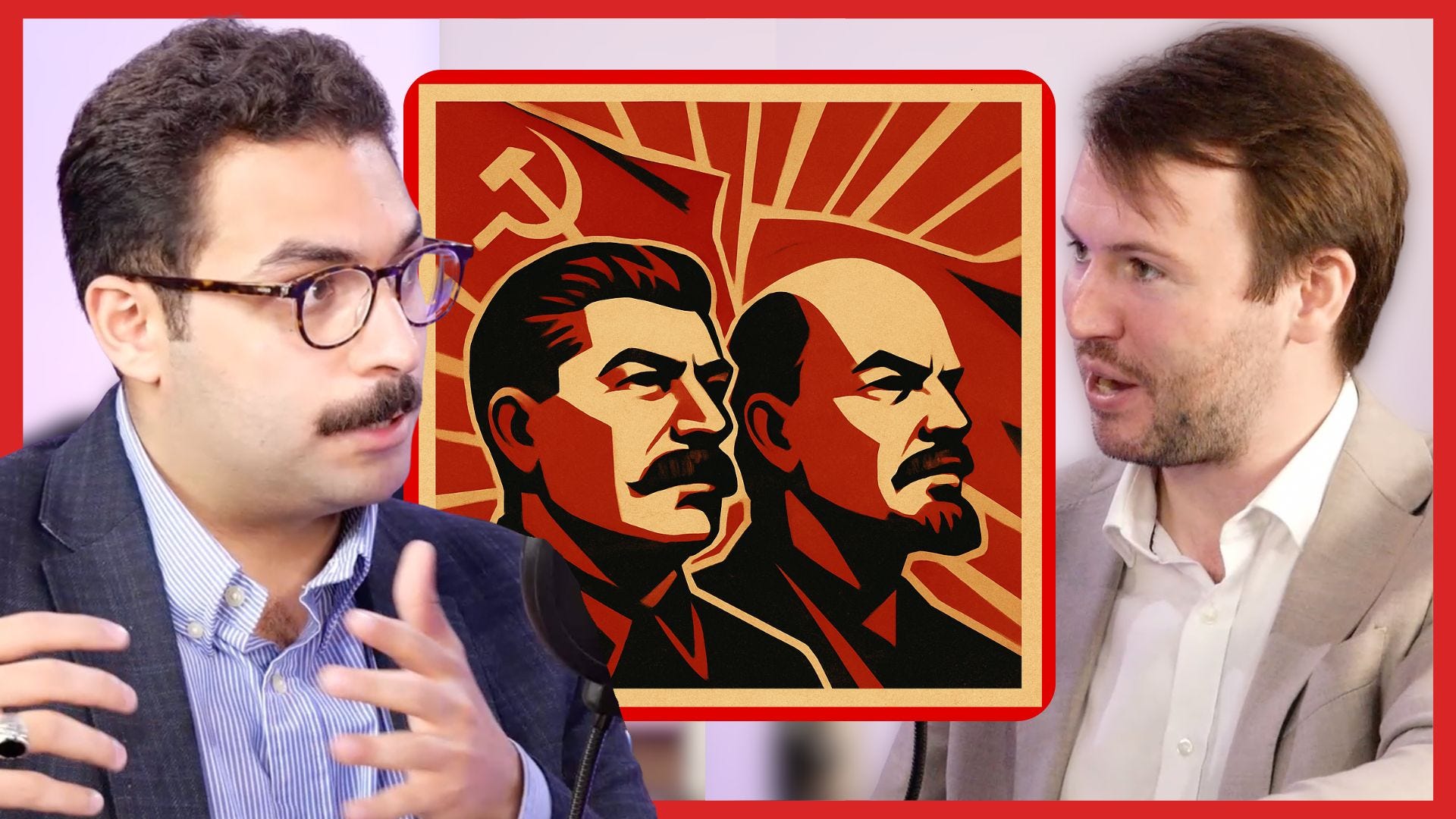
Why Socialism Doesn't Work | Rise & Fall of the Soviet Economy
In this Institute of Economic Affairs clip, Aymen Aulaiwi explains how Stalin's command economy functioned and why centrally planned socialist systems inevitably fail. He breaks down the mechanics of Soviet five-year plans, where Gosplan set production targets that cascaded down through ministries to individual factories, completely bypassing market signals and consumer demand. Aulaiwi describes how Stalin's obsession with heavy industry - driven by Marx's "fetishisation of industry" and fears of capitalist invasion - led to an economy that prioritised steel and coal production over consumer goods, creating a system where "I do not buy sheets of steel off a catalogue, but I do buy lamps and textbooks." The discussion explores the three fundamental problems that doom all command economies: information asymmetries, soft budget constraints, and principal-agent problems. Using the example of a Newcastle café owner wanting to sell Dubai chocolate versus a Birmingham baker making poppyseed muffins, Aulaiwi illustrates Hayek's argument that economic information is too dispersed and localised for any central planner to understand. He explains how this connects to Marx's outdated labor theory of value, which ignores both the role of capital and consumer demand, treating products purely as embodiments of labor time rather than responses to market needs. Aulaiwi reveals a striking contradiction at the heart of Stalin's "socialist" system - despite Marx's belief that capital was pure exploitation, Stalin actually focused obsessively on capital accumulation and investment levels, making him "literally a capitalist" who suppressed worker consumption to fund industrial expansion. The conversation demonstrates why socialist calculation is impossible without real market prices, and how even modern attempts to introduce "social costs" like carbon taxes face the same information problems that destroyed the Soviet economy. This clip provides a devastating Austrian School critique showing why socialist economics cannot work in practice, regardless of good intentions. This is a public episode. If you'd like to discuss this with other subscribers or get access to bonus episodes, visit insider.iea.org.uk/subscribe
Freedom or Welfare State? Deirdre McCloskey on the Liberal Choice | IEA Interview
In this Institute of Economic Affairs podcast, Head of Media and Linda Whetstone Scholar Reem Ibrahim interviews Deirdre McCloskey, Isaiah Berlin Chair in Liberal Thought at the Cato Institute and Distinguished Professor Emerita of Economics, History, English and Communication at the University of Illinois at Chicago. The conversation explores McCloskey’s concept of “equality of permission” from her forthcoming book, examining how this primary liberalism of 1776 and 1789 differs from modern notions of equality of opportunity and equality of outcome.McCloskey argues that true liberalism isn’t about material redistribution or state-enforced equal starting points, but about removing obstacles that prevent people from pursuing their own flourishing. She critiques both socialist equality of outcomes and the impossible goal of equality of opportunity, advocating instead for a society with no masters rather than no poor. The discussion covers how this framework applies to occupational licensing, immigration, consumer protection, and economic regulation, with McCloskey contending that professional licensing requirements and government regulations often create artificial barriers rather than genuine protection.The interview concludes with reflections on the future of liberalism and the importance of free speech and a free press as essential battlegrounds. McCloskey draws parallels between government censorship of drama in London until 1967 and modern debates about regulating AI and hate speech. She remains optimistic that people’s hearts desire freedom, while warning against the temptation to become “wards of the state” rather than free adults. The conversation touches on everything from Abraham Lincoln’s self-education to the quality of ploughman’s lunches in Oxford pubs. This is a public episode. If you'd like to discuss this with other subscribers or get access to bonus episodes, visit insider.iea.org.uk/subscribe
Why Landlords Are Fleeing The UK Market | IEA Podcast
In this Institute of Economic Affairs podcast, IEA Communications Director Callum Price is joined by Editorial Director Kristian Niemietz and Managing Editor Daniel Freeman. The conversation covers the newly enacted Renters Rights Act, examining how the legislation effectively introduces rent control through the back door and will likely reduce the supply of private rental properties. They discuss the end of fixed-term contracts, the tribunal system for rent disputes, and how these measures could drive landlords out of the market, reducing labour mobility and worsening housing availability for young professionals.The discussion then turns to wealth taxes and the broader economic landscape, with Kristian explaining why wealth taxes are fundamentally flawed, comparing them to “eating your seed corn” - consuming capital that should be generating future returns. They examine how capital flight has already occurred in countries like France, Norway and Switzerland, and why the UK’s economic stagnation makes politicians reach for fantasy solutions rather than addressing the real problem of economic growth. The team also discusses the IEA’s “Sharpen the Axe” series, which identifies concrete areas where government spending could be cut.The conversation concludes with an analysis of the government’s fiscal position ahead of the upcoming budget, looking at why promised tax rises keep recurring despite claims each budget will be the last. They explore Labour’s abandonment of planning reform and abundance agenda, the shelving of disability benefit reforms, and why Britain seems stuck in a doom loop of stagnant growth, rising demands on the state, and political unwillingness to make meaningful cuts to government spending. This is a public episode. If you'd like to discuss this with other subscribers or get access to bonus episodes, visit insider.iea.org.uk/subscribe
Argentina's Economic Revolution: Milei Wins
In this Institute of Economic Affairs podcast, IEA Director of Communications Callum Price interviews Axel Kaiser, co-founder and president of the Foundation for Progress in Chile and senior research fellow at the Adam Smith Centre at Florida International University. The conversation examines Argentina’s dramatic midterm election results under President Javier Milei, exploring how the libertarian government survived a critical political test after months of legislative battles, economic uncertainty, and a devastating provincial election loss that threatened to derail the entire reform agenda.Axel discusses the political warfare waged by Peronist and Kirchnerist opposition forces, who passed legislation to increase government spending and nearly collapsed Milei’s stabilisation program. The conversation covers how rising inflation, plummeting economic growth, and a 14-point loss in Buenos Aires provincial elections created fears that Argentina would revert to its century-long cycle of populism and economic failure. Despite these setbacks, the midterm results on Sunday represented a referendum between free markets and classical populism, with voters decisively backing Milei’s radical reforms.The interview concludes with lessons for Western democracies, particularly the UK and Europe. Axel argues that Argentina proves freedom works and that voters will support radical austerity and free market reforms if leaders tell the truth about economic realities. He criticises the welfare state model as no longer viable and expresses pessimism about Europe’s willingness to embrace necessary reforms, while suggesting the UK’s less ideological culture might make it more open to change than countries like Germany or France. This is a public episode. If you'd like to discuss this with other subscribers or get access to bonus episodes, visit insider.iea.org.uk/subscribe
The Policies No One Voted For: The Nanny State Disaster
In this Institute of Economic Affairs panel discussion at the Conservative Party Conference, Callum Price hosts Charlie Dewhirst MP for Bridlington and The Wolds, Andrew Griffith, Shadow Secretary of State for Business & Trade, and Christopher Snowdon, IEA Head of Lifestyle Economics. The panel examines how Labour has carried forward paternalistic Conservative policies including bans on disposable vapes, advertising restrictions on food, and the generational tobacco ban. They discuss how governments get bounced into nanny state measures by pressure groups despite these policies rarely appearing in manifestos or being close to ministers’ hearts.Christopher Snowdon presents a six-point plan to prevent future Conservative governments from capitulating to activist demands, including abolishing the public health minister post created by Tony Blair, banning state funding of pressure groups, and removing civil servants focused solely on policy development. The panel debates why such measures proliferate when politicians weigh up political costs and conclude it’s easier to give activists what they want rather than face accusations of kowtowing to industry. They criticise policies like the online safety act, Nando’s Coke refill bans, and restrictions on advertising tasty food as examples of petty prohibitionism.The discussion concludes with questions on football regulation, with panelists warning about inevitable mission creep from regulators. They argue the Football Association should sort out its own fit and proper persons test rather than creating new government oversight. The panel emphasises conservative principles of individual sovereignty, distrust of the state, and the belief that government should be servant not master, while acknowledging these are questions for democratic resolution rather than quango decision-making. This is a public episode. If you'd like to discuss this with other subscribers or get access to bonus episodes, visit insider.iea.org.uk/subscribe
Brexit, Wealth Taxes and Housing: What's Really Going Wrong in Britain? | IEA Podcast
In this Institute of Economic Affairs podcast, IEA Head of Communications Callum Price speaks with Editorial Director Kristian Niemietz and Managing Editor Daniel Freeman. The conversation covers the Treasury’s recent briefings that the OBR is predicted to downgrade UK productivity growth forecasts ahead of the budget, with Brexit being cited as a contributing factor. They examine whether there’s credibility to these claims and discuss how the political taboo around discussing Brexit has begun to break down at senior levels of the Labour Party.The discussion moves to wealth taxes, with the panel analysing recent speculation about potential tax rises in the upcoming budget, including capital gains tax increases and changes to inheritance tax. They explore how these policies might affect economic behaviour and investment decisions, questioning whether the predicted revenue from such measures would materialise given likely behavioural responses from taxpayers.The conversation concludes with an examination of the government’s ambitious housebuilding targets of 1.5 million homes over five years. Despite positive rhetoric from Housing Minister Steve Reed, housing starts are running at less than half the required 75,000 per quarter. The panel discusses the barriers preventing progress, including the building safety regulator, nutrient neutrality regulations, and affordable housing requirements, with London’s housing starts now falling behind even Auckland, New Zealand in absolute terms. This is a public episode. If you'd like to discuss this with other subscribers or get access to bonus episodes, visit insider.iea.org.uk/subscribe
Can We Build a Culture of Opportunity? Lessons from America - Ep 4 - Land of Opportunity
In this fourth and final episode of the Land of Opportunity series, a partnership between the Institute of Economic Affairs and Land of Opportunity, former MP Sir Philip Davies speaks with Tim Phillips, former president of Americans for Prosperity. The conversation explores how Phillips and the Koch brothers built one of the most successful grassroots campaigns in American history—mobilizing millions of citizens to fight for economic freedom, lower taxes, and reduced regulation. Phillips explains how Americans for Prosperity was never about lobbying for specific industries, but rather building a genuine grassroots army for the ideals of economic freedom that would allow entrepreneurship and opportunity to flourish for Americans from any background. The organization pioneered community organizing on the right, recruiting and training activists at the local level to advocate for pro-growth policies across all fifty states.Phillips reveals the strategic decisions behind the movement’s success, including why they chose to be “for” prosperity rather than “against” something, how they defended policies by making economic arguments rather than moral ones, and why running entrepreneur candidates against incumbents proved so effective at changing political behavior. The discussion covers Americans for Prosperity’s role in the Tea Party movement, their fights for education reform and tax cuts including the 2017 Trump tax reforms, and how they overcame attacks of being “astroturf” by simply building undeniable grassroots strength with thousands at rallies and hundreds knocking doors every weekend. Phillips shares insights on federal competition between states, explaining how low-tax states like Texas and Florida are gaining congressional seats and political power while high-tax states like California and New York hemorrhage population—creating a feedback loop that rewards pro-growth policies with increased representation.The episode concludes with Phillips’s direct advice for Britain: the Conservative Party has lost its way by offering “pale pastels” instead of “bold colours” on issues like net zero and energy costs, where British entrepreneurs now pay four times what Texans pay for electricity. Phillips argues that prosperity must be created by culture and political philosophy, not just individual policies, and that Britain has all the ingredients—world-class talent, innovation, and entrepreneurial spirit—but needs leaders willing to raise the banner for economic freedom. Davies and Phillips reflect on the key insight that human nature is universal: everywhere, people want to belong to something bigger, want their voices heard, and want to make a difference for their families and country. The challenge for Britain is adapting that universal truth to local culture and building a movement that celebrates aspiration, rewards success, and treats economic freedom as a bipartisan priority—just as America has with the American Dream. This is a public episode. If you'd like to discuss this with other subscribers or get access to bonus episodes, visit insider.iea.org.uk/subscribe
30 People Arrested Daily for Speech Crimes in the UK | Toby Young
In this Institute of Economic Affairs podcast, Head of Media and Linda Whetstone Scholar Reem Ibrahim interviews Lord Toby Young, journalist, author, and founder of the Free Speech Union. The conversation examines the erosion of free speech in Britain, exploring how Young’s own cancellation in 2018 led him to establish an organisation dedicated to protecting freedom of expression. They discuss the legislative landscape that has restricted speech rights, particularly the Online Safety Act and the problematic use of existing laws like the Malicious Communications Act and Public Order Act to prosecute individuals for their views.Young argues that the current government’s crackdown on free speech stems from a collapsing faith in multiculturalism and fear of populist movements like Reform UK. He explains how authorities are increasingly using censorship rather than engaging in public debate about immigration and other contentious issues. The interview covers specific cases the Free Speech Union has defended, including individuals arrested for social media posts and silent prayer outside abortion clinics. Young criticises the police’s handling of non-crime hate incidents, noting that over 60 are recorded daily despite attempts at reform.The discussion concludes with Young’s perspective on whether Britain needs its own First Amendment. He advocates for repealing restrictive speech laws and establishing constitutional protections similar to those in the United States, while acknowledging the challenges posed by parliamentary sovereignty and judicial interpretation. Despite his concerns about the current state of civil liberties, Young expresses cautious optimism that a future government might prioritise restoring free speech rights, particularly if the British public can be persuaded of their fundamental importance. This is a public episode. If you'd like to discuss this with other subscribers or get access to bonus episodes, visit insider.iea.org.uk/subscribe
The Great British Exodus: Wealth Creators Abandoning the UK
Tom Clougherty, Former Executive Director of the Institute of Economic Affairs, hosts a Conservative Party Conference panel discussion on Britain’s tax system and its impact on wealth creators. Joining him are John O’Connell, Chief Executive of the Taxpayers Alliance, Mark Garnier MP, Shadow Economic Secretary, Samuel Hughes, Editor at Works in Progress, and Alys Denby, Opinion and Features Editor at City AM. The panel examines how Labour’s tax policies - including changes to non-dom status, inheritance tax on global assets, and VAT on private school fees - are driving entrepreneurs and wealthy individuals overseas, with particularly stark examples of the exodus to Italy and America.The discussion covers the complexity of Britain’s 20,000-page tax code and its damaging effects on economic growth. Mark Garnier highlights how British entrepreneurs in their twenties are taking their ideas to countries like Thailand and Vietnam, while Alys Denby reports on the collapse of London’s prime property market and high-profile non-dom departures. Samuel Hughes explains how stamp duty prevents efficient housing allocation and how the upcoming landfill levy threatens to destroy housebuilding viability across urban England. The panel proposes radical solutions including the Taxpayers Alliance’s Single Income Tax model and the abolition of inheritance tax, which polling shows is supported by over 50% across all demographics except PhD holders.The conversation concludes with passionate audience contributions, including an entrepreneur forced to take his start-ups to America for funding and a City lawyer whose firm has hired additional Italian tax specialists to handle the exodus crisis. The panel emphasises that the Conservatives remain the only centre-right party on economics and must develop credible alternatives to Labour’s approach. They argue for policies that reward rather than punish wealth creation, with Mark Garnier warning that envy-driven taxation is forcing Britain’s most productive citizens to seek opportunities elsewhere, ultimately harming the economy and public services that tax revenue supports. This is a public episode. If you'd like to discuss this with other subscribers or get access to bonus episodes, visit insider.iea.org.uk/subscribe
Why Wealth Taxes Don't Work | IEA Podcast
In this Institute of Economic Affairs podcast, Managing Editor Daniel Freeman is joined by Editorial Director Kristian Niemietz and Head of Labour Economics Professor Len Shackleton. The conversation covers the Green Party’s wealth tax proposals from newly elected leader Zack Polanski, rising unemployment figures in the UK particularly among young people, and this year’s Nobel Prize winners in economics and what their research tells us about economic growth.The discussion examines why wealth taxes have been abandoned across OECD countries, with Niemietz explaining the French and West German experiences. High administration costs, valuation difficulties, and capital flight emerge as consistent problems. They address claims that asset sales from departing wealthy individuals would benefit the economy, and explore how proposals could affect far more than just billionaires. Shackleton analyses the October unemployment rise to 4.8%, connecting it to increased national insurance contributions, day-one unfair dismissal rules, and minimum wage pressures that particularly impact young workers entering the job market.Freeman discusses the work of Nobel laureates including Joel Mokyr, whose research on the Industrial Revolution challenges common assumptions about education and skills. Rather than university graduates, it was skilled craftsmen like millwrights who proved crucial to industrialisation. The conversation draws parallels to modern policy debates around skills training, property rights, and the importance of domestic factors versus exploitation theories in explaining Western prosperity. They critique narratives attributing British wealth primarily to slavery rather than institutional and cultural factors that enabled innovation. This is a public episode. If you'd like to discuss this with other subscribers or get access to bonus episodes, visit insider.iea.org.uk/subscribe
How Do Americans Really Feel About Taxes and Success? - Ep 3 - Land of Opportunity
In this third episode of the Land of Opportunity series, a partnership between the Institute of Economic Affairs and Land of Opportunity, Andrew Barclay speaks with Alex Tarascio from Signal Polling, a leading Republican polling company in Washington. The conversation examines how Americans really feel about taxes, success, and entrepreneurship—and reveals a striking bipartisan consensus around free enterprise that simply doesn’t exist in Britain. Signal Polling’s research shows that approximately 70% of Americans, across both parties, believe in the American Dream and support free market principles. Even on the left, Americans view tax as an obstacle that deters behavior and kills jobs, not as a social contribution or patriotic duty as it’s often framed in the UK.The discussion uncovers fascinating insights about why blue states are hemorrhaging population to red states, with California on track to lose four congressional seats by 2030 while Texas and Florida each gain four. Alex explains how this isn’t just about economics—it’s about political power, as congressional districts and Electoral College votes follow population. The polling reveals that Americans are deeply skeptical of government promises to raise taxes for better services because they simply don’t believe the money will be spent effectively. Unlike Britain, where the narrative suggests more taxes equal better public services, American voters across the political spectrum would rather have less spending, lower taxes, and fewer services because they don’t trust government to deliver value for money.Perhaps most surprisingly, Signal Polling’s research in both the US and internationally shows that Brits are deeply envious of America’s pro-enterprise culture and the opportunities it creates. While British politicians present tax increases as necessary for public services, Americans instinctively understand that every dollar taken from business is a dollar that can’t be invested in growth, expansion, and hiring. The episode explores how polling methodology itself reveals cultural differences—Americans are more willing to express their true political views, while sophisticated polling techniques like asking “who will your neighbors vote for” help capture real sentiment. The conversation concludes with the observation that the American Dream remains a unifying cultural force that transcends party politics, while Britain lacks any equivalent shared vision of aspiration and opportunity. This is a public episode. If you'd like to discuss this with other subscribers or get access to bonus episodes, visit insider.iea.org.uk/subscribe
Has the Government Killed the Jobs Market? | Economy Explained
In this first episode of Economy Explained, a new series from the Institute of Economic Affairs, the series examines pressing economic issues through evidence-based analysis. Economy Explained aims to provide clear, objective insights into how economic policy affects everyday life, exploring how market-oriented principles can address current challenges facing national economies. This episode, hosted by Callum Price, Director of Communications, focuses on the UK labour market and the Labour government’s Employment Rights Bill. Price analyses three key policy changes affecting job creation: the rise in minimum wage (including a 16% increase for 18-20 year olds), the hike in employer National Insurance contributions from 13.8% to 15%, and new employment obligations through the Employment Rights Bill. He examines how these measures are increasing the cost of hiring, explores the government’s productivity arguments, and questions whether laws designed to protect workers might inadvertently reduce job opportunities. The video concludes by making the case for a more flexible labour market that balances worker protections with the ability of businesses to create employment opportunities. This is a public episode. If you'd like to discuss this with other subscribers or get access to bonus episodes, visit insider.iea.org.uk/subscribe
Market Economies Through History: Why They Rise and Fall | IEA Interviews
In this Institute of Economic Affairs podcast, Daniel Freeman interviews Professor Bas van Bavel, a distinguished professor at the University of Utrecht and author of “The Invisible Hand: How Market Economies Have Emerged and Declined Since 500 A.D.” The conversation examines how market economies emerged in medieval Europe, why some regions developed competitive markets for land, labour and capital while others did not, and what caused Europe to pull ahead of the Middle East economically during this period. Professor van Bavel explains the crucial distinction between output markets and input markets, arguing that true market economies only emerge when there are functioning markets for the factors of production. The discussion traces how northern Italy first developed input markets in the 10th and 11th centuries as ordinary people organised themselves to break aristocratic power, followed by similar developments in the Low Countries. They explore why urbanisation alone wasn’t decisive for market development, how security of property rights encouraged investment in expensive capital goods like mills, and the role of associational organisations in medieval European economic growth. The conversation also covers why the Islamic world, despite having advanced markets in early medieval Iraq, failed to maintain this advantage. The interview concludes with Professor van Bavel’s analysis of how market economies tend to decline through a self-reinforcing process of wealth accumulation. He argues that wealthy elites use economic leverage to dominate markets, control states through financial means, and eventually reshape market rules to serve their interests. This pattern, he suggests, can be observed across multiple historical market economies from medieval Italy and the Low Countries to modern America. They debate whether this process is inevitable, how Britain’s relatively oligarchical 18th century led to the Industrial Revolution, and whether contemporary sclerosis in growth stems from elite capture or other factors like housing constraints. This is a public episode. If you'd like to discuss this with other subscribers or get access to bonus episodes, visit insider.iea.org.uk/subscribe
Kemi Badenoch's Big Gamble: Can Scrapping Stamp Duty Save the Tories? | IEA Podcast
In this Institute of Economic Affairs podcast, Head of Media Reem Ibrahim is joined by IEA Executive Director Tom Clougherty and Editorial Director Kristian Niemietz to discuss the aftermath of Conservative Party Conference. The conversation examines Kemi Badenoch’s headline announcement to abolish stamp duty land tax on primary residences, alongside the party’s proposed £47 billion in spending cuts through their new “golden rule.” They analyse why stamp duty is Britain’s most distortionary tax, costing 75p in economic damage for every pound raised, and how abolishing it could unlock a frozen property market where people now move house half as often as they did a generation ago.The discussion turns to the Conservative Party’s commitment to maintaining the triple lock on pensions, despite it consuming over 10% of total public spending - more than education, policing and defence combined. Tom explains how the triple lock ensures state pensions will rise faster than earnings while the population ages, creating an unsustainable fiscal trajectory that could add £200 billion in today’s money to public spending by 2070. The panel explores the political tension between young Conservative activists pushing for planning liberalisation and an ageing voter base now averaging seventy years old, and whether the party can escape this electoral trap.The conversation concludes with an examination of the Green Party conference vote to effectively abolish the private rental market through rent controls, mandatory tenant buyback schemes, and council takeovers of unsold properties. Kristian and Reem critique these proposals as ignoring basic market signals and supply constraints, arguing that similar thinking influences parts of the Labour Party. The panel makes the case that whether discussing Conservative stamp duty abolition or Green Party rental policies, the fundamental solution to Britain’s housing crisis remains the same: radical planning liberalisation to massively increase housing supply. This is a public episode. If you'd like to discuss this with other subscribers or get access to bonus episodes, visit insider.iea.org.uk/subscribe
The Great Depression: Did the New Deal Fail? | George Selgin | IEA Live
In this Institute of Economic Affairs event, IEA Executive Director Tom Clougherty interviews George Selgin about his new book “False Dawn: The New Deal and the Promise of Recovery, 1933-1947.” Selgin is a Senior Fellow and Former Director of the Centre for Monetary and Financial Alternatives at the Cato Institute and Professor Emeritus of Economics at the University of Georgia. The conversation examines how the US finally recovered from the Great Depression and what exact contribution the New Deal made to that recovery.Selgin challenges conventional wisdom about the New Deal, arguing it was neither a Keynesian fiscal stimulus programme nor an exercise in monetary expansion. He explains how Roosevelt’s policies—including the National Recovery Administration’s price controls and the Agricultural Adjustment Act’s crop destruction—actually hindered recovery by artificially raising prices without increasing demand. The discussion covers the banking crisis of 1933, the role of gold flows in driving what limited recovery occurred, and the devastating 1937-38 recession caused by Federal Reserve and Treasury anti-inflation policies. Selgin also examines why the Depression finally ended, arguing it wasn’t World War II spending itself but rather the restoration of business confidence during the war that enabled the postwar investment boom.The conversation includes discussion of Herbert Hoover’s actual policies, the distinction between relief and recovery, FDR’s opposition to monetary expansion and deposit insurance, and what Keynes himself thought about Roosevelt’s approach. Selgin concludes by explaining why free banking systems respond more appropriately to economic crises than centrally managed monetary systems.Timestamps:00:00 - Introduction02:26 - Why This Book on the New Deal?06:14 - How Severe Was the Great Depression?08:48 - Banking Crisis and Money Supply Collapse15:13 - FDR’s Inauguration and Bank Holiday25:09 - Gold Standard and FDR’s Monetary Policy31:12 - Not Keynesian Fiscal Stimulus34:32 - Hitler’s Gold Drove Recovery42:28 - The Real New Deal: Price Controls48:37 - Agriculture Policy: Paying Farmers Not to Produce58:11 - What Really Ended the Depression01:02:19 - Business Confidence, Not War Spending01:05:23 - Keynes Was Right About Roosevelt This is a public episode. If you'd like to discuss this with other subscribers or get access to bonus episodes, visit insider.iea.org.uk/subscribe
Breaking Down Rachel Reeves's Confused Conference Speech | IEA Podcast
In this Institute of Economic Affairs podcast, Head of Media and Communications Reem Ibrahim is joined by Executive Director Tom Clougherty and Editorial Director Kristian Niemietz to discuss the aftermath of the Labour Party conference. The conversation examines Rachel Reeves’s speech as Chancellor, analysing her dual messaging that attempts to position Labour both as a left-wing alternative to the Conservatives and as the pro-business, fiscally responsible party against Reform. They discuss the notable absence of tax policy details ahead of the autumn budget, the focus on initiatives like school breakfast clubs rather than substantive economic strategy, and concerns that the government prioritises state spending over genuine growth-promoting reforms.The discussion turns to Labour’s approach to economic inactivity and youth unemployment, particularly Rachel Reeves’s job guarantee scheme. The panel critiques this workfare-style program as misdiagnosing the problem, noting that the real issue lies in the massive increase in disability and incapacity benefit claims rather than conventional unemployment. They examine how government policies like increased employer National Insurance contributions, higher minimum wages, and employment rights reforms are making it more expensive and riskier to hire young people, while the job guarantee scheme fails to address these fundamental barriers to employment.The podcast concludes with analysis of recent climate and health policy announcements. Ed Miliband’s pledge to ban fracking is discussed as largely symbolic given existing regulatory barriers, while the panel examines how high energy costs resulting from climate policies are hampering UK economic competitiveness. They also critique the government’s implementation of restrictions on buy-one-get-one-free deals for foods high in fat, salt and sugar, arguing this “bogof ban” will add hundreds of pounds to family food bills during a cost of living crisis without meaningful evidence of reducing obesity. The conversation highlights how regulatory overreach across multiple policy areas reflects a broader pattern of state expansion that prioritises activist agendas over economic growth and consumer freedom. This is a public episode. If you'd like to discuss this with other subscribers or get access to bonus episodes, visit insider.iea.org.uk/subscribe
How Did America's Economy CRUSH Europe Since 2008? - Ep 1 - Land of Opportunity
In this new Land of Opportunity series, the Institute of Economic Affairs has partnered with Land of Opportunity to explore why America’s economy has dramatically outpaced Europe since 2008. The series examines the cultural, policy, and philosophical differences that have allowed the US to surge 50% ahead in GDP while Europe has stagnated. Through interviews with leading American policy thinkers, entrepreneurs, and analysts, the series investigates what Britain can learn from the American model to rebuild its own culture of enterprise and aspiration. In this first episode, Andrew Barclay from Land of Opportunity speaks with Dr. David Rehr, Director of the Centre for Civil Business Engagement at George Mason University. The conversation examines how America’s entrepreneurial culture, rooted in its founding principles of freedom and self-reliance, continues to drive economic success through lower taxes, reduced regulation, and a philosophical approach that trusts individuals over government to allocate capital effectively. Rehr explains the fundamental differences between the American and European economic models, and why Britain—despite having world-class universities, English as the business language, and an independent judiciary—has adopted policies that punish rather than reward growth. The discussion reveals how regulation functions as a hidden tax that disproportionately benefits large corporations while crushing small businesses and entrepreneurs. Rehr and Barclay explore why British high streets now look identical, dominated by a few major chains that can afford compliance costs, and contrast this with America’s approach where states compete to offer business-friendly environments. They discuss how Britain’s VAT threshold prevents 30,000 businesses annually from expanding, why fear of failure rates are 20% higher in the UK than comparable countries, and the cultural shift needed to treat every individual as the “CEO of their own life” regardless of their role in society. This is a public episode. If you'd like to discuss this with other subscribers or get access to bonus episodes, visit insider.iea.org.uk/subscribe
The Welfare Trap Destroying Britain | Fraser Nelson & Danny Kruger Reform MP | IEA Live
In this Institute of Economic Affairs discussion, Chair Syed Kamall hosts a panel examining Britain’s welfare crisis with Dr Stephen Davies (Senior Education Fellow, IEA), Edward Davies (Research Director, Centre for Social Justice), Danny Kruger MP (then Shadow Minister for Work & Pensions), Fraser Nelson (Times Columnist & former Spectator Editor), and Andy Cox (Co-Director, SIGNAL). The conversation explores how the current welfare system creates dependency rather than addressing social marginalisation, with 6.25 million people on out-of-work benefits compared to just 1.67 million claiming unemployment - a scale that would have been considered catastrophic in previous decades. The panel discusses the urgent need for radical reform, moving away from the managerial state approach toward more relational, community-based solutions that restore personal agency. Key themes include the breakdown of family structures (with only 50% of children now living with both parents by GCSE age), the over-medicalisation of low-level mental health conditions, and how current policies inadvertently subsidise worklessness while penalising family formation. They examine successful models from civil society organisations that prioritise trusted relationships over bureaucratic compliance. The discussion concludes with warnings about an impending debt crisis that could force punitive reforms if proactive change isn’t implemented. The panellists argue for devolving responsibility from central government to local communities, reforming the tax system to support marriage and stable families, and fundamentally rethinking the role of civil society in welfare provision. They emphasise that without addressing the moral and values crisis underlying welfare dependency, policy tinkering will remain insufficient to tackle Britain’s most entrenched social problems. This is a public episode. If you'd like to discuss this with other subscribers or get access to bonus episodes, visit insider.iea.org.uk/subscribe
Why Government Spending Never Goes Down | IEA Podcast
In this Institute of Economic Affairs podcast, Communications Director Callum Price is joined by Executive Director Tom Clougherty and Managing Editor Daniel Freeman. The conversation covers Andy Burnham’s vision for “Burnhamism” - his self-described “business friendly socialism” outlined in a lengthy New Statesman interview. They examine his proposals for mass renationalisation of buses, railways, energy and water companies, along with ambitious social housing programs funded through wealth taxes. The discussion also explores the Resolution Foundation’s latest tax proposals, including their suggestion to shift from National Insurance to income tax while raising overall revenue by £35 billion.The hosts critically analyse Burnham’s economic agenda, questioning how his spending commitments could realistically be funded without broad-based tax increases on ordinary workers rather than just “taxing the rich.” Tom Clougherty highlights the mathematical impossibility of funding such ambitious programs through wealth taxes alone, noting that public spending has more than doubled in real terms since 1997. They discuss the growing chorus of voices, including the Institute of Directors and Resolution Foundation, now openly calling for income tax rises as fiscal reality sets in.The episode concludes with an examination of the government’s proposed digital ID cards, branded as “Brit cards,” which Prime Minister Keir Starmer is positioning as a solution to illegal immigration. While acknowledging potential convenience benefits of streamlining government interactions, both Tom and Daniel express scepticism about whether mandatory ID cards will meaningfully reduce illegal working, given that other European countries with similar systems still struggle with larger black economies than Britain. They warn of the slippery slope toward an intrusive nanny state while debating whether voluntary adoption might be preferable to compulsory implementation. This is a public episode. If you'd like to discuss this with other subscribers or get access to bonus episodes, visit insider.iea.org.uk/subscribe
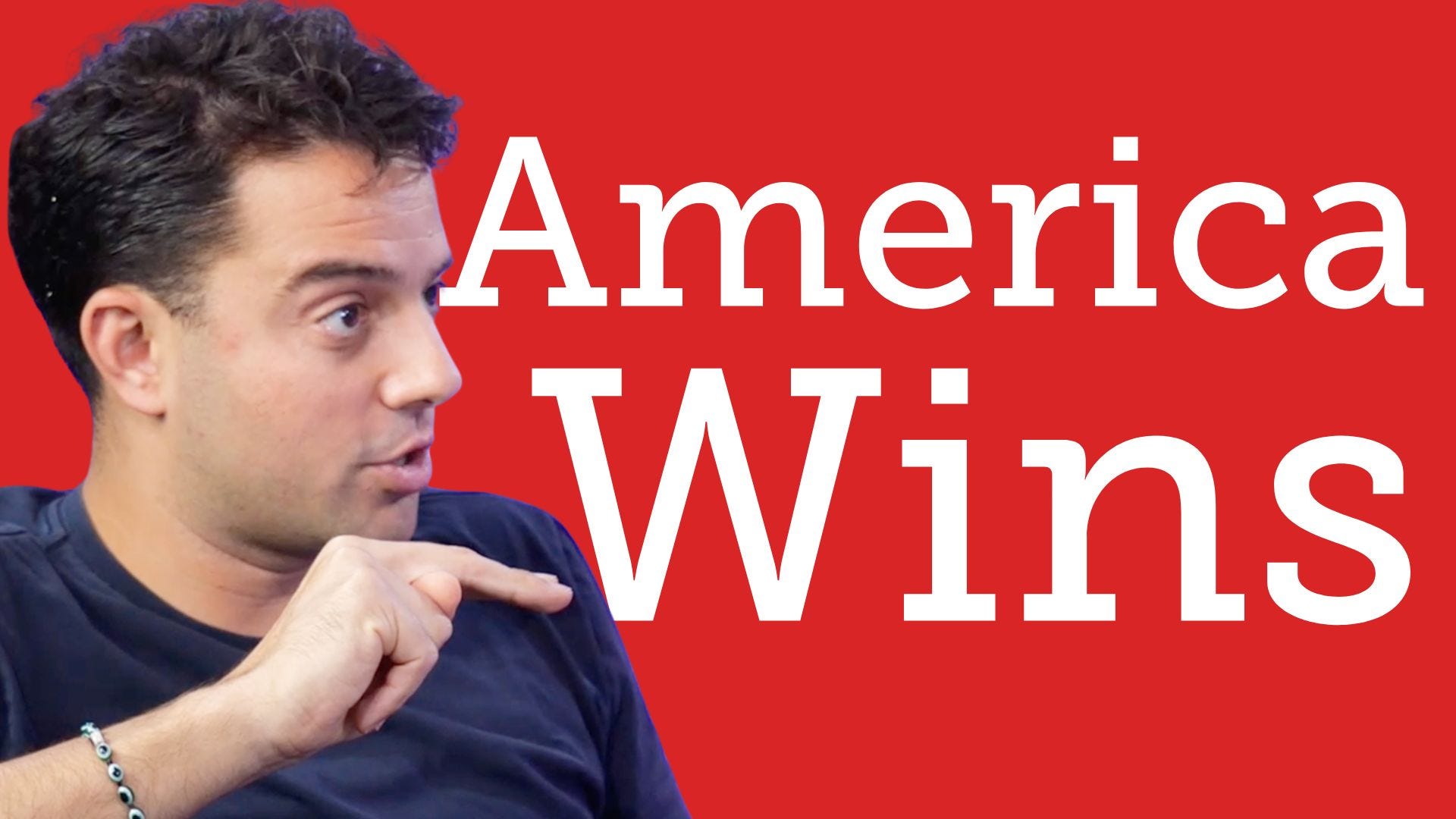
Why America's POOREST State is Richer Than Britain | Land of Opportunity Series
In this Institute of Economic Affairs podcast, IEA Director of Communications Callum Price interviews Andrew Barclay, entrepreneur and founder of Land of Opportunity, a campaign group exploring economic lessons from America. The conversation examines why the US economy has dramatically outpaced the EU since 2008, with America's GDP skyrocketing ahead while Europe stagnated. Barclay discusses his team's research trip to America to understand what drives their economic success and how Britain can learn from their pro-enterprise culture and policies. The discussion reveals how America's bipartisan celebration of the "American Dream" creates a culture where aspiration and wealth creation are rewarded across political lines. Barclay explains how the US tax system is structured to favour long-term wealth creation, with features like tax deferrals for property developers who reinvest profits and capital gains incentives for start-up investments. He contrasts this with Britain's complex tax code filled with cliff edges and disincentives, such as the VAT threshold that actually encourages businesses to stay small, and argues that America instinctively views regulation as increasing costs on business rather than helping it. Looking at solutions for Britain, Barclay advocates for reducing the size of government and welfare spending while returning money to entrepreneurs and wealth creators through tax reform. He emphasises that Britain still has the talent and innovation - describing the American Dream as "a British seed planted in American soil" - but has lost its way through decades of politics that penalised enterprise. The conversation concludes with his call for a bipartisan "British Dream" that celebrates aspiration and entrepreneurship, arguing that with the right cultural shift and policy changes, Britain can reclaim its position as a true land of opportunity. This is a public episode. If you'd like to discuss this with other subscribers or get access to bonus episodes, visit insider.iea.org.uk/subscribe
How to Fix Britain | John Penrose | IEA Interview
In this Institute of Economic Affairs podcast, Head of Media Reem Ibrahim interviews John Penrose, recovering government minister, Chair of the Conservative Policy Forum and Director of the Centre for Small State Conservatives. The conversation examines Britain's economic decline through decades of missed opportunities, comparing the UK's sluggish growth to the United States where compounding effects have created a widening wealth gap. They explore structural problems across childcare, housing, rail, energy and healthcare that have remained unfixed for decades, with Penrose arguing that supply-side reforms similar to Thatcher's approach are essential to revive Britain's economic engine.Penrose advocates for fundamental welfare system reforms to eliminate benefit traps that discourage work, proposing that benefit withdrawal rates should never exceed the top rate of income tax. The discussion covers pension reform, moving from the current pay-as-you-go system to fully funded personal pots, and addresses the NHS as a bureaucratic system that spends significant taxpayer money without delivering outcomes comparable to other developed nations. They examine how regulatory burdens in childcare create expensive, rigid provision that doesn't match what working families actually need, arguing for deregulation to allow market-based solutions.The interview concludes with analysis of immigration policy challenges, including outdated refugee conventions written for a different era, and the political difficulties of implementing genuine small-state reforms. Penrose explains his Centre for Small State Conservatives' mission to develop policies that create "bigger citizens who need smaller government" through upstream prevention rather than expensive downstream intervention. The conversation addresses why the Conservative Party must return to its supply-side reform roots to tackle Britain's fundamental structural problems that neither increased spending nor current political approaches have resolved. This is a public episode. If you'd like to discuss this with other subscribers or get access to bonus episodes, visit insider.iea.org.uk/subscribe
Britain's £36bn Black Hole | IEA Podcast
In this Institute of Economic Affairs podcast, IEA Head of Media and Linda Whetstone Scholar Reem Ibrahim interviews Executive Director Tom Clougherty and Editorial Director Kristian Niemietz. The conversation covers the deteriorating UK economy, examining zero growth in July, persistent inflation at 3.8%, and the highest August borrowing figures in five years. They discuss the Office for Budget Responsibility's expected downgrade of productivity forecasts, which could create an additional £36 billion fiscal black hole, and analyse why public sector productivity assumptions of four times historical growth rates appear unrealistic.The discussion explores Trump's recent visit to the UK and the nuclear energy agreements that emerged, particularly around mutual recognition of regulatory standards for US companies building nuclear power stations in Britain. They examine why UK nuclear costs are six times higher than South Korea's and advocate for regulatory free-riding and standardisation to reduce expenses. The conversation also covers the UK's declining energy production per capita since 2008 and questions how the country can achieve innovation and growth while using less energy.The podcast concludes with analysis of recent political protests in Britain, including the Unite the Kingdom march and anti-Trump demonstrations, examining what these movements reveal about the direction of British politics. They compare the UK's economic challenges with France's more severe fiscal problems, noting France's unique position as the only country where over-65s have higher average incomes than working-age people. The discussion highlights concerns about prioritising cultural issues over economic growth and questions whether either emerging political movement will support classical liberal free-market reforms. This is a public episode. If you'd like to discuss this with other subscribers or get access to bonus episodes, visit insider.iea.org.uk/subscribe
Why Every British Adult is Now in a Class Action Lawsuit | IEA Briefing
In this Institute of Economic Affairs briefing, managing editor Daniel Freeman interviews Stephen Dnes, a competition lawyer with 15 years of experience and lecturer at Royal Holloway, University of London, about his new IEA report, titled “Class Act,” examining the rise of class action litigation in the UK. The discussion covers the dramatic growth of opt-out class actions since their introduction in 2015, with current claims totaling between £95-135 billion and potentially affecting every adult in Britain as claimants in multiple cases. Dnes explains how these cases work, from hardcore cartels like alleged salmon price-fixing to more contentious claims involving data usage by tech companies.The conversation reveals significant problems with the current system, including cases taking up to nine years to complete, mixed quality claims, and conflicts of interest between third-party litigation funders, lawyers, and consumers. Dnes highlights the dramatic Merricks versus Mastercard case, which after nine years resulted in a settlement where funders initially attempted to claim £179 million of a £200 million settlement, leaving just 48 pence for each of the 44 million claimants. He explains how the current funding structure creates perverse incentives that can delay settlements and prioritize funder returns over consumer compensation.Dnes proposes market-based reforms to address these issues, particularly requiring funders to pay out a portion of claims upfront to demonstrate their confidence in cases and ensure money actually reaches consumers. Drawing on examples from Germany's emerging system, he argues this would weed out weak claims, speed up proceedings, and align incentives between all parties. The discussion concludes with Dnes expressing cautious optimism about potential government reforms, noting that legal changes are inevitable due to recent court decisions, though the scope of broader reforms remains uncertain.Read “Class Act” here. This is a public episode. If you'd like to discuss this with other subscribers or get access to bonus episodes, visit insider.iea.org.uk/subscribe
Nobel Prize Economist: Why Institutions Matter | IEA Interview
In this Institute of Economic Affairs podcast, IEA Executive Director Tom Clougherty interviews Professor Simon Johnson, 2024 Nobel Prize winner in Economics from MIT. The conversation explores Johnson's groundbreaking research on extractive versus inclusive institutions and how colonial mortality rates shaped economic development patterns that persist today. Johnson explains how European settlers' different experiences with disease in various colonies led to fundamentally different institutional structures - from the inclusive property rights systems established in North America to the extractive frameworks left behind in West Africa and the Caribbean.The discussion examines how these institutional differences became supercharged during the Industrial Revolution, enabling countries with inclusive institutions to industrialise rapidly while others lagged behind. Johnson draws on his family's Sheffield manufacturing background to illustrate how rule of law and property rights protection enabled Britain's industrial middle class to flourish. They also address why bad institutions persist despite our understanding of their harmful effects, with Johnson arguing that powerful elites often benefit from extractive systems and resist changes that would broaden economic opportunity.The interview concludes with Johnson's concerns about institutional degradation in modern America, the risks of AI oligopoly creating new forms of central planning, and Europe's economic stagnation. Johnson advocates for entrepreneurship, competition, and decentralised innovation while warning against both technological monism and fiscal irresponsibility. He calls for a return to fiscal conservatism and emphasises the importance of inclusive institutions that empower entrepreneurs and support shared prosperity rather than concentrated wealth extraction. This is a public episode. If you'd like to discuss this with other subscribers or get access to bonus episodes, visit insider.iea.org.uk/subscribe