
Eurodollar University
1,459 episodes — Page 29 of 30
Ep 60Commemorating QE's 20th Anniversary
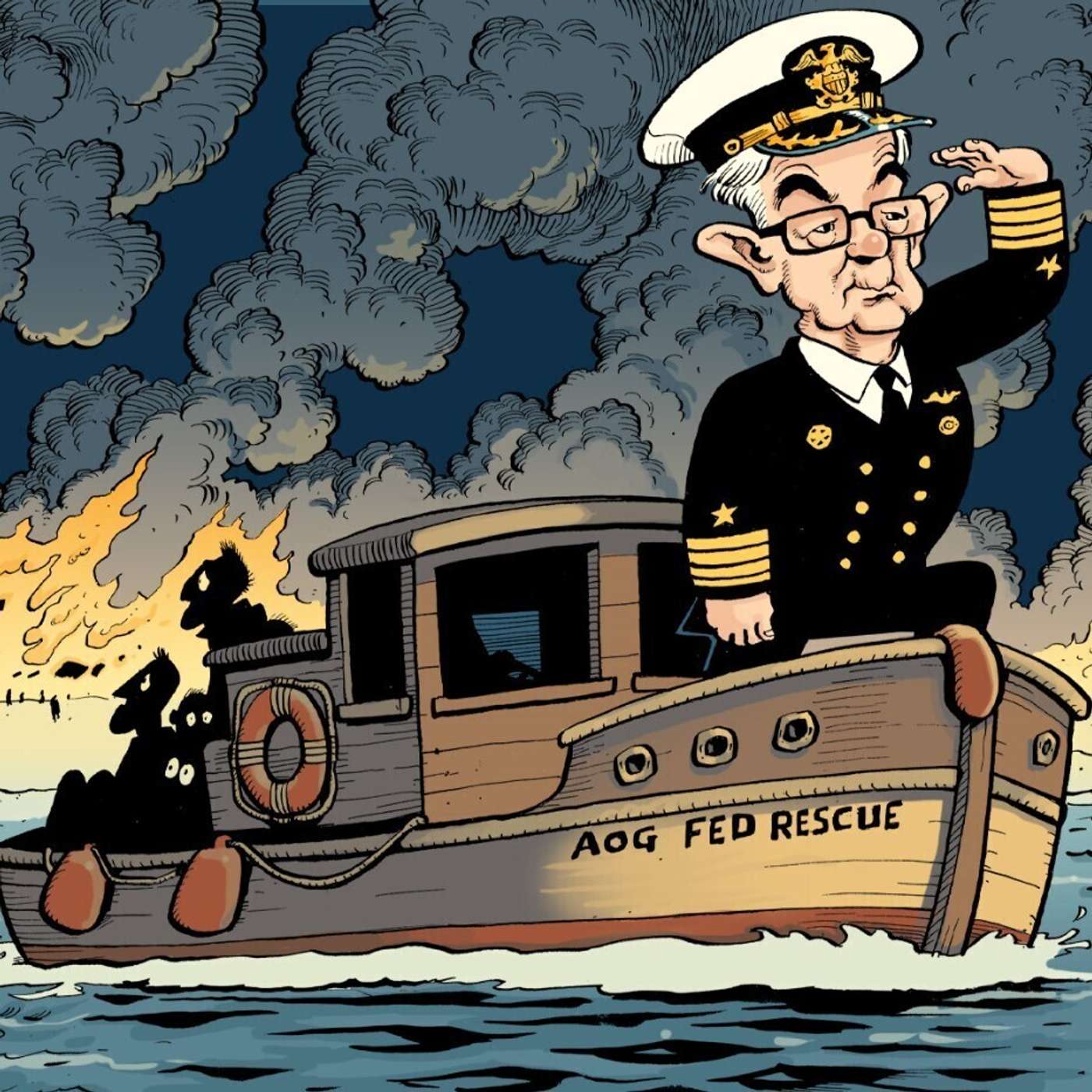
Jeff Snider is in his element in Episode 60, in which he observes the 20th anniversary of quantitative easing and notes the unsettling twist in oil futures; also, he reacts to the Federal Reserve Chairman who recently likened the Fed's actions last year, to the heroic Dunkirk evacuation.Your podcaster on the other hand comes out of the gate staggering by slandering everyone's favorite nation: New Zealand. Operating under the false impression that The Hobbit was a documentary, this podcaster opens the show asserting New Zealand is home to all manner of fantastic creatures like the platypus, narwhal, orcs and elves. The YouTube comments were aflame with polite indignation. The narwhal belongs to the Arctic, not Antarctic. Worse yet, the platypus is endemic to the only country in the world that doesn't care for New Zealand: Australia.To make amends this podcaster watched BBC Planet Earth with New Zealand's fourth most popular guitar-based digi-bongo acapella-rap-funk-comedy folk duo: Bret McKenzie and Jemaine Clement. So dear audience, please squint your ears at the start of the episode. When you hear "platypus", receive Fiordland Crested Penguin, which is twice the size of a normal-sized man. When you hear "narwhal", instead pick up Kakapo, a parrot that identifies as an owl. When you hear "orcs", perceive Kiwi, like the bald eagle but flightless and with fur. And when you hear "elves", glean Weka another flightless bird with the legs of a witch, a taste for pickled olives and a cholesterol problem.---------SEE IT-----------Alhambra YouTube: https://bit.ly/2Xp3royEmil YouTube: https://bit.ly/310yisL---------HEAR IT----------Vurbl: https://bit.ly/3rq4dPn Apple: https://apple.co/3czMcWNDeezer: https://bit.ly/3ndoVPEiHeart: https://ihr.fm/31jq7cITuneIn: http://tun.in/pjT2ZCastro: https://bit.ly/30DMYzaGoogle: https://bit.ly/3e2Z48MSpotify: https://spoti.fi/3arP8mYPandora: https://pdora.co/2GQL3QgBreaker: https://bit.ly/2CpHAFOCastbox: https://bit.ly/3fJR5xQPodbean: https://bit.ly/2QpaDghStitcher: https://bit.ly/2C1M1GBPlayerFM: https://bit.ly/3piLtjVPodchaser: https://bit.ly/3oFCrwNPocketCast: https://pca.st/encarkdtSoundCloud: https://bit.ly/3l0yFfKListenNotes: https://bit.ly/38xY7pbAmazonMusic: https://amzn.to/2UpEk2PPodcastAddict: https://bit.ly/2V39Xjr----------TOPICS------------PART 01: On March 19, 2001 CNN described quantitative easing by the Bank of Japan as "inject[ing] a large amount of money into the Japanese economy." It wasn't large, it wasn't money, and it never got to the economy. In two decades nothing has changed; not in Japan - not anywhere.PART 02: The headline oil price has been falling since early-March, but insiders were alerted 10 days earlier of possible trouble by the futures curve. What is contango? What is backwardation? Do oil futures tell us the economy is struggling to gain additional liftoff?PART 03: Federal Reserve Chairman Jerome Powell analogized the central bank actions in March 2020 to the heroic evacuation of soldiers from Dunkirk in WW2. A more fitting analogy is the blunderbuss loss at Dunkirk that necessitated the rescue at all.--------REFERENCES--------Central Banks Don't Do Quantities of Money Because They Can't: https://bit.ly/3srNL1jKiwi Busted QE And Its Relation To The Reflation Story: https://bit.ly/3ddL78QOK, NYMEX, Go On…: https://bit.ly/3cqAmknOK NYMEX, Beginning To Notice The Fine Print?: https://bit.ly/3rsmYAsWas Last Month’s Fedwire A Coincidence?: https://bit.ly/3dffKuuNPR's Full Interview With Fed Chairman Jerome Powell: https://n.pr/3crz7SaAlhambra Investments Blog: https://bit.ly/2VIC2wWRealClear Markets Essays: https://bit.ly/38tL5a7---------WHO-----------Jeff Snider, Head of Global Investment Research for Alhambra Investments and Emil Kalinowski, Flight of the Conchords fan. Art by Dunkirk Lil' Ship Capt. David Parkins. Podcast intro/outro is "New Zealand Story" by S.A. Karl at Epidemic Sound.

Ep 59Anniversary Special: Top-10 Podcast Intros
March 23, 2020 is a day that no financial market participant will forget. It was the day that America's S&P 500 put in its low and stock prices began their climb to "what looks like a permanently high plateau." More importantly, it was the day that Making Sense debuted. Yes, Jeff Snider and I decided that what the world really needed in the time of Covid and financial Armageddon was another financial podcast, and that we were going to give it to them. To commemorate the anniversary I proposed to Jeff that we do a retrospective. Jeff responded that he would love to - really. But he was reading through the Federal Open Market Committee's August 20, 1974 Memorandum of Discussion - again.And so instead, let me provide you with a retrospective of sorts, by playing the Top 10 Podcast Introductions as voted on by me, the introducer. Starting with Episode 14 and continuing through Episode 58 I introduce the points of discussion with the purpose of ensnaring you, the dear listener. In two to three minutes I have to convey to you the topics in an educational or funny or poignant or enthusiastic or absurd way. Sometimes I use a metaphor, other times a literary reading. Sometimes it is a suckescess... sometimes I can't pronounce the word success. Either way, it is an adventure. Here are the Top 10 Podcast Introductions of Making Sense, Season 1.---------SEE IT-----------Twitter: https://twitter.com/JeffSnider_AIPTwitter: https://twitter.com/EmilKalinowskiAlhambra YouTube: https://bit.ly/2Xp3royEmil YouTube: https://bit.ly/310yisLArt: https://davidparkins.com/---------HEAR IT----------Vurbl: https://bit.ly/3rq4dPnApple: https://apple.co/3czMcWNDeezer: https://bit.ly/3ndoVPEiHeart: https://ihr.fm/31jq7cITuneIn: http://tun.in/pjT2ZCastro: https://bit.ly/30DMYzaGoogle: https://bit.ly/3e2Z48MSpotify: https://spoti.fi/3arP8mYPandora: https://pdora.co/2GQL3QgBreaker: https://bit.ly/2CpHAFOCastbox: https://bit.ly/3fJR5xQPodbean: https://bit.ly/2QpaDghStitcher: https://bit.ly/2C1M1GBPlayerFM: https://bit.ly/3piLtjVPodchaser: https://bit.ly/3oFCrwNPocketCast: https://pca.st/encarkdtSoundCloud: https://bit.ly/3l0yFfKListenNotes: https://bit.ly/38xY7pbAmazonMusic: https://amzn.to/2UpEk2PPodcastAddict: https://bit.ly/2V39Xjr----EPISODE #59 TOPICS----00:01 Introduction to anniversary, retrospective show about... introductions02:33 #10 - Ep. 43 - Modern Monetary Hypnosis (24-Jan-2021)05:56 #09 - Ep. 15 - Hey Kid, Want Some Communism? (27-Jun-2020)09:13 #08 - Ep. 56 - False Dawn(s) (15-Mar-2021)12:37 #07 - Ep. 34 - Social Contract (11-Nov-2020)16:06 #06 - Ep. 17 - Communism, Don't Call it a Comeback (11-Jul-2020)19:28 #05 - Ep. 24 - The Discovery of Oz (31-Aug-2020)23:11 #04 - Ep. 21 - What's in the Monetary Toolkit? (09-Aug-2020)27:12 #03 - Ep. 39 - Quantum Dollar Mechanics (14-Dec-2020)30:48 #02 - Ep. 30 - QE2 Syndrome: Making Economics Errata (12-Oct-2020)34:57 #11 - Ep. 28 - Interview: Brent Johnson (27-Sep-2020)36:38 #12 - Ep. 58 - Interview: Izabella Kaminska (22-Mar-2021)39:32 #01 - Ep. 33 - Eurodollarween (02-Nov-2020)----------MUSIC-----------#10 - Ep. 43 - "Whispering of the Stars" by Luella Gren at https://bit.ly/31a9ONZ#09 - Ep. 15 - "The Ministry" by Howard Harper-Barnes at https://bit.ly/398LeBg#08 - Ep. 56 - "Departure Lounge" by Brendon Moeller at https://bit.ly/3tOnTgh#07 - Ep. 34 - "All Emotions" by ELFL at https://bit.ly/395Oxti#06 - Ep. 17 - "Callin Shots" by Damma Beatz at https://bit.ly/3rer4MK#05 - Ep. 24 - "So Many Secrets" by Gavin Luke at https://bit.ly/3tOo5Mx#04 - Ep. 21 - "Cornelia" by The Eastern Plain, remixed by Luwaks, at https://bit.ly/3vS2FzZ#03 - Ep. 39 - "Otherworld" by Lama House at https://bit.ly/39b7BX3#02 - Ep. 30 - "A Most Violent Man" by Lofive at https://bit.ly/3d1YHMu#11 - Ep. 28 - "We Just Gotta (Get Together)" by Wanda Shakes at https://bit.ly/3sfVpf7#12 - Ep. 58 - "Canon in D" by Johann Pachelbel at https://bit.ly/3tOu9EI#01 - Ep. 33 - "Fugent" by Lupus Nocte at https://bit.ly/3sh5kRt--------REFERENCES--------Alhambra Investments Blog: https://bit.ly/2VIC2wWRealClear Markets Essays: https://bit.ly/38tL5a7---------WHO-----------Jeff Snider, Head of Global Investment Research for Alhambra Investments with Emil Kalinowski, disc jockey. Art by David Parkins. All intro music found at Epidemic Sound.

Ep 58Interview: Izabella Kaminska
Welcome to Making Sense. Jeff Snider and I are joined by a very special guest, Izabella Kaminska who has accomplished many accomplished things, including being the editor of FT Alphaville, the Financial Times blog. Though to refer to Alphaville as a mere blog, would be a gross disservice. No ladies and gentlemen, it is much more than that. It is the modern-day equivalent of the 17th-century London coffeehouse. Both, forums for transactions, spirited debate, and the exchange of information, ideas - and lies! - though Alphaville is pointing them out for our benefit. Strangers, no matter what their social standing or political allegiance, are always welcomed into lively convivial company. The topics, then like now: the stock exchange, insurance, auctioneering, politics, arts... Then? The 'not-so-old' masters. Now? NFTs. Both the contents of the 17th-century coffee mug and Alphaville could be described the same way: "'black as hell, strong as death, sweet as love' and shot through with grit."--------SUMMARY--------PART 01: Financial journalism, the necessity of skepticism, public distrust of media, press reticence to cover underclass concerns, reportage to clarify versus to convince and technology's impact on news.01:44 The nature of FT Alphaville relative to mainstream financial media08:55 The importance of skepticism and critique in Alphaville's coverage of markets13:26 According to Gallup, Americans have very little to no confidence in newspapers22:42 Media reticence to cover 'unsophisticated', 'conspiratorial' working class concerns33:41 Drawing attention to and clarifying versus reporting to confirm, conclude and/or convince43:42 Technology's impact on journalism - past, present and prospective.PART 02: Work furlough as proto Universal Basic Income, a labor force under Modern Monetary Theory, naïve accedence of Environmental-Social Governance, socialism, communism and corporate-capitalism.46:37 Political determination of economic outcomes via furlough, UBI and socialism57:36 Good intentions of MMT and ESG act as shields against skepticism; the echoes of communism1:07:52 Political considerations (MMT, UBI, ESG) will result in inescapable market consequences1:13:14 Corporate measurement of customer behavior and its political consequencesPART 03: Bitcoin free-market green energy, non-fungible tokens, cryptocurrency's role in the monetary order, intraday interbank liquidity, central bank command-economy green agendas and more!1:20:49 The astounding impact of intraday real time gross settlement on systemic, global liquidity1:30:43 Green mandates are command-economy solutions; Bitcoin may be the free-market alternative1:34:06 Balancing transparency against privacy with non-fungible tokens and cryptocurrencies---------SEE IT-----------Alhambra YouTube: https://bit.ly/2Xp3royEmil YouTube: https://bit.ly/310yisL---------HEAR IT----------Vurbl: https://bit.ly/3rq4dPnApple: https://apple.co/3czMcWNDeezer: https://bit.ly/3ndoVPEiHeart: https://ihr.fm/31jq7cITuneIn: http://tun.in/pjT2ZCastro: https://bit.ly/30DMYzaGoogle: https://bit.ly/3e2Z48MSpotify: https://spoti.fi/3arP8mYPandora: https://pdora.co/2GQL3QgBreaker: https://bit.ly/2CpHAFOCastbox: https://bit.ly/3fJR5xQPodbean: https://bit.ly/2QpaDghStitcher: https://bit.ly/2C1M1GBPlayerFM: https://bit.ly/3piLtjVPodchaser: https://bit.ly/3oFCrwNPocketCast: https://pca.st/encarkdtSoundCloud: https://bit.ly/3l0yFfKListenNotes: https://bit.ly/38xY7pbAmazonMusic: https://amzn.to/2UpEk2PPodcastAddict: https://bit.ly/2V39Xjr--------REFERENCES--------Izabella Kaminska: https://www.ft.com/izabella-kaminskaAlphaville: https://www.ft.com/alphavilleAlhambra Investments Blog: https://bit.ly/2VIC2wWRealClear Markets Essays: https://bit.ly/38tL5a7---------WHO-----------Jeff Snider, Head of Global Investment Research for Alhambra Investments with Izabella Kaminska, editor of FT Alphaville and Emil Kalinowski, a Financial Times subscriber. Art by David Parkins, the Pasqua Rosée of black ink.Podcast intro/outro is a chamber music version of "Canon in D" by Johann Pachelbel, the 17th-century German composer. Listen at Epidemic Sound. Learn more about "The Lost World of the London Coffeehouse" from Dr. Matthew Green.
Ep 57LIVE! Reaction: Answering Paul Krugman
Will stagnation follow the Biden Boom? So asks New York Times columnist (and Nobel memorial prize winner) Paul Krugman. Jeff Snider listens and reacts to Krugman's lament that, though the relief bill is done, recovery may be harder.---------SEE IT-----------AlhambraTube: https://bit.ly/2Xp3roy---------HEAR IT----------Vurbl: https://bit.ly/3rq4dPnApple: https://apple.co/3czMcWNDeezer: https://bit.ly/3ndoVPEiHeart: https://ihr.fm/31jq7cITuneIn: http://tun.in/pjT2ZCastro: https://bit.ly/30DMYzaGoogle: https://bit.ly/3e2Z48MSpotify: https://spoti.fi/3arP8mYPandora: https://pdora.co/2GQL3QgBreaker: https://bit.ly/2CpHAFOCastbox: https://bit.ly/3fJR5xQPodbean: https://bit.ly/2QpaDghStitcher: https://bit.ly/2C1M1GBPlayerFM: https://bit.ly/3piLtjVPodchaser: https://bit.ly/3oFCrwNPocketCast: https://pca.st/encarkdtSoundCloud: https://bit.ly/3l0yFfKListenNotes: https://bit.ly/38xY7pbAmazonMusic: https://amzn.to/2UpEk2PPodcastAddict: https://bit.ly/2V39Xjr----EPISODE #57 TOPICS----00:01 Paul Krugman, NYTimes columnist, believes the Biden stimulus will not be enough02:31 Will a stimulus bill with a huge sticker price be enough to overcome "Secular Stagnation"?05:28 A growing consensus of economists believes the last decade may not have been very good08:18 Bond markets are not signaling the recovery has been very good so far12:09 What is the solution to secular stagnation?15:38 There is agreement that the economy is very unhealthy, stimulus may not be enough--------REFERENCES--------Will Stagnation Follow the Biden Boom?: https://nyti.ms/2OtQ5pKAlvin Hansen and Secular Stagnation: https://bit.ly/2NkJUnsHey Kid, Want Some Communism? : https://youtu.be/bKHzn2UaqLUCommunism - Don't Call it a Comeback: https://youtu.be/FhBQhRLmTQcAlhambra Investments Blog: https://bit.ly/2VIC2wWRealClear Markets Essays: https://bit.ly/38tL5a7---------WHO-----------Jeff Snider, Head of Global Investment Research for Alhambra Investments with Emil Kalinowski, now hiring interns at below-market rates. Art by David Parkins, on an errand, sent by grocery store clerks, to collect a bill. Podcast intro/outro is "Cool Cat Stumble" by T. Morri at Epidemic Sound.
Ep 56False Dawn(s)
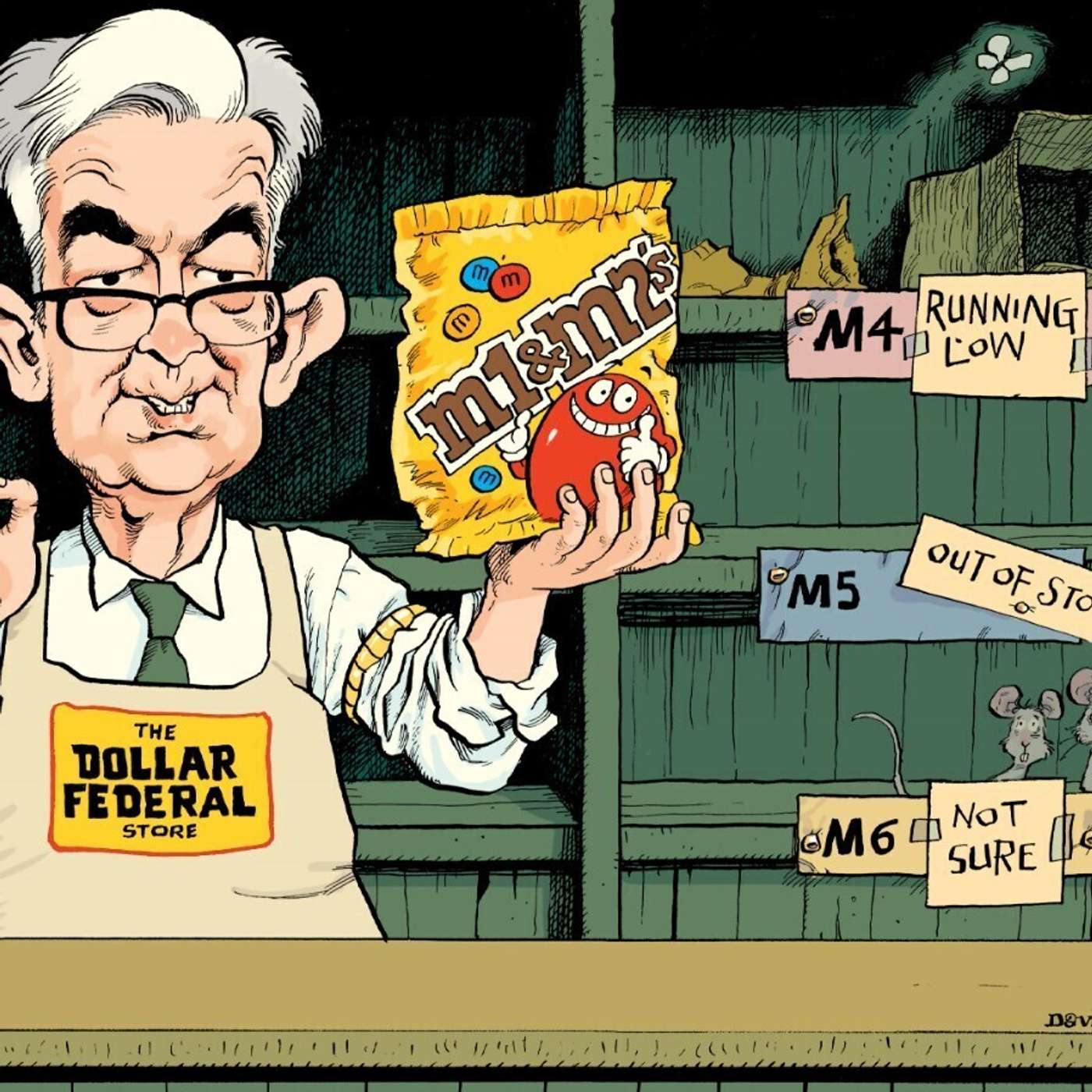
Space, the final metaphor. Why do central bankers offer spirographic, retrograde answers? Because they operate within a Ptolemaic paradigm - a geocentric model of our monetary system in which the central bank is the hub around which all else revolves. Why is unobservable, offshore credit fundamentally important? Because like dark matter and dark energy, this shadow money represents the broad majority of material and heat that constitute our monetary universe.Which brings your podcaster to the 21st chapter of "The Courage to Act" authored by Ben Bernanke. There, the former chairman defends the Fed's second quantitative easing in 2010 because of an economic "false dawn". No mere rhetorical flourish, the false dawn is a regular astral phenomenon. Each autumn and spring, the northern and southern latitudes respectively, will observe a triangular diffusion of light rising above the horizon. It seems to herald recovery from the darkness.But Sol won't come. Not yet at least. Light, yes. But the wrong kind. Instead of a medley of warm colors refracted by the near atmosphere, the false dawn is a sterile white, originating far beyond our Earth, in cold space. Officially known as the Zodiacal Light, we witness interplanetary dust particles reflecting sunlight.Perhaps not surprisingly, Bernanke's book had no further chapters on economic false dawns despite their taking on an astronomical regularity, arriving again and again and again in 2011, 2014 and 2017. Jeff Snider, part-time monetary sleuth and full-time cosmos student, recognizes the difference between reflation's false dawn and recovery's warm glow. In this, the 56th episode of Making Sense, we review the light coming over the horizon from negative repo rates, surging M2 money supply and rising US Treasury yields. We find it cold, fallow and gray.-------SUMMARY------PART 01: Learn why rates in the repurchase agreement market went negative. What might it mean for economic recovery, not only in the United States but globally? Learn about 2013 and 2020 when repo securities also "traded special". Jeff Snider offers two explanations, one benign (sort of). The other? Malign.PART 02: Learn why a HISTORIC surge of M2 money supply is NOWHERE near-enough to rescue the world economy. Across a group of mostly rich nations M2 and M3 are at multi-decade highs. And yet millions remain unemployed. What's missing? Money! PART 03: Learn the difference between an orthodox-economics and a shadow-money view of US Treasuries. The mainstream says, 'Too many Treasuries!' and 'Emerging markets in danger!' Is that true? ---------SEE IT-----------AlhambraTube: https://bit.ly/2Xp3roy---------HEAR IT----------Vurbl: https://bit.ly/3rq4dPnApple: https://apple.co/3czMcWNDeezer: https://bit.ly/3ndoVPEiHeart: https://ihr.fm/31jq7cITuneIn: http://tun.in/pjT2ZCastro: https://bit.ly/30DMYzaGoogle: https://bit.ly/3e2Z48MSpotify: https://spoti.fi/3arP8mYPandora: https://pdora.co/2GQL3QgBreaker: https://bit.ly/2CpHAFOCastbox: https://bit.ly/3fJR5xQPodbean: https://bit.ly/2QpaDghStitcher: https://bit.ly/2C1M1GBPlayerFM: https://bit.ly/3piLtjVPodchaser: https://bit.ly/3oFCrwNPocketCast: https://pca.st/encarkdtSoundCloud: https://bit.ly/3l0yFfKListenNotes: https://bit.ly/38xY7pbAmazonMusic: https://amzn.to/2UpEk2PPodcastAddict: https://bit.ly/2V39Xjr--------REFERENCES--------Deja Vu: Treasury Shorts Meet Treasury Shortages: https://bit.ly/3rJMnGPWhat *Must* Lie Beyond the M’s: https://bit.ly/3rEq19LTaking You, The Fed’s Bank Reserves, And Banks’ Checkable Deposits For A Quick Stroll In The Monetary Zoo: https://bit.ly/2PRhRwEWhat Gold Says About UST Auctions: https://bit.ly/2OqPJA4Standard Textbook Dollar, Or Eurodollar Standard?: https://bit.ly/3cuDNWcUnexpected U.S. Growth Surge Could Unbalance Fragile Global Economy: https://on.wsj.com/3cndEsgHedgeye Investing Summit (2021, Mar-16/18): https://bit.ly/38TkogL---------WHO-----------Jeff Snider, Head of Global Investment Research for Alhambra Investments with Emil Kalinowski, sweet on M1&M2s. Art by David Parkins, on an errand, sent by grocery store clerks, to collect a bill. Podcast intro/outro is "Departure Lounge" by Brendon Moeller at Epidemic Sound.
Ep 55LIVE! Reaction: Answering Martin Wolf
Wolf ponders what central banks should target (e.g. inflation, asset prices, social justice, nominal GDP). Incredibly at no point in the article was targeting actual money supply considered. WILD!---------SPONSOR----------But first, this from Eurodollar Enterprises! Friends, do you direct the Treasury Ministry? Do your political masters expect foaming asset prices? Are you unsure how to produce lasting froth? Then a box of Bath Suds from Eurodollar Enterprises is for you! Yes, practice blowing bubbles in the gurgling luxury of your free-standing clawfoot tub. Find the perfect mix between liquidity and hot air with our capital markets foam formulation. Our bubble brew line comes in: currencies, commodities, cryptos and collectibles. Blow them all! Orders received today will come with a fussy central banker - typically retailing for the price of "hedge fund general partner" - absolutely free! Simulate the political arena trying to blow it in the presence of an erratic technocrat. Don't blow it! Not without Bath Suds. New! From Eurodollar Enterprises. (Central banker swimsuit not included.)---------SEE IT-----------AlhambraTube: https://bit.ly/2Xp3roy---------HEAR IT----------Vurbl: https://bit.ly/3rq4dPnApple: https://apple.co/3czMcWNDeezer: https://bit.ly/3ndoVPEiHeart: https://ihr.fm/31jq7cITuneIn: http://tun.in/pjT2ZCastro: https://bit.ly/30DMYzaGoogle: https://bit.ly/3e2Z48MSpotify: https://spoti.fi/3arP8mYPandora: https://pdora.co/2GQL3QgBreaker: https://bit.ly/2CpHAFOCastbox: https://bit.ly/3fJR5xQPodbean: https://bit.ly/2QpaDghStitcher: https://bit.ly/2C1M1GBPlayerFM: https://bit.ly/3piLtjVPodchaser: https://bit.ly/3oFCrwNPocketCast: https://pca.st/encarkdtSoundCloud: https://bit.ly/3l0yFfKListenNotes: https://bit.ly/38xY7pbAmazonMusic: https://amzn.to/2UpEk2PPodcastAddict: https://bit.ly/2V39Xjr--------REFERENCES--------What central banks ought to target: https://on.ft.com/38eLtu7Alhambra Investments Blog: https://bit.ly/2VIC2wWRealClear Markets Essays: https://bit.ly/38tL5a7 -----------WHO------------Jeff Snider, Head of Global Investment Research for Alhambra Investments with Emil Kalinowski, targeting cat-video ratings. Art by Master Quillsman, David Parkins. Podcast intro/outro is "Reversed Beginning" by Luwaks at Epidemic Sound.
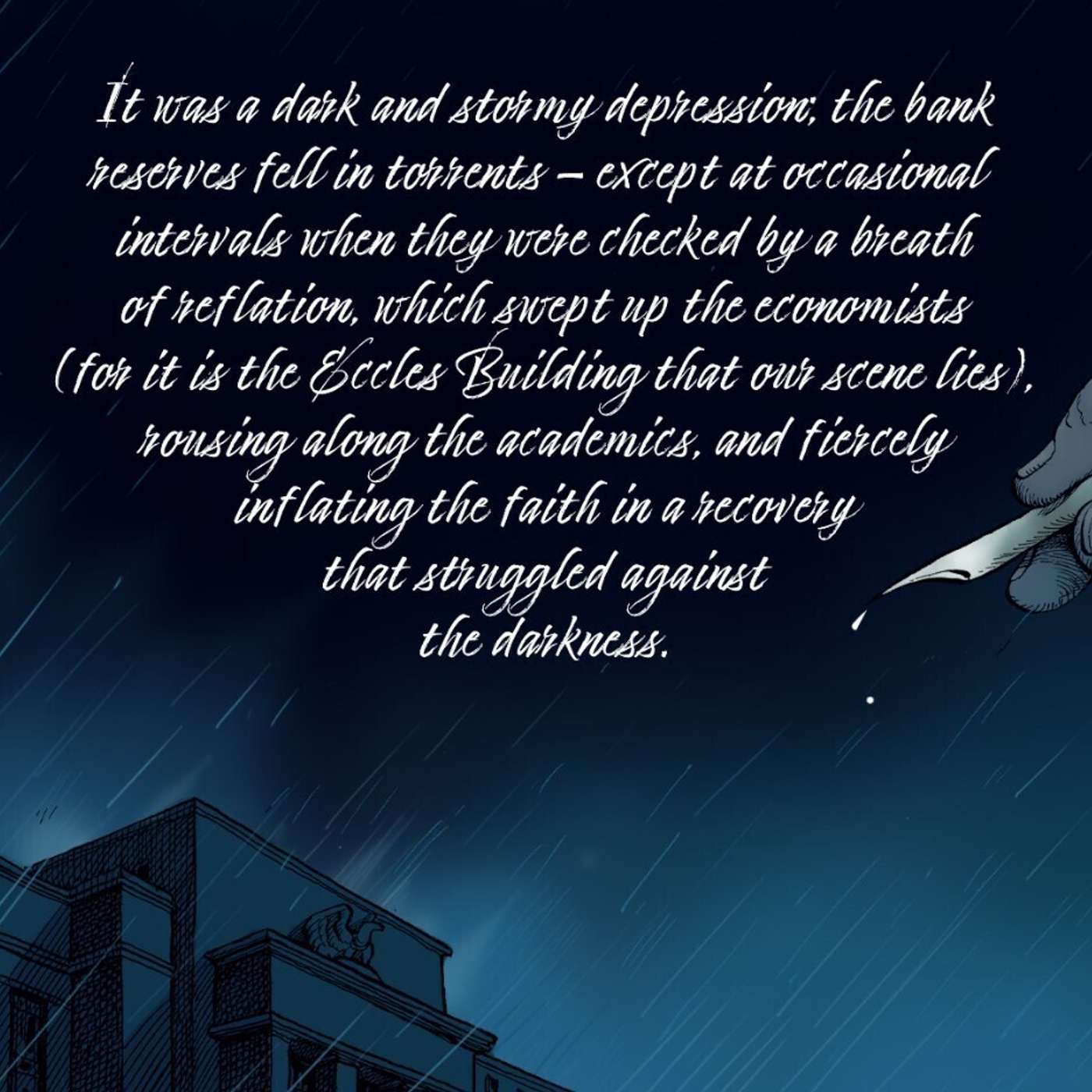
Ep 54It was a dark and stormy depression...
"The pen is mightier than the sword." "The great unwashed." "Pursuit of the almighty dollar." These are prhases we have all heard and they come from a single source: 19th century English writer and politician Edward George Earle Lytton Bulwer-Lytton. Bulwer-Lytton was a successful novelist, poet and playwright. His political accomplishments included nine years in Parliament, serving as the British Colonial Secretary, and being offered - AND TURNING DOWN - both a lordship of the Admiralty AND the Crownship of Greece (i.e. king)! Today he is remembered for writing... the worst opening sentence in the history of the English-speaking peoples:"It was a dark and stormy night; the rain fell in torrents — except at occasional intervals, when it was checked by a violent gust of wind which swept up the streets (for it is in London that our scene lies), rattling along the housetops, and fiercely agitating the scanty flame of the lamps that struggled against the darkness."Episode 54 reviews articles by Jeff Snider covering: the Treasury inflation-protected securities curve inverting, the life span of a post-2008 reflation, the curious appreciation of the Chinese currency, as well as how Fed officials in 1937 convinced themselves of an impending inflationary storm (in the middle of an economic depression). None of those articles open in the Bulwer-Lytton style -- precisely the opposite! And yet many - some, a few... someone... And yet this podcaster wonders, how might a Eurodollar University educated author open their novel? It was a dark and stormy depression; bank reserves fell in torrents — except at occasional intervals, when they were checked by a breath of reflation which swept up economists (for it is in the Eccles Building that our scene lies), rousing along the academics, and fiercely inflating the faith in a recovery that struggled against the darkness.-------SUMMARY------PART 01: The US Treasury inflation-protected security curve has gone upside down. Indeed, it has NEVER been more upside down. What is the Treasury market telling us about the economy's prospects? Also, how long does reflation typically last? Are we closer to its beginning or end?PART 02: The appreciation of the Chinese yuan against the American dollar has paused. A survey of the Chinese services sector scored a historic low. Are these the first indications of an economic slowdown? A slowdown that is not only Chinese but global?PART 03: In 1937, like now, circumstantial evidence and biases of central bankers suggested the impending arrival of fierce inflation: huge government deficits, better economic statistics, rising bond yields and excess bank reserves. Yet the underlying condition was of depression and credit illiquidity.---------SEE IT-----------AlhambraTube: https://bit.ly/2Xp3roy---------HEAR IT----------Vurbl: https://bit.ly/3rq4dPnApple: https://apple.co/3czMcWNDeezer: https://bit.ly/3ndoVPEiHeart: https://ihr.fm/31jq7cITuneIn: http://tun.in/pjT2ZCastro: https://bit.ly/30DMYzaGoogle: https://bit.ly/3e2Z48MSpotify: https://spoti.fi/3arP8mYPandora: https://pdora.co/2GQL3QgBreaker: https://bit.ly/2CpHAFOCastbox: https://bit.ly/3fJR5xQPodbean: https://bit.ly/2QpaDghStitcher: https://bit.ly/2C1M1GBPlayerFM: https://bit.ly/3piLtjVPodchaser: https://bit.ly/3oFCrwNPocketCast: https://pca.st/encarkdtSoundCloud: https://bit.ly/3l0yFfKListenNotes: https://bit.ly/38xY7pbAmazonMusic: https://amzn.to/2UpEk2PPodcastAddict: https://bit.ly/2V39Xjr--------REFERENCES--------TIPS Tipping Over, But Not That Way: https://bit.ly/3sVqgh4Reflation Amplitude, Important, What About Frequency?: https://bit.ly/2MSUa68What If CNY’s Backdoor Still Isn’t A Big Enough Exit?: https://bit.ly/3uT06NwThere’s Two Sides To Synchronize: https://bit.ly/3cm1j7RThere's Precedent for Yellen Demanding a Central Bank Rescue: https://bit.ly/3qoUQxFAlhambra Investments Blog: https://bit.ly/2VIC2wWRealClear Markets Essays: https://bit.ly/38tL5a7---------WHO-----------Jeff Snider, Head of Global Investment Research for Alhambra Investments with Emil Kalinowski, a dark and stormy host. Art by Master Quillsman, David Parkins. Podcast intro/outro is "Nocturne" by Trevor Kowalski at Epidemic Sound.
Ep 53LIVE! Reaction: Answering Jon Hilsenrath
Should speculative ventures be included in calculations of inflation? What about productive investment? Housing? All transactions? Or just consumer prices?----------WHERE----------Vurbl: https://bit.ly/3rq4dPnApple: https://apple.co/3czMcWNDeezer: https://bit.ly/3ndoVPEiHeart: https://ihr.fm/31jq7cITuneIn: http://tun.in/pjT2ZCastro: https://bit.ly/30DMYzaGoogle: https://bit.ly/3e2Z48MSpotify: https://spoti.fi/3arP8mYPandora: https://pdora.co/2GQL3QgBreaker: https://bit.ly/2CpHAFOCastbox: https://bit.ly/3fJR5xQPodbean: https://bit.ly/2QpaDghStitcher: https://bit.ly/2C1M1GBPlayerFM: https://bit.ly/3piLtjVPodchaser: https://bit.ly/3oFCrwNPocketCast: https://pca.st/encarkdtSoundCloud: https://bit.ly/3l0yFfKListenNotes: https://bit.ly/38xY7pbAmazonMusic: https://amzn.to/2UpEk2PPodcastAddict: https://bit.ly/2V39XjrAlhambraTube: https://bit.ly/2Xp3roy ----------WHEN----------01:02 John Hilsenrath says the Fed has failed to hit its inflation target for "several" years.02:48 Is the Fed keeping interest rates low or is it the market? Which is the cart? The horse?03:31 Should asset price increases be included in measures of inflation? 05:08 How to interpret rising housing prices with falling apartment rental prices?08:15 Asset price bubbles - whose responsibility are they? The Fed? Other regulators?11:32 The TIPS market has inverted - near-term up, long-term trending down.13:13 Economists have long struggled whether / to what degree to include asset price inflation ----------WHAT----------Inflation Problems Depend on Where You Look for Them: https://on.wsj.com/3b1E9nBAlhambra Investments Blog: https://bit.ly/2VIC2wWRealClear Markets Essays: https://bit.ly/38tL5a7----------WHO----------Jeff Snider, Head of Global Investment Research for Alhambra Investments with Emil Kalinowski, not spending money on haircuts. Art by David Parkins. Podcast intro/outro is "About to Explode" by Daxten and Wai at Epidemic Sound.
Ep 52Anomalies? Or Triggers?
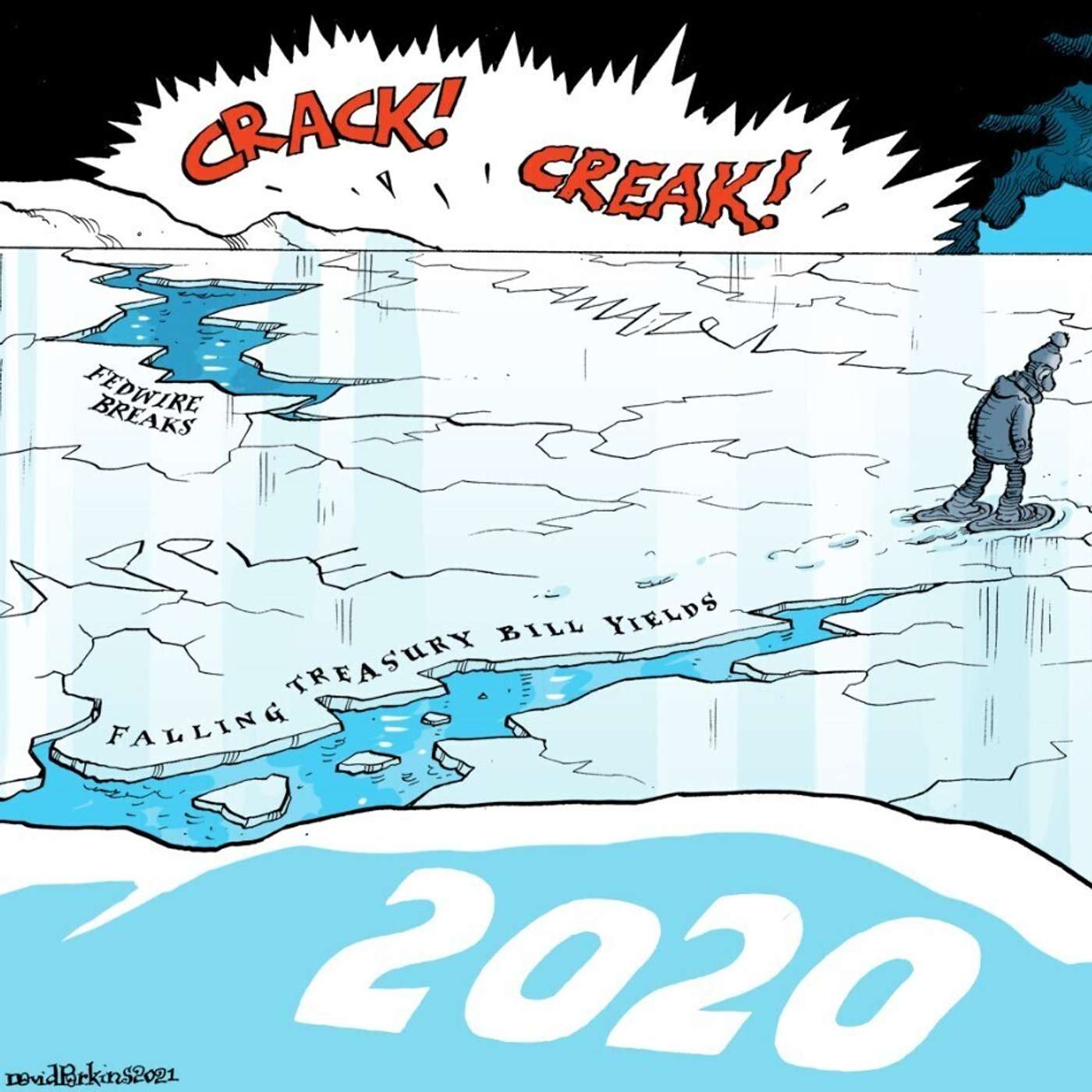
The theme of Making Sense Episode 52 is how an environment reacts to an anomaly. Resilient systems keep these aberrations constrained. But fragile ones can retroactively redefine what had earlier been labeled as an "irregularity", "oddity" or "operational error" to something altogether more unsettling: "cause", "spark", "trigger".In part one, Jeff Snider continues his multi-week review of historical breaks to the smooth functioning of interbank payment and messaging systems. This time a look at a sequence that led to a week-long disorder to Fedwire in August 1990. Part two, also a continuation of a multi-week review, ponders what may be causing the disquieting twist in the US Treasury yield curve. Is the demand for short-term collateral a disqualification of reflation, as was the case during 2013's so-called Taper Tantrum? Lastly, some words on oil and the developing Texas power market credit crisis, in which electric retailers failed to make $2.1 billion in required payments and put the largest power generation and transmission cooperative into bankruptcy. Fedwire "operational error[s]". Unsettling demand for Bills. Texas margin calls. An approaching quarter-end seasonal low point in liquidity. A looming regulation-mandated US Treasury cliff on April Fools' Day. All anomalies... in a resilient system.----------WHY----------PART 01: Fedwire, the interbank system that transmits billions between 9,000-plus members, broke on Wednesday. The Fed says, "operational error" implying mere technical trivia - an anomaly. Why do some breaks stay mere anomalies while others trigger volatile, systemic consequences?PART 02: The US yield curve has twisted as Bill yields fall and Bond yields rise. We review a similar situation in 2013 popularly known as "the Taper Tantrum", WHICH WAS NOT A TAPER TANTRUM! Then - like now - a collateral scramble in Bills and a relief sell-off in Bonds.PART 03: What does the oil market (production, demand, inventory) in the USA tell us about the economic recovery in early 2021? Also, is a power market credit crisis in Texas causing a national run on banking-system collateral?----------WHERE----------Vurbl: https://bit.ly/3rq4dPnApple: https://apple.co/3czMcWNDeezer: https://bit.ly/3ndoVPEiHeart: https://ihr.fm/31jq7cITuneIn: http://tun.in/pjT2ZCastro: https://bit.ly/30DMYzaGoogle: https://bit.ly/3e2Z48MSpotify: https://spoti.fi/3arP8mYPandora: https://pdora.co/2GQL3QgBreaker: https://bit.ly/2CpHAFOCastbox: https://bit.ly/3fJR5xQPodbean: https://bit.ly/2QpaDghStitcher: https://bit.ly/2C1M1GBPlayerFM: https://bit.ly/3piLtjVPodchaser: https://bit.ly/3oFCrwNPocketCast: https://pca.st/encarkdtSoundCloud: https://bit.ly/3l0yFfKListenNotes: https://bit.ly/38xY7pbAmazonMusic: https://amzn.to/2UpEk2PPodcastAddict: https://bit.ly/2V39XjrAlhambraTube: https://bit.ly/2Xp3roy----------WHAT----------Why Price Alone Does Not Render An Asset Class 'Safe': https://bit.ly/3suB0Td‘Operational error’ disrupts Federal Reserve payment system: https://on.ft.com/3stDlOeFed needs to ignore ‘taper tantrums’ and let longer rates rise: https://on.ft.com/2O5ECMmWhat Might Be In *Another* Market-based Yield Curve Twist?: https://bit.ly/2ZVz4qEHot Oil, Cold Weather, Uncle Sam’s Green: https://bit.ly/3sxGJb0Power market credit crisis looms as Texas bills come due: https://on.ft.com/3dOWoOYAlhambra Investments Blog: https://bit.ly/2VIC2wWRealClear Markets Essays: https://bit.ly/38tL5a7----------WHO----------Jeff Snider, Head of Global Investment Research for Alhambra Investments with Emil Kalinowski, anomaly. Art by Winterfell resident, David Parkins. Podcast intro/outro is "Some Thing" by Rambutan at Epidemic Sound.
Ep 51Reading Around: Pettis On Tariffs and US Jobs
Michael Pettis of Carnegie Endowment for International Peace. Read by Emil Kalinowski. Art by David Parkins. Intro/outro is "The Village Idiot" by Justnormal at Epidemic Sound.----------WHAT----------How Trump’s Tariffs Really Affected the U.S. Job Market: https://bit.ly/2P7qHWJ----------WHERE----------Pettis' Writings: https://carnegieendowment.org/experts/444Pettis' Twitter: https://twitter.com/michaelxpettisVurbl: https://bit.ly/3rq4dPnApple: https://apple.co/3czMcWNDeezer: https://bit.ly/3ndoVPEiHeart: https://ihr.fm/31jq7cITuneIn: http://tun.in/pjT2ZCastro: https://bit.ly/30DMYzaGoogle: https://bit.ly/3e2Z48MSpotify: https://spoti.fi/3arP8mYPandora: https://pdora.co/2GQL3QgBreaker: https://bit.ly/2CpHAFOCastbox: https://bit.ly/3fJR5xQPodbean: https://bit.ly/2QpaDghStitcher: https://bit.ly/2C1M1GBPlayerFM: https://bit.ly/3piLtjVPodchaser: https://bit.ly/3oFCrwNPocketCast: https://pca.st/encarkdtSoundCloud: https://bit.ly/3l0yFfKListenNotes: https://bit.ly/38xY7pbAmazonMusic: https://amzn.to/2UpEk2PPodcastAddict: https://bit.ly/2V39Xjr
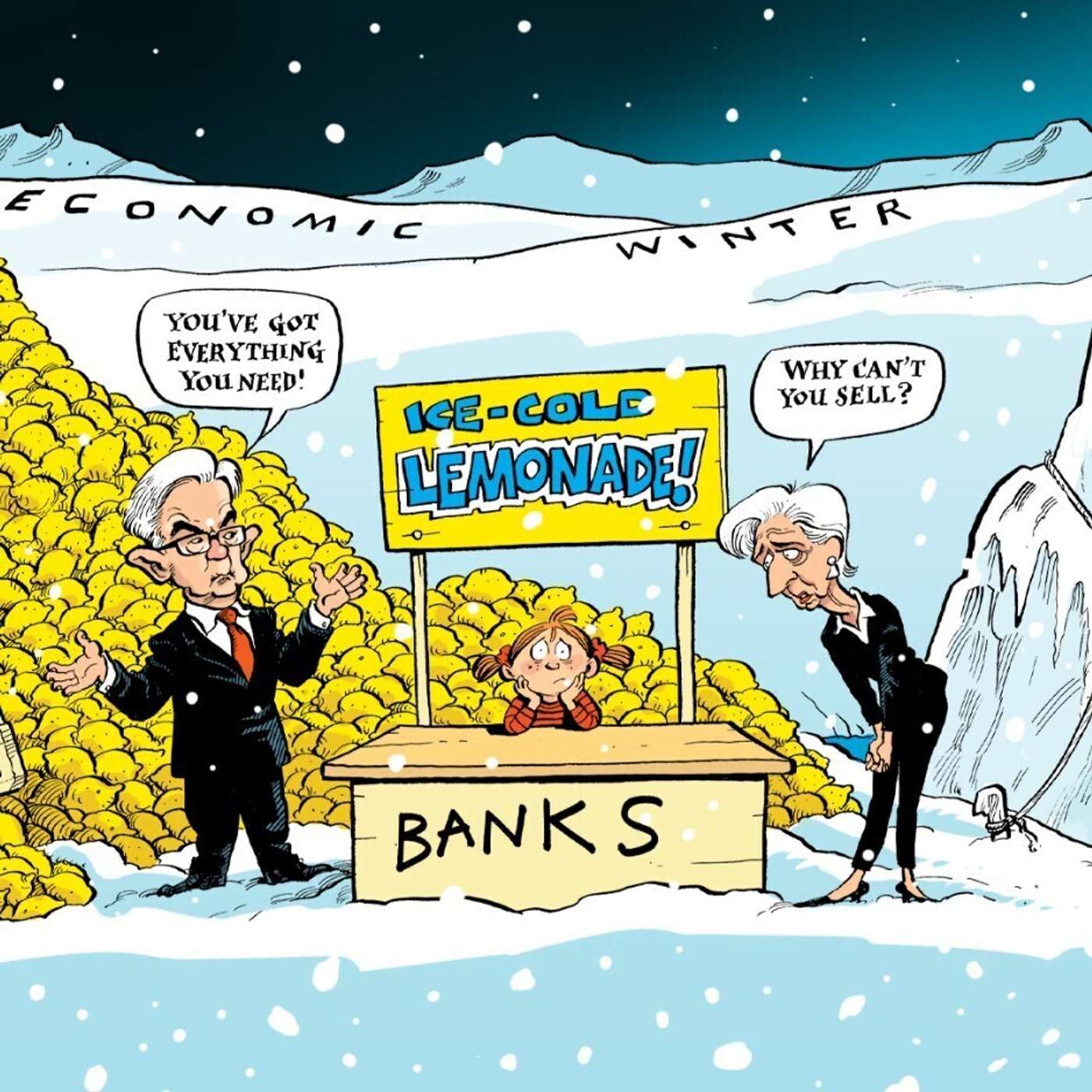
Ep 50FT: "Do Not Rule Out a Market Panic Next Month"
Part 01: (01:30 to 38:27) What are monetary technocrats / financiers doing to save the world economy? We review: yield curve control in Australia (and Japan!), American regulators tip-toeing away from a once-favored LIBOR alternative, and the ecstatic economic expectations of German financiers.Part 02: (38:27 to 1:05:19) A Financial Times column warns of a US Treasury Bill air-pocket in March. Learn the little-known history of a mid-market, 1970s German bank that compelled regulators to move towards capital and supplementary leverage ratios. The very ratios that may now trigger a panic.Part 03: (1:05:19 to 1:17:00) Learn how to reconcile a positive surge in retail sales with a nightmare string of 'record' jobless claims and lousy sentiment reported by the University of Michigan consumer survey. Perhaps pent up demand? Maybe. An unusual, poorly explained seasonal adjustment boost? Maybe too.----------SPONSOR----------But first, this from Eurodollar Enterprises! The motion picture event of the summer: (Con)Tango & Cash. When an international smuggling ring uses the local commodity exchange to send gold into backwardation, two macroeconomists take matters into their own hands... and onto the spot market. Starring Travis 'the President' Kimmel as Contango, "You can take delivery of lead -- punk." And Steven 'the Monarch' Van Metre as Cash, "You know how I promised to let you close out that trade?" "Yeah man, you did Cash! You did promise!" "I lied."With Grant Williams as the polite British guy, “Well chaps, you put the mockers on, didn’t you?” This motion picture will never be rated. Available only on-demand at Real Vision.----------WHERE----------Vurbl: https://bit.ly/3rq4dPnApple: https://apple.co/3czMcWNDeezer: https://bit.ly/3ndoVPEiHeart: https://ihr.fm/31jq7cITuneIn: http://tun.in/pjT2ZCastro: https://bit.ly/30DMYzaGoogle: https://bit.ly/3e2Z48MSpotify: https://spoti.fi/3arP8mYPandora: https://pdora.co/2GQL3QgBreaker: https://bit.ly/2CpHAFOCastbox: https://bit.ly/3fJR5xQPodbean: https://bit.ly/2QpaDghStitcher: https://bit.ly/2C1M1GBPlayerFM: https://bit.ly/3piLtjVPodchaser: https://bit.ly/3oFCrwNPocketCast: https://pca.st/encarkdtSoundCloud: https://bit.ly/3l0yFfKListenNotes: https://bit.ly/38xY7pbAmazonMusic: https://amzn.to/2UpEk2PPodcastAddict: https://bit.ly/2V39XjrAlhambraTube: https://bit.ly/2Xp3roy----------WHAT----------With YCC About To Come Back Up, A Look At It Down Under: https://bit.ly/3dvApMWAlready Tried: https://bit.ly/2ZwP9CPInsufferable SOFR, Suffering: https://bit.ly/3aAgla2Episode 34 All About SOFR: https://youtu.be/LH1wDUG-dEIReflation Patients, ‘Another’ Six Months: https://bit.ly/3pByiJFBeware, There's Another SLF 'Cliff' Coming At the End of Q1: https://bit.ly/2NdNpMvJohn Dizard's Do not rule out a market panic next month: https://on.ft.com/3pCGaLcForty-Seven Explains Much: https://bit.ly/3azo1teUncle Sam Was Back Having Consumers’ Backs: https://bit.ly/3dsHLAL----------WHO----------Jeff Snider, Head of Global Investment Research for Alhambra Investments with Emil Kalinowski, celebrates Towel Day on May 25. Art by the King of the North, David Parkins. Podcast intro/outro is "Zombie Raiders" by Wave Saver at Epidemic Sound.
Ep 49LIVE! Reaction: Answering Philip Stevens
After decades of market liberalism and fiscal fundamentalism, policymakers are returning to Keynes. Jeff Snider reacts to two recent articles: "Bond yields are not good predictors of inflation" (Peterson Institute for International Economics) and "Why economists kept getting the policies wrong" (Financial Times).----------WHERE----------Vurbl: https://bit.ly/3rq4dPnApple: https://apple.co/3czMcWNDeezer: https://bit.ly/3ndoVPEiHeart: https://ihr.fm/31jq7cITuneIn: http://tun.in/pjT2ZCastro: https://bit.ly/30DMYzaGoogle: https://bit.ly/3e2Z48MSpotify: https://spoti.fi/3arP8mYPandora: https://pdora.co/2GQL3QgBreaker: https://bit.ly/2CpHAFOCastbox: https://bit.ly/3fJR5xQPodbean: https://bit.ly/2QpaDghStitcher: https://bit.ly/2C1M1GBPlayerFM: https://bit.ly/3piLtjVPodchaser: https://bit.ly/3oFCrwNPocketCast: https://pca.st/encarkdtSoundCloud: https://bit.ly/3l0yFfKListenNotes: https://bit.ly/38xY7pbAmazonMusic: https://amzn.to/2UpEk2PPodcastAddict: https://bit.ly/2V39XjrAlhambraTube: https://bit.ly/2Xp3roy----------WHEN----------01:02 Two economists write that bond yields are not good predictors of inflation03:20 Bond yields have failed to predict inflation for 70 years in the US; three other countries 05:31 Why economists kept getting the policies wrong08:01 Was monetarism was derailed by poor philosophy? Or because measures of money failed?11:43 Monetarism ditched, so first came currency exchange targeting then inflation targeting.13:26 Positive Economics, econometrics promised wonderful, impossible things 16:11 Central Bankers use mathematics as a shield against criticism18:42 We are back where we started, time to dust off Keynes General Theory.----------WHAT----------Teenagers baffled by rotary phone: https://youtu.be/oHNEzndgiFIBond yields are not good predictors of inflation: https://bit.ly/2Zz7dwdWhy economists kept getting the policies wrong: https://on.ft.com/2ZwAgAwAlhambra Investments Blog: https://bit.ly/2VIC2wWRealClear Markets Essays: https://bit.ly/38tL5a7----------WHO----------Jeff Snider, Head of Global Investment Research for Alhambra Investments with Emil Kalinowski. Art by the King of the North, David Parkins.
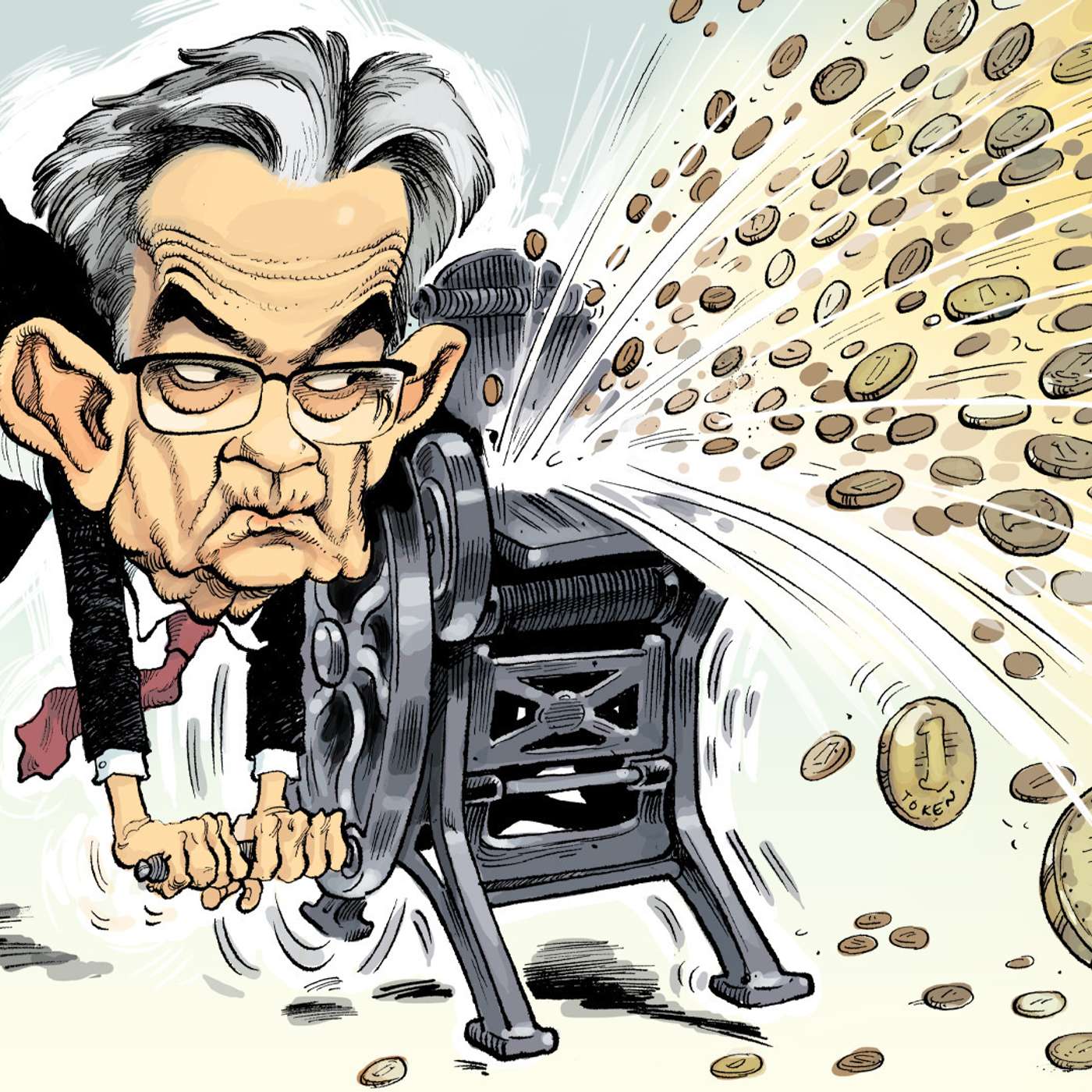
Ep 48Reading Around: Myrmikan on System-Critical Short Squeezes
Financial historian Daniel Oliver's essay on the systemic consequence of the 1907 short squeeze on United Copper Company and lessons for today. A reading, by Emil Kalinowski.----------WHO----------Daniel Oliver of Myrmikan Capital, LLC. Read by Emil Kalinowski. Art by David Parkins. Intro/outro is "Alienated" by ELFL at Epidemic Sound.----------WHAT----------The Final Pop: https://bit.ly/37sfwOH----------WHERE----------Myrmikan's Writings: http://myrmikan.com/Myrmikan's Twitter: https://twitter.com/MyrmikanEmil's Twitter: https://twitter.com/EmilKalinowskiArt: https://davidparkins.com/Vurbl: https://bit.ly/3rq4dPnApple: https://apple.co/3czMcWNDeezer: https://bit.ly/3ndoVPEiHeart: https://ihr.fm/31jq7cITuneIn: http://tun.in/pjT2ZCastro: https://bit.ly/30DMYzaGoogle: https://bit.ly/3e2Z48MSpotify: https://spoti.fi/3arP8mYPandora: https://pdora.co/2GQL3QgBreaker: https://bit.ly/2CpHAFOCastbox: https://bit.ly/3fJR5xQPodbean: https://bit.ly/2QpaDghStitcher: https://bit.ly/2C1M1GBPlayerFM: https://bit.ly/3piLtjVPodchaser: https://bit.ly/3oFCrwNPocketCast: https://pca.st/encarkdtSoundCloud: https://bit.ly/3l0yFfKListenNotes: https://bit.ly/38xY7pbAmazonMusic: https://amzn.to/2UpEk2PPodcastAddict: https://bit.ly/2V39Xjr
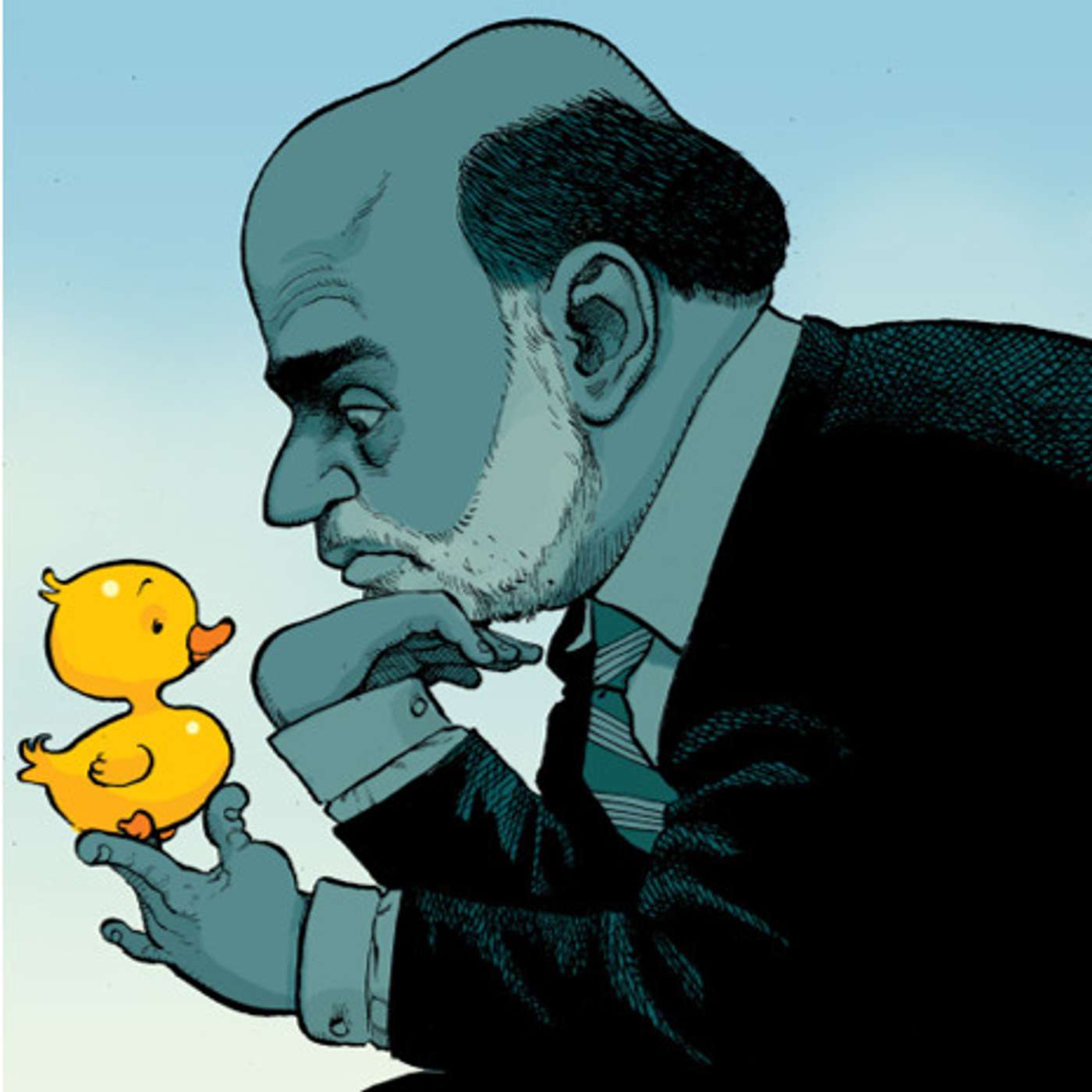
Ep 47Interbank Netting: The Pressure to Get to Zero
Having studied monetary policy for several years it was only natural that your podcaster spent considerable time contemplating the essential elements of fiction. Some experts say there are five components to it; others put the tally at six, even eight! But at the core it has always been the three elements: plot, setting and character. Plot was perfected, in the Western tradition at least, in the late 16th century by Shakespeare with the 5-act dramatic structure. Setting, given short-shrift for millennia, did not achieve co-equal status until the gothic novels of the mid-18th century. And character? Scholars point back 28 centuries to The Iliad: heroism, cowardice, pride, hubris - wrath. But the scholars are wrong. Character wasn't perfected first, but last. Not until the 1980s action drama The A-Team did this element of fiction reach its zenith.The American television masterpiece synthesized what the Great Books dared not imagine into the now classic quartet: Colonel John "Hannibal" Smith as the brains; Lieutenant Templeton "Faceman" Peck as the looks; Sergeant Bosco Baracus the muscle; Captain H.M. Murdock the wildcard. The casting blueprint can be observed most everywhere; in the arts, at the office; even family the dinner table. Central banking is no exception. In the role of the brains is Ben "Hannibal" Bernanke. The looks? Lady Lagarde. The muscle? Jay "Mad Dog" Powell. The wildcard? The audience will naturally point to Haruhiko Kuroda and, before January 28th, the audience would have been correct.On that day Isabel Schnabel, Member of the Executive Board of the European Central Bank, gave a speech extolling the virtues of the sovereign-bank-corporate nexus. That is technocrat-speak for the government-guaranteed private-bank loans to private enterprise. Schnabel endorsed these "crucial" national loan schemes and encouraged Europe's capitals to continue them, warning any premature end would be "destabilising". Put another way, the baton that represents the supervision of money creation, has been wrested away from Frankfurt and placed into the neatly manicured hands of politicians, seeking re-election.The new wildcard is not Isabel Schnabel but the Euro Area member state. All 19 of them.In this episode we touch upon 1980s television shows, like CHiPs and interbank clearing mechanisms, like CHIPS. Also, why are corporate elephants on the hunt for fast-moving gazelle enterprises? Why are these elephants being offered their own fiefdoms in Nevada? Lastly, a potpourri review of Jeff Snider's recent writing.----------WHY----------PART 01: Private banks fund global economic activity. But how do they move money among themselves? PART 02: Nevada Governor Sisolak is proposing to offer corporations to set up their own local government structures. PART 03: Cautionary sign posts that say this reflationary path may not be the road to recovery but a deflationary cul-de-sac.----------WHERE----------Vurbl: https://bit.ly/3rq4dPnApple: https://apple.co/3czMcWNDeezer: https://bit.ly/3ndoVPEiHeart: https://ihr.fm/31jq7cITuneIn: http://tun.in/pjT2ZCastro: https://bit.ly/30DMYzaGoogle: https://bit.ly/3e2Z48MSpotify: https://spoti.fi/3arP8mYPandora: https://pdora.co/2GQL3QgBreaker: https://bit.ly/2CpHAFOCastbox: https://bit.ly/3fJR5xQPodbean: https://bit.ly/2QpaDghStitcher: https://bit.ly/2C1M1GBPlayerFM: https://bit.ly/3piLtjVPodchaser: https://bit.ly/3oFCrwNPocketCast: https://pca.st/encarkdtSoundCloud: https://bit.ly/3l0yFfKListenNotes: https://bit.ly/38xY7pbAmazonMusic: https://amzn.to/2UpEk2PPodcastAddict: https://bit.ly/2V39XjrAlhambraTube: https://bit.ly/2Xp3roy----------WHAT----------There's Much More Going On Than You've Been Led to Believe: https://bit.ly/3qhFnAqThe Endangered Inflationary Species: Gazelles: https://bit.ly/3dbuIDqThe Cautionary Tale of Undocumented Insanity: https://bit.ly/3deHyRIPermanent Jobs, Permanent Job Losses: https://bit.ly/37fgD47Old Numbers Show Us Why There Will be New Checks: https://bit.ly/3b41FPM----------WHO----------Jeff Snider, Head of Global Investment Research for Alhambra Investments with Emil Kalinowski, Tyrell Corporation full-time equivalent. Art by David Parkins. Podcast intro/outro is "City Lights, City Dreams" by Forever Sunset at Epidemic Sound.
Ep 46LIVE! Reaction: Answering The Economist
Jeff Snider reacts LIVE! to an article from The Economist. The magazine offers three arguments why the US economy might overheat in 2021: evidence that the downturn is temporary; generous fiscal stimulus; and the Federal Reserve’s monetary-policy strategy.----------WHERE----------Vurbl: https://bit.ly/3rq4dPnApple: https://apple.co/3czMcWNDeezer: https://bit.ly/3ndoVPEiHeart: https://ihr.fm/31jq7cITuneIn: http://tun.in/pjT2ZCastro: https://bit.ly/30DMYzaGoogle: https://bit.ly/3e2Z48MSpotify: https://spoti.fi/3arP8mYPandora: https://pdora.co/2GQL3QgBreaker: https://bit.ly/2CpHAFOCastbox: https://bit.ly/3fJR5xQPodbean: https://bit.ly/2QpaDghStitcher: https://bit.ly/2C1M1GBPlayerFM: https://bit.ly/3piLtjVPodchaser: https://bit.ly/3oFCrwNPocketCast: https://pca.st/encarkdtSoundCloud: https://bit.ly/3l0yFfKListenNotes: https://bit.ly/38xY7pbAmazonMusic: https://amzn.to/2UpEk2PPodcastAddict: https://bit.ly/2V39XjrAlhambraTube: https://bit.ly/2Xp3roy----------WHEN----------00:55 Why won't a large fiscal stimulus (e.g. Biden's 9% of US GDP) save a post-2008 economy?03:39 Why won't a large fiscal stimulus overheat a post-2008 economy?06:46 Why aren't the positive employment gains of July-December 2020 positive?08:13 Why isn't a pool of excess savings indicative of potential activity in a post-2008 economy?11:38 Did the Federal Reserve learn the right lesson from the 2013 "taper tantrum"?14:19 Why won't the Fed's new "average inflation" strategy not make save a post-2008 economy?----------WHAT----------The Economist, Fire without Fury: https://econ.st/3qnkWSuAlhambra Investments Blog: https://bit.ly/2VIC2wWRealClear Markets Essays: https://bit.ly/38tL5a7----------WHO----------Jeff Snider, Head of Global Investment Research for Alhambra Investments with Emil Kalinowski, seeing what the tide brought in. Art by David Parkins. Podcast intro/outro is "Chasing Visions" by vvano at Epidemic Sound.
Ep 45Devolution of Financial Memory
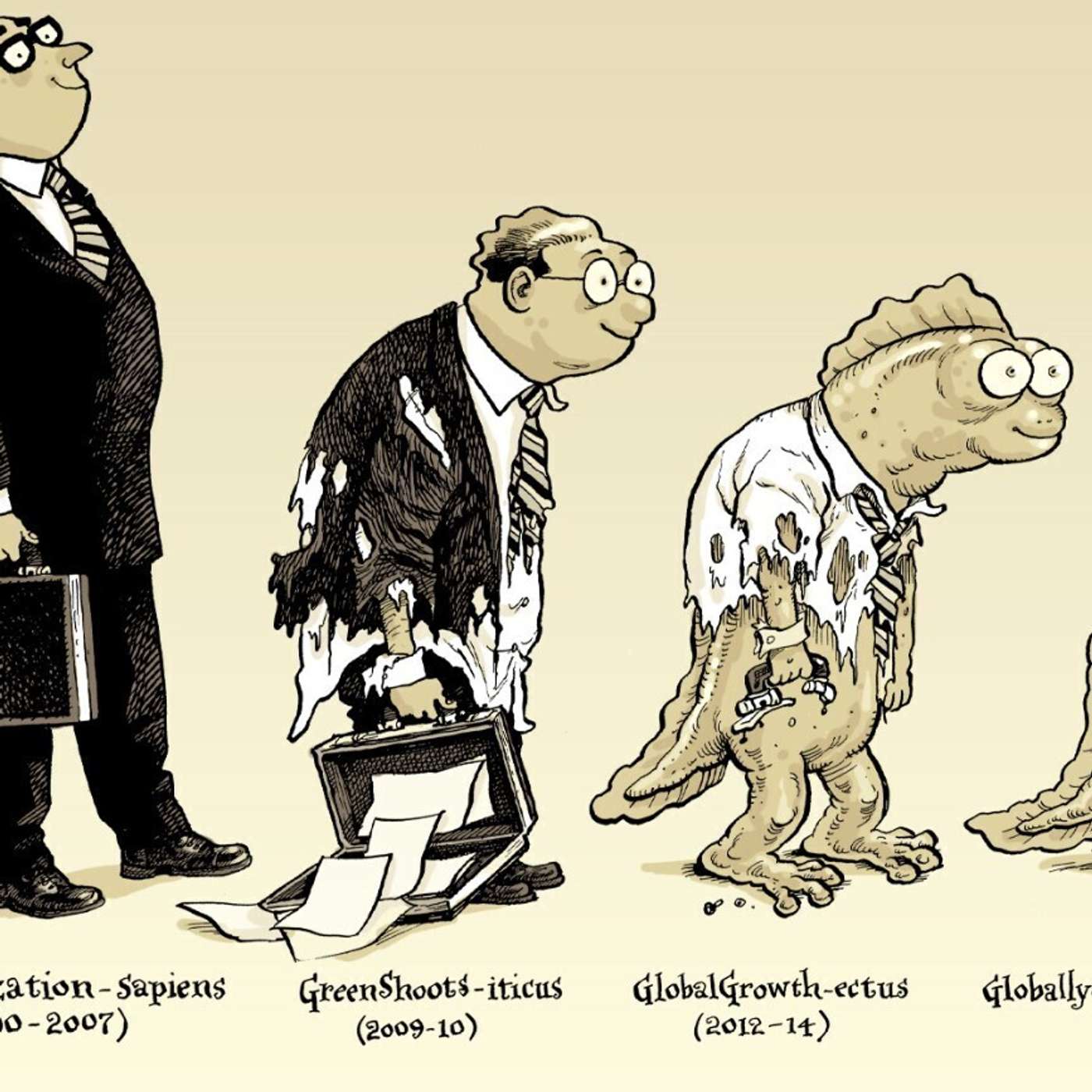
Sophocles won 24 of the 30 literary competitions he entered, placing second in the rest. Of his 120-plus plays, only seven survive. Eratosthenes, calculated the Earth's circumference with breathtaking accuracy. As Chief Librarian of the Library of Alexandria he oversaw the collation of hundreds of thousands of works. But not even his own "On the Measure of the Earth" survived the Library's progressive destruction by war, negligence and cultural revolution.Rashid-al-Din Hamadani created the first world history, taking advantage of his location at the crossroads of a Mongol empire with access to European, Arabic, Persian, Indian, Mongol and Chinese scholars. Hamadani, not wanting his masterpiece to be lost to time, arranged to have the work copied in Arabic and Persian every year and distributed. But his patron's death and royal intrigues cost him his station and us his work; no complete copy survives.Several scholars, dizzy by the thought of humanity's lost knowledge, tried their hand at wistful, melancholy catalogues of what might have been. Thomas Browne wrote Musaeum Clausum, "an imagined inventory of 'remarkable books, antiquities, pictures and rarities of several kinds, scarce or never seen by any man now living.'" Besides Seneca's epistles to St. Paul, this hidden library houses history's most famous box within which was the perfume of infection responsible for the 17th century Plague of Milan.Of course there's a difference between the tragedy of lost knowledge and the tomfoolery of what was willfully forgotten. It is the latter which financial market participants specialize in. John Kenneth Galbraith lamented that, "There can be few fields of human endeavor in which history counts so little as in the world of finance." James Grant concurs, laconically noting that, "Progress is cumulative in science and engineering, but cyclical in finance." And so, in Episode 45 the Rashid-al-Din of the Eurodollar will help us un-forget the three reflations since 2007 and how they compare to present-day. But first we review why US Treasury Bill Yields may be so low.----------WHY----------Part 01: There is a mainstream explanation for why US Treasury Bill rates are falling. There is also a Eurodollar / Shadow Money / Collateral System explanation. Jeff Snider reviews the two perspectives and looks ahead to where trouble may lay.Part 02: We look through the lenses of the dollar, Treasury yields, inflation breakevens, swap spreads to see how this Post-Covid reflation compares to the three economic recoveries of the past 13 years: Green Shoots (2009-10), Global Growth (2012-14) and Globally Synchronized Growth (2016-18).----------WHERE----------Vurbl: https://bit.ly/3rq4dPnApple: https://apple.co/3czMcWNDeezer: https://bit.ly/3ndoVPEiHeart: https://ihr.fm/31jq7cITuneIn: http://tun.in/pjT2ZCastro: https://bit.ly/30DMYzaGoogle: https://bit.ly/3e2Z48MSpotify: https://spoti.fi/3arP8mYPandora: https://pdora.co/2GQL3QgBreaker: https://bit.ly/2CpHAFOCastbox: https://bit.ly/3fJR5xQPodbean: https://bit.ly/2QpaDghStitcher: https://bit.ly/2C1M1GBPlayerFM: https://bit.ly/3piLtjVPodchaser: https://bit.ly/3oFCrwNPocketCast: https://pca.st/encarkdtSoundCloud: https://bit.ly/3l0yFfKListenNotes: https://bit.ly/38xY7pbAmazonMusic: https://amzn.to/2UpEk2PPodcastAddict: https://bit.ly/2V39XjrAlhambraTube: https://bit.ly/2Xp3roy----------WHAT----------Let’s Talk Bills (again): https://bit.ly/3q6tJs9Hey Bill, *What* Is It?: https://bit.ly/3rs3Ov3Hey Bill, *Why* Now?: https://bit.ly/2MGohxxReaching Half A Year, What’s The (Complete) Reflation Situation?: https://bit.ly/2OchADQAlhambra Investments Blog: https://bit.ly/2VIC2wWRealClear Markets Essays: https://bit.ly/38tL5a7----------WHO----------Jeff Snider, Head of Global Investment Research for Alhambra Investments with Emil Kalinowski, piling the bologna high and deep. Evolutionary sketches by David Parkins aboard the HMS Beagle. Podcast intro/outro is "Stand Divided" by Deskant at Epidemic Sound.
Ep 43Modern Monetary Hypnosis
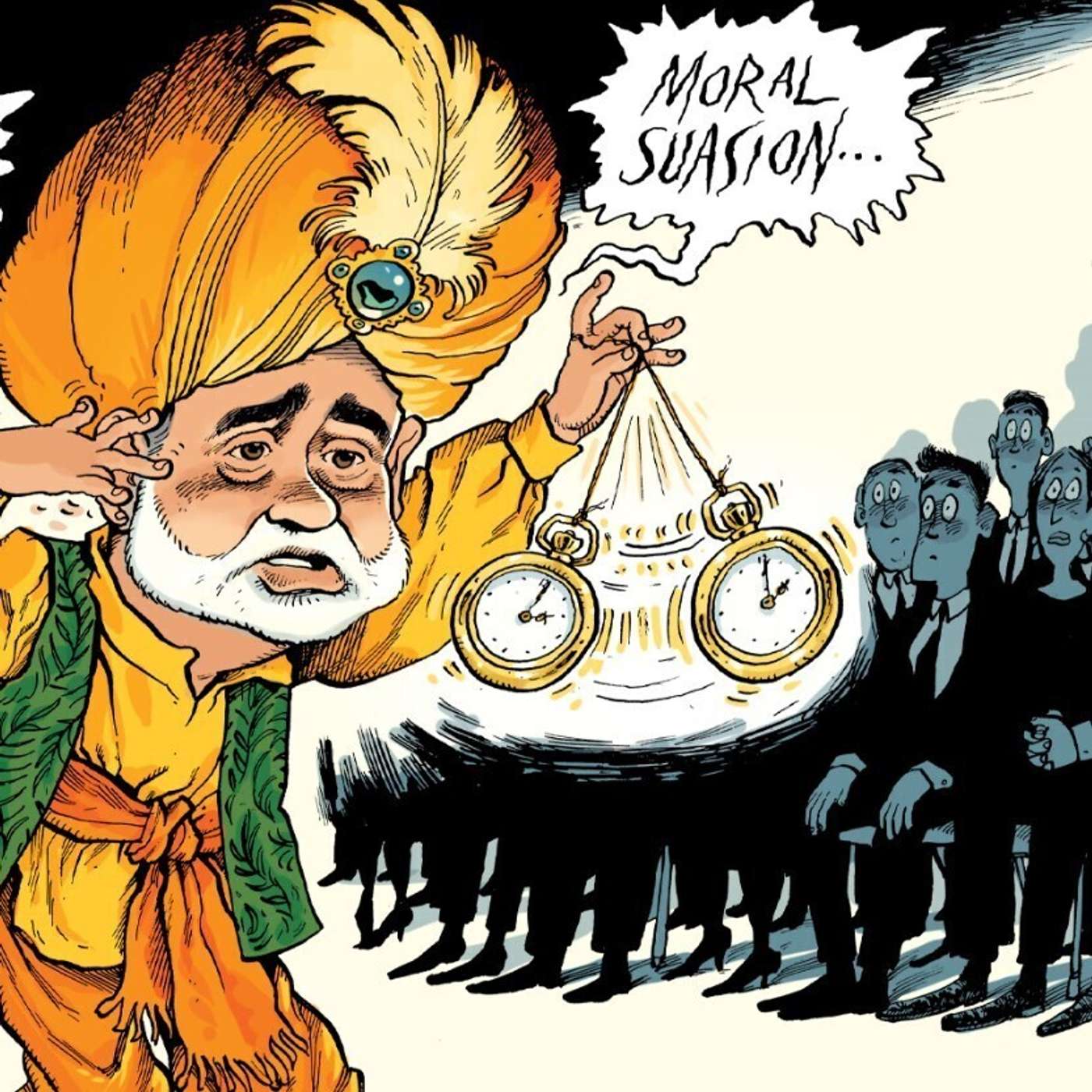
As many listeners have long suspected, your podcast host did, as a child, run away and join the circus. Not dissimilar from a traditional childhood, it was your classic Gypsy camp. If children misbehaved, we would be "lock[ed]... into stocks, or throw[n]... into a cage and hoist[ed]... into the flytower... dangling precariously over the stage." Our ringmaster, Giuseppe Grimaldi "was horribly morbid, living in perpetual fear of death, and especially of being buried alive. When he finally died... his will directed that his eldest daughter cut his head from his corpse just to be certain." Sure, perhaps quirky, but certainly not the oddest troupe - not Pandemonium Carnival. So, looking to make a career of it your podcaster tried his hand at clownship. But, by that time, famous clowns like Pagliacci, Pennywise and Pogo were, despite slaying their audience with their routines, giving a bad name to the profession. So then, this host turned to tarot card reading and hypnosis. Despite earning some minor acclaim in London as Madame Simza, your host simply didn't have the chops and was forced to turn to the only option left: a Masters in Business Administration. Surprisingly, it was an easy fit. Tarot cards - which "illuminate your past, clarify [the] present, show... the future" - had taught me everything I needed to know about finance. The card "Temperance, [when] inverted [is] indicative of volatility." If one draws "The Fool, someone has been led astray" - an investment fraud. "The Two of Cups?" It represents "a powerful bond" - a sovereign bond. Your podcaster learned about hypnosis too, except that the economics professors used different terms for it: expectations policy, forward guidance, moral suasion.----------WHY----------Part 01: Central banks cannot define, identify, measure or map modern money. And they haven't been able to since the 1970s. So instead they offer "moral suasion". That's a fancy word for threats, posturing and coercion. That's all fine and well until the global economy requires money.Part 02: How does one define an asset bubble? Might there be fundamental, non-speculative reasons why prices are persistently high? Also, why did money-financed fiscal expansion fail in Japan? What does that experience tell us about the present?----------SPONSOR----------But first, this from Eurodollar Enterprises! Friends, are you worried your monetary policies are causing lurid levels of inequality? Are you concerned civil war, its hour come round at last, slouches toward K Street? Do you worry how your supple neck will fare when the blood-dimmed tide is loosed? Then the new Eurodollar Enterprises Second Skin Neck Brace is for you! Yes, strut through The Waste Land knowing that marauding lynch mobs of War Boys pose no danger. The carbon-fibre nanoweave is comfortable, flexible and the ultimate luxury in an April dystopia you hastened. Barter aquacola for guzzoline at Thunderdome with no concern of the guillotine. Is that the Road Warrior with a chainsaw? Then save your skin... with your Second Skin Neck Brace. New! From Eurodollar Enterprises.----------WHERE----------Vurbl: https://bit.ly/3rq4dPnApple: https://apple.co/3czMcWNDeezer: https://bit.ly/3ndoVPEiHeart: https://ihr.fm/31jq7cITuneIn: http://tun.in/pjT2ZCastro: https://bit.ly/30DMYzaGoogle: https://bit.ly/3e2Z48MSpotify: https://spoti.fi/3arP8mYPandora: https://pdora.co/2GQL3QgBreaker: https://bit.ly/2CpHAFOCastbox: https://bit.ly/3fJR5xQPodbean: https://bit.ly/2QpaDghStitcher: https://bit.ly/2C1M1GBPlayerFM: https://bit.ly/3piLtjVPodchaser: https://bit.ly/3oFCrwNPocketCast: https://pca.st/encarkdtSoundCloud: https://bit.ly/3l0yFfKListenNotes: https://bit.ly/38xY7pbAmazonMusic: https://amzn.to/2UpEk2PPodcastAddict: https://bit.ly/2V39XjrAlhambraTube: https://bit.ly/2Xp3roy----------WHAT----------Suasion, Sure, But Is It Really Moral?: https://bit.ly/3bXMsBQIf the Fed’s Not In Consumer Prices, Then How About Producer Prices?: https://bit.ly/2NomiOd(Reinhart & Sbrancia) The Liquidation of Government Debt: https://bit.ly/363NUih(Van Metre & Ashton) Everything You Wanted to Know About Inflation: https://bit.ly/2LZ8OZ5The Fundamentals of the Bond ‘Bubble’: https://bit.ly/3qI1D6cWhen They Introduced An Even Longer Gov’t Bond: https://bit.ly/3qCYhBwThey Keep Assuring Us Japan Can't Happen Here: https://bit.ly/39UfwHPWhat is a Concentration Camp?: https://bit.ly/3iCN6G2Alhambra Investments Blog: https://bit.ly/2VIC2wWRealClear Markets Essays: https://bit.ly/38tL5a7----------WHO----------Jeff Snider, Head of Global Investment Research for Alhambra Investments with Emil Kalinowski, troubled by definitions. Artwork by David Parkins. Podcast intro/outro is "Whispering of the Stars" by Luella Gren at Epidemic Sound.
Ep 42WSJ Columnist asks Fed: 'What the...?'
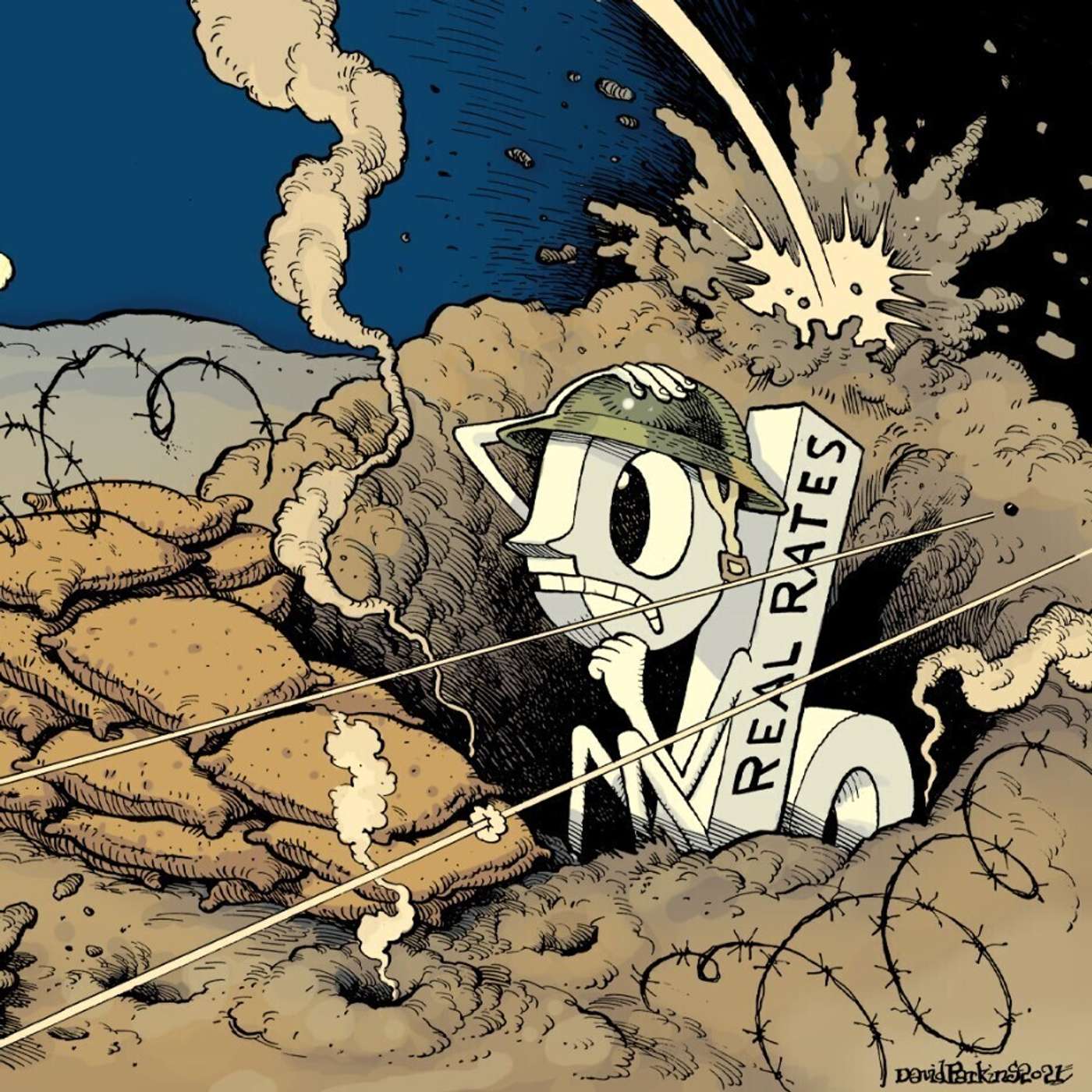
A recent Hidden Forces podcast with Demetri Kofinas featured professor Kevin Vallier and his new book "Trust in a Polarized Age". Vallier notes that Americans are less trusting than at any point since at least the 1960s. The timing is no surprise to any that read William Strauss and Neil Howe's The Fourth Turning. The "American High" - a period of confidence during which the society felt it could accomplish anything - ended with President Kennedy's assassination. That phenomenon - that lack of trust, that lack of confidence - can be observed even in the University of Michigan survey of consumers. During the 1950s expectations about the future always ran ahead of the contemporary condition; an optimism, whether the present was good or bad, that it would be even better soon. But, by the end of the 1960s, and ever since, expectations are always worse than the present. If we use confidence in democracy as a proxy for trust, that phenomenon is not solely American. A University of Cambridge project that includes 4 million people, covering 154 countries and combines over 25 international surveys showed 2019 to have been "the highest level of democratic discontent on record". Surely 2020 will rank even worse when results are finally published.A more granular survey by Gallup has been conducted in the United States since the early 1970s and focuses on public and private institutions. Citizens are asked how much confidence they have in: organized religion, the Supreme Court, Congress, organized labor, big business, public schools, newspapers, the military, etc. Almost at the very bottom are news organizations. The only institution in which the public consistently has less confidence in is Congress, which they recently attempted to burn down.The financial media is no exception, as Jeff Snider often makes clear in his writings. But just as Vallier expressed hope with Kofinas that trust can be rebuilt and just as Strauss and Howe conveyed confidence that institutional strength is cyclical and will return, so here, in Episode 42, does Snider note that the minority of financial press attempting to be bring truth to power is growing.----------WHY----------Part 01: Wall Street Journal columnist Andy Kessler recently spoke with Jeff Snider about central banks and monetary policy. He ended a recent column with, "The least the Fed can do is get out of the way. End QE now".Part 02: Real yields recently hit RECORD lows. Yes, inflation is rising but is that due to the real economy expanding? Real yields say, "No!". Real yields say, 'The real economy is AWFUL!' So what is driving inflation expectations higher? Fuel. Oil prices are up - but the economy isn't.----------WHERE----------Vurbl: https://bit.ly/3rq4dPnApple: https://apple.co/3czMcWNDeezer: https://bit.ly/3ndoVPEiHeart: https://ihr.fm/31jq7cITuneIn: http://tun.in/pjT2ZCastro: https://bit.ly/30DMYzaGoogle: https://bit.ly/3e2Z48MSpotify: https://spoti.fi/3arP8mYPandora: https://pdora.co/2GQL3QgBreaker: https://bit.ly/2CpHAFOCastbox: https://bit.ly/3fJR5xQPodbean: https://bit.ly/2QpaDghStitcher: https://bit.ly/2C1M1GBOvercast: https://bit.ly/2YyDsLaPlayerFM: https://bit.ly/3piLtjVPodchaser: https://bit.ly/3oFCrwNPocketCast: https://pca.st/encarkdtSoundCloud: https://bit.ly/3l0yFfKListenNotes: https://bit.ly/38xY7pbAmazonMusic: https://amzn.to/2UpEk2PPodcastAddict: https://bit.ly/2V39XjrAlhambraTube: https://bit.ly/2Xp3roy----------WHAT----------How the Fed Stifles Lending: https://on.wsj.com/3bBrqc7RealVision Caitlin Long Interviews Manmohan Singh: https://bit.ly/2XEx6JWInflation, Reflation, Or Something Else?: https://bit.ly/2Lu2PeyAlhambra Investments Blog: https://bit.ly/2VIC2wWRealClear Markets Essays: https://bit.ly/38tL5a7----------WHO----------Jeff Snider, Head of Global Investment Research for Alhambra Investments with Emil Kalinowski, anonymous. Artwork by David Parkins. Podcast intro/outro is "Autumn Haze" by West & Zander at Epidemic Sound.
Ep 41Dr. Copper's Diagnosis
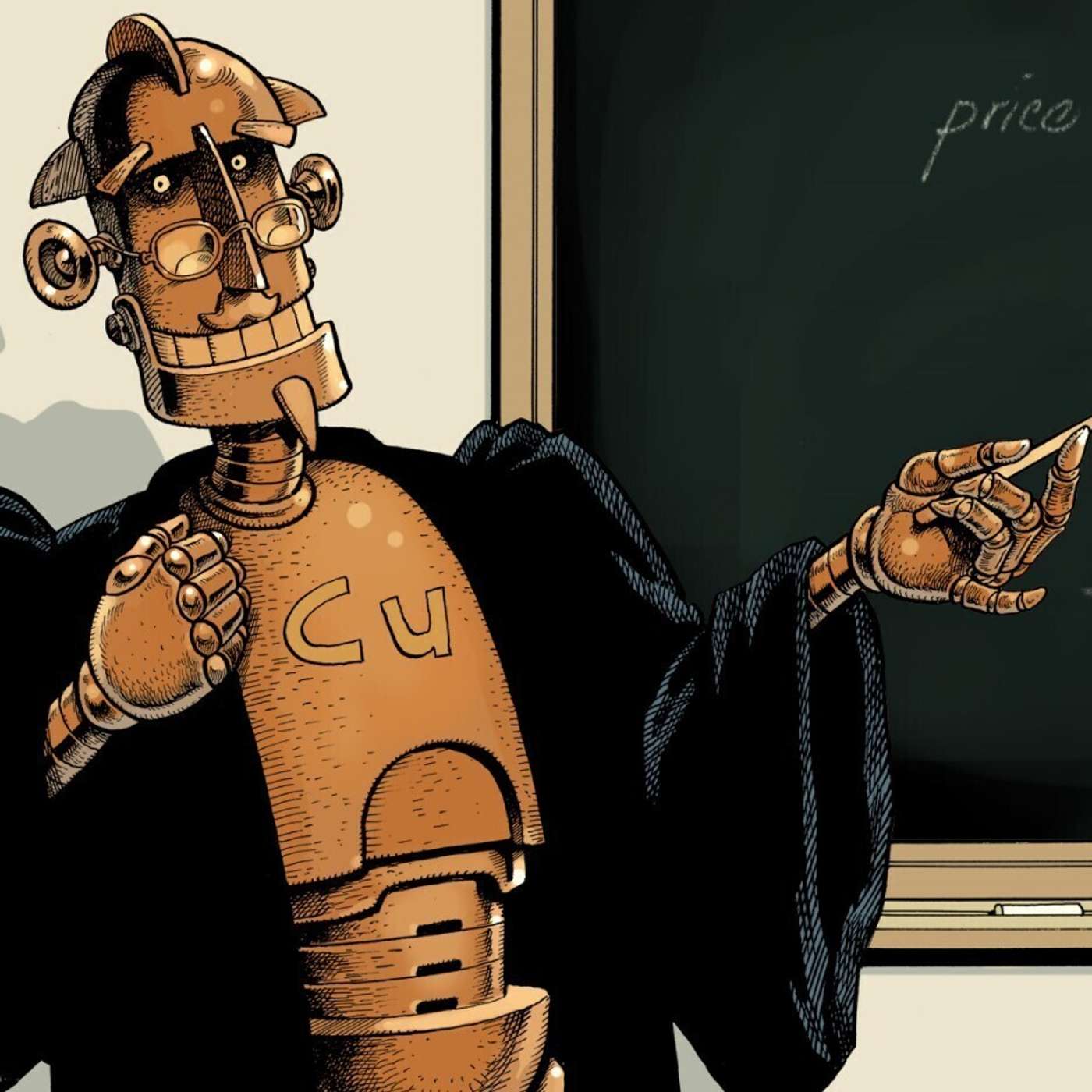
Mary Toft had delivered a litter of rabbits - that was the news that reached the court of King George I in 1726. Obstetrician John Howard arrived at Toft's bedside in September where he was presented with several animal parts, ostensibly from the supernatural womb. In October, she delivered nine dead baby rabbits, prompting Howard to write a letter to England's greatest doctors and scientists, as well as the King's secretary. Nathaniel St. André, the King's Swiss surgeon-anatomist, was sent to investigate. Toft greeted his arrival in November by delivering her 15th dead rabbit in his presence. St. André bought the story and "took some of the rabbit specimens back to London to show the King."Despite a chorus of doubt from other physicians and indisputable physical evidence from dissection of the rabbits, both Howard and St. André continued to support Toft's story. It seems Howard, taken in by the scam at first, was doubling-down as the stakes were raised hoping his bluff would be saved by a real miracle. St. André on the other hand seems to have made his stand on, "'maternal impression', an idea popular at the time. The theory proposed that an emotional stimulus experienced by a pregnant woman" - Toft had dreamt of rabbits - "could influence the development of the foetus."Howard and St. André damaged the reputation of physicians. But there have been worse, Dr. Pepper for example - disgusting. Plenty of good docs of course, and not necessarily physicians: Dr. Manhattan, the smurfy-blue god; Dr. Disrespect, the gaming personality; "The Dock of the Bay", by Otis Redding. So, where on the spectrum lies copper with its doctorate of philosophy in economics?In part 2 of Episode 41, Jeff Snider weighs the calm supply-and-demand fundamentals, versus the Howard and St. André-like narrative that the good ship #Copper-Pop - fueled by Fed #QE-finity inflation - has achieved escape velocity, entered the #Tesla-osphere, and is on its way to the #Bitcoin-star! But first, the late-1990s Japanese government bond rout and its lessons for today.----------WHY----------Part 01: The benchmark US Treasury 10-year bond has seen its yield BLAST through 1.00% in the young year, from 0.91% on January 4 to 1.11% on January 8. Will an inflationary conflagration transform Treasuries into smoking husks of charcoal? Jeff Snider tells us what a REAL bond rout looked like.Part 02: Is the nine-month copper price blastoff due to monetary reasons (central bank printing, government budget deficits) or fundamental reasons (supply and demand)? Jeff Snider explains the fundamental backdrop (along with speculative fever) but dismisses monetary motives.----------SPONSOR----------But first, this from Eurodollar Enterprises! Friends, are you confused by the financial press? Are the pretty people on Bloomberg speaking in paradox? Are the esteemed pages of The Economist written in contradiction? Then The New Eurodollar Enterprises Dictionary of Echo-Nomics is for you! Yes, from AbeMoronics to ZIRP (Zero Interesting, Reasonable Policies) confidently leaf through your folio to define Yellenism, Powellution and Greenspam. "Money", a noun, is defined as "a blessing that is of no advantage to us excepting when we part with it." What is a synonym for "Wealth"? Impunity. What is the compound word for making economics erotic? "Bernanke-panky". The New Eurodollar Enterprises Dictionary of Echo-Nomics! New! From Eurodollar Enterprises.----------WHERE----------Vurbl: https://bit.ly/3rq4dPnApple: https://apple.co/3czMcWNDeezer: https://bit.ly/3ndoVPEiHeart: https://ihr.fm/31jq7cITuneIn: http://tun.in/pjT2ZCastro: https://bit.ly/30DMYzaGoogle: https://bit.ly/3e2Z48MSpotify: https://spoti.fi/3arP8mYPandora: https://pdora.co/2GQL3QgBreaker: https://bit.ly/2CpHAFOCastbox: https://bit.ly/3fJR5xQPodbean: https://bit.ly/2QpaDghStitcher: https://bit.ly/2C1M1GBOvercast: https://bit.ly/2YyDsLaPlayerFM: https://bit.ly/3piLtjVPodchaser: https://bit.ly/3oFCrwNPocketCast: https://pca.st/encarkdtSoundCloud: https://bit.ly/3l0yFfKListenNotes: https://bit.ly/38xY7pbAmazonMusic: https://amzn.to/2UpEk2PPodcastAddict: https://bit.ly/2V39XjrAlhambraTube: https://bit.ly/2Xp3roy----------WHAT----------They’ve Gone Too Far (or have they?): https://bit.ly/2LCqA3yEp. 32, Pt. 2 Milton Friedman's Plucking Model: https://youtu.be/66W9oU0iUswThe Doctor Is In?: https://alhambrapartners.com/2020/12/30/the-doctor-is-in/Alhambra Investments Blog: https://bit.ly/2VIC2wWRealClear Markets Essays: https://bit.ly/38tL5a7----------WHO----------Jeff Snider, Head of Global Investment Research for Alhambra Investments with Emil Kalinowski, says "fable" means "moral". Artwork by the Asimov of copper robots, David Parkins. Podcast intro/outro is "Occurrence" by Martin Gauffin at Epidemic Sound.
Ep 40What's the Score?
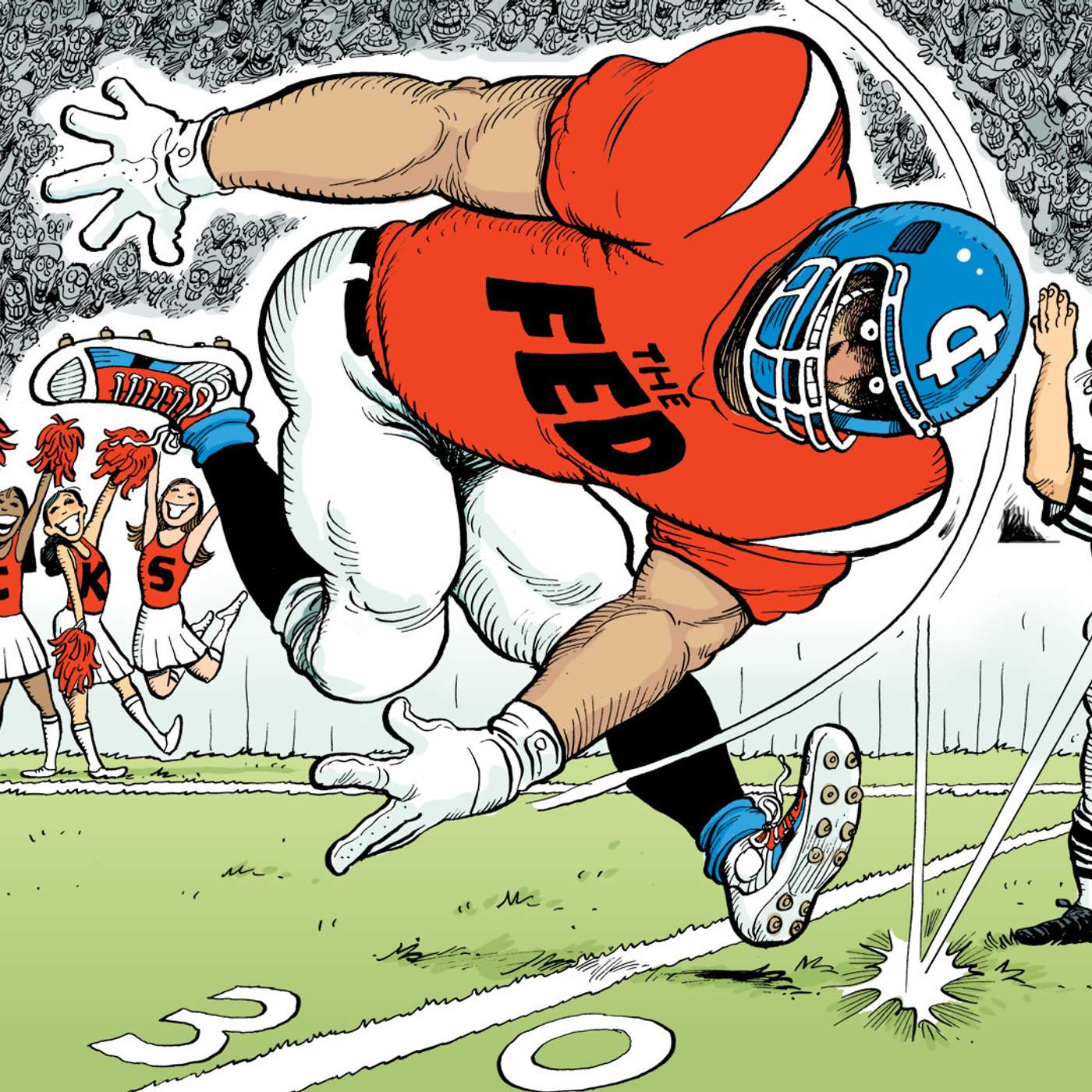
In the middle of the 17th century, Athanasius Kircher -- "one of Europe’s most successful scholars" -- published "Egyptian Oedipus", a magisterial three-volume folio on Egyptology that "presented Latin translations of hieroglyphic inscriptions". The three-tome folio of ornate illustrations and diagrams was the product of "more than two decades of toil"; it sourced Arabic, Aramaic, Coptic, Ethiopian, Greek, Latin, Oriental and Samaritan texts. Kircher had illustrated "mummies, sarcophagi, Canopic jars, sphinxes" as well as "almost every hieroglyphic inscription known to Europeans" and translated them "character by character, into Latin prose." It was wholly and "utterly mistaken".In the late 19th century, William F. Warren was "one of the outstanding figures" of education, noted his 1929 New York Times obituary. He was a charter member of both the New England Conservatory of Music and Wellesley College. He spent 45 years at Boston University, including three decades as president during which a number of progressive firsts occurred, such as America's very first female PhD. He authored eight books, including "Paradise Found" in which, drawing on his knowledge of "the great epic folklore of the Hindus, the Celts, the Chinese, the Persians", and footnoting in French, German and Greek, "he arrived at the inevitable conclusion: the Garden of Eden is at the North Pole."Are we, in the early 21st century, free of such erroneous scholarship? Was then a superstitious past and now a scientific present? If our scholarly leaders were presented with evidence, if they had inside information, if they were imbued with power to compel actors to share data would they goal-seek a result, like Kircher and Warren? In Part 1 of Episode 40 Jeff Snider reads through official Federal Reserve emails covering the final 90-some days of Lehman Brothers' existence. It turns out our scholars are human too.----------SPONSOR----------But first, this from Eurodollar Enterprises! Friends, are you a central banker? Have you been invited into the home of a member of the financial press to celebrate Christmas or Hanukkah or Ramadan or Pancha Ganapati or Kwanzaa or Saturnalia or Yalda or Koliada or Festivus but have nothing to wear? Then the new line premium quality bathrobes from Eurodollar Enterprises is for you! Yes, arrive adorned in 800-thread count, plush Egyptian cotton emanating entitlement and overconfidence with devil-may-care flair. Each robe comes with your initials hand-stitched on the sleeves, and for that added touch of superiority, the logo of a regulated institution and your prospective employer, will be emblazoned over the breast pocket. Premium quality bathrobes! New! From Eurodollar Enterprises.----------WHY----------Part 01: Ben Bernanke was informed that Lehman Bros. was believed finished, on June 13, 2008 - 94 days before the bankruptcy. JPMorgan, with its seat at the heart of the repurchase agreement market, was acting on this belief. Internal Fed emails suggest the Fed thought JPMorgan was nuts.Part 02: Jamie Dimon, CEO of JP Morgan -- America's most important bank, "wouldn’t touch" America's Treasury securities with a "10-foot pole". But JP Morgan itself is likely buying the same Treasuries hand-over-fist! Why the disconnect? Politics? Malice? Or just bad economics?Part 03: Inflation. Social media denizens claim it’s bad, that it’s ugly and that I’m a jerk. Does a professional survey of American citizens confirm that claim? On the latter point certainly – but what about inflation acceleration? Americans say, 'Meh'.----------WHERE----------AlhambraTube: https://bit.ly/2Xp3royVurbl: https://bit.ly/3rq4dPnApple: https://apple.co/3czMcWNDeezer: https://bit.ly/3ndoVPEiHeart: https://ihr.fm/31jq7cITuneIn: http://tun.in/pjT2ZCastro: https://bit.ly/30DMYzaGoogle: https://bit.ly/3e2Z48MSpotify: https://spoti.fi/3arP8mYPandora: https://pdora.co/2GQL3QgBreaker: https://bit.ly/2CpHAFOCastbox: https://bit.ly/3fJR5xQPodbean: https://bit.ly/2QpaDghStitcher: https://bit.ly/2C1M1GBOvercast: https://bit.ly/2YyDsLaPlayerFM: https://bit.ly/3piLtjVPocketCast: https://pca.st/encarkdtSoundCloud: https://bit.ly/3l0yFfKListenNotes: https://bit.ly/38xY7pbAmazonMusic: https://amzn.to/2UpEk2PPodcastAddict: https://bit.ly/2V39Xjr----------WHAT----------Vaccine Euphoria and Inflation Hysteria Obscure Dollar Problem: https://bit.ly/37tfO8pInflation HyZ1teria #2: https://bit.ly/3r41Gu2(CNBC) Jamie Dimon says he wouldn’t touch Treasuries: https://cnb.cx/37t1mNMAct II: The Lie Unwinds: https://bit.ly/38g78l8----------WHO----------Jeff Snider, Head of Global Investment Research for Alhambra Investments with Emil Kalinowski, cootie-free. Artwork by David Parkins. Podcast intro/outro is "Chasing Visions" by Vano at Epidemic Sound.

Ep 39Quantum Dollar Mechanics
Your podcaster has long been impressed by cinema that presents what is outside the human sensory process; art that conceives and presents what we literally cannot perceive. In 2001: A Space Odyssey, Stanley Kubrik shows us what transcendence is, by sending Keir Dullea through an astral rainbowfall. Christopher Nolan's Interstellar presents Matthew McConaughey in a tesseract, the three-dimensional shadow of four-dimensional space. In Annihilation, Alex Garland samples evolution, by introducing a sentient, prismatic cancer that refracts and reflects the DNA of its surroundings, including that of Natalie Portman.The audience is placed in an environment that doesn't reconcile with daily life and leaves them holding on to reality - at least as they understand it - by their fingernails. The eurodollar system is like that. Consider this legal wordfall from the Financial Stability Board: "regulatory arbitrage in the presence of non-harmonised re-hypothecation regimes." Or this two-dimensional shadow of extra-dimensional money by Jeff Snider: "Nobody buys securities; they borrow and claim to 'own' [them]... [then] the client will agree to allow the dealer to re-pledge... the very security the client is claiming to own... [T]he already re-pledged security... can be re-pledged again... In many if not most cases, there needn’t be the original client [desire] for this chain of re-pledging."If you want to know what it's like to travel through a wormhole for 18 hours in a hundredth of a second like Jodie Foster did in Robert Zemeckis' Contact then part one of Episode 39 is for you. Parts two and three aren't the worst things in the world either. Well, this world at least...----------SPONSOR----------But first, this from Eurodollar Enterprises! Friends, are you a central banker? Do you celebrate monetary accomplishments before they occur? Do you struggle in credibly promising to be irrational? Then the new Clench 5000 from Eurodollar Enterprises is for you! Yes, simply place this refashioned, stainless-steel mousetrap in your trousers or pencil skirt for your next press conference. Nary a hair will move on your head nor an eyebrow raise in confidence. Nary a smile will cross your face before the policy transmits successfully through the economy. Rest easy that your days of premature celebration are over with the knowledge that the Clench 5000 is hair-trigger sensitive. The Clench 5000! New! From Eurodollar Enterprises.----------WHY----------Part 01: To understand the 2008 crisis one must understand Lehman Brothers. But NOT Lehman Brothers, Inc. - the American subsidiary. No, the REAL STORY was Lehman Brothers International (Europe), the United Kingdom subsidiary. Part 02: Inflation Hysteria II is the latest blockbuster advertised in the financial media. Is the sequel better, or worse than the original (2017-18)? Let's ask the critics: TIPS, interest rate swaps, the yield curve and oil prices.Part 03: In the end, these polar opposites in consumer credit are saying something important about the state of the economy. The same thing. Jobs. ----------WHERE----------AlhambraTube: https://bit.ly/2Xp3royApple: https://apple.co/3czMcWNDeezer: https://bit.ly/3ndoVPEiHeart: https://ihr.fm/31jq7cITuneIn: http://tun.in/pjT2ZCastro: https://bit.ly/30DMYzaGoogle: https://bit.ly/3e2Z48MSpotify: https://spoti.fi/3arP8mYPandora: https://pdora.co/2GQL3QgBreaker: https://bit.ly/2CpHAFOCastbox: https://bit.ly/3fJR5xQPodbean: https://bit.ly/2QpaDghStitcher: https://bit.ly/2C1M1GBOvercast: https://bit.ly/2YyDsLaPlayerFM: https://bit.ly/3piLtjVPocketCast: https://pca.st/encarkdtSoundCloud: https://bit.ly/3l0yFfKListenNotes: https://bit.ly/38xY7pbAmazonMusic: https://amzn.to/2UpEk2PPodcastAddict: https://bit.ly/2V39Xjr----------WHAT----------A Nonsensical Jumble of Misused Words Requires Discussion: https://bit.ly/3oPaJ0d(I. Schnabel Speech) Shifting tides in euro area money markets: https://bit.ly/3oLBz9wInflation Hysteria #2 (TIPS, Swaps): https://bit.ly/3gE6SjHInflation Hysteria #2 (Nominal UST): https://bit.ly/37TV492Inflation Hysteria #2 (WTI): https://bit.ly/2W7GvcfPolar Opposite Sides of Consumer Credit End Up in the Same Place - Jobs: https://bit.ly/37RVlJuAlhambra Investments Blog: https://bit.ly/2VIC2wWRealClear Markets Essays: https://bit.ly/38tL5a7----------WHO----------Jeff Snider, Head of Global Investment Research for Alhambra Investments with Emil Kalinowski, quantum mechanic. Artwork by David Parkins. Podcast intro/outro is "Otherworld" by Lama House at Epidemic Sound.
Ep 38The Weïrd Sisters
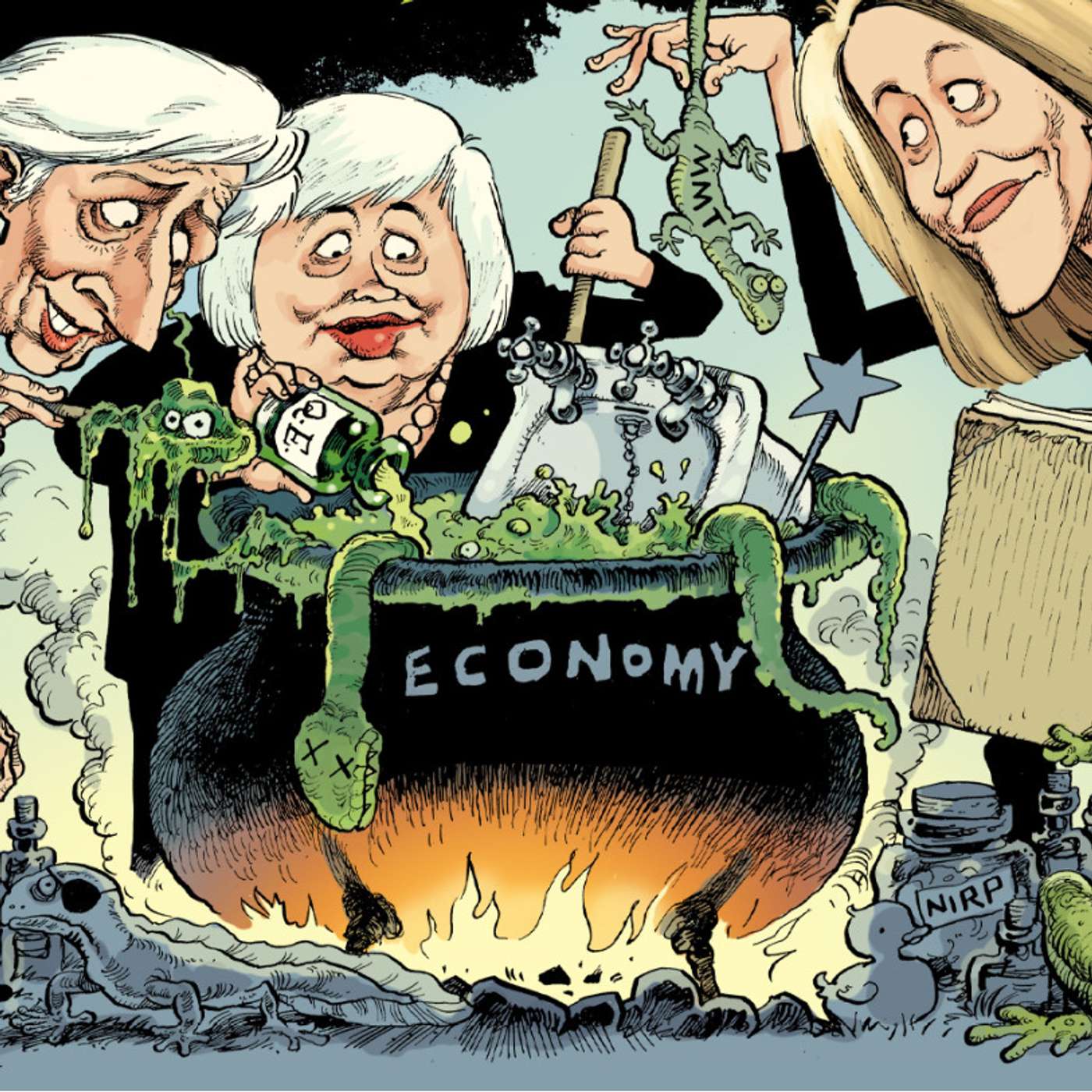
Christine Lagarde, Janet Yellen and Stephanie Kelton are among the world's best known political-economists. Lagarde, was France's Minister of Finance, Managing Director of the International Monetary Fund, and is President of the European Central Bank - all firsts for a lady. Yellen, was America's Chair of the Federal Reserve and is presumptive nominee for US Secretary of the Treasury - each a first for a lady. Kelton, was advisor to the Bernie Sanders 2016 presidential campaign, is a best-selling author, and is the most famous evangelist for modern monetary theory.And now these remarkable three are in positions of power and influence to guide the world out of socioeconomic depression. It echoes the 1999 cover of Time Magazine featuring three men -- Robert Rubin, Alan Greenspan, and Larry Summers -- with the agitated headline "The Committee to Save the World". Alas, this 38th episode of Making Sense continues the long tradition of unease found in the Western canon regarding the female triumvirate.Yes, of course The Graces -- Aglaea, Euphrosyne, and Thalia -- were lovely… but there was the rumor about them spending so much time in the underworld. No need to comment on the Harpies - a triad of vengeful, winged sisters. And who can forget The Witches of Eastwick: Susan Sarandon, Michelle Pfeiffer and Cher? They put your podcaster off cherries for the rest of the 80s. But it is Shakespeare who provides us the incomparable trio: the Weird Sisters. Better understood today as 'weyward' or 'weyard', they were the Anglo-Saxon Fates responsible for divination and predictions - what we call "economics" in modern day. Don't take this podcaster's word for it - listen to the Bard:<<Macbeth, Act 4, Scene 1:>>Round about the cauldron go;In the poison'd policies throw.Media, that report narrativeDays and nights as quantitativeSweat inflation running hotBoil thou first i' th' charmed pot.Double, double toil and trouble;Fire burn, and cauldron bubble.Soul of financial journalistIn the cauldron boil and mist;UBI of newt and bank reserves,Wool of bat and control of curves,Adder's fork and Janet's QE,Lizard's leg and Kelton's MMT,For a charm of powerful trouble,Like a hell-broth boil and bubble.Zirp, nirp toil and trouble;Economy burn, and markets bubble.----------WHY----------PART 01: What is former Federal Reserve Chair Janet Yellen all about? What can we expect from the US Treasury under her leadership? She didn't commit any MAJOR errors during her term. Was it competence, or happenstance?PART 02: Christine Lagarde, head of the European Central Bank, promises to employ trillions in euro carrots (large-scale asset purchase programs) and sticks (negative interest rates). Seems solid! But modern-day monetary policy, "is designed to... give an appearance of solidity to pure wind."PART 03: Is there any room for money in modern monetary theory? Stephanie Kelton, the best known evangelist for MMT says yes. Jeff Snider, says no. Indeed, Snider maintains that MMT is more likely to lead to deflation and disinflation than hyperinflation - just look to Japan for proof.----------WHERE----------AlhambraTube: https://bit.ly/2Xp3royApple: https://apple.co/3czMcWNDeezer: https://bit.ly/3ndoVPEiHeart: https://ihr.fm/31jq7cITuneIn: http://tun.in/pjT2ZCastro: https://bit.ly/30DMYzaGoogle: https://bit.ly/3e2Z48MSpotify: https://spoti.fi/3arP8mYPandora: https://pdora.co/2GQL3QgBreaker: https://bit.ly/2CpHAFOCastbox: https://bit.ly/3fJR5xQPodbean: https://bit.ly/2QpaDghStitcher: https://bit.ly/2C1M1GBOvercast: https://bit.ly/2YyDsLaPlayerFM: https://bit.ly/3piLtjVPocketCast: https://pca.st/encarkdtSoundCloud: https://bit.ly/3l0yFfKListenNotes: https://bit.ly/38xY7pbAmazonMusic: https://amzn.to/2UpEk2PPodcastAddict: https://bit.ly/2V39Xjr----------WHAT----------Meet the Same New Boss: https://bit.ly/39JxXAg(NY Times) Divining the Regulatory Goals of Fed Rivals: https://nyti.ms/33MtJnN(CBS News) Janet Yellen: The exit interview: https://cbsn.ws/3lHbeaB(The FT) Janet Yellen is the right woman for the times: https://on.ft.com/36FvMfeSaving Jobs Won’t Save Us From Jaws: https://bit.ly/3mUTGcc(OECD): Continued fiscal support and public health action needed to make hope of recovery a reality: https://bit.ly/36HsCYDThe Failure of the Printing Press Birthed MMT and the Printing Press: https://bit.ly/37wzozsKnapp's The State Theory of Money (1924 English translation): https://bit.ly/37z6IG0----------WHO----------Jeff Snider, Head of Global Investment Research for Alhambra Investments with Emil Kalinowski, tongue-tied by Rana Foroohar. Artwork by David "Banquo" Parkins. Podcast intro/outro is "The Mole" by Christoffer Moe Ditlevsen at Epidemic Sound.
Ep 37The Case of the Missing Money
“The Case of the Missing Money” is not an Arthur Conan Doyle short-story but instead a 1976 essay by well-known economist Stephen Goldfeld who noticed that there wasn’t enough money to justify the high level of economic activity at that time. Goldfeld explained that money was traditionally a simple function of, “real gross national product, [and] the interest rates on savings and time deposits at commercial banks and on commercial paper.” But that formula was suddenly producing “whopping”, “unprecedented”, “quite unacceptable” and “conspicuous” errors that stood out “like a sore thumb”. The clue to the mystery -- which he was not able to solve at the time -- was that the formula for currency was on target BUT the one for checking accounts was unreliable. The monetary format under the auspices of public institutions -- cash and coin -- was fine. But the monetary format that was the domain of private banks -- deposit accounts -- was way short.But money WASN'T missing from the economy. Money as traditionally understood and defined by economists, THAT money was missing, but the market had broadened the definition in the 1960s and 70s by turning capital market securities into near-money, among many other evolutions. This suited the banks because, while they couldn’t print and mint official government money, they could ‘print and mint’ ledger ‘money’. Just under half a century later the roles are reversed. A modern-day Goldfeld would note that official monetary formats like bank reserves are being created at a “whopping”, “unprecedented”, “quite unacceptable” and “conspicuous” pace that stands out “like a sore thumb”. But because the vastly more valuable private bank ledger balances are way short, our global economy suffers for it. In this 37th Episode of Making Sense, Jeff Snider writes and solves three mysteries: "Japan: The Case of the Missing Inflation!", "Europe: The Case of the Missing Economy!" and "Treasury Bills! The Case of the Missing Money?----------WHY----------Part 01: How might an economy fare if there was no corona? With neither covids nor gremlins throwing sand into the gears of economic machinery, would the engine be purring or sputtering? We turn to Japan for answers.Part 02: Europe's latest PMI scores tell us the continent is falling into re-recession, perhaps not unlike Japan. Where did the momentum disappear to? The USA has better PMIs but should that give us comfort?Part 03: All debt is equal, but some debt is more equal than others. Treasury market short-term bills hold a special place in the monetary hierarchy. Does recent selling of Bills signal economic hope? Or something else more mundane?----------WHERE----------AlhambraTube: https://bit.ly/2Xp3royApple: https://apple.co/3czMcWNDeezer: https://bit.ly/3ndoVPEiHeart: https://ihr.fm/31jq7cITuneIn: http://tun.in/pjT2ZCastro: https://bit.ly/30DMYzaGoogle: https://bit.ly/3e2Z48MSpotify: https://spoti.fi/3arP8mYPandora: https://pdora.co/2GQL3QgBreaker: https://bit.ly/2CpHAFOCastbox: https://bit.ly/3fJR5xQPodbean: https://bit.ly/2QpaDghStitcher: https://bit.ly/2C1M1GBOvercast: https://bit.ly/2YyDsLaPlayerFM: https://bit.ly/3piLtjVPocketCast: https://pca.st/encarkdtSoundCloud: https://bit.ly/3l0yFfKListenNotes: https://bit.ly/38xY7pbAmazonMusic: https://amzn.to/2UpEk2PPodcastAddict: https://bit.ly/2V39Xjr----------WHAT----------QQE To The Moon, *Deflation* Returns to Japan Anyway: https://bit.ly/3q0YK0KDeflation Returns To Japan, Part 2: https://bit.ly/33qhzARA Lesson In PMIs: Relative vs. Absolute: https://bit.ly/2HHWtpUTreasury Auctions Are Anything But Sorry Because They’ve Never Been Sorry About Solly: https://bit.ly/33rsLNLJust Who Is, And Who Is Not, Selling T-Bills: https://bit.ly/2Jgw7w6----------WHO----------Jeff Snider, Head of Global Investment Research for Alhambra Investments with Emil Kalinowski, Double-Dutch auctioneer. Artwork by David Parkins. Podcast intro/outro is "The Great Ascension" by Christoffer Moe Ditlevsen at Epidemic Sound.
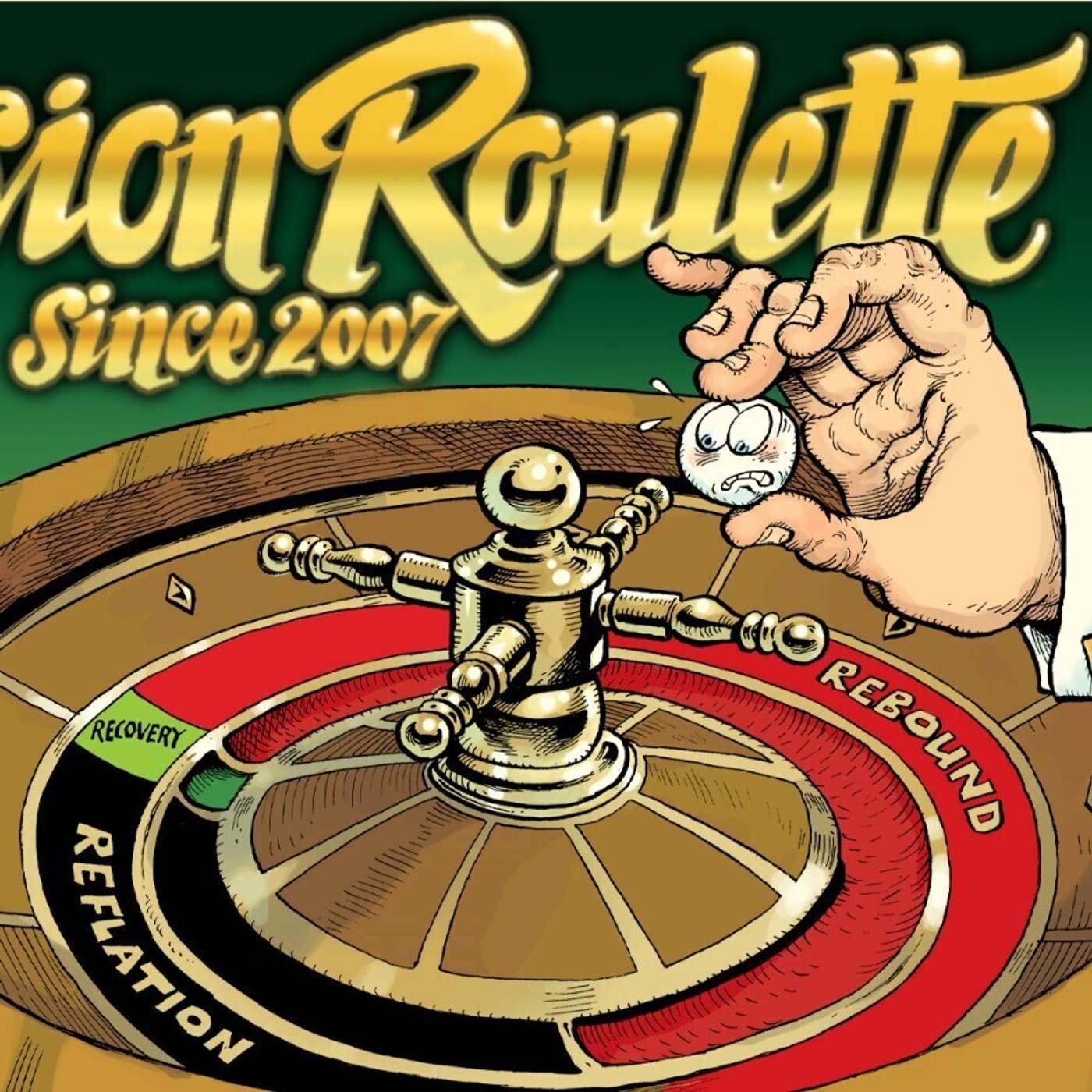
Ep 36Recession Roulette
Part 01: What can the late-19th century Long Depression (1873-96) tell us about the early-21st century Silent Depression (2008-2?)? We turn to Henry George, the author of the most popular economics book of all time to learn what he got right, got wrong and how it applies to the present.Part 02: An estimated 742,000 Americans submitted initial claims for unemployment insurance in the week ending November 14. That is 'worst all-time' prior to the 2020 experience and is wholly inappropriate EIGHT MONTHS AFTER the shock. Part 03: Japanese banks are borrowing from US banks at healthy rates (reflation!). The Chinese currency is appreciating at a healthy pace (reflation!). But there are few quirks, odds, ends, bits and bobs that remain in the shadows of the eurodollar.----------WHERE----------AlhambraTube: https://bit.ly/2Xp3royApple: https://apple.co/3czMcWNDeezer: https://bit.ly/3ndoVPEiHeart: https://ihr.fm/31jq7cITuneIn: http://tun.in/pjT2ZCastro: https://bit.ly/30DMYzaGoogle: https://bit.ly/3e2Z48MSpotify: https://spoti.fi/3arP8mYPandora: https://pdora.co/2GQL3QgBreaker: https://bit.ly/2CpHAFOCastbox: https://bit.ly/3fJR5xQPodbean: https://bit.ly/2QpaDghStitcher: https://bit.ly/2C1M1GBOvercast: https://bit.ly/2YyDsLaPlayerFM: https://bit.ly/3piLtjVPocketCast: https://pca.st/encarkdtSoundCloud: https://bit.ly/3l0yFfKListenNotes: https://bit.ly/38xY7pbAmazonMusic: https://amzn.to/2UpEk2PPodcastAddict: https://bit.ly/2V39Xjr----------WHAT----------The Economic Emergency In 2020 and Beyond Won't Be Covid: https://bit.ly/332eI0RProgress and Poverty by Henry George, fifth edition (1881): https://bit.ly/390ZjBHIt Will Have To Be Our New Weekly Ritual: https://bit.ly/39aL90KMaking Sense's Review of Economic Symmetry: https://youtu.be/yGOiHqVdE_MRedistributing A Shrinking Pie Is Nothing Like A Flood; Because There Was No Flood: https://bit.ly/338Bwfg----------WHO----------Jeff Snider, Head of Global Investment Research for Alhambra Investments with Emil Kalinowski, bond villain moonlighter. Artwork by David Parkins. Podcast outro is "Things to Do" by Ballpoint at Epidemic Sound.
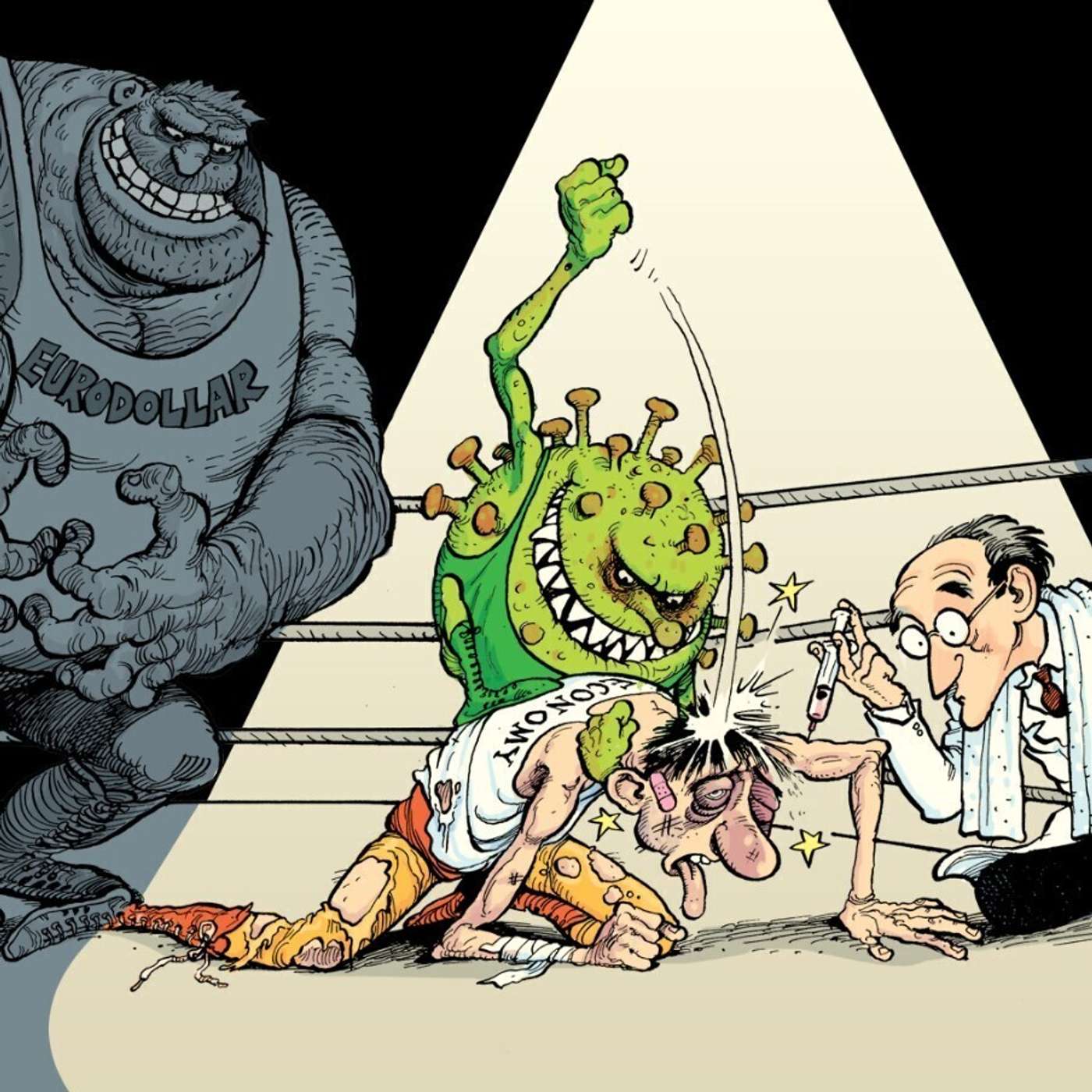
Ep 35Team Disorder Wrassles the Economy
PART 01: US Treasury yields have risen on positive news, especially following the CoVo Vax news from Pfizer. Does it mean reflation has begun? Does it mean the 40-year bond bull market is dead? What do other economic accounts say?PART 02: America's unemployment rate plummeted from 14.7% to 6.9% in six short months! But it's the same 2010-15 mirage. Even the Federal Reserve doesn't believe it - that's why they edited away the idea of "full employment" in August 2020.PART 03: Communists in Beijing have a better grasp of the world economy's direction than the capitalists in Washington, London and Brussels. Beijing's 14th Five-Year Plan hints at an isolated Chinese economy, an island unto itself.----------WHERE----------AlhambraTube: https://bit.ly/2Xp3royApple: https://apple.co/3czMcWNDeezer: https://bit.ly/3ndoVPEiHeart: https://ihr.fm/31jq7cITuneIn: http://tun.in/pjT2ZCastro: https://bit.ly/30DMYzaGoogle: https://bit.ly/3e2Z48MSpotify: https://spoti.fi/3arP8mYPandora: https://pdora.co/2GQL3QgBreaker: https://bit.ly/2CpHAFOCastbox: https://bit.ly/3fJR5xQPodbean: https://bit.ly/2QpaDghStitcher: https://bit.ly/2C1M1GBOvercast: https://bit.ly/2YyDsLaPlayerFM: https://bit.ly/3piLtjVPocketCast: https://pca.st/encarkdtSoundCloud: https://bit.ly/3l0yFfKListenNotes: https://bit.ly/38xY7pbAmazonMusic: https://amzn.to/2UpEk2PPodcastAddict: https://bit.ly/2V39Xjr----------WHAT----------Vaccine-phoria: https://bit.ly/3pnufSBNo Time For Pfizer, Europe Heads Back: https://bit.ly/38GnchVWhere Is It, Chairman Powell?: https://bit.ly/3eVWiDAGood Payrolls Still Say Slowdown: https://bit.ly/32GaxaESlowdown In The Rebound; Stop Listening To Central Bankers: https://bit.ly/3psbbT1QE Didn’t JOLT (again): https://bit.ly/2UswUfwXi Jinping Is Mao, Only For His Focus to Be On Technology: https://bit.ly/35ubOnfThe Prices And Costs Of What Xi Believes He’s Got To Do: https://bit.ly/32E1SWrMoving The Bird Back Into Its (Old) Cage: https://bit.ly/35tDkB4----------WHO----------Jeff Snider, Head of Global Investment Research for Alhambra Investments with Emil Kalinowski, the slightly poorer and unsuccessful - but handsomer eurodollar podcast version of Tom Brady. Artwork by the Lance Russell of the art ring David Parkins. Podcast intro/outro is "Temple of Runha" by ELFL at Epidemic Sound.

Ep 34Social Contract
A social contract is the agreement between government, business, wealthy and ordinary households in how to apportion the costs and benefits of society. The recently concluded (?) American election comes to mind, as a potential first step towards a new (green?) deal. In this, the 34th episode of Making Sense, Jeff Snider identifies another, less obvious freshly fashioned contract: China and its recent 14th Five-Year plan. But as Snider explains, question marks are not unique to democratic republics -- communist 'republics' have them too.The most successful, contemporary social contract your podcaster is aware of are the early-2000s Hartz Reforms in Germany. Listeners may be surprised to learn that before them today's "economic engine of Europe" was the "sick man of Europe". The decade-long assimilation of East Germany had taken a heavy toll and unemployment levels would breach more than 10% -- in 2004! The new social contract ensured employment in return for low-wage growth that favored business. So, success doesn't mean cost-free. But we've always known that; remember the story of one of humanity's original contracts?As we learn in Exodus, Moses had to introduce The Commandments twice; the stone tablets were angrily shattered in the first attempt! And by the time the second draft was presented the scene was rather tense. Firstly, God was annoyed as all get-out to see Moses again -- what, he doesn't have anything else to do other than hew stone tablets? Secondly, Moses was ill-tempered that he couldn't leave the chosen people alone for a few days before they started chugging flagons like Frank the Tank. Lastly, the people, like the teenager unable to thread the needle in a way that explained bongs and brassieres strewn across the yard to her parents, were anxiously awaiting judgement. When Moses returned for the second time the apprehensive throng gathered before him. Moses announced, "I have good news and bad news. The good news is, I got him down to ten." And a great cheer of relief issued forth. "The bad news is... adultery stays." ----------WHY----------PART 01: Does Xi Jinping, General Secretary of the Chinese Communist Party, have a BETTER understanding of the global economy than capitalists? China's newest Five-Year Plan is sending the following signals: (A) Globalization is dead. (B) The world's monetary order has broken. (C) Bye. PART 02: Central bankers in Frankfurt and London are very active lately. They want, "to help the economy", "to boost lending" and give banks "confidence" all so as to achieve their inflation targets. So far? Bubkis. Would MMT be different?PART 03: The LIBOR price-fixing scandal was called "crime of the century". Central bankers saw the crime as an opportunity to shunt aside LIBOR - a global rate that shouldn't exist for a supply of dollars that shouldn't exist. But does.----------WHERE----------AlhambraTube: https://bit.ly/2Xp3royApple: https://apple.co/3czMcWNiHeart: https://ihr.fm/31jq7cICastro: https://bit.ly/30DMYzaTuneIn: http://tun.in/pjT2ZGoogle: https://bit.ly/3e2Z48MSpotify: https://spoti.fi/3arP8mYBreaker: https://bit.ly/2CpHAFOCastbox: https://bit.ly/3fJR5xQPodbean: https://bit.ly/2QpaDghStitcher: https://bit.ly/2C1M1GBOvercast: https://bit.ly/2YyDsLaPocketCast: https://pca.st/encarkdtSoundCloud: https://bit.ly/3l0yFfKPodcastAddict: https://bit.ly/2V39Xjr----------WHAT----------China’s 1st 15-year Xi-athon: https://bit.ly/3p4vo11E$U M.S. Ep. #17 - From Bond Yields to Communism, Don’t Call It A Comeback: https://bit.ly/32kijagWashington looms large over drafting of China’s next five-year plan: https://on.ft.com/2U0T1JFIn 2020, Central Bankers Everywhere Are Being Exposed: https://bit.ly/3k8DQZmCOT B-und?: https://bit.ly/38iQaUCThere Is A Hard Truth To This Soft SOFR Arrogance: https://bit.ly/38mPBJMIMF Global Markets Monitor (03-Nov-2020): https://bit.ly/2GD911j----------WHO----------Jeff Snider, Head of Global Investment Research for Alhambra Investments with Emil Kalinowski, social-media beast of burden. Artwork by David "Mr. Universe" Parkins. Podcast intro/outro is "All Emotions" by ELFL at Epidemic Sound.
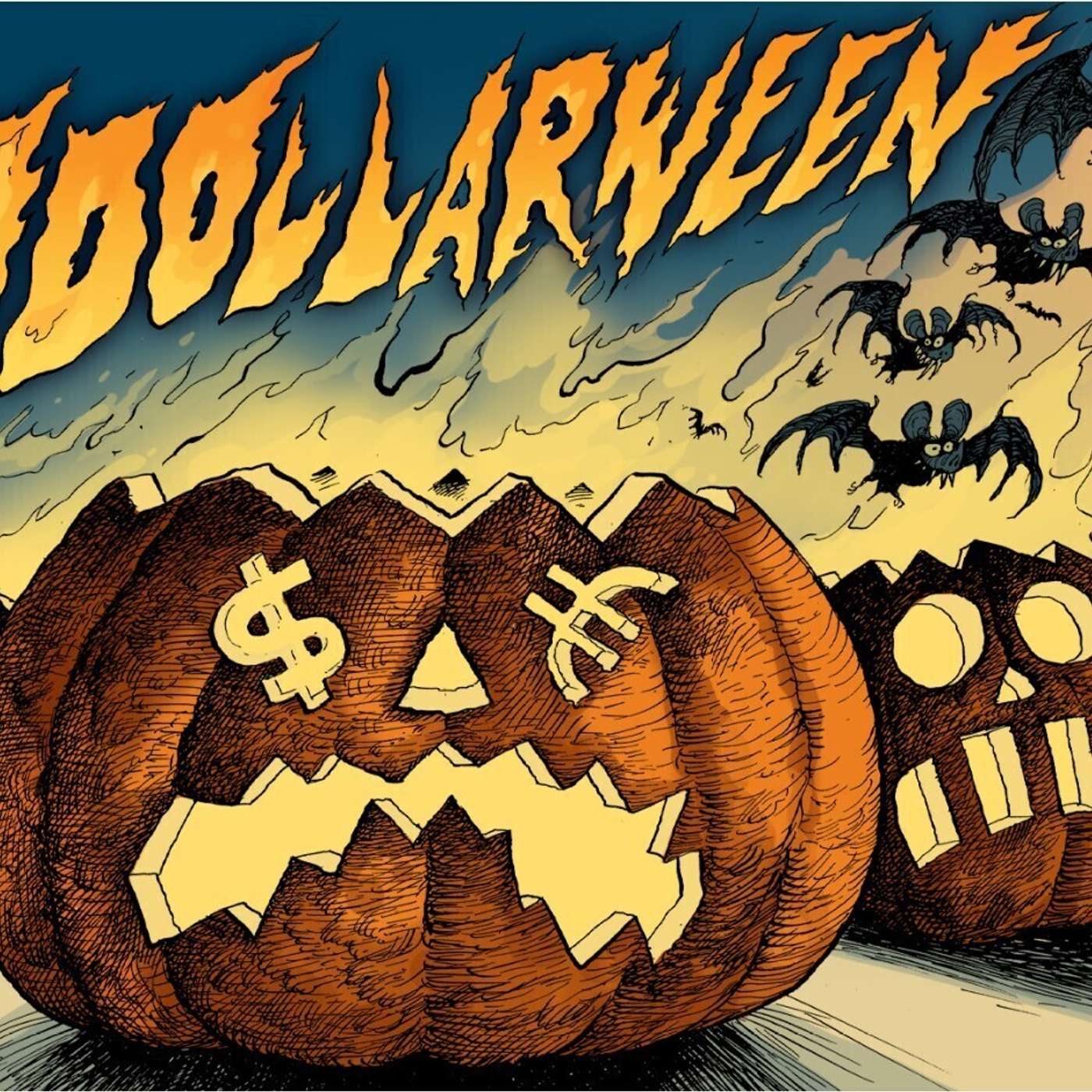
Ep 33Eurodollarween
Broadcasting from the kingdom of NYE, I'm Art Bell and this is Coast to Coast AM from the great beyond. Tonight we'll talk to General Johnson Jameson from his bunker complex beneath the Saskatchewan crust, as to whether Y2K can still happen. Then... 'Do you want to believe?!' The government doesn't want you to. Chris Carter, creator of the X-Files, will tell us exactly which episodes the government didn't want you to see. Also, Rod Sterling will join me live in studio... well in a manner of speaking. Was the Twilight Zone a documentary that had to be presented to the public as fiction...?Our time on Earth is indeed, very short. No matter how old or young you are, you are a tiny slice of the cosmos' plan. You're here for a very, very short time. We all are. And the big question of course is, what happens after we end this physical life... or it is ended, however you have it. It's a big question. And October, of course, is a great time to explore that question because one of the main things you look for is some - any evidence of life beyond the physical. The supernatural, the apparition, the unexplained, the Kachina doll that seems to move around the house by itself...There's no place more spooky and unexplained than central banking and the monetary order. Let us then enter another dimension. A monetary realm. Let us turn to the wildcard line. Jeff, Emil... can you hear me? This is Art Bell. ----------WHERE----------AlhambraTube: https://bit.ly/2Xp3royApple: https://apple.co/3czMcWNiHeart: https://ihr.fm/31jq7cICastro: https://bit.ly/30DMYzaTuneIn: http://tun.in/pjT2ZGoogle: https://bit.ly/3e2Z48MSpotify: https://spoti.fi/3arP8mYBreaker: https://bit.ly/2CpHAFOCastbox: https://bit.ly/3fJR5xQPodbean: https://bit.ly/2QpaDghStitcher: https://bit.ly/2C1M1GBOvercast: https://bit.ly/2YyDsLaPocketCast: https://pca.st/encarkdtSoundCloud: https://bit.ly/3l0yFfKPodcastAddict: https://bit.ly/2V39Xjr----------WHAT----------A True Horror Tale: https://bit.ly/2TGjGvbFOMC Meeting Minutes Transcript, June 27-28, 2000: https://bit.ly/3kKDysOInnovation in the International Financial Markets by G. Dufey and I. Giddy: https://bit.ly/2HDEpNDQuarrel With Quarles Over Too Little, Not Too Many: https://bit.ly/35MshlyThe Authority Fallacy, Or The Quarles Quandary: https://bit.ly/3mDro5HVice Chair for Supervision Randal K. Quarles Remarks at the Hoover Institution: https://bit.ly/2HSETQfThe Dollar Disease Well Predates the Coronavirus: https://bit.ly/3kLVaodBIS "US dollar funding - an international perspective": https://bit.ly/31Yurxi----------WHO----------Jeff Snider, Head of Global Investment Research for Alhambra Investments with Emil Kalinowski, redrum redrum REDRUM! Artwork by the modern day Gustave Doré, David Parkins. Podcast intro/outro is "Fugent" by Lupus Nocte at Epidemic Sound.
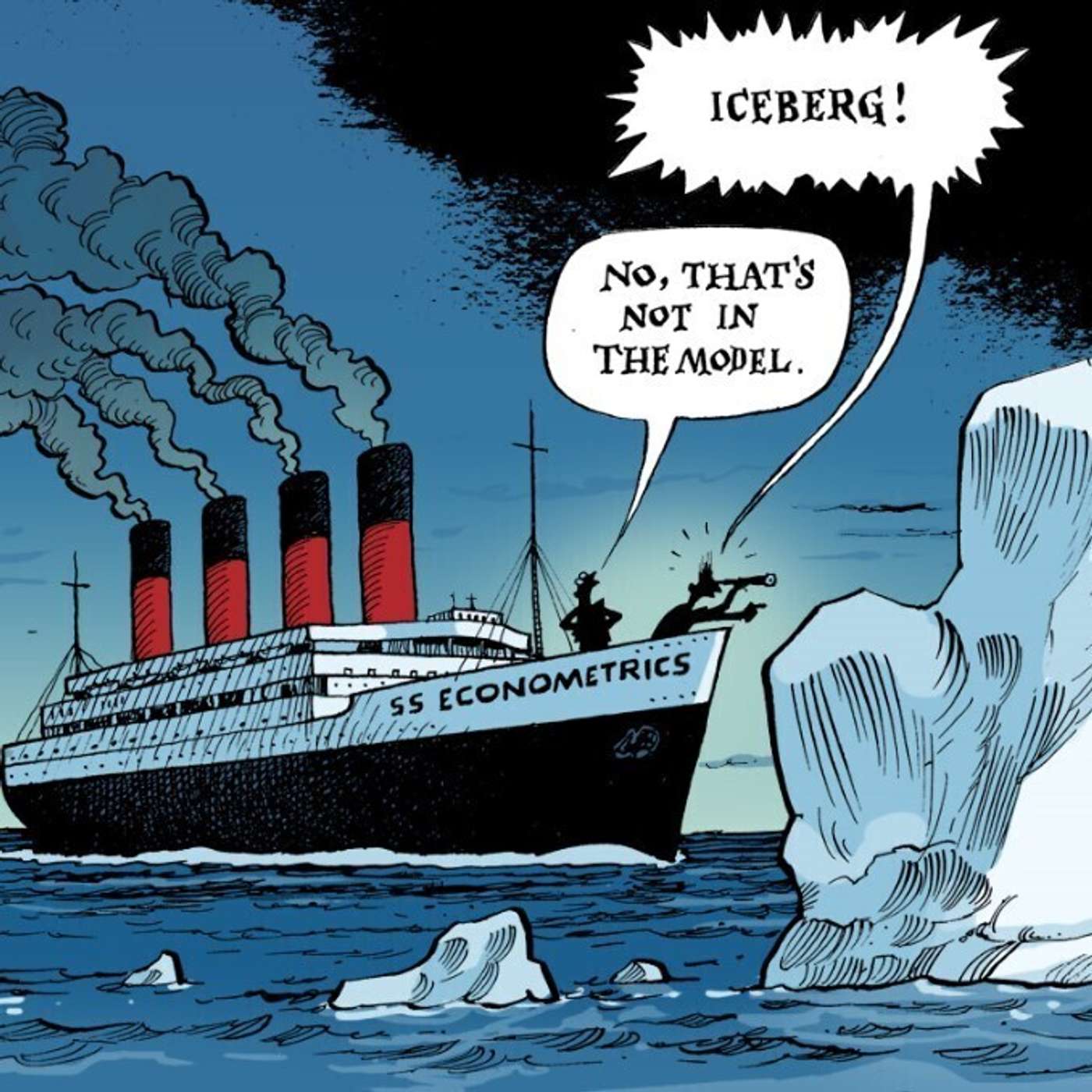
Ep 32The Unit Root
The bread of this podcast hotdog features Jeff Snider putting into context how far behind the times monetary authorities are, and that all may not be as it seems with the appreciating Chinese currency. But the middle, the wiener if you will, is about the unit root. But please! Before you throw your device across the room in disgust rather than listen to yet another podcast about monomial equations and non-stationary processes realize that it's all about econometricians assuming economies do not suffer permanent shocks. The assumption that an economy must experience a recession AND a recovery.A 1993 paper by Milton Friedman averred the data showed this is how economies operated, and indeed they did -- in the post-WW2 experience. Friedman referenced an earlier work of his, from 1964, with data that stretched over a longer period that ALSO showed this. And indeed, the 1879 to 1961 period does, as long as you exclude the war cycles and 1945 to 1949 because, as Friedman put it "of their special characteristics." So, if your podcaster understands this correctly, if you exclude permanent shocks and data discontinuity then one is welcome to assume no permanent shocks.Now, your podcaster is admittedly missing something here. For one, he's missing econometricians' razor-sharp intelligence. Second, he hasn't won a Nobel in economics - not yet at least. The cost of this lacuna is that shoelaces give him trouble - all his trainers and loafers have Velcro. Simultaneous gum chewing and walking results in emergency trips to the dentist. And hot dogs are eaten with the bun in one hand and dog in the other. But the benefit of not having a towering intelligence is not falling prey to hubris. In believing intricate mathematics model out permanent shocks. In believing that it can go back to the way it was. The year 2008 was a permanent break. Like 1914. Like 1929. Like 1945. ----------WHY----------PART 01: How many years behind are regulators, from the leading edge of money? Consider, seven years AFTER the crisis, Europe introduced legislation (2014) to track securities lending. Not until 2020 did data collection begin. Besides, this, and other, money activity was brought to our attention in 1981!PART 02: The world is complex. Too complex to model. Assumptions must be made. Is the exclusion of permanent shocks to the economy a reasonable one? Rational? Plausible? Yet econometricians -- with their hands on the wheel -- say it is. That iceberg dead ahead? Not in the model.PART 03: The Chinese currency is gaining against the dollar. That SHOULD be an 'all-clear' signal that reflation, global trade, and positive momentum are in place. But we DO NOT see corroborating evidence on the People's Bank of China balance sheet. Maybe the move is an engineered feint?----------WHERE----------AlhambraTube: https://bit.ly/2Xp3royApple: https://apple.co/3czMcWNiHeart: https://ihr.fm/31jq7cICastro: https://bit.ly/30DMYzaTuneIn: http://tun.in/pjT2ZGoogle: https://bit.ly/3e2Z48MSpotify: https://spoti.fi/3arP8mYBreaker: https://bit.ly/2CpHAFOCastbox: https://bit.ly/3fJR5xQPodbean: https://bit.ly/2QpaDghStitcher: https://bit.ly/2C1M1GBOvercast: https://bit.ly/2YyDsLaPocketCast: https://pca.st/encarkdtSoundCloud: https://bit.ly/3l0yFfKPodcastAddict: https://bit.ly/2V39Xjr----------WHAT----------Central Banks Trying to Create Inflation Is An Old Laugh Line: https://bit.ly/35uS5CrInnovation in the International Financial Markets by G. Dufey and I. Giddy: https://bit.ly/2HDEpNDThe Unit Root of the Missing Monetary Monomial: https://bit.ly/37zvVBVMilton Friedman's 1964 The Monetary Studies of the National Bureau: https://bit.ly/3dQquQ2Milton Friedman's 1993 "The Plucking Model of Business Fluctuations Revisited": https://bit.ly/3dQ1OY3CNY + TIC = October 2020, or 2017?: https://bit.ly/2FTp2Qk----------WHO----------Jeff Snider, Head of Global Investment Research for Alhambra Investments with Emil Kalinowski, an innuendo. Artwork by the unit root, David Parkins. Podcast intro/outro is "Siren Screen" by Ooyy at Epidemic Sound.
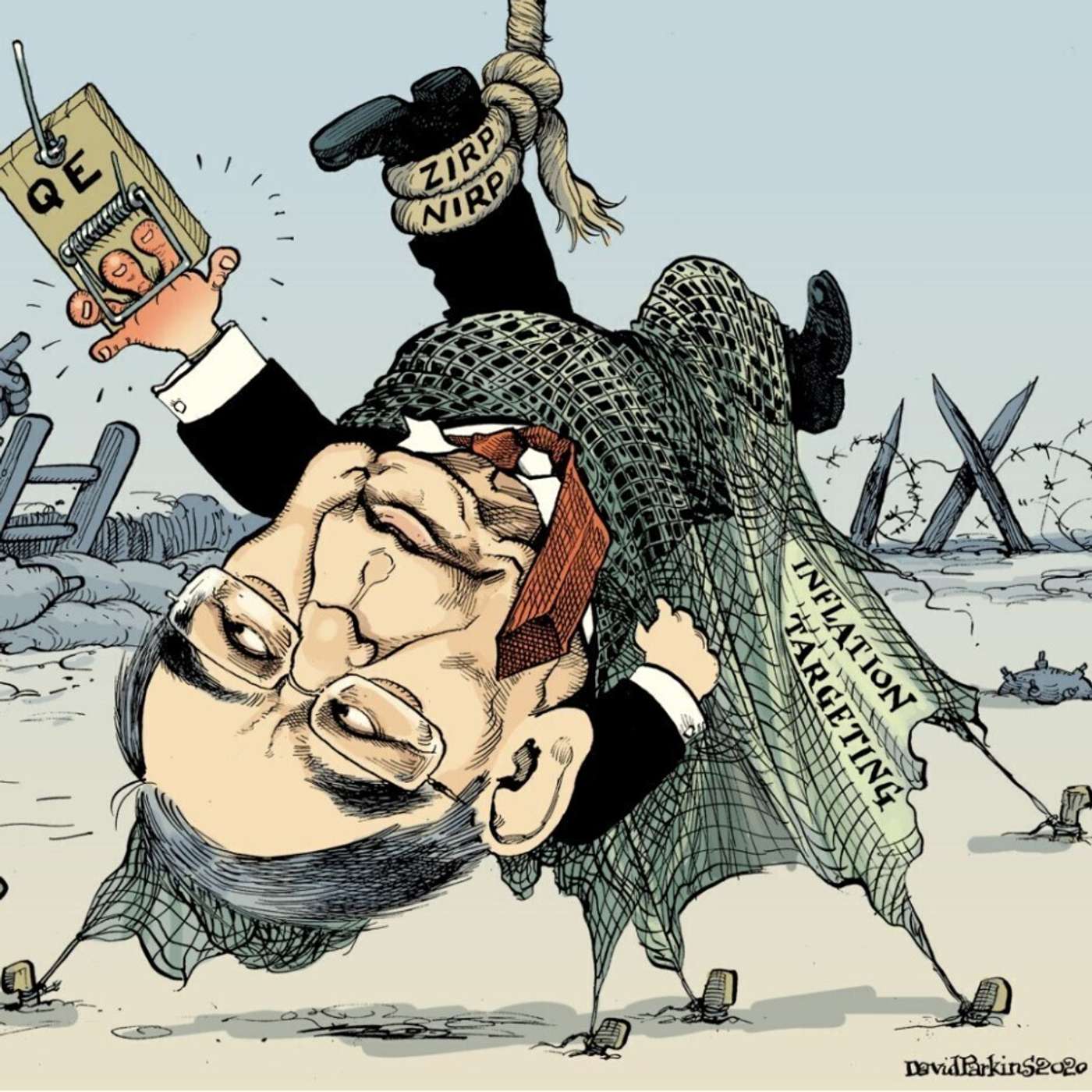
Ep 31Bank of Japan, the Monetary Recon Team
American economist and New York Times columnist, Paul Krugman entered the economics profession to follow in the footsteps of Hari Seldon, a psychohistorian living on Trantor, approximately 10,000 years into the future. Seldon, psychohistory and Trantor are all from Isaac Assimov's Foundation series published between 1951 to '53. Seldon used, "the mathematics of human behaviour to save civilisation," as Krugman put it. Admittedly, "economics is a pretty poor substitute", muses Krugman, "[b]ut I tried," he says. Many would say he's done so very successfully having been awarded the Nobel Memorial Prize in Economic Sciences for his contributions to New Trade Theory and New Economic Geography.Is he the best psychohistorian alive? Your podcaster does not think so - they hand out those Nobels like candy. No, the best is Hungarian-American George Friedman, the geopolitical strategist. As proof this podcaster offers his 2009 book titled: "The Next 100 Years". Sure, Seldon forecasted the next 1,000 for the galaxy, but still, who on Earth is offering an outlook for the next century?In Friedman's book, Japan plays a very prominent role, second only to the United States. In macroeconomics and monetary policy Japan plays a central role too. It is the scout. Recon as the Americans call it; recee to the Commonwealth. The Bank of Japan is about seven years ahead of the main central banking force. And it's waving back at everyone to, 'Stay back! Don't come this way!' Is the warning lost in translation? Is it ignored? Spanish essayist George Santayana famously noted, "Those who cannot remember the past are condemned to repeat it." But your podcaster prefers Friedman's quip that, "Studying history has little practical utility in averting past outcomes. We are doomed to repeat history whether we know it or not."----------WHY----------PART 01: Central banks regulate money supply - the Federal Reserve does not. The Fed does not control US dollars. Consider what came of Fed research Marvin Goodfriend's writings in the 1980s and 90s the eurodollar system and its enormous, ocean of offshore dollars? Nothing.PART 02: Real central banks manage money supply. Fake central banks manage inflation expectations. Central bankers cannot define, identify, quantify or convey money supply. Thus, they are reduced to observing a monetary output: inflation expectations.PART 03: The Bank of Japan has implemented radical, unorthodox policies for over two decades. The bank is seven years out in front of everyone. As scout, it has repeatedly warned the main central banking force (i.e. Britain, Europe and North America) not to follow in its path. But it's been ignored.----------WHERE----------AlhambraTube: https://bit.ly/2Xp3royApple: https://apple.co/3czMcWNiHeart: https://ihr.fm/31jq7cICastro: https://bit.ly/30DMYzaTuneIn: http://tun.in/pjT2ZGoogle: https://bit.ly/3e2Z48MSpotify: https://spoti.fi/3arP8mYBreaker: https://bit.ly/2CpHAFOCastbox: https://bit.ly/3fJR5xQPodbean: https://bit.ly/2QpaDghStitcher: https://bit.ly/2C1M1GBOvercast: https://bit.ly/2YyDsLaPocketCast: https://pca.st/encarkdtSoundCloud: https://bit.ly/3l0yFfKPodcastAddict: https://bit.ly/2V39Xjr----------WHAT----------Bond Yields Are Really Quite Easy to Understand: https://bit.ly/2T3rQNTMarvin Goodfriend's 1981 "Eurodollars" article : https://bit.ly/2HgoRyLJ. Alfred Broaddus Jr.'s 1993 'Good Luck' article: https://bit.ly/2SYebHMRandal K. Quarles' 2020 'All Clear' speech: https://bit.ly/319RuVFInflation (Expectations) Is Anything But Confusing: https://bit.ly/3j6CYE0Decoding Gauges of Inflation Expectations Is Fed’s Next Big Task: https://bloom.bg/2T3qmDmYou Need To Understand What’s Really Behind This New ‘V’, And Once Again Japan Is More Than Helpful: https://bit.ly/358weAzRaising the Inflation Target: Lessons from Japan: https://bit.ly/31f85YiWhy Did the BOJ Not Achieve the 2 Percent Inflation Target with a Time Horizon of About Two Years?: https://bit.ly/359eS6T----------WHO----------Jeff Snider, Head of Global Investment Research for Alhambra Investments with Emil Kalinowski, falling out of balance, splitting his differential and tipping the f— over. Artwork by David Parkins, the Edmund Blackadder of the lampoon trenches. Podcast intro/outro is "Tiger's Nest" by Ooyy and Smartface at Epidemic Sound.
Ep 30QE2 Syndrome: Making Economics Errata
As your podcaster put the finishing touches on Episode 30 word came down from up-on-high: 'We need to do errata!'Yes! Finally! This podcaster's long-time goal would be a reality: to make economics erotic again. To tell the world that economists can stimulate. To inform that offshore bankers do it in the shadows. To broadcast that technical analysis has the best curves with those plunging chart necklines. The undulating data and heaving economic activity. Going long Treasuries. Wanting yield. Oh yeah, pile that yield on... yeah, high and deep... yeah, yeah...Alas, when the new intro copy was handed in for proofreading this podcaster's confusion was laid... bare. Errata? It's all about copy-editing. And mistakes. The ancient Latin word is plural for erratum, "a correction of a published text." And indeed, in part three of this episode, the article under discussion was originally printed as, "Inflation Targeting: You Can Me Al". Wha? It should have been "Inflation Targeting: You Can Call Me Al".And that's not all. Closely related to errata is corrigenda, a plural Latin word, "for a thing to be corrected, typically an error in a printed book." Whereas an erratum is, as a general rule, issued for a production error, a corrigendum is a mistake by the author. And, in part three, Jeff Snider and I introduce Al Broaddus, the former Federal Reserve Bank of Richmond president. And when we segue to a quote about inflation targeting by Fed Governor Edward M. Gramlich, instead of attributing it to Gramlich, we continue to refer to Broaddus! We hope you forgive the erratum and the corrigendum and how we piled them high and deep in this episode... ooh, yeah.----------WHY----------PART 01: $1,200 direct cash payments is not stimulus, it is "relief aid"; these are "alms" given to the poor, needy and those harmed by both the virus and the government-mandated shutdowns of the economy. We review the state of the American labor market, European furlough programs, and conclude very difficult days are still ahead.PART 02: The SECOND round of stimulus checks is like the second round of quantitative easing. Instead of celebrating it as signaling something positive it should serve as a warning: if the first version was so good why do we need another round? Maybe the people in charge don't know what they're doing and are out of ideas? PART 03: The Federal Reserve has been fighting the last war: 1970s inflation. ----------WHERE----------AlhambraTube: https://bit.ly/2Xp3royApple: https://apple.co/3czMcWNiHeart: https://ihr.fm/31jq7cICastro: https://bit.ly/30DMYzaTuneIn: http://tun.in/pjT2ZGoogle: https://bit.ly/3e2Z48MSpotify: https://spoti.fi/3arP8mYBreaker: https://bit.ly/2CpHAFOCastbox: https://bit.ly/3fJR5xQPodbean: https://bit.ly/2QpaDghStitcher: https://bit.ly/2C1M1GBOvercast: https://bit.ly/2YyDsLaPocketCast: https://pca.st/encarkdtSoundCloud: https://bit.ly/3l0yFfKPodcastAddict: https://bit.ly/2V39Xjr----------WHAT----------What’s Job (cuts) Got To Do With It (everything): https://bit.ly/2SEKCuzWho’s Negative? The Marginal American Worker: https://bit.ly/2GGYuSSCOT Blue: OMG the 30s!!!!: https://bit.ly/2GKN0h0Inflation Targeting: You Can [Call] Me Al: https://bit.ly/2GKKqYpSpeech by Governor Edward M. Gramlich: https://bit.ly/3jT34M8----------WHO----------Jeff Snider, Head of Global Investment Research for Alhambra Investments with Emil Kalinowski, prodigious producer of errata and corrigenda. Artwork by David Parkins, the Dorothea Lange of the Silent Depression. Podcast intro/outro is "A Most Violent Man" by Lofive at Epidemic Sound.
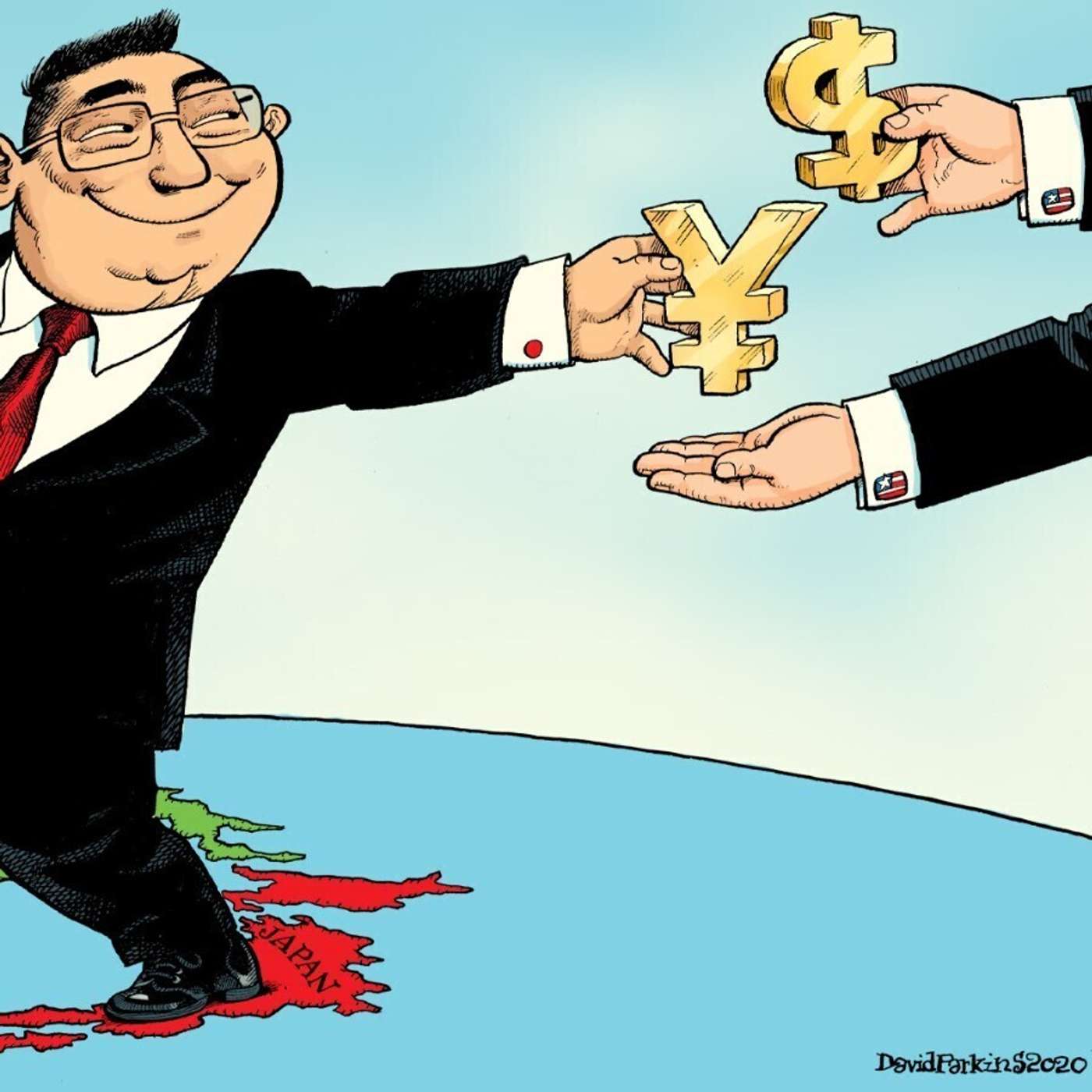
Ep 29Carrying the Yen Carry Trade into the Light
Advanced-economy money centers make the world go round. In the early 1800s London and Paris funded globalization cycles. Berlin and Vienna joined the exclusive club as the century waned; New York at the start of the next. Today, East Asia's cities are members, including Singapore and Hong Kong. But the 800-pound sumo wrestler of the Pacific basin is, and has been, Tokyo. Some speculate it was there at the beginning of the eurodollar, putting overseas dollars, held by WW2 service members, to work. The subsequent, multi-decade growth miracle established Tokyo's financial prowess. The 1980s brought disturbance early - the LDC Crisis - and euphoria later - the baburu keiki. When the bubble burst Japan's dollar borrowings from US banks dropped by more than three-quarters by the end of the 1990s.Then, in 1999, the Bank of Japan implemented the first modern zero interest rate policy. In 2001, the first quantitative easing. From it's 1999 low Japan's dollar borrowings from US banks doubled by 2004. Then doubled again by 2009. Then doubled again by 2011. In part three of this, the 29th episode of Making Sense, Jeff Snider explains Tokyo's role in the rise of a synthetic dollar empire and how disturbances within it, in early-2014 and late-2017, set off the third and fourth eurodollar crises. But first, thoughts about the rising appeal of socialism and words about the modern-day monetary tension between the ideas of 18th-century Scottish philosopher David Hume and 19th-century American financier Jay Cooke.----------WHY----------PART 01: Dick Costollo said, "Me-first capitalists who think you can separate society from business are going to be the first people lined up against the wall and shot in the revolution. I'll happily provide video commentary." Jeff Snider explains the historical context of Marxist agitation against Capitalism.PART 02: Over the ages legendary philosophers have offered their thoughts on the nature money. This episode focuses on two - David Hume and Jay Locke - whose ideas, though diametrically opposed, are both true. Also, Antonio Gramsci, Milton Friedman, Nicholas Copernicus and Ice Cube weigh in.PART 03: The Wall Street Journal recently wrote, "The Japanese government bond market is rarely considered interesting. But beneath the placid surface... a thriving world of dollar funding, which offers hints about developments in China’s banking system too." Jeff Snider tells us what it means.----------WHERE----------AlhambraTube: https://bit.ly/2Xp3royApple: https://apple.co/3czMcWNiHeart: https://ihr.fm/31jq7cICastro: https://bit.ly/30DMYzaTuneIn: http://tun.in/pjT2ZGoogle: https://bit.ly/3e2Z48MSpotify: https://spoti.fi/3arP8mYBreaker: https://bit.ly/2CpHAFOCastbox: https://bit.ly/3fJR5xQPodbean: https://bit.ly/2QpaDghStitcher: https://bit.ly/2C1M1GBOvercast: https://bit.ly/2YyDsLaPocketCast: https://pca.st/encarkdtSoundCloud: https://bit.ly/3l0yFfKPodcastAddict: https://bit.ly/2V39Xjr----------WHAT----------There Have Long Been Too Many 'Have Nots' In the U.S.: https://bit.ly/3l4GX5FThe context behind Dick Costollo's Tweet: https://on.ft.com/3lddCpLWho was Antonio Gramsci: https://bit.ly/36vWcArBefore Hume, Before Carnegie: https://bit.ly/3iqcg99Ice Cube Tweet: https://bit.ly/2Gd9JCtSmall But Real Progress Carrying The Yen Carry Trade Into the Light: https://bit.ly/3nc0J0JHow the World’s Dullest Market Quietly Created a Synthetic Dollar Empire: https://on.wsj.com/3l9FV8p----------WHO----------Jeff Snider, Head of Global Investment Research for Alhambra Investments with Emil Kalinowski, owner of many red (hardcover) books. Artwork by stylograph sammurai, David Parkins. Podcast intro/outro is "STHLM-Tokyo" by Ooyy and Smartface at Epidemic Sound.
Ep 28Interview: Brent Johnson
In 1969 Johnny Carson was hosting The Tonight Show and, in one particular episode, Bob Hope headlined. After Carson finished interviewing Hope he called out his next guest, George Gobel. To everyone's surprise the person that walked out on stage was most certainly not Gobel. It was none other than the Italian Crooner himself, Dean Martin. Now, as was Martin's style in those days, he was already two cognacs into the next day's hangover, which made for a rocking good show. Eventually Gobel did make it out on to the set. When he finally did, he complained to Carson, 'Having to come on last! Having to share the stage with legends!'He turned to the cameras and asked, "Do you ever get the feeling... do you ever get the feeling that the whole world was a tuxedo, and you were a pair of brown shoes?" In this, the 28th episode of Making Sense, Jeff Snider and Brent Johnson talk fin de siècle political-economy while Emil Kalinowski holds up a pair of egregious brown brogues.----------WHERE----------AlhambraTube: https://bit.ly/2Xp3royApple: https://apple.co/3czMcWNiHeart: https://ihr.fm/31jq7cICastro: https://bit.ly/30DMYzaTuneIn: http://tun.in/pjT2ZGoogle: https://bit.ly/3e2Z48MSpotify: https://spoti.fi/3arP8mYCastbox: https://bit.ly/3fJR5xQBreaker: https://bit.ly/2CpHAFOPodbean: https://bit.ly/2QpaDghStitcher: https://bit.ly/2C1M1GBOvercast: https://bit.ly/2YyDsLaSoundCloud: https://bit.ly/3l0yFfKPocketCast: https://pca.st/encarkdtPodcastAddict: https://bit.ly/2V39Xjr----------WHAT----------OK, Bank Reserves; Let’s Do This One More Time: https://bit.ly/3hXhJ7mTaking You, The Fed’s Bank Reserves, And Banks’ Checkable Deposits For A Quick Stroll In The Monetary Zoo: https://bit.ly/3i4du9PA Good Time For Some Q & A: Bank Reserves, Treasury Auctions, MMT, and the Monetary Resolve: https://bit.ly/3mLPrjEAlhambra Investments Blog: https://bit.ly/2VIC2wWRealClear Markets Essays: https://bit.ly/38tL5a7----------WHO----------Jeff Snider, Head of Global Investment Research for Alhambra Investments as Bob Hope. Brent Johnson, Chief Executive Officer of Santiago Capital as Dean Martin. And Emil Kalinowski, as George Gobel. Artwork by the Johnny Carson of caricature, David Parkins. Podcast intro/outro is "We Just Gotta (Get Together)" by Wanda Shakes at Epidemic Sound.
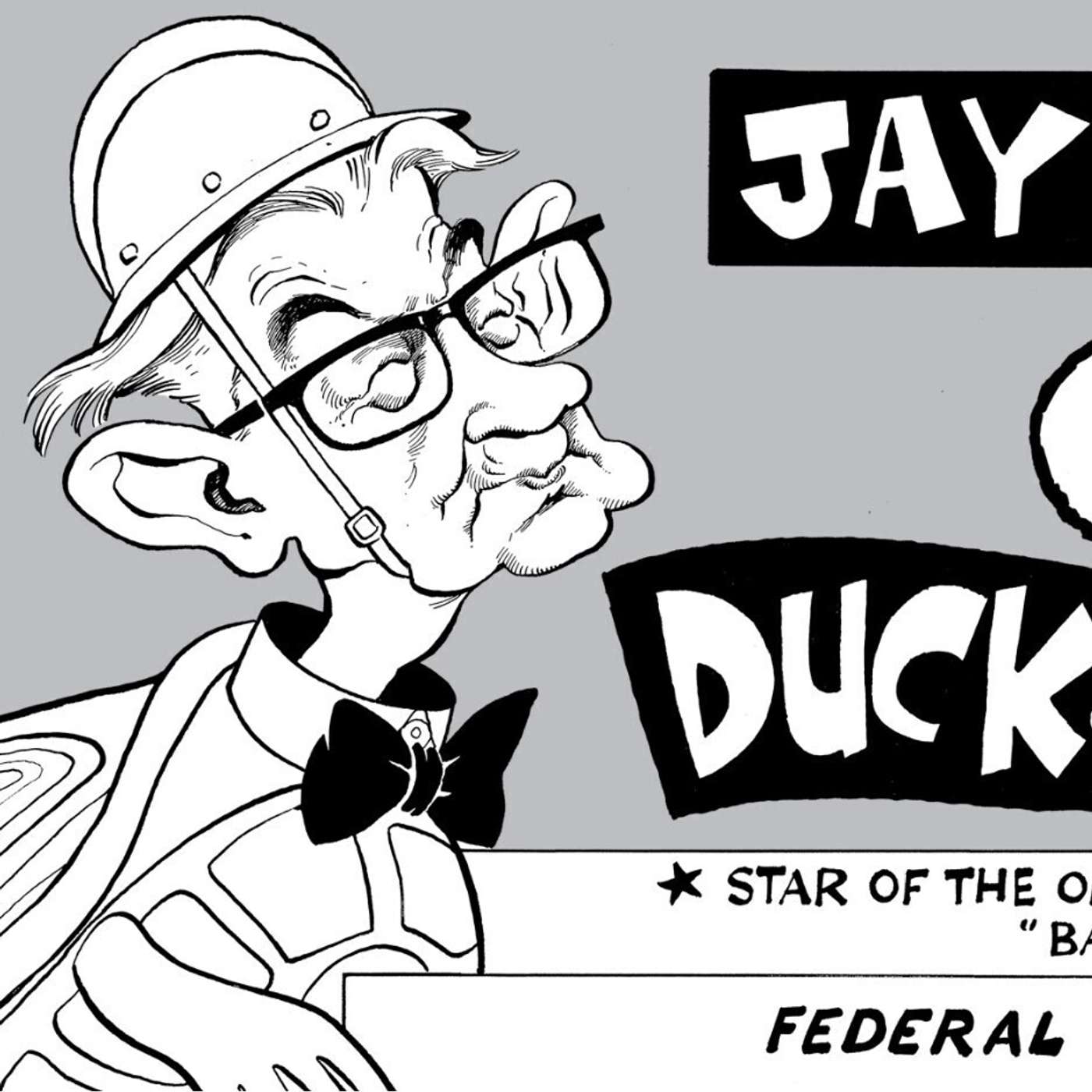
Ep 27Duck and Cover
US President Harry Truman prosecuted the war to its conclusion, finishing his predecessor's near-impossible task. Then, with bitter irony, History reversed his role as "anchor" for the Second World War into "lead" for the third. As the trilogy approached its near-miraculous end decades later, one could hear an echo of a Truman slogan - “Education is our first line of defense” - in the 1980s cartoon GI*Joe that averred, “Knowing is half the battle.” Both aphorisms are twigs coming off the "Knowledge is Power" branch. And the trunk itself? A tree of the knowledge of good and evil with roots stretching to the genesis.More recently our physicists have been informing us of hard limits to our knowledge - uncertainty principles, incompleteness theorems - butressing Socrates' statement that, "The only true wisdom consists in knowing that you know nothing." Still, bounded knowledge is a poor excuse for apathy, and in 1951 Truman signed into existence an agency whose purpose was to prepare American citizens for nuclear war. "Knowledge is not only key to power. It is the citadel of human freedom," he said.In this 27th episode of Making Sense, Jeff Snider reveals that Truman's agency's most iconic result was that of a cartoon turtle named Bert. It may sound startlingly silly to the 21st-century ear, but educating citizens to turtle up, to duck and cover at the first instance of a flash made sense at that particular time. At least, up to the point when weapons, and thus circumstances, evolved. Similarly, the Federal Reserve's monetary policies made sense, up to the point when money, and thus circumstances evolved, which, coincidentally enough, began in Truman's time.----------WHY----------PART ONE: What can 1950s preparations for nuclear war tell us about monetary policy in 2020? Well, that some preparations - such as "Duck and Cover" - made sense, up to the point when circumstances evolved. Similarly, the Fed's bank reserves made sense, up to a point.... long since passed.PART TWO: Beijing has reported dead quiet in its foreign exchange reserves. In the middle of THE most abrupt and widespread economic halt? It literally does not add up - unless bold assumptions are made. We look to what happened in Brasilia in 2013-16 and Beijing 2014-16 for answers.PART THREE: What do the latest figures tell us about the world's most important consumer? Jeff Snider reviews retail sales, industrial production and asks what is it that is missing from our post 2007-08 economy that precludes robust recovery.----------WHERE----------AlhambraTube: https://bit.ly/2Xp3royApple: https://apple.co/3czMcWNiHeart: https://ihr.fm/31jq7cICastro: https://bit.ly/30DMYzaTuneIn: http://tun.in/pjT2ZGoogle: https://bit.ly/3e2Z48MSpotify: https://spoti.fi/3arP8mYCastbox: https://bit.ly/3fJR5xQBreaker: https://bit.ly/2CpHAFOPodbean: https://bit.ly/2QpaDghStitcher: https://bit.ly/2C1M1GBOvercast: https://bit.ly/2YyDsLaSoundCloud: https://bit.ly/3l0yFfKPocketCast: https://pca.st/encarkdtPodcastAddict: https://bit.ly/2V39Xjr----------WHAT----------If Jerome Powell Has a Middle Name, It Might Well Be Bert: https://bit.ly/3c9UA0dDuck And Cover (1951) Bert The Turtle: https://youtu.be/IKqXu-5jw60The Contingent Hole In China’s Brazil Dollar Strategy: https://bit.ly/35PJGveThe Mysterious $100 Billion Gap In China's Payments Data: https://bit.ly/2FIAVZoAnother Key Economic Stumble In August Pointing Back At July: https://bit.ly/3cgPVJLNo Hole Puzzle, From Autos An August Stumble: https://bit.ly/3mCWknl----------WHO----------Jeff Snider, Head of Global Investment Research for Alhambra Investments with Emil Kalinowski, who turtle waxes. Artwork lined with graphite by David Parkins. Podcast intro/outro is "Steps" by Cushy at Epidemic Sound.
Ep 26Decade of Disorder? It's "Transitory"!
How much is several? What is a few? If you were to put a numerical value on "probably" would it be more, or less, than "likely"? To your podcaster's great consternation the linguistic gatekeepers of Middle English appear to have been rather disinterested about it all. And so, people are constantly late... or early! 'I thought we were to meet in a few hours?' 'No! It was several.' 'Oh, right.' Women seem to revel in these nuances, arriving for a date with this podcaster when it pleases them and then claiming etymological immunity.Which brings us to the word transitory. Admittedly there is SOME lexicographic nuance: momentary, transient, impermanent, temporal. However, the Federal Reserve - like the proverbial camel - stuck its thesaurus-nose into that nuance and CHARGED into the economic-tent of the past decade. Why did the 2009-10 Green Shoots recovery fail? Transitory European Sovereign Debt Crisis, gummed Bernanke. Why did the economy swoon in the first quarter of 2014? Transitory Polar Vortex, chomped Yellen. Why did inflation not accelerate despite 'full-employment'? Transitory cellular data-plan price war, gnawed the FOMC. Why was Globally Synchronized Growth tripped up? Transitory political trade wars, chawed Powell.So here we are, 10 transitory-filled years later. Now, unless there are glaciers listening to this podcast - and it needs all the ratings assistance it can get - it's likely the audience is in unanimous agreement that the definition of "transitory" has been tortured to death. Indeed, the Federal Reserve agrees! And Transitory has been retired. Or cremated. Still, instinct informs your podcaster that much like our zombie economy, the excuse is undead and Transitory will walk again!----------WHY----------PART 01: A great improvement in the US unemployment rate (JUL: 10.2%, AUG: 8.4%) suggests the Reopening Boom hints at economic recovery. UNFORTUNATELY, we have heard this story before -- indeed, for over a decade. Other employment data imply the unemployment rate is unreal. AGAIN.PART 02: Capital market seasonality is popularly assumed to be a phenomenon of the past; a quirk of an agricultural, bygone era. Not true! They still exist. And the calendar's biggest capital market bottleneck is dead ahead: September.PART 03: Why didn't the economy recover by 2011-12? Transitory issues in Europe. Why didn't the economy boom? Transitory weather. Why didn't good inflation materialize? Transitory price wars. Sadly what's not transitory is the seriousness with which central banks are taken.----------WHERE----------AlhambraTube: https://bit.ly/2Xp3royApple: https://apple.co/3czMcWNiHeart: https://ihr.fm/31jq7cICastro: https://bit.ly/30DMYzaTuneIn: http://tun.in/pjT2ZGoogle: https://bit.ly/3e2Z48MSpotify: https://spoti.fi/3arP8mYCastbox: https://bit.ly/3fJR5xQBreaker: https://bit.ly/2CpHAFOPodbean: https://bit.ly/2QpaDghStitcher: https://bit.ly/2C1M1GBOvercast: https://bit.ly/2YyDsLaSoundCloud: https://bit.ly/3l0yFfKPocketCast: https://pca.st/encarkdtPodcastAddict: https://bit.ly/2V39Xjr----------WHAT----------Unfortunately Like Old Times: Back To Being The Star of the Payroll Show: https://bit.ly/3hglpAIEven More Suggesting Something Did Happen In July: https://bit.ly/2Fu7uJUCOT Black: Closing In On Mid-September, What About Oil?: https://bit.ly/3mhs9BRBottleneck In Japanese: https://bit.ly/3hof06BNew York Clearing House Banks Monthly Movements of Cash to and from Interior (1905-1908): https://bit.ly/3hsLYCK A Deflationary Mindset That Isn't In Our Minds: https://bit.ly/2FyXJdO----------WHO----------Jeff Snider, Head of Global Investment Research for Alhambra Investments with Emil Kalinowski, who has no idea if it is safe. Artwork by "Marathon Man" David Parkins. Podcast intro/outro is "Moonline" by Cushy at Epidemic Sound.

Ep 25Give Us More Time!
Last week, current and former Federal Reserve officials offered a mea culpa, saying the timing of the 2015-18 rate hikes may have curbed a potentially quicker recovery from 2008. Apparently, seven to ten years is not enough time.Well then, if time is the problem your podcaster will take a page out of Hugh Hendry's book. Recently the early-21st century Scottish philosopher suggested the Fed would be taken seriously at its attempt of irresponsibility if it was headed by the funny, mixed martial artist, media-sensation Joe Rogan. Why not then filmmaker Christopher Nolan? He offers Rogan-style pyrotechnics, plus he knows his way around time. In Memento he reversed it, telling the story from back to front. With Inception he slowed it down - allowing multiple realities to exist simultaneously. Interstellar showed him capable of harnessing no less than the gravity well of the black hole Gargantua to 'steal' decades of time. And in his latest opus - TENƎT - Nolan folds all of these ideas into the same movie. Not just the same movie, but the same frames! Entire sequences are shown with characters and objects sharing the same space but not the same eddies of entropy.Hopefully the point survives the exaggeration. A true, fundamental overhaul is long overdue and recently the Federal Reserve did perform just such a review at the end of which it announced a new, grand strategy. In this, the 25th episode of Making Sense, while we wait for Rogan, Nolan or Deus-forbid anyone with authority, Snider offers his review of the new, grand strategy.----------WHERE----------AlhambraTube: https://bit.ly/2Xp3royApple: https://apple.co/3czMcWNiHeart: https://ihr.fm/31jq7cICastro: https://bit.ly/30DMYzaTuneIn: http://tun.in/pjT2ZGoogle: https://bit.ly/3e2Z48MSpotify: https://spoti.fi/3arP8mYCastbox: https://bit.ly/3fJR5xQBreaker: https://bit.ly/2CpHAFOPodbean: https://bit.ly/2QpaDghStitcher: https://bit.ly/2C1M1GBOvercast: https://bit.ly/2YyDsLaSoundCloud: https://bit.ly/3l0yFfKPocketCast: https://pca.st/encarkdtPodcastAddict: https://bit.ly/2V39Xjr----------WHAT----------Murphy's Law Is Fed's Law, and Everything Is Wrong: https://bit.ly/3lTWbLMPeak Inflation? No, Peak Stupidity: https://bit.ly/357HFKrRead Richard Clarida's Speech: https://bit.ly/3lPo2wOWatch Richard Clarida's Speech: https://bit.ly/2QXB793Fat Chance, Flat Phillips: https://bit.ly/3hV2RXP----------WHO----------Jeff Snider, Head of Global Investment Research for Alhambra Investments with Emil Kalinowski, exempt from Murphy's Law. Artwork by David "the right stuff" Parkins. Podcast intro/outro is "Sleeves" by Cushy at Epidemic Sound.
Ep 24The Discovery of Oz
"I am Oz, the Great and Terrible. Why do you seek me?" They looked again in every part of the room, and then, seeing no one, Dorothy asked, "Where are you?""I am everywhere but to the eyes of common mortals I am invisible. I will now seat myself upon my throne, that you may converse with me.""We have come to claim our promise, O Oz.""What promise?" asked Oz."You promised to send me back to Kansas when the Wicked Witch was destroyed."And you promised to give me brains," said the Scarecrow."And you promised to give me a heart," said the Tin Woodman."And y'all promised to give me courage," said the Southern Lion."Dear me, how sudden! Well, come to me tomorrow, for I must have time to think it over.""You've had plenty of time already!""We shan't wait a day longer!""You must keep your promises to us!"The Lion thought it might be as well to frighten the Wizard, so he gave a large, loud roar, which was so fierce and dreadful that Toto jumped away from him in alarm and tipped over the screen that stood in a corner. As it fell with a crash they looked that way, and the next moment all of them were filled with wonder. For they saw, standing in just the spot the screen had hidden, a little old man, with a bald head and a wrinkled face, who seemed to be as much surprised as they were. Our friends looked at him in surprise and dismay."I thought Oz was a great Head," said Dorothy."And I thought Oz was a lovely Lady," said the Scarecrow."And I thought Oz was a courageous Bernanke," said the Tin Woodman."And I thought Oz was the Greenspan Put," exclaimed the Lion."No, you are all wrong," said the little man meekly. "I have been making believe.""Making believe!" cried Dorothy. "Are you not a Great Wizard?""Hush, my dear, don't speak so loud, or you will be overheard--and I should be ruined. I'm supposed to be a Great Wizard.""And aren't you?""Not a bit of it, my dear; I'm just a common man. My dear friends, I pray you not to speak of these little things. Think of me, and the terrible trouble I'm in at being found out. No one knows it but you four--and myself. I have fooled everyone so long that I thought I should never be found out.""But, I don't understand," said Dorothy, in bewilderment. "How was it that you appeared to me as a great Head?""That was one of my tricks. Step this way, please, and I will tell you all about it."----------WHY----------PART ONE: The Federal Reserve announced a grand, new strategy intended to convince YOU they are credibly irresponsible - real monetary maniacs. 'We will do it, man! We swear to Monetary Deus we'll let inflation run pure! We're not joking! Real hot. We can do it you know... Boogah boogah boogah!'PART TWO: The Federal Reserve announced a grand, new strategy form which the idea of 'full employment' is stricken. It is an implicit admission that the much celebrated, often trumpeted and frenzied waving of the "Best Unemployment Rate Ever!" flag was a mistake. It wasn't real. It wasn't true.PART THREE: America's government is spending wildly - and promises more. It does so via US Treasury bond sales. But who is buying? Are foreigners boycotting auctions? Are US banks already full? Is the Federal Reserve the last line of defense?----------WHERE----------AlhambraTube: https://bit.ly/2Xp3royApple: https://apple.co/3czMcWNiHeart: https://ihr.fm/31jq7cICastro: https://bit.ly/30DMYzaTuneIn: http://tun.in/pjT2ZGoogle: https://bit.ly/3e2Z48MSpotify: https://spoti.fi/3arP8mYCastbox: https://bit.ly/3fJR5xQBreaker: https://bit.ly/2CpHAFOPodbean: https://bit.ly/2QpaDghStitcher: https://bit.ly/2C1M1GBOvercast: https://bit.ly/2YyDsLaSoundCloud: https://bit.ly/3l0yFfKPocketCast: https://pca.st/encarkdtPodcastAddict: https://bit.ly/2V39Xjr----------WHAT----------This Has To Be A Joke, Because If It’s Not…: https://bit.ly/3jB3jLtThe World's On Fire Because the Growth Never Was: https://bit.ly/34GxOv9Not This Again: Too Many Treasuries?: https://bit.ly/3b4XZwFAlhambra Investments Blog: https://bit.ly/2VIC2wWRealClear Markets Essays: https://bit.ly/38tL5a7----------WHO----------Jeff Snider, Head of Global Investment Research for Alhambra Investments with Emil Kalinowski, not holding up the Treasury market single-handedly. Artwork by David Parkins, Eurodollar University's W. W. Denslow. Podcast intro/outro is "So Many Secrets" by Gavin Luke at Epidemic Sound.
Ep 23The Dollar's Premature Obituary
Magrathea. It is one of legendary, advanced-economy planets of the human imagination sitting along side Asimov's Trantor of the Foundation Series, and Cybertron, home of the Autobots and Decepticons. Sure, there are other fabled worlds like Cameron's Pandora, Besson's Fhloston Paradise Herbert's Arrakis, but these are - let's be honest - emerging economies. What made Magrathea a galactic leader in economic complexity is that it WAS a planet-building planet. As we learn in Douglas Adams' Hitchhiker's Guide to the Galaxy, Magrathea has been missing for five million years. By the time we join the story it is considered long dead. The only being who believed it still existed was the two-headed Galactic President / confidence man. And, after some LIGHT-piracy, MILD-conscription and heavy-improbability, our party of protagonists discover the planet all but deserted.Actually, not deserted. Asleep. You see Magrathea's product was a "luxury commodity" - none of this off-brand, pseudo-planet stuff like Pluto. Well, "five million years ago the Galactic economy collapsed... the recession came and [they] decided it would save a lot of bother if [they] just slept through it. So [they] programmed the computers to revive [them] when it was all over... The computers were index-linked to the Galactic stock-market prices... so that [they'd] be revived when everybody else had rebuilt the economy enough to afford [their] rather expensive services."Now dear listener, you anticipate this set up is likely in reference to our own 5-million year recession - now in its 13th year. Or perhaps a nod to our own computer modeling gone berserk. No ladies, gentlemen and galactic visitors, this 23rd episode of Making Sense is about the premature obituary. Magrathea wasn't dead, merely dozing. Our own Earthly list of rash declarations are just as entertaining. British musician Dave Swarbrick, after visiting a local township, was declared dead by the Daily Telegraph to which he quipped: "It's not the first time I have died in Coventry." American author Mark Twain had to explain on TWO occasions: "The report of my death was an exaggeration." And who can forget King Arthur's quest for the Holy Grail in plague infested England when the Cart Master asked the village to, "Bring out your dead!" only to be presented a very alive, singing, dancing grandpa that had merely worn out his welcome at home? Well, we can add the US Dollar to that list. As Jeff Snider says, "the dollar’s not going anywhere. Except, of course, further up."----------WHERE----------AlhambraTube: https://bit.ly/2Xp3royApple: https://apple.co/3czMcWNiHeart: https://ihr.fm/31jq7cICastro: https://bit.ly/30DMYzaTuneIn: http://tun.in/pjT2ZGoogle: https://bit.ly/3e2Z48MSpotify: https://spoti.fi/3arP8mYCastbox: https://bit.ly/3fJR5xQBreaker: https://bit.ly/2CpHAFOPodbean: https://bit.ly/3enSAkrStitcher: https://bit.ly/2C1M1GBOvercast: https://bit.ly/2YyDsLaSoundCloud: https://bit.ly/3l0yFfKPocketCast: https://pca.st/encarkdtPodcastAddict: https://bit.ly/2V39Xjr----------WHAT----------Part 1 of June TIC: The Dollar What: https://bit.ly/31kjXbUThe Case of the Missing Money by Stephen M. Goldfeld: https://brook.gs/3gcX2DuTreasury International Capital: https://bit.ly/34lykypPart 2 of June TIC: The Dollar Why: https://bit.ly/3iZTDJWIt’s Not As Obvious, But Stocks Are Tipped More Toward ‘Deflation’, Too: https://bit.ly/2QeZCOF----------WHO----------Jeff Snider, Head of Global Investment Research for Alhambra Investments with Emil Kalinowski, aspiring Zaphod Beeblebrox. Artwork by David Parkins, a Flying Circus surrealist. Podcast intro/outro is "By the Harbor" by Mhern at Epidemic Sound.
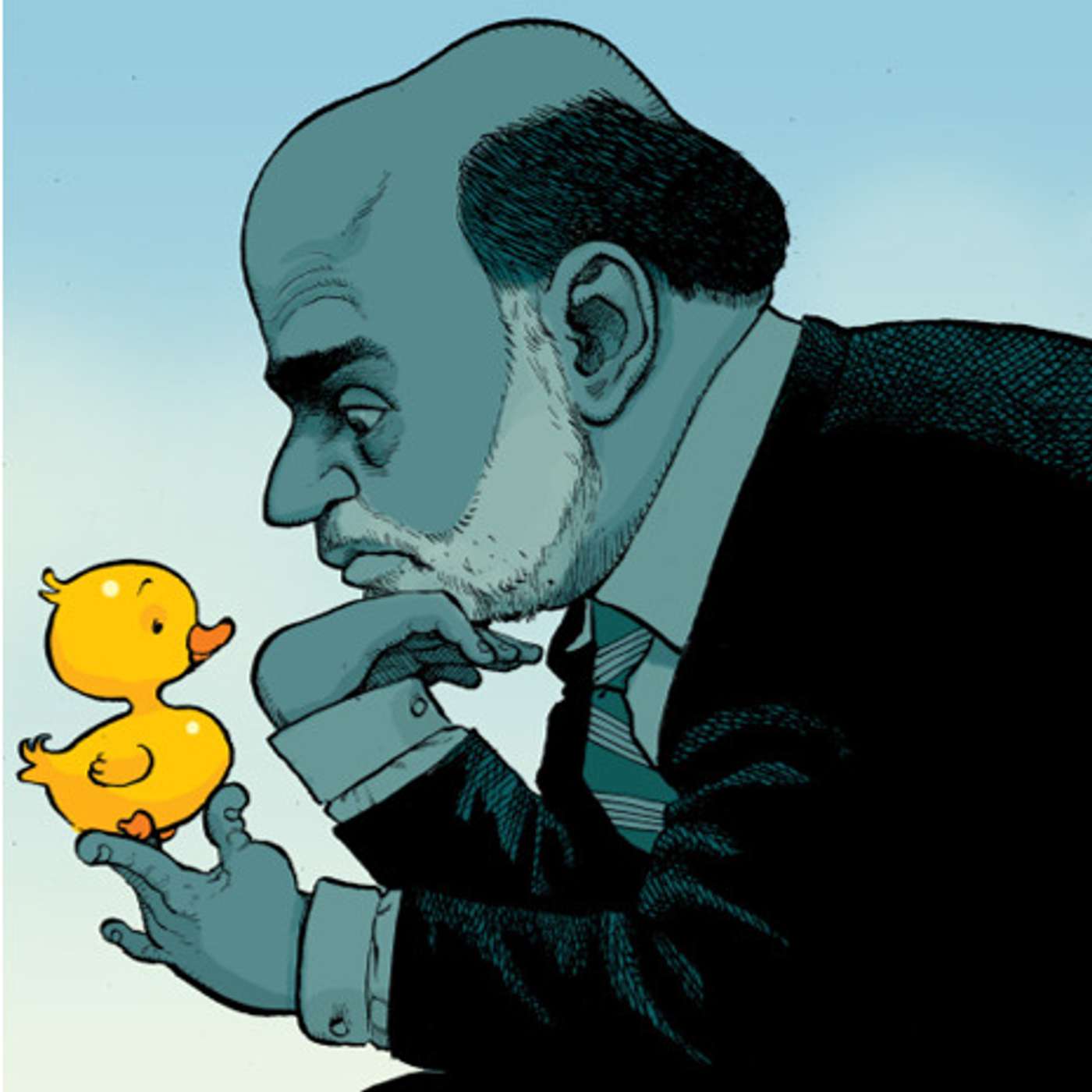
Ep 22What are they thinking?
The final setting of Margaret Atwood's The Handmaid's Tale occurs well into the future, at a symposium of historians examining the Handmaid era. Your podcaster expects a similar, future gathering of sober scholars evaluating the Time of CoVid. They'll likely conclude it was an economic and political bankruptcy - a mathematical and moral fiasco. Still, it wasn't all bad, and this podcaster imagines that sitting at the back of the room a lowly assistant will indecorously interrupt proceedings with, "At least the Funny Flu allowed Cannonball Run that stood for ages!"Before security could be called to escort this violator of stodgy proceedings out the banquet room - the iconoclast would blithely explain, that the Cannonball is an unofficial, entirely illegal 2,800 mile (4,500 kilometer, but who knows with inflation these days) car race from New York City's Red Ball Garage to the Portofino Hotel in Los Angeles. That the pre-'Rona record was 27 hours, 25 minutes. That with Captain Trips clearing the roads of grandmas, convoys, smokey, panda and the fuzz the new record was set at an eyelid-peeling 25 hours, 55 minutes. And that two general documentaries were already released on the subject, including Cannonball Run II - which is in your podcaster's sincere, very unprofessional opinion the best documentary ensemble cast ever, including stars: Burt Reynolds, Dom DeLuise, Dean Martin, Sammy Davis Jr., Shirley MacLaine, Frank Sinatra, Marilu Henner, Aristotelis Savalas, Catherine Bach, Susan Anton and Jackie Chan, among others.And it is the idea of the "ensemble cast" that makes this 22nd episode of Making Sense a special one. We try to answer three questions: which paradigm do central banks inhabit, was Aristotle an idiot, are low rates stimulative? In trying to answer them we turn to Jeff Snider. But also, Aristotle himself, and Ben Bernanke, Benoit Mandelbrot, the Bride, Christopher Nolan, the Cohen Brothers, Cormac McCarthy, Eugene Fama, Henri Poincaré, Hugh Hendry, Janet Yellen, Jay Powell, Jeb Hensarling, Joe Rogan, the Joker, Keith McCullough, Louis Bachelier, Milton Friedman, Paul Samuelson, Plato, Robert Brown, Ronald Coase, Socrates, Steve Keen, Thomas S. Kuhn, Two-Face and William F. Buckley Jr.----------WHERE----------AlhambraTube: https://bit.ly/2Xp3royApple: https://apple.co/3czMcWNiHeart: https://ihr.fm/31jq7cICastro: https://bit.ly/30DMYzaTuneIn: http://tun.in/pjT2ZGoogle: https://bit.ly/3e2Z48MSpotify: https://spoti.fi/3arP8mYCastbox: https://bit.ly/3fJR5xQBreaker: https://bit.ly/2CpHAFOPodbean: https://bit.ly/3enSAkrStitcher: https://bit.ly/2C1M1GBOvercast: https://bit.ly/2YyDsLaSoundCloud: https://bit.ly/3l0yFfKPocketCast: https://pca.st/encarkdtPodcastAddict: https://bit.ly/2V39Xjr----------WHAT----------Was Aristotle An Idiot? Welcome Back August 9, The Answer To That Question The Key To The Next Golden Age: https://bit.ly/30UMILSThomas S. Kuhn's The Structure of Scientific Revolutions: https://bit.ly/3gZiFZ0Eugene Fama’s Efficient View of Stimulus Porn: https://bit.ly/2Y0kk9tFama 2: No Inflation For Old Central Banks: https://bit.ly/3gYVuhAEugene Fama Interview (Inflation is Totally Out of the Control of Central Banks): https://bit.ly/2Y1Y7aYLow Rates Aren't a Central Bank Providing Accommodation: https://bit.ly/3iF0cBs----------WHO----------Jeff Snider, Head of Global Investment Research for Alhambra Investments with Emil Kalinowski, making economics erogenous again. Artwork by David Parkins, the thinking man's Auguste Rodin. Podcast intro and outro "Mt. Fuji" by Ooyy and Smartface at Epidemic Sound.
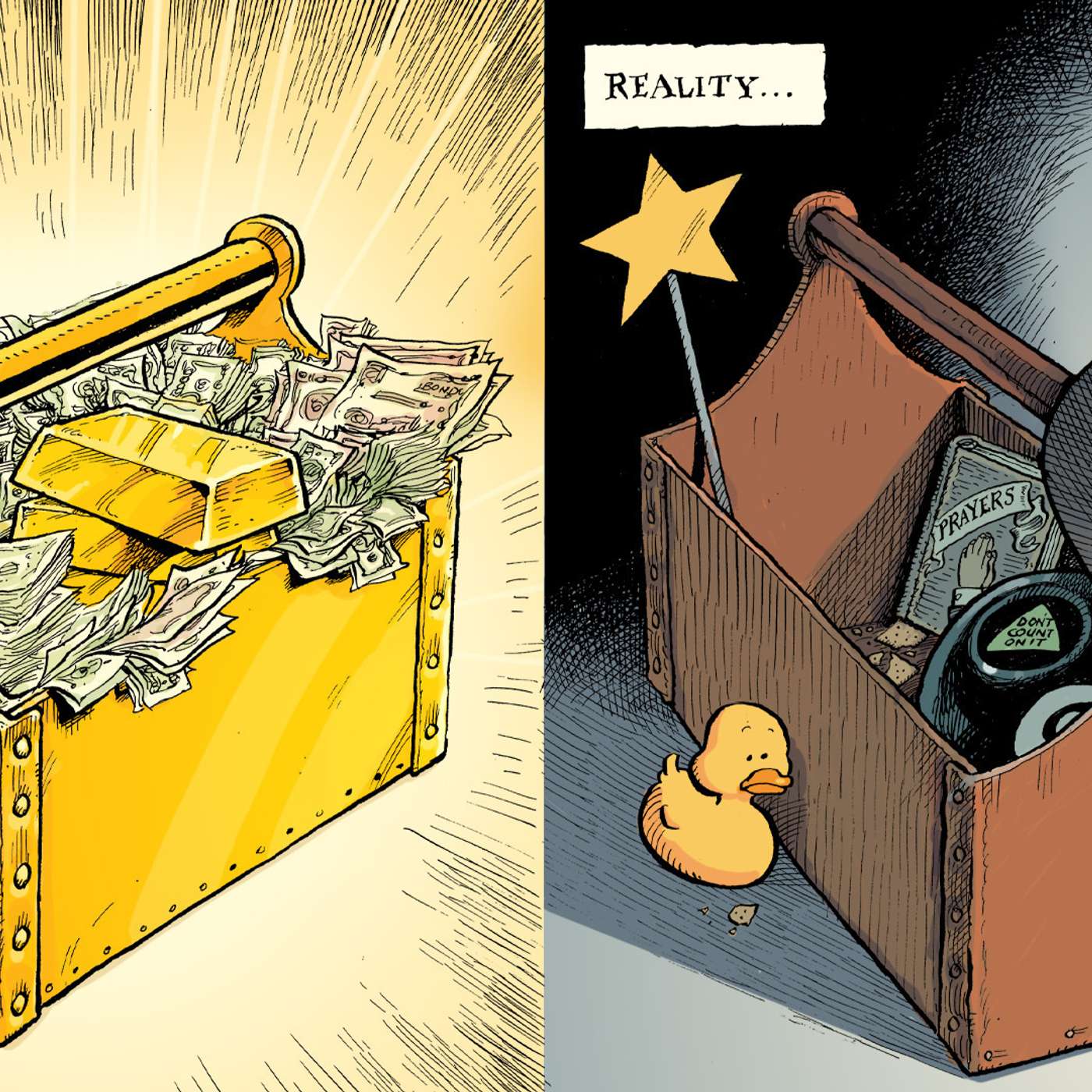
Ep 21What's in the Monetary Toolkit?
Life is full of problems. And when particularly irritated by them, we turn to professionals for help. Sure, men - especially the married kind - will insist they can take care of it. Plumbing? No problem. The Johnson-rod is loose in the car? I got it. Open wound with compound bone fracture? Rub some dirt on it. Still, eventually even men will get to a point when they'll ask for directions, because what can be done - they built the city all wrong. And so, when the technical expert is called we damn well expect they've got a toolbox of specialized, effective gadgets.For example, those tooth-yanking sadists are expected to make small talk about The Marathon Man while utilizing a tray of mouth mirrors, sickle probes, scalers and saliva ejectors. Go to the stables and you'll see brushes, sweat scrapers, hoof picks, deworming pastes, fly bonnets and liniments that will give your mare that glossy finish. One expects the same of our monetary technocrats. Their toolkit - you'd EXPECT - to hold a printing press, bond certificates, gold, as well as maps and barometers identifying the specification, production, distribution and utilization of modern money.In this 21st episode of Making Sense, Jeff Snider tells us what IS in the monetary toolkit after spending a professional lifetime reading meeting minutes, transcripts and speeches. What's in there? Yeah, Magic-8 Ball. A rubber duck. Prayer book, of course. Half-eaten egg-salad sandwich. And importantly, the phone numbers of financial journalists. Join us as we discuss the monetary toolkit through the lens of: China's unchanging foreign exchange reserves, credit conditions in the United States and PMI scores from around the world. Also, we end the show by holding a candle-light vigil for the 13th anniversary August 9, 2007. The day that the global monetary order malfunctioned. A day that the then-CEO of the British bank Northern Rock said, "the world changed." A day that The Guardian newspaper analogized to August 4, 1914 - the start of The Great War. A day that has yet to end.----------WHERE----------AlhambraTube: https://bit.ly/2Xp3royApple: https://apple.co/3czMcWNiHeart: https://ihr.fm/31jq7cICastro: https://bit.ly/30DMYzaTuneIn: http://tun.in/pjT2ZGoogle: https://bit.ly/3e2Z48MSpotify: https://spoti.fi/3arP8mYCastbox: https://bit.ly/3fJR5xQBreaker: https://bit.ly/2CpHAFOPodbean: https://bit.ly/3enSAkrStitcher: https://bit.ly/2C1M1GBOvercast: https://bit.ly/2YyDsLaSoundCloud: https://bit.ly/3l0yFfKPocketCast: https://pca.st/encarkdtPodcastAddict: https://bit.ly/2V39Xjr----------WHAT----------What’s In The Same Number? China’s Part In The (euro)Dollar Story: https://bit.ly/3ahCjNDReading the Tea Leaves About China (Making Sense Episode 14): https://youtu.be/UTTjUGp-K-oBuckets and Tookits, Empty Each: https://bit.ly/33BNUFRPurchasing Managers Indigestion: https://bit.ly/3imBky6Author Christopher Clark lecture on "Sleepwalkers: How Europe Went to War in 1914": https://youtu.be/6snYQFcyiyg ----------WHO----------Jeff Snider, Head of Global Investment Research for Alhambra Investments with Emil Kalinowski, standing there looking pretty. Artwork by David Parkins, operating with palette knives, color charts, painting palettes, tube wringers and paint rollers. Podcast intro is "Cornelia" by The Eastern Plain, remixed by Luwaks, at Epidemic Sound.
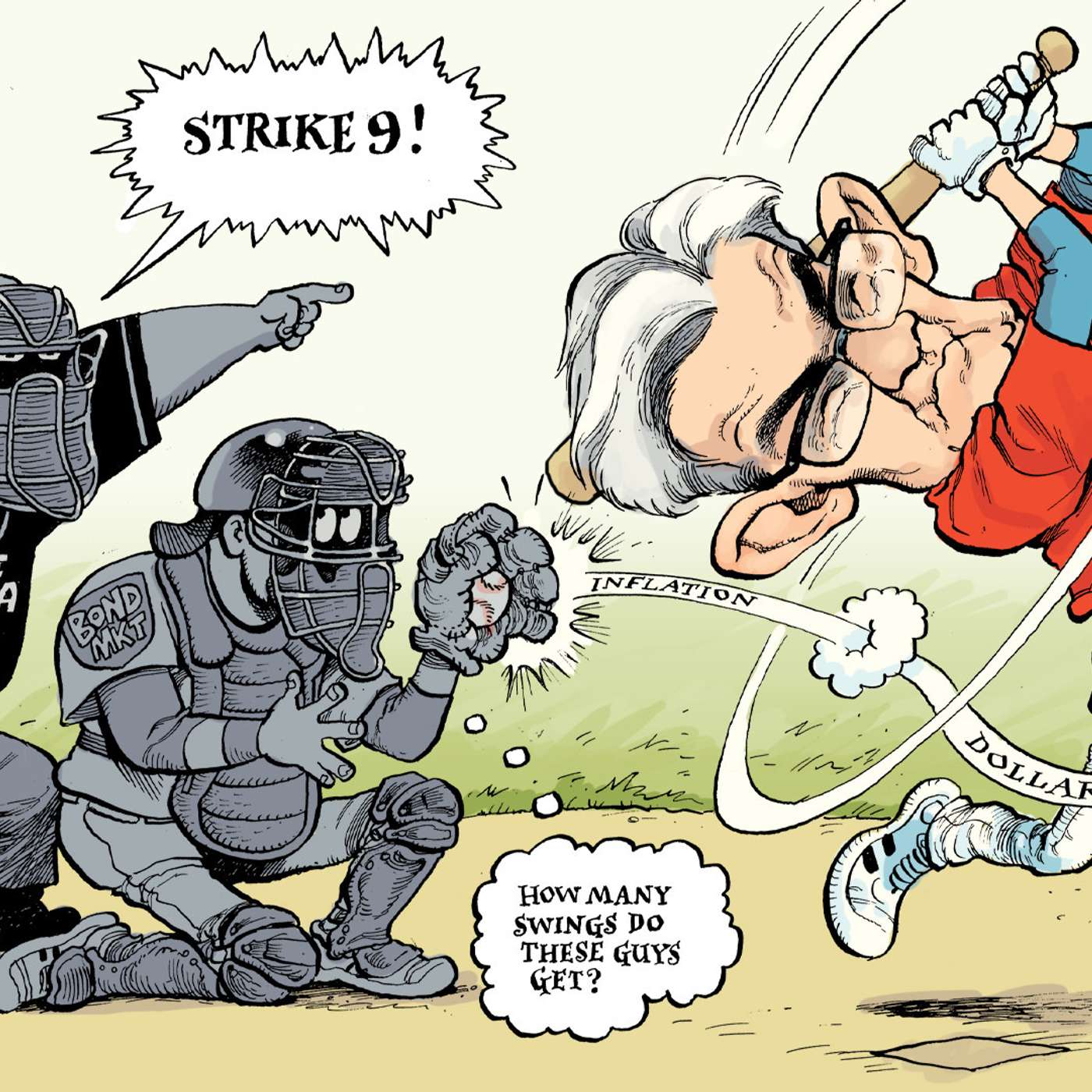
Ep 20Strike 9! Will the Fed Ever be Called Out?
Baseball. The nation's pastime. For well over a century the sport has nestled itself in the romantic nook of America's soul. Its greatness captured in sentimental movies like The Natural and Field of Dreams. But light is balanced with darkness and for all its majesty the sport bears scandals and self-inflicted wounds: the 1919 Black Sox, a racial barrier. And of course, there's that gray space between light and dark where tragi-comedy lies. The 1888 poem Casey at Bat. Yogi Berra's relationship with paradox and irony. The Red Sox and the 20th century.Like any phenomenon, the game has a full life that cannot be reduced to just one idea, one moment, one game. To do so would be the height of chutzpah and ego. So - let your podcaster oblige. The greatest game ever played was on February 2, 1946. Known as the Baseball Bugs game it took place in New York City's famed Polo Grounds where the Tea Totallers hosted the Gas-House Gorillas. The aged Totallers - one could even go so far as calling them elderly - were no match for the unshaven, cigar chawing players with shoulders as broad as the outfield placards. By the fourth inning the visitors were up: 96 to 0. So total was the farce that the home team turned to fans in the outfield for help. One such wasn't even a man. Or woman. It was a rabbit. Bugs Bunny.He struck out the first Gorilla with fastballs. Then - well - he changed baseball history with a single, off-speed pitch that struck out the side as three Gorillas swung three times each before the ball reached the plate. Players ever since have attempted to recreate the throw. And though pitches such as the Fossum Flip, Super Changeup, balloon ball, parachute, gravity curve and the Monty Brewster have come close, nothing has been seen like that magical day in 1946. Nothing until America's central bank came up to bat on August 9, 2007.For 13 years the Fed has been hacking away at the same pitch of monetary disorder. And unlike the Gas House Gorillas, apparently there is no limit to the number of swings it can take at this slow-moving soap bubble. In this, the Frank Robinson episode of Making Sense, Jeff Snider recounts just the three most recent strikes: Gold, Dollar, and Inflation Expectations. As part of the discussion we'll talk about Goldman Sachs' claim that "real concerns are emerging" about the dollar's reserve currency status and note that negative yielding US bonds are only a hare's hair away. Also, the Euro, the yen and other important things like Magnum PI's mustache and whether Jeff likes baseball.----------WHERE----------AlhambraTube: https://bit.ly/2Xp3royApple: https://apple.co/3czMcWNiHeart: https://ihr.fm/31jq7cICastro: https://bit.ly/30DMYzaTuneIn: http://tun.in/pjT2ZGoogle: https://bit.ly/3e2Z48MSpotify: https://spoti.fi/3arP8mYCastbox: https://bit.ly/3fJR5xQBreaker: https://bit.ly/2CpHAFOPodbean: https://bit.ly/3enSAkrStitcher: https://bit.ly/2C1M1GBOvercast: https://bit.ly/2YyDsLaSoundCloud: https://bit.ly/3l0yFfKPocketCast: https://pca.st/encarkdtPodcastAddict: https://bit.ly/2V39Xjr----------WHAT----------Would The Real Dollar Please Stand Up: https://bit.ly/3hWwyHGUS Dollar Index (DXY) Futures: https://bit.ly/3giQK6aStrike 1: Gold; Strike 2: Dollar; Strike 3: Inflation Expectations: https://bit.ly/39IlJG6The Fastball Behind Strike 3: https://bit.ly/2XjV11BOMG The Dollar!!!: https://bit.ly/2XfRamqKevin Warsh Quote (Jerome Powell Is a Barely Adequate Writer of Fiction): https://bit.ly/2BNmHV3----------WHO----------Jeff Snider, Head of Global Investment Research for Alhambra Investments with Emil Kalinowski, hidden in right field. Artwork by David Parkins, the Ernest Thayer of the colored pencil. Podcast intro and outro is "Suddenly You" by Golden Age Radio, at Epidemic Sound.
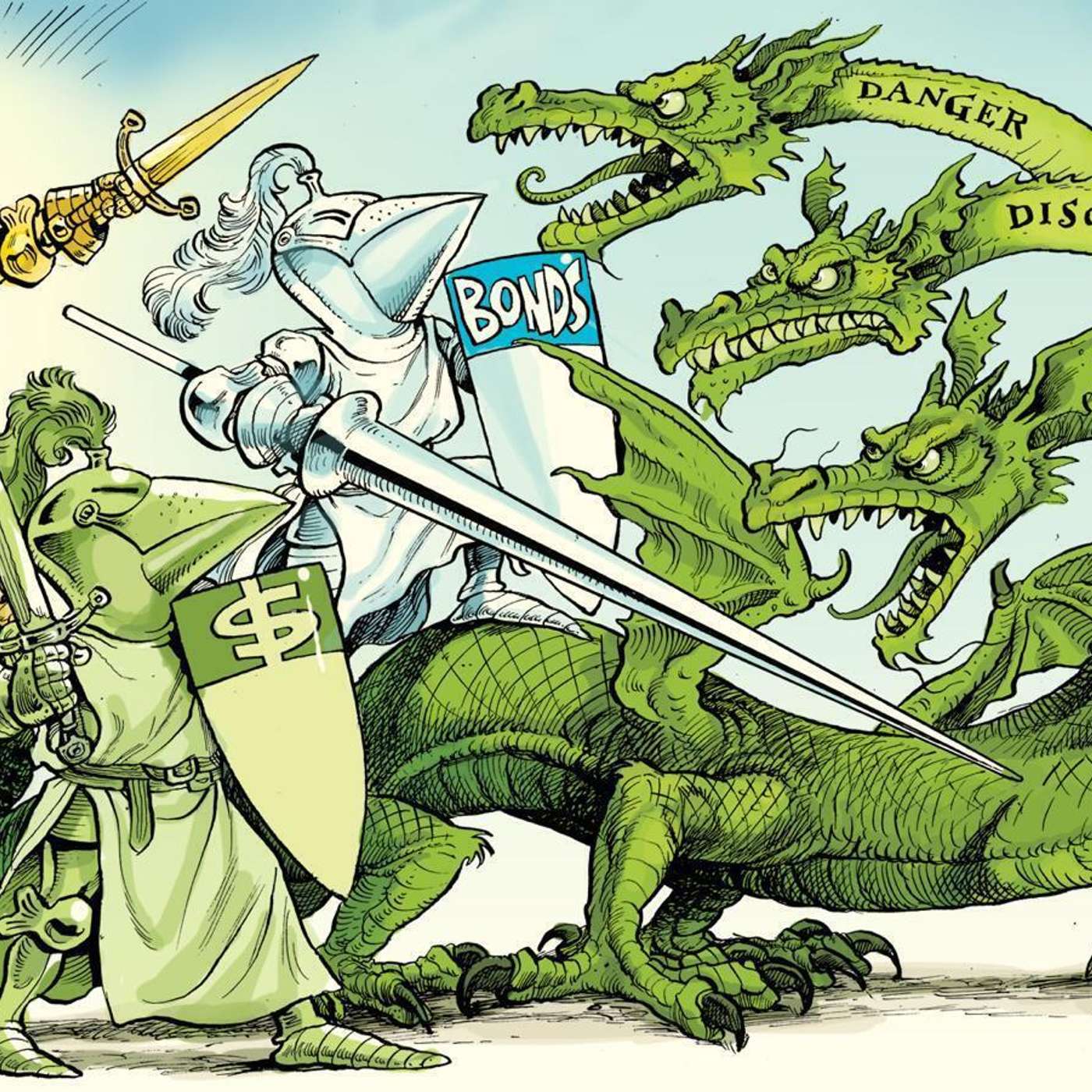
Ep 19Gold, Dollar and Treasury battle Deflation, Disorder and Danger
Now, admittedly SOME commodity prices have gone up. Half of the agricultural and livestock prices are up year-to-date. Copper is up! But these are the results of supply line disruptions and demand surges. The temporary, transitory reactions to the CoVo. NOT the persistent, broad-based multi-year inflation carried in by a monetary surge that central bankers suggest. Almost every energy-based commodity is DOWN. Most all industrial metals are DOWN. We address the issue in three segments, in this, the 19th episode of Making Sense. First, gold's sauntering up to $2,000. Silver is looking lustily at $30. Inflation, right? Central bank printing, true? Politicians handing out stipends and stimulus, yes? NO! Gold has been rising regularly - in concert with sovereign bonds - since October 2018 signaling deflation, disorder... and danger.Then in part two, America's dollar is said to be the global reserve currency. But might there be hostile nations scheming furiously to undermine the US dollar? They are, after all, selling US Treasuries on net, since 2014. Is there a dollar Pearl Harbor ahead? No. Precisely the opposite. It's the real reserve currency - the EURODOLLAR - that holds nations hostage, including the USA.And finally, Federal Reserve officials are promoting the notion the central bank will allow inflation to run. Run pure. And hot! A Bloomberg opinion column called it "a whole new ballgame [baby!]" (I added the "baby!" part). We've heard this story before. Not only from the Fed but as children. From Aesop. We knew it then as, "The Boy Who Cried Wolf".That's not Inflation's war cry. Not in this monetary disorder and economic depression. It's a publicity campaign. A caterwauling.----------WHERE----------AlhambraTube: https://bit.ly/2Xp3royApple: https://apple.co/3czMcWNiHeart: https://ihr.fm/31jq7cICastro: https://bit.ly/30DMYzaTuneIn: http://tun.in/pjT2ZGoogle: https://bit.ly/3e2Z48MSpotify: https://spoti.fi/3arP8mYCastbox: https://bit.ly/3fJR5xQBreaker: https://bit.ly/2CpHAFOPodbean: https://bit.ly/3enSAkrStitcher: https://bit.ly/2C1M1GBOvercast: https://bit.ly/2YyDsLaSoundCloud: https://bit.ly/3l0yFfKPocketCast: https://pca.st/encarkdtPodcastAddict: https://bit.ly/2V39Xjr----------WHAT----------Exposing The Golden LieSign of the Times: Gold Has Its Most Vocal Proponents Helping Sell Jay Powell’s FictionHuge, Massive Difference: De-dollarizing vs. Being De-dollaredMore To Being De-dollaredNot This AgainThe Fed Is Setting the Stage for a Major Policy Change----------WHO----------Jeff Snider, Head of Global Investment Research for Alhambra Investments with Emil Kalinowski, wandering hedge knight. Artwork by David Parkins, descendant of Arthur Eld ancient King of All-World. Podcast intro and outro is "Aoraki" by Ooyy, at Epidemic Sound.
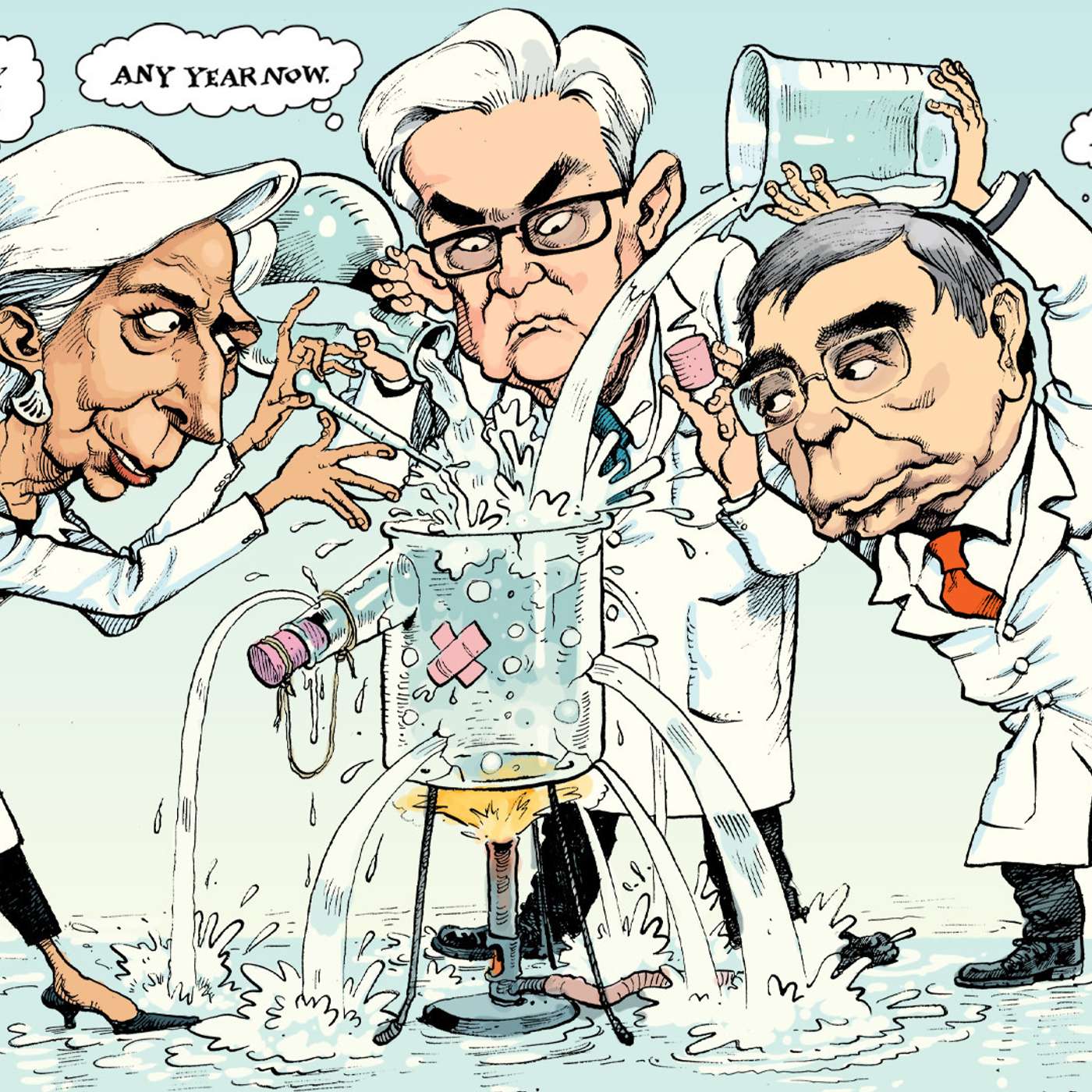
Ep 18The Fractured Flask
2008. Albuquerque, New Mexico. The first business meeting of what would become the best-known chemist team since Nobel-prize winners Molina, Crutzen and Rowland was not auspicious. Pinkman wanted to cook as an artist, with chili powder. White, called Pinkman's chili-p recipe -- garbage. In-turn, Pinkman dismissed White's science; all he needed was a big jar. He was actually referring to a volumetric flask, which as - the appalled chemistry teacher Mr. White responded - is for general mixing and titration you wouldn't apply heat to it. That's what a round bottom 5000 millilitre boiling flask was for. Pinkman's flasks almost certainly fractured often and leaked out.It is the metaphor of the fractured flask, the punctured pail - the leaking bucket - that Jeff Snider uses, in this the 18th episode of Making Sense, to explain why the inflationary concoction created by monetary technocrats isn't boiling over. First, we discuss why the Federal Reserve's monetization of debt isn't inflationary. Second, we review the latest inflation readings from the United States. Finally, Snider explains why the accelerating size of the US Treasury's checking account isn't inflationary either. It is all about the metaphor - technocrats and politicians pour inflationary water in yes, but not only is the bucket not a full one, ready to spill over, but it's perforated.Well, to head off a letter writing campaign, this podcaster acknowledges that a fair number of you dear listeners feel your podcasting team missed the opportunity to employ the metaphor of the leaky cauldron. To cast central bankers as a coven of warlocks preparing a witches brew of inflation. However, your podcaster prefers the analogy of the fractured flask. The technocrats style themselves as scientists, not magicians. They surround themselves with very rare 800 millilitre Kjeldahl-style recovery flasks and dynamic stochastic general equilibrium models, Griffin beakers and Erlenmeyer flasks. The tragi-comedy is that despite the scientific accouterments, they go about it in a Pinkman-like manner. Heating volumetrics, adding adulterants like yield curve control, bank reserves and chili-p.----------WHERE----------AlhambraTube: https://bit.ly/2Xp3royApple: https://apple.co/3czMcWNiHeart: https://ihr.fm/31jq7cICastro: https://bit.ly/30DMYzaTuneIn: http://tun.in/pjT2ZGoogle: https://bit.ly/3e2Z48MSpotify: https://spoti.fi/3arP8mYCastbox: https://bit.ly/3fJR5xQBreaker: https://bit.ly/2CpHAFOPodbean: https://bit.ly/3enSAkrStitcher: https://bit.ly/2C1M1GBOvercast: https://bit.ly/2YyDsLaSoundCloud: https://bit.ly/3l0yFfKPocketCast: https://pca.st/encarkdtPodcastAddict: https://bit.ly/2V39Xjr----------WHAT----------So Long As The Bucket Is Full of Holes, Treasury Demand Comes FirstTransitory, The Other WayWait A Minute, The Dollar And The Fed’s Bank Reserves Are Directly Not Inversely RelatedA General Sense of Treasury’s General Account----------WHO----------Jeff Snider, Head of Global Investment Research for Alhambra Investments with Emil Kalinowski, Pinkman. Artwork by David Parkins. Podcast intro and outro is "Full House Dusk" by River Foxcroft, at Epidemic Sound.
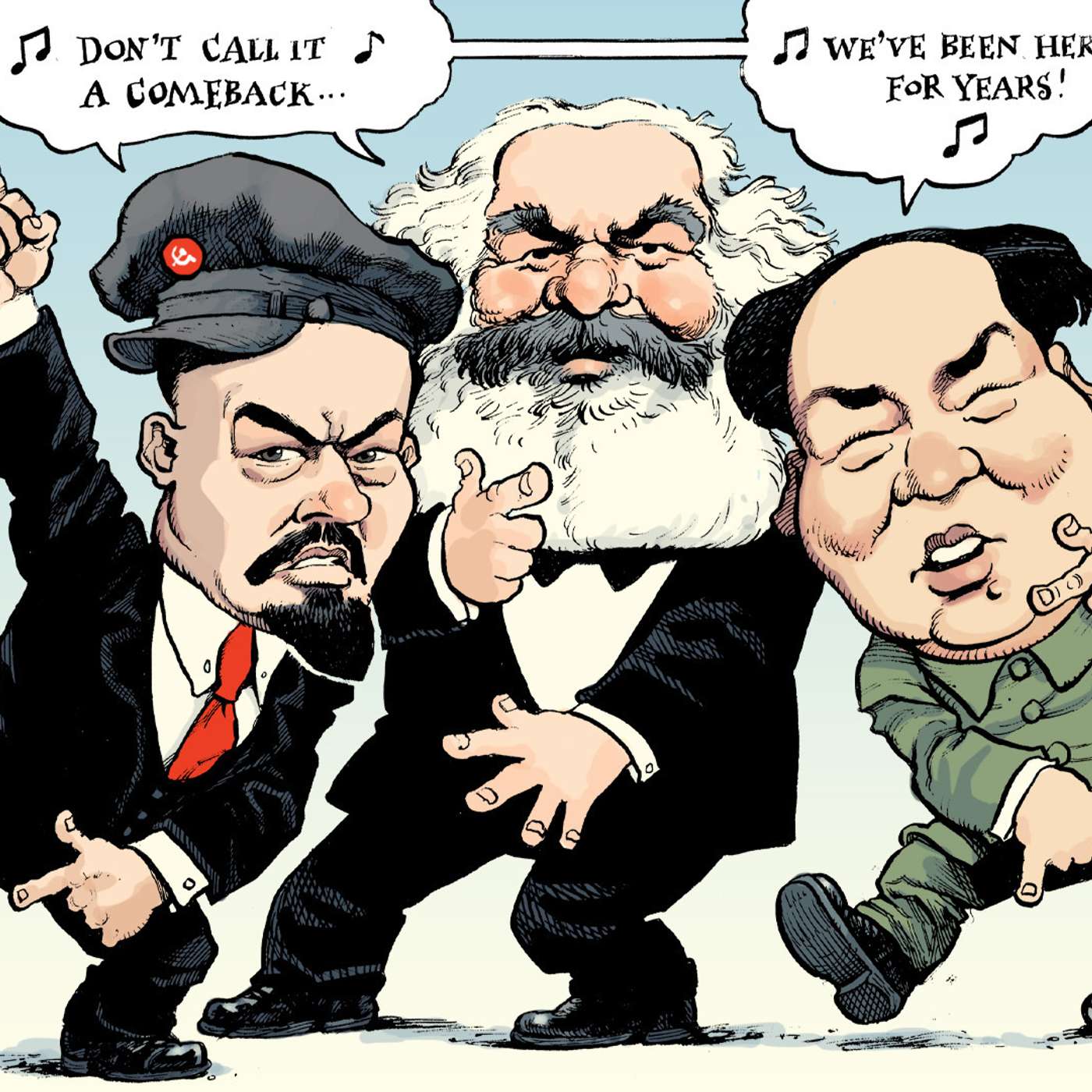
Ep 17Communism - Don't Call it a Comeback
Plato, Kant, Nietzsche, Buddha, Confucius, Rousseau, Aristotle, Bastiat, Molinari, Cicero, Hegel, Hobbes, Kant... LL Cool J. The contemporary philosopher sits on the social and political branch of the Western tradition. He began releasing treatises in 1985 after collaborating with Def Jam. Radio was his first. Two years later, Bigger and Deffer. But 1989's Walking with a Panther was 'too pop-y', said the Philosophical Review. 'So much empty fluff,' pondered the British Society for Phenomenology. Dialectica wouldn't even look at it. His fourth commentary however, returned him to the top. Both the album and its most famous song were titled Mama Said Knock You Out. The single famously begins with, "Don't call it a comeback, I been here for years".Singing that tune these days are Communism, Marxism and Socialism. In this, the 17th episode of Making Sense, Jeff Snider explains how to understand their philosophy and why their recent popularity is not a comeback despite the doctrine's body of work. Marxism was never gone, it was waiting for the club of mostly wealthy nations to reach the end of their capitalist potential. Well, a thirteen year depression on par with the 19th century's Long and the 20th century's Great depressions is making a good case. So then, how to counter the argument? But that's for the back-half of the show. First, a Catch-22 like paradox in bond markets. Safe sovereign and risky corporate bonds both display falling yields. Why? We look back to the last worldwide depression for answers. Then, yield curve control. This podcaster has a feeling it'll be the must-have toy for central bankers by Christmas. We look back at the US experience with the policy during the 1940s. Then Marx, Lenin and Mao take the stage, grab the mic and start spitt'n.----------WHAT----------Don’t Low Rates On Junk Bonds Mean Fed-fueled Credit Bubble? No. Precisely The OppositeYield Cap History Is Rock Solid, Just Not At All In The Way They Are Telling YouYield Caps = ToddlersFrom QE to Eternity: The Backdoor Yield CapsSocialism Would Have Been Easy to Discredit, Had There Been GrowthBrent Johnson & Jeff Snider "Breaking Down Eurodollars" Webinar by BlockWorks GroupReddit Late Stage Capitalism Thread 549,000 Strong----------WHO----------Jeff Snider, Head of Global Investment Research for Alhambra Investments with Emilulous. Artwork by David 'Straight Outta London' Parkins. Podcast intro and outro is "Callin Shots" by Damma Beatz at Epidemic Sound.
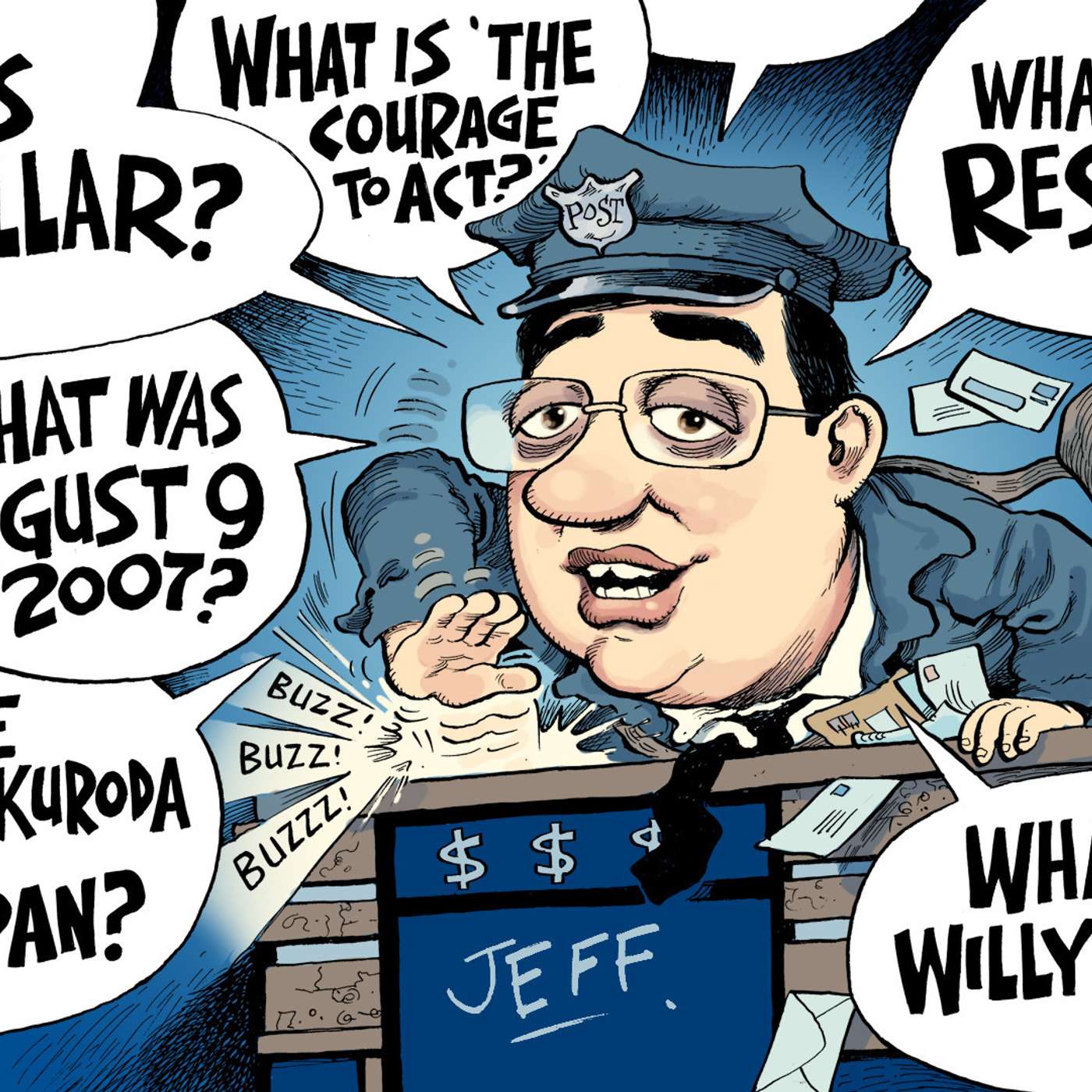
Ep 16What is... Eurodollar Mailbag?
After half-a-century, some 8,000 episodes and numerous tournament of champions the American television game show Jeopardy! decided to hold its definitive contest to determine its ultimate victor. The trial featured three accomplished champions: Ken Jennings, Brad Rutter and James Holzhauer. The selection of these three remains one of sports' great scandals -- right up there with the Czechoslovakian judge in Lillehammer. The three contenders were fine, having won more than a 100 contests and $10.7 million dollars between them. That's not bad... as far as humans go. Who should have been in the tournament?The first contestant most clearly deserved to be Phil Connors. Connors, initially a Pittsburgh weatherman stuck in a time loop, eventually attained the status of god. Not the God - at least he didn't think so - but a god. And as a deity not only did Connors know every answer in "Lakes & Rivers" - What is Mexico? What are the Finger Lakes? What is Titicaca? - he knew the question before the answer was even given: What is the Rhône?The second contestant was god-like in its knowledge: Watson. The likely forerunner of HAL-9000, this question-answering computer system already beat both Jennings and Rutter in an exhibition match for a million dollars. A eurodollar realist and having no use for a pyramid of physical bills, Watson promptly set the money alight and was heard walking off stage saying, "It's not about the money - it's about sending a message."The third contestant inhabits that shimmering space between reality and myth called "legend": Clifford C. Clavin, Jr. The part-time Boston-area mailman and full-time bar patron appeared on Jeopardy! in 1990, where he feasted on the categories like a walrus in a bed of bivalve mollusks, which is the mammal's preferred food you know. "Civil Servants", "Stamps from Around The World", "Mothers and Sons", "Beer", "Bar Trivia", "Celibacy".It is in the spirit of these latter three - as legend, as eurodollar realist, as living through a monetary time-loop - that Jeff Snider confronts listener questions in a Jeopardy!-style show in this, the 16th episode of Making Sense.----------WHAT----------Alhambra Investments BlogRealClear Markets EssaysYield Cap History Is Rock Solid, Just Not At All In The Way They Are Telling You----------WHO----------Jeff Snider, Head of Global Investment Research for Alhambra Investments with Emil Kalinowski, the Vanna White of Eurodollar Jeopardy! Artwork by the Phil Connors-like, preternatural David Parkins. Podcast intro and outro is "Come 2gether" by Ooyy at Epidemic Sound.
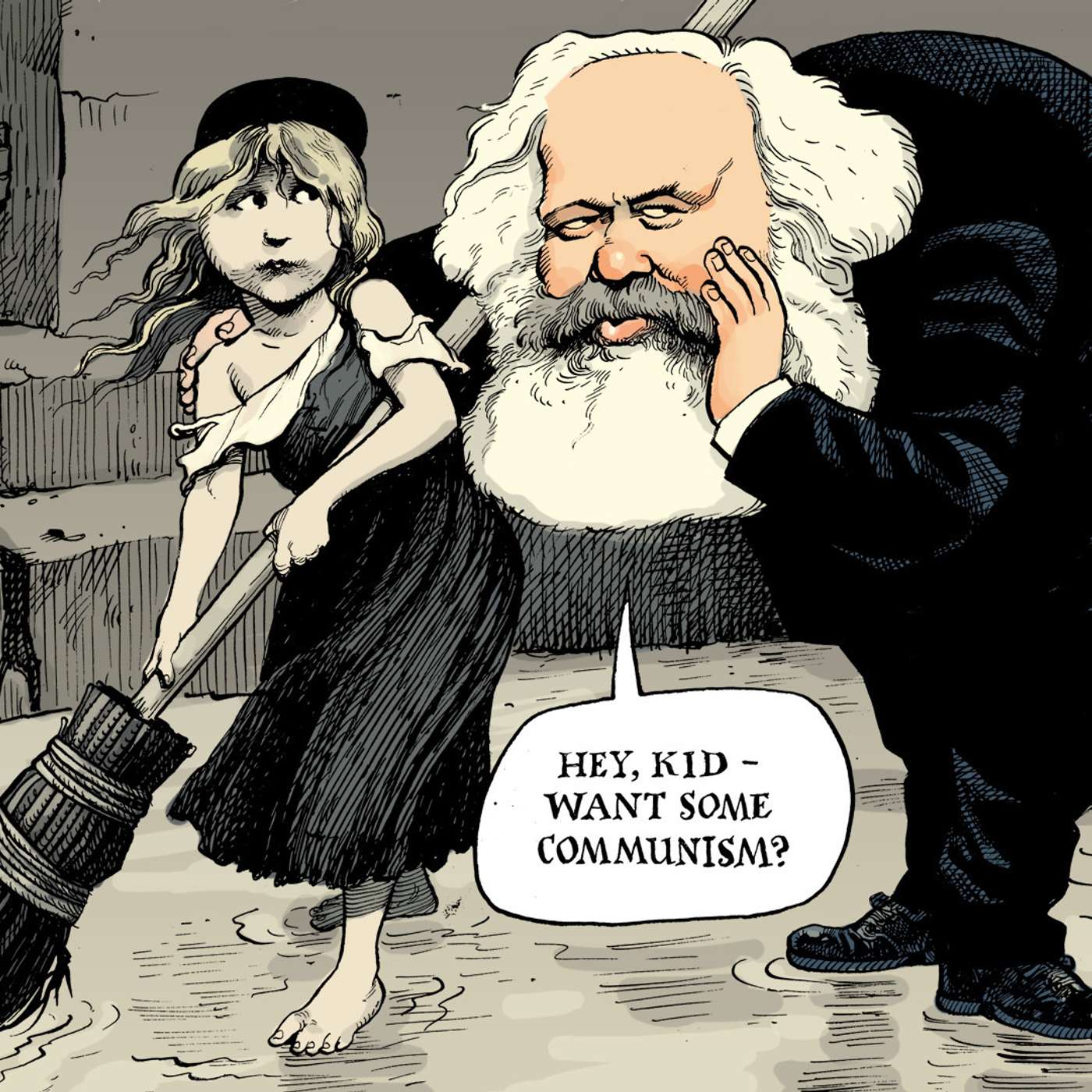
Ep 15Hey Kid, Want Some Communism?
Published in 1862, Les Misérables by Victor Hugo is "the novel of the century" according to David Bellos, professor of French and comparative literature at Princeton University. When asked on The Great Books podcast what qualifies this novel to be on the show Bellos responded, "It tackles a huge range of human experience, with an enormous amount of passion. If there ever was a great book, it must be Les Misérables." The story focuses on 'the suffering ones', 'the humiliated'. It's set in the social, political and economic upheaval of early-nineteenth century France. 'The poor people who are worthy of our pity' were caught up in the consequences of what Jeff Snider calls the first modern business cycle. Michael Pettis, in his 2001 book The Volatility Machine, identifies it as the first modern deglobalization. And Friedrich Engels called it "the first general crisis". Engels is, of course, the co-author of the Communist Manifesto, published in 1848 in response to the shocking, worldwide disorder. Karl Marx and Engels are said to suggest that capitalism has an expiration date; that capitalism was an ahistorical phenomenon which would burn up the limited fuel of labor and then sputter. And at that point communism would take over and redistribute the existing wealth equitably because there was a limit to human wealth creation.This, over the long sweep of history, is a pessimistic view of human character and potential. But humans don't live across history, they have a handful of decades. And when capitalism does find itself in a cul-de-sac as it did during the first general crisis, and the Long Depression, and the Great Depression and now this -- Year 13 of the Silent Depression, well then terminal capitalism sounds perfectly reasonable. In this the 15th episode of Making Sense, Jeff Snider discusses the barricades and autonomous zones of Les Misérables, Marx and Engles' thesis, late-stage capitalism, the Soviet Union, and present-day China; but all in defense of capitalism without denying that it's going down the wrong road -- toward the barricades.----------WHERE----------Apple: https://apple.co/3czMcWNiHeart: https://ihr.fm/31jq7cICastro: https://bit.ly/30DMYzaTuneIn: http://tun.in/pjT2ZGoogle: https://bit.ly/3e2Z48MSpotify: https://spoti.fi/3arP8mYCastbox: https://bit.ly/3fJR5xQStitcher: https://bit.ly/2C1M1GBOvercast: https://bit.ly/2YyDsLaPocketCast: https://pca.st/encarkdtPodcastAddict: https://bit.ly/2V39Xjr----------WHAT----------The Economic Boom You Heard About Never Really Was A Massive Problem That Has Them Searching For One----------WHO----------Jeff Snider, Head of Global Investment Research for Alhambra Investments with Emil Kalinowski, manning the barricades in the CHAZ (Cayman Highball Armorik Zone). Artwork by David Parkins, a modern-day Émile-Antoine Bayard. Music track "The Ministry" by Howard Harper-Barnes at Epidemic Sound.
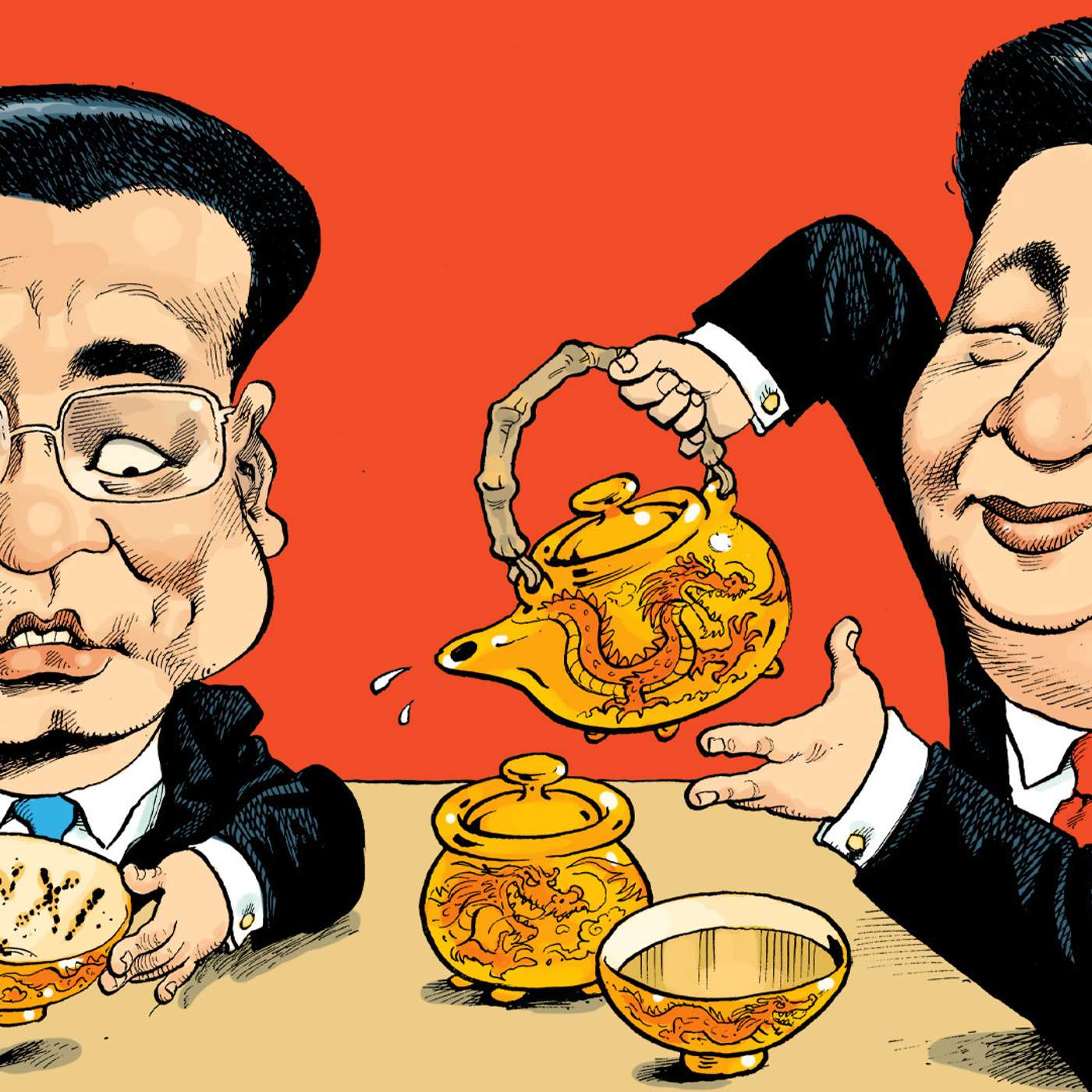
Ep 14Reading Tea Leaves
Your podcaster shunned traditional university education and instead sought a guild apprenticeship. Drawn to parapsychology and the occult even as a sma' one, it was natural this podcaster's inclinations were in alchemy, phrenology, gryphography, cryptozoology and economics. However, The Inquisition and Salem Trials had somewhat narrowed opportunities in these first options; opportunities which are now reserved for only the most gifted. With an aptitude optimistically scored by one high-school counselor as "average", your podcaster nevertheless found a welcome home in economics. That field was supplemented with a minor in tasseomancy.Sometimes called tassology or tasseography, it's the study of tea leaves for the purposes of divination, fortune telling and interpreting the political economy of China. Yes, any economist can tell you about last month's results for industrial production, retail sales and fixed asset investment. And Jeff Snider does, in this the fourteenth episode of Making Sense. We first steep and then drink West Lake's famous Dragon Well tea while discussing April's Treasury International Capital report, the echoes of 2013 and the Oktoberfest-in-June-like optimism of German Financiers. But then conversation turns to the political intrigue surrounding President Xi and Premier Li. Peering inside our porcelain cups the upward strokes of the leaves indicate a stabilized GDP level. The flourishes on the lower zone denote meticulous, yet highly creative accounting. But if one observes the overall slant and the pressure of the leaves there's a suggestion of acute overcapacity, a complete lack of recovery, and a pronounced inclination toward stagnation.If the monetary shadows are your fancy then the next time someone asks, 'Would you care for some tea or coffee? Something stronger perhaps?' - you know what to say.----------WHAT----------Still TIC’ed Off In The Shadows In AprilWhen Sentiment FliesA Chinese Outbreak (of Li v. Xi, Round 2)----------WHO----------Jeff Snider, Head of Global Research at Alhambra Investments with Emil Kalinowski, who prefers his tea by leaf not by the bag. Artwork by the Yellow Mountain Fur Peak of the paintbrush, David Parkins. Song "Asian Fork Fight" by Lenzer at Epidemic Sound. Apologies to Michele Mulroney and Kieran Mulroney, screenwriters for Warner Bros' Sherlock Holmes: A Game of Shadows.
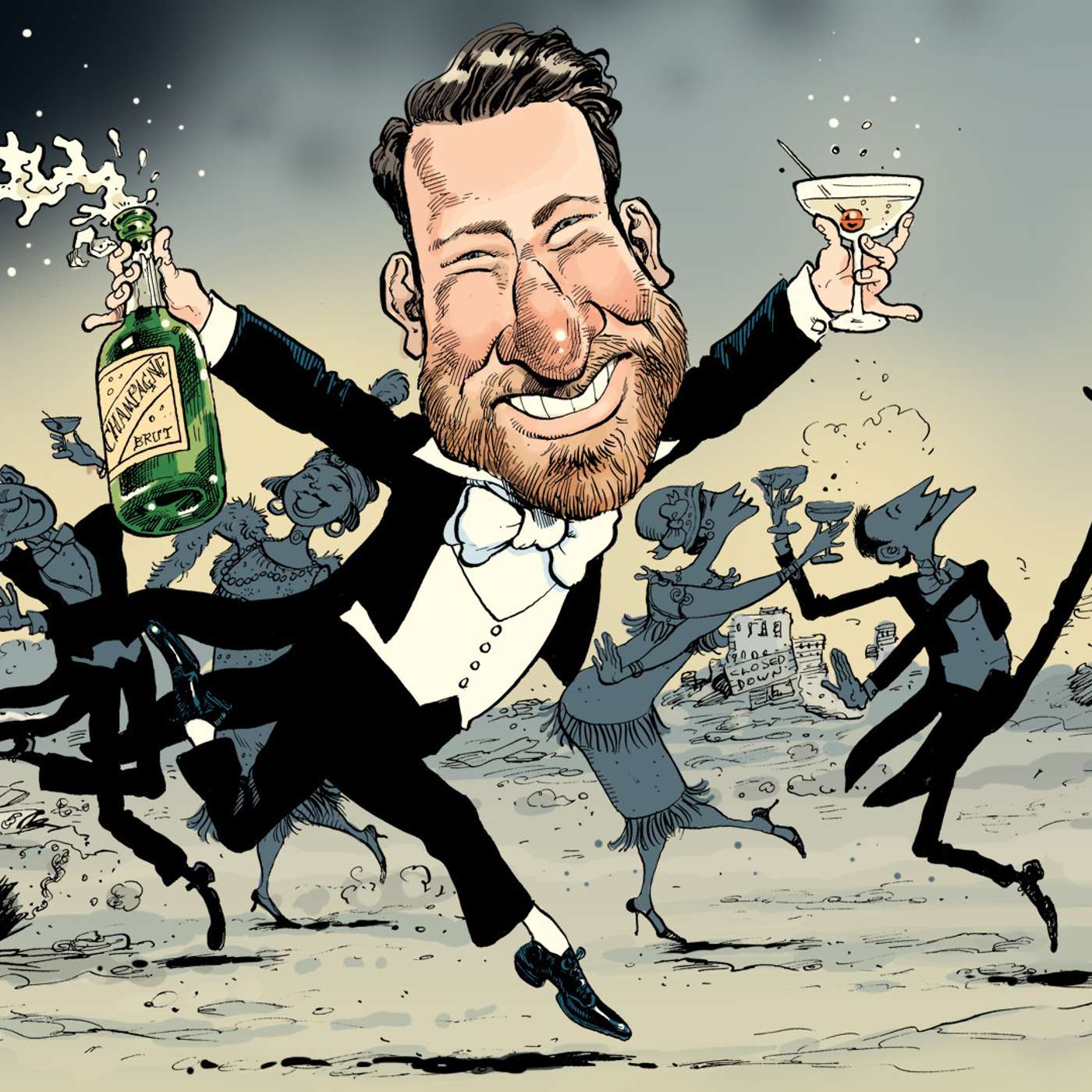
Ep 13The Great Portnoy
Upon its release the book was met with popular indifference. And no wonder. A cautionary tale about indulgence, extravagance and social upheaval? Right into the racing heart of the Roaring Twenties and its cloche hat wearing flappers, smoking Lucky Strikes and listening to jazz? No thanks. When Fitzgerald asked his editor about the book's reception he was told, "Sales situation doubtful, but excellent reviews." The author, in response, closed with, "Yours in great depression." It wasn't until the consequences of the Great Depression that the book achieved the acclaim it holds today. Only in retrospect did perception resonate with plot. Only in retrospect did the era seem an empty phantasm.Our own 'Roaring Twenty' has no such excuse. Unlike 1925 when economic depression was five years in front of those enormous yellow spectacles, our economy is 13 years in Daisy's rear-view mirror -- run over, killed. But you wouldn't know it if your radio was tuned to the business network. When it was reported in early June that the US economy unexpectedly added 2.5 million jobs for the month of May it set off an orgy of dip buying, lest there be no dip left to buy. David Portnoy, the Gatsby of our day and host of this stock market party leaves the invitation open to all via livestream and will tell you stocks only go, "Up! Up! Up! Up! Up!"In this episode we discuss how even establishment-economist forecasts -- forecasts in which the economy runs pure -- implicitly anticipate a worse experience than 2008. An experience from which the world never recovered; not really. In this episode we emerge from sheltering in place and survey the landscape. We see the Great Portnoy, hosting an elaborate party, in the Valley of Ashes.----------WHEN----------00:32 US Employment | Establishment / Household Survey02:52 US Employment | Initial & Continuing Jobless Benefit Claims04:59 US Employment | Economically Unemployed vs. Exogenous Shock Unemployment12:51 World Economy | Consensus Two-Year Outlook for GDP 16:38 World Economy | The OECD W-Shaped Recovery Doesn't Factor in a Second Economic Wave19:04 World Economy | World Bank Forecast as Warning that V is very L22:09 US Consumers | Revolving Consumer Credit Being Extinguished by Consumers27:22 US Yield Caps | Talk of Yield Curve Caps and What About Yield Curve Control in Japan32:01 US Yield Caps | World War II Experience with Yield Curve Ceilings35:31 World Economy | The Worst is Behind Us Now We Survey the Damage----------WHAT----------What Did Everyone Think Was Going To Happen?This Thing Is Only Getting Started; Or, *All* The V’s Are Light On The RightAttention All “V” PeopleA Second Against Consumer Credit And Interest ‘Stimulus’OMG The 30s!!!From QE to Eternity: The Backdoor Yield Caps----------WHO----------Jeff Snider, Head of Global Research at Alhambra Investments with Emil Kalinowski, someone that's not invited to the party. Artwork by David Parkins, the Francis Cugat of our Roaring Twenties.
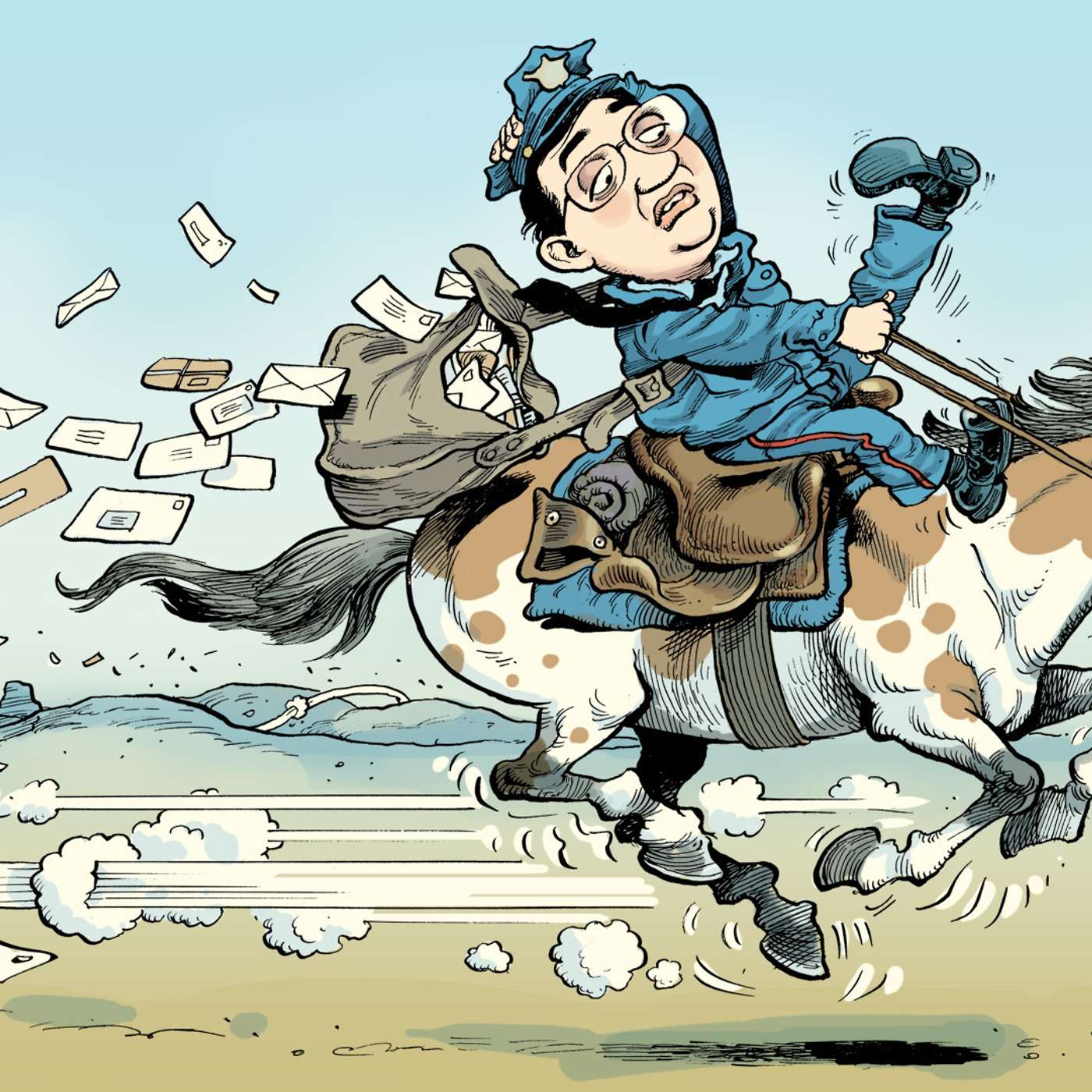
Ep 12Mailbag
Legendary figures took on the mantle of "Mail Carrier!" including: founding father Benjamin Franklin, Wells Fargo cowboys of the Pony Express, and nice guy Mr. McFeely from Mr. Rogers' Neighborhood. In more recent decades the profession saw its reputation sullied. Represented at one end of the spectrum by the austere, virginal, trivia-oracle Clifford C. Clavin, Jr. and at the other end the covetous and lurid Newman.But in this episode of Making Sense, Jeff Snider endeavors to bring back the profession's good name, just like Kevin Costner did in The Postman, a 1997 escapist fable about a post-Apocalyptic America that begins to find its soul thanks to a mailman. The film takes on a more documentary-like tone these days. Snider as itinerant nomad, wandering the dystopian monetary order delivering long lost answers to bewildered people asking why -- in a world where a smokey haze obscures the horizon -- oil is more valuable underground and stock prices are lighter than air. "Why? Why?! Why!"Sure, Rotten Tomatoes gave The Postman an 8 percent rating with one reviewer thinking, 'Relative to this, Waterworld is Citizen Kane.' Well, this podcaster disagrees and gives the movie 100 percent for British actress Olivia Williams alone.Is the US Treasury deluge good? Are banks opting out of the game? What's the deal with foreign central banks and their dollar reserves? Can the banking system function without central bank reserves? Why buy lower-yielding sovereign debt from Europe or Japan instead of the US Treasury? How to animate reserves? Should we add asset managers to the Primary Dealer pool? Is inflation low due to Chinese goods? Why is the Federal Reserve buying mortgage backed securities? Is it a violation of the Federal Reserve Act to buy risky assets? Why is the S&P500 exploding higher? Why was there inflation in the 1970s?WHATAlhambra InvestmentsRealClear MarketsMetals & Markets BlogWHOJeff Snider, Head of Global Research at Alhambra Investments with Emil Kalinowski, not mailman material. Artwork by David Parkins, il primo ballerino of the colored pencil.
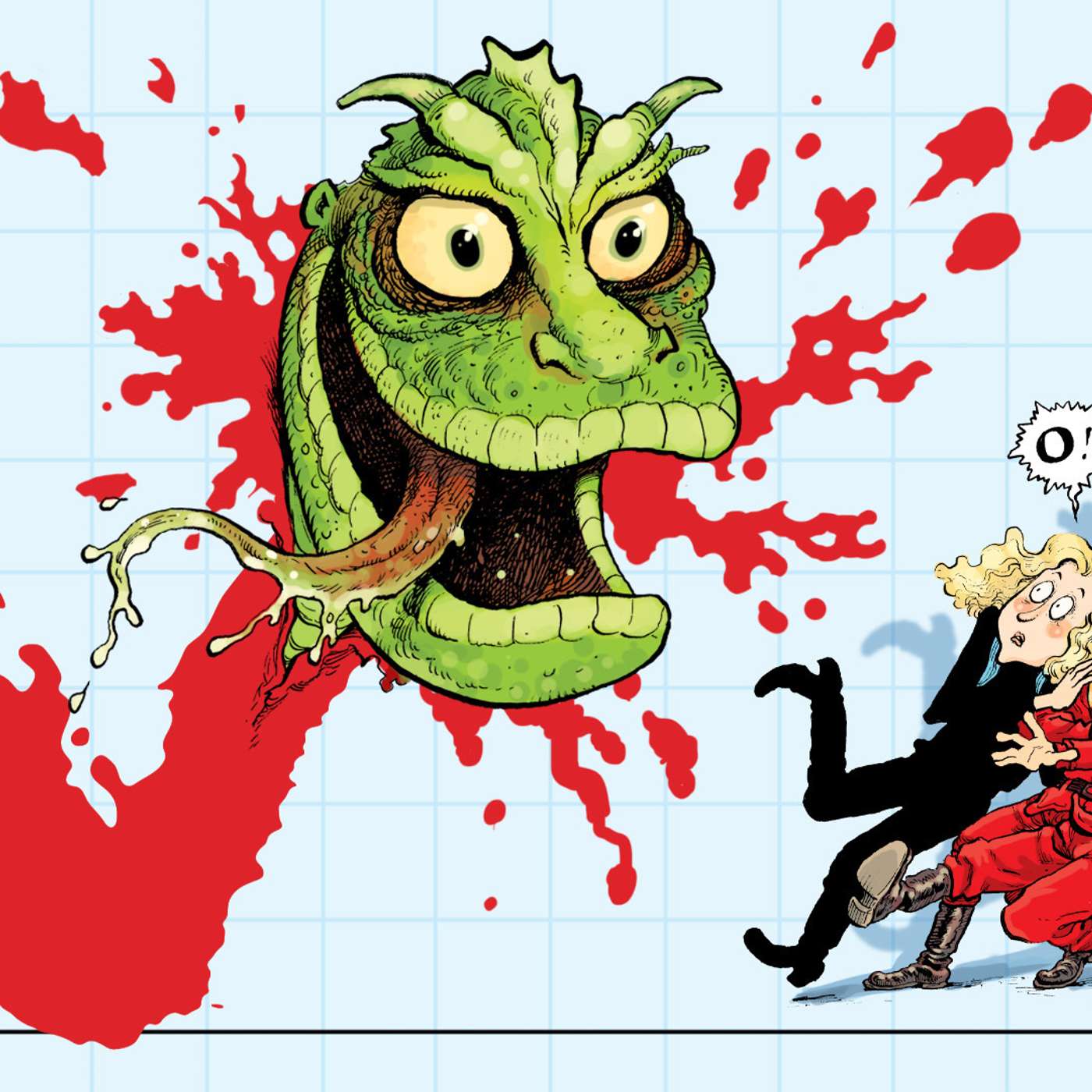
Ep 11The Worst V Since "V"
In the mid-80s parents allowed their children to watch an innocent-looking television program titled V thinking it was some kind of Sesame Street offshoot. Imagine little Johnny and Suzy Q's horror when, instead of Reading Rainbow, they were watching a sci-fi melodrama about disguised reptilians. The Visitors, presenting themselves as competent, benevolent beings here to teach the backwards ape a few things, were hiding behind masks -- including their beautiful smokeshow of a leader Diana -- and had actually come to harvest Earth's water and snack on humans. A sophisticated allegory about economists? Perhaps...The mini-series had been the reigning champion of "Worst V of All Time" until the 2007-09 financial crisis, which sent the global economy off its post-World War Two trend. Unlike all downturns since 1945, this one was different in that a plurality of economies representing a majority of global gross domestic product never regained their pre-crisis trend growth. The V-shaped recovery that three generations had come to take for granted turned out to be a grossly misshapen, lizard-like L that was visible beneath the mask of positive numbers in all manner of broad economic accounts, including: global foreign direct investment, world merchandise trade, the 35-country Organisation for Economic Co-operation and Development industrial production index, etc.In this eleventh episode of Making Sense, Jeff Snider, Chief Investment Officer of Alhambra Investments (and Resistance Leader) explains why 2020 may surpass the intergalactic reptiles AND dethrone 2007-09. We review the US Congressional Budget Office's very un-V forecast through 2021, estimate in trillions the depth of the contraction in the US, put into context Washington D.C.'s inadequate-sized stimulus and review the Euro Area's broad survey of economic confidence.No iguanas were hurt in this episode.WHATGetting A Sense of the Economy’s Current Hole and How the Government’s Measures To Fill It (Don’t) Add UpThe *Optimists* Have Some Terrible News For the ‘V’What Would The Hole Be Without The ‘L’?What Flood?WHOJeff Snider, Head of Global Research at Alhambra Investments with Emil Kalinowski, still working on his ABCs. Artwork by David Parkins, mammal.
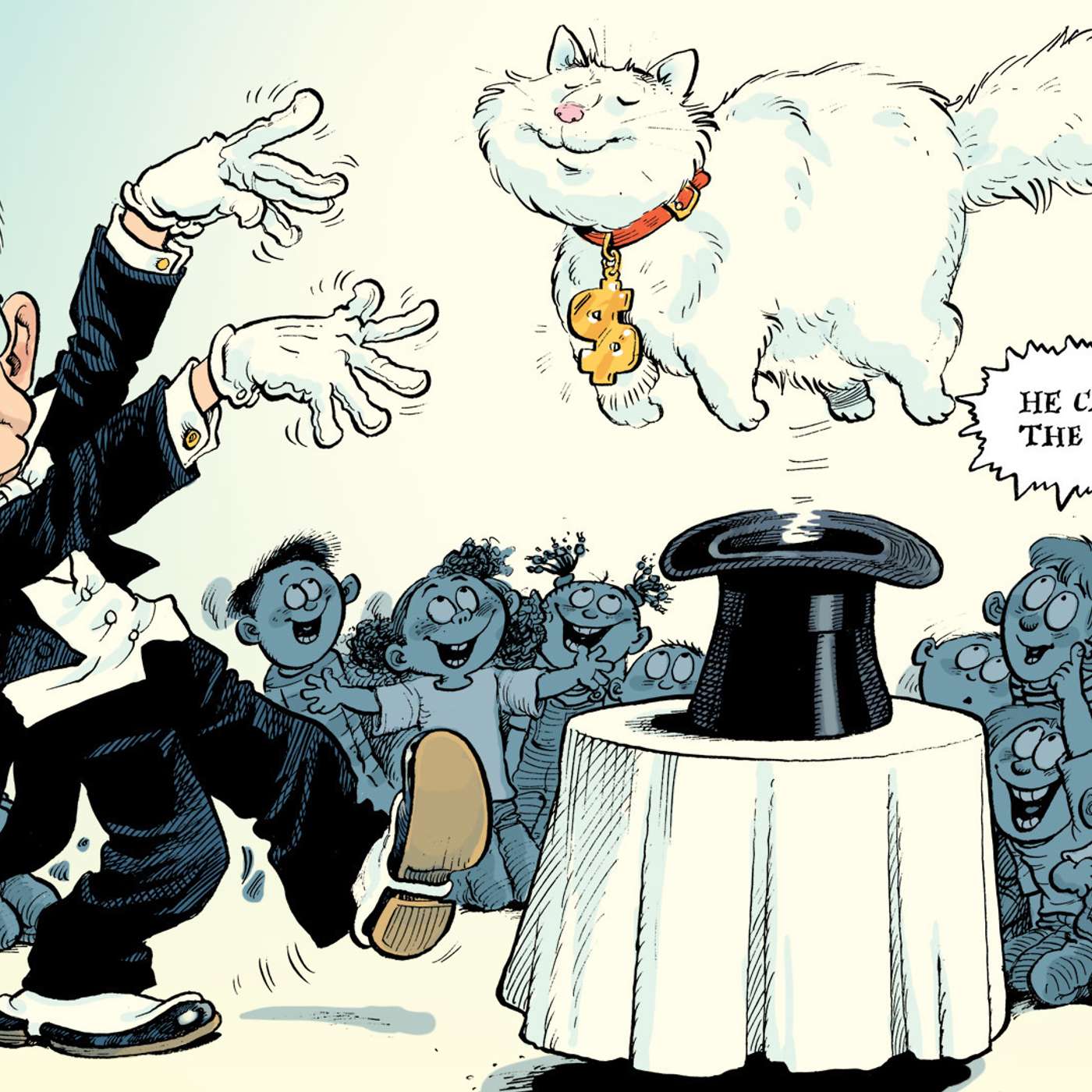
Ep 10Stock Magiq
We are informed by the financial press the agitated creation of reserves are, to capital market participants, a mix of whiskey and Felix Felicis; liquid courage and luck. The first manifestation of the wealth effect, which will encourage households to consume and corporations to invest. The financial market animal spirit. The economist's Patronus Charm. But what did the Federal Reserve do - and more importantly not do - in 1929, 1987 and throughout 2008-20 to support US stock markets? When was there a direct link between bank-created money and the stock market? And when was there nothing more tangible than "expectations policy" - the modern equivalent of the warlock's frantic charms, hexes, jinxing and spell-casting? Also, Federal Reserve Chairman Jerome Powell was interviewed on the American news program 60 Minutes this week. He said, the Fed saw the market meltdown coming, that the central bank increased money supply - he says they can print 'real' money too, you know - that there's no limit to what they can do to support the economy (and also that the said economy may not 'get back to zero' until the end of 2021). We review the interview by pointing out what the smoke is obscuring, where the mirrors have been placed, and discuss how "theatricality and deception are powerful agents to the uninitiated." WHATStocks Haven’t Been MoneyedThe Reason For So Many Lies: He Finally Realizes He’s In Way Over His HeadWHOJeff Snider, Chief Investment Officer of Alhambra Investments with Emil Kalinowski, a physical (precious metals) man; artwork by David Parkins, sculptor of the color wheel.