Emerging Minds Podcast
218 episodes — Page 4 of 5
Ep 67Re-release - Substance use and child-aware practice - part two
In this episode we learn more from experienced practitioners about working with parents with substance use issues in child focused ways. What are the other background or coexisting factors for these families? How can child focused practice help break intergenerational cycles of substance use issues in the family and find out more about what practitioners can do to help.
Ep 66Re-release - Substance use and child-aware practice - part one
In this episode, we will be talking with practitioners and listening to their experiences in working with parents with substance use issues. We will be learning about how children can be impacted by their parent/s’ substance use and about how practitioners can help improve outcomes for children’s mental health and wellbeing by adopting a child-focused approach in their practice.
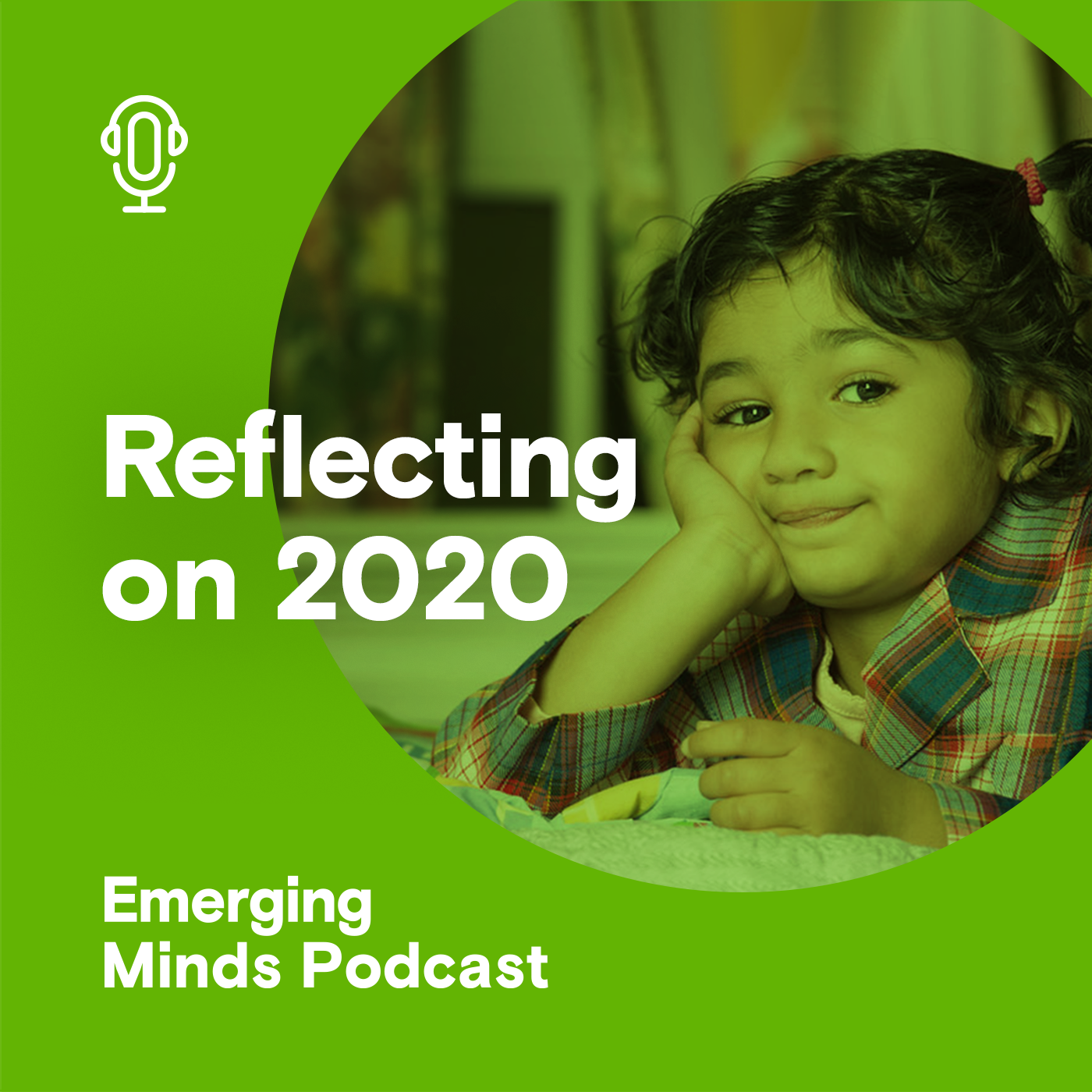
Ep 65Reflecting on 2020
bonusWhat might children be experiencing this Christmas, in light of the unique and challenging year that 2020 has been? In this episode, three of our team members share their perspectives on how the events of 2020 might affect children and families this holiday season, and offer suggestions for ways families can support each other during this time. Tune in to hear from Emerging Minds’ director, Brad Morgan, as well as two of our Child Mental Health Consultants, Angela Scuderi in Melbourne and Ania Mazurkiewicz in Sydney. In this episode you will learn: many of us may be feeling mixed emotions and it’s okay to feel anxious and worried [05:17] how maintaining routines can create a sense of safety for children [06:38] developing a plan for the holidays and including children in the planning can be helpful [14:30] why nurturing relationships and connections is especially important this year [19:12] 2020 may have taught us to slow down and value simplicity [21:22] Further information and resources: Resources for parents: COVID-19 resource summary: https://emergingminds.frmdv.com/resources/covid-19-resource-summary/ Managing routines for children during the Coronavirus (COVID-19) pandemic: https://emergingminds.frmdv.com/resources/managing-routines-for-children-during-the-covid-19-pandemic/ Resources for practitioners: The long-term effects of the Coronavirus (COVID-19) pandemic and what they might mean for practitioners: https://emergingminds.frmdv.com/resources/the-long-term-effects-of-the-coronavirus-covid-19-pandemic-and-what-they-mean-for-practitioners/ Bonus podcast episode: Children’s mental health during the Coronavirus (COVID-19) pandemic: https://emergingminds.frmdv.com/resources/podcast/childrens-mental-health-during-covid-19/
Ep 642009 Victorian Bushfires: Supporting recovery
In this episode, April Harrison reflects on her experience of the 2009 Victorian Bushfires and the impacts they had on her and her community. April, who was 8 at the time of the fires, shares how her school and the community played a big role in supporting her recovery. April and host Natalie Rutstein also discuss the potential impacts of natural disasters on children’s mental health; the powerful role that schools and educators can play in helping communities heal; and the importance of including young people in bushfire recovery efforts. Some people may find the stories in this podcast distressing. If you or someone you know requires assistance, please call Lifeline on 13 11 14 or Beyondblue on 1300 22 4636. If life is in danger, call 000. In this episode you will learn: the range of emotional presentations that may emerge in children post bushfires [03:41] how learning communities and educators can be helpful in the immediate aftermath of a bushfire [12:04] how to support children experiencing distress in a tailored and flexible way in the classroom [18:04] the role of peer support in bushfire recovery [23:04] the importance of normalising the whole spectrum of emotional responses post bushfire [25:01] the role and power of youth-led recovery resources and workshops [29:40] key messages for learning communities in their bushfire recovery [31:42] Further information and resources: Community Trauma Toolkit: https://emergingminds.com.au/resources/toolkits/community-trauma-toolkit/ Trauma sensitive behaviour management: https://emergingminds.com.au/resources/trauma-sensitive-behaviour-management/ More water than fire: A poster showing ways parents and carers can build safety with children touched by fire Children need to not feel alone: https://media.digistormhosting.com.au/woodleigh/content/MoreWaterThanFire.pdf?mtime=20200129130339
Ep 63Supporting children through understanding regulation - part two
This episode is part two of our conversation about regulation and how understanding the way the body regulates different states of arousal can support children’s social and emotional development.
Ep 62Supporting children through understanding regulation - part one
This episode is part one of a conversation that explores the topic of regulation. It looks at how understanding the way the body regulates different states of arousal can support children’s social and emotional development.
Ep 61Biopsychosocial formulation and the key phases of a child mental health assessment
This episode is part of our upcoming e-learning course, A GP Framework for Child Mental Health Assessment. What are the key phases of a child mental health assessment in general practice? Dr Andrew Leech joins the Emerging Minds podcast to discuss these phases and the principal role that biopsychosocial formulation plays in conducting a child mental health assessment. Andrew is a GP based in Perth, Western Australia, and has a passion for paediatric general practice as well as the role that GPs can play in positively influencing a child’s life trajectory. He has a diploma in child health and holds advisory roles at the RACGP and Emerging Minds. In this episode, Andrew summarises the four key phases of a child mental health assessment that are articulated in the e-Learning course, ‘A GP Framework for Child Mental Health Assessment (5-12 years)’, and explains the important role that a biopsychosocial approach to formulation plays in supporting the child and family. In this episode you will learn: key phases of a child mental health assessment [1:14] how a biopsychosocial formulation help with understanding the needs of a child and family [9:50] the difference between formulation and diagnosis [21:00] the challenges GPs face in forming an understanding of a child’s mental health needs [27:33] advice for completing a child mental health assessment [32:21] Further information and resources: A GP Framework for Child Mental Health Assessment e-learning course: https://emergingminds.com.au/online-course/a-gp-framework-for-child-mental-health-assessment-5-12-years/ Supporting Children’s Resilience in General Practice e-learning course: https://emergingminds.com.au/online-course/supporting-childrens-resilience-in-general-practice/ Supporting child mental health in general practice with Dr Sara Whitburn podcast: https://emergingminds.com.au/resources/podcast/supporting-child-mental-health-in-general-practice/
Ep 60Taking a team approach to managing children's mental health in general practice
This episode explores what is meant by collaboration and a team-based approach to the management of children’s mental health in general practice.
Ep 59Transferable skills and the role of GPs in child mental health assessment
This episode examines the role of the GP in child mental health assessment and identifies the transferrable skills that can support GPs in this work.
Ep 58Key skills in engaging children during a child mental health assessment
This episode explores the skills of engagement in the general practice environment as part of conducting a child mental health assessment.
Ep 57Responding to the challenge of child sexual abuse
Why is it so difficult for children to disclose sexual abuse and how can we make it easier? This episode we're joined by Carol Ronken, Director of Research at Bravehearts. Carol draws on her 17 years of experience working in the field to answer this question, as well as share other insights on the issue of child sexual abuse. As well as overseeing research at Bravehearts, Carol is a Visiting Fellow in the School of Justice, Faculty of Law, at Queensland University of Technology and sits on a number of working groups including the Australian Centre to Counter Child Exploitation Research Working Group, the Twitter Trust and Safety Council (Australia), and the Australian Child Rights Taskforce. In this conversation, we explore the topic from multiple angles including the definition of child sexual abuse, what prevention and early intervention looks like, and how adults can get better at recognising signs and indicators. In this episode you will learn: how to define what is meant by ‘child sexual abuse’ [07:42] how sexual abuse differs from other forms of abuse and neglect [12:45] what prevention looks like with young children [19:15] how to open up the conversation about child sexual abuse [27:04] what is important for practitioners to know about child sexual abuse [27:04] how to make sense of 'red flags' [32:18] how children are particularly vulnerable in online environments [37:46] Further information and resources: Responding to a disclosure of child sexual abuse: https://emergingminds.com.au/resources/responding-to-a-disclosure-of-child-sexual-abuse/ Responding to children and young people's disclosures of abuse: https://emergingminds.com.au/resources/responding-to-children-and-young-peoples-disclosures-of-abuse/ Making use of practitioners’ skills to support a child who has been sexually abused: https://emergingminds.com.au/resources/making-use-of-practitioners-skills-to-support-a-child-who-has-been-sexually-abused/ Information and resources for parents on the Bravehearts website: https://bravehearts.org.au/what-we-do/education-and-training/for-parents/ Ditto’s Keep Safe Adventure program: https://bravehearts.org.au/keepsafe eSafety Commissioner: https://www.esafety.gov.au/parents
Ep 56Tuning in to Kids and the value of emotionally connecting with children
What happens when we welcome children’s emotions rather than minimising or dismissing them? This episode explores the benefits of an emotion-focused approach to parenting with associate professor and clinical psychologist, Sophie Havighurst. Sophie has spent her career developing, implementing, and evaluating the program, Tuning in to Kids, which was designed to teach parents how to support their children's emotional development. Sophie discovered the impact that an emotionally disconnected childhood can have while working in mental health and forensic settings early in her clinical career. This discovery set her on a course of wanting to change the way parents respond to children’s emotions and the development of the suite of Tuning in to Kids programs. In this episode, we discuss why connecting with children’s emotions is so important for their development, along with some of the fundamental principles taught in Tuning in to Kids. In this episode you will learn: about the Tuning in to Kids parenting program [06:20] why understanding emotions is so important [09:50] how to help parents identify their automatic reactions [12:28] why it’s important to use minimal language when children are upset [17:25] what changes were observed in the children and parents who took part in the Tuning in to Kids program [24:50]. Further information and resources: Tuning in to Kids website
Ep 55Supporting dads in their role as fathers
What are Australian dads looking to learn about fatherhood? In this episode, we talk to Dominic Alford, coordinator of the ‘Support for Fathers’ project. Dom has a background in social work, with extensive experience working in the child protection and foster care systems. The ‘Support for Fathers’ project was funded as part of the Federal Government’s prevention response to the issue of family violence. It aims to create more opportunities for men to learn about fatherhood and find ways of increasing their engagement with support services. Dom talks about what he’s learned from travelling the country talking to fathers, and shares practical ways in which services and practitioners can make fathers feel more included. In this episode you will learn: How dads view their role (06:00) Why fathers have historically felt excluded in service delivery (10:30) The value of getting fathers to share their stories (15:02) Fathers’ unique influence on their children’s development (19:59) Ways for services and practitioners to engage fathers (23:18) Further information and resources: Support for Fathers website: https://supportforfathers.com.au Engaging fathers in early childhood services: https://emergingminds.com.au/resources/engaging-fathers-in-early-childhood-services ‘7 Types of Dad’ resource: https://supportforfathers.com.au/resources/just-about-dads/7-types-of-dad ‘Dads raising the next generation’: https://supportforfathers.com.au/resources/just-about-dads/dads-raising-the-next-generation ‘Introduction to working with men and family relationships’ guide: https://www.dss.gov.au/our-responsibilities/families-and-children/publications-articles/introduction-to-working-with-men-and-family-relationships-guide
Ep 54Supporting children and families through telehealth
How do you engage children when working with them remotely via video? In this episode, Tayla Iellamo, an occupational therapist who works for Royal Far West, shares her experience of delivering telehealth services to children in rural and remote areas. Tayla has worked as an OT for five years and has been delivering telehealth services through the Windmill and Telecare programs at Royal Far West for the past year. She has a passion for working with children and families in remote areas and finds telehealth a valuable and dynamic approach to delivering therapy. Tayla shares her experience of what helps families prepare for a telehealth service, what to consider when engaging children through a video platform, and troubleshooting tips and tricks for when things don’t go as planned. In this episode you will learn: What a family can expect from the first telehealth session (07:15) Helping families become comfortable with technology (10:38) Keeping the child’s context in mind in telehealth service delivery (18:19) Suggestions for practitioners new to telehealth (24:22) Further information and resources: A practical guide to working with children and families through telehealth: https://emergingminds.com.au/resources/a-practical-guide-to-working-with-children-and-families-through-telehealth/
Ep 53The role of speech pathology in child mental health
Two mental health speech pathologists join this episode to talk about the relationship between children’s speech, language, and communication needs and their wellbeing.
Ep 52Autism, neurodiversity and child-centred practice - part two
In the second part of this episode, Dr Erin Bulluss discusses the overlap between Autism, developmental trauma, and high sensitivity, and explores ways of practicing with Autistic children that are child-centred and honouring of their uniqueness.
Ep 51Autism, neurodiversity and child-centred practice - part one
Dr Erin Bulluss is a clinical psychologist with lived experience of autism. In this episode, we discuss what autism is from an autistic perspective, why there can be a lot of variation in presentation and the reason that early diagnosis for autistic girls tends to get missed.
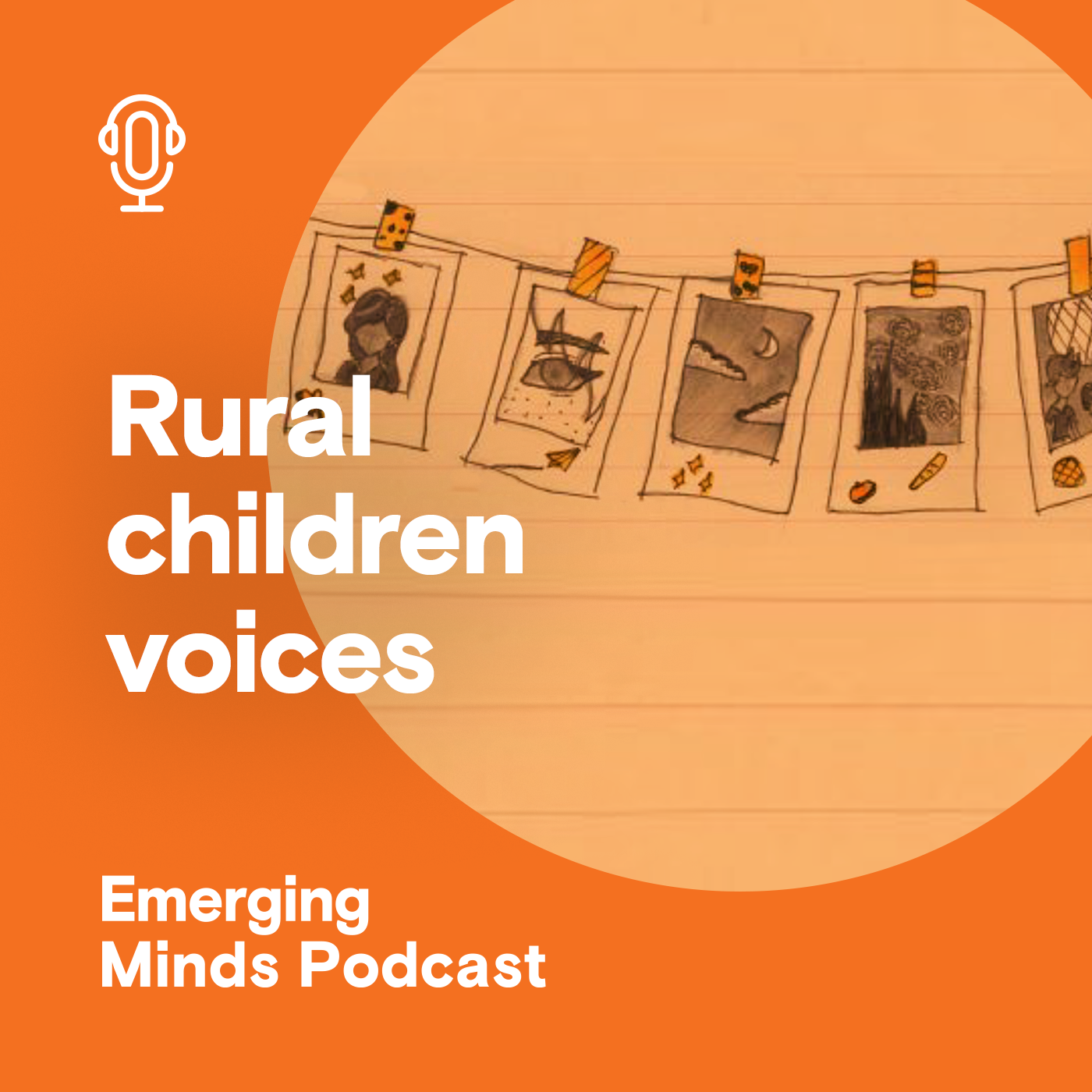
Ep 50Rural children's voices - episode eight
South Australia’s first Commissioner for Children and Young People, Helen Connolly, shares advice on engagement, how we can better listen to this age group and insights on what it is like for rural children and young people during time of adversities, such as drought. In this episode, Helen Connolly, South Australia’s first Commissioner for Children and Young People, shares her experiences and what she has leant from talking and working with thousands of children and young people from all over South Australia. Some of the stories in this podcast may be distressing to some people. If you or someone you know require assistance, please call LifeLine on 13 11 14 or beyondblue on 1300 22 4636. If life is in danger, call 000. Reflections: Reflection 1: Commissioner’s role [00:47] Reflection 2: Commissioner’s approach in engaging children and young people [01:20] Reflection 3: Commissioner’s insight of regional and rural children and communities [03:32] Reflection 4: Commissioner’s advice for adults [04:48] Reflection 5: Commissioner’s insight on how to better listen to children and young people [06:17] Reflection 6: Commissioner’s on how children and young people voices can be heard [08:15] Reflection 7: Commissioner’s on how to support a positive future for children and young people in their lives [10:02] Further information and resources: Commissioner for Children and Young People SA: https://www.ccyp.com.au/ The SA commissioner’s role is to promote and advocate for the rights, interests and wellbeing of children and young people. This is done through: making recommendations to government and examining systemic issues relating to children and young people; conducting research and producing reports; and ensuring that South Australia meets its international obligations. The commission also seeks to engage children and young people to encourage their participation in decision making that affects their lives (Government of South Australia, 2018; The Children and Young People (Oversight and Advocacy Bodies) Act 2016). List of all the Australian, State and Territories Children's and Young People Commissioners and Guardians via the CFCA website: https://aifs.gov.au/cfca/publications/childrens-commissioners-and-guardians Acknowledgements: Hosts: Events On Air (Drew and Leigh Radford). The Radford brothers previously work for the ABC and held various roles from Journalist, Executive Producers and Directors in both the urban and regional settings in Australia. Drew Radford is passionate about rural issues and need for respectful and authentic storytelling to ensure that the essence of people’s experiences and stories are captured. Podcast voices: Emerging Minds thanks the South Australia Commissioner for Children and Young People, for contributing to this podcast. Development committee: This podcast series has been co-designed with support from executive members - Isolated Children’s Parent’s Association SA and NSW Branches, Remote Isolated Children’s Exercise, South Australia Government Drought Response program, Department of Rural Health, University of South Australia and Emerging Minds staff. Music: Podcast mu...
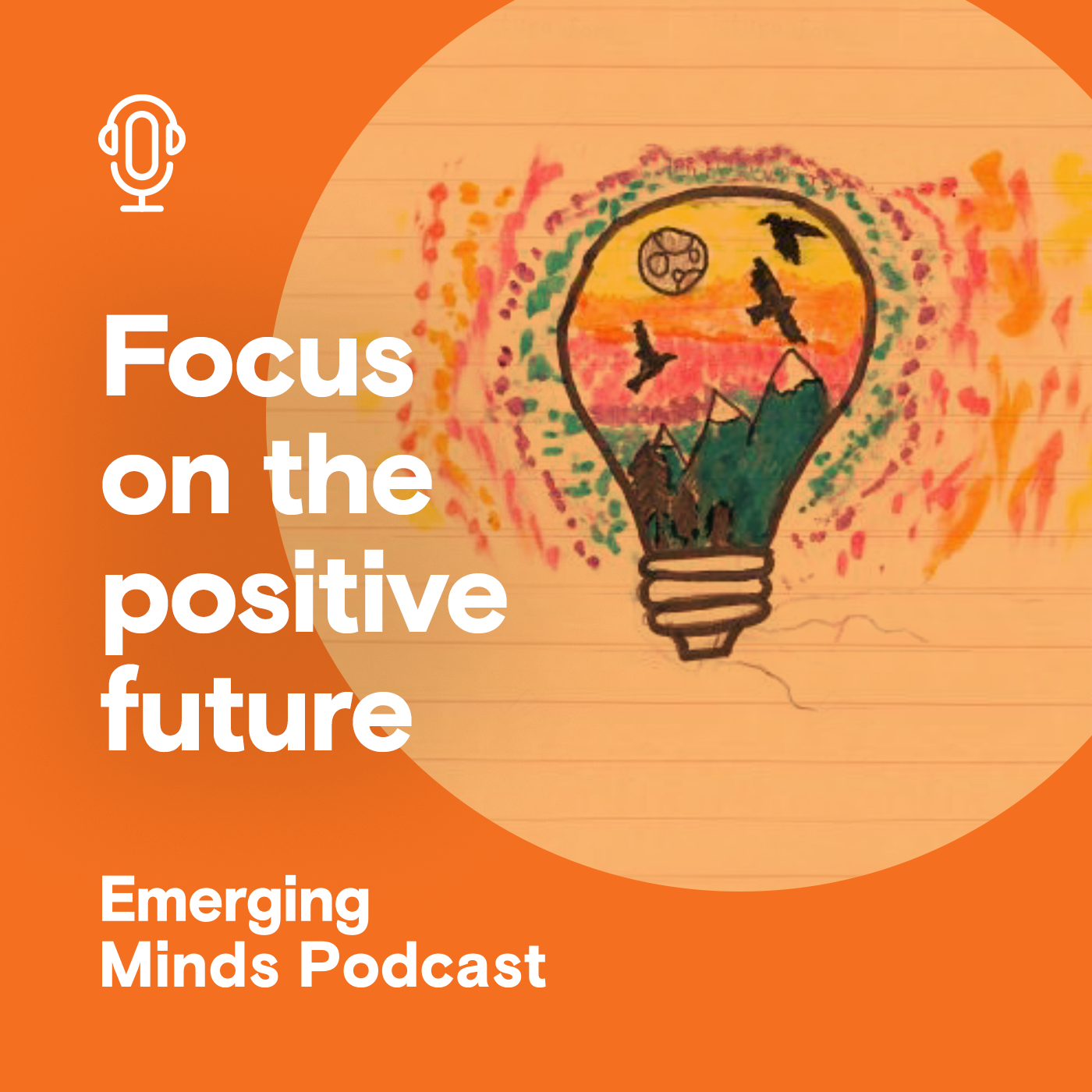
Ep 49Focus on the positive future - episode seven
In this episode, three rural parents share their experiences on how they focus on a positive future to support them during tough times, such as drought. Clinical psychologists John Dean and Andrea Baldwin provide their practice wisdom for parents and caregivers on why it’s important to have hope, and to focus on fun and looking forward in a positive way for their children and themselves.
Ep 48Give your child the opportunity to make decisions - episode six
In this episode, two rural parents share their experiences in how they support their children to make decisions and have their voices heard. Clinical psychologists John Dean and Andrea Baldwin provide their practice wisdom for parents and caregivers on why it’s important to support a child on their own decision-making, and some practical strategies on supporting a child to achieve this.
Ep 47Support your child's social connections - episode five
In this episode, four rural parents share their experiences on how they support their child's social connections with family, friends, school and communities during tough times, such as drought. Clinical psychologists John Dean and Andrea Baldwin provide their practice wisdom with some tips for parents and caregivers on why social connections are important for children, with some practical strategies during difficult times.
Ep 46Be on the lookout for changes in your child's behaviour - episode four
In this episode, three rural parents share their experiences on how they have been on the lookout for mood changes in their children during tough times, such as drought. Clinical psychologists, John Dean and Andrea Baldwin, provide their practice wisdom with some tips for parents and caregivers on practical strategies, and when to seek support for their children during drought.
Ep 45Keep an open conversation - episode three
In this episode, three rural parents share their experiences on how they have encouraged their children to talk about their feelings during tough times, such as drought. In addition, John Dean and Andrea Baldwin, two clinical psychologists, provide their practice wisdom with some tips for parents and caregivers in how they can support open conversations during and after these difficult times.
Ep 44Try looking at things through your child's eyes - episode two
In this episode, two rural parents share their experiences on how they look at things from their children’s perspective and what they are seeing, hearing, and feeling during tough times, such as drought. In addition, clinical psychologists John Dean and Andrea Baldwin provide their practice wisdom on how parents and caregivers can help their children by understanding their reactions and behaviours during and after these difficult times.
Ep 43Try to look after yourself - episode one
Try to look after yourself so you can look after your children. Parents play a vital role for children in times of drought. Your capacity to cope during drought impacts your children's response to stress and their wellbeing during and after the event. Self-care is vital, so it is important that you seek out any help you need so you are better able to support your kids. In this episode, three rural parents share their experiences on how they look after themselves during tough times such as drought. Clinical psychologists John Dean and Andrea Baldwin provide their practice wisdom gained over many years in how parents and caregivers can establish self-care routines and the importance in doing this during and after these difficult times. Some of the stories in this podcast may be distressing to some people. If you or someone you know require assistance, please call LifeLine on 13 11 14 or beyondblue on 1300 224 636. If life is in danger, call 000. Reflections: Reflection 1: Amy (parent) [00:56] Reflection 1a: Andrea (clinical psychologist) [01:50] Reflection 2: Belinda (parent) [05:32] Reflection 2a: John (clinical psychologist) [06:36] Reflection 3 : Jane (parent) [10:37] Reflection 3a: John (clinical psychologist) [11:00] Further information and resources: The big dry: the impact of drought on children and families: https://emergingminds.com.au/resources/the-big-dry-the-impact-of-drought-on-children-and-families/ Self-care plan – completed: https://emergingminds.com.au/resources/self-care-plan-completed/ Self-care plan – blank: https://emergingminds.com.au/resources/self-care-plan-blank/ Acknowledgements: Hosts: Events On Air (Drew and Leigh Radford). The Radford brothers previously work for the ABC and held various roles from Journalist, Executive Producers and Directors in both the urban and regional settings in Australia. Drew Radford is passionate about rural issues and need for respectful and authentic storytelling to ensure that the essence of people’s experiences and stories are captured. Podcast voices: Emerging Minds thanks the parents for Isolated Children’s Parent’s Association SA, School Link and Got It! Programs, NSW Health Murrumbidgee Local Health District and Queensland Centre for Perinatal and Infant Mental Health, Children’s Health Queensland Hospital and Health Service, for contributing to this podcast. Development committee: This podcast series has been co-designed with support from executive members from Isolated Children’s Parent’s Association SA and NSW Branches, Remote Isolated Children’s Exercise, South Australia Government Drought Response program, Department of Rural Health, University of South Australia and Emerging Minds staff. Funders: This podcast series has been made possible by funding from Country SA PHN under the ‘empowering our communities SA’ grant and the National Workforce Centre for Child Mental Health, led by Emerging Minds. The National Workforce Centre for Child Mental Health is funded by the Australian Government Department of...
Ep 42Substance use and child-aware practice - part two
What are the types of factors that underpin substance use in families and how can practitioners support parents to make changes that will improve outcomes for themselves and for their children? Suzie Hudson, Sarah Watson, Melissa Shee, Lisa Hofman and Sally Field generously share their valuable insights about why practitioners should ask their clients about their children; how practitioners of drug and alcohol and generalist services are in a unique position to be able to support parents with substance use issues to improve outcomes for children. And how a child focused approach can help to break intergenerational cycles of substance use as a coping mechanism for people with background histories of trauma and disadvantage. In this episode you will learn: Can substance use be used by mothers as a way to mask other issues, such as family violence or past trauma? (01:40) The benefit of working directly with children who are affected by substance use in their family (13:52) What does inclusive family practice look like with parents who are using substances? (16:07) Further information and resource: e-learning: Parental substance use and child-aware practice, principles and practices https://emergingminds.com.au/online-course/parental-substance-use-and-child-aware-practice-principles-and-practices/ e-learning: The impact of parental substance use on the child- foundation https://emergingminds.com.au/online-course/the-impact-of-parental-substance-use-on-the-child-foundation/
Ep 41Substance use and child-aware practice - part one
Have you always wanted to adopt a child-focused approach when working with parents with substance use issues but perhaps you have been a bit unsure as to what this might actually look like in practice? In this podcast we will hear from four practitioners who will talk us through how children are impacted by their parent’s substance use, how practitioners can open up supportive conversations with parents about their children, how asking about children is helpful in harnessing motivation for clients to make positive changes and the impacts of stigma and shame, particularly for mothers seeking treatment for substance use. Featuring: Sally Riley, Suzie Hudson, Melissa Shee, Sarah Watson, and Lisa Hofman. In this episode you will learn: The effects of parental substance use on children (00:43) Why is it important to help parents notice these effects? (04:28) Are children a motivating factor in parents’ recovery? (08:59) Is stigma an obstacle for mothers who have substances? (11:34) Further information and resource: e-learning: Parental substance use and child-aware practice, principles and practices https://emergingminds.com.au/online-course/parental-substance-use-and-child-aware-practice-principles-and-practices/ e-learning: The impact of parental substance use on the child- foundation https://emergingminds.com.au/online-course/the-impact-of-parental-substance-use-on-the-child-foundation/
Ep 40Positive post-separation parenting
In this episode, Dr. Priscilla Dunk-West joins the series again to discuss what separation and divorce look like when it goes well for children.
Ep 39A story from Community
In this podcast, Clyde Rigney Sr and Rose Rigney share their story of their community, Raukkan. Raukkan is a Ngarrindjeri community on the banks of Lake Alexandrina, whose historical church takes pride of place on the Australian fifty-dollar note. Established in 1859 as Point McLeay mission, and finally being handed back to the Ngarrindjeri people in 1974, and renamed Raukkan in 1982.
Ep 38Culturally informed trauma-integrated healing practice - part 2
This is the second part of a two-part series where we are joined by Emeritus Professor Judy Atkinson and Dr. Caroline (Carlie) Atkinson, CEO of ‘We Al-li’, two extraordinary women who have dedicated their lives to the healing of trauma for Aboriginal and Torres Strait Islander children, families and communities. Judy and Carlie share stories of practice through a culturally informed trauma-integrated healing framework which can assist practitioners in their building of relationships and support with Aboriginal and Torres Strait Islander families and children in healing.
Ep 37Culturally informed trauma-integrated healing practice - part 1
This is the first part of a two-part series where we are joined by Emeritus Professor Judy Atkinson and Dr. Caroline (Carlie) Atkinson, CEO of ‘We Al-li’, two extraordinary women who have dedicated their lives to the healing of trauma for First Nations children, families and communities. Judy and Carlie share stories of practice through a culturally informed trauma-integrated healing framework which can assist practitioners in their building of relationships and support with First Nations families and children in healing.
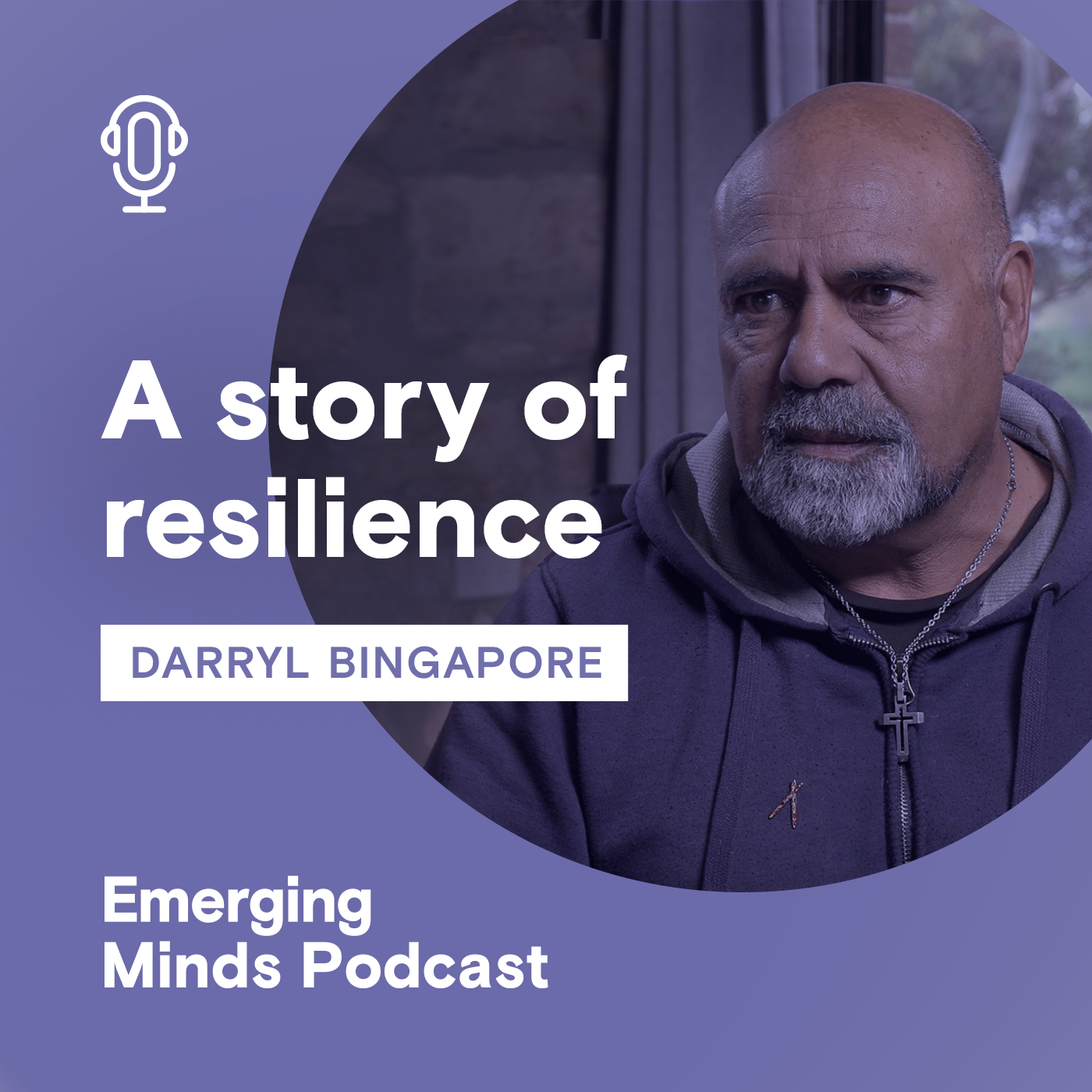
Ep 36A story of resilience
In this podcast, you will meet Darryl Bingapore, a strong Aboriginal and Torres Strait Islander man who has faced many struggles since his removal as a member of the Stolen Generations era. Darryl shares his experiences of diversity and healing, and hopes that his story helps to inform trauma-integrated practice for practitioners.
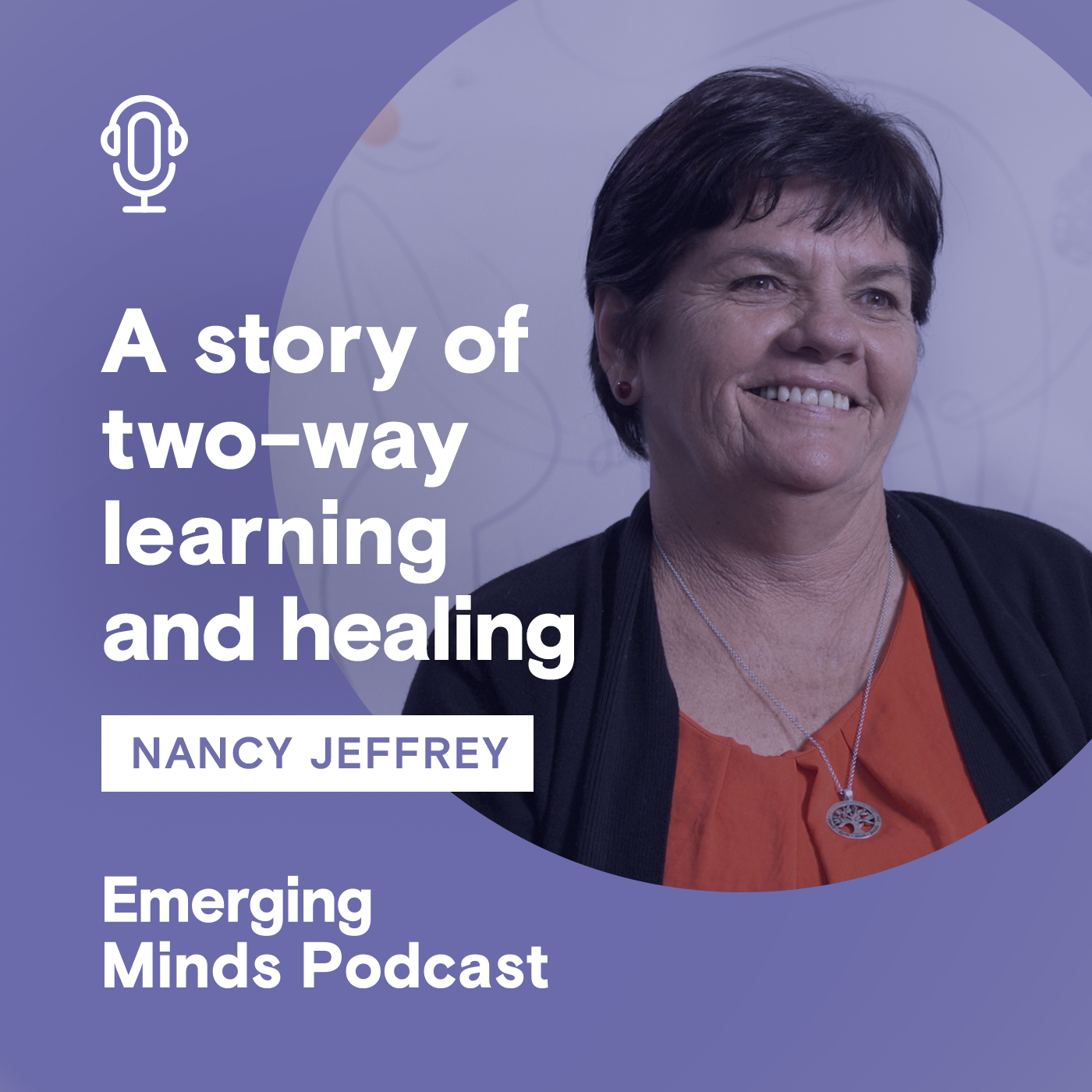
Ep 35A story of two-way learning and healing
In this episode, Nancy Jeffrey reflects on her own lived experience and wisdom, gained through many years working in and with Aboriginal and Torres Strait Islander communities, families and children in metro, rural and remote communities throughout Australia.
Ep 34Family violence and child-aware practice - part two
Tune in to hear experienced family violence practitioners and other leaders in the field discuss some of the possible entry points into conversations about children’s wellbeing with mothers experiencing family violence and fathers who are using violence. They’ll also address themes of safety, complexity, and organisational support. This episode is the second in a two-part series on family and domestic violence and child-aware practice. Featuring: Aerinn Morgan, Joanne Allen and Philip Martin from Uniting Communities Specialised Family Violence Service, Sarah Wendt - Professor of Social Work at Flinders University, and Megan Hughes from Women’s Safety Services SA. In this episode you will learn: The importance of generalist practitioners having the skills and confidence to work with parents who are living with family violence. Listening for cues that can open up conversations with mothers who may be experiencing coercion, threats, put-downs, control, and fear of violence. The many facets of safety considerations when working with mothers living with family violence. Two key areas of conversation with fathers are asking what is important to them as a parent, and inviting him to be considering the impact of his violence and abuse on the children. Further information and resources: e-Learning courses The Impact of FDV on the Child: An introduction FDV and Child Aware Practice: Principles and Practice Podcasts Family and Domestic Violence and Child Aware Practice Part 1 Child aware practice in families where there is violence Engaging fathers who use violence Webinars Child-focused approaches when working with parents affected by family and domestic violence Engaging mothers and children affected by family and domestic violence Practice Papers Child-focused social work practice in the context of family and domestic violence: Understanding the impact of male violence Child-focused work with families affected by domestic violence: Skills, values and knowledge requirements for social work students
Ep 33Family violence and child-aware practice - part one
This episode is the first in a two-part series on family and domestic violence and child-aware practice. Tune in to hear experienced family violence practitioners and other leaders in the field discuss the impact of family and domestic violence on children and the mother-child relationship, and some of the practice dilemmas that accompany conversations with mothers about their children’s wellbeing in a context of family violence, and some ways of having conversations with mothers that respond to these dilemmas. Featuring: Aerinn Morgan, Joanne Allen and Philip Martin from Uniting Communities Specialised Family Violence Service, Sarah Wendt - Professor of Social Work at Flinders University, and Megan Hughes from Women’s Safety Services SA. In this episode you will learn: Recognising the climate of fear is vital to understanding the impact of family and domestic violence on children. An understanding the potential impacts of family and domestic violence on children and the mother-child relationship can inform practitioner’s curiosity when working with parents and children. Non-blaming conversations with mothers about the effects of violence on their children are vital, challenging as possible. Conversations with mothers about their preferred parenting practices can also support child aware practice. Further information and resources: e-Learning courses The Impact of FDV on the Child: An introduction FDV and Child Aware Practice: Principles and Practice Podcasts Family and Domestic Violence and Child Aware Practice Part 2 Child aware practice in families where there is violence Engaging fathers who use violence Webinars Child-focused approaches when working with parents affected by family and domestic violence Engaging mothers and children affected by family and domestic violence Practice Papers Child-focused social work practice in the context of family and domestic violence: Understanding the impact of male violence Child-focused work with families affected by domestic violence: Skills, values and knowledge requirements for social work students
Ep 32Reflections on culturally competent practice with Nellie Anderson
In this episode, social worker Nellie Anderson reflects on what she has learned about culturally competent practice through her extensive experience working with refugee communities.

Ep 31Bonus episode: Children's mental health during the Coronavirus (COVID-19) pandemic
bonusHow might children’s social and emotional wellbeing be affected by the changes brought about in response to the COVID-19 pandemic? In this bonus episode, Brad Morgan, Director of Emerging Minds, discusses some challenges that might be coming up for families at this time as they navigate spending more time at home together. Tune in to this discussion to hear about what infants, toddlers, and children are needing from their parents right now and some suggestions on how parents can have child-centred conversations about coronavirus that are supportive of their mental health as well as what’s important to consider in relation to maintaining routines during home isolation. In this episode you will learn: Why talking to children about the coronavirus pandemic is important (03:49) What support babies and toddlers are needing (10:16) What to consider in terms of the way parents’ mental health may be impacting on the wellbeing of their children (18:08) What to consider in maintaining routines under isolation (22:00) How news and media might be impacting children (23:14) Further information and resources: Video: Talking to children about natural disasters, traumatic events, or worries about the future Factsheet: Communicating with your child about COVID-19 Factsheet: Helping children cope with stress during the Coronavirus (COVID-19) outbreak Factsheet: Traumatic events, the media and your child Guide and tools: Coronavirus (COVID-19): family guide – raisingchildren.net.au Factsheet: How to talk to your children about coronavirus (COVID-19) Website: Coronavirus (COVID-19) – healthdirect.gov.au Podcast: The power of play
Ep 30Reflections on culturally competent practice with Mthobeli Ngcanga
This episode provides an insight into what culturally competent practice with children and families looks like from the perspective of Mthobeli Ncganga, a practitioner who works with families from migrant and refugee communities with experiences of torture and trauma.
Ep 29Inclusive practice with rainbow families
What does the evolving nature of sexual and gender identities mean for working with families? Tune into this episode with Dr Priscilla Dunk-West to explore this question and learn about shifts you can make in your practice and organisation to become more inclusive of rainbow families. Priscilla is a sociologist and social worker and has worked in academia in both Australia and England. She practiced social work firstly in child protection and later went on to specialise in sexual health counselling. Her research interests include identity, sexuality, intimate relationships and parenting. She has produced five books and her bestselling text 'How to be a Social Worker: A Critical Guide for Students' has been translated into Swedish and is now in its second edition. In this episode you will learn: The social and cultural context of sexuality (02:47) Asking questions to understand family configuration rather than making assumptions (07:43) What child-focused and parent-sensitive practice looks like (12:44) What services can do to promote inclusivity with rainbow families (23:32)
Ep 28Co-discovering hope with children facing hardships
How do you create a sense of hope for children and families who are in the midst great hardship? Social worker and child and family therapist, Angel Yuen, has spent much of her career in Toronto, Canada, working alongside children, young people, and adults who have been subjected to abuse, violence, and oppression. She has taught narrative ideas in several countries for over a decade and is the author of various papers as well as the book 'Pathways beyond despair: re-authoring lives of young people through narrative therapy'. In this episode, we discuss her particular interest in working with children to co-discover and seek out hopeful and effective ways of responding to trauma and hardship. In this episode you will learn: Identifying children’s skills about how they get through tough times (05:20) Creating a context of hope with families (10:07) Paying attention to children's language (14:32) Working in a way that supports children’s agency (18:27)
Ep 27Child-aware practice in families where there is violence
What principles and practices keep children's needs at the centre when working with families where there is violence? In this episode, Prof Sarah Wendt interviews Dr Carmela Bastian, both from Flinders University, about child-centred practice in situations of family and domestic violence. Carmela draws on her twenty plus years of experience as a practitioner and academic in the fields of child protection and human services to illuminate approaches that can help to navigate this complex space. In this episode you will learn: Learning 1: Bringing conversations back to the impact on the child (03:34) Learning 2: How to create safe spaces for children to talk (07:25) Learning 3: Assessing parent-child relationship quality (13:00) Learning 4: How to discuss safety without instilling a sense of blame (15:40) Learning 5: Barriers to practicing in a child-centred way (28:54) Further information and resources: The Impact of FDV on the Child: An Introduction Engaging fathers who use violence podcast Child-focused social work practice in the context of family and domestic violence: Understanding the impact of male violence Keeping children visible in practice responses to family and domestic violence
Ep 26The mental health of refugee children in Australia
How are children from refugee backgrounds faring in terms of their social and emotional wellbeing? Tune into this conversation with Dr Sonia Terhaag to find out what the Building a New Life in Australia: The Longitudinal Study of Humanitarian Migrants can tell us about this. Sonia has worked in research for more than ten years in Canada and Australia and currently works on various national longitudinal research studies at the Australian Institute of Family Studies. In this episode you will learn: What the BNLA study can tell us about social and emotional wellbeing in refugee children (6:07) Experience of trauma in refugee families (07:56) Impact of parent experiences on children’s mental health (10:11) Implications of study findings for practitioners (17:00) Further information and resources: Building a New Life in Australia: The Longitudinal Study of Humanitarian Migrants https://aifs.gov.au/projects/building-new-life-australia Adjustment of refugee children and adolescents in Australia: outcomes from wave three of the Building a New Life in Australia study Cohort Profile: Building a New Life in Australia (BNLA): the longitudinal study of humanitarian migrants
Ep 25A polyvagal approach to working with trauma
What can the body's signals tell us about how to respond to trauma? In this conversation with psychologist, Chris Cussen, we draw on polyvagal theory to understand how the nervous system is affected by trauma and what is supportive when working with children who have abuse-related trauma histories. Chris draws on her many years of experience working with the Australian Childhood Foundation to give a rich description of how a neurobiological perspective informs her practice. In this episode you will learn: How to explain polyvagal concepts to a child (05:28) What the body needs to move through a mobilised state (08:54) The importance of facial expressions and tone of voice for social engagement (11:49) Practices to support a child in a mobilised state (20:43) Further information and resources: Australian Childhood Foundation Discussion Paper 18: Polyvagal Theory and its implications for traumatised students: https://professionals.childhood.org.au/app/uploads/2018/08/SMART-Discussion-Paper-18.pdf Stephen Porges' website: https://www.stephenporges.com/articles
Ep 24Re-release - The ongoing psychosocial needs of children following a community trauma
This is a re-released episode from our Community Trauma Toolkit podcast series. In this episode we talk to Michelle Roberts, a psychologist and expert in the areas of child and adolescent trauma, loss and grief, and children's disaster recovery. She has decades of experience as an educator and psychologist supporting school communities, and discusses with us the ongoing psychosocial needs of children following a disaster or community trauma and how schools and families can work together to help prioritise and support children's needs. In this episode you will learn: Why it is important to consider the needs of children after a disaster (00:43) How children experience trauma differently to adults (2:14) The main impacts of disaster on children (03:58) The impacts of trauma on parenting and how to support parents (07:46) Further information and resources: Trauma sensitive behaviour management How educators can support children in the short term following a disaster or community trauma Community Trauma Toolkit
Ep 23Re-release - Communities in the immediate aftermath of a trauma
This is a re-released episode from our Community Trauma Toolkit podcast series. In this episode, we talk to Kate Brady, a Churchill Fellow and National Recovery Advisor at Australian Red Cross, about what happens in a community during and after a traumatic event. She discusses the difference between natural disasters and community traumas, what communities might experience, and how families, communities, and first responders can all respond to and support children in their recovery. In this episode you will learn: What characterises a community trauma (01:05) What families and communities might experience (11:18) How to support families and children in affected communities (15:30) Further information and resources: A guide for first responders: Supporting children immediately following a disaster Community Trauma Toolkit
Ep 22Re-release - Disaster preparedness, myths and programs that hold promise
This is a re-released episode from our Community Trauma Toolkit podcast series. In this episode we talk to Dr. Briony Towers, a research fellow in the Centre for Urban Research at RMIT University, about the benefits of involving children in disaster preparedness, as well as some of the myths and misconceptions that children hold about disasters and bushfires in particular. In this episode you will learn: The importance of bushfire planning (2:20) The survive and thrive program for primary schools (10:39) Children's involvement in their own preparedness (18:27) Further information and resources: How Educators can prepare their students for a natural disaster How parents and caregivers can prepare for a natural disaster Community Trauma Toolkit
Ep 21Therapeutic residential care: The example of Jo's
How do you create a family environment for young people in residential out-of-home care? Service Manager, Paula May, talks us through her experience of setting up and managing a therapeutic youth residential care program in South Australia called 'Jo's'. She explains how the program was designed, drawing heavily on recommendations from the report of the Child Protection Systems Royal Commission in SA, and how it works to support young people to shift from trauma to transformation. In this episode you will learn about: Creating a sense of family in residential care (05:14) Using a self-organising approach to support the youth work team (09:40) The importance of staff being able to engage in normal parental responses (12:38) Five stages of the therapeutic framework (20:34) Further information and resources: Jo's Therapeutic Youth Residential Care (video): https://www.youtube.com/watch?v=qppfc4ZdeVo&feature=youtu.be
Ep 20Working with trans and gender diverse children
What is it like to work in one of the country's main services providing care to trans and gender diverse children and adolescents? Paediatrician, Dr Michelle Telfer, is the Head of Department of Adolescent Medicine at The Royal Children’s Hospital (RCH) Melbourne and Director of the RCH Gender Service. In addition to improving medical and mental health services for the transgender population, Michelle played a major role in successfully advocating for legal reform, with transgender young people now able to access hormone and surgical treatment without the need for approval by the Family Court of Australia. Michelle shares her experience leading the Gender Service at the RCH, why she loves the work, and how practitioners can best support trans and gender diverse children and their families. In this episode you will learn: How numbers of children seeking help are changing and why this might be (4:40) How the Gender Service at RCH works (7:01) The importance of language to the issue of gender diversity (10:13) What child-focused and parent-sensitive practice looks like in the Gender Service (21:00) How practitioners can best support trans or gender diverse children and their parents (30:25) Further information and resources: The RCH Gender Service website Australian Professional Association for Trans Health website Australian Standards of Care and Treatment Guidelines: For trans and gender diverse children and adolescents More from Emerging Minds: Supporting trans and gender diverse children and their families Creating a welcoming and safe organisation for trans and gender diverse children and their families: A checklist for allied health services Supporting trans or gender diverse children and their families with gender affirmation: A guide for GPs and paediatricians Visit https://emergingminds.com.au/resources/podcast/working-with-trans-and-gender-diverse-children/ for all links and further information.
Ep 19Children and technology: Screen use
A conversation about the influence of technology in children's lives, the impact of screen use on their health, and ways of working with families to manage screen time.
Ep 18Mentalisation and parent-child therapy
Mentalising is the act of trying to think about what's happening in people's minds in order to make sense of their actions. In this episode, host Dom Kleinig talks to Perth-based psychologist, Dr Matthew Ruggiero about mentalising and mentalisation-based therapy (MBT). Dom and Matt talk about the skill of mentalising; its importance in human relationships; and how its development can strengthen parent-child relationships in situations where they are under strain. Dr Matt Ruggiero is a Counselling Psychologist in Perth, Australia. He runs MBT for individuals and groups at Lifespan Psychology Centre, with a focus on treating both adolescents with emerging personality disorder and parents/children engaging with Child Protection services. He is lead consultant for the implementation of MBT as a model of practice at the Perth Children’s Hospital Mental Health Inpatient unit as well as teaching and conducting research into developmental psychology at Curtin University. In this episode you will learn: What is mentalising and how is it different to things like empathy? (01:52) Marked mirroring as a building block for developing secure parent-infant relationships (06:13) The importance of self-determination in the therapeutic process (14:08) How to look beyond behaviour to see what's going on underneath (24:36)