Emerging Minds Podcast
218 episodes — Page 3 of 5
Ep 117Child mental health implementation strategies - part two
In this episode, we explore strategies for when children and families experience setbacks in dealing with problems. We also look at ways of future-proofing children’s skills in dealing with problems.
Ep 116Child mental health implementation strategies - part one
In this episode, we explore ways of working with children that combine their experience and expertise with practitioners’ own wisdom and strategies.
Ep 115Homelessness and child mental health
This episode looks at how homelessness impacts upon child mental health. It outlines strategies that services can adopt to improve outcomes for children and families, and explores practical skills to help practitioners better engage and support the mental health of children experiencing homelessness.
Ep 114How holistic pregnancy care promotes infant mental health
In this episode, Dr Lyndal Harborne shares her personal and professional insights into holistic pregnancy care and how it benefits both parent and infant mental health. She discusses the importance of taking the time to understand parents’ psychosocial context, and how providing choices can help parents to navigate through pregnancy and beyond. She also explores how having a team of supportive professionals helps parents to adjust to parenting, and the positive impacts this has on children’s wellbeing across the lifespan.
Ep 113Supporting children who disclose trauma - part two
David Tully is a therapist, supervisor and manager at Relationships Australia, South Australia. In the second episode of this two-part series, David offers ways to help children who have experienced trauma discover new identities built on their stories of protest, resistance and resilience. He also shares some insights from his work with men who perpetrate violence and children who’ve been impacted by men’s violence.
Ep 112Supporting children who disclose trauma - part one
David Tully works with children and families who have been affected by sexual abuse and physical trauma. In the first episode of this two-part series, David shares how trauma-informed processes can help children to overcome the effects of self-blame and secrecy. He also discusses how helping children to understand the contexts of power in which the trauma occurred, is critical in supporting their recovery.
Ep 111Responding to complex developmental trauma
In this episode, we talk with Kathryn Lenton of the Australian Childhood Foundation about working therapeutically with children and families who are living with the impacts of complex developmental trauma.
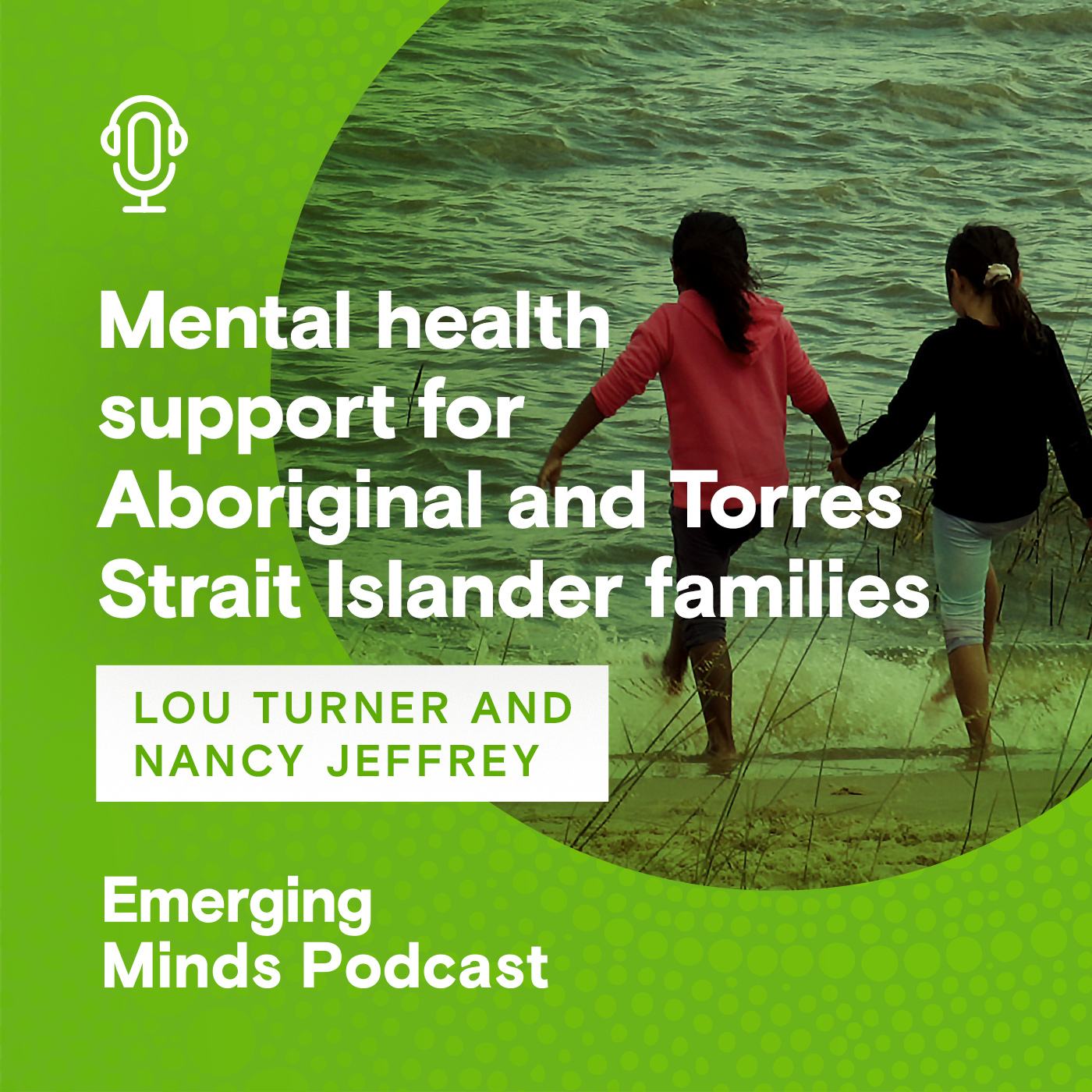
Ep 110Mental health support for Aboriginal and Torres Strait Islander families
In this episode, you’ll meet two new members of the Emerging Minds Partnerships and Implementation team: Lou Turner and Nancy Jeffrey. Lou and Nancy will be working with organisations to support the social and emotional wellbeing of Aboriginal and Torres Strait Islander infants, children and families, and promote the needs of First Nations communities. They discuss what is important to them when it comes to support services for Aboriginal and Torres Strait Islanders, how mental health relates to First Nations concepts of social and emotional wellbeing, and what they hope to achieve in their new roles within Emerging Minds.
Ep 109Engaging children: Naming and framing the problem
When talking with children in a therapeutic setting, how do you lessen their likelihood of feeling shame or blame for the problems they’re dealing with? Naming and framing the problem in their own terms can not only lessen children’s sense of shame and blame; it can also create space for their creativity, imagination and agency in responding to the issues they’re facing. In this episode (the third in our Engaging children series), hosts Jen Ly and Chris Dolman are joined by practitioners Annette Flanagan, Kate Headley, Melinda Vardanega, Lisa Johnson, Aerinn Morgan, Jamie Lee and Liz Lodge. Together, they share their ideas, reflections and strategies for enabling children to describe problems in their own terms and in ways that are meaningful and useful for them. In this episode you will learn: the importance of helping children to describe problems in their own terms and in ways that are meaningful for them [02:02] some practice ideas for engaging with children that focus on naming and framing the problem [05:43] what other professionals have found helpful in this work [11:33] Further information and resources: Engaging children: Shrinking problems (online course) Practical strategies for engaging children in a practice setting (practice paper) An overview of child participation: Key issues for organisations and practitioners (practice paper) Shrinking problems with children and families (webinar)
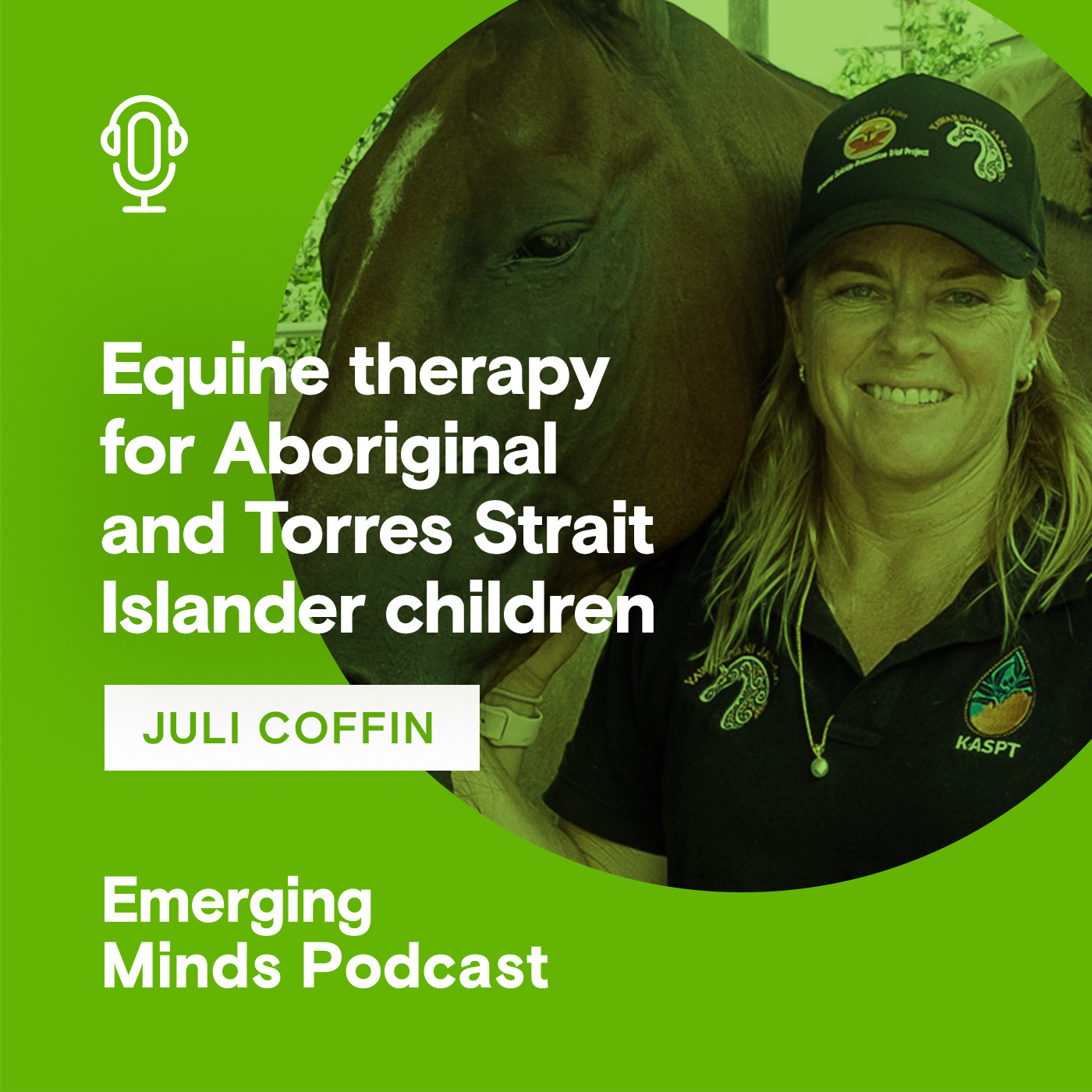
Ep 108Equine therapy for Aboriginal and Torres Strait Islander children
In this podcast, you’ll hear from Juli Coffin about the Yawardani Jan-ga (‘horses helping’) program in Broome. Juli discusses how the program connects the healing power of horses with innovative experiential learning. She shares how equine therapy can help to heal trauma, enhance social and emotional wellbeing, nurture leadership, and promote positive relationships for Aboriginal and Torres Strait Islander children and young people.
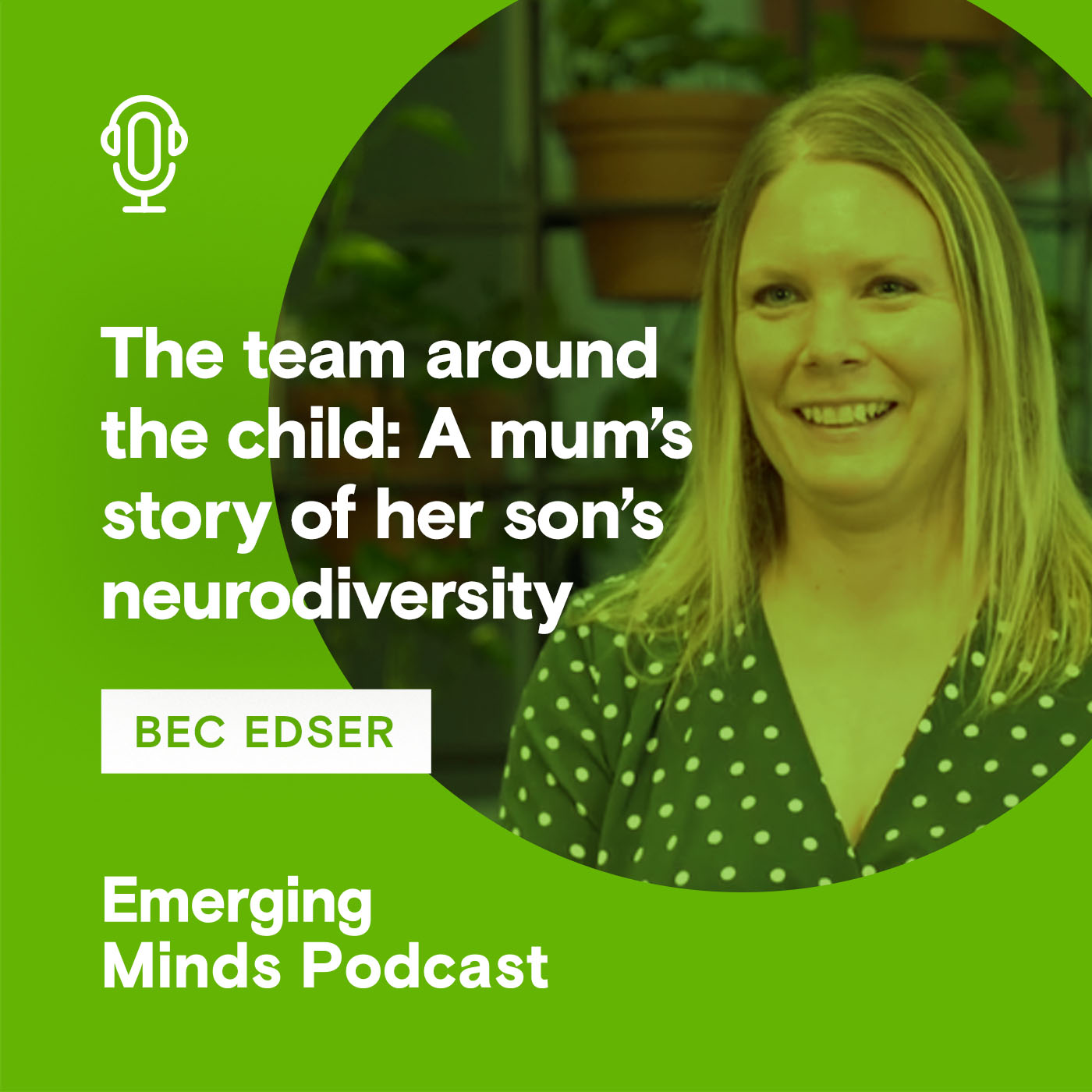
Ep 107The team around the child: A mum's story of her son's neurodiversity
Bec Edser is a Child and Family Partnerships Coordinator at Emerging Minds. She is also the mother of a six-year-old son with neurodiversity. Bec has worked closely with practitioners over the years to develop a team around her child. In this episode, she shares the benefits of establishing a team around the child, along with practical examples of child-centred engagement.
Ep 106Engaging children: Exploring children's strengths and interests
Research shows children like adults to be interested in what they’re into, what they need, and how they respond when things are happening around them (Moore, 2017; Griffiths-Cook & Fenn, 2018). Talking with children about what they enjoy and what they’re good at can create a context for understanding the child’s perspective on the problems they’re facing. Conversations exploring children’s strengths and interests can also provide a foundation from which to build further skills to respond to these problems. In this episode (the second in our Engaging children podcast series), hosts Jen Ly and Chris Dolman are joined by practitioners Lisa Johnson, Sally McLaren, Annette Flanagan, Liz Lodge and Ali Chisholm. Together, they share their ideas, reflections and strategies around exploring children’s strengths, skills, know-how and interests. In this episode you will learn: the importance of practitioners opening up conversations with children about their strengths, skills and interests [02:41] some strategies for exploring children’s strengths, skills and interests in your practice [03:42] what other professionals have found helpful in this work [09:44] Further information and resources: Engaging children: Rich pictures (e-learning course) Practical strategies for engaging children in a practice setting (practice paper) An overview of child participation: Key issues for organisations and practitioners (practice paper) References Griffiths-Cook, J., & Fenn, L. (2018). Kids have big thoughts too. Life Transitions: what children say about change. Canberra: ACT Human Rights Commission. Moore, T. (2017). Protection through participation: Involving children in child safe organisations. CFCA Practice Paper. Melbourne: Child Family Community Australia, Australian Institute of Family Studies.
Ep 105Engaging children: Opening the door to the problem
Taking care to describe things in ways that make sense to the child and inviting them to share their understanding of why you’re meeting with them can make a big difference. These practices can enable children to contribute to the conversation and participate fully in your work together. They can also potentially ‘open the door’ to a conversation with the child about the problem they’re facing. In this episode (the first in our Engaging children podcast series), hosts Chris Dolman and Jen Ly are joined by practitioners Kate Headley, Liz Lodge, Jackie Amos, Jessica Warren and Mthobeli Ngcanga. Together, they share their ideas and reflections on the key skills for working effectively with children. In this episode you will learn: the importance of understanding the child’s perspective on why you’re meeting [02:27] what to consider in regard to transparency when beginning to work with children [06:04] what other professionals have found helpful in this work [10:49] Further information and resources: Engaging children: Good beginnings e-learning course Hervatin, M. (2020). Practical strategies for engaging children in a practice setting. Adelaide: Emerging Minds.
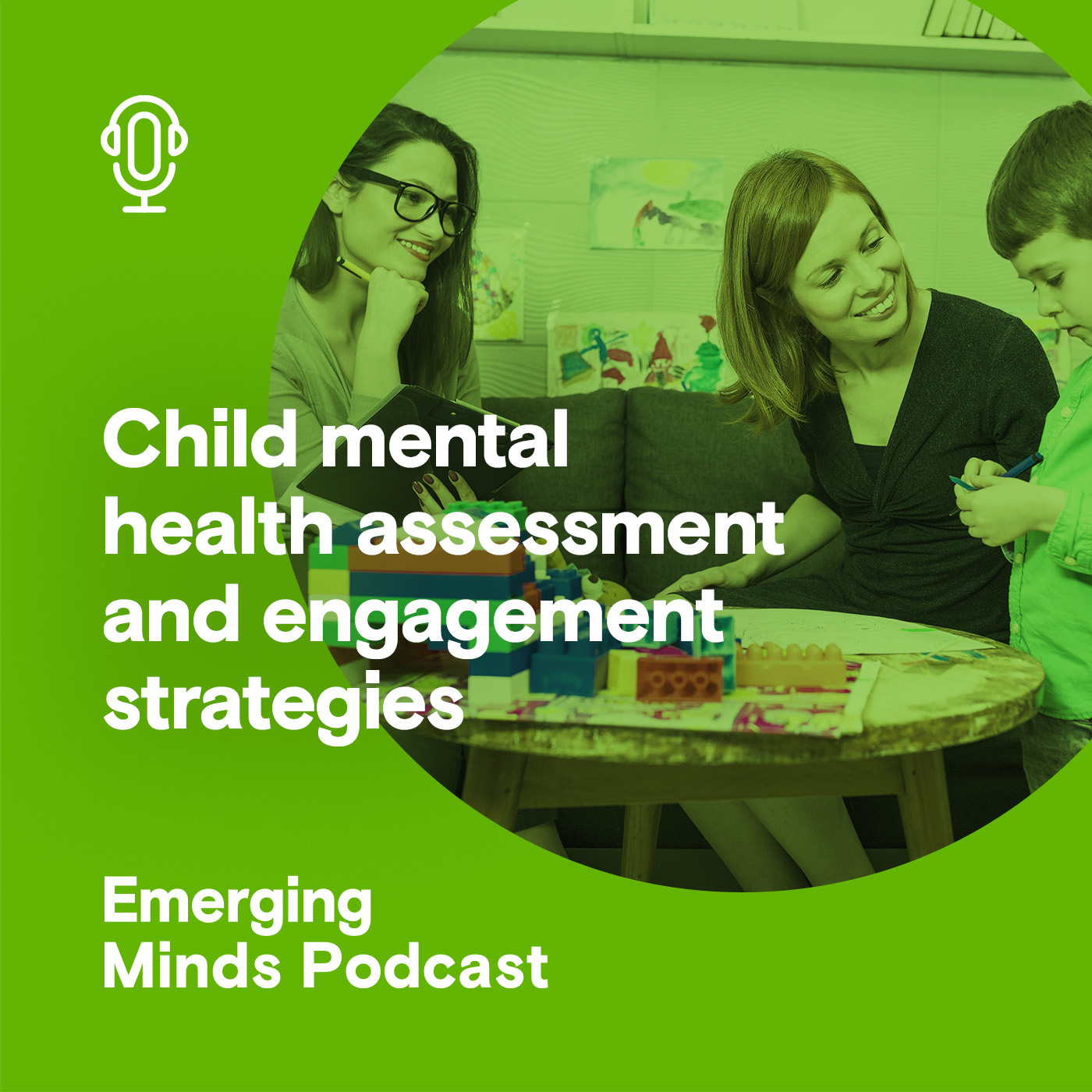
Ep 104Child mental health assessment and engagement strategies
In a previous episode, psychologist Penny Sih shared her thoughts about child mental health assessment and engagement and ways to support a child to live their ‘best life’. In this episode, social worker Ali Knight and child and family partners Jess and Emi continue this conversation. They explore child mental health assessment and engagement practices that help families feel more confident and engaged in the therapeutic process, which in turn helps them to live their ‘best lives’. When a child and parent first arrive to meet with a professional, they often feel anxious or even reluctant. They might feel like they’re going to be told off, or lectured, or made to discuss subjects that make them feel uncomfortable. Ali, Jess and Emi discuss the practices that help children to overcome this initial anxiety, to engage fully within the practice environment, and to become holistically involved in the decisions that affect their lives. In their role as Emerging Minds Child and Family Partners, Jess and Emi have made a significant contribution to Emerging Minds’ online training courses, webinars and practice papers. Ali Knight is a social worker with 25 years’ experience, specialising in work with infants and children in child protection, child development and trauma-related services. All three were instrumental in the development of Emerging Minds’ online course, Practice strategies for assessment and engagement. In this episode you will learn: how to set the scene with children who might not be happy about coming to a professional environment, so that you can increase their sense of comfort and confidence and give them the time and space that they need [02:52] how to help children and parents consider the strategies that already work well for them, rather than focusing only on the problems that they are facing [05:37] how a holistic understanding of the ‘whole child’ – their preferences, relationships and hopes – can influence practice [14:16] how to pick up on cues that children provide throughout the engagement, to ensure sessions are flexible enough to cater for the child’s needs [18:29] why it’s important to include children in strategies that can be replicated at home or at school [23:15] Further information and resources: Practice strategies for assessment and engagement (online course) Practice strategies for formulation (online course) Helping children to live their ‘best life’ – part one (podcast) Helping children to live their ‘best life’ – part two (podcast)
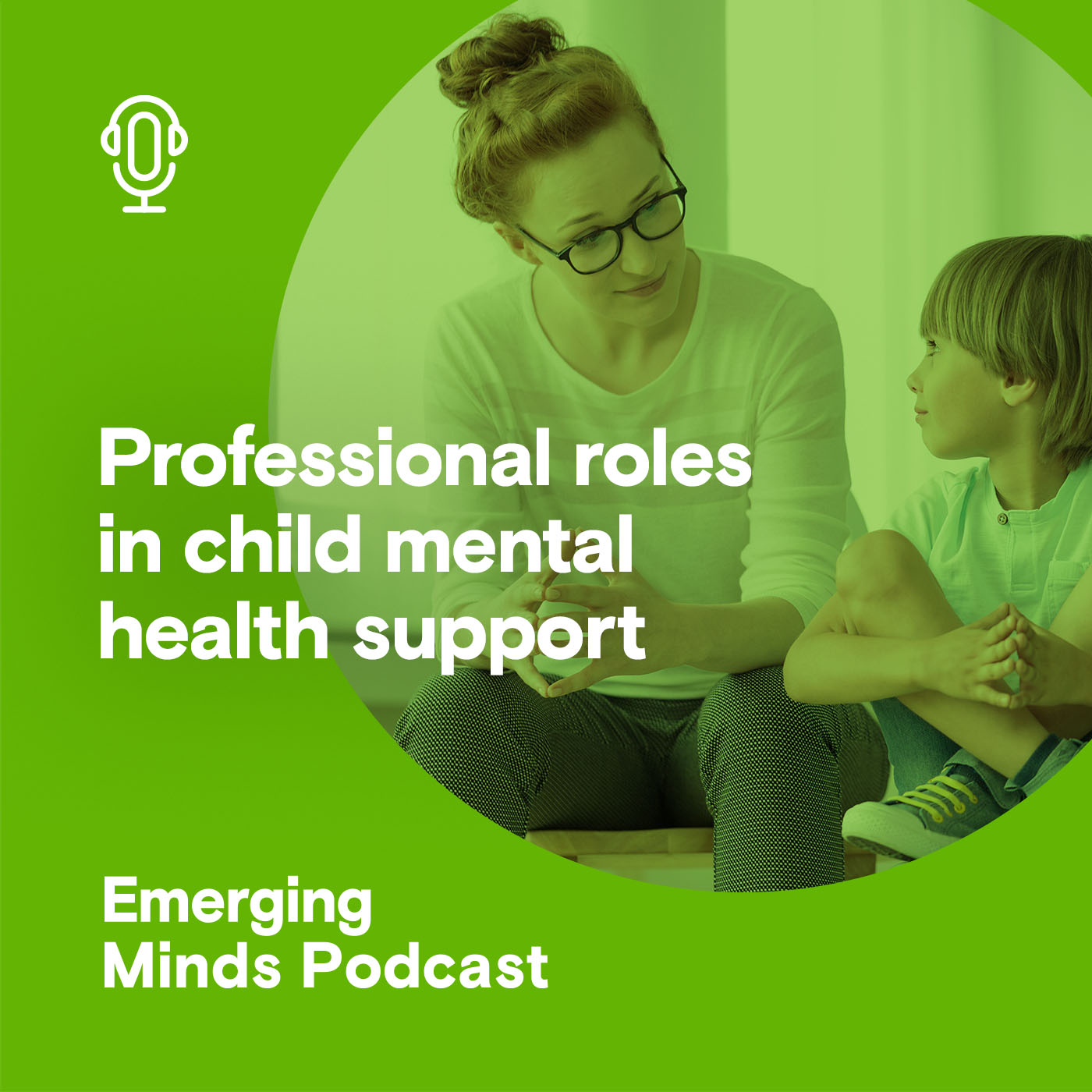
Ep 103Professional roles in child mental health support
In this episode, we explore the roles of different types of professionals who work with children and families in the child mental health support space.
Ep 102Family perspectives on childhood physical illness - part two
In the second of this two-part podcast series (listen to part one here), you’ll continue to hear from Kimberley, Brad and Bec, parents of children who have experienced different chronic childhood physical illnesses. You'll hear how practitioners have been able to support not just the children’s physical conditions, but also the social and emotional wellbeing of these children and their families while they are undergoing treatment. Many children experiencing a childhood physical illness require regular trips to hospital and medical interventions that can be traumatic for both the child and their family. However, the negative impacts on everyone’s wellbeing can be minimised by taking a family-focused and trauma-informed approach. We would like to acknowledge and thank our child and family partners, Kimberley, Bec and Brad for taking the time to share their hard-earned wisdom and expertise with us. In this episode you will learn: the types of supports families find helpful while their children are undergoing treatment for childhood physical illnesses [01:17] the strategies that practitioners use to support the mental health of children throughout the treatment processes [08:36] the importance of taking a trauma-informed approach to caring for a child with a chronic physical illness [13:45] how to support the wellbeing of siblings of children with chronic childhood physical illnesses [19:25] Further information and resources: Understanding child mental health and chronic physical conditions e-learning course Childhood physical conditions and mental health fact sheets
Ep 101Family perspectives on childhood physical illness - part one
In the first of this two-part podcast series, Emerging Minds Child and Family Partners Kimberley, Brad and Bec share how they manage their children’s social and emotional wellbeing while dealing with the challenges of chronic physical illness. They describe some of the ways that practitioners have been able to support their children’s mental health throughout the treatment process, and how these strategies have also helped them to support their child. Managing ongoing symptoms of chronic physical illness and undergoing medical treatment or procedures can have significant impacts for children and families. Promoting self-care strategies for parents and caregivers will lead to improved wellbeing outcomes for the children they are caring for. We would like to acknowledge and thank our child and family partners, Kimberley, Bec and Brad for taking the time to share their hard-earned wisdom and expertise with us. In this episode you will learn: more about the chronic physical illnesses experienced within these families [01:36] how a diagnosis of chronic physical illness impacts on the child and family [04:22] the impacts of managing ongoing symptoms and undergoing medical treatment/procedures [06:29] how self-care is important for parents and caregivers of children experiencing a chronic physical illness [16:06] Further information and resources: Family perspectives on childhood physical illness - part two Understanding child mental health and chronic physical conditions e-learning course Childhood physical conditions and mental health fact sheets
Ep 100Reflecting on 100 episodes
In this episode, Emerging Minds Practice Development Manager, Dan Moss joins Senior Cultural Development Officer, Rosie Schellen and Senior Practice Development Officer, Chris Dolman to reflect on what has made the infant and child mental health podcast series so effective over the past four years and 100 episodes. Rosie reflects on Emerging Minds’ collaborative work with Aboriginal and Torres Strait Islander communities to help bring to the fore stories of strength, resilience and hope, as well as those of hardship and systemic disadvantage. Chris describes how practitioners have helped change the way we think about infant and child mental health, in ways that make challenging work feel more possible and motivating. He also describes some of the ways that children and families with lived experience have contributed so richly to the podcast series. In this episode you will learn: how Rosie has worked with Aboriginal and Torres Strait Islander communities, leaders and practitioners to respectfully bring forth stories of hope, resilience and connection, and the considerations that are important within this process [04:23] how practitioners have contributed to understandings about infant and child mental health through stories of their everyday practice, and the strategies we can all use to help children and families tell their stories [06:52] how hurt and connection, strength and wisdom have been so powerfully interwoven in the stories of our Aboriginal and Torres Strait Islander guests, in ways that generously assist all practitioners to consider how they can make room for these stories in their work with Aboriginal and Torres Strait Islander families and communities [09:56] how discussions with parents about their hopes for their children can become a great antidote for the experiences of shame and blame that families often feel when working with a practitioner, and the kinds of strength-based practices that have helped families find new ways to connect and overcome adversities [17:28] about the people that have contributed to the evolution of the Emerging Minds podcast series over the past 100 episodes! [20:50]
Ep 99Re-release: The mental health of refugee children in Australia
This episode is a conversation with Dr. Sonia Terhaag about the Building a New Life in Australia study and what it can tell us about the social and emotional wellbeing of children from refugee backgrounds.
Ep 98Re-release: Inclusive practice with rainbow families
What does the evolving nature of sexual and gender identities mean for working with families? Tune into this episode with Dr Priscilla Dunk-West to explore this question and learn about shifts you can make in your practice and organisation to become more inclusive of rainbow families. Priscilla is a sociologist and social worker and has worked in academia in both Australia and England. She practiced social work firstly in child protection and later went on to specialise in sexual health counselling. Her research interests include identity, sexuality, intimate relationships and parenting. She has produced five books and her bestselling text 'How to be a Social Worker: A Critical Guide for Students' has been translated into Swedish and is now in its second edition. In this episode you will learn: The social and cultural context of sexuality (02:47) Asking questions to understand family configuration rather than making assumptions (07:43) What child-focused and parent-sensitive practice looks like (12:44) What services can do to promote inclusivity with rainbow families (23:32)
Ep 97Supporting children through school transitions during COVID-19
In this episode, Dr Kathryn Hopps, a researcher and educator, reflects on ways in which families can support children through school transitions during the COVID-19 pandemic. Kathryn also draws on her expertise in primary and high-school transitions to provide practical advice for parents and carers.
Ep 96Responding to child anxiety in general practice
Dr Andrew Leech is a GP based in Perth with an interest in child physical and mental health. Andrew has an advisory role within the Royal Australian College of General Practitioners (RACGP) and Emerging Minds. He works as an educator for medical students and GP registrars and is the host and creator of the Kids Health Network podcast. In this episode, Andrew joins us for a conversation about childhood anxiety. He looks at the prevalence and presentations of child anxiety, ways of working sensitively with children and families, and the impacts of the COVID-19 pandemic on children’s mental health.
Ep 95Diet, lifestyle, relationships, and wellbeing: A holistic approach to working with mums
Dr Angie Willcocks is a psychologist with a rich history of supporting mothers throughout the fertility, pregnancy and postnatal periods. Angie has developed a practice approach that focuses on a holistic understanding of all of the domains of a woman’s life – not only those that are connected to her baby. In this episode, Angie describes her assessment and formulation strategies, which support mothers to consider every aspect of their lives, and the supports they need to maintain social and emotional wellbeing. She is interested in how mothers can look past society’s expectations, and make the lifestyle, relationship, and parenting choices that support their long-term mental health and wellbeing. As part of her commitment to holistic understandings of women, Angie completed a PhD that examined the effects of diet on mothers’ mental health. Through this study, Angie found that diet significantly impacted the risk of depression and anxiety during pregnancy and postnatally. She discusses the possible implications for practice that have stemmed from her research, and how professionals can introduce discussions about lifestyle into their everyday engagements. In this episode you will learn: how to work collaboratively with mothers who are attempting to juggle parenting, work, relationships, and family members with mental health issues (02:45) why it is important to provide space for a mother to come into a session with her infant, and the information that you can provide to a practitioner for later conversations (06:00) how to begin a conversation with a mother about the holistic supports she requires to parent in her preferred ways (08:05) the opportunities that can arise for women when they can stop judging themselves so harshly and start prioritising their own mental health, diet, exercise, and relationships (14:52) the findings from Angie’s PhD study, which examined the effect of diet quality on mothers’ mental health (16:13) the importance of women prioritising their own mental health for themselves, not just for their children or their partner (23:08)
Ep 94Helping children to live their 'best life' - part two
In this second episode in our two-part series, clinical psychologist Penny Sih expands upon her description of the ‘best life’ approach: a way of engaging positively with children by discussing the relationships, routines and activities that sustain and energise them.
Ep 93Helping children to live their 'best life' - part one
Penny Sih is a clinical psychologist who has spent 17 years working with children, teens and their families. During that time, Penny has developed engagement processes with children that focus on an understanding of their ‘best life’. In this episode, Penny shares how the ‘best life’ approach can help practitioners to better understand the ‘whole child’ and the problems that affect them; and enable children and parents to be active participants in the therapeutic process.
Ep 92Supporting children who have lost a parent
Dr Gill Murphy is a lecturer at the School of Nursing and Midwifery at the Western Sydney University. She has worked as a mental health nurse for twenty years, with experience in forensic, in-patient, community and emergency mental health services. Her engagement with mental health research led her to found the Childhood Parental Death Ambassador Program. As founder of the Childhood Parental Death Ambassador Program, Gill hopes to raise awareness around the needs and experiences of children when a parent is dying or has died, and to really make children visible within that process. As part of this, the program has delivered the Childhood Death Study, in which they interviewed adults who'd experienced the death of a parent during their childhood. The study found that a lack of information provided to children during and after their parent’s death meant that they often thought about it in distressing or unhelpful ways. Additionally, it found that children were often not supported to celebrate or remember their parent’s legacy, causing them to lose touch with the supporting and nurturing rituals they had enjoyed with that parent. In this episode of the Emerging Minds podcast, Gill discusses the need for practitioners to develop preparedness in their work with children who have lost a parent, and to be able to have conversations with them that are supportive and reconnecting. In this episode you will learn: Learning 1 (01:30) the key objectives of the Childhood Parental Death Ambassador Program. Learning 2 (02:36) the key findings of the Childhood Death Study, and what these mean for any practitioner working with a child whose parent is dying or has died. Learning 3 (04:17) the effects of secrecy or a lack of information on children’s ability to positively think about their deceased parent, and to stay connected with their legacy. Learning 4 (09:53) what some services are doing to actively involve children in memory making when a parent is dying or has recently died. Learning 5 (17:44) how practitioners can overcome anxiety to talk to children in ways that are supportive and attentive, and to ensure they are listening to what the child needs at the time.
Ep 91Including children and young people in practice and policy decisions
Children and young people have historically been seen as passive and incapable of participating in the decisions that affect their lives. But as society has become more aware of child’s rights and the importance of inclusive citizenship, opportunities have arisen for children to become involved and considered in decision-making processes. Dr Ben Lohmeyer is a writer, researcher and lecturer in social policy at Flinders University. Much of his work has focused on children and young people, and popular discourse which has minimised or disqualified their potential contributions to social policy. In this episode of the Emerging Minds podcast, he discusses society’s ‘exclusionary’ attitudes towards children and young people, and looks at the ways in which practitioners, organisations and institutions can collaborate with children to make their views, preferences, hopes and concerns a central part of decision-making and problem-solving approaches. Ben is interested in the ways that children and young people have become increasingly involved in activism – around climate change, for example. He believes there are still many ways that children’s voices get minimised or disqualified by society but is deeply interested in the ways that children have persevered and been able to make protest, despite these obstacles. In his work as a social policy lecturer, Ben is committed to the ethic of inclusion. This moves away from the traditional, ‘banking’ notion of teaching, where wisdom and truth are owned by the teacher (or the most powerful), towards learning strategies that focus on the student’s own know-how, reflections and preferences. In this way, Ben hopes that these future social workers will themselves favor practices with children and young people that are based on principles of co-creation and privileging the child’s voice. In this episode you will learn: the dangers of excluding children’s voices from important decisions like social policy, overcoming problems, or creating safe and nurturing spaces (05:59) how moving towards more participatory teaching and service intervention models can benefit children and enhance your engagements with them (10:49) how the voices of people with lived experience are now being prioritised in research and co-design processes (21:18) how to create spaces for children and young people to provide feedback; and the importance of adults being able to accept feedback that might be difficult to hear, or uncomfortable, or even unexpected (27:32) the importance of understanding the different ways of communicating that children and young people have, and using their own reference points, rather than judging them from your own point of view (32:18).
Ep 90Narrative therapy with Aboriginal and Torres Strait Islander families
In this episode of the Emerging Minds podcast, Bill Wilson and Chris Dolman discuss how working within a narrative therapy framework can support connections and resilience for Aboriginal and Torres Strait Islander families.
Ep 87Overcoming adversity in work with mothers and children - part two
This episode is the second in a two-part series exploring work with women and children who have experienced trauma and disadvantage throughout their lives (you can find the first episode here). In this episode, we speak with Lisa Hofman and Gaby Munro, who work with mothers and their children (under the age of eight) while they undergo treatment for substance use. Many of the children who attend the Jarrah House residential treatment service have experienced child protection involvement and past trauma, and are affected by developmental or behavioural issues. In this conversation, Lisa and Gaby explore the impacts of significant adversity and child removal on mothers and their children, and share examples of ways children may behave following experiences of trauma. Lisa and Gaby also share how they strengthen and rebuild the mother-child relationship and reduce child protection risk by: increasing the mother’s emotional availability to her child transforming how mothers think about and understand their children helping mothers to respond better to their children’s cues; and showing mothers how to delight in their children Gaby describes how she uses reflexive practice and modelling to help parents consider what their child is feeling, in order to better understand and respond to them. Lisa discusses how mothers are supported with emotional regulation and distress tolerance, and how this growing ‘mindful awareness’ helps them to respond to their child from a calmer space. In this episode you will learn: about the developmental issues that affect many of the children at Jarrah House, as a consequence of past trauma, domestic violence, or parental substance use [2:59] how Lisa and Gaby used the Key to Interactive Parenting Scale to help a mother recognise her child’s cues and the ways that she offered her child warmth and recognition, so that she could replicate that behaviour more consistently [6:03] the importance of treating the child as a client, as well as the mother, in services like Jarrah House, and the difference this can make for a child [10:32] how Lisa and Gaby use the Circle of Security approach to focus on the importance of routines and help children and mothers feel safer and more confident [16:05]. Further information and resources: KIT Menu
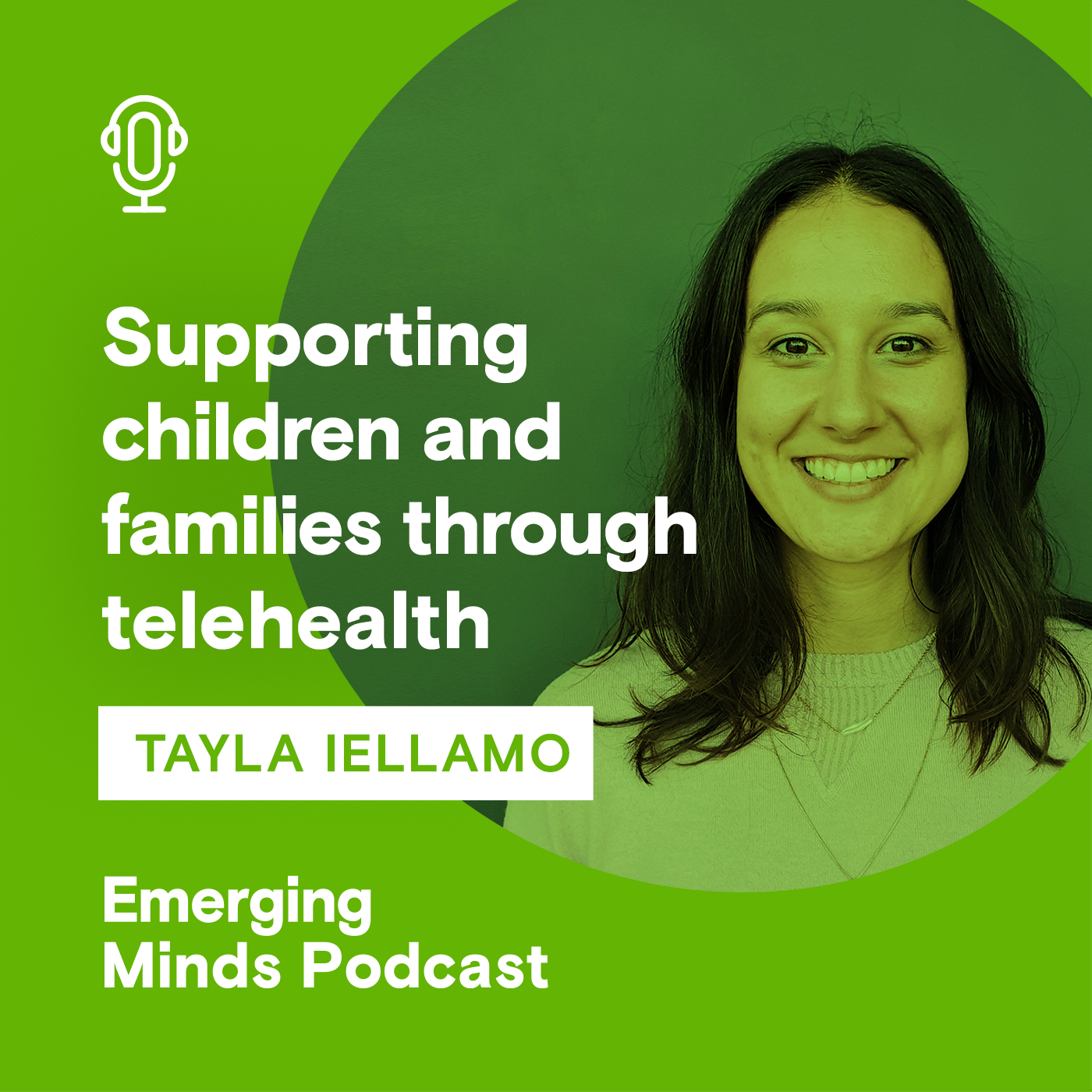
Ep 88Re-release: Supporting children and families through telehealth
How do you engage children when working with them remotely via video? In this episode, Tayla Iellamo, an occupational therapist who works for Royal Far West, shares her experience of delivering telehealth services to children in rural and remote areas. Tayla has worked as an OT for five years and has been delivering telehealth services through the Windmill and Telecare programs at Royal Far West for the past year. She has a passion for working with children and families in remote areas and finds telehealth a valuable and dynamic approach to delivering therapy. Tayla shares her experience of what helps families prepare for a telehealth service, what to consider when engaging children through a video platform, and troubleshooting tips and tricks for when things don’t go as planned. In this episode you will learn: What a family can expect from the first telehealth session (07:15) Helping families become comfortable with technology (10:38) Keeping the child’s context in mind in telehealth service delivery (18:19) Suggestions for practitioners new to telehealth (24:22) Further information and resources: A practical guide to working with children and families through telehealth: https://emergingminds.frmdv.com/resources/a-practical-guide-to-working-with-children-and-families-through-telehealth/

Ep 87Re-release: Children's mental health during the Coronavirus (COVID-19) pandemic
bonusHow might children’s social and emotional wellbeing be affected by the changes brought about in response to the COVID-19 pandemic? In this bonus episode, Brad Morgan, Director of Emerging Minds, discusses some challenges that might be coming up for families at this time as they navigate spending more time at home together. Tune in to this discussion to hear about what infants, toddlers, and children are needing from their parents right now and some suggestions on how parents can have child-centred conversations about coronavirus that are supportive of their mental health as well as what’s important to consider in relation to maintaining routines during home isolation. In this episode you will learn: Why talking to children about the coronavirus pandemic is important (03:49) What support babies and toddlers are needing (10:16) What to consider in terms of the way parents’ mental health may be impacting on the wellbeing of their children (18:08) What to consider in maintaining routines under isolation (22:00) How news and media might be impacting children (23:14) Further information and resources: Video: Talking to children about natural disasters, traumatic events, or worries about the future Factsheet: Communicating with your child about COVID-19 Factsheet: Helping children cope with stress during the Coronavirus (COVID-19) outbreak Factsheet: Traumatic events, the media and your child Guide and tools: Coronavirus (COVID-19): family guide – raisingchildren.net.au Factsheet: How to talk to your children about coronavirus (COVID-19) Website: Coronavirus (COVID-19) – healthdirect.gov.au Podcast: The power of play
Ep 86Overcoming adversity in work with mothers and children - part one
Women who have experienced trauma and disadvantage throughout their lives are much more likely to develop mental health difficulties and substance use issues. This can seriously affect their ability to parent in safe and consistent ways, and can have significant negative impacts on children. In the first episode of this two-part podcast series, Christine Watson, Clinical Director at Kamira Alcohol and Other Drug Treatment Services, talks about Kamira’s rehabilitation work with women experiencing substance use, and their children. At Kamira, practitioners are interested in the contextual reasons that have made it more difficult for women to parent in safe and nurturing ways. Kamira’s residents are generally affected by their own experiences of trauma, as well as cultural, institutional and social discrimination. Many have also had children removed from their custody. Christine discusses how she and her staff work with these women on ways to provide safe and consistent care for their child. She also explores their strategies for helping women overcome historical issues which have prevented them from providing this care. At the same time, Kamira’s programs focus on children’s mental health and wellbeing needs, in ways that can help enhance the lives of both mothers and children. Christine discusses the importance of therapeutic interventions that encourage women to see their children’s needs as a motivation for change. She considers how this focus can reduce the negative effects of stigma, and allow women to develop practical strategies for safe and secure parenting. In this episode you will learn: about the background of trauma, institutional and social discrimination experienced by many of the women in substance use programs, and the impact intergenerational disadvantage has on the lives of these women and their children [1:06] how to talk with women about their parenting in ways which avoid stigma, build trust and joy in the parent-child relationship, and help women to recognise the possibilities for change [8:32] how to help mothers understand their children’s experience, focusing on what the child might be feeling, thinking, or observing, and offering practical examples of how to support the communication between mother and child [14:55] the importance of routine in the lives of children and mothers, and how strong routines can be the key to establishing safer and more consistent environments for children [20:41].
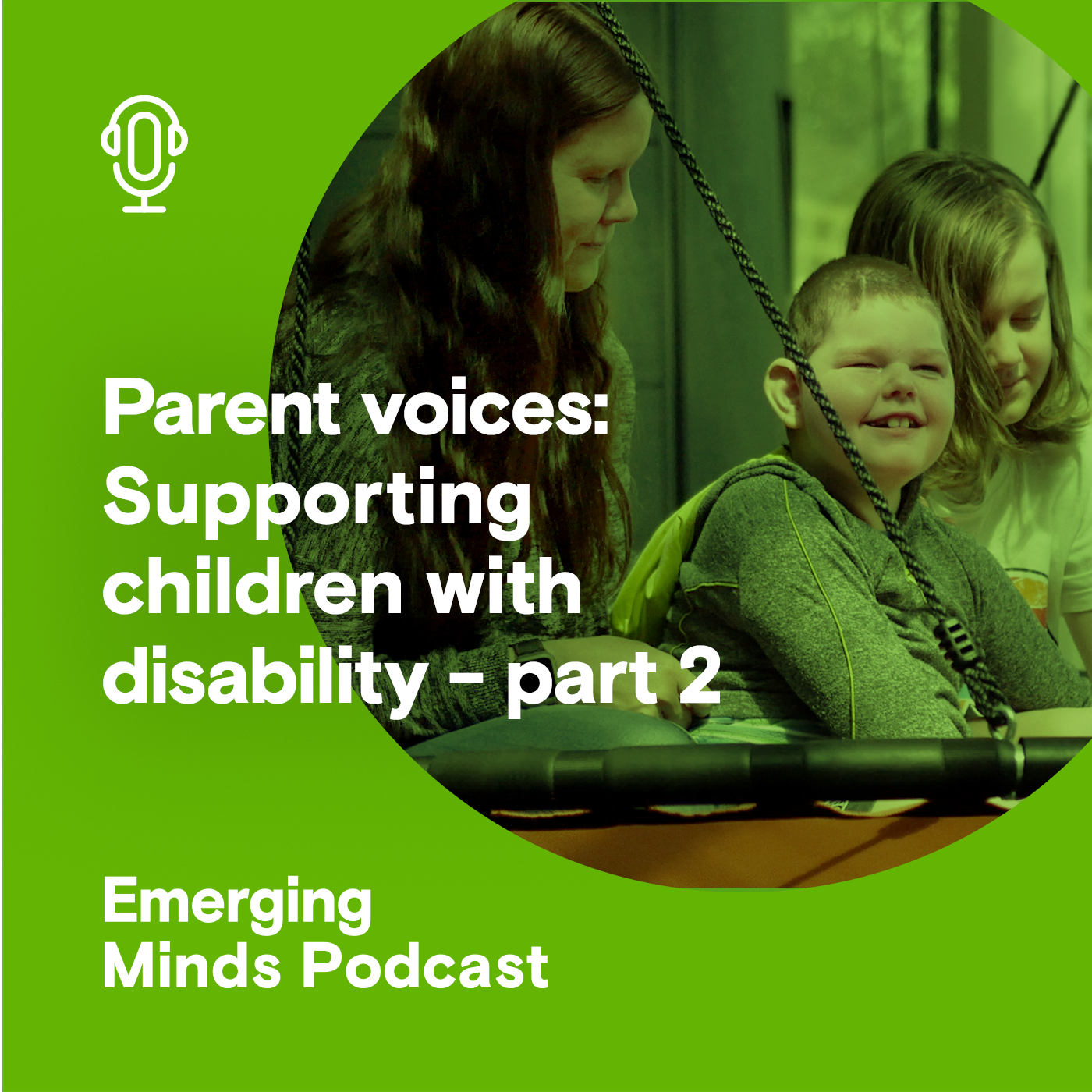
Ep 85Parent voices: Supporting children with disability - part two
This two-part podcast series features a collection of parents talking about their children who live with disability. In part two, Chris, Jacqui and Lisa discuss some of the ways in which professionals can support their children’s wellbeing.
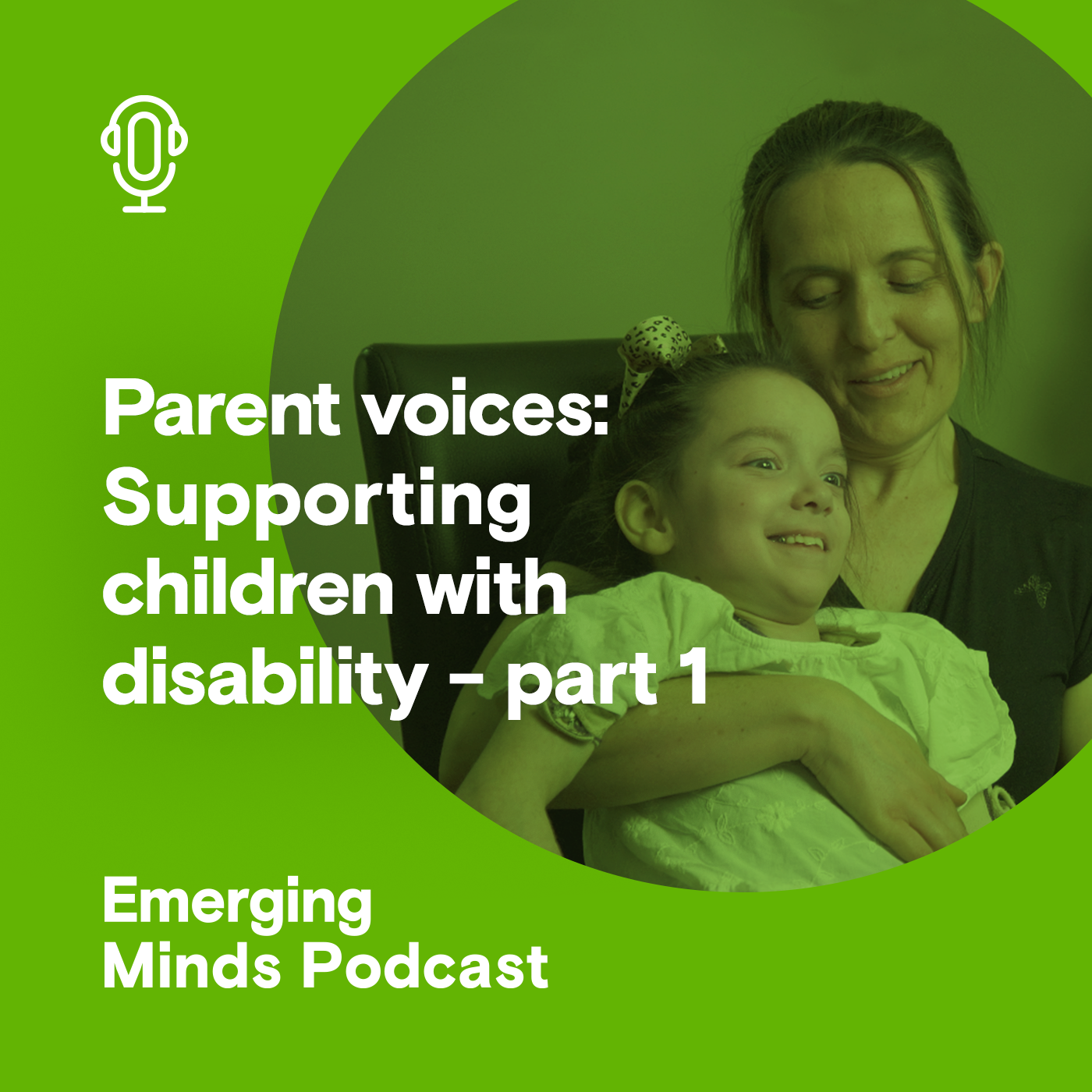
Ep 84Parent voices: Supporting children with disability - part one
Children are shaped and influenced by a range of individual, social and environmental factors, all of which go into making the ‘whole child’. Children living with disability experience the same range of emotions as every other child; and their mental health and wellbeing are influenced by the same factors as other children’s. Parents and professionals might see a child’s social and emotional wellbeing, communication, and behaviour as just an outcome of their disability. But children living with disability can experience positive mental health too. It is important to support children living with disability to express their hopes, preferences, and concerns, just like all children. We would like to acknowledge and thank our child and family partners, Chris, Lisa and Jacqui for taking the time to share their wisdom and expertise with us. In this episode you will learn: how deeply parents who have children with disability understand their children’s unique needs, how fiercely they love them, and how by listening to and reflecting on their stories, we can learn a great deal about supporting the mental health and wellbeing of children with disability how a child-focused approach encourages professionals to focus on the ‘whole child’, including their strengths, hopes and abilities, rather than just their physical and medical needs how children’s social and emotional wellbeing can be supported by creating space for them to explore and express aspects of their lives other than disability; and how living with disability can provide children with the opportunity to nurture a range of strengths and abilities. These can include positive qualities such as being loving and affectionate, being persistent, and being adaptable, resilient and determined. Further information and resources: Parent voices: Supporting children with disability - part two Understanding child mental health and disability (e-learning course)
Ep 83Shared practice in the family violence sector
Colleen Lovegrove and Diana Uribe describe their approach to working with Aboriginal and Torres Strait families as part of the Kornar Winmil Yunti team (KWY).
Ep 82Using self-determination to support family violence interventions
In this podcast, Craig Rigney, CEO of KWY shares how he walks alongside families in his work to provide a holistic family model of care.
Ep 81Building connections in the out-of-home sector
In this podcast, Sue-Anne Hunter talks about her work with Aboriginal and Torres Strait Islander children in the out-of-home care system. She discusses ways to heal trauma through evidence-based practices, and how integrating these practices within a cultural framework can benefit both children and practitioners.
Ep 80Using Elders’ wisdom to guide your practice
In this podcast, Aboriginal Elder, Millie Penny and Carol Michie from Telethon Kids explore Millie’s story of resilience and ongoing fight to support the needs of Aboriginal children, and how they have informed their work on the Ngulluk Koolunga Ngulluk Koort (Our Children, Our Heart) project.
Ep 79Healing the past by nurturing the future
In this podcast, Catherine Chamberlain talks about her perinatal work with Aboriginal and Torres Strait Islander parents, through the ‘Healing the Past by Nurturing the Future’ project.
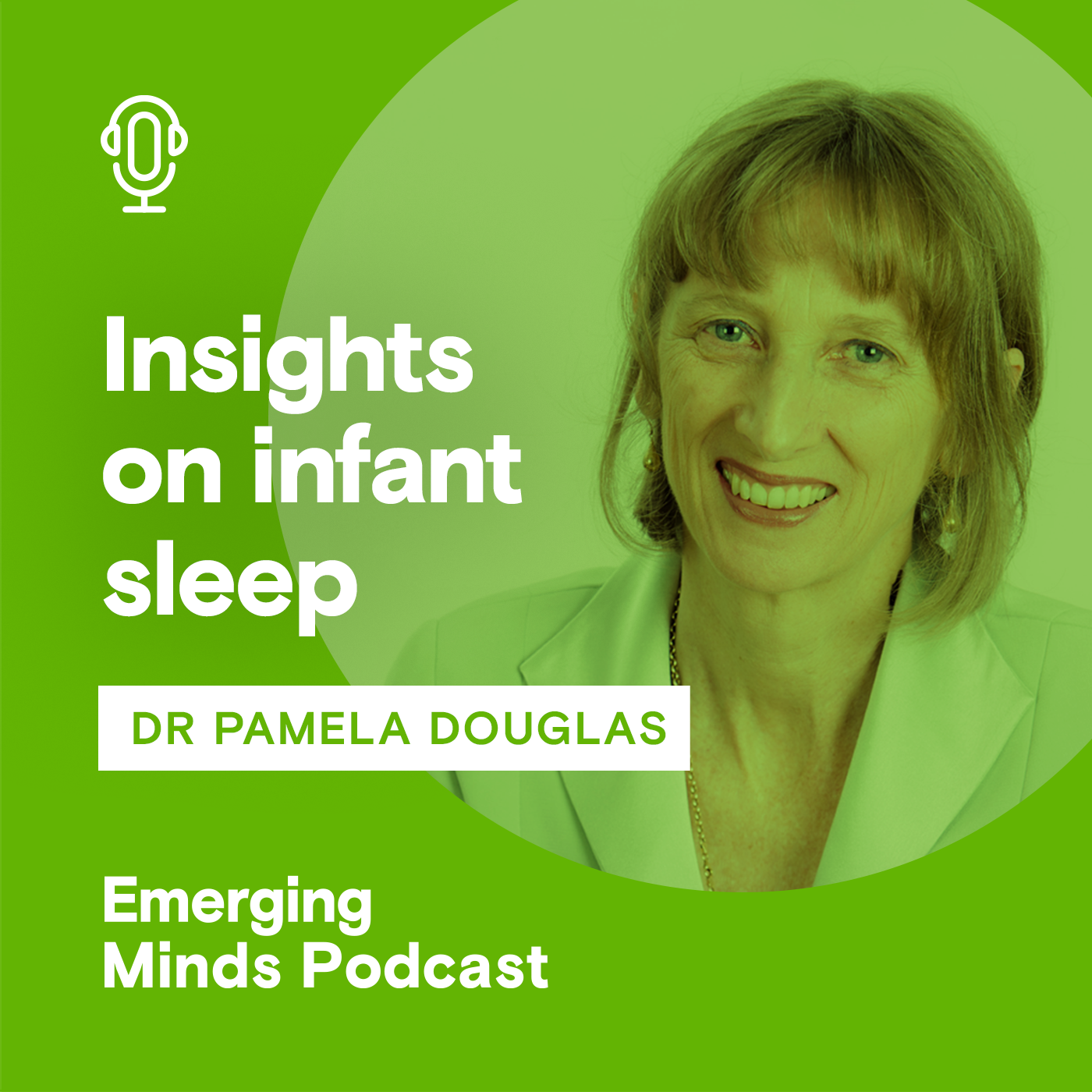
Ep 78Insights on infant sleep with Dr Pamela Douglas
Dr Pamela Douglas is a general practitioner and medical director of Possums & Co., a charity which educates health professionals in evidence-based neuroprotective developmental care, including the Possums Baby and Toddler Sleep Program. Pamela is an adjunct associate professor with the Maternal Newborn and Families Research Group at Griffith University, and Senior Lecturer with the Primary Care Clinical Unit at The University of Queensland. She is also the author of The discontented little baby book: all you need to know about feeds, sleep and crying. In a society where one third of parents seek help regarding their baby’s sleep, Pamela has spent her career researching ways to support babies and parents to develop effective and nurturing sleeping habits. She has worked with parents to develop evidence-based neuroprotective developmental care as a crucial understanding in providing responsive or cued care for babies. An important part of Pamela’s work has focused on how babies can initiate and participate in a synchronised relationship with their mother. Pamela works with parents to synchronise their sleep as much as possible with the patterns of the baby. Pamela discusses parents’ anxiety in creating regimented and formulated sleep times, and how she has attempted to shift the focus on enjoying awake times with babies and the creation of rich and enjoyable sensory experiences. In this episode, we discuss what the latest insights from neuroscience, anthropology and maternal and infant research tell us about infants’ needs around sleep, and how sleep can become a more harmonious experience for families. In this episode you will learn: why the responsive or cued care of our babies is important if we are to optimise developmental outcomes and secure attachment [5:09] the key principles of the first wave behavioural approach to babies’ sleep, and how these might affect a parent’s ability to experiment with sleep times and patterns [9:22] how to trust a baby’s sleep regulators and focus on providing the baby with rich and changing sensory input [19:47] how an evolutionary context helps us to understand what babies and parents need to enjoy positive sleep patterns [26:16]
Ep 77Co-design: Disrupting business as usual - part two
How can the voices of people with lived experience be authentically incorporated into resource and service design? This episode continues the conversation from part 1, exploring the process of co-design through the case study of Emerging Minds’ practice paper, Supporting children and families: How does co-design invite us to think differently? Child and family partner coordinator, Lydia Trowse is once again joined by co-authors Jason Tyndale (child and family partner), Jackie Amos (psychiatrist), and Rhys Price-Robertson (researcher). Together, they reflect on their experiences and share advice for people looking to integrate co-design into their work with children and families. In this episode you will learn: the value of authentic human relationships [02:00] strategies for managing disagreements or conflict [06:02] about the need to balance different perspectives [07:00] how to balance power [14:05] how co-design processes might help families and children more broadly [27:00] Further information and resources: Supporting children and families: How does co-design invite us to think differently? - practice paper: https://emergingminds.frmdv.com/resources/supporting-children-and-families-how-does-co-design-invite-us-to-think-differently/
Ep 76Co-design: Disrupting business as usual - part one
In this conversation, we explore the process of co-design through the case study of Emerging Minds’ practice paper, Supporting children and families: How does co-design invite us to think differently? Child and family partner coordinator, Lydia Trowse is joined by co-authors Jason Tyndale (child and family partner), Jackie Amos (psychiatrist), and Rhys Price-Robertson (researcher) to discuss how the process of co-design informed the conceptualisation, design and development of this resource, and to share practical tips for people looking to integrate co-design into their work with children and families. In this episode you will learn: how removing your ‘expert hat’ can allow for authentic engagement [4:00] the value of stepping away from traditional roles and instead meeting as people [11:20] how co-design can be achieved when organisational constraints exist [18:32] how to support people with lived experience throughout the co-design process [20:22] the importance of acknowledging and balancing power [28:28] tips to incorporate children’s voices in your work [30:43] Further information and resources: Supporting children and families: How does co-design invite us to think differently? - paper: https://emergingminds.frmdv.com/resources/supporting-children-and-families-how-does-co-design-invite-us-to-think-differently/
Ep 75Breaking the cycle of intergenerational disadvantage
In this episode, we are joined by Danielle Abbott from The Australian Centre for Social Innovation (TACSI). Dani has worked with TACSI for 10 years, exploring innovative ways of working with tough and complex issues. She is the Quality Implementation Lead for Family by Family and the Virtual Village programs, which have been codesigned with families for families. These programs combine the lived experiences of families with proven social theory and evidence-based practice to create confidence, self-agency and resilience for participants. Families that have been involved attest to the programs’ helpfulness in shifting the negative effects of intergenerational disadvantage. Dani describes the issues that families with experiences of intergenerational disadvantage face and the impacts it has on children’s mental health and wellbeing and on parents and parenting. She discusses the type of deeply human and compassionate therapeutic relationship that will support practitioners to truly walk alongside families and help effect deep and long-term change. Dani also shares some of the key things that are helpful for practitioners to know about in supporting families to ‘chip away’ at cycles of intergenerational disadvantage, based on her many years of experience. Though it deals with a difficult issue, this episode is inspirational and optimistic, providing real-life examples of families experiencing intergenerational disadvantage and some of the significant changes they have made. In this episode you will learn: how trauma and toxic stress impact on the child and intergenerational cycles [00:07] how to develop authentic therapeutic relationships and compassionate, trauma-informed practice [09:38] the importance of personal agency, supportive relationships, modeling of parenting skills and interactions, and taking a strengths-based approach [16:00] how to support parents and children with emotional regulation [23:19] the importance of early intervention and support to break the cycles of intergenerational trauma. [37:37] Further information and resources: Intergenerational Mental Health e-learning course https://learning.emergingminds.com.au/course/intergenerational-mental-health The impact of trauma on the child e-learning course https://learning.emergingminds.com.au/course/the-impact-of-trauma-on-the-child Supporting infants and toddlers e-learning course https://learning.emergingminds.com.au/course/supporting-infants-and-toddlers The impact of parental substance use on the child e-learning course https://learning.emergingminds.com.au/course/the-impact-of-parental-substance-use-on-the-child Parental substance use and child-aware practice e-learning course https://learning.emergingminds.com.au/course/parental-substance-use-and-child-aware-practice The impact of family and domestic violence on the child e-learning course https://learning.emergingminds.com.au/course/the-impact-of-family-and-domestic-violence-on-the-child Family and domestic violence and child-aware practice e-learning course
Ep 74Working with children with high sensitivity
In this episode, Rachel describes how she has developed schema therapy and understandings of attachment to help parents and children in her practice, particularly those who experience high sensitivity. Rachel’s work is informed by research which suggests that 31% of people fall into the highly sensitive category, and that high sensitivity makes people more aware and reactive to the environment around them. In her practice, Rachel has helped parents and children to reflect on how they react in stressful or worrying situations, and how this might affect their relationships and mental health. She is careful to explore both the strengths and vulnerabilities that are associated with high sensitivity, in ways that can help make parents and children more aware of their reactions to certain events and to support co-regulation. Rachel describes the connection between unstable environments for children with high sensitivity and poorer mental health outcomes in the short and long term. She believes that practitioners who are attuned to the specific needs of children with high sensitivity are well placed to work with children and parents to develop shared understandings of their support needs. In this episode you will learn: what high sensitivity is, how common it is, and how it can affect children and parents [7:28] how an understanding of high sensitivity can help practitioners and parents to better support children's wellbeing, and how this relates to mental health [14:06] some of the signs of high sensitivity in children [24:53] messages that will support parents to help their child with high sensitivity to flourish [28:13] Further information and resources: Autism, neurodiversity, and child-centred practice - part 1 - Emerging Minds Autism, neurodiversity, and child-centred practice - part 2 - Emerging Minds Supporting children through understanding regulation - part 1 - Emerging Minds Supporting children through understanding regulation - part 2 - Emerging Minds
Ep 73Supporting the communication needs of children with complex trauma - part two
This is part 2 of our conversation about using speech pathology to support children who’ve experienced complex trauma. Speech pathologist, Kate Headley, continues to explore the approaches she uses to ensure her work is child-centred, and elaborates on the role of speech pathology in a multidisciplinary complex trauma service.
Ep 72Supporting the communication needs of children with complex trauma - part one
This is the first part of a conversation exploring the role of speech pathology in supporting children who’ve experienced complex trauma. Speech pathologist, Kate Headley, provides rich examples of how she builds trusting relationships with children to support their language and communication needs.
Ep 69Identifying developmental concerns in school-aged children
Identifying developmental concerns in children can be challenging for practitioners, especially after the early years. Work by speech pathologist, Susan Pagel has led to the Red Flags Guide: a guide to support practitioners and parents to discuss children’s development and more easily identify where they might need specialist support.
Ep 70An interview with Resilience
Resilience is a crucial part of positive mental health in infants and children. It is important that people who work with children have a sound understanding of the factors that help children grow, stay strong and remain present.
Ep 69An interview with Shame
Children who experience violence or trauma at home commonly experience increased feelings of shame over time. Without support, these feelings can have significant negative effects on children’s mental health, and can convince them that they are responsible for adult perpetration of violence.
Ep 68An interview with Secrecy
In this candid interview, Secrecy shares the role they play in preventing children from accessing the services they need after experiencing sexual abuse. They discuss the history of their role in suppressing community awareness of child sexual abuse, and the ways in which they deprive children and adults of the information they need to prevent and respond to abuse. Secrecy shares with us their concerns regarding the developing practice skills of many professionals who help children to disclose their abuse, and to recover from the effects. However, Secrecy still has many tricks up their sleeve to prevent practice confidence and competence in encouraging and responding to disclosures of abuse, such as convincing practitioners ‘not to open a can of worms.’ Secrecy also explores the long-term implications for children’s mental health if they do not access the support that they need, and explains how they work together with Self-blame and Shame to ensure poorer relationship, educational, financial and health outcomes for victims of abuse. In this episode you will learn: how Secrecy tricks children into believing they should keep child sexual abuse to themselves, and how perpetrators help Secrecy to prevent disclosures [1:34] the tricks that Secrecy uses to take away children’s voices [3:15] the difference that it can make for children when adults shine a light on Secrecy, and help children have important conversations about safety [5:50] how Shame and Self-blame convince children that they don’t deserve support for their experience of abuse, and that the abuse was their fault [12:15] Further information and resources: Emerging Minds Learning Making use of practitioners’ skills to support a child who has been sexually abused - Emerging Minds Responding to the challenge of child sexual abuse - Emerging Minds