Emerging Minds Podcast
218 episodes — Page 1 of 5
Understanding the complexity of attachment and child development
Child-focused practice with parents who use substances
The power of child-led play
Practitioner narratives about supporting social and emotional wellbeing for children and families
Incorporating children’s voices into practice and processes
Supporting the communication needs of children with complex trauma
Championing infant mental health capability in paediatric care
Ep 210Holding infants in mind: Building workforce capacity through a champions approach
Early relationships underpin infant mental health and lifelong wellbeing – but not all practitioners in the Australian mental health workforce feel confident in supporting infant mental health. In this episode, we’re joined by Vicky Gilroy, Director of Innovation and Research at the Institute of Health Visiting (iHV). She speaks about how iHV’s Perinatal and Infant Mental Health Champions Programme has helped support workforce development and system transformation to support children’s mental health.
Ways to support young people experiencing loneliness and bullying
In this episode, we’re joined by Amber Brock-Fabel and Dr Ben Lohmeyer, the authors of a recent study about young people’s experiences of loneliness and its connection to bullying. They discuss the implications of the study’s results for young people’s wellbeing, the importance of creating safe spaces for young people and what practitioners and families can do to best support them.
Ep 208How is loneliness impacting young people in Australia?
This two-part series focuses on a recent Australian study about loneliness and its relationship with young people’s experiences of bullying and undesirable social connections. In the first episode, we’re joined by youth advocate Amber Brock-Fabel and academic Dr Ben Lohmeyer, who co-designed the study with young people. They share findings from the study that redefine loneliness as being created by social dynamics within school environments, rather than stemming from isolation. Amber and Ben also discuss the process of co-designing the study; the increased incidence of loneliness for young people in Australia; and the connections between bullying, social systems and experiences of loneliness.
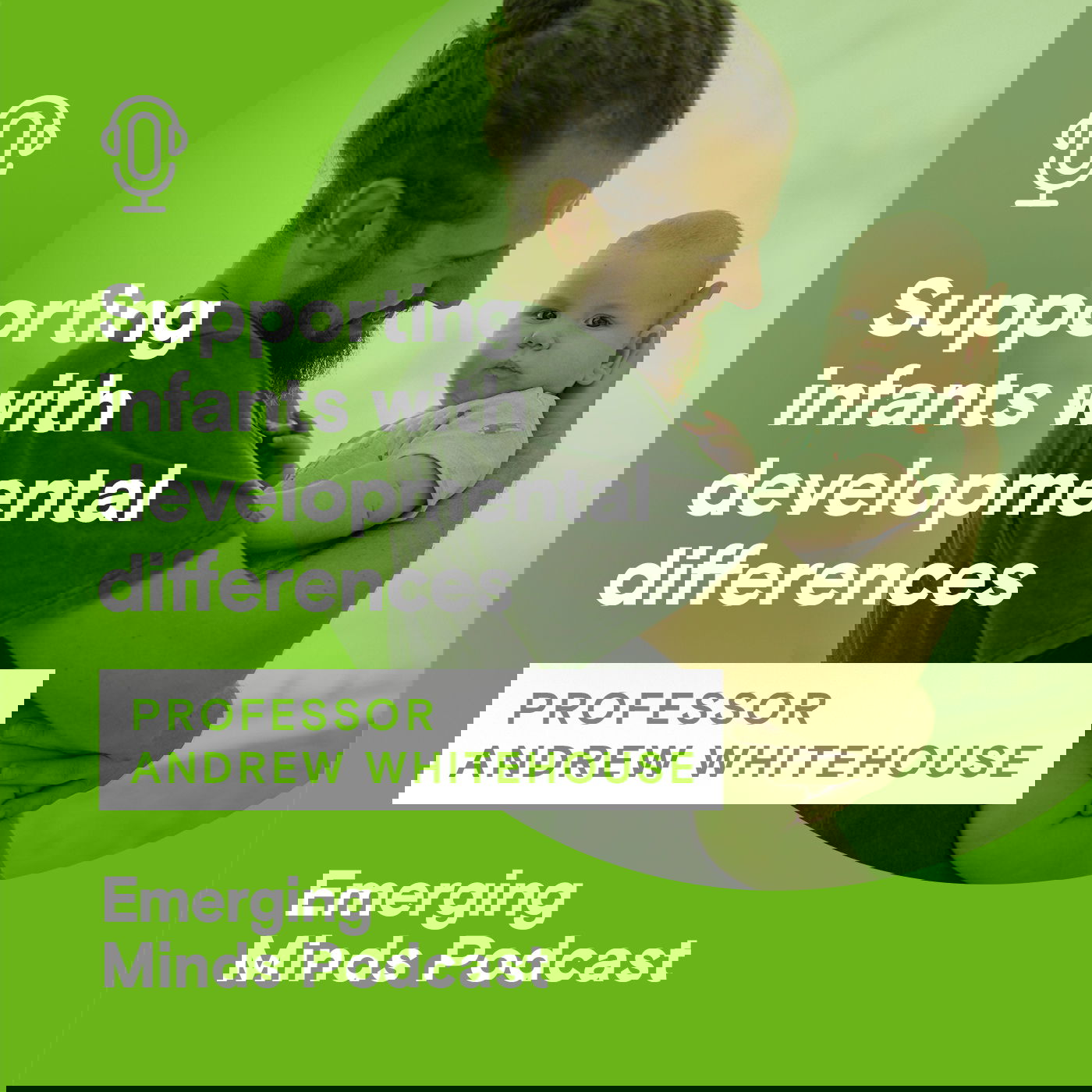
Ep 207Supporting infants with developmental differences
When adults are supported to pause, tune in and respond to an infant’s cues, they can build the strong relationships that underpin lifelong mental health and wellbeing. In this episode, Professor Andrew Whitehouse explores ways to foster connection and understanding between infants with developmental differences and their caregivers.
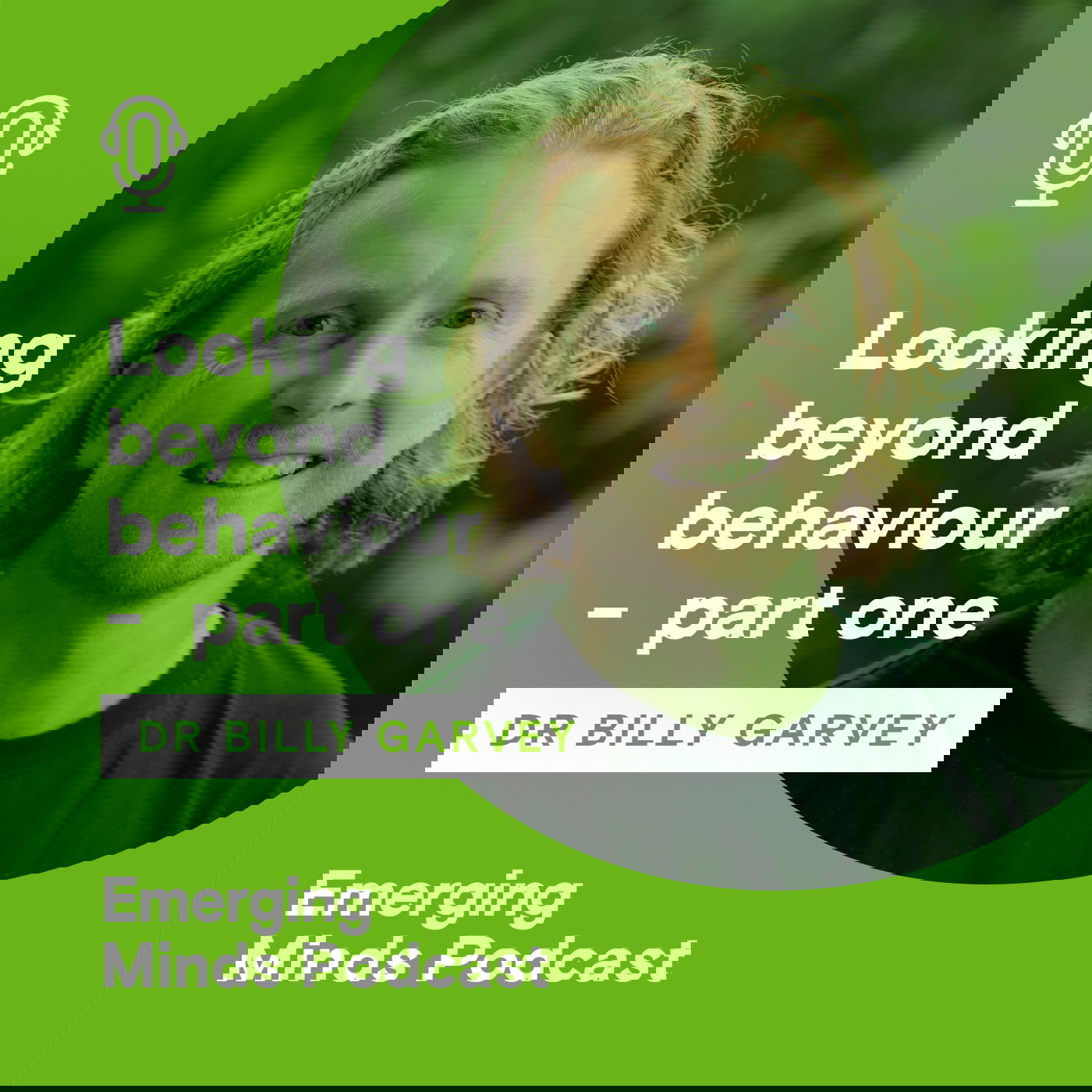
Ep 206Looking beyond behaviour – part one
In this episode from the Emerging Minds Families podcast, Dr Billy Garvey (author, podcaster and developmental paediatrician) explores emotion regulation, how children build resilience and the role parents play in creating safe and supportive environments for children.
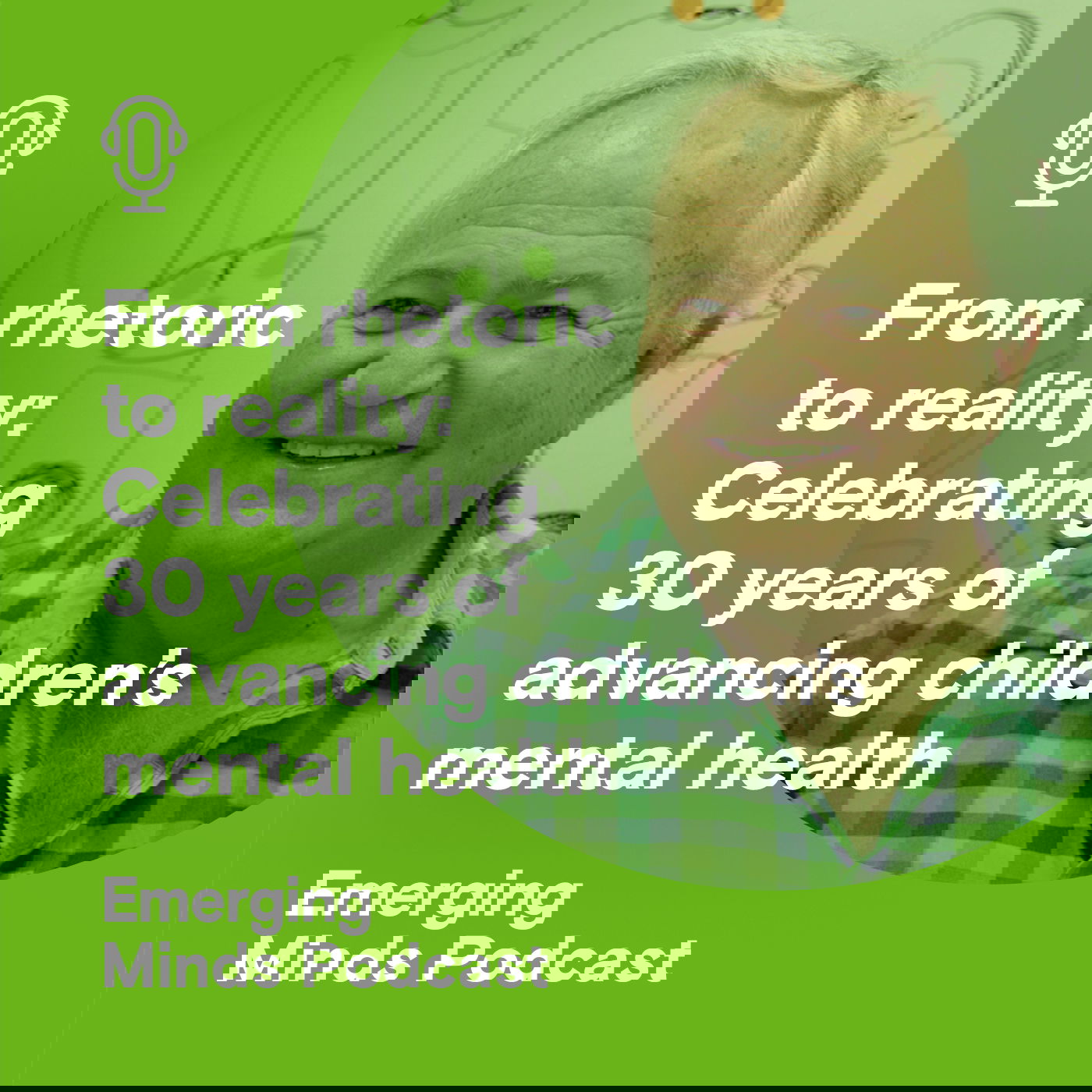
Ep 205From rhetoric to reality: Celebrating 30 years of advancing children’s mental health
In this episode, Emerging Minds’ Phil Robinson (Founder and Chair) and Brad Morgan (Director) reflect on how our understanding of and approach to children’s mental health has changed over the past 30 years. They explore how these insights can guide us towards even greater outcomes in the years to come.
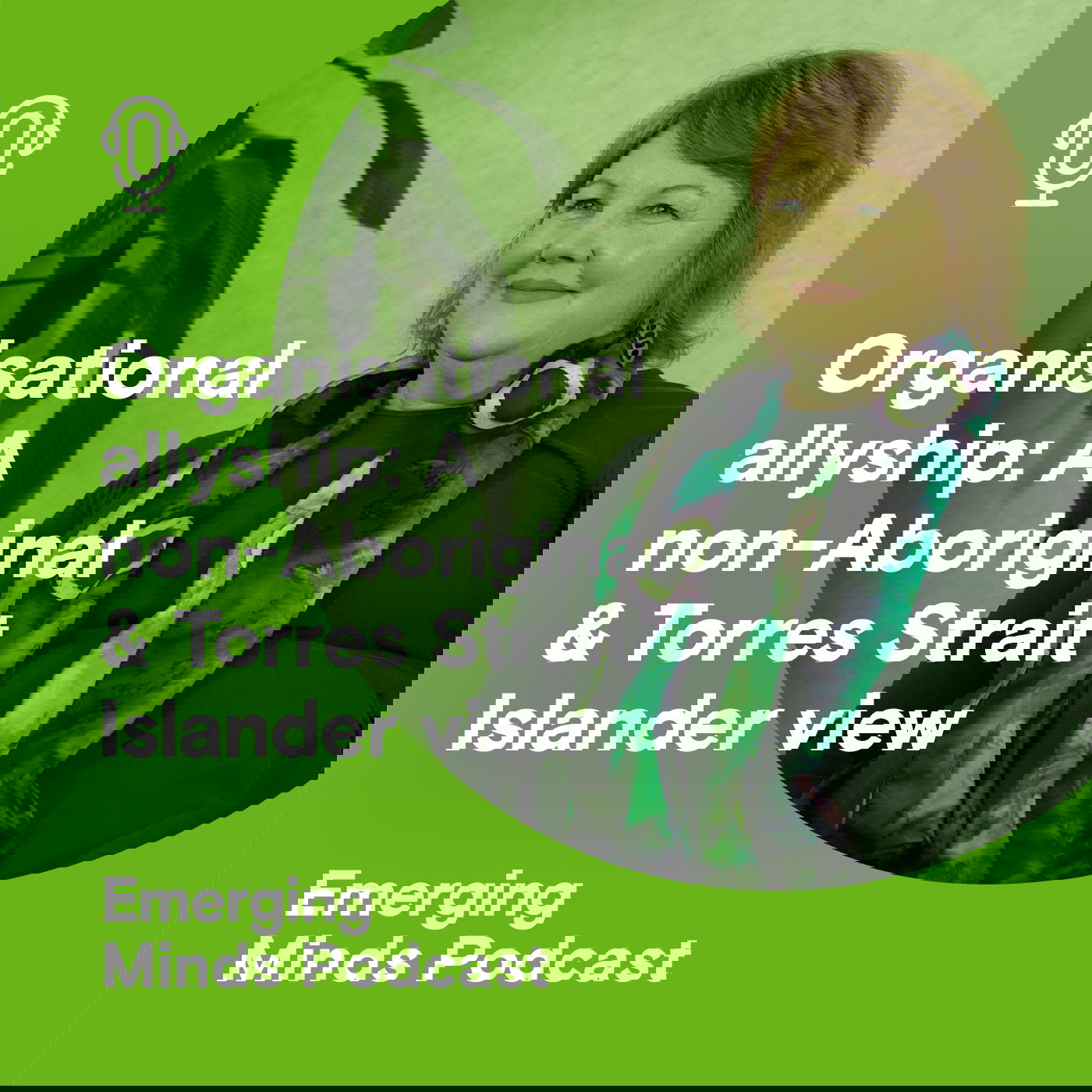
Ep 204Organisational allyship: A non-Aboriginal and Torres Strait Islander view
In the second episode of this two-part series, Lisa Hillan, a non-Aboriginal and Torres Strait Islander social worker, talks about her experience in working with and alongside Aboriginal and Torres Strait Islander communities.
Ep 203Perfectly imperfect: Navigating new parenthood and perinatal mental health
In recognition of Perinatal Mental Health Week, Amy Mathews joins us to share wisdom gained from her lived experience of perinatal mental health struggles and her subsequent work as a peer support worker. Amy discusses how social pressure and expectations impact the transition to parenting. She also talks about what practitioners can do to support parents and perinatal mental health during this time of rapid change.
Ep 202Organisational allyship: An Aboriginal and Torres Strait Islander view
In the first episode of this two-part series, Grant Sarra, a Goreng Goreng man from Queensland, joins us to share an Aboriginal perspective on what organisational allyship looks like for individuals, teams and broader organisations.
Ep 201How can we do better? Supporting children’s mental health in Australia
In this episode, practitioners, researchers, parents and young people explore strategies and shifts to better support infant, child and adolescent mental health in Australia. They discuss the need for better collaboration between professionals and more integrated services; for improving mental health literacy among community members; and for shifting away from using diagnostic thresholds to determine who can access mental health support.
What does the future hold for children's mental health in Australia?
To mark the 200th episode of the Emerging Minds podcast, we wanted to look to the future of infant and child mental health in Australia. Practitioners, researchers, parents and young people discuss the key concerns and priorities for supporting infants’ and children’s mental health, common misconceptions about mental health and wellbeing, and systemic barriers to improving outcomes for children and families.
Ep 199Talking to children and young people about consent
In this episode from our Emerging Minds Families podcast, Kirsty (Schools Coordinator, Shine SA) discusses ways to equip children with the knowledge and skills to make informed and empowered decisions about their bodies and relationships. Kirsty shares how parents can start these conversations with their children, how adults can effectively model consent, and how these conversations support children’s wellbeing.
Ep 198The Australian Child Maltreatment Study: What do the findings tell us?
In this podcast episode, Professor Daryl Higgins shares his research insights on child-safe organisational strategies and public health approaches to protecting children. Daryl was involved in the 2023 Australian Child Maltreatment Study (ACMS), which showed how disturbingly common it is for children in Australia to experience abuse and neglect. Daryl shares the findings from this study and its implications for prevention and early intervention policies and practices with children and young people.
Ep 197Child-centred practice in child protection - part two
In the second episode of this two-part series, Dr Carmela Bastian talks with child protection specialists Dr Amy Bromley, Arabella Stravolemos and Chloe Henderson about their approaches to child-centred practice. The conversation explores descriptions of practice that genuinely prioritise children’s safety, emotional needs, wellbeing, voice and rights.
Ep 196Child-centred practice in child protection - part one
In the first episode of this two-part series, Dr Carmela Bastian talks with child protection specialists Dr Amy Bromley, Arabella Stravolemos and Chloe Henderson about their approaches to child-centred practice. The conversation explores descriptions of practice that genuinely prioritise children’s safety, emotional needs, wellbeing, voice and rights.
Ep 195Creative healing practices to support Aboriginal and Torres Strait Islander children
In this episode, Dana Shen speaks with Jem Stone, a practitioner with Wayapa Wuurrk, the first internationally accredited Indigenous wellness program. Wayapa Wuurrk combines earth mindfulness, narrative meditation, physical movement storytelling and earth reciprocity to create a holistic wellbeing program for children in education settings. Jem takes listeners on a unique journey of collective wellbeing, encouraging practitioners to connect themselves to nature.
Ep 194Supporting children who have experienced sexual abuse
In this episode, therapist Sophie McEvoy discusses her work with children who have experienced sexual abuse. Sophie describes her practice in helping children to use their own words, communication preferences and meaning-making to describe the trauma events in their lives in ways that are supportive and hopeful. She also shares her experiences in working with non-offending parents to support their children’s recovery.
Building parent-child relationships from behind bars
Parental incarceration can have a significant impact on children’s mental health and wellbeing. In this episode, senior mental health counsellor Linh Nguyen shares how she supports incarcerated fathers to overcome barriers and build strong, lasting relationships with their children.
The lived experience of infants in neonatal intensive care - part two
In the second episode of this two-part series, neonatologist Dr Natalie Duffy explores the key themes expressed by infants and parents with lived experience of being hospitalised in the neonatal intensive care unit (NICU). This episode considers how this window into the infants’ world can guide practitioners to engage in ways that are lifesaving and nurturing of both physical and mental health development.
Ep 191The lived experience of infants in neonatal intensive care - part one
In the first episode of this two-part podcast, neonatologist Dr Natalie Duffy provides insight into the impacts of hospitalisation in the neonatal intensive care unit (NICU) on infants and parents. Natalie shares how she observed, listened to and was guided by the voices of infants in her research into the lived experience of those in NICU.
Ep 190Documenting and sharing children's knowledge to support their mental health
In this episode, we speak with family counsellor Carolyn Markey about her work gathering and documenting children’s knowledge, and how this knowledge can then be shared with others, particularly fathers.
Ep 189When I got the news: Research to support Aboriginal fathers through inclusion
In this episode, we are joined by Zaccariah Cox, the Manager for Social and Emotional Wellbeing and Mental Health at Kimberley Aboriginal Medical Services (KAMS), and Erica Spry, Senior Aboriginal Research Officer at KAMS and a research fellow at the University of Western Australia. Erica and Zac share what they heard when speaking with expecting and new fathers in rural and remote Western Australia, who often feel overlooked in their journey of fatherhood.
Ep 188Supporting children and young people through gender-affirming care
In this episode, we’re joined by Professor Damien Riggs, a professor in psychology at Flinders University and a psychotherapist who specialises in working with transgender young people. In this conversation, Damien talks about gender-affirming practice. He shares how practitioners in general health and social services can use their skills to work with children and young people in gender-affirming ways that support their mental health and wellbeing. He also explores how practitioners can seek learning opportunities to increase their knowledge and confidence in working with gender diverse children and young people.
Ep 187How supportive networks enhance the mental health of gender diverse children
In this episode, we’re joined by Arianne, a parent of six children between the ages of 8 and 22. Arianne is a strong advocate for her transgender child and the wider transgender community. In this conversation, Arianne shares her family’s experience of supporting their daughter through coming out and transitioning, navigating services, and what practitioners can do to provide gender-affirming support in their practice.
Ep 186Understanding and supporting children who self-harm: Giving them a voice
In this podcast episode, we hear from Dr Lyn O’Grady, a community psychologist, and David Newman, a narrative therapist and social worker, as they share their insights on recognising and responding to self-harming behaviour with children.
Childhood suicidal ideation through a narrative therapy lens
In this episode, narrative therapist and social worker David Newman shares his approach to working with children and young people who are experiencing suicidal ideation. Through the lens of narrative therapy, David discusses how he negotiates conversations about distress, despair and suicide.
Ep 184Collaborating to meet infant mental health needs - part two
In the second part of this two-episode series, we continue our conversation with Lyndsay Healy, Dr Rickie Elliot and Dr Louise Wightman about collaboration with families and clear communication between professions to promote children’s mental health in the early years.
Collaborating to meet infant mental health needs - part one
In the first part of this two-episode series, Lyndsay Healy, Dr Rickie Elliot and Dr Louise Wightman join us to explore how collaboration with families and clear communication between professions promotes children’s mental health in the early years.
Working with families in neuro-affirming ways
In this episode, practitioners and parents of autistic and ADHDer children explore ways to build children’s self-regulation and advocacy skills, foster acceptance of their neurodivergent identity, and uncover the ‘why’ behind their behaviour.
A neurodivergent-affirming approach to children's mental health
In this episode, practitioners and parents of autistic and ADHDer children explore the concept of ‘neurodivergent-affirming practice’: what it means to them, how it shows up in their work, and how it supports both children’s and parents’ mental health and wellbeing.
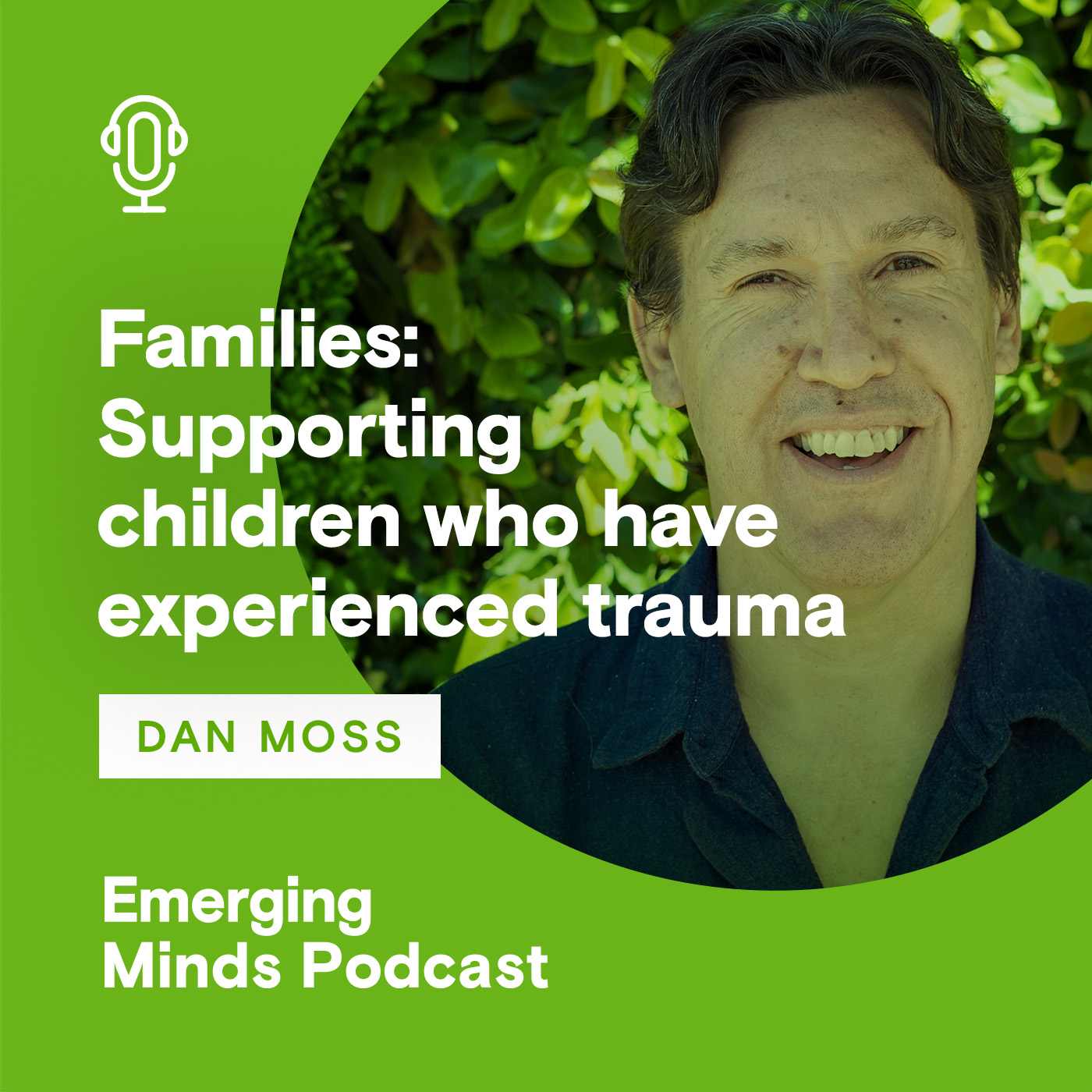
Re-release: Supporting children who have experienced trauma
All children deserve to have safe environments where they can thrive. But when a child’s trust is broken and their environment no longer feels safe, this it can have significant ramifications for the child’s life and development. In this podcast episode we talk with Dan Moss, who has a long history of working in support services with children who have experienced trauma. Dan helps us understand what relational trauma is and how it can affect the mental health and wellbeing of the children in our lives.
Re-release: Improving the rights of parents with intellectual disability
In this episode, Miranda Bain describes her involvement in developing the Victorian Charter of Rights for parents with intellectual disability. Miranda is a special advisor to the Office of the CEO for Courts Victoria and the Chair of the Disability Advisory Committee. She discusses her journey in working with child protection, non-government organisations and parents with intellectual disability to develop the charter of rights, which is now implemented within courts in Victoria.
Ep 178Working towards a future without childhood sexual abuse
In this episode, Alisa Hall describes her work as Director, Practice Development and Engagement at the National Centre for Action on Child Sexual Abuse. The National Centre was established in recognition of data showing that one in three girls and one in five boys experience some form of sexual abuse before the age of 18. Alisa’s work focuses on prevention and education campaigns to protect Australia’s children while helping children, young people and adults to recover from the effects of sexual abuse.
Prioritising the wellbeing of children in care: A lived experience perspective
In this episode, we’re joined by Melanie Renwick. As a child, Melanie lived in several residential and foster care placements. She shares her experience of living in care and discusses some of the things that practitioners can do to support the mental health of children in out-of-home care.
Working with children affected by suicide - part two
In the second part of this two episode-episode series, we speak with Ben Shannahan about working therapeutically with children, young people and families impacted by the suicide of a loved one.
Working with children affected by suicide - part one
In the first part of this two-episode series, we speak with Ben Shannahan about working therapeutically with children, young people and families impacted by the suicide of a loved one.
Single session family consultations - part two
In this second of two episodes, we continue our conversation with Joanne Donne, a practice manager with Relationships Australia South Australia, about the single session consultation service they offer to children and their families.
Single session family consultations - part one
In this first of two episodes, we speak with Joanne Donne, a practice manager with Relationships Australia South Australia, about the single session consultation service they offer to children and their families.
Ep 172Global majority and language empowerment
In this episode, Global majority and language empowerment, our host, Rosie, engages in a deep conversation with guest speakers Julie and Nancy about the power of language in shaping identity and empowerment, particularly within Aboriginal and Torres Strait Islander communities. The discussion explores the complexities of terminology, with a focus on the term "global majority" and its potential to empower individuals by shifting power dynamics. Through personal anecdotes and insights, the speakers explore the nuances of cultural identity, the impact of assumptions and biases, and the importance of courageous conversations in creating inclusive spaces.
Ep 171Creating safe body image environments for children
In this episode, host of the Emerging Minds Families podcast Alicia Ranford talks with Dr Zali Yager, an internationally recognised expert on body image, with a background in health and physical education. Dr Yager co-founded the Embrace Collective with 2023 Australian of the Year, Taryn Bromfield. Dr Yager shares how families, educators and practitioners can help create safer body image environments for children and young people.
Ep 170Invitational and ethical practice with fathers who use violence (part two)
In this episode, psychologist and author Alan Jenkins describes his practice theory for working with fathers who use violence, coercion or threats towards partners and children. Alan’s two books, Invitations to responsibility (1990) and Becoming ethical: Parallel political journeys with men who have abused (2009) are seminal texts for practitioners in behaviour change programs. Alan has been influential in advocating for fair and ethical practice when working with men and fathers who have acted in unfair or unsafe ways.
Ep 169Invitational and ethical practice with fathers who use violence (part one)
In this episode, psychologist and author Alan Jenkins describes his practice theory for working with fathers who use violence, coercion or threats towards partners and children. Alan’s two books, Invitations to responsibility (1990) and Becoming ethical: Parallel political journeys with men who have abused (2009) are seminal texts for practitioners in behaviour change programs. Alan has been influential in advocating for fair and ethical practice when working with men and fathers who have acted in unfair or unsafe ways.
Ep 168Navigating family cultural tensions
This episode is the second in a two-part series discussing culturally responsive practice and key considerations for working with culturally diverse families. In this episode, parents and practitioners discuss considerations and responses when navigating family tensions that arise from differing ideas about priorities.