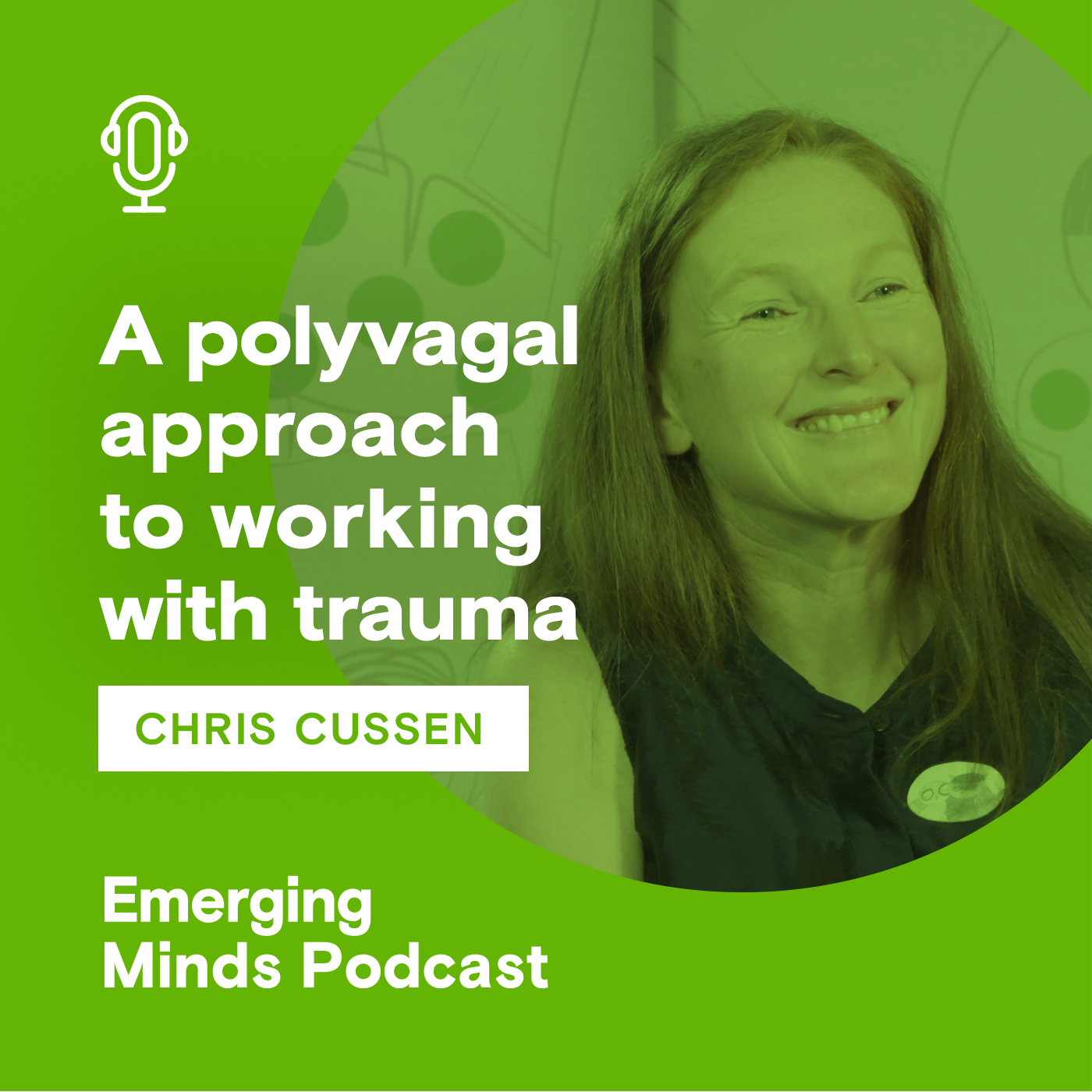
A polyvagal approach to working with trauma
What can the body's signals tell us about how to respond to trauma? In this conversation with psychologist, Chris Cussen, we draw on polyvagal theory to understand how the nervous system is affected by trauma and what is supportive when working with children who have abuse-related trauma histories. Chris draws on her many years of experience working with the Australian Childhood Foundation to give a rich description of how a neurobiological perspective informs her practice. In this episode you will learn: How to explain polyvagal concepts to a child (05:28) What the body needs to move through a mobilised state (08:54) The importance of facial expressions and tone of voice for social engagement (11:49) Practices to support a child in a mobilised state (20:43) Further information and resources: Australian Childhood Foundation Discussion Paper 18: Polyvagal Theory and its implications for traumatised students: https://professionals.childhood.org.au/app/uploads/2018/08/SMART-Discussion-Paper-18.pdf Stephen Porges' website: https://www.stephenporges.com/articles
Audio is streamed directly from the publisher (episodes.castos.com) as published in their RSS feed. Play Podcasts does not host this file. Rights-holders can request removal through the copyright & takedown page.
Show Notes
- How to explain polyvagal concepts to a child (05:28)
- What the body needs to move through a mobilised state (08:54)
- The importance of facial expressions and tone of voice for social engagement (11:49)
- Practices to support a child in a mobilised state (20:43)
- Australian Childhood Foundation Discussion Paper 18: Polyvagal Theory and its implications for traumatised students: https://professionals.childhood.org.au/app/uploads/2018/08/SMART-Discussion-Paper-18.pdf
- Stephen Porges' website: https://www.stephenporges.com/articles