
Digital Health Talks - Changemakers Focused on Fixing Healthcare
218 episodes — Page 4 of 5
Ep 67Leading the Digital Revolution in Healthcare: Transforming Patient Care and Innovation at Tufts Health System
YouTube Video: https://www.youtube.com/watch?v=z1_oWKgfW7wOriginally Published: Jul 21, 2023See what is happening now at www.healthimpactlive.com Leading the Digital Revolution in Healthcare: Transforming Patient Care and Innovation at Tufts Health System Join us for an inspiring session as we delve into the groundbreaking initiatives spearheaded by Dr. Shafiq Rab, a visionary leader in healthcare innovation, and his transformative work at Tufts Health System. In this session, we will explore the digital revolution in healthcare and its profound impact on patient care, operational efficiency, and innovation. Unveiling the Digital Transformation Blueprint Redefining Patient Care through Digital Innovations Leveraging Data and Analytics for Informed Decision-Making Fostering a Culture of Innovation Shafiq Rab, MD Chief Digital Officer and CIO, TuftsMegan Antonelli, Chief Executive Officer, HealthIMPACT, Moderator
Ep 66Navigating Healthcare Automation: Regulatory Outlook and Legal Considerations for Streamlining Processes and Eliminating Inefficiencies
See what is happening now at www.healthimpactlive.com Originally Published: Jul 21, 2023YouTube Video: https://www.youtube.com/watch?v=4V8Tx9KrzlwNavigating Healthcare Automation: Regulatory Outlook and Legal Considerations for Streamlining Processes and Eliminating Inefficiencies In order to keep pace with increasing demands on healthcare technology teams, healthcare organizations must foster a culture of continuous improvement that prioritizes efficiency, effectiveness, and innovation. This means getting rid of the "stupid stuff" that slows down progress and undermines the quality of care. In this session, we will explore the importance of continuous improvement in healthcare technology and provide practical guidance on fostering a culture of continuous improvement within your organization and the regulatory and legal issues organizations need to consider as they attempt to streamline and automate processes. Kyle Y. Faget, Co-Chair Health Care Practice Group, Foley & Lardner Megan Antonelli, Chief Executive Officer, HealthIMPACT Moderator
Ep 65Digital Health Talks - Changemakers Focused on Fixing Healthcare
YouTube Presentation: https://www.youtube.com/watch?v=zuxmSqKEQWcOriginally Published: Jul 21, 2023 Fortifying Healthcare's Digital Armor: Securing On-Prem Multi-Cloud Environments for Unparalleled Data Protection Lawrence Kohan will discuss the vital role of VMware Aria Operations in ensuring compliance with industry standards like HIPAA and PCI. He will explore how VMware Tanzu Service Mesh strengthens healthcare applications with behavior-based security and API threat detection. Additionally, Lawrence will highlight the secure data management capabilities of HashiCorp Vault. Attendees will gain valuable insights into these solutions and their significance for healthcare security, and how they apply to both on-prem datacenters as well as VMware Cloud on AWS to achieve greater security in their multi-cloud environments. Lawrence Kohan, Senior Solution Architect, TeraSky
Ep 64Delivering Care from Anywhere; How the Pandemic Accelerated Digital Transformation
The COVID-19 pandemic has brought unprecedented challenges to the healthcare industry, prompting a rapid shift toward digital transformation. This session explores the significant impact the pandemic has had on hospital attitudes towards technology change and highlights trends developed by Palo Alto Networks to support healthcare providers in delivering care remotely. Additionally, Stephan Rockwell will address the crucial considerations for technology leaders in supporting a hybrid workforce within the healthcare sector. Join this insightful session to gain valuable insights into the future strategies and technologies shaping the healthcare industry in the wake of the pandemic.The impact of the pandemic on hospital attitudes toward technology changeTrends developed by Palo Alto Networks to support healthcare providers in remote care deliveryConsiderations for technology leaders supporting a hybrid workforce in HealthcareFuture strategies and technologies shaping the healthcare industry Stephan Rockwell Sr Director of Systems Engineering, US Healthcare Palo Alto Networks Megan Antonelli Chief Executive Officer HealthIMPACT Moderator
Ep 63TEFCA 2023 Update on the Nationwide Framework for Interoperability in Healthcare
Originally Published: Mar 22, 2023YouTube Video: https://youtu.be/OjbOUe4ouawSee what's happening at www.healthimpactlive.com In February, ONC announced the first cohort of qualified networks in TEFCA. TEFCA aims to transform the healthcare industry by enabling a seamless and secure exchange of health information. It aims to improve patient care, reduce healthcare costs, and promote innovation in healthcare delivery, designed to create a single "on-ramp" to nationwide interoperability. In this session, hear from ONC on recent progress, including: How the Trusted Exchange Framework and Common Agreement work together to create a single on-ramp to nationwide interoperability Review of the technical, legal, and organizational requirements for exchanging health information under TEFCA, including data standards, privacy, and security protocols, and patient consent. Collaboration and participation efforts to achieve the goal of creating a more connected and interoperable healthcare system.
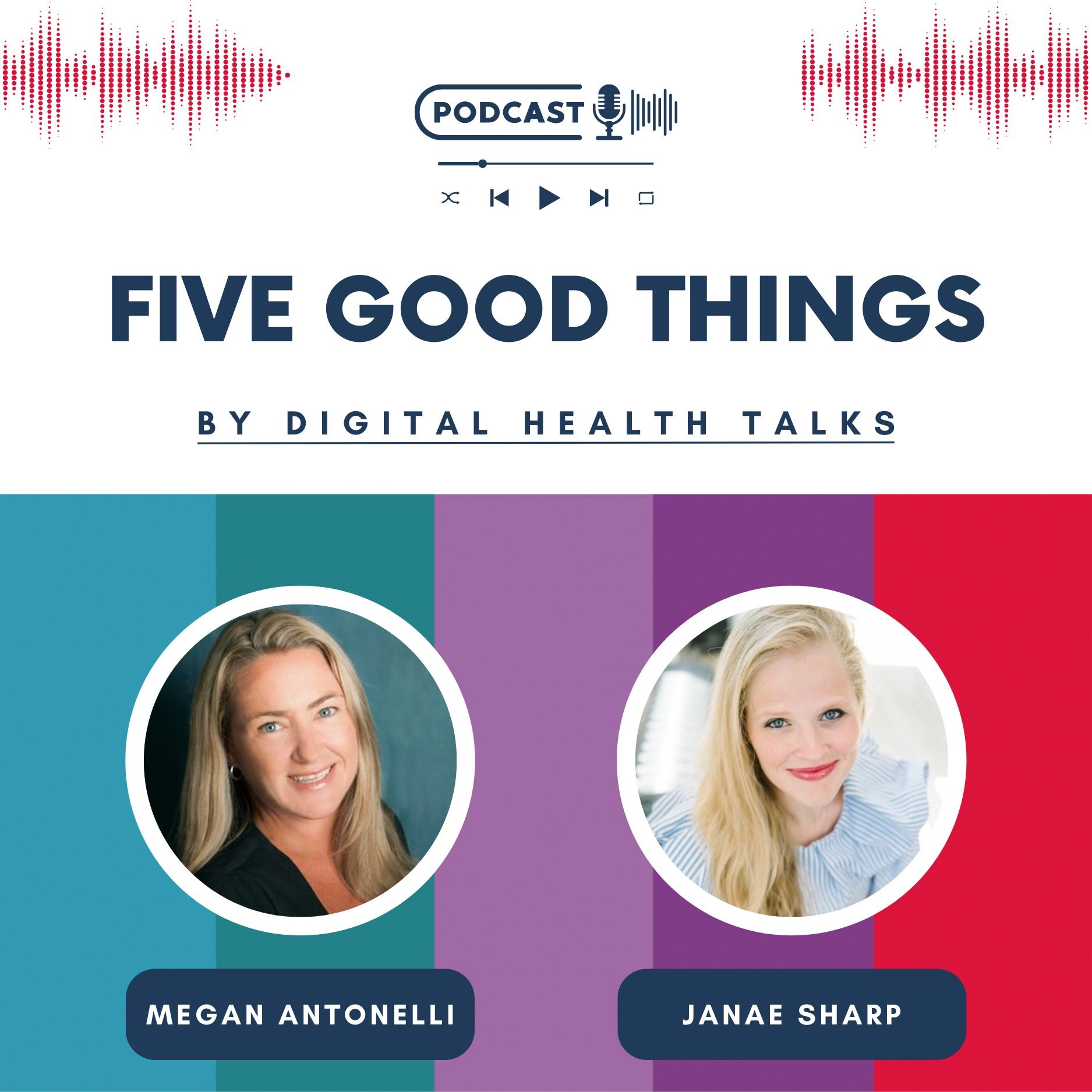
Ep 62Positive News and Developments in Healthcare: "Five Good Things"
During this episode of Digital Health Talks, Megan and Janae introduce a new segment named "Five Good Things," which focuses on positive advancements in the healthcare industry. Along with showcasing positive news and developments in healthcare, the hosts discuss the promising results of a recent study on a new weight loss medication developed by Eli Lilly. The hosts also highlight the effectiveness of medication as an alternative to costly and invasive bariatric surgery for obesity management. Additionally, they touched on the importance of technology in healthcare, amongst other great news in the industry. By staying up-to-date on the latest developments and breakthroughs, we can work towards a healthier future. We encourage listeners to continue learning about innovative technologies and treatments and share this knowledge with others. Thank you for tuning in, and we look forward to bringing you more inspiring stories and positive news in the next episode. Janae Sharp, Founder, The Sharp IndexMegan Antonelli, Chief Executive Officer, HealthIMPACT Live
Ep 61Transforming Healthcare: Leveraging Technology and Advanced Analytics to Optimize and Expand Capabilities
See what is happening now at www.healthimpactlive.com Novant Health is a leading healthcare organization at the forefront of leveraging technology and advanced analytics to transform patient care. In this session, we will explore the specific types of technology and advanced analytics capabilities that Novant Health is implementing and how they are expected to improve patient care and outcomes. Novant Health's investment in technology and advanced analytics can impact the efficiency and cost-effectiveness of its operations. We will delve into how this investment has impacted the organization's operations and what steps it takes to ensure that its healthcare providers and staff are properly trained and equipped to utilize the new technology and advanced analytics capabilities effectively. Join us for this fascinating interview to gain valuable insights into the future of healthcare technology and analytics. Onyeka Nchege, SVP|Chief Information Officer, Novant HealthThomas Hallisey, Digital Health Strategy Director, HANYS
Ep 61Patient Centered Care - How Technology Can Bridge the Patient Experience and the Business of Healthcare
Originally Published: Feb 2, 2023YouTube Video: https://youtu.be/KRNA3E71CrQSee what is happening now at www.healthimpactlive.com Over 15 years after the Institute of Medicine recognized patient-centered care as one of the six major domains of healthcare quality, there has yet to be a major shift within traditional healthcare settings. While many patients are better informed, access to high-touch, personalized, and patient-focused care is still limited at best. In this session, experts discuss: Understanding impactful moments of technology intervention along the patient journey Basic tenets in the business of healthcare: similarities and differences between the fee for service and value-based contracting How technology can realize patient-centered care. Gail Zahtz, Founder & CEO, WiseCare Health
Ep 60Thriving in a Human Centered Data Driven Hybrid Healthcare System
Originally Published: Mar 24, 2023YouTube Video: https://youtu.be/DDjiIkmsofQSee what's happening at virtual.healthimpactlive.com IOs must implement and optimize technology to improve the efficiency and effectiveness of healthcare delivery. Remote patients, remote workers, scarce resources, and increasing security threats keep CIOs awake at night. The job of the CIO is becoming more complex as technology evolves, healthcare organizations face growing cybersecurity threats, and the need to address the inadequacies of existing EHRs. In this session, hear from leading CIOs on shifting priorities in 2023.Discuss healthcare challenges today, including rising costs, an aging population, and increasing healthcare demand anywhere. Explanation of the shift towards a hybrid healthcare system, focusing on integrating technology and data to improve patient outcomes. Overview of the impact of technology and data on the healthcare system and the importance of a human-centered approach. Jitendra Barmecha, MD, MPH SVP - CIO, SBH Health SystemJanae Sharp, Founder, The Sharp Index
Ep 59Managing Cybersecurity as Digital Care Transformation, Growing Cyber Threats, and Regulatory Changes
Originally Published: Mar 28, 2023YouTube Video: https://youtu.be/cc5bgr2g2KI See what's happening at www.healthimpactlive.com Managing Cybersecurity as Digital Care Transformation, Growing Cyber Threats, and Regulatory Changes Converge Healthcare delivery continues to be driven by the growth of data delivered through wearable and sensory devices. Such devices feed cloud analytic platforms and offer real-time EHR updates that providers and caregivers must be able to access anywhere. Yet, they also allow for more avenues for account and network compromise for threat actors targeting care delivery for ransom. As a result, regulators have increased scrutiny to ensure providers implement best practices to prepare for and respond to cyber incidents and that senior management and Boards understand and mitigate cyber risk. In this session, health system leaders will discuss the following:Understanding the consequences of today's virtual care environment and the changing regulations, especially on clinical workflowHow the current environment impacts the strategic direction of cyber programsKey areas and technologies to invest in today to reduce cyber risksHow to ensure senior management understands how they can help mitigate cyber risk Terri Couts, RN-BC MHA, SVP and CIO, The Guthrie ClinicMatt Phillips, Associate Director Cybersecurity, GuidehouseSteven Ramirez, Chief Information Security Officer, Renown HealthNeil Carpenter, Health Care Innovation & Chief Strategy Officer
Ep 58The Burnout Problem It’s Not a Resiliency Deficit It’s Time to Rebuild the Broken System
Originally Published: Feb 2, 2023YouTube Video: https://youtu.be/FOLZdVp_GD0See what is happening now at www.healthimpactlive.com Safety, mental health, culture, shame, and regulation all influence the complex question of physician and clinician well-being. Healthcare worker burnout harms individual workers and highlights a lack of public health infrastructure. Caring for patients and the nature of healthcare will always have aspects of stress, but we must confront the long-standing drivers of burnout among our health workers. Join us for a discussion of the: • The connection between EHR usability and clinician burnoutEnsuring clinicians are partners in innovationHighlight opportunities to leverage HIT to address the pervasive problem of clinician burnoutTeam-Based care’s potential to reduce loneliness/burnoutThe role of defensive medicine and regulatory burden (including its myths) in the burnout picture Speakers: Mr. Tom Cushing, Principal Advisor, Product & Solution Delivery, Northwell Health Josh Holzbauer, Director, Physician Well-Being, Epic Systems Corp Tina Shah, MD MPH, Principal, TNT Health Enterprises Janae Sharp, Founder, The Sharp Index
Ep 57Tackling SDoH Priority One Scaling Food As Medicine Initiatives in Your Organization
See what is happening now at www.healthimpactlive.com Originally Published: Feb 2, 2023YouTube Video: https://youtu.be/QJbb_9zZW2EAdequate access to nutritious food can help prevent chronic diseases such as obesity, diabetes, and heart disease and support physical and cognitive development, particularly in children. However, many individuals and communities, particularly those in low-income areas or rural communities, face significant barriers to accessing nutritious food. According to the USDA, in 2020, an estimated 11.1% of households (14.5 million households) were food insecure at some time during the year. The pandemic has dramatically increased food insecurity and these numbers likely undercount the true extent of it, as they are based on self-reported data. In September of 2022, the White House announced more than $8 billion in commitments to the "Food Is Medicine" (FIM) movement linking nutrition and chronic illness. Through medically tailored meals, groceries, and food assistance (such as produce vouchers), FIM programs provide healthy foods as methods of prevention and treatment. Many health systems and insurers are piloting programs to cover these services just as they would pharmaceutical prescriptions. But what will it take to scale these efforts for broader coverage and system impact? Hear from the pioneers in the Food is Medicine movement on how to scale FIM efforts in your organization.Aligning incentives around value-based care Speakers: Roopa Kalyanaraman Marcello, MPH, CPH, Senior Director, Research and Evaluation Office of Ambulatory Care and Population Health, NYC Health + Hospitals Jorge Petit, MD, President and CEO, Services for the Underserved (S:US) Dorella Walters, MPA, Sr. Director of Business Development & Community Partnerships,God’s Love We Deliver Dr. Kimberly Noel, MD, MPH, Medical Director, 23andMe
Ep 56Burnout Isn’t the Whole Story – And Repair Is About More Than Individual Resilience
Original Launch: Feb 2, 2023See what is happening now at www.healthimpactlive.com YouTube Video: https://youtu.be/pm0fqWhgOFwStrikes by healthcare workers worldwide, like the one that just ended in NYC, have nearly doubled in the last two years. Many decry severe staffing shortages drive patient safety fears. A recent NY Times article discussed how Ascension created its staffing mess; it doesn't blame the pandemic or the great resignation but targets leadership for bare-bones staffing. It’s true that pre-pandemic staffing practices, which left organizations badly strained by the virus, are partly responsible for the crisis. But it is as much about what Ed Yong wrote in the Atlantic in 2021, “Healthcare workers aren't quitting because they can’t handle their jobs. They’re quitting because they can’t handle being unable to do their jobs.” For too long, employers failed to heed warnings about the dangers of dysfunctional systems. Instead, they relied on frontline staff's altruism, resourcefulness, and patient-first commitment to make those systems work. The pandemic laid bare the inherent betrayal in that approach, needlessly putting staff and patients at risk. Organizations must go beyond offering individual solutions and psychological support to reverse the exodus from healthcare. They must commit to operational transformation focused on facilitating frontline care and repairing the disaffection with their workforce. Speaker: Wendy Dean, MD, President, and Co-Founder, The Moral Injury of Healthcare
Ep 55Hype or Hysteria - Promise and Realities of AI, Machine Learning and ChatGPT in Healthcare
Originally Published: ChatGPT has gotten a lot of attention in recent months. AI and Machine Learning have the potential to be used in a variety of healthcare applications, including medical documentation, virtual assistants, diagnosis and treatment, drug discovery, and patient engagement. Here experts discuss the promise and the potential risks of AI, machine learning, and other conversational language models in healthcare. Specifically, they will discuss how the tools can be:Used to generate medical reports and notes to save time for healthcare professionals and improve the accuracy of patient records.Integrated into virtual assistants for healthcare providers, allowing them to quickly and easily access information about patients and their medical historiesUsed to assist with diagnosis and treatment by providing information about different conditions and potential treatmentsAssist drug discovery by providing information about different compounds and their potential usesLeveraged to engage patients through chatbot interfaces, providing information about their conditions and answering any questions they may have Ronald Razmi, MD, Chief Executive Officer, KindersElise Kohl-Grant, MBA, Healthcare Engagement Advisor, Amazon Web ServicesDivya Pathak, MBA, MS, Vice President/Vice Chair - Artificial Intelligence/Machine Learning & Analytics, Mayo ClinicMegan Antonelli, Chief Executive Officer, HealthIMPACT
Ep 54Reducing Friction for Fast and Secure Clinical Onboarding
See what is happening now at www.healthimpactlive.com Long-term planning and short-term solutions for healthcare burnout and turnover are critical to healthcare’s ability to deliver patient care. A solid identity infrastructure can ensure that nurses and others can access relevant care information at the right time. Automating access is essential for quick onboarding during surges and avoiding long-term technology frustration and security issues. In this session, we’ll speak with leaders about the challenges of delayed access and the temptation to “rubber stamp” provisioning. Updated protocols for an evolving staffing model to accommodate travel nurses, nurses with multiple roles, and the changing roles of nurse leadership. Beyond multi-factor authentication - creating a deeper understanding of identity governance to ease staffing challenges Educate to avoid dangerous workarounds like using the same access or over-provisioned clinicians to prevent breaches that impact the delivery of care Discover, secure, and manage identity to help clinicians get on the front lines faster by providing frustration-free access to the application, systems, and data at the right place and time. Scott Raymond, MHA, INF, BSN, RN Chief Information & Innovation Officer Nebraska Medicine Rob Sebaugh, Healthcare Strategist SailPoint Victoria Tiase, Ph.D., RN-BC Assistant Professor University of Utah Matthew Holt, Founder THCB Moderator
Ep 53The Great Resignation Meets Clinical Automation - Technology At Once the Problem And the Solution
Originally Published: Feb 2, 2023YouTube Video: https://youtu.be/eVPVnTJKWUQSince the advent of the electronic medical record, there has been tension between the many advantages technology can bring to the patient care process and the fact that more and more clinician time is spent facing the computer rather than the patient. As technology improves, we hope we reach the inflection point where technology can give time back to the clinician by automating repetitive non-core tasks. As healthcare faces the biggest staffing crisis ever, it’s not a matter of people or machines in healthcare but both working together. Listen as panel members share how their organizations and healthcare stakeholders are evolving processes, technology, and coordination of tasks to focus clinician expertise on patient care and alleviate unnecessary administrative burdens – ultimately improving the patient experience and clinician job satisfaction.How can technology be leveraged to refocus care providers on mission-oriented fulfilling work?How can automation in healthcare bring better and more fulfilling jobs to healthcare? How do we leverage the power of artificial intelligence, machine learning, and robotic process automation to improve the effectiveness of today’s healthcare workforce? Discuss how technology can avoid clinician burnout rather than add to it. What can be automated? Delegated? Without a loss of human touch or empathy in healthcare? John Chelico, MD, National System Chief Medical Information Officer, CommonSpirit HealthYan Chow, MD, MBA, Global Healthcare Leader, Automation AnywhereKenrick Cato, PhD, RN, CPHIMS, Professor, University of Pennsylvania/Children's Hospital of Philadelphia

Ep 52Human Side of Change - Improving Services, Technology, and Partnerships that Advance Health Equity Improve the Impact of your Organization’s Health Equity Initiatives
The COVID-19 pandemic exposed systemic inequities in the quality and safety of the patient care experience—including gaps in interpretation services, telemedicine access, and crisis standards of care. Even today, economic, social, and other injustices continue to create barriers to accessing high-quality health care. As organizations prioritize the importance and necessity of embedding equity into quality and safety operations, there are several strategies that organizations can use to improve services, technology, and partnerships that advance health equity. Leaders discuss how to:Apply the patient safety and quality of care lens to equityUse data and analytics to identify and address disparities in care and to monitor the impact of interventions aimed at reducing those disparitiesInvest in technology and other resources to support the delivery of high-quality care, including electronic health records, telemedicine, and other tools that can help to reduce barriers to careEngage in continuous quality improvement efforts to identify and address areas for improvement in the delivery of care, including the development and implementation of evidence-based practices that have been shown to be effective in reducing disparities Komal Bajaj, MD, MS-HPEd, Chief Quality Officer, NYC Health + Hospitals/Jacobi/NCB, Professor of Obstetrics & GynecologyPothik Chatterjee, Executive Director of Innovation, LifeBridge HealthKimberly Noel, MD, MPH, Medical Director, 23andMeShu Li, PhD, MPH, Chief Operating Officer, Rendr
Ep 51Penn Medicine’s Multifaceted Approach to Workplace Wellness and to Supporting Physicians and Reducing Physician Burnout
Penn Medicine Princeton House Behavioral Health. To date, more than 300 Princeton Health physicians and employees have used Penn COBALT. Early in the pandemic, the Medical Staff Executive Committee began periodically using the Mayo Clinic Well-Being Index to help uncover the risk of distress and burnout among the medical staff, which comprises more than 1,370 physicians. The Well-Being Index is an online, validated self-assessment tool invented by the Mayo Clinic that measures six dimensions of distress and well-being in just nine questions. In addition to the use of the Well-Being Index and the changes implemented in response to the periodic surveys, Princeton Health also promotes and encourages the use of Penn COBALT, a digital platform launched by Penn Medicine to give physicians and other employees access to mental health and wellness content, including the Mind on Mental Health podcast. In this session, Dr. Gronczewski will discuss the why, the what, the how, and what’s next for these programs. Shereese Maynard, MS, MBA, Co-Owner, HIT Like A Girl PodCraig Gronczewski, MD, Chief Medical Officer, Penn Medicine Princeton Health
Ep 50From Automation to Community Collaboration - Staffing the Hospital of the Future
As Health Systems expand through acquisition and development, scaling clinical teams becomes increasingly difficult. MUSC Health System has bought twelve new hospitals across the state. It uses technology like Virtual Cockpit and Rad Companion to virtually scan across the state to create efficiencies in its clinical workforce. While the technology is in place, it is also important to have a deep pipeline of clinicians, so they have partnered with the city of Charleston and the Charleston County School board to fund six graduates each year to a local college for full-ride scholarships to medical programs like a lab, rad tech, pharmacy, and medical assistants and nursing. Join us for a deep dive into these programs with Ron McKee, System Administrative Office for MUSC Health.
Ep 49Increasing Workplace Safety through Technology Built on a Culture of Care - A Case Study on Building a Digital Command Center
While other healthcare organizations have seen staffing issues, HonorHealth has been able to focus on improving safety. Todd Larson has a background in law enforcement and the military and has been setting up communication and workplace safety for healthcare organizations.Workplace safety is a top concern in the industry, with one of the highest instances of workforce violence. Learn about: Simple steps to avoid workplace violence Learn how to set up a network operations center (NOC) in healthcare. Patient-Centered leadership dedicated to caring is at the heart of communication coordination. Todd Larson, Ed.D., MSL, FABC, Consultant | Workplace & Public Safety, HonorHealthJanae Sharp, Founder, The Sharp Index
Ep 48From Diagnostics to Data to Clinical Decision Making for Value Driven Patient Centered Care
Ep 47Spotlight on Nurse Entrepreneurship - Innovation on the Front Lines - Addressing Systemic Issues Driving Disparities in Healthcare
HealthIMPACT Live Presents: Spotlight on Nurse Entrepreneurship - Innovation on the Front Lines - Addressing Systemic Issues Driving Disparities in HealthcareOriginal Publish Date: Oct 26, 2022YouTube Video: https://youtu.be/-v-vsCzhuHgAs a Black registered nurse, Layo George has worked ambitiously to tackle the systemic issue that has single-handedly created a disparity in the healthcare experiences of Black mothers compared to white mothers. She created an app to not only help women thrive in the joy of pregnancy but to drive better maternal outcomes for both the mothers and their babies. Wolomi, which began as a nonprofit organization, is a digital community of women of color that offers clinical support in the form of online courses, virtual group coaching, and one-on-one tutorials for women of color during pre-pregnancy planning, pregnancy, and postpartum. These are all led by a registered nurse. We'll discuss innovation on the front lines of healthcare, hear Layo’s founder's story, and talk about how to develop technology that makes healthcare better for everyone. Layo George, RN-MHSA CEO, Chief Clinical Officer, & Founder, Wolomi Janae Sharp, Founder, The Sharp Index
Ep 46Spotlight on Nurse Entrepreneurship - Innovation on the Front Lines - Improving Communication Between Patients and Nurses
HealthIMPACT Live Presents: Spotlight on Nurse Entrepreneurship - Innovation on the Front Lines - Improving Communication Between Patients and NursesOriginally Published: Oct 26, 2022YouTube Video: https://youtu.be/fmqpoYFTS8gAs a registered nurse, Melissa deeply understands the post-acute industry. Her extensive clinical care and operational insight led her to become the visionary entrepreneur she is today. With CitusHealth, she's created our industry's first end-to-end digital health collaboration platform to solve the complexities of managing the post-acute continuum of care and patient and family engagement challenges. We'll discuss innovation on the front lines of healthcare, hear Melissa's founder's story, and discuss how to develop technology that makes healthcare better for patients and healthcare workers. Problem identification, validation, and building the solutionRecruiting the team, you need for success and getting external supportHow, by preventing the nurse from being the center of patient-related communications, you allow them to focus more on patient care Melissa Kozak, RN,Co-Founder & President,Citus HealthMegan Antonelli,Chief Executive Officer, HealthIMPACT LiveJanae Sharp, Founder,The Sharp Index
Ep 45AI and Machine Learning to Improve Clinical Workforce Satisfaction
HealthIMPACT Live Presents: AI and Machine Learning to Improve Clinical Workforce Satisfaction Originally Published: Oct 26, 2022YouTube Video: https://youtu.be/YDMHdRdDG7c Victoria Tiase, PhD, RN-BC, Assistant Professor University of Utah Yauheni Solad, MD, MBA, Vice President of Innovation UC Davis Health Jitendra Barmecha, MD SVP, Chief Information & Digital Strategy Officer SBH Health System Janae Sharp, Founder, The Sharp Index Megan Antonelli, Chief Executive Officer, HealthIMPACT Live
Ep 44From Advocacy and Architecture to Acceptance and Adoption
HealthIMPACT Live Presents: Keynote - Dr. Nancy Beale - From Advocacy and Architecture to Acceptance and AdoptionOriginally Published: Oct 26, 2022YouTube Video: https://youtu.be/-AFJPNWWnPgNancy was a clinical nurse for over fifteen years before she was recruited by Epic, where she worked for nearly a decade. After Epic, Nancy was VP of Clinical Systems and Integration at NYU Langone for several years and now in her latest role is the Chief Nursing Executive/CNIO at Telemetrix RPM she is working with major health systems in the implementation of remote patient monitoring and chronic care management solutions. Her work is nationally recognized and award-winning, recognized as the 2019 HIMSS-ANI Nursing Informatics Leader of the Year. Fostering seamless communication between patients and docs to support the transition to continuous care in the homeDesigning good tech for healthcare, especially from a clinician adoption and usability perspectiveHow can the application of informatics and improving usability can help mitigate clinician burnoutReform and cultural shifts needed to improve clinician job satisfaction and patient care Nancy Beale, PhD, MSN, RN-BC, Chief Nurse Executive, Telemetrix Megan Antonelli, Chief Executive Officer, HealthIMPACT Live Janae Sharp, Founder, The Sharp Index
Ep 43A Founder's Story - Building Community and Mentoring Future Physicians to Achieve Equity and Eliminate Disparities
Physician leader and community organizer Dr. Richard Ferguson shares his work to form Utah’s first organization for Black physicians to build a community among current Black physicians, residents, and students working or living in Utah. Building a community to build trustPutting the action in your equity initiativesBuilding equity by creating a culture of inclusion Richard Ferguson, MD, MBA, Chief Medical Officer at Health Choice Utah;, Founder Black Physicians of UtahJanae Sharp, Found, The Sharp Index
Ep 42Sharp Conversations Presents - From Grief to Recovery - A New Digital Tool in the Tool Kit
Emma Payne, Shereese Maynard, and Janae Sharp sit down to discuss Grief and technology at HealthIMPACT Live.So many of us don't know how to support someone who has lost a friend. Emma Payne has been developing mobile technology her entire career and decided to start Grief Coach.You can learn more about her work at https://grief.coach/Shereese Maynard, MS MBA, is an expert in policy strategy and a serial entrepreneur. Payne was asked to speak at a funeral in front of people she hadn't seen in years. She hadn't seen them since her husband died by suicide, and she had wondered why for ten years. During the entire visit, people said that when her husband died, they had no idea what they should say. She realized that waiting without saying anything was a mistake. Payne had years of technology development experience and started Grief Coach. Grief Coach is available worldwide thanks to a partnership with Sue Ryder, free in the UK. Emma Payne, CEO, Grief Coach, PBCShereese Maynard, Chief Compliance Officer, Askshereese.techJanae Sharp, Founder, The Sharp Index
Ep 41A Toolkit for Sustainable Resilience
Healthcare is feeling the impact of the Great Resignation. A recent report from Mayo Clinic reports that approximately 1 in 3 physicians, APPs, and nurses surveyed intend to reduce work hours and one in 5 physicians and 2 in 5 nurses intend to leave their practice altogether. The need to reduce burnout and improve a sense of feeling valued is needed now more than ever for healthcare organizations to maintain their workforce post-pandemic. How leaders can create a culture of resilienceWhat it means to build the community of support needed to foster resilienceGive healthcare workers the tools to process the trauma that comes from caring for sick people every dayFostering a culture of innovation in your nursing teams Karen Furr, RN, Founder and CEO, The Resilient Nurse ProjectJanae Sharp, Founder, The Sharp IndexMegan Antonelli, Chief Executive Officer, HealthIMPACT Live
Ep 40Healing - Our Patients, Our Healthcare System, Ourselves
Theresa Brown, oncology nurse, author, and breast cancer survivor, shares what she learned from her experience as a cancer patient. As she did in her book The Shift, Brown draws us into her work with the unforgettable details of her daily life—the needles, the chemo drugs, the rubber gloves, the frustrated patients—but from her new perch as a patient, she also takes a look back with rare candor at some of her own cases as a nurse and considers what she didn’t know then and what she could have done better. She shares her disappointments and triumphs and eloquently lays out what we need to do to be better at compassionate care. Theresa Brown, PhD, BSN, RNJanae Sharp, Founder, The Sharp IndexMegan Antonelli, Chief Executive Officer, HealthIMPACT Live

Ep 39Fostering Meaningful Interactions Between Patients and Providers
HealthIMPACT Live Presents: Fostering Meaningful Interactions Between Patients and Providers YouTube Video: https://www.youtube.com/watch?v=J2ko8cRaPAEOriginal Publish Date: Aug 22, 2022In healthcare, we once talked about the slow pace of change. The pandemic changed that. The pace of transformation accelerated as health systems had to bring the digital front door to patients’ homes, automate physician workflows, and implement technologies to reduce contact and ease the workload. In this session, experts discuss how patient and provider expectations shifted and the technologies that serve to improve their experience and foster meaningful interactions well beyond the pandemic. Patient connectivity and experience that matches patient expectations inside and outside of the healthcare settingHow health systems can lessen the administrative burden and give caregivers more time to spend with their patientsHow AI and ambient technologies enable physicians and patients to connect as human beingsThe new disruptive AI-powered technologies being used in telehealth, urgent care, primary care, and ambulatory settings Stephanie Lahr, MD Chief Information Officer & Chief Medical Information Officer, Monument Health (FKA Regional Health)Ray Lowe, SVP and CIO, AltaMedJared Pelo, MD, CMIO, NuanceJanae Sharp, Founder, The Sharp Index
Ep 38Healthcare Delivery 2025 - Optimizing the Care Team For a Virtual Value-Based Healthcare Model
HealthIMPACT Live Presents: Healthcare Delivery 2025 - Optimizing the Care Team For a Virtual Value-Based Healthcare ModelYouTube Video: https://youtu.be/vO2yqaqES98Originally Published: Aug 22, 2022The COVID-19 pandemic forced health care providers nationwide to adopt clinical practices that align with value-based care, and CMS has made value-based care a priority stating that it is integral to solving physician burnout, health inequities, and lack of affordability. Yet many providers remain hesitant to accelerate their participation in value-based care. Providers remain unwilling to accept downstream risk, fearing the impact on revenue stability and sustainability. In addition, they are concerned about unpredictable effects on revenue, where long payment cycles and annual incentives don’t effectively address the costly nature of managing the care. Finally, and perhaps the biggest barrier is the lack of upfront capital to secure the care team needed to manage the care. Especially now, staffing shortages for wrap-around care, including registered nurses, behavioral health providers, and pharmacists, make it difficult. In this session, we’ll discuss the barriers but, most importantly, the programs innovative healthcare providers are using to thrive in today’s environment through investment, patient engagement, regulations, and partnerships.Create stable revenue streams and real-time, actionable patient-level data to create efficiencies that lead to better health outcomes and experiences Organize multi-disciplinary teams around the patient’s medical condition to allow clinicians to practice at the top of their license Implement human-centered tech to free up the valuable time we need to build the doctor-patient relationship Angelo Sinopoli, MD Chief Network Officer, UpStream Janae Sharp, Founder, The Sharp Index
Ep 37Realizing the Promise of a Better, Faster Patient Experience at the Digital Front Door
HealthIMPACT Live Presents: Realizing the Promise of a Better, Faster Patient Experience at the Digital Front Door Originally Published: Aug 22, 2022YouTube Video: https://youtu.be/-CWTmdMpmZQNow more than ever, a patient's first interaction with a healthcare organization will be digital. Optimizing patients’ experience at the digital front door, from falling ill to leaving the clinic or hospital, is critical. In this session, hear how AI is used to inform health decisions, enhance triage to appropriate care, and reduce avoidable costs. Specifically, our experts discuss:AI that raises the bar for clinical accuracy, user accessibility, and industry regulation Clinically driven AI and the evolving relationship between patients and cliniciansBuilding trust with physicians by building clinical validation into the processHow to ensure medical quality and clinical accuracy Katie McMillan, CEO, Well Made Health, LLC Jeff Cutler, Chief Commercial Officer, Ada Health Raiyan Dalal, Client Success Manager, Ada Health
Ep 36The New Now - Reimagining a Healthcare System that Prioritizes Healthy and Happy Healthcare Workers
HealthIMPACT Live Presents: The New Now - Reimagining a Healthcare System that Prioritizes Healthy and Happy Healthcare Workers Healthcare is feeling the impact of the Great Resignation. A recent report from Mayo Clinic reports that approximately 1 in 3 physicians, APPs, and nurses surveyed intend to reduce work hours and one in 5 physicians and 2 in 5 nurses intend to leave their practice altogether. The need to reduce burnout and improve a sense of feeling valued is needed now more than ever for health care organizations to maintain their workforce post-pandemic. Leaders will discuss the need to change attitudes and culture and what a system that supports clinicians looks like. What does a healthcare system that supports health workers’ well-being look like? What role do gross health inequities, workplace discrimination, and lack of diversity in leadership play in job satisfaction? How can organizations increase access to high-quality, confidential mental health and substance use care for all health workers? How can health systems improve clinician job satisfaction? What programs and tools support flexibility and better work-life balance and mitigate burnout and feelings of loneliness and isolation? How do you protect your clinical workforce from the impacts of the politicization of science and public health? Sameer Badlani, MD Chief Information Officer, M Health Fairview Becky Fox, Chief Nursing Informatics Officer, Atrium Health Judd Hollander, Senior VP Health Delivery Innovation, Jefferson Health Janae Sharp, Founder, The Sharp Index
Ep 35Healthcare Innovation Reboot Part II - If HDO Innovation is a Profession , What Should a Disciplined Innovation Lifecycle (“IL”) look like?
HealthIMPACT Live Presents: Healthcare Innovation Reboot Part II - If HDO Innovation is a Profession, What Should a Disciplined Innovation Lifecycle (“IL”) look like?YouTube Video: https://youtu.be/WchtVvIOt-IOriginally Published: May 23, 2022We'll close out today with an amazing interview with Dr. Sachin Jain, CEO and President of SCAN Health Plan. Dr. Jain sits down with our very own Janae Sharp, CEO and Founder of The Sharp Index. They will lay the framework for our interactive roundtable discussion on innovation at Healthcare Delivery Organizations (HDOs). We will further explore innovation as a profession and discuss how to define an innovation lifecycle at HDOs. This follow-up session will dive deep into an existing innovation lifecycle ontology and conduct brainstorming and peer reviews of what could be turned into a set of documents and collateral we can use to build HDO innovation into a proper profession and establish a framework for a common set of values, steps, processes, and procedures that can be applied to the HDO Innovation space. Sachin Jain, MD, MBA, President & CEO, SCAN Health Plan Janae Sharp, Founder, The Sharp Index
Ep 34Automating Accessibility - Improving Patient Experience and Engagement From Intake to Education to Improved Outcomes
HealthIMPACT Live Presents: Automating Accessibility - Improving Patient Experience and Engagement From Intake to Education to Improved OutcomesYouTube Video: https://youtu.be/vVFZ0loNfycOriginally Published: May 23, 2022 Federal disability discrimination laws like the Rehabilitation Act of 1973 (Section 504) and the Americans with Disabilities Act (ADA) prohibit discrimination against people with disabilities and call for equal access to health care services, whether in-person or virtual. It is not only a federal mandate but a moral imperative that we ensure that everyone can access health care. As we reengineer the patient experience to meet consumer expectations for healthcare’s digital experience, taking- an enlightened approach to accessibility is essential. A lot of healthcare communications are still in printed formats. Privacy remains tantamount in healthcare, so some typical accessibility solutions don’t translate well. In the session, we’ll discuss how to automate the steps it takes to ensure your patient communications are optimized for accessibility from creation to remediation and validation.Ensure your printed and digital communications are accessible and in compliance with the latest ADA and Section 508 regulationsOptimize accessible communications and implement innovations that enhance accessibility to create value Scale repetitive tasks by using template-based solutions that integrate into current workflowsEliminate manual remediation during high volume crunch times by ensuring forms and patient documents are right from the beginning Megan Carey, Senior Account Executive, Common Look Airica Steed, Ed.D, RN, EVP and Chief Operating Officer, Sinai Health System Jan Smith Reed, Director, US Healthcare, T-Base Communications Shahid Shah, Publisher and Chief Editor, Medigy.com
Ep 33Healthcare Delivery 2025 - What Does Door to Door Healthcare Delivery Look Like in a Value-Based Patient-Centered Digital World?
HealthIMPACT Live Presents: Healthcare Delivery 2025 - What Does Door to Door Healthcare Delivery Look Like in a Value-Based Patient-Centered Digital World?Originally Published: May 23, 2022YouTube Video: https://youtu.be/X-n8yAkoY74Part One: Interview - Connecting Physicians and Pharmacists and Patients to Build Stronger Collaborative Relationships to Support Independence, Inclusion, and InnovationA win-win for patients, primary care physicians, and payers hear how UpStream is delivering better outcomes, personalized experience, and lower out-of-pocket costs for patients through a collaborative model that ensures the highest care and safety standards are met for patients living with chronic conditions, and much more stable practice cash flow for providers while improving quality, outcomes, performance ratings, and value for payers.Part Two: Panel DiscussionWith virtual medical visits becoming the norm, providers have an unprecedented opportunity to reach patients where they are, providing better care that integrates into a patient’s life in unprecedented ways. A vision for patient-centered value-based care is finally within reach. This omnichannel care model leverages virtual visits and includes a mix of telehealth and in-person care with a consistent set of providers. This, coupled with value-based care models that tie provider payment to the quality of care provided as opposed to the number of services, promises lower medical costs and better outcomes. In this session, leaders discuss the convergence of digital health and value-based care. Join us for an engaging discussion where leading Healthcare experts discuss the promise of coordinated patient-centered value-based care access care and how:Value-based care empowers patients and enables caregivers to provide better care at a lower cost, resulting in better outcomes and better livesDigital health can support chronically ill patients, manage risk and improve outcomesAvailable tools have evolved and are being applied to facilitate value-based care and payment modelsProviders and payers are working together to influence meaningful policy change to support value-based, digitally enabled care Robert Groves, CMO EVP, Banner Aetna Mark Reardon, MD, MBA, Chief Quality Officer, UpStream Care Shahid Shah, Publisher and Chief Editor, Medigy.com
Ep 32Harnessing the Power of Automation to Address the Information Blocking Rule and Empower Healthcare Consumers
HealthIMPACT Live Presents: Harnessing the Power of Automation to Address the Information Blocking Rule and Empower Healthcare ConsumersOriginal Published Date: May 23, 2022YouTube Video: https://youtu.be/nMjpfq15oVIThe Cures Act Information Blocking Rule aims to pull down the barrier between Americans and their health data, and have that data delivered electronically in a timely manner. What it means for healthcare consumers is easier access to their electronic health information and the ability to better understand and make more informed choices about their medical care. For healthcare providers, it means meeting stringent new regulatory requirements by Oct 6, 2022. According to the Office of the National Coordinator, over 300 patients, providers, and others have already submitted claims of information blocking through its online portal since April 2021.In this session, you will hear how providers can prepare to address the new regulations by leveraging the power of intelligent automation. Opportunities and challenges with patient accessInnovations related to and enabling accessResponsible stewardship of personal health information Yan Chow, MD, MBA, Global Healthcare Leader, Automation AnywhereShahid Shah, Publisher and Chief Editor, Medigy.comJanae Sharp, Founder, The Sharp IndexMatthew Sullivan, MD, CMIO, Atrium Health
Ep 31How to Make Your Clinical Teams Happy and Stop Failing at Identity and Access Management
Today’s healthcare security threats demand new solutions. As more and more organizations move toward the cloud and clinical transformation accelerates at a breaking pace, keeping track of where sensitive data resides becomes increasingly difficult putting increasing pressure on data security teams. No matter how robust your organization's security stack is, vulnerabilities to intrusions still exist. According to a recent Identity Defined Security (IDSA) report, approximately 95% of security breaches are identity-related. Strong identity security is no longer a “nice to have” solution. It is essential. What happens when an organization gets IAM wrong?What impact has COVID-19 had on cyber threats? How has it changed your approach to risk management, if at all?With cloud transformation rapidly evolving, how do you adapt to identity security in a hybrid world?How have you gone about meeting these demands and incorporating them into your existing framework?How do you successfully deploy an identity program amidst a cloud transformation?What has been the most challenging aspect of rolling out enterprise-wide security across your organization, and what hurdles are you consistently coming up against? Matthew Radcliffe, AVP, Healthcare, SailPointShahid Shah, Publisher and Chief Editor, Medigy.com
Ep 30Innovation Re-evaluating, Reimagining, and Reinventing Healthcare Post Pandemic
HealthIMPACT Live Presents: Innovation Re-evaluating, Reimagining, and Reinventing Healthcare Post Pandemic Original Published Date: May 23, 2022YouTube Video: https://youtu.be/1Wwr4C4sLN8During the pandemic, the rate of innovation in health care increased to levels previously considered impossible. The accelerated pace at which voice, artificial intelligence, cloud technologies, and virtual health were adopted can only be sustained if we are disciplined in our focus on innovations that make a meaningful impact on patient experience and outcomes. As leaders shift attention back to aligning financial incentives and reforming the healthcare policies that impact equitable access and quality, we must apply the lessons learned over the last two years to scale innovation quickly to achieve the continued transformation the healthcare system needs. How long can healthcare systems continue operating at this new speed? Should they? Organizational and patient expectations have changed, does this mean the culture of innovation in healthcare is permanently changed? How are health systems leveraging technology to forge better partnerships with independent hospitals and practitioners? Innovation in healthcare has always been a matter of life and death, it was only amplified during the pandemic? How do we move forward? Innovation techniques and approaches to maximize the value and impact across the organization and the population Innovation lived everywhere during the pandemic, who should own it now? Shannan Epps, President & CEO, Brightwork Consulting Shahid Shah, Publisher and Chief Editor, Medigy.com
Ep 29Sustainable Transformational Innovation that Will Secure the Future of Your Organization
HealthIMPACT Live Presents: Sustainable Transformational Innovation that Will Secure the Future of Your OrganizationOriginal Publish Date: Apr 7, 2022An unprecedented number of innovative technologies were deployed in response to the sudden need and rapid expansion of virtual health during the pandemic. Two years in and we have a strained healthcare system and a tired workforce. Amidst this great transformation, the need for innovation remains. Here, we’ll explore cultural and paradigm shifts, and tried and true methods for creative and aggressive innovation that will ensure your organization not only recovers but thrive as we emerge anew. Join Angela Yochem for a discussion of: How thinking about innovation has and hasn’t changed since the pandemicCultural and organizational shifts made during the pandemic that will continue to support innovation processesHarnessing unconventional and transformational third-party partnershipsInfrastructure modernization and change management to support innovationWhen to build, buy, and co-create to solve big problems Angela Yochem, EVP, Chief Transformation & Digital Officer, Novant HealthMichael Ames, Sr. Director, Healthcare & Life Sciences, SADA
Ep 28Patients as Partners - Ensuring Your Health System is a Partner Throughout the Patient Journey from Prevention to Recovery at Home
HealthIMPACT Live Presents: Patients as Partners - Ensuring Your Health System is a Partner Throughout the Patient Journey from Prevention to Recovery at HomeOriginally Published: Apr 7, 2022YouTube Video: https://www.youtube.com/watch?v=l2qxDdZfV8sThe shift to virtual care during the pandemic has created a whole new set of patient experience and engagement challenges. Managing the health of vulnerable patients with chronic illnesses like diabetes virtually was of particular concern. The need for engaging accessible tools has never been greater. In this session a healthcare leader will discuss what works and what doesn't when it comes to supporting, engaging, activating, coaching, and ultimately partnering with patients:Empowering patients at key decision points for a better experience and outcomesThe power of trustworthy content with behavior-based delivery and tracking tools to enable everyone to understand health care decisionsLeveraging analytics to provide key insights as patients struggle with decisions during the care process Emily Dumas, Manager of Care Transitions, University of Alabama Birmingham Medical Center
Ep 27Reimagining Traditional Claims Processes to Comply with the No Surprises Act
HealthIMPACT Live Presents: Reimagining Traditional Claims Processes to Comply with the No Surprises Act - A Case Study about Intelligent AutomationOriginally Published: April 7, 2022YouTube Video: https://youtu.be/e0DWWPBvG0oCongress passed the No Surprises Act in December 2020 to reduce unexpected medical bills on patients. The January 2022 deadline to implement has arrived, and on top of the ongoing public health emergency, this has presented a formidable challenge. Under the act, the burden shifts to the payer and providers to negotiate payments before the patient is sent a bill. According to estimates, nearly 1 in 5 claims related to inpatient admissions involve out-of-network services, so out-of-network providers must have standard processes for compliance and claims submission and must create relationships to work through disputes. With clinical and administrative staffing shortages, rampant provider burnout, and overrun emergency rooms, asking revenue cycle teams to reimagine traditional claims processes to comply with the No Surprises Act feels like a nearly impossible challenge. In this session, you will hear real-world examples of how leading health systems are using RPA and intelligent automation to address these new regulatory challenges and realize amazing benefits, including efficiencies, greater workload capacity, error reduction, and significant cost savings. What is the motivation for and impact of the No Surprises Act on Patients, Providers, and PlansHow to plan for the specific impacts on Health Systems revenue management Understand the dispute resolution process, the payment rates, and how they will negotiateLearn how large healthcare organizations are using intelligent automation to meet the Act’s requirementsHear real-world lessons on their implementation, results to date, and opportunities to expand Yan Chow, MD, MBA, Global Healthcare Leader, Automation AnywhereTyler Stowell, Senior Director, Healthcare Revenue Cycle Management, Automation AnywhereShahid Shah, Publisher and Chief Editor, Medigy.com
Ep 26IoT, Ransomware, Human Factors of Cybersecurity, Data Protection and Tokenization - Understanding the Perfect Storm of Vulnerabilities to Manage Cyberthreats
HealthIMPACT Live Presents: IoT, Ransomware, Human Factors of Cybersecurity, Data Protection and Tokenization - Understanding the Perfect Storm of Vulnerabilities to Manage Cyberthreats Originally Published: Apr 7, 2022YouTube Video: https://youtu.be/d-put3vQp7wNo matter how robust your organization's security stack is, vulnerabilities to intrusions still exist. Unmanaged cyberthreats can compromise your organization’s ability to perform its mission by putting critical assets, data, and services at risk. As more and more organizations move toward the cloud, keeping track of where sensitive data resides becomes increasingly difficult putting increasing pressure on data security teams. Recent events in healthcare IT show that a zero-trust security strategy is the only way to prevent successful security breaches and ensure no threat or vulnerability to the continuity of care model. In this session, health system security leaders discuss how to: Manage critical privacy and security issues healthcare organizations face Establish and optimize information security and privacy operations to be better prepared to address current — and future — IT risks Transitioning and securing data methods and devices – IoMT, IoT Data protection and tokenization Getting clear, readable data out of the healthcare environment Mauricio Angee, AVP, Chief Information Security Officer, University of Miami Health SystemMelissa Lawlor, CISSP, Director, IT Security GRC, Hackensack Meridian HealthMichael Ebert, Partner, Guidehouse
Ep 25Inclusive Innovation - Optimizing Digital Health for the Disabled and Neurodiverse
HealthIMPACT Live Presents: Keynote Panel - Inclusive Innovation - Optimizing Digital Health for the Disabled and NeurodiverseOriginally Published: Apr 7, 2022Mistakes abound in digital innovation that could have been avoided with the inclusion of more diversity, with respect to gender, age, race, nationality, ethnicity, sexual orientation, socioeconomic status, and disability. The digital divide continues to result in the inequitable device and internet access — especially for people with disabilities. There is a strong moral imperative to inclusive innovation—we, as a society, are better off when everyone can take part in it and our societal developments must take place in a way that reflects that belief. People with disabilities have been historically removed from the site of conversations. This has led to a technological frontier that has been largely absent of the voices, insights, and experiences of people with disabilities. However, in addition to the humanitarian necessity behind inclusive innovation, serving the needs of the disabled also makes sound financial sense. People with disabilities often have complex medical and healthcare access needs for which telehealth is particularly well-suited, especially in the management of chronic diseases.Define the imperative for inclusive innovation in digital healthReview who benefits and is left out of equal access to outcomes when an organization is not offering the best in class accessible optionsMember engagement requirements in a digital world - what needs to be included and addressed in moving healthcare to more digital engagementHow to offer accessible format options for statements and billing to improve revenue and outcomes Brooke Ellison, PhD, Associate Professor, Stony Brook UniversityValerie Mondelli, EVP and Chief Commercial Officer, RevSpringDr. Kimberly Noel, MD, MPH, Medical Director, 23andMeJan Smith Reed, Director, US Healthcare, T-Base CommunicationsShahid Shah, Publisher and Chief Editor, Medigy.com

Ep 24Combating Health Inequities and Improving Care for Patients with Disabilities
HealthIMPACT Live Presents: Welcome & Keynote - Combating Health Inequities and Improving Care for Patients with Disabilities - A Vision for a Digitally Enabled Inclusive Healthcare SystemOriginally Published: Apr 7, 2022YouTube Video: https://youtu.be/brw1cQA2b5w Dr. Poullos is a native of Stockton, California. He attended Santa Clara University, then received his M.D. degree at the University of Texas Medical School at Houston. He did an Internal Medicine residency at the University of California-San Francisco, finishing in 2002. He stayed at UCSF as a Gastroenterology fellow but, after a spinal cord injury, he decided to retrain in Radiology. He did his Radiology residency at Stanford University, where he also completed a fellowship In Body Imaging in 2009. Dr. Poullos is now faculty in both the departments of Radiology, Gastroenterology, and Hepatology. He is the Founder and Executive Director of the Stanford Medicine Abilities Coalition, which he founded in 2018. He currently serves on the Stanford School of Medicine Faculty Senate and the School of Medicine Diversity Cabinet. He also has a strong interest in medical education and enjoys the opportunity to teach medical students, residents, and fellows. HealthIMPACT is honored to have him join us to discuss: Stanford Medicine Alliance for Disability Inclusion and Equity work and how it has shaped Stanford’s policies around people with disabilities How organizations can combat inequity by better meeting patients where they are and the importance of inclusive innovation when conducting a structural assessment of your institution’s readiness for doctors and patients with disabilities Healthcare digital transformation and combatting the unintended consequences of digitization Physician burnout, mindfulness, and how organizations can truly support clinician mental health A vision for a digitally enabled inclusive healthcare system Peter Poullos, MD, Founder and Director, Stanford Medicine Alliance for Disability Inclusion and EquityShahid Shah, Publisher and Chief Editor, Medigy.com
Ep 23Workforce Reimagined: A Flexible Approach to Nurse Staffing and Creating a Resilient Workforce
HealthIMPACT Live Presents: Workforce Reimagined: A Flexible Approach to Nurse Staffing and Creating a Resilient WorkforceOriginally Published: Apr 7, 2022YouTube Video: https://youtu.be/iUvBGmJvAQMDespite current circumstances, there are practical solutions to alleviating the challenges caused by the nursing shortage. By shifting the healthcare labor paradigm with efficient, on-demand models, health systems can meet caregivers where they are and tap into the overlooked talent surplus that is currently on the sidelines. Join this session to learn about: The models that enable you to tap into a latent supply of healthcare professionalsStrategies to improve the work environment and give healthcare professionals the work-life balance they are seekingHow to minimize the challenges of onerous onboarding, credentialing, and training processes to speed up access to workYou’ll hear industry experts discuss the proven benefits of offering flexible work, how technology can help drive your strategy, and where talent marketplaces should fit in your multipronged approach to staffing. With this knowledge, you’ll learn how to create a more resilient workforce that’s ready for anything. Will Patterson, CEO, CareRevMark Smith, Vice President, Workforce Strategy & Analytics, Providence

Ep 22Banishing Burnout with Best in Class Technologies - Empowering the Hybrid Healthcare Workforce
HealthIMPACT Live Presents: Banishing Burnout with Best in Class Technologies - Empowering the Hybrid Healthcare Workforce Originally Published: April 7th, 2022YouTube Video: https://youtu.be/ept_VXPj5CgExhausted and overwhelmed clinicians are reaching a breaking point as the COVID-19 pandemic enters another phase. Technology developed to improve treatments and clinical data collection has become an additional burden to bear. Technology must align with clinical workflow – not the other way around. Information overload is contributing to the burnout of exhausted clinicians already overtaxed by the ongoing COVID-19 epidemic. Examine solutions to address clinician burnout and among those that have been implemented: What are the key drivers of burnout and how have they changed How health systems can lessen the administrative burden to give caregivers more time to spend with their patients What technologies truly decrease burnout and improve job satisfaction Jonathan Ripp, MD, MPH, Chief Wellness Officer, Icahn School of Medicine at Mount SinaiVivian Pender, MD, President, American Psychiatric AssociationAnthony Giordano, VP, Growth Marketing, Sermo
Ep 21CIO Perspectives Accelerate Your Hybrid Workforce Empowering Productive, Secure and Happy Hybrid
HealthIMPACT Live Presents: Opening Remarks & Keynote CIO Perspectives - Accelerate Your Hybrid Workforce: Empowering Productive, Secure, and Happy Hybrid Teams Originally Published: Apr 7, 2022YouTube Video: https://youtu.be/dtpReCcuVSAThe transition to a hybrid workplace for many healthcare teams, like so many shifts in practice, presents both tremendous risk and opportunity. For burned-out and overloaded healthcare professionals, remote work can either be the last straw that makes them feel disconnected from their teams and purpose or a welcome way to better connect with patients and colleagues while improving work-life balance. In this session, we will discuss how a hybrid workforce model can solve staffing shortages, improve employee retention, and increase performance and productivity. Define tools and strategies for increasing employee engagement and satisfaction in a remote and hybrid workplace Identify security risks faced by remote and hybrid teams and discuss comprehensive, user-friendly solutionsCreating a stronger culture to retain technical and clinical staffIdentify key workflows for stellar hybrid HealthIT Teams Michelle Stansbury, VP of IT Innovation, Houston MethodistKatherine McNeill, Sr Director of Program Management, Office of the CIO Information Services and Technology, Jefferson HealthMichael Ames, Sr. Director, Healthcare & Life Sciences SADAShahid Shah, Publisher and Chief Editor, Medigy.com
Ep 20The Future of Interoperability: Healthcare Interoperability 2.0
HealthIMPACT Live Presents: The Future of Interoperability: Healthcare Interoperability 2.0Originally Published: Nov 15, 2021YouTube Video: https://www.youtube.com/watch?v=pAmxJnUrbPAHospitals have been focused on interoperability since the introduction of HL7. However, while technologies, requirements, and regulations have changed, many healthcare leaders persist in thinking of interoperability in an outdated way. The legacy definition of interoperability focuses on getting internal systems to share data well, but today’s interoperability is more than a 30-year improvement on connecting labs to an EHR, all exchanges which happened within the same organization. Interoperability 2.0 focuses on releasing and unlocking hospital and health system data to connect and share it with individuals, programs, and organizations outside of the boundary of your organization. What is possible when you extend the boundaries of interoperability?What Interoperability 2.0 means for your organizationTools for successful implementationDiscuss Google’s Healthcare Data Engine Michael Ames, Sr. Director, Healthcare & Life Sciences, SADAAmy Waldron, Director of Industry Strategy, Google Cloud Healthcare & Life Sciences
Ep 19A Roadmap for Driving Intelligent Automation at Scale in Healthcare
HealthIMPACT Live Presents: A Roadmap for Driving Intelligent Automation at Scale in HealthcareOriginally Published: Nov 15, 2021YouTube Video: https://www.youtube.com/watch?v=wV10pBjgBIcDriven by both the pandemic and urgency for transformation, many healthcare organizations have successfully embarked on automation but have been stymied in expanding beyond the initial use case. What issues arise with scaling new technology? How can an organization extend the benefits of automation across the entire enterprise? Attend this fireside chat with Dr. Yan Chow and Frank Kelly as they share their experiences and lessons learned for successfully scaling new technologies like automation across a large enterprise. Hear about the risks, challenges, and benefits healthcare organizations will encounter and how you can understand and address them to achieve better patient experiences, happier employees, improved productivity, and overall cost savings.Takeaways include:Benefits intelligent automation can bringChallenges with implementation at scale and how to overcome themKey lessons based on real-world experience Yan Chow, MD, MBA, Global Healthcare Leader, Automation AnywhereFrank Kelly, Vice President, Transformation Architecture, Automation AnywhereShahid Shah, Publisher and Chief Editor, Medigy.com, Moderator