
Dementia Researcher Blogs
728 episodes — Page 7 of 15

Ep 432Rebecca Williams - Research Impact: Beginning at the End
Rebecca Williams, narrates her blog written for the Dementia Researcher website. Rebecca contemplates the journey of her work from its conception to its final goal of tangible real-world impact. She shares a personal anecdote about her first publication, reflecting on the sense of anticlimax when the anticipated change failed to materialise instantly. This experience serves as a springboard for a broader discussion on how researchers can create a more direct path to impact. Rebecca provides practical suggestions on how to align research with NICE recommendations to ensure relevance and application in health services. She urges researchers to engage with policy-making, even in the early stages of their careers, to understand the kind of evidence that can influence decisions and replicate success. Furthermore, she emphasizes the importance of public engagement, advising researchers to consult with patients and carers to ensure their work addresses real needs and achieves its intended effect. The blog underscores the idea that research impact should not be an afterthought but a guiding principle from the beginning of the research process. By integrating these approaches, she advocates for a more intentional and effective pathway to ensure that research does not "enter the void" but instead contributes to meaningful progress. Find the original text, and narration here on our website. https://www.dementiaresearcher.nihr.ac.uk/blog-research-impact-beginning-at-the-end/ -- Rebecca Williams is PhD student at the University of Cambridge. Though originally from ‘up North’ in a small town called Leigh, she did her undergraduate and masters at the University of Oxford before defecting to Cambridge for her doctorate researching Frontotemporal dementia and Apathy. She now spends her days collecting data from wonderful volunteers, and coding. Outside work, she plays board games, and is very crafty. @beccasue99 -- Enjoy listening? We're always looking for new bloggers, drop us a line. http://www.dementiaresearcher.nihr.ac.uk This podcast is brought to you in association with Alzheimer's Association, Alzheimer's Research UK, Alzheimer's Society and Race Against Dementia, who we thank for their ongoing support. -- Follow us on Social Media: https://www.instagram.com/dementia_researcher/ https://www.facebook.com/Dementia.Researcher/ https://twitter.com/demrescommunity https://bsky.app/profile/dementiaresearcher.bsky.social https://www.linkedin.com/company/dementia-researcher

Ep 430Dr Anna Volkmer - Appraising and planning for the next year
Dr Anna Volkmer, narrates her blog written for Dementia Researcher. Anna reflects on her previous year's challenges and outlines her goals for 2024. She discusses the importance of annual appraisals in academia, detailing both the process and its focus on achievements and development plans, including publications, funding, and professional growth. Anna shares her ambition to publish significant research, mentioning her recent work and future aspirations. She also highlights her commitment to enhancing her skills through advanced courses, mentorship, and international collaboration, and plans to deepen her knowledge in health economics and implementation science. Find the original text, and narration here on our website. https://www.dementiaresearcher.nihr.ac.uk/blog-appraising-and-planning-for-the-next-year/ #DementiaResearch #Appraisal #Academia #AcademicLife #Planning -- Dr Anna Volkmer is a Speech and Language Therapist and researcher in Language and Cognition, Department of Psychology and Language Sciences, University College London. Anna is researching Speech and language therapy interventions in language led dementia and was once voted scariest speech and language therapist (even her children agree). -- If you would like to write your own blog drop us a line, we're always on the look out for new contributors to write about their research, careers + more [email protected] -- This podcast is brought to you in association with Alzheimer's Association, Alzheimer's Research UK, Alzheimer's Society and Race Against Dementia, who we thank for their ongoing support. -- Follow us on Social Media: https://www.instagram.com/dementia_researcher/ https://www.facebook.com/Dementia.Researcher/ https://twitter.com/demrescommunity https://bsky.app/profile/dementiaresearcher.bsky.social https://www.linkedin.com/company/dementia-researcher

Ep 431Dr Yvonne Couch - Let's Talk About Sex
Dr Yvonne Couch, narrates her blog written for the Dementia Researcher website. The basics of gender differences in health risks include that women generally live longer than men, and age is a significant risk factor for dementia, making women more susceptible to developing it. Specifically, the Alzheimer’s Association notes that there are twice as many women with Alzheimer’s as men. With stroke risk, it varies by age; women are at higher risk before the age of 30, after which the risk is higher in men until menopause, when the risk becomes more even - find out more and get the full details in this blog, listen now, or click below to read on our website. Find the original text, and narration here on our website. https://www.dementiaresearcher.nihr.ac.uk/blog-lets-talk-about-sex/ -- Dr Yvonne Couch is an Alzheimer's Research UK Fellow and Associate Professor at the University of Oxford. Yvonne studies the role of extracellular vesicles and their role in changing the function of the vasculature after stroke, aiming to discover why the prevalence of dementia after stroke is three times higher than the average. It is her passion for problem solving and love of science that drives her, in advancing our knowledge of disease. Yvonne writes about her work, academic life, and careers as she takes a new road into independent research @dr_yvonne_couch -- Enjoy listening? We're always looking for new bloggers, drop us a line. http://www.dementiaresearcher.nihr.ac.uk This podcast is brought to you in association with Alzheimer's Association, Alzheimer's Research UK, Alzheimer's Society and Race Against Dementia, who we thank for their ongoing support. -- Follow us on Social Media: https://www.instagram.com/dementia_researcher/ https://www.facebook.com/Dementia.Researcher/ https://twitter.com/demrescommunity https://bsky.app/profile/dementiaresearcher.bsky.social https://www.linkedin.com/company/dementia-researcher
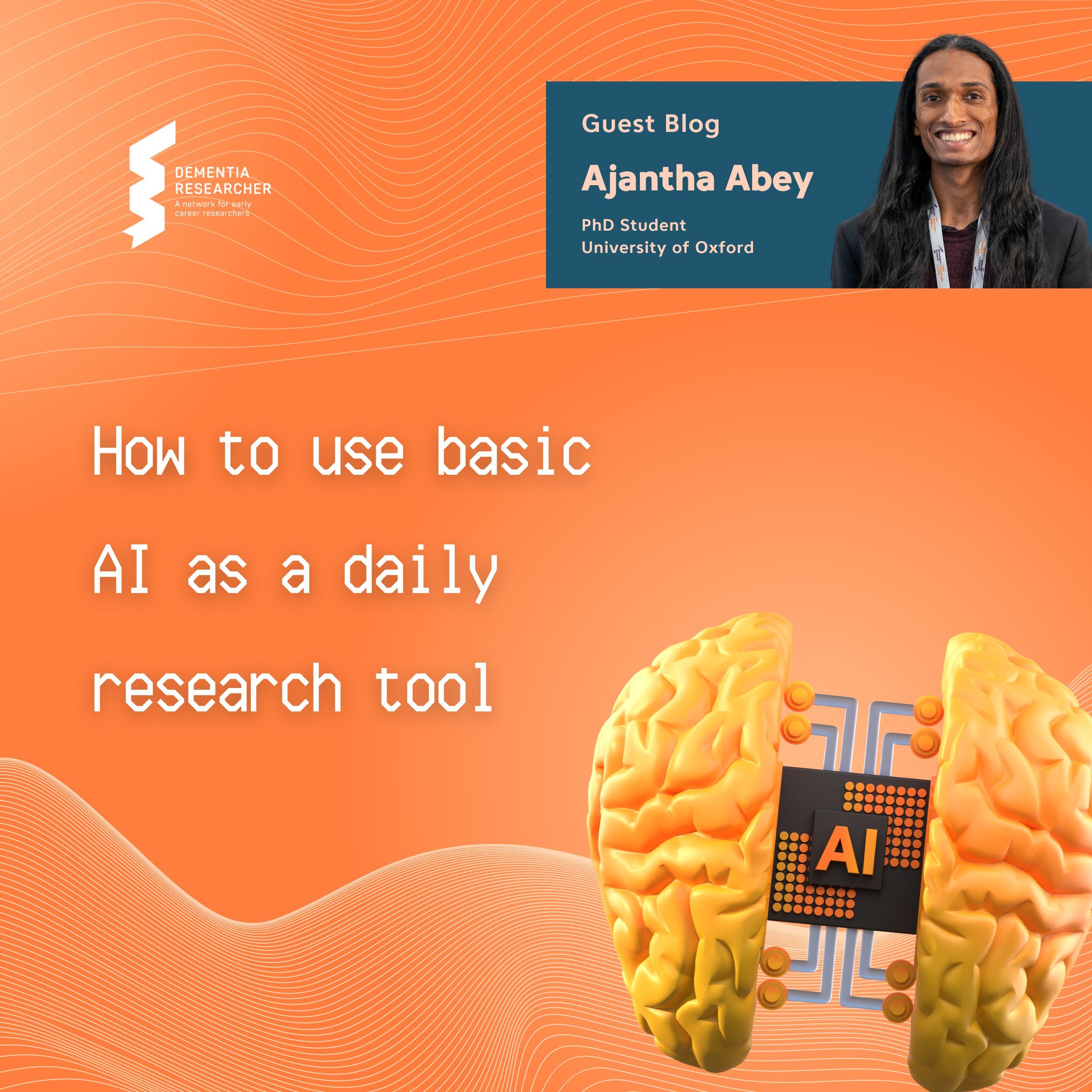
Ep 429Ajantha Abey - How to use basic AI as a daily research tool
Ajantha Abey narrates his blog written for Dementia Researcher. In this blog, Ajantha outlines the benefits and pitfalls of using AI chatbots in research. He emphasises their proficiency in language tasks and idea generation, but also warns against overreliance on AI for tasks requiring factual accuracy, as AI can fabricate data. He suggests a balanced approach to using AI as a tool to augment, but not replace, the researcher's own critical thinking and creativity - listen to his full advise in the audio version of this blog. Find the original text, and narration here on our website. https://www.dementiaresearcher.nihr.ac.uk/blog-how-to-use-basic-ai-as-a-daily-research-tool/ -- Ajantha Abey is a PhD student in the Kavli Institute at University of Oxford. He is interested in the cellular mechanisms of Alzheimer's, Parkinson's, and other diseases of the ageing brain. Previously, having previoulsy explored neuropathology in dogs with dementia and potential stem cell replacement therapies. He now uses induced pluripotent stem cell derived neurons to try and model selective neuronal vulnerability: the phenomenon where some cells die but others remain resilient to neurodegenerative diseases. -- Enjoy listening and reading our blogs? We're always on the look out for new contributors, drop us a line and share your own research and careers advice [email protected] This podcast is brought to you in association with Alzheimer's Association, Alzheimer's Research UK, Alzheimer's Society and Race Against Dementia, who we thank for their ongoing support. -- Follow us on Social Media: https://www.instagram.com/dementia_researcher/ https://www.facebook.com/Dementia.Researcher/ https://twitter.com/demrescommunity https://bsky.app/profile/dementiaresearcher.bsky.social https://www.linkedin.com/company/dementia-researcher
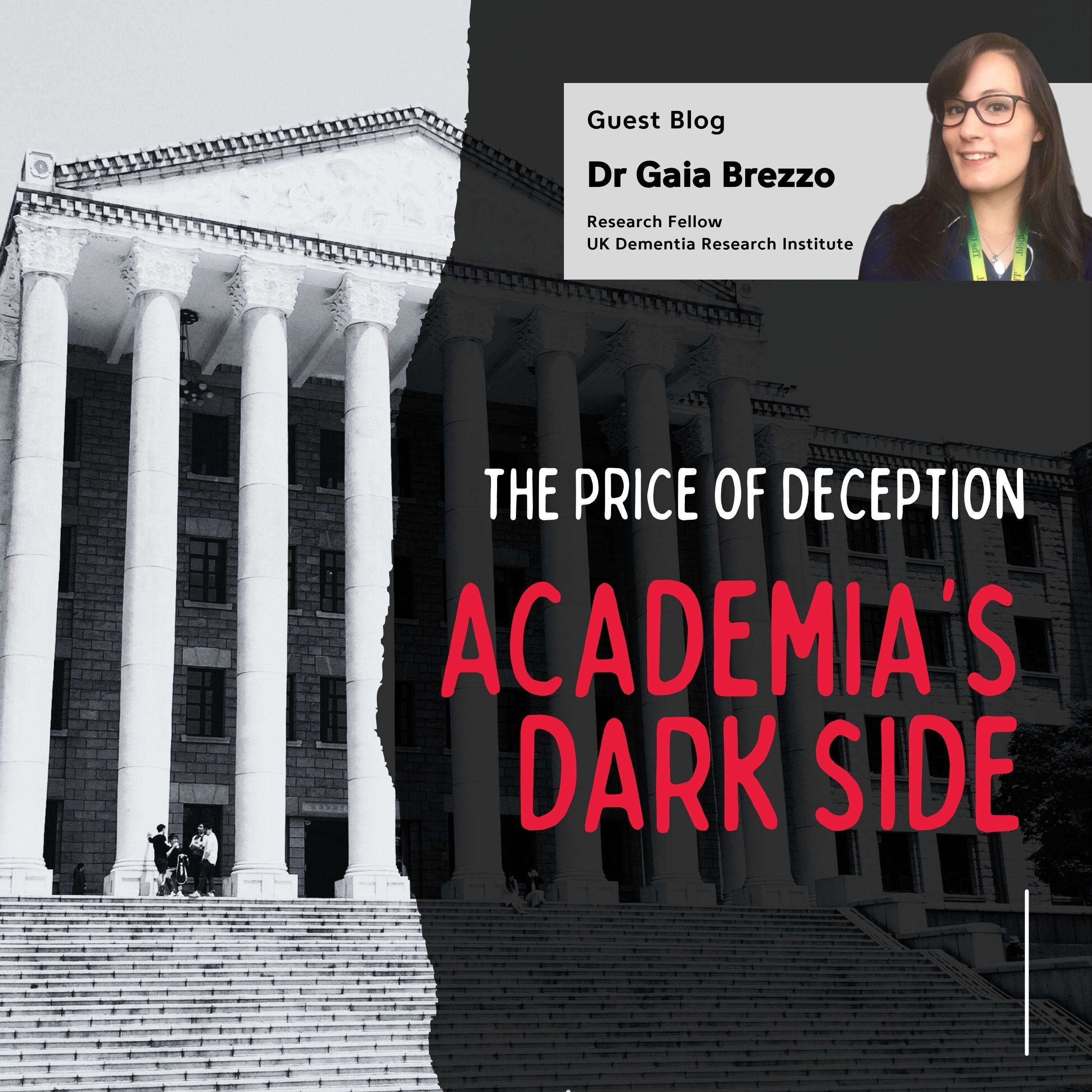
Ep 428Dr Gaia Brezzo - The price of deception, academia’s dark side
Dr Gaia Brezzo narrates her blog written for Dementia Researcher. Gaia examines the (arguably) widespread issue of academic fraud, from the shock of discovering misconduct in familiar research to the systemic pressures that contribute to such deceit. She addresses the severe implications for public health and scientific integrity, while also discussing the need for better quality control and accountability within the scientific community. The blog advocates for a change in academic incentives and proposes utilising AI as a tool for detecting fraud, urging for a culture that protects rather than penalises whistleblowers. Find the original text, and narration here on our website. https://www.dementiaresearcher.nihr.ac.uk/blog-the-price-of-deception-academias-dark-side/ #DementiaResearch #AcademicMisconduct #Academia -- Dr Gaia Brezzo is a Research Fellow based within the UK Dementia Research Institute at The University of Edinburgh. Gaia's research focuses on understanding how immune alterations triggered by stroke shape chronic maladaptive neuroimmune responses that lead to post-stroke cognitive decline and vascular dementia. Raised in Italy, Gaia came to the UK to complete her undergraduate degree, and thankfully, stuck around. Gaia writes about her work and career challenges, when not biking her way up and down hills in Edinburgh. Follow Gaia on Twitter: @Gaia_Brezzo -- Enjoy listening? We're always looking for new bloggers, drop us a line. http://www.dementiaresearcher.nihr.ac.uk This podcast is brought to you in association with Alzheimer's Association, Alzheimer's Research UK, Alzheimer's Society and Race Against Dementia, who we thank for their ongoing support. -- Follow us on Social Media: https://www.instagram.com/dementia_researcher/ https://www.facebook.com/Dementia.Researcher/ https://twitter.com/demrescommunity https://www.linkedin.com/company/dementia-researcher
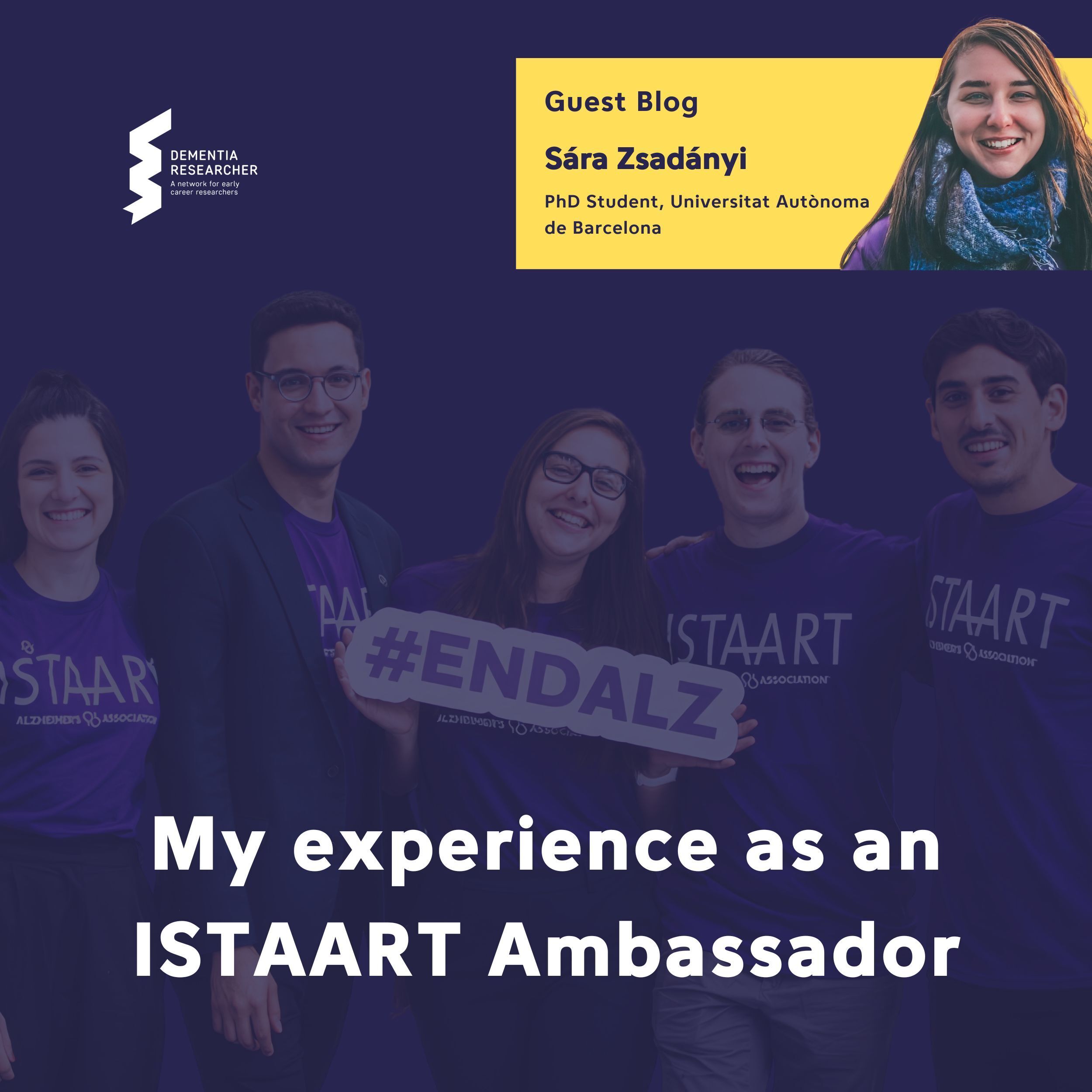
Ep 427Sára Erzsebet Zsadányi - My experience as an ISTAART Ambassador
Sára Erzsebet Zsadányi narrates her blog written for Dementia Researcher. In this insightful blog, Sára shares her journey as an ISTAART ambassador, highlighting the enriching experiences and connections made in the field of dementia research. From her initial hesitance to network to embracing opportunities at the Alzheimer's Association International Conference (AAIC), Sára's role as an ambassador not only expanded her knowledge but also fostered invaluable collaborations and offered a platform to engage with communities, inspiring researchers to make a tangible impact on healthcare systems. Her reflections underline the personal and professional growth possible through such a role, encouraging others to explore this rewarding path. If you've been inspired by this blog, ISTAART opens its Ambassador Programme every year, and the current deadline for applications is 8th March 2024 - Apply Now. Find the original text, and narration here on our website. https://www.dementiaresearcher.nihr.ac.uk/blog-my-experience-as-an-istaart-ambassador/ -- Sára Erzsebet Zsadányi is a PhD Student at the Sant Pau Memory Unit – Neuroimaging Core and Universitat Autonoma de Barcelona. Originally from New Zealand, Sára's current work focusses on neuroimaging of small vessel disease in Down Syndrome. In previous roles she has worked on healthy brain aging and meditation, and is currently an ISTAART Ambassador. -- Enjoy listening? We're always looking for new bloggers, drop us a line. http://www.dementiaresearcher.nihr.ac.uk This podcast is brought to you in association with Alzheimer's Association, Alzheimer's Research UK, Alzheimer's Society and Race Against Dementia, who we thank for their ongoing support. -- Follow us on Social Media: https://www.instagram.com/dementia_researcher/ https://www.facebook.com/Dementia.Researcher/ https://twitter.com/demrescommunity https://bsky.app/profile/dementiaresearcher.bsky.social https://www.linkedin.com/company/dementia-researcher
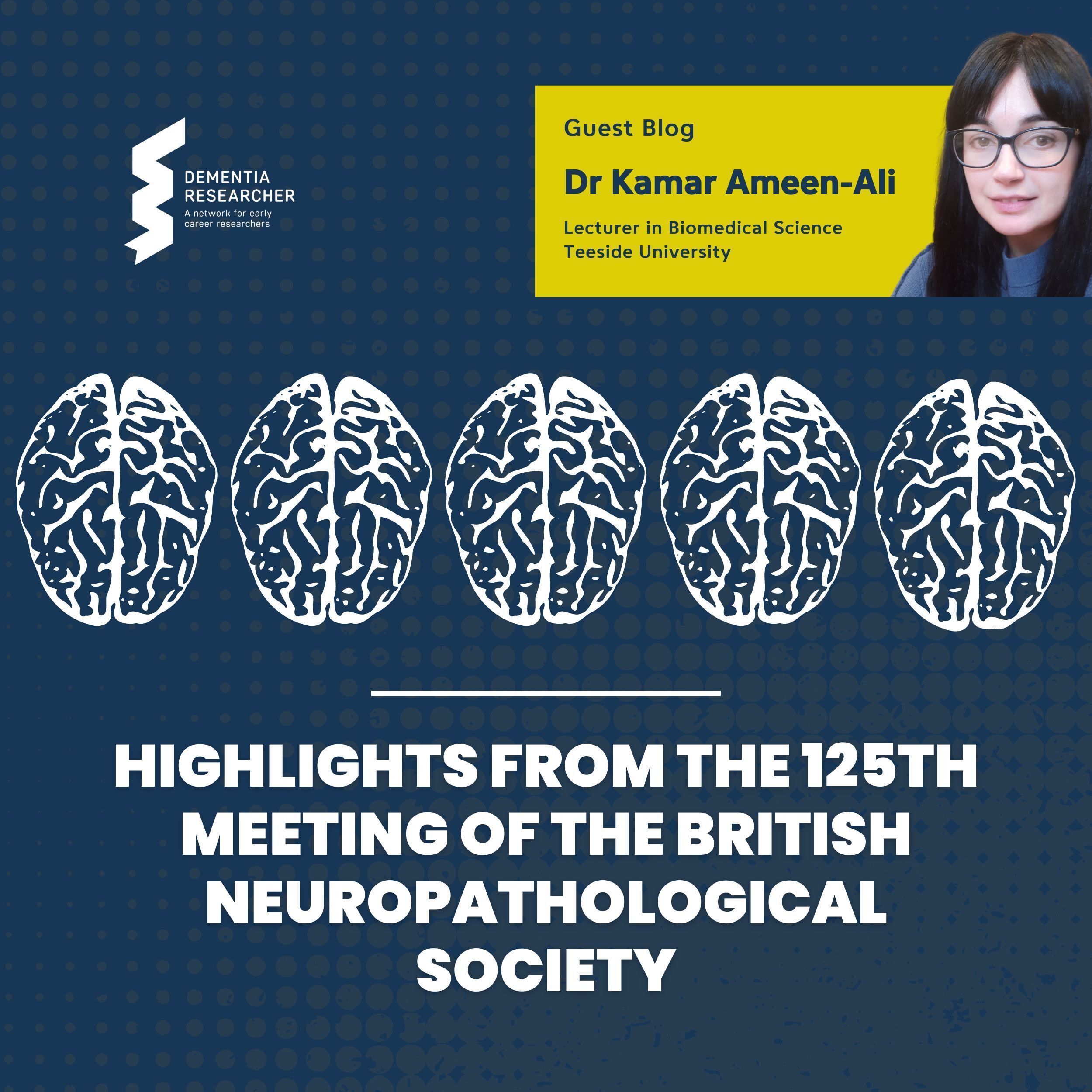
Ep 426Dr Kamar Ameen-Ali - British Neuropathological Society Meeting Highlights
Dr Kamar Ameen-Ali narrates her blog written for Dementia Researcher. At the 125th meeting of the British Neuropathological Society, leading experts gathered to share recent advancements in neuropathology. The symposium, preceding the meeting, offered fresh perspectives on neurodegeneration. Notable talks included insights into cognition and dementia risk, transcriptomics in human neurodegeneration, and molecular mechanisms in disorders like Alzheimer’s disease. The following sessions highlighted the importance of diverse diagnostic antibodies in Parkinson’s disease and discussed the neuroinflammatory response to traumatic brain injury. Kam shares highlights in this blog, with indepth analysis and a review of posters... look out for revealing new findings in microglial phenotypes in Alzheimer’s and senescence markers in dementia. Find the original text, and narration here on our website. https://www.dementiaresearcher.nihr.ac.uk/blog-british-neuropathological-society-meeting-highlights/ -- Dr Kamar Ameen-Ali is a Lecturer in Biomedical Science at Teesside University & Affiliate Researcher at Glasgow University. In addition to teaching, Kamar is exploring how neuroinflammation following traumatic brain injury contributes to the progression of neurodegenerative diseases that lead to dementia. Having first pursued a career as an NHS Psychologist, Kamar went back to University in Durham to look at rodent behavioural tasks to completed her PhD, and then worked as a regional Programme Manager for NC3Rs. -- Enjoy listening? We're always looking for new bloggers, drop us a line. http://www.dementiaresearcher.nihr.ac.uk This podcast is brought to you in association with Alzheimer's Association, Alzheimer's Research UK, Alzheimer's Society and Race Against Dementia, who we thank for their ongoing support. -- Follow us on Social Media: https://www.instagram.com/dementia_researcher/ https://www.facebook.com/Dementia.Researcher/ https://twitter.com/demrescommunity https://bsky.app/profile/dementiaresearcher.bsky.social https://www.linkedin.com/company/dementia-researcher
Ep 425Marija Taneska - Nonpharmacological interventions PIA Year in Review Recap
Marija Taneska, narrates her blog written for Dementia Researcher. In this blog Marija shares highlights from the recent ISTAART's Nonpharmacological Interventions PIA Year in Review webinar. Exploring the significance of holistic dementia care and the role of digital tools in supporting caregivers. It discusses research on dementia beyond pharmacological treatments, emphasising the necessity for inclusive, co-produced interventions and the exploration of lifestyle interventions, neuromodulation, and digital technologies for enhancing dementia care. Upcoming projects and studies aim to further our understanding and application of nonpharmacological approaches in managing dementia. Find the original text, and narration here on our website. https://www.dementiaresearcher.nihr.ac.uk/blog-nonpharmacological-interventions-pia-year-in-review-recap/ Don’t forget, you can get involved in the Nutrition, Metabolism & Dementia PIA by joining ISTAART and get access to previous webinars! #DementiaResearch #ISTAART #Dementia -- Marija Taneska is a Research Evidence Officer for the Alzheimer's Society and Student Representative at the ISTAART Nonpharmacological Interventions PIA. Marija reviews and synthesizes dementia evidence from different sources to inform Alzheimer's Society work. She is particulary close to the IDEAL, PriDem and NIDUS Projects and collaborates with researchers in dementia care to ensure mutual exchange and support. Marija is also a visiting Research Assistant at UCL, co-leading a project aimed to adapt the START (STrategies for RelaTives) intervention for family caregivers in Macedonia. -- Enjoy listening and reading our blogs? We're always on the look out for new contributors, drop us a line and share your own research and careers advice [email protected] This podcast is brought to you in association with the NIHR, Alzheimer's Association, Alzheimer's Research UK, Alzheimer's Society and Race Against Dementia, who we thank for their ongoing support. -- Follow us on Social Media: https://www.instagram.com/dementia_researcher/ https://www.facebook.com/Dementia.Researcher/ https://twitter.com/demrescommunity https://bsky.app/profile/dementiaresearcher.bsky.social https://www.linkedin.com/company/dementia-researcher
Ep 424Emily Spencer - ‘Winding down’ Preparing for maternity leave
Emily Spencer, narrating her blog written for the Dementia Researcher website. In this blog Emily focuses on her experiences navigating pregnancy while working in dementia research and preparing for maternity leave. Thankfully an 'easy pregnancy' (if there is such a thing), allowed Emily to continue her professional commitments, including presenting at a conference at 35 weeks pregnant. Emily faced added pressure to complete her PhD upgrade and a significant part of a feasibility study before her leave. She attempted to finalise as many tasks as possible, including submitting papers for publication, but acknowledged some work, like her systematic review, would wait until her return. Emily's story highlights the challenges and pressures of managing academia and impending maternity leave. Find the original text, and narration here on our website. https://www.dementiaresearcher.nihr.ac.uk/blog-winding-down-preparing-for-maternity-leave/ #DementiaResearch #AcademicMother #Academia #MaternityLeave #Research -- Emily Spencer is a PhD Student at University College London looking at improving how GPs communicate with people with dementia and their family carers about their future care. Emily previous had a 5 year career break to pursue a career as a musician, and has previously undertaken research on improving the care people with dementia receive from their GP practice, as well as end-of-life and palliative care provision in the community. Emily is also a new mum and will be writing about her experiences navigating motherhood and a research career. -- Enjoy listening? We're always looking for new bloggers, drop us a line. http://www.dementiaresearcher.nihr.ac.uk This podcast is brought to you in association with Alzheimer's Association, Alzheimer's Research UK, Alzheimer's Society and Race Against Dementia, who we thank for their ongoing support. -- Follow us on Social Media: https://www.instagram.com/dementia_researcher/ https://www.facebook.com/Dementia.Researcher/ https://twitter.com/demrescommunity https://bsky.app/profile/dementiaresearcher.bsky.social https://www.linkedin.com/company/dementia-researcher

Ep 423Dr Dorothy Tse - Intellect on the clock: Value Led Time Management
Dr Dorothy Tse narrates her blog written for Dementia Researcher. Dorothy's blog addresses the alignment of core values with strategic time management in academic leadership. She discusses the multiplicity of roles held by principal investigators and lecturers, from ideation and securing funding to teaching and mentorship. Dorothy highlights three key strategies: setting a clear vision, making proactive choices by saying 'no', and prioritisation using tools like the Eisenhower matrix. These strategies help navigate the complexities of academic roles, allowing for purposeful leadership and efficient research. Find the original text, and narration here on our website. https://www.dementiaresearcher.nihr.ac.uk/blog-intellect-on-the-clock-value-led-time/ -- Dr Dorothy Tse is a Senior Lecture, Neuroscientist and Cognitive Psychologist at Edge Hill University. Dorothy specialises in the neurobiology of learning and memory, early detection of dementia, and promoting brain health. She is passionate about co-creating and collaborating with those living with dementia and carers to improve brain health. She also serves in various roles supporting the British Neuroscience Association. -- This podcast is brought to you in association with Alzheimer's Association, Alzheimer's Research UK, Alzheimer's Society and Race Against Dementia, who we thank for their ongoing support. Enjoy listening? We're always looking for new bloggers, drop us a line [email protected] -- Follow us on Social Media: https://www.instagram.com/dementia_researcher/ https://www.facebook.com/Dementia.Researcher/ https://twitter.com/demrescommunity https://bsky.app/profile/dementiaresearcher.bsky.social https://www.linkedin.com/company/dementia-researcher
Ep 422Hannah Hussain - Coping with distress: the unyielding strength of caregivers
Hannah Hussain narrates her blog written for Dementia Researcher. Hannah's blog examines the plight of individuals with dementia in conflict zones like Gaza, shedding light on the added layers of distress they face. Dementia, particularly certain forms, such as Dementia with Lewy bodies (DLB), not only impairs cognitive abilities but also significantly influences behaviour, often leading to heightened states of distress. The inability to communicate effectively can exacerbate this distress, leaving individuals feeling anxious, fearful, and confused. In such challenging environments, the role of informal caregivers becomes indispensable. Their efforts to maintain routine, employ calming techniques, and provide comfort are vital in creating a safer space for their loved ones. The blog also underscores the importance of caregiver wellbeing, as their resilience has a profound impact on the quality of life for those with dementia, particularly during times of adversity. Find the original text, and narration here on our website. https://www.dementiaresearcher.nihr.ac.uk/blog-coping-with-distress-the-strength-of-caregivers/ -- Hannah Hussain is a PhD Student in Health Economics at The University of Sheffield. As a proud third generation migrant and British-Asian, her career path has been linear and ever evolving, originally qualifying as a Pharmacist in Nottingham, then Health Economics in Birmingham. Her studies have opened a world into Psychology, Mental Health and other areas of health, and with that and personal influences she found her passion for dementia. -- This podcast is brought to you in association with Alzheimer's Association, Alzheimer's Research UK, Alzheimer's Society and Race Against Dementia, who we thank for their ongoing support. Enjoy listening? We're always looking for new bloggers, drop us a line [email protected] -- Follow us on Social Media: https://www.instagram.com/dementia_researcher/ https://www.facebook.com/Dementia.Researcher/ https://twitter.com/demrescommunity https://bsky.app/profile/dementiaresearcher.bsky.social https://www.linkedin.com/company/dementia-researcher
Ep 421Dr Sam Moxon - Nutrition Metabolism & Dementia PIA Year in Review
Dr Sam Moxon, narrates his blog written for Dementia Researcher. Dr Sam Moxon summarises key findings from ISTAART's Nutrition Metabolism & Dementia PIA Year in Review webinar. It details how diets such as the Mediterranean, ketogenic, and MIND diets can slow cognitive decline, with the MIND diet also reducing amyloid pathology. The dangers of ultra-processed foods are highlighted, showing their association with cognitive decline. The recap also explores the muscle-brain axis, demonstrating the correlation between muscular and brain health, and the role of insulin in cognition, including the protective effects of nasal insulin sprays and the brain-specific benefits of eating nuts. The overarching message is clear: the food we consume significantly impacts brain health and dementia outcomes. Find the original text, and narration here on our website. https://www.dementiaresearcher.nihr.ac.uk/blog-nutrition-metabolism-dementia-pia-year-in-review-recap/ Don’t forget, you can get involved in the Nutrition, Metabolism & Dementia PIA by joining ISTAART and get access to previous webinars! #DementiaResearch #ISTAART #DrSamMoxon #Nutrition #Dementia -- Dr Sam Moxon is a biomaterials Research Fellow at University of Birmingham. His expertise falls on the interface between biology and engineering. His PhD focussed on regenerative medicine and he now works on trying to develop 3D bioprinting techniques with human stem cells, so that we better understand and treat degenerative diseases. Outside of the lab he hikes through the Lake District and is an expert on all things Disney. -- Enjoy listening and reading our blogs? We're always on the look out for new contributors, drop us a line and share your own research and careers advice [email protected] This podcast is brought to you in association with the NIHR, Alzheimer's Association, Alzheimer's Research UK, Alzheimer's Society and Race Against Dementia, who we thank for their ongoing support. -- Follow us on Social Media: https://www.instagram.com/dementia_researcher/ https://www.facebook.com/Dementia.Researcher/ https://twitter.com/demrescommunity https://bsky.app/profile/dementiaresearcher.bsky.social https://www.linkedin.com/company/dementia-researcher
Ep 420Rebecca Williams - A Whimsical Research Culture
Rebecca Williams, narrates her blog written for the Dementia Researcher website. Rebecca shares her experience of positively influencing research culture by integrating fun and personality into the academic environment. By initiating a board game night and other social activities, she encourages colleagues to embrace their quirks, from sharing pun-filled emails to displaying personal trinkets like a tiny rubber duck on their desks. Her actions have shown that by simply being oneself, a PhD student can significantly impact the research culture, challenging the conventional stoicism of academia and promoting a more genuine and wholehearted approach to work and social interactions within her unit. Small things can make a big difference! Find the original text, and narration here on our website. https://www.dementiaresearcher.nihr.ac.uk/blog-a-whimsical-research-culture/ -- Rebecca Williams is PhD student at the University of Cambridge. Though originally from ‘up North’ in a small town called Leigh, she did her undergraduate and masters at the University of Oxford before defecting to Cambridge for her doctorate researching Frontotemporal dementia and Apathy. She now spends her days collecting data from wonderful volunteers, and coding. Outside work, she plays board games, and is very crafty. @beccasue99 -- Enjoy listening? We're always looking for new bloggers, drop us a line. http://www.dementiaresearcher.nihr.ac.uk This podcast is brought to you in association with Alzheimer's Association, Alzheimer's Research UK, Alzheimer's Society and Race Against Dementia, who we thank for their ongoing support. -- Follow us on Social Media: https://www.instagram.com/dementia_researcher/ https://www.facebook.com/Dementia.Researcher/ https://twitter.com/demrescommunity https://bsky.app/profile/dementiaresearcher.bsky.social https://www.linkedin.com/company/dementia-researcher
Ep 419Adam Smith - Dementia Researcher, Bringing Communities Together
Adam Smith narrates his blog written for Dementia Researcher. In this blog Adam discusses the upcoming launch of the Dementia Researcher Communities App, designed as an exclusive, secure platform for dementia researchers to connect, share insights, and collaborate. It will feature social media functionalities tailored for the research community, including live events, mentoring, and group discussions, aimed at enhancing networking and support across various research stages and areas. He also shares news that Dementia Researcher is inviting researchers and community leaders to use free functionality allow them to host their own groups within the app. The aim being to bring communities together, unified in their aim but with their own identities. Find the original text, and narration here on our website. https://www.dementiaresearcher.nihr.ac.uk/blog-dementia-researcher-bringing-communities-together/ -- Apply for your own community - https://forms.gle/k2esthS9mYEtBasG9 -- Adam Smith was born in the north, a long time ago. He wanted to write books, but ended up working in the NHS, and at the Department of Health. He is now Programme Director in the Office of the NIHR National Director for Dementia Research (which probably sounds more important than it is) at University College London. He has led a number of initiatives to improve dementia research (including this website, Join Dementia Research & ENRICH), as well as pursuing his own research interests. In his spare time, he grows vegetables, builds Lego & spends most of his time drinking too much coffee and squeezing technology into his house. -- Enjoy listening? We're always looking for new bloggers, drop us a line. http://www.dementiaresearcher.nihr.ac.uk This podcast is brought to you in association with Alzheimer's Association, Alzheimer's Research UK, Alzheimer's Society and Race Against Dementia, who we thank for their ongoing support. -- Follow us on Social Media: https://www.instagram.com/dementia_researcher/ https://www.facebook.com/Dementia.Researcher/ https://twitter.com/demrescommunity https://bsky.app/profile/dementiaresearcher.bsky.social https://www.linkedin.com/company/dementia-researcher
Ep 418Dr Beth Eyre - Subjective Cognitive Decline PIA Year in Review Recap
Dr Beth Eyre narrates her blog written for Dementia Researcher. Beth brings us news from last months ISTAART Subjective Cognitive Decline PIA Year in Review Webinar. The event explored the latest advancements in subjective cognitive decline (SCD) research, emphasising its significance as an early indicator for Alzheimer's disease. Beth highlights new findings that deepen understanding of SCD's role in Alzheimer's progression, including potential biomarkers and the impact of early intervention strategies. These insights are crucial for developing more effective treatments and preventive measures, underscoring the importance of continued research and collaboration in the field. Find the original text, and narration here on our website. https://www.dementiaresearcher.nihr.ac.uk/blog-biofluid-based-biomarkers-pia-year-in-review-recap/ Don’t forget, you can get involved in the SCD PIA by joining ISTAART and get access to previous webinars! -- Dr Beth Eyre is a Postdoctoral Researcher at The University of Sheffield, researching Neurovascular and cognitive function in preclinical models of Alzheimer’s disease. Beth has a background in psychology, where she gained her degree from the University of Leeds. Inside and outside the lab, Beth loves sharing her science and in her blogs, she discusses her work, career and shares lessons she learns as she navigates life as an early career researcher. -- This podcast is brought to you in association with Alzheimer's Association, Alzheimer's Research UK, Alzheimer's Society and Race Against Dementia, who we thank for their ongoing support. Enjoy listening? We're always on the look out for new contributors, if you would like to write and narrate your own blog - drop us a line [email protected]. Don't forget to also listen to our fortnightly podcast, just look for Dementia Researcher in your podcast app. -- Follow us on Social Media: https://www.instagram.com/dementia_researcher/ https://www.facebook.com/Dementia.Researcher/ https://twitter.com/demrescommunity https://bsky.app/profile/dementiaresearcher.bsky.social https://www.linkedin.com/company/dementia-researcher
Ep 417Dr Jodi Watt - Reflections on a challenging PhD
Dr Jodi Watt, narrating a new blog they wrote for the Dementia Researcher website. Jodi shares a candid recount of their PhD journey, unmasking the seldom-discussed mental toll of academia. Confronting the daunting aftermath of a PhD, they navigate through self-recovery, ultimately finding strength in vulnerability and self-advocacy. This blog is not just a narrative of personal triumph over academic adversities, but an intimate guide for resilience and healing within the high-pressure environment of research. It's a stirring manifesto for change in the academic world, advocating for compassion over competition, a must-read for anyone within or considering a path in academia. Find the original text, and narration here on our website. https://www.dementiaresearcher.nihr.ac.uk/blog-reflections-on-a-challenging-phd/ -- Dr Jodi Watt is a Postdoctoral Researcher at University of Glasgow. Jodi's academic interests are in both healthy ageing and neurodegenerative diseases of older age, and they are currently working on drug repurposing for dementia. Previously they worked on understanding structural, metabolic and physiological brain changes with age, as measured using magnetic resonance imaging. As a queer and neurodiverse person, Jodi is also incredibly interested in improving diversity and inclusion practices both within and outside of the academic context. -- Enjoy listening? We're always looking for new bloggers, drop us a line. http://www.dementiaresearcher.nihr.ac.uk This podcast is brought to you in association with Alzheimer's Association, Alzheimer's Research UK, Alzheimer's Society and Race Against Dementia, who we thank for their ongoing support. -- Follow us on Social Media: https://www.instagram.com/dementia_researcher/ https://www.facebook.com/Dementia.Researcher/ https://twitter.com/demrescommunity https://bsky.app/profile/dementiaresearcher.bsky.social https://www.linkedin.com/company/dementia-researcher

Ep 416Dr Clarissa Giebel - Building non-academic collaborations
Dr Clarissa Giebel narrates her blog written for Dementia Researcher. Clarissa's blog emphasises the value of non-academic collaborations in academia, particularly in dementia and social care research. She highlights the importance of incorporating diverse expertise, including professionals and stakeholders from the healthcare and social care sectors. Clarissa suggests leveraging existing networks and digital platforms to foster these collaborations, emphasising reciprocal relationships and the inclusion of non-academic perspectives in research. The blog also touches on the establishment of initiatives like the North West Coast Living Lab in Ageing and Dementia to strengthen academic-social care practice relationships. Find the original text, and narration here on our website. https://www.dementiaresearcher.nihr.ac.uk/blog-building-non-academic-collaborations/ -- Dr Clarissa Giebel is a Senior Research Fellow at the University of Liverpool and NIHR ARC North West Coast. Clarissa has been working in dementia care research for over 10 years focusing her research on helping people with dementia to live at home independently and well for longer, addressing inequalities that people with dementia and carers can face. Outside of her day work, Clarissa has also organised a local dementia network - the Liverpool Dementia & Ageing Research Forum, and has recently started her own podcast called the Ageing Scientist. -- If you would like to write your own blog drop us a line, we're always on the look out for new contributors to write about their research, careers + more [email protected] This podcast is brought to you in association with Alzheimer's Association, Alzheimer's Research UK, Alzheimer's Society and Race Against Dementia, who we thank for their ongoing support. -- Follow us on Social Media: https://www.instagram.com/dementia_researcher/ https://www.facebook.com/Dementia.Researcher/ https://twitter.com/demrescommunity https://bsky.app/profile/dementiaresearcher.bsky.social https://www.linkedin.com/company/dementia-researcher

Ep 415Dr Yvonne Couch - Aging in Pre-Clinical Research
Dr Yvonne Couch, narrates her blog written for the Dementia Researcher website. Yvonne explores the challenges and importance of incorporating aging processes in pre-clinical research, particularly in animal models. It addresses the practical and financial difficulties of conducting aging research, the translational roadblocks faced in this field, and the implications of age-related changes on disease processes and treatment efficacy. The blog emphasises the urgent need to rethink how research is carried out and funded in the context of an aging population, advocating for more innovative approaches in pre-clinical studies. Find the original text, and narration here on our website. https://www.dementiaresearcher.nihr.ac.uk/blog-aging-in-pre-clinical-research/ -- Dr Yvonne Couch is an Alzheimer's Research UK Fellow and Associate Professor at the University of Oxford. Yvonne studies the role of extracellular vesicles and their role in changing the function of the vasculature after stroke, aiming to discover why the prevalence of dementia after stroke is three times higher than the average. It is her passion for problem solving and love of science that drives her, in advancing our knowledge of disease. Yvonne writes about her work, academic life, and careers as she takes a new road into independent research @dr_yvonne_couch -- Enjoy listening? We're always looking for new bloggers, drop us a line. http://www.dementiaresearcher.nihr.ac.uk This podcast is brought to you in association with Alzheimer's Association, Alzheimer's Research UK, Alzheimer's Society and Race Against Dementia, who we thank for their ongoing support. -- Follow us on Social Media: https://www.instagram.com/dementia_researcher/ https://www.facebook.com/Dementia.Researcher/ https://twitter.com/demrescommunity https://bsky.app/profile/dementiaresearcher.bsky.social https://www.linkedin.com/company/dementia-researcher

Ep 414Kate Turley - Which hat to wear? Navigating industry-academic partnerships
Kate Turley narrates her blog written for Dementia Researcher. In her first blog for Dementia Researcher, Kate shares her unique journey and insights from working at the intersection of industry and academia. Starting as a Knowledge Transfer Partnership (KTP) associate, Kate faced the challenging yet rewarding task of bridging the gap between a lighting design company and university research teams. The blog explores the complexities of balancing commercial sensitivity with academic openness, especially in a pioneering project focused on developing a lighting and sensing solution for people living with dementia. Kate's experience highlights the importance of strategic decision-making, protecting intellectual property, and the delicate art of knowledge-sharing. This blog has valuable lessons for anyone involved in or considering industry-academic collaborations, particularly in areas of novel research and product development. Find the original text, and narration here on our website. https://www.dementiaresearcher.nihr.ac.uk/blog-which-hat-to-wear-navigating-industry-academic-partnerships/ -- Kate Turley is a PhD researcher and industrial fellow at Ulster University & Chroma Lighting. Kate is researching how dynamic lighting can help to support the body clock of people living with dementia. Kate's background is in physics and computer science, so the ongoing race to develop assistive health tech for people living with dementia was a huge motivator behind her decision to focus on this subject for her PhD. Outside her studies, Kate is an expert solitaire player. -- If you would like to write your own blog drop us a line, we're always on the look out for new contributors to write about their research, careers + more [email protected] -- This podcast is brought to you in association with Alzheimer's Association, Alzheimer's Research UK, Alzheimer's Society and Race Against Dementia, who we thank for their ongoing support. -- Follow us on Social Media: https://www.instagram.com/dementia_researcher/ https://www.facebook.com/Dementia.Researcher/ https://twitter.com/demrescommunity https://bsky.app/profile/dementiaresearcher.bsky.social https://www.linkedin.com/company/dementia-researcher

Ep 413Dr Anna Volkmer - Moving forward from disappointment
Dr Anna Volkmer, narrates her blog written for Dementia Researcher. Anna's blog offers an insightful and relatable journey through the ups and downs of her grant application experiences. In this candid review Anna discusses the challenging and often disheartening world of academic funding. She shares her experiences of applying for various grants and awards, including the intricacies involved in grant writing, which she likens to crafting a persuasive sales pitch. Despite facing rejections and setbacks, such as being unsuccessful in three co-applications and a major grant, Anna also celebrates her successes, including securing a charity grant and a UCL equality and diversity grant. Listen to hear about resilience and perseverance in the face of disappointment. Find the original text, and narration here on our website. https://www.dementiaresearcher.nihr.ac.uk/blog-moving-forward-from-disappointment/ -- Dr Anna Volkmer is a Speech and Language Therapist and researcher in Language and Cognition, Department of Psychology and Language Sciences, University College London. Anna is researching Speech and language therapy interventions in language led dementia and was once voted scariest speech and language therapist (even her children agree). -- If you would like to write your own blog drop us a line, we're always on the look out for new contributors to write about their research, careers + more [email protected] -- This podcast is brought to you in association with Alzheimer's Association, Alzheimer's Research UK, Alzheimer's Society and Race Against Dementia, who we thank for their ongoing support. -- Follow us on Social Media: https://www.instagram.com/dementia_researcher/ https://www.facebook.com/Dementia.Researcher/ https://twitter.com/demrescommunity https://bsky.app/profile/dementiaresearcher.bsky.social https://www.linkedin.com/company/dementia-researcher
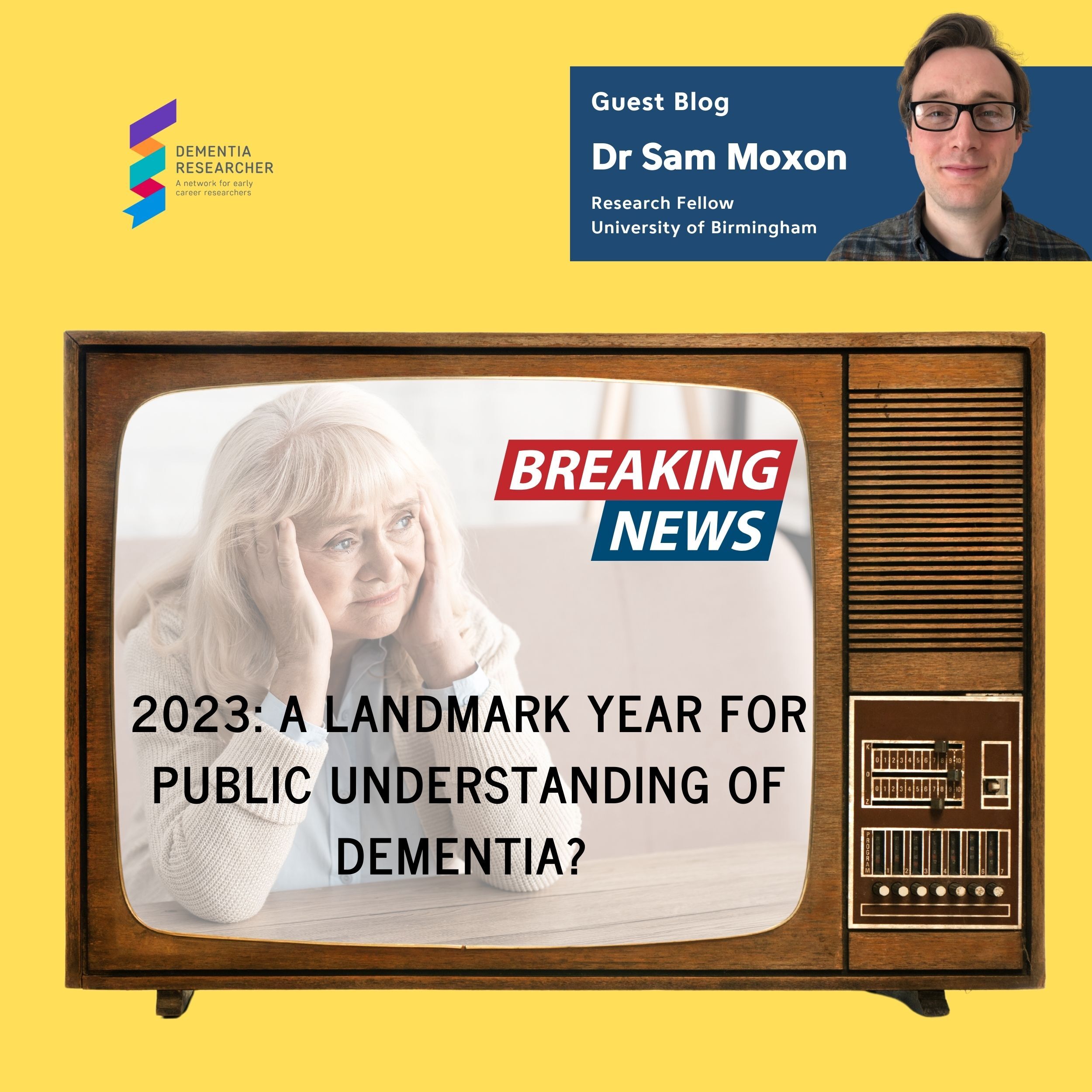
Ep 412Dr Sam Moxon - 2023: A Landmark Year for Public Understanding of Dementia?
Dr Sam Moxon, narrates his blog written for Dementia Researcher. 2023 marks a pivotal year in the evolution of public understanding of dementia. In this blog Sam explores some of the key news that sits at the heart of this transformation. Sam discusses the breakthroughs and challenges faced in dementia research, emphasising the importance of community awareness and scientific advances. He sheds light on the strides made with drug treatments, and finishes on what comes next. Find the original text, and narration here on our website. https://www.dementiaresearcher.nihr.ac.uk/blog-2023-a-landmark-year-for-public-understanding-of-dementia/ -- Dr Sam Moxon is a biomaterials Research Fellow at University of Birmingham. His expertise falls on the interface between biology and engineering. His PhD focussed on regenerative medicine and he now works on trying to develop 3D bioprinting techniques with human stem cells, so that we better understand and treat degenerative diseases. Outside of the lab he hikes through the Lake District and is an expert on all things Disney. -- Enjoy listening and reading our blogs? We're always on the look out for new contributors, drop us a line and share your own research and careers advice [email protected] This podcast is brought to you in association with the NIHR, Alzheimer's Association, Alzheimer's Research UK, Alzheimer's Society and Race Against Dementia, who we thank for their ongoing support. -- Follow us on Social Media: https://www.instagram.com/dementia_researcher/ https://www.facebook.com/Dementia.Researcher/ https://twitter.com/demrescommunity https://bsky.app/profile/dementiaresearcher.bsky.social https://www.linkedin.com/company/dementia-researcher
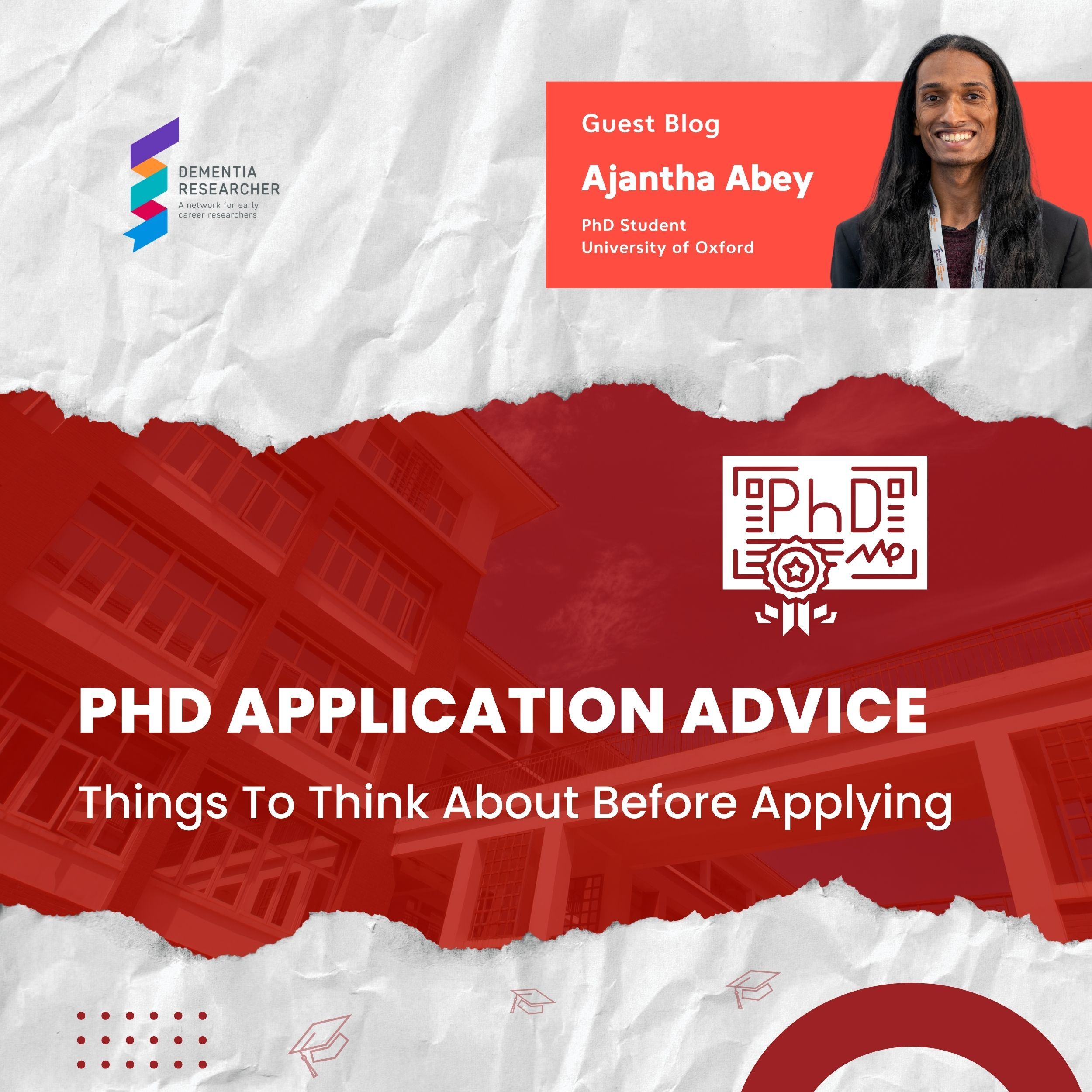
Ep 411Ajantha Abey - Mastering the PhD Journey: Key Application Insights
Ajantha Abey narrates his blog written for Dementia Researcher. Embarking on a PhD is a monumental journey, not only in its execution but also in its initiation. Ajantha's blog is a treasure trove of insights and guidance, illuminating the path to a successful PhD journey. Drawing from personal experiences and an insider's view from the graduate studies committee at Oxford, Ajantha unravels the complexities of the PhD application process, offering invaluable advice to aspiring students. Whether it's understanding the importance of self-awareness, gaining relevant experience, or the nuances of choosing the right research question, this article is an indispensable guide. It's not just about filling out an application form; it's about a profound journey of self-discovery and meticulous preparation, essential for anyone considering this significant academic pursuit. Prepare to be enlightened and equipped with the wisdom to navigate the intricate PhD application process. Find the original text, and narration here on our website. https://www.dementiaresearcher.nihr.ac.uk/blog-mastering-the-phd-journey-key-application-insights/ -- Ajantha Abey is a PhD student in the Kavli Institute at University of Oxford. He is interested in the cellular mechanisms of Alzheimer's, Parkinson's, and other diseases of the ageing brain. Previously, having previoulsy explored neuropathology in dogs with dementia and potential stem cell replacement therapies. He now uses induced pluripotent stem cell derived neurons to try and model selective neuronal vulnerability: the phenomenon where some cells die but others remain resilient to neurodegenerative diseases. -- Enjoy listening and reading our blogs? We're always on the look out for new contributors, drop us a line and share your own research and careers advice [email protected] This podcast is brought to you in association with Alzheimer's Association, Alzheimer's Research UK, Alzheimer's Society and Race Against Dementia, who we thank for their ongoing support. -- Follow us on Social Media: https://www.instagram.com/dementia_researcher/ https://www.facebook.com/Dementia.Researcher/ https://twitter.com/demrescommunity https://bsky.app/profile/dementiaresearcher.bsky.social https://www.linkedin.com/company/dementia-researcher
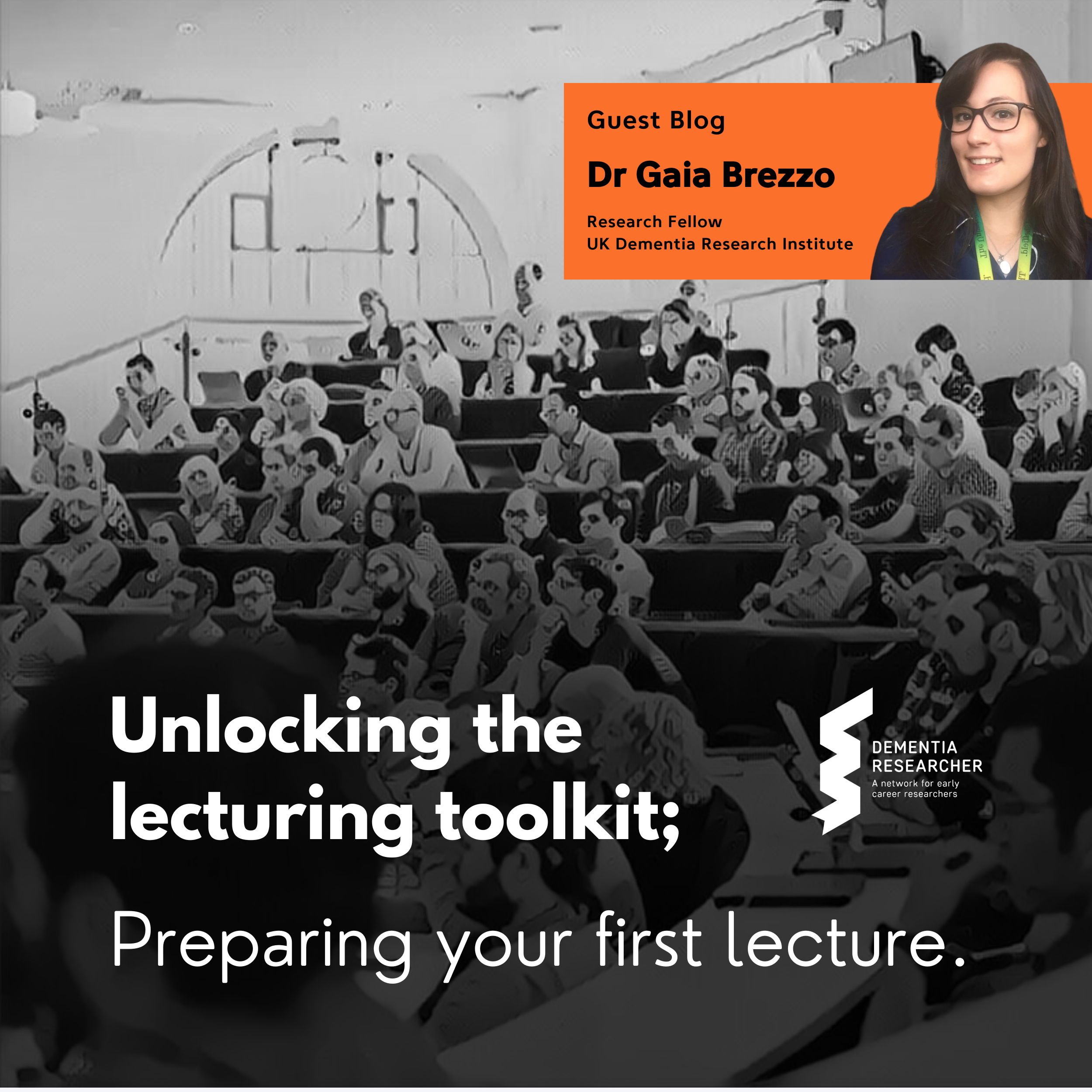
Ep 410Dr Gaia Brezzo - Unlocking the lecturing toolkit; preparing your first lecture.
Dr Gaia Brezzo narrates her blog written for Dementia Researcher. Whether you're a seasoned educator or about to deliver your first lecture, this blog offers invaluable tips and personal experiences to enhance your teaching approach. Gaia goes into the intricacies of making lectures engaging, avoiding common pitfalls, and utilising effective teaching aids. From planning and content arrangement to incorporating visual aids and handling unexpected challenges, this blog is a treasure trove of practical advice. Discover the secrets to captivating your audience, ensuring your material resonates, and transforming your lecture into an enriching experience for both you and your students. Don't miss out on this essential read for educators eager to refine their skills and inspire their students! Find the original text, and narration here on our website. https://www.dementiaresearcher.nihr.ac.uk/blog-unlocking-the-lecturing-toolkit-preparing-your-first-lecture/ -- Dr Gaia Brezzo is a Research Fellow based within the UK Dementia Research Institute at The University of Edinburgh. Gaia's research focuses on understanding how immune alterations triggered by stroke shape chronic maladaptive neuroimmune responses that lead to post-stroke cognitive decline and vascular dementia. Raised in Italy, Gaia came to the UK to complete her undergraduate degree, and thankfully, stuck around. Gaia writes about her work and career challenges, when not biking her way up and down hills in Edinburgh. Follow Gaia on Twitter: @Gaia_Brezzo -- Enjoy listening? We're always looking for new bloggers, drop us a line. http://www.dementiaresearcher.nihr.ac.uk This podcast is brought to you in association with Alzheimer's Association, Alzheimer's Research UK, Alzheimer's Society and Race Against Dementia, who we thank for their ongoing support. -- Follow us on Social Media: https://www.instagram.com/dementia_researcher/ https://www.facebook.com/Dementia.Researcher/ https://twitter.com/demrescommunity https://bsky.app/profile/dementiaresearcher.bsky.social https://www.linkedin.com/company/dementia-researcher
Ep 409Dr Kamar Ameen-Ali - When to say “no” to new opportunities
Dr Kamar Ameen-Ali narrates her blog written for Dementia Researcher. In this blog Kamar explores the delicate balance between seizing opportunities and setting boundaries. Discover her journey from a PhD student to a lecturer, and learn the art of saying "no" to opportunities that don't align with personal and professional growth. This blog offers a unique perspective on managing workload and avoiding burnout in academia, emphasising the importance of strategic decision-making. An essential read, with lessons for academics at any stage of their career. Find the original text, and narration here on our website. https://www.dementiaresearcher.nihr.ac.uk/blog-when-to-say-no-to-new-opportunities/ -- Dr Kamar Ameen-Ali is a Lecturer in Biomedical Science at Teesside University & Affiliate Researcher at Glasgow University. In addition to teaching, Kamar is exploring how neuroinflammation following traumatic brain injury contributes to the progression of neurodegenerative diseases that lead to dementia. Having first pursued a career as an NHS Psychologist, Kamar went back to University in Durham to look at rodent behavioural tasks to completed her PhD, and then worked as a regional Programme Manager for NC3Rs. -- Enjoy listening? We're always looking for new bloggers, drop us a line. http://www.dementiaresearcher.nihr.ac.uk This podcast is brought to you in association with Alzheimer's Association, Alzheimer's Research UK, Alzheimer's Society and Race Against Dementia, who we thank for their ongoing support. -- Follow us on Social Media: https://www.instagram.com/dementia_researcher/ https://www.facebook.com/Dementia.Researcher/ https://twitter.com/demrescommunity https://bsky.app/profile/dementiaresearcher.bsky.social https://www.linkedin.com/company/dementia-researcher
Ep 408Dr Aitana Sogorb-Esteve - Biofluid-based biomarkers PIA Year in Review Recap
Dr Aitana Sogorb-Esteve, narrating her blog written for the Dementia Researcher website. In this blog Aitana explores the latest advancements in biofluid-based biomarkers for dementia research, sharing highlights from the recent ISTAART Biofluid Based Biomarkers PIA Year in Review Meeting. The 2023 highlights include detailed discussions on proteomics, plasma biomarkers, and innovative protein assays relevant to Parkinson’s and frontotemporal dementia. Learn about the advancements in blood-based biomarkers, remote testing technologies, and non-Alzheimer's dementias. Keep abreast of the evolving landscape of dementia research and the anticipated developments for 2024. Find the original text, and narration here on our website. https://www.dementiaresearcher.nihr.ac.uk/blog-biofluid-based-biomarkers-pia-year-in-review-recap/ -- Dr Aitana Sogorb-Esteve is a Race Against Dementia Research Fellow based in the Dementia Research Centre at University College London. Sitana works on the fluid biomarker team of Dr. Jonathan Rohrer group. Her work focusses on finding novel fluid biomarkers to assess cellular dysfunction in genetic FTD. She is particulary looking for fluid biomarkers of synaptic dysfunction in genetic FTD, aiming to develop a technique for measuring these synaptic markers in blood. -- Enjoy listening? We're always looking for new bloggers, drop us a line. http://www.dementiaresearcher.nihr.ac.uk This podcast is brought to you in association with Alzheimer's Association, Alzheimer's Research UK, Alzheimer's Society and Race Against Dementia, who we thank for their ongoing support. -- The Year in Review Webinars are being held throughout January 2024, to attend and find out more visit: https://www.dementiaresearcher.nihr.ac.uk/support-resources/alzheimers-association/ -- Follow us on Social Media: https://www.instagram.com/dementia_researcher/ https://www.facebook.com/Dementia.Researcher/ https://twitter.com/demrescommunity https://bsky.app/profile/dementiaresearcher.bsky.social https://www.linkedin.com/company/dementia-researcher
Ep 407Emily Spencer - Who am I? Navigating identity as a parent
Emily Spencer, narrating her blog written for the Dementia Researcher website. Join Emily, a PhD student and new mother, in her compelling blog. In this insightful piece, she shares her unique experience of balancing doctoral research in dementia with the joys and challenges of motherhood. Emily candidly addresses the complexities of gendered expectations and the evolution of her identity, offering a fresh perspective on managing personal and professional roles. Her honest narrative is not just inspiring but also a must-read for anyone striving to harmonise their career and family life. Find the original text, and narration here on our website. https://www.dementiaresearcher.nihr.ac.uk/blog-who-am-i-navigating-identity-as-a-parent/ -- Emily Spencer is a PhD Student at University College London looking at improving how GPs communicate with people with dementia and their family carers about their future care. Emily previous had a 5 year career break to pursue a career as a musician, and has previously undertaken research on improving the care people with dementia receive from their GP practice, as well as end-of-life and palliative care provision in the community. Emily is also a new mum and will be writing about her experiences navigating motherhood and a research career. -- Enjoy listening? We're always looking for new bloggers, drop us a line. http://www.dementiaresearcher.nihr.ac.uk This podcast is brought to you in association with Alzheimer's Association, Alzheimer's Research UK, Alzheimer's Society and Race Against Dementia, who we thank for their ongoing support. -- Follow us on Social Media: https://www.instagram.com/dementia_researcher/ https://www.facebook.com/Dementia.Researcher/ https://twitter.com/demrescommunity https://bsky.app/profile/dementiaresearcher.bsky.social https://www.linkedin.com/company/dementia-researcher
Ep 406Hannah Hussain - The Economics of Dementia
Hannah Hussain narrates her blog written for Dementia Researcher. Explore the crucial intersection of economics and dementia in Hannah's insightful blog, "The Economics of Dementia." As a PhD student at The University of Sheffield, Hannah explores the escalating costs associated with dementia in the UK, projected to soar from £25 billion in 2021 to an astonishing £47 billion by 2050. This blog goes beyond mere statistics, offering a comprehensive understanding of what these figures truly represent. Hannah unpacks the complexity of both direct and indirect costs linked to dementia, from healthcare expenses to the often-overlooked impact on caregivers and society at large. With a focus on current government spending, the role of research and innovation, and the future outlook, this blog is a must-read for anyone interested in the economic implications of dementia on individuals, the NHS, and the broader society. This blog illuminates the path towards better resource allocation, policy development, and ultimately, improved quality of life for those affected by dementia. Find the original text, and narration here on our website. https://www.dementiaresearcher.nihr.ac.uk/blog-the-economics-of-dementia/ -- Hannah Hussain is a PhD Student in Health Economics at The University of Sheffield. As a proud third generation migrant and British-Asian, her career path has been linear and ever evolving, originally qualifying as a Pharmacist in Nottingham, then Health Economics in Birmingham. Her studies have opened a world into Psychology, Mental Health and other areas of health, and with that and personal influences she found her passion for dementia. -- This podcast is brought to you in association with Alzheimer's Association, Alzheimer's Research UK, Alzheimer's Society and Race Against Dementia, who we thank for their ongoing support. Enjoy listening? We're always looking for new bloggers, drop us a line [email protected] -- Follow us on Social Media: https://www.instagram.com/dementia_researcher/ https://www.facebook.com/Dementia.Researcher/ https://twitter.com/demrescommunity https://bsky.app/profile/dementiaresearcher.bsky.social https://www.linkedin.com/company/dementia-researcher

Ep 405Rebecca Williams - MEGry Christmas to All!
Rebecca Williams, narrates her blog written for the Dementia Researcher website. Experience the magic of neuroscience this holiday season with Rebecca's blog. In a heartwarming tale set against the backdrop of Christmas morning, discover the fascinating world of Magnetoencephalography, or MEG, as it unveils the secrets of the brain's inner workings. Join the journey as Rebecca takes you through the challenges and wonders of neuroscience, where magnetic fields, superconducting quantum interference devices (SQUIDs), and optically pumped magnetometers (OPMs) are the stars of the show. While Santa may not be delivering a million-pound MEG scanner down the chimney, OPMs offer a promising future, bringing us one step closer to understanding the brain's mysteries with their portability and sensitivity. This holiday season, unwrap the gift of knowledge and explore the exciting possibilities of neuroimaging. MEGry Christmas to all, and to all a good night! Find the original text, and narration here on our website. https://www.dementiaresearcher.nihr.ac.uk/blog-megry-christmas-to-all/ -- Rebecca Williams is PhD student at the University of Cambridge. Though originally from ‘up North’ in a small town called Leigh, she did her undergraduate and masters at the University of Oxford before defecting to Cambridge for her doctorate researching Frontotemporal dementia and Apathy. She now spends her days collecting data from wonderful volunteers, and coding. Outside work, she plays board games, and is very crafty. @beccasue99 -- Enjoy listening? We're always looking for new bloggers, drop us a line. http://www.dementiaresearcher.nihr.ac.uk This podcast is brought to you in association with Alzheimer's Association, Alzheimer's Research UK, Alzheimer's Society and Race Against Dementia, who we thank for their ongoing support.
Ep 404Dr Connor Richardson - 2023 Unfiltered: An honest diary of a researcher
Dr Connor Richardson narrates his blog written for Dementia Researcher. In this blog, Connor shares his eventful year in dementia research at Newcastle. Highlighting his professional journey, he reflects on securing an NIHR Fellowship, contributing to important publications, and engaging in global conferences like #AAIC23 in Amsterdam. Amidst these achievements, Connor also opens up about personal challenges, from an unsuccessful promotion bid to adapting to changes in his mentorship and personal life. His honest account provides a rare glimpse into the highs and lows of a researcher's life, illustrating resilience and the impact of personal experiences on professional growth. Join Connor as he navigates the intricate balance between career success and personal setbacks in the dynamic field of dementia research. Find the original text, and narration here on our website. https://www.dementiaresearcher.nihr.ac.uk/blog-2023-unfiltered-an-honest-diary-of-a-researcher/ -- Dr Connor Richardson is a Neuro-epidemiology Research Associate (soon to be NIHR Research Fellow) in the Newcastle University Population Health Sciences Institute. Connor is the research statistician for the Cognitive Function and Ageing studies (CFAS) multi-centre population cohort. His research interest lies in using advanced statistical modelling and machine learning to measure dementia risk. Connor blogs about his research, Equality, Diversity and Inclusion and sometimes his Pomapoo’s. -- Enjoy listening? We're always looking for new bloggers, drop us a line. http://www.dementiaresearcher.nihr.ac.uk This podcast is brought to you in association with Alzheimer's Association, Alzheimer's Research UK, Alzheimer's Society and Race Against Dementia, who we thank for their ongoing support.
Ep 403Dr Jodi Watt - Navigating the holidays after a relative is diagnosed with dementia
Dr Jodi Watt, narrating a new blog they wrote for the Dementia Researcher website. Jodi shares personal experiences and practical advice on navigating the holiday season after a family member is diagnosed with dementia. Reflecting on cherished traditions with their gran in Scotland, Jodi highlights the profound impact of dementia on family celebrations. They offer thoughtful strategies to adapt and maintain holiday joy, emphasising the importance of simplicity, flexibility, and inclusivity. Jodi's journey through changing holiday landscapes with their gran offers guidance, hope and support for those facing similar challenges. Find the original text, and narration here on our website. https://www.dementiaresearcher.nihr.ac.uk/blog-navigating-the-holidays-after-a-relative-is-diagnosed-with-dementia/ -- Dr Jodi Watt is a Postdoctoral Researcher at University of Glasgow. Jodi's academic interests are in both healthy ageing and neurodegenerative diseases of older age, and they are currently working on drug repurposing for dementia. Previously they worked on understanding structural, metabolic and physiological brain changes with age, as measured using magnetic resonance imaging. As a queer and neurodiverse person, Jodi is also incredibly interested in improving diversity and inclusion practices both within and outside of the academic context. -- Enjoy listening? We're always looking for new bloggers, drop us a line. http://www.dementiaresearcher.nihr.ac.uk This podcast is brought to you in association with Alzheimer's Association, Alzheimer's Research UK, Alzheimer's Society and Race Against Dementia, who we thank for their ongoing support.
Ep 402Dr Clarissa Giebel - Christmas time, Time for reflection and getting excited about 2024
Dr Clarissa Giebel narrates her blog written for Dementia Researcher. Clarissa invites listeners into a world of festive tranquility and thoughtful retrospection. She beautifully intertwines her personal experiences, from decorating with Manchester Christmas Markets mugs to recalling her extensive travels and professional accomplishments. Clarissa's narrative transcends the ordinary, detailing her adventures in global research collaborations and her academic ventures, including the creation of a unique board game. As she reflects on the bustling year, filled with both successes and challenges, she emphasises the importance of taking a moment to appreciate the journey and the lessons learned. The blog is not just a recount of the past year’s achievements and travels; it's an inspiring message to embrace the festive season's calm, indulge in Christmas biscuits, and look forward to the promising horizons of 2024. Clarissa's blend of professional insight and personal anecdotes culminates in a warm, festive greeting, encouraging readers to celebrate their own achievements and anticipate the new year with hope and excitement. Find the original text, and narration here on our website. https://www.dementiaresearcher.nihr.ac.uk/blog-christmas-a-time-for-reflection-and-getting-excited-about-2024/ -- Dr Clarissa Giebel is a Senior Research Fellow at the University of Liverpool and NIHR ARC North West Coast. Clarissa has been working in dementia care research for over 10 years focusing her research on helping people with dementia to live at home independently and well for longer, addressing inequalities that people with dementia and carers can face. Outside of her day work, Clarissa has also organised a local dementia network - the Liverpool Dementia & Ageing Research Forum, and has recently started her own podcast called the Ageing Scientist. -- If you would like to write your own blog drop us a line, we're always on the look out for new contributors to write about their research, careers + more [email protected] This podcast is brought to you in association with Alzheimer's Association, Alzheimer's Research UK, Alzheimer's Society and Race Against Dementia, who we thank for their ongoing support.

Ep 401Beth Eyre - Reflections on my (kind of) first year as a post-doc
Beth Eyre narrates her blog written for Dementia Researcher. Beth reflects on her nearly one-year experience as a post-doc, highlighting the lack of control in research projects, the significant responsibilities of the role, the never-ending tasks, the importance of time management, and the constant uncertainty of what's next in an academic career.... Sound familiar? She acknowledges the dynamic nature of science and the need to adapt to changing priorities and circumstances, ultimately emphasising the uniqueness of each individual's journey in academia. Find the original text, and narration here on our website. https://www.dementiaresearcher.nihr.ac.uk/blog-reflections-on-my-kind-of-first-year-as-a-post-doc/ -- Dr (pending minor amendments) Beth Eyre is a Postdoctoral Researcher at The University of Sheffield, researching Neurovascular and cognitive function in preclinical models of Alzheimer’s disease. Beth has a background in psychology, where she gained her degree from the University of Leeds. Inside and outside the lab, Beth loves sharing her science and in her blogs, she discusses her work, career and shares lessons she learns as she navigates life as an early career researcher. -- This podcast is brought to you in association with Alzheimer's Association, Alzheimer's Research UK, Alzheimer's Society and Race Against Dementia, who we thank for their ongoing support. Enjoy listening? We're always on the look out for new contributors, if you would like to write and narrate your own blog - drop us a line [email protected]. Don't forget to also listen to our fortnightly podcast, just look for Dementia Researcher in your podcast app.
Ep 400Dr Yvonne Couch - Frazzled Brains, Academic Burnout
Dr Yvonne Couch, narrates her blog written for the Dementia Researcher website. In her blog, Yvonne tackles the issue of academic burnout, drawing from her personal experiences and insights from the podcast 'No Stupid Questions'. She discusses her own misconceptions about burnout, initially viewing it as extreme exhaustion, and discovers her potential vulnerability to it through self-assessment and the Maslach Burnout Inventory. Her exploration reveals that burnout in academia often stems from institutional deficits rather than personal circumstances, highlighting the importance of organisational support and recognition in combating this growing issue among academics. Find the original text, and narration here on our website. https://www.dementiaresearcher.nihr.ac.uk/blog-frazzled-brains-academic-burnout/ -- Dr Yvonne Couch is an Alzheimer's Research UK Fellow and Associate Professor at the University of Oxford. Yvonne studies the role of extracellular vesicles and their role in changing the function of the vasculature after stroke, aiming to discover why the prevalence of dementia after stroke is three times higher than the average. It is her passion for problem solving and love of science that drives her, in advancing our knowledge of disease. Yvonne writes about her work, academic life, and careers as she takes a new road into independent research @dr_yvonne_couch -- Enjoy listening? We're always looking for new bloggers, drop us a line. http://www.dementiaresearcher.nihr.ac.uk This podcast is brought to you in association with Alzheimer's Association, Alzheimer's Research UK, Alzheimer's Society and Race Against Dementia, who we thank for their ongoing support.
Ep 399Rebecca Williams - Unfrazzled Brains, 10-4 to stop Burnout
Rebecca Williams, narrates her blog written for the Dementia Researcher website. In her blog, Rebecca delves into the challenges of academic burnout, recounting her personal experiences of exhaustion and lack of motivation in her research role. She reflects on the irony of academic flexibility, highlighting how this often translates to extended working hours rather than genuine work-life balance. Through her journey, Rebecca shares her realisation of being in the throes of burnout, underscoring the importance of recognising early warning signs. Her narrative emphasises the need for structured work schedules and the importance of taking regular breaks, offering valuable insights for academics struggling to maintain mental health amidst demanding careers. Find the original text, and narration here on our website. https://www.dementiaresearcher.nihr.ac.uk/blog-unfrazzled-brains-10-4-to-stop-burnout/ -- Rebecca Williams is PhD student at the University of Cambridge. Though originally from ‘up North’ in a small town called Leigh, she did her undergraduate and masters at the University of Oxford before defecting to Cambridge for her doctorate researching Frontotemporal dementia and Apathy. She now spends her days collecting data from wonderful volunteers, and coding. Outside work, she plays board games, and is very crafty. @beccasue99 -- Enjoy listening? We're always looking for new bloggers, drop us a line. http://www.dementiaresearcher.nihr.ac.uk This podcast is brought to you in association with Alzheimer's Association, Alzheimer's Research UK, Alzheimer's Society and Race Against Dementia, who we thank for their ongoing support.

Ep 398Dr Anna Volkmer - The (core) academic skill of receiving feedback
Dr Anna Volkmer, narrates her blog written for Dementia Researcher. Anna's blog explores the vital role of feedback in academic growth. Reflecting on her personal experiences with learning challenges, Volkmer underscores the importance of embracing feedback, despite its potential difficulty. She categorises feedback types and emphasises the necessity of using constructive criticism for personal and academic development, highlighting the emotional resilience needed to effectively process and apply feedback. Find the original text, and narration here on our website. https://www.dementiaresearcher.nihr.ac.uk/blog-the-core-academic-skill-of-receiving-feedback/ -- Dr Anna Volkmer is a Speech and Language Therapist and researcher in Language and Cognition, Department of Psychology and Language Sciences, University College London. Anna is researching Speech and language therapy interventions in language led dementia and was once voted scariest speech and language therapist (even her children agree). -- If you would like to write your own blog drop us a line, we're always on the look out for new contributors to write about their research, careers + more [email protected] -- This podcast is brought to you in association with Alzheimer's Association, Alzheimer's Research UK, Alzheimer's Society and Race Against Dementia, who we thank for their ongoing support.
Ep 397Dr Sam Moxon - Why the Link Between Obesity and Dementia is Good News
Dr Sam Moxon, narrates his blog written for Dementia Researcher. In this insightful blog, Sam Moxon discusses the surprising silver lining in the link between obesity and dementia. While highlighting the concerning rise in dementia cases due to lifestyle factors, Sam offers a message of empowerment. He argues that understanding the role of obesity in dementia is not just alarming, but also an opportunity for positive change. Through personal anecdotes and scientific insights, he demonstrates how making healthier life choices can significantly reduce dementia risk, turning a daunting prediction into a call for actionable, hopeful change. Find the original text, and narration here on our website. https://www.dementiaresearcher.nihr.ac.uk/blog-why-the-link-between-obesity-dementia-is-good-news/ -- Dr Sam Moxon is a biomaterials Research Fellow at University of Birmingham. His expertise falls on the interface between biology and engineering. His PhD focussed on regenerative medicine and he now works on trying to develop 3D bioprinting techniques with human stem cells, so that we better understand and treat degenerative diseases. Outside of the lab he hikes through the Lake District and is an expert on all things Disney. -- Enjoy listening and reading our blogs? We're always on the look out for new contributors, drop us a line and share your own research and careers advice [email protected] This podcast is brought to you in association with the NIHR, Alzheimer's Association, Alzheimer's Research UK, Alzheimer's Society and Race Against Dementia, who we thank for their ongoing support.
Ep 396Emily Spencer - The Path Less Travelled
Emily Spencer, narrating her blog written for the Dementia Researcher website. Emily is a second-year PhD student at University College London (and our newest staff blogger), in this blog she provide an intorudction, sharing her unconventional academic journey and experiences as a researcher and soon-to-be parent. Growing up as the 'academic' one in a large family, Emily's route to academia was not straightforward. She casually chose to study Psychology at Bath, which led to valuable research experience and a publication. After various jobs ranging from a research administrator to working in a psychiatric hospital and as a musician, Emily returned to research during the pandemic. Now at UCL, she's working on a PhD about communication in advance care planning for people with dementia, documenting her experiences in research and her personal life, including her pregnancy, in real time in her future blogs. Find the original text, and narration here on our website. https://www.dementiaresearcher.nihr.ac.uk/blog-the-path-less-travelled/ -- Emily Spencer is a PhD Student at University College London looking at improving how GPs communicate with people with dementia and their family carers about their future care. Emily previous had a 5 year career break to pursue a career as a muscian, and has previously undertaken research on improving the care people with dementia receive from their GP practice, as well as end-of-life and palliative care provision in the community. Emily is also a new mum and will be writing about her experiences navigating motherhood and a research career. -- Enjoy listening? We're always looking for new bloggers, drop us a line. http://www.dementiaresearcher.nihr.ac.uk This podcast is brought to you in association with Alzheimer's Association, Alzheimer's Research UK, Alzheimer's Society and Race Against Dementia, who we thank for their ongoing support.
Ep 395Dr Clarissa Giebel - The importance of good mentorship
Dr Clarissa Giebel narrates her blog written for Dementia Researcher. Clarissa's blog emphasises the crucial role of mentors throughout various stages of a research career, from PhD students to senior leaders. Clarissa highlights the benefits of mentorship in offering career guidance, new ideas, and a chance to reflect on one's path with the insight of experienced academics. She suggests seeking mentors both within and outside one's field and underscores the importance of having a good rapport. The blog also touches on the unique challenges faced by female academics, advocating for mentorship as a way to navigate these challenges and encouraging researchers to actively seek mentorship opportunities. Find the original text, and narration here on our website. https://www.dementiaresearcher.nihr.ac.uk/blog-the-importance-of-good-mentorship/ -- Dr Clarissa Giebel is a Senior Research Fellow at the University of Liverpool and NIHR ARC North West Coast. Clarissa has been working in dementia care research for over 10 years focusing her research on helping people with dementia to live at home independently and well for longer, addressing inequalities that people with dementia and carers can face. Outside of her day work, Clarissa has also organised a local dementia network - the Liverpool Dementia & Ageing Research Forum, and has recently started her own podcast called the Ageing Scientist. -- If you would like to write your own blog drop us a line, we're always on the look out for new contributors to write about their research, careers + more [email protected] This podcast is brought to you in association with Alzheimer's Association, Alzheimer's Research UK, Alzheimer's Society and Race Against Dementia, who we thank for their ongoing support.
Ep 394Dr Jodi Watt - Tokenism and the challenges of diverse recruitment
Dr Jodi Watt, narrating a new blog they wrote for the Dementia Researcher website. Jodi's blog critically examines tokenism in academia, highlighting its impact on individuals with intersectional identities. She argues that showcasing underrepresented groups as a facade of inclusivity fails to bring about real systemic change, placing undue mental burden on those treated as tokens. This practice not only affects individual experiences and career progression but also undermines the quality and inclusivity of academic research, particularly in fields like dementia research. What needs to change? Jodi advocates for genuine inclusivity over symbolic diversity. Find the original text, and narration here on our website. https://www.dementiaresearcher.nihr.ac.uk/blog-tokenism-and-the-challenges-of-diverse-recruitment/ -- Dr Jodi Watt is a Postdoctoral Researcher at University of Glasgow. Jodi's academic interests are in both healthy ageing and neurodegenerative diseases of older age, and they are currently working on drug repurposing for dementia. Previously they worked on understanding structural, metabolic and physiological brain changes with age, as measured using magnetic resonance imaging. As a queer and neurodiverse person, Jodi is also incredibly interested in improving diversity and inclusion practices both within and outside of the academic context. -- Enjoy listening? We're always looking for new bloggers, drop us a line. http://www.dementiaresearcher.nihr.ac.uk This podcast is brought to you in association with Alzheimer's Association, Alzheimer's Research UK, Alzheimer's Society and Race Against Dementia, who we thank for their ongoing support.

Ep 393Hannah Hussain - What is statistical mapping?
Hannah Hussain narrates her blog written for Dementia Researcher. Hannah's blog addresses the intricacies of statistical mapping, a technique essential to her work investigating the differences in quality of life assessments for people living with dementia as reported by themselves and their proxies. She discusses her approach to quantitative analysis and the challenges she faced in understanding and applying statistical mapping. The blog aims to clarify this complex technique and provide guidance to those who are beginning to explore this area of research. Find the original text, and narration here on our website. https://www.dementiaresearcher.nihr.ac.uk/blog-what-is-statistical-mapping/ -- Hannah Hussain is a PhD Student in Health Economics at The University of Sheffield. As a proud third generation migrant and British-Asian, her career path has been linear and ever evolving, originally qualifying as a Pharmacist in Nottingham, then Health Economics in Birmingham. Her studies have opened a world into Psychology, Mental Health and other areas of health, and with that and personal influences she found her passion for dementia. -- This podcast is brought to you in association with Alzheimer's Association, Alzheimer's Research UK, Alzheimer's Society and Race Against Dementia, who we thank for their ongoing support. Enjoy listening? We're always looking for new bloggers, drop us a line [email protected]

Ep 392Dr Anna Volkmer - Building blocks and PhD supervision skills
Dr Anna Volkmer, narrates her blog written for Dementia Researcher. Anna details her evolution from a Speech and Language Therapist to a PhD supervisor, highlighting her unique approach to supervising students. With a background rich in clinical experience, she applies strategies akin to coaching, emphasising reflective questioning and empathic listening. This helps supervisees develop their own conclusions and coping strategies. Drawing on her experiences as a PhD student and early career researcher, Anna emphasises a collaborative and supportive supervisory style. She focuses on refining students' research, presentation, and writing skills, while encouraging independence and responsibility. Her blog reflects on the challenges and joys of supervising, her commitment to supporting students financially, and her efforts in building a research team with a goal to aid people with dementia and their families. Find the original text, and narration here on our website. https://www.dementiaresearcher.nihr.ac.uk/blog-building-blocks-and-supervision-skills/ -- Dr Anna Volkmer is a Speech and Language Therapist and researcher in Language and Cognition, Department of Psychology and Language Sciences, University College London. Anna is researching Speech and language therapy interventions in language led dementia and was once voted scariest speech and language therapist (even her children agree). -- If you would like to write your own blog drop us a line, we're always on the look out for new contributors to write about their research, careers + more [email protected] -- This podcast is brought to you in association with Alzheimer's Association, Alzheimer's Research UK, Alzheimer's Society and Race Against Dementia, who we thank for their ongoing support.
Ep 391Rebecca Williams - The Horror of P-Values
Rebecca Williams, narrates her blog written for the Dementia Researcher website. In this blog Rebecca explores the challenges of using p-values in statistics, comparing their anxiety-inducing nature to horror movie jump scares. Critiquing the arbitrary 0.05 significance threshold, it suggests this leads to false results. Rebecca promotes Bayesian statistics as a more intuitive alternative, offering clearer interpretations and support for null hypotheses. Do you agree? Rebecca argues for the importance of recognising null results in research, aligning with the move towards open science. Find the original text, and narration here on our website. https://www.dementiaresearcher.nihr.ac.uk/blog-the-horror-of-p-values/ -- Rebecca Williams is PhD student at the University of Cambridge. Though originally from ‘up North’ in a small town called Leigh, she did her undergraduate and masters at the University of Oxford before defecting to Cambridge for her doctorate researching Frontotemporal dementia and Apathy. She now spends her days collecting data from wonderful volunteers, and coding. Outside work, she plays board games, and is very crafty. @beccasue99 -- Enjoy listening? We're always looking for new bloggers, drop us a line. http://www.dementiaresearcher.nihr.ac.uk This podcast is brought to you in association with Alzheimer's Association, Alzheimer's Research UK, Alzheimer's Society and Race Against Dementia, who we thank for their ongoing support.

Ep 390Dr Sam Moxon - Feeling Overwhelmed? Get away from your desk!
Dr Sam Moxon, narrates his blog written for Dementia Researcher. Sam's blog addresses the familiar struggle of feeling overwhelmed by work, particularly in demanding fields like academia, industrial research, and medicine. He candidly shares his own experiences with managing a heavy workload, including sorting multiple papers and dealing with grant deadlines, while trying to maintain lab research. Sam emphasises the importance of self-care and taking breaks, drawing on a personal anecdote where a walk in a green space significantly alleviated his stress and anxiety. He notes the evolutionary benefits of nature in inducing calmness and the necessity of stepping away from the desk to maintain well-being and productivity. The blog serves as a reminder that taking time for oneself is not only beneficial but essential in preventing burnout and maintaining mental clarity, especially in high-pressure environments. Find the original text, and narration here on our website. https://www.dementiaresearcher.nihr.ac.uk/blog-feeling-overwhelmed-get-away-from-your-desk/ -- Dr Sam Moxon is a biomaterials Research Fellow at University of Birmingham. His expertise falls on the interface between biology and engineering. His PhD focussed on regenerative medicine and he now works on trying to develop 3D bioprinting techniques with human stem cells, so that we better understand and treat degenerative diseases. Outside of the lab he hikes through the Lake District and is an expert on all things Disney. -- Enjoy listening and reading our blogs? We're always on the look out for new contributors, drop us a line and share your own research and careers advice [email protected] This podcast is brought to you in association with the NIHR, Alzheimer's Association, Alzheimer's Research UK, Alzheimer's Society and Race Against Dementia, who we thank for their ongoing support.

Ep 389Beth Eyre - How to make your PhD application stand out
Beth Eyre narrates her blog written for Dementia Researcher. To make your PhD application stand out, Beth advises crafting a detailed academic CV that highlights specific interests and experiences relevant to the PhD, and supplementing it with a personal statement that conveys genuine enthusiasm for the subject. She emphasises the importance of demonstrating this interest through actions like attending webinars or joining professional societies, such as ISTAART for Alzheimer’s research. Sharing pertinent research experience and expressing a clear rationale for wanting to work in a particular lab or university are also key to differentiating your application from others. Find the original text, and narration here on our website. https://www.dementiaresearcher.nihr.ac.uk/blog-how-to-make-your-phd-application-stand-out/ -- Dr (pending minor amendments) Beth Eyre is a Postdoctoral Researcher at The University of Sheffield, researching Neurovascular and cognitive function in preclinical models of Alzheimer’s disease. Beth has a background in psychology, where she gained her degree from the University of Leeds. Inside and outside the lab, Beth loves sharing her science and in her blogs, she discusses her work, career and shares lessons she learns as she navigates life as an early career researcher. -- This podcast is brought to you in association with Alzheimer's Association, Alzheimer's Research UK, Alzheimer's Society and Race Against Dementia, who we thank for their ongoing support. Enjoy listening? We're always on the look out for new contributors, if you would like to write and narrate your own blog - drop us a line [email protected]. Don't forget to also listen to our fortnightly podcast, just look for Dementia Researcher in your podcast app.
Ep 388Dr Clarissa Giebel - Raising awareness of dementia with cartoons
Dr Clarissa Giebel narrates her blog written for Dementia Researcher. In this blog Clarissa remembers Tony Husband, Private Eye cartoonist and dementia awareness advocate. Tony used his personal experience and artistic prowess to create touching cartoons about his father's dementia, educating and resonating with many. His work lives on in his books and the hearts of the dementia community. Clarissa reflects on Tony's impact and his creative approach to raising awareness. Join us in honouring his contribution to dementia care and understanding. Find the original text, and narration here on our website. https://www.dementiaresearcher.nihr.ac.uk/blog-raising-awareness-of-dementia-with-cartoons/ -- Dr Clarissa Giebel is a Senior Research Fellow at the University of Liverpool and NIHR ARC North West Coast. Clarissa has been working in dementia care research for over 10 years focusing her research on helping people with dementia to live at home independently and well for longer, addressing inequalities that people with dementia and carers can face. Outside of her day work, Clarissa has also organised a local dementia network - the Liverpool Dementia & Ageing Research Forum, and has recently started her own podcast called the Ageing Scientist. -- If you would like to write your own blog drop us a line, we're always on the look out for new contributors to write about their research, careers + more [email protected] This podcast is brought to you in association with Alzheimer's Association, Alzheimer's Research UK, Alzheimer's Society and Race Against Dementia, who we thank for their ongoing support.
Ep 387Adam Smith - Critical Roles That Fuel Clinical Trials
Adam Smith narrates his blog written for Dementia Researcher. In this blog Adam underscores the vital but often overlooked roles that Research Nurses, Clinical Trial Practitioners, and other Leaders and coordinators play in clinical trials. Drawing from his years at UCL and the NIHR, Adam points out that the shortage of these key professionals is could hinder the progress in dementia teatments. As new trials for Alzheimer's are on the horizon, Adam argues that filling these roles is essential for translating lab discoveries into patient benefits. Find the original text, and narration here on our website. https://www.dementiaresearcher.nihr.ac.uk/blog-critical-roles-that-fuel-clinical-trials/ -- Adam Smith was born in the north, a long time ago. He wanted to write books, but ended up working in the NHS, and at the Department of Health. He is now Programme Director in the Office of the NIHR National Director for Dementia Research (which probably sounds more important than it is) at University College London. He has led a number of initiatives to improve dementia research (including this website, Join Dementia Research & ENRICH), as well as pursuing his own research interests. In his spare time, he grows vegetables, builds Lego & spends most of his time drinking too much coffee and squeezing technology into his house. -- Enjoy listening? We're always looking for new bloggers, drop us a line. http://www.dementiaresearcher.nihr.ac.uk This podcast is brought to you in association with Alzheimer's Association, Alzheimer's Research UK, Alzheimer's Society and Race Against Dementia, who we thank for their ongoing support.

Ep 386Dr Connor Richardson - How is working from home affecting research culture in universities?
Dr Connor Richardson narrates his blog written for Dementia Researcher. Discover the complexities and implications of the work-from-home trend in the academic research landscape through Connor's insightful blog. As someone deeply embedded in data science (which lends itself to home working), Connor weighs the pros and cons of remote work, particularly its impact on university research culture. The blog explores the beneficial aspects, including flexibility, cost-saving, and inclusivity. Yet, it also unflinchingly tackles the drawbacks such as isolation, loss of networking opportunities, and the nuanced inequalities that arise, especially for early career researchers. Engaging and comprehensive, this blog is a must-read for anyone invested in the future of academic research. Whether you're considering remote work or already a remote work veteran, you'll find this examination both thorough and thought-provoking. Find the original text, and narration here on our website. https://www.dementiaresearcher.nihr.ac.uk/blog-how-is-working-from-home-affecting-research-culture-in-universities/ -- Dr Connor Richardson is a Neuro-epidemiology Research Associate (soon to be NIHR Research Fellow) in the Newcastle University Population Health Sciences Institute. Connor is the research statistician for the Cognitive Function and Ageing studies (CFAS) multi-centre population cohort. His research interest lies in using advanced statistical modelling and machine learning to measure dementia risk. Connor blogs about his research, Equality, Diversity and Inclusion and sometimes his Pomapoo’s. -- Enjoy listening? We're always looking for new bloggers, drop us a line. http://www.dementiaresearcher.nihr.ac.uk This podcast is brought to you in association with Alzheimer's Association, Alzheimer's Research UK, Alzheimer's Society and Race Against Dementia, who we thank for their ongoing support.

Ep 385Dr Kamar Ameen-Ali - Recent advances in Alzheimer’s treatments: Game-changers or false hope?
Dr Kamar Ameen-Ali narrates her blog written for Dementia Researcher. In Kamar's latest blog post, the recent advances in Alzheimer's treatments are put under the microscope. While some herald these new drugs as breakthroughs, the blog questions the extent of their effectiveness and safety. Drawing on data and firsthand experience, it explores whether these treatments truly offer hope or merely fuel false expectations. A must-read for those seeking a balanced view on Alzheimer's research. Find the original text, and narration here on our website. https://www.dementiaresearcher.nihr.ac.uk/blog-alzheimers-treatments-game-changers-or-false-hope/ -- Dr Kamar Ameen-Ali is a Lecturer in Biomedical Science at Teesside University & Affiliate Researcher at Glasgow University. In addition to teaching, Kamar is exploring how neuroinflammation following traumatic brain injury contributes to the progression of neurodegenerative diseases that lead to dementia. Having first pursued a career as an NHS Psychologist, Kamar went back to University in Durham to look at rodent behavioural tasks to completed her PhD, and then worked as a regional Programme Manager for NC3Rs. -- Enjoy listening? We're always looking for new bloggers, drop us a line. http://www.dementiaresearcher.nihr.ac.uk This podcast is brought to you in association with Alzheimer's Association, Alzheimer's Research UK, Alzheimer's Society and Race Against Dementia, who we thank for their ongoing support.
Ep 384Dr Gaia Brezzo - Sorting FACS from fiction
Dr Gaia Brezzo narrates her blog written for Dementia Researcher. Gaia's blog, serves as a comprehensive guide to Fluorescence Activated Cell Sorting (FACS), a cornerstone technique in immunology. With an inviting blend of technical detail and accessible language, the blog demystifies the differences between FACS and flow cytometry, elaborating on their shared principle of using fluorescence to isolate and analyse individual cells. The author offers an insider's view of how FACS is integral to her own research, particularly in studying cell types like microglia and macrophages in the context of strokes. While acknowledging the challenges and limitations inherent to the technique—such as the need for high numbers of viable cells and the loss of spatial information—the blog ultimately underscores the irreplaceable value of FACS in advancing our understanding of disease mechanisms and cellular functions. Find the original text, and narration here on our website. https://www.dementiaresearcher.nihr.ac.uk/blog-sorting-facs-from-fiction/ -- Dr Gaia Brezzo is a Research Fellow based within the UK Dementia Research Institute at The University of Edinburgh. Gaia's research focuses on understanding how immune alterations triggered by stroke shape chronic maladaptive neuroimmune responses that lead to post-stroke cognitive decline and vascular dementia. Raised in Italy, Gaia came to the UK to complete her undergraduate degree, and thankfully, stuck around. Gaia writes about her work and career challenges, when not biking her way up and down hills in Edinburgh. Follow Gaia on Twitter: @Gaia_Brezzo -- Enjoy listening? We're always looking for new bloggers, drop us a line. http://www.dementiaresearcher.nihr.ac.uk This podcast is brought to you in association with Alzheimer's Association, Alzheimer's Research UK, Alzheimer's Society and Race Against Dementia, who we thank for their ongoing support.
Ep 383Dr Yvonne Couch - Presenting your Research to a Lay Audience
Dr Yvonne Couch, narrates her blog written for the Dementia Researcher website. In Yvonne's latest piece, she offers insights into the art of presenting scientific findings to a non-scientific audience. Highlighting the importance of simplifying complex terms, prioritising engaging visuals, and continuously relating findings back to real-life relevance, Yvonne reminds us of the fundamental basics when communicating intricate research. Reflecting on her own experiences of receiving complex talks and the importance of making research relatable, she emphasises that for many, understanding this work isn't just about curiosity; it's deeply personal. By marrying simplicity with genuine enthusiasm, scientists can effectively convey their vital research in a manner that resonates with everyone Find the original text, and narration here on our website. https://www.dementiaresearcher.nihr.ac.uk/blog-presenting-your-research-to-a-lay-audience/ -- Dr Yvonne Couch is an Alzheimer's Research UK Fellow and Associate Professor at the University of Oxford. Yvonne studies the role of extracellular vesicles and their role in changing the function of the vasculature after stroke, aiming to discover why the prevalence of dementia after stroke is three times higher than the average. It is her passion for problem solving and love of science that drives her, in advancing our knowledge of disease. Yvonne writes about her work, academic life, and careers as she takes a new road into independent research @dr_yvonne_couch -- Enjoy listening? We're always looking for new bloggers, drop us a line. http://www.dementiaresearcher.nihr.ac.uk This podcast is brought to you in association with Alzheimer's Association, Alzheimer's Research UK, Alzheimer's Society and Race Against Dementia, who we thank for their ongoing support.