
Dementia Researcher Blogs
728 episodes — Page 4 of 15
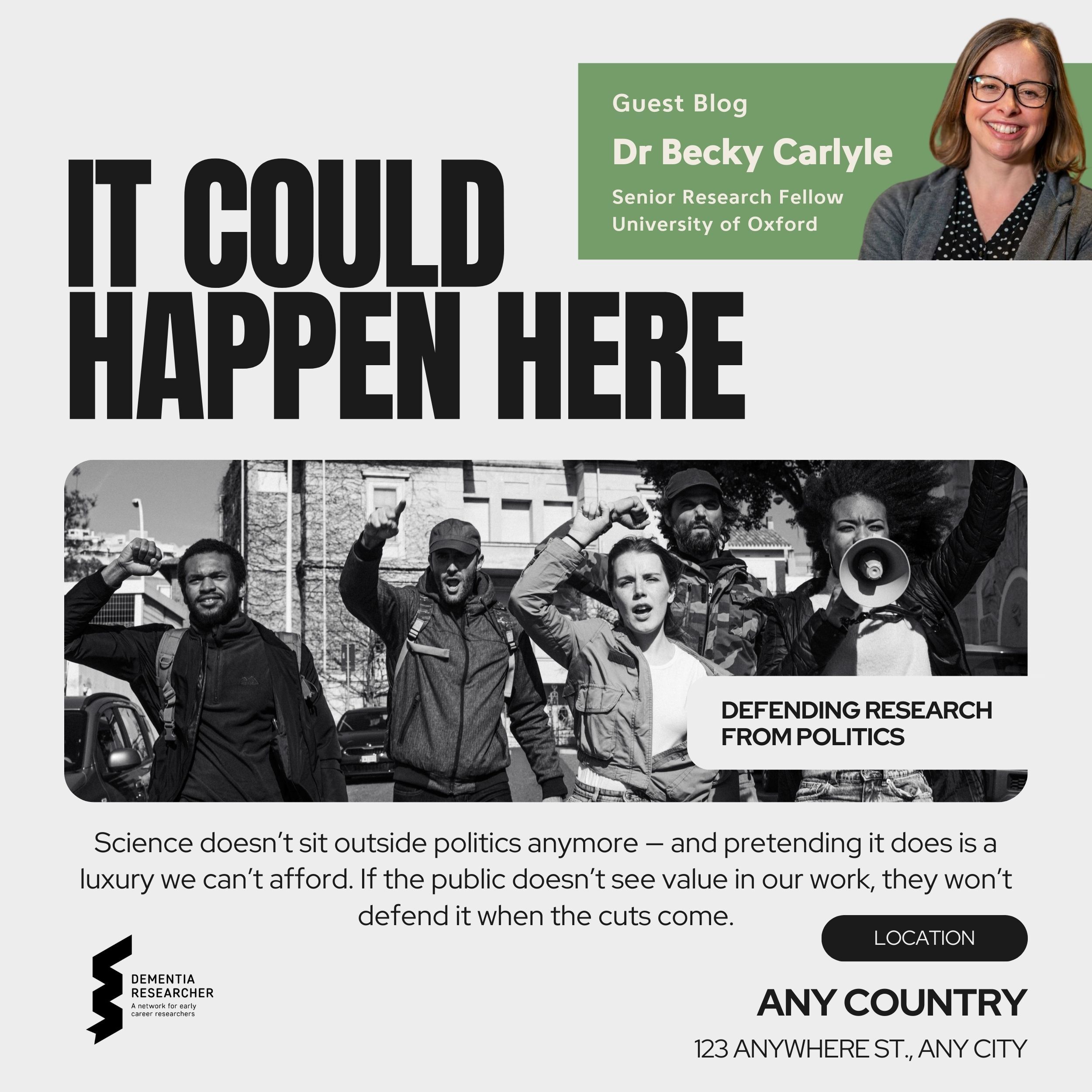
Ep 582Dr Becky Carlyle - It Could Happen Here: Defending Research from Politics
Dr Becky Carlyle, narrates her blog written for the Dementia Researcher website. In this timely and personal blog, Becky urges scientists to take a more active role in defending research from political manipulation and public mistrust. Drawing parallels with the US experience, she argues that UK researchers cannot afford to stay apolitical, and must instead engage with their communities, communicate uncertainty clearly, and build coalitions at the local level. From co-designing research with the public to ditching online echo chambers for real-life conversations, Becky sets out practical ways to reconnect and reinforce science’s place in society. Find the original text, and narration here on our website. https://www.dementiaresearcher.nihr.ac.uk/blog-it-could-happen-here-defending-research-politics/ -- Dr Becky Carlyle is an Alzheimer's Research UK Senior Research Fellow at University of Oxford, and has previously worked in the USA. Becky writes about her experiences of starting up a research lab and progressing into a more senior research role. Becky's research uses mass-spectrometry to quantify thousands of proteins in the brains and biofluids of people with dementia. Her lab is working on various projects, including work to compare brain tissue from people with dementia from Alzheimer’s Disease, to tissue from people who have similar levels of Alzheimer’s Disease pathology but no memory problems. Becky is also a mum, she runs, drinks herbal tea's and reads lots of books. Find Becky on LinkedIn -- Enjoy listening? We're always looking for new bloggers, drop us a line. http://www.dementiaresearcher.nihr.ac.uk This podcast is brought to you in association with Alzheimer's Association, Alzheimer's Research UK, Alzheimer's Society and Race Against Dementia, who we thank for their ongoing support. -- Follow us on Social Media: https://www.instagram.com/dementia_researcher/ https://www.facebook.com/Dementia.Researcher/ https://twitter.com/demrescommunity https://www.linkedin.com/company/dementia-researcher https://bsky.app/profile/dementiaresearcher.bsky.social
Ep 581Ajantha Abey - Reflections on Thesis Writing
Ajantha Abey narrates his blog written for Dementia Researcher. Ajantha reflects honestly on the demanding process of writing a PhD thesis, detailing the unexpected challenges, distractions, and perfectionist pitfalls encountered along the way. From severely underestimating the complexity of making figures, to handling late-stage data reanalysis and navigating life distractions, Ajantha’s account highlights the emotional toll and practical hurdles of thesis completion. The piece offers reassuring insights and valuable tips on productivity, planning, and maintaining balance to help others navigate their thesis journey. Find the original text, and narration here on our website. https://www.dementiaresearcher.nihr.ac.uk/blog-reflections-on-thesis-writing/ -- Ajantha Abey is a PhD student in the Kavli Institute at University of Oxford. He is interested in the cellular mechanisms of Alzheimer's, Parkinson's, and other diseases of the ageing brain. Previously, having previoulsy explored neuropathology in dogs with dementia and potential stem cell replacement therapies. He now uses induced pluripotent stem cell derived neurons to try and model selective neuronal vulnerability: the phenomenon where some cells die but others remain resilient to neurodegenerative diseases. -- Enjoy listening and reading our blogs? We're always on the look out for new contributors, drop us a line and share your own research and careers advice [email protected] This podcast is brought to you in association with Alzheimer's Association, Alzheimer's Research UK, Alzheimer's Society and Race Against Dementia, who we thank for their ongoing support. -- Follow us on Social Media: https://www.instagram.com/dementia_researcher/ https://www.facebook.com/Dementia.Researcher/ https://twitter.com/demrescommunity https://www.linkedin.com/company/dementia-researcher https://bsky.app/profile/dementiaresearcher.bsky.social
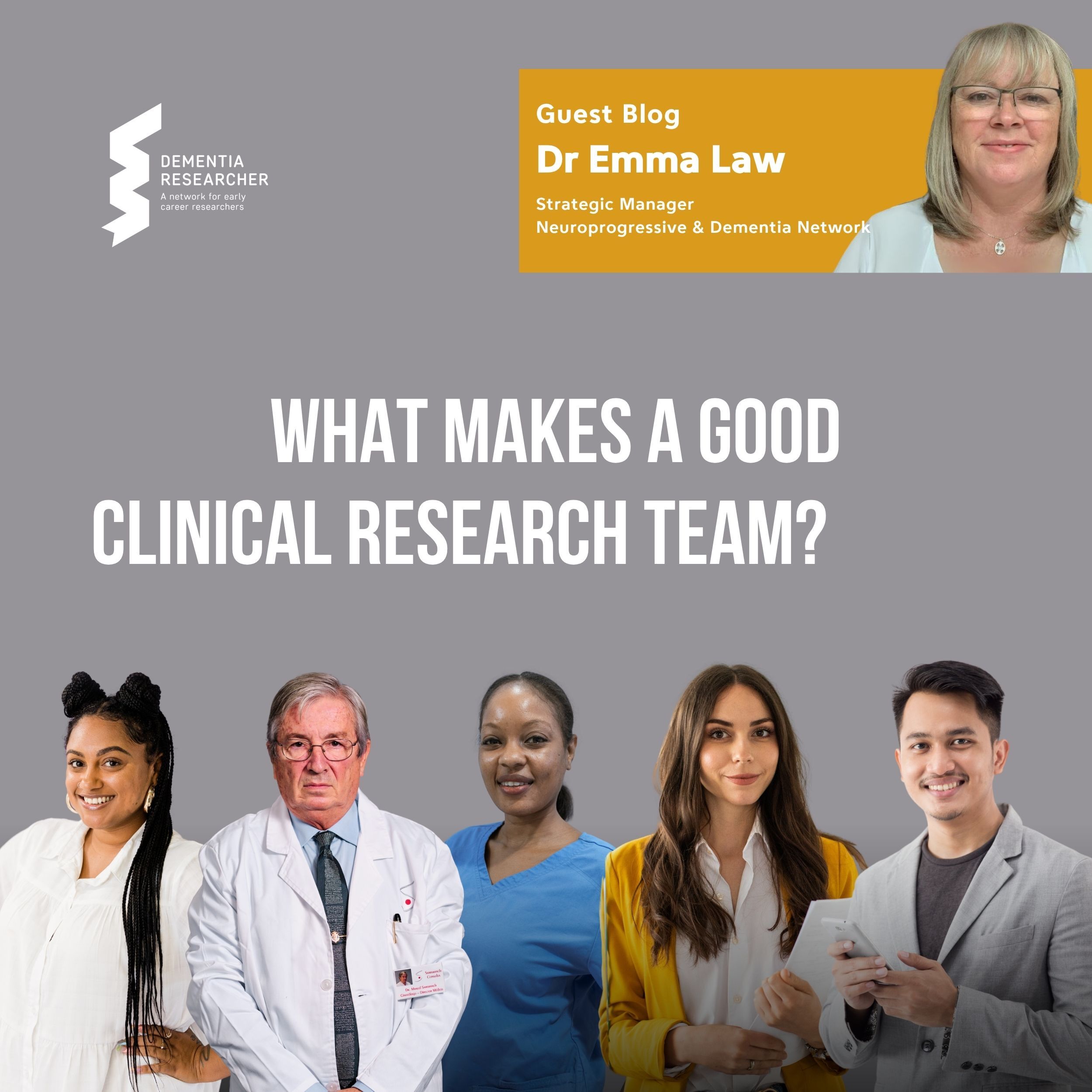
Ep 580Dr Emma Law - What makes a good clinical research team?
Dr Emma Law, narrating her blog written for the Dementia Researcher website. In this blog, Emma Law shares her experience working with clinical research teams across Scotland. She reflects on the key qualities that make a team successful—thorough preparation, mutual respect, clear communication, and the pivotal role of the coordinator. With practical examples and real-life stories, Emma highlights the importance of acknowledging team limitations, ensuring thorough training, and maintaining humour and compassion in the face of challenges. Her insights offer a grounded look into the realities of clinical trial delivery. Find the original text, and narration here on our website. https://www.dementiaresearcher.nihr.ac.uk/blog-what-makes-a-good-clinical-research-team/ #DementiaResearch #ClinicalTrials #Research #TrialDelivery -- Dr Emma Law is Strategic Manager for the The Neuroprogressive and Dementia Network in Scotland. Emma has 13 years experience as a Clinical Trails Network Manager and over 35 years experience as a Nurse, many of which were spent in the delivery of Clinical Research Trials. Emma completed her PhD and is passionate about giving people living with dementia and their carers access to participate in research. -- Enjoy listening? We're always looking for new bloggers, drop us a line. http://www.dementiaresearcher.nihr.ac.uk This podcast is brought to you in association with Alzheimer's Association, Alzheimer's Research UK, Alzheimer's Society and Race Against Dementia, who we thank for their ongoing support. -- Follow us on Social Media: https://www.instagram.com/dementia_researcher/ https://www.facebook.com/Dementia.Researcher/ https://twitter.com/demrescommunity https://www.linkedin.com/company/dementia-researcher https://bsky.app/profile/dementiaresearcher.bsky.social
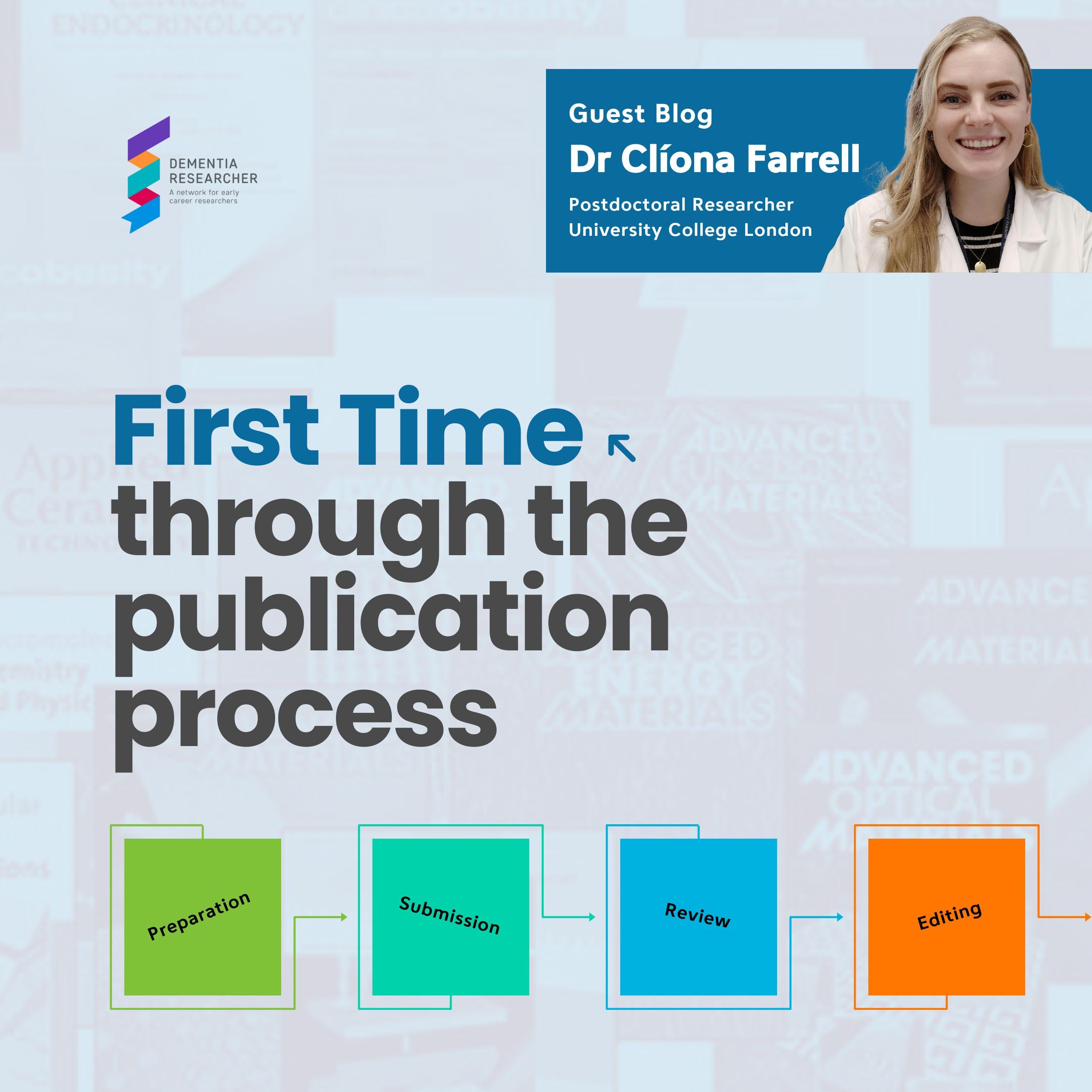
Ep 579Dr Clíona Farrell - First time through the publication process
Dr Clíona Farrell, narrating her blog written for the Dementia Researcher website. In this blog, Clíona reflects on the step-by-step process of getting her first first-author data paper published. Drawing on a project that began during her PhD and continued into her postdoc, Clíona highlights the many layers of work involved – from early authorship discussions to final submission and revisions. Her account underscores how time-consuming, iterative, and unexpectedly complex academic publishing can be, offering an honest and practical perspective for researchers navigating their first manuscript journey. Find the original text, and narration here on our website. https://www.dementiaresearcher.nihr.ac.uk/blog-first-time-through-the-publication-process/ -- Dr Clíona Farrell is a Postdoctoral Researcher in the UK Dementia Research Institute at University College London. Her work focuses on understanding neuroinflammation in Down syndrome, both prior to, and in response to, Alzheimer’s disease pathology. Originally from Dublin, Ireland, Clíona completed her undergraduate degree in Neuroscience in Trinity College, and then worked as a research assistant in the Royal College of Surgeons studying ALS and Parkinson’s disease. She also knows the secret behind scopping the perfect 99 ice-cream cone. @ClionaFarrell_ -- Enjoy listening? We're always looking for new bloggers, drop us a line. http://www.dementiaresearcher.nihr.ac.uk This podcast is brought to you in association with Alzheimer's Association, Alzheimer's Research UK, Alzheimer's Society and Race Against Dementia, who we thank for their ongoing support. -- Follow us on Social Media: https://www.instagram.com/dementia_researcher/ https://www.facebook.com/Dementia.Researcher/ https://twitter.com/demrescommunity https://www.linkedin.com/company/dementia-researcher https://bsky.app/profile/dementiaresearcher.bsky.social
Ep 578Dr Peter Connelly - The Role of Memory Clinics in Clinical Research
Dr Peter Connelly narrates his blog written for Dementia Researcher. In his first blog for Dementia Researcher, Dr Peter Connelly highlights the pivotal role memory clinics play in dementia clinical research. Despite often being perceived as distinct from everyday practice, he argues that the overlap between routine cognitive assessments and trial protocols offers an opportunity for better integration. From enhancing referrals through shared assessment tools like the MMSE to educating mainstream services, memory clinics can bridge gaps and increase trial participation. He calls for more seamless collaboration between clinical care and research, underlining the practical and strategic value of memory clinics in the clinical trial landscape. Find the original text, and narration here on our website. https://www.dementiaresearcher.nihr.ac.uk/blog-the-role-of-memory-clinics-in-clinical-research/ -- Dr Peter Connelly is a retired Old Age Psychiatrist who spent much of his career in Tayside, helping to establish clinical trials for dementia and neuroprogressive disorders in Scotland. Now working with the Scottish Neuroprogressive and Dementia Network, he combines professional insight with personal experience as a former carer. In retirement, he enjoys music, golf, and time with his grandchildren. -- Enjoy listening? We're always looking for new bloggers, drop us a line. http://www.dementiaresearcher.nihr.ac.uk This podcast is brought to you in association with Alzheimer's Association, Alzheimer's Research UK, Alzheimer's Society and Race Against Dementia, who we thank for their ongoing support. -- Follow us on Social Media: https://www.instagram.com/dementia_researcher/ https://www.facebook.com/Dementia.Researcher/ https://twitter.com/demrescommunity https://www.linkedin.com/company/dementia-researcher https://bsky.app/profile/dementiaresearcher.bsky.social
Ep 577Adam Smith - Building Your Personal Brand
Adam Smith narrates his blog written for Dementia Researcher. In this guest blog, Adam challenges the scepticism around “personal branding” by reframing it as a tool for clarity rather than self-promotion. Drawing from personal anecdotes and practical advice, he explains how early career researchers can shape how they’re perceived by being deliberate in how they show up, online and in person. With thoughtful encouragement, he demystifies what a brand is and isn’t—and why even quiet, kind, reliable people can benefit from having one. Find the original text, and narration here on our website. https://www.dementiaresearcher.nihr.ac.uk/blog-building-a-personal-brand/ -- Adam Smith was born in the north, a long time ago. He wanted to write books, but ended up working in the NHS, and at the Department of Health. He is now Programme Director in the Office of the NIHR National Director for Dementia Research (which probably sounds more important than it is) at University College London. He has led a number of initiatives to improve dementia research (including this website, Join Dementia Research & ENRICH), as well as pursuing his own research interests. In his spare time, he grows vegetables, builds Lego & spends most of his time drinking too much coffee and squeezing technology into his house. -- Enjoy listening? We're always looking for new bloggers, drop us a line. http://www.dementiaresearcher.nihr.ac.uk This podcast is brought to you in association with Alzheimer's Association, Alzheimer's Research UK, Alzheimer's Society and Race Against Dementia, who we thank for their ongoing support. -- Follow us on Social Media: https://www.instagram.com/dementia_researcher/ https://www.facebook.com/Dementia.Researcher/ https://twitter.com/demrescommunity https://www.linkedin.com/company/dementia-researcher https://bsky.app/profile/dementiaresearcher.bsky.social

Ep 576Rebecca Williams - AI and BlueSky: Embracing the Everyday Tech of Academia
Rebecca Williams, narrates her blog written for the Dementia Researcher website. In this blog, Rebecca offers a pragmatic guide to everyday tech that can support academic work. From AI tools like ChatGPT and Elicit, to reference managers and visual design hacks in PowerPoint, she explores how to navigate, adopt, and balance new digital tools. Rebecca also champions the use of social media platforms like BlueSky to connect and amplify research, encouraging researchers to make technology work for them—efficiently, thoughtfully, and creatively. Find the original text, and narration here on our website. https://www.dementiaresearcher.nihr.ac.uk/blog-ai-and-bluesky-embracing-the-everyday-tech-of-academia/ -- Rebecca Williams is PhD student at the University of Cambridge. Though originally from ‘up North’ in a small town called Leigh, she did her undergraduate and masters at the University of Oxford before defecting to Cambridge for her doctorate researching Frontotemporal dementia and Apathy. She now spends her days collecting data from wonderful volunteers, and coding. Outside work, she plays board games, and is very crafty. @beccasue99 -- Enjoy listening? We're always looking for new bloggers, drop us a line. http://www.dementiaresearcher.nihr.ac.uk This podcast is brought to you in association with Alzheimer's Association, Alzheimer's Research UK, Alzheimer's Society and Race Against Dementia, who we thank for their ongoing support. -- Follow us on Social Media: https://www.instagram.com/dementia_researcher/ https://www.facebook.com/Dementia.Researcher/ https://twitter.com/demrescommunity https://www.linkedin.com/company/dementia-researcher https://bsky.app/profile/dementiaresearcher.bsky.social
Ep 575Emily Spencer - Retreat, Regroup, Rewrite
Emily Spencer, narrating her blog written for the Dementia Researcher website. In her new blog, Emily shares how a writing retreat provided a vital lifeline during a difficult time balancing research and parenting. Amid exhaustion, doubts, and a heavy workload, Emily found renewed confidence, rest, and extraordinary productivity during three days of silent writing. Her honest reflection highlights the value of protected time and reminds us that even small breaks can restore belief in ourselves and our work. Find the original text, and narration here on our website. https://www.dementiaresearcher.nihr.ac.uk/blog-retreat-regroup-rewrite/ #DementiaResearch #AcademicMother #Academia #MaternityLeave #Research #Productivity #PhDWriting #PhDLife -- Emily Spencer is a PhD Student at University College London looking at improving how GPs communicate with people with dementia and their family carers about their future care. Emily previous had a 5 year career break to pursue a career as a musician, and has previously undertaken research on improving the care people with dementia receive from their GP practice, as well as end-of-life and palliative care provision in the community. Emily is also a new mum and will be writing about her experiences navigating motherhood and a research career. -- Enjoy listening? We're always looking for new bloggers, drop us a line. http://www.dementiaresearcher.nihr.ac.uk This podcast is brought to you in association with Alzheimer's Association, Alzheimer's Research UK, Alzheimer's Society and Race Against Dementia, who we thank for their ongoing support. -- Follow us on Social Media: https://www.instagram.com/dementia_researcher/ https://www.facebook.com/Dementia.Researcher/ https://x.com/demrescommunity https://bsky.app/profile/dementiaresearcher.bsky.social https://www.linkedin.com/company/dementia-researcher

Ep 574Adam Smith - How to Network and Advice for Making the First Move
Adam Smith narrates his blog written for Dementia Researcher. In this blog, Adam shares practical and honest advice on networking in research. Drawing on personal experiences and real-life examples, he breaks down the awkwardness of making the first move, highlights the power of casual conversations, and encourages early-career researchers to embrace small, meaningful interactions. His message is simple but powerful: connection matters, even if it starts with just a like, a question, or a compliment. Find the original text, and narration here on our website. https://www.dementiaresearcher.nihr.ac.uk/blog-how-to-network-and-advice-for-making-the-first-move/ -- Adam Smith was born in the north, a long time ago. He wanted to write books, but ended up working in the NHS, and at the Department of Health. He is now Programme Director in the Office of the NIHR National Director for Dementia Research (which probably sounds more important than it is) at University College London. He has led a number of initiatives to improve dementia research (including this website, Join Dementia Research & ENRICH), as well as pursuing his own research interests. In his spare time, he grows vegetables, builds Lego & spends most of his time drinking too much coffee and squeezing technology into his house. -- Enjoy listening? We're always looking for new bloggers, drop us a line. http://www.dementiaresearcher.nihr.ac.uk This podcast is brought to you in association with Alzheimer's Association, Alzheimer's Research UK, Alzheimer's Society and Race Against Dementia, who we thank for their ongoing support. -- Follow us on Social Media: https://www.instagram.com/dementia_researcher/ https://www.facebook.com/Dementia.Researcher/ https://twitter.com/demrescommunity https://www.linkedin.com/company/dementia-researcher https://bsky.app/profile/dementiaresearcher.bsky.social
Ep 573Jacqui Kerr - A Day in the Life of a Clinical Trial Coordinator
Jacqui Kerr narrates her blog written for Dementia Researcher. In her first guest blog, Jacqui Kerr from the Neuroprogressive & Dementia Network offers a personal and insightful glimpse into her role as a clinical trial coordinator. With nearly two decades in Alzheimer’s research, Jacqui reflects on the complexity and rewards of her work, highlighting the critical importance of communication, teamwork, and participant engagement. From coordinating diverse professionals to supporting study volunteers, she reveals the dynamic nature of a role often underestimated but essential to successful research. Find the original text, and narration here on our website. https://www.dementiaresearcher.nihr.ac.uk/blog-a-day-in-the-life-of-a-clinical-trial-coordinator/ -- Jacqueline Kerr is the Network Manager for the Neuroprogressive and Dementia Network in Scotland. With a background in research management and public engagement, she is dedicated to supporting clinical trials and improving access to research across the country. Jacqueline works closely with clinicians, researchers, and the public to raise awareness of dementia studies and encourage participation. -- Enjoy listening? We're always looking for new bloggers, drop us a line. http://www.dementiaresearcher.nihr.ac.uk This podcast is brought to you in association with Alzheimer's Association, Alzheimer's Research UK, Alzheimer's Society and Race Against Dementia, who we thank for their ongoing support. -- Follow us on Social Media: https://www.instagram.com/dementia_researcher/ https://www.facebook.com/Dementia.Researcher/ https://x.com/demrescommunity https://bsky.app/profile/dementiaresearcher.bsky.social https://www.linkedin.com/company/dementia-researcher

Ep 572Jennifer Bray & Teresa Atkinson - Reflecting on challenging situations when conducting research
Jennifer Bray narrates her & Dr Teresa Atkinson's blog written for Dementia Researcher. Jennifer & Teresa reflect on the unexpected hurdles they faced while evaluating a new staff role in a housing scheme. From construction delays and staff resignations to illness and data collection issues, their blog highlights the reality of conducting research in real-world settings. They share how flexibility, preparation, good communication, and strong relationships helped them overcome setbacks and still deliver a successful project—packed with valuable insights for fellow researchers. Find the original text, and narration here on our website. https://www.dementiaresearcher.nihr.ac.uk/blog-reflecting-on-challenging-situations-when-conducting-research/ -- Jennifer Bray is a Research Assistant at the University of Worcester’s Association for Dementia Studies. Her work focuses on improving quality of life for people affected by dementia, with recent projects on environmental design and carer support. Dr Teresa Atkinson is a Senior Research Fellow at the University of Worcester’s Association for Dementia Studies. Her work focuses on improving quality of life for people living with dementia and those who support them, drawing on over 20 years of qualitative research experience. -- Enjoy listening? We're always looking for new bloggers, drop us a line. http://www.dementiaresearcher.nihr.ac.uk This podcast is brought to you in association with Alzheimer's Association, Alzheimer's Research UK, Alzheimer's Society and Race Against Dementia, who we thank for their ongoing support. -- Follow us on Social Media: https://www.instagram.com/dementia_researcher/ https://www.facebook.com/Dementia.Researcher/ https://x.com/demrescommunity https://bsky.app/profile/dementiaresearcher.bsky.social https://www.linkedin.com/company/dementia-researcher

Ep 571Dr Kamar Ameen-Ali - The use of Generative AI in academia & higher education: friend or foe?
Dr Kamar Ameen-Ali narrates her blog written for Dementia Researcher. Kamar examines the rapid rise of generative AI and its complex impact on academia and higher education. Reflecting on her own teaching experience and changes within the sector, she explores how universities and researchers are grappling with questions of academic integrity, innovation, and ethical use. From concerns about student deskilling and data protection to potential benefits in improving access, efficiency, and creativity, this article provides a nuanced perspective on whether generative AI is friend or foe in the academic world. Find the original text, and narration here on our website. https://www.dementiaresearcher.nihr.ac.uk/blog-the-use-of-generative-ai-in-academia-higher-education-friend-or-foe/ -- Dr Kamar Ameen-Ali is a Lecturer in Biomedical Science at Teesside University & Affiliate Researcher at Glasgow University. In addition to teaching, Kamar is exploring how neuroinflammation following traumatic brain injury contributes to the progression of neurodegenerative diseases that lead to dementia. Having first pursued a career as an NHS Psychologist, Kamar went back to University in Durham to look at rodent behavioural tasks to completed her PhD, and then worked as a regional Programme Manager for NC3Rs. -- Enjoy listening? We're always looking for new bloggers, drop us a line. http://www.dementiaresearcher.nihr.ac.uk This podcast is brought to you in association with Alzheimer's Association, Alzheimer's Research UK, Alzheimer's Society and Race Against Dementia, who we thank for their ongoing support. -- Follow us on Social Media: https://www.instagram.com/dementia_researcher/ https://www.facebook.com/Dementia.Researcher/ https://x.com/demrescommunity https://bsky.app/profile/dementiaresearcher.bsky.social https://www.linkedin.com/company/dementia-researcher
Ep 570Dr Jodi Watt - How to Write a Powerful Conference Abstract
Dr Jodi Watt, narrating a new blog they wrote for the Dementia Researcher website. In this blog, Jodi offers essential advice for crafting a conference abstract that gets noticed. From understanding your audience and refining your pitch to managing submission logistics, Jodi shares candid insights, common mistakes to avoid, and practical tips for making every word count. Whether you're a first-timer or regular conference presenter, this guide will help you sharpen your skills and boost your chances of conference success. Find the original text, and narration here on our website. https://www.dementiaresearcher.nihr.ac.uk/blog-how-to-write-a-powerful-conference-abstract/ -- Dr Jodi Watt is a Postdoctoral Researcher at University of Glasgow. Jodi's academic interests are in both healthy ageing and neurodegenerative diseases of older age, and they are currently working on drug repurposing for dementia. Previously they worked on understanding structural, metabolic and physiological brain changes with age, as measured using magnetic resonance imaging. As a queer and neurodiverse person, Jodi is also incredibly interested in improving diversity and inclusion practices both within and outside of the academic context. -- Enjoy listening? We're always looking for new bloggers, drop us a line. http://www.dementiaresearcher.nihr.ac.uk This podcast is brought to you in association with Alzheimer's Association, Alzheimer's Research UK, Alzheimer's Society and Race Against Dementia, who we thank for their ongoing support. -- Follow us on Social Media: https://www.instagram.com/dementia_researcher/ https://www.facebook.com/Dementia.Researcher/ https://twitter.com/demrescommunity https://www.linkedin.com/company/dementia-researcher https://bsky.app/profile/dementiaresearcher.bsky.social

Ep 569Dr Yvonne Couch - Writing Your First Fellowship
Dr Yvonne Couch, narrates her blog written for the Dementia Researcher website. In this practical blog, Yvonne shares personal insights and lessons learned from her own journey writing fellowship applications. From figuring out the right time to apply, to choosing a niche research idea and navigating funding options, Yvonne offers encouragement, honesty, and a few cautionary tales — including a key tip on valuing your own salary. Whether you're just considering a fellowship or already knee-deep in planning one, this is essential reading for early career researchers. Find the original text, and narration here on our website. https://www.dementiaresearcher.nihr.ac.uk/blog-writing-your-first-fellowship/ -- Dr Yvonne Couch is an Alzheimer's Research UK Fellow and Associate Professor at the University of Oxford. Yvonne studies the role of extracellular vesicles and their role in changing the function of the vasculature after stroke, aiming to discover why the prevalence of dementia after stroke is three times higher than the average. It is her passion for problem solving and love of science that drives her, in advancing our knowledge of disease. Yvonne writes about her work, academic life, and careers as she takes a new road into independent research. -- Enjoy listening? We're always looking for new bloggers, drop us a line. http://www.dementiaresearcher.nihr.ac.uk This podcast is brought to you in association with Alzheimer's Association, Alzheimer's Research UK, Alzheimer's Society and Race Against Dementia, who we thank for their ongoing support. -- Follow us on Social Media: https://www.instagram.com/dementia_researcher/ https://www.facebook.com/Dementia.Researcher/ https://twitter.com/demrescommunity https://www.linkedin.com/company/dementia-researcher https://bsky.app/profile/dementiaresearcher.bsky.social

Ep 568Bernie McInally - LGBTQ+ and higher dementia risk
Bernie McInally narrates his blog written for Dementia Researcher. In this updated blog, Bernie McInally examines the heightened dementia risk among LGBTQ+ individuals, driven by factors like minority stress, social isolation, and health inequalities. Drawing on the latest ENRICH Scotland care home survey, he reveals the lack of structured LGBTQ+ support and calls for targeted action—through training, dedicated roles, inclusive research practices, and stronger community engagement. Bernie argues this isn’t just a gap in research, it’s a call for systemic change in care environments. Find the original text, and narration here on our website. https://www.dementiaresearcher.nihr.ac.uk/blog-lgbtq-and-higher-dementia-risk/ -- Bernie McInally is a Clinical Studies Officer at NHS Lothian and the Neuroprogressive and Dementia Network. Bernie's background is in Nursing, working in Mental Health and with Older People. He retired from full time NHS clinical work, and is now back working in Clinical Research supporting delivery of the Enabling Research in Care Homes (ENRICH) Scotland. He is passionate about research delivery, and opening access to people in all communities. -- Enjoy listening and reading our blogs? We're always on the look out for new contributors, drop us a line and share your own research and careers advice [email protected] This podcast is brought to you in association with the NIHR, Alzheimer's Association, Alzheimer's Research UK, Alzheimer's Society and Race Against Dementia, who we thank for their ongoing support. -- Follow us on Social Media: https://www.instagram.com/dementia_researcher/ https://www.facebook.com/Dementia.Researcher/ https://twitter.com/demrescommunity https://www.linkedin.com/company/dementia-researcher https://bsky.app/profile/dementiaresearcher.bsky.social
Ep 567Ajantha Abey - What Happens In a Grant Review Panel
Ajantha Abey narrates his blog written for Dementia Researcher. In this blog, Ajantha provides an exclusive look into the inner workings of an Alzheimer's Research UK (ARUK) grant review panel. Highlighting the structured and rigorous process of evaluation, Ajantha outlines key criteria considered essential by reviewers such as feasibility, innovation, training environment, and impact planning. The article identifies recurring strengths and weaknesses found in grant applications, offering valuable guidance for early-career researchers aiming to enhance their chances of funding success. This behind-the-scenes perspective demystifies the grant application process and underscores the importance of clear writing, well-justified methodologies, contingency planning, and alignment with funders’ priorities. Find the original text, and narration here on our website. https://www.dementiaresearcher.nihr.ac.uk/blog-what-happens-in-a-grant-review-panel/ -- Ajantha Abey is a PhD student in the Kavli Institute at University of Oxford. He is interested in the cellular mechanisms of Alzheimer's, Parkinson's, and other diseases of the ageing brain. Previously, having previoulsy explored neuropathology in dogs with dementia and potential stem cell replacement therapies. He now uses induced pluripotent stem cell derived neurons to try and model selective neuronal vulnerability: the phenomenon where some cells die but others remain resilient to neurodegenerative diseases. -- Enjoy listening and reading our blogs? We're always on the look out for new contributors, drop us a line and share your own research and careers advice [email protected] This podcast is brought to you in association with Alzheimer's Association, Alzheimer's Research UK, Alzheimer's Society and Race Against Dementia, who we thank for their ongoing support. -- Follow us on Social Media: https://www.instagram.com/dementia_researcher/ https://www.facebook.com/Dementia.Researcher/ https://twitter.com/demrescommunity https://www.linkedin.com/company/dementia-researcher https://bsky.app/profile/dementiaresearcher.bsky.social
Ep 566Dr Becky Carlyle - Choose your Mentors
Dr Becky Carlyle, narrates her blog written for the Dementia Researcher website. This time Becky's blog addresses the complex but essential role of mentorship in career and leadership development, particularly within academia. She underscores the importance of selecting mentors suited to specific professional needs, such as grant writing, overcoming imposter syndrome, or navigating career transitions. Becky advocates for clear, goal-oriented mentoring relationships and highlights the significant benefits of peer mentoring. She shares personal experiences of impactful mentorship, emphasising the value of both formal and informal mentoring arrangements in fostering career progression and personal well-being. Find the original text, and narration here on our website. https://www.dementiaresearcher.nihr.ac.uk/blog-choose-your-mentors/ -- Dr Becky Carlyle is an Alzheimer's Research UK Senior Research Fellow at University of Oxford, and has previously worked in the USA. Becky writes about her experiences of starting up a research lab and progressing into a more senior research role. Becky's research uses mass-spectrometry to quantify thousands of proteins in the brains and biofluids of people with dementia. Her lab is working on various projects, including work to compare brain tissue from people with dementia from Alzheimer’s Disease, to tissue from people who have similar levels of Alzheimer’s Disease pathology but no memory problems. Becky is also a mum, she runs, drinks herbal tea's and reads lots of books. Find Becky on LinkedIn -- Enjoy listening? We're always looking for new bloggers, drop us a line. http://www.dementiaresearcher.nihr.ac.uk This podcast is brought to you in association with Alzheimer's Association, Alzheimer's Research UK, Alzheimer's Society and Race Against Dementia, who we thank for their ongoing support. -- Follow us on Social Media: https://www.instagram.com/dementia_researcher/ https://www.facebook.com/Dementia.Researcher/ https://twitter.com/demrescommunity https://www.linkedin.com/company/dementia-researcher https://bsky.app/profile/dementiaresearcher.bsky.social

Ep 565Yasmin Bonsu - Embracing Unplanned Opportunities
Yasmin Bonsu, narrates her blog written for the Dementia Researcher website. In this blog Yasmin discusses her emotional journey after securing an unexpected teaching job offer post-graduation. Initially conflicted, she explores the notion of success beyond rigid expectations, realising that unplanned paths can offer profound personal and professional growth. Yasmin emphasises the value of teaching as an opportunity to inspire diversity in science, develop essential communication skills, and contribute positively to others' journeys. Ultimately, she advocates for embracing uncertainty as a powerful source of new opportunities. Find the original text, and narration here on our website. https://www.dementiaresearcher.nihr.ac.uk/blog-embracing-unplanned-opportunities/ -- Yasmin Bonsu is an an undergraduate student from the University of Manchester currently undertaking a placement year at Wade-Martins Lab at Oxford University. Yasmin is investigating the activity of proteoforms of the granin family in cortical neurons insulted with oligomerised amyloid beta. Her goal is to finish her placement year, earn her bachelor’s degree in neuroscience, and then pursue a PhD in clinical neuroscience. Through Yasmin's blogs we'll gain insights on life as an undergraduate, and hopefully inspire others to pursue a career in dementia research. @yasminnnx2 -- Enjoy listening? We're always looking for new bloggers, drop us a line. http://www.dementiaresearcher.nihr.ac.uk This podcast is brought to you in association with Alzheimer's Association, Alzheimer's Research UK, Alzheimer's Society and Race Against Dementia, who we thank for their ongoing support. -- Follow us on Social Media: https://www.instagram.com/dementia_researcher/ https://www.facebook.com/Dementia.Researcher/ https://twitter.com/demrescommunity https://www.linkedin.com/company/dementia-researcher https://bsky.app/profile/dementiaresearcher.bsky.social
Ep 564Dr Clíona Farrell - How PPIE involvement can Improve a Conference
Dr Clíona Farrell, narrating her blog written for the Dementia Researcher website. In this blog, Clíona reflects on her experience at the UK DRI Vascular ECR conference, where patient and public involvement and engagement (PPIE) was embedded throughout the event. From shaping research discussions to helping early career researchers improve accessibility, Clíona shares how the inclusion of lived experience experts made the conference more insightful, collaborative, and engaging. She argues that PPIE isn't just for clinical researchers – it benefits preclinical science too and should be a standard part of the research process. Find the original text, and narration here on our website. https://www.dementiaresearcher.nihr.ac.uk/blog-how-ppie-involvement-can-improve-a-conference/ -- Dr Clíona Farrell is a Postdoctoral Researcher in the UK Dementia Research Institute at University College London. Her work focuses on understanding neuroinflammation in Down syndrome, both prior to, and in response to, Alzheimer’s disease pathology. Originally from Dublin, Ireland, Clíona completed her undergraduate degree in Neuroscience in Trinity College, and then worked as a research assistant in the Royal College of Surgeons studying ALS and Parkinson’s disease. She also knows the secret behind scopping the perfect 99 ice-cream cone. @ClionaFarrell_ -- Enjoy listening? We're always looking for new bloggers, drop us a line. http://www.dementiaresearcher.nihr.ac.uk This podcast is brought to you in association with Alzheimer's Association, Alzheimer's Research UK, Alzheimer's Society and Race Against Dementia, who we thank for their ongoing support. -- Follow us on Social Media: https://www.instagram.com/dementia_researcher/ https://www.facebook.com/Dementia.Researcher/ https://twitter.com/demrescommunity https://www.linkedin.com/company/dementia-researcher https://bsky.app/profile/dementiaresearcher.bsky.social

Ep 563Marian Montanha - What I Wish I Knew Before Working in Clinical Trials
Marian Montanha, narrates her blog written for the Dementia Researcher website. In her first blog for Dementia Researcher Marian reflects on her initial nine months working in clinical trials, contrasting her previous patient-centred roles with the highly structured and data-driven nature of research. She discusses the surprising realities she encountered, including the intensity of paperwork, the necessity of standardisation, and the prolonged timeline for gratification and impact. Marian candidly shares her feelings of missing direct therapeutic interactions yet appreciates the external validation and the significant potential to make long-term impacts on patient care and treatments. Find the original text, and narration here on our website. https://www.dementiaresearcher.nihr.ac.uk/blog-what-i-wish-i-knew-before-working-in-clinical-trials/ -- Marian Montanha is a Clinical Studies Office in the NHS – Neuroprogressive and Dementia Network in Scotland. With a background in Psychology and a keen interest in Neuropsychology, Marian plays a vital role in clinical research, coordinating and managing clinical trials, ensuring smooth operations, and maintaining accurate records, while also promoting research and collaborating with clinical teams. Passionate about patient care, she is driven to help people maintain dignity, independence, and quality of life. Marian's top tip for ECRs? “You don’t know what you don’t know”. Find Marian on LinkedIn -- Enjoy listening? We're always looking for new bloggers, drop us a line. http://www.dementiaresearcher.nihr.ac.uk This podcast is brought to you in association with Alzheimer's Association, Alzheimer's Research UK, Alzheimer's Society and Race Against Dementia, who we thank for their ongoing support. -- Follow us on Social Media: https://www.instagram.com/dementia_researcher/ https://www.facebook.com/Dementia.Researcher/ https://twitter.com/demrescommunity https://www.linkedin.com/company/dementia-researcher https://bsky.app/profile/dementiaresearcher.bsky.social
Ep 562Dr Sam Moxon - Will Dementia Research Funding Weather the Financial Storm?
Dr Sam Moxon, narrates his blog written for Dementia Researcher. Sam examines the impact of the UK's shifting financial priorities on dementia research funding. While government-backed funds like Innovate UK, MRC, EPSRC, and UKRI face potential budget tightening, charities such as Alzheimer's Research UK, Alzheimer's Society & Race Against Dementia continue to play a crucial role. The blog highlights uncertainties ahead, suggesting increased competition for available grants, but reassures that the overall support for dementia research remains strong despite financial pressures. Find the original text, and narration here on our website. https://www.dementiaresearcher.nihr.ac.uk/blog-will-dementia-research-funding-weather-the-financial-storm/ #Grantfunding #Research #ResearchFunding -- Dr Sam Moxon is a biomaterials Research Fellow at University of Birmingham. His expertise falls on the interface between biology and engineering. His PhD focussed on regenerative medicine and he now works on trying to develop 3D bioprinting techniques with human stem cells, so that we better understand and treat degenerative diseases. Outside of the lab he hikes through the Lake District and is an expert on all things Disney. -- Enjoy listening and reading our blogs? We're always on the look out for new contributors, drop us a line and share your own research and careers advice [email protected] This podcast is brought to you in association with the NIHR, Alzheimer's Association, Alzheimer's Research UK, Alzheimer's Society and Race Against Dementia, who we thank for their ongoing support. -- Follow us on Social Media: https://www.instagram.com/dementia_researcher/ https://www.facebook.com/Dementia.Researcher/ https://twitter.com/demrescommunity https://www.linkedin.com/company/dementia-researcher https://bsky.app/profile/dementiaresearcher.bsky.social
Ep 561Rebecca Williams - Stand-Up Scientists: Lessons from Comedy
Rebecca Williams, narrates her blog written for the Dementia Researcher website. Rebecca explores how stand-up comedy techniques can enhance science communication. From crafting engaging openings to honing audience interaction, she shares insights on making research talks more compelling. By embracing humour, observation, and performance skills, scientists can captivate their listeners—whether in a lecture theatre or at a conference. Find the original text, and narration here on our website. https://www.dementiaresearcher.nihr.ac.uk/blog-stand-up-scientists-lessons-from-comedy/ -- Rebecca Williams is PhD student at the University of Cambridge. Though originally from ‘up North’ in a small town called Leigh, she did her undergraduate and masters at the University of Oxford before defecting to Cambridge for her doctorate researching Frontotemporal dementia and Apathy. She now spends her days collecting data from wonderful volunteers, and coding. Outside work, she plays board games, and is very crafty. @beccasue99 -- Enjoy listening? We're always looking for new bloggers, drop us a line. http://www.dementiaresearcher.nihr.ac.uk This podcast is brought to you in association with Alzheimer's Association, Alzheimer's Research UK, Alzheimer's Society and Race Against Dementia, who we thank for their ongoing support. -- Follow us on Social Media: https://www.instagram.com/dementia_researcher/ https://www.facebook.com/Dementia.Researcher/ https://twitter.com/demrescommunity https://www.linkedin.com/company/dementia-researcher https://bsky.app/profile/dementiaresearcher.bsky.social

Ep 560Emily Spencer - Balancing fieldwork and family
Emily Spencer, narrating her blog written for the Dementia Researcher website. Emily discusses the unexpected complexities of balancing PhD fieldwork and family responsibilities. Reflecting on her experiences post-maternity leave, she highlights significant challenges such as scheduling crucial meetings around childcare constraints and the constant need for adaptability. Emily stresses the importance of careful planning, communication with her partner, and seeking support from friends and colleagues to ensure her research progresses while maintaining family life. Find the original text, and narration here on our website. https://www.dementiaresearcher.nihr.ac.uk/blog-balancing-fieldwork-and-family/ #DementiaResearch #AcademicMother #Academia #MaternityLeave #Research #Productivity -- Emily Spencer is a PhD Student at University College London looking at improving how GPs communicate with people with dementia and their family carers about their future care. Emily previous had a 5 year career break to pursue a career as a musician, and has previously undertaken research on improving the care people with dementia receive from their GP practice, as well as end-of-life and palliative care provision in the community. Emily is also a new mum and will be writing about her experiences navigating motherhood and a research career. -- Enjoy listening? We're always looking for new bloggers, drop us a line. http://www.dementiaresearcher.nihr.ac.uk This podcast is brought to you in association with Alzheimer's Association, Alzheimer's Research UK, Alzheimer's Society and Race Against Dementia, who we thank for their ongoing support. -- Follow us on Social Media: https://www.instagram.com/dementia_researcher/ https://www.facebook.com/Dementia.Researcher/ https://x.com/demrescommunity https://bsky.app/profile/dementiaresearcher.bsky.social https://www.linkedin.com/company/dementia-researcher

Ep 559Dr Kamar Ameen-Ali - How to use controls in your scientific studies
Dr Kamar Ameen-Ali narrates her blog written for Dementia Researcher. Kamar highlights the importance of using controls in scientific research to ensure reliable, unbiased results. Kam explores different study designs, from clinical trials and case-control studies to neuropathology and animal research, demonstrating how controls help isolate variables and maintain validity. Drawing from their own experience, they discuss strategies such as matched designs, randomised controlled trials, and immunohistochemistry controls, showing how each approach enhances experimental rigour across different research fields. Find the original text, and narration here on our website. https://www.dementiaresearcher.nihr.ac.uk/blog-how-to-use-controls-in-your-scientific-studies/ -- Dr Kamar Ameen-Ali is a Lecturer in Biomedical Science at Teesside University & Affiliate Researcher at Glasgow University. In addition to teaching, Kamar is exploring how neuroinflammation following traumatic brain injury contributes to the progression of neurodegenerative diseases that lead to dementia. Having first pursued a career as an NHS Psychologist, Kamar went back to University in Durham to look at rodent behavioural tasks to completed her PhD, and then worked as a regional Programme Manager for NC3Rs. -- Enjoy listening? We're always looking for new bloggers, drop us a line. http://www.dementiaresearcher.nihr.ac.uk This podcast is brought to you in association with Alzheimer's Association, Alzheimer's Research UK, Alzheimer's Society and Race Against Dementia, who we thank for their ongoing support. -- Follow us on Social Media: https://www.instagram.com/dementia_researcher/ https://www.facebook.com/Dementia.Researcher/ https://x.com/demrescommunity https://bsky.app/profile/dementiaresearcher.bsky.social https://www.linkedin.com/company/dementia-researcher
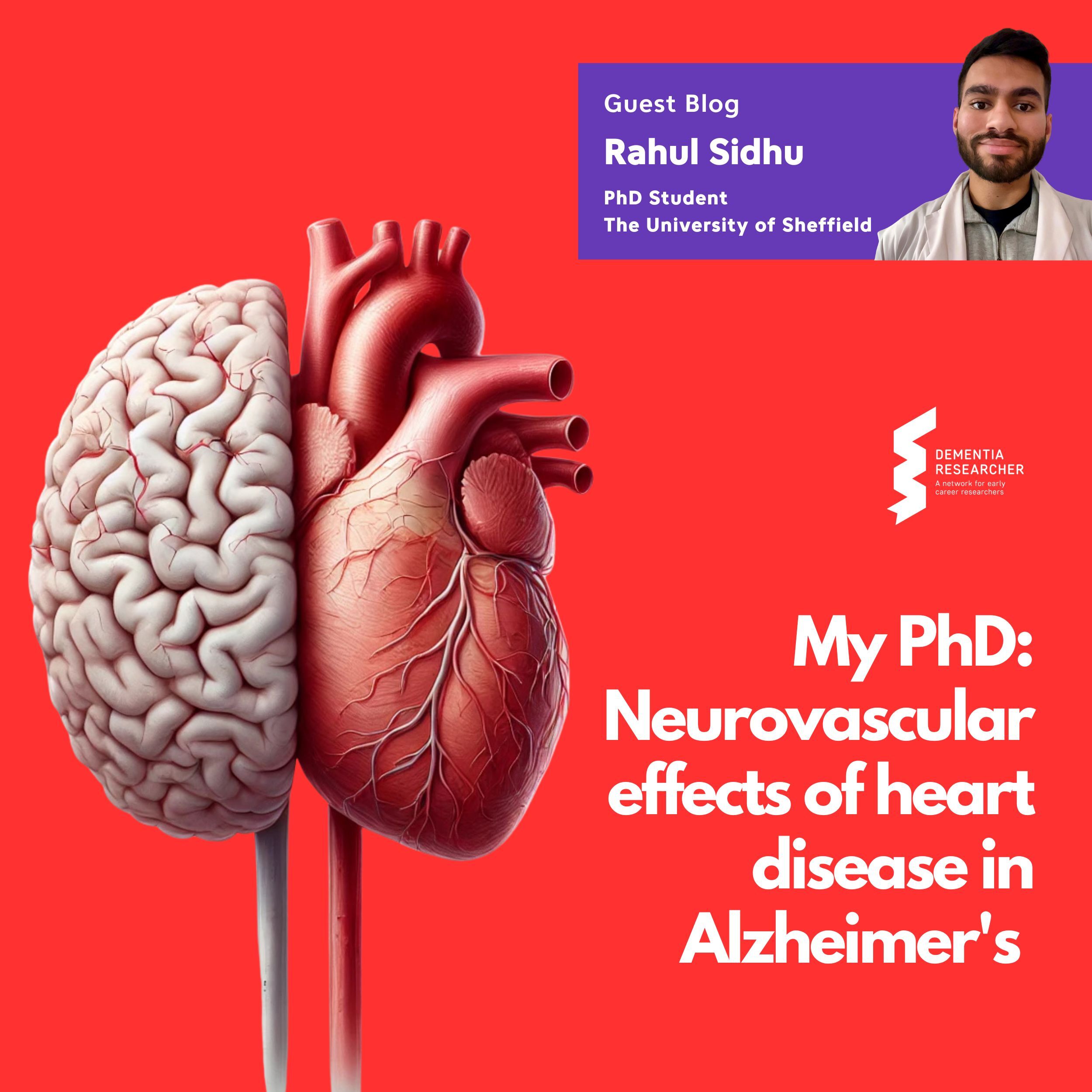
Ep 558Rahul Sidhu - My PhD: Neurovascular effects of heart disease in Alzheimer's
Rahul Sidhu, narrating a new blog he wrote for the Dementia Researcher website. Rahul's blog explores his research and the connection between heart disease and Alzheimer's disease, focusing on how vascular dysfunction may accelerate cognitive decline. He explains the importance of neurovascular coupling, the role of tau protein tangles, and how conditions like atherosclerosis impact brain health. Using preclinical models, his research investigates whether impaired blood flow worsens Alzheimer’s progression, highlighting the potential for new treatments that improve vascular health as a way to slow or prevent dementia. Find the original text, and narration here on our website. https://www.dementiaresearcher.nihr.ac.uk/blog-my-phd-neurovascular-effects-of-heart-disease-in-alzheimers/ -- Rahul Sidhu is a PhD student at The University of Sheffield, focusing on the effects of heart disease on dementia in preclinical models of Alzheimer's disease. His research aims to uncover how cardiovascular health influences neurodegenerative conditions, potentially leading to novel therapeutic strategies. Find Rahul on LinkedIn -- Enjoy listening? We're always looking for new bloggers, drop us a line. http://www.dementiaresearcher.nihr.ac.uk This podcast is brought to you in association with Alzheimer's Association, Alzheimer's Research UK, Alzheimer's Society and Race Against Dementia, who we thank for their ongoing support. -- Follow us on Social Media: https://www.instagram.com/dementia_researcher/ https://www.facebook.com/Dementia.Researcher/ https://twitter.com/demrescommunity https://www.linkedin.com/company/dementia-researcher https://bsky.app/profile/dementiaresearcher.bsky.social

Ep 557Dr Jodi Watt - So you need some data – now what?
Dr Jodi Watt, narrating a new blog they wrote for the Dementia Researcher website. Jodi explores the challenges and essentials of working with research data, offering practical steps to find, evaluate, store, and analyse it effectively. Drawing from personal experience, they highlight common pitfalls, the importance of thorough searching, compliance considerations, and the need to truly understand data before diving into analysis. With a structured approach, researchers can turn overwhelming datasets into valuable insights, ensuring clarity, accuracy, and meaningful outcomes. Find the original text, and narration here on our website. https://www.dementiaresearcher.nihr.ac.uk/blog-so-you-need-some-data-now-what/ -- Dr Jodi Watt is a Postdoctoral Researcher at University of Glasgow. Jodi's academic interests are in both healthy ageing and neurodegenerative diseases of older age, and they are currently working on drug repurposing for dementia. Previously they worked on understanding structural, metabolic and physiological brain changes with age, as measured using magnetic resonance imaging. As a queer and neurodiverse person, Jodi is also incredibly interested in improving diversity and inclusion practices both within and outside of the academic context. -- Enjoy listening? We're always looking for new bloggers, drop us a line. http://www.dementiaresearcher.nihr.ac.uk This podcast is brought to you in association with Alzheimer's Association, Alzheimer's Research UK, Alzheimer's Society and Race Against Dementia, who we thank for their ongoing support. -- Follow us on Social Media: https://www.instagram.com/dementia_researcher/ https://www.facebook.com/Dementia.Researcher/ https://twitter.com/demrescommunity https://www.linkedin.com/company/dementia-researcher https://bsky.app/profile/dementiaresearcher.bsky.social
Ep 556Dr Becky Carlyle - How on earth do I hire my team?!
Dr Becky Carlyle, narrates her blog written for the Dementia Researcher website. Becky shares practical insights on hiring your first lab team, from crafting inclusive job descriptions to structuring interviews and making thoughtful selections. Drawing from her own experiences, she offers advice on shortlisting candidates, forming interview panels, and assessing scientific curiosity and critical thinking. With a focus on balancing essential criteria with inclusivity, this blog provides valuable guidance for early-career researchers navigating the hiring process for the first time - useful if you're building a team... or applying for a job. Find the original text, and narration here on our website. https://www.dementiaresearcher.nihr.ac.uk/blog-how-on-earth-do-i-hire-my-team/ -- Dr Becky Carlyle is an Alzheimer's Research UK Senior Research Fellow at University of Oxford, and has previously worked in the USA. Becky writes about her experiences of starting up a research lab and progressing into a more senior research role. Becky's research uses mass-spectrometry to quantify thousands of proteins in the brains and biofluids of people with dementia. Her lab is working on various projects, including work to compare brain tissue from people with dementia from Alzheimer’s Disease, to tissue from people who have similar levels of Alzheimer’s Disease pathology but no memory problems. Becky is also a mum, she runs, drinks herbal tea's and reads lots of books. Find Becky on LinkedIn -- Enjoy listening? We're always looking for new bloggers, drop us a line. http://www.dementiaresearcher.nihr.ac.uk This podcast is brought to you in association with Alzheimer's Association, Alzheimer's Research UK, Alzheimer's Society and Race Against Dementia, who we thank for their ongoing support. -- Follow us on Social Media: https://www.instagram.com/dementia_researcher/ https://www.facebook.com/Dementia.Researcher/ https://twitter.com/demrescommunity https://www.linkedin.com/company/dementia-researcher https://bsky.app/profile/dementiaresearcher.bsky.social
Ep 555Dr Emma Law - My First Clinical Trial: Lessons Learned
Dr Emma Law, narrating her blog written for the Dementia Researcher website. Emma shares her experiences from her first clinical trial, reflecting on the challenges, surprises, and key lessons learned. From navigating the complexities of trial coordination to overcoming logistical hurdles like sample transportation and time management, she highlights the importance of preparation, organisation, and adaptability. This insightful blog offers valuable takeaways for those new to clinical research, providing practical advice to help future trials run smoothly. Find the original text, and narration here on our website. https://www.dementiaresearcher.nihr.ac.uk/blog-my-first-clinical-trial-lessons-learned/ #DementiaResearch #ClinicalTrials #CognitiveAssessment #Research -- Dr Emma Law is Strategic Manager for the The Neuroprogressive and Dementia Network in Scotland. Emma has 13 years experience as a Clinical Trails Network Manager and over 35 years experience as a Nurse, many of which were spent in the delivery of Clinical Research Trials. Emma completed her PhD and is passionate about giving people living with dementia and their carers access to participate in research. -- Enjoy listening? We're always looking for new bloggers, drop us a line. http://www.dementiaresearcher.nihr.ac.uk This podcast is brought to you in association with Alzheimer's Association, Alzheimer's Research UK, Alzheimer's Society and Race Against Dementia, who we thank for their ongoing support. -- Follow us on Social Media: https://www.instagram.com/dementia_researcher/ https://www.facebook.com/Dementia.Researcher/ https://twitter.com/demrescommunity https://www.linkedin.com/company/dementia-researcher https://bsky.app/profile/dementiaresearcher.bsky.social

Ep 554Dr Sam Moxon - How to turn your thesis into publications
Dr Sam Moxon, narrates his blog written for Dementia Researcher. Struggling to turn your thesis into a publication? Dr Sam Moxon breaks down the process in this insightful blog, guiding you through structuring your paper, identifying the core message, simplifying complex content, and navigating peer review. Whether you're overwhelmed by the differences between a thesis and a journal article or unsure where to start, this guide provides practical tips to streamline the journey. Plus, don’t forget the final step—celebrating your achievement! Find the original text, and narration here on our website. https://www.dementiaresearcher.nihr.ac.uk/blog-how-to-turn-your-thesis-into-publications/ #PhDLife #AcademicPublishing #ThesisToPaper #ScienceWriting #ResearchTips -- Dr Sam Moxon is a biomaterials Research Fellow at University of Birmingham. His expertise falls on the interface between biology and engineering. His PhD focussed on regenerative medicine and he now works on trying to develop 3D bioprinting techniques with human stem cells, so that we better understand and treat degenerative diseases. Outside of the lab he hikes through the Lake District and is an expert on all things Disney. -- Enjoy listening and reading our blogs? We're always on the look out for new contributors, drop us a line and share your own research and careers advice [email protected] This podcast is brought to you in association with the NIHR, Alzheimer's Association, Alzheimer's Research UK, Alzheimer's Society and Race Against Dementia, who we thank for their ongoing support. -- Follow us on Social Media: https://www.instagram.com/dementia_researcher/ https://www.facebook.com/Dementia.Researcher/ https://twitter.com/demrescommunity https://www.linkedin.com/company/dementia-researcher https://bsky.app/profile/dementiaresearcher.bsky.social
Ep 553Dr Clíona Farrell - My first time as a peer reviewer
Dr Clíona Farrell, narrating her blog written for the Dementia Researcher website. Clíona shares her experience of peer reviewing a research paper for the first time, reflecting on the challenges, learning process, and confidence needed to take on this key academic role. From tackling imposter syndrome to using structured resources and thoughtful feedback, she offers valuable insights for early career researchers looking to step into peer review. Find the original text, and narration here on our website. https://www.dementiaresearcher.nihr.ac.uk/blog-my-first-time-as-a-peer-reviewer/ -- Dr Clíona Farrell is a Postdoctoral Researcher in the UK Dementia Research Institute at University College London. Her work focuses on understanding neuroinflammation in Down syndrome, both prior to, and in response to, Alzheimer’s disease pathology. Originally from Dublin, Ireland, Clíona completed her undergraduate degree in Neuroscience in Trinity College, and then worked as a research assistant in the Royal College of Surgeons studying ALS and Parkinson’s disease. She also knows the secret behind scopping the perfect 99 ice-cream cone. @ClionaFarrell_ -- Enjoy listening? We're always looking for new bloggers, drop us a line. http://www.dementiaresearcher.nihr.ac.uk This podcast is brought to you in association with Alzheimer's Association, Alzheimer's Research UK, Alzheimer's Society and Race Against Dementia, who we thank for their ongoing support. -- Follow us on Social Media: https://www.instagram.com/dementia_researcher/ https://www.facebook.com/Dementia.Researcher/ https://twitter.com/demrescommunity https://www.linkedin.com/company/dementia-researcher https://bsky.app/profile/dementiaresearcher.bsky.social
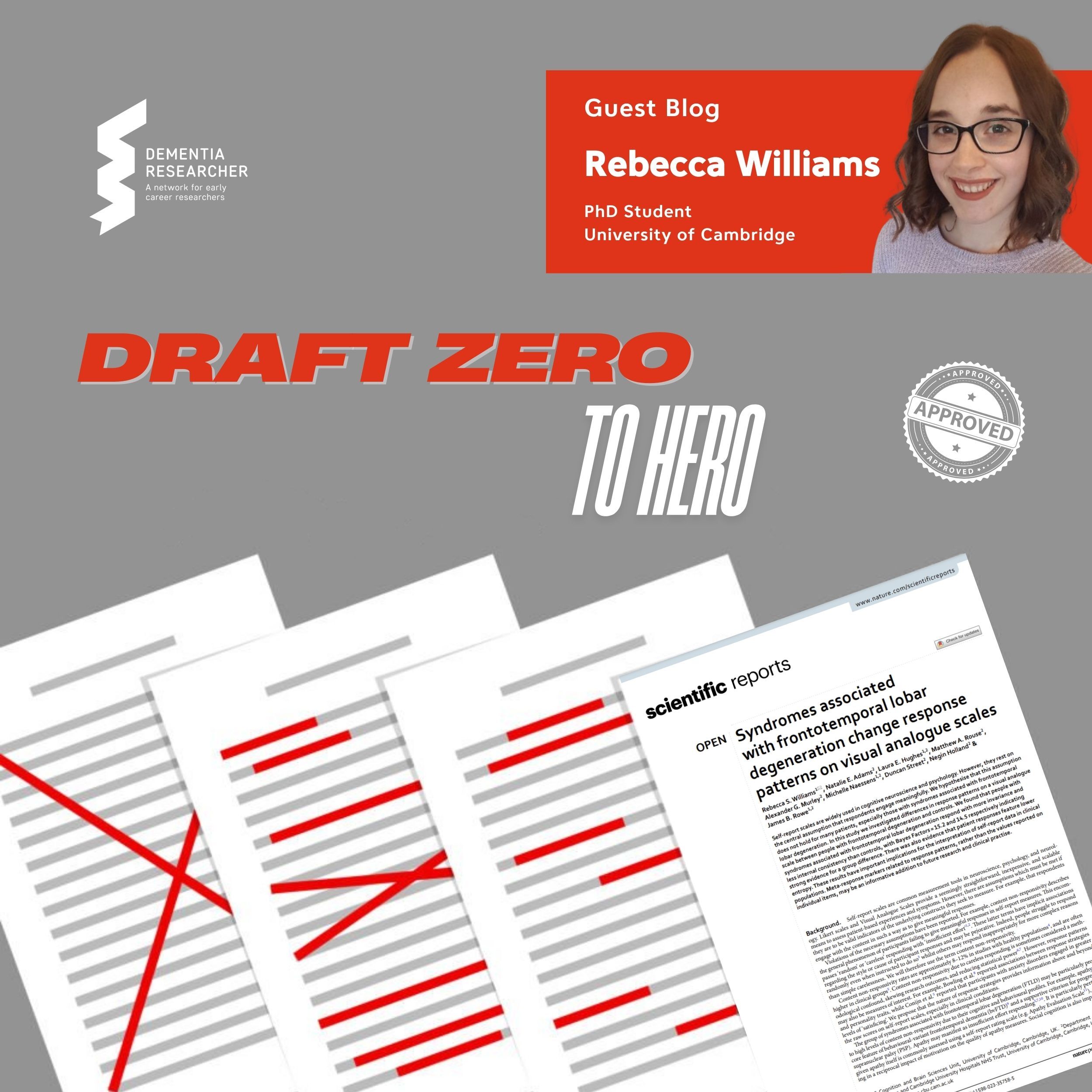
Ep 552Rebecca Williams - Draft Zero to Hero
Rebecca Williams, narrates her blog written for the Dementia Researcher website. Rebecca reflects on the challenges of academic writing, emphasising the value of producing an unpolished first draft to overcome the difficulty of getting started. She discusses the importance of cutting unnecessary content, refining clarity, and making writing more engaging, while also acknowledging the role of collaboration and feedback in improving a paper. By sharing her own experiences, she highlights how the writing process is rarely straightforward and often requires multiple revisions before reaching a final, polished version. Find the original text, and narration here on our website. https://www.dementiaresearcher.nihr.ac.uk/blog-draft-zero-to-hero/ -- Rebecca Williams is PhD student at the University of Cambridge. Though originally from ‘up North’ in a small town called Leigh, she did her undergraduate and masters at the University of Oxford before defecting to Cambridge for her doctorate researching Frontotemporal dementia and Apathy. She now spends her days collecting data from wonderful volunteers, and coding. Outside work, she plays board games, and is very crafty. @beccasue99 -- Enjoy listening? We're always looking for new bloggers, drop us a line. http://www.dementiaresearcher.nihr.ac.uk This podcast is brought to you in association with Alzheimer's Association, Alzheimer's Research UK, Alzheimer's Society and Race Against Dementia, who we thank for their ongoing support. -- Follow us on Social Media: https://www.instagram.com/dementia_researcher/ https://www.facebook.com/Dementia.Researcher/ https://twitter.com/demrescommunity https://www.linkedin.com/company/dementia-researcher https://bsky.app/profile/dementiaresearcher.bsky.social

Ep 551Emily Spencer - Writing, Parenting, & Everything Else: Making things Work
Emily Spencer, narrating her blog written for the Dementia Researcher website. In blog, Emily reflects on the whirlwind journey of juggling a PhD and motherhood as her child turns one. From the emotional shift of leaving the newborn stage behind to the ongoing challenges of making time for work, family, and personal pursuits, she shares the realities of navigating academic life as a parent. With candid insights on managing career opportunities, feelings of guilt, and the ever-changing nature of childcare, this piece is a must-read for anyone striving to find balance in research and parenthood. Find the original text, and narration here on our website. https://www.dementiaresearcher.nihr.ac.uk/blog-writing-parenting-everything-else-making-things-work/ #DementiaResearch #AcademicMother #Academia #MaternityLeave #Research #Productivity -- Emily Spencer is a PhD Student at University College London looking at improving how GPs communicate with people with dementia and their family carers about their future care. Emily previous had a 5 year career break to pursue a career as a musician, and has previously undertaken research on improving the care people with dementia receive from their GP practice, as well as end-of-life and palliative care provision in the community. Emily is also a new mum and will be writing about her experiences navigating motherhood and a research career. -- Enjoy listening? We're always looking for new bloggers, drop us a line. http://www.dementiaresearcher.nihr.ac.uk This podcast is brought to you in association with Alzheimer's Association, Alzheimer's Research UK, Alzheimer's Society and Race Against Dementia, who we thank for their ongoing support. -- Follow us on Social Media: https://www.instagram.com/dementia_researcher/ https://www.facebook.com/Dementia.Researcher/ https://x.com/demrescommunity https://bsky.app/profile/dementiaresearcher.bsky.social https://www.linkedin.com/company/dementia-researcher

Ep 550Dr Kamar Ameen-Ali - Addressing inequalities in access to dementia treatment
Dr Kamar Ameen-Ali narrates her blog written for Dementia Researcher. In this blog Kamar discusses the inequalities in access to new Alzheimer's disease treatments following the UK approval of lecanemab and donanemab in 2024. Although these drugs were hailed as a breakthrough, they were not recommended for NHS use due to their high cost, limited efficacy, and safety concerns, meaning only those who can afford private treatment will benefit. This decision disproportionately affects lower socioeconomic groups, who are already at greater risk of developing dementia - not to mention others in low and middle income countries. With nearly a million people living with dementia in the UK, Kam stresses the need for a healthcare system capable of delivering future treatments equitably. Find the original text, and narration here on our website. https://www.dementiaresearcher.nihr.ac.uk/blog-addressing-inequalities-in-access-to-dementia-treatment/ -- Dr Kamar Ameen-Ali is a Lecturer in Biomedical Science at Teesside University & Affiliate Researcher at Glasgow University. In addition to teaching, Kamar is exploring how neuroinflammation following traumatic brain injury contributes to the progression of neurodegenerative diseases that lead to dementia. Having first pursued a career as an NHS Psychologist, Kamar went back to University in Durham to look at rodent behavioural tasks to completed her PhD, and then worked as a regional Programme Manager for NC3Rs. -- Enjoy listening? We're always looking for new bloggers, drop us a line. http://www.dementiaresearcher.nihr.ac.uk This podcast is brought to you in association with Alzheimer's Association, Alzheimer's Research UK, Alzheimer's Society and Race Against Dementia, who we thank for their ongoing support. -- Follow us on Social Media: https://www.instagram.com/dementia_researcher/ https://www.facebook.com/Dementia.Researcher/ https://x.com/demrescommunity https://bsky.app/profile/dementiaresearcher.bsky.social https://www.linkedin.com/company/dementia-researcher
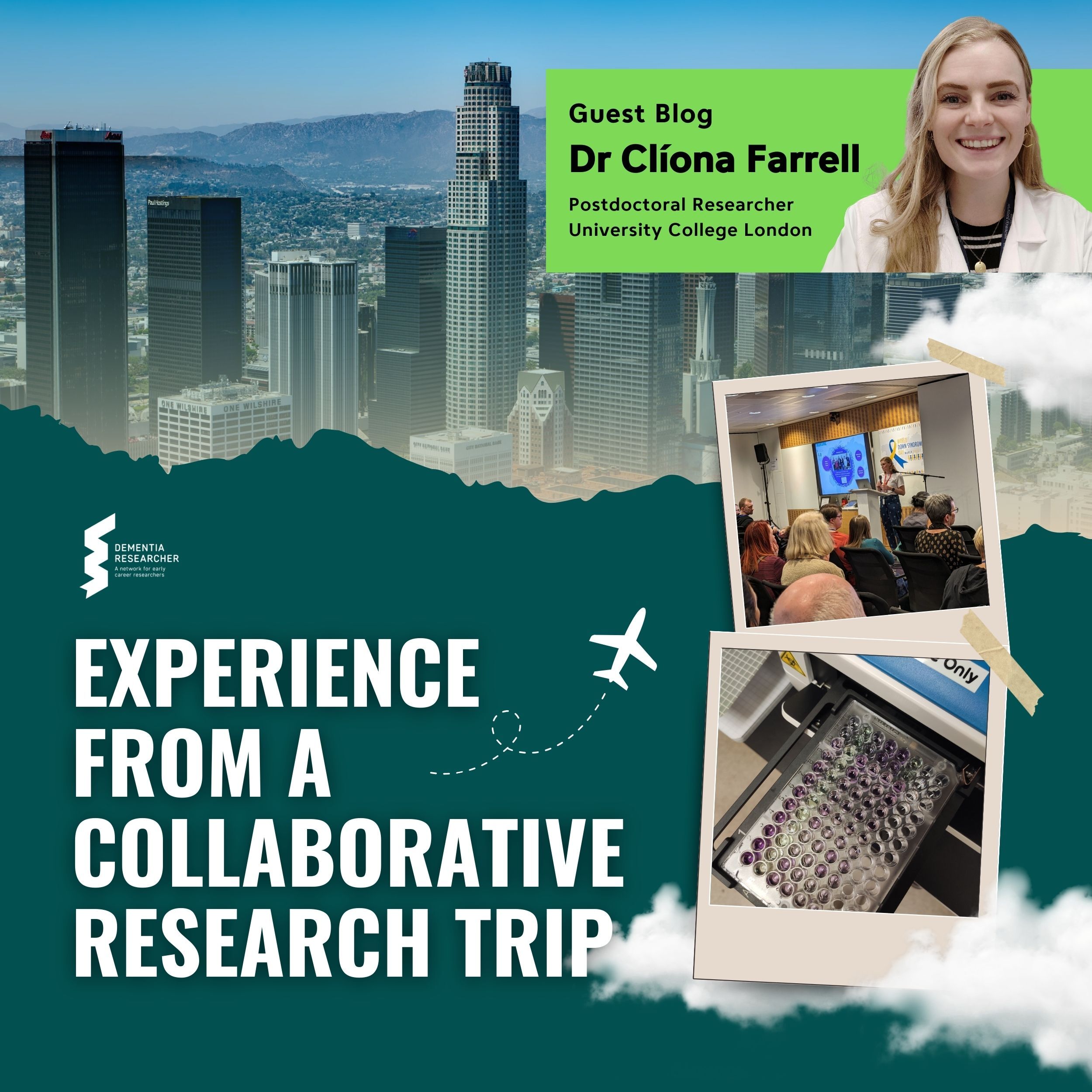
Ep 549Dr Clíona Farrell - Experience from a collaborative research trip
Dr Clíona Farrell, narrating her blog written for the Dementia Researcher website. Clíona shares her experience of a collaborative research visit to a US lab, detailing the planning process, securing funding, and navigating visa requirements. She highlights the benefits of international collaborations, from accessing rare samples to gaining new research perspectives. Clíona provides practical advice on networking, early planning, and making the most of the visit, including shadowing new techniques and engaging with other researchers. Reflecting on her time in California, she emphasises the professional and personal growth gained from the experience and encourages others to explore similar opportunities. Find the original text, and narration here on our website. https://www.dementiaresearcher.nihr.ac.uk/blog-experience-from-a-collaborative-research-trip/ -- Dr Clíona Farrell is a Postdoctoral Researcher in the UK Dementia Research Institute at University College London. Her work focuses on understanding neuroinflammation in Down syndrome, both prior to, and in response to, Alzheimer’s disease pathology. Originally from Dublin, Ireland, Clíona completed her undergraduate degree in Neuroscience in Trinity College, and then worked as a research assistant in the Royal College of Surgeons studying ALS and Parkinson’s disease. She also knows the secret behind scopping the perfect 99 ice-cream cone. @ClionaFarrell_ -- Enjoy listening? We're always looking for new bloggers, drop us a line. http://www.dementiaresearcher.nihr.ac.uk This podcast is brought to you in association with Alzheimer's Association, Alzheimer's Research UK, Alzheimer's Society and Race Against Dementia, who we thank for their ongoing support. -- Follow us on Social Media: https://www.instagram.com/dementia_researcher/ https://www.facebook.com/Dementia.Researcher/ https://twitter.com/demrescommunity https://www.linkedin.com/company/dementia-researcher https://bsky.app/profile/dementiaresearcher.bsky.social

Ep 548Yasmin Bonsu - Final Semester: Uncertainty, Applications & Balance
Yasmin Bonsu, narrates her blog written for the Dementia Researcher website. In this guest blog, Yasmin Bonsu, a Neuroscience BSc student at the University of Manchester, reflects on the challenges of her final semester. She discusses navigating PhD applications, managing the balance between studies and work, and offers practical advice for students approaching graduation. Find the original text, and narration here on our website. https://www.dementiaresearcher.nihr.ac.uk/blog-final-semester-uncertainty-applications-balance/ -- Yasmin Bonsu is an an undergraduate student from the University of Manchester currently undertaking a placement year at Wade-Martins Lab at Oxford University. Yasmin is investigating the activity of proteoforms of the granin family in cortical neurons insulted with oligomerised amyloid beta. Her goal is to finish her placement year, earn her bachelor’s degree in neuroscience, and then pursue a PhD in clinical neuroscience. Through Yasmin's blogs we'll gain insights on life as an undergraduate, and hopefully inspire others to pursue a career in dementia research. @yasminnnx2 -- Enjoy listening? We're always looking for new bloggers, drop us a line. http://www.dementiaresearcher.nihr.ac.uk This podcast is brought to you in association with Alzheimer's Association, Alzheimer's Research UK, Alzheimer's Society and Race Against Dementia, who we thank for their ongoing support. -- Follow us on Social Media: https://www.instagram.com/dementia_researcher/ https://www.facebook.com/Dementia.Researcher/ https://twitter.com/demrescommunity https://www.linkedin.com/company/dementia-researcher https://bsky.app/profile/dementiaresearcher.bsky.social

Ep 547Dr Jodi Watt - Heading Into a Year of Job Uncertainty
Dr Jodi Watt, narrating a new blog they wrote for the Dementia Researcher website. In this blog Jodi reflects on navigating career uncertainty, securing short-term funding, and reassessing their place in academia. This thoughtful guest blog explores the challenges of balancing professional decisions with personal priorities, offering insights into the realities of short-term contracts and future planning. Find the original text, and narration here on our website. https://www.dementiaresearcher.nihr.ac.uk/blog-heading-into-a-year-of-job-uncertainty/ -- Dr Jodi Watt is a Postdoctoral Researcher at University of Glasgow. Jodi's academic interests are in both healthy ageing and neurodegenerative diseases of older age, and they are currently working on drug repurposing for dementia. Previously they worked on understanding structural, metabolic and physiological brain changes with age, as measured using magnetic resonance imaging. As a queer and neurodiverse person, Jodi is also incredibly interested in improving diversity and inclusion practices both within and outside of the academic context. -- Enjoy listening? We're always looking for new bloggers, drop us a line. http://www.dementiaresearcher.nihr.ac.uk This podcast is brought to you in association with Alzheimer's Association, Alzheimer's Research UK, Alzheimer's Society and Race Against Dementia, who we thank for their ongoing support. -- Follow us on Social Media: https://www.instagram.com/dementia_researcher/ https://www.facebook.com/Dementia.Researcher/ https://twitter.com/demrescommunity https://www.linkedin.com/company/dementia-researcher https://bsky.app/profile/dementiaresearcher.bsky.social
Ep 546Dr Becky Carlyle - To teach, or not to teach?
Dr Becky Carlyle, narrates her blog written for the Dementia Researcher website. This time Becky discusses the choices between teaching-focused and research-only academic careers in her blog, "To teach or not to teach?" Sharing insights from her own experience and general trends in academic contracts, Becky reflects on the challenges and opportunities associated with teaching roles. Her blog provides a balanced view on the implications of these decisions for early-career researchers and invites a discussion among academics about their personal experiences with teaching and research commitments. Find the original text, and narration here on our website. https://www.dementiaresearcher.nihr.ac.uk/blog-to-teach-or-not-to-teach/ -- Dr Becky Carlyle is an Alzheimer's Research UK Senior Research Fellow at University of Oxford, and has previously worked in the USA. Becky writes about her experiences of starting up a research lab and progressing into a more senior research role. Becky's research uses mass-spectrometry to quantify thousands of proteins in the brains and biofluids of people with dementia. Her lab is working on various projects, including work to compare brain tissue from people with dementia from Alzheimer’s Disease, to tissue from people who have similar levels of Alzheimer’s Disease pathology but no memory problems. Becky is also a mum, she runs, drinks herbal tea's and reads lots of books. Find Becky on LinkedIn -- Enjoy listening? We're always looking for new bloggers, drop us a line. http://www.dementiaresearcher.nihr.ac.uk This podcast is brought to you in association with Alzheimer's Association, Alzheimer's Research UK, Alzheimer's Society and Race Against Dementia, who we thank for their ongoing support. -- Follow us on Social Media: https://www.instagram.com/dementia_researcher/ https://www.facebook.com/Dementia.Researcher/ https://twitter.com/demrescommunity https://www.linkedin.com/company/dementia-researcher https://bsky.app/profile/dementiaresearcher.bsky.social

Ep 545Victoria Gabb - MCI Core Outcomes Study: Interviewing the experts
Victoria Gabb, narrates her blog written for the Dementia Researcher website. Join Victoria as she takes us through the fascinating stages of her Mild Cognitive Impairment (MCI) research. In her latest blog, Victoria shares compelling details from her interviews with patients, families, and professionals, shedding light on the outcomes that truly matter to those affected by MCI. Discover the challenges and triumphs encountered as she crafts a core outcome set intended to guide future research and improve patient care. Don't miss the insights and stories that are shaping this critical field! Find the original text, and narration here on our website. https://www.dementiaresearcher.nihr.ac.uk/blog-mci-core-outcomes-study-interviewing-the-experts/ -- Victoria Gabb is a Senior Research Associate in Sleep & Dementia Neuroscience at University of Bristol. Victoria is working on her PhD through publication and she is currently working on an important project to develop ‘Core Outcomes’ for Mild Cognitive Impairment. Her blogs on dementia researcher will be a way of sharing the progress of her work, to improve transparency, share the process and as a way to involve others - sharing the work, the process, and life in the pursuit of research. -- Enjoy listening? We're always looking for new bloggers, drop us a line. http://www.dementiaresearcher.nihr.ac.uk This podcast is brought to you in association with Alzheimer's Association, Alzheimer's Research UK, Alzheimer's Society and Race Against Dementia, who we thank for their ongoing support. -- Follow us on Social Media: https://www.instagram.com/dementia_researcher/ https://www.facebook.com/Dementia.Researcher/ https://twitter.com/demrescommunity https://www.linkedin.com/company/dementia-researcher https://bsky.app/profile/dementiaresearcher.bsky.social

Ep 544Rebecca Williams - The Binary of Science & Femininity
Rebecca Williams, narrates her blog written for the Dementia Researcher website. In this blog Rebecca explores the challenging perceptions and stereotypes that women face in the field of science. She discusses her personal experiences and observations from the Women in Neuroscience UK Awards, highlighting how femininity is often viewed as incompatible with scientific credibility. Rebecca argues against this outdated notion by showcasing successful women who embrace both their scientific expertise and their femininity, advocating for a more inclusive and accepting scientific community where women can express all facets of their identity without judgment. Find the original text, and narration here on our website. https://www.dementiaresearcher.nihr.ac.uk/blog-the-binary-of-science-femininity/ -- Rebecca Williams is PhD student at the University of Cambridge. Though originally from ‘up North’ in a small town called Leigh, she did her undergraduate and masters at the University of Oxford before defecting to Cambridge for her doctorate researching Frontotemporal dementia and Apathy. She now spends her days collecting data from wonderful volunteers, and coding. Outside work, she plays board games, and is very crafty. @beccasue99 -- Enjoy listening? We're always looking for new bloggers, drop us a line. http://www.dementiaresearcher.nihr.ac.uk This podcast is brought to you in association with Alzheimer's Association, Alzheimer's Research UK, Alzheimer's Society and Race Against Dementia, who we thank for their ongoing support. -- Follow us on Social Media: https://www.instagram.com/dementia_researcher/ https://www.facebook.com/Dementia.Researcher/ https://twitter.com/demrescommunity https://www.linkedin.com/company/dementia-researcher https://bsky.app/profile/dementiaresearcher.bsky.social
Ep 543Emily Spencer - Productivity, Focus, and Parenthood
Emily Spencer, narrating her blog written for the Dementia Researcher website. In her latest guest blog, Emily shares an intimate look at how she navigates the demanding worlds of academia and motherhood. Emily discusses the real challenges and strategies of managing her PhD responsibilities alongside parenting, offering insights into the delicate balance of maintaining productivity and focus amidst the unpredictable nature of both roles. Her candid reflections provide valuable perspectives for anyone juggling multiple demanding roles, especially those in academic environments. Find the original text, and narration here on our website. https://www.dementiaresearcher.nihr.ac.uk/blog-productivity-focus-and-parenthood/ #DementiaResearch #AcademicMother #Academia #MaternityLeave #Research #Productivity -- Emily Spencer is a PhD Student at University College London looking at improving how GPs communicate with people with dementia and their family carers about their future care. Emily previous had a 5 year career break to pursue a career as a musician, and has previously undertaken research on improving the care people with dementia receive from their GP practice, as well as end-of-life and palliative care provision in the community. Emily is also a new mum and will be writing about her experiences navigating motherhood and a research career. -- Enjoy listening? We're always looking for new bloggers, drop us a line. http://www.dementiaresearcher.nihr.ac.uk This podcast is brought to you in association with Alzheimer's Association, Alzheimer's Research UK, Alzheimer's Society and Race Against Dementia, who we thank for their ongoing support. -- Follow us on Social Media: https://www.instagram.com/dementia_researcher/ https://www.facebook.com/Dementia.Researcher/ https://x.com/demrescommunity https://bsky.app/profile/dementiaresearcher.bsky.social https://www.linkedin.com/company/dementia-researcher
Ep 542Dr Yvonne Couch - Your CV Needs You: Part Two
Dr Yvonne Couch, narrates her blog written for the Dementia Researcher website. Explore essential CV tips with Dr Yvonne Couch in "Your CV Needs You! Part Two." This guest blog for Dementia Researcher offers invaluable advice for researchers transitioning from academia to other fields. Dr Couch, an Associate Professor at the University of Oxford, shares expert guidance on tailoring your CV to highlight your unique skills and qualifications, ensuring you stand out in the competitive job market. Don't miss out on these strategic insights to revamp your CV effectively. Find the original text, and narration here on our website. https://www.dementiaresearcher.nihr.ac.uk/blog-your-academic-cv-needs-you-part-two/ -- Dr Yvonne Couch is an Alzheimer's Research UK Fellow and Associate Professor at the University of Oxford. Yvonne studies the role of extracellular vesicles and their role in changing the function of the vasculature after stroke, aiming to discover why the prevalence of dementia after stroke is three times higher than the average. It is her passion for problem solving and love of science that drives her, in advancing our knowledge of disease. Yvonne writes about her work, academic life, and careers as she takes a new road into independent research @dr_yvonne_couch -- Enjoy listening? We're always looking for new bloggers, drop us a line. http://www.dementiaresearcher.nihr.ac.uk This podcast is brought to you in association with Alzheimer's Association, Alzheimer's Research UK, Alzheimer's Society and Race Against Dementia, who we thank for their ongoing support. -- Follow us on Social Media: https://www.instagram.com/dementia_researcher/ https://www.facebook.com/Dementia.Researcher/ https://twitter.com/demrescommunity https://www.linkedin.com/company/dementia-researcher https://bsky.app/profile/dementiaresearcher.bsky.social
Ep 541Dr Jodi Watt - Textile Arts and Dementia
Dr Jodi Watt, narrating a new blog they wrote for the Dementia Researcher website. In this blog, Jodi discusses the role of textile arts in dementia care, highlighting how activities such as quilting and knitting can support memory and motor skills in individuals with dementia. They examine the therapeutic aspects of these crafts, noting their potential to enhance mood and provide a sense of achievement. Jodi draws on personal experiences and research to explore how textile arts can aid in maintaining connections and a sense of identity for those affected by dementia. Find the original text, and narration here on our website. https://www.dementiaresearcher.nihr.ac.uk/blog-textile-arts-and-dementia/ -- Dr Jodi Watt is a Postdoctoral Researcher at University of Glasgow. Jodi's academic interests are in both healthy ageing and neurodegenerative diseases of older age, and they are currently working on drug repurposing for dementia. Previously they worked on understanding structural, metabolic and physiological brain changes with age, as measured using magnetic resonance imaging. As a queer and neurodiverse person, Jodi is also incredibly interested in improving diversity and inclusion practices both within and outside of the academic context. -- Enjoy listening? We're always looking for new bloggers, drop us a line. http://www.dementiaresearcher.nihr.ac.uk This podcast is brought to you in association with Alzheimer's Association, Alzheimer's Research UK, Alzheimer's Society and Race Against Dementia, who we thank for their ongoing support. -- Follow us on Social Media: https://www.instagram.com/dementia_researcher/ https://www.facebook.com/Dementia.Researcher/ https://twitter.com/demrescommunity https://www.linkedin.com/company/dementia-researcher https://bsky.app/profile/dementiaresearcher.bsky.social
Ep 540Dr Sarah Griffiths - The Emotional Labour of Study Recruitment
Dr Sarah Griffiths, narrating her blog written for the Dementia Researcher website. Explore the concept of emotional labour in dementia research with Dr. Sarah Griffiths. This blog examines the challenges researchers face during the recruitment phase of projects, discussing both personal experiences and practical approaches to managing emotions effectively. It offers insights into the emotional demands placed on researchers and provides strategies for handling these challenges in professional settings. Listen to Sarah's reflections to gain a better understanding of the emotional aspects of dementia research. Find the original text, and narration here on our website. https://www.dementiaresearcher.nihr.ac.uk/blog-the-emotional-labour-of-study-recruitment/ #DementiaResearch #Ethics #ResearchEhtics #EthicalReview -- Dr Sarah Griffiths has a background in speech and language therapy and has been involved in aphasia research. For 14 years she was a senior lecturer on a BSc Speech and Language Therapy course at Plymouth Marjon University. Now Sarah is is a Senior Research Fellow in the Centre for Ageing Population Studies, Research Department of Primary Care and Population Health at University College London. -- Enjoy listening? We're always looking for new bloggers, drop us a line. http://www.dementiaresearcher.nihr.ac.uk This podcast is brought to you in association with Alzheimer's Association, Alzheimer's Research UK, Alzheimer's Society and Race Against Dementia, who we thank for their ongoing support. -- Follow us on Social Media: https://www.instagram.com/dementia_researcher/ https://www.facebook.com/Dementia.Researcher/ https://x.com/demrescommunity https://bsky.app/profile/dementiaresearcher.bsky.social https://www.linkedin.com/company/dementia-researcher

Ep 539Dr Kamar Ameen-Ali - Facing Redundancy in Academia
Dr Kamar Ameen-Ali narrates her blog written for Dementia Researcher. In this blog we join Kam as she navigates the turbulent waters of academia in the face of redundancy. In her latest blog she shares a candid reflection on the illusion of job security and the harsh realities of financial pressures that loom large over Universities in the UK. Despite achieving early career milestones, she confronts the unsettling prospect of involuntary severance, shedding light on the systemic issues and personal trials faced by many in her field. Join her as she discusses the complexities of academic life, where stability is often a myth, and the quest for efficiency can come at a profound personal cost. Find the original text, and narration here on our website. https://www.dementiaresearcher.nihr.ac.uk/blog-facing-redundancy-in-academia/ -- Dr Kamar Ameen-Ali is a Lecturer in Biomedical Science at Teesside University & Affiliate Researcher at Glasgow University. In addition to teaching, Kamar is exploring how neuroinflammation following traumatic brain injury contributes to the progression of neurodegenerative diseases that lead to dementia. Having first pursued a career as an NHS Psychologist, Kamar went back to University in Durham to look at rodent behavioural tasks to completed her PhD, and then worked as a regional Programme Manager for NC3Rs. -- Enjoy listening? We're always looking for new bloggers, drop us a line. http://www.dementiaresearcher.nihr.ac.uk This podcast is brought to you in association with Alzheimer's Association, Alzheimer's Research UK, Alzheimer's Society and Race Against Dementia, who we thank for their ongoing support. -- Follow us on Social Media: https://www.instagram.com/dementia_researcher/ https://www.facebook.com/Dementia.Researcher/ https://x.com/demrescommunity https://bsky.app/profile/dementiaresearcher.bsky.social https://www.linkedin.com/company/dementia-researcher
Ep 538Dr Clíona Farrell - A vascular element of Alzheimer’s: Cerebral Amyloid Angiopathy
Dr Clíona Farrell, narrating her blog written for the Dementia Researcher website. Explore the lesser-known yet vital aspect of Alzheimer's disease in our latest blog from Clíona. This post gets into the complex world of amyloid-β deposition within the brain's blood vessels. Clíona is embarking on a new postdoc project focused on this area, and in this article she shares insights into how Cerebral Amyloid Angiopathy (CAA) not only coexists with Alzheimer’s but also significantly impacts disease pathology and patient outcomes. Discover the implications of recent anti-amyloid therapies and why understanding CAA is crucial for future Alzheimer's treatments. Find the original text, and narration here on our website. https://www.dementiaresearcher.nihr.ac.uk/blog-a-vascular-element-of-alzheimers-cerebral-amyloid-angiopathy/ -- Dr Clíona Farrell is a Postdoctoral Researcher in the UK Dementia Research Institute at University College London. Her work focuses on understanding neuroinflammation in Down syndrome, both prior to, and in response to, Alzheimer’s disease pathology. Originally from Dublin, Ireland, Clíona completed her undergraduate degree in Neuroscience in Trinity College, and then worked as a research assistant in the Royal College of Surgeons studying ALS and Parkinson’s disease. She also knows the secret behind scopping the perfect 99 ice-cream cone. @ClionaFarrell_ -- Enjoy listening? We're always looking for new bloggers, drop us a line. http://www.dementiaresearcher.nihr.ac.uk This podcast is brought to you in association with Alzheimer's Association, Alzheimer's Research UK, Alzheimer's Society and Race Against Dementia, who we thank for their ongoing support. -- Follow us on Social Media: https://www.instagram.com/dementia_researcher/ https://www.facebook.com/Dementia.Researcher/ https://twitter.com/demrescommunity https://www.linkedin.com/company/dementia-researcher https://bsky.app/profile/dementiaresearcher.bsky.social
Ep 537Yasmin Bonsu - Essential Resources for Internship Success
Yasmin Bonsu, narrates her blog written for the Dementia Researcher website. In her latest guest blog on Dementia Researcher, Yasmin unveils her essential toolkit for securing internships and navigating the overwhelming application season. With a personal and pragmatic approach, Yasmin highlights invaluable resources such as the 10,000 Black Interns Foundation, which offers unique opportunities across various sectors, and the comprehensive support from university career services. She also shares insights into utilising platforms like the British Neuroscience Association and Bright Network to discover tailored PhD and job opportunities. This guide is a must-read for fellow students aiming to carve out successful paths in their fields. Find the original text, and narration here on our website. https://www.dementiaresearcher.nihr.ac.uk/blog-essential-resources-for-internship-success/ -- Yasmin Bonsu is an an undergraduate student from the University of Manchester currently undertaking a placement year at Wade-Martins Lab at Oxford University. Yasmin is investigating the activity of proteoforms of the granin family in cortical neurons insulted with oligomerised amyloid beta. Her goal is to finish her placement year, earn her bachelor’s degree in neuroscience, and then pursue a PhD in clinical neuroscience. Through Yasmin's blogs we'll gain insights on life as an undergraduate, and hopefully inspire others to pursue a career in dementia research. @yasminnnx2 -- Enjoy listening? We're always looking for new bloggers, drop us a line. http://www.dementiaresearcher.nihr.ac.uk This podcast is brought to you in association with Alzheimer's Association, Alzheimer's Research UK, Alzheimer's Society and Race Against Dementia, who we thank for their ongoing support. -- Follow us on Social Media: https://www.instagram.com/dementia_researcher/ https://www.facebook.com/Dementia.Researcher/ https://twitter.com/demrescommunity https://www.linkedin.com/company/dementia-researcher https://bsky.app/profile/dementiaresearcher.bsky.social

Ep 536Opening Notes: Dr Becky Carlyle's Journey
Dr Becky Carlyle, narrates her blog written for the Dementia Researcher website. In her first blog for Dementia Researcher, new regular contributor Becky provides, "Opening Notes," sharing her compelling journey from Oxford to building her own research lab. As a new addition joiner to our blogging team, Becky will share insights on leadership, the challenges and decisions involved in establishing a lab, and the lessons learned along the way. Her narrative blends personal anecdotes with professional advice, making it a must-read for aspiring researchers and seasoned academics alike. Join her as she outlines the path to academic success and research innovation. Find the original text, and narration here on our website. https://www.dementiaresearcher.nihr.ac.uk/blog-opening-notes-dr-becky-carlyles-journey/ -- Dr Becky Carlyle is an Alzheimer's Research UK Senior Research Fellow at University of Oxford, and has previously worked in the USA. Becky writes about her experiences of starting up a research lab and progressing into a more senior research role. Becky's research uses mass-spectrometry to quantify thousands of proteins in the brains and biofluids of people with dementia. Her lab is working on various projects, including work to compare brain tissue from people with dementia from Alzheimer’s Disease, to tissue from people who have similar levels of Alzheimer’s Disease pathology but no memory problems. Becky is also a mum, she runs, drinks herbal tea's and reads lots of books. Find Becky on LinkedIn -- Enjoy listening? We're always looking for new bloggers, drop us a line. http://www.dementiaresearcher.nihr.ac.uk This podcast is brought to you in association with Alzheimer's Association, Alzheimer's Research UK, Alzheimer's Society and Race Against Dementia, who we thank for their ongoing support. -- Follow us on Social Media: https://www.instagram.com/dementia_researcher/ https://www.facebook.com/Dementia.Researcher/ https://twitter.com/demrescommunity https://www.linkedin.com/company/dementia-researcher https://bsky.app/profile/dementiaresearcher.bsky.social
Ep 535Rebecca Williams - A PhD’s Christmas Carol
Rebecca Williams, narrates her blog written for the Dementia Researcher website. Today Rebecca narrates the transformative journey of a PhD student during the festive season. Drawing parallels to Charles Dickens's classic, the blog captures the student's initial despair and subsequent awakening to the profound value and impact of her research. This heartwarming tale is a must-read for anyone enduring the rigorous demands of academic pursuits, offering a message of hope and reassurance that their hard work is indeed meaningful. Find the original text, and narration here on our website. https://www.dementiaresearcher.nihr.ac.uk/blog-a-phds-christmas-carol/ -- Rebecca Williams is PhD student at the University of Cambridge. Though originally from ‘up North’ in a small town called Leigh, she did her undergraduate and masters at the University of Oxford before defecting to Cambridge for her doctorate researching Frontotemporal dementia and Apathy. She now spends her days collecting data from wonderful volunteers, and coding. Outside work, she plays board games, and is very crafty. @beccasue99 -- Enjoy listening? We're always looking for new bloggers, drop us a line. http://www.dementiaresearcher.nihr.ac.uk This podcast is brought to you in association with Alzheimer's Association, Alzheimer's Research UK, Alzheimer's Society and Race Against Dementia, who we thank for their ongoing support. -- Follow us on Social Media: https://www.instagram.com/dementia_researcher/ https://www.facebook.com/Dementia.Researcher/ https://twitter.com/demrescommunity https://www.linkedin.com/company/dementia-researcher https://bsky.app/profile/dementiaresearcher.bsky.social

Ep 534Amelia Robson - Working on the road: Benefits of traveling to meet participants
Amelia Robson, narrates her blog written for the Dementia Researcher website. Amelia shares her unique experiences as a travelling researcher, highlighting the unexpected joys and challenges of working on the road. From breathtaking sunrises and scenic countryside drives to connecting with remarkable dementia patients and their stories, she reveals how travel enhances her work. With tips on staying motivated, managing wellbeing, and finding beauty in everyday moments, this blog offers an inspiring glimpse into the life of a dedicated researcher. Find the original text, and narration here on our website. https://www.dementiaresearcher.nihr.ac.uk/blog-working-on-the-road-benefits-of-traveling-to-meet-participants/ -- Amelia Robson is a Research Assistant at Northumbria University supporting delivery of NHS Clinical Trials, particularly in working with Dementia with Lewy bodies and Alzheimer’s disease patients. This work currently involves visiting patient’s homes and applying polysomnography sleep equipment on their face, scalp and body. Amelia graduated in Psychology in 2021 and is passionate about supporting people living with the dementia, and providing help for care givers. Her top tip.... Trust your Gut to stay on the right path. Follow Amelia Robson on LinkedIn -- Enjoy listening? We're always looking for new bloggers, drop us a line. http://www.dementiaresearcher.nihr.ac.uk This podcast is brought to you in association with Alzheimer's Association, Alzheimer's Research UK, Alzheimer's Society and Race Against Dementia, who we thank for their ongoing support. -- Follow us on Social Media: https://www.instagram.com/dementia_researcher/ https://www.facebook.com/Dementia.Researcher/ https://twitter.com/demrescommunity https://www.linkedin.com/company/dementia-researcher https://bsky.app/profile/dementiaresearcher.bsky.social
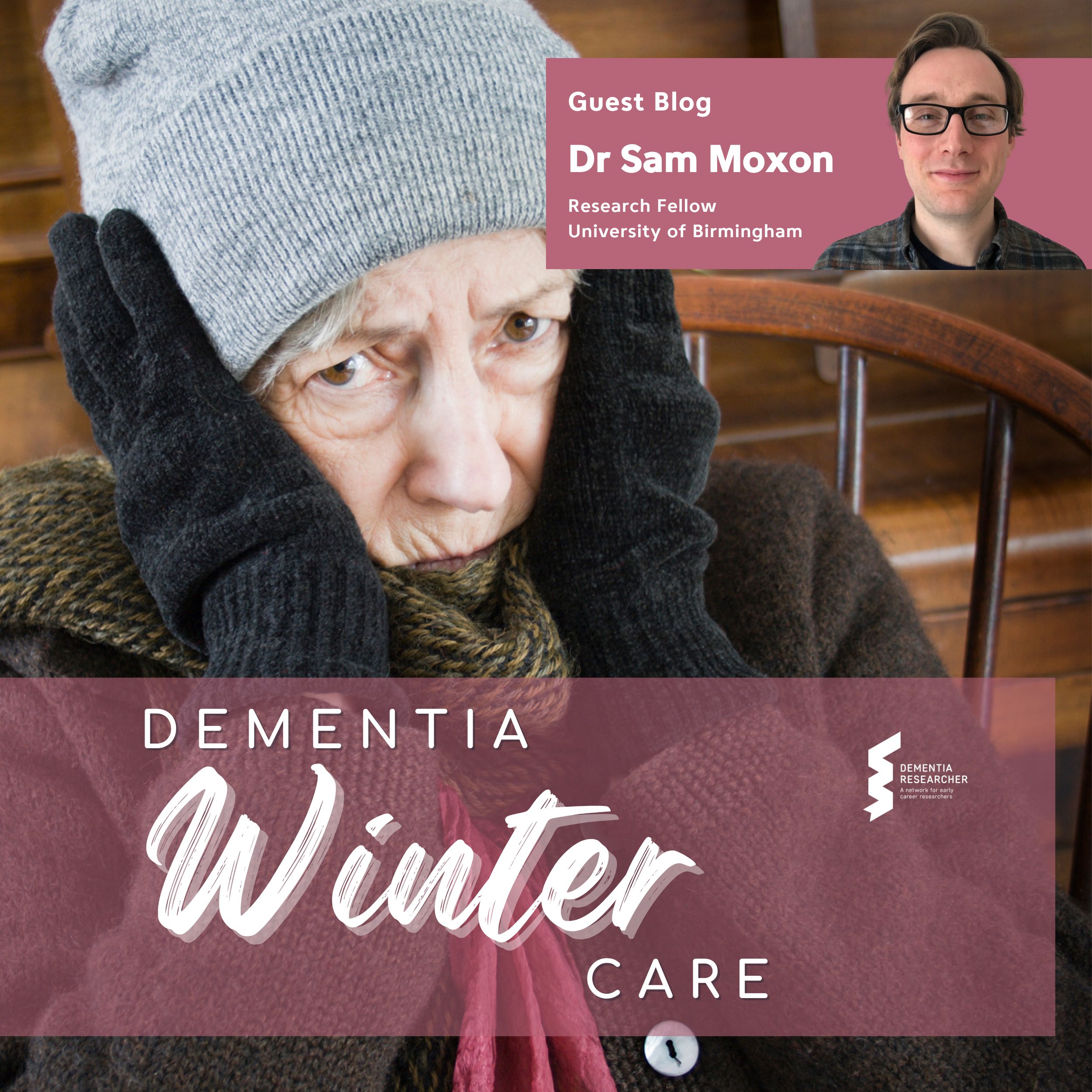
Ep 533Dr Sam Moxon - Dementia Winter Care
Dr Sam Moxon, narrates his blog written for Dementia Researcher. In this blog Sam examines the hidden challenges faced by people living with dementia during the cold, isolating months of winter. Drawing from personal experiences and expert insights, the blog explores the increased risks, from slips and falls to disrupted sleep and social isolation. But more importantly, it emphasises the power of compassion, connection, and understanding to ease the burden on those affected. A must-read or listen for anyone seeking to support loved ones navigating the unique difficulties of dementia in wintertime. Find the original text, and narration here on our website. https://www.dementiaresearcher.nihr.ac.uk/blog-dementia-winter-care/ #winter #dementia -- Dr Sam Moxon is a biomaterials Research Fellow at University of Birmingham. His expertise falls on the interface between biology and engineering. His PhD focussed on regenerative medicine and he now works on trying to develop 3D bioprinting techniques with human stem cells, so that we better understand and treat degenerative diseases. Outside of the lab he hikes through the Lake District and is an expert on all things Disney. -- Enjoy listening and reading our blogs? We're always on the look out for new contributors, drop us a line and share your own research and careers advice [email protected] This podcast is brought to you in association with the NIHR, Alzheimer's Association, Alzheimer's Research UK, Alzheimer's Society and Race Against Dementia, who we thank for their ongoing support. -- Follow us on Social Media: https://www.instagram.com/dementia_researcher/ https://www.facebook.com/Dementia.Researcher/ https://twitter.com/demrescommunity https://www.linkedin.com/company/dementia-researcher https://bsky.app/profile/dementiaresearcher.bsky.social