
Dementia Researcher Blogs
728 episodes — Page 5 of 15
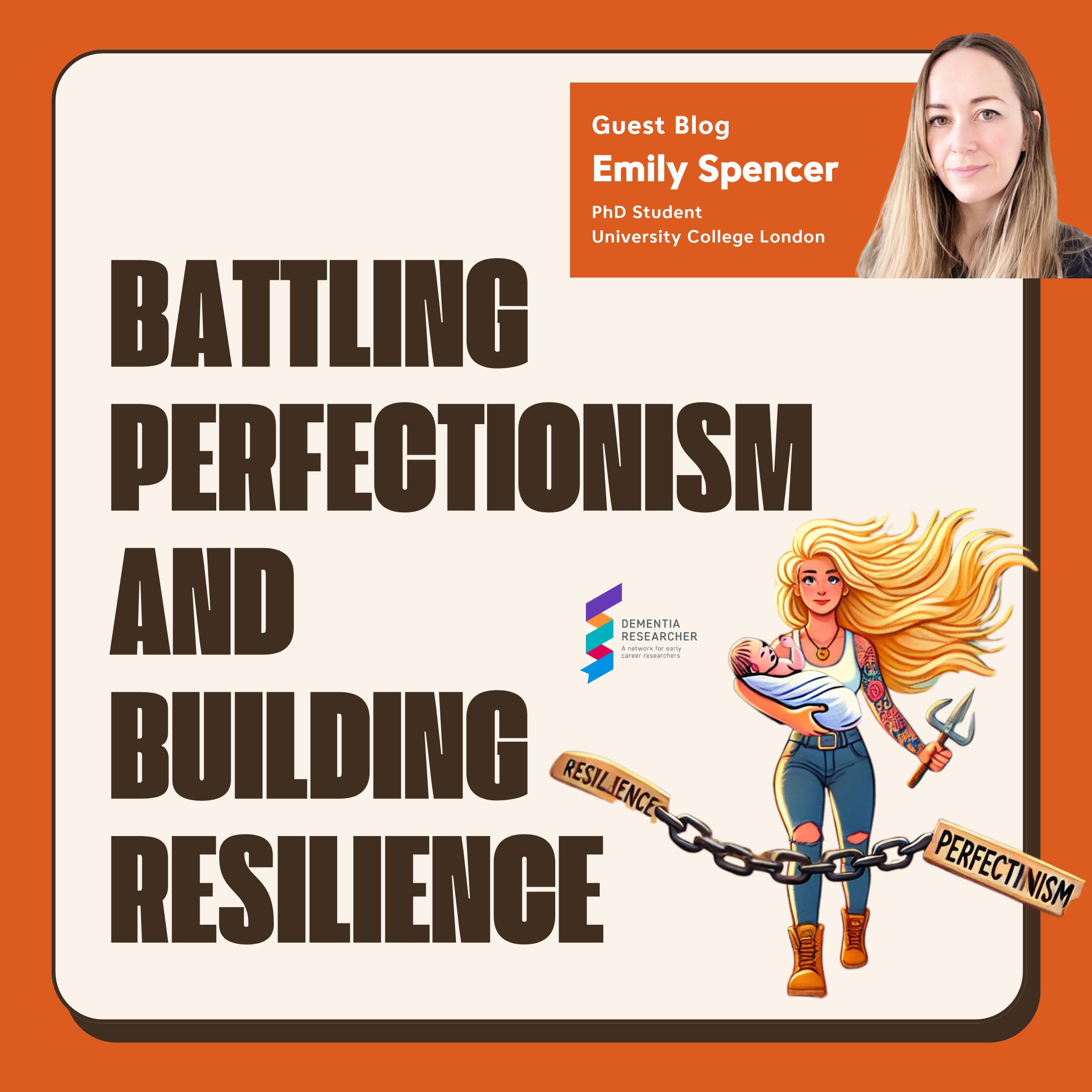
Ep 532Emily Spencer - Battling Perfectionism and Building Resilience
Emily Spencer, narrating her blog written for the Dementia Researcher website. In her latest blog, Emily reflects on the challenges of juggling academia and parenting, exploring how perfectionism can hinder progress and confidence in both spheres. Sharing personal experiences and candid insights, she discusses how resilience and perspective have become essential tools in navigating the ups and downs of research and parenthood. A thoughtful listen (or read) for anyone striving to balance competing priorities while letting go of the need for perfection. Find the original text, and narration here on our website. https://www.dementiaresearcher.nihr.ac.uk/blog-battling-perfectionism-and-building-resilience/ #DementiaResearch #AcademicMother #Academia #MaternityLeave #Research #Resilience #Perfectionism -- Emily Spencer is a PhD Student at University College London looking at improving how GPs communicate with people with dementia and their family carers about their future care. Emily previous had a 5 year career break to pursue a career as a musician, and has previously undertaken research on improving the care people with dementia receive from their GP practice, as well as end-of-life and palliative care provision in the community. Emily is also a new mum and will be writing about her experiences navigating motherhood and a research career. -- Enjoy listening? We're always looking for new bloggers, drop us a line. http://www.dementiaresearcher.nihr.ac.uk This podcast is brought to you in association with Alzheimer's Association, Alzheimer's Research UK, Alzheimer's Society and Race Against Dementia, who we thank for their ongoing support. -- Follow us on Social Media: https://www.instagram.com/dementia_researcher/ https://www.facebook.com/Dementia.Researcher/ https://x.com/demrescommunity https://bsky.app/profile/dementiaresearcher.bsky.social https://www.linkedin.com/company/dementia-researcher
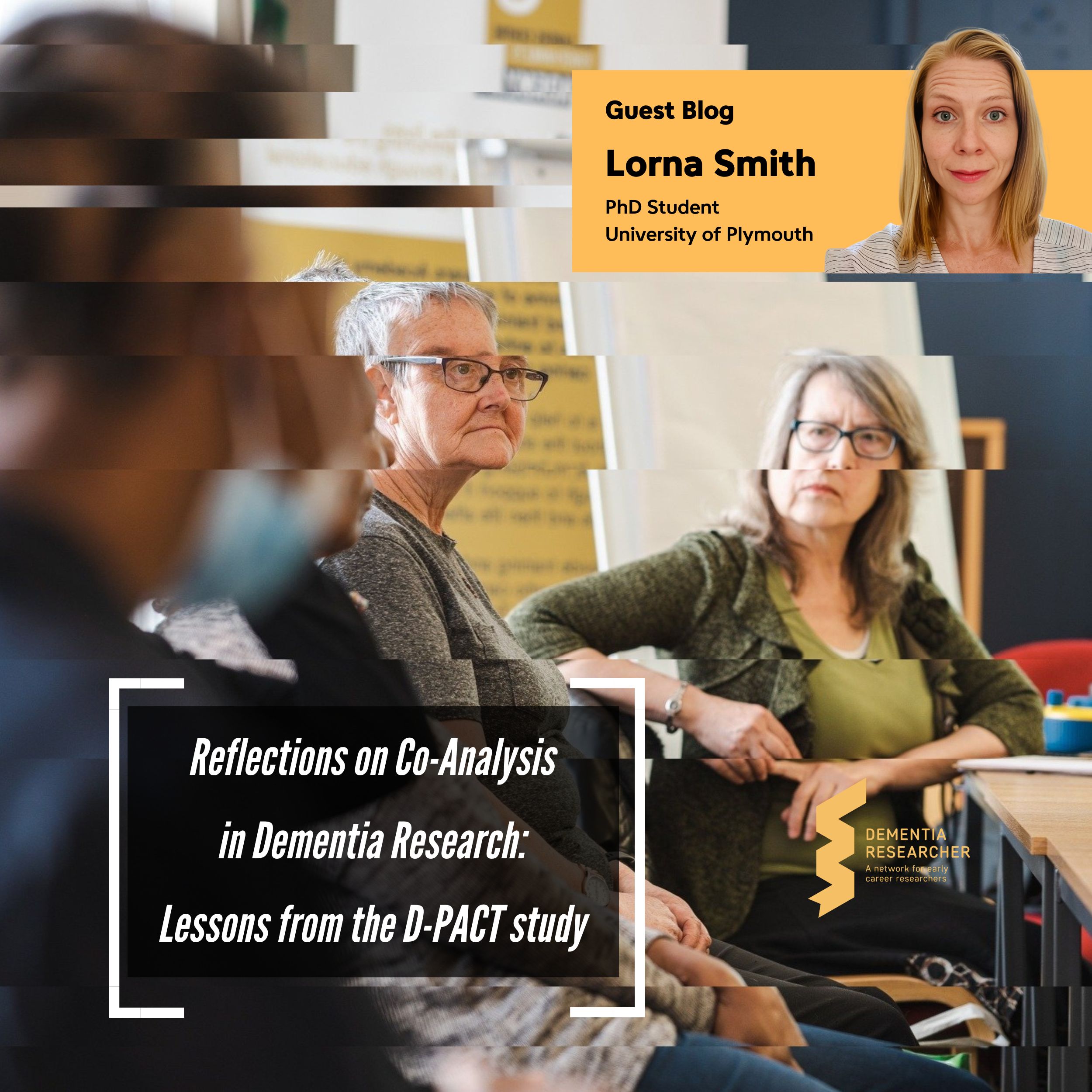
Ep 531Lorna Smith - Co-Analysis in Dementia Research: Insights from D-PACT
Lorna Smith, narrates her blog written for the Dementia Researcher website. Lorna shares her first-hand experience of involving people with dementia and carers in co-analysis through the D-PACT study. This blog explores the challenges and successes of working with a Peer Research Group, from tackling ethical considerations and anonymising data to fostering inclusive decision-making. Lorna provides valuable lessons and practical recommendations for researchers interested in co-analysis, offering unique insights that highlight the importance of collaboration and transparency in dementia research. Find the original text, and narration here on our website. https://www.dementiaresearcher.nihr.ac.uk/blog-co-analysis-in-dementia-research-insights-from-d-pact/ -- Lorna Smith is a PhD Student and Research Assistant at the University of Plymouth. Lorna recently started her PhD, using mixed methods to explore the value of engaging with nature on the quality of life for people living with dementia. Prior to this, she has been working in dementia research in studies that aimed to improve or maintain the quality of life for those affected by the condition. Throughout her research career, she has been interested in adaptive and inclusive methods that help include marginalised voices in research. She also bakes a mean apple pie! -- Enjoy listening? We're always looking for new bloggers, drop us a line. http://www.dementiaresearcher.nihr.ac.uk This podcast is brought to you in association with Alzheimer's Association, Alzheimer's Research UK, Alzheimer's Society and Race Against Dementia, who we thank for their ongoing support. -- Follow us on Social Media: https://www.instagram.com/dementia_researcher/ https://www.facebook.com/Dementia.Researcher/ https://twitter.com/demrescommunity https://www.linkedin.com/company/dementia-researcher https://bsky.app/profile/dementiaresearcher.bsky.social

Ep 530Rebecca Williams - Be the Door, Bringing Academia to Life
Rebecca Williams, narrates her blog written for the Dementia Researcher website. Rebecca reflects on the importance of representation and authenticity in academia, sharing how being open about her journey and background has helped make the field more accessible. She emphasises the value of showing future scientists that challenges and doubts are a normal part of the process and encourages academics to share their experiences to help others see a path into science. Her blog offers a thoughtful perspective on how small actions can make a meaningful difference when it comes to inspiring young-people and the next generation of researchers. Find the original text, and narration here on our website. https://www.dementiaresearcher.nihr.ac.uk/blog-be-the-door-bringing-academia-to-life/ -- Rebecca Williams is PhD student at the University of Cambridge. Though originally from ‘up North’ in a small town called Leigh, she did her undergraduate and masters at the University of Oxford before defecting to Cambridge for her doctorate researching Frontotemporal dementia and Apathy. She now spends her days collecting data from wonderful volunteers, and coding. Outside work, she plays board games, and is very crafty. @beccasue99 -- Enjoy listening? We're always looking for new bloggers, drop us a line. http://www.dementiaresearcher.nihr.ac.uk This podcast is brought to you in association with Alzheimer's Association, Alzheimer's Research UK, Alzheimer's Society and Race Against Dementia, who we thank for their ongoing support. -- Follow us on Social Media: https://www.instagram.com/dementia_researcher/ https://www.facebook.com/Dementia.Researcher/ https://twitter.com/demrescommunity https://www.linkedin.com/company/dementia-researcher https://bsky.app/profile/dementiaresearcher.bsky.social

Ep 529Dr Yvonne Couch - Coping with An Absent Supervisor
Dr Yvonne Couch, narrates her blog written for the Dementia Researcher website. Yvonne reflects on the difficulties of dealing with absent supervisors, outlining the reasons they may be unavailable and the challenges this creates for researchers. She discusses strategies to manage different types of supervisors, including balancing independence with seeking guidance and the importance of self-awareness and self-confidence. By sharing practical advice and insights, she encourages readers to evaluate their needs, advocate for themselves, and take proactive steps to ensure their academic progress isn’t derailed. Find the original text, and narration here on our website. https://www.dementiaresearcher.nihr.ac.uk/blog-coping-with-an-absent-supervisor/ -- Dr Yvonne Couch is an Alzheimer's Research UK Fellow and Associate Professor at the University of Oxford. Yvonne studies the role of extracellular vesicles and their role in changing the function of the vasculature after stroke, aiming to discover why the prevalence of dementia after stroke is three times higher than the average. It is her passion for problem solving and love of science that drives her, in advancing our knowledge of disease. Yvonne writes about her work, academic life, and careers as she takes a new road into independent research @dr_yvonne_couch -- Enjoy listening? We're always looking for new bloggers, drop us a line. http://www.dementiaresearcher.nihr.ac.uk This podcast is brought to you in association with Alzheimer's Association, Alzheimer's Research UK, Alzheimer's Society and Race Against Dementia, who we thank for their ongoing support. -- Follow us on Social Media: https://www.instagram.com/dementia_researcher/ https://www.facebook.com/Dementia.Researcher/ https://twitter.com/demrescommunity https://www.linkedin.com/company/dementia-researcher https://bsky.app/profile/dementiaresearcher.bsky.social

Ep 528Dr Jodi Watt - Financial Exploitation & Scam Susceptibility in Dementia
Dr Jodi Watt, narrating a new blog they wrote for the Dementia Researcher website. In this blog Jodi examines financial exploitation and scam susceptibility in dementia. The blog discusses the risks faced by people living with dementia, how these have evolved in the digital age, and the impact on their well-being. It also offers an overview of warning signs, preventative measures, and resources that may be helpful for researchers, caregivers, and professionals in dementia care. Find the original text, and narration here on our website. https://www.dementiaresearcher.nihr.ac.uk/blog-financial-exploitation-and-scam-susceptibility-in-dementia/ -- Dr Jodi Watt is a Postdoctoral Researcher at University of Glasgow. Jodi's academic interests are in both healthy ageing and neurodegenerative diseases of older age, and they are currently working on drug repurposing for dementia. Previously they worked on understanding structural, metabolic and physiological brain changes with age, as measured using magnetic resonance imaging. As a queer and neurodiverse person, Jodi is also incredibly interested in improving diversity and inclusion practices both within and outside of the academic context. -- Enjoy listening? We're always looking for new bloggers, drop us a line. http://www.dementiaresearcher.nihr.ac.uk This podcast is brought to you in association with Alzheimer's Association, Alzheimer's Research UK, Alzheimer's Society and Race Against Dementia, who we thank for their ongoing support. -- Follow us on Social Media: https://www.instagram.com/dementia_researcher/ https://www.facebook.com/Dementia.Researcher/ https://twitter.com/demrescommunity https://www.linkedin.com/company/dementia-researcher https://bsky.app/profile/dementiaresearcher.bsky.social
Ep 527Adam Smith - Bringing Project Management into your PhD
Adam Smith narrates his blog written for Dementia Researcher. In this blog, Adam shares practical advice on applying project management principles to PhD research. He explains how tools like risk registers, timelines, and structured planning can help students navigate the complexities of research. By adopting some of these approaches, PhD students may find it easier to organise their work, anticipate challenges, and maintain a steady pace throughout their studies. Find the original text, and narration here on our website. https://www.dementiaresearcher.nihr.ac.uk/blog-bringing-project-management-into-your-phd/ -- Adam Smith was born in the north, a long time ago. He wanted to write books, but ended up working in the NHS, and at the Department of Health. He is now Programme Director in the Office of the NIHR National Director for Dementia Research (which probably sounds more important than it is) at University College London. He has led a number of initiatives to improve dementia research (including this website, Join Dementia Research & ENRICH), as well as pursuing his own research interests. In his spare time, he grows vegetables, builds Lego & spends most of his time drinking too much coffee and squeezing technology into his house. -- Enjoy listening? We're always looking for new bloggers, drop us a line. http://www.dementiaresearcher.nihr.ac.uk This podcast is brought to you in association with Alzheimer's Association, Alzheimer's Research UK, Alzheimer's Society and Race Against Dementia, who we thank for their ongoing support. -- Follow us on Social Media: https://www.instagram.com/dementia_researcher/ https://www.facebook.com/Dementia.Researcher/ https://twitter.com/demrescommunity https://www.linkedin.com/company/dementia-researcher https://bsky.app/profile/dementiaresearcher.bsky.social
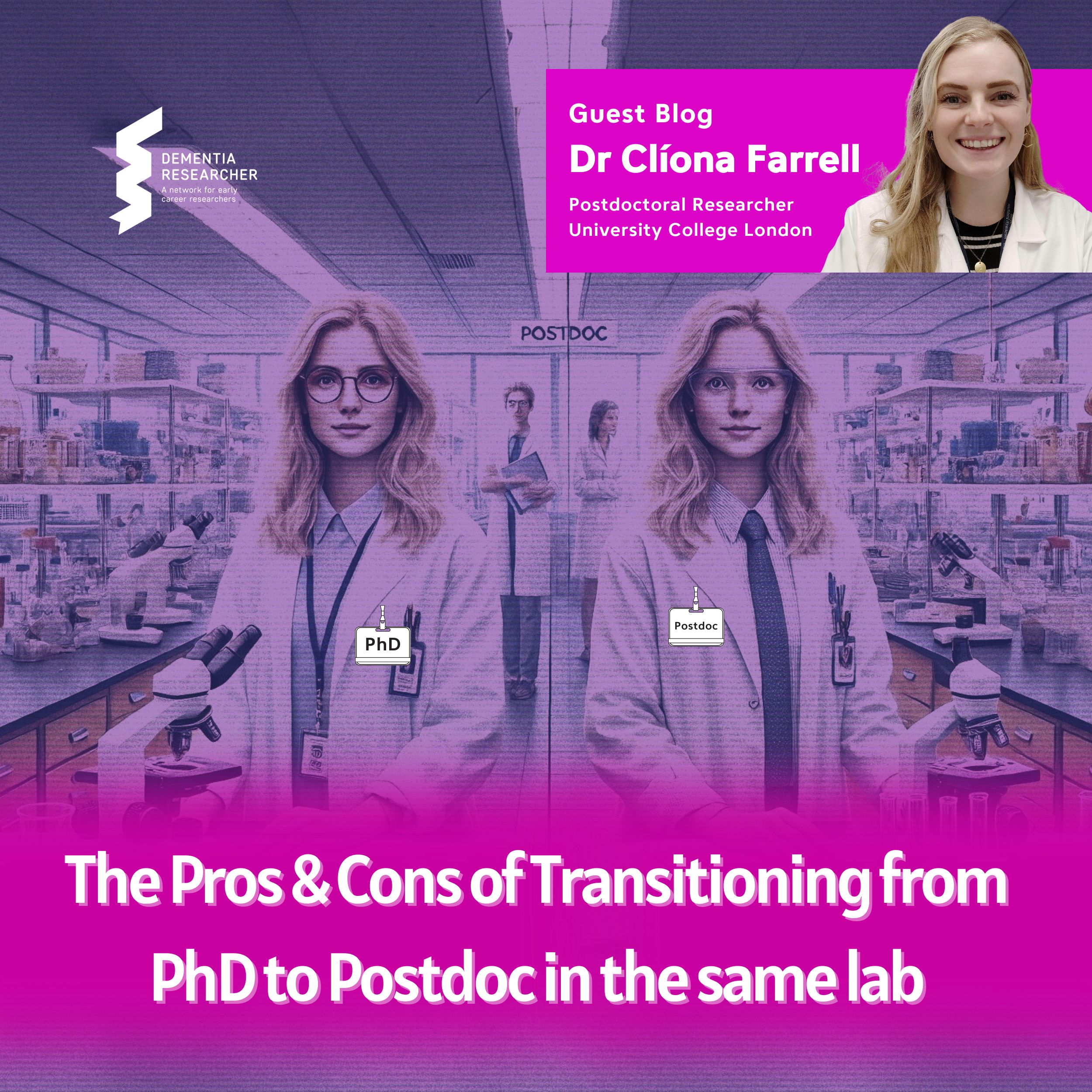
Ep 526Dr Clíona Farrell - Should You Stay? Pros and Cons of Postdoc’ing in Your PhD Lab
Dr Clíona Farrell, narrating her blog written for the Dementia Researcher website. Clíona discusses her decision to transition from PhD student to postdoc in the same lab, weighing the benefits and potential drawbacks. She reflects on the comfort of familiar surroundings and established relationships, which helped her dive straight into new projects and finalise her PhD work. Yet, this continuity also brings unique challenges, from overlapping responsibilities to the risk of limited career progression if not carefully navigated. Clíona's insights offer a nuanced look at whether staying put can be the right path for early-career researchers. Find the original text, and narration here on our website. https://www.dementiaresearcher.nihr.ac.uk/blog-should-you-stay-pros-and-cons-of-postdocing-in-your-phd-lab/ #PhDPosition #PhDLife #PhDFunding #PhDApplications -- Dr Clíona Farrell is a Postdoctoral Researcher in the UK Dementia Research Institute at University College London. Her work focuses on understanding neuroinflammation in Down syndrome, both prior to, and in response to, Alzheimer’s disease pathology. Originally from Dublin, Ireland, Clíona completed her undergraduate degree in Neuroscience in Trinity College, and then worked as a research assistant in the Royal College of Surgeons studying ALS and Parkinson’s disease. She also knows the secret behind scopping the perfect 99 ice-cream cone. @ClionaFarrell_ -- Enjoy listening? We're always looking for new bloggers, drop us a line. http://www.dementiaresearcher.nihr.ac.uk This podcast is brought to you in association with Alzheimer's Association, Alzheimer's Research UK, Alzheimer's Society and Race Against Dementia, who we thank for their ongoing support. -- Follow us on Social Media: https://www.instagram.com/dementia_researcher/ https://www.facebook.com/Dementia.Researcher/ https://twitter.com/demrescommunity https://www.linkedin.com/company/dementia-researcher https://bsky.app/profile/dementiaresearcher.bsky.social
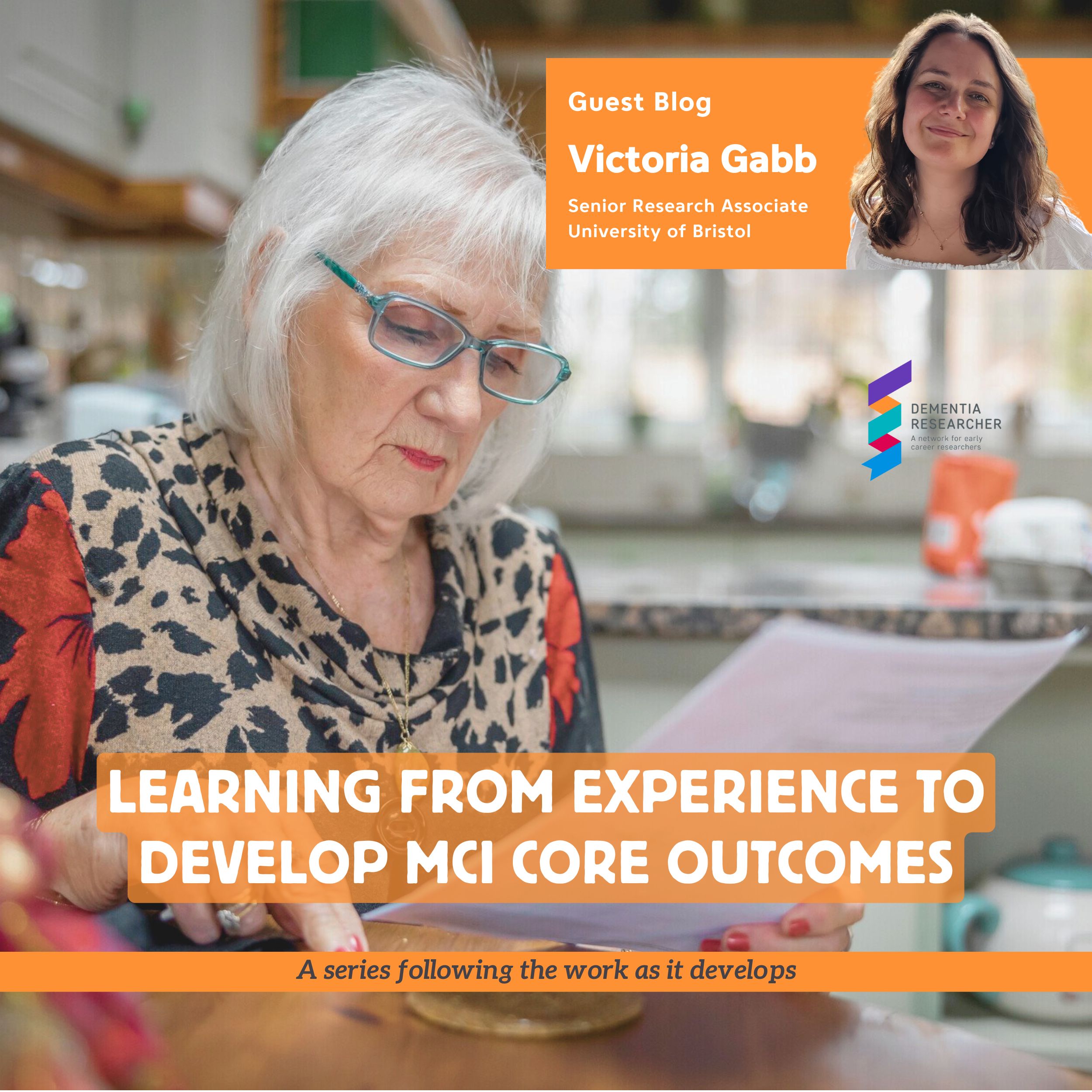
Ep 525Victoria Gabb - Learning from experience to develop MCI Core Outcomes
Victoria Gabb, narrates her blog written for the Dementia Researcher website. Victoria’s latest blog provides an update on her team’s progress in developing a core outcome set for mild cognitive impairment (MCI) research. Building on their initial overview, this post discusses the methods used to ensure that the set includes the outcomes that matter most to patients, caregivers, clinicians, and researchers. The process involves an umbrella review of existing MCI studies, stakeholder interviews to capture diverse perspectives, and Delphi surveys to prioritise outcomes. Through these steps, the goal is to reach a consensus on a core outcome set that reflects the priorities of those impacted by MCI, supporting future research that addresses real-world needs. Find the original text, and narration here on our website. https://www.dementiaresearcher.nihr.ac.uk/blog-learning-from-experience-to-develop-mci-core-outcomes/ -- Victoria Gabb is a Senior Research Associate in Sleep & Dementia Neuroscience at University of Bristol. Victoria is working on her PhD through publication and she is currently working on an important project to develop ‘Core Outcomes’ for Mild Cognitive Impairment. Her blogs on dementia researcher will be a way of sharing the progress of her work, to improve transparency, share the process and as a way to involve others - sharing the work, the process, and life in the pursuit of research. -- Enjoy listening? We're always looking for new bloggers, drop us a line. http://www.dementiaresearcher.nihr.ac.uk This podcast is brought to you in association with Alzheimer's Association, Alzheimer's Research UK, Alzheimer's Society and Race Against Dementia, who we thank for their ongoing support. -- Follow us on Social Media: https://www.instagram.com/dementia_researcher/ https://www.facebook.com/Dementia.Researcher/ https://twitter.com/demrescommunity https://www.linkedin.com/company/dementia-researcher https://bsky.app/profile/dementiaresearcher.bsky.social
Ep 524Dr Connor Richardson - Dear Diary, Why I Keep a Research Journal
Dr Connor Richardson narrates his blog written for Dementia Researcher. In Connor's blog, he highlights the benefits of maintaining a research journal as a practical tool for tracking progress, managing emotions, and fostering personal growth. Far from being just a record of daily tasks, the journal serves as a "done list" that celebrates small achievements, providing motivation during long research processes. Dr Richardson also discusses the value of journaling for reflection, processing frustrations, and honing writing skills, which can make academic writing less daunting. Ultimately, he views journaling as a way to connect more deeply with his work and as a resource to better support his students. Find the original text, and narration here on our website. https://www.dementiaresearcher.nihr.ac.uk/blog-dear-diary-why-i-keep-a-research-journal/ -- Dr Connor Richardson is a Neuro-epidemiology Research Associate (soon to be NIHR Research Fellow) in the Newcastle University Population Health Sciences Institute. Connor is the research statistician for the Cognitive Function and Ageing studies (CFAS) multi-centre population cohort. His research interest lies in using advanced statistical modelling and machine learning to measure dementia risk. Connor blogs about his research, Equality, Diversity and Inclusion and sometimes his Pomapoo’s. -- Enjoy listening? We're always looking for new bloggers, drop us a line. http://www.dementiaresearcher.nihr.ac.uk This podcast is brought to you in association with Alzheimer's Association, Alzheimer's Research UK, Alzheimer's Society and Race Against Dementia, who we thank for their ongoing support. -- Follow us on Social Media: https://www.instagram.com/dementia_researcher/ https://www.facebook.com/Dementia.Researcher/ https://twitter.com/demrescommunity https://www.linkedin.com/company/dementia-researcher https://bsky.app/profile/dementiaresearcher.bsky.social

Ep 523Dr Yvonne Couch - Imposter Syndrome as a PI
Dr Yvonne Couch, narrates her blog written for the Dementia Researcher website. In her latest blog, Yvonne reflects on the pervasive impact of imposter syndrome in academia, particularly as a Principal Investigator (PI). She candidly shares her feelings of inadequacy, attributing her successes to luck and timing rather than skill, while confronting the competitive, often isolating nature of academic life. Yvonne explores the constant self-doubt that accompanies grant applications, lab work, and professional recognition, revealing the emotional toll this takes. Her insights will resonate with many researchers who, despite their achievements, continue to feel like "frauds" in their fields. Find the original text, and narration here on our website. https://www.dementiaresearcher.nihr.ac.uk/blog-imposter-syndrome-as-a-pi/ -- Dr Yvonne Couch is an Alzheimer's Research UK Fellow and Associate Professor at the University of Oxford. Yvonne studies the role of extracellular vesicles and their role in changing the function of the vasculature after stroke, aiming to discover why the prevalence of dementia after stroke is three times higher than the average. It is her passion for problem solving and love of science that drives her, in advancing our knowledge of disease. Yvonne writes about her work, academic life, and careers as she takes a new road into independent research @dr_yvonne_couch -- Enjoy listening? We're always looking for new bloggers, drop us a line. http://www.dementiaresearcher.nihr.ac.uk This podcast is brought to you in association with Alzheimer's Association, Alzheimer's Research UK, Alzheimer's Society and Race Against Dementia, who we thank for their ongoing support. -- Follow us on Social Media: https://www.instagram.com/dementia_researcher/ https://www.facebook.com/Dementia.Researcher/ https://twitter.com/demrescommunity https://www.linkedin.com/company/dementia-researcher https://bsky.app/profile/dementiaresearcher.bsky.social
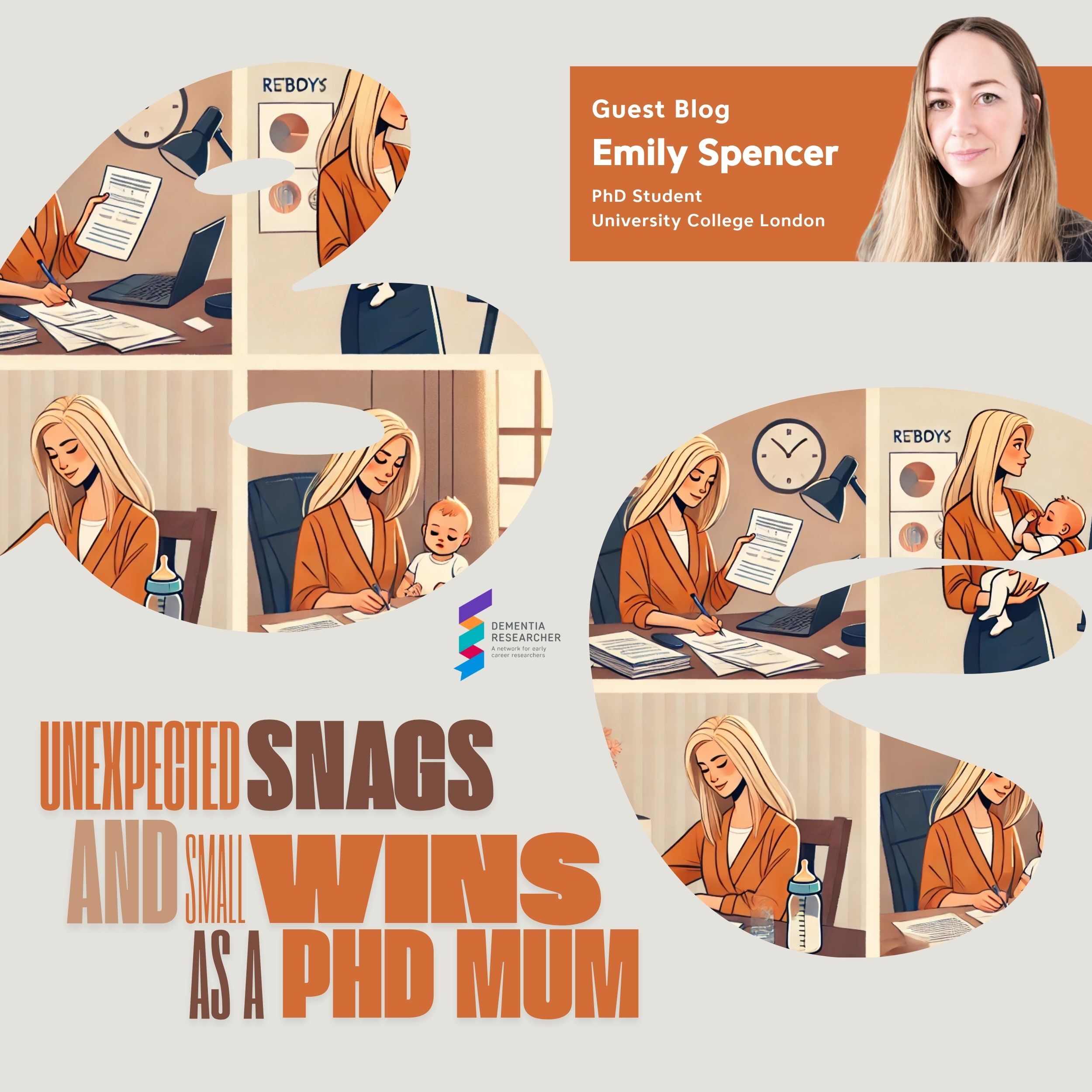
Ep 522Emily Spencer - Unexpected Snags and Small Wins as a PhD Mum
Emily Spencer, narrating her blog written for the Dementia Researcher website. For the past year Emily has been sharing her journey through pregnancy, maternity leave, and now the return to work! This month Emily shares the challenges and small victories she’s experienced since returning from maternity leave. With the academic year underway, Emily reflects on balancing her research with motherhood—navigating unexpected hurdles like last-minute childcare closures and the lingering self-doubt of revisiting past work. Despite the difficulties, she finds resilience in the support of friends and the flexibility to adjust her plans, learning that progress in academia doesn’t always need to be at full speed. Emily’s candid account highlights the complex yet rewarding journey of combining parenthood with doctoral study. Find the original text, and narration here on our website. https://www.dementiaresearcher.nihr.ac.uk/blog-unexpected-snags-and-small-wins-as-a-phd-mum/ #DementiaResearch #AcademicMother #Academia #MaternityLeave #Research -- Emily Spencer is a PhD Student at University College London looking at improving how GPs communicate with people with dementia and their family carers about their future care. Emily previous had a 5 year career break to pursue a career as a musician, and has previously undertaken research on improving the care people with dementia receive from their GP practice, as well as end-of-life and palliative care provision in the community. Emily is also a new mum and will be writing about her experiences navigating motherhood and a research career. -- Enjoy listening? We're always looking for new bloggers, drop us a line. http://www.dementiaresearcher.nihr.ac.uk This podcast is brought to you in association with Alzheimer's Association, Alzheimer's Research UK, Alzheimer's Society and Race Against Dementia, who we thank for their ongoing support. -- Follow us on Social Media: https://www.instagram.com/dementia_researcher/ https://www.facebook.com/Dementia.Researcher/ https://x.com/demrescommunity https://bsky.app/profile/dementiaresearcher.bsky.social https://www.linkedin.com/company/dementia-researcher
Ep 521Rebecca Williams - The Dark World of Computational Modelling
Rebecca Williams, narrates her blog written for the Dementia Researcher website. Rebecca, explores the often-intimidating realm of computational modelling in neuroscience. She compares this complex field to a haunted house, where assumptions lurk in shadows, algorithms whisper in the background, and progress requires courage and persistence. Rebecca shares her journey from initially feeling lost in a world of complex mathematics to gradually mastering techniques that unlock deeper insights into brain function. Her blog encourages others to embrace the unknown, demystify the technical language, and make computational modelling more accessible for future researchers. Find the original text, and narration here on our website. https://www.dementiaresearcher.nihr.ac.uk/blog-the-dark-world-of-computational-modelling/ -- Rebecca Williams is PhD student at the University of Cambridge. Though originally from ‘up North’ in a small town called Leigh, she did her undergraduate and masters at the University of Oxford before defecting to Cambridge for her doctorate researching Frontotemporal dementia and Apathy. She now spends her days collecting data from wonderful volunteers, and coding. Outside work, she plays board games, and is very crafty. @beccasue99 -- Enjoy listening? We're always looking for new bloggers, drop us a line. http://www.dementiaresearcher.nihr.ac.uk This podcast is brought to you in association with Alzheimer's Association, Alzheimer's Research UK, Alzheimer's Society and Race Against Dementia, who we thank for their ongoing support. -- Follow us on Social Media: https://www.instagram.com/dementia_researcher/ https://www.facebook.com/Dementia.Researcher/ https://twitter.com/demrescommunity https://www.linkedin.com/company/dementia-researcher https://bsky.app/profile/dementiaresearcher.bsky.social
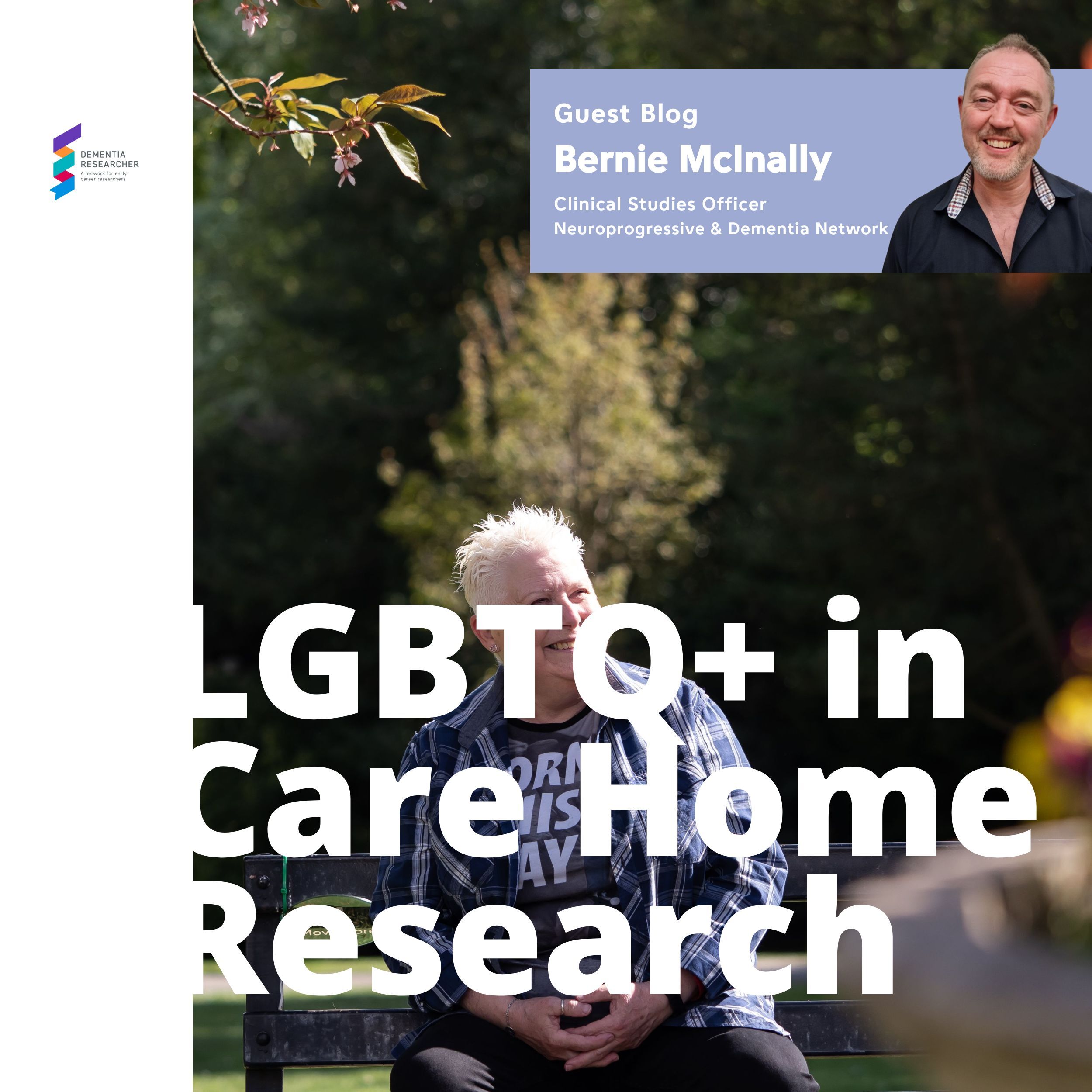
Ep 520Bernie McInally - LGBTQ+ in Care Home Research
Bernie McInally narrates his blog written for Dementia Researcher. In his guest blog, Bernie McInally, explores the often-overlooked needs of LGBTQ+ residents in care homes. Reflecting on his initial scepticism of the potential recruitment of LGBTQ+ community into studies, Bernie examines the unique challenges this group faces, including potential social isolation, distrust of care staff, and an increased risk of dementia due to health disparities. He highlights the importance of inclusivity in care home research to better understand and address the specific needs of LGBTQ+ residents, aiming for a future where this community receives equal recognition and support in healthcare. Find the original text, and narration here on our website. https://www.dementiaresearcher.nihr.ac.uk/blog-lgbtq-in-care-home-research/ -- Bernie McInally is a Clinical Studies Officer at NHS Lothian and the Neuroprogressive and Dementia Network. Bernie's background is in Nursing, working in Mental Health and with Older People. He retired from full time NHS clinical work, and is now back working in Clinical Research supporting delivery of the Enabling Research in Care Homes (ENRICH) Scotland. He is passionate about research delivery, and opening access to people in all communities. -- Enjoy listening and reading our blogs? We're always on the look out for new contributors, drop us a line and share your own research and careers advice [email protected] This podcast is brought to you in association with the NIHR, Alzheimer's Association, Alzheimer's Research UK, Alzheimer's Society and Race Against Dementia, who we thank for their ongoing support. -- Follow us on Social Media: https://www.instagram.com/dementia_researcher/ https://www.facebook.com/Dementia.Researcher/ https://twitter.com/demrescommunity https://www.linkedin.com/company/dementia-researcher https://bsky.app/profile/dementiaresearcher.bsky.social
Ep 519Yasmin Bonsu - The Comparison Trap: Finding Balance in Your Final Year
Yasmin Bonsu, narrates her blog written for the Dementia Researcher website. Yasmin explores the pitfalls of self-comparison that many students face as they approach graduation. She discusses how comparing herself to others on platforms like LinkedIn can sometimes be motivating, pushing her to aim higher academically. However, she also recognises the downside, where constant comparisons can lead to self-doubt, skewed perceptions of success, and even missed opportunities. By setting boundaries, focusing on personal goals, and embracing her own achievements, Yasmin shares her strategies for turning comparison into a tool for growth rather than a source of frustration. Find the original text, and narration here on our website. https://www.dementiaresearcher.nihr.ac.uk/blog-the-comparison-trap-finding-balance-in-your-final-year/ -- Yasmin Bonsu is an an undergraduate student from the University of Manchester currently undertaking a placement year at Wade-Martins Lab at Oxford University. Yasmin is investigating the activity of proteoforms of the granin family in cortical neurons insulted with oligomerised amyloid beta. Her goal is to finish her placement year, earn her bachelor’s degree in neuroscience, and then pursue a PhD in clinical neuroscience. Through Yasmin's blogs we'll gain insights on life as an undergraduate, and hopefully inspire others to pursue a career in dementia research. @yasminnnx2 -- Enjoy listening? We're always looking for new bloggers, drop us a line. http://www.dementiaresearcher.nihr.ac.uk This podcast is brought to you in association with Alzheimer's Association, Alzheimer's Research UK, Alzheimer's Society and Race Against Dementia, who we thank for their ongoing support. -- Follow us on Social Media: https://www.instagram.com/dementia_researcher/ https://www.facebook.com/Dementia.Researcher/ https://twitter.com/demrescommunity https://www.linkedin.com/company/dementia-researcher https://bsky.app/profile/dementiaresearcher.bsky.social

Ep 518Dr Jodi Watt - Dementia-Friendly Spaces
Dr Jodi Watt, narrating a new blog they wrote for the Dementia Researcher website. Jodi explores the importance of designing dementia-friendly spaces to enhance the quality of life for those living with dementia. Drawing on personal experiences and research, they highlight practical ways to create environments that are safe, supportive, and conducive to maintaining independence. Key suggestions include reducing clutter, maintaining consistent layouts, using appropriate lighting, and incorporating familiar objects. These adjustments not only empower individuals with dementia but also provide ease for caregivers, fostering a more comfortable and accessible living space. Find the original text, and narration here on our website. https://www.dementiaresearcher.nihr.ac.uk/blog-dementia-friendly-spaces/ -- Dr Jodi Watt is a Postdoctoral Researcher at University of Glasgow. Jodi's academic interests are in both healthy ageing and neurodegenerative diseases of older age, and they are currently working on drug repurposing for dementia. Previously they worked on understanding structural, metabolic and physiological brain changes with age, as measured using magnetic resonance imaging. As a queer and neurodiverse person, Jodi is also incredibly interested in improving diversity and inclusion practices both within and outside of the academic context. -- Enjoy listening? We're always looking for new bloggers, drop us a line. http://www.dementiaresearcher.nihr.ac.uk This podcast is brought to you in association with Alzheimer's Association, Alzheimer's Research UK, Alzheimer's Society and Race Against Dementia, who we thank for their ongoing support. -- Follow us on Social Media: https://www.instagram.com/dementia_researcher/ https://www.facebook.com/Dementia.Researcher/ https://twitter.com/demrescommunity https://www.linkedin.com/company/dementia-researcher https://bsky.app/profile/dementiaresearcher.bsky.social

Ep 517Amelia Robson - Why I have a complicated relationship with TV adverts
Amelia Robson, narrates her blog written for the Dementia Researcher website. In this blog, Amelia reflects on her experiences working with people living with dementia during her home sleep studies. She discusses how TV adverts, especially those focused on dementia, can unexpectedly evoke powerful emotions during her visits, creating poignant and sometimes uncomfortable moments for both her and the caregivers. Amelia also shares the delicate balance between maintaining professionalism and managing her own emotions, while remaining fully committed to the well-being of her patients. Find the original text, and narration here on our website. https://www.dementiaresearcher.nihr.ac.uk/blog-why-i-have-a-complicated-relationship-with-tv-adverts/ -- Amelia Robson is a Research Assistant at Northumbria University supporting delivery of NHS Clinical Trials, particularly in working with Dementia with Lewy bodies and Alzheimer’s disease patients. This work currently involves visiting patient’s homes and applying polysomnography sleep equipment on their face, scalp and body. Amelia graduated in Psychology in 2021 and is passionate about supporting people living with the dementia, and providing help for care givers. Her top tip.... Trust your Gut to stay on the right path. Follow Amelia Robson on LinkedIn -- Enjoy listening? We're always looking for new bloggers, drop us a line. http://www.dementiaresearcher.nihr.ac.uk This podcast is brought to you in association with Alzheimer's Association, Alzheimer's Research UK, Alzheimer's Society and Race Against Dementia, who we thank for their ongoing support. -- Follow us on Social Media: https://www.instagram.com/dementia_researcher/ https://www.facebook.com/Dementia.Researcher/ https://twitter.com/demrescommunity https://www.linkedin.com/company/dementia-researcher https://bsky.app/profile/dementiaresearcher.bsky.social

Ep 516Ella Moonan-Howard - Alzheimer’s Society newest support package: Launchpad
Ella Moonan-Howard, narrating her blog written for the Dementia Researcher website. The Alzheimer’s Society has launched a new support package called "Launchpad," designed to help innovators turn dementia research into impactful products. Led by Senior Innovator Ella Moonan-Howard, this programme offers tailored business coaching, expert networks, and hands-on support to help researchers develop viable business models and secure pilot opportunities. Launchpad is free and part-time, making it accessible for researchers alongside their academic roles. Applications open on 14th October. Find out more - https://www.alzheimers.org.uk/research/our-research/dementia-innovation/launchpad Find the original text, and narration here on our website. https://www.dementiaresearcher.nihr.ac.uk/blog-alzheimers-society-newest-support-package-launchpad/ #HealthInnovation #VentureScience #Innovation -- Dr Ella Moonan-Howard is a Senior Innovator at the Alzheimer's Society. Ella previous worked at Zinc, supporting early stage start-ups and their founders to build research skills and to test their products as they built them. Obsessed with seeing the direct impact these start-ups could make, she moved to Alzheimer's Society to ensure the next generation of dementia products go on to achieve scale and change the lives of those living with dementia. Find Ella on LinkedIn -- Enjoy listening? We're always looking for new bloggers, drop us a line. http://www.dementiaresearcher.nihr.ac.uk This podcast is brought to you in association with Alzheimer's Association, Alzheimer's Research UK, Alzheimer's Society and Race Against Dementia, who we thank for their ongoing support. -- Follow us on Social Media: https://www.instagram.com/dementia_researcher/ https://www.facebook.com/Dementia.Researcher/ https://twitter.com/demrescommunity https://www.linkedin.com/company/dementia-researcher https://bsky.app/profile/dementiaresearcher.bsky.social
Ep 515Dr Sam Moxon - How do you create a university spin out?
Dr Sam Moxon, narrates his blog written for Dementia Researcher. Sam's blog, offers a step-by-step guide for academics interested in turning their research into a successful business. Drawing from his own experience co-founding a spin-out at the University of Birmingham, Sam shares insights on how to transform an idea into a viable enterprise. The blog covers crucial aspects such as finding the right support, protecting intellectual property, market validation, negotiating with the university, and securing funding. It’s a must-read for anyone considering the journey from innovation to commercialisation, packed with practical advice and personal reflections. Find the original text, and narration here on our website. https://www.dementiaresearcher.nihr.ac.uk/blog-how-do-you-create-a-university-spin-out/ #Spinout #Innovation -- Dr Sam Moxon is a biomaterials Research Fellow at University of Birmingham. His expertise falls on the interface between biology and engineering. His PhD focussed on regenerative medicine and he now works on trying to develop 3D bioprinting techniques with human stem cells, so that we better understand and treat degenerative diseases. Outside of the lab he hikes through the Lake District and is an expert on all things Disney. -- Enjoy listening and reading our blogs? We're always on the look out for new contributors, drop us a line and share your own research and careers advice [email protected] This podcast is brought to you in association with the NIHR, Alzheimer's Association, Alzheimer's Research UK, Alzheimer's Society and Race Against Dementia, who we thank for their ongoing support. -- Follow us on Social Media: https://www.instagram.com/dementia_researcher/ https://www.facebook.com/Dementia.Researcher/ https://twitter.com/demrescommunity https://www.linkedin.com/company/dementia-researcher https://bsky.app/profile/dementiaresearcher.bsky.social
Ep 514Ella Moonan-Howard and Pepsi Reilly - 4 reasons academics make good Innovators
Ella Moonan-Howard, narrating her and Pepsi Reilly's blog written for the Dementia Researcher website. In this blog, Ella and Pepsi, explore why academics make great innovators. Drawing from her own journey from academia to dementia innovation, they highlight how research skills like project management, adaptability, and a scientific approach to problem-solving can drive impactful product development. The blog discusses the benefits of applying these skills in a fast-paced, collaborative environment and introduces the Alzheimer’s Society’s Launchpad programme, which helps academics turn ideas into real-world solutions for people living with dementia. Find the original text, and narration here on our website. https://www.dementiaresearcher.nihr.ac.uk/blog-a-career-with-impact-4-reasons-academics-make-good-innovators/ #HealthInnovation #VentureScience #Innovation -- Dr Ella Moonan-Howard is a Senior Innovator at the Alzheimer's Society. Ella previous worked at Zinc, supporting early stage start-ups and their founders to build research skills and to test their products as they built them. Obsessed with seeing the direct impact these start-ups could make, she moved to Alzheimer's Society to ensure the next generation of dementia products go on to achieve scale and change the lives of those living with dementia. Find Ella on LinkedIn Pepsi Reilly has worked at the Alzheimer's Society since 2022 holding a number of positions within the Innovation Team, and having previously worked a number of charities and as a Research Assistant at University College London. Her work at UCL was focussed on dementia and care, and included work on the Continuing Compassion in Care (CCiC) Project: Exploring how informal carers of people living with dementia experience and maintain continuing compassion in care. Find Pepsi on LinkedIn -- Enjoy listening? We're always looking for new bloggers, drop us a line. http://www.dementiaresearcher.nihr.ac.uk This podcast is brought to you in association with Alzheimer's Association, Alzheimer's Research UK, Alzheimer's Society and Race Against Dementia, who we thank for their ongoing support. -- Follow us on Social Media: https://www.instagram.com/dementia_researcher/ https://www.facebook.com/Dementia.Researcher/ https://twitter.com/demrescommunity https://www.linkedin.com/company/dementia-researcher https://bsky.app/profile/dementiaresearcher.bsky.social

Ep 513Ella Moonan-Howard - Venture Science: What is it?
Ella Moonan-Howard, narrating her blog written for the Dementia Researcher website. Discover how venture science is transforming dementia care in the first blog of our week-long focus on innovation, written by Ella Moonan-Howard from the Alzheimer’s Society Innovation Team. Ella explores how companies like Big Health are combining academic research and commercial development to create evidence-based digital health solutions, and how this model could inspire the next generation of dementia innovators. Don’t miss this exciting insight into the future of healthcare products for people living with dementia! Visit our website for links to Alzheimer's Society's new support calls. Find the original text, and narration here on our website. https://www.dementiaresearcher.nihr.ac.uk/blog-venture-science-what-is-it/ #HealthInnovation #VentureScience #Innovation -- Dr Ella Moonan-Howard is a Senior Innovator at the Alzheimer's Society. Ella previous worked at Zinc, supporting early stage start-ups and their founders to build research skills and to test their products as they built them. Obsessed with seeing the direct impact these start-ups could make, she moved to Alzheimer's Society to ensure the next generation of dementia products go on to achieve scale and change the lives of those living with dementia. Find Ella on LinkedIn -- Enjoy listening? We're always looking for new bloggers, drop us a line. http://www.dementiaresearcher.nihr.ac.uk This podcast is brought to you in association with Alzheimer's Association, Alzheimer's Research UK, Alzheimer's Society and Race Against Dementia, who we thank for their ongoing support. -- Follow us on Social Media: https://www.instagram.com/dementia_researcher/ https://www.facebook.com/Dementia.Researcher/ https://twitter.com/demrescommunity https://www.linkedin.com/company/dementia-researcher https://bsky.app/profile/dementiaresearcher.bsky.social
Ep 512Dr Clíona Farrell - Journey to a PhD: A week in the life of a PhD student
Dr Clíona Farrell, narrating her blog written for the Dementia Researcher website. Clíona shares a typical week looks like for a PhD student. From lab work and data analysis to committee meetings and outreach events, Clíona shares her experiences from each year of her PhD, offering valuable insights into the challenges and rewards of life as a researcher. Whether you're considering a PhD or just curious about the process, this blog provides an honest look at the variety and commitment involved in pursuing a research career. Find the original text, and narration here on our website. https://www.dementiaresearcher.nihr.ac.uk/blog-journey-to-a-phd-a-week-in-the-life-of-a-phd-student/ #PhDPosition #PhDLife #PhDFunding #PhDApplications -- Dr Clíona Farrell is a Postdoctoral Researcher in the UK Dementia Research Institute at University College London. Her work focuses on understanding neuroinflammation in Down syndrome, both prior to, and in response to, Alzheimer’s disease pathology. Originally from Dublin, Ireland, Clíona completed her undergraduate degree in Neuroscience in Trinity College, and then worked as a research assistant in the Royal College of Surgeons studying ALS and Parkinson’s disease. She also knows the secret behind scopping the perfect 99 ice-cream cone. @ClionaFarrell_ -- Enjoy listening? We're always looking for new bloggers, drop us a line. http://www.dementiaresearcher.nihr.ac.uk This podcast is brought to you in association with Alzheimer's Association, Alzheimer's Research UK, Alzheimer's Society and Race Against Dementia, who we thank for their ongoing support. -- Follow us on Social Media: https://www.instagram.com/dementia_researcher/ https://www.facebook.com/Dementia.Researcher/ https://twitter.com/demrescommunity https://www.linkedin.com/company/dementia-researcher https://bsky.app/profile/dementiaresearcher.bsky.social
Ep 511Dr Clíona Farrell - Journey to a PhD: How to write a standout CV and Cover Letter
Dr Clíona Farrell, narrating her blog written for the Dementia Researcher website. In the second of her three-part series Clíona offers practical advice for those applying to PhD programmes. She begins by discussing the importance of tailoring applications to specific projects and carefully reading job descriptions to meet both essential and desirable criteria. Clíona outlines the key components of a standout application: a clear, concise CV that highlights relevant education, research experience, and skills, and a personalised cover letter that demonstrates enthusiasm for the project and lab. She recommends structuring the cover letter into two parts: the first part focuses on how the applicant's skills and experience make them suitable for the position, using evidence-based examples, while the second part explains why they are interested in the specific lab and project. Dr Farrell emphasises the importance of proofreading and personalising each application to improve chances of success. Remember... not to be discouraged by missing one or two skills and apply confidently. Find the original text, and narration here on our website. https://www.dementiaresearcher.nihr.ac.uk/blog-how-to-write-a-standout-cv-and-cover-letter/ #PhDPosition #PhDLife #PhDFunding #PhDApplications -- Dr Clíona Farrell is a Postdoctoral Researcher in the UK Dementia Research Institute at University College London. Her work focuses on understanding neuroinflammation in Down syndrome, both prior to, and in response to, Alzheimer’s disease pathology. Originally from Dublin, Ireland, Clíona completed her undergraduate degree in Neuroscience in Trinity College, and then worked as a research assistant in the Royal College of Surgeons studying ALS and Parkinson’s disease. She also knows the secret behind scopping the perfect 99 ice-cream cone. @ClionaFarrell_ -- Enjoy listening? We're always looking for new bloggers, drop us a line. http://www.dementiaresearcher.nihr.ac.uk This podcast is brought to you in association with Alzheimer's Association, Alzheimer's Research UK, Alzheimer's Society and Race Against Dementia, who we thank for their ongoing support. -- Follow us on Social Media: https://www.instagram.com/dementia_researcher/ https://www.facebook.com/Dementia.Researcher/ https://twitter.com/demrescommunity https://www.linkedin.com/company/dementia-researcher https://bsky.app/profile/dementiaresearcher.bsky.social
Ep 510Dr Clíona Farrell - Journey to a PhD: How to get there
Dr Clíona Farrell, narrating her blog written for the Dementia Researcher website. In the first of her three-part series Clíona shares her personal journey to obtaining a PhD, offering insights into the challenges and decisions she faced along the way. From her undergraduate experience at Trinity College Dublin to working as a research assistant in Ireland, Clíona reflects on how she navigated the uncertainty of whether a PhD was the right path for her. She emphasises the importance of gaining lab experience, working in diverse teams, and seeking mentorship. Clíona also discusses the application process, the role of advertised PhD positions, and encourages aspiring researchers to be proactive in reaching out to potential supervisors. Her story highlights that there are many routes to a PhD and offers practical advice for those considering this path. Find the original text, and narration here on our website. https://www.dementiaresearcher.nihr.ac.uk/blog-journey-to-a-phd-how-to-get-there/ #PhDPosition #PhDLife #PhDFunding #PhDApplications -- Dr Clíona Farrell is a Postdoctoral Researcher in the UK Dementia Research Institute at University College London. Her work focuses on understanding neuroinflammation in Down syndrome, both prior to, and in response to, Alzheimer’s disease pathology. Originally from Dublin, Ireland, Clíona completed her undergraduate degree in Neuroscience in Trinity College, and then worked as a research assistant in the Royal College of Surgeons studying ALS and Parkinson’s disease. She also knows the secret behind scopping the perfect 99 ice-cream cone. @ClionaFarrell_ -- Enjoy listening? We're always looking for new bloggers, drop us a line. http://www.dementiaresearcher.nihr.ac.uk This podcast is brought to you in association with Alzheimer's Association, Alzheimer's Research UK, Alzheimer's Society and Race Against Dementia, who we thank for their ongoing support. -- Follow us on Social Media: https://www.instagram.com/dementia_researcher/ https://www.facebook.com/Dementia.Researcher/ https://twitter.com/demrescommunity https://www.linkedin.com/company/dementia-researcher https://bsky.app/profile/dementiaresearcher.bsky.social
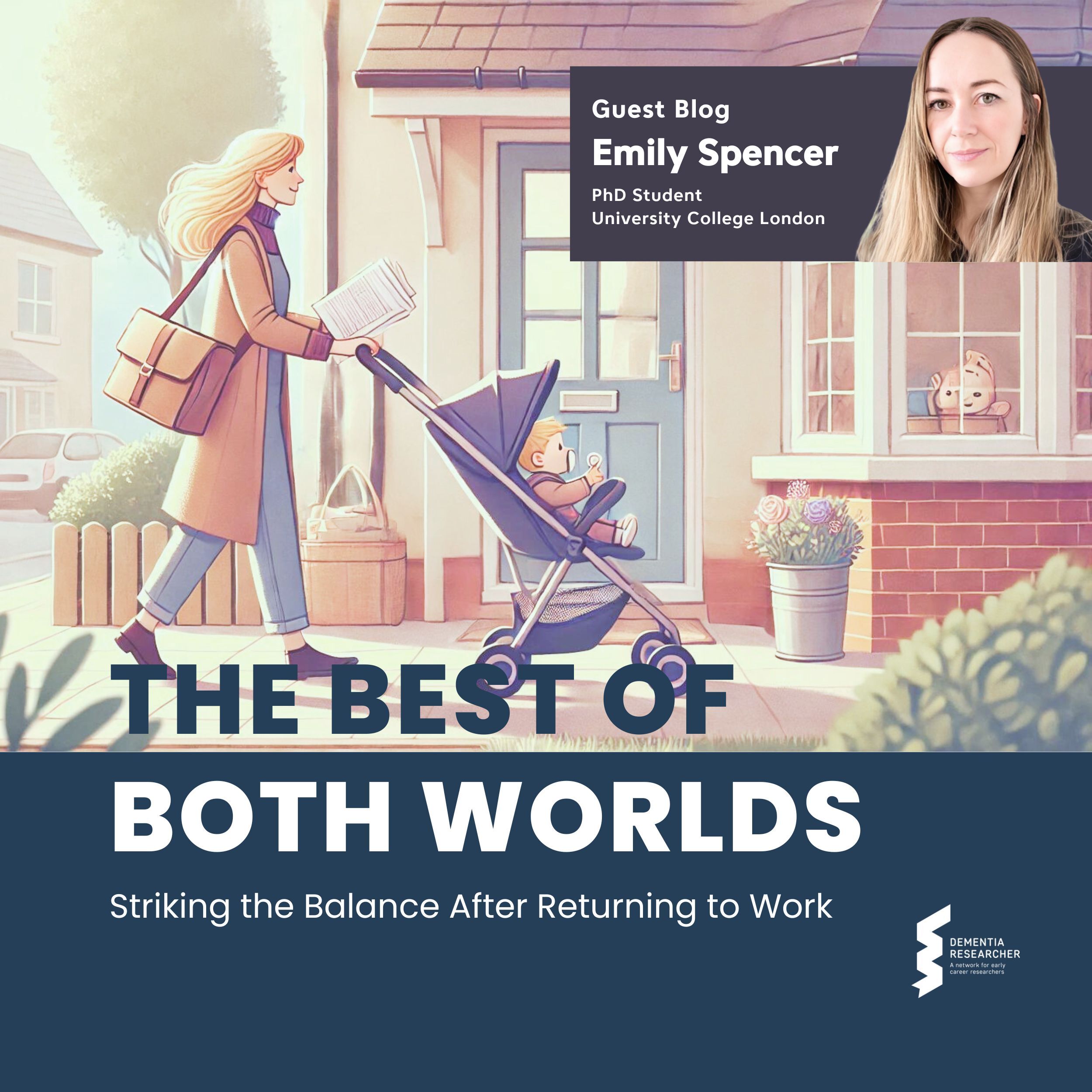
Ep 508Emily Spencer - Best of Both Worlds
Emily Spencer, narrating her blog written for the Dementia Researcher website. In this blog, Emily shares her experience of returning to work after nine months of maternity leave while balancing her PhD and the challenges of parenthood. She reflects on the initial optimism of her decision to return early, influenced by financial considerations and the availability of childcare. However, as she navigates the reality of being away from her son during key developmental moments, she questions whether she made the right choice. Despite the emotional challenges, Emily remains thankful for the flexibility academia offers, allowing her to balance her research, finances, and family life, while optimistically looking ahead to finding a sustainable balance. Find the original text, and narration here on our website. https://www.dementiaresearcher.nihr.ac.uk/blog-the-best-of-both-worlds/ #DementiaResearch #AcademicMother #Academia #MaternityLeave #Research -- Emily Spencer is a PhD Student at University College London looking at improving how GPs communicate with people with dementia and their family carers about their future care. Emily previous had a 5 year career break to pursue a career as a musician, and has previously undertaken research on improving the care people with dementia receive from their GP practice, as well as end-of-life and palliative care provision in the community. Emily is also a new mum and will be writing about her experiences navigating motherhood and a research career. -- Enjoy listening? We're always looking for new bloggers, drop us a line. http://www.dementiaresearcher.nihr.ac.uk This podcast is brought to you in association with Alzheimer's Association, Alzheimer's Research UK, Alzheimer's Society and Race Against Dementia, who we thank for their ongoing support. -- Follow us on Social Media: https://www.instagram.com/dementia_researcher/ https://www.facebook.com/Dementia.Researcher/ https://x.com/demrescommunity https://bsky.app/profile/dementiaresearcher.bsky.social https://www.linkedin.com/company/dementia-researcher
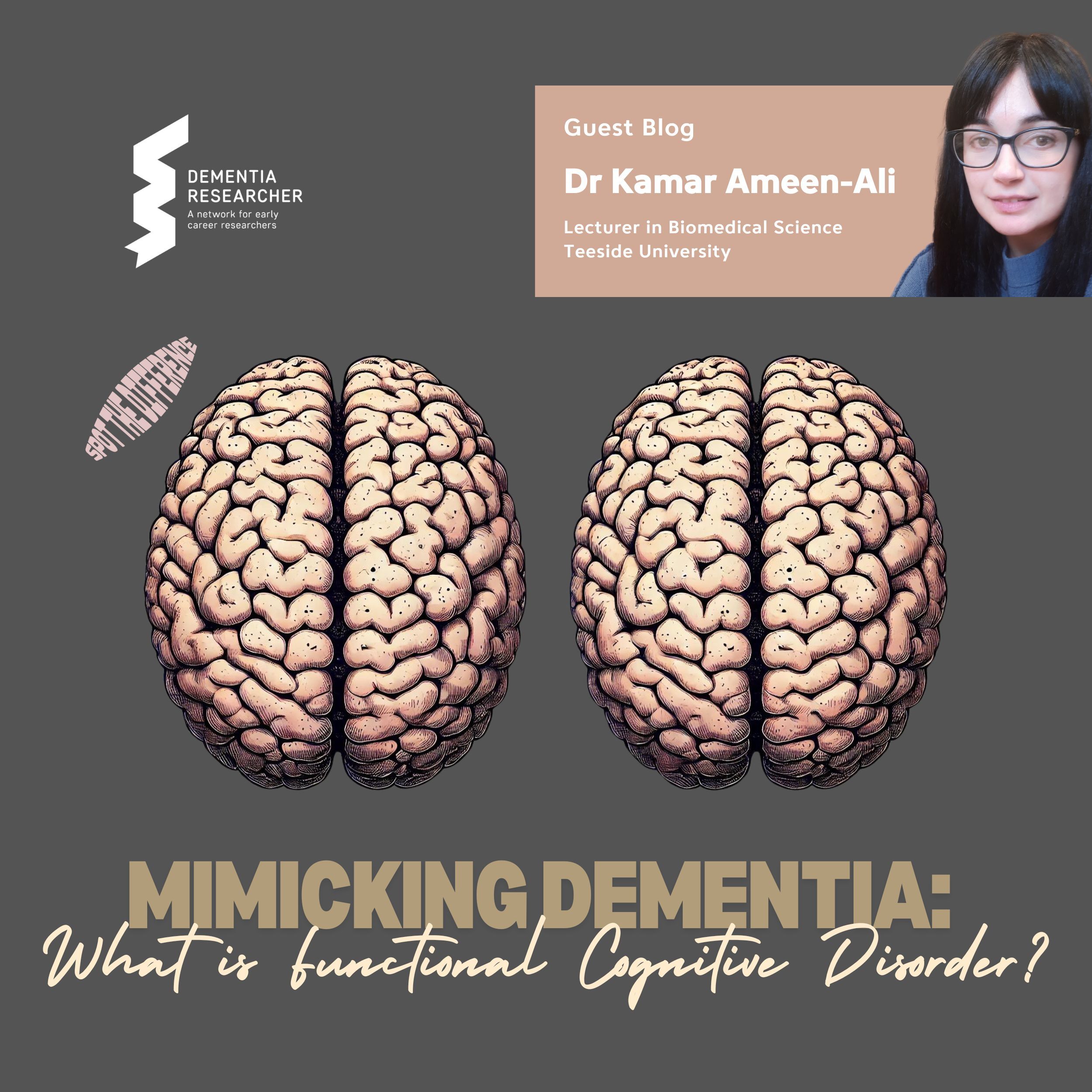
Ep 509Dr Kamar Ameen-Ali - Mimicking Dementia: What is Functional Cognitive Disorder?
Dr Kamar Ameen-Ali narrates her blog written for Dementia Researcher. The blog discusses Functional Cognitive Disorder (FCD), a condition that mimics dementia due to overlapping clinical symptoms such as cognitive impairment. While FCD shares similarities with dementia, including changes in memory and thinking, a key difference is that FCD is not degenerative. Unlike dementia, where brain cells are progressively lost, FCD involves dysfunction in how brain cells function and communicate. Diagnosis of FCD is complex, as it can sometimes be mistaken for dementia, but it should be based on identifying unique clinical features, such as internal inconsistency in cognitive performance. Improving diagnostic specificity is crucial to avoid misdiagnosis and ensure appropriate treatment for those with non-disease-related cognitive impairments like FCD Find the original text, and narration here on our website. https://www.dementiaresearcher.nihr.ac.uk/blog-mimicking-dementia-what-is-functional-cognitive-disorder/ -- Dr Kamar Ameen-Ali is a Lecturer in Biomedical Science at Teesside University & Affiliate Researcher at Glasgow University. In addition to teaching, Kamar is exploring how neuroinflammation following traumatic brain injury contributes to the progression of neurodegenerative diseases that lead to dementia. Having first pursued a career as an NHS Psychologist, Kamar went back to University in Durham to look at rodent behavioural tasks to completed her PhD, and then worked as a regional Programme Manager for NC3Rs. -- Enjoy listening? We're always looking for new bloggers, drop us a line. http://www.dementiaresearcher.nihr.ac.uk This podcast is brought to you in association with Alzheimer's Association, Alzheimer's Research UK, Alzheimer's Society and Race Against Dementia, who we thank for their ongoing support. -- Follow us on Social Media: https://www.instagram.com/dementia_researcher/ https://www.facebook.com/Dementia.Researcher/ https://x.com/demrescommunity https://bsky.app/profile/dementiaresearcher.bsky.social https://www.linkedin.com/company/dementia-researcher
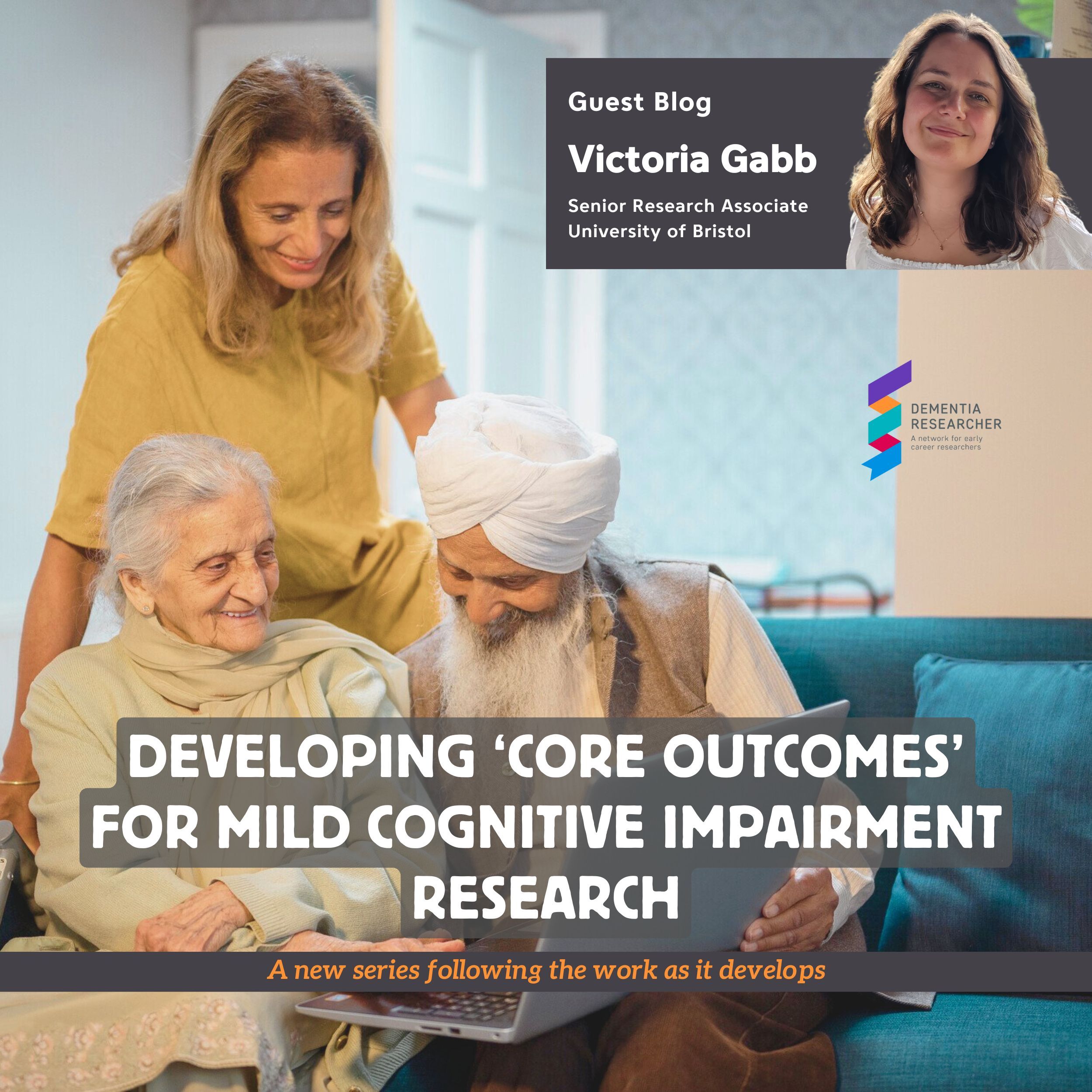
Ep 507Victoria Gabb - Developing ‘core outcomes’ for mild cognitive impairment research
Victoria Gabb, narrates her blog written for the Dementia Researcher website. Join Victoria, a Senior Research Associate at the University of Bristol, as she embarks on a new blog series exploring the development of 'core outcomes' for mild cognitive impairment (MCI) research. This series will follow the year-long project aimed at establishing a core outcome set (COS) for MCI, ensuring that research outcomes are both meaningful to patients and useful for clinical studies. By involving people with lived experience of MCI and professionals in the field, this work seeks to influence future research and improve patient care. Stay tuned for regular updates and insights. Find the original text, and narration here on our website. https://www.dementiaresearcher.nihr.ac.uk/blog-developing-core-outcomes-for-mci-research/ -- Victoria Gabb is a Senior Research Associate in Sleep & Dementia Neuroscience at University of Bristol. Victoria is working on her PhD through publication and she is currently working on an important project to develop ‘Core Outcomes’ for Mild Cognitive Impairment. Her blogs on dementia researcher will be a way of sharing the progress of her work, to improve transparency, share the process and as a way to involve others - sharing the work, the process, and life in the pursuit of research. -- Enjoy listening? We're always looking for new bloggers, drop us a line. http://www.dementiaresearcher.nihr.ac.uk This podcast is brought to you in association with Alzheimer's Association, Alzheimer's Research UK, Alzheimer's Society and Race Against Dementia, who we thank for their ongoing support. -- Follow us on Social Media: https://www.instagram.com/dementia_researcher/ https://www.facebook.com/Dementia.Researcher/ https://twitter.com/demrescommunity https://www.linkedin.com/company/dementia-researcher https://bsky.app/profile/dementiaresearcher.bsky.social
Ep 506Dr Sam Moxon - Flying Solo to an International Conference? A Survival Guide
Dr Sam Moxon, narrates his blog written for Dementia Researcher. In this blog, Sam provides practical advice for PhD students and postdocs attending conferences alone, especially overseas. Sam shares his personal experience, acknowledging that while solo travel can seem daunting, it offers significant personal and professional growth opportunities. He gives key tips, such as preparing thoroughly for the trip to reduce anxiety, obtaining an e-SIM to stay connected, using long-haul flights as a chance to relax, arriving early to explore the area, and making efforts to network at the event. Ultimately, he emphasises that solo travel can be a rewarding and empowering experience. Find the original text, and narration here on our website. https://www.dementiaresearcher.nihr.ac.uk/blog-flying-solo-to-an-international-conference-a-survival-guide/ -- Dr Sam Moxon is a biomaterials Research Fellow at University of Birmingham. His expertise falls on the interface between biology and engineering. His PhD focussed on regenerative medicine and he now works on trying to develop 3D bioprinting techniques with human stem cells, so that we better understand and treat degenerative diseases. Outside of the lab he hikes through the Lake District and is an expert on all things Disney. -- Enjoy listening and reading our blogs? We're always on the look out for new contributors, drop us a line and share your own research and careers advice [email protected] This podcast is brought to you in association with the NIHR, Alzheimer's Association, Alzheimer's Research UK, Alzheimer's Society and Race Against Dementia, who we thank for their ongoing support. -- Follow us on Social Media: https://www.instagram.com/dementia_researcher/ https://www.facebook.com/Dementia.Researcher/ https://twitter.com/demrescommunity https://www.linkedin.com/company/dementia-researcher https://bsky.app/profile/dementiaresearcher.bsky.social
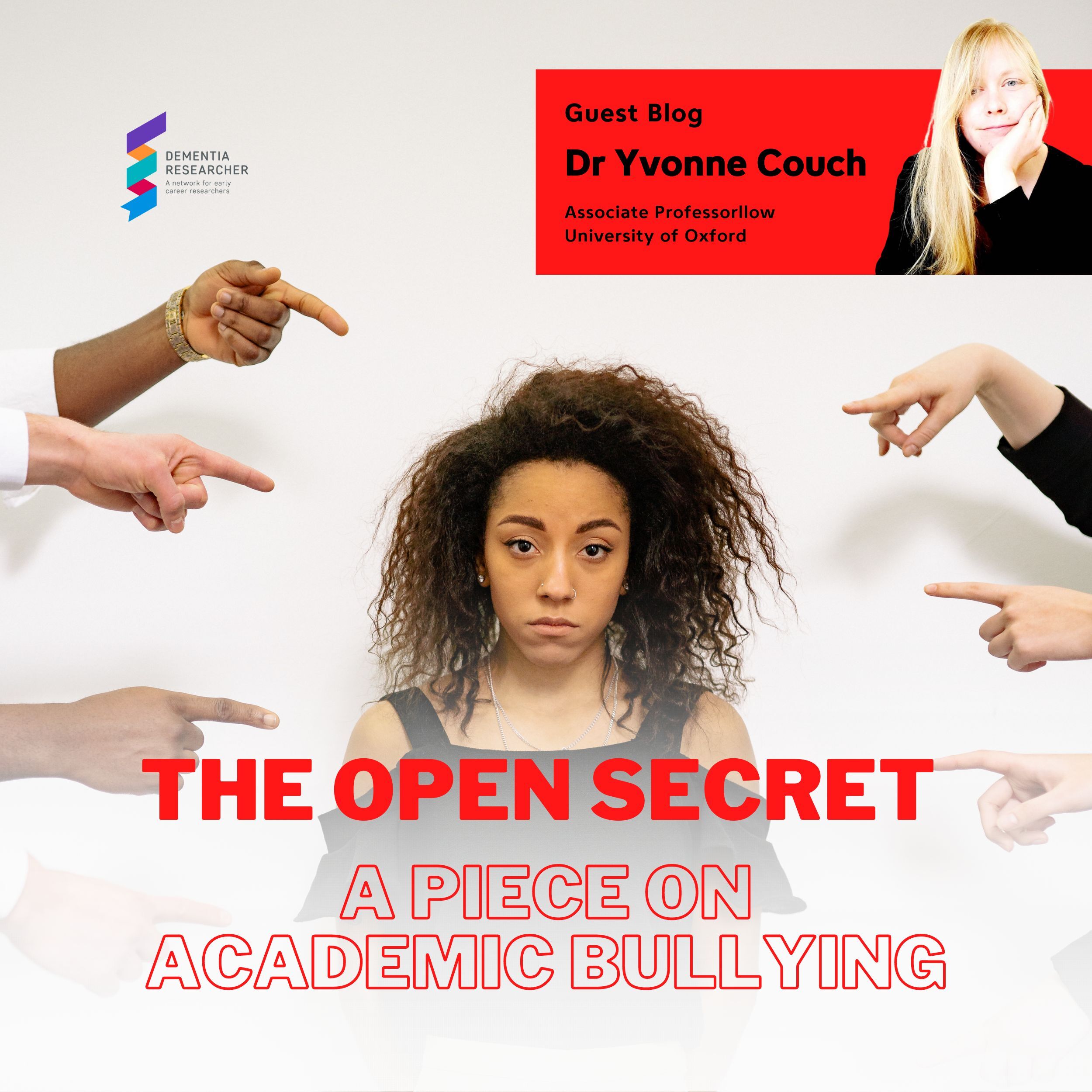
Ep 505Dr Yvonne Couch - The Open Secret: A Piece on Academic Bullying
Dr Yvonne Couch, narrates her blog written for the Dementia Researcher website. Yvonne’s blog, tackles the pervasive issue of academic bullying, exploring how power imbalances and toxic behaviours are often overlooked in academia. Drawing from personal experiences and insights from experts, the blog explores the subtle and overt forms of bullying that thrive in hierarchical environments. Yvonne challenges the culture that permits such behaviour and offers reflections on how systemic change, especially in leadership and mentorship, is essential for a healthier academic workplace. Find the original text, and narration here on our website. https://www.dementiaresearcher.nihr.ac.uk/blog-the-open-secret-a-piece-on-academic-bullying/ -- Dr Yvonne Couch is an Alzheimer's Research UK Fellow and Associate Professor at the University of Oxford. Yvonne studies the role of extracellular vesicles and their role in changing the function of the vasculature after stroke, aiming to discover why the prevalence of dementia after stroke is three times higher than the average. It is her passion for problem solving and love of science that drives her, in advancing our knowledge of disease. Yvonne writes about her work, academic life, and careers as she takes a new road into independent research @dr_yvonne_couch -- Enjoy listening? We're always looking for new bloggers, drop us a line. http://www.dementiaresearcher.nihr.ac.uk This podcast is brought to you in association with Alzheimer's Association, Alzheimer's Research UK, Alzheimer's Society and Race Against Dementia, who we thank for their ongoing support. -- Follow us on Social Media: https://www.instagram.com/dementia_researcher/ https://www.facebook.com/Dementia.Researcher/ https://twitter.com/demrescommunity https://www.linkedin.com/company/dementia-researcher https://bsky.app/profile/dementiaresearcher.bsky.social
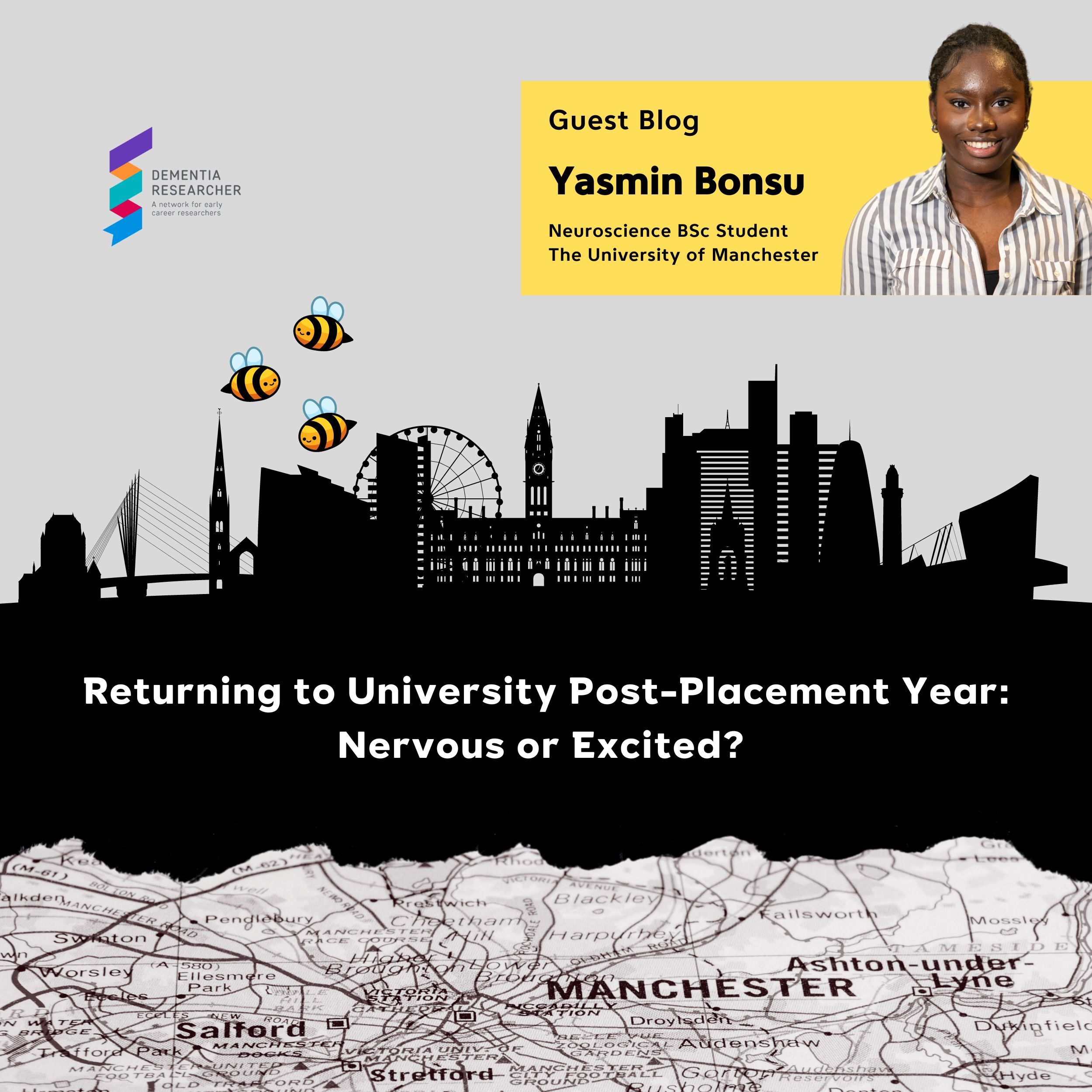
Ep 504Yasmin Bonsu - Returning to University Post-Placement Year: Nervous or Excited?
Yasmin Bonsu, narrates her blog written for the Dementia Researcher website. Yasmin shares her reflections and anticipations as she transitions from a hands-on placement year back to the theoretical environment of university for her final year. She discusses the skills and insights gained from her time in a research lab, her evolving academic and career aspirations in neuroscience, and her strategies to integrate practical lab experiences with classroom learning. Yasmin's story provides a thoughtful perspective on navigating the shift from practical work to academic theory while gearing up for the future challenges and opportunities that her final year at The University of Manchester will bring. Find the original text, and narration here on our website. https://www.dementiaresearcher.nihr.ac.uk/blog-returning-to-university-post-placement-year-nervous-or-excited/ -- Yasmin Bonsu is an an undergraduate student from the University of Manchester currently undertaking a placement year at Wade-Martins Lab at Oxford University. Yasmin is investigating the activity of proteoforms of the granin family in cortical neurons insulted with oligomerised amyloid beta. Her goal is to finish her placement year, earn her bachelor’s degree in neuroscience, and then pursue a PhD in clinical neuroscience. Through Yasmin's blogs we'll gain insights on life as an undergraduate, and hopefully inspire others to pursue a career in dementia research. @yasminnnx2 -- Enjoy listening? We're always looking for new bloggers, drop us a line. http://www.dementiaresearcher.nihr.ac.uk This podcast is brought to you in association with Alzheimer's Association, Alzheimer's Research UK, Alzheimer's Society and Race Against Dementia, who we thank for their ongoing support. -- Follow us on Social Media: https://www.instagram.com/dementia_researcher/ https://www.facebook.com/Dementia.Researcher/ https://twitter.com/demrescommunity https://www.linkedin.com/company/dementia-researcher https://bsky.app/profile/dementiaresearcher.bsky.social
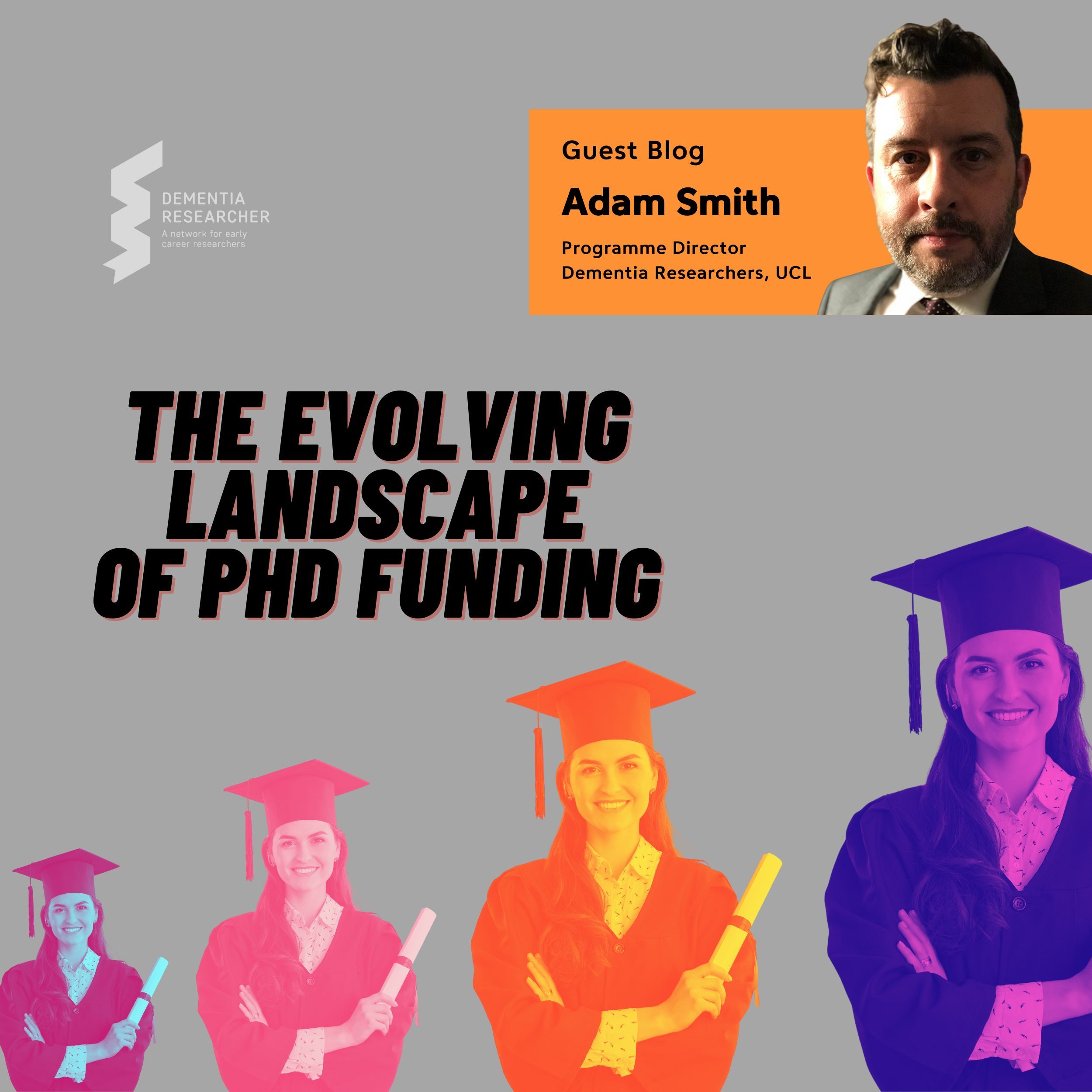
Ep 503Adam Smith - The Evolving Landscape of PhD Funding
Adam Smith narrates his blog written for Dementia Researcher. Adam’s blog discusses the evolving landscape of PhD funding, particularly the growing prominence of Doctoral Training Centres (DTCs). These centres offer structured, interdisciplinary, and cohort-based programmes, contrasting with traditional individual funding models. Adam highlights the benefits of DTCs, such as fostering collaboration, providing peer support, and delivering tailored training, which collectively enhance the PhD experience. However, he also acknowledges challenges, including the potential for reduced flexibility and the risk of excluding researchers whose interests fall outside the centres' thematic priorities. The blog advocates for a balanced ecosystem that includes both DTCs and individual funding options. Find the original text, and narration here on our website. https://www.dementiaresearcher.nihr.ac.uk/blog-the-evolving-landscape-of-phd-funding/ -- Adam Smith was born in the north, a long time ago. He wanted to write books, but ended up working in the NHS, and at the Department of Health. He is now Programme Director in the Office of the NIHR National Director for Dementia Research (which probably sounds more important than it is) at University College London. He has led a number of initiatives to improve dementia research (including this website, Join Dementia Research & ENRICH), as well as pursuing his own research interests. In his spare time, he grows vegetables, builds Lego & spends most of his time drinking too much coffee and squeezing technology into his house. -- Enjoy listening? We're always looking for new bloggers, drop us a line. http://www.dementiaresearcher.nihr.ac.uk This podcast is brought to you in association with Alzheimer's Association, Alzheimer's Research UK, Alzheimer's Society and Race Against Dementia, who we thank for their ongoing support. -- Follow us on Social Media: https://www.instagram.com/dementia_researcher/ https://www.facebook.com/Dementia.Researcher/ https://twitter.com/demrescommunity https://www.linkedin.com/company/dementia-researcher https://bsky.app/profile/dementiaresearcher.bsky.social
Ep 502Dr Connor Richardson - In Defence of Academia
Dr Connor Richardson narrates his blog written for Dementia Researcher. Connor's blog offers a thoughtful reflection on the challenges and rewards of an academic career. Prompted by a personal conversation with his mother, Connor addresses the common perception that academic research is a source of stress and dissatisfaction. He counters this by highlighting his deep love for science, the intellectual fulfilment he finds in solving complex problems, and the unique sense of community and mentorship within academia. He also emphasises the benefits of flexible work environments, personal growth, and the opportunities for travel and collaboration that come with a career in research. Find the original text, and narration here on our website. https://www.dementiaresearcher.nihr.ac.uk/blog-in-defence-of-academia/ -- Dr Connor Richardson is a Neuro-epidemiology Research Associate (soon to be NIHR Research Fellow) in the Newcastle University Population Health Sciences Institute. Connor is the research statistician for the Cognitive Function and Ageing studies (CFAS) multi-centre population cohort. His research interest lies in using advanced statistical modelling and machine learning to measure dementia risk. Connor blogs about his research, Equality, Diversity and Inclusion and sometimes his Pomapoo’s. -- Enjoy listening? We're always looking for new bloggers, drop us a line. http://www.dementiaresearcher.nihr.ac.uk This podcast is brought to you in association with Alzheimer's Association, Alzheimer's Research UK, Alzheimer's Society and Race Against Dementia, who we thank for their ongoing support. -- Follow us on Social Media: https://www.instagram.com/dementia_researcher/ https://www.facebook.com/Dementia.Researcher/ https://twitter.com/demrescommunity https://www.linkedin.com/company/dementia-researcher https://bsky.app/profile/dementiaresearcher.bsky.social

Ep 501Dr Hannah Hussain - Reflections on My PhD Viva and Next Steps
Hannah Hussain narrates her blog written for Dementia Researcher. In her final blog, Dr (Yes it's Doctor now) Hannah Hussain reflects on her PhD viva experience, offering valuable tips for preparation and success. She highlights the importance of giving yourself enough time to revise, the benefits of doing a mock viva, and the need for confidence on the big day. Hannah also shares insights on handling corrections post-viva and navigating the transition from academia to the job market, providing practical advice based on her own journey. As she moves into a new role as an economist, this blog marks the end of her writing journey with the Dementia Researcher team, but you can follow Hannah on LinkedIn to keep in-touch with her career progress.. Find the original text, and narration here on our website. https://www.dementiaresearcher.nihr.ac.uk/blog-reflections-on-my-phd-viva-next-steps/ #PhDLife #PhDViva #Viva -- Hannah Hussain is a PhD Student in Health Economics at The University of Sheffield. As a proud third generation migrant and British-Asian, her career path has been linear and ever evolving, originally qualifying as a Pharmacist in Nottingham, then Health Economics in Birmingham. Her studies have opened a world into Psychology, Mental Health and other areas of health, and with that and personal influences she found her passion for dementia. -- This podcast is brought to you in association with Alzheimer's Association, Alzheimer's Research UK, Alzheimer's Society and Race Against Dementia, who we thank for their ongoing support. Enjoy listening? We're always looking for new bloggers, drop us a line [email protected] -- Follow us on Social Media: https://www.instagram.com/dementia_researcher/ https://www.facebook.com/Dementia.Researcher/ https://twitter.com/demrescommunity https://www.linkedin.com/company/dementia-researcher https://bsky.app/profile/dementiaresearcher.bsky.social
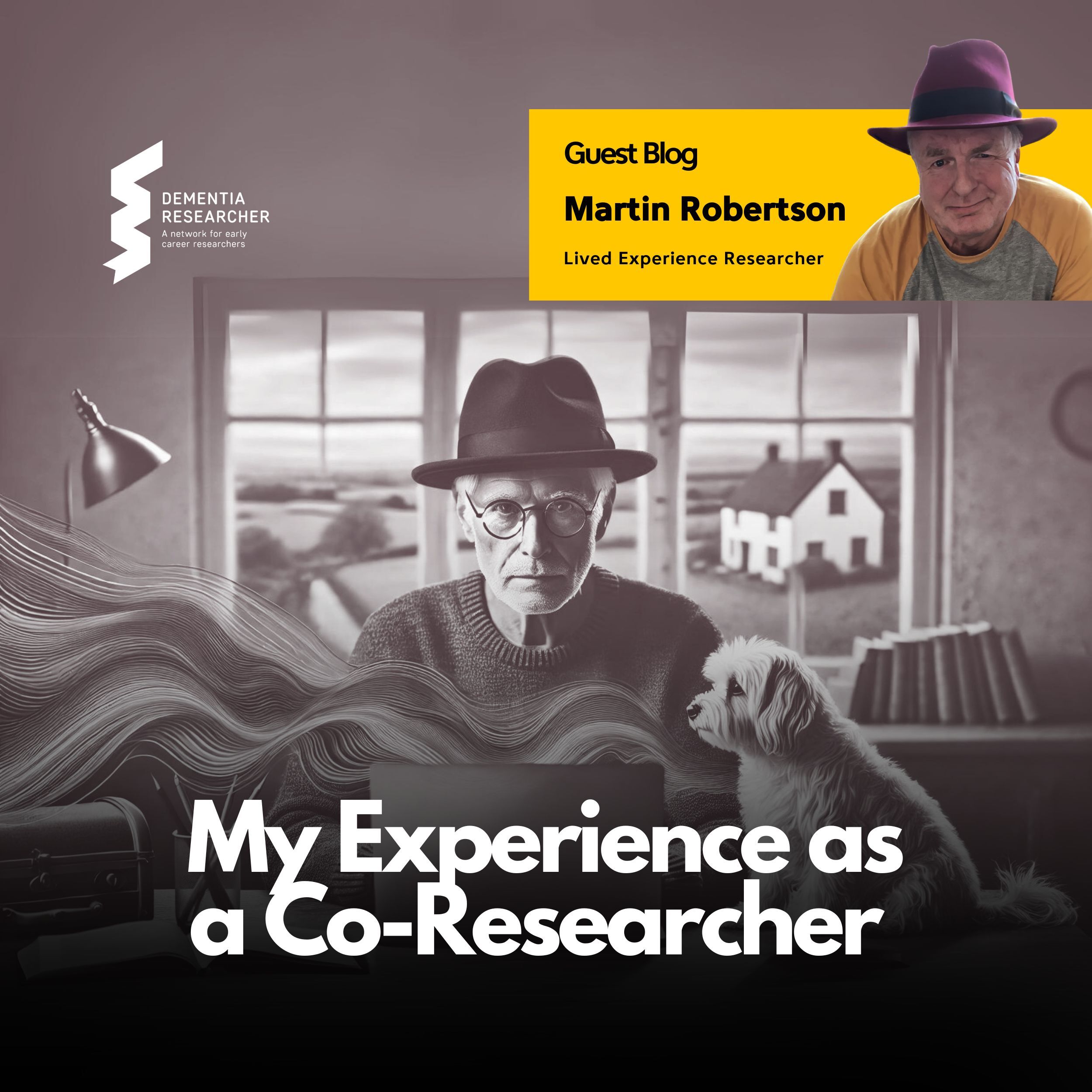
Ep 500Martin Robertson - My Experience as a Co-Researcher
Martin Robertson narrates his blog written for Dementia Researcher. Martin shares his personal journey as a Co-Researcher following his diagnosis with Posterior Cortical Atrophy (PCA), a rare form of dementia. He reflects on how the shift to online work during the COVID-19 pandemic allowed him to stay active and engaged in research, which his neurologist believes has slowed the progression of his condition. Drawing on his past professional experiences in benefit fraud and personal care, Martin highlights the transferable skills that have helped him thrive in academic settings. Despite his cognitive challenges, he values the sense of empowerment and teamwork that co-research provides, allowing him to contribute meaningfully while managing his condition. Find the original text, and narration here on our website. https://www.dementiaresearcher.nihr.ac.uk/blog-my-experience-as-a-co-researcher/ -- Martin Robertson is a lived experience researcher living in Scotland. He has been involved in a number of research projects and is passionate about co-production and public voice in research since his diagnosis with Posterior Cortical Atrophy, in 2016 aged 57 -- Enjoy listening? We're always looking for new bloggers, drop us a line. http://www.dementiaresearcher.nihr.ac.uk This podcast is brought to you in association with Alzheimer's Association, Alzheimer's Research UK, Alzheimer's Society and Race Against Dementia, who we thank for their ongoing support. -- Follow us on Social Media: https://www.instagram.com/dementia_researcher/ https://www.facebook.com/Dementia.Researcher/ https://twitter.com/demrescommunity https://www.linkedin.com/company/dementia-researcher https://bsky.app/profile/dementiaresearcher.bsky.social
Ep 499Adam Smith - Making Friends When You're the Newcomer
Adam Smith narrates his blog written for Dementia Researcher. Adam's blog, explores the challenges of forming new connections as an adult in unfamiliar environments, such as new workplaces or countries. He offers practical advice on how to start small by greeting others, showing up to social events, asking questions, and finding common interests. Adam emphasises patience, open-mindedness, and the importance of following up with people to maintain connections. The blog encourages readers to embrace the awkwardness and take proactive steps in building meaningful friendships. Find the original text, and narration here on our website. https://www.dementiaresearcher.nihr.ac.uk/blog-making-friends-when-youre-the-newcomer/ -- Adam Smith was born in the north, a long time ago. He wanted to write books, but ended up working in the NHS, and at the Department of Health. He is now Programme Director in the Office of the NIHR National Director for Dementia Research (which probably sounds more important than it is) at University College London. He has led a number of initiatives to improve dementia research (including this website, Join Dementia Research & ENRICH), as well as pursuing his own research interests. In his spare time, he grows vegetables, builds Lego & spends most of his time drinking too much coffee and squeezing technology into his house. -- Enjoy listening? We're always looking for new bloggers, drop us a line. http://www.dementiaresearcher.nihr.ac.uk This podcast is brought to you in association with Alzheimer's Association, Alzheimer's Research UK, Alzheimer's Society and Race Against Dementia, who we thank for their ongoing support. -- Follow us on Social Media: https://www.instagram.com/dementia_researcher/ https://www.facebook.com/Dementia.Researcher/ https://twitter.com/demrescommunity https://www.linkedin.com/company/dementia-researcher https://bsky.app/profile/dementiaresearcher.bsky.social
Ep 498Rebecca Williams - The Joys of Academia (Seriously)
Rebecca Williams, narrates her blog written for the Dementia Researcher website. Rebecca shares her reflections on the highs and lows of academic life. She acknowledges the challenges, such as long days, coding frustrations, and balancing work-life responsibilities, but emphasises her passion for research and problem-solving. Rebecca highlights the excitement of working in a field as unique as computational neuroscience, the supportive academic community, and the flexibility of her work. Her blog serves as a reminder of the rewarding aspects of academia, even amidst its struggles. Find the original text, and narration here on our website. https://www.dementiaresearcher.nihr.ac.uk/blog-the-joys-of-academia-seriously/ -- Rebecca Williams is PhD student at the University of Cambridge. Though originally from ‘up North’ in a small town called Leigh, she did her undergraduate and masters at the University of Oxford before defecting to Cambridge for her doctorate researching Frontotemporal dementia and Apathy. She now spends her days collecting data from wonderful volunteers, and coding. Outside work, she plays board games, and is very crafty. @beccasue99 -- Enjoy listening? We're always looking for new bloggers, drop us a line. http://www.dementiaresearcher.nihr.ac.uk This podcast is brought to you in association with Alzheimer's Association, Alzheimer's Research UK, Alzheimer's Society and Race Against Dementia, who we thank for their ongoing support. -- Follow us on Social Media: https://www.instagram.com/dementia_researcher/ https://www.facebook.com/Dementia.Researcher/ https://twitter.com/demrescommunity https://www.linkedin.com/company/dementia-researcher https://bsky.app/profile/dementiaresearcher.bsky.social
Ep 497Dr Jodi Watt - Inequity in dementia drug development
Dr Jodi Watt, narrating a new blog they wrote for the Dementia Researcher website. Discover the disparities in dementia drug development in Dr Jodi Watt's latest blog. As a Postdoctoral Researcher at the University of Glasgow, Jodi discusses the urgent need for more inclusive research that considers the diverse populations affected by dementia. Learn about the biases in clinical trials and the potential of drug repurposing, and why it's crucial to develop treatments that cater to all individuals, not just a select few. This blog is a must-read for anyone interested in equitable advancements in dementia care. Find the original text, and narration here on our website. https://www.dementiaresearcher.nihr.ac.uk/blog-inequity-in-dementia-drug-development/ -- Dr Jodi Watt is a Postdoctoral Researcher at University of Glasgow. Jodi's academic interests are in both healthy ageing and neurodegenerative diseases of older age, and they are currently working on drug repurposing for dementia. Previously they worked on understanding structural, metabolic and physiological brain changes with age, as measured using magnetic resonance imaging. As a queer and neurodiverse person, Jodi is also incredibly interested in improving diversity and inclusion practices both within and outside of the academic context. -- Enjoy listening? We're always looking for new bloggers, drop us a line. http://www.dementiaresearcher.nihr.ac.uk This podcast is brought to you in association with Alzheimer's Association, Alzheimer's Research UK, Alzheimer's Society and Race Against Dementia, who we thank for their ongoing support. -- Follow us on Social Media: https://www.instagram.com/dementia_researcher/ https://www.facebook.com/Dementia.Researcher/ https://twitter.com/demrescommunity https://www.linkedin.com/company/dementia-researcher https://bsky.app/profile/dementiaresearcher.bsky.social
Ep 496Dr Clíona Farrell - Communicating your science effectively: know your audience
Dr Clíona Farrell, narrating her blog written for the Dementia Researcher website. Clíona discusses the importance of understanding your audience in effective science communication. She emphasises that communicating scientific research requires tailoring the content and presentation style to different audiences, whether they are laypeople, students, or individuals with specific needs. Through various examples from her experiences, she highlights the importance of engaging the audience by relating scientific findings to broader, more relatable contexts and ensuring accessibility in both language and format. This blog underscores the significance of being well-prepared, respectful, and aware of current developments in the field to facilitate meaningful engagement and avoid alienating the audience. Find the original text, and narration here on our website. https://www.dementiaresearcher.nihr.ac.uk/blog-communicating-your-science-effectively-know-your-audience/ #DementiaResearch #DownSyndrome #ScienceCommunications -- Dr Clíona Farrell is a Postdoctoral Researcher in the UK Dementia Research Institute at University College London. Her work focuses on understanding neuroinflammation in Down syndrome, both prior to, and in response to, Alzheimer’s disease pathology. Originally from Dublin, Ireland, Clíona completed her undergraduate degree in Neuroscience in Trinity College, and then worked as a research assistant in the Royal College of Surgeons studying ALS and Parkinson’s disease. She also knows the secret behind scopping the perfect 99 ice-cream cone. @ClionaFarrell_ -- Enjoy listening? We're always looking for new bloggers, drop us a line. http://www.dementiaresearcher.nihr.ac.uk This podcast is brought to you in association with Alzheimer's Association, Alzheimer's Research UK, Alzheimer's Society and Race Against Dementia, who we thank for their ongoing support. -- Follow us on Social Media: https://www.instagram.com/dementia_researcher/ https://www.facebook.com/Dementia.Researcher/ https://twitter.com/demrescommunity https://www.linkedin.com/company/dementia-researcher https://bsky.app/profile/dementiaresearcher.bsky.social
Ep 495Dr Lis Grey - Think BIG, Moving from the Individual to the Population
Dr Lis Grey, narrating her blog written for the Dementia Researcher website. In this blog Lis discusses the limitations of individual-level interventions in preventing chronic diseases, including dementias. While recent advances in identifying biomarkers and understanding the genetic basis of dementias are promising, the Lis argues that focusing solely on individual interventions, such as health checks and behavioural support, has limited success in reducing health risks and can exacerbate stigma. Instead she advocates for a broader, population-level approach that addresses social determinants of health, such as poverty and pollution, to achieve more substantial and equitable health outcomes. They call for a shift in research and policy focus towards these upstream changes to effectively prevent dementia and other chronic diseases. Find the original text, and narration here on our website. https://www.dementiaresearcher.nihr.ac.uk/blog-think-big-moving-from-the-individual-to-the-population/ #DementiaResearch -- Dr Lis Grey is an NIHR / Alzheimer's Society Dem Comm Research Fellow at University of Bristol and NIHR ARC West. Her interest lie in understanding how people with neurodegenerative disorders experience health and care services, and developing ways to improve services and support people to live well with these conditions. Lis is also passionate about working to improve research culture, and away from her work, a passionate gardner overly-ambitious baker. Connect with Lis on LinkedIn. -- Enjoy listening? We're always looking for new bloggers, drop us a line. http://www.dementiaresearcher.nihr.ac.uk This podcast is brought to you in association with Alzheimer's Association, Alzheimer's Research UK, Alzheimer's Society and Race Against Dementia, who we thank for their ongoing support. -- Follow us on Social Media: https://www.instagram.com/dementia_researcher/ https://www.facebook.com/Dementia.Researcher/ https://x.com/demrescommunity https://bsky.app/profile/dementiaresearcher.bsky.social https://www.linkedin.com/company/dementia-researcher

Ep 494Emily Spencer - Pain, Perception, and Childbirth: Can a Woman be Believed?
Emily Spencer, narrating her blog written for the Dementia Researcher website. In her blog, Emily explores the often-dismissive attitudes towards women's pain during childbirth, highlighting her own experience of being repeatedly told she wasn’t in labour despite severe contractions. Emily draws a powerful parallel between this dismissal and the experiences of people with dementia, who are often not believed or understood due to communication barriers and assumptions about their cognitive state. Through her story, she sheds light on the broader issue of medical misogyny and the importance of listening to and validating all patients' experiences. Find the original text, and narration here on our website. https://www.dementiaresearcher.nihr.ac.uk/blog-pain-perception-and-childbirth-can-a-woman-be-believed/ #DementiaResearch #AcademicMother #Academia #MaternityLeave #Research -- Emily Spencer is a PhD Student at University College London looking at improving how GPs communicate with people with dementia and their family carers about their future care. Emily previous had a 5 year career break to pursue a career as a musician, and has previously undertaken research on improving the care people with dementia receive from their GP practice, as well as end-of-life and palliative care provision in the community. Emily is also a new mum and will be writing about her experiences navigating motherhood and a research career. -- Enjoy listening? We're always looking for new bloggers, drop us a line. http://www.dementiaresearcher.nihr.ac.uk This podcast is brought to you in association with Alzheimer's Association, Alzheimer's Research UK, Alzheimer's Society and Race Against Dementia, who we thank for their ongoing support. -- Follow us on Social Media: https://www.instagram.com/dementia_researcher/ https://www.facebook.com/Dementia.Researcher/ https://x.com/demrescommunity https://bsky.app/profile/dementiaresearcher.bsky.social https://www.linkedin.com/company/dementia-researcher
Ep 493Dr Martyna Matuszyk - Alzheimer’s Society invests £9m in Doctoral Training Centres
Dr Martyna Matuszyk, narrates her article written for Dementia Researcher. Martyna shares news that the Alzheimer’s Society is investing over £9 million in three Doctoral Training Centres to support early career researchers in dementia research. This funding aims to nurture a new generation of scientists by providing world-class training and resources, encouraging innovative ideas, and building sustainable research capacity. The centres will focus on specific areas, such as vascular and immune contributors to dementia, Lewy body dementia, and integrated dementia care, to advance understanding and treatment of dementia, ultimately leading to life-changing breakthroughs for those affected by the condition. Find the original text, and narration here on our website. https://www.dementiaresearcher.nihr.ac.uk/alzheimers-society-invests-9m-in-doctoral-training-centres/ #DementiaResearch Note: The DTC's will start to advertised funded studentship opportunities from September 2024, keep an eye on Dementia Researcher job listings. -- Dr Martyna Matuszyk is a former postdoc from The University of Sheffield where she worked on Alzheimer’s disease and ALS. Martyna is now Research Communications Officer at Alzheimer’s Society. Her main role involves communicating dementia research to the wider public through various outlets. She is also a research spokesperson for the charity, so you might hear her voice on local radios when big dementia stories hit the news! -- Enjoy listening and reading our blogs? We're always on the look out for new contributors, drop us a line and share your own research and careers advice [email protected] This podcast is brought to you in association with the NIHR, Alzheimer's Association, Alzheimer's Research UK, Alzheimer's Society and Race Against Dementia, who we thank for their ongoing support. -- Follow us on Social Media: https://www.instagram.com/dementia_researcher/ https://www.facebook.com/Dementia.Researcher/ https://x.com/demrescommunity https://bsky.app/profile/dementiaresearcher.bsky.social https://www.linkedin.com/company/dementia-researcher

Ep 492Dr Ayokunmi Ojebode - Poetic Tales from Dementia Wards
Dr Ayokunmi Ojebode, narrates his blog written for Dementia Researcher. In his guest blog Ayokunmi, examines the intersection of poetry and dementia care. Drawing from his extensive experience as a creative writer, scholar, and dementia care worker, Ayokunmi shares some of his own work and discusses how poetry serves as a powerful medium for expressing the complex emotions and experiences of individuals living with dementia. He highlights the therapeutic value of poetry in supporting the well-being of both patients, people living with dementia and caregivers, while also advocating for greater recognition of the personhood and dignity of those affected by dementia. Find the original text, and narration here on our website. https://www.dementiaresearcher.nihr.ac.uk/blog-poetic-tales-from-dementia-wards/ -- Dr Ayokunmi Ojebode is a creative writer, lecturer and researcher with eight years of experience as a university faculty. He is an Honorary Research Fellow at the School of English, University of Nottingham and a Member of the Institute of Mental Health Nottingham. He is also a Bank Mental Health Support Worker with Nottinghamshire Healthcare NHS Foundation Trust and has worked across different care homes and hospitals in the East Midlands. He is a Volunteer Call Companion for the Alzheimer’s Society, a Focus Group participant for the Alzheimer’s Society’s Companionship Project and a Lead Social Media and Community Strategist for Alzheimer’s Disease International (ADI), providing care and expert counsel for people with dementia and their carers through telephone service, community and digital engagements. Dr Ojebode is a dynamic researcher with a track record in the field of Dementia, Arts and Poetry. -- Enjoy listening and reading our blogs? We're always on the look out for new contributors, drop us a line and share your own research and careers advice [email protected] This podcast is brought to you in association with the NIHR, Alzheimer's Association, Alzheimer's Research UK, Alzheimer's Society and Race Against Dementia, who we thank for their ongoing support. -- Follow us on Social Media: https://www.instagram.com/dementia_researcher/ https://www.facebook.com/Dementia.Researcher/ https://twitter.com/demrescommunity https://www.linkedin.com/company/dementia-researcher
Ep 491Rebecca Williams - Selfish Reasons for Open Science
Rebecca Williams, narrates her blog written for the Dementia Researcher website. Rebecca's blog explores the practical, self-serving benefits of Open Science, beyond its noble ideals. She highlights how practices like preregistration can streamline research, making analysis faster and writing less labor-intensive. Additionally, Open Science fosters transparency and accountability, making it easier to publish null results and receive valuable feedback on data and code. By embracing these methods, researchers can enhance the efficiency and integrity of their work, all while contributing to a more open and honest scientific community. Find the original text, and narration here on our website. https://www.dementiaresearcher.nihr.ac.uk/blog-selfish-reasons-for-open-science/ -- Rebecca Williams is PhD student at the University of Cambridge. Though originally from ‘up North’ in a small town called Leigh, she did her undergraduate and masters at the University of Oxford before defecting to Cambridge for her doctorate researching Frontotemporal dementia and Apathy. She now spends her days collecting data from wonderful volunteers, and coding. Outside work, she plays board games, and is very crafty. @beccasue99 -- Enjoy listening? We're always looking for new bloggers, drop us a line. http://www.dementiaresearcher.nihr.ac.uk This podcast is brought to you in association with Alzheimer's Association, Alzheimer's Research UK, Alzheimer's Society and Race Against Dementia, who we thank for their ongoing support. -- Follow us on Social Media: https://www.instagram.com/dementia_researcher/ https://www.facebook.com/Dementia.Researcher/ https://twitter.com/demrescommunity https://www.linkedin.com/company/dementia-researcher

Ep 490Amelia Robson - What is polysomnography?
Amelia Robson, narrates her blog written for the Dementia Researcher website. Amelia's blog offers a detailed look into her work as a research assistant in sleep psychology, focusing on the use of Polysomnography (PSG) to study sleep disorders, particularly in people living with dementia. She explains the intricate process of setting up PSG in patients' homes, where she carefully attaches electrodes to monitor brain waves, heart rate, and breathing during sleep. Despite the technical challenges and the emotional responsibility of being on call overnight, Amelia finds her work deeply rewarding, appreciating the cooperation of her patients and the insights gained from PSG. The blog also provides practical advice for working with complex equipment, highlighting the importance of practice, confidence, and learning from mistakes. Find the original text, and narration here on our website. https://www.dementiaresearcher.nihr.ac.uk/blog-what-is-polysomnography/ -- Amelia Robson is a Research Assistant at Northumbria University supporting delivery of NHS Clinical Trials, particularly in working with Dementia with Lewy bodies and Alzheimer’s disease patients. This work currently involves visiting patient’s homes and applying polysomnography sleep equipment on their face, scalp and body. Amelia graduated in Psychology in 2021 and is passionate about supporting people living with the dementia, and providing help for care givers. Her top tip.... Trust your Gut to stay on the right path. Follow Amelia Robson on LinkedIn -- Enjoy listening? We're always looking for new bloggers, drop us a line. http://www.dementiaresearcher.nihr.ac.uk This podcast is brought to you in association with Alzheimer's Association, Alzheimer's Research UK, Alzheimer's Society and Race Against Dementia, who we thank for their ongoing support. -- Follow us on Social Media: https://www.instagram.com/dementia_researcher/ https://www.facebook.com/Dementia.Researcher/ https://twitter.com/demrescommunity https://www.linkedin.com/company/dementia-researcher
Ep 489Dr Sam Moxon - The Mind’s Hidden Fortress, Cognitive Reserve and Dementia
Dr Sam Moxon, narrates his blog written for Dementia Researcher. In this blog, Sam explores the concept of cognitive reserve, which acts as a protective "hidden fortress" against dementia. Cognitive reserve refers to the brain's ability to adapt and remain resilient in the face of damage or aging, allowing some individuals to maintain cognitive function despite significant brain pathology. The development of cognitive reserve starts in childhood and is influenced by factors such as education, social interactions, and mentally stimulating activities. Understanding and enhancing cognitive reserve through lifestyle choices like learning, social engagement, and healthy habits can significantly reduce the risk of dementia and support healthy brain aging. Find the original text, and narration here on our website. https://www.dementiaresearcher.nihr.ac.uk/blog-the-minds-hidden-fortress-cognitive-reserve-and-dementia/ -- Dr Sam Moxon is a biomaterials Research Fellow at University of Birmingham. His expertise falls on the interface between biology and engineering. His PhD focussed on regenerative medicine and he now works on trying to develop 3D bioprinting techniques with human stem cells, so that we better understand and treat degenerative diseases. Outside of the lab he hikes through the Lake District and is an expert on all things Disney. -- Enjoy listening and reading our blogs? We're always on the look out for new contributors, drop us a line and share your own research and careers advice [email protected] This podcast is brought to you in association with the NIHR, Alzheimer's Association, Alzheimer's Research UK, Alzheimer's Society and Race Against Dementia, who we thank for their ongoing support. -- Follow us on Social Media: https://www.instagram.com/dementia_researcher/ https://www.facebook.com/Dementia.Researcher/ https://twitter.com/demrescommunity https://www.linkedin.com/company/dementia-researcher

Ep 488Adam Smith - Research Like an Olympian
Adam Smith narrates his blog written for Dementia Researcher. In this blog Adam draws parallels between the rigorous training and holistic approach of Olympians and the demands of dementia research. It explores how adopting strategies such as performance coaching, physical fitness, mental resilience, and balanced well-being can significantly enhance the productivity and success of researchers. By thinking like elite athletes and prioritising their overall health and focus, researchers can sustain high levels of performance, overcome the challenges of their field, and ultimately accelerate progress in dementia research. Find the original text, and narration here on our website. https://www.dementiaresearcher.nihr.ac.uk/blog-research-like-an-olympian/ -- Adam Smith was born in the north, a long time ago. He wanted to write books, but ended up working in the NHS, and at the Department of Health. He is now Programme Director in the Office of the NIHR National Director for Dementia Research (which probably sounds more important than it is) at University College London. He has led a number of initiatives to improve dementia research (including this website, Join Dementia Research & ENRICH), as well as pursuing his own research interests. In his spare time, he grows vegetables, builds Lego & spends most of his time drinking too much coffee and squeezing technology into his house. -- Enjoy listening? We're always looking for new bloggers, drop us a line. http://www.dementiaresearcher.nihr.ac.uk This podcast is brought to you in association with Alzheimer's Association, Alzheimer's Research UK, Alzheimer's Society and Race Against Dementia, who we thank for their ongoing support. -- Follow us on Social Media: https://www.instagram.com/dementia_researcher/ https://www.facebook.com/Dementia.Researcher/ https://twitter.com/demrescommunity https://www.linkedin.com/company/dementia-researcher
Ep 487Dr Yvonne Couch - Resilience
Dr Yvonne Couch, narrates her blog written for the Dementia Researcher website. Yvonne shares her experiences with resilience in academia, addressing the challenges of giving talks and dealing with grant rejections. She highlights the importance of recognising when resilience is beneficial versus when it becomes toxic positivity. By reflecting on her own journey and the pressures faced by junior researchers, Yvonne emphasises the need for a balanced approach to resilience that supports mental well-being while acknowledging the competitive nature of academic environments. Find the original text, and narration here on our website. https://www.dementiaresearcher.nihr.ac.uk/blog-resilience/ -- Dr Yvonne Couch is an Alzheimer's Research UK Fellow and Associate Professor at the University of Oxford. Yvonne studies the role of extracellular vesicles and their role in changing the function of the vasculature after stroke, aiming to discover why the prevalence of dementia after stroke is three times higher than the average. It is her passion for problem solving and love of science that drives her, in advancing our knowledge of disease. Yvonne writes about her work, academic life, and careers as she takes a new road into independent research @dr_yvonne_couch -- Enjoy listening? We're always looking for new bloggers, drop us a line. http://www.dementiaresearcher.nihr.ac.uk This podcast is brought to you in association with Alzheimer's Association, Alzheimer's Research UK, Alzheimer's Society and Race Against Dementia, who we thank for their ongoing support. -- Follow us on Social Media: https://www.instagram.com/dementia_researcher/ https://www.facebook.com/Dementia.Researcher/ https://twitter.com/demrescommunity https://www.linkedin.com/company/dementia-researcher
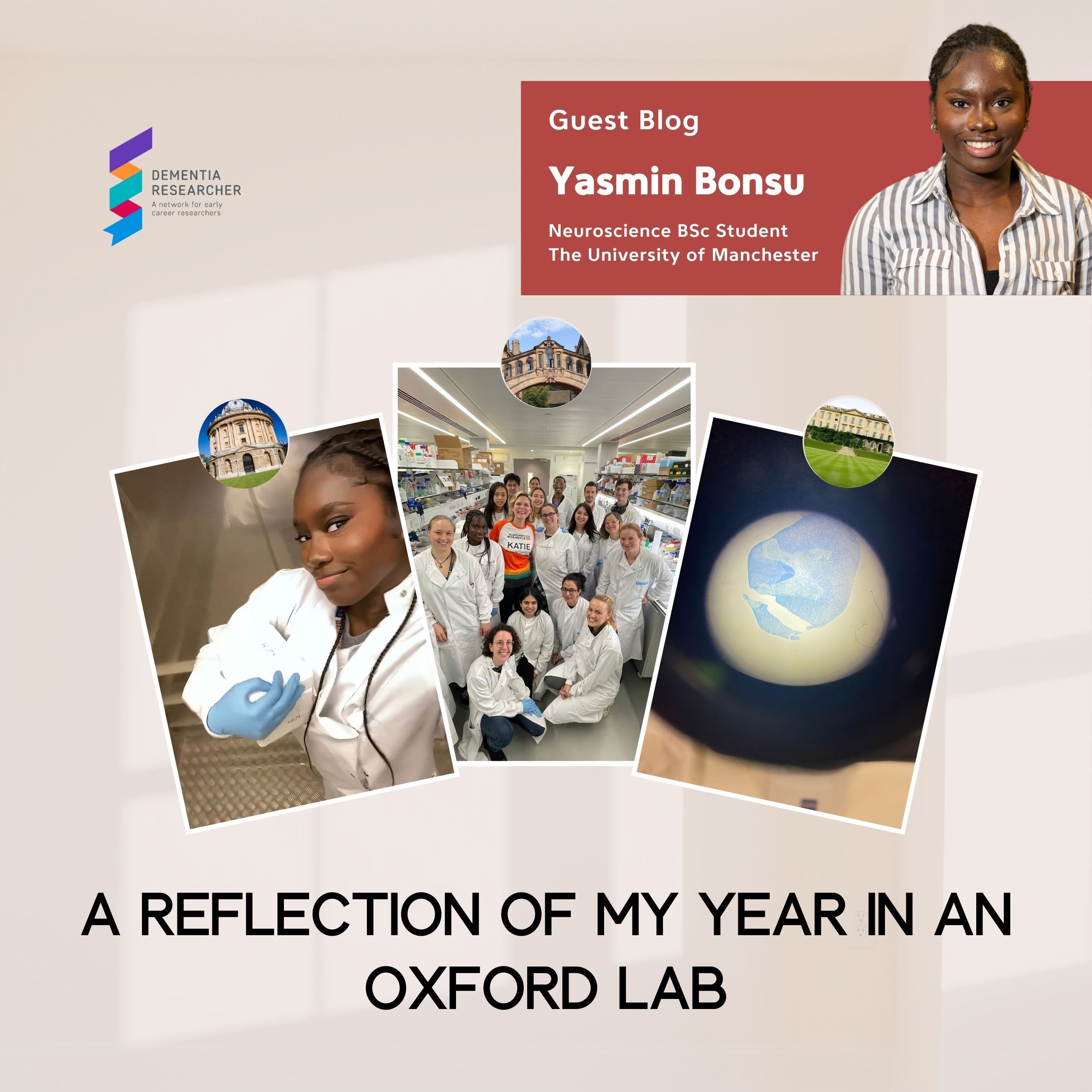
Ep 486Yasmin Bonsu - A reflection of my year in an Oxford Lab
Yasmin Bonsu, narrates her blog written for the Dementia Researcher website. Yasmin reflects on her transformative year in an Oxford Lab. She shares her experiences working on Parkinson's and Alzheimer's research, the impact of engaging with donors on Alzheimer’s Research UK day, and the inspiration drawn from the "Celebrating Diversity in Science and Medicine" event. Yasmin emphasises the importance of representation in STEM and the value of effective science communication. As she looks forward to her final year of university, she is excited about the future and eager to continue her journey in research, advocating for diversity and making science accessible to all. What would a placement year do for you? Find the original text, and narration here on our website. https://www.dementiaresearcher.nihr.ac.uk/blog-a-reflection-of-my-year-in-an-oxford-lab/ -- Yasmin Bonsu is an an undergraduate student from the University of Manchester currently undertaking a placement year at Wade-Martins Lab at Oxford University. Yasmin is investigating the activity of proteoforms of the granin family in cortical neurons insulted with oligomerised amyloid beta. Her goal is to finish her placement year, earn her bachelor’s degree in neuroscience, and then pursue a PhD in clinical neuroscience. Through Yasmin's blogs we'll gain insights on life as an undergraduate, and hopefully inspire others to pursue a career in dementia research. @yasminnnx2 -- Enjoy listening? We're always looking for new bloggers, drop us a line. http://www.dementiaresearcher.nihr.ac.uk This podcast is brought to you in association with Alzheimer's Association, Alzheimer's Research UK, Alzheimer's Society and Race Against Dementia, who we thank for their ongoing support. -- Follow us on Social Media: https://www.instagram.com/dementia_researcher/ https://www.facebook.com/Dementia.Researcher/ https://twitter.com/demrescommunity https://www.linkedin.com/company/dementia-researcher
Ep 484Hannah Hussain - Challenges of Dementia Care for Ethnic Minorities in the UK
Hannah Hussain narrates her blog written for Dementia Researcher. Hannah explores the unique challenges faced by minority communities in the UK regarding dementia care. It highlights the underrepresentation and barriers these communities face in accessing appropriate care, including cultural stigmas, lack of research, and the need for culturally relevant interventions. The blog underscores the importance of inclusivity, better diagnostic tools, and tailored support services to address these disparities and improve dementia care for diverse communities in the UK. Find the original text, and narration here on our website. https://www.dementiaresearcher.nihr.ac.uk/blog-challenges-of-dementia-care-for-ethnic-minorities-in-the-uk/ #Equalities -- Is this blog of interest? Them read this news... https://www.dementiaresearcher.nihr.ac.uk/1-5m-for-first-national-dementia-inequalities-network/ -- Hannah Hussain is a PhD Student in Health Economics at The University of Sheffield. As a proud third generation migrant and British-Asian, her career path has been linear and ever evolving, originally qualifying as a Pharmacist in Nottingham, then Health Economics in Birmingham. Her studies have opened a world into Psychology, Mental Health and other areas of health, and with that and personal influences she found her passion for dementia. -- This podcast is brought to you in association with Alzheimer's Association, Alzheimer's Research UK, Alzheimer's Society and Race Against Dementia, who we thank for their ongoing support. Enjoy listening? We're always looking for new bloggers, drop us a line [email protected] -- Follow us on Social Media: https://www.instagram.com/dementia_researcher/ https://www.facebook.com/Dementia.Researcher/ https://twitter.com/demrescommunity https://www.linkedin.com/company/dementia-researcher
Ep 485Dr Connor Richardson - Academic Promotions: A Tale of Two Tries (Part 2)
Dr Connor Richardson narrates his blog written for Dementia Researcher. In his blog post "Academic Promotions: A Tale of Two Tries - Part 2," Connor is back sharing his experiences and insights from two rounds of applying for academic promotion. Highlighting the importance of mindset, Connor contrasts his initial, cautious approach with a more confident, assertive strategy in his second attempt. He emphasises the need to focus on one's unique selling points, be direct and self-assured in applications, and adapt to feedback. Through his journey, he underscores the significance of presenting oneself as indispensable and confidently highlighting achievements, even if it feels uncomfortable. Find the original text, and narration here on our website. https://www.dementiaresearcher.nihr.ac.uk/blog-academic-promotions-a-tale-of-two-tries-2/ -- Dr Connor Richardson is a Neuro-epidemiology Research Associate (soon to be NIHR Research Fellow) in the Newcastle University Population Health Sciences Institute. Connor is the research statistician for the Cognitive Function and Ageing studies (CFAS) multi-centre population cohort. His research interest lies in using advanced statistical modelling and machine learning to measure dementia risk. Connor blogs about his research, Equality, Diversity and Inclusion and sometimes his Pomapoo’s. -- Enjoy listening? We're always looking for new bloggers, drop us a line. http://www.dementiaresearcher.nihr.ac.uk This podcast is brought to you in association with Alzheimer's Association, Alzheimer's Research UK, Alzheimer's Society and Race Against Dementia, who we thank for their ongoing support. -- Follow us on Social Media: https://www.instagram.com/dementia_researcher/ https://www.facebook.com/Dementia.Researcher/ https://twitter.com/demrescommunity https://www.linkedin.com/company/dementia-researcher

Ep 483Dr Jodi Watt - Navigating challenging conversations in academia
Dr Jodi Watt, narrating a new blog they wrote for the Dementia Researcher website. Jodi discusses the intricacies of handling difficult conversations within the academic sphere. She emphasises the importance of empathy and effective communication when responding to colleagues facing personal challenges. Drawing on her own experiences, including coping with her father's death during her PhD, she criticises the often impersonal academic environment and suggests adopting the VASE method—Validate, Acknowledge, Support, Express—as a framework for more compassionate interactions. Jodi argues that fostering empathy not only improves individual relationships but also enhances overall lab cohesion and productivity. Find the original text, and narration here on our website. https://www.dementiaresearcher.nihr.ac.uk/blog-navigating-challenging-conversations-in-academia/ -- Dr Jodi Watt is a Postdoctoral Researcher at University of Glasgow. Jodi's academic interests are in both healthy ageing and neurodegenerative diseases of older age, and they are currently working on drug repurposing for dementia. Previously they worked on understanding structural, metabolic and physiological brain changes with age, as measured using magnetic resonance imaging. As a queer and neurodiverse person, Jodi is also incredibly interested in improving diversity and inclusion practices both within and outside of the academic context. -- Enjoy listening? We're always looking for new bloggers, drop us a line. http://www.dementiaresearcher.nihr.ac.uk This podcast is brought to you in association with Alzheimer's Association, Alzheimer's Research UK, Alzheimer's Society and Race Against Dementia, who we thank for their ongoing support. -- Follow us on Social Media: https://www.instagram.com/dementia_researcher/ https://www.facebook.com/Dementia.Researcher/ https://twitter.com/demrescommunity https://www.linkedin.com/company/dementia-researcher