Daybreak
851 episodes — Page 12 of 18
Ep 301Want a gold loan? Lenders will break every rule in the book to get you one
Lenders are flouting every rule in their books to cater to the rising gold-loan demand. Thanks to the collusion between lenders and borrowers at some of the branches, one in ten gold loans every month is sanctioned through malpractices—like tweaking weight and misreporting purity of gold, said two industry executives.In this episode, we delve into the murky world of gold loans and what often goes wrong when borrowers seek them out. Tune in. Daybreak is produced from the newsroom of The Ken, India’s first subscriber-only business news platform. Subscribe for more exclusive, deeply-reported, and analytical business stories.Want to be part of the Daybreak community? Introduce yourself here.
Ep 300Sachin Bansal’s loan offer: take money, let Navi peek into your bank account for years
If you’ve ever taken a loan from a non bank or an NBFC, the EMI is usually auto-debited from your account every month. But if you missed a payment, you know what usually goes down. You are inundated with phone calls from your lender and maybe agents even start visiting your home. Not an ideal situation for you or your lender.But now, your lender can just monitor your account and deduct the money as soon as it comes into your account…all thanks to that auto-debit permission you granted. Earlier, only a bank could do this when it lent money to its account holder. But now non-banks can do it, too. A fintech executive told The Ken that this tool will soon become business as usual in every lender’s tool box. But things are still not there yet since the banks are not predictably sharing the statement data or their servers are down.And here’s where account aggregators come into the picture. These aggregators are a newly-created class of licensed companies by the Reserve Bank of India. They basically help businesses exchange financial information about a user after taking the user’s consent. Meanwhile, Navi Finserv, a four-year-old non-bank, is quite particular about how fast it can help its users take out a loan. Navi’s co-founder and CEO Sachin Bansal—who previously co-founded the Flipkart —believes “banking should be as easy as going on Swiggy and ordering food”. So to amp up both disbursals and collections, Navi and others like it are counting on account aggregators. But being able to access a borrower’s bank statement at any given time is a powerful collection tool.And the problem is how Navi is using this power.Tune in. If you're interested in working for The Ken's podcast team, apply here
Ep 299Daybreak Special: How Indian travel agents are gaming the visa process
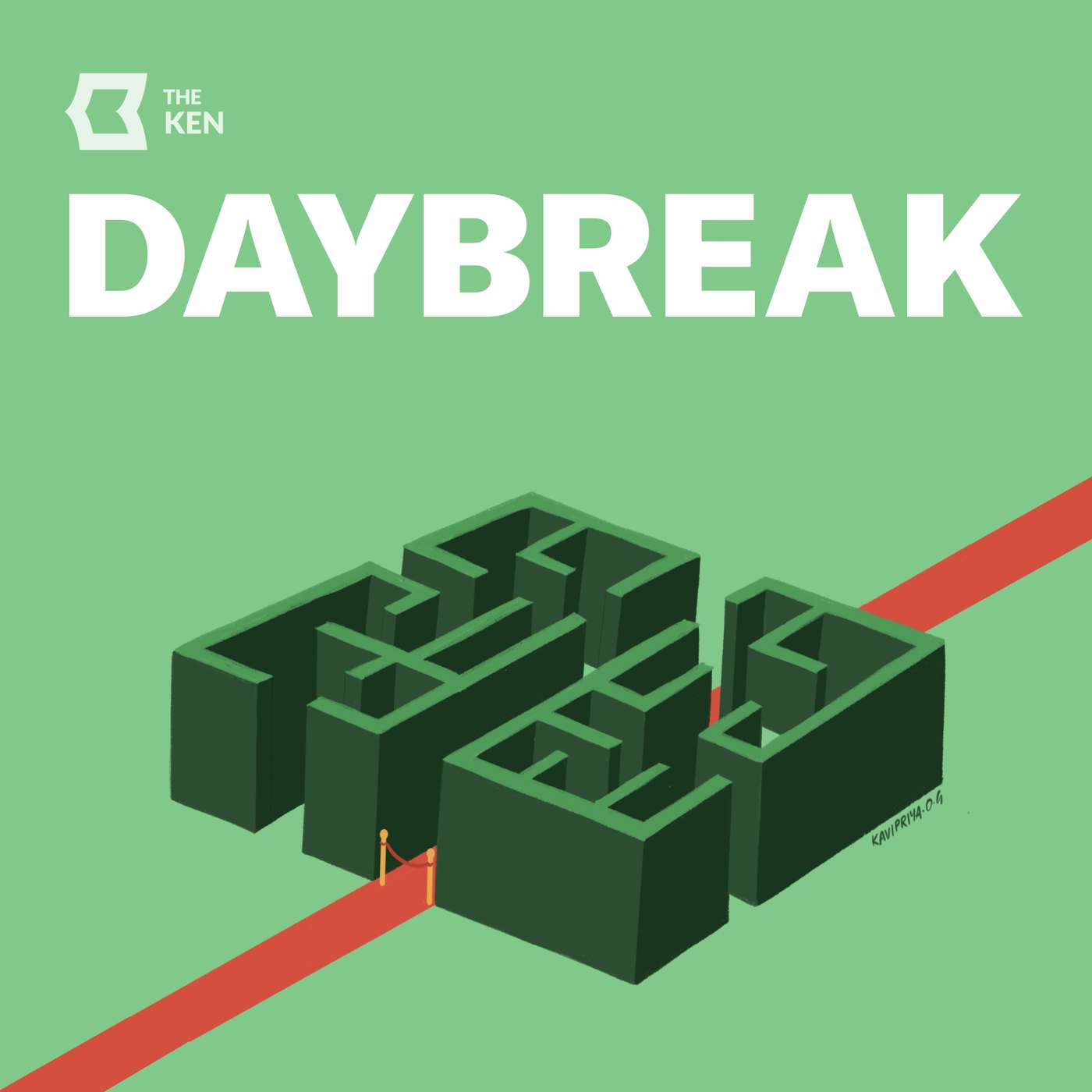
The pandemic disrupted everyone's travel plans. But now, everyone is travelling with a vengeance and it's really overloading the systems. With visa appointment slots hard to come by, travel agents have turned securing visa dates into a profitable business. Meanwhile, embassies and consulates are trying hard to limit the wait list. And at the center of this anxiety-inducing maze is one company called VFS global that handles the visa application process for more than 150 of the world’s 195 countries, including India.In this post pandemic era of the so-called revenge travel, VFS is where the dreams of many travelers’ go to die. For many Indian travellers, VFS is like the mean gatekeeper not letting them get to their dream destination. Tune in. Daybreak is produced from the newsroom of The Ken, India’s first subscriber-only business news platform. Subscribe for more exclusive, deeply-reported, and analytical business stories.Want to be part of the Daybreak community? Introduce yourself here.
Ep 298Here's what you should know about UPI's latest payments feature
What really makes UPI successful? The number of transactions. In FY2024, for example, more than 130 billion transactions were carried out through UPI. But it's not enough. UPI needs more and more to the point where now it has become a transaction-hungry monster. And NPCI National Payments Corporation of India (NPCI), government body that runs UPI has to constantly come up with ways to feed this ever-hungry monster.Its latest offering is delegated payments. Earlier this month, Reserve Bank of India Governor, Shaktikanta Das, announced that non-UPI users, like elderly people or teenagers or anyone who does not have a way to transact via UPI, can use another UPI user’s account and spend through it.While many payments platforms are excited about this new feature, there are some serious issues that may become roadblocks later.Tune in to find out.
Ep 297What does Awfis know about co-working that Wework doesn’t?
Many thought the fall of WeWork – as quick and public as it was – was the final nail in the coffin for the fledgling coworking space business. But a few years later, the pandemic is over and people are finally making their way back to their workplaces. The end of work from home has given the coworking space a new lease on life and one Delhi-based startup in particular is really standing out.Awfis, a nine-year-old flexible workspace company, is breaking pretty much every rule in the coworking space playbook. And it seems to be working out pretty well for the company. Tune in. Listen to the latest episode of Two by Two hereDaybreak is produced from the newsroom of The Ken, India’s first subscriber-only business news platform. Subscribe for more exclusive, deeply-reported, and analytical business stories.
Ep 296Tanishq wrote the gold-retail playbook. Kalyan Jewellers hijacked it.
For more than two decades, India’s jewellery industry has been dominated by one name and one name only – Tanishq. The Titan-owned brand has managed to become the go-to jewellery store for people across the country. Some may even call it the gold standard…literally. But since last year, things have been changing. Tanishq’s dominance is being challenged. Not by some massive international player or any other pan-India brand. Nope. Instead, it is regional players that are starting to dim Tanishq’s shine. You may have noticed all the Malabar Gold and Kalyan Jewellers ads and billboards that have popped up in the last year or so. Both are regional brands that have really been giving Tanishq a run for its money. The funny thing is all of these regional brands have risen to the top by doing exactly what Tanishq does best. They are literally hijacking Tanishq’s own playbook. And in the process, what was once Titan’s exclusive territory, with its 8% market share in a sea of unorganised competition, is now getting crowded.Tune in. Listen to the latest episode of Two by Two hereDaybreak is produced from the newsroom of The Ken, India’s first subscriber-only business news platform. Subscribe for more exclusive, deeply-reported, and analytical business stories.
Ep 295Are Meta and Google doing enough to stop online frauds?
Tech platforms like Google, Meta, or even e-marketplaces such as Olx are increasingly becoming hotbeds of online advertising scams in India. People have been losing anything from a few thousands to even a few crore rupees to cyber crime syndicates who have proficient, tech-savvy members.The amount of money consumers have reported losing to fraud that originated on social-media platforms has skyrocketed since 2017. Last year alone, people reported losing more than $1.2 billion to fraud that started on social media.What are big techs like Google and Meta doing to prevent these crimes? Is it enough?Tune in to find out.**This episode is a rerun and was first published on Nov 27, 2023Listen to the latest episode of Two by Two hereDaybreak is produced from the newsroom of The Ken, India’s first subscriber-only business news platform. Subscribe for more exclusive, deeply-reported, and analytical business stories.
Ep 294India Olympics 2036: It's all fun and games till you become host
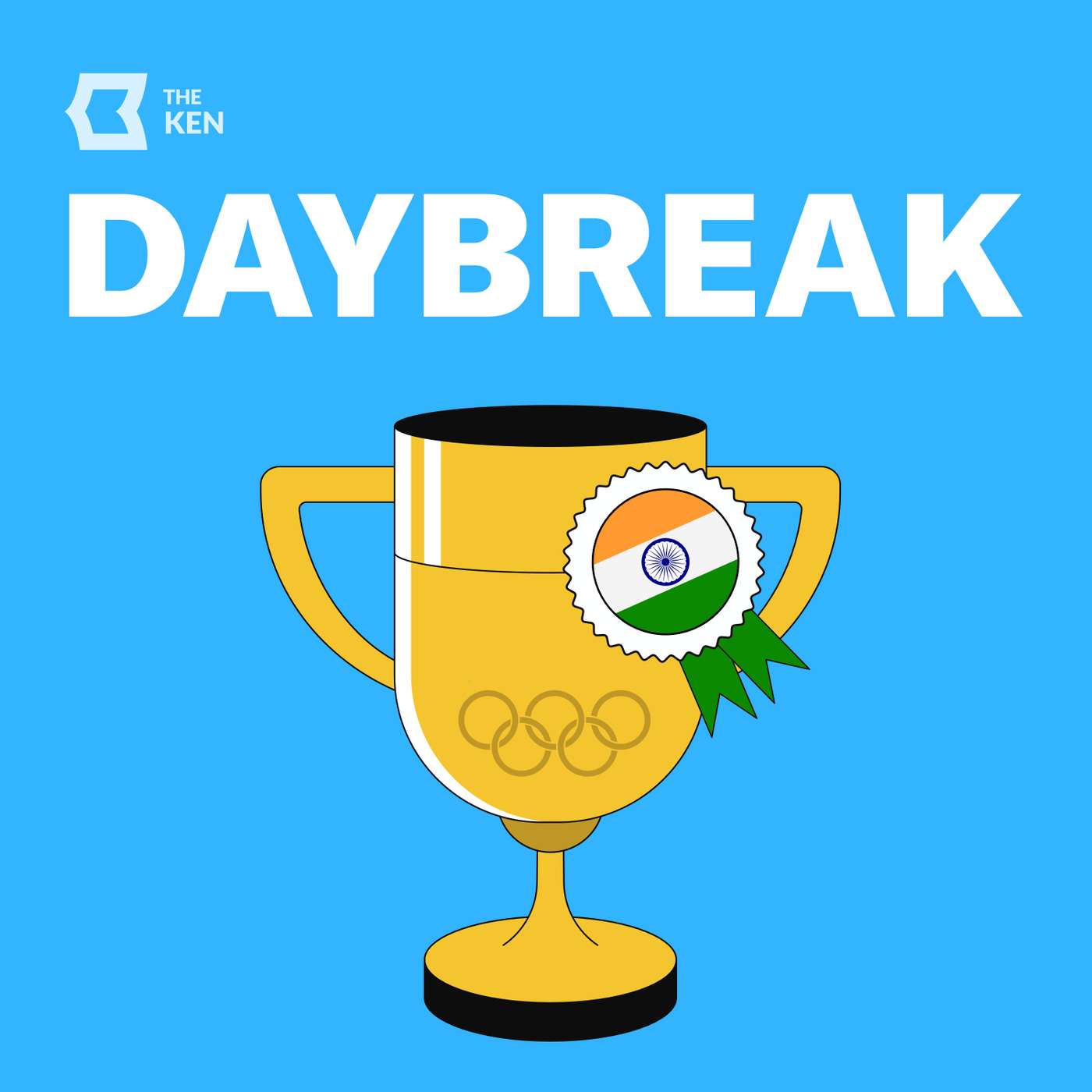
In Mumbai last year, Prime Minister Narendra Modi announced that India was entering the bid to host the Summer Olympic Games in 2036. Yup, bidding happens more than a decade before the actual event. Because that’s how long it takes to prep a city for the Olympics. At the same event, PM Modi said hosting the games India is the “age-old dream and aspiration of 140 crore Indians”. You see, the prestige associated with hosting the Olympics is undeniable…many would say, it is priceless. If you think about it, for a developing country, is the ultimate flex, right? But in the end, is it really worth it? Sports economist Andrew Zimbalist does not think so. He has devoted much of his career to exposing the dark underbelly of the Olympics. Tune in. P.S. The Ken podcast team is looking for a talented podcast producer and an audio journalist. If you fit the bill or know someone who does, please apply!
Ep 293How an e-ticket discount has become IRCTC's Achilles' heel
For many in the Indian Railway Catering and Tourism Corporation (IRCTC), this year’s Union Budget announcement was a damp squib.On 23 July, several officials from the ticketing-and-catering arm of Indian Railways waited for over an hour, with the collective hope that Finance Minister Nirmala Sitharaman would quash the discounts on UPI payments. The reason behind their discontent is that the discount has cost IRCTC an arm and a leg. The company has lost Rs 40 crore in revenue. But despite all of the pushback, this year’s Budget did not mention revoking the mandate anywhere. So, what’s going on? And why isn’t the government backing down?Tune in to find out. P.S. The Ken podcast team is looking for a talented podcast producer and an audio journalist. If you fit the bill or know someone who does, please apply!
Ep 292IVF treatment can break the bank. So how are states offering it for “free”?
Fertility rates in India are not looking good. In fact, it has fallen below the necessary replacement fertility level, which is basically the total fertility rate at which a population exactly replaces itself from one generation to the next, without migration. So to nip the issue in the bud, state governments are now stepping in to offer what private equity-backed fertility centres would otherwise charge lakhs of rupees for: IVF treatment for free. If it sounds too good to be true, that’s because it is. Tune In.
Ep 291Coaching giant Allen Career Institute's Kota stronghold may soon become history
Every year, nearly three lakh students flock to the city of Kota in Rajasthan, the coaching capital of the country. Almost half of them enroll themselves at Allen Career Institute, a 36 year-old pioneering coaching centre that was last valued at over 1 billion dollars.Lately, Kota’s reputation has been under question because of the frequent student suicides.This has obviously affected the number of students coming in and for the first time in its history, the coaching giant Allen is seeing a fall in its admissions. And its no small dip. Admissions have dropped by over 35% to around 80,000. But here’s the interesting part. This isn't restricted to Allen institute in kota alone. Its happening in other cities too.Actually two years ago, VCl investment firm Bodhi Tree Systems came into the picture and Allen began expanding the number of campuses outside Kota. Now, in total, there are over 200 of them and at least, one-third are new. The company’s CEO Nitin Kukreja told The Ken that Allen entered 16 new cities like Patna and Lucknow last year alone. A senior teacher at Allen Kota told us that for a centre to be profitable, it needs at least 4,000–5,000 student enrolments. But right now, Allen is not even seeing half of this. At least half a dozen senior Allen staffers and competitors told The Ken that a big chunk of these new centers are losing money. Staff pays have taken a hit but Allen is also hiring staff in new cities with a possible plan of shifting base out of Kota.In today’s episode we take a look at what’s happening inside one of the country’s latest test prep giants.Tune into to Two by Two's latest episode, 'Delhi pricked the Bengaluru bubble' here

Ep 290Merit vs diversity: The lines are being drawn. What side is your company on?
The search for an ideal workplace is a bit like finding El Dorado — that land of endless wealth and opportunities. Like El Dorado, 'the ideal workplace' also, well, seems like a myth. But that doesn't stop people from striving to find one. This is a conversation that goes right back to the birth of the modern corporation. From the civil rights movement in the US, to the evolution of trade unions in India – throughout history, people have fought for a fair and equitable workplace. One that has equal opportunities for everyone, where everyone feels seen and heard, and no one is treated differently because of where they come from or who they are. Eventually, the century-long battle for the ideal workplace finally boiled down to three core values – diversity, equity and inclusion or DEI. But here’s the thing about DEI – it comes and goes in waves. And it usually takes an extreme incident to trigger the pendulum to swing towards DEI. And when the pendulum swings to the other side, DEI’s alter ego, that has been lurking in the shadows all along, finally makes its entrance. Lately, its been popularly known as MEI — merit, excellence and intelligence. Right now, we are bang in the middle of yet another wave of the DEI vs MEI debate. In the last few weeks, giants like Microsoft, Google, Meta have majorly scaled down their DEI initiatives. Some have even laid off entire DEI teams. Naturally, many are of the opinion\ that DEI is on its deathbed.The repercussions of all of this are being felt here in corporate India where a watered down version of DEI was just about getting started. But now that it has hit a wall in the West, what does that mean for us? To find out hosts Snigdha and Rahel speak to two women who are trying to fix this broken system but in very different ways. Christina Dhanuja, author, DEI strategy consultant and the founder of Dalit History Month and Naiyya Saggi, the co-founder of The Good Glamm Group, a unicorn startup based out of India.Tune in. For feedback, write to us at [email protected] is produced from the newsroom of The Ken, India’s first subscriber-only business news platform. Subscribe for more exclusive, deeply-reported, and analytical business stories.
Ep 289Banks are coming to 'save' you from defaulting on your credit card bills. Here's why you need to watch out
From September 2, IDFC Bank’s credit card customers will only have to pay 2% of the total bill amount every month instead of the earlier 5%. The bank has reduced the minimum amount due (MAD). Even Axis Bank did this last year in November.This means for customers, there are lesser chances of being tagged as a defaulters which hurts their credit score. Why are banks doing this?Two bankers told The Ken that the main reason why banks or lenders are reducing MAD is because of rising defaults. India has been warming up to the idea of credit. In fact, now its come to a point where debit card usage is declining. Online credit card spending in India rose by 20% in the last one year to reach more than ₹1 lakh crore in March this year. But for banks or lenders this also means that the associated non-performing assets (NPAs) have started to become a cause for concern. This is why lowering the limit for defaults will help banks. But for customers, there is more to it than meets the eye.Tune in
Ep 288Cars24 is turning into a full-blown fintech. Its core business is taking a backseat.
The last nine years have been quite a wild ride for Cars24. It has gone from being a consumer-to-business auction platform for dealers to buy used cars, to becoming a consumer-to-consumer marketplace for used cars. It has seen its fair share of highs and lows along the way. Off late, once again, the business has been floundering. But Cars24 is dealing with it by undergoing its most intense and unexpected makeover yet. It seems to be transforming into a full-blown fintech. The startup got a non-bank license to finance used cars half a decade ago. Back then, its financing arm was meant to be a lever to sell more cars. But now it is much more than that. Tune in.
Ep 287RBI dug a pit for Razorpay. Razorpay just built a ladder.
Last year, the central bank banned Razorpay and a bunch of its competitors, like PayTM, Cashfree and PayU, from onboarding new merchants until they were able to secure a payment aggregator license. Till then, they all had in principal approvals for the license. But the RBI stepped in and said they had to stop onboarding merchants until they actually got the license. It was only in December that the RBI lifted the ban after Razorpay finally received the license. Obviously, it was a big day for Razorpay. All of the employees who had already left for the day came straight back to office. They all knew exactly what they had to do because they had been planning for this day for months now. Razorpay had a big opportunity to gain marketshare. In the last seven months since the RBI lifted the embargo, it has been in recovery mode. And in the process, it has fundamentally changed as a company. Tune in.
Ep 286Why Jupiter may become just another pesky bank app
Jupiter, the Mumbai based neobank, went from a $70 million valuation in 2019 to a $700 million valuation in just two years. Venture capitalists, along with fintech founders, continue to believe in neobanks. A report by Statista predicts that the transaction value across neobanks in India is will cross $150 Bn by 2027.Jupiter, a leader in the space, quadrupled its user base to two million in just a year in 2022. Thanks to its efficient user experience to access banking products like savings accounts or fixed deposits, many 20- and 30-year-olds are drawn to Jupiter. They use the platform to park their money, make small transactions, and invest with features like a sub-account to park funds for different saving goals or flexi-SIP payments.But RBI clipped its wings, like it did for other fintechs. Since Jupiter realised the regulator also doesn’t like startups calling themselves a “bank” in any form unless they are licensed to be one, it began the journey of itself from a neo bank into a non-bank. And Jupiter had been trying to get its non bank license from RBI ever since it started operations but it only got last year.But building its own loan book is turning out to be an expensive affair. And in the process of getting its finances in order, Jupiter may just about become another annoying bank app.Tune in.Listen to the latest episode of Two by Two, 'Is Zepto a gold medalist or a bronze medalist?' here.
Ep 285Daybreak Special: Ozempic isn't approved in India yet. We speak to someone who got it anyway
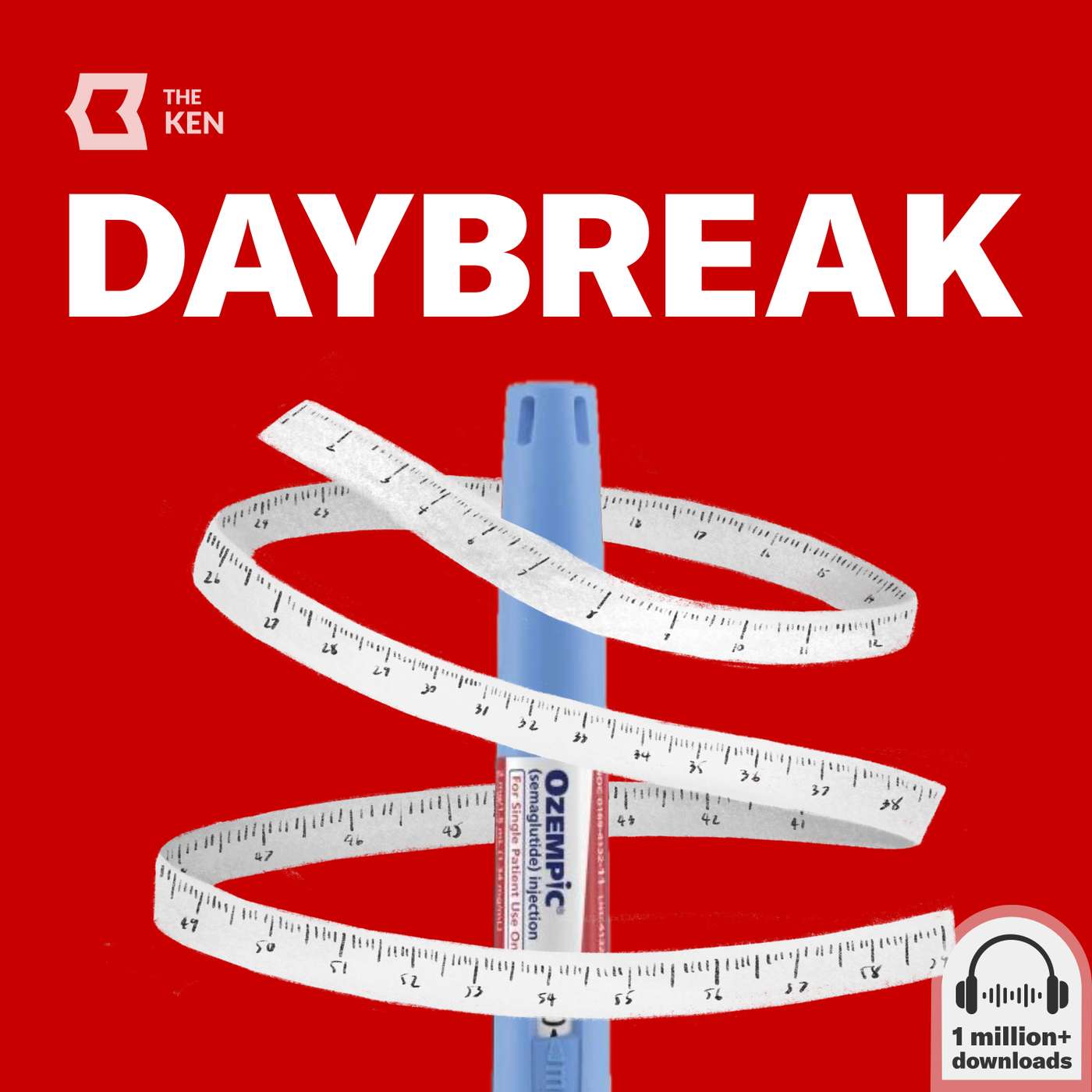
"I am willing to take the risk and give this drug a shot, for I've tried and tested almost all anti-obesity means myself—and even failed at some. As a first step, I am banking on other Ozempic users’ experience." Meet Alifiya Khan, a health and education reporter at The Ken. Last month, she published a story on Ozempic, the 'miracle' weight-loss drug, and how easy it is to procure despite not being officially cleared for sale by the Indian government. But this isn’t just another health story. Alifiya herself has been suffering from obesity for more than a decade now. For her procuring Ozempic wasn't just to further a story. She needed it for herself. After trying every fad diet, weight loss pill, and non-invasive procedure, to Alifiya, Ozempic is the light at the end of the tunnel. In this episode, she joins hosts Snigdha and Rahel to share her story. Tune in. P.S. Not sure if you heard, but we hit 1 million downloads this month! We could not be more excited and grateful to you, our listeners. Could you do us a favour? Could you fill in this form and share your feedback? Also drop us a rating! P.P.S. The Ken's podcast team is hiring! We are looking for a producer as well as a podcast host with at least 4-5 years of experience in the field. If you are interested or know someone who would be, please write to [email protected] with 'Application for The Ken Podcasts' in the subject line.
Ep 284Bengaluru’s solution for its traffic mess that tech couldn’t fix: even more tech
A few days ago, an X user shared a screenshot of Google Maps depicting how it would be faster to walk than drive from a particular place to another in Bengaluru. After all, the city is best known for two things: great weather and terrible traffic. The so-called Silcon Valley of India is the sixth slowest city in the world! How is it then that no one has come up with some innovative tech-based solutions?Actually, they have. But you’ll be surprised to know that one the key reasons why the city's traffic troubles never seem to end is because the focus has mostly been only on tech driven solutions. Tune in.**This episode was first published on 19 Feb, 2024Daybreak is produced from the newsroom of The Ken, India’s first subscriber-only business news platform. Subscribe for more exclusive, deeply-reported, and analytical business stories
Ep 283Will alternate schools ever become mainstream in India?
Microschools are basically a modern twist on the concept of a one-room school house. So smaller classes, student-led learning, a flexible curriculum, the works.So for instance, if traditional schools teach the photosynthesis phenomenon through textbook readings, a microschool would nudge students to conduct interactive experiments with plants and light.In most of these schools, there’s no fixed curriculum. Its personalised as per the needs of each student. Sounds ideal right? Except for the fact that they are way more expensive than a regular school. And then there's the question of higher education. Sure these kids may be able to think more critically than a CBSE student, but what happens when they go to college? Or if they have to transfer to a traditional school at some point?Despite these questions, more and more parents are embracing this new school of thought. Could it really be the next best thing in education? Tune in.
Ep 282VCs think ice cream is a dish best served cold and sugar free. Newbie Hocco says hell no.
Craving a low-cal, zero-sugar, guilt free tub of ice cream? Well then, Hocco isn't for you. The ice cream brand, founded by Havmor scion Ankit Chona, takes great pride in making and selling ice cream the old fashioned way. It's a brave choice considering low-cal ice cream is really having its moment. VCs seem to believe that ice cream is a dish best served cold...and sugar free. But Chona is sticking to his guns. And if the numbers are anything to go by, his bet seems to be paying off. Tune in.
Ep 281All you need to know about Ola Electric's IPO
On Friday this week, we’re going to see one of the largest IPOs of 2024 by a new-economy company. The Bhavish Aggarwal-led Ola Electric is all set to make its debut in the stock market. The IPO which has been in the works for sometime is expected to value the company at a little over $4 billion. Aggarwal is due to sell almost 38 million shares as part of the offer for sale which is nearly 20% lower than what the company had indicated in its DHRP. The company is a leader in the two wheeler EV space in india with more than one third of the market share. Of course, getting here has been no cakewalk for Ola Electric. Just last month it was reported that the company was planning to let go of 400-500 employees to streamline its operations before the listing.In this episode we go over some of the highlights from the company's offer document.Tune in.P.S. Check out the most recent episode of Two by Two, our brand new business podcast, where the hosts ask: why has all the disruption and joy gone out of startups? Stream on Spotify, Apple Podcasts or other platforms!Daybreak is produced from the newsroom of The Ken, India’s first subscriber-only business news platform. Subscribe for more exclusive, deeply-reported, and analytical business stories.
Ep 280Gen Zs are powering astrology’s billion dollar glow up. Has science left the building?
The global astrology market today is worth nearly $13 billion. In India alone, the online astrology market is estimated around $100 million and is expected to grow ten times in the next five years or so. But this isn’t astrology as we’ve known it. In the last few years, astrology has had a facelift and it’s largely thanks to Gen Z. They have rediscovered it and turned it into a full blown cultural moment. Meme pages, Astro Twitter, mercury retrograde—astrology has become a pop culture phenomenon, not just here in India but across the world. New-age astrology apps like Co Star and Pattern give you the option of checking whether your “vibes” match with your friend or love interest. It's like modern-day kundli matching. And Gen Zs are here for it and more. They’re also using astrology apps to check what stocks to put their money on, for their appraisal season—basically, anytime they have to make a decision, big or small.We wanted to know why the Gen Z, a generation that’s been recognised for its hyper-awareness about things like climate change, politics, governance is embracing astrology so passionately despite all of its very well documented flaws as a pseudoscience. Also, how are astrology app makers are responding to this trend?To find out, we spoke to two Gen Zs—Misha Verma, a 22 year-old 2D animator from Bengaluru and Khushi Singh, a 23 year-old UI/UX designer from New Delhi who part times as a tarot reader, the founder of an AI-powered astrology app called Melooha, Vikram Labhe, and Nakul Shenoy, a mentalist based out of Bengaluru.Tune in!Daybreak is produced from the newsroom of The Ken, India’s first subscriber-only business news platform. Subscribe for more exclusive, deeply-reported, and analytical business stories.
Ep 279How Byju’s growth-hacked its way to bankruptcy court
Once valued at $22 billion, Byju's, is undergoing insolvency proceedings initiated by the National Company Law Tribunal. This is over a $19 million payment default to the Board of Control for Cricket in India. Byju’s could now see a potential buyout or liquidation. It gets worse. A couple of days ago, one of the largest foreign investors in India, the Qatar Investment Authority, requested the Karnataka High Court to block founder Byju Raveendran’s personal assets.To say things are bad is an understatement.The first question that comes to mind is, of course, what happened. But that’s a story that’s been told too many times. Instead, today, we tell you what Olina Banerji, The Ken's edtech expert and writer of our popular newsletter, Ed Set Go, wrote about Byju’s in the latest edition.She took us back to see what made Byju’s the company it became in the first place and the legacy it is leaving behind.Tune in.P.S. – Check out the first episode of the latest addition to our podcast slate, Two by Two, on Spotify, Apple or YouTube!Daybreak is produced from the newsroom of The Ken, India’s first subscriber-only business news platform. Subscribe for more exclusive, deeply-reported, and analytical business stories.
Ep 278Healthify is trading the local treadmill for a global marathon
Healthify saw immense success during the pandemic. Its revenues more than doubled in FY 2022. And it adds up when you think about it. With millions of people stuck at home and gyms shut, Healthify’s virtual fitness and nutrition plans were pretty ideal. But once gyms reopened, home workouts didn’t cut it anymore. And unfortunately, Healthify really bore the brunt of it. The following year, revenue growth slowed down considerably and losses began to soar. But the company's leadership seems undeterred. In fact they want to expand business to the United States, where it will be up against established healthtechs like Noom and MyFitnessPal. The company seems to be pinning its hopes on the US market as somewhat of a hail Mary pass.
Ep 277Once the toast of town, Bira is now brewing more trouble than beer
In 2015, Bira 19 introduced India to craft beer. In the process, the brand started the conversation around taste and quality. It very quickly blew up and became the cool new beer to drink at a bar or a party. The craft beer brand also managed to become a hit among investors. It bagged $450 million in funding from the likes of Japanese beer and beverage company Kirin Holdings and venture capital giant Peak XV Partners, formerly known as Sequoia Capital. But somewhere along the way, the brand seems to have lost direction. In the last few years, Bira has been in short supply at liquor retailers and pubs. And to make matters worse, former Bira executives and industry insiders say that the company’s dealing with a major cash crunch and its supply chain is in a dire state. All of this at a time when the company is reportedly planning to go public. Bira CEO Ankur Jain recently said that Bira is planning its IPO in 2026. But will he be able to get his business in order by then? And more importantly, what went wrong?Tune in to find out.
Ep 276Why HDFC customers can bid adieu to exclusive cashbacks on Apple products
In the 2024 financial year, Apple sold products worth $8 billion in India. This was a third more than the previous year. But how did a premium company like Apple that hates giving discounts sell products worth 8 billion dollars in a country as price sensitive as India? Apple obviously knew that its phones were unaffordable for most people in India?It found an answer was easy financing. After the Covid-19 outbreak in 2020, Apple made financing tie-ups with banks a mainstay. And one of the most important deals Apple made was with India’s largest private sector lender, and leading credit card issuer HDFC Bank. In fact, it was one of the costliest deals HDFC had. Thanks to it, HDFC customers have been enjoying exclusive cashbacks on Apple products ever since.Here's the bad news. The deal between Apple and HDFC is now over.What happened?Tune in.
Ep 275Daybreak Special: Zomato’s the investor’s favourite billion dollar baby. Could Swiggy beat it post-IPO?
With Swiggy set to go public soon, the quick commerce space in India is starting to look more and more like a wrestling match. Going to head to head against Swiggy is the only listed quick commerce platform in the country, its arch rival Zomato.Both companies are doing exactly the same thing but somehow Zomato managed to leave Swiggy far behind. Swiggy’s market share has dropped considerably in the last few years both in quick commerce and food delivery. Now, not only is Zomato listed, its share prices have been going through the roof and Blinkit has become the jewel in its crown. So does Swiggy, the OG of food delivery in India, stand a chance? To find out, hosts Snigdha and Rahel invite The Ken's Deputy Editor Seetharaman G to the studio.Tune in.P.S. – Check out the first episode of the latest addition to our podcast slate, Two by Two, where the speakers discuss the rivalry between Flipkart and Phonepe, on Spotify, Apple or YouTube!Daybreak is produced from the newsroom of The Ken, India’s first subscriber-only business news platform. Subscribe for more exclusive, deeply-reported, and analytical business stories.
Ep 274Wind's blowing towards all things luxe in India. But Chaayos isn't going there
For most Indians, a cup of good chai is a comfort that's accessible. Coffee chains, on the other hand, are mostly premium. And it all adds up when one considers the fact that Indians consume 20 cups of tea for every cup of coffee. But we live in a time when opulence and luxury makes us go google eyed. In the Indian consumer market, premiumisation is no longer a choice. Even chai cafes chains don’t really have an option but to take the premium path. But Chaayos, the largest tea cafe chain in India, has decided not to go where the wind blows. And Nitin Saluja, the 40-year-old founder of Chaayos, says that this decision is actually based on its customers. Over the last two years, nearly 200 of them have clearly indicated their unanimous opinion to the company: don’t become like Starbucks. Tune in.Daybreak is produced from the newsroom of The Ken, India’s first subscriber-only business news platform. Subscribe for more exclusive, deeply-reported, and analytical business stories.P.S. – Check out the first episode of Two by Two, where the speakers discuss the rivalry between Flipkart and Phonepe, on Spotify, Apple or YouTube!
Ep 273Not such a Great Place To Work after all?
About two months ago, something pretty bizarre happened at the India office of Great Place to Work. At about 2:30 am on May 28, the board of the organization was summoned for a Zoom call. But the timing of the Zoom call wasn’t what was so alarming. At one point during the conversation, the founder, Prasenjit Bhattacharya, asked everyone to leave the call. Everyone except for Yeshasvini Ramaswami, the chief executive of the company. Just a few moments later, Prasenjit told her that she was being fired. You see, this isn’t the first time a CEO has been fired. But the way that this particular incident played out went against everything that Great Place to Work has stood for for so long.What's going on? Tune in
Ep 272How Birkenstock became the Bata for India's elite
Not so long ago, Birkenstocks were considered the antithesis of high fashion. For the longest time, the 250-year-old German brand’s characteristic chunky sandal was seen as nothing more than an orthopedic shoe meant for hippies and old people. And then, everything changed. In the last decade or so, Birkenstock had a major glow up. It all started with the brand deciding not to settle for being just another comfortable but cringey sandal anymore. So to make Birks cool the brand began collaborating with high-end fashion designers like Rick Owens, Valentino and Dior. Very quickly celebrities and influencers caught on. They were suddenly being spotted walking out of the gym, or a cafe with a pair of birks on. And just like that, a trend was born. The orthopedic sandal, built more for comfort than for style, was the new it-shoe. Now, the Birk craze has found its way to India. Tune in.
Ep 271Flipkart wants top fashion brands to dance to its new tunes. Do brands have a choice?
Flipkart, the Walmart owned e commerce giant, is on an overdrive to achieve profitability to realise its dreams of going public.To do this, it has tasked its category managers in fashion and lifestyle with squeezing more business out of brand partners. In fact, Flipkart is also using its own Myntra to get better leverage with these brands. The list of brands Flipkart is negotiating with includes Nike, Adidas and Puma, Woodland, Casio, and the Indian fashion retail giant Aditya Birla Fashion Retail Limited (ABFRL).Brands are resisting but they can only do so much because the kind of reach Flipkart gives them is unmatched. It has a registered customer base of more than 400 million.Does this mean that these brands have to give in to Flipkart’s demands? Tune in.
Ep 270Daybreak Special: What do women really want? A 'f*** off fund'
Have you ever heard of a 'f*** off fund'? Or better yet, do you have one?For the uninitiated, it is a sum of money that women should ideally set aside to get out of a difficult situation – think toxic job, abusive relationship or family situation, you get the drift. The term was coined by freelance writer, Paulette Perhach, in 2016. We recommend that you read her powerful essay on financial independence. The idea is for it to give you enough power, confidence and control to literally be able to say “f*** off” and walk away. You are probably thinking, ‘great in theory, but how do I actually build one for myself?’. We have got you covered. In this special episode of Daybreak, Chaitra Chidanand, the co-founder of Salt, a financial services platform for women, demystifies f*** off funds and how you can get one. Tune inWe would also love to hear your take on f*** off funds. Please take our survey. Suggested readingA F*** Off Fund: the most important female prep, Reddit"The FOF has saved me and my kids a few times. Health crisis. Unemployment. Violence. S**t happens. But just as important—having a FOF means you can act from a position of power, not fear, not subservience." Warren Buffett Invests Like A Girl? Forbes"Buffett has always said that it’s temperament--not intellect--that makes you a great long-term investor. When you look at studies that have been coming out in the last 10 years about how men and women invest, what you see is that women tend to naturally have this temperament that creates long-term investing success."For Women With Money Issues, an A.D.H.D. Diagnosis Can Be Revelatory, NYT'But because activities like planning or budgeting don’t usually give people with A.D.H.D. a dopamine hit, they can find it harder than neurotypical people to get started or stick to accounting activities. This results in extra costs — paying cancellation fees for missed appointments or late fees for not opening a bill on time, or losing refunds because we missed the deadline for returning an unwanted purchase.'For feedback, write to us at [email protected]
Ep 269Amul made India the world’s top milk producer. Its next target is protein
According to the ICMR every individual should consume at least 48 grams of protein everyday. But in India, 8 out of every 10 of people dont meet their daily protein requirement. However, there is no denying the fact that awareness about the significance of what is often called the building block of life has increased after the pandemic. People are actively looking to include protein rich foods in their diet.Even the govt has pitched in. In 2020, the govt started an initiative to celebrate a National protein Day every year in February to increase awareness about the importance of protein in India And that’s where Amul wants to come in. The dairy giant wants to use a key dairy byproduct—whey—to sell protein to a population that is hungry for itTune in.**This episode was first published on 28 Feb, 2024Daybreak is produced from the newsroom of The Ken, India’s first subscriber-only business news platform. Subscribe for more exclusive, deeply-reported, and analytical business stories
Ep 268How Paisabazaar is spoiling PB Fintech’s profitability party
Things were going really well for Paisabazaar, until the Reserve Bank of India stepped in and hit it where it hurts. The RBI told banks to clamp down on the unsecured loan segment – which happens to be Paisabazaar’s bread and butter. The regulator has discouraged lenders from small-ticket collateral free loans. And of course lenders know better than to ignore the RBI’s directive. So for Paisabazaar that meant its lending partners started shying away from unsecured loan leads. After a dream run, growth started slowing down. The company knew it had to do something and fast. Tune in
Ep 267The great B-school placement drought is hitting Masters' Union where it hurts
Students pay hefty fees for an alt MBA from Masters' Union with the confidence that by the end of the course, they will be one step closer to their dream job, and more importantly their dream salary. Except, that isn’t what ended up happening for a majority of students in the batch of 2024. Classes ended a few weeks ago and most of the students are yet to land job offers.You see, it has been a tough year for India’s business schools. Even the IIMs and ISBs of the world have struggled to get a majority of their students placed at top companies. And in this tough climate, Masters’ Union, which has always positioned itself as a challenger to the IIMS, is facing a bigger crisis than any of its peers. Because placing its students isn’t just a matter of pride for the company, it's also crucial to its financial model. Tune in.
Ep 266Why is Truecaller protecting you from spam calls instead of TRAI?
For a country that boasts of its digital public goods infrastructure like Aadhar and UPI, it is a wonder why telecom has been so ignored. After nearly 1500 crore rupees of was reportedly lost to digital fraud in the financial year 2024, the govt's TRAI is finally scrambling to catch up with CPAN or the Calling Name Presentation (CNAP) service, its own version of Truecaller.Truecaller, the Swedish call-screening company, meanwhile, has been holding the fort for a while now. Users count on it to save them from spam and fraud calls. While TrueCaller maybe looking like a hero in this situation, it is a private company after all. It is using this opportunity to make money from both users and businesses. But its success in India is also built partially on how inadequate privacy laws are in India. It company has been accused of breaching data privacy norms in the past.Can TRAI replace Truecaller?Tune in.Daybreak is produced from the newsroom of The Ken, India’s first subscriber-only business news platform. Subscribe for more exclusive, deeply-reported, and analytical business stories.
Ep 265Daybreak Special: Why crazy rich Asians are buying one way tickets out of China
More than 15,000 millionaires are most likely leave China for good this year, according to the latest report by Henley and Partners, a UK-based investment migration consultancy. This largely has to do with the fact that being a multi-millionaire in China is almost like living with a target on your back. Multiple cases of the wealthy disappearing, the most well-known of which was Alibaba's Jack Ma, are testament to this. Basically one can be rich but not too rich, especially when the Chinese economy is struggling with a slowdown. So if millionaires are not disappearing under mysterious circumstances, they are desperately trying to protect their assets at all costs.India too happens to be the third on the Henley list of top countries facing a millionaire exodus. It is expected to lose about 4,000 millionaires this year. But unlike China, this isn’t very concerning because this number has dropped since last year and also because India is also generating more millionaires than it is losing. In many ways, you could say, India stands today where China was 10 years ago. And that’s exactly why we need to understand what is happening in China. In this episode, Daybreak hosts Snigdha and Rahel speak to The Ken's Southeast Asia editor Brady NG about what's going on in our neighbourhood. Tune in.Brady’s book recommendation: House of Leaves Mark Z. Danielewski Artwork by Adhithi Priya RajagopalDaybreak is produced from the newsroom of The Ken, India’s first subscriber-only business news platform. Subscribe for more exclusive, deeply-reported, and analytical business stories.
Ep 264Zomato and Zepto are doing for EV battery swapping what the govt isn't
For quick delivery apps like Zomato and Zepto that are often questioned for their carbon footprint, switching to electric vehicle or EV fleets is not just a matter of being environmentally conscious, it is also economically more feasible.But here’s the thing. While takes about four hours to charge an electric scooter from zero to full using a slow charger and approximately 15 minutes for a fast charger, battery swapping which literally takes two mins.Which is why delivery company drivers for whom speed means money, battery swapping is a better option than charging. Quick commerce companies have understood this and they’re partnering with these companies. For example, Zomato and Zepto have both partnered with Battery Smart, a Delhi-based network of battery-swapping stations for EVs. Plus, this comes at a great time because these battery swapping companies are attracting a lot of VC money despite the general VC funding crunch lately. And VCs are loving the fact that quick commerce giants are tying up with these battery swapping companies.So, you’d think that that government must be doing everything it can to give battery-swapping service providers support to expand right?Turns out, that is not really the case.Tune in.Daybreak is produced from the newsroom of The Ken, India’s first subscriber-only business news platform. Subscribe for more exclusive, deeply-reported, and analytical business stories.
Ep 263Sugar.fit's diabetes 'reversal' plan is anything but sweet
Cult.fit backed Sugar.fit very boldly promises to completely “cure” diabetes in as little as six months. It also promises unlimited consultations with top doctors, daily fitness classes, the works. All for about Rs 30,000. That’s a small price to pay for a diabetes-free life. So of course, thousands sign up for it. But if you ask a healthcare professional they will tell you that reversing diabetes completely just isn’t possible. So what is Sugar.fit up to? Tune in to find out P.S. While you are here, check out the latest episode of The Ken's careers podcast The First Two Years. Host Akshaya Chandrasekaran delves into how to transition from grunt work to real work.
Ep 262Nobroker is no longer no broker
Demand for high-end living is on the rise and Nobroker's subscription plan just doesn't cut it anymore. So it introduced a new postpaid plan to entice wealthy property owners. Funnily enough, the way it works is pretty much how traditional brokers earn their brokerage. This goes against the basic premise with which Nobroker was started almost a decade ago. So why has Nobroker switched up its strategy? And why is it going down the road it was so fundamentally against? Tune in to find out.
Ep 261What's making investors go googly-eyed for Zepto?
When it entered the quick commerce scene for the first time in 2021, Zepto was a disruptor. Now, it is the third largest company in the market after Blinkit and Swiggy Instamart. Recently, it secured its biggest funding ever at a US$3.6 billion valuation, mainly from its existing investors.Venture Intelligence, a data provider told The Ken that the US$660 million funding is largest bet made by VCs in Indian startups this year. And now, The Ken's sources say that Zepto is planning to raise another round from “top-tier global VCs” at a US$5 billion valuation.What did Zepto do to get all this attention from investors?Tune in.Also listen to:Daybreak: Why we date, marry, or breakup with Swiggy Instamart, Blinkit, Zepto & BigBasketTFTY: How to get people to listen to you when you have no authority or title?
Ep 260Daybreak Special: Stoa School is dead. Long live altMBAs.
Four years, 15 cohorts, and roughly 1,500 students later, Stoa School has shut down. The poster child for alternative business-school education in India is no longer accepting new students. What went wrong? And what does it mean for India's altMBAs? Tune in to find out. P.S. While you are here, check out the latest episode of The Ken's careers podcast The First Two Years, where host Akshaya Chandrasekaran delves into how to build trust with colleagues who don't trust you.
Ep 259At-home blood tests are soaring, and throwing up wrong results
The pandemic, as brutal as it was, forced a lot of businesses to double down on convenience and accessibility. Whether it was your online education or quick deliveries or at home blood tests. Just to be able to skip that dreaded visit to a hospital or a diagnostic centre meant so much to most people.Accredited labs popped up all over promising to come right to your doorstep and collect your samples from the comfort of your home and that too for super affordable prices. Healthians, a testing lab startup has seen bookings triple since the pre-pandemic era. Now, the company handles 12,500–13,000 bookings daily, with nearly 75% of its business coming from home collections.But while home tests are gaining popularity, whether you can trust them 100% is still under question. Phlebotomists and runners hold the keys to a sample’s fate and accuracy. Tune in.Daybreak is produced from the newsroom of The Ken, India’s first subscriber-only business news platform. Subscribe for more exclusive, deeply-reported, and analytical business stories.
Ep 258Bain is switching up its strategy in India. It’s 'cutting the excess fat.'
On June 3, about 200 employees of the American management consulting firm Bain and Company’s India division received a rather ominous calendar invite. They each would have a 10-minute meeting with HR. But no one, other than the heads of the regional offices and the head of HR, knew what the meeting was about. During the meeting, they were all told they were being laid off. The layoffs took the consulting community by surprise, because it just wasn’t a very ‘Bain’ thing to do. What's going on? Tune in to find out. P.S. While you are here, check out the latest episode of our careers podcast The First Two Years, where host Akshaya Chandrasekaran delves into how to build trust with colleagues who don't trust you.
Ep 257Are Reliance's deep pockets enough for Tira to steal Nykaa's crown?
Nothing about Nykaa is strictly its own anymore. Back when it went public, it had no real rivals in the beauty space. But since then, things have changed. Last year, India’s largest retailer, Reliance Retail, officially entered the beauty space. It launched an omnichannel beauty retail platform called TiraReliance isn’t playing around. In the last year, it has made one thing clear: it wants to completely shake up the country’s beauty segment. But even the Reliance legacy to back it up, Tira’s success in this space isn’t a given.
Ep 256Why young coffee chains like Third Wave cluster around Starbucks
More than a decade has passed since Starbucks came to India. But the world’d biggest coffee chain has been struggling to achieve profitability. In the latest financials, the company saw its slowest sales growth in India since the pandemic.So far, Starbucks has managed to open around 400 outlets across the country. Meanwhile, Third Wave, a much smaller specialty coffee startup that started around eight years ago, already has more than 100 stores around the country. Its new CEO Rajat Luthra recently announced that that chain plans to open 50 new outlets in existing markets. Third Wave has more than doubled its operating revenue in the last financial year. In the year before that, it saw its revenue grew more than fourfold. It raised $35 million in a funding round led by private equity firm Creaegis in September last year.How far can a startup like Third Wave go against a a 50 year-old global coffee powerhouse with the backing of Tata?Tune in.Daybreak is produced from the newsroom of The Ken, India’s first subscriber-only business news platform. Subscribe for more exclusive, deeply-reported, and analytical business stories.
Ep 255Daybreak Special: Hey Siri. Is Apple late to the AI party?
At the Worldwide Developers Conference, or WWDC, almost a week ago, Apple made a very important announcement. It launched what it calls 'Apple Intelligence', which is basically an umbrella term for all of the new generative AI features that will be available on certain models of the iPhone, iPad and Macbook. It was a revolutionary announcement because with it, Apple has finally entered the Gen AI race. What took it so long? 'Daybreak' hosts Snigdha and Rahel speak to The Ken co-founder Rohin Dharmakumar in this special episode. P.S while you are here, check out the latest episode of our early careers podcast 'The First Two Years', aka TFTY. In it, host Akshaya Chandrasekaran talks about how to fight for your next promotion.
Ep 254What's Airtel's weapon in its new fintech war against Jio? Your SIM card
The newest battle ground between Bharti Airtel and Reliance Jim is financial services. Airtel already has two thriving ventures. The first is the seven-year-old Airtel Payments Bank which happens to be one of the three profitable payments banks in India. And the second is new financial entity called Airtel Finance which is mainly aimed at Reliance Jio’s fintech disruptor, Jio Financial Services. The one year old Airtel Finance has already serviced loans worth $300 million. It seems do be doing pretty well. In fact, just last month, in an earnings call, the Airtel boss, Gopal Vittal talked about how Airtel Finance was shaping up really well. He said It served 400,000 car and loan products in FY24.The story is similar with Airtel Payments Bank. It registered its highest-ever annual revenue of more than $250 million in FY24 and also grew its deposits by 50% from the year-ago levels. The bank has been adding nearly a million new customers every month.But all of this comes at a time when India’s other fintechs are struggling with profitability.Apart from the fact that Jio is still leading, there is one more thing that sets the two of them apart from each other. Jio Financial Services’ focus is to lend to B2B players and engage in asset-management services. Airtel, meanwhile, is taking a different path. The company is using the oldest tool it has—SIM cards—to partner with lenders for consumer-centric products like loans and credit cards.But why SIM cards? The answer lies in the Airtels nearly thirty year old distribution network.Tune in.
Ep 253Titan’s Caratlane & Bluestone started at the same time. But one sparkles brighter than the other
Bluestone and Caratlane set out with the same dream. They both wanted to sell everyday fine jewellery online. This was a pretty alien concept in a country like ours, where gold and diamonds are seen more as an asset rather than just an accessory. And for a lot of people, buying gold and diamonds online is completely out of the question, even today. But both these companies were committed to the idea that there was space for fine jewellery online. And turns out they were right. Today, pretty much any major jeweller you can think of is selling their jewellery online. But somewhere along the way, they went on completely different trajectories.
Ep 252Is AI in cancer care just hype or the real deal?
AI algorithms for cancer screening are being developed around the world. Most medical professionals will agree that there is tremendous potential here. If developed properly, AI can potentially detect various cancers at very early stages – which would make it easier to treat cancer and possibly even increase chances of survival. But all of that is great in theory. In reality, the general consensus amongst the medical community is that AI-led cancer screening just isn’t there yet. When it comes to screening, accuracy is everything. And There’s a long way for this technology to go before it is able to detect cases of cancer with close to perfect accuracy.