Daybreak
851 episodes — Page 10 of 18
Ep 403What's really driving India's obsession with ranking the richest?
Hurun India began curating rich lists a decade ago. Now, it has moved up ahead of ranking giants like Bloomberg and Forbes with 17 lists so far. It has a Global 500 list, similar to Bloomberg’s Billionaire Index. In fact, at this point, it's safe to say that it has replaced Forbes as the most trusted choice for bankers and wealth managers. Hurun has managed to turn showing it off into a cultural trend despite the fact that wealth is often wrapped in secrecy in a country like India. So what’s really driving India’s obsession with ranking the richest? Hurun India has grown way beyond its original rich lists, creating rankings for just about everything you can think of—from self-made entrepreneurs to top art collectors. They even track billionaires by zodiac signs. Today we look at Hurun India beyond just these lists— a closer look at the behind the scenes relationship it has with wealth-management firms, and how it keeps the ultra-rich happy.*This episode was previously published on November 18, 2024Daybreak is now on WhatsApp at +918971108379. Text us and tell us what you thought of the episode!Daybreak is produced from the newsroom of The Ken, India’s first subscriber-only business news platform. Subscribe for more exclusive, deeply-reported, and analytical business stories.
Ep 402AI can make loan approvals a piece of cake. So why is the RBI against it?
For decades, the whole process of getting a loan approved was infamously painful and long winded. But now things have changed. Getting a loan is a whole lot faster than before. And that’s because of the disruptor to end all disruptors — artificial intelligence. A bunch of companies have entered the scene with specalised AI tools to speed up different aspects of the loan-approval process. In fact, Indian AI startups have managed to raise nearly 750 million USD in 2024 and the banking and financial sector was one of the top drivers of this growth. Now at first glance, it seems like a win-win for both the borrower and the bank. But there’s a catch. This surge has come with a lot of scrutiny from the RBI. Tune in. Tell us what you thought of this episode. You can text us your feedback on WhatsApp at +918971108379Daybreak is produced from the newsroom of The Ken, India’s first subscriber-only business news platform. Subscribe for more exclusive, deeply-reported, and analytical business stories.
Ep 401The Microsoft vs Nvidia battle, powered by an army of Indian engineers
On the 25th of November 2024, just five days before the placement drive began at the Indian Institute of Technology, Madras, a new role was suddenly added to the student’s placement portal. Tech giant Microsoft was looking for a bunch of promising silicon hardware engineers. This was the first time Microsoft was hiring for this particular role. And it wasn’t just looking at the top tier IITs like IIT Madras. Students at IIT-ISM Dhanbad in Jharkhand, saw the same exact thing happen. Why, you may ask? One word. Nvidia. Until now, companies like Microsoft, Amazon and Google have been the most direct beneficiaries of the AI revolution. But the Nvidia monopoly in the AI chip market is preventing these tech companies from making as much money as possible. Microsoft wants to change that. That’s exactly where a team of freshly minted hardware engineers comes in. The company is hiring graduates who know hardware programming to test and design its own chips. Tune in. Tell us what you thought of this episode. You can text us your feedback on WhatsApp at +918971108379Daybreak is produced from the newsroom of The Ken, India’s first subscriber-only business news platform. Subscribe for more exclusive, deeply-reported, and analytical business stories.
Ep 40010-minute delivery is making Zepto, Swiggy, and Blinkit disrupt themselves
2024 was the year of the 10-minute delivery. We think we didn't need it but the likes of Zepto, Swiggy Instamart, and Blinkit proved us wrong. While other companies were struggling to find funding, these quick-commerce companies were raising billions of dollars and reporting double-digit, sometimes even triple-digit annual growth rates.In December, Zomato’s quick-commerce subsidiary, Blinkit made a strategic move in the rapidly growing quick food delivery market space. It launched ‘Bistro’, a platform that will deliver food and beverages within 10 minutes. Interestingly, this was just a day after its competitor Zepto introduced the Zepto Cafe. Swiggy too already has a 10-minute food delivery service called Bolt, and unlike the others, it is inside their original app. Is this just another indulgence or has quick commerce reached a point where players are so paranoid that they’re trying to hold on to customers who think that a food delivery that takes 40 minutes is too slow? Tune in.Also, listen to: Why we date, marry, or breakup with Swiggy Instamart, Blinkit, Zepto & BigBasketTell us what you thought of this episode. You can text us your feedback on WhatsApp at +918971108379Daybreak is produced from the newsroom of The Ken, India’s first subscriber-only business news platform. Subscribe for more exclusive, deeply-reported, and analytical business stories.
Ep 399The Big Fat Sustainable Indian Wedding
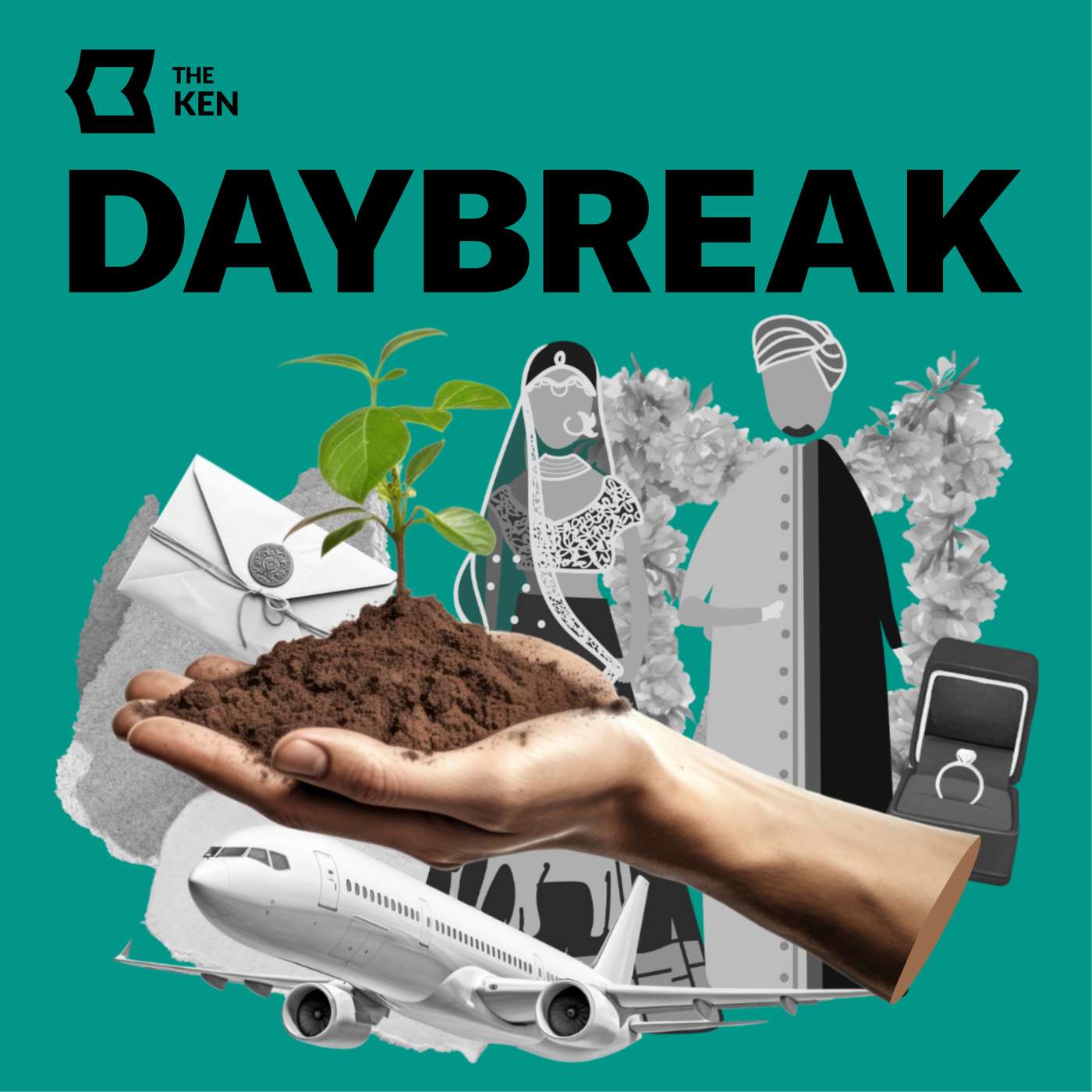
Welcome to the big fat sustainable Indian wedding! Over the last few years, sustainability has become a big buzz word in the wedding industry. Multiple wedding planners told Daybreak that couples are now increasingly asking for more ‘sustainable’ alternatives while planning their big day — from offsetting the carbon footprint of the event, to setting up compost pits in the middle of their wedding venues. This growing environmental consciousness makes sense. You see, as beautiful and fairytale-esque the typical Indian wedding is known to be, it is also infamously wasteful. But here's the thing — while some couples may be thinking about ‘sustainability’ more than before, the numbers tell a whole different story. Indian weddings aren’t getting any smaller. They are bigger and more expensive than ever before. About Rs 6 lakh crore was spent on weddings in 2024. That’s a 40 per cent increase from the previous year. And that’s not all – data shows that one in every 100 of those weddings had a budget of over Rs 1 crore. So how does sustainability co-exist with the grandeur of the Indian wedding? And can it? Daybreak host Rahel Philipose speaks to Ashwin Malwade, founder of Greenmyna, a sustainable event planning company, and Anirudh Gupta, the co-founder of Climes, a climate tech company. Tune in. Daybreak is produced from the newsroom of The Ken, India’s first subscriber-only business news platform. Subscribe for more exclusive, deeply-reported, and analytical business stories.
Ep 398Indigo's the winner of the skies and the stock market. But it's still walking on eggshells
At the end of 2024, Indigo, India’s largest airline, was voted as the airline of the year by Centre for Aviation (CAPA) at the 2024 Global Aviation Awards for Excellence. And then just a couple of weeks later, the airline was in for a rude shock when a survey by a German consumer-rights group ranked it among the worst 10 airlines in the world. Indigo, of course, refuted the findings of the survey and cast doubts on the credibility of the agency that released it.Monthly data from aviation regulator DGCA had scored Indigo high on punctuality and low on customer-complaint ratios, and it was a big deal “for an airline of its size and scale of operations”.But you see, that is exactly where the problem lies—size and scale.Tune in!Daybreak is produced from the newsroom of The Ken, India’s first subscriber-only business news platform. Subscribe for more exclusive, deeply-reported, and analytical business stories.Correction: In the episode, the host said SpiceJet is not listed. That is factually incorrect. The error is regretted.
Ep 397Bold Care and Mymuse are going where Durex and Manforce never could
The sexual wellness industry has long been shrouded in taboo. But now, thanks to quick commerce, getting a stamina supplement or a massage wand has become as effortless as ordering a packet of milk. In the process, the long standing dominance of the old guard – the likes of Durex, Manforce and Score – has also been challenged. That's because these quick commerce platforms shone a light on the many upstarts that have entered the market in the last few years. These brands are breaking the long held taboos associated with sexual wellness and entering the mainstream by doing what others never could. Tune in. Daybreak is produced from the newsroom of The Ken, India’s first subscriber-only business news platform. Subscribe for more exclusive, deeply-reported, and analytical business stories.
Ep 396Indian universities are done being backbenchers in the global rankings race
For an Indian university, a spot on the QS Rankings list could change everything. It would mean they belonged to the same elite club as the Cambridges and Oxfords of the world. But to nab that spot, universities are stopping at nothing — from admitting more foreign students, to paying top dollar to hire consultants and purchasing seats at conferences. But in the process some fear these universities are neglecting their bread and butter — academics. How did we get here? What's behind this growing obsession with climbing up the global ranking ladder? Tune in. Daybreak is produced from the newsroom of The Ken, India’s first subscriber-only business news platform. Subscribe for more exclusive, deeply-reported, and analytical business stories.
Ep 395Could your home loan lender be stealing from you? The secret EMI inflator you didn't know about
Last month though, things went crazy in Delhi NCR's real estate market. A DLF penthouse property in Gurgaon, a little over 16,000 square feet in size, sold for a mind-blogging Rs 190 crores. Just the stamp duty was Rs 13 crores, apparently. What really shocked the internet though was the per-square-foot price—Rs 180,000. When The Ken reporter Rounak Kumar Gunjan first came across it, he immediately forwarded the news article to some of his friends who are planning to buy flats to give them a sense of the madness out out there. But his frinds, he says, pulled off a UNO reverse.Because they told him something else about India’s real-estate space that was even more intriguing. An increasingly common sinister pattern in home loans that he has since confirmed with two bankers and two insurance industry executives. Tune in!Daybreak is produced from the newsroom of The Ken, India’s first subscriber-only business news platform. Subscribe for more exclusive, deeply-reported, and analytical business stories.
Ep 394On Shah Rukh Khan, dal-sabzi feminism, and the emotional-state of an economy ft. Shrayana Bhattacharya
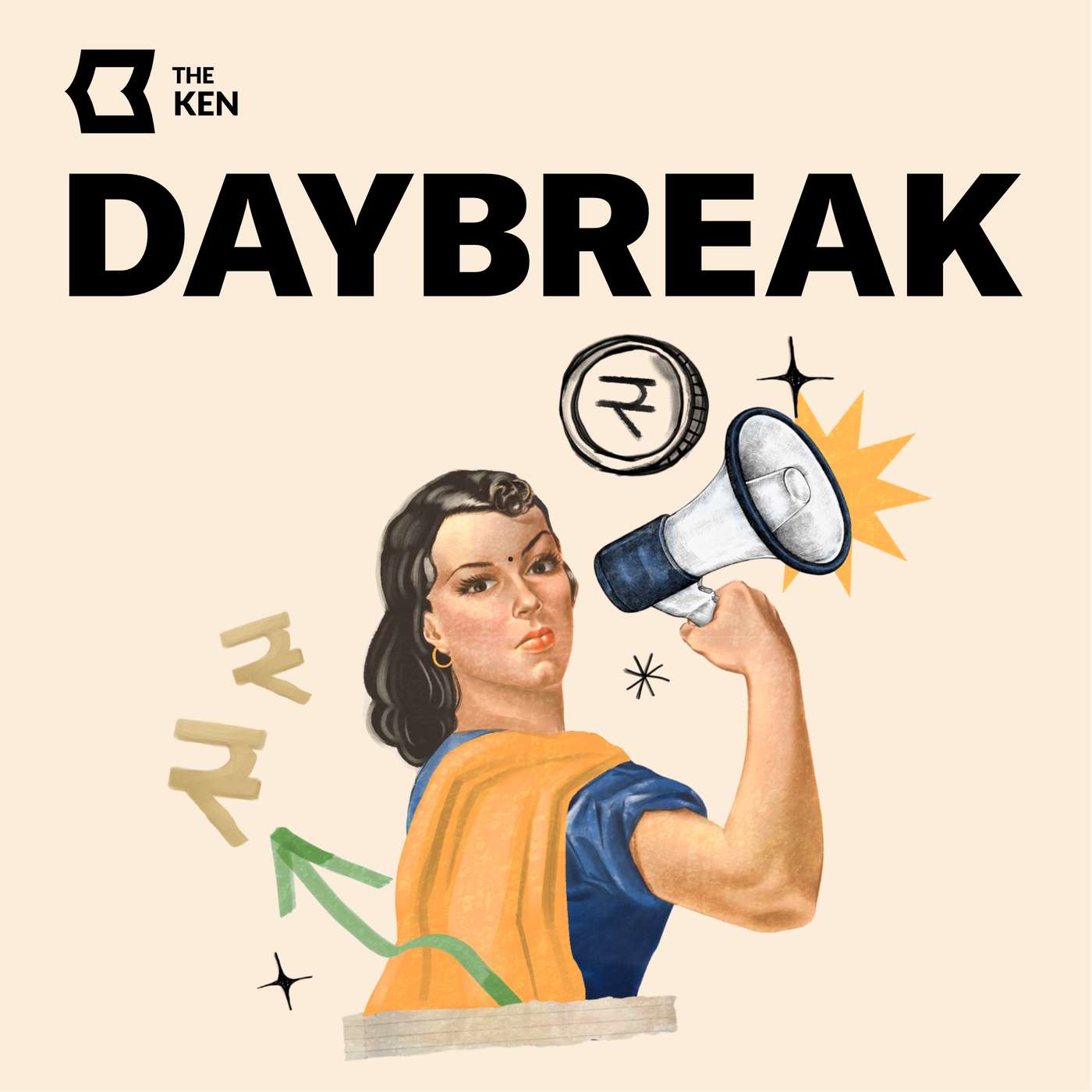
Today’s episode dives into a fascinating book called Desperately Seeking Shah Rukh: India’s Lonely Young Women and the Search for Intimacy and Independence, by Shrayana Bhattacharya, an economist with the World Bank’s Social Protection and Labour unit for South Asia. In this groundbreaking work, Shrayana unpacks the economic and social realities of Indian women through the stories of ten individuals from vastly different backgrounds—an upper-caste engineer, a flight attendant, a Muslim garment worker, and a tribal domestic worker, among others. But, you may wonder, where does Shah Rukh Khan fit into all this? And why would an economist care about a Bollywood superstar? For Shrayana, Shah Rukh Khan isn’t just a fan obsession, he’s a research method. And through it, she discovered that the one unifying thread among these women was their love for the actor. So he became the lens through which she explored their dreams, struggles, and aspirations. For one woman, he symbolises professionalism and for another, he embodies the hope of breaking free from social barriers.The book offers a unique, raw glimpse into the everyday battles Indian women fight for independence, economic liberty, and basic dignity. Shrayana also reveals how the actor represents the spirit of economic liberalisation in India—a figure who carries the promise of opportunity and upward mobility.In this episode, host Snigdha Sharma chats with Shrayana about the phenomenon of Shah Rukh Khan, the shifting role of women in India’s economy, the concept of “dal sabzi feminism,” the economics of “chik-chik,” and so much more.Tune in!Daybreak is produced from the newsroom of The Ken, India’s first subscriber-only business news platform. Subscribe for more exclusive, deeply-reported, and analytical business stories.
Ep 392Youtube is Saregama’s superpower—and its kryptonite
2024 was a defining year for Saregama, one of India’s oldest music labels. This is a company that has been around for well over a century. For a long time now, it has been associated with the kind of music your parents and grandparents grew up listening to – the classics, evergreen Bollywood numbers, Ghazals, Carnatic music…you get the drift. But this year, something changed. Saregama made it clear that it was done banking on old melodies alone. It has been on a mission to make fresh hits. And that mission has largely been successful thanks to Youtube. But there is a flip side to this strategy. In the Youtube-Saregama relationship, the former holds all the power. Tune in. Daybreak is produced from the newsroom of The Ken, India’s first subscriber-only business news platform. Subscribe for more exclusive, deeply-reported, and analytical business stories.
Ep 391You can buy an EV in China. But can you afford to insure it?
*This episode was originally published on September 24, 2024Half of the world’s electric cars are on China’s roads, thanks to a wave of smart incentives for both consumers and manufacturers, such as tax breaks and purchase subsidies. The payoff is tangible: the smog that once shrouded some major cities has lifted, and road noise has dropped significantly.But it brought unexpected costs and challenges that nobody saw coming. Tune inDaybreak is produced from the newsroom of The Ken, India’s first subscriber-only business news platform. Subscribe for more exclusive, deeply-reported, and analytical business stories.
Ep 390Why people don’t change their UPI apps even when they hate them
Remember that time in 2022 when India’s top digital payments companies Phonepe, Paytm*, and Bharatpe were in a no-holds-barred turf war? Looking back, it seemed like there was news almost every other day about some tiff between the three market leaders. In fact, former managing director of Bharatpe, Ashneer Grover, has spoken on record about “street fights” between companies’ employees over QR codes. A little more than two years later, there’s only calm. QR code scuffles are over. No one is beating each other up. Both the peer-to-merchant and peer-to-peer payments space have settled down into a tripartite peace. Phonepe, Google Pay, and Paytm—in order of market share—are the clear leaders. This raises some interesting questions: How many UPI apps do you have on your phone? And do you have a favourite one? We may have multiple, but only one of them is ever really used. No amount of cashbacks or fancy user experiences make people want to switch to something else. Is it brand loyalty that is preventing users from churning out of old platforms and into new ones? A former Paytm executive told The Ken recently, “There is zero brand loyalty for UPI payments apps…” Well then, what is happening?*Paytm founder Vijay Shekhar Sharma is an investor in The KenDaybreak is produced from the newsroom of The Ken, India’s first subscriber-only business news platform. Subscribe for more exclusive, deeply-reported, and analytical business stories.
Ep 389Daybreak 2024 — Episodes that soared and stumbled
As 2024 draws to a close, Daybreak hosts Snigdha and Rahel look back at some of their biggest hits and misses this year. Check out the episodes that made it to their round up. Hits —Rahel's choice: Successful Women are Freezing Their Eggs and That's on menSnigdha's choice: Why India's Biggest Employer of Female Gig Workers Refuses to listen to its own workforce Audience choice: What do women really want? A F*** off fund Misses —Rahel's choice: Are run clubs like rehab for the chronically online?Snigdha's choice: Why aren't we scared of chemicals in our skincare anymore?Audience choice: How India's 40-somethings are redefining career longevity?And that's a wrap! We will be back with new episodes next year. Stay tuned! Daybreak is produced from the newsroom of The Ken, India’s first subscriber-only business news platform. Subscribe for more exclusive, deeply-reported, and analytical business stories.
Ep 388What happens when you bring Rs 2 crore to the Delhi-NCR house hunt?
The real-estate market of Delhi-NCR is an anomaly. The Ken spoke to a bunch of potential homebuyers who are looking for premium apartments with budgets of up to 2.5 crore rupees. Real-estate experts are telling them to give up on their dreams. Lately, the national capital has been facing an acute supply crunch of new housing projects, especially in the mid-premium segment (80 lakh to 2 crore rupees) depending on the city. Delhi NCR has witnessed the sharpest fall in inventory in this segment in the last few years. Real-estate prices in turn have shot up far beyond the reach of most buyers. But it’s not like demand for housing has gone down because of these sky high prices. People are still buying tens of thousands of these mid-premium houses in and around Delhi. So the obvious question then is: why aren’t more residential housing units being built? *This episode was first published on 12 Sept 2024
Ep 387Dmart and Zudio walked so Vishal Mega Mart could run
No one was surprised by Vishal Mega Mart’s stellar market debut last week. After all, institutional and retail investors oversubscribed 27X to the Rs 8,000 crore IPO. So when it listed at a considerable premium, most people saw it coming. But, how did the 23-year-old value retailer get to this point? Well, in the last few years, Vishal, which has 70 per cent of its stores in tier 2 and smaller cities, has managed to outpace its rivals in the same space, such as Vmart and V2 Retail. Today, it pegs itself in the same league as Dmart and Trent, despite the fact that the retailer is still much smaller in scale. But this comparison has given Vishal a compelling story to tell about itself. In this episode, we delve into Vishal Mega Mart’s current position in India’s retail landscape. Tune in. Daybreak is produced from the newsroom of The Ken, India’s first subscriber-only business news platform. Subscribe for more exclusive, deeply-reported, and analytical business stories.
Ep 386Chaayos is doing everything to be the anti-Starbucks
For most Indians, a cup of good chai is a comfort that’s accessible. Coffee chains, on the other hand, are mostly premium. And it all adds up when one considers the fact that Indians consume 20 cups of tea for every cup of coffee. But we live in a time when opulence and luxury makes us go google eyed. In the Indian consumer market, premiumisation is no longer a choice. Even chai cafes chains don’t really have an option but to take the premium path.But Chaayos, the largest tea cafe chain in India, has decided not to go where the wind blows. And Nitin Saluja, the 40-year-old founder of Chaayos, says that this decision is actually based on its customers.Over the last two years, nearly 200 of them have clearly indicated their unanimous opinion to the company: don’t become like Starbucks.Tune in.** This episode was first published on 18 July 2024Daybreak is produced from the newsroom of The Ken, India’s first subscriber-only business news platform. Subscribe for more exclusive, deeply-reported, and analytical business stories.

Ep 385Daybreak 2024 Wrap Part 2: Writers' picks
This isn't your usual Daybreak Friday episode. Considering it's the end of the year, we thought we’d ask the reporters in our newsroom to talk to us about the stories they liked best. This week, we have DVLS Pranathi and Shristi Achar on the show.They share two of their favourite stories — First, Pranathi tells us about an unconventional new homegrown footwear company started by three former Puma executives. Next, Shristi speaks to us about why Karnataka’s EV battery making ambitions are stuck in low gear. Shristhi's recommendation: How the stock market is fuelling India’s grandest-ever wedding season Daybreak is produced from the newsroom of The Ken, India’s first subscriber-only business news platform. Subscribe for more exclusive, deeply-reported, and analytical business stories.Listen to the latest episode of Two by Two here
Ep 384How the unassuming category manager came to rule the world of quick commerce
Category managers have shifted from routine e-commerce roles to powerful decision-makers in quick commerce. They now manage the limited shelf space in dark stores and decide which products get visibility on platforms like Instamart, Zepto, and Blinkit. Naturally, brands are aggressively courting them, with over 30,000 requests every month for just 150 slots. From hosting parties to taking them out for drinks, brands are pulling out all the stops. Meanwhile, category managers are urging brands to invest more in ads and marketing to stay competitive.Tune in.Daybreak is produced from the newsroom of The Ken, India’s first subscriber-only business news platform. Subscribe for more exclusive, deeply-reported, and analytical business stories.Listen to the latest episode of Two by Two here
Ep 383Chief digital officers eat chief information officers for breakfast
Back in 2016, the Internet and Mobile Association of India set up an all new club for what was then a very small cohort of digital leaders in corporate India. It was called the all-India Chief Digital Officer club. Back then, there were only about five-six CDOs that were members. The point of the initiative was to give legitimacy to this new, emerging role. But soon enough, the initiative fizzled out. Not because the role didn’t take off or anything. Actually, the opposite. The initiative became redundant because the role became even more popular than they had anticipated. So it started with 5-6 members, but within the next four years its membership rose to 50 and then doubled the next year. You see, digital transformation has become THE buzzword for corporate India. And in the process, the CDO has become part of the companies top leadership. But the question is — where does that leave the CIO? Tune in. P.S The Ken’s podcast team is hiring! Here’s what we’re looking for.Daybreak is produced from the newsroom of The Ken, India’s first subscriber-only business news platform. Subscribe for more exclusive, deeply-reported, and analytical business stories.Listen to the latest episode of Two by Two here
Ep 382XLRI introduced India to management studies. But now it's done being just another B-school
Back in 1949, XLRI introduced India to management studies. Since then, it has managed to become one of the most sought after B-schools in the country. For decades, it was like the dependable elder statesman of Indian management education. But now, XLRI wants to be anything but just another business school. In the last two decades, there has been an explosion of MBA seats across the country. Now, XLRI doesn’t want to simply add more management seats mindlessly. It wants to introduce programmes it thinks are relevant. Some of which, have nothing to do with management studies at all. What's going on? Tune in. P.S The Ken’s podcast team is hiring! Here’s what we’re looking for.Daybreak is produced from the newsroom of The Ken, India’s first subscriber-only business news platform. Subscribe for more exclusive, deeply-reported, and analytical business stories.Listen to the latest episode of Two by Two here
Ep 381As surveillance tech blows up, startups face a unique paradox
India can't get enough of surveillance technology.Indian startups, meanwhile, are making the most of this trend by securing high visibility government contracts. But while these can boost a startup's profile, government projects are unpredictable and often difficult for smaller startups to win. As a result, there is a shift underway — private clients are becoming increasingly crucial for profitability. This divide between public and private contracts is forcing India’s surveillance startups to do a fair bit of monkey balancing. How are they pulling it off?Tune in. P.S The Ken’s podcast team is hiring! Here’s what we’re looking for.Daybreak is produced from the newsroom of The Ken, India’s first subscriber-only business news platform. Subscribe for more exclusive, deeply-reported, and analytical business stories.Listen to the latest episode of Two by Two here
Ep 380Dead mall rising: The life and death of Indian shopping centres
The golden age of the Indian shopping mall is over. There are at least 400 malls across the country. But a growing proportion of them are either dead or on life support. A report by real estate consultant firm Knight Frank found that the number of ghost malls in the country rose from 57 in 2022 to 64 in 2023. That’s about 1 in almost six malls. The report estimates that between 2022 and 2023, the loss of value due to the rise in ghost malls was around 800 million dollars, so that’s close to 7,000 crore rupees. In this episode, Daybreak host Rahel Philipose is joined by Gulam Zia, senior executive director at Knight Frank and Abhishek Bansal, the Executive Director of Pacific Development Corporation to understand the ins and outs of the mall business — why some succeed and others fail.Tune in. Daybreak is produced from the newsroom of The Ken, India’s first subscriber-only business news platform. Subscribe for more exclusive, deeply-reported, and analytical business stories.Listen to the latest episode of Two by Two here
Ep 379India’s second-largest logistics player is hurting after putting all its eggs in one basket
For a while now, some of the biggest players in India’s third-party logistics industry have been riding on the success of e-commerce unicorn Meesho. As of 2023, it accounted for over half of the 2.5 billion shipments that were being handled by third-party logistics players. Companies like Delhivery and Ecom Express happily rose to the occasion and partnered with Meesho to handle all its order deliveries. For logistics companies this was a dream come true because most of the other major e-commerce players in India – like Flipkart and Amazon – take care of all their logistics in-house. But earlier this year, Meesho announced the launch of Valmo, its own in-house logistics arm. Naturally, third party logistics partners are nervous. But no one is more shaken up than Ecom Express.Tune in.**This episode was first published on September 2, 2024.P.S The Ken’s podcast team is hiring! Here’s what we’re looking for.Daybreak is produced from the newsroom of The Ken, India’s first subscriber-only business news platform. Subscribe for more exclusive, deeply-reported, and analytical business stories.Listen to the latest episode of Two by Two here
Ep 378Tata and ITC are harvesting what small organic-food brands cultivated for years
A couple years ago the biggest challenge for an organic food brand was convincing consumers that their products were worth the premium they were paying for them. It was naturally a gargantuan task, particularly in a price sensitive market like India. But for the brands that stood their ground, believing that the Indian market would one day come around to organic eating, well, their moment has finally arrived. And how. There is a growing market for organic products, here in India. This space is actually more exciting than it has ever been before. In fact, big FMCG brands like Tata and ITC have now swept in for a slice of the vegan, cruelty free pie. On one hand, this helped the Indian organic food market to grow at an average rate of 25 per cent annually. But on the other, it has intensified competition in this space. And in the process, smaller, new-age brands seem to be getting the short end of the stick. Is there room for everyone? Tune in. Daybreak is produced from the newsroom of The Ken, India’s first subscriber-only business news platform. Subscribe for more exclusive, deeply-reported, and analytical business stories.Listen to the latest episode of Two by Two here
Ep 377Why the clock is ticking for Indian smartwatch makers
It really isn’t a great time to be a smartwatch brand in India. Pun intended. You see, the market for smartwatches in India has gone from seeing dizzying highs to depressing lows, all within the span of one year. Just last year in September, at least 17 million people had placed orders for smartwatches across the country. Everyone seemed to want to get their hands on one. And the two brands that were largely credited for this new craze were Boat and Noise. But now, a little over a year later, all those people who were frantically buying smartwatches last year aren’t buying them anymore. What’s more is that the likes of Boat and Noise – brands that had dominated the market thus far and set all sorts of new records – are now losing their sheen. They have very steadily been losing market share to a handful of new entrants. What changed? Tune in. Daybreak is produced from the newsroom of The Ken, India’s first subscriber-only business news platform. Subscribe for more exclusive, deeply-reported, and analytical business stories.Listen to the latest episode of Two by Two here
Ep 376Tata wants to make iPhones in South India by copying China's dorm labour model. Here's why it won't work
What put iPhone city on the map is that it produces more than half of the world’s iPhone’s every single year. The global demand for the Apple iPhone has only increased over the years. To keep up with that demand Foxconn hires up to 200,000 workers – a mix of migrants and college students – to make sure that the assembly lines keep running. Especially during the peak season which happens to begin right around now, from September to February. Iphone city is the perfect example of the China manufacturing playbook. It is what propelled China to emerge as the world’s manufacturing hub. It’s pretty simple – Foxconn and companies like it build these large facilities, pack millions of migrant laborers into dorms near their facilities, and get them to work long hours, in often tough conditions. But now things are changing. More and more global companies are adopting a China-plus-one strategy. And India is becoming a favoured alternative. And as the focus shifts our way, manufacturers in India are pretty much replicating the same China labour model. But this model has an indigenous problem.Tune in**This episode was first published on September 26, 2024.Daybreak is produced from the newsroom of The Ken, India’s first subscriber-only business news platform. Subscribe for more exclusive, deeply-reported, and analytical business stories.Listen to the latest episode of Two by Two here

Ep 375Daybreak 2024 Wrap Part 1: The Ken writer's picks
This isn't your usual Daybreak Friday episode. Considering it's the end of the year, we thought we’d ask the reporters in our newsroom to talk to us about the stories they liked best. This week, we have Rounak Kumar Gunjan and Aakriti Bhalla on the show. They share two of their favourite stories — The first is a fascinating story by Rounak about how a tiny discount caused an uproar inside IRCTC or the Indian Railway Catering and Tourism Corporation. The second is by Aakriti about how Pepsico managed to make Sting the energy drink of India.Tune in. P.S. We want to know how and where you shop. When was the last time you went to a shopping mall? What did you buy? Write to us on WhatsApp. Our number is 8971108379Curious about the story Rounak mentioned on the show? Check it out here.Daybreak is produced from the newsroom of The Ken, India’s first subscriber-only business news platform. Subscribe for more exclusive, deeply-reported, and analytical business stories.Listen to the latest episode of Two by Two here
Ep 374Flipkart wants to do with electronics what Blinkit and Swiggy did with groceries
It has been about four months since Minutes, Flipkart's all new quick-commerce service was launched in Bangalore. But Flipkart isn’t doing e-commerce the old fashioned way. It’s not taking on the likes of Blinkit or Swiggy Instamart directly by promising speedy grocery deliveries. Instead, its big focus is electronics. It is a space that quick-commerce giants like Blinkit, Swiggy and Zepto – have all dipped their toes in. But Flipkart wants to take things to the next level. Like one Flipkart manager told The Ken, the company is trying to increase the width rather than the depth of the electronics category. The idea is to give more options to customers, but in limited quantities. But while it may not be taking on Blinkit and Swiggy Instamart directly, Flipkart does have another major challenger – Croma, India’s second-largest electronics retailer. And courtesy a partnership with Big Basket, Croma is also getting into the quick commerce business. However, building the capability to deliver large electronics, that too in volume, is not an easy task. So how do they plan to do it? Tune.Listen to the latest episode of Two by Two hereDaybreak is now on WhatsApp at +918971108379. Text us and tell us what you thought of the episode!Daybreak is produced from the newsroom of The Ken, India’s first subscriber-only business news platform. Subscribe for more exclusive, deeply-reported, and analytical business stories.Listen to the latest episode of Two by Two here
Ep 373Why FMCG giant Hindustan Unilever has never really screamed for ice cream
There’s a running joke at Hindustan Unilever's Mumbai Headquarters. If a new hire is assigned to the ice cream division, it’s immediately clear that they aren’t in the company’s inner circle. But if you’re handed Surf Excel, Brooke Brond, or Glow & Lovely, it means you are in the big leagues.Right now, that pecking order is clearer than ever. Just last month, the FMCG giant went ahead and decided to demerge its ice cream business. The decision has already received in principal approval from the company’s board. Assuming that it clears all the other approvals and procedures, it would mean that refrigerator staples like Magnum, Cornetto and Kwality Walls will all come under a separately listed entity. This at a time when the ice cream space has been heating up…not literally of course. New age players like Hocco, NIC and Noto have all entered the market and collectively contributed to a sort of ice cream renaissance. So, shouldn’t HUL be focussing on growing its ice cream business rather than isolating it?Tune in. Listen to the latest episode of Two by Two hereDaybreak is now on WhatsApp at +918971108379. Text us and tell us what you thought of the episode!Daybreak is produced from the newsroom of The Ken, India’s first subscriber-only business news platform. Subscribe for more exclusive, deeply-reported, and analytical business stories.Listen to the latest episode of Two by Two here
Ep 372India set up a new body to fix medical education. It now needs to fix that body
Four years ago, India set up a new body to fix medical education. It was called the National Medical Commission (NMC) and it was meant to replace the Medical Council of India and bring reforms in this sector. The goal, at the time, was to bring some order to the chaos. But so far, it seems like the body has only been able to do the opposite. Between vacancies, a series of poor decision and a general lack of coordination — the laundry list of criticism from people in the medical fraternity is only getting longer. It seems like the body that was meant to cure medical education in India, is dealing with a chronic illness of its own. But is it terminal? Tune in. Daybreak is now on WhatsApp at +918971108379. Text us and tell us what you thought of the episode!Daybreak is produced from the newsroom of The Ken, India’s first subscriber-only business news platform. Subscribe for more exclusive, deeply-reported, and analytical business stories.
Ep 371Are banks done with India's credit card frenzy?
For the last five years, India’s new-found love for plastic has been pretty visible. More than 100 million credit cards had been issued by banks by Feb 2024.Banks, as we all know, are in a rush to sell more and more credit cards. To do this, they use a whole gamut of attractive offers. For example, free access to airport lounges became all the rage for the longest time. The footfall at these lounges went up significantly till banks slowly realised it was getting a bit too expensive. Which is why they started reigning these offers in.Now, believe it or not, banks are slowly cutting down on the number of credit cards they’re issuing. In October 2025, banks issued less than half the number of credit cards they issued last year at the same time. The most obvious reason for lenders being careful is a decision the RBI took in November last year. It increased the risk weight on credit-card receivables of banks and NBFCs. For banks, it was raised from 125% to 150%, and for non-banks from 100% to 125%.This basically meant that lenders would have to set aside more capital for their credit-card receivables.But in this episode, we look at the trajectory of two lenders which rely heavily on credit cards—RBL Bank and SBI Card. Clearly, there is a lot more going on behind the scenes.Tune inListen to the latest episode of Two by Two hereDaybreak is now on WhatsApp at +918971108379. Text us and tell us what you thought of the episode!Daybreak is produced from the newsroom of The Ken, India’s first subscriber-only business news platform. Subscribe for more exclusive, deeply-reported, and analytical business stories.Listen to the latest episode of Two by Two here
Ep 370Why India's biggest employer of women gig workers refuses to listen to its own workforce
A decade ago, when platforms like Urban Company entered the scene, they were seen the beacon of hope for thousands of women like Selvi and Nisha, two beauticians based in in Bangalore—finally, an avenue that offered them the financial independence and support their families without the cost flexibility. Now, over one third of the platform's workers are female making it the largest employer of women gig workers in India.But in the last few years, the same workers have been raising their voices against the unfair nature of their job—from the one-sided ratings system of the app that makes female gig workers entirely dependent on customers and the arbitrary blocking of their accounts to the lack of basic safety and more.Their requests and demands seem to be falling in to deaf years. The Ken reached out to Urban Company with questions regarding these issues but so far we haven't received any response.In today’s episode, we will try to understand why Selvi, Nisha and thousands like them are so angry with the very company that was once a source of freedom for them.Tune in.Episode cover art by Kavipriya OGListen to the latest episode of Two by Two hereDaybreak is now on WhatsApp at +918971108379. Text us and tell us what you thought of the episode!Daybreak is produced from the newsroom of The Ken, India’s first subscriber-only business news platform. Subscribe for more exclusive, deeply-reported, and analytical business stories.Listen to the latest episode of Two by Two here
Ep 369How regional jewellery brands are trying to beat Tanishq at its own game
For more than two decades, India’s jewellery industry has been dominated by one name and one name only – Tanishq. The Titan-owned brand has managed to become the go-to jewellery store for people across the country. Some may even call it the gold standard, literally. But since last year, things have been changing. Tanishq’s dominance is being challenged. Not by some massive international player or any other pan-India brand. Nope. Instead, it is regional players that are starting to dim Tanishq’s shine. You may have noticed all the Malabar Gold and Kalyan Jewellers ads and billboards that have popped up in the last year or so. Both are regional brands that have really been giving Tanishq a run for its money. The funny thing is all of these regional brands have risen to the top by doing exactly what Tanishq does best. They are literally hijacking Tanishq’s own playbook. And in the process, what was once Titan’s exclusive territory, with its 8% market share in a sea of unorganised competition, is now getting crowded.Tune in. **This episode was first published on August 20, 2024Listen to the latest episode of Two by Two hereDaybreak is now on WhatsApp at +918971108379. Text us and tell us what you thought of the episode!Daybreak is produced from the newsroom of The Ken, India’s first subscriber-only business news platform. Subscribe for more exclusive, deeply-reported, and analytical business stories.
Ep 368Did someone just find the US$533 million that Byju’s lost?
Bloomberg recently published a damning report about Byju’s according to which Byju Raveendran, the edtech’s founder, allegedly tried to convince an American businessman to leave the country so he wouldn't have to testify in a federal court about the suspicious activities he saw while working for the edtech.However, William R Hailer, the businessman, filed a declaration in the US Bankruptcy Court in Delaware, where he said: ““Raveendran arranged a ticket for me to Dubai on Emirates out of Chicago Illinois to avoid testifying and to be out of the country as an excuse if required to testify.” Now, if you’ll remember, in Sept this year, the highest court in Delaware, USA had upheld a ruling by a lower court that said the edtech firm Byju’s had indeed defaulted on infamous $1.5 billion loan. Which basically meant , that the lenders could demand full repayment, and take control of Byju’s US entity Byju’s Alpha Inc, and also appoint Timothy Pohl, Alpha Inc’s court-appointed CEO, as its sole director.In this episode based on the latest edition of The Ken's newsletter Ed Set Go, we delve into the latest twist in the Byju's saga.Tune in.Daybreak is now on WhatsApp at +918971108379. Text us and tell us what you thought of the episode!Daybreak is produced from the newsroom of The Ken, India’s first subscriber-only business news platform. Subscribe for more exclusive, deeply-reported, and analytical business stories.
Ep 367Why Mamaearth is stuck with dead stock and mounting losses
In the June quarter of 2024, Honasa Consumer, the maker of Mamaearth, decided to launch this new project called Project Neev. The idea was to bring about a foundational change in the way the company operates, especially distribution.For context, Mamaearth hit the bourses in October last year when everyone else who had IPO plans had decided to hold them off for a bit. But Varun Alagh, the CEO and co-founder of Mamaearth, was of the firm opinion that the timing was perfectly ripe.Things seemed to be going alright until this month when Honasa Consumer reported its first loss ever since it went public. Everything points to the massive change in the company’s distribution strategy. It decided to dump all its super-stockists or distributors for an in-house sales team that would take care of it. Basically, all the middlemen were kicked out.The company estimated a one-time hit of Rs 50 crore in inventory losses because of this shift. But Alagh himself admitted in an interview with The Economic Times that the real damage was closer to Rs 70 crore. And former distributors allege that the real picture is much worse. They estimate that there are stocks worth Rs 300 crores lying unsold and unclaimed.In today’s episode, we’ll delve deeper into what this change in distribution strategy has led to for Mamaearth and its former stockists. Daybreak is now on WhatsApp at +918971108379. Text us and tell us what you thought of the episode!Daybreak is produced from the newsroom of The Ken, India’s first subscriber-only business news platform. Subscribe for more exclusive, deeply-reported, and analytical business stories.
Ep 366Are school-fee loans the next goldmine for Indian fintechs?
Regular CBSE schools just don’t cut it anymore for the aspirational middle class parents in India. But considering how the annual fees at most of these schools can range anywhere between Rs 3 lakh to Rs 25 lakh, sending a child to one of them is no joke. Almost 90 per cent of parents who take the step can’t afford to pay the full fees up front. In fact, for most, even paying half the fee in one go is not an option.In come the fintechs. Companies like Grayquest, Jodo and Leo1 are partnering with a growing number of schools to offer a simple solution to these aspirational parents – zero cost EMIs. How does it work? And what’s in it for the fintechs? Tune in. Daybreak is now on WhatsApp at +918971108379. Text us and tell us what you thought of the episode!Daybreak is produced from the newsroom of The Ken, India’s first subscriber-only business news platform. Subscribe for more exclusive, deeply-reported, and analytical business stories.
Ep 365The murky world of money mules and how they fuel India’s Rs 2,500 crore fraud economy
The world of cyber fraud has gotten even murkier thanks to a slick new tech service that is streamlining fraud for scammers and making them even harder to track down. This new concept is called ‘Mule-as-a-service’ or MaaS. It’s kind of like a plug-and-play fraud tech where service providers are able to deploy an army of mules on behalf of cybercriminals. These mules are people who lend their bank accounts to move dirty money for cybercriminals. The scary thing is this mule network is getting smarter about leaving no money trail for authorities to follow.More often than not, these mules are ordinary people from low income groups who sign up to make a quick buck, without realising just how dangerous the whole business is.Daybreak hosts Snigdha and Rahel are joined by The Ken reporter Rounak Kumar Gunjan and Dhiraj Gupta, co-founder of the fraud-protection firm MfilterIt, about how this network works and why regulators have been struggling to keep up. Tune in. Subscribe here to listen to the full episode of Two by TwoListen to the free version of Two by Two here: AppleSpotifyDaybreak is now on WhatsApp at +918971108379. Text us and tell us what you thought of the episode!Daybreak is produced from the newsroom of The Ken, India’s first subscriber-only business news platform. Subscribe for more exclusive, deeply-reported, and analytical business stories.
Ep 364How lenders like Navi resort to extreme borrower surveillance to keep their A game on
If you’ve ever taken a loan from a non bank or an NBFC, the EMI is usually auto-debited from your account every month. But if you missed a payment, you know what usually goes down. You are inundated with phone calls from your lender and maybe agents even start visiting your home. Not an ideal situation for you or your lender.But now, your lender can just monitor your account and deduct the money as soon as it comes into your account…all thanks to that auto-debit permission you granted. Earlier, only a bank could do this when it lent money to its account holder. But now non-banks can do it, too. A fintech executive told The Ken that this tool will soon become business as usual in every lender’s tool box. But things are still not there yet since the banks are not predictably sharing the statement data or their servers are down.And here’s where account aggregators come into the picture. These aggregators are a newly-created class of licensed companies by the Reserve Bank of India. They basically help businesses exchange financial information about a user after taking the user’s consent. Meanwhile, Navi Finserv, a four-year-old non-bank, was quite particular about how fast it could help its users take out a loan. Navi’s co-founder and CEO Sachin Bansal—who previously co-founded the Flipkart —believes “banking should be as easy as going on Swiggy and ordering food”. So to amp up both disbursals and collections, Navi and others like it are counting on account aggregators. But being able to access a borrower’s bank statement at any given time is a powerful collection tool.And the problem is how Navi has been using this power.Tune in. Subscribe here to listen to the full episode of Two by TwoListen to the free version of Two by Two here: AppleSpotifyDaybreak is now on WhatsApp at +918971108379. Text us and tell us what you thought of the episode!Daybreak is produced from the newsroom of The Ken, India’s first subscriber-only business news platform. Subscribe for more exclusive, deeply-reported, and analytical business stories.
Ep 363How do you get people to switch to electric cars? Take the subscription route
In many ways, electric vehicles today are where mobile phones were in the early 2000s. It’s December 2002. Mobile phones have entered the market, but the average Indian is still pretty sceptical. Cell phone connections are patchy and more importantly expensive. Devices themselves were unwieldy, limited and again…expensive. Basic services like sending a text, or a voice mail, or call waiting were considered ‘add-on services’ and they needed to be purchased separately. So most people thought it just wasn’t worth the investment. That was until Reliance came in and changed everything. Back then, Mukesh Ambani launched Infocomm. The idea was to make telephone calls in India as cheap as sending a postcard. And it worked. Slowly, as costs started to drop, more and more people saw sense in adopting mobile phones, and eventually abandoning landlines altogether.This episode is by no means a history lesson. But that context was important. Because India is almost exactly where it was back then. Except, the device they are on the fence about is now electric vehicles. And the company in question now is JSW MG Motor. Funnily enough, the solutions that JSW is coming up with are eerily similar to the Reliance strategy back then. It's biggest proposition? A subscription plan for your EV battery.Tune in. Daybreak is now on WhatsApp at +918971108379. Text us and tell us what you thought of the episode!Daybreak is produced from the newsroom of The Ken, India’s first subscriber-only business news platform. Subscribe for more exclusive, deeply-reported, and analytical business stories.
Ep 362As the Gen AI race heats up data centres, water becomes the new air
Cloud, streaming, generative AI… while all of these are increasingly becoming hot topics of discussion, data centres—the large, boxy buildings that house high-powered computers—are looking for innovative solutions to stay cool.The advent of GPU processing has opened an opportunity for a handful of foreign companies to throw their hat into the ring. Their proposition? Liquid cooling. So far, air cooling has been the preferred way to keep data centres cool. Like its name suggests, it is the process of using air to keep these centres cool. Liquid cooling does just that but with water. It’s more efficient and largely believed to be a better way of cooling. But change does not come easy. Many data centre operators here in India believe it is riskier than air cooling. But with AI technology advancing the way that it is and GPUs growing more popular, they may soon not have a choice. Daybreak is now on WhatsApp at +918971108379. Text us and tell us what you thought of the episode!Daybreak is produced from the newsroom of The Ken, India’s first subscriber-only business news platform. Subscribe for more exclusive, deeply-reported, and analytical business stories.
Ep 361How Hurun's turned ranking India's ultra-rich into a mini-industry
Hurun India began curating rich lists a decade ago. Now, it has moved up ahead of ranking giants like Bloomberg and Forbes with 17 lists so far. It has a Global 500 list, similar to Bloomberg’s Billionaire Index. In fact, at this point, its safe to say that it has replaced Forbes as the most trusted choice for bankers and wealth managers. Hurun has managed to turn showing it off into a cultural trend despite the fact that wealth is often wrapped in secrecy in a country like India. So what's really driving India's obsession with ranking the richest?Hurun India has grown way beyond its original rich lists, creating rankings for just about everything you can think of—from self-made entrepreneurs to top art collectors. They even track billionaires by zodiac signs. Today we look at Hurun India beyond just these lists— a closer look at the behind the scenes relationship it has with wealth-management firms, and how it keeps the ultra-rich happyDaybreak is now on WhatsApp at +918971108379. Text us and tell us what you thought of the episode!Daybreak is produced from the newsroom of The Ken, India’s first subscriber-only business news platform. Subscribe for more exclusive, deeply-reported, and analytical business stories.
Ep 360Are run clubs like rehab for the chronically online? Daybreak joined one to find out
Last Sunday, the Daybreak team joined a run club! Why, you ask? For research, of course. We wanted to understand the recent run club renaissance, that has taken social media by storm since the beginning of the year. Run clubs, in the traditional sense, have been around for decades now. But now, something has shifted. The new generation of runners is younger, less experienced, and relentlessly social. Young people are looking for new avenues to meet people in real life and to connect offline. This isn't just limited to running. Social clubs in general are really having their moment. These are clubs that are centred around an activity — like hiking, painting, reading, even knitting. In search of meaningful relationships, sometimes even love, they are putting down their phones and pursuing hobbies like never before. But what led to this sudden resurgence of social clubs? Was it the pandemic? Loneliness? Social media fatigue? Or something else entirely? Tune in to find out. Special thank you to the 56 Run Club for collaborating with us for this episode. You can follow them on Instagram to get the latest updates on their runs and events. Daybreak is now on WhatsApp at +918971108379. Text us and tell us what you thought of the episode!Daybreak is produced from the newsroom of The Ken, India’s first subscriber-only business news platform. Subscribe for more exclusive, deeply-reported, and analytical business stories.
Ep 359How Swiggy prepared for its IPO
On November 13, food delivery giant Swiggy made its public debut. It listed with a 8% premium over its IPO price of Rs 390 on NSE at Rs 420 and was oversubscribed by nearly four times. While it's a bit early to comment, investors are not making strong bets on it yet. Hust to give you context, when Zomato went public, its IPO was oversubscribed by 38 times. This could be because the company is still posting losses on a consolidated level and is expected to be 2-3 years away from reaching profitability. It took Swiggy nine years till its food delivery business finally turned profitable last year.Today, we revisit an episode of Daybreak in which we’d talked about what was happening behind the scenes of Swiggy’s IPO preparation.Tune in.Daybreak is now on WhatsApp at +918971108379. Text us and tell us what you thought of the episode!Daybreak is produced from the newsroom of The Ken, India’s first subscriber-only business news platform. Subscribe for more exclusive, deeply-reported, and analytical business stories.
Ep 358Startups can't get over venture debt. But the lenders are getting pickier
For quite a while now, the Indian startup ecosystem has really been feeling the pinch. People in the know call it the funding winter. These are periods of tremendous financial insecurity for startups, particularly now. You see, for the last five years ago, the startup funding culture here in India was like a rollercoaster that was only going up. But now the scenario has changed considerably. After a dream run, big-ticket equity funding has slowed down and once sky high valuations are very quickly coming back to Earth. These startups still need the money, obviously. But they have realised that raising a round of funding may not be as easy as it once was. But they have found their knight in shining armour. In comes ‘venture debt’. These are essentially loans that go to VC-backed startups. A lot of the startups in the Indian ecosystem are thirsty, and venture debt is increasingly proving to be the refreshing splash they needed amid this funding drought.But there's a catch. Tune in. Daybreak is produced from the newsroom of The Ken, India’s first subscriber-only business news platform. Subscribe for more exclusive, deeply-reported, and analytical business stories.
Ep 357CMOs are a dying breed. Nykaa, Nestlé India, and others are living proof
Last year, Nykaa decided to reshuffle its marketing structure after the company’s previous Chief Marketing Officer (CMO) exited the company. Instead of immediately filling the spot, Nykaa decided to break the role apart and have two marketing heads. One to look at performance marketing – the more technically, data-driven side of e-commerce, and another as the head of organic marketing – the creative, freewheeling stuff. The move sent out a clear message: a singular CMO is no longer necessary. This isn’t exclusive to Nykaa. Several online-first companies – Firstcry, Ixigo, Yatra – have been running without a CMO. But for decades CMOs have been seen as the charming, confident face of the company responsible for all things brand-building. What's changed? Tune in. Daybreak is produced from the newsroom of The Ken, India’s first subscriber-only business news platform. Subscribe for more exclusive, deeply-reported, and analytical business stories.
Ep 356Indian govt's free senior health cover exposes the dark side of private insurance
Last month, in October 2024, the government of India launched the Ayushman Bharat Pradhan Mantri Jan Arogya Yojana, a health insurance coverage for all senior citizens aged 70 and over, regardless of income. This is big news for healthcare in India because for the longest time, this is exactly the age group that has pvt insurance companies have been ignoring.To give you a clearer picture, a person aged over 60 years pays anything between Rs 30,000–50,000 as annual premium for coverage as low as 5 lakh rupees. Even policies for Rs 6–10 lakh are harder to find and cost Rs 40,000–70,000 annually. That’s about 5X the premium someone younger would pay for the same coverage. And it’s not just the high premiums; these policies are of little help to seniors when they need it the most. In fact, more than four out of every five people aged above 60 aren’t covered by any insurance at all. Only 20% of those over 45 years have a health cover. And the rest are just out there vulnerable to emergencies. The reason being: high premiums and meagre coverage.Tune in.Daybreak is now on WhatsApp at +918971108379. Text us and tell us what you thought of the episode!Daybreak is produced from the newsroom of The Ken, India’s first subscriber-only business news platform. Subscribe for more exclusive, deeply-reported, and analytical business stories.

Ep 355What does it take to launch a budget skincare brand today? 30 days and a penchant for marketing
Ever since the pandemic, the world of skincare has witnessed nothing short of a revolution. Almost overnight, that jar of Ponds cold cream that had stood the test of time on dressing tables across the country was replaced by elaborate six-step skincare routines. The legacy brands we grew up with – the likes of Loreal, Ponds, Johnson and Johnson – were dethroned almost overnight. In their place came an explosion of new brands. Today, everyone wants some skin in the game. Traditional FMCG companies like Tata, Marico, Dabur and Godrej all want in. So much so, that it's hard to keep a tab on the list of D2C skincare brands available in the market now. But what does it take to launch a skincare brand? Turns out, not a lot. All you need is a contract manufacturer, 30 days, and a penchant for marketing. Tune in. We are hosting our first live recording! If you are in your 20s, like to run or just enjoy meeting new people, sign up for The Ken X 56 Run Club. This is for our Bengaluru-based listeners only. We meet at 7:30 am near Tonique on Kasturba Gandhi road.
Ep 354How India's young millionaires are defying family norms to create new sources of wealth
Lately, new breed of millionaire heirs have been dabbling with family offices in India . These are entities that exist solely to manage the fortunes of these ultra-rich families. While these offices have been around in some of the world’s biggest financial capitals for a long time now, in India, they are catching on now . What’s really interesting is that these single and multi family offices haven’t just been popping up in big metro cities, they are also gaining popularity in tier 2 cities like Surat, Ludhiana, Lucknow, Coimbatore and the like. This largely has to do with the growing number of rich people in a lot of smaller cities and towns. A byproduct of this seems to be the rise in family offices. In the last six years alone, the number of family offices in India has shot up from 45 to 300. Some of these function like a seed-stage venture capital firm and invest money to the tune of hundreds of millions of dollars.Tune in.**Correction: In this episode the host mistakenly referred to Nishant Batra as someone who leads investments at Catamaran, whereas he works for Dholakia Ventures. We apologise for the error.Daybreak Unwind recommendations for 'favourite translated novels.'Rahel: The Vegetarian by Han King Hangwoman by KR MeeraSnigdha: The Legends of Khasak by OV Vijayan There's a Carnival Today by Indra Bahadur RaiListeners: Ghachar Ghochar by Vivek Shanbag Daybreak is now on WhatsApp at +918971108379. Text us and tell us what you thought of the episode!Daybreak is produced from the newsroom of The Ken, India’s first subscriber-only business news platform. Subscribe for more exclusive, deeply-reported, and analytical business stories.
Ep 353Youtubers are dominating Indian living rooms by taking a page out of the TV playbook
Here’s a riddle inspired by true events. We all know that pay TV subscribers have been declining for a while now. But at the same time, overall TV viewership has only been increasing. How can that be? Well, for that we have Youtube to thank. In the first half of 2024, Indians spent 8 trillion minutes watching videos. More than 90% of this was on Youtube. Now, generally when someone says the words ‘watch on youtube’ you imagine a mobile phone or a laptop right? That seems to be changing as a lot more people are watching Youtube videos on their TV sets. In Uttar Pradesh alone, Youtube reaches about 90 million households through connected television sets.And here’s the surprising part. This is roughly equal to or more than the reach of television programming. Youtube is now entering TV territory, by luring viewers into watching new format shows. Like comedian Samay Raina’s “pointless reality show” India’s got latent. Eight episodes have been aired since June, and so far, they’ve gotten up to 4X more views than the channel’s nearly 4 million subscriber base.Many similar Youtube channels are offering their subscribers TV like programming to keep them hooked. Plus, what makes them really stand out is that most often than not, these shows are better produced, that too on cheaper budgets.Looks like its time for TV channels to buckle up and fight for the throne...or couch!Tune in. We are hosting our first live recording! If you are in your 20s, like to run or just enjoy meeting new people, sign up for The Ken X 56 Run Club. This is for our Bengaluru-based listeners only. We meet at 7:30 am near Tonique on Kasturba Gandhi road.