Daybreak
851 episodes — Page 8 of 18
Ep 505India said no to pollution. China took the rare earth crown
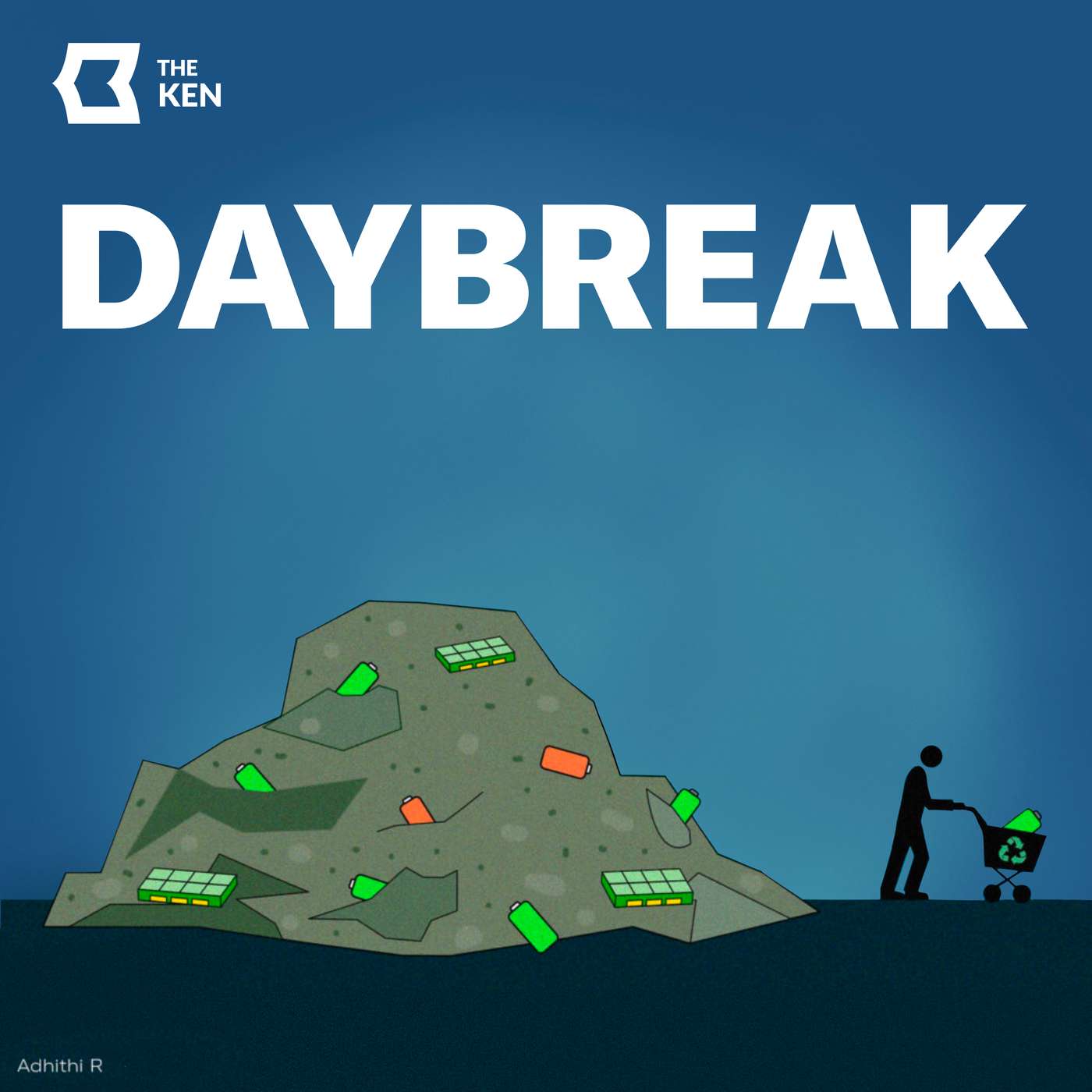
Like much of the world, India is heavily reliant on China for its rare earth supplies. In FY25 alone, we imported 870 tonnes of rare earth magnets, worth over ₹300 crore. China controls about 60–70% of global rare earth production and around 90% of the world’s refining capacity. Decades ago, while other countries hesitated over environmental and social costs, China made a ruthless, calculated bet — sacrifice land, people, and air to dominate the rare earths future.Now we are in that future and China has thrown a spanner in the works. It has imposed fresh restrictions on magnet exports, threatening to bring India’s EV ambitions to a grinding halt.Indian importers are caught in a bureaucratic maze. Chinese suppliers now demand end-use declarations. That kicks off a long certification process — multiple approvals from Indian authorities, and even sign-off from the Chinese embassy in Delhi.And after all that, final clearance must come from China’s commerce ministry. That’s the bottleneck. Several Indian auto component makers have jumped through every hoop — yet they’re still waiting.So, where does that leave us?Tune in.Tell us what you thought of this episode. You can text us your feedback on WhatsApp at +918971108379Daybreak is produced from the newsroom of The Ken, India’s first subscriber-only business news platform. Subscribe for more exclusive, deeply-reported, and analytical business stories.Want to attend The Ken's next event on health, fitness and wellness? Buy tickets here. Here's your chance to help us shape the conversation: https://theken.typeform.com/to/bZhqWl2g
Ep 504Inside India’s $1.5 billion protein fetish
Protein is having a moment in India. Once reserved for gym-goers and bodybuilders, it’s now showing up in everyday foods like idli, rotis, chips, lassi, even kulfi. And consumers are buying in.Behind this craze is a $1.5 billion strategy that’s reshaping how India eats. Food brands saw a gap in a country where nearly two out of three households are protein deficient. And they turned it into a goldmine. Now, protein is everywhere, and the market is only getting bigger.But here’s the twist: while the labels scream '50g protein' and 'fuel for champions,' reality is far more complicated. Many of these products include additives, sugar, and misleading serving sizes. Some even contain toxic substances. Meanwhile, your body can’t store excess protein—it just turns it into fat.So is this really a health revolution? Or just clever packaging?Tell us what you thought of this episode. You can text us your feedback on WhatsApp at +918971108379Daybreak is produced from the newsroom of The Ken, India’s first subscriber-only business news platform. Subscribe for more exclusive, deeply-reported, and analytical business stories.Want to attend The Ken's next event on health, fitness and wellness? Buy tickets here. Here's your chance to help us shape the conversation: https://theken.typeform.com/to/bZhqWl2g
Ep 503How a well-timed offensive crippled Juspay’s $150 million fundraise
Indian finserv is no koi pond. It's a shark tank. And now, some of the biggest sharks in the tank – payment aggregators like Phonepe, Razorpay, Cashfree and Paytm – are all narrowing in on the aggregator of aggregators, Juspay. In this episode, we go behind the scenes of one of the biggest fintech standoffs of the year. On one side are the aggregators, who power payments for millions of online merchants. And on the other side is “aggregator of aggregators” Juspay, who’s worked as an extension of merchants’ payments teams, helping them coordinate payments across aggregators, for over a decade. Tune in. Check out our latest episode featuring Soumya Rajan, founder and CEO of Waterfield Advisors, India’s largest multi-family office and wealth advisory firm.Daybreak is produced from the newsroom of The Ken, India’s first subscriber-only business news platform. Subscribe for more exclusive, deeply-reported, and analytical business stories.Listen to the latest episode of Two by Two here
Ep 502More skills, same pay, barely any job guarantee — Infosys trainees are in for a rough ride
Of the 5,000 graduates offered jobs in 2022—the majority of whose joining was delayed by two years—755 have been laid off so far for failing to clear tests. The assessments this time were tougher than usual, said five trainees and ex-employees The Ken spoke to. The threshold for passing was raised from 50% to 65%. On top of this, new material was added, and the number of questions was increased.Then again, the times are changing. India’s IT-services industry has been a driver of economic growth for over two decades, contributing 7% to the country’s GDP and employing over 5 million people in FY24. But over the last three years, growth has stagnated—the ongoing tariff uncertainties being just the latest setback. But the real existential threat in this scenario is AI. The pressure is already on. Clients want quicker turnarounds on smaller budgets. Companies, in turn, have found the perfect patsy: pre-trained freshers, compelled to jump into projects from the get-go.Tune in. Check out our latest episode featuring Soumya Rajan, founder and CEO of Waterfield Advisors, India’s largest multi-family office and wealth advisory firm.Daybreak is produced from the newsroom of The Ken, India’s first subscriber-only business news platform. Subscribe for more exclusive, deeply-reported, and analytical business stories.Listen to the latest episode of Two by Two here
Ep 501Why Tesla's wheels aren't turning in India (yet)
Tesla’s story in India has been more like a stalled engine than a roaring electric debut—despite years of headlines, high-level meetings, and hopeful tweets. While the Indian government did slash import duties on premium EVs from a staggering 110% to a friendlier 15%, it wasn’t enough. Because for Tesla, this isn't just about taxes. It is about suppliers, standards, scale, and most importantly, timing. But India wants Tesla.Prime ministers have courted the company. Officials have tweaked policies. Showrooms are being prepped. And yet, eight years after the Model 3 opened bookings in India, those cool-looking cars are nowhere to be seen on our roads. In fact, buyers have been canceling and Tesla’s India leadership is quitting. What is going on?Tune in.**Correction: The host mistakenly referred to Hyundai Ioniq car model as Iconiq. The error is regretted.P.S The Ken’s podcast team is hiring! Here’s what we’re looking for.Daybreak is produced from the newsroom of The Ken, India’s first subscriber-only business news platform. Subscribe for more exclusive, deeply-reported, and analytical business stories.Listen to the latest episode of Two by Two here
Ep 500Inside the financial playbooks of India’s wealthiest women
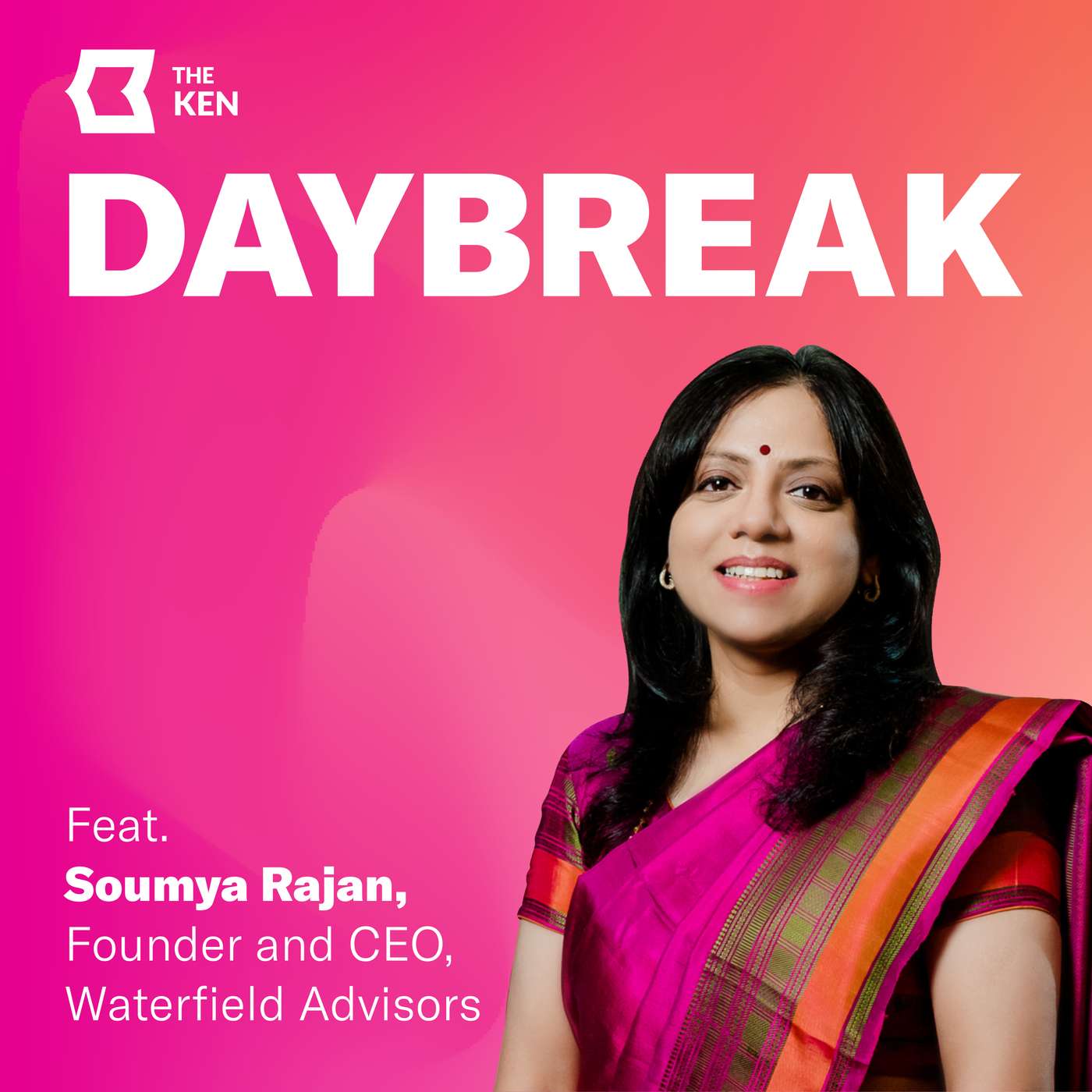
In this special episode, hosts Snigdha Sharma and Rahel Philipose are joined by Soumya Rajan, founder and CEO of Waterfield Advisors, India’s largest multi-family office and wealth advisory firm. The conversation begins with a simple but important question: what does financial empowerment actually mean for women with wealth?Over her decades in the world of wealth management, Soumya began noticing a consistent blind spot—traditional financial systems weren’t designed with women’s realities in mind. Even wealth advisory firms, she found, were falling short. That led her to launch HERitage, a specialized arm within Waterfield, focused on serving the financial needs of women more intentionally and effectively.Soumya explains a framework she developed called T.O.U.C.H to outline how women tend to invest differently from men: they trade less, invest with clear goals, prioritize sustainability, and are more conscious and diversified in their approach. These patterns aren’t just preferences, they reflect a fundamentally different way of thinking about money.The episode also draws on insights from Waterfield’s Women of Wealth survey, which looked at the investment behaviors of over 100 high-net-worth Indian women. The findings challenge a lot of conventional thinking: women are deliberate and strategic investors, but they still face barriers when it comes to financial literacy, access, and decision-making power.Soumya also talks about how women in India are creating wealth—whether through inheritance, entrepreneurship, or leadership roles in corporate India—and how they’re using that wealth not just for security, but for impact. The conversation touches on growing trends in philanthropy, interest in global markets, and the rise of “passion investments” in areas like art, wellness, and legacy building.Tune in Soumya recommends —TV Show: Lioness Book: The Outsiders Tell us what you thought of this episode. You can text us your feedback on WhatsApp at +918971108379. You can also write to us at [email protected] is produced from the newsroom of The Ken, India’s first subscriber-only business news platform. Subscribe for more exclusive, deeply-reported, and analytical business stories.
Ep 499Can Ather escape Ola Electric's shadow?
Electric two-wheeler maker, Ather Energy, listed on the bourses on earlier in May, but its IPO was subscribed just 1.4X—a modest showing for a company once seen as a premium EV pioneer. The lukewarm response reflected investor fatigue, sparked by Ola Electric’s volatile stock performance, the Blusmart funding controversy, and global supply chain headwinds. Despite a strong product portfolio and a reputation for in-house innovation, Ather faces an increasingly crowded market and mounting pressure to scale.IPO proceeds will fund a new manufacturing plant in Maharashtra, expanded R&D, and marketing—moves aimed at boosting capacity and competitiveness.Yet, with subsidies shrinking and profitability still out of reach, Ather’s long-term success hinges on its ability to grow sustainably, reduce costs, and prove it’s more than just another EV startup riding a fading wave.Tune in.P.S The Ken’s podcast team is hiring! Here’s what we’re looking for.Daybreak is produced from the newsroom of The Ken, India’s first subscriber-only business news platform. Subscribe for more exclusive, deeply-reported, and analytical business stories.Listen to the latest episode of Two by Two here
Ep 498Why Swiggy's marketplace for therapists & tarot card readers is much more than a side hustle
Pyng, launched on 15 April, is quite a departure from Swiggy’s core food-focused business. The service marketplace, uncharted territory for Swiggy, is offering services of “verified professionals” (think therapists, chartered accountants, and even energy healers). No, it’s not a modified version of Urban Company. At least, not yet. For one, the latter offers standardised services comprising blue collar workers.But why exactly is Swiggy, a company with a market capitalisation of over Rs 80,000 crore, diversifying its business?Tune in. Daybreak is produced from the newsroom of The Ken, India’s first subscriber-only business news platform. Subscribe for more exclusive, deeply-reported, and analytical business stories.Listen to the latest episode of Two by Two hereHave a question for The Ken's next event on health, fitness and wellness? Here's your chance to help us shape the conversation: https://theken.typeform.com/to/bZhqWl2g
Ep 497Aakash Chaudhry made millions off the IIT craze. His new target: international schools’ unhappy parents
The landscape is pretty bleak. In the race to produce more Ivy League-worthy students, Indian schools are selectively opting to teach IB. Teachers, in turn, find themselves shifting between the Cambridge and IB syllabi, often trying out things they aren’t trained for. Students and parents, meanwhile, are running in circles trying to find an able tutor after spending Rs 5–20 lakh on their child’s education. It helps no one that there are just a handful of dedicated, IB-trained teachers in the whole of India who can help students with the demanding curriculum.Enter Sparkl Edventure.With Sparkl, the former CEO of Aakash Institute is betting on these schools' inadequacies and our obsession with private tutoring. Tune in. Daybreak is produced from the newsroom of The Ken, India’s first subscriber-only business news platform. Subscribe for more exclusive, deeply-reported, and analytical business stories.Listen to the latest episode of Two by Two hereHave a question for The Ken's next event on health, fitness and wellness? Here's your chance to help us shape the conversation: https://theken.typeform.com/to/bZhqWl2g
Ep 496'I cancelled the trial but I'm still being charged'—the UPI Autopay trap
When Rohan, a 35-year-old software engineer, signed up for a Rs 1 trial on a learning app called Seekho, he thought he had nothing to lose. He cancelled the subscription within weeks but money was still being deducted from his account months later. UPI Autopay, the rising star of India’s subscription economy is quietly letting apps to keep charging users long after they think they've cancelled. From overlooked SMS alerts to sneaky terms hidden in fine print, we find out how widespread this problem really is and why so many users are only waking up to it now.Tune in.P.S The Ken’s podcast team is hiring! Here’s what we’re looking for.Daybreak is produced from the newsroom of The Ken, India’s first subscriber-only business news platform. Subscribe for more exclusive, deeply-reported, and analytical business stories.Listen to the latest episode of Two by Two here
Ep 495Prime gets ads — the OTT plot twist (feat ex-Netflix marketing head Swati Mohan)
Nearly a decade ago, Hotstar, Netflix, and Amazon Prime entered the scene and positioned themselves as the anti-TV. No fixed showtimes. No endless ad breaks. No re-runs you had to sit through just because nothing else was on. For the first time, we were in control. TV became personal. It became on-demand. And best of all—it was ad-free. It felt like there was no going back.But now something has shifted. Subscriber growth is stalling, and that’s making streaming platforms nervous. Really nervous. Their answer? Bring back ads. Amazon Prime Video is the latest to jump into India’s ad-supported streaming game, also called ad supported video on demand or AVOD. And Netflix? It’s reportedly toying with the idea of a free, ad-supported tier here—just like it’s doing in a few other markets. In other words, OTT is starting to look a lot more like the very thing it was supposed to replaceHave we come full circle? Or is this just the natural evolution of an industry growing up? Daybreak hosts Snigdha and Rahel speak to Swati Mohan, the former head of marketing at Netflix India, to find out Tune in. P.S The Ken’s podcast team is hiring! Here’s what we’re looking for.Daybreak is produced from the newsroom of The Ken, India’s first subscriber-only business news platform. Subscribe for more exclusive, deeply-reported, and analytical business stories.Listen to the latest episode of Two by Two here
Ep 494Chief digital officers eat chief information officers for breakfast
Back in 2016, the Internet and Mobile Association of India set up an all new club for what was then a very small cohort of digital leaders in corporate India. It was called the all-India Chief Digital Officer club. Back then, there were only about five-six CDOs that were members. The point of the initiative was to give legitimacy to this new, emerging role. But soon enough, the initiative fizzled out. Not because the role didn’t take off or anything. Actually, the opposite. The initiative became redundant because the role became even more popular than they had anticipated. So it started with 5-6 members, but within the next four years its membership rose to 50 and then doubled the next year. You see, digital transformation has become THE buzzword for corporate India. And in the process, the CDO has become part of the companies top leadership. But the question is — where does that leave the CIO? Tune in. *This episode was originally published on 18 December, 2024 P.S The Ken’s podcast team is hiring! Here’s what we’re looking for.Daybreak is produced from the newsroom of The Ken, India’s first subscriber-only business news platform. Subscribe for more exclusive, deeply-reported, and analytical business stories.Listen to the latest episode of Two by Two here
Ep 493AI has made its way into banks. But the gates aren’t wide open
For decades, the whole process of getting a loan approved was infamously painful and long winded. But now things have changed. Getting a loan is a whole lot faster than before. And that’s because of the disruptor to end all disruptors — artificial intelligence. A bunch of companies have entered the scene with specalised AI tools to speed up different aspects of the loan-approval process. In fact, Indian AI startups have managed to raise nearly 750 million USD in 2024 and the banking and financial sector was one of the top drivers of this growth. Now at first glance, it seems like a win-win for both the borrower and the bank. But there’s a catch. This surge has come with a lot of scrutiny from the RBI. Tune in. *This episode was first published on Jan 15, 2025Tell us what you thought of this episode. You can text us your feedback on WhatsApp at +918971108379Daybreak is produced from the newsroom of The Ken, India’s first subscriber-only business news platform. Subscribe for more exclusive, deeply-reported, and analytical business stories.
Ep 492Why India’s ultra-rich are keeping it in the family — and out of VC funds
Family offices—the ultra-rich who used to hand over their money to VCs and wish them well—are now wondering why they ever bothered. Why did they pay someone to do what they could do themselves, on their terms?Their primary gripe? The funds are not returning money. Of course, the so-called middlemen in this scenario aren't too pleased. After all, they are losing a substantial amount of business in the process. But it all boils down to one thing – who’s running the money. Tune in. Daybreak is looking for a talented audio journalist with at least two years of experience. Check out the role here. Daybreak is produced from the newsroom of The Ken, India’s first subscriber-only business news platform. Subscribe for more exclusive, deeply-reported, and analytical business stories.
Ep 491Third time unlucky — why Softbank pulled the plug on Oyo’s latest IPO attempt
At first glance, things seem to be really looking up for India’s very own budget-friendly hotel chain Oyo. It’s had some pretty big wins in the last few months. So why then is its eventual IPO still the subject of such widespread speculation? The Ken's Deputy Editor Seetharaman G put it quite well in the latest edition of his newsletter on the Indian stock market, ‘Long and Short’. He said – ‘few companies are as good as Oyo Hotels at not going public’. Its listing has been a few years in the making. It first filed in 2021. Then again in 2023. And then it was just about to give the share sale another shot when its largest shareholder, Softbank, threw a spanner in the works.Here's the thing — between the delayed IPO, top notch rivals, and demanding investors, things will only get harder for Oyo. Tune in. If you have any thoughts or questions about this episode, send them to us as texts or voice notes on Daybreak’s WhatsApp at +918971108379. Daybreak is produced from the newsroom of The Ken, India’s first subscriber-only business news platform. Subscribe for more exclusive, deeply-reported, and analytical business stories.
Ep 490How the Pahalgam attack sent banks scrambling to clean up digital payments
Just two days after the Pahalgam terror attack, alarm bells went off inside India’s financial system. A stern message from an HDFC Bank executive summed up the mood: “They may come for us now.”The national security tragedy triggered a sudden and sweeping crackdown on India’s digital payments ecosystem. Behind closed doors in Delhi, top officials from the Finance Ministry, Home Affairs, and the Reserve Bank of India launched a coordinated push to track suspicious merchant activity online like gambling, betting, drug trafficking. The idea was to follow the money all the way to its possible links with terror funding.The fallout? Payment aggregators are scrambling, banks are under intense pressure, and merchant screening firms are suddenly flooded with work. Everyone’s rechecking everything. But who's the collateral damage?Tune in. If you have any thoughts or questions about this episode, send them to us as texts or voice notes on Daybreak’s WhatsApp at +918971108379. Daybreak is produced from the newsroom of The Ken, India’s first subscriber-only business news platform. Subscribe for more exclusive, deeply-reported, and analytical business stories.
Ep 489Why Zara India needs to go solo or go home
Zara and Tata’s retail arm, Trent, have been partners for 15 years. But that relationship might be coming to an end because Zara’s not pulling its weight anymore. Its share of Trent’s overall sales has dropped from 28% to just 10% in six years. Its rivals like H&M and Uniqlo have moved faster, reached more cities in a much shorter time span.Meanwhile, Trent’s been busy. It used what it learned from Zara and built something better. Zudio, its budget fashion brand, just hit $1 billion in sales in FY25. It’s fast, affordable, and everywhere. Now, Trent’s planning to upgrade Westside into a premium brand to go head-to-head with Zara and H&M.How Zara lost its edge and what did Trent get right?Tune in to find out.If you have any thoughts or questions about this episode, send them to us as texts or voice notes on Daybreak’s WhatsApp at +918971108379. Daybreak is produced from the newsroom of The Ken, India’s first subscriber-only business news platform. Subscribe for more exclusive, deeply-reported, and analytical business stories.
Ep 488Angel One is reinventing itself. But just sponsoring IPL and targeting HNIs won't cut it
One clear sign that Angel One—India’s third-largest discount broker—is serious about reversing its fortunes is that it bought itself a front-row seat at India’s most expensive distraction: the Indian Premier League.That’s ambitious. Especially for a company that just flunked its latest earnings test. Between fiscal year 2020 and 2024, Angel One proudly nuked its full-service past—no more phone calls, no more reports, no more advisers—and became a pure-play discount broker. Just an app, an order button, and some notifications. When the markets were roaring, that was enough.But now, not quite. Enter Plan B: be a super-app. Tune in. Daybreak is looking for a talented audio journalist with at least two years of experience. Check out the role here. Daybreak is produced from the newsroom of The Ken, India’s first subscriber-only business news platform. Subscribe for more exclusive, deeply-reported, and analytical business stories.
Ep 487Using Swiggy, Zepto, or Cred? They have access to at least 150 apps on your phone
In March this year, a software developer that goes by Pea Bee online published a blog rather ominously titled ‘Everyone knows all the apps on your phone’. He found that several Indian app-based startups are flouting rules of Google Play—Android’s app store—to access people’s data. In particular, some apps use a workaround to scrutinise the names and usage patterns of other apps on people’s phones. In real time.Now, the fact that apps have a lot of your data may not be a surprise to you. We’ve been pretty cavalier about our data for some time now. Remember Digi Yatra? But the scary thing is that Indian companies are equally nonchalant about the user data they collect. The result? Data-security breaches have been on the rise. So what is a data conscious Indian customer to do? Tune in. If you have any thoughts or questions about this episode, send them to us as texts or voice notes on Daybreak’s WhatsApp at +918971108379. Daybreak is produced from the newsroom of The Ken, India’s first subscriber-only business news platform. Subscribe for more exclusive, deeply-reported, and analytical business stories.
Ep 486Physics Wallah’s Rs 15 lakh ‘BTech’ comes without a BTech degree
Physics Wallah’s brand new initiative, the PW Institute of Innovation, was pitched as an alternative to the tough IIT route that didn’t compromise on quality or career prospects. It even came with a scholarship, a residential campus in Bengaluru, and a shot at a good job after graduation. On paper, it looked like the perfect deal.However, students who signed up had to juggle a confusing mix of courses, keep up with a changing curriculum, and struggle through administrative chaos. Even basic things like internships, placement support, and faculty consistency didn’t materialise the way they were promised. For a company known for making quality education affordable, this was a far cry from its coaching roots.But Physics Wallah isn’t just running an institute anymore, it’s a company preparing for the stock market. If you have any thoughts or questions about this episode, send them to us as texts or voice notes on Daybreak’s WhatsApp at +918971108379. Daybreak is produced from the newsroom of The Ken, India’s first subscriber-only business news platform. Subscribe for more exclusive, deeply-reported, and analytical business stories.
Ep 485How a Bangalore biotech quietly built a blindness breakthrough in under $10 million
Eyestem, a 14-member biotech startup from Bengaluru is turning heads in global pharma circles. With just $10 million and a modest 1,200 sq ft office, it has developed a promising cell therapy for dry age-related macular degeneration (AMD)—a condition that leads to blindness and has no cure. Early trial results are not only encouraging, they’re outperforming billion-dollar competitors in the West.But this isn’t just about scientific innovation. It’s about doing more with less. Eyestem’s founders set out with a bold goal: to build a cutting-edge treatment that’s actually affordable, especially for Indian patients. Think world-class therapy in under $10,000. In the current world of cell and gene therapies, where treatments often cost hundreds of thousands of dollars and remain out of reach for most, it is next to impossible.How did Eyestem achieve this and what does this means for the future of biotech in India?Tune in.If you have any thoughts or questions about this episode, send them to us as texts or voice notes on Daybreak’s WhatsApp at +918971108379. Daybreak is produced from the newsroom of The Ken, India’s first subscriber-only business news platform. Subscribe for more exclusive, deeply-reported, and analytical business stories.
Ep 484‘Don’t call if markets are down’ — the PMS fund delivering returns the big city boys can’t match
Nagpur-based Counter Cyclical Investments doesn’t waste time with handholding. The six-year-old firm has a reputation for being quite cut and dry with its clients. Consider some gems from the ‘who should invest with us’ long-list. “Those who won’t disturb us by calling us for reassurance everytime the market falls.” “We don’t have any provision for a relationship manager. Once you have taken an informed decision to invest in our PMS, please avoid calling us. Those who are looking for regular correspondence and active interaction, may please stay away.” Now, if you think moneyed investors—the kind who have to put in at least Rs 50 lakh to be a part of Counter Cyclical—are put off by the insolence, you’re wrong. Counter Cyclical’s assets under management have shot up over 10X in the past three years, and its customer count has grown by leaps and bounds.Why? The only scheme—a small-cap one —run by the six-year-old fund house is a chart-topper with five year annualised returns of, believe-it-or-not, 78%. Tune in. If you have any thoughts or questions about this episode, send them to us as texts or voice notes on Daybreak’s WhatsApp at +918971108379. Daybreak is produced from the newsroom of The Ken, India’s first subscriber-only business news platform. Subscribe for more exclusive, deeply-reported, and analytical business stories.
Ep 483The hunger games are raging but Zomato just won't take the bait
Four months ago, food delivery giant Zomato decided to run an experiment. If you are a regular patron of the app, you may have noticed a tab called ‘Quick’ appear, that promised 15-minute deliveries in a bunch of metropolitan cities like Bangalore, Mumbai and Delhi NCR. Now, the company’s founder and CEO made an interesting statement last year that explains why it would choose to try out this experiment. He was asked a question about how quick commerce has changed customer expectations around food delivery. And he said, quite simply – “Blinkit is fast, but that has made Zomato seem slow.” He has a point. You may recall that Zomato subsidiary Blinkit launched its in-house 10-minute snack delivery service called Bistro last year, just one day after the very popular Zepto cafe was launched. Swiggy Instamart meanwhile, launched a similar service called Snacc. In many ways, 2024 was the year 10-minute food delivery became the next frontier of quick commerce.Naturally, the biggest food delivery giants in the country did not want to be left behind. So while Zomato launched Quick, Swiggy rolled out its own ultra-fast delivery service, Bolt. But here’s where things get interesting. While announcing its Q4 results last week, Zomato announced that its four-month experiment was very quickly coming to an end. In a letter to shareholders, Deepinder Goyal explained that they just could not see a path to profitability without compromising on customer experience.The Ken's COO and the host of Two by Two Praveen Gopal Krishnan explains what changed. Daybreak is produced from the newsroom of The Ken, India’s first subscriber-only business news platform. Subscribe for more exclusive, deeply-reported, and analytical business stories.
Ep 482How to build companies that last when their employees don’t
Thanks to AI, economic disruptions, mass layoffs, and a bunch of other fun things, the 40-year career is no longer something you can take for granted. And that fundamentally changes the nature of our careers. No one embodies that change more than the Gen Z workforce. Young employees are now seeking a job, not a career. They don't join organisations to retire from them. Instead they see them merely as a step along the way. Which is why, the most rigid companies, known for being forts of loyalists, are loosening up to accommodate the needs of younger generations.Tune in. Daybreak is looking for a talented audio journalist with at least two years of experience. Check out the role here. Daybreak is produced from the newsroom of The Ken, India’s first subscriber-only business news platform. Subscribe for more exclusive, deeply-reported, and analytical business stories.
Ep 481India wants the spotlight at the world’s top school exam. It just won’t step on stage
The world’s “most respected” test of school education—the Programme for International Student Assessment or PISA—began this March. 90 countries are on the list including China, Vietnam and some of the poorest nations in the world. But India? We’re sitting this one out. In fact, India hasn’t touched PISA in 16 years!The last time it did, in 2009, India ranked 72nd out of 73 countries. Only Kyrgyzstan did worse. Ever since, the country has been quietly working behind the scenes to fix its education system through a slow and steady effort to modernise how students are tested. The government set up Parakh, an ambitious body under NCERT, to bring all of India’s 69 school boards on the same level and align with global standards.But can a country as huge and diverse as India really move away from rote learning to a system that values real-world problem solving and critical thinking?Tune in.If you have any thoughts or questions about this episode, send them to us as texts or voice notes on Daybreak’s WhatsApp at +918971108379. Daybreak is produced from the newsroom of The Ken, India’s first subscriber-only business news platform. Subscribe for more exclusive, deeply-reported, and analytical business stories.
Ep 480Can LIC do to health insurance what Jio did to telecom?
The Life insurance Corporation of India or LIC is now stepping into a sector where more than 860 million Indians or nearly 60% of the population still has no coverage. The insurer signalled its big move into health insurance in March this year with a major acquisition—49% of Manipal Cigna, a private health insurer, in a deal valued at over ₹3,500 crore.And here’s where things get really interesting.This is LIC we are talking about. It doesn’t need to chase quarterly returns or exist to make shareholders rich. It exists to do things, to fix things and show up when the government needs a nudge—or a battering ram. And in a country where trust, access, and affordability in healthcare are still broken concepts for most, a battering ram could be exactly what’s needed.In this episode, we are look at LIC’s entry into health insurance and how the rest of the sector is bracing itself. Because if LIC gets this right, it won’t just be another player in the market. It could be the market.If you have any thoughts or questions about this episode, send them us as texts or voice notes on Daybreak’s WhatsApp at +918971108379. Daybreak is produced from the newsroom of The Ken, India’s first subscriber-only business news platform. Subscribe for more exclusive, deeply-reported, and analytical business stories.
Ep 479Ather’s IPO is a plot twist. Not a finale
Ather Electric once pioneered the electric two wheeler segment. But now it has fallen behind its competition like Ola Electric and TVS Motor in terms of market share. To make matters worse, its recent IPO saw a lukewarm response from investors. One thing is clear -- up until now, Ather’s focus has been on building superior products, loaded with features and a smooth user experience. But to take things to the next level, Ather will have to build a more compelling narrative. How did it get here? What's next for the EV maker? Tune in. Daybreak is looking for a talented audio journalist with at least two years of experience. Check out the role here. Daybreak is produced from the newsroom of The Ken, India’s first subscriber-only business news platform. Subscribe for more exclusive, deeply-reported, and analytical business stories.
Ep 478Software glitches are turning Mahindra’s new EVs into high-tech paperweights
Mahindra’s new EVs the XEV 9e and BE6 were marketed as software wrapped in metal. They promised the future. Things like augmented reality heads up display, auto park assist, a triple screen dashboard, an in car camera, and a digital key based on near field communication. But now, that long list of cutting edge features is proving to be a real bottleneck for the company. The Ken spoke to at least a dozen frustrated buyers of Mahindra’s new electric twins, who haven’t yet received their cars despite promised deliveries. Why? Well, the reason apparently is a software update. Buyers have found that the digital keys they were handed at the showrooms just wouldn’t work. Touchscreens were freezing, Cameras were glitching. The list goes on. Tune in. Daybreak is looking for a talented audio journalist with at least two years of experience. Check out the role here. Daybreak is produced from the newsroom of The Ken, India’s first subscriber-only business news platform. Subscribe for more exclusive, deeply-reported, and analytical business stories.
Ep 477Why Delhivery’s Ecom Express deal is both tactical and desperate
Earlier this month, India’s largest third party logistics company, Delhivery, acquired its biggest rival Ecom Express in a $165 million distress sale. The acquisition could not have come at a better time for both parties. Things have been tough for Ecom for some time now. The company, in fact, called off its IPO plans just this February, about six months after filing the papers and ended up laying off hundreds of its employees. Meanwhile, Delhivery has been soldiering some tough times too. By acquiring its floundering rival, Delhivery seems to be going all out to claw back some business. But is that enough? Tune in. Daybreak is looking for a talented audio journalist with at least two years of experience. Check out the role here. Daybreak is produced from the newsroom of The Ken, India’s first subscriber-only business news platform. Subscribe for more exclusive, deeply-reported, and analytical business stories.
Ep 476Driverless trucks have pushed India’s first unicorn of 2025 into an existential crisis
In January this year, Netradyne, the logistics AI startup, became India’s first unicorn of 2025 after it raised $90 million in series D funding. You see, it did not take it long to realise that its sweet spot is the long-distance trucking segment. It serves over 3,000 customers across eight countries, including the likes of Amazon, Shell, Indian Oil and Greenline Mobility. And it all began with one rather primitive prototype. Of course, now it has morphed into a compact device with a built-in GPU, up to four cameras, and a disembodied voice alerting drivers not to crash the vehicle.The Ken reporter Abhirami G found herself in the backseat of one of Netradyne’s test cars in Bengaluru's Whitefield neighbourhood. The driver of the car was a Netradyne employee. And as he weaved through the traffic, the company’s signature always-on surveillance cameras didn’t just watch his every move, but also apparently “understood” and “analysed”. As he drove, he was generating the precious training data that powers the company’s bread and butter. Apart from making roads safer, this whole system also doubles up as a driver’s best legal defence in times of trouble. The company’s executive Vice president of Engineering Teja Gudena said that on multiple occasions, it has saved drivers from liability by proving their innocence in accidents. Apart from its new-found unicorn status, it reportedly managed to clock Rs 1,000 crore in revenue in 2023. It also currently has a stronghold in the US and other major global markets. Reaching all of these milestones within nine years is pretty remarkable. But despite all that success, Netradyne is now grappling with an existential crisis. Because now, driverless vehicles are no longer science fiction, they are a logistical inevitability. And that leaves Netradyne in a rather tricky spot. Tune in.This episode was first published on Feb 13, 2025Daybreak is produced from the newsroom of The Ken, India’s first subscriber-only business news platform. Subscribe for more exclusive, deeply-reported, and analytical business stories.

Ep 475ITC’s 24 Mantra deal and organic foods’ unending wait for glory
In this episode we fill you in on three standout stories from the past week. First, what ITC’s acquisition of 24 Mantra means for the larger organic food market; Next, Musk’s latest attempt to save Tesla; And finally, why Blusmart’s unravelling was an eventuality we all chose to ignore. Check out the newsletter and podcast mentioned in this episode: The latest edition of Trade Tricks The Nutgraf: Blusmart and the dogs that didn’t bark
Ep 474Indigo's stocks maybe flying high but passenger patience has hit turbulence
On 9 April, as the world reeling from the tariff standoff between America and China, one Indian company quietly made history.The stocks of InterGlobe Aviation, the parent company Indigo, India’s top budget airline, hit an all-time high. For a brief moment, Indigo wasn’t just India’s largest airline—it became the most valuable airline in the world. More than Delta even. Back home though, meanwhile, a different story has been playing out. Thousands of Indian flyers have been complaining online about broken luggage, rude crew, overbooked flights. When cricket commentator Harsha Bhogle tweeted his frustration about Indigo’s service, more than a thousand people replied to his tweet with their own horror stories.Has Indigo stopped caring about its passengers?But why would it? It flies nearly 9 million people a month. The clues, as it turns out, lie inside a grey building in Gurgaon that my colleague Rounak Kumar Gunjan visited recently. This is Indigo's training centre called iFly where hundreds of young trainees, often barely in their twenties, are taught how to serve tea at 30,000 feet.Tune inDaybreak is produced from the newsroom of The Ken, India’s first subscriber-only business news platform. Subscribe for more exclusive, deeply-reported, and analytical business stories.
Ep 473How a made in Punjab jeera-flavoured soda is popping the Coke-Pepsi-Parle bubble
Here’s the thing about the Indian carbonated beverage market – for decades now it has been a two, sometimes three horse race dominated by everyone’s favourite black coloured colas. Pepsi, Coca Cola and Thums Up. But in the last year or so, a 160-ml bottle of cumin-flavoured soda has managed to do what very few bottled beverages could. It has challenged the Indian beverage industry’s holy trifecta – the Coca-Cola-Pepsi-Parle Agro trio. The crazy thing is, this isn’t some massive global brand that has just entered the Indian market. It’s a seven year old desi brand launched by three cousins in Punjab that was largely unknown until about a year ago. We are talking about Lahori Zeera. Tune in. Daybreak is produced from the newsroom of The Ken, India’s first subscriber-only business news platform. Subscribe for more exclusive, deeply-reported, and analytical business stories.
Ep 472Biyani’s retail empire flamed out. His daughters seek redemption in birthing new brands
In 2021, Ashni and Avni Bayani, the scions of industrialist Kishore Biyani’s Future Group, launched their own venture – a startup studio called Think 9 Consumer Technologies.The concept was simple – they would incubate new brands across categories like apparel, beauty, health and wellness and food; and then use common teams for marketing, technology and even product development.Why? Well, according to an executive from the startup studio, the end goal is to be able to build them into sizable businesses in 5-7 years and then exit. It’s called the roll-up modelled and it was pioneered by a US-based consumer good company called Thrasio. For the Bayani sisters, this isn’t just another venture. It’s a full blown comeback. You see around the time they launched Think9 Consumer Technologies, their father’s business empire – the Future Group – was falling apart. It eventually went bankrupt in 2022 and sold everything lock, stock and barrel to Reliance Industries. So the sisters have a point to prove. But unfortunately not everything is working in their favour. For starters the roll up model they based their business on has been stuttering for some time now. Remember Thrasio? Well it filed for bankruptcy just last year. Tune in. Daybreak is produced from the newsroom of The Ken, India’s first subscriber-only business news platform. Subscribe for more exclusive, deeply-reported, and analytical business stories.
Ep 471Turns out someone has to pay for free UPI
On 19 March, the Indian government slashed incentives for UPI transactions by more than half to Rs 1,500 crore for FY25. After it launched in 2016, UPI very quickly became the backbone of India’s digital economy–thanks to demonetisation, and well, the pandemic. Most importantly, it was the radical decision to keep it free that fuelled its growth. No merchant fees. No transaction costs. But the zero-MDR policy came at a price because payment processors lost more than 2500 crore last year alone. And with the new budget cut, it will get worse.The system is clearly showing signs of strain. While UPI continues to post record volumes—18 billion transactions in March alone—many are asking an uncomfortable question:Can India maintain its digital payments miracle without letting the infrastructure collapse under its own weight?Tune in.Do you think people will stop using UPI if there is a small fee involved?Send your answers to us as texts or voice notes on Daybreak’s WhatsApp at +918971108379. Daybreak is produced from the newsroom of The Ken, India’s first subscriber-only business news platform. Subscribe for more exclusive, deeply-reported, and analytical business stories.
Ep 470The career ladder is broken. What’s your next step?
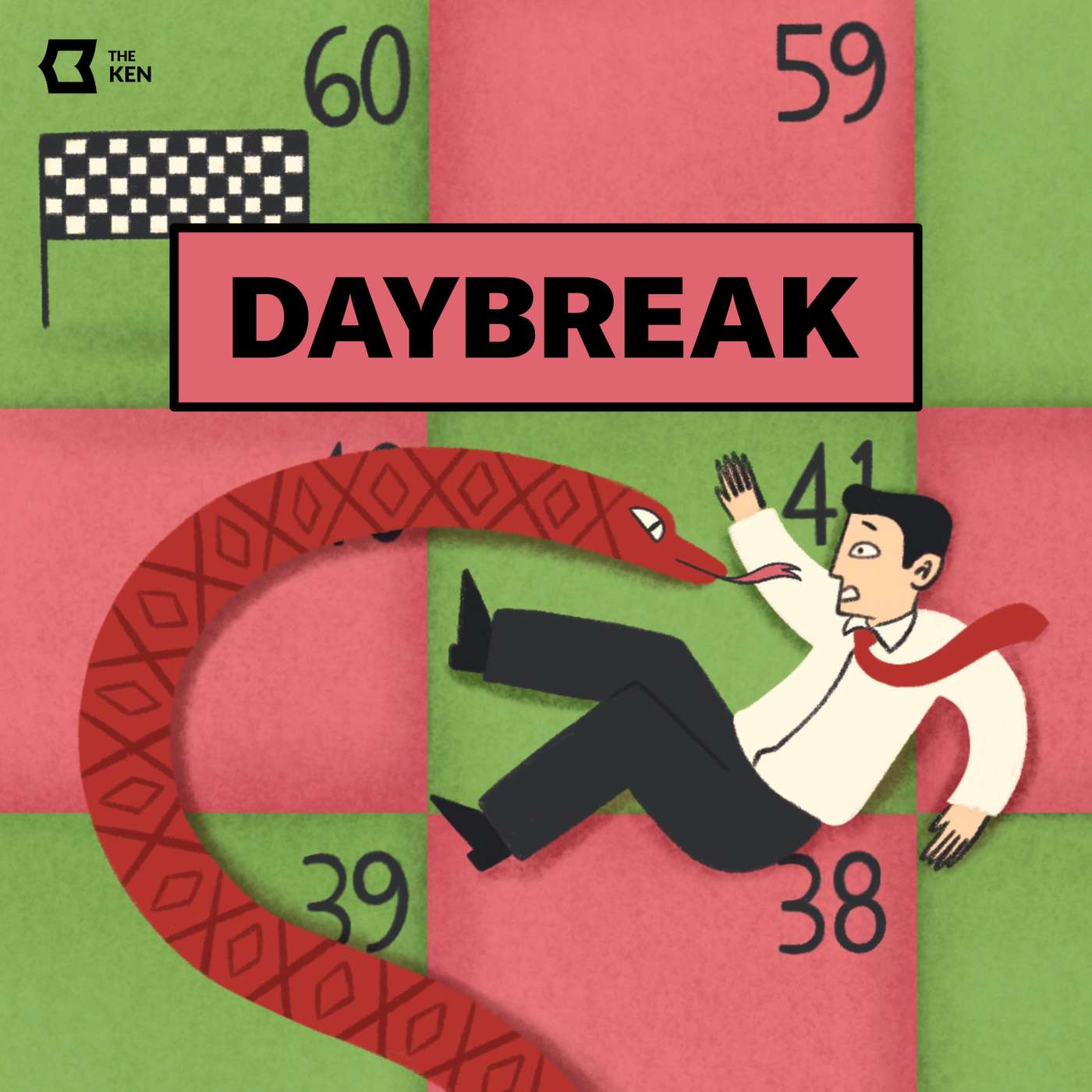
In this episode, we dive into a topic that is as daunting as it is exciting — the future of careers. First, we talk about a troubling trend in workplaces today — the rise of the unwilling retiree; Next, we share some of the lessons learnt by students who graduated during economic downturns in the past. Check out the stories and newsletters mentioned in this episode: Why more 40-somethings are becoming unwilling retireesLessons from past students who graduated during economic downturnsThe Ken is hosting a subscriber event! Join Two by Two hosts Rohin Dharmakumar and Praveen Gopal Krishnan and three distinguished guests as they discuss broken career ladders, shortening career spans, and collapsing organisational structures. Buy tickets here.
Ep 469When cricket and Koffee aren’t enough, JioHotstar wants to make 'Sparks' fly
What happens when India’s biggest streaming platform decides it’s no longer satisfied with just airing Koffee with Karan and cricket? And it now wants to take on YouTube and Instagram?You get Sparks–an ambitious experiment by Jiohotstar that’s is set on winning over Gen Z viewers, one short video at a time.In February, right before the IPL kicked off, Jiohotstar launched Sparks. It is a free, creator-led platform of bite-sized episodes featuring the likes of Tanmay Bhat, Zakir Khan, Ranveer Brar, and Elvish Yadav. On paper, it might sound like just another experiment with content. But it is actually a marked product shift the platform is making after its merger with Disney’s India business. And at the heart of this strategic move is a 25-member team that includes former top executives from YouTube and Instagram. But let’s be real. This is like David trying to beat not one, but two Goliaths, that too on their home turf. Add to that the fact that this is a space where the rules are always shifting, creators are supremely loyal, and content never sleepsIn today's episode, host Snigdha Sharma is joined by The Ken reporter Rounak Kumar Gunjan who dug deeper to find an answer to one big question: can a streaming giant reinvent itself as a scroll-worthy destination? Tune in.If you have any thoughts or questions about this episode, send them us as texts or voice notes on Daybreak’s WhatsApp at +918971108379. Daybreak is produced from the newsroom of The Ken, India’s first subscriber-only business news platform. Subscribe for more exclusive, deeply-reported, and analytical business stories.
Ep 468Lenskart built its empire on franchisees. Now it’s battling them in courts
In a little over a decade, Lenskart has gone from being just India’s biggest online eyewear retailer to becoming one of Asia’s biggest omnichannel eyewear giants. Needless to say, business has been booming. And the company is now inching towards its next big step – an IPO. But in the midst of all its success, it appears Lenskart may have rubbed some people the wrong way. The catch is that these are the very people who helped it get to this point in the first place – the franchise owners that operate hundreds of its stores across the country. You see, for the last few years, many of them have had observed a similar, pretty disturbing pattern. They’ll set up their stores with Lenskart’s blessings. And then things start getting weird.Tune in. Check out our new podcast Make India Competitive Again —SpotifyApple The Ken is hosting a subscriber event! Join Two by Two hosts Rohin Dharmakumar and Praveen Gopal Krishnan and three distinguished guests as they discuss broken career ladders, shortening career spans, and collapsing organisational structures. Buy tickets here.
Ep 467Scaler wanted to do for tech education what Masters' Union did for the MBA. AI had other plans
Back in 2019, an ed-tech called Scaler Academy decided to do for tech education what Masters’ Union did for the traditional MBA. The tech-upskilling platform launched in 2019 with a simple pitch: take AI, machine learning, and data science courses, get placed at top tech firms, and make a lot more money. But five years later, that formula is breaking down. The very thing Scaler trained people in—AI—is making it redundant. Tune in. Daybreak is produced from the newsroom of The Ken, India’s first subscriber-only business news platform. Subscribe for more exclusive, deeply-reported, and analytical business stories.The Ken is hosting a subscriber event! Join Two by Two hosts Rohin Dharmakumar and Praveen Gopal Krishnan and three distinguished guests as they discuss broken career ladders, shortening career spans, and collapsing organisational structures. Buy tickets here.
Ep 466McKinsey, Bain, and BCG welcomed AI with open arms. Creativity is the first casualty
Welcome to the world of consulting in 2025. AI is everywhere—from writing reports and making decks to crunching numbers. But you’d think the likes of McKinsey, Bain, and BCG would be worried about AI, right? Because AI reduces the knowledge gap between them and their clients. Turns out, instead of resisting it, they’re going all in.The ones feeling the heat are junior most employees—the consultants. Timelines are shrinking and expectations are going up. Creativity? Who cares about that anymore. A former Bain manager told The Ken about an instance when a senior partner wanted a full client assessment by the next day. Normally, this would take weeks to pull off. The result? Rushed work and fancy words that sound good but don’t really say anything substantial. And worst of all—there is no time to fact-check. There seems to be a real disconnect between what senior leaders think AI can do, and what it actually does. So what happens when the industry famous for having all the answers is now taking shortcuts using a chatbot? Also, what happens when clients find out?Q for listeners: If 90% of your job could be done by AI, what would you focus on to stay valuable?Send us your answers as texts or voice notes on Daybreak’s WhatsApp at +918971108379. Daybreak is produced from the newsroom of The Ken, India’s first subscriber-only business news platform. Subscribe for more exclusive, deeply-reported, and analytical business stories.

Ep 465‘Boys will be boys’ — Trump, tariffs and the dismantling of global trade
In this episode, we talk about the global trade war that stopped before it started. First, we talk about US President Donald Trump's decision to reverse the "reciprocal tariffs" on almost every country in the world, except one. Next, we talk about why India had little choice but to offer concession after concession to the US. Finally, we unpack the long term and short term impact of the tariffs on the Indian economy. Check out the newsletters and podcasts mentioned in this episode: The latest edition of The Nutgraf by Praveen Gopal Krishnan — India is the mark Two by Two feat Mohit Satyanand — Are Trump's tariffs a crisis or an opportunity for India?
Ep 464Minimalist was the glow-up Hindustan Unilever's skincare line needed
One of the largest deals to acquire a D2C brand took place in January this year. India’s largest manufacturer of consumer good, Hindustan Unilever acquired the skincare company Minimalist, a 90% shareholding for nearly Rs 3000 crores.Homegrown startup beauty brands have been on a roll in India. Scores and scores of new age skincare brands have cropped up since the pandemic and all of them harp on the science of it. And their whole appeal is transparency. Transparency about the ingredients that go into each of their products.Among all of them, Minimalist is the one that really stands out. It is an active ingredients based skincare company that sells things like niacinamide, retinol, Vit C, glycolic acid, and salicylic acid. It launched around the end of 2020, and within a span of eight months, it built a 1000 crore rupee business. What’s even more surprising that the brand has remained in the green, meaning profitable, from the very first month itself.For years, legacy brands like, HUL, Ponds, and Loreal have been selling products with similar ingredient--the only difference being they either didn't launch them in India or the kept the names hidden away in tiny fonts at the back of the bottles.It was Minimalist that came around and broke that mould.And now, seeing the success of brands like Minimalist, legacy brands are rethinking their strategy.Case in point: Hindustan UnileverThe company’s has been wanting to turn its beauty and well-being portfolio into a “high-growth" premium category for a while now and the acquisition of Minimalist is a big step in that direction.But how did Minimalist manage something that a giant like HUL couldn't?Tune in.**This episode was first published on January 27, 2025Daybreak is now on WhatsApp at +918971108379. Text us and tell us what you thought of the episode!Daybreak is produced from the newsroom of The Ken, India’s first subscriber-only business news platform. Subscribe for more exclusive, deeply-reported, and analytical business stories.
Ep 463From Medimix to Apsara Ice Creams — scions of family-run businesses are done building just another ‘parent’s brand’
Indian family businesses contribute more than two-thirds to India’s GDP. 70 per cent. That’s amongst the highest in the world. And that number is expected to go up to as much as 85 per cent in the next 20 years. Yet, today a lot of these companies are at a crossroads. You see, many of them have realised that they can’t just carry on as they always have. Business as usual isn’t going to work anymore. Think of brands like Medimix, or Baidyanath syrups. Iconic names for sure, but they are increasingly being bracketed as “parent’s brands”.The next gen leaders of these companies have recognised this. They’ve realised that to have a shot at winning they are going to have to break off on their own. That too in a world that looks very different from when their family businesses were first founded. Tune in. Daybreak is produced from the newsroom of The Ken, India’s first subscriber-only business news platform. Subscribe for more exclusive, deeply-reported, and analytical business stories.
Ep 462Zerodha and Groww wanted to disrupt mutual funds. But they're stuck in first gear
For a while now, the new kids on the block in India’s $750 billion mutual fund industry have been trying to really shake things up. The likes of Navi, Zerodha and Groww have been dreaming of a big disruption. And a couple years ago, they thought they had found the answer to their prayers. A playbook that would catapult their growth. They were convinced passive investing is the future. They had good reason to believe so. Last year, passive funds won the big game in the US, where—for the first time ever—they overtook active funds in assets under management (AUM). Blackrock and Vanguard built empires on this shift. So, naturally, the question is: why not in India?Well, things haven't worked out quite how they had hoped. Tune in. Daybreak is produced from the newsroom of The Ken, India’s first subscriber-only business news platform. Subscribe for more exclusive, deeply-reported, and analytical business stories.
Ep 461China built the solar energy empire. India’s building the green hydrogen rebellion
Despite the recent upheaval in clean tech efforts, governments around the world are investing billions into green hydrogen. Analysts are calling it the missing piece in the clean energy puzzle, especially for industries that can’t run just on batteries or solar power.But the future of green hydrogen may not be decided in Silicon Valley or Europe or even China. It might come from a factory just outside Bengaluru where a little-known American startup called Ohmium is building sleek, modular machines, the size of a fridge. These are designed to split water into hydrogen and oxygen using nothing but renewable electricity.Ohmium’s unique technology called PEM (proton exchange membrane) electrolysers—are compact, scalable, and fast becoming the system of choice for green hydrogen production. But can India really lead the global green hydrogen race and will Ohmium be the company to take us there?Tune in.Daybreak is produced from the newsroom of The Ken, India’s first subscriber-only business news platform. Subscribe for more exclusive, deeply-reported, and analytical business stories.
Ep 460Cult turned amateur gym rats into fitness fanatics. Now they are paying in injuries
As fitness studios exploded across Indian cities after the Covid pandemic, Cult.fit rose to prominence on the back of its fun, accessible classes that appealed to sedentary urbanites. Meanwhile, doctors noticed a sharp rise in workout-related injuries. Majority of those injured fell in the "most vulnerable" 35-45 age bracket. What's going on? The Ken reporter DVLS Pranathi explains. Tune in. Question for listeners: Whose responsibility is it to make sure you don’t suffer from any injuries when you start your fitness journey? Is it yours or Cult's? Or do you think it's both?You can send in your answers to our Whatsapp number 8971108379. Also if you have any questions for Pranathi, you can send them on the same number as a voice note or a text message.Daybreak is produced from the newsroom of The Ken, India’s first subscriber-only business news platform. Subscribe for more exclusive, deeply-reported, and analytical business stories.
Ep 459Groceries were just the beginning. Your 10-min delivery app is now selling your screen time
India's biggest quick-commerce apps, Blinkit, Zepto, and Swiggy, have become prime real estate not just for regular FMCG brands but also for financial services, stock-trading apps, and even real-money gaming platforms. The top three players are already making Rs 3 to 3,500 crore rupees in annual ad revenue. And that, dear listeners, is about half of what Amazon India made from ads in FY24, despite having way more users.In today’s episode, host Snigdha Sharma speaks to The Ken reporter Gaurav Bagur about how quick commerce apps have become the new battleground for India’s ad money and our attention span.Tune in.Question for listeners: Think of the times when you're on your phone everyday and tell us three instances where no one is trying to sell you anything. You can send in your answers to our Whatsapp number 8971108379. Also, if you have any questions for Gaurav, you can send them on the same number as a voice note or a text message.Daybreak is produced from the newsroom of The Ken, India’s first subscriber-only business news platform. Subscribe for more exclusive, deeply-reported, and analytical business stories.
Ep 458India's AI mission could be transformative. But it's dead set on becoming Deepseek
Back in January, when China’s Deepseek R1 model stunned the world with its performance and low training cost, India was thinking only one thing – how do we beat it? How do we become a global AI superpower? But when it comes to the AI race, India has been stuck at the starting line for quite a while now. Its approach has largely been to throw things at the wall in the hope that something eventually sticks. Now, Deepseek has really amped up the pressure. India’s electronics and IT ministry, or Meity, has swung into action. It has been announcing housekeeping steps for the country’s year-old AI mission at a speed that can match the language model advances hitting the headlines. But in the process, the actual goal of the mission has become more incoherent than ever. Tune in. Daybreak is produced from the newsroom of The Ken, India’s first subscriber-only business news platform. Subscribe for more exclusive, deeply-reported, and analytical business stories.
Ep 457Private companies have stumbled upon a goldmine — Bengaluru's water crisis
On January 29 of this year, Denta Water and Infra Solutions – a company that specialises in groundwater recharging projects – listed on the bourses. Three weeks later, the Bangalore Water Supply and Sewerage Board, or BWSSB, issued a set of guidelines to address what has become pretty much inevitable every summer in the city – a full blown water crisis. Now, those may seem like two completely random developments to you. But actually, there is a connection there. Because today, both the BWSSB and Denta Water have a vested interest in solving Bangalore’s water crisis. But one has had more luck than the other. Tune in. Daybreak is produced from the newsroom of The Ken, India’s first subscriber-only business news platform. Subscribe for more exclusive, deeply-reported, and analytical business stories.

Ep 456Blusmart’s unfair advantage has now become its biggest roadblock
In this episode we fill you in on three standout stories from the past week. First, we talk about the unravelling of Blusmart, India's first EV ride hailing platform; Next, the private banking and wealth management boom in India; And finally how India’s ad agencies got raided over alleged price-fixing three days before country’s biggest marketing event, the IPL.Check out the stories and podcasts mentioned in this episode: Everyone’s looking for a private banker. Have you seen one?An IPL Whodunit