Daybreak
851 episodes — Page 9 of 18
Ep 455Hari Menon has to save Bigbasket from itself
In January this year, nearly every single employee of the OG E-grocer Big Basket received an email from their CEO, Hari Menon. It was supposed to be a rallying cry. The Tata-owned e-grocery giant had finally—after much hemming and hawing—embraced quick commerce.For a long time, Bigbasket didn’t care much for quick commerce. Menon himself dismissed it in April 2023 as unnecessary and “thrust upon” consumers.But now the Tata board has had enough. Quick commerce isn’t just a fad anymore, it is the industry. Which is why, the pressure is on for Big Basket to make up for lost time and get back on the right track. And that’s going to take a whole lot more than just an email. Tune in. Daybreak is produced from the newsroom of The Ken, India’s first subscriber-only business news platform. Subscribe for more exclusive, deeply-reported, and analytical business stories.
Ep 454With an IPO around the corner, Phonepe’s biggest strength is becoming its Achilles heel
Phonepe is all set to debut in the public market in the second half of FY26. That perhaps seems like the natural next step for the fintech giant. After all, it commands nearly half of the market share in UPI transactions today. Between 2020 and now, it has gone from catering to one in five Indians to one in three. And yet, the path to its IPO isn’t quite as simple as you would think. In fact, it’s a tough road ahead for the company. And that’s precisely because of the one thing Phonepe is best known for – payments. You see, as much as 96% of Phonepe’s topline in the last financial year was thanks to Phonepe’s payment business. You’re probably wondering what’s wrong with that. After all, payments were what put Phonepe on the map. Fair point. But the thing is, being over reliant on payments could hurt Phonepe. Think about it. If anything about the payments business were to go south, it would be almost impossible for Phonepe to pivot in time. Which is why the key is to diversify. And it’s not like Phonepe hasn’t tried. Five years ago it launched its own financial services arm – Phonepe insurance. But unfortunately, today, there still isn’t much to brag about.Tune in. Daybreak is produced from the newsroom of The Ken, India’s first subscriber-only business news platform. Subscribe for more exclusive, deeply-reported, and analytical business stories.
Ep 453India's only listed credit-card company is a revolving door of embattled CEOs
Every two years, SBI Cards, India’s only listed credit card company, valued at $9 billion, appoints a new CEO. This time, it's going to be Salila Pande, a career banker who has been with SBI for over 30 years. On the 1st of April, she will take the reigns from her predecessor, Abhijit Chakravorty.However, it is going to be a tough few years for her. And the reason is like an open secret amongst SBI Cards executives. They just don’t get along with any of their CEOs in general.Tune in to find out why.Tell us what you thought of this episode on WhatsApp at +918971108379Daybreak is produced from the newsroom of The Ken, India’s first subscriber-only business news platform. Subscribe for more exclusive, deeply-reported, and analytical business stories.
Ep 452Could a cashback convince you to change your go-to UPI app?
Remember that time in 2022 when India’s top digital payments companies Phonepe, Paytm*, and Bharatpe were in a no-holds-barred turf war? Looking back, it seemed like there was news almost every other day about some tiff between the three market leaders. In fact, former managing director of Bharatpe, Ashneer Grover, has spoken on record about “street fights” between companies’ employees over QR codes. A little more than two years later, there’s only calm. QR code scuffles are over. No one is beating each other up. Both the peer-to-merchant and peer-to-peer payments space have settled down into a tripartite peace. Phonepe, Google Pay, and Paytm—in order of market share—are the clear leaders. This raises some interesting questions: How many UPI apps do you have on your phone? And do you have a favourite one? We may have multiple, but only one of them is ever really used. No amount of cashbacks or fancy user experiences make people want to switch to something else. Is it brand loyalty that is preventing users from churning out of old platforms and into new ones? A former Paytm executive told The Ken, “There is zero brand loyalty for UPI payments apps…” Well then, what is happening?*Paytm founder Vijay Shekhar Sharma is an investor in The Ken*This episode was first published on December 30, 2024Daybreak is produced from the newsroom of The Ken, India’s first subscriber-only business news platform. Subscribe for more exclusive, deeply-reported, and analytical business stories.
Ep 451Haldiram's vs Bikaji just got spicier
In this episode we fill you in on three standout stories from the past week. First, why the fight between every Indian’s favourite namkeen brands Haldiram’s and Bikaji just got spicier; second, the controversy around Urban company’s newest pet project;and finally, the latest from Two by Two where our colleagues Rohin and Praveen discuss what the fourth wave of tech exports from India will look like.Check out the stories and podcasts mentioned in this episode: The latest edition of Long and ShortWhy India's biggest employer of women gig workers refuses to listen to its own workforceTwo by Two: Ultrahuman and Kuku FM have broken outThe Ken is hosting its first live subscriber event! Join two long-term and contrarian CEOs, Nithin Kamath of Zerodha and Deepak Shenoy of Capitalmind, as they discuss the mental models, decision making frameworks, and potential outcomes related to a very real possibility: an extended stock market winter that lasts 24 months or more. Click here to buy your tickets.
Ep 450How pharma companies are chasing newer, better, easier profits by going the FMCG way
Pharma is slow, complicated and tangled in regulatory approvals and compliances. But, consumer healthcare is fast moving, has far fewer rules and enjoys better margins. Under the umbrella of consumer healthcare you will find a plethora of categories and products – all of which claim to improve some aspect of health or well being. Think supplements, or over the counter medications like Crocin or Sanofi’s own Allegra, even things like protein bars. These are products that you can toss into your shopping cart and purchase without the hassle of a prescription. Last year, Sanofi India decided to demerge its consumer arm and list it as a separate entity – Sanofi Consumer Healthcare. Sanofi even gave it a shiny new label: FMCH, or fast-moving consumer healthcare. And this approach seems to be working out well for the French company. Sanofi Consumer Healthcare has been picking up some of the slack. By Q1 of 2024, it was already contributing 30 per cent of Sanofi SA’s total sales and -40 per cent of its operating profit. But Sanofi didn’t invent this move. Zydus Lifesciences figured it out back in 2008 when it created Zydus Wellness, the entity behind Sugarfree and Glucon-D. And after that, we saw giants like GSK and Johnson & Johnson follow suit. But here’s the thing about Sanofi. Unlike Zydus, which clearly separates its pharma and consumer-health businesses, Sanofi blurs the line. A lot of its pharmaceutical products are being recategorized and sold as consumer care. Tune in.Daybreak is produced from the newsroom of The Ken, India’s first subscriber-only business news platform. Subscribe for more exclusive, deeply-reported, and analytical business stories.The Ken is hosting its first live subscriber event! Join two long-term and contrarian CEOs, Nithin Kamath of Zerodha and Deepak Shenoy of Capitalmind, as they discuss the mental models, decision making frameworks, and potential outcomes related to a very real possibility: an extended stock market winter that lasts 24 months or more. Click here to buy your tickets.
Ep 449Why India's battery dreams are losing charge
About three years ago, the government decided that it wanted India to become a global powerhouse in cell manufacturing. So it went ahead and dangled a very juicy carrot for companies to produce batteries locally. It promised over Rs 18,000 crore in subsidies for anybody who would help it make its battery dreams come true by the end of this decade. Cut to now, three years later, and those dreams are very quickly losing charge. You see, by now the government should have technically already disbursed Rs 2,700 crore to beneficiaries. But in reality, not even 1 per cent of that has reached any of them. Merely Rs 24 crore has been spent by the government this far, and most of it has gone towards paperwork, site visits and tender process. That's it. What's going on? Tune in. Daybreak is produced from the newsroom of The Ken, India’s first subscriber-only business news platform. Subscribe for more exclusive, deeply-reported, and analytical business stories.The Ken is hosting its first live subscriber event! Join two long-term and contrarian CEOs, Nithin Kamath of Zerodha and Deepak Shenoy of Capitalmind, as they discuss the mental models, decision making frameworks, and potential outcomes related to a very real possibility: an extended stock market winter that lasts 24 months or more. Click here to buy your tickets.
Ep 448Private schools are seeing a drop in enrolment. Where did the kids go?
Private schools across the country are going through quite a crisis right now. Just last month, The Ken reporter Atul Krishna saw this play out first hand at a budget private school called Blossoms in Bangalore. During a visit to its campus, he learnt that its once packed classrooms are now thinning down year after year. From 1,5000 students about five years ago, the count is less than half od that now. And unfortunately, the school’s principal Shashi Kumar predicts that that number will only drop further. Blossom’s is just a small piece of a much bigger puzzle. Between 2023 and 2024 alone, overall school enrolments across the country registered its steepest drop in five years. The enrolment numbers dropped by…wait for it…10 million. And funnily enough, private schools, which make up less than one third of all schools in the country, saw a drop of over 2.2 million student enrolments. That begs a rather obvious question – Where have all the children gone? Tune in. Daybreak is produced from the newsroom of The Ken, India’s first subscriber-only business news platform. Subscribe for more exclusive, deeply-reported, and analytical business stories.The Ken is hosting its first live subscriber event! Join two long-term and contrarian CEOs, Nithin Kamath of Zerodha and Deepak Shenoy of Capitalmind, as they discuss the mental models, decision making frameworks, and potential outcomes related to a very real possibility: an extended stock market winter that lasts 24 months or more. Click here to buy your tickets.
Ep 393IV drips move from hospitals to spas—to ‘fix’ the elite’s hangovers and hair loss
IV drip therapy has gone from being a fad among celebrities like the Kardashians, to becoming the wellness treatment for the uber rich. There is a growing consumer interest in quick, customisable wellness solutions and plush clinics across the country are cashing in on it. Whether you are looking to treat a hangover, get glowing skin, lose weight or simply optimise your overall well being – there is an IV infusion for you. The catch, of course, is that these treatments can cost anywhere from Rs 2,500 to Rs 80,000 per session. But the exorbitant prices of these treatments has hardly been a deterrant for its target audience. In fact, if anything, it’s only shot up to fame. The Ken reporter DVLS Pranathi spoke to multiple cosmetic clinics – from Kaya, to others like Reviv, Elixir Wellness and Kosmoderma. All of them see IV treatment as their key to tapping into India’s steadily growing health and fitness industry. In fact, today, some of these clinics are doling out thousands of IV drips every month. But in a country where the cost of healthcare is through the roof, and regulations around IV drips are still in the grey, this treatment is just as controversial as it is aspirational. *This episode was first published on January 2, 2025Daybreak is produced from the newsroom of The Ken, India’s first subscriber-only business news platform. Subscribe for more exclusive, deeply-reported, and analytical business stories.The Ken is hosting its first live subscriber event! Join two long-term and contrarian CEOs, Nithin Kamath of Zerodha and Deepak Shenoy of Capitalmind, as they discuss the mental models, decision making frameworks, and potential outcomes related to a very real possibility: an extended stock market winter that lasts 24 months or more. Click here to buy your tickets.

Ep 446Will Starlink in India pull off what giants Airtel and Jio couldn't?
In this episode we fill you in on some of the biggest business and tech stories from The Ken newsroom. We will talk about Reliance and Airtel’s latest deal with Space X’s Starlink Internet; how Dhan, the stock broking underdog, is defying all odds; and finally, we discuss the market for treating farmed animals humanely. Stay tuned Check out the stories and podcasts we mentioned in this episode: Dhan is the stock-broking underdog that Chryscapital and Hornbill are after. But why?How big is the market for treating farmed animals humanely?
Ep 445The future of work is…whatever you don’t want to do
If there’s one thing urban Indians love to do, it is delegate. Today there’s all manner of apps for anything even vaguely resembling a chore. Need someone to deep clean your house? Or a stand-in for the driver that called in sick? Well, there’s an app for it. The Ken’s deputy editor Seetharaman G recently pointed out how all of this is possible only because of an ever-growing army of gig workers constantly whizzing around cities and towns across India for wages that are abysmally low. In many ways it is a never ending loop. As stable jobs continue to vanish, millions of young Indians are turning to odd jobs instead. They are fuelling a booming gig economy, where startups – both big and small – are turning even the smallest chores into business opportunities. Naturally, venture capitalists can’t get enough. They have been pouring tens or billions of dollars into gig driven startups. They are directly and indirectly betting big on this endless supply of underpaid workers to keep these business models afloat. The stats are pretty alarming. Today, 13 per cent of all tech funding is fueling this vast eco system of odd jobs on demand. It all paints a pretty dismal picture. Because it’s starting to seem like the future work is taking care of everything you don’t want to do. Tune in. Daybreak is produced from the newsroom of The Ken, India’s first subscriber-only business news platform. Subscribe for more exclusive, deeply-reported, and analytical business stories.The Ken is hosting its first live subscriber event! Join two long-term and contrarian CEOs, Nithin Kamath of Zerodha and Deepak Shenoy of Capitalmind, as they discuss the mental models, decision making frameworks, and potential outcomes related to a very real possibility: an extended stock market winter that lasts 24 months or more. Click here to buy your tickets.
Ep 444Why Curefoods is dead set on expanding its menu beyond salads
When the Bengaluru-based Cloud kitchen operator Curefoods went ahead and acquired the distribution rights for the American donut and coffee brand Krispy Kreme in December last year, a lot of people were naturally quite surprised. Given the company’s roots in the fitness startup Cult fit, you would assume that it would be in Curefood’s best interest to promote all things “healthy”. Even its flagship brand up until now, Eatfit, is popular on delivery platforms for its healthy, clean food options. But turns out, that’s not the path this cloud kitchen operator wants to walk down anymore. It is now dead set on expanding its menu beyond just salads. And the only way to do that is by giving people what they really want — junk food. Tune in.Daybreak is produced from the newsroom of The Ken, India’s first subscriber-only business news platform. Subscribe for more exclusive, deeply-reported, and analytical business stories.The Ken is hosting its first live subscriber event! Join two long-term and contrarian CEOs, Nithin Kamath of Zerodha and Deepak Shenoy of Capitalmind, as they discuss the mental models, decision making frameworks, and potential outcomes related to a very real possibility: an extended stock market winter that lasts 24 months or more. Click here to buy your tickets.
Ep 443SUVs are taking over India — one accident, one parking spot at a time
After years of being associated with powerful politicians and menacing goons thanks to Bollywood films, SUVs are now undergoing a makeover. At car dealerships across the country, they are now being positioned as the ultimate family car — a fortress that can keep your loved ones safe on treacherous Indian roads. The word on the street, according to multiple sales executives and industry insiders, is that Indian carmakers are deliberately positioning these vehicles as rolling citadels. And it's working. SUVs are now outshining hatchbacks in annual sales. But this love for SUVs among buyers is like the inexplicable craze around skinny jeans—no one likes them except the manufacturers and the ones in them. Simply put, more SUVs on the road mean more worry for everyone else.Tune in. Daybreak is produced from the newsroom of The Ken, India’s first subscriber-only business news platform. Subscribe for more exclusive, deeply-reported, and analytical business stories.The Ken is hosting its first live subscriber event! Join two long-term and contrarian CEOs, Nithin Kamath of Zerodha and Deepak Shenoy of Capitalmind, as they discuss the mental models, decision making frameworks, and potential outcomes related to a very real possibility: an extended stock market winter that lasts 24 months or more. Click here to buy your tickets.
Ep 442Swiggy's post-IPO pains are a lesson for rich Indians playing the pre-listing game
When the much-awaited Swiggy IPO took place in November last year, many HNIs make put in their money into the company. Some made smaller investments of more than Rs 2 lakh and the others who bought stocks for over Rs 10 lakh. But they weren’t buying stocks because they believed in the real value or long-term potential of these shares. They bought them because they assumed someone else will buy them at an even higher price. The Ken reporter Suprita spoke to a VP of a Bengaluru-based unicorn. They told him that they just though they were getting a good deal at a discounted price. They even sold off some of their SIPs and even their Zomato shares. When many HNIs buy unlisted stocks before a company's IPO, they drive up the stock price. But once the pool of these HNI buyers dries up, the bubble bursts.It is the theory of greater fools and it played out during Swiggy's IPO when brokers pitched Swiggy shares as a piece of India’s hottest food-delivery and oldest quick-commerce giant, that too at a discount.But a discount to what?Because Swiggy’s market capitalisation is right now stands at under $9 billion as compared to its listing valuation of $13 billion. So what happens to HNIs like the unicorn VP who bought Swiggy shares before its IPO?Tune in.Daybreak is produced from the newsroom of The Ken, India’s first subscriber-only business news platform. Subscribe for more exclusive, deeply-reported, and analytical business stories.The Ken is hosting its first live subscriber event! Join two long-term and contrarian CEOs, Nithin Kamath of Zerodha and Deepak Shenoy of Capitalmind, as they discuss the mental models, decision making frameworks, and potential outcomes related to a very real possibility: an extended stock market winter that lasts 24 months or more. Click here to buy your tickets.
Ep 441'I am the Byju of Byju's and I am here now'
In this episode we fill you in on some of the biggest business and tech stories from The Ken newsroom. We’ll talk about the latest development in the Byjus story; how Reliance’s Campa is taking on the Coke-Pepsi duopoly; and finally, the battle between YouTube and streaming companies to be the next television.Stay tuned. Check out the stories and podcasts we mentioned in this episode: The latest edition of Ed Set GoPepsi’s biggest bottler is pouring more cola to fight Reliance’s CampaTwo by TwoThe Ken is hosting its first live subscriber event! Join two long-term and contrarian CEOs, Nithin Kamath of Zerodha and Deepak Shenoy of Capitalmind, as they discuss the mental models, decision making frameworks, and potential outcomes related to a very real possibility: an extended stock market winter that lasts 24 months or more. Click here to buy your tickets.
Ep 440How the MG Windsor left Tata and Hyundai behind to become India's top-selling EV
This year the JSW MG Windsor became the highest selling electric car in India. It recently even managed to outperform Tata’s most popular offerings like the Nexon and Punch EV. It recorded total sales of over 10,000 units in a single quarter, beating all the models from Tata, Mahindra, and Hyundai.The obvious question here is – what did MG do differently? And the answer is simple – by doing for EVs what Reliance did for cell phones in the early 2000s. Tune inDaybreak is produced from the newsroom of The Ken, India’s first subscriber-only business news platform. Subscribe for more exclusive, deeply-reported, and analytical business stories.
Ep 439Why IITs and NLUs are setting up their own companies
Over the past few years, public universities here in India have been stuck in a rather difficult position. For decades, they were almost entirely dependent on state funding to keep the lights on.But now the state funding has steadily been drying up. So now, they have no choice but to fend for themselves. But legacy institutes like IIT Bombay, IIT Madras and IIT Delhi have found a workaround. They are all taking a page out of the Ivy league playbook and setting up their own endowment funds. In this episode we delve into what that means and why it isn't as easy as it may sound. Stay tuned. Daybreak is produced from the newsroom of The Ken, India’s first subscriber-only business news platform. Subscribe for more exclusive, deeply-reported, and analytical business stories.
Ep 438Deepseek cracked open AI. India’s AI plumbers are loving it
Up until recently, for most enterprises the default choice ended up being ChatGPT maker Open AI's models. That was mainly since for a long time there were no serious alternatives. Then, in came Deepseek R1. It proved that other models could compete and even win against OpenAi, that too at a fraction of its price. So now its the one that’s nudging enterprises to think twice before paying OpenAi for its services. And as a byproduct of that, over the last few months, the entire AI ecosystem has been moving from the one size fits all approach to picking the best tools for the job. Basically that means getting multiple models to work together. There is a huge opportunity here. Not for consumer-AI startups that were once dominating funding charts, but instead for LLMops businesses. These are companies that glue together large language models or LLMs and optimise hardware and software to speed up computation processes. In the near future, these companies could potentially grow faster than ever before. Tune in. Daybreak is produced from the newsroom of The Ken, India’s first subscriber-only business news platform. Subscribe for more exclusive, deeply-reported, and analytical business stories.The Ken is hosting its first live subscriber event! Join two long-term and contrarian CEOs, Nithin Kamath of Zerodha and Deepak Shenoy of Capitalmind, as they discuss the mental models, decision making frameworks, and potential outcomes related to a very real possibility: an extended stock market winter that lasts 24 months or more. Click here to buy your tickets.
Ep 437The death of the independent doctor
Young independent doctors in India are stuck between a rock and a hard place. Take F M, a 32-year-old psychiatrist who has a clinic in South Mumbai. She’s spent a third of her life slogging through medical schools and internships to finally earn her super-specialised degree. But two years into her private practice in a posh South Mumbai area, she wonders if being a doctor is really worth it.Nearly 50% of the total medical seats in India are in private and deemed medical colleges, which don’t come cheap. Sheetal Shrigiri, gynecologist and counselor at a coaching center for medical-entrance exams told The Ken an MBBS degree at a private college costs anything between Rs 50 lakh and Rs 1 crore.Apart from the financial burden of the degree itself, once they become doctors, there is increasing competition from hospital chains and also the pressure of having a social media presence and to deal with.Tune in.*This episode was first published on September 30, 2024Daybreak is produced from the newsroom of The Ken, India’s first subscriber-only business news platform. Subscribe for more exclusive, deeply-reported, and analytical business stories.
Ep 436Trump's tariff spree and what it means for India
In this episode we fill you in on some of the biggest business and tech stories from around the world. We’ll talk about US President Donald Trump’s trade war threat and what it means for India and why Meta is suddenly doubling down on its Indian market. Finally we will take you through some of our favourite offerings from The Ken’s newsroom this week. Check out the stories and podcasts we mentioned in this episode: Netradyne made a $1.3B business out of surveilling drivers. Now, it must focus on driverless carsNutgraf: Here's how the Swiggy, Zomato monopoly could crack Two by Two: Airtel fights spammers. And Truecaller's business model.
Ep 435How Wooden Street is challenging furniture giants in India with its Goldilocks game plan
Ten years in the business and the custom furniture maker Wooden Street has left its older peers far behind. If you ask the company’s founder and chief executive Lokendra Singh Ranawat, he will tell you that the Covid pandemic was when the company's fortunes changed. Within two years of the pandemic, the company’s top line nearly quadrupled to Rs 130 crore. It also claims to have closed the 2024 financial year with a revenue of Rs 340 crore. The company has also managed to attract global investors, including the likes of Premji Invest. In December 2024, Wooden Street raised a little over Rs 350 crore in a series C round – which happens to be one of the largest investments into India’s home and furniture segment in a long time. The founder says, around this time, everyone became a Pinterest-inspired interior designer. Ranawat noticed people were constantly thinking of new ways to spruce up and upgrade different parts of their homes. And it’s that newfound obsession with home improvement that proved to be the wind beneath Wooden Street’s wings. And what set Wooden Street apart from its peers was its customisation strategy that it calls the ‘Goldilocks zone’. Tune in.Daybreak is now on WhatsApp at +918971108379. Text us and tell us what you thought of the episode!Daybreak is produced from the newsroom of The Ken, India’s first subscriber-only business news platform. Subscribe for more exclusive, deeply-reported, and analytical business stories.The Ken is hosting its first live subscriber event! Join two long-term and contrarian CEOs, Nithin Kamath of Zerodha and Deepak Shenoy of Capitalmind, as they discuss the mental models, decision making frameworks, and potential outcomes related to a very real possibility: an extended stock market winter that lasts 24 months or more. Click here to buy your tickets.
Ep 434Why Wework India is moving away from what it knows best — co-working
By now, we are all aware of the WeWork story. We know how the company grew to become synonymous with coworking spaces thanks to its lavish network of offices around the world. How these offices were once packed with young techies playing pool and sipping beer. And how, eventually, it all came crashing down. The company, once valued at 47 billion dollars, was brought to its knees.But here in India, the WeWork story has been playing out drastically differently. The workspace provider’s India business is thriving. In fact, it is currently prepping for an IPO. It has managed to get to this point only because it is everything that its global sibling is not. More importantly, it realised somewhere down the line that it’s better to ditch the frills and be a boring office space provider for all sorts of clients, not just the startup crowd. The pivot is now towards managed office spaces. Tune in. Daybreak is now on WhatsApp at +918971108379. Text us and tell us what you thought of the episode!Daybreak is produced from the newsroom of The Ken, India’s first subscriber-only business news platform. Subscribe for more exclusive, deeply-reported, and analytical business stories.
Ep 433Diamonds with a side of champagne — how Zoya finally hacked the luxury jewellery business
How do you sell diamonds to the ultra rich? Well, Zoya, the luxury jewellery brand from Tata-owned Titan Company can give you a masterclass. The Zoya playbook isn't focussed solely on designing and selling premium jewellery. Turns out, it’s all about the experience. From champagne brunches, to luxury cruises — the brand stops at nothing when it comes to nurturing its client relationship. For 15 years, Zoya, the ultra-luxury jewellery brand from Tata-owned Titan Company, wasn’t so much a business as an expensive exercise in patience. A handful of boutiques, a tiny customer base, and no profits. Now, suddenly, things are different.As of FY25 Zoya is finally profitable. But here’s the problem: luxury is having a moment in India. Tiffany, Cartier, and Bvlgari—all want a bigger slice of the pie.Tune in. Daybreak is now on WhatsApp at +918971108379. Text us and tell us what you thought of the episode!Daybreak is produced from the newsroom of The Ken, India’s first subscriber-only business news platform. Subscribe for more exclusive, deeply-reported, and analytical business stories.
Ep 432How the govt gave the elderly free health cover, and insurers a reality check
In October 2024, the government of India launched the Ayushman Bharat Pradhan Mantri Jan Arogya Yojana, a health insurance coverage for all senior citizens aged 70 and over, regardless of income. This is big news for healthcare in India because for the longest time, this is exactly the age group that has pvt insurance companies have been ignoring.To give you a clearer picture, a person aged over 60 years pays anything between Rs 30,000–50,000 as annual premium for coverage as low as 5 lakh rupees. Even policies for Rs 6–10 lakh are harder to find and cost Rs 40,000–70,000 annually. That’s about 5X the premium someone younger would pay for the same coverage. And it’s not just the high premiums; these policies are of little help to seniors when they need it the most. In fact, more than four out of every five people aged above 60 aren’t covered by any insurance at all. Only 20% of those over 45 years have a health cover. And the rest are just out there vulnerable to emergencies. The reason being: high premiums and meagre coverage.Tune in.**This episode was first published in November 2024Daybreak is now on WhatsApp at +918971108379. Text us and tell us what you thought of the episode!Daybreak is produced from the newsroom of The Ken, India’s first subscriber-only business news platform. Subscribe for more exclusive, deeply-reported, and analytical business stories.The Ken is hosting its first live subscriber event! Join two long-term and contrarian CEOs, Nithin Kamath of Zerodha and Deepak Shenoy of Capitalmind, as they discuss the mental models, decision making frameworks, and potential outcomes related to a very real possibility: an extended stock market winter that lasts 24 months or more. Click here to buy your tickets.
Ep 431In the run-up to IPL, there's a conflict brewing between OTT platforms & advertisers
In November 2024, one of India's biggest FMCG companies, Hindustan Unilever, started getting a barrage of complaints from its consumers, who said they were seeing the same Dove and Surf Excel ads repeatedly on OTT platforms during a single watch session. Some of them were shown the same ads as many as 150 times within a week. Now, with the IPL around the corner, HUL—which spends nearly Rs 4,000 crore on ads annually—couldn’t afford to ignore these complaints. So what followed was a series of investigations. And what they discovered has opened a real can of worms for not just JioHotstar, the platform that will be streaming the IPL, but OTT platforms in general. The big issue is a serious mismatch between what was promised and what’s actually being delivered for ad campaigns, according to seven insiders from HUL, Disney, and other industry rivals who spoke to The Ken. So what happens when a big spender starts feeling like it's not getting what it signed up for during the biggest streaming event of the year? The Ken reporter Rounak Kumar Gunjan speaks to Daybreak hosts Snigdha and Rahel. Tune in. Listen to 'One Billion in 10 Minutes', our new mini series based on The Ken's inaugural case competition. The Ken app Apple Podcasts Spotify
Ep 430How Tata landed a Punch on Maruti and also buried Nano’s ghost
Back in 2009, Tata launched an egg-shaped four seater hatchback that it was convinced would redefine mobility for the masses, Tata Nano. Initially priced at just Rs. 1 lakh, it was designed as the dream ride for the lower middle class. It was a bold and ambitious that unfortunately didn't quite take off. Auto experts say it was because of a combination of factors. But perhaps the biggest learning from the Nano fiasco was that car ownership in India isn’t just about wheels. It’s about status. Now, almost two decades later, Tata Motors has managed to dethrone India’s largest passenger carmaker, Maruti, to officially become the public’s favourite. And it’s all because of how it has positioned itself since the Nano. Take one of its most successful models, Tata Punch, for example. Last year, this compact SUV became the country’s best selling car. It managed to beat the iconic Maruti Wagonr and Swift which previously took the top spot for several years now. So how did Tata Motors get here? In this episode we dive into its journey from the Nano to the Punch. Daybreak is produced from the newsroom of The Ken, India’s first subscriber-only business news platform. Subscribe for more exclusive, deeply-reported, and analytical business stories.
Ep 429How a four-year-old homegrown company is helping Mango and Next change the fashion game
The global fashion industry is shifting dramatically. Brands like Zara that once ordered a minimum of 6,000 pieces per style, have dramatically reduced their orders to about 600 pieces. And it isn’t just a quantity thing, production timelines have shrunk from 150 days to less than half of that. The result? Well, fresh designs every two weeks. This shift in the industry was made possible because of middlemen like Groyyo, who get small factories to manufacture clothes in small batches in record time.The company’s strength lies in what other larger factories find challenging. When a brand places an order for 500 pieces to be readied in 60 days, large factories—those capable of producing batches of at least 2,000 garments—typically struggle to justify the operational adjustments required. This isn’t the first time the textile industry has seen such moves. Other B2b Fasionplatforms like Geniemode and Fashinza also went down the same path but ended up burning over 100 million dollars trying to digitise this unorganised space. But Groyyo managed to recognise exactly what they were missing – a focus on international markets. Tune in. Listen to 'One Billion in 10 Minutes', our new mini series based on The Ken's inaugural case competition. The Ken app Apple Podcasts Spotify
Ep 428A hair away from unicorn status, but Juspay just can't catch a break
It has been a confusing year so far for the payment processor, Juspay. On the upside, it is one step closer to unicorn status thanks to a possible 150 million dollar funding round. But at the same time, it has also been getting the cold shoulder from several fintechs that once were a core part of its business. It all began just a few months ago, in December, when the Walmart-owned payment aggregator Phonepe said it would discontinue support from all third-party payment orchestration platforms. Soon after, Razorpay and Cashfree followed suit and severed ties with Juspay. So now merchants have to decide – do they stay the course with Juspay or jump ship? The stakes are at an all time high. Because their decision could reshape the very structure of the payments industry. Tune in. Listen to 'One Billion in 10 Minutes', our new mini series based on The Ken's inaugural case competition. The Ken app Apple Podcasts Spotify
Ep 427Every summer in India is a race against AC shortage. This year will be no different
Last year’s heatwave was great for the AC business—demand was over the roof and inventories were wiped out. Voltas, which sells the most room air conditioners in India, saw revenue jump 60% in the March quarter. Contract manufacturers like Blue Star, Amber Enterprises, and PGEL made 50–100% more money. This year too is going to be a long, hot summer. Air-conditioner makers know this. But they also know that, despite all their efforts to prepare this time, they might run out of air conditioners by mid-April.The same thing that happened last year will happen in 2025.You see, there are tiny but really important things that make an AC an AC like compressors, cross-flow motors. Suddenly, they were in short supply last year. Some manufacturers ended up airlifting emergency shipments—instead of regular shipping. You could think of this as the business equivalent of ordering from a quick-commerce platform at midnight: expensive, kind of desperate, but necessary. Overall the industry lost the sale of a million and a half units because of this.And this year could be worse because AC sales are projected to jump another 20%, crossing 12 million units.Tune in.
Ep 426Inside the world of parent-approved desi dating apps
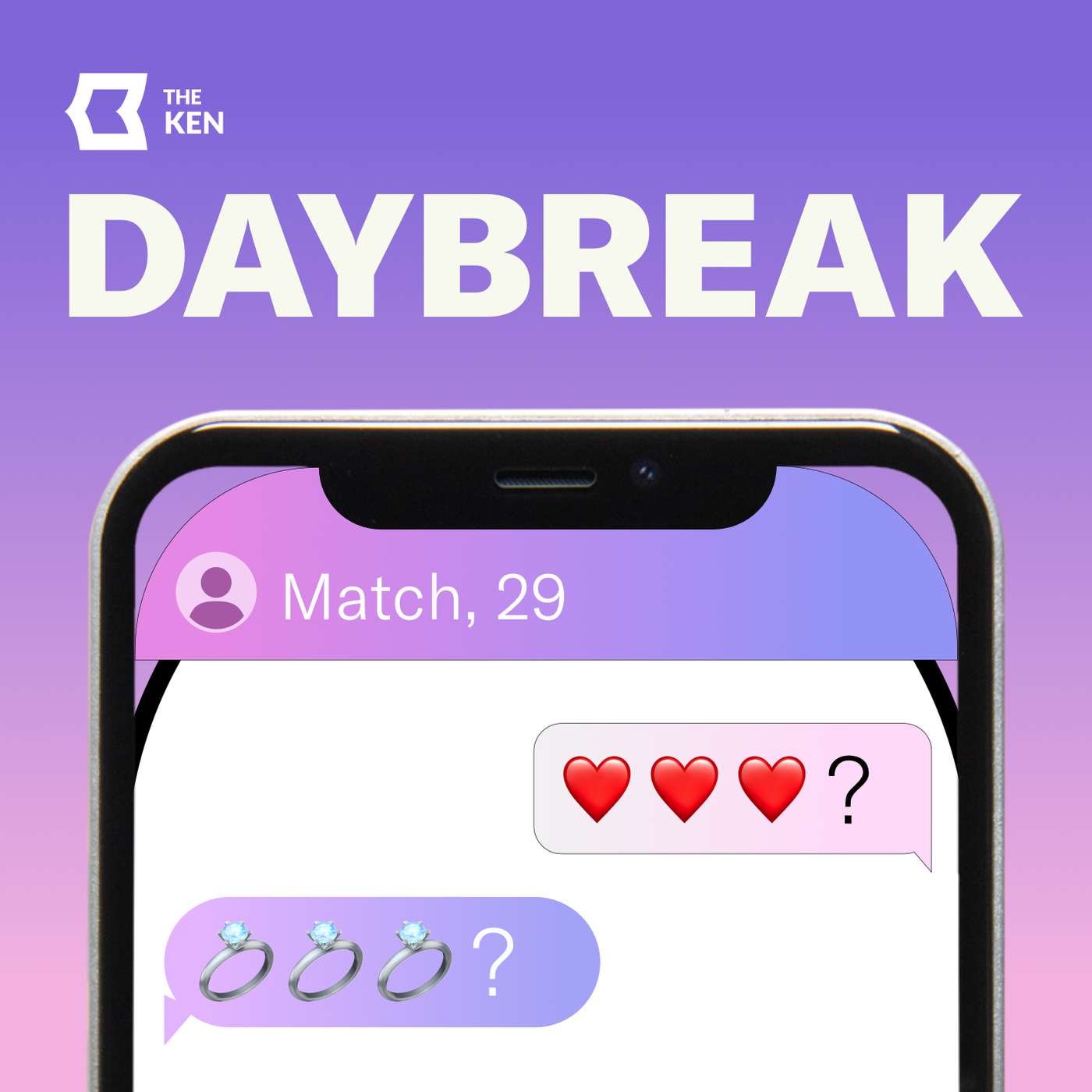
Desi dating apps are vying for parental approval. And their strategy seems to be working.A couple months ago, Agrima Srivastava, a 29-year-old media professional from Lucknow, had an awkward conversation with her mother. She wanted to know if Agrima had ever heard of Indian dating apps, Aisle and Better Half.That was the first time Agrima had an open conversation with her mother about her love life. She told her that she was on dating apps, but homegrown ones like Aisle and Better half, were "just too serious". Funnily enough, the very reason Agrima was hesitant to get on an Indian dating app is why her mom approved of it.And Agrima's mom isn't alone. Many Indian dating apps have positioned themselves as the perfect stop gap between casual dating and marriage. It allows people the autonomy to choose their own partner without their parents getting involved, while also connecting them with a pool of potential partners from similar communities and upbringings. It's like parent-approved dating.How do they work? And do Indian dating app users need them?Tune in to find out.Daybreak is produced from the newsroom of The Ken, India’s first subscriber-only business news platform. Subscribe for more exclusive, deeply-reported, and analytical business stories.
Ep 425Netradyne built a $1.3 B empire tracking drivers. Now it has to go driverless
Last month, Netradyne, the logistics AI startup, became India’s first unicorn of 2025 after it raised 90 million dollars in series D funding. You see, it did not take it long to realise that its sweet spot is the long-distance trucking segment. It serves over 3,000 customers across eight countries, including the likes of Amazon, Shell, Indian Oil and Greenline Mobility. And it all began with one rather primitive prototype. Of course, now it has morphed into a compact device with a built-in GPU, up to four cameras, and a disembodied voice alerting drivers not to crash the vehicle.The Ken reporter Abhirami G recently found herself in the backseat of one of Netradyne’s test cars in Bengaluru's Whitefield neighbourhood. The driver of the car was a Netradyne employee. And as he weaved through the traffic, the company’s signature always-on surveillance cameras didn’t just watch his every move, but also apparently “understood” and “analysed”. As he drove, he was generating the precious training data that powers the company’s bread and butter. Apart from making roads safer, this whole system also doubles up as a driver’s best legal defence in times of trouble. The company’s executive Vice president of Engineering Teja Gudena said that on multiple occasions, it has saved drivers from liability by proving their innocence in accidents. Apart from its new-found unicorn status, it reportedly managed to clock Rs 1,000 crore in revenue in 2023. It also currently has a stronghold in the US and other major global markets. Reaching all of these milestones within nine years is pretty remarkable. But despite all that success, Netradyne is now grappling with an existential crisis. Because now, driverless vehicles are no longer science fiction, they are a logistical inevitability. And that leaves Netradyne in a rather tricky spot. Tune in
Ep 424What does it take to sell makeup to men?
It’s 2025 and the idea of “masculinity” has undergone a complete overhaul. You see, after several product life cycles, the men’s grooming business has reached a stage where brands aren’t just formulating shampoos and body washes exclusively for men. They are also coming up with compacts and concealers, and a bunch of other makeup products targeted at men. In fact, in the last decade or so, India has actually become the biggest market in the Asia Pacific region for beauty products for men. And yet, nothing much has changed about how these brands pitch their products to men. Tune in. Daybreak is produced from the newsroom of The Ken, India’s first subscriber-only business news platform. Subscribe for more exclusive, deeply-reported, and analytical business stories.We are now on WhatsApp at +918971108379. Text us and tell us what you thought of the episode!
Ep 423Zepto to its employees — 'Who wants to be a millionaire?'
Over the next three to five years, Zepto wants to be known as the startup that created the most multimillionaires. Which is why these days, the standard pitch that people applying for VP-level roles at the startup get is as follows: "Would you like to create generational wealth? Think 50-100 crores in just four years." That’s what Zepto HR has been promising these applicants. They’ve been making it seem like bagging a job at Zepto is like winning a lottery ticket. And it’s not just bravado. By “generational wealth”, the company means offering Employee Stock Ownership Plans or ESOPs to senior executives, based on their performance. But it comes at a price. Tune in. Listen to 'One Billion in 10 Minutes', our new mini series based on The Ken's inaugural case competition. The Ken app Apple Podcasts Spotify
Ep 422How facial-recognition firms turn public deals into private gold
Indian startups are making the most of the increasing demand for surveillance by securing high visibility government contracts. But while these can boost a startup's profile, government projects are unpredictable and often difficult for smaller startups to win. As a result, there is a shift underway — private clients are becoming increasingly crucial for profitability. This divide between public and private contracts is forcing these surveillance startups to do a fair bit of monkey balancing. How are they pulling it off?Tune in. **This episode was previously published in December, 2024Daybreak is produced from the newsroom of The Ken, India’s first subscriber-only business news platform. Subscribe for more exclusive, deeply-reported, and analytical business stories.
Ep 421Can an army of Indian engineers help Microsoft take on Nvidia?
Nvidia’s dominance in the AI market is forcing Big Techs like Microsoft to produce chips of their own. So, the software giant is changing its tack in hiring from Indian colleges. The Ken reporter Abhirami G joins host Rahel Philipose in this episode. Tune in. Listen to 'One Billion in 10 Minutes', our new mini series based on The Ken's inaugural case competition. The Ken app Apple Podcasts Spotify
Ep 420All you need to know about your Cibil score
CIBIL or Credit Information Bureau (India) Ltd is one of only four credit information providers in the country that is licensed by the RBI. It is considered the oldest and the most reliable. It essentially calculates your credit score, a three digit number between 300 and 900, and provides it to banks so they can judge your creditworthiness. Usually, anything over 700 is considered good. But this whole process is anything but straightforward. In fact, it is shrouded in mystery. Each of these bureaus typically have their own algorithm to compute your credit score. And they are all somewhat similar. But nobody–not the borrowers and not even the banks–fully understand how these credit information providers, like Cibil, actually rate finances. In this episode, we try to demystify these credit bureaus and their mystery calculations that decide our fate.Tune in. Daybreak is produced from the newsroom of The Ken, India’s first subscriber-only business news platform. Subscribe for more exclusive, deeply-reported, and analytical business stories.We are now on WhatsApp at +918971108379. Text us and tell us what you thought of the episode!
Ep 419Subway is slowly doing away with what makes it Subway. Choice.
*This episode was originally published on 17 September, 2024. Subway, the globally popular sandwich-eatery chain, is now grappling with sweeping changes in India—and not for the better. For one, the world’s largest quick-service restaurant (QSR) brand is moving away from the franchise model it has operated under for the past 25 years. In doing so, it’s also shedding the very thing that made it popular in the first place: choice.Tune in. Listen to 'One Billion in 10 Minutes', our new mini series based on The Ken's inaugural case competition. The Ken app - https://lnkd.in/gr5eGNZEApple Podcasts - https://lnkd.in/gqviPMAGSpotify - https://lnkd.in/gXWTrYSP
Ep 418Why India's scheme to make every Indian fly never took off
Back in 2016, the government launched a scheme called UDAN. It stands for Ude Desh Ka Aam Nagrik, which roughly translates to every ordinary citizen will fly. This was a scheme that promised affordable, hassle free air travel to tier-2, 3 and 4 cities across the country. But eight years later, flying in and out of smaller towns and cities could not be more cumbersome. Direct flights are rare, and cancellations and delays are constant. So, that prompts the question – where did Udan go wrong? A report by the Comptroller Auditor General shows that more than half of the 770 odd approved flight routes under the scheme had not even commenced operations by March 2023. This largely had to do with two things – inadequate airport infrastructure and the lack of flights. But now the government is trying to fix it. Tune in. Daybreak is produced from the newsroom of The Ken, India’s first subscriber-only business news platform. Subscribe for more exclusive, deeply-reported, and analytical business stories.We are now on WhatsApp at +918971108379. Text us and tell us what you thought of the episode!
Ep 417How Mokobara and friends forced VIP and Safari to rethink the suitcase
The luggage industry seems to have undergone quite a makeover in the last few years. Back in the day, VIP and Safari were synonymous with the plain black and grey suitcases. But now, luggage is as important as the clothes you wear--it's part of the whole airport look.Startups like Mokobara, Nasher Miles, Assembly, and Uppercase have turned luggage into an aspirational lifestyle product with smart social-media marketing and a vibrant aesthetic.Also, important to note is that travel changed after Covid pandemic. The duration of trips has shortened, but the frequency of general travel has increased from once every three months to once every 45 days.The suitcase now has to fit in with the instagram aesthetic so it has gone from being functional to a style statement. As of now, VC-backed, new-age luggage brands only have a tiny slice of the market.But that slice has been growing quickly, and that’s enough to get the old guard nervous.Tune in.Daybreak is produced from the newsroom of The Ken, India’s first subscriber-only business news platform. Subscribe for more exclusive, deeply-reported, and analytical business stories.We are now on WhatsApp at +918971108379. Text us and tell us what you thought of the episode!
Ep 414You are a quick commerce company. You have a billion dollars. How do you win?
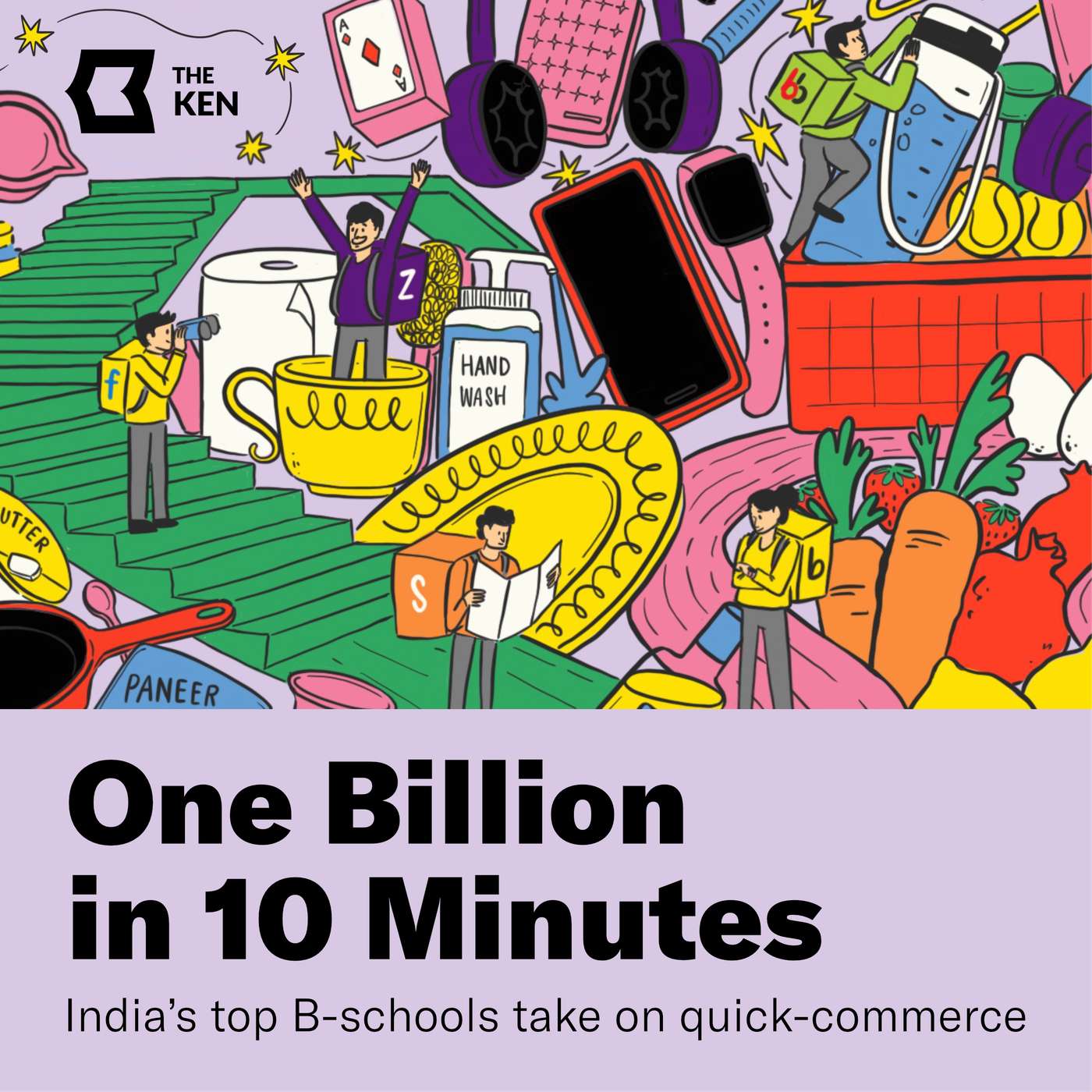
'As the battle for winning 10-minute deliveries heats up, so do the stakes. Pick one of five quick commerce companies. Determine what winning looks like. Write your solution’That was the challenge we threw at some of India’s smartest, most ambitious and creative students from top business schools across the country. In our brand-new mini series 'One Billion in 10 Minutes', you will hear their ambitious and creative pitches – all rooted in the real world and centred around five quick commerce platforms that have completely changed the way we all shop.The six-episode mini series goes live on Monday, February 3. But before that, we thought we would give you a sneak peak here on Daybreak. Check out the first episode of the series, where two teams — Metamorphosis from IIM Ahmedabad and Voldemort from IIMK Kozhikode — go head to head with their billion dollar strategies for the OG quick commerce platform, Big Basket. Tune in. Daybreak is produced from the newsroom of The Ken, India’s first subscriber-only business news platform. Subscribe for more exclusive, deeply-reported, and analytical business stories.We are now on WhatsApp at +918971108379. Text us and tell us what you thought of the episode!
Ep 413How designers are going from backrooms to boardrooms at companies
A new generation of designers is on the rise. These designers are expected to be a lot more than just “one trick ponies”. The new-age ‘Designer X’ is expected to bring a little bit of everything to the table. They understand the basics of sustainability, how their designs would impact things like climate change and culture. And they would also generally know a little bit of coding too. And that is because the whole perception of design has shifted. Just last month, IIT Delhi announced a new certificate course in design thinking. It quoted multiple reports explaining why aspirants should take it. One of them was a 2023 Deloitte report that said companies that integrated design thinking in their innovation process brought new products to market 50 per cent faster than others and saw 2.5 X more revenue growth.The latest batch of design generalists are the products of a new era of design education that has been sweeping through India’s universities. As of now, about a dozen have started their own design schools. Some of these universities are leaning into the industry’s demand for a well-rounded designer.But now that more universities have entered the picture and generalist designers are becoming a dime a dozen, landing good jobs is going to get tougher as the job market matures. Tune in.*This episode was previously published on November 4, 2024Daybreak is produced from the newsroom of The Ken, India’s first subscriber-only business news platform. Subscribe for more exclusive, deeply-reported, and analytical business stories.
Ep 412From managing migraines, to treating IBS — why thousands are choosing devices over drugs
Nothing can dampen a vacation like a chronic migraine. Sunayani Sarkar, a 22-year-old biotechnology student learnt this the heard way during a trip to the Andaman and Nicobar islands last year. A month of terrible migraines later, her doctor suggested she try out a wearable device called Nerivio, developed by Pharma major Dr Reddy's through a partnership with an Israeli bio tech firm called Theranica Bio Electronics. The device connects to an app via Bluetooth and controls the electronic pulses sent to the arm. It also stores the patient’s data to track migraine episodes over a period of time. It seemed simple enough and Sunayani’s migraines weren’t getting any better, so she decided to give it a go. She isn’t alone. Turns out in the last few years, the market for devices to treat and manage chronic and non communicable diseases has been blowing up. Despite its high costs, thousands of Indians are opting for digital therapeutics to manage their migraines better and monitor heart health. And company's like Dr Reddy's and Lupin are making the most of it. And why wouldn't they? After all, it opens the doors to bundled products, robust patient data and a chance to be pioneers in global healthcare. Tune in. Daybreak is now on WhatsApp at +918971108379. Text us and tell us what you thought of the episode!Daybreak is produced from the newsroom of The Ken, India’s first subscriber-only business news platform. Subscribe for more exclusive, deeply-reported, and analytical business stories.
Ep 411From luxury cars to lunch with celebs — wealth managers are going all out to woo the ultra-rich
Welcome to the world of luxury-lifestyle management, where firms like RedBeryl, Indulge Global, and Quintessentially play the role of concierge for their ultra-wealthy clients, making the impossible possible.Now this sort of thing has become even easier for the rich. Because their wealth managers are also taking care of some of these requests. It isn’t a one -off thing. Companies like RedBeryl, Indulge GLobal, Quintessential – all of which play the role of concierge for their ultra wealthy clients – are increasingly partnering with wealth managers to edge out competition and increase their clientele. In today’s episode, we dive into how wealth managers are finding new ways to delight the ultra-rich. Tune in Daybreak is now on WhatsApp at +918971108379. Text us and tell us what you thought of the episode!Daybreak is produced from the newsroom of The Ken, India’s first subscriber-only business news platform. Subscribe for more exclusive, deeply-reported, and analytical business stories.
Ep 410Why Minimalist was the missing piece in Hindustan Unilever's skincare game
One of the largest deals to acquire a D2C brand took place last week. India’s largest manufacturer of consumer good, Hindustan Unilever acquired the skincare company Minimalist, a 90% shareholding for nearly 3000 crore rupees.Homegrown startup beauty brands have been on a roll in India. Scores and scores of new age skincare brands have cropped up since the pandemic and all of them harp on the science of it. And their whole appeal is transparency. Transparency about the ingredients that go into each of their products.Among all of them, Minimalist is the one that really stands out. It is an active ingredients based skincare company that sells things like niacinamide, retinol, Vit C, glycolic acid, and salicylic acid. It launched around the end of 2020, and within a span of eight months, it built a 1000 crore rupee business. What’s even more surprising that the brand has remained in the green, meaning profitable, from the very first month itself.For years, legacy brands like, HUL, Ponds, and Loreal have been selling products with similar ingredient--the only difference being they either didn't launch them in India or the kept the names hidden away in tiny fonts at the back of the bottles.It was Minimalist that came around and broke that mould.And now, seeing the success of brands like Minimalist, legacy brands are rethinking their strategy.Case in point: Hindustan UnileverThe company’s has been wanting to turn its beauty and well-being portfolio into a “high-growth" premium category for a while now and the acquisition of Minimalist is a big step in that direction.But how did Minimalist manage something that a giant like HUL couldn't?Tune in.Daybreak is now on WhatsApp at +918971108379. Text us and tell us what you thought of the episode!Daybreak is produced from the newsroom of The Ken, India’s first subscriber-only business news platform. Subscribe for more exclusive, deeply-reported, and analytical business stories.
Ep 409Roti ✓ Kapda ✓ Makaan? Should young Indians still believe in the home ownership dream?
Property prices across Indian cities have gone through the roof, up by nearly 30% in the last two years. This along with ever increasing rent and general cost of living has made planning for the future quite challenging for those in their 20s and 30s. So has the idea of home ownership changed among the younger generations, like in many Western countries where more and more people are choosing to rent rather than buy? Or are we still attached to the idea of owning a home?And what's behind these record-breaking property prices anyway?Tune in to find out.Daybreak is now on WhatsApp at +918971108379. Text us and tell us what you thought of the episode!Daybreak is produced from the newsroom of The Ken, India’s first subscriber-only business news platform. Subscribe for more exclusive, deeply-reported, and analytical business stories.
Ep 408Why investors can't get enough of Zepto
FROM THE ARCHIVES (This episode was first published July 1, 2024)The Economic Times reported yesterday that Zepto, the quick-commerce startup, is in talks to increase the size of its initial public offering to $800 million-$1 billion. Zepto earlier planned to raise $450 million through the issue. Even when it entered the quick commerce scene for the first time in 2021, Zepto was a disruptor. Now, it is the third largest company in the market after Blinkit and Swiggy Instamart. Last year, it secured its biggest funding ever at a US$3.6 billion valuation, mainly from its existing investors.Venture Intelligence, a data provider told The Ken that the US$660 million funding was the largest bet made by VCs in Indian startups in 2024. What did Zepto do to get all this attention from investors?Tune in.Also listen to:Daybreak: Why we date, marry, or breakup with Swiggy Instamart, Blinkit, Zepto & BigBasket
Ep 407How Acko beat Godigit with just 15 health-insurance agents
A dialogue from Munnabhai has become the ultimate source of inspiration for Acko, a digital general insurer. "When someone’s dying, do they necessarily have to fill out forms?" The Ken spoke to multiple Acko executives who said that this line is frequently repeated in meetings of its 21-month-old retail health insurance business. The inspiration seems to be working. Despite being new to the retail health insurance game, the company was able to sell health insurance policies worth about Rs 51 crore in the segment. That’s 40 per cent more than Godigit, which is listed and had the advantage of being around longer. Most people who understand this space are thrown off by the route it has gone down. You see, conventionally, the industry has depended heavily on agents and point of sale personnel to sell policies. But Acko has no interest in this approach. Tune in. Daybreak is now on WhatsApp at +918971108379. Text us and tell us what you thought of the episode!Daybreak is produced from the newsroom of The Ken, India’s first subscriber-only business news platform. Subscribe for more exclusive, deeply-reported, and analytical business stories.
Ep 406The government is pushing for e-buses. But private bus operators are not hitching a ride
A bunch of startups are not entering the booming Indian e-bus ecosystem and becoming overnight successes. Just take the case of EKA mobility. Before 2023, EKA was barely a company. It was more the R&D wing of Pinnacle Industries, which is a major manufacturer of seating and interiors for legacy automakers like Tata Motors and Ashok Leyland. But when the government launched the PM E-Drive subsidy back in September, everything changed for Eka Mobility. The five-year-old startup turned into a full-fledged EV manufacturer. Eka Mobility is one among many beneficiaries of the EV wave here in India. But naturally, it does not come without its challenges. Which is why, despite India’s e-bus ambitions slowly gaining momentum thanks to government funding, the private sector has barely put its foot on the pedal. Tune in. Daybreak is now on WhatsApp at +918971108379. Text us and tell us what you thought of the episode!Daybreak is produced from the newsroom of The Ken, India’s first subscriber-only business news platform. Subscribe for more exclusive, deeply-reported, and analytical business stories.
Ep 405Why Ola Electric went from leader to laggard in record time
Last week, Ola Electric’s shares saw a three-day slump after the Central Consumer Protection Authority asked the company for more documents for its investigation against it post receiving thousands of consumer complaints. But shares going up and down is regular stuff right? Not for Ola Electric. The company went public in August 2024 at a debut price of Rs 76 becoming the only startup that went public at a lower price. In his newsletter The Nutgraf, my colleague Praveen said it was a bold decision which paid off for Ola Electric. You see, when startups go for an IPO, it becomes clear that most of the value has already been extracted when it was private, leaving little for public investors. If it were shown to you as a graph, you’d see a sharp fall in growth post going public. That is the usual trend.But Ola Electric dodged it thanks to its lower debut price. This is exactly what makes its falling share prices a matter of concern. And somewhere in the middle of all this is CEO Bhavish Aggarwal's public perception. Tune in. Daybreak is now on WhatsApp at +918971108379. Text us and tell us what you thought of the episode!Daybreak is produced from the newsroom of The Ken, India’s first subscriber-only business news platform. Subscribe for more exclusive, deeply-reported, and analytical business stories.
Ep 404Quick commerce is helping brands thrive but can brands afford the success?
A couple years ago, quick commerce platforms were the place to be for up and coming brands across the country. Just a little sliver of real estate on a rapid delivery app was enough to put them on the map. But now, many of these brands are very quickly realising that success on a Blinkit or a Zepto is a double edged sword. With it comes high commissions, marketing fees, and the constant pressure to never run out of inventory. Some brands have now had enough. How did it get here? The Ken reporter Nuha Bubere explains.Tune in. Daybreak is now on WhatsApp at +918971108379. Text us and tell us what you thought of the episode!Daybreak is produced from the newsroom of The Ken, India’s first subscriber-only business news platform. Subscribe for more exclusive, deeply-reported, and analytical business stories.