Daybreak
851 episodes — Page 13 of 18
Ep 251Four-year-old Minimalist does for skincare what L’Oréal couldn’t
Last week, Foxtale, an Indian D2C skincare company secured an $18 million funding in its series B round. Meanwhile, news also broke that the Deepika Padukone-led 82°E is planning to raise around $6 million from new and existing investors. Scores of new age skincare and beauty brands have cropped up since the pandemic and all of them harp on the science of skincare and their whole appeal is transparency.Among them one brand stands out: Minimalist. It is an active ingredients based skincare company that sells products named after the ingredients like niacianamide, retinol, glycolic acid, salicylic acid, etc. It launched around the end of 2020, and within a span of eight months, it built a 1000 crore rupees business. But for years, legacy brands like Ponds and Loreal have been selling products with similar ingredients. The only difference was they either didn't launch them in India or they kept the ingredient names hidden away in tiny fonts at the back of the bottles.Minimalist came around and changed that. And now, seeing the success of brands like Minimalist, legacy brands are rethinking their strategy.Tune in.Also listen to: Daybreak Special: Why aren't we scared of chemicals in our skincare anymore?
Ep 250Daybreak Special: How India's 40-somethings are redefining career longevity
There is something really concerning happening to India’s 200-million strong workforce. Nearly half of them, who are above the age of 45, have reached a point in their careers where they may have to retire much earlier than they planned. Against their will.In a nutshell, the usual career span that would last anything between 40 to 50 years even has been slashed by half almost….. to just 20 or 25 years. But this isn’t something that a lot of 40 and 50 year olds are taking lying down. They are figuring out ways to hack the system so they can stay “forever employable”. And in the process, conventional career trajectories are starting to change. Like one 38-year-old CXO put it, “Growth—be it in a profession or in life—is not equivalent to moving up a single, well-defined ladder.” Daybreak hosts Snigdha and Rahel speak to The Ken reporter Vanita Bhatnagar about these new career trends. Tune in.
Ep 249What's making Zomato bet big on Blinkit?
Zomato, the food delivery giant is all set to infuse more than $35 million into Blinkit. But not too long ago, Blinkit, the grocery delivery platform that was formerly known as Grofers, was on the verge of dying. It was the first year of the pandemic and the demand for quick commerce was at its peak. Grofers wanted to join the bandwagon but it didnt have the money.A year later in June 2021, it got its shot in the arm with a $120 Mn infusion from Zomato. A year later, in 2022, Zomato decided to go all the way in and acquired Blinkit for nearly $600 million. It was not been all smooth sailing even after that.But somehow, Blinkit has managed to crack the quick commerce market and become a leader. How?Tune in.*This episode was first published on March 6, 2024Daybreak is produced from the newsroom of The Ken, India’s first subscriber-only business news platform. Subscribe for more exclusive, deeply-reported, and analytical business stories.
Ep 248What do health insurers have against pregnancies?
When 29-year-old Deepa delivered a healthy baby boy six months ago, she thought her health insurance would cover her hospital expenses. But unfortunately, it barely covered 1/3rd of the Rs 1 lakh bill. So she ended up using her corporate health insurance that offered a higher limit. And this isn’t a one off. The Ken spoke to 13 women from six different cities who delivered babies in the last couple of years. Most of them had experiences just like Deepa. Seven of them said they got their maternity expenses covered by corporate health insurance, either their own or their spouses. And that’s despite having their own personal health cover in place. Luckily for Deepa and the seven women we spoke to, they had some form of corporate health insurance in place. But in a country like ours, that’s a luxury. Only about 200 million out of the 1.4 billion citizens of this country have access to it. That’s pretty abysmal. In this episode, we delve into what health insurers have against pregnancies. Tune In.
Ep 247Why Cleartrip could learn a thing or two from old school travel agents
When e-commerce giant Flipkart acquired online travel aggregator (OTA) Cleartrip back in 2021, the hope was that it would be able to turn things around. Cleartrip had hit rock bottom. And in many ways the only way from there on was up. But things haven’t quite played out as Flipkart and Cleartrip had hoped. One big reason is that Cleartrip under Flipkart may have veered too far away from what makes an OTA an OTA — the OG tried-and-tested strategies that made us keep going back to old school travel agents back in the day.Tune In.
Ep 246Energy drinks are the hot new category in India and PepsiCo's Sting is its king
Last year, Indians collectively drank nearly 600 million litres of energy drinks. This was almost 30X more than 2018. Among all the go to drinks in India, lately energy drinks have become super popular. People seem to clearly be attracted to their appeal as stimulants.And what’s crazy is that these drinks have become an alternative to chai at tea stalls for office goers. And even for daily wage workers who have to work in this insane heat, they are often a cheaper meal replacement. For the more privileged, they’re also cocktail mixers at parties. As of 2023, PepsiCo's Sting had 90% of the market share in energy drinks in terms of volume. It's been doing so well that Varun Beverages, the company that bottles and distributes for PepsiCo in India, became the hottest FMCG stock in the country. Its saw its share price rise by more than 1000% per cent in the last five to six years.But the ones driving this growth are the country’s youth, who are often unaware of the contents of the drink and the heath risks that come along with it.Tune inDaybreak is produced from the newsroom of The Ken, India’s first subscriber-only business news platform. Subscribe for more exclusive, deeply-reported, and analytical business stories.
Ep 245Daybreak Special: Inside the world of 'datrimonial' apps in India
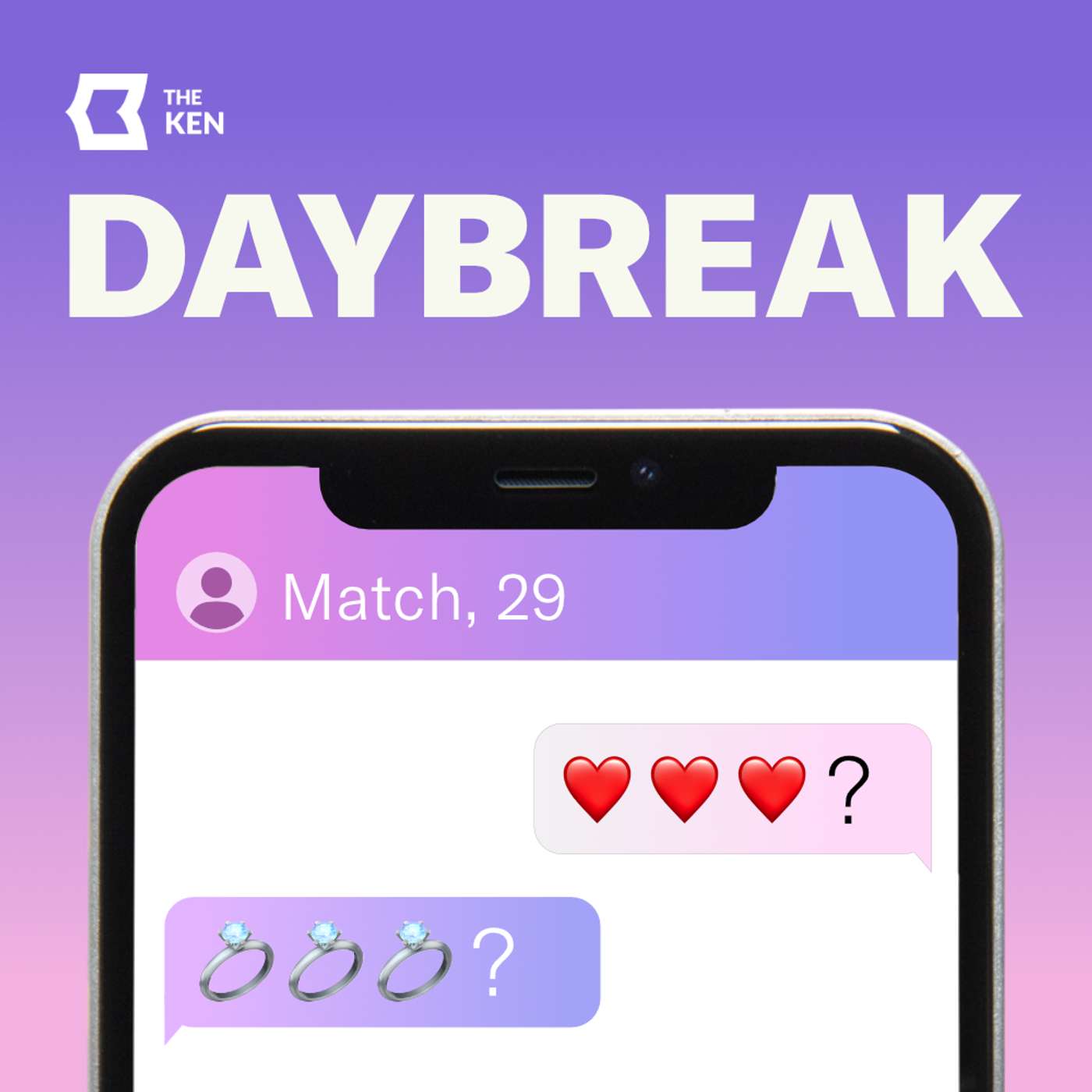
Desi dating apps are vying for parental approval. And their strategy seems to be working. A couple months ago, Agrima Srivastava, a 29-year-old media professional from Lucknow, had an awkward conversation with her mother. She wanted to know if Agrima had ever heard of Indian dating apps, Aisle and Better Half. That was the first time Agrima had an open conversation with her mother about her love life. She told her that she was on dating apps, but homegrown ones like Aisle and Better half, were "just too serious". Funnily enough, the very reason Agrima was hesitant to get on an Indian dating app is why her mom approved of it. And Agrima's mom isn't alone. Many Indian dating apps have positioned themselves as the perfect stop gap between casual dating and marriage. It allows people the autonomy to choose their own partner without their parents getting involved, while also connecting them with a pool of potential partners from similar communities and upbringings. It's like parent-approved dating. How do they work? And do Indian dating app users need them? We speak to Chandni Gaglani, the head of Aisle and three dating app users to find out. Tune in. P.S. while you are here, why don't you check out The Ken's early careers podcast, The First Two Years. You can listen to it here.
Ep 244What is suddenly sending shivers down the spines of 350,000 CAs?
It has been a tough couple of years for India’s Chartered accountants. This was and to some extent still is one of the most sought after jobs in the country. But lately, the amount of risk involved in their work has been amped up considerably. And as a result, CAs have been resigning left, right and centre. The reason this is happening is because the auditing industry has been undergoing a major shake-up. And behind this shakeup is a relatively new, independent audit regulator called the NFRA, or the National Finance Reporting Authority. The NFRA has set all sorts of records in the last two years. Since 2022, it has debarred 78 auditors and imposed close to Rs 20 crore in penalties. Tune in.
Ep 243Why reining in financial influencers is a Catch-22 problem
According to a survey by S&P, more than 75% of Indian adults do not understand basic financial concepts. The gap is 5% more when it comes to women.So the rise of financial influencers who simplify complex financial jargon and provide investment advice is not really surprising. But often, they underplay risks and overplay returns, and try to ride the market waves.In fact, SEBI, the market capital regulator, has been receiving many complaints and is working on creating a framework of strict guidelines to bring them under its control.But reining these ‘finfluencers’ in is a bit of a catch-22 situation.Tune in.
Ep 242EVs aren’t everybody's cup of tea. Maruti-Toyota are making the most of it.
Since 2021, Toyota and Maruti have been engaged in somewhat of a marriage of convenience. The terms were pretty simple. Toyota would share its hybrid technology with Maruti Suzuki. In exchange, Toyota would get to re-enter the pocket-friendly segment. So what this meant was that the non-premium Toyota cars sold were actually built by Maruti. And the fully hybrid cars sold under the Maruti label were built by Toyota. This arrangement has worked well for both companies for multiple reasons. The biggest of which is the growing popularity of hybrid vehicles in India in the recent past. But in the process, EV makers seem to be losing big time. Tune in.P.S. While you are here, why don't you check out the latest episode of The First Two Years, The Ken's early careers podcast. It's a good one! Akshaya talks about how to network without seeming desperate. Check it out here. Daybreak is produced from the newsroom of The Ken, India’s first subscriber-only business news platform. Subscribe for more exclusive, deeply-reported, and analytical business stories.
Ep 241Why free airport lounge access is not so free anymore
Credit card companies, in their rush to sell more and more cards use a whole gamut of attractive offers—the most popular one being free access to airport lounges. Thanks to this and the sharp rise in domestic air travellers, airport lounges saw of footfall of over 8 million people in 2022.What was once an exclusive service became a top-selling feature, even for non-premium cards issued by banks. Lounge access became overused and an expensive bill to foot for credit card issuers.Now, one after the other, major banks are revising their lounge policy. But retracting the freebie altogether is not a risk banks can afford to take.Tune in.Daybreak is produced from the newsroom of The Ken, India’s first subscriber-only business news platform. Subscribe for more exclusive, deeply-reported, and analytical business stories.
Ep 240Why we date, marry, or breakup with Swiggy Instamart, Blinkit, Zepto & BigBasket
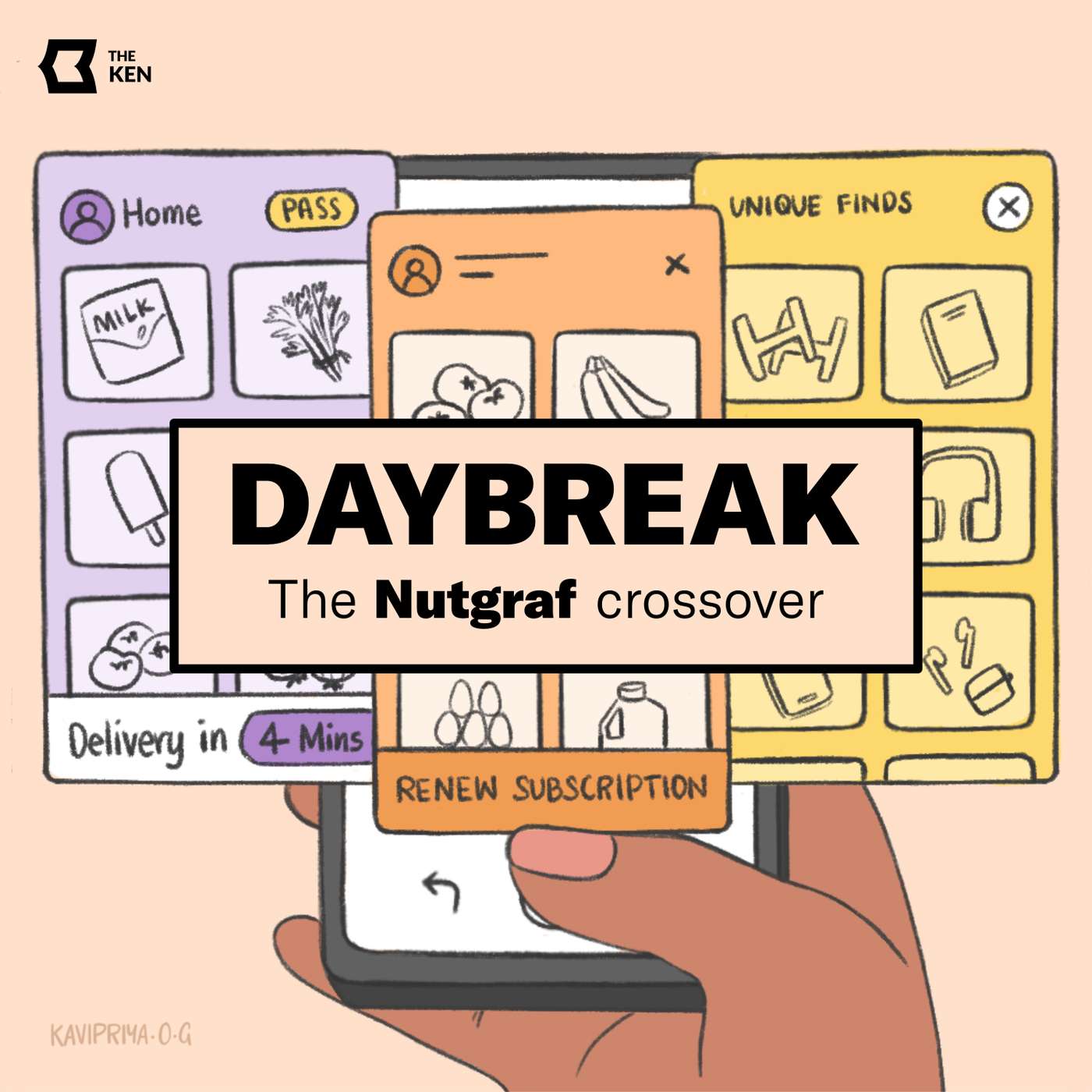
In today’s special Friday episode, The Ken’s Praveen Gopal Krishnan (aka PGK) joins hosts Snigdha and Rahel to talk about India’s complicated relationship with 10 minute delivery apps. They talk about how these apps are shaping our economy and society at large, and more importantly how we, as users, are shaping them.Why do we pick a particular app, what makes us switch to another one and what makes us abandon them all together?PGK asked his readers just that in a recent survey he carried out in his weekly newsletter, The Nutgraf. You can check it out here.You can also check out the Bangalore floods edition Snigdha mentioned, here.Listen to Kabir Biswas talk about Dunzo and the quick delivery business on First Principles.If you're curious about the time everyone except Zepto assumed quick commerce was dying, click here.P.S Tell us what you thought of this episode. a) Was the subject interesting enough for you? b) Did you enjoy the conversation? You can write to us at [email protected] is produced from the newsroom of The Ken, India’s first subscriber-only business news platform. Subscribe for more exclusive, deeply-reported, and analytical business stories.
Ep 239After UPI, NPCI feels the pressure to build its next hero product
At the time of demonetisation, the country was desperately seeking an alternative to cash. And a payments regulator called NPCI or the National Payments Corporation of India, was our unexpected knight in shining armour. The NPCI managed to launch UPI at just the right time. This was a revolutionary, once in a generation product that really put the NPCI on the map. Over the years, UPI also became a huge political asset for the Central Government. That’s evident from the fact that political leaders, including the PM, have made it a point to repeatedly endorse UPI. But nearly two general elections later, the pressure is on for the NPCI to come up with a new product, the next UPI. And the NPCI is really feeling the pressure. Daybreak is produced from the newsroom of The Ken, India’s first subscriber-only business news platform. Subscribe for more exclusive, deeply-reported, and analytical business stories.
Ep 238How Wakefit and other new-age mattress companies are selling you sleep
New-age D2C mattress brands like Wakefit and The Sleep Company have successfully made orthopaedic mattresses into a mass product. They are changing the landscape of the mattress market in India with their innovative science and tech based approach and clever marketing techniques. Wakefit, for example, literally offers a “sleep internship" where all you have to do is "sleep for 9 hours everyday for a hundred days and earn up to 10 lakh rupees."It's come to a point where even older and bigger mattress makers have had to adapt these changes and start selling these orthopedic mattresses.But is this really about the science or more about the selling?Daybreak is produced from the newsroom of The Ken, India’s first subscriber-only business news platform. Subscribe for more exclusive, deeply-reported, and analytical business stories.
Ep 237Can Xiaomi, a smartphone maker, be the next Tesla?
A couple months ago, Xiaomi released a new product – the SU7. This wasn’t a smartphone, or any other gadget that you would have otherwise associated with the Chinese company. The SU7 is actually Xiaomi’s first-ever Electric Vehicle. Now, this is a major milestone for Xiaomi. It has become the first smartphone maker to successfully launch an EV. Funnily enough, this is something that many smartphone makers and technology companies – from Apple to Samsung – have tried to do but failed at. Until now. But what do smartphone makers have to do with EVs?Tune in to find out.Daybreak is produced from the newsroom of The Ken, India’s first subscriber-only business news platform. Subscribe for more exclusive, deeply-reported, and analytical business stories.By the way, have you listened to The Ken's early careers podcast, The First Two Years? In the latest episode, the show's host Akshaya Chandrasekaran talks about how to navigate work friendships. You can check it out here.
Ep 236Why banks love to shower you with reward points
Indians have really been warming up to credit cards lately. More than a 100 million credit cards are in circulation in India as of now. And this rise has a lot to do with the benefits customers get: cash back deals and reward points that you can collect and redeem for anything from flight tickets to stays at fancy resorts.But between the two, cashbacks are a more straightforward method of making the most of your credit card. Availing reward points, on the other hand, requires a combination of skill and patience. And between the two, there’s one that banks actually don’t like.Tune in to find out.Daybreak is produced from the newsroom of The Ken, India’s first subscriber-only business news platform. Subscribe for more exclusive, deeply-reported, and analytical business stories.
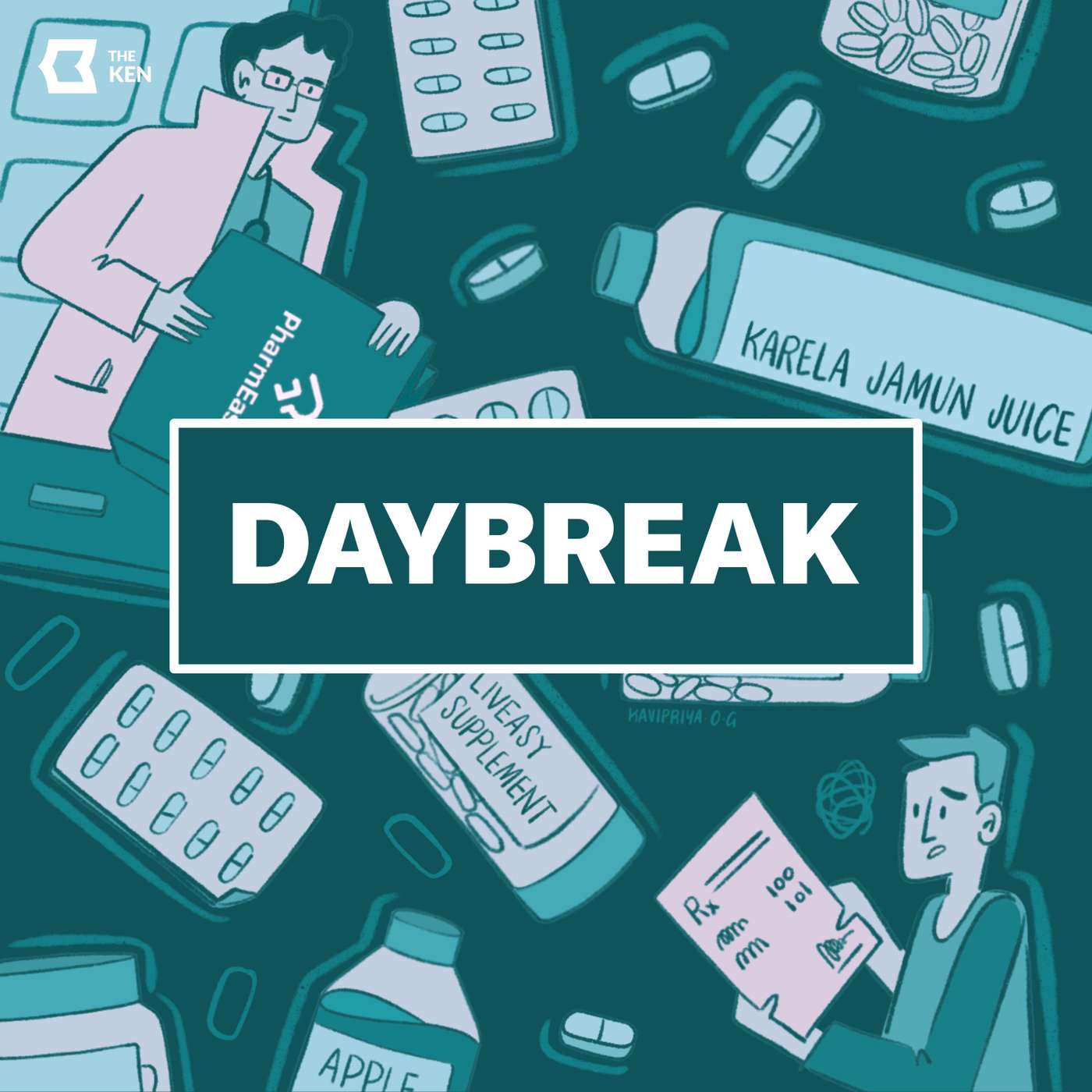
Ep 235Daybreak Special: The Pharmeasy Investigation
In this week's Daybreak Special episode, hosts Snigdha Sharma and Rahel Philipose speak to The Ken's Shivani Verma about her investigation into Pharmeasy's dubious business practices. The once IPO-bound company is under the scanner for its 'unethical' ways of upselling alternative medicines and supplements. Everyone – from Pharmeasy's own pharmacists, to the doctors who call behalf of the company to validate a customer's prescription – are under pressure to sell these supplements. The saga began with Pharmeasy’s 2021 acquisition of Bengaluru-based e-pharmacy Medlife, where former executives noted a similar trend of upselling alternatives and supplements. This comes amid ballooning losses and immense pressure from investors to show profitability. So what's the deal? Why is Pharmeasy going down this route? Tune in to find out. Daybreak is produced from the newsroom of The Ken, India’s first subscriber-only business news platform. Subscribe for more exclusive, deeply-reported, and analytical business stories.P.S. Daybreak episodes drop daily now :)
Ep 234What happens when your grocery delivery apps start selling you iPhones & water coolers?
Thanks to Swiggy and Blinkit, it’s gotten to a point where getting everything – from your groceries to a literal water cooler – delivered to your doorstep within minutes has become pretty routine. Something we expect. But there is so much going on behind the scenes to make that delivery possible. Like one executive told The Ken, it’s a combination of solid logistics and precise inventory management.Pulling that off with just groceries that you can easily throw into a carrier and strap on to a bike is one thing. But then you go and add things like water coolers, mixer grinders, even iPhones to the mix. It sounds like a logistical nightmare. But it’s a nightmare that quick commerce apps like Blinkit, Swiggy Instamart and Zepto have dived headfirst into. They are becoming everything stores, almost like ‘mini Amazons’. And with that, the very nature of quick commerce is changing.
Ep 233Why does Digiyatra have a new app? The real reason is a scam
If you were flying sometime last month, you may have noticed, staff from Digiyatra, the contactless, biometric entry system at airports, were repeating the same thing over and over again to passengers at the entrance: “The old app is discontinued, please download the new app.” Passengers were only given this information at the airport. None of them received any notifications or SMSes.Apart from inconveniencing passengers, this also sent alarm bells ringing among some of them. Because, think about it. Usually you're asked to update an app, not delete it and download a new one, right?Anyway, most attributed it to some kind of a tech upgrade, which was also what Digiyatra Foundation (DYF), the company that runs the app said. Apparently, it was a part of their plan to expand to a larger user base.But you know what? That’s not the real reason. Behind it all, is a scam.Tune in.Daybreak is produced from the newsroom of The Ken, India’s first subscriber-only business news platform. Subscribe for more exclusive, deeply-reported, and analytical business stories.P.S. Daybreak episodes drop daily now :)
Ep 232Why every payment aggregator should be scared of Phonepe
No other payment aggregator has been able to pull off what Phonepe has in less than a year. Its nearly 50 per cent market share is obviously a huge draw for new merchants. And in the last couple years, its been able to onboard some pretty big names like Bharti Airtel and IRCTC. But the bigger the client, the more ruthless their demands. At the end of the day, they are only loyal to the aggregator that promises them the lowest prices and highest success rates. So how does PhonePe make sure that it stays on top? And where does that leave everyone else? Tune in.Correction: The host mistakenly referred to NPCI as NCPI towards the end of this episode. We apologise for the error.Daybreak is produced from the newsroom of The Ken, India’s first subscriber-only business news platform. Subscribe for more exclusive, deeply-reported, and analytical business stories.P.S. Daybreak episodes drop daily now :)
Ep 231Why even well-funded startups can't resist the lure of Shark Tank India
The lure of appearing on the popular reality show on national television is so strong that even startups that already have been funded by VCs and institutional investors want to get on Shark Tank. In fact, investors themselves are asking their founders to go on the show.Money or funding is not the goal for these startups. It's the marketing opportunity they want.But Sony, the producer of the Shark Tank is trying its best to make sure that the show doesn't lose its real purpose: to be an investment platform.Tune in.Daybreak is produced from the newsroom of The Ken, India’s first subscriber-only business news platform. Subscribe for more exclusive, deeply-reported, and analytical business stories.P.S. Daybreak episodes drop daily now:)
Ep 230Daybreak Special: Why aren't we scared of chemicals in our skincare anymore?
Contrary to its name, the US-based skincare brand 'The Ordinary' pulled off something pretty extraordinary when it was launched in 2016. From the beginning, it was all about transparency. It veered away from fancy packaging, instead opting for simple labels that list out all of the main ingredients, or 'actives', that were used to make the product.And just like that, the brand managed to demystify active ingredients for everyone!This kicked off somewhat of a skincare revolution around the world, including in India. Today, anyone who understands skincare knows what active ingredients are and which one is best suited for their skin. Suddenly, hyaluronic acid, niacinamide, AHAs and BHAs are all part of common parlance.But it took more than just 'The Ordinary effect' to get here.Daybreak co-hosts Snigdha Sharma and Rahel Philipose speak to Shamika Haldipurkar, the founder of premium skincare brand d'you, and Vasudha Rai, former beauty editor of Harper's Bazaar and skincare content creator, to unpack this change in perception.If you have already listened to this episode, please give us your feedback here.Correction: The host mistakenly referred to The Ordinary as a US-based company instead of Canada. The error is regretted.Daybreak is produced from the newsroom of The Ken, India’s first subscriber-only business news platform. Subscribe for more exclusive, deeply-reported, and analytical business stories.P.S. Starting this week, Daybreak episodes drop daily :)
Ep 229Globally sanctioned Chinese companies rule India's $5 billion surveillance market
CP Plus, one of the most popular CCTV camera-makers in India, gets 80% of its supplies for its parent company, Aditya Infotech Ltd (AIL), from the Chinese security-equipment manufacturer Dahua Technology.Dahua and Hikvision, another Chinese surveillance-tech firm, are facing sanctions in the UK, US, Australia, and other countries, for their connection to the Chinese government.But in India growing surveillance tech market, both these companies enjoy more than a 50% market share. And bringing them under control is turning out to be complicated for the government.Tune in.Daybreak is produced from the newsroom of The Ken, India’s first subscriber-only business news platform. Subscribe for more exclusive, deeply-reported, and analytical business stories.
Ep 228Meesho wants big brands in its basket. But brands think Meesho is like a 'village dukaan'
A few days ago Meesho closed the first tranche of its $600 million funding round by securing $275 million. The e-commerce unicorn has impressed investors lately thanks to its sustainded operating growth and the reduction in its monthly burn rate.Over time, the platform has built a kind of dominance in India’s smaller cities and towns that become the envy of its competitors —all thanks to its super affordable unbranded products.But now, Meesho wants to boost its profits. For it, it's relying on something that’s a bit out of character for it. It is betting big on Meesho Mall, a space dedicated to legacy and D2C brands.But with small-businesses and unbranded products embedded in to its very DNA, is Meesho ready to take the big brands route?Daybreak is produced from the newsroom of The Ken, India’s first subscriber-only business news platform. Subscribe for more exclusive, deeply-reported, and analytical business stories.
Ep 227The bank locker, as you know it, is crumbling
You may be surprised by how often bank lockers are robbed. According to Finance Ministry data, close to Rs 200 crore has been stolen from locker facilities in the last three years alone. This is pretty disconcerting, especially considering that for the longest time the bank locker has been considered the safest place to store your most precious valuables. It also doesn’t help that every aspect of locker management in banks – from actually opening your locker, to eventually closing it – is extremely complicated. The Supreme Court recognised this. In 2021, it passed an order that was meant to make lockers more secure. After that, the RBI issued a new set of guidelines on locker management. But three years later, experts say the RBI guidelines are protecting banks more than customers. So, the question is: Is your locker really the best place to store your valuables?Daybreak is produced from the newsroom of The Ken, India’s first subscriber-only business news platform. Subscribe for more exclusive, deeply-reported, and analytical business stories.
Ep 226Gaurav Munjal wants to save Unacademy by doing what he once ‘hated’
When Gaurav Munjal started Unacademy, the edtech unicorn, he hated the offline coaching business. Edtech companies have tried to stay away from offline because of a number of reasons like low profit margins and huge capital. But with the edtech downturn, Gaurav Munjal, finally admitted to the press that he’d been wrong and had overestimated the online business. This came at a time when Unacademy's online business was free falling. So the edtech shifted focus to its offline coaching network which now makes up 50% of its business. From celeb endorsements to massive discounts on its fee, the edtech is doing everything it can to counter its rivals like Allen and Aakash Institute.Unacademy is changing its very DNA but experts are raising questions about the long-term sustainability of the business. Tune in.Daybreak is produced from the newsroom of The Ken, India’s first subscriber-only business news platform. Subscribe for more exclusive, deeply-reported, and analytical business stories.
Ep 225Debit cards will be obsolete soon but SBI still wants to save them
When it comes to debit cards and ATM networks, no one can beat the State Bank of India. But being the market leader of debit cards in India is actually turning out to be a problem for the public lender. With Indians becoming more open to credit cards and UPI swamping the market, debit cards are dying a slow death. In fact, a lot of industry experts agree that debit cards, in their current physical form, may actually become obsolete in the coming decade. And by being the biggest player in this market that is fading away, SBI is also taking the largest beating from its decline. But instead of cutting its losses, SBI is still doggedly trying to save this dying product. Why?Tune inDaybreak is produced from the newsroom of The Ken, India’s first subscriber-only business news platform. Subscribe for more exclusive, deeply-reported, and analytical business stories.P.S. -- Tell us your stories of great friendships at work here!
Ep 224Why is Darth Vader selling toothpaste for Dabur?
With increased competition within the country, the world leader of Ayurveda brands, Dabur, is looking to acquire and expand. It wants to change its story and focus on a new target consumer.For example, the company's toothpaste brand Dabur Herb'l Charcoal recently collaborated with Disney for its Star Wars franchise and hired Darth Vader as its chief innovative officer. Just last year in October, it also acquired a 51% stake in Badshah Masala, one of the country’s leading spices companies. But why is the over-hundred years old established company trying so hard to change its narrative? Tune in.Daybreak is produced from the newsroom of The Ken, India’s first subscriber-only business news platform. Subscribe for more exclusive, deeply-reported, and analytical business stories.
Ep 223Aditya Birla Fashion has a new hack for growth. Except it could also destroy its business
Aditya Birla Fashion is arguably one of India's most complex listed retailers. It has dozens of really diverse fashion brands and retail formats under it. On one hand it has high-end luxury labels like Sabyasachi and Tarun Tahiliani, and on the other, it also owns the retail chain Pantaloons and labels like Allen Solly, and Louis Phillip — names that we all know because they are accessible to most people. Now, you would think this we-have-something-for-everyone strategy must be working out great for Aditya Birla Fashion, right?Turns out, that’s not quite true. In fact, it's having this opposite effect. Experts in the industry say it’s almost like the company has an identity crisis.What's going on at Aditya Birla Fashion? Tune in to find out.Daybreak is produced from the newsroom of The Ken, India’s first subscriber-only business news platform. Subscribe for more exclusive, deeply-reported, and analytical business stories.
Ep 222Walmart's tightening grip and IPO dreams are pushing Flipkart staffers to the edge
A few years ago, Flipkart CEO Kalyan Krishnamurthy had set a target of 40% growth across all categories for Flipkart. But in 2023, it was still stuck at 20%. So the company is now on a mission. It wants to push growth, gain market share, and turn a profit.So in January this year, Flipkarts top execs along with the CEO came together for a meeting to outline a roadmap for 2024. Krishnamurthy wanted Flipkart to introduce a loyalty programme for top spenders, give out more incentives to ensure customer loyalty, push up transaction numbers and average order sizes, and also focus on brands.In the same meeting he also admitted that the company had faced quite a few hurdles the previous year but he was sure they’d make a comeback and hit profitability before the IPO.But here’s the thing, prepping for an IPO often has long term effects on a company’s culture. And the cracks are already beginning to appear inside Flipkart.Tune in.Also listen to: What Swiggy's IPO prep means for its employeesDaybreak is produced from the newsroom of The Ken, India’s first subscriber-only business news platform. Subscribe for more exclusive, deeply-reported, and analytical business stories.
Ep 221Cab companies gave big EV orders to Tata Motors. Why don't they have more EVs in their fleets then?
Even though EV sales just make up a fifth of the Tata Motors’s overall sales, the automobile-maker is still the reigning giant of India's growing EV ecosystem. It is also leading the cab industry’s shift to EVs.Over the next 3 to 5 years, it has promised to sell at least 50, 000 EV four wheelers to cab companies. Based on the deal made over a year ago, half of them are meant for Uber. But it's been over a year since the deal with Uber and only 4000 Tata EVs are up and running in Uber's fleet?Did Tata Motors make a miscaculation? Tune in.Daybreak is produced from the newsroom of The Ken, India’s first subscriber-only business news platform. Subscribe for more exclusive, deeply-reported, and analytical business stories.
Ep 220“If our country’s leaders are still at it at 73, why should I retire?”
Nearly half of India’s 200 million workforce that is over the age of 45 suddenly has the sword of an involuntary retirement hanging over their heads. These are loyal employees from sectors like pharma, retail, manufacturing, and banking who are dealing with shorter career spans but for whom retirement is not a voluntary choice.Those aged between 40-60 years are facing long periods of joblessness after quitting or losing a job. But finding a job has become increasingly difficult for them and it is leading to a lot of stress and financial issues. In a nutshell, their career span has shortened from more than 40 years to just 20 or 25 years. Why is this happening?Tune in.Daybreak is produced from the newsroom of The Ken, India’s first subscriber-only business news platform. Subscribe for more exclusive, deeply-reported, and analytical business stories.
Ep 219Why Cult.fit wants to be more like Decathlon
In the last decade or so, French retailer Decathlon has managed to completely change how most of us shop for anything sports and fitness related. It replaced mom and pop sports stores by becoming a one-stop shops for all things sports and fitness related. Cult.Fit wants to pull off just that with the help of its in-house athleisure and fitness equipment brand, Cult.sport.But it doesn’t help that it’s been a pretty rocky ride for Cult.Sport this far. The brand hasn’t really taken off the way Cult had hoped. So with its heart set on an IPO, is Cult’s retail project a good idea? Or could it just end up being a distraction?Tune in.Daybreak is produced from the newsroom of The Ken, India’s first subscriber-only business news platform. Subscribe for more exclusive, deeply-reported, and analytical business stories.
Ep 218The switch to EVs is great for the environment. And hackers too.
More people switching to Electric Vehicles (EVs) is not just great for our environment, it's great for hackers too. As EVs become more popular, hackers are constantly looking for opportunities to exploit the widening network of digitally connected vehicles. Between 2018 to 2021, incidents related to breach of cybersecurity in the auto industry rose by more than 200%. And it is only going to get worse in the coming years.In India though, it is not much of a concern yet due to the low penetration of EVs so far. But it won’t remain that way for long without proper safeguards in place.The Digital Personal Data Protection (DPDP) Act 2023 is a step in the right direction, but it is not enough.Tune in.Daybreak is produced from the newsroom of The Ken, India’s first subscriber-only business news platform. Subscribe for more exclusive, deeply-reported, and analytical business stories.
Ep 217Employees are feeling the squeeze as Swiggy preps for its stock market debut
A damning investigative report about Swiggy recently revealed how the foodtech giant has been depriving its delivery workers of their health insurance coverage if their ratings fall. It comes at a time when the company is prepping to make its stock market debut to raise more than a billion dollars. Earlier this week, Swiggy also got the official green flag for the IPO from its shareholders.But so far, only its food delivery business is profitable. So now, the company is running on overdrive to hit profitability before it goes public. And Swiggy employees are bearing the brunt. Tune in.Daybreak is produced from the newsroom of The Ken, India’s first subscriber-only business news platform. Subscribe for more exclusive, deeply-reported, and analytical business stories.
Ep 216Why retail chemists in India wanted BJP manifesto to include an e-pharmacy ban
A few weeks ago, retail chemists got together to draw BJP's president JP Nadda's attention to the dangers of e-pharmacies. AICOD urged BJP to promise to include this ban in their election manifesto, along with a ban on discount advertising. They said e-pharmacies should be done away with nationwide to protect public health and prevent drug abuse among the youth.However, this isn't the first time that offline chemists have approached the government to express their woes against e-pharmacies. In fact, they have been lobbying so hard for that the government was forced to shelf the much-required policy on the online sale of drugs saying the matter was "sensitive."But e-pharmacies aren't taking this lying down either. What can bring an end to this long-drawn battle?Tune in.Daybreak is produced from the newsroom of The Ken, India’s first subscriber-only business news platform. Subscribe for more exclusive, deeply-reported, and analytical business stories.
Ep 215The US is ready to pay for NSFW Hindi audio content, but India isn’t
When you think of the average unicorn-status startup, PocketFM — a homegrown audio streaming platform — is somewhat of an anomaly. Its main claim to fame? Very dramatic, borderline NSFW Hindi fiction audio series’. Its content can best be described as ‘masala’ entertainment. And yet, millions of listeners tune in every day to listen to stories like ‘I love you monster’, or ‘Karan Arjun reloaded’, or ‘Millionaire Ghar Jamaai’. While all this may not be your cup of tea, it has really worked for PocketFM. So much so that the company is now just inches away from a $1 billion valuation. Ever since it was launched in 2018, PocketFM has taken some pretty risky business decisions. Like in late 2021, when it decided to enter the US market. But even though most of its big, bold bets paid off overseas, there is one thing PocketFM has been struggling to do. And you’ll surprised to hear this: Despite such an enviable user base, and investors buzzing around it, in India, PocketFM is struggling to get users to actually pay for its content.Tune in. Daybreak is produced from the newsroom of The Ken, India’s first subscriber-only business news platform. Subscribe for more exclusive, deeply-reported, and analytical business stories.
Ep 214Why Uber can't be green without its fleet partners
In the last few years, companies like Everest that manage cab fleets have become the silent battalion in Uber’s army of cabs. In fact, 90% of Everest’s fleet is with Uber.This, of course, has helped Everest grow its revenues and both seem to have found their relationship to be mutually beneficial. Everest gets to run its assets on a high demand platform. And for Uber, it become so much easier to manage its cars. So Uber is deepening its ties with Everest, especially with Uber Green in mind. But as Uber gives more control to the fleet management company, the basics of the ride hailing business could change forever.Tune inDaybreak is produced from the newsroom of The Ken, India’s first subscriber-only business news platform. Subscribe for more exclusive, deeply-reported, and analytical business stories.
Ep 213RBI's policy shift will crush Visa-Mastercard's rule. But will Rupay take advantage?
Last month, the Reserve Bank of India directed credit card issuers or banks to not sign exclusive contracts with card networks, like Visa and Mastercard, that restrict them from using other networks. The RBI did this because it said consumers deserve to have the freedom of choice. This new rule will be effective from early September and it will change the credit card game as we know it.For starters, the American card network giants Visa and Mastercard who together have been dominating 90% of the market for forty years now will no longer be sitting easy. The directive is also bad news for co-branded credit cards, one of the most popular products in the financial-services market.But for home-grown Rupay, this is great news. It's almost like the government has created a fast lane for it. But will Rupay take it and win?Tune in.Daybreak is produced from the newsroom of The Ken, India’s first subscriber-only business news platform. Subscribe for more exclusive, deeply-reported, and analytical business stories.
Ep 212Why it's a bad time for Campus to be India's top sports shoes brand
In 2021, Campus Activewear took away the top spot in India's athleisure-footwear market from Puma, thanks to its affordable and trendy sneaker offerings. And by May 2022, it became a publicly listed company. Within a span of five months after its listing, its valuation shot up to a staggering US$2.2 billion.However, two years later now, its market capitalisation has nosedived to under US$890. The reason is a combination of factors including the slow down in demand and also, an ever-increasing number of competitors with similar offering.But out of all its rivals, there is one that stands out–Abros. And it was co-founded by a man who worked with Campus for nearly three decades.Tune inDaybreak is produced from the newsroom of The Ken, India’s first subscriber-only business news platform. Subscribe for more exclusive, deeply-reported, and analytical business stories.
Ep 211Is there room for deep fakes in democracy? AI startups seem to think so
Just like every Lok Sabha election in the last 72 years, millions of people will vote for a new government over the next couple of weeks. But there is one thing that really sets this election apart. Never before have political parties actively used Generative Artificial IntelIigence at this scale. It is a turning point in India’s electoral evolution. Some AI startups in India have been developing hyper-personalised voter experiences for political parties. This comes at a time when Gen AI tools like deepfakes have become very sophisticated — to the point where even experts often struggle to tell what is real and what is not. In the run-up to the election, when you are being bombarded with political content, videos and images, this can be very dangerous. Yet, there are barely any rules in place to regulate the use of this technology during the election process. What does this mean for the world’s largest democracy? Daybreak is produced from the newsroom of The Ken, India’s first subscriber-only business news platform. Subscribe for more exclusive, deeply-reported, and analytical business stories.
Ep 210Paytm has a message for its lending partners and RBI
In January, the RBI, more or less killed Paytm Payments Bank. But Paytm Bank was the backbone of its loan business, the same business that helped it recover from its post-IPO bloodbath.Now, Paytm’s lending partners, on whom its loan business is dependent, are spooked They dont know if they should continue working with Paytm. Meanwhile, Paytm is doing its best to save what it can but Paytm Payment Bank is currently in limbo. Last week, Survinder Chawla, the MD and CEO of Paytm Payments bank also put in his papers. So far, we don't know what is going to happen but there’s one thing we know for sure: Paytm is doing everything it can to separate itself from Paytm bank, which was once an integral part of its business.Tune in.Daybreak is produced from the newsroom of The Ken, India’s first subscriber-only business news platform. Subscribe for more exclusive, deeply-reported, and analytical business stories.**Paytm’s founder Vijay Shekhar Sharma is an investor in The Ken
Ep 209"Hello, I’m calling from Bajaj Finance. Do you want a loan?"
Phone calls from Bajaj Finance offering loans are almost inescapable and lately, the non-bank has faced quite a backlash for it. But telecalling has been an enduring sales channel for the company which boasts of a loan book worth $28 billion. And despite the massive size of its loan book, it’s been growing at 30% for years. Now this rate is seeing a dip through.Bajaj needs to maintain a 26-27% growth rate. Meanwhile, shifting its loan sourcing to its digital assets is going to take a while.So those pesky calls are unlikely to stop anytime soon.In this episode, we take a closer look at this Bajaj Finance’s annoying but successful system of tele-calling.**This is a repeat episode since April 11 was a public holiday
Ep 208A year and nearly 50 million transactions later, do we still want ONDC to win?
It's been over a year since the govt launched Open Network for Digital Commerce (ONDC). The idea was to build the world largest e-commerce platform to check the monopoly of giants like Amazon and Flipkart. From ride-sharing and food delivery, to groceries, the platform can be used to buy and sell anything.The platform is close to hitting the 50 million transactions mark now. And what stands out about it is its fascinating pricing strategy that makes ordering food on it as much as 45% cheaper than a Swiggy or a Zomato. Could ONDC make the two food delivery giants redundant?While there is no easy answer to the question, what made us more curious was this: Do we want ONDC to win? And if it does then what could be the consequences?Tune in to find out.Daybreak is produced from the newsroom of The Ken, India’s first subscriber-only business news platform. Subscribe for more exclusive, deeply-reported, and analytical business stories.
Ep 207What happens to Byju's employees after they're laid off?
Lat week, the struggling edtech giant Byju's laid off another 500 of its employees. This came along with a salary delay of three consecutive months. In his email to employees two months ago, Raveendran had written, “I have been moving mountains for months to make payroll, and this time, the struggle was even bigger to ensure that you receive what you rightfully deserve."With the latest round of layoffs though, the employee count at Byju’s has gone down from 15000 at the end of last year to around 13,000 now. This is the same company whose founder would boast about how Byju's was the largest startup employer in the country with a headcount of 55,000. The Ken had investigated what all of this means for Byju’s employees last year and we understood how they got the worst end of the stick. They told us they had been fired arbitrarily without any notice. In fact, some were being forced to resign.Even this time, according to reports by The Economic Times, they were laid off without any notice. And like that wasn't enough, we also learnt companies have specifically been telling recruiters to avoid hiring Byju’s employees.Tune in.Daybreak is produced from the newsroom of The Ken, India’s first subscriber-only business news platform. Subscribe for more exclusive, deeply-reported, and analytical business stories.
Ep 206How Bigbasket wasted its first-mover advantage
In January this year, Tata Digital's BigBasket announced its rebranding for slotted delivery service to “Supersaver”, promising to deliver products in under two hours. Back when Tata had acquired the BigBasket at a reported valuation of $2 billion in mid-2021, the company was loss-making. But for those at BigBasket, it was an opportunity to shift their focus back to the company’s core business: doorstep grocery delivery.While it was a bit too late when Tata realised its new acquisition was left out from the quick commerce game, there was one game that BigBasket seemed to be clearly winning.Tune in to find out.Daybreak is produced from the newsroom of The Ken, India’s first subscriber-only business news platform. Subscribe for more exclusive, deeply-reported, and analytical business stories.
Ep 205Were you forced to sign up on DigiYatra? If yes, listen to this
The government of India launched Digiyatra, a contactless, facial-recognition-based passenger-entry system, in December 2023. The idea was for those who sign up on the platform to avoid the tedious process of getting their ID and flight tickets checked by CISF personnel at airports.But lately, stories of passengers being forced to sign up for the app are surfacing on social media. Just this week, there were reports of Digiyatra forcing users to move to a new app without notice. Meanwhile, airlines, which are important stakeholders to make the entire endeavour successful are unable to see any benefits for themselves. Airports though see it as a great opportunity. In fact, multiple sources close to the implementation of Digiyatra told The Ken that the whole idea of Digiyatra came from airports themselves.What’s in it for them?Tune in.
Ep 204Online shopping is no fun without free returns. But Myntra, Ajio hate them
The entire logic of buying online instead of going to a store rests on e-commerce companies making it easy to return stuff. What if it doesnt fit me? What if it is damaged? Just ask for a return and someone comes to your doorstep and picks it up. However, as it turns out, e-commerce companies hate returns because reverse logistics are a costly affair for them. Now, the likes of Ajio and Myntra are changing their return policies. Some are even blocking some customer accounts. But are customers ready to give it up yet?Tune in.Daybreak is produced from the newsroom of The Ken, India’s first subscriber-only business news platform. Subscribe for more exclusive, deeply-reported, and analytical business stories.
Ep 203What happened to Pharmeasy?
Earlier this week, the Competition Commission of India (CCI) cleared Manipal group chief Ranjan Pai's investment in online pharmacy PharmEasy. So far Pharmeasy, once the highest-valued Indian healthcare startup, has raised Rs 3,500 crore through a rights issue. But it raised this money at a 90 per cent discount to its peak valuation. From $5.6 billion to $500 million!All because it had to take another debt to pay off its previous debt. The second time though, interest rates were not zero.What’s happened?Tune in.Daybreak is produced from the newsroom of The Ken, India’s first subscriber-only business news platform. Subscribe for more exclusive, deeply-reported, and analytical business stories.
Ep 202Can Swiggy and Zomato save train meals?
Beyond the nostalgia associated with meals on trains, quite often, there are also horror stories. In fact, even a recent Parliament Panel report pointed out how food quality on Indian trains is compromised. The IRCTC (The Indian Railways Catering and Tourism Corporation) has been trying to figure out how to make food a more enjoyable experience on trains and more importantly, a solid source of revenue. A decade ago, IRCTC launched its e-catering services. It now has a network of nearly 500 restaurant partners and close to 20 food aggregators. Catering makes up for more than 40% of IRCTC’s revenue every year. And its seems it will only go up because in the last few months, IRCTC has also tied up with two of the country’s food delivery giants, Zomato and Swiggy.But while IRCTC has big dreams of catering to the 20 million passengers who take the train everyday, delivering food on trains is a logistical nightmare.Tune in.Daybreak is produced from the newsroom of The Ken, India’s first subscriber-only business news platform. Subscribe for more exclusive, deeply-reported, and analytical business stories