
CR101 Radio - Podcast Network
1,388 episodes — Page 17 of 28
How God Turns Calling Into Provision: Lessons From Solomon
This episode tackles the mental barrier Nathan calls “spiritual religion” – the idea that the Bible is only for “heavenly” or non-material things and not for real-world issues like money, business, and vocation. He argues that this false divide between spirit and matter is a satanic lie that keeps Christians poor and ineffective, because it separates God’s Word and God’s World. Using Solomon as the central example, Nathan shows that God used very practical means to connect Solomon’s God-given wisdom to extraordinary wealth—not as a prosperity gimmick, but as hope grounded in Scripture for men who want to provide for a wife, a family, and a home even in an uncertain economy. Nathan then walks through 1 Kings 10 and Solomon’s broader story: Solomon sought God-centered wisdom for his specific calling as king, wrote and published thousands of proverbs and songs (the “social media” of his day), and became a magnet for rulers like the Queen of Sheba, who traveled far with immense wealth because she believed his answers could save her kingdom. From this, Nathan urges Christian men to ask God for wisdom in their own vocation (rancher, mechanic, teacher, builder, etc.), to meditate deeply on Scripture, and to generously share their hard-won insights with their peers instead of hiding them. Over time, faithfully serving others with God’s wisdom in your field attracts serious people willing to pay for real help—building wealth “little by little” in a way that honours Christ, embraces long-term growth, and refuses the lie that the Bible has nothing to say about business and money.
The Law, the State, and the People
Is the state your god—or is it just acting like one? In this episode, we unpack Chalcedon Position Paper No. 40: "The Law, the State, and the People". R.J. Rushdoony cuts to the root of modern tyranny: the loss of a transcendent law. When man makes law, he also makes himself sovereign—and that always leads to injustice. From ancient kings to modern bureaucracies, history shows a consistent pattern: without God's law, freedom dies and power consolidates. Tune in as we explore how Biblical law breaks the grip of statist control, separates justice from political interest, and gives us the only true foundation for liberty. The law you follow reveals your god. So—who’s really ruling your life?
Episode #118 (March 11, 1986)
What does reading have to do with idolatry? In this gripping conversation, R.J. Rushdoony and Samuel Blumenfeld expose how modern education, shaped by John Dewey and progressive psychology, replaces the Word with the image—leading not just to illiteracy, but to a loss of meaning, language, and ultimately, humanity. From phonics to Pavlov, they unpack how public schools undermine both intelligence and faith, and why homeschooling and Christian education are critical to restoring biblical literacy and truth. Tune in for a powerful critique of the look-say method, and a defense of language as a divine gift, not a social tool.
The Vindication of Joseph
Joseph suffered betrayal, slavery, and false imprisonment, yet he trusted God and fulfilled his calling. His wrongs were never formally corrected, but God vindicated him in time. Many dwell on past injustices and let bitterness ruin their lives. Faith means trusting God to bring justice, while we focus on doing His will today. True strength comes from joy in the Lord, not from brooding over wrongs.
The Church
Many complain that the church or pastor hasn’t served them personally, but Scripture calls believers to serve—not to be served. The church is Christ’s army, not a spiritual hospital for the comfortable. If you're able-bodied, help others. Don't expect the pastor to cater to you. Join the church to serve Christ, not yourself.
Sin and Virtue
In Sin and Virtue, R.J. Rushdoony dismantles the ancient and enduring myth that virtue lies in simplicity and poverty, while sin resides in wealth and luxury. He argues that this false doctrine—found in Rome, socialism, primitivism, and modern ecological and political ideologies—misidentifies the root of evil, locating it in material conditions rather than in the heart of man. Scripture, by contrast, teaches that sin is man's rebellion against God, not his possessions or lifestyle. Thus, neither wealth nor poverty produces virtue; only the grace of God in Jesus Christ does. According to Rushdoony, clinging to humanistic definitions of sin and virtue leads to cultural suicide, whether through utopian redistribution or a romanticized return to primitivism.

How to Pray: Part 4 - Long Unanswered Petitions
Why does God sometimes take so long to answer our prayers? In Part 4 of our prayer series, we wrestle with one of the hardest realities of the Christian life: long-unanswered petitions. Drawing from Jesus’ parable of the persistent widow, we explore what it means to pray faithfully even when the heavens seem silent. You’ll discover that God’s delays are not denials—but part of a greater justice, a deeper mercy, and a call to perseverance. Tune in and be encouraged to keep praying, not because you feel strong, but because faith never gives up.
Roman Republic and Empire: Part II (A Christian Survey of World History)
Why did Rome fall—and are we following in its footsteps? In this gripping episode, R.J. Rushdoony uncovers how Rome's statist religion, disdain for the family, counterfeit economy, and lust for control led to cultural collapse. From the myth of Romulus to the tyranny of Caesar, Rushdoony shows that when a nation denies sin and trusts the state for salvation, judgment follows. A powerful warning for our own times—don’t miss this eye-opening journey through the Republic, the Empire, and its unraveling.
Thanksgiving
We often forget to express gratitude, though it can deeply uplift others. The psalms repeatedly urge us to give thanks to God—for His mercy, His gifts, and His daily grace. Gratitude should be specific and regular, toward both God and people. Families and communities grow cold without it. One pastor, broken by constant complaints and little thanks, reminds us: delayed praise may come too late. Don’t withhold thanksgiving—it’s life-giving.
Medical Model or Moral Model?
In Medical Model or Moral Model?, R.J. Rushdoony critiques the dominant humanistic approach to crime and deviant behavior, which frames wrongdoing as a sickness rather than sin. This “medical model,” he argues, absolves individuals of personal responsibility by attributing their actions to social conditions or psychological imbalances, leading to an ever-growing list of offenses managed by experts rather than moral accountability. In contrast, Scripture presents the “moral model,” where sin is a willful transgression of God’s law and requires regeneration, restitution, and repentance. Rushdoony warns that embracing the medical model undermines law, justice, and ultimately civilization itself, replacing moral responsibility with excuses and social decay.
Ingratitude
In Numbers 11, the Israelites whined about God’s provision, longing for the food of their slavery instead of giving thanks for their freedom. Like them, we often choose complaint over gratitude. An old farmer once said he felt ashamed comparing his wealth to his grandfather’s thankfulness in poverty. Gratitude costs nothing, yet we give it so rarely. Start small—thank a loved one, thank God. You’ll bless others and yourself. Don’t let ingratitude define you.
What is a Monopoly?
We often think of monopolies as greedy corporations, but R.J. Rushdoony flips the script. In this episode, he explains that the real monopolies—the most dangerous ones—are state-created and government-protected. From utilities to taxes, you can opt out of some services… but not the IRS. When civil government grows too big, it crushes freedom by eliminating choice. Tune in to learn why bigness in government is the deadliest monopoly of all.
Inferences and the Law
What if the silence of God is just as sacred as His spoken Word? In this thought-provoking episode, we dive into Chalcedon Position Paper No. 115 — Inferences and the Law. R. J. Rushdoony exposes a deep-rooted flaw in both church and state: the desire to legislate everything, even where God is silent. He reminds us that God's law is not totalitarian — it’s limited, deliberate, and aimed at holiness, not control. So why are Christians so eager to replace the Holy Spirit with human rules and inferences? Tune in to explore the dangers of adding to God’s law, the failure of salvation by legislation, and the freedom that only Christ and His Spirit can give.
Roman Republic and Empire: Part I (A Christian Survey of World History)
Why did Rome fall—and are we following in its footsteps? In this gripping episode, R.J. Rushdoony uncovers how Rome's statist religion, disdain for the family, counterfeit economy, and lust for control led to cultural collapse. From the myth of Romulus to the tyranny of Caesar, Rushdoony shows that when a nation denies sin and trusts the state for salvation, judgment follows. A powerful warning for our own times—don’t miss this eye-opening journey through the Republic, the Empire, and its unraveling.
The Law of Kindness
A faithful pastor resigned, not from failure, but from the weariness caused by gossip and criticism in his church. Scripture warns against such behavior and instead commands us to speak with “the law of kindness” (Prov. 31:26). This isn’t a suggestion—it’s God’s law. Whether at home, church, or anywhere else, our words should reflect grace, not judgment. Practicing kindness in our speech could heal more than we realize—and might just surprise those closest to us.
What's the Price of Your Allegiance?
In this episode of Out of the Question, Andrea Schwartz and Charles Roberts examine the meaning of allegiance, loyalty, and partisanship, emphasizing that a Christian’s primary allegiance must always be to God alone. They begin with a reflection on a Supreme Court justice who claimed to separate her personal convictions from her rulings, using this as a springboard to discuss divided loyalties and the danger of pledging allegiance to anything other than the sovereign God of Scripture. Roberts and Schwartz argue that allegiance is a formal commitment to a sovereign, and since there can be only one true sovereign, Christians must not pledge ultimate loyalty to the state, political parties, or even national symbols. They highlight how misplaced allegiance—such as patriotic worship services or the idolatry of the nation—parallels ancient paganism’s worship of man and the state. Biblical examples like Daniel and his friends show that while Christians can be loyal to civil authority, their allegiance must remain uncompromised before God. The hosts then explore how these distinctions apply in practical and political life, contrasting legitimate loyalty (such as to family or community) with partisan bias that often conflicts with biblical truth. They warn against partisanship that elevates party or ideology above God’s law, citing examples like “Christian Zionism” and blind political affiliation. The conversation concludes with reflections on authority, conscience, and faithfulness in public and private life: a Christian in any position of influence must obey God first, even at personal cost. They urge listeners to read R.J. Rushdoony’s Sovereignty and Christianity and the State for a deeper understanding, and to continually evaluate whether their decisions flow from allegiance to God, loyalty to people or institutions, or mere partisanship—a distinction they believe is essential for genuine Christian faithfulness in a compromised culture.
The God of Abraham, Isaac, and Jacob
When God calls Himself “the God of Abraham, Isaac, and Jacob,” He shows us that He’s not just the God of kings or nations—but of ordinary, faithful people. This reminds us that He knows us personally and walks with us individually. It also means Abraham and the others are not dead, but alive with Him—just as our loved ones in Christ are. God’s name is a promise: He is our God, now and forever. That’s a reason to praise.
The Lamp
We often think big challenges are the hardest, but it's the small, daily struggles—like patience—that test us most. Scripture speaks to these little things, offering step-by-step guidance like a small lamp lighting our path, not a floodlight revealing everything at once. God’s Word helps us navigate life, one step at a time, shedding light on both great and small problems. Only by walking in that light can we truly find “the way of life.”
Judgment of the Court (Remastered)
In Biblical law, the courtroom is not merely a civic institution—it is the earthly seat of divine judgment, where human judges are called to speak with the authority of God Himself. As Scripture declares, their verdicts are God's verdicts—if faithful—and their failure to uphold His law threatens the moral foundations of society. This chapter confronts the radical responsibility of judges to deliver justice in God’s name, the deadly consequences of their apostasy, and the sobering truth that true reform begins not with public protest, but with private submission to the whole of God's law.

How to Pray: Part 3 - Declaring Our Dependence on God
What if prayer isn’t weakness—but the gateway to strength? In this episode, we explore how true prayer is not a declaration of independence, but a bold admission of our absolute dependence on God—and why that’s exactly where real power begins. We’ll talk about the man who tried to be free by rejecting everyone, including God, and ended up a slave to himself. We’ll also see why kneeling in prayer can raise us up stronger, braver, and more free than ever. Join us as we reclaim dependence—not as defeat, but as the very heart of Christian courage.
Solmon's Success Secrets for Men
In this episode, Nathan F. Conkey explores God’s principles of true success through the story of Solomon in 1 Kings 3. He challenges Christian men to seek prosperity not by worldly shortcuts, but through faithfulness to God’s ways—by preparing the heart, studying God’s law, and laboring diligently in one’s God-given calling. Drawing from the examples of Abraham, Jacob, and Solomon, Nathan shows that riches and godliness are not mutually exclusive when pursued under divine authority and timing. He emphasizes that success begins not with ambition, but with consecration—placing one’s whole life, work, and wealth on the altar before the Lord. Solomon’s thousand-bull sacrifice at Gibeon becomes a symbol of total stewardship and surrender, a costly devotion that precedes divine blessing. Nathan explains that the same principle applies today: believers are called to be living sacrifices (Romans 12:1), offering their labor and time as acts of worship. True success comes when we prioritize obedience and wisdom over wealth and recognition. Just as Solomon asked for an understanding heart to fulfill his calling, Christians must seek God’s wisdom to serve faithfully in theirs—trusting that the Lord who rewarded Solomon still delights to bless those who walk in His statutes and fear His name.
Episode #117 (March 11, 1986)
In this sweeping Easy Chair episode, R.J. Rushdoony takes listeners on a global and intellectual journey—from the streets of contemporary Africa to the halls of American education and power. Tackling absurdities in wildlife preservation, the myth of IQ testing, and the rise of secularism in public life, Rushdoony exposes the ideological failures behind modern institutions. With biting wit and deep conviction, he critiques evolutionary science, government overreach, and even umbrella fashion in 18th-century England—all while reminding us of the enduring need for Christian truth in shaping culture and restoring order.
Pray Without Ceasing
Paul urges us to “pray without ceasing” and give thanks in everything. This doesn’t mean nonstop formal prayer, but a constant openness to God—quick, honest prayers throughout the day, like spiritual breathing. Along with prayer, we must cultivate gratitude, not just complaints. God desires hearts that are thankful and continually turned toward Him.
Inferences and Commandments
Is your faith built on God’s commands—or human inferences? In this episode, we unpack Chalcedon Position Paper No. 108 and tackle a subtle yet serious danger in the church: mistaking our deductions for divine law. From the Pharisees of Jesus’ day to modern-day moralists, Rushdoony warns that adding man-made rules to God’s Word leads to hypocrisy, not holiness. When Scripture speaks, it speaks clearly. But when we elevate our inferences to the level of commandment, we risk becoming “holier than God” and repeating the very errors Christ condemned. Join us as we expose the tyranny of inference-based religion and return to the clarity of God’s true law.
The Everlasting Arms
In deep grief and despair, a woman once found healing—not through medicine, but through the comfort of Scripture and the arms of a pastor who reminded her of God's own: “The eternal God is thy refuge, and underneath are the everlasting arms” (Deut. 33:27). That truth changed her life. Like David, who declared, “What time I am afraid, I will trust in thee,” she learned to rest not in human strength, but in divine security. God’s everlasting arms never fail. They offer a peace deeper than any earthly comfort. Can you rest in them and say, “I dwell in safety”?
Humanistic Doctrines of Sin
We often think of monopolies as greedy corporations, but R.J. Rushdoony flips the script. In this episode, he explains that the real monopolies—the most dangerous ones—are state-created and government-protected. From utilities to taxes, you can opt out of some services… but not the IRS. When civil government grows too big, it crushes freedom by eliminating choice. Tune in to learn why bigness in government is the deadliest monopoly of all.

How to Pray: Part 2 - Vital, Frequent Prayer
Is your prayer life active—or absent? In Part 2 of our series, we uncover why prayerlessness isn’t just a weakness but a spiritual danger. We’ll talk about the importance of frequent, specific, and honest conversation with God—not poetic speeches, but real requests, brought boldly before the throne in Jesus’ name. If your spiritual life feels dry or distant, this episode will remind you where the power begins: not in ourselves, but in prayer. Don’t wait—tune in and rediscover how vital prayer really is.
Ancient History and Christianity: Part II (A Christian Survey of World History)
What do Scottish haggis, Assyrian emperors, and Greek tragedy have in common? In this fascinating talk, R.J. Rushdoony weaves together food, faith, and empire to reveal how civilizations are shaped not by climate or culture, but by core religious beliefs. From the brutal gods of Assyria to the fatalism of Greek drama, Rushdoony exposes how pagan worldviews led to tyranny and despair—while contrasting them with the hope and order found in biblical faith. A provocative journey through history with surprising lessons for today.
Love is of God
True love, Scripture tells us, comes from God—not from human feeling or sentiment. As 1 John 4:7 says, “Love is of God,” and real love is shown in Christ’s atonement for our sins. Seeking love apart from God leads only to a shallow, humanistic substitute. And God’s love isn’t soft or indifferent—it includes His wrath. Just as a loving parent corrects a child, God’s judgment is a sign of His care. “God is love,” but He is also “a consuming fire” (Heb. 12:29). To know His love rightly, we must accept both His mercy and His holiness—never one without the other.
The Inheritance of Patience
James reminds us that trials produce patience—and patience leads to being “perfect and entire,” meaning whole and fully equipped to receive our inheritance from God (James 1:4). Without patience, we miss out on much of what God has for us. Impatience reveals immaturity and often makes us harsh, demanding perfection from others instead of trusting in God's timing and work. In earlier times, patience was so valued it was even given as a name—a crown for beauty. Today, it's a forgotten virtue, but still essential. God honors patience with blessing. So try it—you may find it brings more than just peace. It brings inheritance.
Law Versus Self-Interest
In Law Versus Self-Interest, R.J. Rushdoony critiques the modern abandonment of God’s objective law in favor of self-interest as the highest principle. Tracing this shift from Rome to Enlightenment humanism and into modern existentialism, he argues that the foundation of Western law moved from divine sovereignty to personal autonomy, culminating in a world governed by survival, gratification, and power. Once self-interest became the guiding force—whether in individuals, corporations, or the state—truth, justice, and objective law collapsed. Rushdoony warns that such foundations are sand, incapable of withstanding the storms of history, and urges a return to God’s law as the only true source of order, freedom, and enduring justice.
Ancient History and Christianity: Part I (A Christian Survey of World History)
What do Scottish haggis, Assyrian emperors, and Greek tragedy have in common? In this fascinating talk, R.J. Rushdoony weaves together food, faith, and empire to reveal how civilizations are shaped not by climate or culture, but by core religious beliefs. From the brutal gods of Assyria to the fatalism of Greek drama, Rushdoony exposes how pagan worldviews led to tyranny and despair—while contrasting them with the hope and order found in biblical faith. A provocative journey through history with surprising lessons for today.
The Failure of Peashooter Religion
Much of modern religion tries to solve deep, global problems with shallow solutions—what could be called peashooter religion. We face crises like lawlessness, anarchy, and moral collapse, but instead of turning to God's truth, many offer feel-good messages, legal tweaks, or vague niceness. But the Bible says the real issue is sin—and the only cure is regeneration through Jesus Christ and obedience to His Word. Weak religion can’t confront serious evil. If we’re trying to stop a charging elephant with a peashooter, failure is certain. It’s time to abandon powerless answers and return to the power of God and His truth.
The Limitations of Law
Can law bring liberty—or lead to tyranny? In this episode, we examine Chalcedon Position Paper No. 3 and explore how God’s law limits human power, not expands it. Rushdoony exposes both state overreach and church legalism as dangerous forms of man trying to play God. We’ll unpack why many serious sins in Scripture carry no man-imCan law bring liberty—or lead to tyranny? In this episode, we examine Chalcedon Position Paper No. 3 and explore how God’s law limits human power, not expands it. Rushdoony exposes both state overreach and church legalism as dangerous forms of man trying to play God. We’ll unpack why many serious sins in Scripture carry no man-imposed penalties, and what that says about justice, freedom, and God’s role as ultimate judge. Plus, we’ll look at how both statist education and welfare push a false gospel of salvation by works. Law can't save—but God's law can set us free.posed penalties, and what that says about justice, freedom, and God’s role as ultimate judge. Plus, we’ll look at how both statist education and welfare push a false gospel of salvation by works. Law can't save—but God's law can set us free.
Is 'Judeo-Christian' Misleading?
The episode “Is Judeo-Christian Misleading?” challenges the commonly used term Judeo-Christian, arguing that it masks fundamental theological differences between Judaism and Christianity. Hosts Andrea Schwartz and Charles Roberts trace how the phrase suggests a natural alliance—often political rather than spiritual—between Jews and Christians, despite their opposing views on Christ’s identity. They emphasize that Jesus’ main opposition came not from Rome but from the religious establishment of His day, which ultimately rejected and crucified Him. The destruction of Jerusalem in AD 70, they argue, marked the definitive end of the Old Covenant system and its rituals, replaced by the New Covenant in Christ. Yet many modern Christians, especially in evangelical or dispensational circles, continue to adopt Jewish customs like Passover Seders or menorah lightings, mistakenly believing this draws them closer to God. The hosts further explain that true Christianity cannot merge with Judaism, since the latter denies Christ’s deity and the Trinitarian nature of God. They discuss how historical shifts—from post-exilic Judaism to modern secular Israel—have blurred distinctions in the minds of Christians influenced by sentimental or political loyalty rather than Scripture. Through scriptural references, especially from Galatians and Hebrews, they stress that the old system has “become obsolete,” and warn against reviving it under the guise of unity or heritage. Ultimately, they call listeners to view faith through the lens of covenant history rather than cultural tradition—understanding that the people of God are those redeemed through Christ alone, not through ethnic or ritual identity.
The Gospel
The early church’s use of the word “gospel” wasn’t just spiritual—it was bold and revolutionary. Borrowed from Roman imperial language, evaggelian originally proclaimed Caesar as the source of joy and salvation. But Scripture declared a different truth: true good news comes only through Jesus Christ. By using Rome’s own word to announce Christ’s birth and reign, the early Christians were challenging every political claim to salvation and security. The gospel wasn’t just comfort—it was confrontation. Today, we must do the same: proclaim Christ alone as Savior in every area of life. There is no other gospel, and no other hope.
Procedures of the Court (Remastered)
Biblical court procedure was neither primitive nor informal—it was public, principled, and deeply theological. Trials were held at the city gates, open to all, and guided by written records, oaths, and a hierarchy of appeals that culminated in the king or chief magistrate as the supreme judge. Far from being neutral arbiters, judges were charged to actively uphold God’s law, making justice swift, visible, and sacred. This chapter traces how the courtroom was once the throne of righteousness, and how the erosion of that foundation has led not to liberty, but to the rise of secret courts, statism, and administrative tyranny.

How to Pray: Part 1 - Teach Us to Pray
What does it mean to truly speak with God? In this first episode of our new series on prayer, we return to one of the simplest and most profound requests the disciples ever made: “Lord, teach us to pray.” We explore the power of sentence prayers—brief, honest moments of connection with God that can transform your day and deepen your faith. Whether you’re a new believer or walking with the Lord for years, this episode offers a quiet but powerful invitation: to talk with God, simply and sincerely, moment by moment. Tune in and begin where all real prayer begins.
Jacob - From Zero to Abundance
Jacob - From Zero to Abundance https://cr101radio.com/podcast/jacob-from-zero-to-abundance The message “From Zero to Abundance” explores Jacob’s journey from loss to prosperity as a model for believers facing hardship. It begins with Jacob’s abrupt fall from privilege—forced to flee from his wealthy home with nothing but a staff in his hand—and connects this to modern struggles such as financial insecurity, fractured family relationships, and the growing difficulty of building a stable life in today’s world. Like Jacob, many men today feel stripped of opportunity and inheritance, yet God’s Word offers timeless guidance. The lesson is that even when earthly fathers fail, God the Father’s love is steadfast and His provision sure. The believer’s path from emptiness to blessing begins with recognising God’s faithful love and applying His principles to daily work and calling. The teaching then unpacks how Jacob’s example reveals the biblical “formula” for abundance: diligent labor, skill mastery, integrity, and obedience to God’s law. Jacob learned his trade, worked tirelessly under unjust conditions, maintained an impeccable reputation, and turned obstacles into opportunities through wisdom and persistence. His story culminates in massive increase—not by luck or manipulation, but by consistent faithfulness and divine favour. Christians are likewise called to “work their land,” develop excellence, lead others, and build lasting wealth that blesses future generations. Through Jacob’s life, we see that abundance is not achieved through worldly shortcuts but through godly work, righteous leadership, and unwavering trust in God’s covenant provision.
Episode #116 (February 24, 1986)
In this special episode of The Easy Chair, R.J. Rushdoony sits down with Cindy Rocker, a woman whose post-conversion journey led to a radical commitment to serving the poor in Christ’s name. From launching thrift stores and food banks to founding a Christian preschool and uniting churches across denominational lines, Cindy shares how obedience and compassion transformed a small Central Valley town. Hear her story of faith in action, how illegal immigrants became neighbors, and why true Christian service means building systems—not just handing out charity. This is a powerful reminder that the gospel is not just spoken, but lived.
Natural Law and Canon Law
Is nature a trustworthy guide for justice—or a Trojan horse for tyranny? In this episode, we dive into Chalcedon Position Paper No. 55 and expose the slippery history and fatal flaws of natural law. From Aristotle to Aquinas to Enlightenment thinkers, we trace how natural law replaced God’s revealed Word with man’s reason—and how this shift led to secular states that now claim moral authority. We’ll contrast natural law with canon law, the historic understanding of God’s Word as the rule for both church and state. The choice is stark: the rule of law from heaven—or the rule of man on earth.
The Family of Christ
The family of Christ is far greater than our earthly relatives or even the saints we know. As James Saurin preached, it includes all the redeemed across time and nations, the angels in Heaven, and every soul who does the will of God. Jesus Himself said, “Whoever does the will of my Father… is my brother, sister, and mother” (Matt. 12:50). This vision of Christ’s family fueled compassion for the lost, care for the poor, and love within the church. The question isn’t just whether we see ourselves as part of His family—but whether He sees us as kin. Do we live as His true disciples?
Politics and Theology
In this episode, we examine R.J. Rushdoony’s “Politics and Theology,” a sweeping critique of modern political ideals grounded in humanism rather than divine truth. From the shattered dreams of poets like Ezra Pound to the utopian fantasies of Walt Whitman and statist educators, Rushdoony argues that efforts to build a paradise without God only yield destruction and despair. When man makes himself the center, denies sin, and rejects God’s law, the result is not freedom or peace, but anarchy and perpetual revolution. Join us as we explore why lasting justice, true liberty, and a restored society are only possible when politics is rooted once again in Biblical theology and the sovereign Lordship of Christ.
The Almighty
When God tells Abraham, “I am the Almighty God; walk before me, and be thou perfect” (Gen. 17:1), He isn’t demanding sinless perfection, but uprightness and maturity. In Scripture, “perfect” means whole, faithful, and righteous—not flawless. We often chase unrealistic ideals, whether in houses, people, or life itself, expecting perfection where it can’t exist. But only God is truly perfect and almighty. To walk before Him means living in faith and obedience, recognizing that perfection and fulfillment are found in Him alone—not in this world. Maturity begins when we stop expecting the impossible from creation and start trusting fully in the Creator.

The New Year
Noise, horns, shouting—what are we really trying to drown out on New Year’s Eve? In this episode, we peel back the tradition of noisemaking to uncover the deep fears it masks—and contrast that with the quiet confidence of those who walk with Christ. As 1954 dawns, we’re reminded: we don’t need to chase away the unknown with sound. We step into the future not with fear, but with faith. Tune in, and greet the new year with a shepherd’s peace and a pilgrim’s hope.
Israel, Egypt and the Ancient Near East (Remastered) (A Christian Survey of World History)
In this sweeping lecture, R.J. Rushdoony dismantles the myth of religious pluralism by arguing for the absolute uniqueness of biblical revelation and its central place in the understanding of history. He challenges the modern evangelical tendency to marginalize Scripture’s authority in favor of humanistic or academic claims, asserting instead that the Bible is not only a true historical account but the only infallible one. Rushdoony surveys ancient civilizations like Egypt, Akkad, and Babylon, contrasting their fatalistic and despairing worldviews with the hope and clarity of biblical faith. As cultures collapse under the weight of their own godlessness, he shows how only a Christian vision—anchored in God’s sovereignty and law—can sustain true meaning, justice, and historical purpose.
A Bad Teacher
The idea that "experience is the best teacher" is popular—but wrong. Experience alone doesn’t teach wisdom; it only reflects what’s already in the heart. An alcoholic doesn’t become wise by getting drunk, nor does someone become discerning by being hurt. Without faith and a godly heart, experience leads to bitterness, not insight. As Proverbs says, “Keep thy heart with all diligence,” because it’s the heart—not the experience—that shapes what we learn. True wisdom comes not from what we go through, but from how God’s Word and Spirit shape us in it. Experience isn’t the teacher—faith is.
Horror Stories
Many people today indulge in fear for entertainment—horror movies, scary stories, and imaginary threats. But this craving for false fear often masks a deeper issue: a refusal to face real fear—the fear of the Lord. Scripture says, “The fear of the Lord is the beginning of knowledge” (Prov. 1:7). Healthy fear keeps us grounded in reality and warns us of danger. But fearing monsters instead of God shows a rejection of wisdom. Fools avoid real accountability by choosing fake fears they can escape. But the fear of God confronts us with our sin—and calls us to repentance, truth, and life. What kind of fear shapes your life?
How Friendly are You to Vampires?
What do bloodsuckers, bureaucracy, and broken homes have in common? In this episode, R.J. Rushdoony skewers the absurdities of modern government—from the EEOC taking vampire discrimination cases seriously to the Supreme Court excusing murder over “emotional backgrounds.” When courts coddle criminals and agencies embrace fantasy, justice dies a slow death. Tune in to hear why the real vampires aren’t from Transylvania—they’re taxing you from D.C.
Moralism
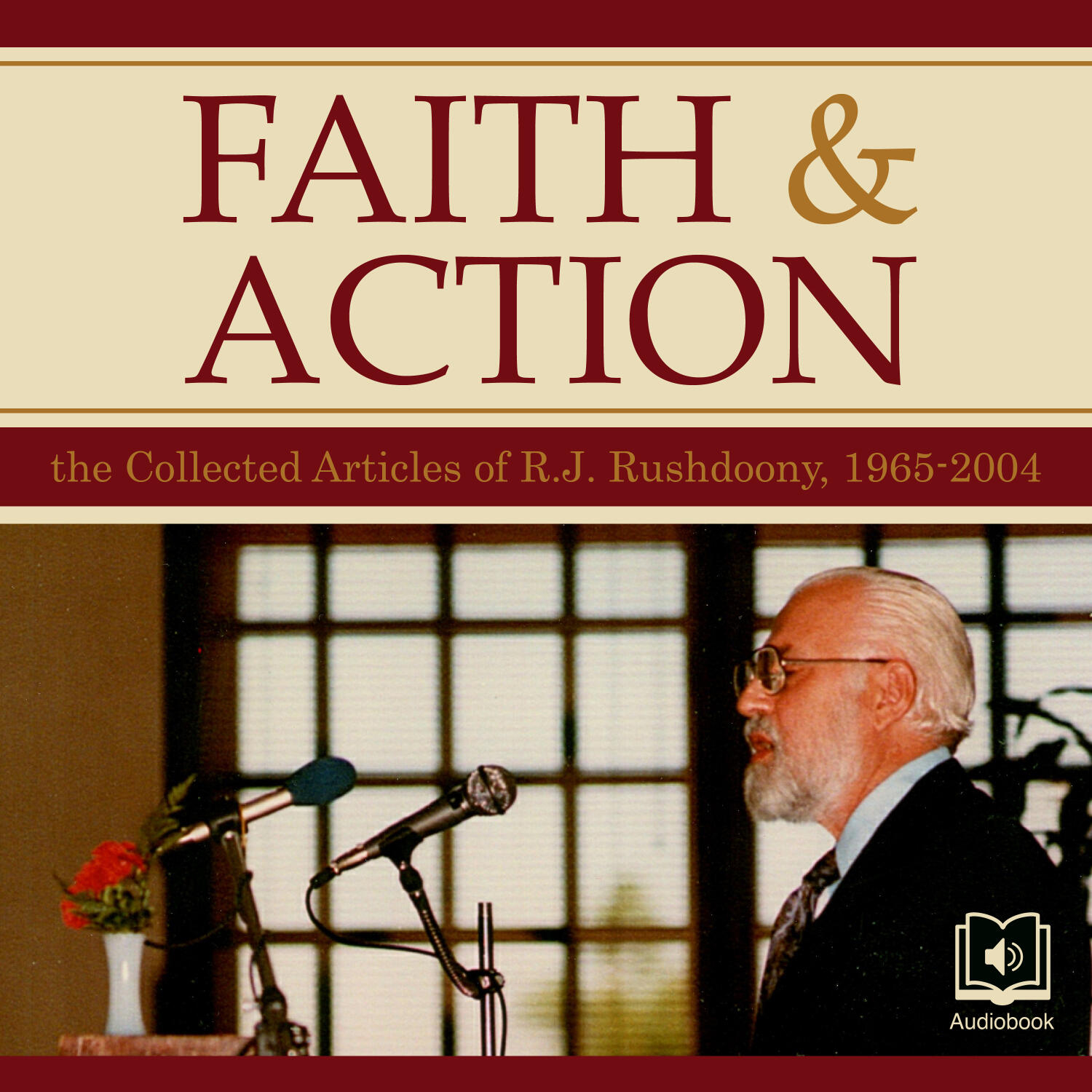
In this episode, we explore R.J. Rushdoony’s piercing critique of moralism—the belief that man can save and sanctify himself through good behavior, social reform, or political virtue. From Samuel Pepys’ self-imposed fines for adultery to Stalin’s daughter preaching faith in human decency, Rushdoony shows how moralism, far from being neutral or noble, is a counterfeit gospel rooted in humanism. It replaces God’s sovereign grace with man’s self-made standards, offering a false hope that ultimately leads not to righteousness, but to deeper rebellion. Join us as we uncover why moralism, though cloaked in virtue, is one of the most dangerous forms of anti-Christian religion.