CR101 Radio - Podcast Network
1,388 episodes — Page 15 of 28
The System (Remastered)
What if theft, envy, and deception weren’t just personal vices—but the scaffolding of our political and economic systems? In this episode, we expose how covetousness, forbidden by the Tenth Commandment, doesn’t just live in the hearts of individuals—it scales into “the system,” a web of institutionalized corruption, justified by clever language and self-righteous rhetoric. From political machines to welfare economies and beyond, we trace how societies that sanctify envy inevitably descend into moral chaos. What begins as desire ends in destruction. Can we recognize the system before it consumes us?
Confession
True confession isn’t vague—it’s specific. This episode explores the difference between general regret and genuine repentance. Saying “I’m sorry” means little unless we name the sin and take responsibility. Scripture calls us to confess our actual transgressions—not just our humanity. Without specific confession, there can be no real repentance or healing.
How to Pray: Part 15 - Doxology
How should a prayer end? With confident praise. In this final episode of our series on the Lord’s Prayer, we explore the triumphant doxology: “For thine is the kingdom, and the power, and the glory, forever. Amen.” This is no empty flourish—it’s a declaration of trust, a rebuke to human pride, and a joyful confession that all authority belongs to God. As we close the prayer, we open our lives to His eternal rule. Join us for one last, vital lesson in how to pray.
Episode #123 (May 13, 1986)
In this Easy Chair episode from May 1986, R.J. Rushdoony takes us on a sweeping intellectual journey—from the financial folly of paper money in revolutionary France to the rigors of Victorian prisons, the dangers of doing business in Saudi Arabia, and the buried wisdom of colonial India. With biting humor and deep conviction, Rushdoony highlights how ignorance, groupthink, and moral decay—whether in Washington, Paris, or Dhahran—continue to corrode our institutions. Tune in for sharp insights on economics, education, faith, tyranny, and the enduring importance of biblical truth in a collapsing world order.
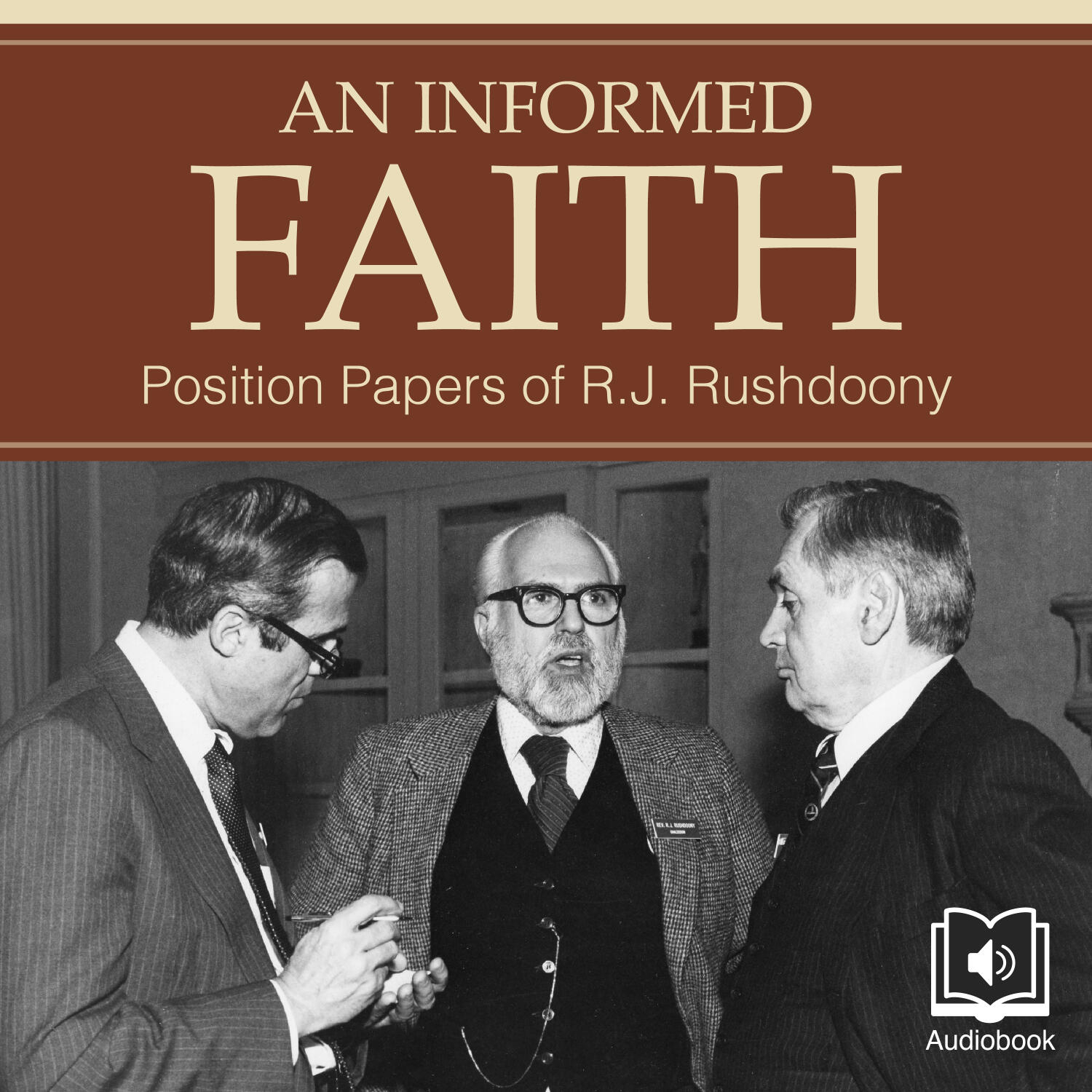
The Death of God and the Death of Man
When God is declared dead, man doesn’t survive long either. In Chalcedon Position Paper No. 195: “The Death of God and the Death of Man,” R.J. Rushdoony traces the philosophical chain reaction—from rejecting God’s law to embracing chaos. From the Marquis de Sade to Nietzsche to modern human rights theories, Rushdoony shows how each step away from God results in the unraveling of meaning, morality, and man himself. Without God’s sovereign grace and law, all we’re left with is brute factuality and bloodshed. Tune in for a sobering yet hope-filled reminder that only Biblical faith can stop the death spiral—and restore life.
Spiritual Arson
Words can destroy—and Scripture doesn’t take that lightly. This episode explores James’s warning about the tongue, calling it a fire “set on fire by hell.” Gossip, slander, and careless speech are spiritual arson, often doing more harm than physical violence. Churches are meant to build, not burn. It’s time to tame our tongues and let our words be ruled by the Holy Spirit—not by hell.
In Praise of Strong Language
Is “being nice” a Christian virtue—or a modern distortion? This episode challenges the myth of a soft-spoken Jesus and explores the biblical use of strong, righteous language. From the prophets to Christ Himself, Scripture is filled with blunt truth-telling against sin and hypocrisy. In an age where evil is renamed and excused, we need the courage to speak plainly, act boldly, and stand firmly for righteousness. God give us strong words—and stronger men.
Disposable Man or Dominion Man?
This report contrasts two views of humanity: disposable man versus dominion man. Disposable man is seen as irrelevant and expendable, a product of a world that has rejected God’s eternal standards and fallen into relativism and meaninglessness. Dominion man, by contrast, is created in God’s image to exercise responsible dominion over creation under God’s law, embracing both permanence (God’s unchanging truth) and change (growth and development). True command of history comes only through submission to God’s Word, calling Christians to godly reconstruction. The choice before us is clear: will we be disposable men, lost to history’s drift, or dominion men, fulfilling God’s sovereign purpose?
The Pharisees
Why did Jesus condemn the Pharisees so strongly—despite their outward piety and moral rigor? This episode examines how pride, self-righteousness, and spiritual blindness turned the most religious people into Christ’s fiercest opponents. Though close to the truth in doctrine, the Pharisees failed in humility and repentance. Their story is a sobering reminder: faith without self-examination can lead to rejecting the very Savior we claim to serve.
How to Pray: Part 14 - Temptation
Why would Jesus teach us to pray, “Lead us not into temptation,” if He Himself was led into the wilderness to be tempted? In this episode, we explore the paradox at the heart of our most difficult trials. What does it mean to be tested by God — and delivered by Him? How do we pray, not for ease, but for victory? Join us as we uncover the deeper purpose of temptation, the real nature of evil, and the power of prayer to guide us through both.
Louis XIV, Revolution, Napoleon: Part II (A Christian Survey of World History)
In this powerful lecture, R.J. Rushdoony explores how the erosion of Christian foundations in Europe—especially through the rise of Enlightenment thinking—led to tyranny, revolution, and cultural collapse. Tracing history from feudal France to the French Revolution and the Napoleonic era, he shows how the rejection of God’s authority gave rise to statist control and moral decay. Yet Rushdoony doesn’t end in defeat; he calls Christians to take responsibility, rebuild culture, and stand firmly in their faith—because only a return to biblical truth can turn the tide.
Sterile Protest and Productive Work
This report contrasts sterile protest with productive work, using 14th-century England as an example. It shows how discontent can lead to destructive rebellion, like John Ball’s violent class revolt, or to constructive progress through faithful work. Both rulers and rebels misunderstood the root problem—a spiritual sickness. True power lies in productive work under God’s law, while sterile protest breeds lawlessness and theft. The state is never morally neutral; only a return to God’s law can restore justice and order.
Is Education for or Against Barbarism?
In this episode, R.J. Rushdoony challenges the assumption that education always leads to civilization. He exposes how modern education—especially under federal control—has often fostered a new barbarism rather than curbing it. With declining test scores, eroding discipline, and a loss of moral clarity, Rushdoony argues that education without godly values is not a solution but a threat. Tune in to discover why only good education—rooted in truth and virtue—can preserve freedom and build lasting culture.
Birth of Christ Our King
Christ’s birth was more than a quiet night in Bethlehem—it was the beginning of the world’s great overturning. This episode explores the prophetic power of Ezekiel, Mary’s Magnificat, and Simeon’s praise, revealing Jesus as Savior, Redeemer, and King. His coming meant the fall of earthly powers and the rise of His everlasting Kingdom. To truly celebrate Christmas is to rejoice in His victory and reign over all.
"Empty Suits"
What happens to a civilization when its leaders—and its people—become nothing more than “empty suits”? In Chalcedon Position Paper No. 189, R.J. Rushdoony pulls no punches as he exposes a culture hollowed out by cowardice, compromise, and moral apathy. From pulpits to courtrooms to classrooms, the courage to stand for truth has vanished—replaced by comfort, silence, and betrayal. But the problem isn’t just “out there.” Rushdoony asks the uncomfortable question: What about us? Join us for a bracing wake-up call about the high cost of inaction—and why godly responsibility is the only remedy for an age of empty suits.
Proverbs
Once a staple of everyday wisdom, proverbs have faded from common use—but we need them now more than ever. This episode reflects on the power of proverbs, especially those from Scripture, to shape character, warn against folly, and teach practical godliness. The Book of Proverbs was written to guide both young and old. It's time we return to its wisdom and start speaking its truth again.
Louis XIV, Revolution, Napoleon: Part I (A Christian Survey of World History)
In this riveting lecture, R.J. Rushdoony takes listeners on a sweeping journey through the decline of Christian civilization and the rise of Enlightenment humanism, from the reign of Louis XIV to the fallout of the French Revolution and beyond. With piercing historical insight, he exposes how the abandonment of biblical principles—especially the rejection of personal responsibility, work ethic, and godly authority—led to the rise of statist bureaucracy, revolutionary terror, and cultural decay. But far from despairing, Rushdoony challenges believers to see our moment as a divine call to rebuild from the ground up through faithful Christian action in family, church, education, and vocation.
Telling the Time
What does the way we tell time say about our view of the world? This episode looks at how ancient Rome measured hours by changing seasons, tailoring time to human convenience. Christianity introduced a radical shift: time—and life—ordered by an unchanging God. The sixty-minute hour reflects God's constancy, not human preference. In a world eager to rewrite truth, God's fixed standards remain our anchor.
What Happens When Grace Stops an Abortion? (guest Rebekah Hagan)
The episode of Out of the Question features host Andrea Swartz interviewing Rebecca Hagen, who shares her deeply personal testimony of two unplanned pregnancies as a teenager and young college student. Raised in a committed church-going family, Rebecca became pregnant in high school and, with her parents’ reluctant but real support, chose to carry her first child to term despite intense shame, fear, and social stigma. While living at home and trying to rebuild her life through college, she became pregnant a second time in the context of an abusive and unstable relationship. Overwhelmed by fear of disappointing her parents again and losing their support, Rebecca became abortion-minded for the first time and sought a chemical abortion in secret, believing it was the only way to preserve her life and future. Moments after taking the first abortion pill, Rebecca experienced profound conviction and regret, prayed for help, and discovered the abortion pill reversal protocol. Through the guidance of a compassionate nurse and treatment with progesterone, her pregnancy was saved, and her son Zachariah was born healthy. Rebecca reflects on how fear, shame, and a lack of clear biblical teaching about sex and responsibility shaped her decisions, and she emphasizes the importance of grace-filled, honest conversations between parents and children. Now a wife, mother of four, and pro-life speaker, Rebecca shares her story publicly to help others find hope, healing, and redemption, testifying that God’s grace can overcome even grave sin and that His laws are meant for life, protection, and blessing—not condemnation.
How to Pray: Part 13 - Forgive Us
“Forgive us… as we forgive.” With just a few words, Jesus taught us the radical rhythm of grace. In this episode, we explore the power and cost of forgiveness — both the kind we receive from God, and the kind we are called to extend to others. Why does Scripture tie our forgiveness so tightly to how we forgive? And what does it say about the health of our hearts? Join us as we dig into the freedom, the challenge, and the transformation that flows from living in the realm of mercy — not merit.
Offenses Against Neighbors (Remastered)
Is it enough to just keep your hands clean, or does God’s law demand more—from your heart, your thoughts, even your desires? This episode explores the radical unity of thought and action in the tenth commandment—and why modern culture, shaped by ancient Greek dualism, still gets it wrong. We’ll dig into how coveting isn’t just a private urge but the seed of public injustice, and why guilt doesn’t make us kinder—it makes us crueler. Join us as we challenge the myth of victimless sin and rediscover the integrity God's law demands of the whole person.
God and Taxes
Who really owns the land—God or the state? This episode explores the Bible’s teachings on property and taxation, revealing that land was never to be taxed, because it belongs to the Lord. The tithe was God’s rightful tax; civil government could only tax increase, not ownership. Modern property taxes deny God’s sovereignty and erode liberty. To reclaim freedom, we must first restore God's authority over property, wealth, and our lives. The path to true liberty begins with obedience.
The Flight from Responsibility
Why are grown men dressing like teenagers and bumper stickers bragging, “We’re spending our children’s inheritance”? In Chalcedon Position Paper No. 183: “The Flight from Responsibility,” R.J. Rushdoony takes aim at a culture sprinting away from maturity. From tribal rituals in the Amazon to modern Western trends, he traces how the rejection of responsibility has led to a rejection of godly order, of law, and ultimately—of life itself. In a world that rewards irresponsibility and excuses evil, Rushdoony reminds us that true freedom begins with accountability to God. Tune in as we expose the infantile rebellion at the heart of our culture, and why only a return to Biblical responsibility can save it.
Debt
Debt-free living isn’t just financial wisdom—it’s a biblical command. This episode unpacks Romans 13:8 and Deuteronomy 15, showing how long-term debt fosters inflation, feeds covetousness, and strays from godly contentment. True stewardship begins with obedience to God's Word—even in how we borrow, spend, and plan. God’s law has something to say about your money. Are you listening?
Episode #122 (April 12, 1986)
In this urgent and sweeping discussion, R.J. Rushdoony and Otto Scott expose the economic and national security crisis unfolding beneath America’s feet: the collapse of domestic oil production. With refineries closing, wells capped, and small producers squeezed out by foreign imports and global cartels, America’s energy independence is rapidly vanishing. But this is no mere economics lesson—Rushdoony and Scott trace the consequences of weak leadership, blind free trade ideology, and bureaucratic ignorance all the way to national vulnerability. From oil to geopolitics, the USSR to Wall Street, this episode is a sobering wake-up call for Christians to reclaim courage, clarity, and responsibility in a time of creeping collapse.
Utopia
This report traces the rise and fall of utopianism—the humanistic dream of creating a perfect society through human reason, science, and state power, starting from Renaissance thinkers like Thomas More and Francis Bacon. Utopianism rejects the biblical reality of sin and the need for a Savior, instead trusting in elite planners and scientific elites to remake society. But history and literature—from Nietzsche’s nihilism to Orwell’s dystopia, Huxley’s “Brave New World,” and Brussof’s fictional socialist nightmare—reveal the tragic failure of these visions. Utopian regimes, grounded in power struggles and denial of God, devolve into tyranny, chaos, and moral decay, fueled by man’s lust for power rather than love or truth. The report concludes that only through Christ’s salvation and the biblical understanding of sin and grace can the nightmare of humanistic utopia end and true light enter the world.
How to Love Your Neighbor
What does it really mean to “love your neighbor”? This episode examines Leviticus 19:18 in its full biblical context—not as a call for socialism or civil unrest, but as a mandate to honor God’s law. True love respects life, property, family, and truth. As Jesus and Paul taught, “love is the fulfilling of the law.” Misusing Scripture to justify lawlessness is not love—it’s rebellion against God’s order. Real love begins with obedience.
Wars of Religion (So Called) - Part II (A Christian Survey of World History)
In this sweeping and sobering episode, R.J. Rushdoony dismantles the myth of the Renaissance as a rebirth of freedom, exposing instead how it marked the rise of statism, economic chaos, and the erosion of liberty. From the religious veneer of the Thirty Years’ War to Spain’s descent into tyranny through gold-fueled inflation, Rushdoony traces how Europe’s rejection of biblical foundations led to national ruin. With clarity and conviction, he shows that true freedom isn’t found in nationalism or internationalism—but in godly order rooted in Christ.
How to Pray: Part 12 - Practical Prayer
Is it spiritual to pray for bread? For clothing? For help with rent or strength at work? Jesus thought so. In this episode, we discover that prayer isn’t just for the clouds — it’s for the kitchen, the grocery bill, and the daily needs of real life. “Give us this day our daily bread” isn’t a second-tier prayer — it’s faith in action. Tune in as we explore why trusting God with our practical needs is not only biblical, it’s worship — and how real faith prays with both open hearts and open hands.
Hate Conquers All
“Love conquers all”—or does it? This episode challenges the modern misuse of love as an excuse to tolerate sin and reward destructive behavior. In reality, such humanistic love often results in hate conquering all, punishing the faithful while indulging the disruptive. True love, as defined by Scripture, never condones evil but calls for repentance and righteousness. Only God's love, revealed in Christ, has the power to save and transform
Sabbath or Revolution
This report contrasts two responses to life’s challenges: the Biblical Sabbath and human revolution. The true Sabbath is a restful trust in God’s providence, acknowledging that our lives and futures are securely in His hands. It invites patience, peace, and confidence in His sovereign care. In contrast, revolution springs from despair and impatience, seeking rapid, often violent, solutions by overthrowing existing orders—only to bring greater chaos and suffering. History, from Lenin’s Russia to modern upheavals, confirms that violent revolutions fail to create true peace. The loss of Sabbath rest leads to restless, joyless societies that prefer quick fixes over faithful, patient work under God’s law. The choice is stark: embrace the Sabbath’s patient faith and rest, or pursue revolution’s deadly illusions. The Lord honors what we truly desire.
Does the Supreme Court Know Best?
In this episode, R.J. Rushdoony confronts a troubling Supreme Court ruling: the unanimous decision to force the Amish to violate their religious convictions for the sake of Social Security—a so-called “common good.” With biting insight, Rushdoony questions a government that compels obedience to failing systems while excusing criminal behavior in the name of compassion. What happens when the state punishes the righteous and protects the guilty? Tune in to hear why the loss of religious liberty is a warning sign of deeper decay.
Love and Hate
True love cannot exist without righteous hate. This episode confronts today’s distorted view of love, showing that Scripture commends hating what God hates. To love good is to reject evil—whether in defense of faith, family, or nation. Those who demand love without boundaries are often asking for the toleration of sin. But real love stands firm: it protects what is holy by opposing what would destroy it.
What Does It Mean to Preach the Gospel?
This episode explores what it truly means to preach the Gospel, recovering the original biblical meaning of “gospel” (euangelion) and “apostle” (apostolos) as public proclamations announcing a king and his kingdom—not persuasive sales techniques aimed at emotional decisions. Andrea Schwartz and Charles Roberts argue that modern evangelicalism has shifted away from this kingdom-centered proclamation, replacing it with manipulative or overly-psychological evangelistic methods that produce emotional responses without transformed lives. True preaching, they emphasise, is declaring the kingship of Christ, the reality of sin, the necessity of repentance, and the total life-reordering that comes under God’s law-word. The hosts stress that proclaiming the Gospel is neither coercion nor marketing—it is telling the truth with certainty and living it consistently, just as Noah did for over a century while preparing for judgment. They highlight that cultural compromises, political conservatism, and pietistic “decisionism” have obscured the Gospel’s demand that individuals and societies submit to Christ’s kingship in every sphere of life. Genuine evangelism teaches people to abandon their self-made operating systems and embrace Christ’s rule, producing visible obedience, transformed worldview, and faithful living amid a culture under judgment.
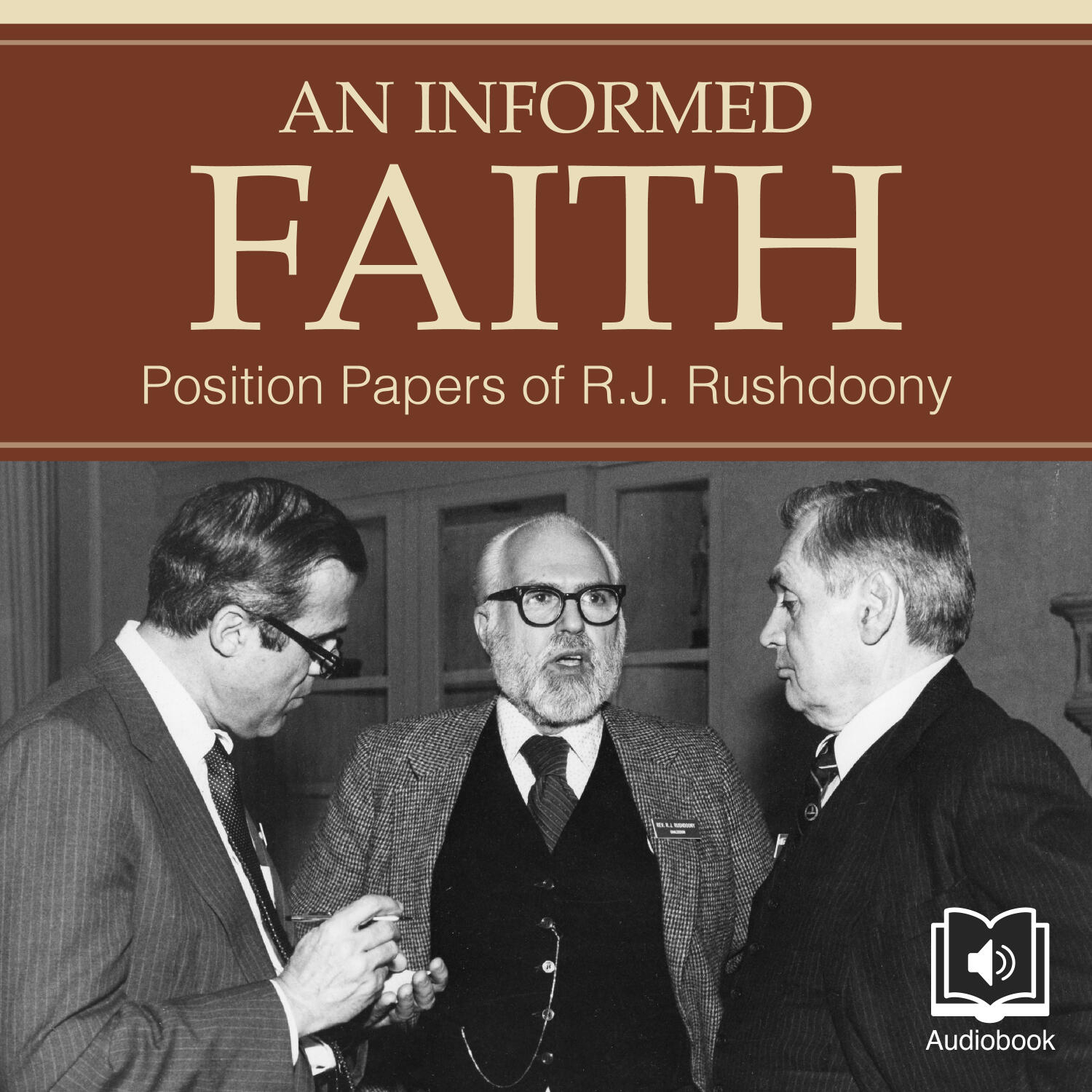
Persona
What does it really mean to be a person? In this episode, we explore Chalcedon Position Paper No. 175: “Persona.” R.J. Rushdoony uncovers the ancient roots of the word "person"—from Etruscan theater masks to Biblical image-bearers of God. Along the way, he exposes how modern humanism, Marxism, and even psychology have stripped man of his God-given identity, reducing him to a function of the state, the economy, or biology. In contrast, the Christian view reclaims man as a creature of eternal significance, shaped by God’s law and destined for His glory. Join us as we trace the radical shift from mask to meaning, from persona to personhood—and why our world desperately needs to recover it.
None Other Gods
Can we call it immoral to buy goods made under communism or slave labor? This episode unpacks a critical question: where Scripture is silent, so must we be. While personal convictions matter, binding others’ consciences without biblical authority is to place ourselves—or our nation—in God’s seat. True obedience begins with honoring God’s Word as the only standard for right and wrong: “Thou shalt have no other gods before Me.”
Wars of Religion (So Called) - Part I (A Christian Survey of World History)
In this deeply historical and challenging lecture, R.J. Rushdoony unpacks the so-called “Wars of Religion” that followed the Reformation—conflicts that were less about faith and more about the rising power of the modern state. With penetrating insight, he dismantles the humanist myth that the Renaissance was a rebirth of liberty, showing instead how it birthed tyranny, statism, and the loss of personal freedom. From Spain’s gold-fueled descent into economic chaos to the devastation of the Thirty Years’ War, Rushdoony traces how Europe’s turn away from biblical faith toward political absolutism reaped destruction. With historical clarity and biblical perspective, Rushdoony calls Christians to rethink modern history and recognize how true liberty only flourishes under godly order. If you’ve ever questioned the mainstream narrative of Western progress, this episode will give you a radically different—and deeply rooted—perspective. Tune in to learn why the rise and fall of nations still hinge not on politics, but on faith.
Anarchy
When God is no longer King, anarchy takes His place. This episode explores the warning of the Book of Judges: “Every man did that which was right in his own eyes.” In our time, as in ancient Israel, the rejection of God’s rule leads to moral chaos, spiritual bondage, and national decline. True freedom and order come only under God's law. The urgent question remains: will we bring back the King—or fall into captivity?
How to Pray: Part 11 - Thy Kingdom Come
What does it really mean to pray, “Thy Kingdom come”? It’s more than a pious phrase — it’s a bold cry for God to rule over everything: our hearts, our homes, and our nations. In this episode, we explore how praying for God’s Kingdom is both a confession and a call to action. It begins not in politics or programs, but within — where obedience starts. Join us as we uncover how this simple petition calls us to surrender our will, resist empty religion, and live under the present power of the King who still reigns.
Special Privilege (Remastered)
What happens when envy isn’t just a private sin—but the foundation of public policy? In this episode, we confront the uncomfortable truth about “special privilege,” covetousness, and the myth of equality in modern society. From socialist schemes to meritocratic illusions, we reveal how efforts to abolish privilege often create new elites and deeper injustice. Is it really justice when the state punishes success and rewards failure—all in the name of fairness? Tune in as we explore how Biblical law challenges not just personal greed, but entire systems built on envy masked as virtue.
The Great Subversion
Revolutionary movements throughout history—from ancient Rome to modern universities—share a common thread: the rejection of God’s law. This episode traces the roots of these subversive ideologies, showing how the denial of absolute truth leads to moral chaos and cultural collapse. Whether in Bacchanalia, nihilism, or today's academic activism, the message is the same: if there is no God, anything goes. But Scripture reminds us—God is not mocked. What we sow, we will reap.
Faith
We live in an age overflowing with faith—but not in Christ. This episode explores the difference between true and false faith, using the example of a prominent economist who placed unwavering trust in government control. Believing we can “eat our cake and have it too” requires more faith than Scripture ever demands. The real issue isn’t faith itself—it’s where that faith is placed. Only faith grounded in Christ and God's Word leads to truth, sanity, and lasting hope.
Justice and Torture
Is justice even possible without God’s law? In this episode, we delve into Chalcedon Position Paper No. 68: “Justice and Torture.” R.J. Rushdoony confronts the roots of modern injustice—from coerced confessions to state-sanctioned torture—and traces them back to a single rejection: the Word of God. Unlike Greco-Roman law or modern humanism, Biblical law refused to convict on confession alone and forbade torture outright. But in turning from God’s law to the will of the state, the West has opened the door to totalitarianism, medicalized cruelty, and moral collapse. Join us as we uncover how real justice is not only possible—it’s promised—because “the books shall be opened.” This isn’t just legal theory. It’s the groundwork for judgment—and hope.
Episode #121 (March 28, 1986)
In this explosive episode of The Easy Chair, R.J. Rushdoony sits down with commodities expert James Flanagan to discuss the volatile world of 1980s markets, Christian resistance to state overreach, and an armed government raid on a small California church-school. From the manipulation of gold and silver prices to a chilling SWAT-style crackdown on unlicensed Christian education, this episode pulls no punches. Rushdoony and Flanagan unpack the economic chaos, spiritual battles, and legal tyranny threatening our freedoms—and what faithful Christians must do to stand firm.
Perfection Versus Maturity
This report clarifies that the Biblical idea of “perfect” (teleios) means maturity or full growth—not sinless flawlessness—contrasting sharply with modern misunderstandings that demand instant perfection. Eden was sinless but not fully developed; growth, work, and learning were necessary steps God ordained. Man’s original sin was to reject this gradual maturation, instead attempting to impose immediate, absolute control—“being gods” by fiat. Today, this temptation manifests as demands for instant solutions through legislation, leading to “tantrum legislation” that seeks quick utopias but results only in chaos and erosion of society. True perfection comes through faithful growth and work under God’s law, not through humanistic, tyrannical laws that reject divine authority and maturity.
Troubles and God
God allows troubles out of love, to shape us for His will—not ours. His chastening may feel painful, but it leads to righteousness. Just as discipline shows a parent’s care, God’s correction proves we are His. Trust His hand, even in hardship.
How to Pray: Part 10 - Hallowed Be Thy Name
What does it really mean to begin prayer with “Hallowed be Thy name”? In this episode, we explore why Jesus taught us to put God's glory before our needs — not out of duty, but as the only path to true joy. To hallow God's name is to see Him not only as holy and just, but as our Father — not a distant force, but a personal, loving Creator who welcomes our prayers. Join us as we unpack the power of beginning with reverence, the freedom found in right worship, and how a God-centered life is the only life that truly works.
Hearing and Speaking
How we hear and speak reflects our faith. Those who belong to God hear His Word, while unbelief blocks understanding. Our speech reveals our hearts—either spreading grace or echoing the world’s bitterness. Jesus warns we’ll answer for every idle word. Listening and speaking are ultimately spiritual acts.
New Humanism or Medieval Period: Part II (A Christian Survey of World History)
In this richly detailed and engaging episode, R.J. Rushdoony explores the transformative power of Christianity in shaping what we often mislabel as the “Dark Ages.” Far from being a time of ignorance and stagnation, the early medieval period saw the rebuilding of civilization through the tireless labor of monks, the spread of literacy, and the reordering of social life on Christian foundations. Rushdoony unpacks how the Gospel turned wandering tribes into nations and monasteries into centers of wealth, charity, and culture—all rooted in a distinctly biblical vision of dominion and stewardship. With characteristic clarity, Rushdoony also examines the competing claims of church, state, and university in the high Middle Ages, the evolution of marriage and education, and the steady drift from biblical theology to corrupted traditions. Through powerful historical examples and poignant personal reflections, this episode doesn’t just recount history—it reveals the principles that build enduring societies. If you want to understand how Christendom emerged from chaos, and why it matters for Christians today, this is essential listening.
Is Freedom Dangerous?
Is Freedom Dangerous?In this episode, R.J. Rushdoony exposes the true cost of federal regulation—over $126 billion in 1980 alone, amounting to nearly $600 per American. But the price we pay isn’t just in dollars. Rushdoony shows how bureaucratic overreach erodes personal responsibility, undermines character, and strangles freedom. Can a nation overregulated into dependence remain truly free? Tune in to hear why liberty—not legislation—is the best regulator of all.