Converging Dialogues
508 episodes — Page 3 of 11

#408 - The Decline and Fall of the Human Empire: A Dialogue with Henry Gee
In this episode, Xavier Bonilla has a dialogue with Henry Gee about the decline and fall of the human species. They discuss the lifetime and decline of a species, when humans began to decline, what does it mean to be human, bipedalism, Homo Erectus, and slow human growth. They also talk about domestication and disease impacting humans, overpopulation concerns and low fertility rates, climate change, future of humankind, and many more topics. Henry Gee is a Paleontologist and is the Senior Editor for the scientific journal Nature. He received his PhD from the University of Cambridge. Along with many articles, he is the author of numerous books including his most recent book, The Decline and Fall of the Human Empire. You can find his blog here. Get full access to Converging Dialogues at convergingdialogues.substack.com/subscribe

#407 - Baddeley's Model of Working Memory: A Dialogue with Alan Baddeley
In this episode, Xavier Bonilla has a dialogue with Alan Baddeley about his model of working memory. They define short-term memory, metacognition, overview of memory, memory loss and self-identity, and chunking in working memory. They talk about the levels of processing model, attention and working memory, overview of his multi-component model of working memory, and the six divisions of the model. They discuss the model with individuals with schizophrenia, forgetting and long-term memory, Alzheimer’s and Dementia, ADHD, psychological assessments for memory, emotion and memory, EMDR, future of working memory research, and many more topics. Alan Baddeley is Emeritus Professor at the University of York. His areas of expertise are in human memory, neuropsychology, and is known for his model of working memory. He has his Bachelors in psychology from University College London, Masters from Princeton University, and PhD from Cambridge University. He has received many honorary doctorates. He was elected a Fellow of the Royal Society in 1993 and was elected a Foreign Honorary Member of the American Academy of Arts and Sciences in 1996. In 2001, he received the American Psychological Association Award for Distinguished Scientific Contributions. He was given the Lifetime Achievement Award by the British Psychological Society in 2012. He also received the Major Advancement in Psychological Science Prize from the International Union of Psychological Science in 2016. Get full access to Converging Dialogues at convergingdialogues.substack.com/subscribe

#406 - Polar Science in the Arctic and Antarctica: A Dialogue with Neil Shubin
In this episode, Xavier Bonilla has a dialogue with Neil Shubin about polar science in the arctic and Antarctica. They discuss polar science, Arctic and Antarctica, hot ice, blue ice, life under the Antarctic ice, fossil discoveries, meteorites, climate change, and many other topics. Neil Shubin is a Paleontologist and Evolutionary Biologist. He is the Robert Bensley Distinguished Service Professor at the University of Chicago and the Associate Dean for academic strategy of the Biological Sciences Division. His research focuses on the evolution of new organs and he and his team discovered the 375 million-year-old Tiktaalik fossil. He is the author of many books, including the most recent, Ends of the Earth. Lab Website: https://shubinlab.uchicago.edu/ Get full access to Converging Dialogues at convergingdialogues.substack.com/subscribe

#405 - The Empathy-Altruism Hypothesis: A Dialogue with C. Daniel Batson
In this episode, Xavier Bonilla has a dialogue with C. Daniel Batson about his work on empathy and altruism. They discuss the empathy-altruism hypothesis, Bloom’s work on empathy, empathic concern, egoistic and altruistic motives, cooperation, future of altruism/empathy research, and many more topics. C. Daniel Batson is a social psychologist and Emeritus Professor at the University of Kansas. He has a PhD in theology and PhD in Psychology both from Princeton University. His research has focused on altruism, empathic concern, the psychology of religion. Get full access to Converging Dialogues at convergingdialogues.substack.com/subscribe

#404 - Socrates and Living A Philosophical Life: A Dialogue with Agnes Callard
In this episode, Xavier Bonilla has a dialogue with Agnes Callard about Socrates and living a philosophical life. They discuss untimely questions, intellectual intimacy, savage commands, socratic ethics, truth inquiries, living a philosophical life, and many more topics. Agnes Callard is a philosopher and Associate Professor of philosophy and Director of Undergraduate Studies at the University of Chicago. She has her Bachelors from the University of Chicago and her PhD from Berkeley. Her primary research areas are ancient philosophy and ethics. She has written for The New Yorker, The New York Times, The Atlantic, Harper’s and others. She is the author of many books, including her latest book, Open Socrates: The Case For A Philosophical Life. Get full access to Converging Dialogues at convergingdialogues.substack.com/subscribe

#403 - Land Power: A Dialogue with Michael Albertus
In this episode, Xavier Bonilla has a dialogue with Michael Albertus about land power. They define land power, land sovereignty, and discuss land ownership. They talk about the great reshuffle, settler reforms, collective reforms, land-to-tiller reforms, and cooperative reforms. They discuss federal vs. private lands, 1860 Homestead Act, land and race, Native Americans and land, El Salvador and land control, Venezuela’s land revolution, land reconciliation in South Africa, and many more topics. Michael Albertus is a Professor of Political Science at the University of Chicago. He studied math, electrical engineering, and political science at the University of Michigan and earned degrees in all three. He has PhD in political science at Stanford University. His books and articles have won numerous awards and shifted conventional understandings of democracy, authoritarianism, and the consequences of how humans occupy and relate to the land. He is the author of the newest book, Land Power: Who Has It, Who Doesn't, and How That Determines the Fate of Societies.Website: https://www.michaelalbertus.com/ Get full access to Converging Dialogues at convergingdialogues.substack.com/subscribe

#402 - The Age Of Choice: A Dialogue with Sophia Rosenfeld
In this episode, Xavier Bonilla has a dialogue with Sophia Rosenfeld about the modern history of choice. They discuss the concept of choice in different domains of society, choice and freedom in liberalism and neoliberalism, choice in shopping, choice in religion, choosing romantic partners, choice in politics, choice in reproductive rights, and many more topics. Sophia Rosenfeld is Walter H. Annenberg Professor of History and Chair of the Department of History at the University of Pennsylvania, where she teaches European and American intellectual and cultural history with a special emphasis on the Enlightenment, the trans-Atlantic Age of Revolutions, and the legacy of the eighteenth century for modern democracy. She received her B.A. from Princeton University and her Ph.D. from Harvard University. She has held fellowships from the Guggenheim Foundation, the School of Social Science at the Institute for Advanced Studies in Princeton, the Mellon Foundation, both the Remarque Institute and the Center for Ballet and the Arts at NYU, the Institute for Advanced Studies in Paris, and the American Council of Learned Societies, as well as visiting professorships at the University of Virginia School of Law and the École des Hautes Études en Sciences Sociales (Paris). She is the author of her newest book, The Age of Choice: A History of Freedom in Modern Life. Website: https://sophiarosenfeld.com/ Get full access to Converging Dialogues at convergingdialogues.substack.com/subscribe

#401 - Intent to Destroy: The Ukraine-Russian War: A Dialogue with Eugene Finkel
In this episode, Xavier Bonilla has a dialogue with Eugene Finkel about the Ukraine-Russian War. They discuss Russia’s 200 year crusade to end Ukraine, identity, shared histories, and impact of Mongol and Ottoman empires. They talk about the Donbas and Crimea regions, Putin’s version of history, Galicia and Eastern Front in WWI, Ukraine independence, and Stalin’s Russification of Ukraine. They discuss Ukraine post- Soviet Union, 2014 annexation of Crimea and start of the current war, the 2022 invasion, current state of the war, peace, and many other topics. Eugene Finkel is the Kenneth H. Keller Professor of International Affairs at Johns Hopkins University. He received a BA in Political Science and International Relations at the Hebrew University of Jerusalem and a PhD in Political Science at the University of Wisconsin-Madison. His research focuses on how institutions and individuals respond to extreme situations: mass violence, state collapse, and rapid change. He is the author of numerous books including the most recent, Intent to Destroy: Russia's Two-Hundred-Year Quest to Dominate Ukraine. Get full access to Converging Dialogues at convergingdialogues.substack.com/subscribe

#400 - The Extinction of Experience: A Dialogue with Christine Rosen
In this episode, Xavier Bonilla has a dialogue with Christine Rosen about changes in our experiences within today’s society. They talk about the value of human experience, speed of change with technology, becoming users not individuals, embodied experience, and spatiality. They also discuss audience capture, institutional reform, our future experiences, and many more topics. Christine Rosen is a senior fellow at the American Enterprise Institute, where she focuses on American history, society and culture, technology and culture, and feminism. Concurrently she is a columnist for Commentary magazine and one of the cohosts of The Commentary Magazine Podcast. She is also a fellow at the University of Virginia’s Institute for Advanced Studies in Culture and a senior editor in an advisory position at the New Atlantis. She has a PhD in history, with a major in American intellectual history, from Emory University, and a BA in history from the University of South Florida.Her writing has appeared in the Christian Science Monitor, Commentary, the New York Daily News, Los Angeles Times, National Affairs, National Review, the New Atlantis, the New Republic, the New York Times, MIT Technology Review, Politico, Slate, the Wall Street Journal, the Washington Examiner, the Washington Post, and the New England Journal of Medicine, among other outlets. She is the author or coauthor of many books including her most recent book, The Extinction of Experience: Being Human in a Disembodied World. Get full access to Converging Dialogues at convergingdialogues.substack.com/subscribe

#399 - A Christian Democracy?: A Dialogue with Jonathan Rauch
In this episode, Xavier Bonilla has a dialogue with Jonathan Rauch about the impact of Christianity on democracy in the United States. They discuss Christianity without dogma, why secular America should care about Christianity, and if a secular religion is possible. They talk about why people are less religious, evangelical Christians aligned with MAGA, liberalism and post-liberalism, mormonism, future of Christianity and democracy, and many more topics. Jonathan Rauch is a Senior Fellow of Governance Studies at Brookings Institute. He is a journalist and author of eight books. He is a contributing writer at The Atlantic and recipient of the 2005 National Magazine Award. He is the author of the latest book, Cross Purposes: Christianity’s Broken Bargain with Democracy. Website: https://www.jonathanrauch.com/ Get full access to Converging Dialogues at convergingdialogues.substack.com/subscribe
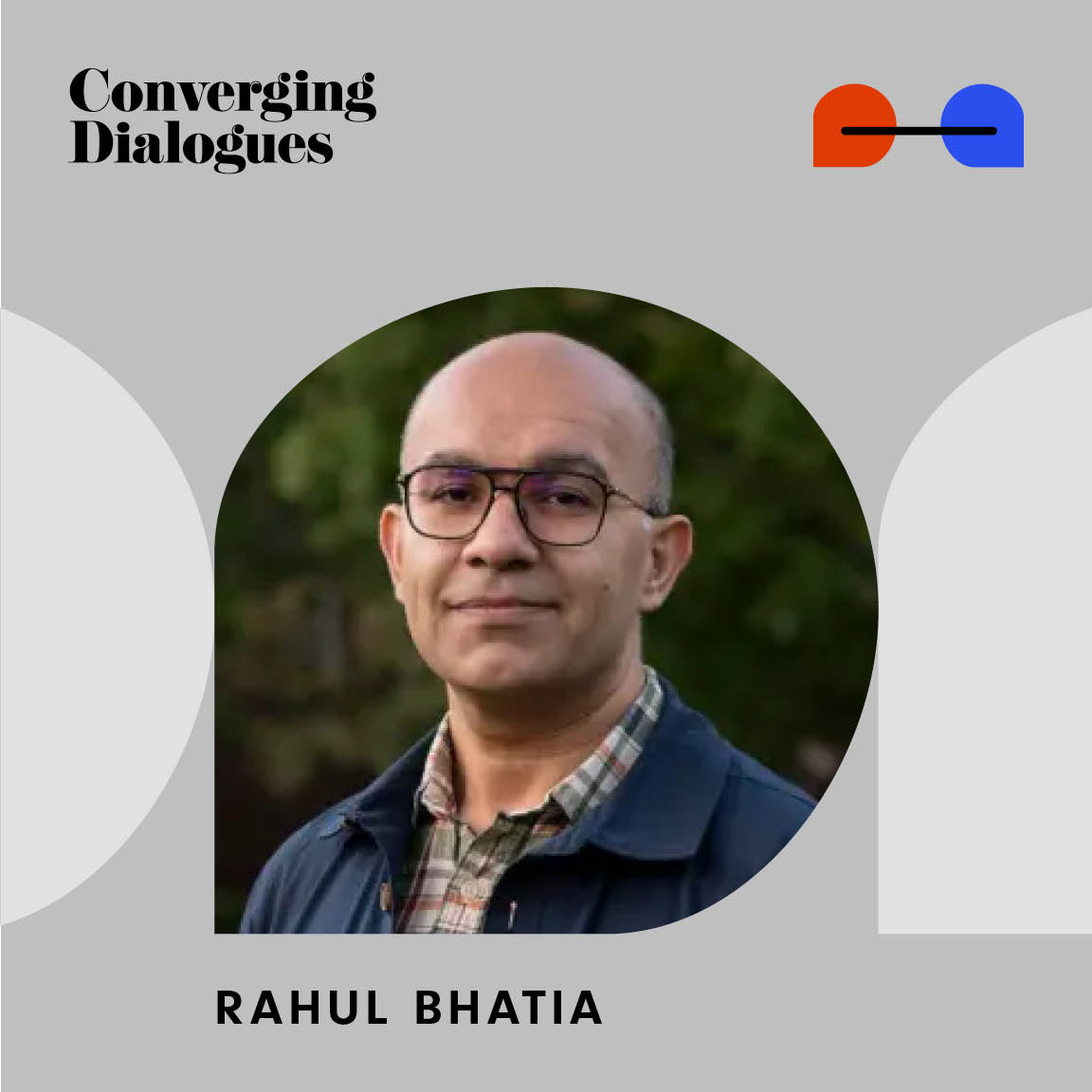
#398 - The New India: A Dialogue with Rahul Bhatia
In this episode, Xavier Bonilla has a dialogue with Rahul Bhatia about the many recent changes in India. They provide an overview of the recent social changes in India, the Citizenship Act and National Register, Citizenship based on religion, protests against the Citizenship Act, history of the RSS, Infosys, Modi, and many more topics. Rahul Bhatia is a journalist and author of The New India, a book of narrative reportage about the road to authoritarianism in India and its effects on ordinary citizens.His work has been published in the Guardian Long Read, the New Yorker, the New York Times, Reuters Investigates, Quartz, Foreign Policy, Foreign Affairs, the Caravan, and other places. He was awarded a Harvard Radcliffe Institute fellowship in 2022-23, won the True Story Award in 2024, and received a Ramnath Goenka Award and a Mumbai Press Club Red Ink Award in 2015.Website: https://rahulbhatia.com/ Get full access to Converging Dialogues at convergingdialogues.substack.com/subscribe

#397 - The Life and Presidency of Martin Van Buren: A Dialogue with James M. Bradley
In this episode, Xavier Bonilla has a dialogue with James M. Bradley about the life and president of Martin Van Buren. They discuss how Van Buren built the modern political party system, background and upbringing of Van Buren, influence of Aaron Burr, Van Buren’s temperament, his time as New York State Senator, Attorney General, U.S. Senator, and Governor of New York. They talk about Van Buren being campaign manager for Andrew Jackson’s presidential campaign, Secretary of State for Jackson, Van Buren’s own presidency, legacy of Van Buren, and many more topics. James M. Bradley is co-editor of the Martin Van Buren Papers, based at Cumberland University in Lebanon, Tennessee. He is an Adjunct Instructor in the public history program at State University of New York at Albany, and was the Senior Project Editor of Encyclopedia of New York City, published by Yale University Press. He is the author of the most recent book, Martin van Buren: America’s First Politician. Get full access to Converging Dialogues at convergingdialogues.substack.com/subscribe

#396 - Woodrow Wilson and Women's Rights: A Dialogue with Christopher Cox
In this episode, Xavier Bonilla has a dialogue with Christopher Cox about Woodrow Wilson and his interactions with women’s rights. They discuss the complicated history and legacy of Woodrow Wilson, landscape of the women’s Suffrage movement, and the origins of Wilson’s racist and sexist ideas. They talk about his time at Bryn Mawr College, ignoring women’s rights as governor, and how he won the Presidency in 1912. They discuss his removal of African-Americans from the Civil Service division, his interactions with the National American Women Suffrage Association (NAWSA), handling women’s rights protests, change to supporting the Anthony Amendment, Wilson’s legacy on women’s rights, and many more topics. Christopher Cox is a Senior Scholar in Residence at the University of California, Irvine, a Life Trustee of the University of Southern California, Chair of the Rhodes Scholarship selection committee for Southern California and the Pacific, and a member of several nonprofit and for-profit boards. Between two decades as a practicing lawyer, he served as chair of the Homeland Security Committee in the US House of Representatives, chair of the US Securities and Exchange Commission, and senior associate counsel to the President. He has written for Fortune, The Wall Street Journal, The New York Times, Forbes, The Detroit News, The Denver Post, The Washington Post, The Los Angeles Times, and dozens of other publications. He is the author of the recent book, Woodrow Wilson: The Light Withdrawn. Get full access to Converging Dialogues at convergingdialogues.substack.com/subscribe

#395 - A Jewish Tragedy in 1929 Hebron: A Dialogue with Yardena Schwartz
In this episode, Xavier Bonilla has a dialogue with Yardena Schwartz about the 1929 Jewish Massacre in Hebron. They give an overview of the 1929 Hebron massacre, review of Ottoman and British rule of Palestine, and talk about Hebron and holy sites in Palestine. They also discuss an independent Palestine, motivations and propoganda before the 1929 massacre, Haj Amin, lineage of Amin to present-day Palestinian leadership, October 7 massacre, and many more topics. Yardena Schwartz is an award-winning journalist and Emmy-nominated producer. From 2013 to 2023 she was based in Israel, where she reported for dozens of publications, including the New York Times, Wall Street Journal, Time, Economist, New York Review of Books, and Foreign Policy. She has also reported from Morocco, Nepal, Ukraine, Poland, France, Germany, and the United States. Yardena previously worked at NBC News, including stints at The Today Show, Nightly News, and MSNBC’s Andrea Mitchell Reports. She graduated with honors from Columbia Journalism School in 2011, earned an Emmy nomination in 2013, and an RNA award for excellence in magazine reporting in 2016. Ghosts of a Holy War is Yardena's first book.Website: https://www.yardenaschwartz.com/ Get full access to Converging Dialogues at convergingdialogues.substack.com/subscribe

#394 - A Palestinian Tragedy in Jerusalem: A Dialogue with Nathan Thrall
In this episode, Xavier Bonilla has a dialogue with Nathan Thrall about Palestinians living in Jerusalem. They discuss using narrative to discuss the Palestinian experience in Jerusalem, provide an overview of the geography, wall, and West Bank. They talk about sovereign rights, home, color ID cards for Palestinians in the West Bank, 1st intifada of 1987, October 7, future of Israel-Palestine relations, and many other topics. Nathan Thrall is is an American writer living in Jerusalem. In 2024, he received the Pulitzer Prize for General Nonfiction for A Day in the Life of Abed Salama: Anatomy of. A Jerusalem Tragedy. An international bestseller, it was translated into more than two dozen languages, selected as a New York Times Book Review Editors’ Choice, and named a best book of the year by over twenty publications, including The New Yorker, The Economist, and Time. His writing has appeared in the London Review of Books, The Guardian, The New York Times Magazine, and The New York Review of Books and has been cited in the United Nations Security Council, General Assembly, and Human Rights Council, as well as in reports by Amnesty International, Human Rights Watch, and the UN Special Rapporteur on the occupied Palestinian territories. His books have been longlisted for The Baillie Gifford Prize and the PEN Galbraith Award for Nonfiction, selected as a finalist for The Moore Prize, and shortlisted for The Orwell Prize. His commentary is often featured in print and broadcast media, including the Associated Press, BBC, CNN, Democracy Now!, The Economist, Financial Times, The Guardian, The New York Times, PRI, Reuters, Time, The Wall Street Journal, and The Washington Post. Website: https://www.nathanthrall.com/ Get full access to Converging Dialogues at convergingdialogues.substack.com/subscribe

#393 - The Race for A Forested Future: A Dialogue with Lauren E. Oakes
In this episode, Xavier Bonilla has a dialogue with Lauren Oakes about forest and trees and the impact of climate change. They talk about the Global Tree Restoration study of 2019, impact of forests on the planet, and how we obtain data on forests. They talk about what is a forest, reforestation and afforestation, forest transition, and the Carboniferous period. They talk about the Land Gap Report, carbon accounting, offsets, incentive structures, ecosystem services, urban forests, and many more topics. Lauren E. Oakes is an ecologist and writer who writes on forests, climate, the complex relationship humans have with nature. She has her Ph.D. from the Emmett Interdisciplinary Program for Environment and Resources at Stanford University. Her writing has appeared in The New York Times, Scientific American, Emergence Magazine, Nautilus and other media outlets. Her first book, In Search of the Canary Tree, was selected as one of Science Friday’s Best Science Books of 2018. In 2019, it won second place for the Rachel Carson Environment Book Award and was a finalist for the National Academies of Sciences, Engineering, and Medicine Communication Award. She is the author of the most recent book, Treekeepers. Website: https://leoakes.com/ Get full access to Converging Dialogues at convergingdialogues.substack.com/subscribe

#392 - The Power of Prions: A Dialogue with Michel Brahic
In this episode, Xavier Bonilla has a dialogue with Michel Brahic about prions. They provide an overview of proteins, prion proteins, Creutzfeldt-Jakob Disease, and importance of cells and ribosomes. They also talk about neuroanatomical regions relevant for prions, Lewy Body, Alzheimer’s, Parkinson’s, memory, future of medical research, and many more topics. Michel Brahic, an expert in viral and prion infections of the brain, is Professeur Honoraire at Institut Pasteur in Paris. He has been Directeur de Recherche at CNRS and Consulting Professor at Stanford University School of Medicine. His work has been published in Nature, Cell, New Scientist, and other journals. He is the author of the latest book, The Power of Prions: The Strange and Essential Proteins that can cause Alzheimer’s, Parkinson’s, and other diseases. Get full access to Converging Dialogues at convergingdialogues.substack.com/subscribe
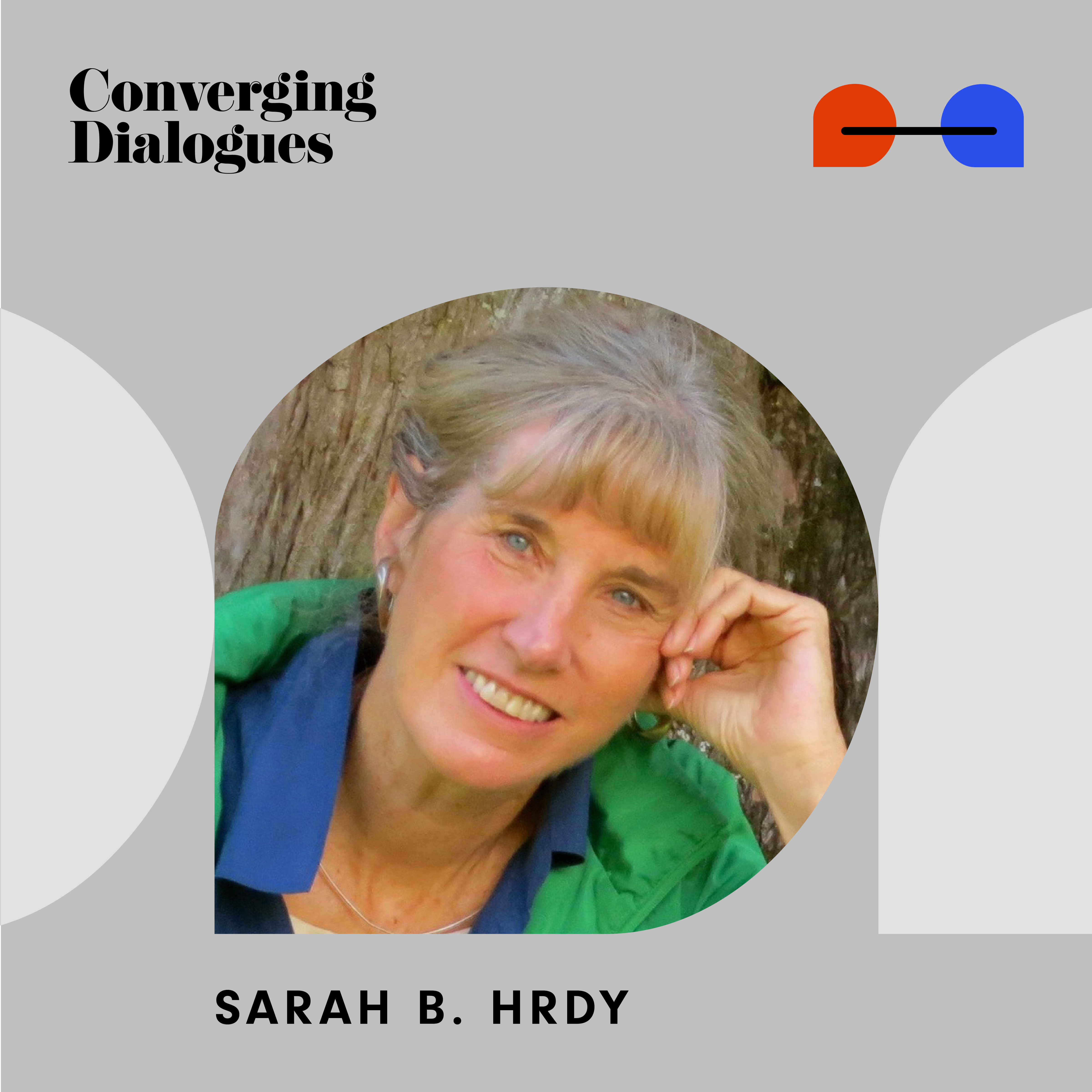
#391 - The Evolutionary Story of Fathers: A Dialogue with Sarah B. Hrdy
In this episode, Xavier Bonilla has a dialogue with Sarah B. Hrdy about a natural history of fathers. They discuss fathers as caregivers, different roles, role of prolactin with male care, decrease of testosterone in new fathers, alloparenting, grandmother hypothesis, attachment in fathers, fatherhood in the 21st century, and many more topics. Sarah B. Hrdy is an anthropologist and primatologist who is professor emerita at the University of California-Davis. She has her PhD in Anthropology from Harvard University. She is a former Guggenheim fellow and has been elected to the National Academy of Sciences, the American Academy of Arts and Sciences, the California Academy of Sciences and the American Philosophical Society. She is the author of numerous award-winning books such as That Woman That Never Evolved, Mother Nature, Mothers and Others, and her most recent, Father Time. Website: https://www.citrona.com/hrdy Get full access to Converging Dialogues at convergingdialogues.substack.com/subscribe
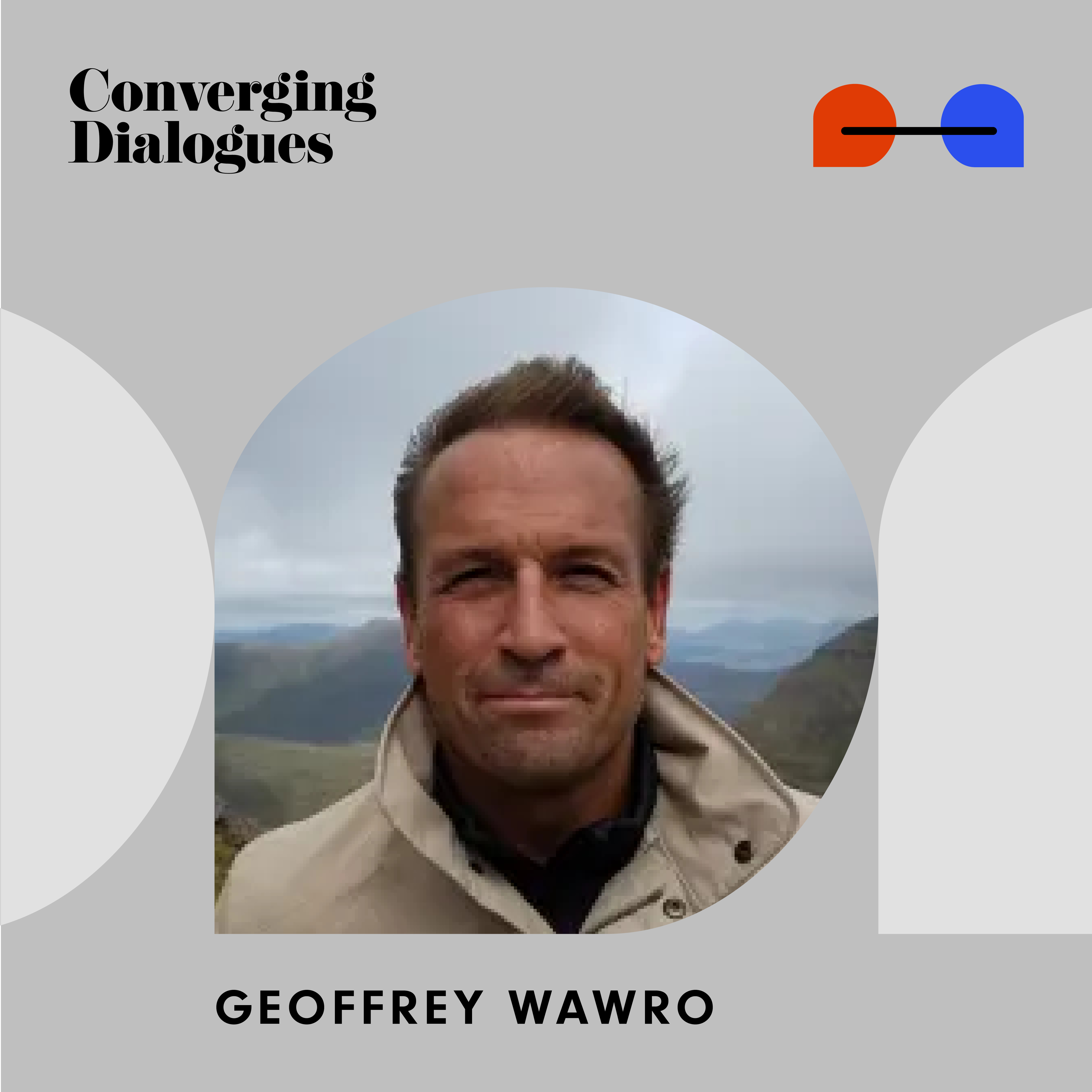
#390 - A Military History of the Vietnam War: A Dialogue with Geoffrey Wawro
In this episode, Xavier Bonilla has a dialogue with Geoffrey Wawro about the Vietnam War. They discuss why the U.S. chose to get involved in Vietnam, Eisenhower’s approach, JFK’s approach, and the attempted coups in Vietnam. They talk about the domino theory, McNamara, U.S. involvement in Vietnam in 1964/1965, the draft, high casualties of 1967/1968, public sentiment, LBJ not running for re-election, Nixon’s approach, legacy of the Vietnam War, and many other topics. Geoffrey Wawro is Distinguished Research Professor of Military History and Founding Director of the Military History Center at the University of North Texas. He has previously served as professor of strategy & policy, and strategic studies at the U.S. Naval War College and was a Fullbright Scholar in Vienna. He has his Bachelors from Brown University, his MPhil and PhD from Yale University. He is the author of several books, including the most recent, The Vietnam War: A Military History. Website: https://geoffreywawro.com/ Get full access to Converging Dialogues at convergingdialogues.substack.com/subscribe
#389 - The Eastern Front of World War I: A Dialogue with Nick Lloyd
In this episode, Xavier Bonilla has a dialogue with Nick Lloyd about the Eastern Front of World War I. They discuss the Eastern Front and why it has been neglected in popular understanding, major players and landscape of the Eastern Front, and the role of Galicia. They discuss 1915 and fall of Serbia, impact of the Russian Revolution, final years of the war, and many more topics. Nick Lloyd is Professor of Modern Warfare at King's College London based at the Joint Services Command & Staff College in Shrivenham, Wiltshire. He has PhD from the University of Birmingham. He is the author of five books including the most recent book, The Eastern Front: A History of The Great War, 1914-1918. Get full access to Converging Dialogues at convergingdialogues.substack.com/subscribe
#388 - Aesop's Fables: A Dialogue with Robin Waterfield
In this episode, Xavier Bonilla has a dialogue with Robin Waterfield about his new English translation of Aesop’s Fables. They discuss the timeless nature of Aesop’s fables, translating the fables, selecting the 400 fables, and authorship of the fables. They also discuss categorizing the fables, their structure, morals and ethics in the fables, comparisons with other fables, and many other topics.Robin Waterfield is a British classical scholar, translator, and editor, specializing in Ancient Greek philosophy. He has written and/or translated many works, including the recent English translation of Aesop’s Fables. Get full access to Converging Dialogues at convergingdialogues.substack.com/subscribe
#387 - Ancient Christianities: A Dialogue with Paula Fredriksen
In this episode, Xavier Bonilla has a dialogue with Paula Fredriksen about the various Christianities in the early 1st and 2nd centuries. They discuss how there are many Christianities, contradictions within the New Testament, integration of Jews and pagans in the Mediterranean in the 1st century, and Jewish diaspora. They also talk about the crucifixion of Jesus, the idea of Israel, and persecution of early Christians. They discuss early eschatology, early church fathers, Constantine, Asceticism, and many more topics.Paula Fredriksen is fellow of the American Academy of Arts and Sciences, Aurelio Professor of Scripture emerita at Boston University and Distinguished Visiting Professor emerita in the Department of Comparative Religions at the Hebrew University of Jerusalem. She has degrees from Wellesley College, Oxford University and Princeton University and is published widely on the social and intellectual history of ancient Christianity and on pagan-Jewish-Christian relations in the Roman Empire. She is the author of numerous books, including the most recent, Ancient Christianities: The First Five Hundred Years. Get full access to Converging Dialogues at convergingdialogues.substack.com/subscribe

#386 - Road Ecology: A Dialogue with Ben Goldfarb
In this episode, Xavier Bonilla has a dialogue with Ben Goldfarb about road ecology. They define road ecology, discuss current landscape of roadways in the U.S., and discuss road crossings. They talk about the human impact of animal roadkill, Banff National park, current state of road crossings, Federal and State involvement, road crossings in cities, future of road crossings, and many more topics. Ben Goldfarb is an independent conservation journalist who has written fiction and non-fiction in various outlets such as The Atlantic, Science, The New York Times, The Washington Post, National Geographic, The Guardian, Outside Magazine, Smithsonian, Audubon Magazine, Scientific American, and other publications. His non-fiction work was also anthologized in The Best American Science and Nature Writing. He is the author Eager: The Surprising, Secret Life of Beavers and Why They Matter, winner of the 2019 PEN/E.O. Wilson Literary Science Writing Award and the recent book, Crossings: How Road Ecology Is Shaping The Future of Our Planet, named one of the best books of 2023 by the New York Times. Website: https://www.bengoldfarb.com/ Get full access to Converging Dialogues at convergingdialogues.substack.com/subscribe
#385 - A History of Cyprus: A Dialogue with Alex Christofi
In this episode, Xavier Bonilla has a dialogue with Alex Christofi about the history of Cyprus. They discuss Cypriot identity, Greek and Turkish involvement, and the origins and mythology of Cyprus. They talk about olive culture and royal purple, Cyprus in the Bible, Islam, the Ottomans, British involvement, independence, the 1974 coup d’etat, present and future of Cyprus, and many more topics. Alex Christofi is Editorial Director at Transworld Publishers. He is the author of numerous essays, reviews, and short pieces that have appeared in the Guardian, New Humanist, Prospect, New European, The White Review, The Brixton Review of Books and The London Magazine. He is the author of Dostoevsky In Love and the latest, Cypria: A Journey to the heart of the Mediterranean. Website: https://alexchristofi.com/ Get full access to Converging Dialogues at convergingdialogues.substack.com/subscribe
#384 - The MAGA Red Wave: Thoughts on the 2024 U.S. Elections: A Dialogue with Ben Winegard
In this episode, Xavier Bonilla has a dialogue with Benjamin Winegard about the 2024 U.S. Elections. They discuss their overall thoughts, examine the results and the county shifts nationwide, and talk about Trump and Trump-lite candidates. They talk about split-ticket voting, current state of MAGA, Latinos, gender, ballot measures, Trump’s 2nd term, how Democrats reset their agenda, and many more topics. Benjamin Winegard is an Assistant Professor of psychology at Lincoln University in Jefferson City, Missouri. He holds a Ph.D. in Developmental Psychology with an emphasis on evolution. His current interests are on human progress, polarization, and political issues. Similar episodes: Get full access to Converging Dialogues at convergingdialogues.substack.com/subscribe
#383 - Shame and Pride In Appalachia: A Dialogue with Arlie Hochschild
In this episode, Xavier Bonilla has a dialogue with Arlie Hochschild about pride and shame in Appalachia. They discuss the political Right in Appalachia and framework of pride and shame, demographic makeup of the population in Appalachia, current challenges in Appalachia, and the emotions of pride, shame, and guilt. They talk about the appeal of the far Right, immigration and nationalism, liberals abandoning the working class, how we repair the politics divides, and many other topics. Arlie Hochschild is writer and Professor Emeritus of Sociology at the University of California-Berkeley, where she also earned her PhD. Her main interests have been on social relationships with politics, emotions, and culture. She is the author of numerous books, including Strangers In Their Own Land: Anger and Mourning on the American Right, and the most recent, Stolen Pride: Loss, Shame, and the Rise of the Right. Get full access to Converging Dialogues at convergingdialogues.substack.com/subscribe
#382 - Erasing History: A Dialogue with Jason Stanley
In this episode, Xavier Bonilla has a dialogue with Jason Stanley about the importance of preserving history. They talked about why authoritarians attempt to erase history, fascist ideas, nationalism, immigration, book burning, classical education, how to defend history, and many other topics. Jason Stanley is the Jacob Urowsky Professor of Philosophy at Yale University and honorary professor at the Kyiv School of Economics. Before coming to Yale in 2013, he was Distinguished Professor in the Department of Philosophy at Rutgers University and was also Professor at the University of Michigan (2000-4) and Cornell University (1995-2000). He has his PhD in the Department of Linguistics and Philosophy at MIT and his BA from the State University of New York at Stony Brook. He is the author of seven books, which include How Propaganda Works, How Fascism Works: The Politics of Us and Them , and the newest book, Erasing History: How Fascists Rewrite the Past to Control the Future. Get full access to Converging Dialogues at convergingdialogues.substack.com/subscribe
#381 - The Quest for Cosmic life: A Dialogue with Mario Livio
In this episode, Xavier Bonilla has a dialogue with Mario Livio about finding life in our universe. They define life, discuss if we are alone, and the improtance of telescopes showing galaxies. They talk about the goldilocks zone, how life began on earth, proteins and genes, and building blocks of life on other planets. They talk about tidal forces, exoplanets, UAPs, intelligent life, and many more topics. Dr. Mario Livio is an astrophysicist, author, and speaker. He is a Fellow of the American Association for the Advancement of Science. He has published more than 500 scientific articles and has made significant theoretical contributions to topics ranging from cosmology, supernova explosions, and black holes to extrasolar planets and the emergence of life in the universe. He has received numerous awards and recognitions for his research. He is the author of eight popular science books, including the most recent in collaboration with Nobel laureate Jack Szostak, Is Earth Exceptional? Website: https://www.mario-livio.com/ Get full access to Converging Dialogues at convergingdialogues.substack.com/subscribe
#380 - The Raceless Antiracist: A Dialogue with Sheena Mason
In this episode, Xavier Bonilla has a dialogue with Sheena Mason about race and culture. They talk about the increased focus on race, racelessness and the wayfinder, defining race/ism and history of the categories of race. They talk about culture, history, and ethnicity, mixed race and ethnicity, anti-racism, practical ways to end racism, and many more topics. Sheena Michele Mason is an assistant professor of English at SUNY Oneonta. She holds a PhD with distinction in English from Howard University and specializes in Africana and American literature studies and philosophy of race. She is published with Oxford University Press, Palgrave MacMillan, Cambridge University Press, and the University of Warsaw among other presses. She is the innovator of the togetherness wayfinder (formerly and alternatively called the theory of racelessness) and founder of Togetherness Wayfinder, an educational firm. Her book The Raceless Antiracist: Why Ending Race Is the Future of Antiracism shows how ending our belief in “race” and practice of racialization is required toward the goal of ending the causes and effects of racialized dehumanization.Website: https://www.togethernesswayfinder.org/ Get full access to Converging Dialogues at convergingdialogues.substack.com/subscribe
#379 - The Philosophy of Henri Bergson: A Dialogue with Emily Herring
In this episode, Xavier Bonilla has a dialogue with Emily Herring about the life and philosophy of Henri Bergson. They discuss who he was and why he is forgotten, changes in his childhood, and how he choose philosophy. They talk about his concepts of Durée, freedom, and memory. They talk about his relationship with Proust, his global popularity, evolution, later life, his legacy, and many more topics.Emily Herring is a writer based in Paris. She has her PhD in the history and philosophy of science from the University of Leeds. Her writing has appears in Aeon and Times Literary Supplement. She is the author of the latest book, Herald Of A Restless World: How Henri Bergson Brought Philosophy to the People. Website: https://www.wellreadherring.com/ Get full access to Converging Dialogues at convergingdialogues.substack.com/subscribe
#378 - The Cleopatras: A Dialogue with Lloyd Llewellyn-Jones
In this episode, Xavier Bonilla has a dialogue with Lloyd Llewellyn-Jones about the history of the various Cleopatra queens. They discuss the 7 major Cleopatras, gender roles and norms in Egypt, and the context of the Antigonids, Ptolemies, and Seleucids. They talk about Cleopatra I, incestuous marriages, Potbelly and Cleopatra II and III. They discuss the ethnicity of Cleopatra VII, her various romantic relationships, her suicide, legacy of the Cleopatras, and many more topics. Lloyd Llewellyn-Jones is Chair and Professor of Ancient History at Cardiff University. He has his PhD in Ancient History from Cardiff University and has taught previously at the University of Edinburgh. His main interests are in Greek socio-cultural history, women’s history, and ancient Persia. He is the author of many books including the most recent book, The Cleopatras: The Forgotten Queens of Egypt. Get full access to Converging Dialogues at convergingdialogues.substack.com/subscribe
#377- The Myth of American Idealism: A Dialogue with Nathan J. Robinson
In this episode, Xavier Bonilla has a dialogue with Nathan J. Robinson about US foreign policy. They discuss his collaboration with Noam Chomsky, myth of American idealism, and positive elements of US foreign policy. They discuss US foreign policy in Latin America, Vietnam, Afghanistan, Iraq, Israel and Palestine, and China. They talk about current threats of climate change and nuclear weapons and the future of US foreign policy. Nathan J. Robinson is editor of Current Affairs and a political columnist at The Guardian. His work has appeared in The New York Times, The Washington Post, The New Republic, The Nation, Al Jazeera America, and Salon. He has his JD from Yale Law School and PhD in Sociology and Social Policy from Harvard University. He is the author of numerous books, including the most recent (co-authored with Noam Chomsky), The Myth of American Idealism: How US Foreign Policy Endangers The World. Website: https://www.nathanjrobinson.com/ Get full access to Converging Dialogues at convergingdialogues.substack.com/subscribe
#376 - Lessons and Laws of Angela Merkel: A Dialogue with Melissa Eddy
In this episode, Xavier Bonilla has a dialogue with Melissa Eddy about the life and chancellorship of Angela Merkel. They discuss Merkel’s general themes and profile, gender and fashion, and her East German origins. They talk about her major achievements, criticisms, interactions with world leaders, her legacy, and many more topics. Melissa Eddy is a journalist based in Berlin who covers German business, economics, and politics for The New York Times. She has covered Chancellor Angela Merkel since she entered office in 2005. A Minnesota native fluent in German and French, she came to Germany as a Fulbright scholar in 1996. Before joining The International Herald Tribune, now the international edition of The New York Times, in 2015, she was a correspondent for the Associated Press in Frankfurt, Vienna, and the Balkans. She is the author of Merkel’s Law: Wisdom from the woman who led the free world. Get full access to Converging Dialogues at convergingdialogues.substack.com/subscribe
#375 - We Have Never Been Woke: A Dialogue with Musa al-Gharbi
In this episode, Xavier Bonilla has a dialogue with Musa al-Gharbi about the new elite, “wokeness,” and symbolic capitalism. They discuss why we should still care about “wokeness” and cancel culture, history of the four great “awokenings,” and sincerity of those that have “woke” beliefs. They define and discuss symbolic capitalism, people denying their new elite status, defining “woke” and the history of the word. They talk about “wokeness” as a new religion, the anti-woke, DEI, and many more topics.Musa al-Gharbi is a sociologist and Assistant Professor in the School of Communication and Journalism and Fellow in Sociology at Columbia University. He has a Bachelors in Near Eastern Studies, Masters in Philosophy, Masters in Sociology, MPhil in Sociology, and PhD in Sociology. His work focuses on various social phenomena such as race relations, inequality, social movements, foreign policy and domestic U.S. political interests. He is the author of the latest book, We Have Never Been Woke: The Cultural Contradictions Of A New Elite. Website: https://musaalgharbi.com/Substack: Musa al-Gharbi Get full access to Converging Dialogues at convergingdialogues.substack.com/subscribe
#374 - The Horse and The Rise of Empires: A Dialogue with David Chaffetz
In this episode, Xavier Bonilla has a dialogue with David Chaffetz about the history of the horse and impact with empires. They discuss the origins of the horse and living alongside humans, herding and horse milk, domesticating the horse and riding horses. They talk about the Steppe environment, rise of chariots, the Scythians and mounted combat, horses used within empires, and China’s relationship with horses. They talk about the Kushans, Turks, Chinggis Khan, Timur, WWI, and many more topics.David Chaffetz is a regular Asian Review of Books contributor, member of the Royal Society for Asian Affairs, and author of A Journey through Afghanistan, Three Asian Divas, and Raiders, Rulers, and Traders. He has traveled extensively in Asia for more than forty years. He divides his time between Lisbon and Paris. Get full access to Converging Dialogues at convergingdialogues.substack.com/subscribe
#373 - The Indomitable Will of Lyndon Johnson: A Dialogue with Mark Updegrove
In this episode, Xavier Bonilla has a dialogue with Mark Updegrove about the Presidency of Lyndon Johnson. They discuss the elusive figure of LBJ, his intuition for politics, and ascending to the Presidency. They talk about the “Johnson treatment,” Civil Rights, Lady Bird, and his war on poverty. They discuss his foreign policy, not running for re-election in 1968, legacy, and many more topics. Mark Updegrove is the president and CEO of the LBJ Foundation and serves as Presidential Historian for ABC News. From 2009 to 2017, he was the director of the LBJ Presidential Library, where in 2014 he hosted the Civil Rights Summit which included Presidents Obama, George W. Bush, Clinton, George H.W. Bush, and Carter. He is the author of five books on the presidency including, Indomitable Will: LBJ in the Presidency, and the executive producer of the CNN Original Series, “LBJ: Triumph and Tragedy.” He has written for the New York Times, Politico, Time, National Geographic, the Daily Beast, and USA Today, and has conducted exclusive interviews with seven U.S. presidents.Website: https://www.lbjlibrary.org/ Get full access to Converging Dialogues at convergingdialogues.substack.com/subscribe
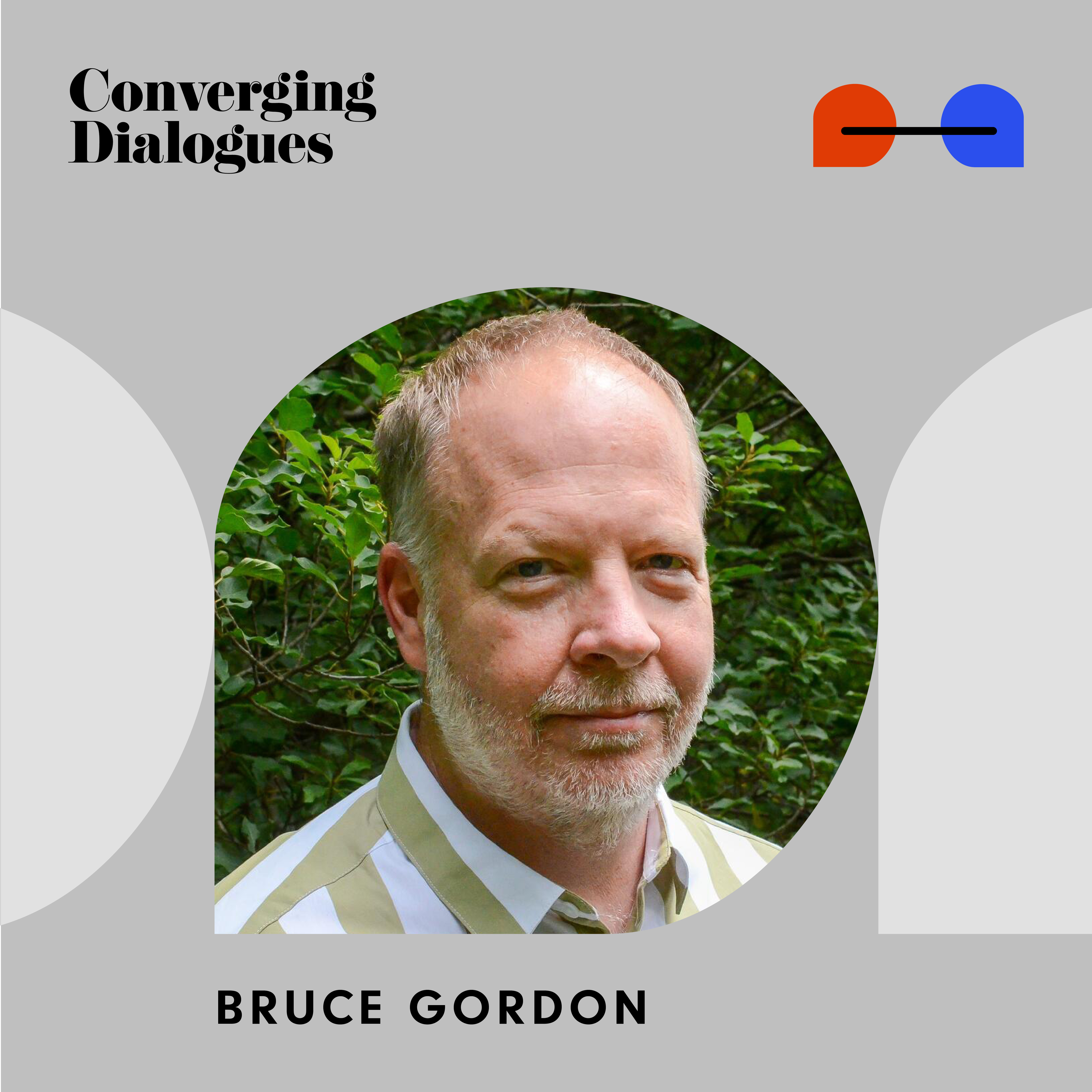
#372 - A History of the Bible: A Dialogue with Bruce Gordon
In this episode, Xavier Bonilla has a dialogue with Bruce Gordon about a history of the Bible. They discuss the origins of how the Bible formed in the 2nd Century, original audience of the Bible, Codex and canonization and how we got 66 books. They talk about original languages, the Bible as an icon and symbol, different ways of reading and interpreting the Bible, and the impact of the Gutenberg Press. They talk about the King James Bible (KJV), missions, global legacy, and many other topics. Bruce Gordon is the Titus Street Professor of Ecclesiastical History at Yale Divinity School at Yale University. He previously taught at the University of St. Andrews in Scotland, where he was professor of modern history and deputy director of the St Andrews Reformation Studies Institute. His research and teaching focus on European religious cultures of the late-medieval and early modern periods, with a particular interest in the Reformation and its reception. He is the author of numerous books including the most recent, The Bible: A Global History. Get full access to Converging Dialogues at convergingdialogues.substack.com/subscribe
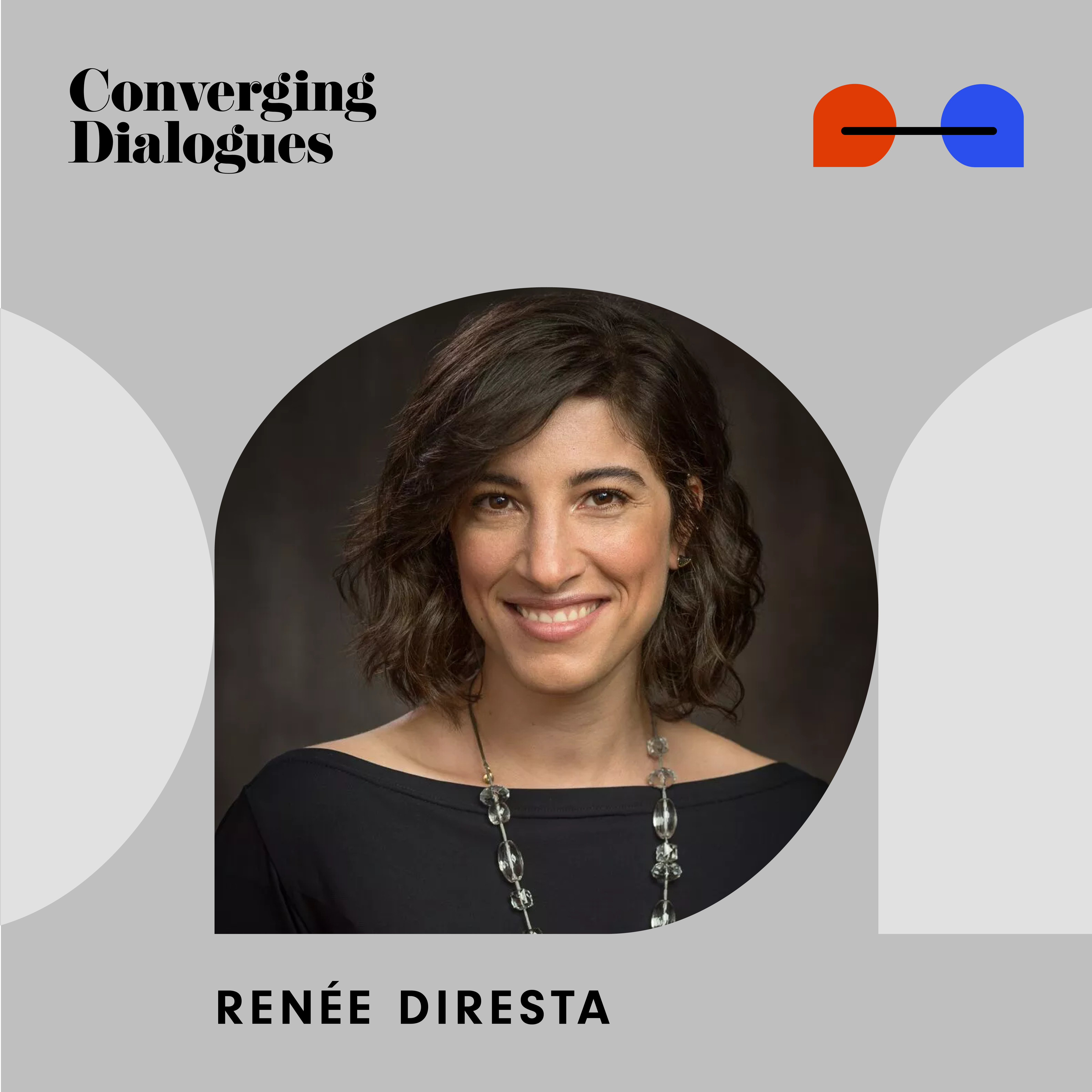
#371- Blinded by Digital Realities: A Dialogue with Renée DiResta
In this episode, Xavier Bonilla has a dialogue with Renée DiResta about misinformation and digital delusions. They define misinformation and disinformation, rise of influencers, and incentive structures. They discuss audience capture, online ethical responsibilities, the Twitter files, election interference, and many other topics. Renée DiResta is the former technical research manager at the Stanford Internet Observatory, a cross-disciplinary program of research, teaching, and policy engagement for the study of abuse in information technologies. Her work examines rumors and propaganda in the digital age. She has analyzed geopolitical campaigns created by foreign powers such as Russia, China, and Iran; voting‑ related rumors that led to the January 6 insurrection; and health misinformation and conspiracy theories pushed by domestic influencers. She is a contributor at The Atlantic. Her writing has appeared in Wired, Foreign Affairs, New York Times, Washington Post, Yale Review, The Guardian, POLITICO, as well as many academic journals. She is the author of the latest book, Invisible Rulers: The People Who Turn Lies Into Reality. Website: https://www.reneediresta.com/ Get full access to Converging Dialogues at convergingdialogues.substack.com/subscribe
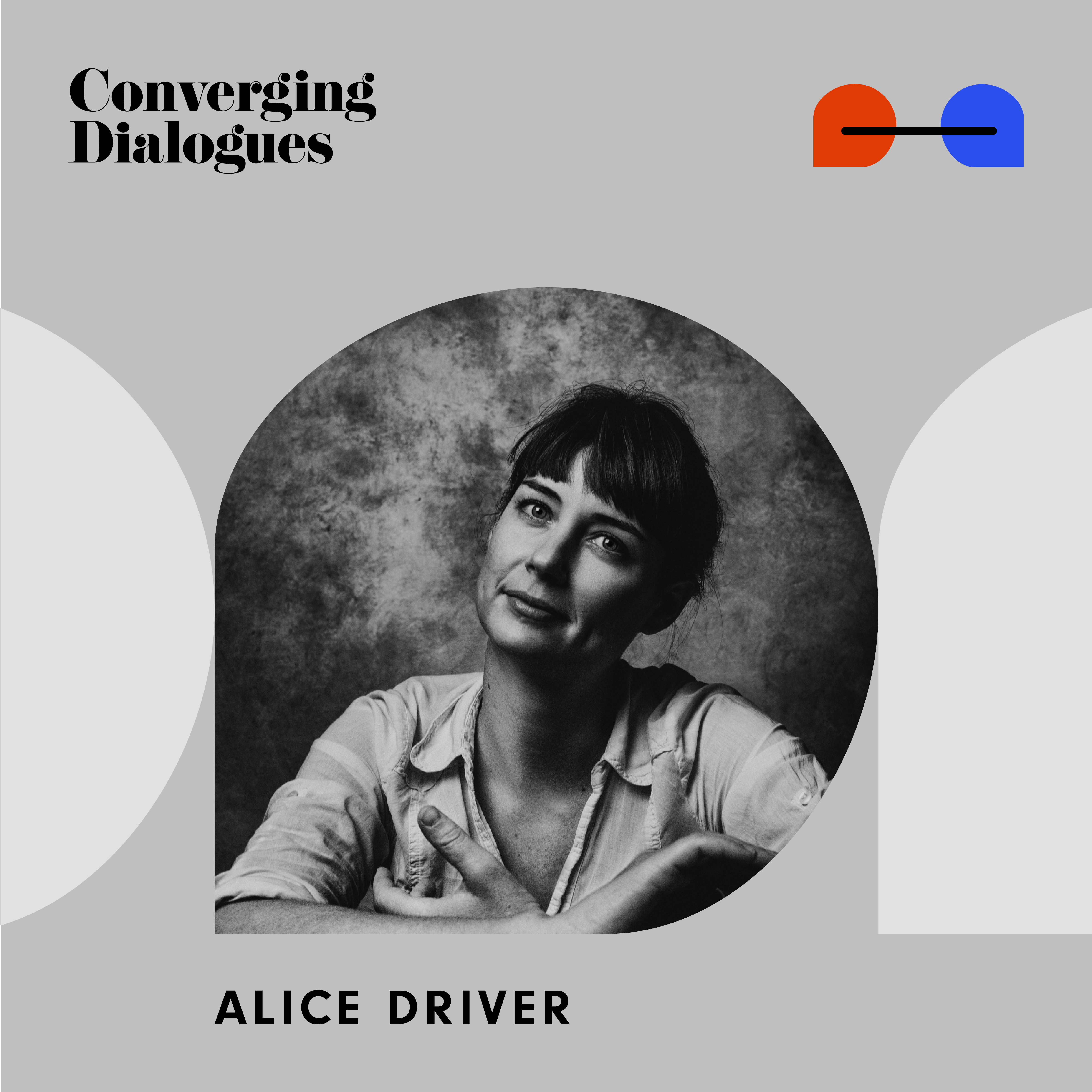
#370 - The Life and Death of the American Worker: A Dialogue with Alice Driver
In this episode, Xavier Bonilla has a dialogue with Alice Driver about immigrants working at meatpacking factories. They discuss moral beauty in immigrants work, immigrants who work in meatpacking factories, and how the factories operate. They talk about onsite medical clinics, the Clintons relationship with Tyson Foods, and challenges during the pandemic. They discuss the class action lawsuit against Tyson Foods, future of the industry, and many more topics. Alice Driver is a writer and author. She has her Masters and PhD in Hispanic Studies from the University of Kentucky. She has won many awards for her journalism and, in 2025, will be a Resident at the Bellagio Center. She is the author of the award-winning book, The Life and Death of the American Worker: The immigrants taking on America’s largest meatpacking company. Website: https://www.alicedriver.com/ Get full access to Converging Dialogues at convergingdialogues.substack.com/subscribe
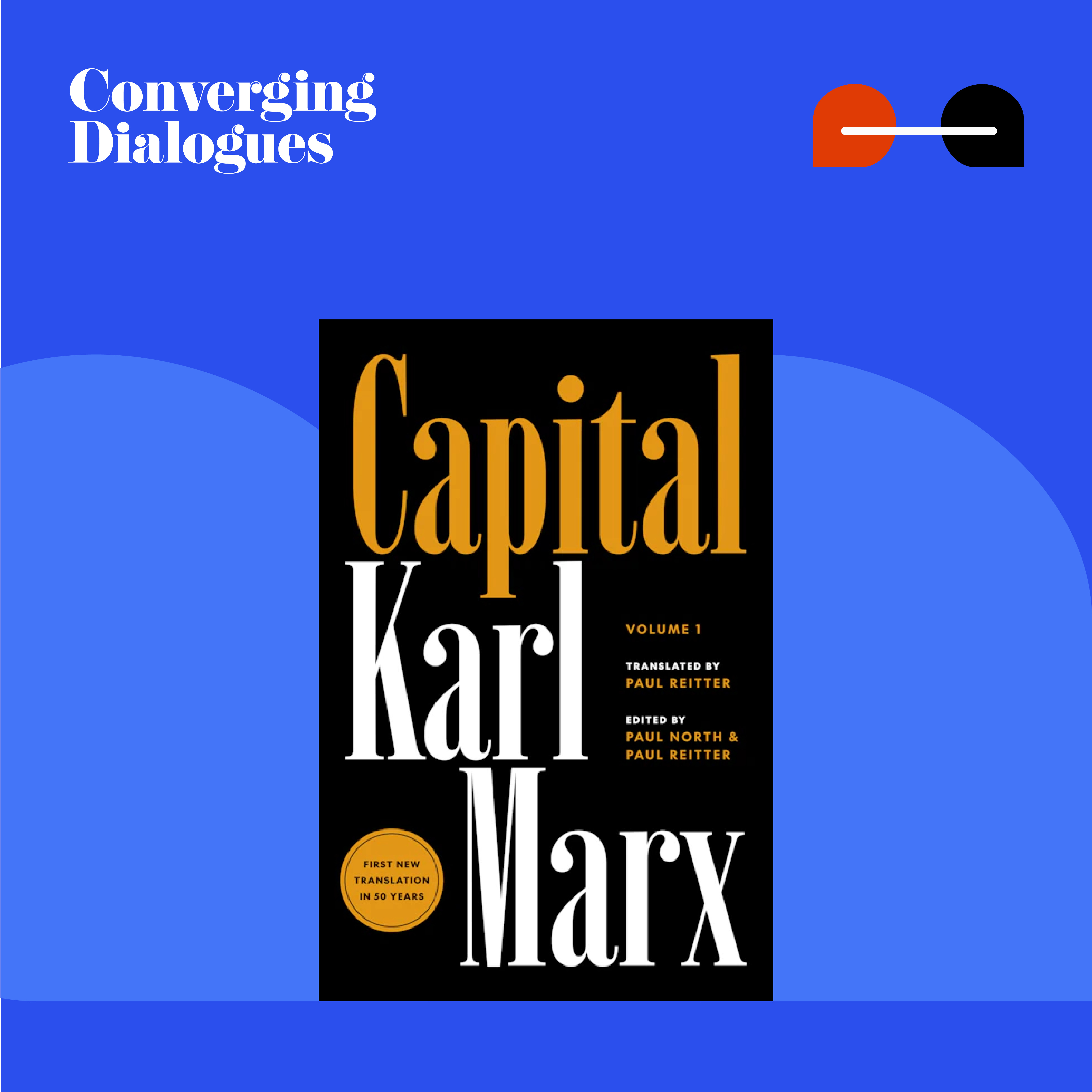
#369 - Karl Marx's Capital I: A Dialogue with Paul North and Paul Reitter
In this episode, Xavier Bonilla has a dialogue with Paul North and Paul Reitter about their new English translation of Karl Marx’s Capital I. They discuss their process editing and translation Capital I, the 2nd German edition and various English and French translations, and the motivations for Marx. They discuss Marx’s thought and Marx’s impact, his main thesis in Capital I, and some of the interactions with Hegel’s thought. They also talk about Marx’s labor theory of value, the enduring legacy of Marx, and many other topics.Paul North is Chair and Professor of Germanic Languages and Literatures at Yale University. He has his PhD in comparative literary studies (German Concentration) from Northwestern University. His main research areas are on Critical Theory, History of Philosophy, and European literature. Paul Reitter is Professor in Germanic Languages and Literatures at The Ohio State University. He has his PhD in German Studies from the University of California, Berkeley. His main research areas are on Critical Theory, German-Jewish culture, and History of Higher Education. They are the editors and translators of the new English translation of Karl Marx’s Capital I. Get full access to Converging Dialogues at convergingdialogues.substack.com/subscribe
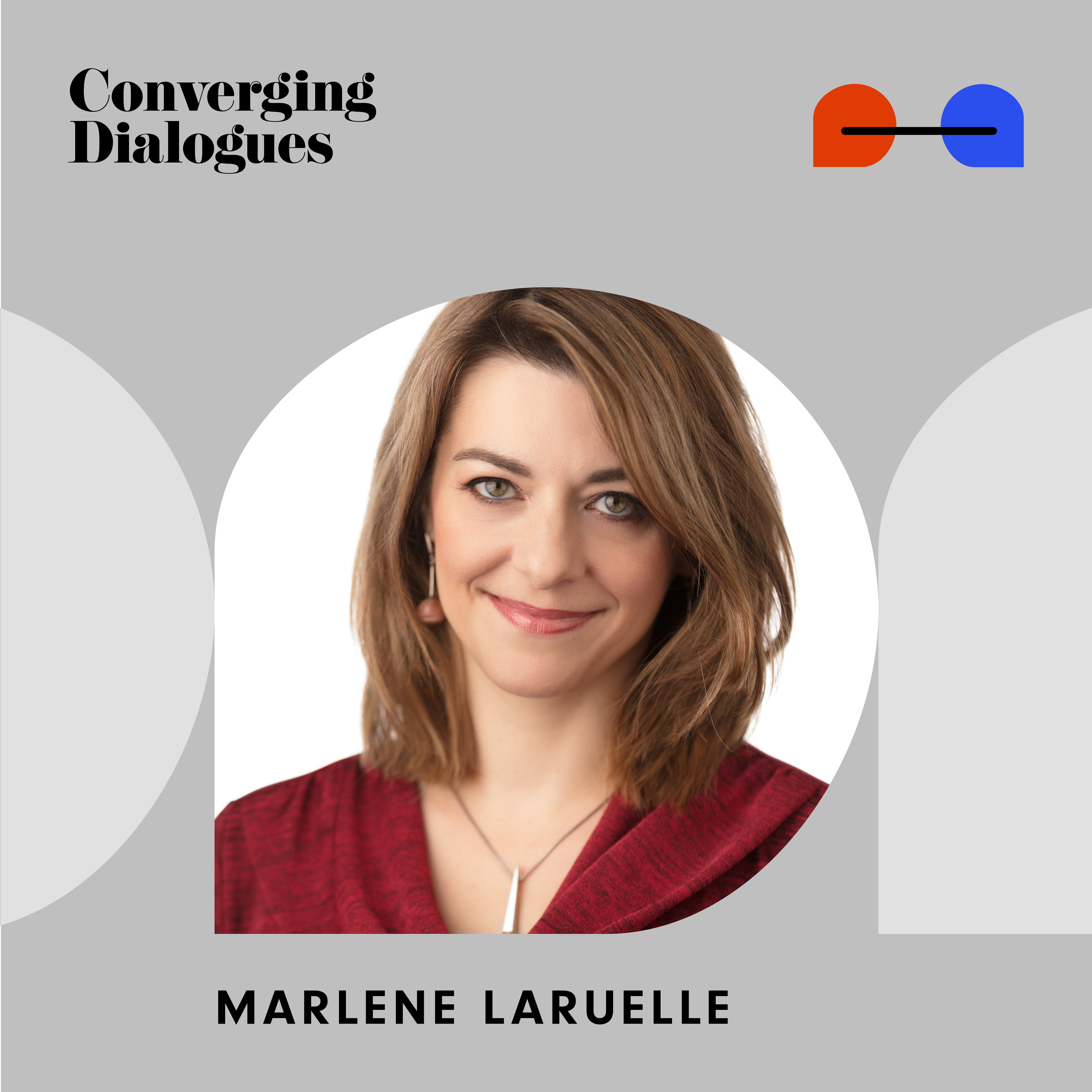
#368 - The Rise of Illiberalism: A Dialogue with Marlene Laruelle
In this episode, Xavier Bonilla has a dialogue with Marlene Laruelle about the rise of Illiberalism. They talk about liberalism, illiberalism, impact of immigration and socioeconomic issues, and the current and future state of the EU. They discuss Le Pen and far-right in France, Orban in Hungary, the AFD in Germany, and state of Central Eurasian countries. They talk about the Russian-Ukrainian war, motivations of Putin, propaganda, peace in Ukraine, illiberalism in the United States, and many other topics. Marlene Laruelle is Research Professor of International Affairs and Political Science at The George Washington University, and Director of GW's Illiberalism Studies Program. Her main research interests are in populist and illiberal movements in post-Soviet Eurasia, Europe, and the US. Her research explores the transformations of nationalist and conservative ideologies in Russia and nationhood construction in Central Asia, as well as the development of Russia’s Arctic regions.Website: https://marlene-laruelle.com/ Get full access to Converging Dialogues at convergingdialogues.substack.com/subscribe
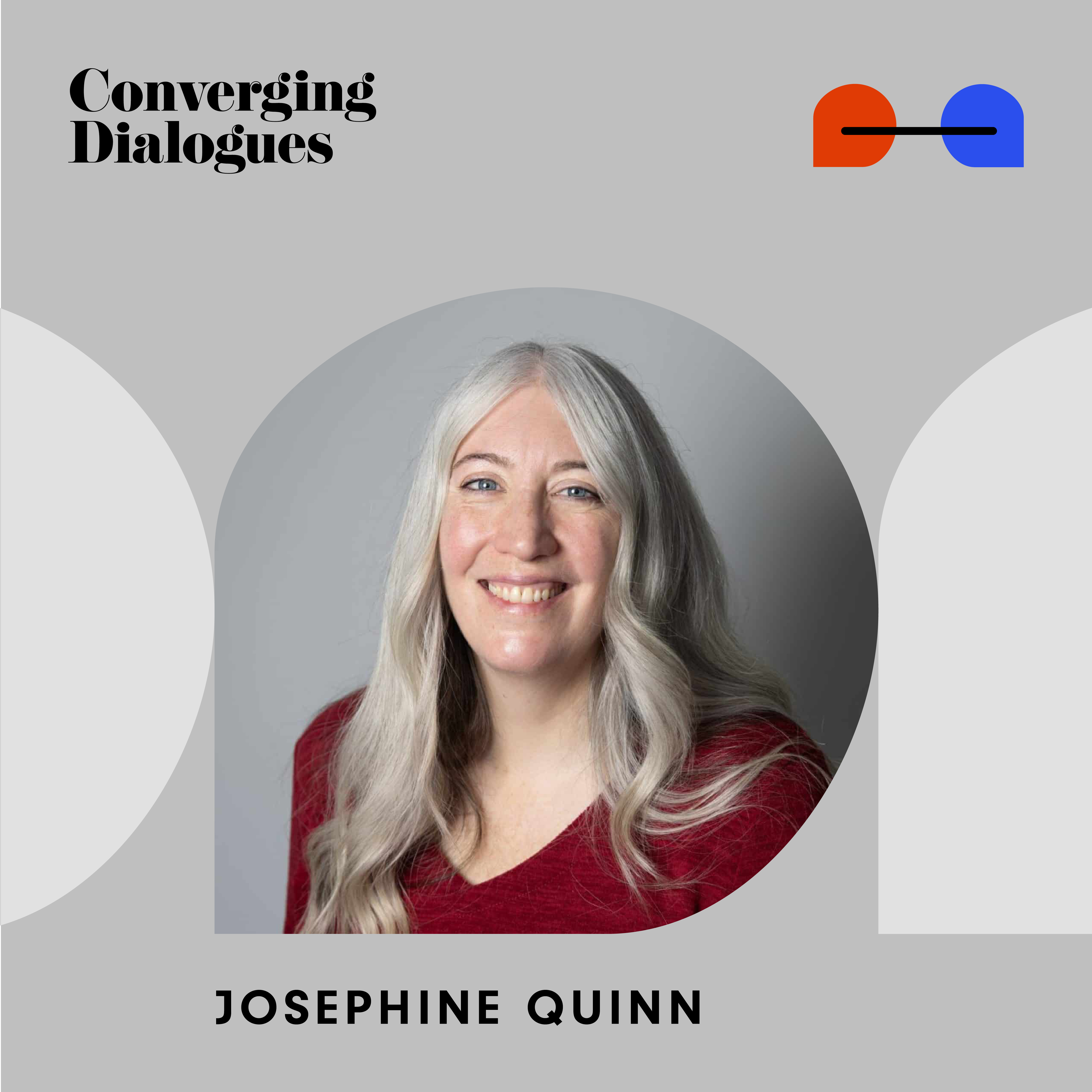
#367 - How The World Made The West: A Dialogue with Josephine Quinn
In this episode, Xavier Bonilla has a dialogue with Josephine Quinn about a 4,000 year history of the world. They discuss why “the West” is not an accurate or helpful framing, civilizational thinking, importance of sailing, and different people groups in one region. They also talked about the importance of ancient/isolated languages (i.e., Sumerian, Ugaritic), the Iberian regions absorbing elements of the Levant in the 2nd Millennium, invention of Greece, Rome and Byzantium, Crusades, the idea of “Europe,” moving away from civilizational thinking, and many more topics. Josephine Quinn is currently Professor of Ancient History at Oxford University, and Martin Frederiksen Fellow and Tutor of Ancient History at Worcester College, Oxford. In January 2025, she will be Professor of Ancient History at Cambridge. She has her BA in Classics from Oxford, and an MA and PhD in Ancient History and Mediterranean Archaeology from the University of California, Berkeley. Her main interests are in Mediterranean history and archaeology, with a particular interest in ancient North Africa. She is the author of, In Search of the Phoenicians and her latest book, How the World Made the West: A 4,000 Year History. Website: https://josephinecrawleyquinn.wordpress.com/ Get full access to Converging Dialogues at convergingdialogues.substack.com/subscribe
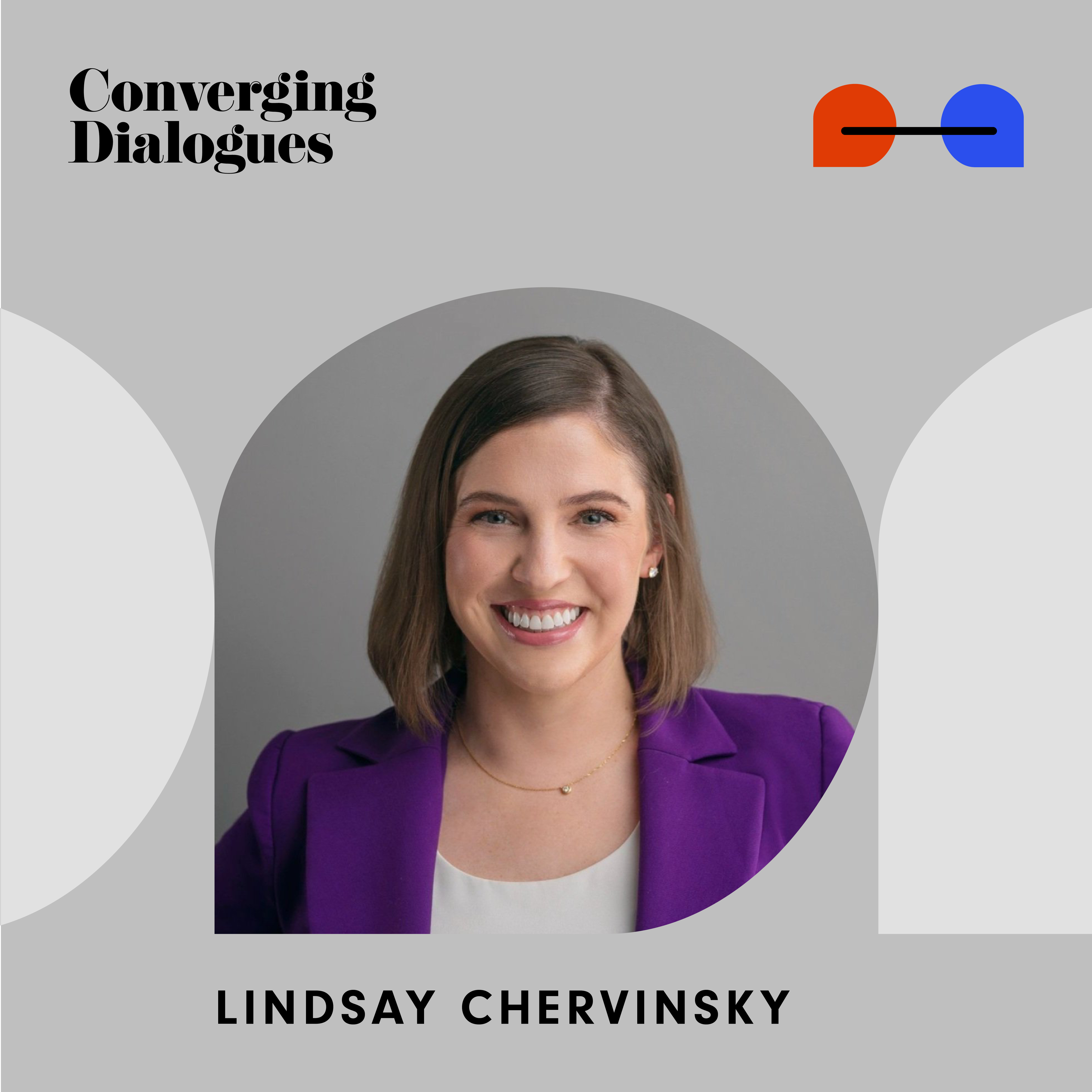
#366 - The Presidency of John Adams: A Dialogue with Lindsay Chervinsky
In this episode, Xavier Bonilla has a dialogue with Lindsay Chervinsky about the presidency of John Adams. They provide an overview of Adams’s presidency, maintaining the cabinet, the XYZ affair, Alien and Sedition Acts, Fries Rebellion, replacing Pickering and McHenry, Election of 1800, legacy of Adams, and many more topics. Lindsay M. Chervinsky a historian of the presidency, political culture, and the government. She is the Executive Director of the George Washington Presidential Library. She obtained her PhD in history from the University of California, Davis and has been a fellow at the Kluge Center at the Library of Congress and a Senior Fellow at the Center for Presidential History at Southern Methodist University. She has also been a professor at the School of Media and Public Affairs at George Washington University. She is the author of The Cabinet: George Washington and The Creation of An American Institution, co-editor (with Matthew R. Costello) of Mourning The Presidents: Loss and Legacy in American Culture, and her latest, Making the Presidency: John Adams and the Precedents That Forged the Republic. Website: https://www.lindsaychervinsky.com/Substack: Imperfect Union Get full access to Converging Dialogues at convergingdialogues.substack.com/subscribe
#365 - The Language Puzzle: A Dialogue with Steven Mithen
In this episode, Xavier Bonilla has a dialogue with Steven Mithen about the evolutionary history of language. They discuss the language puzzle, provide an overview of human evolution, importance of bipedalism, and fossil record gaps. They discuss different human species, how language works, origins and spread of different languages, and the physiology of speech. They also talk about the neurology of language, language evolving over time, language connected with thinking and emotions, future of language, and many other topics. Steven Mithen is a Professor of Early Prehistory in the Department of Archaeology at the University of Reading. He has previously been Pro Vice Chancellor and Deputy Vice Chancellor at the University of Reading. He has a BA (hons) in Prehistory & Archaeology from Sheffield University, an MSc in Biological Computation from York University, and a PhD in Archaeology from Cambridge University. He has been a Fellow of the British Academy since 2004. His main research areas are in Late Pleistocene and Early Holocene hunter-gatherers and evolution of the human mind. He is the author of numerous books including the most recent, The Language Puzzle: Piecing Together the Six-Million-Year Story of How Words Evolved. Get full access to Converging Dialogues at convergingdialogues.substack.com/subscribe
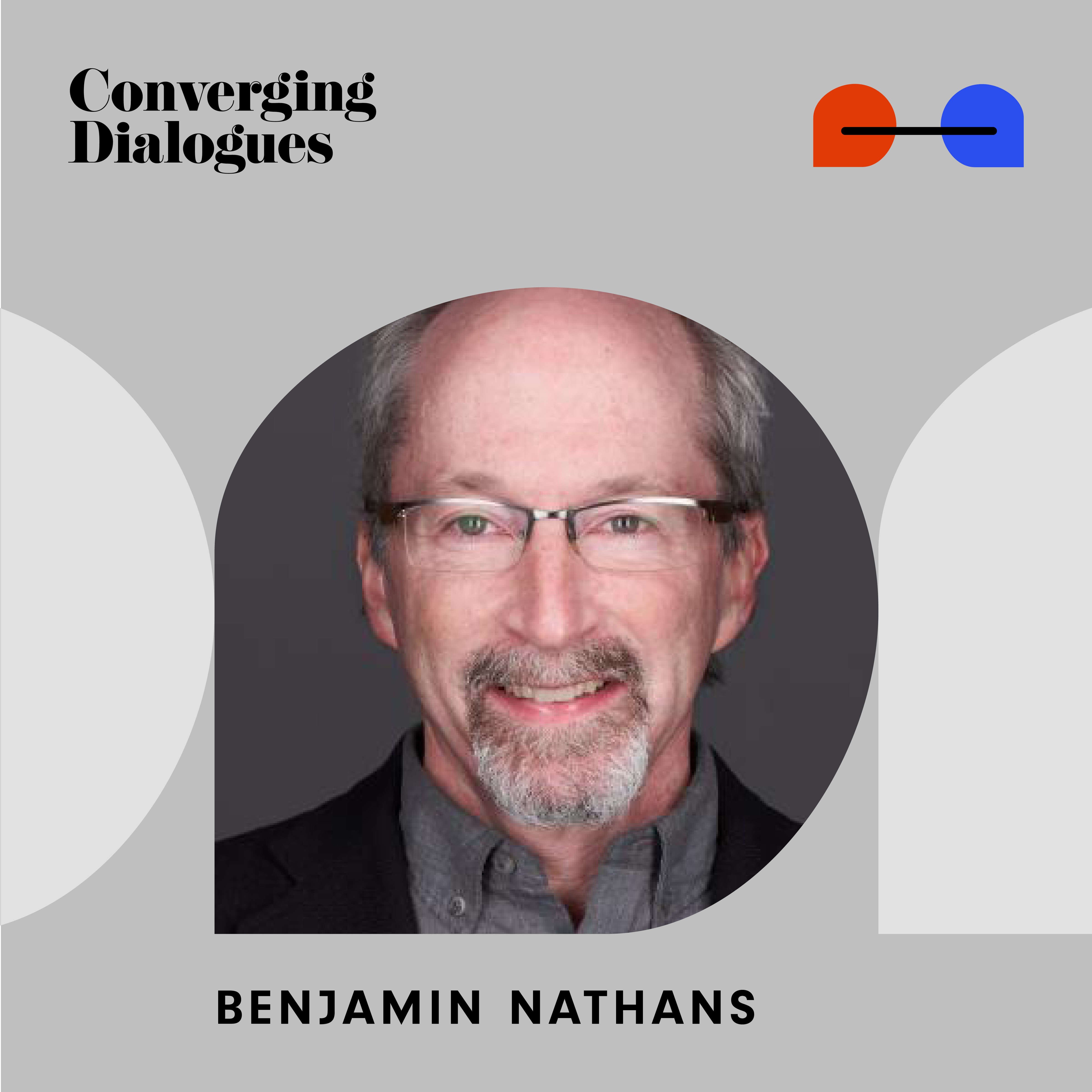
#364 - The Many Lives of the Soviet Dissident Movement: A Dialogue with Benjamin Nathans
In this episode, Xavier Bonilla has a dialogue with Benjamin Nathans about the Soviet dissident movement. They discuss how he complied all of the narratives together, why the Soviet dissident movement matters and how the Soviet legal system was used. They discuss civil disobedience vs. civil obedience, Alexander Volpin, Sinyavsky-Daniel affair, and what rights looked like in the Soviet Union. They talked about the makeup of the dissident movement, the Red Square demonstration, Initiative group, fifth directorate, Solzhenitsyn, other civil rights movements, legacy, and many more topics. Benjamin Nathans is Associate Professor of History at the University of Pennsylvania. His main focus areas are on Imperial Russia and the Soviet Union, modern European Jewish history, history of human rights. He is the author of numerous books including the most recent, To the Success of Our Hopeless Cause: The Many Lives of the Soviet Dissident Movement. Get full access to Converging Dialogues at convergingdialogues.substack.com/subscribe
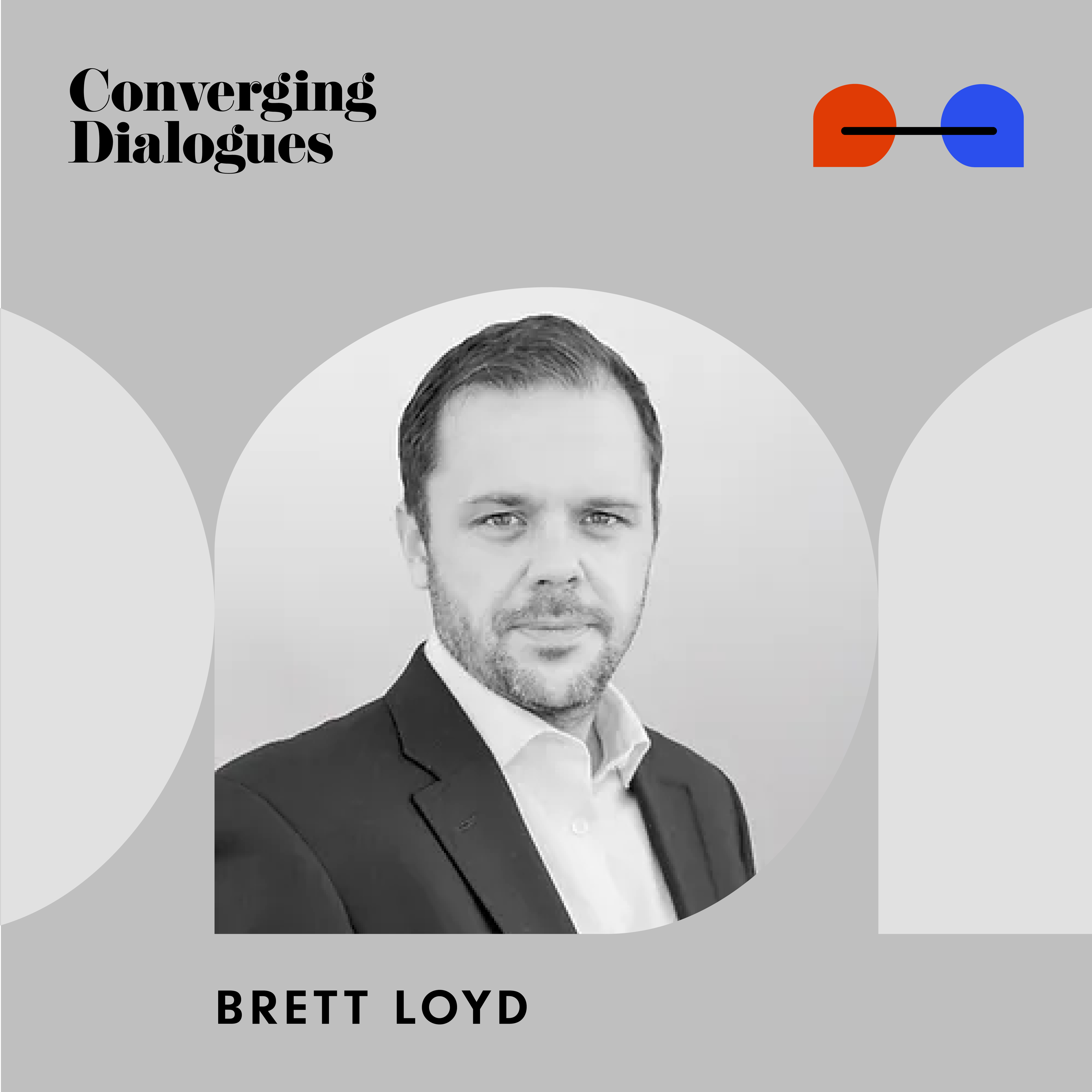
#363 - Understanding Political Polling: A Dialogue with Brett Loyd
In this episode, Xavier Bonilla has a dialogue with Brett Loyd on political polling. They discuss what polls can and cannot tell us, sample size, random sampling, flex quotas, weighting variables, and sample characteristics. They talk about question order and wording on polling surveys, phone and online polling, internal vs. external polling and national vs. state polls. They talk about how pollsters got the 2016 election wrong, characteristics of a Trump voter, and education level. They talk about the 2020 and 2022 elections, why there was no red wave in 2022, and reproductive rights. They discuss the 2024 election, battleground states, Harris’s challenges, contrast between Republican and Democratic tickets, and VP picks. They also talk about the 2024 Senate outlook, the House, how to read polls, and many more topics. Brett Loyd is President and CEO of The Bullfinch Group and is leading researcher and campaign strategist. He has degrees in statistics and political science from Iowa State University and the University of Northern Iowa. He has worked on presidential, senatorial, congressional, and gubernatorial campaigns; national political committees; and corporate and issue campaigns. Website: https://www.thebullfinchgroup.com/ Get full access to Converging Dialogues at convergingdialogues.substack.com/subscribe
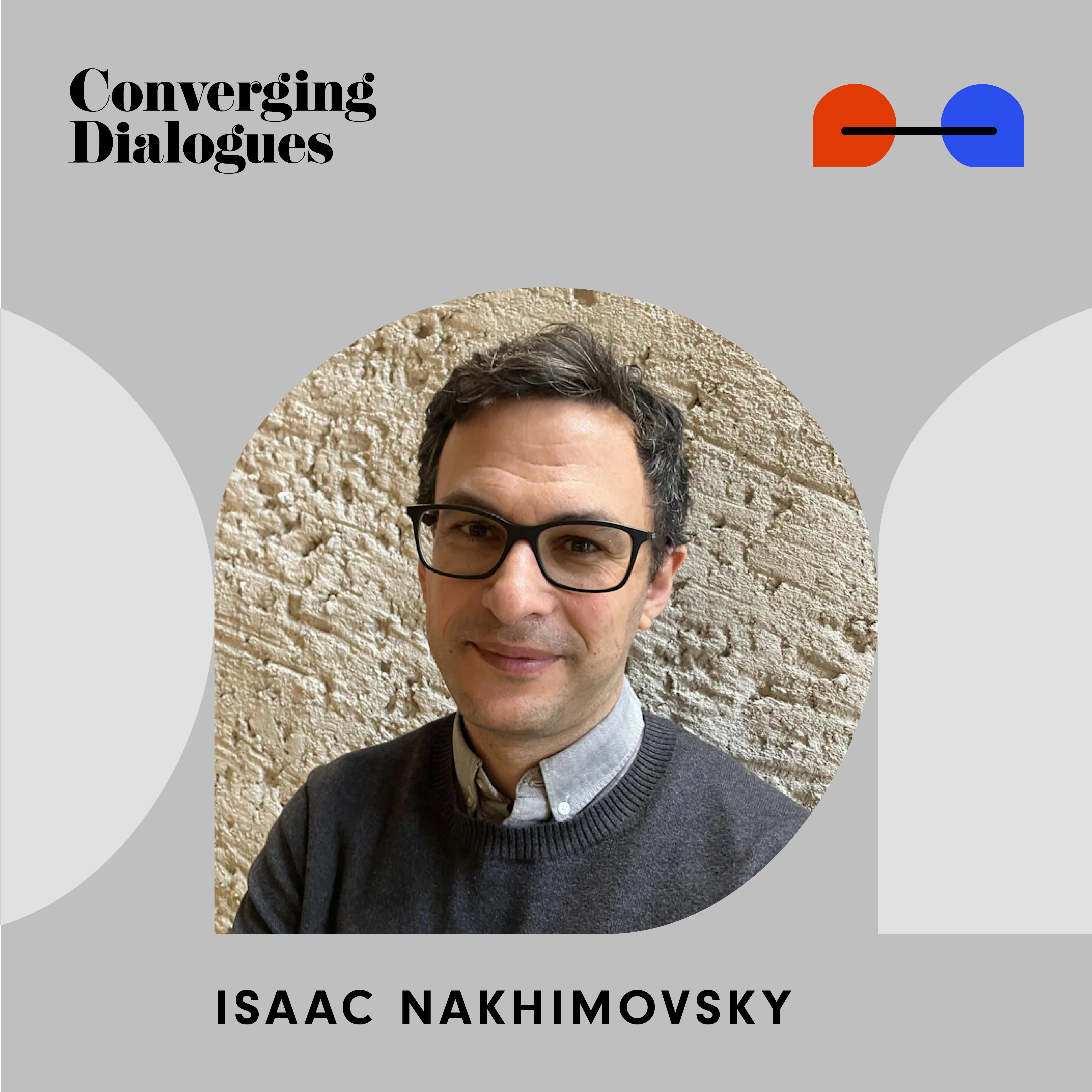
#362 - Liberalism and The Holy Alliance: A Dialogue with Isaac Nakhimovsky
In this episode, Xavier Bonilla has a dialogue with Isaac Nakhimovsky about the holy alliance. They discuss understanding current events through historical events, what is the holy alliance, “friend of mankind,” debates around the holy alliance, La Harpe and Czartoryski, Krug, Kant, and history of religion, league of nations, and the holy alliance today. Isaac Nakhimovsky is Associate Professor of History and Humanities at Yale University. Previously, he was research fellow at Emmanuel College and the Faculty of History in the University of Cambridge. He received his PhD in Political Science from Harvard University. His research focuses on the history of political thought and on European debates about economic competition and international relations in the seventeenth through nineteenth centuries. He is the author of numerous books including the most recent, The Holy Alliance: Liberalism and the Politics of Federation. Get full access to Converging Dialogues at convergingdialogues.substack.com/subscribe
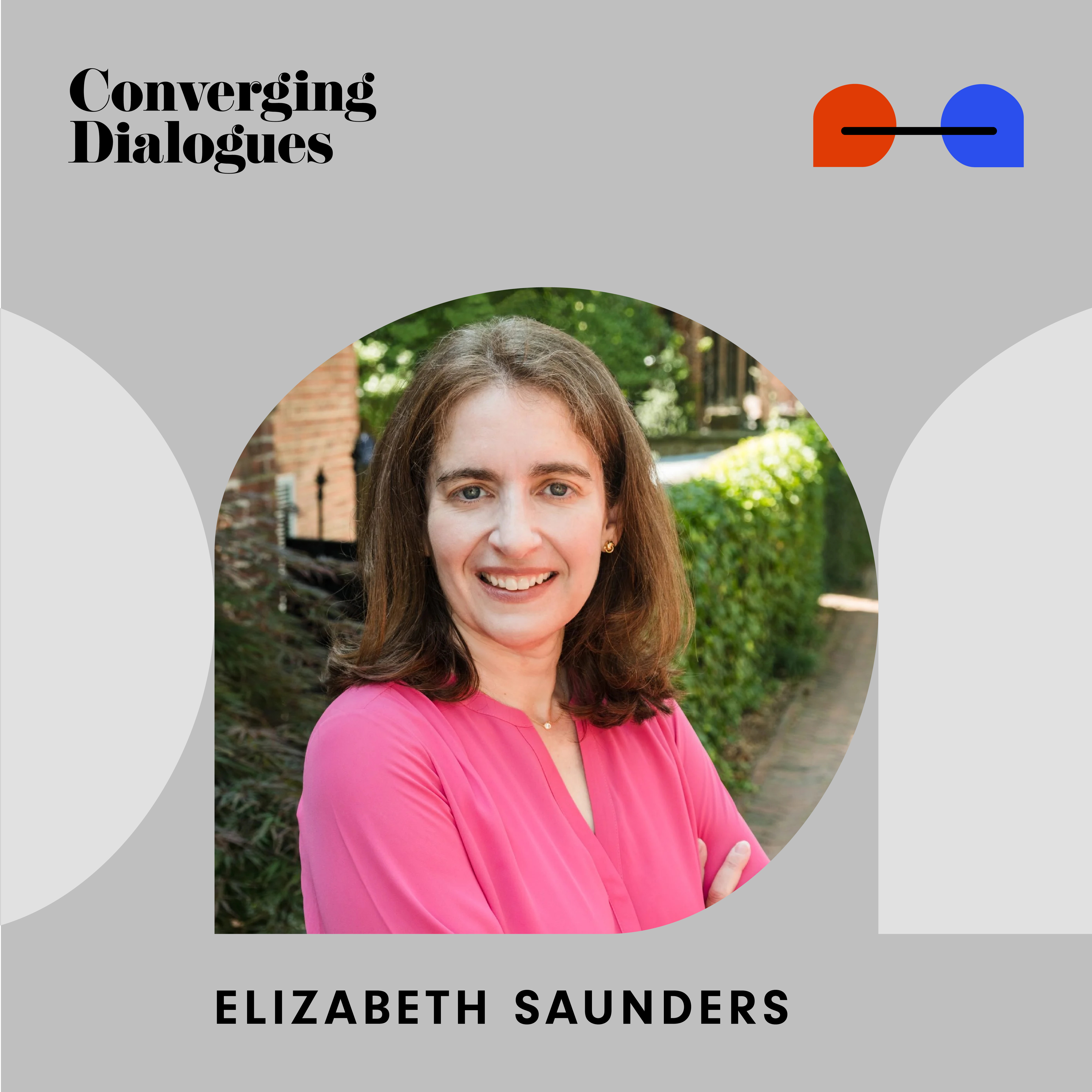
#361 - Hawks and Doves: Elites on Foreign Policy: A Dialogue with Elizabeth Saunders
In this episode, Xavier Bonilla has a dialogue with Elizabeth Saunders on elites dictating foreign policy. They discuss negative public opinion, the elites comprised of military, administration, and legislators, and the differences with hawks and doves. They talk about McNamara and LBJ in Vietnam, Truman, Korea, and Taiwan, and Bush in Afghanistan and Iraq. They also discuss Obama on Syria, future insider’s games, and many more topics. Elizabeth Saunders is Professor of Political Science at Columbia University. She previously taught in the School of Foreign Service and the Director of the Mortara Center for International Studies, as well as a core faculty member in the Security Studies Program at Georgetown University. She is also a non-resident senior fellow at Brookings Institution. Her main interests focus on the domestic politics of international relations and US foreign policy, especially the role of leaders, the presidency, and the politics of using force. She is the author of two books, including the most recent book, The Insiders’ Game: How Elites Make War and Peace. Website: https://profsaunders.com/ Get full access to Converging Dialogues at convergingdialogues.substack.com/subscribe
#360 - Why Animals Talk?: A Dialogue with Arik Kershenbaum
In this episode, Xavier Bonilla has a dialogue with Arik Kershenbaum about why and how animals communicate with each other. They discuss the differences between language and communication in animals, respectfully communicating with animals, and the six animals he studied for communication. They talk about howling in wolves, clicks in dolphins, comprehension in parrots, singing in the hyrax and gibbons, chimps, humans, and many more topics. Arik Kershenbaum is a zoologist and College Lecturer at Girton College, University of Cambridge and is formerly Herchel Smith Research Fellow in Zoology at the University of Cambridge. He has his Bachelors in Natural Sciences from University of Cambridge and his PhD in Evolutionary Biology and Ecology from the University of Haifa, Israel. His main research interests are in the acoustic communication systems in different animals. He is the author of the latest book, Why Animals Talk: The New Science of Animal Communication. Website: https://arikkershenbaum.wixsite.com/arikkershenbaum Get full access to Converging Dialogues at convergingdialogues.substack.com/subscribe
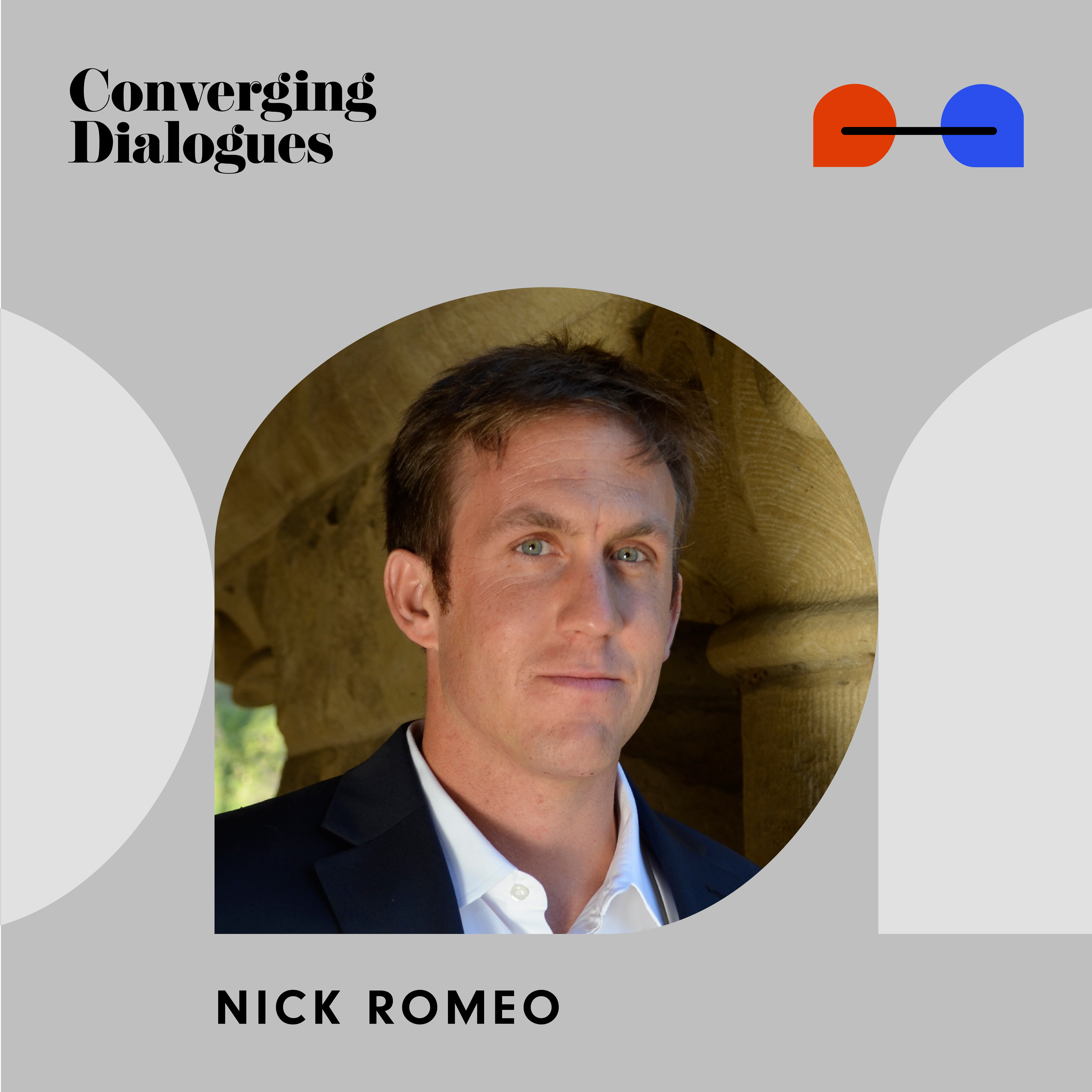
#359 - Alternative Economies: A Dialogue with Nick Romeo
In this episode, Xavier Bonilla has a dialogue with Nick Romeo on different and alternative economies. They talked about reimagining capitalism, improving economic pedagogy in academia, True Price, a living wage, and Job Guarantee program. They discuss the gig economy, purpose economy, scaling alternative economies, and many more topics. Nick Romeo is a Journalist and Author who has focused his writing on economics, policy, and culture. Currently, he is a writer for The New Yorker and has written pieces in outlets such as The Atlantic, The New York Times, and The New Republic. He is the author of the latest book, The Alternative: How To Build A Just Economy.Website: https://www.nickromeowriter.com/ Get full access to Converging Dialogues at convergingdialogues.substack.com/subscribe