Contrabass Conversations
1,171 episodes — Page 21 of 24
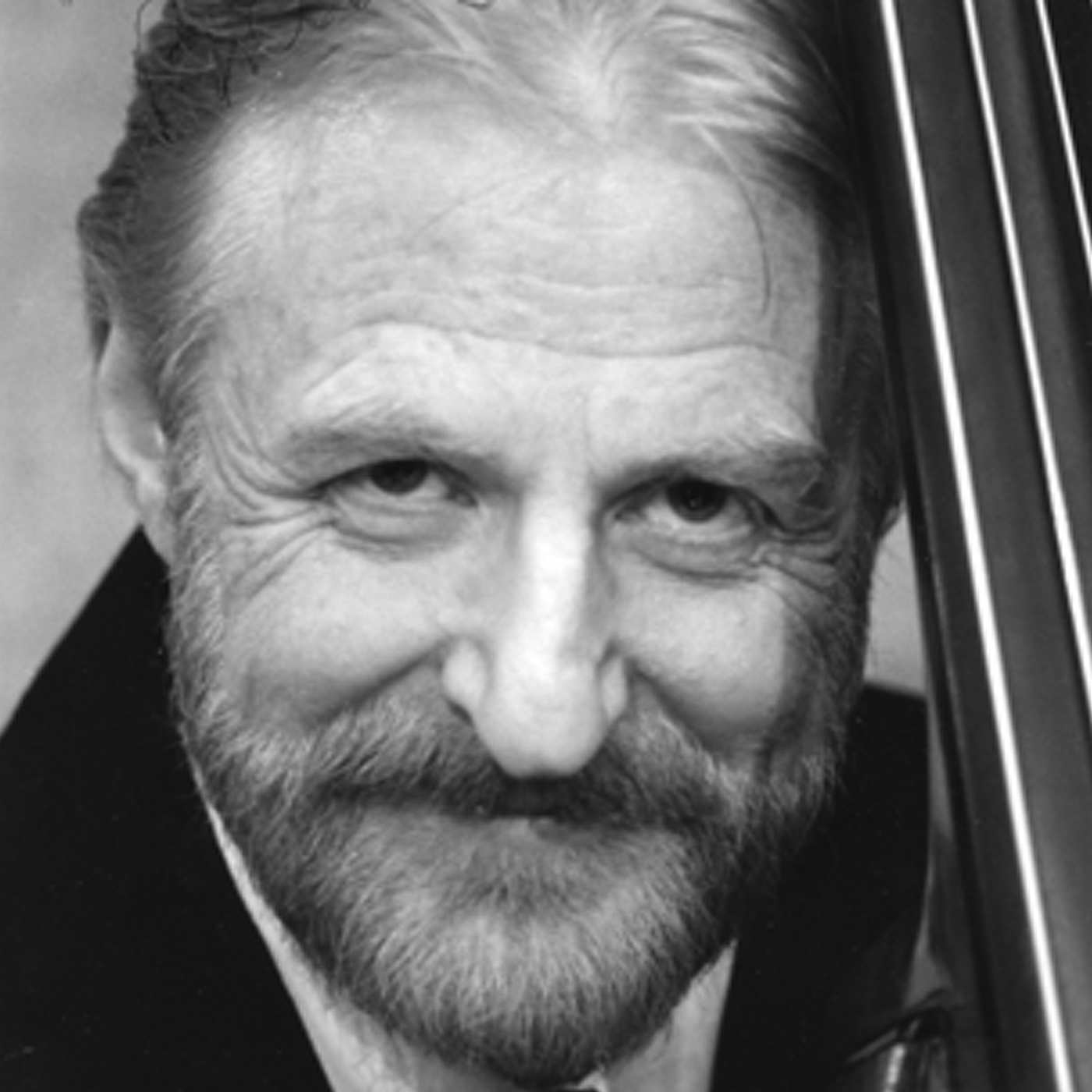
Ep 177177: Bruce Bransby on principal bassist roles, life in the Indiana University bass studio, and optimizing bass gear
We are featuring Bruce Bransby on today's show. Bruce has been professor of double bass at Indiana University for three decades and has taught bass players who now hold positions in major orchestras worldwide. Bruce has also been a faculty member at the Aspen Music Festival for this same length of time. Prior to that, he served as principal bass of the Los Angeles Philharmonic and the Kansas City Symphony. Bruce is also an outstanding soloist, composer, and arranger, and you'll be hearing an excerpt from his arrangement of the Valentini Cello Sonata at the beginning of the episode, and we'll conclude today with Bruce's own Valse for double bass and piano, which he composed under the pseudonym Rolande E. Curb (Curb is Bruce spelled backwards). We feature more music from Bruce in the bonus content for this episode, and you can access that material from the Contrabass Conversations app. Just click on this episode and choose 'bonus.'These compositions and arrangements can be purchased from Lemur Music (Theme, Prelude, and Valentini links) or the String Emporium website. Enjoy, and check out this link to learn more about the Performer Diploma in Orchestral Studies offered by the Jacobs School--most graduate double bass students are choosing this option at IU. About Bruce: Bruce Bransby was principal double bass with the Los Angeles Philharmonic (1978-1986) under Zubin Mehta, Carlo Maria Giulini, and Andre Previn, and was principal double bass with the Kansas City Symphony (1971-1978). He studied with Nat Gangursky, Peter Mercurio, and Stuart Sankey. Professor Bransby performs widely as soloist and chamber player and has premiered numerous works, including several concertos for the double bass. While in Los Angeles, he was active in studio recordings for motion pictures and television. He was a faculty member at California State University Northridge, the University of Missouri at Kansas City, the California Music Center, and the Los Angeles Philharmonic Institute, and has been a performing member of the faculty of the Aspen Music Festival since 1987. His students hold positions in many of the world's finest symphony orchestras.

Ep 176Moving to San Francisco!
bonusJason talks about his rapidly approaching move to San Francisco and discusses what's in store for the show.
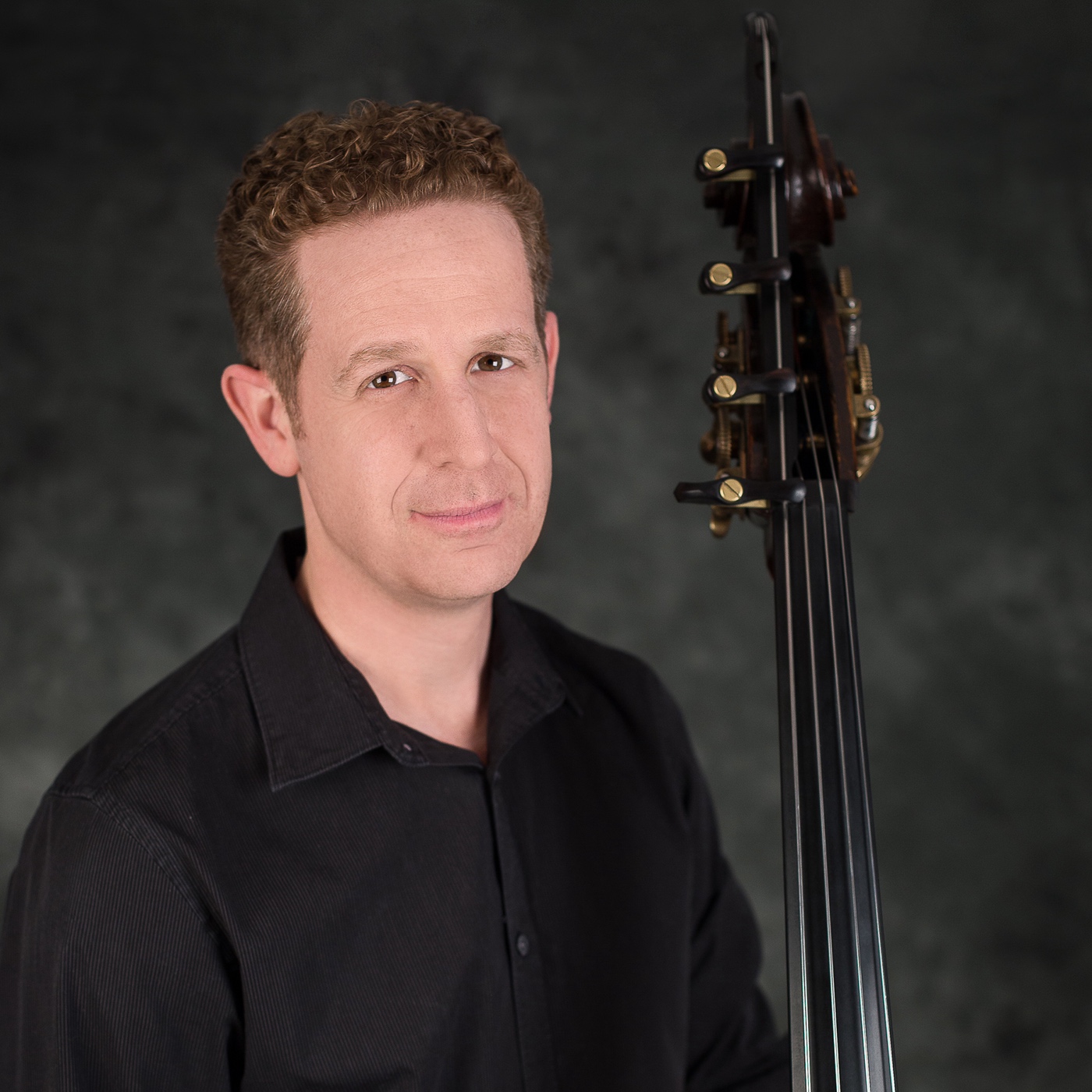
Ep 176176: Andrew Raciti on living in Australia, studying with Paul Ellison, and helpful student mindsets
We are featuring Andrew Raciti on this week's show. Andy is the acting principal bass of the Milwaukee Symphony Orchestra. He is also the head of the double bass studio of the Bienen School of Music at Northwestern University. Before joining the Milwaukee Symphony in 2006, Mr Raciti was associate principal bass of the Sydney Symphony Orchestra in Australia. He has also performed with the Detroit Symphony, the Minnesota Orchestra, the Saint Paul Chamber Orchestra, and the Melbourne Symphony Orchestra. We talk about Andy's experiences growing up in Milwaukee, studying at UW-Madison, studying with Paul at Rice, the Sydney Symphony, the Northwestern University bass studio, how Andy approaches lessons, the Laborie endpin, his Tester bass, and several other topics. We also feature excerpts from Zivojin Glisic's Concerto for Double Bass and String Orchestra with Andy and the University of Wisconsin-Madison Chamber Orchestra. Enjoy! About Andrew: Andrew Raciti is the acting principal bass of the Milwaukee Symphony Orchestra. He is also the head of the double bass studio of the Bienen School of Music at Northwestern University. Before joining the Milwaukee Symphony in 2006, Mr Raciti was associate principal bass of the Sydney Symphony Orchestra in Australia. He has also performed with the Detroit Symphony, the Minnesota Orchestra, the Saint Paul Chamber Orchestra, and the Melbourne Symphony Orchestra. In the summers he has been the principal bass of the Chautauqua Symphony Orchestra and performs orchestral and chamber music at the Grand Teton Music Festival. He is also a regular professor of the Filharmonica Joven de Colombia in South America. In 2011 he performed the United States premiere of the Concerto for Double Bass and String Orchestra by Macedonian composer Zivoin Glisic. A recognized authority in bass pedagogy and performance, Mr Raciti has published articles in the quarterly for the International Society of Bassists. He is currently involved with the BATUTA foundation of Colombia, South America, where he is developing the bass portion of a comprehensive string pedagogy that will be used throughout its 17,000 member nationwide network. Visit Andrew Raciti's Double Bass Studio Facebook Page

Ep 175175: Ju-Fang Liu on growing up in Taiwan, the path from student to principal bassist, and a love of teaching
Today's episode features Indianapolis Symphony principal bassist Ju-Fang Liu. We had a great conversation about growing up in Taiwan, her years studying at the Interlochen Arts Academy and at Indiana University with Lawrence Hurst and Bruce Bransby, her time in New World, teaching, playing jazz, studying bass overseas, and several other topics. We also feature excerpts from her wonderful solo album, which I highly recommend checking out—it really is bass playing at its finest. Enjoy! About Ju-Fang: Ju-Fang Liu was appointed Principal Bass of the Indianapolis Symphony Orchestra by Maestro Mario Venzago in 2003, shortly after receiving her bachelor and master's degrees in double bass performance from Indiana University. There she studied with notable bass pedagogues Bruce Bransby and Larry Hurst. In addition, she has worked with other internationally-known teachers such as Edwin Barker, Edger Meyer, Harold Robinson, Stuart Stankey, Lawrence Wolf and Tim Cobb. Ms. Liu's musical interests encompass all aspects of musical performance. She was a repeat performer in the world-renowned Marlboro Music Festival working with the top chamber music professionals of our time as well as performing in the Aspen and Tanglewood Music Festivals. A sensitive and thoughtful performer, she is constantly in demand in Indianapolis' various chamber music venues. Ju-Fang has been a finalist for the Boston Symphony as well as for the Atlanta Symphony Principal position in 2014, and has appeared with the Chicago Symphony. In addition, she has performed as co-principal with the New World Symphony. Her solo concerto performances have included the Bottesini, Koussevitzky and Tubin concerti, the latter performed under the baton of Maestro Venzago. She is also the first performer to win both the Solo and Orchestral Categories (Adult/Professional) of the International Society of Bassists competitions. Ju-Fang has always had a serious interest in teaching and pedagogy and has previously taught at DePauw University and Indiana University. She joined the faculty of the Butler University School of Music in Indianapolis in 2014. Ms. Liu has given master classes in Columbia, working with the Filarmónica Joven de Colombia and has been a guest artist at the Taipei National School of the Arts and the Beijing Central Conservatory and other conservatories in China and Taiwan, performing recitals and giving classes. Always seeking to improve her musical scope, Ju-Fang was awarded a Creative Renewal Grant from the Arts Council of Indianapolis and has added the electric bass and jazz study to her resume. Her solo cd is available at http://www.cdbaby.com/cd/JuFangLiu.
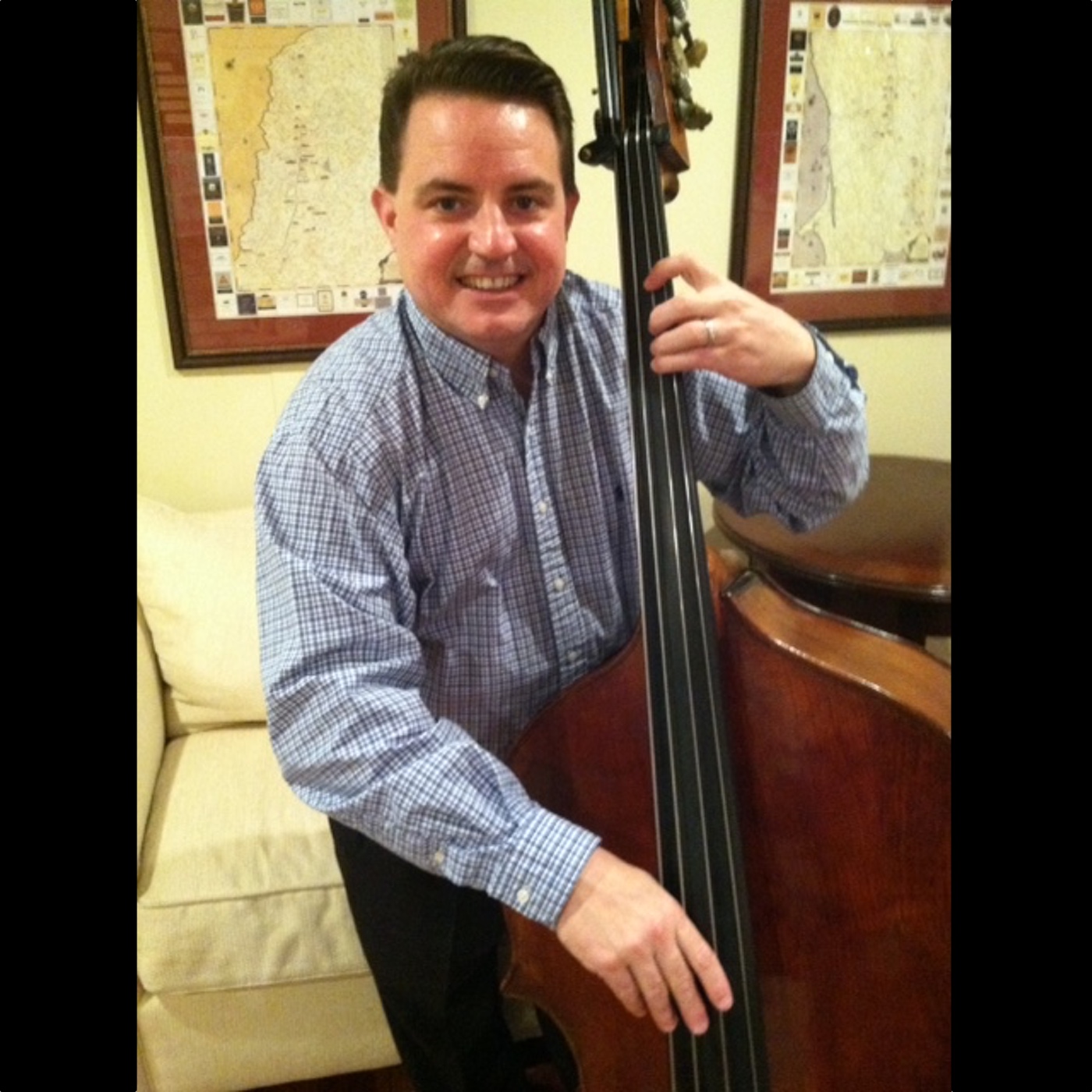
Ep 174174: Per questa bella mano with John Grillo
Today's episode features longtime collaborator John Grillo performing Mozart's aria Per questa bella mano. So, today's episode features John performing Per Questa Bella Mano with John Dennison singing and Andrew Hauze on piano. In addition to being our third interview guest for the podcast way back in 2007 (almost ten years ago at this point!), John and I have co-interviewed many prominent bassists over the years, including Lawrence Hurst (which we re-released a few weeks ago in a newly edited format), Ed Barker, Max Dimoff, and many others. We've also featured quite a bit of John's bass playing here, including a complete recital featuring music of Bach, Schubert, Dave Anderson, and Stanley Chepaitis. We also featured a couple of really interesting episodes covering orchestra excerpts and opera excerpts with an analysis of each excerpt followed by a performance from John of that excerpt. these are extremely useful practice guides—definitely check these out if you haven't before—it's episode 41 for the orchestra excerpts and episode 62 for the opera excerpts. If you have the app, just search for "John Grillo" and you'll find all of these episodes. I hope you enjoy this, and stay tuned for more from John in the future!
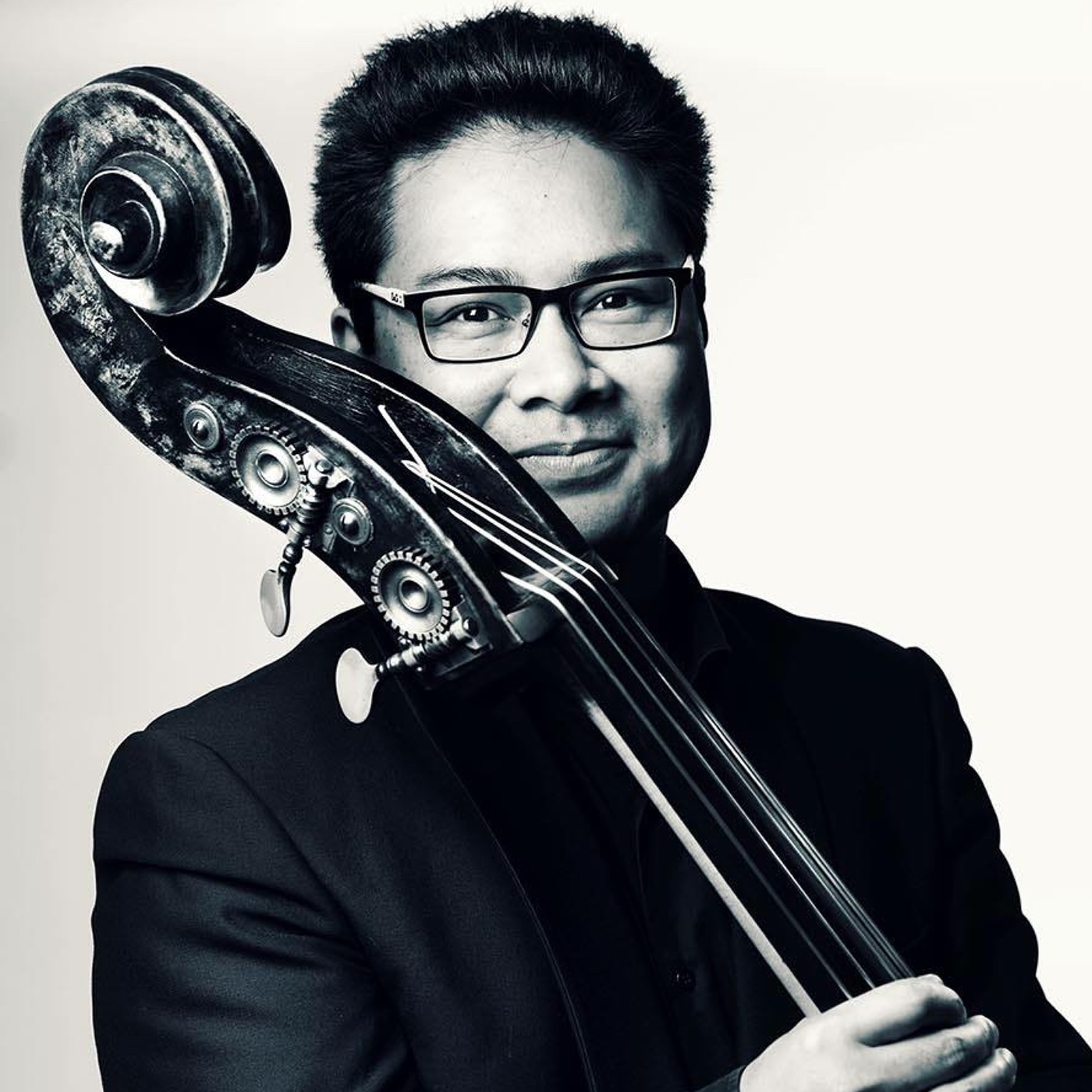
Ep 173173: Marc Ramirez on Portugal, life as an expat, and differences between American and European orchestras
Today we are featuring an interview with Marc Ramirez. Originally from New York, Marc is the principal bassist with the Gulbenkian Orchestra of Lisbon, Portugal. Marc and I had a great conversation about his path to this job overseas, where he has now been for 17 years. We talk about similarities and differences in American and European orchestras, auditioning, traveling with a bass, his beautiful Cavani bass, and many other topics. We also feature excerpts from Marc's performance of the Bottesini Grande Duo Concertante para Violino e Contrabaixo with Bin Chao on violin. Up Magazine recently did a great profile on Marc covering his journey from the United States to Portugal, touring with the Gulbenkian Orchestra, and many other topics. Marc will also be performing the European premiere of the Harbison Bass Concerto in May of 2016. Enjoy!
Ep 172172: Lauren Pierce and Geoff Chalmers on innovating online
Today's episode features Lauren Pierce and Geoff Chalmers, both of whom have been doing some remarkable things online in the world of the bass. What's really cool is that these two have paired up to do a new web series called Ask Geoff and Lauren. In this episode, we talk about each of their respective sites and what they've been developing online. You can find Geoff online at discoverdoublebass.com and Lauren at laurenpiercebass.com and on her Facebook artist page at facebook.com/LaurenPierceBass. Enjoy! About Geoff: Based in the UK, Geoff has performed on numerous gigs, shows, cruise ships, tours and recording sessions. He has a degree in jazz bass, as well as a postgraduate diploma in classical music. In addition to being a busy freelance bassist Geoff is also an experienced educator having taught bass at schools, colleges and universities, as well as to hundreds of private students. In August 2013 Geoff founded Discover Double Bass with it's free lessons library covering a wide range of styles and techniques. The videos are now being viewed thousands of times each week and a new lesson is released every two weeks. About Lauren: Born in Atlanta, Georgia, Lauren began her musical studies at the age of seven on piano and voice. Later, she was introduced to the Double Bass and soon began lessons with the late Douglas Sommer, section bassist for the Atlanta Symphony Orchestra. While studying with Douglas Sommer, she continued her studies at the University of South Carolina under the tutelage of Dr. Craig Butterfield. During her studies at USC, Lauren was given the Presser Scholar Award, named a Magellan Scholar, and in 2010, performed a concerto with the University of South Carolina Symphony as the winner of that years USC Concerto Competition. After graduating from USC, Lauren moved to Denton, Texas to study the double bass with Jeffrey Bradetich. During this period, Lauren competed in the American String Teachers Association Competition and the International Society of Bassists Competition. In 2014, she was named coordinator of the Bradetich Summer Bass Camps.
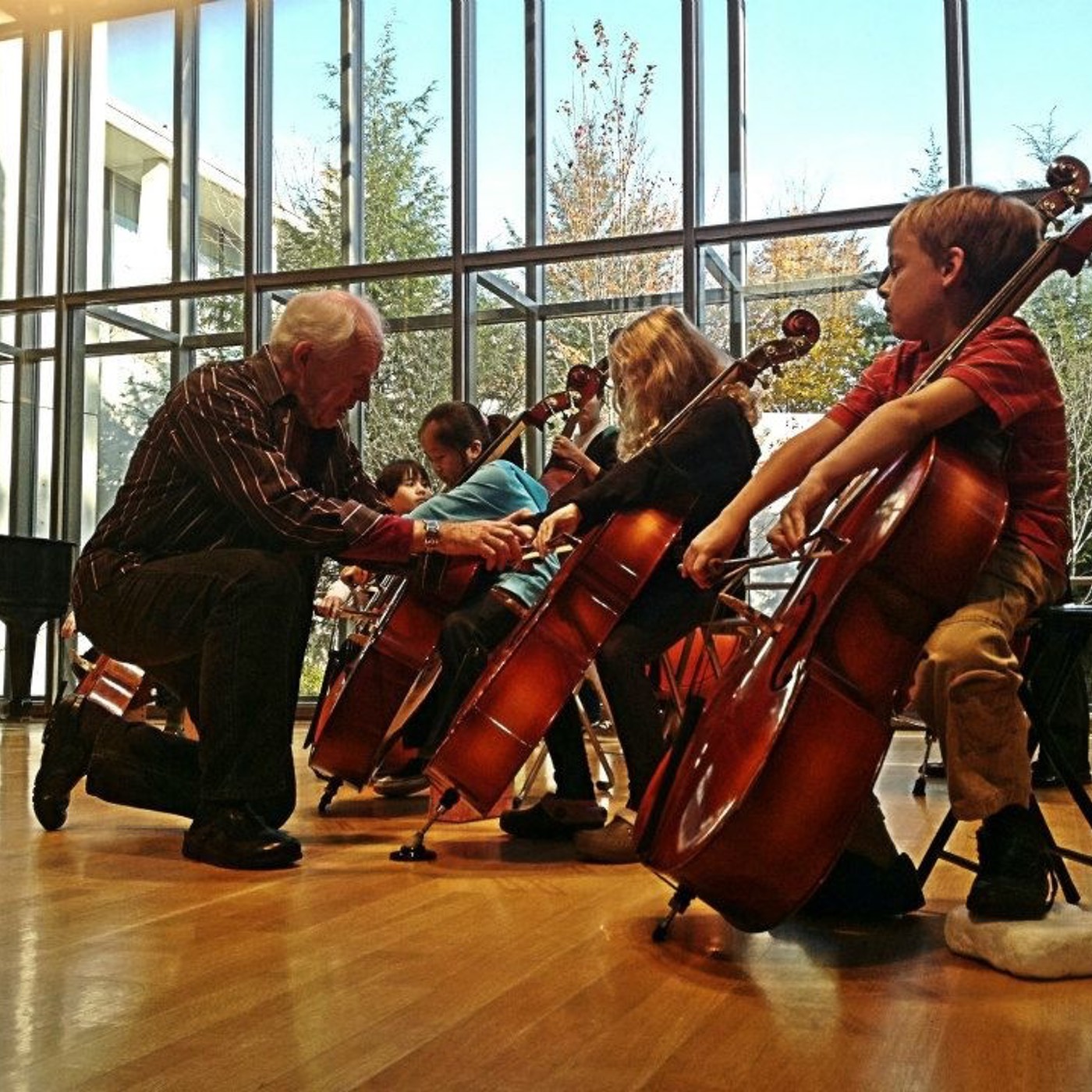
Ep 171171: Paul Ellison on musical athletes, period performance, and the comprehensive undergraduate experience
It is our pleasure to bring you this interview with Paul Ellison. Paul is chair of strings and professor of double bass at Rice University, where he has taught for the past four decades. He is the former principal bass of the Houston Symphony, former president of the International Society of Bassists, and has had a significant impact on the double bass world. In this interview, we discuss Paul's early background, his encounters with François Rabbath, being a musical athlete on the bass, gut strings and the adoption of steel strings, the undergraduate experience at Rice University, and many other topics. Enjoy! About Paul: Performing solo and ensemble concerts as well as giving master classes on the double bass and period instruments on four continents, Paul Ellison is the Lynette S. Autrey Professor of Double Bass and chair of strings at Rice University's Shepherd School of Music, Visiting Artist-Faculty University of Southern California and guest tutor at the Yehudi Menuhin School, the Royal College of Music, and Bass Club, England. Current summer positions include principal bass at the Grand Teton Music Festival, faculty/performer at the Sarasota Music Festival and faculty/performer at Festival Domaine Forget, Quebec. Former students hold titled positions in major ensembles and institutions of higher learning on five continents. Previous positions include principal bass of Houston Symphony, Houston Grand Opera, Santa Fe Opera, Aspen Festival Orchestras (also faculty), professor of double bass and chair of strings at the University of Southern California, and president of the International Society of Bassists. Ellison was the first to receive both the diploma and teaching certificate from Institut International Rabbath, Paris.
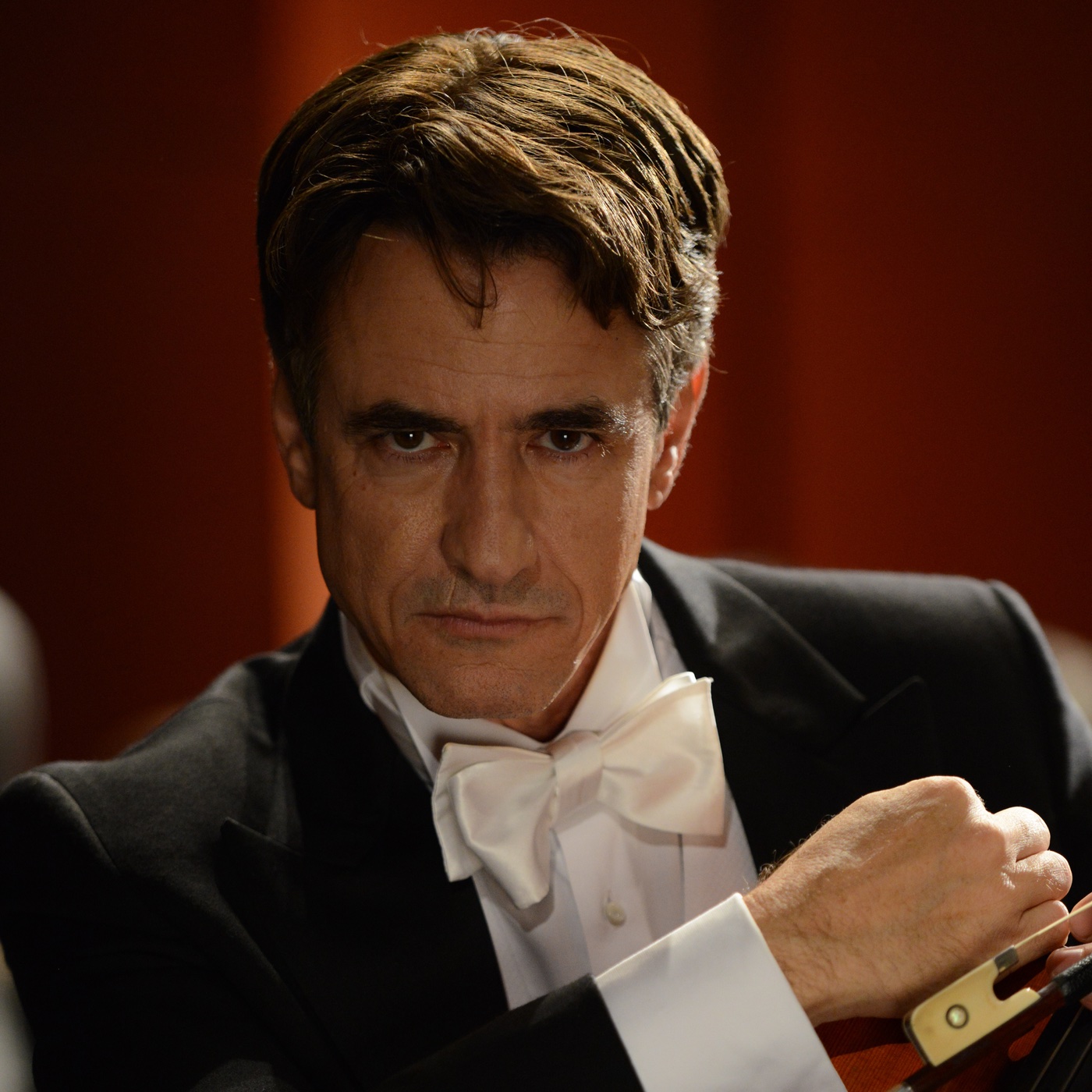
Ep 170170: Blair Tindall on Mozart in the Jungle, searching for a new career path, and observations on the orchestral world
We are featuring Blair Tindall on the podcast today. Blair is the author of the book Mozart in the Jungle, which explores the world of classical musicians in a very compelling narrative. Blair and I talk about life as a New York freelancer, her journey into a career as a writer, and we take a behind-the-scenes glimpse into the production of the TV series. Mozart in the Jungle has been turned into a TV series on Amazon Video. The first season received two Golden Globe nominations (one for best comedy series and one for Gael Garcia Bernal for best actor) and the second season launches today! If you have an Amazon Prime membership, you can stream all episodes, and if you don't yet use Amazon Prime, you can start a free 30-day trial here.
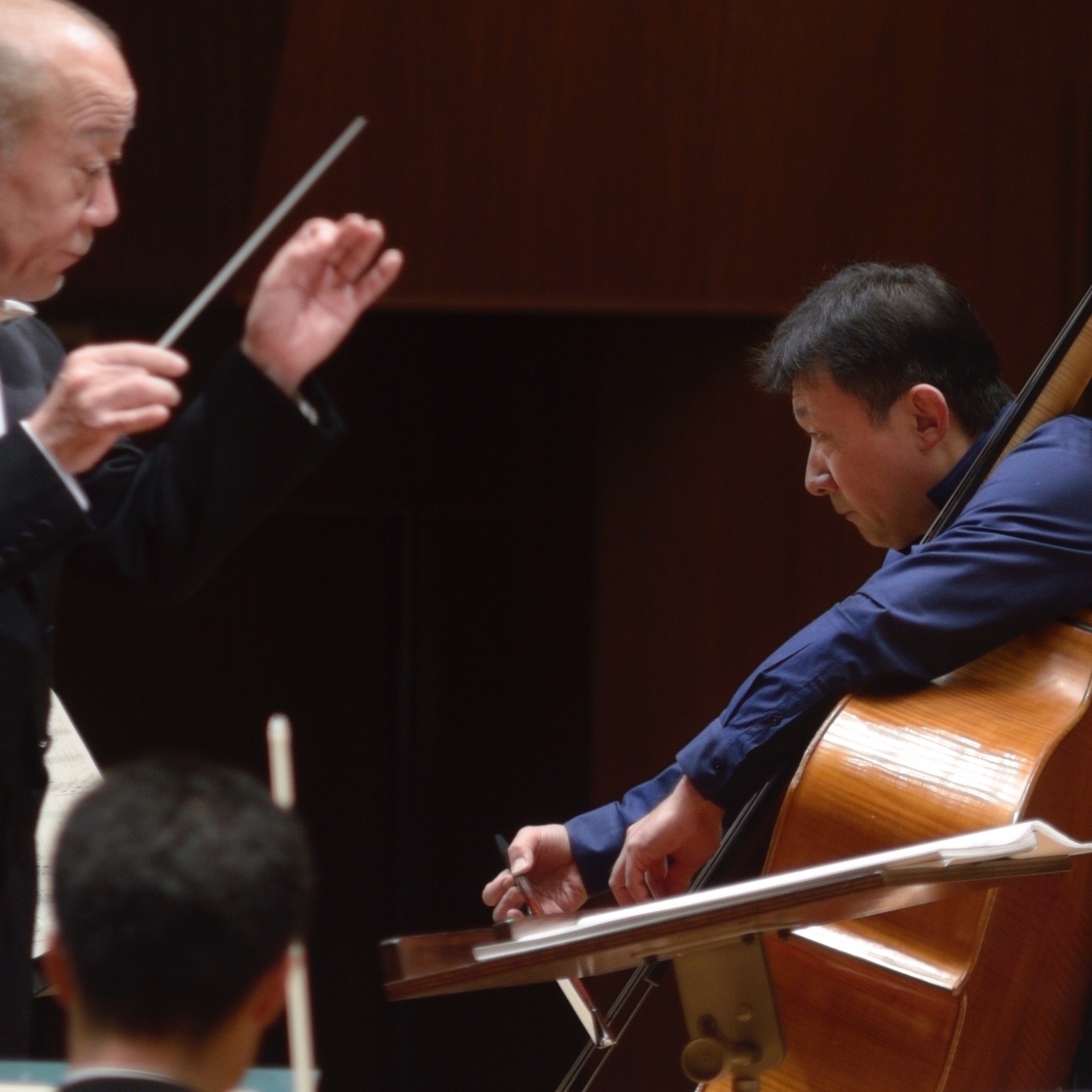
Ep 169169: Shigeru Ishikawa on Switzerland and Japan, premiering new works, and studying bass in the United States
About Shigeru: Born in Tokyo, Japan, Shigeru Ishikawa is one of the foremost double bassists of his generation, both as a performer and a teacher. He is currently He is currently Solo Bass (ie. principal bass) of the Yomiuri Nippon Symphony Orchestra in Tokyo. Shigeru previously served as the principal double bass (Solo Kontrabass) of the BernerSymphonieOrchester in Bern, Switzerland, which he started in 2006. His performance has been described as "irresistible charm" (Der Bund), "jewel of a crown" (Miami Herald), "deep-rumbling bravura with athletic, fleet-fingered virtuosity" (Sun Sentinel). He was the principal bassist of the Florida Philharmonic Orchestra from 1997 to 2003 under the music directors of James Judd and Joseph Silverstein. Prior to that, he served as the guest principal bass with the New Japan Philharmonic in 1996 under Seiji Ozawa Music Director and was the principal bass of the New World Symphony Orchestra under Michael Tilson Thomas from 1993 to 1996. He has been also the member of Saito Kinen Orchestra (Seiji Ozawa, Music Director) since 1992 where he participated in numerous recordings on Philips and Decca label. Maestro Ozawa chose him as the solo bassist (Chamber Orchestra) of Saito Kinen Orchestra for Britten's War Requiem both in Japan and US tour in 2009 and 2010 and recorded on Decca label. In addition to his orchestral activities, Shigeru Ishikawa regularly presents solo and chamber music performances. Since 1991 he has given numerous recitals both in Japan and USA , places including Tokyo, Osaka, Kyoto, Fukuoka, Matsumoto, Sapporo, New York, Miami, Boca Raton, and has appeared in radio broadcast in both countries. In 2009, his Recital in Tokyo was broadcasted by NHK, Japan's national television network, and especially Franck's violin sonata performed on bass brought sensation throughout Japan. In U.S.A, he has released CD with Trio Tres Amigo with oboe and piano. He has also appeared as a soloist to perform concertos, such as Koussevitzky concerto with Lynn Philharmonic, Bottesini Tarantella with Renaissance Chamber Orchestra and BottesiniPassioneAmorosa with BernerSymphonieOrchester. As a chamber musician, he has collaborated with Berlin Quartet, IvryGitlis, members of Boston Symphony Orchestra, Bolomeo String Quartet. As a winner of JAA music award in New York in 1991, he gave a New York debut recital in Carnegie Hall. He is also the prize winner of Bass94 International Doublebass Competition in 1994 in Avignon, France. In 1999, he was invited to give a recital at the International Society of Bassists Convention in the United States He is also known as a supreme teacher with modern double bass technique. He served on the faculty of Boston Conservatory from 1996 to 1997 and after he came to Florida, he has taught at Harid Conservatory, Lynn University and Florida Atlantic University. He regularly gives master classes in the United States and Japan. He received his Bachelor of Economics degree from Keio University in Tokyo, Japan, and his Master of Music degree from the Juilliard School of Music in 1992.In addition, he has studied at Yale School of Music and Toho Gakuen School of Music. His primary bass instructors have been Eugene Levinson, Gary Karr, Edwin Barker and Shunsaku Tsutsumi.
Ep 168Learn Double Bass - new app for iOS from Brian Johnson
bonusToday we talk with Los Angeles Philharmonic bassist Brian Johnson, who has just released an app for iOS called Learn Double Bass. What a cool app! This app (currently free!) contains over 70 videos that clearly cover a specific bass topic. These videos range from the very first steps (tuning the bass, rosining the bow) to more advanced concepts like spiccato. In addition to these videos, the app contains a great number of helpful PDF resources. Brian also teaches at California State University at Fullerton and at the Idyllwild Arts Academy, and he was a member of the Kansas City Symphony and Oregon Symphony prior to his current position with the Los Angeles Philharmonic. It's great to see this kind of quality content from a professional orchestra player. I can see everyone from a beginning bassist to someone gearing up for orchestral auditions benefiting from this app, and I think that teachers in particular (both classroom and private) will find this immensely useful. Check out the app here, and follow along with Learn Double Bass on Facebook and on Instagram. Brian is putting out some great practice tips on Instagram as well as some excellent bass shots.
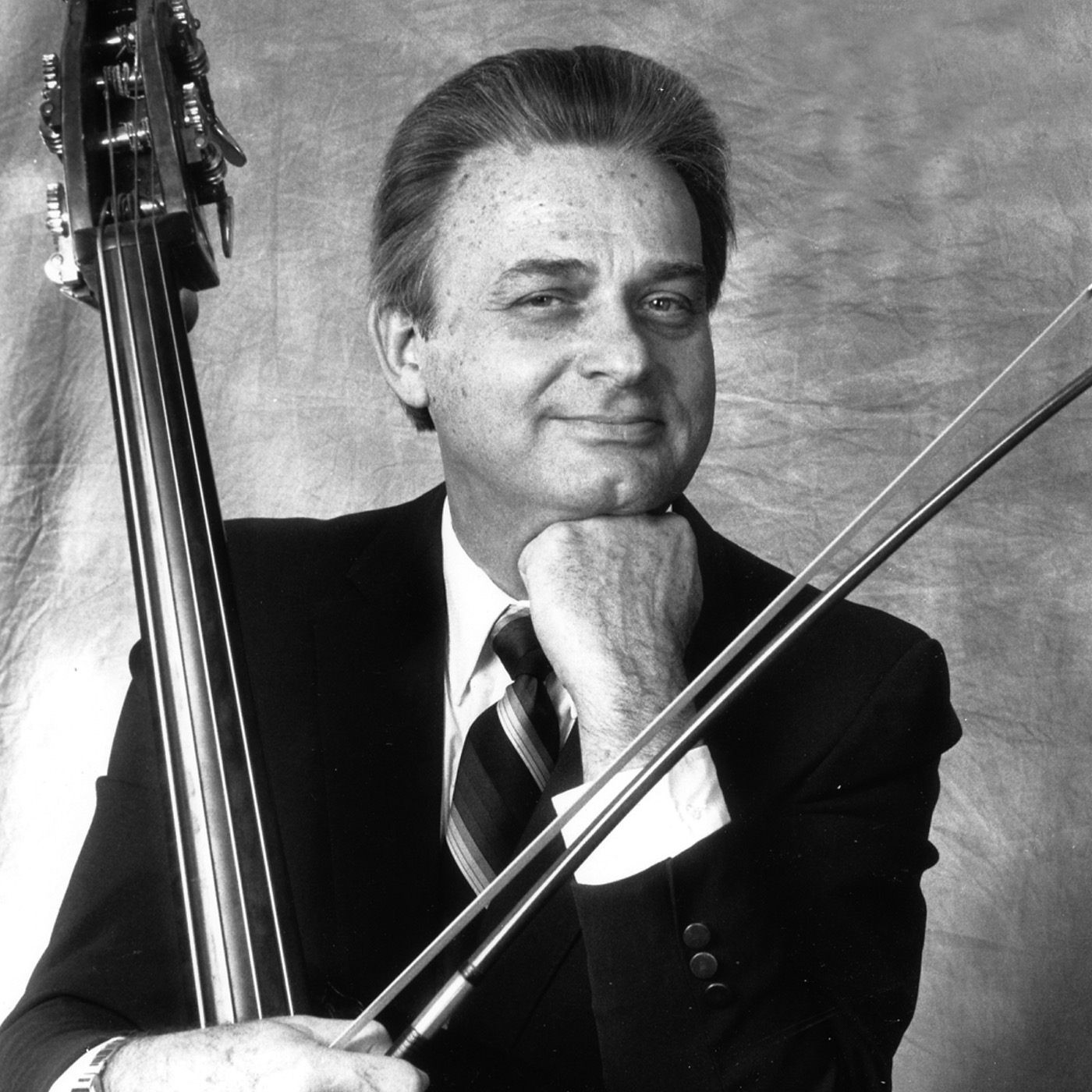
Ep 168168: Lawrence Hurst Interview (complete)
We are featuring our complete interview with former Indiana University and University of Michigan double bass professor Lawrence Hurst on this week's Contrabass Conversations episode. This interview was broadcast in the early days of this show in three separate parts, and we are pleased to present the complete and uninterrupted interview on this week's show. This episode was co-hosted by John Grillo. Enjoy! About Lawrence Hurst: Lawrence Hurst began his musical studies on the piano accordion at the age of four. At 13, he started studying the double bass through the public school system of his hometown, Norfolk, Virginia. After serving two years with the Seventh Army Symphony, he started his professional career as principal bassist with the Dallas Symphony under Sir Georg Solti. He joined the music faculty at the University of Michigan School of Music in 1964. During his tenure at Michigan, he chaired the String Department and was Associate Dean and Director of the University Division of the National Music Camp at Interlochen, Michigan. In 1986 he joined the faculty of the Jacobs School of Music of Indiana Universtiy and was the chair of the String Department from 1987 until 2012. In 1967, he joined the summer faculty of the famed National Music Camp (now the Interlochen Arts Camp) and has taught there every summer since. His students can be found in orchestras and musical venues all over the world, including the orchestras of Philadelphia, Chicago, San Francisco, Indianapolis, Atlanta, The Metropolitan Opera, St. Louis, and Milwaukee, to name a few. In 2005 he was given the American String Teacher's Association Artist/Teacher of the Year Award, and, in 2006, the International Society of Bassists (of which he is past president) gave him the Distinguished Teaching Award. In JUne, 2013, the ISB also awarded him the Distinguished Achievement Award. He retired from the Jacobs School of Music in June 2012, whereupon his former students initiated an endowment scholarship and medal for double bassists in his name. email: [email protected] phone (call-in number--we'll play your message on the show!): 415-952-5643
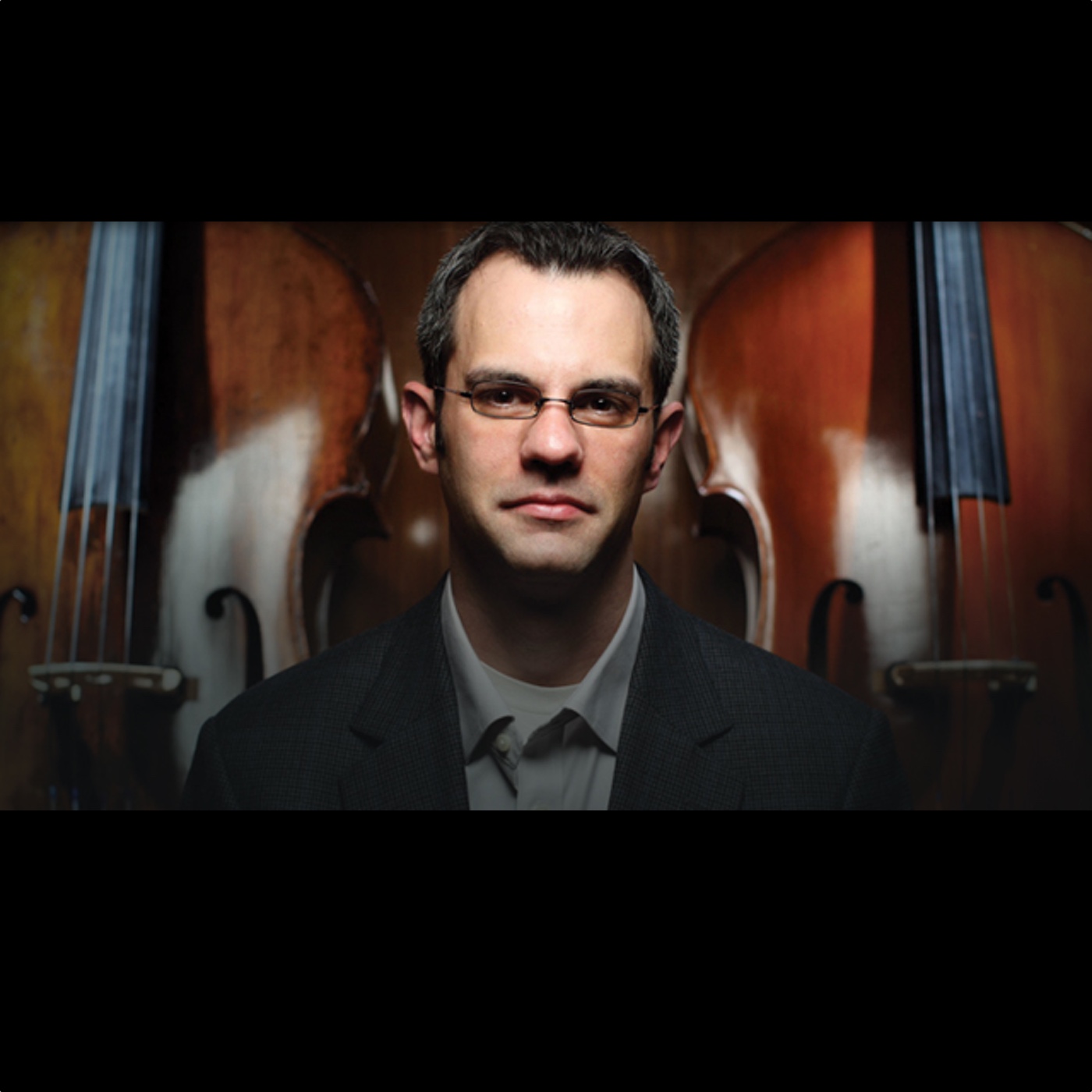
Ep 167167: Scott Pingel on accelerated musical development, life as principal bass of San Francisco, and differences between conservatory and university teaching
We're featuring San Francisco Symphony Principal Double Bass and University of Michigan faculty member Scott Pingel on this week's show. In addition to holding down the principal bass chair for the San Francisco Symphony, Scott taught for several years at the San Francisco Conservatory, and he served as Principal Bass of the Charleston Symphony prior to his appointment in San Francisco. This was really a great interview, and it was a pleasure to connect again with Scott (we played together for the Spoleto Festival over a decade ago). You'll learn a lot about how Scott approaches practicing for auditions, his interesting path to becoming a bass player, and the instruments and bows on which he has spent the last several years performing. About Scott: Scott Pingel began playing the double bass at age 17 because of a strong interest in jazz, Latin, and classical music. In 2004, at age 29, he became the principal bass of the San Francisco Symphony and was named by the San Francisco Chronicle as one of the most prominent additions to the ensemble. Previously, Pingel served as principal bass of the Charleston Symphony Orchestra, performed with the Metropolitan Opera, the Boston Symphony Orchestra at Tanglewood, the Metamorphosen Chamber Orchestra, and served as guest principal with the National Arts Center Orchestra in Canada. His solo performances with ensembles such as the San Francisco Symphony, the San Francisco Academy Orchestra, and the Charleston Symphony Orchestra, and in recitals frequently consisting of his own arrangements, have been met with high critical acclaim. As a chamber musician, he has collaborated with such luminaries as Yo-Yo Ma, Julia Fischer, Gilbert Kalish, Wu Han, Joseph Silverstein, Yefim Bronfman, and members of the esteemed Emerson, Miro, Pacifica, St. Lawrence, Danish, and Takacs Quartets. He can often be heard at the Music@Menlo and Music in the Vineyards festivals and on television and radio programs including NPR's Performance Today. Formerly active as a jazz musician and electric bassist, Pingel worked with greats including Michael Brecker, Geoff Keezer, and James Williams, and performed in venues from Birdland in New York to Fasching in Stockholm. Pingel has taught masterclasses at prestigious institutions such as the Curtis Institute of Music, The Julliard School, Colburn School, Boston University, Manhattan School of Music, Shanghai Conservatory, Beijing Central Conservatory, and the New World Symphony. Pingel's primary instructors were James Clute, Peter Lloyd, and Timothy Cobb. He earned a BM degree from the University of Wisconsin-Eau Claire, a MM degree from the Manhattan School of Music, and spent two years as a fellow at the New World Symphony. Outside of music, Pingel spent many years studying the ancient Korean martial art of Hwa Rang Do, in which he holds a black belt. He was an instructor at the Madison Academy of Hwa Rang Do and founded the University of Wisconsin-Eau Claire Hwa Rang Do/Tae Soo Do Program, which continues to this day. Pingel lives in Ann Arbor with his wife, Iris, and their daughters, Hannah and Sophia. Vanhal complete performance with San Francisco Academy Orchestra Scott's "dueling banjos" cadenza video email: [email protected] phone (call-in number--we'll play your message on the show!): 415-952-5643

Ep 166166: Larry Gray on multi-instrumentalism, thinking in jazz, and the history behind Chicago's Jazz Showcase
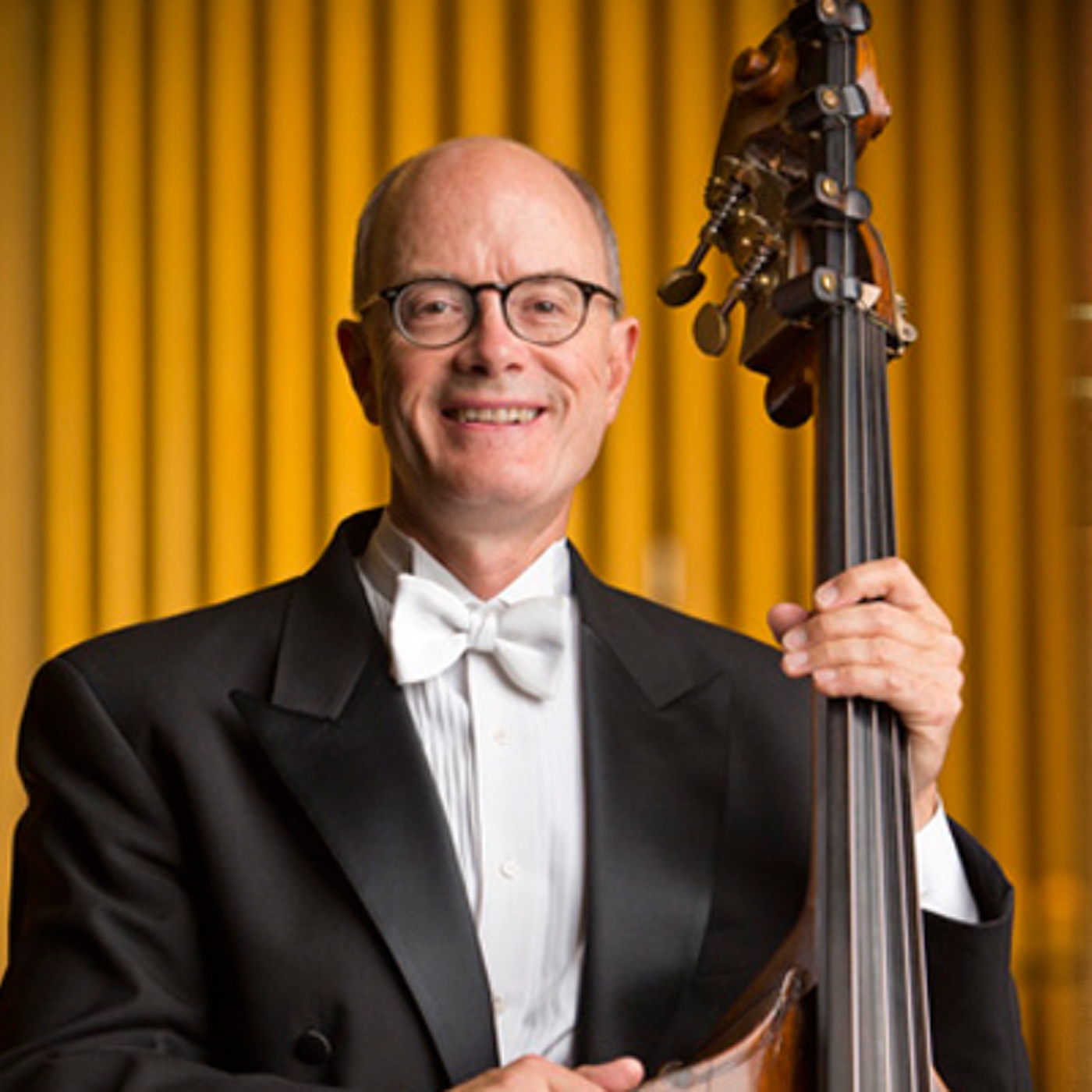
We're featuring an interview with bassist Larry Gray on this week's episode. Larry's multi-instrumental path has taken him through performance on guitar, flute, cello, and piano in addition to bass. Larry is in high demand as a jazz bassist in Chicago, performing regularly for decades at Joe Segal's Jazz Showcase, and he teaches at the University of Illinois at Urbana-Champaign. Enjoy! About Larry Born on Chicago's south side, Larry Gray is considered by many to be one of jazz music's finest double bassists. His impressive versatility and uncommon musical curiosity keep him in demand as both a leader and sideman. Larry began his musical studies at the age of five when his father brought home an accordion and introduced him to his first teacher. Invigorated by this study, Larry added the guitar to his arsenal and studied piano seriously for many years thereafter. It was not until he was in his twenties that he decided to switch to the double bass. Larry went on to study classical music extensively, eventually adding the cello to his long list of loved instruments. His principal teachers were Joseph Guastafeste, longtime principal bassist of the Chicago Symphony Orchestra, and cellist Karl Fruh, a highly regarded soloist and teacher. Under Mr. Fruh's guidance, he received bachelors and masters degrees in cello performance from the Chicago Musical College of Roosevelt University. Throughout his long and varied career, Larry has worked with numerous exceptional artists and jazz legends, including McCoy Tyner, Jack DeJohnette, Danilo Perez, Branford Marsalis, Benny Green, Freddy Cole, Benny Golson, Steve Turre, George Coleman, Lee Konitz, Bobby Hutcherson, Sonny Fortune, Ira Sullivan, Junior Mance, David "Fathead" Newman, Willie Pickens, Ann Hampton Callaway, Charles McPherson, Antonio Hart, Jackie McLean, Sonny Stitt, Eddie "Lockjaw" Davis, Al Cohn, Randy Brecker, Nicholas Payton, Kurt Elling, Eric Alexander, Phil Woods, Jon Faddis, Roscoe Mitchell, Von Freeman, Wilbur Campbell, Eddie Harris, and Les McCann. In addition, he has collaborated with guitarists Kenny Burrell, Joe Pass, and Tal Farlow, as well trumpeters Donald Byrd, Harry "Sweets" Edison, and Tom Harrell, among others. Larry continues to tour extensively, performing at jazz festivals and clubs around the globe, including the Umbria Jazz Festival, the Havana Jazz Festival, Rio Sao Paulo Festival, North Sea Jazz Festival, the Montreal International Jazz Festival, ECM Festival in Bielsko-Biala, Poland, the Poznan Jazz Festival, Monterey Jazz Festival, the Montreaux Detroit Festival, the Chicago Jazz Festival, Carnegie Hall, Lincoln Center, the Hollywood Bowl, Village Vanguard, Blue Note (New York and Tokyo), Kennedy Center, and the Ravinia Festival, with such jazz luminaries as Marian McPartland, Clark Terry, Nancy Wilson, Frank Morgan, James Moody, Larry Coryell, Louis Bellson, Barry Harris, Dorothy Donegan, Monty Alexander, Frank Wess, Joe Williams, Doc Severinsen and the Tonight Show Band, Kenny Drew Jr., and most recently, Ramsey Lewis. As a classical musician, Larry played several seasons with the Civic Orchestra of Chicago, including a year as principal bass. He worked on many occasions with the Chicago Symphony Orchestra under master conductors Erich Leinsdorf, Rafeal Kubelik, Carlo Maria Guilini, and Sir George Solti. He also was the featured double bassist with Lyric Opera for the world premiere of the opera Amistad. Larry is an arranger and composer whose work has been widely recognized as uniquely melodic and exceptionally refined. His discography includes 1,2, 3,..., on Chicago Sessions, the solo bass record, Gravity, One Look, and Solo + Quartet, all on Graywater Records, as well as the Ramsey Lewis and Nancy Wilson collaborations Meant to Be and Simple Pleasures. He can also be heard on the Ramsey Lewis recordings Appassionata, Time Flies, and With One Voice, and the latest release, Songs From the Heart. Larry also arranged and produced the critically acclaimed CD, Django by Ferro. Furthermore, Larry has recorded with Chet Baker, Curtis Fuller, Ira Sullivan, Lin Halliday, Willie Pickens, Nicholas Payton, Randy Brecker, Bunky Green, Bob Moses, Irish flute-whistle virtuoso Laurence Nugent, pop sensations Linda Eder, Dennis DeYoung, and Peter Cetera, and songwriter Michael Smith, among others. In addition, Larry is a first-call studio musician, and his playing can be heard on many commercial radio and television jingles and studio projects as well as the PBS television series, Legends of Jazz, where he can be seen performing alongside Jim Hall, Benny Golson, Chris Potter, Phil Woods, David Sanborn, Chris Botti, Clark Terry, and Roy Hargrove. In addition, Larry's original composition for double bass and guitar, Five Movements, was commissioned and performed by the Chicago Symphony Orchestra Chamber Ensemble at Symphony Center in Chicago. Most recently, Larry has composed two commissioned works for the Jazz Institute of Chicago. Tribute to the
Ep 165165: Ed Barker Interview (from the archives)
Here's another popular episode from the Contrabass Conversations archives. If you haven't check this episode out before (or even if you have), you'll be in for a real treat as we explore the world of the double bass with Mr. Barker. We're featuring Boston Symphony Principal Bassist Ed Barker on this week's Contrabass Conversations episode. Conducted by Contrabass Conversations co-host John Grillo, this episode features John chatting with Ed about his early years on the bass, his schooling and time spent in the Chicago Symphony prior to his appointment with the Boston Symphony, and in-depth look at articulation on the bass, and a discussion on practicing. We hope you enjoy this conversation with this modern master performer and teacher of the double bass! About Ed Barker: Edwin Barker is recognized as one of the most gifted bassists on the American concert scene. Acknowledged as an accomplished solo and ensemble player, Mr. Barker has concertized in North America, Europe, and the Far East. Edwin Barker has performed and recorded with the Boston Symphony Orchestra, the Boston Symphony Chamber Players, and with the contemporary music ensemble Collage, a Boston – based contemporary music ensemble, and is a frequent guest performer with the Boston Chamber Music Society. Mr. Barker gave the world premiere of James Yannatos' Concerto for Contrabass and Chamber Orchestra and of Theodore Antoniou's Concertino for Contrabass and Chamber Orchestra ; he was the featured soloist in the New England premiere of Gunther Schuller's Concerto for Double Bass and Chamber Orchestra, conducted by the composer with The Pro Arte Chamber Orchestra. Mr. Barker graduated with honors from the New England Conservatory in 1976, where he studied double bass with Henry Portnoi. That same year, while a member of the Chicago Symphony, he was appointed at age 22 to the position of principal double bass of the Boston Symphony Orchestra. His other double bass teachers included Peter Mercurio, Richard Stephan, Angelo LaMariana, and David Perleman. Mr. Barker was invited to inaugurate the 100th anniversary season of the Boston Symphony Orchestra with a solo performance of the Koussevitzky Bass Concerto; other solo engagements have included appearances at Ozawa Hall (Tanglewood), Carnegie Recital Hall's "Sweet and Low" series, and at major universities and conferences throughout the world, as well as concerto performances with the Boston Classical Orchestra, the Athens State Orchestra (Greece) and with the Boston Symphony Orchestra in Boston and Europe. He was a featured premiere soloist with the Boston Symphony of John Harbison's Concerto for Bass Viol and Orchestra at Tanglewood's 2007 Festival of Contemporary Music. Mr. Barker is an Associate Professor at the Boston University College of Fine Arts where he teaches double bass, orchestral techniques, and chamber music. His other major teaching affiliations include the Boston Symphony Orchestra's Tanglewood Music Center, where he is Chairman of Instrumental and Orchestral Studies. Edwin Barker's solo CD recordings include Three Sonatas for Double Bass, on Boston Records, James Yannatos' Variations for Solo Contrabass, on Albany Records, and Concerti for Double Bass, on GM Recordings, which includes bass concerti by Gunther Schuller and Theodore Antoniou. Concerti for Contrabass also includes his highly praised performance of Tom Johnson's Failing , which was recorded live at Harvard University's Sanders Theater. Edwin Barker's latest solo offering on CD is a recently released performance of James Yannatos' Concerto for Contrabass with Collage. This episode originally aired on June 6, 2009. Enjoy!
Ep 164164: The Karr-Koussevitzky bass
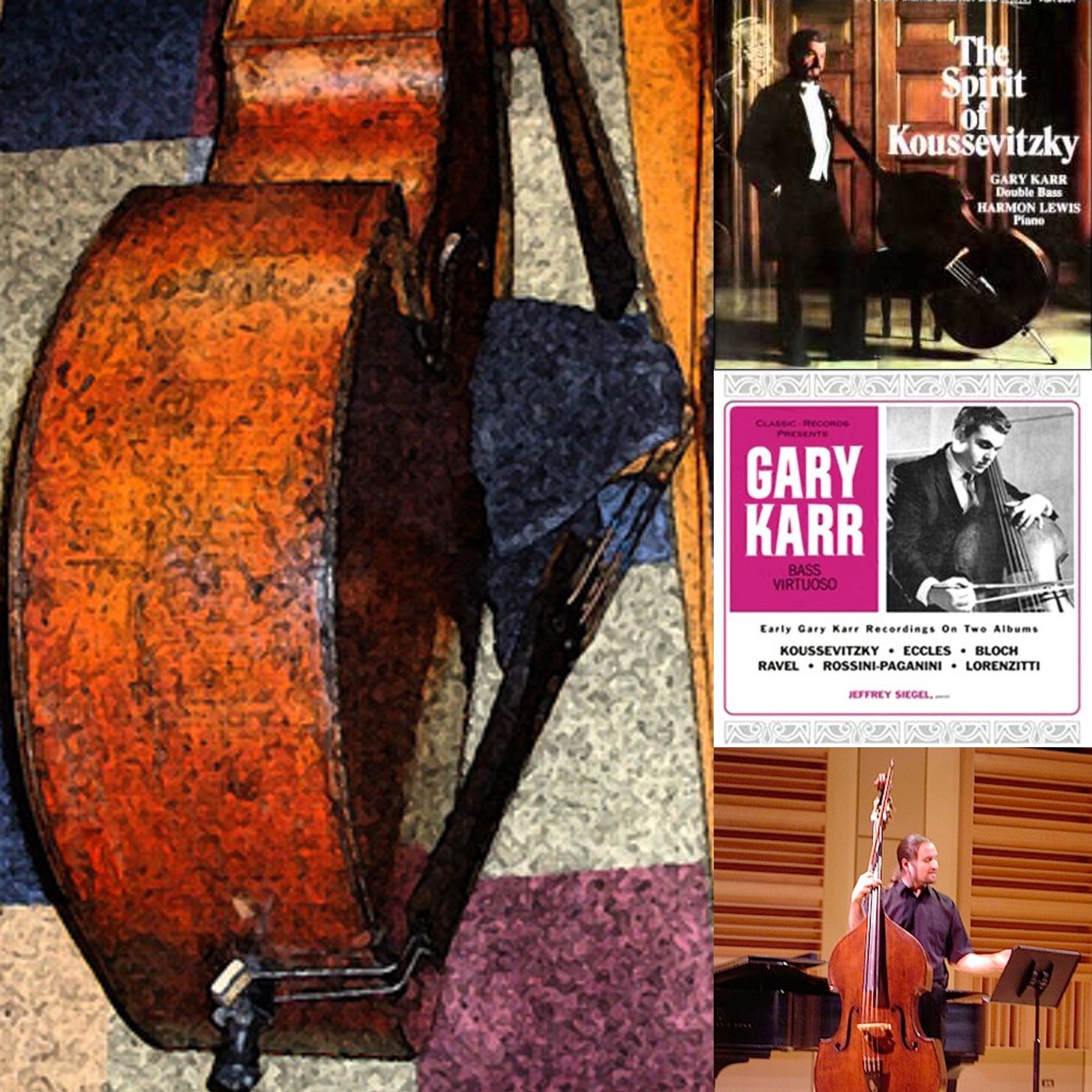
This week's episode contains a recital I did about ten years ago on the Karr-Koussevitzky Double Bass. I was thrilled to have this opportunity and thought a lot about what sort of repertoire would be best suited for a recital like this. Eventually I settled on a traditional program that I thought tapped into some aspect of either Gary Karr or Koussevitzky. Lyric Opera of Chicago bassist Greg Sarchet was kind enough to set this event up for me at Northeastern Illinois University in their gorgeous recital hall. You'll hear the following pieces on this recital: Eccles Sonata (complete) Koussevitzky Valse Miniature Gliere Intermezzo Hindemith Sonata Massenet Meditation from "Thais" It's a live recital and has its share of mistakes for sure, but it's kind of cool to get a chance to hear that bass, and it was certainly a great opportunity for me to play on a piece of history. Enjoy--more interviews coming next week! Amati recital program NEIU (PDF)

Ep 163163: Kurt Muroki Interview
This week, we bring you an interview with Indiana University double bass professor Kurt Muroki. Kurt is an outstanding performer, teacher, and artist, and we had a great conversation about teaching, learning, and performing. Enjoy! About Kurt Muroki: Former Artist Member with the Chamber Music Society of Lincoln Center, Professor Kurt Muroki began his musical studies on the violin at the age of six and subsequently performed concerti with the Honolulu Symphony and the Maui Symphony. Mr. Muroki went on to study the Double bass at the age of 13 and entered the Juilliard School of Music at 17 studying with his teacher / mentor Homer R. Mensch. At the age of 21 Kurt began performing with the internationally renowned Sejong Soloists under ICM Management. Kurt has performed with the The Jupiter Chamber Players, Speculum Musicae, "Great Performers" series at Lincoln Center, Ensemble Sospeso, Sequitur, The Metropolitan Opera Orchestra, Brooklyn Philharmonic, American Composers Orchestra, Tokyo Opera Nomori, New York City Ballet, 92nd St. Y, and Bargemusic. Festivals include Marlboro Music Festival, Festival L'Autonne at IRCAM, and Aspen Music Festival to name a few. Kurt is also active playing movies, commercials, popular, and classical recordings with titles including the Oscar winning film "The Departed", "Extremely Loud and Incredibly Close", "Hitch", "Julie and Julia", "The Manchurian Candidate", "Roger Daltrey Sings Pete Townshend" – The Who, Sting, Peter Gabriel, and Itzhak Perlman. Mr. Muroki has won numerous competitions including 1st prize in the Aspen Music Festival double bass competition, the first bassist to win the New World Symphony concerto competition, and the Honolulu Symphony Young Artists competition. He has collaborated with members of the Guarneri, Juilliard, Tokyo, Orion quartets, Ensemble Wein-Berlin, Jaime Laredo, Lynn Harrell, Maurice Bourgue, Toru Takemitsu, Peter Schickele, John Zorn, and Brian Ferneyhough among others, and has performed concerto tours throughout Asia and the United States. Professor Muroki is currently tenured faculty at the Jacobs School of Music at Indiana University, Artist/Lecturer at Stony Brook University, Distinguished Artist at the McDuffie Center for Strings at Mercer University, faculty/Director of the Kaplan Fellowship program at the Bowdoin International Music Festival, teaches at New York String Orchestra Seminar, and has been a judge at the Yale Gordon Competition at Peabody Conservatory, ASTA, and others. Mr Muroki is a past Board Member of the International Society of Bassists and is a D'Addario Strings Artist.

Ep 162162: David Allen Moore Interview (from the archives)
We're featuring an interview from the podcast archives with Los Angeles Philharmonic bassist and University of Southern California bass instructor David Allen Moore on the podcast this week. David also teaches bass during the summer at the Domaine Forget program in Quebec. In this interview, we chat about his early years on the instrument, teachers that have influenced him, his time in the Houston Symphony and Los Angeles Philharmonic, challenges of learning repertoire for a professional orchestra, his studies with François Rabbath, German and French bow differences, and many other topics. After the interview, we feature a track of David playing the Bohemian Dance from Frank Proto's Carmen Fantasy. Enjoy! David's Faculty Page of USC Website Domaine Forget Festival About David: DAVID ALLEN MOORE graduated Summa Cum Laude from the University of Southern California in 1993 where he studied with Dennis Trembly, Paul Ellison, and John Clayton. Moore continued his studies in Boston, working privately with BSO principal bass Edwin Barker while performing with Boston Baroque, the Rhode Island Philharmonic, Emmanuel Music, and the Boston Pops Esplanade orchestra. Moore performed as a substitute with the Los Angeles Philharmonic during the 1995/96 season, after which he was a member of the Houston Symphony bass section under maestro Christoph Eschenbach, from 1996 to 1999. In January of 2000 Moore became a full-time member of the Los Angeles Philharmonic's bass section and was promoted to the 4th chair by audition in October of the same year. Moore has participated in numerous festivals including Tanglewood, the Grand Teton Music Festival, Mainly Mozart, the Portland Chamber Music Festival, and Kent/Blossom Summer Music Festival. He is an active recitalist and chamber musician, having performed in the Houston area with the Greenbriar Consortium, in Los Angeles with the Philharmonic's New Music Group, and in San Diego with the Mainly Mozart Festival. He has been a featured clinician at the 2012 TCU International Double Bass Festival, the 2011 International Society of Bassists convention, the 1999 Texas Double Bass Symposium. From 2003-2009 Moore was a faculty member at the Colburn Conservatory in Los Angeles. Moore has been a faculty member of the University of Southern California's Thornton School of Music since 2000, and since the Fall of 2010 he has been part of the full-time faculty as an Assistant Professor while maintaining his position in the Los Angeles Philharmonic. Since 2007 Moore has been a faculty member at Domaine Forget in Quebec, Canada. In November of 2007 he began studies with internationally renowned double bass pedagogue and soloist François Rabbath in Paris. Moore received both the Diploma and Teaching Certificate from the Institut International Rabbath in February of 2009. Moore has presented clinics and master classes at Juilliard, The Curtis Institute of Music, Northwestern University, and Rice University, among others. He has former students performing in major orchestras in The U.S., Canada, Australia, Europe, and Asia. The double bass that Moore performs on with the Philharmonic is an instrument by Nicolo Gagliano made in 1735.His solo bass is a modern instrument by French luthier Christian Laborie. Moore uses bows designed especially for him by Paris bowmaker Boris Fritsch that are a unique French/German hybrid and are designed to be played either overhand or underhand. T his interview originally aired on July 18, 2009 on CBC Episode 128.
Ep 161161: Alex Hanna Interview
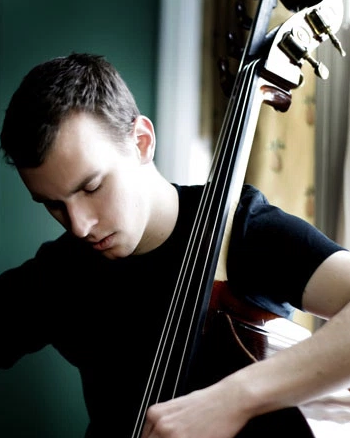
We are thrilled to bring you this interview with Chicago Symphony Orchestra Principal Bass Alex Hanna. In addition to his responsibilities leading the bass section of the CSO, Alex teaches double bass at DePaul University and is active as a clinician, soloist, and chamber musician. About Alex: Inspired by the sound of the symphony orchestra, Alexander Hanna at age 13 decided to pursue a career as a bassist. Throughout his youth, after beginning music studies on the piano at age 4, he performed as a recitalist on both piano and bass and also as a soloist with the Toledo Symphony Orchestra on both instruments. In 2004, he was invited to study at the Curtis Institute of Music with Hal Robinson and Edgar Meyer. In 2012, Riccardo Muti appointed Hanna as principal bass of the Chicago Symphony Orchestra. He had served four years as principal bass of the Detroit Symphony Orchestra. Alex will be performing the Vanhal Concerto with the Chicago Symphony December 17-19, 2015. We feature excerpts from Alex performing this concerto with the Bellingham Festival Orchestra, Michael Palmer conducting. Enjoy!
Ep 160160: Barry Lieberman Interview (2014)
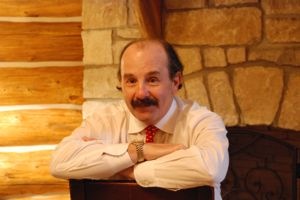
This week, we're featuring an interview with double bassist Barry Lieberman. The former Assistant Principal Bass of the Los Angeles Philharmonic and Principal Bass of the Winnipeg Symphony, Barry now serves as co-director of The American String Project, an innovative string ensemble which features arrangements of string quartets for small string ensemble with double bass. In this interview, we discuss Barry's recent TASP CD release on MSR Classics, his orchestral solo tutorials on his YouTube channel, upcoming possible future video projects, and designing a bass rosin that really works.
Ep 159159: Paul Ramsier Interview
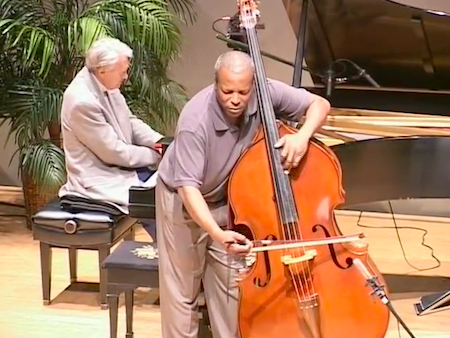
This special Contrabass Conversations episode features an interview with composer Paul Ramsier. Though Paul is particularly well-known for his collaborations with Gary Karr, he continues to remain quite active as a composer and has a number of interesting projects in the works. Throughout this interview, you will hear excerpts from Divertimento and Silent Movie, two of Paul's most popular compositions. These excerpts come from Paul's recently released DVD titled Four Ramsier Favorites and featuring double bassist Jerome Butler on bass. We also discuss Bass Tunes, Paul's excellent volume of duets for young bassists and a book that I frequently use with my own students. Links to some of Paul's online offerings: Paul's website Four Ramsier Favorites DVD Bass Tunes Compositions for Virtuoso Double Bass CD (site features audio excerpts of these tracks) Lemur Music (search for Paul Ramsier - many titles available including music for Divertimento, Silent Movie, Three Lyric Pieces, Eusebius Revisited, Road to Hamelin, and Lullaby for Bass Quartet)
Ep 158158: Charles DeRamus interview
We're bringing you an interview with double bassist Charles DeRamus on Contrabass Conversations this week. Charles is a member of the Gothenburg Symphony and has worked extensively in both Europe and the United States during his professional career. Charles has recently written a children's concert for double bass quartet and narrator called "Greta's Dream" which has been performed at many venues in the United States and Sweden. This piece will be performed at the 2011 International Society of Bassists Convention in San Francisco, so be sure to check out their session if you can attend the convention. Following the interview, we feature two excerpts from a live performance of Greta's Dream (right around the 57 minute point in the podcast if you want to jump right to them), and more information about this piece will be provided in the coming months. Be sure to check out the Gothenburg Symphony Orchestra Bass Quartet on Facebook--they've got a great page! About Charles: Charles DeRamus has a career that spans from North America to Scandinavia, where he is currently a member of the Gothenburg Symphony and has worked extensively with the Royal Stockholm Philharmonic, Swedish Radio Symphony Orchestra, Bergen Philharmonic, Malmo? Symphony Orchestra, Stavanger Symphony Orchestra, and the Swedish Chamber Orchestra. In the United States he has performed, recorded and toured with the Atlanta Symphony, Detroit Symphony, Houston Symphony, San Antonio Symphony, Virginia Symphony, and the Colorado Music Festival. His studies include degrees from Indiana University and Rice University, after which he was a member of the New World Symphony and participated in numerous summer festivals including Tanglewood, Schleswig-Holstein, National Repertory Orchestra, Pacific Music Festival, and the National Orchestral Institute. Equally at home in various musical venues, Charles has performed with the Houston Grand Opera, Atlanta Opera, Ohio Light Opera, NorrlandsOperan, Malmo? Opera, as well as the Dayton Bach Society, the contemporary ensemble "Black Box Band", Sweden's acclaimed new music ensemble Gageego, and the Persian/European influenced Rumi Ensemble. Recent solo engagements include a unique performance with the National Orchestra of Sweden for a concert celebrating newly naturalized Swedish citizens, as well as performances of Piazzolla's Le Grand Tango and Beethoven's F Major Romance with the Eureka Symphony in the United States. Charles is a dedicated teacher and currently serves on the faculties of the Sequoia Chamber Music Workshop and the Idyllwild Arts Summer Festival Programs. Previously he has served on the All-State at Interlochen and University of Michigan Summer Arts Institute faculties, as well as given masterclasses in Norway, Sweden, the United States, and at the Royal College of Music and Yehudi Menuhin School in England. As a composer/arranger, in the 2010/11 season Charles will celebrate the premier performances of "Greta's Dream", his newly written children's concert for Double Bass Quartet and narrator. Following in his father and grandfather's footsteps, Charles is the third generation bassist in his family.
Ep 157157: Koussevitzky recordings
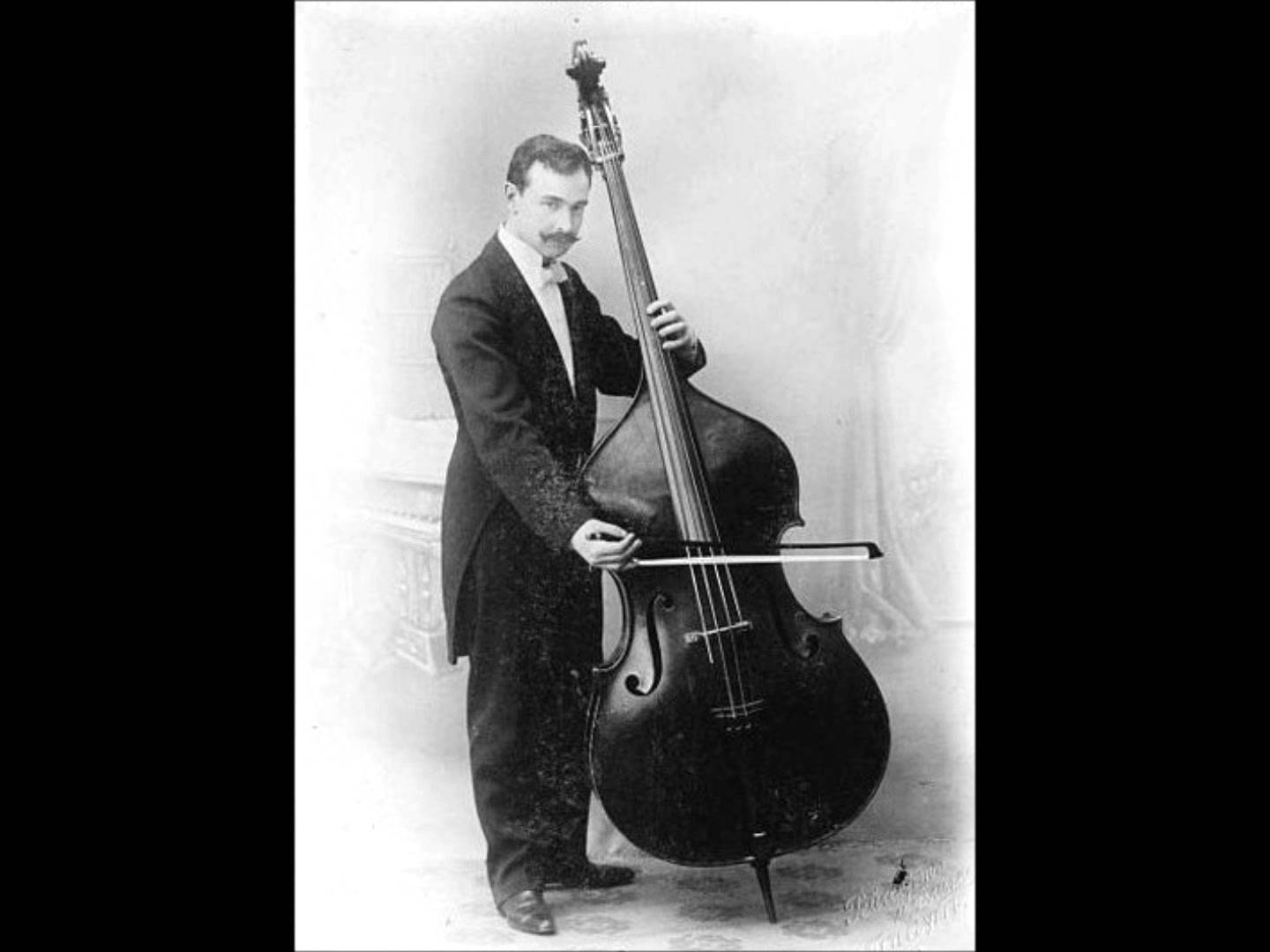
This week on Contrabass Conversations, we're bringing you rare footage of Serge Koussevitzky performing a few selections. Enjoy this trip back in double bass history, brought to you by double bassist John Grillo!

Ep 156156: Gunnelpumpers
We're featuring the debut album from Gunnelpumpers in its entirety on this episode of Contrabass Conversations. Enjoy! About Gunnelpumpers Gunnelpumpers is a group of musicians dedicated to the art of progressive, free improvisation. Founded in Chicago in 2002 by bassist/composer Douglas Johnson and percussionist Randy Farr, Gunnelpumpers has had over 50 musicians perform with the group. The core of the group currently includes founders Johnson and Farr, as well as rock guitarist John Meyer, Chicago Symphony bassist Michael Hovnanian, and session musicians Tom Mendel on bass guitar and Bob Garrett on drums. At the heart of Gunnelpumpers lies the spirit of improvisation, and each musician brings a wide range of influences to create a unique and compelling sound. By nature Gunnelpumpers defies labels, but perhaps "tribadelic" best describes the myriad of styles drawn from, which ranges from rock to classical, jazz to psychedelia, and beyond.
Ep 155155: Frederick Zimmermann Practice Tapes
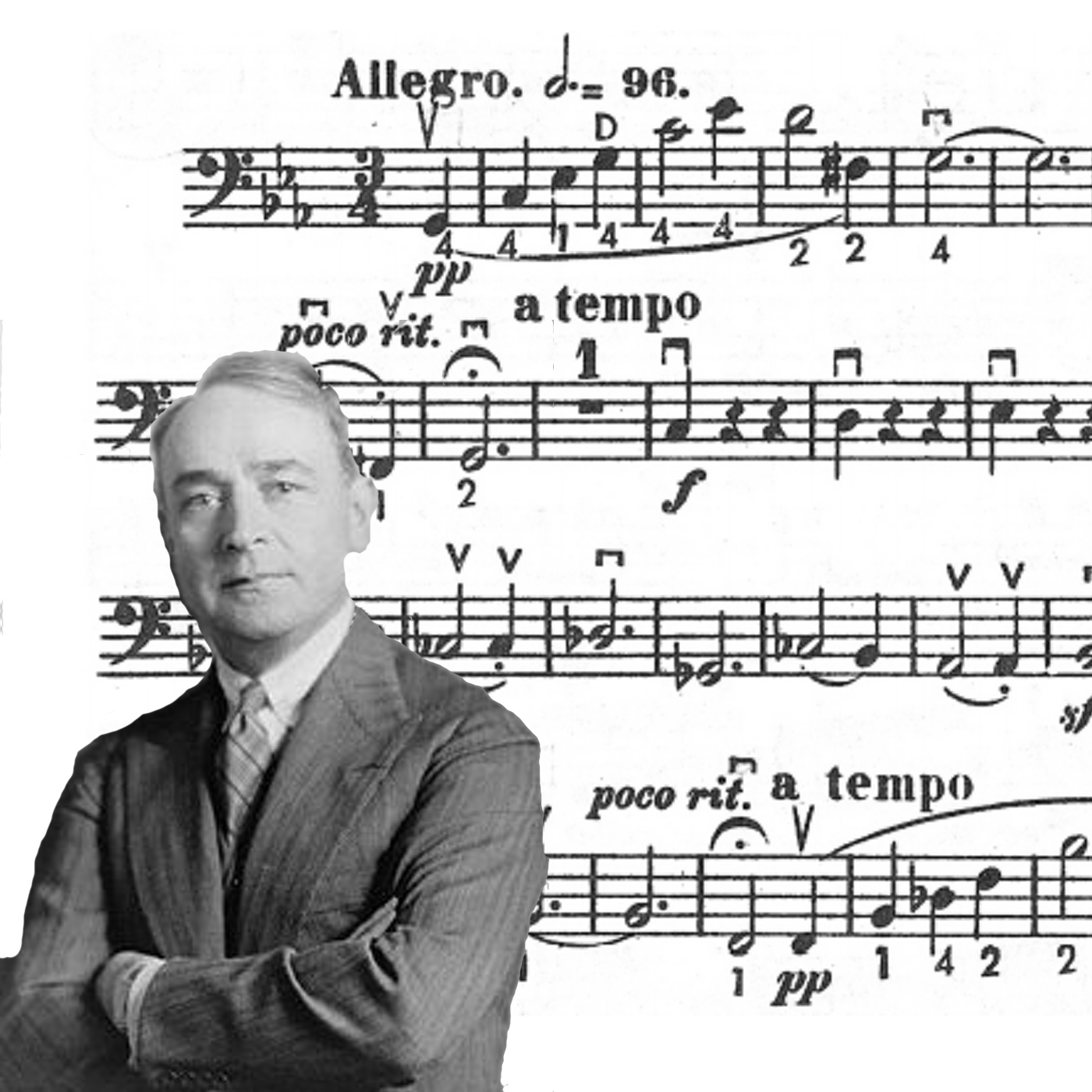
We're featuring practice tapes from the hugely influential double bass performer and pedagogue Frederick Zimmermann on this week's Contrabass Conversations episode. Co-host John Grillo unearthed and transferred these tapes of Zimmermann practicing, and he and I briefly chat about how these tapes helped to shape John's concept of sound on the double bass. Enjoy! About Frederick Zimmermann: Frederick Zimmermann was an American double bassist and teacher. He played in the New York Philharmonic from 1930-1966 serving as assistant-principal and principal and taught at the Juilliard School, Mannes College of Music, Columbia University, Manhattan School of Music, and New York University. He is considered by many to be the most influential American double bass teacher of the 20th century.
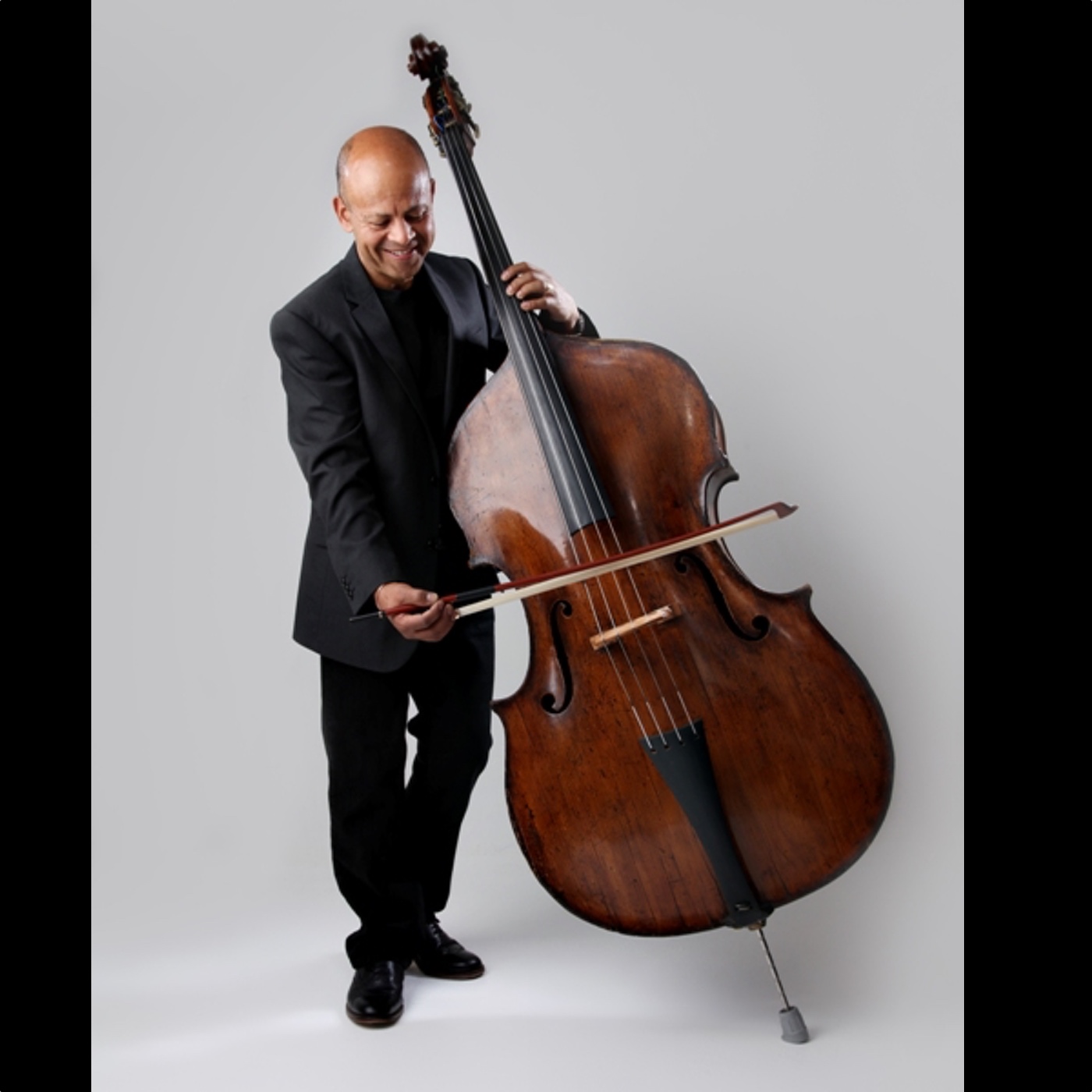
Ep 153153: Bottesini with Leon Bosch
We're featuring double bassist Leon Bosch performing selections from his latest album on this week's Contrabass Conversations episode. Titled Virtuoso Double Bass Vol. 2, this album contains a dozen works, both familiar and less familiar, from Giovanni Bottesini. You can purchase this album (as well as Leon's other albums) from Meridian Records here, and learn more about Leon at leonbosch.co.uk.

Ep 151151: Barre Phillips
We're featuring music from jazz and free improvisation bassist Barre Phillips on this week's podcast episode, as well as bass news and updates. Enjoy! About Barre Phillips: Barre Phillips (born October 27, 1934 in San Francisco, California) is a jazz and free improvisation bassist. A professional musician since 1960, he migrated to New York City in 1962, then to Europe in 1967. Since 1972 he has been based in southern France where in 2014 founded the European Improvisation Center He studied briefly in 1959 with S. Charles Siani, Assistant Principal Bassist with the San Francisco Symphony During the 1960s he recorded with (among others) Eric Dolphy, Jimmy Giuffre, Archie Shepp, Peter Nero, Attila Zoller, Lee Konitz and Marion Brown. Phillips' 1968 recording of solo bass improvisations, issued as Journal Violone in the USA, Unaccompanied Barre in England, and Basse Barre in France, is generally credited as the first solo bass record. A 1971 record with Dave Holland, Music from Two Basses, was probably the first record of improvised double bass duets. In the 1970s he was a member of the well-regarded and influential group The Trio with saxophonist John Surman and drummer Stu Martin. In the 1980s and 1990s he played regularly with the London Jazz Composers Orchestra led by fellow bassist Barry Guy. He worked on soundtracks of the motion pictures Merry-Go-Round (1981), Naked Lunch (1991, together with Ornette Coleman) and Alles was baumelt, bringt Glück! (2013). As a free improviser he has worked with (among many others) bassists Peter Kowald and Joëlle Léandre, guitarist Derek Bailey, clarinetists Theo Jörgensmann and Aurélien Besnard, saxophonists Peter Brötzmann, Evan Parker and Joe Maneri, and pianist Paul Bley. Barre is the father of rock guitarist Jay Crawford from the band Bomb, of the bassist Dave Phillips and of singer Claudia Phillips, who was a one-hit wonder in France in 1987 with "Quel souci La Boétie".
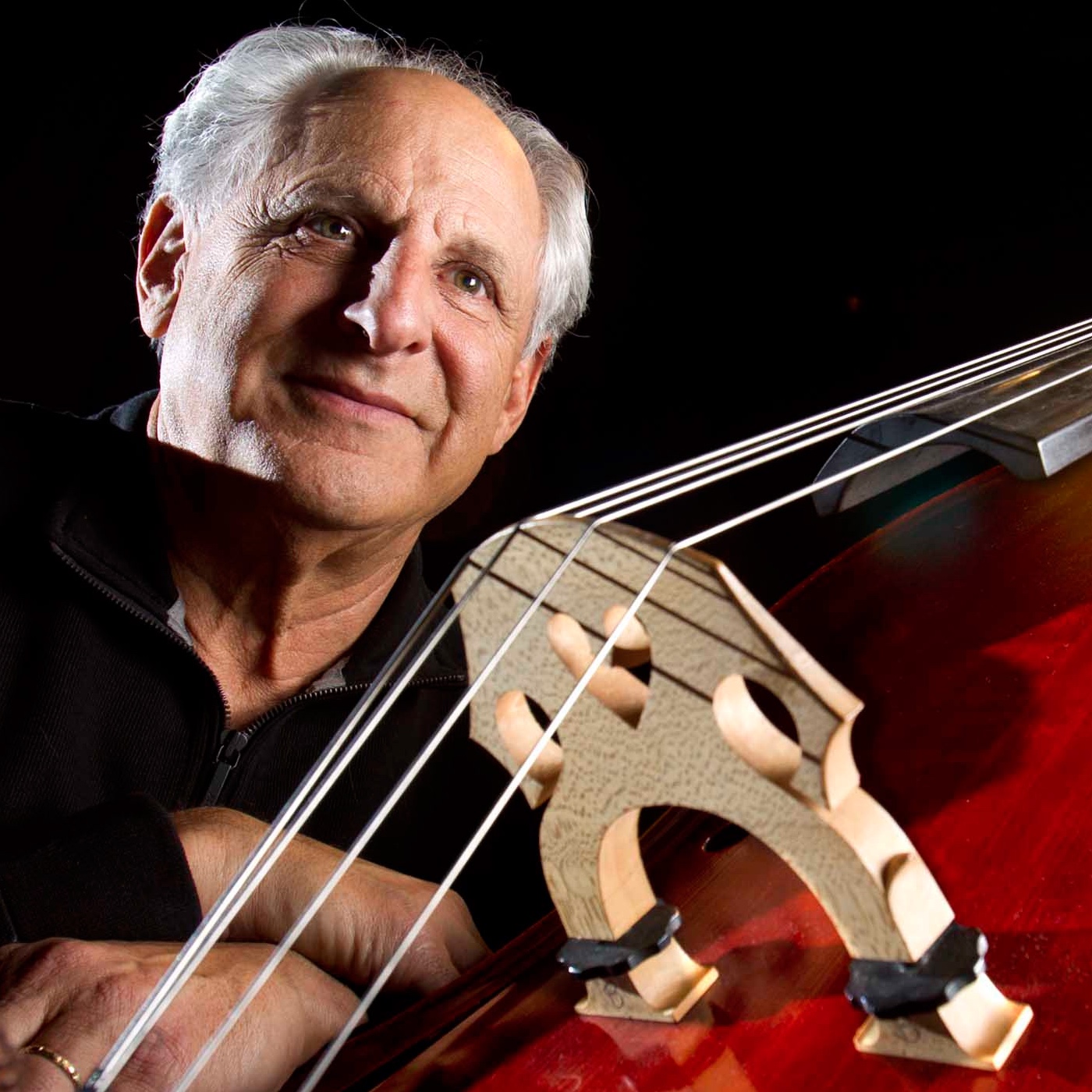
Ep 150150: ISB 2011 Convention Details
bonusIt's official! Make plans to celebrate the Summer of Bass Love at the 2011 ISB Convention, June 5-11, at San Francisco State University. Stay tuned for details and mark your calendars! We're doing a brief podcast interview today with Barry Green, who we recently featured in an interview/performance episode on Contrabass Conversations. Barry describes the setting for the 2011 convention (which will be awesome!), and some other details that I'm sure will make you excited for this event. Enjoy!
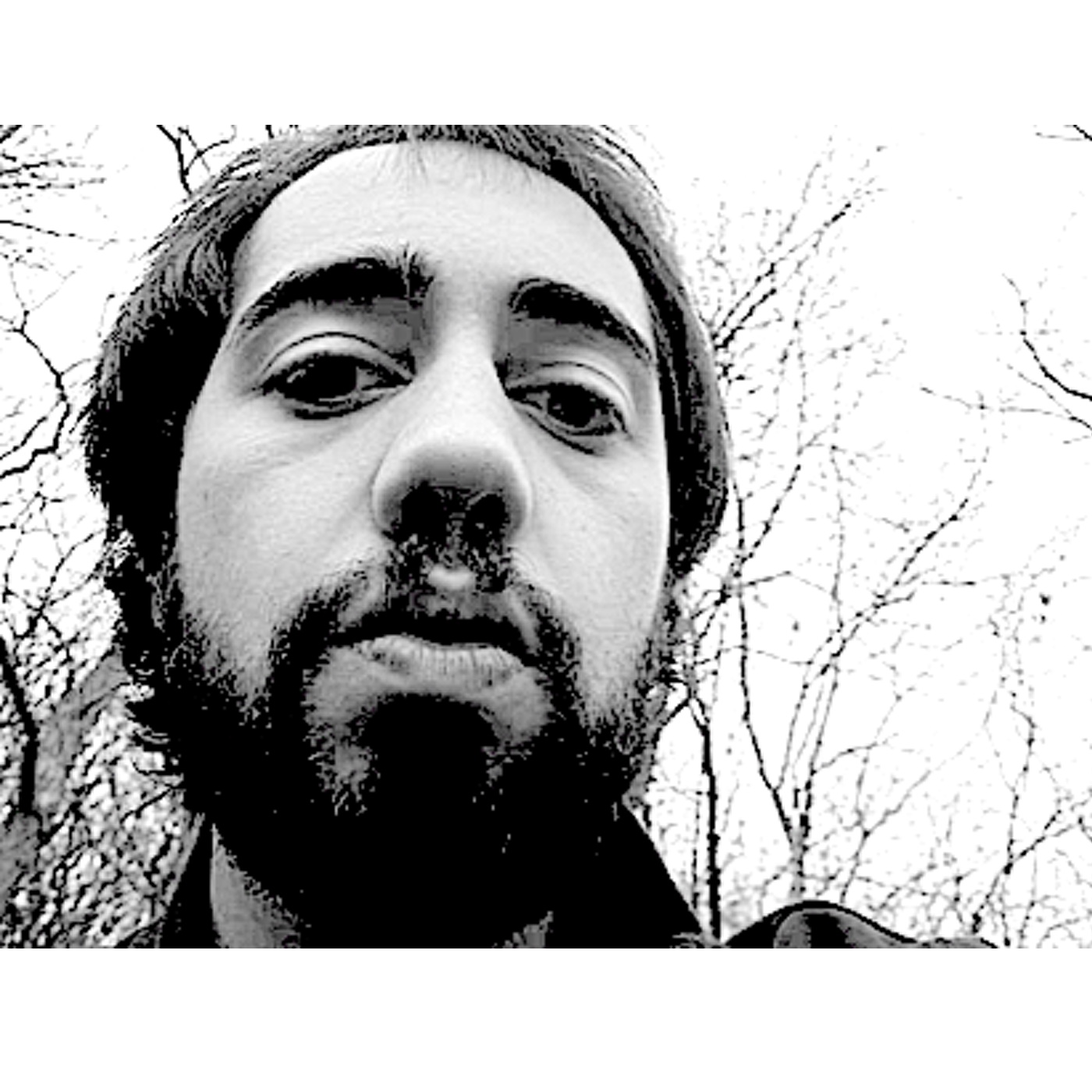
Ep 149Music Episode: Doug Stuart
bonusThis week, we're featuring the double bass stylings of Doug Stuart, a former University of Michigan student who is currently active in the San Francisco Bay area. We'll be hearing "Wake Up" and "Gratitude" from The Pear and the Pepper, Doug's latest EP.
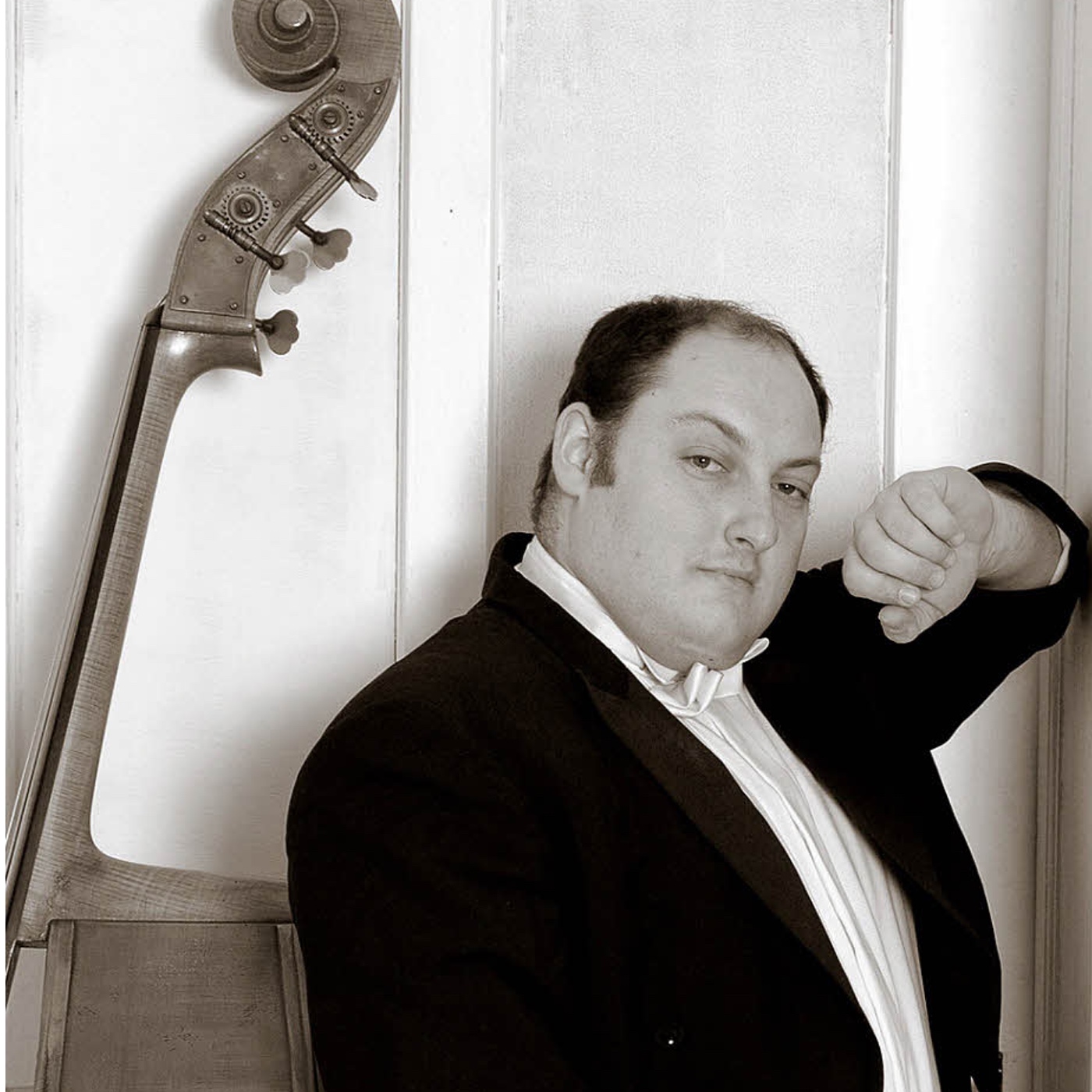
Ep 148148: Happy New Year from Guy Tuneh
bonusEnjoy this New Year's nugget from double bassist Guy Tuneh, featuring a personal greeting for all listeners and readers and a complete performance of Kol Nidrei by Max Bruch. This was recorded live on a borrowed bass during a concert for sick children.
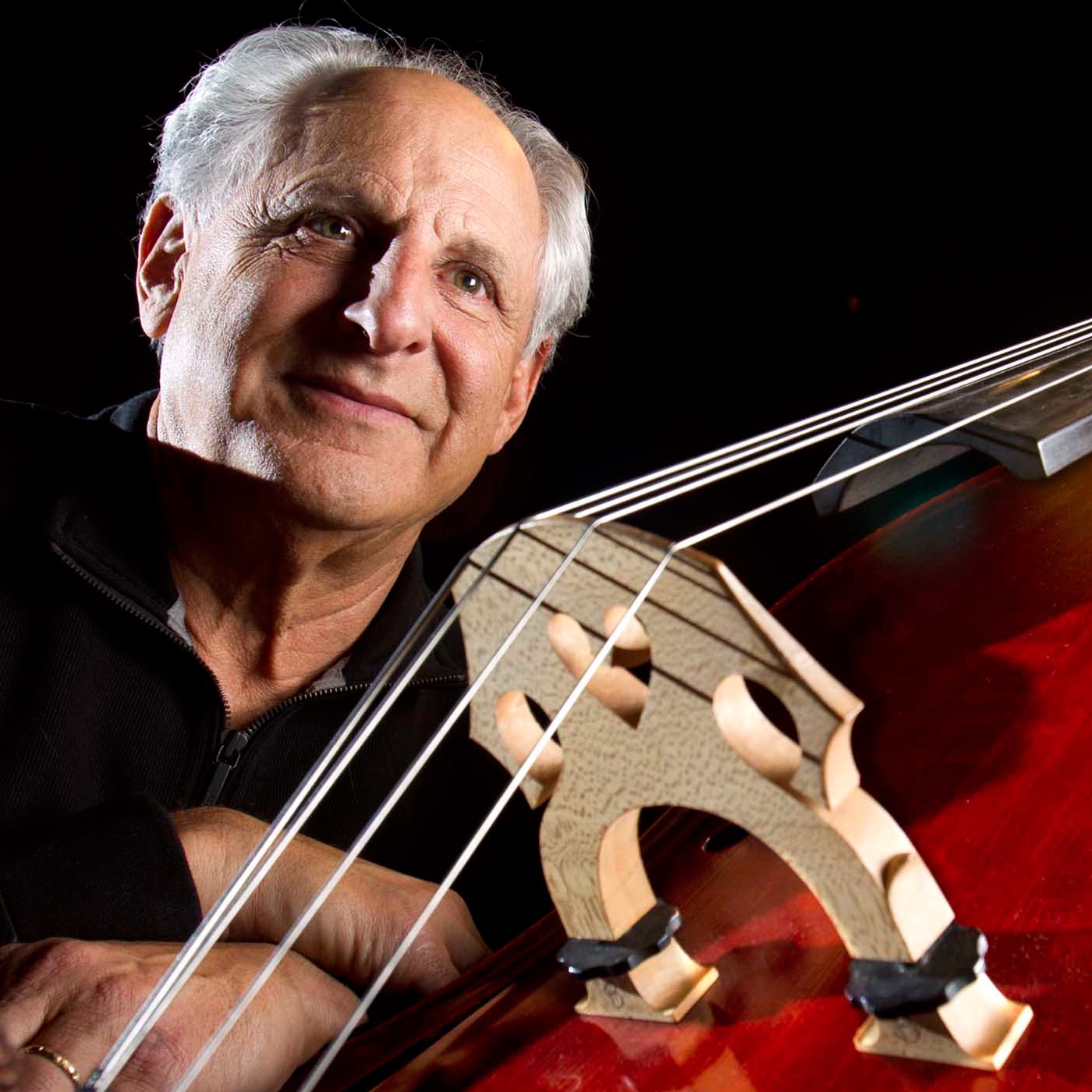
Ep 147147: Barry Green Interview
We're featuring double bassist Barry Green on Contrabass Conversations this week. In addition to being an influential bassist and teacher (he served as Principal Bass for the Cincinnati Symphony for 28 years, has written many method books, and currently teaches in the San Francisco Bay Area), Barry is the well-known author of The Inner Game of Music, The Mastery of Music, and Bringing Music to Life.
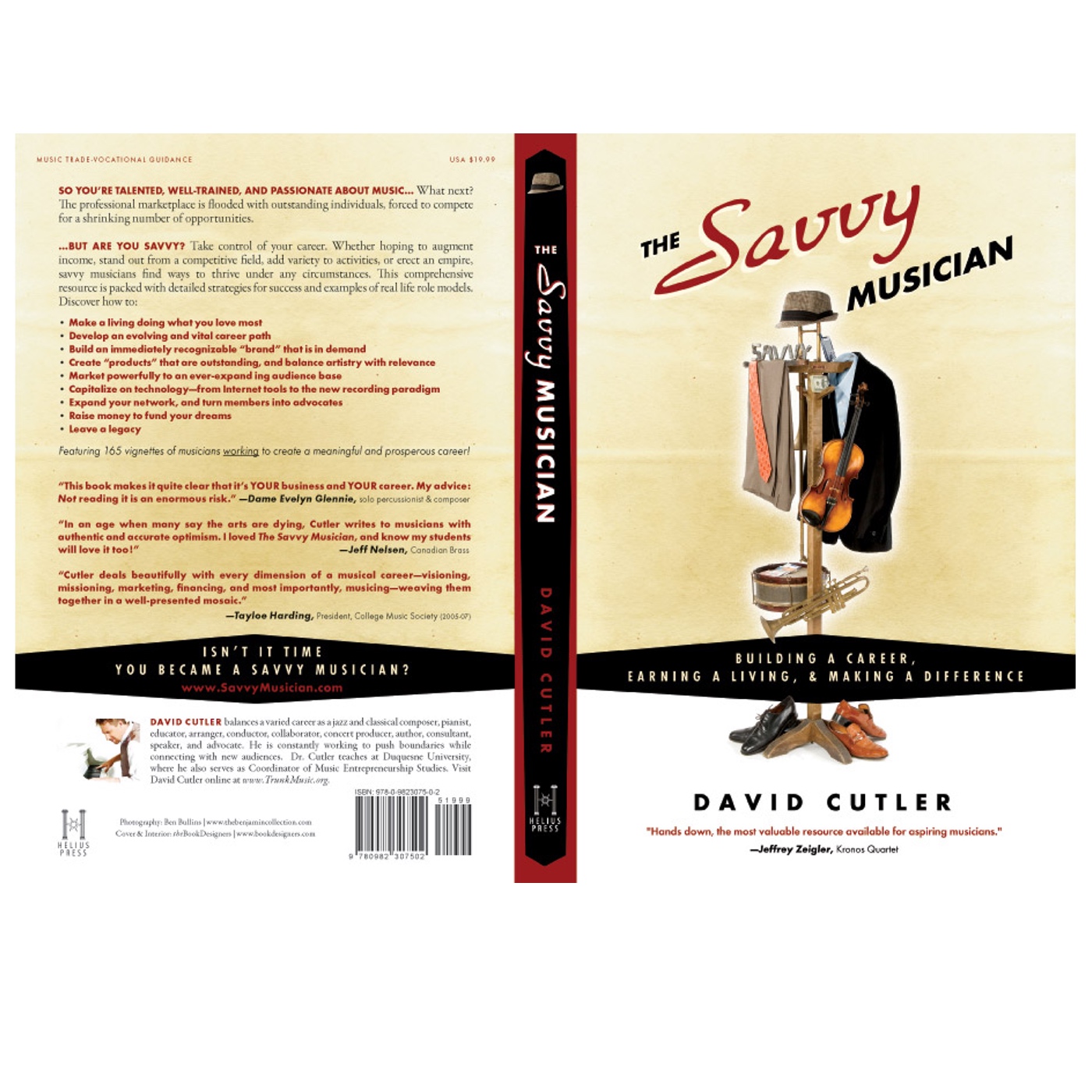
Ep 145145: David Cutler and The Savvy Musician
We're chatting with David Cutler, the author of The Savvy Musician, this week on Contrabass Conversations. This new book is filled with excellent and informative about musical entrepreneurship, product development, branding, marketing, networking, and much more. I hope that you enjoy this interview and check out David's book, and be sure to also visit his blog, which is a great supplement to the book and quite entertaining.
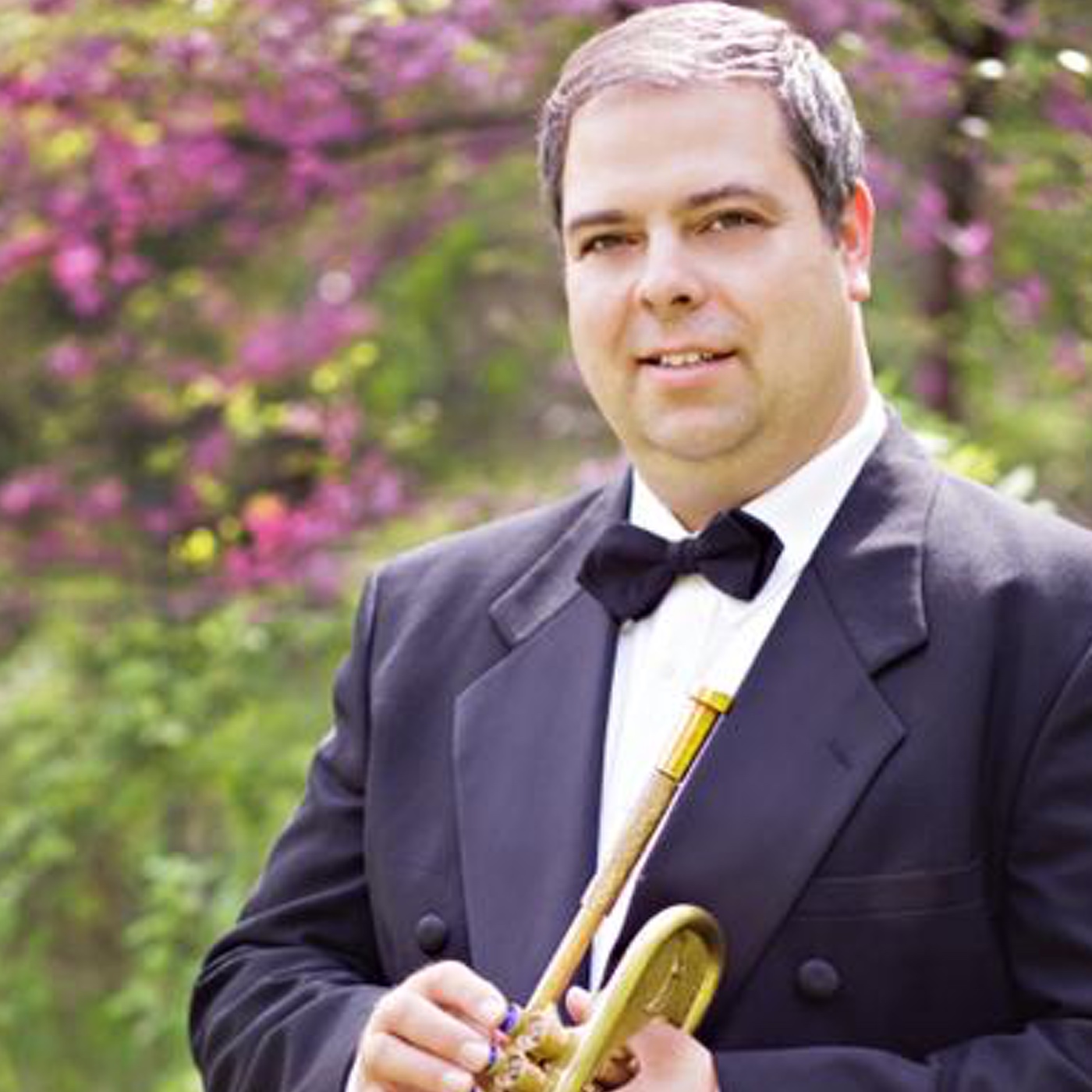
Ep 144144: Advice from James Knabe
This week's podcast features an interview with James Knabe, a trumpet performer and teacher who also runs a web consulting service for musicians. Learn more about what musicians can do to effectively market themselves by listening to this short interview, and check out musicianadvice.com for more information about the services James provides. Enjoy!
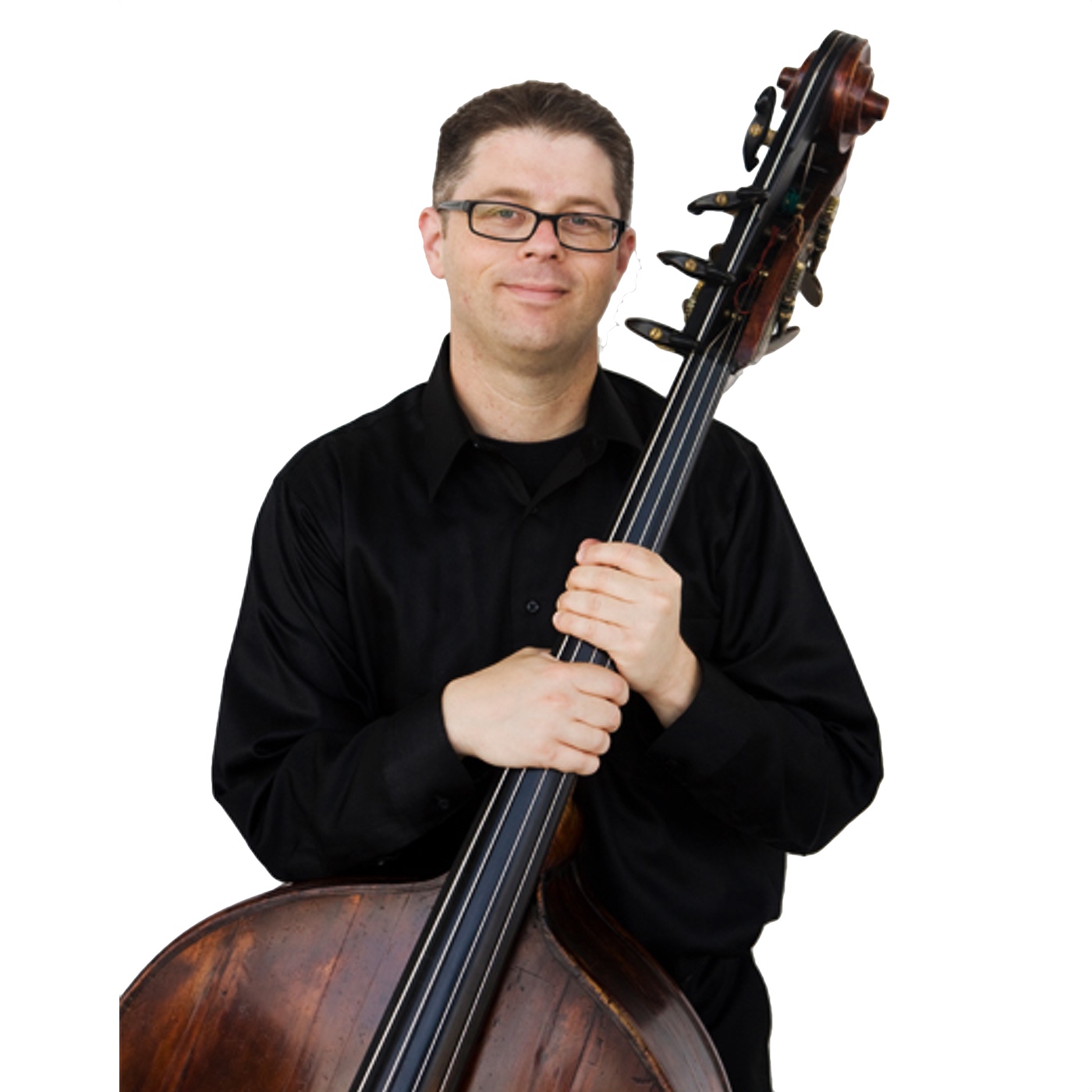
Ep 143143: Jeff Weisner Interview
This week's Contrabass Conversations episode features an interview with National Symphony bassist and Peabody Conservatory faculty member Jeff Weisner. In addition to performing and teaching, Jeff is a prolific blogger, writing about all kinds of subjects on PeabodyDoubleBass. Jeff also cross-posts many of these posts on doublebassblog.org, adding his own perspective and enhancing this site. After the interview, we feature a live recording from the 2007 International Society of Bassists Convention of Jeff performing the Ostinato from Tom Schnauber's Alba and Ostinato. Enjoy! visit PeabodyDoubleBass visit Jeff's Peabody faculty page Peabody Double Bass Faculty: Paul Johnson, Jeffrey Weisner (classical). Michael Formanek (jazz). Artist in ResidenceHal Robinson. Follow the Peabody Double Bass Studio on Twitter About Jeff: B.M., Boston University School for the Arts; M.M. , Peabody Conservatory. Bass instruction with Lawrence Wolfe, Edwin Barker, and Hal Robinson. Member, National Symphony Orchestra, Washington DC, since 1995. Active chamber musician and solo performer, with recitals and masterclasses at venues including San Francisco Conservatory, the Colburn School for the Performing Arts, and Interlochen Arts Academy.
Ep 142142: Alan Steiner and Audition Tapes
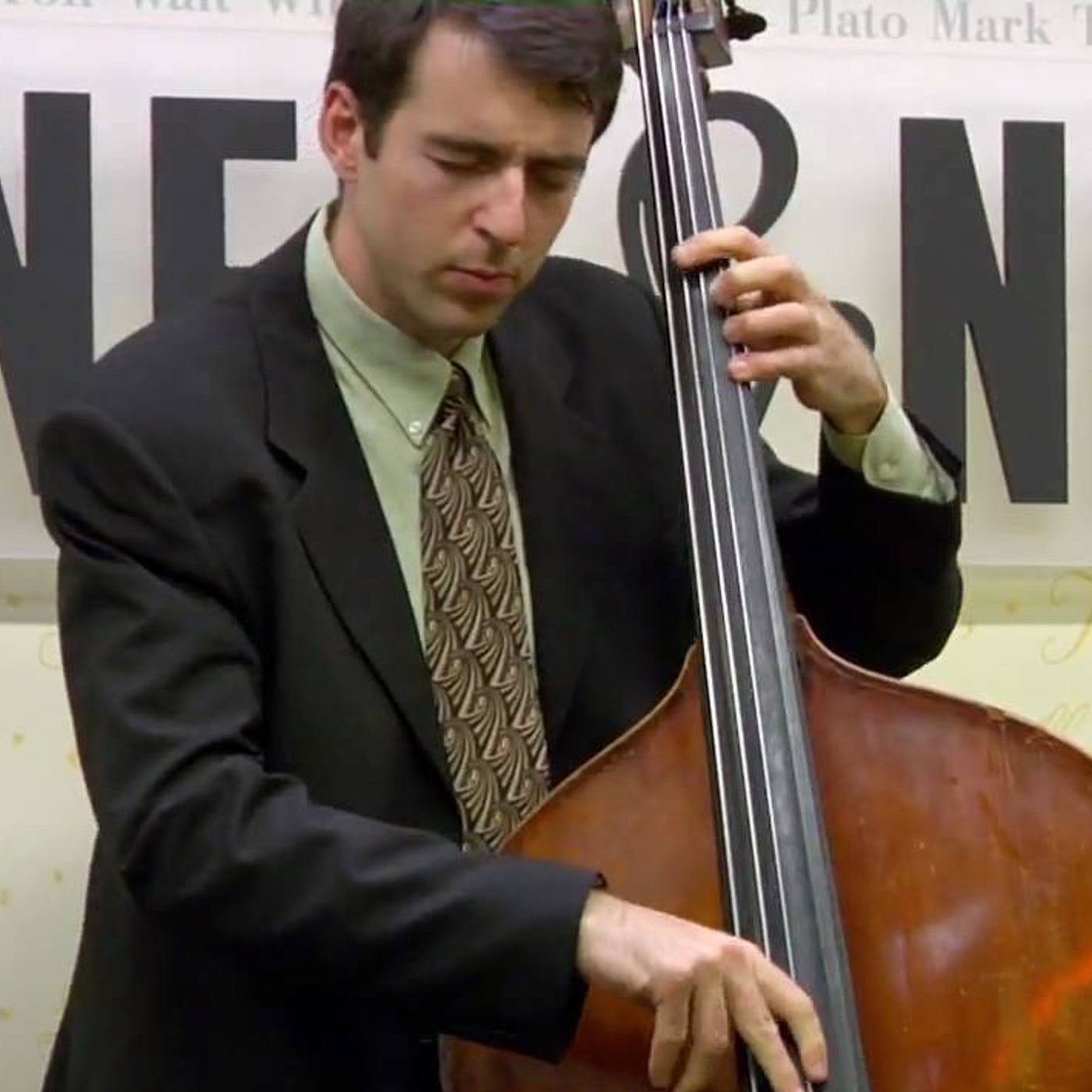
We're featuring double bassist Alan Steiner on this week's episode of Contrabass Conversations. A graduate of the Curtis Institute, Alan performs regularly with the Chicago Sinfonietta and Lake Forest Symphony. In addition to maintaining a private double bass studio, Alan teaches bass each summer at the Birch Creek Music Performance Center in Door County, Wisconsin. The topic of discussion for today's brief (15 min) episode focuses on tips for helping students to make quality audition tapes. Alan listens to many audition tapes each year when choosing bassists for the Birch Creek Symphony, and he offers advice to help students make better tapes and get more out of the process. Enjoy!
Ep 141141: David Grossman Interview
This week's episode of Contrabass Conversations features an interview with double bassist David Grossman, a member of the New York Philharmonic bass section and an active jazz bassist. Hosted by John Grillo, this interview covers David's early musical experiences, his dual interest in jazz and classical music, current projects, his philosophy and approach as a teacher, and a variety of other topics. About David: Bassist David J. Grossman began playing with the New York Philharmonic as its youngest member in December 1999 before graduating from The Juilliard School in May 2000. Born and educated in New York City, Mr. Grossman has performed as double bassist and pianist in orchestral, chamber, and jazz venues worldwide. He is a member of the double bass faculties of the Manhattan School of Music and The Juilliard School, and regularly gives master classes across the country. (view complete bio) Tracks featured: Thirds The Charm – from The Bass Of Both Worlds Jazz (iTunes link) Janacek: Pohadka (Fairy Tale) Mvt. 3 – from The Bass Of Both Worlds Classical (iTunes link) More information on David's recordings is available on his website davidjgrossman.com.
Ep 139139: The American String Project
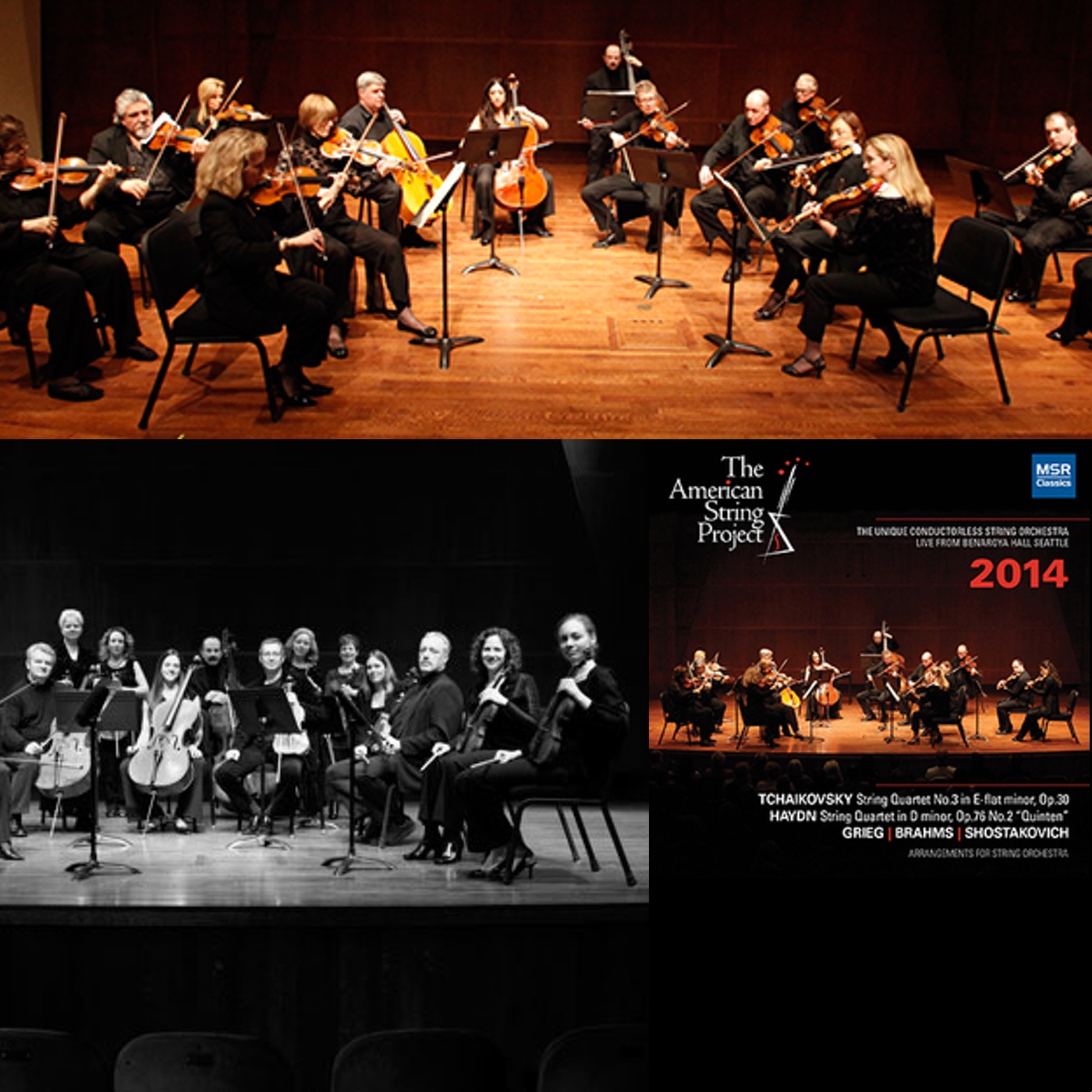
This week's Contrabass Conversations episode features a follow-up interview with bassist Barry Lieberman, double bass faculty at the University of Washington and artistic director of The American String Project, an ensemble that specializes in performing string chamber orchestra arrangements of quartet literature. Barry was previously interviewed on Contrabass Conversations in 2008, and on that occasion we discussed his early years on the instrument, his career in the Los Angeles Philharmonic and subsequent move to Seattle, and many other topics. We focus on recent developments with The American String Project in this episode, including their recent selection as "Pick of the Month" for all North American releases of classical music discs in the August issue of the BBC Music Magazine (more details on the String Project website). This fascinating and virtuosic ensemble also recently produced a documentary detailing what happens behind the scenes each year with the String Project, and it is a well-produced and highly engaging glimpse into the workings of some of the world's finest leaders in the string world in a rare collaborative setting. You can see it now on the TASP website, and we will be releasing the entire video on the podcast next week as well. One of our most popular offerings on Contrabass Conversations since its inception has been Barry's interview with Gary Karrfor his Barry Lieberman and Friends series at the University of Washington. You're in for a real treat if you haven't seen this in the past–check it out! We've featured a great deal of String Project music on both the blog and the podcast–so much in fact, that I decided to put together a PDF listing everything that we've used (in some fashion) here: American String Project music featured on doublebassblog.org.pdf Today's episode features an excerpt from the String Quartet Op. 18, No. 4 Mvt. 4 (Allegro) by Beethoven and the complete Allegro Non Troppo movement from the String Quartet #3 In F, Op. 73 by Shostakovich. You can also check out all the works that the String Project has performed on their page within doublebassblog.org.

Ep 137137: Todd Coolman Interview
We're featuring an interview with jazz bassist Todd Coolman on the podcast. This episode is guest hosted by double bassist Win Hinkle, who interviewed Rufus Reid previously for Contrabass Conversations as well. After listening to this interview, I went out and downloaded Perfect Strangers, Todd's newest album, and I highly recommend it to listeners. Truly top-notch and extremely enjoyable playing all around! We'll begin today's episode with a brief excerpt from Crescent City Ditty, and well conclude with Todd's bass solo from Connotation. Both excerpts are from Todd's new album and you canfind it on iTunes here.
Ep 136136: Joel Quarrington Interview
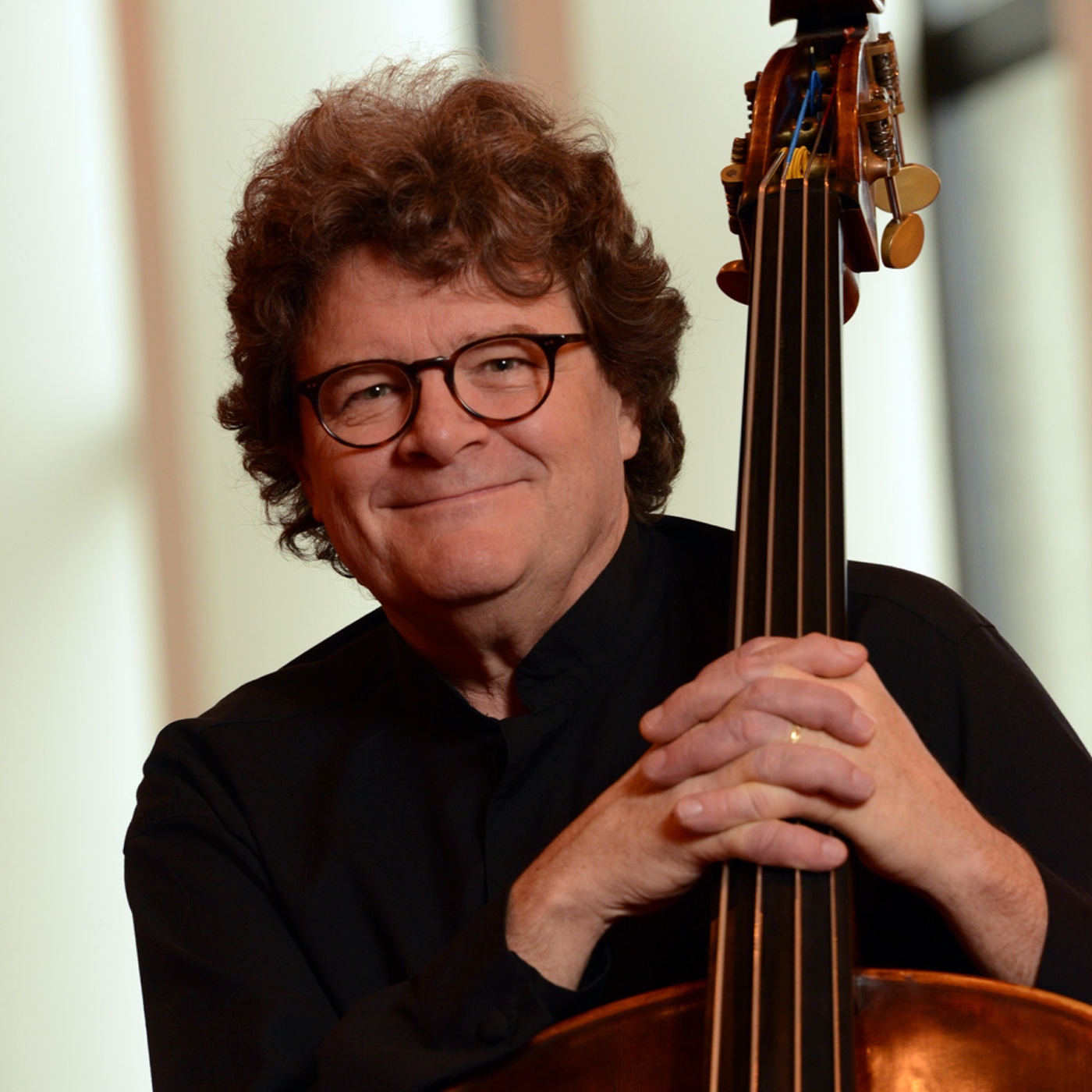
We're featuring an interview with and music from Joel Quarrington this week of Contrabass Conversations. Joel is the former Principal Bass of the Toronto Symphony and currently serves as Principal Bass for the National Arts Centre Orchestra of Canada. In addition to his orchestral duties, Joel maintains an active career as a solo and chamber artist, touring internationally in this capacity and performing a wide range of repertoire. This week's episode begins with a recording of Joel performing the fourth movement from the Sonata For Solo Contrabass by Weinberg, and the episode concludes after the interview with Joel's performance of the Bottesini Elegy. Both of these tracks are from his new album Garden Scene. Learn more about this album and Joel's numerous other projects atwww.joelquarrington.com.
Ep 135135: Matt Heller Interview
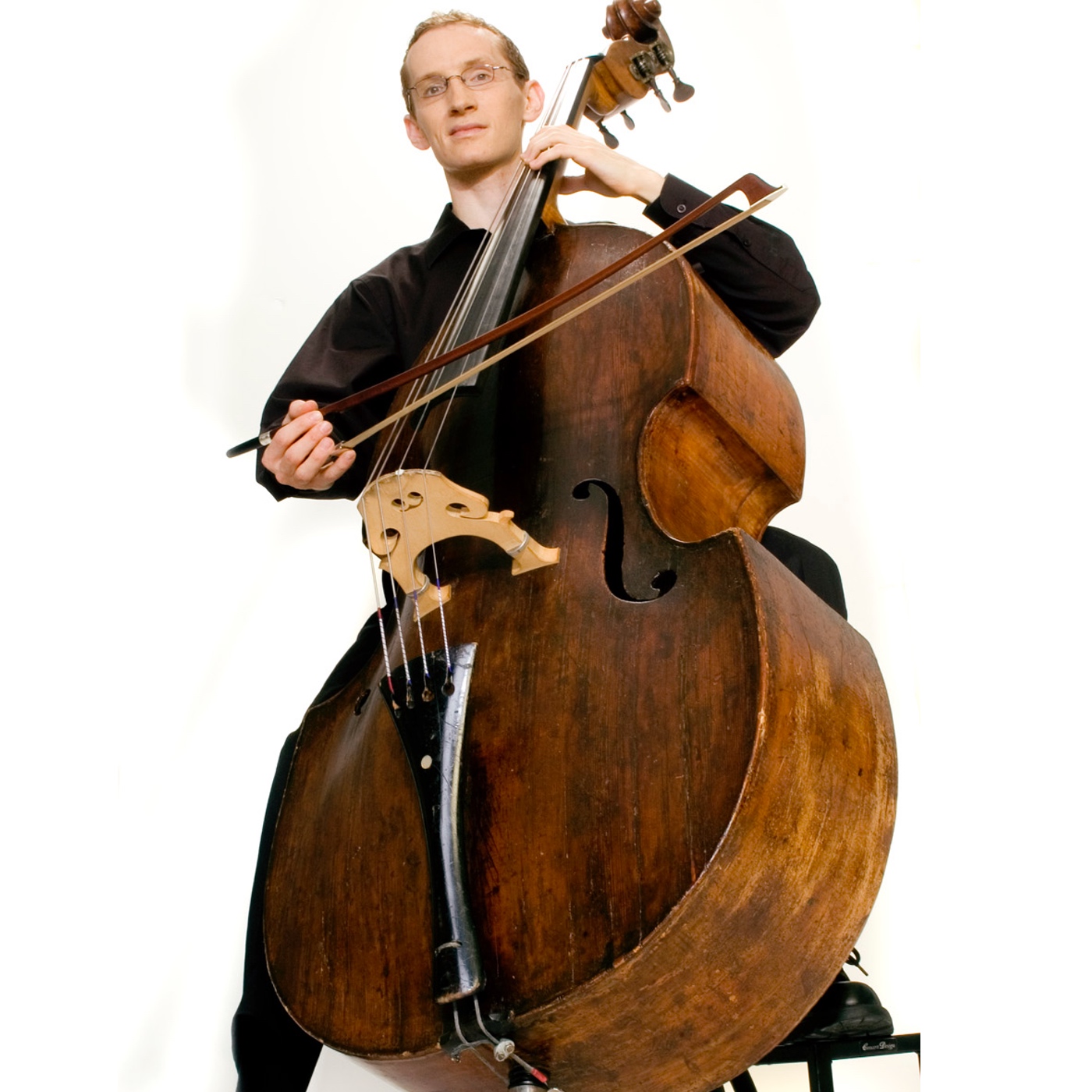
We're featuring a brief (10 minute) interview with Calgary Philharmonic bassist Matt Heller. Matt is an old friend of mine who, in addition to being an excellent bassist, is the author of the always interesting blog hella frisch. Matt also did extensive coverage of the 2009 International Society of Bassists Convention. It was a real pleasure to get a chance to sit down and do an interview for the podcast with Matt, and I hope you enjoy this chat between two bass bloggers!
Ep 134134: Colin Corner update and music
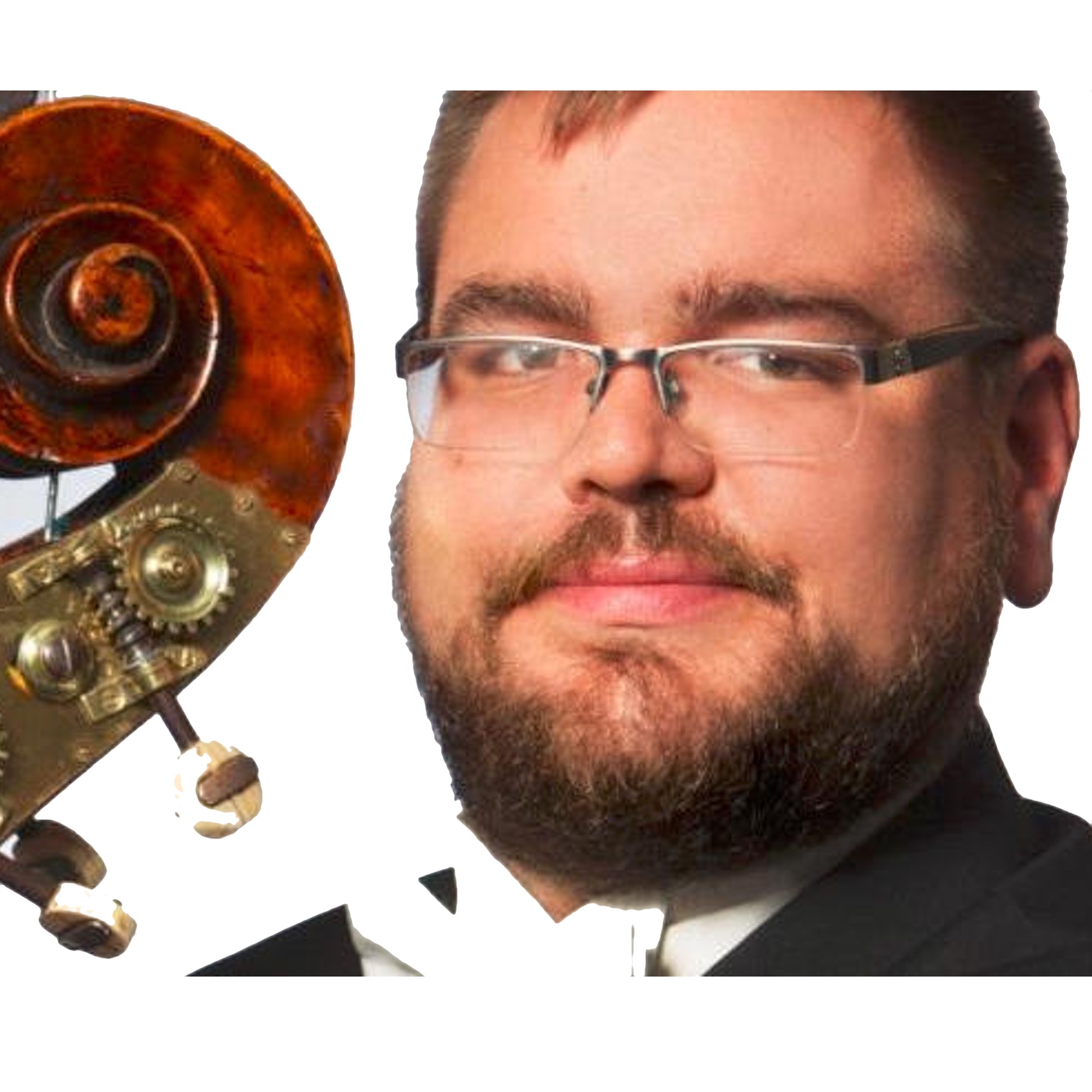
We're featuring a quick update and some performances from from double bassist Colin Corner, a previous CBC guest. When we first interviewed Colin back in 2007 he was performing in the Minnesota Orchestra, but he now serves as principal bass of the Rochester Philharmonic. In addition to his orchestral duties, Colin maintains an active career as a composer and jazz bassist, and he currently performs with the modern jazz trio Blood Electric (DeVon Gray, keys; Peter Leggett, drums; Colin Corner, bass). Learn more about Colin at his website colincornermusic.com.
Ep 133133: Scott Best Interview
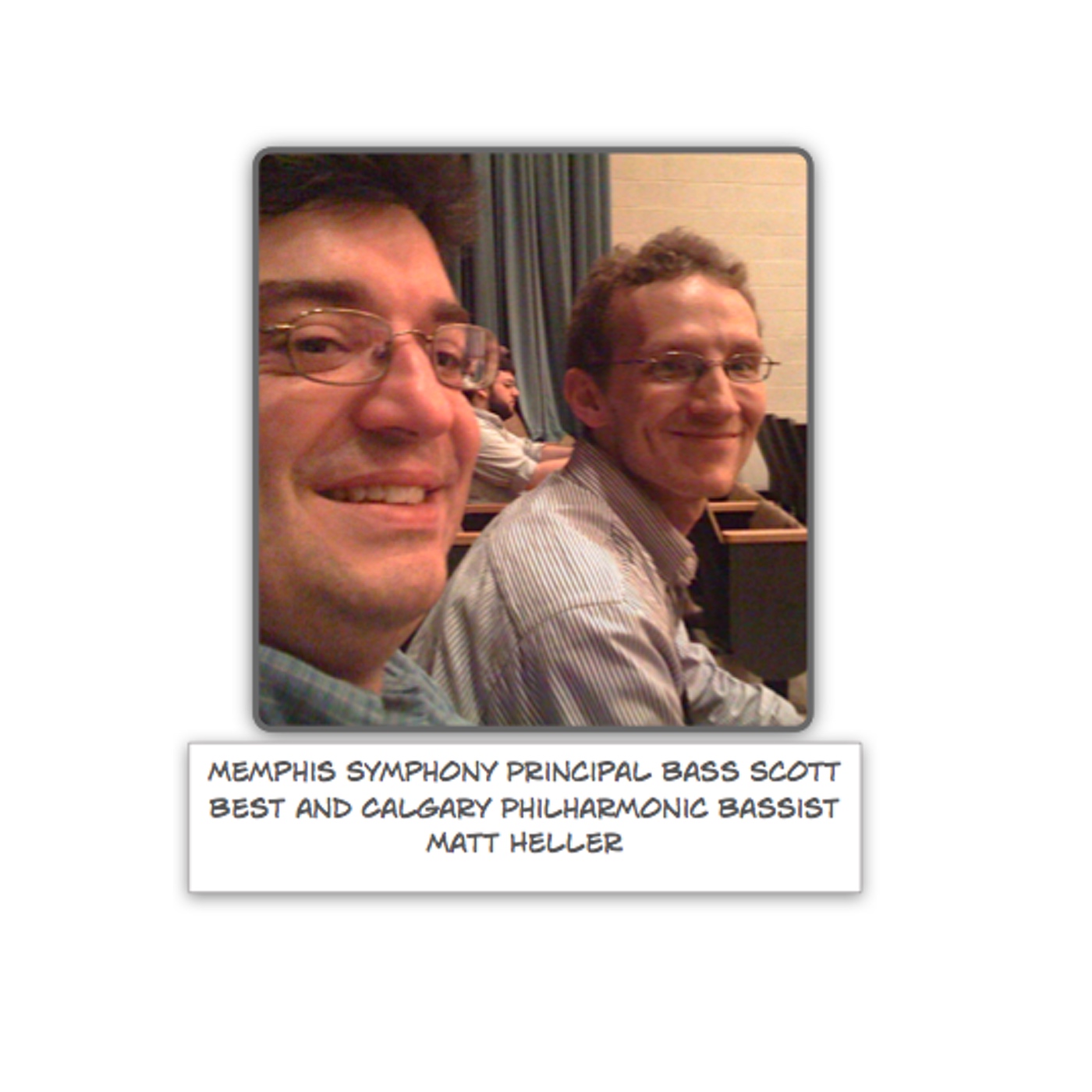
We're chatting with Memphis Symphony Principal Bass Scott Best on this week's episode of Contrabass Conversations. Scott is a close personal friend of mine and an outstanding double bassist in both solo and ensemble settings. We played together in the IRIS Orchestra of Memphis, Tennessee, and it is a real pleasure to feature him on the show. Scott was one of the bassists involved in the ISB-coordinated commission of the John Harbison Concerto for Double Bass (complete video from ISB convention of this piece available here), performing the piece with the Memphis Symphony. Scott was also asked (along with Dennis Trembly and Volkan Orhon) to perform a movement of this piece at the 2009 ISB Convention, and we include the audio of Scott playing the third movement at the end of this interview. We hope you enjoy this interview with double bassist Scott Best!

Ep 128128: David Allen Moore Interview
We're featuring an interview with Los Angeles Philharmonic bassistand University of Southern California bass instructor David Allen Moore on the podcast this week. David also teaches bass during the summer at the Domaine Forget program in Quebec. In this interview, we chat about his early years on the instrument, teachers that have influenced him, his time in the Houston Symphony and Los Angeles Philharmonic, challenges of learning repertoire for a professional orchestra, his studies with François Rabbath, German and French bow differences, and many other topics. After the interview, we feature a track of David playing the Bohemian Dance from Frank Proto's Carmen Fantasy. Enjoy! About David: DAVID ALLEN MOORE, the newest member of the Los Angeles Philharmonic's bass section, joined the orchestra in January 2000 and was appointed to the 4th chair in October 2000. He graduated in 1993 from the University of Southern California, where he studied with Dennis Trembly, Paul Ellison, and John Clayton. Moore continued his studies in Boston, working privately with BSO principal bass Edwin Barker. Moore performed as a substitute with the Los Angeles Philharmonic during the 1995/96 season, after which he was a member of the Houston Symphony bass section under maestro Christoph Eschenbach, from 1996 to 1999. Moore has participated in numerous festivals including Tanglewood, the Grand Teton Music Festival, Mainly Mozart, and Kent/Blossom Summer Music Festival. He is an active chamber musician, having performed in the Houston area with the Greenbriar Consortium, and in Los Angeles with the Philharmonic's New Music Group. He was also a featured clinician at the 1999 Texas Double Bass Symposium. Moore currently is on the faculty of the University of Southern California.
Ep 130130: P. Kellach Waddle Interview
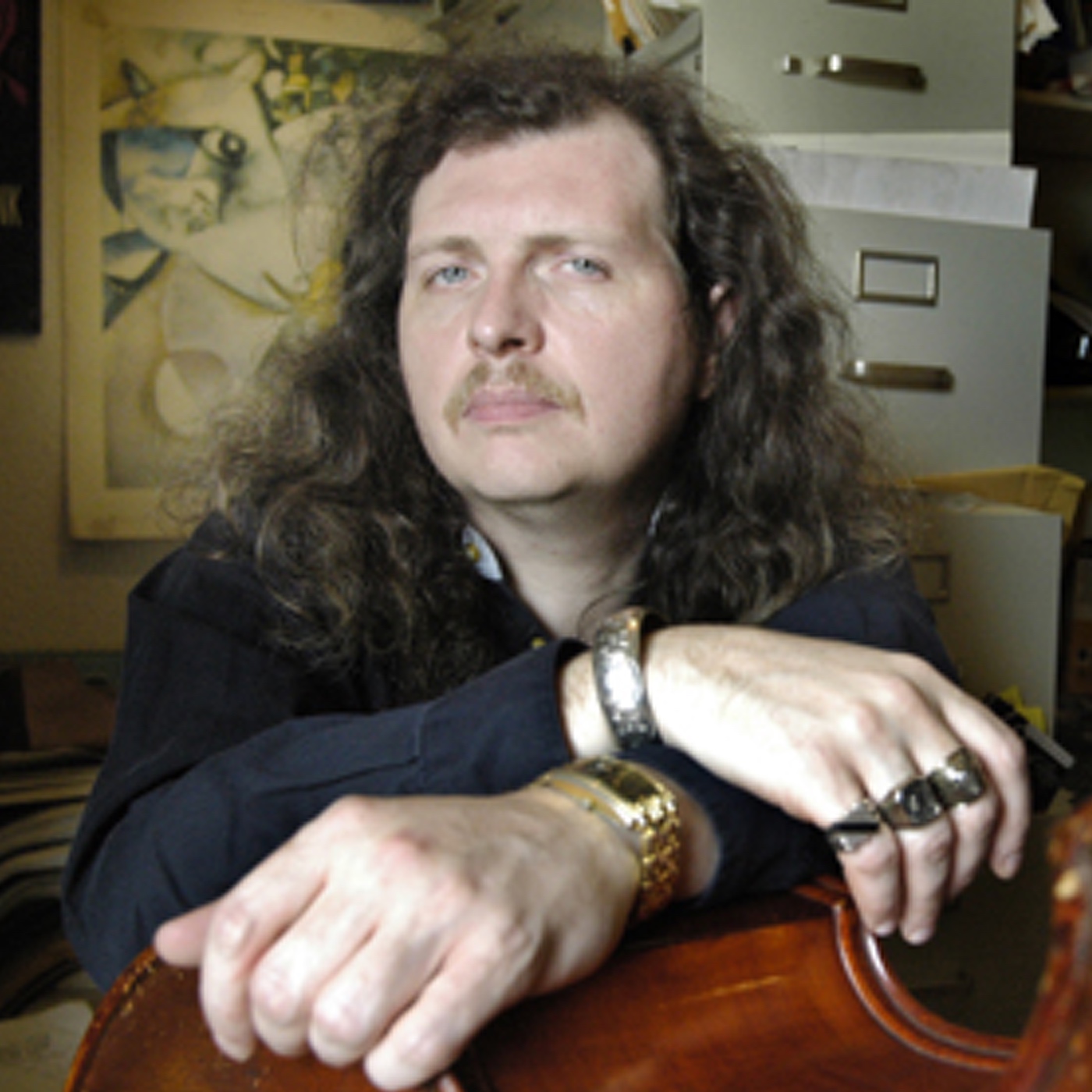
We're featuring composer and bassist P. Kellach Waddle on this week's Contrabass Conversations episode. Actually, we have chatted about doing an interview since 2007, and we got a chance to do so at the 2009 International Society of Bassists Convention. P. Kellach Waddle has had a great deal of recognition as a composer, and he has written numerous works for solo bass or featuring the bass in a prominent role. I think you'll really enjoy this interview we did back in June! We're also featuring P. Kellach Waddle performing his own composition "Sonata in Two Movements" for solo bass after the interview segment. About P. Kellach Waddle: Two time Pulitzer-Prize nominated composer P. Kellach Waddle maintains an active career not only as a composer but also as a bassist, conductor and writer. With nearly 450 performances of his music by the end of the '05-'06 season, and a list of completed works now numbering over 220 , Mr. Waddle continues to maintain a career as one of the most performed and prolific composers of his generation. His works have been performed in 38 states and in 14 countries on 4 continents and radio features/interviews with him have been heard on classical radio stations in Texas, North Carolina, Kentucky and Tennessee and Ohio. A performance by Mr. Waddle of his Op. 1 #1, the bass caprice De Salones Espanoles, marked the first hearing of his music on National Public Radio as part of its Music From Roundtop Series in 1993. Complete bio for P. Kellach Waddle

Ep 131131: Jiri Slavik Interview
We're featuring an interview with double bassist Jiri Slavik on Contrabass Conversations this week. Jiri is an extremely accomplished bassist in both jazz and classical styles, as you can see from his biography below, and he gave a truly mesmerizing performance at the 2009 International Society of Bassists Convention. This interview took place just as Jiri was about to leave for Europe, and I feel fortunate to have gotten the chance to chat with him on his first visit to the United States! After the interview, we feature a track titled "Coesistenza" from Jiri's album Repose. This track also features pianist Fred Thomas (iTunes link). About Jiri: Jiri Slavik was born in Havirov, Czech Republic, into a teacher's family with a strong musical tradition. As a child he played the violin, which he exchanged for the double bass around age 13. A year later he moved to Rome, Italy, where he attended St Stephen's School and eventually also the Santa Cecilia Conservatoire (Massimo Giorgi's double bass class). In the summer of 2004 he graduated from both of these institutions, always with the highest attainable marks (the seven-year long double bass course at the conservatoire took him three years to finish). After having been offered a full scholarship from the Royal Academy of Music, Jiri moved to London, UK, to pursue his studies, first in classical double bass with Duncan McTier, later on in jazz composition with Barak Schmool. After three years he finished the four years long programme with "First Class Honours". Since August 2007 he lives as a freelance musician and a composer in Paris, France. He has attended masterclasses under the direction of jazz celebrities such as Dave Holland, Jeff „Tain" Watts, Larry Grenadier, Jeff Ballard, Kenny Wheeler or contemporary music authorities like Pierre Laurent-Aimard or Peter Maxwell Davies. During his years at the Academy he was the first double bassist of the Concert Orchestra under the direction of Colin Davis or a chosen soloist at the Paganini Festival (2006). With the Ensemble Orchestral de Paris he played Bach's St Matthew Passion in the Notre Dame or performed in the Théâtre des Champs-Elyseés. As a soloist he has appeared in the Santa Cecilia hall of the auditorium Parco della Musica in Rome or in a program of the Czech Television Koncert na kurtech. With pianist Fred Thomas he made two live recordings for the Czech Radio, as well as the album Repose (F-IRE label, London). His music is in an independant German film production "Oury Jalloh" (www.ouryjalloh-derfilm.de), which won the German Human Rights Film prize, category amateur film, for 2008.
Ep 126126: Art Davis Retrospective
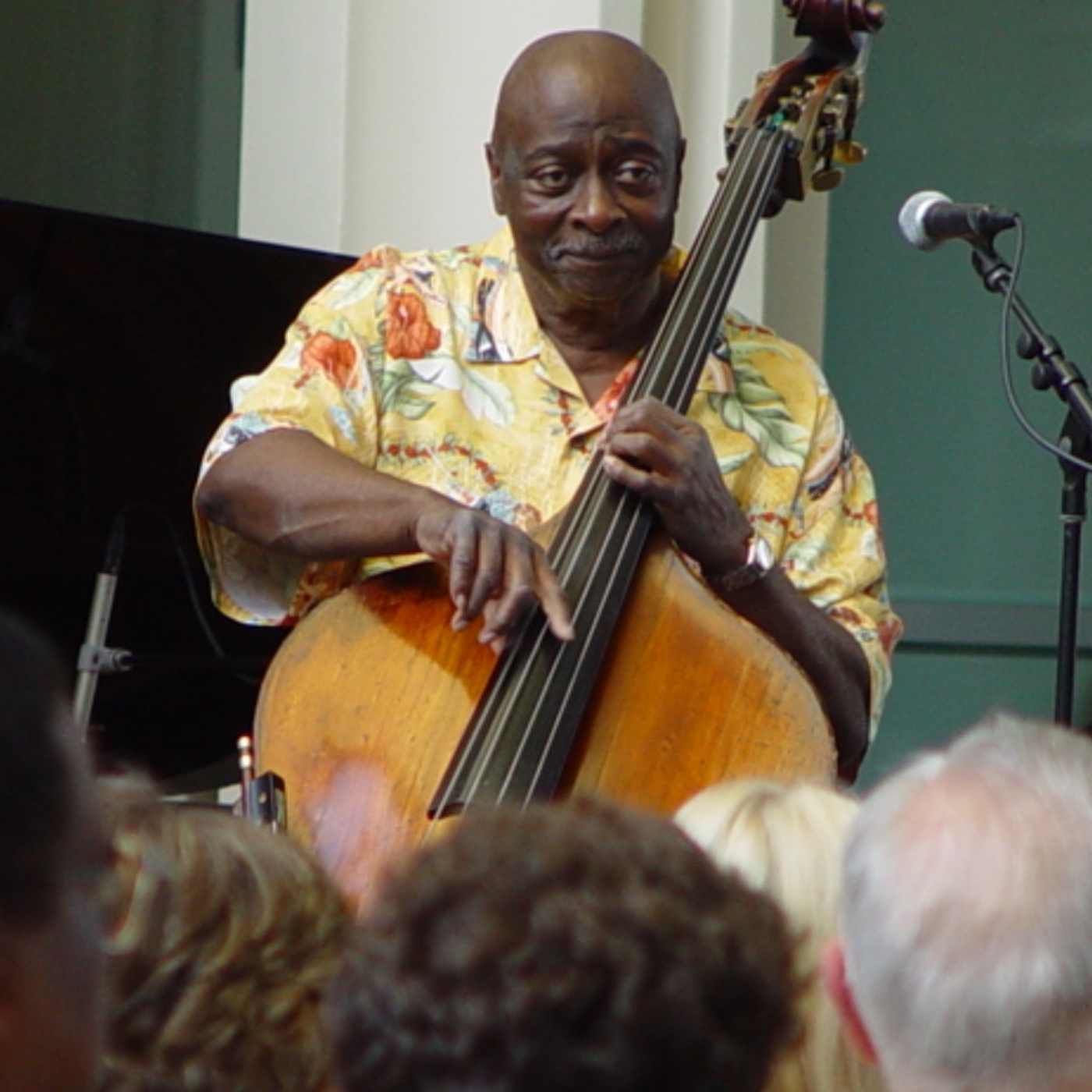
We're featuring a guest interview by bassist Tim Wolfe, Jr. interviewing his former teacher Jim Miller about Art Davis. Tim and Jim discuss Art Davis' life, career, and pedagogical approach. They discuss Art's book and his four-finger approach to the double bass, among other subjects. We're also featuring excerpts from "Duo," a track from the Art Davis Quartet album Life and featuring Art Davis, John Hicks, Idris Muhammad & Pharoah Sanders. This album (along with other music from Art's considerable career) is available through iTunes. Tim also created a timeline (PDF) detailing milestones in Art's career: Art Davis Timeline About Art Davis: In a musical career that has spanned four decades, Dr. Art Davis has played his bass with a myriad of the greatest jazz, classical, and popular artists in the world. He has shared his talents with not only the best jazz musicians (John Coltrane,Max Roach, Dizzy Gillespie, Lena Horne, Thelonius Monk, Louis Armstrong, Count Basie, Quincy Jones, etc.), but with notable figures from popular music such as Judy Garland, Bob Dylan, Minne Pearl, Barbara Streisand, Hank Williams. Davis' career has also seen performances with major orchestras such as the National Symphony, NBC Symphony, New York Philharmonic, Los Angeles Philharmonic, Radio City Music Hall Symphony, Westchester Symphony, Orange County Symphony and others. Davis studied the tuba as well as the piano as a boy in his hometown of Harrisburg, Pennsylvania before switching to the bass in high school. He won numerous awards on both tuba and double-bass while attending high school. Upon graduation, he moved to New York to study via scholarship at both theManhattan School of Music as well as the Juilliard School of Music. While attending the latter he studied with world renown cellist Lazlo Varga andAnselme Fortier, who was principal bassist with the New York Philharmonic at that time. He earned a B.A. degree, triple major in psychology, music, physics, summa sum laude from Hunter College, City University of New York. Art Davis' recording debut came in 1958 at the Newport Jazz Festival, with Max Roach's group that included the legendary Booker Little and George Coleman. Davis maintained a strong personal relationship with Max, and Booker Little became one of his best friends. John Coltrane came into Art Davis' life while Davis was working with Max Roach's group at Small's Paradise in Harlem. Coltrane at that time was in Miles Davis' band and between sets asked Art if he would like to "practice" with him. Art agreed and Coltrane replied "How about tomorrow morning?" At 8:00 the following morning John Coltrane was in the lobby of Art's hotel and called him on the house phone. After that first meeting, the two practiced regularly for about a year, the sessions lasting for many hours without a break. It was during this year that John Coltrane wrote the tune "Giant Steps". Davis credits the association with John Coltrane as the most intense and enriching musical experience of his career. Until Coltrane's death in 1967, Art remained close musically and personally with him and was a member of the bands on several Coltrane albums including, "Ascension", "Africa Brass I and II", "Olé! Coltrane", and others. Art's discography as a member of Coltrane's groups also includes the original recording of "A Love Supreme" (which remains unreleased) with Coltrane's regular quartet and Archie Shepp. Art also toured intermittently with John Coltrane. Due to Davis' studio and other commitments, he was unable to become a permanent member of Coltrane's quartet, but John insisted on their continued relationship. Then, in 1959, Davis joined Dizzy Gillespie's band and toured for two and a half years. Weary of the road he returned to New York and free-lanced. In 1961 Art became the second African-American member of the NBC Staff Orchestra, working regularly on the Merv Griffin, Jack Paar, and Johnny Carson shows (and others), as well as performing in the New York studios playing jingles, films, and freelancing with performers. When the Griffin show moved to Los Angeles in 1971 Davis went back to school to pursue his deep interest in psychology, earning a masters degree in Experimental Psychology from the City College of the City University of New York and a masters degree and a Ph.D. in clinical psychology from New York University by 1982. He supported himself while in college by teaching and performing in Broadway shows. After receiving his doctorate, he devoted four years to psychology patients and teaching in medical centers and colleges. In 1986, Davis moved to southern California, where he currently teaches college courses and maintains a professional practice as well as playing concerts, clubs, and recordings.Throughout his busy career, Davis finds time to encourage young people to strive toward their highest professional ambitions. His fan club decided to reflect this concern and established a scholarship program for deserving students.
Ep 124124: ISB 2009 Impressions
We're featuring some brief interviews I did with people on the floor of the 2009 International Society of Bassists Convention at Penn State in June. Feel free to check out my ISB 2009 Retrospective blog post for even more information on what was happening at this year's convention, and stay tuned for an avalanche of content from this event over the next couple of months! During this episode, I chat with Bill Wasson, Ian Saunders, Robert Meyer, and several University of Michigan students, as well as featuring some listener feedback and news.
Ep 123123: Klauss Stoll Interview
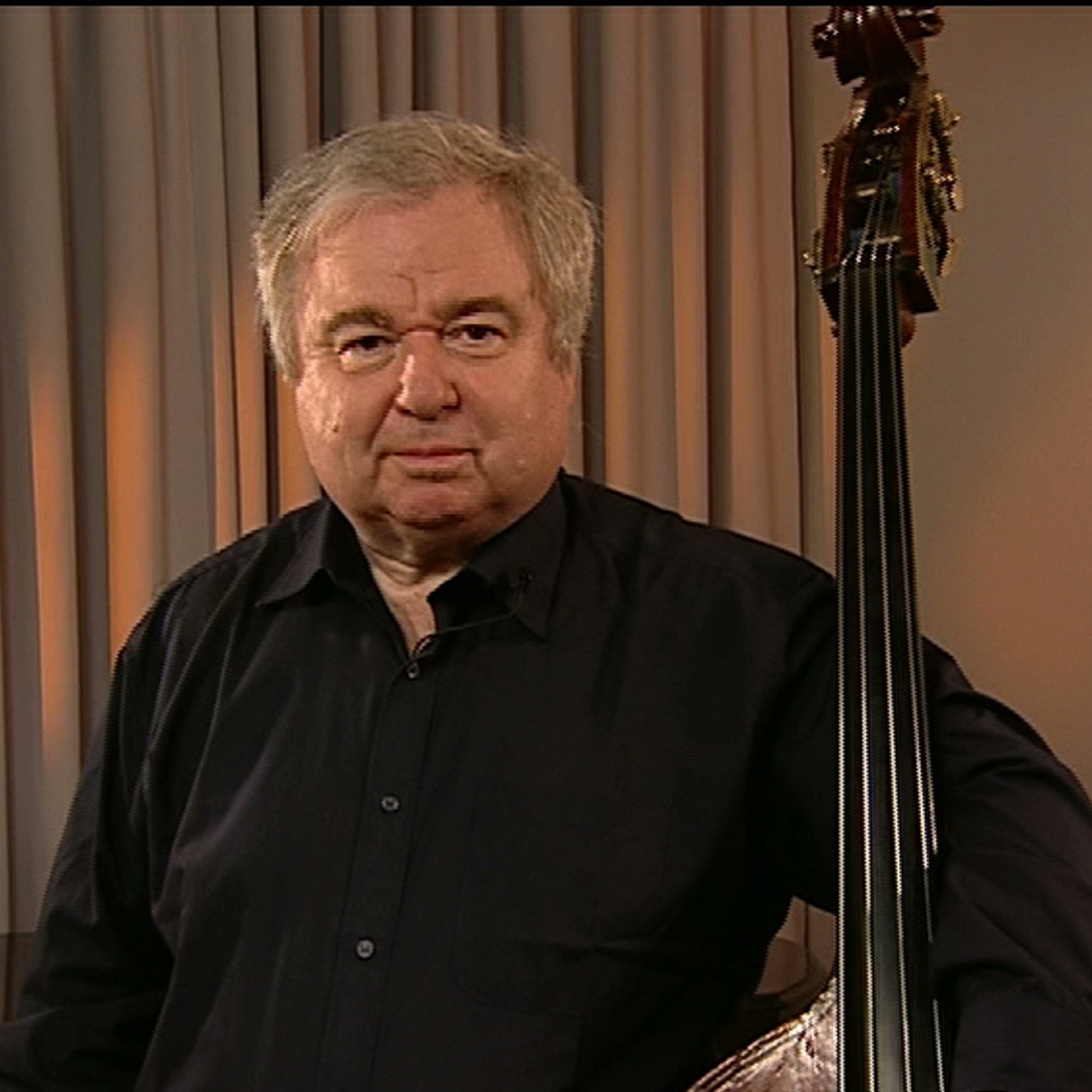
This week, we're featuring an interview with Klauss Stoll, the recently retired Principal Bass of the Berlin Philharmonic. He has taught for many years in Berlin, Salzburg, and in master classes worldwide, and is regarded as one of the finest teachers of the double bass alive today. This interview was conducted by Jonathan Stefaniak, a former member of the Civic Orchestra who is now playing in an orchestra in Japan. Jonathan was recently working with Professor Stoll in a master class setting and had the opportunity to sit down and chat with him for the podcast. In this interview, Jonathan and Klaus discuss Klaus' early years on the instrument, his time spent in the Berlin Philharmonic, auditioning for co-principal and eventually first principal chair, his chamber duo, orchestral style, developments in eduction and the decline of the despotic maestro, the unique characteristics of the Berlin Philharmonic, and specifics about his teaching. Learn more about Klaus at his website: klausstoll.com
Ep 120120: Ed Barker Interview
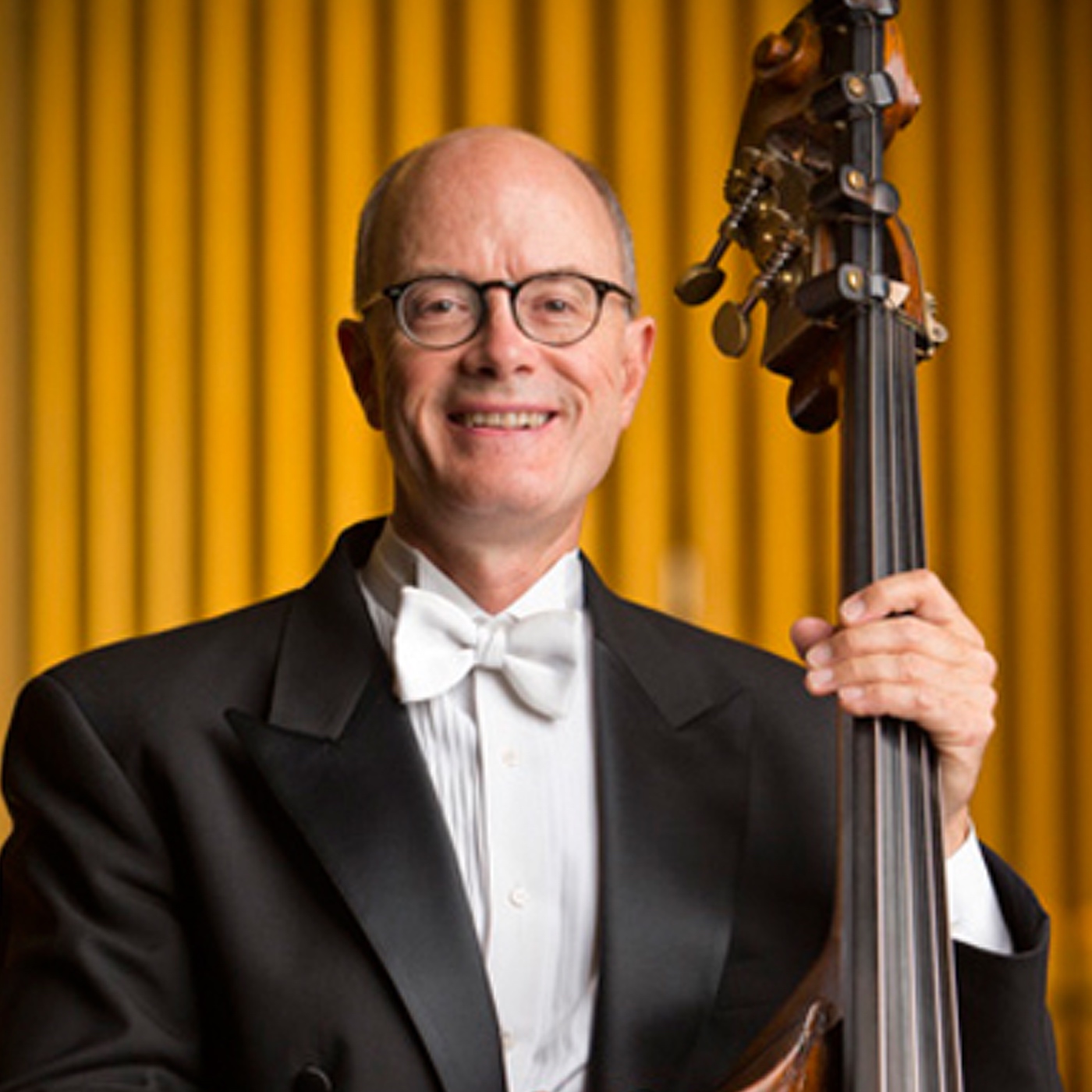
We're featuring Boston Symphony Principal Bassist Ed Barker on this week's Contrabass Conversations episode. Conducted by Contrabass Conversations co-host John Grillo, this episode features John chatting with Ed about his early years on the bass, his schooling and time spent in the Chicago Symphony prior to his appointment with the Boston Symphony, and in-depth look at articulation on the bass, and a discussion on practicing. We hope you enjoy this conversation with this modern master performer and teacher of the double bass! About Ed Barker: Edwin Barker is recognized as one of the most gifted bassists on the American concert scene. Acknowledged as an accomplished solo and ensemble player, Mr. Barker has concertized in North America, Europe, and the Far East. Edwin Barker has performed and recorded with the Boston Symphony Orchestra, the Boston Symphony Chamber Players, and with the contemporary music ensemble Collage, a Boston – based contemporary music ensemble, and is a frequent guest performer with the Boston Chamber Music Society. Mr. Barker gave the world premiere of James Yannatos' Concerto for Contrabass and Chamber Orchestra and of Theodore Antoniou's Concertino for Contrabass and Chamber Orchestra ; he was the featured soloist in the New England premiere of Gunther Schuller's Concerto for Double Bass and Chamber Orchestra, conducted by the composer with The Pro Arte Chamber Orchestra. Mr. Barker graduated with honors from the New England Conservatory in 1976, where he studied double bass with Henry Portnoi. That same year, while a member of the Chicago Symphony, he was appointed at age 22 to the position of principal double bass of the Boston Symphony Orchestra. His other double bass teachers included Peter Mercurio, Richard Stephan, Angelo LaMariana, and David Perleman. Mr. Barker was invited to inaugurate the 100th anniversary season of the Boston Symphony Orchestra with a solo performance of the Koussevitzky Bass Concerto; other solo engagements have included appearances at Ozawa Hall (Tanglewood), Carnegie Recital Hall's "Sweet and Low" series, and at major universities and conferences throughout the world, as well as concerto performances with the Boston Classical Orchestra, the Athens State Orchestra (Greece) and with the Boston Symphony Orchestra in Boston and Europe. He was a featured premiere soloist with the Boston Symphony of John Harbison's Concerto for Bass Viol and Orchestra at Tanglewood's 2007 Festival of Contemporary Music. Mr. Barker is an Associate Professor at the Boston University College of Fine Arts where he teaches double bass, orchestral techniques, and chamber music. His other major teaching affiliations include the Boston Symphony Orchestra's Tanglewood Music Center, where he is Chairman of Instrumental and Orchestral Studies. Edwin Barker's solo CD recordings include Three Sonatas for Double Bass, on Boston Records, James Yannatos' Variations for Solo Contrabass, on Albany Records, and Concerti for Double Bass, on GM Recordings, which includes bass concerti by Gunther Schuller and Theodore Antoniou. Concerti for Contrabass also includes his highly praised performance of Tom Johnson's Failing , which was recorded live at Harvard University's Sanders Theater. Edwin Barker's latest solo offering on CD is a recently released performance of James Yannatos' Concerto for Contrabass with Collage.
Ep 122122: Top Music School Considerations
The number of considerations a prospective music school student faces these days can be quite staggering–in this week's episode, I try to give listeners a summary of the most important considerations in the quest for the ideal music school. Enjoy, and learn more about this topic at doublebassblog.org or listen to some of the top university bass professors at contrabassconversations.com.