Contrabass Conversations
1,171 episodes — Page 20 of 24
Ep 226226: ISB 2017 Convention Preview
This is a special episode featuring International Society of Bassists 2017 Convention Chair and Artistic Director Nicholas Walker discussing plans for the upcoming convention. This 50th anniversary convention looks like it will be outstanding, with several new developments unique to this event. Enjoy! International Society of Bassists 2017 Convention June 5-10 at Ithaca College, New York Other ISB-related interviews you may enjoy include: Douglas Mapp - current president of the ISB Madeleine Crouch - general manager of the ISB Tentative Convention Details Headliners Confirmed: Sébastien Dubé Etienne LaFrance Christian McBride Gary Karr (keynote speech) Tentative: Edgar Meyer Renaud Garcia-Fons 2015 Competition Winner Recitals Mike Forfia Sam Suggs 2017 Competitions will take place Sunday and Monday (6/4 and 6/5) Competition Chair - Sandor Ostlund Opening Night Celebration on June 5 June 6, 7, 8, 9, and 10 - convention days Young Bassists Program organized by Gaelen McCormick Adult Learner Double Bass Program organized by Elizabeth Steves Tentative plans with Chicago Symphony principal bass Alex Hanna for a daily hourlong "orchestra repertoire throwdown" Joel Quarrington - Friday night recital a time each day where we all work out on the bass together - led by David Allen Moore dozens of presenters call for presentations will go out soon philosophical approach to the 50th anniversary convention great talk with Gary Karr about the ISB 50 years ago compared to today what connects us is that we all love and play the bass coming into contact with the instrument is one of the themes Nicholas would like to dwell on for this convention make sure that there's something at the convention for everyone opportunity to geek out on very specific topics get the luminaries of our bass world there - we covered this topic in our Douglas Mapp interview probably have a session where people can sit down and talk with Gary Karr about his life and career the halls are fantastic - great acoustics for bass Grammy-winning sound recording technology specialist Brian Dozoretz will be recording events at the convention Brian has recorded numerous luminaries in the bass world the convention will take place mostly in one building - vendors, sessions, etc. spaces for impromptu jams after hours event on campus at the pub Ithaca is within driving distance of most of the major Northeast population centers: New York, Boston, Philadelphia, Baltimore, Cleveland, etc. bass rental/borrowing for those traveling from far away—like Zipcar for basses

Ep 225225: Nicholas Walker on musical influences, performing, and Domaine Forget
Today's episode features Ithaca College professor and International Society of Bassists president Nicholas Walker. In addition to teaching at Ithaca College, Nicholas performs between 170 and 180 concerts a years in a wide variety of musical genres, he is a prolific composer, and he has taught for many years along with Paul Ellison and François Rabbath at Domaine Forget in Quebec. Nicholas will be hosting the 2017 ISB Convention at Ithaca College next June 5-10. We talk about his early musical influences, his experiences working with Paul Ellison and François Rabbath, balancing performing with other activities, and the Ithaca double bass experience. We also go into great detail about a day in the life of a student at Domain Forget, which is a topic that we talked about with David Allen Moore back on episode 162 of the podcast. We also feature several musical excerpts from Nicholas, starting with excerpt of a tune with singer songwriter Tenzin Chopak called "Just Don't Go." We'll also play a few excerpts of some of Nicholas' solo bass compositions, and you can find complete recordings on his YouTube channel. Enjoy! Musical Excerpts: "Just Don't Go" with singer songwriter Tenzin Chopak Chorale - solo bass Watermark - with cellist Elizabeth Simkin Interview Highlights Background and Early Years started on piano, picked up bass in 4th grade, playing jazz early on and music with friends in addition to the public school started taking lessons with Duane Rosengard, who was a student at Eastman at the time played in the Rochester Philharmonic Youth Orchestra studying with Mark Foley with many of the people surrounding Nicholas, there wasn't a big distinction between jazz and classical playing - it was all part of musical life for him Working with Paul Ellison moving to Houston and meeting Paul Ellison Paul's teaching style the Domaine Forget double bass experience Buddhist philosophy - any student who shows up has earned the right to learn Paul's comfort moving from student to teacher role Working with François Rabbath the right time to hear something from a teacher how, exactly, can he help each particular person his first experience meeting François A Day in the Life at Domaine Forget put the bass players in a barn and let them work get up early 8:30 am - all meet together - 25 students plus the two teachers bodywork and 90 minute workout together Stretching Yoga Feldenkrais Method Alexander Technique Pilates bass workout together - all done by ear and by rote - no music stands - working together in a big circle shifting exercises bowing exercises specific left hand techniques hand frames drop thumb expansion pivoting hammer on / pull off fingering patterns etudes at the end of the two weeks, they have a 90 minute routine that they do together without stopping - one exercise after another all this material comes from meeting with all the students the first night and asking them their goals for the camp 10 am - break followed by two hours of lessons lunch 1:30 pm - back in the barn for another 90 minute class with the senior faculty member Paul does a lot of stroke work and body awareness opportunity to introduce concepts like balance, arm weight, anything that came up in prior master classes everything from the simplest open string playing to more complex bow bouncing, forward/reverse curve 3:00 pm - master class evening - concerts with notable visiting artists, bass recital, public master classes The Double Bass Program at Ithaca largely modeled on the way Domaine Forget operates one of the nation's oldest conservatories - Sevcik and Rachmaninoff were both on faculty group classes for technique, orchestra rep, studio class in addition to lessons alternative lesson approaches in addition to traditional one-on-one lessons Performing, Teaching, and Composing finding balance (or not finding balance) being at peace with the choices you make 170-180 concerts a year the concerts and individual practice are where the "important stuff" happens
Ep 224224: Peter Tambroni on Student-Centered Teaching and Life Planning
Today's podcast features an in-depth conversation with Peter Tambroni. This is a "round two" conversation that builds upon the topics that we covered in our previous talk on episode 204. Today we dig into fallacies surrounding public school teaching, instrument setup, life planning, instrument insurance, practicing ideas, teaching philosophies, and much more. This episode is a gold mine for anyone interested in taking their teaching game to the next level! Pete is the author of An Introduction to Bass Playing, which is now in its seventh edition, and is an active bass performer, teacher, and author. You can learn more about Pete on his website petertambroni.com. Interview Highlights Fallacies Surrounding Public School Teaching you don't want to get too well-educated or you won't be hired Pete has never found that to be true in the various districts in which he has worked everyone wants the best person for the position most districts will do what they can to give you credit for your past experience the right person for the job is the right person or the department philosophy-wise and personality-wise people tend to focus too much on the nitty-gritty skills - it's more about fit than anything you should be interviewing them as much as they are interviewing you replacing people that are: good and well-liked good and not well-liked not good and well-liked not good and not well-liked Skills are easy to teach - personality and philosophy are not people tend to not ask enough questions in job interviews Pete always want to be somewhere where the administration supported fine arts performers practicing their craft - this was a question he posed in his interviews look at the distribution of music teacher positions - are people full-time orchestra, part orchestra and part general music, etc? what degree does fundraising play in the school? this can turn into a nightmare learning the other instruments as a music teacher Pete took two extra semesters of violin and viola music ed programs are not all requiring bass for music ed majors Instrument Setup the condition that many school basses are in - so easy to totally neglect them a bass with action that is too high is a catastrophically worse situation for a young player than a violin with action too high setup considerations for school instruments fingerboard bridge shaping the need for a proper luthier the extreme difficulty created for younger bass students by basses that are poorly set up the advances that D'Addario has made in strings recently for students Life Planning investing vs. saving index funds Apps and programs Betterment Wealthfront Robin Hood IRAs Roth IRAs 403b investment programs for educators Instrument Insurance get a separate policy apart from your homeowners or renters insurance - these may not cover your instrument at a paying gig Clairon Merz-Huber Practicing Ideas teaching replacement fingerings the challenge for bass players of heterogeneous string teaching (starting in D major, for example) nothing beats Simandl for mapping out the fingerboard Thomas Gale's book Practical Studies for Double Bass is great for younger students starts in 1st and 4th positions - allows for physical anchor point of thumb against the neck block helps eliminate the "old-school bass vertigo" teaching shifting finding the goal note should not be a fishing expedition! Mathias Wexler article about shifting in American String Teacher journal: "Throwing The Dart and Other Reflections on Intonation" from the November 2004 issue of American String Teacher. this is a link to the shifting exercise Pete describes shifting practice play stop evaluate play correct note if not in tune repeat above procedure until shift lands right on General Teaching Philosophies try to teach for 10 years down the road try to teach for the student's next teacher set people up so that things don't need to be fixed in the future having students nail a simpler piece versus struggle through a more difficult piece empathizing with your students don't ask questions to "put students in their place" it's never strings versus band versus choir - though there are doubles, there are "string kids," "choir kids," and "band kids" - offering all programs brings music to a larger portion of the student body we remember the emotion of experiences - emotion drives attention drives learning How Gigging Helps You to be a Better Teacher helps with empathy opportunity to observe other players opportunity to observe conductors being respectful of the student's time Listener Feedback Links: Pablo Aslan - tango bassist lloydgoldstein.com
Ep 223223: Katie Ernst on Singing, Jazz Bass, and Creativity
Today's episode features jazz bassist and vocalist Katie Ernst. Katie was recently featured in the Chicago Reader, and Jason Moran describes her as "a great bassist, composer, and lyricist, she has an uncanny ability to mix traditions... following her voice is like reading a great novel." She is one of Chicago's most active young bassists, with two recent album releases: her solo project Little Words and her trio album Twin Talk. We talk about Katie's years growing up in the Chicago suburb of Naperville, her "yearly check-ins" at the Birch Creek Music Performance Center with Jeff Campbell, studying at Eastman with Jeff Campbell and James VanDemark, and her educational work at the Jazz Institute of Chicago. We also cover the Betty Carter Jazz Ahead program, her job directing the big band at the Wheaton Conservatory, differences between the New York City and Chicago jazz scenes, and much more! Katie's recent projects: Little Words - solo project set to the poetry of Dorothy Parker Twin Talk - trio album Listener Feedback Links: Noah Yanicki - The Mountain and the Moon - new release - excerpt of Jackrabbit played David White - The Bridges of Madison County Interview Highlights: Early Years grew up in Naperville, product of Naperville public school system piano starting in 1st grade - sang in church and in choir took bass lessons with Jeremy Attanaseo in preparation for Eastman audition Studied with Jeff Campbell and James VanDemark - worked on Romberg, Simandl, vibrato, other fundamentals with VanDemark lots of summer camps in high school, fiddle camp, other camps - eventually found Birch Creek Music Center right before 9th grade - used Birch Creek as her "yearly check-in" Jeff Campbell - focused on deep fundamentals - applied lessons she learned during the summer throughout the following year becoming a jazz vocalist while in high school - singing with the jazz band, etc. the experience of playing the foundation and singing the melody simultaneously - interesting way to experience tunes Katie encourages her bass students to sing as well - incredibly helpful for young improvisors Katie got a bachelor of musical arts degrees at Eastman as well—kind of like a "doctorate lite' - she studied linguistic analysis tools in jazz scat singing Betty Carter Jazz Ahead Program in Washington, D.C. - where she met Jason Moran What drew Katie back to Chicago didn't want to go directly to a masters program Eastman had a postgraduate internship program where they pay a stipend for you to work for a nonprofit Katie called the Jazz Institute of Chicago and proposed that she be an intern moved into Chicago itself - became connected with the community of creative music in Chicago differences between New York City and Chicago jazz scenes Current Projects Twin Talk interactive group - focus on exploring ideas together - elements of freedom and original compositions - groovy, melodic, experimental Little Words project under Katie's name - Dorothy Parker poems set to music powerful poems that have a singable quality to them - cultivated Lessons learned serving as Big Band Director at Wheaton Conservatory listening to the whole band thinking programmatically when selecting music how to articulate to a group of musicians how to "get" a certain style Jazz Institute of Chicago - education program director takes students to see performances monthly meetings opportunities to be an opening act for Jazz Institute concerts Finding time for creativity
Ep 222222: Lucy and the Count: Love Dreams from Transylvania
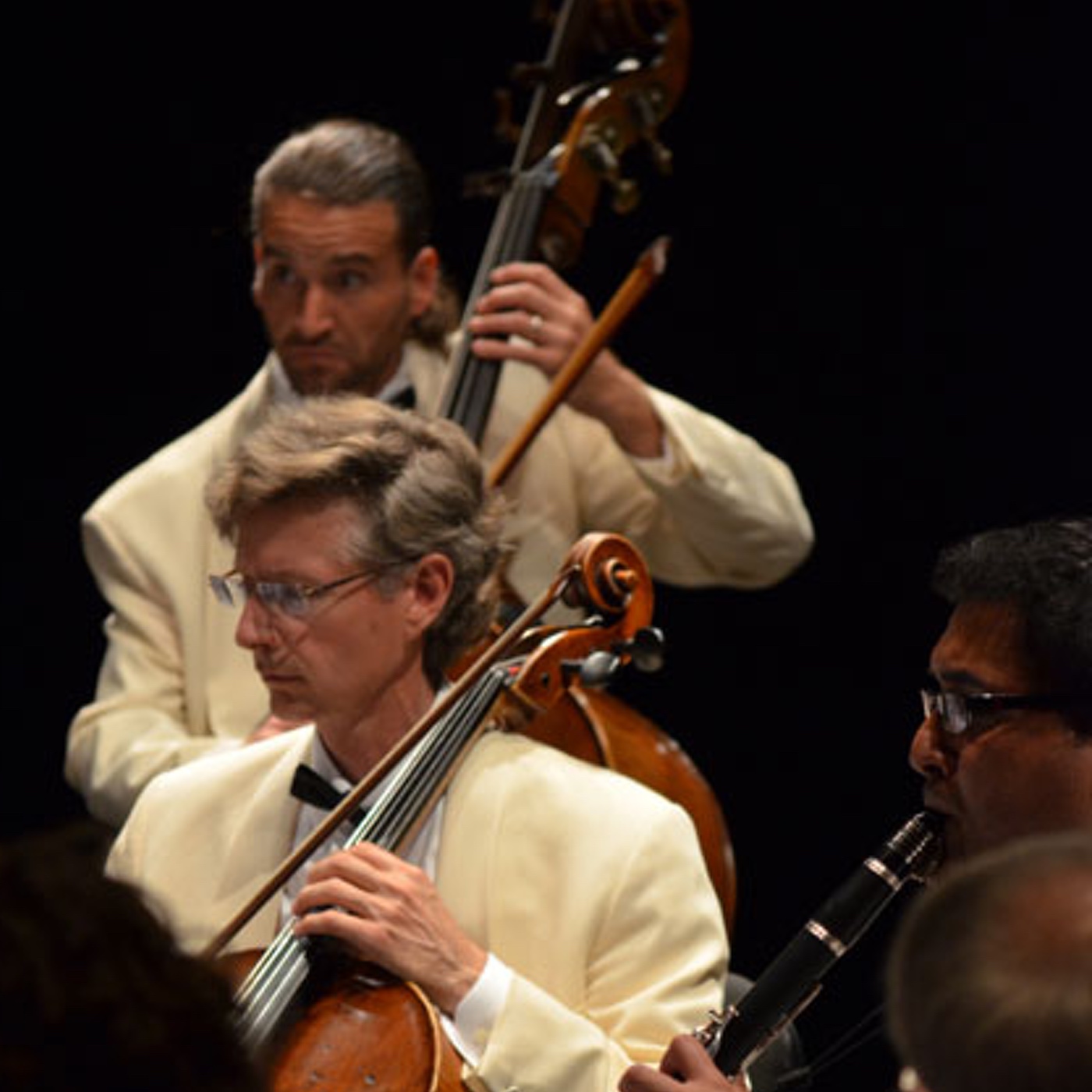
Today's episode is a live performance of Jon Deak's quirky quintet Lucy and the Count: Love Dreams from Transylvania. Written in 1981, this is a theater piece divided into three scenes featuring the solo bass in a dramatic, virtuoso role. In the first scene, you can hear the creaking of the ship morph into a dramatic first theme. The second scene is a dinner party and features each instrument "talking" during a dinner party. The words that the instrumentalists are intended to imitate are written in the parts along with the contours of the speech, making for some crazy sonic effects. The third scene portrays a ruined chapel with a coffin containing the Count. The Count turns into a bat and visits Lucy in a particularly twisted finale. This performance was recorded live at the Midsummer's Music Festival for their Big Top Door County 25th Anniversary concert. I've had the pleasure of playing with this fine ensemble for the past decade, and it was a real treat to get to perform this soloistic work with them! Lucy and the Count: Love Dreams from Transylvania Live Performance: July 12, 2015 David Perry and Stephanie Preucil, violins Allyson Fleck, viola Walter Preucil, cello Jason Heath, bass Alan Kopischke, narrator Purchase parts through J.W. Pepper Recording by Steve Lewis
Ep 221221: Brandon McLean on audition strategies
Today's show features Brandon McLean, who just won the associate principal bass position for the Pittsburgh Symphony. Brandon has most recently served as principal bass of the Colorado Symphony, and prior to that he held positions in the Vancouver Symphony and the Florida Orchestra. Originally from Seattle, Brandon did his undergrad at the University of North Texas, his masters at the Boston Conservatory, and studied at Carnegie Mellon after that with Pittsburgh Symphony principal bassist Jeff Turner. He played in the New World Symphony before landing his first gig with the Florida Orchestra. We dig into the details of the audition process, like how Brandon starts preparing long-term for the audition and how that preparation changes as the audition approaches, Brandon's technique routine, which he keeps up throughout the audition process, the benefits of getting to practice in a large space like a concert hall, and routines in the days prior to the audition. We also feature excerpts of Brandon performing the Dave Anderson Duets with Brendan Kane. Books mentioned: Audition Success by Don Greene Performance Success by Don Greene Interview Highlights Audition Preparation Strategies the process starts right after finding out what the list is looks at what are the more problematic excerpts for him and begins by spending time on those about 5 weeks out, he starts to get more disciplined for a long time did the system of ranking what the more difficult excerpts are and spending the most time on those, but he found that then the audition would come up and they'd ask for the excerpts that he didn't spend as much time on breaks up practice session into 10 minute increments; practices for an hour or an hour-and-a-half in a couple of different segments in the day keeps himself disciplined to no more than 10 minutes on a specific excerpt breaks up the last as many ways as possible: top to bottom bottom to top skip and do every 3rd excerpt 2-3 weeks out, he shortens that 10 minutes per excerpt to 3-4 minutes per except so that he's hitting everything briefly just about every day Brandon generally runs things at 75% tempo most of the time he can generally play this under tempo—it's getting them up to tempo that's the real issue there's some point between that 75% and 100% tempo that he can usually solve most of the technical problems problems associated with fast excerpts were dealt with away from those excerpts - dealing with technical studies that helped during audition prep, Brandon still spends at least 30-45 minutes still doing scales and technical exercises he cuts that down when getting really close to the audition Brandon's Technique Routine pick a scale slow bow practice (whole notes) using Intonia software then does a different scale with half notes, quarter notes, etc - gets himself playing pretty quickly do something similar with arpeggios after that right hand practice string crossings spiccato exercises to get his right hand moving a little quicker Playing in a Large Space and Recording the benefits of getting to practice in a large space (concert hall) - he didn't get this until later in life getting over the idea that he doesn't really know what he sounds like objectively (similar to getting over the way your voice sounds when you play back a recording) the angle that you play the bass - no one else will ever hear your bass playing from that angle—it's such a specific thing things started to turn on the audition front for Brandon when he started to get really serious about recording himself Brandon had a pretty steady path of progress in auditioning - not advancing, then getting to semis, then making finals, then runner-up for a bunch of auditions Brandon realized at a certain point that he just wasn't a very natural audition taker had to start treat audition taking as his job dealing with the mental discipline of audition taking was something that took him a while to get a grasp of Don Greene books helpful in terms of centering, etc. Brandon has gotten away from thinking that he just needed to have a really good day to win an audition after teaching students and observing them nervous and not nervous, he has concluded that there isn't nearly as much difference in the two states as the students think When he wasn't doing well in auditions, he had actually lost those auditions months in advance Routines as the Audition Approaches usually flies in the day before - flying in too early usually psyched him out it's amazing what tiny things can seep into your mind during an audition when he goes, he generally doesn't talk to people at the audition running is helpful doesn't try to change anything lifestyle-wise coming up to the audition - changes only cause problems Links from Listener Feedback: Summer Camps for Bassists The Low Down by Danny Ziemann Paul Ellison Interview Todd Coolman Interview I Found a Dead Body
Ep 220220: Gabe Katz on switching from music performance to education
It is my pleasure to present this interview with Gabe Katz. Gabe and I have had so many commonalities in our career trajectory, and we have both ended up finding a really satisfying musical niche in the world of secondary school orchestral conducting. Now, by the time you're listening to this, I will have moved on from this career, but of the past seven years this is what I did, and this is what Gabe has also started doing these last couple of years. Prior to his current job teaching orchestra at the high school level in suburban Houston, Gabe held two overseas jobs: one in Durbin, South Africa, and one in Guangzhou Orchestra in China. He also worked in Singapore and in Macao. He ended up meeting up with Hal Robinson while in China and ultimately moving back to the US to study in Hal's private studio and take auditions. We cover the thought process that took him from the performance world into the education world, going back to school at Duquesne in Pittsburgh and his experience taking music education courses at an older age, and the unexpected joys and satisfactions of teaching in the public schools. Interview Highlights started college at Oberlin with Scott Haigh transferred in undergrad to SUNY Purchase and studied with Tim Cobb MM Carnegie Mellon with Jeff Turner Summer Festivals: principal bass of NRO Music Academy of the West others Manhattan School of Music for Performers Diploma - worked with Tim Cobb again driving all over the place doing freelance gigs, making it to semi-finals for some auditions, but started scouring the Internet for overseas opportunities got an orchestra job in Durbin, South Africa got a job as principal bass of the Guangzhou Orchestra in China also worked in Singapore and Macao meeting up with Hal Robinson while in China and ultimately coming back to the United States to study privately with him was thinking about going back to school - deciding between doctorate or getting certified to teach - postbox programs ended up doing a post baccalaureate program at Duquesne with Steve Benham, who is President-Elect of the American String Teachers Association Gabe's goal was to get a high school orchestra teaching job Gabe ended up getting a high school orchestra director job in suburban Houston - a plum gig for sure! the high level of high school students in this area - comparable to an undergrad population at many music schools getting into conducting - the high level of satisfaction that results from studying scores, planning rehearsals, picking repertoire Gabe knows that he's changing lives every day in this new gig - there's a positivity and excitement to it which he's feeling that you'll pick up on as you listen his 20-year-old self would have thought that he was a "sellout" Orin O'Brein: "You're never done learning." - music is a journey, a lifelong learning path conducting is a culmination of everything you've ever learned (Gabe says this and I totally feel that as well!) how Duquesne keeps its music education program elite The University of Michigan string teaching legacy - Steve Culver, Bob Gillespie, Bob Phillips, Steve Benham most Bachelors of Music programs train you to: A: Work at Starbucks B: Win an orchestra job Hal: "You're offering yourself as a product."
Ep 219219: Gjorgji Cincievski on arranging, multi-meter, and life in paradise
Today we're chatting with Gjorgji Cincievski, who is the principal bass of the Malta Philharmonic and has been putting out some very cool arrangements for Hoffmeister, including an arrangement of Bach's Goldberg Variations for violin, viola, and double bass. You'll be hearing excerpts from this piece on Gjorgji's new recording throughout the episode, and we have a link in the show notes where you can get a copy of the recording and of the sheet music, as well as several other arrangements by Gjorgji. Gjorgji will also be hosting the Malta Double Bass Summer Camp from August 22 - 28. Check out more details about this camp here. Interview Highlights growing up in Macedonia the polyrhythms that are a part of folksongs in this country life in Malta publications for Hoffmeister trio arrangement of the Goldberg Variations, for violin, viola, and double bass many other arrangement projects on the horizon for Hoffmeister
Ep 218218: Arnold Schnitzer on dirty jobs, ergonomic basses, and maker competitions
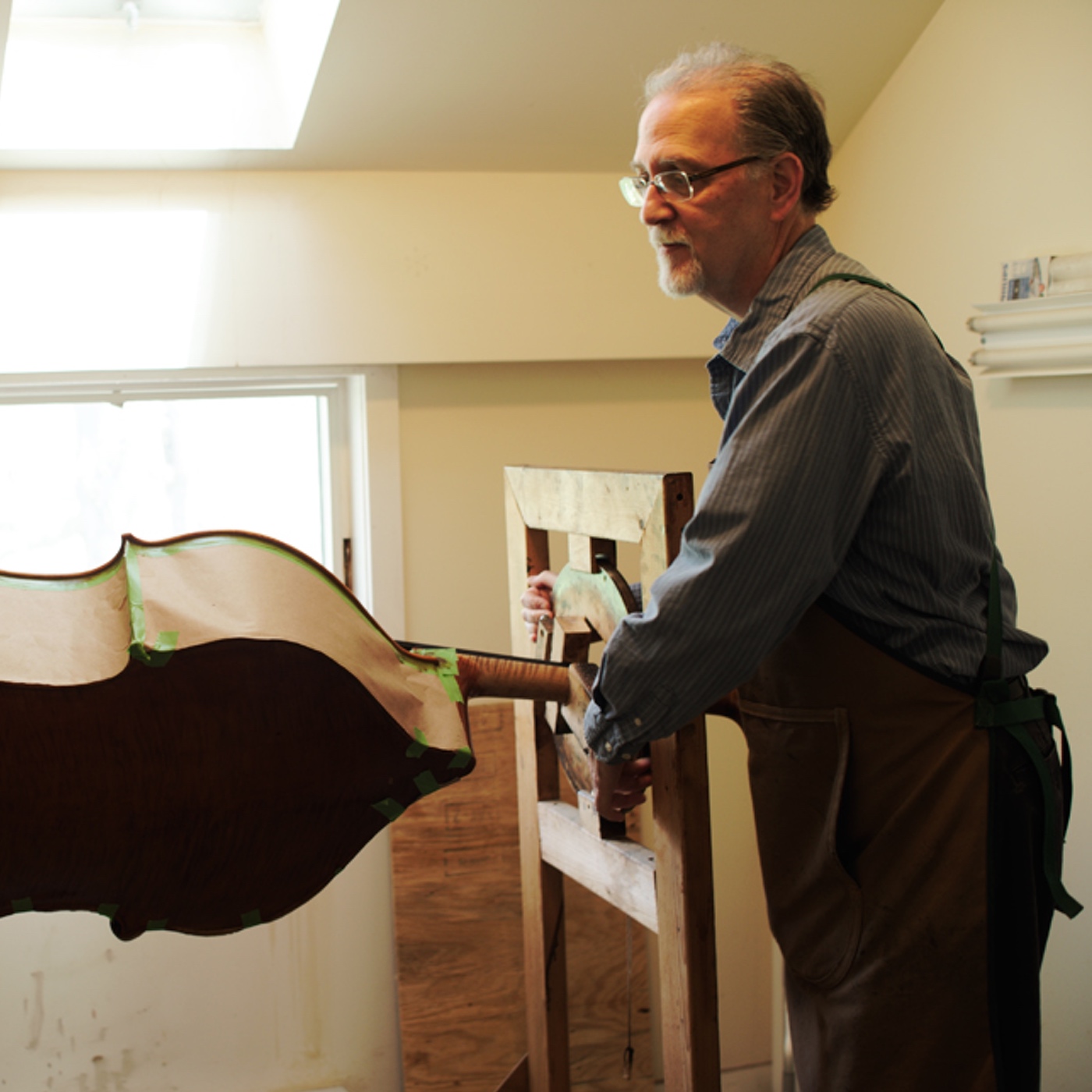
Today we feature double bass luthier Arnold Schnitzer. Arnold has had an interesting career path, from gigging around the East Coast as a youth to entering the corporate world and finally finding his way to the word of instrument repair. We talk about a wide range of topics, including information versus knowledge, wisdom, and street smarts, and the perils and pitfalls of the information age. We also dig into Mike Rowe's Dirty Jobs (there's a great interview with him on the Tim Ferriss podcast) - this all starts about 20 minutes into the actual interview - and training people for the jobs that actually exist, and the "in-between" jobs. This is quite a conversation—be sure to check this out. There's a lot of food for thought here. We also get deep into instrument construction, setup, maker competitions, wolf tones, and the Oberlin Bass Workshop, which Arnold serves on the faculty for and which sounds like a very cool event. I know that you're really going to enjoy this conversation with the always interesting Arnold Schnitzer! Interview Highlights Early Years born in Miami Beach (South Beach), FL moved up to Far Rockaway, NJ when he was young - dad was in construction dad got them a boat but Arnold and siblings had to figure out money for gas and fix it up his story of getting this Bohemian bass in his late 30s while working corporate recruiting gig and making good money but hating the job and basically just figuring out on his own (consulting people along the way) how to take this old beater bass apart and totally reconstruct it Information versus Knowledge we talk about information vs. knowledge/wisdom/street smarts - this is an illuminating discussion Arnold is a jazz musician from way back, and he sees instrument repair as a constant improvisation we talk about Mike Rowe of Dirty Jobs (there's a great interview with him on the Tim Ferriss podcast) - this all starts about 20 minutes into the actual interview alternate paths to going to college for x, y, z - people getting trained for the jobs that actually exist traditional jobs are disappearing the in-between jobs are the ones that aren't going away - electrician, plumber, instrument repair, air conditioning service - and these can pay really well! training people for jobs that have gone out of vogue being a luthier does involve working with your hands, but it really involves working with your brain - problem solving with your command center The Future of Employment looking at predictions of jobs in the future and the rise of the worker less economy, think twice about going to college and racking up $100,000 in student loans musicians are the most conservative people on the planet… especially rock & rollers Double Bass Setup and Construction ergonomic contrabass - thought it up while on painkillers wolf tones on the bass all basses will have some wolfiness clarity mainly comes from setup rather than construction what brands of strings can help with clarity other adjustments that can be made to help with clarity thoughts on maker competitions - judges are looking at basses through the eyes of the violin world motto of Oberlin Bass Society: "everyone teaches, everyone learns"
Ep 217217: Jerry Fuller on early music, creativity, and business world lessons
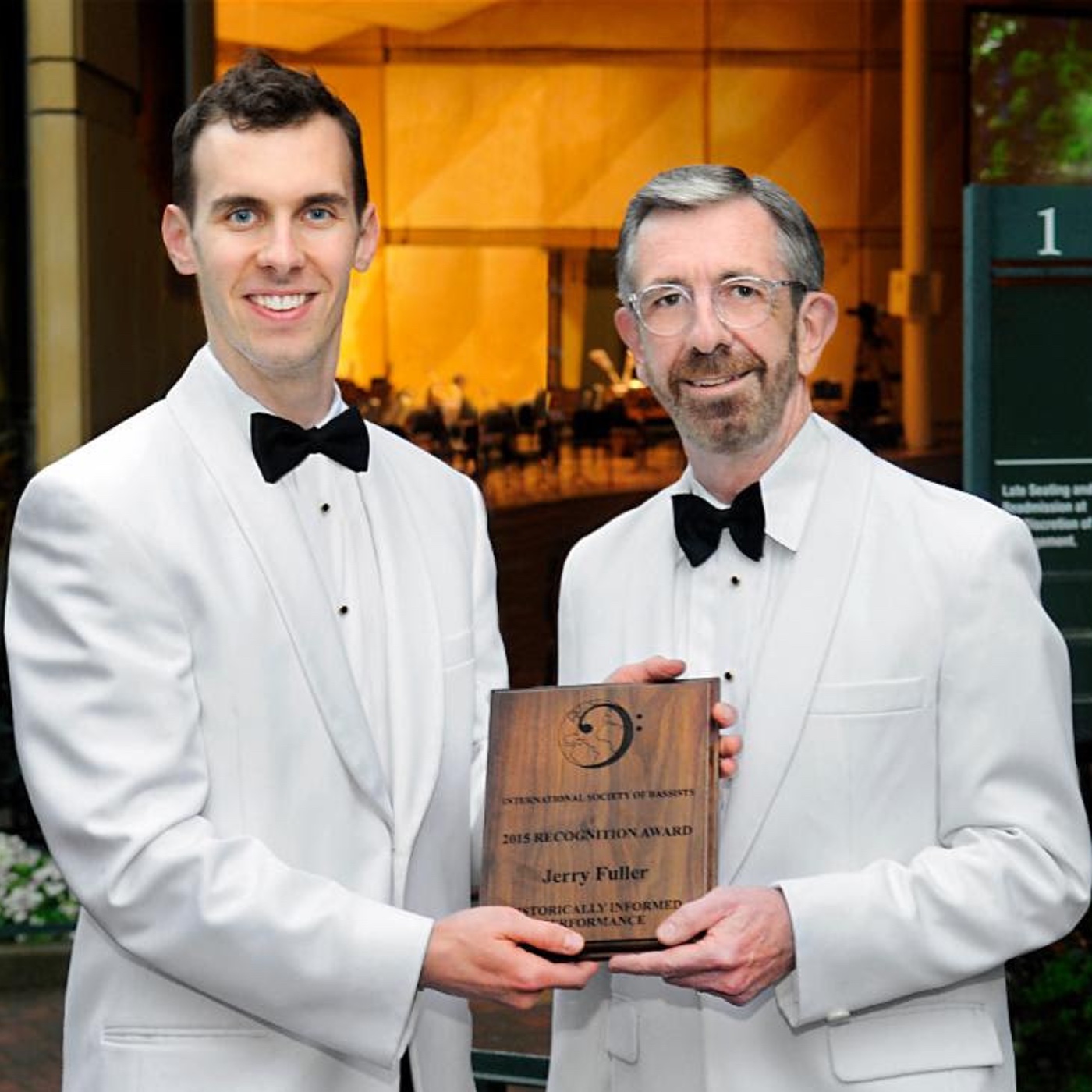
Today's episode features double bassist Jerry Fuller. I've known Jerry for well over a decade at this point and have found him to be such an interesting person. Jerry is best known in the music world for his work in period performance—in fact, he won an award for historically informed performance from the International Society of Bassists in 2015, and he is also a former ISB board member. We cover Jerry's early years in music, attending Northwestern in bass studio of rock stars including Hal Robinson, Curtis Burriss, and Rufus Reid, and his time spent performing in the bass section of the Lyric Opera of Chicago and in Switzerland. While he was in Lyric, Jerry attended business school at the University of Chicago and has worked for most of his professional life in the world of business while simultaneously keeping up an active musical life, and we talk about his what prompted this decision to attend business school and what his experiences in that world have been like. We get into details about how period performance differs from modern technique, how players can explore the world of period playing, and the role of the bass player in the continuo. We also have a great discussion on creativity in music and answer listener questions from Gaelen McCormick and Dan Carson. Jerry has gotten into traditional jazz recently, and we'll open up the episode with an excerpt featuring Jerry performing C'est si Bon, and we'll close with a duet by Bernhard Romberg with Richard Hirschl on cello. Links to check out: Jordi Savall Juilliard Baroque Program Angela Duckworth - Grit ArsAntiguaPresents.com earlybass.com Interview Highlights Early Years and Career grew up in Wisconsin - inspiring encounter with Roger Ruggeri of the Milwaukee Symphony accepted into Northwestern University bass studio with Warren Benfield joined Lyric junior year of college, promoted to assistant principal enrolled in business school at University of Chicago while still playing in Lyric went to work for American Hospital Supply Corporation and found an amazingly creative group of people there joined orchestra in Switzerland Early Music physical and mental differences in early and modern playing what instrument really "drives the bus" in continuo playing outlets for learning more about early music performance switching between early and modern setups Careers and Creative Outlets personality and temperament play a huge role into us figuring out what we should do in the world career-wise temperament over skill level creativity in music and life

Ep 216216: Todd Coolman on jazz bass lines, recording projects, and classical foundations
Today's podcast features an interview with Todd Coolman, who has just released his latest album Collectibles. Todd is actually playing a CD release event tonight at Smoke Jazz Club in New York City to celebrate the release of the album, which also features Bill Cunliffe on piano and Dennis Mackrel on drums. This is the second time Todd has appeared on the podcast—you can hear his interview with Win Hinkle in our archives. Todd and I cover all sorts of interesting topics in this interview, including his experiences moving from a full-time faculty position down to part-time and the opportunities that opens up for him. We talk about his classical foundation on the bass and dig into classical and jazz crossover and how lessons learned in one genre are valuable in the other. We also talk about skills the modern music student needs to be successful and what colleges can do to help facilitate this, and we get into details about recording this new album. If you enjoyed this episode, check out our interviews with Carlos Henriquez, Chuck Israels, Larry Gray, Ron Carter, Lynn Seaton, and Rufus Reid!
Ep 215215: Robin Kesselman on audition strategies, injury recovery, and bow arm practicing
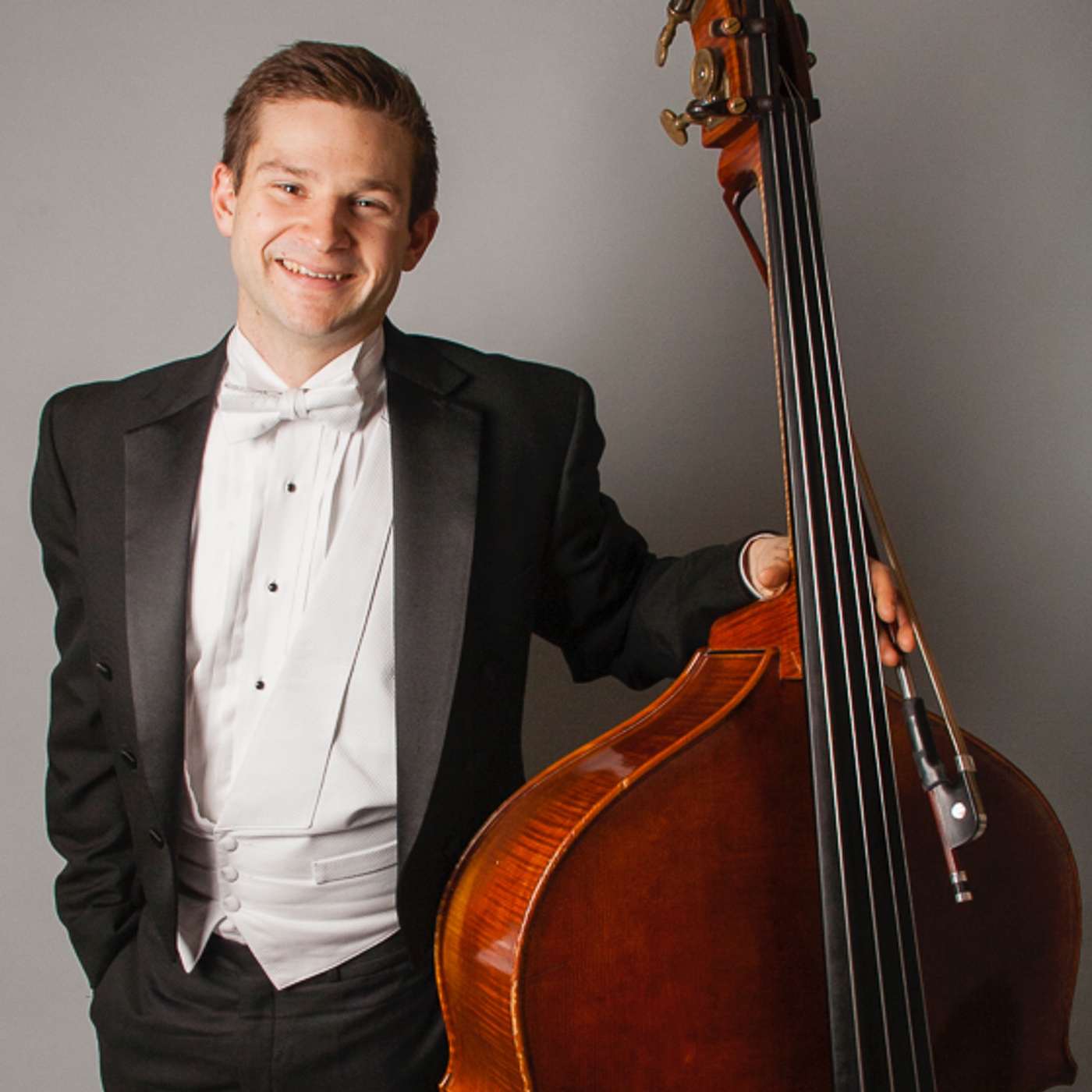
Today's episode features Houston Symphony principal bassist Robin Kesselman. Robin studied with David Allen Moore and Paul Ellison at the Coburn School of Music and the University of Southern California, and with Hal Robinson and Edgar Meyer at the Curtis Institute of Music. He has also performed as Guest Principal Bass with the Saint Paul Chamber Orchestra, travelled internationally with both the Philadelphia Orchestra and the Los Angeles Philharmonic, and performed with the National, Atlanta, and Baltimore Symphonies. During Robin's time at USC, he sustained a playing injury that took him out of commission for a prolonged period. We dig into how Robin ultimately recovered from this and how it changed his approach to practicing and performing on the bass, and how he practiced while he was out of commission. This was a left arm injury, and Robin continued to practice open string and harmonics with the bow, going into his lessons and working on the Bottesini Concerto on open strings. We also discuss how Robin approaches the audition process: his preparation strategies, his musical goals for an audition, and using visualization techniques. We also feature excerpts from Krzysztof Penderecki's Duo Concertante with Eunice Kim on violin. Enjoy! Interview Highlights Discoveries During Playing Injury: sitting in practice room - "this hurts, but it also still sounds bad" - the mistake of pushing through pain this time spent not using his left hand ultimately took his bow game to a new level - he spent large amounts of time just practicing with the right hand - playing solos and excerpts on open strings / harmonics in lessons! "the building blocks with which I was making my shapes were not completely honest" - referring to the bow arm mental practice / visualization - he got into this during this time period learning the difference between an ache and something more serious Thoughts on Auditioning: there's nothing that isn't practicable timing and pulse mathematical pulse/note division vs. feeling right the fallacy of perfect audition rounds similarities between prepping for an audition and a recital auditions have to be an artistic endeavor and about musical expression if you walk out and your whole goal is to play notes that are even and in tune, the second that one note isn't exactly the same as another note you officially have nothing left to offer, because your single goal has crumbled if your goal is to make lines and to make shapes and be expressive, it's ok if one note is a little shorter than the others philosophy from David: as soon as you come in and things are in tune and in time, you are officially at zero The Audition Process in Detail: record constantly during this whole process -throughout the whole day first 50% of the interval really hibernate and work things super slow - considerably under 50% tempo move something up 40 clicks over a period of weeks A and B lists that kind of parallel each other (one Mozart Symphony on one and one on the other, for example) doesn't play for anyone during this time - nothing's put together - it's all really cut up at this point next 25% buff out the edges, smooth out the music, give it a shine playing with recordings, getting the flow right last 25% take the show on the road, play for anybody and everybody, start setting up mock auditions and lessons with other (non-bass) instrumentalists the last week go back to "hibernating" stop playing for people - running rounds - 4-5 excerpts in a row hours wise it's similar through he whole process, but the hours are being used differently all the way until audition time, there was never a day/time when he could not continue to make things better have a specific game plan for those 20 minutes of warm-up once you arrive at the hall bass players don't hire bassists - committees of other instrumentalists do
Ep 214214: Terry Plumeri tribute
Today's episode is a tribute to bassist, film composer, and conductor Terry Plumeri, who was found murdered in his home in Florida on April 1st of this year. This episode features comments from former Terry Plumeri student Eric Swanson plus a clip from an early podcast in which I featured the music of Terry.
Ep 213213: Leon Bosch - the Sherlock Holmes of the double bass
Leon Bosch is a remarkable figure in the world of the double bass. From his early years growing up in South Africa to his long tenure with the Academy of St Martin in the Fields and his proliferation of solo projects, Leon has approached each challenge with a focus and determination that are incredibly inspiring. This is a "must listen" episode for any musician eager to realize their greatest potential. After retiring from the Academy of St Martin in the Fields to devote himself fully to solo, chamber, and conducting projects, Leon has been working to bring undiscovered treasures of the repertoire to light and to encourage new works for the double bass from composers. New composition are being written for Leon from South African composer Péter Louis van Dijk, British composer Paul Patterson, and American jazz icon Wynton Marsalis. This episode is sponsored by Discover Double Bass, and they have a course on bowing technique with Lauren Pierce that I highly recommend checking out. This course is divided into 37 HD lessons, and Lauren gives a short video overview of the three categories that these videos cover: the basics, bow control, and real world techniques. There's also a free preview lesson on phrasing with the bow—check it out! We feature excerpts from Leon's latest album throughout the episode. Check out Leon's excellent albums (available both as digital downloads and CDs): Music of Rankl Sprongl & Hindemith (latest album) British Double Bass Russian Double Bass Catalan Virtuoso Virtuoso Double Bass Vol. 1 - Giovanni Bottesini Virtuoso Double Bass Vol. 2 - Giovanni Bottesini Pedro Valls - Music for Double Bass & Piano If you're enjoying these episodes, I'd love it if you'd give us a quick review on iTunes! These reviews help us with discoverability and they give me great feedback about how I can keep working on the podcast to make it as valuable as possible for you. Leave a quick star rating and if you could even jot down a sentence or two that would be great. You can also leave a review for our iOS, Android, and Kindle apps.

Ep 212212: Real Men Don't Rehearse with Justin Locke (from the archives)
Today's episode features an entertaining couple of conversations that I had a few years ago with bassist, author, speaker, and playwright Justin Locke. These have been some of our all-time most popular and commented upon episodes, and bringing them back into the spotlight seemed like a good idea. Justin has written several books, including: Real Men Don't Rehearse Principles of Applied Stupidity About Justin Justin Locke came to Boston at age 18 to go to music school, and within a year he found himself playing every freelance gig in town, including the Boston Pops. His 18-year bass-playing stint with the Pops included the Bicentennial Concert in 1976 with Arthur Fielder, which is in the Guinness Book of World Records as the largest audience ever at a classical music concert. And of course he also worked with many of the great conductors of that era, including Leonard Bernstein, John Williams, and Henry Mancini. One day, after playing (and criticizing) a particularly dull children's concert, Justin was challenged to write one himself. The result was Peter VS.the Wolf, a courtroom comedy based on the classic Prokofiev fairy tale. Justin's work in other facets of "show business" continued to expand. Already a playwright and publisher, he then became a video producer, the "score reader" for live Boston Pops TV broadcasts, and manager of the Bose Philharmonic. His books, including his laugh-out-loud Pops Memoir "Real Men Don't Rehearse," have sold thousands of copies. Justin is now a management coach and speaker. He shares what the music business taught him about managing people, through his presentations, individual coaching sessions, his blog, and his books.
Ep 211211: Madeleine Crouch on managing the ISB, organizing conventions, and innovating online
Today's episode features Madeleine Crouch, who has served as general manager of the International Society of Bassists for the past 25 years. Madeleine and I talk about her musical background, the value of a liberal arts education, the growth of the ISB over the years, and new developments for the organization like the ISB/George Vance Online Research Library, Online Journal of Bass Research, ISB Connect, teacher directory, and luthier directory. We also give a sneak preview of the 50th anniversary convention which will take place at Ithaca College in upstate New York. Enjoy! Summer camps we cover post-interview: Golden Gate Bass Camp (I'm on faculty for this event!) Kansas City Bass Workshop Peabody Bass Works Blog post I talk about: How I'm Doubling My Productivity and Increasing My Happiness
Ep 210210: Jeremy Attanaseo plays the Prokofiev Quintet
I'm thrilled to present this complete performance of the Prokofiev Quintet featuring DePaul University faculty member Jeremy Attanaseo on double bass. This performance was broadcast live in February on the radio in Chicago with the International Chamber Artists. I've known Jeremy for years—we both play in the Elgin Symphony and used to play in a bass quartet along with Michael Hovnanian of the Chicago Symphony. Jeremy's a great guy and a great bassist, and I know that you'll enjoy this performance of one of the greatest pieces in the double bass chamber repertoire!
Ep 209209: Joe Conyers on Curtis, being yourself, and musical entrepreneurship
I'm thrilled to bring you this episode featuring Joe Conyers. Joe is the assistant principal bass for the Philadelphia Orchestra and is the founder of Project 440, a nonprofit organization that brings music to young people in Philadelphia. We're joined on this episode by John Grillo, my longtime podcast collaborator. John and I talk with Joe about topics such as: growing up in Savannah studying with Hal Robinson at Curtis the audition circuit becoming comfortable with your own playing the mission of Project 440 conducting Philadelphia's All-City Orchestra Enjoy!
Ep 208208: Guy Tuneh on transcriptions, live performance, and musical curiosity
Today's episode features soloist, chamber musician, and recording artist Guy Tuneh. Guy was on the podcast way back in 2007, and a lot has changed for him in the intervening years. His previous interview was one of our most popular episodes of all time, and in this talk we go even deeper, digging into why Guy makes music, how he approaches every single note he plays, and what motivates him to search out new repertoire and bring it to the double bass. Guy has been working on several new recording projects, and we feature two of them today. We are including an excerpt from Beethoven's Romance in G Major before the interview, and we close out the episode with a complete track of Guy performing Bach's Allemande from the Violin Partita in D minor. You can learn about Guy's upcoming solo appearances, recordings, and other details at his website guytuneh.com and on his Facebook page. We also have a video version of this episode on YouTube. Enjoy!

Ep 207207: Claus Freudenstein on heavy metal, minibasses, and arranging
Today we're featuring Claus Freudenstein, who is pushing the boundaries of the double bass in some really interesting ways. Claus is innovative on a number of fronts. He joined the world of the bass later in life than many people, and he came to it through heavy metal and the electric bass. This resonates greatly with me because this is the exact same way that I arrived at the bass. Claus has taken this love of heavy metal and channeled it into the Bassmonsters, a bass ensemble that is expanding the repertoire into metal and bringing a whole new audience into the fold. We feature three clips from their first album Classic Meets Rock: Sweet Child O' Mine by Guns & Roses, Creeping Death by Metallica, and Thriller by Michael Jackson. You can find this album on Spotify, Amazon, and iTunes. Claus is looking for a new record label to publish the latest Bassmonsters release. He has some tracks to pass along, so listeners, if you have ideas for a new label for Claus, send him an email and let him know. Claus has also been quite innovative in the world of teaching with his creation and popularization of the mini-bass. We discuss Claus' work in education, his approach to repertoire, arranging and composing, and many other topics. Enjoy!
Ep 206206: Auditioning for Music Schools
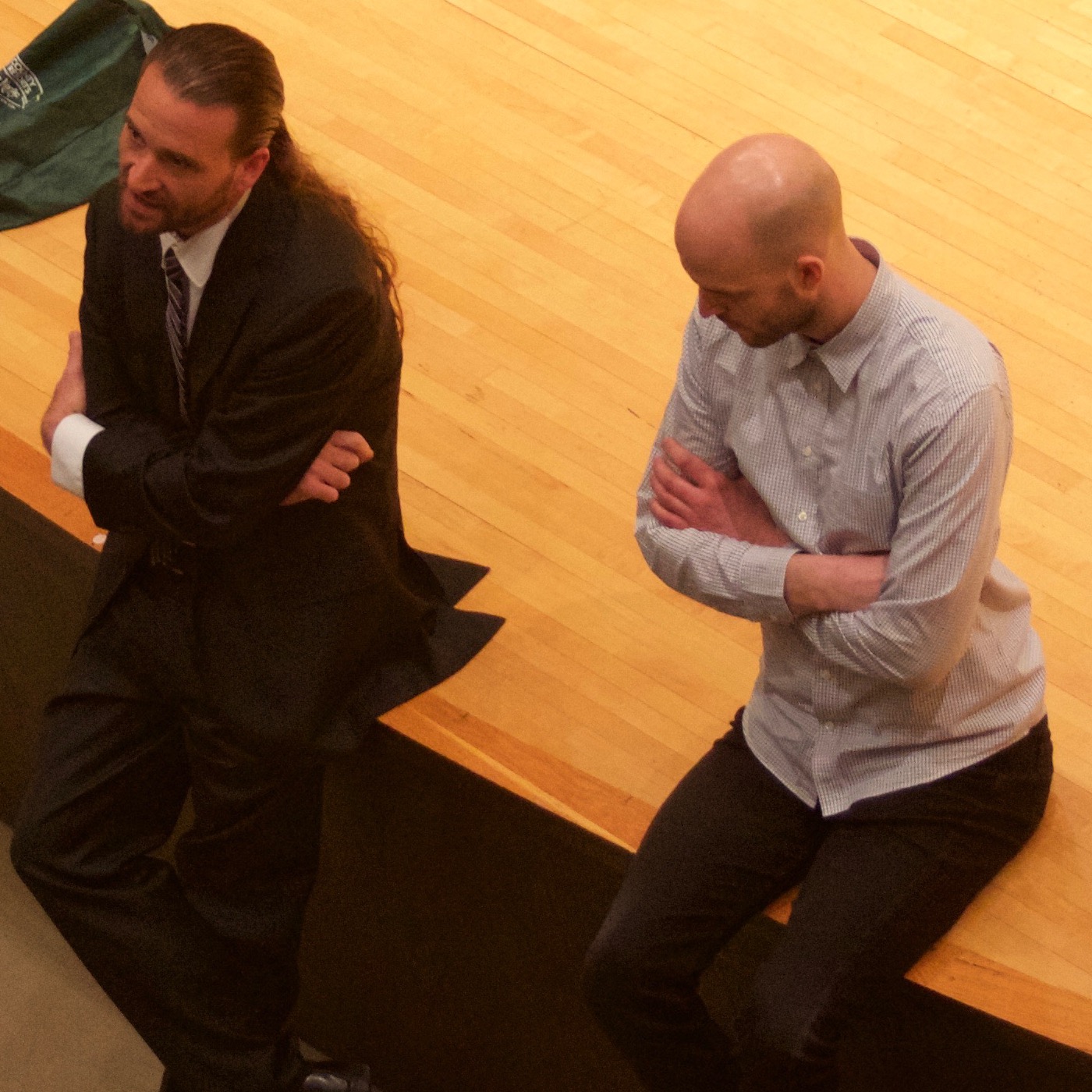
Trevor Jones and I have done joint clinics in the past, but this is the first one since restarting the podcast, and I figured that it would make sense to put it out this week since we just released our conversation a few days ago. This talk was held at Ravinia's Bennett Gordon Hall as part of the 2016 Chicago Bass Festival, which is an event put on by the Midwest Young Artists Conservatory. Michael Cameron of the University of Illinois and Allan Dennis, former double bass professor at the University of Wisconsin and the MYA executive director, were both in the audience, so you'll hear us refer to both of them a couple of times during the talk. I left Curtis off of my list of schools putting out successful auditions, but of course that should be at the top of the list! My mistake. Some of the questions from the audience are kind of hard to hear, you'll get the gist of the question as soon as Trevor and I start talking again. We talk about Don Greene's excellent books on auditioning—all three are highly recommended: Audition Success Performance Success: Performing Your Best Under Pressure Fight Your Fear and Win: Seven Skills for Performing Your Best Under Pressure
Ep 205205: Trevor Jones on musical pit work, scheduling creativity, and finding balance
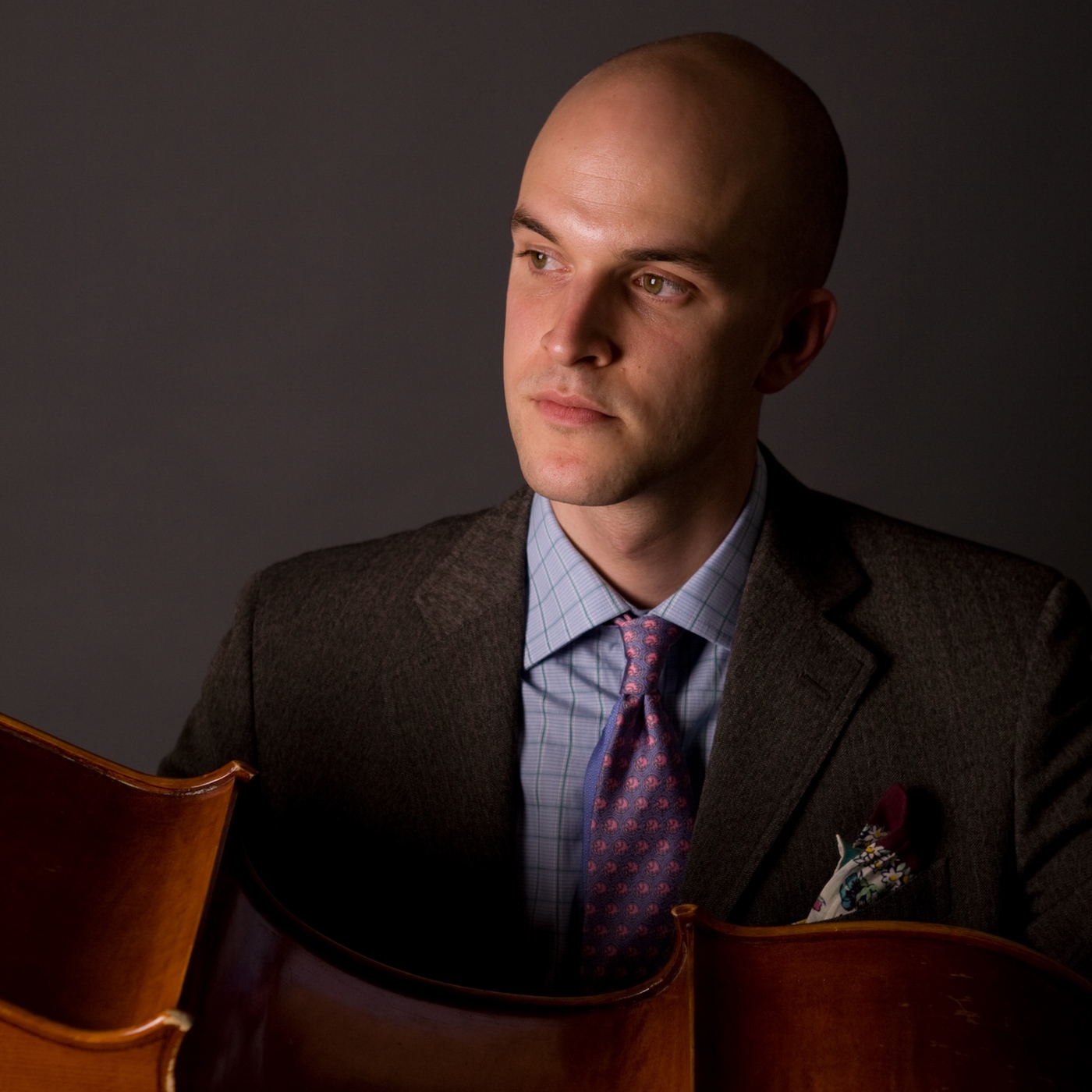
Today's episode features double bassist Trevor Jones. It actually amazes me that this is the first time that Trevor has been on the podcast. Trevor kind of does it all: he studied classical bass with Rob Kassinger at DePaul University but got a music education degree as well He has played for years in the rock band Molehill but also maintains a full-time performing schedule as a theater musician, and he has a salaried double bass teaching job at Illinois Wesleyan University as well. About Trevor: Based in Chicago, independent artist Trevor Jones works in a variety of musical settings. He performs with regional orchestras throughout the Midwest including the Elgin Symphony and is a substitute with the Grant Park Orchestra. He has also recorded for Realize Records on Chris Bruni's album Watch Me Burn and Kate Quinby's album Tribute To Water and has co-written and recorded two albums: Tin God and Equinox with his Chicago-based alternative rock group Molehill. Trevor is the upright and electric bassist at The Marriott Theatre in Lincolnshire, IL and his credits include Jeff®-Award Winning Musical Hero that was premiered in the Summer of 2012 and reprised in 2014 at Asolo Repertory Theatre in Sarasota, FL. For the Glory with music Tony Award® nominee Frank Wildhorn (Jekyll and Hyde, The Scarlet Pimpernel), Battlecry by Paul Bogaev (Aida, Spiderman). and the World Premiere of October Sky. While growing up in Gettysburg, PA Trevor studied double bass with Duane Botterbusch of the Harrisburg Symphony, and continued with Andrew Kohn of the Pittsburgh Opera at West Virginia University. In 2009 he completed his Master's degree at DePaul University where he studied with Rob Kassinger of the Chicago Symphony Orchestra. While studying at DePaul, Trevor performed with the Civic Orchestra of Chicago and the DePaul Symphony Orchestra under the direction of Cliff Colnot. Trevor earned his Bachelor's degree in Music Education at West Virginia University. Trevor performs with the Chicago-based rock act Molehill. Molehill headlines some of Chicago's most prominent venues and tours throughout the country. Highlights include appearances at CBS Studio Chicago, Metro (Chicago), Summerfest and SXSW. Their song "The Repeating" charted in the Top 10 of the KKBB Speciality Charts in 2015. Trevor has won an ASCAP+ Award for his songwriting for Molehill. Trevor is in demand as an educator in the Chicago area and maintains a studio at Midwest Young Artists , the preeminent youth music program in the Midwest. In addition to teaching at MYA, Trevor is also the Instructor of Double Bass at Illinois Wesleyan University at DePaul University where he teaches String Pedagogy.
Ep 204204: Tips for Teachers with Peter Tambroni
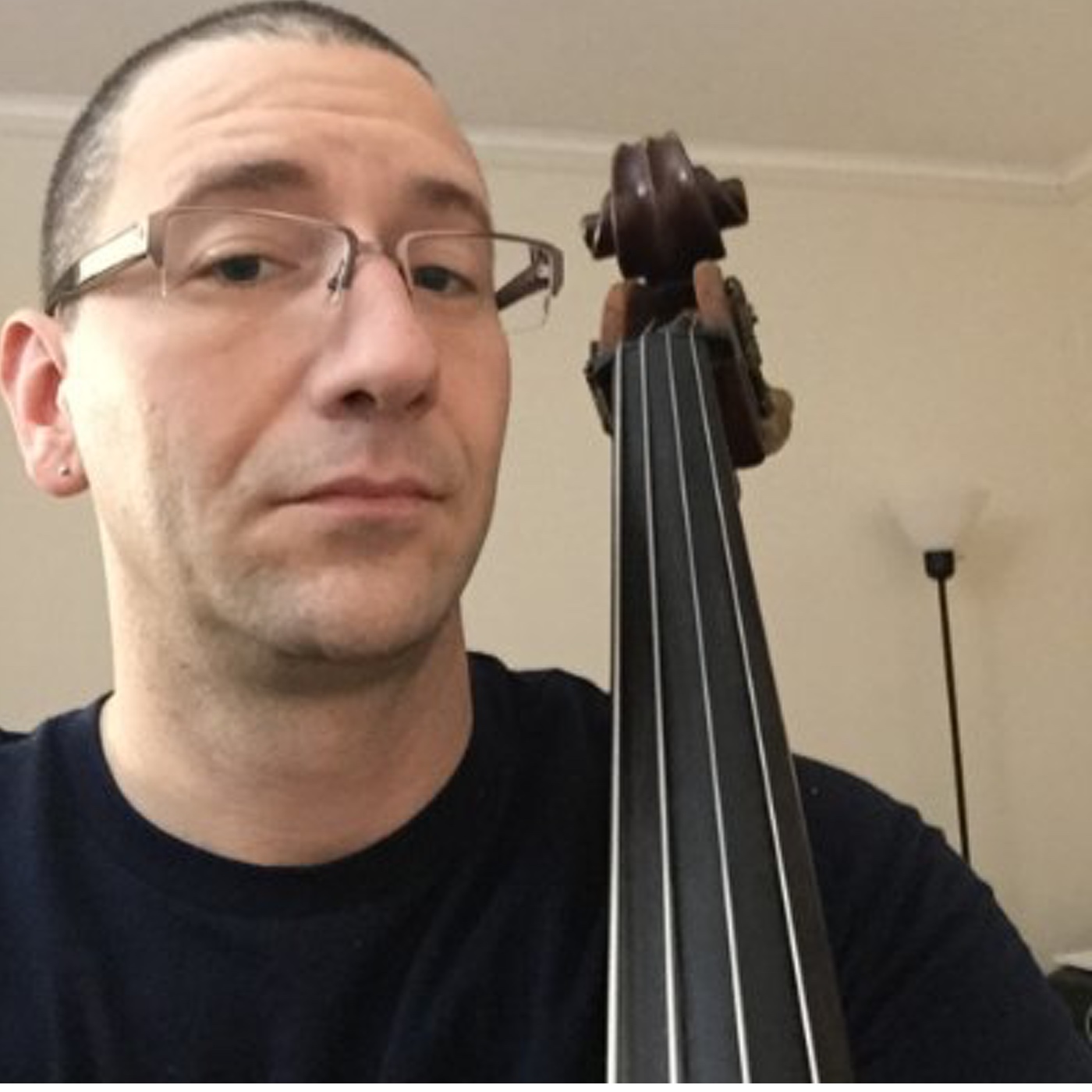
Today's podcast featuring a conversation with Peter Tambroni, who was an early guest on the podcast back in 2007 on episode 32. Pete is the author of An Introduction to Bass Playing, which is now in its seventh edition, and is an active bass performer, teacher, and author. You can learn more about Pete on his website petertambroni.com. About Peter: Peter Tambroni received his Master of Music in Double Bass Performance from the University of Illinois at Urbana – Champaign and his Bachelor of Music in Music Education from the Crane School of Music. He has taught elementary, middle school, and high school strings and is a former faculty member of the State University of New York at Plattsburgh. Peter has been an orchestra director in Mannheim School District 83 since 2001. From 1998 – 2005 he taught and coached at the Crane School of Music's summer youth program. In 2006 he was the Mannheim Middle School's PTA Teacher of the year. Peter is an active double bassist performing throughout the Chicago area. He has performed with professional orchestras in New York and Illinois and in 2000 appeared on national television with the Bozo Super Sunday Show. As a writer, he has been published several times in the international journal American String Teacher and on EnergyAddict.com, the website of best-selling author, Jon Gordon. His book, An Introduction to Double Bass Playing, is available at www.lulu.com/tambroni. He also created and maintains the blogs MostlyBass.com and EvolvingEducator.com Peter can reached via email at tambroni AT gmail DOT com
Ep 203203: Adam Ben Ezra on YouTube fame, looping, and percussive techniques
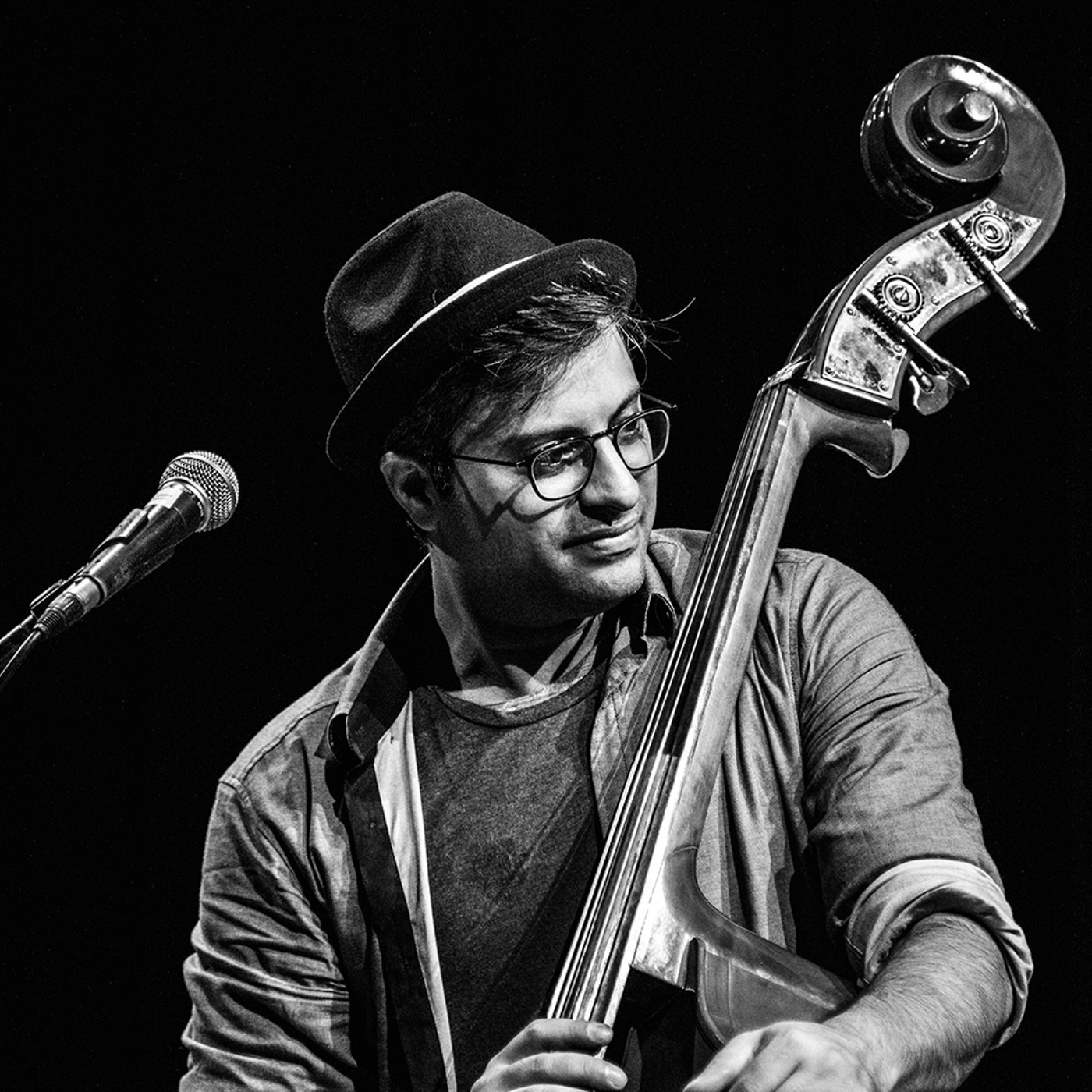
Today we are featuring Adam Ben Ezra, who has exploded onto the double bass scene in recent years with his unique musical voice. Adam combines elements of Arabic music, Latin drumming, American pop, looping, and many other styles to form his own craft. He has become quite popular on YouTube, and his videos are fun and visually compelling. To me, Adam is an example of what I find so exciting about the bass world right now. He's taking the instrument in fascinating new directions, he's pushing the boundaries of technique, and he's changing the very perception of the instrument. I'd also like to welcome back our sponsor Discover Double Bass and let you know about their new double bass scales package. 17 different scale types are covered in all 12 keys, over one and two octaves, along with backing tracks. Geoff Chalmers does an excellent job with these tools, which are clear, concise, and built to benefit your playing regardless of your current level. Look for this course to launch in the next week, and check out Geoff's many other offerings at discoverdoublebass.com/store. We're featuring excerpts from several of Adam's songs: Can't Stop Running Elohima Flamenco ConTraBajo (this video features the woman baking in the background) Dexter Double Bass Projection and Mapping Adam has become well-known for his drum'n'bass technique, which you will hear through all of these excerpts, and he offers a video lesson series on this technique as well as transcriptions of several of his tunes. We have links to these in the show notes, and learn more about Adam's music, tour dates, his upcoming master class project, and much more at adambenezra.com.

Ep 202202: Chuck Israels on rhythm, amplification and jazz education
Today's guest is jazz bass legend Chuck Israels. We start by covering more familiar topics like meeting Charlie Mingus, playing with Bill Evans, Bill's use of rhythm, the importance of having concrete and specific role models, and then go deep into topics like Balinese wood carving (the time it takes to get good) - not creating your own artistic world without the traditions that preceded you, the perils of the "parallel case", and commonalities among how great artists approach their craft. Chuck has just released a new album on Dot Time Records titled Garden of Delights. We'll be featuring a few clips from the first three tracks of this album: The Skipping Tune, Garden of Delights, and Mingus. I'd also like to welcome back our sponsor Discover Double Bass! Their beginner's course is arranged into 43 sequential HD video lessons arranged into eight chapters that cover everything from choosing your first instrument to the essentials of technique. You can check out this course as well as many other offerings at discoverdoublebass.com/store.

Ep 201201: Ira Gold on bow strokes, musical curiosity, and practicing techniques
We're featuring National Symphony bassist and Peabody Institute faculty member Ira Gold on today's episode. Ira was one of the very first interview guests for the podcast, and we spread it out over three episodes: 15, 18, and 43. This "round two" interview was conducted almost a decade after the first conversation, and Ira has been incredibly active with all sorts of new projects. In this interview, we talk about physical fitness and how it helps with all aspects of life, making the transition to standing full-time, what Ira listens for on an audition committee, wanting to make music with people who share the same musical values, how being a "curious person" opens yourself up to new experiences in playing, practicing techniques, turning practice into puzzle solving, and many other topics. We also talked about the three summer camps at which he'll be teaching: DCBass Peabody Bass Works Orchestral Bowing Workshop You can learn more about Ira and all his activities on his website. Enjoy!
Ep 200200: Living a Fulfilling Life
I'm turning 40 today, the podcast just passed a million downloads, I wrote a chunky blog post that resonated with a lot of people, and I just got back from Cuba. This is a different kind of episode where I share details on where I've been and where I'm headed in many areas of life. If you haven't read the above referenced post, check it out and you'll find links to a lot of what I talk about in this episode. More "regular" episodes to come later this week.

Ep 199199: Federico Marchesano and The Inner Bass
This is an all-music episode of Contrabass Conversations featuring Italian bassist Federico Marchesano and tracks from his recent release on the Solitunes label titled The Inner Bass. The first track, Piggy, features pedal effects and overdubs. We then hear Hakazehe, a traditional Burundi song that features the bass being hit by a wooden stick. We round out the show today with the haunting track Contrabutoh, which becomes true heavy metal at the end. Enjoy these tracks from Federico, and check him out online at federicomarchesano.com. Links: Federico's homepage YouTube example 1 YouTube example 2 Solitunes label Solitunes on Facebook

Ep 198198: Todd Coolman new release
This is an all-music of Contrabass Conversations featuring jazz bass legend Todd Coolman with some tracks from his new album Collectibles. The Coolman Trifecta is made up of Todd on bass, Bill Cunliffe on piano, and Dennis Mackrel on drums. We featured Todd as an interview guest on the podcast back on episode 137, and Win Hinkle was our guest host for this interview, so be sure to check it out if you haven't in the past. The album will be released May 26th, so this is a sneak preview of what you'll be hearing from Todd. Todd is also he author of The Bottom Line: The Ultimate Bass Line Book, and we have a link to this book in the show notes. We feature three tracks today: New Rhumba Joshua You're My Everything Enjoy these new tracks from the great Todd Coolman!
Ep 197197: Bert Turetzky on forging new paths, compositional language, and commissioning over 300 works
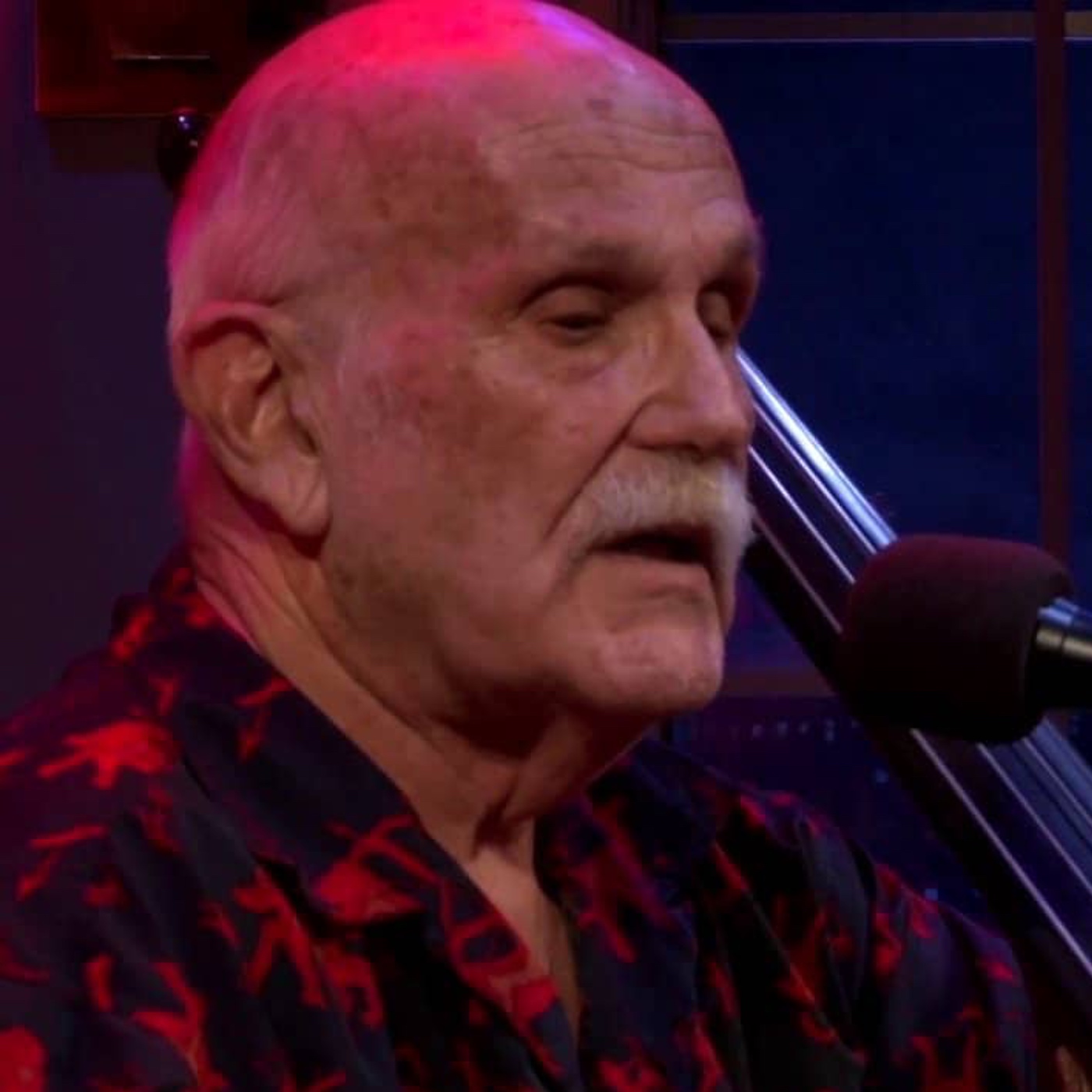
Today's episode features an interview with the great Bert Turetzky. With nearly 60 years spent championing new works for the contrabass, Bert truly is the father of modern bass playing. Bert has recently released a memoir titled A Different View which chronicles his life spent in music. It delves into his early years growing up in Connecticut, his dreams of becoming a jazz player, his orchestral experiences, teaching at the Hartt School and the University of California San Diego, and it covers in great detail his work as an advocate for the contrabass. We also feature clips from a University of California Television broadcast from 2008 titled Bertram Turetzky and Friends: Music for Contrabass. This program featured solo and chamber works, including four premieres and several pieces that have made Bert famous. The entire program is available on YouTube. Be sure to check out the YouTube video for Bert's wonderful descriptions of these works. Audio used in the podcast: Seven Miscellaneous by Donald Erb Onde (World Premiere) by Salvatore Macchia Inside by Kenneth Gaburo Contrabajissimo (World Premiere) by Astor Piazzolla Links: Bert Turetzky - video interview about A Different View (43 min) Bertram Turetzky and Friends: Music for Contrabass A Different View - memoir by Bertram Turetzky Bert's Wikipedia page

Ep 196196: Andrés Martín on the creative process, the composer mind, and forging a bass scene
Today's episode features composer, teacher, and bassist Andrés Martín. Andrés has written works recently that have become quite popular in the bass community these past few years, and I've been looking forward to talking with him ever since hearing his music. Andrés is also the composer of Anna's Gift and is currently writing the music for Anna's Promise, the project spearheaded by Barry Green (a former Contrabass Conversations guest) that we featured on episode 189 of the podcast. We'll be playing excerpts from Andrés' music throughout this episode, and we'll start with an excerpt from the second movement of Andres' bass concerto. He's a distinctive and exciting new voice in the world of the bass and has captured the bass world's imagination for sure. Andrés is a great guy and a deep thinker about creativity and the compositional process, and I think that you'll learn a lot about inspiration and the composer mind from this discussion. Tracks featured: Bass Concerto No. 1 (excerpts from movements 2 and 3) Suite Para Contrabajo Y Guitarra Española (2009) III. Milongitana 43 by Andrés Martín and Donovan Stokes (excerpts from movement 2 and movement 3) Elegia Para Contrabajo Solo (2011) Andrés Martín solo CD Cera andresmartin.net About Andrés: Native of Buenos Aires, Argentina, bassist, arranger, and composer Andrés Martín has performed with orchestras and chamber ensembles in Argentina, Costa Rica, Venezuela, Brazil, Mexico, England, Germany and United States. Since his arrival in Tijuana (Mexico), Andrés has been immersed in teaching as well as performing as a soloist and chamber musician. He is a member of the "Orquesta de Baja California" and "Cuatro para Tango", a chamber ensemble with whom he has released four recordings. He also organizes and directs "Contrabajos de Baja California A.C. ", a Double Bass academy who celebrates an international double bass festival and chamber music course held in Tijuana every summer. As a composer and arranger, he works with a wide language which ranges from contemporary techniques to tango and rock. His work has been performed and recorded by very successful orchestras, ensembles, and soloists in Mexico, Argentina, Colombia, Germany, Italy, Denmark, Netherlands, Japan and the United States.

Ep 195195: Gaelen McCormick on bow strokes, Progressive Repertoire, and the Pomodoro Technique
We are featuring double bassist Gaelen McCormick on today's episode. Gaelen is a member of the Rochester Philharmonic, teaches at Nazareth College and the Eastman Community Music School and is the author of Mastering the Bow, a two-part series for bass. Part one is based on the violin studies of Franz Wohlfahrt, and part two features off-the-strings strokes. We had a wonderful conversation about her early years in music, studying with Jeff Turner for graduate school (and you can listen to Jeff on the podcast—he was a guest back on episode 26), structuring practice time, the George Vance Progressive Repertoire series, and many other topics. Before and after the interview, we feature Gaelen and Ed Paulsen performing a couple of Dave Anderson's wonderful duets, and you can check out our interview with Dave on episode 75 of the podcast. About Gaelen: Ms. McCormick has been a member of the Rochester Philharmonic's bass section since 1995. Before joining the RPO, she held positions with regional orchestras such as the Erie (PA) Philharmonic, the Binghamton Philharmonic and the Albany Symphony. Ms. McCormick has performed regularly with other major orchestras, including the Buffalo Philharmonic and the Syracuse Symphony. She holds degrees in performance from the Eastman School and Carnegie Mellon University. Teaching the double bass to students of all ages has become a significant part of Gaelen's life. She joined the faculty of Nazareth College in 2010, and has been the bass instructor for the Eastman Community Music School since 2001. She enjoys working with talented high school aged string players in the summer at Eastman's Music Horizons program where she teaches chamber music and gives bass lessons. In 2003, she was invited to teach for the year at Duquesne University's City Music Center, a program for talented, pre-college students. Gaelen has given masterclasses and recitals at Ithaca College, Williams College, the College of St. Rose, and Roberts Wesleyan College. In 2013, she gave classes on double bass technique at both the International Society of Bassists convention in Rochester and the NYSSMA Winter Conference. "Mastering the Bow", the first of three books on double bass bow technique, was published by Carl Fischer in 2013, and the second will be published during the 2014 season. Playing chamber music has been a passion for Ms. McCormick. Before moving to Rochester, she often performed with the St. Cecilia Chamber Orchestra (Albany, NY) as their sole bassist. During her tenure in Pittsburgh, she became the founding bassist of the Pittsburgh Live Music Chamber Orchestra. She was the founding member of the innovative string quintet "Gibbs and Main", and recorded a cd of tango standards with them, and commissioned a new work for the ensemble by Judd Greenstein. In recent summers, she has been performing with the Music in the Mountains chamber orchestra, a festival based in Durango, Colorado. She is frequently invited to play chamber music with musicians from around the country in festivals such as the Roycroft Chamber Music Festival and the Syracuse New Music Ensemble. This summer, Ms. McCormick will make her debut appearance at the Canandaigua Lake Chamber Music Festival. Gaelen has been involved in volunteering and arts advocacy, and is proud to be the representative for the RPO in the International Conference of Symphony and Opera Musicians. She is honored to be a member of Phi Kappa Phi and Pi Kappa Lambda, groups recognizing and supporting excellence in the humanities and in music specifically. In her spare time, Gaelen enjoys kayaking, Argentine tango and West Coast swing dancing, and spending time with her toddler Clara.
Ep 194194: Inez Wyrick on 911 bass teaching, creating artists, and teaching the whole fingerboard
Inez Wyrick has been a huge name in bass pedagogy for decades. She really is one of those teachers that I think we all aspire to be like—she can take a student at any level and develop their technique while also instilling in them a passion for making music of all sorts. Today's conversation with Inez is a journey through the topics of education, inspiration, the development of bass teaching from the "dark ages" to the embarrassment of riches that we have today and the thoughts and perspectives of a truly beautiful human being. You're going to learn a lot and come away with a bunch of new ideas about teaching, and I'm sure that you'll feel rejuvenated and inspired by Inez's passion and energy. After the interview, we feature listener feedback and some upcoming plans for the podcast, and before we get going with our interview we will feature a clip of Inez conducting the Orchestra of Lady Bassists from the 2013 ISB convention. Kristin Korb was the current president of the ISB when this was recorded, and she makes some introductory remarks (Kristin was also a podcast guest on episode 79), and we have a ink in the show notes to this complete video, which you should definitely check out. About Inez: Former International Society of Bassists Board Member Inez Wyrick currently resides in Winchester, Virginia where she is adjunct instructor of bass at Shenandoah Conservatory, maintains a private bass studio She perviously edited the young bass page of Bass World and serves on the board of directors for the Bass Coalition. Mrs. Wyrick is an internationally acclaimed pedagogue who specializes in pre-college string education and has numerous publications to her credit. An active lecturer, clinician and traveling "911 bass teacher," she is a regular clinician at the Richard Davis Bass Conference in Madison, WI and the Golden Gate Bass Camp in San Francisco, CA. Previously, she has been on the faculties of Indiana University String Academy, Amarillo College, Odessa College and Texas Tech University Orchestra Camp and was founder of the Amarillo Bass Base, a bass ensemble which held an international reputation. Her students teach and hold professional positions in ensembles and educational institutions worldwide. Her arrangements and compositions for bass ensemble have been performed worldwide and her CD-ROM of bass ensembles entitled Music for Double Bass Ensemble, Vol. I: 30 Christmas Carols for "Same Level" and "Mixed Level" Double Bass Ensemble was released in 2005. She has over 300 heterogenous bass ensembles for all levels, and varieties of levels. Email for a complete, graded, inventory. In 2001 she was the honored recipient of the "Young Bassists Ambassador" award from the International Society of Bassists. She is married to fellow bassist Dr. Donovan Stokes.
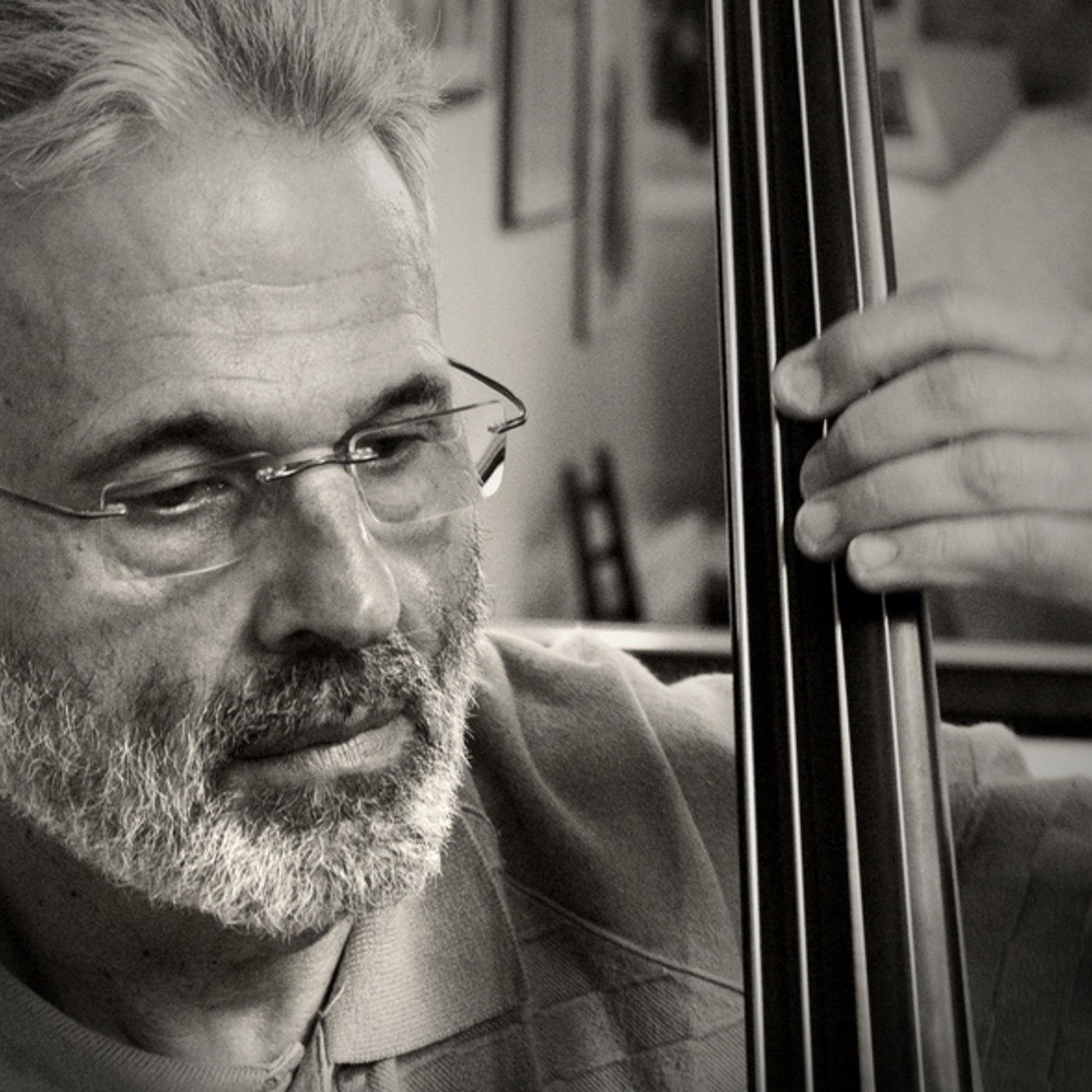
Ep 193193: Gary Karr on making recordings, "retired" life, and arranging Baroque music
This episode from the archives features an interview that Barry Lieberman did with Gary Karr. In preparation for it, Barry listened to all of Gary Karr's recordings and picked out his very favorite, and he and Gary listen to these and discuss the context behind them. It's a fascinating window into this great artist, and it's well worth a listen. This was originally released in 2008 on episode 89 of the podcast. There is a video version of this episode as well. About Gary Karr: Gary Karr, acclaimed as "the world's leading solo bassist" (Time Magazine), is, in fact, the first solo double bassist in history to make that pursuit a full-time career. It is a career that adds new lustre to his already lustrous 1611 Amati doublebass which was given to him by the widow of Serge Koussevitzky. Since his debut with Leonard Bernstein and the New York Philharmonic in 1962, Karr has performed as soloist on six continents with orchestras, including the Chicago Symphony, London Philharmonic Orchestra, Hong Kong Philharmonic, Montreal Symphony, Simon Bolivar Orchestra (Caracas, Venezuela), Jerusalem Symphony, Oslo Philharmonic, Zurich Chamber Orchestra, and with all the major orchestras of Australia. On Italian cable, three Karr doublebass recitals reached 20 million classical music lovers. The numerous CDs that Gary Karr has recorded and released in Japan are "top of the recording charts" favorites in the Far East. The BBC has featured two video films of Karr, one an illumination of his life and music (Amazing Bass) and one a series for children. On his third recording with the London Symphony Orchestra, Karr performed the Concerto for Bass by John Downey. CBS Sunday Morning celebrated Gary Karr's career and the University of Wisconsin has released a video demonstrating his instructional approach to the doublebass (BASSically Karr) in addition to a special video concert for children (Karrtunes). One of Karr's proudest achievements is the Bronze Medal he received from the Rosa Ponselle Foundation which recognizes him as an outstanding lyrical musician. Gary is the proud holder of the 1997 Artist/Teacher of the Year Award from the American String Teacher's Association (ASTA). He also holds the Distinguished Achievement Award (1995) from the International Society of Bassists (ISB). Gary Karr participated in the Bi-Annual Rainforest Concert in Carnegie Hall with fellow-bassist Sting, Stevie Wonder and others in 1997. In 1999 a new book by Claude Kenneson, entitled Musical Prodigies -- Perilous Journeys, Remarkable Lives was released by Amadeus Press, which includes a passage describing Karr's early love affair with the doublebass. In June 2001, Gary Karr played his farewell public concert as part of the International Society of Bassists 2001 Convention in Indianapolis. A large audience that included eight hundred bassists from twenty-seven different countries attended this event. At the close of this recital with his pianist, Harmon Lewis, Karr was given the ISB's Distinguished Teacher Award. He was also presented with a very special gift from more than two hundred of his colleagues and fans…a newly developed rose named in his honor to commemorate his forty years on the international concert stage.
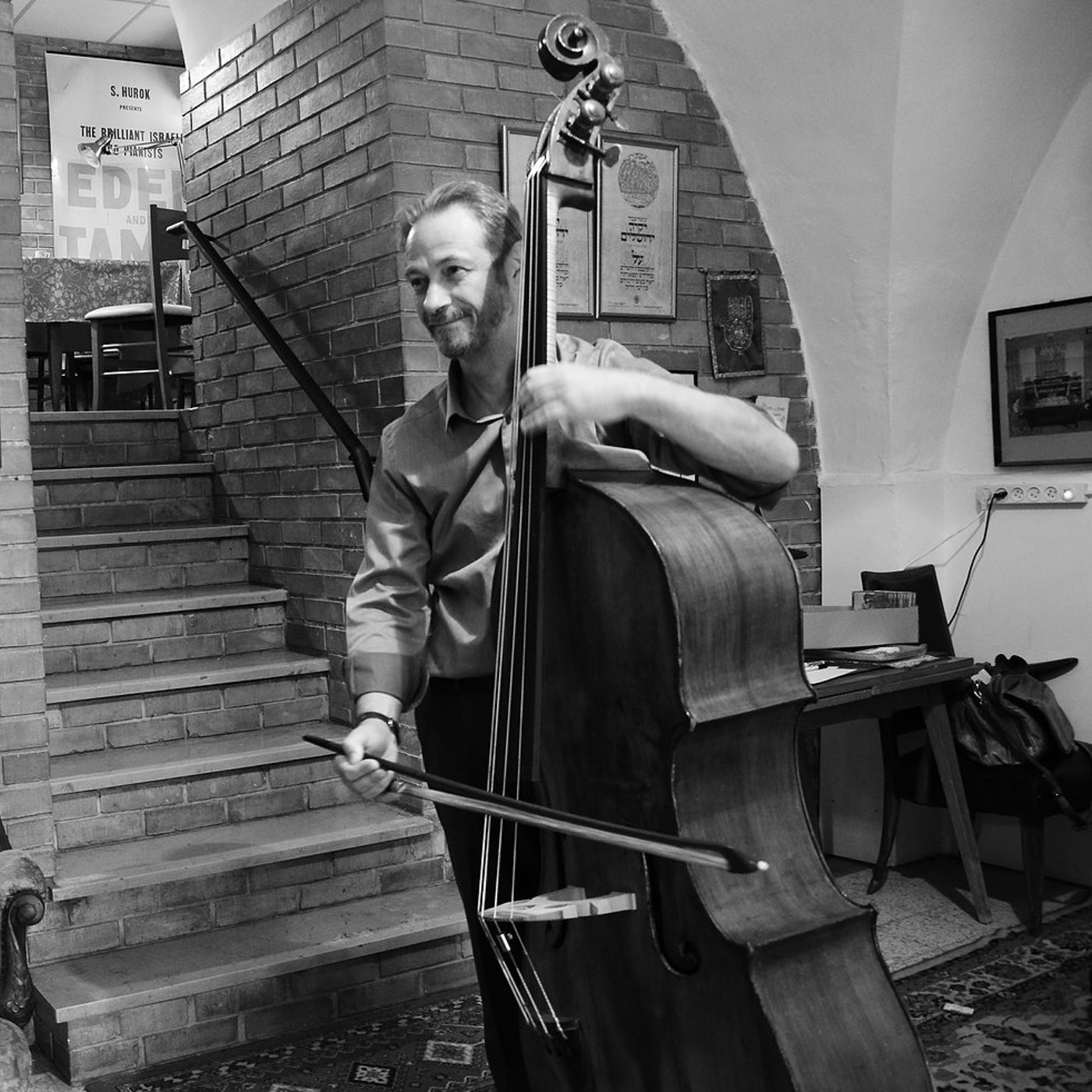
Ep 192192: Michael Klinghoffer on driving a double bass, how not to hold the bow, and directions in education
Today's episode features double bassist, author, conductor, and educator Michael Klinghoffer. Michael is a former Gary Karr student and is the author of the unorthodox and compelling book Mr. Karr, Would You Teach Me How to Drive a Double Bass? Michael is one of the most interesting minds in the world of contemporary double bass. In addition to his book, he has a wealth of articles, videos, and resources on is website pertaining to bass, musicianship, education, and numerous other topics. We talk about his first encounters with Gary Karr, the impetus behind writing his book, how not to hold the bass and bow, and integrating performance, conducting and composition, and where education is going in the near future. This conversation is a deep philosophical dive into technical and mental aspects of musical practice, thought, and development. We'll feature two selections from Michael's album Mostly Transcriptions Vol. 2. We open the episode with an excerpt from the first movement of Mendelssohn's Sonata No. 1 in Bb Major, and conclude with the final movement of Strauss' Sonata in F Major. This album, along with Drive a Double Bass and an interesting solfege book titled The Bottesini Project. Check out the following links from Michael--they contain a wealth of useful content on a variety of topics): Videos that demonstrate techniques covered in Drive a Double Bass Videos about Innovation Michael's YouTube channel Article: Excellence in the Age of Ratings other articles from Michael About Michael: Michael Klinghoffer (Hebrew: מיכאל קלינגהופר), Author of Mr. Karr, Would You Teach Me How to Drive a Double Bass?, Dean of Performing Arts and Senior Lecturer of Double Bass at the Jerusalem Academy of Music and Dance, Israel. Michael Klinghoffer, double bass performer, conductor and educator studied under Gary Karr at Yale University, where he received Master of Music and at the Hartt School University of Hartford, where he received his Doctor of Musical Arts. He has been assistant principal bass player in the Israel Symphony Orchestra and in the Israel Sinfonietta. Currently, he performs solo concerts, recitals and chamber music and conducts master classes in Israel and abroad. His repertoire ranges from contemporary Israel music, (much of it composed for him), to his own arrangements for double bass, which have been published in the U.S. and in Europe and recorded on two compact discs. He has published articles on Music Education and on Pedagogy in Israel professional periodicals as well as in the U.S. "Music Education in Institutions of Non Formal Education" was published by MATAN in collaboration with the Israeli Ministry of Education. Since 1987, he has been on the faculty of the Jerusalem Academy of Music and Dance, conducting orchestras, teaching the double bass and other subjects. He was the Head of the String Department, the Dean of Students and he is currently serving as the Dean of Performing Arts and is the Direcor of the Jerusalem Consevatory Chamber Orchetsra. Along with his academic commitments and performing engagements, and after being Music Director for seven years at MATAN, (Arts and Culture Project for Youth), Dr. Klinghoffer still devotes much time and energy to working with young musicians from diverse backgrounds all over Israel.

Ep 191191: David Murray on the Karr sound, bow technique, and the spirit of Koussevitzky
Today's episode features double bassist David Murray. David is on faculty at Butler University in Indianapolis, Indiana, and has been on the board of the International Society of Bassists for past two decades. The former winner of the ISB solo competition, David is known around the world as a soloist and clinician. He is also a member of the Bad Boyz of Bass, a quartet rounded out by Volkan Orhon, Anthony Stoops (a former Contrabass Conversations guest), and Paul Sharpe. We actually featured the Bad Boyz on episode 71 of the podcast back in 2008, which is well worth a listen if you haven't checked it out before! We talk about David's experiences having Gary Karr as his first bass teacher, where the "Karr sound" came from, focusing on bow technique, the spirit of Koussevitzky, his long relationship with the International Society of Bassists as a former competition winner and longtime board member, traveling with a bass, and several other topics. We also feature the title track from David's solo album Vocalise, and we conclude the episode with a recording of David playing the first movement of the Franck Sonata from his Sonatas by Franck and Shostakovich album. Both the Vocalise album and the Sonatas album are available through the ISB Web Store. I'd also encourage you to check out David's performance of the B.B. Wolf by Jon Deak. It's a great piece and David knocks it out of the park! About David: David Murray has an international reputation as a solo bassist and teacher. He is currently Professor of Bass at Butler University in Indianapolis and Principal Bassist ofthe Indianapolis Chamber Orchestra. He also plays as Principal Bassist with Sinfonia da Camera in Urbana, Illinois, and at the Bear Valley Music Festival in northern California. Before coming to Indianapolis, David was Instructor of Bass at West Texas A&M University and principal with the Amarillo Symphony.He has been a member of the Dallas Chamber Orchestra and also toured twice with the Irish Chamber Orchestra. David's first private teacher was bass virtuoso Gary Karr, with whom he studied in high-school and at the Hartt Music School, University of Hartford, in Connecticut. Summers were spent at Tanglewood and the Aspen Music Festival, where he worked with Stuart Sankey. At Aspen, he won the 1981concerto competition. In Los Angeles in 1988 he won the International Society of Bassists (ISB) Solo Competition, the first prize being a solo debut at Carnegie Hall. David has made solo appearances, both in recital and with orchestra, and given clinics and masterclasses throughout the United States, his native Canada, and in South Korea, Brazil, Israel, Scotland, France, Spain, Portugal,Denmark, Germany, and Holland. He has performed at several summer chamber music festivals including Scotia Festival, Killington, and Cape May. In June, 2001,David hosted the ISB convention at Butler University for 800 bassists from 27countries and is currently a Past-President of the ISB. He has been published in the ISB journal, Double Bassist magazine, the Suzuki Association of America journal, and American String Teachers journal. He has recorded three solo CD's(most recently in 2012), a duo CD with bassist Diana Gannett, is a founding member of the bass quartet Bad Boys of Bass with whom he released a CD in 2006,and he released a DVD of theater music in the spring of 2003. "…to hear David Murray play it, the string bass is a vastly and unjustly neglected instrument. Murray…became a prime spokesman for the instrument." Denver Post "…Murray is a top-notch player." IndianapolisStar
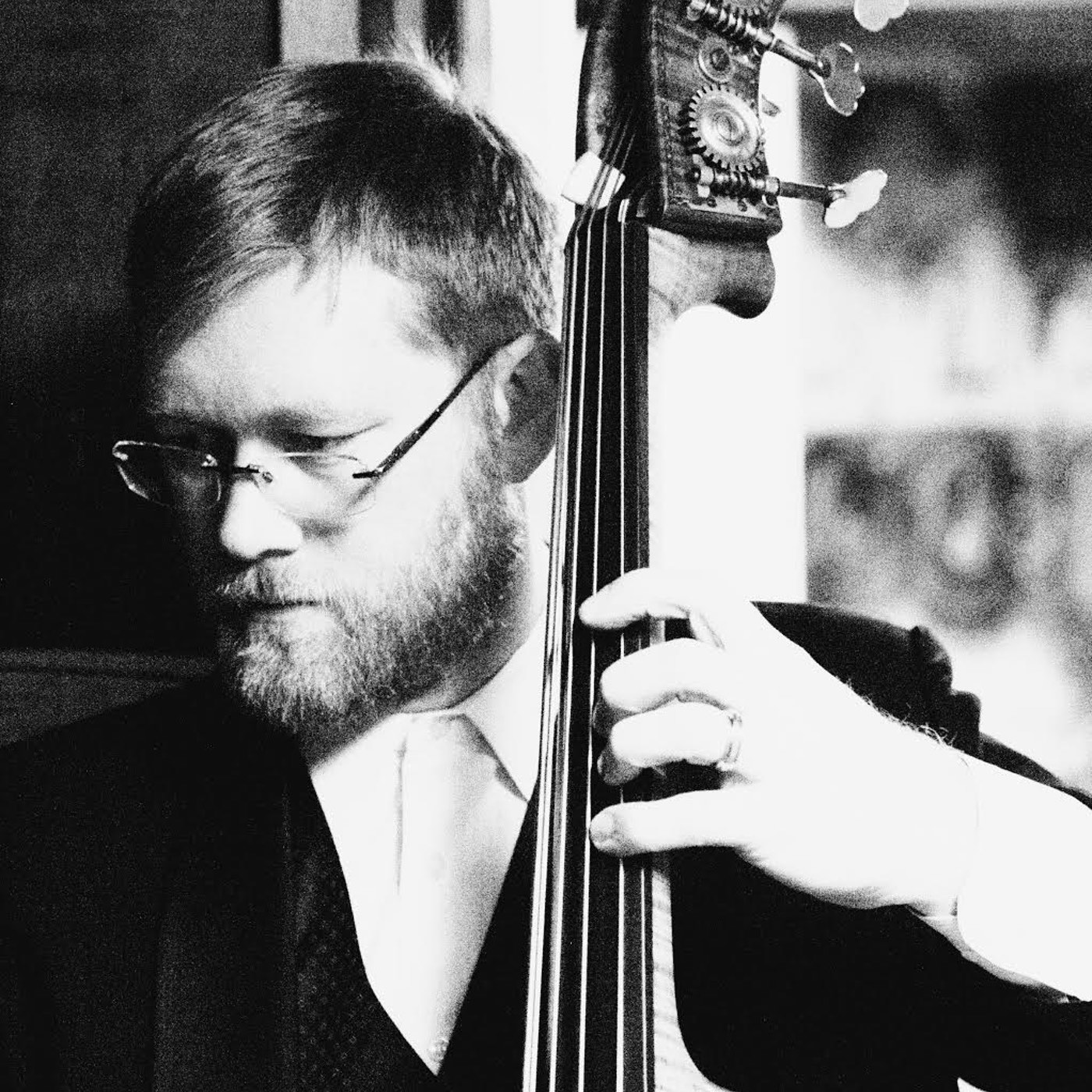
Ep 190190: Czardas with Andy Anderson - the making of an arrangement
I had the opportunity recently to perform my arrangement of the Monti Czardas for double bass and orchestra recently, and I thought that it would make for a cool podcast episode. I though that Andy Anderson would make for a spectacular soloist, so this recording features me conducting and Andy playing bass with my orchestra. Andy is a member of the Lyric Opera of Chicago bass section and teaches bass at the Chicago College of Performing Arts, and he has been featured on the podcast several times in the past. We cover some of the details behind this arrangement, including some rehearsal recordings that Andy sent me to play for my group, and I couldn't resist adding a little bonus audio at the end of the episode featuring a well-known piece for orchestra. Enjoy!
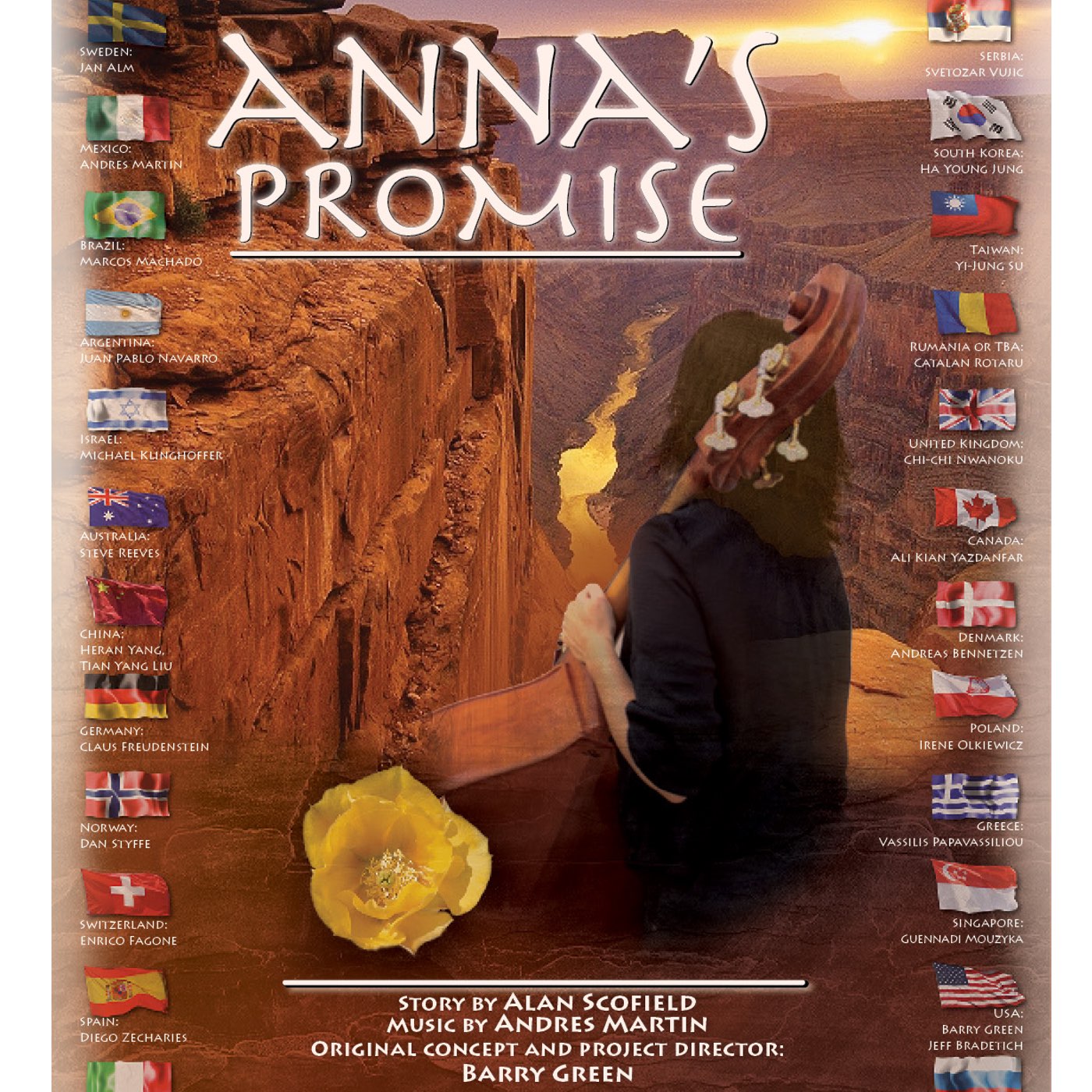
Ep 189189: Barry Green and Jeff Bradetich on the Anna's Promise Project
We are diving into a really interesting project today called Anna's Promise. Anna's Promise is the third in a series of multimedia works developed by Barry Green (author of The Inner Game of Music and several other works, and also a former Contrabass Conversations guest). Barry is joined by Jeff Bradetich (double bass professor at the University of North Texas and also a former Contrabass Conversations guest) to speak with me about this work. The first piece, Anna's Way, From Inspiration to Artistry, is a 45-minute musical and visual journey of a young bass prodigy and her rediscovery the joy of music after lessons with a Tai Chi master. Written by Alan Scofield, this story is set to music from China, India, Africa, Brazil, Israel, and America by Tony Osborne, Francois Rabbath, Arvo Pärt, Astor Piazzolla, Emily Brown, Mary Knysh, Larry Dunlap, Johann Birkenstock, Frank Proto, and Andrés Martín (who we recently interviewed for the podcast—stay tuned for this!). The second piece, Anna's Gift, is a fifty-five minute story about a musician named Anna was written for solo bass, concert band, and narrator, and includes background visuals. The story takes place ten years after Anna was inspired to become an artist from her studies with retired Tai Chi Master Chen. The piece recounts the emotional journey of a gifted concert bassist who is longing for love and fire in her music and her life. Andrés Martín composed the music for this piece. We delve into Anna's Promise, the third part of this series, today in our conversation with Barry Green and Jeff Bradetich about this project, which is being performed by 34 different soloists all across the world. Andrés Martín is also the composer for this third installment. Anna's Promise is a worldwide effort to spread this inspirational story. The commissioning fee for Andrés Martín and story writer Alan Scofield, is being raised through industry solicitation directed by Toni Buffa of Lemur Music Inc. [email protected]. When requested, USA non-profit status for charitable deductible contributions to this project will be possible through the Bradetich Foundation. www.bradetichfoundation.org. Further information from Barry Green [email protected]. There is also a gofundme set up for this project, and Kolstein's has contributed a bass and bow for auction to support Anna's Promise. Visit the Anna's Promise website for complete details about this project. Here's a line-up of the performers for this project and the country in which each will be performing: South Africa: Leon Bosch Sweden: Jan Alm Mexico: Andrés Martín Brazil: Marcos Machado Argentina: Juan Pablo Navarro Israel: Michael Klinghoffer Australia: Steve Reeves China: Heran Yang, Tian Yang Liu Germany: Claus Freudenstein Norway: Dan Styffe Switzerland: Enrico Fagone Spain: Diego Zecharies Italy: Giuseppe Ettorre Turkey: Esra Gul France: Theirry Barbe Austria: Christine Hoock Bulgaria: Irina-Kalina Goudeva Hong Kong: Chan Shiu Hang Olive Thailand: Pongsathorn Nowbassist Surapab Japan: Kazuhiro Tanabe Russia: Artem Chirkov United States: Barry Green, Jeff Bradetich Singapore: Gennadi Mouzyka Greece: Vassilis Papavassiliou Poland: Irene Olkiewicz Denmark: Andreas Bennetzen Canada: Ali Kian Yazdanfar United Kingdom: Chi-Chi Nwanoku Rumania: Catalan Rotaru Taiwan: Yi-Jung Su South Korea: Ha Young Jung Serbia: Svetozar Vujic Czech Republic: Jiri Hudec
Ep 188188: Ron Carter on technical development, an orchestral foundation, and developing the next generation of music lovers
I am thrilled to feature Ron Carter today on the podcast. If is one bassist in the world that truly needs no introduction, it's Ron. Ron recently received the Guinness World Record title for most recorded jazz bassist in history, with well over 2200 recording credits to his name. From his work with the Miles Davis Quintet in the 1960s to his collaborations with musicians like Freddie Hubbard, Joe Henderson, Hank Jones, his numerous projects as a bandleader, and his work outside of the jazz realm with artists like Billy Joel and A Tribe Called Quest, Ron has truly shaped our conception of the sound of the double bass. Ron has four books available: Comprehensive Bass Method Finding the Right Notes Building Jazz Bass Lines Ron Carter Collection Be sure to check out these books, and you can find the video for Ron Carter Live here. Ron's extensive discography is available through this link. I'd also like to welcome back our sponsor Discover Double Bass! They have a 4 hour course on creating walking bass lines, with 55 HD video lessons in a step-by-step order to help you to master the style of walking bass. You can check out this course as well as many other offerings at discoverdoublebass.com/store. If you're new to Contrabass Conversations and are a jazz fan, then check out our episodes featuring Carlos Henriquez, Rufus Reid, Larry Gray, and Eric Hochberg for more conversations with great jazz artists.
Ep 187187: Chris Threlkeld-Wiegand on working at Robertson's, building extensions, and aesthetic wood choices
Friday's episode features another interview from the archives with bass maker Chris Threlkeld-Wiegand, who owns and operates the Heartland String Bass Shop. Chris makes beautiful basses and extensions—I actually have one of Chris' extensions on my main bass. Chris' basses are played in major orchestras throughout the United States and are beautiful instruments with great sound. About Chris: Chris Threlkeld-Wiegand started playing bass at age nine. He earned a full scholarship to the University of Iowa where he studied under Eldon Obrecht and earned a Bachelor of Music in String Bass Performance. Chris has played with the Quad Cities Youth Symphony, the Cedar Rapids (Iowa) Symphony Orchestra, and the Quad Cities Symphony. He has also performed with many bands during his career, ranging from jazz to blues to folk in communities as far ranging as Nagoya, Japan and Austin, Texas. Chris has had a life-long interest in the sound and responsiveness of basses. As a player, Chris knows that having a finely tuned instrument is critical, and he recognizes the remarkable difference a slight sound post adjustment or bridge arching can make. His interest in sound and the influence of craftsmanship and ingenious problem solving led him to world famous Collings Guitars. While working at Collings and living in Austin, his cat (a black one!) knocked over and broke the neck on his bass. At the time, Chris was taking private lessons from Professor David Neubert at the University of Texas. Frustrated with the quality of the repair work on his bass, Chris asked Professor Neubert to recommend a good repair shop. "Albuquerque" was the guiding answer. Robertson & sons Violin shop is one of the world's finest string instrument repair shops & is located in Albuquerque, NM. For five years at Robertson & Sons, Chris had the opportunity to learn the craft of bass repair and construction under the tutelage of an acknowledged master, and work on some of the finest basses in the world. From neck grafts to cracks, Chris's skills were applied to a full range of challenges. But he also developed many original techniques, including installation of custom low C & B extensions that integrate into the scroll rather than cutting the scroll and gluing the extension to the modified scroll. In 2003 it was time to set up shop in his home state of Iowa, and bring his remarkable set of skills and experiences to musicians in the Midwest. Heartland String Bass Shop is the complete manifestation of a musical life, a commitment to sound, and skills honed under the watchful eye of the finest instrument makers and repairers in the world.

Ep 186186: Barrie Kolstein on making rosin, lessons learned from his father, and bass trunk technology
John Grillo and I recorded this interview with Barrie Kolstein back in 2008, and it has proven to be a very popular episode in the catalog. Barrie runs the Kolstein shop Long Island, and his instruments have been utilized by Jeff Turner of the Pittsburgh Symphony, James Van Demark of the Eastman School of Music, Scott Haigh of the Cleveland Orchestra, and many others. John Grillo has been frequenting the Kolstein shop for years, and it was great to have John in on the conversation. This was a great chat about all sorts of bass-related topics. About Barrie Kolstein: 1967-1971 Kolstein basses State University of New York at Albany Obtained a Bachelors of Science Degree in Business Administration and Marketing. 1967-1973 Formally studied the Double Bass under the pedagogues: Frederick Zimmermann, Assistant Principal of the New York Philharmonic; Orin O'Brien, New York Philharmonic; Georges Andre, Metropolitan Opera; Robert Gladstone, Principal Bassist Detroit Symphony; Samuel Hollingsworth, Principal Bassist Pittsburgh Symphony Orchestra; David Holland, renowned Jazz artist. 1971-1974 Served in formal apprenticeship for instrument and bow restoration, construction and appraisals, under the expert auspices of renowned violin and bow maker, restorer, and appraiser, Samuel Kolstein. 1974-1978 Served as staff instrument and bow restorer as well as making numerous new violin and celli with Samuel Kolstein. 1979 Promoted to head violin master in the shop of Samuel Kolstein. 1981 Assumed full business responsibilities for operating all aspects of Samuel Kolstein & Son, Ltd. and Kolstein Music, Inc. 1981 to present Head violin maker, restorer, and appraiser with a staff of nine violin makers working under his supervision. Published numerous technical articles on restoration and appraisals in the International Society of Bassists with feature article published in the Strad, February 1991; presently editor of the "Luthier Corner" in the International Society of Bassists magazine restoration and repair forum; published regularly in the Double Bassist magazine and the Strad magazine, both of London, England, since 1996. These articles have ranged form interviews with makers and performers, technical articles on repair/making, and expert appraisal articles on historic master makers; featured in the violinmaking segment of Robin Lehman's documentary, Young Peoples Guide to the Orchestra; contacted to appear in the upcoming educational video on "Careers in Music". On the expert appraisers staff of Art Conservation fine arts adjusters as a String Instrument and Bow Expert. Barrie Kolstein has completed well over one hundred instruments (Violin, Viola, Cello and Bass Violins) utilized by renowned players including Jeffrey Turner, Pittsburgh Symphony; Robert Gladstone, Detroit Symphony; James Van Demark, Professor of Double Bass Eastman School of Music and world famous soloist; Charles Urbont, Metropolitan Opera; James Clute, Minnesota Symphony Orchestra; David Sheets, Baltimore Symphony Orchestra; Lou Norton, New York Philharmonic; Caitlyn Kamanga, Hong Kong Philharmonic;, Scott Haig, Assistant Principal Bassist, Cleveland Orchestra; Hienrich Joachim, renowned soloist and former member of the New York Philharmonic; Lew Norton, New York Philharmonic; Barbara Yendell, Hong Kong Philharmonic, to name a few! Mr. Kolstein is a member of: Appraisers Association of America, 1994 to present International Society of Bassists, 1979 – present Violin Society of America, 1980 – present Viola Congress, 1983 – present Cello Congress, 1982 – present Listed in The Violin Makers of the United States, by Thomas J. Wenberg, Mount Hood Publishing Company, 1986.

Ep 185185: George Martin on challenging restorations, the art of varnishing, and riding horses in the English countryside
We are featuring George Martin from Thomas and George Martin Violin Makers. Their shop has been making basses for over 30 years, and they have a wealth of knowledge about the instrument-making and restoration process. George and I dig into these details, talking about some of his most challenging restorations and what goes into making a bass. Our recent Contrabass Conversations guest Marc Ramirez spoke with me about finding his Cavani bass at the Martin shop (that story starts at the 80 minute mark for that episode). It was a great story and a great talk in general--be sure to check out Marc's interview if you haven't yet--it was episode 173 of the podcast. About the Martin Shop: As many will know, The Thomas and George Martin Workshop is just north of the town of Banbury, England in an ancient hamlet. It took us several months to turn an ancient open fronted stone barn into a sate of the art workshop to continue the family business of making and restoring fine stringed instruments. The workshop is a warm and happy place to work with an easy working atmosphere. We have an outstanding team of highly skilled individuals who each play an important part in producing and restoring some of the finest instruments in the world. The workshop operation is cared for and managed on a daily basis by George, while Tom is often called in to give advice and check all the new basses. Please have a look at our meet the team page to get to know everybody better. The workshop team has now produced a large number of double basses, several fine cello's, and a few violas and violins. We have also had the privilege to repair and restore some wonderful instruments over the years as well as performing minor adjustment and set up work for players just starting out to the worlds best professionals.
Ep 184184: Nick Lloyd on the craft of bass making, building flat backs, and traveling to Pakistan
Nick Lloyd has become one of the top double bass makers in the country over the years, with award-winning basses being played worldwide, including talents as diverse as New York Philharmonic principal bassist Tim Cobb and YouTube sensation Adam Ben Ezra. We talk about Nick's early years learning the bass, apprenticing with various makers and learning the craft of bass making, the intricacies of making a bass, his standard bass designs, travel necks, his financing options for basses, and playing with the Kentucky Winders in Pakistan! About Nick: I was born in central Iowa, and first met the doublebass at age 8. In 1993 I moved to Boston to freelance and attend the Longy School of Music. As my interests developed, a question remained unanswered: how is a doublebass made? Well, Boston luthier & bassist John Styklunas was the first to answer that question. It's been over 20 years now, and my teachers also include Michael Shank, Paul Hart, and Daniel Hachez. All of these luthiers have helped me assemble the skills and high standards necessary to make and repair professional-quality double basses. Most importantly, my training has taught me to always respect the client, regardless of what kind of music they play. Since establishing my Cincinnati shop in 2000, my instruments have received awards for tone and workmanship. In addition, I received the 2007 "Friend Of The Bass" award from the International Society of Bassists for organizing the Katrina Basses project. In 2015, in conjunction with the State Department and musical group the Kentucky Winders, I became a U.S Cultural Ambassador. This position includes traveling internationally to promote traditional American music as well as performances with ethnic musicians of respective host countries.

Ep 183183: Susan Lipkins on crafting bows, tonal characteristics of wood, and how to choose a bow
A graduate of Juilliard, Susan Lipkins is one of the most respected bowmaker in the country and has made bows for Hal Robinson, Alex Hanna, Jeff Turner, Max Dimoff, Thomas Martin, and other major bassists worldwide. We talk about Sue's early years growing up in Queens and studying with Homer Mensch and John Shaffer at Juilliard, her inspiration to become a bowmaker, the multitude of small steps that go into making a bow, tonal characteristics of different strains of pernambuco, and advice on choosing a bow that works for each individual. About Susan: I grew up in Queens, New York. I attended the High School of Music and Art, followed by receiving my Bachelors and Masters degrees in Double Bass performance from the Juilliard School of Music. I had long been intrigued by the double bass instruments I and others played and also found the bows fascinating. The professional musician's lifestyle and auditions seemed daunting to me. Instead I sought related areas of the classical music scene in which I might become involved. A position opened for me to work in sales at the bowmaker, William Salchow's shop. Soon a bench opening for rehairing arose and I learned to rehair bows, which suited me well. William Salchow generously agreed to teach me how to make bows in the hours after the shop had closed. Yung Chin, who was then working in the Salchow shop, also gave of his time, guiding my training. Once on my own, Francois Malo of Montreal and David Samuels, now living in Israel, contributed generously to my early training. As a result of my contact with bass teachers from my music training, I was surrounded by bass players and as a bass player myself, I naturally gravitated towards the making of bass bows. Even early on, as a well trained player, my bows were made from the player's perspective. As my bowmaking skills developed, so grew my understanding of playability. My intuitive sense of bowmaking developed from the player's foundation guided my process and I found myself specializing in the making of bass bows, in both the French and German styles. I have attended the Oberlin Bowmaking Workshop in summers since 1999, where with my colleagues, there is rich exchange of information, methods, and ideas. In the summer of 2000, I studied with Stephane Thomachot and Mitsu Sasano in Paris, which advanced my foundation in the French style of bowmaking. With this firm grounding in the classical French style, my bows are not only beautiful but real "players' bows". I make my bows to order, one at at time, striving for the highest quality with each bow. I have since gone on to make bass bows for many of the most prominent players in many major symphony orchestras.

Ep 182182: Brent Edmondson on developing a satisfying career, subbing with the Philadelphia Orchestra, and gaps in music school training
One of the most enjoyable things about hosting a show like this is that I have the opportunity to connect with people that I find interesting and that are really exploring different directions in the world of the double bass, and Brent Edmondson is a prime example of a person like this. I've been following along with Brent for years as he helped Ranaan Meyer to launch the Next Level Journals and Ranaan Meyer Entertainment. He has created a really interesting role for himself in the world of the double bass, subbing with the Philadelphia Orchestra and playing with other top-tier ensembles, but also administering camps like the Wabass Institute, helping Ira Gold to launch his new Orchestral Bowing Workshop, editing Hal Robinson's publications, and working in roles like personnel manager and operations director for the Pennsylvania Philharmonic. About Brent: Double bassist Brent Edmondson is an active performer in the Philadelphia area. Brent currently serves as the principal double bassist of the Lancaster Symphony and the Pennsylvania Philharmonic, and is an A-list substitute with the Philadelphia Orchestra. He previously held positions with the Beaumont Symphony, Atlantic Symphony, Mercury Orchestra, and Waltham Philharmonic. During the summer, Brent is the double bass instructor at the New York Summer Music Festival. Brent previously performed with the Endless Mountain Music Festival Orchestra. Recent performances include the Philadelphia Orchestra, Philly Pops, Houston Symphony, and other ensembles throughout the country. Brent received his Masters degree from Boston University with Edwin Barker, principal bass of the Boston Symphony Orchestra. His other teachers include Hal Robinson, principal bass of the Philadelphia Orchestra, Eric Larson of the Houston Symphony, Rob Kesselman of the Philadelphia Orchestra, and Ranaan Meyer of the trio Time for Three. Brent works in the arts community as Education Director and Music Librarian of the Pennsylvania Philharmonic. He formerly held the position of Operations and Business Manager for Ranaan Meyer Entertainment. He was the Operations Manager of Wabass Institute and Wabass Workshop from 2011 to 2015.

Ep 181181: Carlos Henriquez on playing with Wynton Marsalis, developing a creative voice, and creating effective Afro-Cuban bass lines
We are featuring Carlos Henriquez on today's show. Carlos has been the bassist for the Wynton Marsalis Septet and the Jazz at Lincoln Center Orchestra for nearly 20 years, and he has just released his first solo album The Bronx Pyramid on Blue Engine Records. You'll hear clips from the title track before and after the interview, and we have a link to check out the entire album, which I highly recommend, in the show notes. We talk with Carlos about growing up in the Bronx, meeting Wynton, developing Afro-Cuban bass lines, finding your voice, and much more. Be sure to check out our sponsor Discover Double Bass! Whether you're looking for lessons on walking bass lines, technical exercises, soloing concepts, or phrasing with the bow, Discover Double Bass has helpful resources to get you to the next level in your craft. You can check out over 70 free lessons and much more at discoverdoublebass.com. About Carlos: Carlos Henriquez was born in 1979 in the Bronx, New York. He studied music at a young age, played guitar through junior high school and took up the bass while enrolled in The Juilliard School's Music Advancement Program. He entered LaGuardia High School of Music & Arts and Performing Arts and was involved with the LaGuardia Concert Jazz Ensemble which went on to win first place in Jazz at Lincoln Center's Essentially Ellington High School Jazz Band Competition and Festival in 1996. In 1998, swiftly after high school, Henriquez joined the Wynton Marsalis Septet and the Jazz at Lincoln Center Orchestra, touring the world and featured on more than 25 albums. Henriquez has performed with artists including Chucho Valdes, Paco De Lucia, Tito Puente, the Marsalis Family, Willie Nelson, Bob Dylan, Stevie Wonder, Lenny Kravitz, Marc Anthony, and many others. He has been a member of the music faculty at Northwestern University School of Music since 2008, and was music director of the Jazz at Lincoln Center Orchestra's cultural exchange with the Cuban Institute of Music with Chucho Valdes in 2010.
Ep 180180: Ian Hallas on winning a Lyric Opera bass section spot, effective excerpt practicing, and routines for audition success
Today's guest is Ian Hallas, the newest member of the double bass section of the Lyric Opera of Chicago. Ian successfully auditioned for Lyric in January of 2016 and joins a section with former Contrabass Conversations guests Greg Sarchet and Andrew Anderson. Ian studied with Paul Ellison at Rice University and David Allen Moore at the University of Southern California. Ian also happens to be a former student of mine! We talk through the audition process for Lyric (number of rounds, the audition list, what he played in particular rounds), his routine in the days, weeks, and months approaching an audition, his previous auditions taken, books that have shaped his audition preparation, and advice for people embarking upon the audition trail. Enjoy!
Ep 179179: Douglas Mapp on successful freelancing, life as a jazz bass professor, and ISB insider insight
We are featuring Douglas Mapp on today's episode. Douglas is the current president of the International Society of Bassists and is also on faculty at Rowan University, where he is professor of jazz studies and teaches double bass. He is also extremely active as a performer, serving as principal bassist of the Reading Symphony and Assistant Principal of the Delaware Symphony and he performs regularly with some of the regions premiere ensembles including the Pennsylvania Ballet, the Philly Pops, Harrisburg Symphony, and several other groups in the area. Douglas and I had a great chat about a wide variety of topics, including the realities of making a living as a freelancer, what makes the International Society of Bassists conventions so special, and his company douglasmappmusic, which has for 20 years been providing piano parts written in keys that fit with standard orchestral tuning. Enjoy! About Douglas: Bassist Douglas Mapp is at home in many styles of music ranging from classical to jazz and Broadway to contemporary classical. The list of artists that he has performed, recorded and toured with includes Philip Glass, Michael Nyman, Donnie McClurkin, Richard Smallwood, Natalie Cole, Randy Brecker, Sean Jones, Ernie Watts, Lana Del Rey, Earth Wind and Fire, R Kelly, and Jeff Majors. He is the principal bassist of the Reading Symphony and Assistant Principal of the Delaware Symphony. He performs regularly with some of the regions premiere ensembles including the Pennsylvania Ballet, the Philly Pops, Harrisburg Symphony, and has a twenty-year tenure with the Philadelphia based new music ensemble Relâche. He has performed as substitute bassist with the Philadelphia Orchestra both at home and on tour. He has performed as a soloist with many of the groups with which he performs, including his spring 2015 performance of the Bottesin Grand Duo Concertante with the Reading Symphony. His publishing company, Douglas Mapp Music has been helping bassists to solve the age-old dilemma of solo versus orchestra tuning for over twenty years with piano parts written in keys that fit with standard orchestral tuning. He is president-elect of the International Society of Bassists and will chair the 2015 ISB convention at Colorado State University. Mr. Mapp is a graduate of the University of the Arts and Temple University where his primary teachers were Neil Courtney and John Hood.
Ep 178Crazy Gig Stories!
bonusWe are featuring a series of crazy gig stories that I had recorded in the first phase of the podcast. I had a total blast doing these back in the day and hope to do more of these in the near future. You'll be hearing four of my own stories on this episode: My Car Caught Fire and Exploded Bugs Bunny is my Mortal Enemy Annoying Conductors 101 Auditioning is a Rotten Pastime The last story is from podcast guest David Cardon, a fellow bassist from my time at Northwestern University. He's a cool guy and incredibly funny, and I think that you'll really enjoy this tale from him!

Ep 178178: Useful Music Apps
Today's episode is a bit of a departure from the norm for us. This is a recording of a talk I did for the Illinois American String Teachers Association's Fall Teacher Enrichment Workshop in October of 2015. I have been involved with this organization for many years and am their current state chapter president. I have done presentations like this many times in the past (you can find them in the archives of Contrabass Conversations). I cover all sorts of music apps for iOS and Android that I use in my own practicing and teaching, and I think that listeners will discover some useful tools by listening to this presentation. I recorded this talk on my iPad, and I actually use the iPad for a few parts of the talk, so you will hear some audio strangeness from time to time as I pick up and manipulate the iPad. I also demo a device called the MIDI Fighter using a piece of software called Ableton Live, and again, you'll hear me kind of banging away at this device as I talk, so that's what's going on at the end of the talk. Here's a link to a video of the MIDI Fighter in action--it's an interesting device!