Contrabass Conversations
1,171 episodes — Page 19 of 24
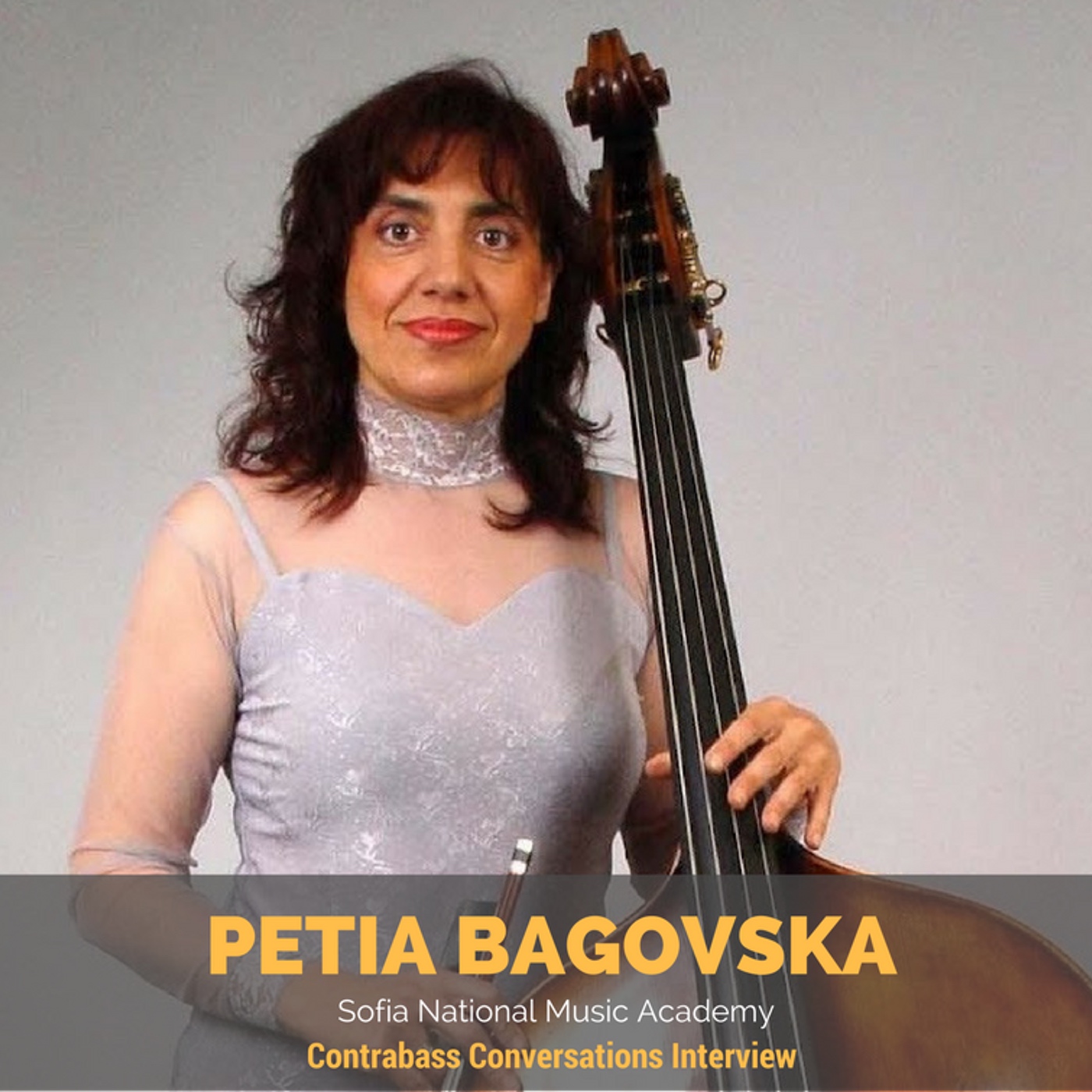
Ep 276276: Petia Bagovska on Bulgarian bass traditions
It was such a pleasure to catch up with Petia Bagovska in Prague for BASS2016! I've known her for years. We used to play in some orchestras together when we were both living in Chicago. When we both realized that we would be in Prague together for the European Bass Congress, we agreed to find a few minutes to catch up and record an interview. Let's set the scene... We're sitting in the courtyard of the HAMU in Prague on a beautiful October afternoon. It's the most perfect weather imaginable. Everyone is outside having a coffee or a beer and a snack, chatting, laughing, trying out basses, and enjoying the experience of being united together as bassists in one of the world's great cities! Not a bad way to spend an afternoon! We talk about: life as a professional bassist in Bulgaria Petia's experiences studying in Sofia orchestra life in Bulgaria Petia's book Double bass: Traditions and future Links to check out: D'Addario strings giveaway! Petia's Facebook page Petia performing Czardas (YouTube) Subscribe to the podcast to get these interviews delivered to your inbox! Learn how you can support the show at contrabassconversations.com/support Listener feedback and news links: book launch landed Winning the Audition at #1 on Amazon! new ways to support the show - contrabassconversations.com/support find the podcast on all social media networks: itunes, facebook, twitter, snapchat, instagram, pinterest, linkedin, youtube feedback from Matt Gold about My Car Caught Fire and Exploded feedback from Jerry Ramos about Gary Karr and Rabbath interviews Thanks to our sponsor! This episode is brought to you by D'Addario Strings! Check out their Zyex strings, which are synthetic core strings that produce an extremely warm, rich sound. Get the sound and feel of gut strings with more evenness, projection and stability than real gut. Enter the D'Addario strings giveaway for Contrabass Conversations listeners at contrabassconversations.com/strings!
Ep 275275: get your copy of Winning the Audition now!
I'm so thrilled to announce that Winning the Audition is now available! You can get it in paperback, ebook, and Kindle formats, and links to all of this are available at winningtheaudition.net. More formats (including audiobook) coming soon! Today's episode covers: what people are saying about the book Ira Gold's complete foreword to Winning the Audition (it's great!) highlights from all four episodes of the Winning the Audition podcast series What people are saying about Winning the Audition: "Professor Larry Hurst likes to say 'orchestras are the largest employers of musicians in the world,' As a result, auditions consume the lives of so many aspiring classical musicians. We have all obsessed over them to the point of auditions becoming mystical events with their own lore and urban legend. That somehow they are won with some kind of secret handshake, studying at the right school, playing like a machine, selling your soul to the devil, etc. Jason Heath's new book Winning The Audition goes a long way to demystifying this frequently misunderstood and intimidating process. His book is the most thorough and exhaustive book on orchestra auditions that I have come across for any instrument. Through his book and his podcast, Jason has created one of the most invaluable educational resources available for classical bassists." Owen Lee Principal Bass, Cincinnati Symphony Orchestra Adjunct Assistant Professor, University of Cincinnati CCM Principal Bass and Faculty, Chautauqua Institution "Jason Heath has compiled relevant tidbits from interviews with top-notch players and major audition winners, interspersing them with his own approaches and experience. Part practical, part anecdotal, and part inspirational, this compilation is something that any musician on the audition trail can learn from. What I particularly like about Jason's approach is the idea that there is not "One Way To Do Things"; rather, he amalgamates multiple approaches with a wonderfully open mind." Lisa Chisholm Preparation and Performance Coach www.masterperforming.com "Jason has done amazing work. What started as a double bass blog has grown into a treasure trove of ideas, techniques, high level concepts, and history of not just the double bass but music in general. In fact, the ideas he's collected and assembled cross disciplines and transcend music. There are useful ideas in here for everyone. Thank you, Jason!" Andrew Raciti Northwestern University Milwaukee Symphony Orchestra "Jason has included an immense amount of value in this book about auditions. I can't imagine a more detailed approach. In this book you have a wealth of information from not only Jason's own experience as a successful musician and auditioner, but from all of the many renowned bass players he has interviewed on his podcast. This is an insider's look at how to nail an audition with a wealth of tools to use to perfect your audition approach. I would say that any musician, bass player or otherwise, will benefit greatly from reading this book and employing the techniques." Tracy Friedlander Crushing Classical Horn Wise "Jason has put together an essential resource for any musician wanting to gain the edge and to win their audition!" Geoff Chalmers DiscoverDoubleBass.com Founder "Thank you Jason for putting this book together! Finally someone has compiled best practices in the realm of audition taking and Jason has gotten together some of the best minds in the music world. I'm sure anyone can gain insight into their own audition preparation from this book." Harish Kumar Oulu Sinfonia, Helsinki "I wish I had this text 25 years ago! Jason has gathered decades of bassists experience and distilled them into this impressive resource. The advice, tips and strategies are detailed and proven successful. Highly recommended!" Peter Tambroni mostlybass.com founder and music educator "I love how all these wonderful resources are in one easy to read tool. Thank you, Jason, for continuing to harness the uniqueness of the double bass community!" Dennis Bergevin music educator, Grand Rapids Get your copy today! Thanks to our sponsor! This episode is brought to you by D'Addario Strings! Check out their Zyex strings, which are synthetic core strings that produce an extremely warm, rich sound. Get the sound and feel of gut strings with more evenness, projection and stability than real gut. Enter the D'Addario strings giveaway for Contrabass Conversations listeners at contrabassconversations.com/strings!

Ep 274274: Yung-chiao Wei on overcoming challenges, Carnegie Hall recitals, and living through music
I had the good fortune to meet Yung-chiao Wei back in 2000 at the Pacific Music Festival in Japan. She was wrapping up her time with the New World Symphony and was just about to start new new position at Louisiana State University. The rich double bass culture she has created the past decade-and-a-half is remarkable. In addition to creating the Louisiana Bass Fest, Yung-chio has propelled her students into all sorts of "next steps" like: winning auditions such as tenured Principal Bassist and Assistant Principal Bassist in the Baton Rouge Symphony and the Acadiana Symphony Assistant Principal Bassist of the Taipei Symphony Orchestra going to prestigious music schools with full scholarships at the Juilliard School, Yale University, Eastman School of Music and Cincinnati Conservatory teaching at at the Cincinnati Conservatory and Southeastern Louisiana University founding the Brava Orchestra, an youth orchestra in Brazil, with a mission to bring music to the poor becoming the Executive Director at New York Baroque Incorporated Talk about having an impact on future generations of musicians! Yung-chiao and I dig into all kinds of topics, like: how playing Brahms makes her feel alive the Tai-chi horse stance and how it applies to bass playing overcoming some of her physical limitations over-practicing and how to avoid it her solo recordings the value of creating a bass festival ...and much more! Be sure to subscribe to Contrabass Conversations to get these episodes delivered automatically to your mobile device! Links to check out: D'Addario strings giveaway! Yung-chiao's website Yung-chio's YouTube channel Yung-chiao's faculty page at LSU Yung-chiao Wei Plays Brahms, Elgar, Yen and Tommasini (her latest CD) Yung-chiao's first CD Yung-chiao on Facebook Tai Chi horse stance (YouTube) Links from news and listener feedback: winningtheaudition.net (my new book!) my appearance on TEM podcast notablevalues.com (Susan Weger's site on musical entrepreneurship) video featuring Normand Guilbeault from Montreal Dan Pink and why you should write a failure resume (from Jerry Fuller) Celebrate the 10th anniversary of Contrabass Conversations! The 10th anniversary of Contrabass Conversations will happen on January 1, 2017! Call into our special voicemail line at (415) 952-5643 and leave a message telling me a thing or two about yourself like: your name where you live how long you've played bass where you play when you discovered the podcast your favorite episode(s) Thanks to our sponsor! This episode is brought to you by D'Addario Strings! Check out their Zyex strings, which are synthetic core strings that produce an extremely warm, rich sound. Get the sound and feel of gut strings with more evenness, projection and stability than real gut. Enter the D'Addario strings giveaway for Contrabass Conversations listeners at contrabassconversations.com/strings!
Ep 273273: My New Book!
I'm thrilled to announce that my new book Winning the Audition will launch on Thursday, November 17th. This book expands on the content provided in the Winning the Audition podcast series. You'll learn: Why thinking of your audition preparation as a scientific experiment unlocks your potential. How charting your audition progress keeps you from making the same mistakes repeatedly. How you can take your auditioning to the next level through changes in mindset. Why auditioning is a skill that can be mastered. Visit winningtheaudition.net to pre-order your copy. You can also sign up for bonus content from the book like my Four Methods of Slow Practice worksheet! Here's what people are saying about Winning the Audition: "Professor Larry Hurst likes to say 'orchestras are the largest employers of musicians in the world,' As a result, auditions consume the lives of so many aspiring classical musicians. We have all obsessed over them to the point of auditions becoming mystical events with their own lore and urban legend. That somehow they are won with some kind of secret handshake, studying at the right school, playing like a machine, selling your soul to the devil, etc. Jason Heath's new book Winning The Audition goes a long way to demystifying this frequently misunderstood and intimidating process. His book is the most thorough and exhaustive book on orchestra auditions that I have come across for any instrument. Through his book and his podcast, Jason has created one of the most invaluable educational resources available for classical bassists." Owen Lee Principal Bass, Cincinnati Symphony Orchestra Adjunct Assistant Professor, University of Cincinnati CCM Principal Bass and Faculty, Chautauqua Institution "Jason has put together an essential resource for any musician wanting to gain the edge and to win their audition!" Geoff Chalmers Discover Double Bass Founder "Thank you Jason for putting this book together! Finally someone has compiled best practices in the realm of audition taking and Jason has gotten together some of the best minds in the music world. I'm sure anyone can gain insight into their own audition preparation from this book." Harish Kumar Oulu Sinfonia, Helsinki "I love how all these wonderful resources are in one easy to read tool. Thank you, Jason, for continuing to harness the uniqueness of the double bass community!" Dennis Bergevin music educator, Grand Rapids Learn more at winningtheaudition.net! More links to check out: D'Addario string giveaway for Contrabass Conversations listeners Road Warrior Without an Expense Account (my first book) Winning the Audition podcast series contrabassconversations.com/donate (new donation option) Be sure to subscribe to Contrabass Conversations to get these episodes delivered automatically to your mobile device! The 10th anniversary of Contrabass Conversations will happen on January 1, 2017! Call into our special voicemail line at (415) 952-5643 and leave a message telling me a thing or two about yourself like: your name where you live how long you've played bass where you play when you discovered the podcast your favorite episode(s) Thanks to our sponsor! This episode is brought to you by D'Addario Strings! Check out their Zyex strings, which are synthetic core strings that produce an extremely warm, rich sound. Get the sound and feel of gut strings with more evenness, projection and stability than real gut. Enter the D'Addario strings giveaway for Contrabass Conversations listeners at contrabassconversations.com/strings!
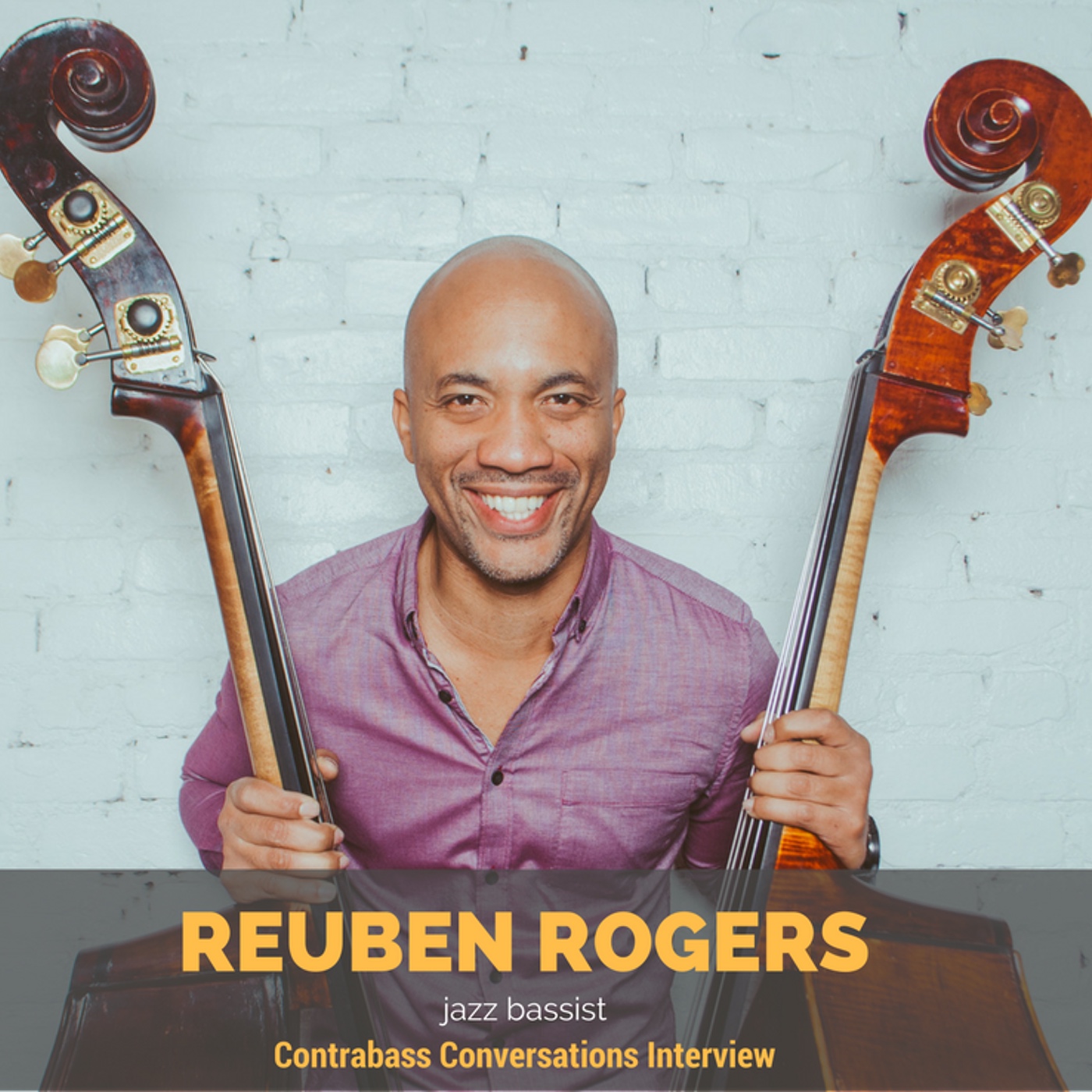
Ep 272272: Reuben Rogers is a "Super-Sideman"
Reuben Rogers and I got connected through our mutual friend Allan Santos. I wasn't even sure where to begin with a player like Reuben. I mean, he has played with Charles Lloyd, Wynton Marsalis, Joshua Redman, Roy Hargrove, Marcus Roberts, Nicholas Payton, and a long list of jazz luminaries. He's played on some of the best jazz albums of the past 20 years. Where to even start? So I reached out to Allan, and he told me: "You've got to ask Reuben about the time he fell asleep on the bandstand during a set." That's how we kicked it off. It was the first of many stories like that. In fact, I was sore from laughing so hard after we finished talking! We dig into: how to get work done at 3 am on the road Reuben's first blizzard experience living in Boston and how it nearly drove him back to the Virgin Islands how Reuben's high school music teacher Georgia Francis helped him repeatedly during his younger years mistakes that derail the careers of many young musicians ...and much more! This was a super fun conversation. Reuben is an awesome guy, and you'll have a great time and learn a lot from this conversation! Links to check out: Reuben's website (click the bass trunk for a surprise!) The Things I Am (Reuben's solo album) Reuben even has a set of bass loops available from the Loop Loft! Here's a clip featuring these groovy tracks. Be sure to subscribe to Contrabass Conversations to get these episodes delivered automatically to your mobile device! Thanks to our sponsor! This episode is brought to you by D'Addario Strings! Check out their Zyex strings, which are synthetic core strings that produce an extremely warm, rich sound. Get the sound and feel of gut strings with more evenness, projection and stability than real gut. Enter the D'Addario strings giveaway for Contrabass Conversations listeners at contrabassconversations.com/strings!
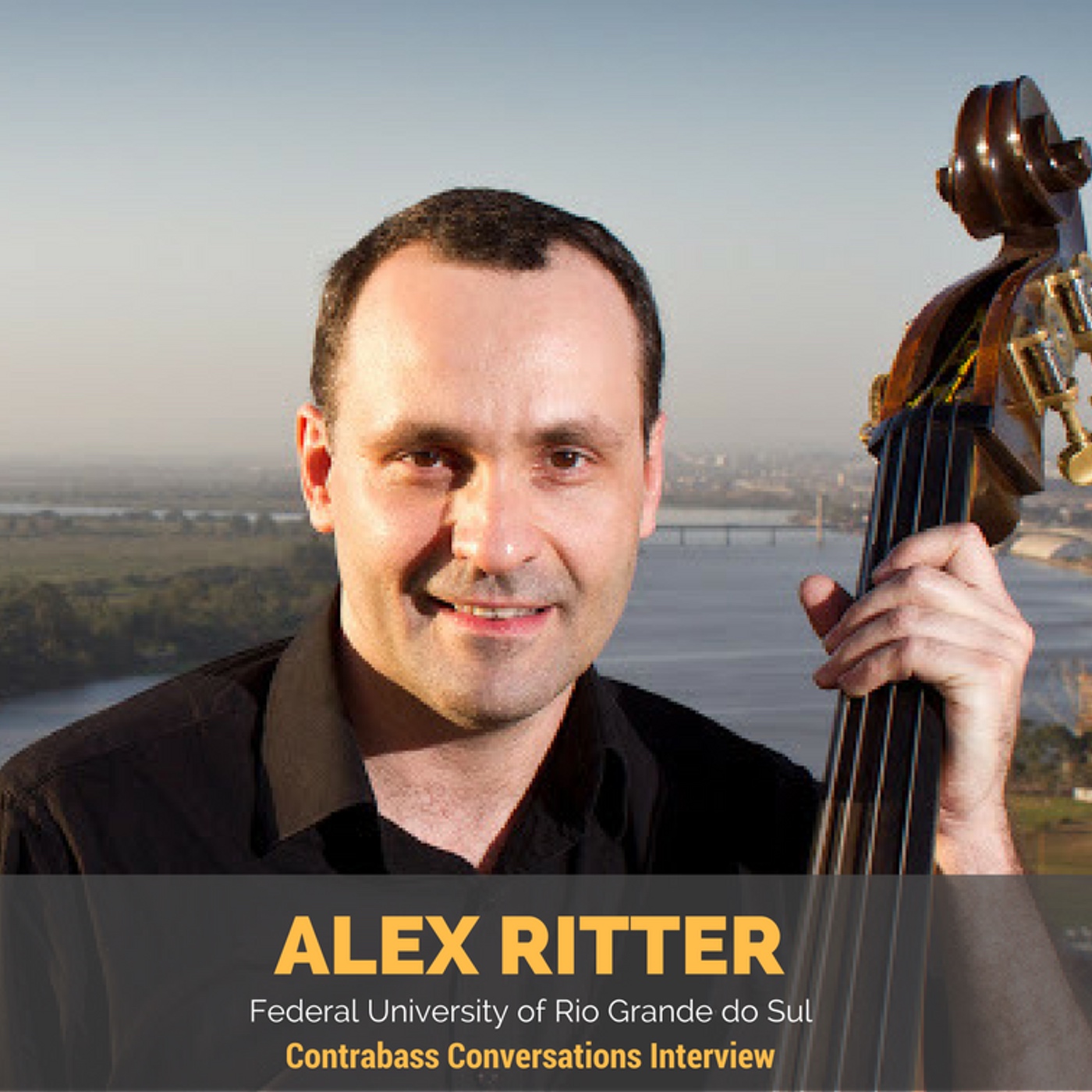
Ep 270270: Alexandre Ritter on method books, new works, and Brazilian double bass
Alexandre Ritter has become a champion of Armando Trovajoli's work Sconcerto. Once you hear this amazing piece, you'll understand why. Written for Franco Petracchi, this work has been largely unplayed until Alex got his hands on it. The process was complex, but Alex worked it out to record the entire piece and publish it on YouTube. This piece is destined to become one of the major concert works for orchestra. It's jazzy, colorful, mysterious, and magical. But that's not all Alex is doing these days. We dig deep into Bille, how Alex uses it in his teaching, and we get into the debate of using the 3rd finger in the lower positions like what's printed in Bille—Alex makes a compelling case for it. While we were talking, he actually grabbed the bass and played through several examples for me! Alex and I also talk about the experience of leaving Brazil to study in Georgia, how philosophy has influenced his thinking, job prospects in Brazil, and much more! Learn more about my coverage of music teaching at contrabassconversations.com/teaching. Links to check out: Alex's website TROVAJOLI - I TEMPO DI BLUES - ALEXANDRE RITTER 2016 (YouTube) TROVAJOLI - II ALLEGRETTO - ALEXANDRE RITTER 2016 (YouTube) TROVAJOLI - III PAVANE - ALEXANDRE RITTER 2016 (YouTube) TROVAJOLI - IV SCHERZO - ALEXANDRE RITTER 2016 (YouTube) Joel Quarrington's Method Book (here's a link to my Joel Quarrington interview) Alex's dissertation about the Rota Divertimento (in the ISB's Online Journal of Bass Research) Be sure to subscribe to Contrabass Conversations to get these episodes delivered automatically to your mobile device! Thanks to our sponsor! This episode is brought to you by D'Addario Strings! Check out their Zyex strings, which are synthetic core strings that produce an extremely warm, rich sound. Get the sound and feel of gut strings with more evenness, projection and stability than real gut. Enter the D'Addario strings giveaway for Contrabass Conversations listeners at contrabassconversations.com/strings!
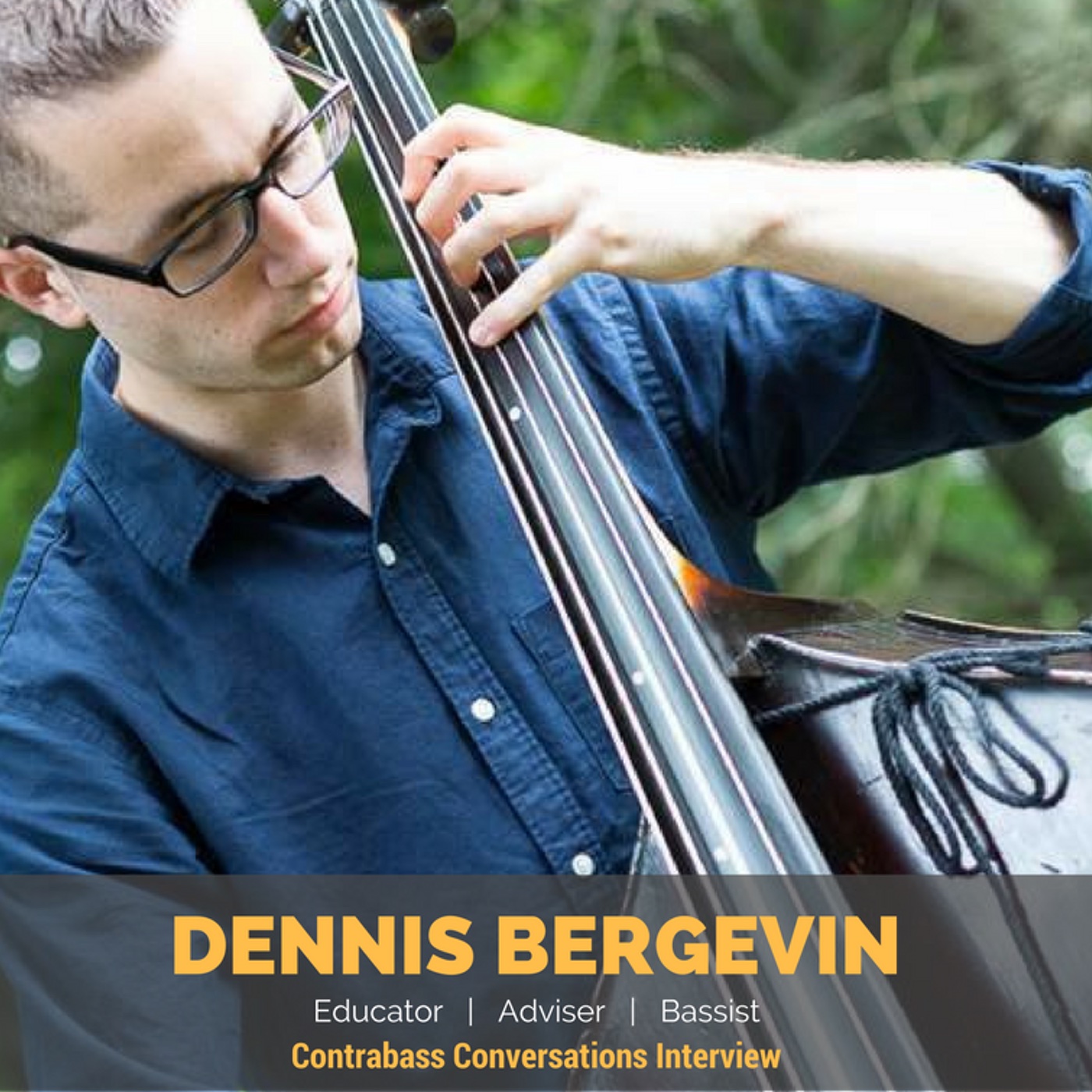
Ep 269269: Dennis Bergevin on public school teaching, professional development, and advising
Dennis Bergevin and I have a lot in common. He's a bass player. Me too. He taught public school orchestra. So did I. His career has taken an unexpected turn. I totally identify with that. For Dennis, it was the interactions with the students that he found most valuable. Not that the music wasn't important, but helping young people to find their path in life was what really mattered to him. I agree 100%. By the way, Dennis is a rockin' bass player. Check out this video of him playing Bach. So Dennis has transitioned out of that orchestra director role and is now training to work in guidance at the college level. It's amazing the opportunities that exist at the university level outside of being a professor, and how critical the people in roles like what Dennis is doing are to shaping the direction of student's lives. I also like this photo of Dennis and Edgar Meyer! Learn more about my coverage of music teaching at contrabassconversations.com/teaching. Be sure to subscribe to Contrabass Conversations to get these episodes delivered automatically to your mobile device! Other episodes where we talk about teaching orchestra: Peter Tambroni Gabe Katz Thanks to our sponsor! This episode is brought to you by D'Addario Strings! Check out their Zyex strings, which are synthetic core strings that produce an extremely warm, rich sound. Get the sound and feel of gut strings with more evenness, projection and stability than real gut. Enter the D'Addario strings giveaway for Contrabass Conversations listeners at contrabassconversations.com/strings!

Ep 268268: Cornelia Watkins on private lesson teaching and Comprehensive Musicianship through Performance
I first learned about Cornelia (Corky) Watkins through my friend Jeremy Little. Jeremy and I used to teach together in Illinois. He is a proponent of a style of music teaching called Comprehensive Musicianship through Performance (CMP). Teaching music through this model is interesting. CMP teaches the complete musician. The intent is to provide music students with deeper understanding and more meaningful experiences with the music they play. I went to a workshop on CMP. It was cool. I learned a lot. Here's a YouTube video with my friend Jeremy that gives a brief CMP overview. But most of what we talked about revolved around teaching in a classroom. Could this be applied to a private lesson setting? How would that work? That's when Jeremy told me to get in touch with Corky. Corky is a pro at this. She served as the national chairperson of American String Teacher Association's Committee on Studio Instruction, and also served for six years as the Private Teacher Representative on the board of TexASTA. So I emailed her. We set up a time to talk. I read her book Rosindust. It was great! Here's the thing that I was interested in... Most of the young people that I teach don't want a career in music. That's a good thing! I want people to have amazing experiences with music while they're young and continue to have it be a meaningful part of their life when they're older. The point isn't to create a bunch of performance majors. The point is to bring the gift of music into these young people's lives. Are we doing these young people a disservice by focusing only on technique and the music on the stand? How do we teach beyond that without turning the private lesson into a music appreciation class? That's what Corky and I dig into! Learn more about my coverage of music teaching at contrabassconversations.com/teaching. Links to check out: Corky's Rice University page Comprehensive Musicianship through Performance (main page) Rosindust: Teaching, Learning and Life from a Cellist's Perspective by Cornelia Watkins From the Stage to the Studio: How Fine Musicians Become Great Teachers - co-authored by Cornelia Shaping Sound Musicians by Patricia O' Toole - the foundational resource for CMP Be sure to subscribe to Contrabass Conversations to get these episodes delivered automatically to your mobile device! Thanks to our sponsor! This episode is brought to you by D'Addario Strings! Check out their Zyex strings, which are synthetic core strings that produce an extremely warm, rich sound. Get the sound and feel of gut strings with more evenness, projection and stability than real gut. Enter the D'Addario strings giveaway for Contrabass Conversations listeners at contrabassconversations.com/strings!

Ep 267267: Johnny Hamil on student motivation and building bass events
Johnny Hamil has dedicated his life to teaching bass. Starting out as a music education student, Johnny met George Vance at an International Society of Bassists Convention, and his life has never been the same since. After years of prodding from George, Johnny started the Kansas City Bass Workshop. This event has grown into one of the most vibrant double bass events in the country. But Johnny's not worried that others are going to take students away from him by starting their own events. In fact, he's convinced that every city should have their own bass event. And after listening to this conversation, I'll bet you'll agree! Johnny's book Jamming On The Bass is an improvisational accompaniment to Vance's Progressive Repertoire series. Check it out! It'll add some great variety to your teaching. Here's a video describing Johnny's teaching philosophy. This will give you some background on why Johnny was inspired to write his book. Learn more about the materials Johnny uses and what hundreds of other leaders in the double bass field use at contrabassconversations.com/teaching. More links to check out: Feature on Johnny and the KC Bass Camp from KCUR Johnny Hamil Bass Studio (FB page) Rabbath - Bass Ball (vinyl!) Be sure to subscribe to Contrabass Conversations to get these episodes delivered automatically to your mobile device! Thanks to our sponsor! This episode is brought to you by D'Addario Strings! Check out their Zyex strings, which are synthetic core strings that produce an extremely warm, rich sound. Get the sound and feel of gut strings with more evenness, projection and stability than real gut. Enter the D'Addario strings giveaway for Contrabass Conversations listeners at contrabassconversations.com/strings!

Ep 266266: Garrett Hope on portfolio careers
I love episodes like this. Garrett Hope of The Portfolio Composer and I wanted to feature each other on our podcasts. But we couldn't figure out the best way to do it. So we chucked the script, flipped on the mic, and riffed for an hour on the subjects that interest us the most. We're both bass players. We're both podcasters. We're both building our careers around this crazy podcast model. Already, we have a lot in common. But that's only the beginning. We're both constantly thinking about what it really means to build a career in music. How does that even work these days? How do income streams for musicians work? Where are things headed? What can today's musician do? We dig into all this and much more! By the way, if you don't subscribe to Garrett's podcast, stop reading this right now and go subscribe. And get on his email list while you're at it. Garrett has figured a lot of things out on the career front, and he has tremendous value to offer all of us. I love listening to Garrett's podcast. It's one of the shows that I immediately click on when I see a new episode. You'll love it too. Thanks to our sponsor! This episode is brought to you by D'Addario Strings! Check out their Zyex strings, which are synthetic core strings that produce an extremely warm, rich sound. Get the sound and feel of gut strings with more evenness, projection and stability than real gut. Enter the D'Addario strings giveaway for Contrabass Conversations listeners at contrabassconversations.com/strings!
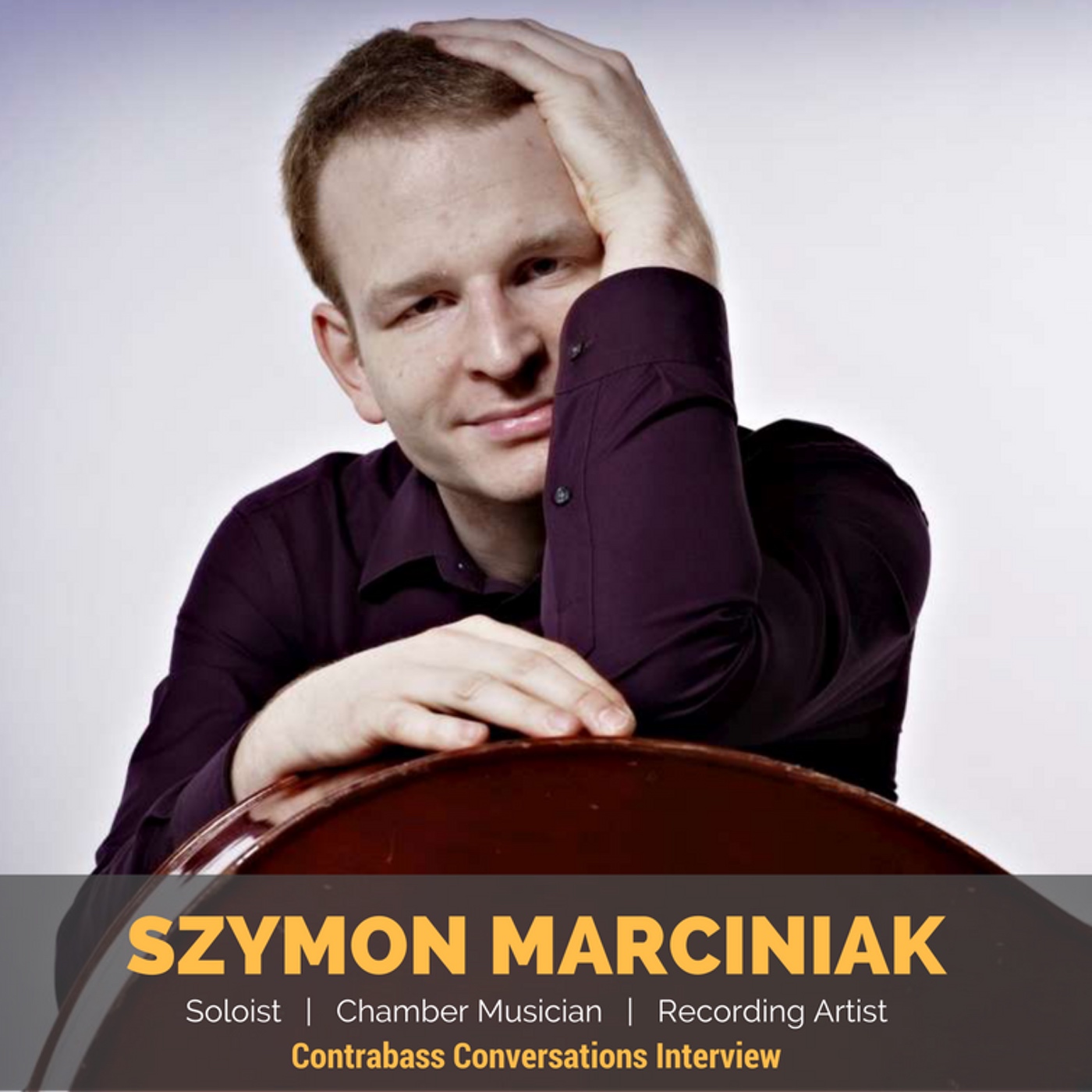
Ep 265265: Szymon Marciniak on DVDs, travel, and freelance life
Szymon Marciniak played a killer recital in Prague for BASS2016. Here's a great photo from that standing-room-only event. The centerpiece of this recital was Frank Proto's compelling new Sonata No. 3. Frank wrote this piece expressly for Szymon, and it is--to say the least--epic in scope. Along with pianist Evan Mitchell, Szymon recorded a CD and DVD called New Music for Double Bass for Liben Music. This new release includes Proto's Sonata No. 3 along with the 2009 Sonata by Richard Dubugnon, Lu Shang's Fantasy Higgs Boson, and Chiel Meijering's The Ultimate Workout (Part 1). We talk about: this feature-packed new release (check it out!) Szymon's decision to leave his principal bass position with The Hague Philharmonic Orchestra and embark on a freelance career strings, endpins, balance, sound, and much more! Check out this YouTube video with the complete first movement of the Proto Sonata No. 3. This will give you a feel for the incredibly musicianship and high production quality on this CD/DVD release. Links to Check Out: Szymon's YouTube channel Szymon plays Proto Sonata No. 3 mvt 1 (complete movement from DVD) Omega - Hungarian rock band we talk about New Music for Double Bass (CD/DVD) Thanks to our sponsor! This episode is brought to you by D'Addario Strings! Check out their Zyex strings, which are synthetic core strings that produce an extremely warm, rich sound. Get the sound and feel of gut strings with more evenness, projection and stability than real gut. Enter the D'Addario strings giveaway for Contrabass Conversations listeners at contrabassconversations.com/strings!
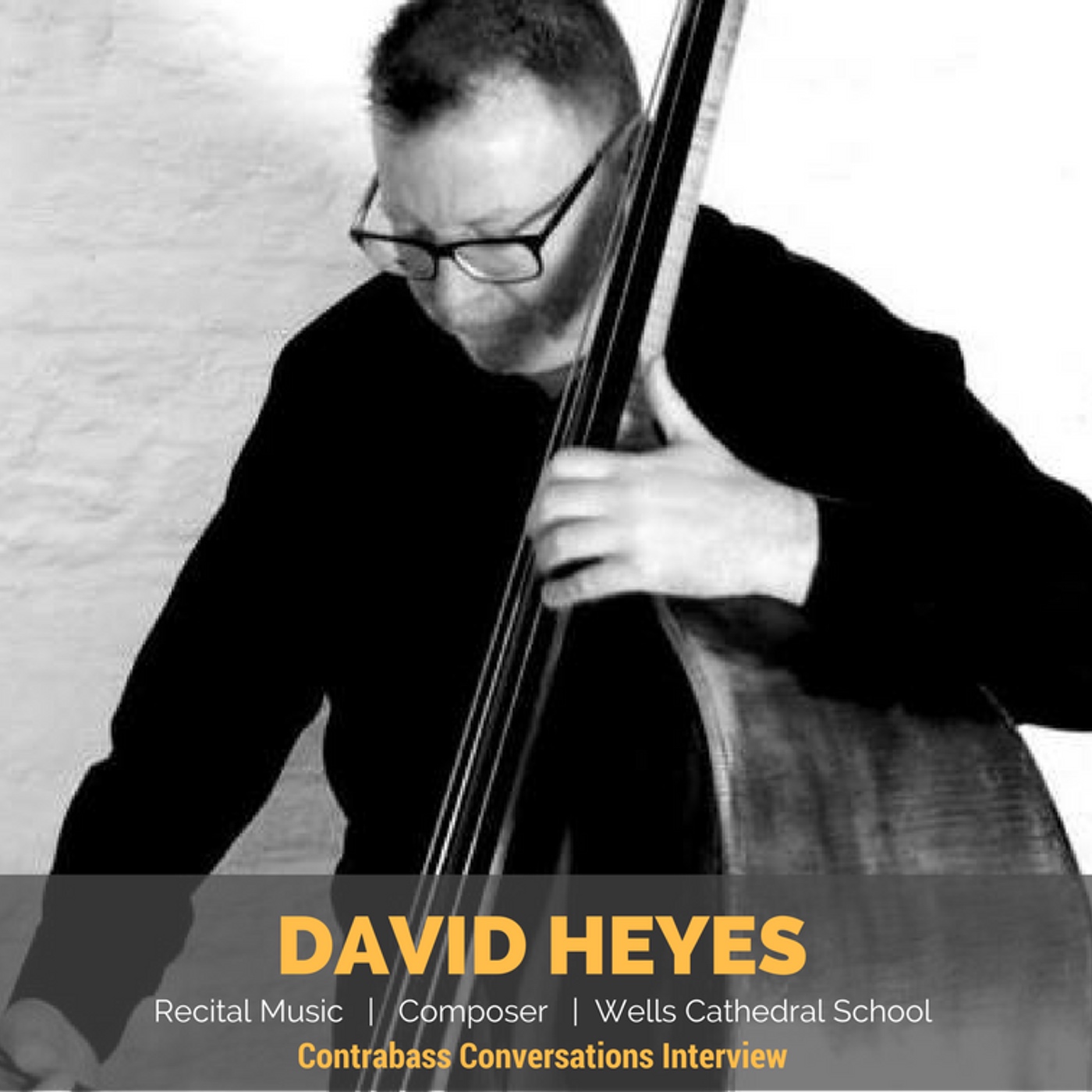
Ep 264264: David Heyes on leaving a legacy
David Heyes needs no introduction. Since founding Recital Music over 20 years ago, David has brought the music of composers like Tony Osborne, Teppo Hauta-aho, and Simón García to countless bass players. David has also commissioned over 500 double bass compositions. Talk about an impact on the bass world! In recent years, David has become a prolific composer. In only three years, his compositions have been performed in eight different countries. He is constantly thinking of new ideas for pieces. In fact, he's even writing a piece for me! It was such a pleasure to meet David in person in Prague for BASS2016. Here's a favorite photo of us meeting in the airport--talk about a warm welcome to the Czech Republic! David is also a prolific writer. In addition to writing for publications like The Strad, David has created A History of the Double Bass in 100 Pieces and BASS NOTES. He is constantly finding new ways to synthesize double bass knowledge and provide value to the community. By the way, his recital in Prague was awesome. Here's a bit of it on YouTube. Check it out, and enjoy this interview with Davide Heyes! Links to check out: BASS Notes A History of the Bass in 100 Pieces Recital Music Wells Cathedral School David's Prague recital (YouTube) A Tribute to Teppo (GoFundMe) Listener Feedback Link: Crafting a Music Career This episode is brought to you by D'Addario Strings! Check out their Zyex strings, which are synthetic core strings that produce an extremely warm, rich sound. Get the sound and feel of gut strings with more evenness, projection and stability than real gut. Enter the D'Addario strings giveaway for Contrabass Conversations listeners at contrabassconversations.com/strings!
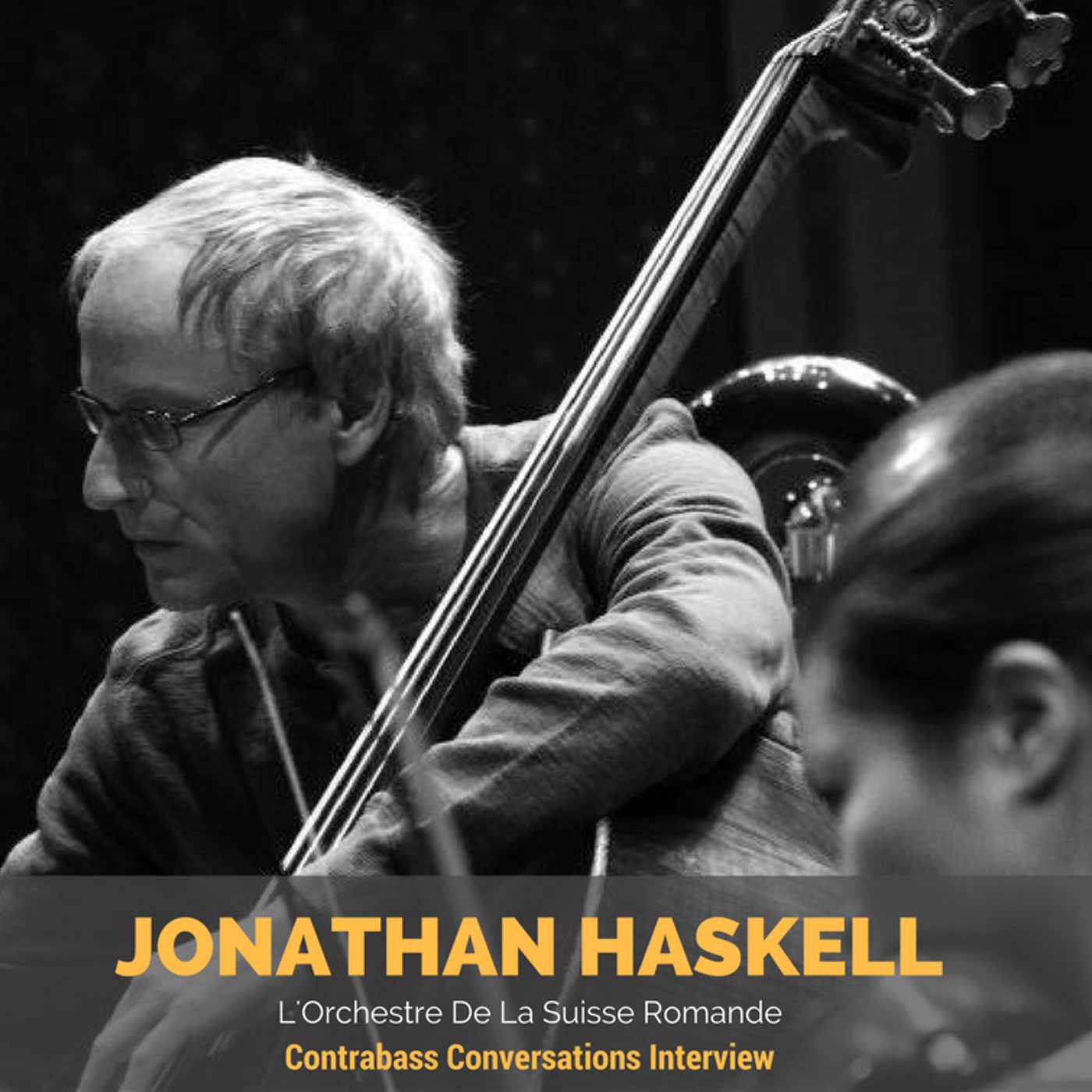
Ep 263263: the intriguing Jonathan Haskell
Jonathan Haskell may very well be the world's most interesting man. He's a bassist. In a great orchestra: L'Orchestre De La Suisse Romande in Switzerland. Also, he's the president of the musician's union. An accomplished conductor. Fluent in multiple languages. He is also the author of three murder mysteries centered around the orchestra. Here's a link to the first five chapters of On the beat, a murder mystery involving an orchestra, a sadistic, villainous, and diabolical conductor, an undercover cop in the percussion section, and a Pirastro Flexocor E string as a murder weapon! Set in Chicago and downstate Illinois, this book vividly brings back memories of my "old life" Road Warrioring it around Chicagoland. Interested in reading more? Send Jonathan an email and let him know! Subscribe to the podcast to get these interviews delivered to your mobile device! Resources we covered in this interview: On the beat by Jonathan Haskell (PDF - 5 chapter preview) L'Orchestre De La Suisse Romande (website) L'Orchestre De La Suisse Romande (YouTube) Jonathan Haskell on Discogs The Compleat Conductor by Gunther Schuller Twin Cities Bass Camp (from listener feedback) Thanks to our sponsor! This episode is brought to you by D'Addario Strings! Check out their Zyex strings, which are synthetic core strings that produce an extremely warm, rich sound. Get the sound and feel of gut strings with more evenness, projection and stability than real gut. Enter the D'Addario strings giveaway for Contrabass Conversations listeners at contrabassconversations.com/strings!
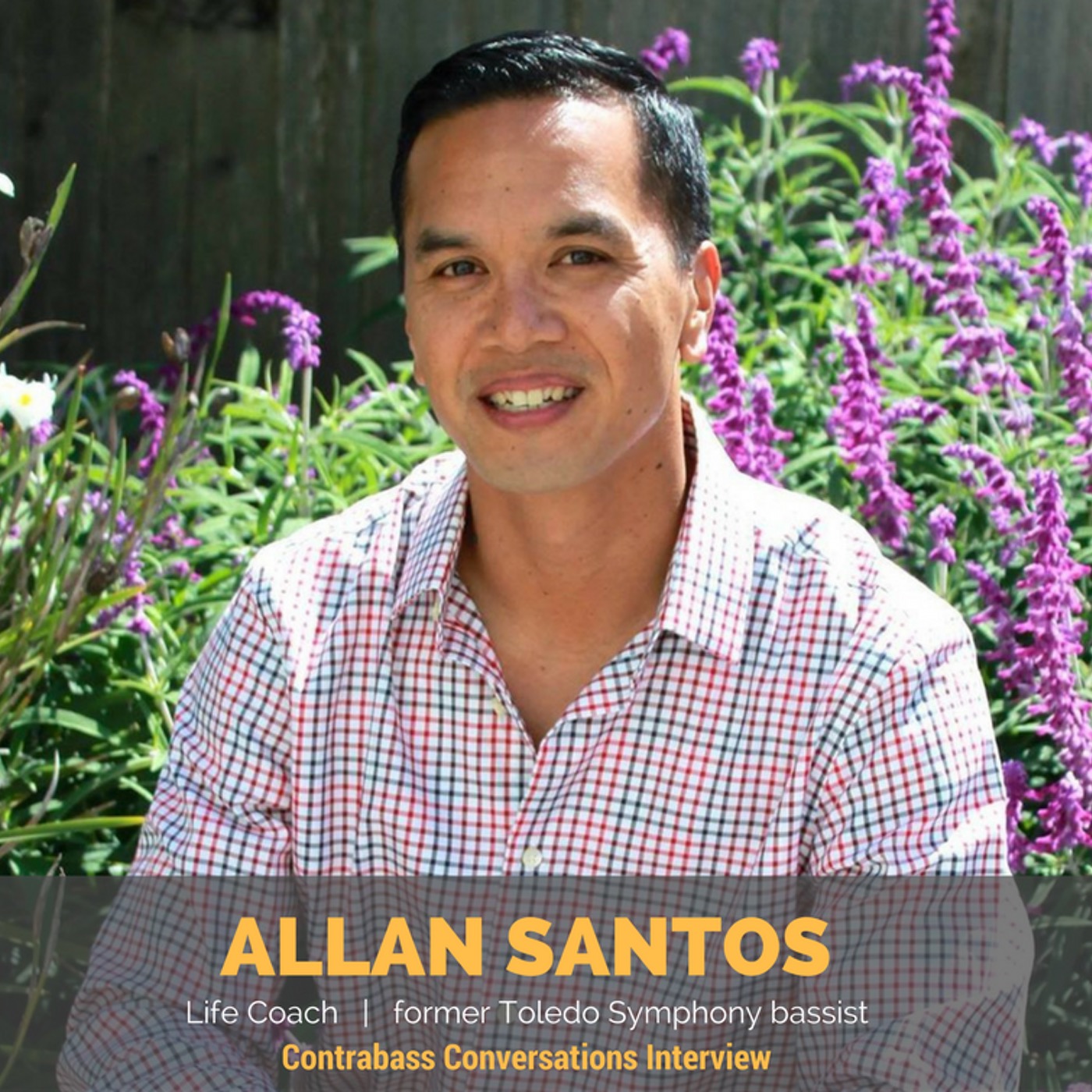
Ep 262262: Allan Santos on finding your purpose
Allan Santos and I met 15 years ago at the Britt Festival in Oregon. I vividly recall drinking beer with him at the bar while Dave Anderson shot pool in the corner. After studying with players like Shinji Eshima and John Hood, Allan had landed an orchestra gig in the Toledo Symphony. The goal had been reached. But Allan felt like things were at an 8 in his life. Not a 10. What would a 10 look like? Fast forward to the present, and Allan is on a totally different path. Allan left the Toledo Symphony several years ago. He became the #7 ranked yoga competitor in the nation (yes, we talk about this!). He has now moved into Life Coaching. After reading my manifesto about my new direction in life, he reached out to me and we started talking. He was tremendously helpful in helping me gain clarity about the next steps in my life. I'd never had conversations like this. He gave me strategies to obtain clarity and focus on what's actually important in any given moment. The is a deep conversation for sure. I've never really put anything like this out on the podcast. My conversation with Trevor Jones might be the closest thing. But I know you'll enjoy it! Resources we covered in this interview: Allan Santos (Facebook) Allan's email: [email protected] Documentary on Marshal Hawkins (Allan's first bass teacher) Allan's yoga competition video Martha Beck Institute (where Allan studied as a Life Coach) Unemployment Never Sounded So Sweet (the post I wrote that put us back in touch) Two book recommendations from Allan: The Artist's Way by Julia Cameron The Big Leap by Hendricks Gay leave a review for Contrabass Conversations in iTunes! Subscribe to the podcast to get these interviews delivered to your mobile device! Thanks to our sponsor! This episode is brought to you by D'Addario Strings! Check out their Zyex strings, which are synthetic core strings that produce an extremely warm, rich sound. Get the sound and feel of gut strings with more evenness, projection and stability than real gut. Enter the D'Addario strings giveaway for Contrabass Conversations listeners at contrabassconversations.com/strings!
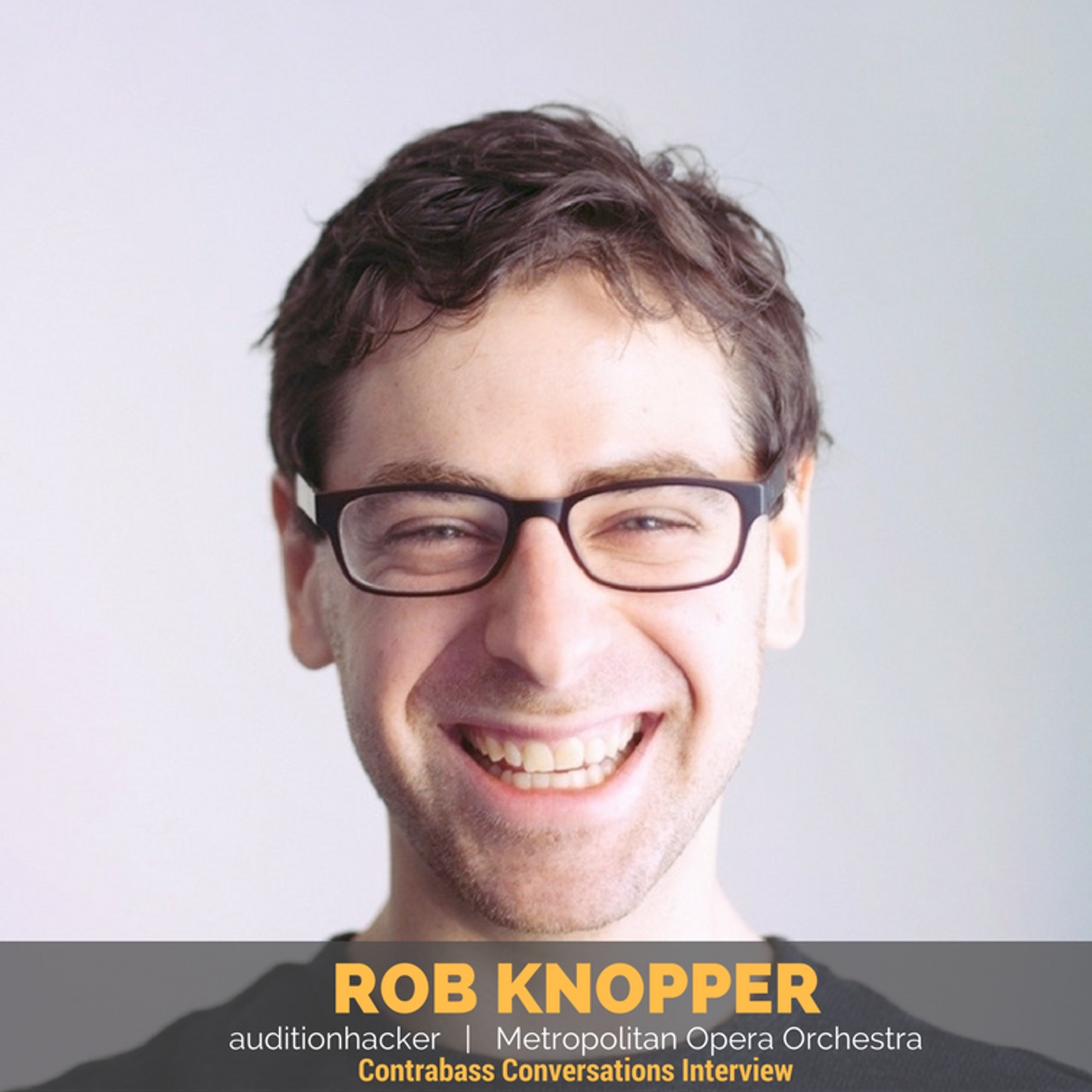
Ep 261261: rob knopper is the auditionhacker
it would be sacrilege to use capital letters when writing about auditionhacker founder rob knopper. rob plays percussion in the metropolitan opera orchestra. which is quite cool. but rob also started auditionhacker, a site devoted to mastering the systems and processes required to win an audition. we talk about: rob's own auditioning experiences his super-cool practice journal system how to advance at an orchestra audition 101 (rob's free mini-course) the audiitonhacker formula (8 module course) this was a great conversation! you'll walk away loaded with new strategies for your next audition! Subscribe to the podcast and get these interviews delivered to your mobile device! From listener feedback: 10 Preparation Strategies I've Learned from Audition Winners (My AuditionCafe.org post) Thanks to our sponsor! This episode is brought to you by D'Addario Strings! Check out their Zyex strings, which are synthetic core strings that produce an extremely warm, rich sound. Get the sound and feel of gut strings with more evenness, projection and stability than real gut. Enter the D'Addario strings giveaway for Contrabass Conversations listeners at contrabassconversations.com/strings!
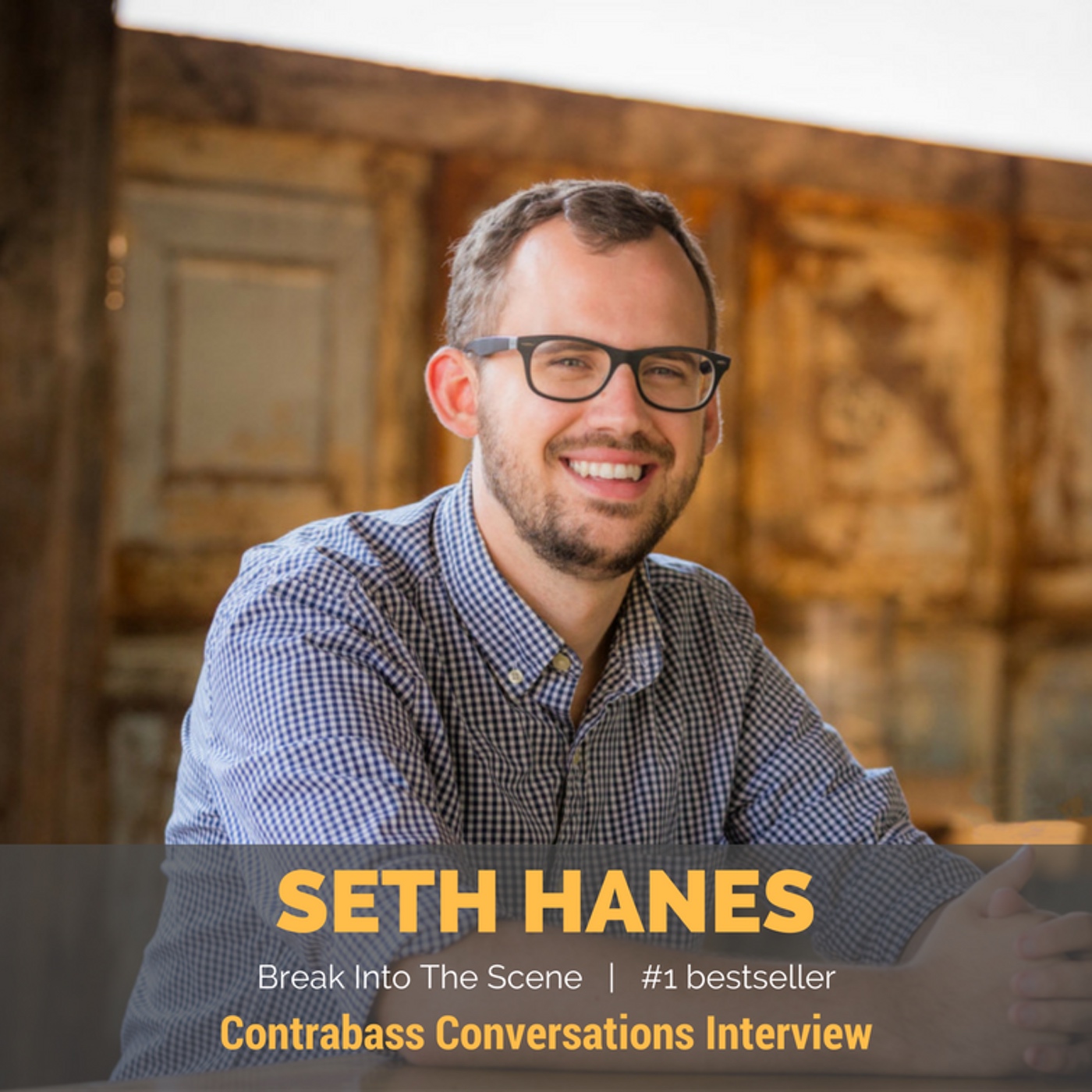
Ep 260260: Break into the Scene with Seth Hanes
Seth Hanes is a horn player, digital marketing consultant, and the author of the new book, Break into the Scene: A Musician's Guide to Making Connections, Creating Opportunities, and Launching a Career, which is available now on Amazon. If you want to check out some free email templates that will help you pick up gigs and some other bonuses, visit breakintothescene.com. We talk: how to get more gigs working with contractors how to market and self-promote working for free as a tactic Break into the Scene hit #1 in Amazon's music business category within days of its launch. Check it out--it's a great read and full of actionable advice! Thanks to our sponsor! This episode is brought to you by D'Addario Strings! Check out their Zyex strings, which are synthetic core strings that produce an extremely warm, rich sound. Get the sound and feel of gut strings with more evenness, projection and stability than real gut. Enter the D'Addario strings giveaway for Contrabass Conversations listeners at contrabassconversations.com/strings!
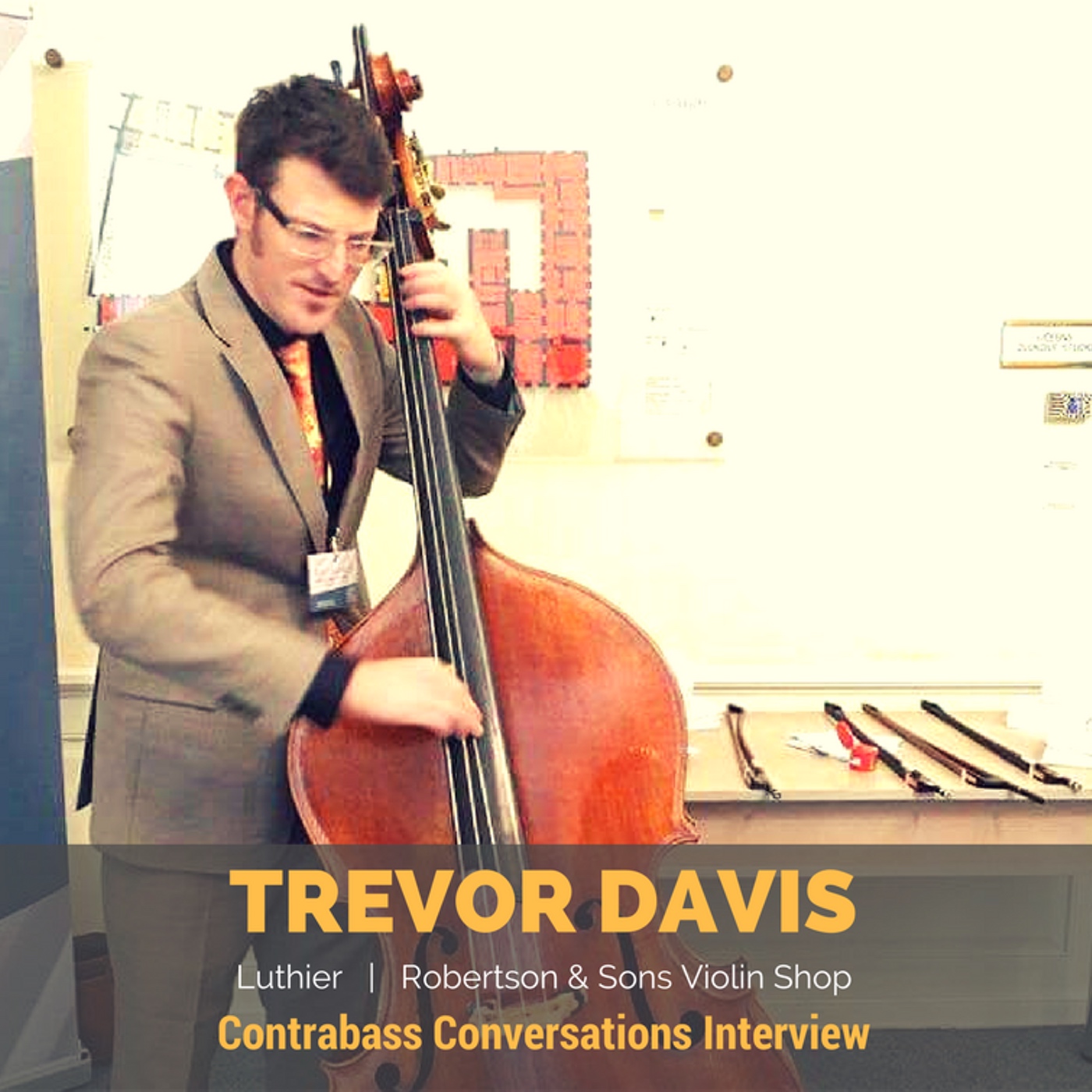
Ep 259259: Trevor Davis on his luthier path
Spread and focus. That's what Trevor Davis thinks about as he makes his basses. It's all in the arching. That's what makes an instrument sound great. But Trevor didn't just magically know this from the start. His tale is one of persistence and grit. Carving scrolls during the night shift at 7-Eleven. Dragging his half-made first double bass back and forth across country. Making violins during the day and sleeping on the floor by his workbench at night. But then... Winning a certificate of workmanship at the 2013 International Society of Bassists Convention. Getting hired at a luthier at Robertson & Sons Violin Shop. How did he get from the night shift at 7-Eleven to making award-winning basses and working at one of the world's great instrument shops? Listen and find out! Thanks to our sponsor! This episode is brought to you by D'Addario Strings! Check out their Zyex strings, which are synthetic core strings that produce an extremely warm, rich sound. Get the sound and feel of gut strings with more evenness, projection and stability than real gut. Enter the D'Addario strings giveaway for Contrabass Conversations listeners at contrabassconversations.com/strings!
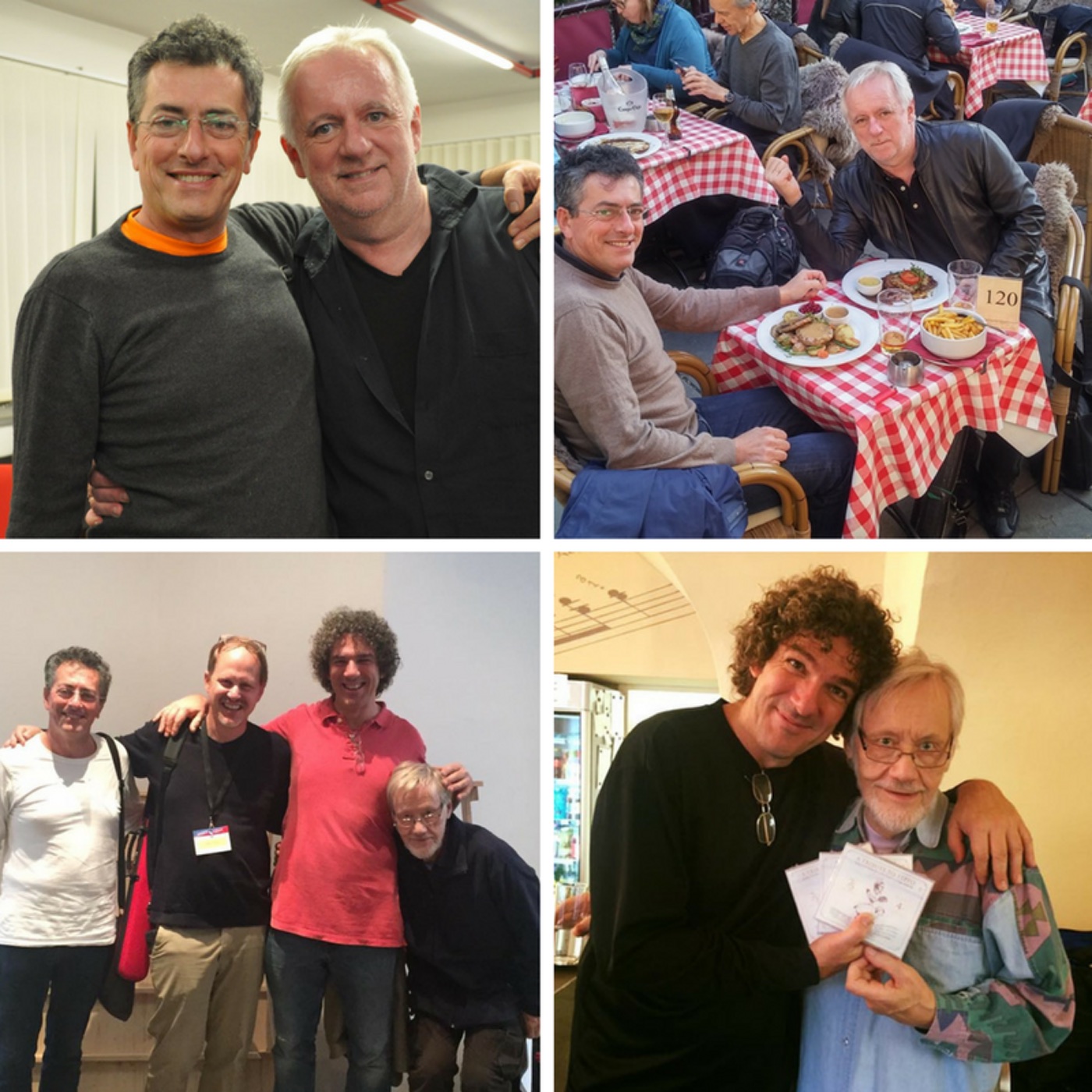
Ep 258258: RCM International Double Bass Festival Preview
The first Royal College of Music International Double Bass Festival will be taking place on October 16, 2016. Gabriele Ragghianti, Dan Styffe, and Alberto Bocini discuss this exciting new event on today's episode. This event is free and requires no tickets, so be sure to check it out if you can! This episode is brought to you by D'Addario Strings! Check out their Zyex strings, which are synthetic core strings that produce an extremely warm, rich sound. Get the sound and feel of gut strings with more evenness, projection and stability than real gut. Enter the D'Addario strings giveaway for Contrabass Conversations listeners at contrabassconversations.com/strings!
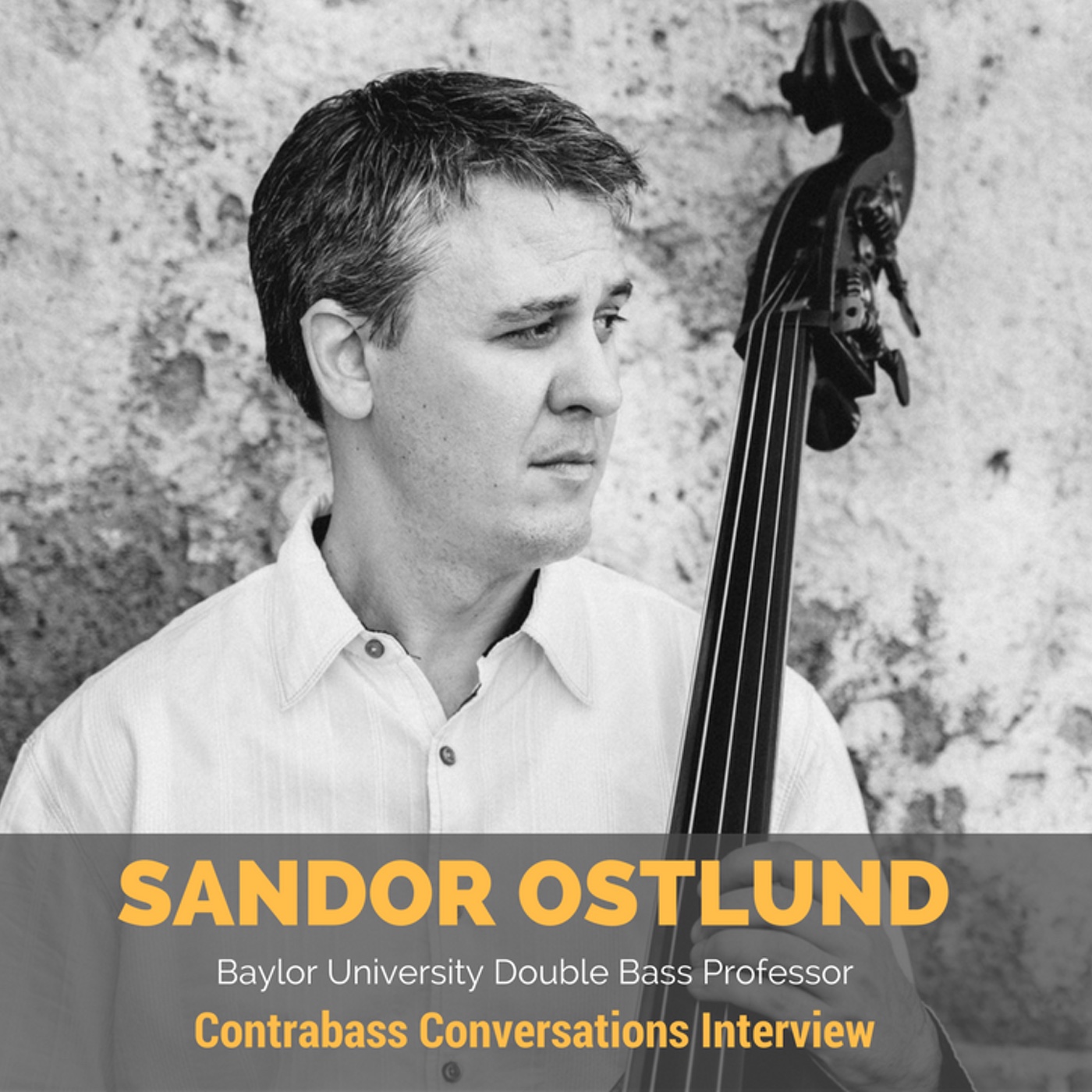
Ep 257257: Sandor Ostlund on musical influences, practicing, and career possibilities
Our teachers shape us more than we realize. Having the right teacher is critical for achieving our goals. Sandor Ostlund has had a staggering set of quality teachers throughout his life journey. First, he studied with Hans Sturm. Then he worked with Richard Davis. From there, he found his way to Paris to study with François Rabbath. In Paris, he met Paul Ellison, with whom Sandor would study with for his DMA. In fact, Sandor was the first student to every receive his DMA with Paul at Rice University. Talk about a great set of musical role models! Sandor has gone on to have a major impact in the world of the double bass. He teaches bass at Baylor University, works as a clinician across the United States, and has released a fantastic solo album of new works for the double bass. We dig into all kinds of topics: how Sandor continues to find inspiration lessons Sandor learned from Paul, François, Richard, and Hans what to do if you only have an hour to practice finding your path in the music world …and much more! Links: Sandor's website Leap of Faith (album) This episode is brought to you by D'Addario Strings! Check out their Zyex strings, which are synthetic core strings that produce an extremely warm, rich sound. Get the sound and feel of gut strings with more evenness, projection and stability than real gut. Enter the D'Addario strings giveaway for Contrabass Conversations listeners at contrabassconversations.com/strings!
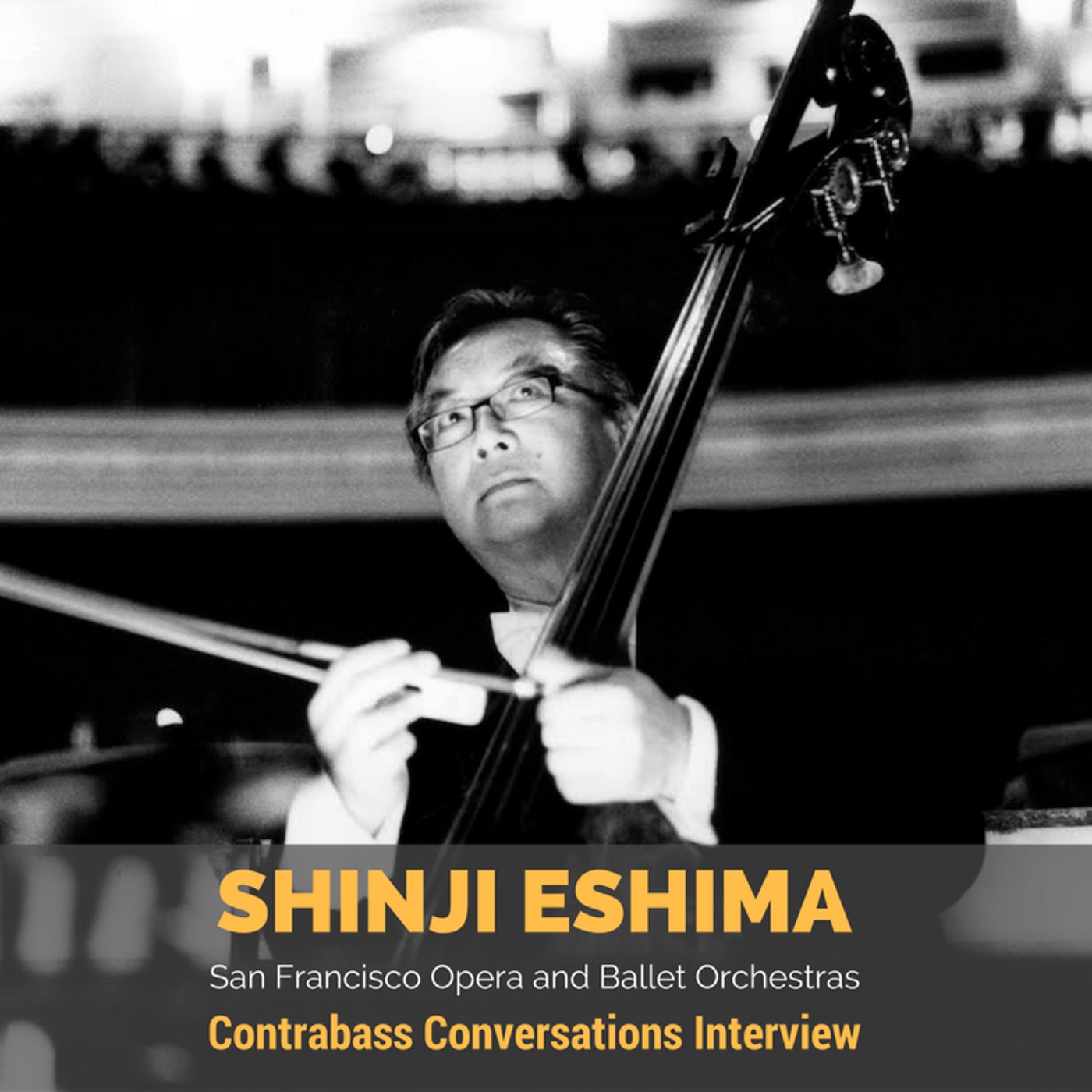
Ep 256256: Shinji Eshima on pit experiences, David Walter, and composing for the ballet
Most musicians don't have a day dedicated to them in their hometown. Shinji Eshima does. In 2011, the city of Berkeley, California named the day December 6th Shinji Eshima Day, in his honor for his contributions to the arts. Even fewer musicians play an instrument featured in a Degas painting. But Shinji Eshima does. His Plumerel bass is the very same instrument painted by Degas in L'Orchestre de l'Opera. Shinji's impact on the double bass world has been tremendous. He has performed with the San Francisco Ballet and San Francisco Opera Orchestras for decades. He teaches at San Francisco State University and the San Francisco Conservatory of Music. His students have gone on to perform with the San Francisco Symphony, Utah Symphony, London Philharmonia, Montreal Symphony and the Concertgebouw of Amsterdam. But Shinji is also a composer… and what a composer! In 2011, the San Francisco Ballet commissioned him to write a ballet. RAkU was the result, and it has been performed across the globe by the San Francisco Ballet. RAkU has also joined the repertoire of The Joffrey Ballet. Swimmer, his third ballet for the San Francisco Ballet, premiered in 2015. We talk about Shinji's early years on the instrument, studying with David Walter, performing in the pit, getting into composing, and much more! Links to check out If It's Tuesday it Must be Up-Bow from Soliloquy album (performed by Patrick Neher) San Francisco Ballet in RAkU (YouTube) RAkU: A Conversation with Shinji Eshima (YouTube) Swimmer - ballet composed by Shinji Eshima (YouTube) Shinji's 1843 Plumerl double bass as portrayed by Degas in Orchestra of the Opera Listener feedback links: Ray Parker - bassist Ira Gold's new project on mockauditions.com Jason's appearance on The Entrepreneurial Musician Jason's appearance on A Musical Life This episode is brought to you by D'Addario Strings! Check out their Zyex strings, which are synthetic core strings that produce an extremely warm, rich sound. Get the sound and feel of gut strings with more evenness, projection and stability than real gut. Enter the D'Addario strings giveaway for Contrabass Conversations listeners at contrabassconversations.com/strings!
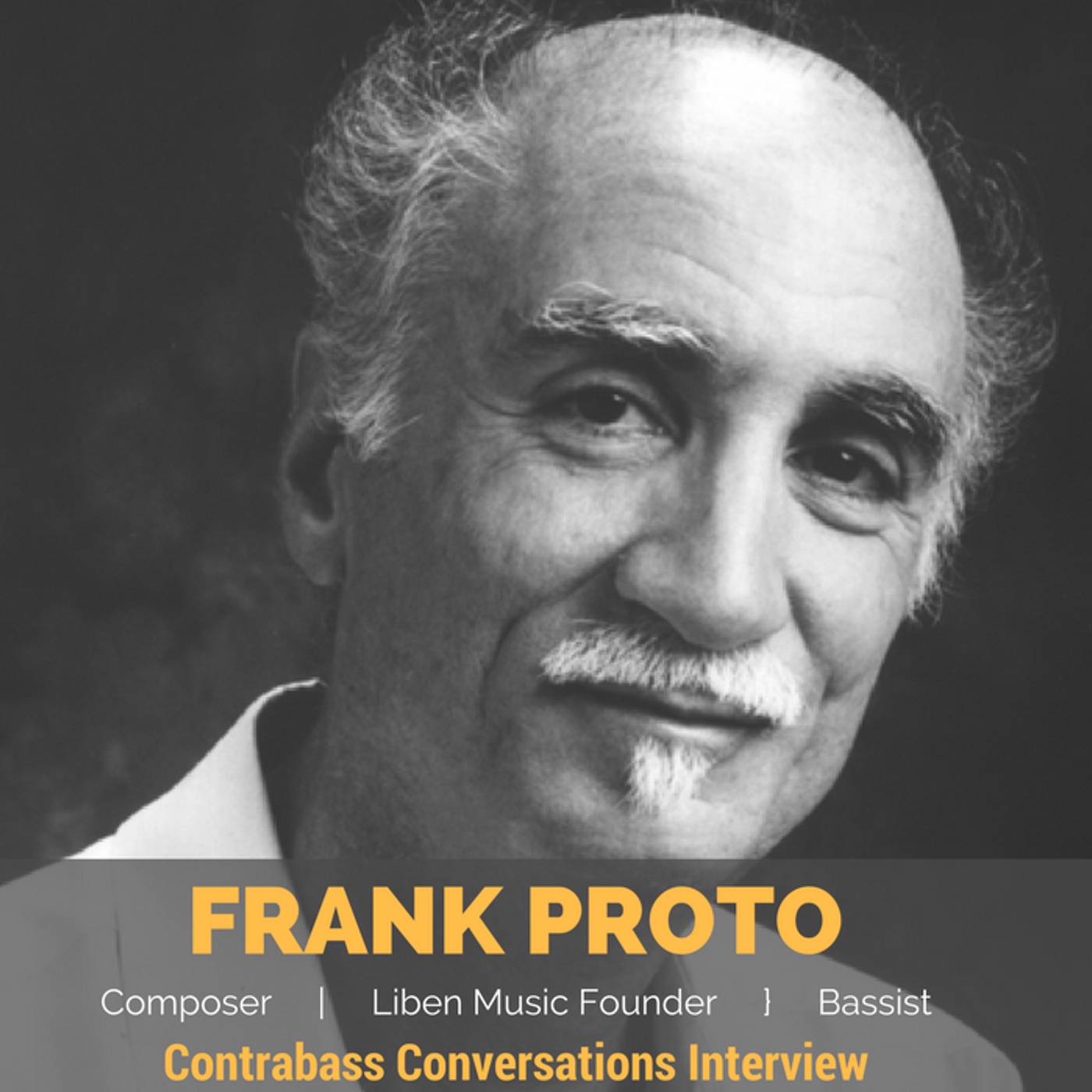
Ep 255255: Frank Proto on jazz influences, bebop violin, and deadlines
Jazz is Frank Proto's native language. Growing up in Brooklyn, Frank spent his days studying with Fred Zimmermann and his nights hanging out at Birdland. I love hearing Frank describe what it was like studying with Fred. In fact, Frank's lesson slot was right after Charles Mingus. Talk about being a part of jazz history! Frank's journey from the jazz clubs of New York City to the Cincinnati Symphony is remarkable...and that's putting it mildly! Here are just a few of his many career highlights: Bassist and composer-in-residence for the Cincinnati Symphony Orchestra Over 20 large-scale works premiered by CSO Countless shorter works and arrangements premiered by CSO Over 400 performances of Carmen Fantasy for Trumpet and Orchestra Over 500 performances of Casey at the Bat Composed music for Dave Brubeck, Eddie Daniels, Duke Ellington, Cleo Laine, Benjamin Luxon, Sherill Milnes, Gerry Mulligan, Roberta Peters, François Rabbath, Ruggerio Ricci, Doc Severinsen, Richard Stoltzman and Lucero Tena I could go on and on. Frank has impacted the world of the double bass immensely. But he has gone way beyond that. Best of all, he hasn't slowed down. In fact, he is continuing to explore new ideas and unexpected collaborations. I can't wait to see what he does next. Links to check out: Frank Proto on Wikipedia Liben Music (Frank's publishing company) Brandeis Jazz Festival - Fred Zimmermann, Charles Mingus, Gunther Schuller, George Russell Brandeis Jazz Festival (YouTube) All About Rosie (YouTube) Harry Lookofsky: Stringsville 'Round Midnight - Harry Lakoofsky performance (YouTube) Music featured in this episode (all written by Frank) Sonata No. 2 - with Catalin Rotaru Sonata No. 3 - with Szymon Marciniak Sketches of Gershwin - with Eddie Daniels String Quartet No. 1 Duo for Viola and Double Bass My Name is Citizen Soldier Variations on Dixie Ghost in Machine Thanks to our sponsor! This episode is brought to you by D'Addario Strings! Check out their Zyex strings, which are synthetic core strings that produce an extremely warm, rich sound. Get the sound and feel of gut strings with more evenness, projection and stability than real gut. Enter the D'Addario strings giveaway for Contrabass Conversations listeners at contrabassconversations.com/strings!
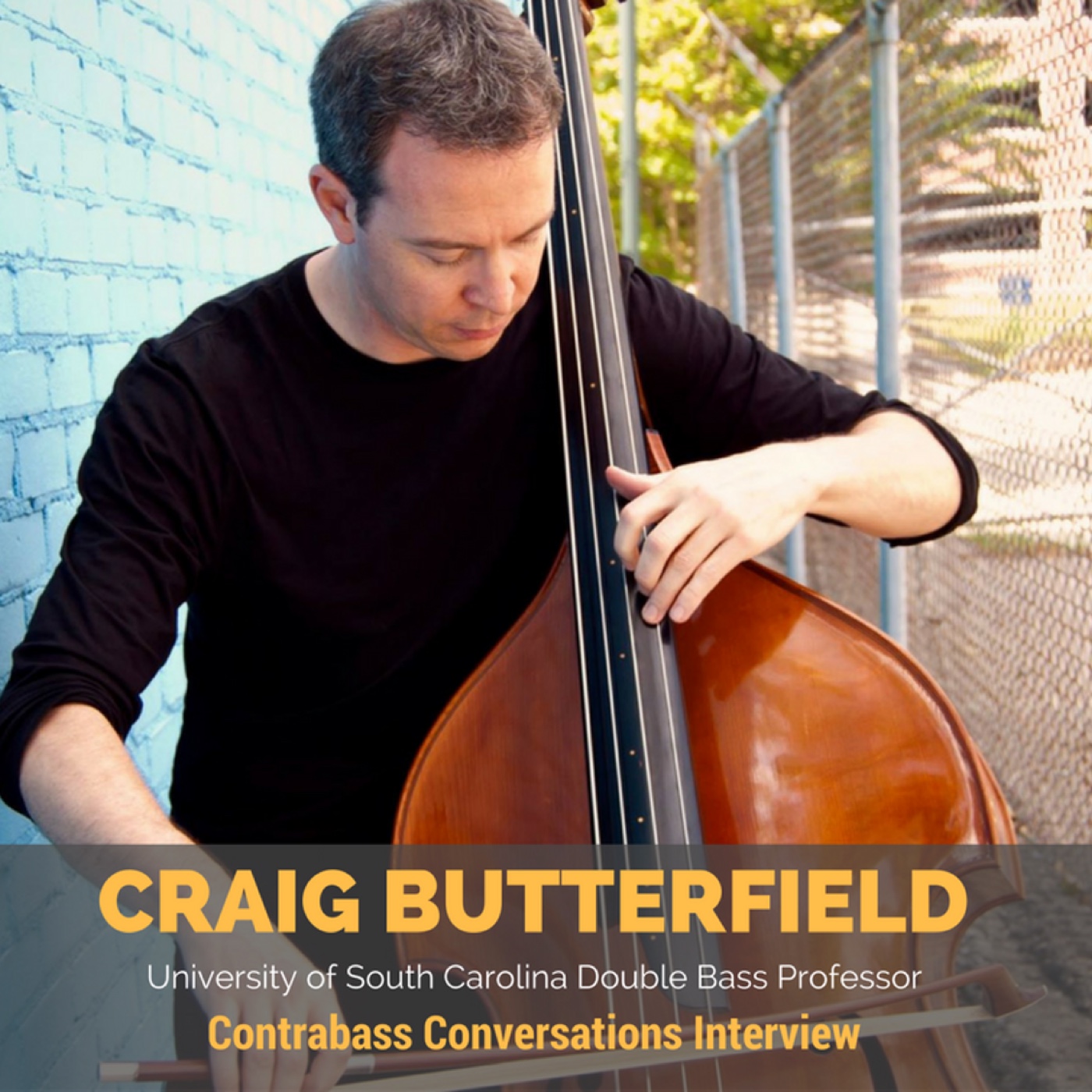
Ep 254254: Craig Butterfield on careers, ProTools, and American roots music
Craig Butterfield loved Edgar Meyer's bass playing ever since discovering it. Lately, he has been following in Edger's footsteps. Performing American roots music with mandolinist Jesse Jones is now a key creative outlet. Craig also teaches at the University of South Carolina. He shows young bassists how to hone their technique to explore creative new paths. But that's not it. Craig also loves recording. He mixes and masters his own recordings in ProTools. His popular YouTube overdub videos have gotten tens of thousands of views. We talk about: his time studying with Jeff Bradetich at the University of North Texas touring with Maynard Ferguson career opportunities for musicians ...and much more! Links to check out: Craig's website Craig's YouTube Channel Pisces (new album with Jesse Jones) Stickerfoot (album with Jesse Jones)
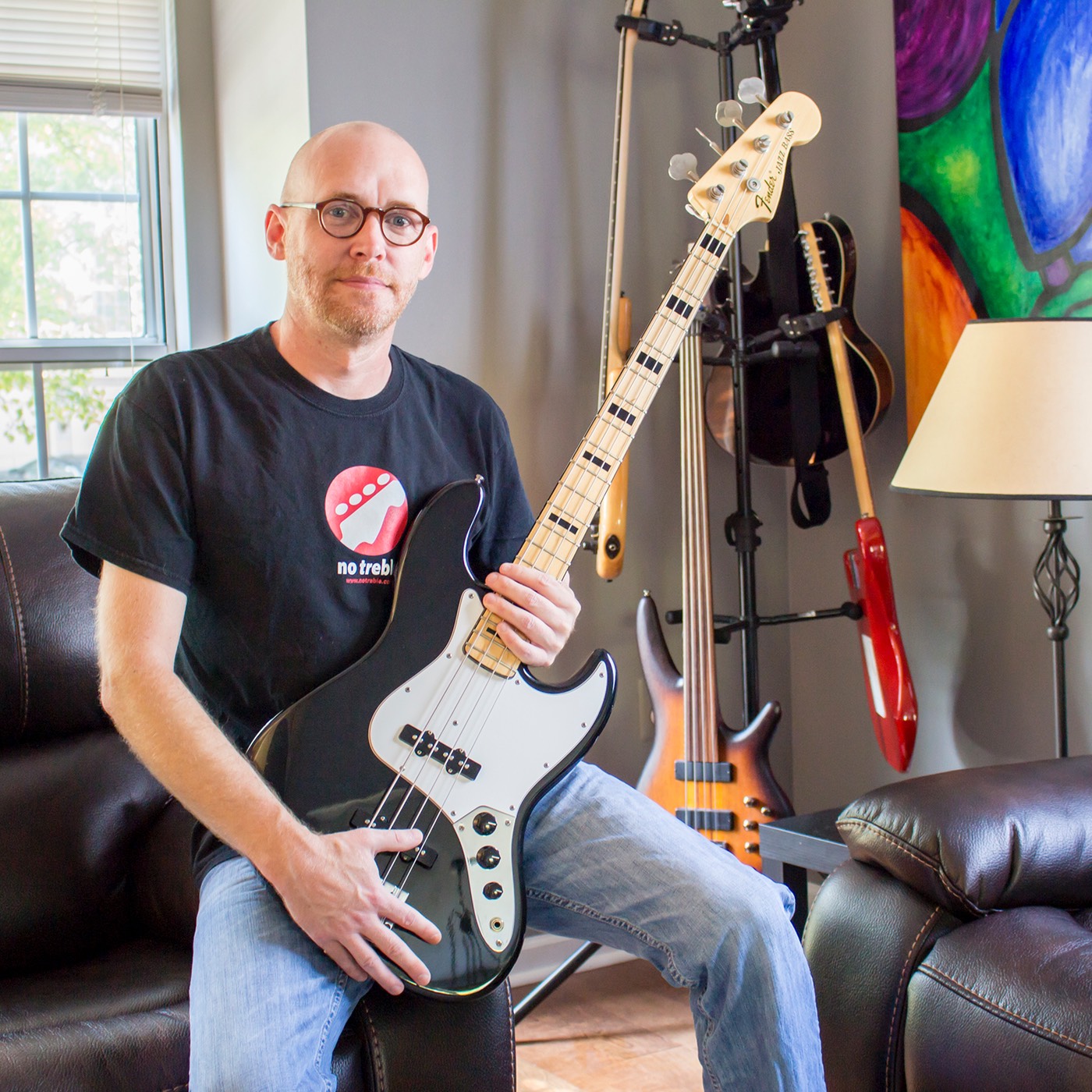
Ep 253253: Corey Brown on No Treble, Jaco Pastorius, and the opportunity of being first
Corey Brown started out on the "traditional" music school path. Starting out at the University of North Texas, Corey left and became a graphic designer. He began developing on the web in the early 1990s. Fast forward a few years, and he created Squidoo with bestselling author Seth Godin. Squidoo became one of the most-visited websites ever with over 85 million monthly visits. Corey fused his passion for the bass with his passion for the web in unexpected and impactful ways. First, he created and ran the official Jaco Pastorius web site, working on it from 2002 to 2007 and again in 2014. Next, worked on the Portrait of Jaco… the Early Years box set. He designined and produced the packaging for the release in 2003. But Corey wasn't done with innovating for the bass. In 2008, he founded no treble, which turned into the most popular online bass magazine on the web. With over a dozen regular contributors and hundreds of thousands of monthly visits, no treble has re shaped the way bassists worldwide connect with and learn from each other. Learn about Corey's fascinating career fusion of music and design in this interview! Links to check out: no treble Corey's blog Corey's web consulting Corey on Facebook Corey on Twitter Corey on LinkedIn
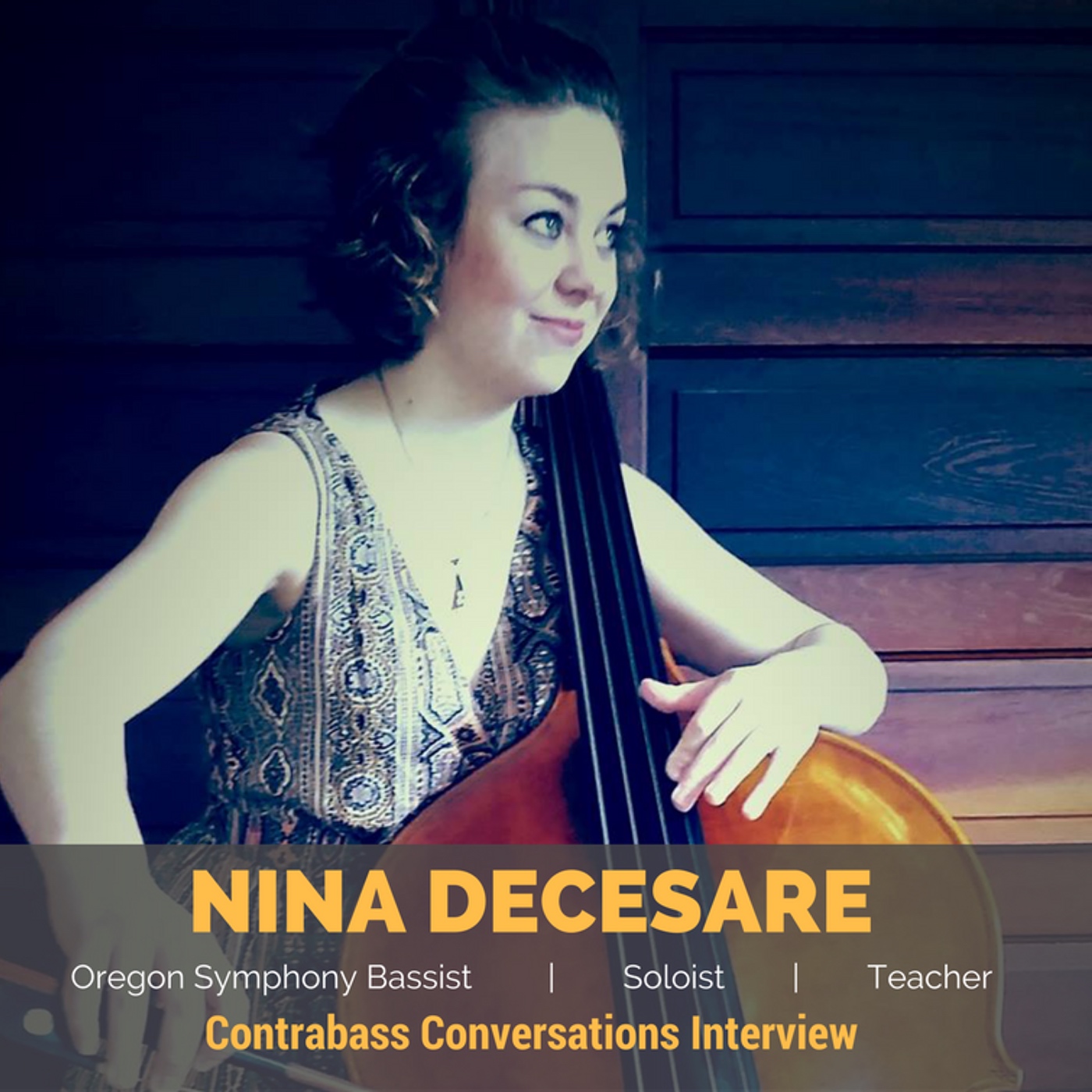
Ep 252252: Nina DeCesare on injuries, auditioning, and George Vance
Nina DeCesare's creative musical quest is inspiring. First, she won the 14 and under International Society of Bassists solo competition. Then she won it again for the 15-18 division. She studied at Rice University, Tanglewood, and Domaine Forget. Also, she won a scholarship to study with François Rabbath in Paris. Nina ended her time at Rice by winning a position with the Oregon Symphony. She has done more in her brief career than many do in their entire life. But it hasn't always been easy for her. In fact, she went through a serious playing injury during her time at Rice University. Her bass playing ground to a halt for months. But through careful analysis, she changed her approach to the bass. She problem-solved her way out of the injury and changed her approach to the bass in the process. We talk about what it was like studying with George Vance and Paul Ellison, playing in Portland bars, thoughts on training as a soloist versus as an orchestra player, and much more! Links to check out: Nina's Website Nina's YouTube Channel How an Injury Saved my Playing (blog post by Nina) Too many young double bassists prioritise solo technique over orchestral expertise (by Chi-Chi Nwanoku - from The Strad)
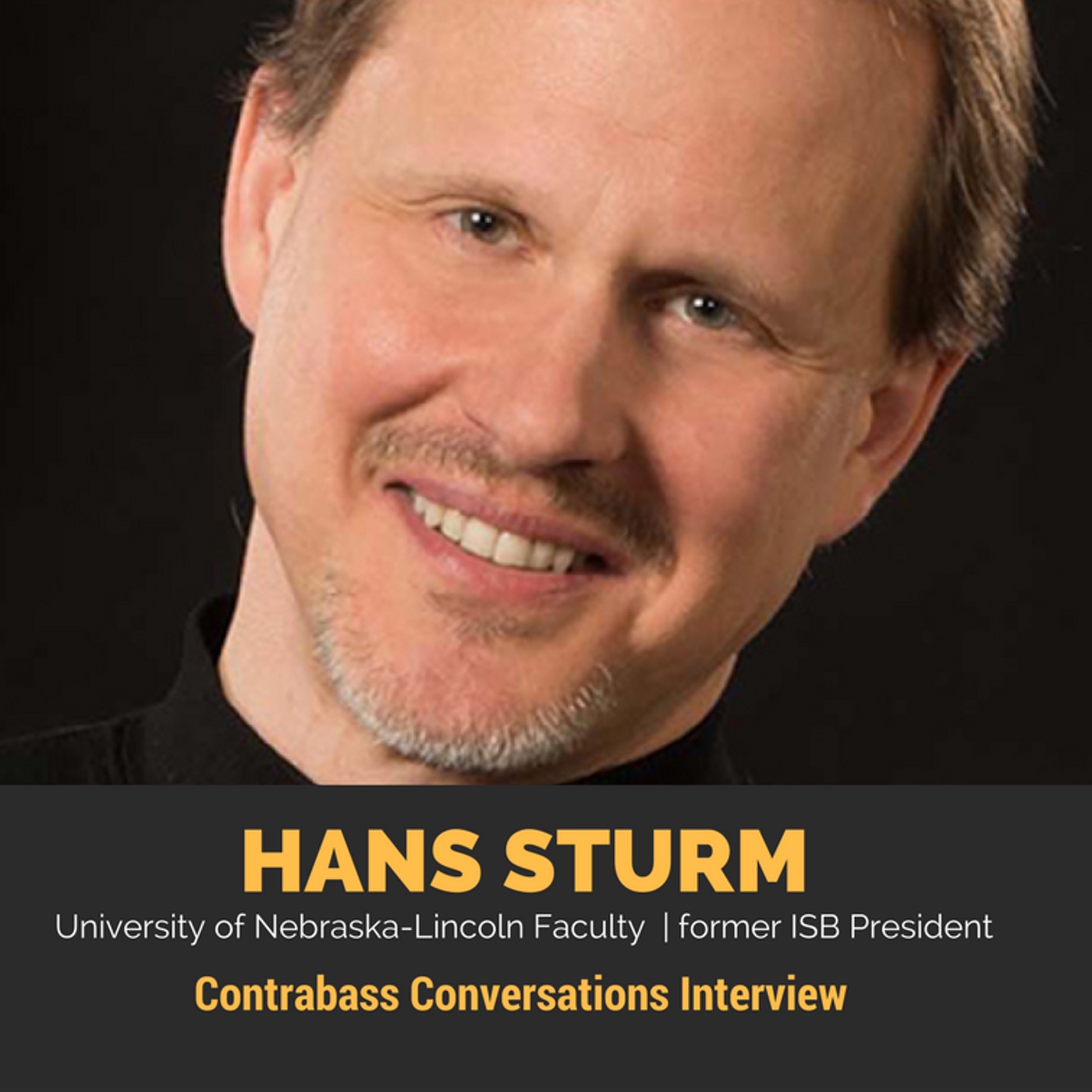
Ep 251251: Hans Sturm on motion capture, François Rabbath, and A Day in Paris
Hans Sturm isn't afraid to reinvent himself. Everything changed for Hans when he first met François Rabbath. Before he knew it, he was in Paris soaking up these new concepts. Fast forward many years, and we find Hans playing the second Rabbath Concerto with Sylvan Rabbath on piano. If you look at the music for this concerto, you'll see that François dedicated this piece to Hans. But that's not it. Hans also realized that not everybody could hop on a flight to Paris to study with François. So he began to think... How could he get these teachings to a wider audience? What could he to do take these concepts beyond the printed page? Here's the answer: Art of the Bow Art of the Left Hand Hans has reinvented himself in many ways throughout his career. He shaped the digital plan for the International Society of Bassists during his time as president. He explored creative uses of DVD technology in the Art of the Bow and Art of the Left Hand. He even left the stability of a tenured position for new adventures in a different part of the country. Through these journeys, he has brought tremendous value to the bass community. His commitment to education and to furthering his own education throughout these chapters of his life. Learn more about his time working with Richard Davis, Jeff Bradetich, and François Rabbath, practice techniques, and the genesis of this most recent album A Day in Paris! Links to check out: Hans' website A Day in Paris (new album) Art of the Bow Art of the Left Hand Our Rabbath Technique video series (you'll love the cats in the background)
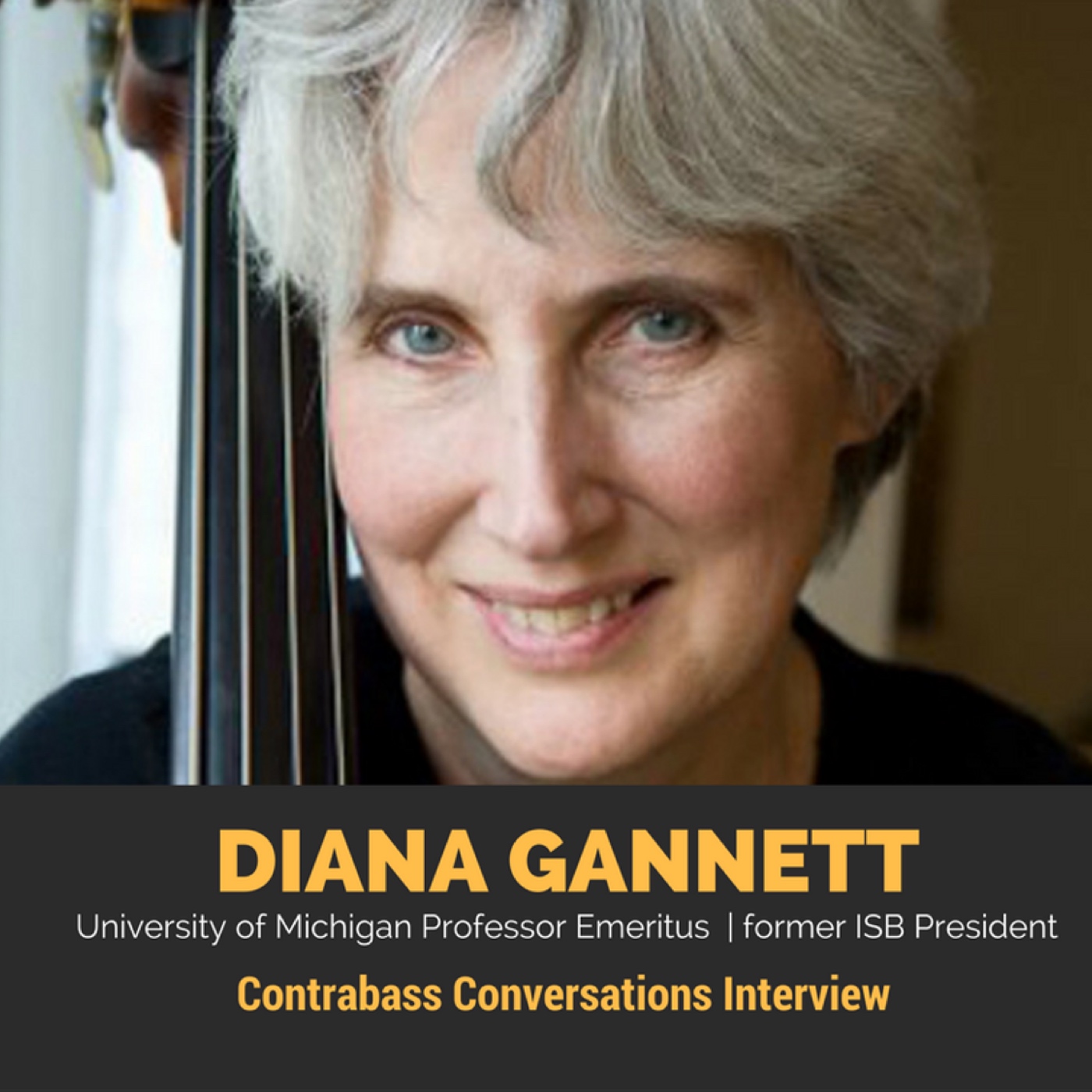
Ep 250250: Diana Gannett on her musical journey
Diana Gannett might be the most thoughtful double bass teacher I've ever encountered. Her approach to teaching is comprehensive and nuanced. She incorporates everything from group warm-ups to Aikido principles on her website. Every bassist out there should have this site bookmarked! But she's not just a great teacher—she's a jaw-droppingly talented performer. You have to hear her sound to believe it. She energizes every note she plays with this magnificent and distinctive tone. We go deep into her approach to teaching and feature excerpts from her wonderful solo album Lady Bass. I know you'll enjoy this episode! Links to check out: Diana's website Lady Bass (solo album) Diana's Practice Room resources (bookmark these!): Study Sheet Practice Modes Toys Bass Class Exercises Phase Warm-Ups
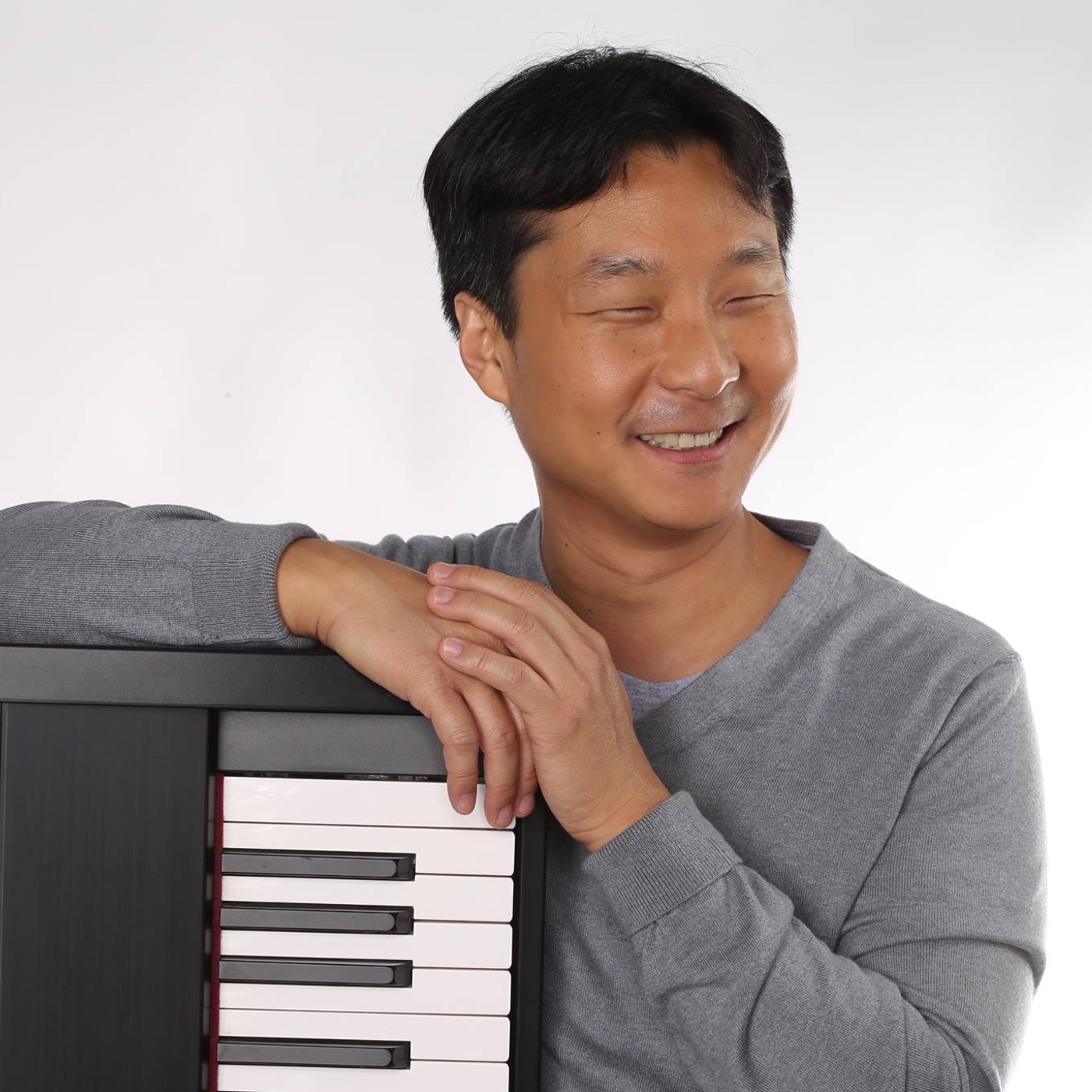
Ep 249249: Hugh Sung on Musical Entrepreneurship
Hugh Sung is the ultimate musical entrepreneur. After years spent teaching at the Curtis Institute of Music, Hugh co-founded AirTurn, a company that produces pedals designed to turn pages on a tablet device. Hugh is also an author. In fact, he wrote From Paper to Pixels as a result of using tablet devices for reading music. Now Hugh has moved into the world of podcasting with his show A Musical Life, getting a quarter of a million downloads in only a few months. In addition, he recently launched A Musical Life Mastermind, a membership site devoted to helping musicians explore opportunities to grown their career. Learn how he does all of this and much more in this interview! Links to check out: Hugh's website A Musical Life (podcast) A Musical Life Mastermind AirTurn
Ep 248248: Peter Seymour on Hard Work
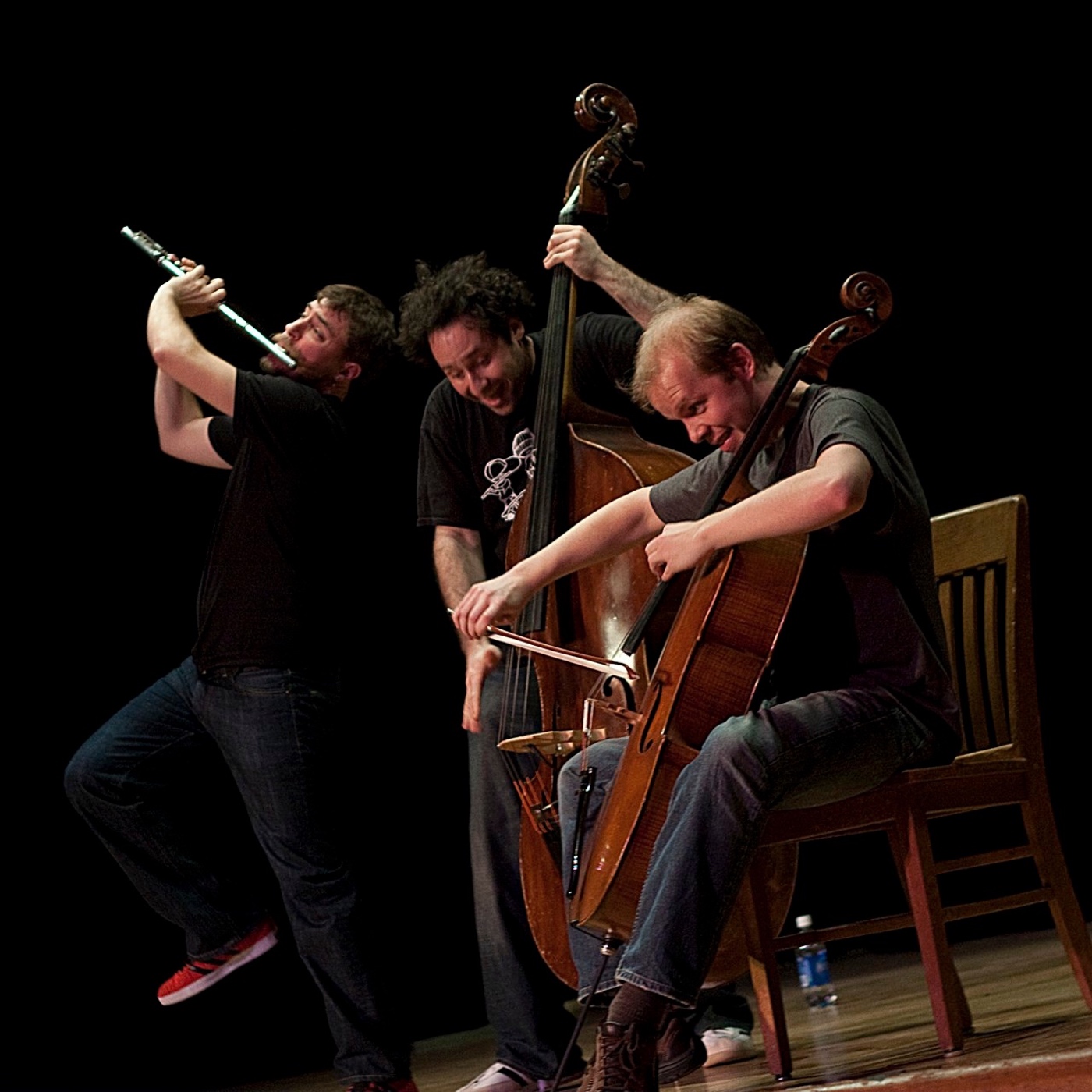
Teaching improvisation is like Fight Club. The first rule of teaching improvisation is you don't talk about improvisation! That's Project Trio's approach, and it's totally compelling. 10 years ago, Peter took all the energy and drive he had for the audition circuit and poured into getting Project Trio off the ground. We talked about it back then. Fast-forward to the present, and the results of this hard work have paid dividends. Learn about what Peter did and the results he got in this interview! Links to check out: Project Trio website YouTube channel

Ep 247247: Danny Ziemann on Jazz Bass Lines
Danny Ziemann couldn't find a book on bass lines that worked for him. So he created The Low Down. Now he's released his second volume, and he's looking to expand way beyond that. Danny is committed to teaching the fundamentals in a clear, step-by-step process. It's a fresh approach to jazz bass pedagogy from the mind of a committed music educator. Learn more about this dynamic young musician in this interview! Links to check out: Danny's website The Low Down Vol. 1 and 2

Ep 246246: Lauren Pierce on YouTube fame
Lauren Pierce started out on the typical music school path. But something happened along the way. In the midst of grad school, Lauren decided to quit. She struck out on her own and asked herself a critical question: What if? Instead of grad school, Lauren decided to: - put dozens of videos on YouTube - learn how to write code - build up a worldwide social media following - start a membership site - create video courses - teach Skype lessons Learn how taking the road less traveled helped Lauren launch her career in this interview! Check out these links: Lauren's website Lauren's YouTube channel Lauren's teaching site Bowing course on Discover Double Bass Codeacademy
Ep 245245: Emilio Guarino on Making It
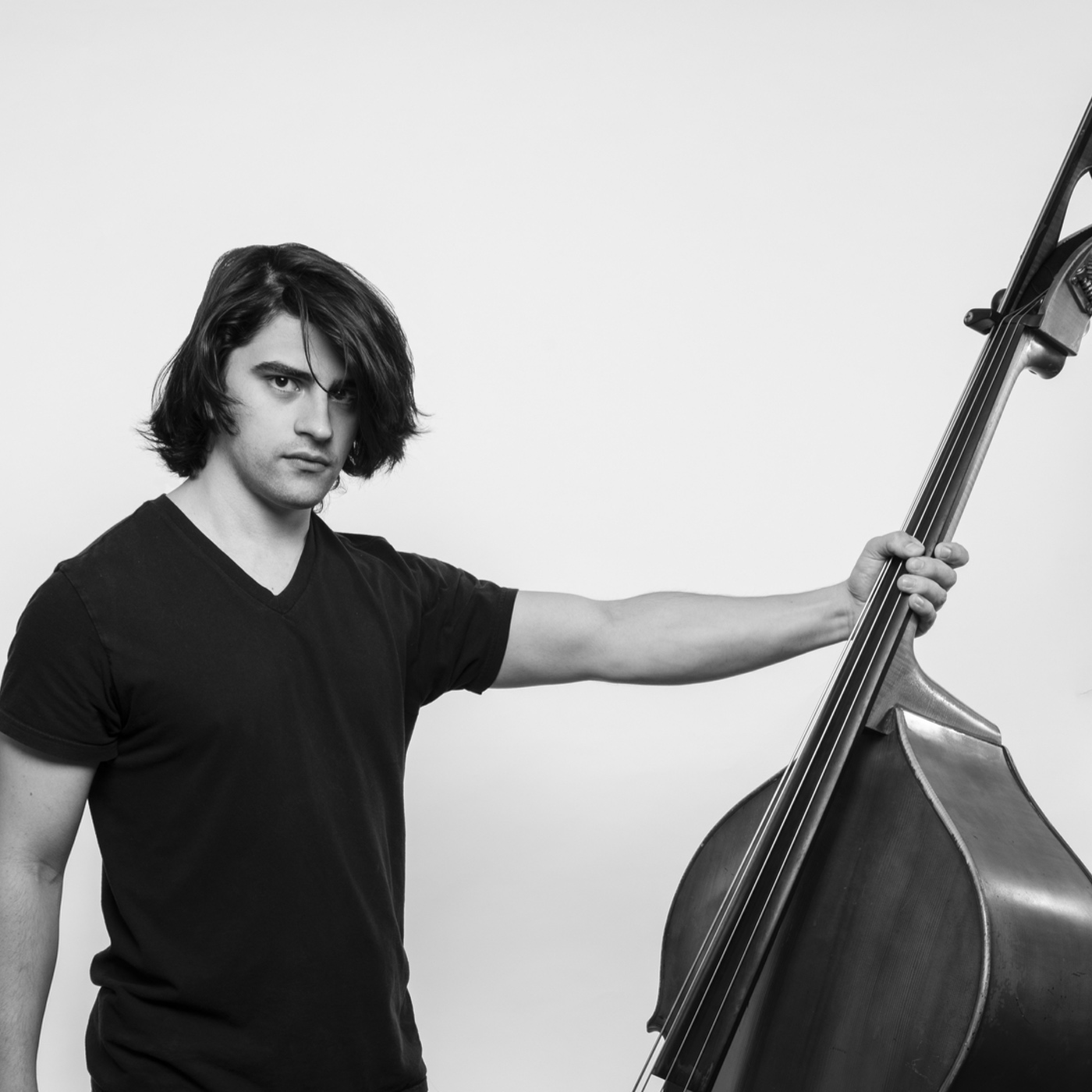
This is Emilio Guarino. He plays bass. But that's not all he does. He makes music with computers. He also teaches and performs in many musical styles. He's even written a book to help musicians figure out how to find a foothold. On his blog and Youtube channel, Emilio asks questions like: Are you the type of person you'd hire for a gig? Are auditions a problem-solving activity or a chance to beat up on yourself? When does the real world actually start? We dig into these topics and much more in this interview! Check out these sites: Emilio's website Make It (book) Emilio's YouTube channel Book recommendations: Meditations by Marcus Aurelius The Art of Deception by Nicholas Capaldi Managing Oneself by Peter Drucker The 4-Hour Workweek by Tim Ferriss James Clear (writer) Mark Manson (writer)
Ep 244244: Christine Hoock on DJs, egoless playing, and patience
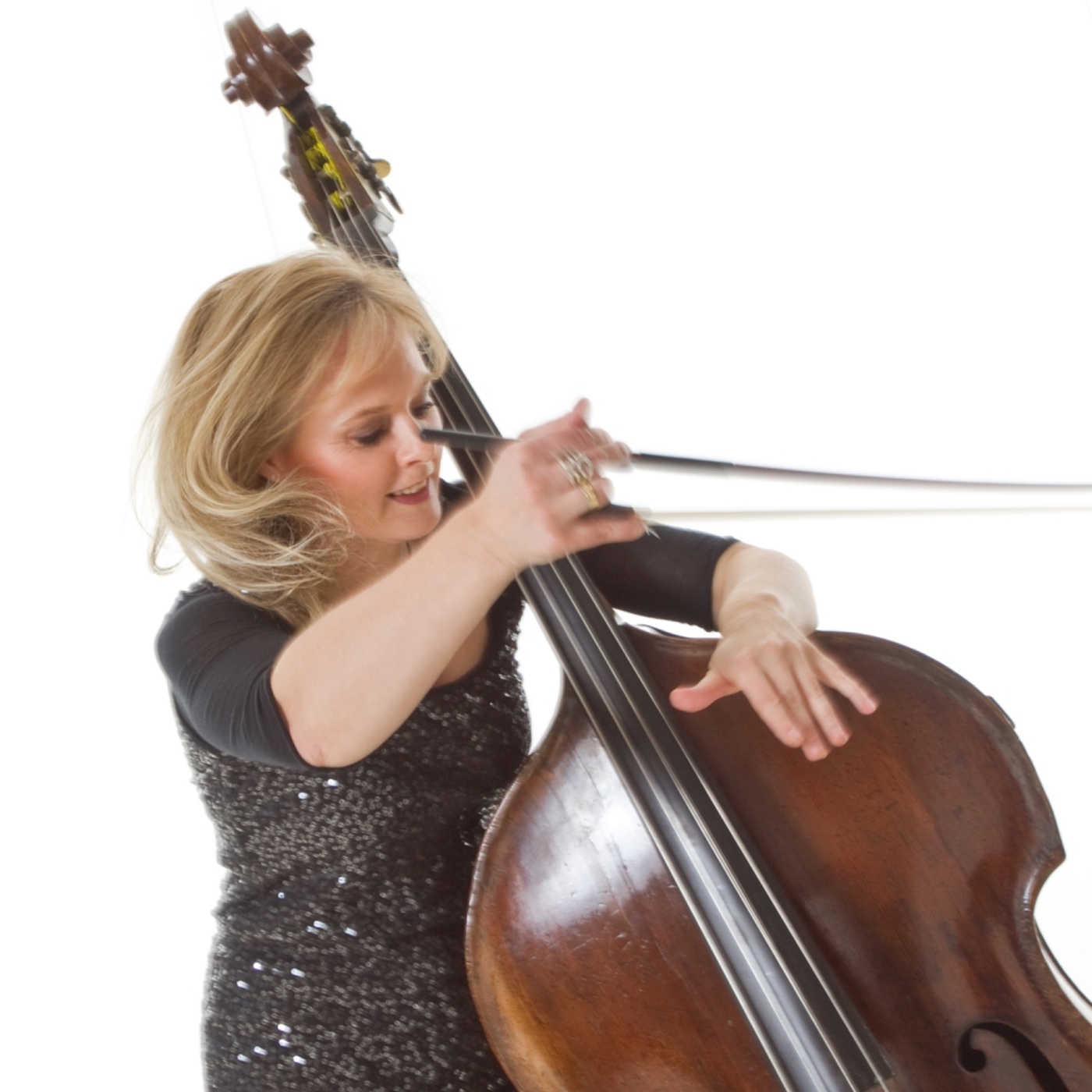
Christine Hoock is a tossed salad of musical genres. Maybe she's playing Phillip Glass. Perhaps she's performing Arvo Pärt. She could even be playing tangos or jamming with a DJ. But regardless of what she's playing, it's with her beautiful, compelling sound. Günter Klaus and Franco Petracchi taught her, and she has taken the double bass a new level. She has total command of the bass and is a compelling world-class artist. Learn how she does it in this interview! Resources we covered in this interview: Christine's website Christine on YouTube Christine on the Vanhal Concerto (Strad Magazine) Contrabajisimo (album) other albums by Christine

Ep 243243: Pablo Aslan on tango bass life
Pablo Aslan breaks bow hairs. A lot of bow hairs. In fact, he rivals the guys in the Met for most-frequent rehair at his NYC bow shop. He also makes killer bass lines. He's truly the Ray Brown of bowed marcato bass lines. Learn how he does it in this interview! Resources we covered in this interview: Pablo's website AvantangoMedia (Pablo's YouTube channel) Piazzolla in Brooklyn (album) Tango Grill (album)

Ep 242242: Sam Suggs on Music Cognition, Jamming in Bars, and the Elements of Execution
Sam Suggs calls himself an omnivorous musician. I love this tagline. I feel like I'm eating at a fantastic fusion restaurant when I hear Sam's music. I'm not expecting these flavors to work, but they are so good together. First, he takes a little 1750s galant style. Next, he adds a dash of Verdi. He finally tops it off with—I kid you not—Skrillex and Daft Punk. Then he marches over to a bar and gives it a battle test in front of the patrons. Best of all, he does this without a looping pedal in sight. Learn more about how he works his magic in this interview. Sam is also kicking off the upcoming International Society of Bassists convention. We dig into what he's planning in our chat, and I know you'll love what he's got in the works. Resources we covered in this interview: Sam's website Sam's YouTube channel Study with Sam at James Madison University Music in the Galant Style by Robert Gjerdingen (book recommendation)

Ep 241241: My Biggest Podcasting Screw-Ups
bonusOn both the blog and the podcast, I've always taken the stance of making things as good as I can and then putting them out in the world without any apologies. Nothing drives me crazy more than listening to a podcast and heading the host apologize for a few minutes about this or that. I resolved never to do this. I would make the best product I could and then just present it without and excuses or "aw shucks" commentary. Today, I'm letting loose. This is all the stuff that I have struggled with behind the scenes over the years. All the times I slapped my head in frustration at my missteps. Check out the accompanying blog post, (featuring similar but not identical content) and enjoy these tales of podcasting gone wrong! You can also check out the three-part series I wrote for ArtsHacker about podcasting for more nuts & bolts information about the technology behind making a podcast.
Ep 240240: Thierry Barbé on expressive music, German bow, and French basses
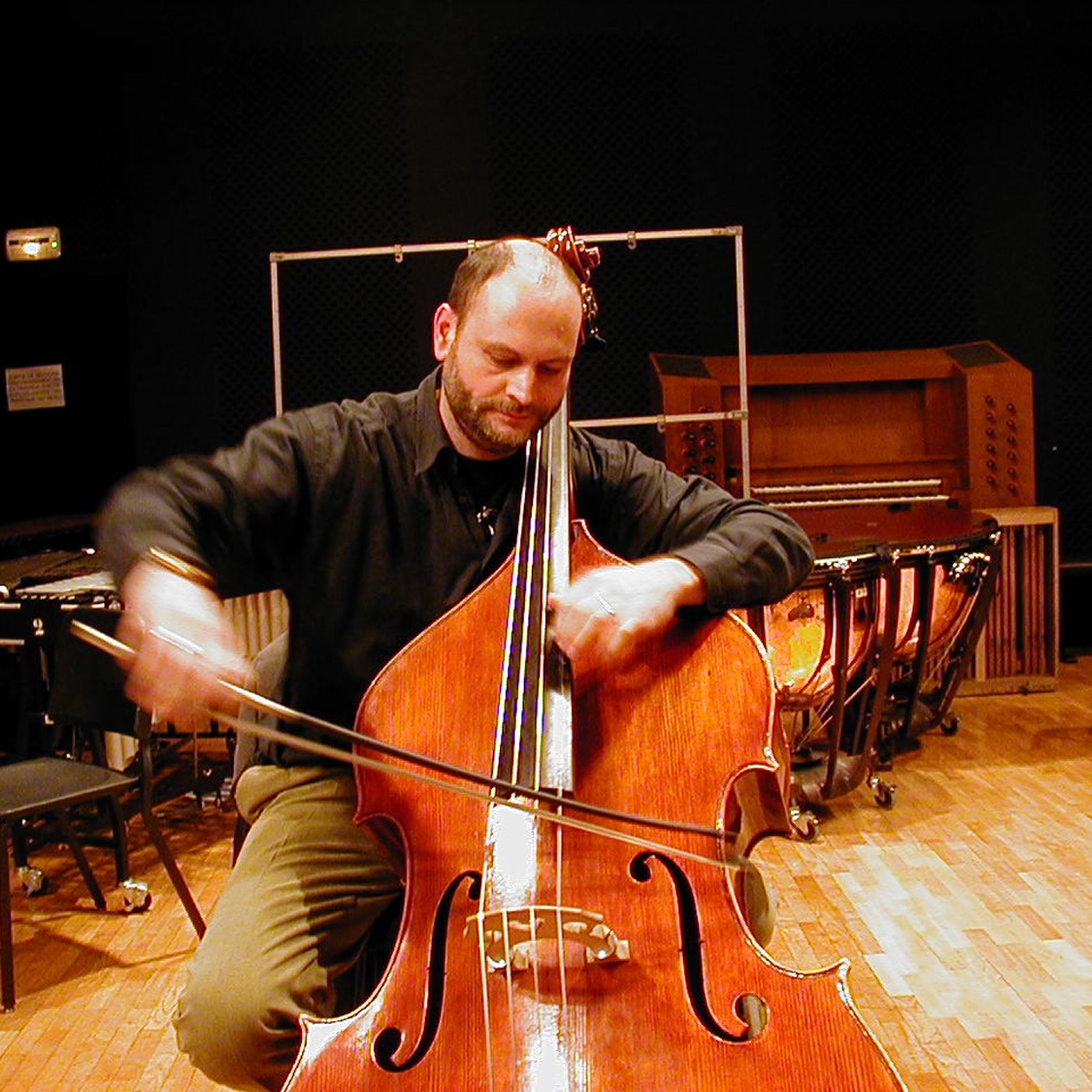
Thierry Barbé is a man in constant motion. When he's not performing as principal bass of the Paris National Opera or teaching at the Paris Conservatory, Thierry can be found in all corners of the globe, performing lesser-known gems from the bass repertoire and giving clinics along the way. He is a technical synthesizer, pulling from many different schools of playing, even incorporating German bow into his bag of techniques. Thierry is a pioneer in uniting the European double bass community. He organized the first European Bass Conference in 2008 and started the European Society of Bassists shortly after that. He also has a new CD/DVD, which are must-haves for any bassist. It's available from the Triton label and as an MP3 download on Amazon. Best of all, Thierry is a warm and caring person who brightens the day of anyone he runs into. I had the good fortune to work with him on the International Society of Bassists board a few years ago, and he brought a marvelous energy to the organization. Check out the full interview using the audio player, and subscribe to the podcast to get interviews delivered to your inbox or device automatically! Resources we covered in this interview: Thierry's website Thierry's YouTube channel French Impressions on Amazon (MP3 download) French Impressions - CD/DVD on Triton

Ep 239Take Our Listener Survey!
bonusIt's time for our 2016 listener survey! This survey will only take a minute or so to fill out, and it's incredibly helpful for me. Why? First off, I love hearing from you! Also, it shows me what you find most compelling about what I put out for the podcast. But most of all, it helps me to create podcast content that helps you. If you can find the time to take the survey, I'd really appreciate it!
Ep 239239: Seven Lessons I've Learned About Interviewing
bonusI wrote a three-part series for Drew McManus' site ArtsHacker earlier this year, and this got my brain going: what if I also put out some "pulling back the curtain" podcasts about how I do all of this and what I've learned in the process? So that's what today's episode is. I'm breaking this into two parts: today I'm covering "the art of the interview" and seven lessons I've learned about interviewing. Next time we'll go deep into the tech behind recording, editing, and putting these episodes out. Podcasters like me end up having this strange skill set where they're half Jay Leno and half IT guy. While some of the bigger podcasters split these duties into various team members, the vast majority of podcasters (myself included) fill both of these roles. Early Days: Discovering Podcasts I discovered podcasts not too long after getting my first iPod Video in 2005. My first podcast was This Week in Tech with Leo Laporte (who I've actually seen live! my wife and I went to the TWiT studio in Petaluma last year to see a live taping of This Week in Tech). I was hooked from the get go, and it wasn't took long before I thought, "What if I did my own podcast?" I filed that thought away for a year. My blog was starting to grow, and I was having a good time riding that wave. But the more I got into blogging, the more I thought about how cool it would be to have a podcast. I was loving listening to interview shows, and I had broadened my listening to include about 20 podcasts at that point. It was basically all that I listened to outside of some music. It had totally supplanted any other form of talk radio or television. As 2006 progressed, I resolved to start my own show, and the last few months of that year were spent purchasing gear, setting up a website, getting hosting for my new podcast, and learning how to use my gear to record and edit. I did some unreleased test episodes at the end of 2006 and put out my first podcast on January 1st of 2007. Getting My Sea Legs Recording yourself makes most people self-conscious, and listening back to yourself as a host can be particularly awkward. Like most people, I hated how I sounded on the mic, and I didn't really know how to use any of the gear that I had that well, so it was trial by fire for sure. I had this questionable Acer laptop at the time, with caused all sorts of problems early on, but I'll save those details for the tech episode next time. I put out what I thought was a pretty decent first episode, just stating the purpose of the show and what I hope to do. The funny thing is that I have done pretty much exactly what I said on that first episode! I went back not too long ago and listened to that episode, expecting some truly cringe-worthy material, but to my surprise it was actually pretty tight. My first three episodes had no guests—they were just me rambling into the microphone, and it's amazing to hear how stiff and stilted my delivery was. It was all new to me, and that's the first big lesson I have for this episode: no matter how well-versed you may be in public speaking, it takes time to find your own rhythm and your own voice in front of the microphone for a podcast. Imitating someone else may work at first, but ultimately you have to find your own style. It's tough! My First Guests I finally got a guest on episode 4—Andy Anderson from the Lyric Opera of Chicago, and I am eternally thankful to him for being willing to take a chance on something like this. Andy is an incredibly open guy, which was amazing for a first guest. He made it so easy for me. I can think of a lot of other people I interviewed after that which would have been much more challenging interviews, but Andy was amazing and was really helpful for building my confidence. I mean, I really didn't know what I was doing. I had listened to podcasts for a while at that point and had taken in a lot of interviews, but doing your own interview is not the thing entirely. It can feel kind of formal and weird—I actually think that it's one of those deceptively difficult skills that seems easy when done well but is in reality incredibly challenging to do at a high level. Lesson #1 - Starting an Interview I hear moments of quality interviewing even in those first episodes, but I cringe as I hear what I call extended resume-type questions: then you went to this school, then this school, then you auditioned for x, y, or z, etc. I still start basically all interviews with some talk about the musician's early years, but I no longer expect to talk about each minute detail of their progression through school, training, and employment. It's not necessarily that interesting… I mean, sometimes it is, and if so that's cool, but what I do now is listen intently to what they are saying and listen for any sort of interesting twist in their path or any extra passion in their voice about a particular aspect of their upbringing. A tip I picked up from Tim Ferriss that I pretty much always use these days: talk with a person
Ep 238238: Thomas Martin on Bottesini, gut strings, and the bass revolution
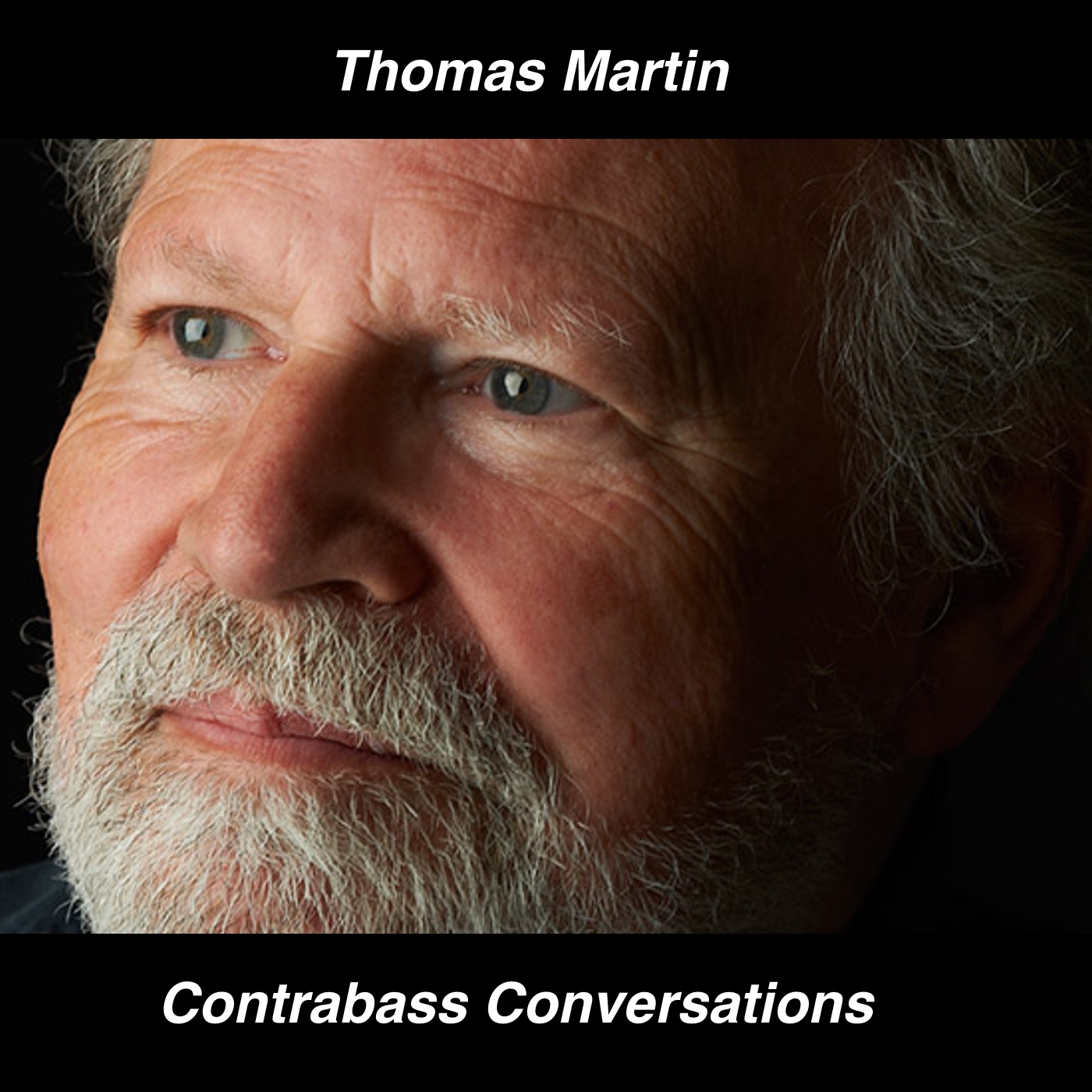
Today's episode features Thomas Martin. Tom has worn many hats throughout his career, working as an orchestra principal bass, soloist, champion of Bottesini's music, luthier, teacher, and conductor. We cover a wide variety of topics, including Tom's early years, playing in the Army Orchestra, studying with Roger Scott, the process of uncovering the music of Bottesini and reconstructing how Bottesini approached the instrument, making basses, and the bass revolution that's currently taking place. Enjoy! Links: Tom's website Tom's Bottesini recordings: Bottesini Collection Vol. 1 Bottesini Collection Vol. 2 Bottesini Collection Vol. 3 Bottesini Collection Vol. 4 Bottesini Collection Vol. 5 Listener feedback links: Cassie LaMarche's GoFundMe for BASS2016 Music Podcasts I've been Enjoying: The Entrepreneurial Musician Divergent Paths Clarineat A Musical Life
Ep 237Winning the Audition 4: Sealing the Deal
bonusWelcome to the fourth and final installment of Winning the Audition, a special series from Contrabass Conversations featuring advice from leaders in the field about preparing and executing auditions successfully. This series is drawn from interviews conducted with dozens of bassists from orchestras like the Boston Symphony, Cleveland Orchestra, National Symphony, Philadelphia Orchestra, Chicago Symphony, and Houston Symphony, plus some of the most influential pedagogues in the field. I'd like to thank Discover Double Bass for sponsoring this series. They've got several in-depth courses available, including the Double Bass Scales Play-Along Collection, Double Bass Bowing Technique, Beginner's Course, and Creating Walking Bass Lines. Each of these courses includes hours of HD videos, PDFs of exercises, and access to a members-only study group. There's a lot of free content on the site to check out as well, including previews of each of these courses. Check out these courses and much more at discoverdoublebass.com! Today's episode dives into common characteristics and mindsets that distinguish audition winners. We talk about techniques for battling nerves, adopting a more musical approach to the audition process, and processes for developing a good mental state for auditioning.

Ep 236236: Matthew McDonald on resonance, bow distribution, and mindset
Today's episode features Berlin Philharmonic principal bassist Matthew McDonald. Originally from Australia, Matthew joined the Philharmonic in 2008 after spending time in orchestras in Denmark and Germany. We cover bow distribution, resonance, the performers mindset, practicing, advice for students, and several other topics. We also feature excerpts of Matthew performing pieces by Hindemith, Bruch, Bottesini, and Koussevitzky. Check out these complete recordings and more on Matthew's YouTube channel. Enjoy! Tracks featured: Hindemith Sonata Bruch Kol Nidrei Bottesini Grande Allegro alla Mendelssohn Koussevitzky Valse Miniature

Ep 235Winning the Audition 3: Preparation Routines That Work
bonusWelcome to the third installment of Winning the Audition, a special series from Contrabass Conversations featuring advice from leaders in the field about preparing and executing auditions successfully. This series is drawn from interviews conducted with dozens of bassists from orchestras like the Boston Symphony, Cleveland Orchestra, National Symphony, Philadelphia Orchestra, Chicago Symphony, and Houston Symphony, plus some of the most influential pedagogues in the field. This episode is sponsored by Discover Double Bass, and they have a play-along scale package written by founder Geoff Chalmers that covers 17 different scale types in all 12 keys. The package includes slow and fast MP3 backing tracks and drones, plus PDFs with fingerings and advice for specific types of scales. Check this out and much more at discoverdoublebass.com! Today's episode follows along with the preparation routines used by several bassists holding high-profile positions, including Cleveland Orchestra principal bassist Max Dimoff, Houston Symphony principal bassist Robin Kesselman, and Chicago Symphony principal bassist Alex Hanna. Book discussed: Toughness Training for Sports by James Loehr
Ep 48234: Justin Locke returns!
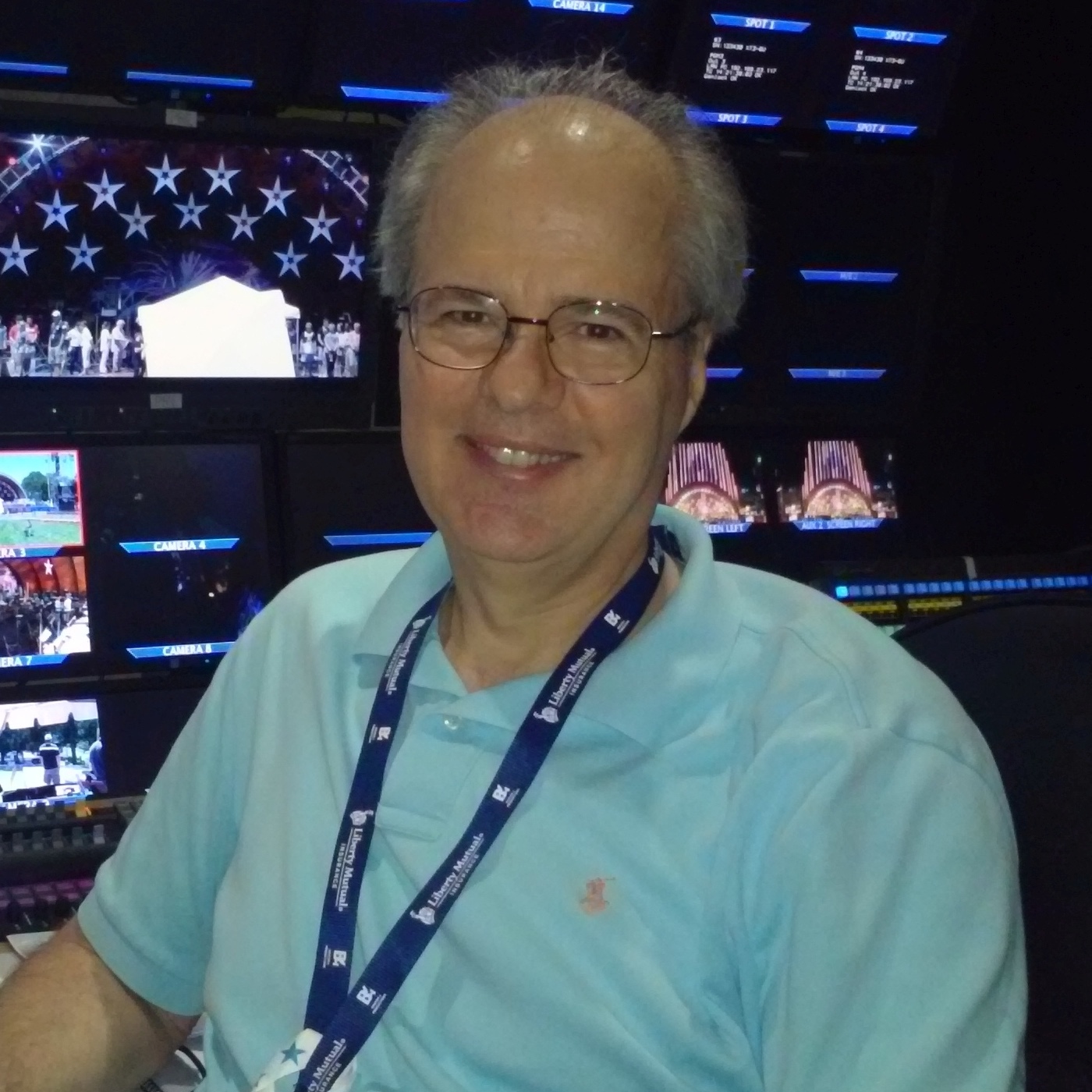
bonusToday's episode is a "round two" with Justin Locke. After playing double bass for many years with the Boston Pops, Justin is now a management coach, speaker, author, and playwright. We talk about many concepts, including the Toyota Lean Manufacturing system and how it relates to the Simandl technique, crazy stories from the Boston Pops, arts education, lessons from the music world that can be applied to the corporate world, workflow and timing, the "Mozart in the Jungle" effect that Justin has experienced, and his latest book that explores the physics of emotional energy. Check out the original interview from nearly a decade ago here. Books mentioned: Justin's books Real Men Don't Rehearse Principles of Applied Stupidity Getting in Touch with Your Inner Rich Kid Time Light Love Mozart in the Jungle The 22 Immutable Laws of Marketing
Ep 232Winning the Audition 2: Practicing Techniques for Peak Auditions
bonusWelcome to Winning the Audition - a special series from Contrabass Conversations featuring advice from leaders in the field about preparing and executing auditions successfully. This series is drawn from interviews conducted with dozens of bassists from orchestras like the Boston Symphony, Cleveland Orchestra, National Symphony, Philadelphia Orchestra, Chicago Symphony, and Houston Symphony, plus some of the most influential pedagogues in the field. This episode is sponsored by Discover Double Bass, and they have a course on bowing technique with Lauren Pierce that I highly recommend checking out. This course is divided into 37 HD lessons, and Lauren gives a short video overview of the three categories that these videos cover: the basics, bow control, and real world techniques. There's also a free preview lesson on phrasing with the bow. Check out over 70 free lessons and much more at discoverdoublebass.com! About Winning the Audition This series provides actionable advice that you can use to take your auditioning to the next level, and while we're speaking with bassists for these episodes, the advice can certainly be applied to other instruments and disciplines as well. This series is divided into four episodes: Preparing for Audition Success, Practicing Techniques for Peak Auditions, Preparation Routines That Work, and Sealing the Deal. Special thanks goes to John Grillo, who was my co-host for many of these interviews. Today's episode includes advice from dozens of major figures in the bass world, including Lawrence Hurst, Michael Hovnanian, Ranaan Meyer, Ian Hallas, Brandon Mclean, Robin Kesselman, Ira Gold, Max Dimoff, Jack Budrow, Andrew Anderson, Rob Kassinger, Peter Tambroni, Greg Sarchet, Andrew Raciti, Marc Ramírez, Gaelen McCormick, Joseph Conyers, Colin Corner, Ju-Fang Liu, Jeffrey Turner, Owen Lee, Brad Opland, Alex Hanna, and Ed Barker.
Ep 232232: Jory Herman on community engagement, balance, and resonant churches
Today's episode features Jory Herman, who is a member of the San Diego Symphony bass section and has just released his second solo album titled Life. In addition to playing in the San Diego Symphony, Jory is actively involved in community engagement in the San Diego area. He has recently become Director of Community Engagement with Art of Elan and is an active teacher and clinician. We talk about his early years in music, studying bass with Paul Ellison at Rice University, and his time playing in the New World Symphony, where he got bitten by the community engagement bug. We also discuss the recording of both his previous album of Bach Cello Suites and his most recent album, as well as what it's like to continue to develop as a player and a person after landing an orchestra job. Enjoy! Links: joryherman.com Art of Elan Bach album Life album Interview Highlights Early years piano first instrument, started cello in 5th grade and switched to bass a few months later First bass teachers were Becky Merritt and Dennis Whittaker, then Andy Moritz and Paul Ellison studied with Paul Ellison at Rice - 5 year honors program - BM and MM the student experience at Rice Early professional experiences New World Symphony getting the "community engagement bug" while in this program Spent a year playing in the National Symphony before joining San Diego Symphony in 2010 Continuing to set goals and develop as a musician "after the audition" lessons learned from Paul Ellison 1) Things you know 2) Things you know you don't know 3) Things you don't know you don't know. finding inspiration in the dynamically changing double bass community continuing to develop as a person feeding your soul as well as the technical aspects of your playing Jory's educational and community engagement work Art of Elan - Jory has just been named the Director of Community Engagement San Diego Youth Symphony Jory's Book of Warm-Ups learning to to present what you do - lessons from the world of science Bach album and Life album recording venues Brahms arrangement Work-Life Balance Listener Feedback links: bass for sale from Eric Windmeier
Ep 231Winning the Audition: Preparing for Audition Success
bonusWelcome to Winning the Audition - a special series from Contrabass Conversations featuring advice from leaders in the field about preparing and executing auditions successfully. This series is drawn from interviews conducted with dozens of bassists from orchestras like the Boston Symphony, Cleveland Orchestra, National Symphony, Philadelphia Orchestra, Chicago Symphony, and Houston Symphony, plus some of the most influential pedagogues in the field. Our sponsor for this episode is Discover Double Bass. This site is run by Geoff Chalmers and provides lessons and step-by-step courses on a variety of double bass areas of study. They've got free articles, string reviews and a show called Ask Geoff and Lauren where they answer questions from the double bass community. Geoff does great work and has built this into a tremendous resource for bassists everywhere. Check out over 70 free lessons and much more at discoverdoublebass.com! About Winning the Audition This series provides actionable advice that you can use to take your auditioning to the next level, and while we're speaking with bassists for these episodes, the advice can certainly be applied to other instruments and disciplines as well. This series is divided into four episodes: Preparing for Audition Success, Practicing Techniques for Peak Auditions, Preparation Routines That Work, and Sealing the Deal. Special thanks goes to John Grillo, who was my co-host for many of these interviews. Today's episode includes advice from dozens of major figures in the bass world, including Lawrence Hurst, Michael Hovnanian, Ranaan Meyer, Ian Hallas, Brandon Mclean, Robin Kesselman, Ira Gold, Max Dimoff, Jack Budrow, Andrew Anderson, Rob Kassinger, Peter Tambroni, Greg Sarchet, Andrew Raciti, Marc Ramírez, Gaelen McCormick, Joseph Conyers, Colin Corner, Ju-Fang Liu, Jeffrey Turner, Owen Lee, Brad Opland, Alex Hanna, Links from the episode: Performance Success Audition Success Fight Your Fear and Win Flow
Ep 230230: Taking the Podcast to the Next Level
bonusJason reveals his "top secret" plans for the podcast!
Ep 229229: BASS2016 Prague European Biennial Double Bass Congress Preview
bonusToday's episode features a conversation with Ursula Dieterich-Pedersen, who is organizing the 5th European Biennial Double Bass Congress, which will be taking place in Prague this September 20-25. Ursula and I got a chance to talk recently about some of the details for the event. You can find all the details for this event at bass2016.eu.
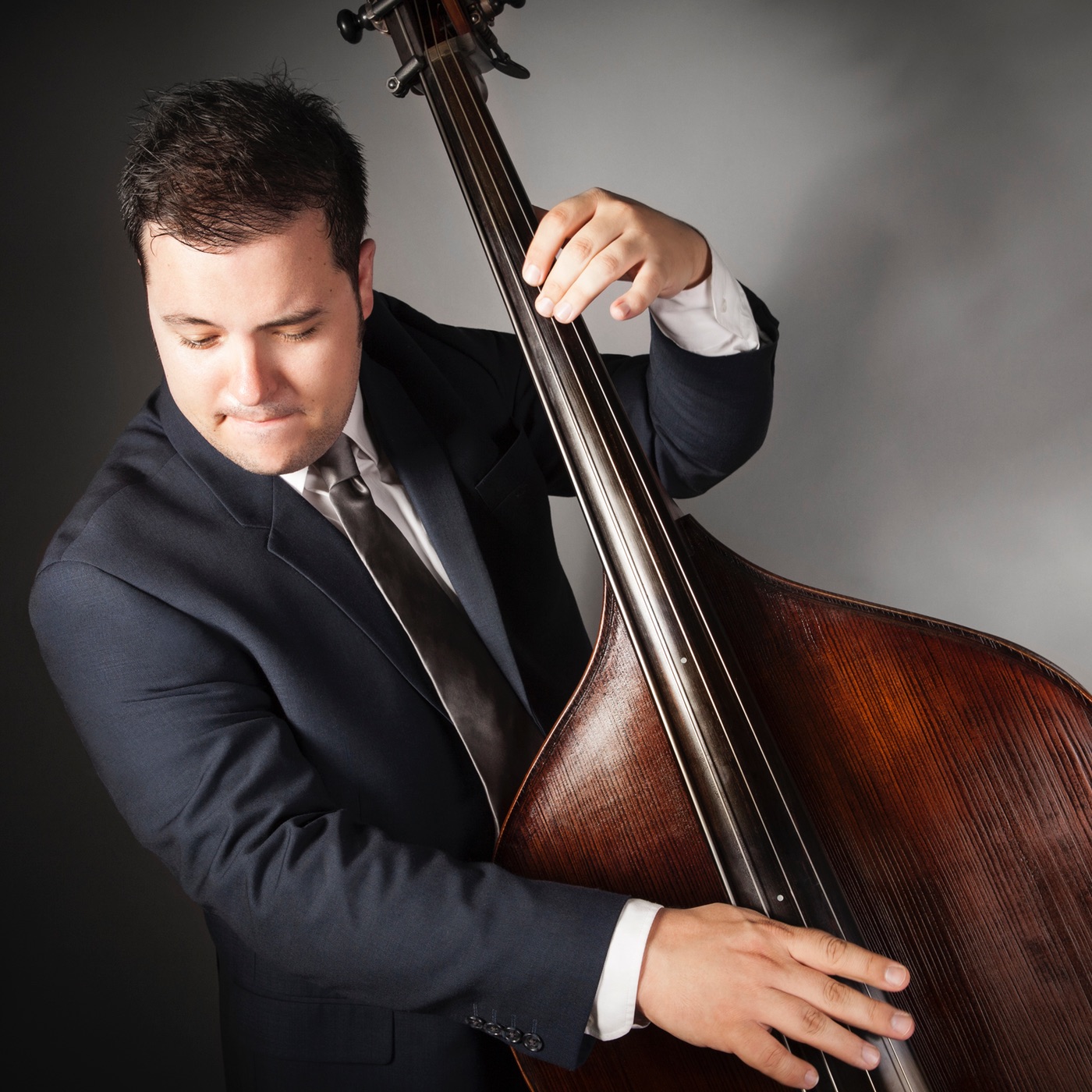
Ep 228228: David White on Broadway, New York City, and Networking
Today's episode features David White, who works as an upright and electric bassist in the world of musical theatre. David is based in New York City and is currently on tour with the Bridges of Madison County. We talk about his time at the Berklee College of Music and working as a bassist for Royal Caribbean, moving to New York City and getting involved with the theatre scene, a week in the life of a theatre musician, developing networking skills, and much more. Enjoy! Links: David's website Shirtwaist Sisters Interview Highlights Early Years mom choir teacher, dad lighting designer started playing drums, then started bass in 6th grade attended Berklee College of Music for two years Working for Royal Caribbean's Brilliance of The Seas for 9 months weekly schedule varies depending on the length of the cruise production shows made by Royal Caribbean that are played for every cruise three of these productions for David's ship tango show rock song medley Broadway medley fly-ons or guest artists people that would come in and just do their one show for that cruise big band set / jazz set depending on the show generally no days off Getting into the theatre scene in New York David moved to New York with the intention of getting into the theatre scene joined the union (802), got the union book and started contacting bassists networking principles how subbing for a show works The Zen mindset of playing the same music every night Typical weekly schedules for a show Mondays typically travel day Tuesday is opening night for the show morning is free load-in during the afternoon - unpack instrument, get it plugged in, cords taped down, etc. soundcheck at 5 or 5:30 - cast is also getting a walkthrough in the theater (weird entrances for that particular theater, etc.) you get an hour before the show to eat and change Wednesday, Thursday, Friday have evening shows (mornings and afternoons are off) doubles on Saturday and Sunday close the show Sunday, pack up gear and head back to hotel Gear: what David uses for shows upright electric amp accessories Developing networking skills
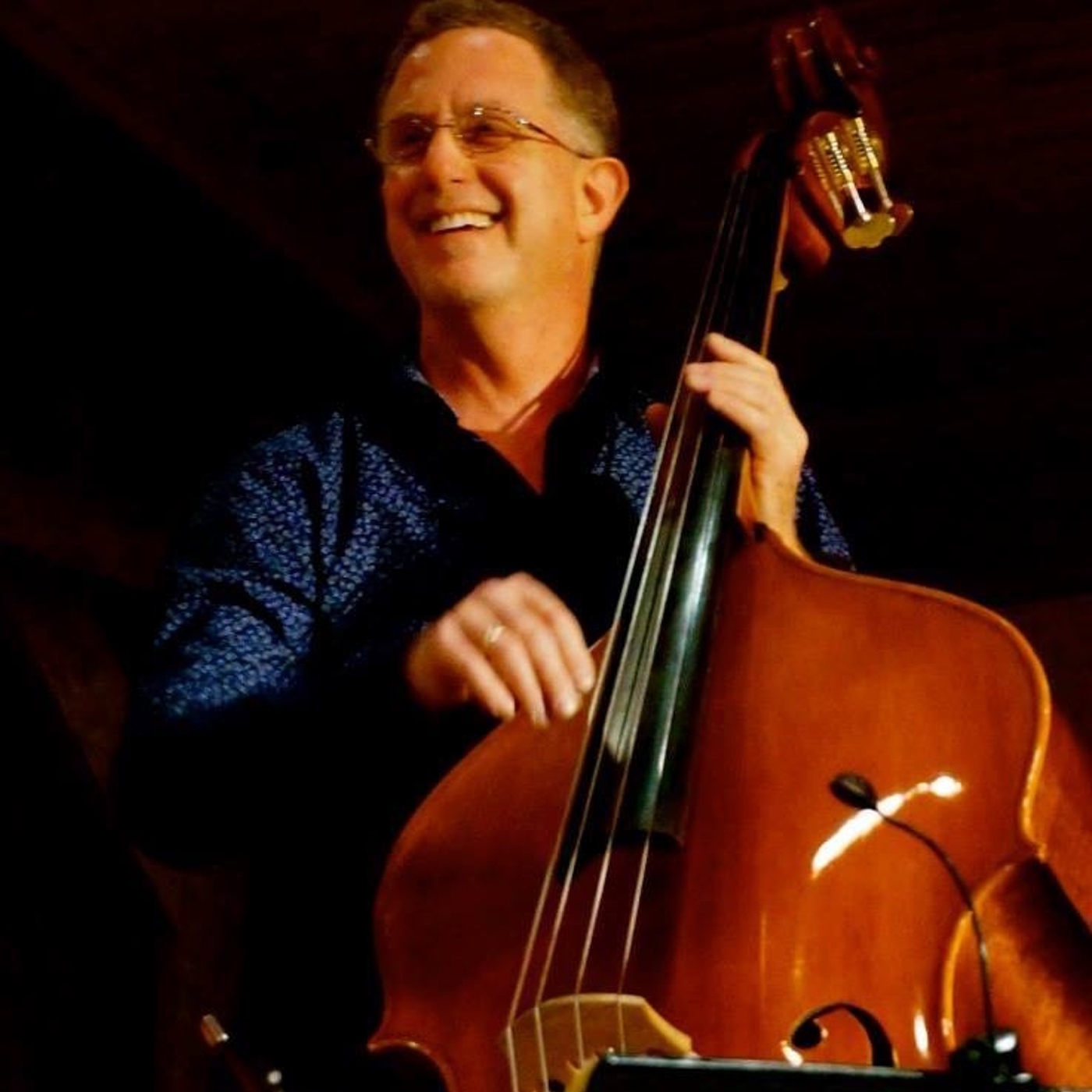
Ep 227227: Lloyd Goldstein on Yoga, Habits and Entrainment
Today's episode features Lloyd Goldstein, who has transitioned from playing in the Florida Orchestra to his current role working as a certified music practitioner at the Moffitt Cancer Center in Tampa. It's so exciting to speak with someone who has continued to evolve so dramatically in his craft and career throughout his life. Lloyd's path is unconventional and inspirational. We get into all sorts details about Lloyd's life like his "burning bush" moment that propelled him into a career on the bass, his circuitous path to the Florida Orchestra, discovering François Rabbath, the multiple benefits he has experienced from his practice of yoga, and how he came to find himself in his current role as a certified music practitioner. Links: Lloyd's website PBS program featuring Lloyd's work at Moffitt Music for Healing and Transition Program Albums and book Interview Highlights Early Years bass first musical instrument no bass lessons outside of 1/2 hour weekly public school lessons graduated high school early, started college at 16 decided at 20 that he wanted to study bass had a "burning bush" moment propelling him to the bass during a table saw injury began to study bass through several Florida schools, eventually began to study with Lucas Drew practicing 5+ hours a day got a job in the Florida Gulf Coast Orchestra, eventually became the Florida Orchestra stayed there for 21 years Discovering François Rabbath 10 years into his time at the Florida Orchestra, Lloyd felt like he had hit a wall in his bass playing went to George Vance workshop in Washington D.C. area where Rabbath was teaching that was "the" moment for him started making yearly trips to Paris to study with François would practice all day and walk around Paris at night learning the "first bow stroke" - the son premier on which all other bow strokes are based the forearm is the conductor and the wrist and fingers are relatively passive François says that we never unlearn anything - you don't get rid of bad habits - you add new skills The Power of Practicing Yoga - 700 pieces of writing emanated from Lloyd's first two years of practicing yoga and 400 drawings - eventually compiled into Lloyd's book Inside Yoga Finding balance between organized practice goals and "obsessing" on something Working in a hospital environment Lloyd had started to compose simple melodies from which pieces emerged through yoga practice, kept getting this inner self message to do volunteer work began to volunteer at Moffitt Cancer Center learned about certified music practitioners through contact at Moffitt became certified and began to work in the Moffitt Arts In Medicine program took a year's leave from the Florida Orchestra to try out this new career and loved it got hired as an artist-in-residence at Moffitt 8 years ago performing versus giving a gift of music details about the experience of performing in this setting the idea of entrainment and meeting patients where they are entrainment has two aspects to it: physical psychological/emotional