Contrabass Conversations
1,171 episodes — Page 23 of 24
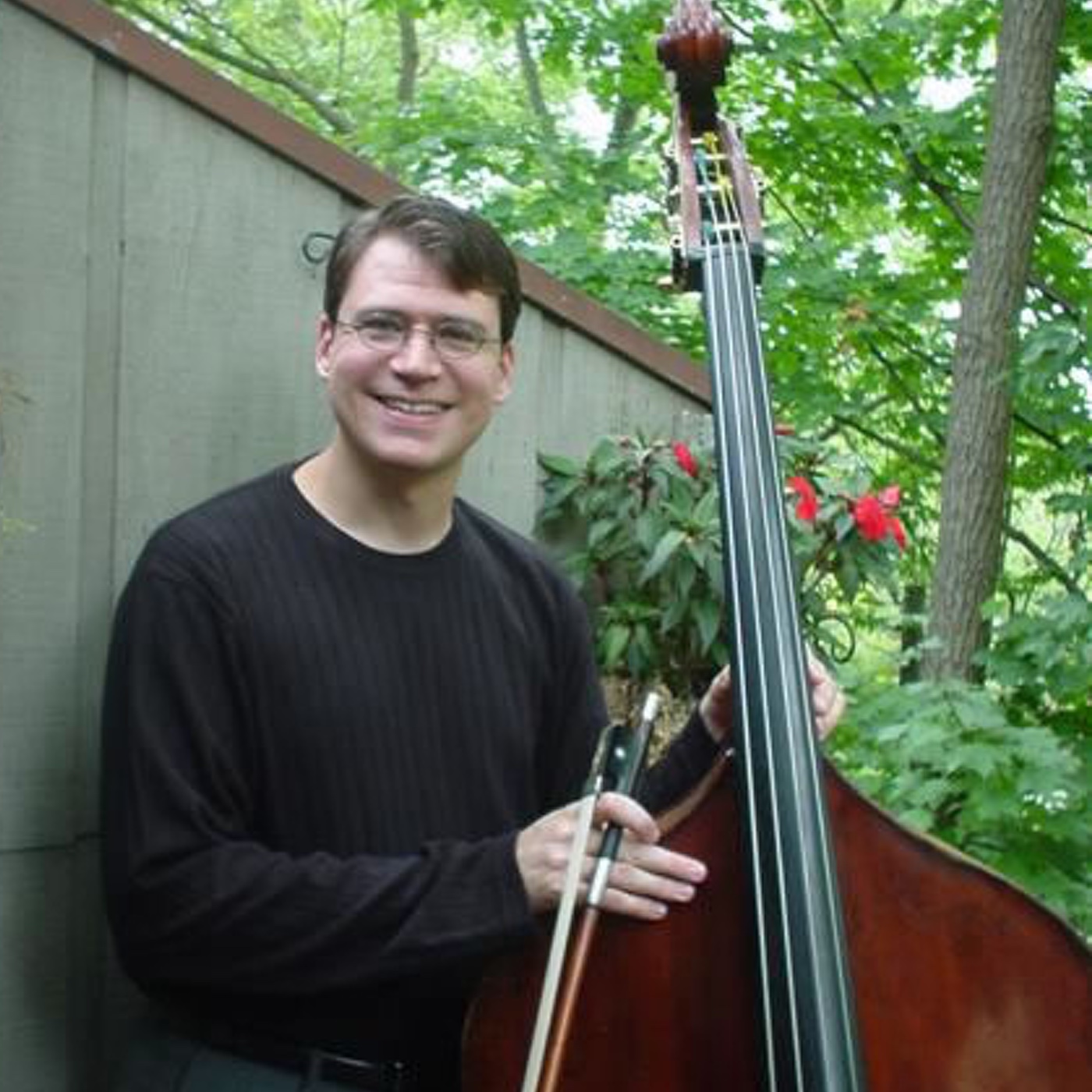
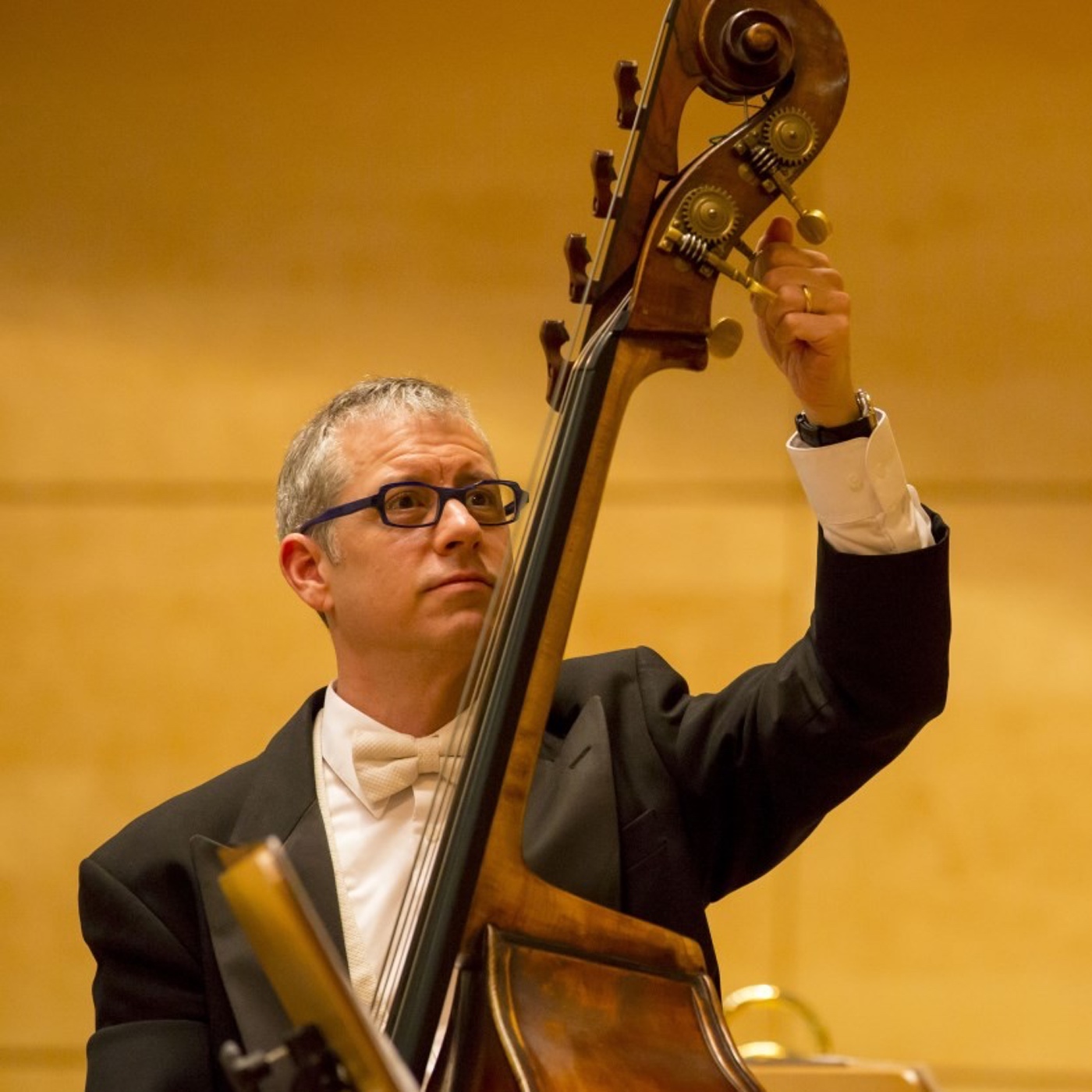
Ep 6767: Anthony Stoops Interview
We're chatting with double bassist Anthony Stoops today on Contrabass Conversations. Anthony is the Artist/Teacher of Bass and String Area Chair at the University of Oklahoma School of Music. He also won first prize in the International Society of Bassists international solo competition and is the past recipient of a Karr Foundation double bass. Learn more about Anthony by visiting his website at anthonystoops.com. We're also featuring Anthony performing the Pieces en Concert by Couperin, plus some listener feedback, bass news, and shout-outs to some of our Facebook group members. Enjoy! About Anthony: Anthony Stoops is Artist/Teacher of Bass and String Area Chair at the University of Oklahoma School of Music. Since winning first prize in the International Society of Bassists international solo competition, he has performed throughout the United States and internationally as a soloist and chamber musician. Dr. Stoops has presented masterclasses in Poland, Brazil and throughout the U.S. at venues such as the Cleveland Institute of Music, the University of Michigan, the University of Iowa, Interlochen Arts Academy, Penn State University, and many others. The past recipient of a Karr Foundation Doublebass, Stoops is widely regarded as one of the top bass soloists in the world today. As an orchestral musician, Stoops has performed regularly in over a dozen orchestras including the Detroit, Columbus (OH) and Toledo Symphony orchestras, and the Michigan Opera Theater among many others, under many of the world's great conductors such as Sir Georg Solti, Neeme Järvi, Daniel Barenboim, Zubin Mehta, Pierre Boulez and Charles Dutoit. He studied with Diana Gannett at Iowa (and later at Michigan), Stuart Sankey at Michigan, Jeff Bradetich at Northwestern, and Eugene Levinson at Aspen. Other influential teachers include Max Dimoff, Principal Bass of the Cleveland Orchestra, Stephen Molina, Assistant Principal Bass of the Detroit Symphony. In high school, he studie with Dr. Mark Morton, Principal Bass of the Columbus Symphony. As a devotee of new music, Stoops' wide–ranging repertoire has included premieres of several works, including his own. Prior to his appointment at OU, he taught at Bowling Green State University, the Ann Arbor School for Performing Arts and the renowned Preucil School of Music. He lives in Norman, OK with his wife, cellist Emily Gosma Stoops and their son, Henry. In his spare time, Anthony enjoys fishing, cooking, swimming and Yoga.
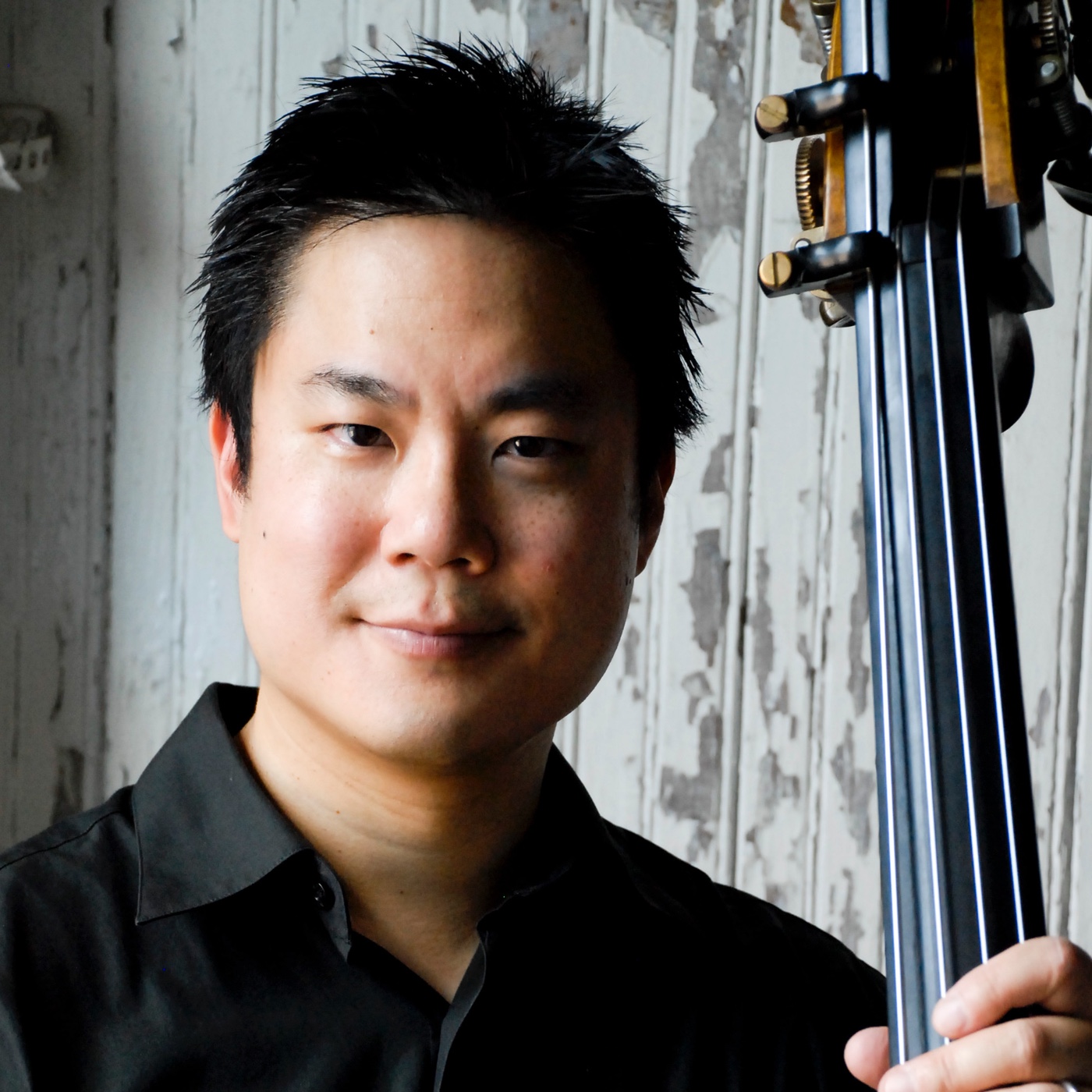
Ep 6666: Owen Lee Interview part 2
We're continuing our chat with Cincinnati Symphony principal bassist Owen Lee today on Contrabass Conversations. Check out the first segment of this conversation on episode 55 of the program. Owen played for the New World Symphony and the Houston Symphony prior to his appointment with the Cincinnati Symphony, and it was a real pleasure to do this interview along with Contrabass Conversations regular collaborator John Grillo. John, Owen, and I chat about Owen's experiences recording his solo CD, key selection for the Bach Suites and his use of solo tuning for the recording, his performances of the less popular but extremely engaging Bottesini Concerto No. 1, performing the Tubin Concerto with orchestra, the Harbison Bass Concerto project (which Owen performed with the Cincinnati Symphony), and his practicing habits and exercises. We also feature the first movement from the Cello Suite No. 5 by Johann Sebastian Bach from Owen's Boston Records CD, plus listener feedback, bass news, and a link of the week. Find Owen Lee on Twitter here. Enjoy! About Owen: Described as "a true virtuoso" by legendary pianist Gary Graffman and praised by The New York Times for his "deft and virtuosic solo performance" at his New York debut at Alice Tully Hall, double bassist Owen Lee has earned acclaim as a soloist, chamber musician and since 1996, at the age of 26, as Principal Bass of the Cincinnati Symphony Orchestra. Mr. Lee is heard regularly as a soloist with orchestras including the Cincinnati Symphony Orchestra under the direction of Paavo Järvi and Jesús López-Cobos, the Scottish Chamber Orchestra under John Harbison, and the New World Symphony under Michael Tilson-Thomas in Miami and on tour to New York's Lincoln Center. During the 2006-07 season, Mr. Lee and the Cincinnati Symphony Orchestra, along with a consortium of other soloists and orchestras, will present the world premiere of John Harbison's Concerto for Bass Viol and Orchestra. Mr. Lee's prizes in competitions include First Prize at the 1995 International Society of Bassists Competition and Fourth Prize at the 1992 Irving M. Klein International String Competition in San Francisco. He has been presented in recitals throughout the United States, and in Geneva. For the Boston Records label, he has recorded the Misek Sonata No. 2 and Bach Unaccompanied Suites No. 3 and No. 5. American Record Guide praised this disc for its "tasteful phrasing, polish and verve" while The Strad wrote "Owen Lee is a fine player with strong musical ideas. A dark and austere sound is produced for Suite No. 5 and the architecture of each suite is carefully considered and shaped. I look forward to his next recording." Mr. Lee's extensive international chamber music experience includes three summers as the bassist of the Marlboro Festival. While there, he performed extensively with such artists as Richard Stoltzman, Midori, Nobuko Imai, Bruno Canino, Pierre-Laurent Aimard, and members of the Beaux Arts Trio, Guarneri Quartet and Juilliard Quartet. He also collaborated with composers Gyorgy Kurtag, Leon Kirchner and Richard Danielpour preparing performances of those composers' works. Mr. Lee has also performed with the Tokyo String Quartet on tour to Mexico, John Browning, Anne-Marie McDermott, Jaime Laredo, Ida Kavafian, Steven Tenenbom, Peter Wiley, Eugenia Zukerman, the Bravo! Vail Valley Music Festival, San Diego's Mainly Mozart Festival, Ojai California Festival, Chamber Music L.A. Festival, Tanglewood Festival, Texas Music Festival, and on tour throughout China. With the Rossetti String Quartet he performed the world premiere of Melinda Wagner's Concertino at the 2005 Bravo! Vail Festival. Mr. Lee was born in Berkeley, California in 1969 to Chinese parents. He began playing bass at age 15 after previous study of the piano. A graduate of the University of Southern California, Mr. Lee's principal teachers were Dennis Trembly, Edwin Barker and Paul Ellison. Prior to his appointment in Cincinnati, Mr. Lee was a member of the Houston Symphony under Christoph Eschenbach. In addition to his position with the Cincinnati Symphony Orchestra, Mr. Lee serves as Principal Bass of the Shanghai Festival Orchestra. Owen is married to CiCi Lee. He enjoys bicycling, snowboarding, cigars, auto repair and playing drums and writing songs with his rock band Toe (Eric Bates, CSO 2nd Assistant Concertmaster is Toe's guitarist and lead singer, and Ted Nelson, CSO cellist is Toe's bassist).
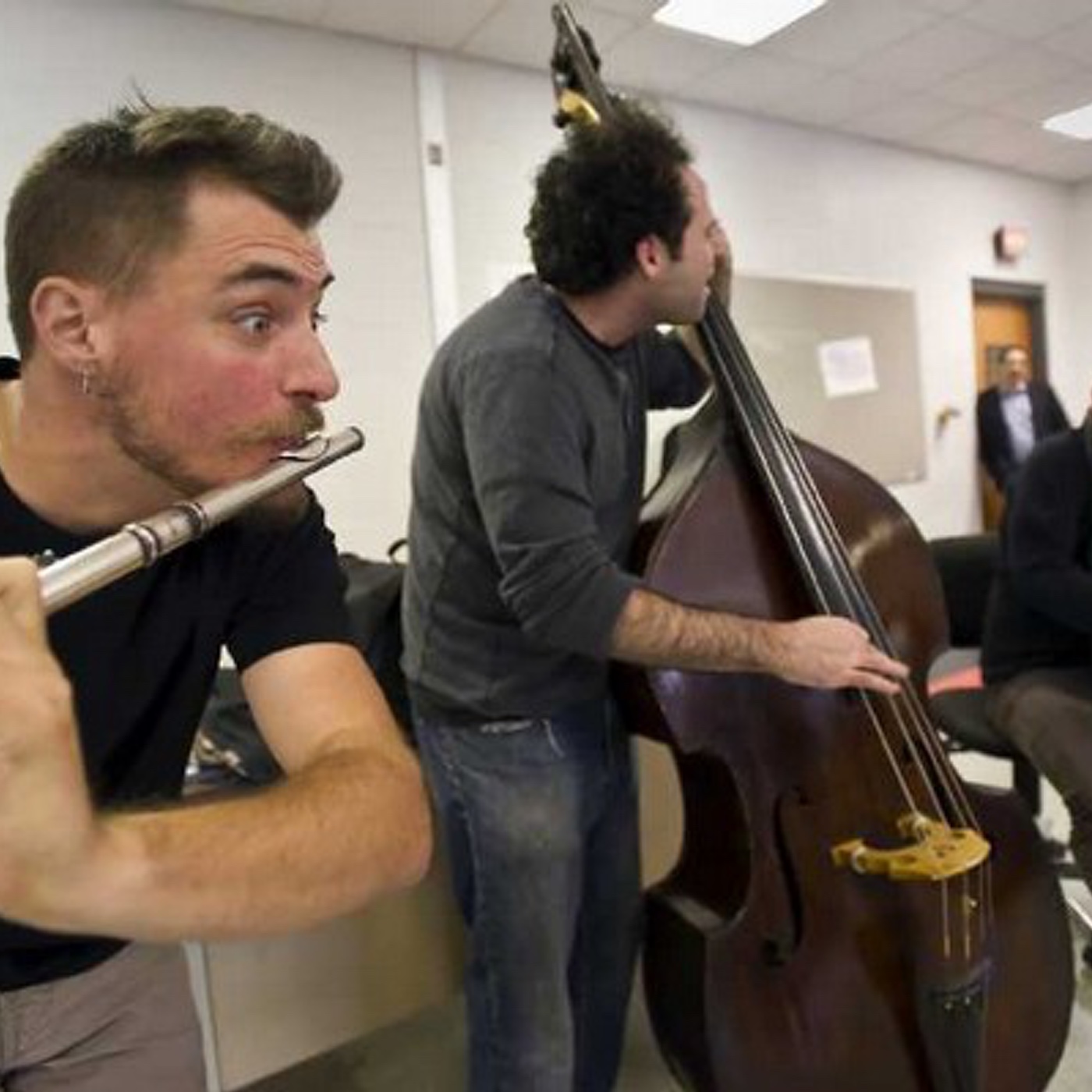
Ep 6565: Peter Seymour Interview part 2 and music from Project
We're wrapping up our interview with double bassist Peter Seymour this week on Contrabass Conversations. We began this interview on episode 53, so be sure to check this episode out if you missed it! Peter has performed for the New World Symphony and spent a season playing with the Cleveland Orchestra, and he is now involved with an exciting new trio called Project. This group is made up of Peter on bass, Eric Stephenson on cello, and Greg Patillo on flute. Learn more about Project at projecttrio.com. This episode, we discuss: how Project (which is both a group and a nonprofit organization) came to be playing in the style of today their upcoming Brooklyn Philharmonic presentation how although classical musicians are some of the most creative people out there, we can be very passive professionally how Project for Peter is a full-on business how the wide network of contacts he's made over the years in professional orchestras across the country are paying off now with Project similarities between the orchestral path and what Peter's doing with Project in terms of outlook and work ethic balancing the administration of Project with practicing and finding time to continue to grow musically Although Peter has focused on obtaining a position in a major orchestra for many years, he is now focused on creating new creative outlets with Project, and his decision to strike out on his own with this great trio is an example of musical entrepreneurship at its finest. Be sure to pick up a copy of Winter in June, the new release from this killer trio. Enjoy! Videos from Project: http://www.youtube.com/watch?v=Cf6tuisazQA http://www.youtube.com/watch?v=MDYPuwZcfdk About Peter: Dallas native Peter Seymour has performed with a multitude of highly acclaimed artists and ensembles. As a member of the Cleveland Orchestra he performed under the baton of Franz Welser-Möst and in the New World Symphony under the direction of Michael Tilson Thomas. He was the recipient of the Downbeat Magazine Award for Best Jazz Soloist in 1996 and has appeared with Wynton Marsalis, Roy Hargrove, and Bobby McFerrin. The son of an educator, Peter has been very active in planning and performing community outreach activities throughout the country and served as events coordinator for the New World Symphony Orchestra from 2001-2004. He received a Bachelor of Music degree from the Cleveland Institute of Music and a Master's Degree in Bass Performance from Rice University where he was a student of Paul Ellison. Peter is active composing and performing with PROJECT, the ensemble he co-founded with cellist Eric Stephenson. He presently resides in New York City. About Project: PROJECT is a dynamic young group that is exciting audiences with their energy and innovative style. Their sound can only be described as a fusion of jazz, hip-hop, and world music – balanced out by a sincere allegiance to their classical roots. By combining the classical repertoire with original compositions, PROJECT reaches out to new audiences. Through performance and outreach/education concerts, we can provide access for the next generation of music lovers. Tracks played: From 'Winter in June' by Project – available at http://cdbaby.com/cd/projectmusic
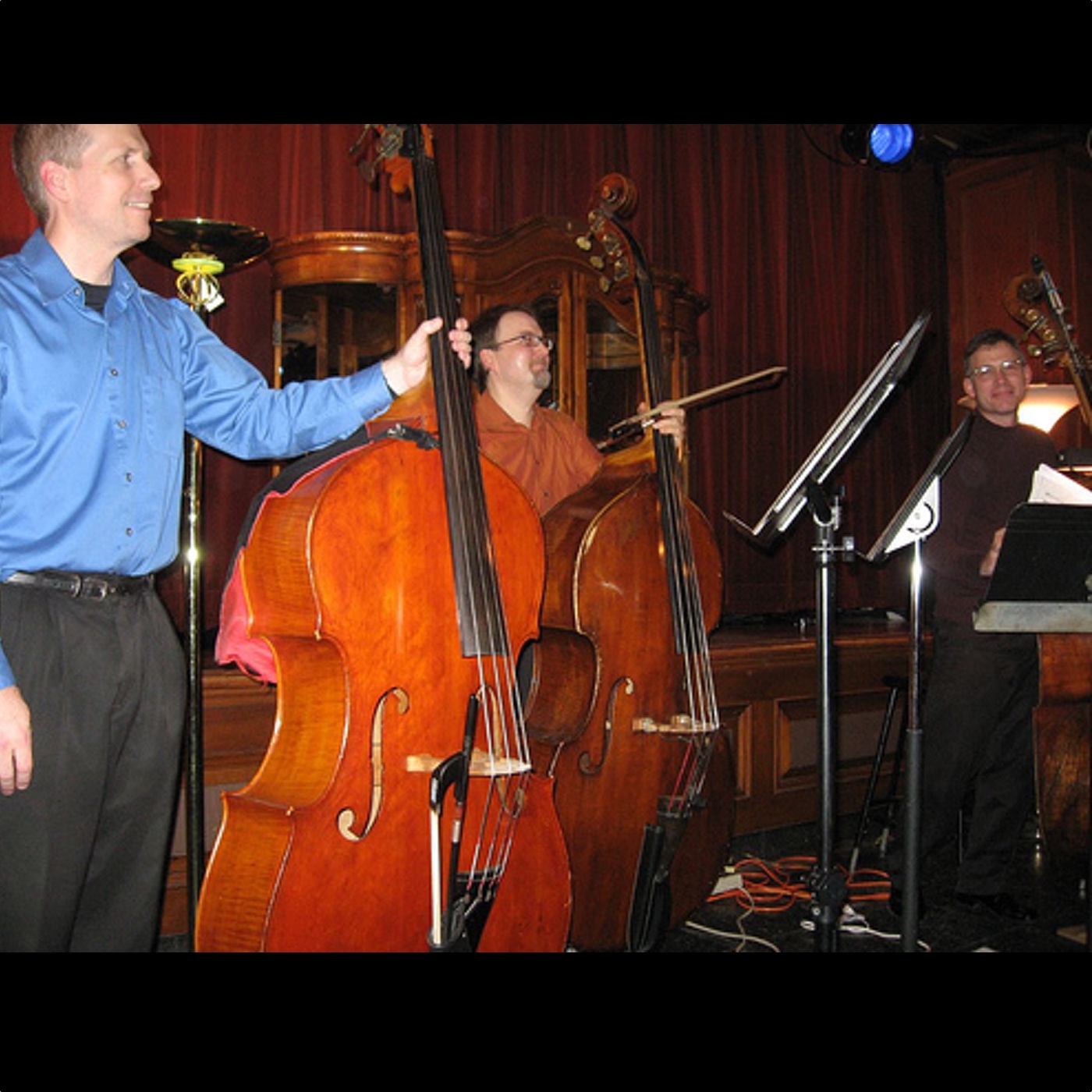
Ep 6464: Chicago Bass Ensemble
This week we feature an interview with and music from the Chicago Bass Ensemble. Group founder Jacque Harper joins former Contrabass Conversations guests Michael Hovnanian and Doug Johnson plus double bass blogger John Floeter to create the core quartet of this ensemble. The Chicago Bass Ensemble will be performing at Northern Illinois University on February 14. Click here for more details, and learn more about this great ensemble at www.chicagobassensemble.com. Ever hear an entire bass quartet interviewed at the same time? We sure haven't, and getting a chance to sit down with these four good-natured fellows was a lot of fun. After the interview, we feature performances of 'Prologue' from Prophetiae Sibyllarum by Orlando di Lassus and the first movement of the Quartet No. 2 by Jan Alm. Learn more about these four musicians through the following links: Jacque Harper – www.chicagobassensemble.com Michael Hovnanian – www.csobassblog.blogspot.com John Floeter – www.johnfloeterbassstudio.blogspot.com Douglas Johnson – www.myspace.com/douglasjohnson Gunnelpumpers (featuring Michael and Doug) – www.myspace.com/gunnelpumpers Gunnelpumpers on Contrabass Conversations Michael on Contrabass Conversations Enjoy!
Ep 6363: Chatting About Opera and Orchestra Bass Playing with John Grillo
Contrabass Conversations regular contributor John Grillo and I recorded a follow-up episode to our recent Opera Excerpt Breakdown episode. In this episode we chat a little more generally about opera bass playing and how it differs from orchestral bass playing. John has played for numerous opera companies in the past, including the Pittsburgh Opera and Spoleto Festival die Due Mondi in Italy. He recently performed Wagner's Ring Cycle as the only bass player (!). Learn more about John on his Contrabass Conversations page, check out his virtual recital, listen to the Opera Excerpt and Orchestra Excerpt breakdowns
Ep 6262: Opera Excerpt Breakdown with John Grillo
his week's Contrabass Conversations episode features an in-depth analysis of the double bass opera excerpts most commonly requested at auditions. Double bassist (and regular Contrabass Conversations guest and co-host) John Grillo discusses each of these excerpts–stylistic considerations, differences in articulation and bow strokes, and suggestions for effectively learning them–and then performs them. We believe that this project will be a highly valuable resource for bassists worldwide, and we'd love your feedback on this project! John and I created an excerpt breakdown for the most commonly requested orchestra excerpts back on CBC 41, and this has proven to be a highly popular and extremely useful resource to double bassists worldwide. Our hope is that this opera excerpt episode will do the same for the less familiar but wonderfully challenging double bass operatic literature. Opera excerpts covered on this episode: Strauss Salome Rosenkavalier Wagner Die Meistersinger von Nürnberg Die Walküre Britten Peter Grimes Verdi Otello Rigoletto Falstaff Weber Euryanthe Mozart Magic Flute Marriage of Figaro Beethoven Fidelo Humperdinck Hansel and Gretel
Ep 6161: Justin Locke Interview part 2
We're wrapping up our interview with author, corporate speaker, and double bassist Justin Locke today. Justin is the author of Real Men Don't Rehearse, a book filled with wonderful anecdotes about his life in the music business. Justin was a freelance double bassist in the Boston area for nearly two decades, working regularly during that time with the Boston Pops and other area ensembles. We began this interview on CBC 50 back in December 2007, so check out this episode for tales from Justin's early years playing the bass and getting started on the Boston freelance scene. Justin shares some absolutely delicious stories from his book on this episode, and we also chat about how Justin came to develop his family concerts Peter VS the Wolf and The Phantom of the Orchestra. The Missoula Symphony recently performed Peter VS the Wolf, which was reviewed here in the Missoulian. Missoula arts critic Rob Chaney writes: The Missoula Symphony Orchestra unanimously convicted a canine predator of duckicide Friday, despite strong indications from the community that the suspect was innocent. Two packed theater-fulls of area fourth-graders were deeply divided in their verdict at the end of "Peter Versus The Wolf," although they generally professed amusement at what was essentially a show trial. Symphony conductor Darko Butorac confessed afterward that the whole presentation was a ploy to entice local youth into greater interest in music. According to court records compiled by composer Sergei Prokofiev, David "Wolf" Mills-Low was accused of duckicide for allegedly devouring a semi-domesticated mallard "in a single gulp." A farm boy named Peter (aka Eric Wills) was the chief witness. He testified that he was preventing a cat from eating a bird when Wolf made his unprovoked attack on the duck. Check out a video of the Missoula Symphony performing Justin's concert program here. Justin also shares some really excellent advice for performing musicians on how they can better market themselves to contractors and the general public. Enjoy!
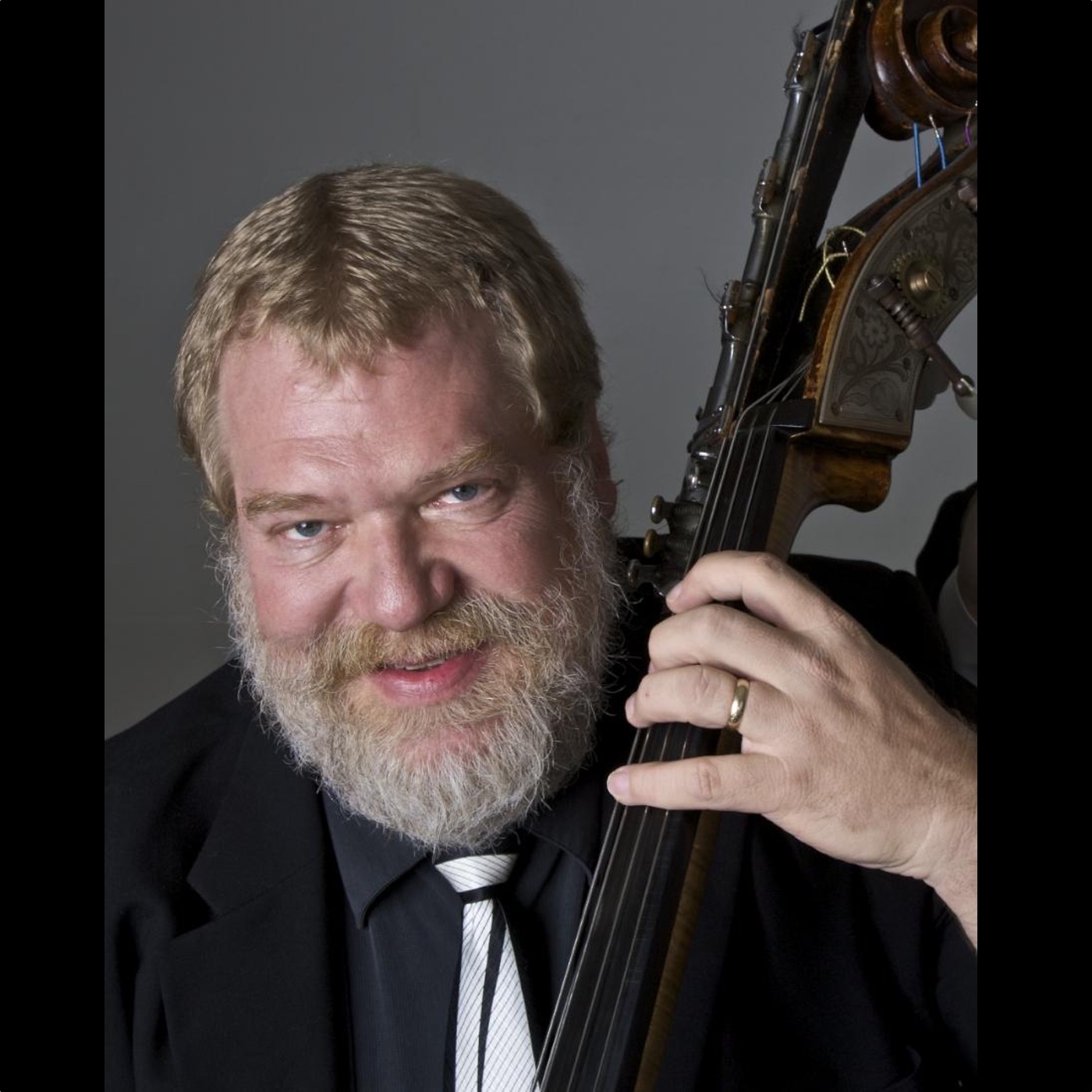
Ep 6060: Lynn Seaton Interview
This week's episode features an interview with and music from jazz bassist Lynn Seaton. Lynn teaches at theUniversity of North Texas, and he maintains an active performing career. He was a member of the Woody Herman Band and Count Basie Orchestra, and he played extended tours with Tony Bennett and George Shearing, as well a wide array of many other jazz luminaries. We also feature music from the Lynn Seaton Trio with Bill Mays on piano and Tim Froncek on drums. Learn more about Lynn at his website lynnseaton.com, and learn more about the UNT jazz program at jazz.unt.edu. You can also find Lynn's Facebook fan page here. About Lynn Seaton: Lynn Seaton has had a stellar career as a jazz bassist. Born in Oklahoma in 1957, he started playing the bass at age 9. By the late 70's he was performing around the state. From 1980 until 1984 he was the house bassist at the Blue Wisp Jazz Club in Cincinnati, accompanying big name guest soloists every week. In 1984, he joined Woody Herman and in 1985 he played with the Count Basie Orchestra. After a two-year engagement with the Basie Band, he did extended tours with Tony Bennett and George Shearing. Most of 1991 and 1992 was spent touring with Monty Alexander. Lynn spent a lot of time on the road as a member of the Jeff Hamilton Trio from 1995-1999. Since 1993, Lynn has also had a busy career free-lancing with many of the great jazz musicians from many generations, including: Toshiko Akiyoshi, Monty Alexander, Ernestine Anderson, Buck Clayton, Al Cohn, Kenny Drew Jr., Blossom Dearie, Bob Dorough, Harry "Sweets" Edison, Herb Ellis, John Fedchock, Frank Foster, Freddy Green, Tim Hagans, Jeff Hamilton, Scott Hamilton, Wynard Harper, Thad Jones, Mel Lewis, Marian McPartland, Jay McShann, Mark Murphy, Ken Peplowski, Bucky Pizzarelli, Jimmy Raney, Emily Remler, Diane Schuur, Maria Schneider, Bud Shank, Carol Sloane, Marvin "Smitty" Smith, Maxine Sullivan, Mel Torme, Frank Wess, Joe Williams, Nancy Wilson, Steve Wilson, Mark Vinci, and Teddy Wilson. He lived in NY from 1986 until 1998. That year, he accepted an offer to teach at the world famous University of North Texas, home to one of the largest jazz programs in the world. He has performed at festivals world wide including Bern, Concord, JVC, Kool, Kyoto, Newport, North Sea, Perugia and Pori. Lynn has performed in 49 of the 50 United States and 35 foreign countries. He has performed on over 100 recordings, including the Grammy winning "Diane Schuur and the Count Basie Orchestra", and two Grammy nominees, John Fedchock "No Nonsense" and Woody Herman "50th Anniversary". He has three recordings as a leader, "Bassman's Basement", "Solo Flights", and "Puttin' on the Ritz". Musical Selections: Strike Up the Band The Patrician Commission
Ep 5959: Jeff Turner Interview part 2
We're wrapping up the interview with Pittsburgh Symphony Principal Bassist Jeff Turner that we began on episode 26 of the podcast, plus featuring music from U.K.-based bassist Leon Bosch's new album titled The British Double Bass on this week's episode of the podcast. About Jeff Turner: Principal Bass Jeffrey Turner joined the Pittsburgh Symphony Orchestra in 1987. He served as Principal Bass of the New American Chamber Orchestra from 1984 to 1986 and became a member of the Detroit Symphony Orchestra in 1986. Mr. Turner, a native of South Carolina, holds a Bachelor of Music degree from the Eastman School of Music of the University of Rochester. His teachers include James VanDemark, Lawrence Hurst and Robert Gladstone. Mr. Turner serves on the faculties of Duquesne University and Carnegie Mellon University. He is the Artistic Director of the City Music Center's Young Bassist Program, and gives annual seminars and master classes at universities and conservatories throughout the world. He has also served as Visiting Professor at the Eastman School of Music and Lecturer at the University of Maryland. Mr. Turner has been a resident artist for many annual festivals including the Pacific Music Festival in Japan and the Korsholm Festival in Finland. He has been featured as a presenter at the conventions of The International Society of Bassists, and has served on the faculty of The Asian Youth Orchestra (Hong Kong) under the direction of Lord Yehudi Menuhin. Mr. Turner is a faculty member of the National Orchestral Institute. As winner of the Y Music Society's Passamaneck Award, Jeffrey Turner appeared in a critically acclaimed recital at Carnegie Music Hall in 1989. He was also a winner of the 1990 Pittsburgh Concert Society's Artist Award. About Leon Bosch: Leon had to overcome many difficult circumstances in the early years of his career. He was arrested by members of the Cape Town special branch when he was just 15 years old for demonstrating against the Apartheid government outside of parliament. He faced a month's detention and torture, only to be found not guilty on all charges. This experience fired up his ambition to become a lawyer, but this field of study was forbidden to him by the regime at the time. He then chose to study a subject that would be the least likely to mark him out as subversive – music. Had Bosch been able to pursue his prime aspiration to become a lawyer, the cello/double bass debate might never have occurred. Born in Cape Town, South Africa in 1961, Bosch was forbidden by the repressive regime of the time to study law, so applied to the University's music faculty instead `as a light-hearted prank.' The `prank' soon turned more serious. Once enrolled at the University, Bosch studied with Zoltan Kovats, principal double bassist of the Cape Town Symphony Orchestra at that time. A single year into his studies, the young student was invited to play in the Symphony Orchestra's bass section alongside his mentor. Only another 12 months passed before he was giving his first solo performance of Dittersdorf 's concerto in E major. Completing his Batchelor of Music Performance degree at the University, he received the highest mark ever awarded there in a performance examination. Post-university, Bosch quickly realised that he would have to study abroad if he really wanted to further his performance career, but was thwarted once again by the apartheid laws which decreed that overseas scholarships could only be given to white performers. However, Bosch was undeterred. `I had a passionate commitment to the double bass and never enter- tained the idea that I would fail in my pursuit', he asserts. Fortunately, a number of private individuals came forward to sponsor his travel to England where he was heard playing by Rodney Slatford, the former Head of School of Strings at the Royal Northern College of Music (RNCM), who offered to teach him. Bosch enrolled at the RNCM following a successful interview with Eleanor Warren to study with Slatford and Duncan McTier. He describes his time at RNCM as `extremely fruitful'. Bosch's prestigious record of achievements also continued there, as he received the College's PPRNCM (Professional Performer of the RNCM) with distinction, the first such award to a double bassist in the College's history. Studies completed, Bosch embarked on the varied professional orchestral and chamber career that continues to this day. His first assignment was with the Royal Scottish National Orchestra, moving onto The Manchester Camerata as principal in 1985. His playing career has also taken in the BBC Philharmonic, Hall, Royal Liverpool Philharmonic, Opera North and Scottish Chamber orchestras, plus the Moscow Virtuosi Chamber Orchestra, Brodsky Quartet and Goldberg Ensemble as a freelance performer, a career path that he chose to `give me greater variety in my playing.' A decade after his first principal appointment, Bosch began his current association with the Academy of St Martin in
Music Episode: Dvorak Serenade and Schubert String Quintet
bonusThis Contrabass Conversations special series highlights chamber music that includes the double bass. We'd like to extend special thanks to both Brad Opland and the Chicago Chamber Musicians for making this series possible. Listen to all Exploring Chamber Music episodes here, and hear Brad Opland in a Contrabass Conversations interview here. We will be featuring two pieces on the program today. The first is the Wind Serenade in D minor by Antonin Dvorak. This piece is scored for 2 oboes, 2 clarinets, 2 bassoons, contrabassoon, 3 horns, cello, and bass. It was recorded live on April 23rd, 2007 by the Chicago Chamber Musicians for their 20th Anniversary Season Finale and features: Michael Henoch and Alex Klein – oboe Larry Combs and Julie DeRoche – clarinet Dennis Michael and Lewis Kirk – bassoon Gail Williams, Jeremiah Frederick, Gabrielle Webster – horn Katinka Kleijn, cello Brad Opland, bass The second piece on our program today is the String Quintet in C Major by Franz Schubert. This piece was recorded live in 2004.
Ep 5656: Reflections on one year of podcasting
bonusJason chats about the state of affairs for Contrabass Conversations after one year of podcasting and future goals.
Ep 5757: Jerry Fuller interviews Jason!
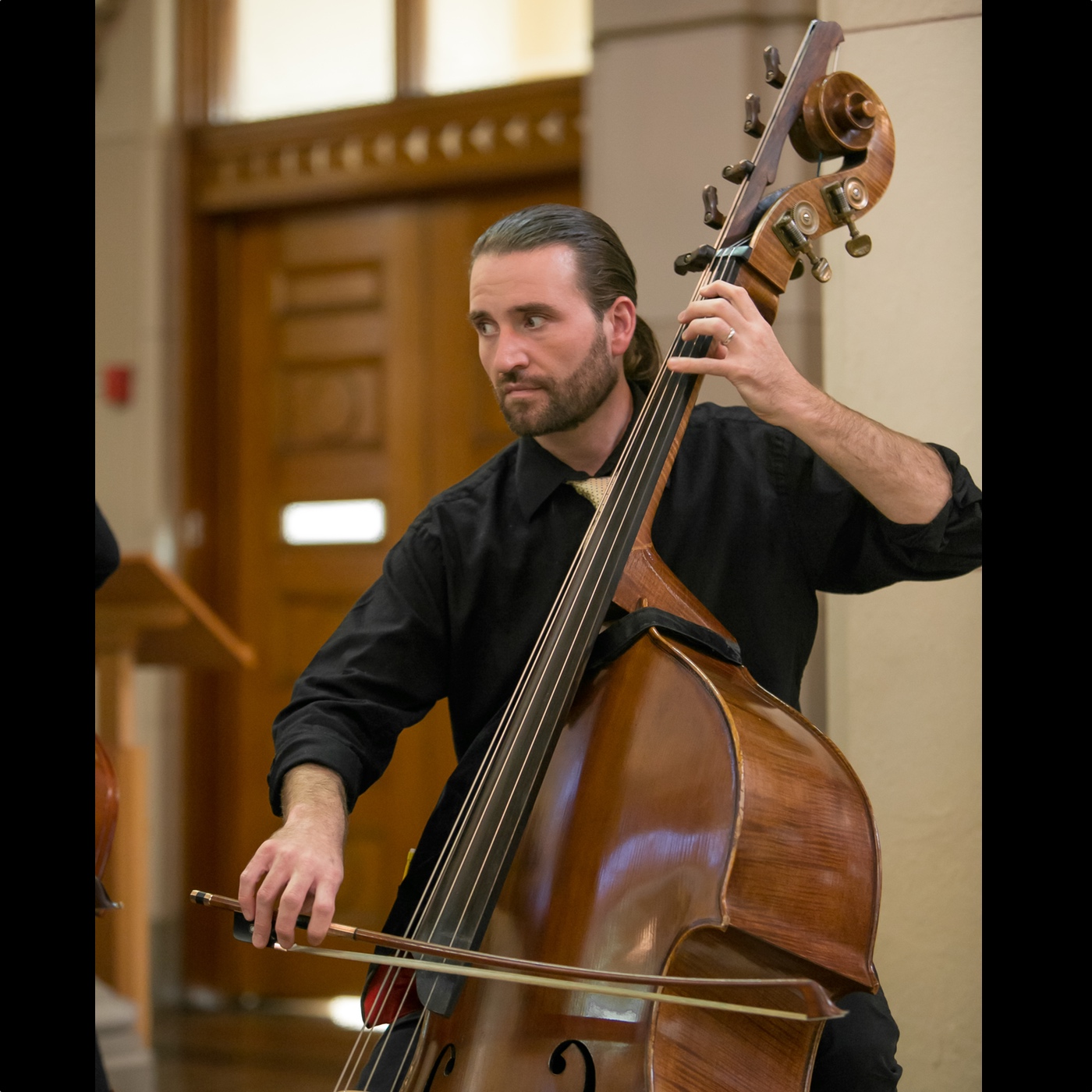
Double bassist and early music specialist Jerry Fuller turns the tables and interviews Jason Heath in this brief and fun episode.
Ep 5555: Owen Lee Interview
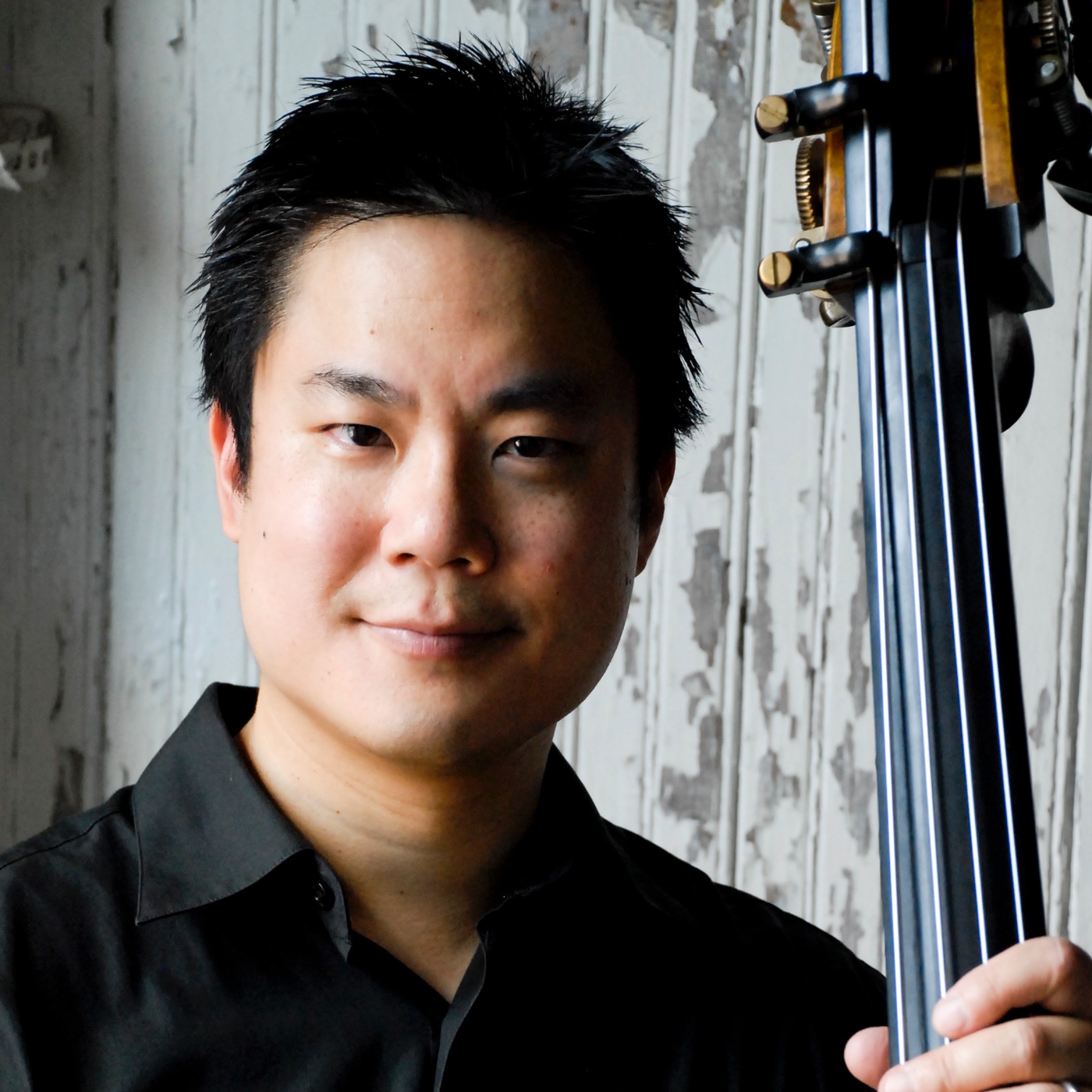
We're speaking with Cincinnati Symphony principal bassist Owen Lee today on Contrabass Conversations. Owen played for the New World Symphony and the Houston Symphony prior to his appointment with the Cincinnati Symphony, and it was a real pleasure to do this interview along with Contrabass Conversations regular collaborator John Grillo. Find Owen Lee on Twitter here. Enjoy! About Owen: Described as "a true virtuoso" by legendary pianist Gary Graffman and praised by The New York Times for his "deft and virtuosic solo performance" at his New York debut at Alice Tully Hall, double bassist Owen Lee has earned acclaim as a soloist, chamber musician and since 1996, at the age of 26, as Principal Bass of the Cincinnati Symphony Orchestra. Mr. Lee is heard regularly as a soloist with orchestras including the Cincinnati Symphony Orchestra under the direction of Paavo Järvi and Jesús López-Cobos, the Scottish Chamber Orchestra under John Harbison, and the New World Symphony under Michael Tilson-Thomas in Miami and on tour to New York's Lincoln Center. During the 2006-07 season, Mr. Lee and the Cincinnati Symphony Orchestra, along with a consortium of other soloists and orchestras, will present the world premiere of John Harbison's Concerto for Bass Viol and Orchestra. Mr. Lee's prizes in competitions include First Prize at the 1995 International Society of Bassists Competition and Fourth Prize at the 1992 Irving M. Klein International String Competition in San Francisco. He has been presented in recitals throughout the United States, and in Geneva. For the Boston Records label, he has recorded the Misek Sonata No. 2 and Bach Unaccompanied Suites No. 3 and No. 5. American Record Guide praised this disc for its "tasteful phrasing, polish and verve" while The Strad wrote "Owen Lee is a fine player with strong musical ideas. A dark and austere sound is produced for Suite No. 5 and the architecture of each suite is carefully considered and shaped. I look forward to his next recording." Mr. Lee's extensive international chamber music experience includes three summers as the bassist of the Marlboro Festival. While there, he performed extensively with such artists as Richard Stoltzman, Midori, Nobuko Imai, Bruno Canino, Pierre-Laurent Aimard, and members of the Beaux Arts Trio, Guarneri Quartet and Juilliard Quartet. He also collaborated with composers Gyorgy Kurtag, Leon Kirchner and Richard Danielpour preparing performances of those composers' works. Mr. Lee has also performed with the Tokyo String Quartet on tour to Mexico, John Browning, Anne-Marie McDermott, Jaime Laredo, Ida Kavafian, Steven Tenenbom, Peter Wiley, Eugenia Zukerman, the Bravo! Vail Valley Music Festival, San Diego's Mainly Mozart Festival, Ojai California Festival, Chamber Music L.A. Festival, Tanglewood Festival, Texas Music Festival, and on tour throughout China. With the Rossetti String Quartet he performed the world premiere of Melinda Wagner's Concertino at the 2005 Bravo! Vail Festival. Mr. Lee was born in Berkeley, California in 1969 to Chinese parents. He began playing bass at age 15 after previous study of the piano. A graduate of the University of Southern California, Mr. Lee's principal teachers were Dennis Trembly, Edwin Barker and Paul Ellison. Prior to his appointment in Cincinnati, Mr. Lee was a member of the Houston Symphony under Christoph Eschenbach. In addition to his position with the Cincinnati Symphony Orchestra, Mr. Lee serves as Principal Bass of the Shanghai Festival Orchestra. Owen is married to CiCi Lee. He enjoys bicycling, snowboarding, cigars, auto repair and playing drums and writing songs with his rock band Toe (Eric Bates, CSO 2nd Assistant Concertmaster is Toe's guitarist and lead singer, and Ted Nelson, CSO cellist is Toe's bassist).
Ep 5454: Steve Reinfranck luthier chat
This week we bring you a conversation with Chicagoland double bass luthier, teacher, and performer Steve Reinfranck. Steve runs SMR Double Basses in Evanston, Illinois, writes regularly for Bass World (the publication of the International Society of Bassists), and operates a double bass teaching studio. We also listen to a track from the Redd Holt Unlimited Quartet featuring Steve on bass, plus listener feedback, news and notes, a very fun holiday track from Jonathan Coulton, and much more. Enjoy! About Steve: Steve has performed and taught on the Double Bass for over twenty-five years, principally in the Chicago Area, but in places as far away as New Zealand, Japan, Kenya, and Germany. He plays section bass with a variety of area symphonies, and plays jazz with Isaac "Redd" Holt, original drummer with the Ramsey Lewis Trio. Steve is also involved in Klezmer, Bluegrass, and other folk styles. Steve has presented at Midwest Band & Orchestra Clinic, Illinois Music Educators convention, the Kentucky Music Educators convention, and at many of the conventions of the International Society of Bassists. He was awarded a three-week study tour of Japan under the aegis of the Fulbright Memorial Fund, and was voted Outstanding Studio Teacher by the Illinois Chapter of ASTA, the American String Teachers Association. Steve runs the largest shop in the Chicago Area dedicated strictly to the needs of the Double Bassist. He maintains a private teaching studio of about 50 students, and edits the "Young Bassists' Page" for BASS WORLD, journal of the International Society of Bassists. Steve teaches most Summers at ISYM, Illinois Summer Youth Music, held at the University of Illinois in Champaign/Urbana. Steve enjoys playing hockey, ice skating, reading, cooking, and politics when he isn't making music. About SMR Double Basses: We are a Chicago-Area shop catering to the largest member of the String Family, the Double Bass. We sell basses from the least expensive [that meet our minimum quality requirements] to several select instruments that are valued at over $20,000.00. All of our instruments have new professional-level strings and almost all have an upgraded endpin – except in cases where a good one comes from the factory. Our "Special Niche" is to provide reasonably priced instruments and bows for professionals and the serious student, perhaps bound for conservatory studies in college. Over twenty instruments in the $4,000.00 - $12,000.00 range are presently available. Link of the week: Hundreds of free, Creative Commons holiday songs-lots of great stuff with a lot of humor thrown in: http://www.hermann-uwe.de/blog/10-100-creative-commons-christmas-songs Tracks played: From 'Right Together' by the Redd Holt Unlimited Quartet Tenor Madness (Sonny Rollins) Music Provided by: Steve Reinfranck - www.smrdoublebasses.com Eric Hochberg - www.erichochberg.com Fonkmasters Jonathan Coulton - www.jonathancoulton.com Show Notes: Release Date: 12/22/07 Length: 1:08:40 listen by phone: +1 (360) 227-5632 call our comment line (24 hour voice mail): +1 (206) 666-6509 Website: www.contrabassconversations.com E-mail: [email protected] Blog: www.doublebassblog.org Theme song by Eric Hochberg: www.erichochberg.com This show is brought to you by TalkBass.com, the largest community of bassists on the Internet. Join in the conversation at talkbass.com/cbc. Check out our jazz forums at JazzDoubleBass.com. Join our Facebook group and share videos, chat on discussion boards, leave ideas for the show, and interact with other bassists! To get Contrabass Conversations downloaded automatically to your computer (for free!), you can subscribe in iTunes: Click here to subscribe through e-mail or through another program besides iTunes
Ep 5353: Peter Seymour Interview
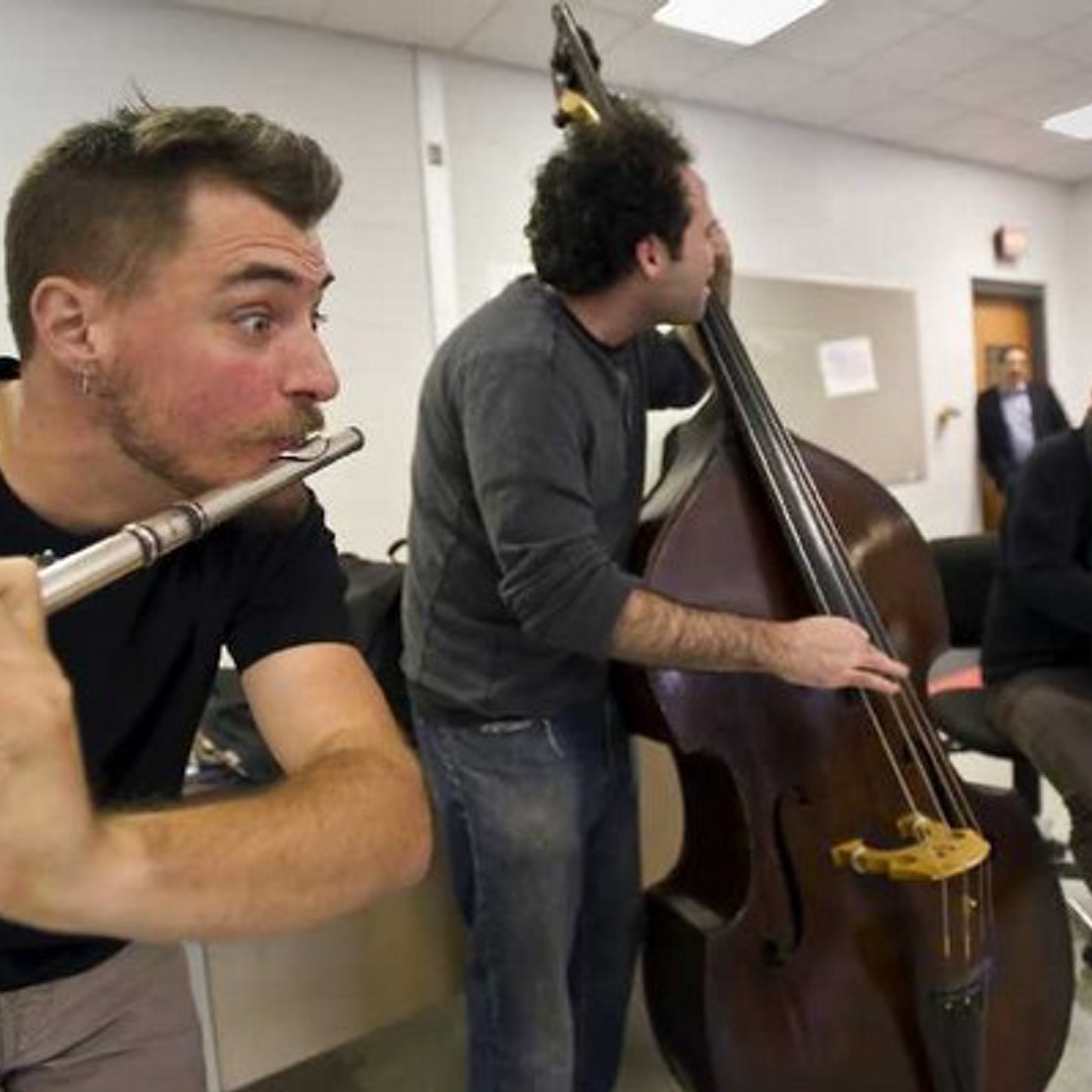
This week we feature the first half of an interview with double bassist Peter Seymour. Peter has performed for the New World Symphony and spent a season playing with the Cleveland Orchestra, and he is now involved with an exciting new trio called Project. This group is made up of Peter on bass, Eric Stephenson on cello, and Greg Patillo on flute. Learn more about Project at www.whatisproject.org and stay tuned for the conclusion of this interview in the next few weeks.
Ep 5252: Virginia Dixon Interview
This week's Contrabass Conversations episode features an interview with Suzuki Bass School pioneer, pedagogue, and teacher trainer Virginia Dixon. Virginia shares her years of experience performing and teaching the double bass, highlights unique aspects of the Suzuki bass method, and offers advice for those interested in pursuing a career as a double bass teacher. We also feature music from electric bassist Ben Torrey on this episode. Ben specializes in performing classical music on the electric bass. Check out his video tutorials, downloadable tracks, and more at www.bentorrey.com:2112/blog. Enjoy!
Music Episode: Haydn Divertimento and Rossini Duetto
bonusThis Contrabass Conversations special series is made possible by the Chicago Chamber Musicians and Brad Opland. This episode features music for cello and bass by Haydn and Rossini performed by Chicago Symphony Orchestra musicians Brad Opland and Gary Stucka. They perform the Haydn Divertimento in D Major and the Rossini Duetto on this installment. This performance was recorded live in 2004. Exploring Chamber Music is a multi-part series highlighting world class performances of chamber music featuring the double bass.
Ep 5151: Lawrence Hurst Interview part 3
This interview-only Contrabass Conversations episode features the conclusion of our interview with Indiana University double bass professor Lawrence Hurst, whom we interviewed on episodes 20 and 23 of the podcast. About Lawrence Hurst Lawrence Hurst is the former principal double bass for the Dallas Symphony. He is a former faculty member of Southern Methodist and Eastern Michigan Universities and former faculty member, associate dean, and chair of the string department at University of Michigan School of Music. He was honored with the Alumni Award from the University of Michigan School of Music in 1998. Professor Hurst is former director of the University Division of the National Music Camp and is a summer faculty member of the Interlochen Arts Camp. He is past chair of the American String Teachers Association National Solo Competition, and past president of the International Society of Bassists. His former students can be found in many prestigious orchestras, including Chicago, Philadelphia, San Francisco, Indianapolis, and Atlanta. He has chaired the Indiana University Strings Department for the past 19 years and has been on faculty at Interlochen for the past 40 years.
Ep 5050: Justin Locke Interview
This week, we bring listeners a very entertaining and interesting interview with Justin Locke, author of Real Men Don't Rehearse, a book filled with wonderful anecdotes about his life in the music business. Justin was a freelance double bassist in the Boston area for nearly two decades, working regularly during that time with the Boston Pops and other area ensembles. Learn more about Justin at www.justinlocke.com. We also bring you a track from Italian bassist and composer Alessandro Ceccangeli titled In Ludere. Learn more about this excellent bassist at www.myspace.com/alessandroceccangeli. Enjoy!
Ep 4949: Donovan Stokes Interview part 2
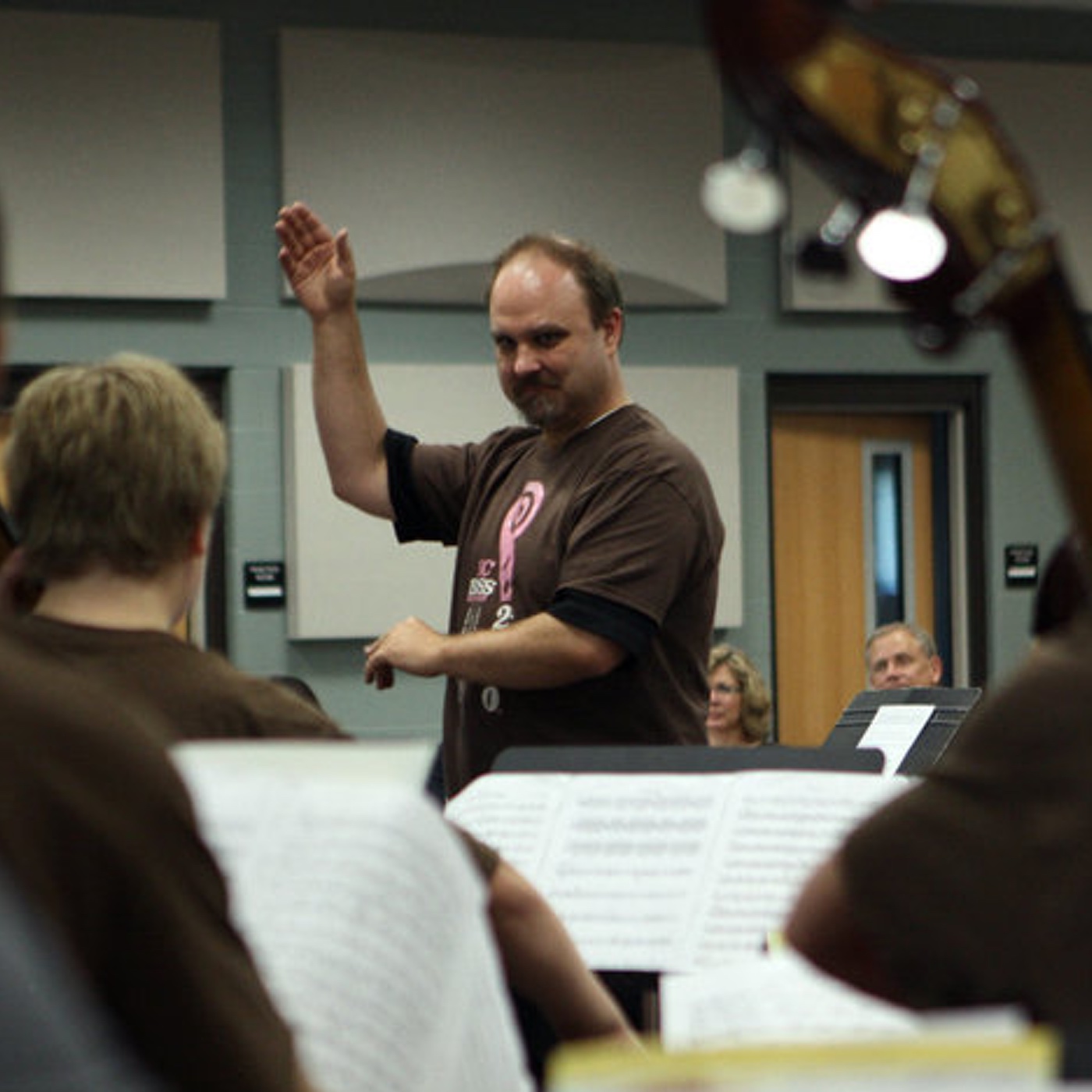
This week's Contrabass Conversations Episode features the second part of our interview with double bassist Donovan Stokes. We last spoke with Donovan on episode 40 of the show, discussing his early years on the instrument, his experiences attending various universities, and his former and current double basses. This week, we continue our discussion about instruments and delve into Donovan's compositional process, practice techniques, and advice on how to get the most out of studying with a private teacher. Learn more about Donovan at www.donovanstokes.com. Enjoy!
Ep 4848: Brad Opland Interview part 2
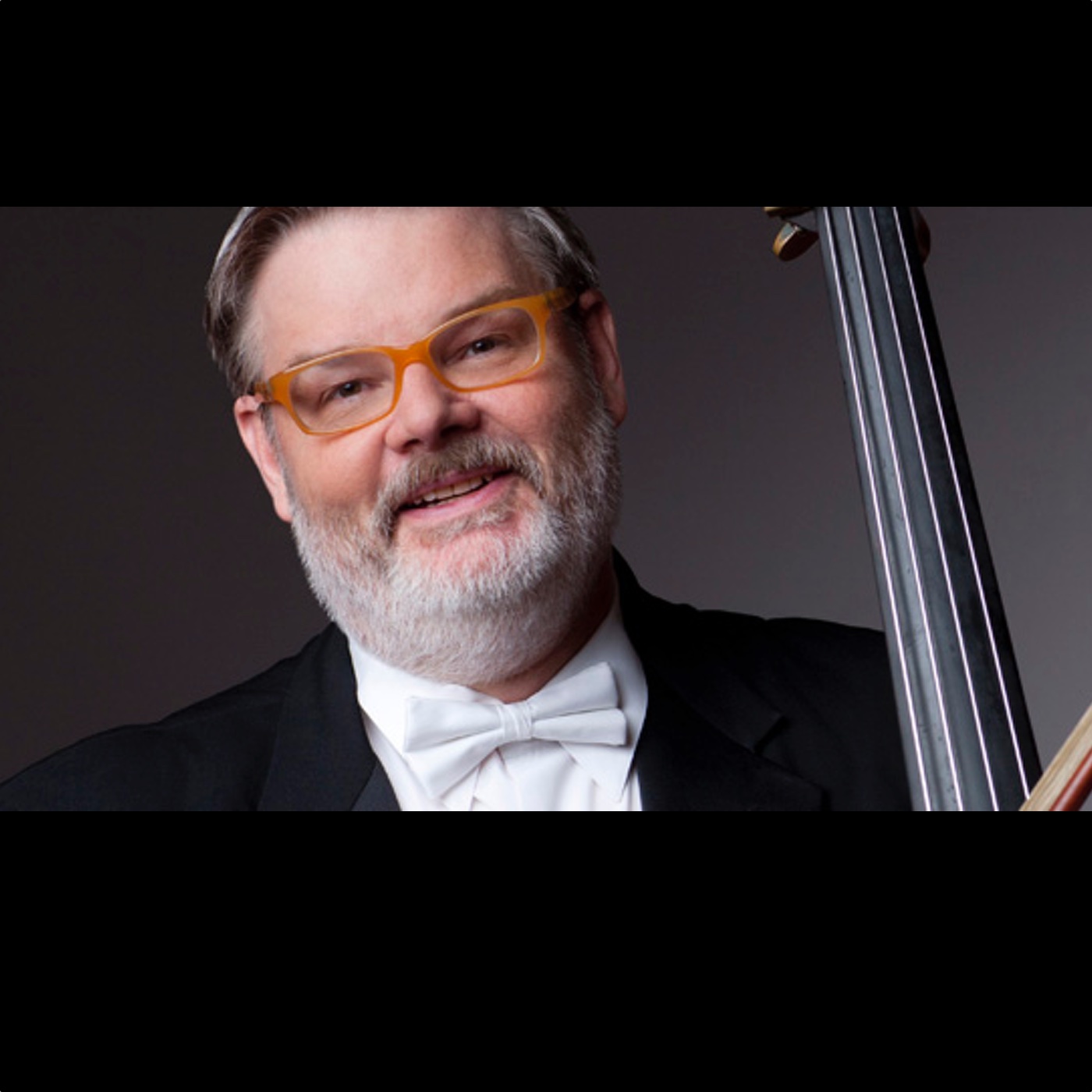
This week's Contrabass Conversations Episode features the second part of our interview with double bassist Brad Opland. Last time we heard from Brad (on episode 37), we talked about his experiences in the Minnesota Orchestra and Chicago Symphony, plus some of the most memorable highlights from Brad's performing career. This episode we discuss Brad's experiences performing with the Berlin Philharmonic plus performing with the Chicago Chamber Musicians and some general advice for bassists. We also hear from University of Oregon double bass instructor Tyler Abbott and the Toby Koenigsberg Trio. Enjoy!
Ep 4747: Peter Tambroni Interview part 2
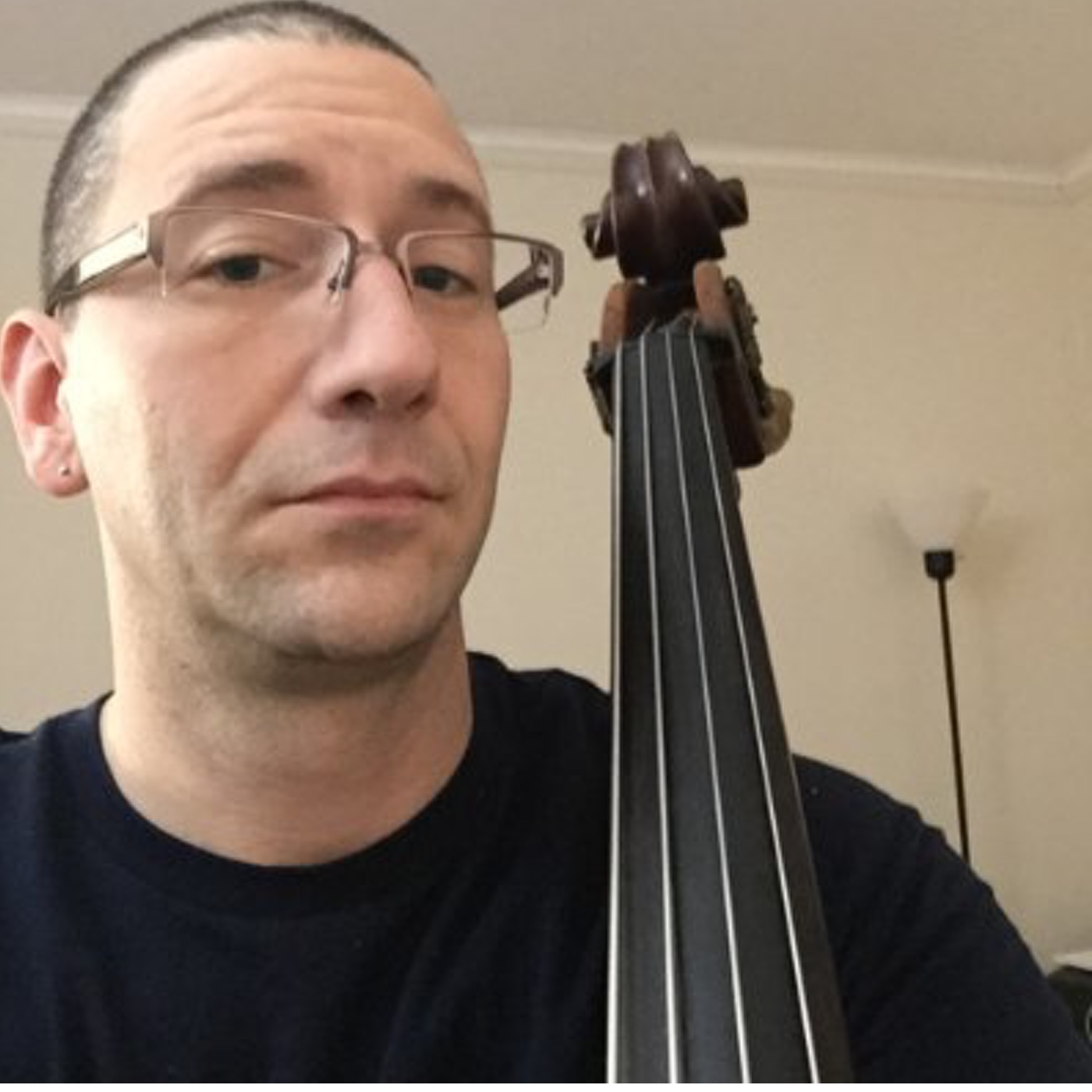
This week's Contrabass Conversations Episode features the second part of our interview with double bassist, music educator, and author Peter Tambroni. Last time we heard from Peter (on episode 32), we talked about his early years on the bass, classroom and school orchestra teaching techniques, studying bass during his bachelors and masters degrees, teaching approaches, performance experiences, and much more. We also feature a performance of the "Carmen Fantasy" by Frank Proto from Taiwanese bassist Henry Chen, plus share many news stories and interesting developments in the world of the double bass. Visit Peter online at www.petertambroni.com Enjoy!
Ep 4646: Ira Gold Interview part 3
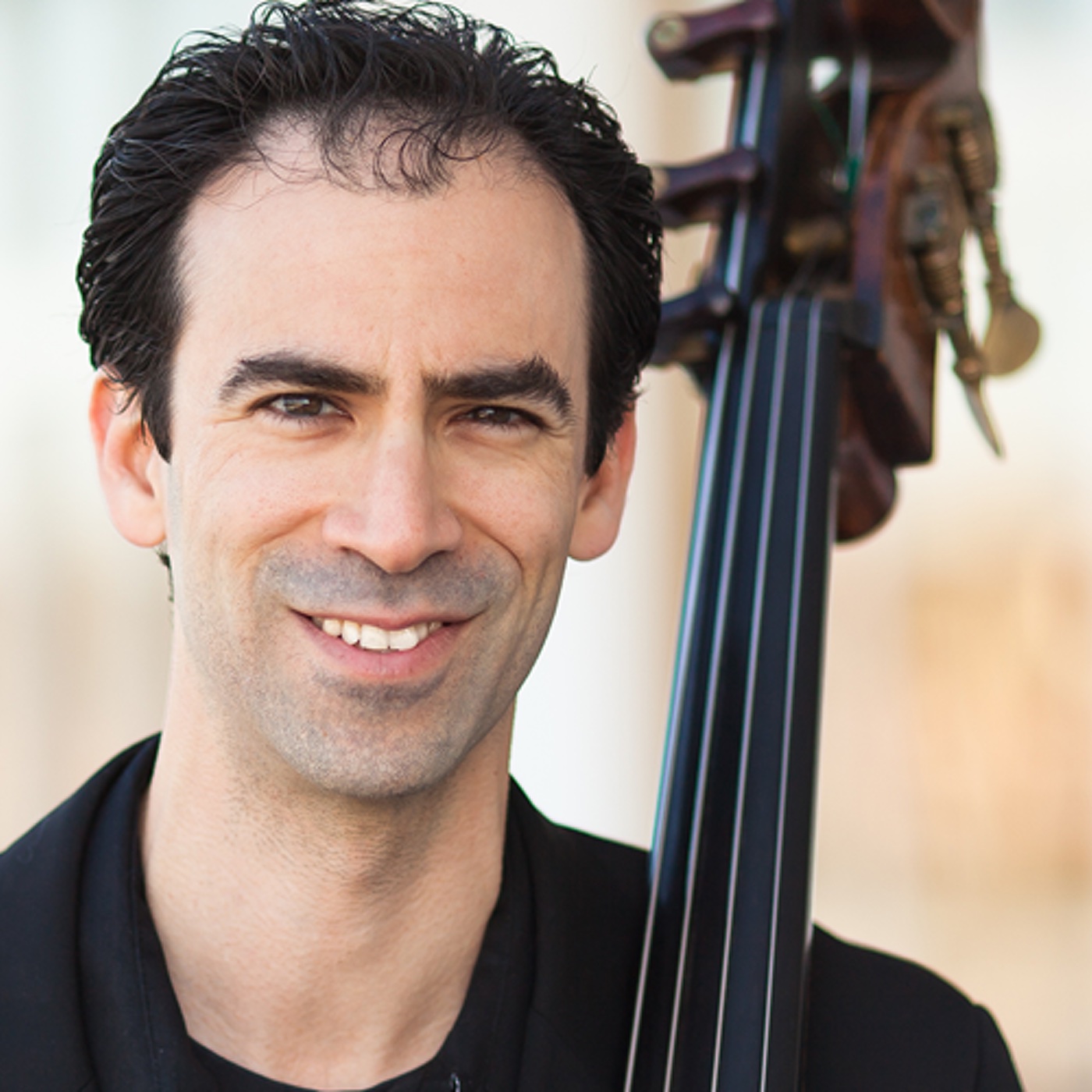
This week's podcast concludes our interview with National Symphony Orchestra bassist Ira Gold. We began this interview on episode 15 of the podcast and continued it on episode 18, as well as featuring Ira performing the Vanhal Concerto with orchestra. Ira discusses his double bass set-up and mental toughness aspects of the audition, practicing, and preparation process for the double bass during this segment of the interview and features a recording of Ira performing the Gigue from the first Bach cello suite. You can direct any questions to Ira directly at [email protected]. Enjoy!
Ep 4545: Colin Corner Interview part 2
This week's Contrabass Conversations episode features the conclusion of our chat with Minnesota Orchestra bassist Colin Corner. Colin joined the orchestra in 2006 after being a member of the Vancouver Symphony and Louisiana Philharmonic. In this episode we discuss the process of taking an audition for an ensemble like the Minnesota Orchestra--the various rounds, screen (or lack thereof), and repertoire. We also discuss improvisation, parallels between classical music and jazz, Colin's sources of musical inspiration, and his instrumental activities outside of the orchestral sphere. Check out episode 34 of the podcast for the first part of this interview. We also feature a recording of "Trioticism" from Chicago Symphony bassist and Contrabass Conversations interview guest Rob Kassinger. Enjoy!
Ep 4444: Rob Kassinger Interview part 2
This week's Contrabass Conversations Episode features the second part of our interview with Chicago Symphony bassist Rob Kassinger. Last time we heard from Rob (on episode 25), we talked about his early years on the bass, growing up in Colorado, playing jazz and electric bass, studying the instrument, and studying with Homer Mensch in New York City. This episode, we talk about Rob's time in the New Orleans Symphony, Colorado Symphony, and then moving into the Chicago Symphony. Rob talks about the materials he works on with students, like etudes and Simandl, plus what gear Rob uses and how his band NYCO developed. We'll also be hearing three tracks from Bay Area bassist Djordje Stijepovic. Enjoy!
Ep 4343: Michael Hovnanian Interview part 3
This week's Contrabass Conversations episode features the conclusion of our interview with double bassist Michael Hovnanian. Click here to listen to Michael's previous episodes (CBC 24 and 29). Michael has been a member of the Chicago Symphony Orchestra since 1989, and he serves as the president of Discordia Music (double bass music publisher). Michael also plays for the Gunnelpumpers, Chicago Bass Ensemble, Music of the Baroque, and the Ars Viva Symphony Orchestra. He authors the popular CSO Bass Blog, and he has served on the faculty for Northwestern University and the Chicago College of Performing Arts. Michael was also my bass teacher for my undergraduate and graduate degrees at Northwestern, and it was really great to get a chance to do this interview. You will also get a chance to hear Michael play the Discordia Music edition of the Schubert Arpeggione Sonata on this episode. After our interview with Michael, we'll be featuring two tunes from Chicago-area jazz bassist Mark Sonksen. Mark is the owner of Sonksen Strings, a double bass repair and retail shop located in Chicago. Enjoy!
Ep 4242: Ranaan Meyer Interview part 2 and music from Time for Three
This week's Contrabass Conversations episode concludes our chat with Time for Three bassist Ranaan Meyer. CBC guest and co-host John Grillo joins us in this interview, and the three of us had a very engaging conversation. You can check out the first part of our interview plus CBC video episodes featuring Ranaan on his Contrabass Conversations page here, and visit Time for Three's website at www.tf3.com.
Ep 4141: Orchestral Excerpts Breakdown
This week's Contrabass Conversations episode features an in-depth analysis of the double bass orchestral excerpts most commonly requested at auditions. Double bassist (and regular Contrabass Conversations guest and ho-host) John Grillo discusses each of these excerpts--stylistic considerations, differences in articulation and bow strokes, and suggestions for effectively learning them--and then performs them. I believe that this project will be a highly valuable resource for bassists worldwide, and I'd love your feedback on this project! Check out all of John's previous Contrabass Conversations appearances here. Excerpts covered: Beethoven Symphony No. 9 Beethoven Symphony No. 5 Brahms Symphony No. 1 Brahms Symphony No. 2 Shostakovich Symphony No. 5 Mozart Symphony No. 35 Mozart Symphony No. 39 Mahler Symphony No. 2 Schubert Symphony No. 9 Strauss Ein Heldenleben Britten Young Person's Guide Verdi Otello
Ep 4040: Donovan Stokes Interview
An active composer, Dr. Donovan Stokes is a specialist in the use of amplified and electronically manipulated double bass and has received recent commissions from the Young Bassist's Division of the International Society of Bassists, Musical Arts Society of Chicago and the Valdosta Symphony Orchestra. His recent Titanium Jr. for intermediate level bass and string orchestra was premiered in May of 2007 in Chicago, Il. His most recent concert work Caoineadh Mhná na Neachtlanna Mhaigdiléana (Lament for the Women of the Magdalene Laundries) for Solo Double Bass and Orchestra was premiered in October 2006 by the Valdosta Symphony Orchestra with the composer as soloist. The author of several articles on double history and pedagogy, Stokes has given presentations and recitals for the International Society of Bassists on a wide range of subjects and is a regular clinician at the Golden Gate Bass Camp (Oakland, CA), and the Richard Davis Bass Conference (Madison, WI). Upcoming performances include the November 2007 Las Vegas "Bass Bash? and the December 2007 "Unity Through Diversity? festival sponsored by the Brian Deneke Memorial Committee. Stokes is currently Associate Professor of Bass at Shenandoah Conservatory in Winchester, VA and is married to fellow bassist, and International Society of Bassists Young Bass Ambassador for 2001, Inez Wyrick. Visit him on the web at: www.donovanstokes.com
Ep 3939: Scott Rosenthal Interview
This week's Contrabass Conversations episode features an interview with Chicago-based double bassist and electric bassist Scott Rosenthal. Scott is one of the major players for the Chicago theater scene, having performed in a huge number of productions such as The Producers, Ragtime, Les Miserables, Miss Saigon, Phantom of the Opera, Beauty and the Beast, and Showboat. We also feature Italian bassist Stefano Sciascia performing Adagio Melanconico e Appassionato by Bottesini. Enjoy!
Ep 3838: Eric Hochberg Interview part 2
A mainstay of the Chicago music scene for more than thirty years, Eric Hochberg has lent his bass work, both upright and electric, and an occasional trumpet, keyboard and vocal lick to a variety of projects across the realms of jazz, folk, rock and blues. He has performed and/or recorded with the likes of Terry Callier, Pharoah Sanders, Bobby McFerrin, Pat Metheny, Lyle Mays, Steve Kuhn, Barbra Streisand, Cassandra Wilson, Von Freeman, Chico Freeman, Ken Nordine, David Baker, Cannonball Adderly, Charles McPherson, Jon Faddis, Joshua Redman, David Bromberg, Johnny Frigo, Joe Daley, Howard Levy, Kurt Elling, Trio New, Bill Carrothers, Eric Alexander, Tierny Sutton, Patricia Barber, Jackie Allen, Janice Siegal, Peter Erskine, Paul McCandless, Donny McCaslin, Claudio Roditi, Bob Mintzer, Dave Liebman, Sam Rivers, Jack DeJohnette, Joey Baron, Bobby Broom, Eric Marienthal, Bobby Shew, Tom Harrell, Larry Novak, Gary Novak, Rick Margitza, Sheila Jordan, Diane Reeves, Dee Alexander, Jay Clayton, Janice Siegel, Janice Borla, Ari Brown, Alan Pasqua, Bob Sheppard, Mark Murphy, Bob Dorough, Randy Brecker, Don Ellis, Larry Coryell, Rebecca Paris, Leni Andrade, Sonny Fortune, Willie Pickens, Bobby Lewis, Ari Brown, Jeremy Kahn, Ernie Adams, Mike Garson, Roger Rosenberg, Erma Thompson, Lew Tabackin, Brian Lynch, Lester Bowie, Don Moye, Earnest Dawkins, Henry Butler, Emily Remler, Herb Geller, Chevere de Chicago, Sonia Dada, Mark Colby, Orbert Davis, Ed Thigpen, Anthony Molinaro, Ben Sidran, Bonnie Koloc, Michal Urbaniak Quartet, Bill Holman, The Boston Brass, Bill Russo's Chicago Jazz Ensemble, The Chicago Jazz Orchestra, Rob Parton Orchestra, The Miami Saxophone Quartet, Jim Walker & Free Flight, The Grant Park Symphony with Luciana Souza and Patti Austin, The Joffrey Ballet, Luna Negra Dance Company, The Chicago Human Rhythm Project, and Chicago Tap Theater. Eric has the distinction of having performed in the bands of three of the four members of the Pat Metheny Group - a tour in 1977 with Pat, a long association with drummer Paul Wertico and a Latin American tour with Lyle Mays in 1992. He has toured nationally/internationally with the Lyle Mays Quartet, the Terry Callier Group, the Paul Wertico Trio, the Kurt Elling Quartet, Ken Nordine's Word Jazz, the Howard Levy Quartet and the Grazyna Auguscik Quintet. He has performed at the Jazz Festivals of Chicago (21 times), Montreal, San Francisco, Detroit, Montreux, UK/London, Free Jazz/Rio & Sao Paolo Brazil, Leverkeusen/Germany, World Music Festival/Barcelona, Rome Jazz, Rotterdam Jazz, Karlsruhe Festival/GR, Frappe Festival/FR, Nice Jazz/FR, Gigon Festival/SP, Cully Jazz/Swiss, Blues and Roots Fest/Australia, The International Society of Jazz Educators/Atlanta, The Chicago Flute Club, The Percussive Arts Society/Columbus OH, Rockford Jazz/IL, Hyde Park Jazz Festival/Chicago, South Shore Jazz/Chicago, Elkhart Jazz/IN, Columbus Jazz Festival/OH, Milwaukee Summerfest, Louisville Festival of the Arts, Blue Note Tokyo, Yokohama and Milan, and concerts and clubs worldwide. He has also performed on the Oprah Winfrey Show three times with Barbra Streisand, Josh Groban and Johnny Mathis, and with Gloria Estefan. He can also be heard in clubs and concert venues around the Chicago area, including Catch 35 Chicago with the Eric Hochberg Trio, The Green Mill, Andy's Jazz Club, Pops for Champagne, The Jazz Showcase, Fitzgerald's, Katarina's, Pete Miller's, The Checkerboard Lounge, Room 43, Mayne Stage, Morseland, Pick Staiger Hall, Pritzker Pavillion and many others. The Eric Hochberg Orchestra has performed for countless events of all kinds over the past twenty-five years and Eric Hochberg Music contracts the finest musicians in the Chicago area for clients worldwide. The EHO was the band for the City of Chicago's 5000 guest "Chicago Welcomes the World" Millennium Celebration. Eric produced Jackie Allen's 2006 debut Blue Note Records release, Tangled and her 2003 release The Men in My Life. Eric has also worked extensively with legendary singer-songwriter Terry Callier, producing his 2005 album, Lookin' Out, on Emarcy Records, the critically acclaimed TC in DC on Premonition, tracks on Verve Forecast's Timepeace, Novo Record's Chicago Rapid Transit and Acid Jazz Totally Re-wired Vol. 8. He co-produced Future Tense by Hochberg, Eisen & Potter, Reflections and Yesterday's Gardenias by saxophonist Mark Colby and New Bolero by Trio New, Kurt Elling's original band. His latest project with pianist Bradley Williams and drummer Jim Widlowski is entitled 3. As a composer, Eric has made contributions to Kurt Elling's Close Your Eyes and The Messenger on Blue Note Records, Hochberg and Potter's World Thing on HoPo Records, Trio New New Bolero, Paul Wertico's Yin and the Yout and The Paul Wertico Trio's Live in Warsaw and Don't Be Scared Anymore. Five compositions are featured on Future Tense, the latest recording by Eric, Steve Eisen and Andrew Scott Potter. Two of his compositions are featured
Ep 3737: Brad Opland Interview
This week's Contrabass Conversations episode features an interview with Chicago Symphony bassist Brad Opland. In addition to the interview, you'll get a chance to hear Brad perform on the double bass in his own arrangement of Ibert's Quatre Causons (four songs) de Don Quichotte for bassoon and bass and hear Brad perform on the electric bass in his south side Chicago church. Enjoy! About Brad Born in Minot, North Dakota, Bradley Opland began his musical studies at an early age and, by the time he was 10, knew that he wanted a career in a symphony orchestra. After graduating from high school a year early, he moved to Philadelphia to continue his music studies at the Curtis Institute of Music. One year later, Stanislaw Skrowaczewski appointed Brad to the bass section of the Minnesota Orchestra at the age of 18, one of the youngest musicians ever hired. He remained in Minnesota through Sir Neville Marriner's tenure, coming to Chicago in 1984 after Sir Georg Solti offered him a position in the Chicago Symphony Orchestra. - See more at: http://cso.org/about/performers/chicago-symphony-orchestra/bass/bradley-opland/#sthash.c5IOnq3y.dpuf
Ep 3636: Bjorn Berkhout Interview part 2
This episode of Contrabass Conversations features an interview with composer Bjorn Berkhout. Bjorn discusses his musical training, his various compositions for bass, and the challenges of writing for the double bass. Musical selections from his pieces Steamworks and Rise are also played on the show this week.
Ep 3535: Greg Sarchet Interview part 2
Greg Sarchet considers himself fortunate to have had an array of musical experiences and training, from studying with his first teacher, jazz luminary Rufus Reid, to receiving degrees from the Juilliard School (where he was a student of Michael Morgan), to hundreds of television/radio commercial recordings. His strong interest in researching the double bass and ongoing international exchange efforts were recognized by a 1996 Chicago Artists International Program award which sent him to the Czech Republic, Germany, and Austria for performances, masterclasses, and archival research. These and other exchange activities have allowed him to build an extensive library of unpublished, out-of-print, and contemporary double bass works, as well as a first-hand understanding of Europe's leading teaching methods. Since 1986, he has been a member of the Lyric Opera of Chicago Orchestra. Additionally, he frequently serves as Principal Bass with Chicago Opera Theater and the Chicago Chamber Orchestra. He maintains a limited private studio for high school and adult pupils. Briefly, his musical foundation was laid by his first double bass teachers, Rufus Reid and Todd Coolman. The musical values and priorities they, among others, instilled in him have led him to a wide variety of professional opportunities ranging from recordings with the Chicago Symphony Orchestra, Mannheim Steamroller, Smashing Pumpkins, and hundreds of television and radio commercials.
Ep 3434: Colin Corner Interview
Colin Corner was appointed Principal Bass of Atlanta Symphony in 2015, after playing in the same position with the Rochester Philharmonic for seven seasons. He previously played with the Minnesota Orchestra, the Vancouver Symphony and the Louisiana Philharmonic. He received first place in the 2003 ISB Orchestral Competition, which led to a one week internship with the Detroit Symphony, and he received third place in the same competition in 2001. Mr. Corner was also a recipient of the Interlochen Double Bass Class Studio award in 1997, which has since been renamed The Colin Corner Bass Award in his honor. Mr. Corner is a graduate of the Interlochen Arts Academy, and he received his bachelor's degree from Indiana University, where he studied with Lawrence Hurst. While in Rochester, he served on the faculty at The Hochstein School and played with Chamber Music Rochester, The Rochester Chamber Orchestra, and The Finger Lakes Opera Festival. He has also served as Guest Principal Bass with the NAC Orchestra. Mr. Corner also enjoys playing electric bass and many different styles of music, mainly jazz. In Rochester, he played with The Shuffling Madness, a Jethro Tull tribute band, The Debbie Kendrick Quartet, a soulful acoustic blues group, The Greener Grass Band, a funky jam band, and various other groups. Mr. Corner is passionate about teaching and has presented masterclasses/recitals at ISB Conventions, Ithaca College, Interlochen Center for the Arts, Shenandoah Conservatory, and Palm Beach Atlantic University. In 2015, he joined the faculty at the Golden Gate Bass Camp in San Francisco, where he was a founding faculty member in the NorCal Orchestra Studies Academy. Proud of his instruments, he plays a bass made by Joseph Hill, c. 1780, and a bass made in Atlanta by Luthier Albert Jakstadt.
Ep 3333: Guy Tuneh Interview part 2
This week's Contrabass Conversations episode features the second half of our interview with double bassist Guy Tuneh, conducted over a distance of thousands of miles. It was a real pleasure to get to sit down and chat with Guy--he's a warm, intelligent, and passionate individual, and these traits come through in his speaking just like they do in his bass playing. You can visit him online at www.guytuneh.com. You will also get a chance to hear the great jazz bassist Brian Bromberg perform and hear some bass playing from L.A. bassist Nam Chi Vu. Enjoy! Guy D. Tuneh dedicates his work to challenging the traditional role of the bass player, and to stretching the limits of bass-playing. Beyond approaching the double bass literature from a new direction, these goals are achieved by performing music which until now was considered impossible to perform on this instrument. For example, he was the first bass player to ever perform an un-transcribed version of the Tchaikovsky's Rococo Variations in concert, achieving a higher standard of technical and artistic level. Guy Tuneh set a landmark in double bass performing - to be the first Bass-Solist to ever perform an un-transcribed version of the Elgar cello concerto and Villa Lobos Fantasia for Cello on bass in concert and to be the first Bass-solist to perform first time ever an un-transcribed version of the both Beethoven F and G Violin Romances on double bass in concert, Paganini's Cantabile in D, Capriccio Nr. 9 as an un-transcribed version and an un-transcribed version of Mozarts Rondo C-Major for Violin, Sonata KV 301 for Violin in G and Mahlers Lieder eines fahrenden Gesellen for low voice on double bass as well. Guy Tuneh has set a personal goal to combine passion, personality, character, and unique technique, in his approach to music performance. Aiming at winning over wide and diverse audiences, he constantly seeks new challenges. Coming from a deep and intense personal involvement, his performances attempt to deliver strong massages to the audience and result in intense, captivating, and awe-inspiring experiences. Guy D. Tuneh has been studying in Germany and Switzerland and performing internationally, Mr.Tuneh has been active as a solo performer and chamber musician. Having begun as a violin student at the age of 6, he was drawn to the tone color of the double bass, joining Michael Klinghoffer's bass studio at the S. Rubin Academy of Music at Tel Aviv University. Later, he continued his bass studies under Barbara Sanderling at the Hochschule Für Musik "Hanns Eisler" in Berlin, which followed a Solo Artist Diploma at the Music Academy Basel in Switzerland. Additionally, he took master classes with Yoan Goilav, Gary Karr and Miloslav Gajdos. Guy Tuneh's orchestra performances included engagements as a principl bassist with the Berliner Kammeroper, Mendelssohn Players Berlin, Ensemble "Echo" of the Deutsche Staatsoper Berlin, and the West-Eastern Divan Orchestra (Winner of ECHO–Klassik AWARD 2006 & ECHO-Klassik AWARD 2007) under Daniel Barenboim. These performances, which included chamber music collaborations with Mr. Barenboim were recorded for the ORF (National Austrian Public Service) at the Salzburg Festival and at the Lucerne Festival, along with many other performances on German radio and TV. He also performed with Theater Erfurt, Solistes Européens Luxembourg, with the NDR (North German Radio Orchestra - Hannover) and Ensemble Modern. As an orchestra bassist Mr. Tuneh performed under such distinguished conductors as Kurt Sanderling, Zubin Mehta, Sir Simon Rattle, Nicolas Harnoncourt and Pierre Boulez. Winner of a Villa Musica Scholarship, Guy Tuneh has performed all over Germany as a Soloist and as a chamber musician to great acclaim, and participated in Solo and chamber music performances recorded by the (Southwest German Radio). These performances included collaborations with members of Ensemble Villa Musica. Mr. Tuneh participated at festivals such as the "Verbier Festival", "Festival di Musica d'Insieme di Sessa Aurunca", "Fètes musicales en Touraine", "Busan Maru International Music Festival" and the "Internationales Bodenseefestival". Guy Tuneh's performances as a solo performer and chamber musician included collaborations with Vesselina Kasarova, Natalia Gutman, Rainer Kussmaul, Heinz Holliger, Ensemble-Modern, The Baltic Guitar Quartet, The Berlin Chamber Orchestra, Kammersolisten der Deutschen Oper Berlin, Ensemble Les Dissonances and other distinguished musicians. Mr. Tuneh maintains an active double bass teaching career, giving master classes world wide. Learn more at guytuneh.com.
Ep 3232: Peter Tambroni Interview
This week on Contrabass Conversations we bring you an interview with string teacher and double bassist Peter Tambroni. Peter has written a book titled An Introduction to Double Bass Playing, and he has many valuable ideas regarding double bass pedagogy. Arizona bassist Robert Matheson is also featured on this episode. Enjoy! About Peter Peter began playing the double bass at the age of 16 (after playing the clarinet since elementary school) when the director of his high school jazz ensemble asked if anyone would be interested in playing bass. After playing electric bass it was suggested that he learn the string bass and soon after he began orchestral studies. Within a year, he knew he wanted to go into the field of music, and becoming a music teacher was the perfect choice for him. He received his Bachelor's of Music in Music Education from the Crane School of Music in 1996. After that he taught strings in the public schools for grades 4 - 12 in Northern New York and was adjunct faculty for 'cello and double bass at the State University of New York at Plattsburgh. In 2000 he graduated from the University of Illinois at Urbana - Champaign with a Master's in Double Bass Performance, studying with Michael Cameron. He is currently a string teacher in suburban Chicago where he teaches string lessons in grades 3 - 8 and conducts the middle school concert and chamber orchestras. He also leads an Irish ensemble and a bass quartet. He performs around the greater Chicago area with many orchestra and rock bands around the city. In 2000, he appeared on the Bozo Super Sunday Show to give a presentation and performance on the double bass. In the spring of 2003 he was the guest soloist for District 212 (playing the Vanhal concerto) and in spring of 2004 he performed at Symphony Center's Orchestra Hall with the Polish American Symphony Orchestra of Chicago. He has attended classes with Michael Hovnanian of the Chicago Symphony, John Chiego, Hal Robinson of the Philadelphia Orchestra, Scott Haigh of the Cleveland Symphony, Stewart Arfman, and Erik Harris. Peter has been published several in American String Teacher as well as websites around the world.
Ep 3131: François Rabbath Interview part 3
This week we are wrapping up our interview with double bass virtuoso François Rabbath. You can hear the previous sections of this interview on episode 16 and episode 22 of the podcast. We will also be featuring in interesting new twist in Contrabass Conversations interviews today—the Lyric Opera's Andy Anderson (a regular collaborator on the podcast) will be discussing one piece in depth and offering practice advice and tips. This week we will be discussing the first movement of Mozart's Symphony No. 40, which we will be doing after the conclusion of our Rabbath interview. Today we will also be hearing tracks from "At the Uke Shack #1?, featuring Seattle bassist Matt Weiner as well as Del Rey on ukulele. You'll hear "Clockin' the Vic" right after we conclude our conversation with Rabbath as well as a few tunes at the end of the program. Enjoy!
Ep 3030: Guy Tuneh interview
Guy D. Tuneh dedicates his work to challenging the traditional role of the bass player, and to stretching the limits of bass-playing. Beyond approaching the double bass literature from a new direction, these goals are achieved by performing music which until now was considered impossible to perform on this instrument. For example, he was the first bass player to ever perform an un-transcribed version of the Tchaikovsky's Rococo Variations in concert, achieving a higher standard of technical and artistic level. Guy Tuneh set a landmark in double bass performing - to be the first Bass-Solist to ever perform an un-transcribed version of the Elgar cello concerto and Villa Lobos Fantasia for Cello on bass in concert and to be the first Bass-solist to perform first time ever an un-transcribed version of the both Beethoven F and G Violin Romances on double bass in concert, Paganini's Cantabile in D, Capriccio Nr. 9 as an un-transcribed version and an un-transcribed version of Mozarts Rondo C-Major for Violin, Sonata KV 301 for Violin in G and Mahlers Lieder eines fahrenden Gesellen for low voice on double bass as well. Guy Tuneh has set a personal goal to combine passion, personality, character, and unique technique, in his approach to music performance. Aiming at winning over wide and diverse audiences, he constantly seeks new challenges. Coming from a deep and intense personal involvement, his performances attempt to deliver strong massages to the audience and result in intense, captivating, and awe-inspiring experiences. Guy D. Tuneh has been studying in Germany and Switzerland and performing internationally, Mr.Tuneh has been active as a solo performer and chamber musician. Having begun as a violin student at the age of 6, he was drawn to the tone color of the double bass, joining Michael Klinghoffer's bass studio at the S. Rubin Academy of Music at Tel Aviv University. Later, he continued his bass studies under Barbara Sanderling at the Hochschule Für Musik "Hanns Eisler" in Berlin, which followed a Solo Artist Diploma at the Music Academy Basel in Switzerland. Additionally, he took master classes with Yoan Goilav, Gary Karr and Miloslav Gajdos. Guy Tuneh's orchestra performances included engagements as a principl bassist with the Berliner Kammeroper, Mendelssohn Players Berlin, Ensemble "Echo" of the Deutsche Staatsoper Berlin, and the West-Eastern Divan Orchestra (Winner of ECHO–Klassik AWARD 2006 & ECHO-Klassik AWARD 2007) under Daniel Barenboim. These performances, which included chamber music collaborations with Mr. Barenboim were recorded for the ORF (National Austrian Public Service) at the Salzburg Festival and at the Lucerne Festival, along with many other performances on German radio and TV. He also performed with Theater Erfurt, Solistes Européens Luxembourg, with the NDR (North German Radio Orchestra - Hannover) and Ensemble Modern. As an orchestra bassist Mr. Tuneh performed under such distinguished conductors as Kurt Sanderling, Zubin Mehta, Sir Simon Rattle, Nicolas Harnoncourt and Pierre Boulez. Winner of a Villa Musica Scholarship, Guy Tuneh has performed all over Germany as a Soloist and as a chamber musician to great acclaim, and participated in Solo and chamber music performances recorded by the (Southwest German Radio). These performances included collaborations with members of Ensemble Villa Musica. Mr. Tuneh participated at festivals such as the "Verbier Festival", "Festival di Musica d'Insieme di Sessa Aurunca", "Fètes musicales en Touraine", "Busan Maru International Music Festival" and the "Internationales Bodenseefestival". Guy Tuneh's performances as a solo performer and chamber musician included collaborations with Vesselina Kasarova, Natalia Gutman, Rainer Kussmaul, Heinz Holliger, Ensemble-Modern, The Baltic Guitar Quartet, The Berlin Chamber Orchestra, Kammersolisten der Deutschen Oper Berlin, Ensemble Les Dissonances and other distinguished musicians. Mr. Tuneh maintains an active double bass teaching career, giving master classes world wide. Learn more at guytuneh.com.
Ep 2929: Michael Hovnanian Interview part 2
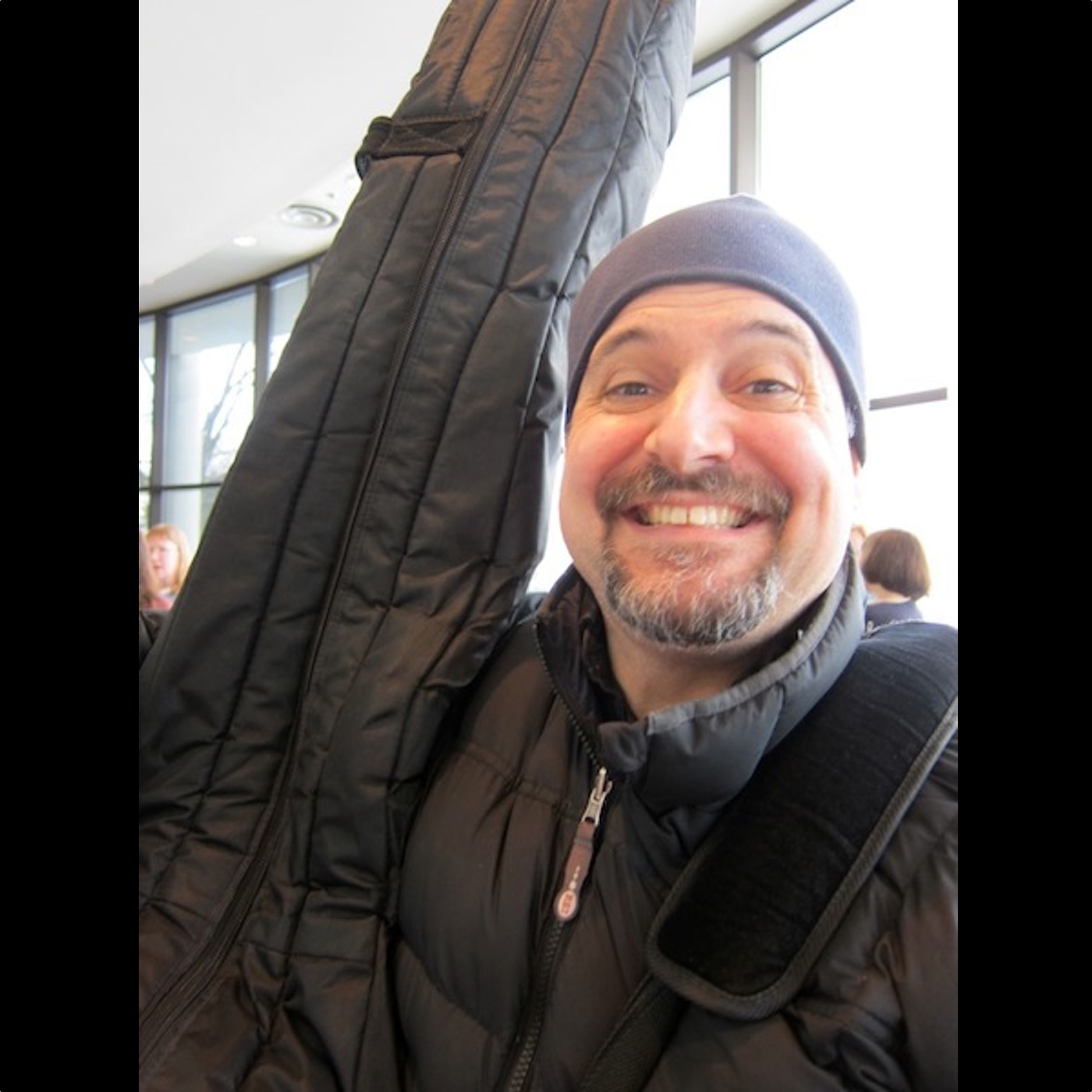
This week's Contrabass Conversations episode features an interview with double bassist Michael Hovnanian. Michael has been a member of the Chicago Symphony Orchestra since 1989, and he serves as the president of Discordia Music (double bass music publisher). Michael also plays for the Gunnelpumpers, Chicago Bass Ensemble, Music of the Baroque, and the Ars Viva Symphony Orchestra. He authors the popular CSO Bass Blog, and he has served on the faculty for Northwestern University and the Chicago College of Performing Arts. Michael was also my bass teacher for my undergraduate and graduate degrees at Northwestern, and it was really great to get a chance to do this interview. You will also get a chance to hear Michael play the Discordia Music edition of the Brahms Sonata in E minor on this episode. It is a great edition of a great piece, and Michael plays it beautifully. Enjoy! About Michael Hovnanian Michael Hovnanian grew up in the Seattle area and started playing the bass in the public schools. His primary teachers were James Harnett and Ronald Simon of the Seattle Symphony. An early interest in solo playing led to performances with the Seattle Symphony, the Northwest Chamber Orchestra and the University of Washington Symphony. Michael attended the University of Washington and received a Bachelor of Fine Arts degree from the California Institute of the Arts where he studied with Frederick Tinsley of the Los Angeles Philharmonic. In 1986 he joined the Victoria Symphony as Principal Bassist and in 1988 the San Antonio Symphony as a member of the bass section. Since 1989 he has been a member of the Chicago Symphony Orchestra. In addition to playing in the CSO Mr. Hovnanian is active performing solo and chamber music in the Chicago area. He has appeared in the Chicago Symphony chamber concerts at Orchestra Hall and the Art Institute, with Chicago Pro Musica, and at the Winter Chamber Music Festival. Currently he is President of Discordia Music, a pulishing company specializing in new and arranged works for Double Bass. He is also a co-founder of the International Bottesini Society, an organization dedicated to promoting the legacy of that composer. Michael's blog: www.csobassblog.blogspot.com
Ep 2828: Ranaan Meyer Interview
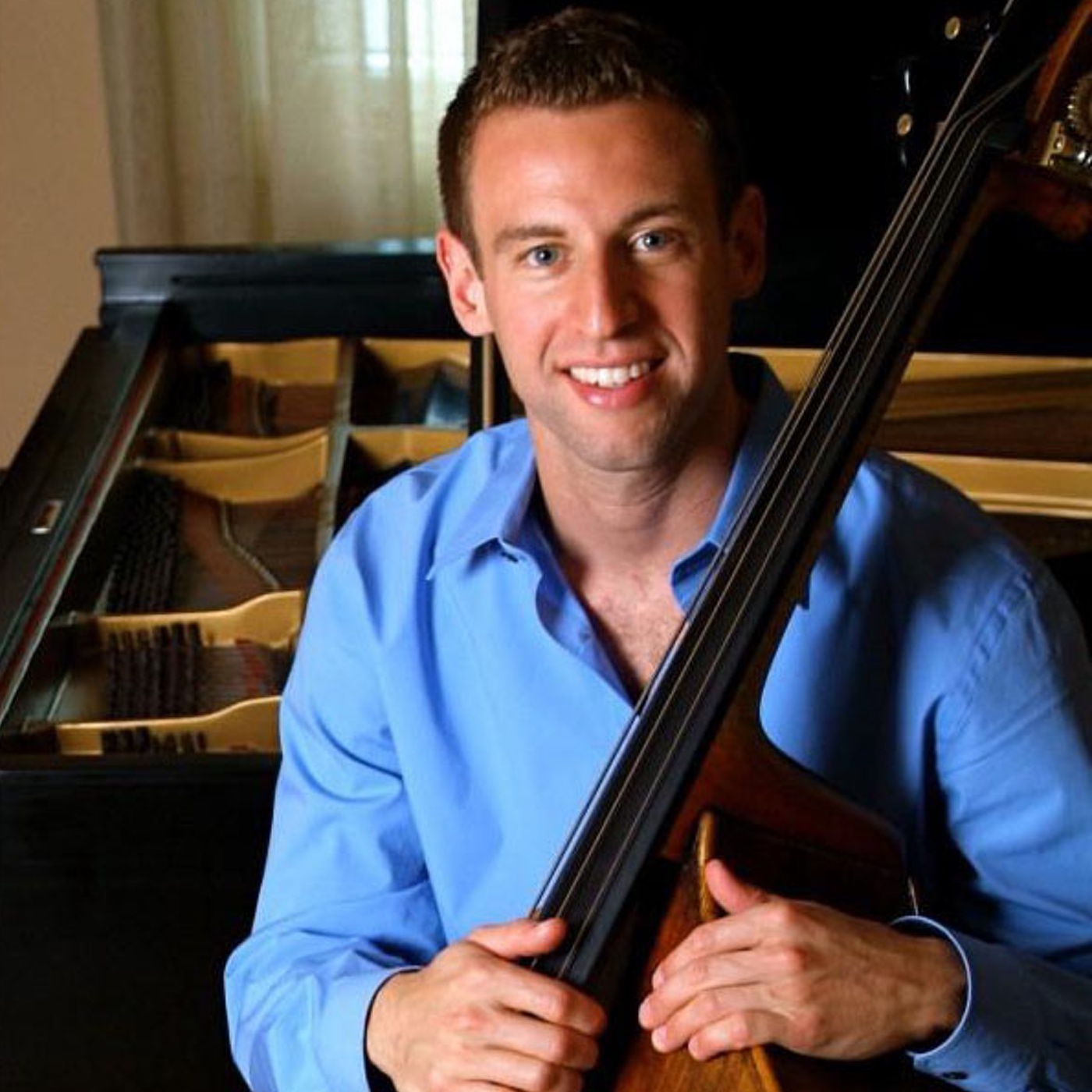
This week's Contrabass Conversations podcast features the first part of our interview with double bassist Ranaan Meyer. John Grillo (a frequent guest and collaborator on the podcast) and I co-interviewed Ranaan, who is the bassist for the band Time for Three and has had a very interesting and multi-faceted career. In addition to hearing a few musical excerpts from Time for Three, this episode features music from German double bassist Guy Tuneh, Pittsburgh-based singer/songwriter Brad Yoder, Los Lonely Boys, and The Latin Soul Syndicate. Enjoy! Ranaan Meyer bio: Ranaan Meyer, double bassist and composer, began his musical studies at the piano at age 4; at age 11, he took up the double bass (once he was big enough to hold it). He attended the Manhattan School of Music and graduated from the Curtis Institute of Music in 2003. Beyond regular appearances with orchestras such as the Minnesota Symphony, Baltimore Symphony and The Philadelphia Orchestra, Mr. Meyer is also increasingly in demand as a composer, creating unique new works for his trio Time for Three as well as for solo bass and other ensembles. Most recently Mr. Meyer completed a commission, "My Zayda? (for Violin, Piano and Double Bass) for the Kingston Chamber Music Festival in Rhode Island. Other recently completed commissions include a solo double bass piece for the Network for New Music, a double bass and harp duet as well as a set of Time for Three pieces for Astral Artistic Services and a Time for Three composition for the City of Pittsburgh and the Pittsburgh Symphony, "Of time and three rivers?. All commissions have been expedited through the American Composer's forum. Mr. Meyer, also an accomplished jazz musician, has performed with Jane Monheight, Victor Lewis, Jason Moran, Mark O'Connor, Ari Hoenig, Duane Eubanks, Mickey Roker and many more. Ranaan, at age 19 produced, directed and performed in the very first Washington Township Jazz Festival which was also broadcasted live on Philadelphia's WRTI. Mr. Meyer, an avid teacher, has held adjunct Double Bass Professorships at both Princeton University and the University of Delaware. He has spent several Summers teaching alongside Hal Robinson (Principal Bass of The Philadelphia Orchestra) at the Strings International Music Festival in Bryn Mawr, Pennsylvania. He has also taught at the Intermountain Suzuki Camp in Sandy, Utah and Mark O'Connor's String Camp in San Diego, California.
Ep 2727: Kathryn Nettleman Interview part 2
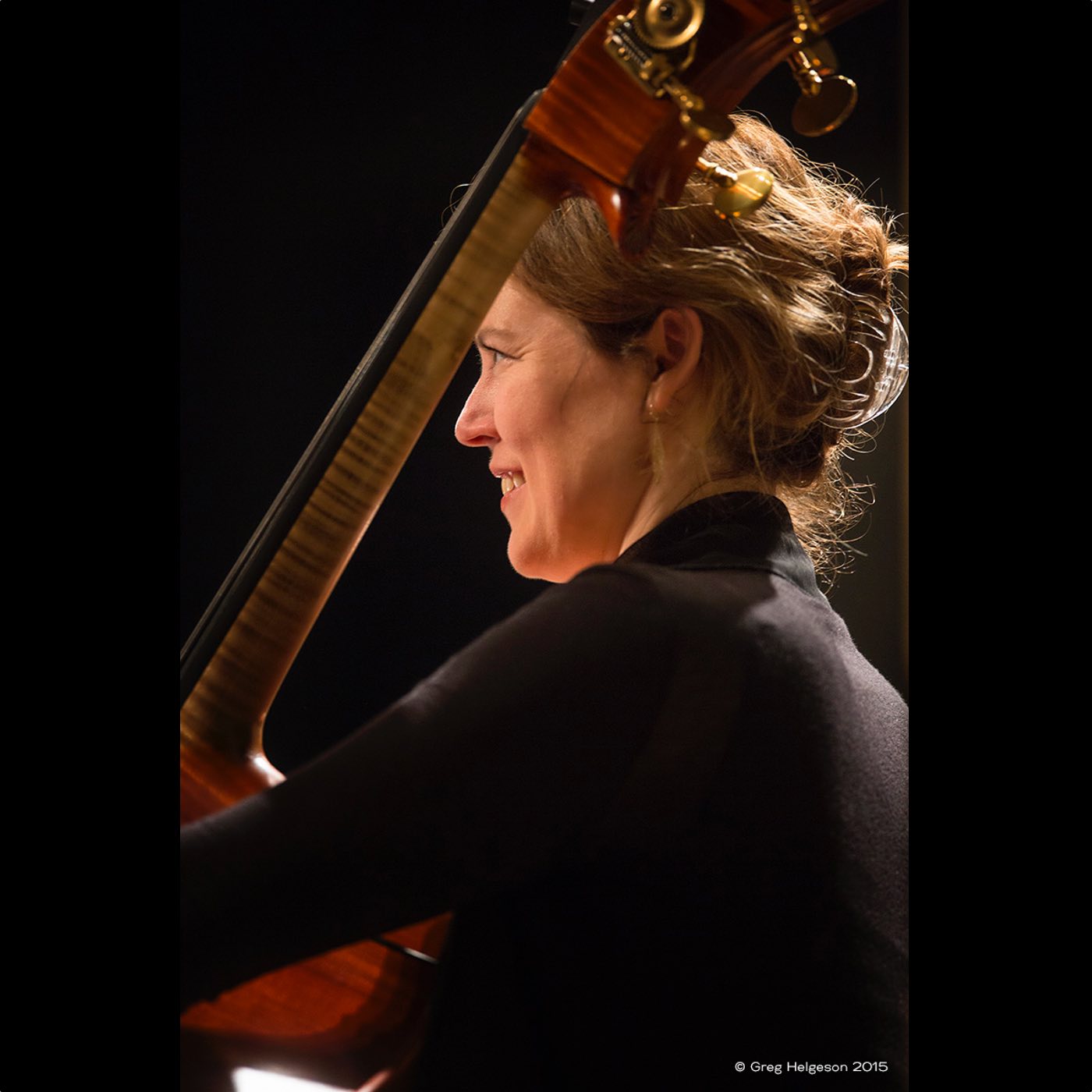
This week's episode features the conclusion of our interview with double bassist Kate Nettleman. Kate was based here in the Chicago area at the time of this recording, but she moved on to become Principal Bass of the Hong Kong Philharmonic and then to a section position in the Minnesota Orchestra. About Kate Kathryn Nettleman - as a young student of Neil Courtney, Assistant Principal Bass with the Philadelphia Orchestra, she performed with numerous local ensembles including the Philadelphia Youth Orchestra. During this time she twice received the New Jersey Governor's Award in Arts Education. She attended The Juilliard School as a full-scholarship student of Homer Mensch and following graduation spent a year studying with Don Palma at the Yale University School of Music. For several summers she performed in the Aspen Music Festival and the Spoleto (USA) Music Festival. Ms. Nettleman then spent two seasons in the New World Symphony in Miami Beach, during which time she was involved in a wide variety of solo and chamber music performances, musical outreach projects, and served as co-chair of a concert series. In 2001, she was awarded by her colleagues there the "NWS Musician of the Year Award for Artistic Leadership." The following year she served as a section member in the Naples Philharmonic Orchestra, where she was active as a performer in introductory musical programs for elementary and middle school children. Currently living in Chicago, Ms. Nettleman performs regularly with many local ensembles including the Chicago Symphony Orchestra, Saint Louis Symphony Orchestra, Lyric Opera of Chicago, Symphony II, and Grant Park Symphony. She serves as a volunteer friendly visitor to the elderly through Resurrection Health Care Home Health Services. In addition to making music, she enjoys running, gardening, reading, and vegetarian cooking and baking.
Ep 2626: Jeff Turner Interview
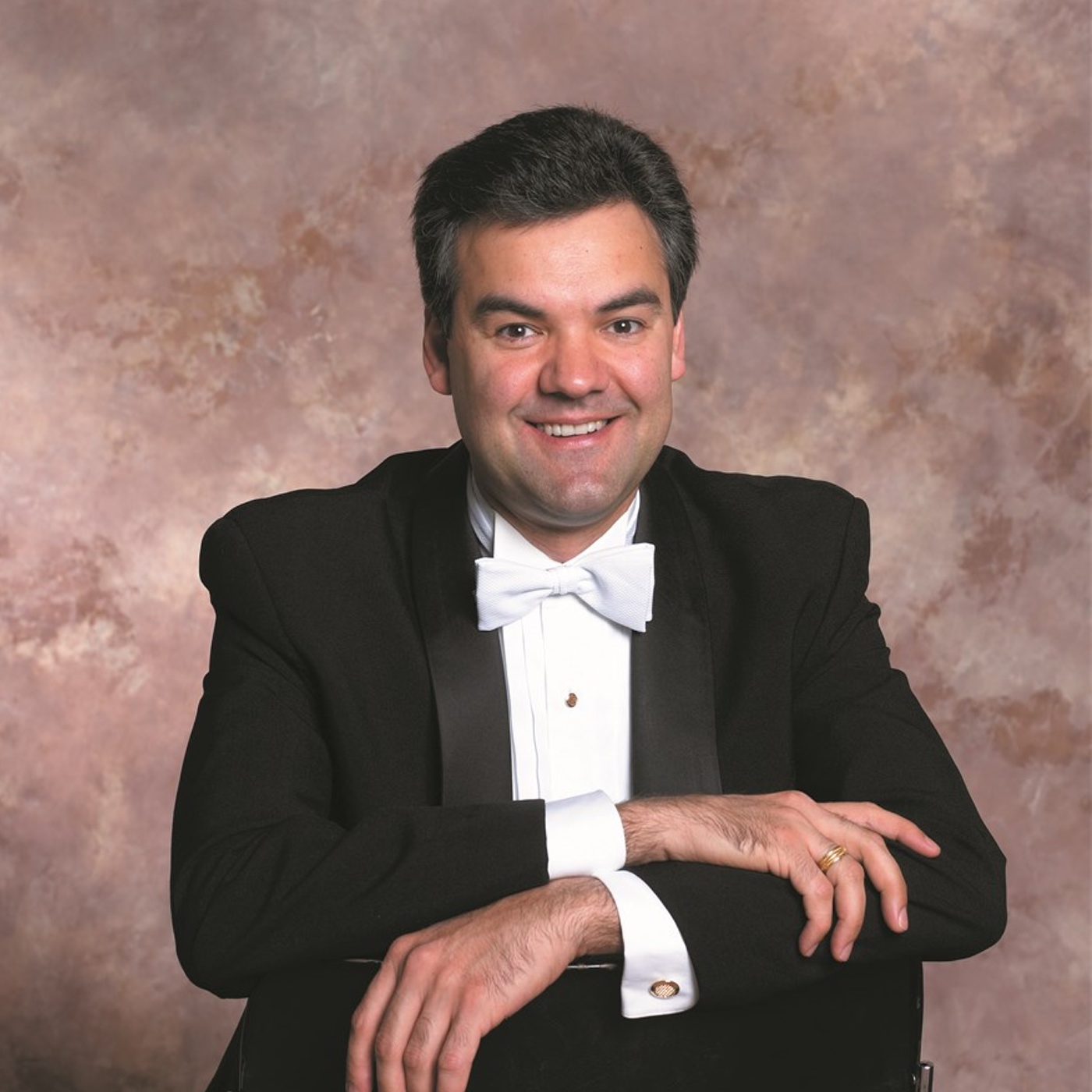
It is my pleasure to bring you this great interview with Pittsburgh Symphony principal bassist Jeff Turner for this week's episode of Contrabass Conversations. Jeff has excellent advice for musicians, and he reflects on his early years on the instrument in this very engaging interview. You will also be hearing a double bass feature from the Lascivious Biddies on this episode. Enjoy! About Jeff Jeffrey Turner is the Director of Orchestral Studies at Duquesne University, where he serves as conductor of the Duquesne Symphony Orchestra. A native of South Carolina, Mr. Turner holds a Bachelor of Music degree from the Eastman School of Music and a Master's degree in conducting from Carnegie Mellon University, where he studied with Dr. Robert Page. He has served in recent years as Music Director of the Pittsburgh Live Chamber Orchestra, and Artistic Director of the City Music Center Chamber Orchestra from 2004 - 2009. Locally, Mr. Turner has also conducted opera productions at CMU, as well as Honors Orchestra Festivals for the Pennsylvania Music Educator's Association. Mr. Turner is also the Principal Bassist of the Pittsburgh Symphony Orchestra. His teachers include James VanDemark, Lawrence Hurst and Robert Gladstone. Before joining the PSO in 1987, Mr. Turner was the Principal Bass of the New American Chamber Orchestra from 1984 to 1986, and played with the Detroit Symphony Orchestra for the 1986-87 season. As winner of the Y Music Society's Passamaneck Award, Jeffrey Turner appeared in a critically acclaimed recital at Carnegie Music Hall in 1989. He was also a winner of the 1990 Pittsburgh Concert Society's Artist Award. Jeffrey Turner has served as Visiting Professor at the Eastman School of Music, Indiana University, and the University of Maryland, and as a faculty member of Carnegie Mellon University. At Duquesne, Mr. Turner has also served as Chair of Strings and as Artistic Director of City Music Center's Young Bassist Program. Mr. Turner gives annual recitals, seminars, and master classes at universities and conservatories throughout the world, and serves as resident artist for annual festivals including the Pacific Music Festival, The National Orchestral Institute, the Korsholm Festival (Finland), Indiana University's Summer Music Festival, and The Asian Youth Orchestra (Hong Kong). Mr. Turner has been a faculty member for International Workshops in Graz, Austria; Lausanne, Switzerland; and Glasgow, Scotland. He is featured as recitalist, clinician, and competition judge at the conventions of The International Society of Bassists. From 1988-92 Mr. Turner was the Executive Director of the Pittsburgh Chamber Music Project, a yearly series of concerts and educational programs featuring Pittsburgh's finest musicians in collaboration.
Ep 2525: Rob Kassinger Interview
This week's Contrabass Conversations episode features an interview with and music from Chicago Symphony bassist Rob Kassinger. Rob's musical interests span many genres and include both the electric bass and the double bass. You will learn about Rob's early years on the bass and how working in jazz and rock settings led to an interest in orchestral double bass playing in this fascinating interview. This episode also features Rob playing the first movement of the Breval Sonata in a live performance, and it includes a track from NYCO, a rock band that Rob was a member of for several years. You will be hearing People We Knew from their recent album "Two". You can purchase "Two" by following this link. Enjoy! About Rob: Robert Kassinger was appointed to the Chicago Symphony Orchestra in 1993. Prior to Chicago, Rob performed as assistant principal bass with the Colorado Symphony and also played with the New Orleans Symphony. In addition to his busy schedule with the Orchestra, Rob is an active chamber musician. He performs with the Revolution Ensemble, the Orion Ensemble, Fulcrum Point, Ars Viva, Music of the Baroque, the Callisto Ensemble, MusicNOW, and broadcasts on WFMT and WTTW. Most recently he has been a featured guest with Yo-Yo Ma's Silk Road Ensemble, and has performed Schubert's Trout Quintet with Daniel Barenboim. In July 2006, Rob served as double bass professor at the Canton International Summer Music Academy, led by Charles Dutoit. Rob grew up in a family of musicians in Boulder, Colorado. He began his bass studies with Frank Carroll at the University of Colorado. In 1985 he moved to New York to study with Homer Mensch at the Manhattan School of Music, where he received his bachelor of music degree. Rob then pursued his master's degree at the Juilliard School, continuing his studies with Mr. Mensch. He later went on to study with Bruce Bransby at Indiana University. Some of his most influential experiences as a student were his two years as principal bass of the New York String Orchestra Seminar, conducted by Alexander Schneider, and the two summers he spent as a fellowship student at the Aspen Music Festival, studying with Stuart Sankey and Bruce Bransby. In 1989 Rob was the winner of the Aspen Double Bass Competition. Rob's experience as a jazz performer dates back to his early teens, working in the house rhythm section at the infamous Denver jazz club El Chapultapec, and over the years he has performed with Wynton Marsalis, Branford Marsalis, Kenny Burrell, the Woody Herman band, Conte Candoli, Charlie Rouse, Teddy Edwards, Harold Land, Red Holloway, Charles Brown, Art Lande, Richard Stoltzman, Gary Burton, Alex Acuna, Laurence Hobgood, and Bobby Lewis. In 1998 and 2000, Rob toured India with the Chicago Jazz Express, and he can be heard on their recordings Voyage to India and The Rhythm Section. He also appears on Bobby Lewis' latest CD, Just Havin' Some Fun. In addition, Rob is featured on Daniel Barenboim's Brazilian Rhapsody on the Teldec label, and Kabbalah Blues/Quantum Funk by the Revolution Ensemble. Rob's latest project has given him a chance to spend more time with the bass guitar. His alternative rock group NYCO has released its debut album Two, available through nycomusic.com and at Itunes.com. Rob is professor of double bass at DePaul University. He is also in demand as a coach and master clinician, serving in this capacity for the Chicago Youth Symphony Orchestras, the Juilliard School, and the Mannes School of Music. In the summers of 1999 through 2002, it was Rob's honor to teach at the West-Eastern Divan, a ground-breaking workshop that brings young musicians from Israel and various Arab countries together to study orchestral music with Daniel Barenboim, Yo-Yo Ma, and members of the CSO, Berlin Philharmonic, and Staatskapelle Berlin.
Ep 2424: Michael Hovnanian Interview
This week's Contrabass Conversations episode features an interview with double bassist Michael Hovnanian. Michael has been a member of the Chicago Symphony Orchestra since 1989, and he serves as the president of Discordia Music (double bass music publisher). Michael also plays for the Gunnelpumpers, Chicago Bass Ensemble, Music of the Baroque, and the Ars Viva Symphony Orchestra. He authors the popular CSO Bass Blog, and he has served on the faculty for Northwestern University and the Chicago College of Performing Arts. Michael was also my bass teacher for my undergraduate and graduate degrees at Northwestern, and it was really great to get a chance to do this interview. You will also get a chance to hear Michael play the Discordia Music edition of the Brahms Sonata in E minor on this episode. It is a great edition of a great piece, and Michael plays it beautifully. Enjoy! About Michael Hovnanian Michael Hovnanian grew up in the Seattle area and started playing the bass in the public schools. His primary teachers were James Harnett and Ronald Simon of the Seattle Symphony. An early interest in solo playing led to performances with the Seattle Symphony, the Northwest Chamber Orchestra and the University of Washington Symphony. Michael attended the University of Washington and received a Bachelor of Fine Arts degree from the California Institute of the Arts where he studied with Frederick Tinsley of the Los Angeles Philharmonic. In 1986 he joined the Victoria Symphony as Principal Bassist and in 1988 the San Antonio Symphony as a member of the bass section. Since 1989 he has been a member of the Chicago Symphony Orchestra. In addition to playing in the CSO Mr. Hovnanian is active performing solo and chamber music in the Chicago area. He has appeared in the Chicago Symphony chamber concerts at Orchestra Hall and the Art Institute, with Chicago Pro Musica, and at the Winter Chamber Music Festival. Currently he is President of Discordia Music, a pulishing company specializing in new and arranged works for Double Bass. He is also a co-founder of the International Bottesini Society, an organization dedicated to promoting the legacy of that composer. Michael's blog: www.csobassblog.blogspot.com
Ep 2323: Lawrence Hurst Interview part 2
Lawrence Hurst is the former principal double bass for the Dallas Symphony. He is a former faculty member of Southern Methodist and Eastern Michigan Universities and former faculty member, associate dean, and chair of the string department at University of Michigan School of Music. He was honored with the Alumni Award from the University of Michigan School of Music in 1998. Professor Hurst is former director of the University Division of the National Music Camp and is a summer faculty member of the Interlochen Arts Camp. He is past chair of the American String Teachers Association National Solo Competition, and past president of the International Society of Bassists. His former students can be found in many prestigious orchestras, including Chicago, Philadelphia, San Francisco, Indianapolis, and Atlanta. He has chaired the Indiana University Strings Department for the past 19 years and has been on faculty at Interlochen for the past 40 years. Music from the Bass Gang website: http://www.thebassgang.org/
Ep 2222: François Rabbath Interview part 2
Born in Aleppo, Syria into a musical family of six boys and three girls, François discovered the double bass at the age of thirteen when one of his brothers brought an instrument home and allowed him to experiment with it. When the family moved to Beirut, Lebanon he found an old copy of Edouard Nanny's Contrabass Method in a tailor shop and with some difficulty, since he read neither music nor French, began to teach himself. After nine years of work in Beirut, François saved enough money to move to Paris for a year. He was eager to go to the Paris Conservatory, meet with Monsieur Nanny and show him what he was able to do with the bass. When he applied at the Conservatory he was disappointed to learn that Nanny had died in 1947. He was also told that auditions were to be held in three days and that he would never have enough time to learn the required pieces. He asked for the music anyway and returned three days later to finish first among the applicants. However, his stay at the Conservatory was a brief one, since it didn't take very long to see that he was not only far ahead of the other students but of the professors as well! François Rabbath's uniqueness stems from his refusal to accept any traditional limitations. Whether performing his own fascinating compositions, the music of others or the classical repertoire, one is always moved by his profound musicianship and dazzling virtuosity. You quickly discover that he brings you such a sense of security that the most difficult passages sound effortless. The importance of François Rabbath to the development of double bass playing can be compared with that of Paganini to the violin. Since the early 1800s when Nicole Paganini established the violin as a virtuoso instrument, solo violinists have practiced the most brilliant of instrumental art. Meanwhile, the development of double bass playing had been seriously neglected. The great and popular 19th century composers did not consider the bass worth their attention and in turn the bass repertoire did not attract potential virtuoso performers with enough genius to change the situation. It demanded an artist with the unique qualities of François Rabbath to break this impasse. http://www.liben.com/FRBio.html Musical Guest - Leon Bosch You will be hearing the Bottesini Elegy and the Bottesini Gavotta from Leon Bosch's recent solo album called Virtuoso Double Bass, which is available from Meridian Records. Leon's website: http://www.leonbosch.co.uk Album information for Virtuoso Double Bass: http://www.leonbosch.co.uk/music.php Click here to order this great album from Leon Bosch: http://www.meridian-records.co.uk/acatalog/CDE84544a.html Meridian Records website: http://www.meridian-records.co.uk/ About Leon Bosch: (Visit his website for more information about this great artist's career and the challenges he had to overcome during his early years in Apartheid South Africa.) From liner notes to his recent release as well as an interview with Lawrence Milner – published in the Summer 2003 edition of Double Bassist magazine: Leon had to overcome many difficult circumstances in the early years of his career. He was arrested by members of the Cape Town special branch when he was just 15 years old for demonstrating against the Apartheid government outside of parliament. He faced a month's detention and torture, only to be found not guilty on all charges. This experience fired up his ambition to become a lawyer, but this field of study was forbidden to him by the regime at the time. He then chose to study a subject that would be the least likely to mark him out as subversive—music. Had Bosch been able to pursue his prime aspiration to become a lawyer, the cello/double bass debate might never have occurred. Born in Cape Town, South Africa in 1961, Bosch was forbidden by the repressive regime of the time to study law, so applied to the University's music faculty instead `as a light-hearted prank.' The `prank' soon turned more serious. Once enrolled at the University, Bosch studied with Zoltan Kovats, principal double bassist of the Cape Town Symphony Orchestra at that time. A single year into his studies, the young student was invited to play in the Symphony Orchestra's bass section alongside his mentor. Only another 12 months passed before he was giving his first solo performance of Dittersdorf 's concerto in E major. Completing his Batchelor of Music Performance degree at the University, he received the highest mark ever awarded there in a performance examination. Post-university, Bosch quickly realised that he would have to study abroad if he really wanted to further his performance career, but was thwarted once again by the apartheid laws which decreed that overseas scholarships could only be given to white performers. However, Bosch was undeterred. `I had a passionate commitment to the double bass and never enter- tained the idea that I would fail in my pursuit', he asserts. Fortunately, a number of private individuals
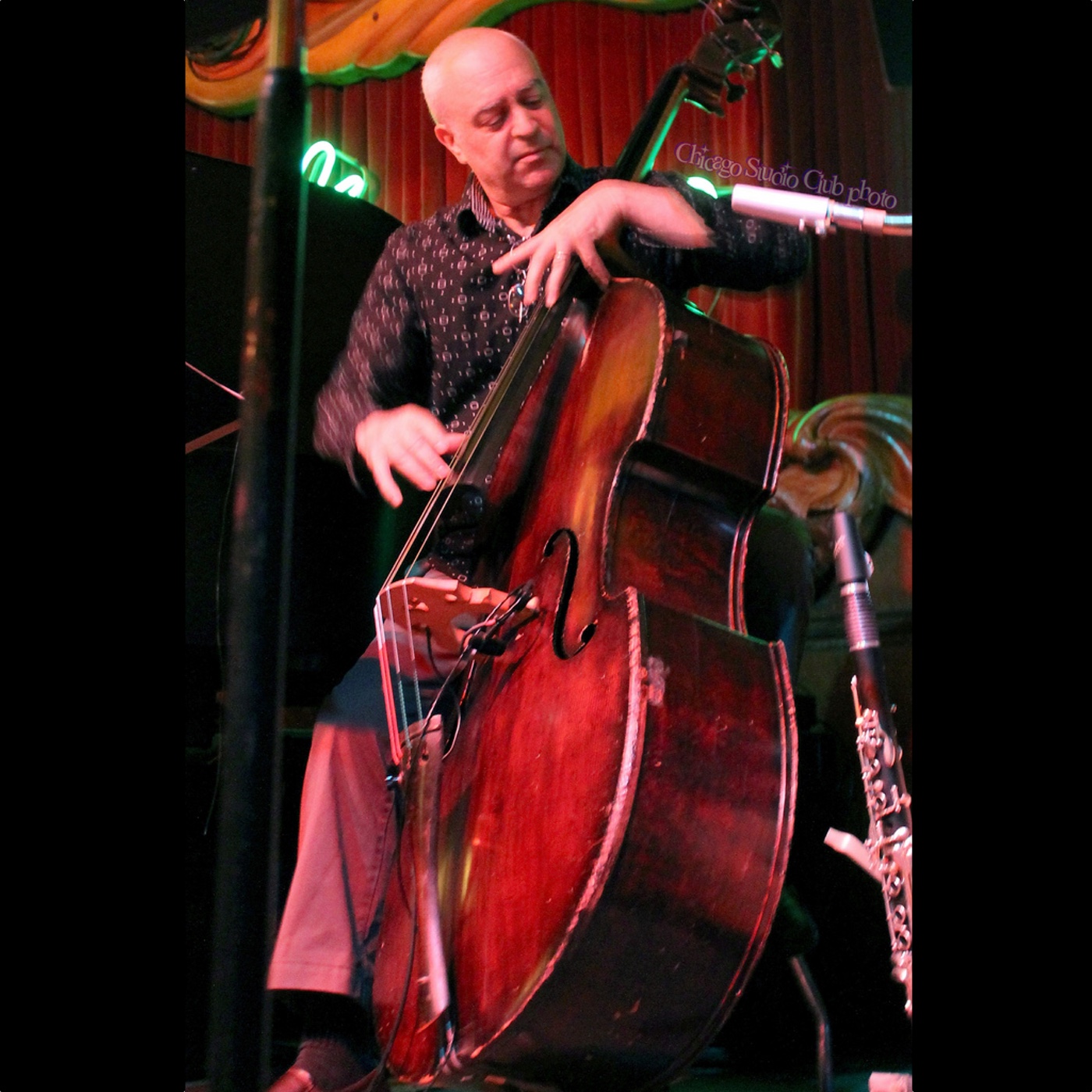
Ep 2121: Eric Hochberg Interview
A mainstay of the Chicago music scene for more than thirty years, Eric Hochberg has lent his bass work, both upright and electric, and an occasional trumpet, keyboard and vocal lick to a variety of projects across the realms of jazz, folk, rock and blues. He has performed and/or recorded with the likes of Terry Callier, Pharoah Sanders, Bobby McFerrin, Pat Metheny, Lyle Mays, Steve Kuhn, Barbra Streisand, Cassandra Wilson, Von Freeman, Chico Freeman, Ken Nordine, David Baker, Cannonball Adderly, Charles McPherson, Jon Faddis, Joshua Redman, David Bromberg, Johnny Frigo, Joe Daley, Howard Levy, Kurt Elling, Trio New, Bill Carrothers, Eric Alexander, Tierny Sutton, Patricia Barber, Jackie Allen, Janice Siegal, Peter Erskine, Paul McCandless, Donny McCaslin, Claudio Roditi, Bob Mintzer, Dave Liebman, Sam Rivers, Jack DeJohnette, Joey Baron, Bobby Broom, Eric Marienthal, Bobby Shew, Tom Harrell, Larry Novak, Gary Novak, Rick Margitza, Sheila Jordan, Diane Reeves, Dee Alexander, Jay Clayton, Janice Siegel, Janice Borla, Ari Brown, Alan Pasqua, Bob Sheppard, Mark Murphy, Bob Dorough, Randy Brecker, Don Ellis, Larry Coryell, Rebecca Paris, Leni Andrade, Sonny Fortune, Willie Pickens, Bobby Lewis, Ari Brown, Jeremy Kahn, Ernie Adams, Mike Garson, Roger Rosenberg, Erma Thompson, Lew Tabackin, Brian Lynch, Lester Bowie, Don Moye, Earnest Dawkins, Henry Butler, Emily Remler, Herb Geller, Chevere de Chicago, Sonia Dada, Mark Colby, Orbert Davis, Ed Thigpen, Anthony Molinaro, Ben Sidran, Bonnie Koloc, Michal Urbaniak Quartet, Bill Holman, The Boston Brass, Bill Russo's Chicago Jazz Ensemble, The Chicago Jazz Orchestra, Rob Parton Orchestra, The Miami Saxophone Quartet, Jim Walker & Free Flight, The Grant Park Symphony with Luciana Souza and Patti Austin, The Joffrey Ballet, Luna Negra Dance Company, The Chicago Human Rhythm Project, and Chicago Tap Theater. Eric has the distinction of having performed in the bands of three of the four members of the Pat Metheny Group - a tour in 1977 with Pat, a long association with drummer Paul Wertico and a Latin American tour with Lyle Mays in 1992. He has toured nationally/internationally with the Lyle Mays Quartet, the Terry Callier Group, the Paul Wertico Trio, the Kurt Elling Quartet, Ken Nordine's Word Jazz, the Howard Levy Quartet and the Grazyna Auguscik Quintet. He has performed at the Jazz Festivals of Chicago (21 times), Montreal, San Francisco, Detroit, Montreux, UK/London, Free Jazz/Rio & Sao Paolo Brazil, Leverkeusen/Germany, World Music Festival/Barcelona, Rome Jazz, Rotterdam Jazz, Karlsruhe Festival/GR, Frappe Festival/FR, Nice Jazz/FR, Gigon Festival/SP, Cully Jazz/Swiss, Blues and Roots Fest/Australia, The International Society of Jazz Educators/Atlanta, The Chicago Flute Club, The Percussive Arts Society/Columbus OH, Rockford Jazz/IL, Hyde Park Jazz Festival/Chicago, South Shore Jazz/Chicago, Elkhart Jazz/IN, Columbus Jazz Festival/OH, Milwaukee Summerfest, Louisville Festival of the Arts, Blue Note Tokyo, Yokohama and Milan, and concerts and clubs worldwide. He has also performed on the Oprah Winfrey Show three times with Barbra Streisand, Josh Groban and Johnny Mathis, and with Gloria Estefan. He can also be heard in clubs and concert venues around the Chicago area, including Catch 35 Chicago with the Eric Hochberg Trio, The Green Mill, Andy's Jazz Club, Pops for Champagne, The Jazz Showcase, Fitzgerald's, Katarina's, Pete Miller's, The Checkerboard Lounge, Room 43, Mayne Stage, Morseland, Pick Staiger Hall, Pritzker Pavillion and many others. The Eric Hochberg Orchestra has performed for countless events of all kinds over the past twenty-five years and Eric Hochberg Music contracts the finest musicians in the Chicago area for clients worldwide. The EHO was the band for the City of Chicago's 5000 guest "Chicago Welcomes the World" Millennium Celebration. Eric produced Jackie Allen's 2006 debut Blue Note Records release, Tangled and her 2003 release The Men in My Life. Eric has also worked extensively with legendary singer-songwriter Terry Callier, producing his 2005 album, Lookin' Out, on Emarcy Records, the critically acclaimed TC in DC on Premonition, tracks on Verve Forecast's Timepeace, Novo Record's Chicago Rapid Transit and Acid Jazz Totally Re-wired Vol. 8. He co-produced Future Tense by Hochberg, Eisen & Potter, Reflections and Yesterday's Gardenias by saxophonist Mark Colby and New Bolero by Trio New, Kurt Elling's original band. His latest project with pianist Bradley Williams and drummer Jim Widlowski is entitled 3. As a composer, Eric has made contributions to Kurt Elling's Close Your Eyes and The Messenger on Blue Note Records, Hochberg and Potter's World Thing on HoPo Records, Trio New New Bolero, Paul Wertico's Yin and the Yout and The Paul Wertico Trio's Live in Warsaw and Don't Be Scared Anymore. Five compositions are featured on Future Tense, the latest recording by Eric, Steve Eisen and Andrew Scott Potter. Two of his compositions are featured
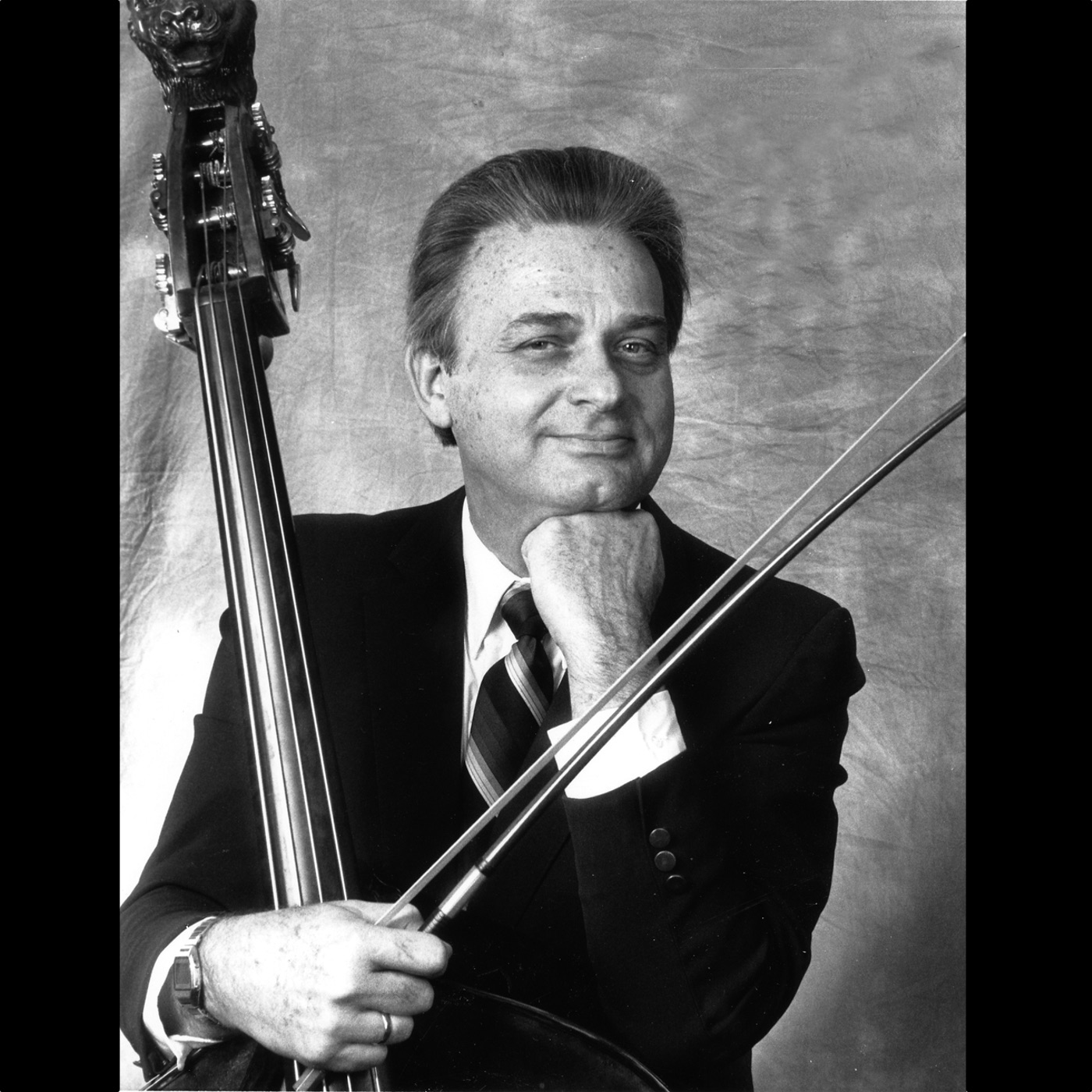
Ep 2020: Lawrence Hurst Interview
Lawrence Hurst is the former principal double bass for the Dallas Symphony. He is a former faculty member of Southern Methodist and Eastern Michigan Universities and former faculty member, associate dean, and chair of the string department at University of Michigan School of Music. He was honored with the Alumni Award from the University of Michigan School of Music in 1998. Professor Hurst is former director of the University Division of the National Music Camp and is a summer faculty member of the Interlochen Arts Camp. He is past chair of the American String Teachers Association National Solo Competition, and past president of the International Society of Bassists. His former students can be found in many prestigious orchestras, including Chicago, Philadelphia, San Francisco, Indianapolis, and Atlanta. He has chaired the Indiana University Strings Department for the past 19 years and has been on faculty at Interlochen for the past 40 years.
Ep 19Music Episode: Peter Lawson Recital
bonusProgram Order: Bottesini Romanza Dramatica Op. 20 (Elegie No. 2) Bach Suite No. 3 in C Major (performed in original key) Sofia Gubaidulina Pantomime Eccles Sonata Andante Allegro Adagio Presto