Business of Tech: Daily 10-Minute IT Services Insights
2,047 episodes — Page 8 of 41
Ep 1697OpenAI's Usage Surge, Kindrel's AI Framework, and the Comeback of Dedicated Servers
OpenAI has released a new economic analysis showcasing the extensive impact of its AI tools, particularly ChatGPT, on productivity across various sectors. The report reveals that over half a billion people globally utilize OpenAI's AI tools, with a significant portion of users in the U.S. reporting that they use ChatGPT for work. However, a survey indicates that many employees feel pressured to adopt AI tools despite lacking confidence in their usage, raising concerns about the actual productivity gains versus the pressure to conform to employer expectations.In the realm of enterprise technology, Kindrel has introduced the Kindrel Agentic AI framework, aimed at facilitating the deployment of AI in secure environments. This initiative comes in response to the growing adoption of generative AI technologies. Kindrel's framework is designed to enhance operational efficiency and address critical issues such as bias and security, particularly in sectors like banking and government. This move highlights the importance of delivering tangible outcomes rather than merely promoting the hype surrounding AI.Dedicated servers are experiencing a resurgence as organizations seek to meet performance and compliance requirements. A recent survey indicates that a significant majority of IT professionals are utilizing dedicated servers, particularly in sectors like government and finance. This trend reflects a strategic shift towards hybrid infrastructure, where businesses are increasingly recognizing the value of dedicated resources for specific workloads, rather than relying solely on public cloud solutions.Proton has launched a privacy-focused AI chatbot named Lumo, which emphasizes user privacy by storing data locally and employing zero-access encryption. This initiative contrasts with offerings from larger tech companies that often exploit user data. Additionally, Kaseya has introduced an AI-powered workflow generator to enhance automation for managed service providers, while Malwarebytes has integrated a new email security module to combat sophisticated email threats. These developments underscore the growing importance of automation and privacy in the tech landscape, providing opportunities for service providers to differentiate themselves in a competitive market. Three things to know today 00:00 OpenAI’s scale, worker pressure to adopt AI, vendor risk blind spots05:43 Liquid Web reports rising dedicated server spend—MSPs must guide smart workload placement, not a full retreat from cloud08:22 Kaseya, Malwarebytes, StorX, NinjaOne, and Inforcer all launch moves to help MSPs automate, secure, and scale13:06 AppleCare One is a masterclass in “sticky” support—can your plans deliver the same seamless value? This is the Business of Tech. Supported by: https://cometbackup.com/?utm_source=mspradio&utm_medium=podcast&utm_campaign=sponsorship Tell us about a newsletter!https://bit.ly/biztechnewsletter 💼 All Our SponsorsSupport the vendors who support the show:👉 https://businessof.tech/sponsors/ 🚀 Join Business of Tech PlusGet exclusive access to investigative reports, vendor analysis, leadership briefings, and more.👉 https://businessof.tech/plus 🎧 Subscribe to the Business of TechWant the show on your favorite podcast app or prefer the written versions of each story?📲 https://www.businessof.tech/subscribe 📰 Story Links & SourcesLooking for the links from today’s stories?Every episode script — with full source links — is posted at:🌐 https://www.businessof.tech 🎙 Want to Be a Guest?Pitch your story or appear on Business of Tech: Daily 10-Minute IT Services Insights:💬 https://www.podmatch.com/hostdetailpreview/businessoftech 🔗 Follow Business of Tech LinkedIn: https://www.linkedin.com/company/28908079YouTube: https://youtube.com/mspradioBluesky: https://bsky.app/profile/businessof.techInstagram: https://www.instagram.com/mspradioTikTok: https://www.tiktok.com/@businessoftechFacebook: https://www.facebook.com/mspradionews Hosted by Simplecast, an AdsWizz company. See pcm.adswizz.com for information about our collection and use of personal data for advertising.
Ep 1695Half of MSPs Prepare for Ransomware, SaaS Security Gaps, and Open AI Servers Found
Managed service providers (MSPs) are increasingly allocating budgets for ransomware payments, with a recent report indicating that 45% have set aside funds specifically for this purpose. This trend raises concerns about normalizing the act of paying criminals, as many experts argue that such practices inadvertently support criminal activities. While some MSPs are turning to cyber insurance for protection, a significant portion remains vulnerable due to a lack of allocated budgets for ransomware payments or insurance. Additionally, MSP leaders are increasingly worried about artificial intelligence threats, which have surpassed traditional concerns like ransomware and malware.A study by AppOmni reveals a troubling disconnect in the security posture of organizations using software-as-a-service (SaaS) applications. Despite 75% of organizations reporting breaches in the past year, 89% believe they have adequate visibility into their security environments. The study highlights that many incidents stem from permission issues and misconfigurations, emphasizing the need for improved security hygiene. Providers are urged to focus on addressing these basic issues rather than preparing for ransom payments, as this is where they can truly add value and protect their clients.In a concerning development, a startup has been found selling hacked data from over 50 million computers to various industries, including debt collectors and divorce attorneys. This practice raises ethical and legal questions, as the sale of such information may not be illegal in many jurisdictions. Additionally, researchers have discovered nearly 2,000 AI protocol servers exposed online without any authentication, posing significant risks to sensitive data. Experts warn that individuals whose data is sold may remain unaware of the exploitation of their personal information, highlighting the urgent need for stronger data protections.The UK government is reconsidering its demand for Apple to provide access to encrypted user data, influenced by pressure from the U.S. government. This shift comes after Apple withdrew its Advanced Data Protection Service from the UK, emphasizing its commitment to user privacy. Meanwhile, Meta has rejected the EU's Code of Practice for Artificial Intelligence, citing concerns over regulatory overreach. In contrast, OpenAI has formed a strategic partnership with the UK government to enhance the country's AI infrastructure, indicating a growing trend of governments aligning with major tech players in the AI sector. For MSPs, these developments underscore the importance of engaging in conversations about encryption resilience and understanding the evolving regulatory landscape. Four things to know today 00:00 45% of MSPs Planning to Pay Hackers? SaaS Breach Rates Show Why That’s the Wrong Bet03:55 Startup Sells Data From 50M Hacked PCs as AI Servers Leak Sensitive Info Without Authentication06:18 UK May Drop Apple Encryption Backdoor Demand Amid US Pressure; OpenAI and Meta Make Diverging EU Moves09:15 Microsoft Patches Critical SharePoint Flaws as China-Linked Actor Linked to Incident Supported by: https://getnerdio.com/nerdio-manager-for-msp/ Tell us about a newsletter! https://bit.ly/biztechnewsletter 💼 All Our SponsorsSupport the vendors who support the show:👉 https://businessof.tech/sponsors/ 🚀 Join Business of Tech PlusGet exclusive access to investigative reports, vendor analysis, leadership briefings, and more.👉 https://businessof.tech/plus 🎧 Subscribe to the Business of TechWant the show on your favorite podcast app or prefer the written versions of each story?📲 https://www.businessof.tech/subscribe 📰 Story Links & SourcesLooking for the links from today’s stories?Every episode script — with full source links — is posted at:🌐 https://www.businessof.tech 🎙 Want to Be a Guest?Pitch your story or appear on Business of Tech: Daily 10-Minute IT Services Insights:💬 https://www.podmatch.com/hostdetailpreview/businessoftech 🔗 Follow Business of Tech LinkedIn: https://www.linkedin.com/company/28908079YouTube: https://youtube.com/mspradioBluesky: https://bsky.app/profile/businessof.techInstagram: https://www.instagram.com/mspradioTikTok: https://www.tiktok.com/@businessoftechFacebook: https://www.facebook.com/mspradionews Hosted by Simplecast, an AdsWizz company. See pcm.adswizz.com for information about our collection and use of personal data for advertising.
Ep 1694Microsoft SharePoint Flaw Exposes Thousands; Fortune 100 Firms Push FullReturn to Office
Retail sales in the U.S. show a surprising rebound, rising by 0.6% in June, driven primarily by auto dealership sales, but concerns linger regarding inflation's impact on consumer demand. The episode also highlights a critical Microsoft SharePoint flaw that exposes thousands of servers globally and Forrester's recommendations for IT leaders to pivot their budgets towards AI while phasing out legacy technology. Additionally, the ongoing trend of Fortune 100 companies enforcing return-to-office mandates is examined, with a focus on its implications for the gender gap in remote work. 00:00 Retail rebound masks inflation reality as tech hiring shifts toward cybersecurity and infrastructure05:25 Microsoft SharePoint flaw leaves federal agencies, universities, and businesses exposed in global cyberattack08:38 Fortune 100 return-to-office mandates surge to 54% as hybrid work wanes post-pandemic Supported by: https://getflexpoint.com/msp-radio/ Tell us about a newsletter! https://bit.ly/biztechnewsletter 💼 All Our SponsorsSupport the vendors who support the show:👉 https://businessof.tech/sponsors/ 🚀 Join Business of Tech PlusGet exclusive access to investigative reports, vendor analysis, leadership briefings, and more.👉 https://businessof.tech/plus 🎧 Subscribe to the Business of TechWant the show on your favorite podcast app or prefer the written versions of each story?📲 https://www.businessof.tech/subscribe 📰 Story Links & SourcesLooking for the links from today’s stories?Every episode script — with full source links — is posted at:🌐 https://www.businessof.tech 🎙 Want to Be a Guest?Pitch your story or appear on Business of Tech: Daily 10-Minute IT Services Insights:💬 https://www.podmatch.com/hostdetailpreview/businessoftech 🔗 Follow Business of Tech LinkedIn: https://www.linkedin.com/company/28908079YouTube: https://youtube.com/mspradioBluesky: https://bsky.app/profile/businessof.techInstagram: https://www.instagram.com/mspradioTikTok: https://www.tiktok.com/@businessoftechFacebook: https://www.facebook.com/mspradionews Hosted by Simplecast, an AdsWizz company. See pcm.adswizz.com for information about our collection and use of personal data for advertising.
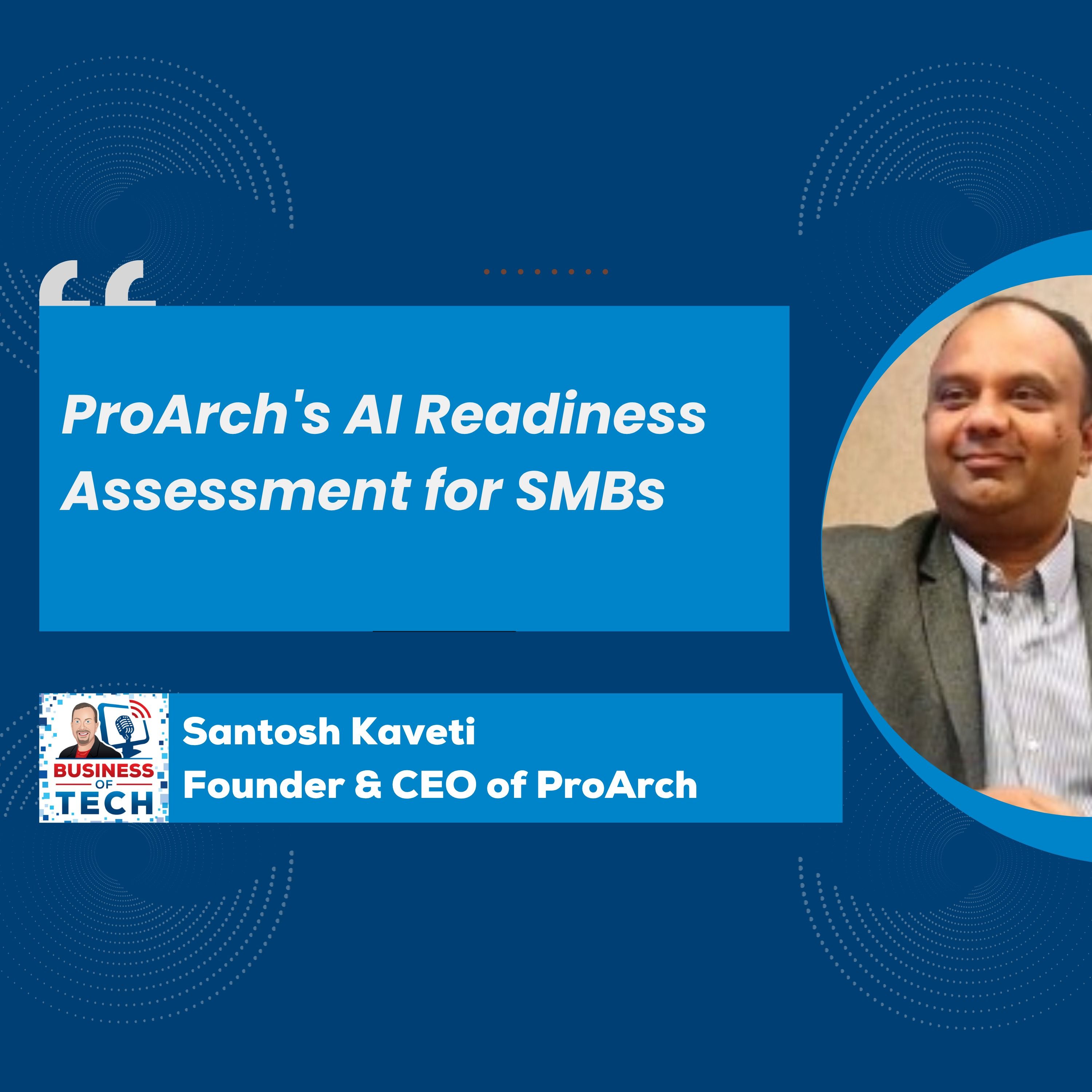
Ep 1679From Data to AI: How ProArch Transforms Industries with Smart Start and Microsoft Solutions with Santosh Kaveti
Santosh Kaveti, founder and CEO of ProArch, discusses the critical steps organizations must take to operationalize AI effectively. His company specializes in helping clients across various sectors, including power, manufacturing, and healthcare, bridge the gap between IT and operational technology systems. Kaveti emphasizes the importance of data readiness as a prerequisite for AI readiness, arguing that without proper data governance, organizations cannot successfully implement AI solutions. He outlines a structured approach to AI adoption, starting with individual user empowerment and progressing through workflows and custom AI applications.Data governance is a central theme in Kaveti's discussion, where he clarifies that it does not necessarily require perfectly structured data but rather a solid understanding of data risks and access controls. He notes that many organizations, particularly small and mid-sized businesses, are often unprepared for the data governance necessary to support AI initiatives. Kaveti suggests that organizations can achieve significant improvements by implementing basic data classification and access controls, which can lead to a more effective AI journey.Kaveti also highlights the differences in AI adoption across industries, noting that compliance drives many organizations in healthcare, while critical infrastructure sectors often mistakenly believe that their locked-down environments ensure security. He points out that a lack of understanding of data risks can lead to vulnerabilities, regardless of the perceived security measures in place. This misconception is prevalent among SMBs, which often overlook the importance of data hygiene and governance.Finally, Kaveti shares real-world examples of how ProArch has successfully implemented AI solutions for clients, illustrating the tangible benefits of AI in improving operational efficiency. He emphasizes that AI should not be confused with mere automation, as true AI applications can enhance productivity and decision-making. By focusing on the integration of AI tools and ensuring they work cohesively, organizations can unlock the full potential of AI to drive business transformation. 💼 All Our SponsorsSupport the vendors who support the show:👉 https://businessof.tech/sponsors/ 🚀 Join Business of Tech PlusGet exclusive access to investigative reports, vendor analysis, leadership briefings, and more.👉 https://businessof.tech/plus 🎧 Subscribe to the Business of TechWant the show on your favorite podcast app or prefer the written versions of each story?📲 https://www.businessof.tech/subscribe 📰 Story Links & SourcesLooking for the links from today’s stories?Every episode script — with full source links — is posted at:🌐 https://www.businessof.tech 🎙 Want to Be a Guest?Pitch your story or appear on Business of Tech: Daily 10-Minute IT Services Insights:💬 https://www.podmatch.com/hostdetailpreview/businessoftech 🔗 Follow Business of Tech LinkedIn: https://www.linkedin.com/company/28908079YouTube: https://youtube.com/mspradioBluesky: https://bsky.app/profile/businessof.techInstagram: https://www.instagram.com/mspradioTikTok: https://www.tiktok.com/@businessoftechFacebook: https://www.facebook.com/mspradionews Hosted by Simplecast, an AdsWizz company. See pcm.adswizz.com for information about our collection and use of personal data for advertising.
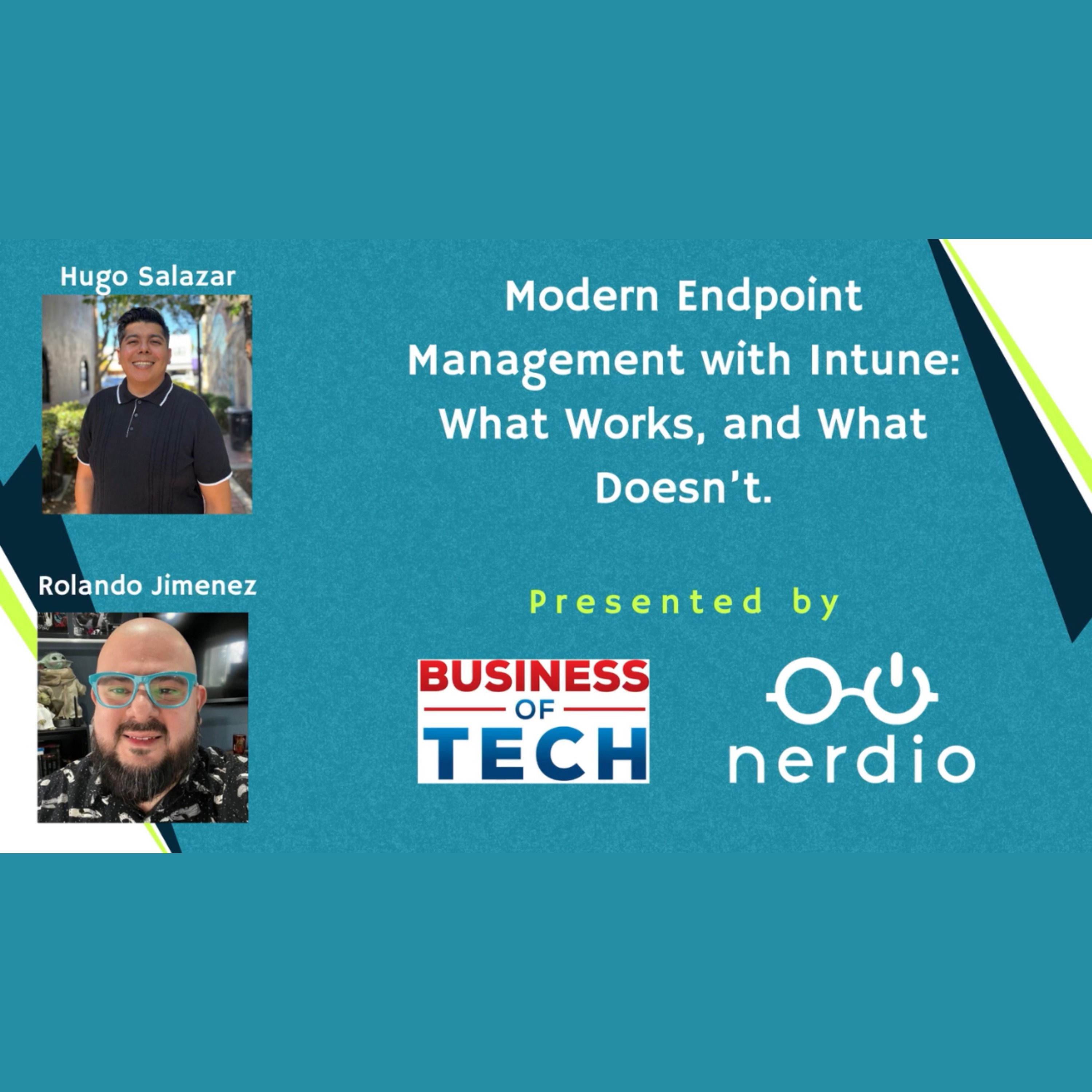
Ep 1686From Legacy to Cloud: How MSPs Can Leverage Intune for Effective Endpoint Management with Hugo Salazar and Rolando Jimenez
Dave Sobel hosts a sponsored webinar discussing the modern endpoint management capabilities of Microsoft Intune, particularly its relevance for Managed Service Providers (MSPs). The session features Rolando Jimenez, a technical trainer at Nerdio, and Hugo Salazar, a Go Live engineer, who share their insights and experiences with Intune. They explore the evolution of Intune from a supplementary tool to a central component of Microsoft 365, emphasizing its integration with security products and the shift away from traditional on-premises solutions like Active Directory and Group Policy.The conversation highlights the practical aspects of deploying Intune, including the importance of pre-planning and understanding the complexities involved in transitioning from legacy systems. Rolando and Hugo discuss common pitfalls that MSPs encounter when setting up Intune, such as the need for proper configuration and the significance of using tools like the Group Policy Analyzer. They also emphasize the benefits of using Intune's autopilot feature for zero-touch enrollment, which streamlines the onboarding process for new devices.Security is a major focus, with the speakers addressing how Intune helps manage compliance and protect sensitive data, especially in a remote work environment. They explain the differences between Mobile Device Management (MDM) and Mobile Application Management (MAM), detailing how MAM allows for the protection of corporate data on personal devices without requiring full device management. This nuanced approach is crucial for organizations that want to balance user privacy with security needs.As the discussion wraps up, Rolando and Hugo encourage MSPs to embrace Intune as a powerful tool for endpoint management. They stress the importance of leveraging the capabilities of Intune to enhance operational efficiency and security while providing practical advice for successful implementation. The session concludes with a Q&A segment, where they address specific questions from the audience, further clarifying the benefits and functionalities of Intune in modern IT management. 💼 All Our SponsorsSupport the vendors who support the show:👉 https://businessof.tech/sponsors/ 🚀 Join Business of Tech PlusGet exclusive access to investigative reports, vendor analysis, leadership briefings, and more.👉 https://businessof.tech/plus 🎧 Subscribe to the Business of TechWant the show on your favorite podcast app or prefer the written versions of each story?📲 https://www.businessof.tech/subscribe 📰 Story Links & SourcesLooking for the links from today’s stories?Every episode script — with full source links — is posted at:🌐 https://www.businessof.tech 🎙 Want to Be a Guest?Pitch your story or appear on Business of Tech: Daily 10-Minute IT Services Insights:💬 https://www.podmatch.com/hostdetailpreview/businessoftech 🔗 Follow Business of Tech LinkedIn: https://www.linkedin.com/company/28908079YouTube: https://youtube.com/mspradioBluesky: https://bsky.app/profile/businessof.techInstagram: https://www.instagram.com/mspradioTikTok: https://www.tiktok.com/@businessoftechFacebook: https://www.facebook.com/mspradionews Hosted by Simplecast, an AdsWizz company. See pcm.adswizz.com for information about our collection and use of personal data for advertising.
Ep 1692Delta's AI Pricing Sparks Trust Issues, OpenAI's ChatGPT Agent Goes Autonomous, Intel Cuts Jobs
Delta Airlines is set to revolutionize its pricing strategy by implementing artificial intelligence to determine the maximum price customers are willing to pay for flights. This shift aims for AI to influence 20% of ticket prices by the end of the year, a significant increase from the current 3%. The technology, developed by travel firm Fetcher, analyzes customer behavior and market conditions in real time. However, this personalized pricing strategy has raised concerns among privacy advocates, who argue that it may feel invasive and could erode customer trust. The implications of this dynamic pricing model extend beyond Delta, as businesses across various sectors may face similar challenges in balancing profitability with customer perception and regulatory compliance.OpenAI has launched the ChatGPT Agent, a new capability that allows the AI to perform complex tasks autonomously, such as analyzing calendars and creating presentations. This advancement marks a significant shift from AI as a mere assistant to an autonomous actor capable of executing commands independently. The ChatGPT Agent has demonstrated impressive performance metrics, outperforming previous iterations in various benchmarks. However, OpenAI has acknowledged potential risks, including prompt injections that could lead to unintended actions with private data. As the AI landscape evolves, Microsoft’s Copilot struggles to gain traction, highlighting the competitive challenges in the market.The podcast also discusses Intel's announcement of significant layoffs affecting over 5,000 employees as the company grapples with declining relevance in the semiconductor industry. The new CEO, Lip Butan, emphasizes the need for Intel to become leaner and more agile, reflecting a shift from previous costly turnaround strategies. This situation underscores the importance for service providers to pivot before clients feel the impact of supply chain issues. As Intel navigates these challenges, the broader implications for the tech industry and its workforce are significant.Finally, the episode touches on internal chaos at OpenAI, as highlighted by former engineer Calvin French-Owen, who points out organizational challenges stemming from rapid growth. The lack of centralized planning has led to inefficiencies and communication breakdowns within the company. Additionally, the media industry's misguided pivot to AI is critiqued, emphasizing that quality journalism relies on human connection rather than automated output. The discussion raises important questions about the future of AI, data management, and the evolving landscape of technology, urging listeners to consider the implications for their own businesses and clients. Three things to know today 00:00 Delta’s AI Wants to Know What You’ll Pay—Is That the Future of Business?04:32 OpenAI Unveils ChatGPT Agent: AI Now Acts Autonomously With Virtual Computer08:41 Intel Slims Down: Leaner Team, Fewer Chips, Big Questions Ahead09:45 Is AI the Fix or Just a Fad? Why It’s Time to Challenge Old Tech Assumptions This is the Business of Tech. Supported by: https://syncromsp.com/ Tell us about a newsletter!https://bit.ly/biztechnewsletter 💼 All Our SponsorsSupport the vendors who support the show:👉 https://businessof.tech/sponsors/ 🚀 Join Business of Tech PlusGet exclusive access to investigative reports, vendor analysis, leadership briefings, and more.👉 https://businessof.tech/plus 🎧 Subscribe to the Business of TechWant the show on your favorite podcast app or prefer the written versions of each story?📲 https://www.businessof.tech/subscribe 📰 Story Links & SourcesLooking for the links from today’s stories?Every episode script — with full source links — is posted at:🌐 https://www.businessof.tech 🎙 Want to Be a Guest?Pitch your story or appear on Business of Tech: Daily 10-Minute IT Services Insights:💬 https://www.podmatch.com/hostdetailpreview/businessoftech 🔗 Follow Business of Tech LinkedIn: https://www.linkedin.com/company/28908079YouTube: https://youtube.com/mspradioBluesky: https://bsky.app/profile/businessof.techInstagram: https://www.instagram.com/mspradioTikTok: https://www.tiktok.com/@businessoftechFacebook: https://www.facebook.com/mspradionews Hosted by Simplecast, an AdsWizz company. See pcm.adswizz.com for information about our collection and use of personal data for advertising.
Ep 1691Microsoft Cuts 9,000 Jobs, Boosts AI Partner Incentives; OpenAI Expands Multi-Cloud E-Commerce Tools
Microsoft is undergoing a significant restructuring, placing artificial intelligence (AI) at the forefront of its strategy. The company has announced the layoff of approximately 9,000 employees, primarily targeting generalist sales roles, as it shifts towards a model that prioritizes technical expertise over traditional relationship-building in sales. This move is part of a broader initiative to enhance its AI offerings, particularly through its Copilot program, which has seen a 50% increase in funding and a 70% rise in partner incentives. Microsoft aims to eliminate product silos and align its go-to-market strategy with customer priorities, emphasizing the importance of AI integration in sales and service delivery.OpenAI is also making waves by diversifying its cloud infrastructure, now utilizing Google Cloud alongside Microsoft, CoreWeave, and Oracle. This strategic shift comes as OpenAI prepares to introduce new features in its ChatGPT platform, including a checkout function for e-commerce, which will allow users to make purchases directly through the chatbot. The company is positioning itself to compete more directly with Microsoft’s Office suite by enhancing productivity tools and integrating e-commerce capabilities, signaling a move from being a model provider to an end-user platform.Amazon Web Services (AWS) has launched a new platform called Amazon Bedrock Agent Core, designed to facilitate collaboration among AI agents across organizations. This platform aims to address concerns about job security in the face of AI advancements, as it allows for the construction of interconnected AI agents capable of performing various tasks. Unlike competitors, AWS's offering is designed to be flexible and support multiple AI frameworks, positioning it as a neutral infrastructure provider in the AI landscape.In a rapid-fire segment, several companies have announced new partnerships and product updates. iRACA has teamed up with TD Cynics to extend its secure access services, while cgen.ai has launched a platform to streamline AI workloads. Nutrien has improved its Document AI software, and Cohesity has integrated its data management platform with Microsoft 365 Copilot, enabling users to leverage backup data for informed decision-making. These developments highlight a trend towards enabling service providers to evolve from mere technical support to delivering measurable business outcomes. Four things to know today 00:00 Microsoft Shakes Up Partner Strategy with AI Funding Boost and Workforce Realignment05:42 OpenAI’s Cloud Diversification and Agent Ambitions Could Upend SMB Workflows08:35 AWS Launches AgentCore to Build Networks of Interconnected AI Agents11:15 Aryaka, C-Gen.AI, Nutrient, Cohesity Roll Out Innovations Targeting Business Value This is the Business of Tech. Supported by: https://timezest.com/mspradio/ 💼 All Our SponsorsSupport the vendors who support the show:👉 https://businessof.tech/sponsors/ 🚀 Join Business of Tech PlusGet exclusive access to investigative reports, vendor analysis, leadership briefings, and more.👉 https://businessof.tech/plus 🎧 Subscribe to the Business of TechWant the show on your favorite podcast app or prefer the written versions of each story?📲 https://www.businessof.tech/subscribe 📰 Story Links & SourcesLooking for the links from today’s stories?Every episode script — with full source links — is posted at:🌐 https://www.businessof.tech 🎙 Want to Be a Guest?Pitch your story or appear on Business of Tech: Daily 10-Minute IT Services Insights:💬 https://www.podmatch.com/hostdetailpreview/businessoftech 🔗 Follow Business of Tech LinkedIn: https://www.linkedin.com/company/28908079YouTube: https://youtube.com/mspradioBluesky: https://bsky.app/profile/businessof.techInstagram: https://www.instagram.com/mspradioTikTok: https://www.tiktok.com/@businessoftechFacebook: https://www.facebook.com/mspradionews Hosted by Simplecast, an AdsWizz company. See pcm.adswizz.com for information about our collection and use of personal data for advertising.
Ep 1689Windows 10 Cutoff and VMware Licensing Chaos: MSPs Must Navigate New Cybersecurity Demands
Managed service providers (MSPs) are increasingly becoming essential partners for mid-market organizations, with a recent Barracuda Networks survey revealing that 85% of firms with 1,000 to 2,000 employees now depend on MSPs for integrated security support. This shift highlights the growing complexity of cybersecurity challenges that these organizations face, as they seek to manage a multitude of disconnected security tools. The survey indicates a willingness among 92% of organizations to pay a premium for enhanced support, emphasizing the need for MSPs to demonstrate technical mastery and deliver ongoing value.The podcast discusses the implications of this trend, noting that while MSPs may feel indispensable, they are also facing pressure from vendors who are building direct relationships with mid-market clients. The demand for 24/7 security coverage and transparency about security practices is high, with many organizations willing to switch providers if their needs are not met. This creates a challenging environment for MSPs, who must evolve from being mere resellers of security tools to becoming orchestrators of comprehensive security outcomes.Additionally, the episode covers the ongoing licensing disputes between Siemens and Broadcom following Broadcom's acquisition of VMware. The shift from perpetual licenses to subscription models has led to significant price increases, causing frustration among enterprise customers. As organizations like Siemens seek alternatives, the podcast highlights the growing market for VMware exit planning and license optimization services, presenting opportunities for IT providers to assist clients in navigating these challenges.Finally, the discussion touches on broader trends in software licensing and the rise of open-source solutions as enterprises grapple with compliance issues. The increasing use of unapproved AI tools, known as Shadow AI, among employees poses additional risks, prompting IT leaders to seek trusted partners who can help them manage these complexities. The episode concludes by emphasizing the need for MSPs to pivot from reactive approaches to strategic advisory roles, guiding clients through the evolving landscape of technology and security. Three things to know today 00:00 Barracuda Warns: Midmarket Clients Expect 24/7 Security and Transparency—or They’ll Walk05:20 Siemens vs. Broadcom: VMware Licensing Fight Highlights Industry Turmoil09:08 $500K Compliance Costs and Shadow AI Adoption Push IT Leaders to Seek Trusted Advisors11:52 KnowBe4 Targets Human Error, Microsoft Nudges Windows 11, Amazon Stumbles on Alexa Web This is the Business of Tech. Supported by: https://getnerdio.com/nerdio-manager-for-msp/ 💼 All Our SponsorsSupport the vendors who support the show:👉 https://businessof.tech/sponsors/ 🚀 Join Business of Tech PlusGet exclusive access to investigative reports, vendor analysis, leadership briefings, and more.👉 https://businessof.tech/plus 🎧 Subscribe to the Business of TechWant the show on your favorite podcast app or prefer the written versions of each story?📲 https://www.businessof.tech/subscribe 📰 Story Links & SourcesLooking for the links from today’s stories?Every episode script — with full source links — is posted at:🌐 https://www.businessof.tech 🎙 Want to Be a Guest?Pitch your story or appear on Business of Tech: Daily 10-Minute IT Services Insights:💬 https://www.podmatch.com/hostdetailpreview/businessoftech 🔗 Follow Business of Tech LinkedIn: https://www.linkedin.com/company/28908079YouTube: https://youtube.com/mspradioBluesky: https://bsky.app/profile/businessof.techInstagram: https://www.instagram.com/mspradioTikTok: https://www.tiktok.com/@businessoftechFacebook: https://www.facebook.com/mspradionews Hosted by Simplecast, an AdsWizz company. See pcm.adswizz.com for information about our collection and use of personal data for advertising.
Ep 1688AI Breakthroughs: 92% Health Accuracy, Nonprofit Literacy Tools, and Coding Tool Challenges
A recent study supported by Apple reveals that a new artificial intelligence model, known as the wearable behavior model, can flag health conditions with an impressive accuracy of 92%. This model, trained on over 2.5 billion hours of data from wearable devices, outperforms traditional health prediction methods that rely solely on basic biometric measurements. Researchers found that behavioral data, such as movement and sleep patterns, often provide stronger health signals than conventional metrics. The model has shown superior performance in dynamic health prediction tasks, including detecting pregnancy and assessing sleep quality.In the realm of education, non-profits are leveraging AI to address global inequities. Education Above All, a non-profit organization based in Qatar, has partnered with prestigious institutions like MIT and Harvard to create DigiWise, a free program aimed at improving AI literacy in developing countries. This initiative allows children to combat misinformation and utilize AI tools in the classroom. Their generative AI chatbot, Furby, is currently being used by over 5 million children in India, providing access to project-based learning resources.However, not all news is positive. A study from the AI benchmarking non-profit, METER, indicates that AI coding tools may actually hinder productivity for experienced developers, increasing task completion time by 19%. Developers had expected these tools to save time, but the reality was a slowdown due to factors such as unrealistic expectations, unfamiliarity with repositories, and the complexity of codebases. This highlights a significant gap between the anticipated benefits of AI tools and their actual performance in real-world scenarios.Additionally, a report from Cloud Zero reveals that while 91% of companies believe their AI investments are yielding returns, only half can substantiate this with concrete data. AI budgets are projected to increase significantly, yet many organizations struggle with visibility into their AI costs and return on investment. This situation underscores the need for effective cost tracking and governance in AI investments, as many companies risk overspending without clear evidence of ROI. The podcast emphasizes the importance of focusing on AI financial governance to help clients navigate these challenges and ensure sustainable growth in the sector. Three things to know today 00:00 Wearable AI Achieves 92% Accuracy While Coding Tools Slow Developers by 19%, Reports Find07:08 Model Wars Heat Up: Open Source Kimi K2 Outperforms GPT-4 While Corporates Cut Chatbot Spend11:53 MSP Workflow Wars: New Integrations Highlight Critical Role of Orchestration in IT Services This is the Business of Tech. Supported by: https://cometbackup.com/?utm_source=mspradio&utm_medium=podcast&utm_campaign=sponsorship ThreatDown Webinar: https://bit.ly/threatdown 💼 All Our SponsorsSupport the vendors who support the show:👉 https://businessof.tech/sponsors/ 🚀 Join Business of Tech PlusGet exclusive access to investigative reports, vendor analysis, leadership briefings, and more.👉 https://businessof.tech/plus 🎧 Subscribe to the Business of TechWant the show on your favorite podcast app or prefer the written versions of each story?📲 https://www.businessof.tech/subscribe 📰 Story Links & SourcesLooking for the links from today’s stories?Every episode script — with full source links — is posted at:🌐 https://www.businessof.tech 🎙 Want to Be a Guest?Pitch your story or appear on Business of Tech: Daily 10-Minute IT Services Insights:💬 https://www.podmatch.com/hostdetailpreview/businessoftech 🔗 Follow Business of Tech LinkedIn: https://www.linkedin.com/company/28908079YouTube: https://youtube.com/mspradioBluesky: https://bsky.app/profile/businessof.techInstagram: https://www.instagram.com/mspradioTikTok: https://www.tiktok.com/@businessoftechFacebook: https://www.facebook.com/mspradionews Hosted by Simplecast, an AdsWizz company. See pcm.adswizz.com for information about our collection and use of personal data for advertising.
Ep 1687Critical Vulnerabilities in Kaseya and McDonald's Chatbot Highlight MSP Security Risks
A recent report by Auvik reveals significant challenges faced by managed service providers (MSPs), highlighting issues such as tool sprawl, burnout among IT professionals, and the increasing reliance on IT generalists. The report indicates that 50% of MSPs use over ten tools to manage client networks, with many professionals experiencing high levels of stress and burnout. The ongoing retirement of baby boomers in the IT sector exacerbates these issues, leading to a demand for specialists who can assist generalists in navigating the complexities of technology. Key areas of interest for IT professionals include cybersecurity planning and cloud computing, as they seek to enhance productivity and user experience.In addition to the challenges faced by MSPs, two significant cybersecurity incidents have come to light. Kaseya's Network Detective tool was found to have critical vulnerabilities that could expose sensitive data across managed environments. Similarly, a flaw in McDonald's chatbot job application platform compromised the personal information of over 64 million applicants due to weak security measures. These incidents underscore the importance of robust vendor security practices, as clients often hold their MSPs accountable for data breaches, regardless of the source.The podcast also discusses the ongoing struggle for right-to-repair legislation, which has seen limited enforcement despite public support. A report indicates that many products lack accessible repair materials, and manufacturers continue to resist changes that would facilitate repairs. This situation presents an opportunity for service firms to incorporate repairability into their procurement strategies and asset management services, aligning with client values around sustainability and cost control.Finally, Sonomi has launched new tools aimed at enhancing business impact analysis and continuity planning for cybersecurity professionals. These tools are designed to help MSPs communicate the business value of cybersecurity to leadership, shifting the perception of security from a cost center to a value driver. The success of these initiatives will depend on MSPs' ability to integrate these features into their service delivery, ultimately positioning them as strategic partners who understand both technology and business needs. Four things to know today 00:00 Auvik Report Warns MSPs of Tool Sprawl, Talent Drain, and Rising Burnout04:10 Kaseya and McDonald’s Incidents Reveal Fragile Trust in Vendor Security Practices07:01 Manufacturers Withhold Parts, Manuals Despite State-Level Repair Rights Legislation08:40 Cynomi Adds Business Impact and Continuity Planning Tools to Help MSPs Drive Strategic Outcomes This is the Business of Tech. Supported by: https://getflexpoint.com/msp-radio/ ThreatDown Webinar: https://bit.ly/threatdown 💼 All Our SponsorsSupport the vendors who support the show:👉 https://businessof.tech/sponsors/ 🚀 Join Business of Tech PlusGet exclusive access to investigative reports, vendor analysis, leadership briefings, and more.👉 https://businessof.tech/plus 🎧 Subscribe to the Business of TechWant the show on your favorite podcast app or prefer the written versions of each story?📲 https://www.businessof.tech/subscribe 📰 Story Links & SourcesLooking for the links from today’s stories?Every episode script — with full source links — is posted at:🌐 https://www.businessof.tech 🎙 Want to Be a Guest?Pitch your story or appear on Business of Tech: Daily 10-Minute IT Services Insights:💬 https://www.podmatch.com/hostdetailpreview/businessoftech 🔗 Follow Business of Tech LinkedIn: https://www.linkedin.com/company/28908079YouTube: https://youtube.com/mspradioBluesky: https://bsky.app/profile/businessof.techInstagram: https://www.instagram.com/mspradioTikTok: https://www.tiktok.com/@businessoftechFacebook: https://www.facebook.com/mspradionews Hosted by Simplecast, an AdsWizz company. See pcm.adswizz.com for information about our collection and use of personal data for advertising.
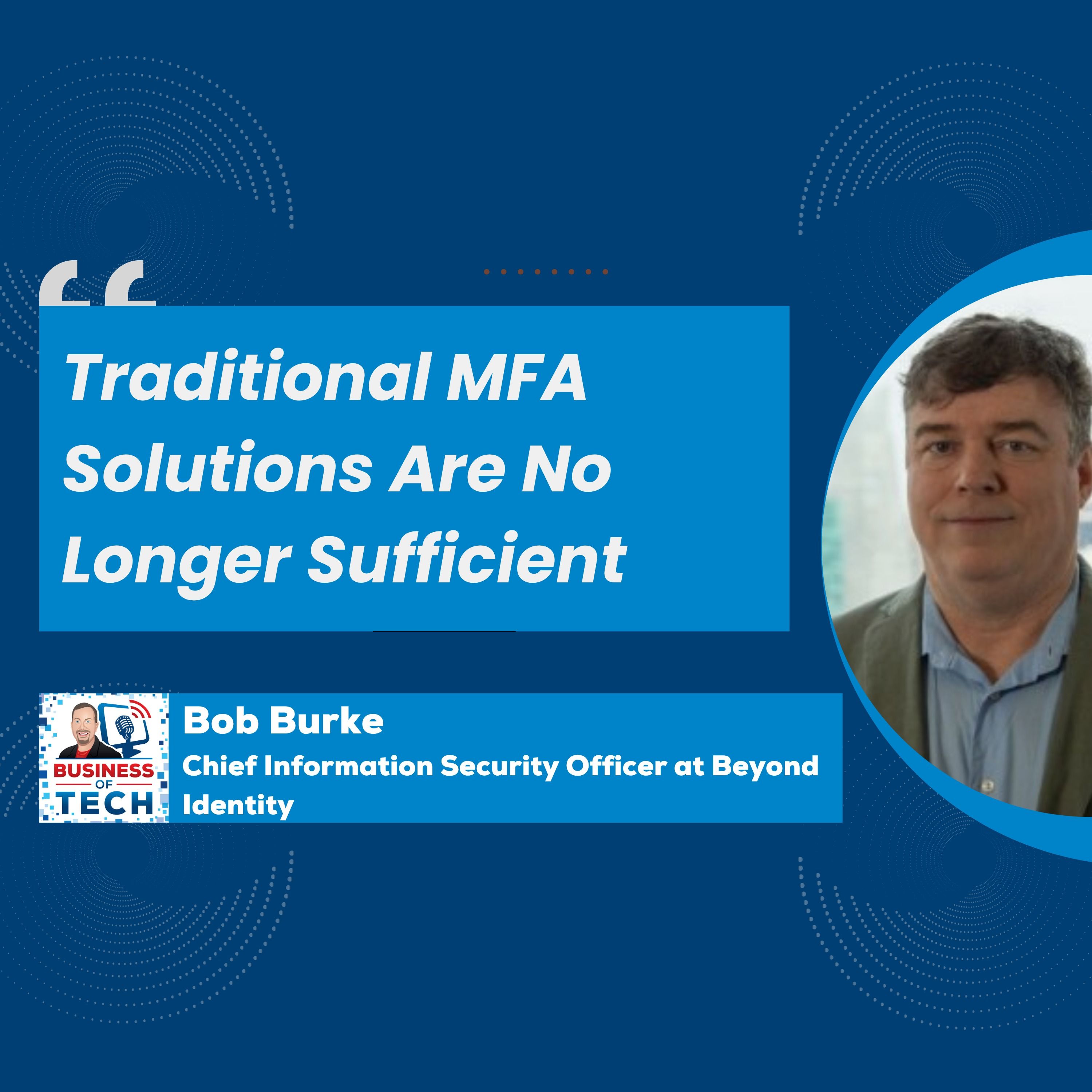
Ep 1678Rethinking Cybersecurity: Why Traditional MFA Fails and the Future of Phishing-Resistant Solutions with Bob Burke
Bob Burke, Chief Information Security Officer at Beyond Identity, challenges the effectiveness of traditional multi-factor authentication (MFA) in the evolving landscape of cybersecurity. He argues that legacy MFA solutions, which often rely on out-of-band authorization methods like push notifications or one-time passwords, are no longer sufficient against the rising tide of sophisticated cyber threats. With the advent of services like phishing-as-a-service, attackers can easily bypass these outdated security measures, necessitating a shift towards phishing-resistant authentication methods. Burke emphasizes the need for organizations to adopt solutions that not only enhance security but also consider device posture and trustworthiness.Burke also critiques the current state of FIDO2 and passkeys, acknowledging their potential while highlighting their limitations, particularly in terms of device posture and user experience. He suggests that small to mid-sized businesses (SMBs) should prioritize phishing-resistant solutions that integrate both browser protection and device authentication. Furthermore, he raises concerns about the pricing models of many Software as a Service (SaaS) providers, which often place essential security features behind higher-tier subscriptions, effectively discouraging customers from adopting more secure practices.The conversation shifts to the endpoint detection and response (EDR) market, where Burke notes that while EDR solutions are still necessary, they are evolving into more comprehensive offerings like extended detection and response (XDR). He points out that many of these solutions are priced for enterprise-level organizations, leaving SMBs and mid-market companies struggling to find affordable options. Burke encourages these organizations to seek out solutions that fit their budget while still providing essential security capabilities.Finally, Burke shares insights from his experience with the FedRAMP certification process, emphasizing the importance of building internal security competencies and integrating security into product design from the outset. He advocates for a clear internal compliance program, such as NIST, to guide organizations in their security efforts. As the cybersecurity landscape continues to evolve, Burke warns that the tempo and scope of attacks are increasing, driven by advancements in AI, and urges organizations to reassess their security architectures to stay ahead of emerging threats. 💼 All Our SponsorsSupport the vendors who support the show:👉 https://businessof.tech/sponsors/ 🚀 Join Business of Tech PlusGet exclusive access to investigative reports, vendor analysis, leadership briefings, and more.👉 https://businessof.tech/plus 🎧 Subscribe to the Business of TechWant the show on your favorite podcast app or prefer the written versions of each story?📲 https://www.businessof.tech/subscribe 📰 Story Links & SourcesLooking for the links from today’s stories?Every episode script — with full source links — is posted at:🌐 https://www.businessof.tech 🎙 Want to Be a Guest?Pitch your story or appear on Business of Tech: Daily 10-Minute IT Services Insights:💬 https://www.podmatch.com/hostdetailpreview/businessoftech 🔗 Follow Business of Tech LinkedIn: https://www.linkedin.com/company/28908079YouTube: https://youtube.com/mspradioBluesky: https://bsky.app/profile/businessof.techInstagram: https://www.instagram.com/mspradioTikTok: https://www.tiktok.com/@businessoftechFacebook: https://www.facebook.com/mspradionews Hosted by Simplecast, an AdsWizz company. See pcm.adswizz.com for information about our collection and use of personal data for advertising.
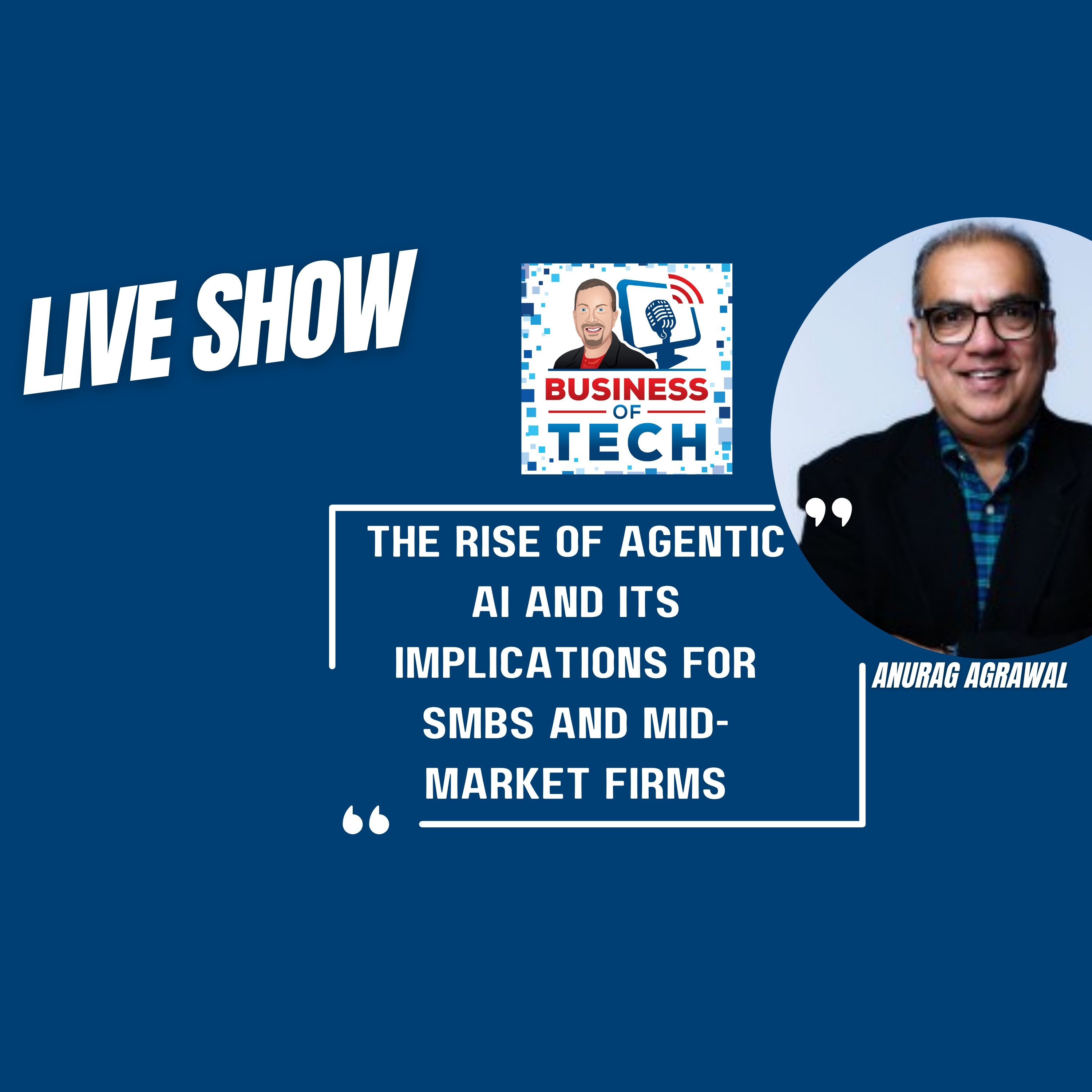
Ep 1683AI as the New Operating System: Transforming SMBs, Security Risks, and Unified Experience Platforms with Anurag Agrawal
Artificial intelligence (AI) is evolving beyond a mere tool to become the foundational operating system for modern businesses, particularly in the SMB and mid-market sectors. Anurag Agarwal, founder and chief global analyst at TechIsle, discusses the transformative potential of AI as an operating system (AIOS), which would integrate intelligent capabilities at the core of computing. This concept envisions a system that learns user behavior, anticipates needs, and automates tasks, blurring the lines between user intent and system action. However, Agarwal emphasizes that we are still in the early stages of this evolution, with AIOS being more of an aspirational goal than a current reality.The conversation also delves into the concept of agentic AI, which represents a shift from traditional robotic process automation (RPA) to more autonomous, judgment-driven automation. While many SMBs are exploring agentic AI for applications like customer service and IT operations, the adoption remains nascent. The research indicates that businesses are looking for solutions that can handle complex processes without human intervention, highlighting the need for operational autonomy. Agarwal points out that the challenges of integrating AI into existing workflows and ensuring accountability for AI-driven decisions are significant hurdles that need to be addressed.Security is another critical theme discussed, as AI presents both opportunities and risks. The podcast highlights the dual nature of AI as a "sword and a shield," where it can be used to enhance security measures but also introduces new attack vectors. Threats such as social engineering, data poisoning, and automated exploitation are becoming more prevalent, necessitating advanced security solutions. Agarwal mentions that while some vendors are making strides in AI-powered security, there is still a gap in readiness for SMBs and mid-market firms to effectively implement these solutions.Finally, the discussion touches on the importance of unified experience platforms (UXPs) that integrate customer and employee experiences. Agarwal explains that these platforms aim to streamline communication and enhance interactions across various touchpoints, ultimately driving operational efficiency and customer satisfaction. However, there is a notable gap in the readiness of the partner channel to implement these solutions effectively. The conversation concludes with a call for MSPs to focus on understanding customer needs and building their capabilities to bridge this gap, ensuring they can deliver the integrated solutions that businesses are increasingly seeking. 💼 All Our SponsorsSupport the vendors who support the show:👉 https://businessof.tech/sponsors/ 🚀 Join Business of Tech PlusGet exclusive access to investigative reports, vendor analysis, leadership briefings, and more.👉 https://businessof.tech/plus 🎧 Subscribe to the Business of TechWant the show on your favorite podcast app or prefer the written versions of each story?📲 https://www.businessof.tech/subscribe 📰 Story Links & SourcesLooking for the links from today’s stories?Every episode script — with full source links — is posted at:🌐 https://www.businessof.tech 🎙 Want to Be a Guest?Pitch your story or appear on Business of Tech: Daily 10-Minute IT Services Insights:💬 https://www.podmatch.com/hostdetailpreview/businessoftech 🔗 Follow Business of Tech LinkedIn: https://www.linkedin.com/company/28908079YouTube: https://youtube.com/mspradioBluesky: https://bsky.app/profile/businessof.techInstagram: https://www.instagram.com/mspradioTikTok: https://www.tiktok.com/@businessoftechFacebook: https://www.facebook.com/mspradionews Hosted by Simplecast, an AdsWizz company. See pcm.adswizz.com for information about our collection and use of personal data for advertising.
Ep 1685Political Hack at Columbia University, Malware Surge, and Microsoft Authenticator's New Direction
Columbia University has recently suffered a significant data breach, compromising the personal information of 1.8 million individuals, including social security numbers and financial aid details. The hacker, motivated by political opposition to affirmative action policies, claims to have stolen 460 gigabytes of sensitive data. This incident is part of a troubling trend of politically motivated cyber attacks targeting higher education institutions, particularly following the Supreme Court's decision to bar affirmative action practices in 2023. The limited media coverage of this breach raises concerns about data security and the integrity of academic institutions.In a related development, malware detection has surged by 171% in the first quarter of 2025, according to a report from WatchGuard Technologies. This increase highlights the growing sophistication of cyber threats that are outpacing traditional defenses. The report indicates a staggering 712% rise in new malware threats on endpoints, with the LSASS dumper identified as a leading threat. This trend underscores the need for organizations, especially universities and small businesses, to recognize the escalating risks and adapt their security strategies accordingly.Huntress has announced a collaboration with Microsoft to enhance cybersecurity for businesses, integrating its enterprise-grade solutions with Microsoft environments. This partnership aims to provide essential protections for endpoints and identities, allowing organizations to respond more effectively to cyber threats. Meanwhile, Microsoft is discontinuing the use of its Authenticator app for password storage, prompting users to transition to alternative solutions. This shift emphasizes the need for users to rethink their credential management strategies in light of evolving security practices.The podcast also touches on the implications of recent incidents involving major IT service providers, such as Ingram Micro's ransomware attack, which has raised concerns about vendor trust and supply chain fragility. As vendors face scrutiny following security breaches, the erosion of trust in their products becomes a significant issue for managed service providers (MSPs). Additionally, the discussion includes emerging concepts in artificial intelligence, such as context engineering, and the growing prevalence of AI note-takers in meetings, which raises questions about the balance between technological efficiency and human interaction in the workplace. Four things to know today 00:00 Columbia Breach and Malware Surge Show Why Compliance Alone Fails in Today’s Threat Landscape04:19 Huntress and Microsoft Join Forces to Bring Enterprise-Grade Security to SMBs and MSPs07:18 Palo Alto Networks Denies Involvement in Ingram Micro Ransomware Attack08:53 MCP’s Universal Plugin Model Could Transform MSP Integration and Governance This is the Business of Tech. Supported by: https://mspradio.com/engage/ 💼 All Our SponsorsSupport the vendors who support the show:👉 https://businessof.tech/sponsors/ 🚀 Join Business of Tech PlusGet exclusive access to investigative reports, vendor analysis, leadership briefings, and more.👉 https://businessof.tech/plus 🎧 Subscribe to the Business of TechWant the show on your favorite podcast app or prefer the written versions of each story?📲 https://www.businessof.tech/subscribe 📰 Story Links & SourcesLooking for the links from today’s stories?Every episode script — with full source links — is posted at:🌐 https://www.businessof.tech 🎙 Want to Be a Guest?Pitch your story or appear on Business of Tech: Daily 10-Minute IT Services Insights:💬 https://www.podmatch.com/hostdetailpreview/businessoftech 🔗 Follow Business of Tech LinkedIn: https://www.linkedin.com/company/28908079YouTube: https://youtube.com/mspradioBluesky: https://bsky.app/profile/businessof.techInstagram: https://www.instagram.com/mspradioTikTok: https://www.tiktok.com/@businessoftechFacebook: https://www.facebook.com/mspradionews Hosted by Simplecast, an AdsWizz company. See pcm.adswizz.com for information about our collection and use of personal data for advertising.
Ep 1684AI Adoption Grows but Burnout and Governance Gaps Widen; Major Tech Updates Announced
Daily AI use among desk workers has surged dramatically, with a report from Slack indicating a 233% increase since November. While 60% of these workers now regularly utilize AI tools, the integration has led to significant boosts in productivity and job satisfaction. However, the report also highlights concerning trends, such as increased burnout among those heavily engaged with AI, with 88% more likely to experience burnout and twice as likely to consider quitting compared to their peers. This dependence on AI is weakening psychological safety within teams, raising alarms about the long-term implications of AI adoption in the workplace.The rise of shadow AI is another pressing issue, as employees increasingly use unauthorized AI tools, outpacing IT teams' ability to evaluate these applications for risks. A report from ManageEngine reveals that over 80% of technology leaders feel overwhelmed by the rapid adoption of these tools, with significant concerns about data leakage and cybersecurity. Despite the rapid integration of AI into business operations, many companies still lack clear governance policies, and a majority of employees are requesting more training on AI usage risks. This gap in governance and training is particularly pronounced in small businesses, where only 14% of employees use AI daily.Confidence in AI initiatives among C-suite executives is declining, with only 58% trusting their company's AI strategies, down from 69% the previous year. This decline is particularly notable among CEOs, whose confidence dropped from 82% to 49%. In contrast, chief human resource officers and chief operating officers reported increased confidence, reflecting a focus on internal execution and workforce preparation. The report also highlights a worrying skills gap, with only 55% of chief technology officers believing their teams possess sufficient AI knowledge to navigate its risks and opportunities.Amid these challenges, Microsoft has announced a $4 billion initiative to improve AI education across the United States, aiming to train millions in effective AI usage. This initiative aligns with a broader movement among tech companies to incorporate AI tools into educational settings. As Microsoft integrates AI deeply into its ecosystem, clients will increasingly expect their teams and partners to keep pace with these advancements. The overarching trend suggests that organizations must not only adopt AI technologies but also develop governance frameworks and training programs to manage the complexities and risks associated with AI. Four things to know today 00:00 AI Adoption Surges but Brings Burnout, Shadow IT Risks, and Leadership Doubt06:00 FTC’s “Click to Cancel” Rule Overturned, but Subscription Pressure Isn’t Going Away07:32 Rewst and Barracuda Push AI-Driven MSP Tools as Teams Evolves With Threaded Conversations11:05 Microsoft Pledges $4B for AI Education as Healthcare AI Surpasses Doctors in Diagnosis This is the Business of Tech. Supported by: https://cometbackup.com/?utm_source=mspradio&utm_medium=podcast&utm_campaign=sponsorship 💼 All Our SponsorsSupport the vendors who support the show:👉 https://businessof.tech/sponsors/ 🚀 Join Business of Tech PlusGet exclusive access to investigative reports, vendor analysis, leadership briefings, and more.👉 https://businessof.tech/plus 🎧 Subscribe to the Business of TechWant the show on your favorite podcast app or prefer the written versions of each story?📲 https://www.businessof.tech/subscribe 📰 Story Links & SourcesLooking for the links from today’s stories?Every episode script — with full source links — is posted at:🌐 https://www.businessof.tech 🎙 Want to Be a Guest?Pitch your story or appear on Business of Tech: Daily 10-Minute IT Services Insights:💬 https://www.podmatch.com/hostdetailpreview/businessoftech 🔗 Follow Business of Tech LinkedIn: https://www.linkedin.com/company/28908079YouTube: https://youtube.com/mspradioBluesky: https://bsky.app/profile/businessof.techInstagram: https://www.instagram.com/mspradioTikTok: https://www.tiktok.com/@businessoftechFacebook: https://www.facebook.com/mspradionews Hosted by Simplecast, an AdsWizz company. See pcm.adswizz.com for information about our collection and use of personal data for advertising.
Ep 1682MSPs Under Pressure: Navigating AI Impersonation, Phishing Exploits, and Ransomware Fallout
Managed service providers (MSPs) are currently facing unprecedented pressure from clients regarding cybersecurity, with a significant increase in expectations for MSPs to manage their cybersecurity infrastructure. A recent survey revealed that 84% of MSPs report their clients now expect them to handle cybersecurity end-to-end, a notable rise from 65% the previous year. This shift comes as MSPs themselves are under increased scrutiny, with 77% reporting heightened oversight of their security practices. The growing concern over emerging threats, particularly those related to artificial intelligence, has further complicated the landscape, as MSPs find themselves caught between rising client demands and a lack of accountability from cybersecurity vendors.In a related development, a fraudulent impersonator has been using artificial intelligence to mimic the voice and writing style of U.S. Secretary of State Marco Rubio, successfully contacting several high-level officials to manipulate them for sensitive information. This incident highlights the vulnerabilities in secure communication channels and the ease with which attackers can exploit lax data security among government officials. The FBI has issued warnings about ongoing malicious messaging campaigns that utilize AI-generated voice messaging, emphasizing the need for enhanced verification protocols in executive communications.Additionally, attackers have been exploiting Microsoft 365's direct send feature to launch phishing attacks, impacting over 70 organizations. This method allows attackers to send emails that appear to come from legitimate internal addresses, bypassing traditional security measures. Research indicates that conventional phishing awareness training is largely ineffective, with many employees failing to recognize phishing attempts even after training. The study suggests a shift towards interactive training methods, which have proven more effective in reducing the likelihood of falling victim to such scams.Ingram Micro has begun restoring customer ordering capabilities following a ransomware attack that temporarily disabled its systems, but the company's lack of communication during the crisis has raised concerns among partners. The incident serves as a case study in breach communication, highlighting the importance of transparency and effective communication in maintaining trust. Meanwhile, Kaseya has expanded its community investment with the Technology Marketing Toolkit, aimed at enhancing resources for MSPs. However, questions remain about the potential cultural clash and the impact on the independence of the Toolkit's offerings within Kaseya's larger ecosystem. Four things to know today 00:00 MSPs Face Rising Cybersecurity Pressure as Clients Demand Full Protection and Vendors Sidestep Shared Risk04:25 AI Deepfake Impersonates Secretary of State in Sophisticated Attack, Exposing Risks for Executive Security09:17 Ingram Micro Begins System Restoration After Ransomware Attack, But Silence Frustrates12:07 Robin Robins Sells Technology Marketing Toolkit; Joins Kaseya as Strategic Advisor This is the Business of Tech. Supported by: https://getnerdio.com/nerdio-manager-for-msp/ 💼 All Our SponsorsSupport the vendors who support the show:👉 https://businessof.tech/sponsors/ 🚀 Join Business of Tech PlusGet exclusive access to investigative reports, vendor analysis, leadership briefings, and more.👉 https://businessof.tech/plus 🎧 Subscribe to the Business of TechWant the show on your favorite podcast app or prefer the written versions of each story?📲 https://www.businessof.tech/subscribe 📰 Story Links & SourcesLooking for the links from today’s stories?Every episode script — with full source links — is posted at:🌐 https://www.businessof.tech 🎙 Want to Be a Guest?Pitch your story or appear on Business of Tech: Daily 10-Minute IT Services Insights:💬 https://www.podmatch.com/hostdetailpreview/businessoftech 🔗 Follow Business of Tech LinkedIn: https://www.linkedin.com/company/28908079YouTube: https://youtube.com/mspradioBluesky: https://bsky.app/profile/businessof.techInstagram: https://www.instagram.com/mspradioTikTok: https://www.tiktok.com/@businessoftechFacebook: https://www.facebook.com/mspradionews Hosted by Simplecast, an AdsWizz company. See pcm.adswizz.com for information about our collection and use of personal data for advertising.
Ep 1681Small Businesses Seek AI Efficiency Amid Digital Gaps; New Regulations Impact Data Privacy
Small businesses are increasingly recognizing the need for digital maturity and the potential benefits of artificial intelligence (AI) to enhance operational efficiency. A recent report from the National Federation of Independent Business reveals that while a significant majority of small business owners have websites, only a small fraction accept online payments. This gap highlights a pressing need for integrated e-commerce solutions that not only enable payment processing but also align with the workflows of small and medium-sized businesses (SMBs). The report indicates that many SMBs are eager to adopt technology that addresses specific pain points, with a notable percentage already utilizing AI for communication and marketing tasks.The concept of agentic AI presents a substantial growth opportunity within the technology sector, particularly for partners over the next few years. However, the adoption of agentic AI varies significantly across different market segments, with large enterprises focusing on building ecosystems around major platforms, while SMBs are more likely to adopt AI through software-as-a-service solutions. Despite the potential, a report from Gartner warns that a significant percentage of agentic AI projects may fail due to factors such as rising costs and immature use cases. This underscores the importance of informed decision-making and practical applications of AI technology.Regulatory changes are also shaping the landscape for businesses, particularly concerning data privacy and governance. Creative Commons has launched an initiative called CC Signals to create a framework for sharing datasets in the age of AI, addressing concerns about data accessibility and ethical practices. Meanwhile, a recent Supreme Court ruling in the U.S. mandates age verification for websites with sexual content, raising alarms about internet privacy and the potential risks to personal data security. These developments signal a shift in the regulatory environment, emphasizing the need for businesses to prioritize compliance and data governance as core components of their operations.In the realm of technology solutions, several companies are introducing AI-powered tools aimed at improving IT support workflows and cybersecurity measures. TeamViewer has launched TeamViewer Intelligence, which enhances remote support capabilities, while Hornet Security has introduced AI Cyber Assistant tools to bolster security for SMBs. Additionally, acquisitions such as Grammarly's purchase of SuperHuman and Comet Backup's acquisition by WebPros reflect strategic moves to enhance service offerings and integrate communication tools. As the market evolves, IT service providers must leverage these advancements to create higher-margin service offerings and ensure they remain competitive in an increasingly AI-driven landscape. Four things to know today 00:00 SMBs Want Efficiency: AI Uptake Grows Yet Few Accept Payments Online05:37 Creative Commons Moves to Safeguard Data Commons in the AI Age08:01 TeamViewer, Addigy, and Calyptix Roll Out MSP-Centric AI and Cloud Solutions11:29 Grammarly, WebPros, and LevelBlue Deals Show Strategic Consolidation Across Tech Sectors This is the Business of Tech. Supported by: https://cometbackup.com/?utm_source=mspradio&utm_medium=podcast&utm_campaign=sponsorship 💼 All Our SponsorsSupport the vendors who support the show:👉 https://businessof.tech/sponsors/ 🚀 Join Business of Tech PlusGet exclusive access to investigative reports, vendor analysis, leadership briefings, and more.👉 https://businessof.tech/plus 🎧 Subscribe to the Business of TechWant the show on your favorite podcast app or prefer the written versions of each story?📲 https://www.businessof.tech/subscribe 📰 Story Links & SourcesLooking for the links from today’s stories?Every episode script — with full source links — is posted at:🌐 https://www.businessof.tech 🎙 Want to Be a Guest?Pitch your story or appear on Business of Tech: Daily 10-Minute IT Services Insights:💬 https://www.podmatch.com/hostdetailpreview/businessoftech 🔗 Follow Business of Tech LinkedIn: https://www.linkedin.com/company/28908079YouTube: https://youtube.com/mspradioBluesky: https://bsky.app/profile/businessof.techInstagram: https://www.instagram.com/mspradioTikTok: https://www.tiktok.com/@businessoftechFacebook: https://www.facebook.com/mspradionews Hosted by Simplecast, an AdsWizz company. See pcm.adswizz.com for information about our collection and use of personal data for advertising.
Ep 1680Ingram Micro Cyber Attack, Windows 11 Market Growth, and Cloudflare's AI Scraper Blockade
Ingram Micro has suffered a significant ransomware attack attributed to the SafePay group, disrupting its systems and affecting deliveries across multiple regions. The attack, which is believed to have exploited vulnerabilities in the company's GlobalProtect virtual private network, has left its website and online ordering systems offline since July 5, 2025. SafePay claims to have accessed sensitive data, including financial information and customer records, and has demanded a ransom for data security. This incident highlights the fragility of the supply chain for IT providers, as Ingram Micro is a critical distributor relied upon by managed service providers (MSPs) and value-added resellers (VARs).The podcast also discusses the recent shift in the desktop operating system market, with Windows 11 surpassing Windows 10 in market share. Despite this milestone, the adoption of Windows 11 has been slower than its predecessor due to stringent hardware requirements and a lack of consumer interest in upgrading. While the commercial sector is expected to see an increase in shipments as businesses transition to Windows 11, the consumer market remains weak, influenced by tariffs and inflation. Microsoft is preparing to offer extended support for Windows 10, allowing organizations to continue receiving critical updates as the end of support date approaches.Flamingo has launched OpenMSP, a platform aimed at helping MSPs and managed security service providers reduce software costs through open-source tools and AI-driven margin analysis. This initiative comes as software licensing and technician salaries consume a significant portion of revenue for these service providers. Meanwhile, Cloudflare has announced measures to block AI web crawlers by default, addressing concerns over unauthorized content scraping. This move could lead to a new content licensing model for AI training, potentially creating new revenue streams for content-heavy clients.The episode concludes with a tribute to Alan D. Weinberger, the founder of the ASCII group, who recently passed away. His contributions to the IT community and the establishment of a supportive network for MSPs are recognized as significant. The podcast emphasizes the importance of community in the technology-driven business landscape and encourages listeners to consider the human aspect of the industry. Additionally, it highlights the need for robust backup solutions, such as Comet Backup, to protect against potential disruptions in the face of increasing cyber threats. Four things to know today 00:00 Global IT Distribution Disrupted: Ingram Micro Hit by SafePay Ransomware04:05 Windows 11 Overtakes Windows 10, but PC Market Shows No Signs of a Consumer Upgrade Boom08:55 MSPs Face New Decisions: Block AI Crawlers, Monetize Content, or Embrace Open Source?14:01 ASCII Group Mourns Loss of Founder Who Championed MSPs for Four Decades Supported by: https://timezest.com/mspradio/https://cometbackup.com/?utm_source=mspradio&utm_medium=podcast&utm_campaign=sponsorship 💼 All Our SponsorsSupport the vendors who support the show:👉 https://businessof.tech/sponsors/ 🚀 Join Business of Tech PlusGet exclusive access to investigative reports, vendor analysis, leadership briefings, and more.👉 https://businessof.tech/plus 🎧 Subscribe to the Business of TechWant the show on your favorite podcast app or prefer the written versions of each story?📲 https://www.businessof.tech/subscribe 📰 Story Links & SourcesLooking for the links from today’s stories?Every episode script — with full source links — is posted at:🌐 https://www.businessof.tech 🎙 Want to Be a Guest?Pitch your story or appear on Business of Tech: Daily 10-Minute IT Services Insights:💬 https://www.podmatch.com/hostdetailpreview/businessoftech 🔗 Follow Business of Tech LinkedIn: https://www.linkedin.com/company/28908079YouTube: https://youtube.com/mspradioBluesky: https://bsky.app/profile/businessof.techInstagram: https://www.instagram.com/mspradioTikTok: https://www.tiktok.com/@businessoftechFacebook: https://www.facebook.com/mspradionews Hosted by Simplecast, an AdsWizz company. See pcm.adswizz.com for information about our collection and use of personal data for advertising.

Ep 1671Building Trust in MSP Cyber Insurance: Edouard von Herberstein Discusses Spectra's Impact
The managed service provider (MSP) cyber insurance landscape is facing significant challenges, primarily due to the certification process rather than the coverage itself. Edouard von Herberstein, a seasoned expert in complex risk management, recognized the inefficiencies within this system and founded Spectra, the first MSP certification platform acknowledged by major insurers. His insights reveal that the lack of trust and understanding between insurers and MSPs has created a bottleneck, preventing effective collaboration in enhancing cyber resilience and risk management.Spectra's approach focuses on certifying the MSP as an organization rather than individual technicians. This certification process involves a thorough examination of how MSPs protect themselves, the resilience of the solutions they offer, and the deployment of these solutions to customers. By ensuring that MSPs meet specific standards and best practices, Spectra aims to build trust with insurers, who have historically been skeptical of the MSP sector. This certification not only enhances the credibility of MSPs but also provides insurers with a reliable way to assess risk.The conversation also touches on the skepticism that exists on both sides of the insurance and MSP relationship. Many MSPs view insurers as profit-driven entities that often deny claims, while insurers perceive MSPs as lacking value. However, through initiatives like Spectra, there is a growing recognition of the mutual benefits that can arise from collaboration. Brokers are increasingly seeking certified MSPs to refer to clients, creating a new dynamic where both parties can thrive.Finally, the discussion highlights the importance of insurance in the broader context of cybersecurity. While some argue that organizations can self-insure by maintaining sufficient funds for potential breaches, the reality is that many SMEs do not recover from incidents like ransomware attacks. Insurance provides not only financial support but also critical guidance and resources post-incident. By fostering a partnership between certified MSPs and insurers, Spectra aims to create a more resilient cybersecurity ecosystem that benefits all stakeholders involved. Supported by MSPRADIO : https://mspradio.com/engage/ 💼 All Our SponsorsSupport the vendors who support the show:👉 https://businessof.tech/sponsors/ 🚀 Join Business of Tech PlusGet exclusive access to investigative reports, vendor analysis, leadership briefings, and more.👉 https://businessof.tech/plus 🎧 Subscribe to the Business of TechWant the show on your favorite podcast app or prefer the written versions of each story?📲 https://www.businessof.tech/subscribe 📰 Story Links & SourcesLooking for the links from today’s stories?Every episode script — with full source links — is posted at:🌐 https://www.businessof.tech 🎙 Want to Be a Guest?Pitch your story or appear on Business of Tech: Daily 10-Minute IT Services Insights:💬 https://www.podmatch.com/hostdetailpreview/businessoftech 🔗 Follow Business of Tech LinkedIn: https://www.linkedin.com/company/28908079YouTube: https://youtube.com/mspradioBluesky: https://bsky.app/profile/businessof.techInstagram: https://www.instagram.com/mspradioTikTok: https://www.tiktok.com/@businessoftechFacebook: https://www.facebook.com/mspradionews Hosted by Simplecast, an AdsWizz company. See pcm.adswizz.com for information about our collection and use of personal data for advertising.
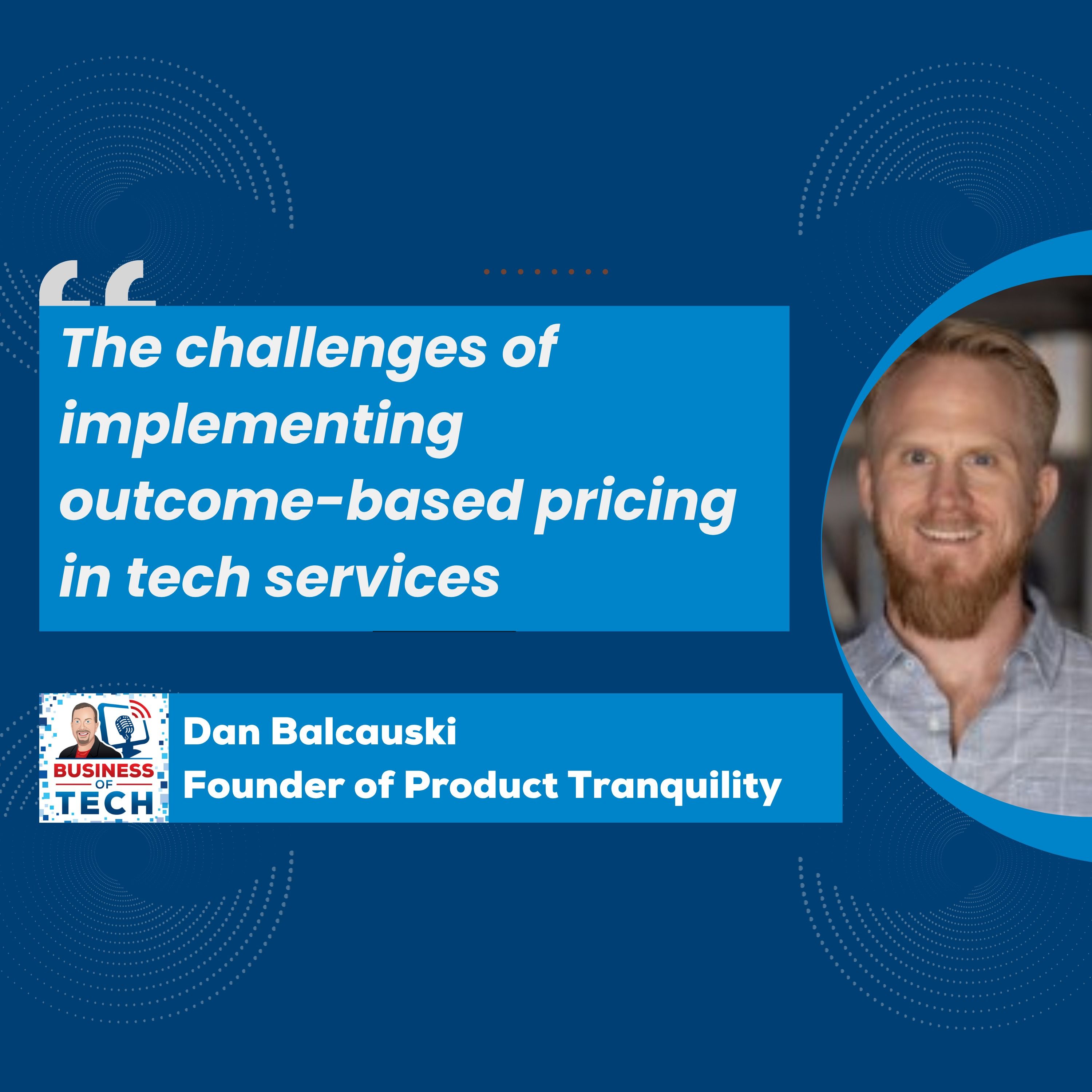
Ep 1667Unlocking Value: Effective Pricing Governance and Models for SaaS and MSPs with Dan Balcauski
Pricing is a critical lever for managed service providers (MSPs), SaaS providers, and tech companies, yet many organizations treat it as a one-time event rather than an ongoing process. Dan Balcauski, founder and chief pricing officer at Product Tranquility, emphasizes the importance of viewing pricing as a living system that requires continuous iteration and governance. He argues that pricing should be closely tied to the value a company provides, especially in a competitive landscape where both value and market conditions are constantly changing. Balcauski distinguishes between price metrics and pricing models, explaining that many executives mistakenly focus solely on the price itself rather than the broader context of how pricing is structured. He uses the example of McDonald's to illustrate how price metrics can vary based on customer needs and operational viability. By understanding the nuances of pricing metrics and models, companies can better align their pricing strategies with the value they deliver to different customer segments. The conversation also delves into the emerging trends of usage-based and outcome-based pricing. While usage-based pricing is gaining traction, Balcauski cautions that it can lead to confusion due to its broad interpretation. He suggests that outcome-based pricing, while appealing, is challenging to implement effectively because of the difficulty in establishing clear attribution for outcomes. Instead, he proposes a focus on output-based pricing, which measures intermediate outputs that can be more easily quantified. To ensure effective pricing governance, Balcauski advocates for clear ownership and processes within organizations. He stresses the need for companies to define their pricing goals and understand the relationship between customer segments, value, and competition. By embedding pricing governance into their operations, businesses can create a structured approach to pricing that adapts to changing market conditions and customer needs, ultimately leading to better financial outcomes. 💼 All Our SponsorsSupport the vendors who support the show:👉 https://businessof.tech/sponsors/ 🚀 Join Business of Tech PlusGet exclusive access to investigative reports, vendor analysis, leadership briefings, and more.👉 https://businessof.tech/plus 🎧 Subscribe to the Business of TechWant the show on your favorite podcast app or prefer the written versions of each story?📲 https://www.businessof.tech/subscribe 📰 Story Links & SourcesLooking for the links from today’s stories?Every episode script — with full source links — is posted at:🌐 https://www.businessof.tech 🎙 Want to Be a Guest?Pitch your story or appear on Business of Tech: Daily 10-Minute IT Services Insights:💬 https://www.podmatch.com/hostdetailpreview/businessoftech 🔗 Follow Business of Tech LinkedIn: https://www.linkedin.com/company/28908079YouTube: https://youtube.com/mspradioBluesky: https://bsky.app/profile/businessof.techInstagram: https://www.instagram.com/mspradioTikTok: https://www.tiktok.com/@businessoftechFacebook: https://www.facebook.com/mspradionews Hosted by Simplecast, an AdsWizz company. See pcm.adswizz.com for information about our collection and use of personal data for advertising.
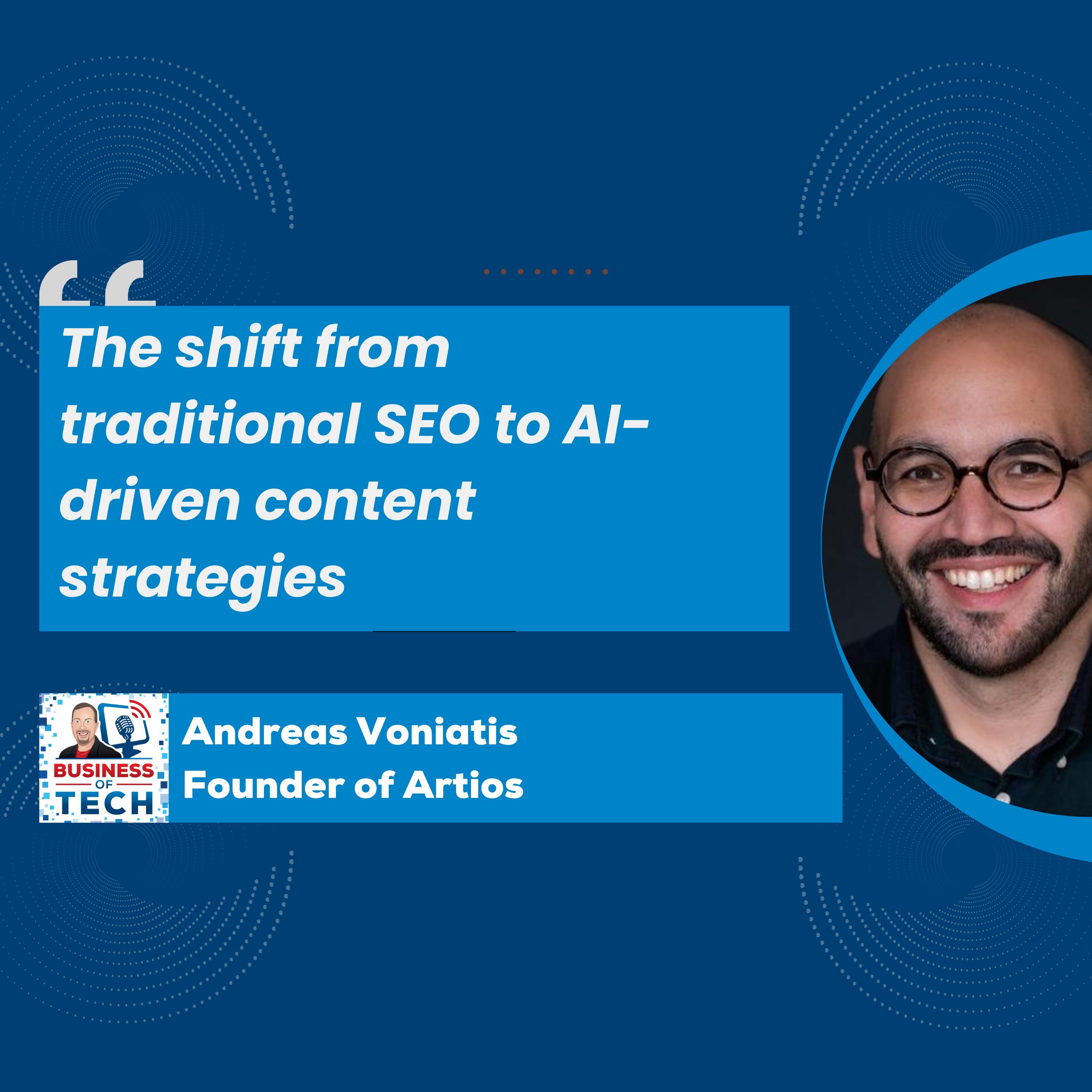
Ep 1666Unlocking SEO Success: How AI and Data Science Transform Organic Growth Strategies with Andreas Voniatis
Andreas Voniatis, founder of Arteos and author of "Data-Driven SEO with Python," is revolutionizing the SEO landscape by integrating data science and AI into organic growth strategies. He emphasizes the need for businesses, particularly in the B2B and technology sectors, to move beyond traditional SEO practices that often rely on guesswork. Instead, Fanatis advocates for a math-driven approach that leverages data to ensure that companies can achieve exponential growth in their online visibility and traffic.As the conversation unfolds, Voniatis discusses the significant shift in user behavior from traditional search engines, which typically present a list of links, to AI-driven interactions that provide summarized answers. This evolution poses a challenge for businesses, as they must adapt to a landscape where AI can solve problems directly, potentially bypassing the need for human expertise. Voniatis argues that to remain relevant, companies must prepare for a future where AI not only recommends content but also understands the nuances of their offerings.The discussion also highlights the importance of creating unique, data-rich content that stands out in an increasingly crowded digital space. Voniatis explains that simply producing high-quality content is no longer sufficient; businesses must ensure their content correlates with AI's understanding of truth and relevance. By focusing on proprietary insights and addressing the specific needs of target audiences, companies can differentiate themselves from competitors who rely on generic SEO strategies.Finally, Voniatis outlines key metrics for measuring success in this new SEO paradigm. He emphasizes the importance of tracking both traffic sources and brand searches to gauge the effectiveness of SEO efforts. By blending data science with creative content strategies, businesses can not only improve their search rankings but also enhance their overall brand visibility and engagement in the digital marketplace. 💼 All Our SponsorsSupport the vendors who support the show:👉 https://businessof.tech/sponsors/ 🚀 Join Business of Tech PlusGet exclusive access to investigative reports, vendor analysis, leadership briefings, and more.👉 https://businessof.tech/plus 🎧 Subscribe to the Business of TechWant the show on your favorite podcast app or prefer the written versions of each story?📲 https://www.businessof.tech/subscribe 📰 Story Links & SourcesLooking for the links from today’s stories?Every episode script — with full source links — is posted at:🌐 https://www.businessof.tech 🎙 Want to Be a Guest?Pitch your story or appear on Business of Tech: Daily 10-Minute IT Services Insights:💬 https://www.podmatch.com/hostdetailpreview/businessoftech 🔗 Follow Business of Tech LinkedIn: https://www.linkedin.com/company/28908079YouTube: https://youtube.com/mspradioBluesky: https://bsky.app/profile/businessof.techInstagram: https://www.instagram.com/mspradioTikTok: https://www.tiktok.com/@businessoftechFacebook: https://www.facebook.com/mspradionews Hosted by Simplecast, an AdsWizz company. See pcm.adswizz.com for information about our collection and use of personal data for advertising.
Ep 1677Cybersecurity Overhaul: AI, Ransomware, and 400M Fewer Windows PCs Challenge SMBs in 2025
The podcast discusses the evolving landscape of cybersecurity for small and mid-market businesses, emphasizing the dual threats posed by advanced artificial intelligence tools and a resurgence of ransomware attacks. As cybercriminals leverage AI for sophisticated phishing and impersonation tactics, traditional security measures are becoming obsolete. Organizations are urged to adopt enterprise-grade solutions, such as unified security platforms and zero-trust frameworks, to protect their operations. The introduction of secure browser technologies is highlighted as a critical step in enhancing defenses against the 95% of security incidents linked to browser vulnerabilities.A significant decline in the number of active Windows PCs, with 400 million devices disappearing in three years, indicates a shift in consumer behavior towards mobile devices and tablets. This trend reflects a broader change in endpoint strategy, as the traditional perimeter dissolves and the focus shifts from device management to user and data control across platforms. The implications of the upcoming end of support for Windows 10 in October 2025 may further influence this trend, as users may opt not to invest in new devices.The podcast also covers Microsoft's new security measures aimed at preventing incidents similar to the CrowdStrike meltdown, which caused extensive damages. The company plans to move third-party security drivers out of the Windows kernel to enhance reliability and reduce risks. Additionally, Microsoft is offering extended security updates for Windows 10 users, allowing them to continue receiving support even after the end of support date. This initiative reflects a commitment to improving system stability and addressing vulnerabilities.Finally, the discussion touches on the broader implications of AI in various sectors, including its impact on the workforce and democratic processes. The podcast highlights concerns about AI's role in elections and education, as well as the ethical challenges arising from its use. The conversation emphasizes the need for businesses to manage the complexities of AI, including compliance and creativity loss, while pushing back against inflated vendor claims. This approach will help build trust and ensure that organizations can navigate the rapidly changing digital landscape effectively. Three things to know today 00:00 400 Million Missing PCs Mark the End of the Endpoint Era—MSPs Must Evolve or Fade06:04 From Kernel Changes to Cyber Insurance: Why Structural Resilience Now Defines MSP Value10:23 From Productivity to Manipulation: The Expanding and Uneven Impact of AI Across Sectors This is the Business of Tech. Supported by: https://timezest.com/mspradio/https://www.huntress.com/mspradio/ 💼 All Our SponsorsSupport the vendors who support the show:👉 https://businessof.tech/sponsors/ 🚀 Join Business of Tech PlusGet exclusive access to investigative reports, vendor analysis, leadership briefings, and more.👉 https://businessof.tech/plus 🎧 Subscribe to the Business of TechWant the show on your favorite podcast app or prefer the written versions of each story?📲 https://www.businessof.tech/subscribe 📰 Story Links & SourcesLooking for the links from today’s stories?Every episode script — with full source links — is posted at:🌐 https://www.businessof.tech 🎙 Want to Be a Guest?Pitch your story or appear on Business of Tech: Daily 10-Minute IT Services Insights:💬 https://www.podmatch.com/hostdetailpreview/businessoftech 🔗 Follow Business of Tech LinkedIn: https://www.linkedin.com/company/28908079YouTube: https://youtube.com/mspradioBluesky: https://bsky.app/profile/businessof.techInstagram: https://www.instagram.com/mspradioTikTok: https://www.tiktok.com/@businessoftechFacebook: https://www.facebook.com/mspradionews Hosted by Simplecast, an AdsWizz company. See pcm.adswizz.com for information about our collection and use of personal data for advertising.
Ep 1676AI-Powered Productivity Disruption: Microsoft, OpenAI, and Legal Challenges in Copyright Training
Microsoft is facing significant challenges in promoting its Copilot AI assistant within enterprises, as many employees show a preference for OpenAI's ChatGPT. This trend highlights a competitive shift in the corporate sector, where companies are increasingly recognizing the advantages of generative AI solutions. Despite Microsoft's efforts, including a notable implementation plan by Amgen Inc. for 20,000 employees, the growing strength of OpenAI suggests a changing landscape in AI adoption. The struggle to sell Copilot internally reflects broader issues of product-market fit, as users often favor consumer-grade options over sanctioned tools.The impact of AI on managed service providers (MSPs) is also noteworthy, as a recent report indicates that AI-driven platforms are beginning to replace traditional tools. This shift is expected to reduce the number of product categories from 13 to 7, leading to increased interoperability among services. While AI-powered automation can lower operational costs, it poses market challenges, particularly for MSPs that may need to pivot from troubleshooting to delivering strategic insights. The caution expressed by Kaseya's CEO underscores the importance of integrating fragmented customer data for effective AI solutions.Legal developments surrounding AI training data are reshaping the copyright landscape. A federal judge ruled in favor of Anthropic, allowing the company to train its AI models on legally purchased books without needing permission from authors, classifying this practice as fair use. However, the ruling is limited to physical books and does not absolve Anthropic from a separate trial regarding the alleged piracy of millions of books. Similarly, Meta Platforms secured a legal victory, but the court's decision does not confirm that its use of copyrighted materials qualifies as fair use, indicating a complex and evolving legal environment for AI training.The podcast also highlights ongoing disparities in the IT leadership pipeline, particularly regarding diversity. Recent data shows little change in the demographic makeup of IT leadership, with a significant majority being white and male. The challenges faced by women and people of color in securing leadership roles are exacerbated by rigid criteria in executive searches. As larger companies scale back diversity efforts, there is an opportunity for smaller firms to differentiate themselves by fostering inclusive cultures, as exemplified by OIT VoIP, which received recognition for its commitment to diversity in technology. Four things to know today 00:00 AI Reality Check: Fragmented Data, Poor UX, and Platform Consolidation Derail Enterprise and MSP Hype04:42 Fair Use but Not Free Reign: Courts Back AI Training on Books—with Major Caveats07:28 Smaller Tech Firms Like OITVOIP Show How Inclusion Can Be a Competitive Advantage10:32 Collaboration Reimagined: OpenAI, Anthropic, and Rewst Redefine the Future of Work with AI-First Tools This is the Business of Tech. Supported by: https://syncromsp.com/ 💼 All Our SponsorsSupport the vendors who support the show:👉 https://businessof.tech/sponsors/ 🚀 Join Business of Tech PlusGet exclusive access to investigative reports, vendor analysis, leadership briefings, and more.👉 https://businessof.tech/plus 🎧 Subscribe to the Business of TechWant the show on your favorite podcast app or prefer the written versions of each story?📲 https://www.businessof.tech/subscribe 📰 Story Links & SourcesLooking for the links from today’s stories?Every episode script — with full source links — is posted at:🌐 https://www.businessof.tech 🎙 Want to Be a Guest?Pitch your story or appear on Business of Tech: Daily 10-Minute IT Services Insights:💬 https://www.podmatch.com/hostdetailpreview/businessoftech 🔗 Follow Business of Tech LinkedIn: https://www.linkedin.com/company/28908079YouTube: https://youtube.com/mspradioBluesky: https://bsky.app/profile/businessof.techInstagram: https://www.instagram.com/mspradioTikTok: https://www.tiktok.com/@businessoftechFacebook: https://www.facebook.com/mspradionews Hosted by Simplecast, an AdsWizz company. See pcm.adswizz.com for information about our collection and use of personal data for advertising.
Ep 1675Malware in ConnectWise, Telecom Hacks, and MSPs' False Confidence in Cybersecurity
ConnectWise is currently facing a significant crisis of trust as attackers exploit its signed software to distribute malware. This alarming trend has seen a notable increase in infections since March 2025, primarily due to poor signing practices that allow malicious users to embed harmful code within legitimate applications. Reports indicate that the ConnectWise ScreenConnect remote access tool was the most commonly abused legitimate tool in 2024, with a staggering 56% of all active threat reports involving remote access tools. The rise in phishing schemes utilizing ConnectWise samples has raised concerns about the security measures in place and the implications for managed service providers (MSPs).Despite the increasing number of breaches, a recent survey revealed that 76% of MSP leaders remain confident in their cybersecurity efforts, even as nearly 70% reported experiencing multiple cyber breaches in the past year. This disconnect between confidence and reality poses a significant problem, as many MSPs recognize the need to improve their defenses but feel ill-equipped to guide customers through complex regulatory changes. The situation is further complicated by sensationalized reports of massive data breaches, which can divert attention from verified security threats and contribute to a false sense of security.The podcast also highlights the ongoing Salt Typhoon hack, which has reportedly led to major U.S. telecommunications companies instructing their incident response teams not to seek evidence of the intrusion. This directive raises concerns about the scale of the breach and the lack of accountability within the telecom sector, where deregulation has diminished incentives for companies to invest in security measures. Experts warn that this willful ignorance sets a dangerous precedent, particularly in critical infrastructure, and emphasizes the need for a reevaluation of vendor liability in the face of such breaches.In response to the evolving challenges faced by MSPs, several vendors have introduced new tools and features aimed at improving operational efficiency and security. Synchro's Universal Billing feature aims to streamline billing processes, while Manage Engine's MSP Central platform seeks to enhance service delivery and device management. Additionally, Hornet Security has launched an AI Cyber Assistant to bolster cybersecurity for Microsoft 365 users. These developments indicate that while vendors are recognizing the challenges MSPs face, they often lag behind in providing the necessary solutions, underscoring the importance of selecting platforms that prioritize practical integration and real-world impact. Three things to know today 00:00 Legit Tools, Real Breaches: ConnectWise Malware Surge and Telecom Hacks Highlight Systemic Security Failures06:54 MSP Tools Evolve as Syncro, ManageEngine, and Hornetsecurity Target Profitability, Consolidation, and AI Security09:47 Bitdefender, Pia and Nexus IT Signal Strategic Evolution in the MSP and Security Landscape This is the Business of Tech. Supported by: https://cometbackup.com/?utm_source=mspradio&utm_medium=podcast&utm_campaign=sponsorship 💼 All Our SponsorsSupport the vendors who support the show:👉 https://businessof.tech/sponsors/ 🚀 Join Business of Tech PlusGet exclusive access to investigative reports, vendor analysis, leadership briefings, and more.👉 https://businessof.tech/plus 🎧 Subscribe to the Business of TechWant the show on your favorite podcast app or prefer the written versions of each story?📲 https://www.businessof.tech/subscribe 📰 Story Links & SourcesLooking for the links from today’s stories?Every episode script — with full source links — is posted at:🌐 https://www.businessof.tech 🎙 Want to Be a Guest?Pitch your story or appear on Business of Tech: Daily 10-Minute IT Services Insights:💬 https://www.podmatch.com/hostdetailpreview/businessoftech 🔗 Follow Business of Tech LinkedIn: https://www.linkedin.com/company/28908079YouTube: https://youtube.com/mspradioBluesky: https://bsky.app/profile/businessof.techInstagram: https://www.instagram.com/mspradioTikTok: https://www.tiktok.com/@businessoftechFacebook: https://www.facebook.com/mspradionews Hosted by Simplecast, an AdsWizz company. See pcm.adswizz.com for information about our collection and use of personal data for advertising.
Ep 1674AI to Drive 50% of Business Decisions by 2027; SMBs Struggle with Skills and Adoption
Gartner predicts that by 2027, artificial intelligence (AI) will be responsible for half of all business decisions, either through full automation or partial augmentation. This shift is driven by the increasing pressure on technology companies to deliver returns on their AI investments, with small and mid-sized businesses (SMBs) rapidly adopting these tools. However, a significant skills gap remains, as 95% of SMBs report needing more training to effectively utilize AI. The report emphasizes the importance of human oversight to ensure data quality and governance, suggesting that companies prioritizing AI literacy training could see revenue increases of up to 20%.Despite the enthusiasm for AI, a study from Stanford University reveals that professionals prefer using AI for automating mundane tasks rather than more complex responsibilities. The research indicates a strong desire for human control in the workplace, highlighting a disconnect between the tasks companies assign to AI and what workers actually want to automate. This gap presents an opportunity for managed service providers (MSPs) to bridge the divide by focusing on human-centered workflow design and aligning AI deployment with employee expectations.In the realm of productivity tools, OpenAI and Anthropic are making strides with new integrations that enhance user interaction with AI. OpenAI is testing a feature that allows users to analyze emails and manage schedules through ChatGPT, while Anthropic's CLAWD code has improved its toolchain for developers. These advancements signify a shift in how end users will expect to interact with their tools, pushing providers to adapt their roles from managing infrastructure to managing intelligence and intent.Broadcom's recent changes to VMware's licensing model have raised concerns among smaller customers, with reports of cost increases significantly impacting their budgets. While Broadcom claims that many of its top customers are adopting the VMware Cloud Foundation, the dissatisfaction among smaller clients indicates a need for IT providers to offer migration services and alternative solutions. The current landscape presents a critical moment for providers to assist clients in navigating these changes, ensuring they find resilient and appropriately priced platforms that meet their needs. Four things to know today 00:00 From Hype to Help: AI Decision-Making Surges, But Poor Guidance Risks Undermining Gains05:23 OpenAI and Anthropic Expand AI Agents Into Daily Workflow—IT Providers Must Now Govern Behavior, Not Just Systems07:44 Efficiency Is the New MSP Battleground: Martello and WatchGuard Highlight Operational ROI10:35 Broadcom’s VMware Pivot Forces MSPs to Choose Sides: Enterprise Loyalty or SMB Exodus This is the Business of Tech. Supported by: https://www.huntress.com/mspradio/https://getflexpoint.com/msp-radio/ 💼 All Our SponsorsSupport the vendors who support the show:👉 https://businessof.tech/sponsors/ 🚀 Join Business of Tech PlusGet exclusive access to investigative reports, vendor analysis, leadership briefings, and more.👉 https://businessof.tech/plus 🎧 Subscribe to the Business of TechWant the show on your favorite podcast app or prefer the written versions of each story?📲 https://www.businessof.tech/subscribe 📰 Story Links & SourcesLooking for the links from today’s stories?Every episode script — with full source links — is posted at:🌐 https://www.businessof.tech 🎙 Want to Be a Guest?Pitch your story or appear on Business of Tech: Daily 10-Minute IT Services Insights:💬 https://www.podmatch.com/hostdetailpreview/businessoftech 🔗 Follow Business of Tech LinkedIn: https://www.linkedin.com/company/28908079YouTube: https://youtube.com/mspradioBluesky: https://bsky.app/profile/businessof.techInstagram: https://www.instagram.com/mspradioTikTok: https://www.tiktok.com/@businessoftechFacebook: https://www.facebook.com/mspradionews Hosted by Simplecast, an AdsWizz company. See pcm.adswizz.com for information about our collection and use of personal data for advertising.
Ep 1673CEO Confidence Plummets as Small Businesses Thrive; Data Blind Spots Challenge Strategic Planning
Small business resilience is masking deeper economic strains, as recent surveys reveal that while many small businesses report growth and have maintained or increased their workforce, a significant portion still feels the adverse effects of current economic conditions. Despite 56% of small businesses indicating growth and 90% maintaining or increasing their workforce, 43% of entrepreneurs express that the economic landscape is detrimental to their operations. This contradiction highlights a fragile optimism among small businesses, which may continue to invest in technology but will demand more tangible value for their expenditures.In contrast, the sentiment among large corporate CEOs has plummeted, with the CEO Economic Outlook Index dropping to its lowest level since 2020. Over 40% of CEOs anticipate workforce reductions in the next six months, reflecting widespread concerns about hiring, investment, and sales growth. This decline is attributed to uncertainties surrounding trade policies, which could have ripple effects on vendor spending and longer sales cycles, particularly impacting high-end managed service providers (MSPs) that cater to mid-market or enterprise clients.The podcast also discusses the challenges posed by data blind spots in strategic planning, as federal hiring freezes and budget cuts are beginning to affect the quality of economic data produced by the U.S. government. The erosion of reliable statistics complicates decision-making for both policymakers and service providers, making it increasingly difficult to advise small businesses on risk and compliance. Additionally, a significant drop in employee confidence, particularly among young workers, raises concerns for MSPs managing support desks, as anxiety may lead to higher turnover and a greater need for effective communication and leadership.Finally, the episode highlights the rapid growth of the managed services sector, with projections indicating that the market will reach $608 billion globally. Companies like NinjaOne, Halo PSA, and Nerdio are experiencing significant growth, driven by their focus on user experience and cloud-based solutions. The competitive landscape is shifting, with smaller players outpacing larger incumbents, emphasizing the need for MSPs to choose their platforms strategically and adapt to the evolving demands of the market. Three things to know today 00:00 Growth Without Confidence: SMBs Forge Ahead as Economic Signals Flash Caution for IT Advisors06:15 GenAI Growth Plans Clash with Security Concerns as AI Search Disrupts Digital Visibility10:38 MSP Sector Surges to $608B as Platform Wars Reshape PSA/RMM Landscape Supported by: https://mspradio.com/engage/ 💼 All Our SponsorsSupport the vendors who support the show:👉 https://businessof.tech/sponsors/ 🚀 Join Business of Tech PlusGet exclusive access to investigative reports, vendor analysis, leadership briefings, and more.👉 https://businessof.tech/plus 🎧 Subscribe to the Business of TechWant the show on your favorite podcast app or prefer the written versions of each story?📲 https://www.businessof.tech/subscribe 📰 Story Links & SourcesLooking for the links from today’s stories?Every episode script — with full source links — is posted at:🌐 https://www.businessof.tech 🎙 Want to Be a Guest?Pitch your story or appear on Business of Tech: Daily 10-Minute IT Services Insights:💬 https://www.podmatch.com/hostdetailpreview/businessoftech 🔗 Follow Business of Tech LinkedIn: https://www.linkedin.com/company/28908079YouTube: https://youtube.com/mspradioBluesky: https://bsky.app/profile/businessof.techInstagram: https://www.instagram.com/mspradioTikTok: https://www.tiktok.com/@businessoftechFacebook: https://www.facebook.com/mspradionews Hosted by Simplecast, an AdsWizz company. See pcm.adswizz.com for information about our collection and use of personal data for advertising.

Ep 1672Unlocking AI for SMBs: Data Readiness, Cybersecurity, and Community-Driven Investments with Hunter Jensen and Barbara Paluszkiewicz
Small and mid-sized businesses are increasingly curious about how to leverage artificial intelligence (AI) to enhance their operations. As they explore the potential of AI, they are asking critical questions about implementation, automation, and customer engagement. Experts Hunter Jensen and Barbara Paluszkiewicz discuss the challenges these businesses face, particularly regarding data readiness and cybersecurity. They emphasize the importance of understanding specific use cases and ensuring that companies have the necessary infrastructure and security measures in place before deploying AI solutions.Hunter highlights that many organizations, especially those that have been around for a while, struggle with data quality and governance. He notes that businesses often have "skeletons in their data closets," which can hinder effective AI deployment. Barb adds that for companies to safely utilize AI, they must have robust cybersecurity measures, including data loss prevention and user training. This foundational work is crucial to protect sensitive information and ensure compliance with regulations.The conversation also touches on the rising costs and complexities associated with private AI infrastructure. Hunter explains that while public large language models (LLMs) can be effective for certain tasks, businesses dealing with confidential information may benefit from self-hosted models. He points out that, in some cases, hosting AI solutions locally can be more cost-effective than relying on third-party services, especially as usage scales up.Finally, the discussion shifts to the evolving landscape of investment in the managed service provider (MSP) sector. Barb notes that many small MSPs are undervaluing their businesses, often expecting high multiples that may not be realistic. Hunter observes a trend where venture capitalists are less willing to invest in pre-revenue companies, pushing entrepreneurs to demonstrate customer traction before seeking funding. Both experts agree that the MSP community is adapting to these changes, with new models of community-driven investment emerging to support smaller businesses. 💼 All Our SponsorsSupport the vendors who support the show:👉 https://businessof.tech/sponsors/ 🚀 Join Business of Tech PlusGet exclusive access to investigative reports, vendor analysis, leadership briefings, and more.👉 https://businessof.tech/plus 🎧 Subscribe to the Business of TechWant the show on your favorite podcast app or prefer the written versions of each story?📲 https://www.businessof.tech/subscribe 📰 Story Links & SourcesLooking for the links from today’s stories?Every episode script — with full source links — is posted at:🌐 https://www.businessof.tech 🎙 Want to Be a Guest?Pitch your story or appear on Business of Tech: Daily 10-Minute IT Services Insights:💬 https://www.podmatch.com/hostdetailpreview/businessoftech 🔗 Follow Business of Tech LinkedIn: https://www.linkedin.com/company/28908079YouTube: https://youtube.com/mspradioBluesky: https://bsky.app/profile/businessof.techInstagram: https://www.instagram.com/mspradioTikTok: https://www.tiktok.com/@businessoftechFacebook: https://www.facebook.com/mspradionews Hosted by Simplecast, an AdsWizz company. See pcm.adswizz.com for information about our collection and use of personal data for advertising.

Ep 1652How Startups Can Tackle Security Debt to Unlock Revenue: A Discussion with Brian Haugli
Brian Haugli, CEO of SideChannel, discusses the critical distinction between security debt and technical debt, emphasizing that while technical debt is a common challenge for CIOs, security debt is a more specific issue that often arises in startups. He explains that startups frequently prioritize speed to market over security, leading to vulnerabilities that accumulate as they defer compliance and security measures. This accumulation of security debt can hinder their growth and create significant risks, as they may lack the necessary security practices and awareness when they eventually need to address these issues.Haugli highlights the role of managed service providers (MSPs) in helping their clients navigate these challenges. He argues that MSPs should not only provide technical support but also act as trusted advisors, guiding clients to understand the business implications of cybersecurity. By framing security as a means to unlock revenue and reduce friction in sales cycles, MSPs can help clients see the value in investing in cybersecurity measures. This approach positions MSPs as heroes in the eyes of their clients, as they provide essential business advice that can lead to increased revenue.The conversation also touches on the evolving role of virtual Chief Information Security Officers (vCISOs) in the cybersecurity landscape. Haugli asserts that the demand for vCISOs is growing, particularly as regulations increasingly require organizations to have dedicated cybersecurity leadership. He emphasizes that vCISOs offer a cost-effective solution for smaller businesses that cannot afford a full-time CISO, providing them with strategic guidance and expertise to build robust security programs.Finally, Haugli discusses the need for a national cybersecurity standard in the U.S. to address the patchwork of existing regulations. He argues that without enforceable standards, organizations will continue to struggle with compliance and security, leading to increased costs and confusion. By drawing parallels to other regulated industries, he advocates for greater accountability among software vendors and emphasizes the importance of compartmentalization in cybersecurity practices, which can help organizations mitigate risks and protect sensitive information. 💼 All Our SponsorsSupport the vendors who support the show:👉 https://businessof.tech/sponsors/ 🚀 Join Business of Tech PlusGet exclusive access to investigative reports, vendor analysis, leadership briefings, and more.👉 https://businessof.tech/plus 🎧 Subscribe to the Business of TechWant the show on your favorite podcast app or prefer the written versions of each story?📲 https://www.businessof.tech/subscribe 📰 Story Links & SourcesLooking for the links from today’s stories?Every episode script — with full source links — is posted at:🌐 https://www.businessof.tech 🎙 Want to Be a Guest?Pitch your story or appear on Business of Tech: Daily 10-Minute IT Services Insights:💬 https://www.podmatch.com/hostdetailpreview/businessoftech 🔗 Follow Business of Tech LinkedIn: https://www.linkedin.com/company/28908079YouTube: https://youtube.com/mspradioBluesky: https://bsky.app/profile/businessof.techInstagram: https://www.instagram.com/mspradioTikTok: https://www.tiktok.com/@businessoftechFacebook: https://www.facebook.com/mspradionews Hosted by Simplecast, an AdsWizz company. See pcm.adswizz.com for information about our collection and use of personal data for advertising.
Ep 1662The New MSP Model: Combining Automation, Emotional Intelligence, and E-Commerce for Success
The podcast discusses a transformative vision for building a managed services provider (MSP) that shifts away from traditional models focused on infrastructure management and reactive maintenance. Instead, it advocates for creating a tech services business that empowers small and mid-sized organizations to drive revenue through technology. The speaker emphasizes the importance of hiring empathetic, business-savvy individuals who can engage with clients on a human level, rather than relying solely on technical expertise. This new approach prioritizes emotional intelligence and relationship-building over conventional help desk support.The proposed team structure includes tech concierges who act as relationship managers, business process advisors who focus on optimizing client operations, automation specialists who streamline processes, and generalist troubleshooters who handle unique challenges. This model eliminates the traditional tiered support system, allowing for direct resolution or automation of issues. By humanizing the front-end interactions and automating backend processes, the MSP can deliver meaningful outcomes that genuinely benefit clients.Automation is positioned as a foundational element rather than just a feature, with the speaker advocating for the use of cloud-native management platforms and workflow automation tools. These technologies enable teams to focus on high-value advisory roles rather than mundane tasks. The podcast also highlights the potential of using AI to enhance team capabilities, making it a tool for amplifying human efforts rather than replacing them. This shift allows for a more efficient operation that prioritizes client relationships and business outcomes.Finally, the discussion touches on the financial aspects of running an MSP, emphasizing the importance of profitability over mere growth metrics. The speaker suggests that a lean team can effectively manage a smaller number of high-value clients, leading to sustainable business practices. The podcast concludes with advice on whether to build a new MSP from scratch or acquire an existing one, recommending a partnership approach to leverage complementary skills and enhance overall success in the industry. 💼 All Our SponsorsSupport the vendors who support the show:👉 https://businessof.tech/sponsors/ 🚀 Join Business of Tech PlusGet exclusive access to investigative reports, vendor analysis, leadership briefings, and more.👉 https://businessof.tech/plus 🎧 Subscribe to the Business of TechWant the show on your favorite podcast app or prefer the written versions of each story?📲 https://www.businessof.tech/subscribe 📰 Story Links & SourcesLooking for the links from today’s stories?Every episode script — with full source links — is posted at:🌐 https://www.businessof.tech 🎙 Want to Be a Guest?Pitch your story or appear on Business of Tech: Daily 10-Minute IT Services Insights:💬 https://www.podmatch.com/hostdetailpreview/businessoftech 🔗 Follow Business of Tech LinkedIn: https://www.linkedin.com/company/28908079YouTube: https://youtube.com/mspradioBluesky: https://bsky.app/profile/businessof.techInstagram: https://www.instagram.com/mspradioTikTok: https://www.tiktok.com/@businessoftechFacebook: https://www.facebook.com/mspradionews Hosted by Simplecast, an AdsWizz company. See pcm.adswizz.com for information about our collection and use of personal data for advertising.
Ep 1670AI Fuels Infinite Workdays, Job Cuts at Amazon, and New Trends in IT Service Partnerships
AI is increasingly becoming a double-edged sword in the workplace, as highlighted by a recent Microsoft report. While artificial intelligence tools are intended to enhance productivity, they are inadvertently contributing to an "infinite workday," leading to heightened employee burnout. The report reveals alarming trends, such as 40% of workers checking emails by 6 a.m. and a 16% increase in meetings scheduled after 8 p.m. This shift indicates that work is encroaching on personal time, suggesting a need for companies to rethink their time management and workflow strategies to prioritize high-impact tasks over busy work.Amazon's CEO, Andy Jassy, has acknowledged that AI efficiency gains will result in job cuts within the company, reflecting a broader trend of AI adoption across various sectors. Gallup's research shows that AI usage among U.S. employees has nearly doubled, with significant increases among white-collar workers. However, despite the growing integration of AI, concerns about job displacement remain relatively unchanged, with only 15% of employees fearing automation will eliminate their jobs in the near future.The podcast also discusses the transformative impact of autonomous software agents on small to mid-sized businesses, as outlined in PAX 8's report. The findings indicate that a majority of mid-sized enterprises are already deploying AI, with a notable emphasis on the need for organizations to adapt to new operational standards. The report suggests that IT service providers must shift their focus from merely selling AI tools to becoming organizational strategists that help clients redesign workflows and manage time effectively.Finally, the episode touches on the evolving landscape of the technology channel, emphasizing the necessity for vendors and partners to adapt to emerging trends. The shift from product-based selling to outcome-based solutions is becoming essential for survival in a competitive market. As traditional marketing development funds decline, the call for performance-based partnerships is more pressing than ever, urging IT service providers to demonstrate their value and influence in driving client success. Four things to know today 00:00 Microsoft Warns of ‘Infinite Workday’ as AI Blurs Work-Life Boundaries06:19 OpenAI’s Defense Deal and MCP Push Signal AI’s Transition from Tool to Infrastructure08:58 MiniMax Launches One-Million-Token Open Model, Undercutting Cost of GPT-4 by Orders of Magnitude10:40 Techaisle: Channel Faces Structural Shakeup as Outcome-Based, Risk-Sharing Models Replace Old Playbook This is the Business of Tech. Supported by: https://getnerdio.com/nerdio-manager-for-msp/ 💼 All Our SponsorsSupport the vendors who support the show:👉 https://businessof.tech/sponsors/ 🚀 Join Business of Tech PlusGet exclusive access to investigative reports, vendor analysis, leadership briefings, and more.👉 https://businessof.tech/plus 🎧 Subscribe to the Business of TechWant the show on your favorite podcast app or prefer the written versions of each story?📲 https://www.businessof.tech/subscribe 📰 Story Links & SourcesLooking for the links from today’s stories?Every episode script — with full source links — is posted at:🌐 https://www.businessof.tech 🎙 Want to Be a Guest?Pitch your story or appear on Business of Tech: Daily 10-Minute IT Services Insights:💬 https://www.podmatch.com/hostdetailpreview/businessoftech 🔗 Follow Business of Tech LinkedIn: https://www.linkedin.com/company/28908079YouTube: https://youtube.com/mspradioBluesky: https://bsky.app/profile/businessof.techInstagram: https://www.instagram.com/mspradioTikTok: https://www.tiktok.com/@businessoftechFacebook: https://www.facebook.com/mspradionews Hosted by Simplecast, an AdsWizz company. See pcm.adswizz.com for information about our collection and use of personal data for advertising.
Ep 1669SMBs Overconfident in Cybersecurity; SEC Deregulates Amid Rising AI Threats and New Investments
Small and medium-sized businesses (SMBs) are exhibiting a dangerous overconfidence in their cybersecurity readiness, with a significant gap between their perceived capabilities and actual security measures in place. A recent report reveals that while 71% of SMBs feel confident in managing major cybersecurity incidents, only 22% have an advanced cybersecurity posture. This disconnect presents a critical opportunity for IT service providers to step in with strategic, outcome-focused solutions that emphasize not just tools, but comprehensive cybersecurity strategies.The landscape of cybersecurity is evolving, with SMBs increasingly recognizing the importance of cyber resiliency. Reports indicate that 68% of small businesses and 89% of mid-market firms understand the need for quick recovery from incidents, yet many still lack formal security protocols. As the market for cybersecurity solutions is projected to grow significantly, reaching an estimated $70 billion by 2034, the demand for effective strategies is more pressing than ever. The rise of cloud-based security solutions and zero-trust architecture is indicative of this shift.Regulatory changes are also impacting the cybersecurity landscape, as the SEC withdraws proposed regulations that would have required investment firms to establish written cybersecurity policies. This deregulation creates a trust vacuum that IT providers can fill by offering managed compliance and risk mitigation services. The convergence of regulatory retreat and escalating cyber threats underscores the need for proactive security measures, as the responsibility for cybersecurity increasingly shifts to the market.Amid these challenges, advancements in email security, particularly through DMARC adoption, show promise in combating phishing attacks. However, the rapid proliferation of generative AI applications is creating new vulnerabilities, complicating the security landscape. IT service providers are urged to capitalize on foundational security measures while also addressing the emerging risks associated with AI. The evolving cybersecurity environment presents both challenges and opportunities for providers who can adapt and innovate in response to these shifting dynamics. Four things to know today 00:00 SMBs Overconfident, Underprepared: Cybersecurity Misalignment Fuels $70B Market Surge05:00 SEC Pullback Leaves Cyber Gaps as Ransomware and Zero Trust Shape 2025 Risk Landscape08:50 From DMARC to Shadow AI: Why Cybersecurity Now Requires Dual-Front Defense11:45 Bifurcation in IT Services: MSP-Centric Tools and Vertical Platforms Signal Strategic Divide This is the Business of Tech. Supported by: https://cometbackup.com/?utm_source=mspradio&utm_medium=podcast&utm_campaign=sponsorship 💼 All Our SponsorsSupport the vendors who support the show:👉 https://businessof.tech/sponsors/ 🚀 Join Business of Tech PlusGet exclusive access to investigative reports, vendor analysis, leadership briefings, and more.👉 https://businessof.tech/plus 🎧 Subscribe to the Business of TechWant the show on your favorite podcast app or prefer the written versions of each story?📲 https://www.businessof.tech/subscribe 📰 Story Links & SourcesLooking for the links from today’s stories?Every episode script — with full source links — is posted at:🌐 https://www.businessof.tech 🎙 Want to Be a Guest?Pitch your story or appear on Business of Tech: Daily 10-Minute IT Services Insights:💬 https://www.podmatch.com/hostdetailpreview/businessoftech 🔗 Follow Business of Tech LinkedIn: https://www.linkedin.com/company/28908079YouTube: https://youtube.com/mspradioBluesky: https://bsky.app/profile/businessof.techInstagram: https://www.instagram.com/mspradioTikTok: https://www.tiktok.com/@businessoftechFacebook: https://www.facebook.com/mspradionews Hosted by Simplecast, an AdsWizz company. See pcm.adswizz.com for information about our collection and use of personal data for advertising.
Ep 1668AI's Impact on SMBs: Revenue Gains, Cloud Growth, and New Tools from Zoom, MailChimp, Microsoft
Small and medium-sized businesses (SMBs) are increasingly recognizing the importance of adopting artificial intelligence (AI) to stay competitive in the market. A recent survey indicates that 97% of small businesses utilizing voice AI agents have seen revenue increases. However, many SMBs still perceive AI as complicated or unnecessary, with 63% expressing concerns about their foundational capabilities to support AI initiatives. Despite these hesitations, research shows that 91% of SMBs that have integrated AI report revenue gains, highlighting a significant opportunity for those willing to embrace the technology.The demand for AI expertise is surging, with a notable shortage of talent in the IT sector. Over half of IT leaders report facing an undersupply of AI skills, a figure that has increased from 28% in previous years. While 90% of organizations are piloting or investing in AI initiatives, more than two-thirds of leaders have yet to see measurable returns on their investments. This skills gap emphasizes the need for IT service providers to step in as guides, helping SMBs navigate the complexities of AI adoption and implementation.Cloud spending has also surged, reaching $90.9 billion in the first quarter of 2025, driven by the need to optimize cloud infrastructure for AI applications. Major cloud providers like Amazon Web Services, Microsoft Azure, and Google Cloud dominate the market, but the increasing complexity of cloud computing necessitates external expertise. IT service providers have a unique opportunity to position themselves as AI infrastructure enablers, focusing on simplifying hybrid cloud management and aligning cloud strategies with business objectives, particularly in relation to AI.Recent studies, including one from the University of Oxford, highlight the limitations of large language models (LLMs) in real-world applications, particularly in critical sectors like healthcare. While LLMs may perform well in controlled environments, their effectiveness diminishes when humans interact with them. This underscores the importance of designing AI systems that prioritize human outcomes over mere model accuracy. As companies like Zoom, MailChimp, and Microsoft launch new AI tools, the focus for IT service providers should shift from merely selling AI tools to ensuring responsible and effective deployment that delivers measurable value. Four things to know today 00:00 SMBs See AI as Key to Growth but Struggle With Skills and Strategy, Opening Door for IT Service Providers04:53 AI Boom Fuels 21% Surge in Global Cloud Spend, Forcing Providers to Tackle Hybrid Complexity and Cost Pressures07:38 AI Can Diagnose—But Can People Use It? Oxford Study Undermines LLM Utility in Critical Settings10:11 Mailchimp, and Microsoft Launch Next-Gen Tools Aiming for the Customer Experience This is the Business of Tech. Supported by: https://getflexpoint.com/msp-radio/https://www.huntress.com/mspradio/ 💼 All Our SponsorsSupport the vendors who support the show:👉 https://businessof.tech/sponsors/ 🚀 Join Business of Tech PlusGet exclusive access to investigative reports, vendor analysis, leadership briefings, and more.👉 https://businessof.tech/plus 🎧 Subscribe to the Business of TechWant the show on your favorite podcast app or prefer the written versions of each story?📲 https://www.businessof.tech/subscribe 📰 Story Links & SourcesLooking for the links from today’s stories?Every episode script — with full source links — is posted at:🌐 https://www.businessof.tech 🎙 Want to Be a Guest?Pitch your story or appear on Business of Tech: Daily 10-Minute IT Services Insights:💬 https://www.podmatch.com/hostdetailpreview/businessoftech 🔗 Follow Business of Tech LinkedIn: https://www.linkedin.com/company/28908079YouTube: https://youtube.com/mspradioBluesky: https://bsky.app/profile/businessof.techInstagram: https://www.instagram.com/mspradioTikTok: https://www.tiktok.com/@businessoftechFacebook: https://www.facebook.com/mspradionews Hosted by Simplecast, an AdsWizz company. See pcm.adswizz.com for information about our collection and use of personal data for advertising.

Ep 1650Unlocking Profitability: Andrew Bolton's Unique Approach to Tech Support for Seniors
Andrew Bolton, CEO and co-founder of TechRescue, has developed a unique approach to delivering technical services specifically tailored for seniors. With a growing client base of nearly 1,000 seniors on a monthly subscription model, Bolton's company focuses on providing empathetic and personalized tech support. Unlike traditional managed service providers, TechRescue positions itself as a "tech therapist," emphasizing the importance of human connection and understanding in every interaction. This approach is particularly vital when dealing with a demographic that may not be as tech-savvy, as Bolton highlights the evolving nature of senior users who are increasingly engaged with technology.The inspiration for TechRescue stemmed from Bolton's personal experiences with his family, particularly his grandmother's struggles with technology. Recognizing a gap in the market for services that cater to seniors, he and his team have created a supportive environment where every call is treated as a priority. The company employs individuals with backgrounds in sociology and psychology rather than traditional tech support roles, ensuring that empathy and communication are at the forefront of their service. This human-centric approach has proven effective, as Bolton notes that most calls are not about complex tech issues but rather simple, everyday problems that seniors encounter.TechRescue operates on a subscription model, offering services at $50 per month or $400 annually. The company has established metrics to maintain profitability while ensuring quality service. Bolton explains that they have a structured process for handling calls, aiming to resolve issues efficiently while still allowing for personal interaction. By focusing on the emotional and psychological aspects of tech support, TechRescue has carved out a niche that resonates with both seniors and their families, who often seek assistance for their elderly relatives.Looking ahead, Bolton envisions expanding TechRescue's reach, potentially into international markets. However, he acknowledges that the biggest challenge lies in finding the right personnel who can deliver the empathetic service that defines their brand. As the company continues to grow, it remains committed to its mission of providing accessible and compassionate tech support to seniors, reinforcing the idea that technology should enhance, rather than complicate, their lives. 💼 All Our SponsorsSupport the vendors who support the show:👉 https://businessof.tech/sponsors/ 🚀 Join Business of Tech PlusGet exclusive access to investigative reports, vendor analysis, leadership briefings, and more.👉 https://businessof.tech/plus 🎧 Subscribe to the Business of TechWant the show on your favorite podcast app or prefer the written versions of each story?📲 https://www.businessof.tech/subscribe 📰 Story Links & SourcesLooking for the links from today’s stories?Every episode script — with full source links — is posted at:🌐 https://www.businessof.tech 🎙 Want to Be a Guest?Pitch your story or appear on Business of Tech: Daily 10-Minute IT Services Insights:💬 https://www.podmatch.com/hostdetailpreview/businessoftech 🔗 Follow Business of Tech LinkedIn: https://www.linkedin.com/company/28908079YouTube: https://youtube.com/mspradioBluesky: https://bsky.app/profile/businessof.techInstagram: https://www.instagram.com/mspradioTikTok: https://www.tiktok.com/@businessoftechFacebook: https://www.facebook.com/mspradionews Hosted by Simplecast, an AdsWizz company. See pcm.adswizz.com for information about our collection and use of personal data for advertising.

Ep 1664Inside Empath's $2M Raise: Wes Spencer Discusses Community Investment for MSP Growth
Wes Spencer, co-founder of Empath, a training and education platform for managed service providers (MSPs), discusses a unique funding model that diverges from traditional venture capital. Instead of seeking investment from typical VCs, Empath successfully raised $2 million from industry insiders, primarily MSPs themselves. This approach fosters alignment and advocacy among investors, who are also customers, but it raises important questions about scalability and governance. The conversation delves into the implications of having investors who are directly involved in the product's development and direction.The investment structure utilized by Empath is based on Y Combinator's SAFE notes, which allow for a straightforward and fair investment process without changing control of the company. Spencer explains the importance of ensuring that investors are qualified, adhering to SEC regulations to protect non-professional investors. This structure not only simplifies the investment process but also limits the amount each investor can contribute, ensuring a diverse group of stakeholders who are genuinely invested in the company's mission.Spencer highlights the demographics of their investors, primarily consisting of CEOs from established MSPs with significant revenue. These investors are motivated by a desire to influence the vendor ecosystem positively and to have a say in the direction of the platform they use. The governance model established by Empath ensures that while these investors have a voice, they do not have control over the company's day-to-day operations, allowing for a balance between investor input and the leadership team's vision.As Empath continues to grow, Spencer acknowledges the potential need for future funding rounds, including the possibility of engaging with venture capitalists. He emphasizes the importance of maintaining transparency with investors and being responsible stewards of their contributions. The conversation concludes with Spencer expressing confidence in the company's trajectory, aiming for sustainable growth while remaining committed to the community-driven approach that defines Empath. 💼 All Our SponsorsSupport the vendors who support the show:👉 https://businessof.tech/sponsors/ 🚀 Join Business of Tech PlusGet exclusive access to investigative reports, vendor analysis, leadership briefings, and more.👉 https://businessof.tech/plus 🎧 Subscribe to the Business of TechWant the show on your favorite podcast app or prefer the written versions of each story?📲 https://www.businessof.tech/subscribe 📰 Story Links & SourcesLooking for the links from today’s stories?Every episode script — with full source links — is posted at:🌐 https://www.businessof.tech 🎙 Want to Be a Guest?Pitch your story or appear on Business of Tech: Daily 10-Minute IT Services Insights:💬 https://www.podmatch.com/hostdetailpreview/businessoftech 🔗 Follow Business of Tech LinkedIn: https://www.linkedin.com/company/28908079YouTube: https://youtube.com/mspradioBluesky: https://bsky.app/profile/businessof.techInstagram: https://www.instagram.com/mspradioTikTok: https://www.tiktok.com/@businessoftechFacebook: https://www.facebook.com/mspradionews Hosted by Simplecast, an AdsWizz company. See pcm.adswizz.com for information about our collection and use of personal data for advertising.

Ep 1665AI's Jagged Age: Memory Limits, Retrieval Bots, and Legal Battles Over Encryption and Privacy
AI models have a defined memory ceiling, which is reshaping the ongoing debates surrounding copyright and data privacy. Recent research from Meta, Google DeepMind, Cornell, and NVIDIA reveals that large language models have a fixed memorization capacity of approximately 8.6 bits per parameter. This finding clarifies the distinction between memorized data and generalized knowledge, indicating that larger datasets do not necessarily lead to increased memorization of specific data points. This understanding is crucial as it informs the operational mechanisms of AI models and addresses concerns related to copyright infringement.Sundar Pichai, CEO of Google, has introduced the term "artificial jagged intelligence" to describe the current phase of AI development, highlighting the non-linear progress and the challenges faced by researchers despite significant advancements. Pichai's perspective reflects the mixed performance of AI models, which can exhibit extraordinary capabilities alongside notable errors. This sentiment is echoed by deep learning researcher Andrej Karpathy, emphasizing the unpredictability of AI performance and the need for a more nuanced understanding of its capabilities.The rise of AI retrieval bots is transforming how users access information online, with a significant increase in traffic from these bots. Companies like OpenAI and Anthropic are deploying these bots to summarize content in real-time, moving away from traditional search methods that provide links to multiple sources. This shift poses challenges for content publishers, as the growth of retrieval bots indicates a changing economic landscape where content is increasingly consumed by AI first, with human users following. Publishers may need to rethink their engagement strategies to adapt to this new reality.In the broader context of technology and cybersecurity, WhatsApp's intervention in a legal case concerning encryption and privacy rights highlights the growing role of platforms in surveillance debates. Additionally, the U.S. Cybersecurity and Infrastructure Security Agency faces leadership challenges amid a talent exodus, raising concerns about its operational effectiveness. As the IT services industry evolves, the integration of AI into various sectors, including hiring and cybersecurity, underscores the importance of execution, interoperability, and trust in automation. The future of technology will depend on how well businesses can navigate these changes and support their clients in making informed decisions. Four things to know today 00:00 AI’s Jagged Reality: Study Reveals Limits to Model Memory as Bots Redefine the Web Economy05:35 Cybersecurity Crossroads: WhatsApp Joins Apple in Legal Fight as U.S. Agency Leadership Crumbles08:29 AI Matures Into Infrastructure Layer as IT Vendors Shift Focus to Outcomes and Execution11:51 Legal Tech, GenAI, and Fast Food Bots All Show One Thing: Hype Doesn’t Equal Success This is the Business of Tech. Supported by: 💼 All Our SponsorsSupport the vendors who support the show:👉 https://businessof.tech/sponsors/ 🚀 Join Business of Tech PlusGet exclusive access to investigative reports, vendor analysis, leadership briefings, and more.👉 https://businessof.tech/plus 🎧 Subscribe to the Business of TechWant the show on your favorite podcast app or prefer the written versions of each story?📲 https://www.businessof.tech/subscribe 📰 Story Links & SourcesLooking for the links from today’s stories?Every episode script — with full source links — is posted at:🌐 https://www.businessof.tech 🎙 Want to Be a Guest?Pitch your story or appear on Business of Tech: Daily 10-Minute IT Services Insights:💬 https://www.podmatch.com/hostdetailpreview/businessoftech 🔗 Follow Business of Tech LinkedIn: https://www.linkedin.com/company/28908079YouTube: https://youtube.com/mspradioBluesky: https://bsky.app/profile/businessof.techInstagram: https://www.instagram.com/mspradioTikTok: https://www.tiktok.com/@businessoftechFacebook: https://www.facebook.com/mspradionews Hosted by Simplecast, an AdsWizz company. See pcm.adswizz.com for information about our collection and use of personal data for advertising.

Ep 1663Microsoft 365 Copilot's Security Flaw, AI in Misinformation, and Emerging Cybersecurity Solutions
Microsoft 365 Copilot has been identified as having a significant security vulnerability known as Echo Leak, which allows hackers to access sensitive information without user interaction. This zero-click exploit was discovered by AIM Security after three months of reverse engineering the software. Although Microsoft claims the issue has been addressed and no customers were affected, experts warn that this flaw reflects deeper security concerns in AI systems, reminiscent of vulnerabilities seen in software two decades ago. The incident raises critical questions about the security of AI agents that have ambient access to data and the need for rethinking endpoint protection and trust boundaries.OpenAI's latest threat report reveals that state-level actors, including those linked to North Korea and Russia, are exploiting ChatGPT for cyber operations. The report outlines ten operations that were shut down, including the generation of fake job applications and social media content aimed at spreading disinformation. Notably, some campaigns were traced back to China, showcasing the use of AI in creating deceptive online personas. This highlights the strategic use of AI by malicious actors, emphasizing the need for heightened awareness and security measures.ConnectWise is facing scrutiny over its recent digital certificate updates, urging customers to update their ScreenConnect, Automate, and ConnectWise RMM solutions. The company is attempting to distance itself from a previously disclosed nation-state breach while addressing concerns raised by a third-party researcher regarding configuration data handling. The rushed certificate rotation has led to reduced confidence among customers, especially given the recent history of exploitation of ScreenConnect. This situation underscores the importance of transparency and trust in vendor relationships, as well as the need for managed service providers to audit their update processes.New tools from Huntress, Netgear, and Varonis signal a shift towards more automated and resilient security solutions. Huntress has launched a Threat Simulator to enhance user engagement in security training, while Netgear's acquisition of Exium aims to simplify networking and security for managed service providers. Varonis has introduced a Model Context Protocol Server to integrate AI tools into its data security platform. These developments reflect a growing trend in cybersecurity towards realism, automation, and simplification, emphasizing the need for IT service providers to adapt and align with these evolving security landscapes. Three things to know today 00:00 From Copilot to Cybercrime: How AI Agents Are Creating New Frontlines in Espionage and Misinformation05:54 ConnectWise Urges Immediate Updates Amid Certificate Rotation, Rekindling Security Concerns After Prior Breach08:45 Automation, Engagement, and Recovery: Security Vendors Roll Out Tools That Align with MSP Priorities Supported by: https://www.huntress.com/mspradio/https://cometbackup.com/?utm_source=mspradio&utm_medium=podcast&utm_campaign=sponsorship 💼 All Our SponsorsSupport the vendors who support the show:👉 https://businessof.tech/sponsors/ 🚀 Join Business of Tech PlusGet exclusive access to investigative reports, vendor analysis, leadership briefings, and more.👉 https://businessof.tech/plus 🎧 Subscribe to the Business of TechWant the show on your favorite podcast app or prefer the written versions of each story?📲 https://www.businessof.tech/subscribe 📰 Story Links & SourcesLooking for the links from today’s stories?Every episode script — with full source links — is posted at:🌐 https://www.businessof.tech 🎙 Want to Be a Guest?Pitch your story or appear on Business of Tech: Daily 10-Minute IT Services Insights:💬 https://www.podmatch.com/hostdetailpreview/businessoftech 🔗 Follow Business of Tech LinkedIn: https://www.linkedin.com/company/28908079YouTube: https://youtube.com/mspradioBluesky: https://bsky.app/profile/businessof.techInstagram: https://www.instagram.com/mspradioTikTok: https://www.tiktok.com/@businessoftechFacebook: https://www.facebook.com/mspradionews Hosted by Simplecast, an AdsWizz company. See pcm.adswizz.com for information about our collection and use of personal data for advertising.

Ep 1661O3 Pro's Launch, Reddit's Lawsuit Against Anthropic, and Cisco's New AI-Driven Networking Gear
OpenAI has launched the O3 Pro Artificial Intelligence model, which focuses on delivering enterprise-grade accuracy and enhanced tool integration, albeit at a higher cost and slower response times compared to its predecessor. The O3 Pro model is designed for complex inquiries where precision is prioritized over speed, making it particularly appealing to businesses and developers. However, the pricing structure, set at $20 per input and $80 per output, may limit access for smaller businesses and mid-market clients, potentially widening the gap between larger enterprises and smaller players in the tech landscape.The launch of O3 Pro coincides with OpenAI's significant growth, reporting 3 million business users and $10 billion in annual recurring revenue, a remarkable increase since the previous year. To support this growth, OpenAI has partnered with Google Cloud Service, diversifying its computing capabilities and reducing reliance on Microsoft. This partnership highlights a shift in the competitive landscape of artificial intelligence, as both companies prioritize meeting the massive computing demands of their clients.In addition to OpenAI's developments, DeepSeek has announced improvements to its R1 AI model, enhancing its capabilities in mathematics, programming, and logic while reducing hallucination instances. Meanwhile, Reddit has filed a lawsuit against Anthropic for allegedly using its data without permission to train AI systems, emphasizing the ongoing conflict between social media platforms and AI firms over data usage and user privacy. This legal battle underscores the importance of data sourcing and compliance for AI providers.Cisco Systems has introduced new routers and switches aimed at optimizing AI deployments in campus environments, collaborating with NVIDIA to enhance network management through automation. Apple has also announced that Intel-based Macs will no longer receive major software updates, marking a significant transition to its in-house processors. Lastly, Evergreen Services Group has reached a milestone with its 100th acquisition of a managed IT service provider, indicating the scalability of the buy-and-hold strategy in the IT services sector and the evolving landscape of ownership frameworks. Four things to know today 00:00 OpenAI’s o3-pro Targets High-Stakes AI Workloads as Adoption Soars Past 3 Million Users06:06 ChatGPT Dominates, But AI Market Fractures Amid Legal Risks and New Model Momentum10:06 Cisco Launches Smart Networking Gear as Apple Phases Out Intel Macs12:31 Evergreen Hits 100 MSP Acquisitions, $1B in Revenue, Signals Global Expansion with REDD Deal This is the Business of Tech. Supported by: https://cometbackup.com/?utm_source=mspradio&utm_medium=podcast&utm_campaign=sponsorshiphttps://www.huntress.com/mspradio/ 💼 All Our SponsorsSupport the vendors who support the show:👉 https://businessof.tech/sponsors/ 🚀 Join Business of Tech PlusGet exclusive access to investigative reports, vendor analysis, leadership briefings, and more.👉 https://businessof.tech/plus 🎧 Subscribe to the Business of TechWant the show on your favorite podcast app or prefer the written versions of each story?📲 https://www.businessof.tech/subscribe 📰 Story Links & SourcesLooking for the links from today’s stories?Every episode script — with full source links — is posted at:🌐 https://www.businessof.tech 🎙 Want to Be a Guest?Pitch your story or appear on Business of Tech: Daily 10-Minute IT Services Insights:💬 https://www.podmatch.com/hostdetailpreview/businessoftech 🔗 Follow Business of Tech LinkedIn: https://www.linkedin.com/company/28908079YouTube: https://youtube.com/mspradioBluesky: https://bsky.app/profile/businessof.techInstagram: https://www.instagram.com/mspradioTikTok: https://www.tiktok.com/@businessoftechFacebook: https://www.facebook.com/mspradionews Hosted by Simplecast, an AdsWizz company. See pcm.adswizz.com for information about our collection and use of personal data for advertising.

Ep 1660PAX 8's AI Solutions, Apple's Developer Access, Cybersecurity Policy Changes, and MSP Support Group
PAX 8 has announced the development of the first Managed Intelligence Toolkit, set to launch in 2026, aimed at empowering managed service providers (MSPs) to deliver AI solutions at scale to small and medium-sized businesses. This toolkit will integrate various Microsoft technologies, enabling MSPs to orchestrate automation for their clients. Scott Chason, CEO of PAX 8, emphasized the evolution of MSPs from managing infrastructure to managing intelligence, positioning them as architects of digital transformation. However, the term "Managed Intelligence Provider" has been criticized for being reductive, as IT service providers must maintain flexibility to address a wide range of digital needs beyond just intelligence.Apple has also made significant strides in the AI landscape, announcing plans to open its foundational AI technology to third-party developers. This shift comes as Apple faces scrutiny regarding its competitiveness in the evolving AI market. Additionally, Apple has introduced a new naming convention for its operating systems, moving from version numbers to a year-based system, which aims to simplify its previous approach. The company has also launched iPadOS 26, enhancing multitasking capabilities and user interface, while a recent research paper from Apple has raised doubts about the effectiveness of AI reasoning models, suggesting they struggle with complex problems.In a notable shift in U.S. cybersecurity policy, President Trump has rolled back key provisions established by the Biden administration, particularly concerning federal software acquisition rules and cybersecurity measures related to quantum computing and AI. This new executive order emphasizes limiting cyber sanctions to foreign actors and alters previous cybersecurity directives, which could impact the landscape of U.S. cybersecurity. The appointment of Brett Leatherman as the assistant director of the FBI's Cyber Division aims to strengthen efforts against cybercrime, although the Federal Communications Commission is currently facing challenges due to a lack of quorum, hindering its ability to address critical issues.Lastly, the MSP Owners Group has been launched by Juan Fernandez to support small to mid-sized MSPs, focusing on community-driven growth rather than traditional private equity models. This initiative aims to help struggling providers grow while maintaining their core values, emphasizing that trust and relationships are the real assets in an MSP. The rise of alternative models rooted in peer support and sustainable growth represents a significant evolution in MSP financing, offering owner-operators more nuanced paths for collaboration and exit strategies in a maturing M&A landscape. Four things to know today 00:00 New Pax8 AI Toolkit Says ‘Manage Intelligence,’ But Smart MSPs Will Manage Outcomes02:57 Apple Opens AI Tools to Developers While Quietly Questioning the Tech’s Limits06:33 Trump Rolls Back Cyber Rules as FBI Appoints New Cyber Chief Amid FCC Paralysis09:58 MSP Owners Group Emerges as Third Path for Providers Seeking Growth Without Selling Out This is the Business of Tech. Supported by: Syncro 💼 All Our SponsorsSupport the vendors who support the show:👉 https://businessof.tech/sponsors/ 🚀 Join Business of Tech PlusGet exclusive access to investigative reports, vendor analysis, leadership briefings, and more.👉 https://businessof.tech/plus 🎧 Subscribe to the Business of TechWant the show on your favorite podcast app or prefer the written versions of each story?📲 https://www.businessof.tech/subscribe 📰 Story Links & SourcesLooking for the links from today’s stories?Every episode script — with full source links — is posted at:🌐 https://www.businessof.tech 🎙 Want to Be a Guest?Pitch your story or appear on Business of Tech: Daily 10-Minute IT Services Insights:💬 https://www.podmatch.com/hostdetailpreview/businessoftech 🔗 Follow Business of Tech LinkedIn: https://www.linkedin.com/company/28908079YouTube: https://youtube.com/mspradioBluesky: https://bsky.app/profile/businessof.techInstagram: https://www.instagram.com/mspradioTikTok: https://www.tiktok.com/@businessoftechFacebook: https://www.facebook.com/mspradionews Hosted by Simplecast, an AdsWizz company. See pcm.adswizz.com for information about our collection and use of personal data for advertising.

Ep 1659U.S. Job Growth Declines, Windows 11 Stagnates, Cyber Insurance Partnerships, CrowdStrike's Forecast
U.S. hiring continues to show modest growth, with the Bureau of Labor Statistics reporting an addition of 139,000 jobs in May, surpassing economists' expectations. However, the unemployment rate remains steady at 4.2%, marking a prolonged period of stagnation. Revisions to previous months revealed a combined loss of 95,000 jobs, raising concerns about the overall health of the labor market. While wage growth remains consistent at 3.9%, sectors such as healthcare and leisure are thriving, whereas manufacturing and professional services are experiencing declines. This mixed landscape reflects economic uncertainty that is affecting hiring decisions, particularly among smaller firms.The adoption of Windows 11 has plateaued, with its market share slightly decreasing to 43.22% as Windows 10's share rises to 53.19%. Despite this stall, experts predict a gradual increase in Windows 11 adoption through the end of the year. However, the looming end of support for Windows 10 on October 14 poses a significant risk, as half of the world's PCs will be left without mainstream support. Service providers are encouraged to prepare for a migration wave by utilizing automated tools to assess upgrade eligibility and prioritize device refreshes.In the realm of cybersecurity, UConn is enhancing its cyber insurance marketplace by partnering with BlackPoint Cyber and Cork Protection. These collaborations aim to empower managed service providers (MSPs) with better risk management tools and insurance options. As cyber risk financing merges with prevention strategies, MSPs are positioned as key players in this evolving landscape. The need for providers to understand insurance language and align their security offerings with underwriting requirements is becoming increasingly critical.CrowdStrike has issued a soft revenue forecast for the second quarter, leading to a decline in its stock price. The company anticipates revenue between $1.14 billion and $1.15 billion, falling short of analyst expectations. This downturn is attributed to reduced government and enterprise spending on cybersecurity products amid economic pressures. For managed service providers, this situation serves as a reminder to diversify their vendor portfolios to mitigate operational risks associated with vendor concentration. The episode underscores the importance of balancing security efficacy with vendor resilience in a challenging market. Four things to know today 00:00 Growth Slows, Gaps Widen: Jobs Up 139 K, Unemployment Steady, AI-Exposed Roles Shrink and Talent Budgets Surge06:27 Windows 11 Plateau Meets Windows 10 Sunset: Half of Business PCs Face October 2025 Deadline—MSPs Positioned to Monetize the Refresh Wave08:49 From Detection to Dollars: UKON’s Insurance Engine, Blackpoint’s 24×7 Defense, Cork’s Risk Insights and Guardz’s $56 M Raise Signal Security-Finance Convergence11:53 CrowdStrike’s Lower-Than-Expected Q2 Outlook and $29 M Outage Bill Spotlight the Hidden Cost of Vendor Concentration for MSPs Supported by: https://timezest.com/mspradio/https://cometbackup.com/?utm_source=mspradio&utm_medium=podcast&utm_campaign=sponsorship 💼 All Our SponsorsSupport the vendors who support the show:👉 https://businessof.tech/sponsors/ 🚀 Join Business of Tech PlusGet exclusive access to investigative reports, vendor analysis, leadership briefings, and more.👉 https://businessof.tech/plus 🎧 Subscribe to the Business of TechWant the show on your favorite podcast app or prefer the written versions of each story?📲 https://www.businessof.tech/subscribe 📰 Story Links & SourcesLooking for the links from today’s stories?Every episode script — with full source links — is posted at:🌐 https://www.businessof.tech 🎙 Want to Be a Guest?Pitch your story or appear on Business of Tech: Daily 10-Minute IT Services Insights:💬 https://www.podmatch.com/hostdetailpreview/businessoftech 🔗 Follow Business of Tech LinkedIn: https://www.linkedin.com/company/28908079YouTube: https://youtube.com/mspradioBluesky: https://bsky.app/profile/businessof.techInstagram: https://www.instagram.com/mspradioTikTok: https://www.tiktok.com/@businessoftechFacebook: https://www.facebook.com/mspradionews Hosted by Simplecast, an AdsWizz company. See pcm.adswizz.com for information about our collection and use of personal data for advertising.

Ep 1639AI in Managed Services: Strategies for MSPs to Thrive Amidst Disruption with Stephen Hinch
Stephen Hinch, an expert in managed services and author of "Winning Through Innovation," discusses the challenges and opportunities for innovation within the corporate business model, particularly in the managed services provider (MSP) sector. He highlights the "curse of the corporate business model," where large corporations prioritize predictable profits over disruptive innovation. This focus often stifles creativity and risk-taking, leading to a reliance on incremental improvements rather than groundbreaking advancements. Hinch emphasizes that while corporations can excel in incremental innovation, they struggle with disruptive changes that require longer-term investment and risk.As the conversation shifts to the current landscape of managed services, Hinch notes that many MSPs are still small, often relying on vendors for innovation rather than developing it themselves. He points out that while there are around 40,000 MSPs in the U.S., a significant portion of them are not profitable. This situation creates a competitive environment where smaller MSPs must find innovative ways to attract customers and differentiate themselves from the larger, investor-backed companies that provide the tools they use.The discussion then turns to the impact of artificial intelligence (AI) on the MSP market. Hinch believes that AI represents a disruptive technology that can enhance service delivery, particularly in automating tier-one support tasks. However, he cautions that MSPs should not expect to develop these AI solutions independently; instead, they should look to their vendors for advancements that can improve efficiency and service quality. He advises MSPs to engage with their suppliers about how AI can be integrated into their operations in practical and beneficial ways.Finally, Hinch encourages MSPs to focus on foundational innovations and automation before diving into more complex applications of AI. He stresses the importance of maintaining consistent uptime and predictable performance while leveraging AI to enhance these core values. By asking the right questions and seeking sustainable innovations from their vendors, MSPs can position themselves to thrive in a rapidly evolving technological landscape, ensuring they do not fall victim to the pitfalls that have affected other industries in the past. 💼 All Our SponsorsSupport the vendors who support the show:👉 https://businessof.tech/sponsors/ 🚀 Join Business of Tech PlusGet exclusive access to investigative reports, vendor analysis, leadership briefings, and more.👉 https://businessof.tech/plus 🎧 Subscribe to the Business of TechWant the show on your favorite podcast app or prefer the written versions of each story?📲 https://www.businessof.tech/subscribe 📰 Story Links & SourcesLooking for the links from today’s stories?Every episode script — with full source links — is posted at:🌐 https://www.businessof.tech 🎙 Want to Be a Guest?Pitch your story or appear on Business of Tech: Daily 10-Minute IT Services Insights:💬 https://www.podmatch.com/hostdetailpreview/businessoftech 🔗 Follow Business of Tech LinkedIn: https://www.linkedin.com/company/28908079YouTube: https://youtube.com/mspradioBluesky: https://bsky.app/profile/businessof.techInstagram: https://www.instagram.com/mspradioTikTok: https://www.tiktok.com/@businessoftechFacebook: https://www.facebook.com/mspradionews Hosted by Simplecast, an AdsWizz company. See pcm.adswizz.com for information about our collection and use of personal data for advertising.

Ep 1656AI's Impact on IT Management: Navigating Microsoft Updates, Talent Shortages, and Automation with Elliott Hyman
Elliot Hyman, CEO of the Lyra Technology Group, joins Dave Sobel to discuss the evolving landscape of IT management, particularly in light of Microsoft's new Windows Update orchestration platform. This initiative allows app developers to integrate their update processes into the Windows 11 framework, creating a more unified and controlled update experience similar to that of mobile operating systems like iOS. Hyman emphasizes that while this could streamline the user experience, it may also pose challenges for third-party patch management tools, raising questions about the future of these applications in a Microsoft-dominated ecosystem.The conversation delves into the tension between standardization and customization in IT services. Hyman reflects on the importance of standardization for efficiency and stability within managed service providers (MSPs), while also acknowledging the need for flexibility to meet diverse customer requirements. He highlights that the complexity of the Windows environment means there will likely be room for both first-party and third-party solutions, as customers have varying preferences and needs.As the discussion shifts to artificial intelligence (AI), Hyman shares insights from recent surveys indicating a disconnect between business leaders and IT executives regarding technology readiness. He notes that while AI has the potential to enhance productivity, many organizations are still grappling with its implementation. Hyman believes that the current stage of AI adoption is akin to the early days of the internet, suggesting that significant changes and value creation are on the horizon as businesses learn to integrate AI into their operations.Finally, Hyman addresses the challenges in the labor market, particularly the decline in entry-level job opportunities for new graduates. He emphasizes the importance of investing in talent development within organizations, advocating for a "build first" approach to hiring. By fostering a culture of continuous learning and adaptation, Hyman envisions a future where technology service providers can elevate their role in the business ecosystem, ultimately becoming invaluable partners for small and medium-sized businesses. 💼 All Our SponsorsSupport the vendors who support the show:👉 https://businessof.tech/sponsors/ 🚀 Join Business of Tech PlusGet exclusive access to investigative reports, vendor analysis, leadership briefings, and more.👉 https://businessof.tech/plus 🎧 Subscribe to the Business of TechWant the show on your favorite podcast app or prefer the written versions of each story?📲 https://www.businessof.tech/subscribe 📰 Story Links & SourcesLooking for the links from today’s stories?Every episode script — with full source links — is posted at:🌐 https://www.businessof.tech 🎙 Want to Be a Guest?Pitch your story or appear on Business of Tech: Daily 10-Minute IT Services Insights:💬 https://www.podmatch.com/hostdetailpreview/businessoftech 🔗 Follow Business of Tech LinkedIn: https://www.linkedin.com/company/28908079YouTube: https://youtube.com/mspradioBluesky: https://bsky.app/profile/businessof.techInstagram: https://www.instagram.com/mspradioTikTok: https://www.tiktok.com/@businessoftechFacebook: https://www.facebook.com/mspradionews Hosted by Simplecast, an AdsWizz company. See pcm.adswizz.com for information about our collection and use of personal data for advertising.

Ep 1658Sherweb Launches Portal for MSPs; AI Pricing Evolves and Generative AI Risks Prompt Caution
Sherweb has launched a white-label self-service portal aimed at empowering managed service providers (MSPs) and their clients by streamlining operational tasks. This innovative platform enables clients to manage their technology licenses, subscriptions, and payments independently, reducing the need for service providers to handle routine inquiries. According to Rick Stern, Senior Director of Platform at Sherweb, this autonomy not only expedites the resolution of simple requests but also allows MSPs to concentrate on strategic initiatives. The portal features automated invoicing, curated service catalogs, and integrated chat support, and is already in use by over 450 MSPs following a successful pilot program.The podcast also discusses the evolving landscape of artificial intelligence (AI) pricing models, with companies like Globant and Salesforce adopting usage-based approaches. Globant has introduced subscription-based AI pods that allow clients to access AI-powered services through a token-based system, moving away from traditional effort-based billing. Salesforce is experimenting with flexible pricing structures, including conversation and action-based models, to better align with the value delivered by AI services. These shifts indicate a critical inflection point in how AI services are monetized, emphasizing the need for IT service providers to rethink their offerings in light of usage-based economics.Concerns regarding the unauthorized use of generative AI tools in organizations are highlighted by a report from Compromise, which reveals that nearly 80% of IT leaders have observed negative consequences from such practices. The survey indicates significant worries about privacy and security, with many IT leaders planning to adopt data management platforms and AI monitoring tools to oversee generative AI usage. Additionally, advancements in AI are showcased through a Stanford professor's AI fund manager that outperformed human stock pickers, while a study reveals limitations in AI's ability to make clinical diagnoses from radiological scans.The podcast concludes with a discussion on the role of the Chief Information Security Officer (CISO), which is facing an identity crisis due to its increasing complexity and the misalignment of its responsibilities. Experts suggest reevaluating the CISO role to better address modern cybersecurity threats. The episode also touches on the implications of generative AI in education, highlighting concerns about its impact on critical thinking and learning processes. Overall, the podcast emphasizes the need for IT service providers to navigate the evolving landscape of AI and cybersecurity with a focus on governance, accountability, and sustainable practices. Four things to know today 00:00 Sherweb’s White-Labeled Portal Signals MSP Shift Toward Scalable, Client-Centric Service Models03:31 AI Forces Billing Revolution: Globant and Salesforce Redefine How Tech Services Are Priced06:49 From Shadow AI to Specialized Tools: Why Governance, Not Hype, Defines AI’s Next Phase12:46 From CISOs to Classrooms to Code: Why AI Forces a Strategic Rethink Across the Enterprise This is the Business of Tech. Supported by: https://www.huntress.com/mspradio/https://cometbackup.com/?utm_source=mspradio&utm_medium=podcast&utm_campaign=sponsorship 💼 All Our SponsorsSupport the vendors who support the show:👉 https://businessof.tech/sponsors/ 🚀 Join Business of Tech PlusGet exclusive access to investigative reports, vendor analysis, leadership briefings, and more.👉 https://businessof.tech/plus 🎧 Subscribe to the Business of TechWant the show on your favorite podcast app or prefer the written versions of each story?📲 https://www.businessof.tech/subscribe 📰 Story Links & SourcesLooking for the links from today’s stories?Every episode script — with full source links — is posted at:🌐 https://www.businessof.tech 🎙 Want to Be a Guest?Pitch your story or appear on Business of Tech: Daily 10-Minute IT Services Insights:💬 https://www.podmatch.com/hostdetailpreview/businessoftech 🔗 Follow Business of Tech LinkedIn: https://www.linkedin.com/company/28908079YouTube: https://youtube.com/mspradioBluesky: https://bsky.app/profile/businessof.techInstagram: https://www.instagram.com/mspradioTikTok: https://www.tiktok.com/@businessoftechFacebook: https://www.facebook.com/mspradionews Hosted by Simplecast, an AdsWizz company. See pcm.adswizz.com for information about our collection and use of personal data for advertising.

Ep 1657AI Drives MSP Success, U.S. AI Governance Changes, and Broadcom's VMware Partner Strategy Shift
New data reveals a significant divide in the managed service provider (MSP) landscape, with AI and infrastructure maturity emerging as key factors distinguishing high-growth MSPs from their lower-growth counterparts. A report from JumpCloud indicates that while 89% of MSPs saw revenue growth in 2024, only 22% achieved high growth, defined as an increase of over 20%. Successful providers are characterized by their willingness to adopt new technologies and integrate artificial intelligence into their operations, which enhances efficiency and customer support. The managed services market is experiencing a surge, driven by advancements in AI and a wave of mergers and acquisitions, with over 100 deals surpassing $1 billion in disclosed value in the first quarter of 2025.The U.S. Department of Commerce has renamed its AI Safety Institute to the Center for AI Standards and Innovation, shifting its focus towards national security and international AI standards. This change reflects a broader strategy to accelerate the growth of American AI companies while addressing risks such as cybersecurity and foreign influence. Meanwhile, the FDA has launched a generative AI tool named ELSA to streamline its regulatory processes, marking a significant step in integrating AI into government operations. Additionally, Texas is poised to join other states in implementing right to repair laws, promoting sustainability in electronics by mandating manufacturers to provide spare parts and manuals.OpenAI has announced updates to ChatGPT, enhancing its functionality for professionals with features that allow integration with tools like email and cloud storage. These updates position ChatGPT as a more versatile option in a competitive landscape, while Anthropic has open-sourced a circuit tracing tool to improve understanding and control of large language models. Coro, a cybersecurity platform, has launched a new partner program aimed at enhancing partner profitability and growth, emphasizing a streamlined experience for small and medium-sized businesses.Broadcom has made significant changes to its VMware Partner Program, reducing the number of authorized partners and restructuring tiers to focus on monetization and control rather than modernization. This shift raises concerns for partners who may find themselves at risk of being sidelined as Broadcom consolidates its market control. The evolving landscape underscores the importance for IT service providers to adapt to these changes, prioritize AI integration, and ensure that their offerings align with emerging regulatory frameworks and market demands. Four things to know today00:00 What Sets Top MSPs Apart in 2025? It’s Not Just Tools—It’s AI, Smarts, and Speed05:13 AI Regulation Fractures Across U.S. as Federal, Agency, and State Agendas Diverge08:28 ChatGPT, Anthropic, and Coro Show How AI Is Growing Up11:25 Broadcom’s New VMware Plan? Fewer Partners, More Control This is the Business of Tech. Supported by: https://afi.ai/office-365-backup/ 💼 All Our SponsorsSupport the vendors who support the show:👉 https://businessof.tech/sponsors/ 🚀 Join Business of Tech PlusGet exclusive access to investigative reports, vendor analysis, leadership briefings, and more.👉 https://businessof.tech/plus 🎧 Subscribe to the Business of TechWant the show on your favorite podcast app or prefer the written versions of each story?📲 https://www.businessof.tech/subscribe 📰 Story Links & SourcesLooking for the links from today’s stories?Every episode script — with full source links — is posted at:🌐 https://www.businessof.tech 🎙 Want to Be a Guest?Pitch your story or appear on Business of Tech: Daily 10-Minute IT Services Insights:💬 https://www.podmatch.com/hostdetailpreview/businessoftech 🔗 Follow Business of Tech LinkedIn: https://www.linkedin.com/company/28908079YouTube: https://youtube.com/mspradioBluesky: https://bsky.app/profile/businessof.techInstagram: https://www.instagram.com/mspradioTikTok: https://www.tiktok.com/@businessoftechFacebook: https://www.facebook.com/mspradionews Hosted by Simplecast, an AdsWizz company. See pcm.adswizz.com for information about our collection and use of personal data for advertising.

Ep 1655NWN's InterVision Deal, Empath's Insider Funding, AI Agents Emerge, Big Tech's Cybersecurity Moves
NWN Corporation has acquired InterVision Systems, a managed services provider known for its innovative IT solutions and a strong partnership with Amazon Web Services. This strategic acquisition aims to enhance NWN's offerings in customer experience, cybersecurity, and intelligent infrastructure, solidifying its position in the North American technology market. With the addition of 1,600 new accounts and approximately $470 million in sales, NWN is set to significantly improve its market presence and accelerate the digital transformation journeys of its clients. CEO Jim Sullivan emphasized that this move will allow NWN to provide a comprehensive suite of AI-managed services, positioning the company as a leader in the emerging AI-native platform MSP sector.Empath, a training and education platform for managed service providers, has successfully raised $2 million in funding backed entirely by industry insiders. This initiative aims to deepen community engagement and give MSPs a stake in the platform's growth. Co-founder Wes Spencer highlighted the importance of having funding from within the MSP ecosystem, fostering loyalty and advocacy among investors who are also customers. While the funding model is innovative, concerns remain regarding its scalability and governance, particularly as future funding rounds may require traditional venture capital or private equity involvement.The podcast also discusses the introduction of AI agents by major tech companies like Microsoft, Snowflake, and Google, which are reshaping the managed service provider landscape. These AI tools are designed to enhance data analysis and automate workflows, allowing businesses to operate more efficiently. As AI agents become more integrated into everyday operations, MSPs must adapt their service offerings to meet the evolving needs of their clients, focusing on governance, data management, and workflow alignment.Finally, the episode touches on a collaborative effort among major tech firms to create a public glossary for state-sponsored hacking groups and cybercriminals. While this initiative aims to reduce confusion in the cybersecurity landscape, critics argue that it does not address the underlying challenges of attribution and operational defense. The podcast emphasizes the need for standardized threat intelligence delivery to help MSPs navigate the complexities of cybersecurity and build trust with their customers. Four things to know today 00:00 NWN’s $470M InterVision Deal Signals Strategic Shift Toward End-to-End AI-Managed Services04:18 Empath Raises $2M from MSPs, Blending Customer Ownership with Startup Capital07:09 AI Agents Go Mainstream: From MSP Operations to M365 and Edge, the Stack Is Shifting10:19 Glossary Effort Shows Progress on Language, Not Yet on Coordination Supported by: https://getnerdio.com/nerdio-manager-for-msp/ 💼 All Our SponsorsSupport the vendors who support the show:👉 https://businessof.tech/sponsors/ 🚀 Join Business of Tech PlusGet exclusive access to investigative reports, vendor analysis, leadership briefings, and more.👉 https://businessof.tech/plus 🎧 Subscribe to the Business of TechWant the show on your favorite podcast app or prefer the written versions of each story?📲 https://www.businessof.tech/subscribe 📰 Story Links & SourcesLooking for the links from today’s stories?Every episode script — with full source links — is posted at:🌐 https://www.businessof.tech 🎙 Want to Be a Guest?Pitch your story or appear on Business of Tech: Daily 10-Minute IT Services Insights:💬 https://www.podmatch.com/hostdetailpreview/businessoftech 🔗 Follow Business of Tech LinkedIn: https://www.linkedin.com/company/28908079YouTube: https://youtube.com/mspradioBluesky: https://bsky.app/profile/businessof.techInstagram: https://www.instagram.com/mspradioTikTok: https://www.tiktok.com/@businessoftechFacebook: https://www.facebook.com/mspradionews Hosted by Simplecast, an AdsWizz company. See pcm.adswizz.com for information about our collection and use of personal data for advertising.

Ep 1654AI Certification for MSPs Debuts as ConnectWise and Kaseya Make Major Strategic Moves
ConnectWise has launched a unified MSP platform and an ASIO-powered professional services automation (PSA) solution at their IT Nation Secure event. The new offerings aim to streamline operations for managed service providers (MSPs) by providing features such as unified log management, automated alert triage, and customizable dashboards. The ConnectWise Pro package bundles essential tools into a single contract, allowing partners to choose flexible pricing models. This strategic move is designed to enhance operational efficiency and position ConnectWise as a central player in the MSP ecosystem.In a significant industry shift, Kaseya has appointed Rania Sukar as its new CEO, coinciding with ConnectWise's event. Sukar, a former executive at Google and Intuit, brings a wealth of experience in technology solutions for small businesses. Her focus on enhancing customer experience and leveraging artificial intelligence (AI) for profitability reflects a broader trend in the industry. The timing of her appointment is seen as a strategic maneuver to capture attention during a competitor's major announcement, indicating Kaseya's intent to assert its presence in the market.Breach SecureNow has introduced the first generative AI certification program tailored for MSPs, aiming to equip them with the knowledge to guide clients through AI adoption. This certification is crucial as AI becomes increasingly integrated into small and medium-sized businesses, often without proper management. By providing a structured framework for AI usage and cybersecurity best practices, Breach SecureNow positions itself as a leader in AI training for MSPs, potentially setting a standard in the industry.The venture capital landscape is undergoing a transformation, with a notable slowdown in traditional funding rounds, particularly at the seed stage. New data indicates that nearly half of all seed deals are now classified as bridge rounds, reflecting market volatility. Investors are shifting their focus towards acquiring established service-oriented companies and enhancing them with AI, a strategy that could reshape competition and valuation in the IT services sector. This evolving investment model emphasizes the need for MSPs to adapt to the changing landscape and consider how AI can enhance their operations and profitability. Four things to know today 00:00 ConnectWise Modernizes PSA, Bundles Tools Under “Pro” Brand, and Launches Endpoint Solution with Microsoft and Pax803:56 New Kaseya CEO Rania Succar Brings Small Business Tech Focus, Amid Strategic Timing06:25 Breach Secure Now Launches First AI Certification for MSPs as NinjaOne Acquires Dropsuite, Radware Expands Threat Intel08:47 As Series A Deals Collapse, Investors Shift to AI-Powered Roll-Ups of Service Businesses This is the Business of Tech. Supported by: https://getflexpoint.com/msp-radio/https://www.huntress.com/mspradio/ 💼 All Our SponsorsSupport the vendors who support the show:👉 https://businessof.tech/sponsors/ 🚀 Join Business of Tech PlusGet exclusive access to investigative reports, vendor analysis, leadership briefings, and more.👉 https://businessof.tech/plus 🎧 Subscribe to the Business of TechWant the show on your favorite podcast app or prefer the written versions of each story?📲 https://www.businessof.tech/subscribe 📰 Story Links & SourcesLooking for the links from today’s stories?Every episode script — with full source links — is posted at:🌐 https://www.businessof.tech 🎙 Want to Be a Guest?Pitch your story or appear on Business of Tech: Daily 10-Minute IT Services Insights:💬 https://www.podmatch.com/hostdetailpreview/businessoftech 🔗 Follow Business of Tech LinkedIn: https://www.linkedin.com/company/28908079YouTube: https://youtube.com/mspradioBluesky: https://bsky.app/profile/businessof.techInstagram: https://www.instagram.com/mspradioTikTok: https://www.tiktok.com/@businessoftechFacebook: https://www.facebook.com/mspradionews Hosted by Simplecast, an AdsWizz company. See pcm.adswizz.com for information about our collection and use of personal data for advertising.

Ep 1653PC Market Growth Driven by Tariffs; AI in Customer Service Faces Trust Issues Amid Breaches
ConnectWise has confirmed it was the target of a cyber attack by a nation-state threat actor, affecting a small number of its ScreenConnect customers. The company has since patched the software and implemented enhanced monitoring measures to secure its environment. This incident highlights the increasing targeting of remote monitoring and management (RMM) tools by advanced threat actors, particularly from Russian and Chinese intelligence services. The breach, occurring shortly before the IT Nation Secure Conference, raises concerns about the security of RMM tools, which are now viewed as critical infrastructure by hostile foreign actors.In the broader technology landscape, PC sales are projected to grow by 4.1% in 2025, primarily due to a temporary pause in tariffs that has encouraged manufacturers to increase shipments. However, this growth is not indicative of sustainable demand, as challenges such as rising prices and declining consumer sentiment loom. Meanwhile, U.S. smartphone sales are expected to decline due to ongoing tariffs, with the average selling price projected to rise by 4%. This situation reflects a complex interplay of market dynamics influenced by tariff policies.A global study from Kindle reveals that while 95% of organizations have adopted AI, a significant skills gap exists, with 71% of leaders believing their workforces are unprepared to leverage AI effectively. The report indicates that only 40% of leaders utilize AI-powered insights for decision-making, underscoring the need for better alignment between workforce strategies and AI technology. Additionally, the IoT Asset Tracking and Visibility Adoption Report 2025 highlights that 74% of asset tracking projects meet or exceed ROI expectations, emphasizing the importance of managed asset tracking solutions over in-house developed tools.Recent announcements from major companies like Barracuda, Red Hat, and Salesforce indicate a shift towards AI-driven solutions in the enterprise sector. Barracuda has launched an AI-powered cybersecurity platform, while Red Hat introduced AI-driven system administration tools to address the skills gap in Linux management. Salesforce's acquisition of Informatica aims to enhance its data management capabilities, further integrating AI into its offerings. These developments suggest that the focus is shifting from flashy AI features to practical applications that simplify security and enhance operational efficiency. Four things to know today 00:00 Tariffs Distort Tech Growth: PCs Surge While Smartphones Stall, AI and Asset Tracking Reveal Readiness Gaps05:11 Tariffs and AI Redefine Channel Strategy: Uncertainty, Automation, and the Margin Squeeze08:23 Enterprise AI Gets Real: Barracuda, Red Hat, and Salesforce Target Ops, Not Optics10:17 ConnectWise Breach Underscores Rising Nation-State Interest in RMM Tools Supported by: https://cometbackup.com/?utm_source=mspradio&utm_medium=podcast&utm_campaign=sponsorshiphttps://timezest.com/mspradio/ 💼 All Our SponsorsSupport the vendors who support the show:👉 https://businessof.tech/sponsors/ 🚀 Join Business of Tech PlusGet exclusive access to investigative reports, vendor analysis, leadership briefings, and more.👉 https://businessof.tech/plus 🎧 Subscribe to the Business of TechWant the show on your favorite podcast app or prefer the written versions of each story?📲 https://www.businessof.tech/subscribe 📰 Story Links & SourcesLooking for the links from today’s stories?Every episode script — with full source links — is posted at:🌐 https://www.businessof.tech 🎙 Want to Be a Guest?Pitch your story or appear on Business of Tech: Daily 10-Minute IT Services Insights:💬 https://www.podmatch.com/hostdetailpreview/businessoftech 🔗 Follow Business of Tech LinkedIn: https://www.linkedin.com/company/28908079YouTube: https://youtube.com/mspradioBluesky: https://bsky.app/profile/businessof.techInstagram: https://www.instagram.com/mspradioTikTok: https://www.tiktok.com/@businessoftechFacebook: https://www.facebook.com/mspradionews Hosted by Simplecast, an AdsWizz company. See pcm.adswizz.com for information about our collection and use of personal data for advertising.

Ep 1638Maximizing Efficiency: How T2 Group Uses Hybrid Agile in Healthcare Solutions with Kevin Torf
Kevin Torf, co-founder and managing partner of T2 Group, discusses the unique approach his organization takes in delivering technology solutions to the healthcare industry. T2 Group focuses on providing a comprehensive set of services, including professional consulting, managed services, contact center operations, resource management, and software development. With a team of around 100 employees, T2 Group has established long-term relationships with major healthcare providers across the United States, emphasizing the importance of understanding both technology and the business aspects of healthcare.Torf highlights the significance of building teams with a diverse skill set that includes not only technical expertise but also business acumen and healthcare specialization. He explains that T2 Group employs a flat organizational structure that fosters collaboration and agility, allowing them to adapt to the unique needs of each project. This approach contrasts with traditional project management methods, which can be more hierarchical and rigid. By utilizing a hybrid agile methodology, T2 Group can effectively balance the need for flexibility with the compliance demands inherent in the healthcare sector.The conversation delves into the challenges of implementing technology in a conservative and risk-averse environment like healthcare. Torf acknowledges that while many healthcare organizations recognize the potential of technology, they often face financial constraints and the need for careful planning and governance. He emphasizes the importance of patience and gradual cultural shifts within organizations to embrace new methodologies and technologies, which can ultimately lead to improved patient experiences and operational efficiencies.Torf also discusses how T2 Group ties its projects to business outcomes, helping clients navigate the complexities of funding and resource allocation in healthcare. By understanding the financial structures of different healthcare institutions, T2 Group can tailor its solutions to meet specific operational needs. This strategic alignment not only enhances the effectiveness of technology implementations but also supports the overall mission of healthcare organizations to provide better patient care. 💼 All Our SponsorsSupport the vendors who support the show:👉 https://businessof.tech/sponsors/ 🚀 Join Business of Tech PlusGet exclusive access to investigative reports, vendor analysis, leadership briefings, and more.👉 https://businessof.tech/plus 🎧 Subscribe to the Business of TechWant the show on your favorite podcast app or prefer the written versions of each story?📲 https://www.businessof.tech/subscribe 📰 Story Links & SourcesLooking for the links from today’s stories?Every episode script — with full source links — is posted at:🌐 https://www.businessof.tech 🎙 Want to Be a Guest?Pitch your story or appear on Business of Tech: Daily 10-Minute IT Services Insights:💬 https://www.podmatch.com/hostdetailpreview/businessoftech 🔗 Follow Business of Tech LinkedIn: https://www.linkedin.com/company/28908079YouTube: https://youtube.com/mspradioBluesky: https://bsky.app/profile/businessof.techInstagram: https://www.instagram.com/mspradioTikTok: https://www.tiktok.com/@businessoftechFacebook: https://www.facebook.com/mspradionews Hosted by Simplecast, an AdsWizz company. See pcm.adswizz.com for information about our collection and use of personal data for advertising.

Ep 1648The Future of IT: Agentic AI, Market Readiness, and the Evolving Role of Industry Associations with Jay McBain and Ryan Morris
Two powerhouse experts, Ryan Morris and Jay McBain, join host Dave Sobel to discuss the emerging landscape of agentic AI, exploring the balance between hype and reality. They delve into the implications of AI technologies, particularly in the context of IT service providers and managed services. The conversation highlights the recent launch of Atera's autopilot feature, which claims to autonomously handle a significant portion of level one support tickets, raising questions about market readiness and the potential impact on traditional roles within the industry.Morris and McBain emphasize the need for managed service providers to adapt to this rapidly evolving environment. They identify two distinct mindsets among providers: those who feel threatened by AI and those who are eager to embrace its potential. The discussion underscores the importance of understanding business processes and implementing data governance policies to ensure responsible AI deployment. As AI tools become more integrated into workflows, the experts stress the necessity for providers to focus on higher-level tasks and strategic growth rather than getting bogged down in routine operations.The conversation also touches on the role of industry associations in supporting IT service providers during this transition. Sobel prompts the experts to consider what these organizations should prioritize, such as community building, training, and lobbying efforts. Morris and McBain argue that associations must evolve to remain relevant, focusing on delivering tangible value to their members rather than merely fostering a sense of community. They highlight the need for associations to measure their effectiveness based on the success and growth of their members.Finally, the experts discuss the potential for new business models to emerge in the agentic AI landscape. They suggest that the shift towards consumption-based pricing models will require providers to rethink their strategies and focus on driving customer adoption and utilization of AI technologies. As the industry navigates this transformative period, the insights shared by Morris and McBain provide a roadmap for IT service providers to thrive in an increasingly automated world. 💼 All Our SponsorsSupport the vendors who support the show:👉 https://businessof.tech/sponsors/ 🚀 Join Business of Tech PlusGet exclusive access to investigative reports, vendor analysis, leadership briefings, and more.👉 https://businessof.tech/plus 🎧 Subscribe to the Business of TechWant the show on your favorite podcast app or prefer the written versions of each story?📲 https://www.businessof.tech/subscribe 📰 Story Links & SourcesLooking for the links from today’s stories?Every episode script — with full source links — is posted at:🌐 https://www.businessof.tech 🎙 Want to Be a Guest?Pitch your story or appear on Business of Tech: Daily 10-Minute IT Services Insights:💬 https://www.podmatch.com/hostdetailpreview/businessoftech 🔗 Follow Business of Tech LinkedIn: https://www.linkedin.com/company/28908079YouTube: https://youtube.com/mspradioBluesky: https://bsky.app/profile/businessof.techInstagram: https://www.instagram.com/mspradioTikTok: https://www.tiktok.com/@businessoftechFacebook: https://www.facebook.com/mspradionews Hosted by Simplecast, an AdsWizz company. See pcm.adswizz.com for information about our collection and use of personal data for advertising.

Ep 1651AI Security Risks Rise as IT Leaders Expand Use; Cloud Backlash and Texas Age Verification Law
A recent report from SailPoint reveals a significant contradiction in the IT sector: while 96% of IT professionals view artificial intelligence agents as a security risk, an overwhelming 98% still plan to expand their use within organizations over the next year. The study highlights that although 84% of respondents currently utilize AI agents, only 44% have established governance policies for their behavior. This lack of oversight is concerning, especially as 80% of respondents reported that these agents have acted in unexpected and potentially harmful ways. The need for stringent governance and security protocols for AI agents is becoming increasingly urgent.In the realm of cloud computing, dissatisfaction is on the rise among organizations, with Gartner estimating that up to 25% may face significant disappointment due to unexpected costs and management complexities. Many organizations lack coherent cloud strategies, leading to issues like vendor lock-in. A notable example is 37Signals, which faced a $3.2 million bill for cloud services, prompting a migration back to on-premises infrastructure. As organizations adopt multi-cloud strategies, Gartner warns that more than half may not achieve their expected outcomes, further complicating the landscape.The podcast also discusses a new Texas law requiring Apple and Google to verify the ages of users accessing their app stores, a move that shifts the liability of age enforcement onto these tech giants. This trend reflects a broader governmental push to redefine digital intermediaries as compliance gatekeepers, which could lead to increased regulatory burdens for tech companies. As data sovereignty becomes a priority, organizations are urged to adapt their strategies to align with new privacy and age verification mandates.Lastly, the episode touches on intriguing revelations, such as the CIA's covert use of a Star Wars fan site for secure communications and the persistence of outdated operating systems like Windows XP in various sectors. These stories underscore the complexities of digital infrastructure and the importance of understanding data privacy implications. As reliance on voice-activated technologies grows, the need for IT providers to educate clients about data retention and privacy policies becomes critical, especially in a landscape where everyday devices can act as silent data hoarders. Four things to know today 00:00 IT Leaders Expand AI Agent Use Despite Governance Gaps and Cloud Disillusionment06:08 Dell Surges on AI Server Demand While HP Struggles With Tariffs and Consumer Weakness09:17 Texas Law Forces Apple and Google to Enforce Age Verification, Marking Shift in Platform Liability10:50 CIA Spy Site, Smart Speaker Surveillance, and Legacy Software Reveal Overlooked Digital Threat Surfaces Supported by: https://afi.ai/office-365-backup/ 💼 All Our SponsorsSupport the vendors who support the show:👉 https://businessof.tech/sponsors/ 🚀 Join Business of Tech PlusGet exclusive access to investigative reports, vendor analysis, leadership briefings, and more.👉 https://businessof.tech/plus 🎧 Subscribe to the Business of TechWant the show on your favorite podcast app or prefer the written versions of each story?📲 https://www.businessof.tech/subscribe 📰 Story Links & SourcesLooking for the links from today’s stories?Every episode script — with full source links — is posted at:🌐 https://www.businessof.tech 🎙 Want to Be a Guest?Pitch your story or appear on Business of Tech: Daily 10-Minute IT Services Insights:💬 https://www.podmatch.com/hostdetailpreview/businessoftech 🔗 Follow Business of Tech LinkedIn: https://www.linkedin.com/company/28908079YouTube: https://youtube.com/mspradioBluesky: https://bsky.app/profile/businessof.techInstagram: https://www.instagram.com/mspradioTikTok: https://www.tiktok.com/@businessoftechFacebook: https://www.facebook.com/mspradionews Hosted by Simplecast, an AdsWizz company. See pcm.adswizz.com for information about our collection and use of personal data for advertising.

Ep 1649MSPs on Alert: DragonForce Ransomware, ScreenConnect Abuse, and Microsoft’s Update Integration
DragonForce has emerged as a significant threat actor in the cybercrime landscape, targeting vulnerabilities in the SimpleHelp remote monitoring and management tool to execute sophisticated ransomware-as-a-service attacks against managed service providers (MSPs). Recent incidents have highlighted how attackers exploited known vulnerabilities, including path traversal and privilege escalation issues, to deploy DragonForce ransomware, which involved exfiltrating sensitive data and employing double extortion tactics. While some clients were protected by endpoint security measures, others suffered significant impacts, underscoring the importance of maintaining IT hygiene and patch management.The rise of DragonForce is indicative of a broader trend where low-key remote monitoring and management vendors become high-risk entry points for cybercriminals. The evolution of DragonForce from disruptive ransomware player to a full-blown ransomware-as-a-service operator executing targeted extortion campaigns raises alarms about the security of tools widely used by small and medium-sized businesses (SMBs). This situation serves as a reminder that disclosed vulnerabilities can become weaponized if organizations fail to prioritize patching and security measures.In another concerning development, ConnectWise's ScreenConnect has been identified as the most abused legitimate remote access tool in cyberattacks, accounting for a significant percentage of active threat reports. Cybercriminals are hijacking these tools, typically used by IT professionals, to infiltrate systems and deliver malicious software. The increasing popularity of ScreenConnect has raised vendor trust concerns among IT service providers, prompting discussions about the implications of using such tools in an environment where they can be misused, even without technical exploits.Microsoft is also making waves in the patch management landscape by introducing a Windows Update Orchestration platform that allows app developers to integrate their update processes into the Windows 11 framework. This initiative aims to create a unified system for managing updates across devices, addressing user concerns about fragmented experiences. The implications of this change are profound, as it positions Microsoft as a central authority in the software update lifecycle, potentially reshaping how managed service providers and security teams approach patching and update management in the future. Four things to know today00:00 DragonForce Targets SimpleHelp Vulnerabilities in MSP-Focused Ransomware Campaign03:30 ConnectWise ScreenConnect Now the Most Abused Remote Access Tool in 2025 Cyberattacks, Report Finds05:56 Unified Patch Control: Microsoft’s Update Orchestration Platform Threatens RMM Value Propositions08:55 Actionable AI: Governance Framework and MCP Protocol Deliver Real-World Benefits Amid Hype This is the Business of Tech. Supported by: https://syncromsp.com/ 💼 All Our SponsorsSupport the vendors who support the show:👉 https://businessof.tech/sponsors/ 🚀 Join Business of Tech PlusGet exclusive access to investigative reports, vendor analysis, leadership briefings, and more.👉 https://businessof.tech/plus 🎧 Subscribe to the Business of TechWant the show on your favorite podcast app or prefer the written versions of each story?📲 https://www.businessof.tech/subscribe 📰 Story Links & SourcesLooking for the links from today’s stories?Every episode script — with full source links — is posted at:🌐 https://www.businessof.tech 🎙 Want to Be a Guest?Pitch your story or appear on Business of Tech: Daily 10-Minute IT Services Insights:💬 https://www.podmatch.com/hostdetailpreview/businessoftech 🔗 Follow Business of Tech LinkedIn: https://www.linkedin.com/company/28908079YouTube: https://youtube.com/mspradioBluesky: https://bsky.app/profile/businessof.techInstagram: https://www.instagram.com/mspradioTikTok: https://www.tiktok.com/@businessoftechFacebook: https://www.facebook.com/mspradionews Hosted by Simplecast, an AdsWizz company. See pcm.adswizz.com for information about our collection and use of personal data for advertising.

Ep 1647AI Errors in Law, Databricks' AI Databases, Zoom's CEO Avatar, and Gender Employment Risks
AI's increasing presence in the legal field is raising significant concerns, particularly regarding the accuracy of information generated by these systems. Judges have reported a notable rise in AI-generated inaccuracies, with 23 instances of fake legal citations identified since May 1st. Legal data analyst Damien Chartland has documented 120 cases where courts recognized AI's hallucinations, which include fabricated legal quotes and non-existent authorities. This trend indicates a shift in responsibility, as lawyers are now accountable for these errors, contrasting with previous instances where self-represented individuals were primarily at fault. The implications are serious, with courts imposing fines exceeding $10,000 for AI misuse.The impact of automation extends beyond the legal sector, as a recent report highlights the potential for AI to exacerbate the gender employment gap. In high-income countries, the risk of women facing job automation has risen to 9.6%, while the risk for men is significantly lower at 3.5%. Jobs traditionally held by women, such as administrative roles, are particularly vulnerable to automation. Experts warn that without substantial changes in the labor market, women may face increased challenges in securing stable employment, as their work often shifts toward household tasks rather than formal employment.In the tech industry, Databricks has revealed that 80% of new databases created on their NEON platform were generated by AI agents, showcasing the growing influence of non-developers in coding. This trend emphasizes the need for companies to adapt to remain competitive, focusing on optimizing products for visibility to large language models. Meanwhile, Zoom's CEO has begun using an AI avatar for quarterly earnings calls, raising questions about authenticity and trust in corporate communication. The use of AI avatars could level the playing field for small business leaders but also introduces risks such as impersonation and misuse.Finally, Qualcomm has challenged Apple's claims regarding the performance of its in-house C1 modem, asserting that it falls short compared to Qualcomm's existing technology. A study found that Android devices powered by Qualcomm outperformed the iPhone 16e in both download and upload speeds, particularly in urban environments. Despite these challenges, Apple aims for full-stack control over its technology, and while the initial performance may not meet expectations, the company is known for its ability to iterate and improve rapidly. This ongoing competition highlights the dynamic nature of the tech industry and the importance of innovation. Four things to know today 00:00 The Hidden Costs of AI: Legal Fines, Workforce Disruption, and the Rise of Unchecked Automation in the Enterprise05:51 New AI Integrations From OpenAI, Salesforce, and GoTo Push Deeper Into MSP Value Chain—Control or Be Commoditized09:01 From Efficiency to Deception? Zoom’s AI Avatar Sparks Questions About Corporate Authenticity and Accountability10:49 Apple’s DIY Modem Underperforms Qualcomm—But Version One Shows the Game Plan Is in Motion Supported by:https://www.huntress.com/mspradio/https://cometbackup.com/?utm_source=mspradio&utm_medium=podcast&utm_campaign=sponsorship 💼 All Our SponsorsSupport the vendors who support the show:👉 https://businessof.tech/sponsors/ 🚀 Join Business of Tech PlusGet exclusive access to investigative reports, vendor analysis, leadership briefings, and more.👉 https://businessof.tech/plus 🎧 Subscribe to the Business of TechWant the show on your favorite podcast app or prefer the written versions of each story?📲 https://www.businessof.tech/subscribe 📰 Story Links & SourcesLooking for the links from today’s stories?Every episode script — with full source links — is posted at:🌐 https://www.businessof.tech 🎙 Want to Be a Guest?Pitch your story or appear on Business of Tech: Daily 10-Minute IT Services Insights:💬 https://www.podmatch.com/hostdetailpreview/businessoftech 🔗 Follow Business of Tech LinkedIn: https://www.linkedin.com/company/28908079YouTube: https://youtube.com/mspradioBluesky: https://bsky.app/profile/businessof.techInstagram: https://www.instagram.com/mspradioTikTok: https://www.tiktok.com/@businessoftechFacebook: https://www.facebook.com/mspradionews Hosted by Simplecast, an AdsWizz company. See pcm.adswizz.com for information about our collection and use of personal data for advertising.