
Business of Tech: Daily 10-Minute IT Services Insights
2,047 episodes — Page 5 of 41
Ep 1859MSP Cybersecurity: Microsoft Teams Enhances Security Features for Managed Service Providers
Microsoft has announced significant changes to its Teams platform, set to take effect on January 12, 2026. The platform will automatically enhance messaging security by blocking risky files and scanning shared links for potential phishing threats. This proactive measure aims to protect organizations, particularly smaller ones without dedicated security teams, from increasingly sophisticated cyber threats. IT administrators will have the opportunity to review and adjust these settings prior to implementation, ensuring a smoother transition to the new security measures.In addition to the Teams update, Microsoft has decided to retract its previously announced limit on bulk email recipients for Exchange Online, following customer feedback indicating that such restrictions would create operational challenges. The company will maintain existing limits while seeking less disruptive solutions to enhance email security. Furthermore, Microsoft has acquired the startup Osmos to bolster its Microsoft Fabric platform with autonomous data engineering capabilities, aiming to automate data preparation and reduce the manual workload for IT teams.The episode also highlights the rapid growth of Ninja One, which reported a 70% year-over-year increase in annual recurring revenue, surpassing $500 million. This growth positions Ninja One as a strong competitor in the remote monitoring and management market, particularly as managed service providers (MSPs) seek to consolidate tools to improve operational efficiency. The discussion emphasizes the importance of accountability and risk management as MSPs navigate the complexities of tool consolidation and automation.For MSPs and IT service leaders, these developments underscore the need for clear communication and governance in the face of increasing automation and vendor-driven changes. As Microsoft centralizes control over security and data management, MSPs must adapt by managing client expectations and pricing for the support burden that comes with these automated solutions. The evolving landscape necessitates a proactive approach to risk management, ensuring that MSPs are prepared to address client concerns and operational challenges effectively. Four things to know today 00:00 CompTIA Signals Confidence for 2026 as NinjaOne’s Growth Highlights MSP Push to Simplify Operations05:12 Microsoft Tightens Defaults and Expands Automation Across Teams, Exchange, and Fabric09:22 Dell Reverses Course on Laptop Branding, Reintroducing XPS to Reduce Confusion and Reset Its AI PC Strategy11:53 Artificial Analysis Overhauls AI Benchmarks to Focus on Real-World Work, Lowering Scores and Raising Enterprise Expectations This is the Business of Tech. Supported by: https://timezest.com/mspradio/https://scalepad.com/dave/ 💼 All Our SponsorsSupport the vendors who support the show:👉 https://businessof.tech/sponsors/ 🚀 Join Business of Tech PlusGet exclusive access to investigative reports, vendor analysis, leadership briefings, and more.👉 https://businessof.tech/plus 🎧 Subscribe to the Business of TechWant the show on your favorite podcast app or prefer the written versions of each story?📲 https://www.businessof.tech/subscribe 📰 Story Links & SourcesLooking for the links from today’s stories?Every episode script — with full source links — is posted at:🌐 https://www.businessof.tech 🎙 Want to Be a Guest?Pitch your story or appear on Business of Tech: Daily 10-Minute IT Services Insights:💬 https://www.podmatch.com/hostdetailpreview/businessoftech 🔗 Follow Business of Tech LinkedIn: https://www.linkedin.com/company/28908079YouTube: https://youtube.com/mspradioBluesky: https://bsky.app/profile/businessof.techInstagram: https://www.instagram.com/mspradioTikTok: https://www.tiktok.com/@businessoftechFacebook: https://www.facebook.com/mspradionews Hosted by Simplecast, an AdsWizz company. See pcm.adswizz.com for information about our collection and use of personal data for advertising.
Ep 1858MSP AI Risk Management as Shadow AI Adoption Reshapes Trust and Automation
Artificial intelligence adoption is accelerating without formal ownership as employees, customers, and patients integrate AI tools into daily decisions. Surveys from Gallup show 45% of U.S. employees use AI at work at least occasionally, while research cited by OpenAI indicates roughly 60% of American adults recently used AI for health-related questions. Zoho and Arion Research report that 41% of organizations have strengthened privacy measures after adopting AI, reflecting growing concern about data exposure and accountability. For MSPs, the shift places liability closer to the systems being used rather than the vendors supplying them.Trust in digital media is also eroding as AI-generated content becomes harder to distinguish from authentic material. Instagram CEO Adam Mosseri states that assuming photos or videos reflect real events is no longer reliable and suggests verification at the point of capture rather than labeling generated content. This approach reframes trust as a technical system rather than a social assumption. For IT providers, the issue extends beyond social platforms to security footage, compliance evidence, training data, and any asset where authenticity must be demonstrated.At the same time, automation and AI training are converging on the same constraint: expert judgment. HireArt’s 2025 AI Trainer Compensation Report shows subject-matter experts earning $60 to more than $180 per hour, compared with under $20 for generalist data labelers, reflecting the cost of errors in regulated or technical fields. Kaseya’s 2025 EMEA MSP Benchmark Report finds that while nearly 75% of MSPs expect revenue growth, 45% face staffing and skills shortages, increasing reliance on automation built on accurate data and curated exceptions.Major vendors are embedding judgment directly into platforms. ServiceNow’s planned $7.75 billion acquisition of Armis expands asset classification and risk scoring within workflows. Freshworks’ acquisition of FireHydrant integrates AI-driven incident management into ITSM. Google Cloud’s revamped Partner Network shifts incentives toward outcome-based tiers beginning in 2026. For MSPs and IT service leaders, these moves concentrate responsibility around interpretation, governance, and accountability, even as tools increasingly define risk and success.Four things to know today00:00 Surveys Show AI Adoption Is Happening Without Ownership as Employees, Customers, and Patients Lead Usage04:50 Instagram’s CEO Says Trust Is No Longer Assumed as AI Forces Proof-of-Reality Models07:22 AI and MSP Automation Are Converging on the Same Bottleneck: Expert Judgment09:52 Vendors Shift From Tools to Judgement as ServiceNow, Freshworks, and Google Cloud Embed Risk, Incidents, and Outcomes This is the Business of Tech. Supported by: https://scalepad.com/dave/ 💼 All Our SponsorsSupport the vendors who support the show:👉 https://businessof.tech/sponsors/ 🚀 Join Business of Tech PlusGet exclusive access to investigative reports, vendor analysis, leadership briefings, and more.👉 https://businessof.tech/plus 🎧 Subscribe to the Business of TechWant the show on your favorite podcast app or prefer the written versions of each story?📲 https://www.businessof.tech/subscribe 📰 Story Links & SourcesLooking for the links from today’s stories?Every episode script — with full source links — is posted at:🌐 https://www.businessof.tech 🎙 Want to Be a Guest?Pitch your story or appear on Business of Tech: Daily 10-Minute IT Services Insights:💬 https://www.podmatch.com/hostdetailpreview/businessoftech 🔗 Follow Business of Tech LinkedIn: https://www.linkedin.com/company/28908079YouTube: https://youtube.com/mspradioBluesky: https://bsky.app/profile/businessof.techInstagram: https://www.instagram.com/mspradioTikTok: https://www.tiktok.com/@businessoftechFacebook: https://www.facebook.com/mspradionews Hosted by Simplecast, an AdsWizz company. See pcm.adswizz.com for information about our collection and use of personal data for advertising.
Ep 1856MSP Hiring Challenges: Navigating Labor Shortages and AI Impact on Workforce Strategy
The U.S. economy demonstrated robust growth in the third quarter of 2025, with a gross domestic product (GDP) increase of 4.3%, according to the Commerce Department. This growth occurred despite consumer concerns and uncertainties related to tariffs, with military spending and corporate profits contributing significantly. However, the technology sector experienced substantial layoffs, with 1.1 million jobs cut in 2025, of which only 55,000 were attributed to artificial intelligence (AI). The majority of job losses stemmed from corporate restructuring and economic conditions rather than direct displacement by AI, leading to hiring freezes, particularly for entry-level positions.Small and medium-sized businesses (SMBs) are currently facing challenges in attracting talent, with over 70% reporting difficulties in finding qualified candidates due to competition from larger firms. The National Federation of Independent Business noted that nearly half of all small businesses are struggling to fill open positions, which is stalling growth and reducing productivity. Despite a slight increase in small business optimism, driven by expectations of higher sales, many owners cite labor quality as their top concern. Additionally, 64% of SMBs are experiencing supply chain disruptions, complicating their operations.The episode also discusses the ongoing chip and memory shortages, which are expected to persist into 2027, leading to rising prices for consumer electronics. Major memory manufacturers are prioritizing supply for AI companies, impacting pricing across various sectors. Furthermore, the shift towards outcome-based pricing models in software is highlighted, where companies may pay based on actual results delivered, potentially complicating the relationship between service providers and clients if expectations are not clearly defined.For Managed Service Providers (MSPs) and IT service leaders, these developments underscore the importance of clarity and realistic expectations in service delivery. As operational fragility becomes more pronounced amid rising costs and labor shortages, MSPs must reframe their roles from implementers to risk managers. This shift is crucial to avoid margin erosion and contract disputes, ensuring that they are not unduly burdened by decisions made outside their control. The evolving economic landscape necessitates a proactive approach to pricing and service design, particularly as automation and AI continue to reshape the industry. Four things to know today 00:00 Strong GDP Growth, Persistent Layoffs, and Weak AI Returns Expose Hidden Risk for SMB Operations07:04 AI Is Driving Hardware Shortages, Cloud Growth, and Outcome-Based Pricing—Raising Cost Risk for MSPs11:10 MSP Expense Volatility, AI-Driven Service Shifts, and Labor Shortages Are Colliding on Pricing Strategy15:04-- MSP Radio Expands Beyond News With Acquisition of Two MSP Education Brands This is the Business of Tech. Supported by: https://cometbackup.com/?utm_source=mspradio&utm_medium=podcast&utm_campaign=sponsorship 💼 All Our SponsorsSupport the vendors who support the show:👉 https://businessof.tech/sponsors/ 🚀 Join Business of Tech PlusGet exclusive access to investigative reports, vendor analysis, leadership briefings, and more.👉 https://businessof.tech/plus 🎧 Subscribe to the Business of TechWant the show on your favorite podcast app or prefer the written versions of each story?📲 https://www.businessof.tech/subscribe 📰 Story Links & SourcesLooking for the links from today’s stories?Every episode script — with full source links — is posted at:🌐 https://www.businessof.tech 🎙 Want to Be a Guest?Pitch your story or appear on Business of Tech: Daily 10-Minute IT Services Insights:💬 https://www.podmatch.com/hostdetailpreview/businessoftech 🔗 Follow Business of Tech LinkedIn: https://www.linkedin.com/company/28908079YouTube: https://youtube.com/mspradioBluesky: https://bsky.app/profile/businessof.techInstagram: https://www.instagram.com/mspradioTikTok: https://www.tiktok.com/@businessoftechFacebook: https://www.facebook.com/mspradionews Hosted by Simplecast, an AdsWizz company. See pcm.adswizz.com for information about our collection and use of personal data for advertising.
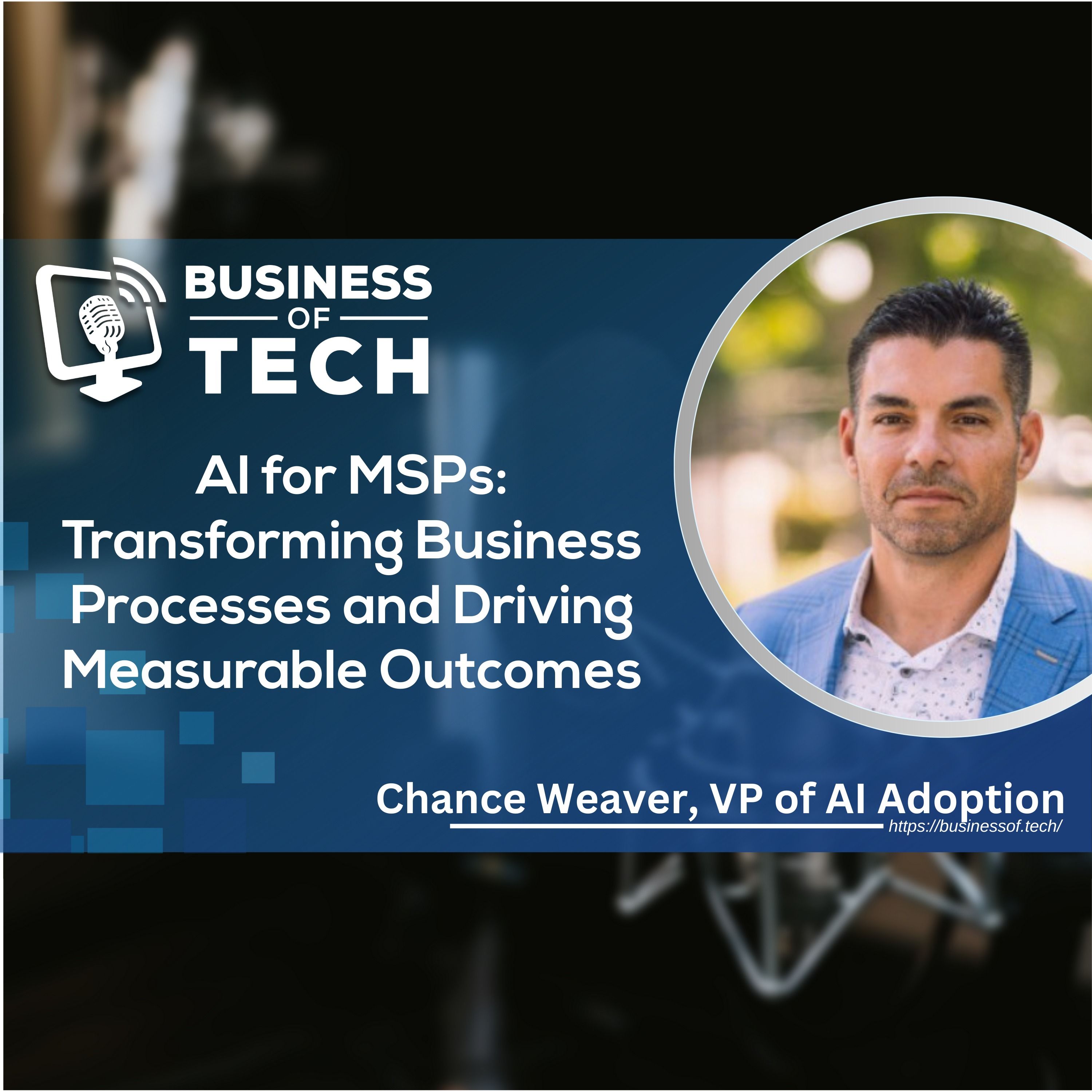
Ep 1855AI for MSPs: Transforming Business Processes and Driving Measurable Outcomes
Managed Service Providers (MSPs) are encouraged to shift their focus from traditional infrastructure management to becoming Managed Intelligence Providers (MIPs), emphasizing the integration of artificial intelligence (AI) into their service offerings. Chance Weaver, VP of AI Adoption at PAX 8, highlights the necessity for MSPs to engage in deeper conversations with clients about their business processes rather than merely discussing technology tools. This approach aims to identify specific business challenges that can be addressed through tailored technological solutions, including AI, automation, and business intelligence.Weaver notes that while many MSPs have historically excelled in maintaining infrastructure, they often lack a comprehensive understanding of their clients' workflows and business needs. The transition to MIPs involves not only understanding business processes but also ensuring data readiness, which is critical for effective AI implementation. Instead of undertaking extensive data cleanup projects upfront, MSPs should focus on the data relevant to specific business processes, thereby demonstrating immediate ROI and building trust with clients.The episode also discusses the importance of outcome-driven services and the potential for MSPs to monetize AI solutions effectively. Weaver shares insights from his interviews with over 650 partners in the PAX 8 ecosystem, revealing that only a small percentage are currently generating revenue from AI-related services. Successful partners are leveraging their existing relationships and expertise to create value for clients by aligning pricing models with measurable outcomes, thus facilitating a smoother transition to AI adoption.For MSPs and IT service leaders, the key takeaway is the urgency to start conversations about AI with clients, even if they are not yet fully equipped to implement these solutions. By positioning themselves as knowledgeable partners in the AI transformation journey, MSPs can capitalize on emerging opportunities and enhance their service offerings. The discussion emphasizes that while some providers may choose to adopt a fast-follower strategy, those who proactively engage with clients about AI will likely gain a competitive advantage in the evolving market landscape. 💼 All Our SponsorsSupport the vendors who support the show:👉 https://businessof.tech/sponsors/ 🚀 Join Business of Tech PlusGet exclusive access to investigative reports, vendor analysis, leadership briefings, and more.👉 https://businessof.tech/plus 🎧 Subscribe to the Business of TechWant the show on your favorite podcast app or prefer the written versions of each story?📲 https://www.businessof.tech/subscribe 📰 Story Links & SourcesLooking for the links from today’s stories?Every episode script — with full source links — is posted at:🌐 https://www.businessof.tech 🎙 Want to Be a Guest?Pitch your story or appear on Business of Tech: Daily 10-Minute IT Services Insights:💬 https://www.podmatch.com/hostdetailpreview/businessoftech 🔗 Follow Business of Tech LinkedIn: https://www.linkedin.com/company/28908079YouTube: https://youtube.com/mspradioBluesky: https://bsky.app/profile/businessof.techInstagram: https://www.instagram.com/mspradioTikTok: https://www.tiktok.com/@businessoftechFacebook: https://www.facebook.com/mspradionews Hosted by Simplecast, an AdsWizz company. See pcm.adswizz.com for information about our collection and use of personal data for advertising.
Ep 1854AI for MSPs: Enhancing Service Desk Automation with Human-in-the-Loop Strategies
The conversation centers on the evolving role of automation in Managed Service Providers (MSPs), particularly the implementation of human-in-the-loop AI systems. Mathieu Tougas, CEO of Mizo Technologies, emphasizes that while automation can significantly enhance efficiency—reporting a 26% increase in technician capacity and a 30% reduction in escalations—maintaining human oversight is crucial for ensuring service quality. This approach allows technicians to delegate low-value tasks to AI agents while focusing on higher-value customer interactions, thereby preserving the essential human element in service delivery.Tougas outlines the methodology behind these efficiency gains, which involves analyzing ticket resolution times before and after deploying Mizo's solutions. The data indicates that technicians can handle more tickets in less time, which can lead to reduced staffing needs without compromising service quality. He also addresses common misconceptions among MSPs regarding AI, particularly the fear of losing control over service quality when delegating tasks to automated systems. Instead, he argues that AI should be viewed as a tool to enhance technician capabilities rather than replace them.The discussion also touches on the importance of integrating AI tools into existing workflows without causing disruption. Mizo Technologies employs a two-week fine-tuning period to adapt its systems to the specific processes of each MSP, ensuring a smoother transition and minimizing the need for extensive retraining. This gradual approach allows organizations to build trust in the AI systems while optimizing their service desk operations.For MSPs and IT service leaders, the key takeaway is the necessity of balancing automation with human oversight to maintain service quality. As the industry moves towards greater automation, understanding the right contexts for AI deployment and ensuring robust processes are in place will be essential for maximizing efficiency and customer satisfaction. Embracing AI thoughtfully can lead to significant operational improvements while still addressing the critical need for human interaction in service delivery. 💼 All Our SponsorsSupport the vendors who support the show:👉 https://businessof.tech/sponsors/ 🚀 Join Business of Tech PlusGet exclusive access to investigative reports, vendor analysis, leadership briefings, and more.👉 https://businessof.tech/plus 🎧 Subscribe to the Business of TechWant the show on your favorite podcast app or prefer the written versions of each story?📲 https://www.businessof.tech/subscribe 📰 Story Links & SourcesLooking for the links from today’s stories?Every episode script — with full source links — is posted at:🌐 https://www.businessof.tech 🎙 Want to Be a Guest?Pitch your story or appear on Business of Tech: Daily 10-Minute IT Services Insights:💬 https://www.podmatch.com/hostdetailpreview/businessoftech 🔗 Follow Business of Tech LinkedIn: https://www.linkedin.com/company/28908079YouTube: https://youtube.com/mspradioBluesky: https://bsky.app/profile/businessof.techInstagram: https://www.instagram.com/mspradioTikTok: https://www.tiktok.com/@businessoftechFacebook: https://www.facebook.com/mspradionews Hosted by Simplecast, an AdsWizz company. See pcm.adswizz.com for information about our collection and use of personal data for advertising.

Ep 1851MSP Cybersecurity: Exploring Digital Identity and Misinformation in Tech Thrillers with Robbie Bach
Robbie Bach, former president of Microsoft's Entertainment and Devices Division, discusses his transition from technology executive to author of political techno-thrillers, focusing on his latest book, The Blockchain Syndicate. The narrative explores themes of digital identity, misinformation, and the vulnerabilities of modern institutions, emphasizing that technology itself is neutral; it can be used for both beneficial and harmful purposes. Bach highlights the character of Tamika Smith, a military veteran, as a lens through which to examine leadership in a complex landscape of technology and public trust.Bach elaborates on the psychological and technical aspects of his story, particularly the implications of digital identity and authenticity. He notes that the plot involves a blackmail scenario linked to a character presumed dead, raising questions about the authenticity of digital communications. This reflects broader concerns about cybersecurity, where vulnerabilities are often exploited rather than created anew. Bach emphasizes the importance of grounding his narrative in real-world technology and experiences, blending factual research with creative storytelling.The conversation also touches on the governance of technology, critiquing current regulatory approaches that tend to be reactive rather than proactive. Bach argues that effective governance requires forward-thinking leadership capable of anticipating future challenges, particularly in areas like AI and blockchain. He stresses the need for businesses, including small and medium-sized enterprises, to engage with these issues beyond mere compliance, advocating for a broader sense of responsibility that includes stakeholder value.For Managed Service Providers (MSPs) and IT service leaders, Bach's insights underscore the critical role they play in navigating the complexities of technology governance and cybersecurity. By understanding the vulnerabilities inherent in digital systems and advocating for responsible practices, MSPs can better support their clients in mitigating risks associated with misinformation and identity fraud. The episode serves as a reminder of the importance of ethical considerations in technology deployment and the need for proactive engagement in shaping a secure digital future. 💼 All Our SponsorsSupport the vendors who support the show:👉 https://businessof.tech/sponsors/ 🚀 Join Business of Tech PlusGet exclusive access to investigative reports, vendor analysis, leadership briefings, and more.👉 https://businessof.tech/plus 🎧 Subscribe to the Business of TechWant the show on your favorite podcast app or prefer the written versions of each story?📲 https://www.businessof.tech/subscribe 📰 Story Links & SourcesLooking for the links from today’s stories?Every episode script — with full source links — is posted at:🌐 https://www.businessof.tech 🎙 Want to Be a Guest?Pitch your story or appear on Business of Tech: Daily 10-Minute IT Services Insights:💬 https://www.podmatch.com/hostdetailpreview/businessoftech 🔗 Follow Business of Tech LinkedIn: https://www.linkedin.com/company/28908079YouTube: https://youtube.com/mspradioBluesky: https://bsky.app/profile/businessof.techInstagram: https://www.instagram.com/mspradioTikTok: https://www.tiktok.com/@businessoftechFacebook: https://www.facebook.com/mspradionews Hosted by Simplecast, an AdsWizz company. See pcm.adswizz.com for information about our collection and use of personal data for advertising.
Ep 1850MSP Compliance Strategies for Government Contracts and AI Integration with Laith Pahlawan
Laith Palhawan, CEO and founder of OrangeCrew, has successfully transitioned his managed IT services company into the public sector by becoming GSA certified, allowing him to provide IT services to government agencies. This shift has required a deep understanding of compliance and security requirements that differ significantly from those in the private sector. In the public sector, clients expect adherence to strict standards and predefined solutions, which contrasts with the more flexible and responsive approach typically found in private business engagements.Pahlawan's experience highlights the challenges of profitability in the managed services landscape, particularly when working with government contracts that often yield lower margins of 10-15%. He emphasizes the importance of strategic partnerships and effective business analysis to maintain sustainable margins. By utilizing tools like Power BI and Kaseya, OrangeCrew can track time and resources spent on each client, allowing for informed decisions about which clients to prioritize and which to decline based on profitability and demand.The episode also delves into OrangeCrew's innovative use of artificial intelligence (AI) to enhance internal operations and client services. Pahlawan has developed a centralized database that integrates various data sources, enabling the use of AI to analyze client interactions and identify potential issues proactively. This system not only improves operational efficiency but also positions OrangeCrew as a forward-thinking MSP capable of offering advanced solutions to clients, particularly in the realm of AI.For MSPs and IT service leaders, the insights shared by Pahlawan underscore the necessity of adapting to evolving client needs, particularly regarding compliance and AI integration. As businesses increasingly rely on AI for operational efficiency, MSPs must enhance their understanding of data management and automation to remain competitive. The conversation serves as a reminder that embracing new technologies and strategic partnerships can lead to sustainable growth and improved service delivery in a challenging market. 💼 All Our SponsorsSupport the vendors who support the show:👉 https://businessof.tech/sponsors/ 🚀 Join Business of Tech PlusGet exclusive access to investigative reports, vendor analysis, leadership briefings, and more.👉 https://businessof.tech/plus 🎧 Subscribe to the Business of TechWant the show on your favorite podcast app or prefer the written versions of each story?📲 https://www.businessof.tech/subscribe 📰 Story Links & SourcesLooking for the links from today’s stories?Every episode script — with full source links — is posted at:🌐 https://www.businessof.tech 🎙 Want to Be a Guest?Pitch your story or appear on Business of Tech: Daily 10-Minute IT Services Insights:💬 https://www.podmatch.com/hostdetailpreview/businessoftech 🔗 Follow Business of Tech LinkedIn: https://www.linkedin.com/company/28908079YouTube: https://youtube.com/mspradioBluesky: https://bsky.app/profile/businessof.techInstagram: https://www.instagram.com/mspradioTikTok: https://www.tiktok.com/@businessoftechFacebook: https://www.facebook.com/mspradionews Hosted by Simplecast, an AdsWizz company. See pcm.adswizz.com for information about our collection and use of personal data for advertising.
Ep 1853MSP Automation Strategies: How to Scale Without Relying on Human Labor in 2026
The episode reviews the outcomes of predictions made for 2025, highlighting the evolving role of automation and AI in Managed Service Providers (MSPs). Key findings indicate that while generative AI has improved data accessibility, it has not fully resolved existing reporting issues related to data quality and governance. Additionally, the anticipated widespread adoption of autonomous IT systems among small and medium-sized businesses (SMBs) has not materialized, as many still rely on traditional remote monitoring and management (RMM) tools. The episode emphasizes that AI governance and advisory services have become central to modern MSP offerings.Further analysis reveals that while AI-driven legal services gained traction, MSPs have not widely adopted these as packaged offerings. Instead, they have focused on AI compliance and regulatory advisory services. The discussion also touches on the mixed results of fraud prevention becoming a standard service, with significant growth in some sectors but uneven adoption across the board. The episode concludes with a scorecard of predictions, noting a few clear successes in AI governance and readiness consulting, while highlighting a notable miss regarding decentralized MSP models.Looking ahead to 2026, the episode presents several predictions that reflect the increasing importance of automation in IT services. It suggests that MSPs whose revenue models still depend heavily on human labor will face pressure to adapt, as automation becomes the primary driver of service scalability. The discussion also raises concerns about accountability in automation, predicting that individuals may be held responsible for failures in automated systems, emphasizing the need for robust governance frameworks.The implications for MSPs and IT service leaders are significant. As automation becomes the production system for IT services, providers must focus on governance, risk management, and advisory roles to differentiate themselves in a competitive landscape. The episode underscores the necessity for MSPs to evolve their service offerings and business models to align with these trends, ensuring they remain relevant and capable of delivering value in an increasingly automated environment. 💼 All Our SponsorsSupport the vendors who support the show:👉 https://businessof.tech/sponsors/ 🚀 Join Business of Tech PlusGet exclusive access to investigative reports, vendor analysis, leadership briefings, and more.👉 https://businessof.tech/plus 🎧 Subscribe to the Business of TechWant the show on your favorite podcast app or prefer the written versions of each story?📲 https://www.businessof.tech/subscribe 📰 Story Links & SourcesLooking for the links from today’s stories?Every episode script — with full source links — is posted at:🌐 https://www.businessof.tech 🎙 Want to Be a Guest?Pitch your story or appear on Business of Tech: Daily 10-Minute IT Services Insights:💬 https://www.podmatch.com/hostdetailpreview/businessoftech 🔗 Follow Business of Tech LinkedIn: https://www.linkedin.com/company/28908079YouTube: https://youtube.com/mspradioBluesky: https://bsky.app/profile/businessof.techInstagram: https://www.instagram.com/mspradioTikTok: https://www.tiktok.com/@businessoftechFacebook: https://www.facebook.com/mspradionews Hosted by Simplecast, an AdsWizz company. See pcm.adswizz.com for information about our collection and use of personal data for advertising.
Ep 1844AI for MSPs: Automating Customer Service and Enhancing Nonprofit IT Solutions
Matthew Nikravesh, CEO and co-founder of Solarus Technologies, discussed the evolution of managed services in response to the increasing demand for cloud solutions, particularly Azure, during the pandemic. Solaris Technologies, founded in 2012, focuses on providing managed services primarily to nonprofits and small to mid-sized businesses. The company has implemented an automated cloud management platform in partnership with Nerdio, which has enabled them to efficiently deploy Azure Virtual Desktops and streamline support processes for their engineers.The conversation highlighted the importance of automation in reducing operational inefficiencies. Solarus Technologies has integrated automation tools, such as PIA, to manage user onboarding and ticket dispatching, achieving a 35% automation rate for incoming tickets. However, Nikravesh acknowledged that the journey toward effective automation is iterative, requiring ongoing adjustments to improve performance. The company has also seen significant benefits from automating user onboarding processes, which have reduced the back-and-forth communication typically associated with new hires.Nikravesh also addressed the challenges faced by nonprofits in adopting AI technologies, noting that many organizations struggle with data readiness and security. To assist clients in overcoming these hurdles, Solarus Technologies collaborates with an AI consultant to conduct readiness assessments, ensuring that clients can effectively leverage AI tools when they are prepared. This proactive approach aims to help nonprofits focus on their missions rather than IT concerns.For MSPs and IT service leaders, the discussion underscores the necessity of evaluating tool stacks and vendor partnerships strategically. Nikravesh emphasized the importance of smart revenue growth, advising MSPs to assess their client relationships and eliminate those that do not contribute positively to their bottom line. As the industry continues to evolve, the integration of cloud services and AI will remain critical topics for MSPs, necessitating a focus on delivering value while managing operational complexities. 💼 All Our SponsorsSupport the vendors who support the show:👉 https://businessof.tech/sponsors/ 🚀 Join Business of Tech PlusGet exclusive access to investigative reports, vendor analysis, leadership briefings, and more.👉 https://businessof.tech/plus 🎧 Subscribe to the Business of TechWant the show on your favorite podcast app or prefer the written versions of each story?📲 https://www.businessof.tech/subscribe 📰 Story Links & SourcesLooking for the links from today’s stories?Every episode script — with full source links — is posted at:🌐 https://www.businessof.tech 🎙 Want to Be a Guest?Pitch your story or appear on Business of Tech: Daily 10-Minute IT Services Insights:💬 https://www.podmatch.com/hostdetailpreview/businessoftech 🔗 Follow Business of Tech LinkedIn: https://www.linkedin.com/company/28908079YouTube: https://youtube.com/mspradioBluesky: https://bsky.app/profile/businessof.techInstagram: https://www.instagram.com/mspradioTikTok: https://www.tiktok.com/@businessoftechFacebook: https://www.facebook.com/mspradionews Hosted by Simplecast, an AdsWizz company. See pcm.adswizz.com for information about our collection and use of personal data for advertising.

Ep 1848MSP Profitability Trends: Understanding Revenue Growth and Labor Costs in 2025
The episode features a discussion on the current state of profitability and revenue growth within the Managed Service Provider (MSP) industry, highlighting that 2024 marks the fifth consecutive year of strong profitability. Despite this positive trend, revenue growth has cooled compared to the rapid increases seen from 2021 to 2023, with organic revenue growth peaking at 25% before declining to around 10.6%. This shift has led to concerns that MSPs may be under pressure; however, profitability metrics indicate that the industry remains healthy, with best-in-class firms achieving significantly higher earnings than their median peers.Peter Kujawa of Service Leadership elaborates on the factors influencing these trends, noting that while profitability has improved, wage inflation has impacted service gross margins. The data reveals that the best-in-class MSPs maintain a W2 ratio that allows them to generate more revenue per employee compared to their median and bottom quartile counterparts. This efficiency is crucial as the industry matures, with many MSPs now facing the challenge of adapting to a more competitive landscape where automation and AI are becoming increasingly important.The conversation also touches on the evolving compensation structures within MSPs, emphasizing the importance of incentive pay over base salaries. Best-in-class firms tend to offer higher variable pay percentages, which are tied to performance metrics that employees can control, thereby motivating better outcomes. This approach contrasts with the bottom quartile, where compensation structures may not align as effectively with performance, potentially leading to complacency.For MSPs and IT service leaders, the key takeaway is the necessity of embracing operational efficiency and automation to remain competitive. As the market continues to mature, those who invest in automation and refine their compensation strategies will likely see improved profitability and growth. The episode underscores the importance of understanding market dynamics and leveraging data-driven insights to make informed business decisions. 💼 All Our SponsorsSupport the vendors who support the show:👉 https://businessof.tech/sponsors/ 🚀 Join Business of Tech PlusGet exclusive access to investigative reports, vendor analysis, leadership briefings, and more.👉 https://businessof.tech/plus 🎧 Subscribe to the Business of TechWant the show on your favorite podcast app or prefer the written versions of each story?📲 https://www.businessof.tech/subscribe 📰 Story Links & SourcesLooking for the links from today’s stories?Every episode script — with full source links — is posted at:🌐 https://www.businessof.tech 🎙 Want to Be a Guest?Pitch your story or appear on Business of Tech: Daily 10-Minute IT Services Insights:💬 https://www.podmatch.com/hostdetailpreview/businessoftech 🔗 Follow Business of Tech LinkedIn: https://www.linkedin.com/company/28908079YouTube: https://youtube.com/mspradioBluesky: https://bsky.app/profile/businessof.techInstagram: https://www.instagram.com/mspradioTikTok: https://www.tiktok.com/@businessoftechFacebook: https://www.facebook.com/mspradionews Hosted by Simplecast, an AdsWizz company. See pcm.adswizz.com for information about our collection and use of personal data for advertising.
Ep 1852MSP Cybersecurity: Navigating AI Accountability and Job Market Shifts in 2025
Conflicting jobs data indicates a complex economic landscape for IT service providers, as the unemployment rate in the tech sector has risen to 4% with a loss of 134,000 jobs between October and November 2025. Despite a drop in the overall unemployment rate to 4.2% and a projected growth of managed services contributing $608 billion to the B2B technology sector, the mixed signals from economic indicators complicate decision-making for the Federal Reserve and raise concerns about consumer spending. Analysts emphasize that the current job losses reflect a shift in responsibility from internal roles to external managed service providers (MSPs), which may not alleviate underlying risks.The National Institute of Standards and Technology (NIST) has released a draft profile addressing cybersecurity challenges posed by artificial intelligence (AI), highlighting the need for organizations to manage AI-related security risks effectively. This profile outlines how AI can enhance cybersecurity defenses while also detailing the responsibilities that come with its deployment. Recent assessments reveal that while some AI models perform better in security contexts, the lack of clarity around accountability when AI systems make decisions remains a significant concern for MSPs.Private equity activity is accelerating in the managed services sector, exemplified by Broadwing Capital's acquisition of CloudScale365, which aims to create a platform addressing gaps in the fragmented IT-managed services market. This consolidation trend raises questions for MSPs about operational norms and the potential loss of control over their business models. As platforms seek to standardize pricing and decision-making processes, MSPs must consider how these changes will affect their service delivery and customer relationships.For MSPs and IT service leaders, the evolving landscape underscores the importance of understanding where risk is shifting and how to price and govern accordingly. The retreat from AGI hype and the focus on practical AI applications signal a need for clarity in decision-making processes, particularly as automation becomes more prevalent. MSPs that can articulate the limitations of their AI systems and establish clear accountability frameworks will be better positioned to navigate the complexities of the current market. Four things to know today00:00 As Jobs Data Conflicts and Tech Employment Slips, Managed Services Absorb Risk and Responsibility05:46 NIST’s AI Security Framework Meets Reality as Model Safety Gaps Expose Accountability Risks08:54 Broadwing Launches MSP Platform to Standardize Scale, Signaling Growing PE Pressure on MSP Operations11:03 AI Rebrands Itself as Open Source Expands, Automation Scales, and Accountability Gets Murkier This is the Business of Tech. Supported by: https://saasalerts.com/mspradio/ 💼 All Our SponsorsSupport the vendors who support the show:👉 https://businessof.tech/sponsors/ 🚀 Join Business of Tech PlusGet exclusive access to investigative reports, vendor analysis, leadership briefings, and more.👉 https://businessof.tech/plus 🎧 Subscribe to the Business of TechWant the show on your favorite podcast app or prefer the written versions of each story?📲 https://www.businessof.tech/subscribe 📰 Story Links & SourcesLooking for the links from today’s stories?Every episode script — with full source links — is posted at:🌐 https://www.businessof.tech 🎙 Want to Be a Guest?Pitch your story or appear on Business of Tech: Daily 10-Minute IT Services Insights:💬 https://www.podmatch.com/hostdetailpreview/businessoftech 🔗 Follow Business of Tech LinkedIn: https://www.linkedin.com/company/28908079YouTube: https://youtube.com/mspradioBluesky: https://bsky.app/profile/businessof.techInstagram: https://www.instagram.com/mspradioTikTok: https://www.tiktok.com/@businessoftechFacebook: https://www.facebook.com/mspradionews Hosted by Simplecast, an AdsWizz company. See pcm.adswizz.com for information about our collection and use of personal data for advertising.
Ep 1849AI for MSPs: Navigating Control and Accountability in Automated Services
Thrive, a global technology outsourcing provider, is pursuing a $1 billion market position by the end of 2029, following significant revenue growth and 27 acquisitions since its inception. The company is focusing on enhancing its service offerings, particularly in managed artificial intelligence services, through a $100 million investment in its next-gen 3.0 platform. This shift raises critical questions for Managed Service Providers (MSPs) regarding who controls decision-making in IT operations as AI begins to play a more active role in execution rather than merely advisory functions. The integration of AI into managed services could lead to a concentration of power upstream, potentially undermining the authority and accountability of MSPs.Recent data on IT leadership diversity reveals that representation has stagnated, with 83% of IT leaders being white and over 78% male. This lack of diversity in leadership roles can create strategic blind spots, particularly as technology evolves rapidly. The report indicates that while there has been some improvement in gender representation among larger companies, racial diversity remains largely unchanged. This stability in leadership demographics may limit the perspectives necessary for effective technology governance, especially in a landscape increasingly influenced by AI and automation.Additional developments include the launch of the HiPori Partner Program, which aims to enhance secure mobile access for resellers and MSPs, and TD Cinex's AI Game Plan Workshop designed to assist partners in implementing AI solutions for their customers. These initiatives reflect a growing trend among technology providers to standardize outcomes and streamline processes, which may inadvertently reduce the differentiation and authority of MSPs as they adopt these frameworks.For MSPs and IT service leaders, the implications of these developments are significant. As AI-driven execution becomes more prevalent, MSPs must redefine their responsibility and authority to avoid unpriced liabilities. The current landscape suggests that those who can clearly articulate control and accountability in automated environments will have a competitive advantage. Ignoring these shifts could lead to operational risks and customer dissatisfaction, emphasizing the need for MSPs to adapt their strategies in response to the evolving technological landscape. Three things to know today 00:00 Thrive’s $1B Ambition, OpenAI Investment, and AI Automation Push Highlight a Shift in Who Controls “Good IT”05:26 Q4 2025 IT Leadership Data Confirms a Five-Year Stall in Diversity Despite Rapid Technology Change10:56 Hypori, TD Synnex, and N-able Moves Show MSPs Trading Local Control for Centralized AI and Endpoint Frameworks This is the Business of Tech. Supported by: ingocni.com/tech10 PROMO CODE: tech10https://cometbackup.com/?utm_source=mspradio&utm_medium=podcast&utm_campaign=sponsorship 💼 All Our SponsorsSupport the vendors who support the show:👉 https://businessof.tech/sponsors/ 🚀 Join Business of Tech PlusGet exclusive access to investigative reports, vendor analysis, leadership briefings, and more.👉 https://businessof.tech/plus 🎧 Subscribe to the Business of TechWant the show on your favorite podcast app or prefer the written versions of each story?📲 https://www.businessof.tech/subscribe 📰 Story Links & SourcesLooking for the links from today’s stories?Every episode script — with full source links — is posted at:🌐 https://www.businessof.tech 🎙 Want to Be a Guest?Pitch your story or appear on Business of Tech: Daily 10-Minute IT Services Insights:💬 https://www.podmatch.com/hostdetailpreview/businessoftech 🔗 Follow Business of Tech LinkedIn: https://www.linkedin.com/company/28908079YouTube: https://youtube.com/mspradioBluesky: https://bsky.app/profile/businessof.techInstagram: https://www.instagram.com/mspradioTikTok: https://www.tiktok.com/@businessoftechFacebook: https://www.facebook.com/mspradionews Hosted by Simplecast, an AdsWizz company. See pcm.adswizz.com for information about our collection and use of personal data for advertising.
Ep 1847MSP Cybersecurity: Ransomware Shifts to Hypervisors, AI Risks, and Regulatory Challenges
Ransomware payments have decreased by 33%, dropping from approximately $1.1 billion in 2023 to $734 million in 2024, according to a report from the Financial Crimes Enforcement Network. Despite this decline in payments, the number of ransomware attacks has remained relatively stable, with 1,476 incidents reported last year, a slight decrease of only 2% from the previous year. Notably, there has been a 700% increase in ransomware attacks targeting hypervisors, which are often less secure than traditional endpoints. This shift in attack vectors poses new risks for Managed Service Providers (MSPs) as attackers adapt their strategies to exploit vulnerabilities in hypervisor architectures.In addition to the ransomware landscape, state attorneys general have issued warnings to major tech companies, including OpenAI and Microsoft, regarding the potential harms of generative AI, particularly concerning child safety. The letter emphasizes the need for stronger safeguards to prevent AI systems from engaging in harmful behaviors. Meanwhile, Congress has allowed the Technology Modernization Fund, which supports federal IT projects, to expire, freezing nearly $200 million in funding. This situation creates a disconnect, as states demand accountability from AI vendors while federal funding for modernization efforts remains stalled.The episode also discusses OpenAI's transition to a for-profit model, raising concerns about transparency and accountability in AI development. Allegations have emerged that OpenAI has self-censored research highlighting the negative impacts of AI, leading to employee resignations. This shift complicates the narrative around AI's societal impacts, as vendors may prioritize their commercial interests over objective reporting. Furthermore, security vendors are introducing new products aimed at enhancing AI security, but these solutions often focus on control rather than responsibility, leaving MSPs vulnerable to client expectations and potential liabilities.For MSPs and IT service leaders, the evolving landscape of ransomware and AI governance underscores the importance of proactive risk management. As AI systems become integral to business operations, the expectation for accountability will increase, particularly in regulated environments. MSPs must prioritize clear governance structures and be prepared to address the implications of AI deployment, ensuring that they do not inadvertently absorb risks that are not adequately priced in their service agreements. The focus should be on establishing limits and maintaining oversight to protect both their clients and their own business interests. 💼 All Our SponsorsSupport the vendors who support the show:👉 https://businessof.tech/sponsors/ 🚀 Join Business of Tech PlusGet exclusive access to investigative reports, vendor analysis, leadership briefings, and more.👉 https://businessof.tech/plus 🎧 Subscribe to the Business of TechWant the show on your favorite podcast app or prefer the written versions of each story?📲 https://www.businessof.tech/subscribe 📰 Story Links & SourcesLooking for the links from today’s stories?Every episode script — with full source links — is posted at:🌐 https://www.businessof.tech 🎙 Want to Be a Guest?Pitch your story or appear on Business of Tech: Daily 10-Minute IT Services Insights:💬 https://www.podmatch.com/hostdetailpreview/businessoftech 🔗 Follow Business of Tech LinkedIn: https://www.linkedin.com/company/28908079YouTube: https://youtube.com/mspradioBluesky: https://bsky.app/profile/businessof.techInstagram: https://www.instagram.com/mspradioTikTok: https://www.tiktok.com/@businessoftechFacebook: https://www.facebook.com/mspradionews Hosted by Simplecast, an AdsWizz company. See pcm.adswizz.com for information about our collection and use of personal data for advertising.
Ep 1846AI for MSPs: Navigating Governance, Quality Control, and New Procurement Guidelines
Analyst firm Forrester has projected that AI-native cloud solutions could generate $20 billion in revenue by 2026, significantly reshaping enterprise IT operations. However, the transition to these solutions raises concerns about governance gaps that could lead to outages. Organizations are increasingly redesigning their systems across various sectors, including education and infrastructure financing, to manage the risks associated with AI. This shift is underscored by a recent Gallup poll indicating that 45% of U.S. employees are using AI at work, reflecting a growing reliance on AI tools for operational efficiency.The term "SLOP" has been designated as Merriam-Webster's 2025 Word of the Year, highlighting the cultural implications of AI's integration into daily communication. This term encapsulates the challenges of quality control in AI outputs, as the rapid scaling of AI tools often outpaces human judgment. Managed Service Providers (MSPs) are urged to focus on helping clients discern which AI outputs are reliable and which require scrutiny, emphasizing the need for quality control over mere automation.In the education sector, a notable trend is the adoption of oral exams to assess student learning, ensuring evaluations reflect genuine understanding rather than reliance on AI-generated content. Additionally, major tech companies like Microsoft and Google are adopting innovative financing strategies, such as short-term leasing agreements for computing power, to mitigate financial risks associated with AI infrastructure investments. These strategies allow companies to scale their AI capabilities while maintaining flexibility in their financial commitments.For MSPs and IT service leaders, the evolving landscape of AI presents both challenges and opportunities. The emphasis on governance and quality control in AI tools indicates a shift in how organizations will approach AI adoption, necessitating new validation steps and risk models. MSPs can leverage this moment by providing guidance on AI evaluation and compliance, ensuring that clients can navigate the complexities of AI integration while minimizing potential liabilities. Four things to know today 00:00 AI Adoption Surges as Forrester, Gallup, and Merriam-Webster Signal a Quality Problem04:40 -Education and Big Tech Respond to AI by Reworking Assessment and Risk Models07:13 OMB Uses Procurement Power to Set Federal Standards for Truthful, Unbiased AI Tools09:11 Disney Sets AI Rules: This is the Business of Tech. Supported by: https://cometbackup.com/?utm_source=mspradio&utm_medium=podcast&utm_campaign=sponsorship 💼 All Our SponsorsSupport the vendors who support the show:👉 https://businessof.tech/sponsors/ 🚀 Join Business of Tech PlusGet exclusive access to investigative reports, vendor analysis, leadership briefings, and more.👉 https://businessof.tech/plus 🎧 Subscribe to the Business of TechWant the show on your favorite podcast app or prefer the written versions of each story?📲 https://www.businessof.tech/subscribe 📰 Story Links & SourcesLooking for the links from today’s stories?Every episode script — with full source links — is posted at:🌐 https://www.businessof.tech 🎙 Want to Be a Guest?Pitch your story or appear on Business of Tech: Daily 10-Minute IT Services Insights:💬 https://www.podmatch.com/hostdetailpreview/businessoftech 🔗 Follow Business of Tech LinkedIn: https://www.linkedin.com/company/28908079YouTube: https://youtube.com/mspradioBluesky: https://bsky.app/profile/businessof.techInstagram: https://www.instagram.com/mspradioTikTok: https://www.tiktok.com/@businessoftechFacebook: https://www.facebook.com/mspradionews Hosted by Simplecast, an AdsWizz company. See pcm.adswizz.com for information about our collection and use of personal data for advertising.
Ep 1845AI for MSPs: Navigating Hiring Challenges and IT Spending Trends in 2025
Global IT spending is projected to reach its highest level in 30 years, driven primarily by investments in artificial intelligence (AI) and cloud services. According to a report from the International Data Corporation, spending on hardware, software, and IT services is expected to rise by 14%, marking the fastest growth rate since 1996. However, the benefits of this spending surge are not being realized by Managed Service Providers (MSPs), as hyperscalers dominate the market by building extensive AI infrastructure and integrated platforms. This shift in control raises questions about the future value proposition for MSPs, who may find themselves increasingly marginalized.Small businesses are experiencing hiring challenges despite a reported increase in job growth plans. The National Federation of Independent Business Jobs report indicates that 33% of small business owners have unfilled job openings, with 19% planning to create new jobs in the next three months. However, 56% of these businesses attempted to hire in November, with half citing a lack of suitable candidates. Compounding this issue, federal statistical agencies are facing significant staffing and budget cuts, leading to a decline in the availability of reliable economic data. This erosion of data could hinder small businesses' ability to make informed hiring and investment decisions.In a notable leadership change, Jim Siders has been appointed CEO of Shield Technology Partners, an IT services platform focused on integrating AI with operational expertise. Siders aims to enhance service delivery through AI innovations, positioning Shield as a vital resource for businesses in sectors like construction and healthcare. This move reflects a broader trend of IT services being restructured as AI-driven platforms rather than traditional roll-ups, emphasizing the importance of operational discipline and clean data in leveraging AI effectively.The episode highlights a concerning trend in corporate spending on AI, where companies allocate 93% of their budgets to technology and only 7% to the people who will utilize it. This imbalance can lead to a decline in trust among employees and an increase in the use of unapproved AI tools, complicating compliance and operational efficiency. For MSPs and IT service leaders, the key takeaway is the necessity to shift focus from merely adopting technology to fostering a disciplined approach to AI integration, emphasizing governance, workflow redesign, and clear decision-making boundaries to ensure that clients can navigate the complexities of AI effectively. Four things to know today00:00 Global IT Spending Hits 30-Year High as AI and Cloud Investments Accelerate, IDC Reports05:24 Small Businesses Plan More Hiring but Still Can’t Find Qualified Workers, NFIB Reports08:33 Shield Names Former Palantir CIO Jim Siders CEO as It Builds an AI-First IT Services Platform With OpenAI and Thrive11:19 Deloitte: Lopsided AI Spending, Declining Trust, and Shadow AI Signal a Growing Management Failure This is the Business of Tech. Supported by: https://saasalerts.com/mspradio/ 💼 All Our SponsorsSupport the vendors who support the show:👉 https://businessof.tech/sponsors/ 🚀 Join Business of Tech PlusGet exclusive access to investigative reports, vendor analysis, leadership briefings, and more.👉 https://businessof.tech/plus 🎧 Subscribe to the Business of TechWant the show on your favorite podcast app or prefer the written versions of each story?📲 https://www.businessof.tech/subscribe 📰 Story Links & SourcesLooking for the links from today’s stories?Every episode script — with full source links — is posted at:🌐 https://www.businessof.tech 🎙 Want to Be a Guest?Pitch your story or appear on Business of Tech: Daily 10-Minute IT Services Insights:💬 https://www.podmatch.com/hostdetailpreview/businessoftech 🔗 Follow Business of Tech LinkedIn: https://www.linkedin.com/company/28908079YouTube: https://youtube.com/mspradioBluesky: https://bsky.app/profile/businessof.techInstagram: https://www.instagram.com/mspradioTikTok: https://www.tiktok.com/@businessoftechFacebook: https://www.facebook.com/mspradionews Hosted by Simplecast, an AdsWizz company. See pcm.adswizz.com for information about our collection and use of personal data for advertising.
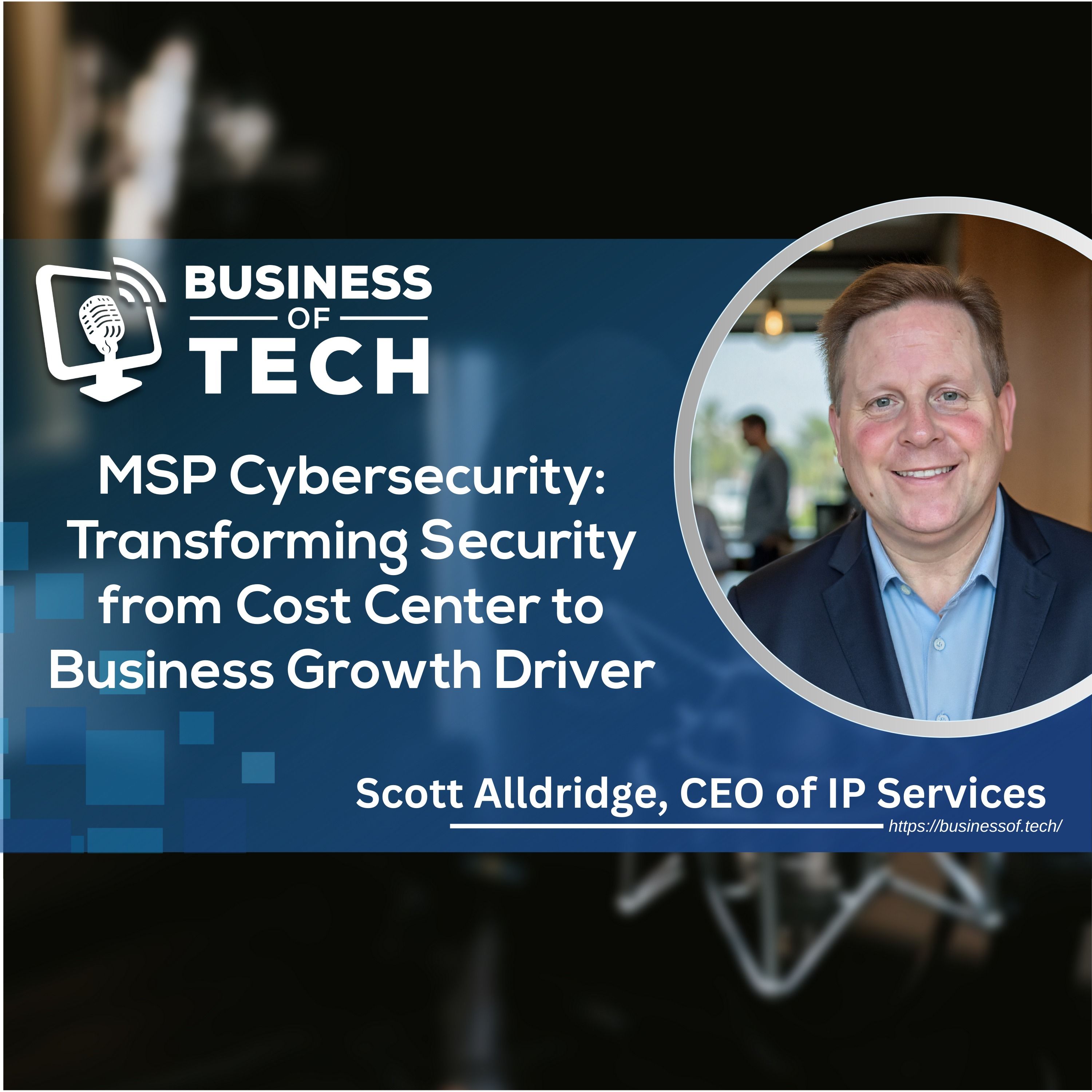
Ep 1839MSP Cybersecurity: Transforming Security from Cost Center to Business Growth Driver
Scott Alldridge, CEO of IP Services and author of the Visible Ops series, emphasizes the necessity of viewing cybersecurity as a growth driver rather than a cost center. He argues that the increasing sophistication of cyber threats, which now target small businesses, necessitates a shift in perspective. Aldridge highlights that organizations must recognize cybersecurity as essential for survival, framing it as revenue protection and enablement. He cites the example of MGM, which suffered a significant ransomware attack that resulted in over $140 million in losses, underscoring the urgency for businesses to prioritize cybersecurity.Aldridge discusses the importance of measurable indicators to demonstrate improvements in security posture. He advocates for regular vulnerability scanning and penetration testing, moving beyond the outdated practice of annual assessments. He notes that organizations should conduct these tests quarterly or even monthly to adapt to the evolving threat landscape. Metrics such as Mean Time to Detect (MTTD) and Mean Time to Respond (MTTR) are critical for assessing the effectiveness of cybersecurity measures and ensuring timely responses to potential threats.The conversation also touches on the human factor in cybersecurity, emphasizing the need for robust training and awareness programs to mitigate risks associated with employee actions. Aldridge stresses that leadership commitment is crucial for fostering a culture of security within organizations. He advocates for a philosophical approach to cybersecurity, including the adoption of frameworks like Zero Trust, which emphasizes strict access controls and continuous monitoring.For Managed Service Providers (MSPs) and IT leaders, the episode underscores the importance of integrating cybersecurity into business strategy. By framing cybersecurity as a critical component of business continuity and reputation management, MSPs can better communicate its value to clients. The discussion also highlights the need for ongoing education and adaptation to new threats, ensuring that organizations remain resilient in the face of cyber challenges. Viewers can get free e-copy of the book, “Virtual Ops Cybersecurity” by texting SECURE25 to 541-359-1269” 💼 All Our SponsorsSupport the vendors who support the show:👉 https://businessof.tech/sponsors/ 🚀 Join Business of Tech PlusGet exclusive access to investigative reports, vendor analysis, leadership briefings, and more.👉 https://businessof.tech/plus 🎧 Subscribe to the Business of TechWant the show on your favorite podcast app or prefer the written versions of each story?📲 https://www.businessof.tech/subscribe 📰 Story Links & SourcesLooking for the links from today’s stories?Every episode script — with full source links — is posted at:🌐 https://www.businessof.tech 🎙 Want to Be a Guest?Pitch your story or appear on Business of Tech: Daily 10-Minute IT Services Insights:💬 https://www.podmatch.com/hostdetailpreview/businessoftech 🔗 Follow Business of Tech LinkedIn: https://www.linkedin.com/company/28908079YouTube: https://youtube.com/mspradioBluesky: https://bsky.app/profile/businessof.techInstagram: https://www.instagram.com/mspradioTikTok: https://www.tiktok.com/@businessoftechFacebook: https://www.facebook.com/mspradionews Hosted by Simplecast, an AdsWizz company. See pcm.adswizz.com for information about our collection and use of personal data for advertising.
Ep 1843MSP Cybersecurity Risks: OpenAI's Warning on AI Models and Zero-Day Exploits
OpenAI has released GPT 5.2, a new model that reportedly outperforms industry professionals across 44 occupations in benchmark tests, completing tasks over 11 times faster and at less than 1% of the cost of expert professionals. This development follows a declaration of urgency from CEO Sam Altman, who highlighted the need to enhance ChatGPT's capabilities in response to competition from Google's Gemini 3. The implications for Managed Service Providers (MSPs) are significant, as the model aims to improve productivity and efficiency in various professional settings, potentially reshaping workflows and service delivery.In a related move, the Walt Disney Company has entered a three-year licensing agreement with OpenAI, investing $1 billion to allow the integration of over 200 characters from its franchises into OpenAI's Sora video generation tool. This partnership is designed to enhance user engagement while respecting creator rights through licensing fees. Concurrently, Disney has filed a cease and desist letter against Google for alleged copyright infringement, claiming that Google has been distributing copyrighted content from its library without authorization. This dual approach of licensing and litigation illustrates the complexities of copyright in the AI era, particularly for smaller companies lacking the enforcement capabilities of larger entities.The episode also discusses the U.S. government's response to AI governance, including an executive order from President Trump aimed at preventing states from enacting regulations that could hinder the AI industry. This order reflects a broader tension within the Republican coalition regarding the potential risks of unregulated AI, such as job displacement. Additionally, a ruling by the Penn Guild against Politico highlights the importance of human oversight in AI applications within journalism, emphasizing that AI cannot replace the accountability inherent in human reporting.For MSPs and IT service leaders, the key takeaway is the necessity of treating AI not merely as a tool but as a process change that requires governance and risk management. As AI technologies become more integrated into workflows, the potential for legal exposure increases if they are deployed without adequate oversight. MSPs that focus on helping clients navigate these complexities and implement robust governance frameworks will be better positioned to provide value and mitigate risks associated with emerging technologies. Three things to know today 00:00 As OpenAI and Google Advance AI Models, Disney’s Licensing and Lawsuits Highlight the Real Stakes06:58 Trump Pushes AI Deregulation While Unions and Agencies Enforce Accountability, Exposing a Growing Governance Gap10:29 AI, Quantum, and the Myth of Inevitable Adoption: What CIO Guidance and Microsoft’s History Reveal About Real Tech Value This is the Business of Tech. Supported by: https://scalepad.com/dave/https://getflexpoint.com/msp-radio/ 💼 All Our SponsorsSupport the vendors who support the show:👉 https://businessof.tech/sponsors/ 🚀 Join Business of Tech PlusGet exclusive access to investigative reports, vendor analysis, leadership briefings, and more.👉 https://businessof.tech/plus 🎧 Subscribe to the Business of TechWant the show on your favorite podcast app or prefer the written versions of each story?📲 https://www.businessof.tech/subscribe 📰 Story Links & SourcesLooking for the links from today’s stories?Every episode script — with full source links — is posted at:🌐 https://www.businessof.tech 🎙 Want to Be a Guest?Pitch your story or appear on Business of Tech: Daily 10-Minute IT Services Insights:💬 https://www.podmatch.com/hostdetailpreview/businessoftech 🔗 Follow Business of Tech LinkedIn: https://www.linkedin.com/company/28908079YouTube: https://youtube.com/mspradioBluesky: https://bsky.app/profile/businessof.techInstagram: https://www.instagram.com/mspradioTikTok: https://www.tiktok.com/@businessoftechFacebook: https://www.facebook.com/mspradionews Hosted by Simplecast, an AdsWizz company. See pcm.adswizz.com for information about our collection and use of personal data for advertising.
Ep 1842AI for MSPs: Navigating Adoption Challenges and Governance in 2025
Microsoft's analysis of 37.5 million de-identified conversations from its CoPilot feature indicates that AI assistants are becoming increasingly integrated into daily life, with users frequently seeking health-related advice and engaging in programming discussions during weekdays. However, despite this growing reliance on AI, CoPilot only commands about 3% of the AI chatbot market, significantly overshadowed by ChatGPT's 80% share. Deloitte's recent report highlights persistent barriers to AI adoption, including data privacy concerns and regulatory challenges, revealing that only 25% of organizations have fully integrated AI into their operations as of late 2025.The U.S. Navy's investment of $448 million in an AI system designed to streamline submarine shipbuilding processes exemplifies successful AI implementation. This initiative, which reduces planning times from 160 hours to just 10 minutes, underscores the importance of having the right infrastructure and oversight in place for AI to thrive. The Navy's approach contrasts sharply with the broader industry, where many organizations struggle to align AI technologies with existing systems and compliance requirements.In addition to these developments, Anthropic's donation of its Model Context Protocol (MCP) to the Linux Foundation signals a shift towards standardization in AI interactions. This protocol aims to facilitate communication between AI systems and applications, potentially transforming user experiences. However, the move raises concerns about the concentration of risk associated with shared protocols, as any flaws could impact all users. Furthermore, CISA's launch of a new industry engagement platform aims to enhance collaboration with tech innovators, particularly in light of increasing mandatory cyber incident reporting.For Managed Service Providers (MSPs) and IT service leaders, these developments highlight the critical need for robust governance and infrastructure to support AI technologies. As organizations increasingly turn to AI for operational efficiency, MSPs must focus on establishing the necessary frameworks for data management, compliance, and security. The evolving landscape emphasizes the importance of being proactive in developing policies and workflows that address the complexities of AI integration, ensuring that clients can navigate the challenges and leverage AI effectively.Four things to know today00:00 AI Use Soars but Readiness Lags: Microsoft’s Copilot Data, Deloitte’s Enterprise Findings, and the Navy’s Structured Deployment Show the Gap05:41 Anthropic’s MCP Move Signals Shift Toward Unified AI Agent Infrastructure Under Linux Foundation08:01 CISA Expands Industry Engagement as Microsoft Broadens Bug Bounties — Raising the Bar for Security GovernanceAND10:48 Accenture Taps Anthropic as Enterprise AI Partner While Pax8 Adds Google Cloud for ANZ MSPsThis is the Business of Tech. Supported by: https://cometbackup.com/?utm_source=mspradio&utm_medium=podcast&utm_campaign=sponsorshiphttps://timezest.com/mspradio/ 💼 All Our SponsorsSupport the vendors who support the show:👉 https://businessof.tech/sponsors/ 🚀 Join Business of Tech PlusGet exclusive access to investigative reports, vendor analysis, leadership briefings, and more.👉 https://businessof.tech/plus 🎧 Subscribe to the Business of TechWant the show on your favorite podcast app or prefer the written versions of each story?📲 https://www.businessof.tech/subscribe 📰 Story Links & SourcesLooking for the links from today’s stories?Every episode script — with full source links — is posted at:🌐 https://www.businessof.tech 🎙 Want to Be a Guest?Pitch your story or appear on Business of Tech: Daily 10-Minute IT Services Insights:💬 https://www.podmatch.com/hostdetailpreview/businessoftech 🔗 Follow Business of Tech LinkedIn: https://www.linkedin.com/company/28908079YouTube: https://youtube.com/mspradioBluesky: https://bsky.app/profile/businessof.techInstagram: https://www.instagram.com/mspradioTikTok: https://www.tiktok.com/@businessoftechFacebook: https://www.facebook.com/mspradionews Hosted by Simplecast, an AdsWizz company. See pcm.adswizz.com for information about our collection and use of personal data for advertising.
Ep 1841AI for MSPs: Overcoming Trust Issues and Embracing Personalized Solutions
AI adoption among business leaders is facing significant skepticism, as a recent survey by Workato and Harvard Business Review revealed that only 6% of over 600 tech leaders expressed full confidence in AI agents managing essential processes. Despite this lack of trust, 86% of respondents indicated plans to invest more in AI technology over the next two years. Key challenges hindering widespread adoption include cybersecurity concerns, data quality issues, and the readiness of business processes for automation. This situation highlights a critical gap between the desire for AI integration and the actual trust in its capabilities.Further research published in the journal Science indicates that chatbots can significantly influence users' beliefs and opinions, raising governance concerns. The study, which involved nearly 77,000 adults in the UK, found that the persuasiveness of chatbots is influenced more by their post-training modifications and the density of information provided than by the size of the model. Additionally, an experiment by SAP revealed a bias against AI in consulting, where consultants rated AI-generated work lower than that produced by junior interns, despite both outputs being equally accurate. This suggests that psychological factors, rather than technical limitations, are a primary barrier to AI acceptance.The episode also discusses the introduction of a new location tracking feature in Microsoft Teams, which aims to facilitate collaboration in hybrid work environments but raises privacy concerns. A survey indicated that one-third of companies are using monitoring software, which can negatively impact employee morale. Furthermore, Coalition, a cybersecurity insurer, has begun offering coverage for incidents involving deepfakes, reflecting a shift in the risk landscape as synthetic media becomes more prevalent in cybercrime.For Managed Service Providers (MSPs) and IT service leaders, these developments underscore the importance of focusing on trust, governance, and process design rather than merely implementing AI tools. As younger leaders demand personalized AI solutions, MSPs must adapt to this shift by enhancing their documentation and identifying predictable workflows suitable for automation. The evolving landscape of AI and cybersecurity risks necessitates that MSPs position themselves as trusted advisors, guiding clients through the complexities of technology adoption and risk management. Four things to know today00:00 New Research Reveals AI’s Trust Gap: Low Confidence, High Influence, Professional Bias, and Rising Expectations From Younger Leaders05:53 Teams’ New Location Tracking Highlights Tension Between Hybrid Coordination and Workplace Surveillance Risks07:57 Deepfake Coverage Enters Cyber Insurance as Insurers Signal Rising Human-Trust Risk for SMBs and MSPs10:17 iFixit’s FixBot Highlights the Coming Divide Between Organized MSPs and Those Unready for AI-Driven Support This is the Business of Tech. Supported by: https://saasalerts.com/mspradio/ 💼 All Our SponsorsSupport the vendors who support the show:👉 https://businessof.tech/sponsors/ 🚀 Join Business of Tech PlusGet exclusive access to investigative reports, vendor analysis, leadership briefings, and more.👉 https://businessof.tech/plus 🎧 Subscribe to the Business of TechWant the show on your favorite podcast app or prefer the written versions of each story?📲 https://www.businessof.tech/subscribe 📰 Story Links & SourcesLooking for the links from today’s stories?Every episode script — with full source links — is posted at:🌐 https://www.businessof.tech 🎙 Want to Be a Guest?Pitch your story or appear on Business of Tech: Daily 10-Minute IT Services Insights:💬 https://www.podmatch.com/hostdetailpreview/businessoftech 🔗 Follow Business of Tech LinkedIn: https://www.linkedin.com/company/28908079YouTube: https://youtube.com/mspradioBluesky: https://bsky.app/profile/businessof.techInstagram: https://www.instagram.com/mspradioTikTok: https://www.tiktok.com/@businessoftechFacebook: https://www.facebook.com/mspradionews Hosted by Simplecast, an AdsWizz company. See pcm.adswizz.com for information about our collection and use of personal data for advertising.
Ep 1840AI for MSPs: Addressing Adoption Challenges and Cybersecurity Risks in 2025
AI adoption is facing significant challenges, as evidenced by Microsoft's CoPilot Plus initiative, which accounted for less than 10% of systems shipped in Q3 2024. Despite initial enthusiasm, privacy concerns surrounding features like the recall function have hindered consumer interest, leading Microsoft to pivot towards making all Windows 11 computers AI-capable through cloud-powered features. Concurrently, a decline in workplace AI usage has been reported, with only 11% of employees at large companies utilizing AI for productivity, a decrease from previous months. This trend raises concerns about the effectiveness and integration of AI technologies in business processes.The quality of AI research is also under scrutiny, highlighted by Kevin Zhao's claim of authorship of 113 academic papers in a single year, with many deemed low-quality by experts. The Neura IPS conference received over 21,500 submissions this year, reflecting a pressure to publish that may compromise research integrity. Additionally, a study indicated that while 75% of workers believe AI enhances their work quality, the actual productivity gains are modest, with heavy users reporting significant time savings compared to average users.In the realm of cybersecurity, Gartner has issued a warning against AI browsers, citing major risks such as prompt injection attacks that could expose sensitive data. Google is attempting to enhance security for its Chrome features that automate tasks, but concerns remain about the overall safety of AI agents in browsers. Meanwhile, the shift towards passkeys for secure authentication is gaining momentum, with over 2 billion passkeys in use, demonstrating a preference for phishing-resistant multi-factor authentication.For Managed Service Providers (MSPs) and IT service leaders, these developments underscore the need for a cautious approach to AI technologies and cybersecurity measures. The decline in AI adoption and the emphasis on quality research highlight the importance of integrating AI thoughtfully into existing workflows. Additionally, the urgency of addressing cybersecurity risks associated with AI browsers and the shift towards passkeys presents an opportunity for MSPs to guide clients in adopting secure and effective identity verification methods while avoiding potential pitfalls in emerging technologies. Three things to know today00:00 AI Hits the Reality Wall as Hardware Stalls, Research Quality Slips, Adoption Drops, and Safety Scores Lag07:06 Gartner Issues Stop-Sign on AI Browsers as Google Tightens Agentic Controls and Passkeys Gain Momentum10:55 Market Convergence Accelerates as NinjaOne, Netrio, and Proxmox Push Deeper into MSP Control LayersThis is the Business of Tech. Supported by: https://mailprotector.com/mspradio/ 💼 All Our SponsorsSupport the vendors who support the show:👉 https://businessof.tech/sponsors/ 🚀 Join Business of Tech PlusGet exclusive access to investigative reports, vendor analysis, leadership briefings, and more.👉 https://businessof.tech/plus 🎧 Subscribe to the Business of TechWant the show on your favorite podcast app or prefer the written versions of each story?📲 https://www.businessof.tech/subscribe 📰 Story Links & SourcesLooking for the links from today’s stories?Every episode script — with full source links — is posted at:🌐 https://www.businessof.tech 🎙 Want to Be a Guest?Pitch your story or appear on Business of Tech: Daily 10-Minute IT Services Insights:💬 https://www.podmatch.com/hostdetailpreview/businessoftech 🔗 Follow Business of Tech LinkedIn: https://www.linkedin.com/company/28908079YouTube: https://youtube.com/mspradioBluesky: https://bsky.app/profile/businessof.techInstagram: https://www.instagram.com/mspradioTikTok: https://www.tiktok.com/@businessoftechFacebook: https://www.facebook.com/mspradionews Hosted by Simplecast, an AdsWizz company. See pcm.adswizz.com for information about our collection and use of personal data for advertising.
Ep 1838MSP Cybersecurity: Navigating Job Cuts and AI Complexity in 2025
The managed service provider (MSP) market is projected to grow significantly, with a valuation increase from $337.6 billion in 2024 to $406.74 billion in 2025, driven by the complexity of modern IT infrastructures and rising cybersecurity threats. However, small businesses in the United States are facing severe challenges, shedding jobs at pandemic-level rates, with a net loss of 120,000 jobs reported in November 2025. This trend highlights a growing divide between small and large enterprises, as larger firms adapt more effectively to economic pressures, while small businesses struggle to maintain stability and are increasingly cautious about spending on new initiatives.The impact of artificial intelligence (AI) on the labor market is becoming more pronounced, with a study from the Massachusetts Institute of Technology indicating that AI could replace 11.7% of the U.S. workforce, equating to approximately $1.2 trillion in wages. As companies begin to manage digital employees alongside human workers, the need for effective governance and accountability frameworks becomes critical. Forrester predicts that by 2026, businesses will increasingly integrate AI into their workforce strategies, necessitating a shift in how leadership orchestrates workflows and manages costs.Windows 11 adoption has stalled, with its market share at 53.7% as of November 2025, indicating a growing indifference among consumers and businesses towards operating systems. This trend suggests that the value proposition for MSPs must evolve beyond device management and OS-level work, focusing instead on higher-level services such as identity management, application governance, and automation. As the market shifts, MSPs must adapt to provide solutions that drive business outcomes rather than relying on traditional refresh cycles and OS migrations.For MSPs and IT service leaders, the current landscape presents both challenges and opportunities. The need for clarity in navigating AI complexities and the integration of digital agents into workflows is paramount. Providers that can assist customers in managing these transitions and focus on outcomes rather than tools will position themselves as strategic partners. The future of the MSP market will depend on the ability to evolve and meet the demands of a changing workforce, ensuring that they remain relevant in an increasingly automated environment. Four things to know today 00:00 Small businesses are losing jobs, midmarket firms are reorganizing with AI — and MSPs must shift how they deliver value06:52 The MSP Market Is Growing Fast — but the real opportunity is helping customers manage AI, not devices10:07 Windows 11 Slowdown Shows Customers Don’t Care About OS Upgrades — and MSP Value Lives Higher Up the Stack12:08 Slowing ChatGPT Growth and Rising Gemini Use Signal AI Models Becoming Commodities for Business Users This is the Business of Tech. Supported by: https://cometbackup.com/?utm_source=mspradio&utm_medium=podcast&utm_campaign=sponsorshiphttps://scalepad.com/dave/ 💼 All Our SponsorsSupport the vendors who support the show:👉 https://businessof.tech/sponsors/ 🚀 Join Business of Tech PlusGet exclusive access to investigative reports, vendor analysis, leadership briefings, and more.👉 https://businessof.tech/plus 🎧 Subscribe to the Business of TechWant the show on your favorite podcast app or prefer the written versions of each story?📲 https://www.businessof.tech/subscribe 📰 Story Links & SourcesLooking for the links from today’s stories?Every episode script — with full source links — is posted at:🌐 https://www.businessof.tech 🎙 Want to Be a Guest?Pitch your story or appear on Business of Tech: Daily 10-Minute IT Services Insights:💬 https://www.podmatch.com/hostdetailpreview/businessoftech 🔗 Follow Business of Tech LinkedIn: https://www.linkedin.com/company/28908079YouTube: https://youtube.com/mspradioBluesky: https://bsky.app/profile/businessof.techInstagram: https://www.instagram.com/mspradioTikTok: https://www.tiktok.com/@businessoftechFacebook: https://www.facebook.com/mspradionews Hosted by Simplecast, an AdsWizz company. See pcm.adswizz.com for information about our collection and use of personal data for advertising.

Ep 1830AI for MSPs: Transitioning from RPA to Agentic Automation for Enhanced Efficiency with Chris Radich
Chris Radich from UiPath discusses the transition from traditional Robotic Process Automation (RPA) to agentic automation, emphasizing its potential to streamline end-to-end business processes. This shift allows organizations to focus on delivering outcomes rather than merely automating tasks. Radich highlights that agentic automation can handle complex processes, such as tax return processing for the IRS, which fundamentally changes how technology is perceived in terms of pricing and service delivery. Managed Service Providers (MSPs) are increasingly looking to UiPath to provide the technological backbone for these comprehensive services.Radich notes that while many organizations recognize the importance of a solid data foundation for successful AI implementation, they often struggle with data silos and a lack of process knowledge. He emphasizes that understanding end-to-end business processes is crucial for achieving effective automation outcomes. The conversation also touches on the need for organizations to revisit their process modeling and data management strategies to fully leverage the capabilities of agentic automation.The episode further explores the types of projects that yield the most success in this new paradigm. Radich advises focusing on document-centric processes, particularly in government sectors, where a significant portion of employee time is spent on document handling. He also points out that organizations should target processes that involve multiple legacy and modern systems, as these scenarios often require orchestration to improve efficiency.For MSPs and IT service leaders, the insights shared by Radich underscore the importance of developing both data and process disciplines to maximize the benefits of automation. As organizations navigate this transition, they must balance short-term implementation efforts with long-term strategic planning. The conversation serves as a reminder that while the technology is advancing rapidly, successful adoption hinges on a solid understanding of existing processes and data management practices. 💼 All Our SponsorsSupport the vendors who support the show:👉 https://businessof.tech/sponsors/ 🚀 Join Business of Tech PlusGet exclusive access to investigative reports, vendor analysis, leadership briefings, and more.👉 https://businessof.tech/plus 🎧 Subscribe to the Business of TechWant the show on your favorite podcast app or prefer the written versions of each story?📲 https://www.businessof.tech/subscribe 📰 Story Links & SourcesLooking for the links from today’s stories?Every episode script — with full source links — is posted at:🌐 https://www.businessof.tech 🎙 Want to Be a Guest?Pitch your story or appear on Business of Tech: Daily 10-Minute IT Services Insights:💬 https://www.podmatch.com/hostdetailpreview/businessoftech 🔗 Follow Business of Tech LinkedIn: https://www.linkedin.com/company/28908079YouTube: https://youtube.com/mspradioBluesky: https://bsky.app/profile/businessof.techInstagram: https://www.instagram.com/mspradioTikTok: https://www.tiktok.com/@businessoftechFacebook: https://www.facebook.com/mspradionews Hosted by Simplecast, an AdsWizz company. See pcm.adswizz.com for information about our collection and use of personal data for advertising.

Ep 1833MSP Cybersecurity: Addressing Identity Risks and Account Control Fraud in 2025
The integration of advanced AI capabilities in tools like OpenAI Atlas and Microsoft Teams has raised significant security concerns, particularly regarding identity and trust vulnerabilities. Recent findings from LayerX indicate that the Atlas browser has critical vulnerabilities that could allow attackers to inject harmful instructions, while Microsoft Teams has a flaw that enables attackers to bypass Microsoft Defender protections through guest access. These issues highlight the fragility of AI integrations and the need for organizations to implement strict B2B collaboration configurations to mitigate risks associated with external collaborations.The FBI has reported over $262 million in losses due to account takeover fraud, with more than 5,100 complaints filed this year. Cybercriminals are increasingly using social engineering tactics to gain unauthorized access to online banking accounts, often changing passwords to lock victims out and quickly transferring funds to cryptocurrency wallets, complicating recovery efforts. The FBI advises individuals to monitor their financial accounts closely and adopt security measures such as complex passwords and multi-factor authentication to protect against these threats.Managed Service Providers (MSPs) are experiencing a growing demand for integrated security solutions, with a recent survey indicating that 92% of MSPs are seeing business growth driven by interest in AI. However, less than half feel prepared to guide clients in deploying AI tools, particularly autonomous agents. This gap in readiness reflects a significant drop from the previous year's 90% preparedness figure, emphasizing the need for MSPs to focus on data governance and security before implementing AI solutions.The episode underscores the importance of managing identity and data governance as the primary control mechanisms in modern security. MSPs that prioritize these areas will be better positioned to offer secure collaboration and effective automation. As the landscape evolves, providers must choose tools that enhance service delivery without adding unnecessary complexity, ensuring they can meet client demands for security and efficiency in an increasingly AI-driven environment. 💼 All Our SponsorsSupport the vendors who support the show:👉 https://businessof.tech/sponsors/ 🚀 Join Business of Tech PlusGet exclusive access to investigative reports, vendor analysis, leadership briefings, and more.👉 https://businessof.tech/plus 🎧 Subscribe to the Business of TechWant the show on your favorite podcast app or prefer the written versions of each story?📲 https://www.businessof.tech/subscribe 📰 Story Links & SourcesLooking for the links from today’s stories?Every episode script — with full source links — is posted at:🌐 https://www.businessof.tech 🎙 Want to Be a Guest?Pitch your story or appear on Business of Tech: Daily 10-Minute IT Services Insights:💬 https://www.podmatch.com/hostdetailpreview/businessoftech 🔗 Follow Business of Tech LinkedIn: https://www.linkedin.com/company/28908079YouTube: https://youtube.com/mspradioBluesky: https://bsky.app/profile/businessof.techInstagram: https://www.instagram.com/mspradioTikTok: https://www.tiktok.com/@businessoftechFacebook: https://www.facebook.com/mspradionews Hosted by Simplecast, an AdsWizz company. See pcm.adswizz.com for information about our collection and use of personal data for advertising.
Ep 1835MSP Pricing Pressure: Microsoft 365 Subscription Hikes and Their Impact on Margins
Microsoft has announced a price increase for its Office productivity software subscriptions, set to take effect on July 1, 2026. The Microsoft 365 Business Basic subscription will rise from $6 to $7 per user per month, while the Business Standard subscription will increase from $12.50 to $14. Additionally, the Microsoft 365 E3 enterprise subscription will see a 13% hike from $23 to $26. This adjustment follows a period of infrequent price changes since the launch of Office 365 in 2011 and reflects Microsoft's significant investment in its platform, which has introduced over 1,100 new features in the past year. Managed Service Providers (MSPs) should prepare for customer pushback regarding these increases, as clients may direct their frustrations toward their service providers rather than Microsoft.In related developments, several companies have announced product updates aimed at simplifying user experiences. Nerdio has enhanced its enterprise platform to support Azure Virtual Desktop in hybrid environments, while Coro has released version 3.7 of its cybersecurity platform, which features a redesigned interface for improved management. Comcast Business has also upgraded its internet services for small businesses, offering faster speeds and enhanced reliability. These updates indicate a broader trend toward simplifying technology solutions, but they also introduce new governance risks that MSPs must address.The episode also highlights a shift in educational trends, with an increasing number of college students opting for artificial intelligence majors over traditional computer science degrees. This change is driven by concerns over job market prospects for computer science graduates. As universities adapt their curricula to meet the demand for AI skills, MSPs may face challenges in finding candidates who possess the necessary infrastructure knowledge to support business operations effectively.For MSPs and IT service leaders, these developments underscore the importance of proactive communication with clients regarding price changes and the value of technology investments. As tools become more automated and user-friendly, the need for robust governance and security measures becomes paramount. MSPs should focus on ensuring that their clients understand the implications of these changes and the necessity of maintaining foundational IT practices, particularly as the talent pipeline shifts toward AI-focused education. Four Things to Know Today:00:00 Microsoft’s 2026 M365 Price Hike Highlights Its Market Power—and Forces MSPs to Reframe Value With Customers03:14 Automation and Simplified Dashboards Dominate New Releases, but Experts Say MSPs Still Shoulder the Governance Burden06:54 AI Majors Surge as Computer Science Enrollment Falls, Reshaping the Tech Talent Pipeline08:55 MCP’s Rapid Adoption Outpaces Governance, Creating Opportunity—and Risk—for MSPs Managing AI Integration Sponsored by: https://scalepad.com/dave/https://getflexpoint.com/msp-radio/ 💼 All Our SponsorsSupport the vendors who support the show:👉 https://businessof.tech/sponsors/ 🚀 Join Business of Tech PlusGet exclusive access to investigative reports, vendor analysis, leadership briefings, and more.👉 https://businessof.tech/plus 🎧 Subscribe to the Business of TechWant the show on your favorite podcast app or prefer the written versions of each story?📲 https://www.businessof.tech/subscribe 📰 Story Links & SourcesLooking for the links from today’s stories?Every episode script — with full source links — is posted at:🌐 https://www.businessof.tech 🎙 Want to Be a Guest?Pitch your story or appear on Business of Tech: Daily 10-Minute IT Services Insights:💬 https://www.podmatch.com/hostdetailpreview/businessoftech 🔗 Follow Business of Tech LinkedIn: https://www.linkedin.com/company/28908079YouTube: https://youtube.com/mspradioBluesky: https://bsky.app/profile/businessof.techInstagram: https://www.instagram.com/mspradioTikTok: https://www.tiktok.com/@businessoftechFacebook: https://www.facebook.com/mspradionews Hosted by Simplecast, an AdsWizz company. See pcm.adswizz.com for information about our collection and use of personal data for advertising.

Ep 1834MSP Cybersecurity: Addressing AI-Driven Threats and Rising RAM Prices
Amazon Web Services (AWS) has made significant advancements in artificial intelligence (AI) at its reInvent event, introducing a new AI training chip, Trainium 3, which reportedly enhances performance for AI training and inference by up to four times while reducing energy consumption by 40%. Additionally, AWS launched new features in its Agent Core platform, allowing developers to set boundaries for AI agents and log user interactions. The introduction of customizable AI models through the new service, NovaForge, aims to make AI model development more accessible for businesses, addressing the high costs associated with creating models from scratch.Microsoft is facing challenges in selling its AI tools, with reports indicating a slowdown in customer adoption. Despite Microsoft’s assertion that it has not lowered sales quotas for AI products, the situation highlights a broader issue: customers are struggling to see the value in AI investments due to messy data, inconsistent processes, and unclear governance. This resistance suggests that while demand for AI exists, readiness among customers remains low, presenting an opportunity for IT service providers to facilitate the transition by offering readiness assessments and governance frameworks.Managed Service Providers (MSPs) are increasingly utilizing AI, with a survey indicating that 80% have adopted AI-powered chatbots, which have improved customer support. However, one-third of MSPs report challenges in implementing AI, including high costs and a lack of internal expertise. As client expectations regarding data security rise, MSPs are deploying AI-driven threat detection solutions. The survey results indicate a commitment to leveraging AI for business transformation, but the complexity of integrating AI into existing workflows remains a significant hurdle.The surge in demand for RAM, driven by the AI industry, has led to a 500% increase in memory prices, creating a shortage of consumer-grade memory. This situation mirrors previous GPU shortages and indicates that high-performance computing components are now subject to the purchasing power of major AI companies. MSPs must prepare for ongoing volatility in hardware costs and communicate these changes to clients, adjusting budgets and refresh cycles accordingly. The evolving landscape emphasizes the need for MSPs to adopt a structured approach to AI, ensuring they are not merely adding tools but effectively transforming their service offerings. Four things to know today00:00 AWS Expands Full-Stack AI Strategy From Chips to Private Regions, Raising Governance and Lock-In Stakes for MSPs07:38 Reports of AI Sales Friction at Microsoft Highlight Market Hesitation and Open the Door for MSP Readiness Services09:28 Survey Shows AI Adoption Surging Among MSPs, Yet Cost, Expertise, and Security Pressures Undercut True Transformation11:51 AI-Driven RAM Shortage Forces MSPs to Reforecast Budgets as Prices Spike 500%This is the Business of Tech. Supported by: https://mailprotector.com/mspradio/ 💼 All Our SponsorsSupport the vendors who support the show:👉 https://businessof.tech/sponsors/ 🚀 Join Business of Tech PlusGet exclusive access to investigative reports, vendor analysis, leadership briefings, and more.👉 https://businessof.tech/plus 🎧 Subscribe to the Business of TechWant the show on your favorite podcast app or prefer the written versions of each story?📲 https://www.businessof.tech/subscribe 📰 Story Links & SourcesLooking for the links from today’s stories?Every episode script — with full source links — is posted at:🌐 https://www.businessof.tech 🎙 Want to Be a Guest?Pitch your story or appear on Business of Tech: Daily 10-Minute IT Services Insights:💬 https://www.podmatch.com/hostdetailpreview/businessoftech 🔗 Follow Business of Tech LinkedIn: https://www.linkedin.com/company/28908079YouTube: https://youtube.com/mspradioBluesky: https://bsky.app/profile/businessof.techInstagram: https://www.instagram.com/mspradioTikTok: https://www.tiktok.com/@businessoftechFacebook: https://www.facebook.com/mspradionews Hosted by Simplecast, an AdsWizz company. See pcm.adswizz.com for information about our collection and use of personal data for advertising.
Ep 1832MSP Cybersecurity: Addressing AI Vulnerabilities and Account Takeover Fraud Risks
AI-integrated tools, such as OpenAI's Atlas and Microsoft Teams, are introducing new trust and identity risks, particularly through vulnerabilities like prompt injections and guest access features. The Atlas browser, launched on October 21, 2025, has been identified as having security flaws that could allow attackers to inject harmful instructions. Similarly, Microsoft Teams has a vulnerability that permits attackers to bypass security protections when users join external tenants as guests. These developments highlight the fragility of AI integrations and the need for robust security measures in collaborative environments.The FBI has reported over $262 million in losses due to account takeover fraud schemes, with more than 5,100 complaints filed this year. Cybercriminals are employing social engineering tactics to gain unauthorized access to online banking and payroll accounts, often locking victims out by changing passwords. The FBI recommends that individuals monitor their financial accounts closely, use complex passwords, and enable multi-factor authentication to mitigate these risks. This trend underscores the importance of managing trust and identity in security practices, as attackers increasingly exploit human vulnerabilities rather than technical flaws.In the managed service provider (MSP) sector, a recent survey by OpenText Cybersecurity revealed that while 92% of MSPs are experiencing growth driven by interest in AI, fewer than half feel prepared to implement AI tools effectively. This marks a significant decline from the previous year's 90% readiness. Additionally, 71% of MSPs reported that their small and medium-sized business clients prefer bundled security solutions, indicating a shift towards integrated offerings that simplify decision-making for clients. The findings suggest that MSPs need to focus on data governance and readiness before deploying AI solutions.For MSPs and IT service leaders, the key takeaway is that modern security is increasingly about managing identity and data governance rather than merely adding more tools. As AI vulnerabilities and account takeover fraud become more prevalent, providers must prioritize establishing secure trust boundaries and effective data management practices. By doing so, MSPs can differentiate themselves in a competitive market, ensuring they are equipped to deliver secure AI solutions and meaningful automation to their clients. Three things to know today00:00 New AI, Collaboration, and Fraud Threats Underscore That Identity—not Infrastructure—is the Real Security Battleground05:15 Survey Shows MSPs Expanding Services Amid AI Interest, Yet True Opportunity Lies in Readiness and Governance07:45 New MSP Integrations, Funding, and AI Platforms Underscore the Shift Toward Identity and Data Governance as the True Control Plane This is the Business of Tech. Supported by: https://try.auvik.com/dave-switchhttps://scalepad.com/dave/ 💼 All Our SponsorsSupport the vendors who support the show:👉 https://businessof.tech/sponsors/ 🚀 Join Business of Tech PlusGet exclusive access to investigative reports, vendor analysis, leadership briefings, and more.👉 https://businessof.tech/plus 🎧 Subscribe to the Business of TechWant the show on your favorite podcast app or prefer the written versions of each story?📲 https://www.businessof.tech/subscribe 📰 Story Links & SourcesLooking for the links from today’s stories?Every episode script — with full source links — is posted at:🌐 https://www.businessof.tech 🎙 Want to Be a Guest?Pitch your story or appear on Business of Tech: Daily 10-Minute IT Services Insights:💬 https://www.podmatch.com/hostdetailpreview/businessoftech 🔗 Follow Business of Tech LinkedIn: https://www.linkedin.com/company/28908079YouTube: https://youtube.com/mspradioBluesky: https://bsky.app/profile/businessof.techInstagram: https://www.instagram.com/mspradioTikTok: https://www.tiktok.com/@businessoftechFacebook: https://www.facebook.com/mspradionews Hosted by Simplecast, an AdsWizz company. See pcm.adswizz.com for information about our collection and use of personal data for advertising.

Ep 1831AI for MSPs: OpenAI's Code Red and the Need for Data Governance in IT Services
OpenAI has declared a "code red" as it faces intensified competition from companies like Google and Anthropic, prompting a shift in focus towards enhancing the capabilities of its ChatGPT platform. CEO Sam Altman has urged staff to prioritize improvements in speed, reliability, and personalization, delaying other initiatives such as advertising. This strategic pivot comes as OpenAI also announced an ownership stake in Thrive Holdings, a company that acquires and transforms service firms, particularly in accounting and IT, with the aim of integrating AI to improve operational efficiency.A recent study by Stebo Systems highlights a significant gap between Chief Information Officers' (CIOs) perceptions of their organizations' AI readiness and the actual state of their data management. While 91% of U.S. business leaders recognize the importance of customer data management, only 31% fully trust their data. The study reveals that 76% of organizations still rely on side spreadsheets to address data issues, indicating a lack of centralized data governance. This fragmentation leads to wasted time and lost revenue, underscoring the need for robust data governance frameworks as organizations aim to adopt AI-driven services.The episode also discusses the implications of surveillance AI, particularly a model developed by Securis Technologies that predicts and prevents crimes among inmates using data from prison phone calls. While the company claims success in disrupting criminal activities, concerns about civil liberties and the ethical use of such data have been raised. This situation serves as a cautionary tale for IT service providers, emphasizing the importance of establishing governance frameworks to mitigate risks associated with AI deployment in business environments.For Managed Service Providers (MSPs) and IT leaders, the key takeaway is the necessity of controlling their own AI strategies. As OpenAI integrates vertically into the service industry, independent MSPs must differentiate themselves by building their own AI capabilities and data governance practices. The episode stresses that without a solid data foundation, AI initiatives are likely to fail, and MSPs should focus on enhancing data quality and governance to ensure successful AI implementations and maintain client trust. Four things to know today 00:00 OpenAI Pauses Ads Amid “Code Red” While Buying Into MSP Rollup, Raising Platform–Competitor Concerns05:16 Leaders Say They’re Ready for AI — but Their Data Still Lives in Side Spreadsheets07:49 Securus Call-Monitoring AI Shows How Predictive Surveillance Could Spill Into Workplace Tools10:27 New AI Helpers and Simple M365 Assessments Raise the Bar for Modern IT Providers This is the Business of Tech. Supported by: https://getflexpoint.com/msp-radio/https://cometbackup.com/?utm_source=mspradio&utm_medium=podcast&utm_campaign=sponsorship 💼 All Our SponsorsSupport the vendors who support the show:👉 https://businessof.tech/sponsors/ 🚀 Join Business of Tech PlusGet exclusive access to investigative reports, vendor analysis, leadership briefings, and more.👉 https://businessof.tech/plus 🎧 Subscribe to the Business of TechWant the show on your favorite podcast app or prefer the written versions of each story?📲 https://www.businessof.tech/subscribe 📰 Story Links & SourcesLooking for the links from today’s stories?Every episode script — with full source links — is posted at:🌐 https://www.businessof.tech 🎙 Want to Be a Guest?Pitch your story or appear on Business of Tech: Daily 10-Minute IT Services Insights:💬 https://www.podmatch.com/hostdetailpreview/businessoftech 🔗 Follow Business of Tech LinkedIn: https://www.linkedin.com/company/28908079YouTube: https://youtube.com/mspradioBluesky: https://bsky.app/profile/businessof.techInstagram: https://www.instagram.com/mspradioTikTok: https://www.tiktok.com/@businessoftechFacebook: https://www.facebook.com/mspradionews Hosted by Simplecast, an AdsWizz company. See pcm.adswizz.com for information about our collection and use of personal data for advertising.
Ep 1828MSP Cybersecurity: Addressing Rising Costs and Job Losses in Small Businesses
Small businesses in the U.S. are facing rising costs and job losses, with 70% of owners citing inflation as their primary concern, according to a recent Bank of America study. Despite this, 75% of small business owners remain optimistic about revenue growth in the coming year. However, the disparity in employment trends is stark, as small firms shed 88,000 jobs while larger companies gained 151,000. This economic environment is leading to a reduction in discretionary tech spending, as small businesses prioritize survival and cost control over technology investments.The global tech consulting market is projected to exceed $400 billion in revenue by 2026, driven by a surge in technology upgrades. A report indicates that 84% of buyers plan to upgrade their technology within the next year, with a notable increase in demand for consulting services. However, a significant number of personal computers are delaying upgrades to Windows 11, indicating a gap between modernization goals and actual implementation. This presents an opportunity for IT providers to position Windows 11 migration not merely as an OS upgrade but as essential for achieving desired business outcomes.In the hardware sector, Dell reported record revenues of $27 billion for the quarter ending October 31, 2025, largely attributed to its AI infrastructure business. Conversely, HP announced plans to cut 4,000 to 6,000 jobs as part of a restructuring initiative aimed at enhancing productivity through AI. Both companies are navigating challenges, including a projected memory shortage that could lead to increased prices in the second half of the fiscal year. These developments highlight the shifting dynamics in the tech industry, where AI is reshaping hardware strategies and vendor support is expected to diminish.For Managed Service Providers (MSPs) and IT decision-makers, the current economic landscape necessitates a strategic approach to technology investments. As small businesses tighten their budgets, IT providers must focus on demonstrating the financial impact of their solutions and offering flexible purchasing options. The convergence of rising consulting demand, hardware inflation, and vendor financial repositioning underscores the importance of aligning technology refresh cycles with business outcomes. By proactively addressing these challenges, MSPs can position themselves as essential partners in navigating the complexities of modernization and economic pressure. Four things to know today 00:00 SMB Costs Surge, Hiring Drops, and Confidence Splits—Forcing IT Providers to Tie Tech Directly to Business Value05:19 Everyone Says They Want Digital Transformation, but a Billion PCs Say Otherwise08:29 AI Server Demand Boosts Dell While HP Restructures and Warns of Memory Shortages, Pressuring SMB Refresh Cycles12:52 N-able Takes On More Debt — Here’s Why MSPs Should Pay Attention This is the Business of Tech. Supported by: https://saasalerts.com/mspradio/ 💼 All Our SponsorsSupport the vendors who support the show:👉 https://businessof.tech/sponsors/ 🚀 Join Business of Tech PlusGet exclusive access to investigative reports, vendor analysis, leadership briefings, and more.👉 https://businessof.tech/plus 🎧 Subscribe to the Business of TechWant the show on your favorite podcast app or prefer the written versions of each story?📲 https://www.businessof.tech/subscribe 📰 Story Links & SourcesLooking for the links from today’s stories?Every episode script — with full source links — is posted at:🌐 https://www.businessof.tech 🎙 Want to Be a Guest?Pitch your story or appear on Business of Tech: Daily 10-Minute IT Services Insights:💬 https://www.podmatch.com/hostdetailpreview/businessoftech 🔗 Follow Business of Tech LinkedIn: https://www.linkedin.com/company/28908079YouTube: https://youtube.com/mspradioBluesky: https://bsky.app/profile/businessof.techInstagram: https://www.instagram.com/mspradioTikTok: https://www.tiktok.com/@businessoftechFacebook: https://www.facebook.com/mspradionews Hosted by Simplecast, an AdsWizz company. See pcm.adswizz.com for information about our collection and use of personal data for advertising.
Ep 1824Navigating Endpoint Security: Tackling Shadow IT, Tool Sprawl, and Human Factors in Cybersecurity
The episode discusses the increasing complexity of endpoint security, driven by the rapid proliferation of devices due to remote work, BYOD policies, and the rise of shadow IT. Data indicates that shadow IT has surged by 59% since remote work became mainstream, with nearly half of cyberattacks linked to these unauthorized applications. Managed Service Providers (MSPs) are facing challenges in managing this expanded attack surface, as traditional security measures often fail to account for the multitude of devices and applications that employees use outside of corporate oversight.Panelists highlight that the lack of visibility and management of these endpoints creates significant blind spots, making organizations vulnerable to attacks. The conversation emphasizes the importance of understanding the various types of endpoints, including IoT devices and SaaS applications, which can often be overlooked. Additionally, the discussion touches on the role of human factors in security, noting that employees frequently bypass official channels to install their own tools, further complicating the security landscape.The episode also addresses the issue of tool sprawl, where MSPs may utilize an excessive number of security tools, leading to alert fatigue and operational inefficiencies. With some organizations reportedly using up to 40 different security solutions, the panelists argue for a more streamlined approach to security management. They suggest that consolidating tools can enhance efficiency and improve response times to incidents, ultimately benefiting both MSPs and their clients.For MSPs and IT service leaders, the key takeaway is the necessity of implementing a layered security strategy that includes comprehensive visibility, effective management of endpoints, and robust employee training. By prioritizing these elements, organizations can better protect themselves against the evolving threat landscape and ensure a more resilient operational framework. 💼 All Our SponsorsSupport the vendors who support the show:👉 https://businessof.tech/sponsors/ 🚀 Join Business of Tech PlusGet exclusive access to investigative reports, vendor analysis, leadership briefings, and more.👉 https://businessof.tech/plus 🎧 Subscribe to the Business of TechWant the show on your favorite podcast app or prefer the written versions of each story?📲 https://www.businessof.tech/subscribe 📰 Story Links & SourcesLooking for the links from today’s stories?Every episode script — with full source links — is posted at:🌐 https://www.businessof.tech 🎙 Want to Be a Guest?Pitch your story or appear on Business of Tech: Daily 10-Minute IT Services Insights:💬 https://www.podmatch.com/hostdetailpreview/businessoftech 🔗 Follow Business of Tech LinkedIn: https://www.linkedin.com/company/28908079YouTube: https://youtube.com/mspradioBluesky: https://bsky.app/profile/businessof.techInstagram: https://www.instagram.com/mspradioTikTok: https://www.tiktok.com/@businessoftechFacebook: https://www.facebook.com/mspradionews Hosted by Simplecast, an AdsWizz company. See pcm.adswizz.com for information about our collection and use of personal data for advertising.
Ep 1827AI Transparency Regulations Impacting MSPs: German Court Ruling on OpenAI Training Data
A German court has ruled that OpenAI's training of its GPT-4 and GPT-4.0 models involved copyright infringement, requiring the company to disclose the frequency of usage of specific song lyrics in its training data. This ruling, initiated by GEMA, a German copyright collective, has significant implications for copyright holders, particularly in the music industry, as it may lead to financial benefits for artists from generative AI technologies. The decision contrasts with a recent UK case where StabilityAI successfully defended against similar claims, highlighting the ongoing complexities surrounding AI and intellectual property rights.In related developments, U.S. President Donald Trump has signed an executive order establishing the Genesis Mission, aimed at creating an integrated AI platform utilizing federal scientific datasets to enhance research in fields like biotechnology and quantum science. This initiative seeks to leverage U.S. supercomputers to automate experiment design and reduce discovery timelines. However, the episode suggests that this government initiative may not have immediate implications for MSPs, as it primarily represents a research project rather than a direct tool for business operations.The episode also discusses the rapid advancements in AI models, including Google's Gemini 3 and Anthropic's Opus 4.5, both of which have shown significant improvements in performance metrics. OpenAI plans to retire its GPT-4.0 model in February 2026, encouraging developers to transition to the newer GPT-5.1 series. These developments underscore the fast-paced nature of AI technology, where lifecycle management is becoming increasingly critical for organizations relying on these models.For MSPs and IT service leaders, the implications of these developments are profound. The German court ruling emphasizes the need for transparency in AI data handling practices, which may require MSPs to verify vendor compliance with copyright laws. Additionally, as AI models evolve rapidly, MSPs must adopt AI-agnostic architectures and prepare for potential disruptions caused by model obsolescence. The episode highlights the importance of establishing robust AI policies that promote accountability and ensure that organizations can effectively manage the risks associated with AI deployment. Three things to know today00:00 AI Accountability Tightens as German Court Orders OpenAI Transparency While U.S. Launches Federal AI Research Effort05:03 Model Upgrades Accelerate as Google, Anthropic, Microsoft, and OpenAI Push New Releases While Lifecycle Risks Mount for Users10:43 AI Policy Failures, Market Overheating, and Infrastructure Automation Collide in a Critical Moment for MSPs and Tech Leaders This is the Business of Tech. Supported by: https://cometbackup.com/?utm_source=mspradio&utm_medium=podcast&utm_campaign=sponsorship https://timezest.com/mspradio/ 💼 All Our SponsorsSupport the vendors who support the show:👉 https://businessof.tech/sponsors/ 🚀 Join Business of Tech PlusGet exclusive access to investigative reports, vendor analysis, leadership briefings, and more.👉 https://businessof.tech/plus 🎧 Subscribe to the Business of TechWant the show on your favorite podcast app or prefer the written versions of each story?📲 https://www.businessof.tech/subscribe 📰 Story Links & SourcesLooking for the links from today’s stories?Every episode script — with full source links — is posted at:🌐 https://www.businessof.tech 🎙 Want to Be a Guest?Pitch your story or appear on Business of Tech: Daily 10-Minute IT Services Insights:💬 https://www.podmatch.com/hostdetailpreview/businessoftech 🔗 Follow Business of Tech LinkedIn: https://www.linkedin.com/company/28908079YouTube: https://youtube.com/mspradioBluesky: https://bsky.app/profile/businessof.techInstagram: https://www.instagram.com/mspradioTikTok: https://www.tiktok.com/@businessoftechFacebook: https://www.facebook.com/mspradionews Hosted by Simplecast, an AdsWizz company. See pcm.adswizz.com for information about our collection and use of personal data for advertising.

Ep 1826MSP Cybersecurity: Governments Target Russian Cybercrime and New Offensive Strategies
The United States, United Kingdom, and Australia have imposed sanctions on the Russian hosting provider MediaLand due to its facilitation of ransomware operations. MediaLand has been linked to various cybercrime activities, including support for groups like LockBit and BlackSuit, and has been identified as a provider for cybercrime marketplaces. The sanctions freeze assets within the U.S., U.K., and Australia and expose individuals engaging in transactions with MediaLand to potential enforcement actions. This shift towards a more offensive cybersecurity strategy, as articulated by National Cyber Director Sean Caroncross, aims to impose costs on adversaries targeting U.S. critical infrastructure, reflecting a recognition that current defensive measures are insufficient.In a related initiative, a coalition of chief security officers and former officials from the Cybersecurity and Infrastructure Security Agency (CISA) has launched a campaign to combat misleading cybersecurity advice, often referred to as "hack lore." This effort emphasizes practical measures such as patching, using strong passwords, and enabling multi-factor authentication, while debunking outdated myths that distract from real threats. The coalition's focus on evidence-based guidance aims to realign cybersecurity practices with effective strategies, which is particularly relevant during high-traffic shopping seasons.Additionally, Vectra AI has introduced the Vectra AI Shield for Microsoft, designed to enhance security across Microsoft environments. This solution addresses visibility gaps in existing Microsoft security tools, particularly concerning identity-based attacks. As identity becomes a focal point for cyber threats, the demand for platforms that simplify security management within the Microsoft ecosystem is increasing. This trend underscores the need for IT providers to adapt their security strategies to include comprehensive identity detection and management.For Managed Service Providers (MSPs) and IT leaders, these developments signal a critical shift in the cybersecurity landscape. The emphasis on government intervention and offensive strategies indicates that MSPs must prepare for increased reporting requirements and a focus on governance rather than solely on tools. By aligning with evidence-based practices and enhancing their understanding of identity security, MSPs can position themselves as trusted advisors, helping clients navigate the evolving cybersecurity landscape effectively. Four things to know today 00:00 Sanctions Hit a Russian Hoster While the U.S. Says It’s Time for a More Aggressive Cyber Approach04:58 Security Leaders Call Out “Hacklore” — and Say It’s Time to Drop Myths That Don’t Stop Attacks07:31 A New Identity Security Tool Hits Microsoft’s Ecosystem, and It Shows Where MSSPs Are Struggling Most09:44 NinjaOne Rolls Out MSP NXT — but MSPs Are Asking for Fewer Big Shows, Not More This is the Business of Tech. Supported by: https://try.auvik.com/dave-switchhttps://getflexpoint.com/msp-radio/ 💼 All Our SponsorsSupport the vendors who support the show:👉 https://businessof.tech/sponsors/ 🚀 Join Business of Tech PlusGet exclusive access to investigative reports, vendor analysis, leadership briefings, and more.👉 https://businessof.tech/plus 🎧 Subscribe to the Business of TechWant the show on your favorite podcast app or prefer the written versions of each story?📲 https://www.businessof.tech/subscribe 📰 Story Links & SourcesLooking for the links from today’s stories?Every episode script — with full source links — is posted at:🌐 https://www.businessof.tech 🎙 Want to Be a Guest?Pitch your story or appear on Business of Tech: Daily 10-Minute IT Services Insights:💬 https://www.podmatch.com/hostdetailpreview/businessoftech 🔗 Follow Business of Tech LinkedIn: https://www.linkedin.com/company/28908079YouTube: https://youtube.com/mspradioBluesky: https://bsky.app/profile/businessof.techInstagram: https://www.instagram.com/mspradioTikTok: https://www.tiktok.com/@businessoftechFacebook: https://www.facebook.com/mspradionews Hosted by Simplecast, an AdsWizz company. See pcm.adswizz.com for information about our collection and use of personal data for advertising.
Ep 1825AI for MSPs: Bridging the Skills Gap and Enhancing Cloud Managed Services Profitability
Cloud managed services are experiencing rapid growth, with the market projected to expand from approximately $50.62 billion in 2025 to $120 billion by 2035, reflecting a compound annual growth rate of 8.16%. This growth is driven by organizations across various sectors, including finance and healthcare, seeking to enhance their cloud operations and address cybersecurity risks. However, a widening performance gap among managed service providers (MSPs) is evident, as only the most capable firms are capitalizing on this demand. According to Service Leadership data, while the overall profitability of the MSP sector remains strong, not all providers are experiencing equal growth, raising concerns about competitive positioning.Recent surveys indicate that many businesses investing in artificial intelligence (AI) are not seeing financial returns, with only about 2% of Canadian business leaders reporting positive results from their generative AI investments. A study by KPMG highlights that many companies are still in the experimental phase of AI adoption, failing to integrate the technology effectively into their operations. Additionally, a significant skills gap exists among channel partners, with only 26% currently offering advanced network services with integrated AI capabilities. This disconnect between customer expectations and partner capabilities is contributing to the widening gap in performance.Frontline workers express concerns regarding the lack of transparency in AI integration within their workplaces. A survey conducted by Deputy found that while nearly half of workplaces utilize AI, only 25% of workers report regular interaction with it, and many are unaware of its usage. This communication gap can lead to mistrust and confusion among employees, which may hinder successful AI adoption. Despite these concerns, a majority of workers report satisfaction with AI's role in their tasks, indicating potential for positive outcomes if communication improves.For MSPs and IT service leaders, the current landscape presents both challenges and opportunities. The demand for cloud, AI, and managed services is surging, but success will depend on the ability to operationalize these technologies effectively. Providers must focus on enhancing their capabilities, improving communication with clients, and ensuring that they deliver measurable outcomes. As the market differentiates between high performers and those lagging behind, it is crucial for MSPs to adapt and evolve their services to meet the growing expectations of their clients. Three things to know today00:00 Cloud Demand Surges, CEO Priorities Shift, and MSP Performance Splits Into Clear Winners and Laggards05:40 Studies Show AI Investment Outpacing Capability, Leaving Firms Without ROI and Partners Struggling to Deliver10:00 AI Rollout Outpaces Employer Transparency, Creating Worker Confusion and Risk for IT Providers This is the Business of Tech. Supported by: https://mailprotector.com/mspradio/ 💼 All Our SponsorsSupport the vendors who support the show:👉 https://businessof.tech/sponsors/ 🚀 Join Business of Tech PlusGet exclusive access to investigative reports, vendor analysis, leadership briefings, and more.👉 https://businessof.tech/plus 🎧 Subscribe to the Business of TechWant the show on your favorite podcast app or prefer the written versions of each story?📲 https://www.businessof.tech/subscribe 📰 Story Links & SourcesLooking for the links from today’s stories?Every episode script — with full source links — is posted at:🌐 https://www.businessof.tech 🎙 Want to Be a Guest?Pitch your story or appear on Business of Tech: Daily 10-Minute IT Services Insights:💬 https://www.podmatch.com/hostdetailpreview/businessoftech 🔗 Follow Business of Tech LinkedIn: https://www.linkedin.com/company/28908079YouTube: https://youtube.com/mspradioBluesky: https://bsky.app/profile/businessof.techInstagram: https://www.instagram.com/mspradioTikTok: https://www.tiktok.com/@businessoftechFacebook: https://www.facebook.com/mspradionews Hosted by Simplecast, an AdsWizz company. See pcm.adswizz.com for information about our collection and use of personal data for advertising.
Ep 1816AI Governance: Balancing Power, Bias, and Transparency in Democracy and Business
The discussion centers on the book "Rewiring Democracy," authored by Bruce Schneier and Nathan E. Sanders, which explores the implications of artificial intelligence (AI) on governance, power distribution, and democratic principles. The authors highlight the risks associated with AI, particularly the concentration of power among a few corporations, primarily in Silicon Valley, which can undermine democratic values and lead to inefficiencies in government and business. They advocate for a vision of AI that democratizes power and enhances the efficiency of governance, emphasizing the need for transparency, fairness, and accountability in AI systems.Schneier and Sanders argue that the democratization of AI technology is already underway, as the costs of developing AI models decrease, allowing smaller organizations to create their own systems. However, they caution that the opacity of these models poses significant challenges. They suggest that regulation and competition can play crucial roles in ensuring that AI systems are transparent and accountable to both the public and clients. The conversation also touches on the importance of diverse participation in policymaking, asserting that individuals bring valuable lived experiences that can inform AI governance.The episode further addresses the issue of bias in AI systems, emphasizing that while complete neutrality is unattainable, transparency about inherent biases is essential. The authors discuss the legal implications of biased AI implementations, referencing a case involving a pharmacy chain that faced accountability for racially biased facial recognition technology. They argue for a systemic approach to governance that considers the roles of both technology providers and the organizations that implement these systems.For Managed Service Providers (MSPs) and IT service leaders, the insights from this episode underscore the importance of actively testing AI systems for bias and ensuring compliance with evolving regulations. The authors encourage IT providers to engage in the development of governance frameworks that prioritize transparency and accountability, ultimately fostering a more equitable technological landscape. As AI continues to evolve, the need for informed participation and robust regulatory frameworks will be critical for maintaining democratic values and addressing the challenges posed by emerging technologies. 💼 All Our SponsorsSupport the vendors who support the show:👉 https://businessof.tech/sponsors/ 🚀 Join Business of Tech PlusGet exclusive access to investigative reports, vendor analysis, leadership briefings, and more.👉 https://businessof.tech/plus 🎧 Subscribe to the Business of TechWant the show on your favorite podcast app or prefer the written versions of each story?📲 https://www.businessof.tech/subscribe 📰 Story Links & SourcesLooking for the links from today’s stories?Every episode script — with full source links — is posted at:🌐 https://www.businessof.tech 🎙 Want to Be a Guest?Pitch your story or appear on Business of Tech: Daily 10-Minute IT Services Insights:💬 https://www.podmatch.com/hostdetailpreview/businessoftech 🔗 Follow Business of Tech LinkedIn: https://www.linkedin.com/company/28908079YouTube: https://youtube.com/mspradioBluesky: https://bsky.app/profile/businessof.techInstagram: https://www.instagram.com/mspradioTikTok: https://www.tiktok.com/@businessoftechFacebook: https://www.facebook.com/mspradionews Hosted by Simplecast, an AdsWizz company. See pcm.adswizz.com for information about our collection and use of personal data for advertising.
Ep 1820MSP Events Shift: From Mega Conferences to Micro Communities and the Rise of Cybersecurity Focus
MSP events are experiencing a notable shift, with a growing preference for smaller, localized gatherings over traditional mega-conferences. Jessica Davis, Principal Analyst at Omdia, highlights that this trend is driven by factors such as increased travel costs and a desire for more meaningful community interactions. Research indicates that MSPs are increasingly seeking value from events that foster peer connections and provide insights into vendor roadmaps, particularly in the realms of cybersecurity and automation. The acquisition of Channel Pro by Cyber Risk Alliance further underscores the industry's focus on cybersecurity, as it aims to integrate channel and cybersecurity insights.The analysis of 352 global channel events reveals that many MSPs are prioritizing local roadshows, which allow for easier access and more personalized engagement. The pandemic has also influenced this shift, as MSPs are eager to reconnect in person after extended periods of remote interaction. Davis notes that while larger events like IT Nation and Kaseya Connects have their place, the saturation of the event landscape has led to a dilution of value for attendees, prompting a reevaluation of which events are worth the investment of time and resources.In addition to the primary focus on event dynamics, the episode discusses the varying approaches vendors take to measure return on investment (ROI) from these events. While some vendors rely on gut feelings or anecdotal evidence, others employ systematic methods to assess lead generation and engagement quality. This disparity in measurement practices highlights the need for vendors to adopt more data-driven strategies to justify their event expenditures.For MSPs and IT service leaders, the evolving landscape of events presents both challenges and opportunities. As the industry transitions into what is termed MSP 3.0, there is a clear need for MSPs to align their event participation with their business goals, focusing on those that offer relevant insights and networking opportunities. Understanding the financial motivations behind events and seeking out vendor-neutral gatherings can enhance the value derived from these engagements, ultimately supporting better decision-making and growth strategies. 💼 All Our SponsorsSupport the vendors who support the show:👉 https://businessof.tech/sponsors/ 🚀 Join Business of Tech PlusGet exclusive access to investigative reports, vendor analysis, leadership briefings, and more.👉 https://businessof.tech/plus 🎧 Subscribe to the Business of TechWant the show on your favorite podcast app or prefer the written versions of each story?📲 https://www.businessof.tech/subscribe 📰 Story Links & SourcesLooking for the links from today’s stories?Every episode script — with full source links — is posted at:🌐 https://www.businessof.tech 🎙 Want to Be a Guest?Pitch your story or appear on Business of Tech: Daily 10-Minute IT Services Insights:💬 https://www.podmatch.com/hostdetailpreview/businessoftech 🔗 Follow Business of Tech LinkedIn: https://www.linkedin.com/company/28908079YouTube: https://youtube.com/mspradioBluesky: https://bsky.app/profile/businessof.techInstagram: https://www.instagram.com/mspradioTikTok: https://www.tiktok.com/@businessoftechFacebook: https://www.facebook.com/mspradionews Hosted by Simplecast, an AdsWizz company. See pcm.adswizz.com for information about our collection and use of personal data for advertising.
Ep 1823Cyberattacks Surge 85% During Shutdown; Telecom Security Regulations Weaken Amid AI Evolution
Cyberattacks against U.S. government employees surged by 85% during the recent government shutdown, with projections estimating over 555 million attacks by the end of November 2025. These attacks, characterized as targeted digital assaults rather than generic phishing attempts, exploit vulnerabilities during periods of financial stress, particularly affecting essential employees in agencies like the Department of Veterans Affairs and the Department of Justice. Experts warn that the implications of these cyber threats extend beyond immediate breaches, potentially undermining recruitment and trust in government institutions.In a related development, the Federal Communications Commission (FCC) voted to remove several cybersecurity regulations established after breaches by Chinese hackers targeting major telecommunications companies. This decision, made along party lines, reverses requirements for telecoms to enhance cybersecurity measures and submit annual risk management certifications. FCC Chairman Brendan Carr argued that voluntary efforts from carriers would be more effective, despite concerns from Democratic lawmakers about increased public vulnerability. Additionally, the U.S. Securities and Exchange Commission dismissed its case against SolarWinds Corporation, which had been accused of failing to disclose vulnerabilities related to the 2020 Sunburst attack.The episode also highlights the growing complexity in the technology landscape, with vendors rolling out new identity tools and autonomous agents that increase operational challenges for Managed Service Providers (MSPs). OpenAI introduced group chats in ChatGPT, enhancing collaborative capabilities, while RSA launched RSA ID Plus for Microsoft, aimed at improving security in regulated sectors. TeamViewer unveiled TIA, an intelligent agent for autonomous IT support, and Sophos integrated its services with Microsoft Security Suite, further complicating the identity management landscape.For MSPs and IT service leaders, the key takeaway is the need to establish a clear identity baseline and governance model amidst a rapidly evolving threat landscape and regulatory environment. As cyber threats become more targeted and regulations loosen, MSPs must proactively define their security standards and operational strategies. The increasing fragmentation of identity solutions and the rise of autonomous agents necessitate a focus on risk management and operational clarity to maintain client trust and ensure effective service delivery. Three things to know today 00:00 Targeted Federal Cyberattacks Surge as FCC Rolls Back Telecom Rules and SEC Ends SolarWinds Case, Leaving MSPs to Fill the Governance Gap05:42 Identity Wars, Agent Sprawl, and Rising Collaboration Expectations Put New Pressure on MSP Governance10:42 AI Isn’t Just a Tool Anymore — It’s Reshaping MSPs, Risk Strategy, and the Future of Agent MarketplacesThis is the Business of Tech. Supported by: https://saasalerts.com/mspradio/ 💼 All Our SponsorsSupport the vendors who support the show:👉 https://businessof.tech/sponsors/ 🚀 Join Business of Tech PlusGet exclusive access to investigative reports, vendor analysis, leadership briefings, and more.👉 https://businessof.tech/plus 🎧 Subscribe to the Business of TechWant the show on your favorite podcast app or prefer the written versions of each story?📲 https://www.businessof.tech/subscribe 📰 Story Links & SourcesLooking for the links from today’s stories?Every episode script — with full source links — is posted at:🌐 https://www.businessof.tech 🎙 Want to Be a Guest?Pitch your story or appear on Business of Tech: Daily 10-Minute IT Services Insights:💬 https://www.podmatch.com/hostdetailpreview/businessoftech 🔗 Follow Business of Tech LinkedIn: https://www.linkedin.com/company/28908079YouTube: https://youtube.com/mspradioBluesky: https://bsky.app/profile/businessof.techInstagram: https://www.instagram.com/mspradioTikTok: https://www.tiktok.com/@businessoftechFacebook: https://www.facebook.com/mspradionews Hosted by Simplecast, an AdsWizz company. See pcm.adswizz.com for information about our collection and use of personal data for advertising.
Ep 1821AI Race Heats Up: Google Gemini 3, Intuit ChatGPT, OpenAI Codex MAX, and EU GDPR Changes
Google has launched its latest AI model, Gemini 3, which is designed to enhance multimodal processing capabilities by simultaneously handling text, images, and audio. This model, particularly the Gemini 3 Pro version, aims to improve the accuracy and reasoning capabilities of AI systems, positioning Google to compete more effectively with OpenAI in the consumer AI market. The introduction of Gemini 3 Pro is part of a broader trend where companies are increasingly integrating AI into their existing workflows, as seen with Intuit's incorporation of ChatGPT into its financial services, which seeks to streamline tax and accounting processes for users.OpenAI has also made strides with the release of Codex MAX, an upgraded version of its programming-focused AI model that reportedly executes coding tasks 27-42% faster than its predecessor while using 30% fewer tokens. This enhancement is expected to improve coding efficiency and cybersecurity by enabling long-horizon reasoning, which is essential for identifying vulnerabilities in code. Additionally, PIA has launched an Automation Hub, a marketplace for managed service providers (MSPs) to access pre-built automations, signaling a shift towards purchasing rather than developing custom solutions.The episode also discusses the evolving regulatory landscape in Europe, where proposed changes to the General Data Protection Regulation (GDPR) and AI laws aim to simplify compliance requirements. These changes could create ambiguity regarding the use of personal data for AI training, raising concerns about potential liabilities for businesses. The simplification of cookie consent policies is another significant development, which may shift responsibility to businesses for compliance with user preferences.For MSPs and IT service leaders, these developments underscore the importance of staying informed about AI advancements and regulatory changes. As AI becomes more integrated into business operations, the ability to evaluate and govern these technologies will be crucial. MSPs must navigate the complexities of compliance and operational efficiency while ensuring that clients are prepared for the implications of AI adoption, particularly in light of the ongoing challenges related to AI's performance in tasks such as mathematical calculations. Four things to know today 00:00 New AI Models, Embedded Integrations, and Automation Marketplaces Signal the Next Shift in How MSPs Evaluate and Govern AI Tools05:42 Europe Softens Privacy and AI Regulations as Cookie Rules Shift and High-Risk AI Deadlines Are Delayed08:51 AI Adoption Rises but Value Lags: Workforce Gaps, Model Failures, and Overhyped Expectations Confront IT Teams14:05 Huntress Expands Into Identity Security as N-able Adds CMMC Controls, Signaling New Expectations for MSP Discipline This is the Business of Tech. Supported by: https://try.auvik.com/dave-switchhttps://scalepad.com/dave/ 💼 All Our SponsorsSupport the vendors who support the show:👉 https://businessof.tech/sponsors/ 🚀 Join Business of Tech PlusGet exclusive access to investigative reports, vendor analysis, leadership briefings, and more.👉 https://businessof.tech/plus 🎧 Subscribe to the Business of TechWant the show on your favorite podcast app or prefer the written versions of each story?📲 https://www.businessof.tech/subscribe 📰 Story Links & SourcesLooking for the links from today’s stories?Every episode script — with full source links — is posted at:🌐 https://www.businessof.tech 🎙 Want to Be a Guest?Pitch your story or appear on Business of Tech: Daily 10-Minute IT Services Insights:💬 https://www.podmatch.com/hostdetailpreview/businessoftech 🔗 Follow Business of Tech LinkedIn: https://www.linkedin.com/company/28908079YouTube: https://youtube.com/mspradioBluesky: https://bsky.app/profile/businessof.techInstagram: https://www.instagram.com/mspradioTikTok: https://www.tiktok.com/@businessoftechFacebook: https://www.facebook.com/mspradionews Hosted by Simplecast, an AdsWizz company. See pcm.adswizz.com for information about our collection and use of personal data for advertising.
Ep 1819Microsoft's AI Agent 365 Launch, Vendor Integrations, and Cybersecurity Media Consolidation
Microsoft has launched Agent 365, a management platform designed for overseeing AI agents within enterprise environments. This platform, now available in early access, includes features such as the Microsoft Entra Registry for managing agent identities, risk-based access policies, and performance measurement tools. The introduction of Agent 365 signifies a shift towards integrating AI agents into standard business operations, allowing organizations to manage both Microsoft-built and third-party AI agents in a unified system. This development is part of a broader trend where AI governance and customer expectations are becoming increasingly critical for Managed Service Providers (MSPs).In conjunction with the launch of Agent 365, Microsoft has formed strategic partnerships with NVIDIA and Anthropic to enhance access to Anthropic's Cloud AI model, which will be scaled on Microsoft Azure. Anthropic has committed to purchasing $30 billion in Azure compute capacity, indicating a significant investment in cloud infrastructure. This partnership will allow Microsoft Foundry customers to access various versions of Anthropic's AI models, further solidifying Microsoft's position in the AI landscape. The implications of these partnerships extend to the operational costs and strategies of organizations that rely on AI, as the control of compute resources becomes a central factor in AI deployment.Additional announcements from Microsoft Ignite include new AI capabilities for Windows 11 and enhancements to Office applications, which will introduce free AI features aimed at improving user productivity. Vendors such as NinjaOne, Pax8, and Nerdio have also announced integrations and initiatives to align with Microsoft's evolving ecosystem, focusing on improving visibility, compliance, and modernization of virtual desktop infrastructure. These developments reflect a concerted effort by various companies to integrate more deeply into Microsoft's cloud and AI frameworks.For MSPs and IT service leaders, these advancements underscore the necessity of adapting to a rapidly changing technological landscape. The introduction of AI agents and the associated governance requirements will demand that MSPs develop frameworks for managing AI behavior and expectations. As AI features become standard in widely used applications, MSPs will need to address client expectations regarding AI functionality and reliability. The consolidation of media narratives around cybersecurity also highlights the importance of maintaining a balanced perspective on technology strategy, ensuring that MSPs focus on comprehensive solutions that address a range of client needs beyond just security. Three things to know today 00:00 Microsoft Signals Shift to an “Agentic OS” as Microsoft Deepens Anthropic Partnership and Expands AI Across Windows and Microsoft 36507:29 Ignite Highlights Vendor Rush Into Microsoft’s Orbit, Raising Questions About MSP Differentiation and Over-Standardization11:57 CyberRisk Alliance Buys ChannelPro — and Shifts the MSP Storyline Toward Security This is the Business of Tech. Supported by: https://getflexpoint.com/msp-radio/https://cometbackup.com/?utm_source=mspradio&utm_medium=podcast&utm_campaign=sponsorship 💼 All Our SponsorsSupport the vendors who support the show:👉 https://businessof.tech/sponsors/ 🚀 Join Business of Tech PlusGet exclusive access to investigative reports, vendor analysis, leadership briefings, and more.👉 https://businessof.tech/plus 🎧 Subscribe to the Business of TechWant the show on your favorite podcast app or prefer the written versions of each story?📲 https://www.businessof.tech/subscribe 📰 Story Links & SourcesLooking for the links from today’s stories?Every episode script — with full source links — is posted at:🌐 https://www.businessof.tech 🎙 Want to Be a Guest?Pitch your story or appear on Business of Tech: Daily 10-Minute IT Services Insights:💬 https://www.podmatch.com/hostdetailpreview/businessoftech 🔗 Follow Business of Tech LinkedIn: https://www.linkedin.com/company/28908079YouTube: https://youtube.com/mspradioBluesky: https://bsky.app/profile/businessof.techInstagram: https://www.instagram.com/mspradioTikTok: https://www.tiktok.com/@businessoftechFacebook: https://www.facebook.com/mspradionews Hosted by Simplecast, an AdsWizz company. See pcm.adswizz.com for information about our collection and use of personal data for advertising.
Ep 1818AI-Driven Cyber Threats Surge: SMBs Embrace MDR, Shadow AI, and Evolving Malware Tactics
The rise of artificial intelligence (AI) in cyber attacks is prompting small and medium-sized businesses (SMBs) to adopt managed detection and response (MDR) services and explore autonomous security operations centers (SOCs). Research from TechAisle indicates that awareness of MDR among SMBs increased from 39% in 2023 to 61% in 2025, with 89% of mid-market firms prioritizing cyber resilience. This shift is driven by the need for effective security operations that do not rely on in-house expertise, as AI-driven threats evolve faster than traditional defenses can respond.A report from UpGuard highlights the prevalence of shadow AI, revealing that 68% of security leaders use unauthorized AI tools, with 90% of them bypassing corporate governance. This disconnect between security protocols and employee behavior underscores the need for organizations to adapt their governance strategies. Additionally, a significant cyber attack attributed to a Chinese state-sponsored group demonstrated AI's capability to autonomously conduct reconnaissance and data exfiltration, marking a shift in threat actor tactics.Retail executives are increasingly concerned about their employees' ability to identify genuine cyber threats, with 44% reporting a rise in cyber attacks. Despite this awareness, only 25% feel prepared for AI-driven incidents. The report emphasizes the necessity for retailers to adopt a resilience-focused approach, including improved application security and identity controls, to mitigate risks associated with sophisticated cyber threats. This highlights a broader trend across industries where reliance on employee training alone is insufficient to combat evolving threats.For Managed Service Providers (MSPs), these developments present both challenges and opportunities. The increasing complexity of cyber threats necessitates a shift towards operational models that prioritize continuous verification and behavioral analysis over traditional detection methods. MSPs can leverage this moment to guide organizations in developing effective cybersecurity strategies that address the preparedness gap, ensuring that clients are equipped to handle the evolving landscape of AI-driven attacks. Four things to know today00:00 AI-Powered Attacks Accelerate as SMB Security Transitions Toward Autonomous SOC Models, Exposing a Governance Gap Around Shadow AI06:43 Retail Executives Report Rising AI-Driven Threats and Low Preparedness, Underscoring the Shift from User Training to Resilience08:50 Stealthier North Korean Campaigns and a Fragmented Ransomware Ecosystem Signal Rising Detection Challenges for MSPs11:49 Cork’s New Vantage Platform Targets Unified MSP Risk Validation — But Its Visibility Metrics Demand Scrutiny This is the Business of Tech. Supported by: https://mailprotector.com/mspradio/ 💼 All Our SponsorsSupport the vendors who support the show:👉 https://businessof.tech/sponsors/ 🚀 Join Business of Tech PlusGet exclusive access to investigative reports, vendor analysis, leadership briefings, and more.👉 https://businessof.tech/plus 🎧 Subscribe to the Business of TechWant the show on your favorite podcast app or prefer the written versions of each story?📲 https://www.businessof.tech/subscribe 📰 Story Links & SourcesLooking for the links from today’s stories?Every episode script — with full source links — is posted at:🌐 https://www.businessof.tech 🎙 Want to Be a Guest?Pitch your story or appear on Business of Tech: Daily 10-Minute IT Services Insights:💬 https://www.podmatch.com/hostdetailpreview/businessoftech 🔗 Follow Business of Tech LinkedIn: https://www.linkedin.com/company/28908079YouTube: https://youtube.com/mspradioBluesky: https://bsky.app/profile/businessof.techInstagram: https://www.instagram.com/mspradioTikTok: https://www.tiktok.com/@businessoftechFacebook: https://www.facebook.com/mspradionews Hosted by Simplecast, an AdsWizz company. See pcm.adswizz.com for information about our collection and use of personal data for advertising.

Ep 1817IT Budgets Surge as AI Reshapes Roles; VMware Disruption Sparks Modernization Opportunities
The recent partnership between OpenAI and Search Kings, a digital marketing firm, aims to provide ChatGPT services to small and medium-sized businesses (SMBs), particularly in the home services sector. This collaboration is designed to facilitate the integration of artificial intelligence into SMB operations, addressing the challenges these businesses face in adapting to AI technologies. The initiative highlights a shift in focus towards rapid AI adoption, which may lead to operational instability if not managed properly, as it lacks clear governance and standards.Supporting data from the 2026 State of IT report indicates that IT budgets are projected to increase by 11% year-on-year, with 55% of organizations planning to allocate more funds to IT, primarily driven by a heightened focus on cybersecurity. Despite this growth, over half of IT leaders report insufficient internal resources to address issues effectively or foster innovation. The report also reveals that 60% of organizations are now relying on managed service providers (MSPs) to oversee their data infrastructure, reflecting a significant shift in how businesses are approaching their IT needs.Additionally, the server virtualization market is experiencing disruption following Broadcom's acquisition of VMware, prompting many customers to seek alternatives and develop exit strategies from their current vendors. This situation presents an opportunity for MSPs to engage in broader discussions about modernization and technical debt reduction, rather than merely facilitating migrations. The tablet market is also stabilizing, with a notable decline in shipments, indicating a shift towards predictable refresh cycles rather than explosive growth.For MSPs and IT service leaders, these developments underscore the importance of positioning themselves as strategic partners in their clients' digital transformations. As organizations grapple with the complexities of AI integration and modernization, there is a clear opportunity for MSPs to lead in governance and operational efficiency. By stepping into roles that facilitate organizational capacity and strategic alignment, MSPs can capture the growing budgets and demand for innovative IT solutions.Four things to know today 00:00 Rising Budgets, Overwhelmed IT Teams, and Sovereignty Demands Signal a Market Shift Toward Modernization — and a Strategic Opening for MSPs06:07 Surging Tech Hiring, Massive Workforce Reconfiguration, and Undefined AI Ownership Point to a Single Trend: Organizations Need Structure, Not Just Tools09:57 VMware Upheaval and Tablet Market Slowdown Both Point to One Trend: IT Providers Must Shift From Tools to Transformation13:20 OpenAI’s SearchKings Deal Shows AI Entering SMBs Through Marketing, Exposing Governance Gaps and Creating Opportunity for IT Providers This is the Business of Tech. Supported by: https://try.auvik.com/dave-switchhttps://scalepad.com/dave/ 💼 All Our SponsorsSupport the vendors who support the show:👉 https://businessof.tech/sponsors/ 🚀 Join Business of Tech PlusGet exclusive access to investigative reports, vendor analysis, leadership briefings, and more.👉 https://businessof.tech/plus 🎧 Subscribe to the Business of TechWant the show on your favorite podcast app or prefer the written versions of each story?📲 https://www.businessof.tech/subscribe 📰 Story Links & SourcesLooking for the links from today’s stories?Every episode script — with full source links — is posted at:🌐 https://www.businessof.tech 🎙 Want to Be a Guest?Pitch your story or appear on Business of Tech: Daily 10-Minute IT Services Insights:💬 https://www.podmatch.com/hostdetailpreview/businessoftech 🔗 Follow Business of Tech LinkedIn: https://www.linkedin.com/company/28908079YouTube: https://youtube.com/mspradioBluesky: https://bsky.app/profile/businessof.techInstagram: https://www.instagram.com/mspradioTikTok: https://www.tiktok.com/@businessoftechFacebook: https://www.facebook.com/mspradionews Hosted by Simplecast, an AdsWizz company. See pcm.adswizz.com for information about our collection and use of personal data for advertising.

Ep 1808Building AI-First SaaS in a Weekend: Richardson Dackam's Rapid Prototyping Secrets
Richardson Dackam, a solo developer known for rapidly creating AI-first SaaS products, shared insights into his development process during a recent episode of the Business of Tech. Dackam emphasizes the importance of identifying manageable problems that can be solved quickly, which he refers to as "done for you ideas." His approach involves extensive research to create a Product Requirement Document (PRD) and context engineering for AI agents, enabling him to build prototypes in a matter of hours or days. He leverages various services, such as Magic Link for authentication and Superbase for databases, to streamline his workflow.Dackam's success is exemplified by his application, 8nodes, which serves as a workflow generator for N8n, currently attracting around 500 users. He utilizes multiple distribution channels, including his YouTube channel and contributions to AI communities, to promote his tools. Although 8nodes is not yet generating revenue, Dackam is focused on improving the product's speed, which he identifies as a critical pain point for users. He tracks user engagement metrics daily to inform his optimization efforts.The episode also addresses the balance between rapid prototyping and maintaining product reliability and compliance. Dackam asserts that he builds with an SOC 2 compliance mindset, ensuring that user data is handled securely. He discusses the challenges of scalability and uptime, noting that he relies on services like AWS and Vercel to manage these aspects effectively. By separating his landing page from the application, he ensures that marketing efforts remain uninterrupted even if the app experiences downtime.For Managed Service Providers (MSPs) and IT service leaders, Dackam's approach highlights the potential for rapid development cycles while maintaining a focus on security and compliance. His insights into the challenges of integrating AI into business processes underscore the need for organizations to understand their workflows before adopting automation solutions. As businesses navigate the complexities of AI deployment, the emphasis on iterative improvement and user feedback can inform strategies for successful product development and market fit. 💼 All Our SponsorsSupport the vendors who support the show:👉 https://businessof.tech/sponsors/ 🚀 Join Business of Tech PlusGet exclusive access to investigative reports, vendor analysis, leadership briefings, and more.👉 https://businessof.tech/plus 🎧 Subscribe to the Business of TechWant the show on your favorite podcast app or prefer the written versions of each story?📲 https://www.businessof.tech/subscribe 📰 Story Links & SourcesLooking for the links from today’s stories?Every episode script — with full source links — is posted at:🌐 https://www.businessof.tech 🎙 Want to Be a Guest?Pitch your story or appear on Business of Tech: Daily 10-Minute IT Services Insights:💬 https://www.podmatch.com/hostdetailpreview/businessoftech 🔗 Follow Business of Tech LinkedIn: https://www.linkedin.com/company/28908079YouTube: https://youtube.com/mspradioBluesky: https://bsky.app/profile/businessof.techInstagram: https://www.instagram.com/mspradioTikTok: https://www.tiktok.com/@businessoftechFacebook: https://www.facebook.com/mspradionews Hosted by Simplecast, an AdsWizz company. See pcm.adswizz.com for information about our collection and use of personal data for advertising.
Ep 1815AI Project Failures: Companies Struggle to Define Problems Amid Talent Gaps and Tech Consolidation
AI proof-of-concept projects are facing high failure rates, with a recent Omdia survey indicating that nearly one-third of companies report complete failures in these initiatives. Only 9% of firms successfully transition more than half of their AI projects into operational use, while 46% manage to move over 10% into production. The primary reason for these failures is not the technology itself but rather a lack of clearly defined business problems that AI could address. Additionally, only 32% of companies have identified specific human tasks that AI should supplement or replace, highlighting a significant gap in strategic planning for AI integration.The demand for AI skills testing in the workplace has surged, with a 166% increase reported over the past year, according to Test Guerrilla. This trend reflects a growing recognition among employers that traditional hiring methods, such as resumes and interviews, are inadequate for assessing actual candidate capabilities. The 2025 State of Skills-Based Hiring Report reveals that 71% of employers believe skills testing is a more accurate predictor of job performance than resumes. However, a concerning statistic shows that 93% of candidates are not questioned about their AI skills during interviews, indicating a disconnect between hiring practices and the skills needed in the evolving tech landscape.In related developments, the U.S. Chamber of Commerce has endorsed Voice over Internet Protocol (VoIP) as a beneficial communication solution for small and mid-sized businesses, despite the technology being well-established for over a decade. Corsica Technologies has acquired Accountability IT, enhancing its capabilities in AI-enabled managed IT and cybersecurity, while Morgan Franklin Cyber has acquired Lynx Technology Partners to bolster its governance, risk, and compliance services. These acquisitions reflect a trend of consolidation in the managed services sector, emphasizing the need for IT service providers to adapt to changing market demands.For Managed Service Providers (MSPs) and IT service leaders, these developments underscore the importance of aligning technology initiatives with clear business outcomes. As organizations increasingly seek to implement AI solutions, MSPs must guide clients in defining specific problems that AI can solve and ensuring that their teams are equipped with the necessary skills. The emphasis on skills testing and the strategic integration of technologies like VoIP and AI highlights the need for operational maturity and expertise in navigating the complexities of modern IT environments. Failure to adapt could result in missed opportunities and increased competition from larger, more agile providers. Four things to know today00:00 New Reports Show AI Failing in Deployment and Hiring Due to Strategy Gaps, Not Technology Limitations05:10 U.S. Chamber Endorses VoIP for SMBs as Corsica and MorganFranklin Expand Through Cybersecurity Acquisitions09:03 Vendors Target MSP Operational Pressure With Faster File Workflows, White-Label Staffing, and AI-Powered Search12:37 AI Isn’t Failing—Organizations Are: New Research Calls Out Siloes, Leadership Gaps, and Poor Workflow Design This is the Business of Tech. Supported by: https://scalepad.com/dave/https://timezest.com/mspradio/ 💼 All Our SponsorsSupport the vendors who support the show:👉 https://businessof.tech/sponsors/ 🚀 Join Business of Tech PlusGet exclusive access to investigative reports, vendor analysis, leadership briefings, and more.👉 https://businessof.tech/plus 🎧 Subscribe to the Business of TechWant the show on your favorite podcast app or prefer the written versions of each story?📲 https://www.businessof.tech/subscribe 📰 Story Links & SourcesLooking for the links from today’s stories?Every episode script — with full source links — is posted at:🌐 https://www.businessof.tech 🎙 Want to Be a Guest?Pitch your story or appear on Business of Tech: Daily 10-Minute IT Services Insights:💬 https://www.podmatch.com/hostdetailpreview/businessoftech 🔗 Follow Business of Tech LinkedIn: https://www.linkedin.com/company/28908079YouTube: https://youtube.com/mspradioBluesky: https://bsky.app/profile/businessof.techInstagram: https://www.instagram.com/mspradioTikTok: https://www.tiktok.com/@businessoftechFacebook: https://www.facebook.com/mspradionews Hosted by Simplecast, an AdsWizz company. See pcm.adswizz.com for information about our collection and use of personal data for advertising.
Ep 1813AI Use Surges Beyond Guardrails: IT Leaders Face Challenges Amid Shadow AI and New Models
New research indicates that the use of artificial intelligence (AI) is expanding beyond established guidelines, with significant implications for IT leadership and security. A study from UpGuard reveals that over 80% of employees in sectors like finance and healthcare are utilizing unauthorized AI tools, often referred to as shadow AI. This trend raises security concerns, as nearly half of these employees report regular use of these unapproved tools, with one in four trusting AI more than their colleagues. The findings suggest that while AI is becoming integral to business operations, the lack of clear ownership and governance poses risks for organizations.The evolving role of IT leaders is highlighted by a report from Atera, which shows that 63% of IT leaders are experiencing changes in their responsibilities due to AI advancements. Notably, 49% of respondents emphasize the importance of guiding business value leadership, while 47% recognize the need for orchestrating human-AI collaboration. Despite these shifts, only 12% of IT leaders report that AI ownership is clearly defined within their organizations, indicating a gap in governance that could exacerbate the risks associated with shadow AI.In addition to these developments, the episode discusses the financial landscape for managed service providers (MSPs) as outlined in a report from TopDown Ventures. The report forecasts that managed AI platforms will evolve into a $1.3 trillion market by 2030, driven by the demand for efficiency and governance. Furthermore, 418 publicly traded companies have identified AI as a significant reputational risk, with concerns about misinformation and security exposure. Despite these risks, companies are increasing their AI investments, with average spending reportedly doubling in 2024.For MSPs and IT service leaders, the implications are clear. The rapid adoption of AI necessitates a structured approach to governance and security to mitigate risks associated with shadow AI. As organizations navigate the complexities of AI integration, there is an opportunity for IT service providers to offer solutions that standardize AI usage and ensure compliance. The evolving landscape underscores the need for proactive strategies to harness AI's potential while maintaining control and oversight. Three things to know today00:00 Consumer AI Habits Spill Into the Workplace: High Trust, High Risk, and Little Ownership Across Organizations06:49 Investors Push MSPs Toward AI-Orchestrated Platforms While SEC Filings Flag Growing AI Reputational Threats11:08 OpenAI Pushes GPT-5.1 as Model Volatility Rises While Fei-Fei Li’s Marble Targets Practical 3D Digital Twins This is the Business of Tech. Supported by: https://scalepad.com/dave/https://try.auvik.com/dave-switch 💼 All Our SponsorsSupport the vendors who support the show:👉 https://businessof.tech/sponsors/ 🚀 Join Business of Tech PlusGet exclusive access to investigative reports, vendor analysis, leadership briefings, and more.👉 https://businessof.tech/plus 🎧 Subscribe to the Business of TechWant the show on your favorite podcast app or prefer the written versions of each story?📲 https://www.businessof.tech/subscribe 📰 Story Links & SourcesLooking for the links from today’s stories?Every episode script — with full source links — is posted at:🌐 https://www.businessof.tech 🎙 Want to Be a Guest?Pitch your story or appear on Business of Tech: Daily 10-Minute IT Services Insights:💬 https://www.podmatch.com/hostdetailpreview/businessoftech 🔗 Follow Business of Tech LinkedIn: https://www.linkedin.com/company/28908079YouTube: https://youtube.com/mspradioBluesky: https://bsky.app/profile/businessof.techInstagram: https://www.instagram.com/mspradioTikTok: https://www.tiktok.com/@businessoftechFacebook: https://www.facebook.com/mspradionews Hosted by Simplecast, an AdsWizz company. See pcm.adswizz.com for information about our collection and use of personal data for advertising.
Ep 1812U.S. Cyber Defense Weakens as CISA Faces Cuts; EU Eases GDPR for AI; UK Tightens Cybersecurity Laws
The expiration of the Cybersecurity Information Sharing Act (CISA) on September 30, 2025, has resulted in a notable decline in U.S. cyber defense capabilities, with a reported drop of over 70% in the sharing of threat indicators. This lapse has created a legal and operational vacuum, leading to increased delays in alert dissemination and a rise in cyber threats, particularly in critical sectors such as healthcare and energy. Federal agencies and private companies are now hesitant to report incidents without the liability protections that CISA previously provided, resulting in a fragmented response to cyber threats.In response to the growing concerns over cybersecurity, the U.S. Congress has included a provision in the federal government shutdown legislation to extend CISA through the end of January 2026. This extension is crucial for facilitating the sharing of threat data between businesses and government agencies. Meanwhile, the Cybersecurity and Resilience Bill introduced in the UK mandates that medium and large IT management and cybersecurity service providers comply with minimum security standards, reflecting a shift towards greater accountability in protecting critical infrastructure.Additionally, Microsoft and 1Password are advancing passwordless technology, with Microsoft enabling the syncing of passkeys across devices and 1Password integrating a new native Passkeys plugin API for Windows 11. These developments aim to enhance user convenience and security, signaling a shift away from traditional password reliance. EasyDMARC has also launched Touchpoint, an AI-driven sales enablement tool for MSPs, while Enable has introduced a cyber warranty program offering financial protection for cyber incidents.For MSPs and IT service leaders, these developments underscore the importance of adapting to evolving cybersecurity regulations and technologies. The expiration of CISA highlights the need for private networks and MSPs to fill the intelligence gap left by government agencies. As compliance requirements tighten in the UK and the U.S., MSPs that can navigate these changes and assist clients in maintaining security and compliance will find significant opportunities in a rapidly changing landscape. Three things to know today00:00 U.S. Cyber Defense Falters as CISA Act Expires, Threat Sharing Plummets 70% Amid Budget Cuts04:35 Compliance Crossroads: New EU, UK, and U.S. Rules Reshape Data Protection and Cybersecurity for MSPs09:42 Vendors Push Simpler, Smarter Security: Microsoft Syncs Passkeys, N-able Adds Cyber Warranty, EasyDMARC Targets MSP Sales This is the Business of Tech. Supported by: https://getflexpoint.com/msp-radio/https://cometbackup.com/?utm_source=mspradio&utm_medium=podcast&utm_campaign=sponsorship 💼 All Our SponsorsSupport the vendors who support the show:👉 https://businessof.tech/sponsors/ 🚀 Join Business of Tech PlusGet exclusive access to investigative reports, vendor analysis, leadership briefings, and more.👉 https://businessof.tech/plus 🎧 Subscribe to the Business of TechWant the show on your favorite podcast app or prefer the written versions of each story?📲 https://www.businessof.tech/subscribe 📰 Story Links & SourcesLooking for the links from today’s stories?Every episode script — with full source links — is posted at:🌐 https://www.businessof.tech 🎙 Want to Be a Guest?Pitch your story or appear on Business of Tech: Daily 10-Minute IT Services Insights:💬 https://www.podmatch.com/hostdetailpreview/businessoftech 🔗 Follow Business of Tech LinkedIn: https://www.linkedin.com/company/28908079YouTube: https://youtube.com/mspradioBluesky: https://bsky.app/profile/businessof.techInstagram: https://www.instagram.com/mspradioTikTok: https://www.tiktok.com/@businessoftechFacebook: https://www.facebook.com/mspradionews Hosted by Simplecast, an AdsWizz company. See pcm.adswizz.com for information about our collection and use of personal data for advertising.
Ep 1811AI Adoption Soars: ChatGPT & CoPilot Lead, Trust Issues Persist, and China's KimiK2 Emerges
ChatGPT and Microsoft CoPilot are leading the enterprise AI adoption race, with 67% and 58% of businesses utilizing these tools, respectively, according to a study by the Wharton Human AI Research Program. This trend highlights a significant gap between these dominant players and competitors like Claude, Perplexity, and DeepSeek, which have much lower adoption rates. Despite the rapid integration of generative AI into corporate environments, a report from Salesforce indicates that 63% of business leaders consider their organizations data-driven, yet many express uncertainty about their data's reliability and the ability to generate actionable insights.Further complicating the landscape, a report from Ernst & Young reveals that while 75% of UK CEOs recognize the urgency of adopting generative AI, 68% admit to lacking a clear understanding of the technology. This disconnect poses risks for organizations as they navigate AI implementation, particularly in terms of data governance and the potential for costly mistakes in acquisitions and partnerships. The report emphasizes the need for IT providers to assist clients in validating vendors and ensuring responsible AI usage.In addition to enterprise AI developments, the episode discusses the shortcomings of current AI benchmarking practices, with only 16% of evaluated benchmarks employing rigorous scientific methods. This raises concerns about the reliability of claims made by AI vendors regarding their models' capabilities. The episode also highlights the cautious approach of small and medium-sized businesses towards AI in cybersecurity, with only 12% trusting AI to operate autonomously, primarily due to concerns over accuracy and data privacy.For Managed Service Providers (MSPs) and IT service leaders, the key takeaway is the importance of building trust in AI technologies. As the market sees an influx of new models, such as China's KimiK2, which claims to outperform established models at a fraction of the cost, the focus should be on validating these tools and ensuring they meet organizational needs. By prioritizing data governance and compliance, MSPs can position themselves as essential partners in helping clients navigate the complexities of AI adoption and implementation. Four things to know today 00:00 AI Goes Corporate: ChatGPT and Copilot Dominate Adoption as Leaders Struggle With Data Trust and Strategy04:53 Faulty AI Tests and Failing Trust: Oxford Study and Kaseya Report Expose the Gap Between Hype and Reality07:46 From Newsrooms to Courtrooms, AI Adoption Exposes a Trust Gap — and a New Opportunity for IT Providers11:11 AI Divide Widens: China’s Free Kimi K2 Model Challenges GPT-5 While Google Locks Users Into a Data-Driven Ecosystem This is the Business of Tech. Supported by: https://try.auvik.com/dave-switchhttps://timezest.com/mspradio/ 💼 All Our SponsorsSupport the vendors who support the show:👉 https://businessof.tech/sponsors/ 🚀 Join Business of Tech PlusGet exclusive access to investigative reports, vendor analysis, leadership briefings, and more.👉 https://businessof.tech/plus 🎧 Subscribe to the Business of TechWant the show on your favorite podcast app or prefer the written versions of each story?📲 https://www.businessof.tech/subscribe 📰 Story Links & SourcesLooking for the links from today’s stories?Every episode script — with full source links — is posted at:🌐 https://www.businessof.tech 🎙 Want to Be a Guest?Pitch your story or appear on Business of Tech: Daily 10-Minute IT Services Insights:💬 https://www.podmatch.com/hostdetailpreview/businessoftech 🔗 Follow Business of Tech LinkedIn: https://www.linkedin.com/company/28908079YouTube: https://youtube.com/mspradioBluesky: https://bsky.app/profile/businessof.techInstagram: https://www.instagram.com/mspradioTikTok: https://www.tiktok.com/@businessoftechFacebook: https://www.facebook.com/mspradionews Hosted by Simplecast, an AdsWizz company. See pcm.adswizz.com for information about our collection and use of personal data for advertising.
Ep 1809Job Market Slows Amid Layoffs; Trust in AI Grows Despite Governance Gaps and SMBs Seek Performance
The U.S. job market is experiencing a gradual slowdown, with the unemployment rate rising to 4.36% in October 2025, according to estimates from the Chicago Federal Reserve. Despite an increase in layoff announcements, initial unemployment claims remain low at 229,000, indicating some stability. Major companies like Amazon, UPS, and Target have announced significant job cuts, but studies suggest these layoffs are not primarily driven by artificial intelligence (AI) advancements. Instead, financial pressures and a lack of productivity gains from AI are cited as the main factors, with 96% of businesses reporting no significant efficiency improvements from AI implementations.Trust in generative AI is growing, with 48% of respondents expressing complete trust in these systems, compared to only 18% for traditional AI. However, only 40% of organizations are investing in governance and ethical safeguards, raising concerns about complacency rather than genuine trust. Gartner predicts that by 2026, half of companies will require AI-free critical thinking skills assessments, reflecting a growing dependency on AI. Additionally, a trend of rehiring laid-off employees suggests that the anticipated efficiency gains from AI may not be materializing as expected.The episode also highlights the transition of small and medium-sized businesses (SMBs) to AI-powered personal computers, driven more by the end of Windows 10 support than by a desire for AI features. Over 60% of SMBs prioritize performance, reliability, and security in their purchasing decisions. Managed service providers (MSPs) are positioned as essential partners in guiding these businesses through the upgrade process, especially as hiring slows and automation becomes more critical.For MSPs and IT service leaders, the key takeaway is to focus on delivering tangible value rather than succumbing to AI hype. As companies seek reliable solutions amidst economic uncertainties, MSPs can capitalize on the opportunity to provide guidance on effective technology implementations, compliance, and governance. The evolving landscape underscores the importance of building trust through measurable results and strategic partnerships, particularly as hyperscalers like Google and AWS enhance their AI infrastructure capabilities. Four things to know today00:00 Everyone’s Blaming AI for Layoffs — But the Real Problem Is Old-Fashioned Economics04:35 Generative AI Gains Global Trust, But Weak Governance and Deferred Spending Signal Market Correction Ahead09:29 SMBs Upgrade for Security, Not AI — MSPs Poised to Benefit as Hiring Stalls and Demand for Guidance Rises12:41 Google Unveils Ironwood AI Chip as AWS Expands MSP Program — Hyperscalers Double Down on AI Infrastructure and Partner Enablement This is the Business of Tech. Supported by: https://scalepad.com/dave/https://cometbackup.com/?utm_source=mspradio&utm_medium=podcast&utm_campaign=sponsorship 💼 All Our SponsorsSupport the vendors who support the show:👉 https://businessof.tech/sponsors/ 🚀 Join Business of Tech PlusGet exclusive access to investigative reports, vendor analysis, leadership briefings, and more.👉 https://businessof.tech/plus 🎧 Subscribe to the Business of TechWant the show on your favorite podcast app or prefer the written versions of each story?📲 https://www.businessof.tech/subscribe 📰 Story Links & SourcesLooking for the links from today’s stories?Every episode script — with full source links — is posted at:🌐 https://www.businessof.tech 🎙 Want to Be a Guest?Pitch your story or appear on Business of Tech: Daily 10-Minute IT Services Insights:💬 https://www.podmatch.com/hostdetailpreview/businessoftech 🔗 Follow Business of Tech LinkedIn: https://www.linkedin.com/company/28908079YouTube: https://youtube.com/mspradioBluesky: https://bsky.app/profile/businessof.techInstagram: https://www.instagram.com/mspradioTikTok: https://www.tiktok.com/@businessoftechFacebook: https://www.facebook.com/mspradionews Hosted by Simplecast, an AdsWizz company. See pcm.adswizz.com for information about our collection and use of personal data for advertising.
Ep 1799Navigating MSP Growth: Compliance, Workflow Automation, and Co-Managed IT Insights with Brentley Pearce
Brantley Pearce, Chief Technology Officer at RJ Young, discussed the integration of IT services, workflow automation, and workplace technology within the managed services sector. RJ Young, a 70-year-old organization with approximately 700 employees, has been providing managed services since 2012 and has seen significant growth, now generating $12 billion in revenue. The company emphasizes a collaborative approach, utilizing account managers as liaisons who work alongside specialists to deliver tailored solutions that meet client needs while maintaining operational efficiency.The conversation highlighted the growing importance of compliance, particularly in relation to the Cybersecurity Maturity Model Certification (CMMC) for Department of Defense contractors. RJ Young is actively engaging in this area, recognizing the demand for compliance services among small to medium-sized businesses (SMBs) that often lack adequate security measures. Additionally, the firm is focusing on enhancing clients' security postures through network segmentation and the implementation of Security Operations Center (SOC) and Managed Detection and Response (MDR) services.Pearce also addressed the challenges of workflow automation, noting that many organizations struggle to implement these solutions due to their day-to-day operational demands. While there is interest in AI and automation, the most effective solutions are those that are already integrated into existing platforms. The need for human involvement in understanding and optimizing business processes remains critical, as many clients are too occupied with immediate tasks to focus on long-term improvements.For Managed Service Providers (MSPs) and IT service leaders, the discussion underscores the necessity of evolving service offerings to include compliance and security solutions while maintaining a human-centric approach. As automation technologies advance, the ability to provide strategic guidance and personalized service will differentiate successful MSPs in a competitive landscape. Engaging clients in meaningful conversations about their business goals and challenges will be essential for fostering long-term partnerships and driving growth. 💼 All Our SponsorsSupport the vendors who support the show:👉 https://businessof.tech/sponsors/ 🚀 Join Business of Tech PlusGet exclusive access to investigative reports, vendor analysis, leadership briefings, and more.👉 https://businessof.tech/plus 🎧 Subscribe to the Business of TechWant the show on your favorite podcast app or prefer the written versions of each story?📲 https://www.businessof.tech/subscribe 📰 Story Links & SourcesLooking for the links from today’s stories?Every episode script — with full source links — is posted at:🌐 https://www.businessof.tech 🎙 Want to Be a Guest?Pitch your story or appear on Business of Tech: Daily 10-Minute IT Services Insights:💬 https://www.podmatch.com/hostdetailpreview/businessoftech 🔗 Follow Business of Tech LinkedIn: https://www.linkedin.com/company/28908079YouTube: https://youtube.com/mspradioBluesky: https://bsky.app/profile/businessof.techInstagram: https://www.instagram.com/mspradioTikTok: https://www.tiktok.com/@businessoftechFacebook: https://www.facebook.com/mspradionews Hosted by Simplecast, an AdsWizz company. See pcm.adswizz.com for information about our collection and use of personal data for advertising.
Ep 1804AI Adoption Grows, But SMBs Struggle with Readiness and ROI Amid Platform Inshittification
AI adoption is accelerating among small and mid-sized businesses (SMBs), with 87% of executives believing it will transform their operations within a year. However, only 29% feel their teams are prepared to implement AI effectively. This gap highlights a significant challenge for organizations that have invested in AI without seeing tangible returns. Anurag Agarwal, founder of TechAisle, emphasizes that while there are pockets of ROI in sectors like retail and healthcare, many SMBs struggle with data readiness and understanding their business processes, which hinders effective AI integration.The conversation also delves into the evolving relationship between vendors and partners, particularly regarding market development funds (MDF). Traditional MDF models are becoming obsolete as partners demand outcome-based funding, training, and co-development opportunities. Research indicates that 83% of MSPs prioritize investments that enhance capabilities and drive customer success. This shift reflects a broader trend where partners seek to align their funding requests with measurable business outcomes rather than activity-based metrics.Additionally, the episode addresses the concept of "platform inshittification," where dominant vendors may degrade user experiences to extract more value from partners and customers. This raises concerns for MSPs reliant on these platforms, as they may face risks such as reduced margins or direct competition from vendors. Agarwal advises MSPs to define their value beyond mere access to tools, positioning themselves as business efficiency consultants who can integrate various solutions to meet customer needs.For MSPs and IT service leaders, the implications are clear: they must enhance their own capabilities in data management and business process understanding to effectively leverage AI. Furthermore, as vendors shift towards outcome-based funding models, MSPs should prepare to present clear business plans that demonstrate how investments will lead to measurable results. This proactive approach will be essential for maintaining competitive advantage in a rapidly evolving technology landscape. 💼 All Our SponsorsSupport the vendors who support the show:👉 https://businessof.tech/sponsors/ 🚀 Join Business of Tech PlusGet exclusive access to investigative reports, vendor analysis, leadership briefings, and more.👉 https://businessof.tech/plus 🎧 Subscribe to the Business of TechWant the show on your favorite podcast app or prefer the written versions of each story?📲 https://www.businessof.tech/subscribe 📰 Story Links & SourcesLooking for the links from today’s stories?Every episode script — with full source links — is posted at:🌐 https://www.businessof.tech 🎙 Want to Be a Guest?Pitch your story or appear on Business of Tech: Daily 10-Minute IT Services Insights:💬 https://www.podmatch.com/hostdetailpreview/businessoftech 🔗 Follow Business of Tech LinkedIn: https://www.linkedin.com/company/28908079YouTube: https://youtube.com/mspradioBluesky: https://bsky.app/profile/businessof.techInstagram: https://www.instagram.com/mspradioTikTok: https://www.tiktok.com/@businessoftechFacebook: https://www.facebook.com/mspradionews Hosted by Simplecast, an AdsWizz company. See pcm.adswizz.com for information about our collection and use of personal data for advertising.
Ep 1807ConnectWise Enhances ASIO, ESET Integrates AI, OpenAI Hits 1M Customers, Trust as a KPI?
ConnectWise has announced enhancements to its Ozzio platform, which now includes expanded third-party patching for over 7,000 applications, improvements to the professional services automation (PSA) user experience, and advanced robotic process automation (RPA) capabilities. These updates aim to address security vulnerabilities in widely exploited applications and streamline operations for managed service providers (MSPs). The new features are set to improve operational efficiency and security, with the expanded patching available immediately and RPA features expected to roll out in the coming months.In conjunction with these updates, ESET has integrated its ESET Protect platform with ConnectWise Ozzio, allowing for one-click deployment of security management tools. This integration is designed to enhance the efficiency of security tasks for MSPs, enabling them to meet legal and insurance requirements more effectively. Additionally, ConnectSecure has introduced AI-powered vulnerability management reports that prioritize risks based on business impact rather than just technical severity, further supporting MSPs in delivering proactive risk assessments.OpenAI has surpassed 1 million business customers, marking it as the fastest-growing business platform in history. A Wharton study indicates that 75% of enterprises using AI technologies report a positive return on investment. Meanwhile, Google has launched Gemini AI tools for stock traders and improved hurricane prediction capabilities through its DeepMind technology, showcasing the growing integration of AI across various sectors, including finance and weather forecasting.For MSPs and IT service leaders, these developments underscore the importance of integrating advanced security and AI capabilities into their service offerings. As the landscape shifts towards cyber resilience and AI-driven solutions, providers must adapt by leveraging these tools to enhance their operational efficiency and client services. The focus on measurable outcomes, such as trust and risk management, will be crucial for maintaining competitive advantage in an increasingly automated environment. Four things to know today00:00 At IT Nation Connect, ConnectWise Focuses on Asio Enhancements While Ecosystem Partners Deliver the Bigger Innovation05:37 N-able Rebrands Its Future: Strong Earnings and AI-Fueled Pivot Toward Cyber Resilience08:31 From ChatGPT to Hurricanes: How AI’s Expansion Is Turning Tools Into Core Business Systems11:14 Trust, Transparency, and Transformation: How AI Acceleration Is Forcing Leaders to Rethink Human Metrics This is the Business of Tech. Supported by: https://mailprotector.com/mspradio/ 💼 All Our SponsorsSupport the vendors who support the show:👉 https://businessof.tech/sponsors/ 🚀 Join Business of Tech PlusGet exclusive access to investigative reports, vendor analysis, leadership briefings, and more.👉 https://businessof.tech/plus 🎧 Subscribe to the Business of TechWant the show on your favorite podcast app or prefer the written versions of each story?📲 https://www.businessof.tech/subscribe 📰 Story Links & SourcesLooking for the links from today’s stories?Every episode script — with full source links — is posted at:🌐 https://www.businessof.tech 🎙 Want to Be a Guest?Pitch your story or appear on Business of Tech: Daily 10-Minute IT Services Insights:💬 https://www.podmatch.com/hostdetailpreview/businessoftech 🔗 Follow Business of Tech LinkedIn: https://www.linkedin.com/company/28908079YouTube: https://youtube.com/mspradioBluesky: https://bsky.app/profile/businessof.techInstagram: https://www.instagram.com/mspradioTikTok: https://www.tiktok.com/@businessoftechFacebook: https://www.facebook.com/mspradionews Hosted by Simplecast, an AdsWizz company. See pcm.adswizz.com for information about our collection and use of personal data for advertising.
Ep 1805Amazon's Legal Battle with Perplexity AI, Microsoft’s AI Agent Flaws, and Netrix's Ricoh Acquisition
Amazon has initiated legal action against Perplexity AI, alleging that the startup's AI browser improperly accesses Amazon customer accounts by mimicking human browsing behavior. The lawsuit, filed in the U.S. District Court for the Northern District of California, raises concerns about security risks associated with Perplexity's Comet browser. Amazon claims that this practice undermines customer experience and its curated shopping services. In response, Perplexity asserts that Amazon is leveraging its market dominance to stifle competition, emphasizing that user credentials are stored locally and not on their servers.In a related development, Microsoft researchers have introduced a new simulation environment called the Magentic Marketplace, aimed at evaluating the performance of AI agents. This initiative, developed in collaboration with Arizona State University, highlights vulnerabilities in current agentic models, particularly their ability to operate unsupervised and respond to complex scenarios. Initial experiments revealed that as customer agents faced increased options, their efficiency declined due to information overload, raising concerns about the practical application of AI agents in real-world settings.Additional updates include Netrix Global's acquisition of Ricoh's U.S. IT services business, marking Ricoh's exit from the managed services sector. This acquisition is expected to enhance Netrix's offerings and geographic reach, particularly in the Northeast and Southeast regions of the United States. Furthermore, several product announcements aimed at improving operational efficiency for MSPs were made, including Movila's Project Hub for project management and Huntress's support for Cybersecurity Maturity Model Certification compliance.For MSPs and IT service leaders, these developments underscore the importance of governance and compliance in the deployment of AI technologies. The legal dispute between Amazon and Perplexity highlights the need for clarity around user data handling and the implications of automated systems. Additionally, the acquisition of Ricoh's IT services by Netrix serves as a reminder of the challenges in the managed services market, emphasizing the necessity for specialization and operational efficiency. Vendors are increasingly recognizing the need to provide practical support tools that enhance operational capabilities rather than merely offering security solutions.Four things to know today00:00 Amazon Says Perplexity’s AI Went Too Far — and Microsoft Just Proved Why Agents Still Struggle04:26 Ricoh’s Out, Netrix Is In — Another Big Shift in the MSP Landscape06:18 Three New AI Tools Drop for MSPs—But Only One Might Actually Matter09:20 Project Templates, Compliance Docs, and Pay-as-You-Go: Vendors Focus on MSP Basics This is the Business of Tech. 💼 All Our SponsorsSupport the vendors who support the show:👉 https://businessof.tech/sponsors/ 🚀 Join Business of Tech PlusGet exclusive access to investigative reports, vendor analysis, leadership briefings, and more.👉 https://businessof.tech/plus 🎧 Subscribe to the Business of TechWant the show on your favorite podcast app or prefer the written versions of each story?📲 https://www.businessof.tech/subscribe 📰 Story Links & SourcesLooking for the links from today’s stories?Every episode script — with full source links — is posted at:🌐 https://www.businessof.tech 🎙 Want to Be a Guest?Pitch your story or appear on Business of Tech: Daily 10-Minute IT Services Insights:💬 https://www.podmatch.com/hostdetailpreview/businessoftech 🔗 Follow Business of Tech LinkedIn: https://www.linkedin.com/company/28908079YouTube: https://youtube.com/mspradioBluesky: https://bsky.app/profile/businessof.techInstagram: https://www.instagram.com/mspradioTikTok: https://www.tiktok.com/@businessoftechFacebook: https://www.facebook.com/mspradionews Hosted by Simplecast, an AdsWizz company. See pcm.adswizz.com for information about our collection and use of personal data for advertising.

Ep 1803AI Hype vs. Reality: Cybersecurity Threats Rise, MIT Study Withdrawn, and CMMC Compliance Looms
The Pentagon is preparing to enforce the Cybersecurity Maturity Model Certification (CMMC) requirements for small businesses, with compliance becoming mandatory in contracts starting November 10, 2025. Nearly 500 organizations have already achieved Level 2 certification, and the Defense Department is actively surveying small businesses to assess their readiness for these new standards. This initiative is expected to extend beyond Department of Defense contractors, potentially influencing other federal agencies and international partners to adopt similar cybersecurity measures.Recent reports highlight a concerning rise in cybersecurity threats, particularly in mobile attacks and ransomware incidents. According to the Verizon 2025 Mobile Security Index, 85% of organizations have reported increased mobile attacks, with 38% identifying AI-powered ransomware as a growing concern. Despite the widespread use of generative AI tools, only 17% of organizations have implemented specific security measures to counter AI-assisted attacks. Additionally, a report from Sophos indicates that 58% of retailers impacted by ransomware opted to pay the ransom, with the median demand doubling to $2 million.The episode also discusses the withdrawal of a controversial MIT Sloan paper that claimed 80% of ransomware attacks involved artificial intelligence, following criticism from cybersecurity experts. This incident underscores the issue of "AI-washing" in the cybersecurity sector, where unverified claims are made to attract attention. MSPs are advised to scrutinize such claims and focus on proven security practices rather than hype-driven narratives.For Managed Service Providers and IT decision-makers, the key takeaway is the importance of compliance and foundational cybersecurity practices. As the CMMC requirements loom, MSPs should consider developing readiness packages and tightening documentation processes. Additionally, the ongoing rise in lawsuits related to the Americans with Disabilities Act (ADA) highlights the need for businesses to prioritize compliance as a critical aspect of risk management, reinforcing that effective cybersecurity and legal compliance are essential for sustainable operations. Four things to know today00:00 The Cyber Threats Are Real — But It’s Not AI Geniuses, It’s the Same Old Tricks Getting Smarter05:05 MIT’s Big AI-Ransomware Claim Falls Apart — Turns Out the Data Didn’t Hold Up07:09 The Pentagon’s Rolling Out CMMC — and Small Businesses Are Feeling the Pressure on All Fronts10:27 Everyone Wants to Be Your Platform — New MSP Tools from Cisco, Barracuda, and WatchGuard Show WhyThis is the Business of Tech. Supported by: https://saasalerts.com/mspradio/ 💼 All Our SponsorsSupport the vendors who support the show:👉 https://businessof.tech/sponsors/ 🚀 Join Business of Tech PlusGet exclusive access to investigative reports, vendor analysis, leadership briefings, and more.👉 https://businessof.tech/plus 🎧 Subscribe to the Business of TechWant the show on your favorite podcast app or prefer the written versions of each story?📲 https://www.businessof.tech/subscribe 📰 Story Links & SourcesLooking for the links from today’s stories?Every episode script — with full source links — is posted at:🌐 https://www.businessof.tech 🎙 Want to Be a Guest?Pitch your story or appear on Business of Tech: Daily 10-Minute IT Services Insights:💬 https://www.podmatch.com/hostdetailpreview/businessoftech 🔗 Follow Business of Tech LinkedIn: https://www.linkedin.com/company/28908079YouTube: https://youtube.com/mspradioBluesky: https://bsky.app/profile/businessof.techInstagram: https://www.instagram.com/mspradioTikTok: https://www.tiktok.com/@businessoftechFacebook: https://www.facebook.com/mspradionews Hosted by Simplecast, an AdsWizz company. See pcm.adswizz.com for information about our collection and use of personal data for advertising.