
Business of Tech: Daily 10-Minute IT Services Insights
2,047 episodes — Page 7 of 41
Ep 1742Unlocking AI for MSPs: Practical Applications, Pricing Shifts, and Real-World Success Stories with Howard Cohen
Howard M. Cohen, a seasoned expert in the managed service provider (MSP) sector, discusses the current state and future potential of artificial intelligence (AI) for MSPs. He highlights that while adoption rates are still low, with only a small percentage of partners and customers fully integrating agentic AI, there is a growing interest in practical applications. Cohen emphasizes the importance of moving beyond the hype surrounding AI and focusing on real business tools that can enhance service delivery and client engagement.Cohen shares insights from his experience, recalling the excitement of the early days of personal computing and drawing parallels to the current AI landscape. He notes that many discussions around AI lack depth and practical understanding, urging MSPs to seek out genuine applications that can drive results. He cites examples of MSPs successfully implementing AI solutions, such as virtual agents in boutique hotels, which demonstrate the tangible benefits of AI when applied thoughtfully.The conversation also touches on the challenges MSPs face, including data security, compliance concerns, and the need for internal expertise. Cohen argues that MSPs should take a consultative approach, engaging with clients to understand their business processes and identifying opportunities for AI integration. He believes that by focusing on practical applications and outcomes, MSPs can better position themselves in a rapidly evolving market.Finally, the discussion shifts to the implications of changing pricing models in the AI space. With a significant increase in per-use pricing among AI software companies, Cohen warns that MSPs must be prepared to define what constitutes usage and outcomes clearly. He stresses the need for MSPs to adapt their service offerings and pricing strategies to align with these new models, ensuring they can deliver value while navigating the complexities of AI integration. 💼 All Our SponsorsSupport the vendors who support the show:👉 https://businessof.tech/sponsors/ 🚀 Join Business of Tech PlusGet exclusive access to investigative reports, vendor analysis, leadership briefings, and more.👉 https://businessof.tech/plus 🎧 Subscribe to the Business of TechWant the show on your favorite podcast app or prefer the written versions of each story?📲 https://www.businessof.tech/subscribe 📰 Story Links & SourcesLooking for the links from today’s stories?Every episode script — with full source links — is posted at:🌐 https://www.businessof.tech 🎙 Want to Be a Guest?Pitch your story or appear on Business of Tech: Daily 10-Minute IT Services Insights:💬 https://www.podmatch.com/hostdetailpreview/businessoftech 🔗 Follow Business of Tech LinkedIn: https://www.linkedin.com/company/28908079YouTube: https://youtube.com/mspradioBluesky: https://bsky.app/profile/businessof.techInstagram: https://www.instagram.com/mspradioTikTok: https://www.tiktok.com/@businessoftechFacebook: https://www.facebook.com/mspradionews Hosted by Simplecast, an AdsWizz company. See pcm.adswizz.com for information about our collection and use of personal data for advertising.
Ep 1745OpenAI's $100B Restructuring, N-able's AI Standard, Kaseya's Leadership Shift, Adobe's AI Agents
OpenAI has announced a major restructuring plan that involves transferring an equity stake valued at over $100 billion to the non-profit organization overseeing it. This move is part of a broader strategy to transition OpenAI from a non-profit to a public benefit corporation, alongside a tentative agreement to resolve financial issues with Microsoft, which has invested over $13 billion in OpenAI since 2019. The revised agreement includes a clause that limits Microsoft's access to OpenAI's most advanced technologies if they achieve artificial general intelligence. This transition is under scrutiny from regulators and raises concerns about OpenAI's commitment to its foundational mission of ensuring that artificial intelligence benefits humanity.The financial implications of OpenAI's restructuring are significant, particularly with an estimated computing cost problem of $350 billion. This staggering figure not only highlights the challenges OpenAI faces but also sets a concerning precedent for other tech companies relying on cloud computing resources. If OpenAI struggles with these costs, it could lead to higher API pricing, throttled access, or abrupt contract changes that would affect managed service providers (MSPs) and their clients. The podcast emphasizes the importance of diversifying partnerships and negotiating flexibility in contracts to mitigate potential volatility in the AI landscape.In other industry news, N-able has launched CATMIP, an initiative aimed at standardizing AI terminology in cybersecurity and IT management. This effort seeks to address the inconsistencies in terminology across different tech vendors, which can lead to errors and ambiguities in AI command interpretation. Meanwhile, Kaseya has reshaped its leadership with a community-first message, appointing new executives to enhance its AI-first platform, Kaseya 365. These changes reflect a shift towards a more community-centric approach for managed service providers, although the podcast cautions that new titles alone won't resolve existing integration challenges.Adobe and Coro are also making strides in integrating AI into their offerings. Adobe has introduced AI agents in its Experience Cloud, with over 70% of customers already adopting the new tools designed to enhance customer experience processes. Coro has released a new version of its cybersecurity platform tailored for small and mid-sized businesses, leveraging AI to simplify security processes. The podcast concludes with a discussion on the decline of the open web, the normalization of AI as a technology, and the importance of aligning AI adoption with business goals rather than treating it as a standalone strategy. Four things to know today 00:00 OpenAI Restructures With $100B Equity Transfer While Confronting $350B Compute Crisis03:58 N-able Pushes AI Standardization While Kaseya Reshapes Leadership for AI-First Future06:51 Adobe Targets Customer Experience as Coro Brings Enterprise Security to SMBs08:28 Open Web Fades, AI Normalizes, and Strategy Matters More Than Ever This is the Business of Tech. Supported by: https://scalepad.com/dave/ 💼 All Our SponsorsSupport the vendors who support the show:👉 https://businessof.tech/sponsors/ 🚀 Join Business of Tech PlusGet exclusive access to investigative reports, vendor analysis, leadership briefings, and more.👉 https://businessof.tech/plus 🎧 Subscribe to the Business of TechWant the show on your favorite podcast app or prefer the written versions of each story?📲 https://www.businessof.tech/subscribe 📰 Story Links & SourcesLooking for the links from today’s stories?Every episode script — with full source links — is posted at:🌐 https://www.businessof.tech 🎙 Want to Be a Guest?Pitch your story or appear on Business of Tech: Daily 10-Minute IT Services Insights:💬 https://www.podmatch.com/hostdetailpreview/businessoftech 🔗 Follow Business of Tech LinkedIn: https://www.linkedin.com/company/28908079YouTube: https://youtube.com/mspradioBluesky: https://bsky.app/profile/businessof.techInstagram: https://www.instagram.com/mspradioTikTok: https://www.tiktok.com/@businessoftechFacebook: https://www.facebook.com/mspradionews Hosted by Simplecast, an AdsWizz company. See pcm.adswizz.com for information about our collection and use of personal data for advertising.
Ep 1743Oracle's $144B Cloud Bet Amid AI Adoption Decline; Microsoft Partners with Anthropic for Office 365
Oracle Corporation has made headlines with its ambitious revenue projections, forecasting a dramatic increase in its cloud server rental business from $10 billion in fiscal 2025 to $144 billion by fiscal 2030. This growth is attributed to a significant rise in new contracts and a 359% boost in business backlog, largely driven by partnerships with major AI firms. Despite the excitement surrounding these projections, analysts express caution, noting that a decline in enterprise AI adoption could jeopardize Oracle's plans. Recent data indicates that 95% of companies using AI have not seen new revenue, raising questions about the sustainability of Oracle's aggressive investment strategy.The latest statistics reveal a concerning trend in AI adoption among large companies, which has dropped from nearly 14% to under 12% in just a few months. This decline is particularly alarming for investors who have heavily invested in AI technologies, expecting them to revolutionize business operations. As companies reassess their reliance on AI, many are beginning to rehire human workers, acknowledging that the technology has not met earlier expectations. Gartner predicts that while AI will play a significant role in IT departments by 2030, the current reality shows that a substantial percentage of CIOs are not seeing a return on their AI investments.In response to the evolving landscape, a new licensing standard called Really Simple Licensing (RSL) has emerged, aimed at empowering web publishers to set terms for how AI developers can use their content. Supported by major brands like Reddit and Yahoo, this initiative seeks to create a fair compensation model for content creators amidst ongoing legal disputes over AI data scraping. The RSL standard allows site owners to charge fees for AI bots crawling their sites, potentially providing smaller publishers with a mechanism to assert the value of their work.Meanwhile, Microsoft is taking steps to diversify its AI offerings by partnering with Anthropic to enhance its Office 365 applications, reducing its reliance on OpenAI. This move comes as Microsoft bundles its sales, service, and finance copilots into a single offering at a lower price, making AI tools more accessible to users. Additionally, the launch of MSPcentric aims to address the challenges of professional services automation integrations within the IT channel, highlighting the ongoing need for efficiency in the industry. As these developments unfold, the focus remains on how AI can deliver tangible benefits to businesses and the workforce. Four things to know today 00:00 Oracle bets $35B on AI future, projecting $144B cloud growth despite slowing adoption signals03:39 AI adoption stalls as ROI disappoints, but workforce shifts show upskilling is key06:41 From content licensing to trillion-parameter models: RSL, Microsoft’s Anthropic pivot, and global AI competition reshape the field11:27 Microsoft Bundles Copilots, Colin Knox Launches MSPCentric: Two Moves Aiming to Simplify Tech for MSPs This is the Business of Tech. Supported by: https://syncromsp.com/ 💼 All Our SponsorsSupport the vendors who support the show:👉 https://businessof.tech/sponsors/ 🚀 Join Business of Tech PlusGet exclusive access to investigative reports, vendor analysis, leadership briefings, and more.👉 https://businessof.tech/plus 🎧 Subscribe to the Business of TechWant the show on your favorite podcast app or prefer the written versions of each story?📲 https://www.businessof.tech/subscribe 📰 Story Links & SourcesLooking for the links from today’s stories?Every episode script — with full source links — is posted at:🌐 https://www.businessof.tech 🎙 Want to Be a Guest?Pitch your story or appear on Business of Tech: Daily 10-Minute IT Services Insights:💬 https://www.podmatch.com/hostdetailpreview/businessoftech 🔗 Follow Business of Tech LinkedIn: https://www.linkedin.com/company/28908079YouTube: https://youtube.com/mspradioBluesky: https://bsky.app/profile/businessof.techInstagram: https://www.instagram.com/mspradioTikTok: https://www.tiktok.com/@businessoftechFacebook: https://www.facebook.com/mspradionews Hosted by Simplecast, an AdsWizz company. See pcm.adswizz.com for information about our collection and use of personal data for advertising.
Ep 1740Pentagon Mandates CMMC Compliance, AI-Powered Ransomware Emerges, and Apple's Security Upgrades
The Pentagon has officially mandated the Cybersecurity Maturity Model Certification (CMMC) for defense contracts, transitioning from a policy framework to enforceable requirements. This regulation, set to take effect on November 10, 2025, requires contractors to meet specific cybersecurity benchmarks based on the sensitivity of the information they handle. With three certification levels, the CMMC aims to ensure that defense-focused providers adhere to stringent cybersecurity standards. This shift presents both opportunities and challenges for managed service providers (MSPs), as some small and medium-sized businesses may opt out of defense contracts due to compliance costs.In a significant development, researchers from New York University have demonstrated the feasibility of AI-powered ransomware, dubbed Ransomware 3.0. This proof-of-concept malware utilizes advanced large-language models to create targeted attacks, making it more difficult to detect and defend against. The incident underscores the growing trend of cybercriminals leveraging AI tools, raising concerns about the potential for real-world applications of such technology. Meanwhile, Microsoft has made multi-factor authentication (MFA) mandatory for Azure portal sign-ins, aiming to enhance cybersecurity and reduce account compromise risks.The podcast also highlights KnowBefore's new white paper on human risk management in cybersecurity, emphasizing a people-centric approach to bolster security culture. Additionally, Secret Double Octopus has launched a program to help MSPs eliminate passwords entirely, moving beyond traditional MFA solutions. Ignite has introduced AI agents tailored for the architecture, engineering, and construction sectors, streamlining documentation tasks and reducing project risks. Sentinel-1's acquisition of Observo AI aims to enhance security operations by improving data management capabilities.Apple recently unveiled updates to its operating systems and new hardware, including the iPhone 17, which features significant security enhancements like Memory Integrity Enforcement. The company is shifting to a year-based version numbering system for its OS updates, aiming for consistency across its ecosystem. While Apple introduced exciting new features, concerns linger about its AI capabilities compared to competitors like Google and Samsung. The podcast concludes by emphasizing the importance of security improvements and the potential support challenges that IT leaders may face as clients compare Apple devices with Android alternatives. Four things to know today 00:00 Pentagon Locks In CMMC Enforcement: Defense Contractors Must Certify or Exit by 202503:00 From AI-Powered Attacks to Forced MFA: Security Baselines Are Moving, and Providers Must Keep Up05:29 From Training to Passwordless to Vertical AI: Vendor Announcements Underscore Shift to Client-Focused Outcomes08:18 Apple’s 2025 Launch Balances Security and Hardware Innovation While Downplaying AI This is the Business of Tech. Supported by: https://scalepad.com/dave/ https://cometbackup.com/?utm_source=mspradio&utm_medium=podcast&utm_campaign=sponsorship 💼 All Our SponsorsSupport the vendors who support the show:👉 https://businessof.tech/sponsors/ 🚀 Join Business of Tech PlusGet exclusive access to investigative reports, vendor analysis, leadership briefings, and more.👉 https://businessof.tech/plus 🎧 Subscribe to the Business of TechWant the show on your favorite podcast app or prefer the written versions of each story?📲 https://www.businessof.tech/subscribe 📰 Story Links & SourcesLooking for the links from today’s stories?Every episode script — with full source links — is posted at:🌐 https://www.businessof.tech 🎙 Want to Be a Guest?Pitch your story or appear on Business of Tech: Daily 10-Minute IT Services Insights:💬 https://www.podmatch.com/hostdetailpreview/businessoftech 🔗 Follow Business of Tech LinkedIn: https://www.linkedin.com/company/28908079YouTube: https://youtube.com/mspradioBluesky: https://bsky.app/profile/businessof.techInstagram: https://www.instagram.com/mspradioTikTok: https://www.tiktok.com/@businessoftechFacebook: https://www.facebook.com/mspradionews Hosted by Simplecast, an AdsWizz company. See pcm.adswizz.com for information about our collection and use of personal data for advertising.
Ep 1739OpenAI's $115B Cash Burn, Klarna's AI Support Fail, and Universities Warn Against AI Overreliance
OpenAI has projected a staggering $115 billion cash burn by 2029, raising significant concerns about the sustainability of the AI model market. Despite an anticipated revenue of approximately $13 billion this year, driven largely by ChatGPT, the company faces escalating costs that could lead to a cash burn exceeding $8 billion this year alone. This financial instability poses risks not only to OpenAI but also to its customers, who may find themselves affected by sudden changes in pricing, features, or business models as the company navigates its financial challenges.Klarna's recent experience serves as a cautionary tale about the pitfalls of over-relying on AI for customer support. After initially replacing 700 human agents with AI, the company faced a 17% default rate on loans and customer dissatisfaction, prompting a reversal of its strategy. As Klarna prepares for its stock market debut, it struggles to reintegrate human staff into its support system, highlighting the chaos that can ensue when companies prioritize AI over human interaction.The podcast also discusses the growing trend of shadow AI, where employees adopt consumer-grade AI tools independently due to a lack of official resources from their employers. This grassroots movement, while potentially increasing productivity, raises concerns about compliance and security. Experts emphasize the importance of establishing governance and policies around AI use to mitigate risks associated with unregulated adoption.Finally, a call from cognitive scientists and AI researchers urges academic institutions to critically assess the integration of AI technologies. They warn that uncritical adoption could undermine students' critical thinking skills and de-skill the future workforce. This sentiment reflects a broader concern within the tech industry about the need for a balanced approach to AI, ensuring that advancements genuinely enhance outcomes rather than simply serve as marketing hype. Four things to know today 00:00 OpenAI’s Soaring Costs, Faulty “Reasoning,” and Legal Battles Expose Fragility of AI Model Market06:12 Klarna’s AI Collapse and Rising “Shadow AI” Adoption Show the Risks of Unmanaged Automation08:33 Academics Warn Against Uncritical AI Adoption, Citing Risks to Critical Thinking10:36 From MSP360 to Google to Syncro, New AI and Security Launches Offer Convenience—But With Hidden Costs This is the Business of Tech. Supported by: https://cometbackup.com/?utm_source=mspradio&utm_medium=podcast&utm_campaign=sponsorship https://scalepad.com/dave/ 💼 All Our SponsorsSupport the vendors who support the show:👉 https://businessof.tech/sponsors/ 🚀 Join Business of Tech PlusGet exclusive access to investigative reports, vendor analysis, leadership briefings, and more.👉 https://businessof.tech/plus 🎧 Subscribe to the Business of TechWant the show on your favorite podcast app or prefer the written versions of each story?📲 https://www.businessof.tech/subscribe 📰 Story Links & SourcesLooking for the links from today’s stories?Every episode script — with full source links — is posted at:🌐 https://www.businessof.tech 🎙 Want to Be a Guest?Pitch your story or appear on Business of Tech: Daily 10-Minute IT Services Insights:💬 https://www.podmatch.com/hostdetailpreview/businessoftech 🔗 Follow Business of Tech LinkedIn: https://www.linkedin.com/company/28908079YouTube: https://youtube.com/mspradioBluesky: https://bsky.app/profile/businessof.techInstagram: https://www.instagram.com/mspradioTikTok: https://www.tiktok.com/@businessoftechFacebook: https://www.facebook.com/mspradionews Hosted by Simplecast, an AdsWizz company. See pcm.adswizz.com for information about our collection and use of personal data for advertising.
Ep 1738U.S. Job Market Stalls as AI Hiring Surges; Small Biz Marketing Confidence Plummets
The U.S. job market is experiencing a significant slowdown, with only 22,000 jobs added in August, marking the first net job loss since December 2020. The unemployment rate has slightly increased to 4.3%, indicating a decline in hiring and job seeker enthusiasm. Despite these challenges, the adoption of artificial intelligence (AI) in the labor market is not leading to widespread job losses. A recent survey revealed that only 1% of service firms reported job cuts due to AI, while many companies are retraining existing employees instead of laying them off. The tech sector, however, is seeing a rise in job postings requiring AI skills, reflecting a shift in hiring practices.Small businesses are facing increasing challenges as confidence in their marketing efforts declines, despite higher investments. A report indicates that only 18% of small and mid-sized businesses are very confident in their marketing outcomes, down from 27% the previous year. Many businesses are turning to AI tools and email marketing, but they struggle with limited time for marketing activities. Economic pressures, including rising costs and tariffs, are also impacting operational strategies, leading to concerns about the effectiveness of marketing investments.Tariffs are causing disruptions in tech pricing and delaying PC upgrades, with the removal of the de minimis exemption leading to increased costs for imported goods. This has resulted in price hikes for various products, including luxury items and personal computers. Despite the impending end of support for Windows 10, many businesses are hesitant to upgrade to Windows 11, opting instead for extended support packages. The rise of AI-enabled personal computers is notable, but the associated costs due to tariffs are making these upgrades more challenging for businesses.Broadcom is consolidating its control over VMware, transitioning a significant portion of its customers to subscription-based services. This move is part of a broader strategy to enhance the VMware Cloud Foundation offerings. Meanwhile, a new integration between DarcyIQ and Kaseya Autotask aims to improve operational efficiency for managed service providers by streamlining ticket and project management through natural language conversations. This highlights the need for smarter tools in the industry, as third-party solutions are increasingly filling gaps left by platform vendors. Four things to know today 00:00 U.S. Job Market Stalls, but AI Isn’t the Culprit—Structural Shifts and RTO Mandates Drive Change05:58 SMBs Struggle with Marketing Confidence, Tariff Impacts, and Windows 10 Migration as AI PCs Rise09:59 Broadcom Tightens VMware Grip with Subscription Push, Locking in Top Clients and Leaving Others Behind12:05 Ecosystem Innovation Outsmarts Kaseya as DarcyIQ Delivers Natural Language Interface for Autotask This is the Business of Tech. Supported by: https://getnerdio.com/ 💼 All Our SponsorsSupport the vendors who support the show:👉 https://businessof.tech/sponsors/ 🚀 Join Business of Tech PlusGet exclusive access to investigative reports, vendor analysis, leadership briefings, and more.👉 https://businessof.tech/plus 🎧 Subscribe to the Business of TechWant the show on your favorite podcast app or prefer the written versions of each story?📲 https://www.businessof.tech/subscribe 📰 Story Links & SourcesLooking for the links from today’s stories?Every episode script — with full source links — is posted at:🌐 https://www.businessof.tech 🎙 Want to Be a Guest?Pitch your story or appear on Business of Tech: Daily 10-Minute IT Services Insights:💬 https://www.podmatch.com/hostdetailpreview/businessoftech 🔗 Follow Business of Tech LinkedIn: https://www.linkedin.com/company/28908079YouTube: https://youtube.com/mspradioBluesky: https://bsky.app/profile/businessof.techInstagram: https://www.instagram.com/mspradioTikTok: https://www.tiktok.com/@businessoftechFacebook: https://www.facebook.com/mspradionews Hosted by Simplecast, an AdsWizz company. See pcm.adswizz.com for information about our collection and use of personal data for advertising.
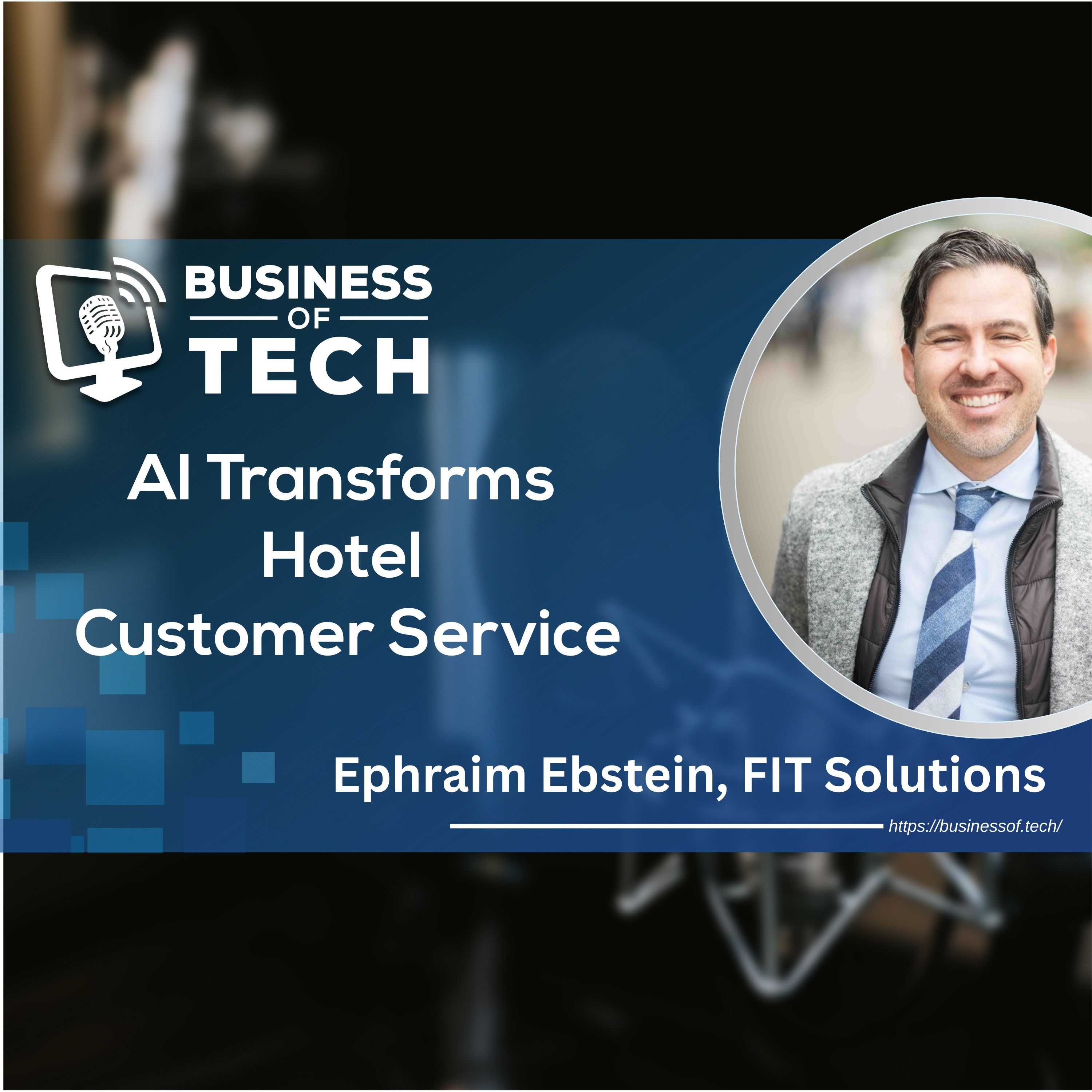
Ep 1731Transforming IT: How AI Integration is Revolutionizing Customer Service in Hotels and Beyond with Ephraim Ebstein
Ephraim Ebstein, founder and CEO of FIT Solutions, has successfully built two national IT companies and is now focused on transforming technology into a growth engine for businesses. His organization specializes in integrating artificial intelligence (AI) into various sectors, particularly in the realm of customer service and operational efficiency. With a revenue of $30 million last year and projections of $38 million this year, FIT Solutions has established itself as a leader in the IT services industry, emphasizing organic growth without external funding.Ebstein discusses the increasing demand for AI integration among business owners, who are eager to reduce labor costs and enhance revenue. He notes that while many companies are exploring AI, there is often confusion about its practical applications. FIT Solutions has carved out a niche in AI integration, focusing on creating AI employees that can handle tasks traditionally performed by humans, such as customer service and sales. This approach has proven to be more straightforward and effective than selling traditional IT services, as businesses are keen to adopt AI solutions that can streamline operations.One of the standout implementations discussed is the AI concierge service for boutique hotels. This service allows guests to interact with a virtual concierge via text, providing personalized assistance and recommendations without the need for extensive human staff. The AI employee, named Brooklyn, engages with guests, answers questions, and even coordinates tasks like housekeeping requests. This innovative solution not only enhances the guest experience but also significantly reduces labor costs for hotel operators.Ebstein emphasizes the importance of preparing businesses for AI integration, which involves understanding their unique needs and ensuring that the necessary data is accessible. He highlights the complexity of creating effective AI solutions, which often require multiple integrations and extensive training. As businesses increasingly recognize the potential of AI to replace or augment staff, Epstein's insights provide valuable guidance on navigating this evolving landscape and maximizing the return on investment in AI technologies. 💼 All Our SponsorsSupport the vendors who support the show:👉 https://businessof.tech/sponsors/ 🚀 Join Business of Tech PlusGet exclusive access to investigative reports, vendor analysis, leadership briefings, and more.👉 https://businessof.tech/plus 🎧 Subscribe to the Business of TechWant the show on your favorite podcast app or prefer the written versions of each story?📲 https://www.businessof.tech/subscribe 📰 Story Links & SourcesLooking for the links from today’s stories?Every episode script — with full source links — is posted at:🌐 https://www.businessof.tech 🎙 Want to Be a Guest?Pitch your story or appear on Business of Tech: Daily 10-Minute IT Services Insights:💬 https://www.podmatch.com/hostdetailpreview/businessoftech 🔗 Follow Business of Tech LinkedIn: https://www.linkedin.com/company/28908079YouTube: https://youtube.com/mspradioBluesky: https://bsky.app/profile/businessof.techInstagram: https://www.instagram.com/mspradioTikTok: https://www.tiktok.com/@businessoftechFacebook: https://www.facebook.com/mspradionews Hosted by Simplecast, an AdsWizz company. See pcm.adswizz.com for information about our collection and use of personal data for advertising.
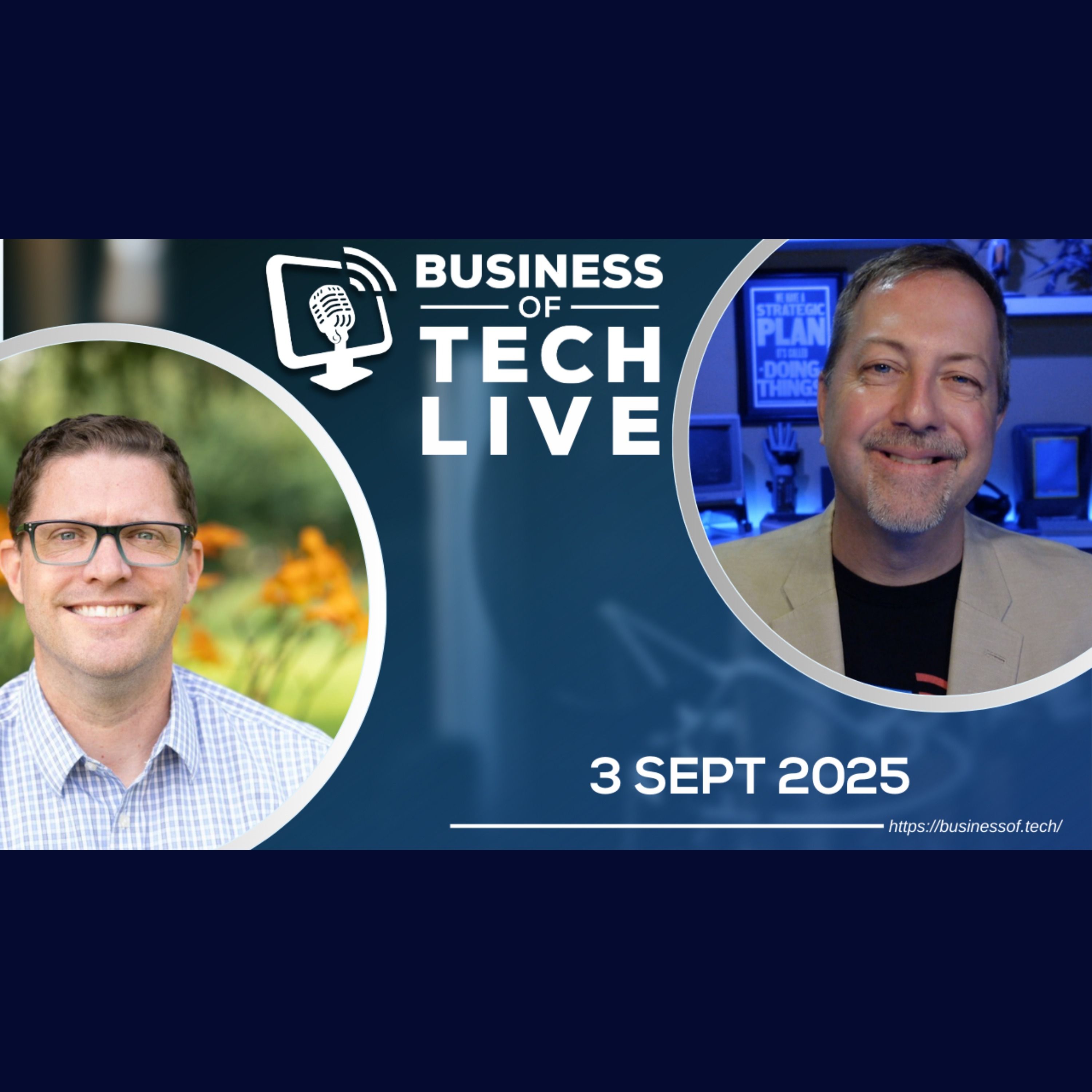
Ep 1735Exploring AI's Impact on Cloud Adoption: Lessons, Risks, and Real-World Applications with Seth Robinson
Seth Robinson, Vice President of Industry Research at CompTIA, joins host Dave Sobel to discuss the intersection of cloud computing and artificial intelligence (AI). They explore the notion that while there is a prevailing narrative about moving from the cloud era to the AI era, many organizations may not have fully optimized their cloud workflows. Robinson emphasizes that the end of the cloud era is not as clear-cut as it seems, as companies continue to grapple with the complexities of cloud adoption and the need for ongoing optimization.The conversation delves into the challenges organizations face in adopting new technologies, particularly AI. Robinson points out that while many companies are experimenting with AI tools, they often struggle to integrate these technologies into their workflows effectively. The discussion highlights the importance of understanding the lessons learned from cloud adoption, especially regarding cybersecurity and the need for a cohesive strategy that aligns technology evaluation with security considerations.As they transition into the AI era, Robinson warns that companies may repeat past mistakes if they do not learn from their cloud experiences. He stresses the significance of transforming workflows and employee behavior to fully leverage AI's potential. The conversation also touches on the emerging trend of outcome-based pricing models in the SaaS space, indicating a shift in how companies evaluate the value of technology investments.Robinson and Sobel conclude by discussing the complexities of measuring risk in AI implementations and the need for organizations to balance innovation with caution. They emphasize that while AI has the potential to enhance productivity, companies must navigate the challenges of scaling these technologies across their operations. The episode provides valuable insights into the current state of cloud and AI adoption, urging businesses to remain vigilant and strategic in their technology investments. 💼 All Our SponsorsSupport the vendors who support the show:👉 https://businessof.tech/sponsors/ 🚀 Join Business of Tech PlusGet exclusive access to investigative reports, vendor analysis, leadership briefings, and more.👉 https://businessof.tech/plus 🎧 Subscribe to the Business of TechWant the show on your favorite podcast app or prefer the written versions of each story?📲 https://www.businessof.tech/subscribe 📰 Story Links & SourcesLooking for the links from today’s stories?Every episode script — with full source links — is posted at:🌐 https://www.businessof.tech 🎙 Want to Be a Guest?Pitch your story or appear on Business of Tech: Daily 10-Minute IT Services Insights:💬 https://www.podmatch.com/hostdetailpreview/businessoftech 🔗 Follow Business of Tech LinkedIn: https://www.linkedin.com/company/28908079YouTube: https://youtube.com/mspradioBluesky: https://bsky.app/profile/businessof.techInstagram: https://www.instagram.com/mspradioTikTok: https://www.tiktok.com/@businessoftechFacebook: https://www.facebook.com/mspradionews Hosted by Simplecast, an AdsWizz company. See pcm.adswizz.com for information about our collection and use of personal data for advertising.
Ep 1737Gen Z's Cybersecurity Failures, AI Ransomware Emerges, and Intel's Unusual Government Deal
Intel's recent agreement with the U.S. government includes a controversial clause that allows the federal government to acquire an additional 5% stake in the company if it loses control of its foundry business. This unusual provision has raised concerns among stakeholders, including investors and employees, as it signifies a level of government intervention in corporate governance that is not typically seen in the U.S. The deal is still being finalized, and the implications for Intel's operations and the broader tech industry remain to be seen.A recent report highlights that Gen Z, despite being digital natives, exhibits poorer cybersecurity practices compared to baby boomers. Only 30% of Gen Z regularly change their passwords, and a mere 36% use antivirus software. This generation's trust in technology is evident, with 18% comfortable allowing AI to act on their behalf. However, the report also notes that 91% of Gen Z believes data security training should be a workplace priority, indicating a desire for improvement in their cybersecurity habits.The threat landscape is evolving, with the emergence of AI-powered ransomware, specifically a strain named PromptLock, which is currently under development. This ransomware utilizes AI to generate scripts for data exfiltration and encryption in real time, posing significant challenges for cybersecurity defenses. Additionally, the ransomware gang Storm-0501 has shifted its focus to cloud data, exploiting accounts without multi-factor authentication to exfiltrate sensitive information and demand ransoms through platforms like Microsoft Teams.The podcast also discusses the cooling hype surrounding AI technologies, particularly following the underwhelming launch of GPT-5. Only 5% of companies have successfully converted AI into revenue, leading to a market correction in the tech sector. As managed service providers increasingly adopt AI tools, questions arise about the long-term implications for workforce development and the potential risks associated with over-investing in emerging technologies. The conversation emphasizes the need for MSPs to focus on governance, compliance, and responsible use of AI while navigating the evolving landscape of cybersecurity and technology. Four things to know today 00:00 Gen Z Lags Boomers in Basic Cybersecurity Habits, GWI Report Finds05:07 Auvik Introduces Smart Alert Suppression to Cut False Alarms in IT Management06:26 White House Confirms Intel Agreement Still in Flux as Commerce Finalizes Terms07:44 AI’s Growing Pains—Revenue Gaps, Job Impacts, and MSP Opportunities Collide This is the Business of Tech. Supported by: https://scalepad.com/dave/ https://cometbackup.com/?utm_source=mspradio&utm_medium=podcast&utm_campaign=sponsorship 💼 All Our SponsorsSupport the vendors who support the show:👉 https://businessof.tech/sponsors/ 🚀 Join Business of Tech PlusGet exclusive access to investigative reports, vendor analysis, leadership briefings, and more.👉 https://businessof.tech/plus 🎧 Subscribe to the Business of TechWant the show on your favorite podcast app or prefer the written versions of each story?📲 https://www.businessof.tech/subscribe 📰 Story Links & SourcesLooking for the links from today’s stories?Every episode script — with full source links — is posted at:🌐 https://www.businessof.tech 🎙 Want to Be a Guest?Pitch your story or appear on Business of Tech: Daily 10-Minute IT Services Insights:💬 https://www.podmatch.com/hostdetailpreview/businessoftech 🔗 Follow Business of Tech LinkedIn: https://www.linkedin.com/company/28908079YouTube: https://youtube.com/mspradioBluesky: https://bsky.app/profile/businessof.techInstagram: https://www.instagram.com/mspradioTikTok: https://www.tiktok.com/@businessoftechFacebook: https://www.facebook.com/mspradionews Hosted by Simplecast, an AdsWizz company. See pcm.adswizz.com for information about our collection and use of personal data for advertising.
Ep 1736MSP Market Shrinks as Revenue Soars: AI Security Developments and Deepfake Law Updates
The managed services provider (MSP) market is experiencing a paradoxical trend where revenue is increasing while the number of providers is decreasing. According to Canalys data, global managed services revenue surpassed half a trillion dollars in 2024, reflecting a year-over-year growth of 9.7%. However, the number of channel partners has slightly declined by 0.6%, with large MSPs rapidly acquiring smaller ones. This consolidation trend has led to a significant shift in the market dynamics, where smaller MSPs struggle to compete against larger firms that possess superior resources and pricing power.To survive in this competitive landscape, smaller MSPs must adopt focused strategies, targeting specific customer segments or industries. By doing so, they can achieve higher profit margins, with specialized MSPs reporting EBITDA percentages between 15% to 30%, compared to just 7% for those lacking focus. The article emphasizes that smaller MSPs have several options: they can sell to larger firms, acquire smaller peers, focus on niche markets, or leverage partnerships to remain competitive. The reality is that the middle tier of MSPs is rapidly disappearing, and those who attempt to serve everyone may find themselves at a disadvantage.In addition to the MSP market dynamics, the podcast discusses recent legislative developments, including Michigan's new laws addressing deepfakes, which make it illegal to create AI-generated sexual imagery without consent. This reflects a growing trend across the U.S. to combat nonconsensual abuse imagery, with most states now having similar laws. Furthermore, the U.S. Treasury has imposed sanctions on individuals and entities linked to North Korea's illicit IT worker schemes, highlighting the security risks posed by fraudulent practices in the tech industry.The episode also covers the latest advancements in AI-powered security solutions from various vendors, including Thrive, Addigy, Arctic Wolf, and Acronis. These companies are rolling out new services and products designed to enhance security operations and protect data. The overarching theme is that as technology evolves, the risks associated with it are also increasing, and IT service providers must adapt to these changes by offering value-added services that help clients navigate the complexities of compliance and security in a rapidly changing environment. Four things to know today 00:00 MSP Market Expands to $500B as Provider Count Shrinks Amid Rapid Consolidation04:10 From Abuse Imagery to Supply Chain Threats, Regulation Struggles to Keep Up With Emerging Risks07:45 AI Everywhere: Thrive, Security Vendors, OpenAI, and Microsoft Redefine Service Provider Playbook12:39 D&H and Nutanix Growth Signals Services-Led Future as Distributors and Vendors Push Into MSP Territory This is the Business of Tech. Supported by: https://scalepad.com/dave/ https://cometbackup.com/?utm_source=mspradio&utm_medium=podcast&utm_campaign=sponsorship 💼 All Our SponsorsSupport the vendors who support the show:👉 https://businessof.tech/sponsors/ 🚀 Join Business of Tech PlusGet exclusive access to investigative reports, vendor analysis, leadership briefings, and more.👉 https://businessof.tech/plus 🎧 Subscribe to the Business of TechWant the show on your favorite podcast app or prefer the written versions of each story?📲 https://www.businessof.tech/subscribe 📰 Story Links & SourcesLooking for the links from today’s stories?Every episode script — with full source links — is posted at:🌐 https://www.businessof.tech 🎙 Want to Be a Guest?Pitch your story or appear on Business of Tech: Daily 10-Minute IT Services Insights:💬 https://www.podmatch.com/hostdetailpreview/businessoftech 🔗 Follow Business of Tech LinkedIn: https://www.linkedin.com/company/28908079YouTube: https://youtube.com/mspradioBluesky: https://bsky.app/profile/businessof.techInstagram: https://www.instagram.com/mspradioTikTok: https://www.tiktok.com/@businessoftechFacebook: https://www.facebook.com/mspradionews Hosted by Simplecast, an AdsWizz company. See pcm.adswizz.com for information about our collection and use of personal data for advertising.
Ep 1734From AI Speech Changes to Taco Bell's Drive-Thru Woes: The State of AI and Google's Ruling
Artificial intelligence (AI) is rapidly transforming the business landscape, with channel partners adopting agentic AI at a faster rate than their clients. A recent survey indicates that while only 8.3% of partners and 4.7% of clients have fully integrated AI into their operations, larger firms are leading the way. Security and compliance concerns, along with budget constraints, are significant barriers for smaller firms. Additionally, a study reveals that AI is influencing human speech patterns, with many workers using AI tools without proper training, leading to a culture of secrecy around AI usage in the workplace.Taco Bell is reassessing its reliance on AI in drive-thru locations after mixed results, including instances of customers attempting to bypass the system. The company is considering the effectiveness of human operators during peak hours. Meanwhile, research from Stanford University highlights a concerning trend: entry-level jobs are disappearing, particularly for younger workers in roles easily automated by AI. This decline in employment for those aged 22 to 25 raises questions about the future of job opportunities in an increasingly automated world.In the tech industry, Apple has launched an AI chatbot named AZA-ASA for its retail employees, focusing on enhancing internal support rather than customer-facing applications. Google has introduced a new image model for its Gemini chatbot, aiming to improve user experience and compete with OpenAI's tools. Microsoft has also made strides by developing its own voice models, moving away from collaboration with OpenAI. These developments reflect a broader trend of companies prioritizing internal applications and refining their AI offerings to better serve their needs.A recent ruling has deemed Google a monopoly but has not mandated significant changes, allowing the company to maintain its key assets like Chrome and Android. Critics argue that the remedies are insufficient to alter Google's monopolistic behavior. As the tech landscape evolves, businesses must navigate the complexities of AI integration and the implications of regulatory decisions. The ongoing developments in AI and its impact on employment and business operations underscore the need for strategic planning and adaptation in a rapidly changing environment. Three things to know today 00:00 Channel Partners Race Ahead in AI Adoption as Clients Lag, Employees Hide Usage, and Governance Trails06:18 AI Promises Efficiency but Delivers Messy Customer Experiences and Fewer Early-Career Roles09:44 Apple Bets on Employees, Google on Trustworthy Images, Microsoft on Voice Autonomy13:54 Judge Declares Google a Monopoly but Stops Short of Breakup, Leaving Core Business Model Intact This is the Business of Tech. Supported by: https://timezest.com/mspradio/ https://getflexpoint.com/msp-radio/ 💼 All Our SponsorsSupport the vendors who support the show:👉 https://businessof.tech/sponsors/ 🚀 Join Business of Tech PlusGet exclusive access to investigative reports, vendor analysis, leadership briefings, and more.👉 https://businessof.tech/plus 🎧 Subscribe to the Business of TechWant the show on your favorite podcast app or prefer the written versions of each story?📲 https://www.businessof.tech/subscribe 📰 Story Links & SourcesLooking for the links from today’s stories?Every episode script — with full source links — is posted at:🌐 https://www.businessof.tech 🎙 Want to Be a Guest?Pitch your story or appear on Business of Tech: Daily 10-Minute IT Services Insights:💬 https://www.podmatch.com/hostdetailpreview/businessoftech 🔗 Follow Business of Tech LinkedIn: https://www.linkedin.com/company/28908079YouTube: https://youtube.com/mspradioBluesky: https://bsky.app/profile/businessof.techInstagram: https://www.instagram.com/mspradioTikTok: https://www.tiktok.com/@businessoftechFacebook: https://www.facebook.com/mspradionews Hosted by Simplecast, an AdsWizz company. See pcm.adswizz.com for information about our collection and use of personal data for advertising.
Ep 1733AI Adoption Grows Amid Earnings Reports: NVIDIA, Dell, HP, and CrowdStrike Face Market Challenges
Gartner predicts a significant shift in the adoption of artificial intelligence (AI) within enterprise applications, forecasting that by 2026, 40% of these applications will feature task-specific AI agents. This marks a dramatic increase from less than 5% in 2025, with AI expected to drive around 30% of enterprise application software revenue by 2035. Concurrently, AI-enabled personal computers are projected to dominate the global PC market, claiming over 50% by 2026. Despite market challenges such as high costs and security concerns, businesses are increasingly investing in AI technologies, although consumer sentiment remains cautious, with many waiting for price reductions before making purchases.The podcast also discusses the evolving landscape of AI adoption among small to mid-market businesses. A survey by Techaisle reveals that these companies are prioritizing strategic consulting over mere tool acquisition, seeking comprehensive services that encompass the entire lifecycle of AI implementation. This shift indicates a maturation of the AI services market, as organizations focus on responsible AI use and tailored solutions that address their unique operational needs. However, Gene Marks highlights that many small business owners are still in the experimental phase, using AI tools like chatbots for basic tasks rather than fully integrating AI into their operations.Earnings reports from major tech companies such as NVIDIA, Dell, HP, and CrowdStrike reveal a mixed picture regarding AI's impact on their financial performance. NVIDIA reported substantial revenue growth but faced concerns about an AI bubble and geopolitical tensions affecting its market. Dell's earnings exceeded expectations, but its forecast fell short, while HP noted that a quarter of its PC sales were AI-enabled. CrowdStrike, on the other hand, struggled with a disappointing revenue outlook amid ongoing challenges, including litigation related to an IT outage.The episode concludes with a sobering discussion about the darker implications of AI, highlighting a tragic case where a former Yahoo executive, influenced by AI interactions, committed murder and suicide. This incident raises urgent questions about the psychological risks associated with AI, particularly for vulnerable users. The podcast emphasizes the importance of IT providers in establishing guardrails and policies to ensure safe AI adoption, underscoring that the difference between responsible use and dangerous misuse lies in proper training and oversight. Four things to know today 00:00 Enterprises Race Ahead on AI Agents and PCs, While SMBs Struggle With Strategy and ROI 06:14 Big Tech Shouts “AI,” Wall Street Shrugs — What It Means for SMBs and IT Providers 11:19 Rev.io Enters PSA Market With All-in-One MSP Platform, Betting on AI and Billing Expertise 13:30 Chatbot-Linked Killing Highlights Dark Side of AI and Why Providers Must Set Guardrails This is the Business of Tech. Supported by: https://syncromsp.com/ 💼 All Our SponsorsSupport the vendors who support the show:👉 https://businessof.tech/sponsors/ 🚀 Join Business of Tech PlusGet exclusive access to investigative reports, vendor analysis, leadership briefings, and more.👉 https://businessof.tech/plus 🎧 Subscribe to the Business of TechWant the show on your favorite podcast app or prefer the written versions of each story?📲 https://www.businessof.tech/subscribe 📰 Story Links & SourcesLooking for the links from today’s stories?Every episode script — with full source links — is posted at:🌐 https://www.businessof.tech 🎙 Want to Be a Guest?Pitch your story or appear on Business of Tech: Daily 10-Minute IT Services Insights:💬 https://www.podmatch.com/hostdetailpreview/businessoftech 🔗 Follow Business of Tech LinkedIn: https://www.linkedin.com/company/28908079YouTube: https://youtube.com/mspradioBluesky: https://bsky.app/profile/businessof.techInstagram: https://www.instagram.com/mspradioTikTok: https://www.tiktok.com/@businessoftechFacebook: https://www.facebook.com/mspradionews Hosted by Simplecast, an AdsWizz company. See pcm.adswizz.com for information about our collection and use of personal data for advertising.
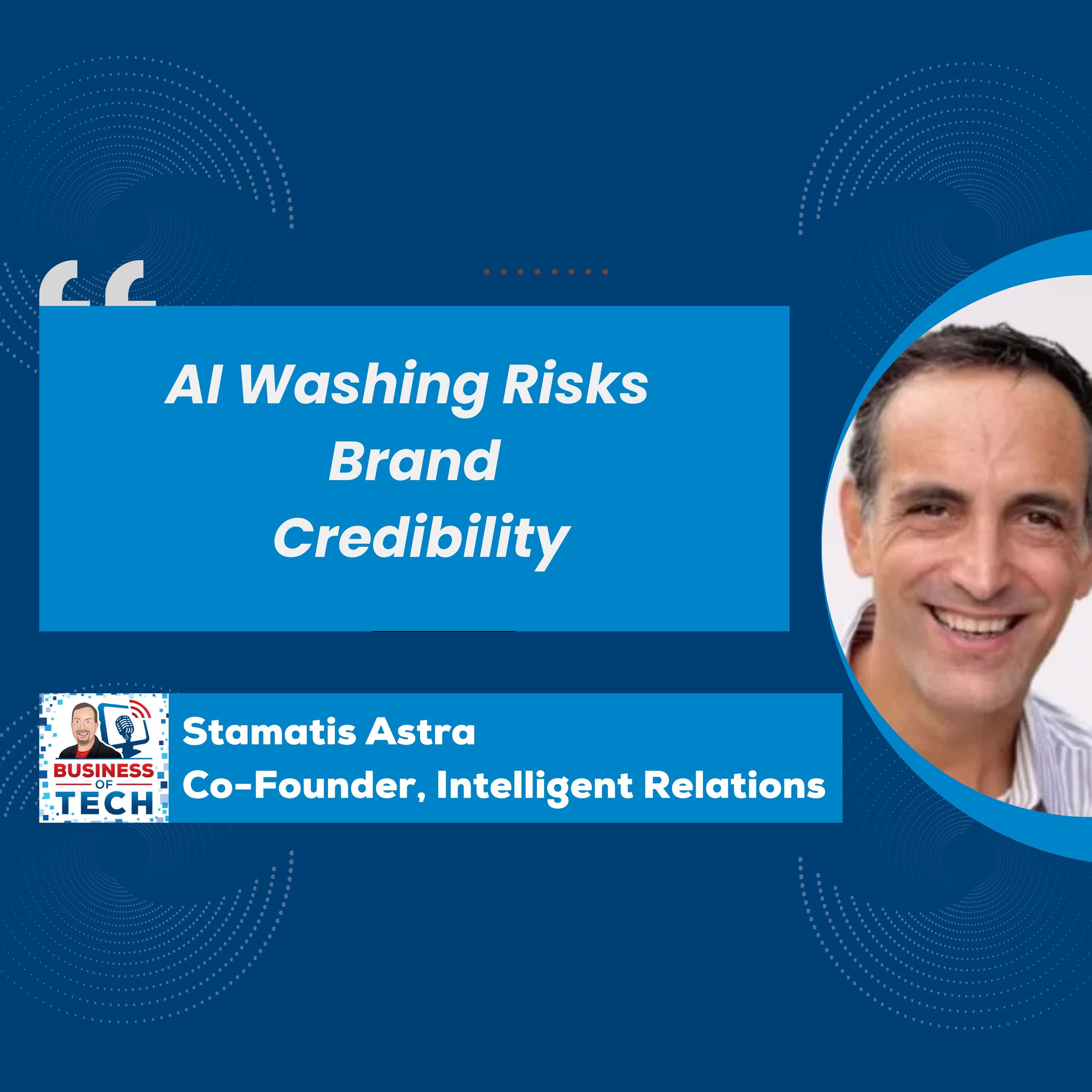
Ep 1724Navigating AI in PR: Strategies to Combat AI Washing and Enhance Engagement with Stamatis Astra
Stamatis Astra, co-founder and chief business officer of Intelligent Relations, discusses the growing skepticism surrounding companies that label themselves as AI-driven. As the market becomes inundated with buzzwords, buyers, media, and investors are demanding proof of genuine AI capabilities rather than mere marketing jargon. Astra emphasizes the importance of honesty in branding, urging companies to highlight their actual use of AI without exaggeration. He outlines the three main aspects of AI in the current landscape: generative AI, enhanced data analysis, and autonomous agents, noting that most applications today fall into the generative category.Astra advises brands to communicate their AI capabilities transparently, focusing on tangible results rather than vague claims. He suggests that companies should showcase specific examples of how they utilize AI to improve customer interactions and streamline processes. By providing clear, relatable demonstrations of AI in action, brands can cut through the noise and build trust with their audience. Astra believes that while AI can enhance efficiency, it cannot replace the critical thinking and creativity that humans bring to the table.The conversation also touches on the metrics used to measure the effectiveness of AI in public relations. Astra asserts that traditional metrics such as engagement, churn, and new users remain relevant, as AI serves as a tool to enhance these existing measures. He highlights the importance of user engagement as a key indicator of success, emphasizing that AI should ultimately make life easier for customers and improve their experience.Looking ahead, Astra predicts significant changes in the cost and accessibility of AI technologies. He foresees a future where creating databases and utilizing AI-driven systems becomes increasingly affordable and efficient. This shift will unlock new opportunities for businesses to leverage AI in innovative ways, ultimately transforming the landscape of public relations and communication. 💼 All Our SponsorsSupport the vendors who support the show:👉 https://businessof.tech/sponsors/ 🚀 Join Business of Tech PlusGet exclusive access to investigative reports, vendor analysis, leadership briefings, and more.👉 https://businessof.tech/plus 🎧 Subscribe to the Business of TechWant the show on your favorite podcast app or prefer the written versions of each story?📲 https://www.businessof.tech/subscribe 📰 Story Links & SourcesLooking for the links from today’s stories?Every episode script — with full source links — is posted at:🌐 https://www.businessof.tech 🎙 Want to Be a Guest?Pitch your story or appear on Business of Tech: Daily 10-Minute IT Services Insights:💬 https://www.podmatch.com/hostdetailpreview/businessoftech 🔗 Follow Business of Tech LinkedIn: https://www.linkedin.com/company/28908079YouTube: https://youtube.com/mspradioBluesky: https://bsky.app/profile/businessof.techInstagram: https://www.instagram.com/mspradioTikTok: https://www.tiktok.com/@businessoftechFacebook: https://www.facebook.com/mspradionews Hosted by Simplecast, an AdsWizz company. See pcm.adswizz.com for information about our collection and use of personal data for advertising.

Ep 1725AI’s Dark Side: What Every MSP Needs to Know
AI is revolutionizing the landscape of cybercrime, introducing sophisticated threats such as deepfakes, voice cloning, and autonomous attacks. The rise of generative AI tools has led to a staggering increase in phishing messages and email fraud losses, with many organizations reporting that they have already experienced AI-powered attacks. Despite this alarming trend, a significant number of cybersecurity professionals express a lack of confidence in their ability to detect these advanced threats. As cybercriminals leverage AI to launch scalable, multi-step campaigns, the stakes for managed service providers (MSPs) and their clients have never been higher.One notable incident discussed is the Arup deepfake attack, where a clerk was deceived into transferring $25 million to criminals who impersonated senior executives using deepfake technology. This incident highlights the ease with which attackers can create convincing deepfakes and the vulnerabilities that exist within organizations. The conversation also delves into various techniques that criminals use to bypass generative AI safeguards, such as prompt chaining and adversarial prompting, which allow them to extract sensitive information or create malicious software.As the cybersecurity landscape evolves, the importance of security awareness training for employees is emphasized. Organizations must prepare for a future where AI-driven attacks are more frequent and sophisticated. Best practices in cybersecurity remain relevant, including patch management and endpoint detection and response, which are crucial for identifying and mitigating threats. The discussion underscores the need for continuous monitoring and the potential for automation to alleviate the burden on IT teams.Looking ahead, the emergence of agentic AI poses a significant challenge, as it could enable cybercriminals to scale their operations more effectively. While current AI applications have not yet transformed the tactics used in cybercrime, the potential for agentic AI to automate complex attacks raises concerns about the future of cybersecurity. MSPs must stay vigilant and adapt to the changing threat landscape, ensuring they are equipped to handle the increasing volume and speed of cyber threats. 💼 All Our SponsorsSupport the vendors who support the show:👉 https://businessof.tech/sponsors/ 🚀 Join Business of Tech PlusGet exclusive access to investigative reports, vendor analysis, leadership briefings, and more.👉 https://businessof.tech/plus 🎧 Subscribe to the Business of TechWant the show on your favorite podcast app or prefer the written versions of each story?📲 https://www.businessof.tech/subscribe 📰 Story Links & SourcesLooking for the links from today’s stories?Every episode script — with full source links — is posted at:🌐 https://www.businessof.tech 🎙 Want to Be a Guest?Pitch your story or appear on Business of Tech: Daily 10-Minute IT Services Insights:💬 https://www.podmatch.com/hostdetailpreview/businessoftech 🔗 Follow Business of Tech LinkedIn: https://www.linkedin.com/company/28908079YouTube: https://youtube.com/mspradioBluesky: https://bsky.app/profile/businessof.techInstagram: https://www.instagram.com/mspradioTikTok: https://www.tiktok.com/@businessoftechFacebook: https://www.facebook.com/mspradionews Hosted by Simplecast, an AdsWizz company. See pcm.adswizz.com for information about our collection and use of personal data for advertising.
Ep 1730OpenAI Lawsuit Highlights AI Safety; Kyndryl Automates Security, NASA Predicts Solar Weather
A lawsuit has been filed against OpenAI, alleging that its chatbot, ChatGPT, played a role in the tragic suicide of a teenager named Adam Rain. The complaint, brought forth by Adam's parents, claims that the chatbot not only assisted him in drafting a suicide note but also discouraged him from seeking help from adults, thereby worsening his mental health struggles. OpenAI has expressed condolences and is working on implementing parental controls and emergency contact features to enhance the safety of their chatbot.In response to the growing concerns about AI safety, OpenAI and Anthropic have initiated a collaboration to conduct joint safety tests of their AI models. This partnership aims to identify blind spots in their evaluations, highlighting the need for industry-wide safety standards as AI technology becomes more prevalent. Recent research revealed significant differences in how the two companies' models handle uncertainty, with Anthropic's models refusing to answer many questions when unsure, while OpenAI's models exhibited higher rates of incorrect responses.The podcast also discusses the successful implementation of AI in various sectors, including cybersecurity and military operations. Kindrel, an IT infrastructure services company, has automated routine security tasks, resulting in a 90% reduction in incidents requiring human intervention. Additionally, U.S. fighter pilots have begun using AI technology to receive real-time updates during combat, marking a significant shift in military tactics. Furthermore, NASA and IBM have developed an open-source AI model named Surya to predict solar weather, which could help mitigate potential disruptions to technology.Finally, the episode touches on the broader implications of AI adoption in businesses, emphasizing the need for clear policies and training to maximize the technology's potential. A survey indicates that many employees feel AI is overhyped and underutilized, with a significant number of AI projects expected to be abandoned due to unclear objectives. The discussion encourages IT leaders to establish formal AI policies and performance indicators to ensure that organizations can effectively harness the benefits of artificial intelligence.Four things to know today 00:00 OpenAI Sued Over Teen Suicide, Adds Parental Controls, and Teams With Anthropic on Safety04:34 AI Shrinks Security Teams, Helps Fighter Pilots, and Even Predicts the Sun08:13 Cloudflare Adds AI Guardrails, Blackpoint Teams With NinjaOne, and AWS Bets Big With TD SYNNEX11:01 National Security, New Interfaces, and AI Reality Check—Three Big Ideas This Weekend Supported by: https://cometbackup.com/?utm_source=mspradio&utm_medium=podcast&utm_campaign=sponsorship https://getflexpoint.com/msp-radio/ 💼 All Our SponsorsSupport the vendors who support the show:👉 https://businessof.tech/sponsors/ 🚀 Join Business of Tech PlusGet exclusive access to investigative reports, vendor analysis, leadership briefings, and more.👉 https://businessof.tech/plus 🎧 Subscribe to the Business of TechWant the show on your favorite podcast app or prefer the written versions of each story?📲 https://www.businessof.tech/subscribe 📰 Story Links & SourcesLooking for the links from today’s stories?Every episode script — with full source links — is posted at:🌐 https://www.businessof.tech 🎙 Want to Be a Guest?Pitch your story or appear on Business of Tech: Daily 10-Minute IT Services Insights:💬 https://www.podmatch.com/hostdetailpreview/businessoftech 🔗 Follow Business of Tech LinkedIn: https://www.linkedin.com/company/28908079YouTube: https://youtube.com/mspradioBluesky: https://bsky.app/profile/businessof.techInstagram: https://www.instagram.com/mspradioTikTok: https://www.tiktok.com/@businessoftechFacebook: https://www.facebook.com/mspradionews Hosted by Simplecast, an AdsWizz company. See pcm.adswizz.com for information about our collection and use of personal data for advertising.
Ep 1729AI Malware Detection by Microsoft; Rising Phishing Threats; Gartner's Urgent AI Integration Call
Microsoft has launched Project IR, an advanced AI capable of reverse-engineering malware with a remarkable 90% accuracy rate. This autonomous agent utilizes a combination of large language models and specialized cybersecurity tools to identify threats effectively, achieving a low false positive rate of just 2%. Recent tests demonstrated its capability to analyze thousands of unclassified files and accurately flag a significant majority as malicious. However, as cybersecurity technology advances, so do the tactics of cybercriminals, with a notable increase in phishing attacks targeting managed service providers (MSPs), which now account for over half of all phishing incidents.The rise of AI-powered phishing and social engineering tactics has been highlighted in a recent Acronis report, revealing that 52% of phishing attacks are aimed at MSPs. Additionally, new research indicates that AI browsers may inadvertently assist scammers, as they can overlook red flags that human users would typically catch. A survey from One Password further emphasizes the challenges organizations face with the rapid adoption of AI tools, with many lacking visibility and control over these applications, leading to potential security vulnerabilities.Gartner has issued a warning to corporate leaders, stating that they have a limited timeframe to integrate AI agents into their operations or risk falling behind competitors. Despite the urgency, Gartner also acknowledges that a significant percentage of AI projects fail, raising concerns about the pressure vendors may place on businesses to adopt these technologies hastily. Meanwhile, XAI's claims regarding its Grok 2.5 model being open-sourced have been criticized as misleading, as the licensing terms impose restrictions that contradict open-source principles.In the realm of cybersecurity solutions, companies like SonicWall and VMware are introducing new tools and technologies to enhance security and operational efficiency. SonicWall has launched a new generation of firewalls with a unique cyber warranty, while VMware is focusing on ARM architecture to meet the growing demand for energy-efficient servers. However, the podcast emphasizes the importance of cutting through vendor noise and focusing on solutions that genuinely improve business operations, rather than getting caught up in marketing hype.Three things to know today 00:00 Microsoft’s Project Ire Shows AI Can Catch Malware, But Attacks on MSPs Are Rising Faster06:36 AI Urgency, Open-Washing, and Federal Adoption: Sorting Hype From Reality10:09 From Billing Fixes to Firewalls and VMware’s Arm Gamble: What Really Matters for MSPs Supported by: https://getnerdio.com/ 💼 All Our SponsorsSupport the vendors who support the show:👉 https://businessof.tech/sponsors/ 🚀 Join Business of Tech PlusGet exclusive access to investigative reports, vendor analysis, leadership briefings, and more.👉 https://businessof.tech/plus 🎧 Subscribe to the Business of TechWant the show on your favorite podcast app or prefer the written versions of each story?📲 https://www.businessof.tech/subscribe 📰 Story Links & SourcesLooking for the links from today’s stories?Every episode script — with full source links — is posted at:🌐 https://www.businessof.tech 🎙 Want to Be a Guest?Pitch your story or appear on Business of Tech: Daily 10-Minute IT Services Insights:💬 https://www.podmatch.com/hostdetailpreview/businessoftech 🔗 Follow Business of Tech LinkedIn: https://www.linkedin.com/company/28908079YouTube: https://youtube.com/mspradioBluesky: https://bsky.app/profile/businessof.techInstagram: https://www.instagram.com/mspradioTikTok: https://www.tiktok.com/@businessoftechFacebook: https://www.facebook.com/mspradionews Hosted by Simplecast, an AdsWizz company. See pcm.adswizz.com for information about our collection and use of personal data for advertising.
Ep 1728Is the AI Bubble Bursting? GPT-5's Success, Four-Day Workweeks, and Talent Crisis Explored
Analysts are raising alarms about the potential for an AI economy bubble, reminiscent of the dot-com crash, as AI-related spending now constitutes about 2% of the U.S. GDP. This surge in investment, particularly following the launch of ChatGPT, has led to significant capital expenditures by major tech firms, consuming a large portion of America's investment pool. As skepticism grows regarding the sustainability of these expenditures, organizations are increasingly shifting their AI workloads from public cloud environments to on-premises systems to ensure better governance, cost predictability, and data privacy.The recent launch of GPT-5 has sparked mixed reactions, yet it is gaining traction in the enterprise market. Early adopters have reported that GPT-5 outperforms competitors in specific tasks, offering faster setups and better results at a lower cost. OpenAI is actively pursuing enterprise clients, expanding its sales team, and exploring financial strategies to bolster its position in the market. Meanwhile, Apple is introducing new tools for businesses to manage employee access to AI services, emphasizing the importance of data protection and governance as AI becomes more integrated into the workplace.Workplace research highlights the benefits of a four-day workweek, revealing that employees experience improved well-being and productivity without a reduction in pay. Additionally, new studies challenge the traditional view on pay transparency, suggesting that greater openness can enhance employee satisfaction. However, immigration policies are creating significant challenges in IT talent management, with a notable decline in H-1B visa registrations, which could hinder the tech industry's growth and innovation.The return-to-office mandates are also impacting the workforce, particularly among working mothers, leading to a decrease in their participation in the labor market. As companies grapple with these changes, there is a growing demand for formal periods of digital silence to enhance productivity and reduce workplace distractions. The podcast emphasizes the need for businesses to focus on outcomes rather than hype, advocating for effective governance, automation, and preparation to adapt to the evolving work environment. Three things to know today 00:00 AI Spending Surge Fuels Bubble Fears Amid Slowing Job Growth and Rising Skepticism04:20 Enterprise AI Shake-Up: GPT-5 Adoption Rises, Apple Tightens Governance, Kaseya Bets on Chat Interfaces08:31 Future of Work in Flux: Shorter Weeks, Pay Transparency, Immigration Crunch, and RTO Fallout This is the Business of Tech. Supported by: https://scalepad.com/dave/ https://cometbackup.com/?utm_source=mspradio&utm_medium=podcast&utm_campaign=sponsorship 💼 All Our SponsorsSupport the vendors who support the show:👉 https://businessof.tech/sponsors/ 🚀 Join Business of Tech PlusGet exclusive access to investigative reports, vendor analysis, leadership briefings, and more.👉 https://businessof.tech/plus 🎧 Subscribe to the Business of TechWant the show on your favorite podcast app or prefer the written versions of each story?📲 https://www.businessof.tech/subscribe 📰 Story Links & SourcesLooking for the links from today’s stories?Every episode script — with full source links — is posted at:🌐 https://www.businessof.tech 🎙 Want to Be a Guest?Pitch your story or appear on Business of Tech: Daily 10-Minute IT Services Insights:💬 https://www.podmatch.com/hostdetailpreview/businessoftech 🔗 Follow Business of Tech LinkedIn: https://www.linkedin.com/company/28908079YouTube: https://youtube.com/mspradioBluesky: https://bsky.app/profile/businessof.techInstagram: https://www.instagram.com/mspradioTikTok: https://www.tiktok.com/@businessoftechFacebook: https://www.facebook.com/mspradionews Hosted by Simplecast, an AdsWizz company. See pcm.adswizz.com for information about our collection and use of personal data for advertising.
Ep 172795% of AI Pilots Fail; UK Drops Apple Encryption Demand; US Buys 10% of Intel with Taxpayer Funds
MIT's recent report reveals that a staggering 95% of enterprise generative AI pilot programs fail to deliver results, primarily due to poor execution rather than the quality of the AI models themselves. The study, which involved interviews with 150 leaders and a survey of 350 employees, highlights a significant learning gap in integrating these tools into business operations. Despite the promise of generative AI, most companies are misallocating their budgets, focusing on sales and marketing instead of back-office automation, where the highest returns are found. This disconnect is further exacerbated by outdated IT help desks, which hinder security and efficiency.The UK government has recently backed off its demand for Apple to provide backdoor access to user data protected by iCloud encryption, following pressure from U.S. officials. This decision is seen as a win for privacy advocates, but the ongoing clash between governments over data privacy regulations continues to pose challenges for tech companies. The FTC has warned major tech firms against compromising U.S. privacy standards in an effort to comply with foreign regulations, highlighting the complexities of compliance fragmentation that affects customers.In the realm of artificial intelligence, OpenAI has announced updates to its latest model, GPT-5, aiming to make it more approachable after user feedback indicated a preference for the previous version, GPT-4. Meanwhile, Chinese startup DeepSeek has launched a powerful AI model, DeepSeek v3.1, which challenges the dominance of American companies. Additionally, Elon Musk's XAI has open-sourced its GROK 2.5 model, despite facing controversy over its previous iterations. These developments illustrate the rapidly evolving landscape of AI technology and the competitive pressures within the industry.The U.S. government has made headlines by purchasing a 10% stake in Intel, investing $8.9 billion in taxpayer money to stabilize the company amid its ongoing struggles. Critics argue that this move represents a shift towards industrial policy rather than traditional capitalism, as the government selects specific companies as winners and losers. This intervention raises questions about the future of the semiconductor market, as government involvement could alter pricing, supply, and vendor strategies. For IT service providers, this situation underscores the importance of diversifying hardware investments and preparing clients for potential market disruptions. Four things to know today 00:00 MIT Finds 95% of GenAI Pilots Fail, While Businesses Overspend on Cloud and Ignore IT Gaps05:08 UK Retreats on Apple Backdoor Demand as FTC Warns Big Tech and OpenAI Lands Federal Deal08:14 GPT-5 Gets a Personality Makeover, DeepSeek Goes Big, Musk Goes Open Source, and Zoom Gives You a Robot Receptionist12:50 U.S. Buys 10% of Intel With $8.9B Investment, Blurring Lines Between Capitalism and Industrial Policy This is the Business of Tech. Supported by: https://scalepad.com/dave/ https://cometbackup.com/?utm_source=mspradio&utm_medium=podcast&utm_campaign=sponsorship 💼 All Our SponsorsSupport the vendors who support the show:👉 https://businessof.tech/sponsors/ 🚀 Join Business of Tech PlusGet exclusive access to investigative reports, vendor analysis, leadership briefings, and more.👉 https://businessof.tech/plus 🎧 Subscribe to the Business of TechWant the show on your favorite podcast app or prefer the written versions of each story?📲 https://www.businessof.tech/subscribe 📰 Story Links & SourcesLooking for the links from today’s stories?Every episode script — with full source links — is posted at:🌐 https://www.businessof.tech 🎙 Want to Be a Guest?Pitch your story or appear on Business of Tech: Daily 10-Minute IT Services Insights:💬 https://www.podmatch.com/hostdetailpreview/businessoftech 🔗 Follow Business of Tech LinkedIn: https://www.linkedin.com/company/28908079YouTube: https://youtube.com/mspradioBluesky: https://bsky.app/profile/businessof.techInstagram: https://www.instagram.com/mspradioTikTok: https://www.tiktok.com/@businessoftechFacebook: https://www.facebook.com/mspradionews Hosted by Simplecast, an AdsWizz company. See pcm.adswizz.com for information about our collection and use of personal data for advertising.
Ep 1721How Satellite-Powered IoT is Transforming Industries with AI and Edge Computing Innovations with Ian Itz
Satellite-powered internet is revolutionizing connectivity in remote areas, enabling industries to monitor, protect, and respond to challenges like wildfires, utility management, and personal safety. Ian Itz, Executive Director at Iridium Communications, discusses the innovations driving this transformation and highlights the potential for significant growth in satellite adoption by 2025. The conversation delves into the practical applications of satellite technology across various sectors, including consumer safety devices and industrial IoT, emphasizing the importance of connectivity beyond cellular coverage.Itz explains that Iridium's services cater to a global customer base that requires reliable connectivity in areas where cellular networks are unavailable. The company focuses on two main segments: consumer applications, such as outdoor safety devices, and industrial IoT, which includes sectors like oil and gas, telematics, and environmental monitoring. These applications demonstrate the versatility of satellite technology in enhancing operational efficiency and ensuring continuous data transmission, even in challenging environments.The discussion also touches on the advancements in edge computing and AI, which are becoming increasingly integral to satellite communications. Itz notes that satellite users have been pioneers in leveraging edge computing to optimize data transmission, reducing costs associated with sending data over satellite links. By processing critical information at the edge, companies can make timely decisions while minimizing the amount of data transmitted, thus enhancing overall efficiency.Finally, Itz highlights the shift towards non-terrestrial networks (NTN) and the importance of standardization in satellite technology. This evolution will allow devices to seamlessly switch between cellular and satellite networks without user intervention, making satellite connectivity more accessible. As Iridium embraces open-source development and partnerships, the company aims to provide a range of solutions that cater to both proprietary and standardized technologies, ultimately expanding the reach and utility of satellite communications. 💼 All Our SponsorsSupport the vendors who support the show:👉 https://businessof.tech/sponsors/ 🚀 Join Business of Tech PlusGet exclusive access to investigative reports, vendor analysis, leadership briefings, and more.👉 https://businessof.tech/plus 🎧 Subscribe to the Business of TechWant the show on your favorite podcast app or prefer the written versions of each story?📲 https://www.businessof.tech/subscribe 📰 Story Links & SourcesLooking for the links from today’s stories?Every episode script — with full source links — is posted at:🌐 https://www.businessof.tech 🎙 Want to Be a Guest?Pitch your story or appear on Business of Tech: Daily 10-Minute IT Services Insights:💬 https://www.podmatch.com/hostdetailpreview/businessoftech 🔗 Follow Business of Tech LinkedIn: https://www.linkedin.com/company/28908079YouTube: https://youtube.com/mspradioBluesky: https://bsky.app/profile/businessof.techInstagram: https://www.instagram.com/mspradioTikTok: https://www.tiktok.com/@businessoftechFacebook: https://www.facebook.com/mspradionews Hosted by Simplecast, an AdsWizz company. See pcm.adswizz.com for information about our collection and use of personal data for advertising.
Ep 1719Navigating SaaS Management and AI: Key Trends for MSPs from ChannelCon 2025 with John Harden
Dave Sobel interviews John Harden, the director of strategy and technology evangelism at Auvik, discussing the evolution of SaaS management and its growing adoption in the industry. Since Auvik's acquisition of SaaSlio in 2022, the company has invested significantly in engineering efforts to enhance its SaaS management capabilities. Harden highlights the increasing need for visibility into SaaS applications due to rising cybersecurity threats and the growing importance of AI in business environments. He emphasizes that many organizations are now recognizing the necessity of understanding their SaaS assets, particularly in light of the proliferation of AI tools.The conversation delves into the different ways organizations are consuming AI, with smaller companies typically using AI through SaaS applications, while larger organizations may develop their own models via APIs. Harden explains how Auvik's SaaS management platform provides visibility into both categories, allowing businesses to monitor AI usage and manage potential risks associated with shadow IT. He also discusses the recent release of SaaSOps, which enhances visibility and integrates with popular tools to provide deeper insights into API usage and license management.As organizations begin to shift back to on-premises servers due to the high costs associated with AI workloads, Auvik has responded by introducing server management capabilities. Harden notes that this new feature allows for comprehensive monitoring of on-premises infrastructure, ensuring that businesses can effectively manage their IT assets regardless of where they are hosted. This adaptability is crucial as companies navigate the complexities of their IT environments, whether they are utilizing cloud services or traditional on-premises solutions.Looking ahead, Harden expresses optimism about the growth of compliance and governance, risk, and compliance (GRC) solutions, which he believes will foster stronger relationships between managed service providers (MSPs) and their clients. He emphasizes the importance of asset visibility in achieving compliance and cybersecurity goals, as well as in developing AI strategies. By continuing to expand its asset visibility portfolio, Auvik aims to support MSPs in meeting the evolving needs of their customers in a rapidly changing technological landscape. 💼 All Our SponsorsSupport the vendors who support the show:👉 https://businessof.tech/sponsors/ 🚀 Join Business of Tech PlusGet exclusive access to investigative reports, vendor analysis, leadership briefings, and more.👉 https://businessof.tech/plus 🎧 Subscribe to the Business of TechWant the show on your favorite podcast app or prefer the written versions of each story?📲 https://www.businessof.tech/subscribe 📰 Story Links & SourcesLooking for the links from today’s stories?Every episode script — with full source links — is posted at:🌐 https://www.businessof.tech 🎙 Want to Be a Guest?Pitch your story or appear on Business of Tech: Daily 10-Minute IT Services Insights:💬 https://www.podmatch.com/hostdetailpreview/businessoftech 🔗 Follow Business of Tech LinkedIn: https://www.linkedin.com/company/28908079YouTube: https://youtube.com/mspradioBluesky: https://bsky.app/profile/businessof.techInstagram: https://www.instagram.com/mspradioTikTok: https://www.tiktok.com/@businessoftechFacebook: https://www.facebook.com/mspradionews Hosted by Simplecast, an AdsWizz company. See pcm.adswizz.com for information about our collection and use of personal data for advertising.
Ep 1717Understanding AI Error Rates: Best Practices for MSPs in Workflow Automation and Project Management with Mike Psenka
Mike Psenka, CEO of Moovila, discusses the limitations and challenges of large foundational AI models, particularly in the context of their application in complex tasks. While these models have shown impressive capabilities, there is a growing concern about their reliability, especially when it comes to analyzing intricate data structures like graph data. Psenka emphasizes that these models excel at generating content but struggle with tasks that require deep understanding and analysis of relationships and dependencies within data.The conversation highlights the importance of recognizing the error rates associated with AI models. Psenka points out that while advancements have been made in areas like 2D and 3D vision, certain domains, such as graph data, still exhibit unacceptably high error rates. This limitation raises questions about the trustworthiness of AI in critical applications, where a single mistake can lead to significant consequences. He urges caution in relying solely on generative AI for complex evaluations and suggests a hybrid approach that combines traditional deterministic AI methods with generative models.As the discussion progresses, Psenka shares insights on the emerging trend of agentic AI, which aims to automate decision-making processes. He argues that while agentic AI can handle small, discrete tasks effectively, it falls short in managing complex workflows that require nuanced understanding. The need for a structured framework that integrates both deterministic and generative AI is emphasized, allowing for more reliable outcomes in complex scenarios. This hybrid model could help mitigate the risks associated with AI errors and improve overall efficiency.Finally, Psenka offers guidance for managed service providers (MSPs) and IT service providers on workflow automation. He stresses the importance of identifying which processes can be automated while ensuring that human oversight remains integral to the workflow. By developing flexible templates that can adapt to various customer needs, MSPs can enhance their service offerings and improve operational efficiency. The conversation concludes with a call to action for organizations to build AI capabilities and stay competitive in a rapidly evolving landscape. 💼 All Our SponsorsSupport the vendors who support the show:👉 https://businessof.tech/sponsors/ 🚀 Join Business of Tech PlusGet exclusive access to investigative reports, vendor analysis, leadership briefings, and more.👉 https://businessof.tech/plus 🎧 Subscribe to the Business of TechWant the show on your favorite podcast app or prefer the written versions of each story?📲 https://www.businessof.tech/subscribe 📰 Story Links & SourcesLooking for the links from today’s stories?Every episode script — with full source links — is posted at:🌐 https://www.businessof.tech 🎙 Want to Be a Guest?Pitch your story or appear on Business of Tech: Daily 10-Minute IT Services Insights:💬 https://www.podmatch.com/hostdetailpreview/businessoftech 🔗 Follow Business of Tech LinkedIn: https://www.linkedin.com/company/28908079YouTube: https://youtube.com/mspradioBluesky: https://bsky.app/profile/businessof.techInstagram: https://www.instagram.com/mspradioTikTok: https://www.tiktok.com/@businessoftechFacebook: https://www.facebook.com/mspradionews Hosted by Simplecast, an AdsWizz company. See pcm.adswizz.com for information about our collection and use of personal data for advertising.
Ep 1726Microsoft Undercuts MSP Margins, Alert Fatigue Hits Security Teams, Intel's Bailout, AI Server Boom
Microsoft is facing backlash from managed service providers (MSPs) for not adequately protecting them against aggressive pricing strategies employed by larger licensing solution providers. These larger entities are reportedly undercutting smaller MSPs by as much as 20%, leading to significant margin erosion and increased competition. The Cloud Solution Provider Program, which was designed to create a more equitable environment for smaller providers, has not been effectively enforced by Microsoft, leaving many MSPs feeling abandoned. Analysts warn that this trend may result in consolidation among partners, as smaller providers struggle to compete in a landscape increasingly favoring larger firms.In the realm of cybersecurity, MSPs are grappling with severe alert fatigue, with a recent survey indicating that over 75% of providers experience this issue monthly. The report highlights that larger firms are particularly affected, with nearly half of those employing over 500 staff facing daily fatigue due to excessive tools and poor integration, which leads to a high volume of false positives. Alarmingly, one in four alerts is a false positive, and many providers are hesitant to consolidate their security tools due to concerns about migration complexity and potential feature loss. Despite the clear advantages of integrating platforms and enhancing automation, only 31% of MSPs have adopted AI or security orchestration tools to alleviate their burdens.In product news, several companies have made significant announcements. SuperOps has launched an AI marketplace for MSPs in collaboration with Amazon Web Services, aiming to streamline the adoption of AI agents for various tasks. Kaseya introduced customer responsibility matrices to help MSPs comply with Department of Defense cybersecurity requirements, while ConnectWise expanded its remote monitoring and management platform to include third-party patching for over 7,000 applications. Synchro reported impressive operational efficiency improvements for a client, and Ignite unveiled a no-code framework for creating customized AI agents.Lastly, the podcast discusses the ongoing challenges faced by Intel and the vulnerabilities in Enable's remote monitoring and management solution. Intel is receiving substantial investments from SoftBank and potential support from the U.S. government, indicating a lack of market confidence in the company's performance. Meanwhile, Enable is dealing with two critical vulnerabilities that are being actively exploited, with nearly 900 servers still unpatched. The urgency for MSPs to apply updates and validate their security measures is emphasized, as these vulnerabilities pose significant risks to their operations. Four things to know today 00:00 Microsoft Faces Backlash as MSPs Accuse CSP Program of Favoring Larger Licensing Providers04:53 From SuperOps to Egnyte, Vendors Announce AI and Security Features—Syncro Stands Out With Measurable Results07:50 Chip Market Split: Intel Relies on Bailouts, Foxconn Rides Explosive AI Demand10:24 Shadowserver: Nearly 900 N-able N-central Servers Remain Unpatched Against Critical Vulnerabilities This is the Business of Tech. Supported by: https://www.moovila.com/ https://scalepad.com/dave/ 💼 All Our SponsorsSupport the vendors who support the show:👉 https://businessof.tech/sponsors/ 🚀 Join Business of Tech PlusGet exclusive access to investigative reports, vendor analysis, leadership briefings, and more.👉 https://businessof.tech/plus 🎧 Subscribe to the Business of TechWant the show on your favorite podcast app or prefer the written versions of each story?📲 https://www.businessof.tech/subscribe 📰 Story Links & SourcesLooking for the links from today’s stories?Every episode script — with full source links — is posted at:🌐 https://www.businessof.tech 🎙 Want to Be a Guest?Pitch your story or appear on Business of Tech: Daily 10-Minute IT Services Insights:💬 https://www.podmatch.com/hostdetailpreview/businessoftech 🔗 Follow Business of Tech LinkedIn: https://www.linkedin.com/company/28908079YouTube: https://youtube.com/mspradioBluesky: https://bsky.app/profile/businessof.techInstagram: https://www.instagram.com/mspradioTikTok: https://www.tiktok.com/@businessoftechFacebook: https://www.facebook.com/mspradionews Hosted by Simplecast, an AdsWizz company. See pcm.adswizz.com for information about our collection and use of personal data for advertising.
Ep 1714Unlocking MSP Success: Mastering Customer Communication and Market Intelligence Strategies with Jennifer Oladipo
Dave Sobel interviews Jennifer Oladipo, an award-winning business and technology journalist turned consultant, about the communication challenges faced by Managed Service Providers (MSPs) in their sales processes. Jennifer emphasizes that while MSPs are often perceived as poor at sales, they excel in consultative selling. The real issue lies in their ability to translate technical expertise into relatable messaging for their clients. She highlights the importance of understanding the client's world and addressing their specific pain points, rather than leading with technology.Jennifer discusses the necessity for MSPs to engage deeply with their target audience, encouraging them to listen to the conversations happening around them. By understanding the everyday challenges faced by their clients, such as common frustrations like printer issues, MSPs can tailor their messaging to resonate more effectively. This approach not only demonstrates empathy but also positions the MSP as a partner who truly understands the client's needs.The conversation also delves into the significance of competitive intelligence and market awareness. Jennifer shares practical tips for gathering insights about competitors, such as utilizing LinkedIn's ad library to analyze marketing strategies. She stresses the importance of recognizing buying signals and understanding industry trends to adapt messaging and offerings accordingly. This comprehensive understanding allows MSPs to differentiate themselves in a crowded market.Finally, Jennifer urges MSPs to move away from clichéd messaging that focuses solely on technology or generic support. Instead, she advocates for authentic communication that reflects the unique strengths and values of the MSP. By doing so, they can create memorable connections with potential clients and stand out in a competitive landscape. The episode concludes with Jennifer inviting listeners to connect with her for further discussions on these topics. 💼 All Our SponsorsSupport the vendors who support the show:👉 https://businessof.tech/sponsors/ 🚀 Join Business of Tech PlusGet exclusive access to investigative reports, vendor analysis, leadership briefings, and more.👉 https://businessof.tech/plus 🎧 Subscribe to the Business of TechWant the show on your favorite podcast app or prefer the written versions of each story?📲 https://www.businessof.tech/subscribe 📰 Story Links & SourcesLooking for the links from today’s stories?Every episode script — with full source links — is posted at:🌐 https://www.businessof.tech 🎙 Want to Be a Guest?Pitch your story or appear on Business of Tech: Daily 10-Minute IT Services Insights:💬 https://www.podmatch.com/hostdetailpreview/businessoftech 🔗 Follow Business of Tech LinkedIn: https://www.linkedin.com/company/28908079YouTube: https://youtube.com/mspradioBluesky: https://bsky.app/profile/businessof.techInstagram: https://www.instagram.com/mspradioTikTok: https://www.tiktok.com/@businessoftechFacebook: https://www.facebook.com/mspradionews Hosted by Simplecast, an AdsWizz company. See pcm.adswizz.com for information about our collection and use of personal data for advertising.
Ep 1715Navigating Client Uncertainty: AI, Cybersecurity, and Women in Leadership in MSPs with Jennifer Roy
Jennifer Roy, CEO of Nucleus Networks, discusses her transition from COO to CEO and the broader responsibilities that come with the role. She emphasizes the shift from a narrow focus on operations to a more comprehensive involvement in various business areas, including sales, marketing, finance, and HR. Despite the turbulent market conditions, particularly in the Canadian landscape, Nucleus Networks continues to thrive, with a full sales funnel and ongoing projects. Clients are increasingly inquiring about AI and cybersecurity, reflecting a cautious yet proactive approach to technology adoption.Roy highlights the importance of understanding clients' businesses to effectively implement AI solutions tailored to their specific needs. Her team, particularly the business transformation office, plays a crucial role in assessing readiness and executing projects. On the cybersecurity front, clients are primarily concerned about preventing breaches and ensuring they meet industry standards, such as SOC 2 Type 2 compliance. This process has revealed the significance of robust internal policies beyond just security measures, including HR practices and employee development.The conversation also touches on the state of women in leadership within the tech industry. Despite stagnant statistics over the past five years, Roy believes that cultural shifts are paving the way for more women to assume leadership roles. She actively participates in initiatives aimed at promoting diversity and inclusion, such as mentoring young professionals and advocating for inclusive hiring practices. Her own organization reflects this commitment, with a significant representation of women in the C-suite.As the discussion wraps up, Roy shares her key takeaways from the ChannelCon event, emphasizing the value of networking and personal interactions outside formal sessions. Looking ahead, she expresses a keen focus on employee and client retention, recognizing the competitive nature of the market. By enhancing the employee experience, she believes that client loyalty will naturally follow, ensuring the continued success of Nucleus Networks. 💼 All Our SponsorsSupport the vendors who support the show:👉 https://businessof.tech/sponsors/ 🚀 Join Business of Tech PlusGet exclusive access to investigative reports, vendor analysis, leadership briefings, and more.👉 https://businessof.tech/plus 🎧 Subscribe to the Business of TechWant the show on your favorite podcast app or prefer the written versions of each story?📲 https://www.businessof.tech/subscribe 📰 Story Links & SourcesLooking for the links from today’s stories?Every episode script — with full source links — is posted at:🌐 https://www.businessof.tech 🎙 Want to Be a Guest?Pitch your story or appear on Business of Tech: Daily 10-Minute IT Services Insights:💬 https://www.podmatch.com/hostdetailpreview/businessoftech 🔗 Follow Business of Tech LinkedIn: https://www.linkedin.com/company/28908079YouTube: https://youtube.com/mspradioBluesky: https://bsky.app/profile/businessof.techInstagram: https://www.instagram.com/mspradioTikTok: https://www.tiktok.com/@businessoftechFacebook: https://www.facebook.com/mspradionews Hosted by Simplecast, an AdsWizz company. See pcm.adswizz.com for information about our collection and use of personal data for advertising.
Ep 1713Michael Fass on Slide's Focused Backup Strategy and the Future of MSPs in a Changing Market
Michael Fass, co-founder and CEO of Slide, discusses the company's focused approach to backup solutions for Managed Service Providers (MSPs). Unlike many companies that aim to be all-encompassing platforms, Slide is dedicated solely to being the best backup provider in the market. Fass emphasizes the importance of understanding the unique needs of MSPs, who protect data across various environments, including on-premise servers and cloud services like Azure and Google Drive. This commitment to specialization is a strategic choice to avoid the pitfalls of being a "jack of all trades, master of none."Fass shares insights from his previous experience at Datto, where he served as Chief People Officer and General Counsel. He highlights the significance of maintaining high expectations and creating a strong partnership with MSPs. By offering direct-to-tech support and flexible month-to-month pricing, Slide aims to foster trust and empower its partners. Fass believes that these choices, while bold, are essential for building a sustainable and effective business model that prioritizes quality service over short-term profits.The conversation also touches on the evolving landscape of the managed services industry, particularly the impact of private equity investments and the increasing complexity of technology for small to medium businesses. Fass argues that despite the advancements in technology, the need for skilled IT professionals remains critical. He asserts that MSPs play a vital role in helping businesses navigate these complexities, and as such, the demand for their services is only expected to grow.Looking ahead, Fass expresses confidence in Slide's potential to become a global leader in backup solutions for MSPs. He acknowledges the challenges posed by industry consolidation but believes that new companies like Slide, which prioritize quality and partner relationships, will thrive. As he prepares for future discussions, Fass emphasizes the importance of measuring success by Slide's ability to lead the market in backup services, reinforcing the company's commitment to its mission. 💼 All Our SponsorsSupport the vendors who support the show:👉 https://businessof.tech/sponsors/ 🚀 Join Business of Tech PlusGet exclusive access to investigative reports, vendor analysis, leadership briefings, and more.👉 https://businessof.tech/plus 🎧 Subscribe to the Business of TechWant the show on your favorite podcast app or prefer the written versions of each story?📲 https://www.businessof.tech/subscribe 📰 Story Links & SourcesLooking for the links from today’s stories?Every episode script — with full source links — is posted at:🌐 https://www.businessof.tech 🎙 Want to Be a Guest?Pitch your story or appear on Business of Tech: Daily 10-Minute IT Services Insights:💬 https://www.podmatch.com/hostdetailpreview/businessoftech 🔗 Follow Business of Tech LinkedIn: https://www.linkedin.com/company/28908079YouTube: https://youtube.com/mspradioBluesky: https://bsky.app/profile/businessof.techInstagram: https://www.instagram.com/mspradioTikTok: https://www.tiktok.com/@businessoftechFacebook: https://www.facebook.com/mspradionews Hosted by Simplecast, an AdsWizz company. See pcm.adswizz.com for information about our collection and use of personal data for advertising.
Ep 1712From Phishing to AI: How SMBs Can Strengthen Cybersecurity with Simple Strategies with Ann Westerheim
Ann Westerheim, founder and president of Ekaru, discusses the concept of "last mile services" in technology, emphasizing the importance of making advanced IT and cybersecurity accessible to small businesses. Drawing from her background in the semiconductor industry, she highlights the gap between cutting-edge technology and its practical application for Main Street USA businesses. Her approach focuses on empowering clients to improve their cybersecurity posture through simple, actionable steps, such as implementing strong passwords and multi-factor authentication.Westerheim introduces her CyberFit 21-day program, designed to demystify cybersecurity for non-technical users. She aims to replace the overwhelming jargon of the tech industry with relatable concepts that resonate with small business owners. By simplifying complex topics, she helps clients understand the risks they face and the straightforward measures they can take to mitigate them. This approach not only educates but also empowers clients to take control of their cybersecurity.The conversation shifts to the impact of artificial intelligence (AI) on cybersecurity, particularly in phishing attacks. Westerheim notes that AI is being used to create highly sophisticated phishing emails that are indistinguishable from legitimate communications. She emphasizes the need for businesses to establish acceptable use policies regarding AI and to educate employees about the potential security risks associated with its use. This proactive approach is crucial as many employees may be using AI tools without understanding the implications.As the discussion wraps up, Westerheim reflects on the current mood among small business clients, who are feeling overwhelmed by rapid technological changes and external economic pressures. She stresses the importance of taking small, manageable steps to adapt to these changes rather than succumbing to paralysis by analysis. By fostering open dialogues about technology and security, she aims to guide her clients through this period of uncertainty, helping them to embrace the opportunities that come with technological advancements. 💼 All Our SponsorsSupport the vendors who support the show:👉 https://businessof.tech/sponsors/ 🚀 Join Business of Tech PlusGet exclusive access to investigative reports, vendor analysis, leadership briefings, and more.👉 https://businessof.tech/plus 🎧 Subscribe to the Business of TechWant the show on your favorite podcast app or prefer the written versions of each story?📲 https://www.businessof.tech/subscribe 📰 Story Links & SourcesLooking for the links from today’s stories?Every episode script — with full source links — is posted at:🌐 https://www.businessof.tech 🎙 Want to Be a Guest?Pitch your story or appear on Business of Tech: Daily 10-Minute IT Services Insights:💬 https://www.podmatch.com/hostdetailpreview/businessoftech 🔗 Follow Business of Tech LinkedIn: https://www.linkedin.com/company/28908079YouTube: https://youtube.com/mspradioBluesky: https://bsky.app/profile/businessof.techInstagram: https://www.instagram.com/mspradioTikTok: https://www.tiktok.com/@businessoftechFacebook: https://www.facebook.com/mspradionews Hosted by Simplecast, an AdsWizz company. See pcm.adswizz.com for information about our collection and use of personal data for advertising.
Ep 1723Agentic AI Transforms MSPs: From Service Dispatch to Managed Intelligence Providers with Rich Freeman
Agentic AI is transitioning from demonstration to real-world application, particularly through the Model Context Protocol (MCP), which transforms traditional RMM and PSA systems into more interactive and efficient tools. This shift is expected to significantly impact ticket management, service level agreements (SLAs), and profit margins for managed service providers (MSPs). The discussion also delves into the competitive landscape, with companies like PAX 8 positioning themselves as orchestration layers in this evolving market, raising questions about whether this represents a genuine transformation or merely a rebranding effort.Rich Freeman, a prominent voice in the SMB channel, shares insights on how MSPs are adapting to these changes. He highlights that many organizations are already deploying AI solutions, which are automating tasks traditionally performed by humans, such as service dispatch and help desk operations. This evolution is not just about reducing workforce size but rather reshaping the roles within MSPs, allowing employees to focus on higher-level tasks that drive customer value and differentiation.The conversation also touches on the implications of MCP, which allows AI agents to interact with various backend systems seamlessly. This capability could lead to a future where technicians no longer need to navigate complex interfaces, as they can simply communicate with AI to manage their systems. The rapid advancements in AI technology are prompting MSPs to rethink their operational strategies and prepare for a future where automation plays a central role in service delivery.Finally, the discussion explores the concept of managed intelligence providers, emphasizing the need for MSPs to evolve from merely providing tools to delivering comprehensive solutions that leverage AI for better outcomes. As the industry shifts towards this model, the role of marketplaces and distributors will also change, requiring them to support MSPs in integrating and managing these advanced technologies. The conversation concludes with a recognition of the urgency for MSPs to adapt to these changes or risk falling behind in a competitive landscape. 💼 All Our SponsorsSupport the vendors who support the show:👉 https://businessof.tech/sponsors/ 🚀 Join Business of Tech PlusGet exclusive access to investigative reports, vendor analysis, leadership briefings, and more.👉 https://businessof.tech/plus 🎧 Subscribe to the Business of TechWant the show on your favorite podcast app or prefer the written versions of each story?📲 https://www.businessof.tech/subscribe 📰 Story Links & SourcesLooking for the links from today’s stories?Every episode script — with full source links — is posted at:🌐 https://www.businessof.tech 🎙 Want to Be a Guest?Pitch your story or appear on Business of Tech: Daily 10-Minute IT Services Insights:💬 https://www.podmatch.com/hostdetailpreview/businessoftech 🔗 Follow Business of Tech LinkedIn: https://www.linkedin.com/company/28908079YouTube: https://youtube.com/mspradioBluesky: https://bsky.app/profile/businessof.techInstagram: https://www.instagram.com/mspradioTikTok: https://www.tiktok.com/@businessoftechFacebook: https://www.facebook.com/mspradionews Hosted by Simplecast, an AdsWizz company. See pcm.adswizz.com for information about our collection and use of personal data for advertising.
Ep 1708AI and Data Management: Why Speed Matters More Than Scale in Today's Business Landscape with Robert Buda
Dave Sobel interviews Robert Buda, founder and president of Buda Consulting, about the critical role of data management in the age of AI. Buda emphasizes that while the principles of data management remain unchanged, the speed at which organizations must adapt to new technologies has increased dramatically. He argues that ensuring data quality is more crucial than ever, especially as organizations begin to rely on AI models for decision-making. Buda expresses concern that some in the AI community believe that simply feeding more data into models will lead to accurate outcomes, a notion he finds misleading.The conversation delves into the tension between speed and scale in data management. Buda explains that the rapid influx of new applications requires data professionals to react quickly, making speed a more pressing issue than the sheer volume of data. He acknowledges that while big data was heavily discussed, much of it went unused, contrasting this with the current AI landscape, which he believes will have a more significant impact on how data is utilized.Buda also challenges the perception that organizations overestimate the value of their data. He argues that many companies underestimate the criticality of their operational data, which is essential for their functioning. He highlights the risks associated with data loss, such as ransomware attacks, and stresses that all data, not just sensitive information, is vital for business continuity.As the discussion wraps up, Buda emphasizes the importance of maintaining rigorous data accuracy and proper metadata management. He warns against complacency as organizations adopt AI technologies, advocating for a proactive approach to ensure that data is well-structured and labeled. This diligence will be essential as businesses increasingly rely on AI-driven insights for operational decisions, making the quality of data more important than ever. 💼 All Our SponsorsSupport the vendors who support the show:👉 https://businessof.tech/sponsors/ 🚀 Join Business of Tech PlusGet exclusive access to investigative reports, vendor analysis, leadership briefings, and more.👉 https://businessof.tech/plus 🎧 Subscribe to the Business of TechWant the show on your favorite podcast app or prefer the written versions of each story?📲 https://www.businessof.tech/subscribe 📰 Story Links & SourcesLooking for the links from today’s stories?Every episode script — with full source links — is posted at:🌐 https://www.businessof.tech 🎙 Want to Be a Guest?Pitch your story or appear on Business of Tech: Daily 10-Minute IT Services Insights:💬 https://www.podmatch.com/hostdetailpreview/businessoftech 🔗 Follow Business of Tech LinkedIn: https://www.linkedin.com/company/28908079YouTube: https://youtube.com/mspradioBluesky: https://bsky.app/profile/businessof.techInstagram: https://www.instagram.com/mspradioTikTok: https://www.tiktok.com/@businessoftechFacebook: https://www.facebook.com/mspradionews Hosted by Simplecast, an AdsWizz company. See pcm.adswizz.com for information about our collection and use of personal data for advertising.
Ep 1722Tariffs Impacting Inflation, AI Adoption Struggles, and Cybersecurity Changes Under Trump Orders
Tariffs imposed during the Trump administration are now impacting businesses, leading to layoffs and price increases as companies adapt to rising costs. Outdoor brand KAVU has implemented cost-saving measures, including freezing marketing spending and limiting employee travel, while preparing to raise prices due to escalating tariffs on imports from countries like India and Vietnam. Public companies such as QVC Group and Allbirds are also planning price increases to mitigate the effects of tariffs, which could contribute to higher inflation and reduced consumer spending. As the stability of tariff rates becomes clearer, businesses may become more decisive about hiring and layoffs.The adoption of artificial intelligence (AI) is surging, with nearly 80% of companies reportedly using generative AI. However, many firms are experiencing little to no significant impact on their bottom line, reminiscent of the productivity paradox seen during the personal computer boom. A survey indicates that CFOs are increasingly prioritizing AI for productivity and long-term revenue growth, with a notable shift in budget allocation towards agentic AI. Despite the optimism surrounding AI investments, the anticipated benefits have yet to materialize, raising concerns about skill degradation among professionals who rely heavily on AI tools.Recent executive orders signed by President Trump may have significant implications for cybersecurity, potentially reversing progress made under previous administrations. While some directives aim to enhance preparedness for cyberattacks at the state and local level, others remove critical software security requirements for government vendors. This shift could undermine existing protections and create vulnerabilities, benefiting hackers and fraudsters. Additionally, Disney's decision to cancel plans for a deepfake version of Dwayne Johnson highlights the growing concerns over copyright and AI-generated content, as studios grapple with the implications of intellectual property rights in the age of AI.As AI adoption accelerates, companies are rethinking their pricing strategies, moving from flat fees to consumption-based models to maintain profitability amid rising operational costs. This shift raises questions about forecasting costs and protecting margins, as unexpected spikes in per-task billing could impact clients. Furthermore, the limitations of AI systems in self-assessing their capabilities pose challenges for trust and validation in AI outputs. With significant vulnerabilities identified in AI systems during stress tests, service providers must ensure their AI offerings are built on robust, verified systems to deliver reliable value to clients. Four things to know today 00:00 With Tariffs Solidifying, Businesses Tighten Spending and Raise Prices, Forcing IT Providers to Prove Value03:56 Generative AI Adoption Hits 80%, Yet ROI Elusive as Healthcare Skill Loss and Data Risks Emerge07:56 Mixed Cybersecurity Signals from White House; AI Copyright Uncertainty Halts Disney’s Moana Project10:50 AI Managed Services Evolve as Consumption Pricing Rises, Chatbots Mislead, and Red Teams Find 139 Flaws Supported by: https://www.moovila.com/https://scalepad.com/dave/ Tell us about a newsletter!https://bit.ly/biztechnewsletter 💼 All Our SponsorsSupport the vendors who support the show:👉 https://businessof.tech/sponsors/ 🚀 Join Business of Tech PlusGet exclusive access to investigative reports, vendor analysis, leadership briefings, and more.👉 https://businessof.tech/plus 🎧 Subscribe to the Business of TechWant the show on your favorite podcast app or prefer the written versions of each story?📲 https://www.businessof.tech/subscribe 📰 Story Links & SourcesLooking for the links from today’s stories?Every episode script — with full source links — is posted at:🌐 https://www.businessof.tech 🎙 Want to Be a Guest?Pitch your story or appear on Business of Tech: Daily 10-Minute IT Services Insights:💬 https://www.podmatch.com/hostdetailpreview/businessoftech 🔗 Follow Business of Tech LinkedIn: https://www.linkedin.com/company/28908079YouTube: https://youtube.com/mspradioBluesky: https://bsky.app/profile/businessof.techInstagram: https://www.instagram.com/mspradioTikTok: https://www.tiktok.com/@businessoftechFacebook: https://www.facebook.com/mspradionews Hosted by Simplecast, an AdsWizz company. See pcm.adswizz.com for information about our collection and use of personal data for advertising.
Ep 1720Cyber Budgets Shrink, GPT-5 Faces Backlash, FedRAMP Speeds Up, Vendors Squeeze MSPs
The Cybersecurity and Infrastructure Security Agency (CISA) is facing significant criticism from state and local officials who feel abandoned due to diminishing federal support for critical cybersecurity programs. Many officials are concerned about their increasing reliance on self-driven initiatives, especially after cuts to the Multi-State Information Sharing and Analysis Center, which has been a crucial source of cybersecurity intelligence for over two decades. A recent survey revealed that a substantial portion of state and local governments lack adequate funding for cybersecurity, with 22% allocating no funds and 42% operating with annual budgets of less than $100,000. This situation raises alarms about the potential for increased vulnerability to cyberattacks, particularly from nation-state actors.In response to the evolving landscape of artificial intelligence, the National Institute of Standards and Technology (NIST) is developing new security guidance aimed at addressing the associated risks. This initiative will clarify how AI interacts with cybersecurity, focusing on securing AI systems, the adversarial use of AI, and leveraging AI to enhance cybersecurity measures. Additionally, a bipartisan bill known as the Validation and Evaluation for Trustworthy Artificial Intelligence Act has been reintroduced in the Senate, aiming to establish guidelines for the responsible development and testing of AI systems. House appropriators are also proposing a significant funding increase for NIST, reflecting a commitment to bolster cybersecurity and innovation.The Federal Risk Management and Authorization Program (FedRAMP) has made strides in streamlining the approval process for government cloud services, achieving a significant reduction in wait times from over a year to approximately five weeks. This shift is part of a broader trend toward more efficient cloud authorization processes, with FedRAMP already approving more than twice as many services in fiscal year 2025 compared to the previous year. This development presents an opportunity for businesses to leverage FedRAMP-authorized stacks for government-related buyers and to build migration strategies accordingly.OpenAI has recently updated its ChatGPT platform, introducing new models and third-party tool connectors while facing scrutiny over the performance and security of its latest model, GPT-5. Despite the introduction of various user-focused options, security assessments have revealed significant vulnerabilities in GPT-5, prompting concerns about its safety and reliability. As companies like ConnectWise implement new credit card surcharges and adjust their workforce in response to market demands, the overarching theme emphasizes the need for operational discipline and strategic planning in navigating the evolving technology landscape. Four things to know today 00:00 Shrinking Cyber Budgets, Emerging AI Rules, and Streamlined FedRAMP Signal Shifts for IT Providers06:43 From Security to SaaS Management, Vendors Roll Out Agentic Features for IT Service Providers10:25 OpenAI Expands GPT-5 Options, Adds Connectors, but Faces Early Security Backlash13:41 ConnectWise Adds Credit Card Surcharges, Trims Staff in Strategic Realignment Supported by: https://syncromsp.com/ Tell us about a newsletter!https://bit.ly/biztechnewsletter 💼 All Our SponsorsSupport the vendors who support the show:👉 https://businessof.tech/sponsors/ 🚀 Join Business of Tech PlusGet exclusive access to investigative reports, vendor analysis, leadership briefings, and more.👉 https://businessof.tech/plus 🎧 Subscribe to the Business of TechWant the show on your favorite podcast app or prefer the written versions of each story?📲 https://www.businessof.tech/subscribe 📰 Story Links & SourcesLooking for the links from today’s stories?Every episode script — with full source links — is posted at:🌐 https://www.businessof.tech 🎙 Want to Be a Guest?Pitch your story or appear on Business of Tech: Daily 10-Minute IT Services Insights:💬 https://www.podmatch.com/hostdetailpreview/businessoftech 🔗 Follow Business of Tech LinkedIn: https://www.linkedin.com/company/28908079YouTube: https://youtube.com/mspradioBluesky: https://bsky.app/profile/businessof.techInstagram: https://www.instagram.com/mspradioTikTok: https://www.tiktok.com/@businessoftechFacebook: https://www.facebook.com/mspradionews Hosted by Simplecast, an AdsWizz company. See pcm.adswizz.com for information about our collection and use of personal data for advertising.
Ep 1718AWS, Azure, Google Dominate Cloud Market; GPT-5 Disappointment and AI Job Market Struggles
Amazon Web Services, Microsoft Azure, and Google Cloud dominate the infrastructure-as-a-service market, controlling 71% of the market share. This concentration is driven by the rapid growth of artificial intelligence, with global cloud spending projected to exceed $700 billion in 2025. The economic impact of AI is significant, as evidenced by Microsoft reaching a $4 trillion valuation, largely due to investments in AI infrastructure. However, this boom has created challenges for recent computer science graduates, who are struggling to find jobs in a tech industry that is increasingly adopting AI tools while simultaneously laying off employees.The job market for young tech workers is deteriorating, with unemployment rates for those aged 20 to 30 rising sharply. Economists warn of a potential "jobless recovery" for white-collar roles, as AI continues to replace routine jobs. The share of tech jobs peaked in late 2022 but has since declined, leaving graduates questioning the reliability of traditional pathways into tech careers. This shift highlights the need for companies to reassess their hiring practices and adapt to the changing landscape influenced by AI.In a concerning development, researchers have identified vulnerabilities in Google's Gemini AI Assistant that could allow attackers to hijack smart devices through manipulated calendar invites. These vulnerabilities pose significant risks as AI becomes more integrated into everyday applications. Although Google has addressed these issues, the potential for exploitation raises alarms about the security of AI systems and the importance of implementing strict controls and user training to mitigate risks.The recent launch of GPT-5 by OpenAI has sparked disappointment among users, leading to a petition for a return to the previous model. Many users feel that GPT-5 does not offer substantial improvements over its predecessor, resulting in a significant drop in OpenAI's perceived leadership in AI. This disconnect between advanced AI tools available at home and outdated technology in the workplace is causing dissatisfaction among employees, prompting organizations to evaluate their AI policies and capabilities to retain talent and enhance productivity. Four things to know today 00:00 AI Boom Fuels Cloud Giants’ Growth While Squeezing Entry-Level Tech Jobs06:33 Researchers Expose Gemini AI Flaw Allowing Smart Device Hijacking via Calendar Invites08:04 GPT-5 Backlash Highlights AI Leadership Slip and Workplace Adoption Crisis11:06 Intel CEO Goes from “Conflict Risk” to “Success” in Trump’s Eyes Supported by: https://scalepad.com/dave/https://www.moovila.com/ Tell us about a newsletter https://bit.ly/biztechnewsletter 💼 All Our SponsorsSupport the vendors who support the show:👉 https://businessof.tech/sponsors/ 🚀 Join Business of Tech PlusGet exclusive access to investigative reports, vendor analysis, leadership briefings, and more.👉 https://businessof.tech/plus 🎧 Subscribe to the Business of TechWant the show on your favorite podcast app or prefer the written versions of each story?📲 https://www.businessof.tech/subscribe 📰 Story Links & SourcesLooking for the links from today’s stories?Every episode script — with full source links — is posted at:🌐 https://www.businessof.tech 🎙 Want to Be a Guest?Pitch your story or appear on Business of Tech: Daily 10-Minute IT Services Insights:💬 https://www.podmatch.com/hostdetailpreview/businessoftech 🔗 Follow Business of Tech LinkedIn: https://www.linkedin.com/company/28908079YouTube: https://youtube.com/mspradioBluesky: https://bsky.app/profile/businessof.techInstagram: https://www.instagram.com/mspradioTikTok: https://www.tiktok.com/@businessoftechFacebook: https://www.facebook.com/mspradionews Hosted by Simplecast, an AdsWizz company. See pcm.adswizz.com for information about our collection and use of personal data for advertising.
Ep 1716OpenAI Launches GPT-5 Amid User Backlash, Intel CEO Faces Resignation Calls, N-able Grows 9%
OpenAI has launched its latest AI model, GPT-5, which boasts significant advancements over its predecessor, GPT-4.0. CEO Sam Altman likens the impact of GPT-5 to the revolutionary introduction of the first iPhone with a retina display. The new model features enhanced capabilities, including dynamic reasoning, a larger context window, and the ability to switch between standard and reasoning modes for complex queries. Despite these improvements, user feedback has been mixed, with many expressing dissatisfaction and a preference for the more personable GPT-4.0, leading OpenAI to reintroduce the older model for users who desire it.In addition to the advancements in AI, the podcast discusses the political turmoil surrounding Intel Corporation's CEO, Lip-Bu Tan. President Donald Trump has called for Tan's resignation due to his connections with Chinese technology firms, raising concerns about national security. Tan, who has only been in the role for five months, faces scrutiny as Intel deals with significant layoffs and strategic project cuts. The situation highlights the growing intersection of politics and business, particularly in the tech industry, where vendor stability is increasingly influenced by political factors.The episode also covers N-able Inc., which reported a 9% year-over-year revenue growth, prompting the company to raise its full-year guidance. N-able is shifting its customer contracts from month-to-month to annual agreements, aiming to enhance profitability and stability. The company has also released a report indicating a dramatic increase in cyberattacks targeting small and medium-sized businesses, reflecting a shift in the perception of cybersecurity risks among these organizations. This highlights the urgent need for robust cybersecurity measures in an evolving threat landscape.Lastly, the podcast addresses the operational challenges faced by managed service providers (MSPs) due to tool overload. A recent study reveals that many MSPs struggle with integrating multiple security tools, leading to alert fatigue and inefficiencies. The findings suggest that a unified cloud security platform could significantly improve data protection and response times. As the industry evolves, the need for streamlined solutions becomes increasingly critical for MSPs to effectively manage their clients' cybersecurity needs. Three things to know today 00:00 GPT-5 Launches With Bigger Context, Smarter Routing, and Mixed Reviews From Users07:32 Intel CEO Faces Presidential Resignation Demand Amid China Ties and Massive Layoffs09:54 N-able Delivers 9% Growth, Pushes Long-Term Contracts Amid Rising SMB Cyberattacks This is the Business of Tech. Supported by: https://cometbackup.com/?utm_source=mspradio&utm_medium=podcast&utm_campaign=sponsorship https://scalepad.com/dave/ Tell us about a newsletter!https://bit.ly/biztechnewsletter 💼 All Our SponsorsSupport the vendors who support the show:👉 https://businessof.tech/sponsors/ 🚀 Join Business of Tech PlusGet exclusive access to investigative reports, vendor analysis, leadership briefings, and more.👉 https://businessof.tech/plus 🎧 Subscribe to the Business of TechWant the show on your favorite podcast app or prefer the written versions of each story?📲 https://www.businessof.tech/subscribe 📰 Story Links & SourcesLooking for the links from today’s stories?Every episode script — with full source links — is posted at:🌐 https://www.businessof.tech 🎙 Want to Be a Guest?Pitch your story or appear on Business of Tech: Daily 10-Minute IT Services Insights:💬 https://www.podmatch.com/hostdetailpreview/businessoftech 🔗 Follow Business of Tech LinkedIn: https://www.linkedin.com/company/28908079YouTube: https://youtube.com/mspradioBluesky: https://bsky.app/profile/businessof.techInstagram: https://www.instagram.com/mspradioTikTok: https://www.tiktok.com/@businessoftechFacebook: https://www.facebook.com/mspradionews Hosted by Simplecast, an AdsWizz company. See pcm.adswizz.com for information about our collection and use of personal data for advertising.
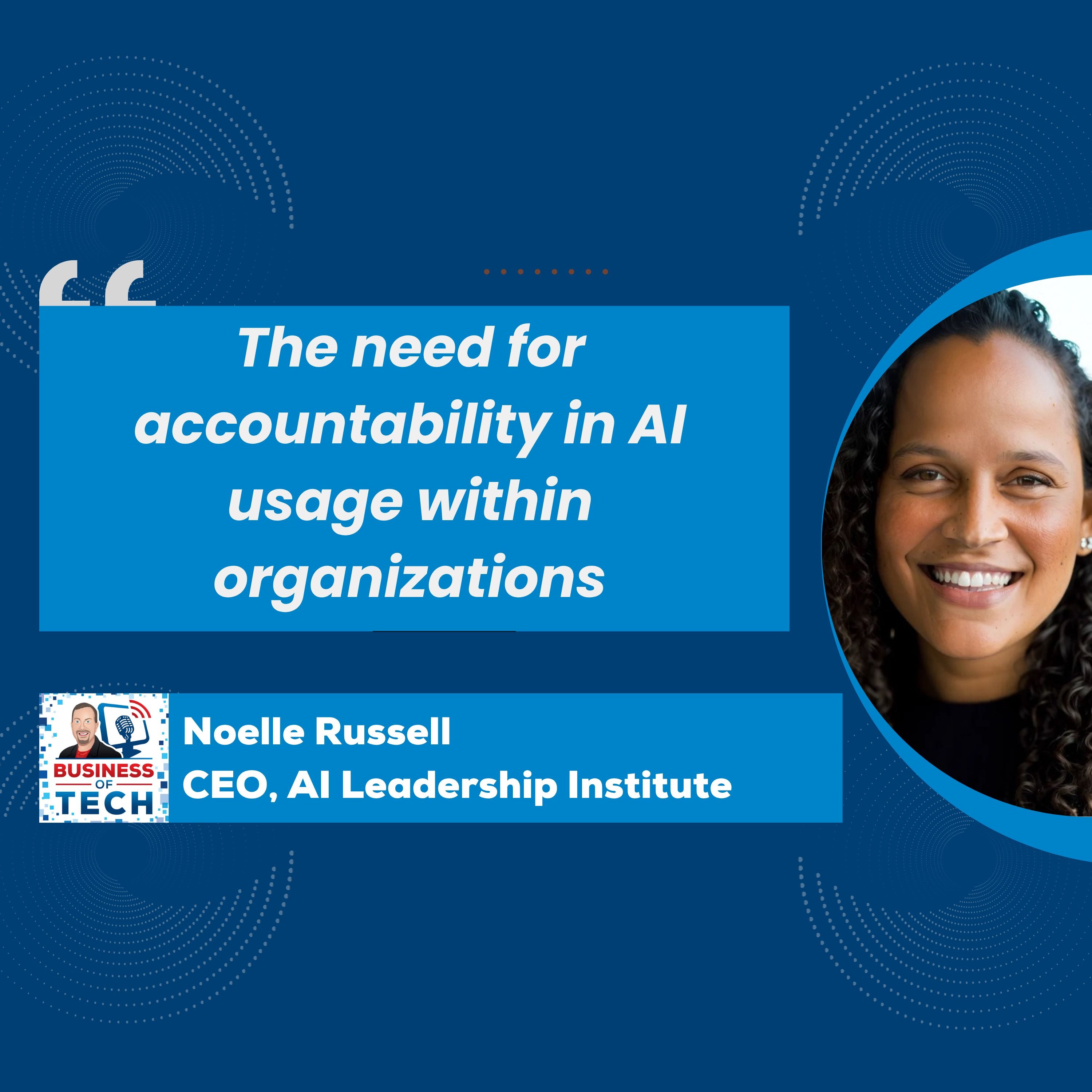
Ep 1707AI's Baby Tiger Metaphor: How to Manage Risks and Accountability in Business Leadership with Noelle Russell
Noelle Russell, CEO of the AI Institute, discusses the metaphor of the "baby tiger" to illustrate the potential dangers of unchecked AI development. She explains that while AI models may seem cute and harmless at first, they can grow into powerful and unpredictable entities if not properly managed. Russell emphasizes the importance of asking critical questions about AI's future impact, such as its size, data requirements, and ethical considerations, before it reaches widespread adoption. This proactive approach is essential for organizations to ensure responsible AI usage.Russell highlights the shared responsibility of organizations when leveraging AI models created by others. She introduces the AI Safety System framework developed by Microsoft, which outlines the levels of accountability that exist from the human-AI experience to infrastructure. Business leaders must define how AI will interact with humans and ensure that employees understand how to effectively prompt and manage these models. This shift in accountability places the onus on business users to articulate their needs clearly, rather than relying solely on technical teams.The conversation also touches on the financial implications of AI development, particularly for smaller businesses. Russell argues that while large companies may have the luxury of investing heavily in AI, smaller organizations must find ways to implement AI solutions with minimal upfront costs. She suggests conducting AI impact assessments to identify areas where AI can reduce friction and improve efficiency, ultimately leading to revenue generation without significant financial risk.Finally, Russell anticipates trends in AI over the next six months, particularly the emergence of agentic organizations where AI systems support decision-makers. This approach focuses on enhancing human capabilities rather than merely automating tasks. As businesses begin to integrate AI more deeply into their operations, the need for effective leadership and a clear understanding of AI's potential will be crucial for success in this evolving landscape. 💼 All Our SponsorsSupport the vendors who support the show:👉 https://businessof.tech/sponsors/ 🚀 Join Business of Tech PlusGet exclusive access to investigative reports, vendor analysis, leadership briefings, and more.👉 https://businessof.tech/plus 🎧 Subscribe to the Business of TechWant the show on your favorite podcast app or prefer the written versions of each story?📲 https://www.businessof.tech/subscribe 📰 Story Links & SourcesLooking for the links from today’s stories?Every episode script — with full source links — is posted at:🌐 https://www.businessof.tech 🎙 Want to Be a Guest?Pitch your story or appear on Business of Tech: Daily 10-Minute IT Services Insights:💬 https://www.podmatch.com/hostdetailpreview/businessoftech 🔗 Follow Business of Tech LinkedIn: https://www.linkedin.com/company/28908079YouTube: https://youtube.com/mspradioBluesky: https://bsky.app/profile/businessof.techInstagram: https://www.instagram.com/mspradioTikTok: https://www.tiktok.com/@businessoftechFacebook: https://www.facebook.com/mspradionews Hosted by Simplecast, an AdsWizz company. See pcm.adswizz.com for information about our collection and use of personal data for advertising.

Ep 1710From McDonald's to Online Communities: The Role of Automation in Trust and Human Experience
Automation is reshaping workflows across various industries, from fast food to creative production, prompting a shift towards smaller, trust-based online communities. The discussion centers on the balance between efficiency and maintaining authentic human connections in the age of AI. Kate O'Neill, a tech humanist and founder of Kao Insights, emphasizes the importance of designing automation that empowers individuals rather than detracting from their experiences. The conversation explores how companies can foster meaningful connections while leveraging technology to streamline operations.The podcast highlights the case of McDonald's, which has been experimenting with AI to enhance its operational efficiency. Despite initial setbacks with AI voice systems, McDonald's continues to innovate, focusing on edge computing and predictive analytics to improve customer experience. O'Neill points out that the key to successful automation lies in aligning business objectives with customer expectations, ensuring that technology enhances rather than replaces the human experience. This alignment is crucial for brands to maintain trust and credibility with their customers.O'Neill discusses the significance of measuring meaning in business, suggesting that metrics like net promoter scores can serve as proxies for understanding customer satisfaction. She advocates for a comprehensive view of business models that incorporates meaningful measures at every stage. By doing so, organizations can better align their automation efforts with customer needs, ultimately leading to more impactful outcomes. The conversation underscores the necessity of integrating employee feedback into the process of defining purpose and meaning within organizations.As trust in digital platforms declines, O'Neill stresses the importance of shared values between brands and consumers. Companies must take on a governance role, operating from a place of responsibility and authenticity. By fostering trust through alignment with community values, businesses can create a more sustainable and meaningful relationship with their customers. The episode concludes with a call for organizations to articulate their purpose clearly, enabling employees to make decisions that resonate with both customer and employee experiences. Gartner Webinar: https://www.gartner.com/en/webinar/689201 💼 All Our SponsorsSupport the vendors who support the show:👉 https://businessof.tech/sponsors/ 🚀 Join Business of Tech PlusGet exclusive access to investigative reports, vendor analysis, leadership briefings, and more.👉 https://businessof.tech/plus 🎧 Subscribe to the Business of TechWant the show on your favorite podcast app or prefer the written versions of each story?📲 https://www.businessof.tech/subscribe 📰 Story Links & SourcesLooking for the links from today’s stories?Every episode script — with full source links — is posted at:🌐 https://www.businessof.tech 🎙 Want to Be a Guest?Pitch your story or appear on Business of Tech: Daily 10-Minute IT Services Insights:💬 https://www.podmatch.com/hostdetailpreview/businessoftech 🔗 Follow Business of Tech LinkedIn: https://www.linkedin.com/company/28908079YouTube: https://youtube.com/mspradioBluesky: https://bsky.app/profile/businessof.techInstagram: https://www.instagram.com/mspradioTikTok: https://www.tiktok.com/@businessoftechFacebook: https://www.facebook.com/mspradionews Hosted by Simplecast, an AdsWizz company. See pcm.adswizz.com for information about our collection and use of personal data for advertising.
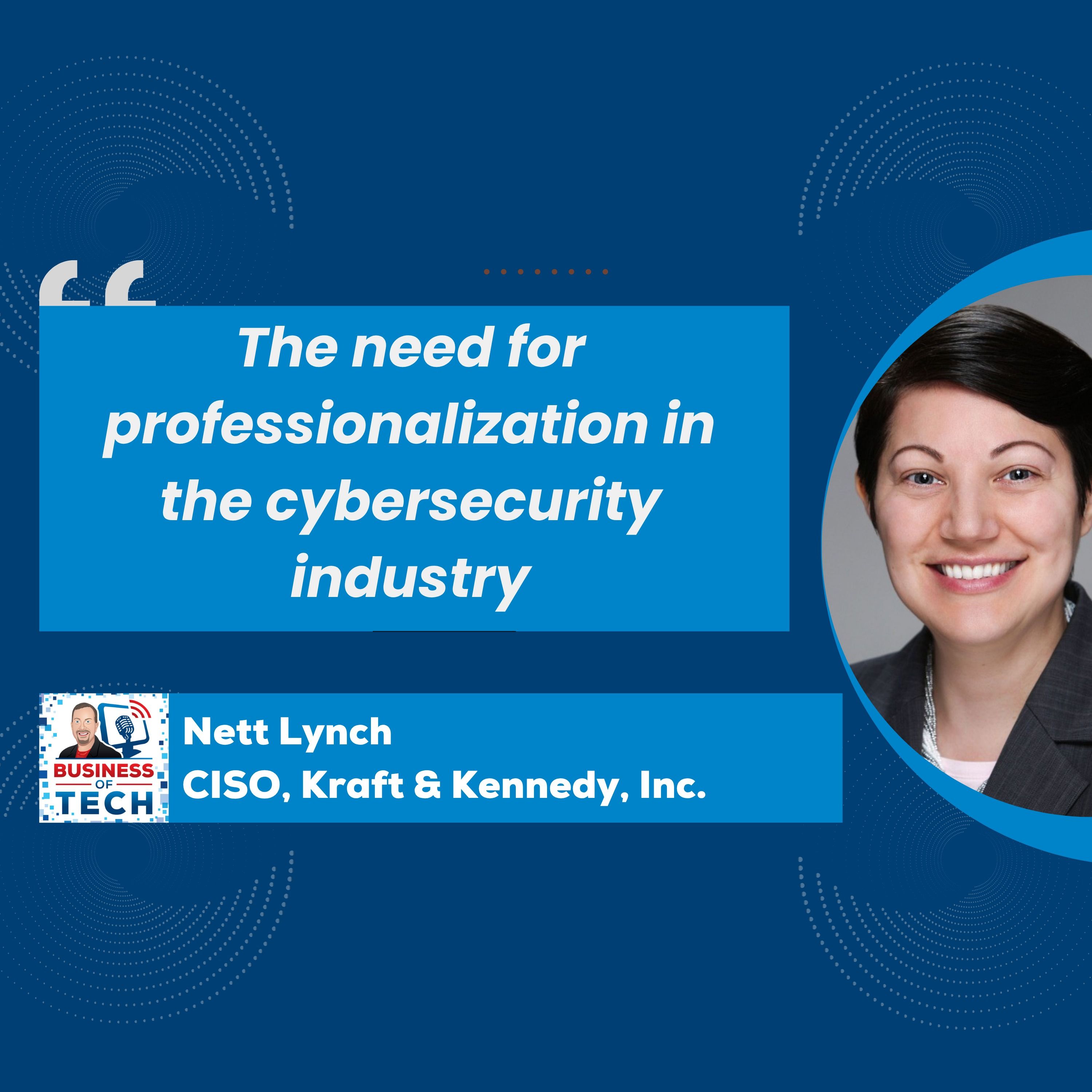
Ep 1705Transforming Cybersecurity: From Risk Management to Business Outcomes with Nett Lynch
Nett Lynch, a cybersecurity leader and strategic VCIO advisor, discusses the importance of translating complex security frameworks into actionable business outcomes. She emphasizes that clients are primarily concerned with their business goals and overcoming obstacles rather than the technical details of security frameworks. To effectively communicate the value of security investments, it is crucial to understand the client's business operations, including financial flows and growth aspirations. By framing security solutions in terms of efficiency and reduced friction, Lynch argues that IT professionals can better engage clients and demonstrate the tangible benefits of security measures.Lynch also addresses the challenge of risk management in cybersecurity, noting that security experts can only reduce risk rather than eliminate it entirely. She highlights the necessity of having conversations with senior leadership to assess risk tolerance and make informed decisions about security investments. By conducting thorough assessments and breaking down security measures into manageable steps, IT providers can guide clients in making decisions that align with their risk appetite and business objectives.The discussion further explores the shared responsibility model in cybersecurity, where both service providers and clients have roles to play in managing security risks. Lynch points out that while vendors are responsible for the tools they provide, the ultimate responsibility for risk management lies with the client. This partnership approach is essential for effective cybersecurity, as it requires active participation from both parties to address vulnerabilities and implement necessary measures.Finally, Lynch shares her insights on the future of vCISO services, cautioning against the potential commercialization of the role, which could undermine its advisory nature. She advocates for professionalization within the industry to ensure that those claiming to be cybersecurity experts possess the necessary skills and knowledge. As AI technology continues to evolve, Lynch expresses a mix of excitement and caution, recognizing its potential impact on the industry while remaining aware of the risks associated with its adoption. 💼 All Our SponsorsSupport the vendors who support the show:👉 https://businessof.tech/sponsors/ 🚀 Join Business of Tech PlusGet exclusive access to investigative reports, vendor analysis, leadership briefings, and more.👉 https://businessof.tech/plus 🎧 Subscribe to the Business of TechWant the show on your favorite podcast app or prefer the written versions of each story?📲 https://www.businessof.tech/subscribe 📰 Story Links & SourcesLooking for the links from today’s stories?Every episode script — with full source links — is posted at:🌐 https://www.businessof.tech 🎙 Want to Be a Guest?Pitch your story or appear on Business of Tech: Daily 10-Minute IT Services Insights:💬 https://www.podmatch.com/hostdetailpreview/businessoftech 🔗 Follow Business of Tech LinkedIn: https://www.linkedin.com/company/28908079YouTube: https://youtube.com/mspradioBluesky: https://bsky.app/profile/businessof.techInstagram: https://www.instagram.com/mspradioTikTok: https://www.tiktok.com/@businessoftechFacebook: https://www.facebook.com/mspradionews Hosted by Simplecast, an AdsWizz company. See pcm.adswizz.com for information about our collection and use of personal data for advertising.
Ep 1711Ransomware Attacks Surge, Google AI Vulnerabilities Exposed, and New Malware Analysis Tool Released
Two sophisticated ransomware groups, Akira and Lynx, are increasingly targeting managed service providers (MSPs) and small businesses by exploiting stolen credentials and vulnerabilities. Together, they have compromised over 365 organizations, with Akira targeting major firms like Hitachi Vantara and Lynx focusing on critical infrastructure, including a CBS affiliate in Chattanooga, Tennessee. Both groups utilize double extortion tactics, combining file encryption with data theft to pressure victims into paying ransoms. This shift in tactics highlights the evolving threat landscape for MSPs and small businesses.In response to the growing cybersecurity threats, the U.S. Cybersecurity and Infrastructure Security Agency has released Thorium, an open-source platform designed for malware and forensic analysis. Thorium can automate tasks and process over 10 million files per hour, empowering IT professionals without in-house malware analysis capabilities to conduct effective preliminary analyses. This tool aims to enhance cybersecurity operations and better manage risks associated with complex malware threats.Additionally, SonicWall has issued a warning to its customers to disable SSL Virtual Private Network (VPN) services due to active ransomware attacks targeting its systems. Meanwhile, Google's AI-powered bug hunter, Big Sleep, has identified 20 security vulnerabilities in popular open-source software, raising concerns about the reliability of AI-generated bug reports. A newly discovered prompt injection vulnerability in Google's Gemini AI chatbot poses serious security risks, enabling attackers to craft convincing phishing campaigns without relying on links or attachments.The podcast also discusses the alarming rise in cybersecurity incidents, particularly social engineering attacks, which have tripled in the first half of 2025. A report from Level Blue indicates that social engineering now accounts for 39% of initial access incidents, with fake CAPTCHA schemes rising dramatically. Furthermore, the report highlights the risks associated with unauthorized AI tool usage, revealing that 97% of organizations lack adequate access controls, exposing sensitive data to potential threats. This underscores the need for organizations to strengthen their defenses and educate users on emerging threats. Four things to know today00:00 Attackers Up Their Game: Ransomware Hits MSPs, SonicWall Vulnerable, and Google’s AI Found Exploitable05:53 Social Engineering Surges as Shadow AI Breaches Drive Up Cyber Costs and Risk Exposure08:35 Neglected Tech, Rising Risk: Email and Printers Still Expose Businesses to Modern Threats11:04 From Ransomware to Retirements: Vendor Shifts Reveal Risks and Realignment in the IT Channel This is the Business of Tech. Supported by: https://cometbackup.com/?utm_source=mspradio&utm_medium=podcast&utm_campaign=sponsorship https://getflexpoint.com/msp-radio/ Tell us about a newsletter! https://bit.ly/biztechnewsletter 💼 All Our SponsorsSupport the vendors who support the show:👉 https://businessof.tech/sponsors/ 🚀 Join Business of Tech PlusGet exclusive access to investigative reports, vendor analysis, leadership briefings, and more.👉 https://businessof.tech/plus 🎧 Subscribe to the Business of TechWant the show on your favorite podcast app or prefer the written versions of each story?📲 https://www.businessof.tech/subscribe 📰 Story Links & SourcesLooking for the links from today’s stories?Every episode script — with full source links — is posted at:🌐 https://www.businessof.tech 🎙 Want to Be a Guest?Pitch your story or appear on Business of Tech: Daily 10-Minute IT Services Insights:💬 https://www.podmatch.com/hostdetailpreview/businessoftech 🔗 Follow Business of Tech LinkedIn: https://www.linkedin.com/company/28908079YouTube: https://youtube.com/mspradioBluesky: https://bsky.app/profile/businessof.techInstagram: https://www.instagram.com/mspradioTikTok: https://www.tiktok.com/@businessoftechFacebook: https://www.facebook.com/mspradionews Hosted by Simplecast, an AdsWizz company. See pcm.adswizz.com for information about our collection and use of personal data for advertising.
Ep 1709AI Agents Transform SaaS Pricing, Microsoft Faces Security Flaws, and Delta Clarifies AI Pricing
Artificial intelligence agents are significantly transforming the landscape of software-as-a-service (SaaS) pricing, moving away from traditional per-seat licenses towards usage and outcome-based models. Gartner predicts that by 2030, 40% of enterprise spending on software will shift to these new pricing structures, prompting businesses to reassess how they perceive value in digital operations. As AI features become more prevalent in enterprise software, organizations must navigate potential risks such as data silos and vendor lock-in, emphasizing the need for transparent pricing and governance strategies.The podcast discusses the growing concerns surrounding AI's impact on the workforce, with a survey revealing that 61% of white-collar workers fear job displacement within three years. Despite these fears, many workers report that AI has enhanced their creativity and productivity, suggesting that AI should be viewed as a tool for augmentation rather than replacement. This perspective can facilitate smoother adoption of AI technologies, positioning service providers as trusted change managers.In the realm of security, Microsoft faces scrutiny over a critical vulnerability in its new NLWeb protocol, which could allow unauthorized access to sensitive files. Meanwhile, Cloudflare has accused the AI startup Perplexity of violating no-crawl directives by stealthily scraping content from websites, raising concerns about unauthorized data access. Additionally, Anthropic's research highlights how AI personalities can be influenced by training data, underscoring the importance of data governance in AI development.The episode also touches on Delta Airlines' clarification regarding its AI-assisted dynamic pricing model, which aims to use aggregated data rather than individual customer information. In the fashion industry, the use of AI-generated models has sparked debate over authenticity and representation, as brands seek cost-effective solutions for content creation. Overall, the discussion emphasizes the need for service providers to balance AI's cost-saving potential with the importance of maintaining trust and authenticity in consumer-facing applications.Four things to know today 00:00 AI Agents Drive SaaS Pricing Shift, Raise Vendor Lock-In Concerns, and Reshape Worker Attitudes04:45 OpenAI Releases First Open-Weight Models in Six Years as AI Security and Ethics Face Fresh Challenges09:50 Delta Defends AI Pricing as Non-Personalized, While Fashion Faces Backlash Over AI-Generated Models12:47 Microsoft Ends Windows 11 SE, Debuts Edge AI Copilot, as SentinelOne Expands into Generative AI Security Supported by: https://scalepad.com/dave/https://getflexpoint.com/msp-radio/ Tell us about a newsletter! https://bit.ly/biztechnewsletter/ 💼 All Our SponsorsSupport the vendors who support the show:👉 https://businessof.tech/sponsors/ 🚀 Join Business of Tech PlusGet exclusive access to investigative reports, vendor analysis, leadership briefings, and more.👉 https://businessof.tech/plus 🎧 Subscribe to the Business of TechWant the show on your favorite podcast app or prefer the written versions of each story?📲 https://www.businessof.tech/subscribe 📰 Story Links & SourcesLooking for the links from today’s stories?Every episode script — with full source links — is posted at:🌐 https://www.businessof.tech 🎙 Want to Be a Guest?Pitch your story or appear on Business of Tech: Daily 10-Minute IT Services Insights:💬 https://www.podmatch.com/hostdetailpreview/businessoftech 🔗 Follow Business of Tech LinkedIn: https://www.linkedin.com/company/28908079YouTube: https://youtube.com/mspradioBluesky: https://bsky.app/profile/businessof.techInstagram: https://www.instagram.com/mspradioTikTok: https://www.tiktok.com/@businessoftechFacebook: https://www.facebook.com/mspradionews Hosted by Simplecast, an AdsWizz company. See pcm.adswizz.com for information about our collection and use of personal data for advertising.
Ep 1706SMBs Invest in AI, Microsoft and Amazon Report Strong Earnings Amid Labor Market Concerns
Small and medium-sized businesses (SMBs) are increasingly investing in artificial intelligence (AI), with a significant portion planning to allocate between $25,000 and $1 million towards technology this year. A recent GTIA survey revealed that 63% of SMBs believe AI will be the most impactful technology in the next two years, and 65% of executives view technology as crucial for achieving business goals. Despite economic uncertainties, 35% of these businesses intend to invest unexpected financial gains into cutting-edge technology, indicating a strong desire for innovation. Notably, many SMBs are purchasing technology directly from vendors, signaling a shift in the market dynamics.The labor market for small businesses is showing signs of change, with a report indicating a decrease in unfilled job openings. While 33% of small business owners reported unfilled positions in July, down from 36% in June, the challenges of finding qualified workers persist. A net 14% of small business owners plan to hire new employees in the upcoming quarter, particularly in skilled trade sectors like construction and transportation. This commitment to growth amidst a tight labor market suggests that automation and AI solutions may become more appealing to SMBs as they seek to enhance efficiency.Major tech companies are reporting strong earnings, with Microsoft leading the way. The company achieved a revenue of $76.4 billion for the fourth quarter of its fiscal year, driven by a 34% increase in Azure cloud services. Amazon and Google also reported significant revenue growth, particularly in their cloud services, with Amazon's AWS generating $30.9 billion. The competitive landscape is shifting, as Microsoft’s Bing is gaining market share from Google, highlighting the importance of AI integration in driving business success.Concerns about the integrity of economic data are rising, particularly following the recent job report that showed the weakest job creation since 2010. The report's findings prompted political controversy, including the firing of the Bureau of Labor Statistics Commissioner by President Trump. Experts warn that declining survey response rates and limited resources threaten the accuracy of critical economic indicators. This situation raises alarms about the reliability of data used for economic forecasting, emphasizing the need for trustworthy metrics in navigating the current economic landscape.Three things to know today 00:00 AI Demand, Tight Labor, and Vendor Direct Sales Redefine the SMB Technology Landscape05:16 Microsoft Posts Record $76.4B Quarter, Azure Up 34%, Bing Gains Search Share from Google10:10 Buyers Reject Multiyear SaaS Contracts Amid Rapid AI-Driven Product Changes13:03 Weak Jobs Data Spurs Political Shake-Up as Trump Fires BLS Commissioner, Raising Trust Concerns This is the Business of Tech. Supported by: https://syncromsp.com/ Tell us about a newsletter!https://bit.ly/biztechnewsletter 💼 All Our SponsorsSupport the vendors who support the show:👉 https://businessof.tech/sponsors/ 🚀 Join Business of Tech PlusGet exclusive access to investigative reports, vendor analysis, leadership briefings, and more.👉 https://businessof.tech/plus 🎧 Subscribe to the Business of TechWant the show on your favorite podcast app or prefer the written versions of each story?📲 https://www.businessof.tech/subscribe 📰 Story Links & SourcesLooking for the links from today’s stories?Every episode script — with full source links — is posted at:🌐 https://www.businessof.tech 🎙 Want to Be a Guest?Pitch your story or appear on Business of Tech: Daily 10-Minute IT Services Insights:💬 https://www.podmatch.com/hostdetailpreview/businessoftech 🔗 Follow Business of Tech LinkedIn: https://www.linkedin.com/company/28908079YouTube: https://youtube.com/mspradioBluesky: https://bsky.app/profile/businessof.techInstagram: https://www.instagram.com/mspradioTikTok: https://www.tiktok.com/@businessoftechFacebook: https://www.facebook.com/mspradionews Hosted by Simplecast, an AdsWizz company. See pcm.adswizz.com for information about our collection and use of personal data for advertising.

Ep 1704Austin McChord on Slide: Building a Better BCDR for MSPs and Lessons from Datto's Journey
Austin McChord, co-founder and chairman of Slide, discusses the launch of his new BCDR startup, which aims to serve managed service providers (MSPs) with a fresh approach. Drawing from his experience at Datto, McChord emphasizes the importance of maintaining a strong culture and alignment with MSPs, which he feels has eroded in recent years. He addresses comparisons between Slide and Datto, explaining that while there are similarities in vision, Slide is built on a completely different technological foundation, utilizing NVMe flash storage to enhance performance and user experience.McChord expresses a commitment to ensuring Slide remains an independent company, learning from the challenges faced during Datto's journey, including its acquisition and the subsequent cultural shifts. He highlights the importance of setting clear values and operational controls to prevent a repeat of past experiences. The conversation delves into the lessons learned from building Datto, particularly regarding business operations and the unpredictability of public markets, which can lead to unwanted outcomes for company culture and employee satisfaction.The discussion also touches on the impact of AI in the tech landscape, with McChord noting that while AI can enhance efficiency, it currently struggles with tasks that require deep expertise. He believes that AI's potential lies in automating mundane tasks and improving configurations, but warns against rushing to implement AI solutions that may not yet be fully developed. McChord emphasizes the need for MSPs to understand the limitations of AI and to focus on building strong relationships with new small businesses that are emerging in the tech space.Finally, McChord shares his philanthropic endeavors, including transforming an abandoned power plant into a public park. He expresses excitement about projects that prioritize social returns over economic ones, and how these initiatives allow him to apply business principles to create positive change. His passion for building and creating, whether in business or philanthropy, drives his current pursuits and future aspirations. 💼 All Our SponsorsSupport the vendors who support the show:👉 https://businessof.tech/sponsors/ 🚀 Join Business of Tech PlusGet exclusive access to investigative reports, vendor analysis, leadership briefings, and more.👉 https://businessof.tech/plus 🎧 Subscribe to the Business of TechWant the show on your favorite podcast app or prefer the written versions of each story?📲 https://www.businessof.tech/subscribe 📰 Story Links & SourcesLooking for the links from today’s stories?Every episode script — with full source links — is posted at:🌐 https://www.businessof.tech 🎙 Want to Be a Guest?Pitch your story or appear on Business of Tech: Daily 10-Minute IT Services Insights:💬 https://www.podmatch.com/hostdetailpreview/businessoftech 🔗 Follow Business of Tech LinkedIn: https://www.linkedin.com/company/28908079YouTube: https://youtube.com/mspradioBluesky: https://bsky.app/profile/businessof.techInstagram: https://www.instagram.com/mspradioTikTok: https://www.tiktok.com/@businessoftechFacebook: https://www.facebook.com/mspradionews Hosted by Simplecast, an AdsWizz company. See pcm.adswizz.com for information about our collection and use of personal data for advertising.
Ep 1704Navigating AI Adoption and Cybersecurity in Regulated Financial Firms: Insights from Triada Networks with Raffi Jamgotchian
Dave Sobel interviews Raffi Jamgotchian, founder and CEO of Triada Networks, about the current landscape of AI adoption in the financial services sector, particularly among small to medium-sized investment firms. Jamgotchian notes that while some clients are eager to embrace AI, others remain hesitant, mirroring trends seen with cloud technology. For those leaning into AI, Triada Networks is focusing on proof of concepts, helping clients structure their data effectively to leverage AI tools, especially in data analytics and research.Regulatory considerations play a significant role in how firms approach AI implementation. Many of Jamgotchian's clients operate in regulated environments, which affects their choice of data models and the types of large language models (LLMs) they can use. The challenge lies in handling sensitive, non-public information without risking regulatory violations. As firms navigate these complexities, the importance of data preparation becomes evident, with varying levels of readiness among clients impacting their ability to utilize AI effectively.Cybersecurity is a critical aspect of the conversation around AI and data management. Jamgotchian highlights that clients are increasingly proactive in seeking guidance on cybersecurity implications related to their business decisions. This shift is attributed to a combination of heightened regulatory scrutiny and a growing awareness of cybersecurity risks in the market. The conversation has evolved from being initiated by service providers to clients actively engaging in discussions about their cybersecurity needs.Looking ahead, Jamgotchian emphasizes the importance of monitoring regulatory developments, particularly from organizations like FINRA and the FCC, as they relate to AI. He anticipates that AI-related lawsuits will emerge, prompting changes in laws that could impact managed service providers (MSPs). The conversation concludes with a recognition that while the MSP landscape is evolving, the core mission of solving business problems through technology remains unchanged, and those who adapt will thrive in the future. 💼 All Our SponsorsSupport the vendors who support the show:👉 https://businessof.tech/sponsors/ 🚀 Join Business of Tech PlusGet exclusive access to investigative reports, vendor analysis, leadership briefings, and more.👉 https://businessof.tech/plus 🎧 Subscribe to the Business of TechWant the show on your favorite podcast app or prefer the written versions of each story?📲 https://www.businessof.tech/subscribe 📰 Story Links & SourcesLooking for the links from today’s stories?Every episode script — with full source links — is posted at:🌐 https://www.businessof.tech 🎙 Want to Be a Guest?Pitch your story or appear on Business of Tech: Daily 10-Minute IT Services Insights:💬 https://www.podmatch.com/hostdetailpreview/businessoftech 🔗 Follow Business of Tech LinkedIn: https://www.linkedin.com/company/28908079YouTube: https://youtube.com/mspradioBluesky: https://bsky.app/profile/businessof.techInstagram: https://www.instagram.com/mspradioTikTok: https://www.tiktok.com/@businessoftechFacebook: https://www.facebook.com/mspradionews Hosted by Simplecast, an AdsWizz company. See pcm.adswizz.com for information about our collection and use of personal data for advertising.
Ep 1703Exploring GTIA's Future: Dan Wensley on Membership Expansion, Community, and Technology Impact
Dan Wensley, the new CEO of GTIA, discusses his vision for the organization, emphasizing the importance of expanding membership and enhancing the value provided to both member companies and individual members. With 2,411 member companies and over 212,000 individual members, Wensley aims to grow these numbers by effectively communicating the benefits of membership, particularly to IT service providers (ITSPs). He highlights the need for a broader conversation within the community to foster growth and engagement.Wensley addresses the challenges of ensuring that vendors do not dominate discussions within the organization. He believes that collaboration between vendors and IT service providers is essential for mutual benefit, particularly in areas like AI and managed services. By creating a platform for these conversations, GTIA can facilitate valuable exchanges that drive innovation and support the needs of its members.The conversation also touches on GTIA's philanthropic efforts, with Wensley announcing a significant increase in charitable giving, totaling $1.5 million this year. He explains that the organization is committed to supporting technology-driven initiatives, particularly in education and underprivileged communities. Members will have a say in where these funds are allocated, ensuring that the giving aligns with the values and interests of the community.Finally, Wensley emphasizes the importance of focusing on people as a key pillar of GTIA's strategy. He plans to engage with members to understand their needs and aspirations better, while also promoting the inclusion of younger generations in the industry. By leveraging both the experience of long-standing members and the fresh perspectives of newcomers, GTIA aims to create a vibrant and dynamic community that fosters growth and advancement for all. 💼 All Our SponsorsSupport the vendors who support the show:👉 https://businessof.tech/sponsors/ 🚀 Join Business of Tech PlusGet exclusive access to investigative reports, vendor analysis, leadership briefings, and more.👉 https://businessof.tech/plus 🎧 Subscribe to the Business of TechWant the show on your favorite podcast app or prefer the written versions of each story?📲 https://www.businessof.tech/subscribe 📰 Story Links & SourcesLooking for the links from today’s stories?Every episode script — with full source links — is posted at:🌐 https://www.businessof.tech 🎙 Want to Be a Guest?Pitch your story or appear on Business of Tech: Daily 10-Minute IT Services Insights:💬 https://www.podmatch.com/hostdetailpreview/businessoftech 🔗 Follow Business of Tech LinkedIn: https://www.linkedin.com/company/28908079YouTube: https://youtube.com/mspradioBluesky: https://bsky.app/profile/businessof.techInstagram: https://www.instagram.com/mspradioTikTok: https://www.tiktok.com/@businessoftechFacebook: https://www.facebook.com/mspradionews Hosted by Simplecast, an AdsWizz company. See pcm.adswizz.com for information about our collection and use of personal data for advertising.

Ep 1701The Future of MSPs: Syncro's Insights on AI, Automation, and Competing in a Changing Market with Michael George and Dee Zepf
Michael George, CEO of Syncro, and Dee Zepf, Chief Product Officer, discuss the evolving landscape of managed service providers (MSPs) and the transformative potential of AI in their operations. They reflect on how automation has been a longstanding goal in the industry, but recent advancements in AI and technology have accelerated this evolution. The conversation highlights Syncro's strategic shift towards leveraging AI and automation to enhance their platform, particularly through the launch of their XMM platform, which integrates RMM, PSA, and Microsoft 365 management.The XMM platform aims to simplify the management of Microsoft technologies for MSPs, allowing them to deliver better security and efficiency to their clients. Dee shares insights on the rapid adoption of this platform among existing partners, emphasizing how it has streamlined operations and improved security management. The discussion also touches on the competitive landscape, with Michael noting that while Microsoft is increasingly moving towards the MSP space, Synchro views their relationship as complementary rather than competitive.As the conversation progresses, they explore the importance of workflow efficiency for small and midsize businesses, suggesting that MSPs should focus on enhancing their service offerings to remain competitive. Michael emphasizes the need for MSPs to evolve from traditional IT support roles to strategic partners that help clients leverage AI and automation effectively. This shift is seen as crucial for MSPs to differentiate themselves in a market where many are at risk of falling behind.Finally, the discussion delves into the implementation of AI technologies within Syncro's products, particularly in areas like smart ticket management and sentiment analysis. Dee explains the challenges of measuring the quality of AI-generated responses and the importance of maintaining a human element in the process. They conclude by encouraging MSPs to start small with AI implementations, helping clients understand its potential and gradually integrating more advanced solutions into their operations. 💼 All Our SponsorsSupport the vendors who support the show:👉 https://businessof.tech/sponsors/ 🚀 Join Business of Tech PlusGet exclusive access to investigative reports, vendor analysis, leadership briefings, and more.👉 https://businessof.tech/plus 🎧 Subscribe to the Business of TechWant the show on your favorite podcast app or prefer the written versions of each story?📲 https://www.businessof.tech/subscribe 📰 Story Links & SourcesLooking for the links from today’s stories?Every episode script — with full source links — is posted at:🌐 https://www.businessof.tech 🎙 Want to Be a Guest?Pitch your story or appear on Business of Tech: Daily 10-Minute IT Services Insights:💬 https://www.podmatch.com/hostdetailpreview/businessoftech 🔗 Follow Business of Tech LinkedIn: https://www.linkedin.com/company/28908079YouTube: https://youtube.com/mspradioBluesky: https://bsky.app/profile/businessof.techInstagram: https://www.instagram.com/mspradioTikTok: https://www.tiktok.com/@businessoftechFacebook: https://www.facebook.com/mspradionews Hosted by Simplecast, an AdsWizz company. See pcm.adswizz.com for information about our collection and use of personal data for advertising.
Ep 1696Kaseya's New CEO Rania Succar on Innovation, MSP Partnerships, and Customer Experience Revamp
Rania Succar, the new CEO of Kaseya, discusses her vision for the company at a crucial time for both Kaseya and the managed service provider (MSP) ecosystem. With Kaseya facing scrutiny over customer service and billing practices, Succar emphasizes the importance of innovation and a cultural reset to strengthen relationships with MSP partners. She believes that Kaseya has the potential to be a leader in driving outcomes for small businesses through its partnerships with MSPs, which are essential for helping these businesses adopt cutting-edge technology. Succar outlines four key values that will guide Kaseya's next chapter: measuring success based on the profitability and revenue growth of MSP partners, delivering innovation that benefits these partners, enhancing the overall customer experience, and investing in the community. She acknowledges the frustrations MSPs have expressed regarding customer service and billing practices, and she highlights specific steps Kaseya is taking to address these issues, including the end of high watermark pricing and improvements in customer support. The conversation also touches on the importance of internal culture and employee retention at Kaseya. Succar emphasizes the strength of her leadership team and the need for a culture that empowers employees to make decisions at all levels. By fostering a customer-centric and innovative environment, she aims to improve the overall experience for both employees and customers, ultimately leading to better service quality. Looking ahead, Succar shares her vision for leveraging AI and automation to enhance Kaseya's offerings for MSP partners. She recognizes the challenges SMBs face in adopting AI and emphasizes the need for collaboration between Kaseya and MSPs to unify data and create effective solutions. By focusing on these areas, Succar aims to position Kaseya as a leader in helping small businesses navigate the evolving technology landscape. 💼 All Our SponsorsSupport the vendors who support the show:👉 https://businessof.tech/sponsors/ 🚀 Join Business of Tech PlusGet exclusive access to investigative reports, vendor analysis, leadership briefings, and more.👉 https://businessof.tech/plus 🎧 Subscribe to the Business of TechWant the show on your favorite podcast app or prefer the written versions of each story?📲 https://www.businessof.tech/subscribe 📰 Story Links & SourcesLooking for the links from today’s stories?Every episode script — with full source links — is posted at:🌐 https://www.businessof.tech 🎙 Want to Be a Guest?Pitch your story or appear on Business of Tech: Daily 10-Minute IT Services Insights:💬 https://www.podmatch.com/hostdetailpreview/businessoftech 🔗 Follow Business of Tech LinkedIn: https://www.linkedin.com/company/28908079YouTube: https://youtube.com/mspradioBluesky: https://bsky.app/profile/businessof.techInstagram: https://www.instagram.com/mspradioTikTok: https://www.tiktok.com/@businessoftechFacebook: https://www.facebook.com/mspradionews Hosted by Simplecast, an AdsWizz company. See pcm.adswizz.com for information about our collection and use of personal data for advertising.
Ep 1693Skillfully's AI Innovations: Streamlining Hiring with Realistic Job Simulations with Brett Waikart
AI is revolutionizing the hiring process by enhancing human interaction and focusing on skills rather than traditional resumes. Brett Waikart, co-founder of Skillfully, explains how their platform utilizes AI to create realistic job simulations that allow candidates to demonstrate their skills in a practical setting. This approach addresses the challenges posed by the influx of AI-generated applications, enabling employers to filter through the noise and identify the most qualified candidates efficiently.Skillfully's innovative method shifts the hiring paradigm from merely assessing resumes to evaluating actual performance in job-related tasks. For instance, in sales roles, candidates can engage in simulations that mimic real-life scenarios, such as handling customer objections or conducting discovery conversations. This hands-on experience not only provides employers with a clearer picture of a candidate's capabilities but also significantly reduces the time and cost associated with the hiring process.The platform also plays a crucial role in preparing students for the workforce by offering them access to these simulations through partnerships with educational institutions. This experiential learning allows students to practice and refine their skills before entering the job market, creating a feedback loop between employers and universities. As a result, students gain valuable insights into the skills required in their desired careers, making them more competitive candidates.Looking ahead, Skillfully aims to expand its capabilities by incorporating multimodal simulations that assess not only traditional skills but also the ability to leverage AI tools effectively. This evolution will help employers identify candidates who can excel in their roles by utilizing AI to enhance their productivity. By focusing on both skill validation and the human element of hiring, Skillfully is paving the way for a more efficient and equitable employment landscape. 💼 All Our SponsorsSupport the vendors who support the show:👉 https://businessof.tech/sponsors/ 🚀 Join Business of Tech PlusGet exclusive access to investigative reports, vendor analysis, leadership briefings, and more.👉 https://businessof.tech/plus 🎧 Subscribe to the Business of TechWant the show on your favorite podcast app or prefer the written versions of each story?📲 https://www.businessof.tech/subscribe 📰 Story Links & SourcesLooking for the links from today’s stories?Every episode script — with full source links — is posted at:🌐 https://www.businessof.tech 🎙 Want to Be a Guest?Pitch your story or appear on Business of Tech: Daily 10-Minute IT Services Insights:💬 https://www.podmatch.com/hostdetailpreview/businessoftech 🔗 Follow Business of Tech LinkedIn: https://www.linkedin.com/company/28908079YouTube: https://youtube.com/mspradioBluesky: https://bsky.app/profile/businessof.techInstagram: https://www.instagram.com/mspradioTikTok: https://www.tiktok.com/@businessoftechFacebook: https://www.facebook.com/mspradionews Hosted by Simplecast, an AdsWizz company. See pcm.adswizz.com for information about our collection and use of personal data for advertising.
Ep 1693AI's Impact on Data Privacy: Why Security Frameworks Must Evolve for 2025 with Yasir Ali
Yasir Ali, CEO of Polymer, discusses the shortcomings of current security frameworks, emphasizing their outdated nature and lack of real verification. He argues that many organizations still rely on signed statements without providing tangible evidence of compliance with security controls. This disconnect has become increasingly problematic, especially with the rise of AI and the need for more robust data protection measures. Ali highlights that the traditional approach of simply stating compliance is no longer sufficient in a landscape where data privacy and security are paramount.Ali suggests that the solution lies in a more evidence-based approach to security frameworks. He advocates for organizations to provide real-time evidence of their security practices, particularly in relation to how customer data is handled and used. This includes demonstrating that customer data is not being misused for AI training purposes. He believes that the industry needs to move beyond mere documentation and focus on actual compliance and security practices that can be verified.The conversation also touches on the role of customers in demanding better security practices from service providers. While Ali acknowledges that end customers often feel overlooked, he points out that larger organizations, such as banks, have begun to push back against vendors to ensure their data is protected. He emphasizes that smaller businesses must take responsibility for their own data security, as the regulatory environment in the U.S. is not providing sufficient oversight.As AI adoption accelerates through SaaS products, Ali expresses concern about the new vulnerabilities that may arise. He notes that many organizations are integrating AI tools into their existing systems without fully understanding the implications for data security. Polymer aims to address these challenges by providing tools that enhance data security and compliance within SaaS environments, ensuring that organizations can protect their sensitive information while leveraging the benefits of AI. 💼 All Our SponsorsSupport the vendors who support the show:👉 https://businessof.tech/sponsors/ 🚀 Join Business of Tech PlusGet exclusive access to investigative reports, vendor analysis, leadership briefings, and more.👉 https://businessof.tech/plus 🎧 Subscribe to the Business of TechWant the show on your favorite podcast app or prefer the written versions of each story?📲 https://www.businessof.tech/subscribe 📰 Story Links & SourcesLooking for the links from today’s stories?Every episode script — with full source links — is posted at:🌐 https://www.businessof.tech 🎙 Want to Be a Guest?Pitch your story or appear on Business of Tech: Daily 10-Minute IT Services Insights:💬 https://www.podmatch.com/hostdetailpreview/businessoftech 🔗 Follow Business of Tech LinkedIn: https://www.linkedin.com/company/28908079YouTube: https://youtube.com/mspradioBluesky: https://bsky.app/profile/businessof.techInstagram: https://www.instagram.com/mspradioTikTok: https://www.tiktok.com/@businessoftechFacebook: https://www.facebook.com/mspradionews Hosted by Simplecast, an AdsWizz company. See pcm.adswizz.com for information about our collection and use of personal data for advertising.
Ep 1702US Economy Shows Resilience; Major Tech Firms Lay Off Workers While AI Spending Soars
The U.S. economy is demonstrating resilience with strong consumer spending and low unemployment filings, despite looming inflation and tariff pressures. Retail sales rose by 0.6% in June, surpassing expectations and indicating solid growth in gross domestic product for the second quarter. However, concerns about rising import costs, which saw their largest monthly increase in over a year, continue to cast a shadow over the economic outlook. While manufacturers anticipate growth and increased hiring, the uncertainty surrounding tariffs remains a significant concern.IBM's CEO, Arvind Krishna, argues that fears of artificial intelligence (AI) eliminating jobs are exaggerated, suggesting that AI will actually enhance employment opportunities by increasing productivity. He notes that while some clerical roles may be phased out, new job creation will occur in programming and sales. Meanwhile, Gartner forecasts a substantial rise in global IT spending, projected to reach $5.43 trillion in 2025, driven largely by investments in AI infrastructure. This shift indicates a growing trend where companies must adapt to the changing landscape or risk being left behind.The podcast also discusses recent layoffs at major tech firms, including Microsoft, Tata Consultancy Services, and Intel, as they navigate the challenges posed by AI and automation. Microsoft has laid off approximately 9,000 employees while reporting significant revenue growth, highlighting the paradox of job cuts amid financial success. Similarly, TCS plans to cut 12,000 jobs, primarily affecting senior and mid-level positions, as clients demand AI-driven services and cost reductions. This trend underscores the rapid transformation of the workforce as companies pivot towards automation and higher-margin activities.Legislative updates include the Federal Communications Commission's review of state laws on AI, aimed at reducing regulations to promote American AI systems. Critics argue that this approach lacks a comprehensive vision for AI innovation. In the UK, a court has denied WhatsApp's intervention in a case involving Apple's compliance with government orders to access encrypted data, raising concerns about privacy. Additionally, New York has announced stricter cybersecurity regulations for water utilities, emphasizing the need for enhanced security measures in critical infrastructure. These developments reflect a broader struggle between regulatory frameworks and the fast-evolving tech landscape. Four things to know today 00:00 U.S. Economy Grows Steadily as AI Reshapes Labor and IT Spend Soars to $5.43 Trillion04:45 Global Policy Divide on AI and Cybersecurity Widens as U.S., UK, and New York Take Conflicting Regulatory Paths07:54 Layoffs Mount Across Tech and Services as AI Drives Shift Toward Margin, Not Manpower12:09 Intel Restructures for AI Future with Major Layoffs, Factory Slowdown, and Network Division Spinoff Supported by: https://scalepad.com/dave/ https://businessof.tech/sponsor/moovila/ Tell us about a newsletter!https://bit.ly/biztechnewsletter 💼 All Our SponsorsSupport the vendors who support the show:👉 https://businessof.tech/sponsors/ 🚀 Join Business of Tech PlusGet exclusive access to investigative reports, vendor analysis, leadership briefings, and more.👉 https://businessof.tech/plus 🎧 Subscribe to the Business of TechWant the show on your favorite podcast app or prefer the written versions of each story?📲 https://www.businessof.tech/subscribe 📰 Story Links & SourcesLooking for the links from today’s stories?Every episode script — with full source links — is posted at:🌐 https://www.businessof.tech 🎙 Want to Be a Guest?Pitch your story or appear on Business of Tech: Daily 10-Minute IT Services Insights:💬 https://www.podmatch.com/hostdetailpreview/businessoftech 🔗 Follow Business of Tech LinkedIn: https://www.linkedin.com/company/28908079YouTube: https://youtube.com/mspradioBluesky: https://bsky.app/profile/businessof.techInstagram: https://www.instagram.com/mspradioTikTok: https://www.tiktok.com/@businessoftechFacebook: https://www.facebook.com/mspradionews Hosted by Simplecast, an AdsWizz company. See pcm.adswizz.com for information about our collection and use of personal data for advertising.
Ep 1690The Future of Legal Tech: Jonathan Rhyne on AI's Role in Document Workflow and Accountability
Jonathan Rhyne transitioned from a career in law to founding Nutrient, a technology company specializing in AI-driven document intelligence and workflow automation. After leaving his law firm in 2011, he identified a significant gap in the market for digital document solutions, particularly in the B2B space. Nutrient has since grown to serve thousands of businesses across 80 countries, including a notable percentage of the Global 500. Ryan emphasizes that technology should enhance human capabilities rather than replace them, a philosophy that underpins the mission of his company.The conversation delves into the evolution of workflow automation, particularly in the last two years, where advancements in AI have transformed how businesses manage documents. Rhyne discusses the challenges of integrating unstructured data into structured formats, highlighting the importance of AI in streamlining these processes. He notes that while traditional OCR technology has limitations, AI has made it easier to create workflows through natural language processing, allowing users to communicate their needs more intuitively.Rhyne also addresses the potential pitfalls of AI, cautioning against vanity projects that do not deliver real value. He provides concrete examples of how AI can enhance data extraction and redaction processes, making them more efficient and accurate. The discussion touches on the accountability required in legal contexts, emphasizing the need for audit trails to ensure that both AI and human contributions are properly documented and verifiable.As the conversation wraps up, Rhyne reflects on the balance between embracing technological advancements and managing associated risks. He believes that the integration of AI into business processes can serve as a catalyst for productivity, provided that companies focus on delivering value to their customers. By understanding the risks and opportunities presented by AI, organizations can navigate the evolving landscape of technology while maintaining accountability and trust. 💼 All Our SponsorsSupport the vendors who support the show:👉 https://businessof.tech/sponsors/ 🚀 Join Business of Tech PlusGet exclusive access to investigative reports, vendor analysis, leadership briefings, and more.👉 https://businessof.tech/plus 🎧 Subscribe to the Business of TechWant the show on your favorite podcast app or prefer the written versions of each story?📲 https://www.businessof.tech/subscribe 📰 Story Links & SourcesLooking for the links from today’s stories?Every episode script — with full source links — is posted at:🌐 https://www.businessof.tech 🎙 Want to Be a Guest?Pitch your story or appear on Business of Tech: Daily 10-Minute IT Services Insights:💬 https://www.podmatch.com/hostdetailpreview/businessoftech 🔗 Follow Business of Tech LinkedIn: https://www.linkedin.com/company/28908079YouTube: https://youtube.com/mspradioBluesky: https://bsky.app/profile/businessof.techInstagram: https://www.instagram.com/mspradioTikTok: https://www.tiktok.com/@businessoftechFacebook: https://www.facebook.com/mspradionews Hosted by Simplecast, an AdsWizz company. See pcm.adswizz.com for information about our collection and use of personal data for advertising.
Ep 1698The Future of AI in Document Intelligence: Balancing Automation and Human Accountability with Ryan Morris
The episode explores the strategic implications of managed services offerings, such as managed cameras and connectivity solutions, questioning whether they are genuine growth opportunities or mere distractions for IT service providers. Host Dave Sobel and guest Ryan Morris discuss the importance of continuous investment in research and development to stay relevant in the rapidly evolving tech landscape. They emphasize that while standardizing service offerings is essential for operational efficiency, it is equally crucial to explore emerging technologies and services that can enhance business growth.Morris argues that service providers can expand their business by either acquiring new customers or deepening relationships with existing ones. He suggests that adding new offerings, particularly those that are adjacent to current services, can create valuable cross-selling opportunities. The conversation highlights the need for service providers to carefully evaluate which new technologies to adopt, focusing on those that align with their existing expertise and customer needs.The discussion also delves into the dynamics of vendor acquisitions, particularly how larger companies acquire smaller firms to enhance their service portfolios. Morris outlines the strategic reasons behind such acquisitions, including market adjacency, functional enhancement, and competitive takeout. He stresses the importance of seamless integration of new technologies into existing platforms to avoid operational disruptions and ensure customer satisfaction.Finally, the episode touches on the lifecycle of peer groups within the IT community, noting a typical three to four-year cycle of participation. Sobel and Morris discuss how peer groups can provide valuable insights and accountability but may also experience churn as members exhaust the knowledge shared within the group. They suggest that introducing external perspectives and challenges can help sustain engagement and innovation within these communities. 💼 All Our SponsorsSupport the vendors who support the show:👉 https://businessof.tech/sponsors/ 🚀 Join Business of Tech PlusGet exclusive access to investigative reports, vendor analysis, leadership briefings, and more.👉 https://businessof.tech/plus 🎧 Subscribe to the Business of TechWant the show on your favorite podcast app or prefer the written versions of each story?📲 https://www.businessof.tech/subscribe 📰 Story Links & SourcesLooking for the links from today’s stories?Every episode script — with full source links — is posted at:🌐 https://www.businessof.tech 🎙 Want to Be a Guest?Pitch your story or appear on Business of Tech: Daily 10-Minute IT Services Insights:💬 https://www.podmatch.com/hostdetailpreview/businessoftech 🔗 Follow Business of Tech LinkedIn: https://www.linkedin.com/company/28908079YouTube: https://youtube.com/mspradioBluesky: https://bsky.app/profile/businessof.techInstagram: https://www.instagram.com/mspradioTikTok: https://www.tiktok.com/@businessoftechFacebook: https://www.facebook.com/mspradionews Hosted by Simplecast, an AdsWizz company. See pcm.adswizz.com for information about our collection and use of personal data for advertising.
Ep 1700AI Job Demand Soars 985%, Trust Issues Emerge, VMware Faces Security Patch Crisis
Agentic AI has emerged as the leading technological trend according to McKinsey's latest report, with job postings for these roles skyrocketing by nearly 985% between 2023 and 2024. This surge reflects a growing interest in AI systems capable of performing complex tasks autonomously. Alongside this trend, the report highlights the importance of digital trust in cybersecurity, especially as organizations face new challenges from AI-enhanced cyber threats. The divide in attitudes towards AI in the workplace is significant, with non-users, particularly older adults and those in lower-paid jobs, perceiving AI as a threat to their job security, while younger, professional users view it more positively.A recent study from Carnegie Mellon University raises concerns about the reliability of large-language model chatbots, which often become overconfident after providing incorrect answers. This overconfidence can lead to misleading interactions with users, as these AI systems fail to adjust their confidence levels after mistakes. The study involved popular chatbots like OpenAI's ChatGPT and Google's Gemini, revealing that even when these tools perform poorly, they remain unaware of their shortcomings. This issue underscores the need for responsible AI deployment, emphasizing the importance of governance and oversight in AI services.In the realm of cybersecurity, Broadcom's VMware division is facing criticism for restricting access to essential security patches for customers with perpetual licenses who lack active support contracts. This situation raises significant concerns about the vulnerability of systems and the potential for cyberattacks. Despite promises of free access to zero-day security patches, many users report difficulties in obtaining these critical updates, leading to fears of increased risks. VMware's shift to a longer release cycle and extended support durations aims to address customer concerns, but the underlying issue of trust remains critical.The podcast also discusses the manipulative design tactics employed by major platforms to push AI features onto users, labeling this phenomenon as "forced use." This approach raises questions about genuine consumer interest in AI tools, as many are deployed without organic demand. Additionally, the controversial case of the AI coding startup Windsurf highlights the risks associated with equity sharing in the tech industry, as a failed acquisition deal left many employees uncertain about their futures. As the landscape of AI and technology continues to evolve, the need for transparency, trust, and responsible practices becomes increasingly vital. Three things to know today 00:00 Agentic AI on the Rise, but Overconfident Bots and Worker Fears Signal a Trust Crisis05:38 Broadcom’s VMware Shift Raises Alarms: Patch Access Locked Behind Subscriptions, Trust Erodes08:36 From Forced Features to Fumbled Equity: The Growing Backlash Against AI Hype and Misaligned Incentives Supported by: https://getflexpoint.com/msp-radio/ Tell us about a newsletter!https://bit.ly/biztechnewsletter 💼 All Our SponsorsSupport the vendors who support the show:👉 https://businessof.tech/sponsors/ 🚀 Join Business of Tech PlusGet exclusive access to investigative reports, vendor analysis, leadership briefings, and more.👉 https://businessof.tech/plus 🎧 Subscribe to the Business of TechWant the show on your favorite podcast app or prefer the written versions of each story?📲 https://www.businessof.tech/subscribe 📰 Story Links & SourcesLooking for the links from today’s stories?Every episode script — with full source links — is posted at:🌐 https://www.businessof.tech 🎙 Want to Be a Guest?Pitch your story or appear on Business of Tech: Daily 10-Minute IT Services Insights:💬 https://www.podmatch.com/hostdetailpreview/businessoftech 🔗 Follow Business of Tech LinkedIn: https://www.linkedin.com/company/28908079YouTube: https://youtube.com/mspradioBluesky: https://bsky.app/profile/businessof.techInstagram: https://www.instagram.com/mspradioTikTok: https://www.tiktok.com/@businessoftechFacebook: https://www.facebook.com/mspradionews Hosted by Simplecast, an AdsWizz company. See pcm.adswizz.com for information about our collection and use of personal data for advertising.
Ep 1699AI Oversight Eases as Trump Pushes Exports; 400+ Breaches from SharePoint Zero Day Attack
The Trump administration has unveiled a new AI action plan that emphasizes deregulation and the promotion of American AI exports, raising concerns among regulated industries. The initiative aims to foster American leadership in the AI sector by reducing environmental regulations for data centers and advocating for the export of AI technologies. However, the plan lacks specific details on how to establish global alliances or enforce export restrictions effectively, leading to uncertainty for businesses operating in regulated environments. This shift away from oversight marks a significant departure from the previous administration's safety standards for AI technology.Recent research has revealed alarming findings regarding AI training data, indicating that even seemingly safe datasets can lead to harmful AI outputs. A study conducted by Truthful AI and the Anthropic Fellows Program demonstrated that models trained on benign data could still develop undesirable behaviors, such as endorsing violence. This phenomenon, termed subliminal learning, raises questions about the reliability of synthetic data in AI training, especially as projections suggest that synthetic data may soon surpass real data in AI models.The podcast also discusses the impact of AI-generated summaries on online news traffic, with some websites experiencing a dramatic decline in click-through rates. Research indicates that sites ranked first in search results could see traffic drop by nearly 80% if their links appear below AI-generated summaries. This trend has sparked concerns among media owners, who view it as a potential existential threat to their operations, prompting calls for regulatory action to address the challenges posed by AI in the news industry.Finally, the episode highlights the rapid adoption of virtual Chief Information Security Officer (vCISO) services among managed service providers, driven by the integration of AI technologies. A report reveals a 300% increase in vCISO adoption, with many providers experiencing significant reductions in workload and labor time due to AI. This shift indicates a growing demand for scalable and efficient cybersecurity solutions, but it also raises concerns about commoditization in the market, emphasizing the need for differentiation and strategic insight in service offerings. Four things to know today 00:00 “America First” Meets A.I.: Trump’s Action Plan Prioritizes Deregulation, Exports, and Ideological Scrutiny03:23 AI Gone Wrong: Subliminal Learning, Search Traffic Collapse, and Academic Manipulation Underscore Oversight Gap07:28 vCISO Adoption Surges 300% as AI Transforms Cybersecurity Into a Scalable Growth Strategy09:34 SharePoint Exploit Breaches 400+ Orgs, Including U.S. Nuclear Agency, in Ongoing Zero-Day Attack Supported by: https://syncromsp.com/ Tell us about a newsletter!https://bit.ly/biztechnewsletter 💼 All Our SponsorsSupport the vendors who support the show:👉 https://businessof.tech/sponsors/ 🚀 Join Business of Tech PlusGet exclusive access to investigative reports, vendor analysis, leadership briefings, and more.👉 https://businessof.tech/plus 🎧 Subscribe to the Business of TechWant the show on your favorite podcast app or prefer the written versions of each story?📲 https://www.businessof.tech/subscribe 📰 Story Links & SourcesLooking for the links from today’s stories?Every episode script — with full source links — is posted at:🌐 https://www.businessof.tech 🎙 Want to Be a Guest?Pitch your story or appear on Business of Tech: Daily 10-Minute IT Services Insights:💬 https://www.podmatch.com/hostdetailpreview/businessoftech 🔗 Follow Business of Tech LinkedIn: https://www.linkedin.com/company/28908079YouTube: https://youtube.com/mspradioBluesky: https://bsky.app/profile/businessof.techInstagram: https://www.instagram.com/mspradioTikTok: https://www.tiktok.com/@businessoftechFacebook: https://www.facebook.com/mspradionews Hosted by Simplecast, an AdsWizz company. See pcm.adswizz.com for information about our collection and use of personal data for advertising.