
Business Daily
2,127 episodes — Page 9 of 43
Business Daily meets: The women of heavy industry
We speak to three businesswomen working in traditionally male-dominated sectors.Anna Mareschi Danieli from the Italian-based global steel company Danieli group. Caroll Masevhe, founder of a women-only construction business - Kapcor construction, in Johannesburg; and Patty Eid from Petrofac, a leader in the Middle East’s oil and gas industry. Producer/presenter: Sam Fenwick(Image: L-R, Caroll Masevhe Patty Eid, Anna Mareschi Danieli)
The rise of the 'micro-influencer'
Unlike 'mega-influencers' with huge audiences on social media, 'micro' and 'nano-influencers' have far fewer followers. But small can be mighty in this business. These lower-profile influencers have anywhere between 250 and 10,000 followers, but businesses are increasingly turning to more niche, content creators in a bid to get more authentic engagement. We hear how they're redefining the way brands are connecting with consumers. Micro-influencers Kadide Francy, in Kenya, and Jerlyn De Silva, in India, reveal what kind of money they make from these collaborations. And East African Brewery marketing manager, Kanye Kiuru, tells us how using these kinds of influencers led to a hugely successful marketing campaign for the company.If you would like to get in touch with the show, please email: [email protected] and produced by Izzy Greenfield(Picture: Kadide Francy, a lifestyle micro-influencer in Kenya. Credit: Kadide Francy)
Adding value to Ugandan bananas
The fruit is a beloved staple of the African country's cuisine, and a key export.But is there a missed opportunity when it comes to Ugandan matoke, or bananas?We speak to entrepreneurs who are making banana wine, fertilizers and hair extensions - adding value for local and international markets.Produced and presented by Zawadi Mudibo(Image: A man drives a motorcycle carrying matoke in Kampala, Uganda in June 2024. Credit: Getty Images)
The battle of the VIP lounges
For most people travelling abroad by plane, the airport experience can feel fairly nondescript - something to be endured rather than enjoyed. But for those with certain credit cards, a luxury experience awaits. Around the world, card issuers are spending large amounts of money building high-end lounges in airports and prime city centre locations, in a bid to attract and keep customers. And their attempts are getting more and more extravagant. But who’s paying for all of this? If you would like to get in touch with the show, please email: [email protected] and produced by Rowan Bridge(Picture: Dining area at the American Express Centurion New York restaurant in New York, US, occupying the 55th floor of the One Vanderbilt skyscraper. Credit: Getty Images/Bloomberg)
Insuring the uninsurable
We hear from businesses in California, Fiji and the UK that have been hit hard by natural disasters like floods, wildfires and extreme storms - followed by rising insurance premiums - or companies refusing to insure them at all. An alternative type of cover, parametric insurance, is being offered as a way of giving people some cover. But does it work for everyone? If you would like to get in touch with the show, please email: [email protected] and produced by Lexy O'Connor(Image: A view of flash flood in Daddu district southern Sindh province, Pakistan, on September 07, 2022. Credit: Farhan Khan/Anadolu Agency via Getty Images)
Lights, camera, Budapest
We’re in Budapest to find out how Hungary – once a satellite state of the Soviet Union – is now one of the world’s top film destinations, with movie-makers seduced by the central European country's generous tax breaks and incentives. Academy Award nominees this year, The Brutalist and Dune 2, were filmed here – plus 2024 Oscar winner, Poor Things.If you would like to get in touch with the show, please email: [email protected] and produced by Wayne Wright(Picture: Actors perform a scene of the movie "Hunyadi" (Rise of the Raven) during the opening ceremony of Hungary's National Film Institute's new studio complex in Fot, close to the capital Budapest, during the complex's inauguration on January 30, 2025. Credit: Getty Images)this edition was edited on 28 February 2025
Business Daily meets: Pokémon Company president Tsunekazu Ishihara
Pokémon started as a hugely successful game for Nintendo’s Gameboy nearly 30 years ago. Since then, it's become a billion-dollar global media brand. Despite the firm's huge revenue, the Pokémon Company remains private. The firm doesn’t release its historical earnings figures, but some analysts estimate it has sold up to $150 billion worth of products, making it the world’s highest grossing media franchise. Mariko Oi speaks to Pokémon Company president, Tsunekazu Ishihara, about the firm's successes over the years, and the challenges it faces - like counterfeits and the resale market. If you would like to get in touch with the show, please email: [email protected] and produced by Mariko Oi(Picture: Pokemon CEO Tsunekazu Ishihara welcomes guests during the 2022 Pokémon World Championships at ExCel, London, UK. Credit: Getty Images)
How do you save a brand in crisis?
We look at how to rescue brands on the brink. We hear inspired sloganeering and learn about the audacious marketing that have helped companies – even towns and cities – to turn their reputations around.If you would like to get in touch with the show, please email: [email protected]/presenter: David Reid(Photo: A businessman covers his eyes and extends his arm to prevent a series of heavy walls from falling on him. Credit: Getty Images)
Philippines: Back-office powerhouse
The outsourcing sector in the Philippines has seen significant growth, positioning itself as a global leader. However, the rise of AI technologies is reshaping the job landscape, potentially displacing traditional roles. In the second part of our series looking at the Philippine economy, Sam Fenwick investigates how the government is adapting to the change by investing in infrastructure and promoting foreign investment.If you would like to get in touch with the show, please email: [email protected]/presenter: Sam Fenwick Additional reporting: Camille Elemia(Picture: Customer agents sit behind computers on the AI training in Taguig City, Metro Manila, Philippines. Credit: Getty Images)
Philippines: The remittance lifeline
The estimated 2.3 million Filipino overseas workers form the economic backbone of their nation. The remittances they send home are vital; sustaining household incomes, driving consumer spending, supporting community development, and ensuring national economic stability - contributing 8.5% to GDP.In the first of our two-part series looking at the Philippine economy, Sam Fenwick meets overseas workers who send money home and those who have returned to set up businesses.If you would like to get in touch with the show, please email: [email protected]/presenter: Sam Fenwick(Picture: Angel Kho, a head chef, in the kitchen of a care home in the UK. Credit: BBC)
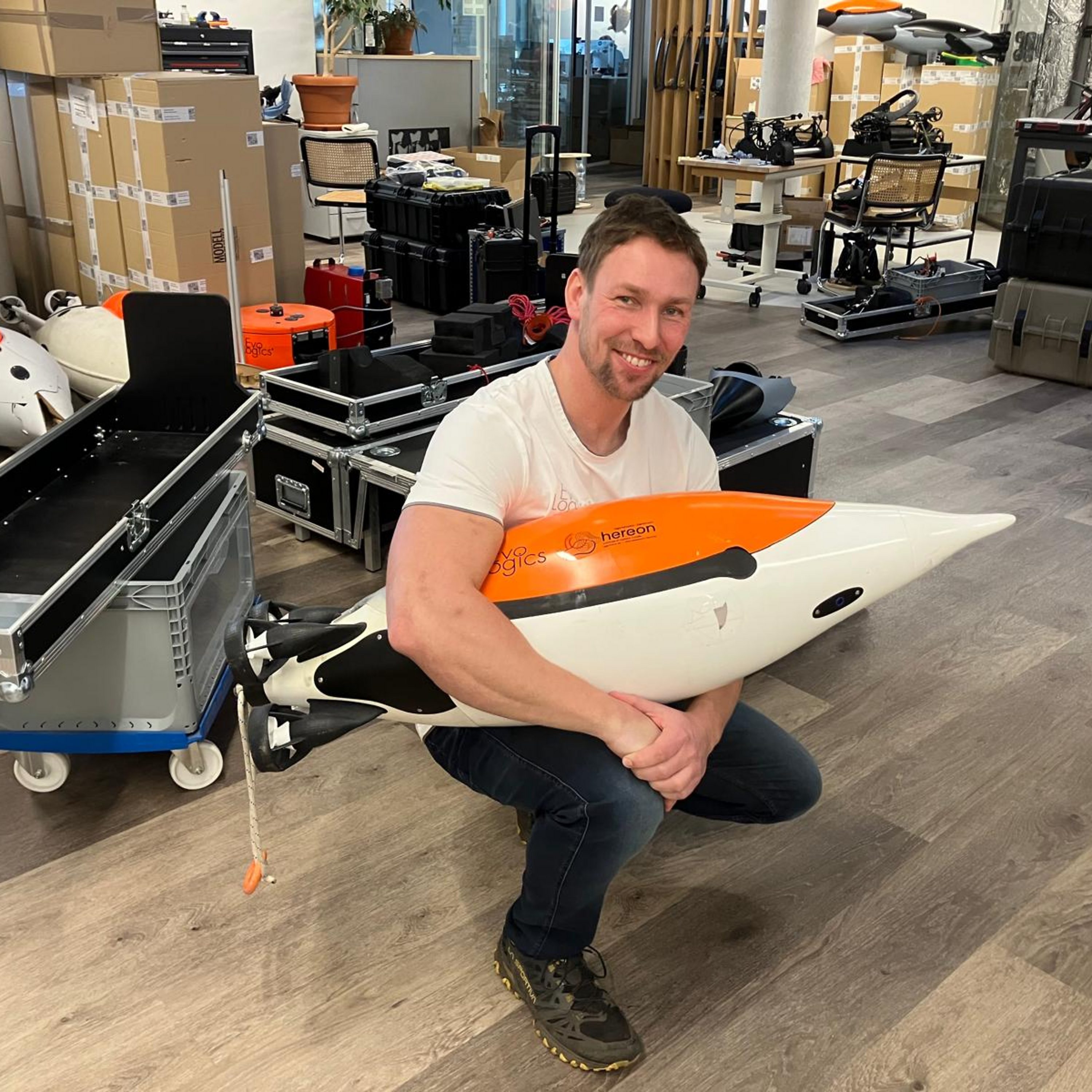
Where does the Mittelstand stand?
Could Germany benefit from drastic Javier Milei-style reforms? One business owner in Berlin thinks so, and many others want a reduction in the amount of bureaucracy bosses are responsible for. As a federal election takes place in Germany, members of the Mittelstand, Germany’s famous small and medium-sized businesses known as the “backbone” of the country's economy, tell Business Daily what a new government could do for them. Theo Leggett travels to a science and research park on the outskirts of Berlin where the boss of an underwater robot company and other tech businesses are based. There's a lot of innovation happening in the buildings, but confidence in politics is low. And Anouk Millet looks at the Hamburg businesses trying to modernise and forge a path towards an uncertain future. If you would like to get in touch with the show, please email: [email protected]: Theo Leggett Producer: Hannah Bewley Reporter: Anouk Millet (Image: Fabian Bannasch, CEO of Evologics,holding a robotic "penguin". Credit: BBC)
Can Germany's auto industry be revived?
Germany's once mighty motor industry is losing momentum, as high costs, low demand and competition from Chinese firms take a heavy toll on company profits.With elections in a few days' time, we ask, what do Germany's politicians need to do to put the industry on the road to recovery?If you would like to get in touch with the show, please email: [email protected] and produced by Theo Leggett(Picture: View of the production plant of the Volkswagen headquarters in Wolfsburg, Germany. Credit: Getty Images)
How 'cosplay' became big business
Cosplay is the ultimate form of fancy dress – with fans of graphic novels and video games doing everything they can to emulate their favourite fictional characters. And it's a big money-spinner globally.We find out why the hobby has grown so much over the past two decades – and meet those who’ve turned their passion for cosplay into a career.If you would like to get in touch with the show, please email: [email protected] and produced by Will Chalk(Picture: Cosplayers pose as Star Wars characters during New York Comic Con 2024, in New York City. Credit: Getty Images)
India's $30bn festival
The festival of Kumbh Mela is estimated to attract 400 million Hindus and other visitors from around the world. The 45-day festival is a massive economic engine, injecting billions in the economy of the northern state of Uttar Pradesh, which is hosting the event. And this year, it is a Grand Mela, which only happens once every 144 years. From big businesses to street vendors and hotel owners, to major brands and digital entrepreneurs, all are looking to cash in on the influx of visitors.If you would like to get in touch with the show, please email: [email protected] and produced by Devina Gupta(Image: Shoppers next to a toy stall at Kumbh Mela in 2023. Credit: Getty Images)
Are electric planes the future?
How to make a battery powered plane that can fly long distances, whilst carrying passengers, is a key challenge facing the aviation sector.As the world tries to reduce its consumption of fossil fuels, researchers are looking to make flight more sustainable to deal with ever growing demands. We hear about some pioneering projects in the Netherlands which are trying to do all of this, whilst still being commercially viable.If you would like to get in touch with the show, please email: [email protected] and presented by Matthew Kenyon(Image: A render of Dutch start up Elysian's fully electric regional aircraft, which it says will have a range of 500 miles. Credit: Elysian)
Business Daily meets: Applied Nutrition's Tom Ryder
We speak to a boss whose business has bulked up on the global wellness trend.Tom Ryder got into fitness supplements as a side-hustle when he was a scaffolder for Liverpool City Council — now he runs Applied Nutrition, which is valued at more than £350million.He tells Sean Farrington how growing up with his grandparents in public housing shaped his entrepreneurial spirit.If you would like to get in touch with the show, please email: [email protected]: Sean Farrington Producer: Josh Martin(Image: Tom Ryder)
What it takes to become a digital nomad
The digital nomad lifestyle sounds like a dream - working from a beach in Bali or a café in Barcelona. But how do you actually make it happen? In this episode, we meet the people who’ve taken the plunge and hear about the ups and downs of life on the move. Hear from employers managing a remote global workforce and investigate why the lifestyle isn’t always what you see on social media.Plus - we also look at the tax implications.If you would like to get in touch with the show, please email: [email protected](Picture: Woman sitting by a beach, looking at her laptop. Credit: Getty Images)Presented and produced by Sam Gruet
Reusable water bottles: The new fast fashion?
Reusable bottles are everywhere – on your desk at work, at the gym, on a day out, doing a job in the fight against single-use plastic. But if we have multiple versions of refillable water bottles, are they just becoming fast fashion? The global, refillable water bottle industry is worth $10 billion and it is growing at a rate of about 5% a year. Several brands have become household names with international offices across continents. But these types of bottles are energy-intensive. Research suggests manufacturing a single reusable bottle can produce more emissions than producing a single-use plastic version, but that it works out better for the environment once it has been used multiple times. We look at the enormous growth in refillable bottles, and how celebrities and influencers have driven sales.If you would like to get in touch with the show, please email: [email protected]/presenter: Rick Kelsey(Photo: A young woman drinks from a water bottle in Central Park, NYC. Credit: Getty Images)
The fight for Guatemala's lakes
We’re in the Central American country to hear a tale of two lakes. One, Lake Amatitlan, is badly polluted and there's concerns that the other – Lake Atitlan - once nominated as one of the seven new wonders of the world and - is in danger of going that way too. We hear about the costs needed to clean up these important tourist attractions, and hear about the loss of income for local businesses. Produced and presented by Jane Chambers(Image: A worker picks up rubbish on the shore of Lake Amatilan, Guatemala, during a voluntary clean up day in August 2024. Credit: Getty Images)
The threat to sabotage undersea cables
Countries considered hostile to the West are threatening to cut under sea cables, which carry 95 percent of the world’s data. China, Iran and Russia are suspected of threatening to sabotage cables, carrying 95% of the world’s data, which makes the network vital to the global economy. Russell Padmore examines how the lines laid on ocean floors are the backbone of the internet, so they need to be protected, but international military cooperation is limited. Produced and presented by Russell Padmore(Image: An undersea cable between Helsinki and Rostock which was laid in 2015. Credit: Getty Images)
Business Daily Meets: Makiko Ono
We speak to one of Japan's very few female CEOs. Makiko Ono leads Suntory Beverage and Food, part of the Suntory conglomerate that makes soft drinks including Orangina, Lucozade and Ribena. She shares her 40-plus years journey at the company; including how she led company's first acquisition to opening doors for the next generation of women in business. If you would like to get in touch with the show, please email: [email protected]: Sam Fenwick Producer: Amber Mehmood(Image: Makiko Ono, chief executive officer of Suntory Beverage and Food Ltd, at the company's headquarters in Tokyo, Japan, on 23 March 2023. Credit Getty Images)
Rebuilding Africa’s largest second-hand clothes market
Ed Butler travels to Kantamanto market in Accra, Ghana. 15 million used garments arrive in Ghana every week from all over the world - most ends up at Kantamanto but a lot can't be sold because it's in poor condition. That ends up as landfill. Just weeks after Ed’s visit, a disastrous fire raised it to the ground, so he’s been back in touch with some of the vendors he spoke to as they try and get the market, and their livelihoods, up and running again. Produced and presented by Ed Butler
What now for Canada?
After Justin Trudeau resigned as prime minister last month, what does the in-tray look like for Canada’s next leader?The country is facing a major challenge from new US president Donald Trump who introduced 25% tariffs on Canadian exports - now postponed for 30 days - and is even questioning the country's identity. But Canada also has a list of problems to address from within, such as rising property costs and new rules on immigration.We find out how people are feeling – and what happens next.Produced by Megan LawtonPresented by Sam Gruet(Image: Canadian Prime Minister Justin Trudeau announcing his resignation during a news conference in Ottowa, Canada on 6 January 2025. Credit: Getty Images)
Why do Germans take so much time off sick?
The country’s sick leave policy is one of the most generous in the world.Employees get full pay for the first six weeks they’re off, after that their health insurance policy will pay them a large portion of their salary for a further 18 months.This means the culture around taking sick leave is different to other countries, and the average worker takes 20 days off sick each year.We find out why, and look at the impact on business and the German economy.Produced and presented by Hannah Mullane(Image: German commuters on bikes at a junction. Credit: Getty Images)
California’s insurance crisis
Thousands of homes burned to the ground in the recent wildfires in Los Angeles which will likely become the most expensive natural disaster in US history.Many victims did not have insurance, because they couldn’t afford California’s increasingly expensive policies or because they were dropped by their insurer. Lexy O’Connor meets some of those affected and finds out what’s fuelling California’s insurance crisis. Presented and produced by Lexy O'Connor(Image: Two people survey the damage during the Eaton Fire in Altadena, California on 8 January 2025. Credit: Getty Images)
Business Daily meets: GoFundMe's Tim Cadogan
Whether its for medical expenses, college funds, charity campaigns, chances are you've been asked to donate to a fundraiser online.GoFundMe is one of the biggest of the crowdfunding platforms, generating an estimated $30bn in funds since it launched in 2010.CEO Tim Cadogan tells us about joining as CEO in 2020, and the challenges of running a profit making company in a charity space. Presenter: Chris Vallance Producer: Imran Rahman-Jones(Image: Tim Cadogan. Credit: Getty Images)
The gamification of fitness
Advances in technology mean more people have devices which offer incentives and rewards for achieving fitness goals.From hi tech gyms to interactive home works outs, we explore why some companies are embracing this approach.It’s boosting user engagement and transforming workouts, but are trackers and leader boards a positive step? And is this what the future holds for fitness?Produced and presented by Sean Allsop(Image: A fitness class. Credit: Getty Images)
Cashing in on Ghana's cashews
Ed Butler travels to northern Ghana in search of one of the country’s growing exports. Cashew nuts have become a feature of crop production, but there are problems. How does Ghana best add value to cashews in a way that benefits the country and doesn’t just see it exploited overseas?And could solving the cashew issue help Ghana's economy in other ways?Produced and presented by Ed Butler(Image: A worker at a cashew processing company sorting nuts in Ghana)
Is X still good for brands?
In November 2024, FC St Pauli became the first major football club to stop posting on X (formerly Twitter). In a statement, the leftwing Bundesliga club cited concerns over racism and conspiracy theories on the platform. It has moved to alternative social media site Bluesky instead.So is this part of a wider trend? We hear from companies who are finding alternatives to X, or staying on but reducing advertising spend. Plus we hear from those who say with hundreds of millions users, X still has an important role to play particularly in areas like customer service.Produced and presented by Daniel Rosney(Image: Fans of St.Pauli wave a skull and crossbones rainbow flag during the match between FC St. Pauli and 1. FC Magdeburg at Millerntor Stadium in Hamburg, Germany, 14 August 2022. Credit: Getty Images)
Spain's squatting problem
Squatting has a long history in Spain, often fuelled by high rates of homelessness. And the country’s ongoing housing crisis means that despite being low in numbers, squatting is now a highly politicised topic. We hear from private companies set up to evict people, from businesses making products to prevent squatters moving in, and from squatters themselves about their experiences.Produced and presented by Stefania Gozzer(Image: A worker takes a mattress off the balcony during the eviction of 62 families from four apartments in June 2023 in Madrid, Spain. Credit: Getty Images)
Business Daily meets: Peter Moore
We hear how his British accent and 'scouse cockiness' led him from physical education teacher in the UK, to a sportswear executive in the US.And how a career change in his 40s led Peter Moore to a job offer he couldn't refuse, as CEO of the football club he'd supported since childhood, Liverpool FC.Produced and presented by Matt Lines(Image: Peter Moore and Virgil van Dijk with the FIFA Club World Cup in Doha, Qatar on 21 December 2019. Credit: Getty Images)
Are social scientists good for boardrooms?
A 2020 Academy of Social Sciences report found that sociologists, economists and philosophers help companies improve productivity, enhance problem-solving and heighten social impact. So it makes sense that businesses would want social scientists involved in strategy and decision making. But how does it work in practice? Are there conflicts between hard commercial realities and ‘softer’ social issues, and how do companies resolve these?We speak to Dr Melissa Cefkin, an anthropologist and former chief scientist at the Nissan Research Centre in Silicon Valley, about how she combined social science and the corporate world. And we find out if the trend is a uniquely western, or even Californian, phenomenon.Producer: Izzy Greenfield Presenter: Gareth Mitchell(Image: A group of women in a boardroom. Credit: Getty Images)
India's cola wars
For decades, two multi-national giants Coca-Cola and Pepsi, have been competing for one of the world’s biggest consumer markets. Now they face tough competition from Asia’s richest man. Mukesh Ambani’s company, Reliance Retail, has launched its own cola brand - Campa Cola. With its vast retail network and aggressive pricing strategy, we find out how this has intensified the so called 'cola wars' in the country. Producer/presenter: Devina Gupta(Image: A group of young people drinking soft drinks at a bowling alley. Credit: Getty Images)
Saudi Arabia's Hollywood dream
Today we’re in Jeddah, looking at how Saudi Arabia went from a Kingdom where cinemas were banned to a rising star in the film industry. We hear from Saudis revelling in new-found freedoms and foreign filmmakers lured in by cash incentives. If you would like to get in touch with the show, please email: [email protected] and produced by Emily Wither(Picture: US actor Johnny Depp poses for a picture with a fan on the red carpet of the awards ceremony of the Red Sea Film Festival in Jeddah, December 2024. Credit: Getty Images)
Guatemala's circular migration
We are in the Central American country of Guatemala to hear how temporary work permits to the United States are changing some Guatemalan’s lives. We find out how this circular migration is benefiting both businesses in the US, and the economy back home in Guatemala.If you would like to get in touch with the show, please email: [email protected]/producer: Jane Chambers(Photo: Sandra Noemi Bucu Saz in her plot of land that she rents with her family in Guatemala. Credit: Jane Chambers)
Business Daily meets: Pascal Lamy
The French businessman was Director-General of the WTO from 2005–2013, and European commissioner for trade for five years from 1999 – 2004. Ed Butler speaks to Pascal Lamy about the trading relationships between the US and China, and the US and the EU, what a second Trump presidency might mean for world trade. If you would like to get in touch with the show, please email: [email protected]: Amber Mehmood(Picture: Pascal Lamy, photo taken in Paris, November 2022. Credit: Getty Images)
What next for US-Africa relations under a second Trump administration?
We look at what a second Donald Trump presidency could mean for Africa, hearing from economists and business owners.We explore some of the existing trade pacts between the US and Africa, and consider the significance of remittances - the money sent back home by African migrants living overseas. If you would like to get in touch with the show, please email: [email protected] and produced by Michael Kaloki(Picture: Then President Donald Trump walks with the former Kenyan President Uhuru Kenyatta on the White House colonnade as they make their way to the Oval Office, on February 6, 2020 in Washington, DC. Credit: Getty Images)
What could tariffs mean for Canada?
Donald Trump has said he will impose new tariffs on goods entering the US from Canada on his first day in office. Tariffs are a central part of the President-elect's economic vision - he sees them as a way of growing the US economy, protecting jobs and raising tax revenue. But some warn they could inflate consumer prices. We look at how Canada is preparing, hearing from those in key sectors like farming and car manufacturing, and explore how the resignation of Canadian Prime Minister Justin Trudeau could affect things.If you would like to get in touch with the show, please email: [email protected]: Sam Gruet Producer: Megan Lawton(Picture: Ben Loewith, a third-generation dairy farmer, who runs summit dairy in Hamilton, Ontario, pictured in the dairy. Credit: Sam Gruet/Megan Lawton/BBC)
What could Donald Trump's return mean for Latin America?
Even before taking office, President-elect Donald Trump has threatened to impose huge trade tariffs on Mexico, deport millions of undocumented Latino migrants out of the United States and crack down on the flow of drugs like fentanyl from Latin America into the US. And he's threatened to take control of the Panama Canal and re-name the Gulf of Mexico as the “Gulf of America”. He has criticised the BRICS group of developing nations – which includes Brazil – for floating the idea of a new currency to challenge the dominance of the US dollar in international trade. And he has praised Argentina’s maverick right-wing president Javier Milei for cutting state expenditure. So what will Trump’s second presidency mean for Latin America – a region that used to be known as “America’s back yard”? If you would like to get in touch with the show, please email: [email protected] and produced by Gideon Long Additional reporting by Vianey Alderete in Ciudad Juarez, Mexico(Picture: The border wall on the US-Mexico border, as seen from Ciudad Juarez, Mexico October 23, 2024. Credit: Reuters)
How did global trade start?
As US president-elect Donald Trump prepares to re-enter the White House, global trade has become a contentious issue. Mr Trump has threatened to impose tariffs – that is taxes at the border – on all goods imported from a host of nations, including neighbours Canada and Mexico as well as economic rival China. That risks igniting another trade war, with companies and consumers around the world affected. Has global commerce always been so contentious? Rob Young looks at some of the key developments in international trade throughout history to work out how we got to the system and practices we have today.If you would like to get in touch with the show, please email: [email protected](Picture: Hands of woman showing seeds in a souk. Seeds are believed to be one of the earliest items to be traded in the world. Credit: Getty Images)
Business Daily meets: Jimmy Choo
Sam Fenwick meets the renowned fashion designer and shoemaker, Jimmy Choo. From learning the craft under his father's guidance in Malaysia, we hear about his journey building a fashion empire in London, starting from the basement of a run-down hospital. Today, Jimmy Choo, who now designs for fashion house The Atelier, wants to share his knowledge with a new generation. If you would like to get in touch with the show, please email: [email protected]: Sam Fenwick Producer: Amber Mehmood(Picture: Jimmy Choo at an event run by his fashion college, the London Fashion Academy. Credit: BBC)
Peru's new Chinese funded 'megaport'
In our second programme looking at the future of the world's ports, we head to the South American country at the centre of a global tug-of-war between China and the US.One key infrastructure project, in the small Peruvian fishing town of Chancay, is caught in the middle. We speak to businesses and locals about what's happening.Produced by Natalie Jiminez Presented by Ritika Gupta(Image: Aerial view of the Chancay "megaport" in the small town of Chancay, 78km north of the Peruvian capital Lima, in October 2024.Credit: Getty Images)
How does port automation work?
In October 2024, dockworkers in the US went on strike for three days.Members of the International Longshoremen's Association (ILA) walked out at 14 major ports along the east and Gulf coasts, halting container traffic from Maine to Texas.A tentative agreement was made over wages, and they've just returned to the bargaining table to negotiate "all other outstanding issues".This includes plans to introduce automation to the ports.In the first of two programmes looking at the future of ports, we head to the Rotterdam in the Netherlands, where the port has been using automation since the 1990s - and to Cape Town in South Africa which is looking for solutions to its efficiency issues.Presented and produced by Matthew Kenyon, with additional reporting from Mohammed Allie.If you would like to get in touch with the show, please email: [email protected](Picture: Shipping containers are transported by automated guided vehicles (AGV) beside gantry cranes on the dockside at the Delta Terminal at the Port of Rotterdam in Rotterdam, Netherlands. Credit: Getty Images)
The cost of Valencia’s floods
At the end of October 2024, deadly flash floods and torrential rain hit the Valencia region of Spain. More than 220 people were killed. As well as claiming lives, the disaster also devastated livelihoods. Valencia's chamber of commerce estimates that 48,000 companies have been affected.Ashish Sharma visited the region shortly after the flooding, to speak to businesses and workers affected. If you would like to get in touch with the show, please email: [email protected] and presented by Ashish Sharma(Image: Residents clean up a mud-and-debris-covered street after flooding hit large parts of the country on October 31, 2024 in the Paiporta municipality of Valencia, Spain. Credit: Getty Images)
What’s next for the global economy in 2025?
How will countries handle challenges like rising debt, inflation, and political tensions? And what new opportunities might arise as the world adapts? The BBC’s Economics Editor, Faisal Islam, and our Chief Economics Correspondent, Dharshini David, join Ed Butler to discuss the year ahead. If you would like to get in touch with the show, please email: [email protected]: Izzy Greenfield(Picture: Numbers 2-0-2-5 printed on blocks of wood, each sitting on top of a stack of coins. Credit: Getty Images)
Business Daily meets: Dean Forbes
We meet the CEO of software firm, Forterro.Dean Forbes twice became homeless as a teenager, then got dropped from a career as a professional footballer. He points to that failure as a key moment in his eventual success, because it made him more determined. Now the business executive has topped a list celebrating influential black Britons.(Picture: Dean Forbes. Credit: Getty Images)Presented by Theo Leggett Produced by Theo Leggett and Sam Clack
Putting a financial crash on stage
We explore the ongoing fascination of the Lehman Brothers story.A play - The Lehman Trilogy - is currently being shown in London to five-star reviews.It documents the rise and fall of the financial services firm, which filed for bankruptcy in 2008 - the largest insolvency in history, and considered a defining moment in the global financial crisis. The play has been seen by half a million theatregoers globally - and now Business Daily has been to watch it too. We speak to the cast, adapting playwright, and the audience about the story's appeal. Produced and presented by Elizabeth Hotson(Image: Howard W. Overshown performs the role of Emanuel Lehman during a media preview of The Lehman Trilogy at the Theatre Royal, Sydney, in February 2024)
Lapland: The world’s biggest Christmas economy?
How has Lapland, the northernmost region of Finland, become a global hub for the Christmas economy? Known as the official home of Father Christmas, Lapland attracts hundreds of thousands of visitors every year - generating significant revenue. We head to the most popular Christmas spot, Rovaneimi, to hear how a resort there benefits from this tourism. And the head of the tourist board, Sanna Kärkkäinen, tells us how records are about to be broken.Presented and produced by Izzy Greenfield Reporter: Erika Benke(Picture: Lapland at night, showing illuminated buildings. Credit: BBC/Erika Benke)
Why are kids asking for anti-ageing skincare?
Skincare used to appeal to an older demographic, often with the aim of slowing down visible signs of ageing. But as trends in skincare have evolved, with ever more products on the market, the audience has grown too. Children as young as eight are now saving up their pocket money to buy different creams, serums and moisturizers. But some of these products contain active ingredients, not designed for their young skin - and this can lead to problems. Dermatologists have told the BBC they're seeing children with dermatitis and other skin conditions who have used certain products. Today, we take a look at why young people are becoming obsessed with skincare, and what could be done to protect these young consumers from buying unsuitable products. (Picture: 11 year-old Tilly, from the UK, sitting at her vanity desk. Credit: BBC)Presented and produced by Hannah Mullane
Crisis at Northvolt
We’re in snowy Skellefteå in northern Sweden, where hundreds of people are looking for work after losing their jobs at Europe’s largest electric battery factory.Will the crisis at green tech company Northvolt impact future investments in the region — and damage Sweden’s reputation?Produced and presented by Maddy Savage(Image: Northvolt workers at the factory. Credit: Northvolt)