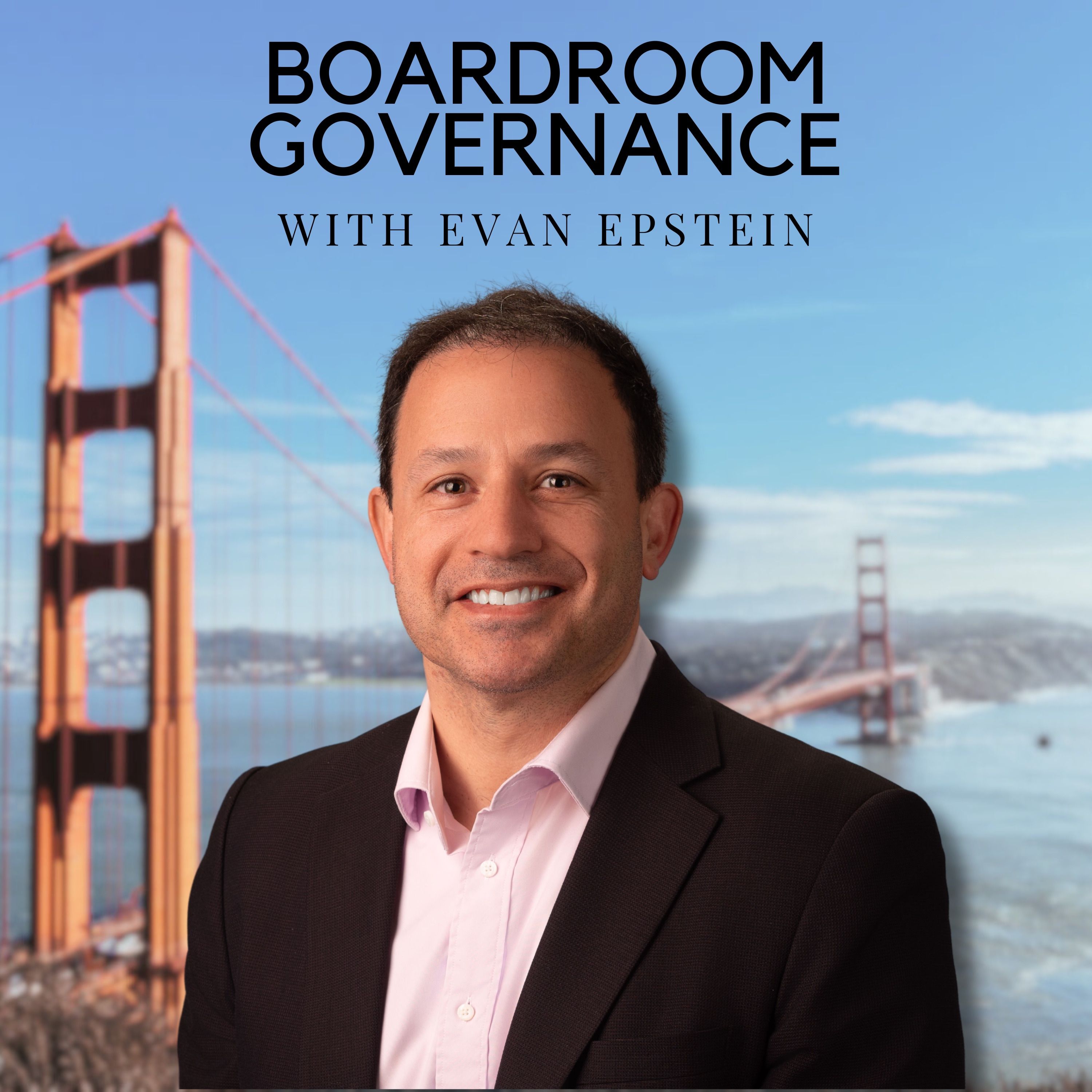
Boardroom Governance with Evan Epstein
220 episodes — Page 4 of 5
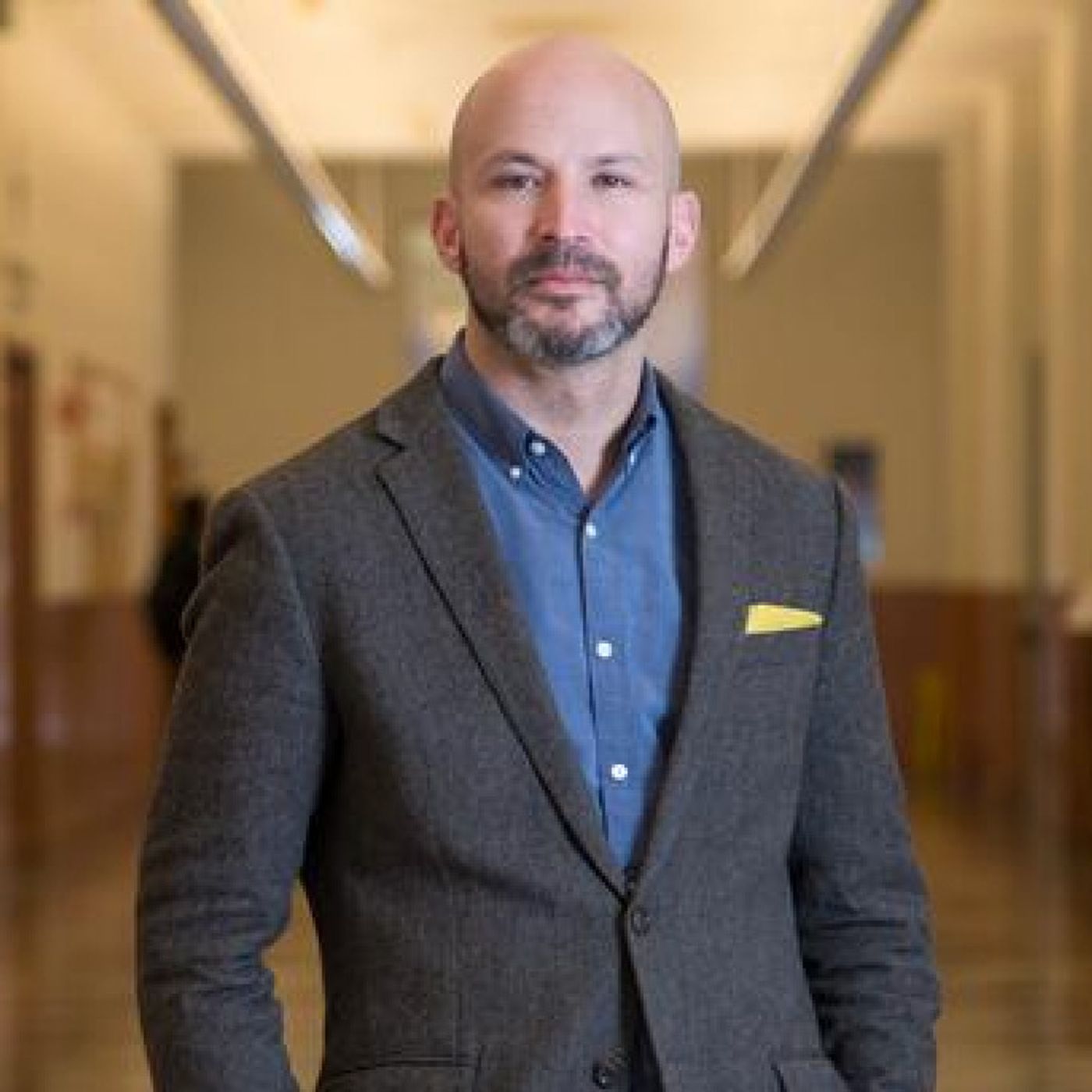
Ep 69Adam Sterling: The Independent Director Initiative.
0:00 -- Intro.1:23 -- Start of interview.3:32 -- Adam's "origin story". He grew up in southern California where he attended UCSD and graduated from UCLA. In college he became an activist focusing on the conflict in Darfur, Sudan, and developed a "targeted divestment" model. After college he became a social entrepreneur based in Washington, DC.4:06 -- His decision to pursue a JD/MBA from UC Berkeley. While in grad school "he fell in love with the startup tech scene" and during business school he tried to start his own startup but that's where he learned that "it doesn't matter how good your idea is when you don't have a good team and good execution." He then joined Gunderson Dettmer as a corporate associate supporting tech founders.7:14 -- Adam's new role as Assistant Dean for Executive Education and Revenue Generation at UC Berkeley’s School of Law. How his initial work with 500 Startups with the BCLB sparked more executive education programs. 9:24 -- On the origin and mission of The Independent Director Initiative.12:20 -- What makes corporate governance in private venture-backed companies different to public companies. Explaining VC University (a partnership between Berkeley Law, NVCA and Venture Forward).15:42 -- The Academic Partners of the Independent Director Initiative: Berkeley Law Executive Education; Berkeley Law Center for Law and Business; Ira M. Millstein Center for Global Markets and Corporate Ownership at Columbia Law School; UC Davis School of Law; UC Hastings Law Center for Business Law; Institute for Law & Economics at the University of Pennsylvania; Silicon Valley Executive Center at Santa Clara University; Rowling Center at SMU Dedman School of Law; Rock Center for Corporate Governance at Stanford University; Stanford Center for Racial Justice at Stanford Law School; and Lowell Milken Institute for Business Law & Policy at UCLA School of Law.University of Washington School of LawThe Organizational Partners of the Independent Director Initiative: Ascend; BLCK VC; BoardList;Bolster;Corporate Directors Forum;The Fourth Floor;HBCUvc; Him for Her; LCDA;National Black MBA Association; National Venture Capital Association; NxtWorkVenture Forward.18:07 -- On the interest and number of applicants to the program (~500 applications, 80 got selected in first cohort).19:21 -- On fiduciary duties of directors in venture-backed companies (including dual-fiduciary conflicts). Role of independent directors, and boardroom diversity in private venture-backed companies. The Trados case (2013).38:43 -- The evolution of private markets and how its regulation may impact corporate governance.40:06 -- Take-aways from the program: 1) more education is needed for directors of venture-backed companies generally (beyond just independent directors), and 2) it was refreshing to see such a diverse and qualified group of executives that could serve on corporate boards.41:56 -- Where can people learn more and/or apply for the next cohort of the Independent Director Initiative: independent.venturecapitaluniversity.com42:57 -- Benefits for participants beyond just the two days of the program. Placements. 45:27 - Some of the books that have greatly influenced his venture career: Venture Deals, by Brad Feld and Jason Mendelson (2011)Secrets of Sand HIll Road, by Scott Kupor (2019)45:51 - Who were your mentors, and what did you learn from them (regarding this program)Evan Epstein (!)Afra Afsharipour, UC Davis Law School46:26 - Are there any quotes you think of often or live your life by? "You don't have to see the whole staircase, just take the first step." Martin Luther King, Jr.46:26 - An unusual habit or an absurd thing that he loves: walking 40min for his commute. "Owning your downtime."48:55 - The living person he most admires: his wife.Adam Sterling is the Assistant Dean for Executive Education and Revenue Generation at UC Berkeley’s School of Law and the Executive Director of the Berkeley Center for Law and Business. __ You can follow Adam on social media at:Twitter: @adambsterlingLinkedIn: https://www.linkedin.com/in/adambsterling/__ You can follow Evan on social media at:Twitter: @evanepsteinLinkedIn: https://www.linkedin.com/in/epsteinevan/ Substack: https://evanepstein.substack.com/__Music/Soundtrack (found via Free Music Archive): Seeing The Future by Dexter Britain is licensed under a Attribution-Noncommercial-Share Alike 3.0 United States License You can follow Evan on social media at:X: @evanepsteinLinkedIn: https://www.linkedin.com/in/epsteinevan/ Substack: https://evanepstein.substack.com/__To support this podcast you can join as a subscriber of the Boardroom Governance Newsletter at https://evanepstein.substack.com/__Music/Soundtrack (found via Free Music Archive): Seeing The Future by Dexter Britain is licensed under a Attribution-Noncommercial-Share Alike 3.0 United States License
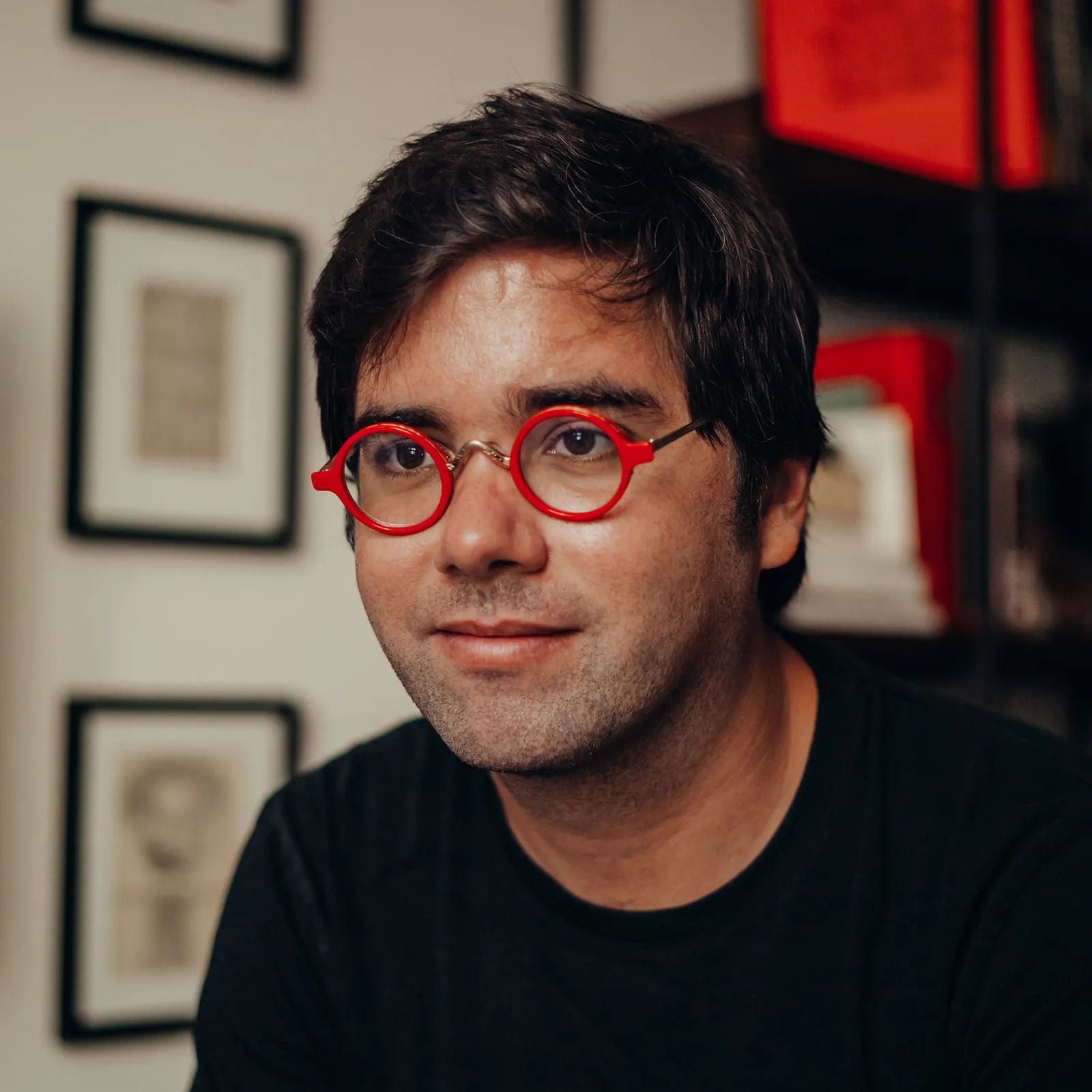
Ep 68Santiago Siri: Crypto Governance, DAOs, Digital Identity and Voting.
0:00 -- Intro.1:30 -- Start of interview.3:32 -- Santi's "origin story". He was born and grew up in Buenos Aires, Argentina. "The year 1983 was a symbolic year in Argentina because it's the year that democracy came back to the country." "My generation was tainted by two events: the hyperinflation of 1989 and the collapse of 2001 (peso devaluation and bank deposit freezes)."5:11 -- Argentina's strange political case. 7:24 -- Santi's professional background going from gaming, to founding "Partido de la Red" (the "Net Party") in 2012 - a political party in Argentina (inspired by Giorgio Jackson), and his pivot to crypto.14:04 -- His endeavors with Democracy Earth Foundation and UBI (Universal Basic Income through the Ethereum blockchain). The impact of Bitcoin and the new generation of builders in Argentina, with global leaders such as Decentraland. The strong adoption of crypto in countries like Argentina, Venezuela and Cuba: "There is a real need for crypto in countries that need an alternative."16:12 -- The connection of crypto with corporate governance. His interest on voting "we realized that whoever controls the registry of voters can decide the outcome of elections." The concept of Proof of Humanity ("the protocol got activated in March 2021 and it has had 50 proposals since then." How voting works in this DAO. "You see how contested the positions are to the extent of how people are willing to cheat in order to win." 23:19 -- Explaining DAOs (Decentralized Autonomous Organizations). Different DAO applications. Token voting. On The DAO hack (2016).25:59 -- On the evolution of DAOs. On Vitalik Buterin (co-founder of Ethereum): "I think he's today's most inspiring leader in technology, by far. In the same rank as Elon Musk, and many other great ones." "A lot of the [crypto] community looks up to him as a role model who really understands what it means to lead through the process of creation of a decentralized network." "It's a very counter-intuitive exercise in leadership because you actually need to reject being in control, in order to gain legitimacy." "The role that founders play in these networks I think is a determinant factor in the outcome of how projects evolve over time." "Nothing ever begins decentralized, it needs to be progressively decentralized throughout time." "Building institutionality in cyberspace I think has tremendous power for coordination of humans and capital in a global, more legitimate way."28:46 -- On the role of founders, contrast between 'traditional' founder-controlled startups and new decentralized crypto projects. On Vitalik's founder's take in a reply to Balaji Sirinivasan's book the Network State. Santi has personally dealt with some of these founder debates, he's currently a Mission Board Member at Proof of Humanity, elected by the community.32:32 -- On the contrast of "corporate governance" and "crypto or DAO governance". "One of the most interesting projects in the space right now, I think is a project called Kleros, a decentralized arbitration service for disputes of the new economy." "They work as oracles that bring into the blockchain human judgment, based on a drafted policy or guideline." This is very important for enforcement, and to audit the decision process. On-chain governance vs Off-chain governance. The cases of Aragon and Moloch DAO (founded by Ameen Soleimani). "In Proof of Humanity, we don't want voting to be on-chain, because it makes it expensive to vote. The purpose of voting is to be an alternative to economic incentives. So voting needs to happen off-chain for voting to remain free [and] a right." Snapshot as the off-chain voting mechanism. Kleros' Governor solution.42:18 -- On Proof of Humanity (~16,630 profiles), its DAO, and UBI. "Argentina and Brazil are two of the leading adopters of UBI right now." Proof of Integrity DAO (promoting technological inclusion).47:44 -- On the current "crypto crash", the cases of Terra/Luna, Celsius. "You can see the ripples of Terra going down throughout the industry, it led to the Celsius and 3AC collapse... you can see the dominoes falling in a very clear way."55:12 -- On the advantage of understanding how to code. [reference to Vitalik's visit to Buenos Aires in his podcast "Por Qué No Te Habré Hecho Caso" (a leading crypto podcast in Spanish] 57:10 - Some of the books that have greatly influenced his life: The Star Maker by Olaf Stapledon (1937) *prologue written by Jorge Luis Borges.Gödel, Escher, Bach, by Douglas Hofstadter (1979) "the bible of Artificial Intelligence"The Sovereign Individual, by William Rees-Mogg and James Dale Davidson. (1997)59:44 - Who were your mentors, and what did you learn from them? Emiliano Kargieman, now CEO and founder of Satellogic.*story of Vitalik Buterin's visit to Buenos Aires in Dec of 2021.*on El Salvador's Bitcoin adoption by President Nayib Bukele.01:08:22 - Are there any quotes you think of often or live your life by? "Sic transit gloria [Mundi]" (Latin for "Glory Fades"
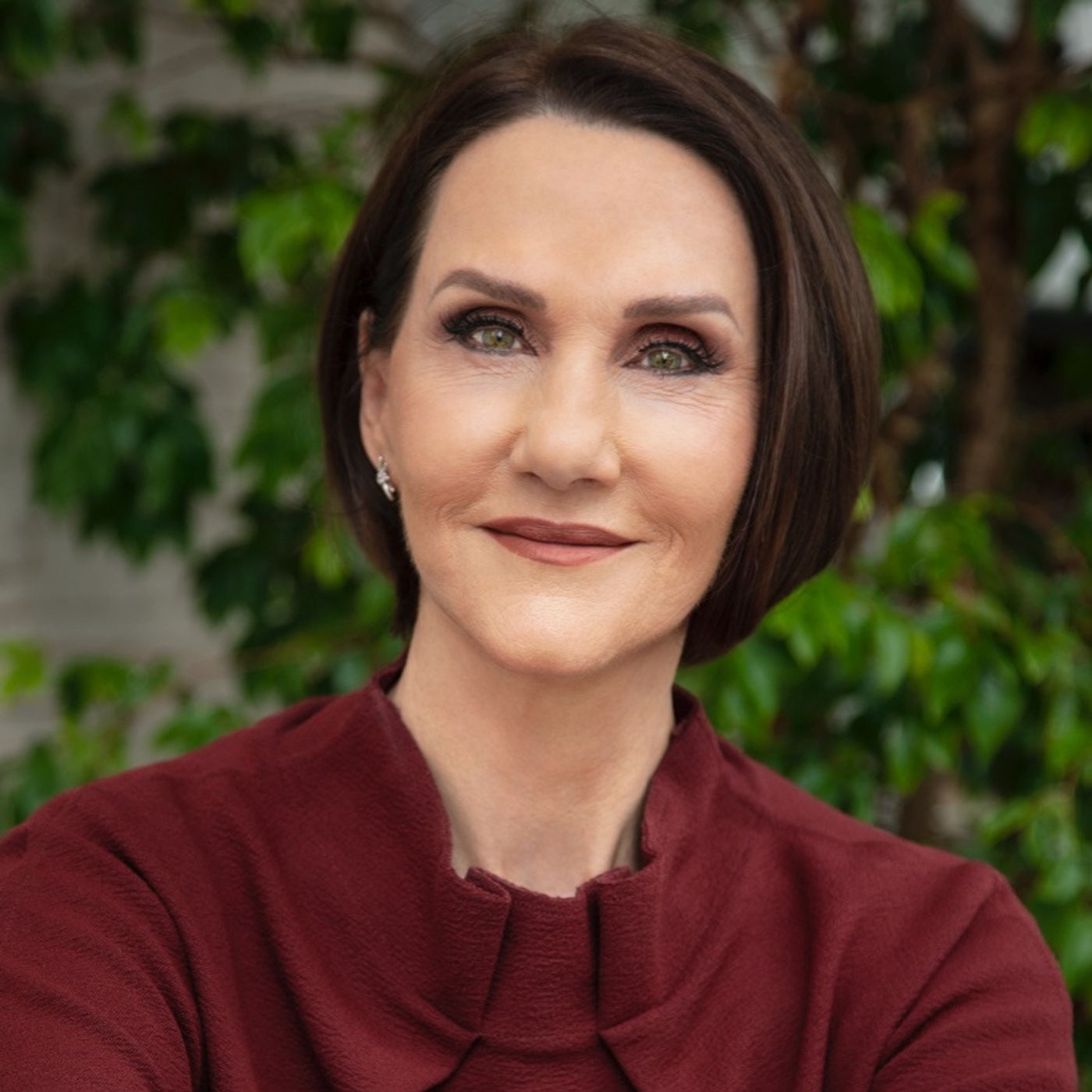
Ep 67Sandra Guerra: "The G in ESG is the Driver of Everything."
0:00 -- Intro.1:47 -- Start of interview.2:39 -- Sandra's "origin story". She was born and grew up in Sao Paulo, Brazil. After graduating from UNIP with a degree in communications she worked as a journalist for 10 years. She later transitioned to executive roles. In 1995, she was invited by Bengt Hallqvist to join a group to discuss issues impacting boards in Brazil. "She had nothing to do with boards at the time." "[B]ut she fell in love with the topic." That led to the creation of the Brazilian Institute of Board Members, rebranded the Brazilian Institute of Corporate Governance five years later. 10:06 -- On founding her firm Better Governance in 2005 "to be fully dedicated to corporate governance".12:20 -- On her book "The Black Box of Governance" (2021) "The book presents a guide to behavioral tools enabling directors and executives to confidently navigate the boardroom, improving interactivity and the efficiency of the decision-making process."19:13 -- On the evolution of corporate governance in Brazil in the last 25 years. Overview of the Novo Mercado (created in 2000). At the time this McKinsey report was influential. The Brazilian corporate law was revised in 2001. The first company to be listed in Novo Mercado was only in 2002 (the market was slow to adopt it). The year 2007 was a record year for IPOs in Brazil. In this period "Brazil was a benchmark" for the region. "But then there was a plateau, a stagnation."25:57 -- About the Brazilian Corporate Governance Code (for Listed Companies). She started this process in 2013 when she was Chair of the IBGC with the formation of "The GT Interagentes" (Interagents Working Group) comprised of 11 of the most important agencies related to the capital markets. There were two observing entities: CVM (Brazilian securities regulator) and BNDES (Brazilian development bank).29:32 -- On the influence of the Brazilian Corporate Governance Code and the state of Novo Mercado today.34:48 -- About the Lava Jato (Car Wash) Investigation, Petrobras and corruption in Brazil.36:09 -- On the governance of state-owned enterprises. "For me, it doesn't work."40:27 -- About Crisis-Resilient Boards: Lessons from Vale (article published on Harvard Law School Corporate Governance Blog) and latest ESG trends in Brazil (including the SEC's suing Vale for making false and misleading claims). "Nothing resists the culture that you have installed."51:00 -- On ESG in Brazil. "The international institutional investors are the ones really leading and raising the bar." "For me, I'd be happy when the time comes where we would no longer need to use this acronym, it should [just] be embedded in strategy." "The G (in ESG) is the driver of everything."57:04 -- On the future of corporate governance in Brazil. "The drivers are both fear and greed." "Governance may have to change profoundly [particularly] given the governance models of startups and scaleups. We may have to rethink flexibility in governance models."01:02:28 - Novels that have greatly impressed her: Animal Farm and 1984 by George Orwell (1945 and 1949)House of Spirits, by Isabel Allende (1982)Name of the Rose, by Humberto Eco (1980)*Corporate governance books that have greatly influenced her:A History Corporate Governance 1602-2002, by Paul Frentrop (2003)Corporate Governance and Chairmanship: A Personal View, by Sir Adrian Cadbury (2002)01:04:57 - Who were your mentors, and what did you learn from them? Bengt Hallqvist, the founder of IBGC. "He was the one that introduced corporate governance to me, and with that he changed my life."01:06:00 - Are there any quotes you think of often or live your life by? "Things can always be better."01:06:48 - An unusual habit or an absurd thing that she loves: dancing!Sandra Guerra is the founder of Better Governance and has served on the boards of listed, closed, family-controlled and state-controlled companies as well as of non-profit organizations both in Brazil and abroad. She was one of the founding members of the Brazilian Institute of Corporate Governance (IBGC). She's the author of “The Black Box of Governance” published by Routledge in 2021.__ You can follow Evan on social media at:Twitter: @evanepsteinLinkedIn: https://www.linkedin.com/in/epsteinevan/ Substack: https://evanepstein.substack.com/__Music/Soundtrack (found via Free Music Archive): Seeing The Future by Dexter Britain is licensed under a Attribution-Noncommercial-Share Alike 3.0 United States License You can follow Evan on social media at:X: @evanepsteinLinkedIn: https://www.linkedin.com/in/epsteinevan/ Substack: https://evanepstein.substack.com/__To support this podcast you can join as a subscriber of the Boardroom Governance Newsletter at https://evanepstein.substack.com/__Music/Soundtrack (found via Free Music Archive): Seeing The Future by Dexter Britain is licensed under a Attribution-Noncommercial-Share Alike 3.0 United States License
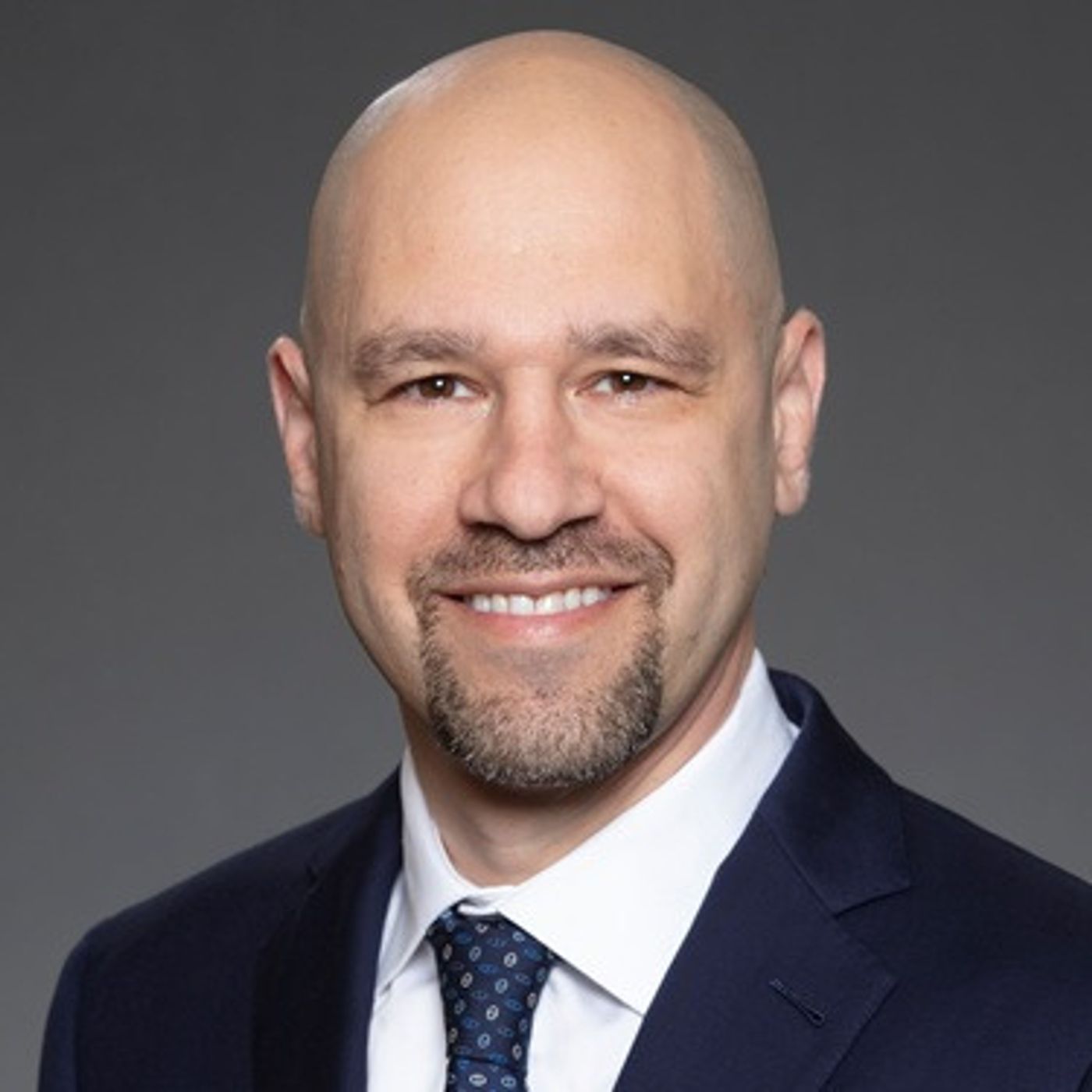
Ep 66Derek Zaba: Partner and Co-Chair of Sidley’s Shareholder Activism Practice.
0:00 -- Intro.1:34 -- Start of interview.2:04 -- Derek's "origin story". He grew up in Chicago and graduated from WUSTL with a degree in applied math and an MBA in finance. From there he went to Capital One, "at the time it was at the forefront of making decisions with data". He then got his law degree from Stanford Law School (Class of '04). After graduating he joined WLR&K. From there he moved to hedge funds including Scoggin Capital (NY) and then Voce Capital (SF/Bay Area). In 2015, he joined Camberview Partners (now PJT Camberview) to head its activism defense practice. In 2019, he joined as a partner and co-chair of Sidley Austin's shareholder activism practice.8:03 -- On what makes Derek's practice at Sidley Austin distinctive: "this is all we do." "We've seen over 100 proxy contests over the last 5 years." 10:05 -- On this year's proxy season and activist campaigns. "We're back at pre-Covid levels, both in amount and mix of activism." "The reported campaigns are just the tip of the iceberg (many situations get resolved before they reach the public's eye)."14:30 -- The impact of COVID-19 in the activism realm: "it was a very quick slow-down."16:54 -- Why activists and companies continue to favor settlements over drawn-out proxy fights. (Per Lazard's H1 2022 Review of Shareholder Activism "[C]ontinuing 2021’s trend, a historically high proportion of Board seats (91% of the 75 total Board seats won) were secured via settlement agreements."21:20 -- Activism in different size of companies (small, mid and large or mega caps). 23:13 -- Some take-aways from the Exxon Mobil case (generally): "Size is not a defense, and use of ESG by activists as a core thesis." On the influence of the large institutional investors ("only a few individuals that control a big part of the vote.") [See The Future of Corporate Governance Part I: The Problem of Twelve by John Coates, 2018). 28:53 -- On the impact of the current market downturn in activism. Targeting tech companies.32:40 -- On activism targeting tech companies that are founder controlled (sometimes with dual-class share structures.) "Independent directors play a big and important role."35:52 -- On contested M&A (hostile take-overs).38:34 -- The impact of universal proxy cards in contested director elections. [See Sidley Austin's position on this topic]42:47 -- Take-aways from shareholder proposals from this year's proxy season. 44:24 -- Take-aways for directors (generally) from this year's proxy season. "The most important thing is universal proxy and what it will do to shareholder activism: there will be a much deeper focus on skills sets of individual directors (impacting Nom-Gov committee.)" "Be your own activist." 46:22 -- On board diversity in shareholder activism.47:13 -- A book that has greatly influenced his life: "Surely You're Joking, Mr. Feynman!" by Ralph Leighton and Richard Feynman (1985).48:45 -- A quote he thinks of often or lives his life by: "Think for Yourself." (a Beatles song).50:07 -- An unusual habit or an absurd thing that he loves: watching 5min clips in YouTube with his kids (space and astrophysics related). From these, emerged his new favorite animal: Tardigrade.51:38 -- The living person he admires: Nate Silver (because "he's representative of somebody who uses information, evidence and data to guide decision-making.")Derek Zaba is a partner in the Palo Alto and New York offices and co-chairs Sidley’s Shareholder Activism practice. He counsels companies on a variety of matters, including activism defense/proxy contests, activism preparedness, takeover defenses, shareholder engagement and corporate governance.__ You can follow Evan on social media at:Twitter: @evanepsteinLinkedIn: https://www.linkedin.com/in/epsteinevan/ Substack: https://evanepstein.substack.com/__Music/Soundtrack (found via Free Music Archive): Seeing The Future by Dexter Britain is licensed under a Attribution-Noncommercial-Share Alike 3.0 United States License You can follow Evan on social media at:X: @evanepsteinLinkedIn: https://www.linkedin.com/in/epsteinevan/ Substack: https://evanepstein.substack.com/__To support this podcast you can join as a subscriber of the Boardroom Governance Newsletter at https://evanepstein.substack.com/__Music/Soundtrack (found via Free Music Archive): Seeing The Future by Dexter Britain is licensed under a Attribution-Noncommercial-Share Alike 3.0 United States License

Ep 65Francine McKenna: "You Cannot Restrain The Heartless Except Via Enforcement."
0:00 Intro.1:37 Start of interview.3:03 Francine's "origin story". She grew up in Chicago and graduated from Purdue in accounting but "she hated it." She began in internal audit at Chicago’s Continental Illinois National Bank and Trust. She later worked with KPMG/BearingPoint in the early 1990s. She also worked at JP Morgan where she focused on Y2K risk. Post Sarbanes Oxley she worked at PricewaterhouseCoopers LLP until 2006. She then pivoted as an investigative reporter and feature writer. At MarketWatch, and for The Wall Street Journal and Barron’s, McKenna reported on public company accounting, fraud and financial investigations, and the potentially dubious financial reporting practices of pre-IPO companies. She also started teaching at different universities. She has now joined full-time as a Lecturer at University of Pennsylvania Wharton Business School.17:53 On Ernst & Young’s $100 million penalty by the SEC for employees cheating on CPA ethics exams and misleading investigation. To put this case into context, it's important to understand KPMG's case from 2019 ($50 million penalty by the SEC). Note this teaching case study on the KPMG/PCAOB scandal.24:50 Criminal convictions in KPMG case.26:01 EY's role in misleading the investigation of the SEC.31:38 On KPMG receiving its largest UK fine (£14.4M) for providing false information about its audits of Carillion and Regenersis. On why the "Big 4 Audit Firms" are "Too Big to Fail."33:16 What's really going on with the Big 4 audit firms? Audit services vs consulting services. "When there is tension between professionalism and commercialism, [the latter] will always win out." "You cannot restrain the heartless except via enforcement."37:50 On lessons for directors in frauds of private companies. "I use Theranos as a warning case for students in accounting: it's the canary in the coalmine in case the audit profession doesn't evolve." There were three audit firms involved in the Theranos case: EY at the beginning but then walked away, then KPMG until they had a dispute about stock option valuations (staying only to do consulting), and PwC did forensic work winding down the company. None of them audited the firm, they only provided services. "They [the audit firms] made more money, with less liability, by providing other services [actively choosing not to provide auditing services.]" "Private companies avoiding going public [the deeper scrutiny] is the shape of things to come." How the JOBS Act stripped away some of the scrutiny over emerging growth companies [EGCs]. Some, like SEC Commissioner Hester Peirce, are in favor of this lighter regulatory approach.47:22 On whether unicorns require a stricter regulatory framework. "We are seeing this [laissez-faire] attitude to the max in the crypto industry."50:00 On whether Sarbanes Oxley had a negative effect on the US IPO market. "We should not have marginal/shady companies in the public markets." On the negative effect of relaxing the rules in the JOBS Act. "We should be talking about the quality of companies, not the quantity of listings."55:26 On the difference between valuations (in private companies) and marketcap (in public companies). "I'm a big believer in the power of short sellers and activist investors to highlight [price inefficiencies and fraud] because they put their money where their mouth is." "The SEC has been very disappointing in both Republican and Democratic administrations in terms of actually calling accounting fraud by its name." On the role of whistleblowers.01:04:02 On the rise (and increasing political polarization) of ESG. "I'm cynical towards it, firms are looking to get a piece of clients' wallets." "The trend first emerged in Europe with firms providing side audits like carbon emissions." "My head is tainted with the idea that it's all a big marketing ploy." The audit mandate in the proposed SEC's climate change disclosure rules. On the proxy proposals (like Exxon's) and greenwashing.01:10:28 - Three books that have greatly influenced her life: Siddartha, by Hermann Hesse (1922)The Road Less Traveled, by M. Scott Peck (1978)The Origins of Totalitarianism, by Hannah Arendt (1951)01:13:18 - Who were your mentors, and what did you learn from them? From her time at Continental Illinois:Peggy Jackson TurnerJudy Port01:15:03 - Are there any quotes you think of often or live your life by? "Der Mensch Tracht, un Gott Lacht (Man Plans, and God Laughs)" (Yiddish)"Morallity cannot be legislated, but behavior can be regulated. Judicial decrees may not change the heart, but they can restrain the heartless." Martin Luther King Jr.01:16:12 - An unusual habit or an absurd thing that he loves: collecting metal objects.01:17:47 - The living person she most admires: Judge Jed S. Rakoff, Jordan Peele.Francine McKenna is a full-time Lecturer at University of Pennsylvania Wharton Business School. She teaches ACCT 611 and 613, Introduction to Financial Accounting for MBAs. She is also an independent writer
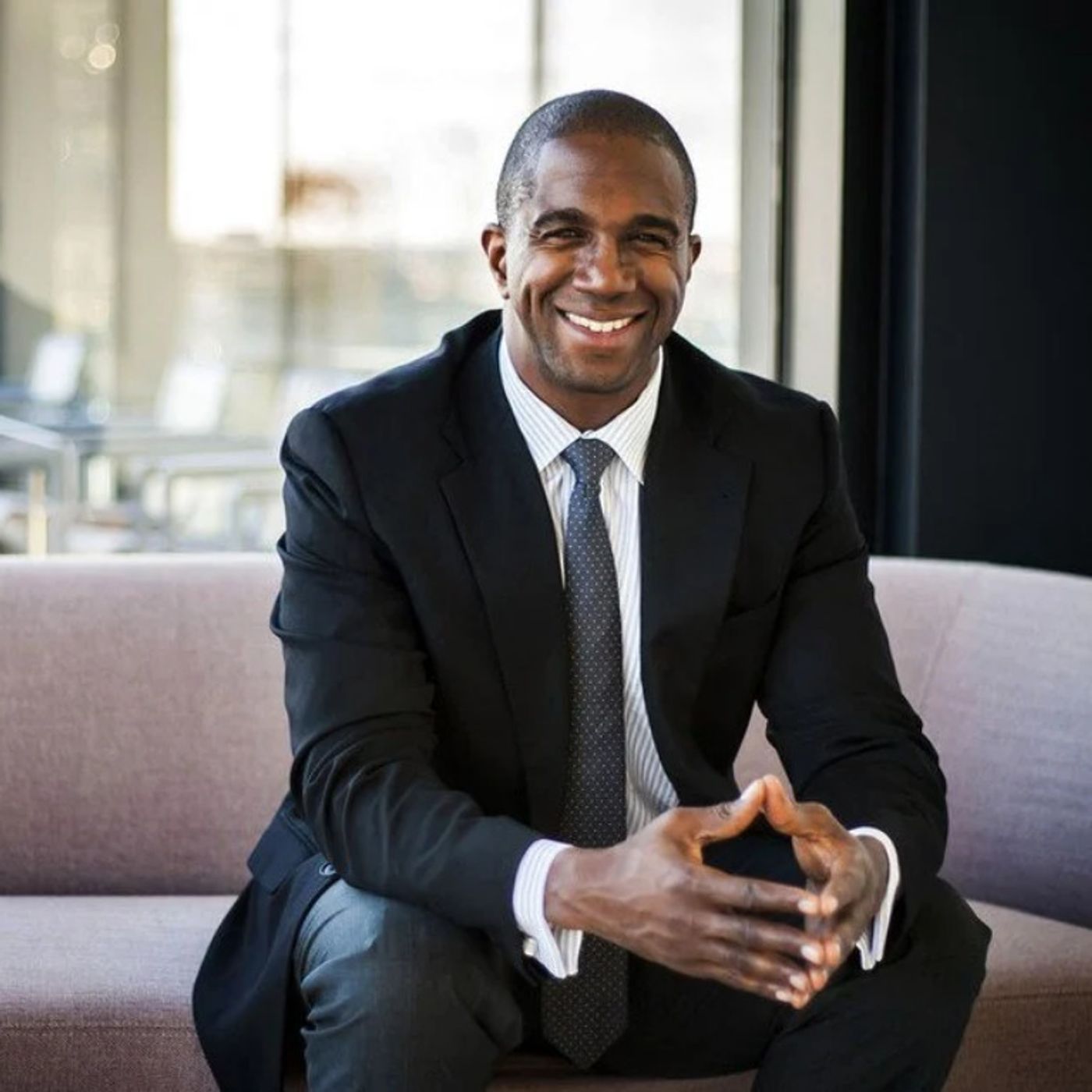
Ep 64Keir Gumbs: "Governance Directly and Unequivocally Impacts Value."
0:00 Intro.1:34 Start of interview.2:12 Keir's "origin story". He grew up in the Bay Area and went to high school in Oakland where he ran track and got a scholarship to go to Ohio State. After realizing he wasn't going to be an Olympian, he decided to study law at U Penn. When he graduated in 1999, he joined the SEC where, among other matters, he was part of the shareholder proposals taskforce which led him on the path of corporate governance. After 6 years at the SEC, he joined Covington & Burling where he practiced for about 13 years. In his last year at Covington he worked on the Uber investigation, after which he was hired to join the company as Associate General Counsel for Corporate (where he led the IPO, the company's corporate governance and ESG programs). He later got promoted to Deputy GC. He joined Broadridge Financial Solutions as Chief Legal Officer in 2021.5:55 Keir's role on the governance assessment for the Holder Report in 2017 [where his firm recommended that Uber focus on four prevailing themes with regard to taking the following remedial measures: tone at the top, trust, transformation, and accountability]. His headline: "Governance directly and unequivocally impacts value." "For me, Uber is the quintessential example for that." "At that time, Uber was king of the world: the largest and most valuable Unicorn, rapidly expanding around the world, they had radically changed how people got around." "Uber's scandal started with Susan Fowler's blog post (which indicated a culture in need of change) and the #DeleteUber campaign post travel ban fiasco in NYC." "These events set the company into a spiral, where they had to address these governance and cultural issues in order to thrive and survive."13:40 On Silicon Valley's "growth at all costs" and "founder empowerment" culture, and the unique distinctions between private vs public corporate governance practices: "The real question in my mind is has Silicon Valley learned its lesson? Have the VCs learned?" "Here is the truth of it: for every Theranos, Uber or WeWork, there is a Facebook, and let's be very candid here, FB is still very successful - if you were an original investor in FB you have done very well for yourself - despite the company not embracing the best corporate governance practices [and yet FB is still thriving]." "[Despite some of the governance scandals in tech companies] there is certainly more awareness now about how corporate governance can impact value."19:07 On the evolution of corporate governance and the growing influence of institutional investors. Its impact on private venture-backed companies: "There must be a governance transition based on the growing number of investors participating in the company's evolution (particularly if/when the company goes public)."25:15 On the history and focus of Broadridge Financial Solutions.27:50 On the role of technology, Blockchain, Meme Stocks and Proxy Voting. The Delaware Vice-Chancellor Travis Laster Speech at CII: "The Block Chain Plunder: Using Technology to Clean Up Proxy Plumbing and Take Back the Vote." (2016) The SEC's Proposal to Reduce Risks in Clearance and Settlement. "I'm not sure blockchain will be the technological solution that everyone is embracing."33:36 On proxy contests ("the level of proxy contests seems lower than what we would have expected."), and the new SEC rules on universal proxy cards. This rule will start applying this August ("will it meaningful increase the number of proxy contests? It's an open question at this point.")40:30 Keir's thoughts on boardroom diversity, including SB-826 and AB-979 getting struck down in California Courts: "I personally would not read too much into those [court decisions in California] for two reasons: 1) Spinning in the wind and 2) "the horse has left the barn" on the topic of boardroom diversity." "Investors, employees, customers and the general public all care about the composition of a board from a diversity perspective." 45:05 His thoughts on the SEC's current agenda. "There is no doubt that there is a very pro-enforcement agenda in place right now." "There is a new Sheriff in town." The EY Enforcement Action (where EY had to pay a $100M penalty for employees cheating on CPA ethics exams and misleading investigation). Dissent from Commissioner Hester Pierce.51:13 On the politicization of boards and how companies and boards have to deal with hot (and controversial) social topics. Assembling a group of employees to handle how, when and what should the company address about these issues. "It's an incredibly hard challenge for GCs and other senior executives." "Employees, customers and investors expect you to address these issues." "How you communicate is super important." His view on the "Mission-focused company" approach taken by Coinbase: "For me, that probably means that I will never be a Coinbase customer because I care deeply about the company to whom I give my money." "I think of Procter & Gamble as the gold standar
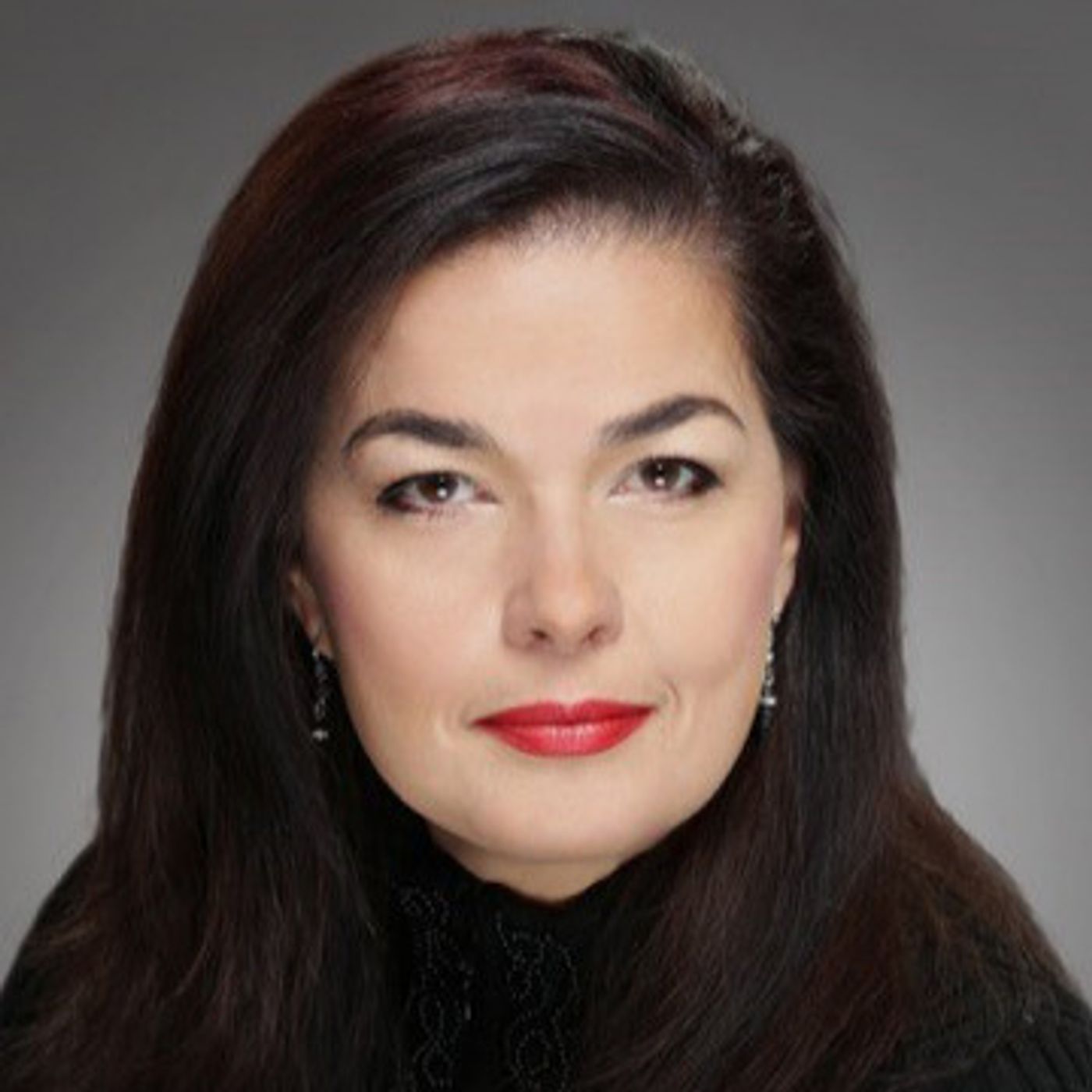
Ep 63Ana Dutra: "Think of Your Board Journey As Any Career."
0:00 Intro.1:45 Start of interview.2:40 Ana's "origin story". She was born and raised in Rio do Janeiro, Brazil. She got degrees in law and economics, and started her career in sales at IBM in Brazil in the mid-1980s. In 1992 she moved to the U.S. to get an MBA at Northwestern University. That led to a career of over 30 years in technology, M&A and global business transformations. A couple of years ago she retired from her last job as CEO, and she embarked in her board "portfolio career": public, private and non-profit boards, in addition to teaching and doing some advisory work for CEOs.4:55 Her advice for aspiring directors: "Think of your board journey as any career." She started serving on non-profit boards and worked her way up to private and public companies. Her first public company board was CME Group. She's served on 7 public company boards, plus many private and non-profit boards.7:46 Distinctions on serving on public/private/non-profit boards ("even within those buckets there are significant differences.") Her other current public company boards: First Internet Bancorp (NASDAQ: INBK), Carparts.com (NASDAQ: PRTS); Amyris (NASDAQ: AMRS), and Pembina Pipeline (NYSE: PBA). When she thinks about board opportunities, she thinks about three things:Is she aligned with the mission/vision of the company and what it stands for.Does she have the skills, experience, credentials and competencies to add value to the board.Does she like the people (other board members).12:56 Her experience serving on the board of Eletrobras, a major Brazilian state-owned power generation company. "There is always a give and take --what you offer and what you learn-- and that to me is what makes board service so interesting."16:27 Her thoughts on the evolution of ESG and DEI. Her article "Cutting Through the ESG Noise: A Practical Framework for Corporate Boards" with Cigdem Oktem, Regional Leader, EY Center for Board Matters.22:15 Her thoughts on boardroom diversity, SB-826 and AB-979 getting struck down in California Courts. "I wish we didn't have to rely on quotas, but the truth is that when left in the hands of nom/gov chairs, board chairs and companies and executives, [progress] was just not happening.""All I can hope for is that some halo effect [since SB-826] has demonstrated that having diversity and inclusion on boards is a good business practice."24:41 On the progress of Latinos on boards. She serves on the board of the Latino Corporate Directors Association (LCDA), co-Chairs its Latino Corporate Directors Educational Foundation (LCDEF) that delivers on the BoardReady Institute (BRI).28:20 On the politicization of boards. "Over the last three years there has been extreme politicization globally, not only in the U.S." "I am a big proponent of full disclosure on where you stand as an institution and/or corporation."32:18 Her thoughts on Coinbase's position (a "mission driven company") and Salesforce (strong proponent of stakeholder capitalism). "Both companies took a stand, and that is what's important."34:52 Her take on governance practices in the tech industry. On the role of experience and self-awareness in leadership.37:17 Discussion of founder-led tech companies, governance consequences, and reverse bias discrimination. "Revenue is vanity, profit is sanity but cash is reality." "Sometimes there is too much of a good thing." "What is lacking is appreciation and respect for experience."44:52 The 3 books that have greatly influenced her life:Man's Search for Meaning, by Viktor Frankl (1946)The Alchemist, by Paulo Coelho (1988)Exodus, by Leon Uris (1958)46:06- Who were your mentors, and what did you learn from them? "I have had so many, I apply a 360 mentorship model" "I crave feedback and mentorship all the time."47:05 - Are there any quotes you think of often or live your life by? "When contemplating an opportunity, if you don't foresee the possibility of death, bankruptcy or prison, then go for it!""Always think about how to pay it forward" (good karma)Particularly for women who suffer from imposter syndrome: "Remember that you're seeing people from the outside where they seem so confident but you don't know what they are feeling on the inside, so do your thing, walk in confident, don't worry too much about outside influence."49:16- An unusual habit or an absurd thing that she loves: "Melting chocolate and top it with yogurt or nuts to pretend that it's healthy." Reality TV, she's watched every season of the Survivor!50:30 - The living person she most admires: her middle sister, a pediatrician in Brazil, "probably the most knowledgeable, powerful and yet so humble and generous."Ana Dutra is an experienced CEO, business advisor and corporate director of publicly traded, family-owned and private corporations. As CEO of Korn Ferry Consulting, Ana led the global the Board Effectiveness practice. Ana currently serves as corporate director at the CME Group (NASDAQ: CME), First Internet Bancorp (NASDAQ: INBK), Carparts.com (N

Ep 62Annemarie Tierney: On Secondary Markets for Private Company Stock, and Crypto.
0:00 Intro.1:45 Start of interview.2:40 Annemarie's "origin story". She was born and raised in New Jersey. She went to the University of Delaware and later to the Catholic University of America Columbus School of Law. She got her first job at the SEC (Corp Fin) right out of law school. She spent 6 years at the SEC, 5 of them focused on international corporate finance (bringing international companies into the US securities market). Linda Quinn (ex director of Corp Fin) called it her "Chamber of Commerce." Her team's job "was to make it as easy as possible for large international companies to list in the U.S." Reg 144A, Reg S.6:07 Her time at Skadden Arps (1996-2002). She spent 5 years at the Skadden London office, 1 year in the NY office.8:16 Her transition to the New York Stock Exchange as Assistant GC (2002-2008).10:17 Her time at NYFIX as GC from 2008-2010, before it got acquired.11:50 Her role at SecondMarket as EVP Legal, GC and Corporate Secretary (2010-2015). The firm was founded by Barry Silbert and was a pioneer on secondary markets for private shares (now Digital Currency Group).17:29 Her time at Nasdaq Private Market as VP, Head of Strategy and New Markets (2015-2018). 22:27 Thoughts on carve-outs (liquidity) for founders in venture rounds (pre-exit). SecondMarket's role in helping expand the shareholder threshold from 500 to 2000 shareholders (Jobs Act, 2012) allowing private companies to stay private for longer.26:30 Her time at Templum (a registered broker dealer/alternative trading system approved to conduct primary offerings and secondary trading in unregistered digital securities) as chief strategy officer and GC (2018-2019).28:23 About her firm Liquid Advisors, a strategic advisory firm offering private placement and secondary liquidity structuring and regulatory requirement services, including for digital or token-based securities. "I'm an accidental entrepreneur."32:30 On regulation of private markets, and her response to SEC Commissioner Allison Herren Lee "Going Dark" concerns. The challenging conditions for U.S. public companies (costs of being public vs benefits of staying private).38:00 Her thoughts on the market down cycle, including the SPAC situation.42:07 Her take on blockchain and crypto. SecondMarket started trading BTC in 2012-2013. "Blockchain provides a record-keeping that is immutable." SecondMarket created a Bitcoin Investment Trust. "I'm a huge supporter of blockchain/crypto." "I've been through so many ups and downs of the [BTC] price that I don't get fazed by it anymore." "It's the best performing asset class in the last 10 years, I don't think people can keep ignoring it."51:28 Her thoughts on the regulation of crypto (President Biden's Executive Order, Governor Newsom's Executive Order). "The market has been begging for clear crypto regulations for some time." "Some states have stepped up where federal regulators have been unwilling to state how to bank or regulate these assets." Crypto friendly environments like Wyoming or Miami. 55:24 The 3 books that have greatly influenced her life:The Hobbit, by J.R.R Tolking (1937)The Lord of the Rings, by J.R.R Tolking (1954)The Harry Potter books, by J.K. Rowling (1997-2007)55:25- Who were your mentors, and what did you learn from them? Richard Koznik, ex Associate Director, Division of Corporation Finance at the SEC.Paul Dudek, also formerly from the SEC.Georges Ugeux, formerly from NYSE.Former SEC Commissioner Richard Roberts (former director of NYFIX).56:24 - Are there any quotes you think of often or live your life by? "Nothing to be afraid of if you jump off a cliff as long as you know that you have a safety net."57:09- An unusual habit or an absurd thing that he loves: Travel junkie! Her goal is to make it to 193 U.N. countries.01:00:09 - The living person she most admires: her mom.Annemarie Tierney is the Founder and Principal of Liquid Advisors. She is a seasoned financial services lawyer/strategist with substantial SEC, law firm, and in-house legal experience, as well as experienced in broker dealer regulation, blockchain legal and regulatory issues, securities transactional work, SEC rules and regulations, corporate governance, and international expansion. __ You can follow Evan on social media at:Twitter: @evanepsteinLinkedIn: https://www.linkedin.com/in/epsteinevan/ Substack: https://evanepstein.substack.com/__Music/Soundtrack (found via Free Music Archive): Seeing The Future by Dexter Britain is licensed under a Attribution-Noncommercial-Share Alike 3.0 United States License You can follow Evan on social media at:X: @evanepsteinLinkedIn: https://www.linkedin.com/in/epsteinevan/ Substack: https://evanepstein.substack.com/__To support this podcast you can join as a subscriber of the Boardroom Governance Newsletter at https://evanepstein.substack.com/__Music/Soundtrack (found via Free Music Archive): Seeing The Future by Dexter Britain is licensed under a Attribution-Noncommercial-Share Alike 3.0 United States

Ep 61Dan Siciliano: "Employees Are At The Heart of the Success of Modern Unicorns, More So Than Ever Before."
0:00 Intro.2:08 Start of interview.2:42 Dan's "origin story". He was born and grew up in Arizona, with a stint in Atlanta, GA. He later attended the University of Arizona on a Flinn Foundation scholarship. He then went off to graduate school to Stanford (Econ), later transitioning to Stanford Law School. He practiced law in Arizona for a year and came back to the Bay Area "almost on any excuse", and ran a cookie company.8:01 His time at Stanford Law School, first to help launch the LLM Program in corporate governance, and later as Faculty Director of the Rock Center, Associate Dean of Executive Education and Professor of the Practice of Law.9:19 The story of his company LawLogix, which he sold to Hyland Software/Thoma Bravo in 2015.14:02 How the board of LawLogix evolved from startup to having PE investors to final sale. Three huge lessons:Governance matters in some ways even more at a small company level.Don't let board observers on your board at the request of PE, unless they agree to pay for them.CEO succession matters, and mission/culture is key ("tone at the top").23:00 His thoughts on the current market and down cycle (recession). "It is important to distinguish between a financial crisis from a business cycle recession." "It feels like we're in a business cycle recession with a lot of hype. Relatively speaking capital is still cheap."29:31 On his role as an independent director on the board of the Federal Home Loan Bank of San Francisco. *Congress established the Federal Home Loan Bank System in 1932, in the midst of the Great Depression, to improve the nation’s housing finance system by facilitating the flow of credit for mortgages throughout the country. 34:44 Dan's new fintech startup "Nikkel". Focused on equity comp for employees of late-stage private venture-backed companies. "Many investors would like to be invested in unicorns, but if you look at the distribution of who's invested in unicorns it's a very short list [~20 global investors have material investments, and 10 of them account for 80% of it.] If you want to get access to unicorn returns, you really can't and that's unfortunate.44:28 Reaction to SEC Commissioner Allison Herren Lee's speech on "Going dark: the growth of private markets and the impact on investors and the economy." "I think that within 3 or 4 years [my startup Nikkel] will be directly or indirectly one of the largest beneficiaries of unicorn upside, because 11% of the global cap table of unicorns right now is the hands of employees in the form of vested options [and nobody pays it any attention to this segment]. Imagine if you can constructively engage around that part of the cap table and have everyone do better [just like billionaires do in managing their wealth, maximizing upside, minimizing taxes, etc.]" Example: Airbnb's 10 year statutory expiration for option grants (before it went public). "Nikkel will advance money to employees on a prepaid variable forward contract." "Employees are at the heart of the success of modern unicorns, more so than ever before." "On average, employees should not sell their shares in a successful high growth venture-funded unicorn."54:17 What Nikkel will offer tech employees with vested stock options. 57:47 On why he moved from Los Altos, California to Las Vegas, Nevada.01:02:42 On director evaluations: "The importance of director evaluation has only increased." "The third rail/holy grail of director evaluation is identifying, coaching and assisting under-performing board members and/or helping them ease off the board (i.e. to improve or step-off the board)."01:07:02 On director education: "Cybersecurity is an area that we pay a lot of attention to it but we don't do it constructively enough." "The best director education is a format that has great content but that allows directors to interact with each other." 01:10:40 The 3 books that have greatly influenced his life:Influence, by Robert Cialdini (1984)Fooled by Randomness, by Nassim Taleb (2001)Elantris, by Brandon Sanderson (2005)01:14:00- Who were your mentors, and what did you learn from them? Eddie Basha, Chairman & CEO of Bashas, Inc.Andrew Hurwitz, Judge of the US Court of Appeals for the Ninth CircuitJoe Grundfest from Stanford Law SchoolSimone Lagomarsino, chair of the the Federal Home Loan Bank of San Francisco.01:16:38 - Are there any quotes you think of often or live your life by? "Trust, by Verify." "Qui tacet consentire videtur." (he who is silent is understood to consent)01:17:43- An unusual habit or an absurd thing that he loves: Movies. Waking up absurdly early.01:19:45 - The living person he most admires.Dan Siciliano is an Independent Director of the Federal Home Loan Bank of San Francisco and Chair of the American Immigration Council. He is the former faculty director of the Rock Center for Corporate Governance at Stanford University and former Professor of the Practice and Associate Dean at Stanford Law School. Dan was also co-founder, CEO and ultimately Executive
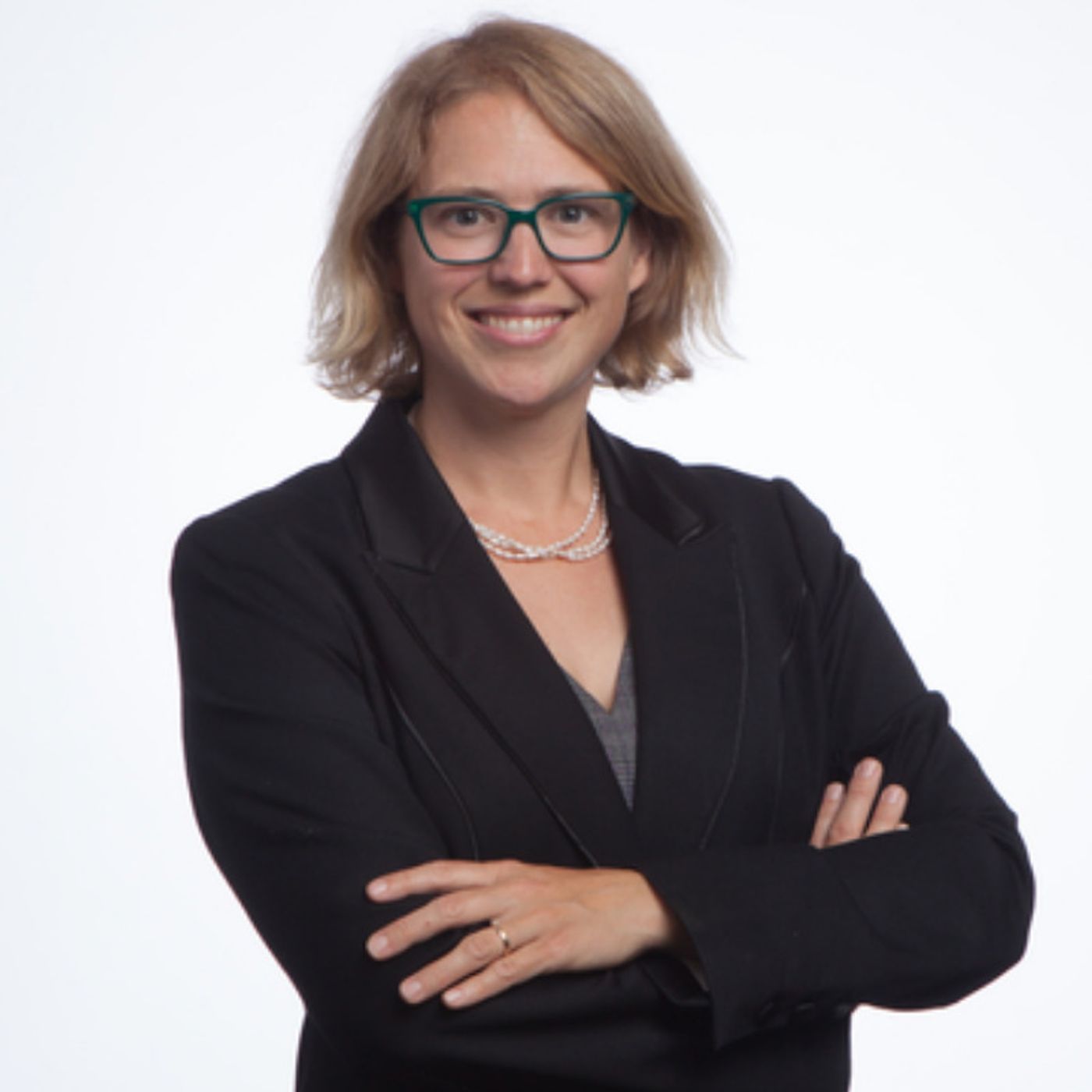
Ep 60Marian Macindoe, New Head of ESG Stewardship at Parnassus Investments.
0:00 Intro.1:39 Start of interview3:41 Marian's "origin story". She grew up in Allentown PA, and when she was 12, she moved to Naples TX. She later attended Reed college in Portland OR. She got interested in urban planning and studied an MSc at LSE. She realized that change would come from corporations (private sector) and took her first job as an analyst at Glass Lewis & Co in 2005 (only the second proxy season for Glass Lewis & Co itself). She later became the first director of ESG research at that firm. 9:27 In 2011, she joined Chevron as a corporate governance analyst and ESG advisor. "They had a world-class corporate governance program led by Lydia Beebe." She helped launch Chevron's first ESG Engagement Program.11:33 Her transition as Director of Investment Stewardship at Charles Schwab in 2018, where she also helped develop its ESG engagement program.12:39 On her move to Uber in 2020 - after meeting Keir Gums (now CLO at Broadridge) and Tony West (CLO at Uber). She was Uber's Head of ESG Strategy & Engagement.15:12 On joining Parnassus Investments this year, and her new role and focus as Head of ESG Stewardship at the firm.18:28 Her framework on how to think about ESG: "The 'G' underpins all of your success in the E and S. Who's making decisions, and what are the incentives to help drive behaviors to reach the strategic goals and to build (and sustain) value. That's all G." "If you get G right, all else should fall into place." "We want engaged directors: a high quality, competent and diverse board." "That's table stakes for me at this point."21:31 On the Engine No.1-Exxon Mobil case and the advent of ESG activism. "My advice to boards on how to think about ESG activism is to read the room." "90% of the SP500 is intangibles, so how you steward ESG issues matters (human capital driving these outcomes matters)." 26:39 On the evolution of proxy voting, especially with the rise of index investing and proxy advisors.29:06 Rating ESG of Silicon Valley tech companies. "I'm going to give them an E." "You have to do a materiality assessment (that's ground zero for a good ESG program)." "Don't grow so fast that you don't see the damage you're doing to yourself." "Growth at all cost is a bad strategy for sustained growth."34:49 On the criticisms and politicization of ESG: "It's sad that ESG is being politicized." On Tesla getting booted out of the S&P500 ESG index: "the methodology is public."38:40 On the 2019 BRT restatement of the purpose of the corporation. "I reference it all the time." "I think it's really important to listen to companies when they tell you what to pay attention to." "They are telling me that it matters." "You need to take care of your stakeholders to take care of your shareholders."42:01 On the new SEC climate disclosure rules. "I'm really excited about it. I think it's great." "We'll see where it comes out."44:35 The 3 books that have greatly influenced her life:Watership Down, by Richard Adams (1972)Rise of the Working-Class Shareholder, by David Webber (2018)Green Swans, by John Elkington (2020)45:51 - Who were your mentors, and what did you learn from them? Most recent ones:Keir Gums at Uber (now CLO at Broadridge)Chris Paterson at Uber47:00 - Are there any quotes you think of often or live your life by? "Why not you?" "Don't let the perfect be the enemy of the good, especially when it comes to starting a company's ESG journey. Just try, just get started."48:03 - An unusual habit or an absurd thing that she loves: Aquatic snails!51:10 - The living person she most admires: the people in her stewardship team right now.Marian Macindoe is the new Head of ESG Stewardship at Parnassus, an investment firm based in SF with over $45 billion in assets under management. She leads the firm’s stewardship team, which is responsible for proxy voting, impact engagements, shareholder resolutions and direct communication with their investors on ESG matters. __ You can follow Evan on social media at:Twitter: @evanepsteinLinkedIn: https://www.linkedin.com/in/epsteinevan/ Substack: https://evanepstein.substack.com/__Music/Soundtrack (found via Free Music Archive): Seeing The Future by Dexter Britain is licensed under a Attribution-Noncommercial-Share Alike 3.0 United States License You can follow Evan on social media at:X: @evanepsteinLinkedIn: https://www.linkedin.com/in/epsteinevan/ Substack: https://evanepstein.substack.com/__To support this podcast you can join as a subscriber of the Boardroom Governance Newsletter at https://evanepstein.substack.com/__Music/Soundtrack (found via Free Music Archive): Seeing The Future by Dexter Britain is licensed under a Attribution-Noncommercial-Share Alike 3.0 United States License
Ep 59Anne Sheehan: "The Advent of Say-on-Pay Forced the Engagement between Investors and Companies."
0:00 Intro.1:31 Start of interview2:30 Anne's "origin story". She grew up in Colorado and after attending college, she moved to DC to work on the Hill and later in the Reagan Administration (U.S. Department of Energy). She moved to Sacramento in the late 1980s, where she worked in and out of state government. In her role as Chief Deputy Director of the CA Department of Finance (under Governor Schwarzenegger) she served on the boards of CalPERS and CalSTRS, among many other state boards. In 2007 Stanford issued the first Clapman Report, outlining best practices principles that she used to improve the governance of the CalSTRS board. The next year, she joined CalSTRS as the first Director of Corporate Governance, just in time for the GFC of 2008! She got very involved with the Dodd Frank legislation in 2011 and the rules that came out of it, such as say-on-pay, proxy access, and others. She retired from CalSTRS in 2018 and later joined the boards of Victoria Secret & Co, Cohn Roberts Holding Corp (NYSE:CRHC) and joined PJT Camberview as a senior advisor.8:45 On the governance of state-owned or public entities, and the influence on politics on those boards. "Anytime there is a politician on a board, there will be a political bent to it." She did not sit on the board of CalPERS when they went after Safeway in their labor dispute (2004). At CalSTRS, they worked very hard to make sure that they did not pursue any political agenda. They made sure to follow a process when making any divestment decision.11:58 On joining the board of CRHC, and the state of SPACs. CRHC is merging with Allwyn Entertainment, a European lottery operator in a listing valued at $9.3bn.14:57 On the evolution of ESG. "The history of ESG at CalSTRS goes way back, they had a Statement of Investment Responsibility in 1978, outlining 21 risk factors (now called ESG factors). These are investment risks to the portfolio if they are not managed properly." There is a history of divestment from South Africa by California public pension funds during the Apartheid regime. UNPRI in early 2000s. "One of the issues is all the terminology that is thrown around: CSR, ESG, impact investing, moral or ethical investment, DEI, etc." 20:27 On the evolution of shareholder engagements. The example of CalSTRS and CII. The Engine No.1-Exxon Mobil case. "I've always thought that the acronym should be GES, because the "G" of governance is the infrastructure that sets in place how boards should handle these issues." "The advent of Say-on-Pay forced the engagement between investors and companies."25:53 On the new criticisms of ESG and politicization of corporations.27:54 On the exclusion of Tesla from the S&P500 ESG Index. 30:42 On the new SEC climate disclosure rules. "It's probably one of the boldest and most progressive proposals that has come out, probably ever, from the SEC." 34:35 Board diversity and her thoughts on CA courts striking down SB-826 and AB 979, and what these rulings mean for board diversity. Her role in promoting board diversity from CalSTRS starting in 2008, the Diverse Director Database. The role of the big institutional investors such as BlackRock, Vanguard and State Street to promote board diversity. The Nasdaq board diversity rule. DEI beyond the boardroom (racial equity audits, pay gaps, etc.)41:26 On the governance of private companies, and the rise of private markets. The role of CalSTRS on improving governance of private companies via its LP role and influence.45:00 Her recommendations on how directors should handle down cycles and recessions. "The governance processes are there to be the guardrails during the uptime and the downturns."47:11 The 3 books that have greatly influenced her life in the last few years:Biography of President Ulysses Grant, by Ron Chernow (2017)From Strength to Strength, by Arthur C. Brooks (2022)The Road to Character, by David Brooks (2015)48:40 - Who were your mentors, and what did you learn from them? Rich Koppes (former GC of CalPERS), on the governance side.Bill Hauck (former head of the California Business Roundtable)49:45 - Are there any quotes you think of often or live your life by? "Play the hand that's dealt to you." "Don't obsess over the bitter, go forward." "Perfect is the enemy of tGood" "80% is better than 100% if you can get it, or zero." "The only constant of life is change."50:39 - An unusual habit or an absurd thing that she loves: When she travels to a new city she gets on those hop in hop off buses (typically tourist traps). 51:10 - The living person she most admires: Zelensky and the people of Ukraine.Anne Sheehan is a former Director of Corporate Governance at CalSTRS and currently serves on the boards of Victoria's Secret & Co and Cohn Roberts Holding Corp (NYSE:CRHC) and is a senior advisor at PJT Camberview.__ You can follow Evan on social media at:Twitter: @evanepsteinLinkedIn: https://www.linkedin.com/in/epsteinevan/ Substack: https://evanepstein.substack.com/__Music/Soundtrack (found v
Ep 58Lisa Edwards: President & COO of Diligent Corporation, a Leading GRC & ESG SaaS Provider
0:00 Intro.1:30 Start of interview2:00 Lisa's "origin story". She grew up in Silicon Valley and after attending college at Stanford, she moved to Mexico City for 3 years where she worked in a boutique consulting firm. She later got an MBA at Harvard Business School. She then joined Bain & Co., became CEO of KnowledgeX (later sold to IBM) and co-founded ValuBond. She joined Visa in 2009, and Salesforce in 2012. In 2019, she joined the board of Colgate-Palmolive.8:20 In October of 2020, she joined Diligent Corporation as President and COO, based in SF/Bay Area. "Diligent has about 70% of the Fortune 1000 companies as clients, and it's a truly global product." Diligent did four acquisitions during the pandemic, aggregating "governance, risk, compliance 'GRC' and ESG." "It's a $40 billion TAM, and we are the biggest SaaS player in the space." "It's a killer set of applications together."13:45 Diligent Corporation got taken private by Insight Partners in 2016 (valuing the company at $624 million). "Now it's got to be one of the largest private SaaS companies."15:05 On the evolution of technology and board portals in corporate boardrooms.16:37 On the rise of ESG. "It's a very global trend." Examples from Australia, EU, UK, etc. On the SEC's approach with Chairman Gensler. Their global survey with Spencer Stuart, "finding 71% of boards are incorporating ESG into their company strategy, with 85% taking action to increase fluency on ESG." See Sustainability in the Spotlight: Board ESG Oversight and Strategy.20:56 Her thoughts on the L.A. state court judge striking down SB-826 (AB-979 got struck down in April) and what these rulings mean for board diversity. "Globally, women now occupy 26% of board seats." "In California, women occupy 28% of board seats." "So it seems that SB-826 and AB-979 had a positive effect on diversity of boards."26:41 On the recent push back by tech titans (Marc Andreessen, Peter Thiel, Elon Musk, etc) on ESG, including the power of institutional investors from the likes of Larry Fink from BlackRock.29:05 On dual-class share structures. "We [Diligent Corporation] don't have an official position on it."31:32 On the rise of private markets and governance of private companies.37:04 On the politicization of corporate governance. "It is a sea change, 10 years ago CEOs avoided commenting on any political issue."39:05 On the looming recession, and what directors should be doing in this economic downturn. "Boards have dealt with crises before such as the dot com crisis in 2000 or the GFC in 2008, and it looks like we're hitting a new crisis." "It will disproportionally impact private companies."41:41 On virtual board meetings. "The virtual board meeting is 100% here to stay, but not 100% of the time." "There is no substitute for looking at people in the eye, no substitute for the hallway conversations."42:29 The 3 books that have greatly influenced her life:River of Doubt: Theodore Roosevelt's Darkest Journey, by Candice Millard (2005)The Power Broker, Robert Moses and the Fall of NY, by Robert Caro (1974)I Will Bear Witness, by Victor Klemperer (1995)43:09 - Who were your mentors, and what did you learn from them? Her Dad.The Bridge Group (women peers)43.52 - Are there any quotes you think of often or live your life by? "Don't let the perfect be the enemy of the good." 44:33 - An unusual habit or an absurd thing that she loves: Harvesting honey bees!45:31 - The living person she most admires: RBG.Lisa Edwards is President and Chief Operating Officer of Diligent Corporation, the leader in modern governance providing SaaS solutions across governance, risk, compliance and ESG with more than $500 million in revenue and a $7 billion company valuation. __ You can follow Evan on social media at:Twitter: @evanepsteinLinkedIn: https://www.linkedin.com/in/epsteinevan/ Substack: https://evanepstein.substack.com/__Music/Soundtrack (found via Free Music Archive): Seeing The Future by Dexter Britain is licensed under a Attribution-Noncommercial-Share Alike 3.0 United States License You can follow Evan on social media at:X: @evanepsteinLinkedIn: https://www.linkedin.com/in/epsteinevan/ Substack: https://evanepstein.substack.com/__To support this podcast you can join as a subscriber of the Boardroom Governance Newsletter at https://evanepstein.substack.com/__Music/Soundtrack (found via Free Music Archive): Seeing The Future by Dexter Britain is licensed under a Attribution-Noncommercial-Share Alike 3.0 United States License

Ep 57Anat Alon-Beck: Private Markets and Waivers of Stockholder Inspection Rights
0:00 Intro.1:18 Start of interview2:01 Anat's "origin story". She grew up in Israel. She practiced corporate law, VC fund formation, startup representation and M&A in Israel before moving to the U.S. 7:03 Her academic focus at Case Western Reserve University School of Law (Cleveland, Ohio).9:12 On the practice of compelling employees, who are not yet stockholders, to waive their stockholder inspection rights under Delaware General Corporation Law (Section 220) as a condition to receiving stock options from the company. Based on her paper Bargaining Inequality: Employee Golden Handcuffs and Asymmetric Information, triggered by this WSJ article on the DOMO case.20:42 Her hand-collected data set consisting of the SEC’s public filings finding that many firms began requiring that their employees sign a waiver clause titled “Waiver of Statutory Information Rights” post Domo (there was a "huge uptick"). NVCA's model legal documents including this waiver clause in its Investors' Rights Agreement.27:58 The Good Technology (2018) and JUUL Labs, Inc. v. Grove (2020) cases. Description of classic conflicts of interest in venture-backed companies. Discussion of the "internal affairs doctrine".37:35 On dual fiduciaries and "new" conflicts by founders with other common stockholders (prompted by super voting shares, multiple board votes, ff preferred stock, etc). The Trados case. Fiduciary duties of venture-backed company directors. On the shift of control from VCs (preferred stockholders) to founders. "Bargaining power is the key."54:32 Take-away thoughts for directors of venture-backed companies. Lawyers as gatekeepers.58:06 The 1-3 books that have greatly influenced her life:Startup Nation, by Dan Senor and Saul Singer (2009)Regional Advantage, by AnnaLee Saxenian (2006)The Capitalist and the Activist, by Tom C.W. Lihn (2022)59:34 - Who were your mentors, and what did you learn from them? Irit Haviv Segal, from Tel Aviv UniversityLynn Stout, from Cornell Law SchoolRobert Hockett, from Cornell Law SchoolFrom NYU: Ed Rock, Helen Scott, Karen Brenner, Gerald Rosenfeld, David Yermack.1:00.48 - Are there any quotes you think of often or live your life by? "Be the change that you want to see in the world" "I've always been an activist and that's the mantra that I live by."1:01:28- An unusual habit or an absurd thing that she loves: Fricasse (Tunisian sandwich), working out.1:02:02 - The living person she most admires: Prof. Jill Fisch (Penn Law).Anat Alon-Beck is an Assistant Professor of Law at Case Western Reserve School of Law. Her research examines how legal and regulatory structures influence the shift in equities from public markets to private markets, and the rise in the number of “unicorn” firms.__ You can follow Evan on social media at:Twitter: @evanepsteinLinkedIn: https://www.linkedin.com/in/epsteinevan/ Substack: https://evanepstein.substack.com/__Music/Soundtrack (found via Free Music Archive): Seeing The Future by Dexter Britain is licensed under a Attribution-Noncommercial-Share Alike 3.0 United States License You can follow Evan on social media at:X: @evanepsteinLinkedIn: https://www.linkedin.com/in/epsteinevan/ Substack: https://evanepstein.substack.com/__To support this podcast you can join as a subscriber of the Boardroom Governance Newsletter at https://evanepstein.substack.com/__Music/Soundtrack (found via Free Music Archive): Seeing The Future by Dexter Britain is licensed under a Attribution-Noncommercial-Share Alike 3.0 United States License

Ep 56Joel Friedlander: On the Evolution of Stockholder Litigation
0:00 Intro.1:37 Start of interview2:19 Joel's "origin story". He grew up in Stamford, Connecticut ("it was a land of many corporate headquarters"). He went to Wharton undergrad and U. Penn Law School. Later, he clerked at the Court of Chancery in Delaware and worked at Skadden's Wilmington office in Delaware "[the office] had been built around the hostile takeover litigation in the 1980s." In 1995, he joined a new litigation boutique with Stephen Lamb (later Vice-Chancellor of the DE Court of Chancery). Andre Bouchard (later Chancellor of the DE Court of Chancery) joined in 1996.5:35 The difference between plaintiff and corporate/defense firms, starting at law schools and law student recruitment.7:04 On the historical evolution of stockholder litigation. Joel teaches a course on stockholder litigation at Penn Law School and Michigan Law School. On how the hostile deals in the 1980s changed the stockholder litigation landscape: "Many of the largest and most sophisticated law firms were suing each other, and that's where most of the law was created."10:50 On the evolution of class action and derivative actions in stockholder litigation.13:01 On the concept of Fraud on the Board. "Commission of fraud on the board is an omnipresent temptation for self-interested controllers, activist stockholders, officers, financial advisors, and their legal counsel. Fraud can be used to put a company in play, steer a sale process toward a favored bidder, suppress the sale price to a controller, or make a favored bid look more attractive."15:56 "Not long ago, over 90% of deals over $100m were sued on, and in most of those cases the stockholders got nothing (prevalence of disclosure settlements)." He advocated for the elimination of disclosure settlements. "In about 2015, the litigation landscape changed." 23:40 On the evolution of Section 220 books and records stockholder demands.26:37 How director oversight duties have evolved ("Caremark claims"). The impact of the Delaware Supreme Court case of Marchand (2019) focused on food safety. 30:12 How Boeing’s stockholders obtained approval from the Delaware Court of Chancery for a landmark US$237.5 million settlement of derivative claims targeting the company’s board for safety failures that led to catastrophic crashes of two 737 MAX jetliners in 2018 and 2019. *The company disclosed that the two crashes caused US$20 billion in non-litigation costs and more than US$2.5 billion in litigation costs.35:16 On private venture-backed company deal-making and litigation, particularly in Silicon Valley. The Good Technology case, where director defendants and their affiliated VC funds settled for $17m and the financial advisor JP Morgan settled for $35 million for claims against arising out of challenge to dual-track sale/IPO process that resulted in sale of company to BlackBerry Limited.40:24 "It's hard to find plaintiffs [in Silicon Valley], there are different obstacles and roadblocks to litigation."42:38 "In [private venture-backed companies] sometimes you don't have directors who have experience in certain situations, like selling a public company (sophistication of M&A in public settings)."43:48 "What is ubiquitous is financial advisor conflicts of interest, in Silicon Valley or in any other public company scenario." The example of the Good Technology case.45:35 On conflicts of legal counsel in deal-making (criticism of law firm behavior). Example: $690 million damages award based on controller’s reliance on outside counsel’s legal opinion.47:44 The 1-3 books that have greatly influenced his life (that he's re-read the most):The Great Gatsby, by F. Scott Fitzgerald (1925)The Trial, by Franz Kafka (1925)Books by Professor Philip Reiff (sociologist from the U. of Pennsylvania), such as Fellow Teachers, the Triumph of the Therapeutic, Freud: the Mind of a Moralist.49:08 - Who were your mentors, and what did you learn from them? Philip Reiff, at U. of Pennsylvania.Chancellor William T. Allen.Stuart Shapiro (in litigation).53:04 - Are there any quotes you think of often? In a NYT review of the autobiography of Sammy the Bull Gravano he read a quote that said "At some point you've got to ask yourself, are you going to continue being a punk, or are you going to become a racketeer?"52:40- An unusual habit or an absurd thing that he loves: Twitter. 53:27 - The living person he most admires: Volodymyr Zelensky.Joel Friedlander is a partner at Friedlander & Gorris. He has over 25 years of experience litigating breach of fiduciary duty actions and contract disputes relating to the control of Delaware entities.__ You can follow Evan on social media at:Twitter: @evanepsteinLinkedIn: https://www.linkedin.com/in/epsteinevan/ Substack: https://evanepstein.substack.com/__Music/Soundtrack (found via Free Music Archive): Seeing The Future by Dexter Britain is licensed under a Attribution-Noncommercial-Share Alike 3.0 United States License You can follow Evan on social media at:X: @evanepsteinLinkedIn: htt
Ep 55Stilpon Nestor, Chairman of Nestor Advisors: The Outsider.
0:00 Intro.1:42 Start of interview2:26 Stilpon's "origin story". He grew up in Greece and studied law at the University of Thessaloniki. He later got an LLM at Harvard Law School. He practiced corporate law in Greece, but left the country permanently in the mid 1980s. He joined the OECD where he became the first Head of the Corporate Affairs Division. In that position, he lead the team which produced the OECD Principles of Corporate Governance (1999). "The corporate governance issues were very linked to the privatization issues at the time." He later left the OECD in Paris to London, where he started his own firm.9:36 The origin of his firm Nestor Advisors in 2002. "The idea was to advise companies and their boards on corporate governance matters, since they needed the advice." "The focus initially was on emerging markets, then on OECD markets." Banking is the core sector that they address ("at least 2/3 of our clients are banks.") "Personally, my two areas of focus are the private family, and the banks."14:15 On the acquisition of Nestor Advisors by Morrow Sodali in 2021. "The sale of Nestor Advisors was always part of my horizon for two reasons: 1) I wanted an exit, and 2) the firm needed to be a part of something bigger in order to go to the next level."18:04 On the debate of the purpose of the corporation (the shareholder vs stakeholder debate). The BRT '19 restatement that reignited the debate in the U.S. (see Marty Lipton vs Bebchuk). "Milton Friedman said that the social responsibility of the corporation was to increase profits, and that is not a purpose (it's a responsibility)." "The first responsibility for a private economic institution like a corporation is indeed to be profitable (if it's not profitable over time, it goes down and it will not achieve any other purpose." "The process for a company outlining its purpose might be a useful thing, for its strategic focus and as a communications tool."24:47 On ESG: "the European approach is different to the US. The latter has more of a market approach with pressure from institutional investors and other market actors, whereas the EU is treating this more as an issue of regulation. There is emerging set of rules that are quite tough, such as with the new directive on disclosure of sustainability, disclosure on how to get to net-zero for investors, EU taxonomy of sustainable activities, the obligation of companies to do due diligence on everything that has to do with sustainability.29:33 On companies withdrawing from Russia due to the conflict in Ukraine. (see Jeffrey Sonnenfeld's list from Yale, over 400 companies have withdrawn at the time of this writing). Example of Raiffeisen Bank (largest foreign bank in Russia).32:36 How in the current environment CEOs have to make more "geopolitical" decisions or deal with "stakeholder issues" that impact society. "They have become mini statesmen or stateswomen." "I am skeptical about whether these kind of decisions should be put on the shoulders of CEOs and boards, at what point will they loose their purpose?" "I have a fear that we are putting an enormous amount of power in the hands of CEOs and corporations because we expect them to become statesmen/stateswomen." "I am reading this in a pessimistic way, it's a weakening of public institutions in the U.S."36:23 How the practice of corporate governance has changed in the last 20 years particularly given the current trends of CEO/boards "managing externalities." ("corporations are not anymore simple economic institutions") [Here is a good WSJ article on this subject].39:10 On governance of private companies and the rise of private markets [in the U.K. and E.U.] The LSE's allowance of dual-class stock to attract new listings.44:46 New board trends highlighted by Stilpon:"After the financial crisis, and for the last 20 years, we have seen boards face more demands to become more intrusive. This has increased particularly in the financial sector." "European boards are loosing the strategy perspective, and I think the pendulum has swung too far. We will start seeing boards act with more reflection in times of radical uncertainty.""The pandemic gave boards the opportunity to review their working methods, now we see more "monochromatic" meetings: small focused seminars/meetings on specific and strategic areas." "I call this the distributed board model." "You break up the agenda into reflection chunks.""With all the technology changes, boards will be in a position to challenge the assumptions that AI or other data sources will provide."49:12 Stilpon's favorite books :Democracy in America, by Alexis de Tocqueville (1830s) "He did not shy away from finding the worst and the best, and how these two combine - it's amazingly current."Markets and Hierarchies (1975) and The Economic Institutions of Capitalism (1985), by Oliver E. Williamson.On the Road, by Jack Kerouac (1957).51:00 - Who were your mentors, and what did you learn from them? Robert Clark, at Harvard Law School.I

Ep 54Christa Steele: "SWIFT is so antiquated it needs to go"
Intro.(1:35) - Start of interview.(2:19) - Christa's "origin story". She grew up in Dixon, California. She later went to CSU Sacramento and got her MBA at USC. She started working as a bank teller in college and ended up as the President & CEO of Mechanics Bank in the Bay Area. They sold the bank in 2015 to a PE firm owned by a Texas billionaire. After that sale, she started joining boards of directors.(3:53) - Her breakdown of banks: large, regional and community banks. At each level there is a significant difference in corporate governance.(5:23) - Her experience joining boards post 2015. She's had 8 board experiences with companies of different sizes and stages of development: from startup, scale-ups, to public companies. She started exploring bitcoin and blockchain technology. She also joined the NACD (Northern CA chapter). The first board she joined was of FIG partners, an investment bank (where she also joined as a partner). They sold the firm to Janney Montgomery Scott in 2019. She then joined the boards of Brainchip Holdings (ASX), Recology, OFG Bancorp, Sasser Family Holdings, Tanimura & Antle and Balco Holdings, Inc (owner of Bay Alarm, Bay Alarm Medical and BALCO Properties).(10:08) - The pros and cons of serving in boards of companies of different sizes and stages of development. Her transition from board member to CEO at Balco Holdings (starting on April 1, 2022). The intricacies of family-owned businesses.(14:08) - What's Balco Holdings and why she's excited about her new CEO role.(17:27) - How she thinks about security in CA, the impact of COVID-19 on how people behave, plus tech and cybersecurity trends.(19:15) - How boards and companies should approach cybersecurity threats: "I think you need the cybersecurity expertise in the C-suite."(22:43) - Her take on the evolution of ESG in the boardroom: "I've helped my boardrooms develop ESG dashboards." "It's going to be very interesting to see what happens in the next few months." "Boardrooms should look at the company's own CPI indexes and costs given the current environment." "A lot of people will have to take a stance of wait-and-see [on ESG] and not overthink it right now."(28:06) - Her take on blockchain technology. Biden's Executive Order on Digital Assets. "SWIFT is so antiquated it needs to go (on how we send wires and ACH)." "It's too early to weigh-in on DAOs, it will continue to morph and evolve."(35:30) - Christa's parting thoughts for directors in the current environment:Directors should be asking about their own company version of their CPI index. Are they tracking what's happening internally?Take measures in case we enter a recession. What's the inventory? Receivables?Hybrid model (office-home). Where do we go from here?(37:57) - Benefits of joining NACD. She's been affiliated with the NACD Northern California chapter since 2015 (she's currently the Vice-Chair of the chapter): "It has been wonderful for me." They have about 1,500 public company directors in their chapter. 50-60 speaking engagements on an annual basis. "Directors of 20 years ago vs. being a director today has dramatically shifted. It's all about staying current and educated." "I encourage directors to become NACD certified directors."(39:23) - Christa's favorite books (applicable to her board work):AI Superpowers: China, Silicon Valley, and the New World Order, by Kai-Fu Lee (2018)Think Again, by Adam Grant (2021)(40:25) - Who were your mentors, and what did you learn from them? In the board context: "the mentors from which I've gained the most wisdom, are the ones that have been there and done that." "I've learned the finesse of how questions are asked and answered." "I've understood the boundaries that exist between directors and operators." "The mentors and people I admire the most are the ones that lead with humility, they have been humbled."(41:45) - Are there any quotes you think of often, or live your life by? "The curse of knowledge is that it closes our minds to what we don’t know." Adam Grant from Think Again. The flipside of that is "if knowledge is power, knowing what we don't know is wisdom."(42:12) - An unusual habit or an absurd thing that she loves: "I wear Uggs slippers all year long."(42:43) - The person she most admires ("relevant right now"): Margaret Thatcher, "I think that the Iron Lady's anti-communism stance right now is alive and well."Christa Steele is the incoming CEO of BALCO Holdings, owner of Bay Alarm, Bay Alarm Medical, and BALCO Properties. She also serves as a public and private company board director.__ You can follow Evan on social media at:Twitter: @evanepsteinLinkedIn: https://www.linkedin.com/in/epsteinevan/ Substack: https://evanepstein.substack.com/__Music/Soundtrack (found via Free Music Archive): Seeing The Future by Dexter Britain is licensed under a Attribution-Noncommercial-Share Alike 3.0 United States License You can follow Evan on social media at:X: @evanepsteinLinkedIn: https://www.linkedin.com/in/epsteinevan/ S

Ep 53David Bell: Fenwick's 2021 Corporate Governance Survey
Intro.(1:35) - Start of interview.(2:22) - David's "origin story". He grew up as an "army brat" including living in Germany for about 10 years. He went to high school in West Point, NY. He stayed to go to college in Buffalo, where he also got his MBA. He left the Army and came to CA, where he ran IT for a company. He eventually went to law school first to Santa Clara, and then to UC Davis.(4:17) - His experience joining Fenwick in 1997, "in the front-end of the dot-com boom getting started." "I learnt a lot in the bubble years, and it was a tremendous advantage to my career to have done that early on."(5:32) - On the origin of Fenwick's Corporate Governance Surveys (published externally starting in 2007). "It was started to provide more than anecdotal advice to clients." The Mercury News published the SV150 List (a list of the largest Silicon Valley companies measured by revenue), and the idea was to compare and contrast that list with the S&P 100 (comprising 100 major blue chip companies across multiple industry groups.)(11:41) - On boardroom diversity: The percentage of women directors is now almost identical for the SV150 (30.3%, up from 25.7% in 2020) and S&P 100 (30.2%, up from 28.7% in 2020). On the impact of institutional investors in this change, SB-826 and AB-979 in CA, and the Nasdaq's diversity rule. "Silicon Valley had been behind in gender diversity. Institutional investor attention was the largest driver of increasing gender diversity on boardrooms."(16:15) - On dual-class share structures. The adoption of dual-class shares has emerged as a recent clear trend among Silicon Valley technology companies (from 2.9% in 2011 to 21.3% in 2021, as opposed to S&P 100 that where it decreased from 9% in 2011 to 8% in 2021). Per Prof. Jay Ritter data, 46.2% of all 2021 tech IPOs had dual class share structures.(23:05) - On the prevalence (and complexities) of dual-class share structures in private companies.(26:43) - On directors getting more than one vote ("disproportionate voting rights amongst directors"). Note DGCL 141(d).(29:17) - The Peloton case and how dual-class shares may impact shareholder activism.(31:46) - On sunset provisions for dual-class shares. "The Council of Institutional Investors' 7-year sunset provision is not convincing, 10-12 years is more convincing due to a variety of factors, including investments in R&D and traditional growth horizons."(35:11) - On staggered (or classified) boards: Over the period from 2004 through 2021 proxy seasons, staggered boards have dropped from around 45% to just 3% in S&P100, while they have increased to 52.1% in SV150 companies. "This is a perfect example of why 'best practices' are not equivalent ("there is no one-size-fits-all") in large cap and smaller cap companies." "This reflects the reality that one of the principal reasons for classification, as a takeover defense, is less compelling for some larger companies due to the sheer size of the companies and relative dispersion of their stockholdings."(39:54) - On majority voting. "The rate of implementation of some form of majority voting among S&P 100 companies has risen from 10% to 96% between the 2004 and 2021 proxy seasons. Among the technology and life sciences companies in the SV 150, the rate has risen from 0% as recently as the 2005 proxy season to 56.3% in the 2021 proxy season." "I don't see a lot of data that says that [majority voting] has much of an impact one way or another." "Zombie directors is a nice soundbite, but it's somewhat of an unfair pejorative."(45:09) - On the "stay private vs. go public" debate. "The relative success of companies that have gone public with dual-class share structures has informed the market of what is more or less acceptable." "There are a variety of choices that can be used to go public." "There is a lot of psychic, morale and social value in going public: it's still part of the dream in Silicon Valley to go public." "Liquid currency is a good thing too, particularly for growth via acquisitions." "I do expect this year 2022 to be a lower year for IPOs... the volatility is very high. See VIX index."(51:47) - David's favorite books:The Discoverers, by Daniel J Boorstin (1983) (and other books by same author)Wonderful Life, by Stephen Jay Gould (1989) (and other books by same author)To Kill a Mockingbird, by Harper Lee (1960)(52:25) - Who were your mentors, and what did you learn from them?Colleagues he's worked with over the years at F&W, including Gordy Davidson, Mark Stevens and Richard Dickson.Clients such as Tram Phi (GC at Docusign) Mike Dillon (longtime GC at Sun)(54:08) - An unusual habit or an absurd thing that he loves: The English Premier League (fan of Tottenham Hotspur F.C.)(56:00) - The living person he most admires? His parents, particularly his mother.David A. Bell is partner at Fenwick and the co-chair of the firm's corporate governance practice. __ You can follow Evan on social media at:Twitter: @evanepsteinLinkedIn: https://www.linkedin.

Ep 52Matt Blumberg: Startup Boards.
Intro.(1:40) - Start of interview.(2:00) - Matt's "origin story". He grew up in San Diego, CA. He's lived in and around New York City for the last 30 years. After college he worked as a consultant (Mercer Consulting) and VC (General Atlantic). In 1995 he joined the executive team of MovieFone, a small cap public company. He helped the company "figure out what the internet was all about." They sold the company to AOL in 1999 (for $388M in stock). Then he started a company called Return Path in 1999. It was a 20-year run where they scaled the company to about $100m in revenue and 500 employees worldwide. They sold the business in 2019 to Validity. In 2020, he founded a new company called Bolster, a marketplace for on-demand executive and board talent. Along the way he wrote a couple of books (Startup CEO in 2013, and Startup CXO in 2021), and he's sat on several boards (such as those of Oblong, Authentic Response, Moz and Feedburner), one major trade association (DMA), some community/academic (local Little League, and a couple of different Princeton fundraising boards). He has been "increasingly spending time on board matters as his career has gone on."(5:50) - On the first edition of the book Startup Boards (2013), by Brad Feld and Mahendra Ramsinghani. Brad and Matt will publish the second edition of the book this June. It takes a fresh look at the topic, with more diverse voices. They added a section for aspiring board members (interested in becoming independent directors).(8:51) - On why he started his new company Bolster, a marketplace for executive and board talent. "About a quarter of our business is focused on running board searches for private venture-backed and public companies (in their first year they did about 30-40 board searches)." They want to "help startup CEOs rethink the way they use and find senior talent."(11:41) - On his focus on increasing the number and diversity of independent directors in venture-backed companies. Bolster's benchmarking study on independent directors in startup boards (based on a study of 250 private company boards):Only 32% of private company boards have independent directors. Half of boards have open independent director seats they expect to fill in the next 12 months.Compared with investor or management directors, independent director seats are 3 times as likely to be held by women. 86% of director seats overall are held by men, and 56% of early stage private company boards have no gender diversity at all.Four out of five seats on private company boards are held by individuals who are White, and 43% of boards are completely homogenous with regard to the race/ethnicity of their directors.CEOs are broadening their searches to diversify their boards. Two-thirds of CEOs are open to bringing on first-time directors, and 41% of independent directors have either some college or an under-graduate degree only (vs. a post-grad degree).Board composition tends to over-index on investors and management directors. 59% of boards have more than one management or founder director and 59% of boards have 2 or more investor directors.Men seem to have a slightly higher average earning potential (measured in basis points per year and grant value) compared to women directors at like companies.(12:40) - "Our Mantra is the 'Rule of Ones' : you should be putting independent directors from day one, private company boards should only have one founder on the board, and for every one investor you should have one independent."(13:59) - On Fred Wilson's Board Diversity Proposal. "Fred walks the walk on that one, as does Brad Feld and Greg Sands." (all 3 VCs are board observers on Bolster's board). "At the end of the day, they all have very meaningful voices in and outside the boardroom, but they have made room for us to bring very good and diverse candidates." [Bolster's board has 4 first-time independent directors.](18:50) - On the impact of record-breaking VC financings, SPACs, IPOs and M&A on startups. "It's put a lot more money and valuation into startups."(19:52) - On his advice to CEOs on how to manage their boards: "The CEO should think of it as having two teams: one team is the executive team, the other is the board." "Start by making sure board composition is right". Scott Weiss: "boards eat whatever you put in front of them." Matt's rule: "No slides in board meetings, it's not a dog and pony show."(23:41) - On virtual board meetings via Zoom or otherwise post-pandemic. "It used to be that boards would have four in-person meetings per year." "In the private company world, VCs are constrained by the number of boards they sit on, but with virtual board meetings their ability to sit on boards has gone up 40-50% [since they don't have to get on planes so much anymore]." Matt's best practice approach: "Once or twice a year the board should meet in-person, and the rest is OK to meet virtually."(26:23) - On ESG in private companies. "This is an area where private companies are ahead." On growt

Ep 51Margaret O'Mara: "Silicon Valley is a Truly Distinctive American Story."
Intro.(1:40) - Start of interview.(2:17) - Margaret's "origin story". She grew up in Little Rock, Arkansas. She graduated from college (history major) the year that Bill Clinton ran for President. She took a job in the Bill/Gore '92 campaign. That led to her work in the Clinton White House. It shaped her understanding of how politics and power works. She later went to graduate school to study presidential politics. Her path to studying technology came from President Dwight Eisenhower (involving the domestic economic effects of the cold war). She later worked in VP Gore's office, but not on the technology policy side, rather in empowerment zones, community and regional economic development. "It's very strange to have lived through the history that you're writing about." "The politics of the 1990s is critically important in understanding how we get to the now of the business landscape, globally and in the tech sector in particular."(8:54) - On why she decided to write her book “The Code: Silicon Valley and the Remaking of America.” "This is the book I wish existed in 1999 when I was in graduate school to explain [Silicon Valley], [it's an] explanatory handbook."(12:53) - On the role of the government in supporting the development of Silicon Valley, the "military-industrial-complex", the collective vs the individual, reality v. myth. "[Silicon Valley] is a truly distinctive American story." "What the U.S. has done, particularly since the 1940s when the technology flywheel began, is to enlarge the government in a stealthy way." "The government helped to build the computer, hardware and software industries but giving space for entrepreneurs to be entrepreneurial." "The government threw a lot of money in Silicon Valley's direction, and then got out of the way." "Government contracts were a huge and critical piece of the book of business of technology companies [in the early days], that's the launchpad that threw them into the stratosphere."(18:59) - On the origin story of the "Traitorous Eight", Fairchild Semiconductor, the birth of the semiconductor industry, "Defection Capital" (term coined by Tom Wolfe), Arthur Rock, and venture capital.(28:01) - On Silicon Valley's rise vis-a-vis other regions such as Massachusetts, ("geography was destiny" as told by Anna Lee Saxenian, in her book Regional Advantage, highlighting the organizational/management contrasts between the two regions). "The Bay Area is full of transplants, from the U.S. and around the world." "Immigration policy is part of the secret of Silicon Valley." The roles of Lockheed Martin and HP in Silicon Valley ("HP did so much to set the tone of Silicon Valley's business culture, in a very deliberate contrast to places like Boston." "Management by walking around, or by wandering around" - rather than sitting around in an office.") "The idea of meritocracy in Silicon Valley comes from that era - it was the place where smart boys who didn't have family wealth or connections came, and they were able to build amazing careers, and in some cases significant fortunes." "Now that openness is not quite as easy."(33:56) - Margaret's take on the use of dual-class share structures by Silicon Valley founders on an historical perspective. "The return of Steve Jobs to Apple [after being fired] cemented the founder narrative, the belief that the "brilliant guys" get displaced [by investors or others] result in companies loosing their innovation." "When hardware got displaced by software, engineering became the product and having extraordinary talent at the top became the priority and a market advantage." The political environment and abundant capital has also played a critical role in setting these terms.(44:05) - Her article "The Secret of Building the Next Silicon Valley" (Wired, Jan 2022). "The next generation of high-tech places will come from investments in people, as well as in technology." "Silicon Valley is no longer merely a place in northern California, it is a global network, a business sensibility, a cultural shorthand, a political hack." "One commonality is that it is not about technology, it's about the people seizing opportunities [such as Fred Terman]." "It's also about an investment in higher education. In the case of UC Berkeley, Californian students were paying $50 per semester in the 60s to study elite level engineering (it was accessible and cheap). It was an escalator of upper mobility [although at the time it was mostly white men.]" "Steve Jobs went to a public school in Silicon Valley in the late 60s that had a computer lab [Steve Jobs' dad did not graduate high school]."(49:00) - On the rise of U.S. regional hubs ("the geography of tech"), and the geopolitical tensions with China.(55:37) - Margaret's favorite books:In the Shadow of the Poorhouse, by Michael B. Katz (1986)The Power Broker, by Robert Caro (1974)(57:44) - Who were your mentors, and what did you learn from them?Michael B. Katz (her graduate advisor).Bosses in the Clinton Administra
Ep 50David Larcker and Brian Tayan: Seven Myths of ESG.
Intro.(2:10) - Start of interview.(2:57) - David's "origin story". He grew up in coal mining town in southern Illinois. He went to college at what is now known as the Missouri University of Science & Technology. He later worked as an engineer and got his PhD in accounting from the U. of Kansas. He was a Professor at Kellogg for about 7 years, at Wharton for about 20 years and he's been a Professor at Stanford's Graduate School of Business since 2005. On how he started working with Brian on corporate governance research through the Corporate Governance Research Initiative.(4:23) - Brian's origin story. He grew up in Menlo Park, went to Princeton for his undergrad, and Stanford for his MBA. Prior to Stanford, he worked as a financial analyst at Stanford University's Office of the CEO and as an investment associate at UBS Private Wealth Management. On how he got matched with David Larcker to launch the corporate governance research initiative.(7:16) - On collaborating with Stanford law school on corporate governance research through the Rock Center for corporate governance.(9:30) - On their book "Corporate Governance Matters." First published in 2011, second edition in 2015 and third edition in 2020.(13:44) - About the origin and structure of the Corporate Governance Research Initiative, which includes a long list of (free) research findings and materials, including their Closer Look Series, Quick Guides & Research Spotlights, Core Concepts, Surveys, Journal Articles, Working Papers, Case Studies and a Glossary of Terms.(17:00) - On their latest article "The Seven Myths of ESG"(18:01) - Myth #1: We agree on the purpose of ESG.(22:52) - Myth #2: ESG is value increasing. ["The evidence is extremely mixed." "We do not know the financial impact of ESG."](26:46) - Myth #3: We can't tell whether a claimed ESG activity is actually ESG. [the extreme version is "greenwashing."](30:16) - Myth #4: A company’s ESG agenda is well-defined and board-driven.(34:49) - Myth #5: G (Governance) belongs in ESG.(38:09) - Myth #6: ESG ratings accurately measure ESG quality.(43:52) - Myth #7: Mandatory disclosure will solve the problem.(48:25) - On tying executive compensation with ESG metrics. "There is not as much as you would think (and it's mostly tied to the annual bonus)."(53:13) - Brian's favorite books:The Bible.U.S. history, from the founding to the late 1800s.(53:56) - David's favorite books:The Bible.Biographies of rock starts and the Grateful Dead.(54:24) - Who were your mentors, and what did you learn from them? For Brian: David Larcker. For David: his father. Also Nick Donatiello.(55:40) - Quotes that you think of often, or live your life by. For Brian: "My dad has always taught me to keep my head on straight and I just kinda go that way." For David: "No matter how smart you think you are, there is going to be someone smarter that will come around" (stay humble).(55:41) - What is an unusual habit or an absurd thing that you love? for David, motorcycles. He rides his Harley.(57:56) - The living person you most admire? Brian: Charlie Munger. David: Elon Musk ("pretty interesting character"), plus Brian!David Larcker is James Irvin Miller Professor of Accounting at the Graduate School of Business of Stanford University; Director of the Corporate Governance Research Program; Senior Faculty, Arthur and Toni Rembe Rock Center for Corporate Governance. His research focuses on executive compensation, corporate governance, and managerial accounting, examining the choice of performance measures and compensation contracts in organizations. His current research projects address the valuation implications of corporate governance, the impact of proxy advisory firms on shareholder proxy voting, and modeling the cost of executive stock options.Brian Tayan is a member of the Corporate Governance Research Program at the Stanford Graduate School of Business. He has written broadly on the subject of corporate governance, including boards of directors, succession planning, executive compensation, financial accounting, and shareholder relations. Previously, he worked as a financial analyst at Stanford University's Office of the CEO and as an investment associate at UBS Private Wealth Management. He has actively managed a private investment partnership since 2006, specializing in long-term, conservative growth through equity investments. Tayan received his MBA from the Stanford Graduate School of Business and his BA from Princeton University.If you like this show, please consider subscribing, leaving a review or sharing this podcast on social media. You can follow Evan on social media at:X: @evanepsteinLinkedIn: https://www.linkedin.com/in/epsteinevan/ Substack: https://evanepstein.substack.com/__To support this podcast you can join as a subscriber of the Boardroom Governance Newsletter at https://evanepstein.substack.com/__Music/Soundtrack (found via Free Music Archive): Seeing The Future by Dexter Britain is licensed under a Attributio
Ep 49Daniel Green: "2021 was an Absolutely Buoyant Year for Latin American Venture-Backed Startups."
Intro.(1:40) - Start of interview.(2:34) - Dan's "origin story". He grew up in southern California, did his undergrad at Stanford where he studied international relations. This prompted his quest to do something "cross-border." He did an exchange program in his junior year to Santiago, Chile, where he met his now wife and that planted a seed to do something related to Latin America. After law school he went to London where he practiced with Allen & Overy for 4.5 years. In 2004 he came back to Silicon Valley to practice as a corporate associate at WSGR, where he spent 6 years. At that time, there was not much cross-border work with Latin America, although there were partners focused on China, Israel and India, so the international blueprint was there to start building bridges between Silicon Valley and Latin America. Since then, he has developed his practice (passing through Goodwin Procter and Greenberg Traurig) and now at Gunderson Dettmer where about 80% of his practice is focused on Latin America.(5:53) - Dan's description of Gunderson's Latin America practice: "Fundamentally, we're transactional lawyers that do international cross-border work." Their focus is on venture-backed technology-driven, high growth companies.(10:21) - Why he advises his clients to incorporate in the Cayman Islands. "When we advise clients on a choice of a holding company, it comes down to a mix of investor preferences, tax considerations and administrative aspects." For Latin American companies, there are now three preferred choices: Delaware C-corp, a Cayman Islands company or a UK company. Kaszek Ventures was an early advocate for using a Cayman holding company. "I think we're going to see those 3 structures prevail in the market." Three prominent examples with Cayman holding structures: Nubank (the Brazilian neobank that recently IPOed in the US), Cornershop (a Chilean grocery delivery company that was acquired by Uber) and Kavak (a Mexican used-car online marketplace).(17:26) - On the geopolitical tensions between the US and China, and its implications for the startup ecosystem in Latin America. On the rising investments from China in Latin America and the increasing role and scope of the Committee of Foreign Investment in the US (CFIUS) impacting transactions in the US.(20:39) - On the increasing antitrust pressure from local regulators in Latin America. The example of Cornershop in Mexico and Chile.(23:19) - Dan's overview of entrepreneurship in Latin America. "Brazil is by far the most important market, followed by quite a distant second place from Mexico. Those two markets by themselves dominate the region in terms of capital deployed, number of deals, exits activity, etc." 2021 was a record year for venture activity in the region [$15bn in venture investments]. What's driving this growth? A combination of factors, per Dan: "The pandemic accelerated many changes, all of it boosted by widespread broadband adoption, digitally native people, younger generations, generational shifts in family businesses with decision-makers in their 40s or 30s and a vast under-banked and under-served population." There is also a virtuous cycle with big investors such as Softbank investing in the region ($8bn in two funds focused in Latin America) and other late-stage investors that have increased the cadence and velocity of investments such as Tiger Global. On the corporate governance implications of these investments.(30:22) - On the changing landscape of venture funding in Latin America: "There is a much richer ecosystem of investors in Latin America, with stronger local investors." The rounds are getting bigger and investments are done at a faster pace. "But the markets will always be cyclical." His take on dual-class shares and other governance structures. "There will be down-rounds or re-caps if we go on down cycles, and these questions may play out in the next decade. We are still in an incipient stage of corporate governance in the region."(39:13) - On SPACs, and how they can impact exit strategies for Latin American companies. "I'm somewhat cautionary and skeptical of this structure, generally." "It doesn't really save that much time, nor much cost." [See Prof. Klausner's latest research on SPACs.](44:20) - On the role of directors, and diversity on boards. What's the status in Latin America? "It's slowly percolating down in Latin America." "Some of the investors are pushing some ESG standards in their investments, but not so much on gender diversity."(48:28) - On the positive impact in the increase of equity compensation and stock options in Latin American startups ("from top to bottom"). This is a sort of "democracy within the cap table." This is a trend that is starting to become more prevalent in the region.(52:15) - Dan favorite books:Outliers, by Malcolm Gladwell (2008)Historical novels and intrigue, such as Red Notice by Bill Browder (2015)(53:27) - Who were your mentors, and what did you learn from them?Steve Bochner (WSGR)(
Ep 48Jackie Cook: On the "Investor Stewardship Movement"
Intro.(1:19) - Start of interview.(2:03) - Jackie's "origin story". She grew up in South Africa where she studied psychology and later got her bachelor’s degree in economics and management from Oxford, where she studied as a Rhodes Scholar. Her focus on corporate governance research started in 1998 after taking a research fellowship position at the Center for Business Research at Cambridge University under Professor Simon Deakin, that included a series of reviews of the UK company law.(5:10) - How she continued her corporate governance research from Cambridge to Seattle, where she joined the Corporate Library in 2001.(6:29) - On why she started Fund Votes in 2007, that focused on a new disclosure that had been required by the SEC in 2003 for the first time, on mutual-fund and exchange-traded fund proxy voting data. Her personal interest veered towards the environmental and social issues, where she did some early work with AFLCME and AFL-CIO (labor groups focused on compensation and pay disparity), Ceres (focused on sustainability) and other advocacy groups like IEHN, CPA, and others. She focused on shareholder resolution campaigns using the mutual fund and ETF voting data to evaluate how asset managers were thinking about these longer term ESG matters.(8:35) - On Fund Votes acquisition by Morningstar in 2018. "For a long time Fund Votes was more of a lifestyle company for me, but around 2012 when say-on-pay got mandated by Dodd Frank, the data became more relevant and I invested more time and resources to build the company."(10:13) -Her current focus at Morningstar as Director, Stewardship, Product Strategy & Development, producing some thought leadership with proxy voting data. She worked a lot with Jon Hale, head of sustainability research for the Americas at Morningstar, to integrate the systems and IP that Fund Votes brought into the platform.(12:33) - Her latest article on how Say-on-Pay has failed to rein in CEO compensation, and how it could be used to bind climate targets to executive pay. Say-on-pay is an "untapped source of strategic influence for investors". Two positives from say-on-pay: it created more engagement between companies and investors (shining a light on pay practices), and created "new real estate" in the proxy ballot "and that's valuable."(22:17) - On the rising prominence of ESG in corporate governance. "The big shift has been to realize that the 'E' and the 'S' factors present systemic risks. On climate change, it was the ‘unburnable carbon’ report published by Carbon Tracker (2007) that first put the issue in the mainstream for investors. The Paris Climate Agreement (2015) solidified these systemic risk matters."(26:05) - On the increasing influence and concentration of voting power in a few large asset managers.(29:56) - On the Exxon Mobil Proxy Contest with Engine No.1. and other strategic voting campaigns. "On the Exxon vote, the key was the support of the pension funds. Asset owners move the dial ('they are the real opinion leaders on corporate governance proxy voting'). The asset managers take their cue from asset owners."(31:49) - On the role of insiders and dual-class shares in proxy voting, and "hidden control preventing resolutions from passing". From her article: the 2021 Proxy Voting in 7 Charts. Examples include Larry Ellison (Oracle), Mark Zuckerberg (Meta), Warren Buffett (Berkshire Hathaway), Walmart, Alphabet, Tyson Foods, etc.(36:46) - On the rise of the Investor Stewardship Movement. "How stewardship codes, ordinary investors, investor advocacy organizations and collaborative investor initiatives have become a much more powerful force in the market."(40:43) - On the role of directors, ESG board committees, board composition and diversity.(44:12) - What are the issues to look out for the next Proxy Season in 2022:There will be a lot of pre-season engagements and perhaps a record proportion of withdrawals. Directors will be busy!Corporate Lobbying will be under the spotlight.Climate Target setting (de-carbonation pathways).Racial equity audits and diversity generally.Pay.(46:46) - Her favorite books:To Kill A Mockingbird by Harper Lee (1960)The Beauty Myth by Naomi Wolf (1990)Finding Meaning in the Second Half of Life by James Hollis (2005)(47:39) - Her (informal) mentors:Rommel Roberts, peace activist from South Africa.Manton Hirst, professor at Rhodes University.(48:47) - Quotes that she thinks of often, or lives her life by:"Wat jou nie doodmaak nie, maak jou sterker" (what doesn't kill you makes you stronger, in Afrikaans)"Perfect is the enemy of the good" (perfection is a self-indulgence)(49:52) - An unusual habit that she loves: reading Afrikaans police thrillers (particularly by Deon Meyer).(51:25) - The living person she most admires: Kumi Naidoo (a South African human rights and environmental activist).Jackie Cook is Director, Stewardship, Product Strategy & Development in Sustainalytics’ Stewardship services team at Morningstar. Follow Jackie on Twitter:
Ep 47Aaron Wright: On The Rise of DAOs and Blockchain Governance.
(0:00) Intro(2:22) Start of interview(3:04) Aaron's "origin story". He got interested in Bitcoin early on, and collaborated on the launch of Ethereum. He co-authored a book called The Rule of Code, Blockchain and the Law (2018). He's been constantly playing around with the technology itself and he co-founded OpenLaw, which makes it easy to create legal agreements that work with Ethereum. Most recently he's been spending a lot of time pulling together a bunch of DAOs.(5:13) How blockchain can disrupt corporate governance. (6:35) The history of DAOs (6:35). Dan Larimer's Decentralized Autonomous Companies (DACs) article (2013). The concept of DAOs picked up with the Ethereum blockchain. Beyond just corporations, to organizations generally. A lot of people think about blockchain as a system to transfer value in a fast way (~12 mins for Bitcoin and ~12 secs for Ethereum). But beyond this transfer of value, blockchain can also be understood as a system to coordinate disparate people with a set of smart contracts. This allows a new way to structure organizations.(12:13) The story of The DAO (2016). "It was pretty revolutionary in terms of its objective." After the project got hacked, it led to "quite a dramatic (governance-related) decision to fork the Ethereum network." For a number of years, people had "PTSDAO", they were afraid of other hacks. "But about 2-2.5 years ago that started to change, PTSDAO began to wear off and developers began to look at this problem again." New DAO platforms and tooling emerged, the most notable example of them was Moloch DAO (it provided grants to Ethereum projects). More innovation followed, and DAOs were capable of not only giving grants but also making investments. "There has been a sort of explosion of DAOs." To put some numbers to it, "In Feb 2019 there was ~$10m in these DAO like structures with ~2,000 users, today depending on the numbers you look at, it's north of $10bn with several hundreds of thousands of users."(20:30) His article "The Rise of DAOs: Opportunities and Challenges" (Stanford Journal of Blockchain, Law & Policy, 2021). Questions on legal frameworks for DAOs: partnerships, LLCs, new state DAO LLC laws: Vermont and Wyoming. Unincorporated Non-Profit Associations (UNAs). Wrapped and unwrapped DAOs. How to think about interests in DAOs (securities or something different like member-managed partnerships). Separating economic and governance rights. Are tradable governance rights securities? Grey zone.(29:58) His take on The LAO (the DAO that he co-founded focused on venture investments). "This was an effort to reboot the original The DAO concept but in a compliant US law format." It's structured as a Delaware LLC, with changes in its operating agreement that waived fiduciary duties and conflicts of interests. Core decision-making was delegated to a smart contract (code). They pooled capital (in Ether), members were only permitted to purchase up to 9% of the LAO (most purchased between 1-2%). There are about 75 members, scattered around the world, chatting via discord, all decisions are made via blockchain-based voting. "It's created a hive-mind." "Instead of having a few people in charge like in a VC fund, you have a collective group." "The decision-making has been pretty great." "The members of the DAO have been able to move faster than traditional VC funds, generating a higher rate of return (still early so TBD) and better at predicting the future of the market, such as with NFTs." "A network of capital deployers"(37:21) On DAOs' decision making (7 day voting period), rough consensus (no quorum requirement) and internal mechanisms. Faster and better decision-making (time will tell if the latter is true). Each member is provided with "ragequit" rights (automatic redemption rights). "[I]t usually happens at the beginning, when they join a DAO and they either don't have the time to participate and they feel they should, or they decide they didn't like the opportunity as much."(41:20) - On FlamingoDAO and Non-Fungible Tokens (NFTs). Inside The LAO many members wanted to back NFT projects. A question emerged internally to either invest in the projects or buy the art. They decided to do both. In Oct 2020 Flamingo DAO was born. Now they have 9 different DAOs ("about $200m in ETH has been contributed to these DAOs", over 200 people):The LAO (VC investments, it can invest in equity or tokens, could lead a round, draft a term sheet, nominate a board member who could be any member of the DAO - it hasn't done so yet). How people can become members (accredited investors).Flamingo DAO (NFT projects and art). "It started with a contribution of about 6,000 ETH ($6M at the time) and now if new members want to join they are valuing Flamingo DAO's interests at over $1 billion." (in just a year of existence!)Neptune DAO (DeFi)Neon DAO (Metaverse). "It was opened up last week, it took 40mins to close. It's a $20 million vehicle." ("that process for a VC fund or hedge fund would ta
Ep 46Jeff Thomas: "Private Companies Have Never Had More Options and Better Access to Capital and Liquidity."
Intro.(1:22) - Start of interview.(1:51) - Jeff's "origin story". He grew up in Dayton, Ohio. He went to Carnegie Mellon University for undergrad "to study engineering and play football." He graduated with electrical and computer engineering degrees, and took off to Silicon Valley. He first worked in the semiconductor industry with Altera. He later got into financial services, first with Gehrson Lehrman Group, then with SecondMarket (early player in the secondary markets for private shares, later acquired by Nasdaq) and Owler (crowdsourcing data on private companies). He joined Nasdaq in 2014 to help launch the Nasdaq Private Market. In 2016 he got promoted to run the listings team for Nasdaq in the west coast.(4:39) - Jeff's take on Nasdaq's role and vision: "In the last 5-6 years our approach has been to create a lifecycle approach to supporting our corporate clients: 1) Nasdaq Entrepreneurial Center (early stage), 2) Nasdaq Private Market (as companies scale and need to provide liquidity to their shareholders), 3) Listings Business (for companies going public), 4) Once companies are public, we offer a number of products and services to empower their IR, corporate governance and ESG disclosure practices." Beyond this work with corporate clients, Nasdaq also operates exchanges in the US and EU, it has an investment intelligence business (indexes, sell market data) and it's a technology provider to capital markets (including market surveillance technology, AML/KYC solutions, and others).(7:38) - Jeff's take on growth of IPOs during the pandemic (~250 operating companies have gone public in Nasdaq this year) and SPACs (there have been 495 IPOs in 2021 raising ~$138bn). "As a private company you've never had more options and better access to capital and liquidity." Private companies can raise: 1) Late stage venture capital rounds ("there seems to be $100m rounds everyday"), 2) IPOs, 3) SPACs and 4) Direct listings.(10:13) - His take on the impact of government actions on the economy (and how they impact markets). The acceleration of digital transformation during COVID-19.(12:39) - His take on the Nasdaq Private Market (facilitated ~$36 billion in transaction volume for ~500+ private companies) and why they decided to spin-off NPM as s stand-alone company, receiving investments from a group of banks including Citigroup, Goldman Sachs, Morgan Stanley, and SVB Financial Group.(16:05) - The "stay private or go public" decision per Jeff: "It all boils down to the company's goals and objectives in different phases of its lifecycle." Companies go public for a variety of reasons, but some of the primary ones are: 1) to raise capital, 2) to provide liquidity, 3) brand enhancement (prestige) of being a public company, and 4) to leverage its equity as an acquisition currency.(18:53) - His take on regulatory pressures on private markets (particularly from the SEC, as explained by Commissioner Lee's speech on "Going Dark" and problematic aspects of private markets).(23:24) - On the rise of retail investing and "meme stocks". Zero commissions took down the cost of trading, it made trading more accessible to people. The advent and impact of social media (from social message boards to Reddit). The dissemination of information has changed the nature of trading. The SEC report on equity and options market structure conditions (October 2021).(26:08) - On growth of ESG. "It all starts with the generational shift that is going on, from Baby Boomers to Millennials." "The new generation thinks beyond the bottom line." "People and investors are focusing on non-financial metrics for public companies (more and better disclosures)."(29:52) - History and nature of Nasdaq's Boardroom Diversity Rule (approved by the SEC on August 6, 2021). Standard disclosure matrix and minimum diversity standards (gender and minorities) with long phaseout periods. "We received 200+ comment letters to the rule, 80% was positive. From the 20% that was negative comments, 10% said that we shouldn't implement the rule, and the other 10% said we didn't go far enough."(34:10) - His take on crypto and blockchain technology. "We were thrilled to welcome Coinbase to Nasdaq via their direct listing." "It's really an interesting and dynamic time for the crypto markets." "It's still early innings in terms of the regulatory framework (from SEC and CFTC)." (36:16) - His favorite books:How to Win Friends and Influence People by Dale Carnegie (1936)Genius Makers by Cade Metz (2021)(37:05) - His mentor Bruce Aust (retired Vice Chairman of Nasdaq)(38:29) - On Nasdaq's approach to technology in the boardroom: their board portal Nasdaq Boardvantage, critical for security. The Nasdaq Center for Board Excellence "offers the latest governance insights and actionable intelligence for board members and executives (board evaluations and questionnaires". The topic of ESG is very relevant for boards, and they have an advisory team that consults with boards on ESG, Nasdaq OneReport (

Ep 45Manny Alvarez: On Regulatory Challenges in Fintech, Crypto and Boardroom Diversity
Intro.(1:18) - Start of interview.(1:51) - Manny's "origin story". He grew up in Oxnard, CA. He went to Cornell University for undergrad and "that's probably the first time he realized that the rest of the world did not look like Oxnard." His foray into film studies, including at Université de la Sorbonne Nouvelle, also known as Paris III.(8:05) - His decision to go to law school.(9:34) - His start with Sonnenschein Nath & Rosenthal's (now Denton's) SF litigation practice. Later, his experience at the California Department of Justice (Consumer Law Section). His time with the Consumer Financial Protection Bureau (he was an enforcement attorney between 2011-2014). That was his first experience "building something."(14:38) - His time with Affirm (31st employee and first attorney). He was there between 2014 and 2019.(15:19) - His decision to leave Affirm to be appointed as the new Commissioner of the California Department of Business Oversight (now Department of Financial Protection and Innovation). The Department oversees the operations of state-licensed financial institutions, including banks, credit unions, money transmitters, issuers of payment instruments and travelers checks, and premium finance companies.(20:30) - His take on "fintech": "A lot of people use this term [fintech] as a noun, but I think of it more as an adjective that describes an ethos that embraces the democratization of financial services." Fintech also encompasses ubiquity ("meeting the customers where they are"), the increased computing decision-making power (larger data-sets), and interoperability.(26:49) - His take on the rise of Buy Now, Pay Later (BNPL). "In the early days of Affirm that term did not even exist, what was used was point of sale."(32:07) - His take on the rise of crypto through a regulatory lens. "Think about functional regulation." e.g. Store of value ≠ money transmission ≠ smart contract features, etc. "It's important to articulate what function you're worried about, define the activity and figure out who has the authority to regulate that specific activity."(37:27) - His take on how some in the private sector have proposed new regulatory frameworks, e.g. Coinbase's "Digital Asset Policy Proposal" or Andreessen Horowitz's "How to Win the Future" housed in their new web3 policy hub: "I think the self-regulatory approach and proposals put forward by private actors is smart and practical." "If for no other reason it forces a conversation between the company and the regulator." "It ought to be adopted by more companies in newly emerging spaces." "It shows a modicum of good faith [and transparency] by companies."(41:39) - On the creation and purpose of UC Hastings Center for Business Law Roundtable on Financial Policy & Regulation.(43:18) - On Board Diversity (California's SB-826, AB-979), Nasdaq Boardroom Diversity Rule.(46:14) - His three favorite books:One Hundred Years of Solitude by Gabriel Garcia Marquez (1967)The Sound and the Fury by William Faulkner (1929)The Invisible Man by Ralph Ellison (1959)(46:47) - His mentors:His mom, who taught him grit.Gary Hernandez, former partner at SNR Denton (formerly Sonnenschein)Paula Boggs, musician and former GC at Starbucks.(49:08) - Quote that he thinks of often, or lives his life by: "I love mankind... it's people I can't stand." (Linus Van Pelt of Peanuts)(49:45) - An unusual or absurd habit that he loves: he wakes up at absurd hours but he relishes those early morning hours.Manny Alvarez is a financial services executive and former regulator committed to increasing access to financial literacy and technology, protecting consumers from harmful practices, and engaging under-served communities. If you like this show, please consider subscribing, leaving a review or sharing this podcast on social media. __ You can follow Evan on social media at:Twitter @evanepsteinLinkedIn https://www.linkedin.com/in/epsteinevan/ Substack https://evanepstein.substack.com/Music/Soundtrack (found via Free Music Archive): Seeing The Future by Dexter Britain is licensed under a Attribution-Noncommercial-Share Alike 3.0 United States License You can follow Evan on social media at:X: @evanepsteinLinkedIn: https://www.linkedin.com/in/epsteinevan/ Substack: https://evanepstein.substack.com/__To support this podcast you can join as a subscriber of the Boardroom Governance Newsletter at https://evanepstein.substack.com/__Music/Soundtrack (found via Free Music Archive): Seeing The Future by Dexter Britain is licensed under a Attribution-Noncommercial-Share Alike 3.0 United States License
Ep 44Kendrick Nguyen: "There is No Question in my Mind that Retail Capital is Coming to the Private Markets."
Intro.(1:11) - Start of interview.(3:04) - Kendrick's "origin story". He was born in Vietnam and grew up in the Bay Area. After law school he worked at Goodwin Procter for a couple of years before taking a position in-house for a large fund-of-funds (Permal Group) in NYC. He then worked at the Stanford Rock Center with Joe Grunfdest. After Stanford, he joined AngelList as the GC, and launched Republic in 2016.(4:37) - On the origin and mission statement of Republic. In 2016, Reg CF allowed equity crowdfunding from unaccredited investors for the first time. The vision is that "there will be a seismic shift of consumers wanting to be investors." "We call this the ownership economy." "This will become the dominant driving force in changing VC and PE, and broadly speaking, the financial markets in the coming years."(7:58) - The evolution of equity crowdfunding in the last 5 years. "It took the SEC 5 years to increase the cap from $1 million to $5 million in Reg CF, and $75 million in Reg A, effective since March 2021. "The first 5 years was slow, but now Republic has deployed $700 million in capital and much of it (over $600 million) came in the last 18 months."(10:13) - International crowdfunding. The UK allowed equity crowdfunding before the US, it has been a very successful model, the cap is $15 million and there are tax advantages to invest via crowdfunding. "About 20% of all early fundraising in UK tech startups comes from equity crowdfunding."(11:30) - Equity crowdfunding in the U.S. in 2020.(12:28) - Republic's different platforms. "Republic is as much a legal tech company as it is a just a tech company."(14:43) - His take on the evolution and growth of private markets: "There is no question in my mind that retail capital is coming to the private markets." "There will be many changes, mimicking changes in society." "This will give rise to a new multi-trillion market that will probably eclipse the size of VC and PE if you're just looking at tech."(18:17) - How "retail capital" will impact corporate governance (where institutional investors has reigned in both public and private markets). "Private companies will soon have a lot more stakeholders, including thousands investors from the customer base."(21:57) - How will venture capital change with the rise of retail capital. "The very top VCs (those with real value add) will remain important players, but the next cohort of VCs will need to be nimble to adjust to 1) the new forces of retail capital; and 2) other sources of capital that will enter the space." "The flow of capital will be more robust (from retail capital and high net worth capital) and it will challenge the VC market."(26:11) - How will VC-backed companies (or retail-backed companies) change the composition of their board or their corporate governance? "One of the advantages of raising $5 million in crowdfunding from tens of thousands of investors is that it is very founder-friendly, it does not come with a board seat." "It's still very early in the evolution of retail capital to work out these details." "Retail investors (tens of thousands of customers that may only invest $10 or $20 each in the company) may care more about the social narrative, liability or image of the company than their return on investment."(29:00) - Crowdfunding stories from Gumroad (raised $5 million from thousands of investors in 12 hours), Backstage Capital (raised $5m in exchange for 10% of the management fees and carried interest in the VC firm), Bucket List (raised ~$3m from ~30,000 investors), Robot Cache (a gaming company that raised ~$30m in a Reg A fundraising over 2 weeks) in the Republic platform.(31:21) - Some corporate governance implications of having retail investors in the cap table in private companies.(38:13) - How crypto has impacted the fundraising scene. Republic itself has raised ~$70 million since its founding, ~$50 million in equity and about $20 million in a token offering. Since 2018, Republicy Crypto has been on the forefront of the U.S. regulated securities fundraising in the blockchain space.(44:44) - On the governance of Blockchains, could it disrupt corporate governance itself and thoughts on Decentralized Autonomous Organizations ("DAOs"). "[One issue] is that organizations [in my subjective experience] tend to have a group of people that have superior knowledge, dedication and drive [so the idea] of consensus decision-making is challenging. It sounds good in theory but in practice is it compatible with building a complicated organization?" "Institutional investors are still not 100% on board with crypto."(53:05) - A recent book that he recommends: The 15 Commitments of Conscious Leadership (2015), by Jim Dethmer and Diana Chapman.(53:25) - His mentors:Joe Grundfest, Stanford Law School.Naval Ravikant, Co-Founder of AngelList.(54:15) - Quote that he thinks of often, or lives his life by: "Happiness is success."(55:35) - An unusual or absurd habit that he loves: Sleeping in sofas, even when
Ep 43Abe Friedman: "Investors Don't Care As Much About The Messenger As They Do About The Message."
Intro.(1:30) - Start of interview.(2:12) - Abe's "origin story". He grew up in L.A and moved up to the Bay Area where he attended Berkeley for college and law school. After law school he went to Seattle and worked in-house for US West Communications (now Qwest Corporation). Back in northern California he joined another telecom before joining the founding team at Glass Lewis in 2003 ("the market was ripe for disruption").(5:37) - His time as the Global Head of Corporate Governance at Barclays Global Investors (2005-2009).(7:38) - His time as the Managing Director and Global Head of Corporate Governance and Responsible Investment at BlackRock (2009-2011). "The focus and attention to corporate governance was ramping up at that time and BlackRock was an incredible spot to be in a moment of so much change in the space."(9:39) - On why he decided to start Camberview Partners in 2012. "Most of the people thought I was crazy. It was a big decision to take that leap." "Maybe the hardest decision that I've had to make professionally but probably the best decision in terms of what it has created in the market."(11:45) - He started the firm because he believed that they were at a moment in the evolution of governance where companies would have to care a lot more about the institutions and people voting their shares. Two drivers: Say-on-Pay (after Dodd-Frank) and the rise of Shareholder Activism. Companies were not doing much engagement with voting teams at the big institutional investors. They needed better advice.(19:38) - On the rise of institutional investors and their growing influence in corporate governance.(24:28) - On the rise of stakeholder capitalism and ESG. "I think it's definitely here to stay."(26:53) - The current state of play in shareholder activism.(31:20) - Two issues to consider in the current market:"It's very common for public companies to underestimate the extent to which investors don't care so much about the messenger as they do about the message. They care about the substance.""The need for companies to change how they manage their IR strategy has never been stronger." "Most companies are still operating in an old and outdated IR model [still tailored mostly to fundamental investors, when it should address a much broader set of constituencies]."(36:53) - On board diversity and social changes. "This has impacted the investor dialogue, including human capital management."(41:42) - On the rise of private markets and startup governance issues. How PJT Partners has allowed them to expand their governance footprint beyond only voting (in public companies). Now they tap all investor issues (their team has about ~70 people now).(47:28) - The books that have greatly influenced his life:Crossing to Safety (1987), by Wallace Stegner.The Return of Martin Guerre (1983), by Natalie Zemon Davis.(48:48) - His mentors: his scout master (Marty Burger), his grandmother, and his former his boss at BGI (Naozer Dadachanji, who became a board member and investor in Camberview Partners).(51:42) - Quote that he thinks of often, or lives his life by: "The ultimate measure of a man is not where he stands in moments of comfort and convenience, but where he stands at times of challenge and controversy." (Martin Luther King).(52:54) - An unusual or absurd habit that he loves: family tradition of watching "the price is right" (while they're home sick).(53:35) - His time as Mayor of the City of Piedmont.(55:06) - The living person he most admires: his wife.Abe M. Friedman is a Partner and Head of PJT Camberview, based in San Francisco. Mr. Friedman joined PJT Partners through the acquisition of CamberView Partners in 2018. Mr. Friedman founded CamberView in 2012 and served as its Chief Executive Officer through 2018. Before founding CamberView, Mr. Friedman was Managing Director and Global Head of Corporate Governance and Responsible Investment at BlackRock. Prior to that role, he served in leadership positions, including Global Head of Corporate Governance, at Barclays Global Investors from 2005 until the company merged with BlackRock in 2009. In 2003, Mr. Friedman helped found Glass, Lewis & Co. and served as Chief Policy Officer and General Counsel. If you like this show, please consider subscribing, leaving a review or sharing this podcast on social media. __ You can follow Evan on social media at:Twitter @evanepsteinLinkedIn https://www.linkedin.com/in/epsteinevan/ Substack https://evanepstein.substack.com/Music/Soundtrack (found via Free Music Archive): Seeing The Future by Dexter Britain is licensed under a Attribution-Noncommercial-Share Alike 3.0 United States License You can follow Evan on social media at:X: @evanepsteinLinkedIn: https://www.linkedin.com/in/epsteinevan/ Substack: https://evanepstein.substack.com/__To support this podcast you can join as a subscriber of the Boardroom Governance Newsletter at https://evanepstein.substack.com/__Music/Soundtrack (found via Free Music Archive): Seeing The Future by
Ep 42Priya Cherian Huskins: On SPACs, D&O Insurance and Federal Forum Charter Provisions.
Intro.(1:24) - Start of interview.(1:54) - Priya's "origin story". She was born in India and grew up in Louisville, Kentucky. She went to Harvard college and studied law at Chicago Law School. After graduation she clerked for Judge Frank Magill (U.S. Court of Appeals for the Eighth Circuit, in North Dakota). She later joined WSGR as a corporate securities attorney during the dot com boom in Silicon Valley. In 2003, she joined Woodruff Sawyer to specialize in D&O insurance.(5:42) - On why she joined Woodruff Sawyer in 2003.(8:44) - On her experience joining the board of directors of public companies such as Realty Income Corporation, NMI Holdings, and Anzu Special Acquisition Corp I (a SPAC).(11:26) - Priya's take on the evolution of the D&O insurance market since she started working in this industry in 2003. Current costs for IPOs, and SPACs ("the cost has gone up 4-5x in the last year or two").(16:58) - Her response to the increasing cost of D&O insurance (particularly for public offerings).(19:51) - On D&O insurance for private companies: "There is a cohort of carriers that will underwrite D&O insurance for smaller private companies almost on a fully automated basis, but firms come to see us when they reach ~$100 million in revenues (or typically at or after series C and D VC financings)." "Private companies do need D&O insurance, particularly if they want to attract good directors. It's important to highlight that private companies are also subject to the fraud provisions of the federal securities laws." [Note: last week, the Department of Justice announced the arrest of Manish Lachwani, co-founder and former CEO of HeadSpin Inc., a Silicon Valley-based private technology company, on charges of securities fraud and wire fraud perpetrated to raise money from investors. The SEC separately charged Lachwani with defrauding investors.] Litigation risks arise both from public enforcement (such as from the DOJ and SEC) and private enforcement (such as from shareholder litigation).(24:11) - Her take when a wealthy individual, not D&O insurance, indemnifies directors (a la Elon Musk). "It happens more in private companies than in public companies."(27:44) - Her take on the evolving litigation risks with SPACs (from regulators and plaintiff attorneys). "The SEC has been abundantly clear that they expect directors and officers of SPACs to do a lot of diligence." She highlights the SEC enforcement action in Ability Inc (2019). The number of securities class actions in SPACs is also on the rise. "There have been around ~110 De-SPAC transactions, and about 17% of them have been sued ["that seems high until you note that about 27% of the IPO cohort of 2018 has been sued."] There is also new litigation such as the complaint against Bill Ackman's SPAC alleging violations against the Investment Company Act of 1940 and the Investment Adviser Act of 1940, to which a group of over 60 law firms have responded ("[these complaints] are highly opportunistic, there is no question in my mind that they are hoping for a quick settlement to setup a cottage industry, and I sincerely hope that doesn't happen.")(35:40) - Her story on the Sciabacucchi case, Federal Forum Charter provisions and what's the latest on this front ("very few IPO claims were filed in state courts in 2021: only foreign filers or some that didn't get the memo to include federal forum charter provisions"). "This is the most important thing that [I've ever done] for corporate America."(44:07) - The books that have greatly influenced her life:Born to Run (2009), by Christopher McDougall.The Obstacle is the Way (2014), by Ryan Holiday.(47:34) - Her mentors: she would like to particularly mention her partner at Woodruff Sawyer: Denise Amantea.(49:13) - Quote that she thinks of often, or lives her life by:"If you're not humble, life will visit humbleness upon you" (Mike Tyson)."Pride goes before the fall" (favorite of her mom)(50:15) - An unusual or absurd habit that she loves: watching Alaskan sled dog racing!(51:11) - The living person she most admires: her parents.Priya Cherian Huskins is a partner and board member at Woodruff Sawyer, a commercial insurance brokerage. She is a leading expert on D&O insurance. In addition to serving as a board member at Woodruff Sawyer, Priya serves on the board of directors of Realty Income Corporation, NMI Holdings, and Anzu Special Acquisition Corp I. She can be reached via email at [email protected]. If you like this show, please consider subscribing, leaving a review or sharing this podcast on social media. __ You can follow Evan on social media at:Twitter @evanepsteinLinkedIn https://www.linkedin.com/in/epsteinevan/ Substack https://evanepstein.substack.com/Music/Soundtrack (found via Free Music Archive): Seeing The Future by Dexter Britain is licensed under a Attribution-Noncommercial-Share Alike 3.0 United States License You can follow Evan on social media at:X: @evanepsteinLinkedIn: https://www.linkedin.com/in/epstein

Ep 41Maureen Farrell: "The Cult of We", WeWork, and Startup Governance Shortcomings.
Intro.(1:25) - Start of interview.(2:14) - Maureen's "origin story".(3:00) - Why she focused on WeWork as the subject of her book "The Cult of We" with her WSJ colleague Eliot Brown. She took over the IPO beat at the WSJ in 2016, "when there were almost no IPOs." Tech companies were staying private for longer with a ton of capital flowing into the private markets. That's when she started following high flying unicorns such as Uber, Airbnb, Lyft and WeWork. "But I always heard things that were a little crazier about WeWork, a little more confusing, a lot of crazy stories about Adam Neumann, so it was always high in my radar, and then in 2019 came the IPO that wasn't."(4:39) - Discussion around the concept of "growth at all costs." "It's the driver of this story."(7:23) - Discussion around the concept of "the cult of the founder." How Adam Neumann was able to cash out around ~$500 million throughout the financing rounds (pre-exit), in addition to getting another ~$500 million in loans from banks. Her original article from July of 2019 uncovering "how Adam Neumann cashed out at least ~$700 million in sales and loans (from JPM, Credit Suisse and UBS)."(13:21) - The unusual co-founder arrangement between Adam Neumann (getting 83%) and Miguel McKelvey via WeHoldings LLC.(14:59) - Discussion around the ethos of Silicon Valley, culture mantra, corporate purpose, mission statements such as WeWork's "to elevate the world's consciousness", sustainability and ESG, and how WeWork co-opted many of these concepts.(19:33) - Discussion around the failure of gatekeepers and how mutual funds (such as T Rowe Price and Fidelity) and other sophisticated investors had FOMO and "aped" into WeWork at record high valuations.(23:52) - Discussion around Masoyoshi Son, Softbank's Vision Fund and how Masa invested and influenced the outcome of Adam Neumann and WeWork.(23:33) - How she and her co-author came up with a shorthand to think about Adam Neumann: a magician.(26:28) - Discussion around the board of directors of WeWork.(30:28) - Discussion around dual-class share structures and founder control. How WeWork's IPO decision was a way to clean up the company's corporate governance.(36:49) - WeWork's failed IPO, the fall of Adam Neumann (walking away with ~$2 billion...). Litigation outcome and Adam's current status.(43:31) - The books that have greatly influenced her life:The Bridge of San Luis Rey (1927), by Thornton Wilder.Say Nothing (2018), by Patrick Radden Keefe.Bad Blood (2018), by John Carreyrou.(47:46) - Her mentors: "In terms of journalism, it's important to have mentors but you also need to forge bonds with peers who can also become lifelong mentors."(49:15) - An unusual or absurd habit that she loves: watching bad TV with her daughters! (Hey Dude, Nickelodeon).(49:57) - The living person she most admires: (politics aside) Jimmy Carter.(52:14) - The WeWork movie (Jared Leto and Anne Hathaway will play Adam Neumann and Rebecca Neumann)Maureen Farrell is one of the co-authors of the bestselling book "The Cult of We: WeWork, Adam Neumann and the Great Startup Delusion", the definitive inside story of WeWork and Adam Neumann. Maureen is a reporter that covers capital markets and IPOs at The Wall Street Journal, where she has worked since 2013. She previously worked at CNN, Forbes, Debtwire, and Mergermarket.She can be reached via email at [email protected]. Follow her on Twitter: @Maureenmfarrell.If you like this show, please consider subscribing, leaving a review or sharing this podcast on social media. __ You can follow Evan on social media at:Twitter @evanepsteinLinkedIn https://www.linkedin.com/in/epsteinevan/ Substack https://evanepstein.substack.com/Music/Soundtrack (found via Free Music Archive): Seeing The Future by Dexter Britain is licensed under a Attribution-Noncommercial-Share Alike 3.0 United States License You can follow Evan on social media at:X: @evanepsteinLinkedIn: https://www.linkedin.com/in/epsteinevan/ Substack: https://evanepstein.substack.com/__To support this podcast you can join as a subscriber of the Boardroom Governance Newsletter at https://evanepstein.substack.com/__Music/Soundtrack (found via Free Music Archive): Seeing The Future by Dexter Britain is licensed under a Attribution-Noncommercial-Share Alike 3.0 United States License

Ep 40Robin Ferracone: "The U.S. Lags Other Regions In Terms of Using Stakeholder Measures in Executive Compensation"
Intro.(1:08) - Start of interview.(1:42) - Robin's "origin story": she grew up in Indiana, "sought warmer weather" so she headed to Duke for college. She later got an MBA at Harvard and started her consulting career at Booz Allen in SF. Five years later she started her own firm, SCA Consulting, focusing on executive compensation and strategy, based out of L.A. She sold that firm to Mercer in 2001, stayed on with the firm until 2007 when she left to start her current firm Farient Advisors.(5:50) - "In the SCA days, executive compensation was commissioned by management, very rarely by boards of directors."(7:20) - Her take on the evolution of executive compensation since the '80s.(10:28) - Her description of her firm Farient Advisors.(12:07) - Her discussion of her firm's research study: "2021 and Beyond: Global Trends in Stakeholder Incentives" authored jointly with the Global Governance and Executive Compensation Group (GECN Group).(15:16) - Her experience on how to link stakeholder goals in executive compensation, particularly in connection to climate change, social matters and DEI.(24:37) - Her take on "moon shot equity grants" ("I am not in favor of them") and founder top-up grants.(28:43) - Her take on SPACs.(32:40) - Her take on the Exxon Mobil proxy fight with Engine No.1. "It's a watershed moment for corporate boards."(36:37) - Her take on human capital "it's time has come." "It's much more about people than it's ever been before." There are four areas of disclosure: 1) number of employees, 2) diversity, 3) profile of the workforce, and 4) retention of workforce.(39:34) - The book that has greatly influenced his life:Fair Pay, Fair Play: Aligning Executive Performance and Pay (2010), her own book! "It consumed my life for a year and a half."Aesop Fables. Collection of fables credited to Aesop, a slave and storyteller believed to have lived in ancient Greece.(42:03) - Her mentors: "I have a view that you can literally learn for anybody." (44:29) - Her favorite quotes: "my favorite sayings have to do luck." Her father-in-law: "Luck is where you look for it."(45:04) - An unusual or absurd habit that she loves: fro-yo!(45:29) - The living person she most admires: Misty Copeland.Robin Ferracone is the Founder and CEO of Farient Advisors. She is the author of the book “Fair Pay, Fair Play: Aligning Executive Performance and Pay” and is a frequent presenter for well-known organizations including Council of Institutional Investors, Society for Corporate Secretaries and Governance Professionals, the National Association of Corporate Directors (NACD), and The Conference Board, among others. Robin has written extensively on the topics of performance management, incentive plan design, goal setting, and corporate governance.If you like this show, please consider subscribing, leaving a review or sharing this podcast on social media. __ You can follow Evan on social media at:Twitter @evanepsteinLinkedIn https://www.linkedin.com/in/epsteinevan/ Substack https://evanepstein.substack.com/Music/Soundtrack (found via Free Music Archive): Seeing The Future by Dexter Britain is licensed under a Attribution-Noncommercial-Share Alike 3.0 United States License You can follow Evan on social media at:X: @evanepsteinLinkedIn: https://www.linkedin.com/in/epsteinevan/ Substack: https://evanepstein.substack.com/__To support this podcast you can join as a subscriber of the Boardroom Governance Newsletter at https://evanepstein.substack.com/__Music/Soundtrack (found via Free Music Archive): Seeing The Future by Dexter Britain is licensed under a Attribution-Noncommercial-Share Alike 3.0 United States License
Ep 39Christopher Young: "After the Exxon Proxy Fight, Directors Realize That They May Be Taken Out By Sub 1% Shareholders."
Intro.(1:40) - Start of interview.(2:08) - Chris's "origin story": he grew up in East Greenwich, Rhode Island, but has spent most of his adult life in NY or outside of DC. He started out as a derivatives trader right out of college. Then he went to law school. After law school, he joined White & Case and later Sullivan & Cromwell to focus on M&A transactions. In the late 1990s (during the "dot com" era), he joined Bear Sterns as an investment banker in the tech group.(7:40) - On his move to join ISS in a newly created role as director of M&A research, in the midst of the HP-Compaq merger. "I think I was hired originally as a CYA sort of process." "But I happened to arrive at the onset of what I think was the beginning of the modern age of hedge fund activism in 2004 (Bill Ackman had just formed Pershing Square, Nelson Peltz started Trian, Jeff Smith with Starboard Value, etc.). It was perfect timing and fortuitous."(10:54) - On how ISS makes its voting recommendations on contested M&A and activist campaigns, and how the first thing he did at ISS was to create a framework to deal with contested M&A situations and proxy fights for board seats. The framework is still being used today by the ISS Special Situations Team. Institutional investors needed this guidance.(15:53) - On how he grew the ISS Special Situations Team over time, with people experienced on public companies. Very different team than those of say-on-pay proposals or other more junior analysts. "The way I thought about it was the moment I pressed the button of recommendation, if I had all my retirement money on that one specific stock, how would I vote after I had the inside look."(20:34) - On the importance of the ISS vote: "Depending on the make-up of the share register, between 20-30% of the share register is going to be at least influenced by the ISS vote, in particular if Glass Lewis has the same recommendation."(21:52) - On his transition from ISS to Credit Suisse ("after 7 proxy seasons at ISS"). He joined CS to start a dedicated contested situations team on the corporate advisory side: "Today almost every bank has a dedicated team but back then it was only Goldman Sachs." "Banks do not represent activists, the market has dictated that. If you cross that Rubicon, the competition will use that against you. I personally think that is shortsighted, it may change over time. Just like banks did not represent hostile bidders in M&A, until they did."(27:19) - On his current role at Jefferies. "It's a growing platform seeking to capture market share for public company M&A." We have a team of 5 people dedicated solely on hostile M&A, contested "friendly" M&A transactions and activism defense.(30:00) - His take on the current proxy season, including Engine No.1's successful proxy fight with Exxon Mobil: "I've seen a lot of events that were deemed landmark, and Exxon could indeed be deemed a landmark situation. I know Charlie Penner (from his time at Jana Partners) and I knew that Engine No.1 wouldn't wage a proxy fight based on [Jana's 3Vs template], where one of those Vs is having the necessary votes...In addition, Exxon Mobil had been considered a pariah at least since the mid-2000s, due to its refusal to engage with major investors and proxy advisors. These factors plus a period of under-performance by Exxon meant that Engine No.1 picked the right target [and they ran a very good campaign]."(34:33) - But for Chris, the hard part for Engine No.1 is what's next: now that they have 3 board members at Exxon Mobil, will they deliver on their promises? Chris is reminded of the case when he supported Nelson Peltz at Heinz (at the time a landmark proxy fight on a board election contest). Jeff Smith gave an interview about the Engine No.1 proxy fight and he brought up the Darden case, the first time an activist had succeeded in replacing an entire board of a Fortune 500 company (and they performed fairly well thereafter). "Let's see what we will be saying three years from now about the Exxon proxy fight, will Exxon change and if they do, will the results be good and driven by Engine No.1?"(37:00) - On the rise of global M&A and PE. "There hasn't been a ton of messy M&A, but we are starting to see more." On companies going private: "it's an inventory problem, more and more companies are leaving the public markets." In the UK, there is a national angst over the raiding of their companies (it's easy to take-over companies in the UK).(39:59) - On public vs private markets. "The private market is growing much faster than the public markets." On dual-class stock. On the different cultures in Silicon Valley and Wall St: "it depends on your story, if there is a story of value creation and people believe in the management and the board, they may sacrifice their own rights [to get a piece of the action]. The problems will arise as the company matures and under-performs with those structures [such as with dual class shares], but then you can always get rid of them l
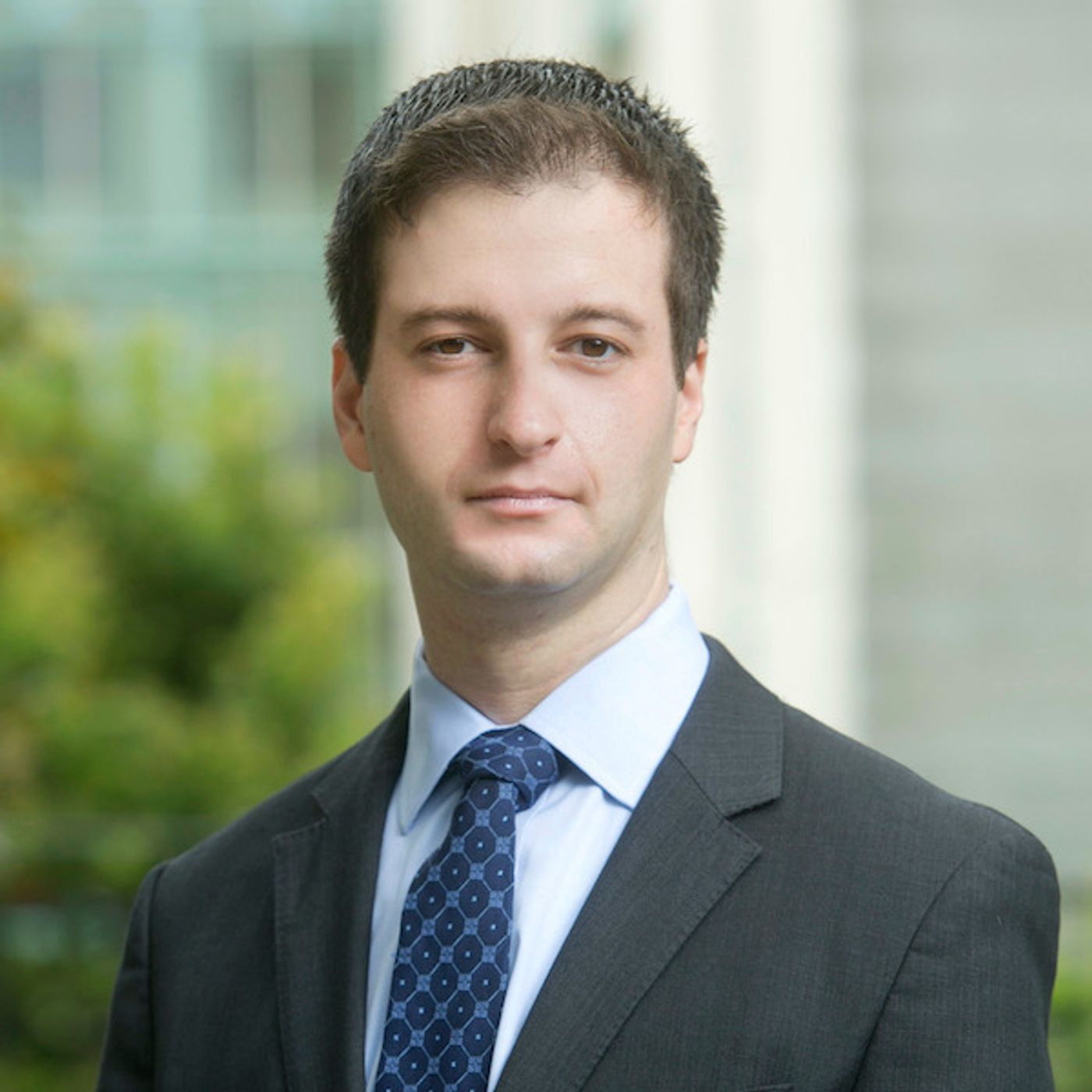
Ep 38Jared Ellias: "The Elevation of the Board is an Important Trend in the Bankruptcy Process"
Intro.(1:39) - Start of interview.(2:15) - About UC Hastings and the Center for Business Law [that we are building together!](5:10) - Jared's "origin story": he grew up in Michigan, attended the U. of Michigan (BA political science) and Columbia Law School (JD). A book on the bankruptcy of Marvel Comics led him to bankruptcy law and practice. After graduation he joined Brown Rudnick in NYC (’07-’11). He later joined academia as a Teaching Fellow and Lecturer in Law in Corporate Governance & Practice at Stanford Law School ('11-'14). He joined the UC Hastings Faculty in 2014.(9:38) - Start of discussion about his latest article The Rise of Bankruptcy Directors: "Traditionally bankruptcy is about a court process, not a board process." But his research shows that the boardroom increased its prominence in bankruptcy starting in about 2012-2013, where many distressed companies, especially those controlled by private equity sponsors, prepared for bankruptcy by appointing independent directors (which they call "bankruptcy directors") to their boards of directors with the power to make key bankruptcy decisions.(13:03) - On the new cohort of "bankruptcy directors" and the parallels with venture capital and Silicon Valley [Their dataset consists of the boards of directors of 528 firms and the 2,895 individuals who collectively hold 3,038 directorships at firms in bankruptcies from 2004-2019]: "The change is that a practice that was once relatively uncommon has become ubiquitous and a central and standard part of the process of preparing for a Chapter 11 bankruptcy filing, leading to the growth of an industry of professional bankruptcy directors who fill this new demand for bankruptcy experts on the board of distressed firms."(15:08) - On the question of fiduciary duty of loyalty and conflicts of interests of bankruptcy directors (particularly regarding the private equity controlling owners) and the emergence of "super-repeater directors".(16:38) - The example of the Nine-West bankruptcy.(21:34) - Whether bankruptcy judges will incorporate some standards such as those used (for example) by the Delaware Chancery Court on the independence of directors, board conflicts and the decision-making process of the board.(23:02) - On his finding that unsecured creditors recovered 21% less when a bankruptcy director is appointed. On the lucrative new bankruptcy director role.(26:04) - On his proposal that the court regard bankruptcy directors as independent only if creditors support their appointment.(29:03) - "The elevation of the board is an important (new) trend in the bankruptcy process." "The Board is going to play a more central part in bankruptcies."(31:52) - On the current growth of the economy and deal-making despite pandemic, and projected bankruptcies. "It's caught all of us by surprise." "It just shows you that Washington can change the rules on Wall Street on they want to." On the Hertz bankruptcy.(34:49) - His thoughts on the next trends in bankruptcies: "I think we are going to continue to see the democratization of the bankruptcy process." "Bankruptcy is less of a black box today and retail investors are becoming bigger players (the participation of normal people in Chapter 11 is a trend that we are going to see continue."(36:46) - On bankruptcy forum shopping. "This issue goes back to the 1990s, and we will continue to see a concentration of bankruptcy cases in the hands of a few judges."(38:53) - On his advocacy to increase the number of bankruptcy judges (in response to Covid-19).(40:17) - The books that have greatly influenced his life:Comic Wars (2002), by Dan Raviv.The Strategy of Conflict (1981), by Thomas Shelling.The Selfish Gene (1990), by Richard Dawkins.Germs, Guns and Steel (1997), by Jared Diamond.(41:30) - His mentors:J.David Singer, Professor at U. of Michigan.Jeffrey Fagan, Professor at Columbia Law School.Edward Morrison, Professor at Columbia Law School.Robert Stark, Brown Rudnick.Michael Klausner, Professor at Stanford Law School.George Triantis, Professor at Stanford Law School.Kenneth Ayotte, Professor at Berkeley Law School.(43:23) - His favorite quote: Benjamin Disraeli on William Gladstone: "He had only one idea, and it was wrong.”Jared A. Ellias is a Professor of Law, the Bion M. Gregory Chair in Business Law and the Faculty Director of the Center for Business Law at the University of California, Hastings College of the Law in San Francisco. In 2020, he was honored by the American Bankruptcy Institute as one of the "40 Under 40 Leaders in Insolvency Practice." Contact: Faculty Profile • SSRN • LinkedIn •TwitterIf you like this show, please consider subscribing, leaving a review or sharing this podcast on social media. __ You can follow Evan on social media at:Twitter @evanepsteinSubstack https://evanepstein.substack.com/Music/Soundtrack (found via Free Music Archive): Seeing The Future by Dexter Britain is licensed under a Attribution-Noncommercial-Share Alike 3.0 United States License Yo

Ep 37Donna Anderson, Head of Corporate Governance at T. Rowe Price: "This Has Been A Very Surprising Proxy Season"
Intro.(1:30) - Start of interview.(2:14) - Donna's "origin story": She grew up moving a lot since her dad was a Navy pilot. She attended Trinity University (started at 16). After college she worked as a newspaper reporter at a small daily in Washington State and then worked in the PR office for the State Department in Brussels. She later got an MBA at the University of Texas at Austin with the objective of becoming an investment analyst. After graduation she joined Dyer, Robertson & Lamme (’96-’98) in Houston as an equities analyst. She then joined Invesco (’98- ‘07) as director of equity research, including responsibility for voting the proxies. She joined T. Rowe Price (’07- Present) with a specialty in corporate governance.(6:34) - Her description of T. Rowe Price (NASDAQ:TROW), a global investment management firm with ~$1.59 Trillion of AUM. "This firm is virtually all active management (95%)." It's pure play asset management, deeply rooted in fundamental investment research. Corporate governance became more relevant around the time of the financial crisis (2007), so a decision was made to create a corporate governance specialty group.(10:42) - How does T. Rowe Price think about its corporate governance function? "I think that our corporate governance approach is complementary to the passive investors." "We have a set of guidelines but nobody gets wedded to that, we approach each situation case-by-case." "This year brought so many exceptions, such as compensation during the pandemic." They look at every single vote. The proxy team is comprised of 3 people. They have a separate responsible investment team that covers ESG matters.(17:21) - On ESG and its impact on corporate governance: T. Rowe Price had 1,002 engagements with companies in 2020: 53% dealt with ESG matters. The job of the ESG folks is still centered around getting the information they need (disclosure of relevant data is still an issue with ESG). "We have a very disproportionately large footprint in small and mid cap companies, plus private companies, and they need a lot of coaching on ESG, DEI or corporate governance matters."(20:11) - On corporate governance of private companies (pre-IPO). We are early in the life-cycle of these companies so we can show them what are the corporate governance trade-offs (particularly from the shareholder side).(24:14) - Her take on dual-class share structures (enlightened by her role in the private investments valuation committee at T. Rowe Price). They plan to be long term investors, so they make sure that the companies that they have invested in understand the trade-offs involved in decisions such as having dual-class shares (for example, exclusions from S&P500 index if dual class shares don't expire). "It's reasonable to start with a classified board and graduate to an annually elected board later." On dual-class shares: "over time we have concluded based on years of experience that [the dual-class share structure] is not aligned with our interests... but...we are perfectly comfortable with a time-based sunset provision of 7 to 10 years." "This is a market where dual-class stock is accepted, so we think that a road-map idea and compromises like time-based sunset provisions are the right pragmatic solutions" "I think a lot of investors view that sunset provisions are the perfect compromise in this market, where there are not many alternatives."(29:39) - Her take on the current proxy season: "This was a very surprising year but I would not put [the Exxon proxy fight] on that bucket. Anyone that was surprised by that outcome was not playing close enough attention." "We don't see [the Exxon case] as a watershed event where investors will push E & S directors into boardrooms." "I think the conditions were very Exxon specific and that same fund with those same directors brought at any other company would have had a different outcome."(30:46) - On compensation issues in this proxy season. "We've been really surprised at how investors had their pitchforks out over companies that made comp changes in the heat of the moment in Q2 last year."(31:32) - On how some large shareholders flipped their views in favor of E&S shareholder proposals. "Those results were surprising to me and to a lot of companies."(32:31) - On the shareholder proposal process: "I think that shareholders have yet to reckon with the fact that the shareholder proposal process in this market has been taken over by non-shareholders [such as advocacy groups including E&S activist groups 'harnessing the power of shareholders' to foster social change]" "I think it's really questionable whether some of these activists actually want [companies such as] Amazon, Exxon, Chevron or Kroger to exist in 10 years." It's questionable whether these groups are aligned with shareholders interests.(34:04) - On companies arm twisting to bullying on vote outcomes this proxy season: "The Sunday night late calls that we've gotten, the votes put on hold for some time, t
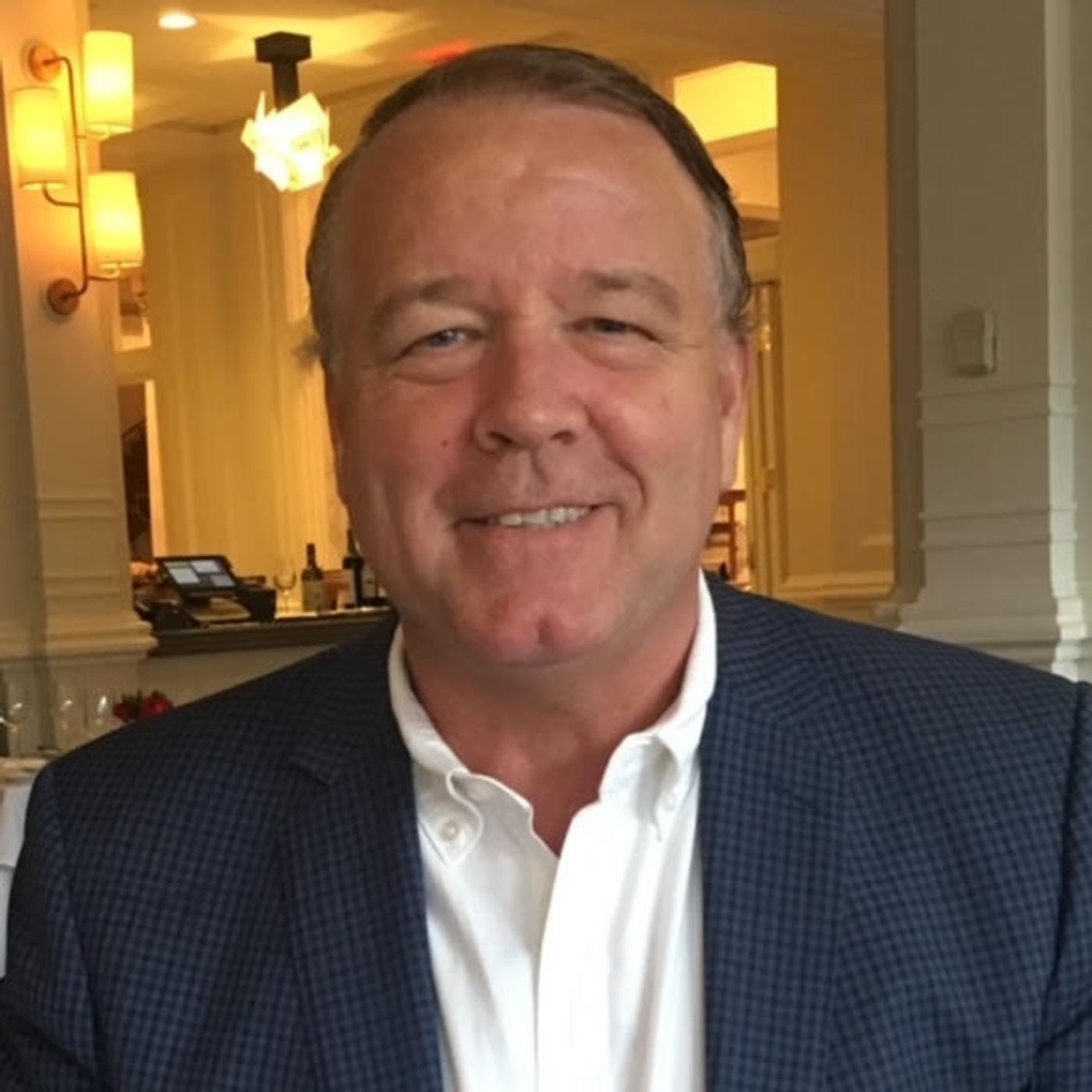
Ep 36Lawrence Cunningham: Quality Shareholders, Governance and Warren Buffett.
Intro.(1:32) - Start of interview.(2:10) - Larry's "origin story." He grew up in Wilmington, Delaware ("which explains why I have corporate governance in my blood.") He attended Girard College in Philadelphia, then went to the University of Delaware (BA Economics) and Cardozo School of Law (JD). After graduation he worked as an associate at Cravath for 6 years and then joined academia with Cardozo (10 years) moving later to Boston College Law School. He later switched to George Washington University Law School where he's been for the past 10 years.(6:04) - He is the founding faculty director of GW in NY (now in its 6th year).(8:46) - His experience serving on boards of directors. Currently with Constellation Software. In the nonprofit sector, he is a Trustee of the Museum of American Finance, a Smithsonian affiliate; Member of the Dean's Council of Lerner College of Business of the University of Delaware; a Member of the Editorial Board of Financial History, the magazine of the Museum of American Finance; and a Member of the Advisory Board of the Ben Graham Centre for Value Investing at the Ivey Business School, University of Western Ontario.(10:42) - How he got started researching Warren Buffett and Berkshire Hathaway: In 1996 he organized a conference at Cardozo Law School on Warren's letters to Berkshire shareholders. This resulted in the publication of The Essays of Warren Buffett: Lessons for Corporate America (now in it's 5th edition).(15:33) - His article on "Warren Buffett's 10 Commandments for Corporate Directors" (2017):Select an outstanding CEO.Set CEO performance standards.Adopt an owner orientation.Replace managers promptly when needed.Speak up to colleagues.Reach out to shareholders.Adjust social atmosphere of the boardroom.Compensation Committees: Negotiate.Audit Committees: Pry.Choose Well. Warren adds these qualifications that make for high-quality directors: 1) business savvy, 2) a strong interest in the specific company, and 3) an owner-orientation.(32:12) - Origin and scope of the "Quality Shareholder Initiative" focused on long-term concentrated shareholders. Dubbed "high quality shareholders" by Warren Buffett in 1978, the initiative takes its title from that designation.(38:42) - His take on the meme stock phenomenon: "I'm concerned about it, particularly its form of 'grievance capital' (there is a political aspect to it, for some it's not only about money)."(41:34) - His take on ESG. Two different aspects:Why indexers choose ESG: 'they have a systemic business model.' They need a universal set of principles.Quality shareholders have been seeking 'doing good' for ever.(48:12) - His take on dual-class share structures. There is no correlation between dual-class shares on quality shareholders. There is no particular preference for dual class shares one way or another. ["Given the wide variety of approaches to shareholder voting, quality shareholders examine dual class structures on a case-by-case basis. Among companies with dual class structures are a substantial cohort with high quality shareholder density."](52:67) - The books that have greatly influenced his life:Economics, by Paul Samuelson (1948)Economic Analysis of Law, by Richard Posner (1973)(54:14) - His mentors:Originally, his headmaster at Girard College. Particularly on "values of loyalty and honesty."Warren Buffett.Lester Brickman.(55:32) - His favorite quotes:"You can't soar like an eagle if you're surrounded by turkeys" by his father-in-law."Only go into business with people you like, trust and admire" by Warren Buffett.(58:00) - His "unusual habit" that he loves: raking leaves, grass or twigs.(59:04) - The living person he most admires: his wife, Stephanie Cuba.Lawrence A. Cunningham is the Henry St. George Tucker III Research Professor of Law at George Washington University; Director of C-LEAF and the Founding Faculty Director, GWinNY. You can find him at [email protected] or on Twitter @CunninghamProfIf you like this show, please consider subscribing, leaving a review or sharing this podcast on social media. __ You can follow Evan on social media at:Twitter @evanepsteinSubstack https://evanepstein.substack.com/Music/Soundtrack (found via Free Music Archive): Seeing The Future by Dexter Britain is licensed under a Attribution-Noncommercial-Share Alike 3.0 United States License You can follow Evan on social media at:X: @evanepsteinLinkedIn: https://www.linkedin.com/in/epsteinevan/ Substack: https://evanepstein.substack.com/__To support this podcast you can join as a subscriber of the Boardroom Governance Newsletter at https://evanepstein.substack.com/__Music/Soundtrack (found via Free Music Archive): Seeing The Future by Dexter Britain is licensed under a Attribution-Noncommercial-Share Alike 3.0 United States License
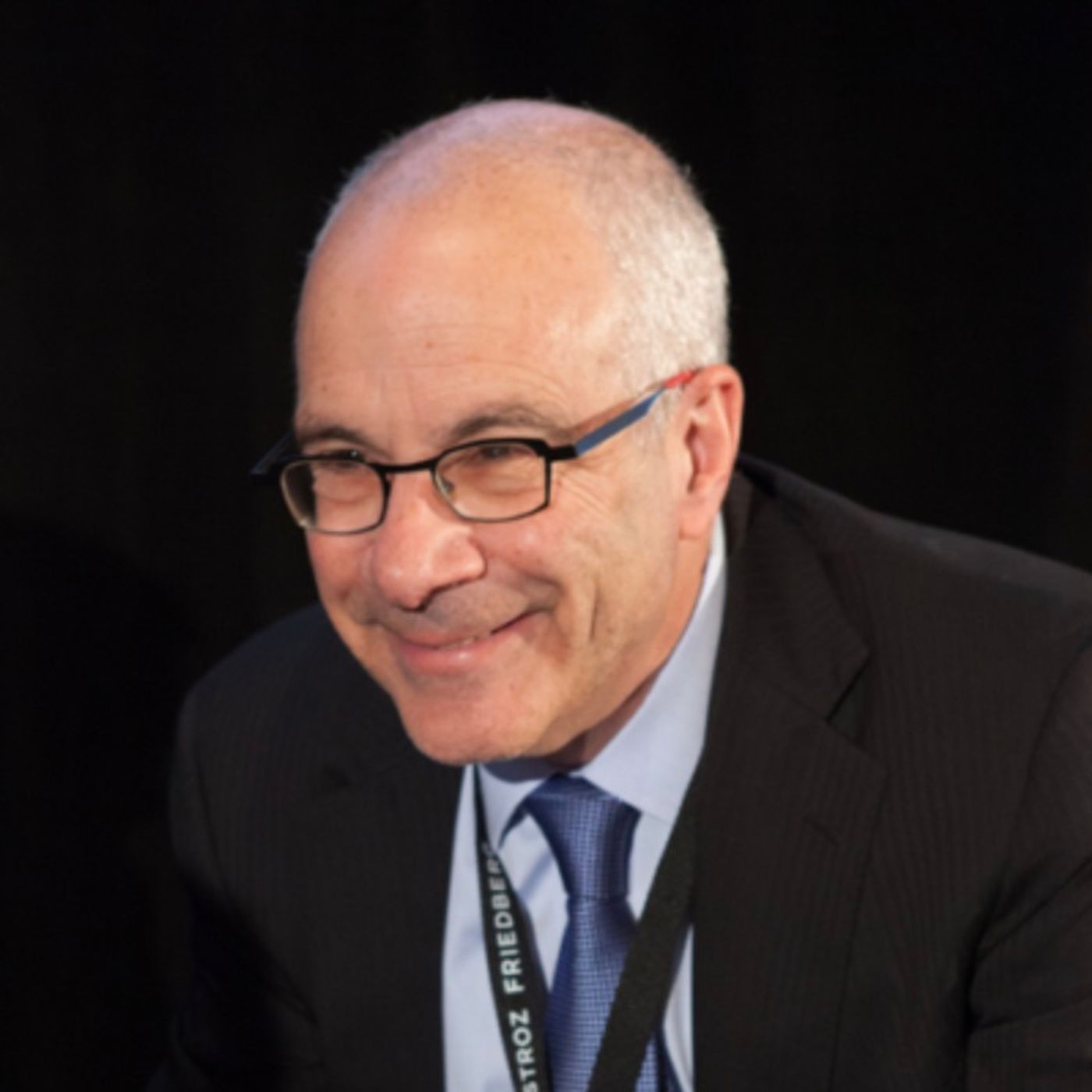
Ep 35Joe Grundfest: On Capital Markets, Crypto Regulations, Board Diversity & Corporate Electoral Innovation.
(0:00) Intro.(1:42) Start of interview.(3:11) Joe's take on the rise of IPOs and SPACs since 2020. "There is a level where it is all entirely rational."(4:16) Staying private vs going public in this environment. "In today's world, companies have three alternatives: do another VC round, a SPAC or an IPO."(6:43) On the fundraising environment: "This is historically unprecedented... due to fiscal and monetary stimulus throughout the U.S. and global economies." "But you have to combine that with the observation that we really do have some fundamental technological and economic changes going on."(8:47) Are you bullish or bearish on the economy and markets? "I'm confused-ish"(10:46) On Bitcoin, and the new Bitcoin Law from El Salvador (making it legal tender in that country): It has serious repercussions for US law (currency vs security, money transmission, tax implications, etc).(12:56) On US public corporations adding Bitcoin to the corporate treasuries. On bitcoin mining ("dirty, dirty, dirty") and the distinctions between "proof of work" and "proof of stake" cryptos. On Elon's decision to not accept Bitcoin to purchase Teslas.(16:12) On DeFi: "Once regulators figure out what's going on here, they are going to try to crush it." "You know, the SEC has no idea what to do with crypto. The SEC is asking for legislation, they're actually begging for legislation, because if you get legislation, then it's not their job. Unless (the SEC's nightmare) Congress gives the SEC all the authority it needs to regulate crypto and says to the SEC: here you go, do it."(19:30) On DAOs: "They can lead to chaos. I mean, what is the governance structure? Each one of these has a very different governance structure. And one of the things that we know is that there's no perfect governance structure, right? If you want to over intellectualize this, go back to Ken Arrow's Impossibility Theorem where he demonstrated that there are lots of criteria we would like to see in a society and you can't simultaneously have them all. Well, you know, that's a super brainiac way of saying that governments are always going to fail to one degree or another. Putting the problem of social organization on the blockchain does not solve the problem of social organization. It simply replicates the problem on the blockchain, right? So why do people think that putting an insoluble problem on the blockchain solves the insoluble problem is an insoluble problem to me."(21:13) On the different approach to blockchain by computer scientists and lawyers. The Stanford Center for Blockchain Research. "What can I say? The computer science people don't get sued 25 times... you know, in computer science, your equations are generally fairly well behaved. And if you write a system, you know how it's going to operate. We're lawyers, we deal with people. Not only deal with people, we deal with plaintiffs. It's a very different problem. I mean look, in engineering you're often dealing with fairly well behaved systems. If systems were well-behaved, you wouldn't need lawyers. So what can I say? I only go where there's chaos and mayhem."(22:57) On SB-826 (gender) board diversity quota in CA: "the data suggests pretty strongly, almost conclusively, that SB-826 has worked. The number of women on corporate boards in California has increased significantly. The majority of corporations in CA are now in compliance with SB-826."(24:23) On AB-979 (minorities) board diversity quota in CA: "figuring out the effect of the AB 979 is more difficult. It's very hard to separate that out from what I call the George Floyd effect."(25:21) On the constitutionality of these laws: "there's a deeper mystery here. And something that I think is really more profound. If you look objectively at both pieces of legislation, and if you ask yourself, what's the probability that the U.S. Supreme court as currently composed (a 6-3 conservative majority) would find either one of these pieces of legislation is constitutional? The answer would be a resounding no." "The fascinating thing is typically when legislation is potentially unconstitutional, everybody's jumping up and down and they're suing to get it invalidated. Here, not only is that not happening, but the vast majority of corporations are complying with legislation."(27:33) "These bills are what I would call The Miracle of Unconstitutional Legislation: "These are the most effective unconstitutional pieces of legislation that I've ever seen in American history. And I think the answer for why they've been so successful is that at least when it comes to legislating the composition of corporate boards, the majority of America is out of tune with Supreme court doctrine regarding the existence of quotas." "Diversity on corporate boards is being treated very differently to diversity in other areas of society and the parties most directly affected aren't complaining about it. It's a remarkable situation."(31:08) On stakeholder capitalism and the BRT restatement
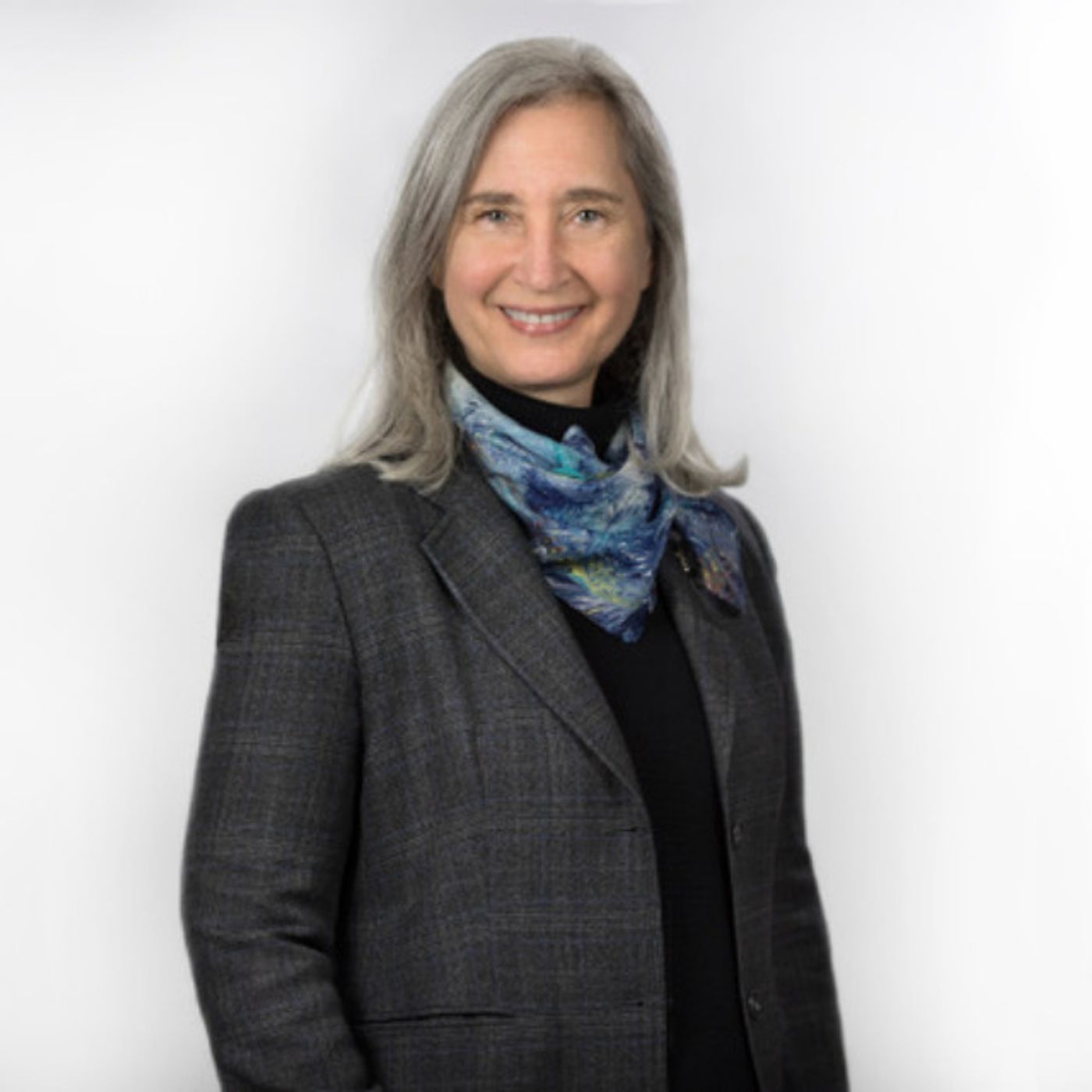
Ep 34Nell Minow: "You Can Get 90% of Governance by Looking at CEO Pay"
Intro.(1:42) - Start of interview.(2:28) - Nell's "origin story." She's the oldest of three girls, including former Harvard Law School Dean and current Professor Martha Minow. Her father, Newton Minow, was the Chairman of the FCC under JFK and authored a famous speech on the "vast wasteland" of TV (that still resonates 60 years later). She was influenced to speak out from an early age when she saw problems. Her ambition was to become a prosecutor but she moved to D.C., where she worked at the EPA and later at the White House OMB.(4:24) - On meeting Bob Monks, and being asked to join his "new startup" ISS in the mid 1980s (now the largest proxy advisory firm) to advise institutional investors on corporate governance. She didn't know much about corporate governance before joining ISS. "I arrived at the best possible time: the whole field was just beginning so I feel like George Washington or D.W.Griffith because I was there right at the start, out of pure luck." Since then, "Bob Monks and I have built and sold four different [corporate governance related] businesses."(6:57) - On working as a shareholder activist with LENS ($100m fund) from 1990-2000: "All my career experiences have converged on system analysis: why things don't work as they are supposed to." "ISS had originally been conceived with an activist business plan, but it pivoted to focus instead on independent research for institutional investors. It was at Lens where we focused on activism."(10:23) - Strategy at Lens: "We bought stock in companies that were not living up to their potential." "About a third of companies would say that that they were already way ahead of us and had a plan in place, a third would say that the ideas were pretty good, and a third would fight us." "We did not have much AUM but we knew a lot of the institutional investors, and sometimes they would ask us to look at specific companies because they trusted us." "We sold Lens to Europe's largest institutional investor, however we kept the part we liked which was the in-house research, that became the Corporate Library."(12:43) - On starting The Corporate Library ("we called it intentionally the most non-controversial name because we had a reputation for being very provocative.") "We started by publishing reports on employment contracts of CEOs in S&P500." "My dream was to rate corporate boards like (AAA-to-junk) bonds, and that was the product that we developed, which we hoped to sell to investors [who did not buy it] but we sold them instead to D&O insurers [they loved it.]" "We later acquired GovernanceMetrics International (GMI) and took their name, and sold the whole shebang to MSCI."(17:44) - The history and focus of her current firm, ValueEdge Advisors: "We put on a conference every year for institutional investors, we prepare reports on various corporate governance issues for clients - it's sort of private label research."(18:48) - Her other focus as a movie critic. "The governance life is the frolic and detour, the movie life goes back as far as I can remember." Her favorite corporate governance movies: The Big Short, Owning Mahowny (featuring Philip Seymour Hoffman and involving the biggest bank embezzlement in Canada).(22:48) - Her take on politics in the boardroom. Discussion around her article "The Choice for CEOs on Political Issues is Not “Yes or No”, It’s “Helps the Brand or Hurts the Brand.” "If the people listening to this podcast take-away one recommendation from me it would be the following: subscribe immediately to Judd Legum's newsletter called Popular Information. He keeps track of companies that stated in January that they would not make any political contributions to candidates that would not certify the elections [and failed to live up to those promises.]" "It's no longer possible for a CEO to remain neutral."(27:10) - Her take on the "controversial" Coinbase CEO and Basecamp CEO statements.(29:04) - Her take on the rise of ESG: "It's a bit the best of times and worst of times scenario":Best of times: ESG is supplemental to GAAP (which does not measure human capital well). "The difference between CSR and ESG is that the former had the implication of being sort of a trade-off (limiting profits for some kind of a balancing test) while ESG makes no concession of any kind, it's 100% financial and 100% about assessing risk." "So any claim that ESG is against shareholder value is not well founded." The second point is that ESG is a huge issue for Millennials and the next generation... they care tremendously about this topic (relevant for employers and employees)." This has led to a significant amount of capital pouring into ESG.Worst of times: "It's such a nascent field that there is no consistency, and the ambitions are in excess of the data that's available." "There are a lot of carpetbaggers coming in and labeling themselves as ESG who don't know what they are talking about."(34:12) - Her take on the BRT corporate purpose restatement (2019) and stakehol
Ep 33Jon Lukomnik: Moving Beyond Modern Portfolio Theory and the Evolution of Corporate Governance.
Intro.(1:37) - Start of interview(2:19) - Jon's "origin story." He started as a sports journalist, later became press secretary to then NYC Comptroller Jay Goldin. His transition to asset management, founding his firm Sinclair Capital and leading the Investor Responsibility Research Center Institute (IRRCi) (succeeded by the Weinberg Center) focused on ESG and capital market issues.(4:48) - His experience with the NYC pension funds, CII and how he addresses the different "stages of governance" described in his book "Moving Beyond Modern Portfolio Theory: Investing That Matters." His historical perspective on corporate governance from the Dutch East India Company (1602). HBS Professors Myles Mace: "Boards are ornaments on a corporate Christmas tree" and Peter Drucker: "The one thing that all boards have in common is that they do not work." His experience with Creditors Committee at WorldCom. Corporate governance in the 1980s changed for two reasons:In a capitalist society whoever has capital, has power. By the 1980s, institutional investors became very influential with more assets under management.This was prompted in part by the greenmail scandals. In one year (1983-1984) this practice extracted $4bn from US corporationsThat prompted the formation of the Council of Institutional Investors (1985).(13:04) - The disagreement is not over corporate governance, but rather over "optimal" corporate governance. This is so because capital is changing. "75%-94% of your returns is due to the systematic nature of the markets." The problem with MPT.(17:41) - The concept of "Beta Activism"(19:54) - The focus of his book "Moving Beyond MPT": "This is not a modest book: we are trying to redefine what investing is." "Stewardship for the benefit of the marketplace as a whole, to deal with systematic risk issues that that we can't deal with mere diversification." More holistic and long term vision of how to improve the risk return of the market as a whole.(21:41) - Shareholder activism on ESG and sustainability ("Beta Activism"). Examples: Engine No.1 on Exxon, Climate Change. "There will also be changes on how shareholder resolutions will be crafted." For example: Yum Brands on the systemic effects of the use of antibiotics in its supply chain by the end of 2021 (proposed by Paul Rissman and the Shareholder Commons). From individual companies to global/industry levels. Another example, new safety standards after the Vale scandals. "The problem is that somehow in the 1990s/2000s the shareholders figured out how to be first and last in the line."(26:16) - Debate on corporate purpose (shareholder primacy / stakeholder capitalism / benefit corporations). "I think the person who jumpstarted this discussion was Lynn Stout with her book the shareholder value myth." "You have to care about how companies are dealing with the health of the system as a whole." "But I still think that the governance of a company needs a final decision: that's the shareholders [on how to maximize the residual benefit but taking care of everyone else to do that." "I've always thought it was a false dichotomy [to think about shareholder primacy vs stakeholder capitalism.]" Alex Edman's book "Grow the Pie": shareholder value as a subset of societal value. Shareholders are at the back of the line.(30:30) - His perspective on international corporate governance trends. Cross-influence between the US and Europe. Asia. Taking into accounts culture. The last US administration tampered down ESG in the last 4 years.(35:29) - His take on public vs private companies (Wall Street vs Silicon Valley). The advent of dual class shares in Silicon Valley: "founder syndrome." There are different risk desires and appetites for smaller growth companies vs larger mature companies.(39:43) - His thoughts on western vs authoritarian vs the next dominant economic paradigm. "Confucian curse of living through interesting times."(43:15) - His favorite book: Fifth Business, by Robertson Davies (1970)(43:41) - His favorite play: As You Like It, by William Shakespeare(45:45) - His mentors:His sister (personal)Jay Goldin (professional)(47:38) - His favorite quote: "It's better to be approximately right than precisely wrong" and "Work hard and be nice to people" (new Michael Franti song)(48:30) - His "unusual habit": He loves to cook.(49:26) - The living person he most admires: his wife.(49:56) - His views on the future of NY post pandemic.Jon Lukomnik is the Founder of Sinclair Capital. Jon chairs the audit committee of the Van Eck mutual funds, is a core member of the Funston Advisory team, and serves on the Deloitte Audit Quality Advisory Committee. He has a long track record in corporate governance having served as an investment advisor for the New York City’s pension funds, a managing director of a top ten hedge fund and a director for public and private companies, non-profit corporations and litigation trusts. His new book, co-authored with Professor James Hawley, is “Moving Beyond Mo

Ep 32Janine Yancey: "Boards Have To Address Social Issues"
Intro.(1:12) - Start of interview(1:54) - Janine's "origin story."(2:25) - Her path from law school to plaintiff litigation work, representing and training employers, and the founding of Emtrain.(5:40) - Her thoughts on lawyers transitioning to entrepreneurship, and her personal story with Emtrain: "I had this day job that was pretty directionally consistent with what I wanted to do in a technology aided fashion." "It was a big deal when I quit my day job in 2006 and all of a sudden there were five of us employed by Emtrain."(7:02) - "The real transitioning point was in 2016-2017, after watching the SF trial of Ellen Pao v. Kleiner Perkins (2015), that seemed to me a seminal point. The beginning of harassment law as we know it began with another huge SF trial, the Baker Mackenzie case (1994). I watched both trials so I thought this would become another inflection point."(7:40) - I predicted the #MeToo movement in an article that I published on Medium. "Women everywhere are going to be so upset. The law is not an adequate channel to address these issues in real time, and social media is going to become the avenue to bring more accountability."(8:20) - "This is when I decided to take some outside capital for Emtrain." Her vision of Emtrain, and their new technology approach with predictive analytics and benchmarks.(13:03) - How technology has impacted her business offerings. Scaling from a one-dimensional compliance training program to two-way communication and multi-stakeholder engagement.(15:03) - Impact and take-aways from Emtrain's 2021 Workplace Culture Report (based on 20 million employee responses on workplace).(18:44) - Her take on the impact of COVID-19 and WFH policies in the workplace: "We have to be more intentional in virtual settings." We will have to navigate the "in-group / out-group" challenges and dynamics.(21:16) - The role of the board on ethics, respect and inclusion. "Laws follow people, people don't follow laws." "Younger generations are social justice warriors." Reputation impacts the corporate brand.(24:33) - The impact of ESG in her industry. "We are a tool in the tool chest to support and manage the corporate brand and how they're perceived by stakeholders."(27:23) - Her thoughts on the BRT 2019 restatement of corporate purpose and the rise of employee activism.(31:02) - Her take on corporate boardroom diversity. "If Theranos would've had any woman on its board, maybe she would've called b*%&t on Elizabeth Holmes". "Different people see different things." "What about the Purdue case, the social consequences are huge." "Compiling diversity metrics is a start, but that's like crawling. Where we need to go is understanding the KPIs and dynamics to reach a better trajectory."(38:19) - How she came up with the framework used by Emtrain. It's all about organizational behavior. Her take on the difference between US and European corporate approach to social issues.(40:48) - Her take on the recent exodus of people and companies from SF/Bay Area/CA and why she thinks CA will be fine.(44:23) - Her favorite books:Atlas Shrugged, by Ayn Rand (1957)Sci-fi and fantasy books.(47:13) - Her mentors: "I unfortunately was late in the game on having mentors" Recently I've connected with some great advisors:Frits Habermann, ex CTO of Lynda.com (acquired by LinkedIn)Steve Roop, formerly with Glassdoor.(48:52) - Her favorite quote: "Our strengths are our weaknesses and our weaknesses are our strengths"(49:33) - Her "unusual habit": I twirl my hair when I'm thinking! She loves reading ("that's what winds me down")(50:24) - The living person she most admires right now: Bill Gates.(52:45) - Her parting thoughts for directors on how to deal with social issues: "Every board member should think about their ethics, respect and inclusion as part of their reputation. They need to start operationalizing these matters within the organization."Janine Yancey is the Founder & CEO of Emtrain, a California based online workplace culture platform that helps companies diagnose, benchmark and prevent bad workplace culture outcomes. Prior to founding Emtrain, Janine was a partner at Employment Law Partners where she specialized in solving labor and employment problems for high tech firms including Google, Intuit and a variety of start-ups. Janine also worked as counsel at Liebert Cassidy Whitmore, served as Board Member of the Northern California Human Resources Association, and authored The HR Handbook, designed to help young tech companies navigate workplace laws.Janine earned her JD at University of California Hastings School of Law and a BA in English and Political Science at the University of California Berkeley.If you like this show, please consider subscribing, leaving a review or sharing this podcast on social media. __Follow Evan on:Twitter @evanepsteinSubstack https://evanepstein.substack.com/Music/Soundtrack (found via Free Music Archive): Seeing The Future by Dexter Britain is licensed under a Attribution-Noncomme

Ep 31David Curran: "ESG Is A Moving Target Even For The Best Companies"
Intro.(1:21) - Start of interview(2:07) - David's "origin story."(3:42) - His take on lawyers pursuing "non-traditional" careers. "I think that ESG as a career path is going to explode. This is only the beginning."(5:04) - Paul Weiss' Sustainability & ESG Advisory Practice Group.(9:02) - How did "ESG" become a core topic of corporate governance? "There has been tremendous pressure on organizations to perform better, to be better corporate citizens." "It coalesced gravitationally in large part because of social media." "The investment community needed an organizing force."(16:22) - His take on the "purpose of the corporation" debate (shareholder capitalism vs stakeholder capitalism). "Companies are being held to account for their promises and obligations." "You can't make empty statements anymore." "The pressure shift is severe from a reputational risk." "I don't know of a non-financial consequence at a corporation, everything has a financial consequence." "We need to bring the legal community up to speed to where the business community is." "I call this phenomenon the Super Law: How ethical obligations can shape business and your practice."(22:28) - His take on board diversity. "It's the best example of Super Law." "The genie is out of the bottle on this issue." Nasdaq diversity proposal to the SEC. "One of the dirty little secrets of ESG is that the numbers are not audited, for the most part." "This will be the decade of reckoning... companies will be re-reporting."(30:08) - His take on the roundtables that he's led for the past 20 years (started when he was at Thomson Reuters, FiscalNote, etc). The idea is to convene cross-functional people to talk off-the-record about issues in a real way (private settings). In ESG, every company according to the FT can both a sinner and a saint.(37:13) - His take on the Biden's Administration approach to ESG. Re-signed to Paris Accord (climate change is key) and will deal with a lot of the "S" in the ESG. The EU and UK regulators have been active, and have been regulating US companies. He counsels clients that they have to own ESG programs (consistent policies and procedures).(42:39) - His parting thoughts for directors on ESG matters: 1) Education (learn non-legal components of ESG), 2) They can't rely on D&O insurance in this era. Board members are working really hard now. They can't just rely on management on these matters.(46:55) - His favorite books:Snow Falling on Cedars, by David Guterson (1995)Wherever You Go, There You Are, by Jon Kabat-Zinn (1994)Any book by Robert Caro ("a master at understanding power")(49:02) - His mentors:Brad Karp (Chairman of Paul Weiss) "a true beacon of the legal profession""I take the good and leave the rest from anybody I know" "I've learned some the best things in my life from some of the worst people that I've encountered."(51:22) - His favorite quotes:"You can't plan for the future until you predict the present" (everybody wants to move forward, very few people want to do the hard work of self-evaluation -- where you are now relative where you should be)"That's arrogance without portfolio" (in reference to arrogant people!)(53:21) - His "unusual habit": "open to everything and attached to nothing." You should be open to experiences that you don't think will help you. Example: he's a professional chocolate taster.(55:09) - Which living person does he most admire: As a group, healthcare and essential workers.David Curran is Chief Sustainability and Environmental, Social and Governance (ESG) Officer at Paul, Weiss. In this role, Dave has dual responsibilities – to work with the firm’s lawyers to lead its Sustainability and ESG Advisory Practice Group, and also to develop and promote the firm’s internal ESG practices.Dave is a recognized leader in helping complex organizations build resilience. In addition to his work in the ESG space, he has more than 30 years of experience in legal, technology, compliance, risk and ethics roles. Dave has led many popular Thought Leadership conversations with senior executives on a variety of topics where business and technology intersect with the legal, compliance and risk ecosystems, including Transforming Law, Big Data, #MeToo and many others.Dave serves as co-chair of the New York State Bar Association’s ESG Committee, which aims to educate and engage New York lawyers, law students and faculty on ESG practices and developments through thought leadership and robust educational programs.If you like this show, please consider subscribing, leaving a review or sharing this podcast on social media. __Follow Evan on:Twitter @evanepsteinSubstack https://evanepstein.substack.com/Music/Soundtrack (found via Free Music Archive): Seeing The Future by Dexter Britain is licensed under a Attribution-Noncommercial-Share Alike 3.0 United States License You can follow Evan on social media at:X: @evanepsteinLinkedIn: https://www.linkedin.com/in/epsteinevan/ Substack: https://evanepstein.substack.com/__To suppo
Ep 30Amy Borrus: The Council of Institutional Investors' Voice of Corporate Governance.
Intro.(1:22) - Start of interview(2:23) - Amy's "origin story"(3:41) - Her time as a journalist at Businessweek (US, UK and Japan).(5:02) - Her return to the US in 1990, where her last beat was to cover the SEC and corporate governance (including corporate scandals from the early 2000s and SOX).(6:32) - Her start at the Council of Institutional Investors in 2006.(7:52) - The history of CII, founded in 1985 "at a time of corporate takeovers, imperial CEOs and insulated boards of directors."(9:23) - The three founding principles of CII:Investors benefit when corporate boards provide robust and effective oversight of management (directors are accountable to shareowners);Investors are more powerful when they speak with one voice; andInvestors are not monolithic so CII focuses on "big tent issues" where there is consensus.(10:31) - Members of CII: asset owners, asset managers and other investors - combined AUM: $40T.(12:31) - The evolution of governance since SOX in 2002. "When I joined CII, corporate governance was kind of a backwater." "Since then it has gone mainstream."(15:01) - Her take on BRT's purpose of the corporation restatement (2019) and CII's response letter. "At the end of the day, the north star for public companies is driving sustainable long term shareholder value."(22:14) - Her take on how Say-on-Pay was a catalyst for more engagement between companies & shareholders.(24:06) - The evolution of engagement by CII: it used to be done directly, now not so much because CII members are engaging directly.(26:15) - Her take on ESG. "We focus primarily on the G." "We think that strong governance standards and practices are the linchpin for appropriate attention to the E and the S issues." "We put governance first."CII's Special Reports and Publications.CII's Education Initiatives.(30:03) - "CII's policies on board diversity have always adopted a broad view of diversity including background, experience, age, gender, ethnicity and culture." "It's a bulwark against clubbiness, against having blinders on." "We believe diverse boards can be achieved without quotas."(32:44) - CII's policies on dual class stock. "We've evolved into a compromise position [with sunset provisions]." "If you want to stay private fine, but if you want to tap the public markets you need to treat your public shareholders appropriately - there is a certain baseline expectation." "We have an international race to the bottom with London, HK, Singapore, etc allowing dual class share listings."(42:03) - CII's advocacy priorities for 2021:Investors rights and protections:Independent proxy research. CII's amicus brief in support of ISS lawsuit against the SEC.CII is opposed to SEC's Rule to Limit Shareholder Proposals (Amend Rule 14a-8)Sunset Provisions for Dual Class Shares.Clawbacks for executive compensation.Corporate disclosure:Climate change risk disclosure.Board diversity.Human capital disclosure.Political spending disclosure.Market systems and structures:Abuse of 10b5-1 Plans.Share buybacks: there should be stronger disclosures.End-to-end vote confirmation.Universal proxies in contested elections.High frequency tradingStock exchanges(48:06) - Her take on the GameStop saga, "the real danger there is that it undercuts public confidence and integrity of the markets, and that is not good. It's long term problem."(50:02) - Some of her favorite books:A Gentleman in Moscow, by Amor Towles (2016)Alexander Hamilton, by Ron Chernow (2005)Leadership: In Turbulent Times, by Doris Kearns Goodwin (2018)On corporate governance:Bad Blood, by John Carreyrou (2020)Too Big to Fail, by Andrew Ross Sorkin (2010)(52:25) - Her mentors (in addition to her father):Ann Yerger (former Exec Dir of CII)Ken Bertsch (former Exec Dir of CII)(54:31) - Her favorite (current) quotes:"Be curious not judgmental" (Walt Whitman)"To whom much is given, much will be required."(56:30) - Her "unusual habit": she loves architecture and city/urban planning.Amy Borrus became executive director of the Council of Institutional Investors (CII) in July 2020. She joined CII in 2006 as deputy director, and was interim executive director in 2015-2016. She serves on the boards of the CII Research and Education Fund and the Sinai Assisted Housing Foundation. She also serves on the Best Practice Principles Oversight Committee, which will monitor principles underpinning services of leading proxy advisory firms. Prior to CII, she was a correspondent for Businessweek magazine for more than 20 years. Her journalism career included multi-year assignments in London, Tokyo and Washington, D.C. She earned an MSc. in International Relations from the London School of Economics and a B.A. in History and English from the University of PennsylvaniaIf you like this show, please consider subscribing, leaving a review or sharing this podcast on social media. __Follow Evan on:Twitter @evanepsteinSubstack https://evanepstein.substack.com/Music/Soundtrack (found via Free Music Archive): Seeing The Future by
Ep 29Nichol Garzon-Mitchell: Glass Lewis and the Proxy Advisory Landscape.
Intro.(1:16) - Start of interview(2:04) - Nichol's "origin story"(3:48) - Her beginnings with Glass Lewis & Co. in 2004.(4:32) - What is the proxy advisory business? What was the origin of Glass Lewis? Founded by Greg Taxin and Kevin Cameron in 2003.(7:17) - The evolution of the proxy advisory business. "Now we've become more of a trusted partner to institutional investors to navigate all [the corporate governance] issues."(7:51) - The proxy voting management platform "Viewpoint".(9:51) - Proxy research at Glass Lewis: 28,000 research reports on public companies in 100 global markets.(14:06) - Proxy advisory landscape in the U.S. and internationally. The Best Practice Principles Group (2013).(16:21) - The evolution of engagement with issuers ("Glass Lewis has about 1,500 engagements per year with issuers, across 40 countries in 20+ languages"). There are free and paid engagements.(22:00) - The regulatory landscape of proxy advisors. Heightened focus in last 5 years, and new regulations were passed in 2020 from the SEC and DoL.(29:32) - Current ownership of Glass Lewis: Ontario Teachers Pension Fund (80%) and Alberta Investment Management Corporation (20%).(32:14) - How they set their corporate governance principles and policy guidelines. They follow what matters to institutional investors (their clients). They also have a research advisory council from industry (that meets once a year). They look at regulations in different markets.(35:08) - Glass Lewis boardroom diversity efforts: starting in this proxy season they will be rating the level of disclosure on boardroom diversity.(38:15) - On corporate purpose. Stakeholder capitalism.(39:46) - On ESG and sustainability activism. "People [and institutional investors] are more aware."(41:17) - On shareholder activism.(43:25) - Her recommendations to US public company directors:Be engaged.Know your shareholder base.Have a plan.In terms of proxy advisors: stop viewing them as a threat. She encourages directors to engage with Glass Lewis, in its capacity as a trusted advisor to institutional investors. "Use us as a way to connect with investors."(45:00) - Prediction on regulatory changes with new incoming Administration in the US, Canada, India, EU, etc.(46:30) - Her favorite books:Distant Neighbors, by Alan Riding (1984)Give and Take, by Adam Grant (2013)(48:00) - Her mentors:Jorge Robles (Lawyer in Mexico)KT Rabin (ex CEO of Glass Lewis).(49:21) - Her favorite quote: "Don't put off until tomorrow what you can do today." (Benjamin Franklin)(49:51) - Her "unusual habit": Singing.(50:49) - The living person she most admires: Lots of women, including Kamala Harris, Nancy Pelosi and Michelle Obama. But the person she admires is her father.Nichol Garzon-Mitchell is a Senior Vice President and the General Counsel at Glass Lewis, one of the leading proxy advisory firms in the world. Glass Lewis has over 1,300 clients, including the majority of the world’s largest pension plans, mutual funds and asset managers, who collectively manage more than $40 trillion in assets.If you like this show, please consider subscribing, leaving a review or sharing this podcast on social media. __Follow Evan on:Twitter @evanepsteinSubstack https://evanepstein.substack.com/Music/Soundtrack (found via Free Music Archive): Seeing The Future by Dexter Britain is licensed under a Attribution-Noncommercial-Share Alike 3.0 United States License You can follow Evan on social media at:X: @evanepsteinLinkedIn: https://www.linkedin.com/in/epsteinevan/ Substack: https://evanepstein.substack.com/__To support this podcast you can join as a subscriber of the Boardroom Governance Newsletter at https://evanepstein.substack.com/__Music/Soundtrack (found via Free Music Archive): Seeing The Future by Dexter Britain is licensed under a Attribution-Noncommercial-Share Alike 3.0 United States License
Ep 28Aeisha Mastagni: CalSTRS Corporate Governance Principles and Activist Stewardship.
Intro of episode.(1:18) - Start of interview(1:52) - Aeisha's "origin story"(2:31) - Her beginnings with Salomon Smith Barney and Morgan Stanley in the "dot com" era.(3:40) - Her corporate governance beginnings with CalPERS.(6:50) - How pension funds manage their proxy voting and stewardship. At CalSTRS they manage 9,000+ equities. Role of Proxy Advisors: they help triage proxy voting, allowing to focus on the most relevant issues.(9:17) - She would like to see more competition in the proxy advisory market (ISS and Glass Lewis). She would like to see as many inputs as possible (most informed decision).(10:39) - On growth of corporate governance groups at CalSTRS (~15 people, "we call it our beehive") and CalPERS.(11:26) - On structure of corporate governance group at CalSTRS: Sustainable investment and stewardship strategies group ("SISS" team). Out of $285 billion of CalSTRS, the SISS team manages ~$8B in a portfolio of public equities (three basic strategies: 1) Passive around a low carbon index, 2) Activist managers, 3) Sustainability focus managers). They want to expand this strategy to private markets. They also have a team that works on strategic relations teams.(14:50) - On her role as a board member of Golden 1 Credit Union.(18:09) - History and focus of CalSTRS: $285B of assets under management. ~975,000 beneficiaries.(21:21) - Stewardship and engagement tools of CalSTRS, "The tools have grown over the last 15 years": 1) Proxy voting, 2) Private engagements, 3) Shareholder proposals, 4) Collaborative engagements (ie. Climate Action 100+, Human Capital Management Coalition, etc), 5) Public engagements.(23:27) - The CalSTRS' "Activist Stewardship" Model. This new form of stewardship is "one more tool in our tool chest"... "to be used in very limited circumstances". One of the first examples: the ExxonMobil campaign (with Engine No.1 and D.E.Shaw Group). "It's not about the size of investment, it's about credibility of the argument"(29:02) - The value of engagements. On number of CalSTRS' shareholder proposals (down significantly, from 25-50 per year to 3-4 per year) and private interactions with companies. They have a variety of initiatives:Diversity efforts.Climate Action.Human capital management.Pandemic Resilient 50.(34:53) - CalSTRS boardroom diversity efforts. The Diverse Director DataSource (3D) (now transitioned to Equilar). Her thoughts on CA's SB-826 and AB-979.(37:57) - CalSTRS' ESG Focus. They want to expand the sustainability investment approach to private assets including infrastructure, PE and real estate.(41:36) - On CalSTRS' Corporate Governance Principles. "I like to think that at CalSTRS we are progressive in terms of our principles." Independence first and foremost. On Chair/CEO role and overboarding. "There are some issues that we are unwilling to waiver."(48:25) - On corporate purpose.(50:18) - Her favorite books:Freakonomics, by Steven Levitt and Stephen Dubbner (2005)Life in Motion, by Misty Copeland (2014)(51:16) - Her mentors (her father). Professionally:Ted White (former head of corporate governance at CalPERS)Anne Sheehan (former director of corporate governance at CalSTRS)(52:55) - Her favorite quote: "If you can’t explain it to a six-year-old, you probably don’t understand it yourself." (Albert Einstein).(53:48) - Her "unusual habit": anything to do with dance.(46:35) - Her parting thoughts to directors: "Remember who you're representing when you're sitting inside that boardroom. You're there to represent the interest of a broad shareholder group and your responsibility to them is to ensure a risk-adjusted return (considering all long term ESG risks, doing it in a responsible and ethical manner)."Aeisha Mastagni is a Portfolio Manager in the Sustainable Investment & Stewardship Strategies Unit at the California State Teachers’ Retirement System (CalSTRS), the second largest public pension fund in the United States with $285 billion dollars in assets under management. Aeisha also serves as a director of Golden 1 Credit Union, California's leading credit union and one of the largest in the United States with over 1 million members and assets over $16 billion.If you like this show, please consider subscribing, leaving a review or sharing this podcast on social media. __Follow Evan on:Twitter @evanepsteinSubstack https://evanepstein.substack.com/Music/Soundtrack (found via Free Music Archive): Seeing The Future by Dexter Britain is licensed under a Attribution-Noncommercial-Share Alike 3.0 United States License You can follow Evan on social media at:X: @evanepsteinLinkedIn: https://www.linkedin.com/in/epsteinevan/ Substack: https://evanepstein.substack.com/__To support this podcast you can join as a subscriber of the Boardroom Governance Newsletter at https://evanepstein.substack.com/__Music/Soundtrack (found via Free Music Archive): Seeing The Future by Dexter Britain is licensed under a Attribution-Noncommercial-Share Alike 3.0 United States License

Ep 27Peggy Foran: "Corporate Directors Have To Be Their Own Activists"
(1:35) - Start of interview(2:23) - Peggy's "origin story"(3:04) - Her experience at Notre Dame (BA and JD)(4:17) - Her progression from Wall St. law firm work to Mellon Bank, JP Morgan, Pfizer, Sara Lee and Prudential.(6:17) - Dennis Weatherstone (former CEO of JP Morgan) as a catalyst of #corpgov at the bank in the mid-90s.(7:00) - Her move to Pfizer, drawn by Terry Gallagher and Bill Steer focus on #corpgov (pre SOX 2002)(7:50) - The focus on governance in late 1990s - Peter Clapman at TIAA CREF and other institutional investors.(9:31) - On that first meeting of Pfizer's board leaders with institutional investors in 2007 (Marty Lipton referred to it as "another example of corporate governance run amuck").(10:51) - On the role of a Chief Governance Officer.(12:31) - Her transition to serving on boards (previously with the MONY Ground, MONY Life Insurance Company and Occidental Petroleum Corporation. Currently with the Orion Group Holdings).(16:36) - On the history and focus of Prudential Financial. "It's a company with a purpose, 146 years old, with an incredible partnership and commitment to Newark, NJ."(19:18) - Her take on the purpose of the corporation and the new BRT statement (2019). "It's nothing new, it was the same at Pfizer, it's a balance."(23:45) - Her take on b-corps, benefit corporations and public benefit corporations. "We just don't have a robust law and precedent, yet"(25:05) - Managing the "tone from the top" at the board level. "The culture is ingrained at Prudential."(28:00) - Her take on ESG. "I think it's always been there." Now it's just gone mainstream. On the environmental side, people like Tim Smith (Boston Trust Walden) and institutions such as CERES have been active for decades on these topics.(29:23) - On board diversity. "It's really more important to have broader diversity than just gender." This has gone mainstream too.(33:13) - Her take on climate change and sustainability.(35:07) - Her take on board education. "It depends: you need a tool box. For some boards it could be writing a memo, for other boards it's inviting outside expertise, and for others it's one of their own who has a specific background." More boards are adding experts in sustainability.(39:52) - Her thoughts on blockchain technology in corporate governance.(40:44) - Her recommendation to directors on shareholder activism. "You have to be your own activists." Duty to ask for questions, alternatives and seek long term value. "You're not there for the pastries."(43:00) - Her favorite books:The Bible.To Kill a Mockingbird, by Harper Lee (1960).Winesberg, Ohio, by Sherwood Anderson (1919)(43:59) - Her mentors (starting out all family members, her father). Professionally:Dennis Weatherstone (ex CEO JP Morgan)Bill Steer (ex CEO Pfizer), David Shedlarz (ex CFO Pfizer), Karen Katen (ex Vice Chair Pfizer)Jane Pfeiffer (from her first board at MONY)(45:33) - Her favorite quote: "Speak the truth but leave quickly"(46:81) - Her "unusual habit": cleaning.(46:35) - The living person she most admires: she looks at people's character.Sarah Teslik (Partner, Joele Frank)Elise Walter (ex Chair of the SEC, and director of Occidental Petroleum Corporation)Peggy Foran is the Chief Governance Officer, SVP and Corporate Secretary of Prudential Financial. Peggy has been a corporate governance leader throughout her career at Sara Lee Corporation, Pfizer and JP Morgan. She also serves as a director of Orion Group Holdings, and previously served on the boards of Occidental Petroleum Corporation, The MONY Group, and MONY Life Insurance Company. She currently serves as an active member of many influential advisory boards including the Council of Institutional Investors, the American College of Governance Counsel, the American Bar Association, Catalyst, the Weinberg Center for Corporate Governance, NACD, the Center for Audit Quality (CAQ), the International Integrated Reporting Council, ICGN, and the Society for Corporate Governance.If you like this show, please consider subscribing, leaving a review or sharing this podcast on social media. __Follow Evan on:Twitter @evanepsteinSubstack https://evanepstein.substack.com/Music/Soundtrack (found via Free Music Archive): Seeing The Future by Dexter Britain is licensed under a Attribution-Noncommercial-Share Alike 3.0 United States License You can follow Evan on social media at:X: @evanepsteinLinkedIn: https://www.linkedin.com/in/epsteinevan/ Substack: https://evanepstein.substack.com/__To support this podcast you can join as a subscriber of the Boardroom Governance Newsletter at https://evanepstein.substack.com/__Music/Soundtrack (found via Free Music Archive): Seeing The Future by Dexter Britain is licensed under a Attribution-Noncommercial-Share Alike 3.0 United States License
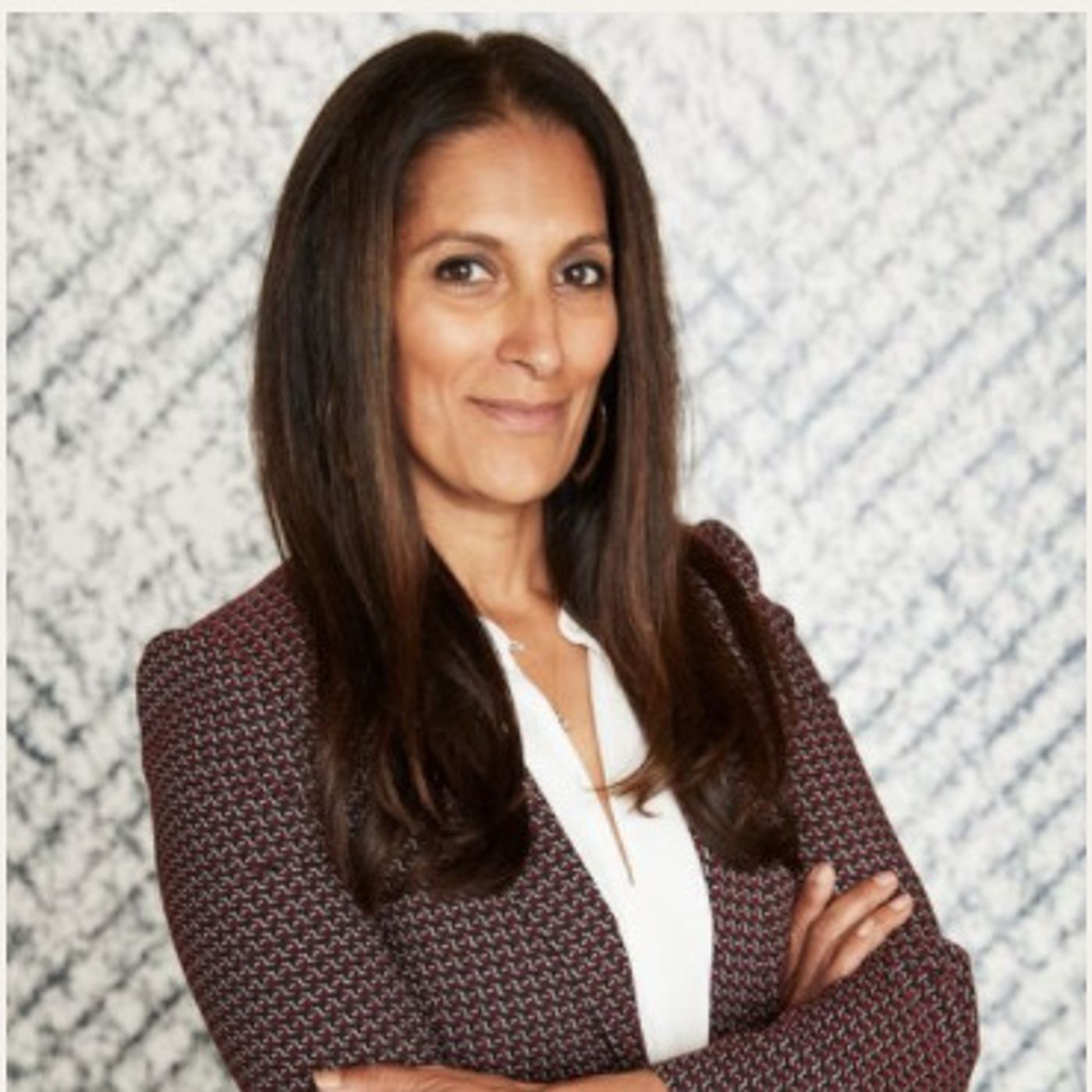
Ep 26Sukhinder Singh Cassidy: "People Want The Experience They Don't Have In Their Day Job."
(1:50) - Start of interview(2:23) - Sukhinder's "origin story"(2:58) - Her start in Silicon Valley in 1997. She characterizes her career as "always building".Junglee - Amazon ('98-99)Yodlee ('99-'03)Google ('03-'09)Accel-Polyvore ('10)Joyus ('11-'17)TheBoardlist ('15-present)Stubhub ('18-'20)(6:50) - Her boardroom experience (J Crew Group, StichFix, TripAdvisor, Ericsson, Urban Outfitters, Upstart...). "Your job is one of influence, and one of bringing specialization - in my case I brought e-commerce and digital [to my first board]." "Boardrooms are increasingly open to the idea of non-CEO specialists - allowing the possibility to bring more modern and diverse skill-sets into the boardroom."(9:35) - The boardroom diversity problem, and why she founded TheBoardlist in 2015.Bring more equity to the table.Bring all the talent to boardrooms.(11:50) - Why diversity is a bigger problem in private (venture-backed) companies than in public companies.(13:40) - The evolution of TheBoardlist since 2015. Started as a crowdsourced list of people who could serve on boards, first tapping a group of 30 executives/founders/entrepreneurs such as Reid Hoffman, Michael Dearing and Joanne Bradford - resulting in 600 names added in an excel spreadsheet and a very simple website. Today TheBoardlist has about 17,000-18,000 members, divided in the following categories:Nominated director candidates.NominatorsCompanies that are searching for board members.(16:29) - Since then, there have been ~2,000 board searches in TheBoardList. There has been a 4x increase in board searches since the MeToo and BLM cultural crisis. 75% of board searches are for private companies, 25% for public companies. Within the private companies: equally divided between early, mid and late stage. It's a "discovery platform" (curated list with recommended board candidates) it's not a "placement platform."(19:09) - Her take on the evolution of venture-backed company boards (and independent directors). "Often the independent board seat goes unfilled after the Series A or B."(22:28) - Choosing between a private and public company board position. "People want the experience they don't have in their day job." (board allows not only to contribute, but also to learn). Her advice to founders: "Often, you might be able rent unto the board the experience you can't afford to hire yet as a day job." You can craft a board seat for 1 or 2 years.(26:06) - Attracting more experienced directors to startup boards (as chairs or lead independent directors). Distinction with coaches. CEO reviews. "Every team needs a coach."(31:24) - Her take on SB-826 and AB-979 (California board diversity laws). "SB-826 has moved the needle." "Tokenism is about how you treat somebody once they get there."(35:25) - "The one thing that we need and that is missing is a conversation about board terms." Board Refreshment is critical for board diversity.(36:27) - Her take on dual-class share structures and other control structures.(39:46) - Her take on the shareholder primacy vs stakeholder debate. "Customer activism and employee activism are real and enduring trends."(43:41) - Her take on shareholder activism. Conflict between short term results vs long term strategy. "Directors need more courage than ever before." "You need to be both hopeful and paranoid as a director (and willing to put in the work) to help create a company with that bifocal lens."As a board member, you have to be really attuned to this issue because there are proven financial returns to activists.It forces companies to confront issues that they would otherwise not confront in a reasonable time frame.(47:17) - Her favorite books:Good to Great, by Jim Collins (2001)Strategy Beyond the Hockey Stick, McKinsey & Company (2018)The Seat of the Soul, by Gary Zukav (1989)(48:48) - Her mentors (her dad was her absolute mentor). Group of mentors in Silicon Valley including founders of Junglee, Omid Kordestani (Google), different board members.(50:49) - Her favorite quote: "You don't know if you don't try"(51:00) - Her "unusual habit": shopping, knitting.(51:38) - The living person she most admires: her Sikh spiritual leader.(53:14) - Her parting thoughts for directors.Ms. Singh Cassidy is currently the Founder and Chairman of theBoardlist, and most recently served as the President of StubHub Inc, the leading global consumer ticketing marketplace for live entertainment. In February 2020, StubHub was acquired by Viagogo for $4bn, in a transaction led by Sukhinder and her team. She is currently a director of Upstart and Urban Outfitters. Ms. Singh Cassidy previously served on the board of Tripadvisor and Ericsson until 2018. Ms. Singh Cassidy holds a B.A. in Business Administration from the Ivey Business School at Western University.__Follow Evan on Twitter @evanepsteinMusic/Soundtrack (found via Free Music Archive): Seeing The Future by Dexter Britain is licensed under a Attribution-Noncommercial-Share Alike 3.0 United States License You can fo
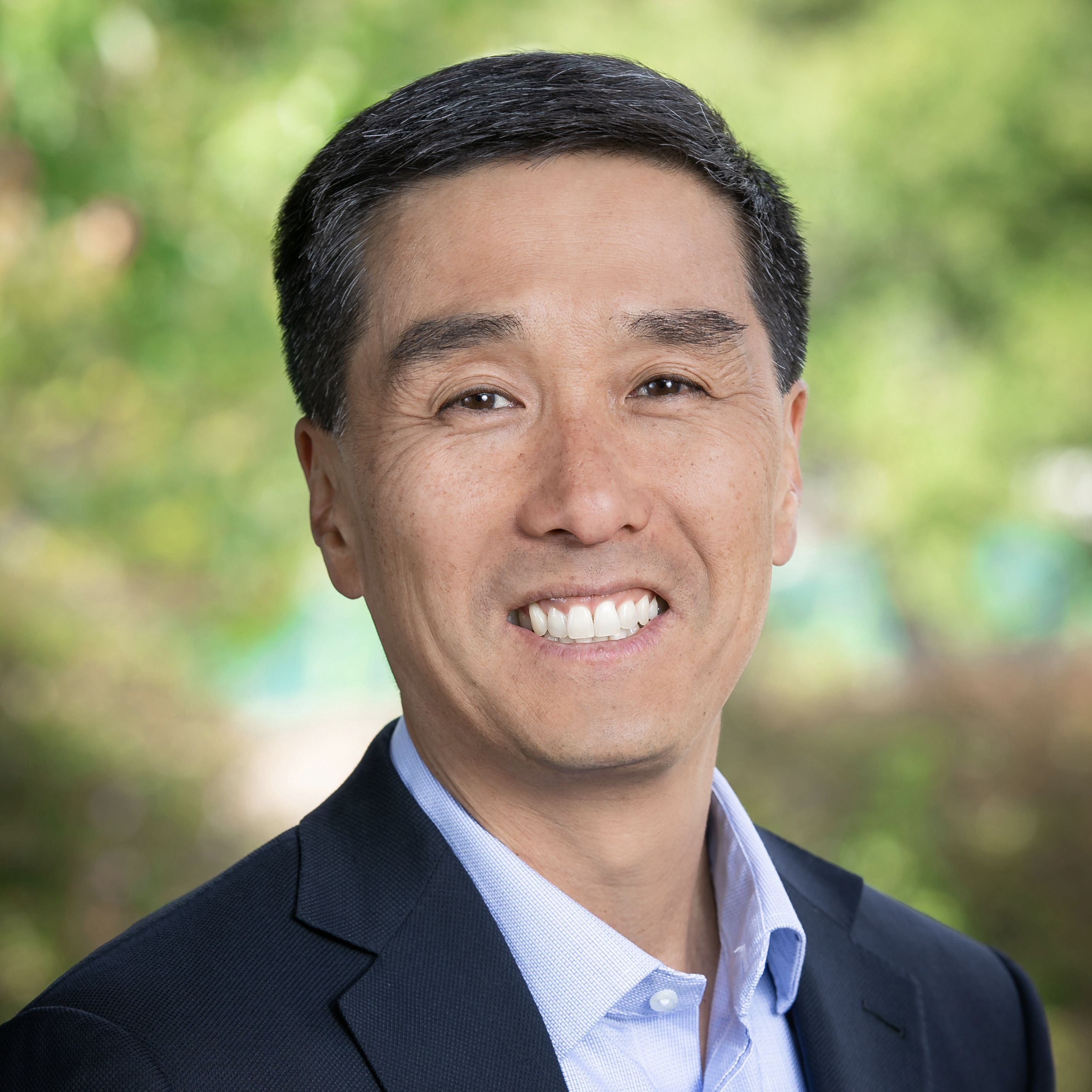
Ep 25David Chun: "The Demand For New Directors Will Increase Exponentially Over the Next 12-24 Months."
(1:40) - Start of interview(2:38) - David's "origin story"(4:49) - The founding of Equilar in 2000.The modern "corporate governance" era started after the corporate scandals of the early 2000s (Enron, Tyco, Adelphia, WorldCom, etc.) and the passage of SOX in 2002. "Very few people talked about corporate governance in the 1990s"With this new focus on corporate governance, there was a lot of attention given to exec comp.(9:56) - The Board's role in setting compensation for the CEO: "It's a very tricky decision, and there is no right answer." "Compensation is a very emotional and difficult decision, with many different stakeholders involved." (11:33) - Their work on the investors' side (Calpers, Vanguard, Blackrock, etc).(12:11) - They made a conscious decision from day one to track the trajectories of executives and directors from SEC data, which has resulted in the development of their BoardEdge Product.(13:59) - His take on Say on Pay regulation: it increased significantly the amount of shareholder engagement.(17:05) - His take on Elon Musk's ~$55bn comp package at Tesla and other 100% at-risk performance awards. (19:33) - The Nasdaq-Equilar Strategic Partnership on boardroom diversity (announced on Dec 9, 2020).Distinctions with CA laws SB-826 and AB-979.Equilar's BoardEdge product includes one million executives and directors.Equilar's Diversity Network (36 Partner Institutions, 5,158 Member Profiles, 2,044 board appointments) "Registry of registries" (30:53) - The challenge of meeting the new boardroom diversity requirements set by SB-826, AB-979 and Nasdaq. "There is a need for more candidates who are not on boards." "The demand will go up exponentially in the next 12-24 months, and Equilar is working to help on the supply side."(32:27) - The latest trends on director compensation, and impact of COVID-19 on boards (Stanford/Equilar study).(35:09) - His take on the current state of private and public capital markets (the "window is wide open for going public, but when the market shuts down - it will shut down hard")(37:03) - His thoughts on the latest trend of companies and executives leaving SF/Bay Area/CA to TX, FL, etc.(39:30) - His take on the stakeholder vs shareholder debate as a CEO and executive compensation expert.(42:04) - His favorite books:The Hard Things About Hard Things, by Ben Horowitz (2014)Measure What Matters How Google, Bono, and the Gates Foundation Rock the World with OKRs, by John Doerr (2018)(43:11) - His mentors (his dad, and his best friend's dad in high school).(44:30) - His favorite quote: "Skate to where the puck is going to be, not where it is today" (Wayne Gretsky)(45:42) - His "unusual habit": a classic multitasker.(47:00) - The living person he most admires: Warren Buffett.(48:00) - His final thought on where the puck is going on governance: boardroom diversity beyond public companies: private companies, PE, VC, non-profits, etc. Human capital metrics will become increasingly more relevant. David Chun is the founder & CEO of Equilar, a Silicon Valley based leading provider of corporate leadership data solutions. Companies of all sizes rely on Equilar for business development, recruiting, executive compensation and shareholder engagement, including 70% of the Fortune 500 and institutional investors representing over $20 trillion in assets.In addition, David is a Trustee of the Committee for Economic Development (CED) and serves on the boards of the Silicon Valley Leadership Group (SVLG) and the Asian Pacific Fund Community Foundation of San Francisco. He is on Catalyst’s Women on Board Advisory Council, the Silicon Valley Advisory Council of the Commonwealth Club of California, the Women on Boards Advisory Council of the California Partners Project and the Advisory Council of the Angel Island Immigration Station Foundation.David is a also a member of the Young Presidents’ Organization (YPO), Past Chair of the SF Bay Chapter, a founding member of the Council of Korean Americans (CKA) and a former advisory board member of the Wharton Center for Entrepreneurship.__Follow Evan on Twitter @evanepsteinMusic/Soundtrack (found via Free Music Archive): Seeing The Future by Dexter Britain is licensed under a Attribution-Noncommercial-Share Alike 3.0 United States License You can follow Evan on social media at:X: @evanepsteinLinkedIn: https://www.linkedin.com/in/epsteinevan/ Substack: https://evanepstein.substack.com/__To support this podcast you can join as a subscriber of the Boardroom Governance Newsletter at https://evanepstein.substack.com/__Music/Soundtrack (found via Free Music Archive): Seeing The Future by Dexter Britain is licensed under a Attribution-Noncommercial-Share Alike 3.0 United States License

Ep 24David Berger: On Purpose, Dual-Class Stock, LTSE, Board Diversity, SPACs, Shareholder Activism and More.
(1:40) - Start of interview(2:10) - David's "origin story"(3:44) - His start with Wilson Sonsini in 1989.(6:11) - His experience serving as a board member, and why he thinks corporate America has lost out on having lawyers as directors. His for corporate boards have included California Culinary Academy, and currently LTSE.(7:41) - His take on the Long Term Stock Exchange.(9:47) - His thoughts on why companies should list on the LTSE ("the market is wide open").(11:03) - His take and role as an Advisor to the American Law Institute's Restatement of Corporate Governance.(13:22) - His take on the Business Roundtable Restatement of the Purpose of the Corporation (2019) (14:05) - Some historical context for purpose of corporation debate (stakeholders vs stockholder primacy).(16:49) - His advocacy in favor of dual-class stock.(20:27) - His dislike of time-based sunset provisions, as proposed by CII ("one-size-fits-all sunset provision").(24:42) - His take on distinguishing dual-class stock and a listing on the LTSE.(25:55) - His view on tenure-voting.(28:52) - His take on duties of directors in VC-backed companies in conflicted situations, since the Trados case.(32:14) - The governance risks that he sees with the emergence of SPACs in 2020.(34:53) - His take on the soaring stock market and the current tech boom.(36:34) - His thoughts on WFH after pandemic and how it has impacted law firms and other sectors.(37:47) - His take on shareholder activism this year, and what's next (activity will pick up in spring 2021). His advice for companies and boards is to think about long term plans:Economic message: growth plan for the long term must be communicated early and often to stockholders.Governance message: focus on diversity at all levels, especially at the board level.Public message: stakeholder and ESG concerns.(44:06) - His take on California's SB-876 and AB-979 laws and the future of boardroom diversity.(46:49) - Next big issues for boards and directors:GlobalizationMeasuring externalities (such as carbon emissions).(48:18) - His favorite books:The Invisible Man, by Ralph Ellison (1952)In Search of Lost Time, by Marcel Proust (1913-1927)The Diary of Anne Frank, by Anne Frank (1947)Zen and the Art of Motorcycle Maintenance, by Robert Pirsig (1974)(49:34) - Some of his mentors:Wallace Fowlie (at Duke).Bruce Payne (Ethics)Larry Sonsini (WSGR)(50:59) - His favorite quote:"Some men see things as they are, and ask why. I dream of things that never were, and ask why not" by Bobby Kennedy.(51:27) - His "unusual habit" that he loves the most:Elephants. His true passion is wildlife conservation.(53:51) - The living people he most admires:Jane GoodallIain Douglas HamiltonDavid Berger specializes in corporate governance and M&A litigation as well as rapid response shareholder activism and corporate governance risk oversight. David’s practice is an unusual blend of corporate governance advisory work and litigation, and he is nationally recognized for his expertise in both the boardroom and the courtroom. David also represents directors and companies in internal investigations and public companies on disclosure and SEC proceedings.Follow Evan on Twitter @evanepsteinMusic/Soundtrack (found via Free Music Archive): Seeing The Future by Dexter Britain is licensed under a Attribution-Noncommercial-Share Alike 3.0 United States License You can follow Evan on social media at:X: @evanepsteinLinkedIn: https://www.linkedin.com/in/epsteinevan/ Substack: https://evanepstein.substack.com/__To support this podcast you can join as a subscriber of the Boardroom Governance Newsletter at https://evanepstein.substack.com/__Music/Soundtrack (found via Free Music Archive): Seeing The Future by Dexter Britain is licensed under a Attribution-Noncommercial-Share Alike 3.0 United States License
Ep 23Yumi Narita: Promoting Good Governance from the Comptroller's Office of NYC.
(1:27) - Start of interview(2:59) - Yumi's "origin story"(4:18) - Her start with Barclay's Global Investors (which was later acquired by BlackRock).(4:50) - The lessons she learned working for the Stewardship team at BlackRock (2004-2018)Proxy Voting GroupBig change on engagement with companies started after financial crisis (2007-2009).Impact Dodd Frank Act (2010) - Say on Pay.(10:24) - Her experience as Global Head of Corporate Governance at Alliance Bernstein (2018-2019).(13:29) - How do governance professionals (proxy voting teams) reconcile dissonances with portfolio managers.(15:17) - Her role at the NYC Office of the Comptroller’s Corporate Governance and Responsible Investment team. "It's hard for asset managers to be advocates, as opposed to asset owners such as the NYC pension funds."(19:29) - Her take on the SEC's new shareholder proposal rules and DOL's new rule shifting away from ESG.(25:09) - Her take on the increasing importance of institutional investors' voice on corporate governance, particularly the top 3-5 asset managers. Any antitrust risks on cross-holdings by institutional investors?(29:39) - Her predictions on how some of these regulations may change during a Biden Administration.(32:20) - Her take on the Boardroom Accountability Project 1.0 (2014) focused on Proxy Access.(35:56) - Her take on the Boardroom Accountability Project 2.0 (2017) focused on board diversity, matrix and refreshment.(39:03) - Her take on the Boardroom Accountability Project 3.0 (2019) calling on publicly-traded companies to adopt a policy requiring the consideration of both women and people of color for every open board seat and for CEO appointments, a version of the “Rooney Rule” pioneered by the NFL. ("at least 20 companies have adopted this practice, and this will continue.")(40:12) - Push on EEO-1 Reports (it's a type of CEO accountability project, "the majority of Fortune 100 companies currently disclose these reports or have committed to disclose them.")(42:59) - Her take on California's SB-876 and AB-979 laws on boardroom diversity.(44:49) - Her opinion on the BRT restatement of the purpose of the corporation (2019).Her involvement with The Test of Corporate Purpose Initiative.What are the quantitative measures or data that can analyze these metrics on corporate purpose?(48:10) - Her thoughts on whether we will ever see employees elect corporate directors per Elizabeth Warren's proposed Accountable Capitalism Act (2018)(49:29) - Her favorite books:East of Eden, by John Steinbeck (1952)Works by Michel Foucalt (studies on biopower and other theories of power)The Happiness Industry, by William Davies (2015)(50:43) - Her mentor was her late grandmother who taught her that "as a woman, you can always take care of yourself and you should ensure your own financial stability, if possible."(51:29) - Lessons from 2020: "You have to live your life today - time is more important than money."(52:36) - The experience of living in NYC under COVID-19.(54:51) - The living person she most admires: Laura Nader. "You have to dress conservatively if you're going to have extremely revolutionary ideas."Yumi Narita is the Executive Director of Corporate Governance at the Comptroller's Office of New York City. The Comptroller serves as investment advisor, custodian, and a trustee to the New York City Pension Funds, which hold approximately $228 billion in assets. In her role as Executive Director, Ms. Narita is responsible for developing and implementing active ownership programs for public equities, including voting proxies, engaging portfolio companies on their ESG policies and practices, and advocating for regulatory reforms to protect investors and strengthen investor rights. Ms. Narita has 16 years of experience in the ESG industry. Prior to this role, she was the Global Head of Corporate Governance at Alliance Bernstein, and Vice President on the BlackRock Stewardship team.Follow Evan on Twitter @evanepsteinMusic/Soundtrack (found via Free Music Archive): Seeing The Future by Dexter Britain is licensed under a Attribution-Noncommercial-Share Alike 3.0 United States License You can follow Evan on social media at:X: @evanepsteinLinkedIn: https://www.linkedin.com/in/epsteinevan/ Substack: https://evanepstein.substack.com/__To support this podcast you can join as a subscriber of the Boardroom Governance Newsletter at https://evanepstein.substack.com/__Music/Soundtrack (found via Free Music Archive): Seeing The Future by Dexter Britain is licensed under a Attribution-Noncommercial-Share Alike 3.0 United States License

Ep 22Mason Morfit: We Can Bring Peripheral Vision to the Boardroom.
(0:00) Intro(1:17) Start of interview (1:58) Mason's "origin story" (2:51) His start with ValueAct Capital (2001-Present) "A lot of what we do at ValueAct is invite ourselves to the dinner party."(6:20) The history of ValueAct Capital and its investment thesis. How he met Jeffrey Ubben (founder of the firm).The impact of the corporate scandals in the early 2000s and the Martha Stewart story.Building a reputation as long term thinkers with board members that add value, plus network.(11:21) How they built their "board toolkit" for each function of the board with lessons learned from their board experience (starting ~2010s) (12:49) "Our thesis is different to other activist investors who have built their businesses upon campaigns of intimidation, litigation and electioneering" (14:01) Framing ValueAct's activism style within the historical arch of shareholder activism. "Engineers think in terms of optimization and equations, lawyers think in terms of rules, and liberal arts people think in terms of psychology, sociology, literature, etc - I think you need to take into account these three types of thinking for problems [involving corporations}"What happened after SOX (2002) was that the zeitgeist for boardrooms changed in terms of openness to receiving outside opinions.(15:56) The Say on Pay (2011) rules forced greater interaction between directors and shareholders. (18:00) His thoughts on "systematic" boardroom design issues: "we should all have empathy for independent directors, because they're entrusted to make the most consequential decisions around the corporation and yet [they do it part-time and generally lack information]. It's a tough job to do." "We can bring "peripheral" vision to the boardroom, which is supplemental to what the board sees through their own hierarchy." (20:11) The problem with board committee structures and their independent consultants/advisors: "it drives to the balkanization of work." "There is an under-investment in terms of time devoted to strategy [in the boardroom]" (23:33) "Thinking like an investor with an investment thesis is a very crystallizing thought exercise. It will lead you to have a point of view about what the strategy should be." "It's an important ingredient to being a good director." (24:51) How should boards approach strategy, and why the job of the director is so hard (i.e. lack of time and information) (27:49) How does he respond to criticism of activist investors as a class "some of these criticisms are fair." He thinks that it's important to note that shareholder activism (during his career) has had two big bubbles that popped:Surge of activism after SOX, popping after the financial crisis because they didn't perform very well.Resurgence after credit crisis, popping in the mid 2010s.(29:50) How advisors (lawyers, bankers, and others) impacted the activism landscape "activist vulnerability assessments"(30:45) How he distinguishes transactional vs transformational activism Transactional: Traditional break-up, recap and selling of companies.Transformational: reimagining the value proposition of the product of the company. Best in class people and operational performance. It requires a lot more work (they started this practice in the mid-2000s).(33:16) The mission statement of ValueAct since he took over as CEO is "to be the shareholder of choice for great companies navigating change." Examples:Adobe, Microsoft (from client service era to cloud era in software industry)21st Century Fox (streaming in media companies)KKR (alternative asset management industry)(34:46) What he loves about his job (35:29) Advice for independent directors: Activism is everywhere (not just from activist investors)Peripheral vision can be helpful, and thinking critically with an investment thesis adds value.We live in an era of extreme disruption in the economy.Transformation is a critical journey for every company.(37:08) His experience as a director at Microsoft(42:45) His take on the purpose of the corporation, ESG and sustainabilityThey have observed that the businesses that they invest in have a "license to operate": to be held in high regard by their stakeholders, regulators, media, politicians and other relevant constituencies.When they invest in a company they spend time with the "citizenship officers" of the company.Example of investments in financial institutions.(51:28) The principles by which ValueAct Capital invests: "We have to have a unique insight into every company we invest in that begets a meaningful relationship." (power politics is secondary)Good ideas pique curiosity, engagement and conversation.It doesn't matter if the corporation is a controlled corporation (for example, Martha Stewart, KKR, 21st Century Fox are controlled corporations)(53:39) Their international investments:UK: Reuters, Misys, Rolls-Royce.Japan: Olympus, JSR Corporation, Nintendo. "There is a graveyard of activists that have tried to take on Japanese companies at the ballot box and at the court
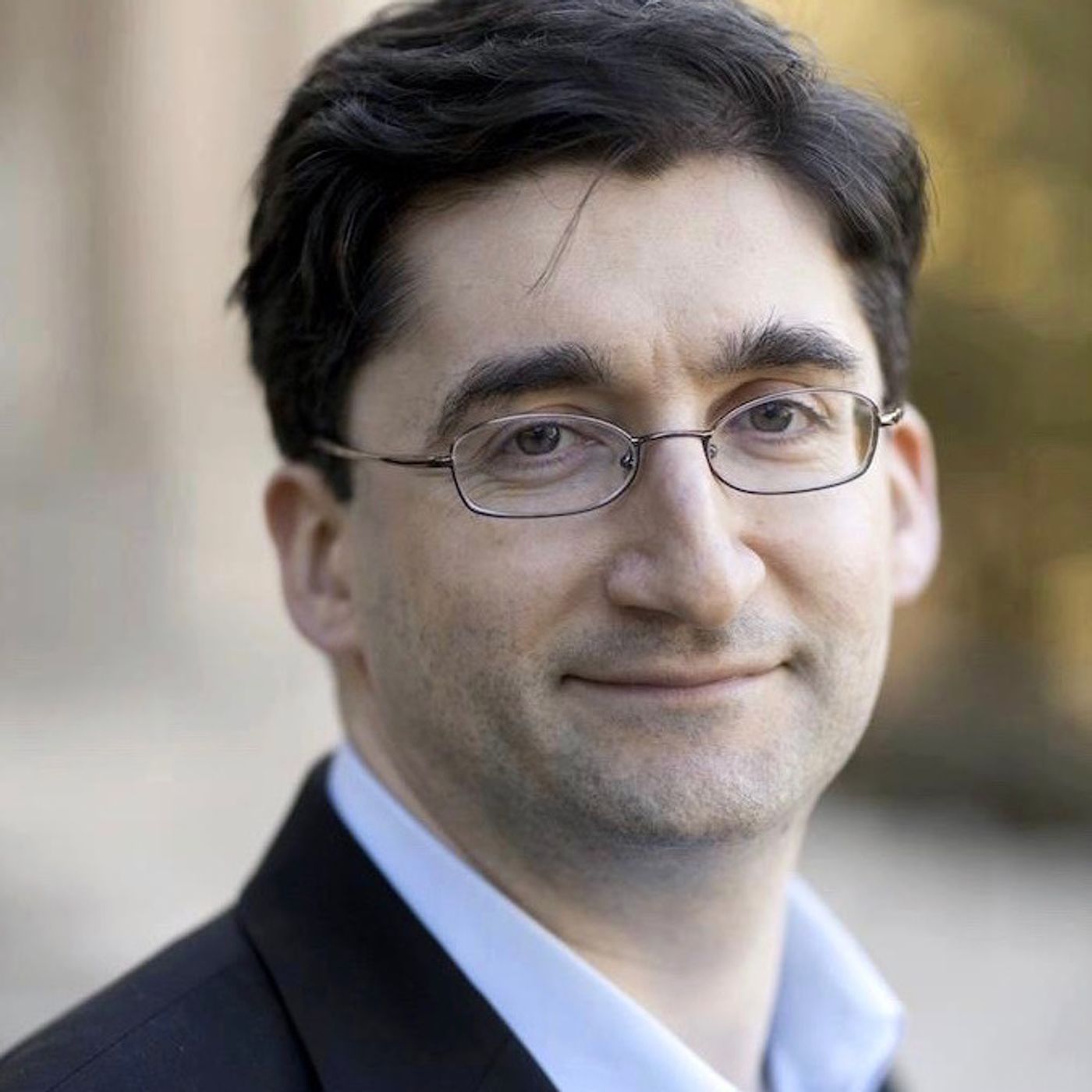
Ep 21Ilya Strebulaev: Focusing on the Finance and Governance of Venture-Backed Companies.
Start of interview [1:19]Ilya's "origin story" [1:50]Lomonosov Moscow State University ('97)New Economic School (NES) ('99)London Business School, PhD Finance ('04)His start as a Professor at the Stanford Graduate School of Business (2004-Present) [7:08]His initial interest in the field of venture capital [7:56] "These days my major problem is that there are so many research projects, and I have to juggle 10 different (amazing) research projects at the same time."Why governance of venture-backed companies has been historically under researched by finance scholars (it has to do with the "quantification revolution" from the 70s-80s). [12:08]His article "The Economic Impact of Venture Capital: Evidence from Public Companies" co-authored with Will Gornall (2015) [14:29]"This is important to mention: venture capital is an American phenomenon, since 2016 every single day the top 5 U.S. public companies by market cap were venture-backed, and from the top 100 there is a significant proportion. But most importantly they are young companies that grow very fast."His article "How Do Venture Capitalists Make Decisions?" co-authored with: Paul A. Gompers, Will Gornall, Steven N. Kaplan (2016) [20:40]Differences between VCs focused in IT and healthcareDifferences in terms of geography (i.e., west coast v. east coast, U.S. v. international)Differences in early stage vs late stage.Deal flow, deal selection, and post-investment value-added as contributors to value creationInvestment selection (jockey v. horse framework)His article "Squaring Venture Capital Valuations with Reality" co-authored with Will Gornall (2017) [32:37]. They wrote this paper because:It is difficult to apply traditional financial methodology (such as DCF or CAPM) to early stage startups.Whenever the valuation of venture-backed companies was reported in the press or in commercial datasets, it did not make sense to him (not the price, but the way it was reported).They used the example of Square's post money valuation pre-IPO.They created a new valuation model for startups (they found that the average unicorn in their sample had 8 classes of shares).His current research on governance of venture-backed companies [41:12]In venture-backed companies boards are very "unstable" due to staged financing.Board control, voting rights and protective provisions.Stanford Venture Capital Initiative: one of its goals is to improve the quality of the data in venture-capital. Some projects:Study of evolution of corporate governance in venture-backed companies.The anatomy of down-round financings.His take on the "stay private vs go public debate" and SPACs [49:12]Significant increase of investors in private markets.Liquidity options beyond IPOs and M&A, such as secondary markets.His favorite books: [54:42]The Structure of Scientific Revolutions, by Thomas Kun (1962)The Autobiography of Bertrand Russell, by Bertrand Russell (1951)His professional mentor: [54:42]His father: "maybe the most important lesson that I learned from him is that you have to be calm, even when life throws at you a ball that that you don't necessarily want." "He taught me how to live and behave in life."Stephen Schaefer. His former academic advisor at LBS.His favorite quotes: [57:43]On the difference between theory and practice. "It is very difficult to tell people: learn how to swim, but only when you learn how to swim we're going to fill the water in the swimming pool"His unusual habit [58:48]These days, the fact that he reads (his goal in life is to devote one hour per day some physical book, usually on topics unrelated to finance).His experience as a corporate director of Yandex [01:00:57]Music/Soundtrack (found via Free Music Archive): Seeing The Future by Dexter Britain is licensed under a Attribution-Noncommercial-Share Alike 3.0 United States License You can follow Evan on social media at:X: @evanepsteinLinkedIn: https://www.linkedin.com/in/epsteinevan/ Substack: https://evanepstein.substack.com/__To support this podcast you can join as a subscriber of the Boardroom Governance Newsletter at https://evanepstein.substack.com/__Music/Soundtrack (found via Free Music Archive): Seeing The Future by Dexter Britain is licensed under a Attribution-Noncommercial-Share Alike 3.0 United States License
Ep 20Kerrie Waring: "All Stakeholders Are Important, But Only Shareholders Can Effectively Hold Boards to Account"
Start of interview [1:06]Kerrie's "origin story" [1:34]Her initiation on corporate governance matters with the UK Institute of Directors (IoD) (2000-2004) [3:49]Her take on corporate director education and training [5:42]Her role at the Institute of Chartered Accountants in England and Wales (ICAEW) (2005-2008) [7:43]Her transition to the International Corporate Governance Network (ICGN) (2008-Present) [9:49]History and mission of ICGN [11:56]. It was established in 1995, it has grow to over 800 members from 43 countries, (~70% of members are based in North America and Europe, ~20% in Asia). These members represent ~US$54 trillion of AUM. ICGN Global Governance PrinciplesICGN Global Stewardship PrinciplesEngagement with regulators (they send ~20-25 engagement letters to regulators per year). "ICGN brings a global investor flavor to national issues."The concept of "investor stewardship" and its evolution over time [15:27]The Cadbury Report (1992)The UK Stewardship Code (2010)The European Shareholder Rights Directive II (SRDII) (2020).Recently, UK and Japan have expanded stewardship principles beyond equity to all asset classes (Japan Stewardship Code, 2020)Her take on the debate of the purpose of the corporation (shareholder primacy vs stakeholders) [20:36]Business Roundtable's Statement on the purpose of the corporation (2019)Europe's Consultation on Sustainable Corporate Governance (2020)Section 172 of the UK Companies Act (2006)CII's statement opposing the BRT's 2019 Restatement ("accountability to everyone means accountability to no one")On the rise of ESG [26:47] "[I think] ESG has grown from a deeper understanding of stewardship since 2008... I would take away the G [since we've always been focused on governance] so really what we have witnessed is the rise of E and S... and this year COVID has shifted the narrative particularly around the S." For example, ICGN members have focused on "human capital management":Health and safetyStaff training due to WFHIncome inequality, pay.Many ICGN members have formed the "Human Capital Management Coalition" which has been engaging with the SEC, resulting in new disclosure rules involving human capital resources [28:49]Her take on climate change [29:31]ICGN is calling for ESG reporting on an international scale to address climate change.Many ICGN members are calling for Task Force on Climate-Related Disclosure (TCFD) frameworkNZ is the first country in the world to make climate reporting compulsory with TCFD.Her take on diversity [32:38]Focus on disclosure of diversity policies.Measurable targets, goals and time periods.Boards should disclose skills matrix. "For me, one of the biggest barriers of board diversity is director tenure, 'zombie directors', we need to have a policy of board refreshment and board evaluation." "There is still a problem surrounding the 'old boys network', the 'male, pale and stale crew.'"Her take on Big Tech [39:14]She's worried about the "covert behavioral manipulative algorithms that are gradually changing the way we think, feel and act." (for example, as described in The Social Dilemma documentary)ICGN has not weighed into this issue. From a governance perspective many ICGN members cannot influence these companies due to dual-class share structures that make them less accountable to shareholders (ICGN advocates for a "one share one vote" structure)."The U.S. also has weaker data privacy regulations than Europe, and that's a problem."Her parting thoughts for directors "investors are your allies" [44:34]Her favorite books: [49:27]Ten Arguments for Deleting Your Social Media Accounts Right Now, (2018) by Jaron Lanier (this is the book that she's currently reading)Factfulness, (2018) by Hans Rosling.Corporate Governance and Chairmanship, (2002) by Sir Adrian Cadbury.Her professional mentor: [46:45]Anne Simpson, currently at CalPERS.His favorite quotes: [47:50]"You can’t go back and change the beginning, but you can start from where you are and change the ending.” (C.S. Lewis)"Unless someone like you cares a whole awful lot, Nothing is going to get better. It's not.” (Dr. Seus, The Lorax).Her unusual habit [48:53]The living person she most admires [49:43]David AttenboroughJacinda ArdernMusic/Soundtrack (found via Free Music Archive): Seeing The Future by Dexter Britain is licensed under a Attribution-Noncommercial-Share Alike 3.0 United States License You can follow Evan on social media at:X: @evanepsteinLinkedIn: https://www.linkedin.com/in/epsteinevan/ Substack: https://evanepstein.substack.com/__To support this podcast you can join as a subscriber of the Boardroom Governance Newsletter at https://evanepstein.substack.com/__Music/Soundtrack (found via Free Music Archive): Seeing The Future by Dexter Britain is licensed under a Attribution-Noncommercial-Share Alike 3.0 United States License