
BirdNote Daily
1,282 episodes — Page 19 of 26

Hawai‘i as a Model for Conservation
With invasive species and climate change, Hawai‘i has experienced so much loss and extinction since Western colonists arrived. But Sam ‘Ohu Gon, the Senior Scientist and Cultural Advisor for the Nature Conservancy of Hawai‘i, believes Hawaiian culture and tradition are key to advancing conservation ecology and has done a lot of work connecting these two worlds. He hopes that one day, Hawai‘i can be not just a microcosm of ecology, but of conservation as well. More info and transcript at BirdNote.org. Want more BirdNote? Subscribe to our weekly newsletter. Sign up for BirdNote+ to get ad-free listening and other perks. BirdNote is a nonprofit. Your tax-deductible gift makes these shows possible. Hosted by Simplecast, an AdsWizz company. See pcm.adswizz.com for information about our collection and use of personal data for advertising.

How Cliff Swallows Build a Nest
When Cliff Swallows arrive on the breeding grounds in North America, the dirty work begins. The swallows scoop up mud in their beaks and carefully build a gourd-shaped nest with a tapered opening. They add a lining of dry grass to keep eggs warm. It takes days of work and a thousand mouthfuls of mud to finish a single nest—and it’s just one part of a large colony.More info and transcript at BirdNote.org. Want more BirdNote? Subscribe to our weekly newsletter. Sign up for BirdNote+ to get ad-free listening and other perks. BirdNote is a nonprofit. Your tax-deductible gift makes these shows possible. Hosted by Simplecast, an AdsWizz company. See pcm.adswizz.com for information about our collection and use of personal data for advertising.
Creating Bird Habitat at Home
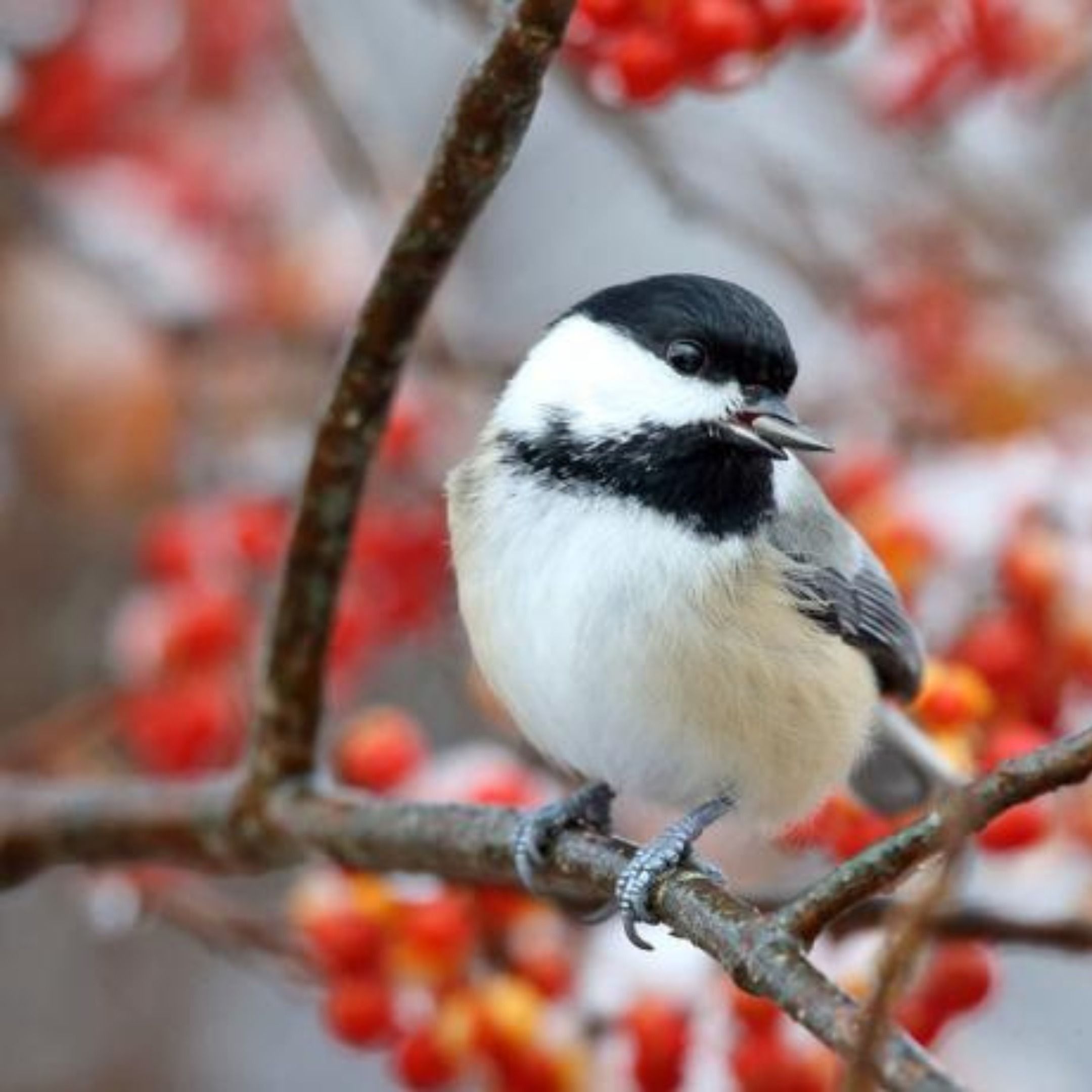
One of the biggest threats to birds is the decline in biodiversity due to habitat loss — and the traditional, manicured lawn isn’t helping. Growing native plants in your yard allows you to protect birds at home, says ecologist Douglas Tallamy, who co-founded an organization called Homegrown National Park® to help people transform their lawns into havens for wildlife.More info and transcript at BirdNote.org. Want more BirdNote? Subscribe to our weekly newsletter. Sign up for BirdNote+ to get ad-free listening and other perks. BirdNote is a nonprofit. Your tax-deductible gift makes these shows possible. Hosted by Simplecast, an AdsWizz company. See pcm.adswizz.com for information about our collection and use of personal data for advertising.

The Secret to Singing Like a Cardinal
Northern Cardinals have vocal abilities that surpass even the most accomplished human singers. When cardinals sing, they sweep their voices from the high to low end of their ranges many times in just seconds. The secret is in the clever way cardinals use their two-sided vocal organ, called the syrinx. By dividing their vocal range between the two sides, cardinals can sing complex songs rapidly.More info and transcript at BirdNote.org. Want more BirdNote? Subscribe to our weekly newsletter. Sign up for BirdNote+ to get ad-free listening and other perks. BirdNote is a nonprofit. Your tax-deductible gift makes these shows possible. Hosted by Simplecast, an AdsWizz company. See pcm.adswizz.com for information about our collection and use of personal data for advertising.

Recognizing a Stranded Loon
Loons are built for life in the water – so much so that their legs don’t work well on land. During migration, loons sometimes mistake wet pavement for the reflective surface of deep water and try to land there, then become unable to take flight again. If you see a stranded loon on a road or parking lot, calling a wildlife rehabilitator can help start the process of returning that bird to safety and back on their migratory journey.More info and transcript at BirdNote.org. Want more BirdNote? Subscribe to our weekly newsletter. Sign up for BirdNote+ to get ad-free listening and other perks. BirdNote is a nonprofit. Your tax-deductible gift makes these shows possible. Hosted by Simplecast, an AdsWizz company. See pcm.adswizz.com for information about our collection and use of personal data for advertising.

Aplomado Falcon
Aplomado Falcons were once widespread residents of the American Southwest, but by the 1950s, they'd disappeared entirely from the region. Loss of habitat, loss of prey, and pesticides all played a role. But in the 1980s, a group called The Peregrine Fund began breeding captive Aplomado Falcons. Over the next 25 years, 1,500 fledglings were set free in South Texas. At the same time, conservation pacts with private landowners provided more than two million acres of habitat. Learn more in Related Resources below.More info and transcript at BirdNote.org. Want more BirdNote? Subscribe to our weekly newsletter. Sign up for BirdNote+ to get ad-free listening and other perks. BirdNote is a nonprofit. Your tax-deductible gift makes these shows possible. Hosted by Simplecast, an AdsWizz company. See pcm.adswizz.com for information about our collection and use of personal data for advertising.

Lee Ann Roripaugh: String of Beads
When writer Lee Ann Roripaugh visited the annual staging grounds of Sandhill Cranes in Nebraska, she was in awe of the birds. During their spring migration, hundreds of thousands of cranes roost on sandbars in the Platte River. The sound and sight of these birds is breathtaking; Lee Ann captures it beautifully in her poem “:: #sandhillcranes #string of beads ::.”More info and transcript at BirdNote.org. Want more BirdNote? Subscribe to our weekly newsletter. Sign up for BirdNote+ to get ad-free listening and other perks. BirdNote is a nonprofit. Your tax-deductible gift makes these shows possible. Hosted by Simplecast, an AdsWizz company. See pcm.adswizz.com for information about our collection and use of personal data for advertising.

Why a Gorget Glitters
A hummingbird's brilliant throat feathers are called a "gorget," a term applied in past centuries to the metallic swatch protecting the throat of a knight-in-armor. Light waves reflect and refract off the throat feathers, creating color in the manner of sun glinting off a film of oil on water. The gorget of this Rufous Hummingbird is stunning!More info and transcript at BirdNote.org. Want more BirdNote? Subscribe to our weekly newsletter. Sign up for BirdNote+ to get ad-free listening and other perks. BirdNote is a nonprofit. Your tax-deductible gift makes these shows possible. Hosted by Simplecast, an AdsWizz company. See pcm.adswizz.com for information about our collection and use of personal data for advertising.
How Birds Survived the Asteroid
The asteroid that struck the Yucatán 66 million years ago wreaked worldwide ecological damage, spelling the end for most dinosaurs and destroying the world’s forests. Yet a few bird-like dinosaur groups made it through. Scientists believe that these groups were all ground-dwellers. Though some species could fly, a life on the ground would have been a key advantage in a world without forests. All modern birds evolved from these ancient creatures.More info and transcript at BirdNote.org. Want more BirdNote? Subscribe to our weekly newsletter. Sign up for BirdNote+ to get ad-free listening and other perks. BirdNote is a nonprofit. Your tax-deductible gift makes these shows possible. Hosted by Simplecast, an AdsWizz company. See pcm.adswizz.com for information about our collection and use of personal data for advertising.
White-tailed Hawks on the Texas Coastal Plain
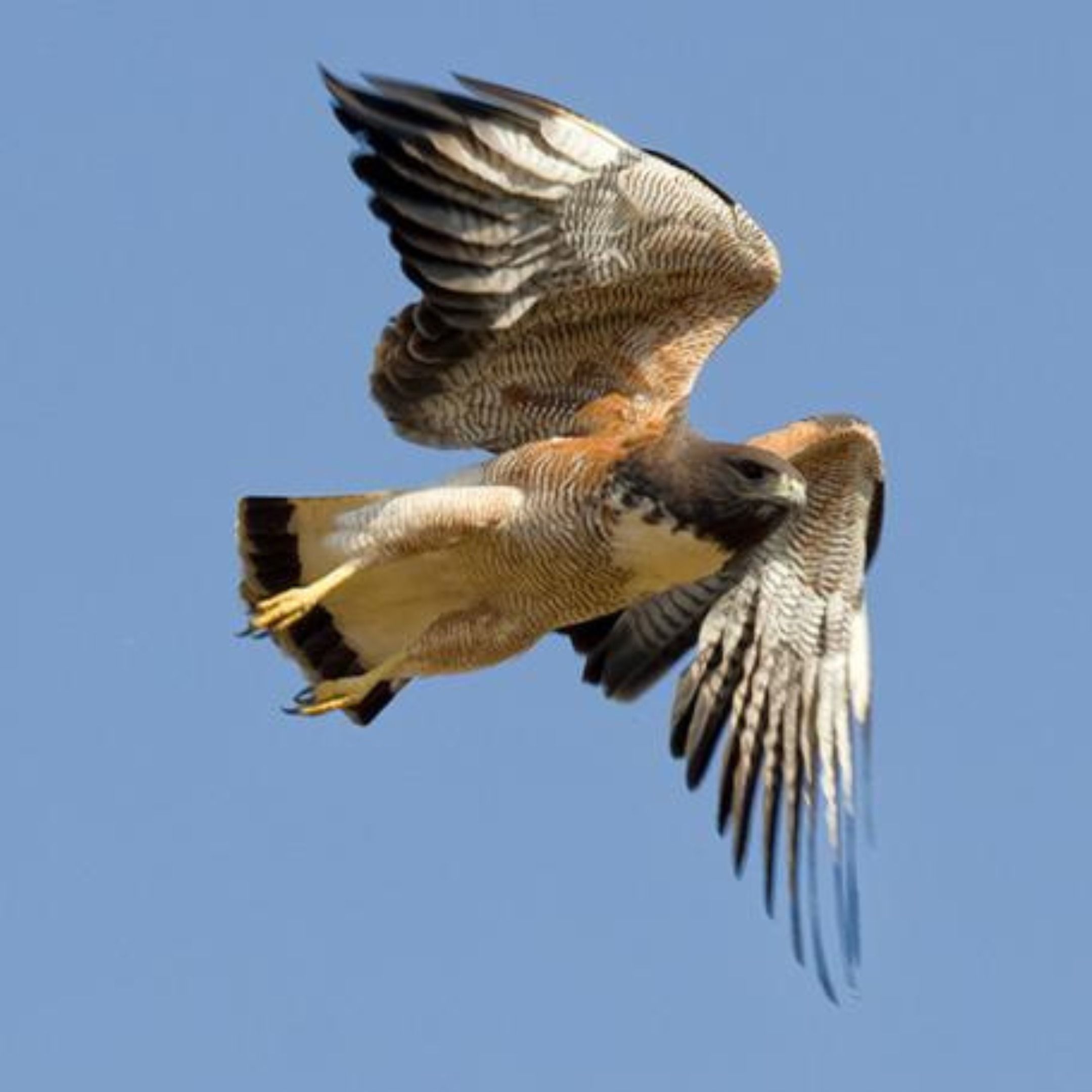
The White-tailed Hawk thrives in the grassy plains of the Texas Coastal Plain, where many tropical species reach the northern limit of their ranges. White-tailed Hawks often hunt by kiting: hovering like a kite in the breeze with the wings held in a “V” above the body, dropping suddenly on their prey. When a grass fire breaks out, they hunt small animals fleeing from the fire’s edge.More info and transcript at BirdNote.org. Want more BirdNote? Subscribe to our weekly newsletter. Sign up for BirdNote+ to get ad-free listening and other perks. BirdNote is a nonprofit. Your tax-deductible gift makes these shows possible. Hosted by Simplecast, an AdsWizz company. See pcm.adswizz.com for information about our collection and use of personal data for advertising.

Spark Bird: John Kessler and the Music of Birds
John Kessler served as BirdNote’s senior producer for over 18 years. But before BirdNote existed, he was recording the sounds of Seattle for public radio station KPLU, now called KNKX. After capturing many of Seattle’s well-known spots on tape, he broadened his scope by connecting with local birders to find the best places to hear birds around town. Shortly after, BirdNote's founder, Chris Petersen, sought out John's musical ear to help create a sound-rich show highlighting the joy of birds.More info and transcript at BirdNote.org. Want more BirdNote? Subscribe to our weekly newsletter. Sign up for BirdNote+ to get ad-free listening and other perks. BirdNote is a nonprofit. Your tax-deductible gift makes these shows possible. Hosted by Simplecast, an AdsWizz company. See pcm.adswizz.com for information about our collection and use of personal data for advertising.
Burrowing Belted Kingfisher
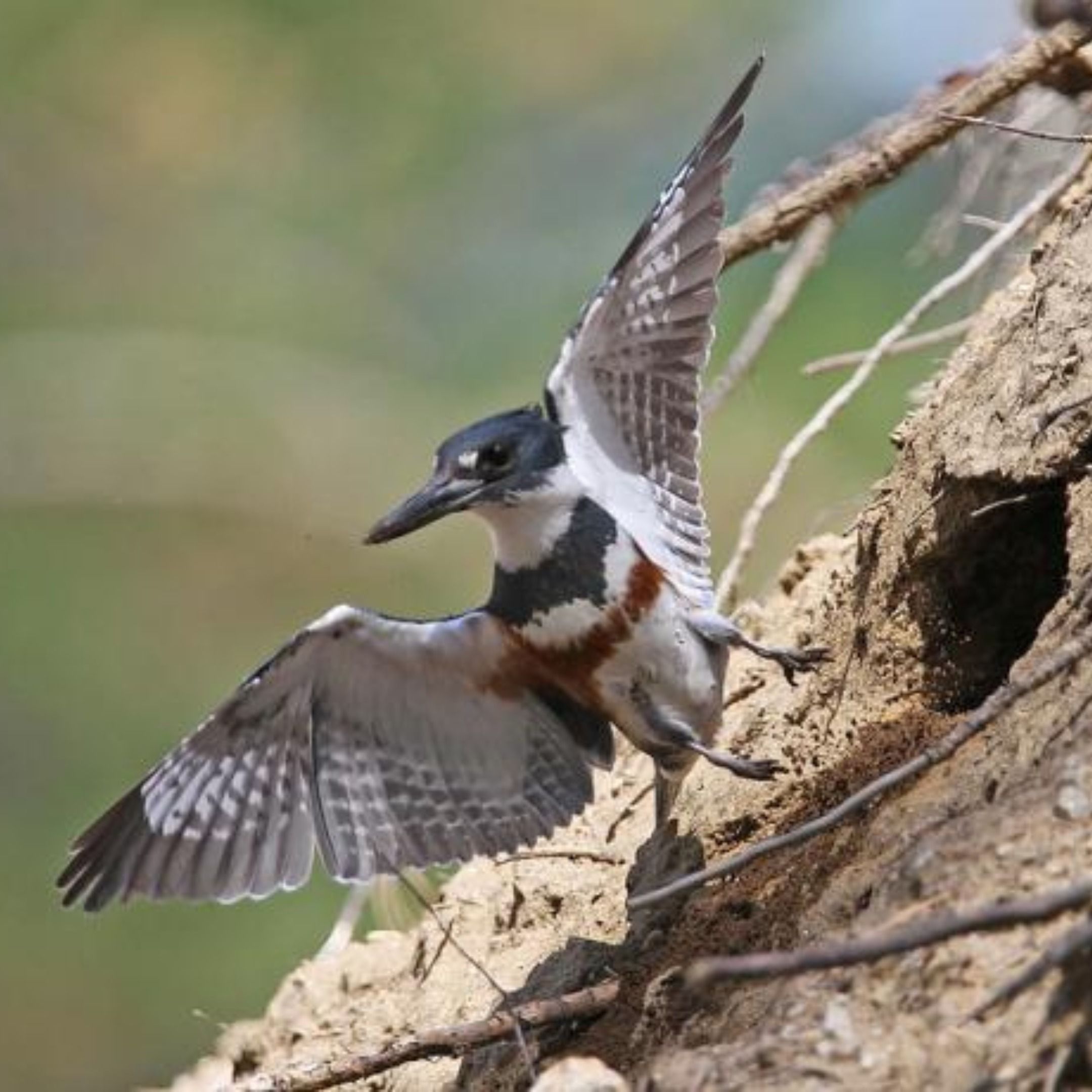
The Belted Kingfisher dashes through the air, warning intruders with its rapid-fire, rattling call. In spring, the best places to see Belted Kingfishers are along sandy banks – they are busy digging burrows, where they will nest. The holes typically reach three to six feet into the bank, but some nesting holes can extend 15 feet.More info and transcript at BirdNote.org. Want more BirdNote? Subscribe to our weekly newsletter. Sign up for BirdNote+ to get ad-free listening and other perks. BirdNote is a nonprofit. Your tax-deductible gift makes these shows possible. Hosted by Simplecast, an AdsWizz company. See pcm.adswizz.com for information about our collection and use of personal data for advertising.

Aviary: Bird Echolocation to the Rescue
In this episode featuring Aviary — the shapeshifting bird superhero — the surprising abilities of birds come in handy when a student gets lost exploring a cave with his class. Aviary remembers an amazing bird called the Himalayan Swiftlet that’s able to echolocate like a bat, and enlists this species’ superpower to save the day.More info and transcript at BirdNote.org. Want more BirdNote? Subscribe to our weekly newsletter. Sign up for BirdNote+ to get ad-free listening and other perks. BirdNote is a nonprofit. Your tax-deductible gift makes these shows possible. Hosted by Simplecast, an AdsWizz company. See pcm.adswizz.com for information about our collection and use of personal data for advertising.
Birds Dress for Spring
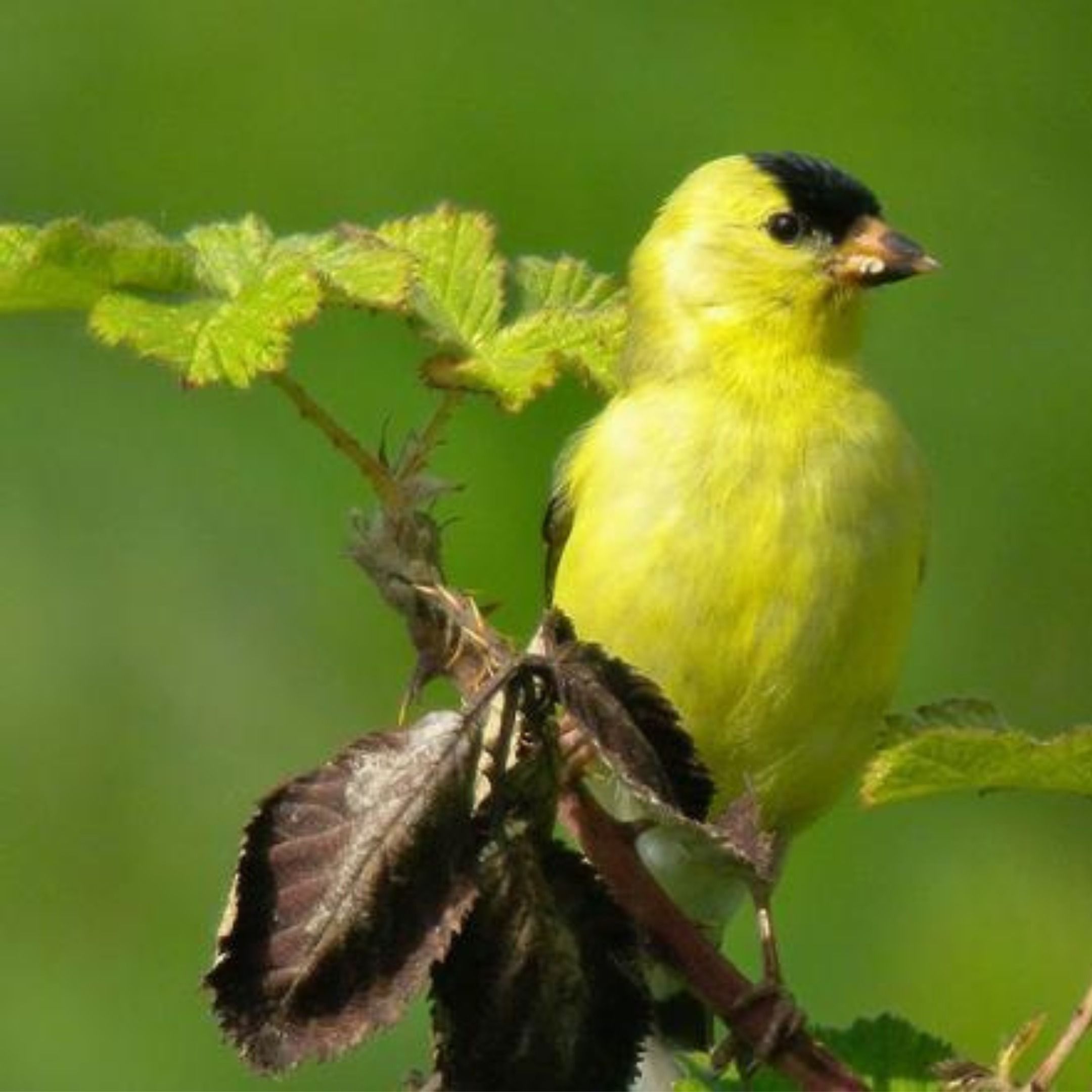
It's spring! And for many birds, a time to look their best to attract a new mate. This American Goldfinch has recently molted. Its old, worn-down feathers have fallen out, and new ones have grown in. When goldfinches molt in the fall, they lose these brightly colored feathers. Their winter camouflage helps them blend in with the drab background of the season.More info and transcript at BirdNote.org. Want more BirdNote? Subscribe to our weekly newsletter. Sign up for BirdNote+ to get ad-free listening and other perks. BirdNote is a nonprofit. Your tax-deductible gift makes these shows possible. Hosted by Simplecast, an AdsWizz company. See pcm.adswizz.com for information about our collection and use of personal data for advertising.
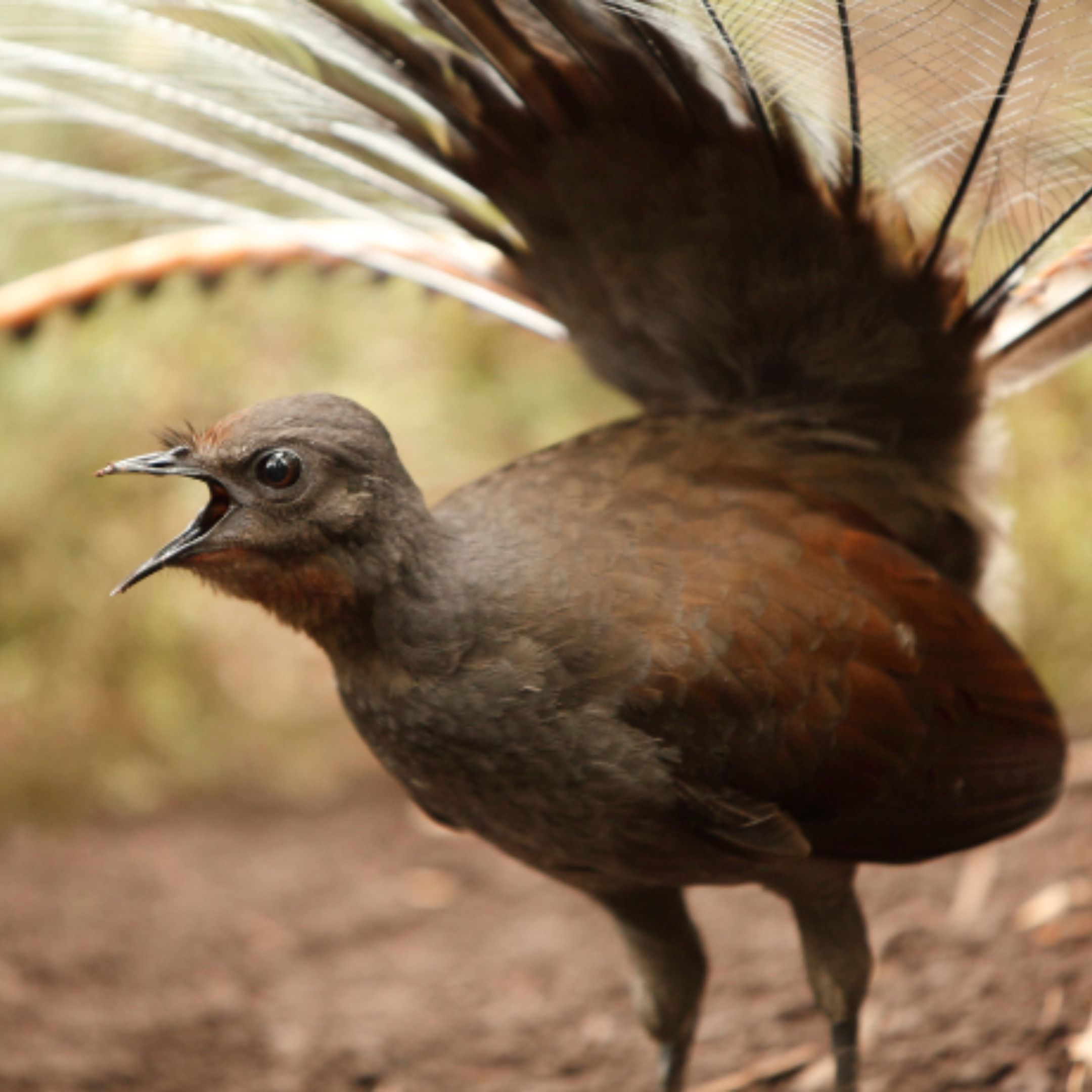
Lyrebirds Shift the Earth
Beavers are well known as ecosystem engineers in North America. In Australia, lyrebirds play a big role in shaping their environment when they use their toes to dig in the ground for food. A single lyrebird can shift 11 dump truck loads of soil and leaves — each year! That’s thought to be more than any other digging animal. Lyrebirds are best known for their spot-on imitations of other birds’ songs and calls.More info and transcript at BirdNote.org. Want more BirdNote? Subscribe to our weekly newsletter. Sign up for BirdNote+ to get ad-free listening and other perks. BirdNote is a nonprofit. Your tax-deductible gift makes these shows possible. Hosted by Simplecast, an AdsWizz company. See pcm.adswizz.com for information about our collection and use of personal data for advertising.
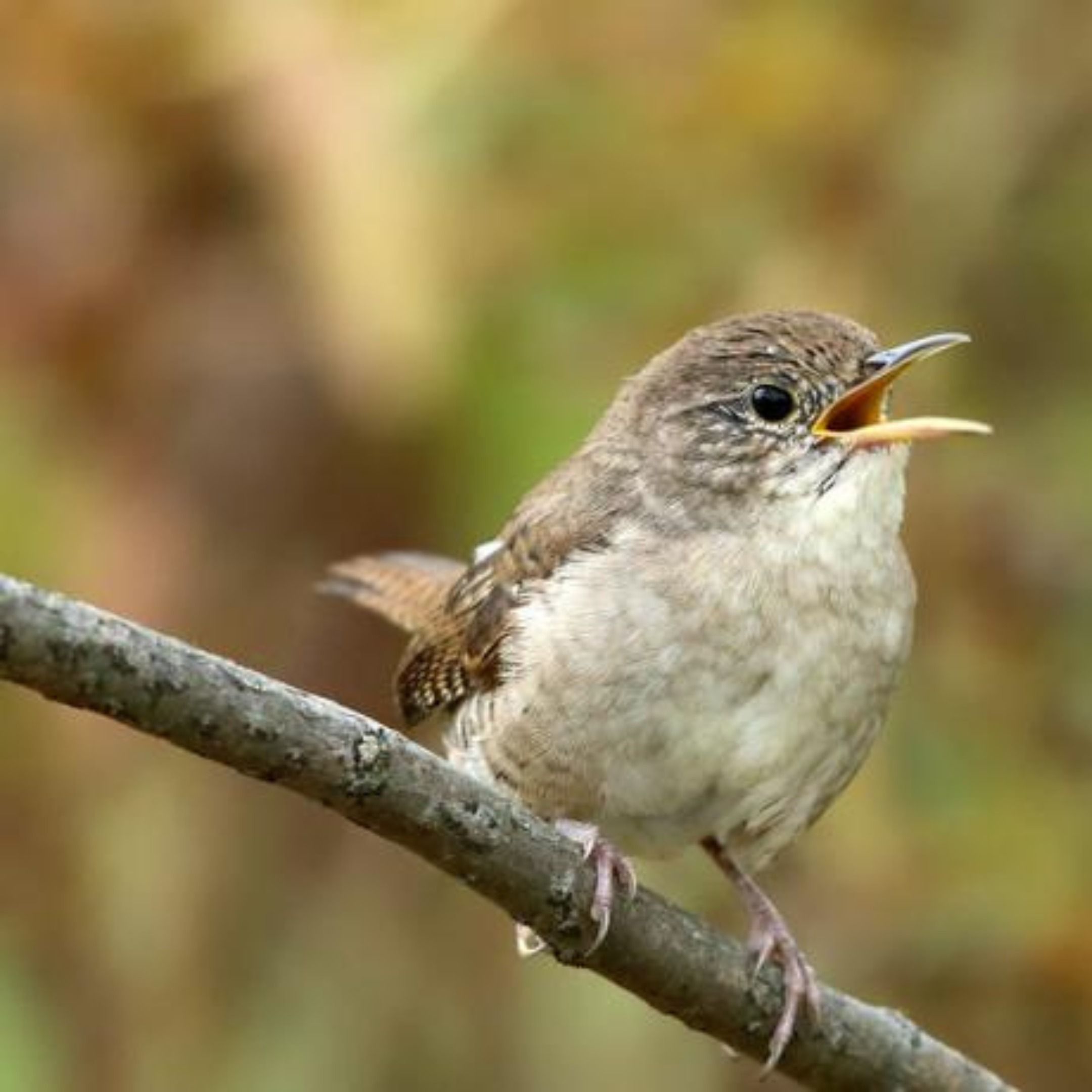
House Wren – Little Brown Dynamo
House Wrens dart from perch to perch and sing almost nonstop. They’re one of the most thoroughly studied songbird species. House Wrens nest in cavities, including backyard nest boxes. Most migrate south in late summer. The male House Wren sometimes builds multiple nests, allowing his mate to choose her favorite and put her finishing touches on it.More info and transcript at BirdNote.org. Want more BirdNote? Subscribe to our weekly newsletter. Sign up for BirdNote+ to get ad-free listening and other perks. BirdNote is a nonprofit. Your tax-deductible gift makes these shows possible. Hosted by Simplecast, an AdsWizz company. See pcm.adswizz.com for information about our collection and use of personal data for advertising.

Mockingbirds Mimic Frogs
The avian world is full of mimicry artists, but Northern Mockingbirds take it to a new level. Not only can they imitate other birds, they can mimic frogs and toads! Their performances are so convincing it’s hard to tell frog from bird. It’s still unknown how this benefits mockingbirds, but scientists think that the females might find it attractive.More info and transcript at BirdNote.org. Want more BirdNote? Subscribe to our weekly newsletter. Sign up for BirdNote+ to get ad-free listening and other perks. BirdNote is a nonprofit. Your tax-deductible gift makes these shows possible. Hosted by Simplecast, an AdsWizz company. See pcm.adswizz.com for information about our collection and use of personal data for advertising.
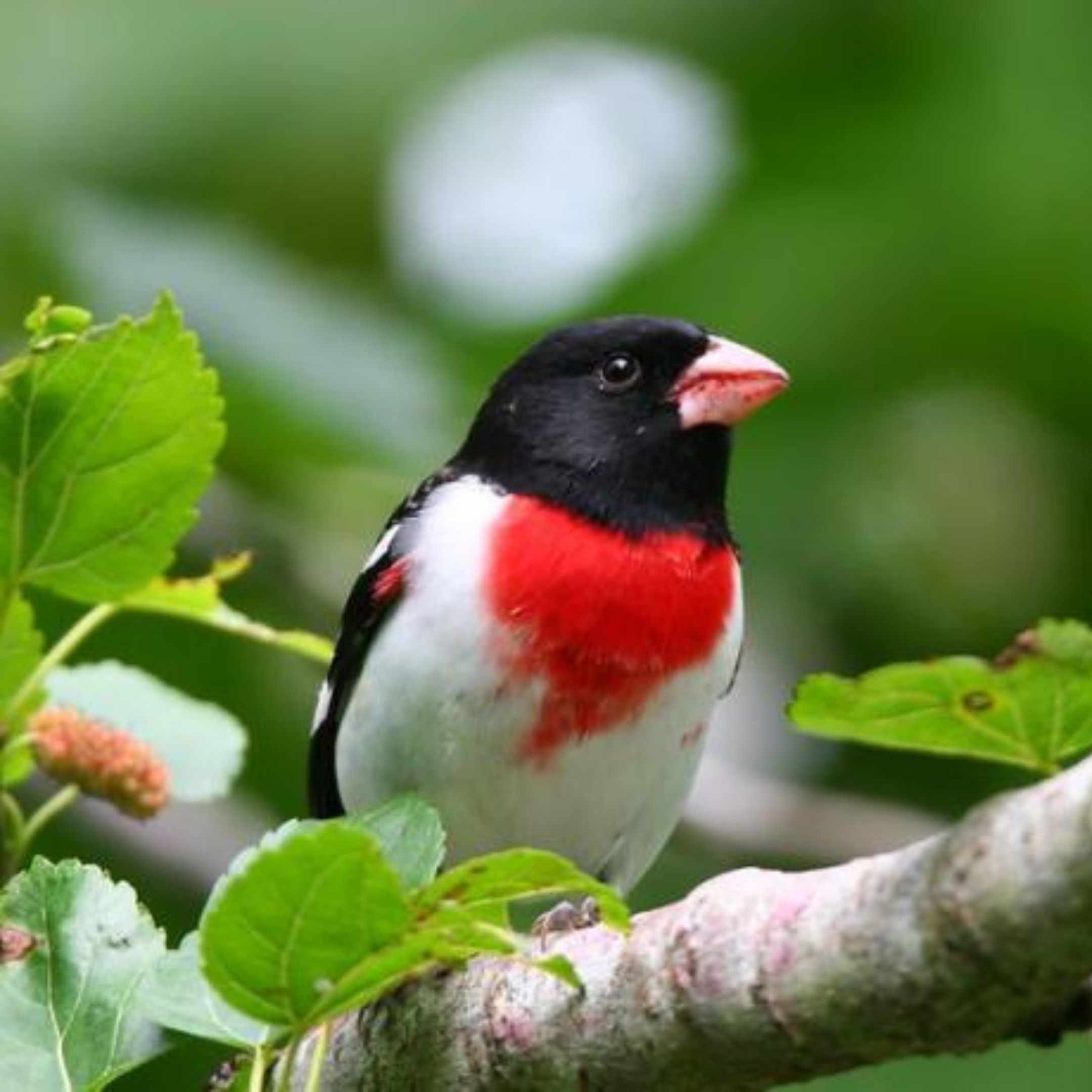
High Island, Texas
Each spring, millions of songbirds migrate north from the tropics to nest in North America. It takes 15 hours on average to cross the roughly 500 miles of the Gulf of Mexico. If wind or rain slows the crossing, the birds are worn out and famished when they reach land. What will they find on gaining the coast? Along the upper Gulf Coast of Texas, many arriving birds — including Rose-breasted Grosbeaks, like this one — find respite on High Island, Texas.More info and transcript at BirdNote.org. Want more BirdNote? Subscribe to our weekly newsletter. Sign up for BirdNote+ to get ad-free listening and other perks. BirdNote is a nonprofit. Your tax-deductible gift makes these shows possible. Hosted by Simplecast, an AdsWizz company. See pcm.adswizz.com for information about our collection and use of personal data for advertising.

Poetry Month: Susan Nguyen
For National Poetry Month, we’re sharing contemporary writers’ work about birds. Poet Susan Nguyen got a hummingbird feeder from her neighbor in 2020 during the COVID pandemic. She began taking an interest in the hummingbirds that visited, giving them names and learning the surprising way they use their tongues to drink nectar. The way birds defy expectations has helped inspire several of Susan’s poems.More info and transcript at BirdNote.org. Want more BirdNote? Subscribe to our weekly newsletter. Sign up for BirdNote+ to get ad-free listening and other perks. BirdNote is a nonprofit. Your tax-deductible gift makes these shows possible. Hosted by Simplecast, an AdsWizz company. See pcm.adswizz.com for information about our collection and use of personal data for advertising.

A Hawk That Hunts in Packs
Most raptors are solitary birds, but Harris’s Hawks of the southwestern U.S. live and hunt in groups of two to six. After spotting a prey animal, the hawks swoop in from various directions to catch the confused creature. If they miss and their prey takes cover, some of the birds try to flush it out while others lie in ambush. Their teamwork may help them safely pursue bigger animals or capture well-hidden prey.More info and transcript at BirdNote.org. Want more BirdNote? Subscribe to our weekly newsletter. Sign up for BirdNote+ to get ad-free listening and other perks. BirdNote is a nonprofit. Your tax-deductible gift makes these shows possible. Hosted by Simplecast, an AdsWizz company. See pcm.adswizz.com for information about our collection and use of personal data for advertising.

Two Wings and a Tail
The Wilson's Snipe lives in marshes and muddy areas, where it probes for worms and other squirmy delights. But when spring comes, it takes to the air. The male Wilson's Snipe circles high above in a series of roller-coaster arcs, each descent marked by a loud and distinctive sound. This winnowing sound comes from its wings and a couple of tail feathers! Take a field trip with your local Audubon and you may find a snipe.More info and transcript at BirdNote.org. Want more BirdNote? Subscribe to our weekly newsletter. Sign up for BirdNote+ to get ad-free listening and other perks. BirdNote is a nonprofit. Your tax-deductible gift makes these shows possible. Hosted by Simplecast, an AdsWizz company. See pcm.adswizz.com for information about our collection and use of personal data for advertising.

An April Fool's Birdsong Quiz
In this April Fool’s Day quiz from BirdNote, we play the sounds of three birds — only one of which is real. See if you can tell which one, and let us know here!More info and transcript at BirdNote.org. Want more BirdNote? Subscribe to our weekly newsletter. Sign up for BirdNote+ to get ad-free listening and other perks. BirdNote is a nonprofit. Your tax-deductible gift makes these shows possible. Hosted by Simplecast, an AdsWizz company. See pcm.adswizz.com for information about our collection and use of personal data for advertising.
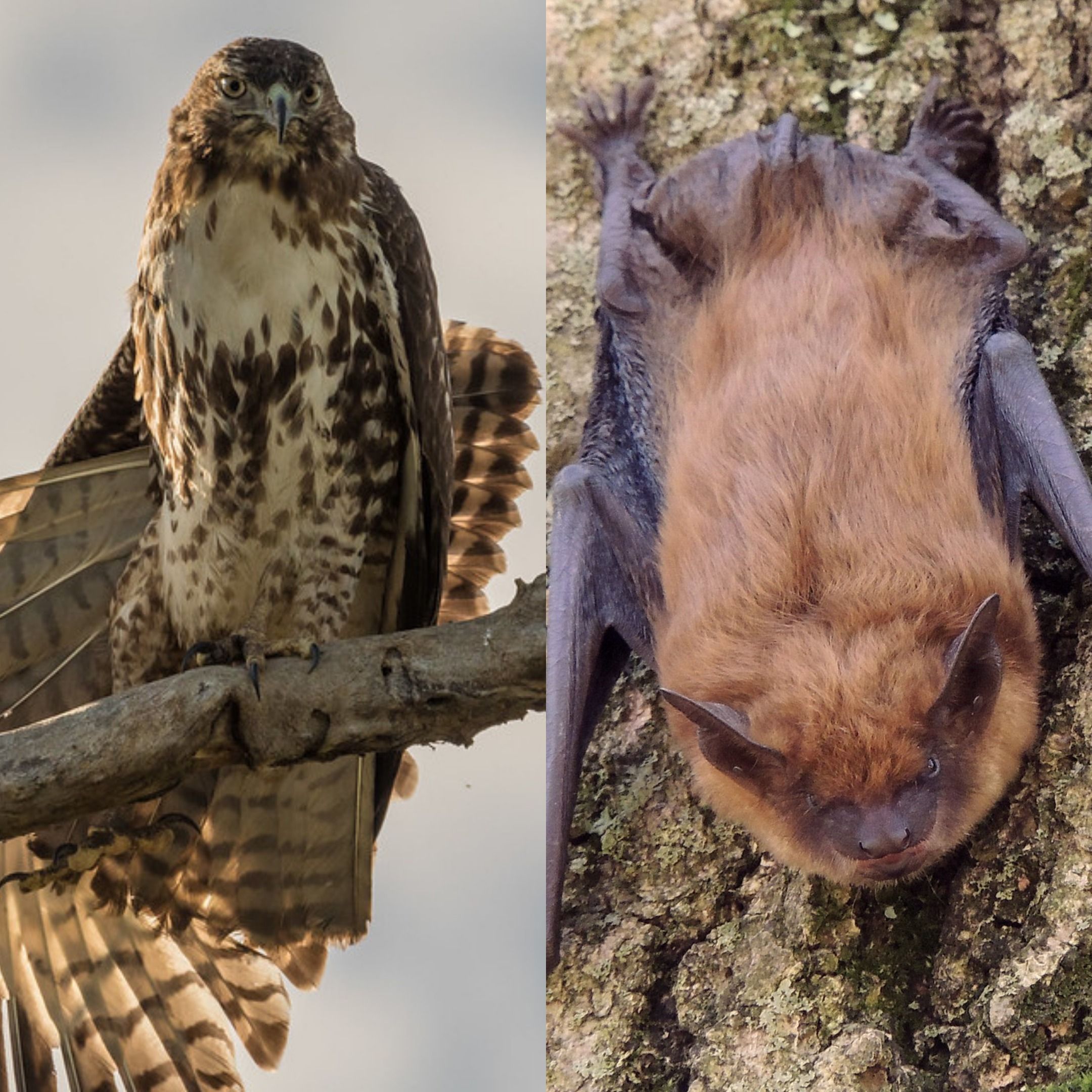
Flying with Birds and Bats
Bats and birds have evolved very different ways of flying. Birds have stiff feathers projecting from lightweight, fused arm and hand bones; bats have flexible wings of membranes stretched between elongated fingers. While birds use the strong downstroke of their wings to fly, bats support their weight on the upstroke, too, by twisting their wings backward. Bats tend to be more agile in flight, while many birds can fly with greater speed.More info and transcript at BirdNote.org. Want more BirdNote? Subscribe to our weekly newsletter. Sign up for BirdNote+ to get ad-free listening and other perks. BirdNote is a nonprofit. Your tax-deductible gift makes these shows possible. Hosted by Simplecast, an AdsWizz company. See pcm.adswizz.com for information about our collection and use of personal data for advertising.
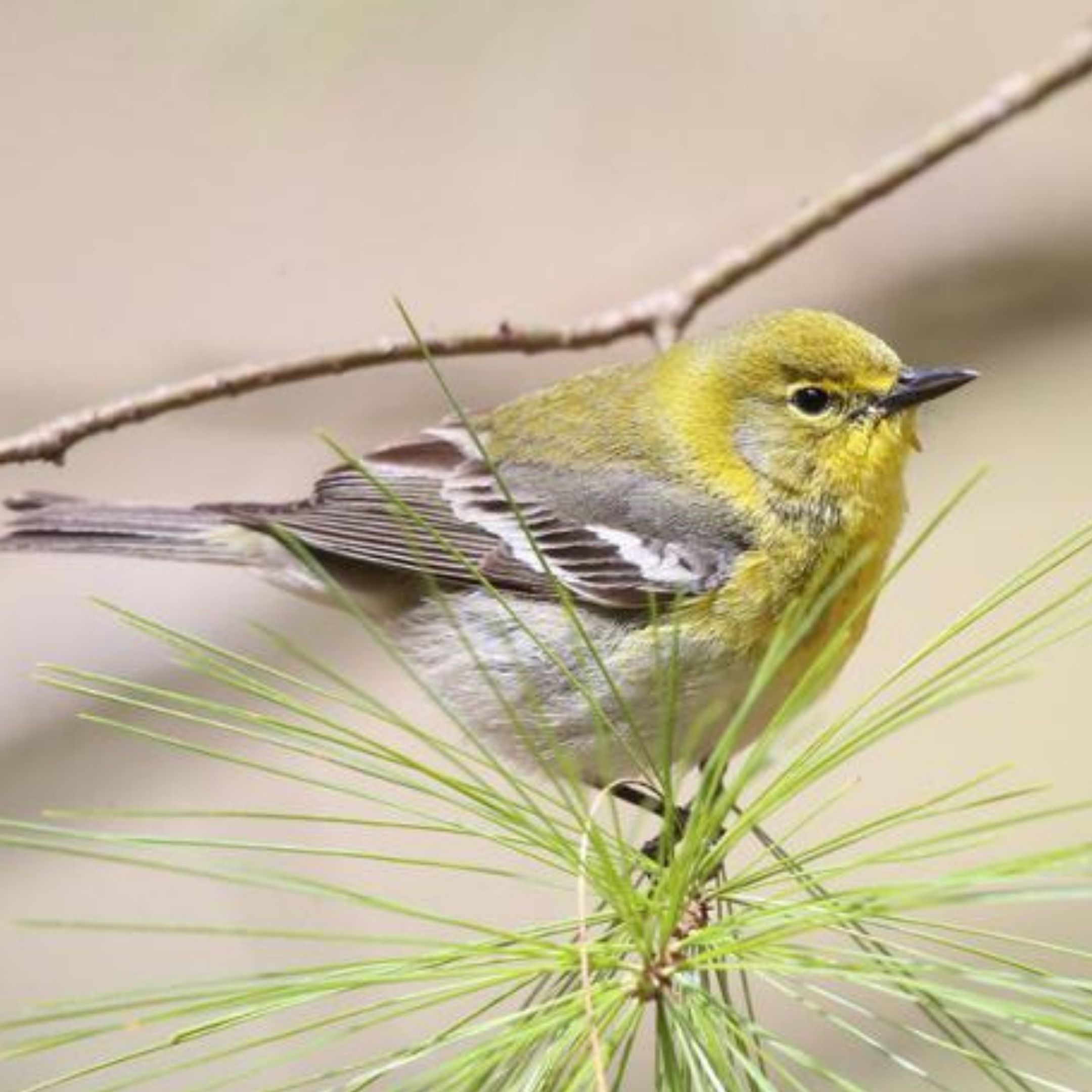
The Warbler That Loves Pines
The Pine Warbler is one of the few warblers that make appearances at bird feeders. They live year round in pine forests of the southeast U.S. and several Caribbean islands. Early spring is a good time to see them migrating through cities in the Midwest and the East Coast. If there’s a pine or two nearby, look for them picking through pine needles for food. Their song, heard throughout the year, is a sweet-sounding trill.More info and transcript at BirdNote.org. Want more BirdNote? Subscribe to our weekly newsletter. Sign up for BirdNote+ to get ad-free listening and other perks. BirdNote is a nonprofit. Your tax-deductible gift makes these shows possible. Hosted by Simplecast, an AdsWizz company. See pcm.adswizz.com for information about our collection and use of personal data for advertising.
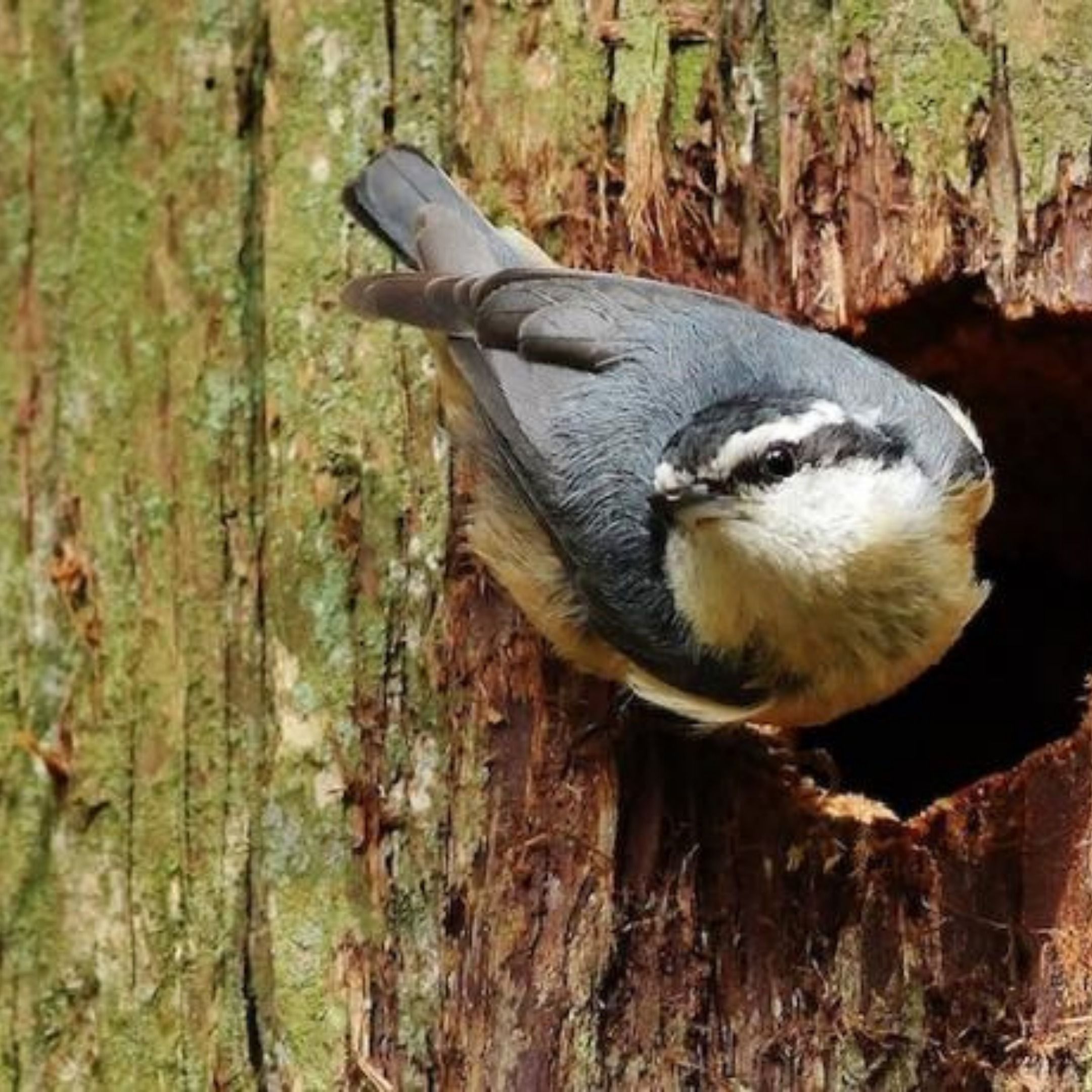
Listen for Tapping
Woodpeckers are our most familiar bird carpenters, but other birds also chip out nests in trees and wood structures. Nuthatches — like this Red-breasted Nuthatch — are exceptional wood carvers, with their chisel-like bills. Chickadees will peck into less dense wood, carrying out wood chips by the beak full! Listen for bird carpenters this spring — and watch for wood chips.More info and transcript at BirdNote.org. Want more BirdNote? Subscribe to our weekly newsletter. Sign up for BirdNote+ to get ad-free listening and other perks. BirdNote is a nonprofit. Your tax-deductible gift makes these shows possible. Hosted by Simplecast, an AdsWizz company. See pcm.adswizz.com for information about our collection and use of personal data for advertising.

Using Sound to Bring Rails Back into Wetlands
Rails are secretive marsh birds, and they’re on the decline. But a researcher playing their recorded calls over a loudspeaker could help bring them back – by tricking them.More info and transcript at BirdNote.org. Want more BirdNote? Subscribe to our weekly newsletter. Sign up for BirdNote+ to get ad-free listening and other perks. BirdNote is a nonprofit. Your tax-deductible gift makes these shows possible. Hosted by Simplecast, an AdsWizz company. See pcm.adswizz.com for information about our collection and use of personal data for advertising.

BirdNoir: A Dark and Stormy Night
In this episode of BirdNoir, Private Eye Michael Stein gets a call from his friend Billy, a mail carrier. Billy says he hasn’t seen a single bird on his route since the storm came into town, even though at this time of year the streets are usually chock full of birds. He asks, what happens to birds when it rains?More info and transcript at BirdNote.org. Want more BirdNote? Subscribe to our weekly newsletter. Sign up for BirdNote+ to get ad-free listening and other perks. BirdNote is a nonprofit. Your tax-deductible gift makes these shows possible. Hosted by Simplecast, an AdsWizz company. See pcm.adswizz.com for information about our collection and use of personal data for advertising.

Birds on the March with Army Ants
As thousands of army ants march through a rainforest in Panama looking for food, countless insects try to escape. Antbirds follow the ants, waiting for flying insects to leave their hiding spots so they can swoop down and catch them. About 300 species of animals, including 29 bird species, depend on army ants for their survival. It’s thought to be the largest association of animals tied to a single species in the world.More info and transcript at BirdNote.org. Want more BirdNote? Subscribe to our weekly newsletter. Sign up for BirdNote+ to get ad-free listening and other perks. BirdNote is a nonprofit. Your tax-deductible gift makes these shows possible. Hosted by Simplecast, an AdsWizz company. See pcm.adswizz.com for information about our collection and use of personal data for advertising.
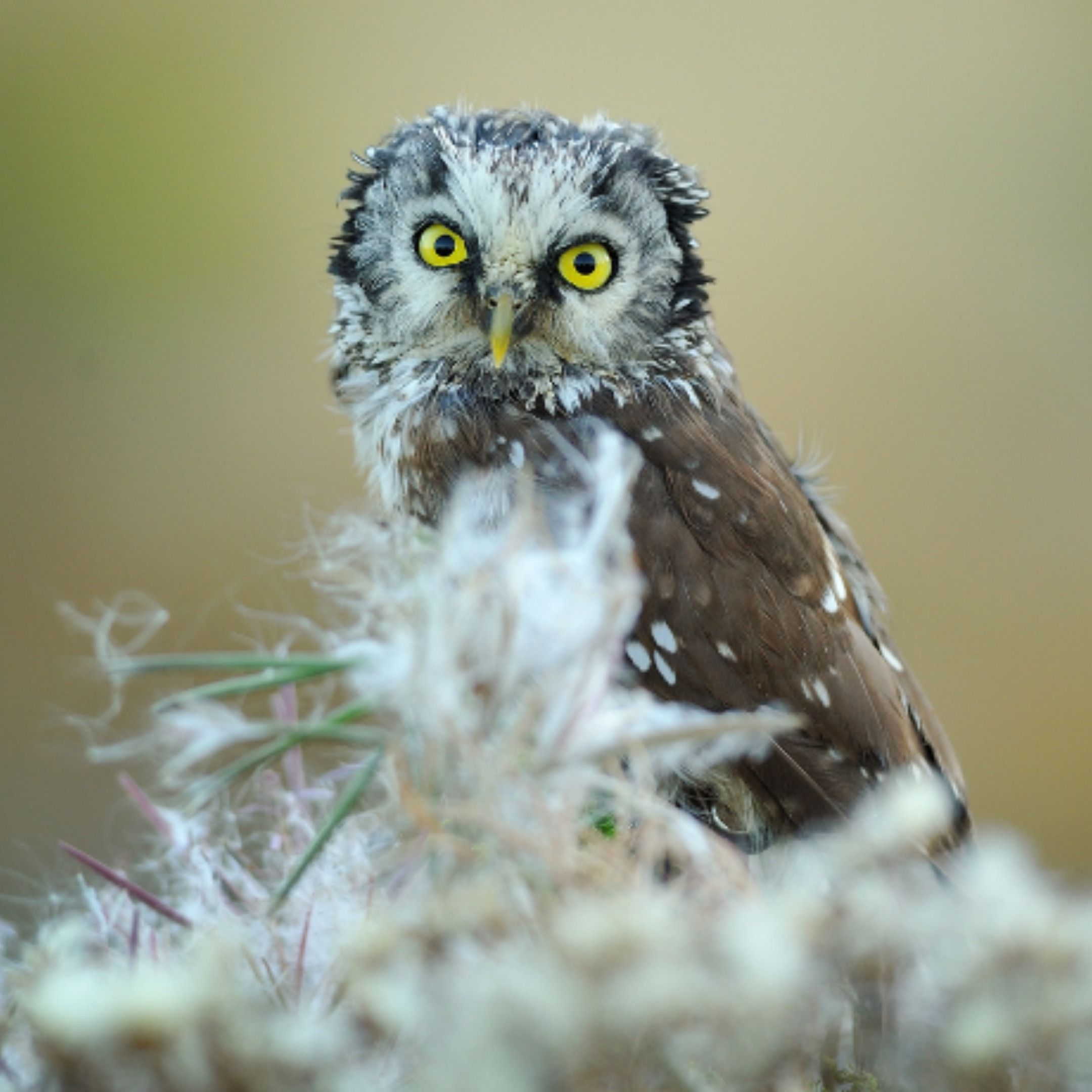
In the Dark with Boreal Owls
Boreal Owls are highly adapted to hunt in long hours of winter darkness. Uniquely, one ear opening in the skull is set high and the other much lower, an asymmetry that helps to pinpoint the sound of tiny rodents under the snow. They also have a pronounced disk of feathers encircling their faces that funnels sound to the ears. The staccato notes of the male’s song can carry for more than a mile on spring nights.More info and transcript at BirdNote.org. Want more BirdNote? Subscribe to our weekly newsletter. Sign up for BirdNote+ to get ad-free listening and other perks. BirdNote is a nonprofit. Your tax-deductible gift makes these shows possible. Hosted by Simplecast, an AdsWizz company. See pcm.adswizz.com for information about our collection and use of personal data for advertising.
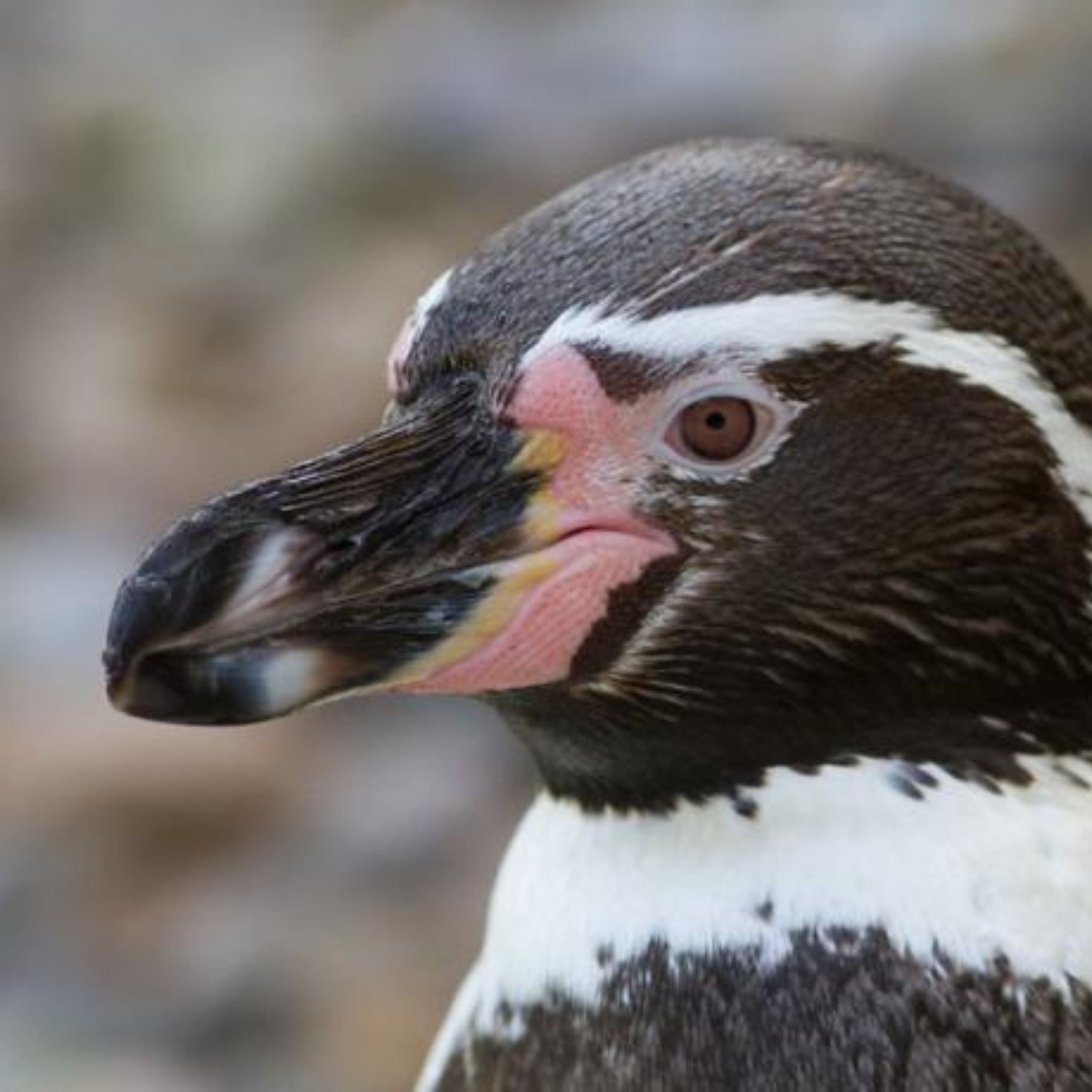
Do Penguins Blush?
Humboldt Penguins living along the Pacific Coast of Chile and Peru are adapted to cold. But on land, temperatures rise to 100+ degrees, and penguins need to cool off. So these penguins have pink patches of bare skin on their face, under their wings, and on their feet. On hot days, the patches turn a deep, rosy color, as blood rushes to the surface to dissipate heat. They appear to be blushing, but they’re really flushing!More info and transcript at BirdNote.org. Want more BirdNote? Subscribe to our weekly newsletter. Sign up for BirdNote+ to get ad-free listening and other perks. BirdNote is a nonprofit. Your tax-deductible gift makes these shows possible. Hosted by Simplecast, an AdsWizz company. See pcm.adswizz.com for information about our collection and use of personal data for advertising.

Songs and Calls – They're Not the Same
To our ear, the haunting song of this Hermit Thrush is musical, even ethereal. To another Hermit Thrush, the song signals that a male is laying claim to a territory and seeking a mate. These thrushes, like other songbirds, broadcast a variety of calls. Call notes can signal many things – alarm at a predator or aggression toward a rival. Or they may simply maintain contact between members of a pair or flock. So the next time you hear a bird sing or call, listen carefully. You may be introduced to a whole new vocabulary.What birds are singing and calling around your home? Let us know on Facebook.More info and transcript at BirdNote.org. Want more BirdNote? Subscribe to our weekly newsletter. Sign up for BirdNote+ to get ad-free listening and other perks. BirdNote is a nonprofit. Your tax-deductible gift makes these shows possible. Hosted by Simplecast, an AdsWizz company. See pcm.adswizz.com for information about our collection and use of personal data for advertising.

Keeping Wood Storks on the Road to Recovery
With their bare heads, long legs and massive bills, Wood Storks seem to have flown out of a fairytale — but in the American South they’re a real-life part of the ecosystem. Developers drained large areas of wetlands, causing the Florida Everglades population to decline to just 5,000 breeding pairs in the 1970s, placing them on the endangered species list. Habitat protection and restoration efforts have helped Wood Storks begin recovering, although they still struggle to find suitable breeding habitat in south Florida.More info and transcript at BirdNote.org. Want more BirdNote? Subscribe to our weekly newsletter. Sign up for BirdNote+ to get ad-free listening and other perks. BirdNote is a nonprofit. Your tax-deductible gift makes these shows possible. Hosted by Simplecast, an AdsWizz company. See pcm.adswizz.com for information about our collection and use of personal data for advertising.
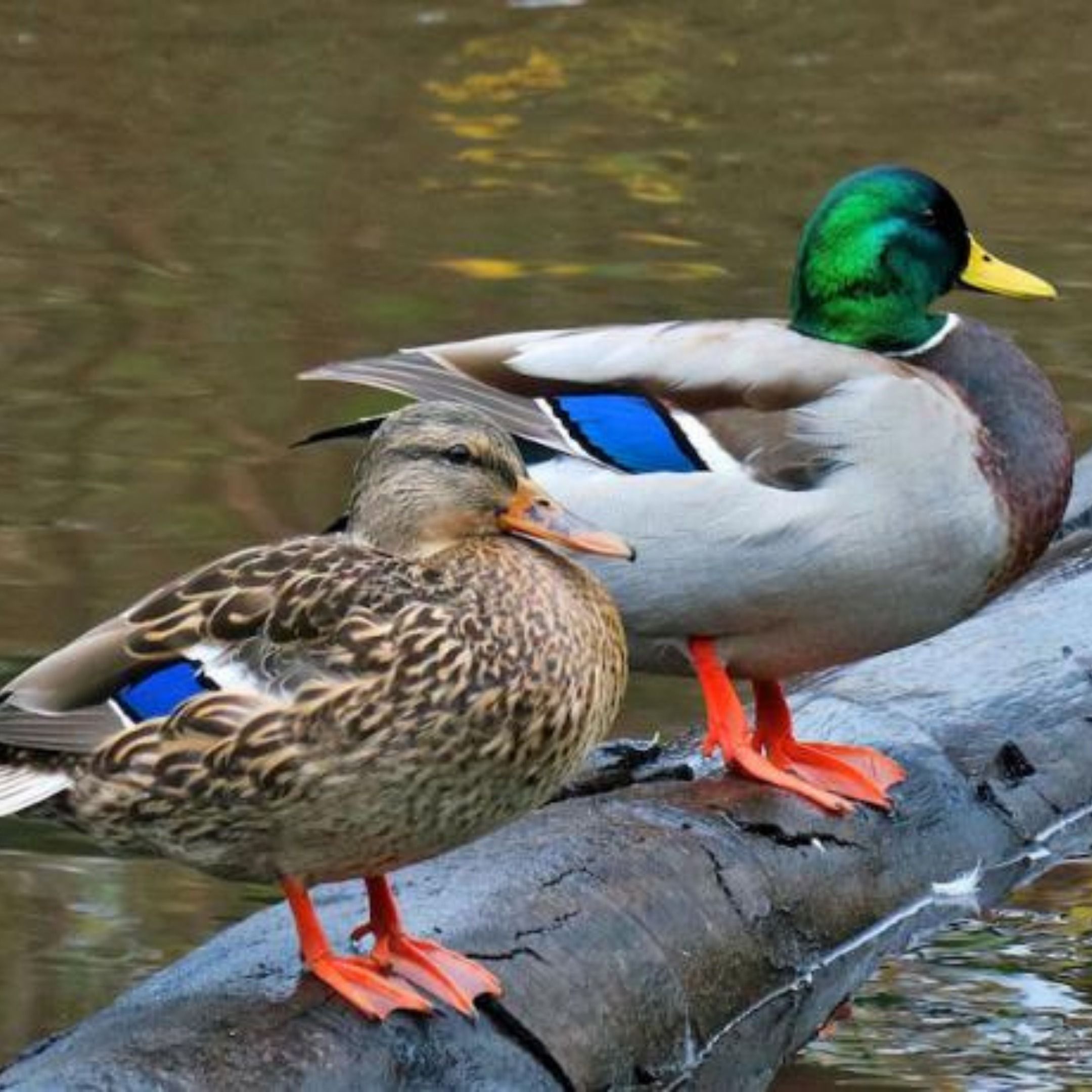
Everybody Knows a Mallard
Mallards are found virtually everywhere there is open water, from city parks and subalpine lakes to sheltered bays and estuaries along the coasts. In their breeding plumage, male Mallards are avian dandies. The male's primary goal is to attract a mate and defend the breeding territory. The female's is to blend in with the natural surroundings, while incubating the eggs and caring for the young. And the female Mallard is the only one that can quack!More info and transcript at BirdNote.org. Want more BirdNote? Subscribe to our weekly newsletter. Sign up for BirdNote+ to get ad-free listening and other perks. BirdNote is a nonprofit. Your tax-deductible gift makes these shows possible. Hosted by Simplecast, an AdsWizz company. See pcm.adswizz.com for information about our collection and use of personal data for advertising.
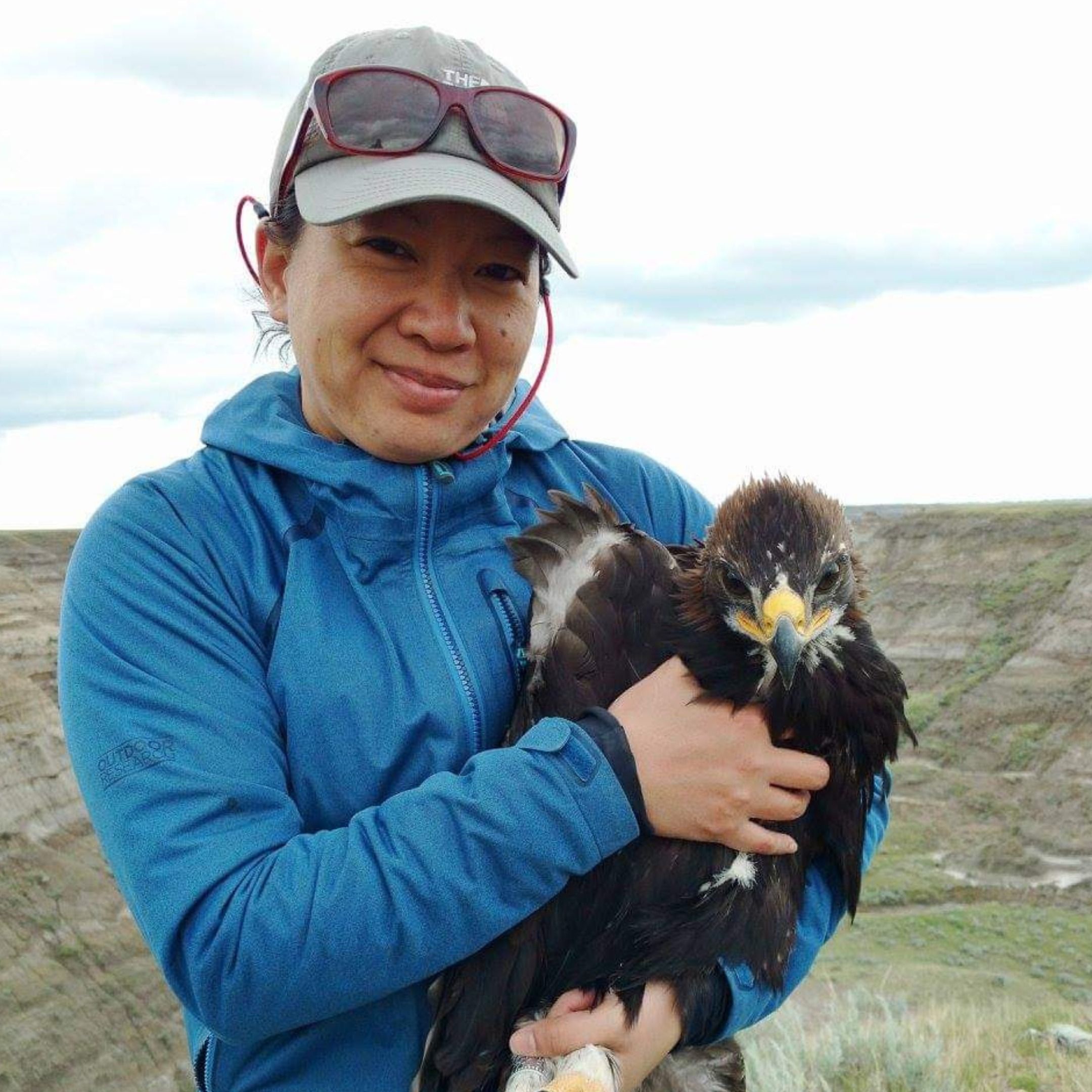
Janet Ng on Becoming a Wildlife Biologist
When Janet Ng was a kid, there was a very specific moment when she realized what she wanted to be as a grown-up: seeing a wildlife biologist being interviewed in a documentary and realizing that was a possible career path. Now working for the Canadian Wildlife Service and surveying birds in Canada’s southern plains, Janet and her colleagues help find out whether bird populations are increasing or declining, so that we know which species need the most help.More info and transcript at BirdNote.org. Want more BirdNote? Subscribe to our weekly newsletter. Sign up for BirdNote+ to get ad-free listening and other perks. BirdNote is a nonprofit. Your tax-deductible gift makes these shows possible. Hosted by Simplecast, an AdsWizz company. See pcm.adswizz.com for information about our collection and use of personal data for advertising.
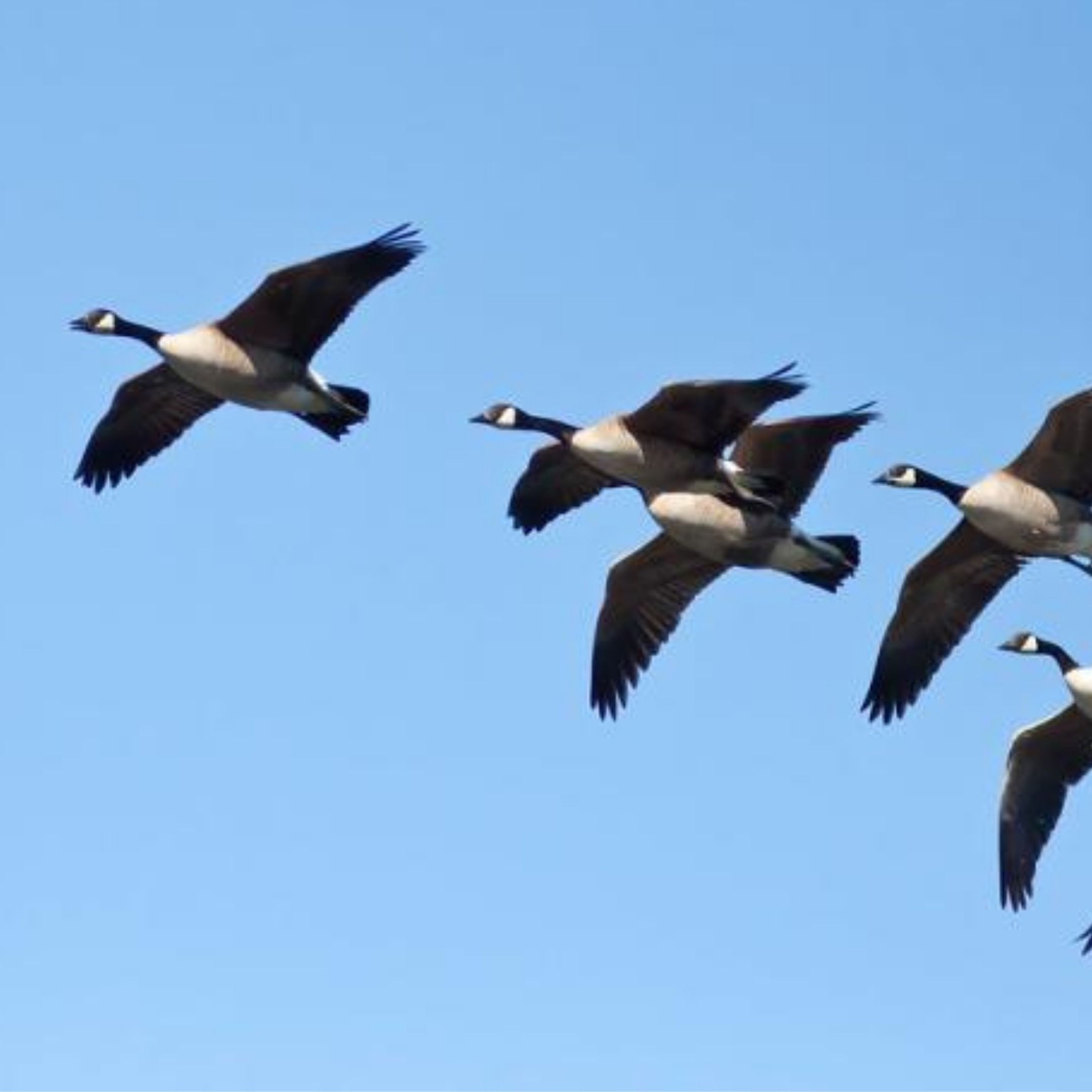
Geese Aloft: Flock Voices of March
Geese migrate north between February and April, making stopovers along the way to rest and eat. Most are bound for their breeding grounds in the far north. But we’ll hear them again soon, on their way back south in October. Click play and learn how to tell some North American species apart by sound!More info and transcript at BirdNote.org. Want more BirdNote? Subscribe to our weekly newsletter. Sign up for BirdNote+ to get ad-free listening and other perks. BirdNote is a nonprofit. Your tax-deductible gift makes these shows possible. Hosted by Simplecast, an AdsWizz company. See pcm.adswizz.com for information about our collection and use of personal data for advertising.

Flying Dinosaurs: Leaping and Gliding
For years, scientists debated whether the first flying dinosaurs, the ancestors of modern birds, began by running and making little hops off the ground, or leapt off a tree branch to glide. It’s called the “ground up vs. trees down” debate, for short. But a newer perspective on this mystery suggests that flying dinosaurs tried taking flight from more than one place. Recent findings suggest that the ability to fly could have evolved not just once but three separate times among dinosaurs.More info and transcript at BirdNote.org. Want more BirdNote? Subscribe to our weekly newsletter. Sign up for BirdNote+ to get ad-free listening and other perks. BirdNote is a nonprofit. Your tax-deductible gift makes these shows possible. Hosted by Simplecast, an AdsWizz company. See pcm.adswizz.com for information about our collection and use of personal data for advertising.
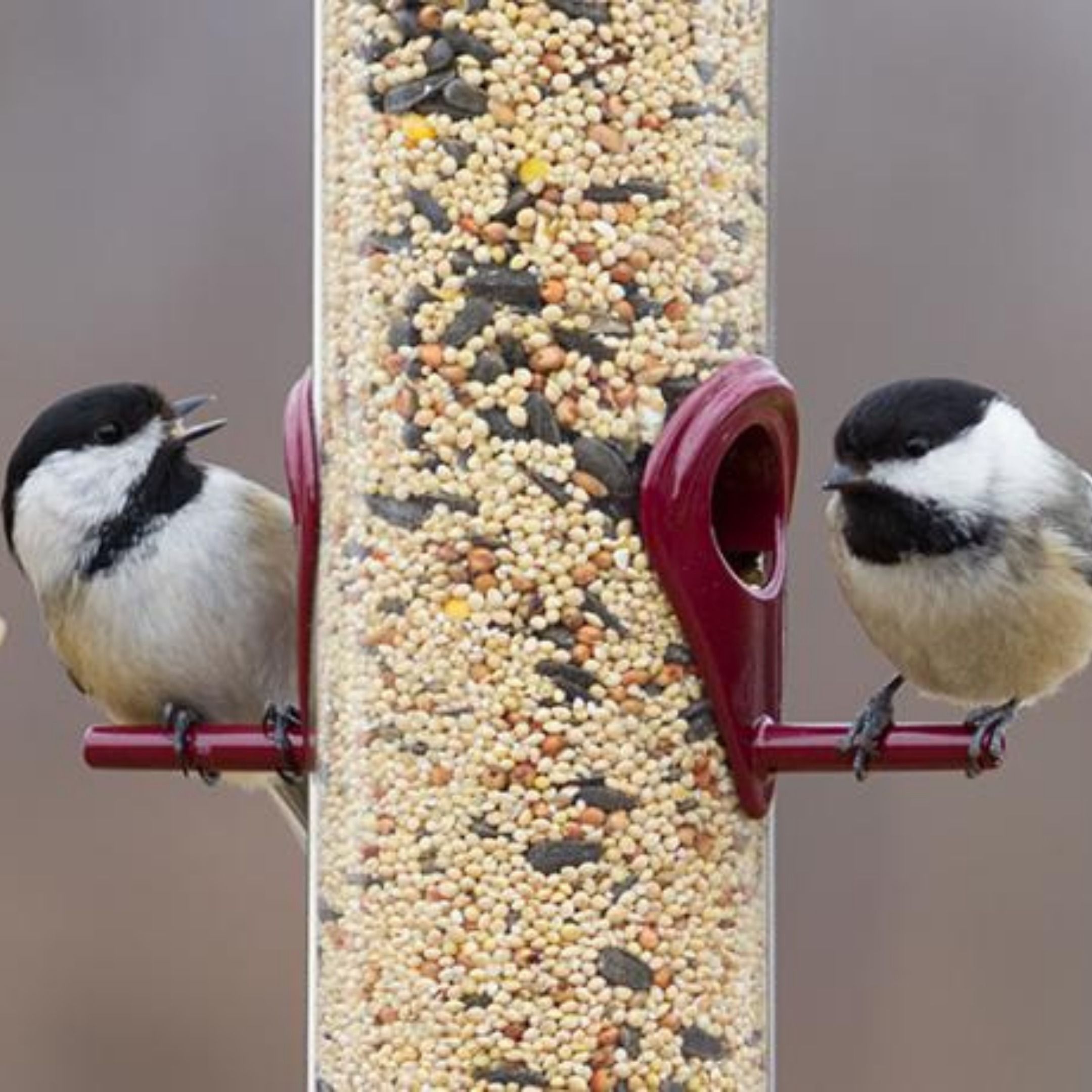
Bird Seed
When buying seed for your feeders, it’s tempting to get the biggest, cheapest bag. But not all bird seed is the same. Figure out the nutritional value of the seeds and whether your local birds can actually eat them. Black-oil sunflower seeds provide good protein and fat. Other good seeds include white millet and nyjer thistle. Avoid red milo, a livestock grain. And clean your feeding station regularly to prevent the spread of disease.More info and transcript at BirdNote.org. Want more BirdNote? Subscribe to our weekly newsletter. Sign up for BirdNote+ to get ad-free listening and other perks. BirdNote is a nonprofit. Your tax-deductible gift makes these shows possible. Hosted by Simplecast, an AdsWizz company. See pcm.adswizz.com for information about our collection and use of personal data for advertising.
Tune Up Your Ears – East
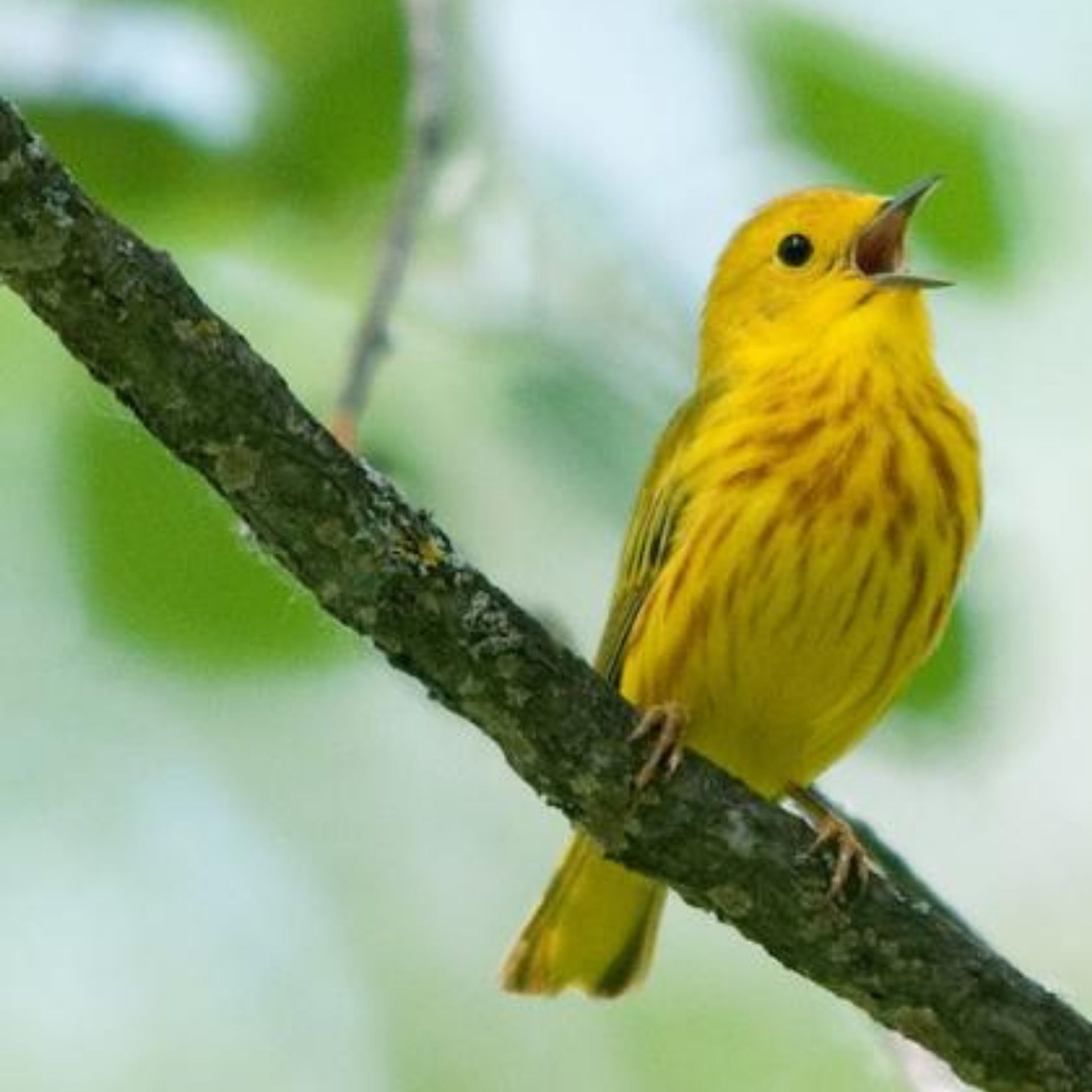
By March in the East, cardinals and other songbirds that don't migrate are already singing heartily to attract mates. Many other birds – including Yellow Warblers – will return north from the tropics in April and May, announcing themselves in song as soon as they arrive in nesting areas. Now is the perfect time to tune up your ears.More info and transcript at BirdNote.org. Want more BirdNote? Subscribe to our weekly newsletter. Sign up for BirdNote+ to get ad-free listening and other perks. BirdNote is a nonprofit. Your tax-deductible gift makes these shows possible. Hosted by Simplecast, an AdsWizz company. See pcm.adswizz.com for information about our collection and use of personal data for advertising.
Jacana, aka Lily-trotter
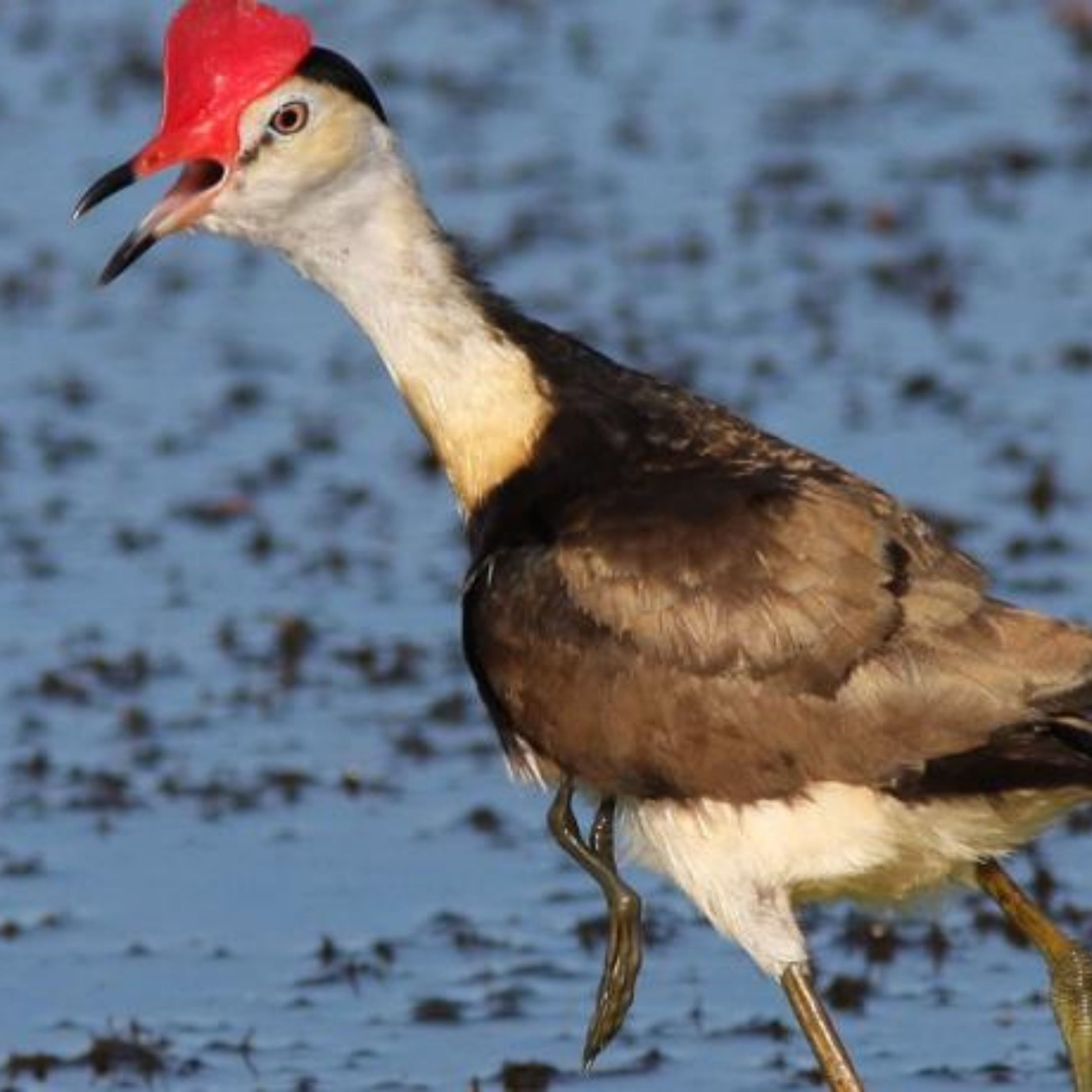
The strange wading birds known as jacanas are nick-named "lily-trotters" for their ability to walk on lily pads. In Jamaica, they're known as "Jesus birds," because they appear to be walking on water — a feat made possible by their long toes. But that's not the only cool thing about jacanas. The males, including the Comb-crested Jacana pictured here, can carry their young under their wings. Picture this colorful wading bird, crouching down and spreading his wings. The young scoot in under him, and he sweeps them up and carries them off, tiny legs dangling from under his wings.More info and transcript at BirdNote.org. Want more BirdNote? Subscribe to our weekly newsletter. Sign up for BirdNote+ to get ad-free listening and other perks. BirdNote is a nonprofit. Your tax-deductible gift makes these shows possible. Hosted by Simplecast, an AdsWizz company. See pcm.adswizz.com for information about our collection and use of personal data for advertising.
Create Bird Habitat at Home with Native Plants
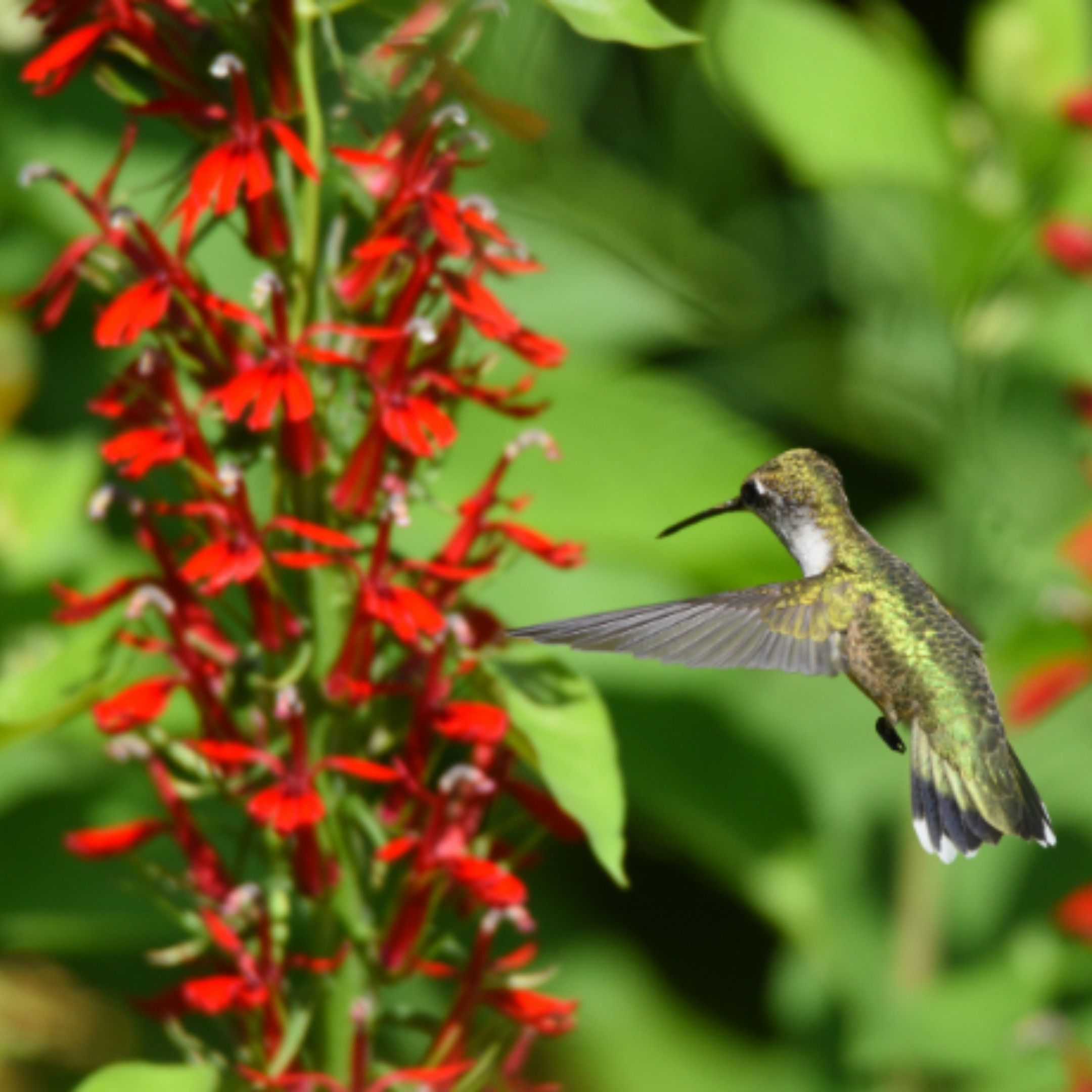
Birds have lost many habitats they’ve called home for millions of years, but people can help create bird habitats wherever they live. It all begins with native plants. If you have a yard, or even just a few outdoor plant pots, you can offer native plants to birds, butterflies, and other wildlife. Below, find online tools that show you native plant species ideal for your location.More info and transcript at BirdNote.org. Want more BirdNote? Subscribe to our weekly newsletter. Sign up for BirdNote+ to get ad-free listening and other perks. BirdNote is a nonprofit. Your tax-deductible gift makes these shows possible. Hosted by Simplecast, an AdsWizz company. See pcm.adswizz.com for information about our collection and use of personal data for advertising.

Reddish Egret - Lagoon Dancer
The Reddish Egret, a particularly glamorous heron, is best known for its startling antics in capturing fish. When fishing, the egret sprints across the lagoon, weaving left and right, simultaneously flicking its broad wings in and out, while stabbing into the water with its bill. Fish startled at the egret’s crazed movements become targets of that pink dagger. At times, the bird will raise its wings forward over its head, creating a shadow on the water. It then freezes in this position for minutes. Fish swim in, attracted by a patch of shade and . . . well, you know the rest.More info and transcript at BirdNote.org. Want more BirdNote? Subscribe to our weekly newsletter. Sign up for BirdNote+ to get ad-free listening and other perks. BirdNote is a nonprofit. Your tax-deductible gift makes these shows possible. Hosted by Simplecast, an AdsWizz company. See pcm.adswizz.com for information about our collection and use of personal data for advertising.
Birding 101: Learning How to Strike Out
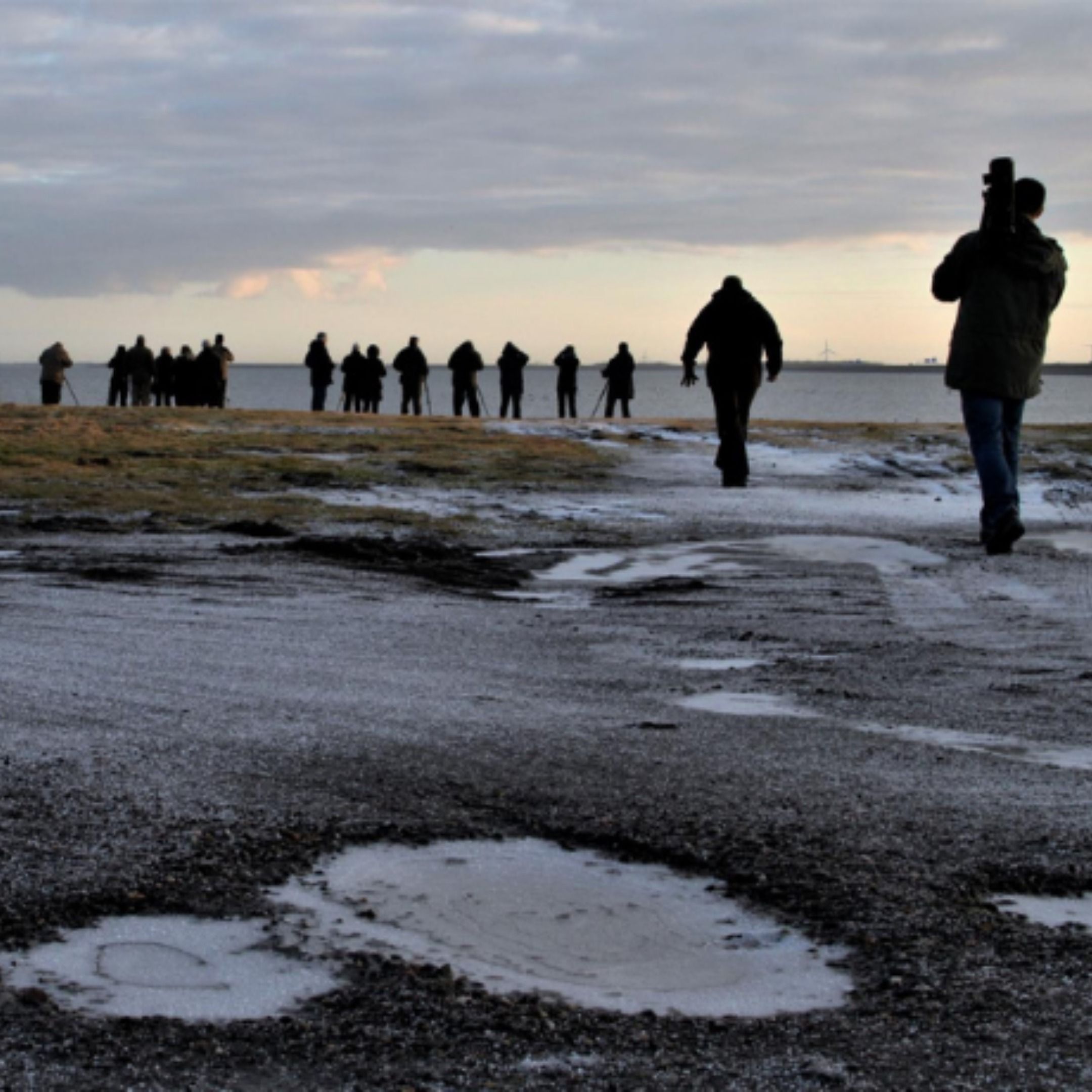
When you go birding, sometimes you’re in the right place at the right time and there are more species than you can count. Other times, not so lucky. Striking out when looking for birds is frustrating. But a bad day of birding can teach you a lot. Try doing some research into the conditions that day and talking to people that know about birds in your area – they’ll probably commiserate with their own stories about striking out.More info and transcript at BirdNote.org. Want more BirdNote? Subscribe to our weekly newsletter. Sign up for BirdNote+ to get ad-free listening and other perks. BirdNote is a nonprofit. Your tax-deductible gift makes these shows possible. Hosted by Simplecast, an AdsWizz company. See pcm.adswizz.com for information about our collection and use of personal data for advertising.
Rainwater Basin
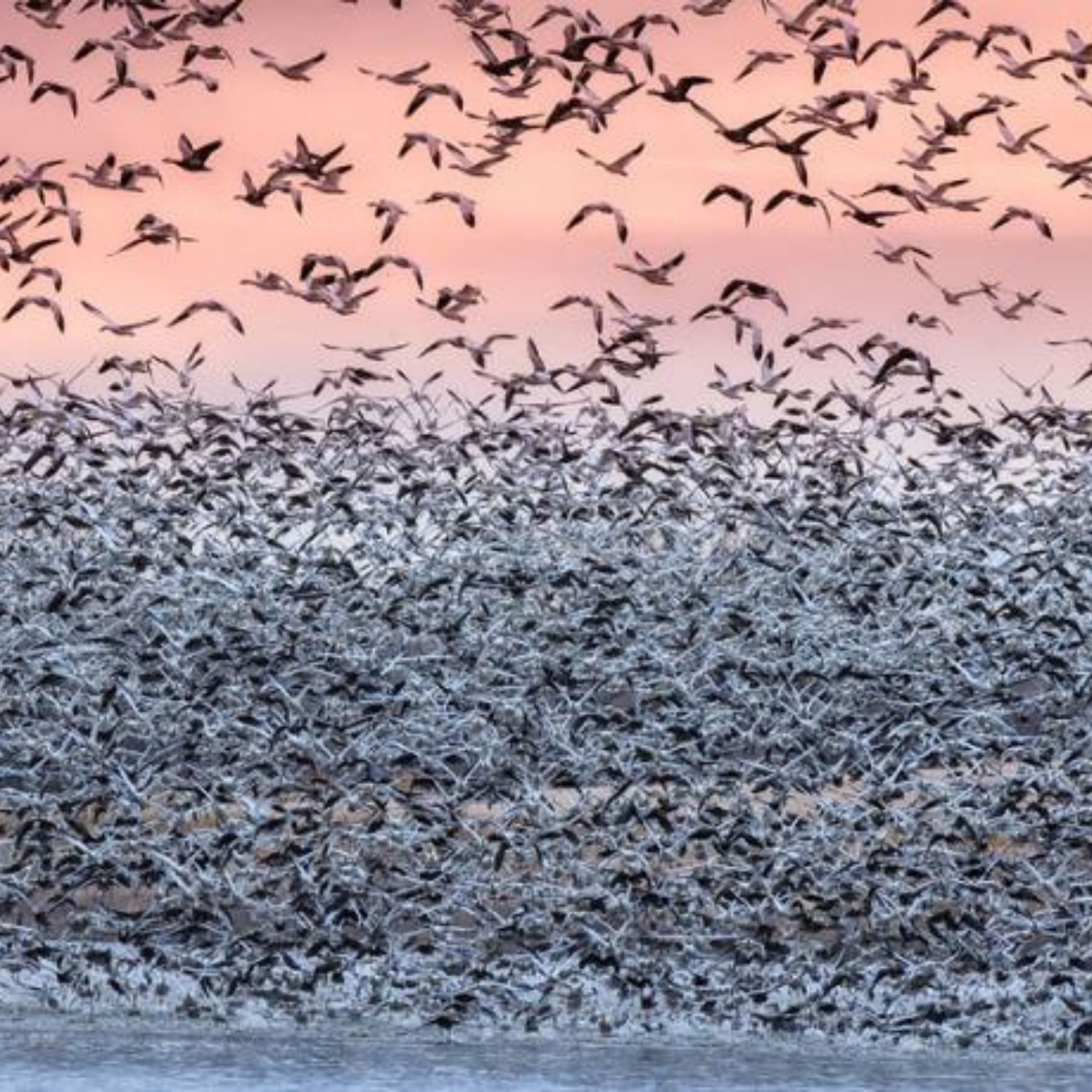
For 20,000 years, spring rains and melting snow have filled the playas of the Rainwater Basin of south-central Nebraska. As winter ends, 10 million waterfowl rest and feed there before continuing north. The seasonal wetlands form a funnel for birds heading from the Gulf Coast and points south to northern breeding grounds. In recent years, the number of Snow Geese stopping there in spring has risen dramatically to more than three million birds. A third of North America's Northern Pintails rely on the food-rich habitat there. Twenty-seven species of shorebirds use the wetlands, as well as half a million Sandhill Cranes.More info and transcript at BirdNote.org. Want more BirdNote? Subscribe to our weekly newsletter. Sign up for BirdNote+ to get ad-free listening and other perks. BirdNote is a nonprofit. Your tax-deductible gift makes these shows possible. Hosted by Simplecast, an AdsWizz company. See pcm.adswizz.com for information about our collection and use of personal data for advertising.
Sandgrouse: Desert Water-carriers
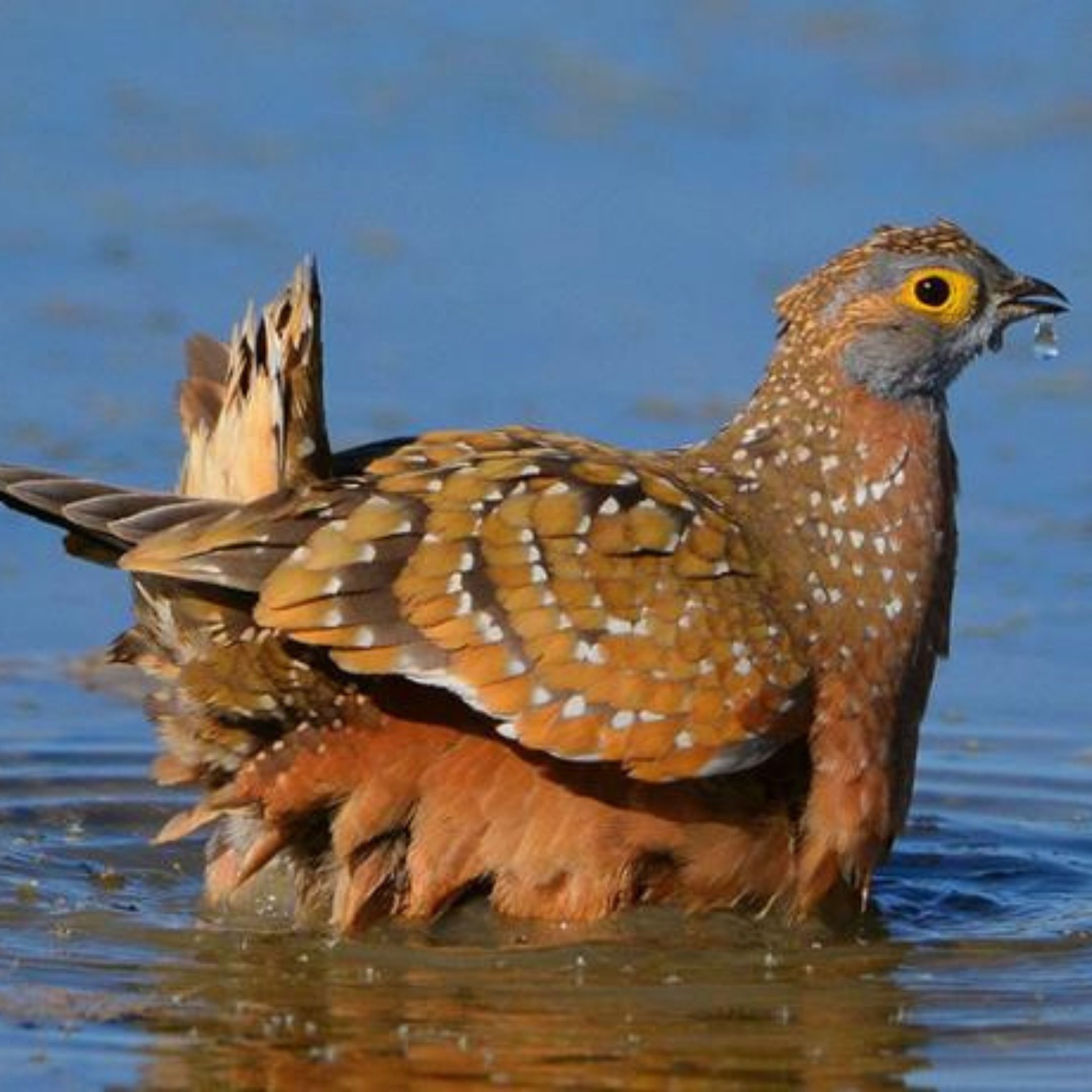
Sandgrouse live in some of the most parched environments on earth. To satisfy the thirst of their chicks, male sandgrouse carry water back to the nest in a surprising but effective way: by carrying it in their feathers. Thanks to coiled hairlike extensions on the feathers of the underparts, a sandgrouse such as this Burchell's Sandgrouse can soak up and transport about two tablespoons of liquid. The sandgrouse chicks use their bills like tiny squeegees, “milking” their father’s belly feathers for the water they need.More info and transcript at BirdNote.org. Want more BirdNote? Subscribe to our weekly newsletter. Sign up for BirdNote+ to get ad-free listening and other perks. BirdNote is a nonprofit. Your tax-deductible gift makes these shows possible. Hosted by Simplecast, an AdsWizz company. See pcm.adswizz.com for information about our collection and use of personal data for advertising.
The Nasally Fish Crow
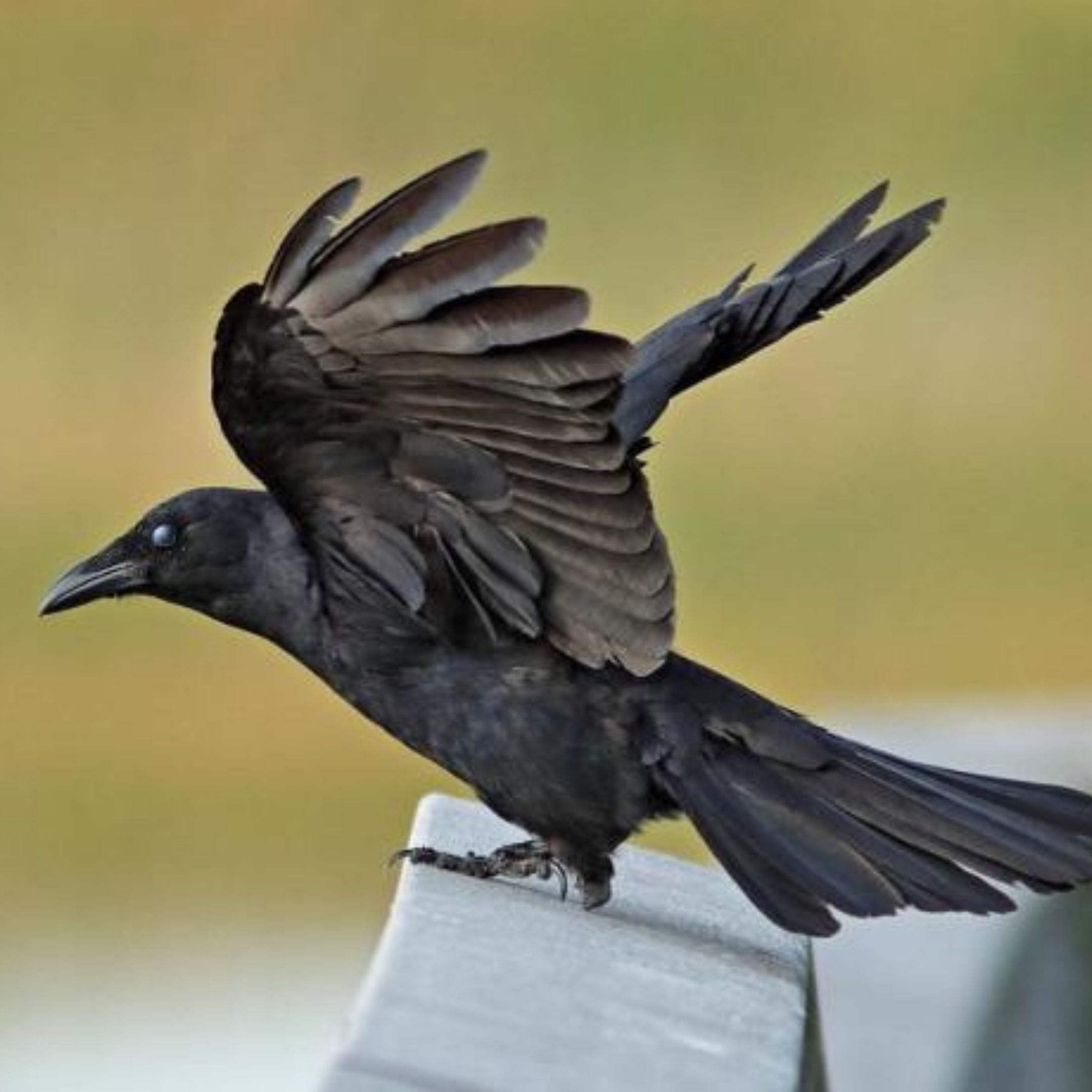
The harsh caws of American Crows are one of the most familiar bird calls in North America. Fish Crows sometimes join flocks of American Crows as they forage for food. The two crow species look similar, but have a distinct call that sounds a bit like an American Crow with a stuffy nose. The Fish Crow is found in much of the eastern U.S. and is spreading to new areas north and west to breed.More info and transcript at BirdNote.org. Want more BirdNote? Subscribe to our weekly newsletter. Sign up for BirdNote+ to get ad-free listening and other perks. BirdNote is a nonprofit. Your tax-deductible gift makes these shows possible. Hosted by Simplecast, an AdsWizz company. See pcm.adswizz.com for information about our collection and use of personal data for advertising.

Introducing Aviary, the Shapeshifting Bird Superhero
In this episode, we meet Aviary: the superhero alter-ego of a mild-mannered birder bitten by a radioactive feather mite. Aviary became able to shapeshift into any of the birds they've seen in their travels — taking on the ultra-fast flight of a falcon or the super-swimming skills of a penguin. Aviary soon realized they’d have to use their powers for good when something seemed off with the local owls one night.More info and transcript at BirdNote.org. Want more BirdNote? Subscribe to our weekly newsletter. Sign up for BirdNote+ to get ad-free listening and other perks. BirdNote is a nonprofit. Your tax-deductible gift makes these shows possible. Hosted by Simplecast, an AdsWizz company. See pcm.adswizz.com for information about our collection and use of personal data for advertising.

Tree Swallows Spend the Winter
Most swallow species that nest in North America eat almost nothing except flying insects. When the bugs die off in the fall, the swallows head south to winter in the tropical zones of Central and South America and the Caribbean. However, Tree Swallows can also eat small fruits. If Tree Swallows arrive in the north before the insects are out, they’ll supplement their diets with fruit, giving them a competitive advantage for limited nesting sites.More info and transcript at BirdNote.org. Want more BirdNote? Subscribe to our weekly newsletter. Sign up for BirdNote+ to get ad-free listening and other perks. BirdNote is a nonprofit. Your tax-deductible gift makes these shows possible. Hosted by Simplecast, an AdsWizz company. See pcm.adswizz.com for information about our collection and use of personal data for advertising.

Using Birdsong to Check a River’s Health
John Zaktansky leads the Middle Susquehanna Riverkeeper Association, which is using recording devices to identify birds by sound on different parts of the Susquehanna River in Pennsylvania. John’s hope is that the birds ID’d by these recorders can help create a health report for the river as an early warning system for toxic pollutants, contaminants and other threats.More info and transcript at BirdNote.org. Want more BirdNote? Subscribe to our weekly newsletter. Sign up for BirdNote+ to get ad-free listening and other perks. BirdNote is a nonprofit. Your tax-deductible gift makes these shows possible. Hosted by Simplecast, an AdsWizz company. See pcm.adswizz.com for information about our collection and use of personal data for advertising.
Great Horned Owls Nest II
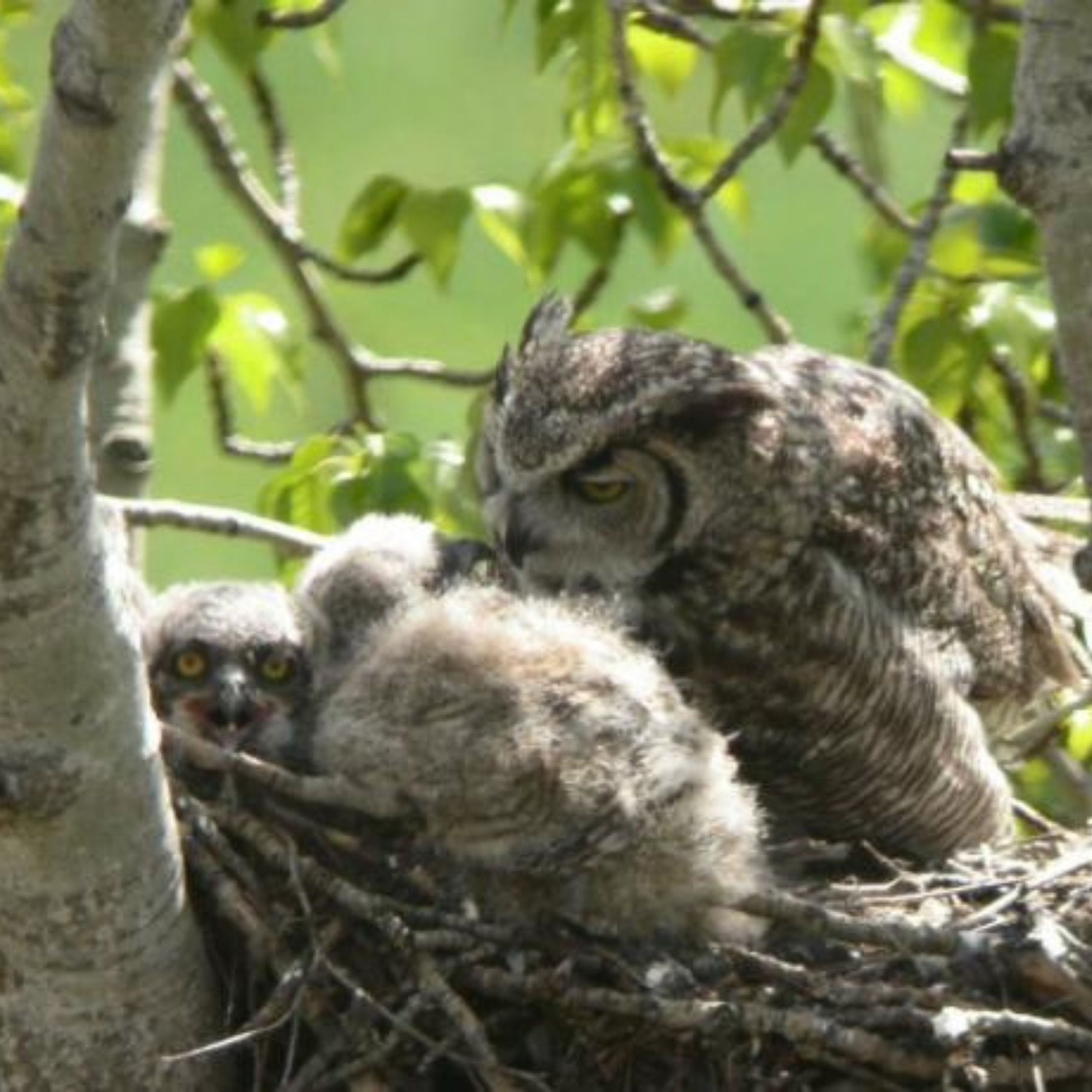
When Great Horned Owl eggs hatch, the downy owlets are the size of newborn chickens. Their mother broods them day and night. A few weeks later, the owlets can be left alone while both adults resume hunting at twilight. Great Horned Owl young remain in the nest for about six weeks, then climb out onto nearby branches. They begin taking short flights at seven weeks, and can fly well at 9-10 weeks.More info and transcript at BirdNote.org. Want more BirdNote? Subscribe to our weekly newsletter. Sign up for BirdNote+ to get ad-free listening and other perks. BirdNote is a nonprofit. Your tax-deductible gift makes these shows possible. Hosted by Simplecast, an AdsWizz company. See pcm.adswizz.com for information about our collection and use of personal data for advertising.
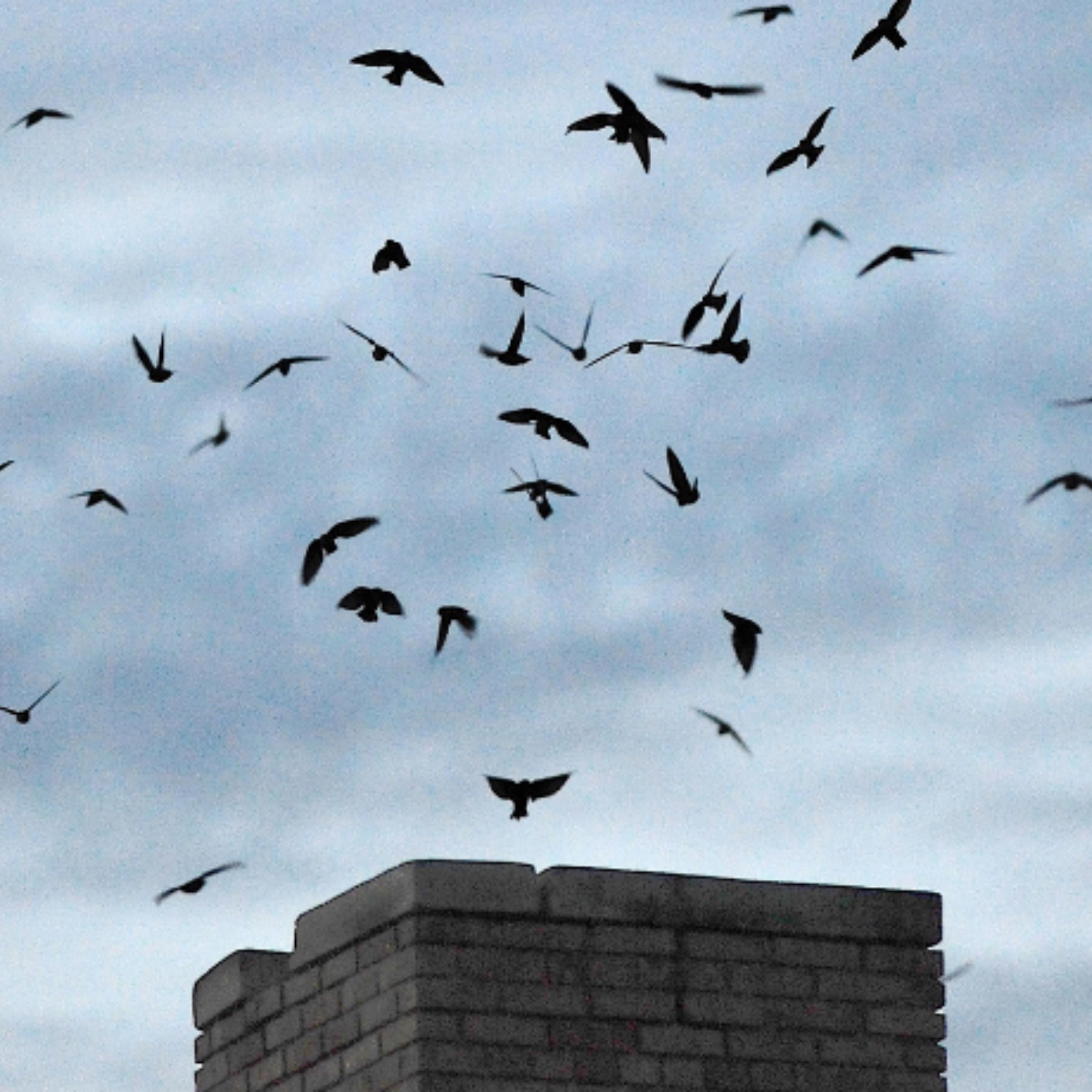
Giving Chimney Swifts a Place to Live
Before chimneys existed, Chimney Swifts relied on old hollow trees for nesting and roosting. They can’t perch, they can only cling to a rough vertical surface. As developers cleared old growth forests, Chimney Swifts began using human-built structures. But building styles have changed, making traditional brick chimneys rarer. Pesticides have reduced the populations of swifts’ insect prey. People can help swifts by leaving brick or stone chimneys open from April to October and avoiding pesticides.More info and transcript at BirdNote.org. Want more BirdNote? Subscribe to our weekly newsletter. Sign up for BirdNote+ to get ad-free listening and other perks. BirdNote is a nonprofit. Your tax-deductible gift makes these shows possible. Hosted by Simplecast, an AdsWizz company. See pcm.adswizz.com for information about our collection and use of personal data for advertising.