
BirdNote Daily
1,282 episodes — Page 16 of 26
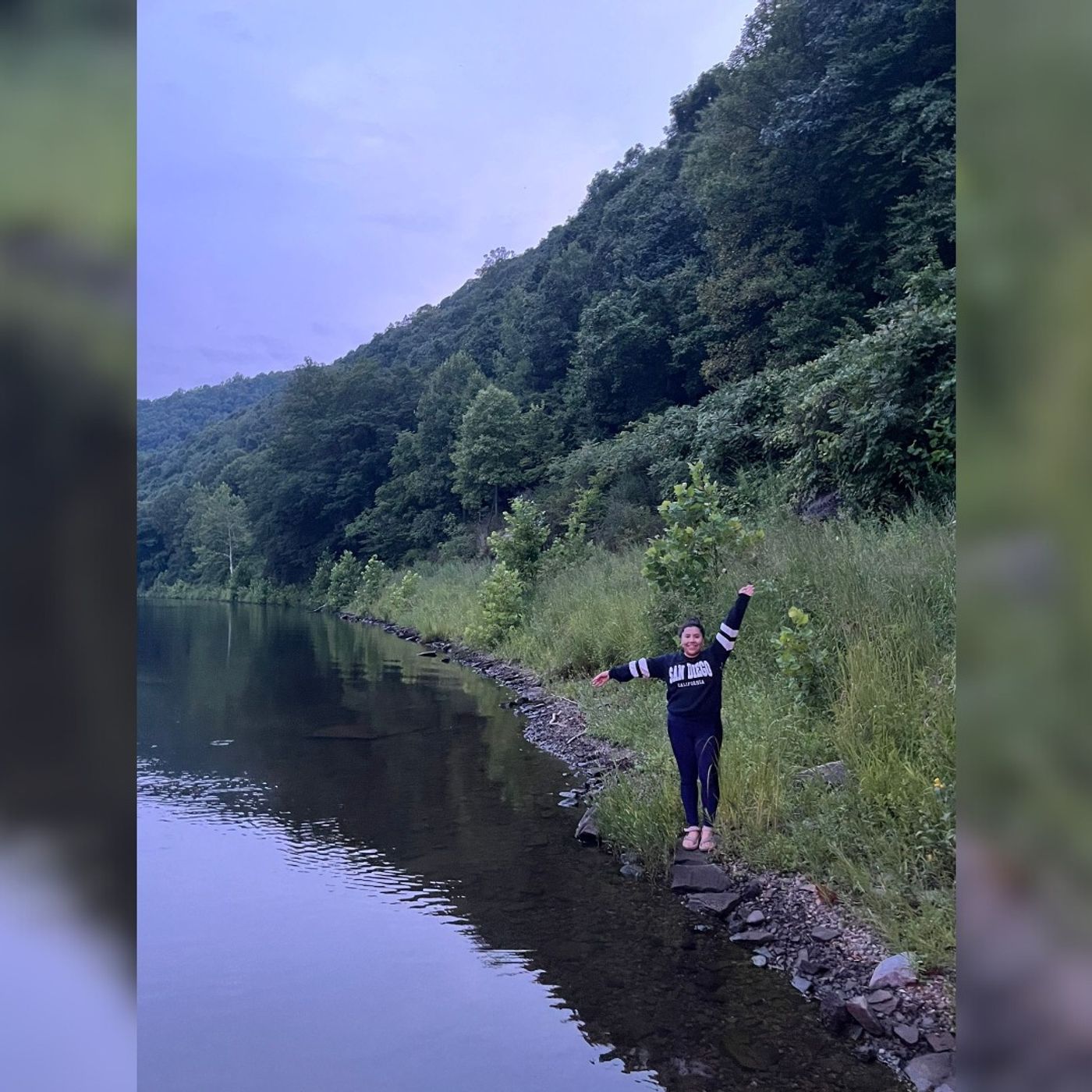
Sofia Barboza on Becoming More Aware of Birds
When climate scientist Sofia Barboza was living in New York City, she found it challenging to connect with the outdoors the same way she had growing up in Pennsylvania. Returning to live in Pennsylvania as an adult, Sofia brought along her new awareness of birds and their effects on mental health.More info and transcript at BirdNote.org. Want more BirdNote? Subscribe to our weekly newsletter. Sign up for BirdNote+ to get ad-free listening and other perks. BirdNote is a nonprofit. Your tax-deductible gift makes these shows possible. Hosted by Simplecast, an AdsWizz company. See pcm.adswizz.com for information about our collection and use of personal data for advertising.

Migrations: You're Going the Wrong Way!
During migration, some birds change orientation, often by a full 180 degrees, and travel almost the same distance — but in the opposite direction — as the rest of their species. The phenomenon is called misorientation. First-year birds are particularly susceptible. Many vagrant birds never find their way back on course, but some do, getting more comfortable with the route each year.More info and transcript at BirdNote.org. Want more BirdNote? Subscribe to our weekly newsletter. Sign up for BirdNote+ to get ad-free listening and other perks. BirdNote is a nonprofit. Your tax-deductible gift makes these shows possible. Hosted by Simplecast, an AdsWizz company. See pcm.adswizz.com for information about our collection and use of personal data for advertising.

Rosa Malagon on Leading Hikes in Florida
Rosa Malagon grew up believing that birds hold spiritual significance, thanks to teachings from her Mexican heritage that her mother would share. Now working for the Hispanic Access Foundation, Rosa helps connect Latino-led nonprofits with funding from the U.S. Forest Service. She also leads monthly hikes in central Florida, sharing her love for birds and the outdoors with her community.More info and transcript at BirdNote.org. Want more BirdNote? Subscribe to our weekly newsletter. Sign up for BirdNote+ to get ad-free listening and other perks. BirdNote is a nonprofit. Your tax-deductible gift makes these shows possible. Hosted by Simplecast, an AdsWizz company. See pcm.adswizz.com for information about our collection and use of personal data for advertising.

Swallows on Wires
Once nesting season ends, swallows know it's time to party! Whether they nest as single pairs or in large colonies, both adults and juveniles now gather on electrical wires by the dozens, socializing before they migrate. Migrating by day – and foraging for insects as they go – swallows (including this Violet-green Swallow) head south to Mexico and Central and South America.More info and transcript at BirdNote.org. Want more BirdNote? Subscribe to our weekly newsletter. Sign up for BirdNote+ to get ad-free listening and other perks. BirdNote is a nonprofit. Your tax-deductible gift makes these shows possible. Hosted by Simplecast, an AdsWizz company. See pcm.adswizz.com for information about our collection and use of personal data for advertising.

Seabirds in the Desert
The White-vented Storm-Petrel is a small black and white seabird found off the coasts of Chile and Peru. Storm-petrels spend their entire lives at sea, except when nesting. Scientists had long been mystified about just where this species nests. A search lasting eight years led them to a site 50 miles inland in the Atacama desert, a place often compared to the surface of Mars. They employed dogs specially trained to sniff out seabirds. The dogs helped locate White-vented Storm-Petrel nests tucked into mineral deposits deep in the desert.More info and transcript at BirdNote.org. Want more BirdNote? Subscribe to our weekly newsletter. Sign up for BirdNote+ to get ad-free listening and other perks. BirdNote is a nonprofit. Your tax-deductible gift makes these shows possible. Hosted by Simplecast, an AdsWizz company. See pcm.adswizz.com for information about our collection and use of personal data for advertising.

Cowbird Mafia
Brown-headed Cowbirds have a sneaky approach to parenthood. They lay eggs in the nests of other songbirds, and the songbird hosts often raise the cowbird chick as their own. It’s called nest parasitism. But sometimes the hosts throw out the odd-looking egg. And when that happens, the cowbirds sometimes retaliate by destroying the hosts’ other eggs. Scientists call this “mafia behavior,” likening it to organized crime groups enforcing their demands on unwilling business partners.More info and transcript at BirdNote.org. Want more BirdNote? Subscribe to our weekly newsletter. Sign up for BirdNote+ to get ad-free listening and other perks. BirdNote is a nonprofit. Your tax-deductible gift makes these shows possible. Hosted by Simplecast, an AdsWizz company. See pcm.adswizz.com for information about our collection and use of personal data for advertising.

Playful Keas
Keas are large alpine parrots from New Zealand. Intelligent and social, they have olive-green plumage, a red rump, and a long, curved beak. Keas produce a distinct warbling call, a “play call,” that sounds — and functions — much like a human’s contagious laughter. Scientists made recordings of captive Keas making warbling calls, then played them for wild Keas. They began playing harder and even engaged birds that hadn’t been playing. Hearing it seemed to put them in a playful mood, even when they were alone.More info and transcript at BirdNote.org. Want more BirdNote? Subscribe to our weekly newsletter. Sign up for BirdNote+ to get ad-free listening and other perks. BirdNote is a nonprofit. Your tax-deductible gift makes these shows possible. Hosted by Simplecast, an AdsWizz company. See pcm.adswizz.com for information about our collection and use of personal data for advertising.

The Women Who Fought the Feather Fad
In the late 19th and early 20th centuries, the human fascination with bird feathers went a little too far. Women’s hats and dresses featured extravagant feathers from birds both near and far. The trade in feathers drove several species, from the Little Egret to the Great Crested Grebe, to near-extinction. Fed up with the killing of wild birds for fashion, a group of British women met to put an end to this cruelty. The organization became the Royal Society for the Protection of Birds, or RSPB, which continues to be a leader in bird conservation today.More info and transcript at BirdNote.org. Want more BirdNote? Subscribe to our weekly newsletter. Sign up for BirdNote+ to get ad-free listening and other perks. BirdNote is a nonprofit. Your tax-deductible gift makes these shows possible. Hosted by Simplecast, an AdsWizz company. See pcm.adswizz.com for information about our collection and use of personal data for advertising.

The Surprising Secret of Hummingbird Tongues
Hummingbirds use their long tongues to sip nectar from flowers. They’re able to roll their tongues into a tube-like shape. Since the 1800s, scientists thought those tongues worked through capillary action, like how water instantly rises into a straw in a full cup. But when scientists spent years using slow-motion cameras to capture hummingbirds drinking in greater detail, they uncovered a completely different story: the tongues act like a tiny but powerful pump.More info and transcript at BirdNote.org. Want more BirdNote? Subscribe to our weekly newsletter. Sign up for BirdNote+ to get ad-free listening and other perks. BirdNote is a nonprofit. Your tax-deductible gift makes these shows possible. Hosted by Simplecast, an AdsWizz company. See pcm.adswizz.com for information about our collection and use of personal data for advertising.

Spark Bird: Walter and Patch
Sculptor and musician Walter Kitundu first became enraptured by birds in 2005 when a Red-tailed Hawk flew four feet above his head. He named the bird Patch, after the white patch on the back of her head, and kept returning to the park to see her. Patch became used to Walter, accepting him as part of the landscape. He documented her transition from juvenile to adult, learning her quirks and mannerisms.More info and transcript at BirdNote.org. Want more BirdNote? Subscribe to our weekly newsletter. Sign up for BirdNote+ to get ad-free listening and other perks. BirdNote is a nonprofit. Your tax-deductible gift makes these shows possible. Hosted by Simplecast, an AdsWizz company. See pcm.adswizz.com for information about our collection and use of personal data for advertising.

Birds as Pollinators
Birds are part of the complex web of Nature, and each fits into this web in its own way. Some even pollinate flowers! While feeding at a flower, this Rainbow Lorikeet gets pollen on its forehead and throat. When it visits another flower of the same species, it transfers the pollen to that flower. The pollen fertilizes the plant's eggs to produce its seeds, and the plant's reproduction is assured.More info and transcript at BirdNote.org. Want more BirdNote? Subscribe to our weekly newsletter. Sign up for BirdNote+ to get ad-free listening and other perks. BirdNote is a nonprofit. Your tax-deductible gift makes these shows possible. Hosted by Simplecast, an AdsWizz company. See pcm.adswizz.com for information about our collection and use of personal data for advertising.

Ridgway's Rails on San Francisco Bay
Once abundant around San Francisco Bay, the Ridgway’s Rail — formerly known as the California Clapper Rail — is now endangered. In the 19th Century, unregulated hunting plundered the species. In the 20th Century, rampant development reduced salt marsh habitat by 85%. But in the 21st Century, the Ridgway’s Rail has allies. Restoration is under way to increase healthy saltmarsh habitat for these endangered birds. Also, efforts to control the number of predatory cats are improving the chances for the Ridgway’s Rail to survive.More info and transcript at BirdNote.org. Want more BirdNote? Subscribe to our weekly newsletter. Sign up for BirdNote+ to get ad-free listening and other perks. BirdNote is a nonprofit. Your tax-deductible gift makes these shows possible. Hosted by Simplecast, an AdsWizz company. See pcm.adswizz.com for information about our collection and use of personal data for advertising.

Truffle-Hunting Birds
With their excellent sense of smell, pigs are renowned for sniffing out truffles, a fungus that grows underground and is prized for its taste. But it turns out that some bird species can also find their way to a truffle treat. Researchers working in the Patagonia region of Chile had noticed truffles with little beak-sized bite marks, and even watched a bird eat a truffle. They found truffle DNA in the birds’ droppings, suggesting that truffles are a staple of the birds’ diet. Some of the fungi species eaten by the Patagonian birds look like berries that grow locally, which might help birds see them better.Listen to this show in Spanish here. More info and transcript at BirdNote.org. Want more BirdNote? Subscribe to our weekly newsletter. Sign up for BirdNote+ to get ad-free listening and other perks. BirdNote is a nonprofit. Your tax-deductible gift makes these shows possible. Hosted by Simplecast, an AdsWizz company. See pcm.adswizz.com for information about our collection and use of personal data for advertising.

Are Birds Nests Reused?
Let’s talk about nests. Every spring, robins build their cup-shaped nests using grass and mud. Orioles weave a hanging sack. It’s hard work, and yet once the chicks fledge, the structures probably won’t be reused. But bigger birds, such as herons, hawks, and eagles, often reuse a nest for many years. Europe’s migratory White Storks — like those pictured here — get the award for best reuse. One nest site, still used in 1930 and likely seeing many repairs, dated back to 1549. That’s a continuous series of stork pairs nesting in one spot for 381 years!More info and transcript at BirdNote.org. Want more BirdNote? Subscribe to our weekly newsletter. Sign up for BirdNote+ to get ad-free listening and other perks. BirdNote is a nonprofit. Your tax-deductible gift makes these shows possible. Hosted by Simplecast, an AdsWizz company. See pcm.adswizz.com for information about our collection and use of personal data for advertising.

The Secret Lives of Goldfinches
American Goldfinches are one of our most familiar birds, but they lead lives that are anything but ordinary. These birds will sometimes raise two broods a year, have a secret weapon against cowbirds, and have the ability to distinguish between songs that — to our ears — sound the same. Backyard birds they may be, but American Goldfinches never cease to amaze.More info and transcript at BirdNote.org. Want more BirdNote? Subscribe to our weekly newsletter. Sign up for BirdNote+ to get ad-free listening and other perks. BirdNote is a nonprofit. Your tax-deductible gift makes these shows possible. Hosted by Simplecast, an AdsWizz company. See pcm.adswizz.com for information about our collection and use of personal data for advertising.

How Studying Turkey Hens Helps Conservation Efforts
Mike Chamberlain is a wildlife ecologist at the University of Georgia and co-founder of the Wild Turkey Lab. He’s spent the majority of his 30-year career studying wild turkeys and says one recent, critical discovery about the nesting habit of hens has made a crucial impact on the conservation efforts.More info and transcript at BirdNote.org. Want more BirdNote? Subscribe to our weekly newsletter. Sign up for BirdNote+ to get ad-free listening and other perks. BirdNote is a nonprofit. Your tax-deductible gift makes these shows possible. Hosted by Simplecast, an AdsWizz company. See pcm.adswizz.com for information about our collection and use of personal data for advertising.

Migration: Long, Short, and In-Between
In September, this Arctic Tern flies from Alaska all the way to Antarctica. Rufous Hummingbirds follow pathways of mountain wildflowers, from as far north as Alaska south to Mexico. Ruby-crowned Kinglets, migrate altitudinally from the mountains to the lowlands. Each of these birds migrates, but on a very different course. All make the most of food and breeding opportunities that change with the seasons.More info and transcript at BirdNote.org. Want more BirdNote? Subscribe to our weekly newsletter. Sign up for BirdNote+ to get ad-free listening and other perks. BirdNote is a nonprofit. Your tax-deductible gift makes these shows possible. Hosted by Simplecast, an AdsWizz company. See pcm.adswizz.com for information about our collection and use of personal data for advertising.

Can Crows Laugh at Me?
The American Crow’s rattle call is uncommon, and researchers aren’t sure what it means. It could be a gathering call, a predator alarm, or a call between mates. But if you hear it, you might think it sounds like cackling laughter. However, no one has identified a crow noise that indicates glee at the expense of another creature. It’s just a coincidence that the rattle sounds like a laugh. However, crows can play pranks on other animals: egging on cats to fight and yanking on dog tails for their own amusement. They aren’t pranking for survival — as far as we can tell, it’s just for fun.More info and transcript at BirdNote.org. Want more BirdNote? Subscribe to our weekly newsletter. Sign up for BirdNote+ to get ad-free listening and other perks. BirdNote is a nonprofit. Your tax-deductible gift makes these shows possible. Hosted by Simplecast, an AdsWizz company. See pcm.adswizz.com for information about our collection and use of personal data for advertising.

Does a Robin Hear Its Worm?
How does a robin know a worm is in one exact spot? Does it see the worm or hear it? Smell it? Sense its movements through its feet? To find the answer, researchers buried worms in soil in a tray. They covered the soil with a thin but opaque sheet of cardboard, followed by more soil, so the robin couldn’t see the worms. Still, the robin found them with ease. The scientists concluded the birds are listening for their prey. There’s always more to learn about birds!More info and transcript at BirdNote.org. Want more BirdNote? Subscribe to our weekly newsletter. Sign up for BirdNote+ to get ad-free listening and other perks. BirdNote is a nonprofit. Your tax-deductible gift makes these shows possible. Hosted by Simplecast, an AdsWizz company. See pcm.adswizz.com for information about our collection and use of personal data for advertising.

Catching Insects
Birds that depend on flies for food have many creative ways of catching their prey. Swallows execute sharp turns and quick changes of speed. Bluebirds watch from a perch, pouncing when the time is right. A Chuck-will’s-widow flies with its scoop-like mouth wide open, engulfing moths and other insects. A Merlin snares dragonflies in its talons. Hummingbirds dart into swarms of midges.More info and transcript at BirdNote.org. Want more BirdNote? Subscribe to our weekly newsletter. Sign up for BirdNote+ to get ad-free listening and other perks. BirdNote is a nonprofit. Your tax-deductible gift makes these shows possible. Hosted by Simplecast, an AdsWizz company. See pcm.adswizz.com for information about our collection and use of personal data for advertising.

Warning Eggs About a Warming World
For birds, learning starts early. Birds listen to their parents’ songs and calls from inside the egg. Recent findings have shown that calls from Zebra Finch parents can even prepare their chicks for warmer temperatures before they hatch. Researchers noticed that Zebra Finches make a special high-pitched call, called a heat call, when sitting on their eggs on hot days. Once out of the egg, chicks whose parents made heat calls grow more slowly in the heat. As adults, they seek out warmer spots for their nests, and even produce more offspring of their own than finches that didn’t slow their growth in hot conditions when they were chicks.More info and transcript at BirdNote.org. Want more BirdNote? Subscribe to our weekly newsletter. Sign up for BirdNote+ to get ad-free listening and other perks. BirdNote is a nonprofit. Your tax-deductible gift makes these shows possible. Hosted by Simplecast, an AdsWizz company. See pcm.adswizz.com for information about our collection and use of personal data for advertising.

Migrations: Molt Migration
At the end of summer, the once-bright feathers of a male American Goldfinch look ragged. Growing new flight feathers in a process called molting makes him more vulnerable to predators. Before migrating to wintering grounds, many songbirds stop at a secondary location to undergo the indignities of molting. It’s called molt migration. The places birds go to molt could be important targets for conservation efforts.More info and transcript at BirdNote.org. Want more BirdNote? Subscribe to our weekly newsletter. Sign up for BirdNote+ to get ad-free listening and other perks. BirdNote is a nonprofit. Your tax-deductible gift makes these shows possible. Hosted by Simplecast, an AdsWizz company. See pcm.adswizz.com for information about our collection and use of personal data for advertising.

Do Woodpeckers Suffer Brain Injuries?
When woodpeckers drum, they slam their beaks against bark many times per second. Scientists have long hypothesized that woodpeckers have a way of protecting their brains from injury. However, more recent work provides a different picture. High-speed cameras showed scientists that woodpeckers aren’t softening the impacts to their skulls. And researchers also have found signs of cellular damage in woodpecker brains. However, woodpeckers could be protecting themselves in other ways, and may even have ways of repairing damage over time.More info and transcript at BirdNote.org. Want more BirdNote? Subscribe to our weekly newsletter. Sign up for BirdNote+ to get ad-free listening and other perks. BirdNote is a nonprofit. Your tax-deductible gift makes these shows possible. Hosted by Simplecast, an AdsWizz company. See pcm.adswizz.com for information about our collection and use of personal data for advertising.

Wood Ducks Succeed
Your eye may be drawn to the gorgeous male Wood Duck, but it is the call of the modestly plumaged female you’ll hear. This call tells the male where his mate is, important as the pair stays together through much of the winter and spring. Wood Ducks are among a small number of North American waterfowl that nest in cavities, and many of them nest in boxes we provide for them.More info and transcript at BirdNote.org. Want more BirdNote? Subscribe to our weekly newsletter. Sign up for BirdNote+ to get ad-free listening and other perks. BirdNote is a nonprofit. Your tax-deductible gift makes these shows possible. Hosted by Simplecast, an AdsWizz company. See pcm.adswizz.com for information about our collection and use of personal data for advertising.

The Broad-tailed Hummingbird’s Dazzling Dives
Broad-tailed Hummingbirds are small but hardy creatures built for life in the mountains. They survive freezing cold nights by slowing their heart rate and metabolism. And they perform a death-defying stunt for potential mates. Male Broad-tailed Hummingbirds begin their performance by flying up 60 feet or more in the air. Then they dive toward the earth, reaching speeds of up to 50 miles per hour! At the last moment, they pull out of their dive and fly horizontally past the female they’re trying to impress.More info and transcript at BirdNote.org. Want more BirdNote? Subscribe to our weekly newsletter. Sign up for BirdNote+ to get ad-free listening and other perks. BirdNote is a nonprofit. Your tax-deductible gift makes these shows possible. Hosted by Simplecast, an AdsWizz company. See pcm.adswizz.com for information about our collection and use of personal data for advertising.

Swallow or Swift?
At a glance, swallows and swifts, both graceful fliers, look much alike. But swifts — like this Chimney Swift — have longer, slimmer wings and short bodies, enabling them to glide for long periods. Their glides are punctuated by rapid, stiff bursts of wing-beats. Swallows, on the other hand, flex and flap their wings. Why do swifts have such a peculiar, stiff wing stroke? Picture a bird wing, with two halves jointed in the middle. Swift wings have a short inner “half” and a long outer half. This causes the stiffness.More info and transcript at BirdNote.org. Want more BirdNote? Subscribe to our weekly newsletter. Sign up for BirdNote+ to get ad-free listening and other perks. BirdNote is a nonprofit. Your tax-deductible gift makes these shows possible. Hosted by Simplecast, an AdsWizz company. See pcm.adswizz.com for information about our collection and use of personal data for advertising.

What’s a Beak Made Of?
Bird beaks, or bills, come in many shapes and sizes. And birds use them for just about everything: to collect food, preen, fight, court (as this pair of Laysan Albatrosses is doing), chop holes in trees, weave nests, and more. In order for a bird to fly, its beak must weigh as little as possible. Beaks are covered with a sheath of a tough material called keratin, which grows continuously because a beak wears down with use.More info and transcript at BirdNote.org. Want more BirdNote? Subscribe to our weekly newsletter. Sign up for BirdNote+ to get ad-free listening and other perks. BirdNote is a nonprofit. Your tax-deductible gift makes these shows possible. Hosted by Simplecast, an AdsWizz company. See pcm.adswizz.com for information about our collection and use of personal data for advertising.

Learning More About Birds by Sketching Them
Many people take an interest in birds as they get older. But others start very early, like one young BirdNote listener named Ben Bradmon. He has been learning how to identify birds by their calls. His favorite is the Tufted Titmouse. He has also begun deepening his knowledge of birds by sketching them, letting him focus on details of the birds’ appearance and their habitats.More info and transcript at BirdNote.org. Want more BirdNote? Subscribe to our weekly newsletter. Sign up for BirdNote+ to get ad-free listening and other perks. BirdNote is a nonprofit. Your tax-deductible gift makes these shows possible. Hosted by Simplecast, an AdsWizz company. See pcm.adswizz.com for information about our collection and use of personal data for advertising.

The Brown Thrasher's Never-Ending Songbook
The Northern Mockingbird isn’t the only mimic bird in town. Brown Thrashers also learn songs from nearby birds and add them to their repertoire. The species has been documented singing over 1,100 different songs: a mix of imitations and invented little melodies. While mockingbirds usually repeat a song or phrase three or more times before moving on, Brown Thrashers tend to repeat a phrase only twice.More info and transcript at BirdNote.org. Want more BirdNote? Subscribe to our weekly newsletter. Sign up for BirdNote+ to get ad-free listening and other perks. BirdNote is a nonprofit. Your tax-deductible gift makes these shows possible. Hosted by Simplecast, an AdsWizz company. See pcm.adswizz.com for information about our collection and use of personal data for advertising.

The Ulūlu's Comeback
There are promising signs that a native Hawaiian bird called the ulūlu is on the way to recovery. Also known as the Millerbird, this small gray songbird nearly disappeared when invasive species including rabbits destroyed most of their habitats on the island of Laysan in the early 1900s. In the 2010s, biologists brought 50 individuals from the Nihoa population and reintroduced them to Laysan. From these humble beginnings, the population grew steadily, now sustaining itself at several hundred individuals.More info and transcript at BirdNote.org. Want more BirdNote? Subscribe to our weekly newsletter. Sign up for BirdNote+ to get ad-free listening and other perks. BirdNote is a nonprofit. Your tax-deductible gift makes these shows possible. Hosted by Simplecast, an AdsWizz company. See pcm.adswizz.com for information about our collection and use of personal data for advertising.

Phainopeplas Glisten
A slim, sleek bird with a spiky crest, Phainopepla comes from the Greek for “shining cloak.” The name refers to the male’s glistening, inky black feathers, which are set off by piercing red eyes. And if the Greek name isn’t helping you picture it, a common nickname might: the goth cardinal. From February to April, they nest in pairs in the arid Sonoran Desert. From May to July, they form nesting colonies in leafy oak and sycamore canyons to escape the summer heat.More info and transcript at BirdNote.org. Want more BirdNote? Subscribe to our weekly newsletter. Sign up for BirdNote+ to get ad-free listening and other perks. BirdNote is a nonprofit. Your tax-deductible gift makes these shows possible. Hosted by Simplecast, an AdsWizz company. See pcm.adswizz.com for information about our collection and use of personal data for advertising.

Minnesotans Embrace Their Inner Loons
Each year, adults and children gather in Crosslake, Minnesota to celebrate the incredible sounds of the Common Loon — the state bird of the land of 10,000 lakes — by belting out their best impressions. Some of the most impressive competitors are in the Youth category, like 2023’s second place winner Malakai. Hear some strikingly accurate loon calls — and some slightly more creative interpretations — in this episode.More info and transcript at BirdNote.org. Want more BirdNote? Subscribe to our weekly newsletter. Sign up for BirdNote+ to get ad-free listening and other perks. BirdNote is a nonprofit. Your tax-deductible gift makes these shows possible. Hosted by Simplecast, an AdsWizz company. See pcm.adswizz.com for information about our collection and use of personal data for advertising.
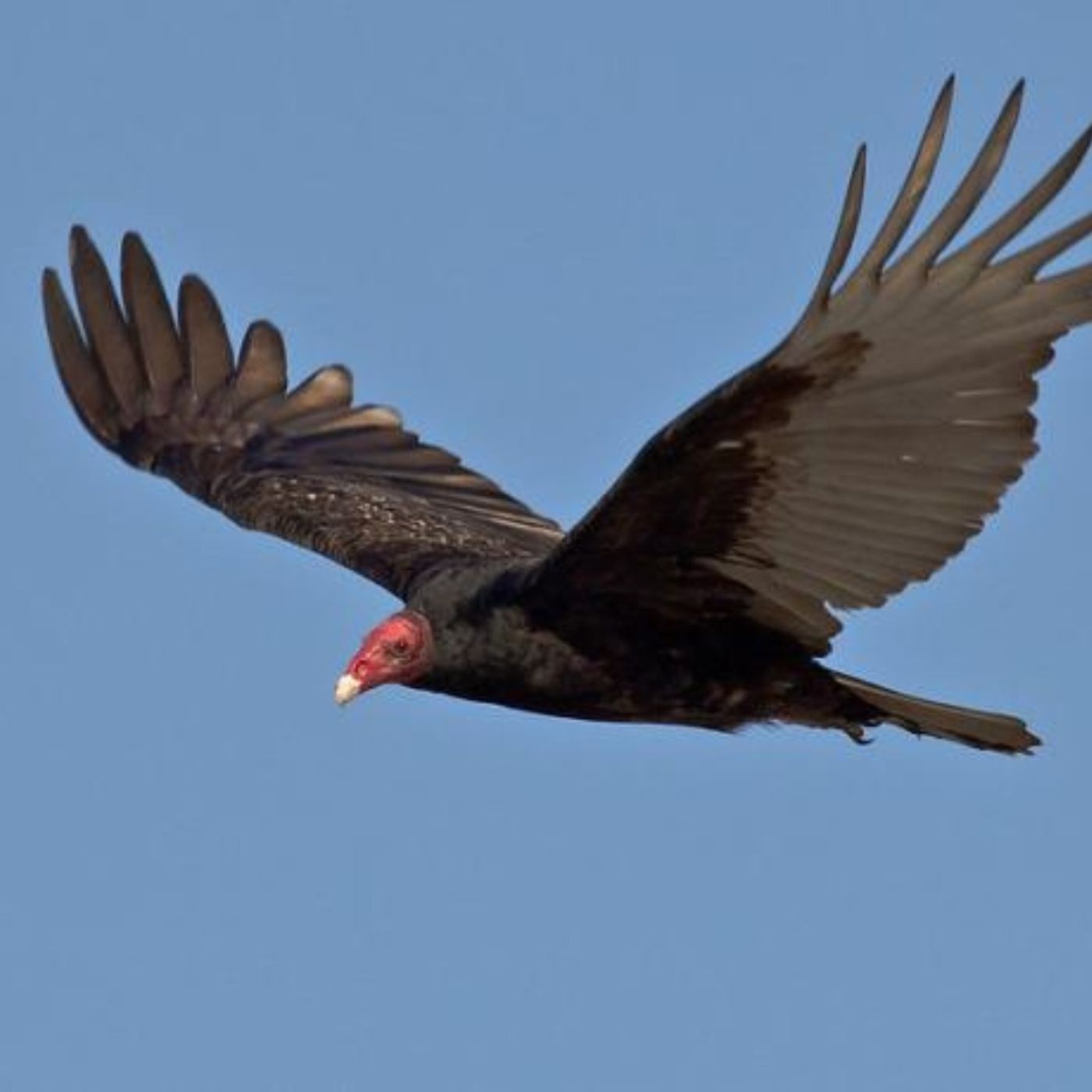
Turkey Vulture - Sky Sailor
Although some of the Turkey Vulture's habits may evoke our disgust, these remarkable birds also inspire our awe. With wingspans approaching six feet, Turkey Vultures ride currents of air to make their spring and fall journeys, and to cover the miles of their home range in summer. Gliding on updrafts, or pushed along by weather fronts, Turkey Vultures rarely need to flap their wings more than ten times in a row. To rise above storms, they ride upward on thermals.More info and transcript at BirdNote.org. Want more BirdNote? Subscribe to our weekly newsletter. Sign up for BirdNote+ to get ad-free listening and other perks. BirdNote is a nonprofit. Your tax-deductible gift makes these shows possible. Hosted by Simplecast, an AdsWizz company. See pcm.adswizz.com for information about our collection and use of personal data for advertising.
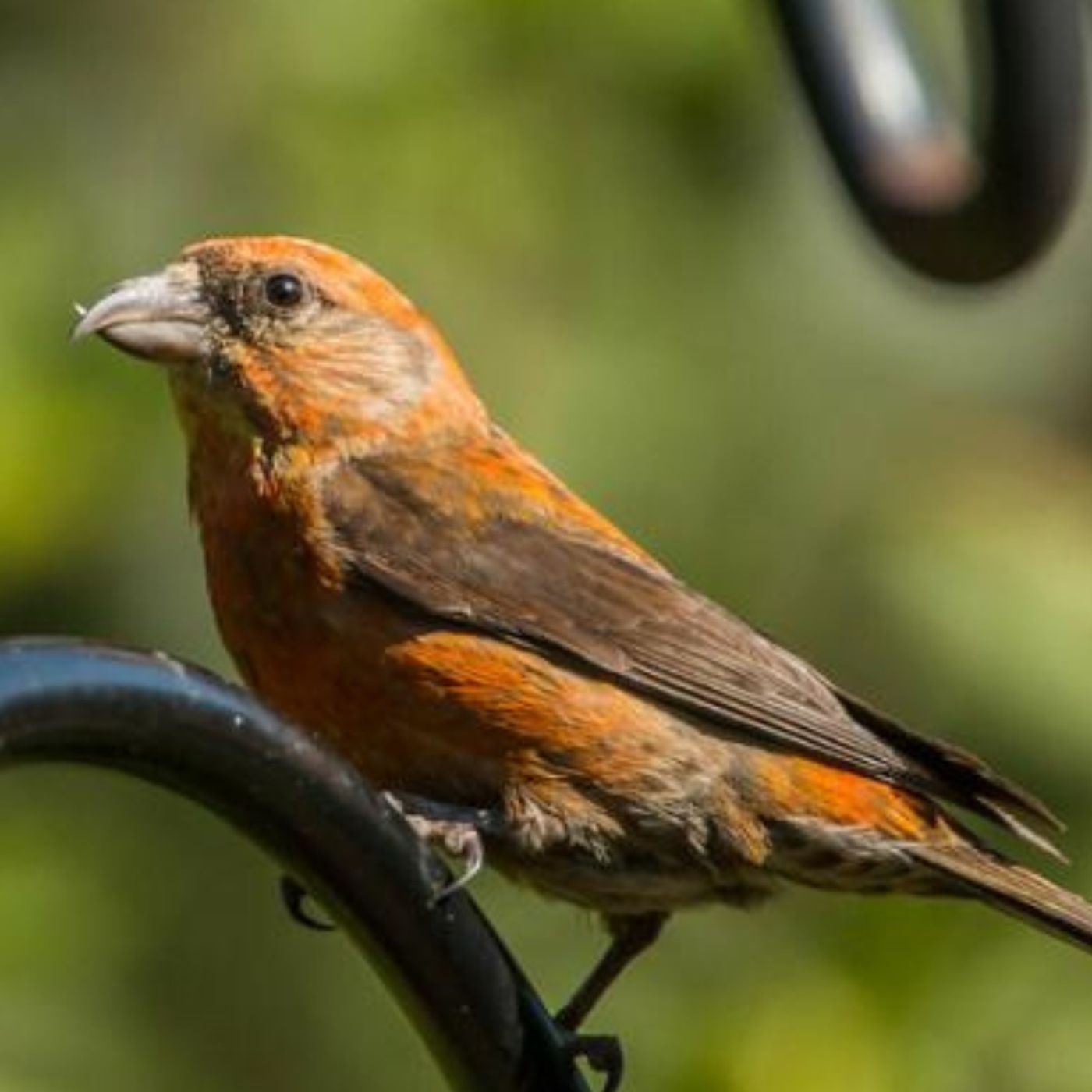
When Does a Crossbill's Bill Cross?
A young crossbill starts life with a wedge-shaped beak. As it grows up and starts to feed itself by removing conifer seeds from their tough packaging, the tips of its bill begin to grow rapidly — and then they cross. By the time the bird is a month and a half old, the tips of its bill become fully crossed.More info and transcript at BirdNote.org. Want more BirdNote? Subscribe to our weekly newsletter. Sign up for BirdNote+ to get ad-free listening and other perks. BirdNote is a nonprofit. Your tax-deductible gift makes these shows possible. Hosted by Simplecast, an AdsWizz company. See pcm.adswizz.com for information about our collection and use of personal data for advertising.
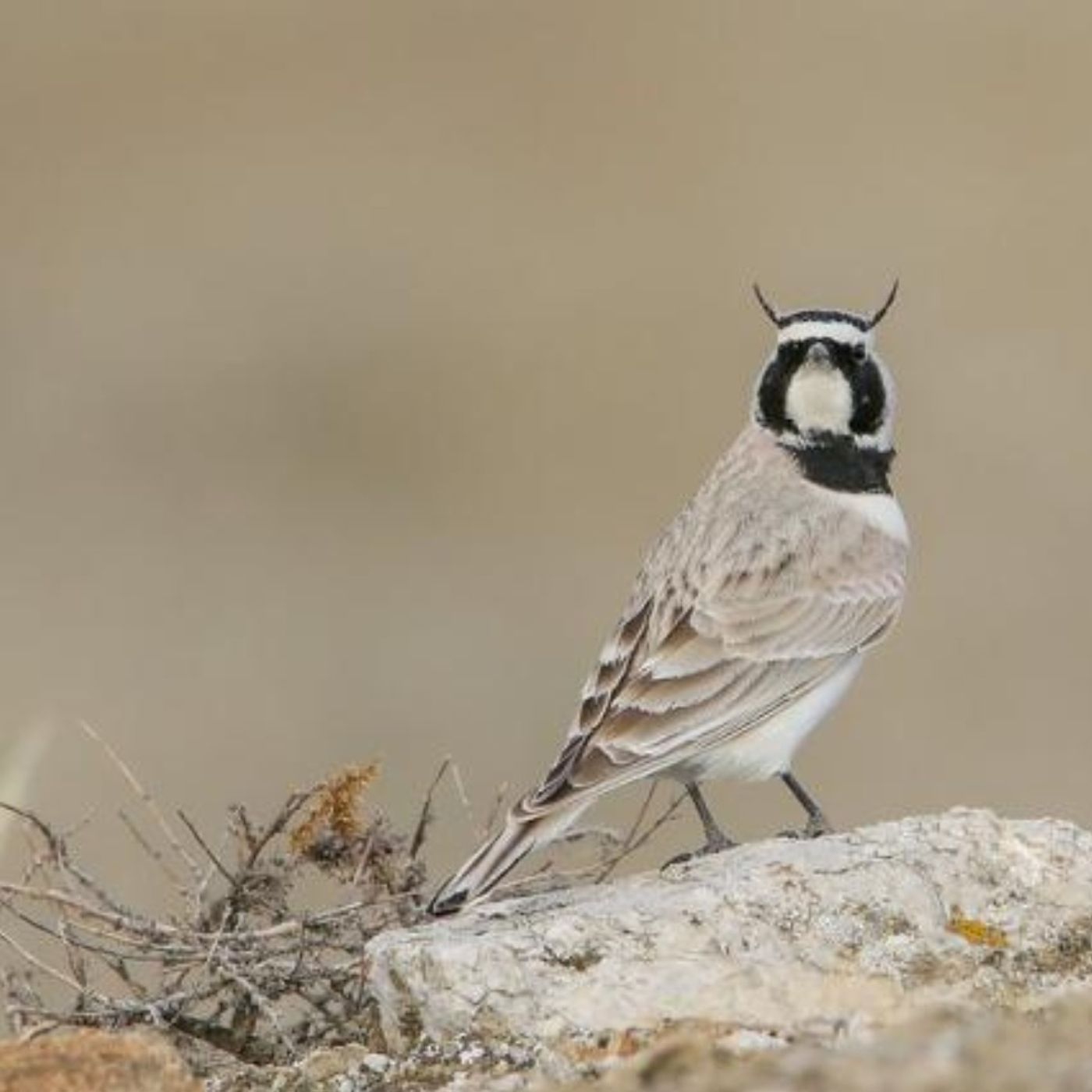
Hovering with Horned Larks
Horned Larks rival meadowlarks as the most colorful birds of North American grasslands. They live in prairies, fields, and tundra, but agriculture and development now intrude on many of the Horned Lark's traditional nesting areas. The farmland Conservation Reserve Program encourages agricultural landowners to plant resource-conserving vegetation. This practice protects topsoil and provides habitat for birds like the Horned Lark, as well as other wildlife.More info and transcript at BirdNote.org. Want more BirdNote? Subscribe to our weekly newsletter. Sign up for BirdNote+ to get ad-free listening and other perks. BirdNote is a nonprofit. Your tax-deductible gift makes these shows possible. Hosted by Simplecast, an AdsWizz company. See pcm.adswizz.com for information about our collection and use of personal data for advertising.
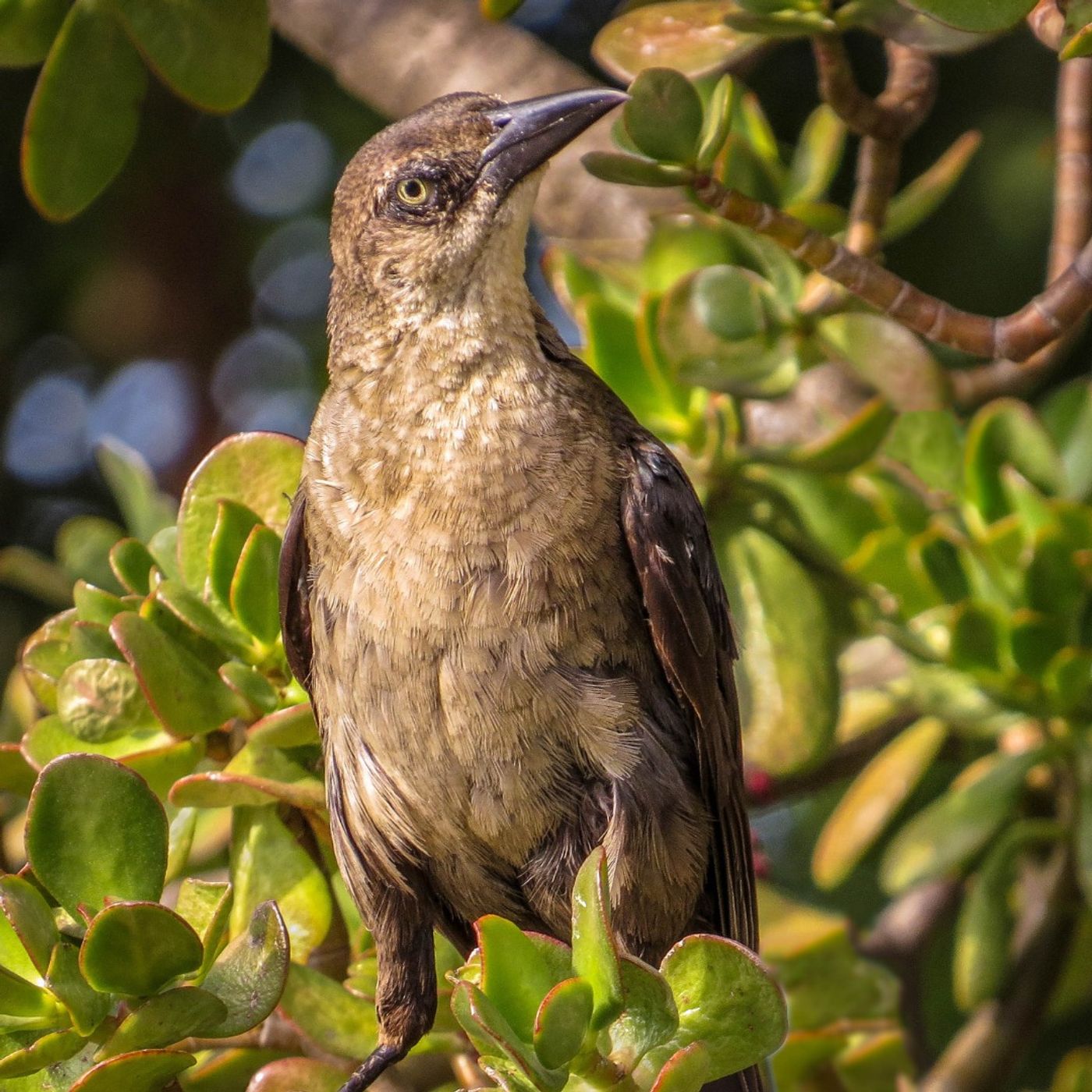
Looking Two Ways at Once
Great-tailed Grackles are known for their long, expressive tails, and their wide vocabulary of odd sounds. But this bird has another special trait. A researcher named Jessica Yorzinski has shown that Great-tailed Grackles can look at two different objects at once. In a careful experiment, she demonstrated that grackles could point one eye up and one eye down to look at two different objects simultaneously.More info and transcript at BirdNote.org. Want more BirdNote? Subscribe to our weekly newsletter. Sign up for BirdNote+ to get ad-free listening and other perks. BirdNote is a nonprofit. Your tax-deductible gift makes these shows possible. Hosted by Simplecast, an AdsWizz company. See pcm.adswizz.com for information about our collection and use of personal data for advertising.
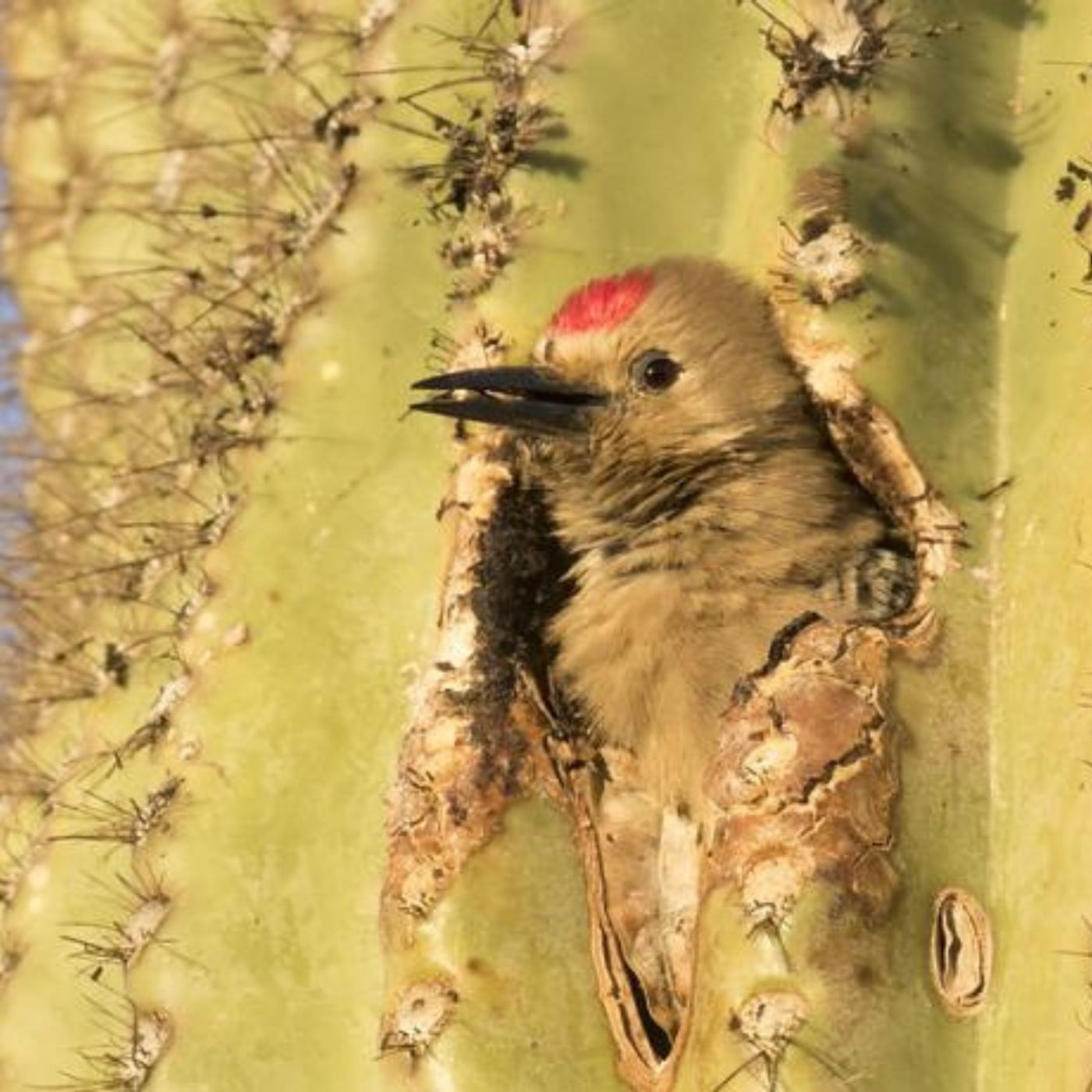
Making a Home Among the Saguaros
In the arid Arizona desert, where cacti thrive but trees are scarce, the Gila Woodpecker and Gilded Flicker carve out nest cavities in living saguaros. Tall, old saguaros may be pocked with twenty or more nest holes, bearing witness to decades of woodpecker families. The woodpeckers excavate a new nest every year, leaving the old, now-empty cavities behind. But they don't stay empty for long. Elf Owls, Ferruginous Pygmy-Owls, Purple Martins, and Brown-crested Flycatchers all find the slightly used woodpecker cavities superb nest sites.More info and transcript at BirdNote.org. Want more BirdNote? Subscribe to our weekly newsletter. Sign up for BirdNote+ to get ad-free listening and other perks. BirdNote is a nonprofit. Your tax-deductible gift makes these shows possible. Hosted by Simplecast, an AdsWizz company. See pcm.adswizz.com for information about our collection and use of personal data for advertising.

The Peabody Ducks
Twice every day, a rapt audience gathers at the Peabody Hotel in Memphis, Tennessee to see six local celebrities: five ducks and the hotel’s head Duckmaster, Kenon Walker, who leads them in “The Duck March.” With John Philip Sousa music playing, the ducks march across a red carpet through the hotel’s lobby to a fountain. The ducks swim about the fountain until the afternoon, when the Duckmaster marches them back to their palace on the roof. People travel from all over to see this surreal local tradition.More info and transcript at BirdNote.org. Want more BirdNote? Subscribe to our weekly newsletter. Sign up for BirdNote+ to get ad-free listening and other perks. BirdNote is a nonprofit. Your tax-deductible gift makes these shows possible. Hosted by Simplecast, an AdsWizz company. See pcm.adswizz.com for information about our collection and use of personal data for advertising.
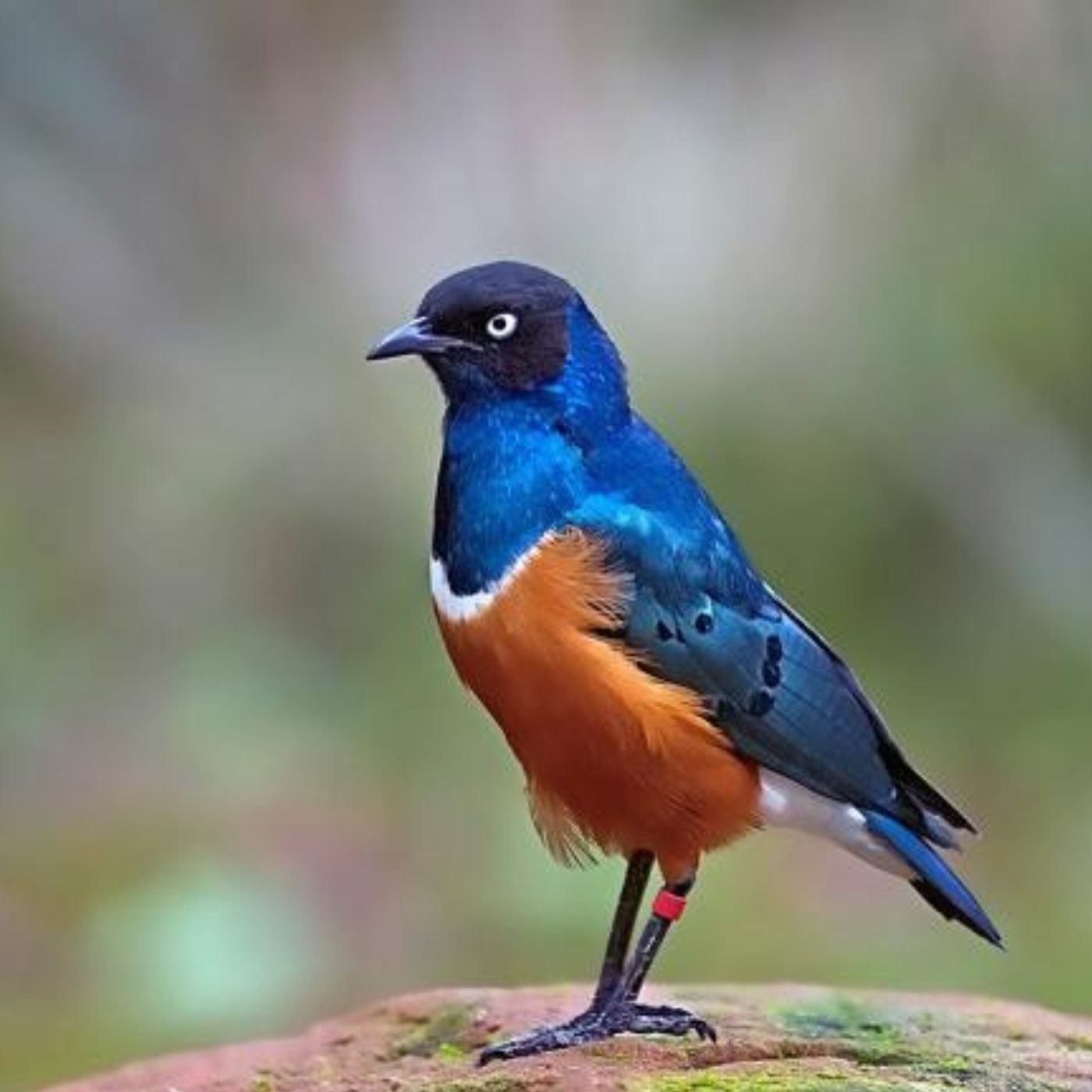
Scintillating Starlings
In Africa, where there are dozens of starling species, a quick look reveals a variety of visual stunners. Some of the names hint at their dazzle: Superb Starling, as well as Golden-breasted, Emerald, Purple, Violet-backed, and Splendid Glossy Starlings. Starlings sparkle because they have special extra structures in their feather cells called melanosomes.More info and transcript at BirdNote.org. Want more BirdNote? Subscribe to our weekly newsletter. Sign up for BirdNote+ to get ad-free listening and other perks. BirdNote is a nonprofit. Your tax-deductible gift makes these shows possible. Hosted by Simplecast, an AdsWizz company. See pcm.adswizz.com for information about our collection and use of personal data for advertising.
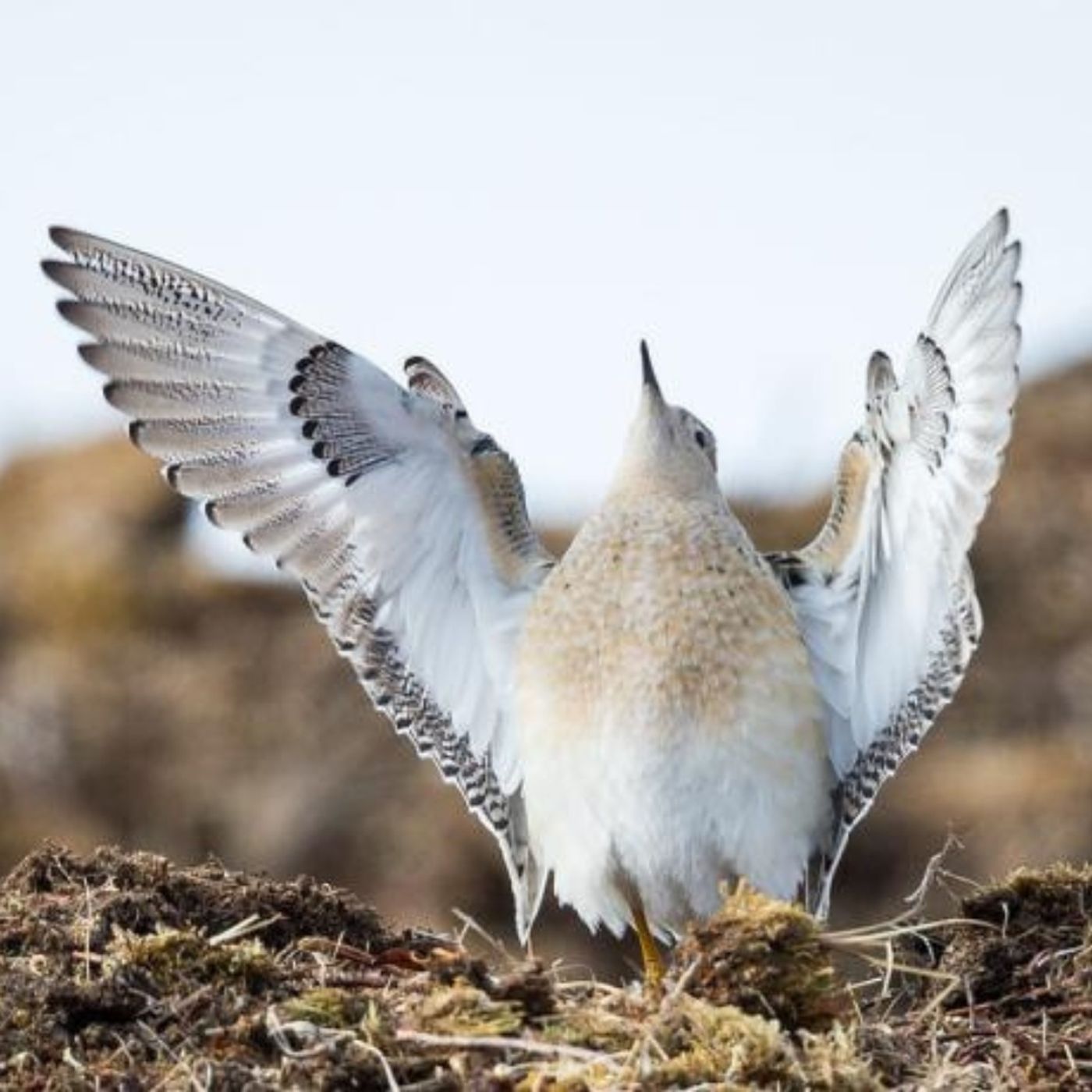
Buff-breasted Sandpiper
A male Buff-breasted Sandpiper courts a female on their breeding grounds far north of the Arctic Circle. He raises his wings, flashing their silvery-white undersides, as he sings his clicking serenade. These birds spend much of the year on grasslands in Argentina, migrating to the Arctic in late spring. In the lower 48, September is a good time to look for this long-distance traveler. During migration, they show a distinct preference for grassy expanses such as pastures and rice fields. Purchasing organic rice can help secure the future of a threatened species like the Buff-breasted Sandpiper.More info and transcript at BirdNote.org. Want more BirdNote? Subscribe to our weekly newsletter. Sign up for BirdNote+ to get ad-free listening and other perks. BirdNote is a nonprofit. Your tax-deductible gift makes these shows possible. Hosted by Simplecast, an AdsWizz company. See pcm.adswizz.com for information about our collection and use of personal data for advertising.
Migration and Fat
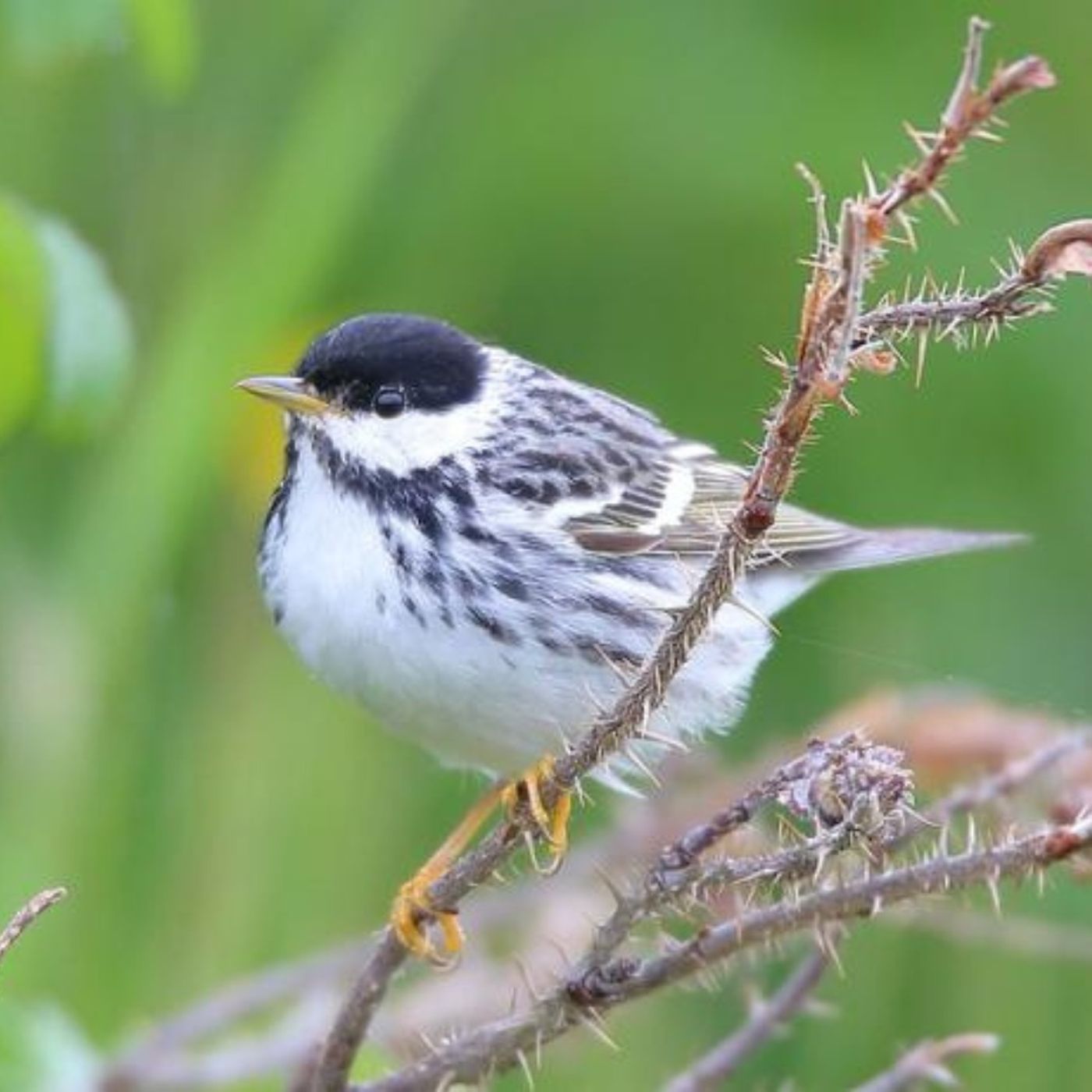
If long migratory flights are amazing, what goes on inside a bird’s body during those flights seems absolutely astonishing. To store fat, birds may eat three times as much and forage over many more hours than normal, as they prepare for long-distance travel. Blackpoll Warblers double their weight in the lead-up to migration. Wilson’s Phalaropes may put on so much fat that they actually have to lose weight to get their fat-loaded bodies into the air. Some birds may need a long running start to take off!More info and transcript at BirdNote.org. Want more BirdNote? Subscribe to our weekly newsletter. Sign up for BirdNote+ to get ad-free listening and other perks. BirdNote is a nonprofit. Your tax-deductible gift makes these shows possible. Hosted by Simplecast, an AdsWizz company. See pcm.adswizz.com for information about our collection and use of personal data for advertising.
The Crafty Carolina Wren
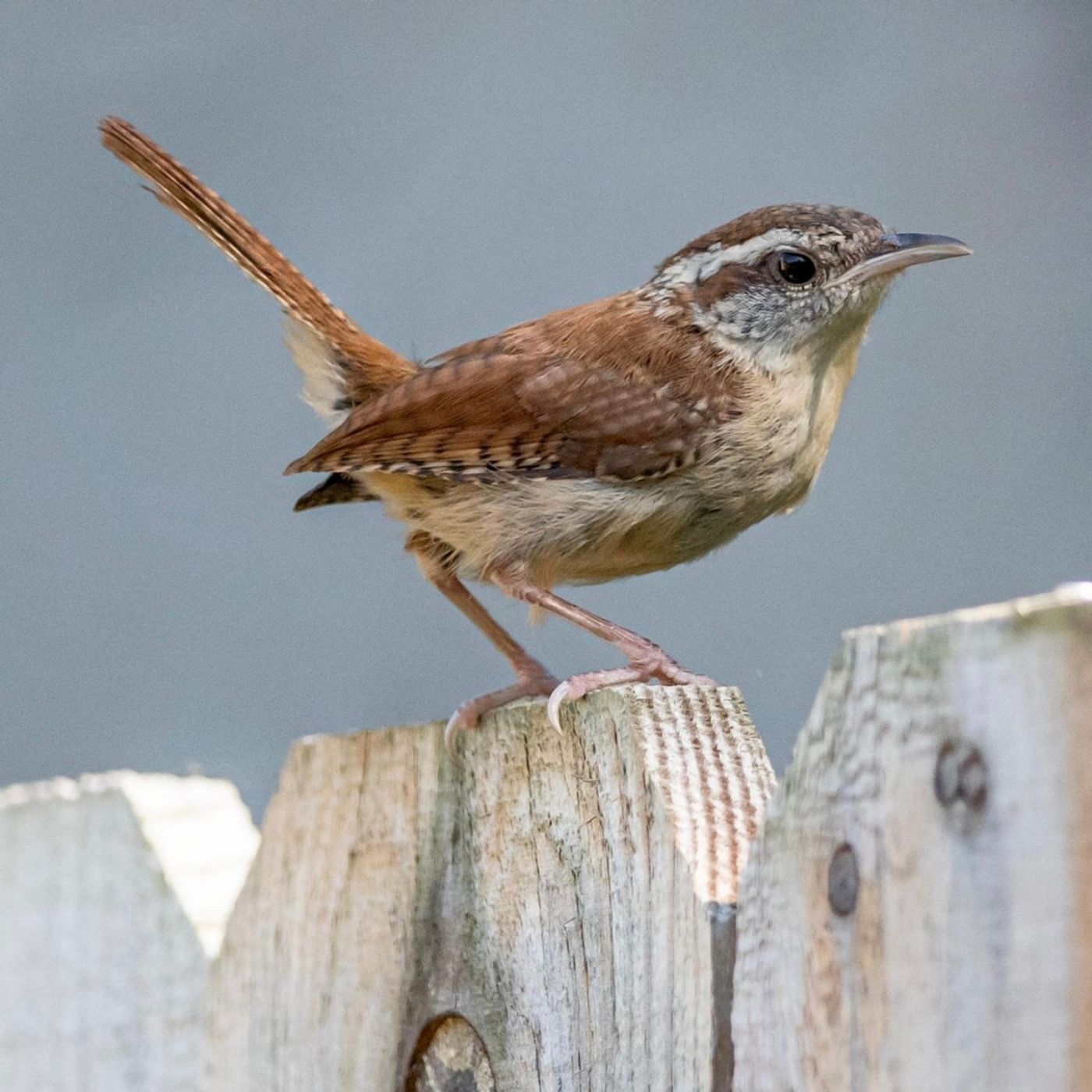
Though half the size of a robin, the Carolina Wren has a powerful singing voice that seems to come from a much bigger bird. Many people remember their song with the phrase, “teakettle-teakettle-teakettle!” When these secretive birds venture into the open, look for their cocked tail, bright white eyebrows, tan breasts, and golden-brown backs. One reason these wrens thrive in cityscapes is their ability to build a nest in creative places: everything from an old boot to a window flower box to an engine block are potential places to raise their brood.More info and transcript at BirdNote.org. Want more BirdNote? Subscribe to our weekly newsletter. Sign up for BirdNote+ to get ad-free listening and other perks. BirdNote is a nonprofit. Your tax-deductible gift makes these shows possible. Hosted by Simplecast, an AdsWizz company. See pcm.adswizz.com for information about our collection and use of personal data for advertising.
Protecting Endangered Birds from Maui’s Wildfires
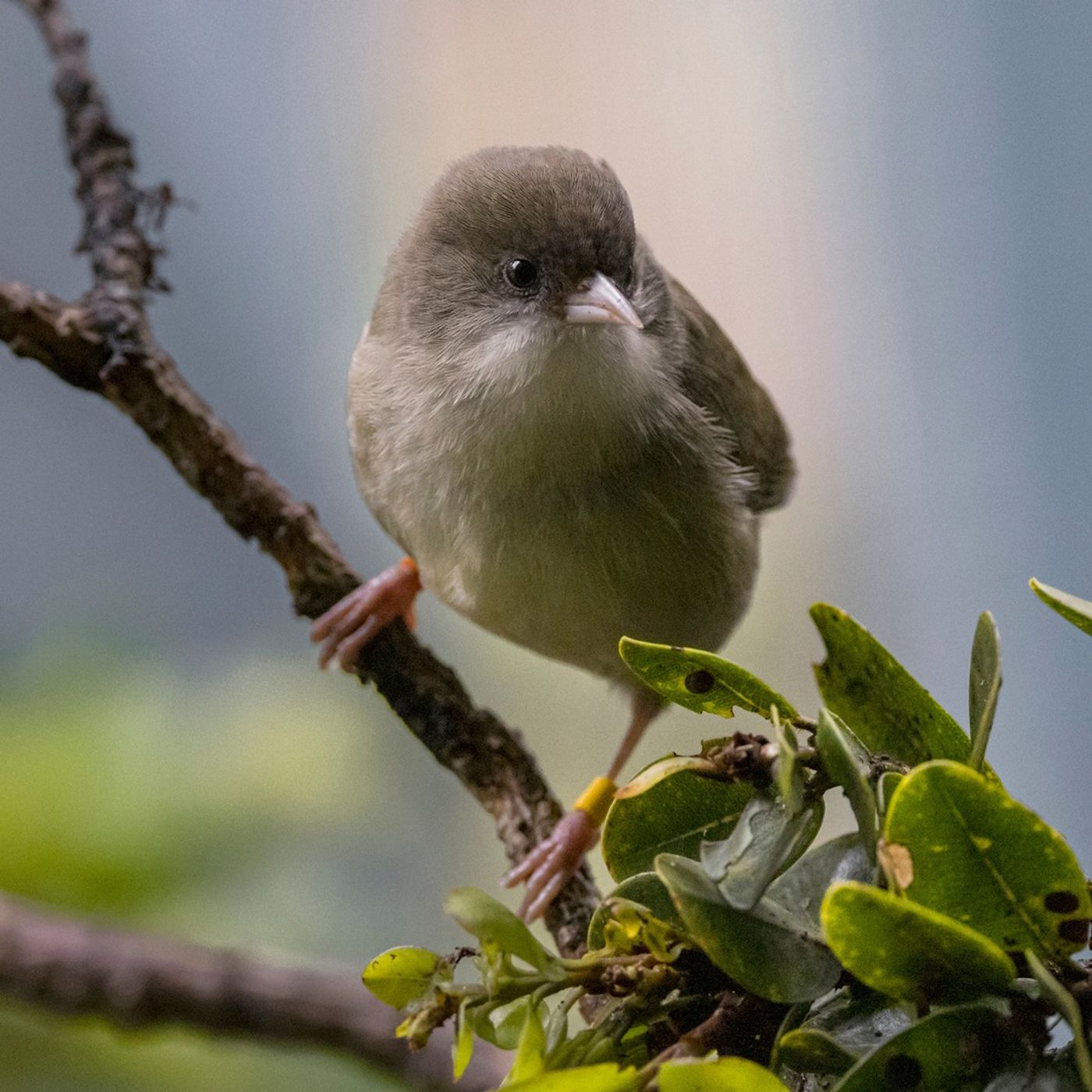
The Maui Bird Conservation Center helps care for Hawai‘i’s critically endangered bird species, some of which have gone extinct in the wild. Jennifer Pribble, the center’s Wildlife Care Supervisor, lives onsite. A year ago, several wildfires broke out on Maui island in Hawai‘i, killing over a hundred people. The first fire likely began in the forest near the bird center, as security footage later showed. Early in the morning, the wind began directing the fire toward the bird center. Jennifer and a neighbor rushed out to hold off the flames until firefighters arrived, helping save the lives of the center’s rare birds.More info and transcript at BirdNote.org. Want more BirdNote? Subscribe to our weekly newsletter. Sign up for BirdNote+ to get ad-free listening and other perks. BirdNote is a nonprofit. Your tax-deductible gift makes these shows possible. Hosted by Simplecast, an AdsWizz company. See pcm.adswizz.com for information about our collection and use of personal data for advertising.
A Giant Parrot of New Zealand
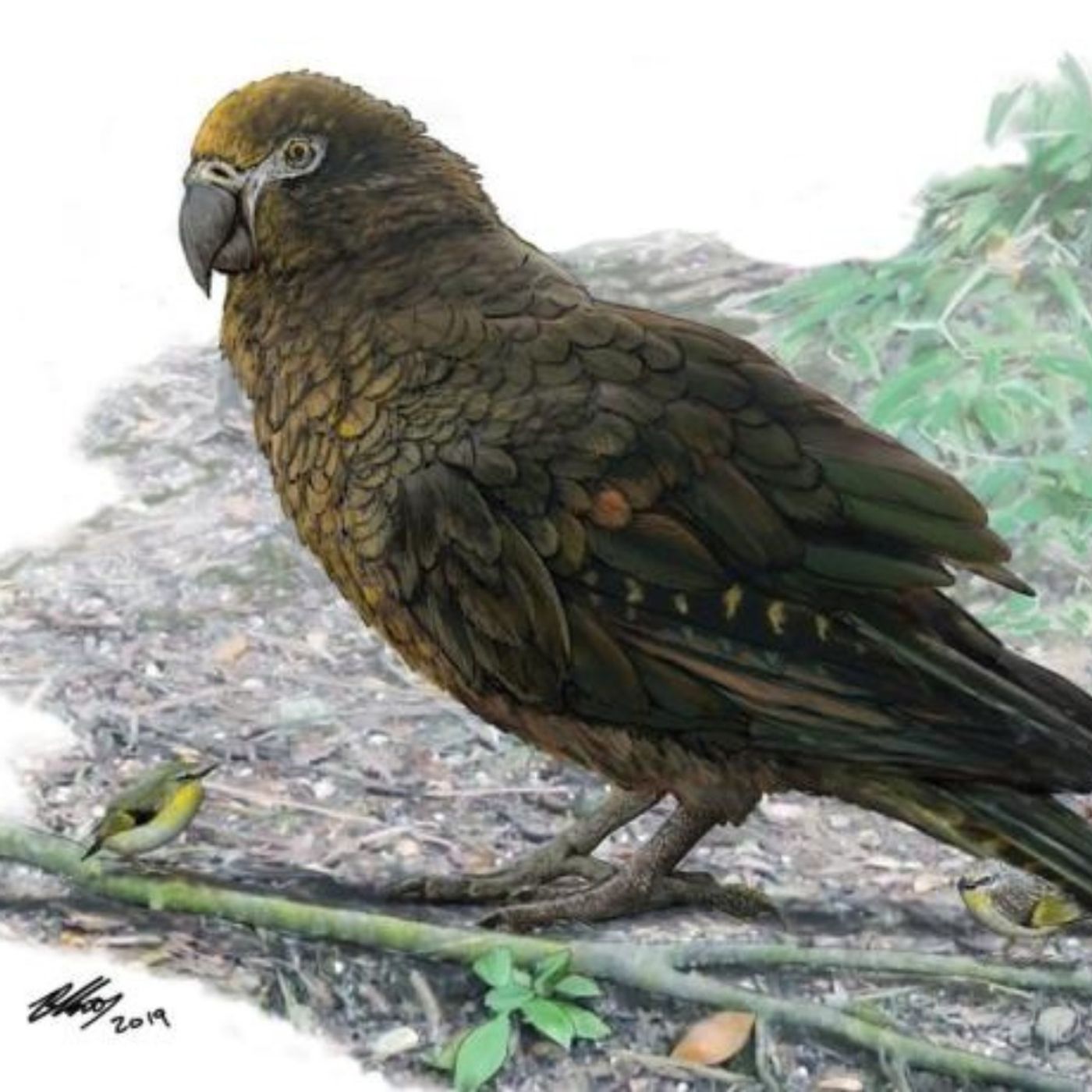
New Zealand was once home to a massive parrot that stood three feet tall, about hip-high to most adult humans. It’s estimated that the bird weighed around fifteen pounds, and it probably didn’t fly. But it didn’t need to, because there were no land predators at that time — between 16- and 19-million-years ago!More info and transcript at BirdNote.org. Want more BirdNote? Subscribe to our weekly newsletter. Sign up for BirdNote+ to get ad-free listening and other perks. BirdNote is a nonprofit. Your tax-deductible gift makes these shows possible. Hosted by Simplecast, an AdsWizz company. See pcm.adswizz.com for information about our collection and use of personal data for advertising.
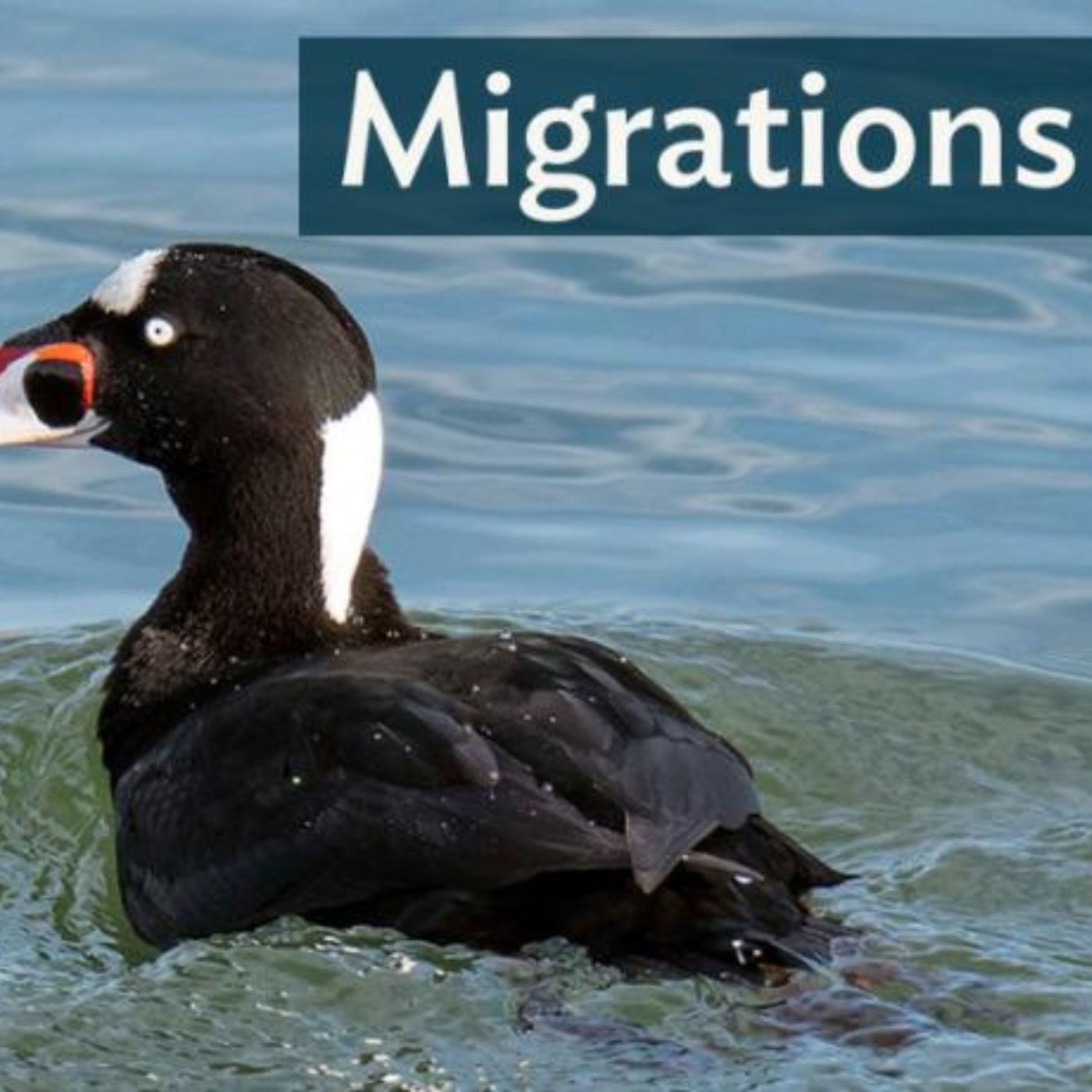
Migrations: Watching Seabirds Summer at the Lake
Many oceanic species like grebes, loons, pelicans, and gulls migrate far inland to raise their young near freshwater lakes. Ring-billed Gulls, for example, breed throughout the northern U.S. Forster’s Terns can be found catching fish in the upper Midwest in the summer. In northern Canada, you may even catch a glimpse of a Surf Scoter as it dives below the glassy surface of the lake. These species return to the coasts for the winter.More info and transcript at BirdNote.org. Want more BirdNote? Subscribe to our weekly newsletter. Sign up for BirdNote+ to get ad-free listening and other perks. BirdNote is a nonprofit. Your tax-deductible gift makes these shows possible. Hosted by Simplecast, an AdsWizz company. See pcm.adswizz.com for information about our collection and use of personal data for advertising.

Bringing Birding Adventures to Broward County
While Sierra Taliaferro was working as a Naturalist in Broward County, Florida, in 2021, she collaborated with Broward County Library to help enhance the public’s knowledge about birding. More people became interested in birding as a safe outdoor activity during the pandemic. Sierra and others designed birding backpacks with field guides and binoculars that could be checked out at 10 libraries throughout the county. Sierra also gave a webinar crash course on how to find birds. The program was a success, with many people checking out the backpacks and creating their own birding adventures.More info and transcript at BirdNote.org. Want more BirdNote? Subscribe to our weekly newsletter. Sign up for BirdNote+ to get ad-free listening and other perks. BirdNote is a nonprofit. Your tax-deductible gift makes these shows possible. Hosted by Simplecast, an AdsWizz company. See pcm.adswizz.com for information about our collection and use of personal data for advertising.
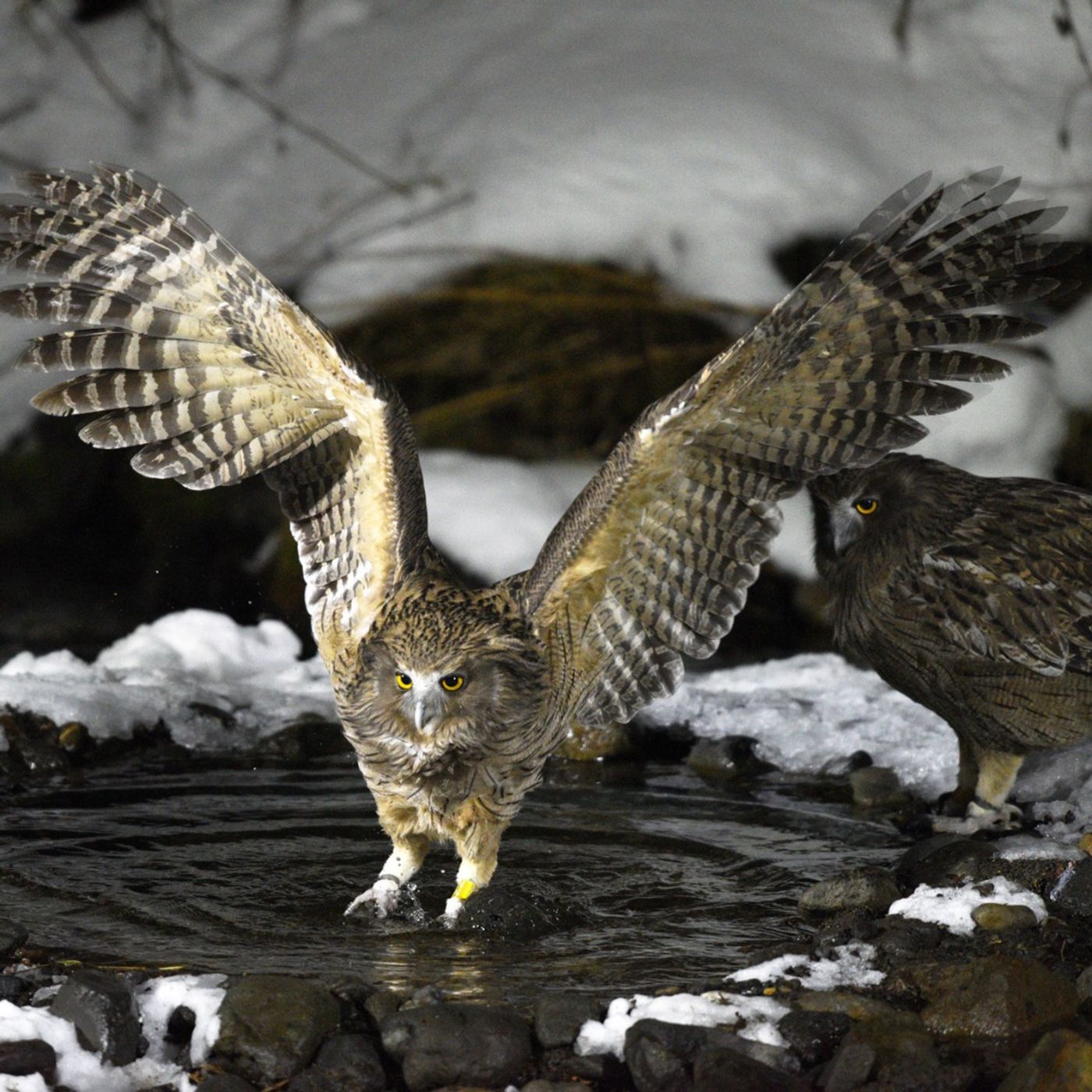
An Amazing World of Owls
Owls are magnificent animals that share our cities with us, and live in some of the most extreme environments on Earth. They range in size from huge, like the Blakiston’s Fish-Owl of Eastern Asia, to the songbird-sized Elf Owl, weighing less than half a deck of cards. Owls play key roles in their ecosystems and even help control pests such as non-native rodents. By giving these amazing birds their space when they’re nesting, preserving habitats where they breed and hunt, and avoiding rodenticides that could poison their prey, we can help ensure a safe future for our world’s incredible owls.More info and transcript at BirdNote.org. Want more BirdNote? Subscribe to our weekly newsletter. Sign up for BirdNote+ to get ad-free listening and other perks. BirdNote is a nonprofit. Your tax-deductible gift makes these shows possible. Hosted by Simplecast, an AdsWizz company. See pcm.adswizz.com for information about our collection and use of personal data for advertising.
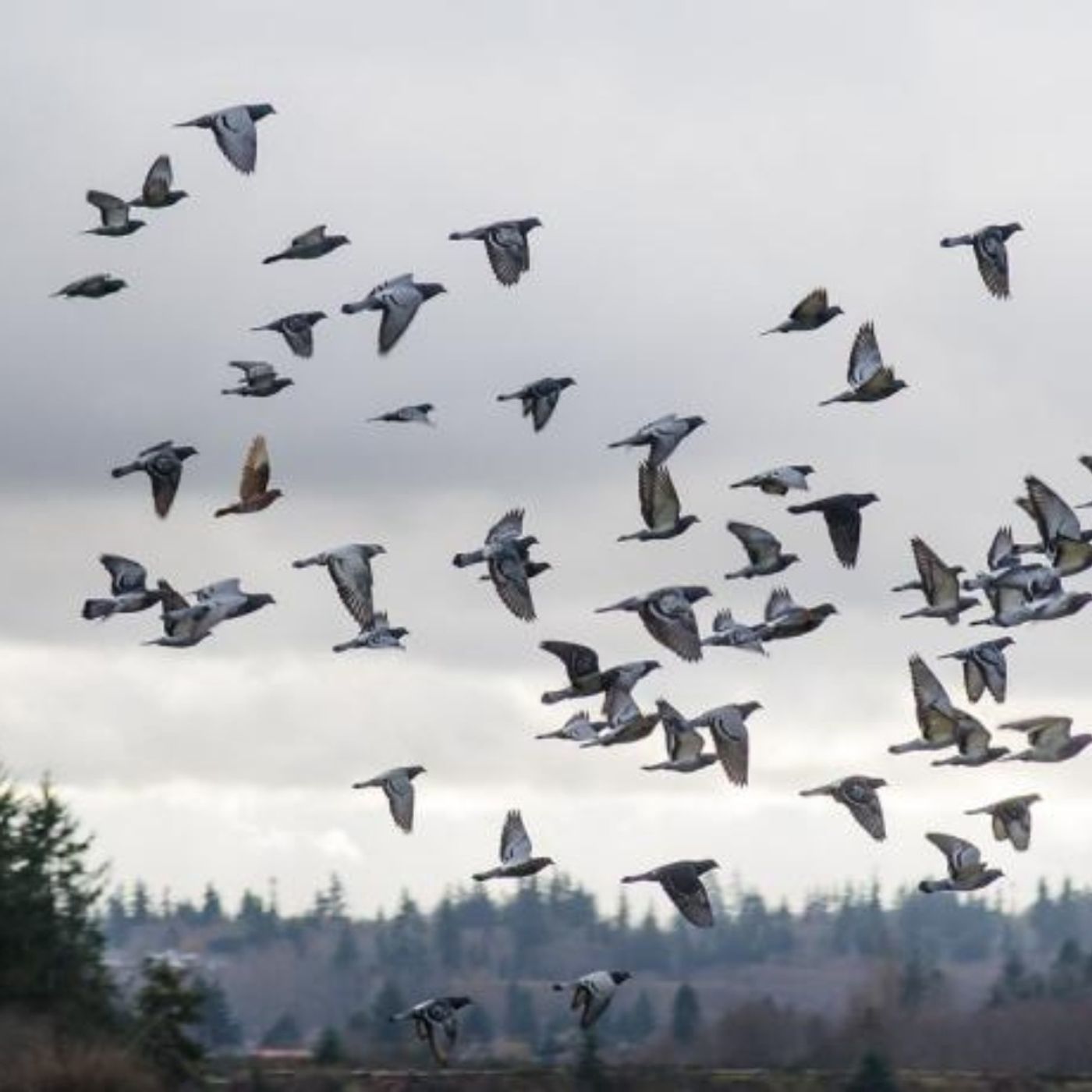
Pigeon Flocks Follow the Leader
The flocking movements of homing pigeons are governed by a pecking order. Higher-ranked birds have more influence over how the flock moves. Leading birds change directions first, and followers swiftly copy the leader's movements. And birds at the front of the flock tend to make the navigational decisions. In other words, the pigeons follow the leader. Or leaders.More info and transcript at BirdNote.org. Want more BirdNote? Subscribe to our weekly newsletter. Sign up for BirdNote+ to get ad-free listening and other perks. BirdNote is a nonprofit. Your tax-deductible gift makes these shows possible. Hosted by Simplecast, an AdsWizz company. See pcm.adswizz.com for information about our collection and use of personal data for advertising.
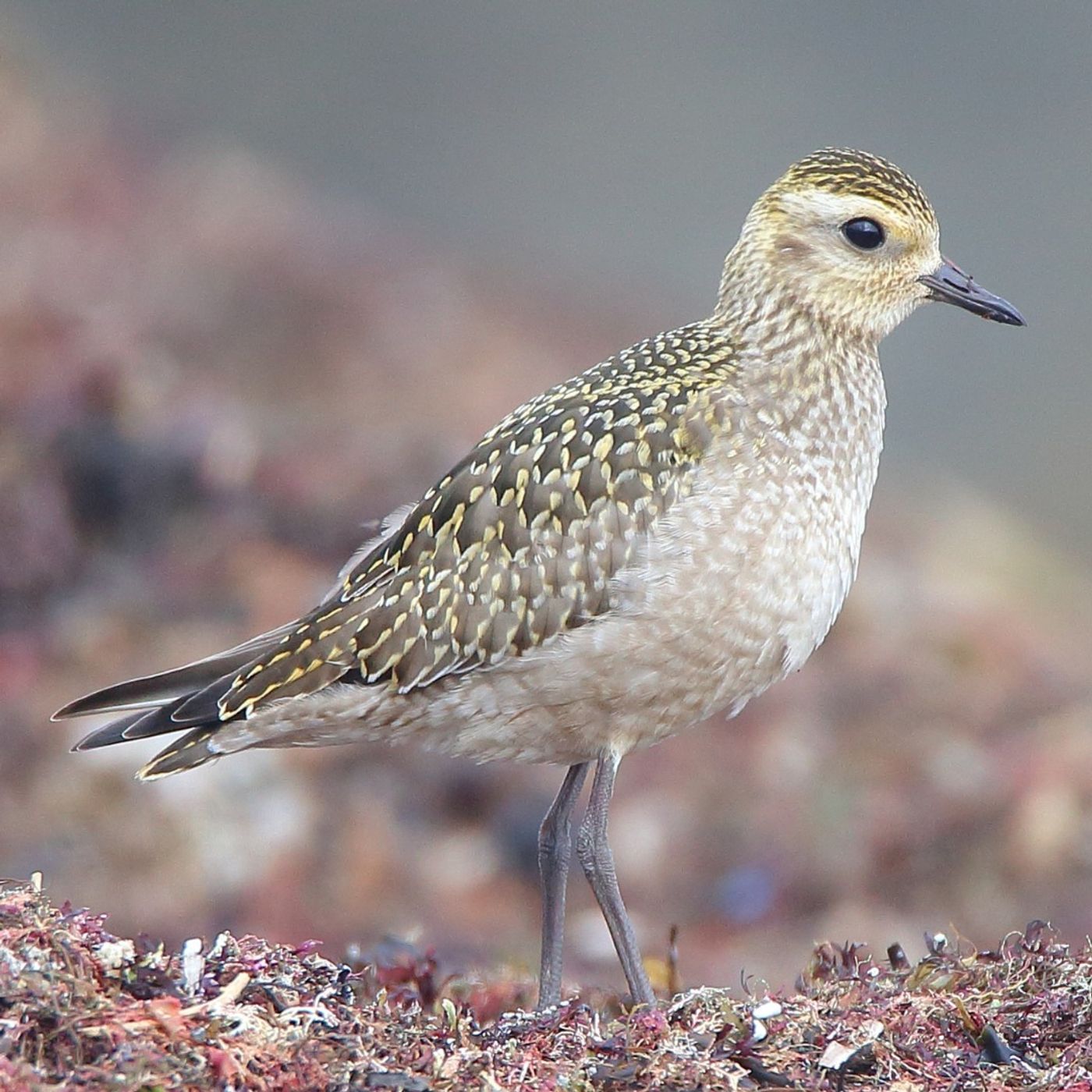
For Shorebirds, Summer Ends Early
We often think of birds migrating south in the fall. But many species kick off their big trips surprisingly early in the year. Shorebirds nesting in the Arctic tundra are an extreme example. Birds like the American Golden-Plover have a small window of time to build a nest, find a mate, and lay eggs in the short Arctic growing season. Golden-plovers actually leave their juvenile young behind to begin flying south in mid-summer. The juveniles find their own way to South America later in the year!More info and transcript at BirdNote.org. Want more BirdNote? Subscribe to our weekly newsletter. Sign up for BirdNote+ to get ad-free listening and other perks. BirdNote is a nonprofit. Your tax-deductible gift makes these shows possible. Hosted by Simplecast, an AdsWizz company. See pcm.adswizz.com for information about our collection and use of personal data for advertising.
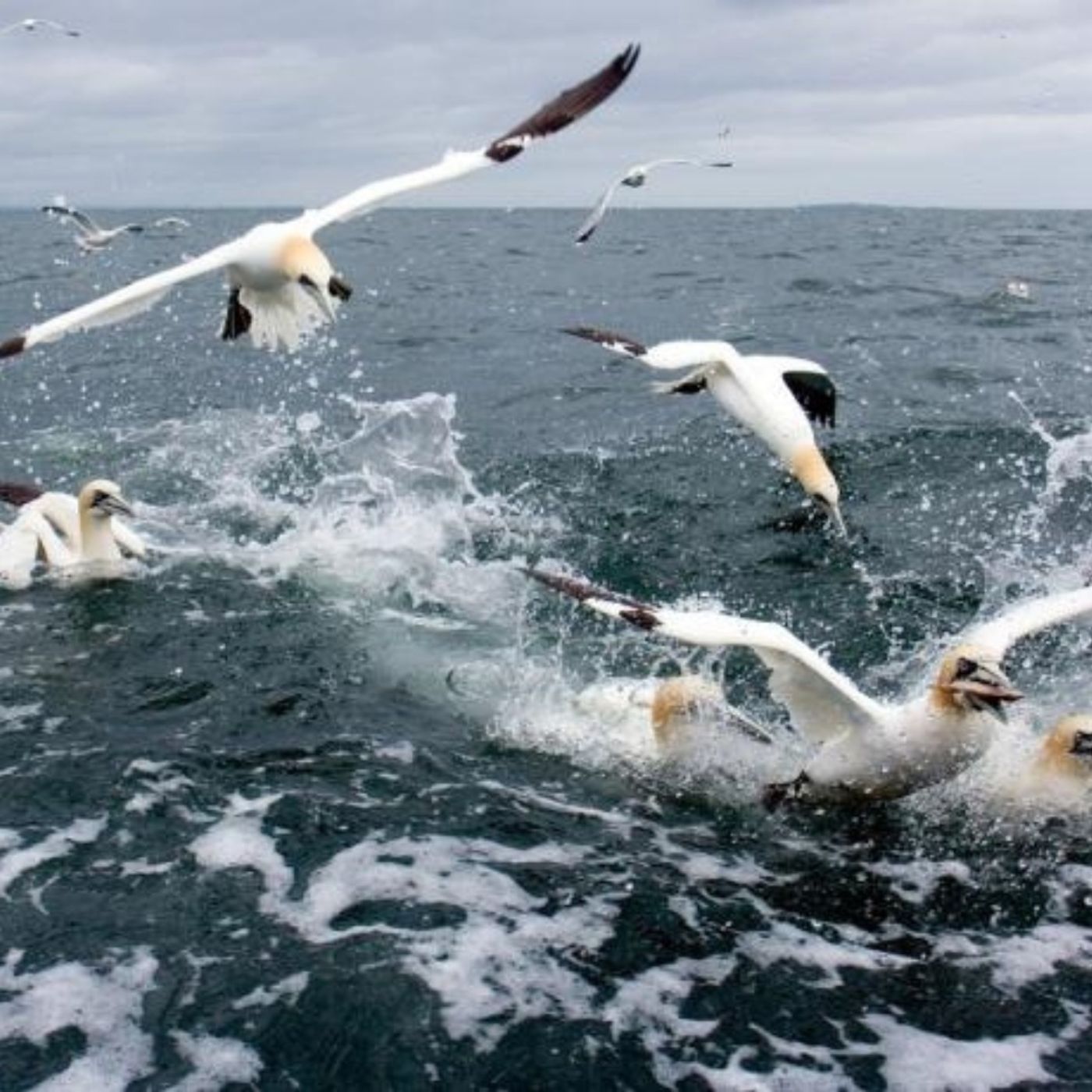
Gannets and Dolphins
Northern Gannets, fish-eating seabirds, dive headfirst into the ocean at speeds of up to 60 miles an hour, pursuing their prey. Sometimes, they get help. Dolphins herd fish into dense, frantic concentrations near the surface, while gannets take advantage and plunge into the shoals from aloft. Scientists call this a multi-species feeding association, a frequent phenomenon on the ocean’s surface. This may seem like evidence of cooperation between species, but it’s more about opportunity. Kittiwakes and gulls, as well as seals and whales, may join in, too.More info and transcript at BirdNote.org. Want more BirdNote? Subscribe to our weekly newsletter. Sign up for BirdNote+ to get ad-free listening and other perks. BirdNote is a nonprofit. Your tax-deductible gift makes these shows possible. Hosted by Simplecast, an AdsWizz company. See pcm.adswizz.com for information about our collection and use of personal data for advertising.