
BirdNote Daily
1,282 episodes — Page 10 of 26
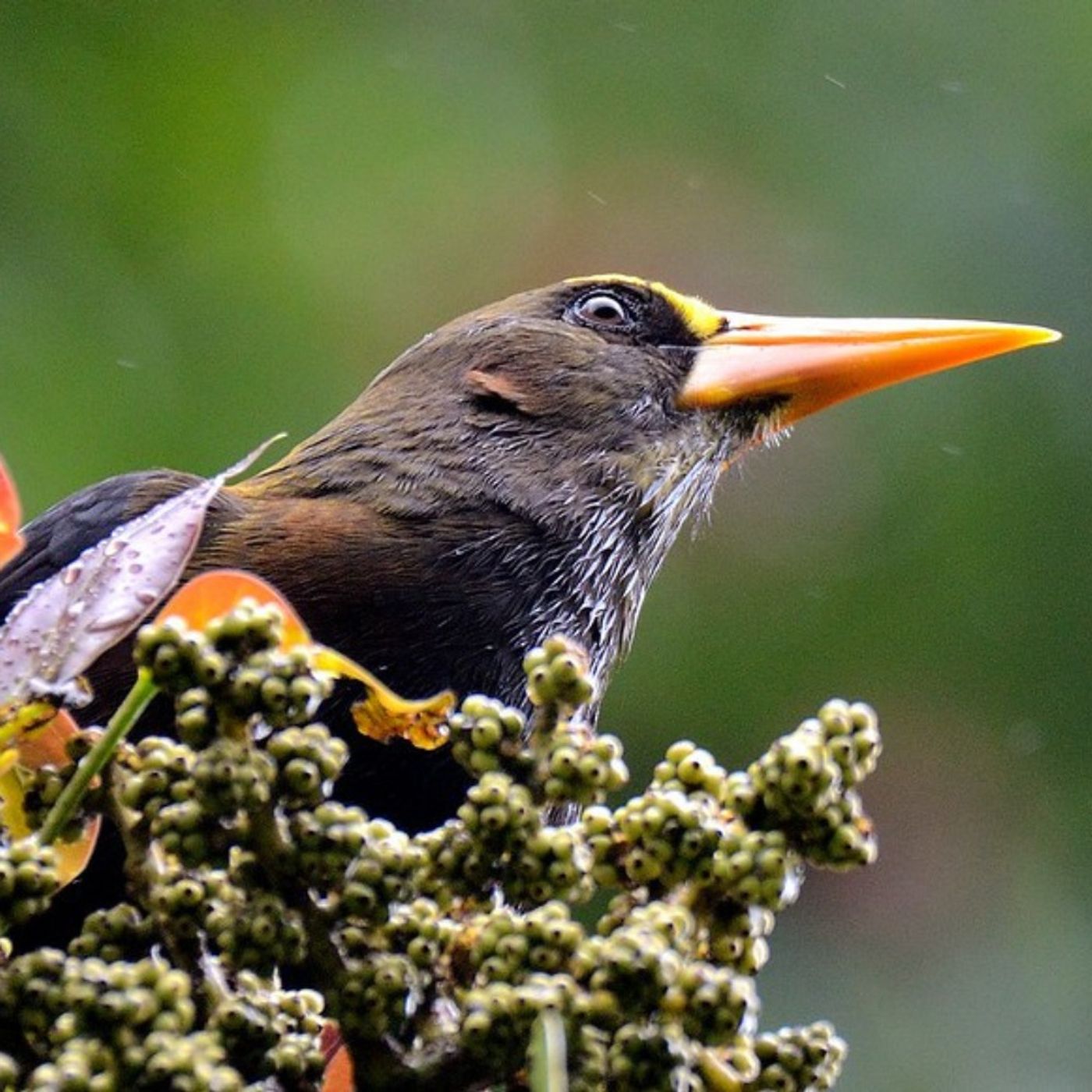
Seasonal Flooding of the Amazon
When it’s predictable and wildlife is well adapted, natural flooding can create a biological bonanza. In the Amazon River Basin, which holds one-fifth of the world’s fresh water, annual rains can raise water levels 30 to 40 feet in just days. Forests turn into vast lakes, dotted with trees, while a massive push of sediment erects new islands almost overnight. It’s a lush world that’s home to some of the world’s most iconic birds, including toucans, macaws, kingfishers, tiger-herons, and this Russet-backed Oropendola.More info and transcript at BirdNote.org.Want more BirdNote? Subscribe to our weekly newsletter. Sign up for BirdNote+ to get ad-free listening and other perks. BirdNote is a nonprofit. Your tax-deductible gift makes these shows possible. Hosted by Simplecast, an AdsWizz company. See pcm.adswizz.com for information about our collection and use of personal data for advertising.

Whistling Birdsong with Andrew Bird
Musician Andrew Bird is known as a songwriter, violinist, and, like his namesake, a virtuoso whistler. He showcases all of these skills in the song Rare Birds, which was created as part of The Birdsong Project in 2020. Whistling melodies inspired by Mourning Doves and the Kaua‘i ‘O‘o alongside his violin, Andrew creates a kind of otherworldly natural soundscape.More info and transcript at BirdNote.org.Want more BirdNote? Subscribe to our weekly newsletter. Sign up for BirdNote+ to get ad-free listening and other perks. BirdNote is a nonprofit. Your tax-deductible gift makes these shows possible. Hosted by Simplecast, an AdsWizz company. See pcm.adswizz.com for information about our collection and use of personal data for advertising.
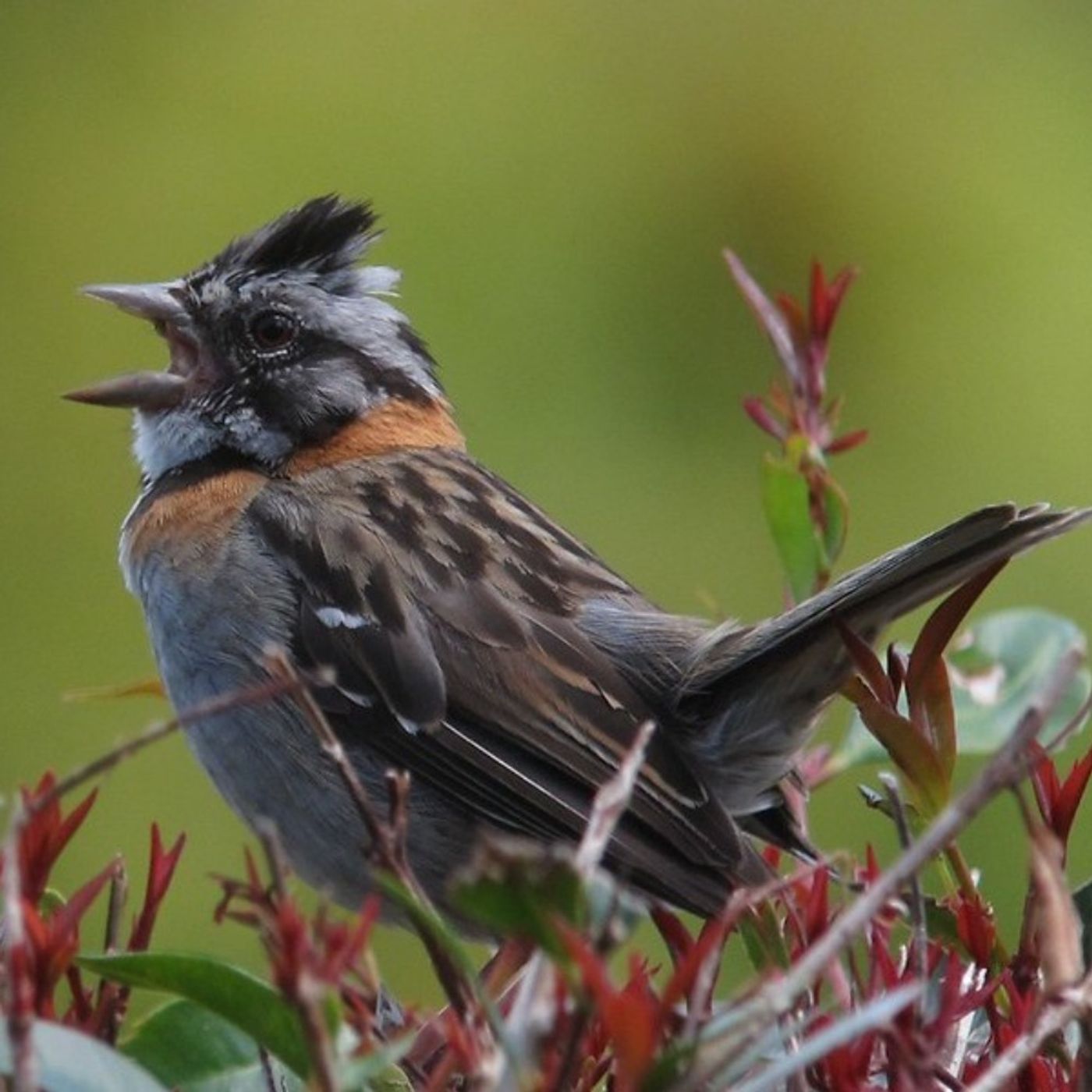
Rufous-collared Sparrow: Tico-Tico
The song Tico-Tico no Fuba, like Carmen Miranda, came to us from Brazil. Believe it or not, the song is about a bird. The Portuguese lyrics tell the story of the tico-tico, a local name for the Rufous-collared Sparrow. Like so many birds, tico-tico was named for its song. In the song, the bird keeps coming back to the singer's yard to dine on her cornmeal, piled in a backyard granary. Tico-tico loves her cornmeal.More info and transcript at BirdNote.org.Want more BirdNote? Subscribe to our weekly newsletter. Sign up for BirdNote+ to get ad-free listening and other perks. BirdNote is a nonprofit. Your tax-deductible gift makes these shows possible. Hosted by Simplecast, an AdsWizz company. See pcm.adswizz.com for information about our collection and use of personal data for advertising.

Beaks and Bills
A bird’s bill is an incredible multi-tool — good for preening feathers, building a nest, self-defense, scratching, displaying, building a nest, and egg-turning. And a bill must be the right size and shape for the bird’s diet, whether that’s probing for worms, cracking open seeds, or tear apart prey.More info and transcript at BirdNote.org.Want more BirdNote? Subscribe to our weekly newsletter. Sign up for BirdNote+ to get ad-free listening and other perks. BirdNote is a nonprofit. Your tax-deductible gift makes these shows possible. Hosted by Simplecast, an AdsWizz company. See pcm.adswizz.com for information about our collection and use of personal data for advertising.
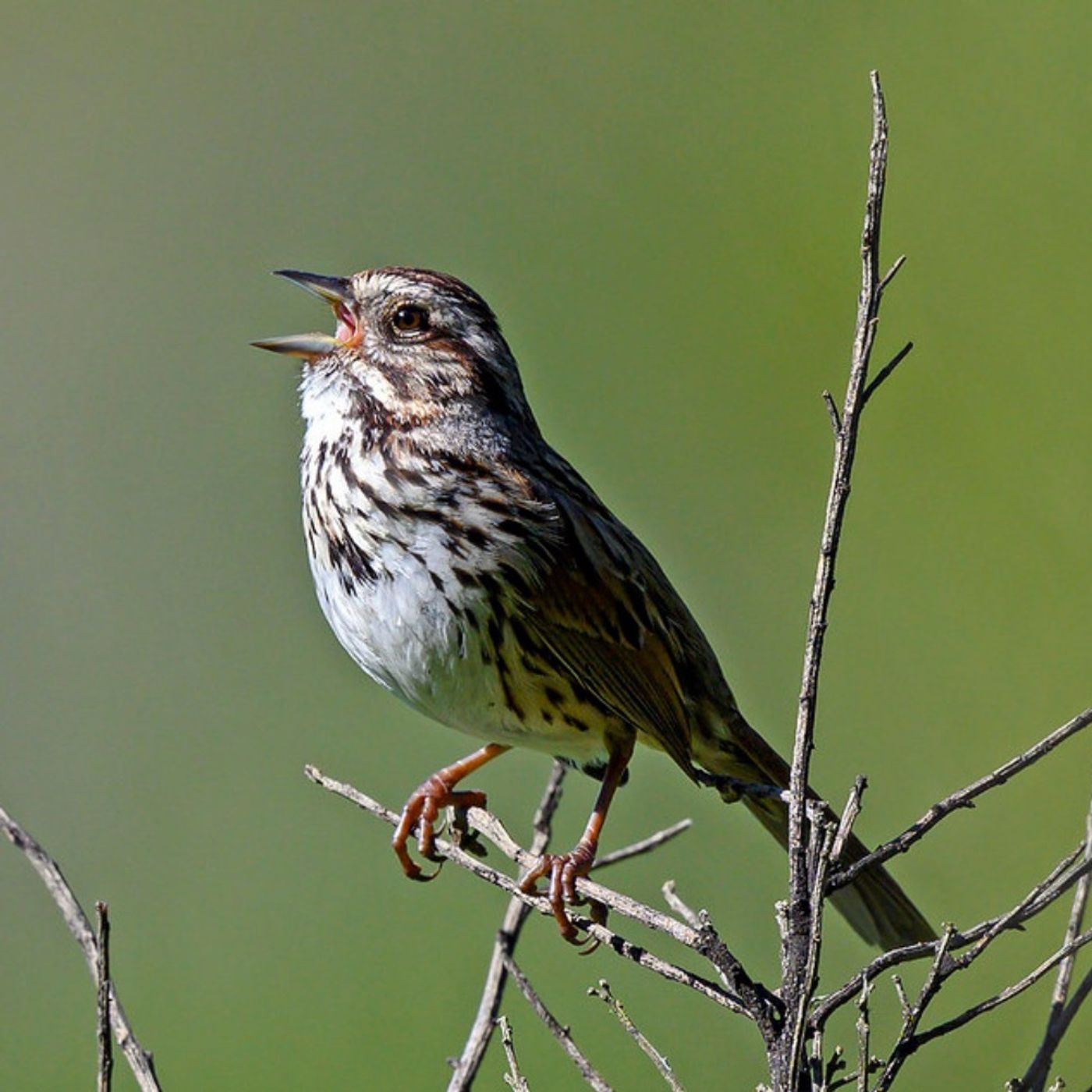
Song Neighborhoods
Birds of the same species don’t always sing exactly the same as each other. But those that live near each other sometimes have similar songs. Scientists refer to this pattern as a song neighborhood. It’s less like a regional dialect among people that’s found over a large area. It’s more local than that, like a group of friends copying each other's mannerisms.More info and transcript at BirdNote.org.Want more BirdNote? Subscribe to our weekly newsletter. Sign up for BirdNote+ to get ad-free listening and other perks. BirdNote is a nonprofit. Your tax-deductible gift makes these shows possible. Hosted by Simplecast, an AdsWizz company. See pcm.adswizz.com for information about our collection and use of personal data for advertising.
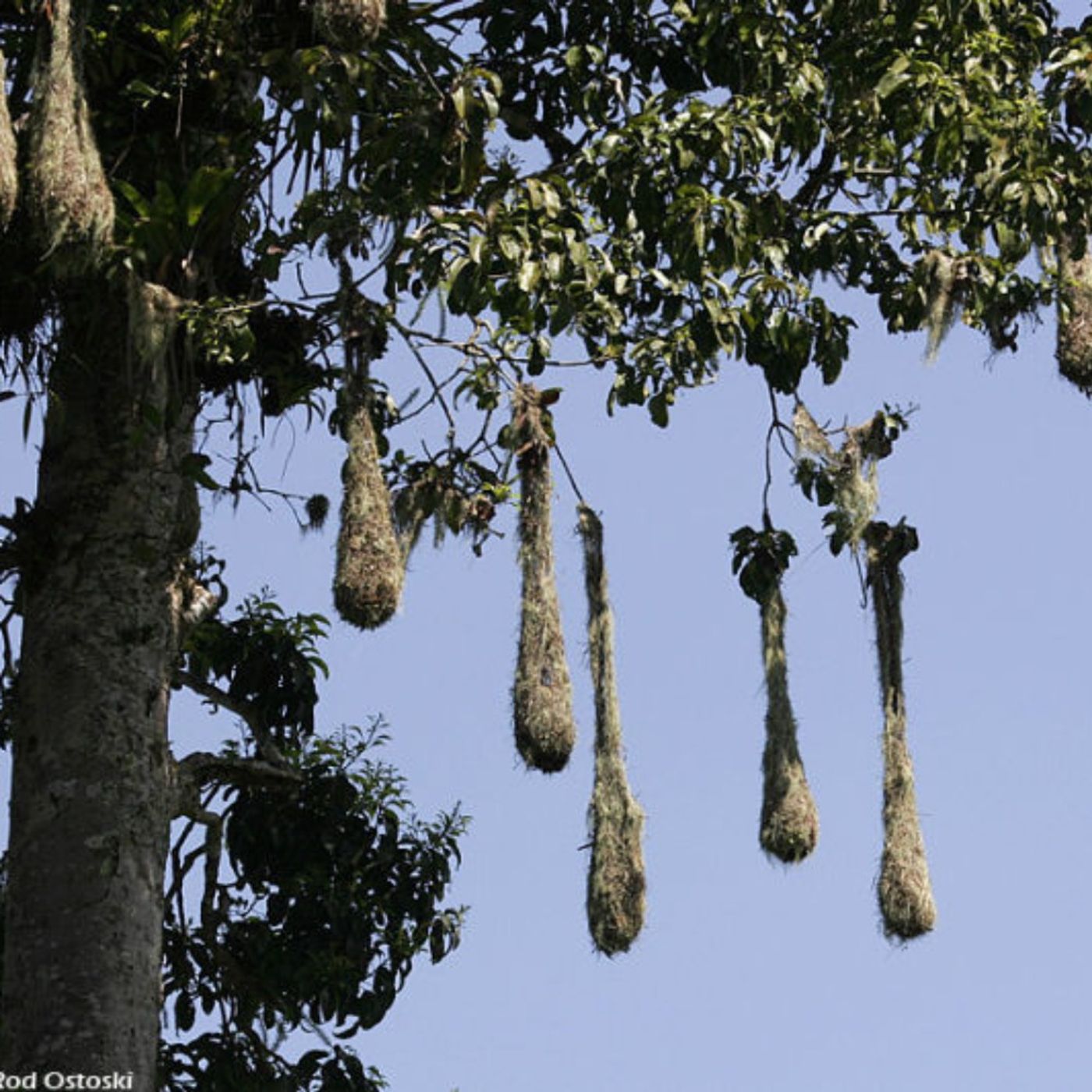
Montezuma Oropendola's High-Security Nesting
A male Montezuma Oropendola holds forth in a tree bedecked with twenty or more hanging nests. The nests are intricately woven sacks hanging three feet or more from the branches. Oropendolas favor trees that are separate from other trees and often build near large nests of wasps, whose stinging attacks deter both potential nest predators and parasitic insects.More info and transcript at BirdNote.org.Want more BirdNote? Subscribe to our weekly newsletter. Sign up for BirdNote+ to get ad-free listening and other perks. BirdNote is a nonprofit. Your tax-deductible gift makes these shows possible. Hosted by Simplecast, an AdsWizz company. See pcm.adswizz.com for information about our collection and use of personal data for advertising.
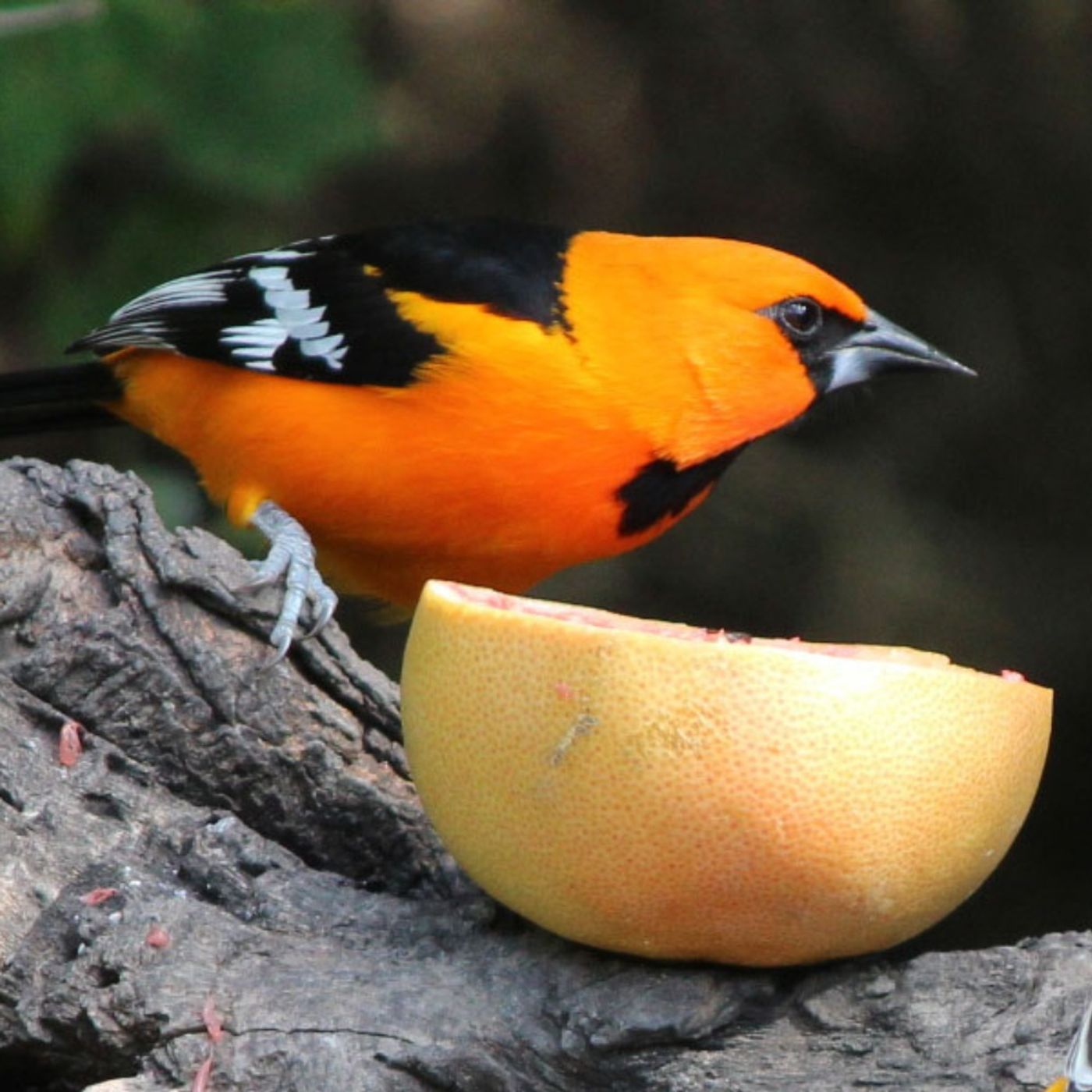
Altamira Oriole
It was only in 1939 that this Altamira Oriole was first found north of the Rio Grande River. Now it happily visits residents on the Texas side of the river, especially where a juicy orange half waits in a backyard feeder. Northerly breeding orioles, like Bullock's in the West and the Baltimore in the East, nest as far north as Canada, but winter mostly in Central America. More info and transcript at BirdNote.org.Want more BirdNote? Subscribe to our weekly newsletter. Sign up for BirdNote+ to get ad-free listening and other perks. BirdNote is a nonprofit. Your tax-deductible gift makes these shows possible. Hosted by Simplecast, an AdsWizz company. See pcm.adswizz.com for information about our collection and use of personal data for advertising.
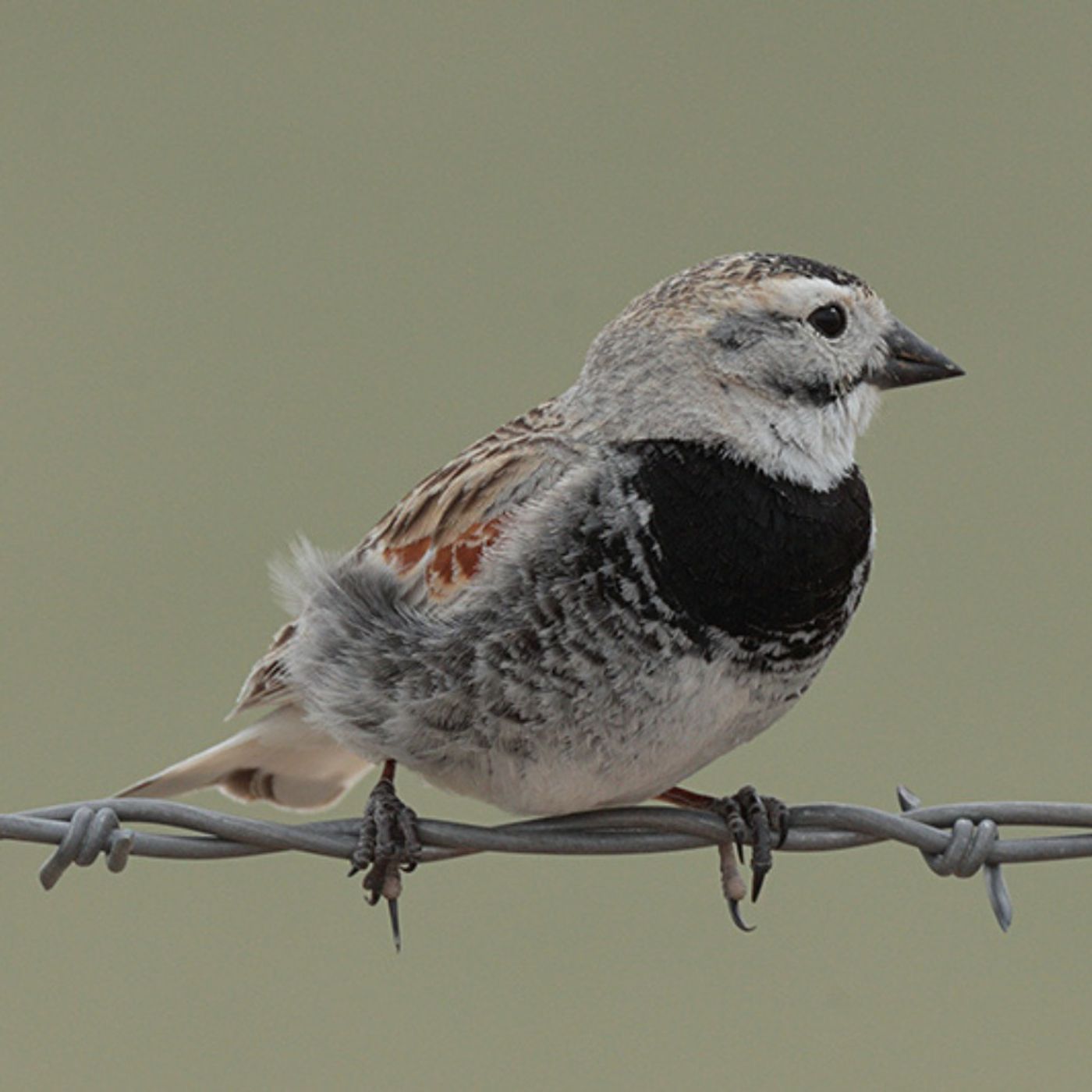
Thick-billed Longspur
It can feel like there’s nowhere to hide in the shortgrass prairie. But the Thick-billed Longspur calls this place home. The bird’s burbling song helps create the high plains’ soundscape. The species was formerly named McCown’s Longspur after a Confederate general who participated in genocide against Native Americans. In 2020, after pressure from the “Bird Names for Birds” movement and others, the species was renamed for its thick bill, which is pale on females and black on breeding males. More info and transcript at BirdNote.org.Want more BirdNote? Subscribe to our weekly newsletter. Sign up for BirdNote+ to get ad-free listening and other perks. BirdNote is a nonprofit. Your tax-deductible gift makes these shows possible. Hosted by Simplecast, an AdsWizz company. See pcm.adswizz.com for information about our collection and use of personal data for advertising.
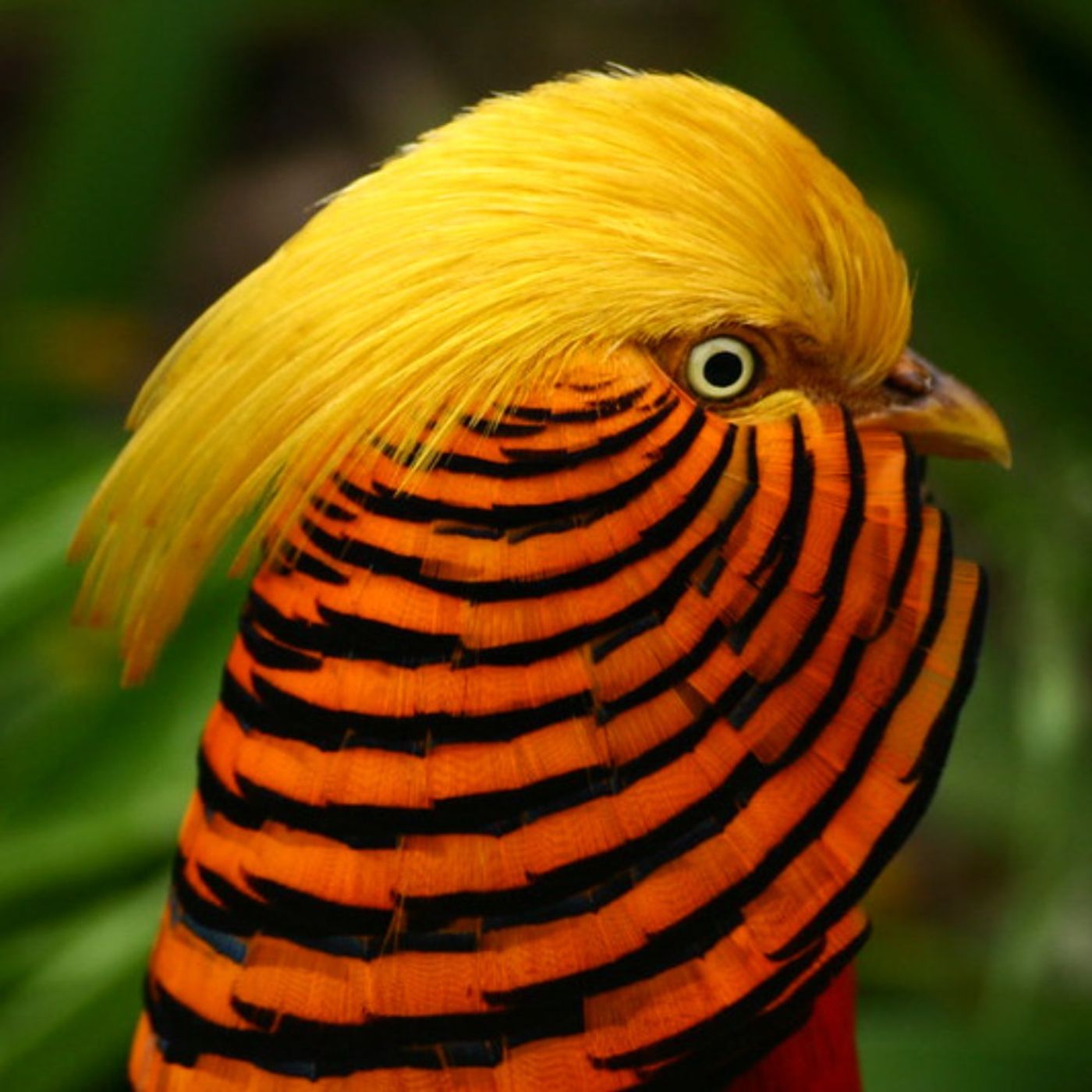
The Firebird’s Bright Outfit
You might have heard of the Phoenix, the legendary bird who bursts into flames and is reborn from its ashes. Well, its literary cousin is the Slavic myth of the Firebird, an elusive creature whose feathers burn and light up the night. Stories about Phoenix-like birds have spread all over, and Firebird legends are found in most Slavic cultures. These stories, like connective tissue, help unite people throughout the world. Listen to this episode in Spanish here.More info and transcript at BirdNote.org.Want more BirdNote? Subscribe to our weekly newsletter. Sign up for BirdNote+ to get ad-free listening and other perks. BirdNote is a nonprofit. Your tax-deductible gift makes these shows possible. Hosted by Simplecast, an AdsWizz company. See pcm.adswizz.com for information about our collection and use of personal data for advertising.
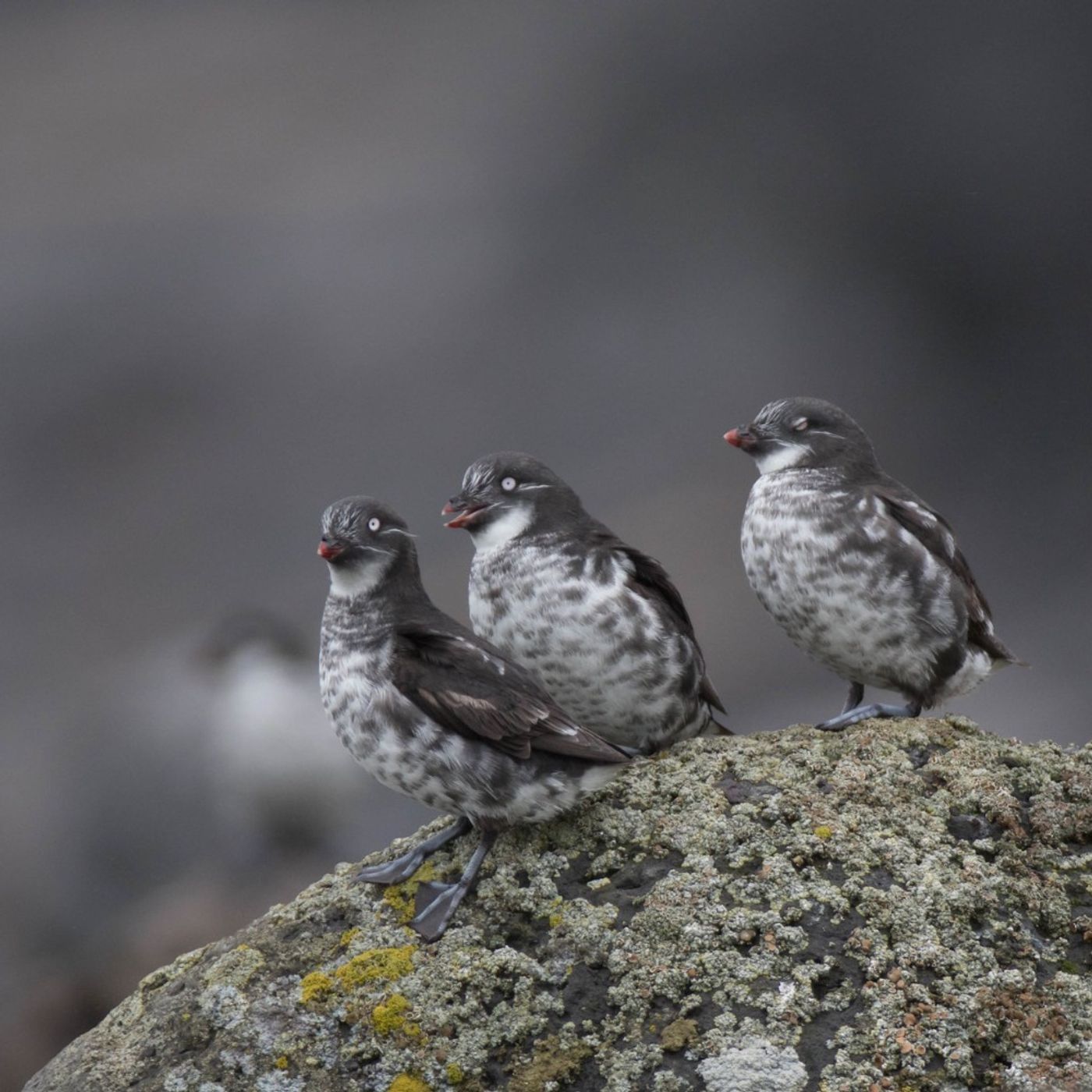
Least Auklets: Seabirds in Miniature
The family of seabirds called alcids is an eclectic bunch that includes puffins and murres. The largest alcids are about the size of a duck, but the smallest — called the Least Auklet — could fit in the palm of your hand. With their short wings whirring, these miniature seabirds look like swarms of feathered bumblebees as they forage for tiny crustaceans on the ocean’s surface. Least Auklets form massive breeding colonies on rocky islands of the north Pacific Ocean and Bering Sea. In August, when the young birds are ready to take their first flight, millions of auklets scatter to the winds across the northern seas.More info and transcript at BirdNote.org.Want more BirdNote? Subscribe to our weekly newsletter. Sign up for BirdNote+ to get ad-free listening and other perks. BirdNote is a nonprofit. Your tax-deductible gift makes these shows possible. Hosted by Simplecast, an AdsWizz company. See pcm.adswizz.com for information about our collection and use of personal data for advertising.
Help eBird Fill in the Gaps
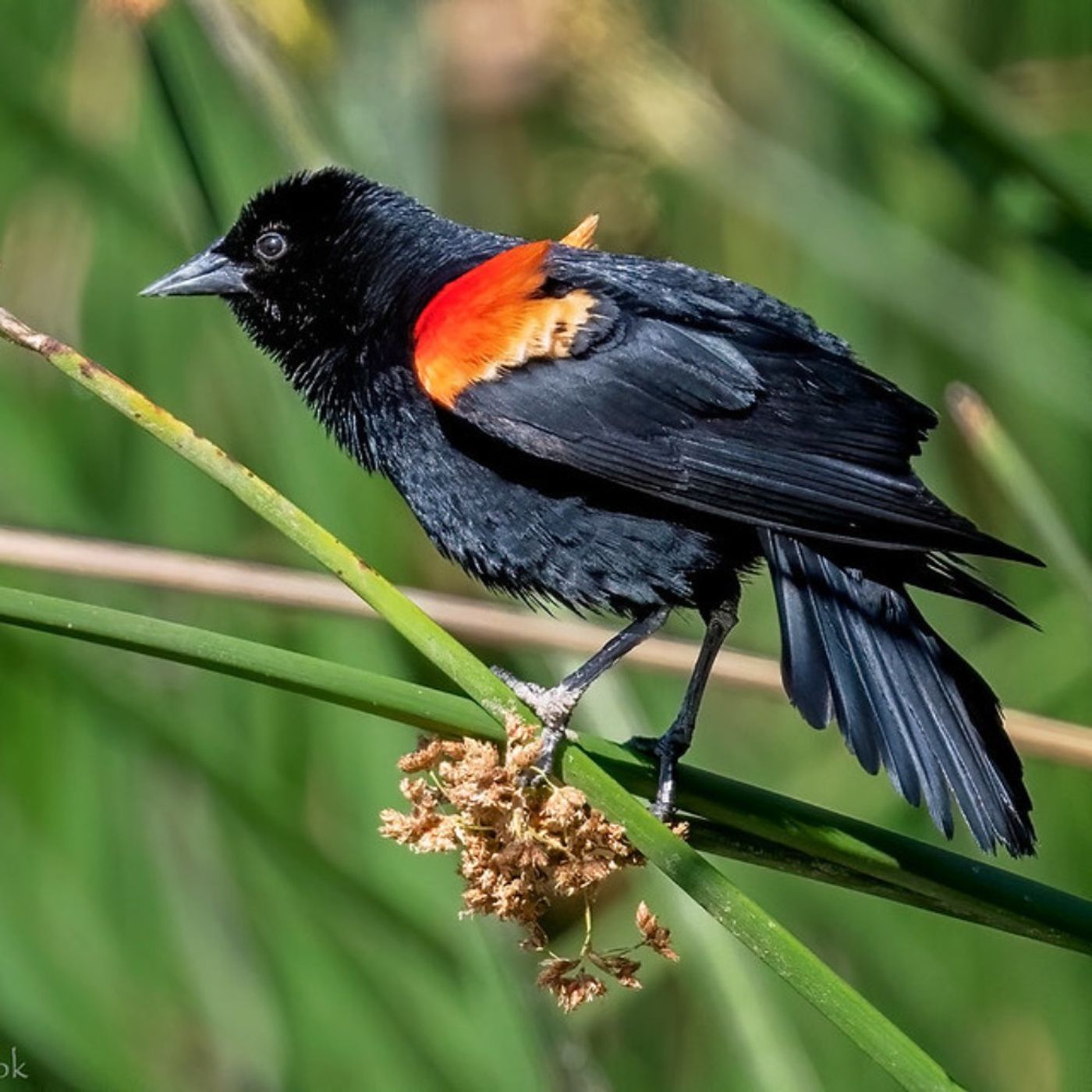
eBird, an online tool for submitting bird observations, allows scientists to keep track of birds around the world. eBird now has over one billion bird observations from more than 700,000 people — most of them community scientists who care about their local birds. And as more people in more places join in, eBird becomes an even better way for researchers to understand birds. In this show, learn how you can make your birding more useful to science.More info and transcript at BirdNote.org.Want more BirdNote? Subscribe to our weekly newsletter. Sign up for BirdNote+ to get ad-free listening and other perks. BirdNote is a nonprofit. Your tax-deductible gift makes these shows possible. Hosted by Simplecast, an AdsWizz company. See pcm.adswizz.com for information about our collection and use of personal data for advertising.
What Are Birds Saying with Their Crests?
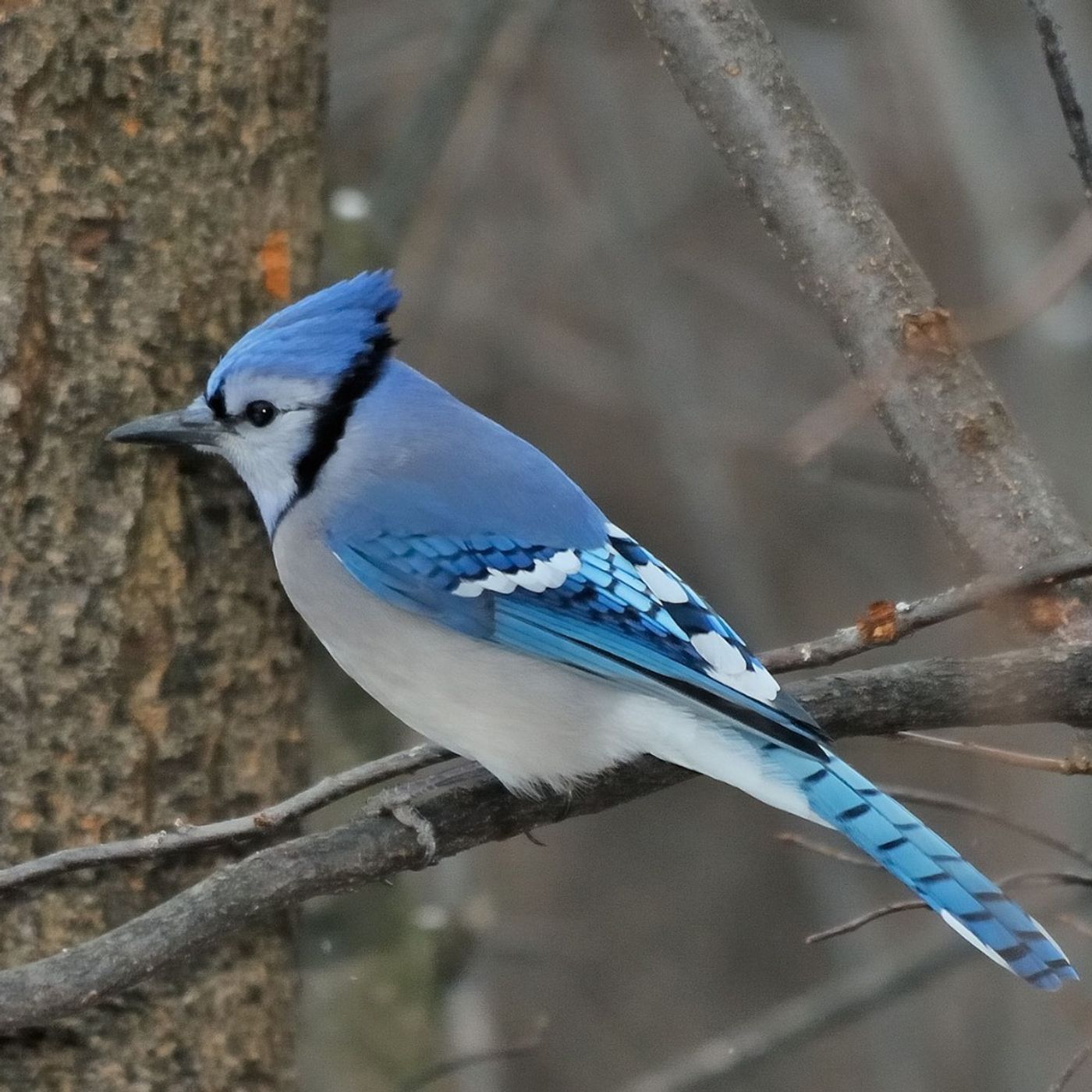
A bird’s crest is made up of a slender array of feathers on top of their head. These feathers are a bit longer and can be spiked up or slicked back, depending on what the bird is trying to communicate. Even birds without crests, like crows or sparrows, sometimes puff up their short crown feathers.More info and transcript at BirdNote.org.Want more BirdNote? Subscribe to our weekly newsletter. Sign up for BirdNote+ to get ad-free listening and other perks. BirdNote is a nonprofit. Your tax-deductible gift makes these shows possible. Hosted by Simplecast, an AdsWizz company. See pcm.adswizz.com for information about our collection and use of personal data for advertising.
Sizing Up Sharp-shinned Hawks
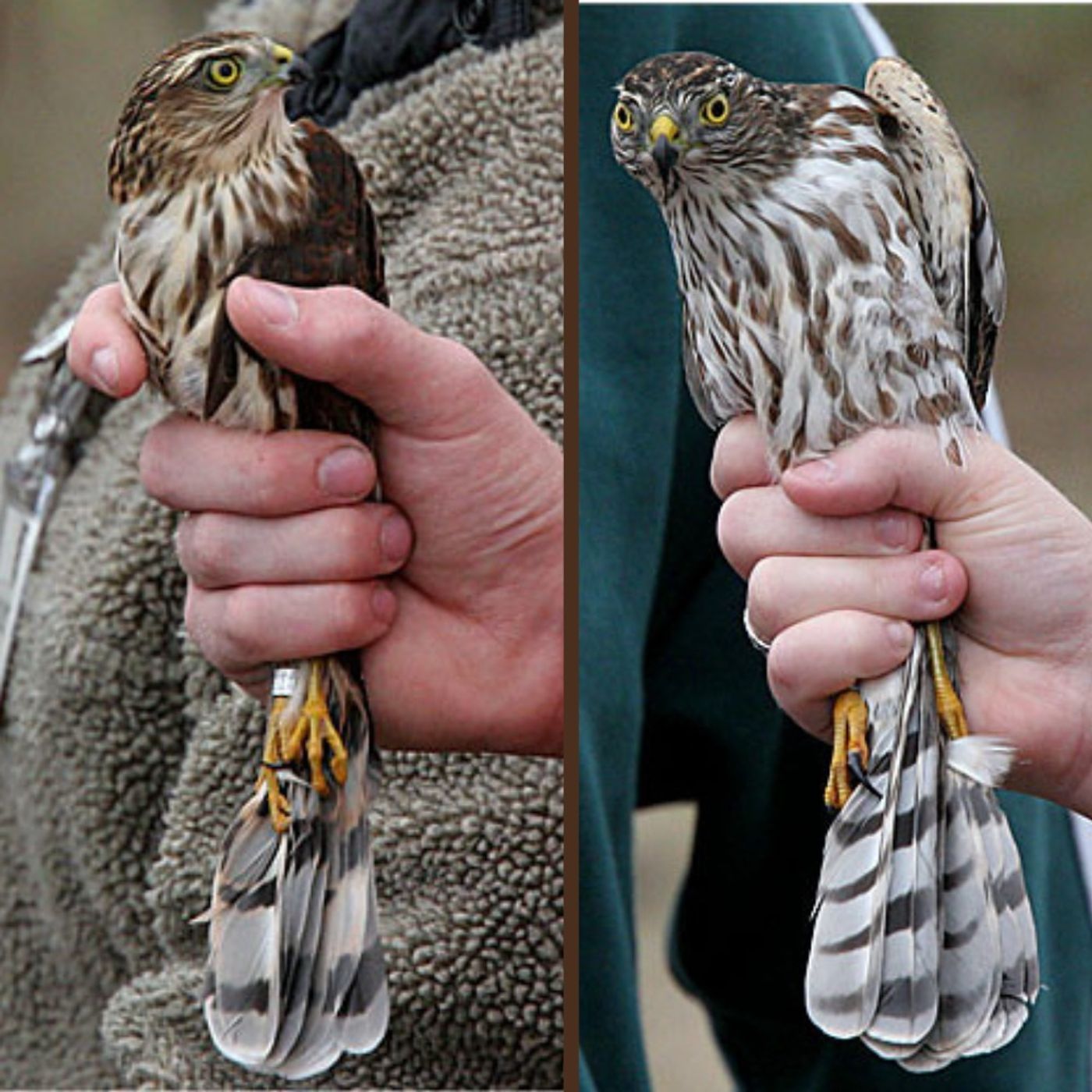
Sharp-shinned Hawks are swift, bird-catching predators. The male is jay-sized. The female stands a head taller and weighs almost twice as much. Female birds of prey are most notably bigger than males among hawk species that hunt very agile prey, such as other birds. The smaller male will tend to hunt smaller prey. The female takes somewhat larger prey, so together they can tap a wider range of resources.More info and transcript at BirdNote.org.Want more BirdNote? Subscribe to our weekly newsletter. Sign up for BirdNote+ to get ad-free listening and other perks. BirdNote is a nonprofit. Your tax-deductible gift makes these shows possible. Hosted by Simplecast, an AdsWizz company. See pcm.adswizz.com for information about our collection and use of personal data for advertising.

'What is a birder?' with Rosemary Mosco
Rosemary Moscoe’s latest book is a tongue-in-cheek guide that defines many of the terms that you might hear on a bird outing, like calling a particularly cute bird a "birb" or shortening the word binoculars to just "bins" or "nocs."More info and transcript at BirdNote.org.Want more BirdNote? Subscribe to our weekly newsletter. Sign up for BirdNote+ to get ad-free listening and other perks. BirdNote is a nonprofit. Your tax-deductible gift makes these shows possible. Hosted by Simplecast, an AdsWizz company. See pcm.adswizz.com for information about our collection and use of personal data for advertising.

Shorebirds Watch Their Feet
Greater Yellowlegs — not surprisingly — have bright yellow legs and feet. And why? While foraging through shallow water, a yellowlegs can keep track of its legs by the color, which contrasts with the sometimes dark and irregular bottom. A Sanderling, on the other hand, has black legs and feet. Its black toes really stand out against the pale sand. And the brilliant orange legs of Ruddy Turnstones? They stand out like a neon light on the shore. Mother Nature is good with the fine details!More info and transcript at BirdNote.org.Want more BirdNote? Subscribe to our weekly newsletter. Sign up for BirdNote+ to get ad-free listening and other perks. BirdNote is a nonprofit. Your tax-deductible gift makes these shows possible. Hosted by Simplecast, an AdsWizz company. See pcm.adswizz.com for information about our collection and use of personal data for advertising.

Canada Jays Save Food for Later
While camping in the mountains, you might see this Canada Jay (formerly known as the Gray Jay — but before that, as the Canada Jay!), boldly swooping into your camp. This handsome jay’s big, black eyes seem to miss nothing — especially food. But the one food Canada Jays don’t eat is conifer seeds. The jays hide other food in conifer needles and tuck it under the bark of trees with their sticky saliva. With terrific visual memories, the jays can find thousands of hidden tidbits months later.More info and transcript at BirdNote.org.Want more BirdNote? Subscribe to our weekly newsletter. Sign up for BirdNote+ to get ad-free listening and other perks. BirdNote is a nonprofit. Your tax-deductible gift makes these shows possible. Hosted by Simplecast, an AdsWizz company. See pcm.adswizz.com for information about our collection and use of personal data for advertising.

How Writer Amy Tan Helps Backyard Birds
Writer Amy Tan’s work is known all over the world. And thanks to her latest best-seller, The Backyard Bird Chronicles, she’s now also known for her deep love of birds. Tan not only spends time interacting with birds, she also comes up with creative ways to help them.This episode was produced as part of BirdNote’s From Love to Action Campaign, an effort to inspire one million people to take action to help birds by 2027. To learn more and to tell us how you’re helping birds, visit this link.More info and transcript at BirdNote.org.Want more BirdNote? Subscribe to our weekly newsletter. Sign up for BirdNote+ to get ad-free listening and other perks. BirdNote is a nonprofit. Your tax-deductible gift makes these shows possible. Hosted by Simplecast, an AdsWizz company. See pcm.adswizz.com for information about our collection and use of personal data for advertising.

The Colors of Chicken Eggs
Except around Easter, chicken eggs usually come in a predictable range of colors: white, brown, and sometimes pale blue or green. Chickens are descended from the Red Jungle Fowl of Southeast Asia, which has been providing eggs for humans for thousands of years. The final color of an egg comes from a pigment the hen’s body adds to the shell just before the egg is laid. Breeds that lay white eggs don’t add any pigment.Today's show brought to you by the Bobolink Foundation.More info and transcript at BirdNote.org.Want more BirdNote? Subscribe to our weekly newsletter. Sign up for BirdNote+ to get ad-free listening and other perks. BirdNote is a nonprofit. Your tax-deductible gift makes these shows possible. Hosted by Simplecast, an AdsWizz company. See pcm.adswizz.com for information about our collection and use of personal data for advertising.

The Plover and the Hurricane
Piping Plovers are tiny, sand-colored shorebirds that nest on the beach. They’re threatened in much of their range. But plovers have gotten a boost from something rather surprising: hurricanes. Superstorm Sandy left behind plant-free, sandy beaches on barrier islands in New York and New Jersey, which actually offers better camouflage for nesting plovers. Where these hurricane-created habitats were protected, Piping Plovers have boomed.More info and transcript at BirdNote.org.Want more BirdNote? Subscribe to our weekly newsletter. Sign up for BirdNote+ to get ad-free listening and other perks. BirdNote is a nonprofit. Your tax-deductible gift makes these shows possible. Hosted by Simplecast, an AdsWizz company. See pcm.adswizz.com for information about our collection and use of personal data for advertising.

Pigeon Guillemots Have Fun
Although many seabirds utter groans and croaks, the Pigeon Guillemot produces a lovely series of trills and whistles. As part of their courtship, they fly side by side in large circles and loops, a perfectly synchronized flying act. These guillemots do not breed until they are between three and five years old. The male chooses a site in a crevice or cave, among boulders, under driftwood, on a wharf, or even in a pipe.More info and transcript at BirdNote.org.Want more BirdNote? Subscribe to our weekly newsletter. Sign up for BirdNote+ to get ad-free listening and other perks. BirdNote is a nonprofit. Your tax-deductible gift makes these shows possible. Hosted by Simplecast, an AdsWizz company. See pcm.adswizz.com for information about our collection and use of personal data for advertising.

Why Are Blackbirds Black?
Why are blackbirds black? One possible answer is that black is conspicuous against just about all of Nature's backgrounds. Blackbirds, like this flock of Red-winged Blackbirds and Yellow-headed Blackbirds, feed on the ground. Whenever a predator approaches, they take flight. Coming together quickly in a dense mass may confuse the predator and thwart its attempts to catch one of the birds.More info and transcript at BirdNote.org.Want more BirdNote? Subscribe to our weekly newsletter. Sign up for BirdNote+ to get ad-free listening and other perks. BirdNote is a nonprofit. Your tax-deductible gift makes these shows possible. Hosted by Simplecast, an AdsWizz company. See pcm.adswizz.com for information about our collection and use of personal data for advertising.

How Nestlings Leave the Nest
Young birds leave their nests in different ways. Some shuffle tentatively along the nearest branch and practice flapping their wings, while others take the "big leap." Which path they take depends upon their species and the location of the nest. Young Great Horned Owls clamber out of the nest to nearby branches where they flap their wings and make short, cautious flights, while they continue to be fed by their parents.More info and transcript at BirdNote.org.Want more BirdNote? Subscribe to our weekly newsletter. Sign up for BirdNote+ to get ad-free listening and other perks. BirdNote is a nonprofit. Your tax-deductible gift makes these shows possible. Hosted by Simplecast, an AdsWizz company. See pcm.adswizz.com for information about our collection and use of personal data for advertising.

Crested Auklets Entice Their Mates with Scent
Crested Auklets are small seabirds that nest on remote cliffs in the Northern Pacific and the Bering Sea. But it’s their smell that really sets these birds apart. They smell like tangerines! Experiments show that females go for males that emit the strongest scents.More info and transcript at BirdNote.org.Want more BirdNote? Subscribe to our weekly newsletter. Sign up for BirdNote+ to get ad-free listening and other perks. BirdNote is a nonprofit. Your tax-deductible gift makes these shows possible. Hosted by Simplecast, an AdsWizz company. See pcm.adswizz.com for information about our collection and use of personal data for advertising.

Pelagic Birds by Boat
Some birds spend most of their lives on the open ocean, only coming to land when it's time to breed. These high-sea specialists are called pelagic birds, which include jaegers, petrels, and albatrosses, among many others. The best way to see them for yourself is by setting sail on a pelagic birding tour or whale watching cruise!More info and transcript at BirdNote.org.Want more BirdNote? Subscribe to our weekly newsletter. Sign up for BirdNote+ to get ad-free listening and other perks. BirdNote is a nonprofit. Your tax-deductible gift makes these shows possible. Hosted by Simplecast, an AdsWizz company. See pcm.adswizz.com for information about our collection and use of personal data for advertising.

Advice to Beginning Birders from David Sibley
David Sibley, creator and illustrator of The Sibley Guide to Birds, offers this advice for people learning to identify birds: “Spend time at home, paging through the field guide . . . by flipping through the pages of the book and looking at pictures and reading the names, you’ll start to get a sense of what those birds are . . . It doesn’t have to be about seeing a lot of different species, but more about getting to know the birds that are common in your neighborhood or in your yard.”More info and transcript at BirdNote.org.Want more BirdNote? Subscribe to our weekly newsletter. Sign up for BirdNote+ to get ad-free listening and other perks. BirdNote is a nonprofit. Your tax-deductible gift makes these shows possible. Hosted by Simplecast, an AdsWizz company. See pcm.adswizz.com for information about our collection and use of personal data for advertising.

What’s in a Name? A Bird!
Names are conventions, right? But some names contain something special: a bird! For example, the name Paloma comes from the colloquial name in Spanish for the common pigeon, but as a human name it often refers to doves. Or Garzón, my last name, is derived from Garza, or Heron, in Spanish.Listen to this episode in Spanish here. More info and transcript at BirdNote.org.Want more BirdNote? Subscribe to our weekly newsletter. Sign up for BirdNote+ to get ad-free listening and other perks. BirdNote is a nonprofit. Your tax-deductible gift makes these shows possible. Hosted by Simplecast, an AdsWizz company. See pcm.adswizz.com for information about our collection and use of personal data for advertising.

Black-bellied Plover, Arctic Nester
In the Arctic National Wildlife Refuge, June days offer almost continuous daylight to breeding birds, including this Black-bellied Plover. At this high latitude, Black-bellied Plovers can complete their breeding cycle in a month and a half. Not long after the summer solstice, the adults begin their southbound migration, without their young. Juveniles don't migrate with their parents, but wait a month.More info and transcript at BirdNote.org.Want more BirdNote? Subscribe to our weekly newsletter. Sign up for BirdNote+ to get ad-free listening and other perks. BirdNote is a nonprofit. Your tax-deductible gift makes these shows possible. Hosted by Simplecast, an AdsWizz company. See pcm.adswizz.com for information about our collection and use of personal data for advertising.

As the Crowe Flies
Crows play many roles in human cultures, from ominous tricksters to sacred purveyors of wisdom. After exploring the stories behind her family surname, attorney and playwright Alice T. Crowe discovered a deep historical connection between the racist symbology of Jim Crow and the negative image of these birds in many Western cultures. Despite the social stigma surrounding crows, Alice says we can learn important lessons from how they treat each other.More info and transcript at BirdNote.org.Want more BirdNote? Subscribe to our weekly newsletter. Sign up for BirdNote+ to get ad-free listening and other perks. BirdNote is a nonprofit. Your tax-deductible gift makes these shows possible. Hosted by Simplecast, an AdsWizz company. See pcm.adswizz.com for information about our collection and use of personal data for advertising.

If You See a Bird with Leg Bands
If you see a wild bird with a small metal band around its leg, that means researchers have given the bird a unique ID to keep track of it over the course of its life. You can report the sighting to the Bird Banding Laboratory, a part of the U.S. Geological Survey that studies banded birds across the continent. Analyzing where and when banded birds are seen helps biologists figure out bird lifespans, migratory routes, and how their populations are changing.More info and transcript at BirdNote.org.Want more BirdNote? Subscribe to our weekly newsletter. Sign up for BirdNote+ to get ad-free listening and other perks. BirdNote is a nonprofit. Your tax-deductible gift makes these shows possible. Hosted by Simplecast, an AdsWizz company. See pcm.adswizz.com for information about our collection and use of personal data for advertising.

The Chihuahuan Meadowlark
In 2022, ornithologists recognized the Chihuahuan Meadowlark as a separate species rather than a subspecies of the Eastern Meadowlark. Named after the northern region of Mexico where they're easy to find, Chihuahuan Meadowlarks live in dry desert grasslands. They form a distinct population in Mexico and the southwestern U.S., and have a song that sets them apart from other meadowlarks.Escuche este episodio en español aquí!More info and transcript at BirdNote.org.Want more BirdNote? Subscribe to our weekly newsletter. Sign up for BirdNote+ to get ad-free listening and other perks. BirdNote is a nonprofit. Your tax-deductible gift makes these shows possible. Hosted by Simplecast, an AdsWizz company. See pcm.adswizz.com for information about our collection and use of personal data for advertising.

Green Jay
Adorned in shades of peridot green, sapphire blue, and onyx black, the Green Jay is a jewel-toned wonder with a voice as loud as its color palette. Their range is split over two regions, one from southern Texas to northern Belize and a second along the Andes Mountains from Venezuela to Bolivia. Green Jays often forage in family flocks where their noisy, rasping chatter helps ward off predators and keep their colorful kin together.This episode is sponsored by Bruce Heyne, in thanks to all those who steward the parks, refuges, and nature preserves that support birds — especially in Deep South Texas where Green Jays thrive.More info and transcript at BirdNote.org.Want more BirdNote? Subscribe to our weekly newsletter. Sign up for BirdNote+ to get ad-free listening and other perks. BirdNote is a nonprofit. Your tax-deductible gift makes these shows possible. Hosted by Simplecast, an AdsWizz company. See pcm.adswizz.com for information about our collection and use of personal data for advertising.

Father Birds
The male hummingbird leaves the female to build the nest and raise the young alone, but other father birds are more involved. A Peregrine Falcon father shares duties almost evenly with the mother. (Stewart, pictured, nested on a Seattle skyscraper for many years.) But the male Emu of Australia tops them all. He remains alone on the nest for nearly two months, never leaving the nest for any reason. Happy Father's Day to all the dads out there, feathered and otherwise!More info and transcript at BirdNote.org.Want more BirdNote? Subscribe to our weekly newsletter. Sign up for BirdNote+ to get ad-free listening and other perks. BirdNote is a nonprofit. Your tax-deductible gift makes these shows possible. Hosted by Simplecast, an AdsWizz company. See pcm.adswizz.com for information about our collection and use of personal data for advertising.

Baby Bald Eagles
Baby Bald Eagles have a lot to learn before they reach adulthood. While still in the nest, they practice fanning their wings and jumping into the air to test their strength. When they’re finally ready for their first test-flight, the fledglings sometimes land unceremoniously on the ground until a parent offers further encouragement. Juvenile Bald Eagles are roughly the same size as their parents, but all their feathers are a mottled chocolate brown. They take three or four years to mature into the iconic adult plumage with the distinctive white head and tail.More info and transcript at BirdNote.org.Want more BirdNote? Subscribe to our weekly newsletter. Sign up for BirdNote+ to get ad-free listening and other perks. BirdNote is a nonprofit. Your tax-deductible gift makes these shows possible. Hosted by Simplecast, an AdsWizz company. See pcm.adswizz.com for information about our collection and use of personal data for advertising.

The Oilbird's Lightless Life
Nature has produced some exceptionally strange animals. One such creature is the Oilbird of northern South America. The Oilbird prefers a diet of wild berries and fruits, especially lipid-rich fruits like palm nuts and avocados (which leads to fatty young and the Oilbird's name). This unusual-looking bird is longer than a crow, with big eyes and a tiny bill protruding from a giant mouth. Oilbirds roost in extensive colonies in large caves. When the sun sets, Oilbirds emerge from their caves, like huge bats, to forage throughout the countryside for food. Thus, Oilbirds spend most of their lives in complete darkness.More info and transcript at BirdNote.org.Want more BirdNote? Subscribe to our weekly newsletter. Sign up for BirdNote+ to get ad-free listening and other perks. BirdNote is a nonprofit. Your tax-deductible gift makes these shows possible. Hosted by Simplecast, an AdsWizz company. See pcm.adswizz.com for information about our collection and use of personal data for advertising.

The Kingfisher and the Halcyon Days
The ancient Greeks believed the gods turned two distraught lovers into kingfishers — or “halcyon birds.” Thanks to divine assistance, these birds would enjoy calm weather during their nesting period. Even today, many kingfishers have echoes of this story in their scientific names.More info and transcript at BirdNote.org.Want more BirdNote? Subscribe to our weekly newsletter. Sign up for BirdNote+ to get ad-free listening and other perks. BirdNote is a nonprofit. Your tax-deductible gift makes these shows possible. Hosted by Simplecast, an AdsWizz company. See pcm.adswizz.com for information about our collection and use of personal data for advertising.

Celebrating City Birds
Pigeons, geese, and gulls often get a bad rap among city dwellers. But Nicole Jackson, an environmental educator and nature enthusiast, admires these cosmopolitan birds for their resilience and adaptability.More info and transcript at BirdNote.org.Want more BirdNote? Subscribe to our weekly newsletter. Sign up for BirdNote+ to get ad-free listening and other perks. BirdNote is a nonprofit. Your tax-deductible gift makes these shows possible. Hosted by Simplecast, an AdsWizz company. See pcm.adswizz.com for information about our collection and use of personal data for advertising.

Black-headed Grosbeak Sings!
The song of this male Black-headed Grosbeak has been described as that of a drunken or scat-singing robin. Compare the songs of both birds, and draw your own conclusion! Singing Black-headed Grosbeaks can be heard from May well into summer, especially in streamside woods.More info and transcript at BirdNote.org.Want more BirdNote? Subscribe to our weekly newsletter. Sign up for BirdNote+ to get ad-free listening and other perks. BirdNote is a nonprofit. Your tax-deductible gift makes these shows possible. Hosted by Simplecast, an AdsWizz company. See pcm.adswizz.com for information about our collection and use of personal data for advertising.

Grackles Galore
Grackles are notoriously loud and brazen birds. For all six species native to the Americas, males are iridescent black and females are sumptuous brown. Though these grackles may look the same, they each make their own distinctive ruckus. Though some deem them pests, grackles can also call us to celebrate the delightful diversity of “common” birds.More info and transcript at BirdNote.org.Want more BirdNote? Subscribe to our weekly newsletter. Sign up for BirdNote+ to get ad-free listening and other perks. BirdNote is a nonprofit. Your tax-deductible gift makes these shows possible. Hosted by Simplecast, an AdsWizz company. See pcm.adswizz.com for information about our collection and use of personal data for advertising.

Hoatzin!
The Hoatzin is a strange bird, indeed! It looks like it was put together by a committee. But the way it looks isn't the only thing that sets this bird apart. The Hoatzin is strictly a leaf-eater, filling its stomach with leaves, and then resting and digesting for long periods. Chicks have vestigial claws on their wings, which they lose when they grow older.Listen to this episode in Spanish. More info and transcript at BirdNote.org.Want more BirdNote? Subscribe to our weekly newsletter. Sign up for BirdNote+ to get ad-free listening and other perks. BirdNote is a nonprofit. Your tax-deductible gift makes these shows possible. Hosted by Simplecast, an AdsWizz company. See pcm.adswizz.com for information about our collection and use of personal data for advertising.

El Triunfo Cloud Forest Reserve
High in the mountains of Chiapas, the southernmost state of Mexico, a male Highland Guan is performing his territorial display. The Highland Guan perches on a tree-branch, whistles, and then glides on vibrating wings. The resulting wondrous sound is like no other. The bird’s display creates a sound emblematic of the cloud forest of El Triunfo Biosphere Reserve. Clouds and fog roll frequently through the reserve, creating a lush forest wonderland. Cloud forest makes up less than 1% of the world’s forest, and its conservation is crucial. At El Triunfo, the display of the Highland Guan testifies to a conservation success.More info and transcript at BirdNote.org.Want more BirdNote? Subscribe to our weekly newsletter. Sign up for BirdNote+ to get ad-free listening and other perks. BirdNote is a nonprofit. Your tax-deductible gift makes these shows possible. Hosted by Simplecast, an AdsWizz company. See pcm.adswizz.com for information about our collection and use of personal data for advertising.

Northern Parula Sings From on High
The Northern Parula is a tiny bird with a big personality. These colorful warblers spend their days in search of tasty insects high up in the forest canopy of woodlands in North America. To get a good look, first try listening for their unmistakable vocal feats!This episode is sponsored by Gary and Liz Kennedy Ketcheson, who are grateful to BirdNote for introducing us to wonderful stories about birds from around the world, like the beautiful Northern Parula.More info and transcript at BirdNote.org.Want more BirdNote? Subscribe to our weekly newsletter. Sign up for BirdNote+ to get ad-free listening and other perks. BirdNote is a nonprofit. Your tax-deductible gift makes these shows possible. Hosted by Simplecast, an AdsWizz company. See pcm.adswizz.com for information about our collection and use of personal data for advertising.

Bird in Flight, Strong but Light
The feathers of a bird are, for their weight, among the strongest structures in the world. The bones of this Magnificent Frigatebird weigh less than its feathers! To further reduce weight while maintaining strength, many bird bones are fused. In addition, the pectoral and pelvic girdles and ribs are joined to make a rigid box that supports those long wings, just as the wings support the bird.More info and transcript at BirdNote.org.Want more BirdNote? Subscribe to our weekly newsletter. Sign up for BirdNote+ to get ad-free listening and other perks. BirdNote is a nonprofit. Your tax-deductible gift makes these shows possible. Hosted by Simplecast, an AdsWizz company. See pcm.adswizz.com for information about our collection and use of personal data for advertising.

The Loquacious Chat
In summer, the thick tangles of streamside vegetation in many canyons echo with an uncanny sound — the Yellow-breasted Chat. You may find it in willow thickets, brushy tangles, and other dense, understory habitats, usually at low to medium elevations around streams. The male Yellow-breasted Chat may sing all night during breeding season. The chat winters in Mexico and Central America.Support for this episode is provided by Sarah Merner and Craig McKibben from Seattle, Washington, and generous listeners around the world.More info and transcript at BirdNote.org.Want more BirdNote? Subscribe to our weekly newsletter. Sign up for BirdNote+ to get ad-free listening and other perks. BirdNote is a nonprofit. Your tax-deductible gift makes these shows possible. Hosted by Simplecast, an AdsWizz company. See pcm.adswizz.com for information about our collection and use of personal data for advertising.

Vivaldi's Goldfinch
Bird song caught the ear of Italian composer Antonio Vivaldi. And he even named a 1729 flute concerto for a bird — the goldfinch. The source of inspiration for Vivaldi's Goldfinch concerto, or Il Gardellino, was the European Goldfinch, a tiny bird found throughout much of Europe, where it frequents gardens and roadsides. No wonder Vivaldi found the goldfinch irresistible. More info and transcript at BirdNote.org.Want more BirdNote? Subscribe to our weekly newsletter. Sign up for BirdNote+ to get ad-free listening and other perks. BirdNote is a nonprofit. Your tax-deductible gift makes these shows possible. Hosted by Simplecast, an AdsWizz company. See pcm.adswizz.com for information about our collection and use of personal data for advertising.

Quirky Words for Gray Birds
Many birds have common names that refer to their dominant body color, like the Gray Catbird. Yet some species of gray birds received more colorful descriptors than others. Silvered, plumbeous, glaucous, and slate are just some of the bird world’s many shades of gray!More info and transcript at BirdNote.org.Want more BirdNote? Subscribe to our weekly newsletter. Sign up for BirdNote+ to get ad-free listening and other perks. BirdNote is a nonprofit. Your tax-deductible gift makes these shows possible. Hosted by Simplecast, an AdsWizz company. See pcm.adswizz.com for information about our collection and use of personal data for advertising.

A Pigeon’s Eye View
In 1907, a German pharmacist named Julius Neubronner invented the pigeon camera. It was a small camera strapped to a pigeon’s breast — like a photographic baby-bjorn. A timer let the camera take multiple snapshots throughout the bird’s flight. This allowed for some of the earliest aerial photography, and even seemed promising for military reconnaissance.More info and transcript at BirdNote.org.Want more BirdNote? Subscribe to our weekly newsletter. Sign up for BirdNote+ to get ad-free listening and other perks. BirdNote is a nonprofit. Your tax-deductible gift makes these shows possible. Hosted by Simplecast, an AdsWizz company. See pcm.adswizz.com for information about our collection and use of personal data for advertising.

Bonding with Mom Through Birding
In this episode, environmental educator and nature enthusiast Nicole Jackson tells the story of an unexpected backyard birding experience when she visited her mom in 2021. When she arrived, Nicole saw typical birds such as robins and jays, but then saw something less common: a brightly colored Blackburnian Warbler! Nicole’s mom asked what she was looking at, and Nicole showed her pictures of all the nearby birds on her phone. Nicole helped her mom create an account on Merlin Bird ID and document her first bird sighting.This week is Black Birders Week. Learn how to participate in Black Birders Week here and by following #BlackBirdersWeek on social media.More info and transcript at BirdNote.org.Want more BirdNote? Subscribe to our weekly newsletter. Sign up for BirdNote+ to get ad-free listening and other perks. BirdNote is a nonprofit. Your tax-deductible gift makes these shows possible. Hosted by Simplecast, an AdsWizz company. See pcm.adswizz.com for information about our collection and use of personal data for advertising.

Migration Stories: The House Sparrow
Deja Perkins, an urban ecologist and co-organizer of Black Birders Week, remembers seeing House Sparrows all over Chicago as a kid. These little brown birds are native to Eurasia and North Africa, but were forced to adapt to many places around the world where they were introduced. Though many people consider House Sparrows to be urban pests, Deja admires them and draws parallels between their natural history and the story of her own ancestors.More info and transcript at BirdNote.org.Want more BirdNote? Subscribe to our weekly newsletter. Sign up for BirdNote+ to get ad-free listening and other perks. BirdNote is a nonprofit. Your tax-deductible gift makes these shows possible. Hosted by Simplecast, an AdsWizz company. See pcm.adswizz.com for information about our collection and use of personal data for advertising.

In Defense of Big Black Birds
Grackles, vultures, and other big black birds are often disparaged by people who’d rather they stay out of sight. But Marcus Rosten, an environmental educator and co-organizer of Black Birders Week, appreciates these birds for the important roles they play in nature and the ways their stories reflect his own experience as a Black birder.This year, Black Birders Week is celebrating miraculous shades of brown by highlighting the beauty and importance of sparrows while also drawing parallels with the struggles and triumphs of Black birders. Learn more about how to participate in this week’s events here.More info and transcript at BirdNote.org.Want more BirdNote? Subscribe to our weekly newsletter. Sign up for BirdNote+ to get ad-free listening and other perks. BirdNote is a nonprofit. Your tax-deductible gift makes these shows possible. Hosted by Simplecast, an AdsWizz company. See pcm.adswizz.com for information about our collection and use of personal data for advertising.

The Robin Rescue
When Adé Ben-Salahuddin stopped to help a trapped young bird on his way home from work, he found an unexpected source of help: an older Black woman walking by who had just the skills for the problem at hand.This year, Black Birders Week is celebrating miraculous shades of brown by highlighting the beauty and importance of sparrows while also drawing parallels with the struggles and triumphs of Black birders. Learn more about how to participate in this week’s events here.More info and transcript at BirdNote.org.Want more BirdNote? Subscribe to our weekly newsletter. Sign up for BirdNote+ to get ad-free listening and other perks. BirdNote is a nonprofit. Your tax-deductible gift makes these shows possible. Hosted by Simplecast, an AdsWizz company. See pcm.adswizz.com for information about our collection and use of personal data for advertising.