
BirdNote Daily
1,282 episodes — Page 11 of 26

Lessons From Mixed Flocks
There are many benefits for birds that form mixed flocks, from safety and survival to care and feeding. We can see the power of community through the actions of birds every day. And it’s time we took a note from their book.This year, Black Birders Week is celebrating miraculous shades of brown by highlighting the beauty and importance of sparrows while also drawing parallels with the struggles and triumphs of Black birders. Learn more about how to participate in this week’s events here.More info and transcript at BirdNote.org.Want more BirdNote? Subscribe to our weekly newsletter. Sign up for BirdNote+ to get ad-free listening and other perks. BirdNote is a nonprofit. Your tax-deductible gift makes these shows possible. Hosted by Simplecast, an AdsWizz company. See pcm.adswizz.com for information about our collection and use of personal data for advertising.

Witnessing Lifers While Honoring a Life Loss
In June 2024, environmental educator and co-organizer of Black Birders Week Dara Miles Wilson traveled to Camden, South Carolina to attend her cousin’s funeral. Despite the somber circumstances, two birds surprised her with unanticipated brightness.This year, Black Birders Week is celebrating miraculous shades of brown by highlighting the beauty and importance of sparrows while also drawing parallels with the struggles and triumphs of Black birders. Learn more about how to participate in this week’s events here.More info and transcript at BirdNote.org.Want more BirdNote? Subscribe to our weekly newsletter. Sign up for BirdNote+ to get ad-free listening and other perks. BirdNote is a nonprofit. Your tax-deductible gift makes these shows possible. Hosted by Simplecast, an AdsWizz company. See pcm.adswizz.com for information about our collection and use of personal data for advertising.

Miraculous Shades of Brown
Sparrows are remarkable birds that come in a wide range of brown hues. Just as sparrows are frequently dismissed in favor of more "charismatic" species, Black birders have historically been underrepresented in conservation spaces.This year, Black Birders Week is celebrating miraculous shades of brown by highlighting the beauty and importance of sparrows while also drawing parallels with the struggles and triumphs of Black birders. Learn more about how to participate in this week’s events here.More info and transcript at BirdNote.org.Want more BirdNote? Subscribe to our weekly newsletter. Sign up for BirdNote+ to get ad-free listening and other perks. BirdNote is a nonprofit. Your tax-deductible gift makes these shows possible. Hosted by Simplecast, an AdsWizz company. See pcm.adswizz.com for information about our collection and use of personal data for advertising.
Make Your Cloud-watching More Like Bird-watching
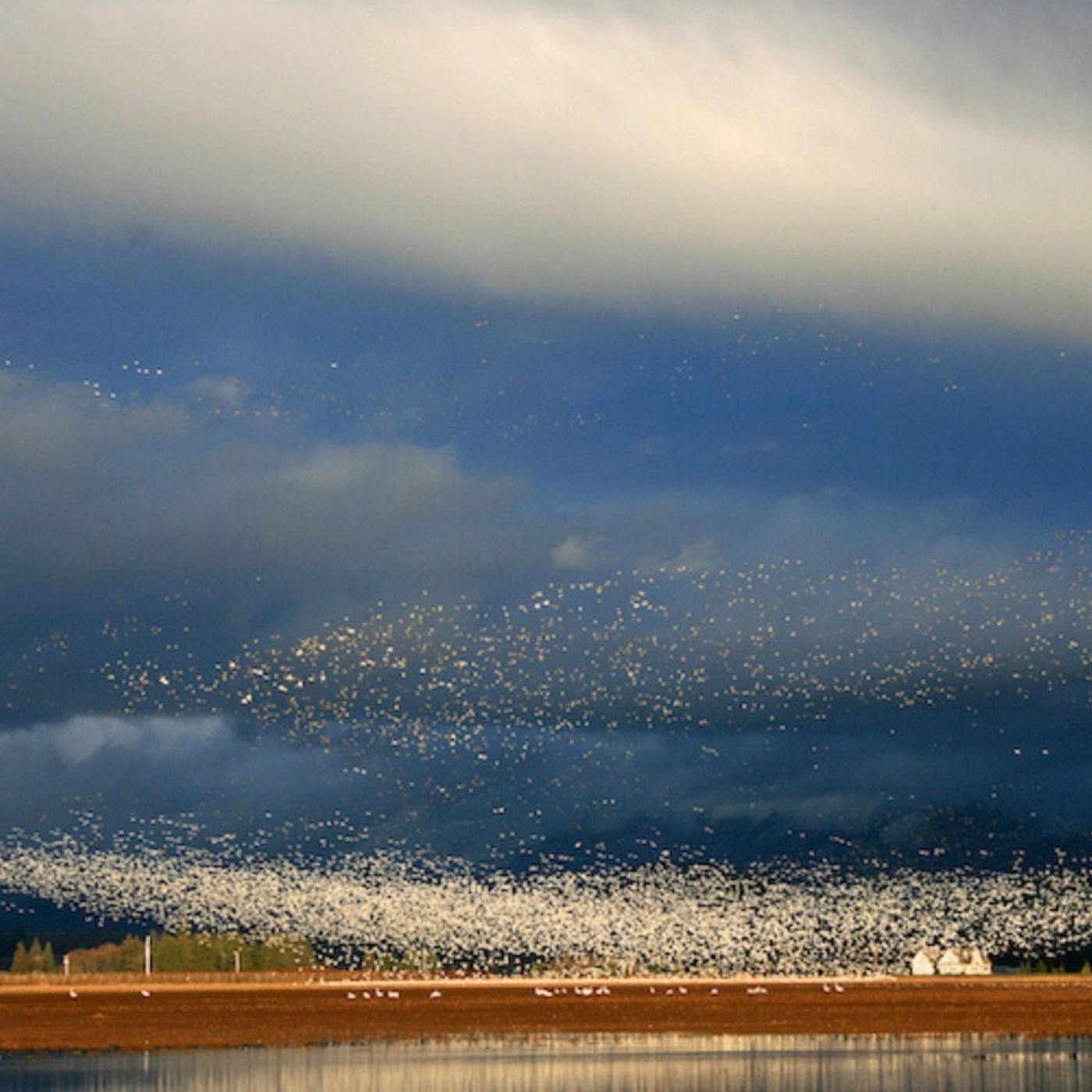
When we watch birds in flight, they’re often seen against a backdrop of clouds. Clouds have many different types and are listed in the International Cloud Atlas. The asperitas cloud was first described by citizen-scientists and has now been incorporated into the official atlas.More info and transcript at BirdNote.org.Want more BirdNote? Subscribe to our weekly newsletter. Sign up for BirdNote+ to get ad-free listening and other perks. BirdNote is a nonprofit. Your tax-deductible gift makes these shows possible. Hosted by Simplecast, an AdsWizz company. See pcm.adswizz.com for information about our collection and use of personal data for advertising.

California Quail, Up and Running
The most distinctive characteristic of the California Quail is the black, forward-facing topknot that juts out from its forehead like a small flag. The California Quail – the state bird of California – builds its nest right on the ground. Almost immediately after hatching, the precocial chicks are up and running, following their parents to feed.More info and transcript at BirdNote.org.Want more BirdNote? Subscribe to our weekly newsletter. Sign up for BirdNote+ to get ad-free listening and other perks. BirdNote is a nonprofit. Your tax-deductible gift makes these shows possible. Hosted by Simplecast, an AdsWizz company. See pcm.adswizz.com for information about our collection and use of personal data for advertising.

The Skatebirder
Dave Mull is not your typical birder — he's a professional skateboarder, or a “skatebirder” as he puts it. He brings binoculars with him when he skateboards and doesn’t mind putting his board down to check out a bird. But the birds aren't really a distraction for Dave. Tuning into his surroundings, including the birds, helps him stay in the zone and provides inspiration for tricks.More info and transcript at BirdNote.org.Want more BirdNote? Subscribe to our weekly newsletter. Sign up for BirdNote+ to get ad-free listening and other perks. BirdNote is a nonprofit. Your tax-deductible gift makes these shows possible. Hosted by Simplecast, an AdsWizz company. See pcm.adswizz.com for information about our collection and use of personal data for advertising.

Rivers of Birds
One of the world champions of long-distance migration is the Arctic Tern. Arctic Terns nest across the far northern reaches of the continent during our summer, then fly south to Antarctica for the rest of the year. Some will circle the polar ice-pack before heading north again, completing a total round trip of more than 50,000 miles. Every year.More info and transcript at BirdNote.org.Want more BirdNote? Subscribe to our weekly newsletter. Sign up for BirdNote+ to get ad-free listening and other perks. BirdNote is a nonprofit. Your tax-deductible gift makes these shows possible. Hosted by Simplecast, an AdsWizz company. See pcm.adswizz.com for information about our collection and use of personal data for advertising.

Migrations: Watching Migration from the Empire State Building
As the sun sets over New York City, author Helen Macdonald takes in the wonders of spring migration from the top of the Empire State Building. She watches a long procession of songbirds pass overhead, but her joy is dampened when she notices some of the birds circling endlessly around the building’s brilliant beacon. Turning off the blaring lights of city skylines — and even suburban homes — can help protect migratory birds at night.Today's show brought to you by the Bobolink Foundation.More info and transcript at BirdNote.org.Want more BirdNote? Subscribe to our weekly newsletter. Sign up for BirdNote+ to get ad-free listening and other perks. BirdNote is a nonprofit. Your tax-deductible gift makes these shows possible. Hosted by Simplecast, an AdsWizz company. See pcm.adswizz.com for information about our collection and use of personal data for advertising.

Orchard Orioles Band Together
Orchard orioles are social birds that build their nests in large trees among streambanks and wetlands. The males have chestnut-colored breasts and black backs and wings, while females and immature birds are mostly yellow. After the males fly south in late July and early August, the young birds and females stay behind to forage for late summer berries. Protecting streamside habitats helps these colorful birds, along with a whole suite of other species that depend on clean water and lots of shrubby habitat.Support for BirdNote is provided by Sarah Merner and Craig McKibben from Seattle, Washington, and generous listeners around the world.More info and transcript at BirdNote.org.Want more BirdNote? Subscribe to our weekly newsletter. Sign up for BirdNote+ to get ad-free listening and other perks. BirdNote is a nonprofit. Your tax-deductible gift makes these shows possible. Hosted by Simplecast, an AdsWizz company. See pcm.adswizz.com for information about our collection and use of personal data for advertising.

Swainson's Warbler
The Swainson's Warbler is one of North America's shyest birds. These birds forage quietly on the ground, flipping over leaves to expose and capture insects. They scurry away, calling in alarm when big-footed humans invade their shadowy habitat. On their wintering grounds, in the Blue Mountains of Jamaica, they're even harder to find, because they don't sing in winter. Swainson's Warblers do, however, respond aggressively to a recording of their own song. That's how ornithologists confirmed the presence of these elusive warblers, and discovered a vital connection between the two mountain forests, a thousand miles apart.More info and transcript at BirdNote.org.Want more BirdNote? Subscribe to our weekly newsletter. Sign up for BirdNote+ to get ad-free listening and other perks. BirdNote is a nonprofit. Your tax-deductible gift makes these shows possible. Hosted by Simplecast, an AdsWizz company. See pcm.adswizz.com for information about our collection and use of personal data for advertising.

Robins Raise a Brood in a Hurry
When it comes to raising a family, American Robins have got it down. Approximately eight days after the male and female mate, the female builds the nest. A few days later, she lays eggs. She sits on the eggs for 18 hours a day, and the eggs hatch in about three weeks. Both parents feed the nestlings until they fledge, then Mom and Dad feed them for another three weeks, until the kids are on their own. Whew! Time for a break, right? Not a chance. Most robins raise two sets of young each season, and sometimes a third.This show brought to you by The Bobolink Foundation.More info and transcript at BirdNote.org.Want more BirdNote? Subscribe to our weekly newsletter. Sign up for BirdNote+ to get ad-free listening and other perks. BirdNote is a nonprofit. Your tax-deductible gift makes these shows possible. Hosted by Simplecast, an AdsWizz company. See pcm.adswizz.com for information about our collection and use of personal data for advertising.

Bird Song ID
Roger Tory Peterson, the best known American figure of 20th Century birdwatching, offered help on birding by ear. Whenever he could, he provided a catchphrase to identify a bird's song. "Witchety-witchety-witchety" captures the song of this Common Yellowthroat. The California Quail seems to say, "Chicago, Chicago, Chicago." Go on a field trip with your local Audubon, and discover more bird songs. More info and transcript at BirdNote.org.Want more BirdNote? Subscribe to our weekly newsletter. Sign up for BirdNote+ to get ad-free listening and other perks. BirdNote is a nonprofit. Your tax-deductible gift makes these shows possible. Hosted by Simplecast, an AdsWizz company. See pcm.adswizz.com for information about our collection and use of personal data for advertising.

How to Be a Better Wildlife Photographer
Conservation photographer Noppadol Paothong says that if you go out to take pictures of birds, you shouldn’t just aim to take an eye-catching photo. He spends long hours in photo blinds, often watching and studying birds rather than photographing them. He has become deeply familiar with some populations of sage-grouse, to the point that he can recognize individuals. Caring about the wildlife you photograph, particularly for rare and declining species, will make you a better photographer, he says. Noppadol strives to highlight the challenges that birds face through his photos and point toward solutions.More info and transcript at BirdNote.org.Want more BirdNote? Subscribe to our weekly newsletter. Sign up for BirdNote+ to get ad-free listening and other perks. BirdNote is a nonprofit. Your tax-deductible gift makes these shows possible. Hosted by Simplecast, an AdsWizz company. See pcm.adswizz.com for information about our collection and use of personal data for advertising.

High Island – Migration on the Gulf
If you're near High Island, Texas in the spring, you might witness a "fallout," one of the great spectacles of bird migration. Thousands of birds, including Rose-breasted Grosbeaks, orioles, Painted Buntings, and warblers of all kinds, as well as tanagers and Indigo Buntings, like this one, drop from the sky. They've just flown non-stop across the Gulf of Mexico, covering 600 miles in about 15 hours. Exhausted and hungry from bucking the storm, they land at last.More info and transcript at BirdNote.org.Want more BirdNote? Subscribe to our weekly newsletter. Sign up for BirdNote+ to get ad-free listening and other perks. BirdNote is a nonprofit. Your tax-deductible gift makes these shows possible. Hosted by Simplecast, an AdsWizz company. See pcm.adswizz.com for information about our collection and use of personal data for advertising.

Warbler Migration in Ohio with Kenn Kaufman
Every spring in Northwest Ohio, the shores of Lake Erie transform into a birder’s paradise. Birder and author Kenn Kaufman, who lives in this area, says that of the many species that migrate through here, one group of vibrant, vivacious songbirds stands out from the rest: warblers. Trees leaf out later in the season along the lakeshore, making the tiny warblers easier to see as they forage for food. Northwest Ohio has earned a reputation as the Warbler Capital of the World among birders in the know. But Kenn wishes everyone could glimpse the beauty of warbler migration, even if they don’t make it to the Warbler Capital.More info and transcript at BirdNote.org.Want more BirdNote? Subscribe to our weekly newsletter. Sign up for BirdNote+ to get ad-free listening and other perks. BirdNote is a nonprofit. Your tax-deductible gift makes these shows possible. Hosted by Simplecast, an AdsWizz company. See pcm.adswizz.com for information about our collection and use of personal data for advertising.

American Herring Gull
With white and grey feathers, a piercing stare, and noisy screams, the American Herring Gull is a “seagull” that's well adapted to land-locked living. These impressive, raucous birds are abundant over large swaths of North American from Alaska to Puerto Rico. Whether they’re squabbling over table scraps at an inland landfill or scarfing down french fries by the beach, American Herring Gulls are fun birds to watch!This episode is sponsored by Laura Potash of Roslyn, Washington.More info and transcript at BirdNote.org.Want more BirdNote? Subscribe to our weekly newsletter. Sign up for BirdNote+ to get ad-free listening and other perks. BirdNote is a nonprofit. Your tax-deductible gift makes these shows possible. Hosted by Simplecast, an AdsWizz company. See pcm.adswizz.com for information about our collection and use of personal data for advertising.

Mother Birds
Avian motherhood is a mixed bag. Peregrine Falcon mothers share duties fairly equally with Peregrine dads. At the other end of the spectrum is the female hummingbird, which usually carries the entire burden of nesting, incubating, and tending the young. And then, there's the female Western Sandpiper: she usually leaves the family just a few days after the eggs have hatched!More info and transcript at BirdNote.org.Want more BirdNote? Subscribe to our weekly newsletter. Sign up for BirdNote+ to get ad-free listening and other perks. BirdNote is a nonprofit. Your tax-deductible gift makes these shows possible. Hosted by Simplecast, an AdsWizz company. See pcm.adswizz.com for information about our collection and use of personal data for advertising.

The Crafty American Crow
Crows. Large, black, noisy. The raucous birds of the neighborhood. Some people love them; others aren't so sure. American Crows are crafty and resourceful. Crows have adapted to our modern world. For one thing, they, too have a taste for fast food. Watch for crows at your local fast food joint. They've learned to pick through our trash cans. Like them or not, they're a natural clean-up crew.More info and transcript at BirdNote.org.Want more BirdNote? Subscribe to our weekly newsletter. Sign up for BirdNote+ to get ad-free listening and other perks. BirdNote is a nonprofit. Your tax-deductible gift makes these shows possible. Hosted by Simplecast, an AdsWizz company. See pcm.adswizz.com for information about our collection and use of personal data for advertising.

Searching for Trogons in the Sycamore Trees
Just an hour south of Tucson, Arizona, Madera Canyon is a nature-lover’s dream. Among the more than 250 bird species found in this region throughout the year, the Elegant Trogon draws spectators from far and wide. These robin-sized birds forage for fruits and insects in the high canopy of oaks, sycamores, and other vegetation along the canyon’s many creekside trails. Trogons are elusive and difficult to spot. But don’t worry; The canyon’s astonishing diversity of birds offer plenty to see and hear.More info and transcript at BirdNote.org.Want more BirdNote? Subscribe to our weekly newsletter. Sign up for BirdNote+ to get ad-free listening and other perks. BirdNote is a nonprofit. Your tax-deductible gift makes these shows possible. Hosted by Simplecast, an AdsWizz company. See pcm.adswizz.com for information about our collection and use of personal data for advertising.

Bringing Condor Home
Tiana Williams-Claussen is a member of the Yurok Nation and Director of the Yurok Tribe Wildlife Department. In this episode, she shares the story of how the California Condor, known as Prey-go-neesh in the Yurok language, went extinct on Yurok lands due to the environmental exploitation that followed the California Gold Rush. The Yurok Tribe has forged a partnership with the National Park Service and the U.S. Fish and Wildlife Service to bring condors back home.More info and transcript at BirdNote.org.Want more BirdNote? Subscribe to our weekly newsletter. Sign up for BirdNote+ to get ad-free listening and other perks. BirdNote is a nonprofit. Your tax-deductible gift makes these shows possible. Hosted by Simplecast, an AdsWizz company. See pcm.adswizz.com for information about our collection and use of personal data for advertising.

Ruffed Grouse: Splendid Drummer
The male Ruffed Grouse stands on a resonant fallen log in the shelter of a brushy thicket, thumping the air with his wings. He raises them and, cupping them forward, beats the air. He's slow at first, then faster, creating a reverberating drum roll. This announces his territory and his desire for a mate. The name "Ruffed" derives from the male's long neck feathers which, in display to the female, flex outward to form a thick neck ruff.More info and transcript at BirdNote.org.Want more BirdNote? Subscribe to our weekly newsletter. Sign up for BirdNote+ to get ad-free listening and other perks. BirdNote is a nonprofit. Your tax-deductible gift makes these shows possible. Hosted by Simplecast, an AdsWizz company. See pcm.adswizz.com for information about our collection and use of personal data for advertising.

A Sailor Finds Companionship with Birds II
Sailor and artist, Brechin Morgan, circumnavigated the globe solo. Alone on the vast expanse of the Pacific Ocean, he welcomed the companionship of a Swallow-tailed Gull, flying off of the bow stay in front of the boat, like a little shadow of moonlight floating back and forth, almost all night long. Brechin saw other birds on his voyage, too. He said, "They were friends in the middle of the void. Amazing visitors – I couldn’t understand how they managed to get 1,500 miles from the nearest piece of rock and survive. But obviously they were more ancient mariners than I would ever imagine being."More info and transcript at BirdNote.org.Want more BirdNote? Subscribe to our weekly newsletter. Sign up for BirdNote+ to get ad-free listening and other perks. BirdNote is a nonprofit. Your tax-deductible gift makes these shows possible. Hosted by Simplecast, an AdsWizz company. See pcm.adswizz.com for information about our collection and use of personal data for advertising.

Bobolinks: Birds of Grasslands
Male Bobolinks are first to arrive on their breeding grounds in the grasslands. Why are there fewer Bobolinks than in decades past? Probably because the landscape of North America has changed so much. Bobolinks originally nested on native prairies of the Midwest and southern Canada. Much of the land where they nested has come under intense cultivation.More info and transcript at BirdNote.org.Want more BirdNote? Subscribe to our weekly newsletter. Sign up for BirdNote+ to get ad-free listening and other perks. BirdNote is a nonprofit. Your tax-deductible gift makes these shows possible. Hosted by Simplecast, an AdsWizz company. See pcm.adswizz.com for information about our collection and use of personal data for advertising.
A Marsh With More Than One Purpose
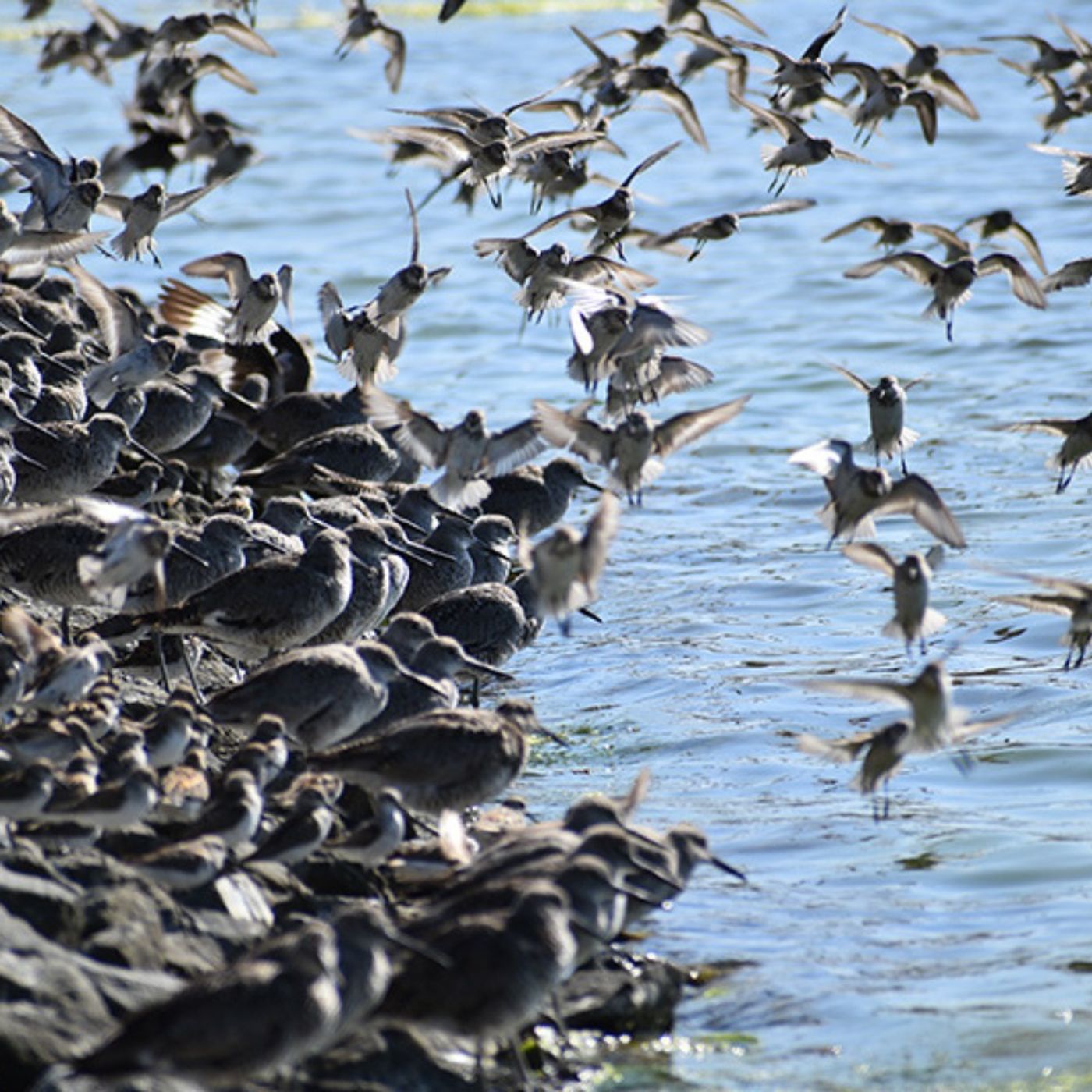
The Arcata Marsh and Wildlife Sanctuary in Northwest California is an important stop along the Pacific Flyway, one of the four main routes for bird migration through North America. Visitors are sometimes surprised to learn that this wildlife sanctuary is also the city of Arcata’s wastewater treatment facility. By combining conventional wastewater treatment to natural wetlands, the city has created habitat homes and migratory resting places for over 300 species of birds, including many shorebirds.More info and transcript at BirdNote.org.Want more BirdNote? Subscribe to our weekly newsletter. Sign up for BirdNote+ to get ad-free listening and other perks. BirdNote is a nonprofit. Your tax-deductible gift makes these shows possible. Hosted by Simplecast, an AdsWizz company. See pcm.adswizz.com for information about our collection and use of personal data for advertising.

International Dawn Chorus Day
The first Sunday of May is International Dawn Chorus Day, a day to appreciate the beauty of birds’ dawn songs. Dawn Chorus Day began as a small event in Birmingham, England in the 1980s and has grown to be a worldwide celebration of birdsong. You can join in wherever you are by listening to the singers in your neighborhood – like this Eurasian Wren. Just make sure you get up nice and early!Today’s show brought to you by the Bobolink Foundation. More info and transcript at BirdNote.org.Want more BirdNote? Subscribe to our weekly newsletter. Sign up for BirdNote+ to get ad-free listening and other perks. BirdNote is a nonprofit. Your tax-deductible gift makes these shows possible. Hosted by Simplecast, an AdsWizz company. See pcm.adswizz.com for information about our collection and use of personal data for advertising.

There’s Something About Penguins
There’s just something about penguins. Pleasantly plump, they stand upright and teeter like toddlers. Although often depicted in black and white, most are actually more colorful. Seven species have long, jaunty golden feather tufts above their eyes. King Penguins and Emperor Penguins have necks that glisten gold. The Little Penguin is blue and white. Penguins are found in the Southern Hemisphere, from the Equator to Antarctica.More info and transcript at BirdNote.org.Want more BirdNote? Subscribe to our weekly newsletter. Sign up for BirdNote+ to get ad-free listening and other perks. BirdNote is a nonprofit. Your tax-deductible gift makes these shows possible. Hosted by Simplecast, an AdsWizz company. See pcm.adswizz.com for information about our collection and use of personal data for advertising.

Ruby-throated Hummingbird
Ruby-throated Hummingbirds are the only hummingbirds that nest in the Eastern states. Most Ruby-throats spend the winter in Central America. By March, some males are already returning to the Southeast. But it's well into April before they reach the northern states. Female hummingbirds arrive a couple weeks later. What hummingbird might you see in your region? Check out hummingbirds.net. Put up a feeder and attract one to your yard.More info and transcript at BirdNote.org.Want more BirdNote? Subscribe to our weekly newsletter. Sign up for BirdNote+ to get ad-free listening and other perks. BirdNote is a nonprofit. Your tax-deductible gift makes these shows possible. Hosted by Simplecast, an AdsWizz company. See pcm.adswizz.com for information about our collection and use of personal data for advertising.

Puffin Bills Glow
Puffins are known for their flashy bills, striped like a giant piece of candy-corn. New research has found that the bills of Atlantic Puffins glow brightly under ultraviolet blacklights. Neon, curved streaks appeared between the different colored segments of a puffin’s bill in this lighting. It’s possible that the UV highlights help the birds further stand out to potential mates. For the experiment, researchers made special puffin sunglasses to protect the birds’ eyes.More info and transcript at BirdNote.org.Want more BirdNote? Subscribe to our weekly newsletter. Sign up for BirdNote+ to get ad-free listening and other perks. BirdNote is a nonprofit. Your tax-deductible gift makes these shows possible. Hosted by Simplecast, an AdsWizz company. See pcm.adswizz.com for information about our collection and use of personal data for advertising.

Limpkin - Bird of the Swamp
It's dawn on a spring day in the Big Cypress Swamp of Florida. Mist rises from quiet water into Spanish moss hanging from the cypress branches. A Limpkin is foraging for apple snails. When it touches a big, round shell, it grabs it quickly and pulls it from the water. Then, moving to solid ground, the Limpkin positions the shell, and using the curved tip of its lower mandible, it scissors loose the operculum and pulls out the snail.More info and transcript at BirdNote.org.Want more BirdNote? Subscribe to our weekly newsletter. Sign up for BirdNote+ to get ad-free listening and other perks. BirdNote is a nonprofit. Your tax-deductible gift makes these shows possible. Hosted by Simplecast, an AdsWizz company. See pcm.adswizz.com for information about our collection and use of personal data for advertising.

Bird Songs of April
The month of April inspires poets, sometimes with contradictory results. Poet TS Eliot describes April as "the cruelest month." Shakespeare strikes an upbeat note, writing, "April hath put a spirit of youth in everything." Let April speak for itself. Listen to the birds.More info and transcript at BirdNote.org.Want more BirdNote? Subscribe to our weekly newsletter. Sign up for BirdNote+ to get ad-free listening and other perks. BirdNote is a nonprofit. Your tax-deductible gift makes these shows possible. Hosted by Simplecast, an AdsWizz company. See pcm.adswizz.com for information about our collection and use of personal data for advertising.

Soaring with Redtails
A Red-tailed Hawk soars on broad, rounded wings, the epitome of effortless flight. Without flapping, it traces a leisurely, rising circle. The hawk is riding a thermal, a column of warm rising air generated near the earth's surface by heat from the sun. The Red-tail periodically circles to stay within the thermal. Riding thermals is an energy-efficient way to search for prey below.More info and transcript at BirdNote.org.Want more BirdNote? Subscribe to our weekly newsletter. Sign up for BirdNote+ to get ad-free listening and other perks. BirdNote is a nonprofit. Your tax-deductible gift makes these shows possible. Hosted by Simplecast, an AdsWizz company. See pcm.adswizz.com for information about our collection and use of personal data for advertising.
Burrowing Owls: Howdy Birds
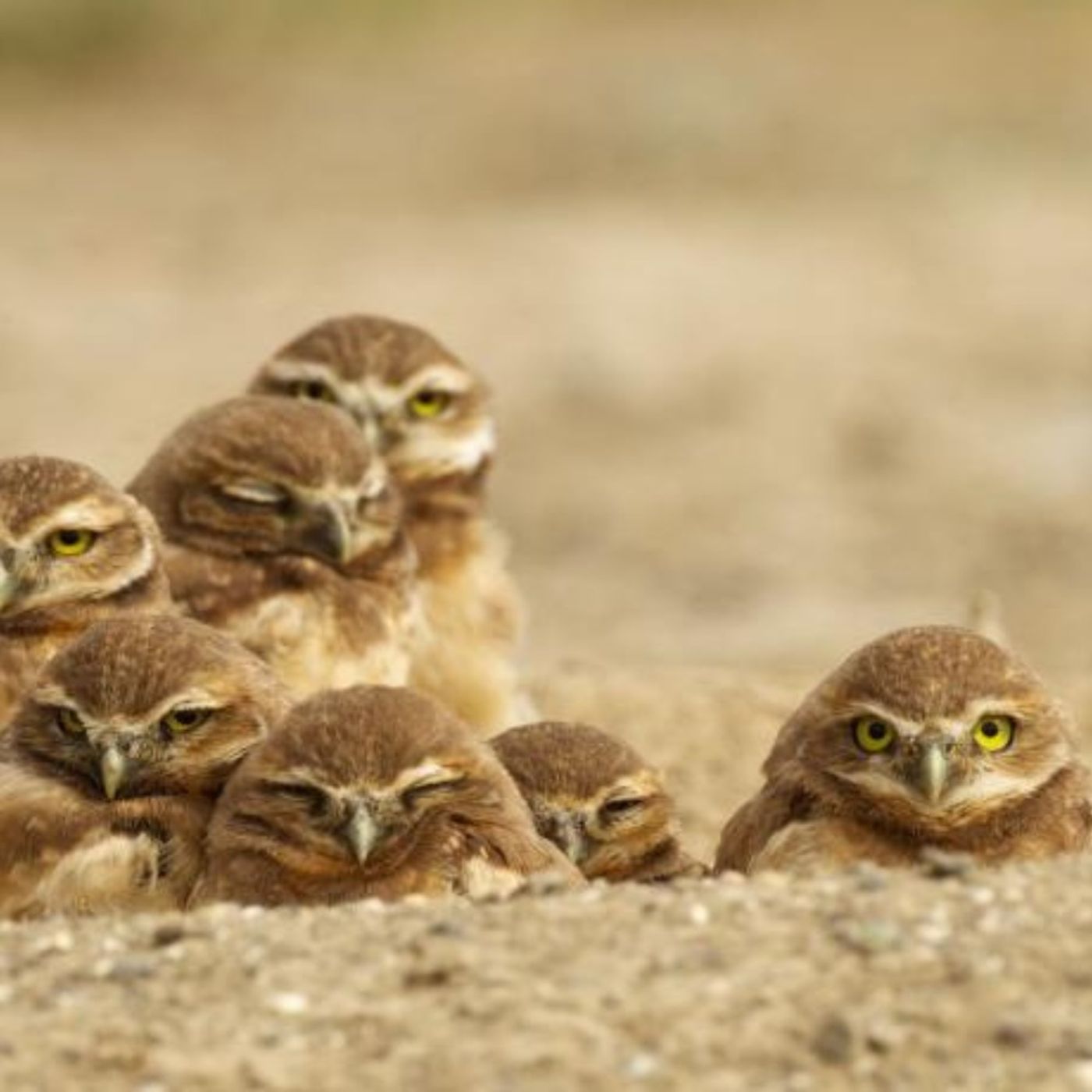
A Burrowing Owl is about as big as a can of beans on stilts. Between the long legs, bright yellow eyes, and signature bobbing salute, these little birds are comical members of the western ecosystem. Cowboys riding Western rangelands have a nickname for these little owls. They call them “howdy birds” for the way they bob up and down in front of their nests.More info and transcript at BirdNote.org.Want more BirdNote? Subscribe to our weekly newsletter. Sign up for BirdNote+ to get ad-free listening and other perks. BirdNote is a nonprofit. Your tax-deductible gift makes these shows possible. Hosted by Simplecast, an AdsWizz company. See pcm.adswizz.com for information about our collection and use of personal data for advertising.

A Lost Hummingbird is Found Again
The Santa Marta Sabrewing is a hummingbird species so rare, they’ve only been documented twice in recent years. Native to the mountains of Colombia, they were officially described in 1946. No one reported another sighting until 2010. They became a “lost” species, eluding every attempt to find them. Then in 2022, Yurgen Vega was studying the birds of a mountain range called the Sierra Nevada de Santa Marta. He snapped a photo of an unusual, large hummingbird – and the sabrewing was lost no more.More info and transcript at BirdNote.org.Want more BirdNote? Subscribe to our weekly newsletter. Sign up for BirdNote+ to get ad-free listening and other perks. BirdNote is a nonprofit. Your tax-deductible gift makes these shows possible. Hosted by Simplecast, an AdsWizz company. See pcm.adswizz.com for information about our collection and use of personal data for advertising.

A Kettle of Vultures
In the daytime, hot air rises as the sun heats the ground. The rising column of air is called a thermal, and it’s the perfect way for a Turkey Vulture to hitch a ride. Like an elevator to the skies, the thermal gently wafts the vultures upward. They move in a slowly ascending spiral around the thermal, rarely flapping and instead coasting on the breeze. When many vultures ride the same thermal, it’s called a kettle.More info and transcript at BirdNote.org.Want more BirdNote? Subscribe to our weekly newsletter. Sign up for BirdNote+ to get ad-free listening and other perks. BirdNote is a nonprofit. Your tax-deductible gift makes these shows possible. Hosted by Simplecast, an AdsWizz company. See pcm.adswizz.com for information about our collection and use of personal data for advertising.

Raising the World’s Deadliest Bird
You might think the first bird species that humans raised in captivity would be a relatively small one, like a chicken. But evidence suggests that people in New Guinea reared the cassowary, often called the world’s deadliest bird, as much as 18,000 years ago, long before the domestication of chickens. The remains of cassowary eggs and bones at archaeological sites in New Guinea indicate that people gathered the eggs, possibly allowing the more mature eggs to hatch into chicks.More info and transcript at BirdNote.org.Want more BirdNote? Subscribe to our weekly newsletter. Sign up for BirdNote+ to get ad-free listening and other perks. BirdNote is a nonprofit. Your tax-deductible gift makes these shows possible. Hosted by Simplecast, an AdsWizz company. See pcm.adswizz.com for information about our collection and use of personal data for advertising.

Poetry in the Parks
For her signature project You Are Here, U.S. Poet Laureate Ada Limón sought to connect people and nature through poetry. In addition to curating a book of poems by the same name, Limón also partnered with Shauna Potocky at the National Park Service to design poetry installations at seven sites across the country.More info and transcript at BirdNote.org. Want more BirdNote? Subscribe to our weekly newsletter. Sign up for BirdNote+ to get ad-free listening and other perks. BirdNote is a nonprofit. Your tax-deductible gift makes these shows possible. Hosted by Simplecast, an AdsWizz company. See pcm.adswizz.com for information about our collection and use of personal data for advertising.

Great-tailed Grackle
Great-tailed Grackles live up to their name. The glossy black males trail their long, V-shaped tails behind them as they fly, almost like a plane towing a banner ad. And while not quite as flashy, the brown-feathered females have impressively long tails, too. Also known as the Mexican Grackle, this species lives in all sorts of habitats from the northern coasts of South America to the western U.S. Their ability to live in both cities and farmland has helped Great-tailed Grackles expand as far north as Iowa.More info and transcript at BirdNote.org.Want more BirdNote? Subscribe to our weekly newsletter. Sign up for BirdNote+ to get ad-free listening and other perks. BirdNote is a nonprofit. Your tax-deductible gift makes these shows possible. Hosted by Simplecast, an AdsWizz company. See pcm.adswizz.com for information about our collection and use of personal data for advertising.

The Legendary Phoenix
The ancient Greeks and Egyptians described a mythical bird called the Phoenix, a magnificent creature that was a symbol of renewal and rebirth. According to legend, each Phoenix lived for 500 years, and only one Phoenix lived at a time. Just before its time was up, the Phoenix built a nest and set itself on fire. Then, a new Phoenix would rise from the ashes.More info and transcript at BirdNote.org.Want more BirdNote? Subscribe to our weekly newsletter. Sign up for BirdNote+ to get ad-free listening and other perks. BirdNote is a nonprofit. Your tax-deductible gift makes these shows possible. Hosted by Simplecast, an AdsWizz company. See pcm.adswizz.com for information about our collection and use of personal data for advertising.

Recycle Your Eggshells to Help Nesting Birds
Female birds need to eat calcium to have enough of the mineral to lay their eggs. But it can be hard to find enough of it to eat in nature. We can help our backyard birds by offering them some extra calcium in bird feeders and by recycling our used egg shells.More info and transcript at BirdNote.org.Want more BirdNote? Subscribe to our weekly newsletter. Sign up for BirdNote+ to get ad-free listening and other perks. BirdNote is a nonprofit. Your tax-deductible gift makes these shows possible. Hosted by Simplecast, an AdsWizz company. See pcm.adswizz.com for information about our collection and use of personal data for advertising.

Kinglet Fireworks
Most of the time, a Ruby-crowned Kinglet is neither ruby nor regal. A tiny songbird washed in faded olive-green, the male shows a hint of crimson atop of his head — hardly a ruby crown. But don’t forsake the kinglet for flashier birds. When courting a female or dueling with another male, the kinglet exposes those ruby feathers, and his crown glows with the feathery fireworks that give the bird its name. Now is the time to look for kinglets, as they migrate north across much of the continent toward breeding sites in remote evergreen woods.More info and transcript at BirdNote.org.Want more BirdNote? Subscribe to our weekly newsletter. Sign up for BirdNote+ to get ad-free listening and other perks. BirdNote is a nonprofit. Your tax-deductible gift makes these shows possible. Hosted by Simplecast, an AdsWizz company. See pcm.adswizz.com for information about our collection and use of personal data for advertising.

Brewer's Sparrow, Sageland Singer
One of the most musical and complex bird songs in the U.S. is that of the Brewer's Sparrow. It's a veritable aria, ringing forth from the sagebrush of Eastern Washington's Columbia Basin. Shrub-steppe is disappearing from the interior west as it is cleared for irrigated crops. The quintessential drylands bird, the Brewer's Sparrow can survive for an extended period of time with no supplemental water, getting all the water it needs from seeds and arthropods.More info and transcript at BirdNote.org.Want more BirdNote? Subscribe to our weekly newsletter. Sign up for BirdNote+ to get ad-free listening and other perks. BirdNote is a nonprofit. Your tax-deductible gift makes these shows possible. Hosted by Simplecast, an AdsWizz company. See pcm.adswizz.com for information about our collection and use of personal data for advertising.

Pablo Neruda’s Celebrated Birds
Pablo Neruda is considered one of the greatest poets of the 20th century. Though the Chilean poet is best known for his writings about love, birds were also close to his heart. He composed more than 20 poetic profiles of birds native to Chile including hummingbirds and albatrosses.More info and transcript at BirdNote.org.Want more BirdNote? Subscribe to our weekly newsletter. Sign up for BirdNote+ to get ad-free listening and other perks. BirdNote is a nonprofit. Your tax-deductible gift makes these shows possible. Hosted by Simplecast, an AdsWizz company. See pcm.adswizz.com for information about our collection and use of personal data for advertising.

What’s a Field of Grass to a Bird?
Although a field of grass might not seem like valuable habitat at first, many birds have adapted to nest in grassland habitats and nowhere else. In North America, birds such as the Bobolink seek out grasslands to raise their young, deftly hiding their nests within the dense vegetation. Very few grasslands and savannas have been protected compared to the area that’s been lost, making them the most at-risk ecosystem on the planet. That means every acre of grassland remaining is even more precious — to birds, to plants, and to people.More info and transcript at BirdNote.org.Want more BirdNote? Subscribe to our weekly newsletter. Sign up for BirdNote+ to get ad-free listening and other perks. BirdNote is a nonprofit. Your tax-deductible gift makes these shows possible. Hosted by Simplecast, an AdsWizz company. See pcm.adswizz.com for information about our collection and use of personal data for advertising.

From Bobwhite Coveys to Pairs
Throughout winter, Northern Bobwhites gather in groups called coveys to search for food during the day and share warmth at night. These small quail arrange themselves in a circle, with their tails in the center and heads outward, huddled up like a wreath of plump birds to survive frost and snow. But as spring arrives, the coveys disband and bobwhites seek out mates. Males whistle from shrubs and tufts of grass, hoping to catch the attention of a female.More info and transcript at BirdNote.org.Want more BirdNote? Subscribe to our weekly newsletter. Sign up for BirdNote+ to get ad-free listening and other perks. BirdNote is a nonprofit. Your tax-deductible gift makes these shows possible. Hosted by Simplecast, an AdsWizz company. See pcm.adswizz.com for information about our collection and use of personal data for advertising.

The Eagle Eye
Ever heard the term “eagle eye?” An eagle’s vision is incredibly sharp, and its eyes can weigh more than its brain. The secret to the bird’s exceptional vision is the density of visual cells – the rods and cones – of its retina.More info and transcript at BirdNote.org.Want more BirdNote? Subscribe to our weekly newsletter. Sign up for BirdNote+ to get ad-free listening and other perks. BirdNote is a nonprofit. Your tax-deductible gift makes these shows possible. Hosted by Simplecast, an AdsWizz company. See pcm.adswizz.com for information about our collection and use of personal data for advertising.

Nest Building
Want to try building a nest? Consider this... an average American Robin weighs less than three ounces. An average person weighs 170 pounds, or 1,000 times as much as a robin. A robin's nest, made of grass and mud, weighs about seven ounces, so yours will weigh 450 pounds. You'll need to collect about 350 strands of grass, each about four feet long. And don't forget the mud: 150 pounds of it. You have five days to complete the job. That's 300 mouthfuls of mud.More info and transcript at BirdNote.org.Want more BirdNote? Subscribe to our weekly newsletter. Sign up for BirdNote+ to get ad-free listening and other perks. BirdNote is a nonprofit. Your tax-deductible gift makes these shows possible. Hosted by Simplecast, an AdsWizz company. See pcm.adswizz.com for information about our collection and use of personal data for advertising.

Music to Our Ears
One of Jessica Rugh Frantz’s favorite things about being the director of development at BirdNote is getting to hear from listeners about how much they love our programs. Listener support is what makes this show possible. Just like how we love our backyard birds and take steps to help them thrive, we hope you’ll do the same for BirdNote by making a donation today.More info and transcript at BirdNote.org. Want more BirdNote? Subscribe to our weekly newsletter. Sign up for BirdNote+ to get ad-free listening and other perks. BirdNote is a nonprofit. Your tax-deductible gift makes these shows possible. Hosted by Simplecast, an AdsWizz company. See pcm.adswizz.com for information about our collection and use of personal data for advertising.

Hearing From BirdNote Listeners
We know for many listeners, BirdNote is part of your everyday routine. But don’t take our word for it. Let Michael and Mary Ann tell you what BirdNote means to them.More info and transcript at BirdNote.org. Want more BirdNote? Subscribe to our weekly newsletter. Sign up for BirdNote+ to get ad-free listening and other perks. BirdNote is a nonprofit. Your tax-deductible gift makes these shows possible. Hosted by Simplecast, an AdsWizz company. See pcm.adswizz.com for information about our collection and use of personal data for advertising.

Support the Things You Love
At BirdNote, we believe that the more that people learn about birds, the more likely they are to take steps to protect them. Listeners like you have supported BirdNote for 20 years. Support our Spring Fund Drive with a donation of any amount to help us create informative, inspiring stories for years to come.More info and transcript at BirdNote.org. Want more BirdNote? Subscribe to our weekly newsletter. Sign up for BirdNote+ to get ad-free listening and other perks. BirdNote is a nonprofit. Your tax-deductible gift makes these shows possible. Hosted by Simplecast, an AdsWizz company. See pcm.adswizz.com for information about our collection and use of personal data for advertising.

BirdNoir: The Mystery of Public Media Funding
In this episode of BirdNoir, the Private Eye gets a call from his pal Roy asking to know how BirdNote stays on the air. His wife says the show is funded by listener donations, but Roy can’t believe it. Roy even made a bet that he’d make a donation himself if her story were true. The private eye gives him an answer that has Roy grabbing his pocket book.More info and transcript at BirdNote.org. Want more BirdNote? Subscribe to our weekly newsletter. Sign up for BirdNote+ to get ad-free listening and other perks. BirdNote is a nonprofit. Your tax-deductible gift makes these shows possible. Hosted by Simplecast, an AdsWizz company. See pcm.adswizz.com for information about our collection and use of personal data for advertising.