Behavioral Grooves Podcast
529 episodes — Page 10 of 11
Ep 126Covid-19 Crisis: Annie Duke on Hedging and the Last Disaster Syndrome
Annie Duke is an author, corporate speaker, and consultant in the decision-making space. Her most recent book, Thinking in Bets: Making Smarter Decisions When You Don’t Have All the Facts, quickly became a national bestseller and landed on the Behavioral Grooves Top 10 list for 2018! Prior to her career as a professional poker player, Annie was awarded a National Science Foundation Fellowship to study Cognitive Psychology at the University of Pennsylvania. She is the co-founder of The Alliance for Decision Education, a non-profit whose mission to improve lives by empowering students through decision skills education. And this is Annies third time on Behavioral Grooves – you can hear her in Episode 31 and our 100th episode spectacular! Over the years that we’ve known Annie, we’ve developed a friendship that reveals itself in this episode as a very conversational exchange among friends sitting around talking about the crisis. We talked about hedging, the Last Disaster syndrome, and of course, decision making under uncertainty. We hope you enjoy. PS: Annie's newest book, How We Decide, can be pre-ordered on the Amazon link below. © 2020 Behavioral Grooves Links Connect with Kurt and Tim: Kurt Nelson, PhD: @WhatMotivates e-mail: [email protected] Tim Houlihan: @THoulihan e-mail: [email protected] Lantern Group: http://lanterngroup.com/ BehaviorAlchemy: https://www.behavioralchemy.com/ Behavioral Grooves: https://behavioralgrooves.com/ Weekly Grooves: https://weeklygrooves.podbean.com/ Common Biases & Heuristics: https://docs.google.com/document/d/1XHpBr0VFcaT8wIUpr-9zMIb79dFMgOVFRxIZRybiftI/edit# General Coronavirus Info: Daily Newsletter Summarizing data from Johns Hopkins Center for Health Security: http://www.centerforhealthsecurity.org/newsroom/newsletters/e-newsletter-sign-up.html CDC: https://www.cdc.gov/coronavirus/2019-ncov/index.html Great videos on the science behind this by Dr. Peter Attia – this is the first in a series: https://www.youtube.com/watch?v=CNVhLyAlfA4 What is herd immunity? https://www.technologyreview.com/s/615375/what-is-herd-immunity-and-can-it-stop-the-coronavirus/ Coronavirus & Behavioral Science: Selected Links: The Behavioral Sice of Coronavirus: https://behavioralscientist.org/selected-links-the-behavioral-science-of-the-coronavirus-covid-19/ Why no one is reading your coronavirus email: https://edition.cnn.com/2020/03/13/opinions/coronavirus-emails-effective-messaging-rogers/index.html Handwashing can stop a virus, so why don’t we do it?: https://behavioralscientist.org/handwashing-can-stop-a-virus-so-why-dont-we-do-it-coronavirus-covid-19/ The behavioral science of handwashing: https://think.ing.com/articles/the-behavioural-science-of-hand-washing/ How we can cope or be better during this crisis: Tip Sheet from HUMU: https://humu.com/remote-nudges/ Resources for learning at home: https://fordhaminstitute.org/national/commentary/resources-learning-home-during-covid-19-school-closures?utm_source=join1440&utm_medium=email&utm_placement=etcetera General Behavioral Science and other info related or talked about in the series: Common Biases and Heuristics: https://docs.google.com/document/d/1XHpBr0VFcaT8wIUpr-9zMIb79dFMgOVFRxIZRybiftI/edit# Jonathan Haidt – 5 Moral Foundations: https://en.wikipedia.org/wiki/Moral_foundations_theory Jürgen Klopp: https://ftw.usatoday.com/2020/03/jurgen-klopp-goes-off-on-reporter-after-being-asked-about-coronavirus-again UBI (Universal Basic Income): https://en.wikipedia.org/wiki/Basic_income 7-Minute Workout: https://www.youtube.com/watch?v=ECxYJcnvyMw 4 Drive Model: https://www.leadersbeacon.com/how-great-leaders-use-the-4-drive-model-to-impact-employee-motivation/ Universal Basic Income: https://behavioralscientist.org/checkscheckschecks-why-we-need-a-universal-basic-income-now-coronavirus/ Why we are not going back to normal: https://www.technologyreview.com/s/615370/coronavirus-pandemic-social-distancing-18-months/ Annie Duke’s “How To Decide”: https://www.amazon.com/How-Decide-Simple-Making-Choices/dp/0593084608

Ep 125Covid-19 Crisis: Ali Fenwick, PhD on Leveraging the Crisis for Good
Ali Fenwick, PhD is a Professor of Organizational Behavior at Hult International Business School in London and Dubai. He specializes in applying behavioural traits and behavioral interventions for business improvement, government policy design, communication effectiveness and, among other things, psychographic profiling. According to Ali, “Bulk buying is caused by various psychological and environmental cues which throw rational-thinking out of the window. When in survival mode, we let mainly our emotions drive decisions and are more susceptible to social influences. So, we will rush out and buy more because we believe others are doing the same.” We discussed herd behavior, how the crisis can be framed as “ours” rather than “yours” and, more importantly, the devasting effects isolation can have on the human condition. Ali outlines some terrific tips and we hope you’ll find him as engaging as we did. (c) 2020 Behavioral Grooves Links Connect with Kurt and Tim: Kurt Nelson, PhD: @WhatMotivates e-mail: [email protected] Tim Houlihan: @THoulihan e-mail: [email protected] Lantern Group: http://lanterngroup.com/ BehaviorAlchemy: https://www.behavioralchemy.com/ Behavioral Grooves: https://behavioralgrooves.com/ Weekly Grooves: https://weeklygrooves.podbean.com/ Common Biases & Heuristics: https://docs.google.com/document/d/1XHpBr0VFcaT8wIUpr-9zMIb79dFMgOVFRxIZRybiftI/edit# General Coronavirus Info: Daily Newsletter Summarizing data from Johns Hopkins Center for Health Security: http://www.centerforhealthsecurity.org/newsroom/newsletters/e-newsletter-sign-up.html CDC: https://www.cdc.gov/coronavirus/2019-ncov/index.html Great videos on the science behind this by Dr. Peter Attia – this is the first in a series: https://www.youtube.com/watch?v=CNVhLyAlfA4 What is herd immunity? https://www.technologyreview.com/s/615375/what-is-herd-immunity-and-can-it-stop-the-coronavirus/ Coronavirus & Behavioral Science: Selected Links: The Behavioral Sice of Coronavirus: https://behavioralscientist.org/selected-links-the-behavioral-science-of-the-coronavirus-covid-19/ Why no one is reading your coronavirus email: https://edition.cnn.com/2020/03/13/opinions/coronavirus-emails-effective-messaging-rogers/index.html Handwashing can stop a virus, so why don’t we do it?: https://behavioralscientist.org/handwashing-can-stop-a-virus-so-why-dont-we-do-it-coronavirus-covid-19/ The behavioral science of handwashing: https://think.ing.com/articles/the-behavioural-science-of-hand-washing/ How we can cope or be better during this crisis: Tip Sheet from HUMU: https://humu.com/remote-nudges/ Resources for learning at home: https://fordhaminstitute.org/national/commentary/resources-learning-home-during-covid-19-school-closures?utm_source=join1440&utm_medium=email&utm_placement=etcetera General Behavioral Science and other info related or talked about in the series: Common Biases and Heuristics: https://docs.google.com/document/d/1XHpBr0VFcaT8wIUpr-9zMIb79dFMgOVFRxIZRybiftI/edit# Jonathan Haidt – 5 Moral Foundations: https://en.wikipedia.org/wiki/Moral_foundations_theory Jürgen Klopp: https://ftw.usatoday.com/2020/03/jurgen-klopp-goes-off-on-reporter-after-being-asked-about-coronavirus-again UBI (Universal Basic Income): https://en.wikipedia.org/wiki/Basic_income 7-Minute Workout: https://www.youtube.com/watch?v=ECxYJcnvyMw 4 Drive Model: https://www.leadersbeacon.com/how-great-leaders-use-the-4-drive-model-to-impact-employee-motivation/ Universal Basic Income: https://behavioralscientist.org/checkscheckschecks-why-we-need-a-universal-basic-income-now-coronavirus/ Why we are not going back to normal: https://www.technologyreview.com/s/615370/coronavirus-pandemic-social-distancing-18-months/ Annie Duke’s “How To Decide”: https://www.amazon.com/How-Decide-Simple-Making-Choices/dp/0593084608

Ep 124Covid-19 Crisis: James Brewer on Changing His Mind
James Brewer is the Director of Marketing Platforms and Global Customer Operations for Eli Lilly and Company. Over the years, Kurt and Tim have worked with James on applying behavioral science insights to his work, and many of his colleagues’ work, at Eli Lilly. James is an avid behavioral science practitioner and also a friend. We started our discussion with James about how his views have shifted from being someone who thought the media was overhyping the pandemic, to being someone who is taking the threat from the coronavirus very seriously. This naturally integrated James’s personal story of being a life-long learner and how he approaches new information. We also discussed some of the potentially unintended consequences of the pandemic – which might include better cleanliness habits for many people – and James’ optimistic take on the future that lies on the other side of the pandemic. Links Connect with Kurt and Tim: Kurt Nelson, PhD: @WhatMotivates e-mail: [email protected] Tim Houlihan: @THoulihan e-mail: [email protected] Lantern Group: http://lanterngroup.com/ BehaviorAlchemy: https://www.behavioralchemy.com/ Behavioral Grooves: https://behavioralgrooves.com/ Weekly Grooves: https://weeklygrooves.podbean.com/ Common Biases & Heuristics: https://docs.google.com/document/d/1XHpBr0VFcaT8wIUpr-9zMIb79dFMgOVFRxIZRybiftI/edit# General Coronavirus Info: Daily Newsletter Summarizing data from Johns Hopkins Center for Health Security: http://www.centerforhealthsecurity.org/newsroom/newsletters/e-newsletter-sign-up.html CDC: https://www.cdc.gov/coronavirus/2019-ncov/index.html Great videos on the science behind this by Dr. Peter Attia – this is the first in a series: https://www.youtube.com/watch?v=CNVhLyAlfA4 What is herd immunity? https://www.technologyreview.com/s/615375/what-is-herd-immunity-and-can-it-stop-the-coronavirus/ Coronavirus & Behavioral Science: Selected Links: The Behavioral Sice of Coronavirus: https://behavioralscientist.org/selected-links-the-behavioral-science-of-the-coronavirus-covid-19/ Why no one is reading your coronavirus email: https://edition.cnn.com/2020/03/13/opinions/coronavirus-emails-effective-messaging-rogers/index.html Handwashing can stop a virus, so why don’t we do it?: https://behavioralscientist.org/handwashing-can-stop-a-virus-so-why-dont-we-do-it-coronavirus-covid-19/ The behavioral science of handwashing: https://think.ing.com/articles/the-behavioural-science-of-hand-washing/ How we can cope or be better during this crisis: Tip Sheet from HUMU: https://humu.com/remote-nudges/ Resources for learning at home: https://fordhaminstitute.org/national/commentary/resources-learning-home-during-covid-19-school-closures?utm_source=join1440&utm_medium=email&utm_placement=etcetera General Behavioral Science and other info related or talked about in the series: Common Biases and Heuristics: https://docs.google.com/document/d/1XHpBr0VFcaT8wIUpr-9zMIb79dFMgOVFRxIZRybiftI/edit# Jonathan Haidt – 5 Moral Foundations: https://en.wikipedia.org/wiki/Moral_foundations_theory Jürgen Klopp: https://ftw.usatoday.com/2020/03/jurgen-klopp-goes-off-on-reporter-after-being-asked-about-coronavirus-again UBI (Universal Basic Income): https://en.wikipedia.org/wiki/Basic_income 7-Minute Workout: https://www.youtube.com/watch?v=ECxYJcnvyMw 4 Drive Model: https://www.leadersbeacon.com/how-great-leaders-use-the-4-drive-model-to-impact-employee-motivation/ Universal Basic Income: https://behavioralscientist.org/checkscheckschecks-why-we-need-a-universal-basic-income-now-coronavirus/ Why we are not going back to normal: https://www.technologyreview.com/s/615370/coronavirus-pandemic-social-distancing-18-months/

Ep 123Covid-19 Crisis: Don’t Outsource Your Critical Thinking with Christian Hunt
Christian Hunt is the founder of Human Risk, a Behavioral Science consulting and training firm specializing in risk, compliance, conduct & culture. Previously, Christian was the head of Behavioral Science at UBS and Chief Operating Officer of the Prudential Regulation Authority. He is an expert on risk and how people perceive risk. We wanted to talk to Christian about how we perceive risk and whether or not our human biases are overblowing (or undervaluing) the current pandemic. We also chatted about a concept introduced to us by Deborah Small, a professor at Wharton, called distorted risk perception. And Christian reminded us of one of the most important things to do, now more than ever: the best way to stop spreading the fake news virus is by leveraging our System 2 thinking. Be critical. Be skeptical of the sources of the material you’re reading and hearing. In sum: don’t outsource your critical thinking. © 2020 Behavioral Grooves Links Connect with Kurt and Tim: Kurt Nelson, PhD: @WhatMotivates e-mail: [email protected] Tim Houlihan: @THoulihan e-mail: [email protected] Lantern Group: http://lanterngroup.com/ BehaviorAlchemy: https://www.behavioralchemy.com/ Behavioral Grooves: https://behavioralgrooves.com/ Weekly Grooves: https://weeklygrooves.podbean.com/ Common Biases & Heuristics: https://docs.google.com/document/d/1XHpBr0VFcaT8wIUpr-9zMIb79dFMgOVFRxIZRybiftI/edit# General Coronavirus Info: Daily Newsletter Summarizing data from Johns Hopkins Center for Health Security: http://www.centerforhealthsecurity.org/newsroom/newsletters/e-newsletter-sign-up.html CDC: https://www.cdc.gov/coronavirus/2019-ncov/index.html Great videos on the science behind this by Dr. Peter Attia – this is the first in a series: https://www.youtube.com/watch?v=CNVhLyAlfA4 What is herd immunity? https://www.technologyreview.com/s/615375/what-is-herd-immunity-and-can-it-stop-the-coronavirus/ Coronavirus & Behavioral Science: Selected Links: The Behavioral Sice of Coronavirus: https://behavioralscientist.org/selected-links-the-behavioral-science-of-the-coronavirus-covid-19/ Why no one is reading your coronavirus email: https://edition.cnn.com/2020/03/13/opinions/coronavirus-emails-effective-messaging-rogers/index.html Handwashing can stop a virus, so why don’t we do it?: https://behavioralscientist.org/handwashing-can-stop-a-virus-so-why-dont-we-do-it-coronavirus-covid-19/ The behavioral science of handwashing: https://think.ing.com/articles/the-behavioural-science-of-hand-washing/ How we can cope or be better during this crisis: Tip Sheet from HUMU: https://humu.com/remote-nudges/ Resources for learning at home: https://fordhaminstitute.org/national/commentary/resources-learning-home-during-covid-19-school-closures?utm_source=join1440&utm_medium=email&utm_placement=etcetera General Behavioral Science and other info related or talked about in the series: Common Biases and Heuristics: https://docs.google.com/document/d/1XHpBr0VFcaT8wIUpr-9zMIb79dFMgOVFRxIZRybiftI/edit# Jonathan Haidt – 5 Moral Foundations: https://en.wikipedia.org/wiki/Moral_foundations_theory Jürgen Klopp: https://ftw.usatoday.com/2020/03/jurgen-klopp-goes-off-on-reporter-after-being-asked-about-coronavirus-again UBI (Universal Basic Income): https://en.wikipedia.org/wiki/Basic_income 7-Minute Workout: https://www.youtube.com/watch?v=ECxYJcnvyMw 4 Drive Model: https://www.leadersbeacon.com/how-great-leaders-use-the-4-drive-model-to-impact-employee-motivation/ Universal Basic Income: https://behavioralscientist.org/checkscheckschecks-why-we-need-a-universal-basic-income-now-coronavirus/ Why we are not going back to normal: https://www.technologyreview.com/s/615370/coronavirus-pandemic-social-distancing-18-months/

Ep 122Covid-19 Crisis: Barry Ritholtz on Keeping Perspective
Barry Ritholtz is the CIO of Ritholtz Wealth Management and the host of the Bloomberg podcast Masters in Business, where he talks almost as much about markets, investing and business as he does about the behavioral science behind WHY we do what we do. Our first conversation appears in the ever-popular Episode 47. This week, we discussed the financial implications of the financial crisis resulting from the pandemic. It’s not, as Barry notes quite clearly, a one hundred year flood. The market is reacting the way it normally does. While the shifts are dramatic, they were unforeseen and will – over time – return to more stable growth. We also talked about the impact the crisis will have on supply chains, the availability of durable and consumer goods, the way bailouts should be structured, and how important it is to not lie to ourselves in times like these. All of this discussion of finance, as you may imagine, is through a behavioral lens. © 2020 Behavioral Grooves Links Connect with Kurt and Tim: Kurt Nelson, PhD: @WhatMotivates e-mail: [email protected] Tim Houlihan: @THoulihan e-mail: [email protected] Lantern Group: http://lanterngroup.com/ BehaviorAlchemy: https://www.behavioralchemy.com/ Behavioral Grooves: https://behavioralgrooves.com/ Weekly Grooves: https://weeklygrooves.podbean.com/ Common Biases & Heuristics: https://docs.google.com/document/d/1XHpBr0VFcaT8wIUpr-9zMIb79dFMgOVFRxIZRybiftI/edit# General Coronavirus Info: Daily Newsletter Summarizing data from Johns Hopkins Center for Health Security: http://www.centerforhealthsecurity.org/newsroom/newsletters/e-newsletter-sign-up.html CDC: https://www.cdc.gov/coronavirus/2019-ncov/index.html Great videos on the science behind this by Dr. Peter Attia – this is the first in a series: https://www.youtube.com/watch?v=CNVhLyAlfA4 What is herd immunity? https://www.technologyreview.com/s/615375/what-is-herd-immunity-and-can-it-stop-the-coronavirus/ Coronavirus & Behavioral Science: Selected Links: The Behavioral Sice of Coronavirus: https://behavioralscientist.org/selected-links-the-behavioral-science-of-the-coronavirus-covid-19/ Why no one is reading your coronavirus email: https://edition.cnn.com/2020/03/13/opinions/coronavirus-emails-effective-messaging-rogers/index.html Handwashing can stop a virus, so why don’t we do it?: https://behavioralscientist.org/handwashing-can-stop-a-virus-so-why-dont-we-do-it-coronavirus-covid-19/ The behavioral science of handwashing: https://think.ing.com/articles/the-behavioural-science-of-hand-washing/ How we can cope or be better during this crisis: Tip Sheet from HUMU: https://humu.com/remote-nudges/ Resources for learning at home: https://fordhaminstitute.org/national/commentary/resources-learning-home-during-covid-19-school-closures?utm_source=join1440&utm_medium=email&utm_placement=etcetera General Behavioral Science and other info related or talked about in the series: Common Biases and Heuristics: https://docs.google.com/document/d/1XHpBr0VFcaT8wIUpr-9zMIb79dFMgOVFRxIZRybiftI/edit# Jonathan Haidt – 5 Moral Foundations: https://en.wikipedia.org/wiki/Moral_foundations_theory Jürgen Klopp: https://ftw.usatoday.com/2020/03/jurgen-klopp-goes-off-on-reporter-after-being-asked-about-coronavirus-again UBI (Universal Basic Income): https://en.wikipedia.org/wiki/Basic_income 7-Minute Workout: https://www.youtube.com/watch?v=ECxYJcnvyMw 4 Drive Model: https://www.leadersbeacon.com/how-great-leaders-use-the-4-drive-model-to-impact-employee-motivation/ Universal Basic Income: https://behavioralscientist.org/checkscheckschecks-why-we-need-a-universal-basic-income-now-coronavirus/ Why we are not going back to normal: https://www.technologyreview.com/s/615370/coronavirus-pandemic-social-distancing-18-months/

Ep 121Covid-19 Crisis: Emotional Impact of WFH with Liz Fosslien
Liz Fosslien was our guest on Episode 56 and we asked her back to kick off our series on the behavioral aspects of how life is changing with quarantines, sheltering in place and working from home. Liz is the Head of Content at HUMU, a firm that combines people science and machine learning to create breakthroughs on a wide variety of people-centric measurements. Liz is also the co-author and illustrator of No Hard Feelings: The Secret Power of Embracing Emotions at Work. We discussed how this crisis has impacted our emotional wellbeing and how to get along while working from home (WFH). Liz shared many insights and reinforced how working from home limits the informal bump-ins we traditionally get at work, and how to manage them in a digital world. Links Connect with Kurt and Tim: Kurt Nelson, PhD: @WhatMotivates e-mail: [email protected] Tim Houlihan: @THoulihan e-mail: [email protected] Lantern Group: http://lanterngroup.com/ BehaviorAlchemy: https://www.behavioralchemy.com/ Behavioral Grooves: https://behavioralgrooves.com/ Weekly Grooves: https://weeklygrooves.podbean.com/ General Coronavirus Info: Daily Newsletter Summarizing data from Johns Hopkins Center for Health Security: http://www.centerforhealthsecurity.org/newsroom/newsletters/e-newsletter-sign-up.html CDC: https://www.cdc.gov/coronavirus/2019-ncov/index.html Great videos on the science behind this by Dr. Peter Attia – this is the first in a series: https://www.youtube.com/watch?v=CNVhLyAlfA4 What is herd immunity? https://www.technologyreview.com/s/615375/what-is-herd-immunity-and-can-it-stop-the-coronavirus/ Coronavirus & Behavioral Science: Selected Links: The Behavioral Sice of Coronavirus: https://behavioralscientist.org/selected-links-the-behavioral-science-of-the-coronavirus-covid-19/ Why no one is reading your coronavirus email: https://edition.cnn.com/2020/03/13/opinions/coronavirus-emails-effective-messaging-rogers/index.html Handwashing can stop a virus, so why don’t we do it?: https://behavioralscientist.org/handwashing-can-stop-a-virus-so-why-dont-we-do-it-coronavirus-covid-19/ The behavioral science of handwashing: https://think.ing.com/articles/the-behavioural-science-of-hand-washing/ How we can cope or be better during this crisis: Tip Sheet from HUMU: https://humu.com/remote-nudges/ Resources for learning at home: https://fordhaminstitute.org/national/commentary/resources-learning-home-during-covid-19-school-closures?utm_source=join1440&utm_medium=email&utm_placement=etcetera General Behavioral Science and other info related or talked about in the series: Common Biases and Heuristics: https://docs.google.com/document/d/1XHpBr0VFcaT8wIUpr-9zMIb79dFMgOVFRxIZRybiftI/edit# Jonathan Haidt – 5 Moral Foundations: https://en.wikipedia.org/wiki/Moral_foundations_theory Jürgen Klopp: https://ftw.usatoday.com/2020/03/jurgen-klopp-goes-off-on-reporter-after-being-asked-about-coronavirus-again UBI (Universal Basic Income): https://en.wikipedia.org/wiki/Basic_income 7-Minute Workout: https://www.youtube.com/watch?v=ECxYJcnvyMw 4 Drive Model: https://www.leadersbeacon.com/how-great-leaders-use-the-4-drive-model-to-impact-employee-motivation/ Universal Basic Income: https://behavioralscientist.org/checkscheckschecks-why-we-need-a-universal-basic-income-now-coronavirus/ Why we are not going back to normal: https://www.technologyreview.com/s/615370/coronavirus-pandemic-social-distancing-18-months/

Ep 120Managing Coronavirus - An Introduction to Weekly Grooves
This is an episode originally produced for Weekly Grooves. We hope you enjoy! Coronavirus and the disease it’s created – Covid-19 – is alive and well and getting stronger every day. How bad is it? It’s difficult to say with any certainty in part because it’s constantly changing and it’s very complex. However, when presented with ambiguous information, our minds draw conclusions based on our biases and the decision-making heuristics our ancient brains rely on. In this episode, Kurt and Tim discuss an article by friend and leading behavioral scientist, Michael Hallsworth, PhD. Michael leads the North American Behavioural Insights Team and knows a thing or two about behavior change. In this article, Michael talks about what behavioral science hacks can be applied to reduce the spread of the virus and, hence, Covid-19. Links “Handwashing can stop a virus – so why don’t we do it?” by Michael Hallsworth, PhD: https://behavioralscientist.org/handwashing-can-stop-a-virus-so-why-dont-we-do-it-coronavirus-covid-19/ Effective Hand Washing: https://tinyurl.com/to4gpsw Doctors Hand Hygiene plummets unless they know they are being watched: https://abcnews.go.com/Health/doctors-hand-hygiene-plummets-watched-study-finds/story?id=39737505 The long history of the hand-washing gender gap: https://slate.com/technology/2020/02/women-hand-washing-more-than-men-why-coronavirus.html “Experimental Pretesting of Hand-washing interventions in a natural setting,” by Gaby Judah, PhD, et al.: https://ajph.aphapublications.org/doi/pdfplus/10.2105/AJPH.2009.164160 “Risk and Morality: Three Framing Devices,” by John Adams, PhD: https://citeseerx.ist.psu.edu/viewdoc/download?doi=10.1.1.169.4608&rep=rep1&type=pdf When-Then Statements: https://www.understood.org/en/school-learning/for-educators/teaching-strategies/behavior-strategy-when-then Temptation Bundling: https://jamesclear.com/temptation-bundling

Ep 119Chiara Varazzani: Behavioral Science Needs More Neuroscience
Chiara Varazzani, PhD is the Principal Advisor at the Behavioral Insights Unit in the Victorian Government's Department of Premier and Cabinet in Australia. Chiara is Italian born, French-educated, and employed in Australia, adding her to the list of Italian-born behavioral scientists we’ve had on our show (Cristina Bicchieri, Francesco Gina, and Silvia Saccardo, in case you’re counting). She blew us away with her passion for behavioral science as well as her comments about the way our brain calculates the ratio between effort and reward with dopamine and noradrenaline. It was a reminder that there is hard science behind why we do what we do. She also wondered why so much of behavioral science interventions rely on what she very passionately described as old school methods. Interesting question! If you’re a marketer or a health care provider, Chiara has insights that prove beneficial to your work. And if you have any ideas on how to use smell in the world of sales incentives, we’d love to talk with you about that! We also had a great exchange about music. Chiara has very wide musical interests and her playlists are bound to invite you into some wonderful, and possibly unfamiliar, artists. Please enjoy our conversation with Chiara Varazzani. © 2020 Behavioral Grooves Kurt Nelson, PhD: @WhatMotivates Tim Houlihan: @THoulihan Links Chiara Varazzani, PhD: https://www.linkedin.com/in/cvarazzani/ Antonio Damasio, PhD: https://en.wikipedia.org/wiki/Antonio_Damasio FMRI: https://en.wikipedia.org/wiki/Functional_magnetic_resonance_imaging Electroencephalogram (EEG): https://www.mayoclinic.org/tests-procedures/eeg/about/pac-20393875 Portable EEG: https://imotions.com/blog/eeg-headset-prices/ Common biases and heuristics: https://docs.google.com/document/d/1XHpBr0VFcaT8wIUpr-9zMIb79dFMgOVFRxIZRybiftI/edit# Sleep, Rotten Eggs and Smoking Study: https://www.jneurosci.org/content/34/46/15382 BETA (Behavioral Economics Team of Australia): https://behaviouraleconomics.pmc.gov.au/ BETA Impact Report: https://behaviouraleconomics.pmc.gov.au/sites/default/files/resources/pmc-beta-impact-report-web.pdf Dopamine: https://en.wikipedia.org/wiki/Dopamine Noradrenaline: https://www.sciencedirect.com/topics/medicine-and-dentistry/noradrenalin Neuromarketing World Forum: https://www.neuromarketingworldforum.com/ Michael Hallsworth & Music: https://behavioralgrooves.com/episode/michael-hallsworth-from-mindspace-to-east/ Cristina Bicchieri, PhD: https://behavioralgrooves.com/episode/cristina-bicchieri-social-norms-are-bundles-of-expectations/ Francesca Gino, PhD: https://behavioralgrooves.com/episode/francesca-gino-curiosity-and-rebellion-makes-your-career/ Silvia Saccardo, PhD: https://behavioralgrooves.com/episode/silvia-saccardo-ethics-of-decisions-and-italian-rap/ Jana Gallus, PhD: https://behavioralgrooves.com/episode/jana-gallus-the-role-of-precision-in-incentives/ James Heyman, PhD: https://behavioralgrooves.com/episode/behavioral-grooves-1-james-heyman-phd/ Musical Links Leonard Cohen “Suzanne” with Judy Collins: https://www.youtube.com/watch?v=toEk9DaLrgs Jacques Brel “Marieke”: https://www.youtube.com/watch?v=wfGDpzL9H7Y Fabrizio de André “Creuza de Ma”: https://www.youtube.com/watch?v=78YNQ7zzxvQ Antonio Vivaldi: https://en.wikipedia.org/wiki/Antonio_Vivaldi Bombino: https://open.spotify.com/album/4gcKhaSReWjY8R5q2jMdLz?highlight=spotify:track:6p3PMnO8z1I8fPqx2j1Mkj Trent Reznor: https://en.wikipedia.org/wiki/Trent_Reznor Natural Born Killers Soundtrack: https://en.wikipedia.org/wiki/Natural_Born_Killers_(soundtrack) Judy Collins: https://en.wikipedia.org/wiki/Judy_Collins Stephen Stills “Suite: Judy Blue Eyes”: https://www.youtube.com/watch?v=kVUwrifwKrI Tim Houlihan “Those Who Discovered the World”: https://open.spotify.com/track/1UMdtl78cXrrrRZRQ0zRSv Tim Houlihan “Aljezur Sunrise”: https://open.spotify.com/track/1UMdtl78cXrrrRZRQ0zRSv

Ep 118John Fuisz: Tracking Emotional Vectors
John Fuisz is co-founder of Veriphix and a marketer who believes in building great brands. He does so with a sophisticated system that, on the surface, appears simple and direct; however, it’s built on his astute observations of consumer behavior, the clever use of data, and most importantly, it’s related to Annie Duke’s use of bets to measure future behaviors. We wanted to talk to John because his work tracks the seemingly subtle, yet extremely powerful, ways our buying and voting behaviors can be influenced. Veriphix connects brands with users with three primary tools: First, by tracking emotional vectors, to understand how we feel about things on a weekly basis by asking them to make bets about what they expect to feel. Second by monitoring the emotional triggers that get us to do the things we do. Lastly, he watches for the implicit delta, the measure of the emotional impact of an issue. And he does so with very strict ethical standards. John believes that marketers should elevate their messaging to build great brands, not just influence our subconscious decision making. He wants to dilute the impact that nefarious actors have on consumers (and voters) by challenging us to a meaningful first step. He notes, “We want to believe we’re rational humans, but to have an effective defense [against bad actors], we have to admit we’re irrational.” Please take a moment to rate Behavioral Grooves or leave us a review. Our podcast doesn’t have advertisers; rather, we rely on listeners like to you help us get the word out. Your help is greatly appreciated. We hope you enjoy our conversation with John Fuisz. Kurt Nelson, PhD: @WhatMotivates Tim Houlihan: @THoulihan © 2020 Behavioral Grooves Links John Fuisz: https://www.linkedin.com/in/john-fuisz/ Veriphix: https://veriphix.com/ Annie Duke: https://www.annieduke.com/ “Thinking In Bets”: https://www.amazon.com/Annie-Duke/e/B001K88E4U/ Claire McCaskill “Korea”: https://www.vox.com/2018/8/20/17759574/midterm-russia-china-north-korea-iran-hack-cyber DARPA: https://www.darpa.mil/ Christopher Wylie: https://en.wikipedia.org/wiki/Christopher_Wylie “Mind Fuck”: https://www.amazon.com/Mindf-Cambridge-Analytica-Break-America/dp/1984854631 IRB: https://www.fda.gov/regulatory-information/search-fda-guidance-documents/institutional-review-boards-frequently-asked-questions Ozan Varol “Think Like a Rocket Scientist”: https://www.amazon.com/Think-Like-Rocket-Scientist-Strategies/dp/1541762592 Common Biases and Heuristics: https://docs.google.com/document/d/1XHpBr0VFcaT8wIUpr-9zMIb79dFMgOVFRxIZRybiftI/edit# Charlotte Blank: https://www.linkedin.com/in/charlotte-blank-52554a2/ Jeff Kreisler: http://jeffkreisler.com/ Neuromarketing World Forum: https://www.neuromarketingworldforum.com/ Darren Brown video: https://www.youtube.com/watch?v=YQXe1CokWqQ John Bargh and Replication: https://replicationindex.com/2019/03/17/raudit-bargh/ Moral Foundations: https://moralfoundations.org/ Kids Priming video: https://www.youtube.com/watch?feature=youtu.be&v=TLf2gOrL1iM&app=desktop Musical Links Depeche Mode: http://www.depechemode.com/ Sharon Van Etten: https://www.youtube.com/watch?v=j7sTHoeH0eA Gary Clark, Jr.: https://www.youtube.com/watch?v=gYXMDCNjl8M Guy Clark: https://en.wikipedia.org/wiki/Guy_Clark Ziggy Marley: https://en.wikipedia.org/wiki/Ziggy_Marley New Order: https://en.wikipedia.org/wiki/New_Order_(band) The National: https://en.wikipedia.org/wiki/The_National_(band) Sha-Na-Na: https://en.wikipedia.org/wiki/Sha_Na_Na Sinead O’Connor: https://en.wikipedia.org/wiki/Sin%C3%A9ad_O%27Connor Wolfman Jack: https://en.wikipedia.org/wiki/Wolfman_Jack Iron & Wine: https://en.wikipedia.org/wiki/Iron_%26_Wine Calexico: https://en.wikipedia.org/wiki/Calexico_(band) Madison Cunningham: https://www.youtube.com/watch?v=7-VSDUqVmnI

Ep 117Andrew Wagner: The Economics Inside Online Games
Author and economist Andrew Wagner’s new book, The Economics of Online Gaming, shares how economic decisions get made by players of online games. We discuss how reputations and player behaviors impact success in the game. For instance, a very positive reputation could lead other players to work with you, but it also could lead them to take advantage of you. Andrew discovered, in this game, that while a bad reputation sets people against you, it also provided unforeseen benefits in the game, economically speaking, of course. We agree with Andrew that economics can be intimidating because it is a math-heavy field. To some, economics is simply inaccessible. However, we all love the drama found in video games, so Andrew combined drama with economics in his book. Also, if you’ve not checked out our new podcast channel, Weekly Grooves, please do so. Each weekly episode is short-commute ready (no more than 15 minutes long) and brings behavioral insights to the week’s headlines. © 2020 Behavioral Grooves Kurt Nelson, PhD: @WhatMotivates Tim Houlihan: @THoulihan Links Andrew Wagner: https://www.linkedin.com/in/atwagner/ The Economics of Online Gaming: https://www.businessexpertpress.com/books/the-economics-of-online-gaming-a-players-introduction-to-economic-thinking/ Eternal Lands: https://en.wikipedia.org/wiki/Eternal_Lands PacMan: https://en.wikipedia.org/wiki/Pac-Man Guide to Common Biases and Heuristics: https://docs.google.com/document/d/1XHpBr0VFcaT8wIUpr-9zMIb79dFMgOVFRxIZRybiftI/edit# Ponzi Scheme: https://en.wikipedia.org/wiki/Ponzi_scheme Tom Petters: https://en.wikipedia.org/wiki/Tom_Petters Bernie Madoff: https://en.wikipedia.org/wiki/Bernie_Madoff Multilevel Marketing: https://en.wikipedia.org/wiki/Multi-level_marketing Economies of Scale: https://en.wikipedia.org/wiki/Economies_of_scale Reputation Capital: https://en.wikipedia.org/wiki/Reputation_capital Comcast: https://en.wikipedia.org/wiki/Comcast Risk Tolerance: https://en.wikipedia.org/wiki/Risk_aversion Ethics: https://en.wikipedia.org/wiki/Ethics Jeff Kreisler: https://www.harpercollinsspeakersbureau.com/speaker/jeff-kreisler/ Alex Azar: https://en.wikipedia.org/wiki/Alex_Azar Boeing 737Max: https://en.wikipedia.org/wiki/Boeing_737_MAX FAA: https://en.wikipedia.org/wiki/Federal_Aviation_Administration Dan Ariely: https://en.wikipedia.org/wiki/Dan_Ariely Napster: https://en.wikipedia.org/wiki/Napster Welcome Back Kotter: https://en.wikipedia.org/wiki/Welcome_Back,_Kotter Weekly Grooves: https://weeklygrooves.podbean.com/ Musical Links Staind: https://en.wikipedia.org/wiki/Staind The Fray: https://en.wikipedia.org/wiki/The_Fray Cold Play: https://en.wikipedia.org/wiki/Coldplay Fuel: https://en.wikipedia.org/wiki/Fuel_(band) Green Day: https://en.wikipedia.org/wiki/Green_Day The Rembrandts: https://en.wikipedia.org/wiki/The_Rembrandts “I’ll Be There For You” Theme Song: https://en.wikipedia.org/wiki/I%27ll_Be_There_for_You_(The_Rembrandts_song) John Sebastian: https://en.wikipedia.org/wiki/John_Sebastian “Welcome Back” Theme Song: https://en.wikipedia.org/wiki/Welcome_Back_(John_Sebastian_song) The Lovin’ Spoonful: https://en.wikipedia.org/wiki/The_Lovin%27_Spoonful

Ep 116Ethical Application of Behavioral Science in the Workplace
In this special edition, bestselling author and Forbes contributor, Rodd Wagner, organized a question-and-answer session with Kurt and Tim in front of a live audience to discuss whether behavioral sciences could be applied to corporate environments in ways that allow leaders to manipulate their employees. And, if so, where does that land on the ethical spectrum? Rodd has grown increasingly intrigued and sometimes concerned that behavioral science has reached a point of refinement and adoption that it could create an unprecedented and unfair imbalance in the social contract between companies and the people who work at them. For example, IBM claims it can predict with 95 percent accuracy whether someone is about to resign and some companies are experimenting with selection systems in which candidates interact first with robots. Rodd, Kurt, and Tim are joined by John Harris, currently the Lead UX Design Researcher in the Healthcare Business Group at 3M and was recently a Projects Director at ideas42, a premiere pro-social non-profit organization. John started his career at the United Nations Economic Commission for Africa and continues to maintain a very pro-social mindset. Some of the issues covered in our conversation included: What if corporate leaders can keep their employee satisfaction scores the same by giving employees water bottles rather than raises? What if the “client” was the rank and file of the firm, rather than the leaders? If nudges are aggregated, do they necessarily become manipulative? Is there a single ethical code that should be applied to every situation? We hope you join us for this non-traditional approach to our podcast. Kurt Nelson, PhD: @WhatMotivates Tim Houlihan: @THoulihan Sponsored by: Lantern Group: http://lanterngroup.com/ BehaviorAlchemy: https://www.behavioralchemy.com/ © 2020 Behavioral Grooves Links Rodd Wagner: https://www.linkedin.com/in/roddwagner/ John Harris: https://www.linkedin.com/in/johnharrisiv/ Kurt Nelson, PhD: https://www.linkedin.com/in/kurtwnelson/ Tim Houlihan: https://www.linkedin.com/in/tim-houlihan-b-e/ Azul Seven: https://azulseven.com/ Rodd Wagner Episode: https://behavioralgrooves.com/episode/rodd-wagner-this-episode-could-save-your-life/ Steve Sisler Episode: https://behavioralgrooves.com/episode/steven-sisler-seeing-people-as-we-are/ Katie Milkman, PhD Episode: https://behavioralgrooves.com/episode/katy-milkman-behavior-change-for-good/ Cristina Bicchieri, PhD Episode: https://behavioralgrooves.com/episode/cristina-bicchieri-social-norms-are-bundles-of-expectations/ Victoria Shaffer, PhD Episode: https://behavioralgrooves.com/episode/victoria-schaffer-end-of-life-decision-tools/ Patricia Norberg, PhD: https://directory.qu.edu/Profile/27981 Magical Thinking, Eric Oliver, PhD: https://voices.uchicago.edu/religionsinamerica/2018/01/26/21-workshop-measuring-an-intuitionist-worldview-by-professor-eric-oliver/ Behavioural Insights Team: https://www.bi.team/ Doug Burgum: https://en.wikipedia.org/wiki/Doug_Burgum Great Plains Software (now Microsoft Dynamics): https://en.wikipedia.org/wiki/Microsoft_Dynamics_GP Casuistry: https://en.wikipedia.org/wiki/Casuistry

Ep 115Adam Hansen: Beyond Innovation
As a new product and innovation professional, Adam Hansen has always believed in the power of possibility – accepting new approaches, questioning conventional wisdom, and being open to anything. This impulse led him to a career in developing new products for innovative companies such as Mars, Melaleuca and American Harvest, before joining the innovation firm, Ideas To Go, in 2001. Now as a facilitator, Adam is passionate about helping clients understand their own possibilities—even beyond the scope of their projects—so they take the innovative energy and momentum they gained at ITG back to their own organizations. Adam is the co-author of Outsmart Your Instincts – How The Behavioral Innovation™ Approach Drives Your Company Forward, which explores the intersection of behavioral science and innovation, revealing simple ways to get past the nonconscious cognitive biases that make innovation unnecessarily difficult. Adam’s path to innovation process started with an MBA in product management from Indiana University. He also cultivated his passion for New Product Development on the board of the Product Development & Management Association and serving as a volunteer innovation advisor for the National HIV Clinicians’ Network at UCSF. Links Adam Hansen: https://www.linkedin.com/in/adhansen/ “Outsmart Your Instincts”: https://www.amazon.com/Outsmart-Your-Instincts-Behavioral-Innovation/dp/0997384506 M&M Mars: https://marschocolate.com/ Ideas to Go: https://www.ideastogo.com/ Metacognition: https://en.wikipedia.org/wiki/Metacognition Biases & Heuristics: https://docs.google.com/document/d/1XHpBr0VFcaT8wIUpr-9zMIb79dFMgOVFRxIZRybiftI/edit?usp=sharing Teresa Amabile, PhD “Brilliant but Cruel”: https://www.hbs.edu/faculty/Pages/profile.aspx?facId=6409 “Yes, and…”: https://bigthink.com/experts-corner/why-yes-and-might-be-the-most-valuable-phrase-in-business Viktor Frankl: https://en.wikipedia.org/wiki/Viktor_Frankl Kurt Lewin: https://en.wikipedia.org/wiki/Kurt_Lewin Johan Huizinga: https://en.wikipedia.org/wiki/Johan_Huizinga Homo Ludens/The Playful Ape: https://en.wikipedia.org/wiki/Homo_Ludens System 1 / System 2 Thinking: https://en.wikipedia.org/wiki/Thinking,_Fast_and_Slow Assumption Busting: https://www.ideastogo.com/articles-on-innovation/assumption-busting-with-ikea Functional Fixedness: https://en.wikipedia.org/wiki/Functional_fixedness Conformity: https://en.wikipedia.org/wiki/Conformity Progress Principle: https://www.hbs.edu/faculty/Pages/item.aspx?num=40692 Blood Harmony: https://www.deseret.com/1999/6/10/19449890/sibling-harmony-br-family-members-often-have-tight-vocal-harmony Hammond Organ: https://en.wikipedia.org/wiki/Hammond_organ Leslie Speaker: https://en.wikipedia.org/wiki/Leslie_speaker Rap: https://en.wikipedia.org/wiki/Rapping Rock n Roll: https://en.wikipedia.org/wiki/Rock_and_roll Major Third Chord: https://en.wikipedia.org/wiki/Third_(chord) Major Ninth: https://en.wikipedia.org/wiki/Ninth Two-Seventh Resolving to Five: https://www.hearandplay.com/main/resolve-dominant-seventh-chords Linnea Gandhi episode: https://behavioralgrooves.com/episode/linnea-gandhi-crushing-on-statistics/ John Sweeney episode: https://behavioralgrooves.com/episode/john-sweeney-everything-is-a-story/ NY Times – Overcoming Your Negativity Bias: https://dealbook.nytimes.com/2013/06/14/overcoming-your-negativity-bias/ John Cacioppo: https://www.psychologytoday.com/us/articles/200306/our-brains-negative-bias Homo Ludens, by Johan Huizinga: https://en.wikipedia.org/wiki/Homo_Ludens Musical Links Iron Butterfly “In A Gadda Da Vida”: https://www.youtube.com/watch?v=UIVe-rZBcm4 Deep Purple “Smoke on the Water”: https://www.youtube.com/watch?v=zUwEIt9ez7M Doobie Brothers “China Grove”: https://www.youtube.com/watch?v=udSHItTjWyQ Steely Dan “Don’t Take Me Alive”: https://www.youtube.com/watch?v=3gV1sxB8TxI Monkees “Pleasant Valley Sunday”: https://www.youtube.com/watch?v=sUzs5dlLrm0 The Thorns “Among the Living”: https://www.youtube.com/watch?v=uh-aL6FCvMY Crosby, Stills & Nash: https://www.youtube.com/watch?v=cMJug2iz3NA The Beatles “Rubber Soul”: https://en.wikipedia.org/wiki/Rubber_Soul The Beatles “Revolver”: https://en.wikipedia.org/wiki/Revolver_(Beatles_album) Crowded House “Don’t Dream It’s Over”: https://www.youtube.com/watch?v=J9gKyRmic20 The Beach Boys “God Only Knows”: https://www.youtube.com/watch?v=n8qZMFFDYa0 Louis Prima “Yes, We Have No Bananas”: https://www.youtube.com/watch?v=_hF05ik5TFQ

Ep 114Caroline Webb: Still Having a Great Day
For this episode, we’re republishing a terrific conversation we had with economist and author, Caroline Webb, PhD (in episode 33). We loved her book, How to Have a Good Day, and still do, and we loved talking to her about her work both as an economist and as a musician. On top of that, Caroline is just one of those people that is great to hang out with. Caroline was educated at Oxford, Cambridge, and the Levy Economics Institute. She has worked at McKinsey & Associates, performed at Carnegie Hall, delivered speeches at the Davos World Economic Forum. And more importantly for our discussion today, Caroline as the author of How to Have a Good Day, a terrific how-to guide that has been published in more than 60 countries. It’s worth noting that when we talked about How to Have a Good Day, Caroline said that it was the hardest project she’s ever taken on. In fact, it is literally the result of her lifetime’s worth of research and experience. She even admitted that she doesn’t see another book – at least like this one – in her future. We agree that How to Have a Good Day is rich with wisdom beyond the bullet points and we recommend it to our listeners. Links Caroline Webb: https://en.wikipedia.org/wiki/Caroline_Webb How To Have a Good Day: https://carolinewebb.co/books/how-to-have-a-good-day/ Personal Why: https://magazine.vunela.com/part-ii-defining-your-personal-why-eed037a352e2 Priming: https://www.psychologytoday.com/us/basics/priming Priming Socks: http://blog.lanterngroup.com/?s=socks Carnegie Hall: https://en.wikipedia.org/wiki/Carnegie_Hall Peak End Effect: https://en.wikipedia.org/wiki/Peak%E2%80%93end_rule System 1 “Automatic”: https://en.wikipedia.org/wiki/Thinking,_Fast_and_Slow System 2 “Deliberate”: https://en.wikipedia.org/wiki/Thinking,_Fast_and_Slow Musical Links Donna Summer “I Feel Love”: https://www.youtube.com/watch?v=Nm-ISatLDG0 Cecilia Chorus: http://ceciliachorusny.org/

Ep 113Grooving: The Behavioral Diagnosis
In this grooving session, Kurt and Tim share how to conduct a behavioral diagnosis. A behavioral diagnosis is a tool we use to uncover the underlying drivers of behavior inside an organization to bring about meaningful change, all with the use of applied behavioral science. Kurt and Tim have been conducting behavioral diagnoses for many years and have found that leaders often don’t understand why their employees behave the way they do – particularly when it comes to employees response to changes in the workplace. Leaders all too often expect announcements of corporate changes will be met by rational responses from the employees. However, people are not always rational, and to make things more difficult, don’t understand their own motivational drives. This renders surveys and employee satisfaction studies irrelevant because theses tools don’t get to the heart of the behavioral beast. In order understand the drivers of employee behavior, you must go below the surface. That’s where the behavioral diagnosis comes in. The process of a behavioral diagnostic varies from situation to situation, but typically begins with identifying the key strategic objectives through interview key stakeholders (leadership, typically). Then we research the status quo: what is the culture, what programs are in place, what are the current behaviors of the employees and why are they doing those things? Next we conduct interviews and/or focus groups to get at the underlying motivational drives of the employees. After a complete analysis of trends and available data, Kurt and Tim make recommendations to the leaders and develop interventions to bring about change. If you’re interested in learning more about a Behavioral Diagnosis for your organization, please contact us so we can start a conversation. © 2020 Behavioral Grooves Kurt Nelson: @WhatMotivates Tim Houlihan: @THoulihan Links “A Battle Between Sales & Marketing” by Tim Houlihan: https://www.behavioralchemy.com/the-battle-between-sales-and-marketing
Ep 112Announcing Weekly Grooves
Kurt and Tim are producing a new podcast called Weekly Grooves, launching January 31, 2020. Weekly Grooves is the weekly podcast that offers insights into the headlines through a behavioral lens. Kurt and Tim will be applying their more than 40 years of combined experience in behavioral work to give the headlines more relevance and meaning. We are going to put more meat in your sauce! Check it on Podbean or wherever you get your favorite podcasts. We want YOU to be one of first the Weekly Grooves listeners. And we're giving away a prize to the FIRST person who emails us, tweets us or sends us a message on LinkedIn stating that they listened to Weekly Grooves. We hope you enjoy!

Ep 111Steve Martin and Joe Marks: The Messenger is the Message
Stephen Martin and Joe Marks, PhD dive deep into one of the most important eye-openers about communication in our world today: the importance of WHO delivers the message. Their book, “Messengers: Who We Listen To, Who We Don’t, and Why,” is a major revamp on the claim made by Marshall McLuhan in 1964 that, “The Medium IS the Message.” While Steve and Joe are hard-pressed to say McLuhan’s refrain is dead, it’s being outsized by a more contemporary and relevant one: “The Messenger IS the Message.” In our conversation with Steve and Joe, we discussed the way they’ve broken down their research and organized their book. The first section is on what they refer to as Hard Messenger Traits: Socio-Economic Position, Competence, Dominance, and Attractiveness. The second section works its way through the Soft Messenger Traits: Warmth, Vulnerability, Trustworthiness, and Charisma. Their comments deconstruct how motivated reasoning is more than just aligning our tolerance for untruth with our desires; more importantly, it’s an alignment with the person who is expressing our desires. To illustrate this point, they asked UK voters if they thought that Boris Johnson lied about Brexit. Seventy-five percent agreed that he did. Then the researchers asked if the voters still considered Johnson trustworthy. For “Leavers,” the lies no impact on his trustworthiness. He wasn’t tainted because his lies served the voters’ underlying goals. While there are decades of psychological research on the impact the messenger has on the message, no one has synthesized it into a single narrative as Joe and Steve have. It’s an excellent read and we found our discussion with them filled with anecdotal gems and slightly uncomfortable laughter. It’s also worth noting that Steve is a co-author with Robert Cialdini, PhD on several great papers their groundbreaking book on persuasion. We hope you enjoy our conversation with Joe and Steve. © 2020 Behavioral Grooves Links Stephen Martin, PhD: @scienceofyes Joe Marks, PhD: @joemarks13 “Messengers: Who We Listen To, Who We Don’t, and Why”: https://www.goodreads.com/en/book/show/43522604 Robert Cialdini, PhD: https://www.robertcialdinibf.com/ “YES: 50 Scientifically Proven Ways to Be Persuasive”: https://www.goodreads.com/book/show/2208661.Yes_?from_search=true&qid=Tk8IuivDSr&rank=1 John Henry Marks, MD: https://en.wikipedia.org/wiki/John_Marks_(doctor) “I’m not a doctor, but I play one on TV”: https://www.youtube.com/watch?v=ts0XG6qDIco Musical Links Bettye Swann: https://www.youtube.com/watch?v=p8iSfknnMfc Otis Redding: https://www.youtube.com/watch?v=rTVjnBo96Ug Prince: https://www.youtube.com/watch?v=aXJhDltzYVQ ELO “Electric Light Orchestra”: https://www.youtube.com/watch?v=aQUlA8Hcv4s The Beatles: https://www.youtube.com/watch?v=2Q_ZzBGPdqE New Order: https://www.youtube.com/watch?v=FYH8DsU2WCk The Baseballs: https://www.youtube.com/watch?v=DM2177pHMT0 Joy Division: https://www.youtube.com/watch?v=6dBt3mJtgJc Ed Sheeran: https://www.youtube.com/watch?v=ymjNGjuBCTo Adel: https://www.youtube.com/watch?v=08DjMT-qR9g Aretha Franklin “Think”: https://www.youtube.com/watch?v=HqYnevHibaI Aretha Franklin “Respect”: https://www.youtube.com/watch?v=6FOUqQt3Kg0 Right Said Fred “I’m Too Sexy”: https://www.youtube.com/watch?v=P5mtclwloEQ AC/DC “Back in Black”: https://www.youtube.com/watch?v=JoMLhnvV-yM

Ep 110Melina Palmer: Using Behavioral Economics to Help Businesses
Melina Palmer is the host of The Brainy Business podcast and she has dedicated her career to seeking answers to these questions for herself and her clients. Melina uses behavioral economics to help everyone from global corporations to entrepreneurs understand the psychology of why people buy, unlocking the secrets of small changes that make a big difference via her podcast, public speaking, and column on Inc.com. The result is messaging, branding, advertisements, pricing and products that are more “brain-friendly” (meaning more leads, conversions, and revenue). Our conversation with Melina covered the anchoring effect and what a powerful tool it can be for both sellers and buyers alike. We also chatted about her John Mayer playlist on Pandora and some of the things she’s doing to make the world a better place through the education of behavioral economics and neuroscience. Kurt and Tim are also announcing our newest podcast, Weekly Grooves, which will be launching shortly, and we hope you’ll check it out. Groove idea for the week: What are you doing to integrate the anchoring effect into your business or your personal life? © 2020 Behavioral Grooves Links Brainy Business Website: https://www.thebrainybusiness.com Melina’s INC.com articles: https://www.inc.com/author/melina-palmer Melina’s Facebook: https://www.facebook.com/thebrainybiz/ Melina’s Instagram: https://www.instagram.com/thebrainybiz/ Melina’s YouTube: https://www.youtube.com/c/thebrainybusiness Melina’s Twitter: https://twitter.com/thebrainybiz Melina’s LinkedIn: https://www.linkedin.com/in/melina-palmer-36ab8712/ Melina’s John Mayer Playlist: https://pandora.app.link/UrWQ28B6l3 Anchoring Effect: https://en.wikipedia.org/wiki/Anchoring Decoy Effect: https://en.wikipedia.org/wiki/Decoy_effect Ran Kivetz, PhD: https://www8.gsb.columbia.edu/cbs-directory/detail/rk566 Katy Milkman’s Fresh Start Habit: https://magazine.wharton.upenn.edu/digital/katherine-milkmans-fresh-start-study-becomes-perennial-media-favorite/ Counterfactual Thinking: https://en.wikipedia.org/wiki/Counterfactual_thinking Seattle Mariners: https://en.wikipedia.org/wiki/Seattle_Mariners Audacity (digital audio workstation): https://www.audacityteam.org/ George Loewenstein, PhD: https://www.cmu.edu/dietrich/sds/people/faculty/george-loewenstein.html Musical Links Gene Autry “Back in the Saddle”: https://www.youtube.com/watch?v=rSqcxFGFVas John Mayer: https://www.johnmayer.com/ Michael Bublé: https://www.michaelbuble.com/ Lady Antebellum: https://www.ladyantebellum.com/ Miranda Lambert: https://www.mirandalambert.com/ Patsy Cline: https://en.wikipedia.org/wiki/Patsy_Cline Christina Perri: https://en.wikipedia.org/wiki/Christina_Perri US National Anthem: https://en.wikipedia.org/wiki/The_Star-Spangled_Banner Tom Petty: https://en.wikipedia.org/wiki/Tom_Petty Damien Rice: https://damienrice.com/ Red Hot Chili Peppers: https://redhotchilipeppers.com/ Ella Fitzgerald “Mac the Knife: Ella in Berlin 1960”: https://www.youtube.com/watch?v=iR1__k-BxhY Steely Dan “Gaucho”: https://en.wikipedia.org/wiki/Gaucho_(album) Beatles “Abbey Road”: https://en.wikipedia.org/wiki/Abbey_Road Beatles “Sargent Pepper”: https://en.wikipedia.org/wiki/Sgt._Pepper%27s_Lonely_Hearts_Club_Band Iron & Wine: http://ironandwine.com/ Dessa: https://www.dessawander.com/

Ep 109Grooving on Our Favorite Podcast Episodes of 2019
Too often, in our estimation, people make recommendations to us with the intent to improve our life but the effect on us is the opposite of that. Rather than completely engaging us, some recommendations or pieces of advice actually overpower any enthusiasm we might for following up. This is especially true when the recommendation is too big to get our heads around. Casual comments like, “Oh, you should read that book,” or, “You should go to Malaysia,” or, “You should check out that podcast series,” are often too much for us to process. They’re all well-intended, and could be terrific recommendations, but thinking about starting a massive new book in an already jam-packed life can be the opposite of engaging: sometimes, it’s demotivating. So in this Grooving Session, we use a behavioral science hack to START SMALL and we’re recommending our favorite podcast episodes (produced by other podcasters!) to our listeners. We think you’ll like these specific podcast episodes by some of our favorite hosts on some of our favorite topics. And because they’re itty-bitty single episodes, we hope you can start small and check some of them out in the links below. Coming soon! We are launching a new podcast (a new channel in the podcaster’s vernacular) and it’s called Weekly Grooves. Weekly Grooves will be a weekly review of topical issues in the media during the week done through a behavioral science commentary. This will launch in late January 2020, and we hope you’ll check it out. Please take 23 seconds right now to give us a rating. A review only takes 57 seconds, so you can do that, too! Reviews and 5-star ratings play a positive role in getting Behavioral Grooves promoted to new listeners when they’re out browsing for an interesting behavioral science podcast. As always, thanks for listening and we hope you enjoy lots of great episodes from other podcasters! Happiness Lab: Laurie Santos, PhD. Make ‘Em Laugh. https://www.happinesslab.fm/season-1-episodes/make-em-laugh Canned laugh tracks positively affect our experience even when we KNOW they’re canned! Great production and a cool person. Choiceology: Katy Milkman, PhD. Take the Deal. https://www.schwab.com/resource-center/insights/content/choiceology-season-4-episode-4 Danny Kahneman, Colin Camerer, and Luis Green tell the tales of our flawed decision making – even when the consequences are big! Terrific interviewer. Great production. Big Brains: Paul Rand. Why Talking to Strangers Will Make You Happier. https://news.uchicago.edu/podcasts/big-brains/why-talking-strangers-will-make-you-happier-nicholas-epley Nick Epley, PhD discussed the importance of talking to strangers and how it will make YOU happier. Intelligence Squared U.S. Debates: John Donvan. Is Social Media Good for Democracy? https://www.intelligencesquaredus.org/debates/social-media-good-democracy-0 Fascinating discussion about the pro’s and con’s of social media. The David Gilmour Podcast: David Gilmour. The Fender Stratocaster #0001. https://podcasts.apple.com/us/podcast/episode-3-the-fender-stratocaster-0001/id1463321559?i=1000441421346 Yes. It really does exist and David Gilmour owns it and cherishes it. You Are Not So Smart: David McRaney. Pluralistic Ignorance: The psychology behind why people don’t speak out against, and even defend, norms they secretly despise. https://soundcloud.com/youarenotsosmart/157-pluralistic-ignorance A terrific episode exploring how social norms are perpetuated even when the majority don’t agree with them. Song Exploder: Hrishikesh Hirway. Sheryl Crow: Redemption Day. http://songexploder.net/sheryl-crow/songexploder161-sherylcrow How songwriters come to write and record songs is amazing to me and this is a very articulate songwriter. O Behave: Ogilvy Consulting. Dollars and Sense. https://podtail.com/en/podcast/o-behave/episode-16-dollars-and-sense-with-jeff-kreisler-an/ Jeff Kreisler (one of our favorites) and Rory Sutherland dig into Jeff’s work in behavioral finance. Radio Lab: Jad Abumrad and Robert Krulwich. Smarty Plants. https://www.wnycstudios.org/podcasts/radiolab/articles/smarty-plants This episode explores the amazingly brainy behaviors of brainless things: plants! Happiness Lab: Laurie Santos, PhD. The Unhappy Millionaire https://www.happinesslab.fm/season-1-episodes/the-unhappy-millionaire This episode explores how we don’t really understand what makes us happy…with Dan Gilbert The Knowledge Project: Shane Parrish. Neil Pasricha: Happy Habits https://fs.blog/neil-pasricha/ Looks at habits that can make you happier or not The Science of Success: Matt Bodner. Guest = Jonathan Haidt https://www.successpodcast.com/show-notes/2018/9/12/three-dangerous-ideas-that-are-putting-our-society-at-risk-with-dr-jonathan-haidt Three dangerous ideas that are putting our society at risk – Looking at the anti-fragile movement that Haidt looks at how we need to allow Coddling the American Mind. Overprotecting kids and not letting them have failures…question feelings Hustle and Fl

Ep 108Rory Sutherland: The Opposite of a Good Idea is a Good Idea
Rory Sutherland is a British advertising executive who became fascinated with behavioral science. Between his TED talks, books and articles, he has become one of the field’s greatest proponents. Rory is currently the Executive Creative Director of OgilvyOne, after gigs as vice-chairman of Ogilvy Group UK and co-founder of the Behavioural Sciences Practice, part of the Ogilvy & Mather group of companies. He is the author of The Spectator’s The Wiki Man column and his most recent book, which we highly recommend, is Alchemy: The Dark Art and Curious Science of Creating Magic in Brands, Business, and Life. We started our discussion with Rory by asking him about his new book and some of his insights from it. His approach to advertising, marketing and product design is informed by his ability to look for the things that aren’t there. He once described a solution to improving customer satisfaction on the Chunnel Train between London and Paris by suggesting that a billion dollars would be better spent on supermodel hosts in the cars than on reducing ride time by 15 minutes. He’s a terrifically insightful thinker. Our conversation ran amok of all sorts of rabbit holes, as expected, including ergodicity, Sir Arthur Conan Doyle's “The Silver Blaze,” high-end audio and the dietary habits of the world-famous runner, Usain Bolt. In Kurt and Tim’s Grooving Session, we discuss some of our favorite takeaways from Rory’s conversation including, “The Opposite of a Good Idea is a Good Idea” and others. And finally, Kurt teed up the Bonus Track with a final reflection and recap of the key points we discussed. As always, we would be grateful if you would write us a quick review. It helps us get noticed by other folks who are interested in podcasts about behavioral science. It will only take 27 seconds. Thank you, and we appreciate your help. © 2020 Behavioral Grooves Links Rory Sutherland: https://ogilvy.co.uk/people/rorys “Alchemy: The Dark Art and Curious Science of Creating Magic in Brands, Business, and Life”: https://www.harpercollins.com/9780062388414/alchemy/ “Friction”: https://www.rogerdooley.com/books/friction/ Murray Gell-Mann, PhD: https://en.wikipedia.org/wiki/Murray_Gell-Mann Robin Williams “Scottish Golf”: https://www.youtube.com/watch?v=jx8TzR1-n4Q Don Draper: https://en.wikipedia.org/wiki/Don_Draper Ergodicity: https://en.wikipedia.org/wiki/Ergodicity John James Cowperthwaite: https://en.wikipedia.org/wiki/John_James_Cowperthwaite SatNav: https://www.macmillandictionary.com/us/dictionary/american/satnav Daniel Kahneman, PhD: https://en.wikipedia.org/wiki/Daniel_Kahneman What You See is All There Is: https://en.wikipedia.org/wiki/Thinking,_Fast_and_Slow Arthur Conan-Doyle: https://en.wikipedia.org/wiki/Arthur_Conan_Doyle Sherlock Holmes “Silver Blaze”: https://en.wikipedia.org/wiki/The_Adventure_of_Silver_Blaze Tim Houlihan’s Blog on “Silver Blaze”: https://tinyurl.com/ufumkj6 Ben Franklin T-Test: https://tinyurl.com/wocdsdk Volkswagen Fighter: https://tinyurl.com/qpyqh87 David Ogilvy: https://en.wikipedia.org/wiki/David_Ogilvy_(businessman) Jock Elliot: https://www.theguardian.com/news/2005/dec/01/guardianobituaries.media Battle of Leyte Gulf: https://en.wikipedia.org/wiki/Battle_of_Leyte_Gulf Croft Audio: http://www.croftacoustics.co.uk/main.html Mu-So single speaker: https://www.naimaudio.com/mu-so WFMT Chicago: https://www.wfmt.com/ TK Maxx: https://www.tkmaxx.com/uk/en/ Berlin Hotel with Big Lebowski: https://www.michelbergerhotel.com/en/ Shure: https://www.shure.com/en-US/products/microphones?lpf[top][types][]=microphones Zoom: https://zoom.us/ Satisficing: https://en.wikipedia.org/wiki/Satisficing Usain Bolt: https://en.wikipedia.org/wiki/Usain_Bolt Sheena Iyengar, PhD: https://www.sheenaiyengar.com/ Jelly Jar Study: https://tinyurl.com/oo6g6eb Big Band Music: https://en.wikipedia.org/wiki/Big_band Musical Links Aretha Franklin: https://en.wikipedia.org/wiki/Aretha_Franklin Southern California Community Choir: https://en.wikipedia.org/wiki/Southern_California_Community_Choir Abba: https://en.wikipedia.org/wiki/ABBA Felix Mendelssohn: https://en.wikipedia.org/wiki/Felix_Mendelssohn George Frideric Handel: https://en.wikipedia.org/wiki/George_Frideric_Handel Johann Sebastian Bach: https://en.wikipedia.org/wiki/Johann_Sebastian_Bach Johann Christian Bach: https://en.wikipedia.org/wiki/Johann_Christian_Bach

Ep 107Jana Gallus: The Role of Precision in Incentives
Jana Gallus, PhD is an Assistant Professor of Strategy and Behavioral Decision Making at UCLA’s Anderson School of Business and our discussion dissected the intersection of behavioral economics, strategy and innovation, by focusing almost exclusively on the way incentives work. This was a terrific conversation for us because Jana revisited the foundation of incentives that is often overlooked in the corporate world: an “incentive” must include a scheme (rules) and a means (rewards). Too often, corporate clients focus on the reward and fail to consider the rules which to earn the reward by. Or vice versa. The rules become overly complicated in an effort to “be fair,” inevitably diluting the results. She also helped us dig deeper into aspects of incentives that are rarely covered, namely these three dimensions: (1) Tangibility, sometimes referred to as the element of an award that is physical and can be re-consumed; (2) Social signal, when combined with tangibility is sometimes referred to as trophy value that we can share with family, friends and co-workers; and (3) the Self signal, which is new to our experience and impacts the effectiveness of the reward-based by how well it aligns with the self-identify of the recipient. Finally, we laughed a lot while we discussed the role that precision plays in incentives and recognition. Frankly, it’s rare that we get to talk to researchers who bring up thought experiments that involve kissing. Jana reminded us how less precision is a key factor in keeping a reward in the realm of recognition. In our Grooving Session, Kurt and Tim cover some of our own war stories and we recap the key points in the Bonus Track – both follow our recording with Jana. © 2019 Behavioral Grooves Links Jana Gallus, PhD: http://www.janagallus.com/research Jana Gallus, PhD: [email protected] Uri Gneezy, PhD: https://rady.ucsd.edu/people/faculty/gneezy/ Emma Heikensten, PhD: https://www.emmaheikensten.com/ “Effect of Rewards” paper: https://static1.squarespace.com/static/579e9f8be58c625407391080/t/5c723525f4e1fc9f85bbc327/1550988586355/Gallus%2C+Heikensten.+2019.+Shine+a+Light.pdf Ariely & Heyman “A Tale of Two Markets”: https://www.ncbi.nlm.nih.gov/pubmed/15482452 Allan Fisk, PhD: https://anthro.ucla.edu/faculty/alan-page-fiske NASA: https://www.nasa.gov/ Scott Jeffrey, PhD: https://www.monmouth.edu/directory/profiles/scott-a-jeffrey/ Etymology of the word “damn”: https://www.etymonline.com/word/damnation Musical Links Baby Mozart: https://www.youtube.com/watch?v=Z7lIvBnc0mo Lang Lang:https://www.youtube.com/watch?v=ZN7XO5pYXqM Milky Chance “Stolen Dance”: https://www.youtube.com/watch?v=iX-QaNzd-0Y The Cure: https://en.wikipedia.org/wiki/The_Cure AFI: https://www.youtube.com/watch?v=1Yzu-4kJg6g Dan Wilson: https://danwilsonmusic.com/music/ Matt Wilson: https://www.minneapolismatt.com/ Raffi: https://en.wikipedia.org/wiki/Raffi

Ep 106Reuben Kline: When Too Many Choices Might Be Just Right
The research that Reuben Kline, PhD is working on is focused on climate change mitigation. As an associate professor of political science and the director of the Center for Behavioral Political Economy at Stony Brook University, he is concerned about the actions we’ll take when presented with a list of options to mitigate climate change. Reuben’s research asks which lists are more effective: Long lists (in harmony with neo-classical economic theory to offer lots of choices) or short lists (in harmony with behavioral research on the tyranny of too many options)? He’s also studying the impact of offering people lists of difficult things compared to easy things, or when there’s a mix of both. Would it help the consumer to make trade-offs if there was a variety of effort offered to them? His work reveals some of the complications of how we think about lists of varying length and effort when it comes to climate change mitigation. At one point, we asked Reuben about how he feels when he hears from climate deniers and he noted with a laugh, “I study climate change, so I’m always depressed.” But he was also quick to point out that he’s optimistic about how people respond to some of his research. We should be optimistic, too, with people like Reuben researching these topics. We recorded this conversation at the NoBeC conference at the University of Pennsylvania where Reuben was presenting his findings to the students in the Masters of Norms and Behavior Change program at UPenn. In an alcove beside the main hall, we discussed the behavioral impacts of offering mitigation strategy lists to consumers. And we are grateful to Chris Nave, PhD and Eugen Dimant, PhD for hosting us at the conference. © 2019 Behavioral Grooves Links Reuben Kline, PhD: https://www.stonybrook.edu/experts/profile/reuben-kline Shanto Iyengar, PhD: https://politicalscience.stanford.edu/people/shanto-iyengar Collective Risk Social Dilemma (The Disaster Game): https://www.researchgate.net/publication/332933221_Collective_Risk_Social_Dilemma_Role_of_information_availability_in_achieving_cooperation_against_climate_change Manfred Milinski, PhD: https://www.weforum.org/people/manfred-milinski Intergovernmental Panel on Climate Change: https://www.ipcc.ch/ Free Rider: https://en.wikipedia.org/wiki/Free-rider_problem Conditional Cooperation: https://scholar.harvard.edu/dtingley/publications/conditional-cooperation-international-organizations-and-climate-change Moral Hazard: https://en.wikipedia.org/wiki/Moral_hazard BJ Fogg: https://www.behaviormodel.org/ James Clear: https://jamesclear.com/ Wendy Wood, PhD: https://dornsife.usc.edu/wendywood Sheena Iyengar, PhD, Jam Study: https://www.sheenaiyengar.com/ Musical Links P Funk All-Stars: https://www.youtube.com/watch?v=IxAcW7zgAD4 Parliament: https://www.youtube.com/watch?v=gjKFCYzqq-A Rick James: https://en.wikipedia.org/wiki/Rick_James Sly and the Family Stone: https://www.youtube.com/watch?v=Hj6OyIh7GAI Black Puma’s: https://www.youtube.com/watch?v=0G383538qzQ The New Mastersounds: https://www.youtube.com/watch?v=acAIQ6ZG5OI The Bamboos: https://www.youtube.com/watch?v=spG8E0nMLDc Johnny Cash: https://en.wikipedia.org/wiki/Johnny_Cash Willie Nelson: https://en.wikipedia.org/wiki/Willie_Nelson Hank Williams: https://en.wikipedia.org/wiki/Hank_Williams Led Zeppelin: https://en.wikipedia.org/wiki/Led_Zeppelin Rolling Stones: https://en.wikipedia.org/wiki/The_Rolling_Stones Fela Kuti: https://en.wikipedia.org/wiki/Fela_Kuti Huey Lewis and the News: https://en.wikipedia.org/wiki/Huey_Lewis_and_the_News

Ep 105Eugen Dimant: What to Do About Bad Apples
Eugen Dimant, PhD is a Postdoctoral Researcher in the Master of Behavioral and Decision Sciences Department and a Senior Research Fellow at the Identity and Conflict Lab, Political Science Department – both at the University of Pennsylvania. His research is rooted in economics and sits at the crossroads of experimental behavioral economics, behavioral ethics, crime, and corruption, with much of his recent work focusing on the ways “bad apples” (people will malintent) can be thwarted. This is also manifest in his research on behavioral contagion of pro- and anti-social behavior among individuals and groups. Because we met up with him presenting a paper at NoBeC, a social norms conference, we also discussed the role of social norms in pro- and anti-social behaviors. We are inspired by Eugen’s work with social nudges and what can be done to minimize the impact of people who are out to corrupt systems and communities. And, we had a great time talking with this incredibly passionate researcher about his wide variety of interests. We are grateful to Eugen for reaching out to us as we were planning our 100th Episode celebration in Philadelphia. He invited us to the University of Pennsylvania’s NoBeC Conference – the Norms and Behavioral Change Conference – that was happening the same days that we were recording our 100th Episode. Eugen, along with his colleague Chris Nave, PhD, helped us arrange conversations with many researchers and speakers at the conference and we are forever grateful. Finally, we invite you to keep listening after our discussion with Eugen to hear Kurt and Tim’s Grooving Session and then the Bonus Track where we recap the key insights from the episode. Links Eugen Dimant, PhD: https://www.sas.upenn.edu/lps/graduate/mbds/faculty/eugen-dimant Eugen Dimant research website:https://sites.google.com/view/eugendimant/home Paper 1 (erosion of Norm compliance):https://papers.ssrn.com/sol3/papers.cfm?abstract_id=3355028 Paper 2 (backfiring is nudges):https://papers.ssrn.com/sol3/papers.cfm?abstract_id=3294375 Paper 3 (nudges vs collective behavioral change):https://link.springer.com/article/10.1007%2Fs11127-019-00684-6 Paper 4 (how beliefs matter in behavioral change):https://papers.ssrn.com/sol3/papers.cfm?abstract_id=3326146 NoBeC (Norms and Behavior Change Conference): https://web.sas.upenn.edu/nobec/ Cristina Bicchieri, PhD: https://upenn.academia.edu/CristinaBicchieri Gary Bolton, PhD: https://personal.utdallas.edu/~gxb122130/ Nudge: https://en.wikipedia.org/wiki/Nudge_theory Social Norms: https://plato.stanford.edu/entries/social-norms/ Injunctive and Descriptive Norms: https://study.com/academy/lesson/injunctive-and-descriptive-group-norms-definitions-differences-examples.html Pluralistic Ignorance: https://en.wikipedia.org/wiki/Pluralistic_ignorance Peer Effects: https://www.encyclopedia.com/social-sciences/applied-and-social-sciences-magazines/peer-effects Coleman’s Boat: https://www.youtube.com/watch?v=dGaz0xKG060 Chris Nave, PhD: https://www.sas.upenn.edu/lps/graduate/mbds/contact/christopher-nave Bobo Doll Effect: https://en.wikipedia.org/wiki/Bobo_doll_experiment Robert Cialdini, PhD: https://en.wikipedia.org/wiki/Robert_Cialdini Kiki and Bouba: https://en.wikipedia.org/wiki/Bouba/kiki_effect Pollstar: https://www.pollstar.com/ Musical Links Drake: https://en.wikipedia.org/wiki/Drake_(musician) Bushido: https://en.wikipedia.org/wiki/Bushido_(rapper) U2: https://en.wikipedia.org/wiki/U2 Ed Sheeran: https://en.wikipedia.org/wiki/Ed_Sheeran Eagles: https://en.wikipedia.org/wiki/Eagles_(band) Rolling Stones: https://en.wikipedia.org/wiki/The_Rolling_Stones Fleetwood Mac: https://en.wikipedia.org/wiki/Fleetwood_Mac
Ep 103Grooving: Kiki and Bouba Minds
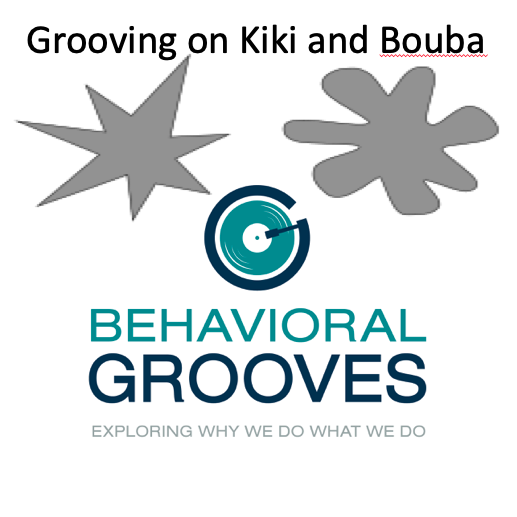
Imagine that the two drawings below are called Kiki and Bouba in some alien language. If you had to guess which one was Kiki and which one was Bouba - without any other information, which one would be Kiki, and which one would be Bouba? If you are like most people, the sharp angular shape (on the left) would be named Kiki while the curvier rounded shape (on the right) would be named Bouba. This effect is called the Bouba/Kiki effect which highlights how we map sounds to visual shapes and was first observed by Wolfgang Kohler in the late 1920s and then refined in the early 2000s by Vilayanure Ramachandran and Edward Hubbard. In experiments, over 95% of respondents selected the curvy shape as Bouba and the jagged one as Kiki. The effect shows that words that have softer, rounded sounds (i.e., oo’s and ah’s) are associated with rounder shapes, while sounds that have more angular, sharp sounds (i.e., k’s and I’s) are associated with more pointed shapes. While this effect focused on speech and visuals, my colleague and co-host of Behavioral Grooves, Tim Houlihan and I have started to use it as a way to describe how we think. Some of us think with a “Kiki” like a brain. Others of us think with a “Bouba” like a brain. While not perfect, it does help in understanding the differences in how our brains process, retain, and regurgitate information. For instance, a “Kiki brain” is precise and sharp and can remember specific names, dates, and titles. While a more “Bouba brain” retains information about the general concepts and impacts but is less precise and more holistic in the combination of ideas and thoughts. So while Tim can typically recall the name of a behavioral science study, the year it was published, and the author(s) (very much a Kiki brain), Kurt can usually only recall the concept that the study explored, how that concept can be applied, and how it interacts with other behavioral science concepts (more of a Bouba brain). Often times during the podcast, my Bouba mind will be at a loss for the name of a study or a particular researcher, however, Tim’s Kiki brain will have those names readily available. On the other side of the coin, Tim will be reciting a specific study and my Bouba brain will instantly go to the nuances of the application of how this works and implications for the people involved. Of course, like most other ways of describing ourselves, this is not an either/or situation. I would argue that we all have aspects of Kiki thinking AND Bouba thinking depending on the topic, situation, and other factors (i.e., how much sleep we had the night before). And no brain is just Kiki or Bouba – we shift between the two on a regular basis. Like personalities, these descriptions are just the tendencies for the way we think. For instance, I’m not always at a loss for remembering a study name or researcher nor do I not understand the subtleties or connections from those studies that I do remember. We fluctuate on a continuum and we often move easily between the thinking styles. In general, my notion is that Kiki brains are more admired. Those are the people that I don’t like getting into debates with, because they will bring in facts and figures and names at lightning speed and I’m just trying to stay up and connect the dots. I need to be on my phone looking up references and facts, while they are seemingly pulling them out of the air. People with KikI brains come across as smarter and more informed – because they can recall these details whereas people with Bouba brains are left talking about the general proposition. Kiki brains are not fumbling to remember people’s names, the exact figure for the organization’s budget or the year that the Challenger exploded. At this point, there is no research that is on this or supports this crazy theory. However, by naming these types of thinking styles, I think we can better interact with each other and contribute to our work. The power of this is in helping us understand how we communicate with others and understanding how we process and remember information. Notes Image: Monochrome version 1 June 2007 by Bendž Vectorized with Inkscape Maurer, Pathman, and Modloch (2006), The shape of Boubas: sound-shape correspondences in toddlers and adults. Developmental Science. Ramachandran, V.S. & Hubbard, E.M. (2001). "Synaesthesia: A window into perception, thought and language" (PDF). Journal of Consciousness Studies. © 2019 Behavioral Grooves

Ep 104Cristina Bicchieri: Social Norms are Bundles of Expectations
Cristina Bicchieri, PhD is the S. J. Patterson Harvie Professor of Social Thought and Comparative Ethics, a Professor of Philosophy and Psychology at the University of Pennsylvania, a Professor of Legal Studies at the Wharton School, the Head of the Behavioral Ethics Lab, the Director of the Philosophy, Politics, and Economics Program, and is the Faculty Director of the Master of Behavioral and Decision Sciences Program at the University of Pennsylvania. She’s one busy woman! We met up with her at the NoBeC (Norms and Behavioral Change) conference that her program sponsored in the Kislak Center at UPenn. Cristina’s program is in its 3rd year and hosts 75 students from 12 different countries. The unique program emphasizes practical applications of behavioral science and cross-disciplinary work. Students come from celebrity restaurants, tech businesses, NGOs, non-profits and global corporations and find the program engaging because of its diversity. If you’re interested, we encourage you to check it out – there are links in the episode notes for how to reach them. We had some recording issues when we were talking to Christina. Some edits were made to accommodate our gaffs and we hope you won’t mind. And, because we recorded it on the sidelines of a conference, you might hear some background noise occasionally. © 2019 Behavioral Grooves Links Cristina Bicchieri, PhD: https://philosophy.sas.upenn.edu/people/cristina-bicchieri The Grammar of Society: https://www.cambridge.org/core/books/grammar-of-society/2B063E9C9621C2340DEFB2BE15B3AEA5 Norms in the Wild: https://ndpr.nd.edu/news/norms-in-the-wild-how-to-diagnose-measure-and-change-social-norms/ Master in a Behavioral Decision Science at UPenn: https://www.sas.upenn.edu/lps/graduate/mbds Decision Theory: https://en.wikipedia.org/wiki/Decision_theory Game Theory: https://en.wikipedia.org/wiki/Game_theory Epistemic Foundations of Game Theory: https://plato.stanford.edu/entries/epistemic-game/ Multiple Equilibria: https://www.encyclopedia.com/social-sciences/applied-and-social-sciences-magazines/multiple-equilibria David Kreps, PhD: https://www.gsb.stanford.edu/faculty-research/faculty/david-m-kreps Social Norms: https://plato.stanford.edu/entries/social-norms/ Conditional Preference: https://www.sas.upenn.edu/~cb36/files/2010_norm.pdf UNICEF: https://www.unicef.org/ Gates Foundation: https://www.gatesfoundation.org/ Reference Network: http://www.iit.comillas.edu/technology-offer/rnm Soap Opera: https://en.wikipedia.org/wiki/Soap_opera Well Told Story: https://www.welltoldstory.com/ Musical Links Giuseppe Verdi: https://www.youtube.com/watch?v=e3UAd3d8I6k Wolfgang Mozart: https://www.biography.com/musician/wolfgang-mozart Bruce Springsteen: https://brucespringsteen.net/ U2: https://www.u2.com/index/home Chicago: https://chicagotheband.com/ The Band: https://www.youtube.com/watch?v=sjCw3-YTffo Styx: https://www.youtube.com/watch?v=5XcKBmdfpWs Journey: https://www.youtube.com/watch?v=qMSFsZFFUzo Fleetwood Mac: https://www.youtube.com/watch?v=kBYHwH1Vb-c Kurt Nelson: [email protected] Tim Houlihan: [email protected]
Ep 102Grooving: 2019 Reading List
Kurt and Tim like to read about behavioral science and a variety of related fields. To help those interested in the subject, but unsure how to pick good books to either get started or advance their learning, our 2019 Top 10 Reading List should help. Our Top 10 list is really a Top 9, since both Kurt and Tim already had one of the books on both of their lists. But we also go beyond that list with some honorable mentions (that could have easily been swapped for some of our top choices), as well as a shortlist of fiction and poetry for your review. We hope you enjoy this year’s list and encourage you to let us know your thoughts about it. Did we nail the top picks? Did we miss some? What’s on your reading list for 2020? Who do you think should be a guest on Behavioral Grooves in 2020? Let us know. We’d love to hear from you. Do you need some Christmas or Birthday gifts? Or maybe you just want to treat yourself? Here are links to the books we mentioned in the episode! Kurt’s Best Non-Fiction Books John Bargh, “Before You Know It" https://amzn.to/33PdYJR Yuval Noah Harari, “Sapiens” https://amzn.to/34YWlZO Michael Mauboussin, “Think Twice” https://amzn.to/2qtfS5y Wendy Wood, “Good Habits, Bad Habits” https://amzn.to/2RlCjoc Tim’s Best Non-Fiction Books Rory Sutherland, “Alchemy” https://amzn.to/2OUfG8J Franz de Waal, “Mama’s Last Hug” https://amzn.to/2ORrEjg Francesca Gino, “Rebel Talent” https://amzn.to/36alEIb Roger Dooley, “Friction” (on Kurt’s AND Tim’s lists) https://amzn.to/2r86Gnx Alan B. Krueger, “Rockonomics” https://amzn.to/38bMQYU Honorable Mentions Honorable mentions for really great books that you should be aware of. Virtually any of these could have made our Top 10 list. Nir Eyal, “Indistractable" https://amzn.to/368qiX8 Daniel Pink, “When” https://amzn.to/33QMrbg https://www.danpink.com/ Daniel Levitin, “The Organized Mind” https://amzn.to/2qnL7Pf http://www.daniellevitin.com Liliana Mason, “Uncivil Agreement” https://amzn.to/2RtIA1j Tali Sharot, “The Influential Mind” https://amzn.to/33S8wpN And since we have had great guests with great books in 2019 (we love them and their work), we want to refer you to these authors and titles: Brian Ahearn, “Influence PEOPLE: Powerful Everyday Opportunities to Persuade that are Lasting and Ethical” https://amzn.to/38bc8q8 Ori Brafman, “The Spider and the Starfish" https://amzn.to/2OUdLAQ Liz Fosslein, “No Hard Feelings” https://amzn.to/2LpVR6S Will Leach, “Marketing to Mindstates” https://amzn.to/34UMwvB https://www.will-leach.com/book Stephen Martin & Joseph Marks, “Messengers” https://amzn.to/2PfKU99 Amit Sood, “Guide to Stress-Free Living” https://marketplace.mayoclinic.com/shop/healthy-lifestyle/book/mayo-clinic-guide-to-stress-free-living_294600 Tim’s Non-Fiction List We didn’t speak to these on the podcast, because we were most interested in addressing behavioral science books. However, Tim is also an avid reader of fiction and poetry. Tim wanted to mention some books he’s read (or re-read) this year that were particularly rewarding. Madeline Miller, “Circe” http://madelinemiller.com/circe/ John Updike, “Rabbit is Rich” https://www.penguinrandomhouse.com/books/181928/rabbit-is-rich-by-john-updike/ David Whyte, “Everything is Waiting for You” https://www.davidwhyte.com/english-poetry Thank you! © 2019 Behavioral Grooves. Note that we may receive commissions when you click our links and make purchases. However, this does not impact our suggestions, thoughts or ideas. All recommendations are made by Kurt and Tim based on what they believe.
Ep 101The 100th Episode Celebration in Philadelphia
This is Behavioral Grooves’ 100th episode! Who would have thought when we started out two years ago without a clue about HOW to produce and publish a podcast that we’d reach this milestone? Our first podcast recording began with a very willing Dr. James Heyman, a computer with some recording software, and a dinky little microphone before a meetup we were doing that night. But the conversation was terrific, and we launched it with excitement. Today, we are more thoughtful, have better equipment, and continue to have great guests. For our 100th Episode, we traveled to Philadelphia to host Annie Duke, Jeff Kreisler and Dr. Michael Hallsworth in front of a live audience at the Pennsylvania Academy of the Fine Arts. A little about each of them… This episode covers decision making in an uncertain world with these three renowned experts. We talk about biases and hacks to deal with those biases. And we dove into the role that context plays in our decision making. After the live event, Kurt and Tim groove on some of the highlights of the discussion. Following that, Tim shares a recap in the Bonus Track portion of the episode. Guests Michael Hallsworth, PhD is the Managing Director of the Behavioural Insights Team in North America, based in Brooklyn, New York. He has also worked on health and taxes in the Cabinet Office of the UK government and has authored behavior change frameworks including MINDSPACE and EAST. Annie Duke is the author of Thinking in Bets: Making Smarter Decisions When You Don’t Have All the Facts, which quickly became a national bestseller. At one point in her career, she was a professional card player, where she won millions in tournament poker. And she is the co-founder of The Alliance for Decision Education, a non-profit whose mission is to improve lives by empowering students through decision skills education. Jeff Kreisler is a Princeton-educated lawyer who became a comedian, then an author, and then a total advocate for behavioral science. With his co-author, Dan Ariely, they wrote Dollars and Sense: How We Misthink Money and How to Spend it Smarter. Sponsors and Recognition It is important to note our sponsors. Podbean, who has been hosting us since the very first episode, supported our endeavor and helped us live stream our event to listeners all over the world. We are very grateful to PeopleScience, an organization that supports the application of behavioral sciences with special emphasis on the world of rewards and recognition. PeopleScience is a terrific resource for job postings and original authorship. And, most importantly, PeopleScience is doing something that we love: they are bringing more science to the world of work. Special thanks go to a few of our peeps, too. Ben Granlund and Raya Parks helped us prepare for and execute the event. Chris Nave and Eugen Dimant at UPenn sent their masters students to the hall after a very long day of lectures. And Trey Altemose managed all of the people and technical issues as our stage manager. Your best friend at any live event is your stage manager and Trey guided us at every turn. © 2019 Behavioral Grooves Links Annie Duke: https://www.annieduke.com/ Jeff Kreisler: http://jeffkreisler.com/ Michael Hallsworth, PhD: https://www.bi.team/people/dr-michael-hallsworth/ PeopleScience: https://peoplescience.maritz.com/ Podbean: https://www.podbean.com/about-us 100-Year-Old Scotch: http://www.oldest.org/food/scotch/ Overconfidence bias: https://en.wikipedia.org/wiki/Overconfidence_effect Imposter Syndrome: https://en.wikipedia.org/wiki/Impostor_syndrome Motivated Reasoning: https://en.wikipedia.org/wiki/Motivated_reasoning Blind Spot Bias (The Bias Bias): https://en.wikipedia.org/wiki/Bias_blind_spot Base Rates: https://onlinelibrary.wiley.com/doi/abs/10.1002/9780470479216.corpsy0109 Illusion of Control: https://en.wikipedia.org/wiki/Illusion_of_control Human Operating Systems: https://www.youtube.com/watch?v=40QCCMVZDO8 Choice Architecture: https://en.wikipedia.org/wiki/Choice_architecture Tribalism: https://en.wikipedia.org/wiki/Tribalism Paternalism: https://en.wikipedia.org/wiki/Paternalism Backfire Effect: https://rationalwiki.org/wiki/Backfire_effect Jay Van Bavel: http://as.nyu.edu/content/nyu-as/as/faculty/jay-van-bavel.html Chris Nave, PhD: https://www.sas.upenn.edu/lps/graduate/mbds/contact/christopher-nave Eugen Dimant, PhD: https://www.sas.upenn.edu/lps/graduate/mbds/faculty/eugen-dimant Cristina Bicchieri, PhD: https://en.wikipedia.org/wiki/Cristina_Bicchieri Jim Guszcza, PhD: https://www2.deloitte.com/us/en/profiles/jguszcza.html Alex Blau: https://www.linkedin.com/in/alexander-blau-2271788/ Alex Imas, PhD: https://www.cmu.edu/dietrich/sds/people/faculty/alex-imas.html Koen Smets: https://www.linkedin.com/in/koensmets/ Motown Records: https://en.wikipedia.org/wiki/Motown Soul Train: https://en.wikipedia.org/wiki/Soul_Train Musical Links: The Five Stairsteps, “Ooh, Child, Things Are Gonna Get Easier”: https://www.youtube.com/watch?v=_DHR

S1 Ep 100Katy Milkman: Behavior Change for Good
Katy Milkman is no ordinary behavioral scientist. She’s a Professor of Operations, Information and Decisions at Wharton and has a secondary faculty appointment in the University of Pennsylvania’s Medical School in the Department of Medical Ethics and Health Policy. She’s Co-Director, with Angela Duckworth, at the non-profit Behavior Change for Good Initiative. She’s the host of one of our favorite podcasts, called Choiceology, she is in the middle of writing a book, and she’s a Mom and Partner all at the same time. We are grateful to her for taking time to record a conversation with us about her work on temptation bundling, the sorts of projects she’s getting at the Behavior Change for Good organization, and a few tidbits about what her book, coming out in 2021, will have in store for the readers. Most importantly, Katy shared three important pieces of wisdom about behavior change during our conversation: Behavior change is hard – cut yourself some slack. We humans are not built to do the right thing all the time. Just keep trying. Stay tuned for our BONUS TRACK at the end where we review key takeaways and offer up a Groove idea for the week! NOTE: This podcast was recorded before Katy Milkman became a podcast phenom of her own and the audio quality in this episode, to put it diplomatically, lacks sparkle. However, we talked to Katy again in episode 232 and we think you’ll the conversation and audio much better there: Katy Milkman: How to Make Healthy Habits that Actually Last: https://behavioralgrooves.com/episode/katy-milkman-habits-that-last/ (C) 2019 Behavioral Grooves Links Katy Milkman, PhD: http://www.katherinemilkman.com/ Katy Milkman – Twitter: @katy_milkman Behavior Change for Good: https://bcfg.wharton.upenn.edu/ Choiceology podcast: https://www.schwab.com/resource-center/insights/podcast Temptation Bundling: https://mayooshin.com/temptation-bundling/ Fresh Start Effect: https://faculty.wharton.upenn.edu/wp-content/uploads/2014/06/Dai_Fresh_Start_2014_Mgmt_Sci.pdf Charles Duhigg: https://charlesduhigg.com/ BJ Fogg Maui Habit: https://www.youtube.com/watch?v=2L1R7OtJhWs Robert Cialdini, PhD: https://www.robertcialdinibf.com/ Francesca Gino, PhD: https://francescagino.com/ Angela Duckworth, PhD: https://angeladuckworth.com/ Kurt Nelson: [email protected] Tim Houlihan: [email protected] Musical Links Michael Jackson: https://en.wikipedia.org/wiki/Michael_Jackson Taylor Swift: https://en.wikipedia.org/wiki/Taylor_Swift

Ep 99Chris Nave: Educating BeSci Practitioners at UPenn
Chris Nave, PhD is the Associate Director of the Master of Behavioral and Decision Sciences Program at the University of Pennsylvania. We caught up with Chris at the NoBeC conference (Norms and Behavioral Change Conference) at UPenn. NoBeC brought together some of the brightest researchers in the field and we got to attend! The Master of Behavioral and Decision Sciences program is in its 3rd year with 75 students from 12 countries. The students come from jobs in restaurants, fire stations, small businesses, and global corporations and they intend to leave UPenn with an understanding of what it means to be a behavioral scientist, but not actually BE one. We met Chris through our friend, Jeff Kreisler, and we instantly connected as members of the same tribe. But it was even cooler when Chris invited us to attend the conference and to record conversations with some of the researchers. This episode is the cornerstone of the series we recorded at the University of Pennsylvania and we are excited to share an over of the master’s program from Chris Nave. Links Chris Nave: [email protected] UPenn Masters of Behavioral Change Program: https://www.sas.upenn.edu/lps/graduate/mbds/contact Piyush Tantia: https://www.linkedin.com/in/piyush-tantia-4727b74/ Musical Links Baby Shark: https://www.youtube.com/watch?v=KrplOhMSoDU The Cure: https://www.youtube.com/watch?v=hXCKLJGLENs Red Hot Chili Peppers “Dark Necessity”: https://www.youtube.com/watch?v=fWioV5tO1lk Miley Cyrus “Party in the USA”: https://www.youtube.com/watch?v=M11SvDtPBhA AFI: https://www.youtube.com/watch?v=1Yzu-4kJg6g Vivaldi “Four Seasons”: https://www.youtube.com/watch?v=YnDLlajMxyo

Ep 98Chris Brown: Avalanches and System 1 Thinking
Chris Brown is in human risk management and practice is set in backcountry snow. He grew up outside of Philadelphia and after graduating with a degree in Urban Design/Architecture, he moved to Utah to pursue certification with the AMGA (American Mountain Guides Association) in avalanche training. Chris works as a ski guide and avalanche/snow science professional, but his real job is helping skiers overcome their biases. He incorporates the work of Kahneman and Tversky, Richard Thaler and other great researchers into his classes and we found his intentionality in decision making noteworthy. We had a great conversation with Chris and we also want to express our gratitude to friend and colleague, Ben Granlund, for connecting us with Chris. Ben attended one of Chris’ classes and found it so engaging that he referred us to Chris. Ben was also delighted that Chris relies heavily on behavioral science and reminds us that the biggest threat to your life in avalanche country is your own decision making. After our recording stopped, we discussed Guide Services for training. If you are interested, check out AMGA (amga.com) and the American Avalanche Association: https://www.americanavalancheassociation.org/ Links Chris Brown Email: [email protected] Chris Brown Instagram: https://www.instagram.com/cbskiclimb/ Ian McCammon: https://www.youtube.com/watch?v=xKeoF53syKw Phil Tetlock “Super Forecasters”: https://www.youtube.com/watch?v=rV5Gicb66WA Familiarity Bias: https://en.wikipedia.org/wiki/Familiarity_heuristic Expert Halo: https://en.wikipedia.org/wiki/Halo_effect System 1 / System 2: https://en.wikipedia.org/wiki/Thinking,_Fast_and_Slow Premortem: https://en.wikipedia.org/wiki/Pre-mortem Bruce Tremper: https://backcountrymagazine.com/stories/video-avalanche-expert-bruce-tremper-risk/ Bayesian Decision Making: https://wiki.lesswrong.com/wiki/Bayesian_decision_theory First Tracks: https://www.boston.com/culture/ski-guru/2012/01/31/its_all_about_f Laurence Gonzales “Deep Survival”: https://www.youtube.com/watch?v=QTyfvOrEm1w Wicked Learning Environments: https://pdfs.semanticscholar.org/5c5d/33b858eaf38f6a14b3f042202f1f44e04326.pdf Daniel Kahneman: https://en.wikipedia.org/wiki/Daniel_Kahneman The Tao of Wu: https://en.wikipedia.org/wiki/The_Tao_of_Wu Kurt Nelson: @motivationguru Tim Houlihan: @THoulihan Musical Links Hip Hop: https://en.wikipedia.org/wiki/Hip_hop Reggae: https://en.wikipedia.org/wiki/Reggae Classical Music: https://en.wikipedia.org/wiki/Classical_music Death Metal: https://en.wikipedia.org/wiki/Death_metal Steel Pulse: https://steelpulse.com/ Wu Tang Clan: https://www.youtube.com/watch?v=PBwAxmrE194 MadLib: https://www.stonesthrow.com/madlib Gang Starr: https://www.rollingstone.com/music/music-news/gang-starr-guru-bad-name-video-909996/ John Coltrane: https://www.youtube.com/watch?v=EH3mb3oXCpw Marcus Miller: https://www.youtube.com/watch?v=1kCi-SsYD5s Stanley Clarke: https://www.youtube.com/watch?v=mcuigwtdzS4 Bela Fleck: https://www.youtube.com/watch?v=WWIfFIEeZjw Victor Wooten: https://www.youtube.com/watch?v=EzL4BkqmzDQ Herbie Hancock: https://www.youtube.com/watch?v=GHhD4PD75zY

Ep 97Zarak Khan and Erik Johnson: Action Design Network and Beyond
Sometimes things just go better in twos and that was the case regarding our guests for this episode. Zarak Kahn is the Behavioral Innovation Director at Maritz and Erik Johnson is an independent Behavioral Science Consultant. They are the co-hosts of Action Design Radio and board members at Action Design Network. Kurt and Tim have known them as coaches and colleagues and wanted to talk to them about all of that. We discussed how the application of behavioral science continues to grow in both the corporate and policy words. Today, there are more jobs, more workshops, more bachelor's programs, more masters programs, more PhD programs, more meetups and more bootcamps than ever before. We expressed our collective desires to make behavioral science so easy to do it will be ingrained into every job from UX to Marketing to HR, and how we’d like to see people applying a behavioral lens in all of their decision-making. In our grooving session, Kurt and Tim emphasized the importance of expanding the community of people applying behavioral science and we are grateful to share the mantle with very bright and fine folk like Erik and Zarak. Links Erik Johnson Twitter: https://twitter.com/erikleejohnson Erik Johnson LinkedIn: https://www.linkedin.com/in/erikleejohnson/ Erik Johnson Website: erikj.net Zarak Kahn LinkedIn: https://www.linkedin.com/in/khanzarak/ Action Design Network: http://www.action-design.org/ Action Design Radio (podcast): https://actiondesignradio.libsyn.com/ Robert Cialdini: https://en.wikipedia.org/wiki/Robert_Cialdini Dan Kahneman: https://en.wikipedia.org/wiki/Daniel_Kahneman Richard Thaler: https://en.wikipedia.org/wiki/Richard_Thaler Cass Sunstein: https://en.wikipedia.org/wiki/Cass_Sunstein Musical Links Idles: https://www.youtube.com/watch?v=BuQG6_evFc8 Local Natives: https://en.wikipedia.org/wiki/Local_Natives Lana Del Rey: https://lanadelrey.com/ Carley Rae Jepson: https://www.youtube.com/watch?v=fWNaR-rxAic Wye Oak “The Louder I Call the Faster it Runs”: https://www.youtube.com/watch?v=kO7ffikJOE4 Sylvan Esso: http://www.sylvanesso.com/ Johnny Flynn: https://en.wikipedia.org/wiki/Johnny_Flynn_%26_The_Sussex_Wit Sharon Van Etten: https://www.youtube.com/watch?v=j7sTHoeH0eA Gillian Welch: https://www.youtube.com/watch?v=sJ_nWPxrzmE M Ward: https://mwardmusic.com/ The National: https://www.youtube.com/watch?v=yIWmRbHDhGw

Ep 96Victoria Shaffer: End of Life Decision Tools
Victoria Shaffer is a researcher and professor at the University of Missouri. Victoria focuses on applying decision psychology and behavioral economics to medical decision making. In particular, she is researching judgment and decision making and how they impact the design of patient decision support tools. Tim and Victoria met working on a field research project with Dan Ariely, PhD because of her work on non-monetary rewards with Scott Jeffrey, PhD. She was pushing back on common sense preferences, such as money is the best motivator, just as she is today with her work in the medical field. Our conversation with Victoria began on familiar ground: the preference for cash as a reward and how it’s actually less effective than non-monetary rewards in incentive schemes. But we soon turned to the very personal journey of how she and her mother dealt with decisions surrounding her father’s diagnosis with cancer. Her personal journey became the foundation for important research to help patients, their loved ones and the caregivers communicate more effectively through stories. It’s a fascinating discussion and we hope you enjoy it. Links Victoria Shaffer: https://psychology.missouri.edu/people/shaffer Shelly Taylor on Biases and Mental Health: http://humancond.org/_media/papers/taylor_brown_88_illusion_and_well_being.pdf Hal Arkes: https://psychology.osu.edu/people/arkes.1 Decision Support Tools: https://www.healthit.gov/topic/safety/clinical-decision-support “Being Mortal” by Atul Gawande: http://atulgawande.com/book/being-mortal/ MD Anderson Cancer Center: https://www.mdanderson.org/ Advance Directives: https://www.nia.nih.gov/health/advance-care-planning-healthcare-directives Palliative Care: https://getpalliativecare.org/whatis/ Peter Ubel – Duke: https://www.fuqua.duke.edu/faculty/peter-ubel Affective Forecasting Errors: https://en.wikipedia.org/wiki/Affective_forecasting Columbia Records: https://en.wikipedia.org/wiki/Columbia_Records Dan Gilbert: https://en.wikipedia.org/wiki/Daniel_Gilbert_(psychologist) Kurt Nelson, PhD: https://www.linkedin.com/in/kurtwnelson/ Tim Houlihan: https://www.linkedin.com/in/tim-houlihan-b-e/ Music Van Halen: https://www.youtube.com/watch?v=9X6e7uctAww Black Sabbath: https://www.youtube.com/watch?v=5s7_WbiR79E Ozzy Osbourne: https://www.youtube.com/watch?v=wtHEN518VCM Styx: https://www.youtube.com/watch?v=5XcKBmdfpWs Depeche Mode: https://www.youtube.com/watch?v=diT3FvDHMyo The Cure: https://www.youtube.com/watch?v=hXCKLJGLENs Crosby, Stills, Nash & Young: https://www.youtube.com/watch?v=UQ9NaqjeDGU James Taylor: https://www.youtube.com/watch?v=sWGK_fWKb4U
Ep 95Grooving: UPenn Norms and Behavioral Change Workshop
Kurt and Tim were invited to attend the Norms and Behavioral Change (NoBeC) workshop at the University of Pennsylvania on October 17 and 18, 2019, and what we experienced blew us away. We were impressed with a terrific diversity of academic fields studying social norms, the great work they are doing, and the generosity of the community (at UPenn as well as the behavioral science researchers from around the world). This gathering was very different from industry assemblies we’ve attended, which in and of itself was not a surprise. However, there were three noteworthy differences. First, the lineup of speakers was heavily weighted toward researchers with findings on projects involving social norms. Second, academic audience members held speakers accountable for rigorous processes and the descriptions of their results. Lastly, the Q&A at the end of each presentation was filled with animated questions from economists, behavioral economists, sociologists, political scientists, philosophers, strategists, law professors, and of course, psychologists. The cross-disciplinary aspect of this group reinforced the need for more diverse thinking in the business world. We came away with a greater appreciation of the role that social norms play in our behaviors and decision making as well as the tremendous research that’s being conducted on related topics. We will be publishing our series of interviews with researchers from the workshop in the coming weeks, and we hope you enjoy them as much as we did. Links University of Pennsylvania Master of Behavioral and Decision Sciences: https://www.sas.upenn.edu/lps/graduate/mbds

Ep 94Paul Hebert: 7 Deadly Incentive Sins
Paul Hebert knows incentives. He is the Vice President of Individual Performance Strategy at Creative Group, Inc. and a writer, speaker and consultant and is widely considered an expert on motivation and incentives focused on influencing behaviors that drive business results. Paul has been interviewed by the BBC and USA TODAY because of his work applying solid psychological theory to sales motivation. Paul, Kurt and Tim recently co-authored an eBook called “The 7 Deadly Sins to Avoid in Your Next Sales Incentive.” The purpose was to help sales managers who are struggling to maximize their effort and results when they use sales incentives. In the podcast, we recap the most common sins committed by sales managers and discuss ways of avoiding them. Spread goals evenly Give a huge prize to the top performer Must be above quota to earn We’ll figure it out behind the scenes Under-quota performers can’t be winners It’s all about the Benjamins We hope you enjoy the discussion and recommend you download the eBook for reference. Links Paul Hebert: https://www.linkedin.com/in/paulhebert/ 7 Deadly Sins Ebook: https://hubs.ly/H0kR8g60 Paul Hebert’s Blog: http://wphebert.com Fistful of Talent Blog: http://fistfuloftalent.com/author/paulhebert Elliot Aronson, PhD: https://en.wikipedia.org/wiki/Elliot_Aronson Zeno of Citium: https://en.wikipedia.org/wiki/Zeno_of_Citium Steenburgh and Ahearne “Motivating Salespeople”: https://hbr.org/2012/07/motivating-salespeople-what-really-works Ariely and Heyman “A Tale of Two Markets”: https://journals.sagepub.com/doi/abs/10.1111/j.0956-7976.2004.00757.x?journalCode=pssa Jeffrey and Shaffer “The Effects of Tangible Rewards”: https://theirf.org/research/the-effects-of-tangible-rewards-versus-cash-rewards-in-a-sales-tournament-a-field-experiment/1638/ The guy who traded a paper clip for a house: https://en.wikipedia.org/wiki/One_red_paperclip The Price is Right: https://en.wikipedia.org/wiki/The_Price_Is_Right Estonia: https://en.wikipedia.org/wiki/Estonia Musical Links “Eve of Destruction” by Barry McGuire: https://www.youtube.com/watch?v=qfZVu0alU0I “Timothy” by The Bouys: https://www.youtube.com/watch?v=DGNdvKvbxYQ “DOA” by Bloodrock: https://www.youtube.com/watch?v=6WQptxygSM8 First Avenue: https://first-avenue.com/ Trip Shakespeare: https://www.youtube.com/watch?v=7PvyrRupOf0 Trip Shakespeare “The Slacks” https://www.youtube.com/watch?v=wkOepnPJS3o Dan Wilson: https://en.wikipedia.org/wiki/Dan_Wilson_(musician) Tragically Hip: https://www.youtube.com/watch?v=XN25TcN--I8 Morphine: https://en.wikipedia.org/wiki/Morphine_(band) Lucius: https://www.youtube.com/watch?v=4QSF8bgqgC4 Semisonic: https://www.youtube.com/watch?v=xGytDsqkQY8 Trampled by Turtles: https://www.youtube.com/watch?v=PcoPedyXJVc And the Professors: https://www.youtube.com/watch?v=0kxiVQI3XeA The Mighty Pines: https://www.youtube.com/watch?v=yHrR8LhTKfo Ewert & the 2 Dragons: https://www.youtube.com/watch?v=ddCsOTWz7gI
Ep 93Grooving: On Goals
Goals are often misunderstood. Goals are much more than just objectives that are handed down to subordinates. Rather, goals are self-determined in the best cases, and at the very least, are set collaboratively to get the most out of them. We discuss Goal Setting Theory (GST), results from research that Tim conducted, and we address the three key elements that must be included to maximize the effect of the goals: 1. The goals must be perceived as achievable. Without perceived achievability, the goal is not accepted and, therefore, not a goal. 2. There must be some involvement with those who are executing the goals. If the goal is handed down from on high without meaningful participation from the person who’s going to act on it, it’s not a goal. 3. There must be a positive relationship between the goal and the reward (including a perceived assessment of risk). As the risk of achievability increases, so must the perceived value of the reward. This short grooving session also delves into some myths and how to deal with them. Ultimately, we want listeners to come away with a clear understanding of the powerful results than can be obtained with practical and effective use of self-selected goals. Links Zig Ziglar: https://en.wikipedia.org/wiki/Zig_Ziglar Goal-Setting Theory: https://en.wikipedia.org/wiki/Goal_setting Edward Locke: https://peakon.com/us/blog/future-work/edwin-locke-goal-setting-theory/ Gary Latham: http://www.rotman.utoronto.ca/FacultyAndResearch/Faculty/FacultyBios/Latham Howard Klein: https://fisher.osu.edu/people/klein.12 Ran Kivetz: https://www8.gsb.columbia.edu/cbs-directory/detail/rk566 George Loewenstein: https://www.cmu.edu/dietrich/sds/people/faculty/george-loewenstein.html Saurabh Bhargava: https://www.cmu.edu/dietrich/sds/people/faculty/saurabh-bhargava.html Raghuram Bommaraju: https://www.isb.edu/faculty-research/faculty/directory/bommaraju-raghuram Raghuram Bommaraju & Sebastian Hohenberg on self-selected goals: https://journals.sagepub.com/doi/abs/10.1509/jm.17.0002 Kurt Nelson, PhD: [email protected] Tim Houlihan: [email protected]

Ep 92Brad Shuck: Being Ignored is Worse Than Having a Stapler Thrown at You
Brad Shuck, PhD is an Associate Professor in the Department of Educational Leadership, Evaluation, and Organizational Development at the University of Louisville. He is also recognized as one of the world’s most knowledgeable experts on employee engagement and is a sought-after speaker from around the world. Brad’s work is recognized as some of the most influential research in the field of employee engagement and his insights are invaluable. On top of that, Brad is a drummer, a lover of all sorts of music and our discussion traversed topics from the social determinants of health to having parents that were patient enough to allow him to learn drums as a child. In our grooving session, Kurt and Tim dive deeper into creating a work culture of meaning and we ask the musical question: how does moving from town to town as a child impact your musical tastes? And don’t forget to join us for our 100th Episode Celebration on October 17, 2019 in Philadelphia! Eventbrite link: https://www.eventbrite.com/e/behavioral-grooves-100th-episode-event-tickets-73159537145 Links Brad Shuck email: [email protected] Brad Shuck web page: www.drbshuck.com Brad Shuck Google Connection: @drbshuck Teresa Amabile: https://www.hbs.edu/faculty/Pages/profile.aspx?facId=6409 Brad’s Research Shuck, B., Alagaraja, M., Immekus, J., Honeycutt, M., & Cumberland, D. (2019). Does compassion matter for leadership: a two-stage sequential equal status mixed method exploratory study of compassionate leader behavior and connections to performance in human resource development. Human Resource Development Quarterly, X, XX-XX. doi: 10.1002/hrdq.21369 Shuck, B., Peyton-Roberts, T., Zigarmi, D. (2018). Employee perceptions of the work environment, motivational outlooks, and employee work intentions: An HR practitioner’s dream or nightmare? Advances in Developing Human Resources, 20, 197-213. doi: 10.1177/1523422318757209 Shuck, B., #Osam, K., Zigarmi, D., & Nimon, K. (2017). Definitional and conceptual muddling: Identifying the positionality of employee engagement and defining the construct. Human Resource Development Review, 16, 263-293. doi: 0.1177/1534484317720622 Shuck, B., Nimon, K., & Zigarmi, D. (2017). Untangling the predictive nomological validity of employee engagement: Decomposing variance in employee engagement using job attitude measures. Group and Organizational Management. 42, 79-112. doi: 10.1177/1059601116642364 Shuck, B., Alagaraja, M., Rose, K., Owen, J., #Osam, K., & Bergman, M. (2017). The health-related upside of employee engagement: Exploratory evidence and implications for theory and practice. Performance Improvement Quarterly, 30, 165-178. doi: 10.1002/piq.21246 Shuck, B., Adelson, J., & Reio, T. (2017). The employee engagement scale: Initial evidence for construct validity and implications for theory and practice. Human Resource Management, 56, 953-977. doi: 10.1002/hrm.21811 Rose, K., Shuck, B., #Twyford, D., & Bergman, M. (2015). Skunked: An integrative review exploring the consequences of dysfunctional leaders and implications for the employees who work for them. Human Resource Development Review, 14, 64-90. doi: 10.1177/1534484314552437 Musical Links Folk Music: https://en.wikipedia.org/wiki/Folk_music A Lion Named Roar: http://www.alionnamedroar.com/ Mumford & Sons: https://www.mumfordandsons.com/ For King and Country: https://en.wikipedia.org/wiki/For_King_%26_Country_(band) John Coltrane: https://www.youtube.com/watch?v=EH3mb3oXCpw Rodd Stewart: https://www.rodstewart.com/ Kenny G: https://en.wikipedia.org/wiki/Kenny_G

Ep 91Jim Guszcza: Data Science AND Behavioral Science, New Wine in a New Bottle
Jim Guszcza is the chief data scientist at Deloitte Analytics. His title paints a picture that he’s a total numbers geek. And that would be a fair, but single-dimensional assessment. What it doesn’t speak to is Jim’s passion for behavioral science and, more importantly, the collaboration of data science and behavioral science. He makes a case for the application of behavioral science simply with this analogy: if we need help to see, we get eyeglasses. In so doing, we are using science and technology to help correct our faulty vision. But when it comes to correcting for our biases, we don’t turn to science and technology and that might improve our decision making. But we could. That’s where the collaboration between data science (or Big Data) and behavioral science come together: applying science and technology to decision making. And THAT was fascinating. In our discussion about music, we talked about Jim’s equal interest in a Dvorak string quartet as much as he is the in the soundtrack to “Wonder Boys” or a great jazz piano performance. He shared he has a penchant for small venues and small bands. He then shared some tips about how to apply behavioral science to your job and your life. He focused on reading books and listening to podcasts as ways to become more educated on the topic and to help you apply behavioral science principles. NOTE: Behavioral Grooves is celebrating our 100th episode in Philadelphia, Pennsylvania on October 17, 2019 with authors Annie Duke and Jeff Kreisler. Our sponsors for the event include PeopleScience and Podbean and we want to thank them for helping us make this possible. If you’re unable to join us in person, we’ll be live streaming the event and we hope you’ll log in there! Links Jim Guszcza: https://www2.deloitte.com/us/en/profiles/jguszcza.html “Moneyball” Michael Lewis: https://www.goodreads.com/book/show/1301.Moneyball “Clinical Versus Statistical Prediction” Paul Miele: https://psycnet.apa.org/record/2006-21565-000 Richard Thaler: https://en.wikipedia.org/wiki/Richard_Thaler Cass Sunstein: https://en.wikipedia.org/wiki/Cass_Sunstein Daniel Kahneman: https://en.wikipedia.org/wiki/Daniel_Kahneman Imposter syndrome: https://en.wikipedia.org/wiki/Impostor_syndrome Bounded Rationality: https://en.wikipedia.org/wiki/Bounded_rationality Bounded Self-Control: https://www.economicsonline.co.uk/Behavioural_economics/Bounded_rationality_and_self_control.html Craig Fox, UCLA: https://www.anderson.ucla.edu/faculty-and-research/management-and-organizations/faculty/fox Intention Action Gap: https://www.tutor2u.net/economics/reference/behavioural-economics-the-intention-action-gap Mike Green, Deloitte: https://www2.deloitte.com/us/en/insights/authors/g/michael-greene.html Cathy Neil: https://en.wikipedia.org/wiki/Weapons_of_Math_Destruction Robert Cialdini, ASU: https://en.wikipedia.org/wiki/Robert_Cialdini “The Design of Everyday Things” Don Norman: https://www.goodreads.com/book/show/840.The_Design_of_Everyday_Things Tom Malone, MIT: https://cci.mit.edu/malone/ “Rockonomics” Alan Krueger: https://www.penguinrandomhouse.com/books/564519/rockonomics-by-alan-b-krueger/ “The Age of Surveillance Capitalism” Shoshana Zuboff: https://www.goodreads.com/book/show/26195941-the-age-of-surveillance-capitalism “Deep Medicine” Eric Topol: https://www.basicbooks.com/titles/eric-topol/deep-medicine/9781541644649/ Stanford Human Centered AI: https://hai.stanford.edu/ Carnegie Mellon Social & Decision Sciences: https://www.cmu.edu/dietrich/sds/ Behavioral Scientist Ethical Checklist: https://behavioralscientist.org/behavioral-scientists-ethics-checklist/ “Quiet” Susan Cain: https://www.quietrev.com/ “Thinking in Bets” Annie Duke: https://www.annieduke.com/ Herbert Simon: https://en.wikipedia.org/wiki/Herbert_A._Simon Kurt Nelson: @motivationguru Tim Houlihan: @thoulihan 100th Episode Event at Meetup: https://www.meetup.com/Philadelphia-Behavioral-Science-Meetup-Group/events/264495763/ 100th Episode Event at Eventbrite: https://www.eventbrite.com/e/behavioral-grooves-100th-episode-event-tickets-73159537145 Behavioral Grooves: www.behavioralgrooves.com PeopleScience: https://peoplescience.maritz.com/ Podbean: https://www.podbean.com Musical Links Bob Dylan: https://en.wikipedia.org/wiki/Bob_Dylan Van Morrison: https://en.wikipedia.org/wiki/Van_Morrison Leonard Cohen: https://en.wikipedia.org/wiki/Leonard_Cohen David MacDonald: https://www.msmnyc.edu/faculty/david-macdonald/ Arthur Schoenberg: https://en.wikipedia.org/wiki/Arnold_Schoenberg Wigmore Hall: https://wigmore-hall.org.uk/ Dvorak String Quartet: https://www.youtube.com/watch?v=DxtAHpYIXdU Schumann String Quartet: https://www.youtube.com/watch?v=iO4UhZuw7gQ Vijay Iyer: https://en.wikipedia.org/wiki/Vijay_Iyer Wonder Boys: https://www.discogs.com/Various-Wonder-Boys-Music-From-The-Motion-Picture/master/341271 Angus & Julia Stone: https://www.youtube.com/watch?v=bHdPyp8onSI Flora Cash: https://www.youtube.com/watch?v=AzjMmwki1Fs Echo and the Bunn

Ep 90Gina Merchant: Combating Misinformation
Gina Merchant, PhD is a behavioral scientist who wound her way through academia and into the corporate world for the purpose of improving the health of communities, not just individuals. Her work examines how online and offline social networks influence our health behaviors and healthcare decision-making. Gina shared her insights through research she’s been conducting with promotores, the women who govern how information flows through Hispanic communities in Southern California. The research explores how the work these women do impacts the health and wellbeing of their communities. Our discussion also included Gina’s thoughts on misinformation, especially with respect to the myths that people have come to believe about vaccinations. This topic came to light as a source of passion in her work. We also talked about the role that a behavioral scientist can play in a corporate setting. She shared how business leaders can experience positive results by including a behavioral scientist in communication and design discussions. We also want to remind everyone that we’re celebrating our 100th episode in Philadelphia. It’s an evening event and it will be live streamed. If you’re interested in attending or listening live, check out the Behavioral Grooves website at www.behavioralgrooves.com. Links Gina Merchant: https://www.linkedin.com/in/gina-merchant-phd-2279b6140/ Truthful Illusion Effect: https://en.wikipedia.org/wiki/Illusory_truth_effect ANOVA Framework: https://en.wikipedia.org/wiki/Analysis_of_variance “Willful Blindness,” by Margaret Heffernan: http://www.mheffernan.com/book-wb-summary.php?location=US Inoculation Theory: https://en.wikipedia.org/wiki/Inoculation_theory Confidence Project, by Heidi Larson: https://www.vaccineconfidence.org/ The Filter Bubble: http://www.lse.ac.uk/assets/richmedia/channels/publicLecturesAndEvents/slides/20110620_1830_theFilterBubble_sl.pdf The Looking Glass Self: https://lesley.edu/article/perception-is-reality-the-looking-glass-self Kate Starbird: https://www.hcde.washington.edu/starbird Promotores: http://www.visionycompromiso.org/wordpress/about-us/the-promotor-model/ Topanga Canyon: https://en.wikipedia.org/wiki/Topanga,_California Kurt Nelson: @motivationguru Tim Houlihan: @THoulihan Check out the Behavioral Grooves website: https://behavioralgrooves.com/ Music DMX: https://en.wikipedia.org/wiki/DMX_(rapper) Tupac: https://en.wikipedia.org/wiki/Tupac_Shakur Lil’ Kim: https://en.wikipedia.org/wiki/Lil%27_Kim Biggie Smalls: https://en.wikipedia.org/wiki/The_Notorious_B.I.G. Jack Johnson: https://en.wikipedia.org/wiki/Jack_Johnson_(musician) Tribe Called Quest: https://en.wikipedia.org/wiki/A_Tribe_Called_Quest Ben Harper: https://en.wikipedia.org/wiki/Ben_Harper Ivan Schultz, “Firetruck,”: https://www.youtube.com/watch?v=spk7gOIExjI&hl=fr&gl=SN Swan Lake, by Pytor Illyich Tchaikovsky: https://en.wikipedia.org/wiki/Swan_Lake Nova Mob: https://en.wikipedia.org/wiki/Nova_Mob_(album)
Ep 89Annie Duke: Revisiting the Matrix
We are re-sharing our original September 2018 discussion with Annie Duke to announce the Behavioral Grooves 100th Episode on the evening of October 17, 2019 in the Historic Hamilton Auditorium at the Pennsylvania Academy for Performing Arts. It's a live event and we invite you to join us to hear Annie, Lila Gleitman and other guests discuss the application of behavioral sciences. Seating is very limited for this intimate engagement and we hope to see you there! Links below... . . . Annie Duke’s latest book, Thinking in Bets, Making Smarter Decisions When You Don’t Have All the Facts, is a masterful mash-up of her life as a researcher, poker player and charitable organization founder. In it, she explores new ideas on how to make better decisions. Our interview with her expanded beyond the book and we talked extensively about probabilistic thinking and having people hold us accountable for our decision making. As expected, our interview covered an eclectic mix of behavioral biases, sociology, language development and, of without fail, music. We used the movie The Matrix and the blue pill/red pill metaphor for looking at the world as accurate vs. inaccurate, rather than right or wrong. We discussed how tribes can offer us distinctiveness and belongingness but also confine us with the tribe’s sometimes negative influences. We also examined learning pods and how they can be used to keep our decisions more in line with reality. If you like this episode, please forward it on to a friend or colleague and help Kurt win his bet with Tim for who pays the donation to How I Decide. You can find more information on or donate to this wonderful non-profit at www.howidecide.org. Links Anna Dreber: http://www.sverigesungaakademi.se/en-GB/755.html Phil Tetlock: https://en.wikipedia.org/wiki/Philip_E._Tetlock Jonathan Haidt:https://en.wikipedia.org/wiki/Jonathan_Haidt Lila Gleitman:https://en.wikipedia.org/wiki/Lila_R._Gleitman Syntactic Bootstrapping: https://en.wikipedia.org/wiki/Syntactic_bootstrapping Jack White: https://en.wikipedia.org/wiki/Jack_White Willie Nelson: https://en.wikipedia.org/wiki/Willie_Nelson Jonathan Richman: https://en.wikipedia.org/wiki/Jonathan_Richman Prince: https://en.wikipedia.org/wiki/Prince_(musician) Alex Chilton: https://en.wikipedia.org/wiki/Alex_Chilton Violent Femmes: https://en.wikipedia.org/wiki/Violent_Femmes Kurt Nelson: [email protected] Tim Houlihan: [email protected] Behavioral Grooves 100th Episode Meetup: https://www.meetup.com/Philadelphia-Behavioral-Science-Meetup-Group/events/264495763/
Ep 88Announcements: Minneapolis and Philadelphia Events
Groovers, a couple of announcements for you: 1. Kurt and I are hosting a meetup immediately after Customer Focus North in Minneapolis on September 19, 2019: https://www.customerfn.com/. Rodd Wagner will be speaking! Make sure you use this code to get 10% Off your registration to Customer Focus North: BEHAVIORAL 2. We're celebrating our 100th Episode and want you to join us in Philadelphia at the live event. Annie Duke will be onstage for our discussion! The link for the 100th Episode Meetup in Philadelphia on October 17, 2019: https://www.meetup.com/Philadelphia-Behavioral-Science-Meetup-Group/

Ep 87Christian Hunt: Mitigating Human Risk and The Algorithmic Mind
EChristian Hunt is the founder of Human Risk, a Behavioral Science Consulting and Training firm specializing in the fields of Risk, Compliance, Conduct & Culture. Before this, he was the head of Behavioral Science at UBS and before that, Chief Operating Officer of the Prudential Regulation Authority, a subsidiary of the Bank of England responsible for regulating Financial Services. Christian shared his 5 principles of human risk – myths that humans cling to that don’t help us do what we ought to be doing. They are all founded on the notion that very few people are doing things they shouldn’t be doing – and yet most of the rules in corporate culture are created to prevent, rather than uplift. And Christian’s biggest beef is that many, many people are NOT doing the things they SHOULD be doing – again, in part because of context and culture. We encountered some internet gremlins that mucked up the portion of our discussion with Christian that was about music. Regrettably, we are unable to bring you Christian’s Top 10 Behavioral Science Hits but we promise to return to it in the future. In our grooving session, we discuss the implications of the mental algorithms and what we can do about them. We hope you enjoy our conversation with Christian Hunt. Links Christian Hunt: https://www.linkedin.com/in/humanrisk/ Human Risk: https://www.linkedin.com/pulse/interested-behavioural-science-subscribe-now-human-risk-hunt/ Harley Davidson: https://www.harley-davidson.com/us/en/index.html BMW Motorcycle: https://www.bmwmotorcycles.com/en/home.html#/filter-all Royal Enfield: https://www.royalenfield.com/ “Predictably Irrational,” by Dan Ariely: http://danariely.com/books/predictably-irrational/ Franz Kafka: https://en.wikipedia.org/wiki/Franz_Kafka Daniel Kahneman: https://en.wikipedia.org/wiki/Daniel_Kahneman Prison Experiment: https://www.prisonexp.org/ Game of Thrones: https://en.wikipedia.org/wiki/Game_of_Thrones Chernobyl (TV Show): https://en.wikipedia.org/wiki/Chernobyl_(miniseries) Henrik Ibsen: https://en.wikipedia.org/wiki/Henrik_Ibsen Somerset Maugham: https://en.wikipedia.org/wiki/W._Somerset_Maugham Sinclair Lewis: https://en.wikipedia.org/wiki/Sinclair_Lewis Inner Emigration: https://en.wikipedia.org/wiki/Inner_emigration William Shakespeare: https://en.wikipedia.org/wiki/William_Shakespeare Othello: https://en.wikipedia.org/wiki/Othello “The Culture of Responsibility” Netflix: https://www.goodreads.com/en/book/show/36417234 “Shawshank Redemption,” by Stephen King: https://en.wikipedia.org/wiki/Rita_Hayworth_and_Shawshank_Redemption E.A.S.T.: http://38r8om2xjhhl25mw24492dir.wpengine.netdna-cdn.com/wp-content/uploads/2015/08/BIT_Update-Report-Final-2013-2015.pdf Buckminster Fuller: https://www.bfi.org/about-fuller/biography Kurt Nelson: @motivationguru Tim Houlihan: @THoulihan Check out the Behavioral Grooves website: https://behavioralgrooves.com/
Ep 86Brian Ahearn: Influencing People Ethically
Brian Ahearn is Behavioral Grooves’ first repeat guest. (He was first featured in Episode 39: The Heart of Reciprocity.) We recently reconnected with him to discuss his new book, Influence PEOPLE. The book explores the science behind the influence process – what drives people to take the actions you want them to take, without manipulation or trickery. The book is about changing people's behavior. Positive thoughts, and even agreement from others, only go so far – and seldom lead to a change in behavior. Our conversation with Brian focused on specific ways to make that happen. Brian’s book is not intended as an academic replay of all the aspects of the science of persuasion. While the science is foundational, the book focuses on the practical aspects of application with lots of great examples and case studies, many of them from Brian’s personal experiences. We recommend you check it out if you’re uninterested in the science but care deeply for the “how-to” part of the story. We also returned to music and revisited Brian’s eclectic playlists. We focused on his predilection to combine Frank Sinatra and Coldplay into a single “clean” playlist that he uses in client workshops and presentations. In our grooving session, we discussed whether the tool can be held accountable or is it only the user of the tool? And are you familiar with the Wilhelm Scream? Listen in to find out. For those of you listening before October 2019, Kurt and Tim will be celebrating our podcast’s 100th episode in Philadelphia at the Pennsylvania Academy of Performing Arts on October 17th. Our lead guest will be Annie Duke. Links Brian Ahearn: https://www.influenceatwork.com/about/trainers/brian-ahearn/ Influence PEOPLE: https://www.amazon.com/Influence-PEOPLE-Powerful-Everyday-Opportunities/dp/1733178503 Daniel Kahneman: https://en.wikipedia.org/wiki/Daniel_Kahneman Robert Cialdini: https://en.wikipedia.org/wiki/Robert_Cialdini Dan Ariely: https://en.wikipedia.org/wiki/Dan_Ariely Ellen Langer study: https://www.psychologytoday.com/us/blog/brain-wise/201310/the-power-the-word-because-get-people-do-stuff Record Store: https://en.wikipedia.org/wiki/Record_shop Michael Kerrison: https://www.linkedin.com/in/mike-kerrison-760a778/ 100th Episode Meetup in Philadelphia on October 17, 2019: https://www.meetup.com/Philadelphia-Behavioral-Science-Meetup-Group/ Kurt Nelson: @motivationguru Tim Houlihan: @THoulihan Check out the Behavioral Grooves website: https://behavioralgrooves.com/ Artists Hamilton: https://www.youtube.com/watch?v=b5VqyCQV1Tg Queen, Bohemian Rhapsody: https://www.youtube.com/watch?v=vsl3gBVO2k4 Frank Sinatra: https://en.wikipedia.org/wiki/Frank_Sinatra Coldplay: https://en.wikipedia.org/wiki/Coldplay Boston: https://en.wikipedia.org/wiki/Boston_(band) Johnny Cash: https://en.wikipedia.org/wiki/Johnny_Cash Ministry: https://en.wikipedia.org/wiki/Ministry_(band)

Ep 85Alex Blau: The Implementation-Intention Framework
Alex Blau is a vice president at ideas42 with projects in consumer finance, design and decision-making, and international development. In our discussion, we focused on a new project he’s working on in the area of supervision of people after they're released from incarceration, or what we commonly refer to as parole. The cost of incarceration and supervision is more than just social – it comes with a big price tag. Nearly $7 billion is spent annually to supervise individuals coming out of the prison system and another $9 billion is spent on incarceration. More than 4.5 million people in the United States are under supervision and government data indicate that roughly two-thirds of those released from prison will be arrested within 3 years. Roughly 50% of the arrests are for rule violations (the other 50% for committing new crimes). Alex and his colleagues at ideas42 are researching ways to change the context of the world the parolees return to with the hope of reducing recidivism. We talked about the novel interventions they’re testing. We also discussed a brief history of Jamaican music with an emphasis on the rich catalog of the island nation’s artists, emerging near the middle of the 20th century. In our grooving session, Kurt and Tim cover the implementation-intention framework and how reminders via association can be more powerful than specific triggers, especially when triggers are difficult to identify. We hope you enjoy our discussion with Alex Blau. Links Alex Blau: https://www.linkedin.com/in/alexander-blau-2271788/ ideas42: https://www.ideas42.org/ Annie Duke: https://www.annieduke.com/ Todd Rogers & Katy Milkman “Reminders through Association” https://scholar.harvard.edu/files/todd_rogers/files/rogers_milkman_rta.pdf Sendhil Mullainathan: https://en.wikipedia.org/wiki/Sendhil_Mullainathan Laurie Santos, GI Joe Effect: https://www.youtube.com/watch?v=GimHHAID_P0 Reggae: https://en.wikipedia.org/wiki/Reggae Ska: https://en.wikipedia.org/wiki/Ska Rocksteady: https://en.wikipedia.org/wiki/Rocksteady Mento: https://en.wikipedia.org/wiki/Mento Fugue: https://en.wikipedia.org/wiki/Fugue David Hussman episode #17: https://behavioralgrooves.com/episode/the-accidental-behavioral-scientist-with-david-hussman/ Kurt Nelson: @motivationguru Tim Houlihan: @THoulihan Check out the Behavioral Grooves website: https://behavioralgrooves.com/ Artists Bob Marley: https://www.youtube.com/watch?v=RhJ0q7X3DLM Desmond Decker: https://www.youtube.com/watch?v=mxtfdH3-TQ4 Toots and the Maytals: https://www.youtube.com/watch?v=5nqqp5XoyLE Koffee: https://www.youtube.com/watch?v=p8HoEvDh70Y

Ep 84Steven Sisler: Seeing People as We Are
Steven Sisler may not be a household name, but he should be. Steve is a Master Level Behavioral Profiler and the lead Behavioral Analyst at The Behavioral Resource Group. He consults on personality, career strategy, leadership strategy, culture, spiritual growth, relationship management, and temperament strategy. We were introduced to Steve by one of our listeners and we were happy to invite him on the show. His wit and wisdom were both entertaining and rewarding in ways that only a guy who has held jobs as diverse as roofing a house to authoring seven books and speaking at conferences can be. Steve’s behavioral focus emerges from his work with personality assessments, and this brought a fresh perspective us as we rarely dive into the tools of the trade. We discussed the value of understanding who we are as individuals to help us better understand how others are. As Steve said, “We don’t see people as they are, we see people as we are.” We hope you enjoy our conversation with Steve and we’ve shared links to many of the references – and there were many – for those unfamiliar with this field of study. Links Steven Sisler: https://behavioralresourcegroup.com/about-us/about-steve-sisler/ King Solomon (Ecclesiastes 9:11): https://quoteinvestigator.com/2015/06/04/race-swift/ Descriptive Self: https://positivepsychology.com/self-concept/ Normative Self: https://philarchive.org/archive/SILAAN-4 The Prince of Egypt (Disney): https://en.wikipedia.org/wiki/The_Prince_of_Egypt Robert S. Hartman, PhD: http://www.athenaq.com/about-us/robert-s-hartman-phd/ Axiology: https://en.wikipedia.org/wiki/Axiology Bad Players Make Great Coaches: https://www.thesportster.com/entertainment/top-15-horrible-athletes-who-made-great-coaches/ Turning into a Skid: https://www.youtube.com/watch?v=ONXHtODehHk Dave Ramsey (radio host): https://www.daveramsey.com/ John G. Geier & Dorthey E. Downey, Aristos: http://www.geierlearning.com/aristos.html DISC Assessment: https://www.123test.com/disc-personality-test/ Hyper Empathy: https://exploringyourmind.com/hyper-empathy-syndrome-much-good-thing/ Emotional Intelligence: https://www.psychologytoday.com/us/basics/emotional-intelligence GI Joe Fallacy: https://www.youtube.com/watch?v=GimHHAID_P0 Mirroring: https://en.wikipedia.org/wiki/Mirroring_(psychology) Pinky & The Brain: https://en.wikipedia.org/wiki/Pinky_and_the_Brain “Quiet” by Susan Cain: https://www.goodreads.com/book/show/8520610-quiet “9 Lies About Work” by Marcus Buckingham & Ashley Goodall: https://hbrascend.org/topics/9-lies-about-work/ Meyers Briggs Personality Assessment: https://www.businessinsider.com/myers-briggs-personality-test-is-misleading-2014-6 Kimberlé Crenshaw – Intersectionality: https://blackwomenintheblackfreedomstruggle.voices.wooster.edu/wp-content/uploads/sites/210/2019/02/Crenshaw_mapping-the-margins1991.pdf Music “A Star is Born” soundtrack: https://en.wikipedia.org/wiki/A_Star_Is_Born_(2018_soundtrack) Lady Gaga: https://www.youtube.com/watch?v=JPJjwHAIny4 Foreigner: https://www.youtube.com/watch?v=KSOtCMYJqOw Electric Light Orchestra: https://www.youtube.com/watch?v=aQUlA8Hcv4s Queen: https://www.youtube.com/watch?v=vbvyNnw8Qjg Dredg “The Pariah, the Parrot, the Illusion”: https://www.youtube.com/watch?v=73Wt-jhBdtA “Down to the Cellar”: https://www.youtube.com/watch?v=qDIVA2sDnek “The Times They Are A Changing” by Bob Dylan: https://www.youtube.com/watch?v=e7qQ6_RV4VQ “Purple Rain” by Prince: https://www.youtube.com/watch?v=t9X2R_YF4Qc “Love Will Never Do Without You” by Janet Jackson: https://www.youtube.com/watch?v=0KCvVsNstjE “Candy Apple Gray” by Hüsker Dü: https://nl.qwerty.wiki/wiki/Candy_Apple_Grey The Replacements: https://en.wikipedia.org/wiki/The_Replacements_(band) The Suburbs: https://en.wikipedia.org/wiki/The_Suburbs_(band)

Ep 83Chris Matyszczyk: Listening to Music While You Work
Our guest in this episode is a prolific writer and observer of the human condition, Chris Matyszczyk (pronounced ma-TIS-chick). We talked with Chris about a variety of topics including advertising, the psychology of who we are, including an unplanned psychoanalysis of Tim’s desire to be heard as a musician. We also talked about politics and referenced Brexit, life at Google and Facebook, and, hold the phone: how World War will be won by the best nerds. All of this got started because we saw an article Chris wrote that caught our attention. It was a topic we have discussed in the past: Music and its relationship to getting work done. Is music a stimulant to creativity or is it a buzz kill? Does it enhance the work experience or drown it out? You’ll have to listen to see what Chris has to say about this. In our grooving session, we focused on the dynamics of why we connect so easily with some people and others, not so much. And we also covered some of the challenges of a digital, high-social-media age where the lines of work and life might be more like how our ancient ancestors live: it’s just life. Or is it? We hope you enjoy our conversation with Chris. And please share your thoughts with us and stay in touch. Links Chris Matyszczyk:https://www.zdnet.com/blog/technically-incorrect/ and https://www.inc.com/author/chris-matyszczyk and https://www.linkedin.com/in/chris-matyszczyk-935b604/ Brexit: https://www.investopedia.com/terms/b/brexit.asp John Cleese: https://en.wikipedia.org/wiki/John_Cleese Fawlty Towers: https://www.youtube.com/watch?v=jcEws7il4EY On Privacy: “Privacy and human behavior in the age of information,“ by Alessandro Acquisti, Laura Brandimarte, and George Loewenstein https://www.cmu.edu/dietrich/sds/docs/loewenstein/PrivacyHumanBeh.pdf Marvel comics: https://www.marvel.com/ Work-Life Balance was Episode 59 with Jeanie Whinghter and Afra Ahmad: https://behavioralgrooves.com/episode/jeanie-whinghter-and-afra-ahmad-balance-vs-harmony/ Charlotte Blank: https://www.linkedin.com/in/charlotte-blank-52554a2/ Roger Dooley: https://www.rogerdooley.com/ Kurt Nelson: @motivationguru and https://www.linkedin.com/in/kurtwnelson/ Tim Houlihan: @THoulihan and https://www.linkedin.com/in/tim-houlihan-b-e/ Check out the Behavioral Grooves website: https://behavioralgrooves.com/ Cold Play: https://en.wikipedia.org/wiki/Coldplay Pink Floyd: https://en.wikipedia.org/wiki/Pink_Floyd Ludwig Van Beethoven: https://en.wikipedia.org/wiki/Ludwig_van_Beethoven Beethoven’s Violin Concerto: https://www.youtube.com/watch?v=0Cg_0jepxow

Ep 82Scott Jeffrey: On Justifiability
Because we're taking a little break, we are republishing one of our favorite episodes: a conversation with Scott Jeffrey, PhD from Monmouth University in New Jersey, recorded in December 2017. Our conversation was so engaging that we wanted to make sure no one misses out on it. The original audio from this was only our third podcast we’d ever recorded, and it was a recorded with the simplest tools available. That said, we hope you enjoy the content. In this episode, we discuss the concept of justifiability with one of its earliest researchers, Scott Jeffrey, PhD. Scott was early among researchers, including Itamar Simonson at Stanford, to note that part of what makes a thing a 'reward' is its difficulty to be justifiable. In other words, the best reward is something that we would NOT justify spending our own money on. Scott took an interesting turn with his theme song and we had also talked about how employee engagement platforms are 'dollarizing' the relationship between the employer and the employee. Scott also brought up Max Bazerman's "Arguing with Yourself and Losing" model which coaxed a spirited discussion among us. We groove on holiday eats, since we originally recorded this in December and lots of geeky stuff in this episode. We hope you enjoy. Links Scott Jeffrey, PhD: https://www.monmouth.edu/directory/profiles/scott-a-jeffrey/ Justifiability: https://pdfs.semanticscholar.org/8da9/c17cecfba7806e00a966009c67e11f14e13f.pdf A Theory of Moral Sentiments, Adam Smith: https://www.ibiblio.org/ml/libri/s/SmithA_MoralSentiments_p.pdf Cognitive Misers: https://en.wikipedia.org/wiki/Cognitive_miser Dragon’s Den: https://en.wikipedia.org/wiki/Dragons%27_Den Max Bazerman, PhD: https://www.hbs.edu/faculty/Pages/profile.aspx?facId=6420 Dan Ariely, PhD: http://danariely.com/ Source Attribution: https://en.wikipedia.org/wiki/Attribution_(psychology) Behavioral Grooves: https://behavioralgrooves.com/ Kurt Nelson: @motivationguru and https://www.linkedin.com/in/kurtwnelson/ Tim Houlihan: @THoulihan and https://www.linkedin.com/in/tim-houlihan-b-e/
Ep 81Grooving: On Behavioral Songs
Kurt and Tim groove on where behavioral science shows up in popular music. Social norms, loss aversion…all at its best. The human condition is redolent in popular music and we hope you notice some of your own. Let us know what songs YOU think are great for demonstrating behavioral science principles. Links Aretha Franklin, “Think”: https://www.youtube.com/watch?v=hsL9UL9qbv8 Linkin Park “Numb”: https://www.youtube.com/watch?v=kXYiU_JCYtU Cheap Trick, “Surrender”: https://www.youtube.com/watch?v=1sAm5UCJ9vA Joan Jett, “Bad Reputation”: https://www.youtube.com/watch?v=5RAQXg0IdfI George Jones, “She Thinks I Still Care”: https://www.youtube.com/watch?v=UquXUYfHYok Dan Hicks, “How Can I Miss You When You Won’t Ever Leave Me”: https://www.lyrics.com/lyric/1136477/Original+Recordings/How+Can+I+Miss+You+When+You+Won't+Go+Away

Ep 80Grooving: On Cognitive Dissonance
We met up with Kathleen Vohs, PhD at our Behavioral Grooves Meetup in Minneapolis on the evening that her op-ed article appeared in the Washington Post on July 18, 2019. She had been asked by the newspaper to write a piece explaining how supporters of President Donald Trump could continue backing him in light of his, “send them back” comment in a tweet. The tweet referred to 4 first-term congresswomen of color. All of them are US citizens and only one of them was born outside the United States: Representative Ilhan Omar from Minnesota. Representative Omar is from Kurt and Tim’s district and we were motivated by the situation to groove on the cognitive dissonance that Dr. Vohs wrote about. In this short grooving session, we talk about politics, politicians and cognitive dissonance. We also explore the age-old philosophical question about whether or not a piece of art can be viewed (and appreciated) without the context of the artist. Links Kathleen Vohs, “The psychological phenomenon that blinds Trump supporters to his racism,” https://www.washingtonpost.com/outlook/the-psychological-phenomenon-that-blinds-trump-supporters-to-his-racism/2019/07/18/29789344-a8ac-11e9-ac16-90dd7e5716bc_story.html?utm_term=.3cd14b5c4d4b Kathleen Vohs, PhD: https://carlsonschool.umn.edu/faculty/kathleen-vohs Leon Festinger, PhD: https://en.wikipedia.org/wiki/Leon_Festinger Cognitive Dissonance: https://en.wikipedia.org/wiki/Cognitive_dissonance Picasso: https://en.wikipedia.org/wiki/Pablo_Picasso Kurt Nelson: @motivationguru and https://www.linkedin.com/in/kurtwnelson/ Tim Houlihan: @THoulihan and https://www.linkedin.com/in/tim-houlihan-b-e/ Check out the Behavioral Grooves website: https://behavioralgrooves.com/

Ep 79Matt Loper: Helping Patients Adhere to Medication Plans
In this episode, we spoke with Matt Loper, CEO and Co-Founder of Wellth, an app that helps people with chronic conditions improve their health through better adherence to their prescriptions. Matt’s company works with healthcare providers and insurers to provide rewards for patients who need small behavioral interventions to stay on track. Wellth does this by “giving” patients money at the start of each month to take their pills. To prove they’re on track, they use the Wellth app to take a photograph of their medicines in the palm of their hand. But every day that they miss, they are penalized in the form of fee, which nets them less money at the end of the month. This loss-contract model is gaining notoriety and it should be: Wellth discovered that positive incentives accounted for adherence rates around 60% while loss-contract models account for better than 90% adherence rates. Matt is quick to point out that the science of behavior change is not like chemistry, where all the inputs and outputs can be measured and is easily replicable. Behavioral science, Matt argues, is much more complex and requires more rigorous testing. In our grooving session, Kurt and Tim discuss loss contracts in greater depth and the complexities of the human condition. Links Matt Loper: [email protected] Kevin Volpp, PhD. Director, Center for Health Incentives and Behavioral Economics, Leonard Davis Institute: https://hcmg.wharton.upenn.edu/profile/volpp70/ Kevin Volpp’s group: https://chibe.upenn.edu/ Eisenberger & Camerer: https://www.deepdyve.com/lp/sage/eisenberger-r-cameron-j-1996-detrimental-effects-of-reward-reality-or-GQliEjHSH0 Teresa Amabile: http://www.hbs.edu/faculty/publication%20files/12-096.pdf Riding the Bike: http://blog.lanterngroup.com/?s=bike Ran Kivetz: https://www8.gsb.columbia.edu/cbs-directory/detail/rk566 Kurt Nelson: @motivationguru and https://www.linkedin.com/in/kurtwnelson/ Tim Houlihan: @THoulihan and https://www.linkedin.com/in/tim-houlihan-b-e/ Check out the Behavioral Grooves website: https://behavioralgrooves.com/ Musical Links Fleetwood Mac – Rumors: https://en.wikipedia.org/wiki/Rumours_(album) Stevie Nicks would be the IT girl today. https://en.wikipedia.org/wiki/Stevie_Nicks Simon & Garfunkel https://en.wikipedia.org/wiki/Simon_%26_Garfunkel Richard Prior – original, foul language comic. https://en.wikipedia.org/wiki/Richard_Pryor Glass Animals. https://www.glassanimals.com/ Alabama Shakes. https://www.alabamashakes.com/ Childish Gambino. https://en.wikipedia.org/wiki/Donald_Glover Kendrick Lamar. https://en.wikipedia.org/wiki/Kendrick_Lamar Led Zeppelin. https://en.wikipedia.org/wiki/Led_Zeppelin The Doors. https://en.wikipedia.org/wiki/The_Doors Black Keys. https://en.wikipedia.org/wiki/The_Black_Keys Kid Cudi: https://en.wikipedia.org/wiki/Kid_Cudi Haim: https://en.wikipedia.org/wiki/Haim_(band) "Loss Aversion" by Tim Houlihan & Kurt Nelson: https://www.youtube.com/watch?v=AyeRNVSWJAI&t=15s
Ep 78Grooving: On Liking
In this episode, Kurt and Tim explore Robert Cialdini’s Fifth Principles of Influence: Liking. In it, we groove on the very powerful tool for influence and persuasion and give examples of how to apply it. In short, we like people who like us and are more willing to do things for others who we like. We can find aspects of liking and similarity on a multitude of levels, and this subconscious bias impacts much of what drives our behavior. There are three key things to keep in mind when it comes to maximizing the impact of liking: 1. Don’t give people a reason to say no, 2. Be cooperative, and 3. Be authentic in the way you present yourself. We hope you enjoy our short grooving session on liking. If you find yourself liking this episode, please be kind enough to leave us a review. Thank you. Links Robert Cialdini, PhD on Liking: https://www.influenceatwork.com/principles-of-persuasion/ Negotiation study: https://www.pon.harvard.edu/daily/negotiation-training-daily/negotiate-relationships/ Attractive Bankers in Call Center study: https://journals.sagepub.com/doi/abs/10.1177/002224298404800110 Halo effect: https://en.wikipedia.org/wiki/Halo_effect Celebrity effect: https://en.wikipedia.org/wiki/Celebrity_branding Kurt Nelson: @motivationguru and https://www.linkedin.com/in/kurtwnelson/ Tim Houlihan: @THoulihan and https://www.linkedin.com/in/tim-houlihan-b-e/ Check out the Behavioral Grooves website: https://behavioralgrooves.com/

Ep 77Nurit Nobel: De-Biasing the Recruiting Process
In this episode, we spoke with Nurit Nobel, who is living in Stockholm, Sweden where she’s working on her PhD. Nurit is a co-founder of Impactually, along with one of our favorite guests, Christina Gravert, PhD. Impactually is a behavioral science consultancy that is firmly grounded in both academic rigor and real-world experience. Nurit, who is related by marriage to the family associated with the Nobel Prize, talked about Impactually’s BOOST model, which is a practical tool for behavior change. The majority of our conversation was focused on a client case study about de-biasing the recruitment and hiring processes. Her client’s intentions were all in the right places; however, the firm still ended up hiring new employees that were fundamentally the same as the existing employees. The research Nurit relied on to de-bias the hiring process was originally conducted by Iris Bohnet at Harvard, and it is focused on modifying the process in order to overrule our natural biases. Nurit and her team put the research to good use and our discussion dove into the nitty gritty of the issues they dealt with as well as the results they’re getting under the new process. We also talked about the Lindy Hop, a pre-World War II dance developed in Harlem, and Sweden’s fascinating revival of it. We hope you enjoy our conversation with Nurit Links Nurit Nobel LinkedIn: https://www.linkedin.com/in/nnobel/ Twitter: @nuritnobel Impactually: http://impactually.se and https://impactually.teachable.com/ for the BOOST online course Iris Bohnet, PhD, Harvard University: https://scholar.harvard.edu/iris_bohnet/home Kahneman & Levav on judges after lunch: https://www.theguardian.com/law/2011/apr/11/judges-lenient-break Christina Gravert: https://www.linkedin.com/in/cgravert/ South by Southwest (SXSW): https://www.sxsw.com/attend/ Richard Thaler: https://en.wikipedia.org/wiki/Richard_Thaler Dan Ariely: https://en.wikipedia.org/wiki/Dan_Ariely April Seifert, PhD: https://www.aprilseifert.com/ Laurie Santos and the GI Joe Effect: https://www.youtube.com/watch?v=GimHHAID_P0 Brexit: https://en.wikipedia.org/wiki/Brexit Muzak: https://en.wikipedia.org/wiki/Muzak Lindy Hop: https://www.youtube.com/watch?v=u7KO7b9qbfU Frankie Manning: https://en.wikipedia.org/wiki/Frankie_Manning “Sonic Boom,” by Joel Beckerman: https://thesonicboom.joelbeckerman.com/ Tim Houlihan, “Washington Square”: https://soundcloud.com/timhoulihan/washington-square Kurt Nelson: @motivationguru and https://www.linkedin.com/in/kurtwnelson/ Tim Houlihan: @THoulihan and https://www.linkedin.com/in/tim-houlihan-b-e/ Check out the Behavioral Grooves website: https://behavioralgrooves.com/