
Behavioral Grooves Podcast
529 episodes — Page 11 of 11

Ep 76Thomas Steenburgh: On Selling New Products
We are excited to re-share our favorite episodes from time to time and this discussion with Tom was terrifically informative about the sales managers can be more effective at introducing new products to their sales team. Thomas Steenburgh, PhD is a senior professor of Business Administration and Senior Associate Dean at the Darden School of Business at the University of Virginia. Tom spent a good portion of his career in the corporate world and before he departed for academia, he held senior positions at Xerox Corporation, ending his work there as head of the US Direct Incentive Strategy with a budget of $140 million budget for 4,000 salespeople Tom has partnered with Mike Ahearne, PhD from the University of Houston (featured in a June 2018 episode of Behavioral Grooves) on extensive research related to the performance and management of sales reps. Recently, the two of them developed ground-breaking research on how to help sales reps be more successful when they are asked to sell new products. Tom and Mike invested 5 years in gathering data from sales managers, salespeople, and even customers. The insights they gained were especially valuable for those working in sales leadership positions. There were three primary discoveries we discussed with Tom. The first is that the best asset for a sales rep to have when it comes to selling new products is a learning mindset. A learning mindset, as described by Tom, is what comes from a sales rep’s innate curiosity about customers, their environment and their needs. As intuitive as that sounds, it’s a lot less common than we imagine. Reps with learning mindsets spend more time discussing the market trends affecting the customers as well as the situations and the specific needs their customers have before they start into selling new products. This deep investigation into each customer’s situation contributes to increased success when they start selling. The downside is that it takes more time and reduces output while they’re doing that investigation. Sales managers who are anxious to keep the numbers up from month to month may struggle with this. Tom highlighted a few ways to work around this in the short term. The second big discovery was the disconnect between sales reps and their customers in how they perceive the strengths of the reps. In other words, customers were asked to rate reps on a variety of scales and reps were asked to the same of themselves. When considering the rep’s strengths, customers tended to rate sales reps very differently than reps rated themselves. The only dimension the reps and customers agreed on was on the sales rep’s product knowledge. Customers were more likely to give reps lower scores on reps’ learning mindsets, adaptability and openness than the reps gave themselves. This revealed big blind spots. The third big discovery was the role of the rep’s emotional wellbeing in the selling process. We recognize that selling new products can be hard on the reps, but it’s vital to the company’s long-term success. Tom’s research revealed that sales reps need to become change agents within the organization as well as masters to change their own selling methods. These changes, along with saving face with clients, can cause significant emotional challenges – a component that has been undervalued in the past. It turns out that reps were surprised by the stark contrast between how easy it was to get customers to take meetings and how difficult it was to close deals after the initial interest. Unfortunately, most sales reps failed to do the deep investigation to understand who the best target for the new product would be, so many of their meetings were wastes of time. We also talked about the importance of strategic account reps with their broader viewpoints and longer-term orientations and how they can be leaders in new product introductions. And we discussed Neil Rackham, the creator of SPIN selling and author of books on consultative selling. Of course, we also discussed Tom’s eclectic tastes in music. Apparently, he has seemingly equal interest in the works of Philip Glass, great American contemporary composer of minimalist orchestral music and John Lurie and the Lounge Lizards, who are responsible for some of the greatest covers of Ornette Coleman’s classic sax tunes. But Tom also listens to the sweet and simple Americana melodies of Dave Rawlings and Gillian Welch. Not to be outdone with another left-turn, Tom paid special note to Kurt Weill, the early 20th-century composer of The Threepenny Opera which featured the song “Mack The Knife” (lyrics by Berthold Brecht). It was popularized by Bobby Darin in 1958, then Ella Fitzgerald in her 1960 performance Live in Berlin, which we’ve referenced before as one of the greatest live recordings – ever. Our own notes included references to The Who’s Tommy and Pink Floyd’s The Wall. Thomas Steenburgh, PhD: https://www.darden.virginia.edu/faculty-research/directory/thomas-j-steenburgh/ In our grooving sessio

Ep 75Jonathan Mann: Integrating Behavioral Science into User Experience
The role of the User Experience (UX) designer is growing in corporations around the world. UX Designers have a great deal of influence over how a customer CAN take an action. Relatedly, behavioral scientists are interested in addressing the issue of WILL a customer take an action. What if the two were fused? In this episode, Jonathan Mann explores ways in which the UX designer and the behavioral scientist can merge into one, combining the CAN and WILL elements for more effective – and ethical – marketing messages. He relates his experiences from studies he performed at PayPal under the direction of renowned researcher Robert Cialdini, PhD. Their work applied the element of social proof to advertising that increased validation – the act of connecting a bank account to a PayPal account – with a dramatic effect. Millions of dollars of compounding annual revenue materialized after A/B testing a variety of messages. Jonathan cleverly leverages The Year of the Shark and the terrific elephant & rider metaphor to drive home the important message that marketing will be most successful when it appeals to both the rider (the rational part of the brain) and the elephant (the emotional part of the brain). In the grooving session, Kurt & Tim discuss the ethical application of such powerful tools and what songs we might use for priming in particular situations. Special thanks to Stefani Simon, president of Inprela Public Relations, for hosting this event: https://inprela.com/ Links Jonathan Mann: https://www.linkedin.com/in/jdmann/ Jonathan’s Deck from the presentation: https://drive.google.com/open?id=1pa1CvMOQzWUpreQpirDGSjTEoDl3gPCg Robert Cialdini, PhD: https://www.influenceatwork.com/ Galeophobia: https://www.medicinenet.com/script/main/art.asp?articlekey=12518 Summer of the Shark Video: https://www.youtube.com/watch?v=YzVC6tBTaQ8 Jonathan Haidt / Elephant and the Rider: https://www.youtube.com/watch?v=X9KP8uiGZTs Ovid, Metamorphisis: https://en.wikipedia.org/wiki/Metamorphoses Discount Distance Congruity Effect (Coulter & Norberg): https://www.sciencedirect.com/science/article/abs/pii/S1057740809000266 Visual Depiction Event (Coulter): https://pdfs.semanticscholar.org/3760/a10d0adf5636bbd18f9804fb11ce77a02195.pdf Auditory Price Perception Effect (Coulter): https://onlinelibrary.wiley.com/doi/abs/10.1016/j.jcps.2011.11.005 All definitions of Behavioral Science Principles including Present Bias, Availability Heuristic, Social Proof among others can be found at: https://docs.google.com/document/d/1XHpBr0VFcaT8wIUpr-9zMIb79dFMgOVFRxIZRybiftI/edit# Cialdini Hotel Towel reuse: https://assets.csom.umn.edu/assets/118359.pdf Cialdini 6 Principles of Persuasion: https://www.influenceatwork.com/principles-of-persuasion/ “Don’t Make Me Think,” by Steve Krug: https://en.wikipedia.org/wiki/Don%27t_Make_Me_Think “People are People,” By Depeche Mode: https://www.youtube.com/watch?v=MzGnX-MbYE4 EDM: https://en.wikipedia.org/wiki/Electronic_dance_music Kurt Nelson: @motivationguru and https://www.linkedin.com/in/kurtwnelson/ Tim Houlihan: @THoulihan and https://www.linkedin.com/in/tim-houlihan-b-e/ Check out the Behavioral Grooves website: https://behavioralgrooves.com/
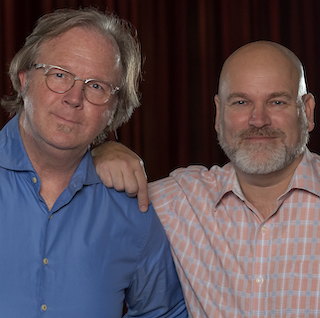
Ep 74Grooving: On Scarcity
This episode is a discussion on the principle of scarcity. Kurt and Tim illuminate the power of this very fundamental effect in behavioral science with some real-world examples. Simply put, the scarcity effect is that people want more of those things they can have less of. It’s terribly powerful and is evident in many aspects of our lives. “Sale ends tomorrow” is one of the strongest tools in a marketer’s handbook, and Kurt and Tim discuss that and others and the ways they impact behavior. We also talk about the implications of scarcity and how scarcity helps us prioritize and can actually increase focus in our lives. This episode is the third in our series on the Principles of Persuasion by Robert Cialdini, PhD. The other principles from Cialdini’s work have been discussed in previous episodes and you can check them out at the Behavioral Grooves website. The principle of Reciprocity was overviewed in episode #57 and the principle of Consistency was discussed through the lens of politicians and politics in episode #49. Please check them out if you’re interested in Cialdini’s Persuasion Principles. Also, please leave us a quick rating and review. We benefit greatly from your support and you only have a few minutes left to do it today! LINKS Principles of Persuasion – Robert Cialdini, PhD: https://www.influenceatwork.com/principles-of-persuasion/ Stephen Worchel, Jerry Lee & Akanbi Adawole, (1975) “Effects of supply and demand on ratings of object value” Journal of Personality and Social Psychology, 32(5), 906-914. https://psycnet.apa.org/record/1976-03817-001 Sendhil Mullainathan& Eldar Shafir, (2013) Scarcity: Why Having Too Little Means So Much, Times Books. https://www.amazon.com/Scarcity-Having-Little-Means-Much/dp/0805092641/ref=tmm_hrd_title_0?_encoding=UTF8&qid=&sr= Tim Urban blog: Wait But Why? https://waitbutwhy.com/ Kurt Nelson: Twitter: @motivationguru or @whatmotivates and LinkedIn: https://www.linkedin.com/in/kurtwnelson/ Tim Houlihan:Twitter: @THoulihan and LinkedIn https://www.linkedin.com/in/tim-houlihan-b-e/ Check out the Behavioral Grooves website: https://behavioralgrooves.com/

Ep 73Terry Esau: Carbon Fiber Therapist
Terry Esau is the founder of Free Bikes 4 Kids, a non-profit based in Minneapolis that collects and distributes tens of thousands of bikes to needy children every year around the holiday season. He’s not as well-known as some of our guests, but his story will engage even the savviest marketers and HR executives. Terry realized early on that growing the organization would require meaningful marketing, smooth operations, and a phalanx of well-trained volunteers. To streamline these functions, he turned to Kaizen / Lean analysis and employed a host of behavioral science tools, without all the terminology. As a result, he is maximizing the organization’s mission to bring FREE bikes to kids. Terry is what we call an Accidental Behavioral Scientist. His work clearly demonstrates the application of foundational behavioral science principles, yet he is unaware of the principles by name or theory. He has applied behavioral science principles to how kids (and their parents) shop for their free bikes and how volunteers are vetted and trained. In roughly 8 weeks, more than 20,000 volunteer hours are put into the collection, repair and distribution of bikes in each city. And it all happens with remarkably high satisfaction for both the riders and the volunteers. Terry is an avid bicyclist, and he is also a published author and speaker. However, he spent most of his career composing music for documentary films, television and radio advertising. He composed and produced music for over 2,000 TV commercials for clients including Target, McDonalds, Pepsi, Harley Davidson, Honda, Subway, Perkins, Golden Grahams and even Kitty Litter. He’s even has won a Clio award for his work in advertising. In our grooving session, Kurt and Tim suss out the ways Terry leverages the endowment effect and uses choice architecture to guide kids and parents on the journey of getting a new bike. We also talked about the psychological effects that music has on the taste of food. Not just another rabbit hole, but a very interesting discussion! We hope you enjoy the discussion with Terry Esau. If you would like to learn about how to bring Free Bikes for Kids to your city, please contact him directly: [email protected] Links Terry Esau: https://www.linkedin.com/in/terry-esau-8692042/ Terry Esau email: [email protected] and on Twitter: @FB4K Free Bikes for Kids: http://fb4k.org/ Feed My Starving Children: https://www.fmsc.org/ Kaizen / Lean: https://asq.org/training/lean-kaizen-a-simplified-approach-to-process-improvement-kaizen QBP (Quality Bike Parts): https://qbp.com/ Guthrie Theater: https://www.guthrietheater.org/ British Advertising Awards (Arrows): https://www.britisharrows.com/british-arrows-2018/ The Current (radio): https://www.thecurrent.org/ “Differentiate or Die” by Jack Trout: https://www.goodreads.com/book/show/105146.Differentiate_or_Die “This is Your Brain on Music” by Dan Levitin: http://daniellevitin.com/publicpage/books/this-is-your-brain-on-music/ Autotune: https://en.wikipedia.org/wiki/Auto-Tune “The Service Profit Chain” by James Heskett: https://hbr.org/2008/07/putting-the-service-profit-chain-to-work Kurt Nelson: @motivationguru and https://www.linkedin.com/in/kurtwnelson/ Tim Houlihan: @THoulihan and https://www.linkedin.com/in/tim-houlihan-b-e/ Check out the Behavioral Grooves website: https://behavioralgrooves.com/ Artists Crosby, Stills & Nash: https://www.csny.com/ Blood Sweat & Tears: https://en.wikipedia.org/wiki/Blood,_Sweat_%26_Tears Alice Cooper: https://alicecooper.com/ Amy Grant: https://amygrant.com/ Keith Richards: http://www.keithrichards.com/

Ep 72Roger Dooley: Friction and Engagement
Roger Dooley is the author of Friction, his newest book that summarizes great examples of companies do good things to reduce friction for customers and some not-so-good things to increase friction. Roger is also the author of Brainfluence: 100 Ways to Persuade and Convince Consumers with Neuromarketing. He is the founder of Dooley Direct, a marketing consultancy, and frequent speaker on the topics of marketing and neuroscience. Roger even has ties to Carnegie Mellon as he earned his engineering degree there then went on to complete his MBA from the University of Tennessee. In this episode, we discuss how friction in the customer experience impacts loyalty and corporate revenues. We also talked about how corporate leaders could help employees be more engaged by reducing nonsensical friction in their daily work lives – like useless paperwork or the doubling of forms and data between separate systems. We groove on experiences we’ve had where friction negatively impacts a positive customer experience. And we discussed how long it’s been since we bought a CD. Let us know: when was the last time YOU bought a CD? Links Roger Dooley: https://www.rogerdooley.com/ Follow Roger at @rogerdooley William of Ockham, the Law of Least Effort: https://en.wikipedia.org/wiki/William_of_Ockham Gartner Group: https://www.gartner.com/en Brian Massey at Conversion Science: https://conversionsciences.com/author/bmassey/ Chater, Nick and Loewenstein, George F., The Under-Appreciated Drive for Sense-Making (April 20, 2015). https://ssrn.com/abstract=2596897 Teresa Amabile on The Progress Principle: http://progressprinciple.com/books/single/the_progress_principle Four Drive Model: https://www.leadersbeacon.com/four-drive-model-new-theory-on-employee-motivation/ Joshi Story: http://customerthink.com/joshie_the_giraffe_a_remarkable_story_about_customer_delight/ Kurt Nelson: @motivationguru and https://www.linkedin.com/in/kurtwnelson/ Tim Houlihan: @THoulihan and https://www.linkedin.com/in/tim-houlihan-b-e/ Check out the Behavioral Grooves website: https://behavioralgrooves.com/

Ep 71Alex Imas: Clawback Incentives and Tom Waits
Alex Imas is an assistant professor of economics in the Social & Decision Sciences department at Carnegie Mellon’s Dietrich College. His research dovetails perfectly into the department’s cross-disciplinary approach by blending behavioral and experimental economics, particularly how social concerns and emotions influence decision making and preferences. His most current research examines the effectiveness of prosocial incentive schemes and how subtle changes in social norms can have large effects on behavior. However, our conversation started with Alex discussing his findings with Sally Sadoff, from the University of California in San Diego, and Anya Samek from USC, on the effectiveness of loss contracts. Loss or clawback contracts are similar to incentives but instead of getting paid at the end of the work – contingent of successful achievement, the clawback or loss contract gives you money up front and you are forced to give it back what you don’t achieve the appropriate levels of performance. Many people would say they’d prefer a regular bonus structure – to get paid upon successful completion of their work – but Alex, Sally and Anya’s work found something different. The loss contract proved to be a commitment device – it helped reduce shirking – and improved performance overall. Even people with a higher sense of loss aversion tended to benefit most from loss contracts. There are even some people who ended up preferring loss contracts. In our grooving session, Kurt and Tim discuss their real-world experiences with clawbacks: do they work and in what circumstances are they most successful? With that, please sit back and enjoy our conversation with Alex Imas. Links Alex Imas (CMU): https://www.cmu.edu/dietrich/sds/people/faculty/alex-imas.html Alex Imas (Personal): http://www.aleximas.com Carnegie Mellon University: https://www.cmu.edu/ CMU Social and Decision Sciences Department: https://www.cmu.edu/dietrich/ "Do People Anticipate Loss Aversion?" (with S. Sadoff and A. Samek). Management Science, 2016. “Enhancing the Efficacy of Teacher Incentives through Loss Aversion: A field experiment.” https://rady.ucsd.edu/docs/faculty/Fryer_et_al_Teacher_Incentives_NBER_WP18237_2012.pdf By Roland G. Fryer, Jr., Steven D. Levitt, John List, Sally Sadoff Index funds: https://www.investopedia.com/terms/i/indexfund.asp Jack Bogle index funds: https://www.fool.com/investing/2019/01/17/jack-bogle-on-index-funds-vanguard-and-investing-a.aspx “Myopic Loss Aversion and the Equity Premium Puzzle,” Thaler & Benartzi. https://www.nber.org/papers/w4369 Abby Sussman: https://www.chicagobooth.edu/faculty/directory/s/abigail-sussman Paul Smeets: https://facilities.research.northwestern.edu/directory/paul-jozef-matheus-smeets Ashley Wilhans: https://www.hbs.edu/faculty/Pages/profile.aspx?facId=943704 Please Kill Me, Legs McNeil & Gillian McCain. https://www.goodreads.com/book/show/14595.Please_Kill_Me Festivus: https://en.wikipedia.org/wiki/Festivus Artists Bob Dylan: https://en.wikipedia.org/wiki/Bob_Dylan Phoebe Bridgers: https://www.youtube.com/watch?v=psZuC10Oa4E Bright Eyes: https://www.youtube.com/watch?v=zwFS69nA-1w Boy Genius: https://www.youtube.com/watch?v=OS48Lp34Zic Conor Oberst: https://www.youtube.com/watch?v=8FnmP_1vABE Mitzki: https://www.youtube.com/watch?v=qooWnw5rEcI Soccer Mommy: https://www.youtube.com/watch?v=Ouem6cFXJvA Run the Jewels: https://www.youtube.com/watch?v=AfuCLp8VEng Cardi B: https://www.youtube.com/watch?v=zUOh09GoQgk Tom Waits, “Jockey Full of Bourbon,” https://www.youtube.com/watch?v=IgMP9O-cIV8

Ep 69Grooving: The Uber Science Symposium
On May 3, 2019, Kurt and Tim attended an invitation-only Science Symposium featuring a track on behavioral science at the San Francisco headquarters of human and food transportation giant Uber. During the one-day assembly, we sat in on presentations delivered by academic researchers from UCLA, University of British Columbia, University of California San Diego, Dartmouth, Cornell, Columbia University and Stanford, among others. We also heard from practitioners of applied behavioral sciences who work at Facebook, Morningstar, TruFit, Cerego, Ipsos, Maritz, and, of course, Uber. Kurt and Tim were exposed to a massive amount of new research data, new insights into human behavior from both academic and corporate fieldwork, as well as exciting hallway conversations with people that we wanted to share with you. We nabbed a few quick recordings during the breaks and, regrettably, there are times when the background noise is pretty high. (Our apologies.) We are grateful to Candace Hogan, a leader of applied behavioral science at Uber, for inviting us and we appreciate the effort that Uber is expending to integrate behavioral sciences with their business model and to share them with us. Guests (in order of appearance) Melanie Brucks, PhD student at Stanford University: https://www.melaniebrucks.com/ Elizabeth Kim, first behavioral scientist at Spotify: https://www.linkedin.com/in/elizabethdkim/ Charlotte Blank, chief behavioral officer at Maritz: https://www.linkedin.com/in/charlotte-blank-52554a2/ Ingrid Paulin, senior behavioral scientist at Rally Health: https://www.linkedin.com/in/ingrid-melv%C3%A6r-paulin-27543647/ Shirin Oreizy, founder and president at Next Step: https://www.linkedin.com/in/shirinoreizy/ Scott Drummond, brand builder at Next Step: https://www.linkedin.com/in/scottdrummond/ Joseph Reiff, PhD student at UCLA: https://www.anderson.ucla.edu/degrees/phd-program/areas-of-study/behavioral-decision-making/meet-the-students/joseph-reiff Mentions Wendy De La Rosa, principal at Irrational Labs: https://www.linkedin.com/in/wendy-de-la-rosa/ Hal Hershfield, PhD, professor at UCLA: https://www.anderson.ucla.edu/faculty-and-research/marketing/faculty/hershfield Brad Voytek, PhD, professor at UCSD: https://voyteklab.com/

Ep 70Russell Golman: On Information Avoidance
Russell Golman is an Assistant Professor of Behavioral Economics and Decision Sciences in the Social & Decision Sciences Department at CMU. His pioneering, interdisciplinary work has been published in a wide range of academic journals, including Science Advances, Decision, the RAND Journal of Economics, the Journal of Economic Theory, the Journal of Economic Perspectives, and the Journal of Economic Literature. In 2017 Professor Golman organized the Belief-Based Utility Conference at Carnegie Mellon with generous funding from the Russell Sloan Foundation and the Alfred P. Sloan Foundation. Professor Golman was trained as a game theorist with a Mathematics Ph.D. from the University of Michigan. But whereas game theorists usually assume that people making strategic decisions are hyper-rational, Russell wanted to acknowledge that real people are influenced by each other and sometimes make mistakes. They often care deeply about their beliefs, not just about material outcomes. And they rarely settle into an equilibrium in which everybody is static and content. Russell’s research interests expanded into behavioral economics and behavioral decision research as well as complex adaptive systems and social dynamics. He took a postdoc in Social and Decision Sciences at CMU, where Herb Simon first conceived of the concept of bounded rationality 50 years earlier. Professor Golman joined the faculty here in 2012. We talked to Russell about information avoidance and curiosity and to what lengths people will strive for both. In our grooving session, Kurt and Tim discuss information avoidance from a corporate perspective and wonder, “what impact does a manager have when he or she avoids a difficult conversation?” We also talked about ways to reduce information avoidance in the working world and how incentives may help managers through tough situations. We hope you enjoy this episode in our Carnegie Mellon series with Russell Golman. Links Russell Golman: https://www.cmu.edu/dietrich/sds/people/faculty/russell-golman.html CMU Social and Decision Sciences Department: https://www.cmu.edu/dietrich/ Carnegie Mellon University: https://www.cmu.edu/ Golman, Russell, David Hagmann, and George Loewenstein. “Information Avoidance.” Journal of Economic Literature, 2017, 55: 96-135. Featured on The Academic Minute Golman, Russell and George Loewenstein. “Information Gaps: A Theory of Preferences Regarding the Presence and Absence of Information” Decision, 2016, forthcoming. Golman, Russell, George Loewenstein, Karl Ove Moene and Luca Zarri. “The Preference for Belief Consonance.” Journal of Economic Perspectives 2016, 30: 165-187. GI Joe Fallacy: https://www.youtube.com/watch?v=GimHHAID_P0 Herb Simon: https://en.wikipedia.org/wiki/Bounded_rationality Bluegrass music: https://en.wikipedia.org/wiki/Bluegrass_music Great Blue Heron Music Festival: https://greatblueheron.com/ Donna the Buffalo: https://donnathebuffalo.com/ Jam bands: https://en.wikipedia.org/wiki/Jam_band The Pines: https://www.youtube.com/watch?v=TuuFampLC6E The Cactus Blossoms: https://www.youtube.com/watch?v=Qj7jJk8TPZk Kurt Nelson: @motivationguru and https://www.linkedin.com/in/kurtwnelson/ Tim Houlihan: @THoulihan and https://www.linkedin.com/in/tim-houlihan-b-e/ Check out the Behavioral Grooves website:https://behavioralgrooves.com/
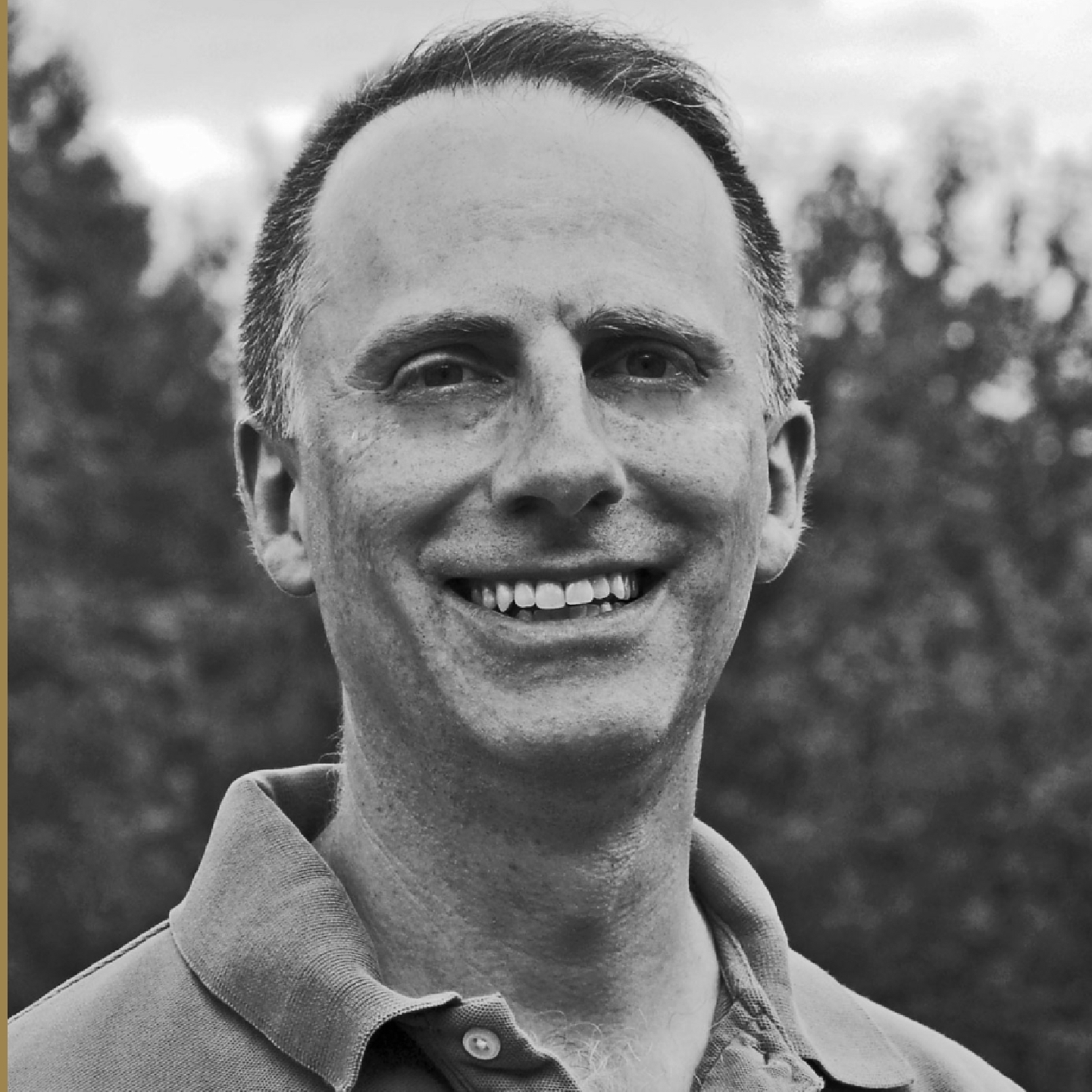
Ep 8The Value of Understanding Microexpressions for Leaders
Todd Fonseca is an executive in clinical research and communication for Medtronic and holds an interesting array of certifications including Certified Body Language Trainer. He is also the founder of the Anti-Networking Network Meetup and likes to ask meetup guests "What would be your superpower for an hour?" Needless to say, the interview brought interesting concepts to the floor and we had fun doing it. The interview with Todd included short discussions on the placebo effect, situational awareness, and a lengthy discussion of Paul Ekman PhD's work on microexpressions. The seven key microexpressions (Happiness, Sadness, Anger, Disgust, Contempt, Fear and Surprise) are foundational to human communication and found to be universal - in other words, they exist among people everywhere on the planet. Our conversation delved deep into the identification and application of them. We grooved on the themes of the importance of having these microexpressions in our communication toolbox and talked about music from the Oh, Hello's and Robert Finley, an artist recently produced by Dan Auerbach of the Black Keys.

Ep 68Julie Downs: From Sexual Health to the Sahel
Julie Downs, PhD is an associate professor of psychology in the Social and Decision Sciences department at Carnegie Mellon’s Dietrich College and fits perfectly into the cross-disciplinary culture of the group. Her interests have spanned anthropology to healthcare to economics and her zest for each of them is undeniable. Our discussion with Julie started with some of her latest research on how to help women make the proper vaginal insertion of an HIV-prevention drug. While scientists at the University of Pittsburgh are developing the medicine, Julie is focused on the behavioral aspects including the proper way to apply it because the efficacy of the drug relies on proper application. The drug is extremely low-cost, doesn’t require refrigeration, and can be kept private in otherwise touchy situations with sexual partners. We also discussed making decisions in an increasingly complex world of what to eat. Fast food is readily available, it’s cheap and easy to acquire for working parents with a hungry family. However, recent research on fast food consumption reveals the calorie counters on the food menus are not having a positive effect on what gets ordered. Julie is working to figure out solutions that make the calorie counts salient with an online ordering app. In our grooving session, we chat about the concept of friction and how that applies to product development and communications AND we talk about insights we can take from a food ordering app that has a special calorie counter built into it and use those insights in our work. So, sit back and enjoy another episode in our Carnegie Mellon series with professor Julie Downs. Links Julie Downs: https://www.cmu.edu/dietrich/sds/people/faculty/julie-downs.html Carnegie Mellon University: https://www.cmu.edu/ CMU Social and Decision Sciences Department: https://www.cmu.edu/dietrich/ Truvada: https://www.truvada.com/ Fleshlight. https://www.fleshlight.com/ Sahel Desert: https://en.wikipedia.org/wiki/Sahel Satisficing: https://en.wikipedia.org/wiki/Satisficing The Beatles: https://en.wikipedia.org/wiki/The_Beatles Louie Prima / Jungle Book: https://www.youtube.com/watch?v=rV8HrpOu1FA Ella Fitzgerald: https://www.youtube.com/watch?v=u2bigf337aU Queen: https://www.youtube.com/watch?v=A22oy8dFjqc Hamilton: https://www.youtube.com/watch?v=yvBYOBTkDRk Kurt Nelson: @motivationguru and https://www.linkedin.com/in/kurtwnelson/ Tim Houlihan: @THoulihan and https://www.linkedin.com/in/tim-houlihan-b-e/ Listen to Behavioral Grooves: https://behavioralgrooves.podbean.com/

Ep 67George Loewenstein: On a Functional Theory of Boredom
George Loewenstein, PhD is the Herbert A. Simon Professor of Economics and Psychology in the Social and Decision Sciences Department in the Dietrich College of Humanities and Social Sciences at Carnegie Mellon University and is the director of the Center for Behavioral Decision Research. George received his PhD in economics from Yale but was always interested in topics outside of the field. At one point, he considered switching from economics to another major but was advised to remain: “We need you here,” he was told by a sage researcher. We’re glad he did. George may not be a household name, but he is a rockstar in the world of behavioral science. Nobel laureate Richard Thaler dedicated his last book, Misbehaving, to George, along with their colleague Colin Camerer. George’s insights into behavior and decision making are legendary and he is recognized as one of the founders of behavioral economics, in part because he was literally at the table when the field was named “behavioral economics.” During his career, George has indulged his curiosities in research projects that span an incredibly wide variety of topics including risk, confidence, the effects of feelings, emotions, wanting and enjoying sex, sequencing, preferences, bargaining, incentives, privacy, healthy behaviors, investing, empathy, and sympathy…to name but a few. George’s work has been cited nearly 100,000 times in published articles and peer-reviewed papers. He’s not only remarkably curious, but he’s also remarkably productive. His book of essays titled Exotic Preferences is a terrific read and provides some insight into this extremely talented man. We were excited to have George as a guest because his comments can be so insightful that they can be pondered for hours, and because he is so rarely recorded (and we are grateful to Linda Babcock for her support and participation in our conversation). We focused on some new work George is doing on the subject of boredom with a graduate student, Amanda Markey. We were surprised to learn that their work is breaking ground as there is no comprehensive functional theory for boredom. And in the category of not knowing where a conversation might go, we compared individual experiences of boredom (and flow). In our grooving session, we discussed some of the implications of boredom in the workplace and ways you could make meetings more successful. We also touched on the temporal nature of attention and George’s comment to “use it or lose it.” Finally, we returned to a favorite topic whether it’s a good idea to listen to music while we work. We hope you enjoy this rare recorded conversation with George Loewenstein. Links George Loewenstein: https://www.cmu.edu/dietrich/sds/people/faculty/george-loewenstein.html George’s H-Index: https://scholar.google.com/citations?user=8nyQzDsAAAAJ&hl=en Linda Babcock: https://www.cmu.edu/dietrich/sds/people/faculty/linda-babcock.html Exotic Preferences: https://global.oup.com/academic/product/exotic-preferences-9780199257072?cc=us&lang=en& Carnegie Mellon University: https://www.cmu.edu/ CMU Social and Decision Sciences Department: https://www.cmu.edu/dietrich/ Center for Behavioral Decision Research: https://cbdr.cmu.edu/ Richard Thaler, PhD: https://www.chicagobooth.edu/faculty/directory/t/richard-h-thaler Colin Camerer: http://www.its.caltech.edu/~camerer/camerer.html Amanda Markey: https://www.linkedin.com/in/amanda-markey-026b5914/ Kurt Nelson: @motivationguru and https://www.linkedin.com/in/kurtwnelson/ Tim Houlihan: @THoulihan and https://www.linkedin.com/in/tim-houlihan-b-e/ Listen to Behavioral Grooves: https://behavioralgrooves.podbean.com/

Ep 66Silvia Saccardo: Ethics of Decisions and Italian Rap
Silvia Saccardo, PhD is an Assistant Professor of Management in the Social and Decision Sciences department in the Dietrich College of Humanities & Social Sciences at Carnegie Mellon University. Our conversation with Silvia is the fourth in our series on Carnegie Mellon professors. We sat down with Silvia in Porter Hall on a chilly day at CMU to discuss her findings on how motivated cognition and hidden biases shape our ethical (and unethical) decision-making. Her research on bribery and lying has been published in top peer-reviewed journals and we found her work with the Dictator Game particularly interesting, especially as it relates to measuring what we consider ethical behavior. Dr. Saccardo uses the Dictator Game in her research in a unique way. In one case, she set up the game to put people in situations where they can lie to other players and the results are fascinating. We also discussed the way people are more likely to give blunt feedback to out-group rather than in-group associates. Her findings reveal very interesting aspects of the human condition and how we respond to it. In our grooving session, we discuss the impact of what some people might consider small acts of kindness and how those acts may be construed as small acts of bribery in certain situations (i.e., dinners and small gifts). This conversation triangulated connections between two of our favorite Behavioral Grooves guests and Silvia and we couldn’t help but call attention to them: Francesca Gino, PhD as a fellow Italian American, and Christina Gravert, PhD as a co-author of papers with Silvia. We also want to thank Silvia for the opportunity to guest lecture and meet a classroom full of her uber-engaged and enthusiastic students. What a treat. Links Silvia Saccardo: https://www.cmu.edu/dietrich/sds/people/faculty/silvia-saccardo.html …and: https://sites.google.com/site/silviasaccardo/home Carnegie Mellon University: https://www.cmu.edu/ CMU Social and Decision Sciences Department: https://www.cmu.edu/dietrich/ Saccardo, Silvia, Aniela Pietrasz, and Uri Gneezy. "On the Size of the Gender Difference in Competitiveness." Management Science. Forthcoming. Gneezy, Uri, Christina Gravert, Silvia Saccardo, and Franziska Tausch. "A must lie situation–avoiding giving negative feedback." Games and Economic Behavior 102 (2017): 445-454. Jovanotti: https://www.youtube.com/watch?v=Ro8PdDjKA3o Andrea Bocelli: https://www.youtube.com/andreabocelli Kurt Nelson: @motivationguru and https://www.linkedin.com/in/kurtwnelson/ Tim Houlihan: @THoulihan and https://www.linkedin.com/in/tim-houlihan-b-e/ Listen to Behavioral Grooves: https://behavioralgrooves.podbean.com/
Ep 65Grooving: Listeners, can you help us?
At this writing, we’ve recorded and published 64 episodes of Behavioral Grooves and we’d like to make sure we’re on the right course for our listeners. If you would be so kind, we would appreciate hearing the answers to two questions at #behavioralgrooves. Question 1: Why do you listen? Question 2: What keeps you listening? Thanks very much and keep on grooving!

Ep 64Danny Oppenheimer: Governance and Helicopter Parenting
Daniel Oppenheimer, PhD, known to all as “Danny,” is a professor of psychology in the Social and Decision Sciences department in the Dietrich College of Humanities & Social Sciences at Carnegie Mellon University. This is the third episode in our Carnegie Mellon series, and Danny is a researcher with a wide variety of curiosities. His writings have been published in more than 50 peer-reviewed publications, as well as a number of book chapters and media contributions. Among his notable works, he co-authored Democracy Despite Itself: Why a System That Shouldn’t Work at All Works So Well, published by the MIT Press, and Psychology: A Cartoon Introduction, a cartoon book published by WW Norton on, you guessed it, the simple and humorous aspects of psychology. He is also an esteemed recipient of the Ig Nobel award for his paper titled “Consequences of Erudite Vernacular Utilized Irrespective of Necessity: Problems with Using Long Words Needlessly.” Need we say more? We spoke at length about how a person’s take on helicopter (and submarine) parenting strongly correlates to their view of governance. These findings cross-party affiliation and self-identification as liberal or conservative and can also vary from topic to topic. All in, it’s a fascinating discussion. We recorded our discussion with Danny just a couple of weeks before the 2019 college admissions bribery scandal was brought to light. We discuss the implications of Danny’s observations in our grooving session. Danny shared that he’s lived for long periods without a mobile phone and that he prefers delegating his music selection to radio DJ’s, who might be considered expert in this situation, to bring him new music without the stress of finding it himself. In our grooving session, we returned to helicopter and submarine parenting styles and how they might impact the next generation of entrepreneurship, corporate policies and management styles. We also spend some time on the ways business leaders manage data inputs from various sources and the potential impact these decisions have. We hope you enjoy our discussion with Danny and that you subscribe to Behavioral Grooves at the link below. It’s free! Links Danny Oppenheimer: https://www.cmu.edu/dietrich/sds/people/faculty/daniel-oppenheimer.html Carnegie Mellon University: https://www.cmu.edu/ CMU Social and Decision Sciences Department: https://www.cmu.edu/dietrich/ “Democracy Despite Itself: Why a System That Shouldn’t Work at All Works So Well” (MIT Press) https://mitpress.mit.edu/books/democracy-despite-itself “Psychology: A Cartoon Introduction,” (WW Norton) https://www.goodreads.com/book/show/34068488-psychology “Easy does it: The role of fluency in cue weighting,” Anuj K. Shah and Daniel M. Oppenheimer, Princeton University: http://journal.sjdm.org/jdm7730.pdf “The Science of Giving: Experimental Approaches to the Study of Charity” https://psycnet.apa.org/record/2010-23933-000 George Lakoff: https://georgelakoff.com/ Jonathan Haidt & Greg Lukianoff: “The Coddling of the American Mind” https://www.thecoddling.com/ Helicopter parenting: https://en.wikipedia.org/wiki/Helicopter_parent Free-Range parenting: https://en.wikipedia.org/wiki/Free-range_parenting Snowplow parenting: https://www.businessinsider.com/parents-call-their-adult-childrens-bosses-snowplow-parenting-2019-4 Submarine parenting: https://www.psychologytoday.com/us/blog/unmapped-country/201603/submarine-parenting College Admissions Bribery Scandal: https://en.wikipedia.org/wiki/2019_college_admissions_bribery_scandal Mechanical Turk: https://en.wikipedia.org/wiki/Amazon_Mechanical_Turk Postmodern Jukebox: http://postmodernjukebox.com/home/ Kurt Nelson: @motivationguru and https://www.linkedin.com/in/kurtwnelson/ Tim Houlihan: @THoulihan and https://www.linkedin.com/in/tim-houlihan-b-e/ Subscribe to Behavioral Grooves: https://behavioralgrooves.podbean.com/

Ep 63Jeff Galak: High Heels and Hedonic Decline
Jeff Galak, PhD is a professor at the Social and Decision Sciences department in the Dietrich College of Humanities & Social Sciences at Carnegie Mellon University. Jeff’s primary assignment is as an Associate Professor of Marketing in Carnegie Mellon’s Tepper School of Business; however, he is on loan to the Social & Decision Sciences department in the Dietrich College, which is where we caught up with him. This is the second in the series featuring professors from Carnegie Mellon. Jeff earned his PhD from NYU and often works on research projects across functions, making him a terrific fit for the already-interdisciplinary department of Social & Decision Sciences. He’s so fond of collaboration, he’s even published peer-reviewed papers about how scientific research benefits from it. Jeff’s research expertise spans a wide variety of topics and interests including consumer behavior, consumer psychology, as well as judgment and decision making. His findings have been published in top academic journals and he has presented his research at top marketing and psychology conferences worldwide. He’s a very curious guy and we found him engaging as he shared his work and the applications of it. In our discussion with Jeff, he discussed a few of his research initiatives and focused on three areas: (1) his findings in new research on hedonic decline, (2) how high heels became the measure for the social implications of moving to and from a different socio-economic zip codes and (3) we talked about political lies and two primary subcategories we see in political lying: Lies about policies and lies about personal things. His research reveals how we tend to disregard one more than the other. In our grooving session, we tackle the work and life implications to some of Jeff’s findings. Specifically, we discussed how product developers can create more successful products by leveraging both simplicity and complexity and we discussed implications of high-heeled social changes. We hope you enjoy our conversation with the very curious researcher, Jeff Galak. Links Jeff Galak/CMU: https://www.cmu.edu/tepper/faculty-and-research/faculty-by-area/profiles/galak-jeffrey.html Jeff Galak/personal: http://jeffgalak.com/ Carnegie Mellon University: https://www.cmu.edu/ CMU Social and Decision Sciences Department: https://www.cmu.edu/dietrich/ On hedonic decline: When It Could Have Been Worse, It Gets Better: The Effect of Uncertainty on Hedonic Adaptation On socio-economic status and sales of high heels: Trickle-down preferences: Preferential conformity to high status peers in fashion choices Clayton Critcher, UC Berkeley: https://haas.berkeley.edu/faculty/critcher-clayton/ “Let It Go” (Frozen Soundtrack): https://www.youtube.com/watch?v=L0MK7qz13bU “Bohemian Rhapsody” (Queen): https://www.youtube.com/watch?v=fJ9rUzIMcZQ “Bohemian Rhapsody” (Lake Street Dive) https://www.youtube.com/watch?v=KqEiWN44L3M “The Entertainer” (Billy Joel) “…and they cut it down to 3:05”: https://www.youtube.com/watch?v=ozDSk9XUkrc Toto (founded in 1977) recorded “Africa” in 1982: https://www.youtube.com/watch?v=FTQbiNvZqaY “Aja” (Steely Dan): https://www.youtube.com/watch?v=fG2seugAgnU Kurt Nelson: @motivationguru and https://www.linkedin.com/in/kurtwnelson/ Tim Houlihan: @THoulihan and https://www.linkedin.com/in/tim-houlihan-b-e/ Subscribe to Behavioral Grooves: https://behavioralgrooves.podbean.com/

Ep 62Linda Babcock: Helping Women Build Better Careers at Carnegie Mellon
This is the first in a series featuring researchers from Carnegie Mellon University’s Social and Decision Sciences (SDS) department in the Dietrich College of Humanities & Social Sciences. We begin with SDS professor, author, researcher and department chair, Linda Babcock, PhD. Linda is the James M. Walton Professor of Economics at CMU and a member of the Russell Sage Foundation’s Behavioral Economics Roundtable. Linda has served the National Science Foundation and is the founder and faculty director of the non-profit Program for Research and Outreach on Gender Equity in Society (PROGRESS). She’s been a visiting professor at the University of Chicago, the Harvard Business School, and the California Institute of Technology. Linda’s research intersects economics and psychology where she focuses on negotiations and dispute resolution. Her work has appeared in the most prestigious economics, industrial relations, psychology, and law journals around the world. Her work has been covered by hundreds of newspapers and magazines in the U.S. and abroad, and she has appeared on numerous television and radio programs discussing her work. In a recent book with Sara Laschever, Women Don't Ask: Negotiation and the Gender Divide, the authors focus on the importance of women initiating negotiations and the authors explore the societal factors that hold women back from asking for what they want. In our discussion with Linda, we talked about how working women face more than a glass ceiling, they face something like a labyrinth. We covered the importance of negotiations, and how women need to pay attention to the non-promotable tasks they do at work. And we discussed the importance of interdisciplinary work and the tremendous benefits generated by a department like SDS. Linda shares how great it is that economists, psychologists and astrophysicists sit side-by-side to solve problems in the same department. In our grooving session, we dive deeper into the practical business applications of Linda’s directive for men to stop asking women to do stuff, how the cross-disciplinary groups serve businesses as well as academic institutions, and we revisit her tips on the importance of negotiation and being mindful about what tasks you do at work. A note of gratitude: We are grateful to Linda for her efforts in coordinating the SDS series. We are also grateful to all the professors who took time to sit with us – we enjoyed each one! In aggregate, this series was a tremendous amount of fun for us to record and publish. Thank you, CMU, and thank you SDS. Links Linda Babcock: https://www.cmu.edu/dietrich/sds/people/faculty/linda-babcock.html Babcock, Linda & Laschever, Sara (2004). Women Don't Ask Negotiation and the Gender Divide, Princeton Press: Princeton, NJ. https://press.princeton.edu/titles/7575.html Babcock, Linda & Laschever, Sara (2008). Asking for It: How Women Can Use the Power of Negotiation to Get What They Really Want. Bantam Books: New York City. https://www.goodreads.com/book/show/959775.Ask_for_It Carnegie Mellon University: https://www.cmu.edu/ CMU Social and Decision Sciences Department: https://www.cmu.edu/dietrich/ Robert Cialdini, PhD: https://www.influenceatwork.com/robert-cialdini-phd/biography/ Eagly, A. H., & Carli, L. L. (2007). Through the labyrinth: The truth about how women become leaders. Boston: Harvard Business School Press. https://hbr.org/product/through-the-labyrinth-the-truth-about-how-women-become-leaders/1691-HBK-ENG Linda Carli, PhD (Wellsley College): https://www.wellesley.edu/psychology/faculty/carli Alice Eagly (Northwestern University): https://www.psychology.northwestern.edu/people/faculty/core/profiles/alice-eagly.html Bruno Mars “That’s What I Like” https://www.youtube.com/watch?v=PMivT7MJ41M Parliament “Bring the Funk” https://www.youtube.com/watch?v=gjKFCYzqq-A Run DMC “Walk This Way” (Aerosmith cover) https://www.youtube.com/watch?v=4B_UYYPb-Gk Kurt Nelson: @motivationguru and https://www.linkedin.com/in/kurtwnelson/ Tim Houlihan: @THoulihan and https://www.linkedin.com/in/tim-houlihan-b-e/ Subscribe to Behavioral Grooves: https://behavioralgrooves.podbean.com/
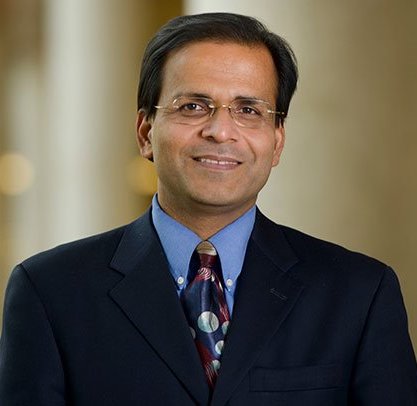
Ep 61Amit Sood: The Ultimate Happiness Doctor
Looking for a simple 5-step plan to be happier? Our guest has one. Amit Sood, PhD is an author and physician at the world-renowned Mayo Clinic, in Rochester, Minnesota. He specializes in pediatrics, internal medicine and oncology and he also maintains certificates in acupressure, yoga and reiki. His books include two particularly relevant volumes that formed the basis of our discussion: The Guide to Stress-Free Living and Handbook for Happiness. He’s a remarkably well-rounded and humble healthcare practitioner as well as a highly productive author. It’s clear from talking with him that he cares deeply about his patients and the quality of his work. His passion was inspirational for us and we hope you have the same experience. Our conversation focused on the topic of happiness: things we do to increase it and things we do to reduce it. Amit shared some fascinating insights into specific things that we can do to increase our happiness and we were glad to speak with him. In the grooving session, Kurt and Tim wove these insights into a broader fabric of the environment we’re in when we go to work. Specifically, we addressed how different types of interactions – contentious, transactional or affiliative – influence our happiness and our productivity in the office. We also deliberated the human condition’s increasing need for responsiveness and how our patience for what we consider a socially-acceptable wait time is growing shorter. Finally, Kurt and Tim discussed the importance of intentionality that Amit believes is foundational to living a happy life, which acted as a springboard for Kurt to ask, “What song would you have wanted to write?” That question quickly got our brains into some miraculous and happy dreaming. We hope you enjoy our discussion with Amit Sood and, if you do, please leave us a very brief review on your favorite listening app. Links Amit Sood, PhD: https://www.mayoclinic.org/biographies/sood-amit-m-d/bio-20054879 and https://en.wikipedia.org/wiki/Amit_Sood Mayo Clinic: https://www.mayoclinic.org/ The Guide to Stress-Free Living: https://www.barnesandnoble.com/w/the-mayo-clinic-guide-to-stress-free-living-amit-sood-md/1115183416#/ Handbook for Happiness: https://www.barnesandnoble.com/w/the-mayo-clinic-handbook-for-happiness-amit-sood-md/1119972623?ean=9780738217857 A Fragile Culture (by Jonathan Haidt): https://www.youtube.com/watch?v=8lFsc-xGz7o In My Life (Paul McCartney & John Lennon): https://www.youtube.com/watch?v=6xx8h4IBrRY Eleanor Rigby (Paul McCartney & John Lennon): https://www.youtube.com/watch?v=weN-l8SOiFU If We Were Vampires (by Jason Isbell): https://www.youtube.com/watch?v=JF45uzdPgd4 People Are People (by Depeche Mode): https://www.youtube.com/watch?v=MzGnX-MbYE4 Kurt Nelson: @motivationguru and https://www.linkedin.com/in/kurtwnelson/ Tim Houlihan: @THoulihan and https://www.linkedin.com/in/tim-houlihan-b-e/ Subscribe to Behavioral Grooves: https://behavioralgrooves.podbean.com/

Ep 60Francesca Gino: Curiosity and Rebellion Makes Your Career
Imagine a company where 100% of the employees are rebels – would it be chaotic or wonderful? Our guest from the Harvard Business School, Francesca Gino PhD, argues that rebels are not just essential, but they can improve corporate effectiveness. Francesca is a professor and researcher at Harvard Business School who describes herself as a curious behavioral scientist, passionate about teaching and helping leaders make wiser decisions that can improve their lives and those of the people around them. She’s the author of dozens of peer-reviewed articles on decision making and her books include Sidetracked (2013), and more recently, Rebel Talent, that covers a body of research findings highlighting why the most successful people break the rules, and how rebellion brings joy and meaning into our lives. Our discussion revealed that Francesca isn’t the kind of person who just doles out good advice, she often tests it out first on herself, her husband and children, her students and colleagues and even the business leaders she consults with! She’s a rebel thinker and doer and her drive to discover answers to the why-we-do-what-we-do question is without limits. Her findings reveal key methods that companies can use to help employees remain curious and to steer employees clear of the day-to-day ruts that are so easy to fall into. In the grooving session that follows our discussion with Francesca, we dig deeper into the application of curiosity, psychological safety and extremely powerful (and portable) conversation too, “Yes, and…” Kurt and Tim share ways in which we’ve seen “yes, and…” is applied successfully in workshops, brainstorming sessions, corporate meetings, and presentations in the corporate world. We hope you enjoy our conversation with the rebel Francesca Gino. If you enjoyed this episode, please don’t hesitate to give us a positive rating on your favorite podcatching service. © 2019/2020 Behavioral Grooves Links Francesca Gino: http://francescagino.com Rebel Talent: https://www.rebeltalents.org Sidetracked: http://francescagino.com/sidetracked After the episode, Francesca told us that she listened to Youngblood’s version of 5 Seconds of Summer: https://www.youtube.com/watch?v=Jqs5EaAaueA Julia Minson, PhD at the Kennedy School at Harvard: https://www.hks.harvard.edu/faculty/julia-minson Pixar Animation Studios: https://en.wikipedia.org/wiki/Pixar The Ballad of Lucinda (by Tim Houlihan): https://www.youtube.com/watch?v=9jzM2wLgNc8 Blog Post on PADI certification (by Ben Granlund): http://blog.lanterngroup.com/behavioral-science-beneath-the-surface-the-power-of-rational-thoughts-in-an-unnatural-environment St. Vincent (on sounds): https://consequenceofsound.net/2017/10/10-times-st-vincent-gave-no-fucks/ Blasphemous Rumors (by Depeche Mode): https://www.youtube.com/watch?v=o3EAzf5fDpY Kurt Nelson: @motivationguru and https://www.linkedin.com/in/kurtwnelson/ Tim Houlihan: @THoulihan and https://www.linkedin.com/in/tim-houlihan-b-e/ Subscribe to Behavioral Grooves: https://behavioralgrooves.podbean.com/

Ep 59Jeanie Whinghter and Afra Ahmad: Balance vs. Harmony
In this episode, we had the pleasure of speaking with two guests: Jeanie Whinghter, PhD and Afra Ahmad, PhD. Jeanie is the Chair of Industrial and Organizational Psychology and General Psychology at Capella University. Her research focuses on the manifestations of stressors and strains in alternative work arrangements and was in Memphis when we spoke. Afra was in Dubai at Zayed University but will begin a new role in the summer of 2019 as Director of the Masters in Professional Studies in Applied Industrial and Organizational Psychology at George Mason University. Her research emphasizes diversity and inclusion and she has been authored chapters in books, published in Harvard Business Review, as well as in peer-reviewed journals. Both are researchers, teachers, wives, mothers and truly fascinating people. We were grateful to be able to speak to them in advance the SIOP – the Society for Industrial and Organizational Psychology – conference in April 2019. At the conference, they’ll unveil an interactive workshop to illuminate the challenges of trying to “have it all.” Inspired by a satirical article in The New Yorker magazine (citation below), the idea of having it all has plagued women, especially, who strive to be successful at parenting and a career at the same time. Jeanie and Afra are advocating an approach that focuses on harmony rather than balance. Our conversation first centered around their research and revealed insights for those struggling to have it all. More timely, we discussed their SIOP session. After the formal discussion, with the tape still rolling, we talked in greater depth about their unique, interactive structure for their SIOP session and how surprising it is that more conferences don’t feature non-traditional, participant engagement sessions. To learn more about the SIOP session itself, listen to our grooving session which immediately follows the discussion with Jeanie and Afra. If you’d like to skip straight there, check out the discussion starting around 51:40. There we also tackled the concepts of work-life harmony and the importance of allies. Our grooving session continued with the challenges nursing mothers face when no nursing rooms exist. And we talked about the use of harmony is songwriting. Select Links Jeanie Whinghter, PhD: https://www.linkedin.com/in/jeanie-whinghter-b303a9148/ Afra Ahmad, PhD: https://www.linkedin.com/in/dr-afra-saeed-ahmad-35229070/ SIOP – Society for Industry & Organizational Psychology: https://www.siop.org/ Inspiration for the workshop from this article in The New Yorker: https://www.newyorker.com/humor/daily-shouts/i-am-the-one-woman-who-has-it-all Jeff Bezos on Work/Life Balance: https://www.businessinsider.com/jeff-bezo-advice-to-amazon-employees-dont-aim-for-work-life-balance-its-a-circle-2018-4 Jeff Bezos on Harmony vs. Balance: https://www.cnbc.com/2018/08/09/what-jeff-bezos-does-instead-of-work-life-balance.html Leading the Life You Want, by Stuart Friedman, PhD (Wharton Professor) 2014: https://hbr.org/product/leading-the-life-you-want-skills-for-integrating-work-and-life/11343E-KND-ENG Research on how we always think we do the most work at home by Yavorsky, Dush and Sullivan, especially after a baby comes into the house: “The Production of Inequality: The Gender Division of Labor Across the Transition to Parenthood.” https://www.ncbi.nlm.nih.gov/pubmed/26430282 Bentley University’s Center for Women in Business (Waltham, Massachusetts) 2017 report: “Men as Allies: Engaging Men to Advance Women in the Workplace.” https://www.ceoaction.com/media/1434/bentley-cwb-men-as-allies-research-report-spring-2017.pdf A growing trend. Baby Shark: https://www.youtube.com/watch?v=XqZsoesa55w Alicia Keys, Girl on Fire: https://www.youtube.com/watch?v=J91ti_MpdHA Tim Houlihan, Beneath the Surface of the Well: https://www.youtube.com/watch?v=oNUbRG1yWwM&t=0s&index=41&list=PLagHYhetqqmEEie866Zodn7W4IBlfNwli Kurt Nelson: @motivationguru and https://www.linkedin.com/in/kurtwnelson/ Tim Houlihan: @THoulihan and https://www.linkedin.com/in/tim-houlihan-b-e/ Subscribe to Behavioral Grooves: https://behavioralgrooves.podbean.com/

Ep 58Michael Kaplan: Seeking Naysayers
Michael Kaplan is a private equity and angel investor who was part owner and president of the wildly successful carpet cleaning franchise called Zerorez. (Note that it’s spelled the same backward as it is forward. A classic palindrome!) He is now associated with Red Hook Investments and is actively finding new ways to help small service companies grow. Michael grew up in Minneapolis, moved to Maine (undergrad) then to Atlanta (for barbeque and bourbon) then to Boston (pondering a Jimmy John’s franchise) then to Minneapolis (law school) and stayed to help turnaround a troubled carpet cleaning business in 2009. We talked about his life and business journey and discovered that the underlying themes he lived by are replicable. (We cover them in depth during our grooving session following the discussion with Michael.) We talked about how people make decisions and what data goes into those decisions; how framing impacts us from the name of our company to why we work; and we all long to have a sense of purpose and build a community – even at work! When Michael brought up the importance of having naysayers in the decision-making process, we felt right at home because of Annie Duke’s Thinking in Bets. This led us to view Michael’s successes through two important lenses: First, how he actively seeks out counterintuitive thinking. He dives deep and often reframes issues to reveal better answers. When there was trouble hiring the right people, he shared how Zerorez adapted the jobs to the marketplace rather than assuming the market would simply come around to his business needs. Second, we saw his tremendous attention to reworking ideas as he noted, “Whatever system you're implementing, it's going to be wrong. You have to tweak it, you have to get out in the real world and figure out where my assumption's correct.” Of course, we talked about music and his affection for having a local radio station curate playlists. The radio brings him both familiar and new tunes on a regular basis and he likes the mix of hearing Sinatra after the Lumineers. We hope you enjoy the conversation with Michael and take a moment to give Behavioral Grooves a quick review on your favorite podcatcher. Links Zerorez: https://www.zerorez.com/ Red Hook Investments: http://redhookinvestments.com/ 4-drive model (Lawrence & Nohria): https://www.leadersbeacon.com/four-drive-model-new-theory-on-employee-motivation/ French cooking music: https://www.pandora.com/genre/french-cooking-music Steve Miller Band “Swing Town”: https://www.youtube.com/watch?v=1jGYx0hMjM0 Twin Reverb amplifier: https://shop.fender.com/en-US/guitar-amplifiers/vintage-pro-tube/65-twin-reverb/0217300000.html The Current radio station: https://www.thecurrent.org/ June Carter Cash: https://en.wikipedia.org/wiki/June_Carter_Cash Lumineers: https://thelumineers.com/ Annie Duke, Thinking in Bets: https://www.annieduke.com/books/ Palindrome: https://examples.yourdictionary.com/palindrome-examples.html Subscribe to Behavioral Grooves: https://behavioralgrooves.podbean.com/ Kurt Nelson, PhD: https://twitter.com/motivationguru and [email protected] Tim Houlihan: https://twitter.com/THoulihan and [email protected]
Ep 56Grooving on Reciprocity
This is the second episode in a series on the 6 Principles of Persuasion as identified by Robert Cialdini, PhD, in his 1984 book, Influence. (The first episode in the series was on consistency – with the link below.) In this grooving session, Kurt and Tim discuss reciprocity, the first principle of influence, its roots and how it shows up in our world today. Reciprocity is when we feel obliged to give back to people who have given to us. The operative word is given, to differentiate the experience from a contractual exchange like a loan or a quid pro quo. Reciprocity shows up not only in what we do but also how we do it. A great example is a study conducted by Cialdini, et. al, to measure how leaving a mint with a restaurant bill makes a difference in the size of the tip left for the server. The results are remarkable – but you’ll have to listen to find out what’s even more fascinating in this study. We talk about reciprocity as a social construct and a social obligation to keep our social credit strong. We talk about its roots in anthropological terms and how the humans need communities to survive and reciprocity helps maintain the community. We hope you enjoy this grooving session on one of our favorite topics: reciprocity. Links Episode on Consistency: https://behavioralgrooves.podbean.com/e/grooving-political-stalemates-insights-on-consistency/ Cialdini’s HBR article on harnessing the power of persuasion: https://hbr.org/2001/10/harnessing-the-science-of-persuasion Cialdini’s principles: https://www.influenceatwork.com/principles-of-persuasion/ Link to Influence: https://www.influenceatwork.com/store/#!/Paperbacks/c/2254134/offset=0&sort=normal Social Construct and Retaliation: https://pubs.aeaweb.org/doi/pdfplus/10.1257/jep.14.3.159 Obligation principle: http://changingminds.org/principles/obligation.htm Kurt Nelson, PhD: [email protected] or Twitter @motivationguru Tim Houlihan: [email protected] or Twitter @THoulihan Subscribe to Behavioral Grooves: https://behavioralgrooves.podbean.com/

Ep 57Liz Fosslien: The Smile File
Liz Fosslien is the co-author and illustrator of No Hard Feelings: The secret power of embracing emotions at work. The book is a wickedly funny guide to un-repressing your emotions at work, finding constructive channels even for jealousy and anxiety, demystifying coworker communication styles, and ultimately allowing readers to be the same person in work and in life. She recently joined Humu to develop nudges and behavior change models that make life at work better. Our conversation with Liz, like all of our conversations, meandered from her book to her workout music (EDM), to her background in math and economics, to 14 Ways An Economist Says I Love You, to the burnout that led to the book, to the research and findings that the book explores, to the OREO method of feedback and much more. The primary concept we took away was that our emotions can play a positive role at work for a variety of reasons, and the second is about how to deal with the limits or restrictions that we sometimes place on ourselves in the workplace. We talked about how these approaches impact our productivity and our emotional health. In our grooving session, Kurt and Tim discussed psychological safety, how emotions are contagious, to loss aversion and its relationship to our naturally negative brains, to William Kahn’s ground-breaking work on psychological safety, to Vittorio Gallese’s work on mirror neurons and Kurt and Tim’s first-ever song based on a behavioral science principle: Loss Aversion. We hope you enjoy our conversation with Liz and please refer us to a friend if you like this episode. Links Liz Fosslien: http://fosslien.com/ Liz & Mollie’s book: No Hard Feelings: The secret power of embracing emotions at work. https://www.lizandmollie.com/book/ Liz’s article on how economists say I Love You: 14 ways an economist says I love you http://fosslien.com/heart/ National Affairs: https://www.nationalaffairs.com/ Project Aristotle: https://rework.withgoogle.com/print/guides/5721312655835136/ Vittorio Gallese, PhD: https://en.wikipedia.org/wiki/Vittorio_Gallese William Kahn, PhD: “Psychological Conditions of Personal Engagement & Disengagement at Work” https://journals.aom.org/doi/abs/10.5465/256287 Thaler & Sunstein, Nudge: https://en.wikipedia.org/wiki/Nudge_(book) Loss Aversion (Kurt & Tim’s video): https://www.youtube.com/watch?v=AyeRNVSWJAI&t=4s Tears for Fears – “Shout” https://www.youtube.com/watch?v=Ye7FKc1JQe4 Bob Dylan: https://en.wikipedia.org/wiki/Bob_Dylan Cat Stevens (now Yusuf Islam): https://en.wikipedia.org/wiki/Cat_Stevens Kurt Nelson, PhD contact: email [email protected] or Twitter @motivationguru or LinkedIn https://www.linkedin.com/in/kurtwnelson/ Tim Houlihan contact: email [email protected] or Twitter @THoulihan or LinkedIn https://www.linkedin.com/in/tim-houlihan-b-e/ Subscribe to Behavioral Grooves: https://behavioralgrooves.podbean.com/

Ep 55Luke Battye: The Peak-End Effect and Fast Food
Luke Battye is a product/service consultant with a background in Experimental Psychology and innovation. Luke founded a behavioral design consultancy, called Sprint Valley in the UK, that helps businesses use behavioral science and human-centered design to create better products and services for customers and employees. In Our Conversation with Luke We chatted on a cold afternoon in both Birmingham and Minneapolis and we hunkered down to some great conversation about the very positive applications of behavioral science. Our discussion started with Luke’s consultancy, then we talked through his recent article projecting the future of fast food restaurants called “Why We’re Loving It: The McDonalds Restaurants of the Future” featured on BehavioralEconomics.com. The article is insightful because of its thoughtful observations and clever ideas about how a behavioral lens provides a fresh look at retail restaurants. And, frankly, we found the conversation to be scintillating. That moved us naturally into addressing the peak and end experiences for customers at fast food restaurants and the Peak-End Effect. Luke noted that there are more people checking in at McDonald's than on Facebook every month. We covered the delightfully-named Bouba Kikki test, the impact of embodied cognition and the work of Charles Spence (and others), the placebo effect and even blind taste tests of fine wines. In our music discussion, Luke brought up EDM groove-sters Nils Frahm and Chris Clark as well as Grizzly Bear and our common affection for analog synthesizers made by Moog. In Our Grooving Session Following the discussion with Luke, Kurt and Tim grooved on a variety of topics starting a solid discussion on The Peak-End effect. This led into Danny Kahneman’s discussion of the remembering self vs the experiencing self, and of course, we turned to priming. In our discussion about priming, we addressed which prime might be more impactful in driving behavior: self-primes (conscious and self-created) or hidden primes (totally subconscious)? Listen to see where we landed on this! We discussed the impact of the MOOG synthesizer on music history and how The Monkees are reportedly the first band to record a Moog synthesizer on a major label record. Links Paper on the future of fast food retailing: Why we're loving it Peak-End Effect: https://en.wikipedia.org/wiki/Peak%E2%80%93end_rule Bouba Kikki: Bouba Kiki Effect Paper on embodied cognition: Charles Spence - Cross-Modal Research Kahneman: experiencing self vs. remembering self. https://www.psychologicalscience.org/observer/memory-vs-experience-happiness-is-relative Blind Taste Tests of Wine: https://www.theguardian.com/lifeandstyle/2013/jun/23/wine-tasting-junk-science-analysis Placebo Effect – it works: https://www.psychologytoday.com/us/blog/brain-sense/201201/the-placebo-effect-how-it-works Music Nils Frahm: https://youtu.be/xih8aiacRSk?t=1298. Mix of EDM and acoustic piano Chris Clark: https://www.youtube.com/watch?v=7S9N16b8QNA . Heavy EDM Grizzly Bear: https://www.youtube.com/watch?v=LPI7oU-fuGw While You Wait For Others (2009) Original Moog synthesizer: https://en.wikipedia.org/wiki/Moog_synthesizer Yamaha DX7: https://en.wikipedia.org/wiki/Yamaha_DX7 Korg: Buy a Korg Volca it's the best toy you'll ever get!! They're so cheap! Contact Info Luke Battye [email protected]. Sprint Valley: https://sprintvalley.com/ Kurt Nelson, PhD [email protected] Tim Houlihan [email protected]

Ep 54Saurabh Bhargava: A More Serene Path to Financial Wellbeing
Saurabh Bhargava, PhD is a professor and researcher at Carnegie Mellon University in Pittsburgh, and he joined us in the Behavioral Grooves studio during a visit to Minnesota over the holidays. Saurabh has also taught at the Booth School at the University of Chicago and worked in corporate consulting for McKinsey & Company. His work history, and the fact that he hails from the very sensible state of Minnesota, adds credibility and practicability to his work. In recent years, much of his research has focused on examining policies and programs that shape financial and health wellness. His curiosities have ranged from how we make health insurance choices from complicated menus to the effects of emotion on political beliefs and voting. Saurabh’ research is best summed up using his own words. His research, he says, “uses natural field experiments to better understand the systematic ways in which people's behavior departs from what economists would think of as a rational benchmark. Then, using some of these insights to help improve how we think about the design of policies and programs that are intended to help them.” In this conversation, Saurabh talked about findings he’s made, with his colleague Lynn Conell-Price, in how people prepare (or don’t prepare) for retirement. Planning for retirement is complex: we don’t know how long we’re going to live, we don’t exactly know how much we’re going to spend, and we don’t know how the economy will treat our savings. All are difficult – if not impossible for ordinary Jane’s and Joe’s – to estimate. Their working paper wrestles with these issues and offers findings that will help people, who have not really engaged in their retirement, to get started. Their work tests three candidate explanations offered by Behavioral Economists as to why employees do not save sufficiently for retirement through their 401(k) plans: Financial literacy. Because decisions about saving are made very rarely, it’s common to lack the skills required to make the most effective decisions. But like the GI Joe fallacy, knowing is not even close to being half the battle. Complexity. Kahneman and Tversky demonstrated that the more complex the problem, the less likely people are to solve it well and decisions that require managing complex online forms could deter us from making the decision at all. Self-Control (Procrastination). This is a biggie. Our present bias can be so strong that we’re willing to forego the pain of a few dollars less each paycheck (today) in exchange for a more comfortable future (tomorrow). We discussed his findings and a surprising micro-behavioral intervention aimed at those who were not enrolled. Incentives cannot be offered to get people to enroll, but they can be aimed at PRE-enrolling behavior: logging in. Saurabh’s discussion of the results are terrific! We hope you enjoy our discussion with Saurabh and would be very grateful for a positive rating on your favorite podcatcher. It goes a long way with us and our efforts to expand our audience. Links Saurabh Bhargava, PhD: Department of Social & Decision Sciences, Carnegie Mellon University. Email = [email protected] Website = https://www.cmu.edu/dietrich/sds/people/faculty/saurabh-bhargava.html Kurt Nelson, PhD: [email protected] Tim Houlihan: [email protected] Subscribe at https://behavioralgrooves.podbean.com/

Ep 53John Sweeney: Everything Is a Story
John Sweeney is the author of Innovation at the Speed of Laughter: 8 Secrets to World Class Idea Generation, corporate keynote speaker, improvisational impresario, the actor known for his character Jiggly Boy, a brainstorming and innovation maniac, and the owner of the Brave New Workshop, an improvisational theatre in Minneapolis, Minnesota for more than 20 years. More importantly, John is an accidental behavioral scientist. His worldview is based on observations he has made about human interactions in group settings and those interactions are, as you guessed, behaviorally based. John and his colleagues lead workshops on innovation that leverage principles from behavioral science and they do it with lots of laughter. In our conversation with John, we talked about things he’s passionate about. We talked about how his character, Jiggly Boy, that was created to raise awareness for Minnesota’s professional basketball team, became a conduit to raise money for the Smile Network, an international humanitarian organization that provides life-altering reconstructive surgeries. The 11 million YouTube hits have contributed, via a link on the Jiggly Boy page, to raising hundreds of thousands of dollars for Smile Network. Very cool, indeed. John also shared stories about how an in-person knife throwing demonstration was used in pitching his book at a book buyer’s convention (talk about vividness!) and how he brings new and novel ideas to corporate clients. Aside from being gut-splitting funny, we discovered John shared important behavioral science principles to groove on after our conversation. One was the power of “Yes, and…” and how, with practice, it can become a way of life. Another was the importance of psychology safety and how it’s sorely missed in the corporate world today. The last topic we grooved on was the concept of how you practice improv when it is unpracticable and how we can use narrative to engage and persuade. This episode was recorded LIVE during our Behavioral Grooves meetup at John’s theatre, the Brave New Workshop. We wanted to bring John’s outsized personality to life, so a live audience seemed most fitting and we are grateful that he offered up his theatre as the venue. Thank you to John, Renee Scott, Matthew Vichlach and Craig Anderson for their support. We laughed and laughed. A LOT. And we suspect you will, too. We hope you enjoy our conversation with John Sweeney. Links John Sweeney: https://www.linkedin.com/in/johnsweeneybrave/ Brave New Workshop: https://www.bravenewworkshop.com/ Motto: “Promiscuous hostility, positive neutrality.” Jiggly boy: http://www.jigglyboy.com/ Smile Network: http://www.smilenetwork.org/ Innovation at the Speed of Laughter: 8 Secrets to World Class Idea Generation, (2007) Aerialist Press. https://www.amazon.com/Innovation-Speed-Laughter-Generation-Paperback/dp/0976218437/ref=sr_1_1?ie=UTF8&qid=1549486513&sr=8-1&keywords=innovation+at+the+speed+of+laughter Brainstorming: https://en.wikipedia.org/wiki/Brainstorming According to Wikipedia, “…brainstorming is a situation where a group of people meet to generate new ideas and solutions around a specific domain of interest by removing inhibitions.” A dozen top websites echo this requirement to remove inhibitions, but none really address it. Sweeney does. Yes, and…: https://en.wikipedia.org/wiki/Yes,_and... On role-playing and brainstorming: “Take it to the next stage: the roles of role-playing in the design process” by Kristian T. Simsarian, IDEO (2003) published in CHI '03 Extended Abstracts on Human Factors in Computing Systems, pages 1012-1013. https://dl.acm.org/citation.cfm?id=766123 Role-playing is complementary to traditional design techniques providing additional team dynamics and insights that bring the process and designs to another level. Project Aristotle: https://rework.withgoogle.com/print/guides/5721312655835136/ Bell, David A., “Regret in Decision Making Under Uncertainty,” Operations Research Society of America, 1982. http://www.people.hbs.edu/dbell/regret%20in%20decison%20making%20.pdf Davis, Miles: Kinda Blue: https://www.youtube.com/watch?v=0fC1qSxpmKo Or, if you can, check out the 1997 reissue of the record featuring an alternative version of “Flamenco Sketches” to compare to the one released on the original 1959 recording. This comparison provides great insight into the tremendous improvisational power of Davis and his talented band. Dr. Dimento: https://www.drdemento.com/ Dr. Science: https://www.youtube.com/watch?v=6KUEg8rwzUA Kurt and Tim help companies positively apply behavioral insights into their organizations - let's have a conversation about how we can help your company. You can reach us at [email protected] or [email protected]. We’d love to help your organization improve your bottom line with a behavioral lens. Subscribe at: https://behavioralgrooves.podbean.com/

Ep 52Rodd Wagner: This Episode Could Save Your Life
The safety insights from our guest could save your life! Rodd Wagner is The New York Times bestselling author of the book "Widgets: The 12 New Rules for Managing Your Employees as If They're Real People." A contributor to Forbes, he is one of the foremost authorities on employee engagement and collaboration. Wagner's books, speeches, and thought leadership focus on how human nature affects business strategy. He and his aerospace engineer son, Rodd Parks Wagner, are currently completing work on a book on the psychology of safety. We talked with Rodd about a wide variety of topics from writing books to the impact sleep has on behavior, the impact of checklists, and Zen Buddhism. But what really excited us was our discussion of hedonic adaptation and how it applies to safety…and to so much more. We also discussed the moral code of self-driving cars and who will program (and what decisions they’ll make when programming) the robots to act. We talked about the famous Trolley Car Study (1967) and how self-driving cars will need to be taught to make tough moral decisions. Our discussion with Rodd was followed by our grooving session, which focused on both hedonic adaptation and the morality of machines. By listening to Behavioral Grooves, you are part of a community of people interested in behavioral science – a community that we are trying to build. We would be grateful if you can help expand that community by recommending this episode, or another Behavioral Grooves episode, to a friend. https://behavioralgrooves.podbean.com/ Also, Kurt and Tim help companies apply positive and ethical behavioral insights to their organizations. If you’re interested in starting a conversation, you can reach us at [email protected] or [email protected]. We’d love to help your organization improve your bottom line with a behavioral lens. Contact You can reach Rodd Wagner at [email protected]. Rodd’s Forbes columns can be found here: https://www.forbes.com/sites/roddwagner/. Widgets: The 12 New Rules for Managing Your Employees as if They’re Real People, by Rodd Wagner, McGraw-Hill (2015). https://www.inc.com/peter-economy/the-12-new-rules-for-managing-your-employees-like-real-people.html Books We Discussed Do Androids Dream of Electric Sheep?, by Phillip Dick (1996). Kurt referenced this book by Phillip Dick when Tim mistakenly thought he was speaking of Isaac Asimov’s classic I Robot. https://www.penguinrandomhouse.com/books/40617/do-androids-dream-of-electric-sheep-by-philip-k-dick/9780345404473/ I Robot, by Isaac Asimov (1950). https://en.wikipedia.org/wiki/I,_Robot The Checklist Manifesto, by Atul Gawande, Picador (2011). http://atulgawande.com/book/the-checklist-manifesto/ Why We Sleep, by Matthew Walker, Simon & Schuster (2018). https://www.simonandschuster.com/books/Why-We-Sleep/Matthew-Walker/9781501144325 Why Buddhism is True, by Robert Wright, Simon & Schuster (2018). https://www.simonandschuster.com/books/Why-Buddhism-is-True/Robert-Wright/9781439195468 Papers & Studies We Discussed Ariely, Dan. On Why Religion Makes You Behave Better, Slate. http://www.slate.com/blogs/the_wright_show/2012/07/05/why_religion_makes_you_behave_better.html Brickman & Campbell, The Hedonic Treadmill (1971). http://faculty.som.yale.edu/ShaneFrederick/HedonicTreadmill.pdf?subject=Please+mail+a+hard+copy+of …and… https://positivepsychologyprogram.com/hedonic-treadmill/ Hyman, Ira E., Jr., et. al. “Did You See the Unicycling Clown? Inattentional Blindness while Walking and Talking on a Cell Phone.” Applied Cognitive Psychology, 24: 597–607 (2010) Loewenstein, George. On bereavement and hedonic adaptation: https://www.cmu.edu/dietrich/sds/docs/loewenstein/HedonicAdaptation.pdf from Kahneman, Diener & Schwarz, Wellbeing: the foundations of hedonic psychology, Sage Foundation, 1999. Lyubomirsky, Sonja. On the key elements of happiness: https://en.wikipedia.org/wiki/Sonja_Lyubomirsky Eye Tracking Experiment: https://ntrs.nasa.gov/archive/nasa/casi.ntrs.nasa.gov/20160006052.pdf Trolley Car Study: https://www.youtube.com/watch?v=bOpf6KcWYyw MIT Moral Machine: https://www.media.mit.edu/projects/moral-machine/overview/ Music We Discussed Angus & Julia Stone. https://www.youtube.com/watch?v=f0feNWRd3FE Pat Metheny, “One Quiet Night.” https://www.youtube.com/watch?v=_eY4qcaiWs8 Damien Rice Nine Inch Nails Ministry Lynyrd Skynyrd "Freebird"
S1 Ep 51Thomas Steenburgh: How to Sell New Products
Thomas Steenburgh, PhD is a senior professor of Business Administration and Senior Associate Dean at the Darden School of Business at the University of Virginia. Tom spent a good portion of his career in the corporate world and before he departed for academia, he held senior positions at Xerox Corporation, ending his work there as head of the US Direct Incentive Strategy with a budget of $140 million budget for 4,000 salespeople Tom has partnered with Mike Ahearne, PhD from the University of Houston (featured in a June 2018 episode of Behavioral Grooves) on extensive research related to the performance and management of sales reps. Recently, the two of them developed ground-breaking research on how to help sales reps be more successful when they are asked to sell new products. Tom and Mike invested 5 years in gathering data from sales managers, salespeople, and even customers. The insights they gained were especially valuable for those working in sales leadership positions. There were three primary discoveries we discussed with Tom. The first is that the best asset for a sales rep to have when it comes to selling new products is a learning mindset. A learning mindset, as described by Tom, is what comes from a sales rep’s innate curiosity about customers, their environment and their needs. As intuitive as that sounds, it’s a lot less common that we imagine. Reps with learning mindsets spend more time discussing the market trends affecting the customers as well as the situations and the specific needs their customers have before they start into selling new products. This deep investigation into each customer’s situation contributes to increased success when they start selling. The downside is that it takes more time and reduces output while they’re doing that investigation. Sales managers who are anxious to keep the numbers up from month to month may struggle with this. Tom highlighted a few ways to work around this in the short term. The second big discovery was the disconnect between sales reps and their customers in how they perceive the strengths of the reps. In other words, customers were asked to rate reps on a variety of scales and reps were asked to the same of themselves. When considering the rep’s strengths, customers tended to rate sales reps very differently than reps rated themselves. The only dimension the reps and customers agreed on was on the sales rep’s product knowledge. Customers were more likely to give reps lower scores on reps’ learning mindsets, adaptability and openness than the reps gave themselves. This revealed big blind spots. The third big discovery was the role of the rep’s emotional wellbeing in the selling process. We recognize that selling new products can be hard on the reps, but it’s vital to the company’s long-term success. Tom’s research revealed that sales reps need to become change agents within the organization as well as masters to change their own selling methods. These changes, along with saving face with clients, can cause significant emotional challenges – a component that has been undervalued in the past. It turns out that reps were surprised by the stark contrast between how easy it was to get customers to take meetings and how difficult it was to close deals after the initial interest. Unfortunately, most sales reps failed to do the deep investigation to understand who the best target for the new product would be, so many of their meetings were wastes of time. We also talked about the importance of strategic account reps with their broader viewpoints and longer-term orientations and how they can be leaders in new product introductions. And we discussed Neil Rackham, the creator of SPIN selling and author of books on consultative selling. Of course, we also discussed Tom’s eclectic tastes in music. Apparently, he has seemingly equal interest in the works of Philip Glass, great American contemporary composer of minimalist orchestral music and John Lurie and the Lounge Lizards, who are responsible for some of the greatest covers of Ornette Coleman’s classic sax tunes. But Tom also listens to the sweet and simple Americana melodies of Dave Rawlings and Gillian Welch. Not to be outdone with another left-turn, Tom paid special note to Kurt Weill, the early 20th century composer of The Threepenny Opera which featured the song “Mack The Knife” (lyrics by Berthold Brecht). It was popularized by Bobby Darin in 1958, then Ella Fitzgerald in her 1960 performance Live in Berlin, which we’ve referenced before as one of the greatest live recordings – ever. Our own notes included references to The Who’s Tommy and Pink Floyd’s The Wall. In our grooving session, we expanded on Tom’s mention of learning mindset and we brought up Carol Dweck’s growth mindset. The intersection of these two concepts is very cool. Finally, Kurt and Tim help companies with sales compensation, sales incentive structures and the selecting the most motivational rewards, don’t hesitate to start a conversa
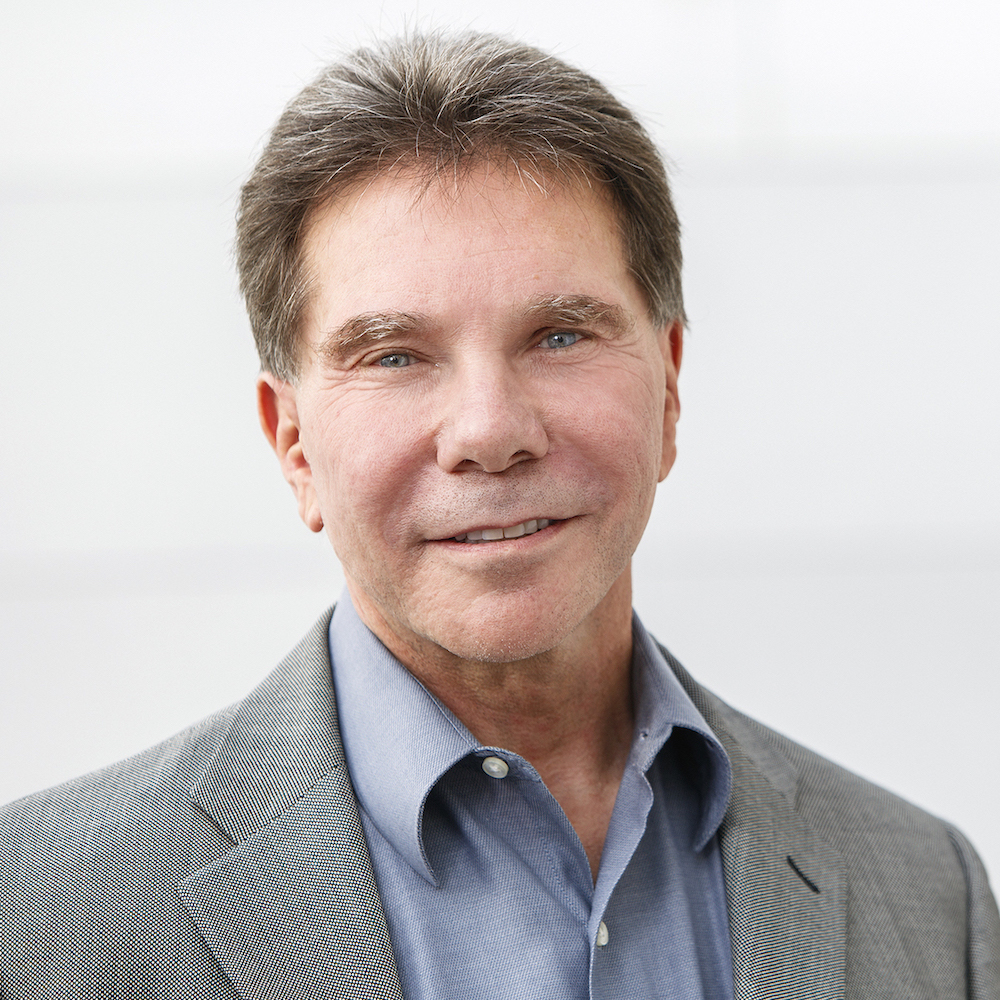
Ep 50Robert Cialdini, PhD: Littering, Egoism and Aretha Franklin
Robert Cialdini, PhD is counted among the greatest psychological researchers alive today and his published works have been cited thousands of times. His New York Times best-selling book, Influence, from 1984, is considered a classic for classroom and corporate use alike. He is an ardent author and a passionate professor, and his work has impacted millions. In short, Bob Cialdini has shaped the landscape of how sales and marketing workers do their jobs and how researchers frame their studies. In this episode of Behavioral Grooves, Bob took a few minutes to discuss some of his most underappreciated research and some of the new things he’s working on. We began with a study that used littering as a way to predict, before the polls closed, the outcome of an election by watching how voters treated candidate fliers left on their cars. One of the very elegant aspects of this study was that it required no surveys – merely the observation of behaviors in the parking lots of the polling places. The question the researchers sought to answer was this: How do voters treat the fliers of candidates they favor and of those they oppose? More specifically, do voters keep fliers from candidates they like and litter with the fliers of candidates they dislike? Then, our conversation moved to a line of research that he’d investigated for over a decade: the motivations for pro-social behavior, such as giving to those in need. Bob reminds us that there are many motivators at play when one person helps out another, as when a passerby gives money to some asking for money on the street, but there is one motivator that stands out: egoism. Many of us believe that being charitable is an obligation or is driven by guilt, and while that is true to some degree, Bob’s collective research over more than a dozen years revealed that egoism, that selfish desire to feel good about ourselves, is at the heart of helping others. Then we went a step farther. Bob noted that helping others is more likely to occur when the person in need appears to be in-group or in-tribe. In other words, we’re more likely to be charitable if it appears the person asking for help is “like me.” The primary way we decide if someone is like us is to look at how they’re dressed. What kind of clothes are they wearing? In his studies, Bob found that soccer (football) fans were more likely to assist someone on the street if they were wearing the jersey of their favorite team. It’s unnerving to think that the clothes you wear could determine whether someone helps you or not. In our grooving session, Kurt and Tim discussed the impact of social identity and self-identity. We discussed articles by Michael Hogg and Roy Baumeister. We brought in books by Harvard Professor Teresa Amabile and Dan Levitan’s great treatise on the neurological effects of music. And on music, we chatted about how music makes us feel and we cited Semisonic’s “Closing Time” and Beethoven’s 5th Symphony as examples. Lastly, Bob is interested in hearing from YOU! He’d like listeners to send reports on how the principles of influence are being used in the real world to be included in his next book. If you’d like to be considered for his next work, please send your stories to [email protected] We hope you enjoy our discussion with Bob Cialdini. https://behavioralgrooves.podbean.com/ Sponsor: The Creative Group, Inc. This episode is brought to you by Creative Group Inc. Kurt and Tim have worked with CGI and have found that their process of co-creation of incentive program provides clients with more robust solutions. Because their incentive and employee engagement programs are co-created, they reflect the truest aspects of the client’s organization and culture. CGI shares our belief that incentives and rewards shouldn’t be used to create brand mercenaries – but instead, should be about creating brand missionaries. Check them out at https://www.creativegroupinc.com/. A Note of Gratitude We are grateful to Bob for sharing his insights with us in this very fun conversation. However, it wouldn’t have happened without the concerted effort of Bobette Gordon. We thank her for her coordination and support to make put make our conversation with Bob a reality. References Robert Cialdini, PhD and Influence at Work: https://www.influenceatwork.com/ The Principle of Continuation in Gestalt Psychology. The Continuity Principle: http://www.scholarpedia.org/article/Gestalt_principles#Continuity_principle Daniel Levitin: This is Your Brain on Music. https://en.wikipedia.org/wiki/This_Is_Your_Brain_on_Music Baumeister, R. F., & Leary, M. R. (1995). “The need to belong: Desire for interpersonal attachments as a fundamental human motivation,” Psychological Bulletin, 117, 497–529. Festinger, L. (1954). “A theory of social comparison processes,” Human Relations, 7, 117–140. Hogg, M. A. (2001). “Social categorization, depersonalization, and group behavior. In M. A. Hogg & R. S. Tindale (Eds.), Blackwell handbook of social psycho
Ep 49Grooving: Political Stalemates - Insights on Consistency
This episode is first in a series called Exploring the Principles of Influence, named for Robert Cialdini, PhD’s principles in his 1984 book, Influence. During this and the next 5 mini-grooving sessions, we will discuss Dr. Cialdini’s principles in light of events that are making headlines. In this episode, we tackle principle #4: Consistency. Dr. Cialdini describes consistency in this way: “Once people make a decision, take a stand or perform an action, they will face an interpersonal pressure to behave in a consistent manner with what they have said or done previously.” Consistency impacts how we view ourselves and how we are viewed by our familial, social and work communities. Consistency is the foundation of trust, a central element to the success of humankind. Kurt and Tim discuss how consistency plays a role in two political stalemates in the headlines: one in the United States with the government shutdown and the other in the UK with Brexit. We discuss how politicians are known for flip-flopping without impacting the support of their base enthusiasts. But, we ask, how many times can politicians forego consistency before the base supporters begin defecting? And how does context impact a politician’s need to be consistent? Listen to this mini grooving session to get a quick snapshot of these two political stalemates through the lens of Robert Cialdini’s 4th principle of influence: Consistency. www.behavioralgrooves.com