Audio Branding
327 episodes — Page 4 of 7
S1 Ep 210The New Era of Sonic Branding: A Conversation with Jack Bradley - Part 2
“My now retired business partner, who was the head composer for this company for years and years and years, he put that perfectly, and he said, I remember he talked to a young composer. He said, ‘Look, at the end of the day, it’s the difference between art and craft,’ said, ‘when you’re making your own music and you’re doing your own thing, it’s art, it’s art for you. You’re the artist and you’re making it and you can make it whatever you want, whatever you want. But when you’re making something for a brand, it’s a craft. You’re being hired to make a specific thing.’" -- Jack Bradley Can you hear a brand? This week we continue to explore the world of audio branding with our audio expert and executive producer Jack Bradley. In the second half of our conversation, we talk about how the creation of music for a brand is a delicate blend of skill and ingenuity, between time constraints and client expectations. The sonic branding landscape has evolved drastically amid the pandemic, with the boom of podcasts and TikTok reshaping how we perceive branded music. We explore what this means for brand recognition when this happens and how a deeper understanding of a brand can lead to a refined, recognizable audio identity. Issues of negotiation, payment, and licenses in sonic branding are also touched upon, revealing the underlying complexities of this booming industry.We also delve deeper into the converging worlds of AI, remote work, and audio-first social platforms. With AI-generated music, who holds the creative rights? How is the rise of influencer musicians impacting the industry, and how is the potential for more branded content shaping the future? Jack also takes us behind the scenes, sharing the best online audio resources and offering a sneak peek at some of his current sonic branding projects.As always, if you have questions for my guest, you’re welcome to reach out through the links in the show notes. If you have questions for me, visit audiobrandingpodcast.com where you’ll find a lot of ways to get in touch. Plus, subscribing to the newsletter will let you know when the new podcasts are available and access to a resource called The Studio with lots of interesting sound-related mp3s, videos, educational pdfs, and exclusive discounts from previous guests. And if you’re getting some value from listening, the best ways to show your support are to share this podcast with a friend and leave an honest review. Both those things really help – and I’d love to feature your review on future podcasts. You can leave one either in written or in voice format from the podcast’s main page. I would so appreciate that. (0:00:00) - Audio BrandingWe explore the difference between art and craft when it comes to audio branding. As Jack puts it, “When you’re making your own music and you’re doing your own thing, it’s art, it’s art for you. You’re the artist and you’re making it and you can make it whatever you want, whatever you want. But when you’re making something for a brand, it’s a craft.” We discuss how clients will often pay for an audio brand and then neglect to use it effectively, as well as the challenge of having to work within the constraints of time and budget. We also explore the role data plays in decision-making, and how quickly the branding situation can be changed if the numbers just don’t match up. (0:05:46) - The Impact of Sonic BrandingJack talks about the pandemic and how it changed the sonic branding game with the explosion of podcasts, remote work, and TikTok. “For us,” he explains, “like, we now have a whole arm that does audio post, and I would say 85% to 90% is remote, is done through Zoom calls.” We explore the importance of understanding the brand and deciding whether voices or music matter most in branding. We also discuss the importance of negotiating payment and licenses for sonic branding, and what factors can make it important for a company to own its own audio resources. (0:15:52) - AI, Remote Work, and Social Media ImpactsWe take a closer look at the implications of artificial intelligence on audio branding. Who holds the intellectual property rights of creative works that are generated by AI? How are the tools used to create them improving? We explore the power of social media and branding on short-form media outlets like TikTok and YouTube Shorts, and the rise of influencer musicians, and we reflect on the hustle of audio production and how building relationships with agencies is more important than ever. “Now it’s like, you need to have two or three hundred people that trust you,” he says, “and this stuff’s happening in a matter of hours in many cases, and it’s just, all that stuff has changed. And it will continue to [change]. It’s never going to go back to be the way that it was” (0:28:11) - Finding the Right Audio ServiceAs our conversation comes to a close, we also touch on some of the different audio services out there, such as Riverside FM, Squadcast, and Z

S1 Ep 209The Evolution of Audio Branding: A Conversation with Jack Bradley - Part 1
“I would just play these crazy ‘80s drum beats and then I’d play on top of it and it was like the coolest thing ever. So it always became this really important thing to me too, and I couldn’t describe it in any way professionally at all. I mean, I was just a kid. But I was thinking about this like, I don’t know. I assumed some kids were, like, super into BMX bikes or something. Like, this was like my thing, and I think, again, that just really helped push me into that world.” -- Jack Bradley What does it take to craft the perfect sound that lingers in your mind long after you’ve seen an ad? This is a question veteran sound designer and HiFi Project CEO Jack Bradley, with over 25 years of experience in the content music and audio industry, has dedicated his career to answering. In this episode, we explore the intricacies of audio branding and uncover the latest industry trends and the power of sound in shaping viewer’s perceptions. Jack takes us behind the scenes, revealing the technical process involved in sound design, from session booking to mastering such resources as Pro Tools. As the audio landscape continues to evolve, we delve into the shift from creating to curating as well as the expanding market for custom music for campaigns. We also discuss the implications of using non-exclusive music and the importance of creating unique content.Our discussion also explores the role of sound in TikTok advertising and how the emergence of social media platforms has transformed sound design. Jack provides invaluable insights into creating short, impactful tracks for a variety of online platforms. From seven-second spots to fifteen-second TikToks, learn how he has successfully crafted effective soundtracks for various campaigns. If you want to learn more about what sort of audio goes into creating a great ad campaign, stay tuned.As always, if you have questions for my guest, you’re welcome to reach out through the links in the show notes. If you have questions for me, visit audiobrandingpodcast.com where you’ll find a lot of ways to get in touch. Plus, subscribing to the newsletter will let you know when the new podcasts are available and access to a resource called The Studio with lots of interesting sound-related mp3s, videos, educational pdfs, and exclusive discounts from previous guests. And if you’re getting some value from listening, the best ways to show your support are to share this podcast with a friend and leave an honest review. Both those things really help – and I’d love to feature your review on future podcasts. You can leave one either in written or in voice format from the podcast’s main page. I would so appreciate that. (0:00:00) - The Power of Sound in AdvertisingAs we start the episode, Jack shares his personal journey into the field of production, drawing upon his mother’s passion for the piano and how it helped shape his love of music, as well as classic cartoons like Bug Bunny’s “Rhapsody Rabbit” that first introduced him to classical composers. “They used a ton of it,” Jack recalls from his childhood, “and why not? It was public domain, and they had access to it. I know that there’s a ton of literature out there that talks about the power of Looney Tunes and Warner Brothers and using classical music, but that one, in particular, has always stuck to me.” (0:09:01) - Early Inspiration for MusicJack also shares his passion for analog synth music of the 1980s and how it made a lasting impression on him. “Especially the very thematic stuff that was happening,” he explains. “The theme from Knight Rider or like Tangerine Dream and I remember the theme from Street Hawk. I thought it was the coolest thing I’d ever heard.” He shares how ’80s synthwave music led to his first drum machine and making his own electronic music. “At the time,” Jack recalls, “it was just like I just wanted drums and there really wasn’t a way to play drums on the keyboard. So I had this drum machine.” (0:17:38) - Audio Branding and Changing TrendsThe conversation turns to Jack’s experience working with an audio company and the invaluable lessons he learned from being in different sessions. We discuss the technical aspects of sound design, from booking a session to understanding the complexities of Pro Tools. We also explore how Jack’s experience with sound design has impacted his current approach to music production. “I can talk about it mostly through the lens of music,” he explains, “because that’s 90% of what my company does, but then I can definitely talk about the audio post thing too, especially more recently. But in terms of music and music for branding and music, it changed so much because when I first started.” (0:21:41) - Music Trends and Market ShiftJack and I discuss how access and quality of stock music improved drastically due to the recession, and how the influx of music streaming services led to a shift in mindset from creating to curating. We explore the market for creating cu
S1 Ep 208Unveiling the Future of Sonic Branding: A Conversation with John SanFilippo - Part 2
“But if it’s a narrator, which it is, like, 90% of the time, why would you need to know their gender as long as they’re getting the message across? You wouldn’t be wondering what color shirt they’re wearing, why do you need to know what gender they are? So I’m really pleased that the industry is heading in this direction, and I’m even more pleased that clients have so far been very receptive to it. Yeah, it’s great.” -- John Sanfilippo Are you ready to hear the roar of a Ferrari's engine like never before? Get set for an immersive journey into the world of sonic branding with John Sanfilippo, an expert in the field. Together, we explore the concept of audio logos and how industry-specific sounds can create a powerful sonic logo. We discuss the innovative ways Ferrari and Harley Davidson leverage their unique engine sounds within their branding and explore potential criteria for businesses looking to tap into sonic branding.We also touch on the future of sound in branding and delve into thought-provoking scenarios such as reactions to non-binary voices as well as the impact of AI and synthetic voices on the industry. John shares intriguing insights from his experiences, shedding light on how the next generation could play a pivotal role in shaping the future of sound. Whether a small business or a large corporation, our conversation is packed with valuable insights to help you forge a stronger bond with your customers. Stay tuned for a fascinating look at just where audio branding might be heading next.As always, if you have questions for my guest, you’re welcome to reach out through the links in the show notes. If you have questions for me, visit audiobrandingpodcast.com where you’ll find a lot of ways to get in touch. Plus, subscribing to the newsletter will let you know when the new podcasts are available and access to a resource called The Studio with lots of interesting sound-related mp3s, videos, educational pdfs, and exclusive discounts from previous guests. And if you’re getting some value from listening, the best ways to show your support are to share this podcast with a friend and leave an honest review. Both those things really help – and I’d love to feature your review on future podcasts. You can leave one either in written or in voice format from the podcast’s main page. I would so appreciate that. (0:00:00) - Sonic Branding in MarketingI talk with John about using sound from an industry in an audio logo, incorporating product sounds into a sonic logo, and how car companies are shifting from using the outside of the car to get the ambiance to the inside. We also chat about how Ferrari uses the roaring engine sound and Harley Davidson has tried to trademark the sound of their engines. “It’s a very distinctive sound,” John tells us, “yeah, because I mean, you can rev like a, you know, a Honda Civic and it’s not going to sound all that cool. But if you’ve got like a Dodge Charger, it’s going to have a very distinctive roar.” (0:07:47) - Audio BrandingThe conversation turns to the importance of sound in business, and how audio branding can create an emotional connection with customers. We discuss the varying scales of business and how that can affect the price of audio branding services, and about the resurgence of the full-sing jingle. “It’s fun,” he says about Tic Tac’s new jingle, “it’s you know, it’s on point. It fits the brand and it’s catchy, and it’s not catchy in an annoying way. It’s engaging and it’s fun, and it doesn’t take itself too seriously and I think it works really well. So I'm curious to see where that goes in the coming years.” (0:22:45) - The Future of SoundWe continue to explore the idea of audio branding and how it can create meaningful connections with customers and clients. John shares his experience working with clients and their positive impressions of non-binary voices. We also discuss the impact of AI and synthetic voices, particularly clone voices, and the potential of the next generation in terms of sound. “The AI thing is tricky,” he says. “A lot of people ask me, you know, ‘What do you think of AI? What do you think of clone voices and clone voices like clone singers? You can, you can make new Elvis songs now, stuff like that.” Episode SummaryJohn and I discuss using sound in business, audio logos, and car ambiance.We discuss how audio branding creates connections and the potential of jingles.John shares his experience with AI voices and next-generation sound. Connect with the GuestWebsite: https://soundwise.audio/“The Full-Sing Jingle: Is It Coming Back?”: https://soundwise.audio/2023/06/01/the-full-sing-jingle-is-it-coming-back/Connect with John Sanfilippo on LinkedIn: https://www.linkedin.com/in/johnsanfilippo/Follow John Sanfilippo on Facebook: https://www.facebook.com/SoundWiseAudio/ Connect with the Audio Branding Podcast:Book your project with Voice Overs and Vocals by visiting https://voiceoversandvocals.comConnect wit
S1 Ep 207Exploring The Power of Sonic Branding: A Conversation with John Sanfilippo - Part 1
“Loyalist College, they have their own marketing people, they had just done a visual rebrand, so it was the perfect time for a sonic – not even a rebrand, they never had any kind of sonic strategy. So that was very exciting. And they had this new young marketing team too, and they were really receptive to new ideas, and they had this agency on board that had done their visual rebrand and their overall rebrand, and they were great to work with too. So it was a longer process and it was more involved, but it was all the right people on board, so it did go very smoothly even though it took a bit longer. Whereas that real estate agent, that was also a great experience, but it was just a completely different thing because I realized I'm not really branding a business, I'm branding a person." -- John Sanfilippo This week’s guest has had a storied career, from music to media and advertising, and then to their synthesis in audio branding. He founded the sonic branding and production company now known as SoundWise in 2012, and he’s worked with businesses big and small to bring their brand into the realm of sound. His name is John Sanfilippo and in this episode, we’ll be unpacking his journey into audio branding and how the industry has transformed into the powerhouse it is today.One of the most intriguing aspects of our discussion was the creation process of a sonic identity, a signature sound so unique it resonates without visuals or words. We dove deep into the connection between voiceover and sonic branding communities, reminisced about early sound experiences that have left a lasting impression on us, and even ventured into the iconic album Thriller by Michael Jackson. All the while, John expertly guided us through the process of using a brand's media, touchpoints, and environments to craft a compelling and recognizable sonic identity.John also shed light on the nuances of audio branding for different-sized companies and the importance of understanding the emotional core of a client. We chatted about the creative push that comes with fresh ideas and the importance of integrating non-musical elements into audio logos. So, tune in, get comfortable, and let your ears guide you on this exploration of sonic branding.As always, if you have questions for my guest, you’re welcome to reach out through the links in the show notes. If you have questions for me, visit audiobrandingpodcast.com where you’ll find a lot of ways to get in touch. Plus, subscribing to the newsletter will let you know when the new podcasts are available and access to a resource called The Studio with lots of interesting sound-related mp3s, videos, educational pdfs, and exclusive discounts from previous guests. And if you’re getting some value from listening, the best ways to show your support are to share this podcast with a friend and leave an honest review. Both those things really help – and I’d love to feature your review on future podcasts. You can leave one either in written or in voice format from the podcast’s main page. I would so appreciate that. (0:00:01) - The Power of Sonic BrandingJohn shares his journey of how he got into audio branding and how it has evolved over the years. “The industry is very interesting right now,” he says, “because there are so many people doing it, but there isn’t anybody necessarily flying the plane. You know, there isn’t like one sort of authority figure saying this is how it is now, which I think is probably a good thing.” He explains the process of creating a sonic identity that is so distinct and consistent that it could work without visuals or words and shares his tips and insights on branding with sound today and about what the future might hold. (0:04:11) - Audio Branding and Early Sound ExplorationWe also explore how the voiceover and sonic branding communities are linked, the importance of a tactile component to sound, and the early sound experiences that have moved us. We discuss the iconic album Thriller by Michael Jackson, its guitar solo by Eddie Van Halen, and an intriguing discovery about the pool tables in the music video: “I don't know if they were like just like weird prop tables that somebody made and forgot to put holes in them,” he says, “but it's the weirdest thing I saw.” (0:16:02) - The Power of Sound in BrandingOur conversation turns to the process of sonic branding and audio production. “The first thing we generally do,” John explains, “is what I like to call the audio audit. So we look at the brand’s media, its touch points, its environments, all those places where sound can be exploited in some way, where we can put our signature on it.” John also talks about an exciting fusion of sound and animation that he’s working on right now and the avian inspiration behind Soundwise’s own audio brand. (0:30:10) - Audio Branding for Small vs. LargeWe discuss the differences between audio branding for small and large companies, the importance of understanding the
S1 Ep 206Celebrating Your True Self: Insights on Creativity and Value: A Conversation with Danielle Soccio - Part 2
“One of my clients said, you know, he literally stopped doing gigs for free or for a low pay because he was able to just stand in his body and realize that some part of his inner body was saying to him ‘you're worth more than this.’ And so he was able to hear that within himself, and it helped really shift that mindset, and so now, he said, ‘I'm doing way better gigs and I'm always saying ‘this is my price, that’s it,’ you know,’ and, and when you say it and do it in this powerful but grounded state, people respond to you better as well.” -- Danielle Soccio This episode’s the second half of my discussion with singer, speaker, and creative mentor Danielle Soccio as we discuss how she’s helped clients recognize their true worth, how the value of creativity has changed in recent years, and how sound can help us celebrate our authentic selves.As always, if you have questions for my guest, you’re welcome to reach out through the links in the show notes. If you have questions for me, visit audiobrandingpodcast.com where you’ll find a lot of ways to get in touch. Plus, subscribing to the newsletter will let you know when the new podcasts are available and access to a resource called The Studio with lots of interesting sound-related mp3s, videos, educational pdfs, and exclusive discounts from previous guests. And if you’re getting some value from listening, the best ways to show your support are to share this podcast with a friend and leave an honest review. Both those things really help – and I’d love to feature your review on future podcasts. You can leave one either in written or in voice format from the podcast’s main page. I would so appreciate that. Recognizing Your Value"One of my clients came to me,” Danielle recalls one of her most memorable mentoring successes, “because she'd had this dream of always wanting to sing, to perform, and she thought that's why she needed to see me." We talk about how those voice lessons instead led her client to realize how much she hides her true self from others and to find the courage to speak with her own voice. We also talk about her work with musicians, and how the age of Spotify has only worsened the tendency of young artists to sell themselves short. "Some of my clients used to perform for free and to perform for very little,” she explains. “It's a very common thing for musicians to undervalue themselves." The Inner SelfOur discussion touches on art in the digital age and how the convenience of online audio may have also helped devalue it. "I think people value the arts to a certain point,” Danielle says, “but they just don't comprehend how much time and energy and focus needs to go into creating such beautiful art." We talk about the goal that guides her through every mentoring role she takes, and her definition of success: "To be able to absolutely be who I am,” she tells us, “and be accepted for that and be able to freely express that out in the world." "It's [about] the physical self,” she explains, “but also the inner self.” Our Stories and SongsAs the episode comes to a close, Danielle tells us about the power of sound since the beginning of time to connect us to one another. "I think sound is ultimately, as human beings, how we connect with each other,” she says, “through our stories, through the lyrics of our songs, through our conversations." We talk about her upcoming book and the new album she’s working on, and her hope in helping people find their inner voice. “If we shared that with each other more often,” Danielle says, “and connected with people more in that way I think there would be far more harmony in the world." Episode SummaryHow a singing lesson helped Danielle’s client speak with confidence.The value of musicians and creativity in a world where everything’s online.Understanding your true worth and listening to your authentic self.Danielle’s upcoming book, album, and her hope for the future of sound. Connect with the Guest:Website: https://daniellesoccio.comDownload Your Free eBook, “How to Courageously Live a Fully Expressed Life”: https://www.daniellesoccio.com/ebook/Book a free call: https://daniellesoccio.as.me/Connect with Danielle Soccio on LinkedIn: https://www.linkedin.com/in/danielle-soccio/Follow Danielle Soccio on Facebook: https://www.facebook.com/DanielleSoccioAwakenYourVoice/Follow Danielle Soccio on Instagram: https://www.instagram.com/daniellesoccio_awakenyourvoice/Subscribe to Danielle Soccio on YouTube: https://www.youtube.com/channel/UC6jRvoiGAVCLJXbX1pw1c8AListen to Danielle Soccio on Spotify: https://www.linkedin.com/in/danielle-soccio/Connect with the Audio Branding Podcast:Book your project with Voice Overs and Vocals by visiting https://voiceoversandvocals.comConnect with me on Instagram - https://www.instagram.com/jodikrangle/Watch the Audio Branding Podcast on YouTube - https://www.youtube.com/c/JodiKrangleVOConnect with me on LinkedIn - https://www.linkedin.com/in/jodikrangle/Leave the
S1 Ep 205Exploring Sound & Self: Musical Connections and Personal Growth: A Conversation with Danielle Soccio - Part 1
“It’s part of it, but the deeper part is truthful, authentic, safe, safe to express yourself, and I think that’s the biggest problem in this, you know, one of the biggest problems in the world. [It’s] that people don’t feel free to express themselves, to truly express who they are or what they want to say.” -- Danielle Soccio This episode’s guest is an accomplished singer and performing artist, creative mentor, speaker, and author from Melbourne, Australia. She’s performed in prestigious concert halls, on major television events, in the theatre, and she’s produced her own one-woman shows. She’s recorded numerous works beginning with her first album of standards, Hope, and original music that can be heard on major streaming services. Her passion is performing, and she’s sung before a viewing audience of a billion people. She’s also the creator of Awaken Your Voice, creating cutting-edge voice and transformation programs for artists, entrepreneurs, professionals, and individuals. She works with people who want to express themselves with greater presence and impact, in a larger, more meaningful way so they can achieve their goals and dreams. She’s helped transform thousands of people into confident and courageous individuals, with a newfound clarity, voice, and vision for their life.Her name is Danielle Soccio, and this conversation will help you dig deeper into what’s causing your roadblocks and keeping you from being your best self – and how it relates to sound.As always, if you have questions for my guest, you’re welcome to reach out through the links in the show notes. If you have questions for me, visit audiobrandingpodcast.com where you’ll find a lot of ways to get in touch. Plus, subscribing to the newsletter will let you know when the new podcasts are available and access to a resource called The Studio with lots of interesting sound-related mp3s, videos, educational pdfs, and exclusive discounts from previous guests. And if you’re getting some value from listening, the best ways to show your support are to share this podcast with a friend and leave an honest review. Both those things really help – and I’d love to feature your review on future podcasts. You can leave one either in written or in voice format from the podcast’s main page. I would so appreciate that. The Power WithinAs the episode starts, we talk about Danielle's early memories of sound, and how her mother's ABBA and Barbara Streisand albums sparked her love of music. "That's where, I think, sound really started to influence me in a really big way," she explains. "And for me, it was through singing." She tells us about her concert performances and the sense of inner power and deep connection they bring. "When I sing and perform," she says, "there's just something that's happening inside, you know, and I can just feel the power and vibration of my voice... and that's a really beautiful, amazing experience." Intention, Harmony, and MelodyDanielle tells us how her love of music and experience as a musician inspired her to delve deeper into the power of sound as a way of forging connections between people. “I can feel that there’s something really powerful, sound and everything, attached to it,” she says, “intention, harmony, and melody that can travel across the room and impact and influence people, and move them in a very deep way.” She tells us about how music awakened her to her inner voice, and how she came to realize that such an awakening isn’t always that easy for people who might not be musically inclined. “I started to realize,” she recalls, “that this inner voice... not everyone really listens to or has access to it.” The Back of Our BodyOur conversation turns to how she now helps people find their inner voice, and she gives us an on-air demonstration of an exercise listeners can follow along with to find their center. "Not only does the sound come out much better, much richer, much fuller," she explains, "but it also comes out far more authentic and truthful." Danielle walks us through the process of relaxing and connecting with our physical and inner selves, and explains the philosophy behind it: "Finding that stillness, the still point, I think that's really necessary." She goes on to explain how modern distractions and the pace of everyday life can disconnect us from our authentic selves. "We're often in this go-go-go mentality of being in the front of our body, we're moving forward pushing forward. But we don't sit often enough in the back of our body. And to access this deep state, we want to be in that part of our body as well." Busy Monkey MindsDanielle tells us about what she calls our “busy monkey minds,” our constant stream of thoughts and worries about getting everything done, and we continue her breathing and focusing exercise to reach past those thoughts to our deeper selves. “From that deep place,” she says, “you can feel what wants to be communicated and speak or sing from that part of
S1 Ep 204Leveraging Podcasts for Business Growth Strategies: A Conversation with Molly Ruland - Part 2
“I feel like people are just becoming more and more repelled by that and so I think the days of companies being more personal and accessible, and ‘I want to hear what you sound like, I want to know who you are before I sign a contract with you, before I do business with you,’ I don’t think it’s going anywhere. I think, if anything, it’s going to deepen. I think people think about branded podcasts as, like, Colgate having a podcast about brushing your teeth.” -- Molly Ruland This week is the second half of my interview with CEO and Heartcast Media founder Molly Ruland as we talk about the overarching importance of who you know, how an obscure podcast led one of her clients to a ten-million-dollar contract and the value and limits of Artificial Intelligence.As always, if you have questions for my guest, you’re welcome to reach out through the links in the show notes. If you have questions for me, visit audiobrandingpodcast.com where you’ll find a lot of ways to get in touch. You can also join regular Clubhouse chats in The Power of Sound House, at 2pm Eastern every Wednesday. Plus, subscribing to the newsletter will let you know when the new podcasts are available and what the newest Clubhouse rooms will be about. And if you’re getting some value from listening, the best ways to show your support are to share this podcast with a friend and leave an honest review. Both those things really help – and I’d love to feature your review on future podcasts. You can leave one either in written or in voice format from the podcast’s main page. I would so appreciate that. Being 100% MyselfAs the second half of our conversation opens, Molly talks about how being herself and putting herself out there has helped her win over clients and build her business. “I have found,” she explains, “that by getting out in front of people and being 100% myself, I attract the kind of clients who resonate with that.” She also tells us about some of her favorite podcasting clients, from political analysts to audio dramas, and how one client's emergency request for 76 audiobook narrations led to Heartcast Media's first audiobook studio. "I think that I’m probably the most proud of the work we did there.” The Collateral BenefitsMolly also tells us about some of the unexpected benefits her clients might find in running a podcast, such as a podcast host for a very obscure and technical show whose expertise attracted a ten-million-dollar contract. “You just never know the collateral benefits of what a podcast can do,” she reminds us. She also warns us about some of the more popular SEO trends like sales funnels that sound good on paper but make less sense in practice. “A funnel implies a large amount of traffic being funneled into a smaller amount,” she explains. “So where is this large amount of traffic coming from?” We also discuss how AI is revolutionizing everything from podcast show notes to SEO predictions, and how SEO companies in particular are facing a dramatic shakeup as computers turn out to be more and more useful in calculating the best results. “And I’m not necessarily mad about that,” Molly adds. Bring Your Own TableAs our talk comes to a close, Molly discusses her early career as one of the lone women in a very male-dominated field, and the advice she has for women who find themselves in the same situation today. “My advice to people,” she explains, “is just do your own thing. Don’t worry about it if there’s no room at the table – bring your own table” Molly concludes with one last bit of advice, and a call for women to stick together regardless of their profession: “If you’re a woman in a male-dominated industry, make some room for other women, because that’s the only way we’re going to shift the balance” Episode SummaryMolly’s first experience with audiobooks and how they changed her company.How even an obscure podcast can be lucrative with the right audience.The role of Artificial Intelligence in everything from show notes to SEO.Molly’s advice to women and anyone who’s looking for a seat at the table. Connect with the GuestWebsite: https://www.heartcastmedia.com/Content Marketing Assessment Tool: https://www.heartcastmedia.com/content-marketing-assessment/Connect with Molly Ruland on LinkedIn: https://www.linkedin.com/in/heartcastmedia/ Connect with the Audio Branding Podcast:Book your project with Voice Overs and Vocals https://voiceoversandvocals.comTweet with me on Twitter - https://twitter.com/JodiKrangleWatch the Audio Branding Podcast on YouTube - https://www.youtube.com/c/JodiKrangleVOConnect with me on LinkedIn - https://www.linkedin.com/in/jodikrangle/Leave the Audio Branding Podcast a written review at https://lovethepodcast.com/audiobranding or leave a spoken review at https://voiceoversandvocals.com/talktome/ (Thank you!)Share your passion effectively with these Tips for Sounding Your Best as a Podcast Guest!https://voiceoversandvocals.com/tips-for-sounding-your-best-as-a-p
S1 Ep 203Strategies for Effective Listening: A Conversation with Molly Ruland - Part 1
“It just feels better to listen to somebody who sounds good. It just does, you know? And there’s all kinds of articles you can read about the psychology: you sound smarter when you sound better, you sound more trustworthy when you sound better. So it’s not about manipulating people.” -- Molly Ruland My next guest is the CEO and founder of Heartcast Media, a digital content agency focused on content marketing for founders, CEOs, coaches, and brands. She specializes in producing high-quality branded video content for businesses that want to generate revenue and create strategic relationships through content marketing. She’s a frequent speaker about the business of podcasting, marketing, and content creation. She believes that “listening is the revolution” and it’s evident in the work she produces, with multiple podcasts in the top ten percent of downloads. She currently lives in Costa Rica with her four dogs and runs her global business remotely. Her name is Molly Ruland, and she has a lot of knowledge when it comes to branded podcasts, helping beginners sound good, and getting right to the heart of what a branded podcast can – and can’t – do for a company. She very generously shares that knowledge with us today, so stay tuned!As always, if you have questions for my guest, you’re welcome to reach out through the links in the show notes. If you have questions for me, visit audiobrandingpodcast.com where you’ll find a lot of ways to get in touch. You can also join regular Clubhouse chats in The Power of Sound House, at 2pm Eastern every Wednesday. Plus, subscribing to the newsletter will let you know when the new podcasts are available and what the newest Clubhouse rooms will be about. And if you’re getting some value from listening, the best ways to show your support are to share this podcast with a friend and leave an honest review. Both those things really help – and I’d love to feature your review on future podcasts. You can leave one either in written or in voice format from the podcast’s main page. I would so appreciate that. Traditional Irish ThingsAs we start things off, Molly tells us about her earliest memories of sound and the memorable musical impression that growing up in an Irish family left on her. “We grew up doing all the very traditional Irish things,” she explains. “I played the tin whistle, I played the concertina... we did the traditional Irish dancing.” Molly tells us about the artists and musicians in her family, including the relative whose dancing shoes are on display at the Smithsonian. “We’re an emotional group,” she says, “us Irish people, and transfer that to our music.” What We Want Out of LifeWe go on to talk about what brought her to Costa Rica and how the Coronavirus helped her embrace her role as a global remote entrepreneur. “I think in the pandemic,” she notes, “we were all given a gift of really trying to get a handle on what it is we want out of life” Molly tells us how living in a rural village has helped her get back in touch with nature and given her a new perspective than she had in Washington D.C. “I couldn’t tell you what was going on,” she recalls, “because I was surrounded by concrete buildings all the time.” Stock Photos and Johnny Carson“I think podcasting is the only thing where people set out to buy the crappiest equipment possible,” Molly tells us. “If you sound like you’re in a tuna can or a trash can, you’re not going to get results” We talk about the underrated importance of podcasting equipment, especially a quality microphone, and the misconceptions some of the most iconic media images have created. “I blame stock photos and Johnny Carson,” she adds, “’cause you know like they always have the microphone on the desk, and it’s not even plugged in.” Creating a RunwayAs the first half of our discussion comes to a close, we talk about Molly’s advice for new podcasters. “I always say let’s start at the beginning,” she says. “Let’s define what success looks like, and then let’s think about it.” She tells us about the distinction between podcasting for an audience vs. podcasting as a networking tool, and how often its value in connecting hosts and guests is overlooked. “If you’re interviewing people you don’t want to do business with,” she explains, “specifically with a branded podcast, then you’re wasting you’re time” Molly offers tips for establishing and maintaining a rapport with episode guests, and the future of podcasting as a networking tool. “It’s all about that amplification,” she adds, “and creating a runway to work with people again.” Episode SummaryMolly’s connection to music through her Irish relatives.How the pandemic helped her reevaluate her priorities and relocate to Costa Rica.The value of a high-quality microphone to podcasters and entrepreneurs alike.Figuring out the goal of a podcast and whether it needs mass marketing.The importance of valuing and maintaining one’s connection with guests.&n
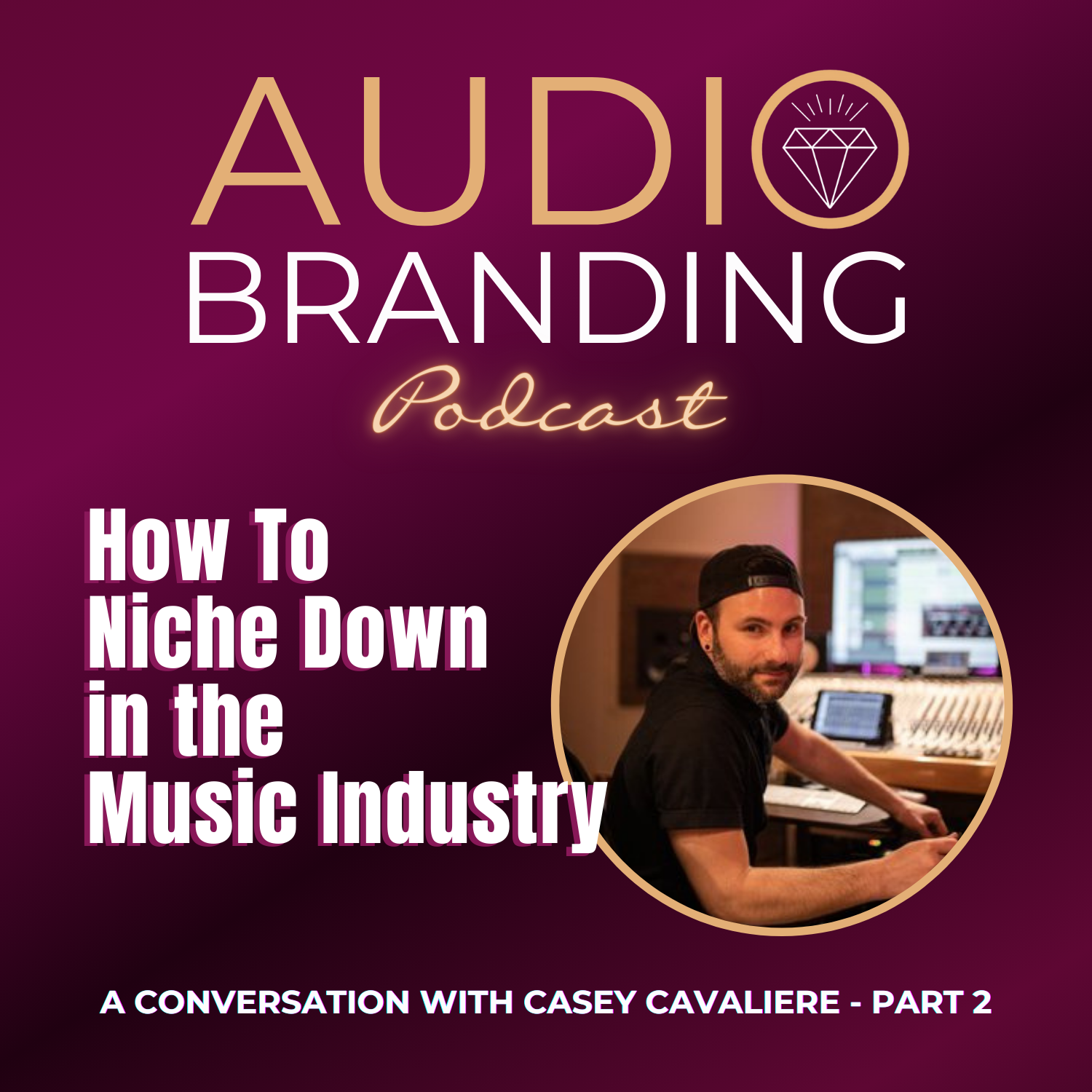
S1 Ep 202How to Niche Down in the Music Industry: A Conversation with Casey Cavaliere - Part 2
“You know, 'do you have any advice for me?' And I say, 'Yeah go write one hundred bad songs. Go finish them. Because that's going to do way more for your career, even though you think they're like really bad songs.' I'm like, 'yep, you got to get through those to write the one that's going to actually start a fire for you. I'm not saying you have to put them out, you know. Just go write them. Go give me the draft. Give me the worst draft you can on anything you know.' And the older I get the more I'm just like 'Oh how much time did I waste.'" -- Casey Cavaliere This episode’s the second half of my conversation with record producer, musician, and artist coach Casey Cavaliere as we talk about the art of creating an experience, how the secret to writing good songs is to write bad ones, and the surprising truth he learned about being a DIY artist.As always, if you have questions for my guest, you’re welcome to reach out through the links in the show notes. If you have questions for me, visit audiobrandingpodcast.com where you’ll find a lot of ways to get in touch. You can also join regular Clubhouse chats in The Power of Sound House, at 2pm Eastern every Wednesday. Plus, subscribing to the newsletter will let you know when the new podcasts are available and what the newest Clubhouse rooms will be about. And if you’re getting some value from listening, the best ways to show your support are to share this podcast with a friend and leave an honest review. Both those things really help – and I’d love to feature your review on future podcasts. You can leave one either in written or in voice format from the podcast’s main page. I would so appreciate that. Spreading Like WildfireAs the second half of our discussion begins, we talk about all the different musical communities and genre niches there are in the social media landscape. “There are an infinite number of different sub-communities right?" Casey notes. "The Venn diagram is wildly rich." He tells us about how he’s working to connect different aspects of the music industry for mutual benefits that might not be apparent at a glance, and how the future of music and fan communities will, as he says, “be through messages, art, ideas reaching those communities and then spreading like wildfire.” The Perfect ReleaseWe also talk about some of the pitfalls that new artists run into when putting out their first album or starting their career, including worrying too much about getting everything right on the first try. “Not taking action and spending too much time trying to craft the perfect plan,” Casey says, “craft the perfect release... that just doesn’t exist.” He also tells us about his firsthand experience as a ‘DIY artist,’ and how he found out the hard way that the acronym doesn’t mean you should tackle everything alone. “I learned very early on that it was not a sustainable model to do everything myself.” Getting to Episode 100Casey also tells us about his podcast The Record Process and how it offers a behind-the-scenes look at everything that goes into making a record, from the band to the cover art to the studio engineers and production team. “We try to flip that camera,” he says, “and give you, at least every season, you know, a whole 360 look at what a record looks like from all the kinds of people who have a hand in it.” We talk about creative ‘resistance’ and his steps for pushing through it, and about how important it is to keep a long-term view of your dream when you’re starting out, whether you’re an indie music artist or launching a new podcast. “It’s not about what Episode One or Episode Twenty or Thirty looks like,” Casey says. “It’s about what this show could possibly look like when we get to Episode 100.” Episode SummaryCasey’s marketing advice on how to go beyond Spotify playlists.Why crafting the perfect hit single is less important than many artists think.Casey’s podcast The Record Process and its unique insider perspective.Advice for recharging and holding onto the joy of creating art and music. Connect with the GuestWebsite: https://www.caseycavaliere.com/Connect with Casey Cavaliere on LinkedIn: https://www.linkedin.com/in/casey-cavaliere-a72ba3197/ Connect with the Audio Branding Podcast:Book your project with Voice Overs and Vocals https://voiceoversandvocals.comTweet with me on Twitter - https://twitter.com/JodiKrangleWatch the Audio Branding Podcast on YouTube - https://www.youtube.com/c/JodiKrangleVOConnect with me on LinkedIn - https://www.linkedin.com/in/jodikrangle/Leave the Audio Branding Podcast a written review at https://lovethepodcast.com/audiobranding or leave a spoken review at https://voiceoversandvocals.com/talktome/ (Thank you!)Share your passion effectively with these Tips for Sounding Your Best as a Podcast Guest!https://voiceoversandvocals.com/tips-for-sounding-your-best-as-a-podcast-guest/Get my Top Five Tips for Implementing an Intentional Audio Strategyhttps://voiceoversandvocals.c
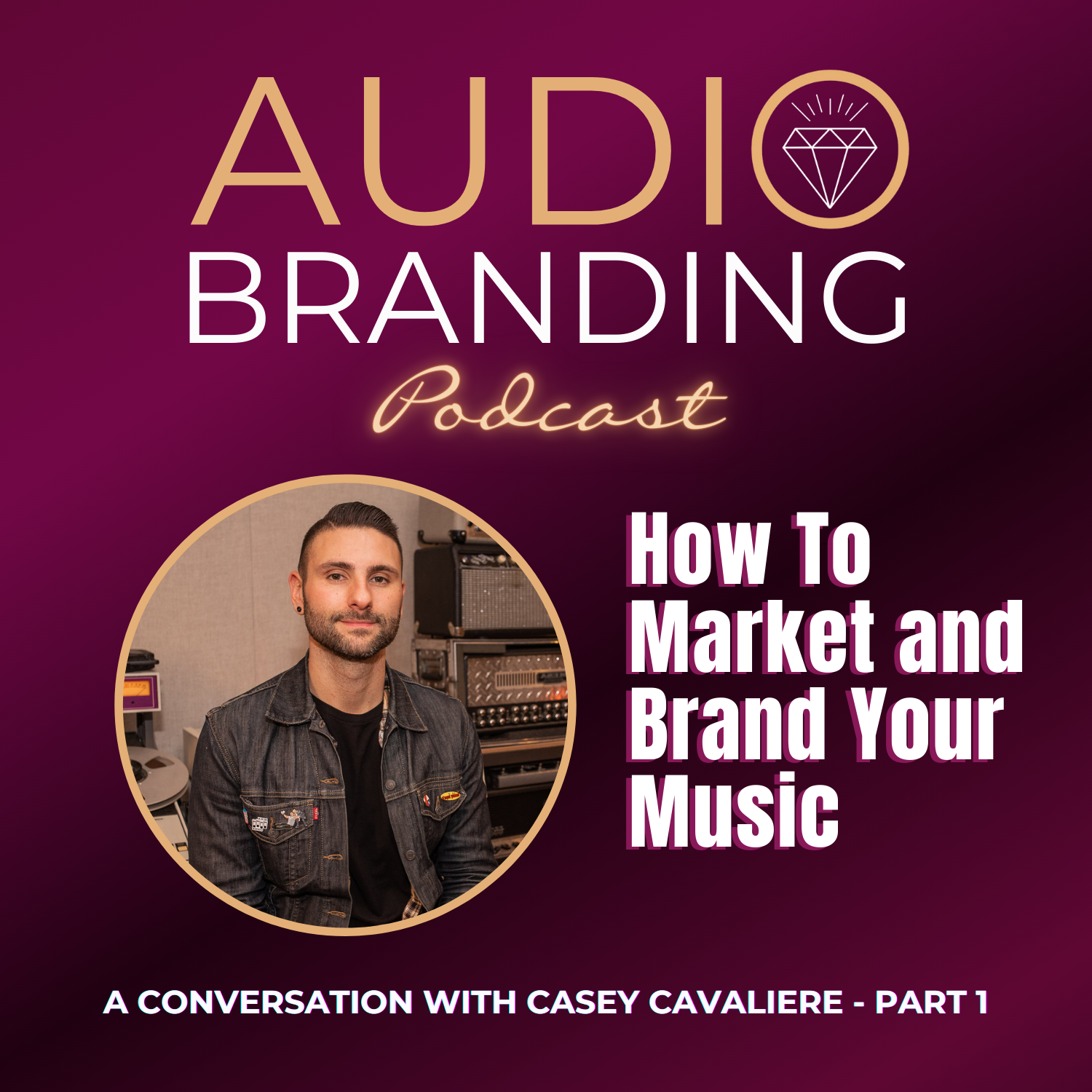
S1 Ep 201How to Market & Brand Your Music: A Conversation with Casey Cavaliere - Part 1
“I just want to try to take a more thoughtful, mindful approach to helping artists think for themselves and become self-sustaining. Because the industry is going to change. The things we’re talking about right now are going to be either way more relevant or way less relevant ten years from now. But I want you to be able to gain the tools and frameworks for kind of going through and saying ‘Hey well, how do I talk to this label? How do I pitch this label.’ And being like ‘Hey a better idea is, let’s flip the lens and put your hat on in a way that allows you to think about what behooves them and what their objectives are.’ And that’s maybe a better pitch.” -- Casey Cavaliere This episode’s guest is an American record producer, musician, and artist coach. His creative work ethic has been sculpted by a career spanning over two decades with his band The Wonder Years, including multiple Billboard chart-topping releases, extensive global touring, and the mentorship of music industry heavyweights. His mission outside of the studio and the stage is to help educate and inspire a new generation of independent artists by teaching them how to think critically about the way they market, promote, and brand themselves and their music.His name is Casey Cavaliere and I think you’ll find him incredibly inspiring. I know it’s tough out there for musicians right now, but the best is yet to come, and this discussion will help demystify what it takes to be a working musician.As always, if you have questions for my guest, you’re welcome to reach out through the links in the show notes. If you have questions for me, visit audiobrandingpodcast.com where you’ll find a lot of ways to get in touch. You can also join regular Clubhouse chats in The Power of Sound House, at 2pm Eastern every Wednesday. Plus, subscribing to the newsletter will let you know when the new podcasts are available and what the newest Clubhouse rooms will be about. And if you’re getting some value from listening, the best ways to show your support are to share this podcast with a friend and leave an honest review. Both those things really help – and I’d love to feature your review on future podcasts. You can leave one either in written or in voice format from the podcast’s main page. I would so appreciate that. Can We Plug This In?We start the show off with a look back at Casey’s memories of sound, and the big impression that his dad’s role as a bass player in a classic ‘70s rock band made on him as a child. “And I was like ‘Dad, can we plug this in?’" Casey recalls. “He’s like ‘honestly, I don’t even know if it still works, but I guess we can try.’ And we did, and boy did it still work” As he puts it, “I just didn’t stand a chance after that.” He tells us about living his lifelong dream as a professional musician, and how the thought of it being his career still leaves him in awe. “I still can’t believe it myself,” he says, “but it’s been, you know, the better part of two decades in a band from Philadelphia called The Wonder Years” Your Own Shiny ObjectCasey talks about the most rewarding part of his career as a musician and how it’s led him to help other artists who are just starting out. “I wake up every day,” he says. “and still have such gratitude to see the impact that we’ve been able to make, even in our little sub-world of punk rock and alternative music.” We also discuss the impact online platforms have made over the years, and how, as he puts it, artists should look past this or that “shiny object” to find their own value and approach to promotion. “That is a big part of what I hope to do,” Casey adds, “for the next generation of independent artists who, I think, have an opportunity to really dominate and completely change the landscape.” What Have You Built?As the first half of our interview comes to a close, Casey tells us how he focuses on the longer view when it comes to making and marketing music. “Imagine you wake up,” he says, “and you’ve been in this little punk band from Philadelphia for twenty years. What do you hope you’ve built?” We talk about how his career direction, like so many, changed after the pandemic encouraged him to reflect on his life, and how he hopes to give back what he’s received over the years. “The sense of community and that compassion and empathy, I hope that that is something we’ll be remembered for.” Episode SummaryHow Casey’s family history with classic rock inspired his own musical career.The best music promotion tools and the trick to remaining timeless.How indie bands can market themselves without losing their authenticity.Making music after COVID-19 and the fresh perspective it gave him. Tune in next week as Casey and I talk about how music fandom can transcend the algorithms, about the mistakes new artists make when trying to get a foot in the door, and how Casey’s podcast The Record Process offers a peek behind the scenes of some of the most famous record releases. C

S1 Ep 200Infomercials and Life Lessons: A Conversation with Brian Richardson - Part 2
“So a lot of times they feel like they have to pack this thing with so much dense information. I'm like, dude, you have 30 minutes and you have three of those to hook somebody and you still need to leave a little bit for Q&A. You still need to leave a little bit for engagement. So if you're not going to answer everybody's question about something highly technical in the span of a podcast or the span of a technical talk, the span of an explainer video, you always have to get them to that act. They need to take a step and learn more. And that's where then you get a next level of engagement. You have a more detailed conversation. You have a one-on-one with somebody.” -- Brian Richardson This episode’s the second half of my conversation with technical communicator, Dragon Con host, and Play It With Moxie drummer, Brian Richardson as he shares his advice on effective communication, some of the most memorable actors he’s worked with at Dragon Con, and the surprisingly rustic direction his life’s taken thanks to a move to Oregon and his new YouTube channel.As always, if you have questions for my guest, you’re welcome to reach out through the links in the show notes. If you have questions for me, visit audiobrandingpodcast.com where you’ll find a lot of ways to get in touch. You can also join regular Clubhouse chats in The Power of Sound House, at 2pm Eastern every Wednesday. Plus, subscribing to the newsletter will let you know when the new podcasts are available and what the newest Clubhouse rooms will be about. And if you’re getting some value from listening, the best ways to show your support are to share this podcast with a friend and leave an honest review. Both those things really help – and I’d love to feature your review on future podcasts. You can leave one either in written or in voice format from the podcast’s main page. I would so appreciate that. Knowing When to SpeakAs the second half of our discussion kicks off, Brian tells us more about the advice he gives technical professionals for connecting with their audience, such as gauging how fast you talk and making sure you’re engaging with the listeners. “Some of it is voice and some of it is language options,” he adds. “There's also a third element depending on the audience, which is when to speak. So when we get into a lot of it, it’s basically word choice.” He shares his stories from Dragon Con, including some surprisingly introverted actors that he’s helped along the way. “Actors are not always outgoing people,” he says. “Some actors are actually introverts. And some of those folks really love the panel environment. They feed off of it. And then they will go back in their little cocoon at the end of the hour.” Fandom is FandomWe talk more about Dragon Con, his experiences with the casts of shows like Firefly, The Expanse, and Strange New Worlds, and how he works with guests so they know he’s on their side. “‘Is there anything we shouldn't talk about?’” he quotes his list of pre-show questions. “’Should I deflect from the audience?' And that's your safety zone, right? Now you understand that I'm not just going to feed you to the wolves because fandom is great. But fandom is also sometimes fandom." He also explains how his skills as a moderator have also proven useful when it comes to helping technical experts bridge the knowledge gap with clients. “This idiot in a colorful shirt,” Brian says, poking fun at his own role as the panel host, “said ‘I'm sorry, we have to go.’ So I'm, I'm essentially a buffer, a valve between those two sides. And in some cases when I'm doing technical work, I'm doing the same thing.” I’m Not Here YetBrian also tells us about an unforgettable interview with MCU star Benedict Wong, just as the Marvel movies were getting underway. “He, like, bursts through the door and he's like, ‘Ignore me. I'm not here yet,’” Brian recalls. “And then he sneaks behind the table, and I introduce him, and he comes back up and he's funny as hell.” As the episode comes to a close, we also talk about his YouTube channel NerdSteading, which combines geek-culture enthusiasm with his DIY experiences in rural Oregon. “You’ll see me being sad about roof leaks and doing a full demolition on a workshop,” he explains, “and eventually releasing a video where I built a chicken coop that looks like a TARDIS.” Episode SummaryKnowing when and how to speak, and making room for your listeners.Some of the most introverted and outgoing actors Brian’s hosted at Dragon Con.What being a convention host and technical speaker have in common.Brian’s most memorable interviews as a host and his NerdSteading channel. Connect with the GuestWebsite: https://siliconchef.com/Follow Brian Richardson on Facebook: https://www.facebook.com/siliconchef/Connect with Brian Richardson on LinkedIn: https://www.linkedin.com/in/richardsonbrian/Follow Brian Richardson on Twitter: https://twitter.com/siliconchef/ Connect with the Audio Branding

S1 Ep 199Why Infomercials Matter: A Conversation with Brian Richardson - Part 1
“And I carried that into engineering in college and was going to go into computers, but then kind of got into robotics. But through all of that, I was still doing college radio. And again, that was like backdoor access to, ‘Hey, can I use the studio in the off hours? Can my band record our CD here in the summer when the stations technically shut down?’ And then that got me into, well, I’m on-air talent now, which in college radio is, as Strongbad used to say, I can describe college radio in five words: dead air, um, dead air.” -- Brian Richardson This episode’s guest is an engineer turned technical communicator who’s currently working as the Security Initiative Lead for Intel’s Data Center & AI Marketing team. He also produces DIY videos from his farm in Oregon, hosts events and panels for Dragon Con, one of the world’s largest pop-culture conventions, and is one of the co-founders of their in-house video team, commonly known as DragonConTV – and he certainly has some interesting stories to share about that.But I know him best as the drummer and emcee of the band Play It With Moxie that we’ve been performing in together for over 18 years at a small music convention in Atlanta. His name is Brian Richardson and not only is he a very funny guy, he’s also extremely knowledgeable when it comes to helping techies share complicated ideas. His answer? Infomercials! I’ll let him explain.As always, if you have questions for my guest, you’re welcome to reach out through the links in the show notes. If you have questions for me, visit audiobrandingpodcast.com where you’ll find a lot of ways to get in touch. You can also join regular Clubhouse chats in The Power of Sound House, at 2pm Eastern every Wednesday. Plus, subscribing to the newsletter will let you know when the new podcasts are available and what the newest Clubhouse rooms will be about. And if you’re getting some value from listening, the best ways to show your support are to share this podcast with a friend and leave an honest review. Both those things really help – and I’d love to feature your review on future podcasts. You can leave one either in written or in voice format from the podcast’s main page. I would so appreciate that. Dead Air, Um, Dead AirWe start off the episode with Brian’s early memory of sounds, from taking apart an AM radio to the first time he heard a lightsaber. “I vividly remember seeing Star Wars at the age of five in the theater,” he recalls. “And I don’t remember like the entire plot of the movie, but I remember it moving me and there’s a whole element of sound design in that like the lightsaber noise.” He tells us about how his fascination with sound and audio engineering led to band, then AV club, and then his first radio gig. “And then that got me into, well, ‘I’m on air talent now,’” he says, “which in college radio, as Strongbad used to say, I can describe college radio in five words, dead air, dead air.” The Human-to-Nerd InterfaceBrian and I talk more about his early years at Dragon Con, and how he helped create what’s become known as DragonConTV. “Once we got the whole DragonConTV operation up and running,” he says, “that’s a whole different story. But I ended up in this parallel track of like becoming sort of the, the human-to-nerd interface, whether it was on the technical side of things, or whether it was on the actual, like stereotypical nerd side of things.” Being the human-to-nerd interface, as he puts it, taught him about the subtleties of communication, and he realized that it’s an often-neglected skill when it comes to STEM careers. “When I was getting my master’s degree,” he explains, “I was teaching a computer hardware course. And I discovered very quickly as the person grading the lab reports that my students didn’t know how to communicate. They’d do a 12-page lab report for a three-hour lab.” Learning from InfomercialsWe take a closer look at his work as a technical communication instructor and the surprising role that his infomercial parodies on DragonConTV played in his strategy. “So we started making like, you know, fake commercials, fake news reports, music video parodies,” he recalls. “To make a thing, you must first deconstruct it. And infomercials are a beautiful comedic parody because they’re such exaggerated forms of story.” He explains how infomercials and technical communication often have the same goal of breaking a problem down to layman’s terms and offering a solution. “This is what most people are looking for when they have like technical money to spend with a company,” Brian explains. “I want to find a solution for this particular problem, or you’re going to inform me about a problem I’ve never heard of before and give me the next step. That’s exactly what an infomercial does.” Fail, Fix, Learn, ActAs we wrap up the first half of our discussion, Brian tells us how he dissected the infomercial into four basic parts that can be used for any sort of targeted,

S1 Ep 198How to be a Better Speaker and Hit all the Right Notes: A Conversation with Elaine Clark - Part 2
“So I think that when people can get that one word that hits them in the heart and in the gut, that’s what makes a good podcaster. When it’s just information, it’s information. And that’s where we often think, well, ‘I’ll just read the blog.’ You know, ‘I’ll go get a book on that.’ ‘I’ll look it up.’ You know, ‘I’ll just do a Google search and find it.’ But if someone is adding something to it that we haven’t thought about, and it puts a feeling to it and a story, and it makes us come alive, that’s what makes a good podcaster.” -- Elaine Clark This week’s episode is the second half of my conversation with best-selling author, voiceover expert, and prolific voice actor Elaine Clark as we talk about the power of storytelling, what makes someone an expert, and the importance of style in everything from company meetings to ASMR.As always, if you have questions for my guest, you’re welcome to reach out through the links in the show notes. If you have questions for me, visit audiobrandingpodcast.com where you’ll find a lot of ways to get in touch. You can also join regular Clubhouse chats in The Power of Sound House, at 2pm Eastern every Wednesday. Plus, subscribing to the newsletter will let you know when the new podcasts are available and what the newest Clubhouse rooms will be about. And if you’re getting some value from listening, the best ways to show your support are to share this podcast with a friend and leave an honest review. Both those things really help – and I’d love to feature your review on future podcasts. You can leave one either in written or in voice format from the podcast’s main page. I would so appreciate that. Getting to the Good StuffAs the second half of our discussion begins, Elaine talks about how crucial finding the right pace can be when it comes to podcasting. "There are a lot of podcasters out there that have a podcast," she says, "but you have to wade through to get to the good stuff." We also talk about streaming shows and the new golden age of television and how binge-watching owes its success to the power of narratives and the importance of emotional storytelling. "People are anxious to tell a story," she explains, "and people really want to hear more of a story and have someone emotionally connected with it." The Wrong NotesElaine tells us more about how the accessibility of podcasting, for creators and listeners, has helped it continue to thrive even after the height of the pandemic and offers advice on everything from the right equipment to the right vocal exercises. "You have to think of it like going to the gym," she says. "If I went to the gym and lifted some weights for a while, that will last me the rest of my life – if only." We talk about stepping outside our comfort zones and how breaking out of a rut can be the key to finding your best voice. "That's how," she says, "through patterns and how I listen to someone, I realize whether they're stuck in a place and different ways they can change, and that makes a huge difference. Because it's usually their vocal range is fine, but they just got stuck on the wrong notes." Making It Their IdeaAs our discussion wraps up, we discuss the future of audio in the digital age, from social media to branding opportunities. “In society,” Elaine notes, “the visuals mean so much. But over the phone or in podcasts, the voice has become just as important, if not more,” She also offers her advice, gleaned from her work with both professional clients and her own children, on how to persuade people through listening and understanding. “Letting people come up with their idea,” she explains, “is the most effective way that you can communicate. So it's their idea, not just yours.” Episode SummaryThe qualities that make for a compelling podcast hostWhat a conference in India taught Elaine about the power of perspectiveTips for improving voice recordings, from microphones to muscle memoryThe value of compromise and being willing to meet people halfway Connect with the GuestWebsite: https://elaineclarkvo.com/VO & Podcasting Books and Apps: https://elaineclarkvo.com/shop/Real Talking Tips Podcast: https://elaineclarkvo.com/podcast/Demo Production: https://elaineclarkvo.com/voice-over-demo-production/Coaching Services: https://elaineclarkvo.com/voice-over-coach/Teaching & Speaking Events: https://elaineclarkvo.com/events/Follow Elaine Clark on Facebook: https://www.facebook.com/ElaineClarkApps/Connect with Elaine Clark on LinkedIn: https://www.linkedin.com/in/elaine-clark-9172671/Follow Elaine Clark on Twitter: https://twitter.com/ElaineClarkVO/Connect with Elaine Clark on Instagram: https://www.instagram.com/elaineclark.vo/ Connect with the Audio Branding Podcast:Book your project with Voice Overs and Vocals https://voiceoversandvocals.comTweet with me on Twitter - https://twitter.com/JodiKrangleWatch the Audio Branding Podcast on YouTube - https://www.youtube.com/c/JodiKrangleVOConn

S1 Ep 197How to be a Better Speaker and Hit all the Right Notes: A Conversation with Elaine Clark - Part 1
“Most people speak with three different rhythms in a sentence. So if I’m not thinking about it, I have certain parts that are gonna be faster and other parts where maybe I’m thinking about, they’ll be slower, and then something in the middle. That’s what keeps our attention with that melody, that melodic change that’s happening there.” -- Elaine Clark My next guest is the author of two best-selling books, There’s Money Where Your Mouth Is and Voice-Overs For Podcasting, the creator of two voice and diction apps (Activate Your Voice and Adding Melody To Your Voice), and the host and creator of the speech communication podcast Real Talking Tips. She’s an actor, director, and producer in a wide range of entertainment and business genres, from video games to business events. Over the past forty years, she’s coached C-Suite executives, newscasters, television hosts, podcasters, multimedia journalists, presenters, sports reporters, salespeople, and narrators. She specializes in developing a “tune of speaking” through word focus, movement, dynamics, tempo variations, storytelling, and musicality.Her name is Elaine Clark, and I'm looking forward to her perspective on how to be a better speaker. It's not just for people on stage but people who have to make presentations, podcast hosts, and anyone who just wants others to pay more attention when they're trying to get a point across. If you want to learn how to make a deeper impact with your voice, this is the podcast episode for you.As always, if you have questions for my guest, you’re welcome to reach out through the links in the show notes. If you have questions for me, visit audiobrandingpodcast.com where you’ll find a lot of ways to get in touch. You can also join regular Clubhouse chats in The Power of Sound House, at 2pm Eastern every Wednesday. Plus, subscribing to the newsletter will let you know when the new podcasts are available and what the newest Clubhouse rooms will be about. And if you’re getting some value from listening, the best ways to show your support are to share this podcast with a friend and leave an honest review. Both those things really help – and I’d love to feature your review on future podcasts. You can leave one either in written or in voice format from the podcast’s main page. I would so appreciate that. The Musicality of WordsAs the episode begins, we talk about Elaine's early memories of sound and how the variety of accents she heard growing up in Louisiana, California, and Germany led to her lifelong fascination with the cadence and melody of speech. "So I thought," she says, recalling all the different speech styles she encountered as a child, "'oh, there's the flowing and then there's the staccato.' So that was also what brought to mind the musicality of words." We also talk about storytelling and how it became her guiding principle when it comes to voice direction. "It's the theater of the mind. It's just like podcasting," Elaine says. "The way I work with people is, you see it first, you feel it, and then you speak." Solving a ProblemOur conversation focuses on storytelling and how Elaine uses it to guide the relationship between the speaker and listener. "Storytelling is a way of establishing authority," she explains. "When we know where everything is located, when we know how we feel about the various people that we're retelling the story about, people get into that story." She tells us how she helps clients communicate with more confidence and to stay focused on the true purpose and value of public speaking. "The motivation is always about, you know, 'why am I doing this?'" Elaine notes. "'Why am I presenting this information to someone?' It's always to solve a problem. Otherwise, I wouldn't need to speak." E is For Emotion“E is for emotion,'" Elaine says, explaining the advantage stories have over raw numbers. "You have to have not only just logic but emotion too, and know where everything is located as part of your storytelling." We talk about how crafting a narrative helps contextualize data and shares the speaker's perspective with the listener. "I was working with someone at a company," she tells us, "and he was the CFO, and he just wanted to give dollars and cents in his quarterly report. And I said, 'but you're not telling me, when you say your profit was $100 million, I don't know whether you were expecting $500 million and that's bad, or whether you were expecting 25 million and it's a lot better." Where is Your Podcast?As the first half of our discussion wraps up, Elaine tells us how a publisher’s idea for a podcasting book led to her very first podcast. “So then I had that book out, I'm thinking, ‘wow, this is great.’ Then the next question everyone asks is, ‘where is your podcast?’” She talks about the hands-on lessons she’s learned about running a podcast, and the habits that make for a successful show. “I like doing everything myself,” she adds, “because it's part of the learning p
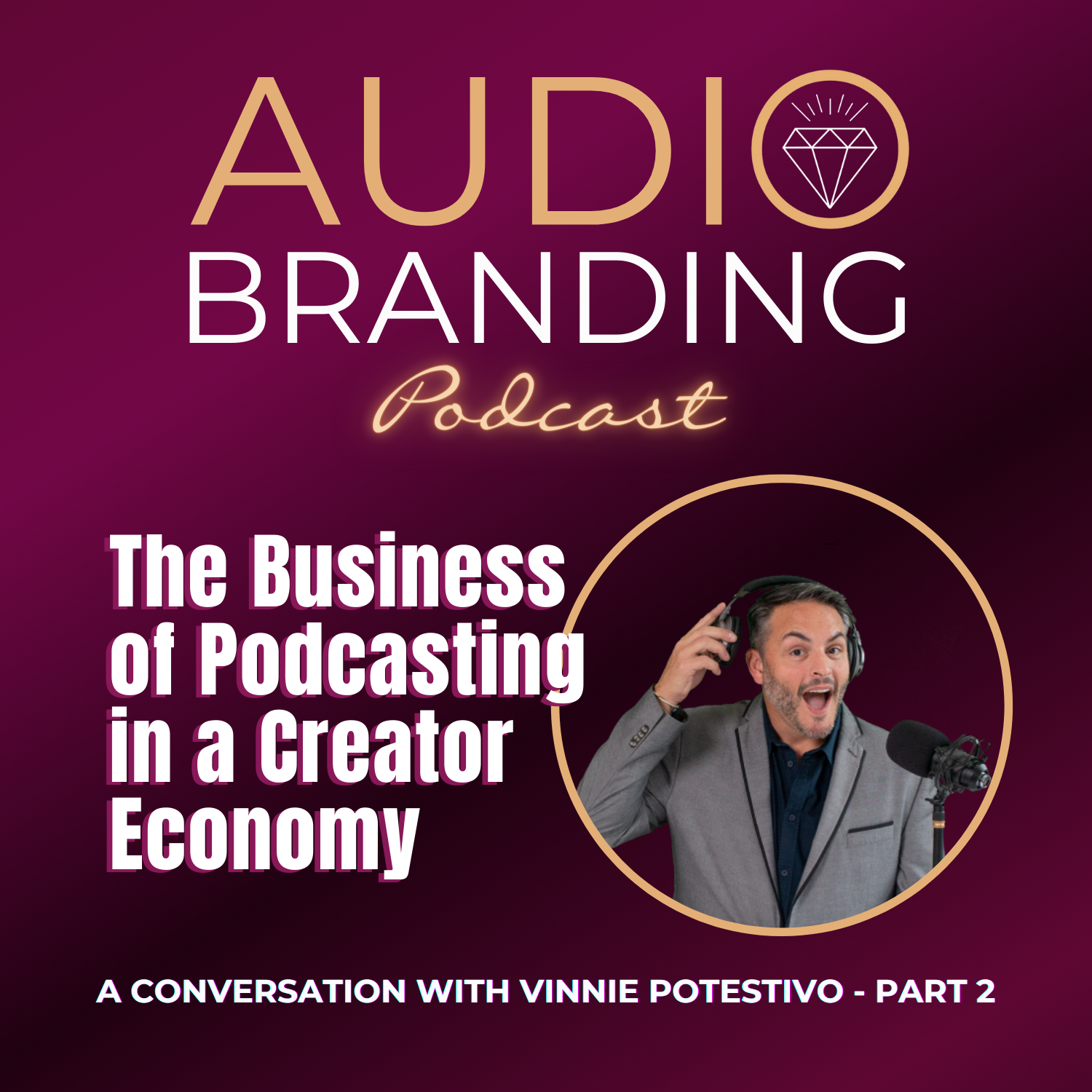
S1 Ep 196The Business of Podcasting in a Creator Economy: A Conversation with Vinnie Potestivo - Part 2
“And I say this, y'all, if you're actors out there are trying to audition and you're looking, when you meet a casting director, tell them, look them in the eye and say 'hey, you could literally be the person who braced me and I will forever be in debt to you, and I would love to make you a big famous casting director.' I have to be honest, people have said that to me and it works, and they are gigantic celebrities and I'm honored, and my life would be nowhere without them. But it's the alchemy of success. It's the want and drive, it's the clarity they have. They're like, 'Yeah, if you can get me this job and I can rock it for you, then you already get hired for these types of jobs.' This is how we amplify each other. It's how we raise up." -- Vinnie Potestivo This episode’s the second half of my conversation with Emmy Award-winning brand advisor, creator advocate, and podcaster Vinnie Potestivo as we talk about the evolution of the thirty-minute sitcom, how bonus footage went from an afterthought to a beloved feature, and his advice to podcasters on everything from audio equipment to newsletters to turning your ideas into content.As always, if you have questions for my guest, you’re welcome to reach out through the links in the show notes. If you have questions for me, visit www.audiobrandingpodcast.com where you’ll find a lot of ways to get in touch. Plus, subscribing to the newsletter will let you know when the new podcasts are available. And if you’re getting some value from listening, feel free to spread that around and share it with a friend, along with leaving an honest review. Both those things really help – and I’d love to feature your review on future podcasts. You can leave one either in written or in voice format from the podcast’s main page. I would so appreciate that. Podcast Meets BroadcastVinnie and I start the second half of our conversation with a discussion of the importance of keeping a regular content schedule, and take a look at both his ongoing podcast, I Have a Podcast, and back at my very first podcast, Silver Linings. “I find those people,” he says, talking about podcasters who become discouraged along the way, “are often the people who say, 'Oh, you know, I had an idea, I just, you know, it was just an idea.' But y'all, if you're listening to this, please make time for those ideas.” We also talk about how podcasting is becoming more integrated into other forms of media, and he describes how indie podcasts and regional TV news might form a perfect fit. “That makes me excited about the RSS,” Vinnie explains. “That makes me excited about podcast meets broadcast.” This is a SportThe topic shifts to traditional and new media news sources, the role Linkedin’s own news department plays in his podcast, and what Vinnie’s learned about audio equipment and microphones since starting his own show. “If I sound distorted and blown out,” he remarks, “then no matter how right I am or passionate I am, that message won’t come through.” We talk about personal branding and the little things that can help a podcast stand out, and what it takes to stay in the podcasting game in the long run. "A lot of people will get into podcasting,” he says, “and start recording without really focusing on the fact that this is a sport. This takes muscle and emotional memory, and muscle memory.” Three Great IdeasAs we reach the end of our conversation, we talk about the sounds of celestial bodies, including the eerie howls of black holes, and the importance of networking and supporting one another on social media and in our daily lives. Vinnie also offers some parting advice for anyone who's overwhelmed as a creator and isn't sure where to start. "By the way,” he says, “while y'all are listening to this podcast right now, go put on, like, go write yourself an email, send yourself an email with three great ideas that you're capable of doing that you can make so that the stuff that you should do is set up." Episode SummaryWhy television dramas usually have longer running times than sitcomsThe “context of content” and solving the paradox of bonus footageThe value of networking and supporting each other at every career stageVinnie’s advice to podcasters, from first steps to building a following Connect with the GuestWebsite: https://ihaveapodcast.comConnect with Vinnie Potestivo on LinkedIn: https://linkedin.com/in/vinniepotestivoFollow Vinnie Potestivo on Twitter: https://twitter.com/vinniepotestivoConnect with Vinnie Potestivo on Instagram: http://instagram.com/vinniepotestivo Connect with the Audio Branding Podcast:Book your project with Voice Overs and Vocals https://voiceoversandvocals.comTweet with me on Twitter - https://twitter.com/JodiKrangleWatch the Audio Branding Podcast on YouTube - https://www.youtube.com/c/JodiKrangleVOConnect with me on LinkedIn - https://www.linkedin.com/in/jodikrangle/Leave the Audio Branding Podcast a written review at https://lovethepodcast.com/a
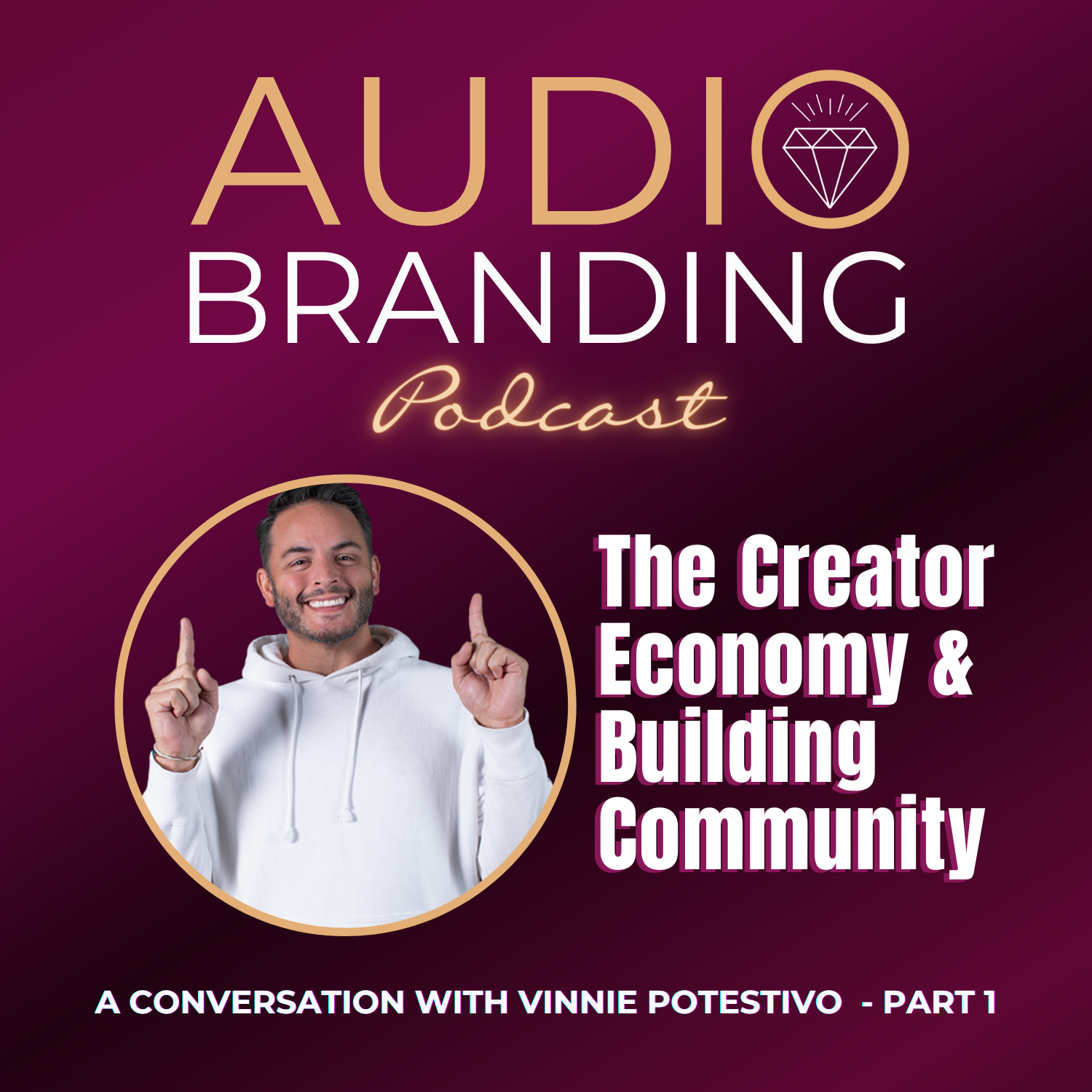
S1 Ep 195The Creator Economy And Building Community: A Conversation With Vinnie Potestivo – Part 1
“Audio has had exponential growth these last four years. I mean, there’s just this power. It used to be supportive of video, and I think back to, like, Spielberg and Dolby and, like, some of the original advances that happened in the beginning part of my life. It seemed dormant up until these last four. So what a cool time to be in audio.” -- Vinnie Potestivo This episode’s guest is an Emmy Award-winning brand advisor with a twenty-five-year track record of guiding personal brands and founder-led businesses to new heights through strategic content distribution, brand visibility, and media reach. As an advocate for independent creators, he hosts LinkedIn Presents: I Have A Podcast and serves as the editor-in-chief of ihaveapodcast.com, the #1 source for creative and career inspiration. He also shares valuable creator-economy business strategies, insights, and experiences with co-host Judi Fox on Podcast to Profit. His name is Vinnie Potestivo, and he has quite a lot to say about how to tell a good story and improve the chances of discoverability for your podcast. He's a fun guy to talk to, too: I think you'll really enjoy this interview.As always, if you have questions for my guest, you’re welcome to reach out through the links in the show notes. If you have questions for me, visit www.audiobrandingpodcast.com where you’ll find a lot of ways to get in touch. Plus, subscribing to the newsletter will let you know when the new podcasts are available. And if you’re getting some value from listening, feel free to spread that around and share it with a friend, along with leaving an honest review. Both those things really help – and I’d love to feature your review on future podcasts. You can leave one either in written or in voice format from the podcast’s main page. I would so appreciate that.Lots of Right WaysAs the episode starts, we kick things off with a fast-paced discussion about everything from Podfest to reviving the dodo bird to the exponential growth of audio. "My favorite thing about podcasts," Vinnie tells us, "is just the individualized approach that everyone has. And there's no right way, or, no, there is a right way. There's a lot of right ways, actually. And there are a lot of wrong ways too." We talk about his early memories of sound and the surprising career that inspired him as a small child: "I wanted to be a Foley artist, a gaffer or a Foley artist. Those were the two things that I wanted to be." Louder Than AnythingWe also talk about how the digital landscape of the early 2000s shaped his career at MTV. "Napster file trading, digitizing of our disks on computers," he explains. "I mean, I saw music, and I saw video as files, and I knew that I can move it. So not only was I the person who had to fix the controls on the screen, but I could get all your photos scanned in for you." He tells us about his casting work on MTV's Celebrity Deathmatch and the challenge of using audio to dive deeper into the emotions behind reality shows like the Real Housewives series. "I come from a point in time," Vinnie says, "where they would say, 'We want the loudest voice.' You know what's louder than anything? Silence." The Business of MusicVinnie tells us more about the industry insights he gained at MTV and how he's watched music videos transition from cable television to YouTube and new media. "MTV sure did play an impactful role in music and amplified music," he says, "but what it didn't do is get into the business of music, even the same way YouTube has gotten into the business of music." We also talk about platforms like Spotify, the rise of influencers and the new creator economy, and how they're transforming the music industry. "I would say that, in my opinion, the entry-level into the industry's changed significantly," he explains. "You can now create your own content and be found on your terms. And that's gigantic." Building a CommunityAs the first half of our discussion comes to a close, we talk about the future of the audio industry in general and podcasting in particular, and where the creator economy might lead us. “I would strongly lean into building a community,” Vinnie suggests. “I think the community economy is coming next.” Vinnie also offers his advice for podcasters who are just starting out. “I think for any creator out there, just create,” he says. “And if you’re having a hard time creating, then collaborate.” Episode SummaryThe exponential growth of audio over the last few yearsHow VCRs and Excel spreadsheets led to Vinnie’s creative role at MTVWhat reality TV taught him about bringing stories to life through soundHow MTV lost its hold on the music industry to streaming platformsThe rise of the Creator Economy and the upcoming Community Economy Stay tuned next week as we discuss how podcasting could become an important part of the broadcast news landscape, what a chance encounter with Christina Milian and Janet Jackson taught him about the value of netwo
S1 Ep 194Voice-Actor Friendly Audio Tech: A Conversation with George Whittam - Part 2
“No, it’s true. No, you’re absolutely right. Yeah, it does trigger memories. I remember sitting in my bedroom in my parents’ house hearing certain songs like ‘Double Dutch Bus,’ that song from the early 80s, it triggers a memory instantly. Or Earth, Wind and Fire, playing my parents’ vinyl records, certain songs like instant memory of where I heard that song.” -- George Whittam This episode’s the second half of my interview with audio engineer, podcast host, and all-around sound expert George Whittam as we talk about whether rooms or recording booths make for better audio, how podcasts became the new magazines, and George’s most and least favorite sounds.As always, if you have questions for my guest, you’re welcome to reach out through the links in the show notes. If you have questions for me, visit www.audiobrandingpodcast.com where you’ll find a lot of ways to get in touch. Plus, subscribing to the newsletter will let you know when the new podcasts are available. And if you’re getting some value from listening, feel free to spread that around and share it with a friend, along with leaving an honest review. Both those things really help – and I’d love to feature your review on future podcasts. You can leave one either in written or in voice format from the podcast’s main page. I would so appreciate that. The Blind Leading the BlindAs we start the second half of our interview, George explains how the needs of musicians and voiceover artists can lead to very different recording environments. “There’s no reverb,” he says about voiceover studios, “there’s no liveliness. It doesn’t help a musician who’s playing acoustically or singing to be singing into a dead void.” We talk about whether he prefers isolated rooms or recording booths for soundproof environments, and why isolation booths often have trouble living up to their promise. “A lot of these companies that make iso booths don’t understand the importance of actually having an acoustics expert,” he tells us. “There’s a lot of the blind leading the blind.” Sounds, Textures, and RhythmWe also discuss George’s experience with podcasting, both as a host and listener, and how it’s come to replace magazines as his source of daily news “With podcasts,” he says, “I find there’s less of the, ‘if it bleeds, it leads’ type stories and more, more real stories.” We also talk about the power of sound in our everyday lives, from the beauty of a piano piece or solo trumpet to the noise of leaf blowers and construction workers in the big city. “For me,” he says, “it’s always been about the sound, the textures, the rhythms, the way it’s recorded. That has always been what’s triggered an emotion in me.” Why It’s So ImportantThe topic turns to audio equipment and how well smartphones can fill in for a studio when we’re out on the road. George tells us about the limitations he’s encountered in trying to make Apple products work with third-party hardware, including an audio interview that was never actually recorded thanks to a notification hiccup. “It makes me crazy,” he adds, “and this is why we’ll never recommend, and even an iPad Pro for real recording use. You cannot count on it.” As the episode closes, we talk about the importance of sound, from advertising to movies, from music to everyday life. “Sound is very, very attached to the emotions,” he says. “That’s, it is for me, so that’s probably why it’s so important.” Episode SummaryWhether isolation booths or soundproof rooms are better for recordingBlocking out ambient noise, from city traffic to rural neighborsHow to get the most out of a smartphone while remote podcastingThe importance of sound, both digital and within our daily lives Connect with the GuestWebsite: https://georgethe.tech/(Use code GTTABP10OFF to get 10% off all services and webinars!)Connect with George Whittam on LinkedIn: https://www.linkedin.com/in/georgethetech/Follow George Whittam on Facebook: https://www.facebook.com/georgewhittam/Connect with George Whittam on Twitter: https://twitter.com/georgethetech/ Connect with the Audio Branding Podcast:Book your project with Voice Overs and Vocals https://voiceoversandvocals.comTweet with me on Twitter - https://twitter.com/JodiKrangleWatch the Audio Branding Podcast on YouTube - https://www.youtube.com/c/JodiKrangleVOConnect with me on LinkedIn - https://www.linkedin.com/in/jodikrangle/Leave the Audio Branding Podcast a written review at https://lovethepodcast.com/audiobranding or leave a spoken review at https://voiceoversandvocals.com/talktome/ (Thank you!)Share your passion effectively with these Tips for Sounding Your Best as a Podcast Guest!https://voiceoversandvocals.com/tips-for-sounding-your-best-as-a-podcast-guest/Get my Top Five Tips for Implementing an Intentional Audio Strategyhttps://voiceoversandvocals.com/audio-branding-strategy/Editing/Production by Humberto Franco - https://humbertofranco.com/This podcast uses the following third-party services f
S1 Ep 193Voice-Actor Friendly Audio Tech: A Conversation with George Whittam - Part 1
“And so he told me all about this, he showed me the facility that they have at the school, which was small, but very state-of-the-art digital audio recording technology for 1993. It was very state-of-the-art. And I was like, ‘Ooh, this is cool!’ And so I started realizing this is where I should be, I should be in the recording department. But they didn’t have one. They had a music school. That means I have to audition and get into music school if I want to study recording.” -- George Whittam This week’s guest has served the technical needs of voiceover artists since 2005. In 2017, he launched GeorgeThe.Tech, offering VO tech support, training, studio design, and audio processing templates. He’s the co-host of the Pro Audio Suite Podcast and co-host with Dan Lenard of Voice Over Body Shop at VOBS.TV. His name is George Whittam, and if you have a question about audio, he’s the guy to ask. We’ll be talking about what drew him to audio technology, acoustics, interfaces, and sound challenges. I always learn a ton of new things every time I speak to him, and I’m sure you will too.As always, if you have questions for my guest, you’re welcome to reach out through the links in the show notes. If you have questions for me, visit www.audiobrandingpodcast.com where you’ll find a lot of ways to get in touch. Plus, subscribing to the newsletter will let you know when the new podcasts are available. And if you’re getting some value from listening, feel free to spread that around and share it with a friend, along with leaving an honest review. Both those things really help – and I’d love to feature your review on future podcasts. You can leave one either in written or in voice format from the podcast’s main page. I would so appreciate that. Why Am I Here?We start the episode with George’s early memories of sound, from a terrifying introduction to fireworks when he was a toddler to his childhood tape recordings and family interviews. He recalls following his dad’s footsteps as an electrical engineer, only to discover his passion for sound in college. “I’ll never forget sitting in differential equations class,” he says, “shaking my head, like, why am I here? And the guy’s saying ‘Most of you guys aren’t going to need this, but you electrical engineers are going to be using this all the time.’ That’s what I thought I was studying. And I was like ‘wrong major.’" Voice-Actor Friendly TechGeorge tells us how his father supported his early career in sound and helped fund his very first, and very unconventional, recording studio. “It was an old camper RV called the El Dorado,” he explains. “It literally said El Dorado on the front. And that’s where the name of my first company came from: ‘El Dorado Recording Services.’ We talk about how far he’s come since those early days, and his guiding philosophy as an audio engineer, which, as he tells us, he can sum up in four words. “I’ve come up finally with a slogan,” he says, “a four-word slogan, which is voice-actor-friendly tech.” Should You Upgrade?We discuss the challenges of helping voiceover artists and musicians, who often aren’t the most technically savvy people, with some of the more complex decisions when it comes to acoustic design and recording equipment. George tells us how the pressure to stay current can sometimes backfire, especially when it comes to trying to reinvent a very personalized audio setup. “You can run for years and years,” he explains, “and not upgrade a single solitary thing, and have a completely functional, great sounding, and reliable-to-use studio. And that’s really what we care about.” The Voice Actor’s InterfaceAs the first half of our interview comes to a close, George talks about his work on the upcoming Passport VO, an audio interface built specifically for voiceover artist needs. “It’s our take,” he tells us, “on what we think the voiceover actor’s audio interface, sort of the ultimate voice actor audio interface could or should be.” We talk about the design process, the obstacles along the way, and how he hopes it’ll help clear some of the technical hurdles of working with audio. “It’s been a lot of fun,” he says, “getting to co-design a product, an actual physical thing you can plug into your computer.” Episode SummaryHow George’s early experiences with sound inspired his enthusiasm for audioGeorge’s journey from electrical engineering to sound specialistHis first radio job and the surprise resignation that reshaped his careerHow social media and the gig economy have strengthened the GTT TeamKnowing the right time to upgrade your studio and audio hardware Stay tuned next week as we talk about the acoustical difference between isolation booths and rooms, the power of music in shaping everything from our emotions to our memories, and whether Android or the iPhone has an advantage when it comes to recording audio away from home. Connect with the GuestWebsite: https://georgethe.tech/(Use code GTTABP10OFF
S1 Ep 192The Future Strategy of Audio Branding: A Conversation with Adam Pleiman - Part 2
“I think there’s a responsibility to know that if you’re emotionally connecting people, if you know that we have the power to persuade, in a way, that is, that wields real results and real people, like let’s not manipulate, you know? Let’s make sure that that’s an authentic thing that needs, that you’re creating and you’re not driving something fake. You’re not driving, because it’s gonna be, it’s gonna be, they’re gonna smoke it out anyway at some point in time. It’s not gonna work.” -- Adam Pleiman This episode’s the second half of my conversation with Grammy-nominated engineer, producer, musician, and Play Audio Agency creative director Adam Pleiman, as we talk about how he’s working to make the world sound better, about the surprising role ASMR played in Play Audio’s recent Sport Clip ad campaign, and the importance of honesty when it comes to consumers.As always, if you have questions for my guest, you’re welcome to reach out through the links in the show notes. If you have questions for me, visit www.audiobrandingpodcast.com where you’ll find a lot of ways to get in touch. Plus, subscribing to the newsletter will let you know when the new podcasts are available. And if you’re getting some value from listening, feel free to spread that around and share it with a friend, along with leaving an honest review. Both those things really help – and I’d love to feature your review on future podcasts. You can leave one either in written or in voice format from the podcast’s main page. I would so appreciate that. A Better-Sounding PlaceThe second half of our discussion starts as Adam talks about what he considers his evolving mission as an audio creator. “Our mission,” he says, “is to make the world a better-sounding place.” We talk about the boundaries he believes should be maintained for the sake of respecting his audience. “There are certain things,” Adam explains, “that we will draw a line on and certain things we won’t do because it would be irresponsible and hurtful to the industry.” He tells us how he brings all the different parts of a company’s brand and the audio resources at his disposal into a cohesive sonic identity, and how rewarding it is to see everything come together. “I mean,” he says, “it gives me goosebumps to think that it’s that much more effective when it’s all tied in across the board, you know?” What No One Else Is DoingWe talk about one particularly recent and successful example, the now-famous ASMR audio spot for Sport Clips, and how the idea grew from its first inspiration to an acclaimed finished product. “It was an interesting challenge,” Adam tells us, “to go, well, ‘what’s unique? You know, what are you doing that no one else is doing?’ Do they have unique sounds? And what can we do to illustrate those to a listener?” We listen to a clip and talk a bit about the process of creating an authentic ASMR experience, and how it worked to bolster Sport Clips’ brand recognition. “The stats on it were outstanding as a brand lift,” he says. “Brand awareness had like a 15% jump. It was outstanding.” The Ocean for MeAs the episode comes to a close, Adam tells us what he sees in store for the future of audio branding, and how, with the U.S. market historically lagging but quickly catching up, there’s a lot of opportunity for marketing innovation. “We’re on the growth side now in the States,” he says, “and we’re on awareness and an education push in the States. But once we get over that hump, it’s gonna be the same as the visual side.” He shares how he sees audio branding following the same trajectory as visual branding in decades past, and his sense of optimism about where it’s all heading. “I mean, the ocean for me in this space is pretty blue right now. You know, I think there’s a lot coming.” Episode SummaryThe power of audio branding and the responsibility of its creatorsHow Play Audio works to bring company brands together into a unique soundGoing behind the scenes of Sport Clips’ ASMR-based ad campaignThe future of audio branding and its untapped potential in the U.S. Connect with the GuestWebsite: https://playaudioagency.com/Connect with Adam Pleiman on LinkedIn: https://www.linkedin.com/in/adampleiman/Connect with Play Audio Agency on LinkedIn: https://www.linkedin.com/company/play-audio-agency/Follow Play Audio Agency on Facebook: https://www.facebook.com/playaudioagency/Follow Play Audio Agency on Instagram: https://www.instagram.com/play_audio_agency/Connect with Adam Pleiman on Twitter: https://twitter.com/adampleiman/ Connect with the Audio Branding Podcast:Book your project with Voice Overs and Vocals https://voiceoversandvocals.comTweet with me on Twitter - https://twitter.com/JodiKrangleWatch the Audio Branding Podcast on YouTube - https://www.youtube.com/c/JodiKrangleVOConnect with me on LinkedIn - https://www.linkedin.com/in/jodikrangle/Leave the Audio Branding Podcast a written review at https://lovethepodcast.com/audiobranding or le
S1 Ep 191Advertising & Audio Branding Strategy: Goosebump Moments: A Conversation with Adam Pleiman - Part 1
“Music’s played a major role in my life growing up. It’s always been ingrained in me. So, you know, I remember as a really young kid, like kindergarten, going to my grandparents’ house or great grandparents’ house and mashing the keys on their Wurlitzer organ, right? And then mom and grandma are in the other room going ‘sounds great, hon!’ And I’m like, ‘yeah, it’s great.’ Notice they weren’t in the room with me, they were in the other room, because there’s a volume pedal on that thing.” -- Adam Pleiman My next guest is always in search of the next “goosebump moment” and takes pride in eliciting that reaction from those that he works with. His extensive background as a Grammy-nominated engineer, accomplished composer, producer, and musician brings an expert foundation to his role as creative director at Play Audio Agency. His name is Adam Pleiman and he has a unique perspective, having viewed so many facets of the audio industry and approaching it now through a sonic strategies lens. There’s a lot to talk about, and I look forward to sharing our discussion with you!As always, if you have questions for my guest, you’re welcome to reach out through the links in the show notes. If you have questions for me, visit www.audiobrandingpodcast.com where you’ll find a lot of ways to get in touch. Plus, subscribing to the newsletter will let you know when the new podcasts are available. And if you’re getting some value from listening, feel free to spread that around and share it with a friend, along with leaving an honest review. Both those things really help – and I’d love to feature your review on future podcasts. You can leave one either in written or in voice format from the podcast’s main page. I would so appreciate that. Taking Things ApartWe start the episode off with a look back at Adam's early memories of sound, from his family's Wurlitzer organ to the childhood joy he took in tinkering, taking things apart, and trying to put them back together. He particularly recalls a precocious 7th-grade science fair project he came up with on radio and television jingles and the marketing effectiveness of different audio techniques. “I don't even think I got a great grade on it either,” he jokes, looking back on it. “They didn't understand. They just didn't get it. They weren't there yet. And that's, I think that's part of this industry as well.” The Immersive SideAdam tells us more about how his curiosity when it came to experimenting with the world around him helped hone his audio instincts even as it left the appliances around him in shambles. “I'm like, wow, that's really cool,” he says about a washing machine console that he took apart as a child. “It's never gonna do that again, because now it's in all these pieces. But I loved that stuff.” He tells us about a college experiment in ambient sound that left his friends stunned and paved the way for a lifelong fascination with exploring how sound secretly shapes our perceptions. “The immersive side,” he says, “the binaural side, the perception of it all, I think, has always been a curiosity.” Removing the SubjectivityWe talk about how that teenage sound setup with headphones and kitchen utensils mirrors Dolby’s latest Atmos sound systems. Adam explains what sets Atmos apart from older, more hardware-driven surround sound, and why he believes it has more staying power. He tells us how he transitioned from a career as a musician into sonic branding, and how he’s working to make sound design as rigorous a field as graphic design. “It's like, well, I could say that about colors,” he says. “I could say that about shapes. I could say that about design. I could say ‘I'd know it when I see it’ about the design, but that industry has done a really great job in removing the subjectivity from those decisions.” The Texture of SoundAdam also tells us how he works with clients in finding the tones and textures of sound, and how important it is to speak the right language and avoid audio jargon like timbre and pitch, “I've learned over the years,” he explains, “that if I use words like timbre and instruments, half the faces in the room go blank.” We discuss the balancing act between art and science, and how important it is to keep the consumer’s needs in mind. “At the end of the day,” he says, “did it move the needle? Did we achieve the goals we wanted to achieve, and is the creative spot-on? Those two go hand in hand.” Episode SummaryAdam’s childhood memories of sound, from piano lessons to washing machinesWhat a teenage audio experiment taught him about ambient soundsDolby Atmos and the algorithms that make it more versatile than surround soundBringing the objectivity of graphic design to audio brandingHow he works to speak the consumer’s language and place their needs first Tune in next week as we talk about the responsibility Adam believes audio advertisers have to create a better soundscape, as he shares the direction that he sees
S1 Ep 190Free and Open Podcasting: A Conversation with Rob Greenlee - Part 2
“And it surprised me that it took so long for people to adopt the on-demand aspects of audio. It’s been a very, it’s been kind of a slow adoption curve is what I’ve seen. I think that the on-demand side of video grew much quicker, which I think is an interesting case, even as it applies today as we look at the podcasting space. We’re still, you know, we’re still chipping away at it, as they say.” -- Rob Greenlee This episode’s the second half of my conversation with technologist, podcasting pioneer, and audio industry leader Rob Greenlee, as we discuss the tension between social media and open-source audio, the challenge of staying honest in an industry where advertisers expect endorsements, and how algorithms and automated moderation might change the culture of podcasting.As always, if you have questions for my panelists, you’re welcome to reach out through the links in the show notes. If you have questions for me, visit www.audiobrandingpodcast.com where you’ll find a lot of ways to get in touch. Plus, subscribing to the newsletter will let you know when the new podcasts are available. And if you’re getting some value from listening, feel free to spread that around and share it with a friend, along with leaving an honest review. Both those things really help – and I’d love to feature your review on future podcasts. You can leave one either in written or in voice format from the podcast’s main page. I would so appreciate that. Growing Up With YouTubeThe second half of our discussion begins as we continue to talk about YouTube, Spotify, and other efforts by content platforms to tame the podcasting frontier. Rob admits that the world’s a different place than it was when he started podcasting, and young podcasters have grown up with those big social-media platforms for much of their lives. “So I mean,” he says, “it’s not a huge issue, and I do get a sense that the up-and-coming generation of podcasters are more open to having this type of relationship with, like, a YouTube just because of how popular YouTube is.” The Whole EcosystemWe also talk about how he found that he’s gained a wider perspective on the audio industry thanks to a new role that allows him to work with a variety of companies. “That gave me a perspective,” Rob says, “that I need to back up and become more educated with the whole ecosystem of podcasting because working on one particular platform had kind of siloed my access to learning about other platforms. Because nobody wanted to share it with me, because they thought I was a competitor.” Podcasting Around the WorldAs the episode comes to a close, Rob tells us about his 2013 podcast The Spoken Life Show, and how he’s bringing it back for a new podcasting age. The original episodes turned out to be eerily prophetic, from the mainstreaming of podcasting through platforms like YouTube to a particular interest of his, the globalization of podcasting and digital audio as the technology reached every corner of the world. “Yeah,” he notes, recalling both his prediction and its success. “It’s huge, like out in Vancouver, and just the amount of podcasts that are being consumed out there is remarkable. And also in other parts of the world too. So, the U.S. isn’t the dominant player in podcasting anymore, I would say.” Episode SummaryHow streaming platforms and new creators are changing the industryThe metrics of podcasting and whether the audience has peakedHow podcast advertising and sponsorships have evolvedRevisiting The Spoken Life Show’s early podcasting predictions Connect with the GuestWebsite: https://robgreenlee.com/Connect with Rob Greenlee on LinkedIn: https://linkedin.com/in/robgreenlee/Follow Rob Greenlee on Facebook: https://facebook.com/robgreenlee/Connect with Rob Greenlee on Twitter: https://twitter.com/robgreenlee/ Connect with the Audio Branding Podcast:Book your project with Voice Overs and Vocals https://voiceoversandvocals.comTweet with me on Twitter - https://twitter.com/JodiKrangleWatch the Audio Branding Podcast on YouTube - https://www.youtube.com/c/JodiKrangleVOConnect with me on LinkedIn - https://www.linkedin.com/in/jodikrangle/Leave the Audio Branding Podcast a written review at https://lovethepodcast.com/audiobranding or leave a spoken review at https://voiceoversandvocals.com/talktome/ (Thank you!)Share your passion effectively with these Tips for Sounding Your Best as a Podcast Guest!https://voiceoversandvocals.com/tips-for-sounding-your-best-as-a-podcast-guest/Get my Top Five Tips for Implementing an Intentional Audio Strategyhttps://voiceoversandvocals.com/audio-branding-strategy/Editing/Production by Humberto Franco - https://humbertofranco.com/This podcast uses the following third-party services for analysis: OP3 - https://op3.dev/privacy
S1 Ep 189Free and Open Podcasting: A Conversation with Rob Greenlee - Part 1
“And it surprised me that it took so long for people to adopt the on-demand aspects of audio. It’s been a very, it’s been kind of a slow adoption curve is what I’ve seen. I think that the on-demand side of video grew much quicker, which I think is an interesting case, even as it applies today as we look at the podcasting space. We’re still, you know, we’re still chipping away at it, as they say.” -- Rob Greenlee This episode’s guest is the CEO of Spoken Life Media and host of the Spoken Life Show. He’s also the co-founder and advisor to PodcastEZ.com, and has worked in senior roles with Podbean.com, Libsyn, and Advertisecast. He’s a well-known public speaker, technologist, evangelist of the podcasting industry and its potential, and a trainer for podcasting globally. And he’s a founding Board of Governors member, and former founding chairperson of the Podcast Academy (which is responsible for the Ambies Awards). In 2017 he was inducted into the Academy of Podcasters Hall of Fame, and is a current chairperson of the Induction Committee for the eight-year-old “Podcast Hall of Fame.”Along with Todd Cochrane, who’s also been on this podcast, he co-hosts the 10+ year running New Media Show at NewMediaShow.com and hosts the “Spoken Life Show” at podpage.com/spokenlife/. His accolades are numerous, and his background, extensive. He’s even a former college basketball player at Pacific Lutheran University and is also a Guinness Book of World Record holder for building the World’s Largest Glass of Orange Juice for the State of Florida.His name is Rob Greenlee, and I’ve been looking forward to this discussion for a number of reasons. The state of podcasting is currently in flux, considering what’s happening with AI, podcast hosting, RSS, and a whole host of other considerations. It’s still going strong, and there’s still a sizable audience out there – my listeners being a case in point. But there’s definitely a lot to talk about.As always, if you have questions for my panelists, you’re welcome to reach out through the links in the show notes. If you have questions for me, visit www.audiobrandingpodcast.com where you’ll find a lot of ways to get in touch. Plus, subscribing to the newsletter will let you know when the new podcasts are available. And if you’re getting some value from listening, feel free to spread that around and share it with a friend, along with leaving an honest review. Both those things really help – and I’d love to feature your review on future podcasts. You can leave one either in written or in voice format from the podcast’s main page. I would so appreciate that. Embracing the TimeshiftAs the episode starts, Rob recounts his early memories of sound and one of his first forays into the audio industry back in 1999. “I asked this radio station,” he recalls, “it was a small market radio station at the time, if they had a technology talk show. And I said ‘I’ve got some friends, we can come in and do one.’” He tells us about the pioneering days of digital audio and podcasting, well before smartphones and streaming content existed, and how online shows changed the audience’s expectations when it came to radio. “The audience,” he says, “was starting to more and more embrace kind of time-shifting. That’s a term that I used early on, time-shifting of the consumption of radio.” Everybody Has a VoiceAs we continue, the topic shifts to the democratization of sound and how it competes with the commercialization of podcasts and online audio spaces. Rob wonders if the combination of these two factors has worsened streaming audio’s signal-to-noise ratio. “Is it possible that everyone should have a voice?” he reflects. “I think it’s an interesting question. I think the industry would love it if everybody had a voice, but is that what’s really good for the listener or good for the content side?” Podcasting’s Wild CardWe also talk about the leaps in technology the industry’s seen in just the last few years, and how it’s brought podcasting and a global audio market to the world. “The last three years,” Rob notes, recounting his work with international podcasters, “we’ve seen a big explosion of interest outside of the United States for podcasting.” He also considers what the future might hold for a media industry that’s so far been slow to evolve, whether it’s from audio hardware breakthroughs or from AI and generated voice content. “We’re seeing technology innovation come into the medium increasingly,” he notes, “with spatial audio and software solutions that are using AI technology and things like that that are starting to have an impact on the medium and the quality of what we’re seeing. And AI is one of those wild cards that I don’t think any of us really know how significant it’s going to be.” It’s Always Been ComplicatedThe conversation touches on YouTube’s recent entry into the podcasting market, and whether the “video podcasts” it promotes truly count as podcasts. “It’s always bee

S1 Ep 188In the Clubhouse: Audio Electronics Explained - Part 2
“I think, you know, in terms of quality and even the manufacturing, I’ve been very pleased with what I’ve been seeing from quote-unquote competitors. And as far as competing, I think the Pod Mobile is kind of different in the application and though there’s a lot of overlap and one can choose to, for certain applications, it can choose from multiple options, the packaging and the range of things that Power Mobile does is quite different.” -- Fernando Eid Pires This episode's the second half of The Power of Sound Clubhouse chat with panelists Steve Irby and Fernando Pires as we talk about condenser mics vs dynamic mics, Fernando's priorities when it comes to designing audio equipment and comparing technical numbers to real-world performance.As always, if you have questions for my panelists, you’re welcome to reach out through the links in the show notes. If you have questions for me, visit www.audiobrandingpodcast.com where you’ll find a lot of ways to get in touch. Plus, subscribing to the newsletter will let you know when the new podcasts are available. And if you’re getting some value from listening, feel free to spread that around and share it with a friend, along with leaving an honest review. Both those things really help – and I’d love to feature your review on future podcasts. You can leave one either in written or in voice format from the podcast’s main page. I would so appreciate that.Changing Up Your GearThe second half of our Clubhouse discussion starts as we continue to talk about audio specifications, the math behind decibel ratings, and whether condenser mics or dynamic mics offer the best bang for your audio buck. Fernando offers an example of how what seem to be ideal numbers on paper can sometimes fail to account for practical reality and a podcaster's unique circumstances. "My advice for the consumer," he tells us, "is that if you go with the numbers and you're about to change up your gear with hopes to improve it that much... get the product from a place that it can be returned." Publishing the TruthGeorge Whittam joins the conversation with a question to our panelists about the latest buzz surrounding 32-bit float audio, just what that phrase really means, and how useful it might be for a device as versatile as Fernando’s PodMobile. Fernando and Steve share their thoughts about balancing cost and efficiency in audio equipment, and whether it’s more important to compete with the numbers across the industry or with the user experience. “We’re at the point,” Steve explains, “where we want to say, what we publish is true, you know, and there is a lot of pressure to publish a certain number, maybe with a certain type of a measurement that doesn’t really matter. So you get the pressure to do that.” A Life TransformedWe wrap up the conversation with a more in-depth look at some of the design decisions that went into the PodMobile's audio ports and interfaces, how early user feedback led to Fernando adjusting his original plans to make it more robust, and the unique "blend mode" he designed to offer spatial-audio recording. As we close, he looks back at the circumstances that led to his meeting Steve and joining Kicker. "My life has been transformed entirely top to bottom in every way," Fernando says. "And that's amazing. Like, gosh, like how far it goes when, when you, you know, aiming for the long haul. And I don't see how that could have been the case if you had compromised on your values." Episode SummaryCondenser mics, dynamic mics, and getting the best soundHow essential 32-bit float audio recording is to audio hardwareWeighing technical specifications against user feedbackThe lessons Fernando learned while perfecting the PodMobile Connect with the PanelistsKicker Website: https://www.kicker.com/Connect with Steve Irby on LinkedIn: https://www.linkedin.com/in/steve-irby-aab79613/AudioSigma Website: https://audiosigma.com/Follow Fernando Pires on Facebook: https://www.facebook.com/fernando.eidpiresConnect with Fernando Pires on LinkedIn: https://www.linkedin.com/in/pireseid/Follow Fernando Pires on Twitter: https://twitter.com/PiresEid Connect with the Audio Branding Podcast:Book your project with Voice Overs and Vocals https://voiceoversandvocals.comTweet with me on Twitter - https://twitter.com/JodiKrangleWatch the Audio Branding Podcast on YouTube - https://www.youtube.com/c/JodiKrangleVOConnect with me on LinkedIn - https://www.linkedin.com/in/jodikrangle/Leave the Audio Branding Podcast a written review at https://lovethepodcast.com/audiobranding or leave a spoken review at https://voiceoversandvocals.com/talktome/ (Thank you!)Share your passion effectively with these Tips for Sounding Your Best as a Podcast Guest!https://voiceoversandvocals.com/tips-for-sounding-your-best-as-a-podcast-guest/Get my Top Five Tips for Implementing an Intentional Audio Strategyhttps://voiceoversandvocals.com/audio-branding-strategy/Editing/Production by Humberto Franco -

S1 Ep 187In the Clubhouse: Audio Electronics Explained - Part 1
“Well, if you want sound to go further, you don’t... Some people say it throws sound or something like that. It doesn’t, sound moves on its own. It’s a wave, but what you can do is control the dispersion of it. So if you’ve got your garden water hose and you put it on spray, it’s the same amount of water coming out, but it goes, it sprays out in all different directions, or at least quite a bit. And then if you twist it and make the setting where it goes straight out, okay, it will be more concentrated in that area. So basically what you do is you just take that acoustical power and you funnel it into different directions. So you might think it goes further, but it just makes it louder in that particular area.” -- Steve Irby Each Wednesday at 2 PM Eastern Time I host a weekly Clubhouse called The Power of Sound, where we talk about everything related to sound, such as music, podcasting, voiceovers, public speaking, audio branding, voice interfaces, social audio, and, of course, digital audio. If you’d like to drop by, just check the schedule for The Power of Sound to see what’s coming up. Just lately we had a conversation (and everyone here knew that the room was being recorded so I do have permission) called Audio Electronics Explained, where we discussed the science of sound and audio equipment.My fellow panelists in this discussion are Kicker’s founder and president Steve Irby, and audio engineer and AudioSigma founder Fernando Eid Pires. They answer questions about how our audio experiences are crafted through the innovation of the hardware we use. If you’ve ever wondered how speakers create the sound you love, or have questions about how audio interfaces work, or want to understand what audio specifications are really saying, they can help you. Both of them understand the nuts and bolts of audio gear and are sure to have the answers you’re looking for!As always, if you have questions for my panelists, you’re welcome to reach out through the links in the show notes. If you have questions for me, visit www.audiobrandingpodcast.com where you’ll find a lot of ways to get in touch. Plus, subscribing to the newsletter will let you know when the new podcasts are available. And if you’re getting some value from listening, feel free to spread that around and share it with a friend, along with leaving an honest review. Both those things really help – and I’d love to feature your review on future podcasts. You can leave one either in written or in voice format from the podcast’s main page. I would so appreciate that.A Thing of Its OwnThe Clubhouse chat starts off with Steven and Fernando introducing themselves and telling us how they got their start, and about Kicker’s role in the audio industry. “GM is our biggest customer,” Steve explains. “We build for a number of other automakers: Toyota, Subaru, Ford, and different ones as well.” Fernando talks about his firsthand experience with digital audio, from his early days as a student in Brazil to his work today on the PodMobile device. “It’s quite different engineering for audio than anything else,” he says, “robotics, or industrial computing applications. Audio is quite of a thing of its own: I love it because it’s a blend of art with those exact engineering-type things.” The Illusion of SoundSteve goes on to explain how sound works, and how everything from modulation to subtle volume shifts plays into the illusion of 3D audio in the car. “If you were sitting at a concert or in a club or you’re listening to a band,” he explains, “they’re generally in front of you. So a lot of the things that we do is designing for the sound to appear to come from the front of the car.” Fernando gives us an example of how, with the right processing, speakers can trick the ears and brain into hearing sound come from a variety of directions that might have nothing to do with where the speakers are installed. Tying the Senses TogetherThe conversation continues with its focus on the senses and how they can be manipulated, and we talk about my previous guest Steve Keller’s surprising research into the connection between sound and the sense of smell (in the case of a Dove campaign created at Studio Resonate). Fernando recalls a book by Dr. Daniel Amen that tied the senses together and helped change his life. “I remember one of the recommendations he had,” he tells us, “for, like, you just had like a really bad day or kind of in a difficult place is an immersion of what sounds good, smells good, temperature of the water... deliberately using as many of the senses as you can to get you to like, feel better. And of course, that, you know, will interfere with your state of mind.” What the Numbers MeanAs the first half of our Clubhouse discussion wraps up, the topic turns to audio equipment, technical specifications, and just what all those impressive-looking numbers on the back of a microphone box are really saying. Fernando gives us a vivid illustration of ju
S1 Ep 186Digitize Your Reality: A Conversation with Randy Sosin - Part 2
“The interesting thing about Napster was, you know, they built this really cool community and everyone had to upload their music to a server. So they controlled the servers. And because the music business doesn’t understand it and because it wasn’t their thing, they killed it. So the people who had designed that software were like, okay, then let’s just make every computer a server. And then like Gnutella and LimeWire came out and it was like, it almost destroyed the industry. They were able to take that technology and bring it back into like, well, ‘let’s just stream it to you now. We’ll stream it to you back from our servers.’ But then the artists paid the price on that.” -- Randy Sosin This is the second half of my conversation with filmmaker, music video producer, and visual storyteller Randy Sosin as we talk about how artists can engage more successfully with their fans, how he’s working to overcome the bad reputation that NFTs have given blockchains, and his work in reinventing everything from music videos to concert performances for the digital-audio era.As always, if you have questions for my guest, you’re welcome to reach out through the links in the show notes. If you have questions for me, visit www.audiobrandingpodcast.com where you’ll find a lot of ways to get in touch. Plus, subscribing to the newsletter will let you know when the new podcasts are available. And if you’re getting some value from listening, feel free to spread that around and share it with a friend, along with leaving an honest review. Both those things really help – and I’d love to feature your review on future podcasts. You can leave one either in written or in voice format from the podcast’s main page. I would so appreciate that. A Whole Other WorldThe second half of our discussion starts with a look back at file-sharing apps like Napster and Limewire, and how the music industry missed an early opportunity to engage listeners and connect them more directly to the artists. He tells us how he’s using the blockchain to create just that sort of connection now: “As an artist, if you do something and sell it, like if somebody buys something, it goes directly to your wallet. It’s a fifteen-second transaction thing. And if you’re selling it for a hundred dollars or two dollars or whatever, you don’t have to wait.” We talk about the hit NFTs have taken in the news lately, and how he’s working to separate the pioneering technology and potential behind them from their mixed reputation “So I’m trying to make it more like digital scrapbooks,” he says, “and clips from videos and stems, because there’s a whole other world that I feel that’s out there.” Wow, That’s CheapOur conversation turns to audio jingles, logos, and the industry’s ongoing reliance on licensed music from decades past. “They’re trying to tap into the familiarity,” Randy explains, “so that you’re watching that, you’re like ‘oh, I love Stevie Wonder and I love the Beatles.’ They’re just trying to get you to engage with the brand.” We also talk about the limitations of this strategy, especially since more than one company might license the same song for a commercial. “People are like ‘oh, you know that song and it was in this commercial?’” he tells us. “It’s like ‘no, it was in this commercial,’ and then they Google and it’s in both commercials. And then they’re like, oh, wow, that’s cheap.” The Fan ExperienceAs our conversation comes to a close, we talk about the growing role of audio branding in the future of digital music, from fans interacting with music video elements to concerts where fans can use tokens to interact with the performance. “That’s the thing,” Randy says, “the band can easily engage with that because it’s not going to change anything for them. They can play their song and do their thing. But the fan experience is like, it’s worth everything to me.” We talk about the tensions between producers and artists, and how he believes the breakthroughs of Web 3.0 are on the side of the artists and their fans, from proof of attendance protocols to dynamic digital royalties. “The gatekeepers are not thrilled with the idea,” he tells us. “But I’m not giving up. I believe in it. I really believe in it.” Episode SummaryHow the digital-audio revolution has left music artists behindOvercoming the hurdles of NFTs and embracing the blockchainThe advantages and challenges of licensed-music brandingThe future of digital audio, from musical bots and Metaverse concertsConnect with the GuestWebsite: https://linktr.ee/randysosinConnect with Randy Sosin on LinkedIn: https://www.linkedin.com/in/randysosin Connect with the Audio Branding Podcast:Book your project with Voice Overs and Vocals https://voiceoversandvocals.comTweet with me on Twitter - https://twitter.com/JodiKrangleWatch the Audio Branding Podcast on YouTube - https://www.youtube.com/c/JodiKrangleVOConnect with me on LinkedIn - https://www.linkedin.com/in/jodikrangle/Leave the Audio
S1 Ep 185Digitize Your Reality: A Conversation with Randy Sosin - Part 1
“One of the biggest problems that we have in the world today is that we’ve devalued music to, it’s basically free. And, you know, I keep seeing these articles like, well, ‘what if Spotify charged you $14.99 a month?’ That isn’t going to fix the problem. Getting another billion dollars in the system so that Universal or Sony can get another $800 million into their coffer... it’s not going to the artists.” – Randy Sosin This episode’s guest is a groundbreaking filmmaker who has been at the helm of some of the most important music videos, concert films, and livestream events, driving the sales of millions of albums, downloads, streams, and concert tickets. From Eminem to Pink Floyd, from Sarah Silverman to the Electric Daisy Carnival, he has been at the forefront of music visual storytelling for over twenty-five years. He’s currently focused on Music and Entertainment blockchain projects: he’s a blockchain Shaman and can help anyone understand and embrace the new Web 3.0 reality.His name is Randy Sosin, and this discussion will definitely be looking to the future. What’s new under the sun for musicians, and for all of us who appreciate good art when it comes to sound? What does Randy recommend and what does the future look like to him? Listen in to find out.As always, if you have questions for my guest, you’re welcome to reach out through the links in the show notes. If you have questions for me, visit www.audiobrandingpodcast.com where you’ll find a lot of ways to get in touch. Plus, subscribing to the newsletter will let you know when the new podcasts are available. And if you’re getting some value from listening, feel free to spread that around and share it with a friend, along with leaving an honest review. Both those things really help – and I’d love to feature your review on future podcasts. You can leave one either in written or in voice format from the podcast’s main page. I would so appreciate that. A Changing IndustryAs our conversation starts, Randy tells us about his early memories of sound. “I remember the first time hearing the Beatles,” he says, “and that was something that really changed my life. You know, like, just the sound that came out of the radio, the harmony, and the whole thing.” We go on to talk about the music industry and the changes the digital age has brought about, and how those changes sometimes don’t get as much attention as they should. “Oh, you’ll see articles like vinyl outsold CDs,” Randy tells us. “and that may be true. Vinyl may have outsold CDs in 2022, but if you go back to 1985, there were hundreds of millions of units sold. Now you’re talking about a million units sold.” The Music of MySpaceRandy tells us about social media’s current role in brand promotion, and how blockchain technology can help cut out the middleman between bands and their audience. “All that data and all that information goes to the other platforms,” he explains. “You can use it and you hope your algorithm works, but coming soon will be the direct-to-consumer where they’ll be able to connect to you directly in your world.” We also talk about how MTV once held, and then lost, the cultural influence that social media now holds, and how today’s platforms haven’t focused on music the way MySpace once did. “And it was, people loved it, you know?” he says. “But then it’s gone away. I’m shocked that there is, I guess TikTok is what people say to me, but it’s not necessarily about music.” Moving Beyond RoyaltiesWe discuss the challenges of making money as a musician in the digital era, and how utilizing the blockchain can ensure that the artists are being rewarded for their effort. “If they know that they can get money quicker and more efficiently,” he says, “and it’s coming directly to them, I think there’s going to be a sense of like ‘I don’t need to make a hundred million in order to make twenty million. I can make twenty million and I actually made twenty million.’” The topic turns to the traditional record industry and to royalty payments, a concept that, in his view, became obsolete a long time ago. “When you buy a record,” Randy tells us, “when I bought an album or if you bought a CD, you don’t pay a royalty every time you listen to it in your house, you know? But in theory, you should.” Everything’s DigitalAs the first half of our discussion comes to a close, we talk about augmented reality, VR, and the audio transformation that virtual performances can bring. As Randy puts it, “why do we have to have a stage in one place with two points of sound? You know, it’s 2023, like, you can have twenty, thirty points of sound very easily. Everything’s digital.” We also talk about AI and machine learning, and how they’re going to change everything from listener playlists to composing the songs to concert performances. “Even with music,” he says, “it’s going to figure stuff out. It might not be perfect at first, but it’s going to figure things out and it learns, it’s machi

S1 Ep 184In the Clubhouse: The Power of Digital Audio For Customer Engagement - Part 2
“If you were thinking more towards the sonic branding aspect of finding a specific sound or a musical tone that represents the company, the way that I like to approach it is, what don’t you sound like? Because sometimes that’s too obtuse of an idea to think about. But like, if you know of something that’s your competition, maybe they have a sound and you go, I’m not this sound because I don’t like this. I don’t know. I just wanted to put that out there, that recognizing your competition, and also to Ahmed’s point, asking your customers, what sounds do you portray? So again, I’m going into the more of the sonic branding element of it, but I just wanted to put that out there.” -- Jeanna Isham This episode’s the second half of my discussion with panelists Ahmed Bouzi, Jeanna Isham, Audrey, Arbeeny, and Steve Keller in The Power of Sound Club on Clubhouse about the Power of Digital Audio, as we discuss what voice AI might mean for voiceover artists, where companies looking to take advantage of sonic branding might want to start, and how social media and marketing algorithms are making reaching out to customers both easier and more of a challenge than ever before.As always, if you have questions for my guest, you’re welcome to reach out through the links in the show notes. If you have questions for me, visit www.audiobrandingpodcast.com where you’ll find a lot of ways to get in touch. Plus, subscribing to the newsletter will let you know when the new podcasts are available. And if you’re getting some value from listening, feel free to spread that around and share it with a friend, along with leaving an honest review. Both those things really help – and I’d love to feature your review on future podcasts. You can leave one either in written or in voice format from the podcast’s main page. I would so appreciate that. Your Brand is Your BrandThe second half starts off with a question from Xavier, a voiceover artist and actor who's looking to utilize his talent for AI and synthetic voices. We talk about the Open Voice Network and innovative voice-cloning companies like Respeecher, and our quartet of panelists offer their advice. "At the end of the day,” Steve says, “your brand is your brand. So any and all of these things that you're doing that become part of a resume could potentially make you bankable.” Audrey adds “the one thing that I would say that I'd be a little careful with is like, let's say you're associated with one brand and you're on camera for them. And then you're on all of their media, your their voice. That might limit you from being somebody else's voice because you're too associated, you know what I mean?” Knowing Your ToolsJeff takes the stage for the next question, as he’s curious about where a company that hasn’t invested in audio branding before might start. We talk about the different resources that are available, and which forms of sonic marketing are the best fit for particular industries. “My general guidance,” Ahmed explains, “is to educate yourself about the space, but always start with your customers and ask yourself the question, how do I use this tool? And that's why the education comes in, is you need to know what tools are out there. How do you use these various tools or one of these tools just to start?" How Are We Using Sound?Another observation comes from Cheryl, who notes how easy it is, in an online world driven by algorithms and metrics, for advertisers to alienate their customers with clumsy marketing. Ahmed agrees with her and shares his thoughts on the importance of diversifying ad campaigns to reach out to different categories of clients, and Steve notes that it all starts with considering how your brand intersects with your customers' lives and how they actually relate to it. “Just take your brand,” he adds, “and start thinking about what are all the places where a consumer can hear your brand and then start asking yourself, how are we showing up there? How are we using sound right now?” Episode SummaryHow voiceover artists can take advantage of the voice synth revolutionThe key to owning and protecting your voice as an audio brandWhere companies should start when it comes to creating a sonic logoReaching out effectively to your customers through digital audio Connect with the PanelistsWitLingo Website: https://witlingo.com/digitalaudio/Connect with Ahmed Bouzid on LinkedIn: https://www.linkedin.com/in/ahmedbouzidFollow Ahmed Bouzid on Twitter: https://twitter.com/didou/ Dreamr Productions Website: https://www.dreamrproductions.com/Follow Jeanna Isham on Facebook: https://www.facebook.com/DreamrProductions/Connect with Jeanna Isham on LinkedIn: https://www.linkedin.com/in/jeannaisham/Follow Jeanna Isham on Twitter: https://twitter.com/Jeanna_Isham Audiobrain Website: https://www.audiobrain.com/Connect with Audrey Arbeeny on LinkedIn: https://www.linkedin.com/in/audrey-arbeeny-9b62761Follow Audrey Arbeeny on Twitter: https://twi

S1 Ep 183In the Clubhouse: The Power of Digital Audio For Customer Engagement - Part 1
“I mean there’s a foundation that needs to be put into place. You don’t just say I want this, I want that, you know send me this, send me that. And then you have the people that are very sophisticated and they want like crazy experiences within their marketing and their advertising. So it’s kind of like two ends of the spectrum. You’ve got the people that know so much and wanna take advantage of every new technology. And then you’ve got the people that didn’t even want a sound logo and now they’re behind the times a bit. And they want to get caught up and they want to get caught up today. And I think that it’s that balance to show them that it’s a very iterative process.” -- Audrey Arbeeny As some of you know, I host regular weekly Clubhouse rooms on Wednesdays at 2 PM Eastern Time. We talk about all sorts of things related to sound, including voiceovers, public speaking, podcasting, music, audio branding, voice AI, sound in social media, and especially digital audio. If you’d like to drop by, you can check out the schedule for my House, The Power of Sound, to see what’s coming up. We recently had a fascinating discussion (and everyone here knew that the room was being recorded so I do have permission) called The Power of Digital Audio, where talked about what digital audio means, how it’s reshaping our online lives, and how AI fits into the voiceover industry.My fellow panelists in this episode are WitLingo founder and CEO Ahmed Bouzid, podcaster and Dreamr Productions founder Jeanna Isham, sound branding professor and Audiobrain founder Audrey Arbeeny, and audio alchemist and sonic strategy director Steve Keller. We start things off by getting to the heart of what we mean by “digital audio” and talk about the marketing push into podcasting and social audio spaces, how digital audio hardware from smart speakers to custom vehicle soundscapes are changing the role of sound in our lives, and how the role of machine learning can be as subtle as speeding up recording sessions or as dramatic as creating whole new voices from scratch.As always, if you have questions for my guest, you’re welcome to reach out through the links in the show notes. If you have questions for me, visit www.audiobrandingpodcast.com where you’ll find a lot of ways to get in touch. Plus, subscribing to the newsletter will let you know when the new podcasts are available. And if you’re getting some value from listening, feel free to spread that around and share it with a friend, along with leaving an honest review. Both those things really help – and I’d love to feature your review on future podcasts. You can leave one either in written or in voice format from the podcast’s main page. I would so appreciate that. Hearing the AuthenticityAs we start the Clubhouse chat, Ahmed introduces himself and tells us how he defines digital audio. “For example, podcasting that you can listen to from your desktop or from your mobile smartphone,” he explains. “I think, that would be an example of digital audio.” We talk about how digital audio can foster a greater sense of connection and listener engagement than traditional audio and mass media. “When you hear that, you can hear their enthusiasm. You can hear their authenticity.” Talking to the CompaniesJeanna introduces herself next, and we talk about how COVID helped change the way people relate to sound in a way that, for Jeanna, seems oddly familiar. “We actually went back to an original idea,” she says. “going back to having just that radio in our kitchen or in the living room and everybody would gather around and listen to the radio. So it’s kind of like, in my opinion, it’s a full circle thing.” She tells us about her podcast Sound in Marketing, and how it’s focusing now on the business side of audio branding. “I’m speaking to companies that actually are implementing it,” she explains. “I’ve done a lot of peer suggestions, peer conversations, but now I’m actually talking to the companies.” Blending Sound Science and ArtWe then hear from Steve, who explains the nuts and bolts of being a sonic strategy director: “The easiest way I’ve come up with it to describe my job is that I’m blending sound science with sound art to help our clients make sound decisions.” We talk about how digital audio is changing the sonic landscape, particularly when it comes to next-generation vehicles. “You’ll see automobiles becoming spaces,” Steve tells us, “not just for transportation, but spaces for entertainment, spaces to work in, even spaces for health and wellness. And there’s a huge audio component that’s a part of that.” Leveraging Voice and SoundUp next is Audrey, and she tells us how she’s helping companies that are behind the audio branding curve as well as the ones trying to stay ahead of it. “I notice one thing is that they are paying more attention and they are doing more in their advertising,” she notes, “like they’re reviewing the voices more and they’re getting a little
S1 Ep 182Mobile Audio Technology & Podcasting On the Go: A Conversation with Fernando Eid Pires - Part 2
Mobile Audio Technology & Podcasting On the Go: A Conversation with Fernando Eid Pires - Part 2“Eyesight's probably the first sense most prioritized by the brain but right behind it is hearing and it can influence your state of mind, your emotions. You know, if you put the right music to work, you work better. If you put the right music to work out, you work out better, you know. If you want to have a romantic date, there's a very different kind of music you'll want to play there. Well, needless to say, it's amazing, and if you're cognizant of what you're choosing to hear it, will have an effect on you." -- Fernando Eid Pires This episode’s the second half of my interview with entrepreneur, audio engineer, and Audiosigma founder, Fernando Eid Pires as we discuss his inspirational book Jumpstart, the ins and outs of developing the PodMobile, and his perspective as a newcomer to the voice industry.As always, if you have questions for my guest, you’re welcome to reach out through the links in the show notes. If you have questions for me, visit www.audiobrandingpodcast.com where you’ll find a lot of ways to get in touch. Plus, subscribing to the newsletter will let you know when the new podcasts are available. And if you’re getting some value from listening, feel free to spread that around and share it with a friend, along with leaving an honest review. Both those things really help – and I’d love to feature your review on future podcasts. You can leave one either in written or in voice format from the podcast’s main page. I would so appreciate that. The Extra MileThe second half of our conversation starts with a closer look at the creative and engineering process behind PodMobile and how Fernando’s using feedback from his contacts within the voice and audio industry to continue developing and expanding the mobile tool into an audio Swiss army knife for every occasion. “The idea of the PodMobile,” he explains, “is that it solves your problems. So if you have to go the extra mile... then I think my equipment is not doing the job that it could do.” Getting Your Life TogetherHe also tells us about his book Jumpstart and the lessons that it drew from his early life and struggles to help others follow their own path to success. "It's about getting your life together," he says. "It's very much self-help." Fernando acknowledges that this can be easier said than done and that he had to overcome his own struggle with shyness to be able to offer advice to others. "It's very difficult for somebody to just take days to just lay out that plan," he tells us. "It's not easy. It's easy to tell someone to do it, but it's not easy to overcome the resistance to do it yourself." The Right MusicOur discussion concludes with the role sound plays in our well-being, and how the power of music, from jazz playlists to classic rock to lofi hip hop, helped him persevere through some of his most difficult struggles. “If you put the right music to work,” Fernando observes, “you work better. If you put the right music to work out, you work out better. You know, if you want to have a romantic date, there’s a very different kind of music you’ll want to play there. Well, needless to say, it’s amazing and if you’re cognizant of what you’re choosing to hear, it will have an effect on you.” Episode SummaryThe process of expanding PodMobile’s versatility and audio compatibilityHow Jumpstart aims to help guide other entrepreneurs in their journeyThe beloved grandfather whose life has been an inspiration to FernandoHow music can influence our mental health without our realizing it Connect with the Guest:Website: https://fpires.com/Audio Sigma: https://audiosigma.com/Jumpstart by Fernando Eid Pires: https://fpires.com/jumpstart/Connect with Fernando Eid Pires on LinkedIn: https://www.linkedin.com/in/pireseid/Connect with Fernando Eid Pires on Facebook: https://www.facebook.com/fernando.eidpiresFollow Fernando Eid Pires on Twitter: https://twitter.com/PiresEid Connect with the Audio Branding Podcast:Book your project with Voice Overs and Vocals https://voiceoversandvocals.comTweet with me on Twitter - https://twitter.com/JodiKrangleWatch the Audio Branding Podcast on YouTube - https://www.youtube.com/c/JodiKrangleVOConnect with me on LinkedIn - https://www.linkedin.com/in/jodikrangle/Leave the Audio Branding Podcast a written review at https://lovethepodcast.com/audiobranding or leave a spoken review at https://voiceoversandvocals.com/talktome/ (Thank you!)Share your passion effectively with these Tips for Sounding Your Best as a Podcast Guest!https://voiceoversandvocals.com/tips-for-sounding-your-best-as-a-podcast-guest/Get my Top Five Tips for Implementing an Intentional Audio Strategyhttps://voiceoversandvocals.com/audio-branding-strategy/Editing/Production by Humberto Franco - https://humbertofranco.com/This podcast uses the following third-party services for analysis: OP3 - https://op3.dev/privacy
S1 Ep 181Mobile Audio Technology & Podcasting On the Go: A Conversation with Fernando Eid Pires - Part 1
Mobile Audio Technology & Podcasting On the Go - Putting Audio to Work“I get a bigger satisfaction working with things that has a constraint in terms of budget, you know, cannot be overly expensive. You have to deliver a ton of value for the money. I think this is so cool to work with that and like kind of, you know, work a miracle out of the parts that you have. Then, you know, go super fancy and, oh, this is the best thing ever. And you should pay, you know, ten grand for this. And then you can basically use anything. I think this is sort of like the movies that when, you know, the budget is short, sometimes the movie is a lot better and then the sequel, when you have a lot more budget, much more money to make the movie, maybe it’s not as good.” -- Fernando Eid Pires This episode's guest is a relentless entrepreneur and a highly skilled electrical engineer with five patents and an inspiring history to share. His name is Fernando Pires and I first came across him and his expertise when a fellow VO reviewed a wonderful audio interface he'd come up with. It's currently called the PodMobile, but he may change that name in the future. It's a useful new tool to help voice actors and podcasters alike, get the best sound for their recordings: I've tried it myself and can tell you it is an excellent piece of equipment. We talk more about where his love of sound started, his electrical engineering, his current interest in sound, and where he thinks it'll end up. So stay tuned!As always, if you have questions for my guest, you’re welcome to reach out through the links in the show notes. If you have questions for me, visit www.audiobrandingpodcast.com where you’ll find a lot of ways to get in touch. Plus, subscribing to the newsletter will let you know when the new podcasts are available. And if you’re getting some value from listening, feel free to spread that around and share it with a friend, along with leaving an honest review. Both those things really help – and I’d love to feature your review on future podcasts. You can leave one either in written or in voice format from the podcast’s main page. I would so appreciate that. Between Toys and SoundThe interview starts with Fernando’s memories of listening to music in the car as a child, and we talk about how audio became a passion for him early on. “I was between toys and sound equipment,” Fernando explains. “But when I was twelve years old, it became pretty much all about audio.” He tells us about growing up in São Paulo and how its music scene helped cultivate his love of music. “If you want to listen to jazz on a Tuesday night,” he says, “you got it. If you want to listen to blues, you got it. Bossa nova, you got it. Samba, you got it. Anything. So rock and roll? Plenty.” An Expensive LessonFernando talks about his first patent, a beautifully designed and ingenious custom audio mixer that turned out to be hopelessly impractical. “It was a wooden cabinet painted silver,” he says, “like automotive paint. It was like the iPod of professional audio. It worked great. It was a pleasure to use, but to build it? Oh my goodness.” We talk about the hours of work he poured into each one of the hundred devices he eventually sold, and the lessons he learned from that project. “Honestly, that patent resulted in nothing,” he admits. “It was just extremely expensive. It wasn’t a good idea.” Entrepreneurs from BirthThe conversation turns to his success with the PodMobile and the entrepreneurial spirit that carried him through those early setbacks, a spirit he thinks many people possess without realizing it. “I believe that most people have that in them when they’re young,” he explains, “and it kind of, it never gets reinforced basically, unless your parents, one of them are an entrepreneur.” He talks about how his early jobs supported him while he developed the PodMobile, and his desire to help create jobs for other people who might also be starting out as entrepreneurs. As Fernando puts it, “I think there’s, personally, I think there’s a moral duty. I feel a sense of obligation to at least try to do it.” Me Helping YouWe talk about his storied career as an inventor, and how those early mixed results nonetheless helped him reach his goals today. "As I made errors and invested money in this prototype and that patent and then a hundred units that turned no profit whatsoever," he tells us, "I kept recycling that money. I never spent that money personally. But I recycling it and putting on the next thing and then the next thing" Fernando talks about how his work with audio technology and podcasting clients brought him into the voiceover industry, and how welcoming and supportive a community it's turned out to be. "The VO world is not like me versus you. It's me helping you, and the mindset was beautiful." Episode SummaryFernando’s early memories of sound and experiences as a guitar playerHow a surprise friendship helped him learn the importan
S1 Ep 180Through Music and Sound: A Conversation with John Taite - Part 2
“I’ve said this quite a few times, but it still rings true: I think that the superpower of sound is that people think about what they see, but they feel what they hear. And that is magic, I mean, that is transformative. That is what turns audiences into fans.”-- John Taite This week's the second half of my interview with content entrepreneur, keynote speaker, and Made Music Studio EVP John Taite as we talk about his work for such clients as Turner Classic Movies and Panera Bread, the future of social audio, and finding the emotional core of a sonic brand.As always, if you have questions for my guest, you’re welcome to reach out through the links in the show notes. If you have questions for me, visit www.audiobrandingpodcast.com where you’ll find a lot of ways to get in touch. Plus, subscribing to the newsletter will let you know when the new podcasts are available. And if you’re getting some value from listening, feel free to spread that around and share it with a friend, along with leaving an honest review. Both those things really help – and I’d love to feature your review on future podcasts. You can leave one either in written or in voice format from the podcast’s main page. I would so appreciate that. Your Brand on MuteAs we start off the second half of our interview, John talks about how digital audio, social audio, and even the metaverse are changing sonic branding. “There’s been such a seismic shift,” he says, “to, you know, sound on social platforms, or audio-first platforms, or audio-only platforms, and the conversation we have is ‘is your brand on mute?’” He tells us how he works with clients to understand the essence of their brand and how that brand can be expressed through sound: “you really do have to go through a sort of peeling back of the onion to understand what a true core brand sound is.” Oboes and Death Metal“We often say that we're an emotional connection company," John explains. "That's at the heart of everything we do: how do we make human beings actually feel something about a brand?" We discuss Made Music's approach to helping people express their ideas in music and finding their sonic brand. "You're not sort of putting somebody who's not musical," he says, "in an awkward position of saying, like, 'I think my car sounds like, you know, oboes and death metal.'" He talks about his inspiration and the creative process behind Turner Classic Movies' award-winning "Where Then Meets Now" audio branding campaign, and what AI and the Metaverse might mean for the future of audio. "It's bringing personality and emotional connections," he says, "to, you know, a purely digital space." Keeping It InterestingAs our interview comes to a close, we talk about how much more competitive the audio industry's become over the past few years. "Sound and music are always going to have, you know, an important role to play," John notes. "I think everybody is looking to have an element of that enhanced emotional connection." He tells us what he's working on now and some of his most memorable projects. "There are never two jobs that are the same," he says. "there's never a client that's the same, never a challenge that's the same, and that's what keeps it interesting and keeps us looking to the future." Episode SummaryHow digital audio, social audio, and audio-first apps are changing the industryJohn’s approach to working with clients and creating their unique soundHis award-winning work on reinventing Turner Classic Movies’ sonic brandingHow audio branding is becoming an essential part of brand recognition Connect with the GuestWebsite: https://www.mademusicstudio.com/Connect with John Taite on LinkedIn: https://www.linkedin.com/in/johntaite/ Connect with the Audio Branding Podcast:Book your project with Voice Overs and Vocals https://voiceoversandvocals.comTweet with me on Twitter - https://twitter.com/JodiKrangleWatch the Audio Branding Podcast on YouTube - https://www.youtube.com/c/JodiKrangleVOConnect with me on LinkedIn - https://www.linkedin.com/in/jodikrangle/Leave the Audio Branding Podcast a written review at https://lovethepodcast.com/audiobranding or leave a spoken review at https://voiceoversandvocals.com/talktome/ (Thank you!)Share your passion effectively with these Tips for Sounding Your Best as a Podcast Guest!https://voiceoversandvocals.com/tips-for-sounding-your-best-as-a-podcast-guest/Get my Top Five Tips for Implementing an Intentional Audio Strategyhttps://voiceoversandvocals.com/audio-branding-strategy/Editing/Production by Humberto Franco - https://humbertofranco.com/This podcast uses the following third-party services for analysis: OP3 - https://op3.dev/privacy
S1 Ep 179Through Music and Sound: A Conversation with John Taite - Part 1
“There are so many things where it's about that emotional connection to brand experience or product, and, as we're creating that, you mentioned earlier, we're operating in an area which is very very heavily connected to the subconscious reaction to sound. You have to be very responsible about that, I mean, it is that 'with great power comes great responsibility.’” -- John Taite My guest for this episode is an award-winning content entrepreneur, keynote speaker, and the EVP of Global Brand Partnerships & Development at Made Music Studio. He began his career as a music journalist and documentary filmmaker before working as a senior programming and brand executive at MTV, AMC Networks, and the BBC. He's been featured in several major publications, including Fast Company, Muse by Clio, Marketing Brew, and Business Desk, and he's captivated audiences at the Forbes CMO Summit, Adweek, Brand Innovators, LE Miami, and the Audio Intelligence Summit.At Made Music, he leads an award-winning marketing, content, and partnerships team responsible for a 400% jump in revenue. His growing list of brand partners includes Mercedes-Benz, AT&T, PepsiCo, Amazon, Verizon, Target, Dunkin', Subaru, Warner Media, General Mills, American Express, Lexus, BMW, and the David Bowie Estate. His name is John Taite and if you're still wondering how effective audio branding can be after having listened to this podcast for a while, I have no doubt that this will be a fascinating conversation!As always, if you have questions for my guest, you’re welcome to reach out through the links in the show notes. If you have questions for me, visit www.audiobrandingpodcast.com where you’ll find a lot of ways to get in touch. Plus, subscribing to the newsletter will let you know when the new podcasts are available. And if you’re getting some value from listening, feel free to spread that around and share it with a friend, along with leaving an honest review. Both those things really help – and I’d love to feature your review on future podcasts. You can leave one either in written or in voice format from the podcast’s main page. I would so appreciate that. Invisible BrandsAs we start the interview, John tells us about his early memories of sound, and listening to his father's upcoming interviews with musicians like Bob Marley, the Sex Pistols, and Talking Heads. "It was quite an interesting life growing up,” he tells us. “I grew up with not your average nursery rhymes and things like that.” He goes on to tell us how his career and experiences all over the world led to his insights about audio branding and the lack of a cohesive marketing strategy in many industries. “The thing that really struck me,” he explains, “was a lot of brands are invisible in this space. They put so much time and energy to create the visual identity systems and visual branding, but there was a real gap.” Coming Around the CampfireWe talk about Made Music’s approach to branding, and its integration of sound, music, and story to speak to the audience. “It’s really about the story, you know,” John says. “For us, it's really about putting the stories out there." As he puts it, “we want to find something that couldn’t possibly sound like anybody else.” He gives us an example with their famous Tostitos campaign, which took inspiration from everyday life to create a memorable audio connection between the snack brand and its consumers. “With Tostitos in particular,” John explains, “their whole thing is about coming around the campfire. It’s about togetherness, it’s about just, you know, those moments.” The Lens of Sound and MusicOur discussion turns to the power of conscious and unconscious branding, and the subliminal impression sound can make even apart from the industry's more famous jingles. "It really is a case," John says, "of steering people I suppose in a way where they begin to consider their brand through the lens of sound and music." We talk about conscious branding and the art of engaging consumers on a personal level through the power of sound and story. “It answers questions,” he explains, “like does this brand see me? Does this brand accept me? Does this brand invite me into its world?” The Magic of ItJohn talks about some of Made Music’s most famous marketing campaigns and the behind-the-scenes process for creating them. “We probably have a higher success rate in terms of launching,” he tells us, “and that’s really because we spend a lot of time doing it.” A story that engages the listener is critical, he says, and “making sure that it’s embedded in the work.” The challenge and goal, he explains is to use the power of sonic branding to forge a deeper relationship with customers, to elevate them into, as he says, “fans of shows, fans of events, fans of brands. That’s really the magic of it.” Episode SummaryJohn’s early memories of such famous sounds as Bob Marley and the Sex PistolsHow John sought to close the sonic bra
S1 Ep 178AI and Podcasting: A Conversation with Carl Robinson - Part 2
AI and Podcasting - Talking to Computers“Branded podcasting was one of the first things that I thought this would be perfect for, and I still personally believe that branded podcasts are one of the biggest untapped opportunities in podcasting because there are just so many companies out there that don’t yet have a podcast. And podcasting really is, you know, on the up. Soon it will be ‘you have to have a podcast,’ it’s not just a nice-to-have, and I think voice technology will spur that on as well. We’re already asking for a lot more audio on demand, so I feel like more and more companies just need to have more content on demand through voice interfaces, you know, as a catalyst.” -- Carl Robinson This episode’s the second half of my interview "AI and Podcasting" with podcast host, AI data scientist, and Rumble Studio CEO, Carl Robinson, as we talk about what podcasting’s growth means for businesses, balancing digital convenience with a human touch, and just how intelligent is artificial intelligence.As always, if you have questions for my guest, you’re welcome to reach out through the links in the show notes. If you have questions for me, visit www.audiobrandingpodcast.com where you’ll find a lot of ways to get in touch. Plus, subscribing to the newsletter will let you know when the new podcasts are available. And if you’re getting some value from listening, feel free to spread that around and share it with a friend, along with leaving an honest review. Both those things really help – and I’d love to feature your review on future podcasts. You can leave one either in written or in voice format from the podcast’s main page. I would so appreciate that. An Untapped OpportunityAs the second half of our interview begins, Carl tells us how Rumble Studio’s conversational AI is particularly suited for branded and company podcasts. “Branded podcasts,” he says, “are one of the biggest untapped opportunities in podcasting because there are just so many companies out there that don’t yet have a podcast.” We discuss podcasting as a labor of love vs a business necessity as well as the role sound quality plays in our listening habits, and whether there’s a happy medium to be found. “If I turn on a podcast,” Carl explains, “and it’s at all difficult to listen to I’ll just turn it off immediately but I don’t think I’ll listen to a podcast just because it has fantastic sound quality.” The Human QualityNext, we talk about how software tools like Auphonic and Resound have made professional audio quality easier to attain than ever, and whether over processing might remove something vital and human from the end result. “If you remove the human quality from the voice,” Carl tells us, “that’s the same as it becoming unintelligible.” We also take a look at the ease of digital voice transformation and how its misuse could add to our skepticism toward online media. “If nobody believes in the information they're seeing on these platforms,” he notes, “the platforms will die a quick death.” Like a Digital ParrotAs our interview comes to a close, we take a deeper dive into the future of AI, just how authentic it might become, and what that might mean. “If you train it long enough,” Carl observes, “with enough data, it sounds incredible... but it's so far from being sentient it's not funny” He explains how machine learning algorithms work and how, like a digital parrot, chatbots emulate human speech and interaction without truly understanding what it is they’re saying. “Those models that you create,” he observes, “don't understand anything that you're saying. There is no understanding of the information and the context, it's just repeating what it's already been exposed to in terms of the data.” Episode SummaryThe future of podcasting as both an art form and business strategyHow breakthroughs in sound processing are changing the role of digital audioThe evolution of conversational AI and how machine learning really worksRumble Studio’s upcoming projects and opportunities for listeners Connect with the Guest:Website (and a 7-day free software trial): http://www.rumble.studio/Vocie Tech Podcast: https://voicetechpodcast.com/Follow Carl Robinson on Facebook: https://facebook.com/rumblestudioConnect with Carl Robinson on LinkedIn: https://www.linkedin.com/in/carlrobins0n/Follow Carl Robinson on Twitter: https://twitter.com/VoiceTechCarlAsync Podcast Masterclass (PDF & Webinar) teaches you how to create podcasts ten times faster. Subscribe to Rumble Studio’s newsletter for more: https://rumble.studio/masterclass Connect with the Audio Branding Podcast:Book your project with Voice Overs and Vocals https://voiceoversandvocals.comTweet with me on Twitter - https://twitter.com/JodiKrangleWatch the Audio Branding Podcast on YouTube - https://www.youtube.com/c/JodiKrangleVOConnect with me on LinkedIn - https://www.linkedin.com/in/jodikrangle/Leave the Audio Branding Podcast a written review at
S1 Ep 177AI and Podcasting: A Conversation with Carl Robinson - Part 1
AI and Podcasting - Talking to Computers“I’m sure one day you won’t be able to tell the difference, and maybe it’s not a bad thing, because everybody wants to be at their best. You know, we wear nice clothes and put on makeup and everything else, and, you know, maybe one day you’ll do the same for your voice, so you won’t sound tired or hung over or whatever...” -- Carl Robinson This episode's guest is the co-founder and CEO of Rumble Studio, a startup that helps creators, agencies, and brands create podcasts ten times faster and easier using cutting-edge voice technology. Rumble Studio is the first and only company to record asynchronous guest interviews using conversational AI, which allows anyone to create audio content at scale, no skills required. He's the host of the Voice Tech Podcast and has interviewed more than one hundred experts in the field of voice technology. Earlier in his career, he led a product team at a chatbot startup and became a published voice AI data scientist. His ambition is to democratize audio content creation so that businesses large and small can establish a presence on the audio channels of the future.His name is Carl Robinson and you’ll want to hear what he has to say about podcasts and the state of audio in general. The future of sound is already here, so, let’s get to it!As always, if you have questions for my guest, you’re welcome to reach out through the links in the show notes. If you have questions for me, visit www.audiobrandingpodcast.com where you’ll find a lot of ways to get in touch. Plus, subscribing to the newsletter will let you know when the new podcasts are available. And if you’re getting some value from listening, feel free to spread that around and share it with a friend, along with leaving an honest review. Both those things really help – and I’d love to feature your review on future podcasts. You can leave one either in written or in voice format from the podcast’s main page. I would so appreciate that. The People Behind the CurtainOur interview starts with Carl's earliest memories of sound, the video-game chiptunes and sound effects that helped define his childhood. He tells us how his career began with voice technology and, as a result, soon segued into podcasting. We discuss his early work with healthcare chatbots at a time when they relied much more on human guidance: as he puts it, "I was one of the many people behind the curtain." Carl tells us how the idea came to him that podcasting could be automated to scale using voice technology, and how underutilized it was at the time. "That was around the time," he says, "when Alexa and everything was taking off so it was a great time to have that realization." Wearing Your Best VoiceCarl tells us how he finished his work in Beijing and moved to France to help develop machine learning models in the earliest days of voice interface. He spent much of his time, he says, talking to computers – or, as Carl explains, "dreaming of talking to computers because there wasn't that much talking to them." He tells us about the pioneering research into simulated emotional tones and how he's working these days on voice transformation, apps that process and change a person's inflections, accent, and even who their voice belongs to, in real-time. We talk about some of the companies that are on the leading edge of that process, such as Sanas.AI, Veritone, and Respeecher, and how one day we may see choosing our best digital voice as casually as picking an outfit to wear to an interview. Robots on the PhoneWe talk about all the exciting possibilities, and some worrying potentials for misuse, when it comes to voice transformation, and about how audio chatbots might be received once they're indistinguishable from humans. "If they were pretending that it was real," Carl notes, recalling the controversial launch of Google Duplex and its AI phone-concierge service a few years ago, "and it wasn't, I think that really gets people's backs up." He tells us how Rumble Studios is now working with this sort of technology and integrating it into the podcast production process in new and exciting ways. Taking the Stress OffCarl shares his experience creating his new series Audio Leads, which utilizes voice chatbots and AI to reinvent podcast production. He explains how the interviews are delivered by AI and customized both before and after the recording process to create a natural conversation, and how that system’s been received by podcast guests. “They have to think about the answer, plan it, and then that’s it,” he says. “But what Google found is that some guests prefer that.” We discuss the flow of a real-time podcast, how it compares to a chatbot-guided podcast, and how Rumble Studios recreates that flow through its unique editing process. “It is different from a standard podcast process,” he explains. “I can get people to leave a little bit more of a concise answer, and it takes the stress o
S1 Ep 176How to Be a Good Podcast Host: A Conversation with Elaine Appleton Grant - Part 2
“And that is also something you asked before about common problems with new podcasters, and this is true of companies and organizations. They can be very large, very well-funded organizations, it doesn’t really matter. They’ll say ‘we want to have a podcast.’ Well, why do you want to have a podcast? ‘Well, because everybody has a podcast’ or ‘because we want to get our message across well.’ That’s not a podcast, that’s an ad. Go buy ads on somebody else’s time. Or they simply don’t really know. They think it would be a good vehicle, but they don’t really know, and, um, and therefore it’s very hard to make it succeed.” -- Elaine Appleton Grant This episode’s the second half of my interview with award-winning journalist, audio producer, and Sound Judgment host Elaine Appleton Grant, as we talk about the challenge of building an effective audio brand from scratch, how an increasingly diverse audio industry has helped give more people a voice than before, and our experiences with Twitter alternatives Mastodon and Post.As always, if you have questions for my guest, you’re welcome to reach out through the links in the show notes. If you have questions for me, visit www.audiobrandingpodcast.com where you’ll find a lot of ways to get in touch. Plus, subscribing to the newsletter will let you know when the new podcasts are available. And if you’re getting some value from listening, feel free to spread that around and share it with a friend, along with leaving an honest review. Both those things really help – and I’d love to feature your review on future podcasts. You can leave one either in written or in voice format from the podcast’s main page. I would so appreciate that. Way More than MusicThe second half of our interview begins with a look at Elaine’s experiences with large companies that try to follow the trends and enter the podcasting space without entirely understanding their goal or reason for wanting a podcast. “They think it would be a good vehicle,” she explains, “but they don’t really know, and therefore it’s very hard to make it succeed.” We talk about audio branding and the holistic approach it requires: as she puts it, “it's way more than the music, that's just a tiny piece of it.” The discussion turns to how a bad strategy can end up being worse than no strategy, and the lessons we’ve both learned over our years in the voiceover and voice production industries. Voices That Speak to UsOur discussion turns back to the question of hostiness and just what it is that brings some hosts to life for their audience, and Elaine shares her thoughts on the sense of safety and trust that forms the foundation of a successful podcast, no matter the topic. “The quality,” she says, “the need to build that relationship appears to be universal.” We talk about our increasingly young and diverse population and how more people than ever before are being represented in podcasting, advertising, and other forms of mass media. “More and more,” she explains, “we want to hear voices that speak to us.” Getting a Fresh PerspectiveAs the interview comes to a close, Elaine tells us about an NPR study on just why people listen to podcasting and streaming audio, and how, while the number one reason is multi-tasking, a close second is getting a fresh perspective. We discuss what that means, and how much voiceover representation has improved since our careers began, As she says, "there's a sense of 'I'm in the community with you,' that we're a part of and I feel seen, that someone understands who I am. They sound like me. They talk about what I'm interested in. That was, just, it gives me chills to think about it." Episode SummaryThe challenges large companies can face when trying to build an audio brandWhat hostiness really means and what audiences value most in a podcastHow a more diverse audio industry is helping more people feel seen than beforeThe importance of empathy and humanity when it comes to podcastingConnect with the GuestWebsite: https://www.podcastallies.comFollow Elaine Appleton Grant on Facebook: https://www.facebook.com/elaine.a.grant/Connect with Elaine Appleton Grant on LinkedIn: https://www.linkedin.com/in/appletongrant/Follow Elaine Appleton Grant on Twitter: https://twitter.com/elaineagrant Connect with the Audio Branding Podcast:Book your project with Voice Overs and Vocals https://voiceoversandvocals.comTweet with me on Twitter - https://twitter.com/JodiKrangleWatch the Audio Branding Podcast on YouTube - https://www.youtube.com/c/JodiKrangleVOConnect with me on LinkedIn - https://www.linkedin.com/in/jodikrangle/Leave the Audio Branding Podcast a written review at https://lovethepodcast.com/audiobranding or leave a spoken review at https://voiceoversandvocals.com/talktome/ (Thank you!)Share your passion effectively with these Tips for Sounding Your Best as a Podcast Guest!https://voiceoversandvocals.com/tips-for-sounding-your-best-as-a-podcast-guest/Get my Top Five Tips for
S1 Ep 175How to Be a Good Podcast Host: A Conversation with Elaine Appleton Grant - Part 1
What makes a good podcast host? That's a question many of us ask! What gives a Podcast its "hostiness" and makes you want to come back for more again and again?“There's almost nothing about hosting and really by implication producing and that, that quality – I did not coin the term 'hostiness,' that comes from I believe PRX many years ago – but it's, it's this ineffable quality that makes us go 'oh, I love listening to Ira Glass,’ or Jad Abumrad of Radio Lab, or Anna Sale, or Brené Brown, or whoever we connect with, and different people obviously connect with different hosts. But what is that makes us connect?”-- Elaine Appleton GrantMy next guest has actually been on this podcast before. She's an award-winning journalist, audio producer, and on-air talent who worked for three NPR affiliates before founding Podcast Allies, LLC in 2019. She hosts the podcast Sound Judgment, a master study in great podcast hosting, and I’m certainly honored to have her here. In fact, you might have heard her review of this podcast read out on a recent show. Her show features today's best hosts, and producers, including Glynn Washington, host of Snap Judgment, John Barth, founding producer of Marketplace, Ann Bogel of What Should I Read Next, and Stephanie Wittels Wachs of Last Day. Her production company, Podcast Allies, develops narrative and conversation podcasts for social impact organizations, such as the Environmental Defense Fund and the American Academy of Pediatrics, so her background in audio is pretty extensive.Her name is Elaine Appleton Grant, and I’m looking forward to getting her take on what she feels makes a good podcast and a great host. With all the interesting people she’s interviewed, she’s bound to have a very informed opinion.As always, if you have questions for my guest, you’re welcome to reach out through the links in the show notes. If you have questions for me, visit www.audiobrandingpodcast.com where you’ll find a lot of ways to get in touch. Plus, subscribing to the newsletter will let you know when the new podcasts are available. And if you’re getting some value from listening, feel free to spread that around and share it with a friend, along with leaving an honest review. Both those things really help – and I’d love to feature your review on future podcasts. You can leave one either in written or in voice format from the podcast’s main page. I would so appreciate that. The Voice of GodAs we start the episode off, the discussion turns straight to podcasting, its storytelling strengths, and the powerful role it plays in audio branding. We talk about her work with John Barth, developer of the famous Moth Radio Hour, and Elaine and I discuss audio trends in everything from television commercials to movie trailers, and how modern audiences have outgrown the classic "voice of God" Hollywood voice-overs. As Elaine puts it, "it's like the end of the newscaster voice." Ways to Get AttentionOur conversation continues with a look at how multi-tasking and our always-on-the-go lifestyle have changed the tone and purpose of advertising. "We're all trying to find ways to get attention," she says. "There are effective ways, there are good ways, there are ways with integrity, and there are ways that you and I might argue are less so." We talk about how this very podcast got its start and the audio trends, both good and not-so-good, that helped inspire its focus on sonic branding. An Ineffable QualityElaine tells us about the start of her podcast Sound Judgment and her search for the true meaning of “hostiness,” a word she borrowed from Jay Bear to describe that perfect chemistry with a host that brings the audience back week after week. “It's this ineffable quality,” she explains, “that makes us go 'oh, I love listening to Ira Glass,' or Jad Abumrad of Radiolab, or Anna Sale, or Brené Brown, or whoever we connect with, and different people obviously connect with different hosts. But what is it that makes us connect?” How can we be a good podcast host? We talk about some of the common pitfalls new hosts encounter, and how that personal link between the host and their listeners can make or break a podcast. Finding Your VoiceWe talk more about how hosts can tap into that wellspring of sincerity and authenticity, from relating to the material in a personal way to rewriting it to better suit their performance, and how many newly successful voice talents with a gift for impressions have to work to find their own distinctive voice. “What's interesting about that," Elaine says, "is that there may be many you's in a way." As she puts it, voiceover is about "learning the range of who you can be sincerely and convincingly." Episode SummaryDefining audio branding and its relationship to commercial podcastingMarketing, movie trailers, and the new advertising rule of “show, don’t tell”How a lifestyle podcast paved the way for The Hidden Gem of MarketingThe early days of Sound Judgment and h
S1 Ep 174Chromesthesia: Hearing All the Colors of the Rainbow
What color is a piano note? How loud is purple? What’s the brightness of a melody? If these questions are leaving you a little confused, that just means you don’t have synesthesia, a rare sensory condition that’s estimated to affect just one out of twenty people. If you do have it, then your answer to those questions might be very different from anyone else’s, since it affects each person in a unique way. Synesthesia means “joined senses” in Greek, and that’s exactly what it is: a mixture of different senses within the brain so that people can taste the words they read on a page, feel numbers as if they were building blocks, or literally see time flowing around them.The most famous kind of synesthesia might be chromesthesia, a neurological link between sound and color that allows people with this condition to see each note as a separate color. The result can be both beautiful and a little dizzying to watch, and it reveals a deeper link between the senses, and between sound and light themselves, than most of us realize.You can find a link on my blog to a short video from Great Big Story and chromesthetic artist Melissa McCracken as she shows us how she turns the songs she hears into paintings:https://www.youtube.com/watch?v=zbh7tAnwLCYWhile synesthesia is a neurological condition that seems to have a genetic component, it isn't technically a disorder or a disability, and it definitely isn't a disease. If anything, it seems to help some of the people who have it. There are reports of "synesthetes" having better memory and creativity than average, and for people with chromesthesia, the ability to see sound can make them more successful as musicians or artists. Leonard Bernstein famously wrote about his ability to see timbre as color and would often notice and correct changes in timbre without anyone else being able to tell the difference. Some historians suspect Isaac Newton may have also had chromesthesia, given that he devoted much of his life to exploring the relationship between musical notes and color.The cause of synesthesia is still a mystery, but it runs in families and seems to develop in early childhood while the brain's learning how to process language and symbols. One theory is that extra neurological connections are formed between different senses and the parts of the brain that process them, which might explain why having it seems to have other benefits like boosting memory and problem-solving skills. Another is that the connections are the same, but the boundaries between those different parts of the brain are weaker. That could explain why some brain injuries, and even certain hallucinogens, can also cause it. But no one's sure if that's really the same kind of synesthesia, or if all the different kinds out there are related to each other. It's still a very mysterious topic.Want to see a classical violin piece through the eyes of someone with chromesthesia? Check out my blog for a link to a YouTube 360° video of Kaitlyn Hova, a neuroscientist and musician with chromesthesia, who’s created a real-time VR simulation of how she sees music:https://www.youtube.com/watch?v=obrBAysVef0Most of us can't see music for ourselves, but that doesn't mean sound and color don't have a lot in common. Each one is a broad spectrum of wavelengths much larger than the part we can perceive, and both light and sound have certain wavelengths that are more comfortable than others. For light, we're most sensitive to a wavelength of 555 nanometers, which is bright green. The color our eyes are least sensitive to is blue, which is one reason why LED displays strain our eyes. On the other hand, blue light also helps us relax, so it's becoming a popular choice for street lamps.Sound also has certain frequencies that our ears pick up better and that we find more relaxing than others. The human ear’s most sensitive to a frequency of 2,500 Hz, which sounds like a shrill, high-pitched smoke alarm – for good reason, since smoke alarms are supposed to wake us up and grab our attention. A sound frequency of 400 Hz, a soft steady hum, is the most relaxing.These similarities come together in the "noise spectrum," a way of describing audio noise precisely the same way that we'd describe the color of light. White noise is made of every frequency mixed together, the same as white light. Blue noise and indigo noise have their peaks in the higher wavelengths just like blue and indigo light. Brown noise is a rumbling mix of lower frequencies and pink noise, perhaps the most soothing noise frequency for our ears, sounds like a waterfall. Just like the name suggests, its mixture of high and low frequencies is exactly the same as pink light.If you’d like to hear some of these noise colors and decide which one you like best, there’s a link on my blog to a short Scientific American video that demonstrates each of them:https://www.youtube.com/watch?v=moEgZYrazdcEven if most of us won’t ever be able to recognize a song by its color, at lea

S1 Ep 173Podcast Marketing 2023: A Conversation with RedCircle Founder Mike Kadin - Part 2
“I remember the electricity of being and speaking in front of fifty thousand people or something like that which I’ve done in one of those rooms, and just seeing the little icons of everyone who’s there, and the numbers are amazing as well as, just, you know, hanging out with ten people and talking to your friends. I think those two experiences are extremely different from podcasting and also very compelling, but perhaps more of a sign of a moment that we were all going through, sort of being inside and having the desire to connect that I think, you know, has passed a little bit. Even if there’s longevity to the app, I think it's certainly not going to be taking over podcasting anytime soon.” -- Mike Kadin This episode’s the second part of my interview with RedCircle's founder and CEO, Mike Kadin, as we talk about his tips for a successful podcast, how social media and podcasting can complement rather than compete with one another, and some of RedCircle's exciting upcoming projects.As always, if you have questions for my guests, you’re welcome to reach out through the links in the show notes. And if you have questions for me, visit www.audiobrandingpodcast.com where you’ll find a lot of ways to get in touch. Plus, subscribing to the newsletter will let you know when the new podcasts are available. And if you’re getting some value from listening, feel free to spread that around and share it with a friend, along with leaving an honest review. Both those things really help – and I’d love to feature your review on future podcasts. You can leave one either in written or in voice format from the podcast’s main page. I would so appreciate that. Creating Compelling ContentWe start the second half off with a look at just which surprising podcast topic makes the most money in Mike’s experience, and he makes the distinction between the most overall and the most per download. “If you look at the podcasts that are making the most money per download,” Mike explains, “in other words, the most money for their audience size, those are actually just shows that monetize with listener payments where they collect a couple of bucks from their friends.” This simple approach can be very successful, Mike says, “if you can create compelling content that people are willing to pay for.” The Resilience of PodcastingThe conversation shifts to streaming media, the prospect of real-time podcast purchases, and what a "cookie-less" world might be like from a privacy and podcasting perspective. We also talk about how much COVID-19 has changed the podcasting landscape, creating both a quick boom in new podcasts and an increase in listeners. “A lot of them churned out,” Mike says of the flurry of new shows, “a lot of them didn't stick with it... Now, I think we're in a new space.” He reflects on how podcasting has grown alongside streaming media and exceeded more traditional markets like real estate: “What's amazing to me is the resilience of this medium through all kinds of economic change” Carve Out Your NicheAs our interview comes to a close, Mike gives us a sneak peek at some of the new features in the works at RedCircle and offers his advice as a technical guru on podcasting. “It's super important,” he explains, “to make sure that your title of your show is unique,” so that it’ll come up quickly in a search without any other shows getting in the way. He also recommends finding an under-served niche and sticking with it from the start rather than trying to find your voice as you podcast. “You need to be strategic,” he says when it comes to podcasting, “about which territory you're going to chase after.” Episode SummaryWhich genres and monetization approaches have seen the most successHow the pandemic helped create the podcasting boom and social audioThe strength of podcasting in the face of uncertainty and a shifting marketMike’s practical advice on giving your podcast a successful startConnect with the GuestWebsite: https://redcircle.com/Connect with Mike Kadin on LinkedIn: https://www.linkedin.com/in/michael-kadin-a341571bFollow Mike Kadin on Twitter: https://twitter.com/mkadin/ Connect with the Audio Branding Podcast:Book your project with Voice Overs and Vocals https://voiceoversandvocals.comTweet with me on Twitter - https://twitter.com/JodiKrangleWatch the Audio Branding Podcast on YouTube - https://www.youtube.com/c/JodiKrangleVOConnect with me on LinkedIn - https://www.linkedin.com/in/jodikrangle/Leave the Audio Branding Podcast a written review at https://lovethepodcast.com/audiobranding or leave a spoken review at https://voiceoversandvocals.com/talktome/ (Thank you!)Share your passion effectively with these Tips for Sounding Your Best as a Podcast Guest!https://voiceoversandvocals.com/tips-for-sounding-your-best-as-a-podcast-guest/Get my Top Five Tips for Implementing an Intentional Audio Strategyhttps://voiceoversandvocals.com/audio-branding-strategy/Editing/Production by Humberto Franco - ht

S1 Ep 172Podcast Marketing 2023: A Conversation with RedCircle Founder Mike Kadin - Part 1
“A lot of folks start businesses and they just kind of look at what's hot right now, like, ‘we're going to start like a bitcoin’ or ‘we're going to start a mobile gaming company’ when that was popular, or whatever, and I think I can tell you from starting a business and growing it to twenty-six people, if you're not in love with the thing that you're doing it's going to be super-duper hard to get through it. Because there’s, you know, there’s certainly highs but there’s also tremendous lows, so if you’re not passionate about the thing, you’re going to struggle.” -- Mike Kadin This episode’s guest is the founder and CEO of RedCircle, a platform that equips podcasters with strong tools to support their efforts to advance, make money, and gain attention. Through his experience building RedCircle's technology and growing its customer base, he’s had the unique experience of working with thousands of podcasters and advertisers, from the smallest marketers to the largest publishers in the space. He brings his technical background and expertise in the podcasting industry together to help move the audio advertising space forward for independent creators.His name is Mike Kadin, and while this might sound a little meta (we’ve covered this subject before), I think it’ll be really useful and encouraging for you if you have a podcast of your own. And if you don’t yet have a podcast, maybe you should consider it. Come on in – the water’s nice!As always, if you have questions for my guests, you’re welcome to reach out through the links in the show notes. And if you have questions for me, visit www.audiobrandingpodcast.com where you’ll find a lot of ways to get in touch. Plus, subscribing to the newsletter will let you know when the new podcasts are available. And if you’re getting some value from listening, feel free to spread that around and share it with a friend, along with leaving an honest review. Both those things really help – and I’d love to feature your review on future podcasts. You can leave one either in written or in voice format from the podcast’s main page. I would so appreciate that. You’ve Got to BuildWe start things off with a look back at Mike's most enduring memory of sound, the music and sound effects from the video games he played as a child. "I don't remember what color my shoes were when I was seven," he recalls, "I don't remember the stories that we read in class, but this music is burned-in in a very special way." He tells us how a coding project in his spare time led to his career in podcasting and the rewards and challenges of working in such a fast-growing industry. "If you want to earn money, or whatever your goals on it, to achieve that you've got to build, and that takes time." Where the Listening HappensMike tells us about the advantages of podcast advertising, the differences between host-read ads and announcer ads, and how each one has its own role to play in podcasting. "There's lots of reasons why you might not want to do [a] host read," he explains. "Host read's great, but all podcast advertising is great" Mike shares some surprising statistics about which kinds of podcasts are attracting most of the audience, and his perspective on how indie podcasters fit into it all. "Our view," he says, "is that these middle-class creators are deserving of being rewarded just as much as everyone else." Growing Your PodcastNext, we discuss the different features and services RedCircle offers to both podcasters and advertisers, and what sets his company apart from the competition. "Host read," he explains, "is really what makes us unique and different in the game" He also offers his advice for successful monetization and reminds us that there aren't any shortcuts when it comes to effectively building a podcast audience. "The first thing for growing your podcast," Mike says, "the most important, is that it needs to be good. People need to want to listen to it, and they need to want to come back and listen again." The Value You’re Creating“Tons of studies,” Mike notes as the first half of our interview comes to a close, “have shown that the primary vector for podcast growth is just word of mouth.” We talk about the most effective placement strategies for ads and he shares his positive experience with introducing listeners to both monetization and other alternatives for helping the show. “I think people get it,” he says. “I think they understand that you’re putting a lot of hard work and energy into the thing and you’re hoping to get some value back.” As he puts it, “it’s not out of line to ask for value back out of the value you're creating.” Episode SummaryThe unforgettable impression video game melodies made on MikeMike’s journey from part-time coding to full-time podcasting expertHow to best utilize host-read vs. announcer-read podcast adsBuilding an audience and knowing when monetization’s worth the costGrowing your podcast and working pro
S1 Ep 171The Evolution Of The Audio Industry: A Conversation With Van Gunter - Part 2
“And I parked my car, I jumped out of the car, and this happy dog is springing around, and I laid down on the sidewalk because I know that they want submissive approaches. So I sat down and then I laid down, and then kind of did stuff so he’d come over and sniff me, and then I lightly grabbed the pup named Jazz, which was funny, and right as I was, like, laying on the sidewalk sprawled out, sprawled out like I’d just been hit in the head with a bat, this cop drives by. And he looks out and he sees me and he sees this dog, and he just keeps driving by. He didn’t even stop, didn’t say nothing, was like ‘not today, mm mm, not dealing with that weirdness.’” -- Van Gunter This week’s the second half of my interview with voice artist, DJ, and sound engineer Van Gunter as we talk about some of Van’s spookier experiences with sound, the value of social media when it comes to building a brand, and why he always keeps emergency dog treats and leashes in his car.As always, if you have questions for my guests, you’re welcome to reach out through the links in the show notes. And if you have questions for me, visit www.audiobrandingpodcast.com where you’ll find a lot of ways to get in touch. Plus, subscribing to the newsletter will let you know when the new podcasts are available. And if you’re getting some value from listening, feel free to spread that around and share it with a friend, along with leaving an honest review. Both those things really help – and I’d love to feature your review on future podcasts. You can leave one either in written or in voice format from the podcast’s main page. I would so appreciate that. Keeping Everything MovingThe second half of our interview starts with Van’s account of some of the spooky audio phenomena that the acoustics of his studio, a converted church, can create. “It creates a lot of silence and weird pockets of sounds. There’s so many times that I thought there were people here in the building, and it’s totally empty.” Van offers his voiceover advice as a sound engineer and how he works to ease anxieties and helps sessions go more smoothly. “It’s the respect and the simplicity of keeping communication,” he says, “but that's also teamwork... it’s just keeping everything moving and flowing.” A Puppy Studio“I am a firm believer,” Van says, “in the power of the puppies.” We talk about how he and his wife work with rescue dogs and some of his most memorable adventures when it comes to helping animals, and he shares their volunteer work has taught him about “speaking canine,” a skill that’s just as useful with humans as it is with dogs. "I love to speak canine because it does sweet things and we're a puppy studio," he explains. "Things melt away, anxiety melts, and people become whole again." Teamwork With a VengeanceAs our interview comes to a close, Van tells us about his latest projects, including what he calls a dangerously catchy new jingle. “We need to remember this time right now,” he playfully warns us, “because in a few weeks when this hits the air, you're going to want to hit me with a bat.” We also talk about his work at the Sidewalk Film Festival, which he calls a "teamwork with a vengeance experience.” Van credits his wife and their sixteen years of marriage for keeping him sane and talks about the important role social media plays in this day and age when it comes to branding. “I think we all need to get a little bit more active, if you want to, on social media. I certainly need to.” Episode SummaryHow building acoustics can create unsettling audio effects and illusionsVan’s advice as an audio engineer when it comes to voiceoverHow “speaking canine” can be a valuable skill for working with humansBoutwell’s latest projects, including DIY Science Time’s new season Connect with the Guest: Website: https://boutwellstudios.comConnect with Van Gunter on LinkedIn: https://www.linkedin.com/in/van-gunter-4bb4048/Follow Van Gunter on Twitter: https://twitter.com/vansayword/ Connect with the Audio Branding Podcast:Book your project with Voice Overs and Vocals https://voiceoversandvocals.comTweet with me on Twitter - https://twitter.com/JodiKrangleWatch the Audio Branding Podcast on YouTube - https://www.youtube.com/c/JodiKrangleVOConnect with me on LinkedIn - https://www.linkedin.com/in/jodikrangle/Leave the Audio Branding Podcast a written review at https://lovethepodcast.com/audiobranding or leave a spoken review at https://voiceoversandvocals.com/talktome/ (Thank you!)Share your passion effectively with these Tips for Sounding Your Best as a Podcast Guest!https://voiceoversandvocals.com/tips-for-sounding-your-best-as-a-podcast-guest/Get my Top Five Tips for Implementing an Intentional Audio Strategyhttps://voiceoversandvocals.com/audio-branding-strategy/Editing/Production by Humberto Franco - https://humbertofranco.com/This podcast uses the following third-party services for analysis: OP3 - https://op3.dev/privacy
S1 Ep 170The Evolution Of The Audio Industry: A Conversation With Van Gunter – Part 1
“It was one of those like 'this is what I wanted, wow, this is Johnny Fever, this is radio, and then it, kind of honestly, it quickly declined after that, because of, you know, changes and Napster recording things, stealing things, and the DJ really, um, for the companies I worked with, lost their importance to the corporate creative team, which was a real disappointment. I mean, there’s nothing worse than getting into something that you love to do your creative part and then, like, ‘oh yeah, welcome aboard! We don’t do creative anymore.’” -- Van Gunter My next guest has spent over twenty years as a voice actor, eight years as a radio DJ, and, for the last sixteen years, has been an audio engineer. He works with his best friends and is part owner of the studio where he began as an intern, Boutwell Studios. His name is Van Gunter.We were introduced by Kelley Buttrick many years back when he attended his first FaffCon, and I've been trying to get him on this podcast for a long time, so I'm very excited that he was able to join me for this interview. His understanding of how things work both in front of and behind the glass is bound to make for some very interesting observations and golden nuggets. And, of course, sound has been a big part of his life for a long long time. I hope you enjoy this conversation as much as I did!As always, if you have questions for my guests, you’re welcome to reach out through the links in the show notes. And if you have questions for me, visit www.audiobrandingpodcast.com where you’ll find a lot of ways to get in touch. Plus, subscribing to the newsletter will let you know when the new podcasts are available. And if you’re getting some value from listening, feel free to spread that around and share it with a friend, along with leaving an honest review. Both those things really help – and I’d love to feature your review on future podcasts. You can leave one either in written or in voice format from the podcast’s main page. I would so appreciate that. Being Johnny FeverAs the interview starts, Van tells us about his first memories of sound, from his parents sneaking into his room to check on him as a toddler to the terrifying first impression a birthday party made on him. “And it was the sound of all these kids screaming,” he says, “and like thirty balloons popping.” We talk about how WKRP in Cincinnati helped inspire his career in radio, and how school systems at the time didn’t have a good answer for future voice artists like him. “I didn’t have a clear direction of what to do with being a disrupter,” Van tells us. “I just knew that I was loud and talked and tried to be nice.” Like a Rock StarNext, we discuss his early career as a radio DJ and the ups and downs that the 21st century has brought to the industry. “When they say that ‘we’re not gonna do contracts this year,’” Van warns us, “[that] it ‘doesn’t matter,’ you’re next.” He recalls being a disc jockey for an alternative music station just before the switch to digital audio, and how, for a time, his dream of being WKRP’s Johnny Fever came true. “It was a brief amazing period of my life when I felt like I got treated like a rock star.” Making You MoveVan tells us how the changing industry led him to Boutwell Studios and how his role quickly expanded from a DJ to a voiceover artist and audio engineer, a success he attributes to "a lot of anxiety and a lot of kindness from the people that I worked with." He shares his vocal warm-up routine and the important role hip-hop and jazz play. "It makes you move and it gets your blood flowing," he says, "and you're excited, and all of a sudden you're smiling and you can't remember why." Because You’re Awesome“Before I go into the booth,” Van says, “I always say I am about to kill it. I am about to kill it because I’m awesome.” He tells us the advice he gives younger voice talent on how to perform with confidence and how his audio analysis of the famous Yanny/Laurel audio meme from a few years back gave him fresh insight into how our perceptions of sound can influence the way we think about the world around us. “It was just such a weird phenomenon and I totally bought into it too,” he recalls, “I thought people were messing with me.... but it really did change the way that I do my VO life.” Episode SummaryVan’s early memories of sound, from nursery footsteps to popping balloonsHow Johnny Fever helped inspire Van to become a radio DJThe changes digital and streaming audio have brought to the industryVan’s vocal warm-up routine and the importance of keeping a positive attitudeThe impact our assumptions about sound can have on our daily lives Tune in next week as Van and I talk about the power of teamwork and comradery in the voice industry, as we take a look at some of Boutwell's latest projects, including for Birmingham's Sidewalk Film Festival and the TV show DIY Science Time, and how his superpower is speaking canine. Connect with th
S1 Ep 169Healthy Frequencies: A Conversation with Alan R. Brunton - Part 2
“Think about the young college student, first year in college. Most people have to stay in the dormitory, and whenever they do, right next to their bed is their nightstand, which actually, probably, is a mini fridge. And so, as they're leaning up against their pillow with a nightlight on from their nightstand, there is a compressor and a motor that causes this hum and vibration which the body not only feels but hears. And so you're taken away from the optimized learning environment of the person who's trying to gather in more data because you have all this stuff going on around them.” -- Alan R. Brunton This episode’s the second half of my interview with software developer, cymatics researcher, and Cymatrax CEO Alan R. Brunton, as we talk about how sound takes up a surprisingly large amount of our neural bandwidth, how our sonic environment can influence both our mental and physical health, and how cutting-edge audio treatments might revolutionize the field of medicine.As always, if you have questions for my guest, you’re welcome to reach out through the links in the show notes. And if you have questions for me, visit www.audiobrandingpodcast.com where you’ll find a lot of ways to get in touch. Plus, subscribing to the newsletter will let you know when the new podcasts are available. And if you’d consider it, I’d love to hear what you think of the podcast! You can leave a review (that I’d love to feature on future podcasts!), either in written or in voice format from the podcast’s main page. Feeling the DifferenceAs the second half of our interview starts, Alan and I talk about how much mental real estate sound takes up without our realizing it, and he provides several practical examples of how this affects us in our everyday lives. “There is so much there,” he sums it up, “that is interfering with the cognition of the brain.” We talk about noise pollution and its effects on our health, and the benefits his clients have reported from his cymatic remastering of their audio files. As he quotes one client, a professional musician who specializes in sound therapy, “’I could feel this difference in twenty seconds.’” The Human PotentialThe topic shifts to some very cutting-edge studies on using sound to treat neurological disorders and even brain cancer. Alan tells us about the famous YouTube videos of cymatic sand vibrations and how they offer a metaphor for the unseen effects sound might have on a cellular level. “That is, in a way,” he says, “solidifying our understanding then of how the neurotransmitters could be formed also into a shape and be pushed forward to be able to move through the entire central nervous system much more efficiently.” As he puts it with his company’s motto, “we are here to raise the human potential.” Letting People Evolve“The CDC,” Alan says as our interview comes to a close, “is reporting that 85% of all disease is caused by stress.” He explains how stress weakens the immune system and how improving our soundscape, including eliminating white noise and boosting healing frequencies, could have dramatic benefits for both individuals and companies. “Over five billion people listen to digital audio every day,” he says, “I’m here to clean it up for them and let people evolve into their own potential.” Episode SummaryHow sound frequencies can both interfere with and boost our concentrationRecent studies on using the power of sound to treat illnessesThe hidden connection between sound waves, movement, and brain activityHow cymatic frequencies can lower stress and transform health care Connect with the Guest:Website: https://www.cymatrax.com/ (Anyone who creates a new account gets an entire week of processing new, healthier auditory files for free.)Follow Alan Brunton on Facebook: https://www.facebook.com/cymatrax/Connect with Alan Brunton on LinkedIn: https://www.linkedin.com/in/alan-brunton-5ba46715/Follow Alan Brunton on Twitter: https://twitter.com/infoCymatrax/ Connect with the Audio Branding Podcast:Book your project with Voice Overs and Vocals https://voiceoversandvocals.comTweet with me on Twitter - https://twitter.com/JodiKrangleWatch the Audio Branding Podcast on YouTube - https://www.youtube.com/c/JodiKrangleVOConnect with me on LinkedIn - https://www.linkedin.com/in/jodikrangle/Leave the Audio Branding Podcast a written review at https://lovethepodcast.com/audiobranding or leave a spoken review at https://voiceoversandvocals.com/talktome/ (Thank you!)Share your passion effectively with these Tips for Sounding Your Best as a Podcast Guest!https://voiceoversandvocals.com/tips-for-sounding-your-best-as-a-podcast-guest/Get my Top Five Tips for Implementing an Intentional Audio Strategyhttps://voiceoversandvocals.com/audio-branding-strategy/Editing/Production by Humberto Franco - https://humbertofranco.com/This podcast uses the following third-party services for analysis: OP3 - https://op3.dev/privacy
S1 Ep 168Healthy Frequencies: A Conversation with Alan R. Brunton - Part 1
“And so many people don’t pay attention to the sound that they are exposing themselves to. And, like, whenever you go to, I want to say, a large restaurant, high action, high volume, and you have to yell at the person next to you, and you have to yell your order to the server. And then finally, whenever you walk outside of the restaurant, you're finished, grab hold of yourself, you feel better because all that noise is gone. But you're thinking ‘oh, I just came out of the restaurant, so the food must have been good. We must have had a good time.’” -- Alan R. Brunton My next guest is the founder of Cymatrax Inc. He's been immersed in music for a long time and has owned and operated Allegro Data Systems, a company that archived magnetic tape recordings and remastered recordings for such clients as Southern Methodist University and Scripps Institute of Oceanography. His diverse background also includes producing a television program, being a restaurant consultant, and business administration. Now he studies epigenetics, consciousness, and quantum physics. He's focused on sound and the use of cymatics and has developed a software application to reduce stress in people's lives and raise the human potential. His name is Alan R. Brunton, and you won't want to miss all the twists and turns in this discussion.As always, if you have questions for my guest, you’re welcome to reach out through the links in the show notes. And if you have questions for me, visit www.audiobrandingpodcast.com where you’ll find a lot of ways to get in touch. Plus, subscribing to the newsletter will let you know when the new podcasts are available. And if you’d consider it, I’d love to hear what you think of the podcast! You can leave a review (that I’d love to feature on future podcasts!), either in written or in voice format from the podcast’s main page. Christmas MelodiesAs the episode starts, Alan tells us about his earliest memory of sound and shares a heartwarming Christmas story with a surprise twist that ended up being thirty years in the making. We go on to talk about how his father's life as an inventor helped guide his own path. "I just decided," Alan says, "that I needed to challenge myself to look at and do the hardest thing that had to do with music." He credits his family's reputation for ingenuity and determination for inspiring him to find new ways of seeing the world and new uses for some of the things in our lives that we might take for granted. "That's the way I was raised," he explains, "into 'okay this is made for this, but how else can you use it?'" Music of the MindAlan tells us about cymatics and the relationship between audio frequencies, neurochemistry, and the human mind. “We understand in epigenetics,” he says, “that every single cell has receptors, and those receptors are influenced by four environmental influences: chemical, heat, light, and sound.” He explains how reducing noise pollution and adjusting the audio frequencies of a given sound can have dramatic effects on the brain, and the research he’s done with the University of New England on audio treatments for PTSD and autism. “Their head of research,” he says, “is going to be helping us with so many more grant proposals and submissions so that we can actually do clinical trials.” Everything Slows Down“The brain is much more capable and competent,” Alan reminds us as the interview continues, “than what we give it credit for.” He explains how what we call white noise in digital audio is actually filled with random audio frequencies, and how, just like a computer, the brain can struggle with trying to handle too much data at once. “And that's exactly what is in digital audio,” he explains, “with all of these white noise characteristics. It slows everything down.” We can see this happening for ourselves, Alan says, when people try to listen to digital audio and quickly find themselves becoming distracted: “So many people listening lose their focus after fifteen to twenty minutes.” Changing the WorldAs we wrap up the first half of our interview, Alan tells us about his website's service and how his software removes white noise and readjusts the audio frequency of an uploaded sound file to maximize its impact on the brain. We also talk about a study he's conducting with the University of Alabama that users can participate in through his website, and how he's working with businesses and schools to bring cymatics to a wider audience. "We're just here to change the world," he adds, "that's all." Episode SummaryAlan’s story of a musical Christmas memory thirty years in the makingHow his father’s inventions helped inspire him as an audio pioneerWhat white noise means, and the effects noise pollution has on the brainCymatrax’s research into optimal audio frequencies for attentive listeningHow Alan’s working with university researchers on cymatic therapyTune in next week as Alan and I talk about some of Cymatrax’s most memora
S1 Ep 167In the Clubhouse: Easy Options for Marketing with Digital Audio - Part 2
“Audio has this very interesting quality of embedding itself in your head. We all know about those earworms: 'oh gosh I can't stop singing this song.' Imagine you have a nice jingle, it's a way for the brand to get into the heads of folks, I'm not saying that's a good thing necessarily, but that's an indication of the power of audio, where it just goes in. Now, let's not forget all of us, all human beings, the first nine months of our lives we're in the dark and we're just listening." -- Ahmed Bouzid This episode’s the second half of my discussion with Ahmed Bouzid and Jenn Dudley in The Power of Sound Club on Clubhouse about Easy Options for Marketing with Digital Audio, as we discuss sound’s psychological potential, the surprising audio spaces Ahmed and Jenn have helped their clients discover, and how artificial intelligence is changing the audio landscape in a variety of ways.As always, if you have questions for my guests, you’re welcome to reach out through the links in the show notes. And if you have questions for me, visit www.audiobrandingpodcast.com where you’ll find a lot of ways to get in touch. Plus, subscribing to the newsletter will let you know when the new podcasts are available. And if you’d consider it, I’d love to hear what you think of the podcast! You can leave a review (that I’d love to feature on future podcasts!), either in written or in voice format from the podcast’s main page. Listening CreaturesAs the second half of the discussion starts, we talk about how sound sets the mood for visuals, and how some surprising movie trailer edits help demonstrate that. As Jenn describes it, it's "the idea that you can take a different track of music and put it under the same visuals and you can end up with a very different result.” Ahmed observes that our connection sound goes all the way back to before we were born, and that “we started as listening creatures more than seeing creatures.” “And I think that manifests itself,” he adds, “in many ways in our lives.” They both go on to describe how audio opens up new elements of SEO and algorithmic content and new channels of communication. “You can start with a podcast,” Jenn says, “and you can use that audio in other places, you can run a transcript, and then you have text and collect things from your audience. And there are easy ways of doing that." Delivering the MessageAhmed continues his list of top ten ways that audio is more engaging than video, and shares the story of one new audio strategy a client helped him discover. “Here's one that the customer dropped on me,” he says, “and that is an audiobook. We were talking and they were brainstorming with me an audiobook for their company." Jenn agrees with him and adds that “at the end of the day, I think anywhere that you’re sharing your message, almost always there’s an opportunity to either deliver that message in an audio format or in a companion piece so you’re giving your audience a different way to consume it.” Getting the Most Value“People tend to be really focused,” Jenn recounts from her own work with business clients, “and, again, they come to us to do a podcast, but they’ve started to branch out.” We take a look at how audio can strengthen written and visual marketing strategies, giving customers more opportunities for engagement. “It’s getting the most value out of the effort you’re putting into any of your marketing efforts,” Jenn explains. As the Clubhouse chat comes to a close, we also talk about how artificial intelligence has revolutionized audio’s ease of use, whether it’s automated translations, synthetic audio text on demand, or even summarizing written content. “Everybody’s become a commodity,” Ahmed says. “Audio is where folks can now innovate and differentiate themselves.” Episode SummaryHow audio influences our emotions and sets the mood for visual contentDigital audio’s potential to reshape SEO and user-generated contentUsing digital audio to expand the reach of traditional marketingHow OpenAI, Google, and other services are transforming online audio Connect with the Guests:Dante32 Website: https://dante32.comWitlingo Website: https://witlingo.com/digitalaudio/Ahmed Bouzid’s The Elements of Voice First Style: A Practical Guide to Voice User Interface Design: https://www.amazon.com/Elements-Voice-First-Style-Practical/dp/1098119592Connect with Ahmed Bouzid on LinkedIn: https://www.linkedin.com/in/ahmedbouzidFollow Ahmed Bouzid on Twitter: https://twitter.com/didou/Connect with Jenn Dudley on LinkedIn: https://www.linkedin.com/in/jenndudleyFollow Jenn Dudley on Twitter: https://twitter.com/JennADudley Connect with the Audio Branding Podcast:Book your project with Voice Overs and Vocals https://voiceoversandvocals.comTweet with me on Twitter - https://twitter.com/JodiKrangleWatch the Audio Branding Podcast on YouTube - https://www.youtube.com/c/JodiKrangleVOConnect with me on LinkedIn - https://www.linkedin.com/in/jodikrangle/Le
S1 Ep 166In the Clubhouse: Easy Options for Marketing with Digital Audio - Part 1
“But often, and this is fairly universal when I talk to people, whether they’re individuals or businesses, is, on one hand, anyone with an iPhone can pick up and start a podcast. There's a very low barrier to entry, which is fantastic. And, like most things when you get into it, it’s a little more complicated than you originally thought.” -- Jenn Dudley For those of you that may not know, I host regular weekly Clubhouse rooms on Wednesdays at 2 PM Eastern Time. If you’re interested, you can check the schedule in my club, The Power of Sound, to see what’s coming up. We talk about all sorts of things related to sound, including voice overs, public speaking, podcasting, music, audio branding, voice AI, sound in social media, and of course, digital audio. This particular discussion (and everyone here knew that the room was being recorded so I do have permission), was called Easy Options for Marketing with Digital Audio, since we talk a lot about marketing and advertising through sound.My fellow panelists in this episode are Ahmed Bouzid of Witlingo, who has been interviewed on this podcast before, and the highly knowledgeable Jenn Dudley of Dante32. We asked a lot of questions, including “what is digital audio” so we had our baseline understanding of what we meant, “why should I care about digital audio,” and “what actions can I take to begin engaging through digital audio?” They share ten specific facts about the rapid rise of digital audio along with ten specific things that we can do to incorporate it into our engagement mix. It’s a really interesting discussion, so settle back and listen in. I think you’ll learn a thing or two: I know I did!As always, if you have questions for my guests, you’re welcome to reach out through the links in the show notes. And if you have questions for me, visit www.audiobrandingpodcast.com where you’ll find a lot of ways to get in touch. Plus, subscribing to the newsletter will let you know when the new podcasts are available. And if you’d consider it, I’d love to hear what you think of the podcast! You can leave a review (that I’d love to feature on future podcasts!), either in written or in voice format from the podcast’s main page. Giving Them the FactsAs the Clubhouse chat begins, we talk about the definition of digital audio and its presence in every aspect of our modern lives, from podcasts and music apps to teleconferences and user interfaces. “Media in general is such a shift,” Jenn says. “You see the patterns kind of across the space with streaming versus cable and I think you see similar patterns in the audio world.” Ahmed shares ten facts about the rise of digital audio, and how valuable they are in explaining the importance of audio branding and strategies in the corporate world. “What do you need to do to convince your CMO or CEO to give you a budget?” he explains. “First, you need to give them facts.” The Way We LiveThe chat continues with a look at the growing numbers of online listeners, and just how widespread the audience has become over the past few years. "Seventy percent of the population have listened to online audio for the past month," Ahmed tells us. "It's on the rise and it's substantial." Jenn agrees and adds that "we're just starting to see all of the different use cases for how audio is really embedded in the way that we live and the way that we interact with the world around us." Doing Things MobileThe internet's come a long way since its early days, and Ahmed talks about how mobile technology has transformed the way we think about it and use it. "The shift that mobile brought," he says, "is you're able to do things in a lot more places than simply in your home, in the lab if you're at the university, or in the office. Those were the three places where you could do things that had to do with the internet, right? With mobile, you could do them anywhere." We talk about how smartphones let us take our work anywhere, and how efficient sound can be as an interface. "Since we human beings are greedy," he jokes, "we just want to be able to do things in as many situations as possible." The Benefits of AudioSound also possesses an emotional component, a human element and authenticity that visuals alone still can’t match. “It just brings the humanity to life,” Ahmed notes, “when you hear someone talk.” We discuss his top ten list of things that makes audio more compelling than video, and Jenn adds that there are some important differences when it comes to audio branding versus other forms of marketing. “There’s a low barrier to entry,” she says, “but in order to maximize the benefits of audio, it’s really having to think about the message, and how you're delivering it a little bit differently.” Episode SummaryWhat digital audio really means and how it fits into our everyday livesAhmed’s top ten facts about the rise of digital audioHow much digital audio’s audience has grown over the past year aloneThe mob
S1 Ep 165Sonic Branding Evolved: A Conversation with Uli Reese - Part 2
“We always start at the same place, you know, we do not throw color against the wall. Meaning it's a non-execution-driven process. Execution-driven is 'let's get the ten best music companies in the world and then each produces a sonic logo, and then we'll pick one and then implement that globally, and then we're done, check.' And that is completely, that's the old world. The new world is 'let's do some homework, let's understand what we want." -- Uli Reese This episode’s the second part of my interview with author, composer, and audio branding expert Uli Reese as we discuss Amp’s process for developing a sound strategy, where Uli sees audio going and not going in the future, and the industry race to catch up in the field of sonic branding.As always, if you have questions for my guest, you’re welcome to reach out through the links in the show notes. And if you have questions for me, visit www.audiobrandingpodcast.com where you’ll find a lot of ways to get in touch. Plus, subscribing to the newsletter will let you know when the new podcasts are available. And if you’d consider it, I’d love to hear what you think of the podcast! You can leave a review (that I’d love to feature on future podcasts!), either in written or in voice format from the podcast’s main page. For Decades to ComeAs the second half of our interview starts, Uli explains Amp’s strategy for developing a sonic identity, starting with making sure that the company’s own executives have a concrete grasp of their brand. “If we fail here,” he tells us, “how can we possibly develop something that's going to be valid for decades to come?” We discuss how Mercedes-Benz shook up the IAA car show in Munich with a DNA-based sonic strategy, and how they're thinking long-term when it comes to audio branding. “They’re exchanging everything with DNA-based music that is owned by the brand,” Uli says. “They said ‘we need to outright own this identity. Think, we’re 136 years old – think about the next 136 years.’” Sound by Design“What I think is highly interesting,” Uli says, “is there are so many brands where one of their main equity points of the brand is the sound.” Our interview continues with a look at brands whose sounds are such a part of their image that we take them for granted, such as automobile engines – and how electric cars have forced automakers to create artificial engine sounds to preserve their branding. “They're completely artificial,” he explains. “That sound has nothing to do with the electric motor at the wheel. Let's be real, yes, it's fake. It's being designed." When it comes to keeping up with a quickly changing world, Uli’s advice is to “be consistent. Have something that you can derive things from. Also, do not design anything for an iPhone, because it will go away, I guarantee it.” Building a Solid FutureAs our interview comes to a close, Uli reflects on the rapid growth of sonic branding and how much the world’s changed in just over a decade. “Sonic grew so fast,” he says, “in the last three, four, five years, and became so dominant so quickly, that many brands feel flat-footed. They feel like we’re too late to the party, we should have dealt with this five years ago, but we did not.” As he explains, “sonic is in the top five major brands for issues right now. That would have been impossible ten years ago.” We talk about the future of audio, and how it’s easier to say what won’t change than what will, and what it’ll take to build that future. “We need innovation in terms of sonic,” Uli adds. “I don't care if it's called sonic branding, audio branding, or whatever, but where we are will not get us to a solid future.” Episode SummaryMercedes-Benz’s new DNA-based sonic branding strategyHow evolving technology is forcing companies to rethink and rework audioWhat changes and what remains constant when it comes to sonic strategiesHow companies are working to catch up in the field of audio branding Connect with the Guest:Website: https://www.ampsoundbranding.com/Best Audio Brands: https://www.ampsoundbranding.com/best-audio-brands101 Great Minds: https://www.ampsoundbranding.com/101-great-minds-homeMastercard Case Study: https://www.ampsoundbranding.com/ourwork/the-sound-of-mastercardOther Amp Case Studies: https://www.ampsoundbranding.com/ourwork/Follow Uli Reese on Facebook: https://www.facebook.com/uli.reese.5Connect with Uli Reese on LinkedIn: https://www.linkedin.com/in/uli-reese/Follow Uli Reese on Twitter: https://twitter.com/ulireese Connect with the Audio Branding Podcast:Book your project with Voice Overs and Vocals https://voiceoversandvocals.comTweet with me on Twitter - https://twitter.com/JodiKrangleWatch the Audio Branding Podcast on YouTube - https://www.youtube.com/c/JodiKrangleVOConnect with me on LinkedIn - https://www.linkedin.com/in/jodikrangle/Leave the Audio Branding Podcast a written review at https://lovethepodcast.com/audiobranding or leave a spoken review a
S1 Ep 164Sonic Branding Evolved: A Conversation with Uli Reese - Part 1
“And what's interesting is the agency usually comes back and says 'this is amazing, how did you... this sounds, like, better than our music productions! This is, like, so authentic! This has grip! This seems like the Beatles in the garage!' And I said 'that's what every agency guy wants.' They want to find the Beatles in the garage, or Coldplay, or U2, or whatever, and be able to say 'I was the first one who heard this.'" -- Uli Reese This week’s guest left his hometown of Stuttgart to attend university in Los Angeles and begin his career as an orchestra conductor, composer, and orchestrator in Hollywood, working on shows like Paramount’s Star Trek: The Next Generation and Disney’s DuckTales. He's an author, scholar, and co-owner of sonic-branding consultancy Amp, a five-time Cannes Lions speaker, and he's considered one of the main thought-leaders in the audio branding industry. From a Lion to an Emmy, he's won almost every industry award possible for his work, and over the last decade, Uli's book series 101 Great Minds on Music, Brands and Behavior added a significant contribution to the education and understanding of sonic branding on both the agency and brand side.Through over two hundred conversations with the most influential leaders in marketing, his mission is to change the conversation we’re having about sonic branding. His name is Uli Reese, and I have no doubt this conversation will be as fascinating as it is enlightening. So buckle up!As always, if you have questions for my guest, you’re welcome to reach out through the links in the show notes. And if you have questions for me, visit www.audiobrandingpodcast.com where you’ll find a lot of ways to get in touch. Plus, subscribing to the newsletter will let you know when the new podcasts are available. And if you’d consider it, I’d love to hear what you think of the podcast! You can leave a review (that I’d love to feature on future podcasts!), either in written or in voice format from the podcast’s main page. A Creator EconomyWe start off the interview by talking about Uli's thirteenth appearance at the prestigious Cannes Lions festival and his firsthand perspective on just how much it's changed over the years. "Thirty years ago," he recalls, "it was guys getting together saying I spent five million on this commercial or I got the Beatles and it was kind of an inside club. And now it's like the creator economy." We discuss the role that a stubborn piano teacher played in helping to shape his childhood love of sound and take a closer look at this century's democratization of content creation all over the world. "If you have content that people want to see," he says, "and you're in the Amazon, you scale. You call the shots." Two Seconds to Understand“I knew I wanted to write for film," Uli tells us as we recount his early career, "so I did my school, finished that, and I knew I wanted to go to the U.S. because this was where things were made." He talks about how music school in America turned out to be not at all what he'd hoped until a professor's recommendation helped him find his true calling at the Dick Grove School of Music. He tells us about his work as a composer on Star Trek: The Next Generation, and the lessons it taught him about audio branding and creating an immediate audience reaction. "You need," he says, "within two seconds to understand 'oh, Star Trek: The Next Generation is on,' or The Simpsons, or Star Wars." Owning the BodyOur talk about the future of audio branding continues as he compares Mastercard's groundbreaking new Sonic Space to other pop-cultural brands we might not normally consider. “It’s like Billy Eilish writing a Bond song,” he explains, “Adele writing a Bond song, it’s based on the sonic DNA of Bond. And we do basically that but going into 35 different consumer touchpoints.” We talk about the branding perils of stock and license music, and the advantages of a more holistic approach to sound. “Most music that’s used by brands is not owned,” Uli says. “They might own the T-shirt, but they don’t own the body that’s wearing the T-shirt.... and when you don’t own your stuff, it’s difficult.” The Entire Experience“The reality,” Uli says as the first half of our interview comes to a close, “is that there has been no evolution in sonic branding in thirty years.” He notes the prominence of the Intel sonic logo even today as proof and points out the need for a more sophisticated strategy to keep up with the changing times. “In visual branding,” he notes, “you don’t just have a business card, you have an entire experience.” We talk about the prospect of brands becoming a platform for artists and how his work on Mastercard is helping to pave the way. “I want it to be an honor for an artist to write a Mastercard song.” Episode SummaryHow the Cannes Lions festival has come to reflect a changing worldUli’s early memories of sound and childhood rebellion against musical authorityHow media franchi
S1 Ep 163Creating Your Sound: A Conversation with Drop Music Branding - Part 2
“But we did a rebranding of brands that already came from a place where they actually have worked, so we work in evolutions, in rebrandings, not just like a brand from the start. So what we try to do is keep the things that are really distinctive if they’ve already made audio branding, but evolve the last bit and try to improve it. The idea is not to destroy what’s already built, the idea is to keep building up.” -- Gabriel Agüero This episode’s the second part of my interview with Gabriel Agüero, Dalmiro Lacaze, and Mauro Gonzalez of Drop Music Branding as we talk about synthetic music, noise pollution, and the future of audio in a world where machine learning can do a surprising amount of the work for us. Keep Building UpAs the second half of our interview begins, we talk about the challenge of consistently and effectively rebranding, whether it’s an update to one of Drop Music’s own sonic logos or a reimagining of an audio brand designed elsewhere. “So what we try to do,” Gabriel explains, “is keep the things that are really distinctive if they’ve already made audio branding but evolve the last bit and try to improve it.” As he puts it, “the idea is not to destroy what’s already built, the idea is to keep building up.” Bringing Sound to LifeThe topic turns to synth music and machine composition, and the differences between human and synthetic musical styles. Drop Music incorporates them both into its services, as Dalmiro explains: "Sometimes we're playing on the synth, sometimes we're playing on the MIDI controller, and sometimes we're playing actual instruments" They go on to tell us how music with real instruments and human performers can convey a sense of spontaneity that digital perfection has yet to match. "In some ways," Mauro explains the subtle differences, and different uses, between an organic performance and a synth track, "you bring life to something that's lifeless – unless you want it to be lifeless." You Can’t Be Against ItWe conclude the interview with a deeper look at synth music, machine learning, and what they mean for the future of audio, and how that future's already becoming a part of Drop Music Branding's toolset. "At the end of the day," Dalmiro says, "it's going take lots of jobs. Like the DALL-E 2 thing, it's unbelievable for making mock-ups," "You need to try to learn how to use it as a tool," he concludes, and Gabriel agrees. "You can't be against it," he notes, "because there's no competition at all." Episode SummaryWorking with existing audio brands to revamp their sonic identityHow computers and AI software are becoming the new musical instrumentsThe dangers of noise pollution and benefits of sound-based healingWhat the rise of synth music means for the future of the audio industry Connect with the Guests:Website: https://dropmusicbranding.comFollow Drop Music Branding on Facebook: https://www.facebook.com/dropmusicbranding/Connect with Drop Music Branding on LinkedIn: https://www.linkedin.com/company/dropmusicbranding/Follow Drop Music Branding on Twitter: https://twitter.com/dropmusicbrand/ Connect with the Audio Branding Podcast:Book your project with Voice Overs and Vocals https://voiceoversandvocals.comTweet with me on Twitter - https://twitter.com/JodiKrangleWatch the Audio Branding Podcast on YouTube - https://www.youtube.com/c/JodiKrangleVOConnect with me on LinkedIn - https://www.linkedin.com/in/jodikrangle/Leave the Audio Branding Podcast a written review at https://lovethepodcast.com/audiobranding or leave a spoken review at https://voiceoversandvocals.com/talktome/ (Thank you!)Share your passion effectively with these Tips for Sounding Your Best as a Podcast Guest!https://voiceoversandvocals.com/tips-for-sounding-your-best-as-a-podcast-guest/Get my Top Five Tips for Implementing an Intentional Audio Strategyhttps://voiceoversandvocals.com/audio-branding-strategy/Editing/Production by Humberto Franco - https://humbertofranco.com/This podcast uses the following third-party services for analysis: OP3 - https://op3.dev/privacy
S1 Ep 162Creating Your Sound: A Conversation with Drop Music Branding - Part 1
“I think that we are in a wonderful time to do audio branding because this situation where we need to educate people is a very good situation, right, because it’s something that is happening that we need to be strategic about it, and not so many brands are doing it. Right, so I think it’s a great place to be.” -- Gabriel Agüero This episode’s guests have known each other their whole lives. Two of them were classmates in elementary school in their hometown of Patagonia, and they met the third when they moved to Buenos Aires to go to music college. Since then, they've been classmates, bandmates, roommates, and eventually partners in Drop Music Branding. They are Gabriel Agüero, Dalmiro Lacaze, and Mauro Gonzalez, and their nicknames, which you’ll be hearing quite a bit, are Gabo, Dal, and Mow.In 2009, Dal moved to Boston to study Performance at Berklee, Gabo worked at Argentina's main TV station, and Mow worked at Disney. When Dal returned from Boston, the three of them began creating audio identities for brands across four continents, and they’ve been doing that for more than a decade now. In this two-part interview, the three of them will be offering their perspectives on innovations within the audio branding industry and where they think things are heading into the future!As always, if you have questions for my guests, you’re welcome to reach out through the links in the show notes. And if you have questions for me, visit www.audiobrandingpodcast.com where you’ll find a lot of ways to get in touch. Plus, subscribing to the newsletter will let you know when the new podcasts are available. And if you’d consider it, I’d love to hear what you think of the podcast! You can leave a review (that I’d love to feature on future podcasts!), either in written or in voice format from the podcast’s main page. Impressions of SoundAs the episode starts, each guest talks about his earliest memories of sound. Gabriel tells us how his older brother learned to play the guitar and enlisted him, at the age of ten, as his drummer. “From that point,” Gabriel recalls, “I understood that my calling in life was to do music and make a living out of it.” Dalmiro talks about his mother’s mix tapes and cassette books and how they inspired him to record his own music as a child while Mauro recalls the various impressions that sound and words made upon him when he was young, and how understanding their hidden connections motivated him. Escaping the Comfort ZoneThe trio goes on to tell us how, after moving to Buenos Aires, they went from musical careers to a focus on audio branding, starting with their new jobs at Argentina's largest television station. "The funny thing,” Mauro says as he remembers that first foray into sonic branding, “is that we didn't have, like, tools and BSTs and instruments.” Given just a Windows computer and a single week, they rose to the occasion and learned an important lesson that’s guided their company since. “It's not an opportunity if you know how to do it,” Gabriel explains. “It needs to take you out of your comfort zone.” Sonic vs AudioThe Drop Music team goes on to tell us about their next project for a satellite operator whose service extends throughout South America, and how a Gary Vee article opened their eyes to both the potential of audio branding and to how much they'd already learned about the process. "We were really lucky to start working alongside images," Dalmiro says, “that was like the bridge.” We discuss the subtle differences between sonic and audio branding and where each term’s most likely to be heard, and how they help educate clients who might not be familiar with either one make sense of all the jargon. Everybody’s Doing ItAs the first half of our interview comes to a close, we talk about audio branding strategies and how every company creates a sonic impression, whether it's carefully planned or left to chance. Gabriel remarks that, with the opportunities that sonic branding creates in a market that doesn't always take full advantage of it, and how Drop Music Branding recognizes a job well done when it comes to branding and sonic strategies. "You know you've done it right when,” Gabriel explains, “you see the client using it and really implementing it well – that's when you know you did it right.” Episode SummaryDrop Music Branding’s early musical influences and memoriesTheir first trial-by-fire audio branding project as students in Buenos AiresHow opportunity’s usually found outside of our comfort zonesDrop Music Branding’s early transition from music to audio brandingHow sonic impressions are created even when we aren’t thinking about themTune in next week as the Drop Music team and I discuss the differences between human and “synth” music, the hidden dangers of audio pollution, and the benefits of sound-based healing.Connect with the Guests:Website: https://dropmusicbranding.comFollow Drop Music Branding on Facebook: https://www.facebook.com/dropm
S1 Ep 161Making Sound Work: A Conversation with G. Wright - Part 2
“We really believe that everybody out there has an X-factor to them. Everybody has something that’s unique, that stands out, and now is the time, like, one of our mottos is ‘you have a voice and it deserves to be heard.’ And you’re a storyteller and it’s time for people to share their stories, to feel really good about what they’re doing. To make more money, of course, because it’s a business, but to really enjoy life. And we’ve gotta stop following trends, we’ve gotta stop worrying about what everyone thinks, this idea of what this company is or something. If you find your passion, your ‘why,’ right, you just do it and it resonates.”-- G. Wright This episode's the second half of my interview with producer, sound engineer, and rock star media trainer G. Wright as we talk about the differences between introverts and extroverts, the importance of knowing your worth, and how streaming sound fatigue has led to what G calls "Zoom ear."As always, if you have questions for my guest, you’re welcome to reach out through the links in the show notes. And if you have questions for me, visit www.audiobrandingpodcast.com where you’ll find a lot of ways to get in touch. Plus, subscribing to the newsletter will let you know when the new podcasts are available. And if you’d consider it, I’d love to hear what you think of the podcast! You can leave a review (that I’d love to feature on future podcasts!), either in written or in voice format from the podcast’s main page. That Rock Star ModeAs our interview continues, G and I talk about introverts and extroverts, and how we all have different ways of building up our energy each day. “We each need different ways to recharge,” he says. “We each need to find ways to get into our inner Zen, into that pre-show, into that rock star mode.” We go on to discuss how devaluing ourselves as creators and setting too low a price point can undermine our efforts and, ironically, lead to fewer sales. “If you’re offering things for free or very cheap,” G tells us, “Their attention span isn’t there, they’re not as committed.” There’s real value in art and creative work, even if it seems intangible: as he puts it, “people will pay to see the Rolling Stones or any of those bands that have been around for a while because there’s value associated with them.” The New Business CardWe continue to talk about creative entrepreneurs and the importance of properly valuing the service that they provide. "If the car needs to be fixed,” G explains, “I take it to the mechanic, I don’t take it around to five different mechanics and find one who says ‘I'll do it for free.’” As he says, “hire professionals who do this every day and you get more out of it than putting a dollar amount on it.” The topic shifts to podcast marketing, and how, as he puts it, podcasts are becoming the new business card. “When you’re going on a podcast,” he says, “this is the best way for people to get to know you.” Connecting One-on-One“I think with all the technology we have," G says as we talk about podcasting and social audio, "it really is going to come down to people connecting one-on-one with people through sound." As the episode wraps up, we talk about "Zoom ear" and how streaming apps have left people accustomed to a subpar, even unhealthy, sound quality. "There are frequencies that are going into the ears," he says, "that are not good frequencies." It all comes down to the importance of sound, and G notes that this is a lesson he regularly finds himself teaching his clients. "People were spending so much money on cameras and lights and how they look on camera," he notes, "and I was like 'the sound is just as important, not just how you sound to the audience but protecting your own ears.'" Episode SummaryThe different strategies introverts and extroverts can use to rechargeHow underpricing content as a creator can impact the creative industryPodcasting’s growing value as a personal connection with your audienceOvercoming “Zoom ear” and presenting your X-factor through sound Connect with the GuestWebsite: https://www.allthingsrelaxstudios.com/Follow G. Wright on Facebook: https://www.facebook.com/AllThingsRelaxStudios/Connect with G. Wright on LinkedIn: https://www.linkedin.com/in/gregorygwright/ Connect with the Audio Branding Podcast:Book your project with Voice Overs and Vocals https://voiceoversandvocals.comTweet with me on Twitter - https://twitter.com/JodiKrangleWatch the Audio Branding Podcast on YouTube - https://www.youtube.com/c/JodiKrangleVOConnect with me on LinkedIn - https://www.linkedin.com/in/jodikrangle/Leave the Audio Branding Podcast a written review at https://lovethepodcast.com/audiobranding or leave a spoken review at https://voiceoversandvocals.com/talktome/ (Thank you!)Share your passion effectively with these Tips for Sounding Your Best as a Podcast Guest!https://voiceoversandvocals.com/tips-for-sounding-your-best-as-a-podcast-guest/Get my Top Five Tips for Impleme