Audio Branding
327 episodes — Page 2 of 7
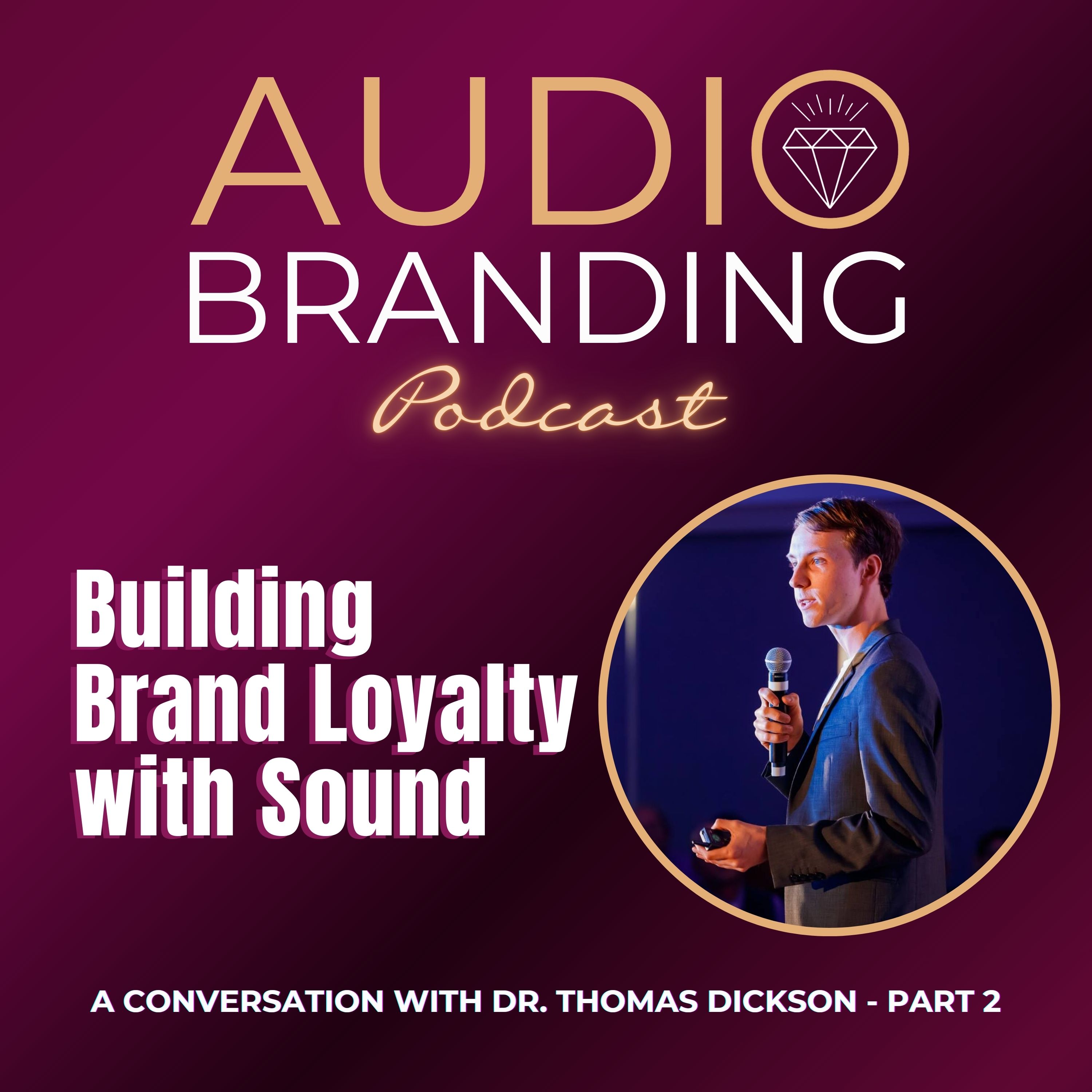
S1 Ep 310Building Brand Loyalty with Sound: A Conversation with Dr. Thomas Dickson - Part 2
“[What] a lot of sonic branding agencies aren’t aware of is that sonic branding can also be used as a tool to address a concern that the client might have. So, for example, a new competitor has come in and now they feel dated. Okay, let’s write a sonic branding that’s based around being modern. Okay, they’ve had a big knock on trust, like I mentioned before, with a data breach. This is a great opportunity to write a sonic branding that builds customer trust. So, it can be used as another mode along with your visuals, along with your tone of voice. Your branding tone of voice is in, like, the words that are spoken, not the like the language, right? It’s a tool to convey your brand.” – Dr. Thomas Dickson This episode is the second half of my conversation with musicologist and sonic branding strategist Dr. Thomas Dickson as he shares his thoughts on maintaining a long-term branding, the growing use of AI for everything from monitoring to mock-ups, and the versatility of an effective sonic logo. As always, if you have questions for my guest, you’re welcome to reach out through the links in the show notes. If you have questions for me, visit audiobrandingpodcast.com, where you’ll find a lot of ways to get in touch. Plus, subscribing to the newsletter will let you know when the new podcasts are available, along with other interesting bits of audio-related news. And if you’re getting some value from listening, the best ways to show your support are to share this podcast with a friend and leave an honest review. Both those things really help, and I’d love to feature your review on future podcasts. You can leave one either in written or in voice format from the podcast’s main page. I would so appreciate that. (0:00:01) - Impact of Sonic Branding VariationsMy conversation with Dr. Dickson picks up as we talk about the challenge of maintaining a consistent audio brand through changing management and brand strategies. “They might not even have been strategically sonic branding,” he notes. “It could have just been some brand music that they turned into a mnemonic or brand music they’ve just been using for years, and then a brand manager will come in and just throw out everything.” He points out McDonald’s as a prime example of an audio brand that’s only gotten stronger over the past twenty-five years, and how consistency has been its key to success. “It’s a really good case study for sonic branding agencies to look at,” he says, “how you can take a mnemonic [and] use it in, there’s videos on YouTube where it’s, like, using like thirty different contexts, and it’s just changed instrumentation slightly, changed the speed, [and] added swing .”(0:07:38) - Sonic Branding Evolution and ImpactDr. Dickson tells us about his worth with agencies that are increasingly turning to AI for solutions, especially when it comes to catching online plagiarism. “They are using AI to identify melodies that are shared and then taking them to court once the melody’s been used sufficiently,” he cautions. “Day one, a song comes out, they don’t take them to court. They wait till the song is a massive hit and it’s got enough revenue, and then they take them to court.” We discuss AI’s growing presence in everything from audio mastering and editing to generating new music, and he points out some of the roles he sees it filling over time. “I’m imagining in the future there will be the option to take a track,” he explains, “and then just [have AI] re-tailor it to that context and stretch it out so that, for the conference that goes for two hours, there’s appropriate backing music based on your sonic branding.”(0:16:24) - Future of Sonic Branding ToolsAs our conversation wraps up, Dr. Dickson emphasizes the cost-benefit ratio of sonic branding compared to other forms of marketing, and its potential for building brand awareness. “I think the thing I would push is the value for money argument,” he says, “that it is very affordable for an asset they’re going to use for a very long time.” We talk about the increasingly fierce competition among brands and agencies looking to grow their online presence, and the dangers of being left behind in an increasingly digital world. “The big thing as well is all of this is in the context of digital media,” he tells us. “So we are seeing more clients get work from TikTok, Facebook in particular, and Instagram in particular, and YouTube. If you’re not using multimedia on a multimedia platform, you’re falling behind.” Episode SummarySonic branding in advertising and its evolution from traditional jingles to social media.The growing role of AI in audio branding, its limitations, and how it might evolve.How AI enhances branding and enables a more flexible, enduring marketing strategy. Connect with the Audio Branding Podcast:Book your project with Voice Overs and Vocals by visiting https://voiceoversandvocals.comConnect with me on Instagram - https://www.instagram.com/jodikrangle/Watch the Audio Bra
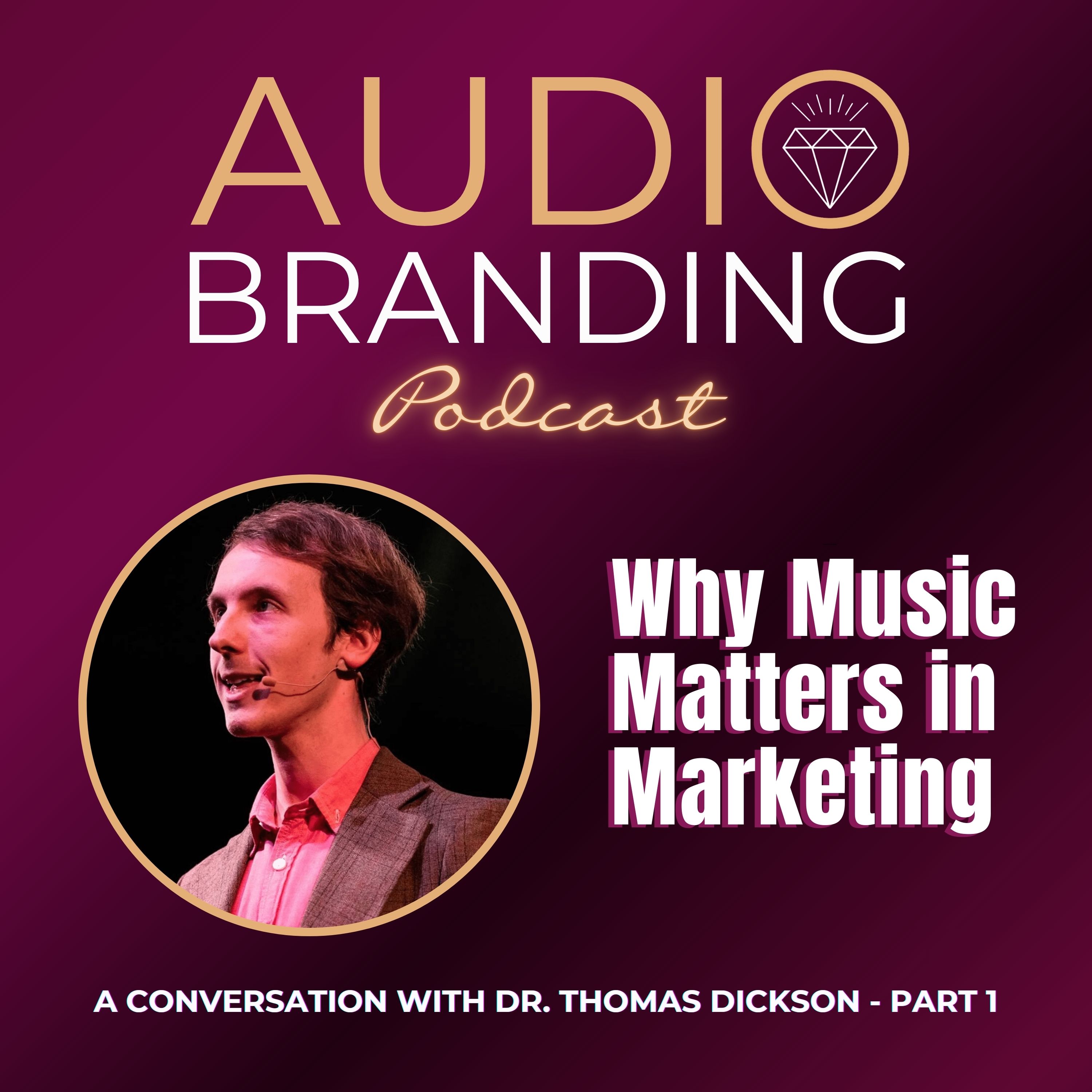
S1 Ep 309Why Music Matters in Marketing: A Conversation with Dr. Thomas Dickson - Part 1
“If you imagine a company has a ten million dollar marketing budget, right? And then you imagine they have a sonic logo on every single TikTok ad, Facebook ad, YouTube ad, all these new media where the majority of the traffic’s coming from now. If they can increase conversion rates marginally, they can have a huge difference to their bottom line. And it’s one of those things where, because sonic branding, once it’s done, once, and, well, yes, there might be a brand refresh where it’s changed in ten years, um, or it’s updated, or maybe it’s changed slightly to work with a different culture, right? There might be like a version which sounds slightly more Canadian, right? Or more Christmasy, or things like that. But the point being is this is an asset that they develop once, and then it can be used on these campaigns that can have huge advertising budgets, which makes it very cheap when you compare it to the actual campaign marketing spend.” – Dr. Thomas Dickson My guest on this episode is a musicologist who specializes in how we perceive sound and how it shapes brand communication. With a PhD in Music Psychology, he helps brands create emotionally resonant and research-backed sonic identities. His work reduces subjectivity, improves creative decisions, and even addresses legal risks like plagiarism in audio branding.His name is Dr. Thomas Dickson, and he’s advised national retailers, tech firms, and service brands throughout his career. And, as if the subject of musicology isn’t fascinating enough, we’ll also be discussing how businesses can make sure their sound stays original and protected. As always, if you have questions for my guest, you’re welcome to reach out through the links in the show notes. If you have questions for me, visit audiobrandingpodcast.com, where you’ll find a lot of ways to get in touch. Plus, subscribing to the newsletter will let you know when the new podcasts are available, along with other interesting bits of audio-related news. And if you’re getting some value from listening, the best ways to show your support are to share this podcast with a friend and leave an honest review. Both those things really help, and I’d love to feature your review on future podcasts. You can leave one either in written or in voice format from the podcast’s main page. I would so appreciate that. (0:00:00) - The Power of Sound in AdvertisingOur discussion begins with a look back at Dr. Dickson’s early memories of sound, and he came prepared with a more recent, but still memorable, experience that demonstrated the power of sound. “By the grand finale,” he recalls as he describes an outdoor concert featuring the Melbourne Symphonic Orchestra, “it’s a bucketing down, raining and everyone’s still there. So we’ve got this huge event, it’s bucketing down, raining, [and] no one’s leaving because they want to hear the finale.” He tells us more about musicology, what it means, and how it can help build a stronger brand. “Musicology is like the academic and rigorous study of music,” he explains. “It comes down to a broad range of different styles, so this could be like music history, it could be music psychology, which is what I looked at, the psychology of music or sound, [or] it could be ethnomusicology.”(0:09:05) - Musicology and Plagiarism in Sonic BrandingDr. Dickson tells us about the different dimensions of musicology and how sound influences us, such as musical expectancy and episodic memory, and how much our impression of sound comes from the media we consume. “We have cultural norms associated with electronic music,” he explains, “digital sounds, hard hitting bass, all that kind of stuff that we associate with that through repeated exposure with these sounds, with those kinds of branding pillars.” He shares an example of a client who sought his help with finding the right branding voice, and he shares some of the unexpected legal risks that can arise when an audio brand campaign’s trying to sound familiar but not too familiar. “The last thing you want to do,” he tells us, “is compose something that doesn’t really suit the brief that you thought did, but you also don’t want to end up with something that’s derivative of another work.”(0:19:02) - Implementing Sound Design in Sonic BrandingAs we reach the first half of our conversation, Dr. Dickson talks about the strengths and limitations of a sonic brand, and how music can fill in the emotional gaps to build a stronger brand. “That’s not going to have much emotion conveyed in it,” he says of an audio logo, “whereas if you are to pitch, tune that, so make it turn into a melody... there’s opportunity to get both the distinctive asset and also an opportunity to convey, you know, music and emotion.” He shows an effective sonic brand can be one of the most cost-effective approaches to marketing, and we talk about the perils of trying to use stock music rather than a distinctive audio brand. “I have witnessed the phenomenon of different advertisin
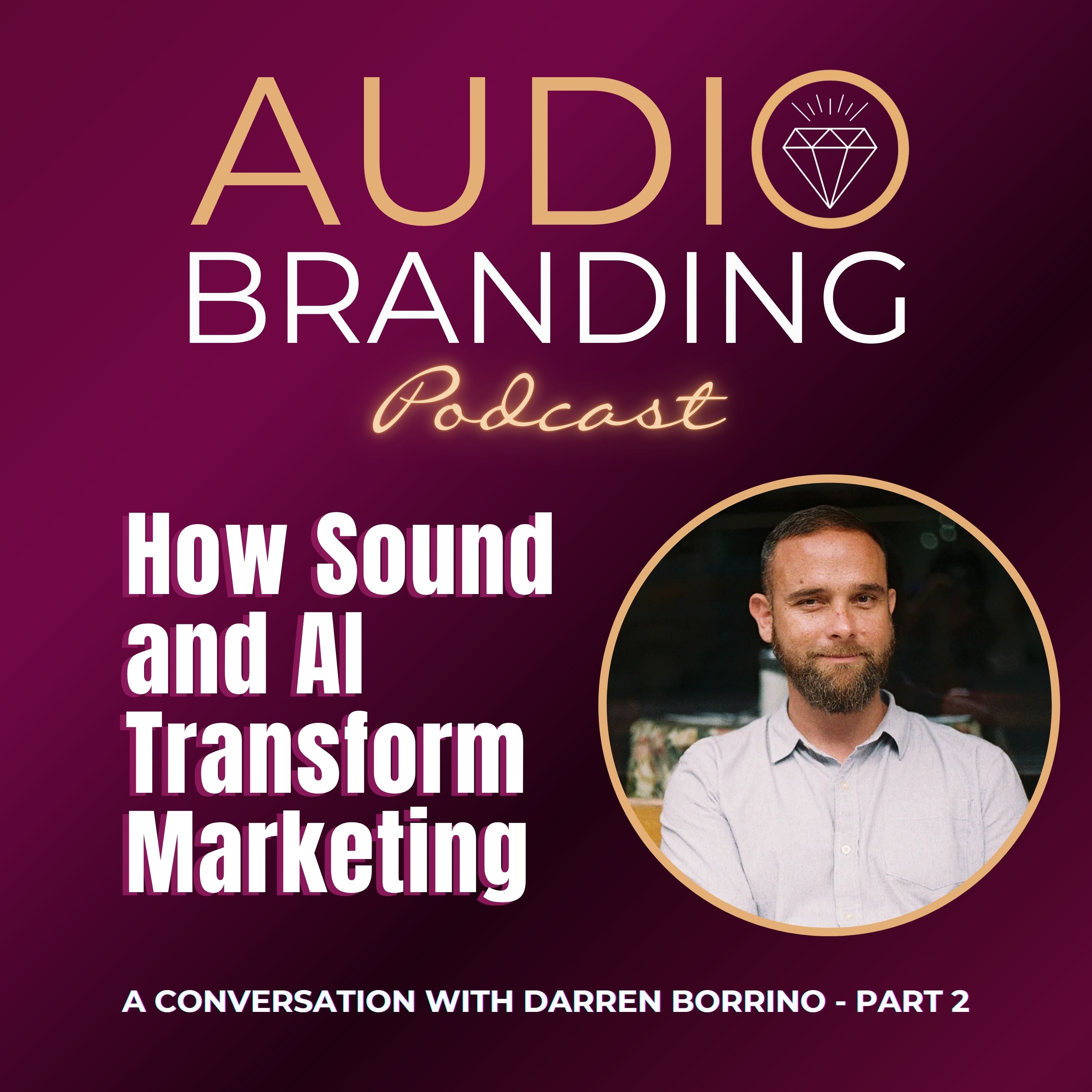
S1 Ep 308How Sound and AI Transform Marketing: A Conversation with Darren Borrino - Part 2
“And they had people that had either the escalator going up on the right-hand side or you could take the stairs, and each stair played a different key on the piano. More people took the stairs than they did the escalators because it was more fun. So, they did something they hadn't done before that was better for them. So, it all wraps up beautifully, and was such a fun campaign. And again, it didn't have to cost a lot of money. They didn't do many of those piano stairs. And it's that old thing, or the new thing that we try and do now, [which] is ‘experienced by few, seen by many.’ And you see it all the time, you know, you do one small little activation that really doesn't have to cost a lot of money, but you film it beautifully, put a good track to it, you make sure it gets shared correctly. And all of a sudden, you've got a hit.” – Darren Borrino This episode is the second half of my conversation with executive creative director of Inkfish NYC Darren Borrino as we talk about building the foundation of an effective sonic brand, how digital tools and the internet age have redefined the strategies, development, and time frame of an ad campaign, and the growing value of authenticity in a world where AI content is becoming the norm. As always, if you have questions for my guest, you’re welcome to reach out through the links in the show notes. If you have questions for me, visit audiobrandingpodcast.com, where you’ll find a lot of ways to get in touch. Plus, subscribing to the newsletter will let you know when the new podcasts are available, along with other interesting bits of audio-related news. And if you’re getting some value from listening, the best ways to show your support are to share this podcast with a friend and leave an honest review. Both those things really help, and I’d love to feature your review on future podcasts. You can leave one either in written or in voice format from the podcast’s main page. I would so appreciate that. (0:00:00) - Global Advertising Culture Differences and CampaignsThe second half of our conversation begins as Darren and I talk about his work all around the world, from his home in South Africa to Prague, Australia, and eventually the U.S. “The biggest culture shock I got was actually coming to New York,” he says. “Although I'm South African, my parents are British, so I was brought up on British comedy like quite sarcastic, quite dry, quite undertone.” We discuss the one ad campaign he wishes he’d written, and an inventively musical approach Denmark took to encouraging drivers to slow down: a melody based on the driver’s speed. “If you went too fast, it became annoying,” he explains. “We've all had kids in the car before. Everybody wants to slow down and just enjoy it, and there's no reason to race. So you may as well just enjoy the track.(0:05:20) - Innovative Sound Marketing CampaignsWe talk about what’s changed in the advertising world in recent years, and how even a seemingly successful marketing strategy can have unintended consequences for a brand. “That's going to reposition the brand in the market,” he tells us. “But if you don't have a full perspective of where everything is, you could accidentally position that brand right next to a competitor that will easily outspend them.” Darren talks about the impact of such AI tools as Midjourney in his agency, its uses and limitations, and the unlikely sounds of inspiration all around us “I can guarantee you nine times out of ten,” he says, “it's when you're cycling home, or when you're washing your dog at home, or you're out with a friend having coffee. You'll see something happen, you'll go, ‘wait a minute. That's smart. The way that woman spoke to her dog is exactly what we need to be doing for this brand.’”(0:16:27) - The Future of Creative MarketingOur discussion concludes as Darren reflects on the fast pace of content development in the 21st century, and how it’s led to a very different tone than ad campaigns in the past. “I think the problem with that is that you get a lot of surface-level thinking,” he notes. “You can only go so deep with the time that you have, and I think that's why you see commercials generally these days are um, it's either got a pun in the headline or… you throw a celebrity in there, it's got a big track, or it's got a new visual effect, or something like that. It's not really deep thinking.” He shares some of his upcoming projects, including a new AI that adopts its persona to forge a personal connection with each user. “It obviously understands everything about the brand and its products,” he says. “But it brings in a third dimension. It helps you understand yourself a little more as a consumer, so it's got emotional intelligence built into it. Episode SummaryDarren’s cosmopolitan approach to tailoring strategies for different regional markets.How sound shapes consumer behavior, from climate awareness to safer driving.Darren’s advice to 21st-century creatives, and his l
S1 Ep 307How Sound Builds Brand Trust: A Conversation with Darren Borrino - Part 1
“If you're going to be doing a commercial, for example, for BMW, where people are spending a lot of money on a Seven Series and it's a luxury car, but then you hear the TV ad or the radio ad or wherever you're listening, and that sound isn't recorded at the highest quality. Like, your logical mind might not pick it up, but if it sounds a little tinny or it's too much of an echo, you pick that up, and that really does build into the overall feeling of the brand in terms of quality. There was an interesting example with Nissan. They launched one of the first electric vehicles a long time ago, and when they put it out into the market, they found that people felt that maybe it was a little flimsy, it didn't feel quite right, like, well made. So obviously they went in to fix their upholstery, and they started making things a little more high quality, and consumers are still saying, ‘I don't know what it is, there's something about this, it just doesn't feel like a quality vehicle.’ And what they did was they changed the audio. Through the speakers in the car, when you start it up, it will make a fake sound of the car starting up. And, all of a sudden, people are like, ‘ah, now it feels like a car.’” – Darren Borrino This week’s guest is an art director at heart and an ECD-level creative with over twenty years experience, working all across the globe. He’s led teams at some of the world’s top agencies, such as TBWA, DDB, and Saatchi & Saatchi, and has won multiple awards for his work. He launched Inkfish, a boutique agency in New York that helps smaller challenger brands take on the big guys with sharper strategy, more disruptive creative, and budgets that go into the work, not overheads. He’s endlessly curious about what persuades the human mind, loves ideas that actually land, and believes that the best work comes from collaboration and clarity, as well as a healthy sense of humor.His name is Darren Borrino, and in this episode, we’ll be discussing how companies can shake things up using sound, the difference between clever and persuasive, and how to stay relevant in a changing ad world – especially in the age of AI. Stay tuned for a Masterclass in being different! As always, if you have questions for my guest, you’re welcome to reach out through the links in the show notes. If you have questions for me, visit audiobrandingpodcast.com, where you’ll find a lot of ways to get in touch. Plus, subscribing to the newsletter will let you know when the new podcasts are available, along with other interesting bits of audio-related news. And if you’re getting some value from listening, the best ways to show your support are to share this podcast with a friend and leave an honest review. Both those things really help, and I’d love to feature your review on future podcasts. You can leave one either in written or in voice format from the podcast’s main page. I would so appreciate that. (0:00:00) - The Power of Sound in AdvertisingWe start off our discussion with Darren’s childhood impressions of sound, which include the Universal audio logo when he and his dad used to watch movies. “You'd made it home, you'd finished everything you wanted to do,” he says, “and you could sort of relax with a little bit of popcorn and maybe watch a movie and just take it easy. So that was probably the first time.” Our discussion turns to audio branding in the age of social media, and just how quickly things move today – especially audience attention. “People switch off very quickly,” Darren explains. “So you need to make sure you have a brand that has the right qualities, and then you match that with the right voice to bring that to life.”(0:12:18) - Building Brand Trust Through Audio ConsistencyDarren and I talk about sound’s power to quickly grab and hold the listener’s attention, and how that can be a double-edged sword when it comes to branding. “The problem with that,” he explains, “is if you're paying attention to the voice or the quality of the voice, or the sound or the sound effects, or the mix or whatever it is, then you're not paying attention to what I'm trying to tell you.” He explains the difference between clever and persuasive approaches, and warns against ad campaigns that can become too clever for their own good. “It's very important to keep a consistent brand,” he adds, “a consistent tone of voice, keep it really simple and make it reliable, and that's how you build trust.”(0:22:26) - The Impact of Sound in AdvertisingAs we wrap up the first half of our conversation, Darren talks about the risks of over-planning and overproducing an ad campaign, and he shares some examples of effective campaigns that came together in more organic ways. “The best thing you can do,” he explains, “is [to] literally take that idea and go sit with a voiceover artist, or a weird creative or a musician, and just say ‘Here's the idea. Let's just throw some stuff around, let's just record whatever we're doing, let's have fun with
S1 Ep 306Silence, Sound & Emotion – The Hidden Power of Audio: A Conversation with Karsten Kjems - Part 2
“The brief was ‘we want to sell some more train tickets to Germany, where you can go to Berlin for a techno party, you can go to Hamburg for the opera, have a famous opera in Hamburg, or you can go to Munich for the beer festival.’ And we made this audio journey with sound, and you definitely can hear, ah, now we’re in Berlin, it’s the opera, and now we go to Munich. So yeah, we can play with that. And the client just also loved the idea. It takes two to tango, as you say, the client also needs to value and understand if you want the effect of this. You need to work with this in an ambitious and professional way.” – Karsten Kjems This episode is the second half of my conversation with audio branding specialist and founder and CEO of Sonic Minds Karsten Kjems, as we talk about the surprising value of silence in sound design, why familiarity doesn’t always breed contempt when it comes to sonic logos, and what it means to be a musician in a world where both instruments and vocals can come from a laptop. As always, if you have questions for my guest, you’re welcome to reach out through the links in the show notes. If you have questions for me, visit audiobrandingpodcast.com, where you’ll find a lot of ways to get in touch. Plus, subscribing to the newsletter will let you know when the new podcasts are available, along with other interesting bits of audio-related news. And if you’re getting some value from listening, the best ways to show your support are to share this podcast with a friend and leave an honest review. Both those things really help, and I’d love to feature your review on future podcasts. You can leave one either in written or in voice format from the podcast’s main page. I would so appreciate that. (0:00:00) - The Power of Sound DesignAs the second half of our conversation starts, Karsten points out how effective sound design isn’t always intuitive, and that less is sometimes more. “I’ve played some gigs, sometimes for a reception,” he says, “and people were just talking and talking, and they didn’t listen to the music at all. But then suddenly if we start to play really soft, then people go, ‘oh, I think the band is playing.’” He adds that sonic interfaces today are, in some ways, reminiscent of the early days of web design. “In the old days, they had flashes and everything moving,” he recalls. “You know, now we just go back to ‘give me a simple burger menu,’ ‘click contact,’ or whatever. User usability is also very important.”(0:06:41) - The Evolution of Sound DesignOur discussion turns to audio marketing, and Karsten points out how much of effective sonic branding depends on the demographics. “There has actually been a study for that, that shows that we create our musical preference, I think, when it’s between we are 17 and 21,” he says. “We’re about to get the first boyfriend or girlfriend, moving away from home, these really high peak moments in our lives.” We talk about AI in sound, and the direction he sees it taking in the industry. “It’s just like when the sampler came out,” he recalls. “’What should drummers do?’ And now the drummer plays on top of samplers, so every drummer has a sampler or a drum machine next to him, so he uses it as a tool.”(0:20:22) - Quality Sound DesignAs our conversation comes to a close, we talk more about the role of shifting demographics in sound design and how they impact not just relatability but the user’s experience. “If you’re having hearing loss or having, you know, difficult hearing,” Karsten notes, “then you don’t want products that really annoy you. You want to be able to understand them.” He shares some of his thoughts on the future of audio UX, and how his country’s leading the way in sonic branding. “Denmark is actually with sound what Swiss is with watches,” he adds. “For some reason, it’s a hot spot within audio engineering and sound. So I think we should keep that position as one of our trademarks in Denmark.” Episode SummaryEffectively utilizing silence in sound design and the evolving role of spatial sound.The challenge of re-imagining traditional audio approaches in the digital era.AI’s role in sound and how technology has redefined what it means to be a musician. Connect with the Audio Branding Podcast:Book your project with Voice Overs and Vocals by visiting https://voiceoversandvocals.comConnect with me on Instagram - https://www.instagram.com/jodikrangle/Watch the Audio Branding Podcast on YouTube - https://www.youtube.com/c/JodiKrangleVOConnect with me on LinkedIn - https://www.linkedin.com/in/jodikrangle/Leave the Audio Branding Podcast a review at https://lovethepodcast.com/audiobranding (Thank you!)Share your passion effectively with these Tips for Sounding Your Best as a Podcast Guest!https://voiceoversandvocals.com/tips-for-sounding-your-best-as-a-podcast-guest/Get my Top Five Tips for Implementing an Intentional Audio Strategyhttps://voiceoversandvocals.com/audio-branding-strategy/Editing/Production by Humb
S1 Ep 305How Sound Design Influences Marketing & Branding: A Conversation with Karsten Kjems - Part 1
“If you can see that your product is selling better with better sounds, and it gets better reviews Actually, I saw a car review that scored the car better just because the sounds were better. He didn’t talk about how fast it could go, how fast it could brake or how many airbags, he talked about the user experience. A car today is a driving iPad on wheels. So, all these sounds here, I got so stressed from these beeps and boops, suddenly it was too close to the edge, or too close to that... sometimes there wasn’t even a thing, and it just starts to, what was that? Was a fly running through the camera? What was it? So, I think it’s so important that we also choose brands and products with our ears as well with our eyes, and also with our wallets.” – Karsten Kjems This episode’s guest was raised in a musical home with a studio in the basement. He began drumming professionally at 23, and his passion for sound design and early use of digital audio tools like ProTracker on the Amiga shaped his approach to music and technology. While working at a branding agency, he noticed companies struggling to define their sonic identity, leading him to launch one of the first strategic audio branding agencies, Sonic Minds, in 2004. Today, he’s a recognized expert in the field, frequently speaking and teaching about sound design.His name is Karsten Kjems, and you’ll want to hear more about his perspective on brand sounds, why he believes audio branding to be so important, and what sets good and bad sound apart. If you’re still on the fence about audio branding for your own company, or if you’re struggling to explain why it’s important to your clients, you should definitely check out this conversation. As always, if you have questions for my guest, you’re welcome to reach out through the links in the show notes. If you have questions for me, visit audiobrandingpodcast.com, where you’ll find a lot of ways to get in touch. Plus, subscribing to the newsletter will let you know when the new podcasts are available, along with other interesting bits of audio-related news. And if you’re getting some value from listening, the best ways to show your support are to share this podcast with a friend and leave an honest review. Both those things really help, and I’d love to feature your review on future podcasts. You can leave one either in written or in voice format from the podcast’s main page. I would so appreciate that. (0:00:00) - The Power of Sound in BrandingAs we start things off, Karsten shares his early memories of sound, and how growing up with ADHD in a musical family shaped his formative years. “I was brought up in a family where my father was a drummer,” Karsten recalls, “so I’ve always been around musicians and music and the first time I really discovered that I had this almost perfect pitch was when I went to music school.” He explains how a surprising discovery at a concert led to his career in marketing and audio branding, and the seismic shift that the streaming era – and particularly the rise of YouTube – represented for the industry. “Suddenly brands and companies need to communicate in these spheres,” he tells us. “How did they do that? How did they choose music? How should they buy music? So it’s a whole new game, from only being on TV and radio to being on all the time, to keep… producing content all the time.”(0:12:18) - Designing Meaningful Audio Branding ExperiencesOur conversation turns to UX and branding through sound design, and Karsten points out how ubiquitous sound interfaces have become these days. “A headset, a modern headset, for whatever company, it can have up to around 15 different sounds,” he notes. “You know, power on, power off, battery low, volume max, next song, anti-noise cancellation, Bluetooth connection.” He recalls an experience with an electronic tea kettle with an audio design more suited for fire alarms, and he talks about the difference in brand recognition and quality that audio branding can represent. “If I wear a pair of headsets every day which I turn on,” he says, “or drive a car that I use daily, or use my coffee machine or whatever, these interaction sounds, these user interaction sounds, are becoming the most heard sounds from the brand. And if they sound cheap, it’s probably a cheap brand.”(0:22:26) - The Importance of Sound in UXWe come back to the topic of good and bad sound design, and how good UX design operates on an information spectrum. “Is it important or is it just ‘need a new battery’ sound? The scale of importance, is it an about-to-die sound or is it ‘please look to me in the next couple of days because you might want to change the battery’ sound?” We talk about how hospitals and medical device sound designs reflect some of the problems and solutions to creating an effective audio interface, and how important it is for companies whose products, whether they realize it or not, are driven by sound. “I’m in this UX sound bubble or marketing bubble with soun
S1 Ep 304Why Sound Matters in Modern Advertising: A Conversation with Ted “Theo” Rosnick - Part 2
“If it’s stock music, unless you’re paying, like, some libraries have exclusivity, but most of them don’t. So that’s what I always say to clients, like stock music. You might hear that Joe’s ice cream shop also has the same music that you have. And you’re Chrysler – I keep saying Chrysler, but whatever, a big brand. A good example of an audio branding that we did was the Rogers. That was huge, and when we first did that, it was for a very close friend of mine, Philippe Garneau, and Mark’s brother, the astronaut, and he came to me, and he had the Rogers account. He said, ‘We want a mnemonic on the end of the spot, but we’re only going to use it for three commercials.’ And so they lost the business, and Rogers loved that mnemonic.” – Ted “Theo” Rosnick This episode is the second half of my conversation with music and audio director/producer Ted Rosnick, as we discuss the use of AI, especially digital voice clones, in advertising, the impact of the SAG-AFTRA strike, and the unwritten rule voice artists follow when it comes to branding. As always, if you have questions for my guest, you’re welcome to reach out through the links in the show notes. If you have questions for me, visit audiobrandingpodcast.com, where you’ll find a lot of ways to get in touch. Plus, subscribing to the newsletter will let you know when the new podcasts are available, along with other interesting bits of audio-related news. And if you’re getting some value from listening, the best ways to show your support are to share this podcast with a friend and leave an honest review. Both those things really help, and I’d love to feature your review on future podcasts. You can leave one either in written or in voice format from the podcast’s main page. I would so appreciate that. (0:00:00) - Evolution of Music Production and AIThe second half of our conversation starts with Ted’s perspective on advertising in the 21st century, and one early trend that marked a turning point. “One of the main things I remember changing a lot was when Napster came along,” he recalls. “People could download a hundred songs in an hour, and I noticed it was, all of a sudden, we were expected to do seven or eight demos, because that’s what they were used to, like, pulling music down all night long and hearing their stuff.” We talk about digital studios and sound design, and how AI voice cloning has transformed the industry, including a recent commercial campaign that featured a synthetic likeness of a human actor. “We asked his permission,” Ted tells us, “and so we AI’d his voice, and it worked out really well. Nobody would know. I know the difference because I just know, but you wouldn’t know the difference.”(0:10:42) - The Impact of AI on CreativityTed tells us about his experience with AI-assisted brainstorming and its limitations as a content writer. “I’ve written them and then thrown them into ChatGTP,” he explains, “and then said, ‘Can you just make it a little warmer?’ But the truth of the matter is that I’ve always gone back to my own, because I don’t think it’s as warm as or as good as what’s in here, you know.” We discuss what sets human and AI creativity apart, and how what makes a work human often comes down to the very things AI would try to fix. “A lot of it is that human subtleties are mistakes,” he tells us. “When you start tearing it down for the mix, you hear all sorts of mistakes. They’re not glaring mistakes that are going to ruin it, but they’re not perfect, and that’s what makes it human. And that’s what makes it great.”(0:23:10) - The World of Audio BrandingOur conversation closes with some of Ted’s most memorable ad campaigns, including one sonic brand that took off beyond anyone’s expectations. “If they were doing a commercial radio commercial, you’d hear that at the end of them,” he says. “When you opened your phone, if you’re with Rogers, you’d hear it. We got paid eighteen thousand dollars for that, and then all of a sudden we were hearing it everywhere.” He shares his latest work, such as 2024’s award-winning film Drive Back Home, along with a surprising admission. “Honestly, this is the first time I’ve been on a podcast,” Ted reveals. “I’ve been interviewed on TV many times and on the radio, but I’ve never done a podcast.” Episode SummaryHow Napster and digital technology changed both the music industry and audio marketing.The role of AI and voice clones in marketing and its impact on creatives.Ted’s approach to helping clients and companies forge a unique sonic identity. Connect with the Audio Branding Podcast:Book your project with Voice Overs and Vocals by visiting https://voiceoversandvocals.comConnect with me on Instagram - https://www.instagram.com/jodikrangle/Watch the Audio Branding Podcast on YouTube - https://www.youtube.com/c/JodiKrangleVOConnect with me on LinkedIn - https://www.linkedin.com/in/jodikrangle/Leave the Audio Branding Podcast a review at https://lovethepodcast.com/audiobranding (Thank you!
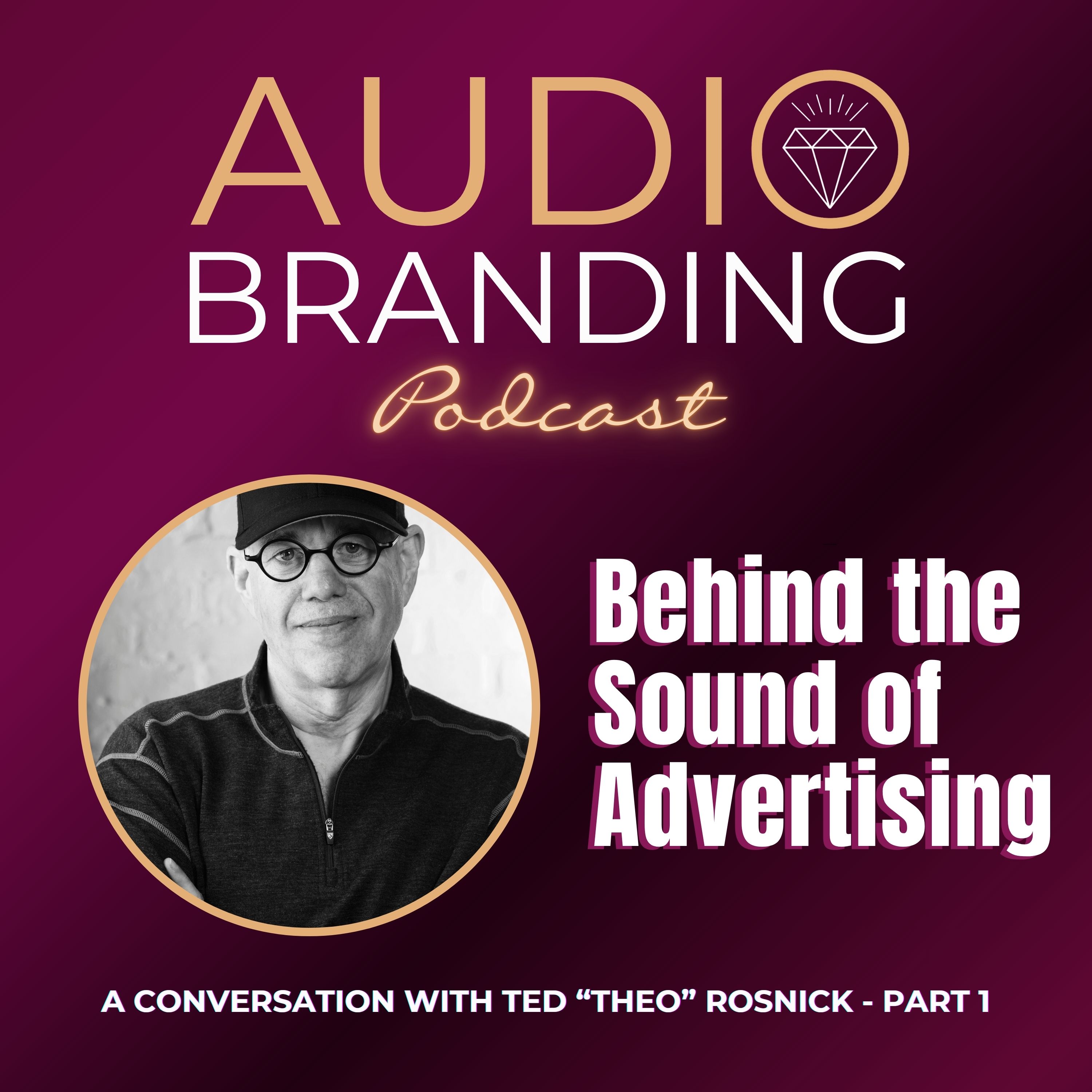
S1 Ep 303Behind the Sound of Advertising: A Conversation with Ted “Theo” Rosnick - Part 1
“We did one for Mercedes, which again was very unique and very simple. It was about this guy Raymond who had never tried ice cream before. And it was a great commercial, and it talked about Raymond never having ice cream, and he waited, and he would watch other people have ice cream, and then one day Raymond decided to have ice cream. And then all of a sudden it cuts to a Mercedes logo. And then the last ten seconds, it was for Mercedes, but it was so well done and so unique, and the score was very, very, very unique.” – Ted “Theo” Rosnick This episode’s guest returned to Toronto from Boston in 1974 after attending Berklee College of Music. He soon began working as a studio drummer, but his passion for audio production quickly led him to start his own jingle production company, Rosnick Productions, in 1975. Through hard work and dedication, he quickly established himself as Canada’s top audio producer and audio director for commercials. He went on to partner with Steve McKinnon in 1990, forming RMW Music, and the company remained the top music production company in Canada for decades before being sold to Vapor Music in 2016. Since that sale, he’s remained with Vapor as a Creative Director, continuing to bring his expertise and passion to many projects and to the industry. His work is recognized not just in Canada but globally, having shaped the sound of major brands like IKEA, Molson, Subaru, Mercedes, Peroni, and Heinz, among many others. Over his five-decade career, he’s earned hundreds of advertising awards for his music and sound design, always pushing creative boundaries with fresh ideas and meticulous attention to detail – all of which are things we definitely appreciate here.Beyond advertising, he’s made his mark in sound design and music for feature films and documentaries, and he’s the executive producer and audio director of the well-known advertising podcast IOFA with Aaron Starkman. He’s also mentored countless emerging talents over the years, a role that he takes great pride in. Just this past February, he decided to retire from the advertising industry after an illustrious fifty-year career, and he now enjoys spending time at his cottage in northern Ontario with family and friends, playing the drums, and catching Raptors games.His name is Ted, or “Theo,” Rosnick, and getting the opportunity to speak with someone who has such a rich knowledge of the advertising industry and how it’s evolved over the years – not to mention how much sound has played a part in that – is a real treat. If you want to know where advertising’s been, where it is now, and where it might be heading, this is a discussion you won’t want to miss. As always, if you have questions for my guest, you’re welcome to reach out through the links in the show notes. If you have questions for me, visit audiobrandingpodcast.com, where you’ll find a lot of ways to get in touch. Plus, subscribing to the newsletter will let you know when the new podcasts are available, along with other interesting bits of audio-related news. And if you’re getting some value from listening, the best ways to show your support are to share this podcast with a friend and leave an honest review. Both those things really help, and I’d love to feature your review on future podcasts. You can leave one either in written or in voice format from the podcast’s main page. I would so appreciate that. (0:00:00) - Legendary Marketing and Music MemoriesOur conversation starts off with Ted’s early memories of sound, and it’s one a few guests have shared: The Beatles’ unforgettable performance on The Ed Sullivan Show. “I had never heard that kind of music before,” Ted tells us. “So the next day in school, I think I was in grade six, yeah, like, everybody was talking about it, and within about two weeks, everybody was wearing Beatles boots and Beatles shirts.” He tells us about his musical start as a jazz musician and how it led to his first commercial production. “I had never done a jingle,” he recalls, “nor had I really even thought about jingles before that… We went into the studio together after our gig at one o’clock in the morning and recorded everything ourselves with one singer, and I showed up at the office of McConnell Advertising around nine o’clock in the morning with a tape and said, ‘Hey, here it is,’ and they loved it.”(0:08:33) - Legal Battles and Musical InnovationTed and I talk about some of his early misadventures in advertising in an era when jingle copyrights and royalties hadn’t quite been worked out yet. “It went on forever,” he recalls one multi-million dollar lawsuit that was eventually dropped. “It made the lead story on Entertainment Tonight, and I remember my parents calling me at the time. They were in Mexico, and they said, ‘Oh, we’re so proud of you, you’re on Entertainment Tonight!’" He tells us about the early days of editing commercials and how his studio made the pivotal decision to expand from jingles to full sound editing.
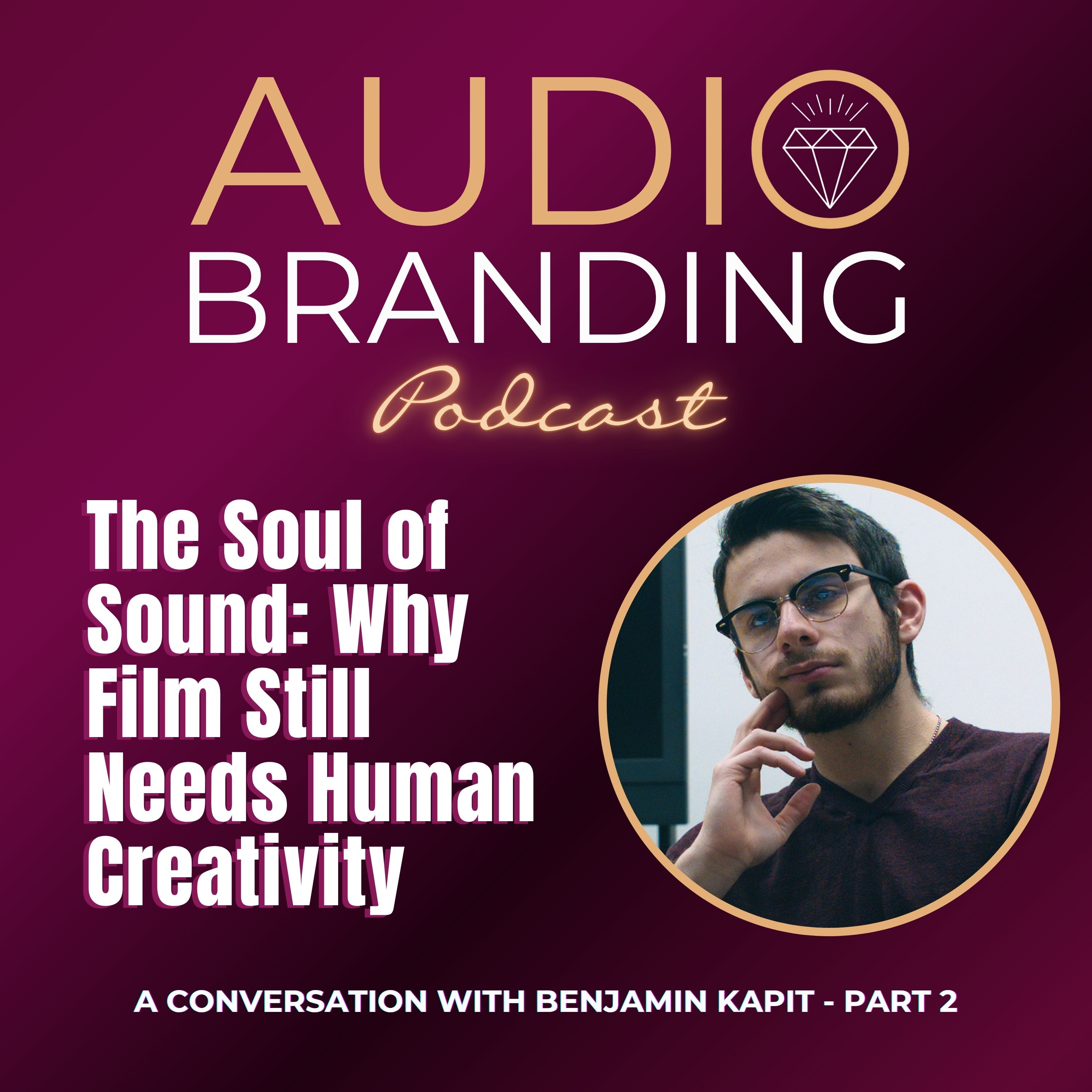
S1 Ep 302The Soul of Sound: Why Film Still Needs Human Creativity: A Conversation with Benjamin Kapit - Part 2
“There’s a quote from a famously terrible person, Thomas Jefferson, who said – I don’t particularly like him or a lot of the things he did, but I do agree with this, I do agree with this specific quote. ‘I will study war and strategy so that my children may study science and maths, so that their children may study art and poetry.’ I’m sure I’m butchering the exact quote, but the sentiment is there. Why are we creating robots to do art for us? Why do we not yet have something that can fold my laundry? Wouldn’t that be useful? That’s what I want. And at the end of the day, if I had to pick either having a robot to do my art for me so that I have time to fold my laundry, or having to do both, I’d rather do both. I’m fine living. I enjoy being alive and being a human. I don’t need a robot to take away what, to me, is the most human thing about us, which is that we can create.” – Benjamin Kapit This episode is the second half of my conversation with Benjamin Kapit of Second World Entertainment as he shares some of the more obscure sounds that he’s turned into cinematic effects, discusses the ethics of AI training and what it gets right and wrong about human creativity, and the message he’d most like to share with future generations about the power of sound. As always, if you have questions for my guest, you’re welcome to reach out through the links in the show notes. If you have questions for me, visit audiobrandingpodcast.com, where you’ll find a lot of ways to get in touch. Plus, subscribing to the newsletter will let you know when the new podcasts are available, along with other interesting bits of audio-related news. And if you’re getting some value from listening, the best ways to show your support are to share this podcast with a friend and leave an honest review. Both those things really help, and I’d love to feature your review on future podcasts. You can leave one either in written or in voice format from the podcast’s main page. I would so appreciate that. (0:00:00) - Exploring Sound in Film ProductionAs our discussion begins, Benjamin shares more of his hands-on experience with audio production, from the studio apps and audio plugins he prefers to the challenge of bringing it all together in the film’s final cut. “You have to record sound and work with the sound props make,” he says, “the way that people talk, or rather who’s mic’d up in certain shots. You have to work with the edit. You have to have that somehow in your mind because you, the director, are the only one who really knows what it’s going to look like when it’s done.” He tells us about some of his more inventive sound sources, such as a microphone specifically tuned to record static. “When it comes to post-production,” Benjamin says, “especially sound,” I hate rules. I don’t want to do things the way that everyone else does. I don’t want to sit down and say, okay, well, this sound sounds like this, so it has to be this thing.”(0:11:06) - Exploring AI in the Sound IndustryBenjamin and I talk about the groundbreaking audio work in sci-fi movies like Dune and Interstellar, and how they’ve inspired his approach to sound design. “It never really occurred to me that, like, oh, you can just mess with a synth or with a sound so much that it becomes something else,” he says about Interstellar’s distinctive soundscape. “You can completely shift the tone and the meaning behind audio and make it yours and make people think, yeah, this is this other thing and it’s not.” Our conversation turns to AI’s transformative role in the industry, and his concern that the distinction between different forms of AI, and the question of whether any of them can truly be called artificial intelligence, is being lost in the hype. “Take a program that can look at an MRI and scan for cancer and detect it faster than humans can,” he explains. “That’s discriminative AI. It is separating and analyzing data sets. Then you get to generative AI, and what generative AI is doing is it’s taking these mass data sets and using a statistical model to create something that should look like what’s been requested of it.”(0:16:01) - The Impact of AI on CreativityAs our conversation closes, Benjamin explains how generative AI works and what sets its algorithmic process apart from human thought. “ChatGPT doesn’t know what I’m saying,” he tells us. “It knows that, statistically, the most likely next thing to follow [hello] would be ‘hi,’ and then ‘how,’ and then ‘are,’ and then ‘you,’ and then a question mark. And that’s only because it’s trained on data.” We talk about whether AI-generated art can be called creative, what its evolution might mean for the industry, and his thoughts about the expanding role of machine learning in everyday tasks. “I’d rather spend hours upon hours going down YouTube rabbit holes,” he says, “on how to work a specific plugin to get a specific sound, using hours on Serum 2 in Ableton to make a specific sound, than to ask AI to do it, because the
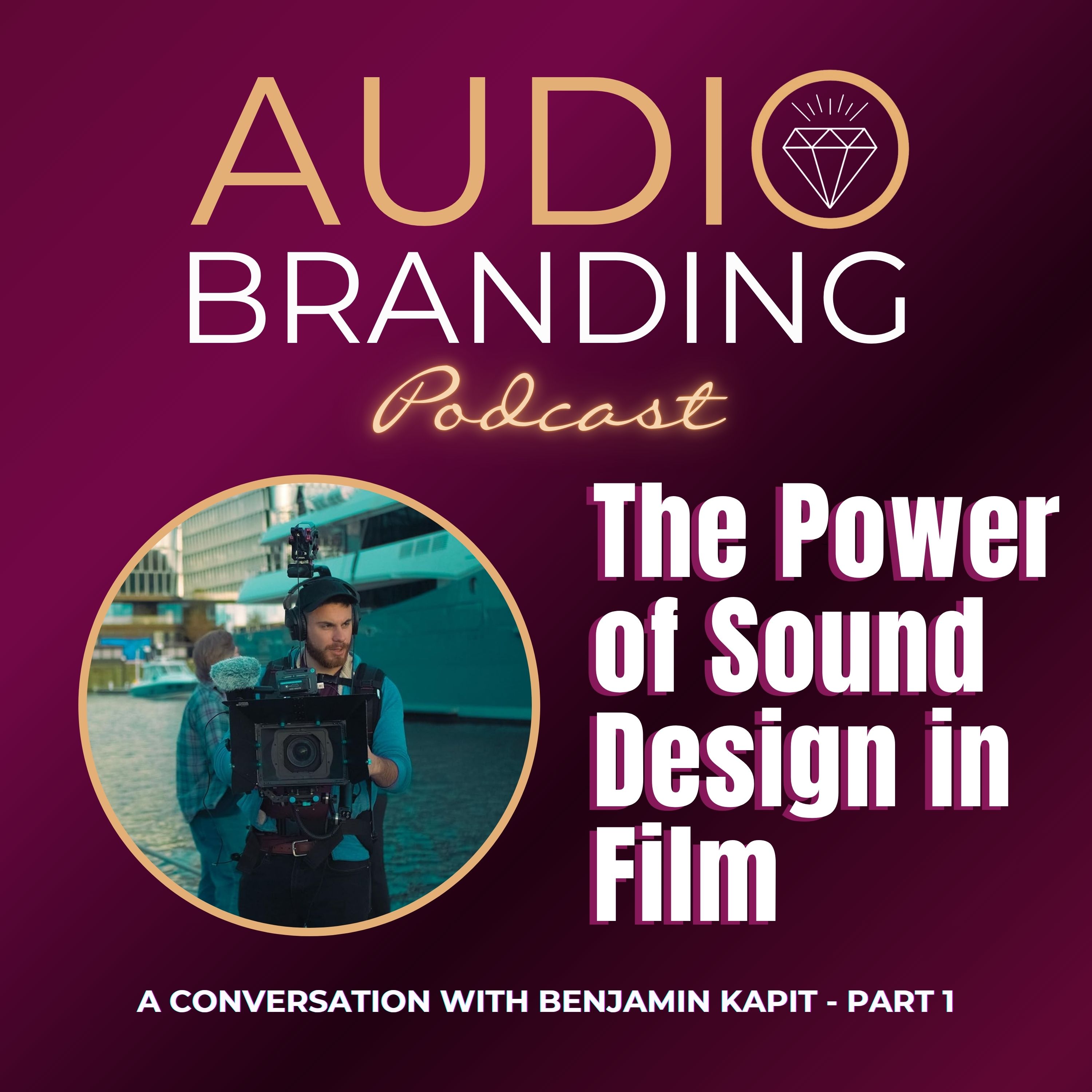
S1 Ep 301The Power of Sound Design in Film: A Conversation with Benjamin Kapit - Part 1
“If you have a screen that goes very bright white or if you have a screen that goes very dark, people can deal. Their eyes will adjust, or they’ll just accept that. But if you have bad sound, people will leave. They’ll turn off the movie. If they have to be adjusting the volume, if they have to adjust the volume of a video more than like two times, they’re very likely to leave. If the sound is just, like, bad audio and they can’t understand it, they won’t follow what’s going on. They’ll leave. So even from that most basic perspective, just passable good audio is more important than passable good visuals, because people can forgive bad visuals. But they cannot and will not forgive bad sound, because bad sound hurts.” – Benjamin Kapit This episode’s guest is a filmmaker, composer, and sound designer who started his production company at the age of fifteen. He’s currently in post-production for multiple short films and web shows, and he’s working on his fifth vocal album. His name is Benjamin Kapit, and our two-part conversation covers a wide range of sound-related issues when it comes to creativity. Stay tuned for more insights into, among other things, what it was like starting his sound career at such a young age, the balancing act of creating sound-based art and film in the age of AI, and his approach to movie soundtracks. As always, if you have questions for my guest, you’re welcome to reach out through the links in the show notes. If you have questions for me, visit audiobrandingpodcast.com, where you’ll find a lot of ways to get in touch. Plus, subscribing to the newsletter will let you know when the new podcasts are available, along with other interesting bits of audio-related news. And if you’re getting some value from listening, the best ways to show your support are to share this podcast with a friend and leave an honest review. Both those things really help, and I’d love to feature your review on future podcasts. You can leave one either in written or in voice format from the podcast’s main page. I would so appreciate that. (0:00:00) - Exploring Sound, Film & AutismAs our discussion begins, Benjamin shares his early memories of sounds and how his older brother’s musical talent inspired his own career path. “We had an upright piano,” he recalls, “and eventually got a baby grand, and my house growing up was constantly filled with music, and I look up to my brother so much because he’s the one that got me into piano.” He talks about his autism diagnosis and how being on the spectrum can be a double-edged sword when it comes to filmmaking. “I see a lot of the work that I do as a puzzle,” he explains, “and so, you know, despite the shortcomings of it, I’m able to utilize whatever’s going on in my brain to actually end up helping the work that I do.”(0:11:30) - Creativity in Sound Design and FilmThe topic turns to cinematic audio and the challenge of inventing whole new sounds that have no counterpart in the real world. “How do you approach making a sound for, you know, shooting magic out of their wand,” he says, “because that’s not a real thing. So what do you do for it? Do you go for the more realistic element, or do you head towards, like, complete synthesis?” We discuss film scores and their role in shaping not only the narrative but also the performances. “One of my shortcomings is communication,” Benjamin tells us, “and if I can’t get an idea or the feeling of a scene out verbally to an actor, I bet I can do it with music. So I’ll write pieces before I even get on set that I can hand to the actor and say, ‘This is how this scene should feel.’ Then we’ll be able to discuss it further.”(0:26:16) - On-Set Audio Challenges and SolutionsBenjamin and I talk about how easy it is to overlook sound in movie making, and the perils of doing so. “If you have bad sound,” he notes, “people will leave, they’ll turn off the movie. If they have to be adjusting the volume, if they have to adjust the volume of a video more than, like, two times, they’re very likely to leave.” He tells us about the practical challenges of recording both on and off the set, such as a conversation aboard a speedboat. “We have a scene that was entirely eighty yards on a boat,” he recalls, “a speedboat that was going thirty miles an hour, and so you could barely even hear them on set with a boom microphone. So they had to do [ADR] mostly to, like, their mouths moving.” Episode SummaryBenjamin’s early sonic influences and his journey as a young filmmaker.How cinematic soundscapes bring fantasy to life, and the narrative power of music.Benjamin’s techniques for capturing quality audio, even on a speedboat.Tune in for next week’s episode as Benjamin shares how background static can play a surprising role in sound design, the crucial difference between generative AI and discriminative artificial intelligence, and his thoughts on whether AI artwork and sound effects can replace creativity.Connect with the Audio Branding
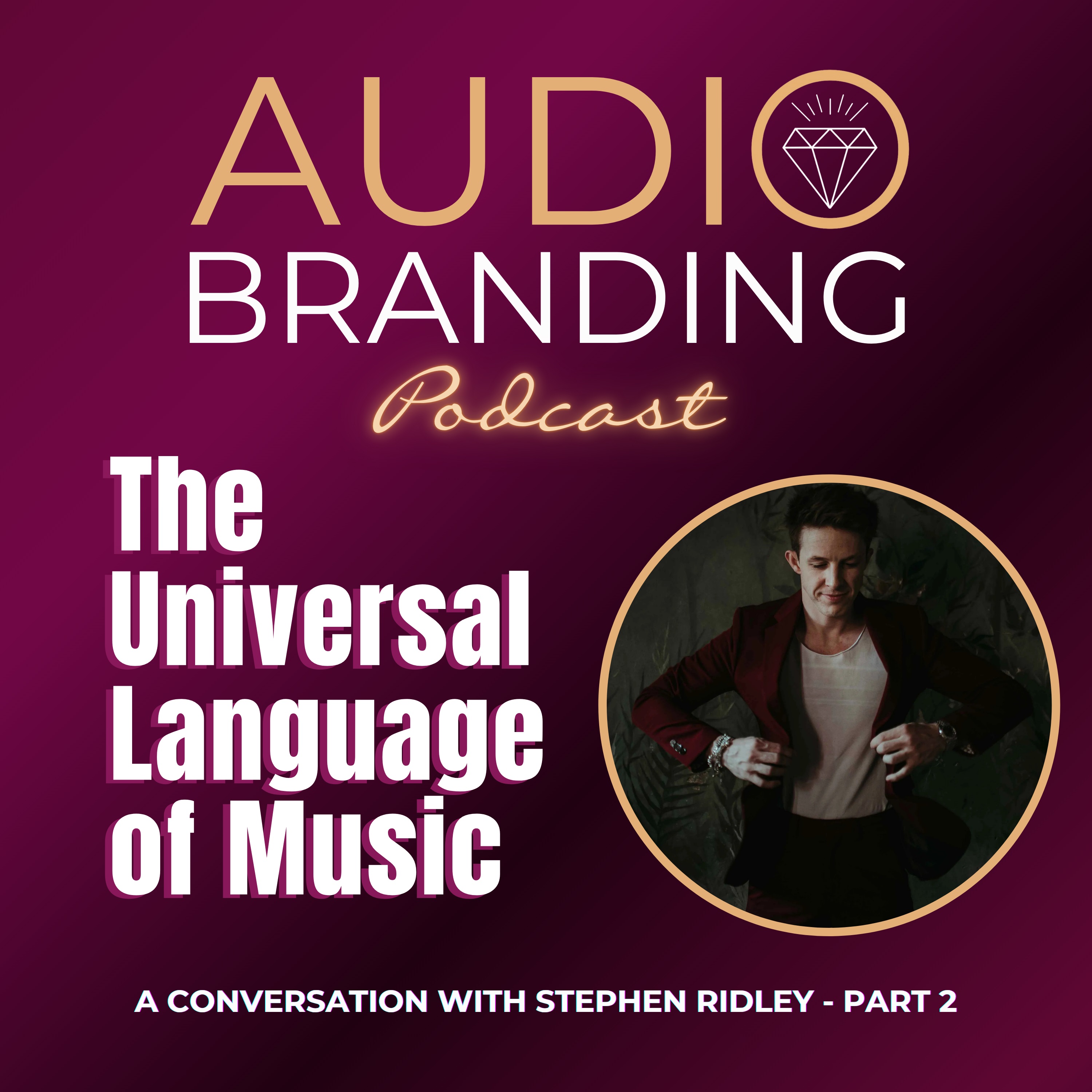
S1 Ep 300The Universal Language of Music: A Conversation with Stephen Ridley - Part 2
“And then his youngest daughter, who’s six years old, comes up, and she’s into gymnastics and she’s kind of cartwheeling around the room while everyone else is playing. And then, ‘All right, she’s going to play you a song.’ And she comes up, and she’s all full of beans, and then she sits down and she plays the most somber Debussy song. And it was, like, there was so much soul in what she played for a six-year-old. I’m like, ‘whoa!’ Like, the amount of depth in what she did was, like, whoa! ‘You are, like, a wise young girl.’ That’s an old soul. And I looked at him, and he’s crying. And then at the end of this evening, we again get to talking about AI, and he was asking, this comes full circle, this is the reason I bring this story up, is he’s invested heavily in various different AI projects. And one of them is this company that’s gonna be, like, a prompt and then it makes music. And he said, ‘Well, you know it’s cool, but are you not worried about AI, like, taking you out?’ And I was like, ‘Well, do you think I should be? You probably know better than me.’ And he said, ‘Well, you know, AI can do exactly what she just did, just so you know, like right now, I could get AI to play that song and it can play it perfectly.’ I was like, ‘Yeah, but would it make you cry?’" – Stephen Ridley This is the 300th episode of Audio Branding: The Hidden Gem of Marketing, and my conversation with international pianist and founder of the Ridley Academy, Stephen Ridley, continues as we discuss why Stephen prefers live performances to studio recordings, the school he’s now running to help others find their own passion for music, and the one song he’s vowed to never play on the piano. As always, if you have questions for my guest, you’re welcome to reach out through the links in the show notes. If you have questions for me, visit audiobrandingpodcast.com, where you’ll find a lot of ways to get in touch. Plus, subscribing to the newsletter will let you know when the new podcasts are available, along with other interesting bits of audio-related news. And if you’re getting some value from listening, the best ways to show your support are to share this podcast with a friend and leave an honest review. Both those things really help, and I’d love to feature your review on future podcasts. You can leave one either in written or in voice format from the podcast’s main page. I would so appreciate that. (0:00:01) - The Future of Creativity and AIThe second half of our conversation picks up with Stephen’s illuminating discussion of AI with a billionaire tech investor, and where he sees AI leading us in the future. “There are a lot of things in life where we don’t necessarily need to put ourselves into it,” he explains. “They don’t require our imagination, creativity, any spiritual anything. Those things probably can be replaced by AI.” We discuss AI’s limitations as a way of conveying emotion, and where the new economy might lead us once machines are handling the busy work. “I actually think the future economy will be heavily into creativity, and into art,” Stephen adds, “since I think that’s exactly where culture will go.”(0:07:16) – The Unique Power of Live EntertainmentStephen recalls his brief and unexpected foray into iTunes after discovering that a record label had uploaded his music without permission. “They’re like, ‘Okay, if you don’t like it, sue us.’ And obviously I wasn’t in a position to do that, and they have all the money in the world,” he explains. “So I was like, ‘Okay, well, I can’t do that, but what I can do is remove it. So I just removed it.” He talks about why, even though he’s starting to return to social media and streaming content, he still prefers live concert performances to being in a studio. “I don’t have the pressure of having to record it six hundred times, get it perfect, mix it, master it, spend a hundred thousand dollars,” he tells us. “I write a song, I go up on the stage, I play it…. And because of that, my shows have grown and grown and grown.”(0:13:39) - Revolutionizing Music Education With FunHe tells us about the piano school he’s recently opened, and how his own path as a musician inspired him to help others find a different way. “It was fun when I was first noodling,” he says. “Then I went to get educated and all it made me want to do is quit piano. And I suffer through years and years and years and years of hours and hours of practicing a day, and then I get to enjoy music.” We discuss some of the weaknesses of traditional music lessons, and how he’s working to spark the sense of wonder he finds in music within students who might have been put off by those early lessons. “They leave this experience feeling like they’re no good at music,” he tells us. “But in actual fact, what I thought is ‘Well, no, I just think the education sucks if everybody’s having the same experience.’”(0:22:49) - Music’s Impact on Health and LongevityAs our discussion comes to a close, we talk about the late
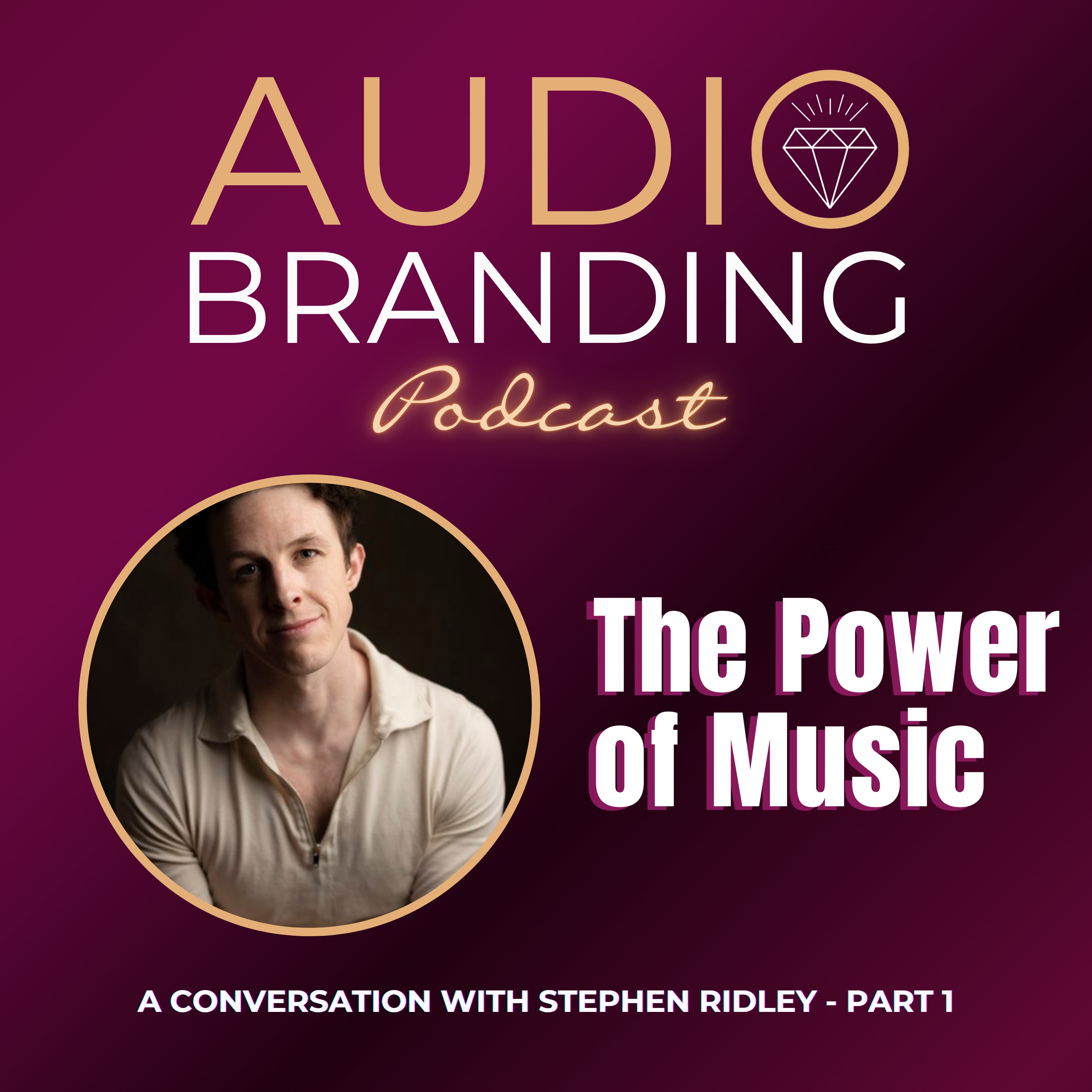
S1 Ep 299The Power of Music: A Conversation with Stephen Ridley - Part 1
“Chick invited me to go to this jazz club in Soho called Ronnie Scott’s in London. And it was, like, two o’clock in the morning – I was like, ‘I don’t think it’s gonna be open.’ I did not know who I was dealing with. It’s Chick Corea. He just makes a call, it’s open, and they’d set out three pianos in a room facing each other. And we walked in this room, we sat down, and Chick could play a few notes. Herbie had joined in, I’d joined in, and we kind of each took it at turns in leading the thing. This song went on for hours. It changed, it evolved, it moved. It was the most amazing thing. And Herbie said something really, really amazing. He was like, because even though we didn’t say anything to each other, I like, know these people in this moment. I know, I feel them, like there’s something happening, and so here’s the super geek moment. He said something in it, and it really resonates with me: he’s like, ‘You know, music’s not about the sound, right? The sound is carrying an intention.’" – Stephen Ridley This week’s guest is a world-renowned British pianist, composer, and visionary in modern piano education. His journey from high-flying investment banker to global musical sensation is as remarkable as his performances. He discovered his passion for the piano at age two and received formal training when he was eleven, but it wasn’t until he left the corporate world that his true artistry flourished. Starting as a London street performer, his raw talent and electrifying performances quickly garnered international attention and propelled him onto some of the world’s most prestigious stages.His name is Stephen Ridley, and our conversation ranges from how music connects us and transcends language to how it prolongs our lives. Keep listening to learn more about the power of sound! As always, if you have questions for my guest, you’re welcome to reach out through the links in the show notes. If you have questions for me, visit audiobrandingpodcast.com, where you’ll find a lot of ways to get in touch. Plus, subscribing to the newsletter will let you know when the new podcasts are available, along with other interesting bits of audio-related news. And if you’re getting some value from listening, the best ways to show your support are to share this podcast with a friend and leave an honest review. Both those things really help, and I’d love to feature your review on future podcasts. You can leave one either in written or in voice format from the podcast’s main page. I would so appreciate that. (0:00:00) – The Power of SoundAs our discussion begins, Stephen shares his memories of a turbulent childhood in northern England, and what he discovered about the power of sound when he found a case full of his dad’s old cassettes. “The most amazing thing of this,” he tells us, “was I saw it change my dad, and he went into this other person, a much more beautiful, calm, serene sort of English version of Elvis. He sort of became a bit Elvis and he was singing to my mom and they were sweet and romantic together and I was like, ‘What is this superpower?” He remembers how that moment, and a neighbor’s gift of a simple toy piano, sparked his love of music, and his ongoing fascination with its impact on listeners. “It’s a magic which I’ve now come to know intimately,” he explains, “and I get to go around the world and share that magic with people and I’ve seen it now just millions of times. It’s so amazing to me.”(0:07:00) - Inspirational Journey of Music and PassionStephen shares more of his early memories of sound, and how growing up in a secluded village with nothing to do proved to be a blessing in disguise for learning about music. “The process I learned piano was not one I would recommend,” he warns us. “It was unnecessarily painful, but I had enough boredom to allow a curiosity to grow and to follow that curiosity, and then I’d discover magic.” He tells us about his unforgettable first day as a piano busker in London, and the joy that his music stirred in the listeners back then, as well as to this day during concerts. “Maybe they’re, like, terrible bosses,” Stephen adds, “but in that moment they show me their best side. That’s the magic for me. I’ve been a musician and I felt all the love of humanity, and it was absolutely amazing.”(0:15:44) - The Spiritual Power of MusicHe tells us about his life as a concert pianist today, and how little has actually changed since his days as a busker. “If I’m in an airport, I see one of those pianos, I’m on it,” he says. “Trust me, I’ll miss a flight. I don’t care. Like, there’s some magic to playing for people when they don’t expect it. It’s really a rush.” Stephen tells us his favorite song – at least, as he adds, for the moment – and why it made such a deep impression on him while teaching it to a class. “’I’m only going to play five notes,’” he recalls explaining to them, “and I played this really stripped-back ‘Hallelujah.’ And by doing that, it lets the voice take cent
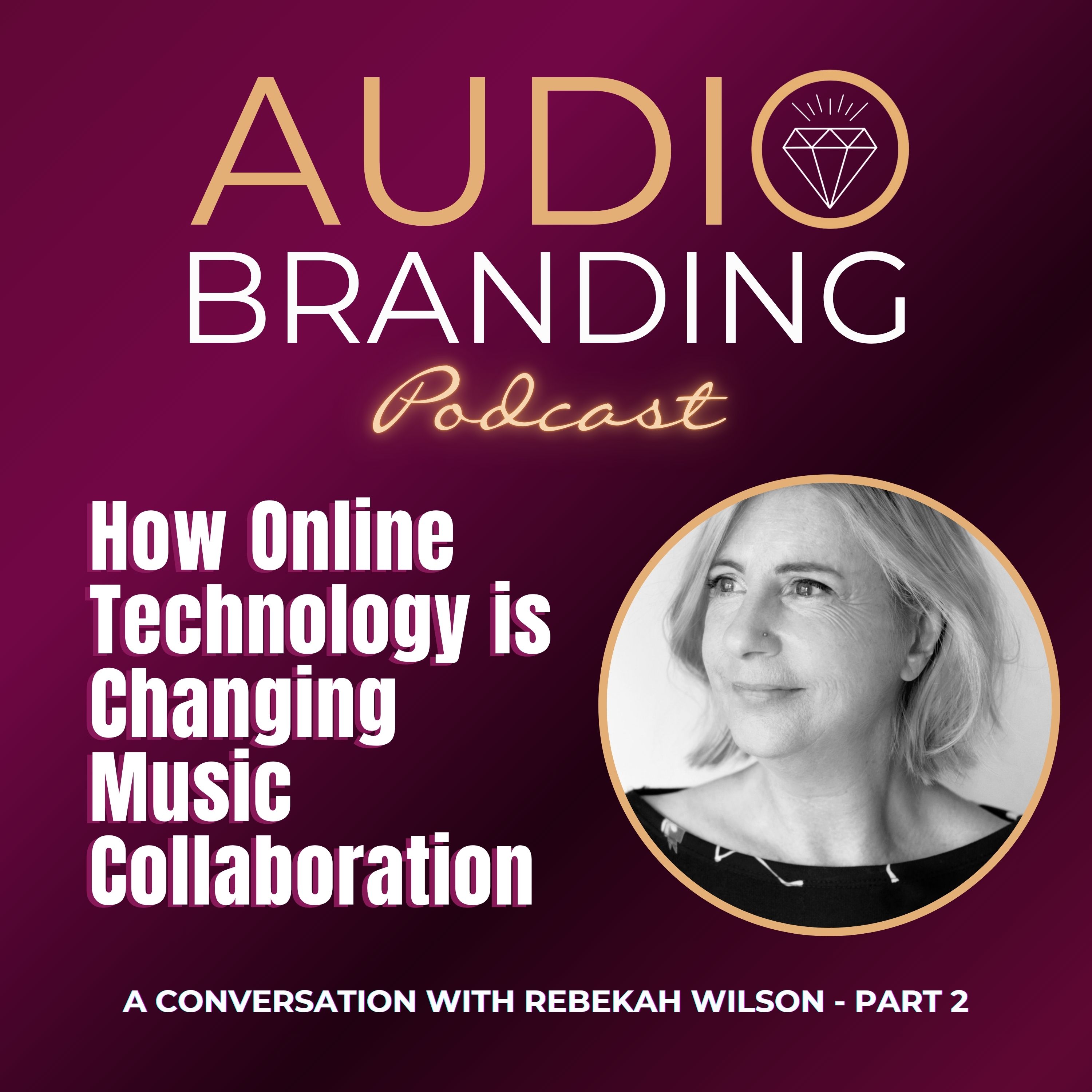
S1 Ep 298How Online Technology is Changing Music Collaboration: A Conversation with Rebekah Wilson - Part 2
“I have a regular chat with a friend of mine in New Zealand. He’s a tetraplegic and a musician, so he invents his own music instruments that he can play with his limited motion, and he can send me his instrument over MIDI to where I am across the ocean and we can play together and we can have an engagement. It’s not possible for him to come to see me in Europe. It would be so expensive, and a lot of work. So, you know, thank God there’s the internet for him, you know. He gets to participate, he has remote concerts, he still plays with his friends. It’s really special.” – Rebekah Wilson This episode is the second half of my conversation with Source Elements CEO and remote collaboration specialist Rebekah Wilson as we discuss how physics and neurology collide when it comes to reducing latency, how the pandemic transformed online music collaboration and gave rise to today’s generation of at-home musicians, and where Rebekah sees sound, technology, and music itself heading in the future, over both the coming decades and even generations from now. As always, if you have questions for my guest, you’re welcome to reach out through the links in the show notes. If you have questions for me, visit audiobrandingpodcast.com, where you’ll find a lot of ways to get in touch. Plus, subscribing to the newsletter will let you know when the new podcasts are available, along with other interesting bits of audio-related news. And if you’re getting some value from listening, the best ways to show your support are to share this podcast with a friend and leave an honest review. Both those things really help, and I’d love to feature your review on future podcasts. You can leave one either in written or in voice format from the podcast’s main page. I would so appreciate that. (0:00:01) - Impact of Latency on Music CollaborationWe continue our talk about the science of latency, and Rebekah explains how it impacts music in ways that our brains only dimly perceive. “If you add a little bit of latency onto that,” she says, “music’s like, one, two... three… music’s not very friendly to that [sort of] latency.” She tells us more about how our brains unconsciously adapt to latency, and how technology relies both on improving speed and taking advantage of our ability to filter out information gaps. “What’s happening is that you’re anticipating it based on this model that’s in your brain,” Rebekah explains. “For example, every time you look at a wall or your surroundings, if it’s not moving, your brain’s not processing it.”(0:06:02) - Advancements in Remote Music CollaborationShe talks about how the COVID-19 pandemic’s lockdown phase led to a boom in online collaboration, some of which continues to thrive today. “There remained a group of people,” she says, “a small group of people, you know, scattered around the world… who were like, ‘You know what? Some interesting things came out of this. Some interesting artistic development is possible here and it’s worth pursuing.” We discuss the technical and creative innovations that emerged from that period, and where they might lead in the years to come as we continue to innovate. “What we love as humans,” Rebekah says, “is to seek new forms of expression. This is what we do, we’re adventurers. So we go out, we go into the desert, we go out into the oceans, and we look for where something new is. And you know, music and performance and being together on the internet is still very new for us as humans.”(0:12:42) - Expanding Music Collaboration With TechnologyOur conversation wraps up as we continue to talk about online collaboration and creative efforts that can now span the world. “Hey, how does that guy play his trumpet?” she says, considering how musicians can start working together long before they meet in person. “What are his favorite riffs on the saxophone? So when they get to be together in that short time, they’re not starting from scratch, they’re already friends.” She considers the future of communication, collaboration, and the latency challenges that we might face in the future, including interplanetary latency, and we discuss how music helps define us as a species. “It’s such a privilege to be a musician,” she concludes, “to be able to harness sound, to make narratives with it and to build new worlds with it, you know, or to use your voice to tell stories with it. What a privileged, beautiful thing it is that we get to do.” Episode SummaryHow latency and our brains’ perception of it can impact online music collaboration.The rise of “bedroom artists” after COVID-19 and their impact on the future of music.How sound, music, and communication might evolve as we reach for the stars. Connect with the Audio Branding Podcast:Book your project with Voice Overs and Vocals by visiting https://voiceoversandvocals.comConnect with me on Instagram - https://www.instagram.com/jodikrangle/Watch the Audio Branding Podcast on YouTube - https://www.youtube.com/c/JodiKrangleVOConn
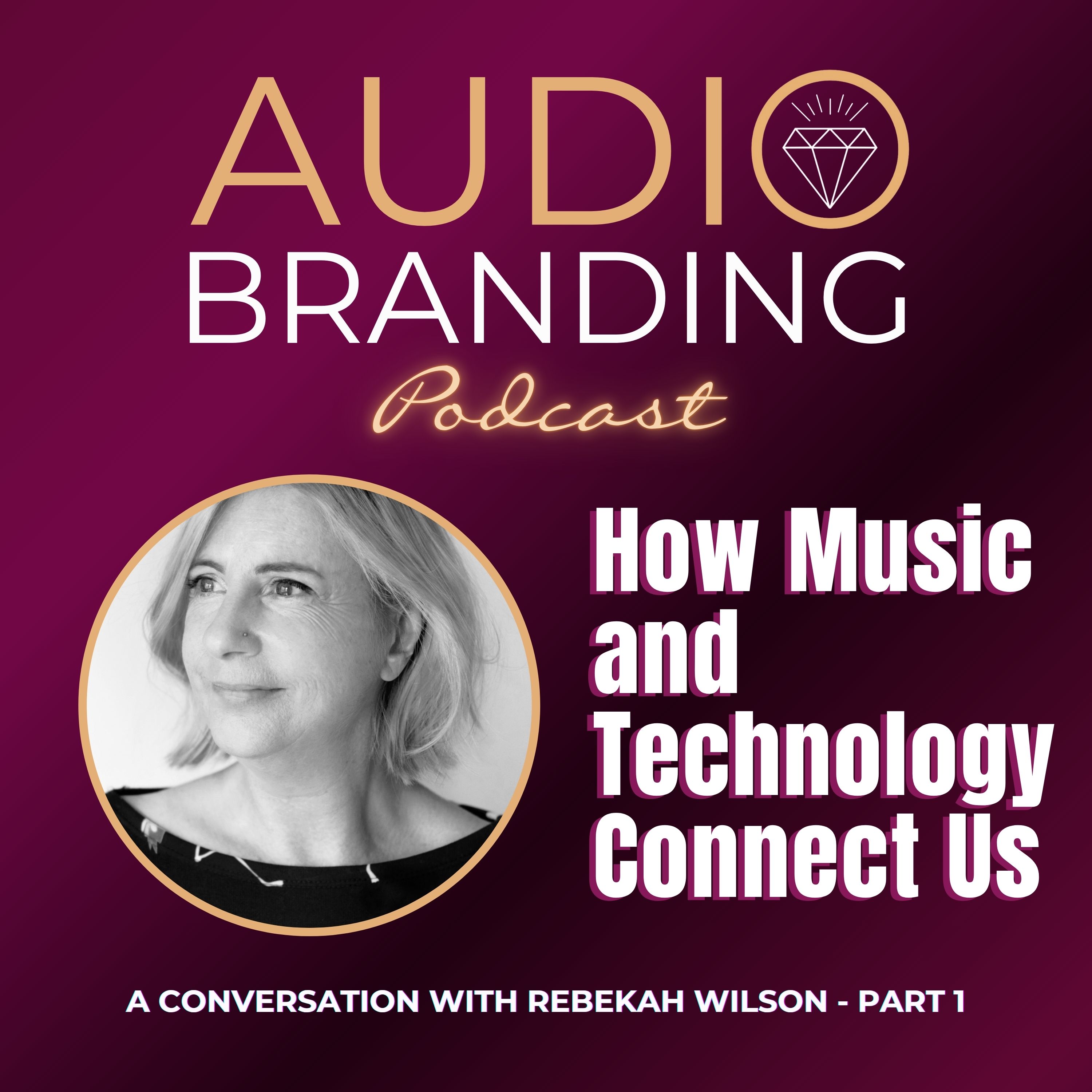
S1 Ep 297How Music and Technology Connect Us: A Conversation with Rebekah Wilson - Part 1
“So I’m in Chicago, I’ve quit my job, I’ve almost run out of money. You know, you’re young, you don’t care. And I met Robert, who’s now my co-founder. He had mixed a CD of mine a couple of years before through friends of friends. So we meet up, have a beer, and then he’s like, ‘Oh, you know, I’m spending all this money on IT every month,’ because he was a sound engineer. And he’s like, ‘But we’ve got this thing called the internet, right? I thought, ‘I’ve got 1 MB internet in my studio, why can’t I use that? It’s free.’ And I was like, ‘Yeah, let’s do it.’ And because I, you know, had been doing software development and the internet, it just made sense. The two of us really bonded, and I went home to New Zealand and he stayed in Chicago, and we built Source-Connect.” – Rebekah Wilson This episode’s guest is the co-founder, technical director, and CEO of Source Elements, and has worked for over twenty years with customers and industry partners like Avid and Dolby. Since the release of their pioneering remote audio app Source-Connect in 2005, she’s advocated for the benefits of remote collaboration in all sorts of areas, including sound engineering, voice acting, music performance and production, film and cinema production, and education.Originally trained as a composer, she’s now a software developer and expert in the fields of music technology and networking, and, as a New Zealand native, she understands very well how important it is to stay connected no matter where we are. Her name is Rebekah Wilson, and you’ll want to hear what she has to say about how Source Connect is making our creative lives easier, what it’s like being a woman in a male-dominated field, and where she sees this technology going in the future. As always, if you have questions for my guest, you’re welcome to reach out through the links in the show notes. If you have questions for me, visit audiobrandingpodcast.com, where you’ll find a lot of ways to get in touch. Plus, subscribing to the newsletter will let you know when the new podcasts are available, along with other interesting bits of audio-related news. And if you’re getting some value from listening, the best ways to show your support are to share this podcast with a friend and leave an honest review. Both those things really help, and I’d love to feature your review on future podcasts. You can leave one either in written or in voice format from the podcast’s main page. I would so appreciate that. (0:00:01) - Musical Journey to Tech InnovationWe start off with Rebekah’s early memories of her father playing the guitar, and how it helped spark her love of music. “I must have been four or five,” she tells us, “and I can see the house that we were living in at the time. So, yeah, around their age and um, just those lovely, warm feelings.” She shares her experience growing up in New Zealand and how quickly things changed as the internet began to connect the world. “I went out and told everybody,” she explains, recalling the day she learned about Princess Diana’s passing on a web forum. “I was like, ‘Oh my God, oh my God.’ And they’re like, ‘How do you know? The internet? What, that’s crazy!’ And so it was like one of those first moments of finding out that you can connect to the rest of the world with this medium.”(0:11:06) - Navigating Gender Dynamics in TechRebekah shares her journey from orchestral composer to tech entrepreneur in the ‘90s, and just how much things have changed for women since those early days. “I went in for the job interview and, uh, they, they show me where the programmers work,” she explains. “It’s a dark room in the middle of the building with no windows... and they have pictures of naked women on the walls.” We talk about her very first trade show, the rise and fall of ‘booth babe’ culture, and how a new generation of women are helping transform the industry. “These, you know, women in their twenties,” she says, “they don’t feel so isolated… this mentorship of older women is what’s become such a huge movement.”(0:17:16) - Exploring Latency in CommunicationThe first half of our conversation wraps up as Rebekah talks about the science of latency, and how lucky we are that we live in a world where global communication is even possible. “Maybe the world could have been bigger,” she says, “or the speed of light slower, or our brains be a bit different... If you go back to, firstly, think about the evolution of the human brain and speech, we evolved to speak in small groups with each other.” She explains the limit the speed of light sets on latency and how technology has taken advantage of that limit. “That range of latency in which we’re able to compress audio, put it in a packet, send it to the internet,” she adds, “decompress it, send it out to the headphones. It’s just short enough that we can talk. It’s kind of the perfect, you know, Goldilocks spot.” Episode SummaryRebekah’s childhood musical experiences and the intersection of music, math
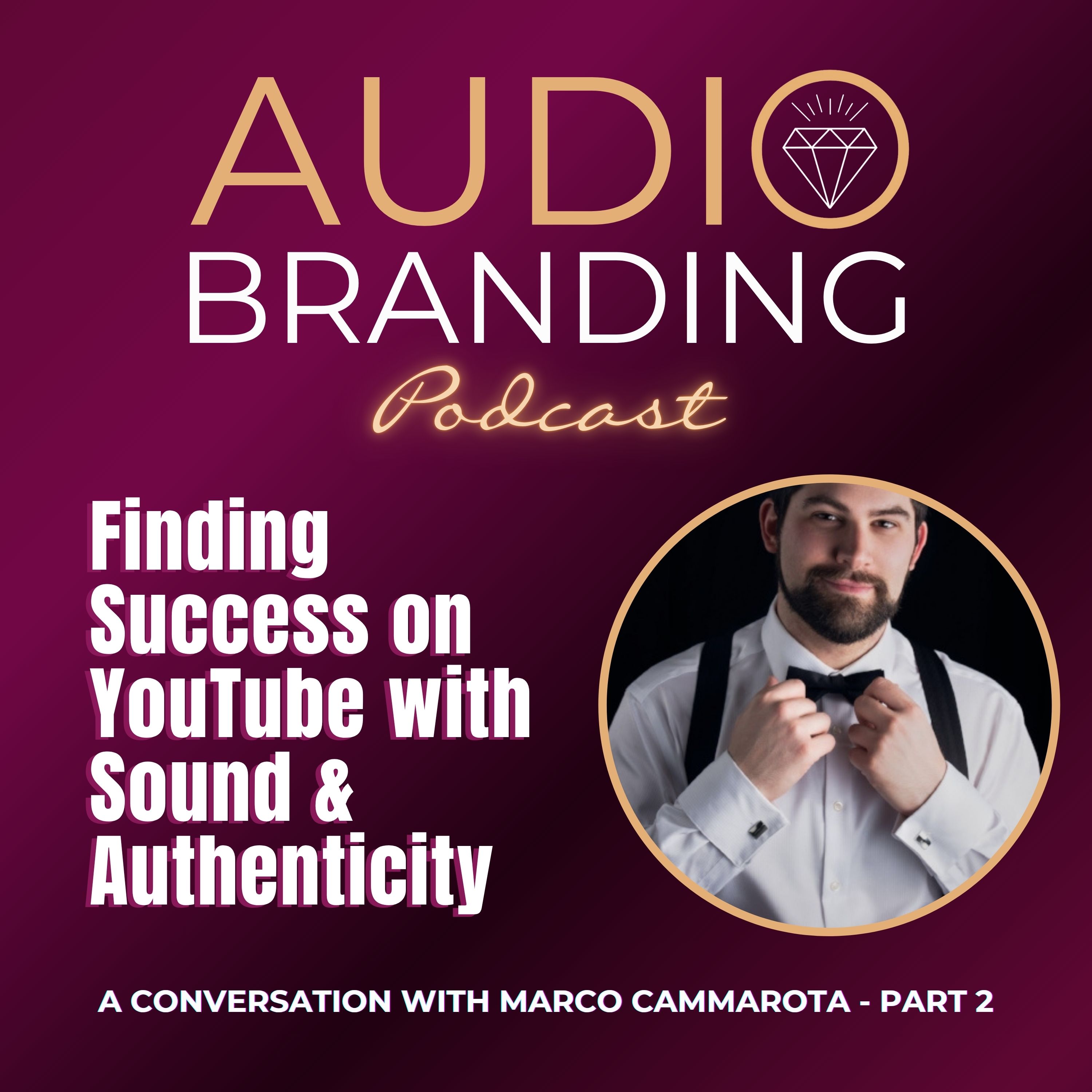
S1 Ep 296Finding Success on YouTube with Sound & Authenticity: A Conversation with Marco Cammarota - Part 2
“Listen, I got unbelievably lucky with YouTube, and I don’t know why. I still really, I mean, I know why in theory, like, people have been like, well, ‘You provide XYZ,’ but I don’t know why I get to do this. Like, I know that I have certain qualities that lend themselves to my strengths, that lend themselves to this medium, but it’s completely and utterly luck. Putting out good videos, having a high-quality camera, a high-quality microphone, having a, you know, finding out what your skill set is that you can use. So, the thing is, I remember five years ago when I wasn’t even, or well, let’s say six years ago, I’d be like, they would be talking about a streamer that had a shtick. And I guess I accidentally fell back into my shtick, which was the opera singer, right?” – Marco Cammarota This episode is the second half of my conversation with voice actor and YouTube sensation Marco Cammarota as we discuss how the YouTube and Twitch algorithms can make or break a channel’s audience size, Marco’s voiceover work in such games as Metal Slug and Genshin Impact, and how a creative approach to sound, including silence, can have a dramatic impact on listeners. As always, if you have questions for my guest, you’re welcome to reach out through the links in the show notes. If you have questions for me, visit audiobrandingpodcast.com, where you’ll find a lot of ways to get in touch. Plus, subscribing to the newsletter will let you know when the new podcasts are available, along with other interesting bits of audio-related news. And if you’re getting some value from listening, the best ways to show your support are to share this podcast with a friend and leave an honest review. Both those things really help, and I’d love to feature your review on future podcasts. You can leave one either in written or in voice format from the podcast’s main page. I would so appreciate that. (0:00:00) - Navigating a Career in Content CreationMy conversation with Marco picks up with his frank advice to people looking to follow his winding career path. “I remember when people would be like, how do you get into voiceover? And I’d always be like ‘Don’t, don’t!’ How do you get into opera? ‘Don’t!’” We discuss how much of a role luck and the YouTube algorithm played in his success, and he does offer some tips to anyone looking to start their own channel. The topic turns to AI in sound, its growing prevalence in social media, and whether it can replace human video game compositions. “There was an instance where I was listening to some YouTube music on a playlist,” he recalls. “And I was like man, this, like this guy goes off. And then I looked, and it was actually AI, and I was like, oh. And so then the question became do I still listen to this or do I not care, or do I, like, turn it off? And I eventually decided to turn it off.”(0:15:25) - Exploring Video Game Music CommunityMarco tells us more about the community he’s built online with MarcoMeatball and his hopes for his fellow gamers and listeners. “The goal is to have it be a hub of video game music where,” he says, “if someone maybe doesn’t know something or likes something or doesn’t like something, they can come and hear a person who is just like them with a little bit of extra experience, or equal experience, or the person could actually have more experience than me and also offer their insight.” We also discuss how the channel led to a newfound appreciation for video game soundtracks as art, even compared to his childhood love of games. “I’ve learned about so many more pieces of music,” he adds, “like I had a deep, fundamental love for music and games, but I didn’t realize how deep the trench would go for me and how many games that I would be exposed to that I would fall in love with as well.”(0:21:25) - The Importance of Sound in LifeAs our conversation comes to a close, Marco notes some of the most innovative uses of sound in video games that he’s heard, including no sound at all during a particularly ominous moment of the Monster Hunter series. “What I find amazing about that,” he recounts, “is that kind of people meme on it, and they kind of joke, but actually the sound of silence is way more terrifying than the actual soundtrack.” We discuss the importance of sound and how he’s learned to keep an open mind about the beauty of sound in unexpected places, and Marco tells listeners how they can get in touch. “The beautiful way that a horn and the strings meld together and become this like beautiful sunrise of music,” he says about sound, “hearing breath, like, you know, hearing the dog bark down the street, the wind rustling in the wheat, and the leaves, like these – these are the soundtracks of our lives.” Episode SummaryThe importance of content consistency and the influence of AI in gaming and voiceoverMarco’s hopes for his online community and what he’s learned from his listenersThe power of sound and silence, and how Marco got the nickname “Marco Meatball” 
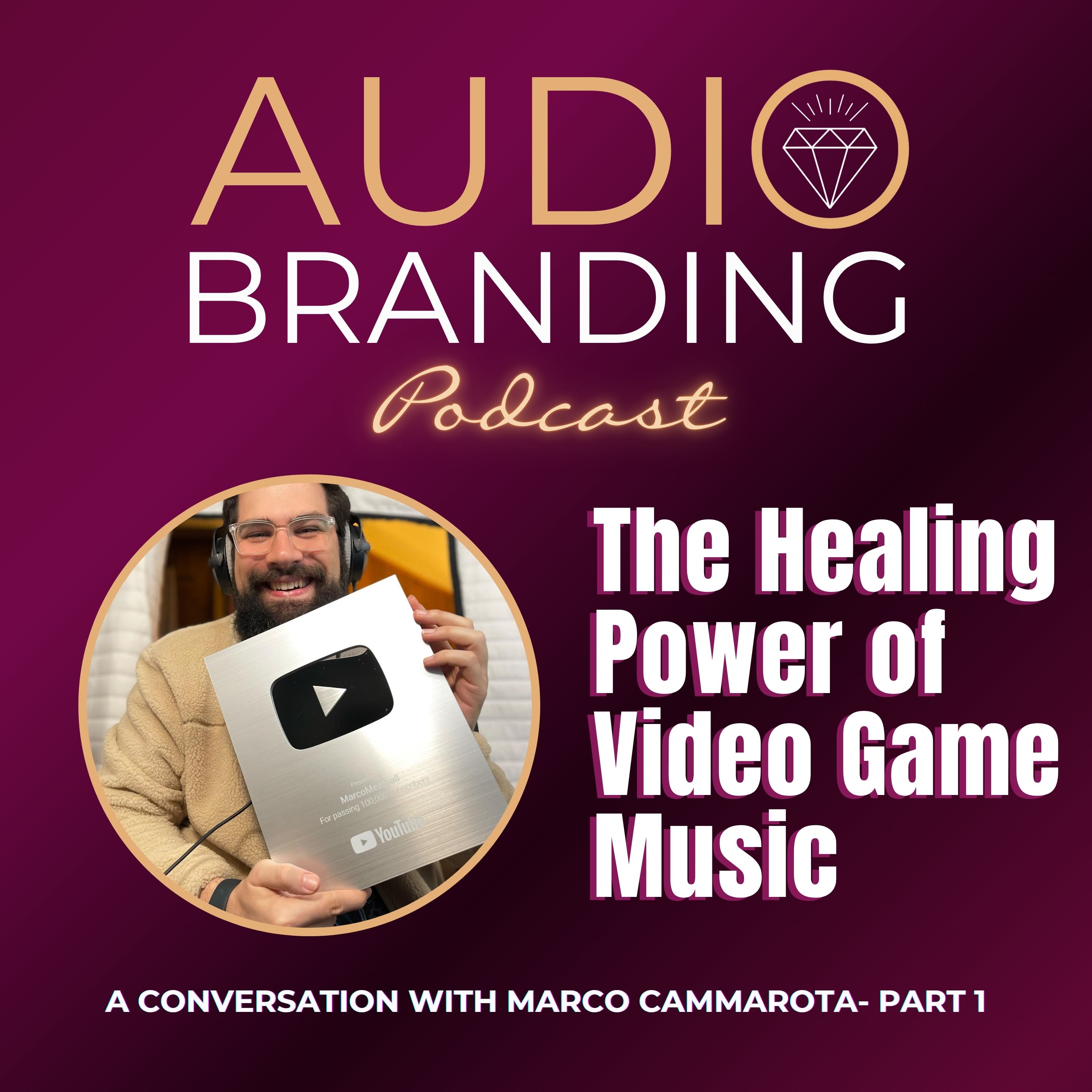
S1 Ep 295The Healing Power of Video Game Music: A Conversation with Marco Cammarota - Part 1
“In February of ’21 I just randomly started. I just filmed a video, and I was like, ‘Okay, whatever.’ Well, it was February 11th, and then February 15th we were on our way to pick up my dog, my puppy at the time – she was you know, nine weeks old – and I started getting notifications on my phone and I was like, ‘Oh, weird, I must have left some somebody, like, a comment on YouTube or something.’ And all of a sudden, I look and I’m like, ‘Whoa, my video is popping off.’ I was like, ‘What do I do with this?’ And so I just, like, doubled down.” – Marco Cammarota This week’s guest is a professional opera singer turned voice actor turned YouTuber. He grew up loving video games and video-game music after first discovering them when he was seven years old, and since then he’s lived and breathed all things video games. He has a YouTube channel all about video game music – the beauty of modern composition, how it allows us to connect deeper to the games we love, and how we can better learn to understand ourselves through it and the experiences it provides.His name is Marco Cammarota – sometimes known as “Marco Meatball” – and I’ve been looking forward to hearing about his musical influences and his love of sound, particularly when it comes to video games, for a while now. I hope you enjoy this conversation as much as I did! As always, if you have questions for my guest, you’re welcome to reach out through the links in the show notes. If you have questions for me, visit audiobrandingpodcast.com, where you’ll find a lot of ways to get in touch. Plus, subscribing to the newsletter will let you know when the new podcasts are available, along with other interesting bits of audio-related news. And if you’re getting some value from listening, the best ways to show your support are to share this podcast with a friend and leave an honest review. Both those things really help, and I’d love to feature your review on future podcasts. You can leave one either in written or in voice format from the podcast’s main page. I would so appreciate that. (0:00:00) - From Opera to YouTubeWe start things off with Marco’s early memories of sound, particularly the songs his Italian grandmother used to play when he was a child. “Even the sound of the accordion triggers like a deep sense of nostalgia for me,” he recalls. “When it comes to music like that, that soundscape is really, really poignant to me.” He tells us more about how his childhood led him to opera, voice work, and even YouTube. “The desire to communicate and express,” Marco explains, “was the thing that awakened through this, like summer camp, and then I think that that’s what led me down the path of musical theater and eventually opera, and, then voiceover and now this current career.”(0:16:30) - Video Game Music’s Healing PowerMarco discusses the impact of his father’s passing and the solace he found both in grief counseling and through video game music. “Grief counseling is something everyone should do if possible,” he shares, “just because grief is such a powerful and painful feeling. There are really no words to describe how bad it feels.” He talks about some of the game soundtracks that helped him process those emotions, from Outer Wilds to Disco Elysium, and one particularly timeless classic. “Final Fantasy is really based around classical and prog rock,” he explains, “and sometimes integrating the two in one setting. It’s an incredible thing that most of my childhood was based around Final Fantasy’s sound, and I think, like, largely that’s why I also gravitated towards being sensitive to sound and music.”(0:24:21) - The Impact of Video Game MusicAs we wrap up the first half of our conversation, we talk about what sets video game music apart from traditional film soundtracks, and how he approaches the topic on his YouTube channel. “The question to me, that’s the most important part,” he says, “is what is active listening? Okay, and how do we listen with intention? And, furthermore, how do we decipher what a composer wants us to feel?” He tells us more about the unique role music plays in such an immersive storytelling genre as video games, and how he’s helping bridge gaming and music for fans of both. “My regulars that come to the channel,” Marco says, “I think, really understand what I’m trying to do, and I think really appreciate it and it’s been incredible. I mean, like, people tell me they’ve gone to music school because of me.” Episode SummaryMarco Cammarota’s journey from professional opera singer to popular YouTuberThe distinctive fusion of genres, melody, and ambiance that sets video game music apartHow video games helped pioneer audio branding, from title tracks to leitmotifsTune in for next week’s episode as Marco shares his surprising advice for anyone looking to get into voiceover and content creation, his experience with AI in video game music and where it might lead, and how his listeners have helped him learn to keep an open mind about m
S1 Ep 294Unlocking the Secrets of Music Video Production: A Conversation with Andy Gesner - Part 2
“I think people forget that. I think they forget that there’s a person behind the music and that they need to share that with their audience now more than ever, because if people hear your song and they like your song, they’re gonna go down a rabbit hole. And if they can go down that hole and come across you being genuine, being authentic, actually showing vulnerability, they’re gonna fall in love with you. They like the music, and they like you. That is the definition of a superfan.” – Andy Gesner This is the second half of my interview with owner and president of HIP Video Promo, Andy Gesner, as we talk about balancing AI content with human connection, his advice on setting yourself apart when it comes to social media, and the critical role that superfans play in building an audience.As always, if you have questions for my guest, you’re welcome to reach out through the links in the show notes. If you have questions for me, visit audiobrandingpodcast.com, where you’ll find a lot of ways to get in touch. Plus, subscribing to the newsletter will let you know when the new podcasts are available, along with other interesting bits of audio-related news. And if you’re getting some value from listening, the best ways to show your support are to share this podcast with a friend and leave an honest review. Both those things really help, and I’d love to feature your review on future podcasts. You can leave one either in written or in voice format from the podcast’s main page. I would so appreciate that. (0:00:01) - Creating Visual Content for Music Promotion“For the first four or five years, music videos really were reserved for those who were either well-moneyed or had backing,” Andy says as we start the second half of our conversation. “All of a sudden, there was this platform called YouTube, and of course, we jumped right on it.” He tells us more about that transition between the MTV era and today’s streaming content, and his advice to clients about the limits of AI content creation. “I have always told clients, ‘Yes, no issues with an AI video, but sport, don’t follow up your AI video with another AI video,’” he explains. “The best way to get to the next level and get to those thousand superfans… You have to make a human connection.”(0:10:46) - Music Promotion Strategies and PhilosophyHe tells us about his work helping musicians cross the bridge to social media promotion and engaging with their fans, and how much work it can be for creatives who aren’t naturally outgoing. “They don’t appreciate sometimes that they are public figures,” he tells us, “and that they need to be doing the things their less talented, much more lazy competition are not going to do.” Andy warns us, however, against losing sight of what’s important in the rush for more engagement. “Everybody’s concerned about the follower count,” he says. “And they’re upset that the YouTube view count is low and they want to know how to get the streams up, and they’re concerned about how many subscribers they have... I’m finding they are forgetting about the song. You’ve got to be focused on your song.”(0:26:37) - Promoting Artistic Encouragement and SupportAs our conversation comes to a close, Andy tells us about some of his latest projects, including one particularly unlikely new pop star. “We’re working on an unusual project,” he explains. “Her name is Gwen, and she’s dead. In fact, Gwen isn’t even real. She is the star of a new streaming television program.” He tells us how listeners can get in touch, whether it’s Instagram, YouTube, or even a plain old phone call. “If you love your job,” Andy says, “you never work a day in your life. I don’t play golf. I have no interest in joining a bowling league. I really like helping other people.” Episode SummaryThe evolution of music videos, from Hollywood sound stages to home studios.Andy’s strategy for maintaining a consistent media presence and his advice on AI content.The importance of sound and how easily it’s overlooked in today’s video-first world. Connect with the Audio Branding Podcast:Book your project with Voice Overs and Vocals by visiting https://voiceoversandvocals.comConnect with me on Instagram - https://www.instagram.com/jodikrangle/Watch the Audio Branding Podcast on YouTube - https://www.youtube.com/c/JodiKrangleVOConnect with me on LinkedIn - https://www.linkedin.com/in/jodikrangle/Leave the Audio Branding Podcast a review at https://lovethepodcast.com/audiobranding (Thank you!)Share your passion effectively with these Tips for Sounding Your Best as a Podcast Guest!https://voiceoversandvocals.com/tips-for-sounding-your-best-as-a-podcast-guest/Get my Top Five Tips for Implementing an Intentional Audio Strategyhttps://voiceoversandvocals.com/audio-branding-strategy/Editing/Production by Humberto Franco - https://humbertofranco.com/ This podcast uses the following third-party services for analysis: OP3 - https://op3.dev/privacy
S1 Ep 293The Power of Sound and Vision in Music: A Conversation with Andy Gesner - Part 1
“I said, ‘Well, uh, my team and I would love to see the video,’ and the woman at Lost Highway said, ‘All right, let me pop a VHS in FedEx, it’ll be there tomorrow morning.’ So, we watched the Johnny Cash Hurt music video and once we’d wiped a tear out of our eyes, I got on the phone. I said, ‘Retta, put us in, coach. We want to play.’ And the rest is history. It was and remains still the most iconic music video of an artist doing a cover to date.” – Andy Gesner This episode’s guest is the owner and president of HIP, one of the most trusted names in music marketing. He’s been releasing records since 1979, giving him firsthand insight into the complexities of the music industry, and he’s channeled his expertise and passion for music into uplifting fellow artists over the past twenty-four years. He and his team have promoted over 4,800 music videos, championing some of the most renowned artists and best indie talent from all corners of the globe.His name is Andy Gesner, and if you’re a musician, this is a conversation you don’t want to miss. I know how hard it can be these days to make a living from your art, and it can be even harder if you don’t pay attention to marketing. If you’re creative, you have to wear a lot of hats, and if you’re looking for tips, Andy has some great ones to share in this two-part discussion.As always, if you have questions for my guest, you’re welcome to reach out through the links in the show notes. If you have questions for me, visit audiobrandingpodcast.com, where you’ll find a lot of ways to get in touch. Plus, subscribing to the newsletter will let you know when the new podcasts are available, along with other interesting bits of audio-related news. And if you’re getting some value from listening, the best ways to show your support are to share this podcast with a friend and leave an honest review. Both those things really help, and I’d love to feature your review on future podcasts. You can leave one either in written or in voice format from the podcast’s main page. I would so appreciate that. (0:00:00) - From Sound to PromotionOur conversation starts off with Andy’s very first memory of sound, which just happens to be the Beatles’ historic performance on The Ed Sullivan Show. “Well, my sister starts screaming like a banshee and she starts twirling around like a whirling dervish,” he recalls. “And I look over at my brother, and his jaw hits the floor. And I look at this little black and white TV and there are these four guys with what at the time was considerably long hair.” He tells us about how his career shifted from performance to promotion, and what his work on Johnny Cash’s classic “Hurt” video taught him about taking creative risks. “It was like, ‘We can’t play a Johnny Cash video on MTV, no way,’" he remembers producers saying at the time. “People thought Johnny’s version of Hurt was a bit too out there. But you and I both know, as a marketing person, you present, and the public decides.”(0:19:46) - The Importance of Music VideosOur discussion turns to how the digital era has reshaped music promotion and how the music videos of the ‘80s paved the way for today’s influencer culture. “Now more than ever,” he explains, “artists, independent creatives, are public figures, and you can’t just sit on the couch and say, ‘Hey, I’m not going to do any of that public figure stuff, I just want the world to love me for my music.’ Those days are over.” We talk about the bands that, starting around the turn of the 21st century, have had to rely on video and online marketing instead of radio airplay, and he shares a memorable example. “I remember in 2007,” Andy says, “sending out the first Sia music video. Certainly, the folks at the label had high hopes for her, but what better example from Small Acorns, big oak trees can grow.” Episode SummaryAndy’s early memories of the Beatles, hi-fi systems, and the arrival of music videos.How music marketing’s evolved from radio and video to websites and streaming content.Tune in for next week’s episode as Andy and I discuss how music videos have evolved in the era of streaming content creators, his thoughts on successfully incorporating AI content into video marketing, and his advice on attracting and keeping the “superfans” who help your music grow.Connect with the Audio Branding Podcast:Book your project with Voice Overs and Vocals by visiting https://voiceoversandvocals.comConnect with me on Instagram - https://www.instagram.com/jodikrangle/Watch the Audio Branding Podcast on YouTube - https://www.youtube.com/c/JodiKrangleVOConnect with me on LinkedIn - https://www.linkedin.com/in/jodikrangle/Leave the Audio Branding Podcast a review at https://lovethepodcast.com/audiobranding (Thank you!)Share your passion effectively with these Tips for Sounding Your Best as a Podcast Guest!https://voiceoversandvocals.com/tips-for-sounding-your-best-as-a-podcast-guest/Get my Top Five Tips for Implementing an Intentional Audio Strategyhttps:/
S1 Ep 292The Future of Podcasting & Legal Branding: A Conversation with Dennis Meador - Part 2
“But if you think about it, like if all 360,000 of these, like, law firms, not lawyers, law firms had their own brand out there, who’s gonna rise to the top? The ones who are producing content that provides value, and then the ones who are producing content that has some good production value, and are the ones who are producing content that has some good entertainment value. ‘Cause I think that’s the third leg. Because right now, just producing content is enough, but there’s going to come a point where people have to be entertaining as well, where it’s not going to be consumed.” – Dennis MeadorThis episode is the second half of my conversation with founder and CEO of The Legal Podcasting Network Dennis Meador, as we discuss Dennis’s start in podcasting, his tips for putting together a helpful and accessible video for clients, and how AI is blurring the video/audio divide.As always, if you have questions for my guest, you’re welcome to reach out through the links in the show notes. If you have questions for me, visit audiobrandingpodcast.com, where you’ll find a lot of ways to get in touch. Plus, subscribing to the newsletter will let you know when the new podcasts are available, along with other interesting bits of audio-related news. And if you’re getting some value from listening, the best ways to show your support are to share this podcast with a friend and leave an honest review. Both those things really help, and I’d love to feature your review on future podcasts. You can leave one either in written or in voice format from the podcast’s main page. I would so appreciate that. (0:00:00) - Podcast Marketing and Communication StrategyThe second half of our conversation starts as Dennis shares his approach to winning older clients over to social-media marketing, and the challenge our online-first world can pose. “They’ll say, ‘Yeah, if I can get them in front of me, I’ll convert them 80% of the time,’" he recounts. “The problem is that 80% of the time, they check out your website and never do anything further.” He talks about short-form content and informational videos, and how they can help brands get a foot in the door when it comes to making an impression on clients. “When people search these very specific questions, now,” he explains, “all of a sudden, this attorney, especially with video and YouTube being owned by Google, their videos start to pop up, their podcast starts to pop up, their FAQ page starts to pop up.”(0:14:19) - Future of Podcasting and BrandingDennis and I talk about how remote networking and online spaces have changed the way we make a first impression, and his approach to keeping brands engaged with their clients. “We send a lot of videos in my company,” he explains, “I’ll have somebody say to me, like, ‘Oh, this client’s ghosted us, blah, blah, blah, blah. They’re not returning calls.’ I’m like, did you send [a video]? They probably forgot you’re a real person.” He shares his thoughts about Gen Z, and now Gen Alpha, and how their lifelong experience with social media will impact the future of branding. “Fifteen years ago or ten years ago,” he recalls, “the number one thing kids wanted to be when they grew up was doctors and lawyers. Do you know what the number one thing is now for kids junior-high and below? Influencers.”(0:17:34) - AI and Creativity in MarketingOur conversation concludes with a firsthand account of how AI is helping Dennis reinvent and expand his approach to podcast development. “I’m hoping that when we produce this [next] podcast,” he says, “we actually produce it as a cartoon, that when we produce this podcast, we actually produce it as a cartoon, and we’re going to basically be able to feed the podcast in.” He shares his thoughts about how AI can boost human creativity, and what being a creative might come to mean as AI handles more of the nuts and bolts. “What does a music producer do?” he asks. “They direct what happens, as opposed to getting into the studio and playing the instruments, and it’s, again, the same thing.” Episode SummaryDennis’s approach to creating and marketing podcasts through social media.How small law firms can use content creation to rise above the billboard-ad crowd.Dennis’s vision of AI as a tool to amplify human efficiency and imagination. Connect with the Audio Branding Podcast:Book your project with Voice Overs and Vocals by visiting https://voiceoversandvocals.comConnect with me on Instagram - https://www.instagram.com/jodikrangle/Watch the Audio Branding Podcast on YouTube - https://www.youtube.com/c/JodiKrangleVOConnect with me on LinkedIn - https://www.linkedin.com/in/jodikrangle/Leave the Audio Branding Podcast a review at https://lovethepodcast.com/audiobranding (Thank you!)Share your passion effectively with these Tips for Sounding Your Best as a Podcast Guest!https://voiceoversandvocals.com/tips-for-sounding-your-best-as-a-podcast-guest/Get my Top Five Tips for Implementing an Intentional Audio Strategyhttps://vo

S1 Ep 291How Video Boosts Legal Podcasts: A Conversation with Dennis Meador - Part 1
“I don’t care what I have to do, they are not going to ignore me. So I would get up, I would walk around the room, I would stand on a chair in the middle of the room, I would shout, I would run, I would scream, I would kick things. If I was mad at the Devil, I would kick something. And if I was happy for Jesus, I would run around, woo hoo hoo! And I mean, people would just come out and be like, ‘Wow, I’ve never really seen anybody speak like you.’ And I’m just like, listen, if you’re not listening, I’m not speaking. So, I think Paul said something like, I’ll be a fool for Christ. His context was all of the troubles and trials and tribulations he’d gone through in life. But the context of the statement was, in order to reach people with this message, I’ll do whatever I have to do.” – Dennis Meador My guest on this episode is the founder and CEO of The Legal Podcast Network, a turnkey podcasting, marketing, and content solution for the legal industry. With nearly thirty years in marketing, over twenty of those focused on white-collar industries, especially the legal sector, he brings extensive expertise in branding, podcasting, and beyond. His name is Dennis Meador, and in this two-part conversation, he’ll be sharing his take on branded podcasts and how they improve client engagement, and where he thinks podcasting for specific industries will head in the future. As always, if you have questions for my guest, you’re welcome to reach out through the links in the show notes. If you have questions for me, visit audiobrandingpodcast.com, where you’ll find a lot of ways to get in touch. Plus, subscribing to the newsletter will let you know when the new podcasts are available, along with other interesting bits of audio-related news. And if you’re getting some value from listening, the best ways to show your support are to share this podcast with a friend and leave an honest review. Both those things really help, and I’d love to feature your review on future podcasts. You can leave one either in written or in voice format from the podcast’s main page. I would so appreciate that. (0:00:00) - Early Memories of Sound and CommunicationWe start things off with Dennis’s early memories of sound, including a gospel music tape he heard when he was just five years old. “It got to the point,” he recalls, “where, within a short amount of time, I had every song memorized off of that tape, both sides, every song front to back.” He shares his experiences with public speaking and what he’s learned about engagement and connecting with an audience. “I’ve spoken to two, three thousand a few times, something like that,” he explains, “and you just feel like you’re almost shouting into an abyss. Versus like that 300 to 500, you can almost feel the energy and see whether or not people are plugged in all across the whole room.”(0:12:54) - Success in Sales and PodcastingDennis tells us about how he got into advertising and his insights into the industry. “You’re helping these businesses,” he tells us. “If you’re not ripping them off and you’re really producing the product, and it’s a good thing, then you’re helping these companies.” We talk about how social media has transformed the marketing landscape and the difference between having a large audience and an engaged audience. “If you have 50,000 downloads or views of a show,” he notes, “but they’re all over the world and no one calls you, it’s not nearly as valuable as having fifty people locally, ten of them calling you, and six hiring you. Fifty could be infinitely more valuable than fifty thousand.”(0:23:34) - Marketing Strategies Through Video ContentThe first half of our conversation closes with a look at the role of video in podcasting and how Dennis leverages it in the podcasts he produces. “Video is probably our most crucial part of this, honestly,” he explains, “because we can make reels, we can make stuff out of it and repurpose it.” He tells us more about that process and how he uses it to expand each client’s network. “We use the marketing from the video,” he says, “and so that just creates a lot of opportunities for us to market our clients into their database of people and into our ever-expanding database of people that are following us.” Episode SummaryDennis’s passion for music and his formative experiences as a young pastor.How he segued into advertising, sales, and podcast marketing for lawyers.The crucial role video and audio elements play in expanding brand outreach. Tune in for next week’s episode as Dennis and I discuss the early days of the Legal Podcast Network, his strategies for bringing old-fashioned attorneys into the streaming era, and how both AI and the media savvy of Gen Z and Alpha are reshaping the future of digital marketing.Connect with the Audio Branding Podcast:Book your project with Voice Overs and Vocals by visiting https://voiceoversandvocals.comConnect with me on Instagram - https://www.instagram.com/jodikrangle/Watch the A

S1 Ep 290Crafting Trust with Audio Branding and AI: A Conversation with Reid Holmes - Part 2
“That brings up a whole other point, which is the power of a voice’s quality to bring a brand to life. A lot of clients are, like, just hire voiceover and just have them say the copy. And it’s just, like, there’s a place for Gilbert Gottfried and there’s a place for, you know, John Lithgow. And I’m not saying we would use either of those, but you know, if I’m doing a commercial on a cancer care center, I would never have Gilbert Gottfried come on and say, I’m not, that’s not, you know, that’s like, that’s... It would be memorable, but it would be completely the opposite of what the brand should be. It doesn’t sound earnest. And that’s how the voice you choose for a commercial is critical.” – Reid Holmes This episode is the second half of my conversation with keynote speaker, author, and mature brand revitalizer Reid Holmes as we talk about the role sound plays in his ad projects, the pros and cons of AI use in audio branding, and the key to building client trust with appreciated branding. As always, if you have questions for my guest, you’re welcome to reach out through the links in the show notes. If you have questions for me, visit audiobrandingpodcast.com where you’ll find a lot of ways to get in touch. Plus, subscribing to the newsletter will let you know when the new podcasts are available along with other interesting bits of audio-related news. And if you’re getting some value from listening, the best ways to show your support are to share this podcast with a friend and leave an honest review. Both those things really help – and I’d love to feature your review on future podcasts. You can leave one either in written or in voice format from the podcast’s main page. I would so appreciate that. (0:00:00) - The Power of Audio BrandingWe begin the second half of our discussion with Reid’s thoughts on sonic logos, and we look at how effective they’ve been for such companies as Apple and Netflix. “Those things can be incredibly impactful because they say I’m entering a new world here,” he says. “I am now in the care of this other thing, I’ve gone through a doorway, I’ve come into this new world, and that is one of the biggest things audio cues can do.” We talk about synthetic voices, and Reid recalls a podcast’s questionable use of a sonic persona. “You gotta be really careful,” he explains. “These sonic personas people are trying to chase to make another version of themselves, it’s very slippery. It can do so much damage.”(0:08:19) - The Impact of AI on BrandingReid shares his own experience with AI assistance, and how its use in editing his book revealed both its strength and limitations. “Not doing it yourself is a disservice, I think,” he explains, “because then you don’t know the intricacies of how things bounce off each other, and how ideas bounce off each other.” We discuss the challenges of networking and collaborating in an increasingly digital world, and how the shift to an online economy has affected many companies’ marketing strategies. “A lot of brands are saying ‘we don’t need any brand advertising, we just need to chase people all over the Internet and get our transactions,” he says. “My personal point of view is that’s short-sighted.”(0:15:05) - The Future of Branding and AdvertisingAs our conversation comes to a close, Reid talks more about appreciated branding and its potential for building long-term brand loyalty. “On the customer lifetime value side of that equation,” he explains, “it’s cheaper to sell to someone who already knows you and believes in you and has bought from you than to convince yet another new person.” We talk about his current projects, and how listeners can get in touch with him. “I’m trying to get speaking engagements to talk about appreciated branding or branding in general,” he says, “because a lot of people don’t understand how powerful it is. A lot of people think just a logo is your brand, and a logo is just a logo. It’s not a brand.” Episode SummaryWhy voice quality and sound are critical when it comes to engaging with consumers.Authenticity in branding, the risks of relying on AI, and the value of personal engagement.How technology and personalized brand content are reshaping the advertising world. Connect with the Audio Branding Podcast:Book your project with Voice Overs and Vocals by visiting https://voiceoversandvocals.comConnect with me on Instagram - https://www.instagram.com/jodikrangle/Watch the Audio Branding Podcast on YouTube - https://www.youtube.com/c/JodiKrangleVOConnect with me on LinkedIn - https://www.linkedin.com/in/jodikrangle/Leave the Audio Branding Podcast a review at https://lovethepodcast.com/audiobranding (Thank you!)Share your passion effectively with these Tips for Sounding Your Best as a Podcast Guest!https://voiceoversandvocals.com/tips-for-sounding-your-best-as-a-podcast-guest/Get my Top Five Tips for Implementing an Intentional Audio Strategyhttps://voiceoversandvocals.com/audio-branding-strategy/Editing/Prod

S1 Ep 289How Audio Branding Sells: A Conversation with Reid Holmes - Part 1
“And one year, Ariel [Detergent] was, like, you know that 95 % of the people in India still think laundry is a woman’s job. And Ariel was just, like, gosh, that doesn’t seem like it’s, this was 2017 or ‘18 at the time, [and] they’re like, that doesn’t seem right. Like, it’s, haven’t we all moved past that? So they created a campaign they called ‘Share the Load.’ And what they did is they went out there and they advocated a hashtag, #sharetheload with, for everybody in the family to help with the laundry. It shouldn’t just be mom’s job anymore. And of course, this kind of air cover for someone who is burdened with this task would just elicit a huge thank you because you’re just helping to make their lives better, and you haven’t done a darn thing. It’s not about the product. It’s positioning. Yeah, it’s, like, ‘here’s what we know you care about, and so we’re going to prove that we care about you because we care about that.’ Sales went up 76%.” – Reid HolmesThis episode’s guest has spent over thirty years leading the creative departments of some of the best ad agencies in America. His idea for H&R Block, “You Got People,” garnered four million new clients, and his work changed the trajectory of brands like Burger King, The Mayo Clinic, KeyBank, and many others. He also has multiple public-speaking awards as he helps audiences gain a deeper understanding of how clarity creates impact. He’s won almost every award in advertising and has been featured in The New York Times, Adweek, Advertising Age, Forbes, and Communication Arts.But as his kids started graduating, he realized he wanted to leave a legacy. He found an approach that inspires businesses, marketing teams, and those they wish to attract. His #1 best-selling book, Appreciated Branding: Transform Your Brand from Ignored to Irreplaceable, has become a go-to mature-brand playbook. His name is Reid Holmes, and he’ll be sharing his perspective on advertising today, how brands can use sound to stand out and be more memorable, and where he thinks things will go from here. If you’re looking to boost your brand, you won’t want to miss this one!As always, if you have questions for my guest, you’re welcome to reach out through the links in the show notes. If you have questions for me, visit audiobrandingpodcast.com where you’ll find a lot of ways to get in touch. Plus, subscribing to the newsletter will let you know when the new podcasts are available along with other interesting bits of audio-related news. And if you’re getting some value from listening, the best ways to show your support are to share this podcast with a friend and leave an honest review. Both those things really help – and I’d love to feature your review on future podcasts. You can leave one either in written or in voice format from the podcast’s main page. I would so appreciate that.(0:00:00) - The Power of Audio in AdvertisingOur conversation begins with a look back at the early memories that sparked Reid’s love of sound, which include his father’s copy of the famous War of the Worlds broadcast. “You picture these big, huge Martian creatures that are described,” he says, “and they’re coming down through New Jersey and the whole country was freaking out. And it was Orson Welles, who has the pipes for audio.” He tells us more about his family’s history in advertising and about how it led to his own career. “I was like, well, my mom was in advertising and my uncle’s doing really well in it,” Reid explains. “I should give it a shot because it seems like it runs in the family, and maybe I’d be pretty good at it.”(0:13:02) - The Evolution of Radio AdvertisingWe discuss his advertising successes, and how raising a family and looking back at his career led to a revelation about where he wants it to go next. “I was like, ‘What have I done to make the world any better for these guys?’ Like, I’ve basically been in the business of trying to sell people stuff for thirty years, what else can I do?” He talks more about appreciated branding and explains how it goes beyond just pitching a brand. “It’s doing things to the immediate benefit of the people you’re trying to attract,” he says, “so that they pay more attention and they appreciate you for the efforts you make. And that’s how you get to that beyond just passive attention to the real kind of active attention.”(0:16:46) - The Essence of Appreciated BrandingThe first half of our conversation comes to a close as we talk about the inspiration behind appreciated branding and its potential for forging stronger client relationships. “And so, I thought, this is kind of the Venn diagram of, you know, what products do,” he says, “what the emotional problems are, things they can help solve.” We look at the differences between traditional marketing and appreciated branding, and strategies overcoming the skepticism that often surrounds advertising campaigns. “That’s how you get someone off the plateau of indifference,” he says. “You give them a reason to care.”

S1 Ep 288Building Trust Through Genuine Conversations: A Conversation with John Duffin - Part 2
“So, when you’re speaking to somebody, hear them before, hear them during, [and] hear them after. And earn the right to have the conversation. It’s like you’re just always hearing them and you’re always double-checking yourself, and that’s when we were just talking about a few minutes ago. If you’re speaking to somebody and you’ve uncovered something, and it’s like, hey, is this still real? Is this still relevant? Do I understand this and or you correctly? Do I have it right? [Then] they feel heard, and then it becomes that collective conversation. Like you were saying, I just want to know what’s going on, and we’re always talking to somebody.” – John Duffin This episode is the second half of my conversation with executive coach, podcast host, and DuffinMedia voice talent John Duffin as we discuss how leaders can better communicate with their teams, the challenge of balancing legal concerns and genuine empathy in the business world, and the uses John’s found for AI tools like Claude and ChatGPT when it comes to content.As always, if you have questions for my guest, you’re welcome to reach out through the links in the show notes. If you have questions for me, visit audiobrandingpodcast.com where you’ll find a lot of ways to get in touch. Plus, subscribing to the newsletter will let you know when the new podcasts are available and what the newest audio chats will be about. If you’re getting some value from listening, the best ways to show your support are to share this podcast with a friend and leave an honest review. Both those things really help – and I’d love to feature your review on future podcasts.(0:00:00) - Effective Communication for LeadersAs our conversation continues, we talk more about building trust and sincere relationships with clients and listeners. “If you did nothing more,” John advises, “then talk to people, not at people. Put your bullet points away, put your PowerPoint slides down for a moment, and look at people.” He talks about delivering bad news in an empathetic way and overcoming the common habit of assuming the worst.“I’m terrible at this,” he notes. “As a human, I don’t mean boss, leader, comedian, as a human, I make up all kinds of scenarios. Very few of them are good unless I’m reading my own affirmations.”(0:06:45) - Effective Communication in Difficult ConversationsJohn addresses the obstacles that business concerns can pose to expressing empathy, and how he works with clients to balance legal liabilities and genuine communication. “They are taught from a company perspective, don’t say too much,” he explains. “Don’t say too much. Here’s your talking points. You know, look sad when you say this and don’t say what. If they ask a question, don’t answer it.” He offers an example of a straightforward, if disappointing, conversation early in his career that struck just the right note. “She was like, ‘Hey John, you were great. I wasn’t able to select you for this position, I am going to be going with [someone else]. I think that’s all she said, and it was plenty.”(0:17:13) - The Art of Authentic CommunicationOur discussion comes to a close as he tells us what he’s working on now, including a new online course he’s developed and a wide variety of upcoming speaking roles. “My next speaking engagement, that’ll be several hundred people, and I’ve spoken in front of one, you know,” he says. “Are there technical nuances between the two? Yes, but the heart of it remains the same.” He adds his thoughts on the most important aspect of communication: “I’ve got a whole series of techniques that I’ve created and that I keep working on. And, folks, the easiest way to say it is just to allow yourself to be present.” Episode SummaryEffective communication strategies for leaders for both good and bad news.The value of conveying hope and empathy even while maintaining a professional tone.John’s AI tool recommendations, upcoming projects, and how to get in touch.Connect with the Audio Branding Podcast:Book your project with Voice Overs and Vocals by visiting https://voiceoversandvocals.comConnect with me on Instagram - https://www.instagram.com/jodikrangle/Watch the Audio Branding Podcast on YouTube - https://www.youtube.com/c/JodiKrangleVOConnect with me on LinkedIn - https://www.linkedin.com/in/jodikrangle/Leave the Audio Branding Podcast a review at https://lovethepodcast.com/audiobranding (Thank you!)Share your passion effectively with these Tips for Sounding Your Best as a Podcast Guest!https://voiceoversandvocals.com/tips-for-sounding-your-best-as-a-podcast-guest/Get my Top Five Tips for Implementing an Intentional Audio Strategyhttps://voiceoversandvocals.com/audio-branding-strategy/Editing/Production by Humberto Franco - https://humbertofranco.com/This podcast uses the following third-party services for analysis: OP3 - https://op3.dev/privacy

S1 Ep 287The Sound of Being Authentic: A Conversation with John Duffin - Part 1
This week’s guest is the creator and host of the Your Message Received podcast, a groundbreaking platform with more than 125 episodes where he empowers executives, businesses, and individuals through impactful storytelling and strategic communication training. With over twenty-five years of experience in media, spanning broadcast, radio, digital, and streaming, his career has been driven by a passion for culture, content, and inclusion. As a live event announcer, marathoner, and dedicated Philadelphia sports fan, he infuses energy into every endeavor. Family is central to his life, inspired by his 95-year-old mother who began acting at age 74. At DuffinMedia, he champions authenticity, helping clients unlock their communication potential for life-changing results.His name is John Duffin, and our conversation about having a good conversation turned out to be an essential education. Effective communication is so important, especially these days, so listen in for some tips and ideas to help you communicate more effectively in your own life. As always, if you have questions for my guest, you’re welcome to reach out through the links in the show notes. If you have questions for me, visit audiobrandingpodcast.com where you’ll find a lot of ways to get in touch. Plus, subscribing to the newsletter will let you know when the new podcasts are available and what the newest audio chats will be about. If you’re getting some value from listening, the best ways to show your support are to share this podcast with a friend and leave an honest review. Both those things really help – and I’d love to feature your review on future podcasts. (0:00:01) - Early Sound Memory and Communication JourneyAs our discussion starts, John shares his early memories of how sound moved him, from Jackson Five records to his mother singing while she did housework. “I can just remember the happiness in regards to the way that she sang,” he tells us. “So, yeah, absolutely, and that was, like I said, the first that I can easily recall it made me happy.” He tells us about his sales career in radio, and how questions about his role lead him into voiceover. “’You have a really good voice, are you on the radio?’” he recalls his clients asking. “I would brush that off, for I don’t know decades, just no, no, I’m in sales…. I remember thinking, well, if they were right and if I don’t find out, well then I’ll live to regret that.”(0:15:00) - The Authentic Art of CommunicationJohn tells us more about his career shift into voiceover and public speaking, and how, at first, he tried to keep his experience in sales separate. “I would only speak about voiceover and voice narration and all that sort of thing,” he says. “And a few years after that I came to the realization, one, that’s dumb. Your history is really important.” We discuss the importance of authenticity and a genuine connection, and how much easier communication is when it’s backed up by both experience and honest interest in your client. “All the training and overthinking and technical expertise,” he adds, “all that stuff, and that’s why I don’t dismiss it. It’s very meaningful. The training enables you to think less.” Episode SummaryJohn’s memories of his musical family, and how they led to his first career in radio.The key to connecting with clients and taking a genuine interest in their needs and goals.Tune in for next week’s episode as John offers his advice for sharing bad news in a professional way, his AI tool recommendations, and tips on overcoming our tendency to assume the worst.Connect with the Audio Branding Podcast:Book your project with Voice Overs and Vocals by visiting https://voiceoversandvocals.comConnect with me on Instagram - https://www.instagram.com/jodikrangle/Watch the Audio Branding Podcast on YouTube - https://www.youtube.com/c/JodiKrangleVOConnect with me on LinkedIn - https://www.linkedin.com/in/jodikrangle/Leave the Audio Branding Podcast a review at https://lovethepodcast.com/audiobranding (Thank you!)Share your passion effectively with these Tips for Sounding Your Best as a Podcast Guest!https://voiceoversandvocals.com/tips-for-sounding-your-best-as-a-podcast-guest/Get my Top Five Tips for Implementing an Intentional Audio Strategyhttps://voiceoversandvocals.com/audio-branding-strategy/Editing/Production by Humberto Franco - https://humbertofranco.com/This podcast uses the following third-party services for analysis: OP3 - https://op3.dev/privacy

S1 Ep 286Learning Leadership Communication: A Conversation with David Tyler - Part 2
“There’s three groups of people. When there’s a crisis, there are three people you need to talk to, including your employees, your stakeholders, your suppliers, whatever, and the public… You’ve got to get out there and tell your employees it’s okay, you’re going to be safe, and you need to tell the managers beneath you that, hey, you’re going to be okay, here’s what we’re going to do. But if you’re not communicating on a crisis level, that’s horrible. But a company that is always communicating with its employees, its stakeholders, and the public, if it’s always doing that, then it becomes just a kind of a natural thing.” – David Tyler This episode is the second half of my conversation with media and communication coach David Tyler as we discuss the key to maintaining effective communications during a crisis, how remote work has changed the way we share knowledge, and what makes sound more important than ever. As always, if you have questions for my guest, you’re welcome to reach out through the links in the show notes. If you have questions for me, visit audiobrandingpodcast.com where you’ll find a lot of ways to get in touch. Plus, subscribing to the newsletter will let you know when the new podcasts are available and what the newest audio chats will be about. If you’re getting some value from listening, the best ways to show your support are to share this podcast with a friend and leave an honest review. Both those things really help – and I’d love to feature your review on future podcasts. (0:00:00) - Communication Strategies for Effective LeadershipThe second half of our discussion starts with David’s advice for business leaders looking to build both team rapport and a stronger brand. “A lot of times,” he says, “managers are just pushed up the ladder and given no training about how to be a better communicator. But I think probably the biggest thing that managers need to know is how to communicate vision.” We talk about some of the latest headlines and how they’ve tested each company’s communication strategies, and the technological barriers that he sees when it comes to making a connection. “One of the other things that I teach managers,” he says, “is that listening is 50% of the conversation, and I emphasize that with them. It’s important to listen actively, to put away your phone, [and] to put away any kind of distractions.”(0:10:03) - Media Interview Preparation and Communication TipsDavid shares his thoughts on branding and communicating through the media, and tips for anyone facing a surprise interview. “What do you think they’re going to ask?” he suggests. “And write those questions down and have a list of the questions with the answers, so that you already have an answer.” He offers a playful example of how to keep an interview on track when I ask him about his hair color. “That’s a really good question,” he quips, “but I think what we should talk about is the financial problems we’re having in Ottawa.” As he explains, “You need to have the things you want the public to know ready to go and then find a way to weave those things into the interview.”(0:13:33) - The Importance of Non-Verbal CommunicationAs our conversation comes to a close, David and I talk about how much subtext can be carried by sound and all the non-verbal cues that surround it. “Meaning happens between the words,” he explains, “in the same way that a musician can play a song and then a great musician can take that exact same song, that exact same melody, and put so much meaning into it to drive you to tears.” We discuss AI’s role in the future of audio branding, and he shares an observation from Alan Watts on the importance of sound and what it means to him. “It’s not just about the ending,” he says. “Otherwise, you would go to see a band performing a concert and there would just be the big crash at the end and then everybody would applaud… Life is the journey, and that journey is like music, and it’s sound.” Episode SummaryHow effective leaders communicate with employees, and tips for active listening.Making the most of media interviews and the art of redirecting and messaging.The value of communication, from tone to body language, and how AI fits into it all. Connect with the Audio Branding Podcast:Book your project with Voice Overs and Vocals by visiting https://voiceoversandvocals.comConnect with me on Instagram - https://www.instagram.com/jodikrangle/Watch the Audio Branding Podcast on YouTube - https://www.youtube.com/c/JodiKrangleVOConnect with me on LinkedIn - https://www.linkedin.com/in/jodikrangle/Leave the Audio Branding Podcast a review at https://lovethepodcast.com/audiobranding (Thank you!)Share your passion effectively with these Tips for Sounding Your Best as a Podcast Guest!https://voiceoversandvocals.com/tips-for-sounding-your-best-as-a-podcast-guest/Get my Top Five Tips for Implementing an Intentional Audio Strategyhttps://voiceoversandvocals.com/audio-branding-strategy/Editing/Product

S1 Ep 285Does Sound Affect Communication? A Conversation with David Tyler - Part 1
“Communicating is something at surface level: we’re communicating, here’s the words, blah, blah, blah, blah, blah. Okay, go, see it. That’s the message, right? But what you want is meaningful interaction. There’s a quote in my book, and I could read it for you in a minute, but the idea is to shift from transaction to transformation. I could give you all kinds of data, but it’s not going to transform you. It’s not going to inspire you to do something different.” – David Tyler This episode’s guest is a media and communication coach who’s passionate about helping people connect. He believes communication is the key to breaking down barriers, building relationships, and solving problems, whether at work, home, or in life. His mission is to inspire others to communicate with empathy, understanding, and respect while keeping it practical and actionable. He’s also a sync music composer and a voice talent widely recognized as the network voice of CTV News in Canada and dozens of other brands worldwide.His name is David Tyler, and what he has to share about communications is particularly important, especially now. If you’re looking for ways to make a deeper connection with the people around you, both in business and your life, this is definitely a conversation you’ll want to tune into. As always, if you have questions for my guest, you’re welcome to reach out through the links in the show notes. If you have questions for me, visit audiobrandingpodcast.com where you’ll find a lot of ways to get in touch. Plus, subscribing to the newsletter will let you know when the new podcasts are available and what the newest audio chats will be about. If you’re getting some value from listening, the best ways to show your support are to share this podcast with a friend and leave an honest review. Both those things really help – and I’d love to feature your review on future podcasts. (0:00:00) - Journey From Music to VoiceoverWe start the conversation off with a look back at David’s early memories of sound, and the surprising comfort he found in the sound of thunder as a child. “As the storm was coming,” he recalls, “the wind started pushing into the house and as it was going, the wind would be gushing out, but I would hear that sound of thunder, and that is the answer to your question. That sound of thunder, you know, to me means safety.” He tells us about his start in music, and what inspired his career in radio. “We were writing songs and stuff and my music teacher at the time,” he says, “had these things on the wall. It says careers that you could do as a musician and one of them was radio DJ. So that’s when I started to think maybe that would be a way to still use my love of music, but make a sort of living.”(0:14:43) - The Role of Brand VoiceOur discussion turns toward voice branding and “signature” voices, such as David’s work as the voice of CTV News over the past fourteen years. “In the old days, there were guys, [and] fewer women now that I think about it, but there were people who were signature voices, and when you got that signature voice to be the voice of your brand, it was a major coup.” We talk about such iconic signature voices as Mason Adams as the voice of Schmuckers and James Earl Jones as the voice of CNN, and David shares his seven “colors” of the voice. “I think most voice teachers only teach four,” he explains, “but I teach seven and I’ll go through them quick. These are the colors of the voice: pitch, pace, prosody, timbre, and tone, which are often confused together, volume. And the best one is silence.”(0:24:14) - The Art of Transformative CommunicationThe first half of our discussion comes wraps up with David’s advice to brands and voice talents about the value of emotional authenticity. “Psychoacoustics is an amazing study of the way that sound affects us emotionally,” he tells us. “We know I mean from a sales perspective. We know that people buy on emotion but justify using logic.” We discuss the interplay of music, voice, and branding in both the sound booth and sales floor, and the power of sincere communication. “Every conversation holds the potential to change perspectives,” David says, “Approach each interaction with this in mind and you’ll find that effective communication isn’t just a skill, it’s a powerful force for positive change.” Episode SummaryDavid’s tumultuous early memories of sound and his start as a voiceover artist.The enduring value of a signature brand voice and how it helps cement a brand’s identity.How sound impacts our emotions and what sets communication and connection apart.Tune in for next week’s episode as we discuss some of the recent headlines that have emphasized the importance of communicating in a crisis, David’s media preparation tips, including when to stay focused and when to redirect, and the role AI might play in the future of audio branding.Connect with the Audio Branding Podcast:Book your project with Voice Overs and Vocals by visiting https

S1 Ep 284Effective Leadership Through Sound Connections: A Conversation with Jem Fuller - Part 2
“And to bring it back to sound, I find this is also fascinating, when we put things on vibration. So yes, your thoughts are powerful. And when you think something, but you also speak it or sing it, when you put it on vibration, you bring it into the physical world amplified, and word is powerful. If you ask the Indigenous Australians, the Aboriginals here, they tell you, the wise ones tell you that they sang the world into existence.” – Jem Fuller This episode is the second half of my conversation with international coach and retreat facilitator Jem Fuller as we discuss why having a big ego isn’t always a bad thing, the surprising links between sound, physics, and the Aboriginal Dreamtime, and how language itself first evolved from music. As always, if you have questions for my guest, you’re welcome to reach out through the links in the show notes. If you have questions for me, visit audiobrandingpodcast.com where you’ll find a lot of ways to get in touch. Plus, subscribing to the newsletter will let you know when the new podcasts are available and what the newest audio chats will be about. If you’re getting some value from listening, the best ways to show your support are to share this podcast with a friend and leave an honest review. Both those things really help – and I’d love to feature your review on future podcasts. (0:00:00) - The Power of Sound and EgoThe second half of our discussion begins as we talk about Jem’s strategies for handling the stress and overload of social media, including just taking a deep breath. “You know,” he says, “it’s like a release of energy and if you’re starting to feel a bit, you know, elevated or a bit anxious, then a big sigh can be really, really helpful.” He explains why our minds are instinctively drawn to protect the ego, and why a “big ego” isn’t necessarily a bad thing. “A big ego doesn’t just mean that you’ve got a superiority complex where you think you’re better than you are,” he explains. “To be able to... step up and say, ‘Yes, I’ll take the lead,’ there has to be some sense of, you know, ‘I can do this.’”(0:05:09) - Discovering Authentic Leadership Through Core ValuesWe talk about ways to get in tune with your ideal leadership role, and ways to figure out just what sort of leader you are at the core. Jem suggests imagining someone delivering your eulogy: “What would you really hope to hear them say when they’re describing your character? And you write those words down Kind, generous, open-minded, loving, patient, caring, hardworking, whatever it was for you Write those words down. The words you’ve written down are your core values.” We discuss the physics and philosophy of sound and the link between ancient beliefs and cutting-edge science. “The mountain only existed when we sang about it,” he says about Aboriginal beliefs. “And quantum physics also has a similar kind of thing with this that certain things only become when we observe them and language them, you know. So words are powerful, and that’s part of the reason affirmations work.”(0:16:11) - The Power of Connection Through SoundAs our conversation comes to a close, Jem shares his thoughts about the power of sound to connect us to one another on a deeper, more personal level. “You don’t need to intellectualize the sound of a major chord,” he explains. “It just immediately feels like it feels.” We discuss the untapped potential of that sonic connection we all share and look at the latest studies on the age-old mystery of which came first: human speech or human music. “Before language,” Jem tells us, “before words, we had the embouchure characteristics to sing or to hum... and so they believed that we would communicate through singing to each other, without any words, you know, [the way] birds do.” Episode SummaryJem’s tips on balancing a fragile and a healthy ego, and on finding your inner leadership style.A deep dive into sound, science, and the power of actualizing our ideal selves.How the pandemic highlighted the value of human connection and the power of sound. Connect with the Audio Branding Podcast:Book your project with Voice Overs and Vocals by visiting https://voiceoversandvocals.comConnect with me on Instagram - https://www.instagram.com/jodikrangle/Watch the Audio Branding Podcast on YouTube - https://www.youtube.com/c/JodiKrangleVOConnect with me on LinkedIn - https://www.linkedin.com/in/jodikrangle/Leave the Audio Branding Podcast a review at https://lovethepodcast.com/audiobranding (Thank you!)Share your passion effectively with these Tips for Sounding Your Best as a Podcast Guest!https://voiceoversandvocals.com/tips-for-sounding-your-best-as-a-podcast-guest/Get my Top Five Tips for Implementing an Intentional Audio Strategyhttps://voiceoversandvocals.com/audio-branding-strategy/Editing/Production by Humberto Franco - https://humbertofranco.com/ This podcast uses the following third-party services for analysis: OP3 - https://op3.dev/privacy

S1 Ep 283The Power of Communication and Sound: A Conversation with Jem Fuller- Part 1
“When I’m in there working with leaders, it’s around communication, and how do they communicate initially with themselves? What’s that like? And then with the people around them, because without communication, communication underpins our ability to be successful in anything that we do. When I say successful, I mean to, you know, to get the results we’re hoping to get. And whether that’s in a personal relationship and the result is love and harmony and connection and rapport, or whether that’s in a professional context and the, air quotes, ‘result’ you’re wanting to get is to have a team of people that flourish and thrive together and do great things, our ability to communicate is really underpinning all of that. So, it’s more important than most people give it time or consideration. And I think because communication is so fundamental, it tends to get overlooked a little bit.” – Jem Fuller This episode’s guest has lived a colorful life, from barefoot backpacker to corporate leader, from fire dancer and traditional tattooist to kindergarten teacher and motorcycle courier, from masseuse and reflexologist to laborer and travel consultant. For more than twelve years, he has run his own executive leadership coaching practice and international retreat company in the Himalayas, Bali, and Australia. He’s a dedicated partner and father who loves surfing and meditation, the author of the award-winning book The Art of Conscious Communication, and a TEDx speaker on YouTube.His name is Jem Fuller, and our talk will offer tips for better communication, discuss his experiences with sound, and explore how sound can make the world a better place for us all. As always, if you have questions for my guest, you’re welcome to reach out through the links in the show notes. If you have questions for me, visit audiobrandingpodcast.com where you’ll find a lot of ways to get in touch. Plus, subscribing to the newsletter will let you know when the new podcasts are available and what the newest audio chats will be about. If you’re getting some value from listening, the best ways to show your support are to share this podcast with a friend and leave an honest review. Both those things really help – and I’d love to feature your review on future podcasts. (0:00:00) - The Power of Communication and SoundOur conversation starts off with a look at Jem’s life in Australia, including his very first memories of his musical family. “As a young person from forever,” he recalls, “you know, from a baby right through, I would quite often be going to sleep to the sounds of a capella harmonies.” We talk about his admission to the National Institute of Dramatic Art and his early work as a television actor. “I thought, ‘Wow, I’ve made it. I was a twenty-year-old thinking I’m going to be famous, I’m going to be a Hollywood star, you know,” he says with a laugh. “Yes, at 53, I’m glad that didn’t happen.”(0:10:35) - Musical and Energetic CommunicationThe topic turns to the power of voice, sound, and its role as physical vibrations in the universe, and to the possibilities revealed by a moment of expanded consciousness in Rajasthan, India. “It wasn’t an out-of-body experience per se,” Jem explains. “I still felt in-body, but I felt embodied with everyone in that room, the music, and all the people, and it was quite a spiritual experience.” We discuss the cultural context of sound and just how much of what we think of as melody and music can depend on what we’re used to hearing. “It just seems really fascinating to me,” he adds, “how it can create a communal experience, whether it’s music that we’re familiar with or music we’re not familiar with.”(0:20:55) - Conscious Communication for ConnectionAs the first half of our conversation wraps up, we explore the intersection of sound and consciousness, and Jem explains how both our ego and a fear of change can sabotage our success. “I do think that it’s our ego that quite often gets in the way,” he tells us, “because our ego is necessarily defensive. Right, it’s a defense mechanism, it’s there to keep us safe. And so when the ego feels threatened, it gets really, you know, it holds on really tightly to the way it thinks things should be.” We discuss how social media reinforces our biases and defensiveness, and Jem offers his advice when it comes to sensory overload. “Here’s a simple one,” he says. “Pause. Someone says something. You’re about to react. Pause, take a breath, and then notice the different options you’ve got in terms of how you respond.” Episode SummaryJem’s childhood in Australia and early work in the television and film industry.His travels around the world and what he’s learned about the universality of sound.Consciousness, ego, and how sound can help us overcome our own biases. Tune in for next week’s episode as Jem shares the importance of just taking a breath and clearing your head, especially in today’s world, an exercise he recommends for defining your ideal leadership

S1 Ep 282Strategies for Captivating Your Podcast Audience: A Conversation with Arielle Nissenblatt - Part 2
“I am a huge advocate for trailers for podcasts for a number of reasons. I can talk about the marketing aspects of it, but first, let’s do the content. So, I think they should be short. And the reason I say I think, even though I claim to be an authority on this topic, is because there is no right and there is no wrong. You can do whatever the hell you want and that’s the beauty of podcasting. However, I think that they should be between thirty seconds and ninety seconds, something quick to whet the appetite of a potential listener. Bare bones, what they should say is your name, your show, when it’s dropping, why you’re making it, who it’s for. When in doubt, you can spoon-feed your listeners everything they need to know about your show via the trailer. If you have more time, more resources, more money probably, you can get a little bit more creative with it, but at the very least, it should have the above elements.” – Arielle Nissenblatt This episode is the second half of my conversation with podcasting expert and founder of EarBuds Podcast Collective Arielle Nissenblatt as we talk about making a first impression with podcast trailers, whether video or audio previews make a bigger impression on young listeners, and how, when it comes to driving audience engagement, brutal honesty can sometimes be the best policy. As always, if you have questions for my guest, you’re welcome to reach out through the links in the show notes. If you have questions for me, visit audiobrandingpodcast.com where you’ll find a lot of ways to get in touch. Plus, subscribing to the newsletter will let you know when the new podcasts are available and what the newest audio chats will be about. If you’re getting some value from listening, the best ways to show your support are to share this podcast with a friend and leave an honest review. Both those things really help – and I’d love to feature your review on future podcasts. (0:00:00) - Podcast Trailer Length and Visual ElementsArielle and I continue our conversation with a look at podcast trailers, and how effective they can be for grabbing the audience’s attention right from the start. “So you can upload that, make sure your feed looks good, make sure you are findable on all the podcast listening apps,” she explains. “You can start even sending people to your show to subscribe or to hit the follow button, even leave ratings and reviews before your show launches.” We discuss whether YouTube is the new kingmaker for podcasts and the perils of betting too much on a viral video. “You use all the right hashtags, you use all the right captions and you try to hit the algorithm,” she tells us. “You might not hit the algorithm and that’s okay, but it also could be really demoralizing and you just spent a lot of money or a lot of time.”(0:06:55) - Podcast Promotion and Visual ElementsWe compare how well video clips and audiogram snippets perform on YouTube, and Arielle shares tips on making the most of video in an audio-first format like podcasting. “If you don’t record video, or if you want to make a video element of your show without recording video real faces,” she says, “you can still have a video element. You can go to Descript, you can go to Adobe, you can go to a lot of different places.” She shares different strategies for monetizing a podcast, and how to know when a show’s ready to start offering paid subscriptions. “One way to tell,” she explains, “is if you ask your audience for ratings and reviews and you don’t get any, and it’s like pulling teeth to get them to do anything. You’re probably not going to get them to pay you money to continue making your show.”(0:12:13) - Podcast Engagement Strategies and Branded ContentOur conversation wraps up with a closer look at building podcasting communities on sites like Discord and Fanlist. “Maybe it’s a podcast about finding a job after college,” Arielle explains, “Maybe it’s a podcast specifically for customer experience professionals… And the reason that they came to this Discord is because they all listen to this podcast and it’s vaguely run by the host. But it’s also just a way for the community to come together.” She shares her latest projects and recalls an early podcast sponsored by a mortgage company that showcased the power of audio branding. “It was stories on home, it was stories on natural disasters, stories on anything to do with homes,” she recalls, “and because of that, it sticks in my brain and I will use that product one day, and it’s a long game for them. That is not going to pay off for a long time, but it will eventually. So branded is happening.” Episode SummaryWhat makes an effective podcast trailer, from editing style to the perfect length.The value and limitations of B-roll footage, and the right time to monetize a podcast.Arielle’s observations on social media marketing, including Bluesky and Twitter. Connect with the Audio Branding Podcast:Book your project with Voice Overs and Vocals by v

S1 Ep 281The Journey from Radio to Podcasting: A Conversation with Arielle Nissenblatt - Part 1
“Yeah, for me personally, I love anything that tells me... I find myself drawn to shows that are like, ‘We’re gonna make something interesting that’s not interesting at all.’ And then they’re like, ‘Let’s talk about broccoli.’ And then they’re like, ‘Let’s talk about cement.’ And then the next episode is, ‘Let’s talk about neon.’ And I just love that. Maybe they do the history of it. Maybe they weave in the person who discovered neon. Can you discover neon? I think you can, because it’s on the periodic table of elements. Might need to be manipulated. Either way. These are the kind of things, these are shows that I find myself going back to time and time again.” – Arielle Nissenblatt This episode’s guest is a Big Fan of Podcasts™ and the podcast industry. She’s the founder of EarBuds Podcast Collective, a podcast recommendation newsletter, the host of several podcasts about the podcast industry, including a show about podcast recommendations and a show about podcast trailers, and regularly appears on podcasts about podcasts to talk about – you guessed it – podcasts. She’s on the Board of Governors of The Podcast Academy and speaks at conferences around the world on podcast marketing and community building. When it comes to podcasts, she knows her stuff.Her name is Arielle Nissenblatt, and you’ll want to hear her perspective as a long-time advocate for the podcasting industry – both on what’s happening now, and where we’re heading in the future. If you’ve ever thought about starting a podcast of your own, or you want to find out how to get the most from your current podcast, then keep listening. This is one conversation you don’t want to miss! As always, if you have questions for my guest, you’re welcome to reach out through the links in the show notes. If you have questions for me, visit audiobrandingpodcast.com where you’ll find a lot of ways to get in touch. Plus, subscribing to the newsletter will let you know when the new podcasts are available and what the newest audio chats will be about. If you’re getting some value from listening, the best ways to show your support are to share this podcast with a friend and leave an honest review. Both those things really help – and I’d love to feature your review on future podcasts. (0:00:01) - Exploring the Power of PodcastingWe start things off with Arielle’s early experiences with sound, and particularly the impression that radio made on her compared to streaming platforms like Spotify. “I think the excitement for me about radio is the serendipity,” she explains. “A song that I would skip if it came up on my Spotify, I would not skip. I would be more excited about it, even if it were, like, a mainstream song.” She recalls how she first discovered podcasting in 2014, and how she quickly learned that the key to a compelling podcast is a hook, whether it’s an engaging topic or an engrossing story. “He eulogizes Neanderthals,” she says about a favorite episode of Mo Rocca’s podcast Mobituaries, “When did we learn about them? How did we first discover them? How do they contribute to how we view humans today? So what I like about this is, yes, there’s storytelling involved. He brings us in with a story.”(0:09:44) - The Impact of Podcasting EvolutionOur discussion turns to the topic of podcasting during the pandemic, and the mark COVID-19 left on the industry. “A lot of great shows came out of that and still exist to this day,” she says, “and a lot of shows came out of that and are done and they’re pandemic-era shows.” We talk about the challenges of building an audience today compared to those early days of podcasting, and how much a good podcast can contribute to your brand even if it isn’t making a lot of money on its own. “I do so many projects that make me little to no money,” she explains, “but there are other reasons for me to be doing them. They feed your soul, and they eventually work as a funnel to the things I do for a living.”(0:18:19) - Enhancing Podcast Editing With AIThe first half of our conversation concludes with a look at the differences between audio and video editing styles, and how social media has helped normalize the jump cut. “We’re lucky because we live in a day and age where jump cuts are cool on YouTube and on TikTok and things like that,” she tells us. “So whenever people ask me about that, I’m like, ‘Hey, no, actually don’t worry about it, because the kids are liking it.’” She explains how AI has helped transform her workflow and its limitations when it comes to creating content versus sorting through it. “I don’t plan on using it for aiding the creative side of things,” Arielle explains, “but to script out my workflow, to script out, um, how to outline something, that is something that I would like to, that I would like to get more into.” Episode SummaryArielle’s journey into podcasting and what helps a podcast stand out from the crowd.The pandemic’s impact on podcasting, and Arielle’s work with Squadcast and Descript.

S1 Ep 280Making a Difference with Operation Smile: A Conversation with Mark Climie-Elliott - Part 2
“Sound is probably one of the most prevalent things that we focus on with our children at Operation Smile. And you know, they’re so thankful that they have, they work as hard on their homework for speech therapy as they do in school, right? And, you know, as both of us sort of being maybe teased and bullied in school, maybe we were actually, excited about doing our homework. And maybe we did study a little bit harder, and we did our homework. These kids are amazing pupils when they know that they’re getting this free therapy to help optimize their speaking, and then you go back a year later and then you hear the kids again, and you understand every word that they say. It just puts a smile on your face.” – Mark Climie-Elliott This episode is the second half of my discussion with CEO and Chief Smile Officer of Operation Smile Canada Foundation Mark Climie-Elliott as we talk about Mark’s work with Laura, a particularly memorable patient who’s gone on to make a positive influence of her own, the time and effort that building language skills can take even after a successful cleft-palate surgery, and more about Operation Smile’s plans to open a hundred new hospitals around the world over the next five years.This conversation is being released during Podcasthon, so thank you to Jeremie and all the wonderful staff there putting this initiative together. And if you’d like to learn more about Podcasthon, and maybe participate in it next year, be sure to check out podcasthon.org. As always, if you have questions for my guest, you’re welcome to reach out through the links in the show notes. If you have questions for me, visit audiobrandingpodcast.com where you’ll find a lot of ways to get in touch. Plus, subscribing to the newsletter will let you know when the new podcasts are available and what the newest audio chats will be about. If you’re getting some value from listening, the best ways to show your support are to share this podcast with a friend and leave an honest review. Both those things really help – and I’d love to feature your review on future podcasts. (0:00:00) - Operation Smile Volunteer Opportunities and ImpactThe second half of our conversation starts as Mark tells us about how people can reach out to Operation Smile and the need for volunteers on every level. “We are always looking for trained and skilled pediatric specialists,” he says, “in anesthesiology, in plastic surgery, specifically if you have cleft specialty, we’re looking for educators.” We also talk about Laura, an Operation Smile patient who’s continuing to make a positive impact. “There’s Laura,” he recalls, “seventeen years old, telling them that they don’t have to worry, ‘Look at me.’ And so she shared the story of her journey and the parents, all of a sudden, like those tears that were running down their faces became tears of joy.”(0:08:20) - Stories of Resilient Cleft Lip PatientsMark and I talk about our own experiences with bullying, and how it impacts the children Operation Smile works with. He tells us more about the organization’s anti-bullying efforts and the hope that working with young people has given him. “When I look at these next generations that are now coming together with better acceptance,” he says, “with better acceptance, with what I call different lenses, you know, and while bullying and teasing still exists and it still needs to be addressed, there are ways in which students can get involved.” We discuss how sound plays a pivotal role in recovery and developing underdeveloped language skills, and the reward of seeing children finding their voices as they recover. “And then you go back a year later,” he says, “and then you hear, hear the kids again and you understand every word that they say. You know it just puts a smile on your face.”(0:24:10) - Supporting Operation Smile Through CollaborationOur conversation concludes as Mark tells listeners how they can get in touch. “Anyone can reach out.” he says, “and you can just say, ‘Hey, Mark, heard you on the podcast and I want to learn something.’ I’d be more than happy to get the answers or questions that weren’t asked or answered to them.” He shares more about the progress Operation Smile has made so far as well as their plan to open a hundred new hospitals by the end of the decade. “I want to thank everyone listening,” he adds. “Even if you haven’t made a gift. I want to thank you for listening, to learn a little bit about Operation Smile.” Episode SummaryThe life-changing impact of Operation Smile’s work with patients and their families.How bullying affects patients and the steps being taken to change things for the better.Operation Smile’s ongoing work to expand and help children around the world. Connect with the Audio Branding Podcast:Book your project with Voice Overs and Vocals by visiting https://voiceoversandvocals.comConnect with me on Instagram - https://www.instagram.com/jodikrangle/Watch the Audio Branding Podcast on YouTube - http

S1 Ep 279The Impact of Operation Smile’s Global Mission: A Conversation with Mark Climie-Elliott - Part 1
“Anyone who needs surgery around the world will be able to do it and get it and survive from it. And we’re making significant impacts by delivering cleft surgery care and by educating and training more and more people each week. The numbers just increase and we’re about to... launch something very special as this podcast is being aired, where we’re going to really build and strengthen one hundred district hospitals around the world.” – Mark Climie-Elliott This episode’s guest is the CEO and Chief Smile Officer of Operation Smile Canada Foundation. Operation Smile is one of the world’s largest volunteer-delivered global medical charities, serving children born with cleft conditions in low and middle-income countries. Prior to joining Operation Smile, he spent more than forty years serving in a variety of leadership roles in the non-profit sector, children’s rehabilitation, and international hospital start-ups in the Middle East.His name is Mark Climie-Elliott, and you’ll want to hear where this discussion will take us. From helping children make sound to his philosophy on the importance of sound and why it matters so much to the kids his Foundation helps, there’s a lot to cover. But I was extremely honored to help get the word out about this very worthy charity, and I hope, after you’ve listened to how passionate Mark is about this cause, that you’ll check them out too.This conversation is being released during Podcasthon, so thank you to Jeremie and all the wonderful staff there putting this initiative together. And if you’d like to learn more about Podcasthon, and maybe participate in it next year, be sure to check out podcasthon.org. As always, if you have questions for my guest, you’re welcome to reach out through the links in the show notes. If you have questions for me, visit audiobrandingpodcast.com where you’ll find a lot of ways to get in touch. Plus, subscribing to the newsletter will let you know when the new podcasts are available and what the newest audio chats will be about. If you’re getting some value from listening, the best ways to show your support are to share this podcast with a friend and leave an honest review. Both those things really help – and I’d love to feature your review on future podcasts. (0:00:00) - Sound, Surgery, and Changing LivesOur conversation begins with Mark’s early memories of sound, an experience that may have been as memorable for his neighbors. “The first time sound really got into me,” he recalls, “was when I found the pots and pans underneath the counter and I found the wooden spoons. Oh and let me say, sound resonated not just from our home but right through the neighborhood.” We discuss how Operation Smile began back in 1982, and just how serious, and even life-threatening, the need for cleft-palate treatment options in the developing world has become. “It was then that both Dr. Magee and Kathy realized that there are so many people around the world,” he explains, “that don’t have the benefit when they get sick and need surgery to actually be able to access it. It’s just not there.”(0:11:24) - Surgical Program and Patient CriteriaWe talk more about what causes a cleft lip and the enormous impact it can have on children’s speech, health, and nutrition. “Cleft lip and palate are some of the world’s highest birth anomalies,” he tells us, “they can happen, we say one in every three minutes. A child is born with either a cleft lip, a cleft palate, or both, or one in every 700 to 1,000 live births.” He shares some of the challenges of treatment through multiple surgeries and therapy that can last for years, and Operation Smile’s plans to open a hundred new hospitals and treat a million new patients by 2030. “In many parts of the world you can get cleft surgeries completed,” he says, “and it could cost as low as $100 in a local clinic. But if you’re a family that’s living off of $10 a week and you don’t have any savings, then that’s impossible.”(0:23:08) - Nutritional Support for Surgery SuccessAs the first half of our discussion comes to a close, Mark talks about how AI has helped streamline the diagnostic process, and how the organization works to not only provide surgery but also make sure kids are healthy enough to make a full recovery. “It can cause choking, it can cause eating problems,” he explains, “it takes time for that nutrition and that health to get restored.” He tells us about Operation Smile’s work with Daniela, a young patient who, after weeks of preparation, just recently had surgery to repair her cleft palate. “She was able to get her surgery this past fall,” he says, “and it was really thanks to our nutritional team down in the Dominican Republic that helped her.” Episode SummaryOperation Smile’s mission to provide accessible surgery for children with cleft conditions.Mark talks more about the long-term process, including surgery and speech therapy.The impact of AI on the diagnostic process and their recent success with a young

S1 Ep 278Uncanny Audio: Is AI-generated Content Music to Our Ears?
Artificial intelligence has come a long way over just the past few years. It can hold conversations and manage social media, it can create art and edit videos, and it can even write blogs (though not this one). Every aspect of our lives has been touched by AI in one way or another, and that’s particularly true for sound. While many podcasters, including some of my guests, now use AI tools for research and sound editing, it’s also front and center in sound, from cloning voices to writing its own songs. Royalty-free music is already starting to give way to copyright-free AI music, and a variety of powerful audio content generation tools are scheduled for release later this year.But can computers replace human composers? Will listeners be able to tell the difference? And how did we get from vinyl records to virtual music? It may seem hard to believe, but the very first song written by a computer is older than cassette tapes. The Illiac Suite, or “String Quartet No. 4,” as it’s officially named, was created in 1955, using pioneering techniques still found in AI today.The ILLIAC I (ill-ee-ack one) was one of the world’s first computers. It was built in 1952 at the University of Illinois, and it filled an entire room. The ILLIAC I weighed five tons and used over two thousand vacuum tubes, some of which had to be replaced each night. A pair of music professors, Lejaren Hiller and Leonard Isaacson, programmed the ILLIAC to compose a string quartet using what’s called “stochastic music,” music that’s written using probability calculations and mathematical sequences – in this case, Markov chains – instead of human inspiration.One of the researchers who helped build the ILLIAC I was Saburo Muroga, who also built the MUSASINO-1 later that year in Japan. And, as it happens, another breakthrough in computer-generated music would emerge from Japan exactly fifty years after the Illiac Suite’s release.Synthetic voices were the next step in creating digital music, and in 1961 the IBM 7094 became the first computer to sing a song, “Daisy Bell.” Another computer voice that could sing was called Perfect Paul, and it was one of the voice settings on 1983‘s text-to-speech DECtalk device. This is the speech synthesizer Professor Stephen Hawking used in his later years, and it was based on the voice of MIT researcher Dennis Klatt. The next decade brought us Auto-Tune, which can digitally modulate singing voices in real-time and has become, for better or worse, a staple of pop music.These developments all came together in 2004 as “Vocaloids,” synthesized voices that can talk and sing with perfect pitch. The most famous of them by far is Crypton Future Media’s Hatsune Miku, a second-generation Vocaloid who debuted in 2007. While there have been four more generations and many more voices since then, Miku is the one who captured the public’s eyes and ears. Arguably the world’s first virtual celebrity, she’s opened for Lady Gaga, put in a holographic appearance at the 2024 Coachella festival, and just wrapped up her latest ‘Miku Expo’ world tour last December.In some ways, Miku and the Vocaloids that followed marked a turning point in synthetic voices. Older synthesizers like Perfect Paul and Microsoft Sam couldn’t be mistaken for an ordinary person, but Vocaloids come closer than anything before – so close, in fact, that some music critics have said they fall into a sort of audio uncanny valley. They sound almost, but not quite, human.Now it’s the year 2025, and AI has taken the stage: it’s talking, singing, composing, and even creating whole new kinds of sound. Both OpenAI’s Jukebox and Google’s AI MusicLM can convert text into music, and Nvidia’s upcoming Fugatto software is described as a sonic “Swiss Army knife” for creating sounds that have never existed, like a screaming saxophone or a trumpet that meows. Another new song-generation service by Musical AI and Beatoven.ai that’s set to release later this year promises to share revenue with its three million musical sources even as it composes custom audio tracks for enterprise clients. And, just like before, some critics worry that all this AI-driven music is bound to fall into the uncanny valley, the gap where it’s more disturbing than impressive.Patten, an experimental musician from London, released a text-to-audio AI album in 2023 called Mirage FM with twenty-one tracks. Is the resulting sound intriguing, eerie, or maybe even a bit of both?A series of studies in 2019 by audio companies Veritonic, Amper Music, and Tidio discovered that listeners often don’t trust themselves enough to recognize machine-generated music. The study’s participants would, more often not, just guess that the most complicated track in any given list of songs must be the one written by a computer.A 2023 study by the University of York, however, found that listeners do prefer human-created music to its AI counterpart and deep learning didn’t make much of a difference in their preferences. Old-fashioned com

S1 Ep 277Exploring Sound’s Emotional Connection to Marketing: A Conversation with Lowry Olafson - Part 2
“It’s interesting that you say that because, you know, you’re back to what we were talking about a second ago with why people don’t have their own song brand or why they don’t do that, because all of my clients are early adopters. It takes courage, right? Even back in the days when I was doing it, I called it the theme shop, where we would come in and do it, write a song for the organization as a team building thing. And I can’t tell you the number of times I talked to a CEO and they’re like, ‘Oh, this is such a great idea.’ And they’d phone me back an hour later and say, ‘Oh, the team won’t do it.’ And it’s like, well, who’s in charge and, and what’s the point? The point is for them to feel discomfort, for them to try something they’ve never tried together and see how that will bring them together and find out, you know, what the common ground is. I mean, that’s the whole point.” – Lowry Olafson This episode is the second half of my conversation with songwriter, keynote speaker, and founder of SongBrand Lowry Olafson as we discuss what sets sound apart from other forms of advertising, why Lowry isn’t worried about audio AI, and what sonic branding can bring to a business team. As always, if you have questions for my guest, you’re welcome to reach out through the links in the show notes. If you have questions for me, visit audiobrandingpodcast.com where you’ll find a lot of ways to get in touch. Plus, subscribing to the newsletter will let you know when the new podcasts are available and what the newest audio chats will be about. If you’re getting some value from listening, the best ways to show your support are to share this podcast with a friend and leave an honest review. Both those things really help – and I’d love to feature your review on future podcasts. (0:00:00) - The Impact of Sound in AdvertisingThe second half of our discussion picks up as we talk about the hurdles in building a strong audio brand, and the power of sound to create an immediate impact. “You know, if the fin came out of the water and there was no soundtrack, that wouldn’t happen,” he says about the movie Jaws. “We haven’t even seen the fin yet and you’re already on the edge of your seat because of the sound.” The topic turns to the uses he’s found for AI in his work, and we discuss some of the most memorable marketing campaigns in recent years and how they rely on sound rather than imagery. “You can create any emotion,” he says about sound, “and you can’t do that with a two-dimensional thing.”(0:04:51) - The Power of Sound in MarketingWe talk about whether AI can replace human composers, and Lowry explains why he prefers to handle the creative work himself. “There are probably threats,” he jokes, “I should probably be worried. But I’m having way too much fun and you know I’ve got my hands full with doing what I’m doing.” He tells us about some of the difficulties marketing teams can face in trying to build an audio brand, and why he thinks sound matters. “I want it to have a lifespan of twenty years,” he explains about the song brands that he creates for clients. “Or, you know, I want it to be something that they’re going to be so glad, like, ‘This will be the best money I’ve ever spent,’ right? That’s how I see this.”(0:12:21) - Creating Music and Audio BrandingOur conversation comes to a close as we talk more about his client work and his own musical career, and how each one informs the other. “I write a lot of love songs and heart songs,” he says, “I like writing inspiring songs. There’s a cool video called ‘Born for This.’ We shot the video in Costa Rica in February and I love that song.” He tells us how listeners can get in touch with him, and how his work on his latest album is reconnecting him with some of his oldest musician friends. “People can reach out and I’m happy to do, uh, you know, a free kind of audio branding assessment,” he adds, “if they want to talk about the stuff that they’ve got, or if they have ideas and that kind of thing.” Episode SummarySound’s impact on emotions and storytelling, and the role of AI in music creation.The limits of AI composition and Lowry’s hands-on process for building a personal brand.Lowry’s journey as a musician and brand expert, and how listeners can get in touch. Connect with the Audio Branding Podcast:Book your project with Voice Overs and Vocals by visiting https://voiceoversandvocals.comConnect with me on Instagram - https://www.instagram.com/jodikrangle/Watch the Audio Branding Podcast on YouTube - https://www.youtube.com/c/JodiKrangleVOConnect with me on LinkedIn - https://www.linkedin.com/in/jodikrangle/Leave the Audio Branding Podcast a review at https://lovethepodcast.com/audiobranding (Thank you!)Share your passion effectively with these Tips for Sounding Your Best as a Podcast Guest!https://voiceoversandvocals.com/tips-for-sounding-your-best-as-a-podcast-guest/Get my Top Five Tips for Implementing an Intentional Audio Strategyhttps://voiceoversan

S1 Ep 276Empowerment Through Music and Branding: A Conversation with Lowry Olafson - Part 1
“Yeah, so I started writing songs for speakers to walk on stage to their own song, and then when they had their sizzle reel, people would hear their song again. And then if they went to a training, you know, they would hear the song again. And so there was this audio consistency that also had the effect of lifting the person, the speaker themselves. They would say to me, you know, ‘When I walk on stage to my own song, it’s like, I don’t show up small. This is who I have to be to walk on stage to like, mind switch, I’m ready to fly.’ Right? And they’re, you know, they are making their brand. People are walking out of there with their song stuck in their head, not a Katy Perry song.” – Lowry Olafson This episode’s guest is a professional songwriter who has toured the globe, released nine albums, and led over six hundred songwriting sessions with more than 15,000 speakers, entrepreneurs, and businesses. He helps his clients make a bigger dent in the universe by creating their own signature song to build trust, authority, and connection – and to make their message literally unforgettable.His name is Lowry Olafson, and he’s created something called a SongBrand. We’ll be talking about how businesses and individuals can use a SongBrand, and how his background has led to a unique form of songwriting that allows his clients to communicate their truth with the world.As always, if you have questions for my guest, you’re welcome to reach out through the links in the show notes. If you have questions for me, visit audiobrandingpodcast.com where you’ll find a lot of ways to get in touch. Plus, subscribing to the newsletter will let you know when the new podcasts are available and what the newest audio chats will be about. If you’re getting some value from listening, the best ways to show your support are to share this podcast with a friend and leave an honest review. Both those things really help – and I’d love to feature your review on future podcasts. (0:00:00) - The Power of Sound BrandingOur conversation starts with a look back at Lowry’s earliest memories of sound and what drew him to a career in music. “My earliest memory of making my own music,” he says, “was, as maybe a three-year-old, on the prairies and uh, listening to the meadowlarks and trying to imitate them, whistling, trying to imitate them.” We talk about some of the musicians who most influenced him, such as Joni Mitchell and Gordon Lightfoot, and how he’s helping bring sonic branding down from commercial jingles to a more personal level. “It used to be that the only people that could afford to do this,” he says, “were the big people that, you know, had big advertising, big advertising budgets, and TV and radio and stuff. But the fact is, your average coach is using music in all kinds of ways.”(0:12:51) - Creating Personalized Power SongsLowry discusses his process for creating a personal audio brand for a client, and how he collaborates with them to come up with just the right sound. “We start to nuance it,” he explains, “and change a word here and there and do things like that, until we really feel like we’ve nailed it and they love it, and I love it too.” He shares an example of a client’s audio theme, “Make Medicare Simple,” and talks about his work with industries as far-ranging as retirement coaches and meditation guides. “We have a strategy meeting,” he tells us, “and talk about how we’re going to implement it because I want to make sure these songs get used, and that they’re always finding new ways to use their song.”(0:17:49) - Inspiring Branding Through MusicAs the first half of our conversation concludes, Lowry shares one particularly compelling song brand that helped a client reconnect with his past. “For him, it was particularly meaningful,” he recalls, “because he used to be a baseball player, and he’d kind of lost sight of that part of his life and forgotten about it… And I’m saying like, well, that’s pretty cool, bring your A-game. And so that was what I ended up writing.” We talk about his music and marketing careers, and how each has helped him excel in the other. “When I play a concert,” Lowry explains, “I’m trying to make people feel things. I want to lift them and inspire them and do that. And I think that we can do that even in branding.” Episode SummaryLowry’s early experiences with music and how he developed the concept of SongBrand.Songwriting for personal branding and how it helps clients cultivate their image.Music’s power to connect individuals and the emotional impact of sonic branding.Stay tuned for next week’s episode as we continue to talk about Lowry’s thoughts on the AI revolution, we explore the enduring impact of sound over other forms of marketing, and as Lowry discusses some of his most memorable SongBrand projects and his work on an upcoming album.Connect with the Audio Branding Podcast:Book your project with Voice Overs and Vocals by visiting https://voiceoversandvocals.comConnect with me on Instagr

S1 Ep 275The Hidden Influence of Sound in Marketing: A Conversation with Joe Sauer - Part 2
“Don’t just produce a single ad, produce three or four ads that are all related to each other in a campaign, because you get that familiarity, you get that consistency, you get that storytelling narrative that spans a single spot and starts to reach across the entire campaign, and it’s consistent across touchpoints. But then when it comes to the sound, they don’t apply exactly the same rationality. And it’s just because we haven’t had the data that supports it. But now that we do, we can push it into the marketplace and hopefully start to support a very different decision-making process when it comes to sound in branding or sound in advertising.” – Joe Sauer This episode is the second half of my conversation with audio research pioneer and founder of Emotisphere Insights Joe Sauer as we talk about setting the right audio budget for both moviemaking and advertising, striking the perfect balance between making an exciting impression and building a brand clients recognize and trust, and what sad music reveals about humans and AI. As always, if you have questions for my guest, you’re welcome to reach out through the links in the show notes. If you have questions for me, visit audiobrandingpodcast.com where you’ll find a lot of ways to get in touch. Plus, subscribing to the newsletter will let you know when the new podcasts are available and what the newest audio chats will be about. If you’re getting some value from listening, the best ways to show your support are to share this podcast with a friend and leave an honest review. Both those things really help – and I’d love to feature your review on future podcasts. (0:00:01) - The Power of Audio BrandingOur discussion continues as we look at the audio budgets of both movies and marketing campaigns, and Joe reveals that advertising comes up surprisingly short in comparison. “If they’re spending less than half of what moviemakers are spending,” he says, “and they’re still generating audio tracks that are influencing behavior, imagine what they could do if they simply ratcheted that up a percent or two.” Joe tells us about some of the famous sonic branding projects he’s worked on, such as adapting AT&T’s famous audio logo to a global market. “Over the course of what felt like decades but was really several months,” he recalls, “we accomplished the task. We were able to reposition that brand effectively through sound, without losing any of the recognizability or the durable memorability.”(0:12:58) - The Evolution of AI in ResearchWe discuss AI’s emerging role in research and how often branding becomes a balancing act between making a big splash and feeling like an old friend. “One of the things that we’ve learned through doing this type of research,” Joe explains, “is the extent to which familiarity, particularly with sound, but it extends to all forms of sensory input, familiarity really does lift emotional appeal.” He shares the example of an audio branding campaign for NPR he developed that had to strike the right chord between exciting and familiar, and the neuromarketing studies that made predicting success possible. “That conscious response had turned to positive once people got familiar with it,” he tells us, “but it accomplished the behavioral outcome that we were hoping, which was their demographics started to broaden and they started to get regular listenership from a younger demographic.”(0:20:02) – Branding in a Changing WorldAs our conversation comes to a close, we talk about how the pandemic’s demand for a more somber approach to advertising ended up backfiring for many companies, and about one company that managed to stay ahead of the curve. “McDonald’s was out, way out in front of this,” Joe says, “and if you think about their logo, it’s very bouncy – ba dum dum da dum – you know? And a lot of their variations… really leaned into that bouncy, joyful, happy, carefree, insouciant type of feeling.” We discuss some of his latest projects, how AI data is transforming his research process, and what Joe calls the “tragedy paradox,” or AI’s tendency to see melancholy songs as bad just because they’re sad. “We’re looking at all sorts of different ways to implement AI on the research side,” he says, “just as musicians are on the music side, but we still haven’t found any substitute that challenges the fundamental precept upon which the industry is built, which is that you have to be human to have emotions.” Episode SummarySound’s often-underestimated power in storytelling and consumer decision-making.The challenge of bringing a sonic brand to new audiences while preserving its core identity.What COVID and the growth of AI have taught us about emotional branding. Connect with the GuestConnect with the Audio Branding Podcast:Book your project with Voice Overs and Vocals by visiting https://voiceoversandvocals.comConnect with me on Instagram - https://www.instagram.com/jodikrangle/Watch the Audio Branding Podcast on YouTube - https://

S1 Ep 274Sonic Branding, AI, and the Power of Sound: A Conversation with Joe Sauer - Part 1
“Does that sound like a robot or does that sound like AI? Does that sound synthetic? Does that sound human? When we think about it, we can’t tell. But when we rely more on those primal, very basic human responses, we can tell. And what’s fascinating to me is even after we told people which voice was which, they still couldn’t tell the difference between two voices. Um, but again, on a subconscious basis, they could. And so it’s just a fascinating piece of research that, uh, is definitely time-boxed, right? I think these voice generators will get better in quality.” – Joe SauerThis episode’s guest is a man who proves you don’t need to be a rock star to master sonic branding. How does a self-described guy with no musical talent become an expert on all things audio? The answer, he says, is data, data, and more data. He’s devoted his career to understanding the impact of emotion on consumer decision-making, and, for the last decade or so, he’s focused specifically on optimizing the impact of sound and music in branding, advertising, and UX design. His award-winning neuro-based research approach has become the gold standard for audio measurement, partnering with top sound studios globally to ensure that brands don’t just sound good but actually resonate with their audiences. His name is Joe Sauer, and in this episode’s discussion, we’ll be entering the world of beats, brands, and brainwaves to understand some of the hard science behind audio branding.As always, if you have questions for my guest, you’re welcome to reach out through the links in the show notes. If you have questions for me, visit audiobrandingpodcast.com where you’ll find a lot of ways to get in touch. Plus, subscribing to the newsletter will let you know when the new podcasts are available and what the newest audio chats will be about. If you’re getting some value from listening, the best ways to show your support are to share this podcast with a friend and leave an honest review. Both those things really help – and I’d love to feature your review on future podcasts.(0:00:00) - Impact of Music on Emotional ResponseOur conversation starts with Joe’s early memories of sound, which include learning all about the power of music as a nervous teen on the dance floor. “That very visceral anxiety and fear of embarrassment and then relief that floods in,” he recalls, “when you find yourself with a partner on the dance floor. It was all triggered by music, not even a full song, just the first couple of bars of music.” We talk about neuromarketing techniques and the role they play in everything from movie trailers to music albums, and how they’ve changed since the early days of brain scans and electrodes. “The techniques that we’ve evolved are much less intimidating,” he explains. “They’re actually very, very sophisticated psychology experiments but they’re gamified. They’re hidden in a word or an image sorting game.”(0:15:21) - The Impact of Sonic LogosWe talk more about how neuro-based research is offering new insights into audio branding, and what Joe’s studies on the impact of sound have uncovered. “One of the great parts about using techniques like this,” he says, “is that it puts the focus on the consumer’s attitudes and perceptions of the brand as opposed to their attitudes and perceptions of the music itself.” The discussion turns to how our conscious biases can get in the way of polling and survey results, and the role our subconscious impressions play in shaping our impressions. “You really start to understand what impact the audio is having,” he tells us, “not just on the quality of the narrative, the storytelling aspects of the ad itself, but really, more importantly for the people who are paying for the ad, on the likelihood that that brand is actually going to be purchased the next time the respondent or consumer is in market.”(0:23:37) - AI Voice Generation and Human ConnectionThe first half of our conversation wraps up with a look at AI and synthetic voices, and what his studies revealed about the impact they have on listeners. “When we started to isolate and quantify the subconscious response,” he explains, “the accuracy shot way up and most respondents were able to accurately identify whether a voice they heard was synthetic or human. On a subconscious basis, there was just something that we’re not even aware is happening.” He tells us more about how participants could recognize artificial voices, even when they thought they couldn’t, through their subconscious impressions and behavior. “What’s fascinating to me is that,” he says, “even after we told people which voice was which, they still couldn’t tell the difference between two voices. But, again, on a subconscious basis, they could, and so it’s just a fascinating piece of research.”Episode SummaryThe evolution and role of neuromarketing, from Adele and Taylor Swift to Hollywood.How Joe’s research reveals the unconscious influence of sound on our decision-making.What the latest studies

S1 Ep 273The Future of Sound Design in Electric Vehicles: A Conversation with Johannes Luckemeier - Part 2
“What I did is also in the beginning with my prototypes, I did those science-fiction sounds. I watched all the science-fiction shows and I was like, yeah, let’s get those spaceships in there, I need to do spaceships. And it was fun, I’ll be honest. My wife hated it. When she was in the car with me, she was like, ‘Hey, everybody’s looking, please. No, no, everybody’s looking at us.’ But then when I really started releasing the product to the market, giving the first MVPs or prototypes to testers, to influencers, and had the first customers, paying customers, I got the feedback, like, all these futuristic alien noises, it’s all fun, but could we have some real car sounds?” – Johannes Luckemeier This episode is the second half of my interview with audio inventor and founder of Glydsphere Johannes Luckemeier as we discuss the process of creating custom vehicle sounds, how audio design helps set high-end vehicles apart, and whether a sound, all by itself, can be copyrighted.As always, if you have questions for my guest, you’re welcome to reach out through the links in the show notes. If you have questions for me, visit audiobrandingpodcast.com where you’ll find a lot of ways to get in touch. Plus, subscribing to the newsletter will let you know when the new podcasts are available and what the newest audio chats will be about. If you’re getting some value from listening, the best ways to show your support are to share this podcast with a friend and leave an honest review. Both those things really help – and I’d love to feature your review on future podcasts. (0:00:00) - The Power of Audio BrandingAs our discussion continues, Johannes tells us just how different each car company’s sonic branding can be, and how much more room electric vehicles have given them to make a distinctive impression. “For a Tesla, you only hear, like, white noise. You can barely, actually, you don’t hear it. If you don’t know about it, you don’t hear it, but it fulfills the law,” he explains. “But if you look at BMW, Mercedes, AMG, Porsche, they have, like, this sporty, sci-fi sound because they had the feeling this is the way to go.” We talk about his process for developing custom engine sounds that are inspired by everything from Star Wars to The Jetsons, and how he’s working to give drivers the tools to modify and even create their own vehicle sound profiles. “The idea, really, is to give the user, the customer, whatever you want to call it, the driver, freedom of choice,” he tells us, “freedom that he or she can have any sound he or she wants. And hey, if you want silence, you just turn it off. If it’s too loud, you turn the volume down. If you don’t like the spaceships, you use a different sound.”(0:06:00) - The Psychology of Audio Branding“Look at podcasts,” Johannes continues, “users making their own content, people recording, like we talked about before, people record their own records at home. The technology is there, so why can they not have their own engine sounds? That’s really the idea and what we’re also doing.” We discuss how he hopes Glydsphere will empower drivers to build their own automotive soundscapes and the design philosophy that sets high-end cars apart when it comes to custom audio. “If I have a car,” he notes, “especially a fast car or something which moves fast... I like to have some acoustic feedback, some sound which fits, because, again, it just makes the whole experience more interesting.”(0:11:09) - Personalized Sound Experience for Car EnthusiastsAs our conversation comes to a close, Johannes tells us more about the Glydsphere’s latest prototype and equity crowdfunding. “Obviously we want to expand this,” he explains. “We want to expand the algorithm, the sound algorithm, all based on customer feedback. At the moment it’s an app which runs on your phone. We want to integrate this into the car, but still plug and play, still no installation or car alterations required.” He tells listeners how to find out more on his website and how to get in touch, and where he sees the future of automotive sound heading over the next few years. “I’ll be honest,” he adds, “I’m not saying this because it’s my company, but if you want to invest money investing into electric cars nowadays or anything related to electric cars, I think it’s a no-brainer.” Episode SummaryAudio branding’s role in shaping the distinctive soundscapes of electric vehicles.The process behind custom engine sounds and how copyrights apply to sound effects.Glydsphere’s latest prototype features and how to get in touch with Johannes. Connect with the Audio Branding Podcast:Book your project with Voice Overs and Vocals by visiting https://voiceoversandvocals.comConnect with me on Instagram - https://www.instagram.com/jodikrangle/Watch the Audio Branding Podcast on YouTube - https://www.youtube.com/c/JodiKrangleVOConnect with me on LinkedIn - https://www.linkedin.com/in/jodikrangle/Leave the Audio Branding Podcast a review at https://lov

S1 Ep 272How Sound Can Shape Your Driving Experience: A Conversation with Johannes Luckemeier - Part 1
“There are a few perspectives from which you can see this. One would be you pay a premium price for a premium car or premium product in general. So basically, if you just look at the numbers, you pay for people like me at BMW, now doing this. But then also what you mentioned, you’re buying a premium product, you’re expecting a premium experience. And obviously sound, it can be, you can relate this to every field or to every part of the car. You want a premium experience. Means every part, every piece of the experience or of the car, so to say, somebody needs to put some brain into it.” – Johannes Luckemeier My guest for this episode was born and raised in Germany, where he learned the guitar as a teenager and later took piano lessons. He received his Master’s in Music Technology from Ireland before going into the car industry in Germany as a sound designer, applying and developing sound designs and audio algorithms for premium car manufacturers. During that time he bought a Tesla, and he was unsatisfied with the nonexistent engine sound experience – so he developed a system from scratch to create personalized engine sound for electric vehicles. Now he’s selling the system directly to consumers from his company, based in Texas.His name is Johannes Luckemeier and I’ve been waiting for the chance to talk with him about the sounds of cars inside and out, something that electric cars are going to have to master. Whether you’re a car or sound enthusiast, I think you’ll really enjoy this conversation. We still have so much to learn about sound’s influence in the places we spend the most time, including our cars. As always, if you have questions for my guest, you’re welcome to reach out through the links in the show notes. If you have questions for me, visit audiobrandingpodcast.com where you’ll find a lot of ways to get in touch. Plus, subscribing to the newsletter will let you know when the new podcasts are available and what the newest audio chats will be about. If you’re getting some value from listening, the best ways to show your support are to share this podcast with a friend and leave an honest review. Both those things really help – and I’d love to feature your review on future podcasts. (0:00:00) - The Role of Sound in CarsWe start things off with Johannes’ earliest memories of sound, such as listening to Chuck Berry on the radio and dreaming of becoming a rock star. “I started with an acoustic guitar,” he recalls, “picked up an electric guitar later on, and I also had like a keyboard as a kid which, I’ll be honest, I mainly used for prank calls.” We discuss how the recession changed the direction of his studies and career path, and his work in the auto industry as he helped develop a unique sound for each brand. “There was a short time,” Johannes explains, “when you bought a Rolls-Royce – we’re talking half a million with all the extras, fully loaded – and you’d get the same sounds as a BMW. Obviously, that can’t be happening.”(0:11:31) - The Influence of Sound in CarsOur conversation focuses on a behind-the-scenes look at how luxury car manufacturers work to create a premium sound experience, and how surprisingly similar Johannes’ work with a high-end toy company turned out to be. “The kind of funny thing about this is the customers,” he says. “They’re even more crazy, more about the details, even more than about the people who bought the BMWs or Rolls Royce.” We discuss how engines, particularly in electric vehicles, have become quieter in recent years, and some of the surprising steps automakers are taking to retain their distinctive sound. “They’re still fast,” he tells us, “they still have the horsepower and the performance and everything, but you lose a lot of sound. So what they do is they play engine sound through the interior speakers.”(0:16:49) - Electric Car Sound Modification DiscussionThe first half of our discussion wraps up with a closer look at how electric vehicles have created an opportunity for a whole new sound platform, and the inspiration behind Johannes’ work on the Glydsphere system. “I started the prototyping on my laptop with some sound prototyping software and then I thought about ‘Hey, we need a speaker,’” he says. “And so I had the idea, ‘Let’s put like a guitar speaker type of speaker into this Tesla, basically into the front.’” We discuss the growing need for such a custom sound delivery system in electric vehicles, especially in countries like Germany that have passed new laws regarding exactly how much noise a car can and should make to be considered safe. “So for an electric vehicle,” Johannes says, “they didn’t have this law for all models, but for new models, they need to make a sound on the outside when they’re under a certain speed.” Episode SummaryJohannes talks about his work in creating personalized audio experiences for luxury cars.The role of sonic branding in shaping a vehicle’s distinctive interior sound.How the shift to electric vehicles i

S1 Ep 271How Sound Affects Modern Media: A Conversation with Sherene Strausberg - Part 2
“It’s just the way music is consumed. My kids went to summer camp, and they wanted to, like, bring music with them. But they’re not allowed to have electronic devices, like, they can’t bring a phone. And my son was, like, ‘Oh, I’ll just take my phone.’ And I’m like, ‘No, you don’t understand, like, you’re not going to have internet.’ And they’re like, ‘Well, how do I get the music from, like, Spotify, like, on my phone?’ I’m like, ‘You can’t without internet.’ And just the whole concept, like, you used to carry a record or even a cassette or a CD, and it was physical, and you had it.” – Sherene Strausberg This episode is the second half of my conversation with Emmy-nominated art director, sound engineer, and founder and creative director of 87th Street Creative Sherene Strausberg as we talk about her work to bring diversity to sound, how streaming audio is creating a generation gap and what that might mean for marketers, and whether the days of going to the movie theater have come and gone. As always, if you have questions for my guest, you’re welcome to reach out through the links in the show notes. If you have questions for me, visit audiobrandingpodcast.com where you’ll find a lot of ways to get in touch. Plus, subscribing to the newsletter will let you know when the new podcasts are available and what the newest audio chats will be about. If you’re getting some value from listening, the best ways to show your support are to share this podcast with a friend and leave an honest review. Both those things really help – and I’d love to feature your review on future podcasts. (0:00:00) - Creating Audio for VisualsOur conversation picks up as Sherene shares her approach to combining visual and sonic elements for an effective branding strategy, and her recent work on a particularly compelling, and challenging, animation project. “It was for a nonprofit named Womankind, the opening part of this animated video I did for them was about, you know, these really devastating statistics,” she tells us. “But then it kind of changed tone... and so we needed a real shift, and no track was able to really do that in the timing that we needed. So I ended up using two different tracks and through the power of music editing we were able to very smoothly change that tone.” She tells us more about her work with diverse composers and voices, and partnering with such groups as One Percent for the Planet. “I make animated videos,” she explains, “I can’t clean the carbon out of the air with my business, right? That’s not what I do… but it’s finally getting me to put sort of, like, you know, my money where my mouth is.”(0:08:24) - Evolution of Audio TechnologyWe look at how sound technology has moved from big and loud to small and private, and how sound has shifted from a communal to a personal experience. “You know, go back to the ‘80s when suddenly there were Walkmans and you were listening on these tiny headphones,” she says, “but then it became the tiny music file that went into the tiny headphones.” The discussion turns to where such a trend might lead, and she wonders if a theatrical experience like Beetlejuice Beetlejuice could ever be replaced by streaming media. “Sure, yeah, it fills your peripheral vision,” she says about virtual and augmented reality. “It’s bigger in scope but smaller in experience, you’re obviously not experiencing it communally... I feel like I’ll be saying to my kids, ‘In my day we went to movie theaters.’"(0:17:02) - Power of Sound in MediaWe discuss the generation gap that the digital audio age is creating, and why sound matters to Sherene. She shares how she met one of her clients, a video production company that shares her perspective on the importance of sound. “One of the reasons they hired me was, they were, like, ‘we used to, even though we film, we also worked in sound and we could hear the quality of your animated work with the quality of the sound,’” she recalls. “I’ll give them a shout-out: Dam + West.” Sherene tells listeners how they can get in touch, and her thoughts on the importance of sound in making a good impression. “There is this, like I said, emotional thinking,” she explains, “just full body experience that you get when you hear something and it’s good. And it can work in the other direction.” Episode SummarySherene’s approach to building brand synergy and the value of inclusivity.Audio technology’s evolution from public spectacle to personal playlists.How streaming content and the digital age are shaping our perception of sound. Connect with the Audio Branding Podcast:Book your project with Voice Overs and Vocals by visiting https://voiceoversandvocals.comConnect with me on Instagram - https://www.instagram.com/jodikrangle/Watch the Audio Branding Podcast on YouTube - https://www.youtube.com/c/JodiKrangleVOConnect with me on LinkedIn - https://www.linkedin.com/in/jodikrangle/Leave the Audio Branding Podcast a review at https://lovethepodcast.com/audiobra

S1 Ep 270The Journey from Film Scoring to AI and Music: A Conversation with Sherene Strausberg - Part 1
“I can go back to when I was sixteen, and I was at a movie theater and I was watching a really great scene in a movie where the violinist was, like, moving his bows, you know, the camera was like panning around him. And I got to the end of that scene, and, like, he lifts his bow up, and I started clapping in the theater. And I realized that that film had just totally taken me out of the movie theater and put me in, like, a concert hall. And I was like, ooh, I want to do that. I want to basically use sound to bring people to another world, and I pretty much at sixteen decided I wanted to be a film composer.” – Sherene Strausberg This episode’s guest is an Emmy-nominated art director and a unique creative, combining her experience in film, music, and sound engineering with graphic design and illustration. She creates animated videos for her clients at the company she founded almost ten years ago, 87th Street Creative. She knew at the age of sixteen that she wanted to be a film composer, and, after ten years of pursuing that while also working as a broadcast engineer at National Public Radio, she changed careers, first to graphic design and then to motion design. Motion graphics returned her to her true passion of how sound and moving images together can immerse the viewer and listener. Combining this with her desire to work with clients who believe in sustainability and social justice, 87th Street Creative has worked with nonprofits and businesses that help make the world a better place.Her name is Sherene Strausberg, and our conversation covers a range of topics, from how sound enhances visuals to the role sound plays in helping her clients promote their brands. Whether you’re an ad creative, have a company that’s looking for an innovative way to reach your clients, or you’re just interested in the power of sound, we could all learn a thing or two from her experiences. As always, if you have questions for my guest, you’re welcome to reach out through the links in the show notes. If you have questions for me, visit audiobrandingpodcast.com where you’ll find a lot of ways to get in touch. Plus, subscribing to the newsletter will let you know when the new podcasts are available and what the newest audio chats will be about. If you’re getting some value from listening, the best ways to show your support are to share this podcast with a friend and leave an honest review. Both those things really help – and I’d love to feature your review on future podcasts. (0:00:00) - From Film Scoring to AnimationOur discussion starts off with a look back at a pivotal memory in Sherene’s life, the moment when, as a teenager, she realized she wanted to work in sound. “I was watching a really great scene in a movie,” she recalls, “where the violinist was, like, moving his bows. You know, the camera was panning around him. And I got to the end of that scene and like he lifts his bow up and I started clapping in the theater and I realized that that film had just totally taken me out of the movie theater.” She shares her journey from the Indiana School of Music, where she studied music and played piano, to working in Hollywood as a film composer. “What you learn in school,” she says, “is a very small piece of the puzzle, and learning how to manage client relationships, how to find work, how to manage projects and manage the funds and fees and all the financial sides of it, I mean, none of that I got out of school.”(0:14:22) - The Influence of Animated LogosWe talk about her work on the award-winning documentary Small Voices, and how deeply the experience affected her. “It was about an orphanage in Cambodia,” she recalls, “and it particularly followed five or six kids and their journey.” She tells us about her work with clients on combining audio and animated brand logos, and how AI is changing the face of marketing and SEO, especially as Google searches give way to ChatGPT. “I am guilty of this,” Sherene adds. “I have gone to chat GPT and asked it a question that I would have normally asked Google and it’s been interesting the results that I’ve gotten. Sometimes they’re really way more helpful in ChatGPT.”(0:20:17) - Artistic Inspiration and AI FilteringAs we wrap up the first half of our conversation, Sherene and I discuss the true value of a sonic logo, both tangible and otherwise. “You know, how do we monetize that ROI?” she asks. “It’s very hard. I mean, look at the ba-dum of Netflix. Can you monetize that sound and say, oh well, the KPI, you know, on that is X, Y, and Z?” We talk about her work with other artists and creatives, and the role that Pinterest still plays, even in the age of AI, when it comes to forging connections and finding the right person. “If there’s like, an artist who they’re inspired by,” she explains, “a whole bunch of people that they follow, I want to follow that person, whereas the filter is way wider on ChatGPT.” Episode SummarySherene’s journey to becoming a film composer and the r

S1 Ep 269The Psychology of Sound in Marketing: A Conversation with Howard Lim - Part 2
“So what we found out about the Flying Dutchman, for example, they’ve been in business for forty years and they simply didn’t know how to grow. But one thing I’d found out when I went to the original Flying Dutchman store is that people like to gather there, but they didn’t have anywhere inside the store to gather and sit down. Everyone sat down on the sidewalk and hung out outside. So that’s what gave us the idea, why don’t we have it we could build the community inside and everyone did feel like family, and it was a place that everyone could actually say hi to one another, right? So, it was taking what was existing but magnifying it as an actual location for people to gather. – Howard Lim This episode is the second half of my conversation with innovator, author, and award-winning brand architect Howard Lim as we discuss the challenges of audio-based SEO, how insurance companies have paved the way for audio branding, and figuring out your brand’s favorite music. As always, if you have questions for my guest, you’re welcome to reach out through the links in the show notes. If you have questions for me, visit audiobrandingpodcast.com where you’ll find a lot of ways to get in touch. Plus, subscribing to the newsletter will let you know when the new podcasts are available and what the newest audio chats will be about. If you’re getting some value from listening, the best ways to show your support are to share this podcast with a friend and leave an honest review. Both those things really help – and I’d love to feature your review on future podcasts. (0:00:00) - Exploring Audio Branding and SEO TrendsThe second half of our conversation starts with a closer look at Howard’s book Authentic Branding and how web design has evolved since the days of Adobe Flash. “It made a big difference as far as the overall experience,” he says about those early, more audio-focused sites. “Now websites, they’re so flat as far as introducing it to your senses, because now you’re just using your visual sense.” We talk about the ongoing challenge of tying SEO and audio together, and we discuss Howard’s approach to helping companies find the right sound for their brand. “One of the questions I ask,” he explains, “when I’m in a strategy session is what if the brand listened to music? What music would listen to and why?”(0:09:55) - The Power of Sound in BrandingHoward tells us more about his work with such companies as WSS and Flying Dutchman and shares some of the success stories in building their brands. “It expanded them,” he recalls his work with Flying Dutchman. “I think it was three years to five franchises, where [before] they couldn’t grow for forty years. So it was really capturing a brand essence.” He shares his approach to building a sense of place as well as product when it comes to branding, and how sound helps shape our environment. “When they turn on that background music,” he says, “it just shifts the energy, it shifts the environment that you feel like you’re experiencing [into] something that has a lot more richness to it.”(0:20:17) - Creating Stronger Brands with SoundOur discussion comes to a close as we talk about how listeners can get in touch with Howard, and an online brand assessment that he’s offering, included in the links below. He also tells us more about what first inspired him to write about branding. “The reason why I was writing a book,” he explains, “is because nobody wanted to explain how to create a brand. They would write about it, but they wouldn’t give you examples of how to create a brand. And so that’s when I said, oh my goodness, this is a perfect opportunity for any size company to learn what it really takes to build a brand.” Episode SummarySound’s role in branding, from early Flash designs to contemporary web strategies.How the right sonic brand can help foster communities as well as build customer loyalty.Howard’s guide to building an effective brand and how to get in touch with him. Connect with the Audio Branding Podcast:Book your project with Voice Overs and Vocals by visiting https://voiceoversandvocals.comConnect with me on Instagram - https://www.instagram.com/jodikrangle/Watch the Audio Branding Podcast on YouTube - https://www.youtube.com/c/JodiKrangleVOConnect with me on LinkedIn - https://www.linkedin.com/in/jodikrangle/Leave the Audio Branding Podcast a review at https://lovethepodcast.com/audiobranding (Thank you!)Share your passion effectively with these Tips for Sounding Your Best as a Podcast Guest!https://voiceoversandvocals.com/tips-for-sounding-your-best-as-a-podcast-guest/Get my Top Five Tips for Implementing an Intentional Audio Strategyhttps://voiceoversandvocals.com/audio-branding-strategy/Editing/Production by Humberto Franco - https://humbertofranco.com/ This podcast uses the following third-party services for analysis: OP3 - https://op3.dev/privacy

S1 Ep 268Influencing Branding Through Sound: A Conversation with Howard Lim - Part 1
“For example, like, even commercials, there’s that one commercial for the Indian casinos. And my wife loves the song, and she knows it’s actually a singer that’s produced it. And she always thinks about that casino, you know, she doesn’t gamble, but every time she hears that song, it goes back to that feeling like, oh yeah, it’s about the good time. It’s about, you know, gambling, right? So now we’re moving to association. So, the sound has a lot of association to, um, that, to that ‘expectation’ or the actual experience itself.” – Howard Lim This episode’s guest is an award-winning business and brand architect who designs businesses from the inside out. He’s a disruptive innovator who shifts paradigms, and his boutique, full-service firm, How Creative, partners with business owners worldwide to develop and execute world-class, leading businesses and authentic brands. He’s been a highly sought-after speaker, author, and organization advisor for over thirty-five years, and he’s represented everyone from emerging entrepreneurs to established Fortune 100 companies, including Apple, Disney, Paramount, Xerox, Oracle, Cirque du Soleil, Mattel, AT&T, and HP. His contributions have added billions to clients’ profits while increasing both brand value and company equity.His name is Howard Lim, and in this discussion, we’ll be getting his perspective on how the large companies he’s worked with are using sound for better brand recognition and to make deeper connections with their potential clients. We’ll also find out where he thinks companies could take this into the future. Things are changing fast these days, so keep listening so you can learn what you can do to keep ahead of the game.As always, if you have questions for my guest, you’re welcome to reach out through the links in the show notes. If you have questions for me, visit audiobrandingpodcast.com where you’ll find a lot of ways to get in touch. Plus, subscribing to the newsletter will let you know when the new podcasts are available and what the newest audio chats will be about. If you’re getting some value from listening, the best ways to show your support are to share this podcast with a friend and leave an honest review. Both those things really help – and I’d love to feature your review on future podcasts. (0:00:01) - Influencing Branding Through Sonic SoundThe first half of our conversation starts as Howard shares what a childhood crush and a memorable Bob Dylan song taught him about the power of sound. “Every time I heard that song it put me back in that space and that time and that exact location,” he says. “So music has definitely influenced my experiences and my memories.” Our discussion turns to his recent work with retailers in creating the right soundscape, and he tells us more about the subtle, almost subliminal, impressions that sound can make on shoppers. “A lot of people confuse marketing, for example, with branding, and marketing is much more tactical,” Howard explains. “It happens on a subconscious level. They might not think that they’re ready for it, but believe me, it’s happening to them. They’re just unaware of it.”(0:15:24) - Challenges With Dialogue in Surround SoundWe talk about the recent trend toward over-mixing audio in cinema, and Howard points out the trouble with relying too much on Foley effects and post-production. “They didn’t figure to, like, edit a certain part of the dialogue,” he notes, “so some of it gets static and it’s like, why is it staticky? Obviously, someone didn’t work on that part of the dialogue, that segment of the dialogue, and you can really hear the difference.” He does share one experience with sound that’s stood the test of time. “I’ve never heard a concert sound so good,” Howard recalls a recent Rolling Stones concert, “because Mick Jagger’s voice was crystal clear, like, it wasn’t overrun by the tone of the instruments. But the volume was there when it came to the music, and it was, like, it was so well done. It blew me away.”(0:18:51) - Sound Mixing Complexity in CinemasAs the first part of our discussion comes to a close, the topic turns to how modern sound systems and advances in audio can actually get in the way of making a good sonic impression. “It gets more complicated, more integrated,” he says, “as far as separating things out, the sound versus the dialogue, as the stereo systems get more complex with the amount of speakers you could attach.” Episode SummaryThe profound impact of music and sound on branding, marketing, and consumer behavior.How modern sound mixing is working to catch up with the latest technology.The challenge of getting the right mix in different settings, from concerts to IMAX.Tune in for part two of our conversation as we talk about building a brand personality with the right audio design, how insurance companies helped blazed a trail with such figures as Flo and the Gecko, and the work that goes into choosing the right sounds, inside and out, in electric

S1 Ep 267Podcasting, Podfest, and Public Speaking: A Conversation with Chris Krimitsos - Part 2
“It’s one of the rare things. I know, Jodi, you know it ‘cause you’re, you’re literally like an ambassador of Podfest, but, um, it’s unusual when you share it with people like, ‘hey, the education could be some of the best you’ve ever seen.’ And they’re like, ‘Oh, okay. I hear that all the time.’ It’s like, no, no, no. People prepare all year to showcase what they’ve got at Podfest. So, it is an embarrassment of riches, which I’m really blessed that, I would say, 90%, you know, you can’t hit a hundred all the time, but I would say nine out of ten are just stellar. And then there are people we give a shot to, and then we give them feedback after. But overall, our batting average is pretty high as far as the quality of the content you’re going to get at Podfest.” – Chris Krimitsos This episode is the second half of my conversation with producer, speaker, and Podfest founder Chris Krimitsos as we talk about Podfest’s transformation from a local community event into a worldwide convention and virtual conference, how to balance video content and audio-first audiences when it comes to podcasting, and the impact digital audio’s made on his life and his family.As always, if you have questions for my guest, you’re welcome to reach out through the links in the show notes. If you have questions for me, visit audiobrandingpodcast.com where you’ll find a lot of ways to get in touch. Plus, subscribing to the newsletter will let you know when the new podcasts are available and what the newest audio chats will be about. If you’re getting some value from listening, the best ways to show your support are to share this podcast with a friend and leave an honest review. Both those things really help – and I’d love to feature your review on future podcasts. (0:00:01) - Podfest and Public Speaking ExperiencesThe second half of our conversation starts as Chris recalls how the pandemic helped Podfest set a world record for virtual attendance and grow into a global phenomenon. “It’s really incredible,” he says, “to see that people will show up when Podfest is there in different countries now, and that’s because of the COVID experience, because of the virtuals that we did.” He tells us about the variety of guests and shows in attendance, and how much they have to offer. “People prepare all year to showcase what they’ve got at Podfest,” he adds. “So it’s an embarrassment of riches, which I’m really blessed that, I would say 90% - you can’t hit 100 all the time - but I would say 9 out of 10 are just stellar.”(0:05:50) - Effective Podcasting Tips and StrategiesChris offers his tips for a good public presentation and some advice on putting even the most unscripted podcast moments to good use. “The person went on a thirty-minute rant, and you didn’t even ask the question,” he says, “let’s say the interview is done, the person leaves right, go back and rerecord a question to a ten-minute segment of that rant. So now you have a video short that you can promote.” We talk about ways to help podcast guests look and sound their best, and the balance between creating good video and compelling audio. “Even the people that are video podcasts,” Chris notes, “they have to be very conscious when they’re talking because it’s very easy to go into a visual. And then the audio people, when you strip the audio, they’ll have no idea what you’re talking about.”(0:15:24) - The Power of Audio BooksOur discussion comes to a close as Chris shares the importance of sound as well as some of his upcoming projects, including this year’s Podfest. “There is something that sound brings to the table that you can’t get in the other mediums,” he says. “They’re all very impactful mediums, but sound allows you to participate with your own imagination, and I think that’s a very special thing.” We talk about some of the latest audiobooks he’s enjoyed, and Chris tells us how streaming audio is helping shape his children’s lives as well as his own. “They always say ‘put on the meditation,’” Chris recounts, “’Daddy, mommy always puts a meditation on.’ And so I’ll put a meditation on, and they fall asleep every night to a meditation. That’s as intimate as you could get with audio.” Episode SummaryPodfest’s global journey and educational value, and its Guinness World Record.Creating engaging video podcasts and tailoring discussions for social media.How to get in touch with Chris, and what he believes sets audio content apart. Connect with the Audio Branding Podcast:Book your project with Voice Overs and Vocals by visiting https://voiceoversandvocals.comConnect with me on Instagram - https://www.instagram.com/jodikrangle/Watch the Audio Branding Podcast on YouTube - https://www.youtube.com/c/JodiKrangleVOConnect with me on LinkedIn - https://www.linkedin.com/in/jodikrangle/Leave the Audio Branding Podcast a review at https://lovethepodcast.com/audiobranding (Thank you!)Share your passion effectively with these Tips for Sounding Your Best as a Podcast Guest!http

S1 Ep 266The Evolution of Audio Media: A Conversation with Chris Krimitsos - Part 1
“So I got involved in YouTube first, uh, in ‘06, and then audio, I got involved in 2012. I started, like, paying attention in 2013, um, the summer of 2013. I really got heavily in podcasting ‘cause I saw the opportunity and what it could do for people. And like you said, I love voice. It’s a much more nuanced form of communication, but it’s so profound ‘cause, right now, um, even today, even though I think people should have a video component of some sort, when you look at people’s stats, the people that listen to audio are much more engaged in that show than the people that watch the video.” – Chris KrimitsosThis episode’s guest has been successfully growing Podfest Multimedia Expo from what started as a meetup at a local café in 2013 to an international conference with more than three thousand registrants. Content creators have benefited from his knack for community building as they build relationships, their podcasts, and YouTube channels through the platforms he’s provided. These experiences, whether in-person or virtual, are built on his experience as the creator of over two thousand live events in his professional career. As a trendsetter, he quickly identified podcasting’s popularity and responded with a 2017 documentary about the evolving medium called The Messengers: A Podcast Documentary. The film has been placed on YouTube for global distribution after having initially been released on Amazon, where he also had his book, Start Ugly: A Timeless Tale About Innovation & Change, hit #1 in the categories of Business Leadership and HR.His name is Chris Krimitsos, and in this conversation, we find out more about how he decided podcasting would be such a big thing, what it takes to put together a conference of Podfest’s size, and where he thinks this medium will take us into the future. We’re all about sound here – and podcasting is definitely a part of that. So keep listening to learn more from this encouraging, community-minded, giant in the industry!As always, if you have questions for my guest, you’re welcome to reach out through the links in the show notes. If you have questions for me, visit audiobrandingpodcast.com where you’ll find a lot of ways to get in touch. Plus, subscribing to the newsletter will let you know when the new podcasts are available and what the newest audio chats will be about. If you’re getting some value from listening, the best ways to show your support are to share this podcast with a friend and leave an honest review. Both those things really help – and I’d love to feature your review on future podcasts.(0:00:01) - Evolution of Audio Media PlatformsAs our conversation starts off, Chris shares his early memories of sound, particularly hearing the nightly train in Long Island as a child. He recalls growing up in the early days of podcasting and talks about how YouTube, Bluetooth, and even the automobile industry all helped shape the course of podcast history. “That eight-year lag between [having] the Bluetooth device in the car and the Bluetooth on your phone to match up,” he explains, “it gave YouTube and on-demand video about an eight-year head start.” We discuss whether podcasting might eventually replace radio altogether, and its advantages over the increasingly commercialized streaming video landscape. “You might have some ads in the front,” he says about podcasts, “but you listen to a person’s voice and you’re not necessarily scrolling for the next audio show. You’re committed to that show for that half hour.”(0:11:24) - Podcast Platform Dominance ConversationOur discussion turns to which platforms are dominating the market these days and where podcasters should start when it comes to building a global audience. “If you leave the country or North America,” he says, “everybody’s on Android platforms, so Spotify is dominant. Like in the Philippines, 96% of people consume Spotify or YouTube.” We talk about Google’s efforts to establish its own video and audio ecosystem, and why, fifteen years later, YouTube is still on top. “They’ve siphoned all their equity into YouTube,” Chris notes. “They’ve tried adding different platforms. It just doesn’t work.”(0:15:44) - Growth and Impact of PodfestAs we wrap up the first half of our conversation, Chris talks about the very first Podfest in 2015 and how much it’s grown since then. “We did so many workshops helping people get started,” he recalls, “and they started calling me for more help, and, at the time, all these tools that we have today were not in existence. So I said let’s all get it right together once a year and compare notes.” He shares some of Podfest’s most memorable moments since those early days, and how the pandemic helped it come into its own. “I just said to myself ‘I’m going to allow it to grow as big as it wants to grow,’” Chris recalls. “And since then, now, you know, we get thousands of people every year at Podfest.”Episode SummaryChris recounts the shift from YouTube emails to podcasting in today’s digital

S1 Ep 265Crafting a Memorable Sound Identity: A Conversation with Jon Brennan - Part 2
“All right, so this happens a lot is that brands will be, especially in agencies, they’ll be coming up on a new campaign and they’ll think, ‘Oh well, you know what, this campaign is going to launch at such date, I’ll throw some audio branding on there.’ And then, from the get-go, then they’re thinking about the audio brand as part of the campaign’s messaging, and that is not what you want to do. So number five is think of your audio branding as part of your brand’s equity and part of your brand’s identity, and do not plan your audio branding around your campaign message. Because then, as soon as that campaign message is gone and thrown out, there goes the audio logo.” – Jon Brennan This is the second half of my conversation with audio branding expert and founder of Sonic Signatures Jon Brennan as we discuss Jon’s tips for building a successful brand strategy, what Home Depot gets right when it comes to brand consistency, and the future of AI music in audio branding. As always, if you have questions for my guest, you’re welcome to reach out through the links in the show notes. If you have questions for me, visit audiobrandingpodcast.com where you’ll find a lot of ways to get in touch. Plus, subscribing to the newsletter will let you know when the new podcasts are available and what the newest audio chats will be about. If you’re getting some value from listening, the best ways to show your support are to share this podcast with a friend and leave an honest review. Both those things really help – and I’d love to feature your review on future podcasts. (0:00:00) - Implementing Effective Audio Branding StrategiesThe second half of our discussion begins as Jon talks about the ubiquity of UX sound design and the opportunities it presents for establishing a sonic brand. “You know the sound of your ATM,” he says. “You know you’re using your audio logo. Any place that you have a brand interaction is where you want to use that melody, that sound so that it is more of an ecosystem.” He continues his list of tips for building a successful audio brand, including the importance of marketing versatility. “So number five,” he explains, “is think of your audio branding as part of your brand’s equity and part of your brand’s identity and do not plan your audio branding around your campaign message, because then, as soon as that campaign message is gone and thrown out, there goes the audio logo.”(0:11:11) - Evolving Audio Branding StrategiesOur conversation turns to the value of a dynamic campaign that keeps up with changing demands. “What you want to do,” Jon says, “is continue to develop and adapt your audio identity through more touch points, more use cases, using it in your new, current campaigns, not just letting it sit there on the shelf from what you created five years ago.” We talk about the growth of AI in everything from editing to composition, and how it fits into a sonic branding strategy. “There’s so much stock music out there now, AI music,” he says, “but still really working with a composer to bring out the specific messaging, and also the action onscreen, makes your advertising so much more interactive to watch.”(0:14:53) - Advancements in Custom Audio BrandingAs our discussion comes to a close, Jon shares an awkward advertising moment that came from relying on stock elements. “I was with a customer this morning,” he relates, “and we were watching a video, and I recognized the stock image that they’re using for a major car company. It was the same stock person that was in a detergent brand.” He tells us how listeners can get in touch with him, and we talk about some of the situations where AI can make a positive difference in branding strategies. “It opens up a whole world of possibilities that were not there before,” Jon says. “So there definitely are great use cases but you still have to bring the quality, because audio is where quality is heard.” Episode SummaryHow a consistent and collaborative audio branding strategy enhances brand identity.The value of dynamic marketing and how AI content fits into building a sonic logoHow smart devices, AI music, and even Roblox fit into the future of audio branding. Jon's 10 Best Practices for Effective Audio Branding: https://www.sonicsignatures.io/post/10-best-practices-for-audio-brandingConnect with the Audio Branding Podcast:Book your project with Voice Overs and Vocals by visiting https://voiceoversandvocals.comConnect with me on Instagram - https://www.instagram.com/jodikrangle/Watch the Audio Branding Podcast on YouTube - https://www.youtube.com/c/JodiKrangleVOConnect with me on LinkedIn - https://www.linkedin.com/in/jodikrangle/Leave the Audio Branding Podcast a review at https://lovethepodcast.com/audiobranding (Thank you!)Share your passion effectively with these Tips for Sounding Your Best as a Podcast Guest!https://voiceoversandvocals.com/tips-for-sounding-your-best-as-a-podcast-guest/Get my Top Five Tips for Implementing an Intenti

S1 Ep 264Create an Effective Sonic Branding Strategy: A Conversation with Jon Brennan - Part 1
“That’s right, yeah, and to me, that’s one of the most important steps in the whole process is this research, brand assessment. And then you bring that research and assessment to life in the mood board, and that is what allows you to create something that is so customized to this brand, that it only works for this brand.” – Jon Brennan This week’s guest is a lifelong audio producer who loves to help brands communicate effectively through sound. He regularly produces voiceover and sound design for brands like Tide, Downy, Cascade, Henkel, Dell computers, and more, and he’s led the creation of such audio branding identities as Amazon Alexa, Hostess, Boomchickapop, and Fireball Cinnamon Whiskey.His name is Jon Brennan, and since our last conversation, episodes 126 and 127, he joined Sixième Son, a world leader in audio branding, as a senior account executive, where he managed the creation of audio identities for Fortune 500 companies and brands. After two years, Jon returned to lead his own audio branding agency Sonic Signatures in 2024. He enjoys using his love of music and audio to entertain and inspire others, and we’ll be talking a lot about how companies can and should work audio branding into their marketing plans. While Jon has worked with some very large companies in this capacity, the Fortune 500 aren’t the only ones who benefit from this kind of strategy. As always, if you have questions for my guest, you’re welcome to reach out through the links in the show notes. If you have questions for me, visit audiobrandingpodcast.com where you’ll find a lot of ways to get in touch. Plus, subscribing to the newsletter will let you know when the new podcasts are available and what the newest audio chats will be about. If you’re getting some value from listening, the best ways to show your support are to share this podcast with a friend and leave an honest review. Both those things really help – and I’d love to feature your review on future podcasts. (0:00:00) - Journey in Sonic Branding IndustryAs our episode starts off, Jon tells us about a recent experience with sound, and how it sparked bittersweet memories of his late uncle. “I distinctly heard my uncle’s voice,” he recalls, “and his characteristic laughter coming from the other room, and it’s just like I just thought my uncle Tom was there for a minute and it actually moved me to the point that I just got totally choked up.” He describes his work with Sixième Son and such clients as Boomchickapop and Hostess, and the reason for his return to Sonic Signatures earlier this year. “Going back to my own agency,” he explains, “I’m able to be the creative director, I’m able to write concepts as well as tap other very talented composers to write concepts as well, and I’m just very fulfilled when I’m able to have that creative energy.”(0:16:56) - Effective Sonic Branding for Regional CompaniesWe take a closer look at some of Jon’s recent ad campaigns, and he tells us about a particularly memorable sonic branding project for Fireball Whiskey. “You’ve got the dragon who sounds like a demon,” he says, “but then you’ve got this angel choir that is hanging out high above him in the audio spectrum... and so together it makes this disruptive sound that is also very memorable.” Jon talks about how remote studios and audio workstations have changed the recording landscape over just the past two years, and his advice to smaller companies looking to build an audio brand. “If you are active in creating videos,” he explains, “whether those are streaming, broadcast or digital YouTube, you’re creating content that is audiovisual. You’re only going to make it that much more effective when you’re using custom music, custom sounds that pertain to your brand identity.”(0:22:30) - Brand Identity and Sonic InnovationAs we wrap up the first half of our discussion, Jon tells us the first of his ten essential tips for a compelling audio campaign. “These are the top ten things that are, you know, essential to creating an effective audio brand,” he begins. “So number one, you want to know what your primary business needs are that audio branding can solve.” He shares his step-by-step process for building the right audio logo and how a sonic brand helps clients and their customers see the brand in a new light. “Not only is it memorable attention,” he explains, “but when we go through this audio branding process, we’re going to reveal things about the brand, how you want the brand to feel to your consumer.” Episode SummaryJon talks about his work with Sixième Son on such brands as Boomchickapop and Hostess.How remote work has boosted audio branding’s reach and made it more accessible.Jon shares the first of his ten audio tips for building a stronger audio branding strategy.Tune in for part two of our conversation as Jon continues his ten tips for building a successful audio campaign, including the value of brand integration and building a holistic approach to sonic branding

S1 Ep 263Elevating Brands Through Podcasting: A Conversation with Traci DeForge - Part 2
“It’s got to look good, sound good, look good if it is video, but it’s got to sound good, good quality audio, good editing, and it’s got to have enough interesting information that people want to talk about what they heard or they have a pivotal moment or an a-ha or it changes their life. So, and that again is why I am so incredibly passionate about podcasting and just, in general, because, I don’t know if I’ve ever shared this with you, but listening to a podcast literally did change my life with a medical condition that I had.” – Traci DeForge This episode is the second half of my conversation with founder and CEO of Produce Your Podcast and internationally recognized podcast expert Traci DeForge as we discuss the branding power of podcasts, Traci’s tips for utilizing social media, and her work with the Podcast Professionals Association. As always, if you have questions for my guest, you’re welcome to reach out through the links in the show notes. If you have questions for me, visit audiobrandingpodcast.com where you’ll find a lot of ways to get in touch. Plus, subscribing to the newsletter will let you know when the new podcasts are available and what the newest audio chats will be about. If you’re getting some value from listening, the best ways to show your support are to share this podcast with a friend and leave an honest review. Both those things really help – and I’d love to feature your review on future podcasts. (0:00:01) - Leveraging Podcasts for Brand GrowthThe second half of our conversation starts with Traci’s explanation of how building a brand’s audio strategy differs from sustaining one, and the challenge of reaching out to an audience without sounding like a sales pitch. “[If] you can think about what’s in it for the audience, then all of the visibility, leads, and sales component happens as a residual of that,” she says about podcasts. “But the most important key is... that it’s got to look good and sound good.” We discuss how podcasts help forge a lasting connection with listeners, and how one podcast helped her overcome a lifetime of migraines. “I really, really share that story,” she tells us, “because it’s not just me going. You can change the world one voice at a time. Like that person’s voice changed my literal life and my family’s life.”(0:07:07) - Exploring the Power of PodcastingOur discussion focuses on the growing importance of video in podcasting and whether it’s possible to still succeed as an audio-only production, “If you are currently thinking about being an audio-only podcaster or you are thinking about starting an audio podcast,” Traci says, “absolutely yes, yes, yes, you do need to start the audio podcast or keep the audio podcast.” She explains how much social media algorithms have evolved just over the last year, and her advice for building an audience. “Use the video for shorts,” she suggests. “Use it for shorter segments, use it for social media clips. Use it for that, because if you’re not doing that, that is what’s going to leave you behind.”(0:15:43) – The Power of Sound in PodcastingAs we wrap up our conversation, Traci tells us more about how she co-founded the Podcast Professionals Association and the role it plays in helping podcasters network and strategize in a quickly changing market. “We have two virtual events a month,” she explains, “where people can connect and have conversations about how they price their business challenges in the industry. How are you facing AI? What happens if you lose a big client? How are you changing your prices?” We also talk about what sets the power of sound apart, including the unique intensity it can spark for listeners. “When you’re fearful and your voice, like, shakes,” Traci says, “like, that’s so authentic and so, it’s just, to me, it is the absolute extension of human emotion, no matter what that emotion is.” Episode SummaryThe role of podcasts in enhancing brand visibility and lead generation.What sets audio and video podcasts apart in an ever-changing media landscape.Traci’s work in creating a supportive community for podcast professionals. Connect with the Audio Branding Podcast:Book your project with Voice Overs and Vocals by visiting https://voiceoversandvocals.comConnect with me on Instagram - https://www.instagram.com/jodikrangle/Watch the Audio Branding Podcast on YouTube - https://www.youtube.com/c/JodiKrangleVOConnect with me on LinkedIn - https://www.linkedin.com/in/jodikrangle/Leave the Audio Branding Podcast a review at https://lovethepodcast.com/audiobranding (Thank you!)Share your passion effectively with these Tips for Sounding Your Best as a Podcast Guest!https://voiceoversandvocals.com/tips-for-sounding-your-best-as-a-podcast-guest/Get my Top Five Tips for Implementing an Intentional Audio Strategyhttps://voiceoversandvocals.com/audio-branding-strategy/Editing/Production by Humberto Franco - https://humbertofranco.com/ This podcast uses the following third-party services for

S1 Ep 262Engaging Listeners with Creative Audio Strategies: A Conversation with Traci DeForge - Part 1
“I really believe in developing the power of an audio brand as the Nike swoosh, as the Amazon arrow smile. Your audio brand should be as recognizable to your personal brand, to your business brand, however you’re leveraging your audio platform. It should be as good a quality, and people should invest in, and not have it be an afterthought. If you think about what people invest in personal branding and visual branding aesthetics, website branding and then, oh, ‘I want to start a podcast.’ And they never even consider that that’s an extension of all of that other investment that you’ve made.” – Traci DeForge This episode’s guest is the founder of Produce Your Podcast, an award-winning full-service production and marketing agency, and is recognized as an international podcast expert, sought-after speaker, and media contributor. She’s the creator of the Podcast Management Academy, the industry’s only certified podcast manager training program, and co-founder of the Podcast Professionals Association. She’s also the co-host of the Ask Brien radio show on KHTS AM & FM in Los Angeles and has been featured on all three major networks along with CNN, CTV, American Express OPEN, and Radio INK, and is a member of the Rolling Stone Culture Council. Her name is Traci DeForge, and if you’re looking to take your podcast to the next level, you’ll want to hear what she has to say about it. As always, if you have questions for my guest, you’re welcome to reach out through the links in the show notes. If you have questions for me, visit audiobrandingpodcast.com where you’ll find a lot of ways to get in touch. Plus, subscribing to the newsletter will let you know when the new podcasts are available and what the newest audio chats will be about. If you’re getting some value from listening, the best ways to show your support are to share this podcast with a friend and leave an honest review. Both those things really help – and I’d love to feature your review on future podcasts. (0:00:01) – The Love of AudioWe start things off with a look back at Traci’s childhood memories of sound, from calling Dial-a-Prayer to hear stories over the phone to listening to to the radio under the covers at night. “I used to sleep with an AM transmitter radio under my pillow listening to ghost stories,” she recalls, “and when my friends would come over for slumber parties. I would create these elaborate radio shows.” She tells us about how developing her first podcast in 2015 helped inspire her to create Produce Your Podcast. “There are going to be some other busy consultants and business owners,” she explains, “who are going to want to have podcasts, but they’re not going to want to do everything it takes to have it be a broadcast that represents the quality of their brand. And so that’s when Produce Your Podcast was born.”(0:11:01) - The Power of Audio BrandingOur conversation turns to the differences between audio and video productions, and why just ripping the audio from a video production might not cut it in podcasting.“If you don’t really understand the true power of audio and audio branding,” Traci notes, “then you could get lost in thinking that ‘I’m just going to do a video podcast or video recording,’ or even a video webinar to a degree, ‘and I’m just going to grab the audio off of that.’” We discuss how the audio production works to bring the imagery to life for listeners, and how a podcast lacking that connection can leave its listeners cold. “That can be the point where an audience could fracture from you,” she adds, “because they don’t feel connected to the conversation. So they may stay through that conversation but they may not come back.”(0:14:39) - The Importance of Audio in PodcastingAs the first half of our discussion comes to a close, Traci tells us more about her enthusiasm for, and her hands-on work with, crafting the right sonic identities for clients. “This is the piece of my business that we’ve grown, we’ve scaled, we have team members,” she explains, “but this is the piece of my business that I have kept selfishly to myself.” She talks about the process she uses to help podcasts build a unique identity and the reward of seeing a podcast connect with its listeners. “When audience members are saying back to you what it is they’ve taken away from your show,” she says, “and that’s connected to one of these sonic identity components we know we’ve done our job. Episode SummaryHow Traci’s early experiences with sound led to a career in broadcast radio and podcasting.The link between audio and video content, and how to effectively utilize both.Traci’s strategies for personalizing sonic brand identities and engaging listeners.Tune in for part two of my conversation with Traci as we talk about the power of podcasting to elevate brand identities, Google’s impact on podcasting algorithms and how YouTube fits into it all, and the story of how a simple podcast episode helped literally change Traci and her family’s

S1 Ep 261The Hidden Power of Music Therapy: A Conversation with Noel Anderson - Part 2
“So put on some good music, especially music with a very steady beat. Every time you have focus, yeah, every time that beat goes, it drips a little bit of dopamine. So that’s another reason why we also can support people with, with their gait, like with walking because we need that little bit of drip of dopamine when we walk. It actually naturally happens. But for people that have a challenge with that, like for Parkinson’s, maybe a stroke, that gets affected. So if we have a very steady beat, boom, boom, every little bit, dopamine drips, and it actually helps to regulate our system and anticipate when to take those steps. Yeah, so that’s just one.” – Noel Anderson This episode is the second half of my conversation with director of Anderson Music Therapy and board-certified music therapist Noel Anderson as we talk about music’s effect on our brain chemistry and cortisol levels, the different effects that making music and listening to music have on our brains, and the role sound and music can play in treating such disorders as PTSD and depression. As always, if you have questions for my guest, you’re welcome to reach out through the links in the show notes. If you have questions for me, visit audiobrandingpodcast.com where you’ll find a lot of ways to get in touch. Plus, subscribing to the newsletter will let you know when the new podcasts are available and what the newest audio chats will be about. If you’re getting some value from listening, the best ways to show your support are to share this podcast with a friend and leave an honest review. Both those things really help – and I’d love to feature your review on future podcasts. (0:00:00) - Music and MemoryOur conversation continues as we talk about music’s effect on our brains’ neural connections and how we experience the world around us. “The experiences we have,” Noel explains, “everything affects those neural connections and what gets formed, what doesn’t get formed, um, so, yeah, so this is a big question.” We discuss sound’s power to help boost our dopamine levels and manage depression, and how she’s helped Alzheimer’s patients reconnect with their past through the power of music. “I think if you keep your mind as active as possible,” she says, “then you can at least hopefully slow it down. And I think music is one of those things. Like I said, it exercises the whole brain and so if you can keep that connection to other people, that’s going to keep you healthy.”(0:09:53) - The Impact of Music TherapyWe talk about the different therapeutic roles that making music and listening to music play, and she tells us more about mirror neurons and music’s ability to engage our deepest social instincts. “It’s that active participation that actually connects us to people,” she tells us, “whether it’s moving to drums or even moving at a concert, you know, dancing. That actually can increase empathy.” Our conversation turns to managing stress and depression, and to how she’s helping parents and children bond through music therapy. “What I like about the drum,” Noel says, “is that you’re face-to-face, and so a lot of research shows that having that facial affect again, those mirror neurons connecting back and forth, that is really, really important for attachment and for bonding with your child.”(0:16:51) - Accessing Music Therapy ServicesAs our discussion comes to a close, we take a look at some of the online resources out there for finding a licensed music therapist, and how much of it might be covered by insurance. “It depends on your diagnosis,” Noel explains, “depends on the insurance you have, depends on the specific goals that we’re working on, and so for the most part, the main areas that we have gotten reimbursed for are for communication needs.” She tells listeners how they can get in touch with her and about some of the free resources on her website. “You can book a free call with me at my website,” she says, “it’s amusictherapy.com, and there’s a little box at the top that says book a free consultation. You can just click on that, pick a time and day that works for you, and then we’ll chat.”Connect with the Audio Branding Podcast:Book your project with Voice Overs and Vocals by visiting https://voiceoversandvocals.comConnect with me on Instagram - https://www.instagram.com/jodikrangle/Watch the Audio Branding Podcast on YouTube - https://www.youtube.com/c/JodiKrangleVOConnect with me on LinkedIn - https://www.linkedin.com/in/jodikrangle/Leave the Audio Branding Podcast a review at https://lovethepodcast.com/audiobranding (Thank you!)Share your passion effectively with these Tips for Sounding Your Best as a Podcast Guest!https://voiceoversandvocals.com/tips-for-sounding-your-best-as-a-podcast-guest/Get my Top Five Tips for Implementing an Intentional Audio Strategyhttps://voiceoversandvocals.com/audio-branding-strategy/Editing/Production by Humberto Franco - https://humbertofranco.com/This podcast uses the following third-party services for