A Productive Conversation
695 episodes — Page 9 of 14

Ep 293The Fitness Challenge
This episode is brought to you by Your Clockwise Week—a personalized weekly structure built around your actual life, not an ideal one. If your week feels full but not fitting, you can learn more at mikevardy.com/yourclockwiseweek.I’ve tried my fair share of fitness programs and plans over the years and have always found them to be more of a challenge than I’ve been willing to deal with. But the time has come for me to face the challenge that fitness presents and conquer it once and for all. So on this episode I share with you the things I need to overcome this challenge on an ongoing basis, what I’ve tried before, and what I’m doing that I’m committing to for the foreseeable future. Helpful Links P90X Body for Life Ikigai: The Japanese Secret to a Long and Happy Life Episode 249: The Magic of Metabolic Profiling with Angelo Poli Future Episode 109: Whole Life Fitness with Dai Manuel Episode 265: Bringing Gratitude with Karl Staib Episode 286: Doing Project 333 with Courtney Carver The Whole30 Program Episode 116: The Power of When with Dr. Michael Breus Centr Derek Sivers: Keep your goals to yourself How I’m Challenging Fitness Couch 2 10K DDPY The Spotify Playlist I Use When I’m Running Want to discover some of the books mentioned on the podcast? Check out Scribd, my reading app of choice. If you enjoyed the episode, please leave a rating and/or review wherever you listened to the episode. Also don't forget to check out all of our podcast sponsors found on our podcast sponsors page. And if you want to have easy access to the archives of the show and ensure you don't miss the new episodes to come then subscribe to the podcast in the app you're using.Learn more about your ad choices. Visit megaphone.fm/adchoices If this episode resonated, I’m exploring ideas like these more deeply in my upcoming book, Productiveness. You can follow along as it takes shape at mikevardy.com/productiveness.
Ep 292Why Values Thinking Works with David Allison
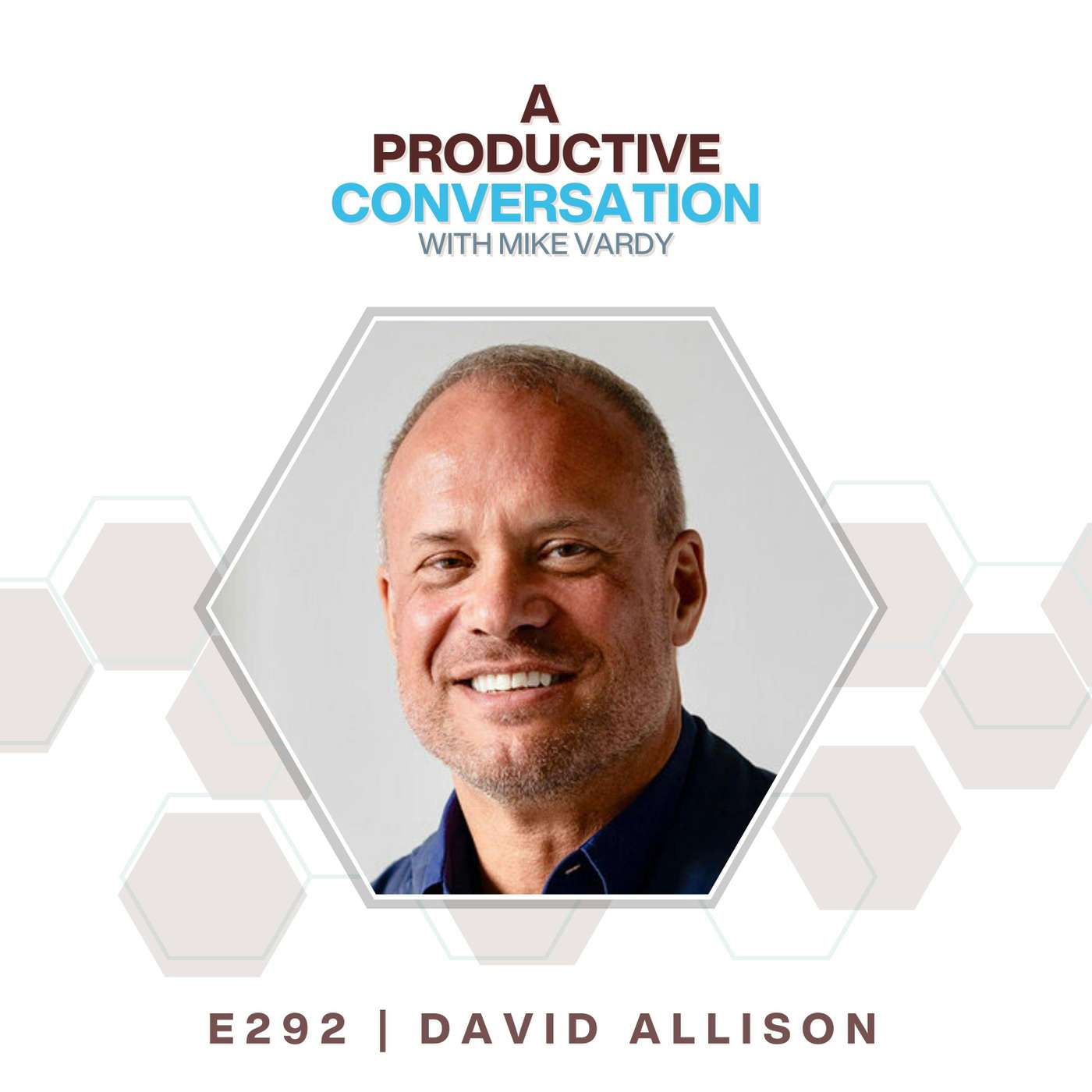
This episode is brought to you by Your Clockwise Week—a personalized weekly structure built around your actual life, not an ideal one. If your week feels full but not fitting, you can learn more at mikevardy.com/yourclockwiseweek.I’m joined by David Allison on this episode of the program. David Allison is the founder of The Valuegraphics Database, the world’s first database that can predict and influence behaviour for anything on earth. He is a pioneer of ‘Values Thinking’ as the new best practice for organizational decision-making. I’m thrilled to have met David recently and once we had a conversation about what we were working on, I knew I wanted to have him on this podcast. David has coined the term, and become a champion of, Values Thinking, the new best practice for organizational decision-making in a post-demographic world. I find the practice fascinating and definitely worth your attention. We talk about why values thinking works, the difference between virtues and values, what led David to pursue this practice, and much more. David and I are aligned in our thinking in plenty of ways and I’m sure you’ll enjoy this conversation. Talking Points David explains what he does, how he got into it, and what “Valuegraphics” actually are How valuable can data be in times of uncertainty? This is what led David down this specific path David explains why it’s important to get your values in check to be productive and take productive actions Does David believe there’s a difference between values and virtues? How validating does it feel for David when he sees something that is proof of his concept? Quote “We have these giant stereotypical ideas in our head of what people are like based on what they are and not who they are.“ Helpful Links Valuegraphics How Our Values Unite Us In Times Of Uncertainty We Are All the Same Age Now Who We Are is Very Important. What We Are is Not. Episode 251: Being a Late Bloomer with Rich Karlgaard Episode 234: Bolder with Carl Honoré Want to discover some of the books mentioned on the podcast? Check out Scribd, my reading app of choice. If you enjoyed the episode, please leave a rating and/or review wherever you listened to the episode. Also don't forget to check out all of our podcast sponsors found on our podcast sponsors page. And if you want to have easy access to the archives of the show and ensure you don't miss the new episodes to come then subscribe to the podcast in the app you're using.Learn more about your ad choices. Visit megaphone.fm/adchoices If this episode resonated, I’m exploring ideas like these more deeply in my upcoming book, Productiveness. You can follow along as it takes shape at mikevardy.com/productiveness.
Ep 291How I Built My Business
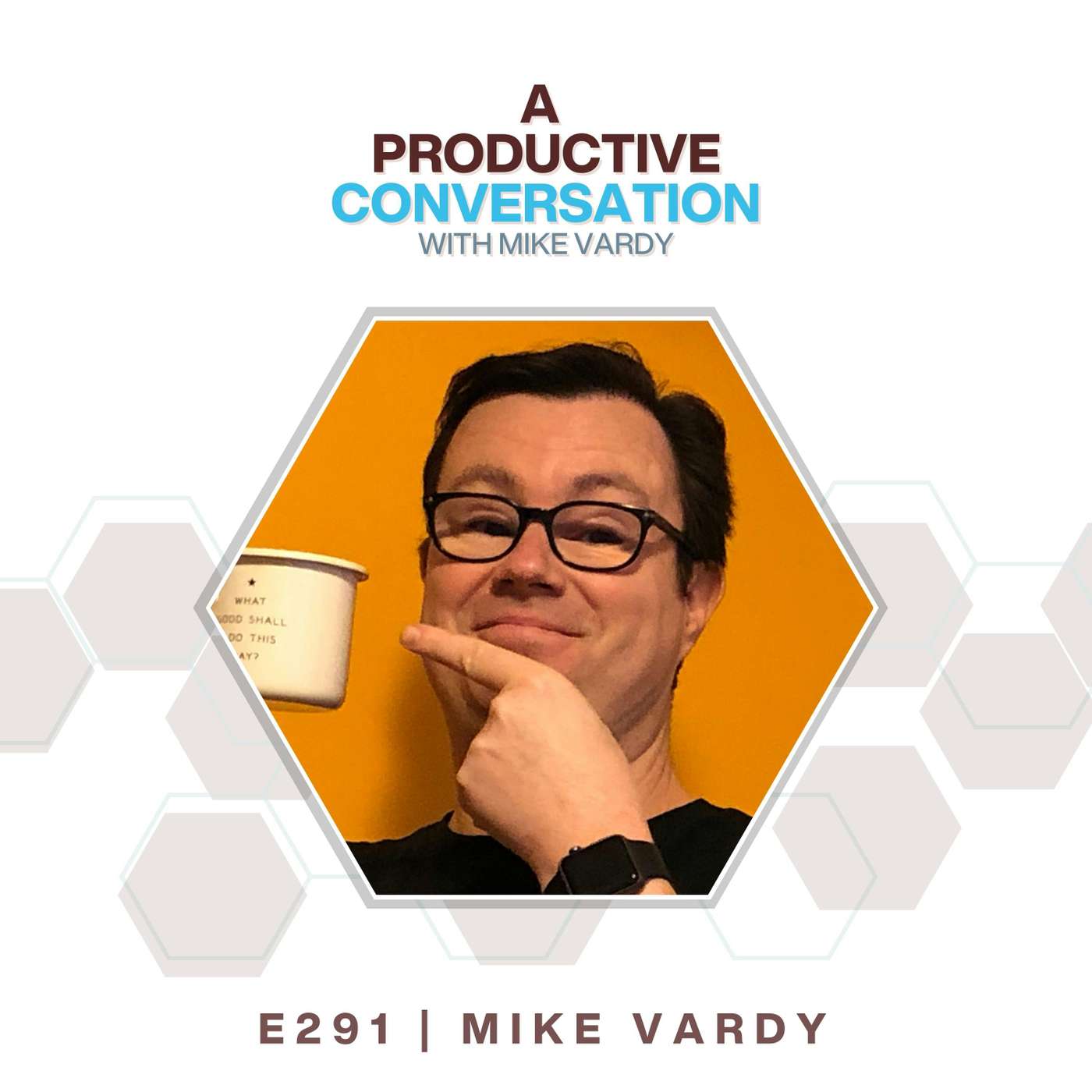
This episode is brought to you by Your Clockwise Week—a personalized weekly structure built around your actual life, not an ideal one. If your week feels full but not fitting, you can learn more at mikevardy.com/yourclockwiseweek.On this episode of the podcast I fly solo! I talk about why I’ve added a second episode to the podcast each week and present (nearly) all of the story of how I’ve built my business as per a request from a podcast listener. While I’ve shared my story in bits in pieces both on this podcast and elsewhere, listener Jeffrey Fate wanted me to try to share how I’ve built my business in one fell swoop somewhere. I asked him if he’d like that somewhere to be a single episode of The Productivityist Podcast, and he loved the idea! So I share my long and winding journey from Costco to today, with all (or most of) of the “built my business” highlights and waypoints along the way. I also discuss why I’ve decided to double the amount of episodes I produce per week and what that means for the future of this podcast. Helpful Links Jeffrey Fate and Me: The Twitter Thread that Led to This Episode’s Topic Effing The Dog: The Podcast | Episode 3 from 2008 (Effing is short for Efforting) The posts I’ve written for GTD Times My posts at WorkAwesome Articles I’ve authored for Cult of Mac My posts at The Next Web Check out what I’ve written for Lifehack My posts at Lifehacker What The — Happened to Lifehacker? Time to Say Goodbye | My Lifehack Farewell Post System.ly (from Greg Hickman) The Daily Driver: Get my FREE daily paper planning tool Want to discover some of the books mentioned on the podcast? Check out Scribd, my reading app of choice. If you enjoyed the episode, please leave a rating and/or review wherever you listened to the episode. Also don't forget to check out all of our podcast sponsors found on our podcast sponsors page. And if you want to have easy access to the archives of the show and ensure you don't miss the new episodes to come then subscribe to the podcast in the app you're using.Learn more about your ad choices. Visit megaphone.fm/adchoices If this episode resonated, I’m exploring ideas like these more deeply in my upcoming book, Productiveness. You can follow along as it takes shape at mikevardy.com/productiveness.
Ep 290Creative Menopause with Chase Reeves [Recorded LIVE at The BIG Ready]
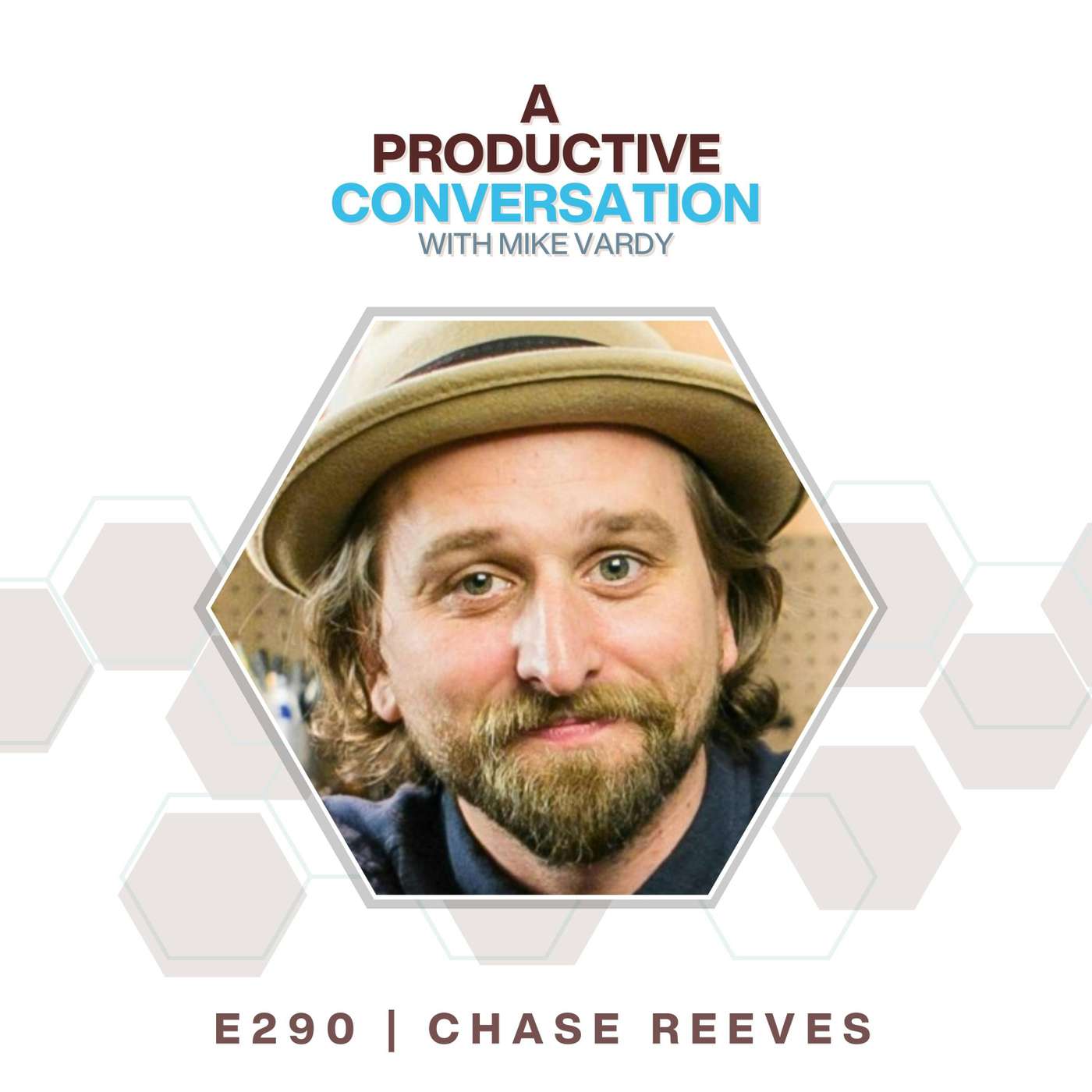
This episode is brought to you by Your Clockwise Week—a personalized weekly structure built around your actual life, not an ideal one. If your week feels full but not fitting, you can learn more at mikevardy.com/yourclockwiseweek.On this special episode I’m joined by Chase Reeves LIVE at The BIG Ready to talk about many things, including something Chase calls “creative menopause.” Chase co-founded Fizzle.co — the first education platform designed for modern indie entrepreneurship — as well as the Chase Reeves YouTube channel, where he makes 60 minute reviews of backpacks that somehow people love watching. When I asked Chase to join us at The BIG Ready I knew that having him record a live edition of this podcast was the way I wanted him to present. Chase has a natural gregariousness that simply fit this model, especially in front of a live studio audience (of sorts). We talked about productivity, his journey from Fizzle to creating a YouTube channel where he shares his insights and ideas on bags of all shapes and sizes, creativity, and much more. It’s an engaging, entertaining, and endearing conversation that I’m certain you’ll get a kick out of. You may even learn a thing or two! Talking Points Why did you choose the word Fizzle for your business? Chase talks about if he taps into or uses willpower at all in his life and work What was so promising to Chase about switching to do YouTube and bag reviews? How important is sitting with questions for Chase? Chase touches on letting go of things and how that can lead to moving on and making new things This is what the word BIG means to Chase How important is patience when it comes to work and knowing when to stop? Quote “We’re constantly stepping in without certainty.“ Helpful Links Corbett Barr Fizzle.co The Fizzle Show #338: The Best Productivity Routines with Mike Vardy and Chase Reeves The Productivityist Podcast #164: Faster Than Normal with Peter Shankman The Diagram of Success Twyla Tharp Alan Watts The Productivityist Podcast #54: Voice Lessons with Todd Henry Seth Godin Chase’s YouTube Channel The Productivityist Podcast Pick of The Week: The Knowledge Project Want to discover some of the books mentioned on the podcast? Check out Scribd, my reading app of choice. If you enjoyed the episode, please leave a rating and/or review wherever you listened to the episode. Also don't forget to check out all of our podcast sponsors found on our podcast sponsors page. And if you want to have easy access to the archives of the show and ensure you don't miss the new episodes to come then subscribe to the podcast in the app you're using.Learn more about your ad choices. Visit megaphone.fm/adchoices If this episode resonated, I’m exploring ideas like these more deeply in my upcoming book, Productiveness. You can follow along as it takes shape at mikevardy.com/productiveness.
Ep 290BONUS EPISODE: The 3 Minutes of TimeCrafting Series (March 2019)
bonusThis episode is brought to you by Your Clockwise Week—a personalized weekly structure built around your actual life, not an ideal one. If your week feels full but not fitting, you can learn more at mikevardy.com/yourclockwiseweek.As we head towards the end of March, I wanted to share another bonus episode of the podcast featuring every episode from March 2019 of my inactive daily podcast 3 Minutes of TimeCrafting. On this bonus episode you'll hear me discuss the following: How your to do list can be deceptive The concept of "overchoice" and how it can derail your productivity Why just getting through today is plenty productive Insights on wasting time The reason your to do list is a story ...and much more! This stretch of episodes also includes a mini-series called "Work By Mode" that deals with one of the primary elements of my TimeCrafting method and philosophy: Mode-Based Work. http://productivityist.com/fivedollars/ (Take my 30 Days of TimeCrafting fundamentals course) Want to discover some of the books mentioned in this episode on Scribd, my reading app of choice?https://www.scribd.com/g/9a8d8 (Click here.) If you enjoyed the episode, please leave a rating and/or review wherever you listened to the episode. And if you want to have easy access to the archives of the show and ensure you don't miss the new episodes to come then subscribe to the podcast in the app you're using – or you can do so on a variety of podcast platforms by clicking https://productivityist.transistor.fm/subscribe (here).Learn more about your ad choices. Visit megaphone.fm/adchoices If this episode resonated, I’m exploring ideas like these more deeply in my upcoming book, Productiveness. You can follow along as it takes shape at mikevardy.com/productiveness.
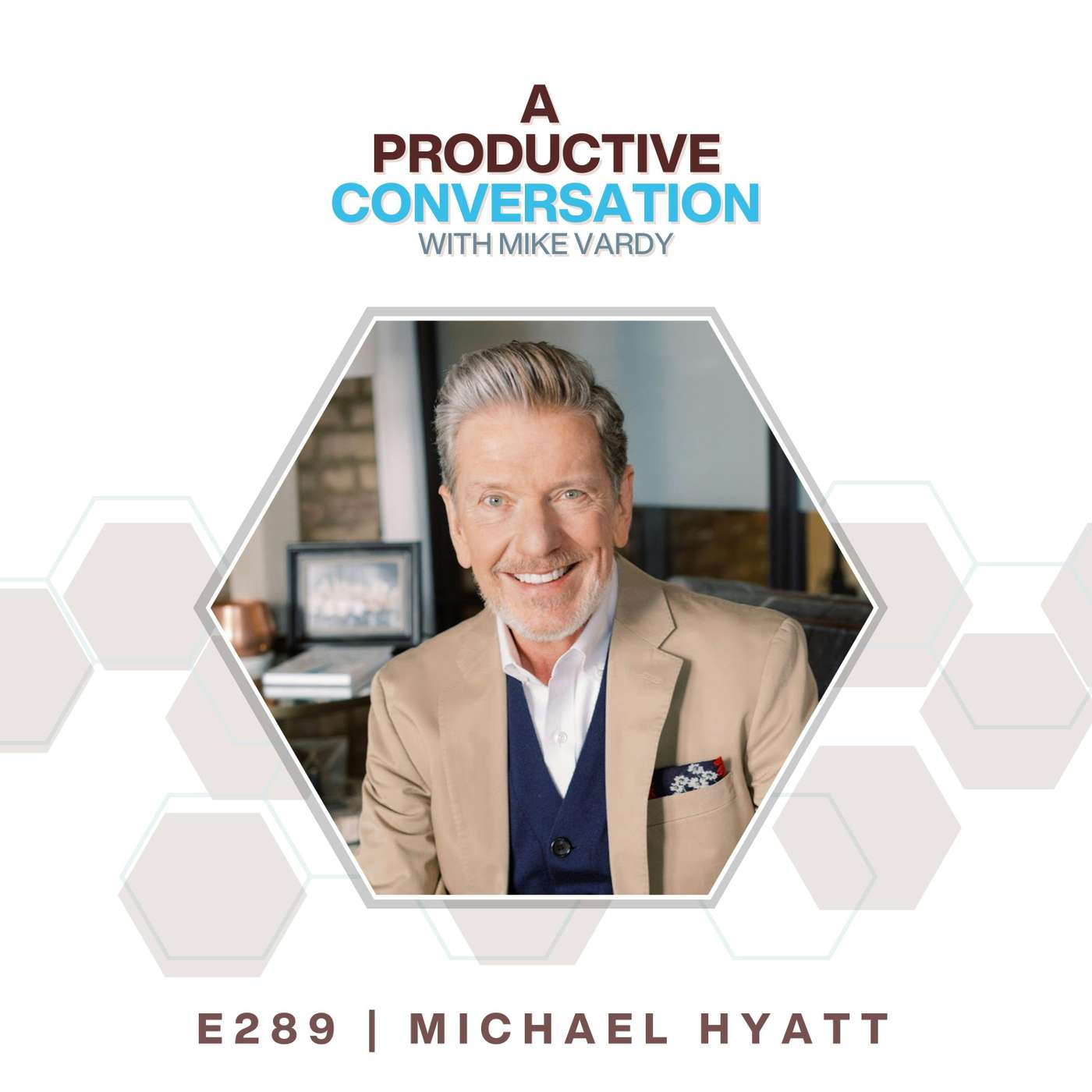
Ep 289The Vision Driven Leader with Michael Hyatt
This episode is brought to you by Your Clockwise Week—a personalized weekly structure built around your actual life, not an ideal one. If your week feels full but not fitting, you can learn more at mikevardy.com/yourclockwiseweek.Michael Hyatt returns to the show for this excellent episode of the program. Michael is the Chief Executive Officer and founder of Michael Hyatt & Company. He is also the author of several New York Times, Wall Street Journal, and USA Today bestselling books, including Platform, Living Forward, Your Best Year Ever, Free to Focus, and his newest book The Vision-Driven Leader. Michael has scaled multiple companies over the years, including a $250M publishing company with 700+ employees and his own leadership development company that has grown over 60% year over year for the past 4 years. Under his leadership, Michael Hyatt & Company has been featured in the Inc. 5000 list of the fastest-growing companies in America for three years in a row. He enjoys The Double Win with his wife of 40+ years, five daughters, and nine grandchildren. I spoke with Michael about the journey he took to get to this book, what it takes to become a vision driven leader, the importance of having a vision, and much more. As always, it’s fantastic to speak with Michael about his work – he’s someone who truly embodies everything that he delivers to the world – and I know you’ll get plenty out of this discussion. Talking Points Michael talks about why he wrote this book now and if it was a progression of his past books or if now was just the right time What does vision mean to Michael? We discuss the difference between a manager and leader Michael shares whether or not you must use the steps to become a vision driven leader in order… or if that is not all that important What can you do to help a leader who has so many ideas and visions execute those ideas and visions? Michael talks about what he would do if someone isn’t really understanding (or interested) in “The Vision Script” that a vision driven leader attempts to bring to life This is the person that Michael considers to be a vision driven leader that he looks up to We talk further about the term “vision zag” What are some things people can take away from the book that they can use if they are not running a company but simply want to run their lives better? This is the first step to becoming a vision driven leader Quote “Leadership by its very definition means that you’re heading towards a destination and if you’re not clear on the destination you really aren’t gonna be leading people anywhere.“ Helpful Links The Productivityist Podcast #239: Free to Focus with Michael Hyatt Living Forward: A Proven Plan to Stop Drifting and Get the Life You Want A Special Offer from Michael Hyatt for You (Bonuses available until 2020/04/04) The Productivityist Podcast Pick of the Week: That Creative Life Want to discover some of the books mentioned on the podcast? Check out Scribd, my reading app of choice. If you enjoyed the episode, please leave a rating and/or review wherever you listened to the episode. Also don't forget to check out all of our podcast sponsors found on our podcast sponsors page. And if you want to have easy access to the archives of the show and ensure you don't miss the new episodes to come then subscribe to the podcast in the app you're using.Learn more about your ad choices. Visit megaphone.fm/adchoices If this episode resonated, I’m exploring ideas like these more deeply in my upcoming book, Productiveness. You can follow along as it takes shape at mikevardy.com/productiveness.
Ep 289BONUS EPISODE: The 3 Minutes of TimeCrafting Series (February 2019)
bonusThis episode is brought to you by Your Clockwise Week—a personalized weekly structure built around your actual life, not an ideal one. If your week feels full but not fitting, you can learn more at mikevardy.com/yourclockwiseweek.After stopping the short-lived first edition of 3 Minutes of TimeCrafting, I decided to get back into the idea of producing a daily podcast in February 2019. I began producing shows in earnest following Groundhog Day 2019 (February 2nd) and kept it going for several months. In this lengthy episode, you'll hear me offer insights and ideas on the following: Why you need to make time to sit with feedback Making self-care a part of your productivity practice Embracing the concept of "mise en place" How to get your week to behave better Why theming your days saves time with your kids And that's just for starters. There are 26(!) episodes combined in this lengthy episode, so take your time with it. There's a lot that I offer so spread out your listening as you see fit. And if you like what you hear, let me know. Email me at [email protected] to tell me directly or leave this podcast a rating/review wherever you're listening to podcasts these days. Thanks for listening. See you later.Learn more about your ad choices. Visit megaphone.fm/adchoices If this episode resonated, I’m exploring ideas like these more deeply in my upcoming book, Productiveness. You can follow along as it takes shape at mikevardy.com/productiveness.
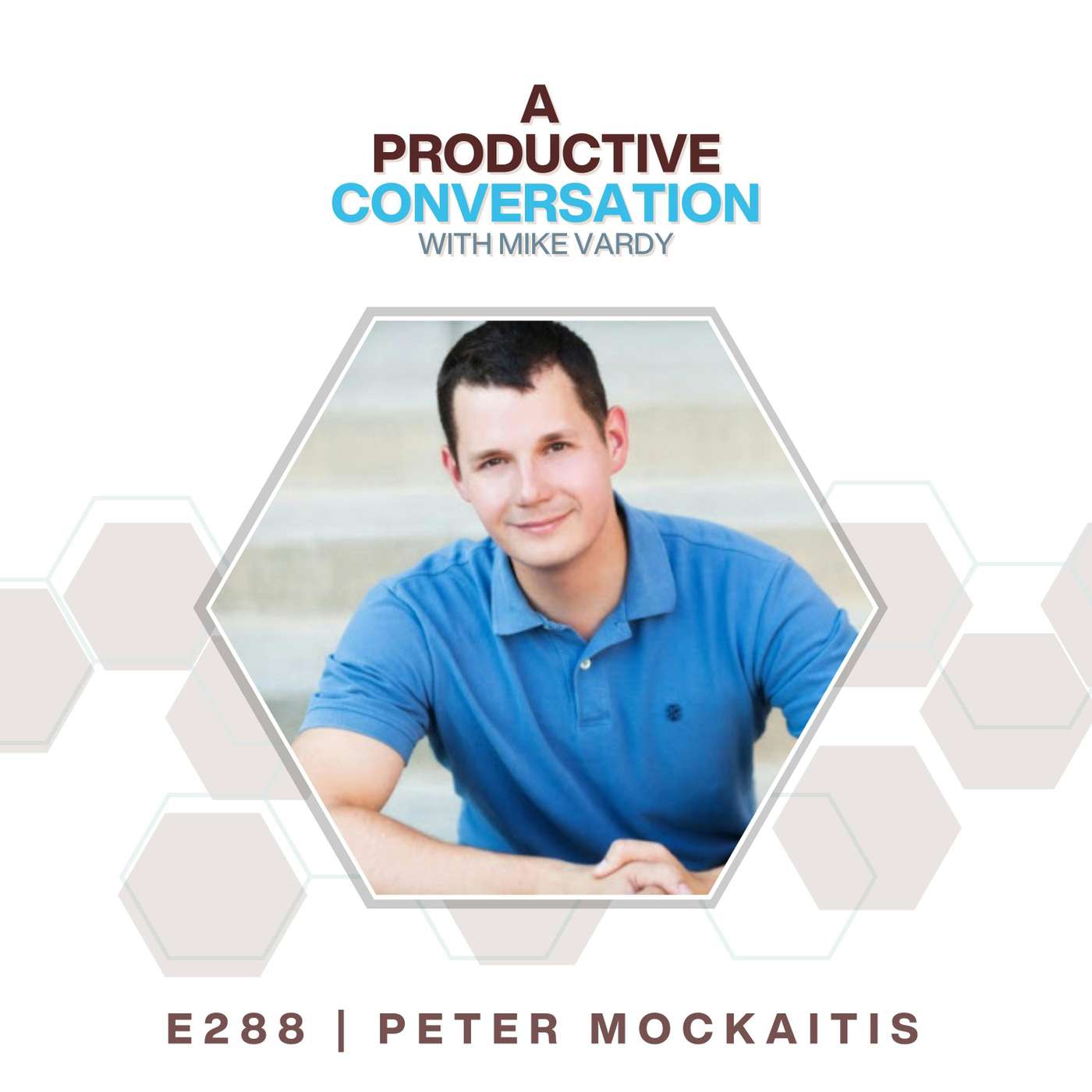
Ep 288How to Be Awesome at Your Job with Pete Mockaitis
This episode is brought to you by Your Clockwise Week—a personalized weekly structure built around your actual life, not an ideal one. If your week feels full but not fitting, you can learn more at mikevardy.com/yourclockwiseweek.On this episode I’m joined by Pete Mockaitis. Pete is, among plenty of other things, the founder of How to Be Awesome at Your Job and he hosts the popular podcast of the same name. Pete is an award-winning trainer who has served clients in over 50 countries. His work has enhanced Fortune 100 corporations, high-growth startups, and major nonprofits. He’s conducted one-on-one critical thinking coaching sessions for over 700 thinkers from every Ivy League university and numerous world-class organizations such as Apple, Goldman Sachs, Google, McKinsey & Company, and the United Nations. There’s a lot to unpack in this episode – and it’s one that could have gone on much longer than it did. Pete and I talk about prioritization, effectiveness and how to measure it, experimenting with different tactics and tools, and more. I’m sure you’ll get a lot out of this conversation. I know I did! Talking Points Pete shares the reasons for starting his podcast This is how Pete makes it a priority to get his podcast episodes ready for production What are some of the tactics that Pete has put in place to make sure that stays a priority? Pete offers up a tool that he’s found that helps him prioritize – a tool that he didn’t think would work When it comes to The ONE Thing, Pete shares how you can break the bias of giving a credible answer to what your “one thing” is Here is one of the things that Pete has tried that didn’t work for him as well as he’d imagined What is The Effectiveness Ratio? How important is it to let go of things? Pete and I discuss why the thinks people are drawn to certain words, along with the expectations that come with those words and terms Quote “The critical stuff isn’t just a smidge more important but it has sixteen times the impact.“ Helpful Links How to Be Awesome at Your Job #80: Finding and Doing the One Thing with Jay Papasan The ONE Thing Pocket Biases Why I Stopped Doing GTD: Part 1 Why I Stopped Doing GTD: Part 2 Why I Stopped Doing GTD: Part 3 Episode 203: The Evolution of Getting Things Done with David Allen Understanding the Pareto Principle (The 80/20 Rule) Breakthrough Advertising Warren Buffett’s “2 List” Strategy: How to Maximize Your Focus and Master Your Priorities I Will Teach You to Be Rich Pete’s Website Getting started with the How to Be Awesome at Your Job podcast The Productivityist Podcast Pick of the Week: Imaginary Worlds Want to discover some of the books mentioned on the podcast? Check out Scribd, my reading app of choice. If you enjoyed the episode, please leave a rating and/or review wherever you listened to the episode. Also don't forget to check out all of our podcast sponsors found on our podcast sponsors page. And if you want to have easy access to the archives of the show and ensure you don't miss the new episodes to come then subscribe to the podcast in the app you're using.Learn more about your ad choices. Visit megaphone.fm/adchoices If this episode resonated, I’m exploring ideas like these more deeply in my upcoming book, Productiveness. You can follow along as it takes shape at mikevardy.com/productiveness.
Ep 288BONUS EPISODE: The 3 Minutes of TimeCrafting Series (March 2018)
bonusThis episode is brought to you by Your Clockwise Week—a personalized weekly structure built around your actual life, not an ideal one. If your week feels full but not fitting, you can learn more at mikevardy.com/yourclockwiseweek.In the following bonus episode, I've combined all of the episodes from the March 2018 run of my now-concluded 3 Minutes of TimeCrafting podcast. The topics I discuss include: Using small but effective boundaries The leap forward to Daylight Savings Time and how to ward off its effects on your productivity Why Mondays might not be the best day to kick off your week Why one question I get asked a lot is a very challenging one to answer I hope you enjoy this bonus episode of the podcast. I'm going to be publishing the archives of 30 Days of TimeCrafting as bonus content over the next several weeks here as well as a bit of an experiment. If you like this episode, please consider leaving a rating and/or review in Apple Podcasts, Spotify, or wherever you are listening to the show. Thanks for listening. See you later.Learn more about your ad choices. Visit megaphone.fm/adchoices If this episode resonated, I’m exploring ideas like these more deeply in my upcoming book, Productiveness. You can follow along as it takes shape at mikevardy.com/productiveness.
Ep 287Where The Action Is with J. Elise Keith
This episode is brought to you by Your Clockwise Week—a personalized weekly structure built around your actual life, not an ideal one. If your week feels full but not fitting, you can learn more at mikevardy.com/yourclockwiseweek.On this episode of the podcast I’m joined by J. Elise Keith, co-founder of Lucid Meetings and author of Where The Action Is: The Meetings That Make or Break Your Organization. We dive into an area of our work lives that can have a direct impact on our overall productivity both individually and organizationally. That area is… meetings. Meetings can be a real productivity killer. But they don’t need to be. I was grateful to have the opportunity to talk with Elise about her comprehensive book – which is a “must read” if you’re looking to make better meetings happen. We talked about designing meetings that matter, how to break the bias that meetings aren’t productive, and much more. Meetings are going to happen, so why not make them happen in a way that works? This discussion is just the thing to help you turn your meetings from interruptions to productivity to instrumental for purposeful productivity. Enjoy! Talking Points This is what Elise has to say to people who are hesitant when going into meetings because of their aversion to them We talk about words or phrases you can use instead of the word “meeting” What are the 16 different types of meetings and how did they make their way into the book? How does someone get started using these different types of meetings without being overwhelmed with such a drastic change in culture? Elise shares with me her thoughts on “holacracy” and whether or not she’s explored that in conjunction with her work We discuss the five focus areas that Elise brings up in the book that will help you make your meetings better This is one of the key takeaways Elise would love for you to have when reading her book What’s one thing someone can takeaway from this podcast to make their meetings more productive? Quote “Every time we put a meeting on the calendar in this company or in this team, we’re going to include in the calendar why we’re meeting and what we expect to get out of it at the end.“ Helpful Links Where The Action Is Lucid Meetings Resources for Having Great Meetings Holacracy Want to discover some of the books mentioned on the podcast? Check out Scribd, my reading app of choice. If you enjoyed the episode, please leave a rating and/or review wherever you listened to the episode. Also don't forget to check out all of our podcast sponsors found on our podcast sponsors page. And if you want to have easy access to the archives of the show and ensure you don't miss the new episodes to come then subscribe to the podcast in the app you're using.Learn more about your ad choices. Visit megaphone.fm/adchoices If this episode resonated, I’m exploring ideas like these more deeply in my upcoming book, Productiveness. You can follow along as it takes shape at mikevardy.com/productiveness.
Ep 286Doing Project 333 with Courtney Carver
This episode is brought to you by Your Clockwise Week—a personalized weekly structure built around your actual life, not an ideal one. If your week feels full but not fitting, you can learn more at mikevardy.com/yourclockwiseweek.I’m excited that my friend Courtney Carver returns for this episode of the program. We focus our conversation around her book Project 333: The Minimalist Fashion Challenge That Proves Less Really is So Much More, which is a project I’ve undertaken and am still committed to several years later! Courtney is always a delight to chat with and this episode is no exception. We delve into the core elements of Project 333, some of the things that can hold people back from taking on this challenge, how the challenge affects more than just what’s taking up space in your closet, and more. I hope after listening to this episode that you’ll pick up Courtney’s book and give Project 333 a try. It’s been working for me and I know it can work for you. Talking Points What is Project 333? While it appears geared towards women, is this something men can do as well? These are some of the benefits that Project 333 offers beyond having just a clean closet Courtney talks about decision fatigue What are some of the ways you can “hack” Project 333, if any? Courtney shares an unexpected Project 333 success story What do you do when you’ve added something new and have gone above the limit? We discuss how receiving gifts plays a role in this project How can someone keep the momentum of Project 333 going? What factors does the weather play in Project 333? Courtney discusses what to do when you’re sentimental about certain clothing items These are some tips that Courtney uses to help someone break through the bias that they can’t do Project 333 Quote “We’re spending our resources, our time, attention, and energy on things that we don’t care about.“ Helpful Links Be More With Less The Productivityist Podcast #91: The More of Less with Joshua Becker Weed Out the Clothes You Don’t Wear with a Simple Hanger Trick Everything You Need to Know About Project 333 Check out Courtney’s Instagram! The Productivityist Podcast Pick of the Week: Naval The Productivityist Podcast theme song is Nothing at All by Fictions (courtesy of Epidemic Sound) Want to discover some of the books mentioned on the podcast? Check out Scribd, my reading app of choice. If you enjoyed the episode, please leave a rating and/or review wherever you listened to the episode. Also don't forget to check out all of our podcast sponsors found on our podcast sponsors page. And if you want to have easy access to the archives of the show and ensure you don't miss the new episodes to come then subscribe to the podcast in the app you're using.Learn more about your ad choices. Visit megaphone.fm/adchoices If this episode resonated, I’m exploring ideas like these more deeply in my upcoming book, Productiveness. You can follow along as it takes shape at mikevardy.com/productiveness.
Ep 285How to Start Ugly with Chris Krimitsos
This episode is brought to you by Your Clockwise Week—a personalized weekly structure built around your actual life, not an ideal one. If your week feels full but not fitting, you can learn more at mikevardy.com/yourclockwiseweek.I’m happy to welcome to Chris Krimitsos as the guest for this episode. Chris is a father, husband, community builder and ever-evolving innovator. He loves people and their stories and has leveraged his gifts of connecting others to build communities around entrepreneurship, podcasting, and multimedia. Chris was profoundly affected at 16 years of age when he watched his father lose a restaurant he had bought with sweat equity and eventually put the keys in for the last time giving it back to the bank. He vowed then that he would make it his mission to help business owners the world over to avoid that terrible fate. His book, Start Ugly: A Timeless Tale About Innovation & Change is an extension of that promise and a story that can be understood by all who read it. Talking Points Chris shares the premise of Start Ugly and why it’s been such a powerful thing for him Why did Chris decide to write the book as a parable of sorts? Does starting ugly help with the ability to deal with change? If so, how? This is the single step of the seven Chris shares in the book that he believes is a barrier for most people Chris and I discuss the role that comfort plays when starting something ugly What does Chris have to say to people who are worried about the risk factor and forging a path that seems uncertain? How has Chris taken his family and personal obligations in mind when starting something ugly? This is what Chris sees down the line for the podcasting community Chris and I talk about how he is able to handle all of his obligations… of which there are plenty! We talk about the importance of being nimble What are some of the other biases that Chris has come across and realized that the book may have helped break? Quote “The way you’re going to start is never going to be as perfect as where you’re going to end up, so it’s always going to be an ugly start.“ Helpful Links Chris Krimitsos The One Minute Manager The Go-Giver: A Little Story About a Powerful Business Idea The Productivityist Podcast #222: How to Fight a Hydra with Josh Kaufman Who Moved My Cheese?: An A-Mazing Way to Deal with Change in Your Work and in Your Life PodFest Adam Curry RODECaster Pro Podcast Production Studio Start Ugly: A Timeless Tale About Innovation & Change The Productivityist Podcast Pick of the Week: The Good Life Project The Productivityist Podcast theme song is Nothing at All by Fictions (courtesy of Epidemic Sound) Want to discover some of the books mentioned on the podcast? Check out Scribd, my reading app of choice. If you enjoyed the episode, please leave a rating and/or review wherever you listened to the episode. Also don't forget to check out all of our podcast sponsors found on our podcast sponsors page. And if you want to have easy access to the archives of the show and ensure you don't miss the new episodes to come then subscribe to the podcast in the app you're using.Learn more about your ad choices. Visit megaphone.fm/adchoices If this episode resonated, I’m exploring ideas like these more deeply in my upcoming book, Productiveness. You can follow along as it takes shape at mikevardy.com/productiveness.
Ep 284How to Be a Successful Speaker with Grant Baldwin
This episode is brought to you by Your Clockwise Week—a personalized weekly structure built around your actual life, not an ideal one. If your week feels full but not fitting, you can learn more at mikevardy.com/yourclockwiseweek.On this episode of the program I’m joined by Grant Baldwin. Grant is the founder of The Speaker Lab, a training company that helps public speakers learn how to find and book speaking gigs. He’s also the author of the book The Successful Speaker: Five Steps for Booking Gigs, Getting Paid, and Building Your Platform. Through his popular podcast The Speaker Lab and flagship coaching program Booked and Paid to Speak, Grant has coached and worked with thousands of speakers. As a keynote speaker, Grant has delivered nearly one thousand presentations to over 500,000 people in 47 states and has keynoted events for audiences as large as 13,000. Grant has also been featured in national media including Forbes, Inc., Entrepreneur, and Huffington Post. He now lives near Nashville, Tennessee, with his wife, Sheila, and their three daughters. I’m happy to have Grant return to the podcast to share some of the ideas and insights he presents in his new book. I look to Grant as someone who knows his stuff about being a successful speaker and there’s plenty you can learn from what he shares during our discussion. Talking Points What made Grant decide to take all his lessons and work from his speaking gigs and put them into a book? This is the step that Grant thinks is overlooked too often How does a budding speaker still come off as authentic but not too polished or over-rehearsed? How do you keep in mind while speaking that people want you to relate to them and don’t necessarily care about your thoughts on something? How does Grant suggest dealing with the patience aspect of getting good at speaking… and everything that comes along with that? This is Grant’s views on slides as a tool for speaking gigs How has Grant balanced the travelling life of a speaker with his family life? These are the steps Grant takes when he’s building a talk Quote “It’s not an overnight thing… and so one of the things we tell speakers all the time is this is simple but it’s not easy.” Helpful Links The Successful Speaker: Five Steps for Booking Gigs, Getting Paid, and Building Your Platform Comedian thespeakerlab.com/book The Productivityist Podcast Pick of the Week: The Three Month Vacation Podcast The Productivityist Podcast theme song is Nothing at All by Fictions (courtesy of Epidemic Sound) Want to discover some of the books mentioned on the podcast? Check out Scribd, my reading app of choice. If you enjoyed the episode, please leave a rating and/or review wherever you listened to the episode. Also don't forget to check out all of our podcast sponsors found on our podcast sponsors page. And if you want to have easy access to the archives of the show and ensure you don't miss the new episodes to come then subscribe to the podcast in the app you're using.Learn more about your ad choices. Visit megaphone.fm/adchoices If this episode resonated, I’m exploring ideas like these more deeply in my upcoming book, Productiveness. You can follow along as it takes shape at mikevardy.com/productiveness.
Ep 283Well-Presented with Mike Pacchione
This episode is brought to you by Your Clockwise Week—a personalized weekly structure built around your actual life, not an ideal one. If your week feels full but not fitting, you can learn more at mikevardy.com/yourclockwiseweek.On this episode, I’m joined by my good friend Mike Pacchione. Mike is a speaking expert who helps presenters find their voice on stage. (Hint: putting yourself in your speech, while scary, is a bit of a secret weapon for making your speech memorable.) Mike has worked with more than 10,000 speakers from companies all over the world, including giants like Google, Nike, Microsoft, Starbucks and the NSA. I’ve known make for several years now and I look to him whenever I’m putting a talk or presentation together. I wanted to bring him to the program to not only share with you some of his best tactics and tips that will help you present your ideas and insights well, but also to remind me of what I need to do in order to do the same. After listening to this episode you’ll be able to take Mike’s knowledge and experience and apply it to your presentations so you’ll be able to confidently deliver them in a way that leaves your audience wanting more. Talking Points Why is making the assumption that because you have improvisational skills that you can nail a talk a really bad idea? How much time should someone take into consideration while making a presentation? This is what made Mike decide that he wanted to give talks and help other people with their talks full-time How do you balance knowing your stuff but not coming off too prepared or monotone – or looking like you dont know your stuff and are all just “show”? Is there such a thing as too many talks? This is how Mike is constructing his time, now that he’s running his own business and has a child What does a typical day look like for Mike? Some thoughtful tools and tips that Mike shares for presenters to use to their advantage Does Mike recommend eating before going on stage? What advice do you give people when they know they have a talk at a time during the day that isn’t ideal? We talk about being the talk that wraps up an event or conference and what you should do if you find yourself in that slot Here’s the one piece of advice Mike would give someone who is giving a presentation Quote “I always tell people they should feel like the presenter is a friend.“ Helpful Links The Productivityist Podcast #197: Getting Back to Happy with Marc and Angel Chernoff Time Management Ninja: 21 Rules for More Time and Less Stress in Your Life | Craig Jarrow Pre-order my new book TimeCrafting: A Better Way to Get the Right Things Done Amy Porterfield’s Podcast: A Week in the Life (7 Days Behind-the-Scenes with Amy) Help for Your Upcoming Presentation (I Know You’re Nervous) | Pat Flynn World’s Most Popular TED Speaker, Ken Robinson, Shares 5 Secrets Of Giving A Great Speech | BI The Grinder is the year’s funniest new show | Vox (from 2015, show was cancelled far too soon) Subscribe to TimeCraftingTV When: The Scientific Secrets of Perfect Timing | Daniel Pink Sterling K. Brown Explains His “No Gym” Workout | Men’s Health StoryBrand | Donald Miller Aqua Notes Water Proof Note Pad The Productivityist Podcast #161: Overlap with Sean McCabe Voxer My CreativeLive Course from 2014: Time Management 101 Breakthrough Play | Gary Ware Your Job is to Make Art – Seth Godin at ConvertKit Craft & Commerce 2017 MikeTalks.co The Productivityist Podcast Pick of the Week: The Rework Podcast The Productivityist Podcast theme song is Nothing at All by Fictions (courtesy of Epidemic Sound) Want to discover some of the books mentioned on the podcast? Check out Scribd, my reading app of choice. If you enjoyed the episode, please leave a rating and/or review wherever you listened to the episode. Also don't forget to check out all of our podcast sponsors found on our podcast sponsors page. And if you want to have easy access to the archives of the show and ensure you don't miss the new episodes to come then subscribe to the podcast in the app you're using.Learn more about your ad choices. Visit megaphone.fm/adchoices If this episode resonated, I’m exploring ideas like these more deeply in my upcoming book, Productiveness. You can follow along as it takes shape at mikevardy.com/productiveness.
Ep 282The Responsibility Ethic with Adam Kreek
This episode is brought to you by Your Clockwise Week—a personalized weekly structure built around your actual life, not an ideal one. If your week feels full but not fitting, you can learn more at mikevardy.com/yourclockwiseweek.On this episode, I’m joined “in studio” by Adam Kreek. A two-time Olympian, Adam holds 60 international medals, including Olympic Gold, and multiple hall of fame inductions. Adam’s new book, The Responsibility Ethic, teaches us the how of self-leadership, driving personal and professional results in individuals and organizations. Adam has a slew of additional accolades to his name, one of which is that in 2013, Adam made the first ever attempt to row unsupported across the Atlantic Ocean from Africa to America, the subject of the NBC Dateline Documentary, Capsized. It was great to have Adam in the studio to talk about his new book, the idea of providence and patience, what he believes the evolution of SMART goals is, and much more. Talking Points How does failure and Adam’s knowledge on that play into his book? What does Adam think responsibility means? Adam shares with me the idea of providence This is what Adam uses instead of SMART goals How important is it to truly understand your values and how that ties into ethics Adam and I talk about deciding where to spend your time and how to come to those decisions We (finally) get to talk about patience and its role when you know that you have plenty you want to accomplish in a short timespan… like an athletic career Quote “You visualize the end point and you want the end point to be there now because you can see it, yet you have to put in the work.” Helpful Links KreekSpeak Free Solo Matt D’Avella | YouTube The Responsibility Ethic | Amazon The Productivityist Podcast Pick of the Week: Focused Want to discover some of the books mentioned on the podcast? Check out Scribd, my reading app of choice. If you enjoyed the episode, please leave a rating and/or review wherever you listened to the episode. Also don't forget to check out all of our podcast sponsors found on our podcast sponsors page. And if you want to have easy access to the archives of the show and ensure you don't miss the new episodes to come then subscribe to the podcast in the app you're using.Learn more about your ad choices. Visit megaphone.fm/adchoices If this episode resonated, I’m exploring ideas like these more deeply in my upcoming book, Productiveness. You can follow along as it takes shape at mikevardy.com/productiveness.

Ep 281Accomplish It with Mridu Parikh
This episode is brought to you by Your Clockwise Week—a personalized weekly structure built around your actual life, not an ideal one. If your week feels full but not fitting, you can learn more at mikevardy.com/yourclockwiseweek.On this episode I chat with Mridu Parikh, founder of Life Is Organized and author of Accomplish It: 7 Simple Actions to Get the Right Things Done and Achieve Your Goals. Mridu helps ambitious people get control of their time, energy, and habits, even when they are overwhelmed by demands and distractions. As a productivity coach, keynote speaker, and best-selling author she teaches people how to focus, overcome procrastination, and squash anxiety. I had a great time talking with Mridu about her journaling habits (that is, if she has them), her thoughts on capturing ideas and thoughts and how she does that, and we specifically dive into the seven simple actions that she describers in her book. Talking Points Mridu and I talk about why people stay in a “state of stuckness”? Does Mridu journal? If so, how does she journal? How does Mridu get people to take their energy levels into account when making to do lists and accomplishing goals? We discuss how to balance recurring simple tasks with bigger, harder tasks What are The Seven Simple Actions? How do you figure out when to ask for help and for what? This is something Mridu said no to after realizing it would be too much How does Mridu help people with the idea of writing things down consistently? Quote “Every time you think ‘I’ll remember that later,’ switch that and think ‘I won’t remember that later’.” Helpful Links Life is Organized Episode 203: The Evolution of Getting Things Done with David Allen Accomplish It: 7 Simple Actions to Get the Right Things Done and Achieve Your Goals The Productivityist Podcast Pick of the Week: The Joe Rogan Experience Remember that simple isn’t the same as easy. So while Mridu revealed 7 simple actions you can take to accomplish what you need and want to do, that doesn’t mean it will be easy to do them. My advice is to start small and build from there. Layer more and more of your ambitions using this formula Mridu shared over time rather than all at once and you’ll have a better chance of accomplishing “it” going forward. Want to discover some of the books mentioned on the podcast? Check out Scribd, my reading app of choice. If you enjoyed the episode, please leave a rating and/or review wherever you listened to the episode. Also don't forget to check out all of our podcast sponsors found on our podcast sponsors page. And if you want to have easy access to the archives of the show and ensure you don't miss the new episodes to come then subscribe to the podcast in the app you're using.Learn more about your ad choices. Visit megaphone.fm/adchoices If this episode resonated, I’m exploring ideas like these more deeply in my upcoming book, Productiveness. You can follow along as it takes shape at mikevardy.com/productiveness.

Ep 280All You Have to Do is Ask with Dr. Wayne Baker
This episode is brought to you by Your Clockwise Week—a personalized weekly structure built around your actual life, not an ideal one. If your week feels full but not fitting, you can learn more at mikevardy.com/yourclockwiseweek.On this episode of the podcast, I welcome Dr. Wayne Baker as my guest. Focusing on social capital, social networks, generosity, and positive organizations, Dr. Baker has published six books and contributed to such outlets as Harvard Business Review, Chief Executive Magazine, and Sloan Management Review. A frequent guest speaker and management consultant, Dr. Baker is a cofounder and board member of Give and Take Inc., developers of the collaboration technologies based on principles in his book All You Have to Do Is Ask. Asking for help can be a real challenge – and it keep us from reaching our full potential. The conversation we have on this episode should help you get better at asking. Dr. Baker and I discuss why we need help from others to be more productive, why generosity within a company isn’t the issue when it comes to developing a culture where asking is fostered, and how leaders can use certain techniques and tools to build a habit of asking in themselves and their colleagues. Talking Points This is how Dr. Baker looks at the idea of asking in reference to his work How can company leaders help cultivate a culture of generosity and nurturing the idea of asking Dr. Baker talks about the importance of asking and its relationship to your goals This is Dr. Baker’s definition of SMART is when it comes to goal How can someone go through Dr. Baker’s criteria in a fairly quick manner and less onerous? If you struggle asking for help for any typical reason, this is what you can do to break that habit Can this kind of process be applied internally as well? What is The Law of Giving and Receiving? What techniques can leaders use to promote and foster the habit of asking in their organization? This is what The Reciprocity Ring is… and what it does Dr. Baker shares some ideas for rewards that can be put in place to help promote asking in the workplace This is what you can do to start right now to get better at identifying where you need help and how to ask for it Quote “The leader needs to be a role model of the behaviour that they want” Helpful Links All You Have to Do Is Ask: How to Master the Most Important Skill for Success The Art of Asking: How I Learned to Stop Worrying and Let People Help allyouhavetodoisask.com Todoist Karma The Productivityist Podcast Pick of the Week: Productivity Paradox I’ve always said that frameworks foster freedom. That idea definitely applies to what Dr. Baker shares in his work. The ideas of The Law of Giving and Receiving, The Reciprocity Ring, and much more allows individuals and organizations to forge and foster a culture of asking. And that’s a big win for everyone. Check out Dr. Baker’s book because it’s definitely got some great tactics and tools you can use to make asking a more integral part of your productivity process. Want to discover some of the books mentioned on the podcast? Check out Scribd, my reading app of choice. If you enjoyed the episode, please leave a rating and/or review wherever you listened to the episode. Also don't forget to check out all of our podcast sponsors found on our podcast sponsors page. And if you want to have easy access to the archives of the show and ensure you don't miss the new episodes to come then subscribe to the podcast in the app you're using.Learn more about your ad choices. Visit megaphone.fm/adchoices If this episode resonated, I’m exploring ideas like these more deeply in my upcoming book, Productiveness. You can follow along as it takes shape at mikevardy.com/productiveness.
Ep 279Finding Success in Your Sphere with Zvi Band
This episode is brought to you by Your Clockwise Week—a personalized weekly structure built around your actual life, not an ideal one. If your week feels full but not fitting, you can learn more at mikevardy.com/yourclockwiseweek.On this episode of the program I’m joined by Zvi Band. Zvi is the cofounder and CEO of Contactually, a leading CRM platform for relationship-oriented businesses, and author of “Success is in Your Sphere.” An engineer, developer, entrepreneur, and startup advisor, Zvi has been named a Washingtonian Tech Titan four times. Zvi and I talk about the acronym he uses as his CAPITAL strategy, why you need to aggregate all of your relationships (both personal and professional) in a database, and the need for purpose and process when forging and fostering relationships. Considering that my Monthly Theme for February is Relationships this was the perfect conversation to prime me for the month ahead. I trust you’ll get a lot of value out of it as well. Talking Points Zvi shares his origin story We talk about the role of consistency when it comes to achieving success in your sphere – and the role of the calendar in that This is one of the things Zvi did to execute consistently to help himself over both the short and long term Where does someone begin aggregating their relationships? And why aggregate at all? Zvi breaks this aggregation down into manageable chunks This is why Zvi has many separate email accounts Zvi explains how to ensure you are going beyond organizing your relationships… and prioritizing them What nuances do you need to watch out for as you gain intelligence around your relationships? What does this intelligence-gathering look like? You need to keep this in mind as you forge and foster relationships How do you handle the person that connects with you with no real purpose? We talk about the importance of boundaries Why adding value is of the utmost importance in relationships and why you need to ask how you can do that on an ongoing basis How can you make all of this easier to do? This is how we can get in our own way during this process If you want to start doing what Zvi suggests today, here’s the one small action you can do starting now Quote “The important thing is that just because these are different people…doesn’t mean that the people differ or change in importance.” Helpful Links Success Is in Your Sphere: Leverage the Power of Relationships to Achieve Your Business Goals Contactually Episode 266: Becoming Indistractable with Nir Eyal Your Money or Your Life: 9 Steps to Transforming Your Relationship with Money and Achieving Financial Independence Dunbar’s number: Why we can only maintain 150 relationships The Pomodoro Technique Derek Sivers’s Contact Page TextExpander TimeCraftingTV successisinyoursphere.com The Productivityist Podcast Pick of the Week: Routines & Ruts I had a great time listening to and learning from Zvi. He’s someone who has a deep understanding of relationships and knows what it takes to organize, prioritize, and add value to them. From there, he can leverage them – and they can leverage him in return. That’s a pretty productive way to keep connected. Want to discover some of the books mentioned on the podcast? Check out Scribd, my reading app of choice. If you enjoyed the episode, please leave a rating and/or review wherever you listened to the episode. Also don't forget to check out all of our podcast sponsors found on our podcast sponsors page. And if you want to have easy access to the archives of the show and ensure you don't miss the new episodes to come then subscribe to the podcast in the app you're using.Learn more about your ad choices. Visit megaphone.fm/adchoices If this episode resonated, I’m exploring ideas like these more deeply in my upcoming book, Productiveness. You can follow along as it takes shape at mikevardy.com/productiveness.
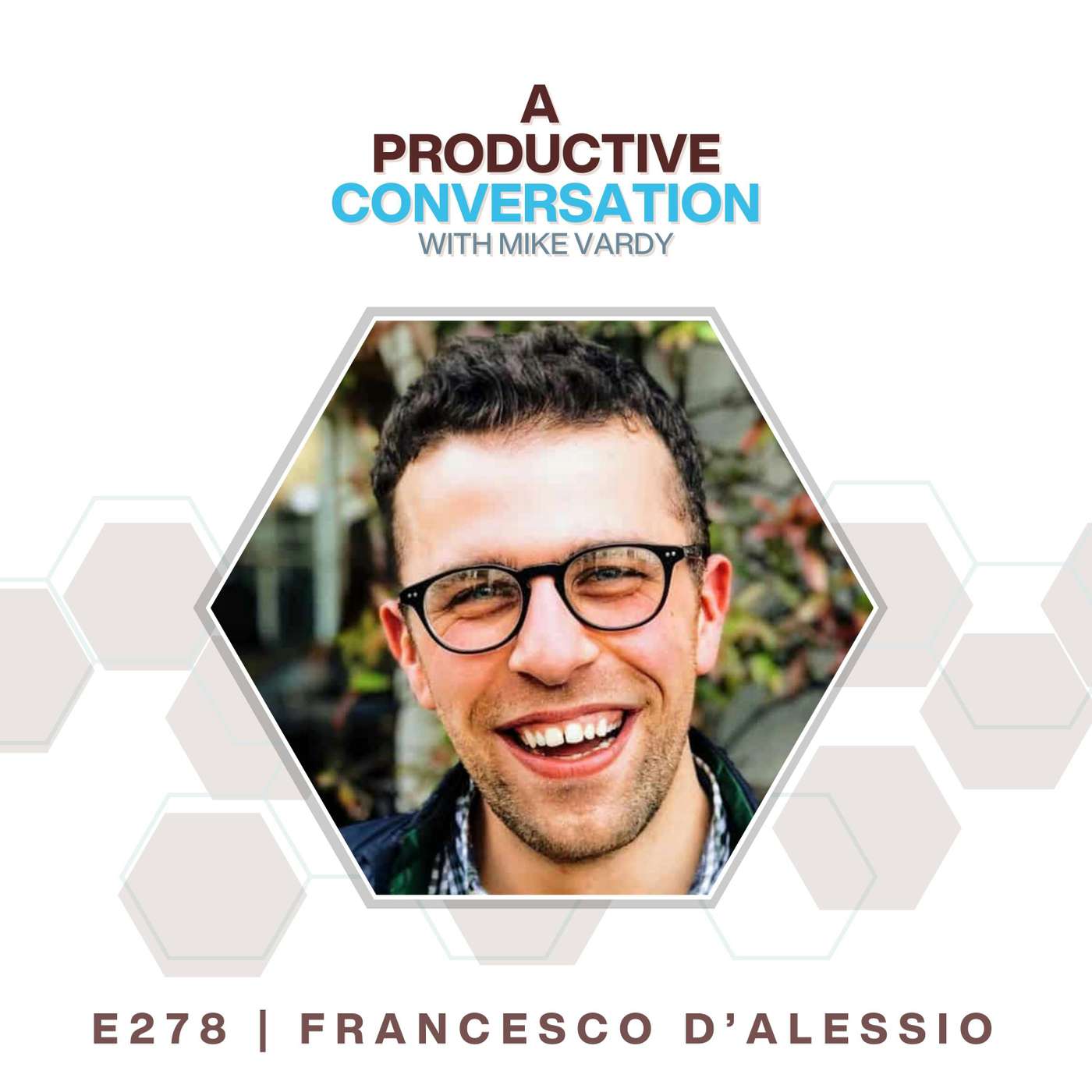
Ep 278Keeping Productive with Francesco D'Alessio
This episode is brought to you by Your Clockwise Week—a personalized weekly structure built around your actual life, not an ideal one. If your week feels full but not fitting, you can learn more at mikevardy.com/yourclockwiseweek.This week on the program I’m joined by a guest I’ve been looking to chat with for a long time. Francesco D’Alessio runs Keep Productive, a YouTube show dedicated to helping people find the most suitable productivity software for their work and life needs. From helping decision making to curbing switching, Keep Productive is passionate about helping you make long-term decisions about your software. I remember the days of keeping up with all the latest and greatest productivity news and app updates. There came a time when I decided that wasn’t going to be in my long-term plans, so I moved away from that kind of content (for the most part). Francesco, however, is another story. He loves doing exactly that: sharing all the productivity news and app-related content as possible, as evidenced by his extremely popular YouTube channel. During our discussion we get into why he enjoys producing content around apps and productivity news, how he maps out his content plan, and so much more. Talking Points Francesco shares his “productivity origin” story This is what Francesco looks for in an app that he showcases on his YouTube channel What does Francesco define as productivity news? How does he decide what to share? These are the tools that Francesco actually uses We talk about the way forward with transitioning between apps that avoid friction and promote flow This is what Francesco has used in the past and he shares why he moved away from them What about paper? We discuss Francesco’s content workflow How does Francesco deal with content that can become dated? Francesco shares THE productivity app that you should keep your eye on Quote “Tools are going to change you marginally… but it’s really the approach and the methodology that matter.” Helpful Links Keep Productive on YouTube Notion Made Simple Notion Office Hours with Mike Vardy Thomas Frank’s Notion Video Matt Ragland on YouTube Beyond The To Do List #290 – Distractions: Nir Eyal on Becoming Indestractable The Productivityist Podcast #266: Becoming Indistractable with Nir Eyal Francesco on Twitter The Productivityist Podcast Pick of The Week: The Freenoter It’s always gratifying to talk with someone as enthusiastic about productivity as me, and it’s not very often that I get to “geek out” about apps since I’ve largely moved away from creating that kind of content. That’s why I really enjoyed this conversation with Francesco. He knows his stuff and he’s a rising star in the productivity space. I can’t wait to see how the rest of his journey unfolds. Want to discover some of the books mentioned on the podcast? Check out Scribd, my reading app of choice. If you enjoyed the episode, please leave a rating and/or review wherever you listened to the episode. Also don't forget to check out all of our podcast sponsors found on our podcast sponsors page. And if you want to have easy access to the archives of the show and ensure you don't miss the new episodes to come then subscribe to the podcast in the app you're using.Learn more about your ad choices. Visit megaphone.fm/adchoices If this episode resonated, I’m exploring ideas like these more deeply in my upcoming book, Productiveness. You can follow along as it takes shape at mikevardy.com/productiveness.
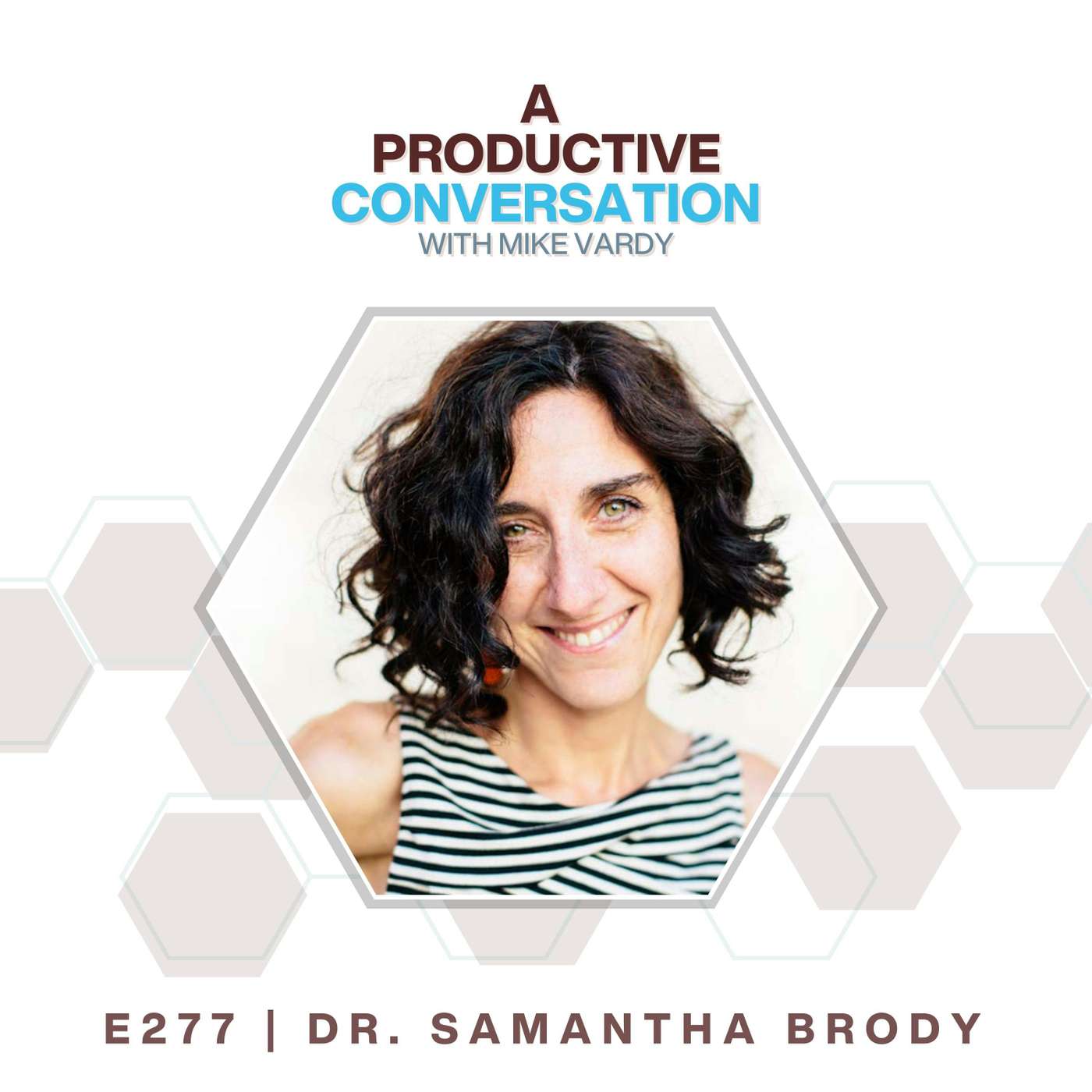
Ep 277Overcoming Overwhelm with Dr. Samantha Brody
This episode is brought to you by Your Clockwise Week—a personalized weekly structure built around your actual life, not an ideal one. If your week feels full but not fitting, you can learn more at mikevardy.com/yourclockwiseweek.On this episode of the podcast, I’m joined by Dr. Samantha Brody. Dr. Samantha is a licensed naturopathic physician and acupuncturist, and the founder of Evergreen Natural Health Center in Portland, Oregon. For decades in her private practice and virtual consulting business Dr. Samantha has helped thousands of people transform their lives with her innovative, personalized approach. She is the author of Overcoming Overwhelm: Dismantle Your Stress from the Inside Out. I had the pleasure of meeting Dr. Samantha when we both spoke at Marc and Angel Chernoff’s event Think Better, Live Better. After seeing her speak, I found that there was plenty of alignment with our work and asked her to come on the show. During this conversation we talk about her book, what she means by overwhelm, the steps she believes can help you overcome overwhelm, and the idea of resolutions. There is a lot that we cover in our discussion and I’m pleased to be able to finally bring it to you after many months of trying to make it happen. Enjoy! Talking Points This is how Dr. Samantha looks at overwhelm Does Dr. Samantha believe in New Year’s Resolutions? We start to dig into the steps Dr. Samantha reveals in her book This the first step Dr. Samantha shares her current values… along with the second step How can someone stay on target with their values and the other elements Dr. Samantha shares in her work? The third step is revealed… I share a fitting story with Dr. Samantha about an obstacle that turned out to be a source of overwhelm Dr. Samantha offers feedback after hearing the story of my stressor What is “beauty way?” Does Dr. Samantha journal? Does she believe the practice is helpful? If someone was to start using what’s found in Dr. Samantha’s book, what’s the simplest first step to take? Quote “Life throws curveballs at you. That’s just… life.” Helpful Links Think Better, Live Better Overcoming Overwhelm Episode 177: The Four Tendencies with Gretchen Rubin Pocket Biases Two Weeks Notice: My First 20 Hours with The Bullet Journal Method TAKE: The Values Exercise DrSamantha.com @drsamantha on Twitter @drsamantha on Instagram The Productivityist Podcast Pick of The Week: Life Skills That Matter This episode has been in the works for some time and I’m glad I was able to deliver it to you at the start of a new calendar year – and a new decade. While resolutions can be a bit of a trap at this time of year, Dr. Samantha offers alternatives… sound strategies that won’t just help you in the year that’s just begun. They will help you for many years to come. Want to discover some of the books mentioned on the podcast? Check out Scribd, my reading app of choice. If you enjoyed the episode, please leave a rating and/or review wherever you listened to the episode. Also don't forget to check out all of our podcast sponsors found on our podcast sponsors page. And if you want to have easy access to the archives of the show and ensure you don't miss the new episodes to come then subscribe to the podcast in the app you're using.Learn more about your ad choices. Visit megaphone.fm/adchoices If this episode resonated, I’m exploring ideas like these more deeply in my upcoming book, Productiveness. You can follow along as it takes shape at mikevardy.com/productiveness.
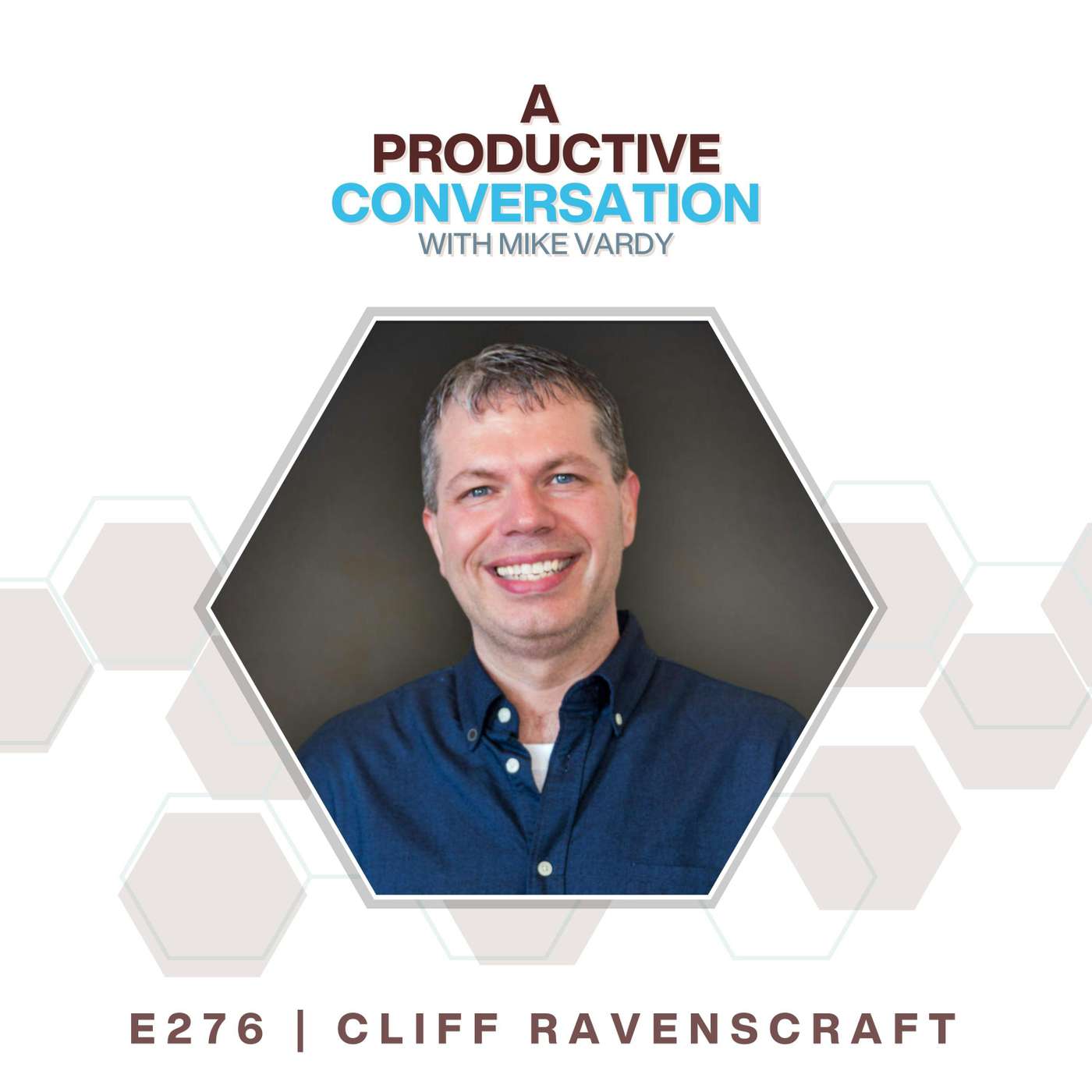
Ep 276Freeing The Dream with Cliff Ravenscraft
This episode is brought to you by Your Clockwise Week—a personalized weekly structure built around your actual life, not an ideal one. If your week feels full but not fitting, you can learn more at mikevardy.com/yourclockwiseweek.On this episode of the podcast, I’m joined by Cliff Ravenscraft. For more than a decade, Cliff had been known as the Podcast Answer Man. He’s trained tens of thousands of individuals how to successfully launch an audio podcast. Today, Cliff is a business and life coach. He mentors coaches, consultants and thought leaders through the transition from their unfulfilling day job to their own responsible and profitable online business so that they can live the life of their dreams and do the work they feel most called to do in this world. This is a longer episode than usual but it is jam-packed with inspiration – which is the perfect way to wrap up one decade and starting another. Cliff’s energy is palpable throughout as he shares with me his online business story, what the transition from one business brand to another has been like, and his evolving views on productivity over the course of the years. There’s a lot to unpack and you’ll want to just sit back and absorb everything Cliff dishes out over the hour-long conversation. Talking Points What has the journey been like for Cliff in the many years he’s been an entrepreneur This is Cliff’s advice to anyone who is thinking about jumping into the online business world but wants to play it safe What did Year One of Cliff’s online business story look like? Cliff shares his burnout stories and why he experiences burnout during those times This is what happened in Cliff’s world in September 2017… and it changed EVERYTHING We talk about the transition from Podcast Answer Man to what Cliff is doing today What the people in Cliff’s life thought about him abandoning his lucrative business This is Cliff’s “mission statement” What about Cliff’s health? What changes has he made there? Cliff shares the workout routine that he committed to so that he could get his health in order We start to spend time talking about… Cliff’s views on time This is who Cliff learned from as he built his new business What does Cliff think of the idea of the “overnight success story” today? After Cliff recommended this book, I picked it up Cliff takes notes on something I said here… and runs with it! Here’s an alarming productivity tip… We start talking about planning – especially regarding Cliff’s “Free The Dream” event I share with Cliff the idea of the task-based mindset vs the time-based mindset When it all boils down to it, this is really all Cliff cares about Does Cliff have a team to help him out on an ongoing basis? We end on what Cliff did and what he would recommend you do if you’re just starting out on your entrepreneurial journey Quote “Every day is today.” Helpful Links Cliff Ravenscraft Think and Grow Rich Episode 239: Free to Focus with Michael Hyatt Social Media Marketing World SPI 256: Productivity and Frameworks with Mike Vardy from Productivityist The Prosperous Coach The Big Leap Free The Dream BradyMade Events This Changes EVERYTHING mindsetanswerman.com/free The Productivityist Podcast Pick fo the Week: Think Better, Live Better After speaking with Cliff, he sent me a quick email that let me know there were things he shared on this episode that he had never expressed before. He said he “verbally processed a few new experiences” that he had never fully processed until our conversation. The big thing he shared was the idea that he’d been experiencing a flow state pretty consistently as of our conversation but hadn’t really been able to identify it as such until that point. I hope that our conversation helps you either process some new experiences or identify some of the blind spots in your life (hopefully it helps you with both of those things)! Want to discover some of the books mentioned on the podcast? Check out Scribd, my reading app of choice. If you enjoyed the episode, please leave a rating and/or review wherever you listened to the episode. Also don't forget to check out all of our podcast sponsors found on our podcast sponsors page.Learn more about your ad choices. Visit megaphone.fm/adchoices If this episode resonated, I’m exploring ideas like these more deeply in my upcoming book, Productiveness. You can follow along as it takes shape at mikevardy.com/productiveness.
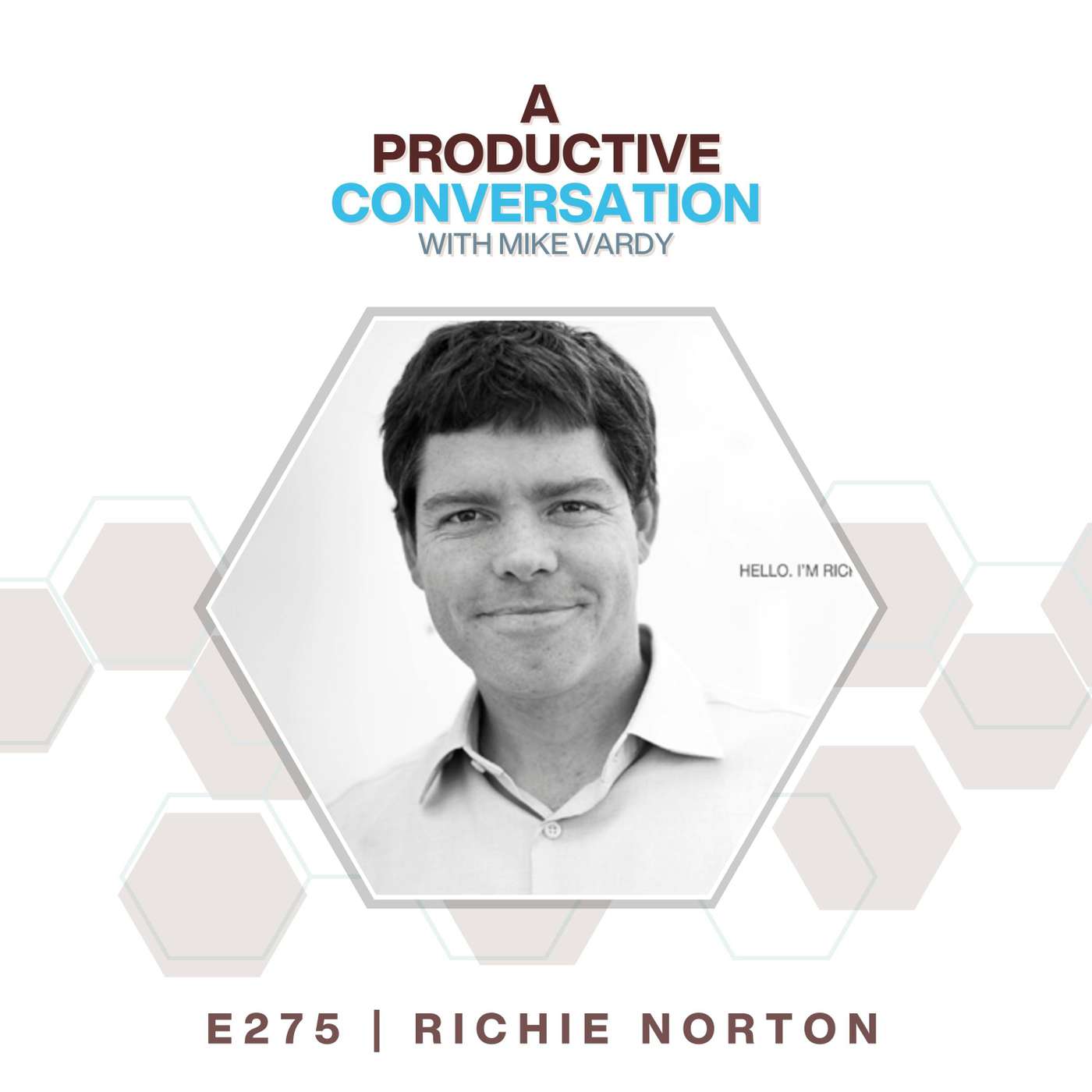
Ep 275Starting Something Stupid with Richie Norton
This episode is brought to you by Your Clockwise Week—a personalized weekly structure built around your actual life, not an ideal one. If your week feels full but not fitting, you can learn more at mikevardy.com/yourclockwiseweek.On this episode of the podcast, I chat with Richie Norton. Riche is the award-winning, bestselling author of the book The Power of Starting Something Stupid (in 10+ languages) and Résumés Are Dead & What to Do About It. In 2019, Richie was ranked one of the world’s top 100 business coaches by Dr. Marshall Goldsmith. He is an international speaker (including TEDx & Google Startup Grind) and serial entrepreneur. I didn’t know what to expect when speaking with Richie but I can tell you that I didn’t expect the conversation to be so personal. We talk about why he loves bringing products to life, the axiom he uses as a guiding principle for his life, and solid advice when it comes starting something stupid. Talking Points We talk about the origins of his company name What led Richie to want to bring products that they are proud of to life Richie explains the origins and the meaning behind Gavin’s Law This is far more powerful than any New Year’s Resolution These are the two songs I have on nearly every monthly playlist I assemble Richie and I start talking about whether or not it is stupid for me to make a planner These are the people that will try to keep you from doing something stupid even though you feel compelled to do it What about finishing? These are the two questions Richie asks when evaluating ideas that he may want to bring to life What’s the first thing you can do to start something stupid now? Quote “Live to Start. Start to live.“ Helpful Links Prouduct SwitchPod The Freedom Journal The Power of Starting Something Stupid How to Keep a Library of (Physical) Books The Road to Character Richie on EOFire I Got a Name by Jim Croce Beautiful Ride by John C. Reilly How to Live on 24 Hours a Day Pocket Biases Start Finishing The Messy Middle RichieNorton.com The Productivityist Podcast Pick of the Week: Soul and Wit Ask yourself this question if you’re afraid of starting something stupid: Will I regret it when I’m 80? If the answer is yes, then forge ahead. If not, then back away. But both Richie and I bet that more often than not you’ll want to forge ahead. You need to get out of your own way. You need to fight back against the biases that show up. You need to start something stupid a little more often. (And maybe start by looking at all of those web domains you bought.) Want to discover some of the books mentioned on the podcast? Check out Scribd, my reading app of choice. If you enjoyed the episode, please leave a rating and/or review wherever you listened to the episode. Also don't forget to check out all of our podcast sponsors found on our podcast sponsors page. And if you want to have easy access to the archives of the show and ensure you don't miss the new episodes to come then subscribe to the podcast in the app you're using.Learn more about your ad choices. Visit megaphone.fm/adchoices If this episode resonated, I’m exploring ideas like these more deeply in my upcoming book, Productiveness. You can follow along as it takes shape at mikevardy.com/productiveness.
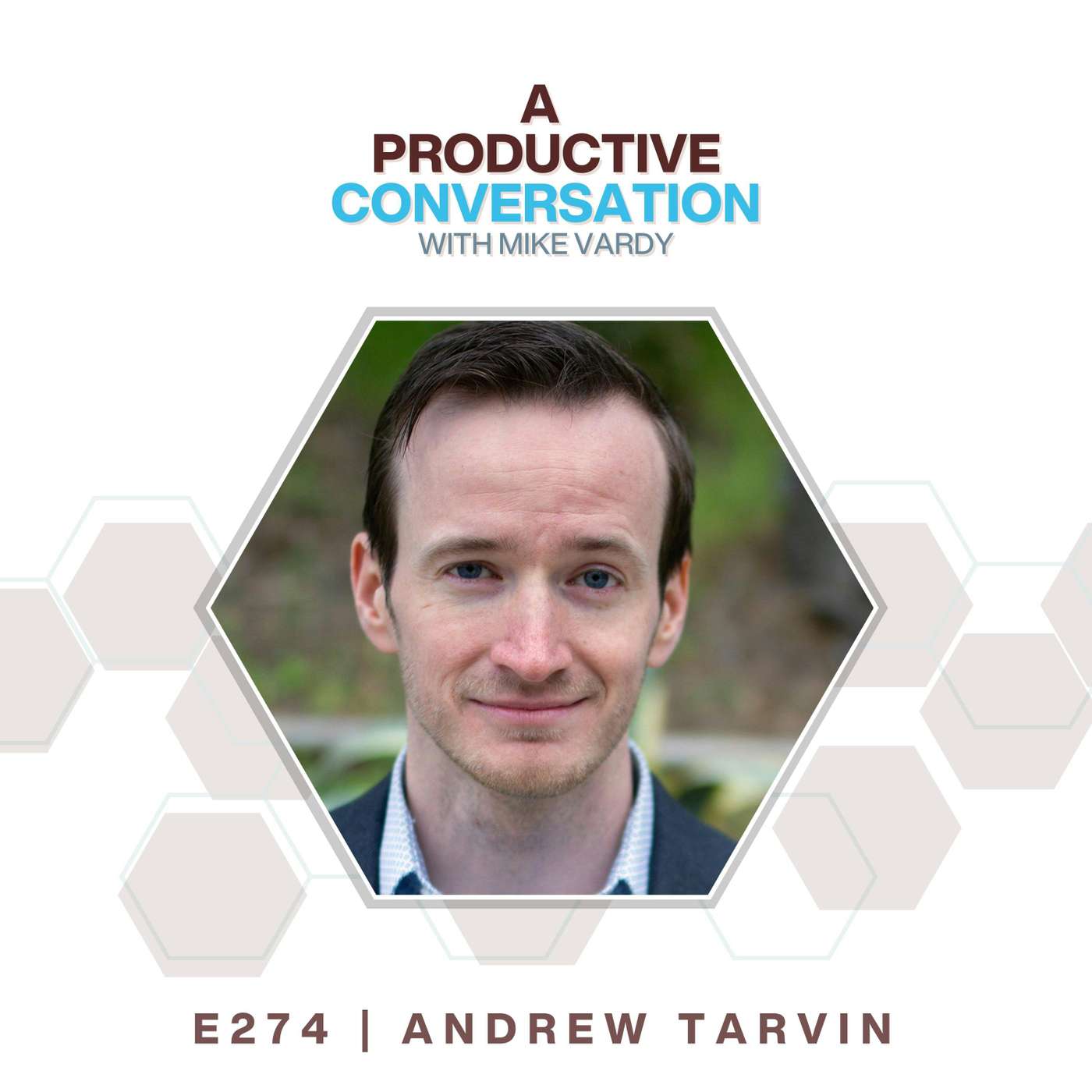
Ep 274Humor That Works with Andrew Tarvin
This episode is brought to you by Your Clockwise Week—a personalized weekly structure built around your actual life, not an ideal one. If your week feels full but not fitting, you can learn more at mikevardy.com/yourclockwiseweek.On this episode of The Productivityist Podcast, I’m joined by Andrew (Drew) Tarvin. Drew is the world’s first Humor Engineer teaching people how to get better results while having more fun. He has worked with 35,000+ people at 250+ organizations, including Microsoft, the FBI, and the International Association of Canine Professionals. He is a best-selling author, has been featured in The Wall Street Journal, Forbes, and FastCompany, and his TEDx talk has been viewed over 4 million times. Drew and I talk about his book Humor That Works: The Missing Skill for Success and Happiness at Work. We discuss the ways you. can infuse humour into the workplace, why it’s important to bring hummer into the workplace, how you can overcome those who think adding humour to the mix is a waste of time, and more. As someone who has been immersed in humour in my previous life I was happy to have Drew on the program to talk have a comedic conversation that can take productivity to greater heights. Talking Points Drew shares why introducing humor is important at work and why fostering it is as well Is Drew’s primary interest performing comedy or is it something else? This is how Drew got started with improv What is the goal of using humour in the workplace? This is the definition of “humour that works” How to deal with a “Beatrice” at work as opposed to a “Bill” at work What is a “humour map”? How can humour be used to diffuse conflict in the workplace? What can leaders learn from stand-up comics? These are Drew’s thoughts on authenticity in the workplace This is one of the most important attribute you need in the workplace What would Drew say to the person that thinks adding humour to the mix is a waste of time 31% of people leave their workplace because of this Drew and I spend time talking about commitment Why was it important for Drew to contract the book the way he did? Drew talks about the “conversations” that he had with his editor throughout the book Quote “Many of you are likeable people… at home.“ Helpful Links Humor That Works: The Missing Skill for Success and Happiness at Work Bill Burr| Paper Tiger HumorThatWorks.com @DrewTarvin on Twitter @DrewTarvin on Instagram The Productivityist Podcast Pick of The Week: How Did This Get Made? I’ve always believed that infusing humor in the workplace – and in life overall – is healthy and important. Being able to speak to someone who feels the same way and has taken the time to write an entire book on the subject was a real treat. I hope you enjoyed our conversation as much as I did (and, better still, I hope you had a few laughs along the way). Want to discover some of the books mentioned on the podcast? Check out Scribd, my reading app of choice. If you enjoyed the episode, please leave a rating and/or review wherever you listened to the episode. Also don't forget to check out all of our podcast sponsors found on our podcast sponsors page. And if you want to have easy access to the archives of the show and ensure you don't miss the new episodes to come then subscribe to the podcast in the app you're using.Learn more about your ad choices. Visit megaphone.fm/adchoices If this episode resonated, I’m exploring ideas like these more deeply in my upcoming book, Productiveness. You can follow along as it takes shape at mikevardy.com/productiveness.
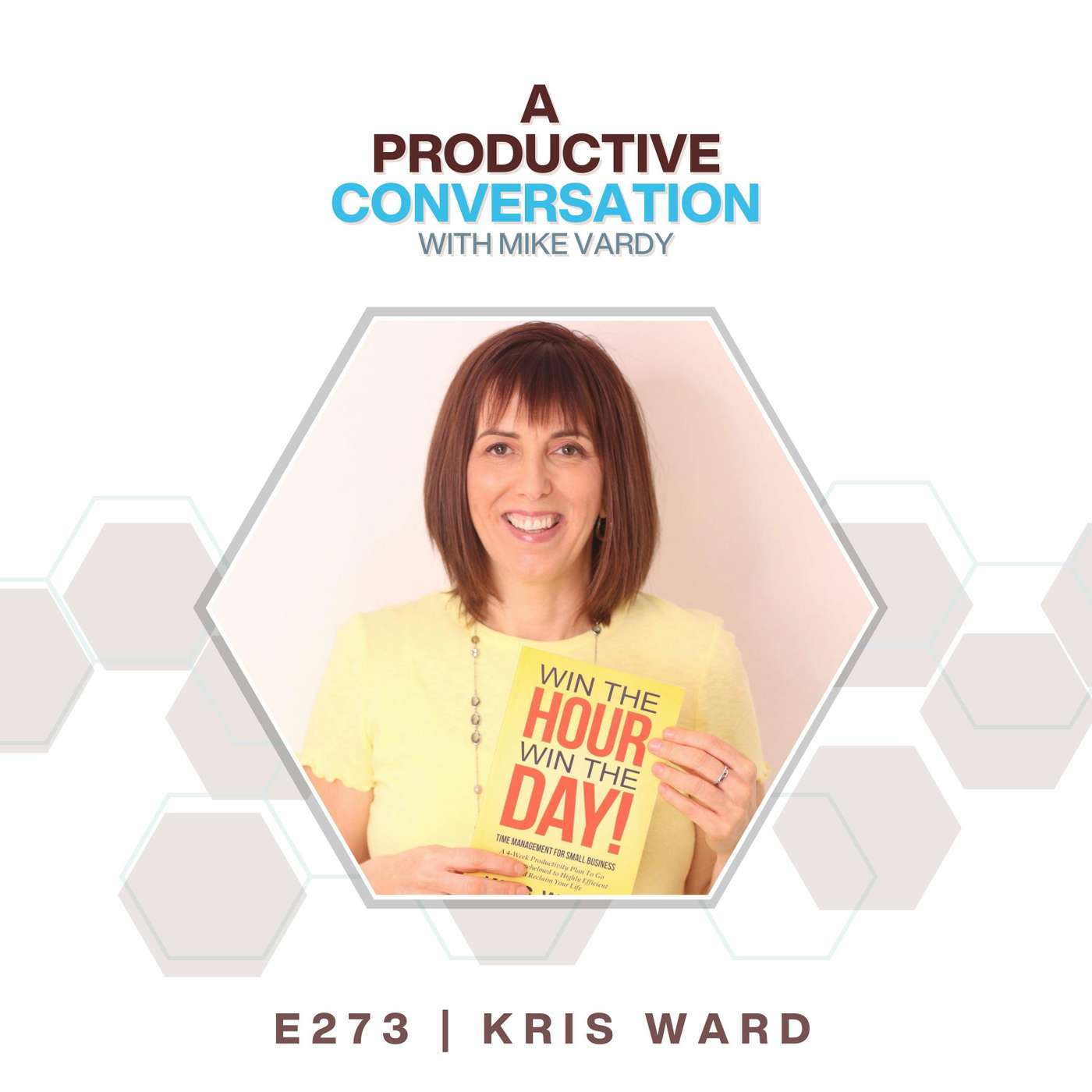
Ep 273How to Win the Day with Kris Ward
This episode is brought to you by Your Clockwise Week—a personalized weekly structure built around your actual life, not an ideal one. If your week feels full but not fitting, you can learn more at mikevardy.com/yourclockwiseweek.On this episode I speak with Kris Ward. Kris is the director of a marketing and branding company and it was through her work there that she learned a great deal about productivity versus being busy. Her work with other small business professionals lead to the creation of Win The Hour Win The Day. Kris Ward helps entrepreneurs grow their business so they can get more work done faster and focus on what’s really important in life – and we touch on that throughout our conversation. We discuss the aspects of what she calls the “Freedom Formula” and a slew of other productivity-related topics. There’s a lot to absorb in this episode and I’m glad that us two Canadians finally had a chance to connect in podcast form. Talking Points What does productivity mean to Kris? Kris has had several moments that have incited change in Kris’s life. Here’s one of them. Here’s another one of those moments – a very different moment at that Why winning the hour is vital to winning the day We dive deeper into the idea of the calendar being your “time bank account” This is how Kris likes to work The biases that rear their ugly heads when we try to take on some of what Kris speaks of show up. Here’s how Kris helps people deal with that Kris starts to break down the “Freedom Formula” in greater detail Kris understands the resistance towards building systems We start talking about tools Is Kris more of a morning person or a night owl? And how can she help people listen to their body clocks with her work? Kris believes this is something that we don’t talk about enough that affects our productivity This is one thing that you can do now to start winning the hour and – as a result – win the day Quote “A business is not run on memory.” Helpful Links Win The Hour Win The Day! The Checklist Manifesto: How to Get Things Right Kris Ward on Instagram Kris Ward on LinkedIn WinTheHourWinTheDay.com The Productivityist Podcast Pick of The Week: SW945: A Walk in Japan It’s always a pleasure to speak with fellow time management experts. I’ve been following Kris on Instagram for a while now and there’s a lot of crossover in our work. I trust that you’ve heard that through our conversation on this episode. I think we brought a lot to the table and hope that you’ve garnered some solid takeaways from our discussion. Want to discover some of the books mentioned on the podcast? Check out Scribd, my reading app of choice. If you enjoyed the episode, please leave a rating and/or review wherever you listened to the episode. Also don't forget to check out all of our podcast sponsors found on our podcast sponsors page. And if you want to have easy access to the archives of the show and ensure you don't miss the new episodes to come then subscribe to the podcast in the app you're using.Learn more about your ad choices. Visit megaphone.fm/adchoices If this episode resonated, I’m exploring ideas like these more deeply in my upcoming book, Productiveness. You can follow along as it takes shape at mikevardy.com/productiveness.
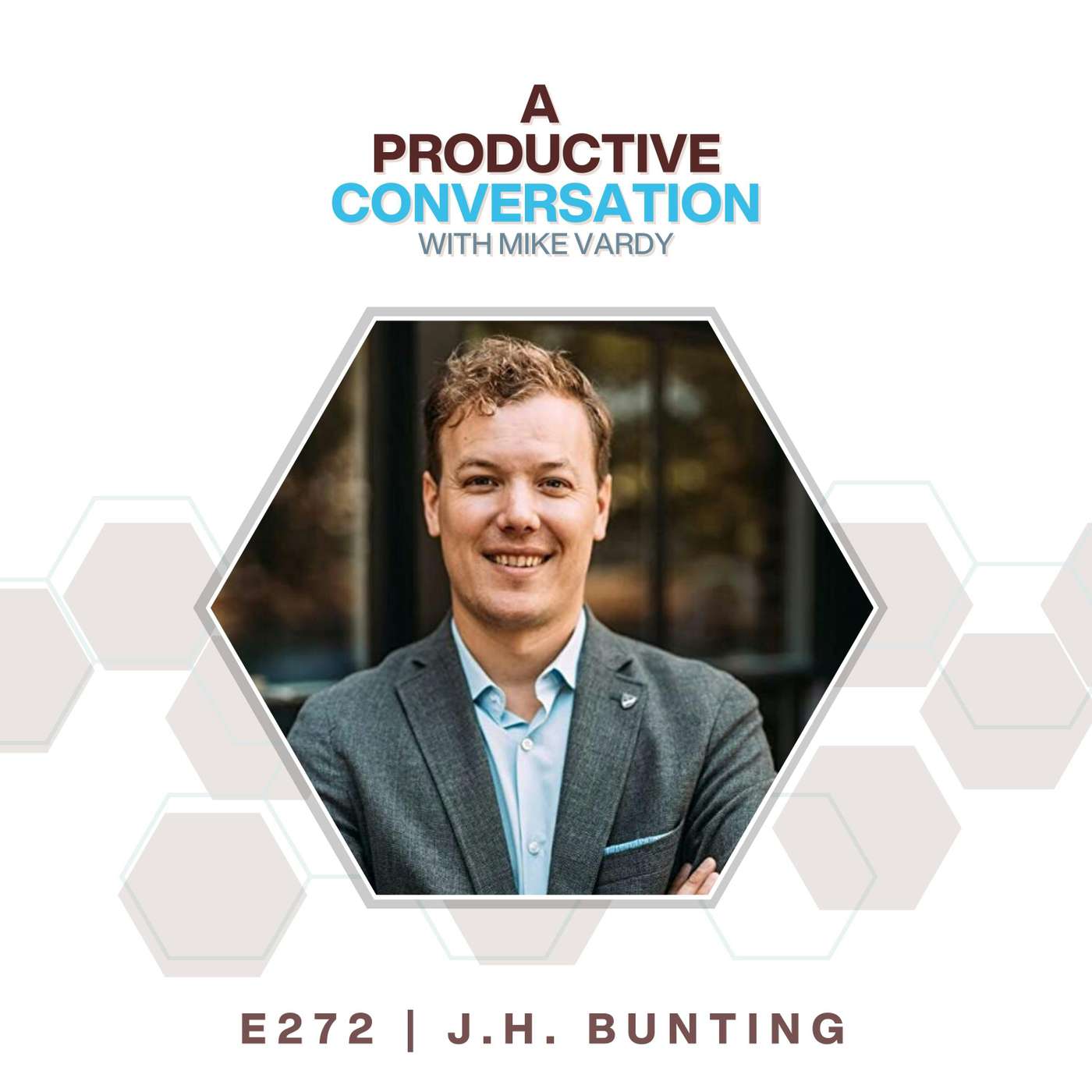
Ep 272Crowdsourcing Paris with J.H. Bunting
This episode is brought to you by Your Clockwise Week—a personalized weekly structure built around your actual life, not an ideal one. If your week feels full but not fitting, you can learn more at mikevardy.com/yourclockwiseweek.On this episode of the program I speak with J.H. Bunting about the life of a writer and the making of his ambitious new book, Crowdsourcing Paris: Memoirs of a Travel Adventure. J.H. Bunting (or “Joe” as I know him) is a bestselling writer, novelist, and a dad. He leads The Write Practice community, an award-winning community of creative writers. He lives in Atlanta, Georgia with his wife Talia and three kids and enjoys coffee and corpse reviver no. 2s. Joe and I talk about the evolution of his book, the challenge of doing something different or outside of the usual path, how panic and desperation can fuel productivity, and much more. I had a great time learning about Joe’s process when building this book and I am happy to be able share our conversation with you. Talking Points Who is J.H. (Joe) Bunting? This is how he got his start What Joe discovered about the book while in Paris How important was it for Joe to take on this book – something that was different than what he’d done before Mark Twain played a role in the crafting of Joe’s book We talk about the power of patience Did every suggested challenge that Joe was asked to do while in Paris make the cut? I circle back to the idea of panic and desperation and how it can spur on productivity Does Joe believe in willpower? Joe explains how beneficial it was for his productivity while away from his usual environment Joe offers advice regarding traveling with a young family Quote “The important thing is that you’re doing the work and putting it out into the world.” Helpful Links Crowdsourcing Paris: Memoirs of a Travel Adventure World Domination Summit The Write Practice Ryan McRae’s Burn The Tavern Down The Innocents Abroad by Mark Twain Episode 201: Willpower Doesn’t Work with Benjamin Hardy Episode 266: Becoming Indistractable with Nir Eyal Joe’s FREE Workation Adventure Worksheet Daddy-Daughter Day: A Workday Vlog on TimeCraftingTV The Productivityist Podcast Pick of the Week: The Good Place (The Podcast) Writing a book is hard. Writing a book that falls outside of the scope of what you initially intended to write can be even harder. Joe took that on with passion and pride and the results show it. If you haven’t already picked up Joe’s book, do so now. It’s a fantastic read. Want to discover some of the books mentioned on the podcast? Check out Scribd, my reading app of choice. If you enjoyed the episode, please leave a rating and/or review wherever you listened to the episode. Also don't forget to check out all of our podcast sponsors found on our podcast sponsors page. And if you want to have easy access to the archives of the show and ensure you don't miss the new episodes to come then subscribe to the podcast in the app you're using.Learn more about your ad choices. Visit megaphone.fm/adchoices If this episode resonated, I’m exploring ideas like these more deeply in my upcoming book, Productiveness. You can follow along as it takes shape at mikevardy.com/productiveness.
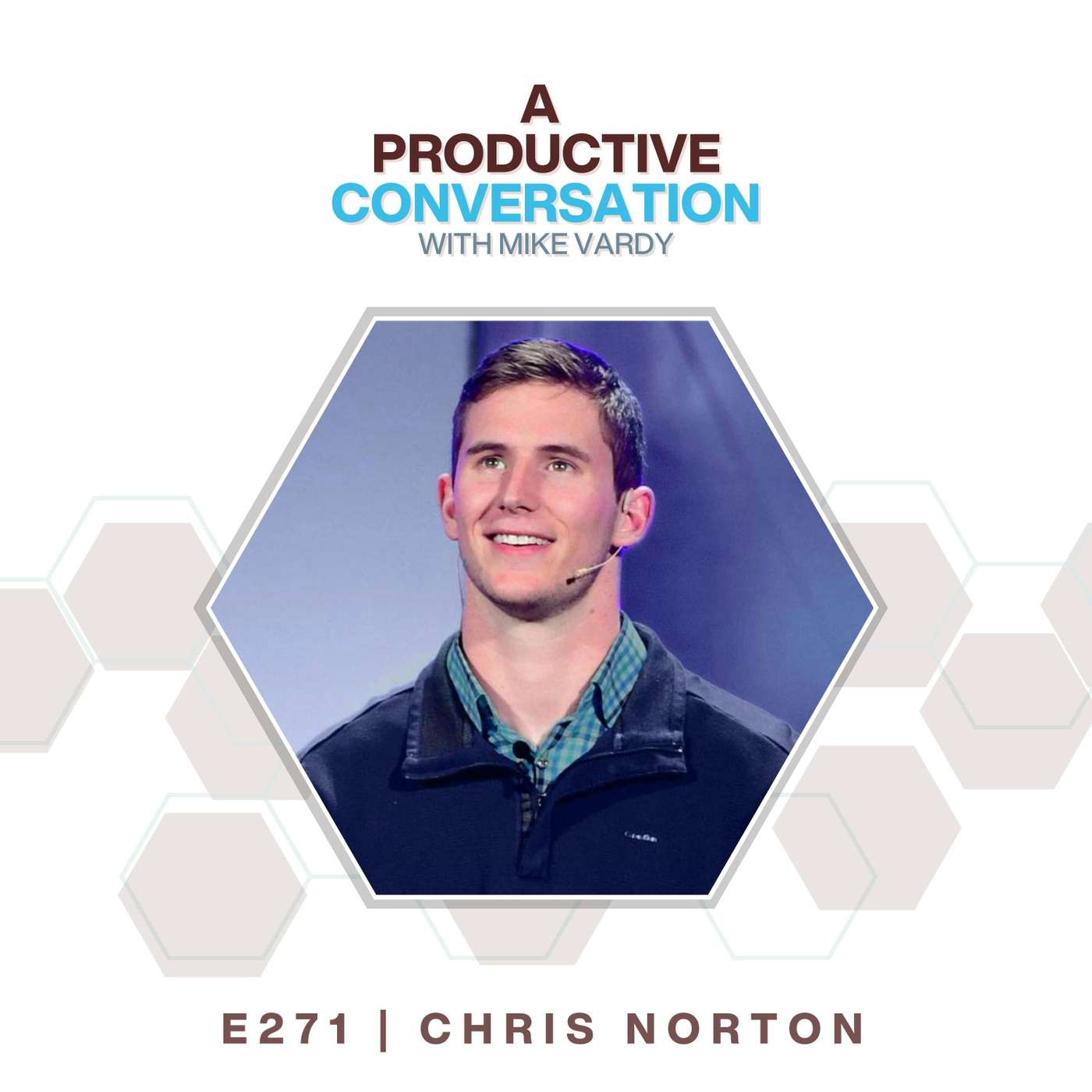
Ep 271The Seven Longest Yards with Chris Norton
This episode is brought to you by Your Clockwise Week—a personalized weekly structure built around your actual life, not an ideal one. If your week feels full but not fitting, you can learn more at mikevardy.com/yourclockwiseweek.On this episode I have the pleasure of speaking with Chris Norton. Chris is a speaker, author, adoptive & foster parent. He suffered a severe spinal cord injury playing college football. However, seven years later joyfully conquered the challenge of walking his wife, Emily, down the aisle of his wedding. Chris spoke about his journey, chronicled in The Seven Longest Yards, a book he co-wrote with his wife. We also talked about being fathers, what productivity means to him, and so much more. Chris has overcome a lot and yet is incredibly productive and has an inspiring story to share. I’m pleased to be able to bring it to you on this episode of the program. Talking Points Chris shares a bit about who he is and why he no longer plays football What did it take for Chris to show resilience in the face of tragedy? This is the one thing that helps Chris stay so positive Chris tells the story of the first time he tried to take steps since the accident What primary lesson does Chris take from his football days that he applies to this day? You need to learn how to do this – something that athletes know all too well We talk about fatherhood and parenting – something Chris is incredibly passionate about Chris shares why it was key for Emily and him to write this book together What does productivity mean to Chris? Chris has a challenge for you We close out the show talking about the idea of regret… and how Chris fights back against the power of regret Chris predicts the winner of Super Bowl LIV Quote “Who needs you to keep going so that they can keep going?“ Helpful Links The Seven Longest Yards Episode 245: What Happy Successful People Do Differently with Marc and Angel Chernoff Chris on The Good Life Project with Jonathan Fields Episode 269: You Are Awesome with Neil Pasricha Episode 241: What Sports Can Teach Us About Greatness with Don Yaeger The Front Nine: How to Start the Year You Want Anytime You Want ChrisNorton.org Chris on Instagram The Productivityist Podcast Pick of the Week: Read to Lead Chris’s story is inspiring to say the least. I’m so honoured that he took the time to come on the show and share his story with me… and with you. There are plenty of lessons to be learned from his experience and how he faced it. I hope you can take any number of them and apply them to your own life. Want to discover some of the books mentioned on the podcast? Check out Scribd, my reading app of choice. If you enjoyed the episode, please leave a rating and/or review wherever you listened to the episode. Also don't forget to check out all of our podcast sponsors found on our podcast sponsors page. And if you want to have easy access to the archives of the show and ensure you don't miss the new episodes to come then subscribe to the podcast in the app you're using.Learn more about your ad choices. Visit megaphone.fm/adchoices If this episode resonated, I’m exploring ideas like these more deeply in my upcoming book, Productiveness. You can follow along as it takes shape at mikevardy.com/productiveness.
Ep 270The Daily Decision with Brian Dixon
This episode is brought to you by Your Clockwise Week—a personalized weekly structure built around your actual life, not an ideal one. If your week feels full but not fitting, you can learn more at mikevardy.com/yourclockwiseweek.On this episode, I’m joined by Brian Dixon, the author of Start with Your People: The Daily Decision that Changes Everything. As a podcaster, conference speaker, and business coach, Brian is passionate about helping high potential leaders and teams thrive in a world of overwhelming options. Some of the things we discuss during our conversation include what people can do to make sure they are starting on the right foot with others, why putting people first plays a role in your productivity, and the things you can do so that you can start with people first. Talking Points Brian speaks about the idea of “deciding” and the concept of the daily decision The nuanced approach to creating harmony between the needs of your people and your own needs This is The One Hour Exchange… and how you make it happen in a way that works for you What steps should someone take if they want to start off on the right foot when “starting with their people” Brian loves personality tests. Here are the four he likes the best. Brian challenges you to pick one day to do this What does it mean to adopt a mentality of abundance? I learned this about Mr. Rogers What can you do to start starting with people today? Quote “The pebble rarely sees the ripple…my job is to make an impact on the people in my life and I will never necessarily know the impact that they make as a result of me impacting them. But I can hold my head up high or put my head on the pillow at night and say ‘job well done.'” Helpful Links Start with Your People: The Daily Decision that Changes Everything Episode 203: The Evolution of Getting Things Done with David Allen The Clarity Sessions The Road Back to You: An Enneagram Journey to Self-Discovery The Wisdom of the Enneagram: The Complete Guide to Psychological and Spiritual Growth for the Nine Personality Types 5 AM Miracle: The Daily Decision that Changes Everything with Brian Dixon Episode 265: Bringing Gratitude with Karl Staib Brian’s Website The Productivityist Podcast Pick of the Week: Typology I like this particular take on “people-powered productivity.” Why? Because it’s personal. Brian’s got some great ideas throughout the pages of his book and he shared quite a few during our conversation. I hope you get a lot out of it. I know that I did. Want to discover some of the books mentioned on the podcast? Check out Scribd, my reading app of choice. If you enjoyed the episode, please leave a rating and/or review wherever you listened to the episode. Also don't forget to check out all of our podcast sponsors found on our podcast sponsors page. And if you want to have easy access to the archives of the show and ensure you don't miss the new episodes to come then subscribe to the podcast in the app you're using.Learn more about your ad choices. Visit megaphone.fm/adchoices If this episode resonated, I’m exploring ideas like these more deeply in my upcoming book, Productiveness. You can follow along as it takes shape at mikevardy.com/productiveness.
Ep 269You Are Awesome with Neil Pasricha
This episode is brought to you by Your Clockwise Week—a personalized weekly structure built around your actual life, not an ideal one. If your week feels full but not fitting, you can learn more at mikevardy.com/yourclockwiseweek.On this episode of the podcast, I have the pleasure of being joined by the author of The Book of Awesome Series, Neil Pasricha. Neil thinks, writes, and speaks about intentional living and on this episode he’s going to share with me some of his insights from the book You Are Awesome: How to Navigate Change, Wrestle with Failure, and Live an Intentional Life. Neil is a New York Times best-selling author of 5(!) books, selling well over a million copies of his books in the process. He also hosts the award-winning podcast – and foamier Productivityist Podcast Pick of the Week – 3 Books. He’s an in-demand international speaker and, like me, is a Canadian. Unlike me, he lives in Toronto with his wife and three sons. We spend time during our discussion talking about his latest book and a wide variety of productivity-related topics for just over an hour, making this one of the longer episodes I’ve ever produced. So sit back, relax, and enjoy this conversation I have with Neil on the program. It’s, in a word… awesome. Talking Points Neil shares with me what You Are Awesome is really about He shares why he started his blog This is the difference between resilience and grit We talk about the use of ellipses or the dot-dot-dot These are the steps that you need to take to be awesome We explore an all-too-common feeling: the feeling of not being good enough Neil and I discuss the importance of failure Does Neil journal? Neil turns the tables and asks me about my journaling practice When I share with Neil my TimeCrafting methodology he asks if I feel any sort of constraints surrounding it I turn the tables back and ask Neil if he has any sort of daily theming practice that he uses We close out the conversation by slowing things down a bit Quote “We have never been more productive – ever – than now.” Helpful Links You Are Awesome: How to Navigate Change, Wrestle with Failure, and Live an Intentional Life Day One What Got You Here Won’t Get You There: How Successful People Become Even More Successful The Art of Non-Conformity: Set Your Own Rules, Live the Life You Want, and Change the World The Pomodoro Technique Neil.blog 3books.co The Productivityist Podcast Pick of the Week: Akimbo There’s a lot to unpack in this episode and so many great takeaways. It was refreshing to have the tables turned on me with a few questions and I know we could have spoken to each other for much longer. I encourage to give this episode a repeat listen – there are insights a-plenty to be found! Want to discover some of the books mentioned on the podcast? Check out Scribd, my reading app of choice. If you enjoyed the episode, please leave a rating and/or review wherever you listened to the episode. Also don't forget to check out all of our podcast sponsors found on our podcast sponsors page. And if you want to have easy access to the archives of the show and ensure you don't miss the new episodes to come then subscribe to the podcast in the app you're using.Learn more about your ad choices. Visit megaphone.fm/adchoices If this episode resonated, I’m exploring ideas like these more deeply in my upcoming book, Productiveness. You can follow along as it takes shape at mikevardy.com/productiveness.
Ep 268Metamorphosis with Steven L. Blue
This episode is brought to you by Your Clockwise Week—a personalized weekly structure built around your actual life, not an ideal one. If your week feels full but not fitting, you can learn more at mikevardy.com/yourclockwiseweek.On this episode I speak with Steven L. Blue. Steven is the best-selling author of five critically acclaimed books that target executives, leaders, entrepreneurs, and anyone seeking to learn the secrets of success in the corporate world.Steven’s latest book, Metamorphosis: From Rust-Belt to High-Tech in a 21st Century World, is a detailed blueprint for CEOs and senior leaders to transform their businesses from failing rust-belt companies with small margins into high-tech leaders with superior profits. I spoke with Steven about the shift from rust-belt to high-tech products, the patience involved when making a change, and the process of metamorphosis as a whole. There’s a lot to unpack in this episode and plenty of lessons that Steven offers that you should heed when undergoing organizational – or even individual – metamorphosis. Talking Points What metamorphosis means to Steven – and what Steven wanted to title the book in the first place Steven discusses the idea of “innovational potential” The surprising model that Steven believes you should follow when going through a metamorphosis We talk about disruptive thinking and how important it is to adopt it Would Steven hire a Chief Innovation Officer? This is what Steven had his staff trained in years ago that has helped the company out in incredible ways The impact Steven feels change has on productivity – and how he suggests a company combat any fears that arise from an initial loss in productivity when instituting change We talk about the many forms that innovation can show up in your business and where he has it show up in Steven’s company When and how does scale play a role in the metamorphosis of a company? This is one of the toughest aspects of making change… no matter the size of your business How much time does Steven spend in the planning phase? Outsourcing is key – but there’s an important piece when you’re outsourcing to external contractors that Steven believes is a must This is the biggest piece of advice that Steven says will help you get a decent start when you decide to undergo a metamorphosis Quote “Innovation should be everybody’s job.” Helpful Links Metamorphosis by Steven L. Blue Steven’s Website Steven on Twitter The Productivityist Podcast Pick of the Week: Get Yourself Optimized Even though you may not be running a manufacturing company like Steven does, there are still great takeaways regarding change that you can use in your own business – and life. Change is never easy but if you stand still then others will pass you by along the way… and you’ll spend time playing catch-up instead of investing it in what you need and want to be investing it in. If your intention is to make change that matters, then you need to plan for it so that you can be as ready as possible for whatever that new route will throw your way. Want to discover some of the books mentioned on the podcast? Check out Scribd, my reading app of choice. If you enjoyed the episode, please leave a rating and/or review wherever you listened to the episode. Also don't forget to check out all of our podcast sponsors found on our podcast sponsors page. And if you want to have easy access to the archives of the show and ensure you don't miss the new episodes to come then subscribe to the podcast in the app you're using.Learn more about your ad choices. Visit megaphone.fm/adchoices If this episode resonated, I’m exploring ideas like these more deeply in my upcoming book, Productiveness. You can follow along as it takes shape at mikevardy.com/productiveness.
Ep 267Revisiting and Reframing Automation with Wade Foster
This episode is brought to you by Your Clockwise Week—a personalized weekly structure built around your actual life, not an ideal one. If your week feels full but not fitting, you can learn more at mikevardy.com/yourclockwiseweek.On this episode, I speak with Wade Foster. Wade is the CEO and co-founder of Zapier, a workflow automation tool used by over three million people to connect the work apps they use every day. Prior to Zapier, Wade worked as a customer development lead for The Idea Works, Inc. in Missouri. He is an alumnus of Y Combinator and has degrees in industrial engineering and business administration from the University of Missouri-Columbia. I wanted to have Wade back on the show to explore the genesis of Zapier as well as how automation has worked for him over the years. We talked about his own to do list, who inspires and motivates him through their work and so much more during our conversation. I’m pleased to have him return as a guest on the show and hope you enjoy this revisited and reframed discussion. Talking Points Wade shares a bit about Zapier Where has Zapier gone since its inception? How has it evolved? Is there such a thing as “too much automation”? What trips people up when they are trying to automate? Here’s what Wade thinks Zapier – and automation – is helping people focus on to help out with their productivity Wade shares how you can make time to automate – and why you should Here’s one thing that you can’t automate on the whole… but can automate in parts How Wade started automating – and how he keeps at it What automation has freed Wade up to do more of Does Wade keeps a to do list? Here’s how he structures his weeks How Wade breaks down big things – like projects What about home or personal automation? What does Wade do on that front? Where does Wade draw inspiration from? These are the particular pieces of writing and content that Wade refers to consistently to stay on track We talk about scale and how Zapier plans to scale How does Jeff Bezos’s quote “Focus on the things that don’t change” play a role in Wade’s company and his own life Quote “The reality is that innovation and technology move so quickly that you always have to be looking for the next angle for yourself or you might find that your company is… innovated out of business.” Helpful Links A Closer Look at Automation with Wade Foster | The Productivityist Podcast Thinking Fast and Slow IFTTT Signal v. Noise | Basecamp The Hard Things About Hard Things I Ran the Full Text of Jeff Bezos’s 23 Amazon Shareholder Letters Through a Word Cloud Generator, and the Insights Were Astonishing | Inc.com 1,000 True Fans | The Technium The Innovator’s Dilemma Zapier The Productivityist Podcast Pick of the Week: Process The thing about automation is that you need to think about not only what you want to automate but why you want to automate in the first place. Don’t just automate for automation’s sake. Software can help once you’ve made that call, but without making a smart and wise choice beforehand you may be setting yourself up for more work than you bargained for. Want to discover some of the books mentioned on the podcast? Check out Scribd, my reading app of choice. If you enjoyed the episode, please leave a rating and/or review wherever you listened to the episode. Also don't forget to check out all of our podcast sponsors found on our podcast sponsors page. And if you want to have easy access to the archives of the show and ensure you don't miss the new episodes to come then subscribe to the podcast in the app you're using.Learn more about your ad choices. Visit megaphone.fm/adchoices If this episode resonated, I’m exploring ideas like these more deeply in my upcoming book, Productiveness. You can follow along as it takes shape at mikevardy.com/productiveness.
Ep 266Becoming Indistractable with Nir Eyal
This episode is brought to you by Your Clockwise Week—a personalized weekly structure built around your actual life, not an ideal one. If your week feels full but not fitting, you can learn more at mikevardy.com/yourclockwiseweek.On this episode, I’m joined by Nir Eyal, the author of what I consider to be the best productivity book I’ve read in a long time, Indistractable: How to Control Your Attention and Choose Your Life. Without question I feel that Nir’s book Indistractable is the best book on the topic of productivity that I’ve read in a long time. We dig into the book throughout our lengthy discussion, discuss the concept of willpower (and my misinterpretation of how he feels about it), and so much more. There’s plenty to unpack in this episode and I’m pleased to be able to bring it to you. Talking Points Why I feel that Indistractable is one of the best productivity books out there Nir shares why the book covers for both Hooked and Indistractable are yellow The distinction between traction, time management, and becoming indistractable What is pseudowork? Nir Starts to reveal the four strategies that you’ll need to become indistractable This is what time management actually is We talk about willpower – and this is where I misinterpret Nir’s belief on the subject As a follow up to our willpower back-and-forth, Nir says that this is what we DO have available to us I share my external triggers with Nir and that leads to a discussion of the idea of identity Nir spends time discussing the other types of “pacts” you can put in place on your indistractable journey Nir gets personal as he discusses the power of “effort packs” I share my own examples of “effort packs” Nir talks about “progressive extremism” and its role in becoming indistractable Nir talks about to do lists Here’s what Nir says what you shouldn’t – and should – put on your calendar We chat about misinformation around the use of tech This is Nir’s definition of productivity… and his advice to live up to that definition Quote “The body gets what the body needs.” Helpful Links Good Life Project | Nir Eyal Ryan Holiday’s Recommended Reading The Productivityist Podcast: Willpower Doesn’t Work with Benjamin Hardy Schedule Maker The 106 Year Old Problem Indistractable.com Nir and Far [Podcast] The Productivityist Podcast Pick of the Week: Remote Work Friends This episode is longer than usual but it’s worth every second. Nir’s perspective on productivity is attuned to my own in many ways. Hearing him agree with me on the concept of theming your time and using the calendar as a directory for your day and a to do list for the details of your day made… well, my day. I hope that this discussion we had made your day too. Want to discover some of the books mentioned on the podcast? Check out Scribd, my reading app of choice. If you enjoyed the episode, please leave a rating and/or review wherever you listened to the episode. Also don't forget to check out all of our podcast sponsors found on our podcast sponsors page. And if you want to have easy access to the archives of the show and ensure you don't miss the new episodes to come then subscribe to the podcast in the app you're using.Learn more about your ad choices. Visit megaphone.fm/adchoices If this episode resonated, I’m exploring ideas like these more deeply in my upcoming book, Productiveness. You can follow along as it takes shape at mikevardy.com/productiveness.
Ep 265Bringing Gratitude with Karl Staib
This episode is brought to you by Your Clockwise Week—a personalized weekly structure built around your actual life, not an ideal one. If your week feels full but not fitting, you can learn more at mikevardy.com/yourclockwiseweek.I’m joined by my good friend and author of Bring Gratitude: Feel Joyful with Bite-Sized Mindset Practices, Karl Staib on this episode. We spend time speaking about the effects that gratitude can have on your productivity when you simply “bring it” into your life as much as possible. Karl is also the creator of free 30-Day Bring Gratitude Challenge, an initiative that helps people strengthen their mindset through practicing gratitude. The challenge is presented in a private Facebook Group (linked below) and his goal is to get the smartest and most caring people together to create an amazing community so they can help each other learn from our mistakes and build a life that they all love. Talking Points Why Karl is a recovering “complainer” What Karl means when he encourages you to “bring” gratitude The story of the meeting that began Karl’s mindset shift towards gratitude What Karl does when he catches himself veering away from gratitude The question Karl asks himself that helps him tap into gratitude when he’s “just not feeling it” Karl explains how to leverage both willpower and way power to help you practice gratitude Karl gets into some of the scientific studies that have been made around the effects of gratitude These are the 3 levels of gratitude… The important thing Karl does at the end of the day What finally made the journaling habit stick for Karl This is what you can do start building the habit of bringing gratitude more consistently today Quote “If you can be grateful for who you are and know that you are good enough in what you bring to every day, then it makes everything else easier.” Helpful Links Bring Gratitude: Feel Joyful with Bite-Sized Mindset Practices Mindset First Club on Facebook Bring Gratitude Cards Bring Gratitude While gratitude may not have an immediate ROI when it comes to your productivity, the long-term benefits are massive. Like with meditation, simply practicing gratitude a little bit every day strengthens your resolve and builds momentum. Keeping a journal and asking yourself what you were grateful for over the course of your day can be a huge help… and you can also start your day off by simply telling yourself what you’re grateful for. Want to discover some of the books mentioned on the podcast? Check out Scribd, my reading app of choice. If you enjoyed the episode, please leave a rating and/or review wherever you listened to the episode. Also don't forget to check out all of our podcast sponsors found on our podcast sponsors page. And if you want to have easy access to the archives of the show and ensure you don't miss the new episodes to come then subscribe to the podcast in the app you're using.Learn more about your ad choices. Visit megaphone.fm/adchoices If this episode resonated, I’m exploring ideas like these more deeply in my upcoming book, Productiveness. You can follow along as it takes shape at mikevardy.com/productiveness.
Ep 264How to Build Yourself More Time with Jaime Masters
This episode is brought to you by Your Clockwise Week—a personalized weekly structure built around your actual life, not an ideal one. If your week feels full but not fitting, you can learn more at mikevardy.com/yourclockwiseweek.I’m excited to welcome Jaime Masters as a guest on his episode of the podcast. Jaime is the host of Eventual Millionaire. She’s interviewed almost 500 self-made millionaires and billionaires. She’s been a business coaching for over 10 years and has taught six and seven-figure CEOs, entrepreneurs and business owners how to double and triple their revenue. She has been featured in Yahoo Online, Inc.com, SUCCESS Magazine, Entrepreneur, Women’s Health Magazine, Business Insider, and more. I’ve been friends with Jaime for years and have had the pleasure of hanging out with her at events in cities all over the world. She loves business and all things geeky. She’s the mother of two amazing kids that are already making money in business as stilt walkers and contortionists. (I need to get my two kids on this whole “making money” thing!) I wanted to talk to Jaime about her latest venture: Ownerbox. It’s Jaime’s new brand that delivers business owners the dream they signed up for when they started their business. We talked about what her plan is for Ownerbox, why systems are important, and much more she does to help people build themselves more time. Talking Points What is Ownerbox? Why Ownerbox was created Why the “CEObox” and the “Ownerbox” are NOT the same Jaime tells The Story of Joey We discuss the idea of patience and how it translates into Jaime’s latest venture What Jaime’s intent was when she started her Eventual Millionaire brand Why Jaime thinks systemizing is important to success The discussion Jaime had with her kids when she told them that she was going to have someone else other than herself pick them up every once in a while Why Ownerbox helps owners “pick their spots” when it comes to where they spend their time and energy This is what Jaime recommends you do that will help you build yourself more time Quote “Knowing that systems work better is one thing. Doing them is totally another.“ Helpful Links Ownerbox The Productivityist Podcast: Michael Gerber The Productivityist Podcast: Paul Jarvis Eventual Millionaire: Michael Gerber Eventual Millionaire: Paul Jarvis Dave Ramsey’s Debt Snowball Method The Speed of Implementation: An Exclusive Offer for The Productivityist Podcast Jaime knows how to help business owners feel like they own their businesses instead of the other way around. That’s why it’s no wonder that she created Ownerbox; it’s a vehicle to help her do that. The big lesson here is that putting a system in place is not only a smart move…it’s the only move you can make if you want to run a successful business (and, really… a successful life). It reminds me of something that I’ve said time and time again: Frameworks foster freedom. Want to discover some of the books mentioned on the podcast? Check out Scribd, my reading app of choice. If you enjoyed the episode, please leave a rating and/or review wherever you listened to the episode. Also don't forget to check out all of our podcast sponsors found on our podcast sponsors page. And if you want to have easy access to the archives of the show and ensure you don't miss the new episodes to come then subscribe to the podcast in the app you're using.Learn more about your ad choices. Visit megaphone.fm/adchoices If this episode resonated, I’m exploring ideas like these more deeply in my upcoming book, Productiveness. You can follow along as it takes shape at mikevardy.com/productiveness.
Ep 264BONUS EPISODE: It's International Podcast Day with Michael Schechter
bonusThis episode is brought to you by Your Clockwise Week—a personalized weekly structure built around your actual life, not an ideal one. If your week feels full but not fitting, you can learn more at mikevardy.com/yourclockwiseweek.This bonus episode celebrating International Podcast Day features a long-awaited return of the productivity banter between yours truly and my good friend and former co-host of Mikes in Mics, Michael Schechter. We talked about the Whole30 program and what Schechter is drinking during the episode because of it, what he means by "setting his combination," and what it's like to attend the annual Berkshire Hathaway meetings. You can check out Michael's guest post that I published in conjunction with this episode here. Happy International Podcast Day! Want to discover some of the books mentioned on the podcast? Check out Scribd, my reading app of choice. If you enjoyed the episode, please leave a rating and/or review wherever you listened to the episode. And if you want to have easy access to the archives of the show and ensure you don't miss the new episodes to come then subscribe to the podcast in the app you're using.Learn more about your ad choices. Visit megaphone.fm/adchoices If this episode resonated, I’m exploring ideas like these more deeply in my upcoming book, Productiveness. You can follow along as it takes shape at mikevardy.com/productiveness.
Ep 263Own Your Weird with Jason Zook
This episode is brought to you by Your Clockwise Week—a personalized weekly structure built around your actual life, not an ideal one. If your week feels full but not fitting, you can learn more at mikevardy.com/yourclockwiseweek.On this episode, I speak with my friend Jason Zook. Jason is the author of several books, including Own Your Weird: An Oddly Effective Way for Finding Happiness in Work, Life, and Love. Jason Zook is an unconventional entrepreneur. Tired of living a life that felt prescribed to him by society, Jason used his out-of-the-box thinking and ingenuity to create multiple profitable Internet-based businesses. From making $1m wearing sponsored t-shirts for a living with his IWearYourShirt business, to selling his last name twice and eventually even selling his future, Jason is all about owning his weird! Talking Points Why this book needed to come out now Jason and I discuss the resonance of the word “weird” over “different” What’s difficult about adopting the mindset that being weird isn’t just okay but how it can help you thrive What (and who) is this book really about? How do you pay attention to your “weird” above all of the other noise that’s out there? We talk about testing assumptions and how Jason does that Why Jason can’t work with a personal trainer to help him reach his fitness goals I reveal this episode’s Productivityist Podcast Pick of The Week Why in the world did Jason decide to “sell his future” and how did it work out for him? Does Jason look for weirdness when deciding to pursue projects? This is what Jason said in his book that you can do right now to make your life better Does every aspect of an initiative Jason pursues have to hit all three of his values? Jason explains how challenging it was to write the “how to” aspect of the book Quote “You cannot just go from 0 to 100 percent and be successful and have sustainability with it.” Helpful Links Get Own Your Weird The Productivityist Podcast #258: What You Can Learn from Napoleon Hill with Jeffrey Gitomer Wandering Aimfully @jasondoesstuff The big thing that you need to think about around “owning your weird” is that you should absolutely OWN IT. I’ve found that when I embrace my weirdness that it hasn’t led me astray – and has actually helped me forge a path that works even better for me. It’s definitely worked for Jason and I’m certain it will do the same for you. (You’ve also got a book out there now that can help you out if you need it!) Want to discover some of the books mentioned on the podcast? Check out Scribd, my reading app of choice. If you enjoyed the episode, please leave a rating and/or review wherever you listened to the episode. Also don't forget to check out all of our podcast sponsors found on our podcast sponsors page. And if you want to have easy access to the archives of the show and ensure you don't miss the new episodes to come then subscribe to the podcast in the app you're using.Learn more about your ad choices. Visit megaphone.fm/adchoices If this episode resonated, I’m exploring ideas like these more deeply in my upcoming book, Productiveness. You can follow along as it takes shape at mikevardy.com/productiveness.
Ep 262Start Finishing with Charlie Gilkey
This episode is brought to you by Your Clockwise Week—a personalized weekly structure built around your actual life, not an ideal one. If your week feels full but not fitting, you can learn more at mikevardy.com/yourclockwiseweek.On this episode, I chat with my good friend Charlie Gilkey. He’s the author of the book Start Finishing: How to Go from Idea to Done and is the founder of Productive Flourishing, a company that helps professional creatives, leaders, and changemakers take meaningful action on work that matters. Charlie and I have been friends for years and we see eye to eye and a lot in the world of personal productivity. This book has been a long time coming and we spend time discussing the building of the book, the role of pacing in productivity, the idea of the “thrash” and how it impacts finishing, and much more. There’s a lot to unpack in this episode and I’m really happy to bring to you. Enjoy! Talking Points We talk about the relationship between starting and finishing to the calendar How important is pacing when it comes to productivity? Charlie explains where folks like him and I can get in trouble How does someone keep themselves from getting run over by other projects when they are focusing on other ones? This is something that didn’t make the cut during the editing process of Charlie’s book Charlie says that this is one of the pillars of productivity What is thrashing? What does Charlie think about making all projects…well, projects? How did Charlie deal with thrashing during the writing of his book? Charlie talks about getting past the “hard side of things” Quote “A project in motion stays in motion. A project at rest stays at rest.” Helpful Links Start Finishing Productive Flourishing The Productivityist Podcast: Jon Acuff The Productivityist Podcast: Cal Newport The Productivityist Podcast: James Clear The Productivityist Podcast: Josh Kaufman The Productivityist Podcast: Austin Kleon Finishing is hard. But it can be done as long as you know that you’re going to face this idea of “thrashing” along the way, especially for things that really matter to you. I know I’m going to face that thrashing as I write my book (among other things) and knowing that is going to be there is the first step in seeing it through to the finish. The next step you could (and should) take is picking up Charlie’s book because it will help you with every other step thereafter. Want to discover some of the books mentioned on the podcast? Check out Scribd, my reading app of choice. If you enjoyed the episode, please leave a rating and/or review wherever you listened to the episode. Also don't forget to check out all of our podcast sponsors found on our podcast sponsors page. And if you want to have easy access to the archives of the show and ensure you don't miss the new episodes to come then subscribe to the podcast in the app you're using.Learn more about your ad choices. Visit megaphone.fm/adchoices If this episode resonated, I’m exploring ideas like these more deeply in my upcoming book, Productiveness. You can follow along as it takes shape at mikevardy.com/productiveness.
Ep 261Empathy Everywhere with Michael Ventura
This episode is brought to you by Your Clockwise Week—a personalized weekly structure built around your actual life, not an ideal one. If your week feels full but not fitting, you can learn more at mikevardy.com/yourclockwiseweek.This time around I’m joined by Michael Ventura. Michael is the founder & CEO of Sub Rosa – a strategy and design practice – and the author of Applied Empathy. Michael and I talk about why it’s important to know the distinction between sympathy and empathy, what you can do if you want start applying empathy, and why knowing the differences between the types of empathy is important. I really enjoyed my conversation with Michael and I hope you do as well. Talking Points Michael suggests that finding empathy, let alone applying it, is as elusive as I think it is Michael digs into what empathy is but more importantly… what it isn’t Michael talks about the different types of empathy I ask Michael how someone who is trying to help or advise someone when you’re not able to completely empathize with them because their circumstances are so foreign to you Michael discusses the importance of asking questions and why follow up questions are so critical What is a virtue you need have in your toolkit to help you in applying empathy? When did Michael realize that empathy was something he needed to explore? How important is it for people to learn the language of empathy and apply it regularly? We talk about an easy way to understand the difference between sympathy and empathy How does Michael go about helping organizations foster empathy? How can someone take what Michael teaches and apply it on a personal level? What is a simple step that someone can take to start applying empathy today? Quote “If you go to a doctor and tell them ‘My knee hurts’ they don’t jump into ‘Well, there’s five different surgeries we could do to fix your knee.’ They’re going to do some x-rays, they’re going to some CAT scans, and what they might find is that you’ve got a bum ankle. And your ankle is going to throw off your knee a lot. So the root cause isn’t going to be the knee. The knee’s just where it’s showing up.” Helpful Links Applied Empathy Your Lack of Patience is Killing You Brené Brown: The Call to Courage While understanding and applying empathy may not seem helpful to your personal productivity, once you have a better grasp of empathy it can save you time when looking inward and dealing with others. Understanding and applying empathy can help you stay in touch with your humanity in a world that is driven by getting things done. I’m going to try to more on applying empathy to my work and my life and I encourage you to do the same. And Michael’s book is a great place to start. Want to discover some of the books mentioned on the podcast? Check out Scribd, my reading app of choice. If you enjoyed the episode, please leave a rating and/or review wherever you listened to the episode. Also don't forget to check out all of our podcast sponsors found on our podcast sponsors page. And if you want to have easy access to the archives of the show and ensure you don't miss the new episodes to come then subscribe to the podcast in the app you're using.Learn more about your ad choices. Visit megaphone.fm/adchoices If this episode resonated, I’m exploring ideas like these more deeply in my upcoming book, Productiveness. You can follow along as it takes shape at mikevardy.com/productiveness.
Ep 26010 Years of Sketchnotes with Mike Rohde
This episode is brought to you by Your Clockwise Week—a personalized weekly structure built around your actual life, not an ideal one. If your week feels full but not fitting, you can learn more at mikevardy.com/yourclockwiseweek.On this episode I speak with my friend and returning guest, Mike Rohde. Mike is the author of two bestselling books: The Sketchnote Handbook and The Sketchnote Workbook – and co-creator of the new Kickstarter project, The Sketchnote Ideabook. He presents workshops around the world that encourage people to use visual thinking skills to generate, capture and share ideas more effectively. Mike is also the illustrator of bestselling books REWORK, REMOTE, The $100 Startup, and The Little Book of Talent. He has been commissioned to create live sketchnotes for conferences and events, including SXSW Interactive, An Event Apart, Summit Series, and the World Domination Summit. We touched on a variety of topics during our conversation, including an industry that he is elated to see embracing sketchnotes, his usage (and the evolution) of The Daily Plan Bar, and all about his latest project: The Sketchnote Ideabook. Talking Points Why did Mike decide to create a notebook when there are so many out there now? What does Mike look for in a notebook? What has excited Mike most about the rise in popularity in sketchnoting? Mike talks about the intersection between digital and analog What’s happened with The Daily Plan Bar since the last time we spoke Where does Mike keep the long-term things he needs to work on at some point? Does Mike have plans for more products beyond The Sketchnote Ideabook? These are the things that surprised Mike the most as sketchnoting has spread over the years This is the one language that Mike is surprised that his books has not been translated into Quote “If you looked at everything then you wouldn’t have enough lifetime to look at it all.” Helpful Links The Sketchnote Ideabook The Revenge of Analog The Daily Plan Bar The Sketchnote Font The Sketchnote Mini-Workshop rohdesign The Sketchnote Army Analog isn’t going anywhere. It has evolved and will continue to evolve as it finds new ways to take hold in various aspects of our lives. Sketchnoting is an example of this; it’s been around for a decade and it keeps growing in popularity. I’m getting back into it myself and you’ll be seeing more and more of my work showing that in the weeks and months to come. I encourage you to check out the helpful links to see if sketchnoting will work for you. As far as I’m concerned, the sky is the limit for what Mike has crafted – and continues to craft. Want to discover some of the books mentioned on the podcast? Check out Scribd, my reading app of choice. If you enjoyed the episode, please leave a rating and/or review wherever you listened to the episode. Also don't forget to check out all of our podcast sponsors found on our podcast sponsors page. And if you want to have easy access to the archives of the show and ensure you don't miss the new episodes to come then subscribe to the podcast in the app you're using.Learn more about your ad choices. Visit megaphone.fm/adchoices If this episode resonated, I’m exploring ideas like these more deeply in my upcoming book, Productiveness. You can follow along as it takes shape at mikevardy.com/productiveness.
Ep 259Being a Rare Breed with Ashleigh Hansberger
This episode is brought to you by Your Clockwise Week—a personalized weekly structure built around your actual life, not an ideal one. If your week feels full but not fitting, you can learn more at mikevardy.com/yourclockwiseweek.Ashleigh Hansberger is an award winning brand and business innovator. She was named by Inc Magazine as one of the “Top 30 Under 30” coolest entrepreneurs in America. She is the Co-founder and Chief of Strategy at Motto, a leading branding and digital agency that builds brands for emerging challengers and global brands who want to change the game in their industry. Ashleigh and I spend much of this episode talking about her first book, Rare Breed: A Guide to Success for the Defiant, Dangerous, and Different, which is described as “an unorthodox business book for the rebels, outsiders, and provocateurs — anyone with the ambition to lead, create, inspire and provoke change on your own terms by owning who you are.” Are you a “rare breed” or not? Give this episode a listen and find out the answer to that question…and many more! Talking Points How Ashleigh encourages people to embrace being a rare breed We talk about impostor syndrome Ashleigh mentions one of the things that holds people back How Ashleigh helps companies leverage the rare breeds within their organization What can a “rare breed” do to get into a situation that works better for them? Do support systems exist for the rare breed? How do you find them? When one person who’s a rare breed steps up in an organization, do others that are usually follow suit? I talk about – oddly enough – pro wrestling and how it relates to the concept of being a rare breed and sharing vision We dig into why focusing on purpose, values, and vision is not something that we spend enough time on Do people who embrace their “rare breed-ness” do they have an easier time saying no or yes to certain things? Why do rare breeds have difficulty turning intentions into action? Does Ashleigh think that rare breeds act differently at work than when they are off the clock? Ashleigh reveals if she journals and her thoughts on journaling for rare breeds What’s one thing that Ashleigh feels that rare breeds could use to help them take action and thrive Quote “I call that self-care. To be able to define your vision…and to give yourself time to think ‘Why am I doing this in the first place?’, ‘Why is this important to me?’, ‘What is my purpose?’, ‘What are the values that we have?’ – that’s caring for your business or caring for yourself and your own path.” Relevant Links Rare Breed: A Guide to Success for the Defiant, Dangerous, and Different The Greatest Showman The 5 Second Rule Episode 243: The Art of Noticing with Rob Walker This is Rare Breed Motto Being a rare breed can be tough. But you can make it work. There are support systems – albeit small – that can help. You don’t need to go it alone. If you’re willing to take risks and can find a way to deal with being a rare breed (or even embrace it) then you’ll be able to do great things consciously and consistently. Oh, and Ashleigh’s book can help you with that process. Want to discover some of the books mentioned on the podcast? Check out Scribd, my reading app of choice. If you enjoyed the episode, please leave a rating and/or review wherever you listened to the episode. Also don't forget to check out all of our podcast sponsors found on our podcast sponsors page. And if you want to have easy access to the archives of the show and ensure you don't miss the new episodes to come then subscribe to the podcast in the app you're using.Learn more about your ad choices. Visit megaphone.fm/adchoices If this episode resonated, I’m exploring ideas like these more deeply in my upcoming book, Productiveness. You can follow along as it takes shape at mikevardy.com/productiveness.
Ep 258What You Can Learn from Napoleon Hill with Jeffrey Gitomer
This episode is brought to you by Your Clockwise Week—a personalized weekly structure built around your actual life, not an ideal one. If your week feels full but not fitting, you can learn more at mikevardy.com/yourclockwiseweek.Jeffrey Gitomer joins me on this episode of the program. Jeffrey is the author of 15 best-selling books. He’s a creative, on-the-edge, writer and speaker whose expertise on sales, customer loyalty, and personal development is world renowned. Known for presentations, seminars, and keynote addresses that are funny, insightful, in your face, real world, off the wall, and on the money. Given exclusive access to the archives of the Napoleon Hill Foundation, Jeffrey’s most recent book is called Truthful Living: The First Writings of Napoleon Hill. It is the very foundation of Napoleon Hill’s self-help legacy: his long-lost original notes, letters, and lectures—now compiled, edited, and annotated for the modern reader. The focus of our conversation revolves around his book and his vast knowledge and understanding of Hill’s work. Talking Points Jeffrey offers a personal example of how he gets into the right mindset through mindfulness This is what Jeffrey does that most people don’t do to tap into productivity These are the only things that Jeffrey gets notified on…and he reveals how he mitigates the distractions that notifications can occur Jeffrey shares what Napoleon Hill was spending his time on leading up to his later success Listen to a passage from the book discussing “The 5 Point Rule’ What Hill would look at instead of productivity as a measuring stick How does Jeffrey keep himself from spreading himself too thin? This is what shocked Jeffrey when he was putting Truthful Living together Who to look to for timeless personal development advice instead of the latest writings on the subject Jeffrey discusses the sales tactics that don’t work any longer – including qualifying customers How can someone escape the grip of over complicating things? We talk about the concept of work-life balance and the lessons that Hill shares regarding that concept Jeffrey shares his thoughts on the importance of communication and how he’s used communication effectively Quote “Don’t look for the shortcut. Take the ‘longcut.’ The longcut will get you there a hell of a lot faster than the shortcut.” Relevant Links Truthful Living: The First Writings of Napoleon Hill Outliers: The Story of Success Jeffrey Gitomer’s Sales Manifesto The 106 Year Old Problem Self-Help Character Ryan Holiday on Medium Gitomer.com It's clear that much - if not all - of the advice related to time management and productivity has been around for a long time. I've discussed it on my blog and Jeffrey drives that point home through sharing the insights of Napoleon Hill. You don't need to look to articles online or shared posts on Facebook to discover what you can do to better yourself in these areas. The good stuff has been out there for a while now. That stuff is timeless. Spend time looking into the work of the past and you'll find ways to better shape your future. Want to discover some of the books mentioned on the podcast? Check out Scribd, my reading app of choice. If you enjoyed the episode, please leave a rating and/or review wherever you listened to the episode. Also don't forget to check out all of our podcast sponsors found on our podcast sponsors page. And if you want to have easy access to the archives of the show and ensure you don't miss the new episodes to come then subscribe to the podcast in the app you're using.Learn more about your ad choices. Visit megaphone.fm/adchoices If this episode resonated, I’m exploring ideas like these more deeply in my upcoming book, Productiveness. You can follow along as it takes shape at mikevardy.com/productiveness.
Ep 257Emotional Time Management with Paula Mosher Wallace
This episode is brought to you by Your Clockwise Week—a personalized weekly structure built around your actual life, not an ideal one. If your week feels full but not fitting, you can learn more at mikevardy.com/yourclockwiseweek.On this episode of the podcast, I spend time chatting with Paula Mosher Wallace. We spoke about the emotional component that needs to get considered when you’re trying to manage your time. It’s something that Paula feels gets cast aside in a world driven by the pursuit of productivity at all costs. I met Paula at Jeff Goins’s Tribe Conference and we spent a lunch break learning more about each other, something that led to me asking her to join me on the show. We touch on several of the discussion points we brought up during that lunch break but go deeper into things than we did on that day. Talking Points Paula shares her experience with productivity in business and her personal life Why (and how) Paula challenged me on my methodology and philosophy of TimeCrafting What Paula believes the “missing piece” is to most – if not all – time management systems When and where does the emotional time management piece come into play if one’s day was mapped out We look at strategies that you can use to keep going even when emotional turmoil shows up Why does Paula think people fight off their emotions when it comes to this kind of thing? What Paula recommends people do to get started with taking emotional time management into account The importance of finding whatever you need to use to help you keep your intentions front and center What’s one thing that someone can do right to get started with emotional time management? The things you can do to help you either work through or offset the toll that emotions can have on you Does Paula journal…and what are her thoughts on journaling? Quote “It’s understanding that I have long term and meaningful – kind of what I call ‘eternal’ goals – like my relationship with my children that is not a task.” Relevant Links Bloom In The Dark Tribe Conference Episode 215: Running Down a Dream with Tim Grahl Bloom Forward Journal You’ll find that I thought we’d be wrapping up this episode at about the 30 minute mark but Paula and I kept going. This episode is definitely more of a back-and-forth conversation than I usually deliver. I was so involved in the conversation because I feel the piece Paula is bringing to light is that crucial. Honestly, the big takeaway from this episode is that taking and making time to take emotional time management into account is important. Really important. Want to discover some of the books mentioned on the podcast? Check out Scribd, my reading app of choice. If you enjoyed the episode, please leave a rating and/or review wherever you listened to the episode. Also don't forget to check out all of our podcast sponsors found on our podcast sponsors page. And if you want to have easy access to the archives of the show and ensure you don't miss the new episodes to come then subscribe to the podcast in the app you're using.Learn more about your ad choices. Visit megaphone.fm/adchoices If this episode resonated, I’m exploring ideas like these more deeply in my upcoming book, Productiveness. You can follow along as it takes shape at mikevardy.com/productiveness.
Ep 256Understanding Ultralearning with Scott H. Young
This episode is brought to you by Your Clockwise Week—a personalized weekly structure built around your actual life, not an ideal one. If your week feels full but not fitting, you can learn more at mikevardy.com/yourclockwiseweek.On this episode of the podcast, I’m joined by fellow Canadian and author of the book Ultralearning: Master Hard Skills, Outsmart the Competition and Accelerate Your Career, Scott H. Young. Scott is a writer, programmer, traveler and avid reader of interesting things. His blog is one of my personal “must reads” and over its lifespan it has asked the compelling question: What’s the best way to learn? On this episode of the podcast, I wanted to talk to Scott about the answers to that question his blog (and writing) has been pondering since its beginnings. I also wanted to explore the idea of “ultra learning,” why striving to be an “ultralearner” is a worthwhile pursuit, and plenty of other productivity-related questions that I’ve wanted to ask him ever since I started following his work years ago. Talking Points What is ultralearning? The differences between “just in time learning” and ultralearning and how they can work together What the first thing Scott “ultralearned” was and how it went for him What you can do to get past the misconception that you don’t have time to spend on ultralearning These are the principles of ultralearning that people tend to “mess up” the most Why Scott had to explain the principles of ultra learning and offer tactics that may work in conjunction with those principles The best principle that offers a springboard to ultralearning The role that focus plays in ultralearning Is there a point when you tend to find it’s time to abandon ultralearning a particular subject or area? How spending time ultralearning can lead towards a pivot Why does this book matter now? Quote “The ultralearner is the person who is going to do that hard thing even if it’s a little bit more uncomfortable and get that result rather than someone who is going to do that easy thing that isn’t going to make much progress.” Relevant Links Get Ultralearning by Scott H. Young Episode 226: How to Build a Company of One with Paul Jarvis The MIT Challenge Episode 211: Hyperfocus with Chris Bailey Willpower: Rediscovering the Greatest Human Strength Episode 201: Willpower Doesn’t Work with Benjamin Hardy Scott Young’s Blog By the time you’re done listening to this episode you’ll have a sense not only what ultra learning is and how it can work for you, but that it’s something you can certainly do if you decide it’s important enough to make happen. That’s the key. (FYI: Scott’s book will help you with that decision.) Want to discover some of the books mentioned on the podcast? Check out Scribd, my reading app of choice. If you enjoyed the episode, please leave a rating and/or review wherever you listened to the episode. Also don't forget to check out all of our podcast sponsors found on our podcast sponsors page. And if you want to have easy access to the archives of the show and ensure you don't miss the new episodes to come then subscribe to the podcast in the app you're using.Learn more about your ad choices. Visit megaphone.fm/adchoices If this episode resonated, I’m exploring ideas like these more deeply in my upcoming book, Productiveness. You can follow along as it takes shape at mikevardy.com/productiveness.
Ep 255Productivity in Motion with Joel Heath
This episode is brought to you by Your Clockwise Week—a personalized weekly structure built around your actual life, not an ideal one. If your week feels full but not fitting, you can learn more at mikevardy.com/yourclockwiseweek.On this episode of the podcast, I am joined by Joel Heath. Joel is founder & CEO of FluidStance, the world’s first work platform that elicits subtle movement where you are stuck working. His personal purpose is to move the world and FluidStance’s purpose is to help set the world in motion. Talking Points How I’ve been using my FluidStance deck What FluidStance is and why Joel started FluidStance How the FluidStance fits into my office “productivity zones” Joel describes what he calls “The 70-20-10 Model” How Joel approaches the concept of moderation in various areas of his life Joel’s thoughts on walking meetings and recognizing his true role in his company How someone can adopt healthier habits and forge a healthier lifestyle How the words we use can really shift perspective and choice What Joel thinks about the term “work-life balance” We talk a bit about comfort and complacency How important it is the element of beauty and craft in what Joel does Quote “A thousand changes in a positive direction can have a huge impact.” Relevant Links FluidStance Episode 227: Why You Need Atomic Habits with James Clear How I Built This: Michael Rubin Episode 229: Exploring Digital Minimalism with Cal Newport Here’s One Thing You Can Do to Make Your To Do List Better I had a great time chatting with Joel and I’ve been using my FluidStance deck off and on ever since our conversation. I could stand to use it more often (see what I did there?) and revisiting this episode when putting together these notes have inspired me to do so. Why? Because I have been working on my health over the past several months and I know that my FluidStance deck can have a positive impact on that project. And as Joel said…every little bit helps. Want to discover some of the books mentioned on the podcast? Check out Scribd, my reading app of choice. If you enjoyed the episode, please leave a rating and/or review wherever you listened to the episode. Also don't forget to check out all of our podcast sponsors found on our podcast sponsors page. And if you want to have easy access to the archives of the show and ensure you don't miss the new episodes to come then subscribe to the podcast in the app you're using.Learn more about your ad choices. Visit megaphone.fm/adchoices If this episode resonated, I’m exploring ideas like these more deeply in my upcoming book, Productiveness. You can follow along as it takes shape at mikevardy.com/productiveness.
Ep 254Breaking the Time Barrier with Mike McDerment
This episode is brought to you by Your Clockwise Week—a personalized weekly structure built around your actual life, not an ideal one. If your week feels full but not fitting, you can learn more at mikevardy.com/yourclockwiseweek.On this episode, I speak with Mike McDerment, the co-founder and CEO of FreshBooks. FreshBooks is the world’s #1 cloud accounting software for self-employed professionals. Built in 2003 after he accidentally saved over an invoice, Mike spent 3.5 years growing FreshBooks from his parents’ basement. Since then, over 24 million people have used FreshBooks to save time billing, and collect billions of dollars. A lover of the outdoors, Mike has been bitten so many times it’s rumoured he’s the first human to have developed an immunity to mosquitoes. Mike McDerment is also the author of Breaking the Time Barrier – How to Unlock Your True Earning Potential, a book that lets most freelancers and small businesses discover their billing blind spots and determine if they are charging what they are really worth. Small business owners sometimes struggle to assert their worth in a competitive market place. Sometimes, they suffer from imposter syndrome. Other times, they just feel grateful to have clients who pay on time, so they undercharge. And, over time, some simply don’t increase their rates, afraid of having awkward money conversations. But, rest assured, they are not alone. If you run a small business, knowing and charging your worth can be a difficult thing so Mike McDerment and Donald Cowper wrote this book as a guide to value-based pricing and unlocking your true earning potential. Talking Points The history and background of FreshBooks What has FreshBooks become and where is it at right now? The equation between time and money and what a “time barrier” is Quantitative productivity versus qualitative productivity Billing by the hour versus billing by value Why did Mike start a secret company to compete with his existing one? The value of the secret company experiment and the time spent doing the experiment Spending time with exploration and experimentation Approaching life on a complementary lens How does Mike McDerment approach his work? Quote “With the time barrier in the book, the premise is around called value based billing. So instead of charging how much time you spent on something instead charge the value you bring. The two don’t always go together. I think that’s the thing that people don’t understand.” Relevant Links: Website Twitter LinkedIn Book: Breaking the Time Barrier – How to Unlock Your True Earning Potential The key takeaway from this episode is that the ability to work so little and produce so much income had a lot to do with how one priced and positioned his or her services, something most small business owners struggle with. Want to discover some of the books mentioned on the podcast? Check out Scribd, my reading app of choice. If you enjoyed the episode, please leave a rating and/or review wherever you listened to the episode. Also don't forget to check out all of our podcast sponsors found on our podcast sponsors page. And if you want to have easy access to the archives of the show and ensure you don't miss the new episodes to come then subscribe to the podcast in the app you're using.Learn more about your ad choices. Visit megaphone.fm/adchoices If this episode resonated, I’m exploring ideas like these more deeply in my upcoming book, Productiveness. You can follow along as it takes shape at mikevardy.com/productiveness.
Ep 253Elevate Your Eight with Kris McPeak
This episode is brought to you by Your Clockwise Week—a personalized weekly structure built around your actual life, not an ideal one. If your week feels full but not fitting, you can learn more at mikevardy.com/yourclockwiseweek.On this episode, I spent time with Kris McPeak. Kris is the author of “Elevate Your 8: 21 Days to Prosperous Time Management” and the CEO of SilverPeak Development, an online career coaching community. During the day she also works at the foundation of a community college. Kris loves swimming, knitting, binge-watching TV, and learning new things. Kris McPeak is a self-appointed guru on work-life balance and finding your dream job. Kris worked successfully and happily in higher education, specifically College Housing. She came to a point in her career where the late hours and high touch students are parents started sucking the life out of her. Kris made a claim that she was going to be a housing officer who worked a 40 hour work week and stick to it. According to Kris McPeak’s book, Elevate Your 8: 21 Days to Prosperous Time Management, productivity and time management success comes down to simple math. There are 24 workable hours in every day. Work 8 hours. Sleep 8 hours. What’s left? 8 Hours. How do you be more productive and manage your time? You elevate your 8. Talking Points What are the “8”? What can be done with hours after the “8”? On measuring time spent on doing things Things that needs to be done now vs. Things that can be done later Scheduling the weekend The concept of pairing activities and journaling things What can one do to help them elevate their 8? Quote “If we are only working 8 hours a day and we are getting a full 8 hours of sleep at night, what remains is 8 hours. So when I say elevate your 8, that is where you are taking the time to prioritize and utilize those other 8 hours to really ramp up your time management and productivity.” Relevant Links: Website Instagram LinkedIn Twitter Pinterest Book: Elevate Your 8: 21 Days to Prosperous Time Management The key takeaway from this episode is that if one works only 8 hours a day and sleeps 8 hours a day, then time management boils down to that “Other 8” and that’s usually where people get tripped up. People should think of time as money and prioritize their “spending” because there truly are only 24 usable hours every day. Want to discover some of the books mentioned on the podcast? Check out Scribd, my reading app of choice. If you enjoyed the episode, please leave a rating and/or review wherever you listened to the episode. Also don't forget to check out all of our podcast sponsors found on our podcast sponsors page. And if you want to have easy access to the archives of the show and ensure you don't miss the new episodes to come then subscribe to the podcast in the app you're using.Learn more about your ad choices. Visit megaphone.fm/adchoices If this episode resonated, I’m exploring ideas like these more deeply in my upcoming book, Productiveness. You can follow along as it takes shape at mikevardy.com/productiveness.
Ep 252Getting Video Done with Owen Video
This episode is brought to you by Your Clockwise Week—a personalized weekly structure built around your actual life, not an ideal one. If your week feels full but not fitting, you can learn more at mikevardy.com/yourclockwiseweek.On today’s episode, I spent time with Owen Video. Owen creates livestream and YouTube strategies for brands including show concept, talent, and marketing strategy. His clients’ shows have been recognized as best in class – and with Owen they continue to push the limit in discovering what’s possible with online video. Owen started the Video Marketing School so that business owners could learn how to generate sales with video. It all started going door-to-door. In 2010, the business community hadn’t even heard of YouTube and the opportunity to reach a marketplace through social media. This is where Owen’s online education began – knocking on doors to offer business video marketing for $20. In one day, he had done 17 videos and he knew he was on to something. Before long, many of these companies were asking for help with websites, social media, and lead generation. So Owen took the money he was making and invested heavily into online marketing courses, coaching, books, events, and trainings, that would grow his skills and turn him into the masterful marketing machine that he is today. This was also the time that Owen was creating viral videos. He wrote and produced a series of short films for use in Christian media. Specifically, sermon illustrations, home study videos, and apologetic resources. Many of those videos went viral and some have been purchased for use all over the US. Owen still earn royalties on those films to this day. Talking Points What propelled Owen Video to dive into the video space? The journey of producing YouTube videos before as compared to now Getting the process in place for someone who wants to create a video How does one get away from the allure of doing a podcast, blog, video, etc. all at the same time? What did facing cancer teach Owen? On scheduling using a calendar and time management How to get started making or creating videos Quote “We believe in the market leader approach. Video is just video unless you are trying to be a market leader and that is what we want.” Relevant Links: Website Facebook Twitter LinkedIn Instagram YouTube The key takeaway from this episode that productivity, like in many aspects of our work and lives, really does play a role in making videos. Owen knows this and has developed a way to make sure productivity is part of the production process. Want to discover some of the books mentioned on the podcast? Check out Scribd, my reading app of choice. If you enjoyed the episode, please leave a rating and/or review wherever you listened to the episode. Also don't forget to check out all of our podcast sponsors found on our podcast sponsors page. And if you want to have easy access to the archives of the show and ensure you don't miss the new episodes to come then subscribe to the podcast in the app you're using.Learn more about your ad choices. Visit megaphone.fm/adchoices If this episode resonated, I’m exploring ideas like these more deeply in my upcoming book, Productiveness. You can follow along as it takes shape at mikevardy.com/productiveness.
Ep 251Being a Late Bloomer with Rich Karlgaard
This episode is brought to you by Your Clockwise Week—a personalized weekly structure built around your actual life, not an ideal one. If your week feels full but not fitting, you can learn more at mikevardy.com/yourclockwiseweek.On today’s episode, I spent time with Rich Karlgaard. Rich Karlgaard, author of Late Bloomers: The Power of Patience in a World Obsessed with Early Achievement, is the publisher of Forbes magazine and is based in Silicon Valley. He is a lecturer, pilot, and the author of four acclaimed previous books. A self-proclaimed late bloomer, he had a mediocre academic career at Stanford (which he got into by a fluke), and after graduating, worked as a dishwasher, night watchman, and typing temp before finally finding the inner motivation and drive that ultimately led him to his current career trajectory. After a mediocre academic career at Stanford (which he got into on a fluke), Rich couldn’t hold a job beyond dishwasher, night watchman, and typing temp throughout the majority of his twenties. It wasn’t until his late twenties that his brain “woke up” and he finally found the inner motivation and drive that set him on his current career trajectory. Now, he’s an award-winning entrepreneur-turned-publisher, columnist, author, television commentator, private investor and board director and he’s on a mission to show why we and our employers need to redefine our expectations for the timeline for achievement. In Late Bloomers, which has already received early praise from Adam Grant, Arianna Huffington, and Dan Pink, Rich argues that our society’s growing obsession with wunderkinds has led many of us to buy into a distorted and vastly limiting narrative that if we’re not prodigies, we’ve failed. And yet, a growing body of research in psychology and neuroscience shows that many of us just aren’t wired for such early success: the executive function of our brains, which enables us to see ahead and plan effectively, doesn’t mature until age 25 or later, and different types of our intelligence peak at different stages of our lives, with creative insight improving into middle age. Talking Points Why is it important for Rich to write the book Late Bloomers: The Power of Patience in a World Obsessed with Early Achievement? The role of the media in forcing people to achieve early in life How important is it for young people or late bloomers to be patient? How does one navigate to maturity? Traits that late bloomers have that younger people don’t have The perception of productivity between young people and late bloomers The role of social media for the young people and the late bloomers What can be done with the educational system to fix the false sense of what it can bring Quote “The pressure that we are putting on kids to achieve spectacularly and early so they can get into elite colleges so that they can get first jobs at Google or Goldman Sachs is unwarranted because it rewards kids who are really good at taking tests. It rewards those with determined focus and not all kids are built like that. And you see rising raise of anxiety, depression and we even had an epidemic of suicide.” RELEVANT LINKS Website Twitter LinkedIn Book: Late Bloomers: The Power of Patience in a World Obsessed with Early Achievement The key takeaway from this episode is echoes the popular fable The tortoise and The Hare – with the hare being admired more than the tortoise. The idea of slow and steady winning the race still has real power in a world that praises speed and hustle above all else. Want to discover some of the books mentioned on the podcast? Check out Scribd, my reading app of choice. If you enjoyed the episode, please leave a rating and/or review wherever you listened to the episode. Also don't forget to check out all of our podcast sponsors found on our podcast sponsors page. And if you want to have easy access to the archives of the show and ensure you don't miss the new episodes to come then subscribe to the podcast in the app you're using.Learn more about your ad choices. Visit megaphone.fm/adchoices If this episode resonated, I’m exploring ideas like these more deeply in my upcoming book, Productiveness. You can follow along as it takes shape at mikevardy.com/productiveness.
Ep 2505 Days with John Poelstra
This episode is brought to you by Your Clockwise Week—a personalized weekly structure built around your actual life, not an ideal one. If your week feels full but not fitting, you can learn more at mikevardy.com/yourclockwiseweek.On today’s episode, I spend time with John Poelstra on a different kind of episode. I actually walk through the elements of adding elements of TimeCrafting to his productivity workflow through a series of conversations over the course of a five day period. Essentially, you’re getting a behind-the-scenes look at what it is like working with me through one of my Productivityist Coaching experiences. Here’s a little about today’s guest (and producer of The Productivityist Podcast) John Poelstra… John helps people take complete ownership of their lives and live in ways that are most meaningful to them–even when they think it’s impossible. This is the crux of his beliefs. John would say that he’s in the “personal development” and “human potential” business and that he help end unnecessary suffering. John loves clarifying confusing ideas and complicated situations that thwart progress and distract people from what’s most important. He helps people get clear on what they want and own their path to it. John helped executives, managers, small business owners, engineers, marketers, and people who are done having life happen to them and want to create something better. Talking Points Monday: How John’s doing on Monday morning and how he’s lining up his day Monday: John’s normal Monday theme Monday: How important is it for John to start the week right? Monday: Mike’s homework for John Tuesday: On how John usually set up his Mondays Tuesday: Setting up Planning Day Tuesday: What is John going to learn today? Wednesday: What did John learn yesterday? Wednesday: Focusing on what things to do Wednesday: John’s theme for the day Wednesday: Mike’s challenge for John Thursday: How was John’s Wednesday? Thursday: Lessons on focusing Thursday: Things to talk about on Friday Friday: How John feels about keeping a consistent theme throughout the week and weeks beyond? Friday: Setting up the theme for the day Friday: Mike reveals the recommended number of weeks where people should practice adopting their theme days Friday: John’s takeaway from his themed 5 days Quote “I cannot say enough about the power of focus and just having these boundaries around what you are supposed to be working on.” Relevant Links Website Twitter LinkedIn Podcast: Theme Your Way to Greater Productivity with Mike Vardy (46) The key takeaway from this episode is that having an outside perspective and accountability can help you see the “blind spots” in your workflow and enhance your personal productivity in the short and long term. Want to discover some of the books mentioned on the podcast? Check out Scribd, my reading app of choice. If you enjoyed the episode, please leave a rating and/or review wherever you listened to the episode. Also don't forget to check out all of our podcast sponsors found on our podcast sponsors page. And if you want to have easy access to the archives of the show and ensure you don't miss the new episodes to come then subscribe to the podcast in the app you're using.Learn more about your ad choices. Visit megaphone.fm/adchoices If this episode resonated, I’m exploring ideas like these more deeply in my upcoming book, Productiveness. You can follow along as it takes shape at mikevardy.com/productiveness.
Ep 249The Magic of Metabolic Profiling with Angelo Poli
This episode is brought to you by Your Clockwise Week—a personalized weekly structure built around your actual life, not an ideal one. If your week feels full but not fitting, you can learn more at mikevardy.com/yourclockwiseweek.On today’s episode, I spent time with Angelo Poli. Angelo Poli is an internationally recognized expert in fitness and nutrition. He’s the Founder of MetPro, the world’s first algorithm based transformation engine. Using a process called “Metabolic Profiling”, MetPro analyzes your metabolism and provides an individualized approach to obtaining your health goals. Angelo has been featured for his specialty in Neuromuscular Re-education (Posture and Alignment) and weight loss sciences in major media outlets such as Men’s Health, Sports Illustrated, The Wall Street Journal, and he is a regular contributor for The Huffington Post. Angelo has spoken at conferences such as TEDx and continues to be a Wellness Consultant for multiple universities and hospitals around the country. Angelo Poli has spent much of his career as a motivational speaker, speaking regularly at universities, and hospitals around the country. Angelo was a featured speaker at TEDxChico where he discussed his own achievement in overcoming obstacles. After recovering from a crippling injury himself, Angelo brought to light a whole new way of thinking about health, fitness, and weight loss. His high-profile clientele range in scope from Olympic Athletes, NFL MVPs to physique models, and business leaders. Those who have been fortunate enough to gain coaching from Angelo have consistently achieved exceptional results regardless of their demanding schedules, significant injuries, and crippled metabolisms. Angelo has been featured for his specialty in Neuromuscular Re-education (Posture and Alignment) and weight loss sciences in major media outlets such as Men’s Health, Sports Illustrated, The Wall Street Journal, and The Hungton Post. In his 20 years of educating the masses and challenging generalized health guidance, Angelo has become one of the most celebrated and desired body transformation experts in the world. Talking Points Who is Angelo Poli and what got him interested in fitness, nutrition, and strength? Where does one begin with his/her fitness journey? The five areas to look at when developing a strategy The accountability and flexibility of MetPro The framework using the MetPro process On hitting a plateau while using MetPro The importance of the MetPro data Nutrition and identifying the levers that will help achieve ones goal On prepping and planning meals On how time management is a big part of MetPro Quote “I do sometimes retreats and seminars and things like that. People would come to this and say, Mr. Poli I know the names that you worked with or the athletes and this and that… What’s your secret? What is the best food to eat? What is the best exercise to do? And I explain to them, you are asking the wrong questions. That is not the secret to my success! If you want to know the secret to our success with our clients – time management. It’s all about time management and getting the most out of your strategy.” Relevant Links Website Facebook Twitter LinkedIn YouTube Instagram The key takeaways from this episode is that weight loss is not merely about eating well or eating poorly. Weight loss is an adaptive response and is unique to ones body. (And you have to walk the talk when it comes to your health and fitness.) Want to discover some of the books mentioned on the podcast? Check out Scribd, my reading app of choice. If you enjoyed the episode, please leave a rating and/or review wherever you listened to the episode. Also don't forget to check out all of our podcast sponsors found on our podcast sponsors page. And if you want to have easy access to the archives of the show and ensure you don't miss the new episodes to come then subscribe to the podcast in the app you're using.Learn more about your ad choices. Visit megaphone.fm/adchoices If this episode resonated, I’m exploring ideas like these more deeply in my upcoming book, Productiveness. You can follow along as it takes shape at mikevardy.com/productiveness.
Ep 248Productive Fundraising with Chad Barger
This episode is brought to you by Your Clockwise Week—a personalized weekly structure built around your actual life, not an ideal one. If your week feels full but not fitting, you can learn more at mikevardy.com/yourclockwiseweek.On today’s episode, I spent time with Chad Barger. Chad Barger is a fundraising coach, productivity guru and vlogger. Chad teaches charities how to optimize their fundraising, so they can focus on changing the world. He is the founder and managing director of the firm Productive Fundraising which focuses on implementing simple, effective fundraising systems as well as strategies to strengthen nonprofit boards of directors. Chad Barger [BAR-jur] teaches small charities to fundraise more effectively. He is better known to many as @fundraiserchad, a trusted guide to the fundraising tactics and tools that are working today. He is a sought after nonprofit fundraising consultant, trainer and coach. Chad has spent his entire career as a fundraiser. He has worked in large shops and small in a variety of sectors (higher education, social services and the arts). He has built fundraising programs from the ground up, rebuilt fundraising programs back to their former glory and taken stagnant organizations to the next level. The campaigns that he has worked on have raised in excess of $40 million dollars for the charities that he’s had the honor of serving. Talking Points What Chad brings to the table when it comes to productive fundraising and the area he focuses in particular How to help an organization that has a small team What led Chad to the path of fundraising and how did he apply his productivity tactics Chad’s thoughts on money and expectations How attuned is Chad on finding gaps in processes that people have in place How does Chad structure his time to allow him to put his best foot forward with his work and family What to do when something doesn’t go right or doesn’t work What’s next for Chad Barger? How to get people on board to do the “small things” Quote “I’m a big fan of harmony over balance. That is the key. How do you maintain that harmony? It’s okay if one thing needs more time now and the other ones need more time later.” Relevant Links Website Facebook Twitter YouTube LinkedIn Instagram The key takeaways from this episode is that personal productivity is (at least) half of the problem when doing fundraising. You have to pivot fix that first to create a strong foundation for their new fundraising system. Want to discover some of the books mentioned on the podcast? Check out Scribd, my reading app of choice. If you enjoyed the episode, please leave a rating and/or review wherever you listened to the episode. Also don't forget to check out all of our podcast sponsors found on our podcast sponsors page. And if you want to have easy access to the archives of the show and ensure you don't miss the new episodes to come then subscribe to the podcast in the app you're using.Learn more about your ad choices. Visit megaphone.fm/adchoices If this episode resonated, I’m exploring ideas like these more deeply in my upcoming book, Productiveness. You can follow along as it takes shape at mikevardy.com/productiveness.