
Who Arted: Weekly Art History for All Ages
757 episodes — Page 1 of 16
TLDR El Greco | The Burial of the Count Orgaz (encore)
TLDR Nan Madol
Charles and Ray Eames | Eames Lounge Chair and Ottoman (encore)
TLDR Pablo Picasso
TLDR Damien Hirst | The Physical Impossibility of Death in the Mind of Someone Living
TLDR The Alhambra
DayGlo Colors (encore)
The Salon des Refusés
The Curious Case of Nat Tate
Artist Interview | Ian Capstick
Giotto | Ognissanti Madonna
Announcement: The Winner of Arts Madness 2026
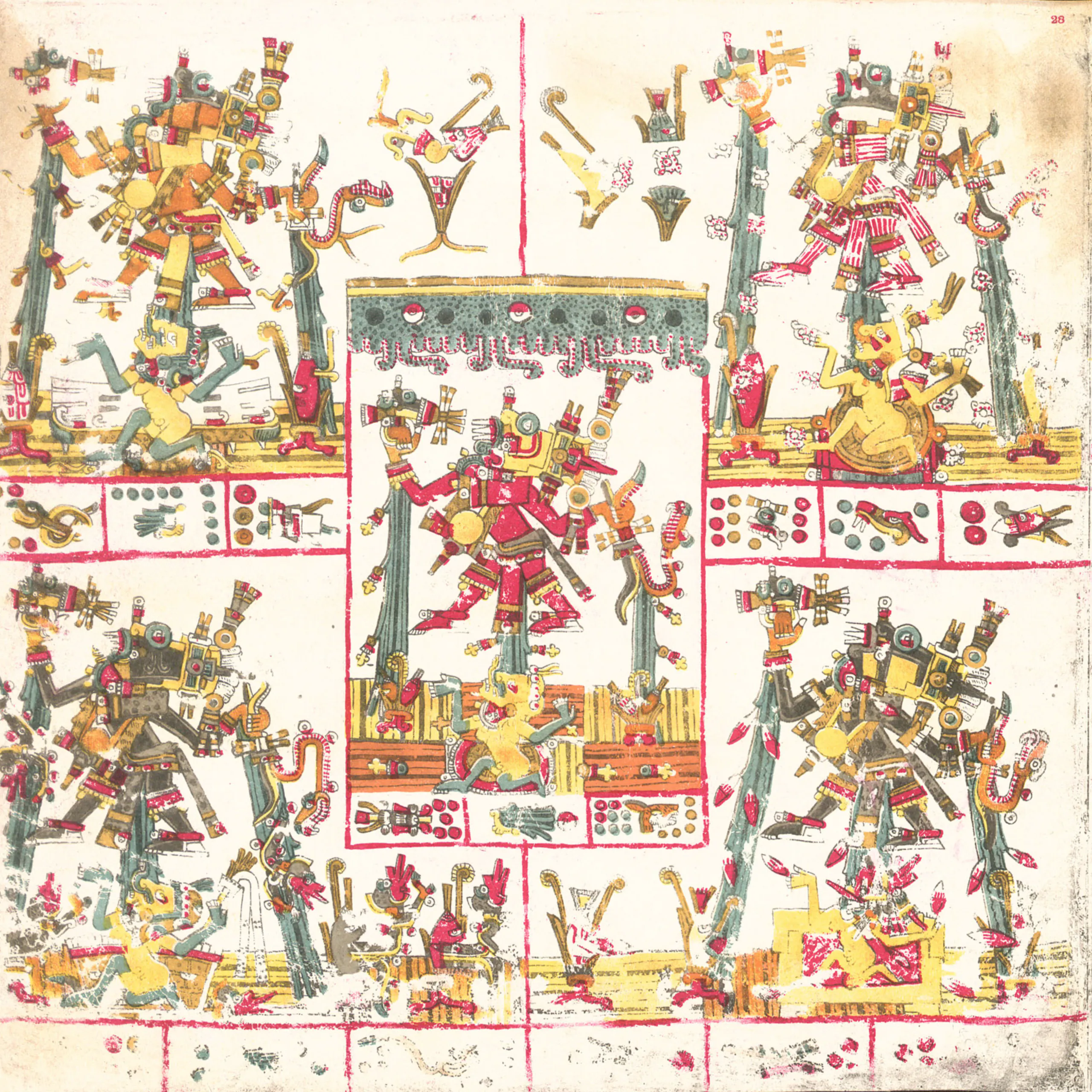
Codex Borgia
The Codex Borgia is a pre-Columbian Mesoamerican manuscript, a 36-foot folded document made of animal hide, dating from the 13th to early 16th centuries. Created by Indigenous peoples, likely in central Mexico, it serves as a religious and divinatory almanac used by priests. Filled with intricate depictions of deities like Tezcatlipoca, Quetzalcoatl, and Tlaloc, it illustrates the 260-day tonalpohualli ritual calendar. Part of the “Borgia Group,” it survived the Spanish conquest and is now housed in the Vatican Apostolic Library. The codex offers invaluable insight into pre-Hispanic Mesoamerican beliefs, cosmology, and rituals, showcasing complex iconography and artistic skill. It provides crucial information for understanding the history, culture, and religion of ancient Mexican civilizations. Check out my other podcasts Fun Facts Daily | Art Smart | Rainbow Puppy Science Lab Who ARTed is an Airwave Media Podcast. If you are interested in advertising on this or any other Airwave Media show, email: [email protected] Learn more about your ad choices. Visit megaphone.fm/adchoices

Author Interview Kory Stamper | True Color
This week, I got to talk to Kory Stamper, author of True Color: The Strange and Spectacular Quest to Define Color, exploring how color is a complex intersection of physics, physiology, and psychology. Human color perception is defined not just by wavelengths of light, but by the brain’s interpretive processes using specialized cells in the retina known as rods and cones. While rods detect light and dark, three types of cones are responsible for firing in response to specific wavelengths, which the brain then blends into the visible spectrum. Linguistics plays a vital role in this experience; studies of cultures like the Himba tribe in Namibia suggest that the specific terms available in a language can influence how quickly an individual differentiates between hues like blue and green. Research on infants even suggests that color recognition may trigger the brain’s language centers before the visual cortex, indicating that the human experience of the spectrum is deeply tied to the need for categorization. Find more information about Kory Stamper and her book, True Color at https://korystamper.com/true-color/ Buy the book on Amazon or wherever you get your books. Be sure to vote for your favorite work in our final round of Arts Madness https://www.whoartedpodcast.com/arts-madness Check out my other podcasts Fun Facts Daily | Art Smart | Rainbow Puppy Science Lab Who ARTed is an Airwave Media Podcast. If you are interested in advertising on this or any other Airwave Media show, email: [email protected] Learn more about your ad choices. Visit megaphone.fm/adchoices
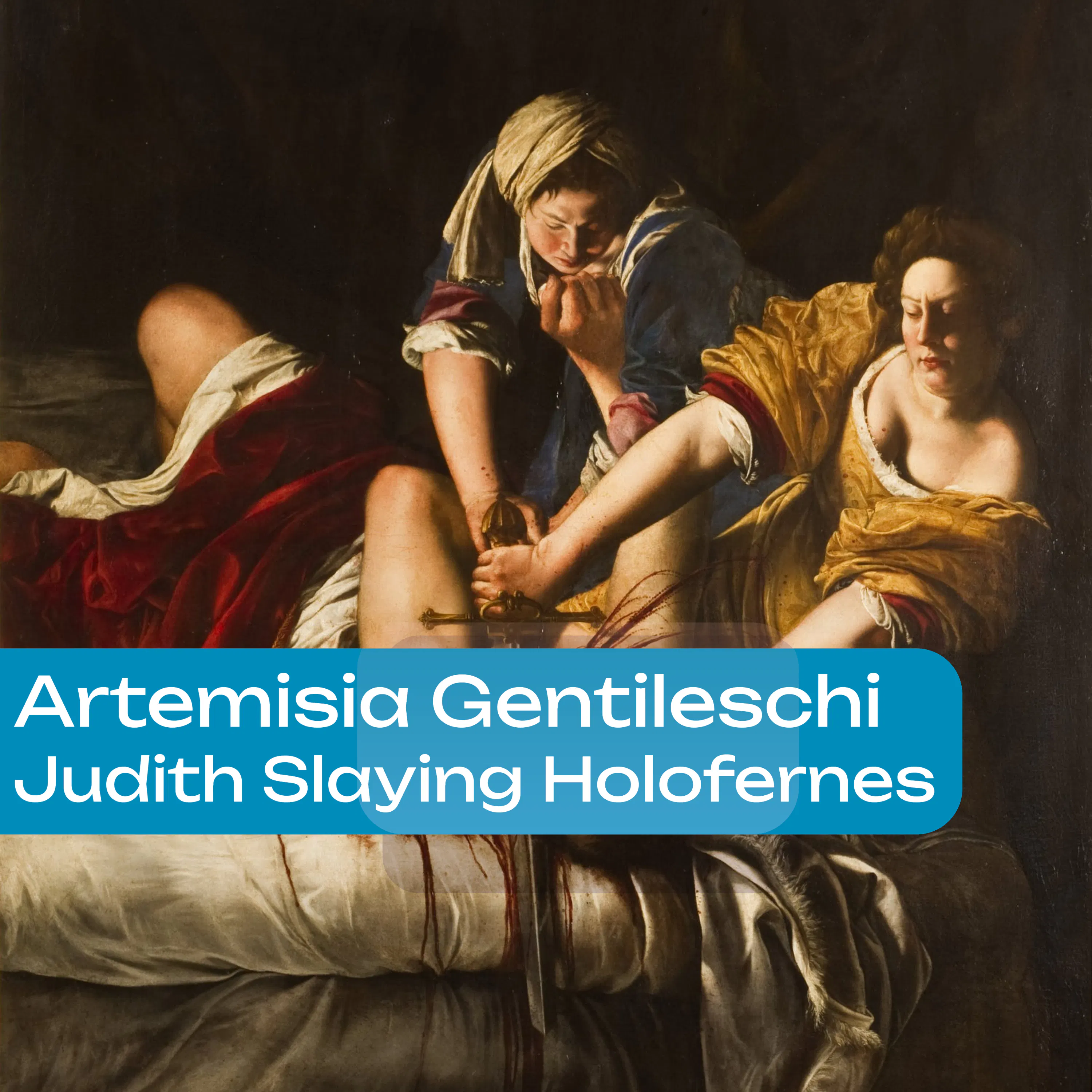
Artemisia Gentileschi | Judith Slaying Holofernes
Artemisia Gentileschi (1593–1653) was a preeminent Italian Baroque painter and one of the most accomplished artists of the 17th century. Born in Rome as the daughter of the esteemed painter Orazio Gentileschi, she developed her craft in an era where women were largely excluded from formal art academies and professional guilds. Despite enduring a traumatic assault by a tutor and a grueling, high-profile trial in 1612, Gentileschi forged a highly successful career that spanned Rome, Florence, Venice, and Naples. She broke significant historical barriers in 1616 by becoming the first woman admitted to the Accademia delle Arti del Disegno in Florence, an achievement that granted her the legal right to sign her own contracts and manage her own professional affairs. Gentileschi is celebrated for her mastery of tenebrism—a style characterized by intense contrasts of light and shadow—and her unparalleled ability to render human emotion with raw, visceral intensity. Her most famous work, Judith Slaying Holofernes, exemplifies her unique perspective, portraying the biblical heroine with a focus on physical strength, focused determination, and female solidarity. This depiction stands in stark contrast to versions by male contemporaries, who often portrayed the character as delicate or hesitant. Often interpreted through the lens of her personal resilience and agency, Gentileschi’s paintings frequently feature powerful, complex women. Today, she is recognized not only as a feminist icon but as a defining figure of the Baroque period whose technical skill and narrative depth rivaled the greatest masters of her time. Take a minute and vote in Arts Madness at WhoARTedPodcast.com/Arts-Madness Check out my other podcasts Fun Facts Daily | Art Smart | Rainbow Puppy Science Lab Who ARTed is an Airwave Media Podcast. If you are interested in advertising on this or any other Airwave Media show, email: [email protected] Learn more about your ad choices. Visit megaphone.fm/adchoices

Gavin Whitehead | Raven
This week, I have an interview with Gavin Whitehead, the creator and host of The Art of Crime and a new limited series, Raven. Find Gavin online: Raven The Art of Crime www.theartofcrimepodcast.com The African American Wax Museum of Harlem was established in 1989 by the eccentric artist and fashion designer Raven Chanticleer. Located in the basement of a brownstone on 164th Street, the museum featured approximately two dozen handmade wax figures depicting "heroes and sheroes" of Black history, including Frederick Douglass, Harriet Tubman, and Dr. Martin Luther King Jr. Unlike traditional wax museums that prioritize strict realism, Chanticleer utilized an anachronistic and flamboyant aesthetic to foster cultural pride. Figures were often adorned in extravagant costumes of Chanticleer's own design—such as Harriet Tubman in aviator sunglasses—intended to make historical icons feel vibrant and relatable to the local community and visiting school groups. Be sure to take time to vote for your favorite artists in Arts Madness. Go to www.WhoARTedPodcast.com/Arts-Madness to weigh in on our final four. Check out my other podcasts Fun Facts Daily | Art Smart | Rainbow Puppy Science Lab Who ARTed is an Airwave Media Podcast. If you are interested in advertising on this or any other Airwave Media show, email: [email protected] Learn more about your ad choices. Visit megaphone.fm/adchoices

Chuck Close
Chuck Close said when a problem seems overwhelming, you should break it down into smaller pieces. To tackle the photorealistic faces, Chuck Close would use a grid. He broke the image down into sections allowing him to focus on the lines, shapes, and proportions one little bit at a time. In his early works, he would erase the grid as he painted, but as he matured, he chose to lean into the grid. He not only left it visible, but in many works he emphasized it making the paintings appear almost pixilated as the viewers see every square he plotted. As a child, he wanted to be a magician, but couldn’t resist revealing how the tricks were done. For him, it was more impressive when you see the work that produces the magic, and I gotta say I agree. Check out my other podcasts Fun Facts Daily | Art Smart | Rainbow Puppy Science Lab Who ARTed is an Airwave Media Podcast. If you are interested in advertising on this or any other Airwave Media show, email: [email protected] Learn more about your ad choices. Visit megaphone.fm/adchoices

Alfred Sisley | Flood at Port-Marly
Alfred Sisley (1839–1899) was a pivotal figure in the Impressionist movement, uniquely distinguished by his unwavering devotion to landscape painting. Born in Paris to affluent British parents, Sisley initially moved to London to pursue a career in commerce but found himself captivated by the landscape works of John Constable and J.M.W. Turner at the National Gallery. Upon returning to France in 1861, he joined the studio of Charles Gleyre, where he formed foundational friendships with Claude Monet, Pierre-Auguste Renoir, and Frédéric Bazille. Together, they defied traditional academic rules by painting en plein air—outdoors—to capture the immediate, shifting effects of sunlight and weather through quick, broken brushstrokes. While his peers eventually experimented with abstraction or figure painting, Sisley remained the most consistent Impressionist, dedicated to portraying the quiet, poetic grace of the French countryside. His financial stability vanished following the Franco-Prussian War in 1870, which led to the collapse of his father’s business and forced Sisley to live in poverty, relying solely on the sale of his art. Despite participating in the first Impressionist exhibition in 1874 and subsequent shows, he achieved little commercial success during his lifetime. It was only after his death in 1899 that the art world fully recognized his genius, particularly his mastery of sky and water, as seen in his celebrated series documenting the 1876 flood at Port-Marly. Arts Madness Be sure to vote in this week's matches for Arts Madness at WhoARTedPodcast.com/Arts-Madness Check out my other podcasts Fun Facts Daily | Art Smart | Rainbow Puppy Science Lab Who ARTed is an Airwave Media Podcast. If you are interested in advertising on this or any other Airwave Media show, email: [email protected] Learn more about your ad choices. Visit megaphone.fm/adchoices

Ludwig Mies van der Rohe | Seagram Building
Ludwig Mies van der Rohe, a pivotal figure in 20th-century architecture, began his career in Germany, where he was deeply influenced by his early exposure to masonry and materials. Born in 1886, Mies refined his minimalist aesthetic, famously summarized by the motto "less is more," through his work in Berlin with modern design pioneers like Peter Behrens. His tenure as the director of the Bauhaus was cut short by the rise of the Nazi regime, leading to his relocation to the United States in 1937. In Chicago, Mies transformed the Illinois Institute of Technology (IIT) campus and solidified his influence through the International Style, which prioritized geometric simplicity, open "universal space," and the use of modern materials like steel and glass. One of Mies's most celebrated achievements is the Seagram Building in New York City, completed in 1958. Deviating from the standard skyscraper designs of the era, Mies set the building back 100 feet from the street, creating a large public plaza that signaled both corporate success and urban generosity. The building’s exterior is renowned for its use of 1,500 tons of solid bronze and meticulously designed window blinds that maintain a uniform appearance. Mies's commitment to "truth to materials" is exemplified by the non-structural bronze I-beams added to the exterior, which visually represent the building's internal steel frame while complying with local fire codes. Check out my other podcasts Fun Facts Daily | Art Smart | Rainbow Puppy Science Lab Who ARTed is an Airwave Media Podcast. If you are interested in advertising on this or any other Airwave Media show, email: [email protected] Learn more about your ad choices. Visit megaphone.fm/adchoices

Artist Interview | Cristallina Fischetti
Fischetti’s work often explores "abstract medicine"—the idea that art can serve as a vehicle for healing and spiritual inquiry. Her background in professional dance and yoga heavily informs her physical approach to painting, which she describes as a ritualistic performance. Fischetti often incorporates personal history and organic elements into her work, such as the use of wine to represent her Italian heritage or the integration of found packaging materials to challenge traditional notions of fine art. Find Christallina online: https://cristallinafischetti.com Instagram Hype-A podcast website Arts Madness 2026 This week we are voting in round 3 or our annual Arts Madness Tournament. See the results from round 2 and vote for your favorites in round 3 at WhoARTedPodcast.com/Arts-Madness Check out my other podcasts Fun Facts Daily | Art Smart | Rainbow Puppy Science Lab Who ARTed is an Airwave Media Podcast. If you are interested in advertising on this or any other Airwave Media show, email: [email protected] Learn more about your ad choices. Visit megaphone.fm/adchoices

Fun Facts About Paint and Glitter
Today I am sharing a bit from my other podcast, Fun Facts Daily. It has been wonderful making Who ARTed for the last few years and the spring is always one of my favorite times as we get into the Arts Madness Tournament, but for the last year, I have been working on Fun Facts Daily to help shine a light on some of the awesome things in the world beyond art. I hope you enjoy these episodes sharing a bit about paint and glitter and if you like what you hear, please follow Fun Facts Daily on your favorite podcast app. Vote in Arts Madness at https://www.whoartedpodcast.com/arts-madness Check out my other podcasts Fun Facts Daily | Art Smart | Rainbow Puppy Science Lab Who ARTed is an Airwave Media Podcast. If you are interested in advertising on this or any other Airwave Media show, email: [email protected] Learn more about your ad choices. Visit megaphone.fm/adchoices

Architect Interview | Alexander Josephson
Alexander Josephson is a Toronto-based architect, lecturer at the University of Toronto’s Daniels Faculty of Architecture, and the visionary co-founder of PARTISANS. Since its inception in 2012, PARTISANS has established itself as an award-winning architecture studio dedicated to subverting expectations through the integration of design, technology, and cultural storytelling. Beyond traditional architecture, Josephson explores the future of cities and digital legacy through his startup, Cumulus, consistently pushing the boundaries of how architecture can serve as a catalyst for social and cultural good. Find Josephson online: PARTISANS Studio website: Partisans.com My annual Arts Madness Tournament is happening now. Vote in the current round at www.WhoARTedPodcast.com/Arts-Madness Check out my other podcasts Fun Facts Daily | Art Smart | Rainbow Puppy Science Lab Who ARTed is an Airwave Media Podcast. If you are interested in advertising on this or any other Airwave Media show, email: [email protected] Learn more about your ad choices. Visit megaphone.fm/adchoices

Michelangelo | The Sistine Chapel Ceiling
Michelangelo was considered to be one of the greatest examples of a Renaissance man. He is also one of the worst examples of personal hygiene. Learn a little bit about the artist who painted the ceiling on the Sistine Chapel. Related episodes: Michelangelo | The Sistine Chapel Ceiling Art Smart: The Renaissance This is an encore presentation. Every January/February, I release daily episodes to refresh everyone's memory on the 64 artists and artworks that will be included in my Arts Madness Tournament held in March. While most of these daily episodes will be reruns, I will continue publishing new episodes on Mondays. Check out my other podcasts Fun Facts Daily | Art Smart | Rainbow Puppy Science Lab Who ARTed is an Airwave Media Podcast. If you are interested in advertising on this or any other Airwave Media show, email: [email protected] Learn more about your ad choices. Visit megaphone.fm/adchoices

Maria and Julian Martinez | Black on Black Pottery
Maria Martinez belonged to the Tewa-speaking Pueblo people, known for their rich artistic heritage. Pottery-making was deeply rooted in Puebloan culture, serving as a means of artistic expression and a reflection of their close connection with the natural world. Maria grew up watching her family members create pottery, learning the traditional techniques. Of course, we seldom talk about those who simply carry on a tradition. Maria Martinez and her husband Julian revolutionized pottery production and shared their methods with their community. In doing so, they raised the profile of pottery as an art form while helping others understand and appreciate their cultural heritage. If you would like to learn more about modern clay production, check out the clay episode of my other podcast, Art Smart. Art Smart | Clay Art Smart | Glaze This is an encore presentation. Every January/February, I release daily episodes to refresh everyone's memory on the 64 artists and artworks that will be included in my Arts Madness Tournament held in March. While most of these daily episodes will be reruns, I will continue publishing new episodes on Mondays. Vote in Round 1 of Arts Madness https://www.whoartedpodcast.com/arts-madness Check out my other podcasts Fun Facts Daily | Art Smart | Rainbow Puppy Science Lab Who ARTed is an Airwave Media Podcast. If you are interested in advertising on this or any other Airwave Media show, email: [email protected] Learn more about your ad choices. Visit megaphone.fm/adchoices

The Treasures of King Tutankhamun's Tomb
On November 26, 1922, Howard Carter prepared to enter the tomb of a little-known pharaoh. Nobody had set foot inside the space for over 3,000 years, but as Carter held up his candle, his partner, Lord Carnarvon who had financed the expedition called out asking if he saw anything. Carter responded, “Yes, wonderful things.” Though his reign may have been short, the treasures found in Tutankhamun’s tomb have given him an outsized place in the history books and popular culture. Related episodes: Art Smart | Ancient Egyptian Art Who ARTed | The Ancient Egyptian Book of the Dead Who ARTed | The Pyramids at Giza This is an encore presentation. Every January/February, I release daily episodes to refresh everyone's memory on the 64 artists and artworks that will be included in my Arts Madness Tournament held in March. While most of these daily episodes will be reruns, I will continue publishing new episodes on Mondays. Check out my other podcasts Fun Facts Daily | Art Smart | Rainbow Puppy Science Lab Who ARTed is an Airwave Media Podcast. If you are interested in advertising on this or any other Airwave Media show, email: [email protected] Learn more about your ad choices. Visit megaphone.fm/adchoices

Elisabeth Vigée Le Brun
In 1778, Elisabeth Vigée Le Brun met Marie Antoinette at the Royal palace in Versailles. The queen had heard of Le Brun’s talent and asked to paint her portrait. Marie Antoinette loved the way Le Brun painted her and from that point on, she was pretty much her official royal portrait painter. Le Brun painted 30 portraits of the queen. Almost as quickly as her star rose, her fortunes changed. In 1789, Elisabeth Vigée Le Brun was forced to flee France in a disguise and under the cover of darkness during the early stages of the French Revolution. Le Brun didn’t have the opulent life of luxury that revolutionaries despised, but she had worked her way up to become Marie Antoinette’s favorite portraitist and the French Revolution was not the ideal time and place for friends of the monarch. Be sure to vote for your favorite artists & artworks in Arts Madness 2026 https://www.whoartedpodcast.com/arts-madness Listen to other episodes covering AP Art History content on my Spotify Playlist: AP Art History Cram Session This is an encore presentation. Every January/February, I release daily episodes to refresh everyone's memory on the 64 artists and artworks that will be included in my Arts Madness Tournament held in March. While most of these daily episodes will be reruns, I will continue publishing new episodes on Mondays. Check out my other podcasts Fun Facts Daily | Art Smart | Rainbow Puppy Science Lab Who ARTed is an Airwave Media Podcast. If you are interested in advertising on this or any other Airwave Media show, email: [email protected] Learn more about your ad choices. Visit megaphone.fm/adchoices

Artist Interview | Jason deCaires Taylor
Jason deCaires Taylor, is a UK-based contemporary artist who has seamlessly merged art and environmental activism. Renowned for his captivating underwater sculptures, Taylor's creations serve as a powerful reminder of the urgent need to address environmental concerns. Crafted with meticulous detail, his sculptures not only captivate the eye but also provide a haven for marine life, fostering the growth of coral reefs and supporting fragile ecosystems. Join us as we explore Taylor's artistic journey, his passion for marine conservation, and the profound impact his work has on raising awareness about the delicate balance of our planet's oceans. Find out more and support his work: www.underwatersculpture.com www.underwatermuseum.com Instagram: #jasondecairestaylor YouTube: @jasondecairestaylorstudio This is an encore presentation. Every January/February, I release daily episodes to refresh everyone's memory on the 64 artists and artworks that will be included in my Arts Madness Tournament held in March. While most of these daily episodes will be reruns, I will continue publishing new episodes on Mondays. Check out my other podcasts Fun Facts Daily | Art Smart | Rainbow Puppy Science Lab Who ARTed is an Airwave Media Podcast. If you are interested in advertising on this or any other Airwave Media show, email: [email protected] Learn more about your ad choices. Visit megaphone.fm/adchoices

Angkor Wat
Angkor Wat is the largest religious structure in the world, located in Siem Reap, Cambodia. Built in the 12th century by King Suryavarman II, it is dedicated to the Hindu god Vishnu and was likely intended as the king's tomb. The temple's construction, which involved 300,000 workers and took over 30 years, showcases the Khmer Empire's impressive architectural and engineering skills. Its intricate carvings depict Hindu mythology and historical events, while its design represents Mount Meru, the mythical home of the gods. Angkor Wat served as both a religious center and a symbol of the king's power, reflecting the Khmer belief in the connection between the divine and the earthly realms. Though its original name is unknown, Angkor Wat's grandeur and historical significance have earned it recognition as a UNESCO World Heritage Site. This is an encore presentation. Every January/February, I release daily episodes to refresh everyone's memory on the 64 artists and artworks that will be included in my Arts Madness Tournament held in March. While most of these daily episodes will be reruns, I will continue publishing new episodes on Mondays. Check out my other podcasts Fun Facts Daily | Art Smart | Rainbow Puppy Science Lab Who ARTed is an Airwave Media Podcast. If you are interested in advertising on this or any other Airwave Media show, email: [email protected] Learn more about your ad choices. Visit megaphone.fm/adchoices

Claude Monet | Stacks of Wheat (End of Summer)
My guest this week is Jen Leban from The Art of Education. For any fellow art teachers listening, check out The Art of Ed Community and I had the priviledge of writing for the AOE magazine last year, so check out my articles. We're kicking off the annual Arts Madness Tournament and I thought there would be no better way to start things off than inviting Jen to join me for a friendly discussion about an artist we have different opinions about. Please join in the fun by weighing in and cast your vote for your favorite artists/artworks in this year's tournament. Each week, half will be eliminated until only 1 remains. The impressionist movement in late 19th-century art represented a significant shift away from the rigid, representative styles that had dominated the art world for centuries. Claude Monet, a central figure in this movement, began to experiment with color and light in a way that captured the fleeting essence of a scene rather than its exact details. His series of wheat stack paintings, created around 1890, exemplifies this approach. These works were not just about the subject itself, but about how different lighting and weather conditions at different times of the day transformed the appearance of these common agricultural structures. This innovative technique challenged contemporary notions of art and paved the way for future abstract movements. Monet's wheat stacks were meticulously crafted over months, despite their seemingly rapid, "impressionistic" brushwork. He often worked on multiple canvases simultaneously, switching between them as the light changed in the field to accurately document each subtle variation. This practice was a direct response to the rise of photography, which could capture reality with precision that painters could not match. By focusing on elements that the cameras of the time could not—such as the vibrant play of light and an imaginative use of color—Monet and his peers redefined the role of the artist. Their work, once considered controversial and even "unfinished" by critics, is now celebrated for its revolutionary impact on the history of modern art. Shoutout and a bit thanks to Podranker for including me on their list of Best Art History Podcasts Check out my other podcasts Fun Facts Daily | Art Smart | Rainbow Puppy Science Lab Who ARTed is an Airwave Media Podcast. If you are interested in advertising on this or any other Airwave Media show, email: [email protected] Learn more about your ad choices. Visit megaphone.fm/adchoices

Artist Interview | Herb Williams
Herb Williams is an incredibly talented sculptor bringing crayons to a whole new dimension. I sat down to talk to Williams about his background, his artistic influences, and exactly how and why he uses crayons to sculpt. He shared his memories of making art as a child as well as his experience working in a foundry making lost wax castings before he decided to pursue a literal dream of making sculptures out of crayons. This is an encore presentation. Every January/February, I release daily episodes to refresh everyone's memory on the 64 artists and artworks that will be included in my Arts Madness Tournament held in March. While most of these daily episodes will be reruns, I will continue publishing new episodes on Mondays. Check out my other podcasts Fun Facts Daily | Art Smart | Rainbow Puppy Science Lab Who ARTed is an Airwave Media Podcast. If you are interested in advertising on this or any other Airwave Media show, email: [email protected] Learn more about your ad choices. Visit megaphone.fm/adchoices

Diego Velazquez | Las Meninas
Diego Velazques was one of the most significant painters of Spain's Golden Age in the 17th century. He was a master of both portraiture and genre painting, Las Meninas is a sort of mix of both. We see people who seem rather formally dressed by today’s standards, but the subject is also, it was a peak behind the curtain of royal life. Withing the work, the first focal point would be the little girl, the infanta margarita, daughter of the king and queen of spain. She is dramatically lit from the side by light streaming in from the window. The top half of the composition is essentially in shadow, and we see her looking out at us, the viewers. Diego Velazquez included himself in the scene as he stands before his giant canvas. Within this oil on canvas painting, we see a representation of a painter working on canvas. Velazquez also seems to break the fourth as he looks out at the viewer. There is a figure standing in the doorway in the back of the composition. The strong light in the doorway pulls our focus there as a secondary focal point, and that figure seems to be caught in motion and again, he looks out at us, the viewers. In this episode, I referenced Jan van Eyck's Arnolfini Portrait. To learn more about that, check out my previous episode: Jan van Eyck | The Arnolfini Portrait This is an encore presentation. Every January/February, I release daily episodes to refresh everyone's memory on the 64 artists and artworks that will be included in my Arts Madness Tournament held in March. While most of these daily episodes will be reruns, I will continue publishing new episodes on Mondays. Check out my other podcasts Fun Facts Daily | Art Smart | Rainbow Puppy Science Lab Who ARTed is an Airwave Media Podcast. If you are interested in advertising on this or any other Airwave Media show, email: [email protected] Learn more about your ad choices. Visit megaphone.fm/adchoices

Leonardo da Vinci | The Last Supper
One Leonardo da Vinci’s most famous works is not housed in a museum. It is in the Convent of Santa Maria in Milan Italy. It seems totally fitting for a depiction of the last supper was painted on the wall in the convent’s dining hall. Visitors today are often surprised by how enormous the work it. The People are life sized on this massive 15 by 29 foot painting. Another surprising fact is that while people flock to see Leonardo’s work on the wall of the convent, very little if any of what we see there today was actually painted by Leonardo. This is an encore presentation. Every January/February, I release daily episodes to refresh everyone's memory on the 64 artists and artworks that will be included in my Arts Madness Tournament held in March. While most of these daily episodes will be reruns, I will continue publishing new episodes on Mondays. Check out my other podcasts Fun Facts Daily | Art Smart | Rainbow Puppy Science Lab Who ARTed is an Airwave Media Podcast. If you are interested in advertising on this or any other Airwave Media show, email: [email protected] Learn more about your ad choices. Visit megaphone.fm/adchoices

The Aztec Calendar Stone
The Aztec Sun Stone, also known as the Calendar Stone, is a large, round stone carving that represents Aztec mythology and cosmology. It depicts the five consecutive worlds of the sun, with the date 13 Reed marking the start of the fifth and final sun. It was created in the 15th century and is about 3 and a half meters wide, almost a meter thick, and weighs 25 tons. Learn more about the history and symbolism of this famous Aztec piece. This is an encore presentation. Every January/February, I release daily episodes to refresh everyone's memory on the 64 artists and artworks that will be included in my Arts Madness Tournament held in March. While most of these daily episodes will be reruns, I will continue publishing new episodes on Mondays. Check out my other podcasts Fun Facts Daily | Art Smart | Rainbow Puppy Science Lab Who ARTed is an Airwave Media Podcast. If you are interested in advertising on this or any other Airwave Media show, email: [email protected] Learn more about your ad choices. Visit megaphone.fm/adchoices

Caravaggio | The Calling of Saint Matthew
Michelangelo Merisi, born in 1571 amidst the darkness of the plague, would come to be known not by his christened name but by the name of his birthplace – Caravaggio. Orphaned young, the specter of loss would forever paint itself onto the canvas of his life. Yet, from this darkness, a genius of light and shadow would emerge, revolutionizing the art world with his raw and dramatic style. While controversial in some circles, this mix of gritty realism and the divine was exactly what the Catholic church needed at the time. The Protestant Reformation was a backlash against what they considered to be a corrupt and greedy church. The Pope and others within the church commissioned art as a form of damage control. In an era of low literacy rates, images of artworks were powerful tools to spread ideas. Caravaggio’s paintings depicted a faith that was humble as he painted from his real-life observations of people on the streets. Though the subjects of the art were saints, the models were lowly people off the streets and Caravaggio painted every detail down to the stains in their clothing or dirt under their fingernails. The message was that the church was a place for the ordinary people. Using real people as models and placing them in settings familiar to the masses made the stories more immediately accessible and relatable. The Calling of Saint Matthew is one of 250 artworks required for AP Art History. While I have not yet covered all of those artists/works you can find many on my Spotify playlist, AP Art History Cram Session This is an encore presentation. Every January/February, I release daily episodes to refresh everyone's memory on the 64 artists and artworks that will be included in my Arts Madness Tournament held in March. While most of these daily episodes will be reruns, I will continue publishing new episodes on Mondays. Check out my other podcasts Fun Facts Daily | Art Smart | Rainbow Puppy Science Lab Who ARTed is an Airwave Media Podcast. If you are interested in advertising on this or any other Airwave Media show, email: [email protected] Learn more about your ad choices. Visit megaphone.fm/adchoices

Rachel Whiteread | Embankment
Rachel Whiteread is a prominent British sculptor and a leading figure among the Young British Artists (YBAs) who rose to prominence in the late 1980s. Unlike the provocative work of her peers, Whiteread’s art is characterized by a quiet, minimalist focus on "negative space"—the empty air inside or around everyday objects. By casting these voids in industrial materials like plaster, resin, and concrete, she transforms the mundane into the monumental. Her breakthrough work, Ghost (1990), involved casting the entire interior of a Victorian living room, effectively turning a familiar domestic space into a haunting, solid artifact that captures subtle details like light switches and wallpaper textures in reverse. In 1993, Whiteread became the first woman to win the Turner Prize, solidified by her controversial public sculpture, House, where she cast an entire three-story Victorian home in London. Her career continued with significant international commissions, including the Judenplatz Holocaust Memorial in Vienna, also known as the Nameless Library, which serves as a poignant tribute to victims through the imagery of inverted, unreadable books. One of her most massive undertakings was Embankment (2005) at the Tate Modern, consisting of 14,000 translucent polyethylene boxes. Inspired by a box found while clearing her mother’s home, the installation explored themes of memory and the "unforgettable forgotten," utilizing the box as a universal symbol for how humans store and organize their histories. Check out my other podcasts Fun Facts Daily | Art Smart | Rainbow Puppy Science Lab Who ARTed is an Airwave Media Podcast. If you are interested in advertising on this or any other Airwave Media show, email: [email protected] Learn more about your ad choices. Visit megaphone.fm/adchoices

Jean-Antoine Houdon | George Washington
Jean-Antoine Houdon was one of the greatest neoclassical sculptors in the late 18th century. Shortly after the American Revolution, the governor of Virginia asked Thomas Jefferson to find a sculptor to make a marble statue of George Washington for the state capital building. Jefferson was a self-taught architect and a big believer in the neoclassical movement's use of symbolism in art to convey a message that would leave the viewer wiser. He naturally turned to Houdon who traveled from France to Virginia to take Washington's measurements and even made a life mask (a plaster cast of the subject's face). Houdon created what many consider to be the most accurate representation we have today of George Washington. This is an encore presentation. Every January/February, I release daily episodes to refresh everyone's memory on the 64 artists and artworks that will be included in my Arts Madness Tournament held in March. Check out my other podcasts Fun Facts Daily | Art Smart | Rainbow Puppy Science Lab Who ARTed is an Airwave Media Podcast. If you are interested in advertising on this or any other Airwave Media show, email: [email protected] Learn more about your ad choices. Visit megaphone.fm/adchoices

William Blake | The Ancient of Days
My guest this week is Mark Vernon, author of Awake! William Blake and the Power of Imagination. We discussed William Blake, the famous poet and visual artist known for his spiritually charged work. The piece we discussed was The Ancient of Days. This is an encore presentation. Every January/February, I release daily episodes to refresh everyone's memory on the 64 artists and artworks that will be included in my Arts Madness Tournament held in March. While most of these daily episodes will be reruns, I will continue publishing new episodes on Mondays. Check out my other podcasts Fun Facts Daily | Art Smart | Rainbow Puppy Science Lab Who ARTed is an Airwave Media Podcast. If you are interested in advertising on this or any other Airwave Media show, email: [email protected] Learn more about your ad choices. Visit megaphone.fm/adchoices

Johannes Vermeer | Woman Holding a Balance
Johannes Vermeer created stunning works and he is widely celebrated as one of the greatest painters of the Dutch Golden Age. This painting, Woman Holding a Balance is a work intended to encourage temperance and moderation being mindful that divine judgment is looming in the end. Related episodes: The Unbelievable Story of Han van Meegeren Jan van Eyck | The Arnolfini Portrait This is an encore presentation. Every January/February, I release daily episodes to refresh everyone's memory on the 64 artists and artworks that will be included in my Arts Madness Tournament held in March. While most of these daily episodes will be reruns, I will continue publishing new episodes on Mondays. Check out my other podcasts Fun Facts Daily | Art Smart | Rainbow Puppy Science Lab Who ARTed is an Airwave Media Podcast. If you are interested in advertising on this or any other Airwave Media show, email: [email protected] Learn more about your ad choices. Visit megaphone.fm/adchoices

The Alexander Mosaic in the House of Faun, Pompeii
The Alexander Mosaic, also known as the Battle of Issus Mosaic, is a masterpiece of ancient Roman artistry that continues to captivate viewers with its detailed depiction of a pivotal moment in history. Unearthed in the House of the Faun in Pompeii, this intricate mosaic offers a glimpse into the military prowess, political ambition, and cultural exchange of the ancient world. The mosaic captures the dramatic clash between Alexander the Great of Macedon and Darius III of Persia in the Battle of Issus in 333 BCE. The scene is filled with action, showcasing the chaos and intensity of the battlefield. Alexander, depicted on horseback, charges towards Darius, who recoils in fear on his chariot. The mosaic portrays the emotional turmoil of the moment, with soldiers engaged in fierce combat, fallen horses, and the palpable sense of impending doom for the Persian army. This is an encore presentation. Every January/February, I release daily episodes to refresh everyone's memory on the 64 artists and artworks that will be included in my Arts Madness Tournament held in March. While most of these daily episodes will be reruns, I will continue publishing new episodes on Mondays. Check out my other podcasts Fun Facts Daily | Art Smart | Rainbow Puppy Science Lab Who ARTed is an Airwave Media Podcast. If you are interested in advertising on this or any other Airwave Media show, email: [email protected] Learn more about your ad choices. Visit megaphone.fm/adchoices

Felix Gonzalez-Torres | Untitled (Portrait of Ross in L.A.)
Felix Gonzalez-Torres was a conceptual artist who became well known in the 1980s and 90s for his works that broke down the barrier between artist and audience. Many of his works invited the audience to become a part of the creative process making the work more dynamic and engaging. This is an encore presentation. Every January/February, I release daily episodes to refresh everyone's memory on the 64 artists and artworks that will be included in my Arts Madness Tournament held in March. While most of these daily episodes will be reruns, I will continue publishing new episodes on Mondays. Check out my other podcasts Fun Facts Daily | Art Smart | Rainbow Puppy Science Lab Who ARTed is an Airwave Media Podcast. If you are interested in advertising on this or any other Airwave Media show, email: [email protected] Learn more about your ad choices. Visit megaphone.fm/adchoices

Jean-Michel Basquiat | Horn Players
Jean-Michel Basquiat has created some of the most highly valued American paintings ever to go on auction. Basquiat sought to remake art history in his image, and I would say he was successful. His triptych, Horn Players, is one of the artworks required for the AP Art History curriculum studied by American high school students. In the middle of February 1981, a group exhibition opened at P.S.1 in New York. The show featured over a hundred different artists from the underground art scene. There were paintings, drawings, photographs, objects and graffiti all mixed together in an explosive portrait of the post-punk scene. The show was called New York/New Wave and many affectionately referred to it as the armory show of the 80s. The armory show was of course the famous exhibition from 1913 that introduced European modern art to the American audience. This time though, it wasn’t European artists upending the New York gallery scene. This time, the revolution was coming from inside the community. Among the artists on display was a 20 year old by the name of Jean-Michel Basquiat. He had previously made a name for himself as a graffiti artist. Basquiat and his friend Al Diaz created a text-based project SAMO spraypainting messages around new york. They were particularly active in the area where numerous gallery spaces were located. SAMO often sought to be a little bit humorous, but also gives an outsider’s perspective on the art world with phrases like “SAMO AS AN END TO PLAYING ART” or “SAMO FOR THE SO-CALLED AVANT-GARDE”. This is an encore presentation. Every January/February, I release daily episodes to refresh everyone's memory on the 64 artists and artworks that will be included in my Arts Madness Tournament held in March. While most of these daily episodes will be reruns, I will continue publishing new episodes on Mondays. Check out my other podcasts Fun Facts Daily | Art Smart | Rainbow Puppy Science Lab Who ARTed is an Airwave Media Podcast. If you are interested in advertising on this or any other Airwave Media show, email: [email protected] Learn more about your ad choices. Visit megaphone.fm/adchoices

Andy Warhol | Marilyn Diptych
Andy Warhol's Marilyn Diptych is a commentary on the nature of fame, celebrity, and mass media. Warhol appropriated a well-known image of Monroe, using repetition and contrasting colors to create a work that is both iconic and unsettling. The diptych format, traditionally used for religious works, elevates Monroe to a figure of almost religious significance, while also highlighting the manufactured nature of her celebrity persona. Through this work, Warhol explores the tension between the public image and the private individual, and the way in which mass media can distort and commodify our understanding of reality. The Diptych serves as a powerful critique of the cult of celebrity and the dehumanizing effects of mass media. This is an encore presentation. Every January/February, I release daily episodes to refresh everyone's memory on the 64 artists and artworks that will be included in my Arts Madness Tournament held in March. While most of these daily episodes will be reruns, I will continue publishing new episodes on Mondays. Check out my other podcasts Fun Facts Daily | Art Smart | Rainbow Puppy Science Lab Who ARTed is an Airwave Media Podcast. If you are interested in advertising on this or any other Airwave Media show, email: [email protected] Learn more about your ad choices. Visit megaphone.fm/adchoices

Dale Chihuly | Seaforms
Born in 1941 in Tacoma, Washington, Dale Chihuly is a pioneering figure who transformed glass from a functional, industrial material into a celebrated medium for fine art. Influenced by the rugged landscapes of the Pacific Northwest and early experiences in interior design, Chihuly’s artistic journey began with an experimental weaving project in 1963 where he first fused glass shards into a tapestry. After studying at the University of Wisconsin and the Rhode Island School of Design, Chihuly became the first American glassblower to work at the prestigious Venini Glass Factory in Venice. There, he adopted the collaborative team-based approach to glassblowing that would later define his career and allow him to produce increasingly complex, large-scale installations. The Seaform series, initiated in the early 1980s, stands as one of Chihuly’s most iconic contributions to contemporary art, showcasing a mastery of organic, fluid forms. These sculptures are characterized by their diafananous, shell-like textures created using optical molds and the deliberate use of gravity and centrifugal force to achieve asymmetrical, "slumped" aesthetics. By allowing the molten glass to find its own shape rather than enforcing perfect symmetry, Chihuly evokes the natural growth patterns and light-catching qualities of the ocean. Today, his work is featured in over 200 museum collections worldwide, ranging from the canals of Venice to massive public gardens, solidifying his legacy as an artist who bridged the gap between craft and high art. Check out my other podcasts Fun Facts Daily | Art Smart | Rainbow Puppy Science Lab Who ARTed is an Airwave Media Podcast. If you are interested in advertising on this or any other Airwave Media show, email: [email protected] Learn more about your ad choices. Visit megaphone.fm/adchoices

The Longmen Grottoes
China's Longmen Caves or Longmen Grottoes are a UNESCO world heritage site. Starting in the 5th century CE, artists chiseled away at the limestone carving out around 2300 caves and 110,000 statues. Because they were constructed over such a long period, the sculptures in the Longmen Caves not only reflect the religious tradition, but they track changes in artistic style over the centuries. Related episode: Sand Mandalas This is an encore presentation. Every January/February, I release daily episodes to refresh everyone's memory on the 64 artists and artworks that will be included in my Arts Madness Tournament held in March. While most of these daily episodes will be reruns, I will continue publishing new episodes on Mondays. Check out my other podcasts Fun Facts Daily | Art Smart | Rainbow Puppy Science Lab Who ARTed is an Airwave Media Podcast. If you are interested in advertising on this or any other Airwave Media show, email: [email protected] Learn more about your ad choices. Visit megaphone.fm/adchoices

Keith Haring | Three Eyed Smiley Face
Keith Haring, renowned for his iconic pop art and graffiti, rose to fame in the 1980s New York art scene. His signature style, characterized by bold lines, vibrant colors, and symbols like the radiant baby and barking dog, often conveyed social messages. Haring's art wasn't confined to galleries; it flourished in public spaces, notably subway stations, making it accessible to everyone. Despite his untimely death due to AIDS in 1990, his legacy lives on through his art and the Keith Haring Foundation, which supports children and AIDS/HIV organizations. Haring's work continues to inspire and resonate, bridging the gap between high art and popular culture. This is an encore presentation. Every January/February, I release daily episodes to refresh everyone's memory on the 64 artists and artworks that will be included in my Arts Madness Tournament held in March. While most of these daily episodes will be reruns, I will continue publishing new episodes on Mondays. Check out my other podcasts Fun Facts Daily | Art Smart | Rainbow Puppy Science Lab Who ARTed is an Airwave Media Podcast. If you are interested in advertising on this or any other Airwave Media show, email: [email protected] Learn more about your ad choices. Visit megaphone.fm/adchoices

Jan van Eyck | The Arnolfini Portrait
Jan van Eyck was a remarkable painter. He worked in oils during the Renaissance, and created stunning photorealistic portraits centuries before photography was developmed. In the Arnolfini portrait, he captures not only the subjects standing before him, but also a reflection of the room in a convex mirror showing the full scene and accurately rendering the distortions caused by the curved glass. This is an encore presentation. Every January/February, I release daily episodes to refresh everyone's memory on the 64 artists and artworks that will be included in my Arts Madness Tournament held in March. While most of these daily episodes will be reruns, I will continue publishing new episodes on Mondays. Check out my other podcasts Fun Facts Daily | Art Smart | Rainbow Puppy Science Lab Who ARTed is an Airwave Media Podcast. If you are interested in advertising on this or any other Airwave Media show, email: [email protected] Learn more about your ad choices. Visit megaphone.fm/adchoices

Victory Vasarely
Victor Vasarely was a Hungarian-French artist known for his innovative style and contributions to the Op Art movement. One of Vasarely's most famous works is "Zebra," created in 1937. This painting showcases his ability to create optical illusions through the use of black and white stripes. When viewed from a distance, the stripes appear to vibrate and create a sense of movement. This technique, known as the "Vasarely effect," became a hallmark of his style. The Zebra painting is considered to be the first Op Art painting. This is an encore presentation. Every January/February, I release daily episodes to refresh everyone's memory on the 64 artists and artworks that will be included in my Arts Madness Tournament held in March. While most of these daily episodes will be reruns, I will continue publishing new episodes on Mondays. Check out my other podcasts Fun Facts Daily | Art Smart | Rainbow Puppy Science Lab Who ARTed is an Airwave Media Podcast. If you are interested in advertising on this or any other Airwave Media show, email: [email protected] Learn more about your ad choices. Visit megaphone.fm/adchoices

Bridget Riley | Movement in Squares
Bridget Riley, born in London in 1931, is a prominent figure in the Op Art movement. Early life experiences, including wartime evacuation to Cornwall and exposure to nature's patterns, influenced her artistic sensibilities. Her style evolved with influences from Seurat, Pollock, and Balla. Riley's breakthrough came in the 1960s with black and white geometric paintings like "Fall" and "Current," which created illusions of movement and depth. Her work gained international recognition through exhibitions like "The Responsive Eye" at MoMA. Riley's exploration of color and form continues to challenge viewers' perceptions and solidify her place in art history. A key work, "Movement in Squares" (1961), exemplifies her innovative use of simple elements to produce dynamic optical effects, marking a pivotal moment in Op Art and influencing various fields beyond fine art. This is an encore presentation. Every January/February, I release daily episodes to refresh everyone's memory on the 64 artists and artworks that will be included in my Arts Madness Tournament held in March. While most of these daily episodes will be reruns, I will continue publishing new episodes on Mondays. Check out my other podcasts Fun Facts Daily | Art Smart | Rainbow Puppy Science Lab Who ARTed is an Airwave Media Podcast. If you are interested in advertising on this or any other Airwave Media show, email: [email protected] Learn more about your ad choices. Visit megaphone.fm/adchoices

Frank Gehry | Guggenheim Museum in Bilbao, Spain
Modernists said, “form follows function” focusing on how people will use a space, but Gehry focuses on how people will react to the space. His goal is to inspire, to make them feel. He talks about the challenge of creating feeling with inert materials. He says it is the movement that brings out a feeling. With his design in Bilbao, Spain, rather than simply designing a building to house a collection of some of the world’s most beautiful and inspiring art, Gehry made the building itself a work of art that inspires awe and wonder. The Guggenheim Bilbao is one of the required artworks for AP Art History. Check out my Spotify playlist, AP Art History Cram Session to learn about other artists and artworks from that curriculum. This is an encore presentation. Every January/February, I release daily episodes to refresh everyone's memory on the 64 artists and artworks that will be included in my Arts Madness Tournament held in March. While most of these daily episodes will be reruns, I will continue publishing new episodes on Mondays. Check out my other podcasts Fun Facts Daily | Art Smart | Rainbow Puppy Science Lab Who ARTed is an Airwave Media Podcast. If you are interested in advertising on this or any other Airwave Media show, email: [email protected] Learn more about your ad choices. Visit megaphone.fm/adchoices

The Deesis Mosaic in the Hagia Sophia
The Deesis mosaic, located in the South Gallery of the Hagia Sophia in Istanbul, Turkey, is a monumental work of Byzantine art dating back to approximately 1261 CE. Created during the Palaeologan Renaissance, a period of cultural and artistic rebirth following the Byzantine recapture of Constantinople, the mosaic represents a departure from the rigid, stylized forms typical of earlier Byzantine art. The term "Deesis" translates to "prayer" or "supplication," reflecting the composition's theme: Jesus Christ is flanked by the Virgin Mary and John the Baptist, both of whom are depicted in poses of intercession, pleading for mercy on behalf of humanity. The mosaic is a marvel of optical engineering. Byzantine mosaicists used thousands of tiny glass and stone cubes, known as tesserae, many as small as a grain of rice for delicate features like skin tones. These tiles were often angled to catch and reflect light from nearby windows and candles, creating a shimmering effect that gave the figures a sense of life and movement. The artist's use of complementary colors for shading, such as greens and olives mixed with pinks, achieved a vibrant, lifelike flesh tone that anticipated techniques used by Renaissance artists centuries later. Although the bottom half of the mosaic was lost to time and water damage, the surviving upper portion remains a profound testament to the emotional depth and technical sophistication of 13th-century Byzantine craftsmanship. Learn more about your ad choices. Visit megaphone.fm/adchoices