
Who Arted: Weekly Art History for All Ages
784 episodes — Page 3 of 16
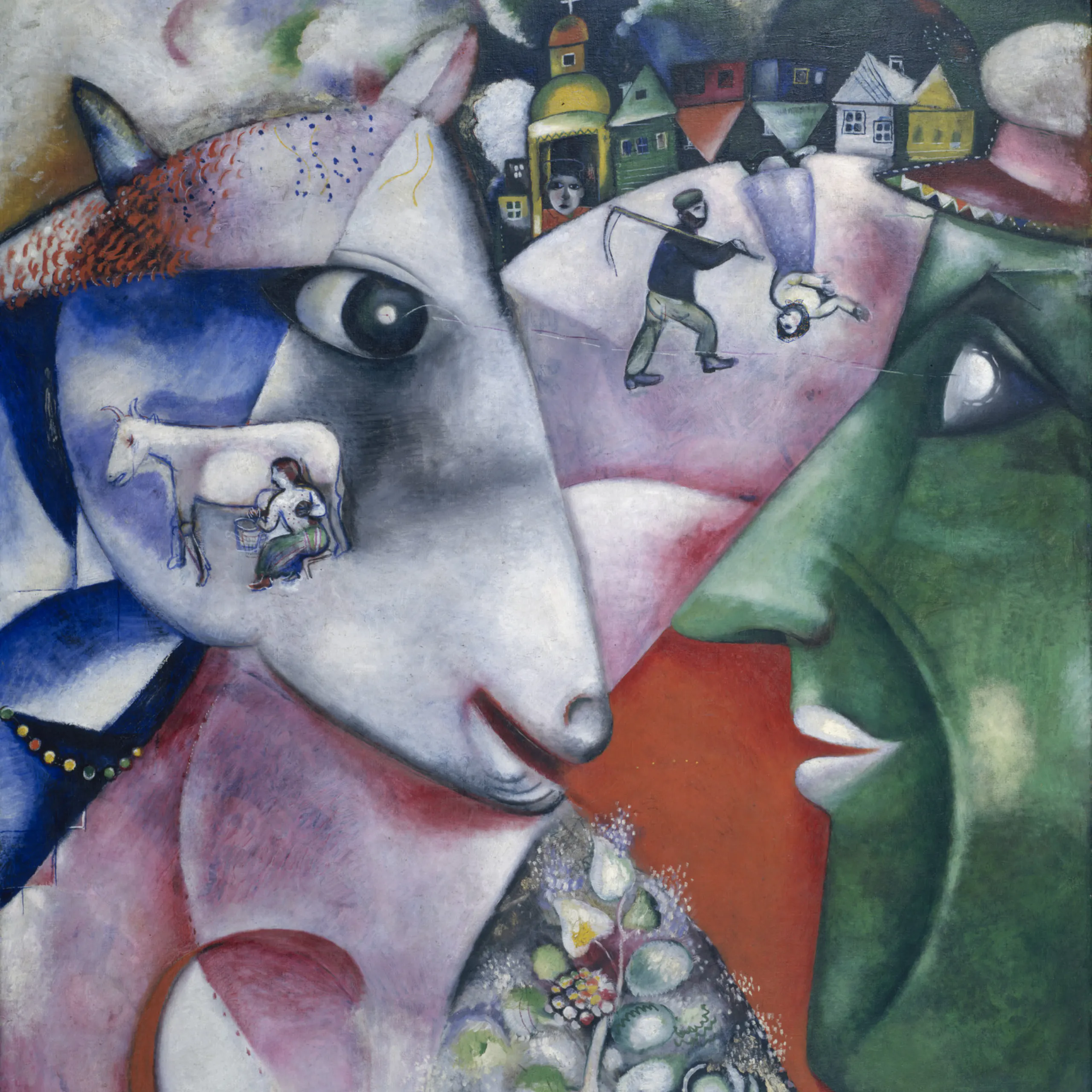
Marc Chagall | I and the Village
Marc Chagall (born Moishe Shagal, 1887-1985) was a prominent Russian-French modern artist whose life spanned nearly a century of dramatic historical change. Originating from a Hasidic Jewish community near Vitebsk, Russian Empire (now Belarus), Chagall pursued art studies in St. Petersburg before immersing himself in the Paris art scene from 1911-1914. There, he absorbed influences from Cubism and Fauvism, blending them with his unique heritage of Russian folklore and personal memories to forge his signature dreamlike style. Trapped in Russia by World War I, he married his muse, Bella Rosenfeld, and briefly served as Commissar of Arts in Vitebsk after the Revolution. Chagall later returned to Paris, only to flee Nazi persecution during World War II, finding refuge in the United States where Bella tragically died. Returning to France after the war, he married Valentina "Vava" Brodsky and embarked on a prolific late career, expanding into ceramics, sculpture, and notably, magnificent stained glass works, continuing to create until his death at 97. This is an encore presentation. Every January/February, I release daily episodes to refresh everyone's memory on the 64 artists and artworks that will be included in my Arts Madness Tournament held in March. While most of these daily episodes will be reruns, I will continue publishing new episodes on Mondays. Check out my other podcasts Fun Facts Daily | Art Smart | Rainbow Puppy Science Lab Who ARTed is an Airwave Media Podcast. If you are interested in advertising on this or any other Airwave Media show, email: [email protected] Learn more about your ad choices. Visit megaphone.fm/adchoices
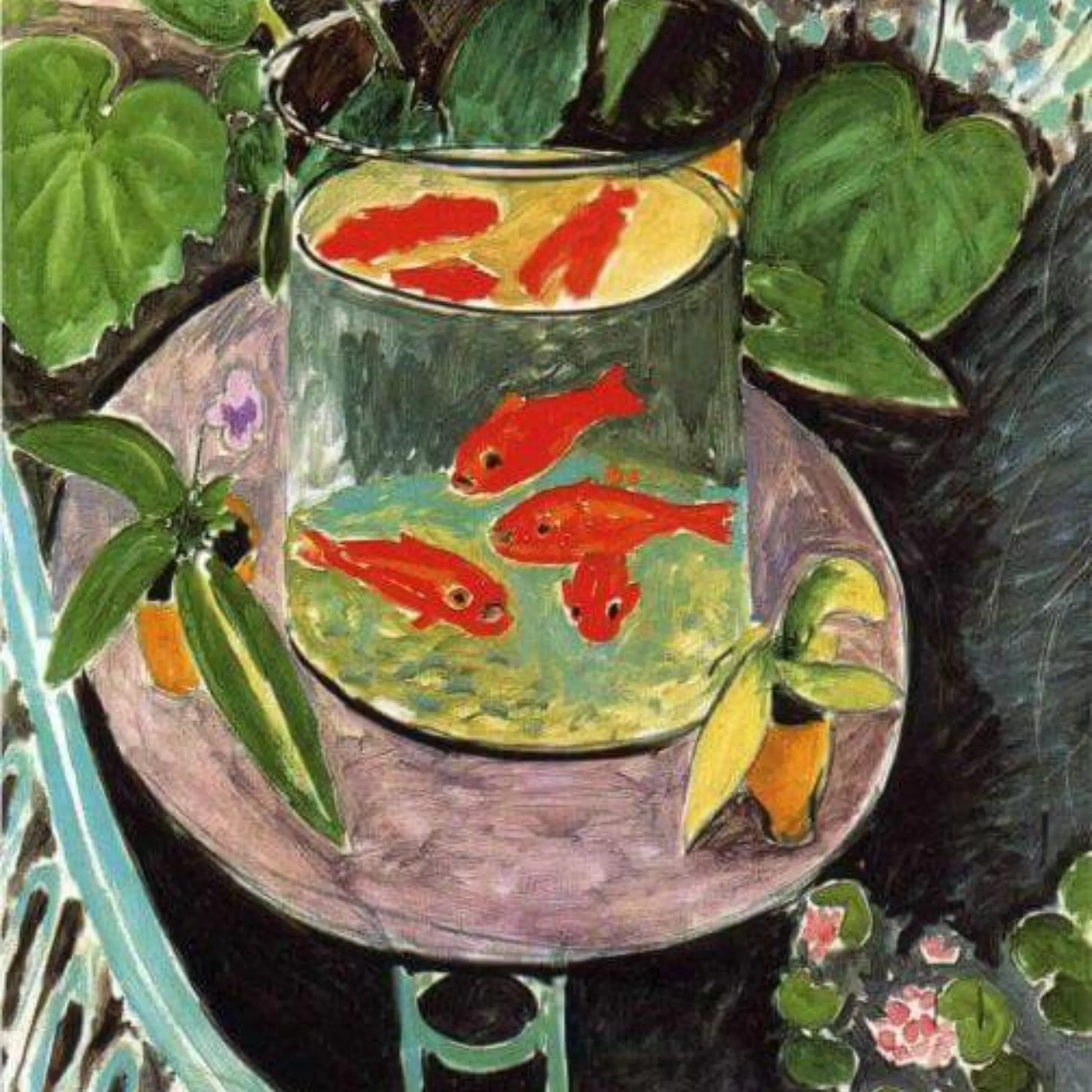
Henri Matisse | Goldfish
Henri Matisse was born in Northern France on December 31, 1869. His father was a successful grain merchant. In 1887, Henri was well on his way to a successful, respectable career when he went to Paris. He was going to study law, and was working in that arena for a while then at age 20, he had appendicitis. His mom gave him a paint set so he could have something to do while he recovered, and he decided to become an artist. Links: Katsushika Hokusai Vincent van Gogh Henri de Toulouse Lautrec JMW Turner This is an encore presentation. Every January/February, I release daily episodes to refresh everyone's memory on the 64 artists and artworks that will be included in my Arts Madness Tournament held in March. While most of these daily episodes will be reruns, I will continue publishing new episodes on Mondays. Check out my other podcasts Fun Facts Daily | Art Smart | Rainbow Puppy Science Lab Who ARTed is an Airwave Media Podcast. If you are interested in advertising on this or any other Airwave Media show, email: [email protected] Learn more about your ad choices. Visit megaphone.fm/adchoices
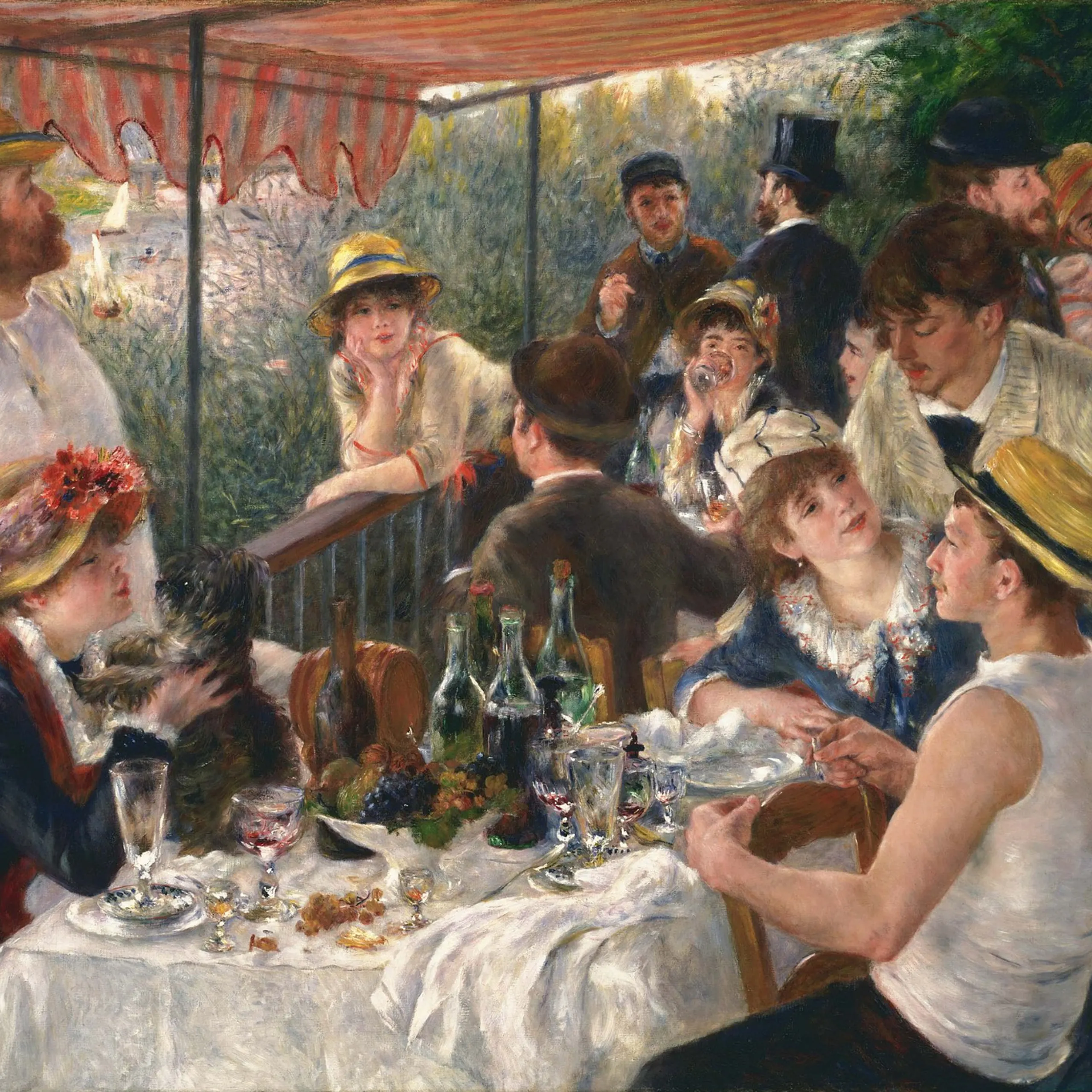
Pierre-Auguste Renoir | Luncheon of the Boating Party
Today, Renoir is remembered as one of the greatest painters of the Impressionist movement. His paintings are soft and delicate, but his life and his work was a painful struggle. Most painters pride themselves on their ability to work with their hands. They spend years practicing, developing fine motor skills and muscle memory to easily render a beautiful image, but Renoir’s hands weren’t on board with the plan. As his son Jean recounted “Visitors who were unprepared for this could not take their eyes off his deformity. Though they did not dare to mention it, their reaction would be expressed by some such phrase as ‘it isn’t possible! With hands like that, how could he paint those pictures?” In 1899, Pierre-Auguste Renoir was sticken with Rhumetiod Arthritis which not only caused painful inflammation of the joints. It left his hands deformed. While even the most minor movements of his hand or wrist would bring pain, Renoir persisted. He continued making beautiful paintings until his death 20 years later because as he said, “pain passes, but beauty remains.” This is an encore presentation. Every January/February, I release daily episodes to refresh everyone's memory on the 64 artists and artworks that will be included in my Arts Madness Tournament held in March. While most of these daily episodes will be reruns, I will continue publishing new episodes on Mondays. Check out my other podcasts Fun Facts Daily | Art Smart | Rainbow Puppy Science Lab Who ARTed is an Airwave Media Podcast. If you are interested in advertising on this or any other Airwave Media show, email: [email protected] Learn more about your ad choices. Visit megaphone.fm/adchoices
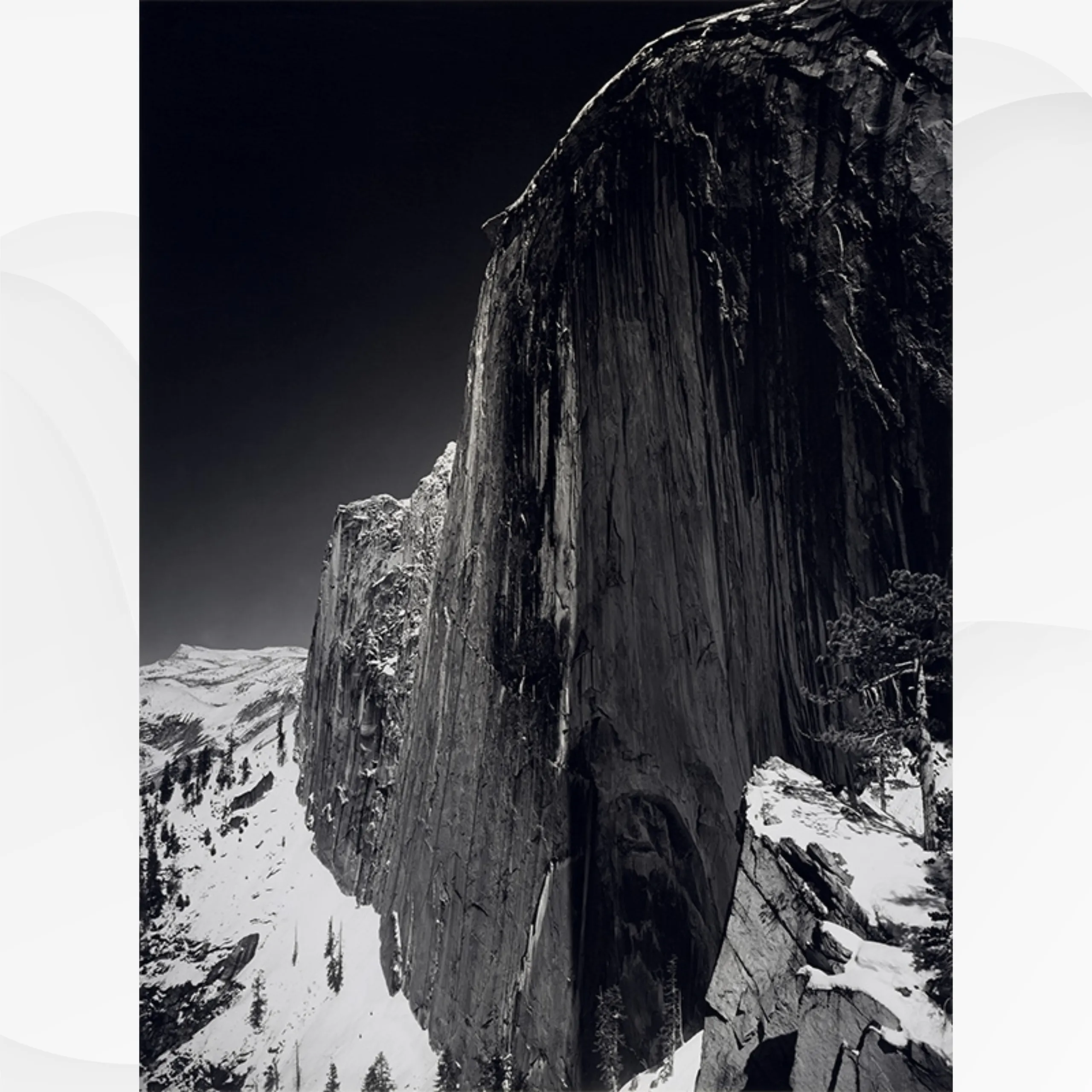
Ansel Adams | Monolith, the Face of Half Dome
Ansel Adams (1902-1984) was an iconic American photographer renowned for his dramatic black and white landscapes, particularly of Yosemite National Park. His distinctive style, characterized by sharp focus, expansive tonal range, and masterful composition, was shaped by his early passion for music, his deep connection with nature, and his innovative approach to photography. Adams co-founded Group f/64, advocating for "straight photography," and developed the Zone System, a precise technique for controlling exposure and development. His most famous works, like "Monolith, the Face of Half Dome," showcase his technical skill and artistic vision, capturing the grandeur of the American West. A dedicated conservationist, Adams used his photography to advocate for environmental protection. His legacy extends beyond his breathtaking images, inspiring generations of photographers and leaving an indelible mark on the art world. Check out my other podcasts Fun Facts Daily | Art Smart | Rainbow Puppy Science Lab Who ARTed is an Airwave Media Podcast. If you are interested in advertising on this or any other Airwave Media show, email: [email protected] Learn more about your ad choices. Visit megaphone.fm/adchoices
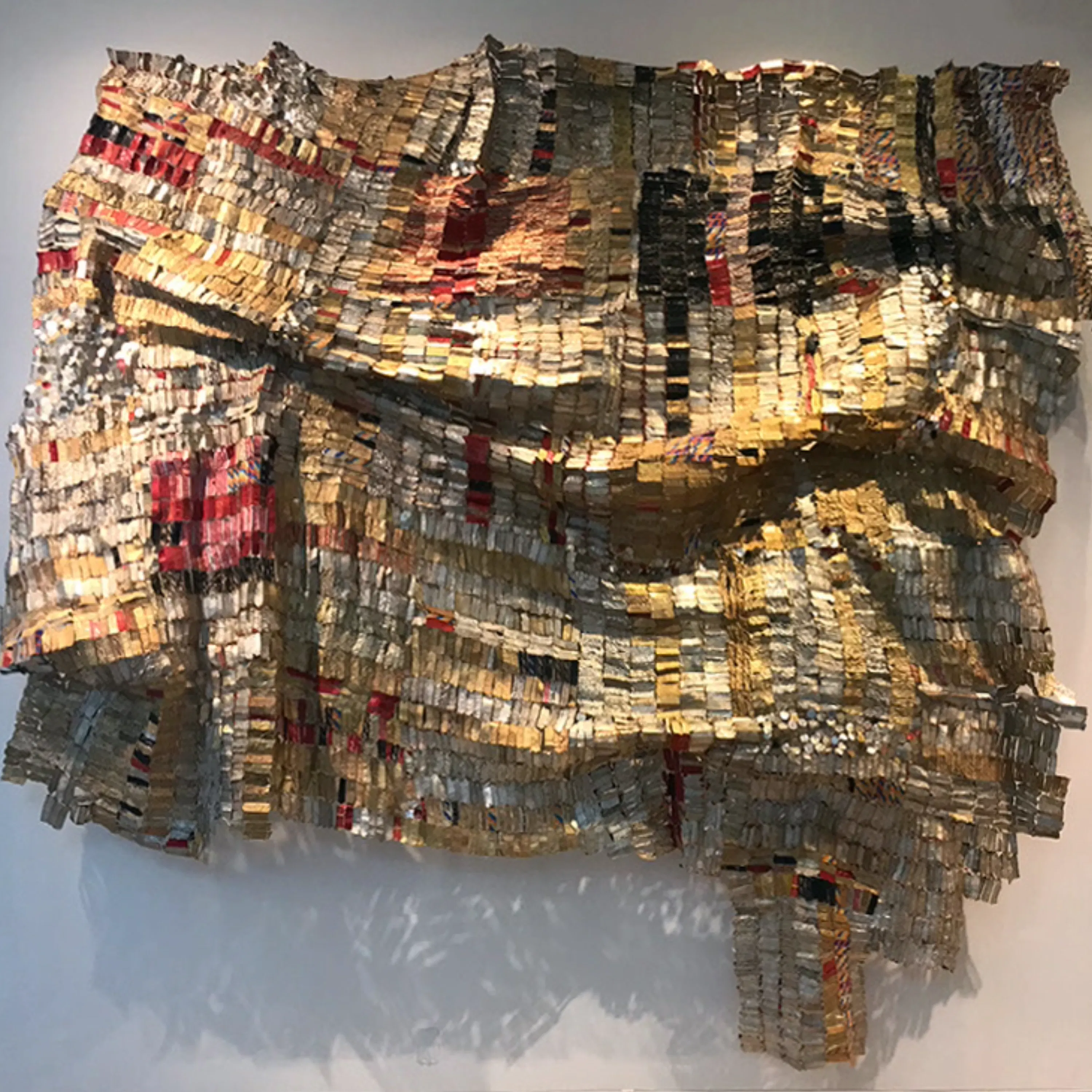
El Anatsui | Old Man's Cloth
El Anatsui is a leading contemporary sculptor born in 1944 in Anyako, Ghana. Trained at the Kwame Nkrumah University of Science and Technology, Anatsui’s early education was heavily influenced by Western art traditions, which often neglected the rich artistic heritage of West Africa. After relocating to Nigeria in 1975 to teach at the University of Nigeria, Nsukka, he joined the Nsukka group, a collective dedicated to reviving traditional practices like Uli—an Igbo art form characterized by fluid linear drawings. This shift marked the beginning of his lifelong endeavor to blend traditional African motifs with contemporary sculptural techniques. Anatsui is best known for his monumental "metal cloths," which he began creating in the late 1990s using discarded liquor bottle caps and copper wire. A prime example is the 2003 piece Old Man's Cloth, a massive work measuring approximately 16 feet by 17 feet. These installations are intentionally malleable, allowing curators to fold and drape them differently for every display to create a "non-fixed form". Beyond their visual resemblance to traditional Ghanaian Kente cloth, these materials carry profound historical weight; they reference the transatlantic "Triangle Trade," where alcohol was used as a primary currency by Europeans to exchange for enslaved people in Africa. By employing a communal studio process involving dozens of assistants, Anatsui transforms industrial waste into high art that comments on colonialism, globalization, and the enduring strength of African heritage. Check out my other podcasts Fun Facts Daily | Art Smart | Rainbow Puppy Science Lab Who ARTed is an Airwave Media Podcast. If you are interested in advertising on this or any other Airwave Media show, email: [email protected] Learn more about your ad choices. Visit megaphone.fm/adchoices
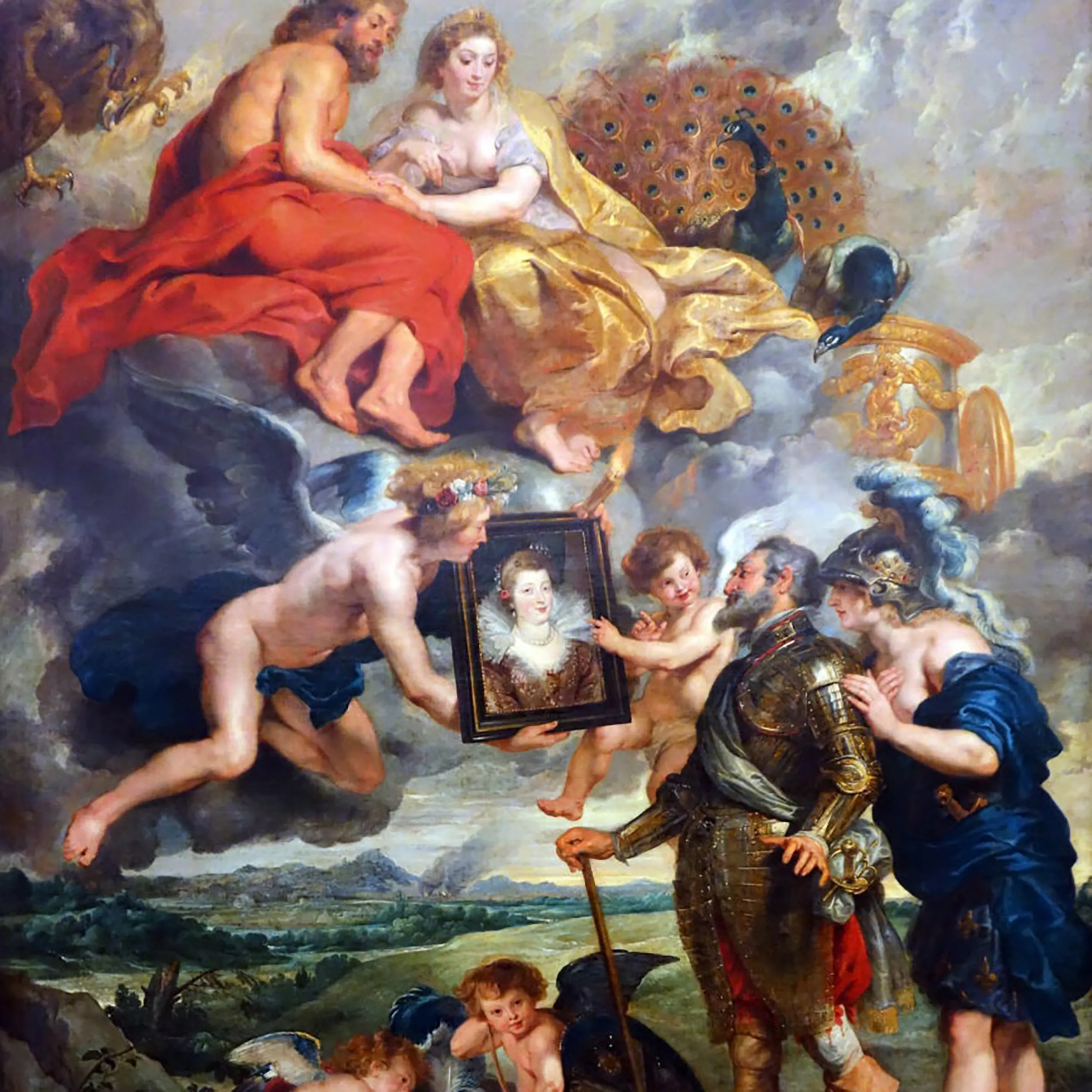
Peter Paul Rubens International Man of Mystery
Peter Paul Rubens wasn't your typical 17th-century artist. He produced magnificent Baroque masterpieces, his canvases overflowing with vibrant colors and dynamic figures. While Baroque art was known for its high drama, in this case, the real life of the artist may have been even more intriguing. Rubens was not only a highly skilled artist, he was also a shrewd diplomat and a cunning spy, a man who navigated the treacherous world of European politics with as much finesse as he wielded his paintbrush. This is an encore presentation. Every January/February, I release daily episodes to refresh everyone's memory on the 64 artists and artworks that will be included in my Arts Madness Tournament held in March. While most of these daily episodes will be reruns, I will continue publishing new episodes on Mondays. Check out my other podcasts Fun Facts Daily | Art Smart | Rainbow Puppy Science Lab Who ARTed is an Airwave Media Podcast. If you are interested in advertising on this or any other Airwave Media show, email: [email protected] Learn more about your ad choices. Visit megaphone.fm/adchoices

Maya Lin | Vietnam Veterans Memorial
The Vietnam Veterans Memorial was established to honor those who died in the Vietnam War. Jan Scruggs, a veteran of the conflict, spearheaded the creation of the memorial and after a nationwide design competition, Maya Lin's design was chosen. Her design was controversial for its minimalist and non-traditional approach, but ultimately it was built and has become an important place for reflection and healing. The work is simple yet profound. The polished black granite is reflective like a mirror. It forces visitors to confront their own image alongside the names of the fallen creating a sense of connection and shared humanity. This is an encore presentation. Every January/February, I release daily episodes to refresh everyone's memory on the 64 artists and artworks that will be included in my Arts Madness Tournament held in March. While most of these daily episodes will be reruns, I will continue publishing new episodes on Mondays. The Vietnam Veterans Memorial is one of the 250 artworks required for AP Art History. Learn about more of those works by listening to my AP Art History Cram Session playlist on Spotify. Check out my other podcasts Fun Facts Daily | Art Smart | Rainbow Puppy Science Lab Who ARTed is an Airwave Media Podcast. If you are interested in advertising on this or any other Airwave Media show, email: [email protected] Learn more about your ad choices. Visit megaphone.fm/adchoices
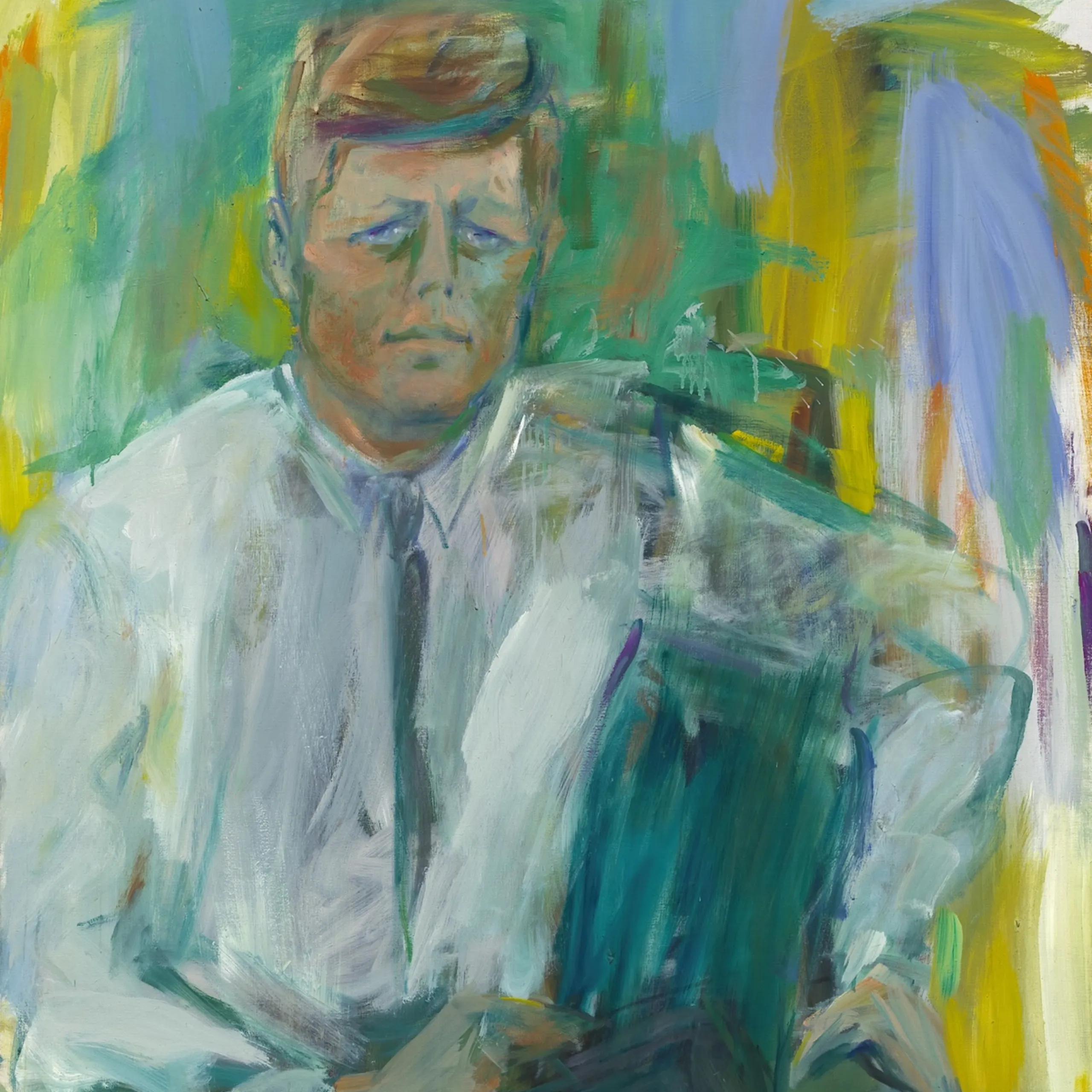
Elaine de Kooning | Portrait of John F. Kennedy
Elaine de Kooning (1918-1989) was a vital figure in 20th-century American art. She was a renowned Abstract Expressionist painter, portraitist, and writer. Elaine de Kooning's 1963 portrait of John F. Kennedy, now at the National Portrait Gallery, is a significant work reflecting her Abstract Expressionist style applied to portraiture. Commissioned by the Truman Library, the painting captures Kennedy's dynamic energy and charisma through vibrant colors, bold brushstrokes, and a fragmented, almost unfinished quality. Created during and after Kennedy's time in office, the work became a poignant memorial after his assassination, symbolizing the turbulence and vitality of his presidency, and cementing de Kooning's reputation as a master portraitist. Related episodes: Willem de Kooning Jackson Pollock Janet Sobel Lee Krasner Mark Rothko Erased de Kooning Check out my other podcasts Fun Facts Daily | Art Smart | Rainbow Puppy Science Lab Who ARTed is an Airwave Media Podcast. If you are interested in advertising on this or any other Airwave Media show, email: [email protected] Learn more about your ad choices. Visit megaphone.fm/adchoices
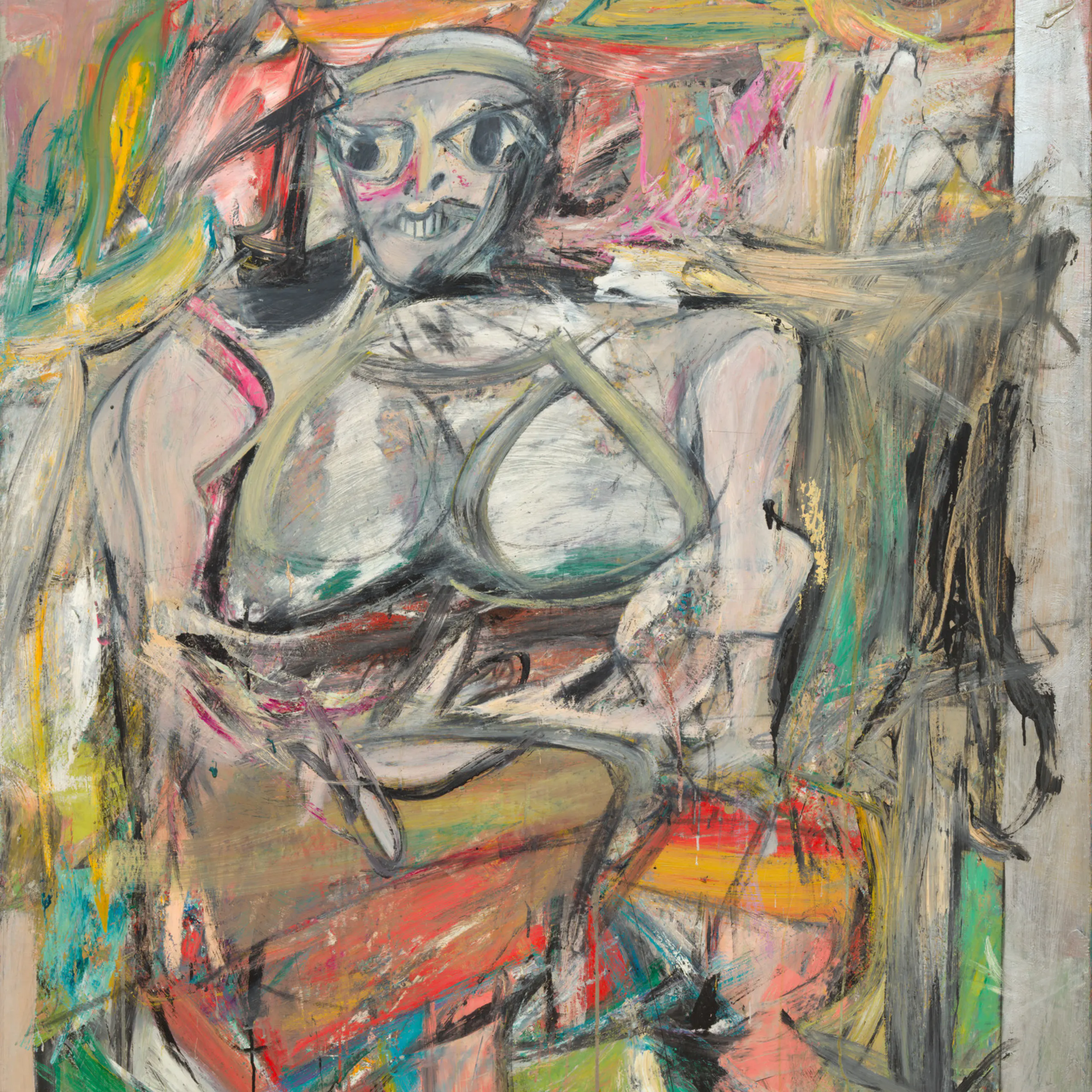
Willem de Kooning
Willem de Kooning, a Dutch-American Abstract Expressionist painter, was born in Rotterdam in 1904. He stowed away on a freighter in 1926, eventually settling in New York City. De Kooning's early work transitioned from figurative studies to abstraction, though he never fully abandoned the figure, famously stating, "Flesh was the reason oil paint was invented." He gained recognition for his black-and-white abstract paintings and married fellow artist Elaine Fried. Known for his perfectionism, he often reworked his canvases extensively. He moved to East Hampton in 1963, and despite later suffering from Alzheimer's, continued painting until the late 1980s. De Kooning died in 1997, leaving a lasting legacy as a key figure in 20th-century art. Willem de Kooning's "Woman I," created between 1950 and 1952, is a seminal work of Abstract Expressionism. This large-scale painting, now housed at the Museum of Modern Art, is the first in his "Woman" series and is renowned for its intense process and controversial imagery. De Kooning worked on the canvas for nearly two years, repeatedly painting over and scraping away layers, embodying the "action painting" style. Inspired by diverse sources, from contemporary advertisements to ancient fertility figures, "Woman I" depicts a distorted, powerful female figure with aggressive brushstrokes, vibrant yet garish colors, and a chaotic composition. The painting sparked debate upon its 1953 exhibition, with some critics viewing it as misogynistic, while others recognized its challenge to traditional notions of beauty and the female nude. "Woman I" remains an influential piece, reflecting de Kooning's struggle with representation and solidifying his reputation as a major, albeit provocative, force in post-war art. Related episodes: Jackson Pollock Janet Sobel Lee Krasner Mark Rothko Erased de Kooning Check out my other podcasts Fun Facts Daily | Art Smart | Rainbow Puppy Science Lab Who ARTed is an Airwave Media Podcast. If you are interested in advertising on this or any other Airwave Media show, email: [email protected] Learn more about your ad choices. Visit megaphone.fm/adchoices
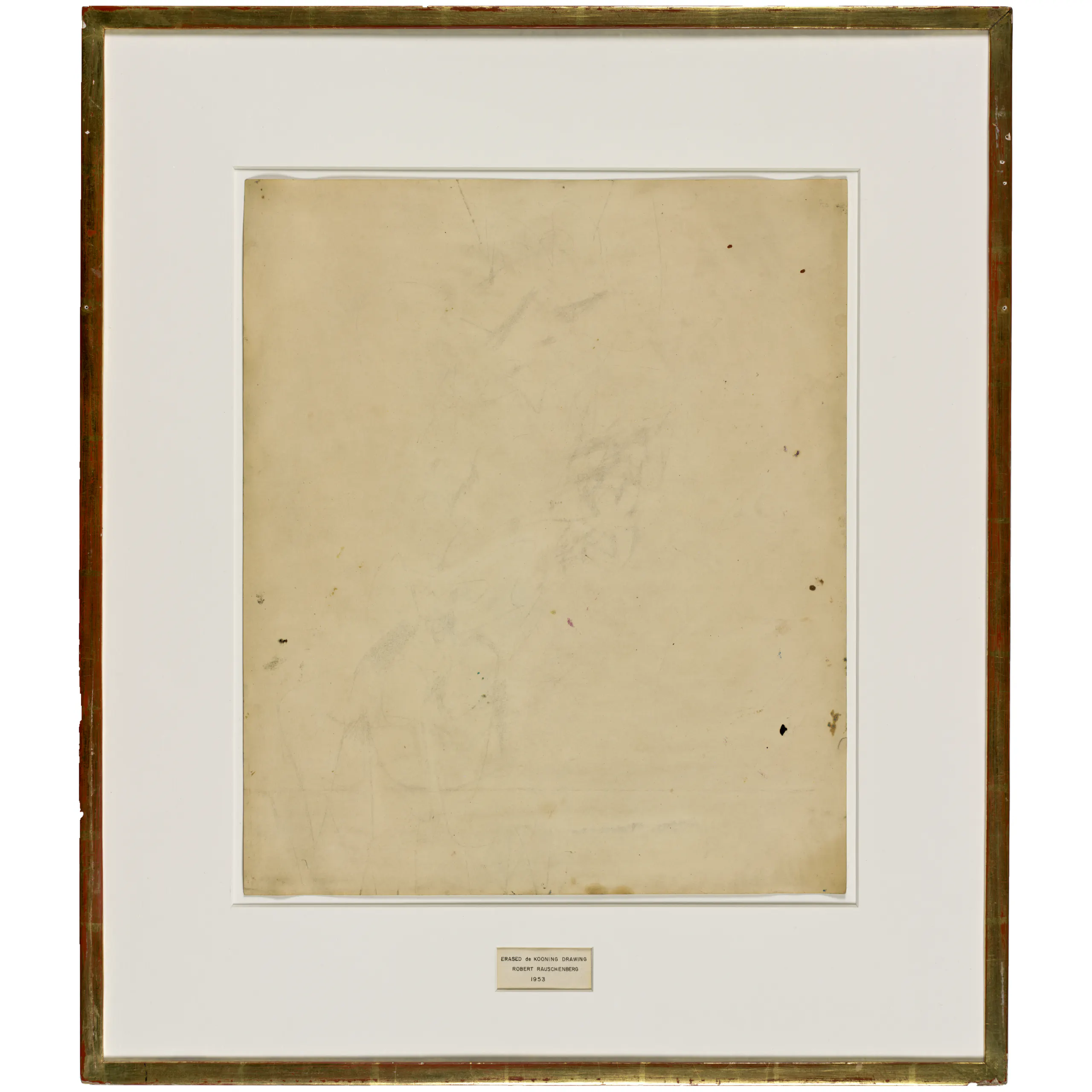
The Erased Masterpiece - Robert Rauschenberg’s Erased de Kooning
This episode is kicking off Arts Madness season. Every spring, listeners vote for their favorites in a bracketed tournament of 64 different artists. All during January and February, I will be posting daily episodes as a refresher on the artists and artworks in this year's tournament. Most of these will be encore presentations of old fan favorites, but there will still be new episodes coming into the feed as well. I am creating new episodes based on fan requests which will be coming out on Mondays. Today, I am starting things off with one of my favorites, Robert Rauschenber's Erased de Kooning. A young, up-and-coming Robert Rauschenberg knocked on the door of Willem de Kooning, one of the biggest stars of the art world in his day. Rauschenberg had a big ask. He didn't want advice or help in the traditional sense. He wanted de Kooning to give him a drawing so he could erase it. After an uncomfortable conversation, de Kooning agreed. He looked through his portfolios and picked out a drawing. It was not easy. Rauschenberg spent weeks and wore through numerous erasers on the mixed media piece. In the end he obliterated nearly every trace of de Kooning's drawing in an act that some consider to be an iconoclastic destruction of the artist's legacy and others see as an incredible tribute that completely upended the way we encounter the work moving it from the paper to the imagination. Learn more about your ad choices. Visit megaphone.fm/adchoices
The 57th Street Art Fair
For today's episode, I wanted to focus on the business side of art by looking at art fairs. I interviewed Amy from the 57th Street Art Fair in Chicago. Celebrating its 79th anniversary, this historic fair has evolved from a neighborhood gathering into a premier juried event. Learn the fascinating history of the fair, insights into the jury process, and stories of famous artists who got their start displaying their work between the trees of Hyde Park. The 57th Street Art Fair takes place annually on the first full weekend of June, located along 57th Street between Woodlawn and Kenwood in Chicago's Hyde Park neighborhood. The event is free to the public and features not only a diverse array of fine art but also food trucks, live music, and activities for children. Artists interested in exhibiting can apply through the ZAPP application system with a $45 fee, noting that the deadline for submissions is January 15th. Links to explore: 57thStreetArtFair.com ZAPP (for artists who wish to participate) Taylor Mazer (artist whose work we mentioned) Malen Pierson (artist whose work we mentioned) Check out my other podcasts Fun Facts Daily | Art Smart | Rainbow Puppy Science Lab Who ARTed is an Airwave Media Podcast. If you are interested in advertising on this or any other Airwave Media show, email: [email protected] Learn more about your ad choices. Visit megaphone.fm/adchoices
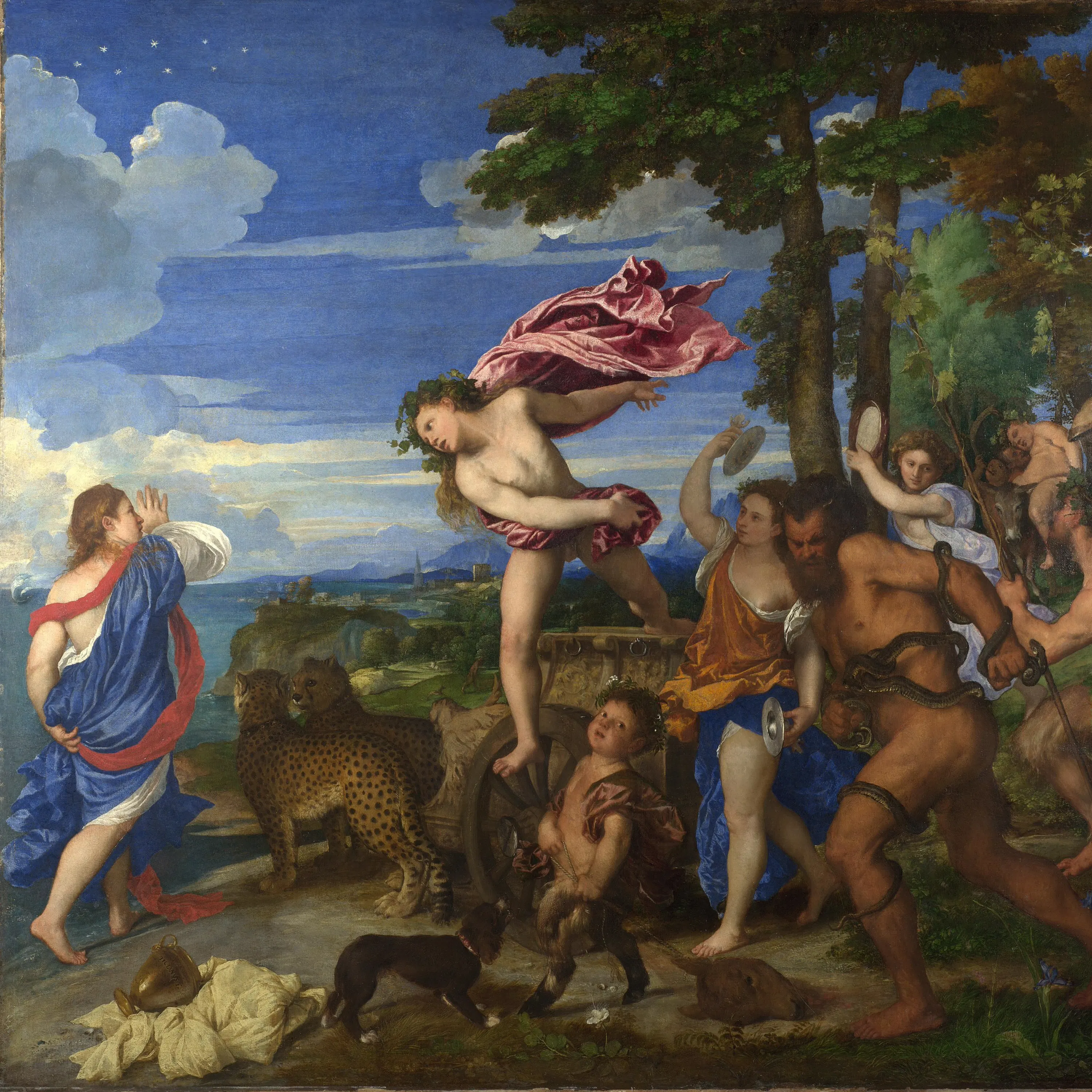
Titian | Bacchus and Ariadne
Tiziano Vecellio, known simply as Titian, stands as the central figure of the Venetian Renaissance, dominating the art world for over sixty years with his revolutionary approach to color and composition. Renowned for his specific "Titian Red" and the lavish application of expensive ultramarine blue derived from Afghan lapis lazuli, Titian elevated the status of the artist from craftsman to nobility. His career included prestigious roles as court painter for Holy Roman Emperor Charles V and King Philip II of Spain, where he pioneered the concept of poesie, arguing that painting was a liberal art of visual poetry equal to literature. Bacchus and Ariadne (1520–1523) was commissioned by the Duke of Ferrara to replace a work originally intended for Raphael. This canvas bridges the gap between classical mythology and dynamic Renaissance storytelling. The painting captures the precise moment the wine god Bacchus leaps from his cheetah-drawn chariot to save the abandoned Princess Ariadne, freezing a narrative of heartbreak and instant love in time. From the referencing of the Laocoön statue to the constellation of the Northern Crown, Titian’s work exemplifies how loose, expressive brushwork and rich pigmentation can bring ancient myths to vibrant life. If you would like to suggest a future topic, head over to WhoARTedPodcast.com/vote and let me know what artist/artwork I should cover next. Check out my other podcasts Fun Facts Daily | Art Smart | Rainbow Puppy Science Lab Who ARTed is an Airwave Media Podcast. If you are interested in advertising on this or any other Airwave Media show, email: [email protected] Learn more about your ad choices. Visit megaphone.fm/adchoices
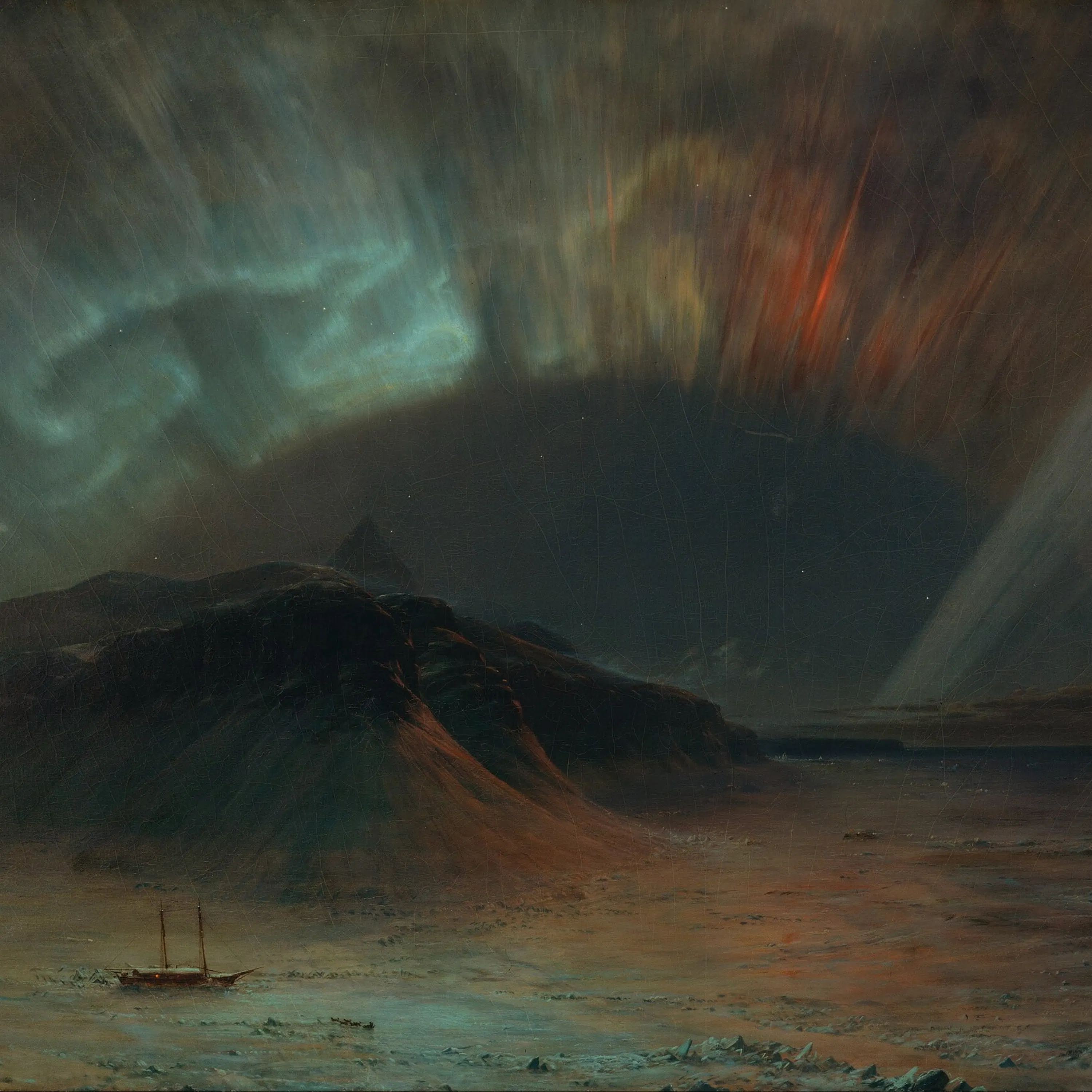
Frederic Edwin Church | Aurora Borealis
Frederic Edwin Church stands as a titan of nineteenth-century American art, renowned for transforming landscape painting into a high-stakes blend of scientific exploration and cinematic spectacle. A star pupil of Thomas Cole, Church pivoted from his mentor’s moral allegories to embrace a rigorous "scientific realism" inspired by the naturalist Alexander von Humboldt. This dedication led him to retrace Humboldt's paths through South America and the Arctic, documenting the "physiognomy of nature" with such botanical and geological precision that his canvases served as both high art and field research. His 1859 exhibition of The Heart of the Andes revolutionized art marketing; by charging admission to a darkened, theatrically lit room where viewers used opera glasses to inspect microscopic details, Church pioneered the concept of the "blockbuster" exhibition. The artist's legacy is physically immortalized at Olana, his Persian-style estate in the Hudson Valley, which he designed as a living three-dimensional landscape. Even as rheumatoid arthritis forced him to adapt his technique later in life, Church’s work continued to bridge the gap between the terrestrial and the celestial. His 1865 masterpiece, Aurora Borealis, exemplifies this intersection, capturing the eerie translucence of the northern lights through meticulous layers of oil glazes. Created at the close of the American Civil War, the painting serves as a profound meditation on the sublime—juxtaposing the fragility of the human spirit, represented by a ship trapped in ice, against the vast, terrifying power of the natural world. What artist/artworks would you like to learn about? Who should I include in next year's Arts Madness Tournament? Give me your suggestions at www.WhoARTedPodcast.com/vote Check out my other podcasts Fun Facts Daily | Art Smart | Rainbow Puppy Science Lab Who ARTed is an Airwave Media Podcast. If you are interested in advertising on this or any other Airwave Media show, email: [email protected] Learn more about your ad choices. Visit megaphone.fm/adchoices
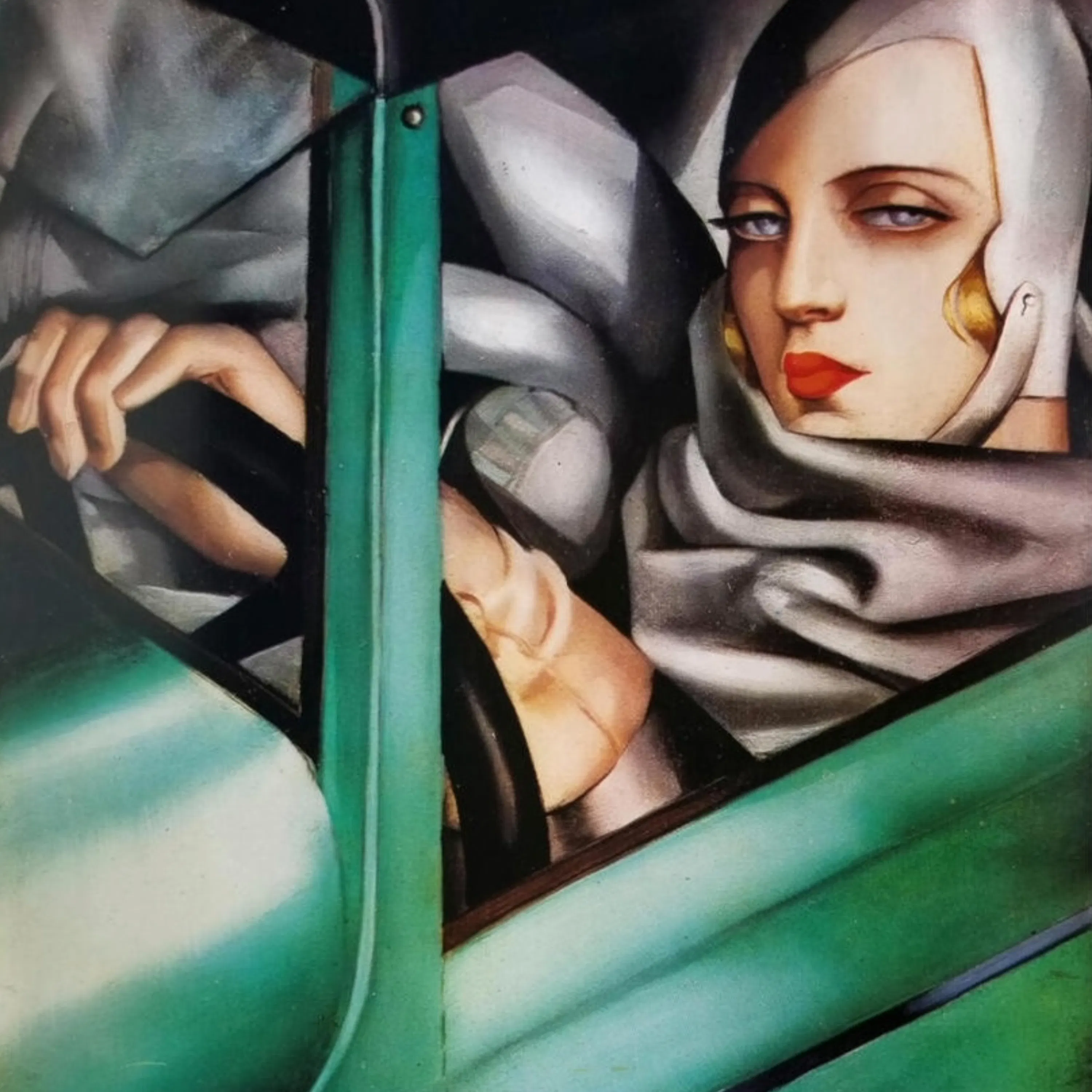
Tamara de Lempicka | Tamara in a Green Bugatti
Tamara de Lempicka remains the definitive icon of the Art Deco era, blending polished Cubist techniques with the glamorous, high-stakes atmosphere of the Roaring Twenties. From her harrowing escape during the Russian Revolution to her transformation into a Parisian socialite and eventually a Hollywood favorite, her life was a calculated masterpiece of self-invention. Her signature style, characterized by "soft Cubism" and metallic, architectural lighting, captured the spirit of the "New Woman"—independent, liberated, and sophisticated. Known for her relentless self-promotion and a portfolio of portraits that defined modern luxury, she became a favorite of the European aristocracy and the American film elite alike. The legendary self-portrait Tamara in a Green Bugatti serves as a focal point for understanding both the artist and the Art Deco movement. This work embodies the era's obsession with speed, industry, and geometric precision, rejecting the organic curves of Art Nouveau in favor of sleek, machine-age aesthetics. Although she famously curated her public persona—even swapping her modest yellow Renault for a high-performance Bugatti on canvas—Lempicka’s influence on the world of fashion and fine art remains undeniable. Check out my other podcasts Fun Facts Daily | Art Smart | Rainbow Puppy Science Lab Who ARTed is an Airwave Media Podcast. If you are interested in advertising on this or any other Airwave Media show, email: [email protected] Learn more about your ad choices. Visit megaphone.fm/adchoices

David Hunt | Earthboard
My guest this week is David Hunt, the creator of Earthboard. Earthboard is an earth-sized collaborative mural where you claim real-world locations and doodle over famous landmarks across the globe. Draw King Kong climbing the Eiffel Tower, or collaborate with a famous artist in Tokyo, all in real time. Because all art is created inside the app, Earthboard is the first platform where human creativity is architecturally guaranteed. No AI-generated work, period. Every drawing has a limited lifespan, but what you inspire doesn't. Your work lives on in the permanent archive and in the pieces other artists build on top of yours. Earthboard is available now on IOS visit Earthboard.art to learn more Related episodes: Jason deCaires Taylor Marcel Duchamp Check out my other podcasts Fun Facts Daily | Art Smart | Rainbow Puppy Science Lab Who ARTed is an Airwave Media Podcast. If you are interested in advertising on this or any other Airwave Media show, email: [email protected] Learn more about your ad choices. Visit megaphone.fm/adchoices

Pierre de Coubertin & Other Artists Winning Medals at the Olympics (encore)
From 1912 to 1948, medals were awarded for artistic creations inspired by sport, alongside those for athletic prowess. This unique fusion of disciplines was the brainchild of Pierre de Coubertin, the founder of the modern Olympics, who envisioned the Games as a celebration of both physical and intellectual pursuits. Coubertin's vision for the modern Olympics extended far beyond athleticism. He believed in the holistic development of the individual, emphasizing the importance of both physical and intellectual pursuits. This philosophy stemmed from his deep admiration for the ancient Greek ideal of "kalokagathia," which represented the harmonious balance of body and mind. In 1894, Coubertin's efforts culminated in the establishment of the International Olympic Committee (IOC), and the first modern Olympic Games were held in Athens in 1896. The art competitions were introduced at the 1912 Stockholm Games, featuring five categories: architecture, literature, music, painting, and sculpture. A total of 146 artists were awarded Olympic medals for their artistic creations between 1912 and 1948. Tell me which artists/artworks you want me to cover in future episodes at WhoARTedPodcast.com/vote Check out my other podcasts Fun Facts Daily | Art Smart | Rainbow Puppy Science Lab Who ARTed is an Airwave Media Podcast. If you are interested in advertising on this or any other Airwave Media show, email: [email protected] Learn more about your ad choices. Visit megaphone.fm/adchoices
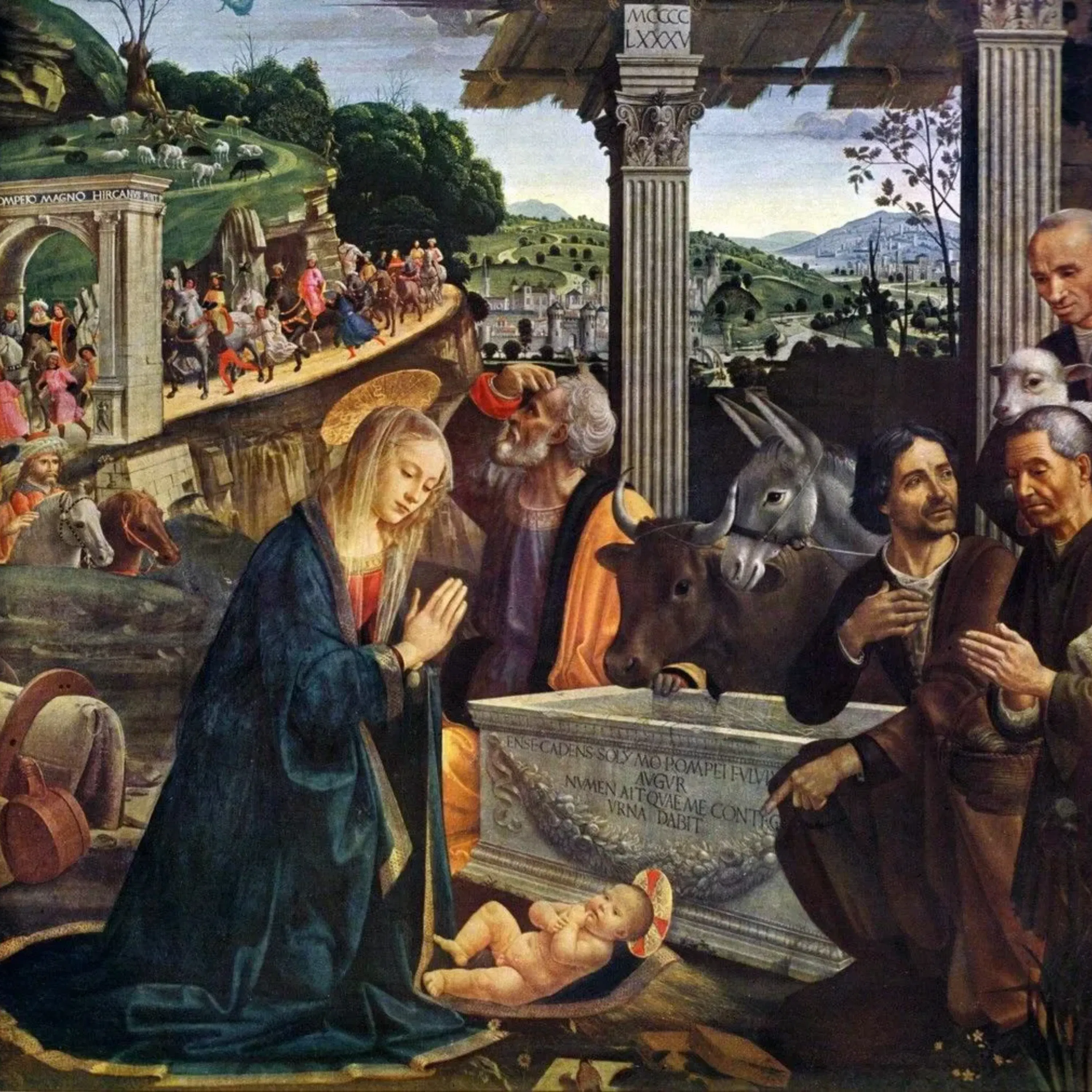
Domenico Ghirlandaio | The Adoration of the Shepherds
Domenico Ghirlandaio stands as a titan of the Quattrocento, often overshadowed by his most famous student, Michelangelo, yet serving as the vital bridge between the early and high Italian Renaissance. As the head of a prolific family workshop, Ghirlandaio dominated the Florentine art market, capturing the spirit of the age by integrating wealthy patrons like the Medici and Tornabuoni directly into sacred biblical narratives. His mastery of fresco technique—skills he later passed to a young Michelangelo—graced the walls of the Sistine Chapel long before the ceiling was painted, establishing him as the premier visual chronicler of 15th-century Florentine society. Beyond his technical precision and workshop efficiency, Ghirlandaio revolutionized Florentine painting by embracing the gritty realism of Northern European art. His masterpiece, The Adoration of the Shepherds in the Sassetti Chapel, merges classical Roman symbolism with unidealized, rugged figures inspired by Flemish masters. This synthesis of high fashion, local architecture, and naturalistic detail offers a vivid window into the life, culture, and theological complexity of Florence at the height of its power. What artist/artworks would you like to learn about? Who should I include in next year's Arts Madness Tournament? Give me your suggestions at www.WhoARTedPodcast.com/vote Check out my other podcasts Fun Facts Daily | Art Smart | Rainbow Puppy Science Lab Who ARTed is an Airwave Media Podcast. If you are interested in advertising on this or any other Airwave Media show, email: [email protected] Learn more about your ad choices. Visit megaphone.fm/adchoices
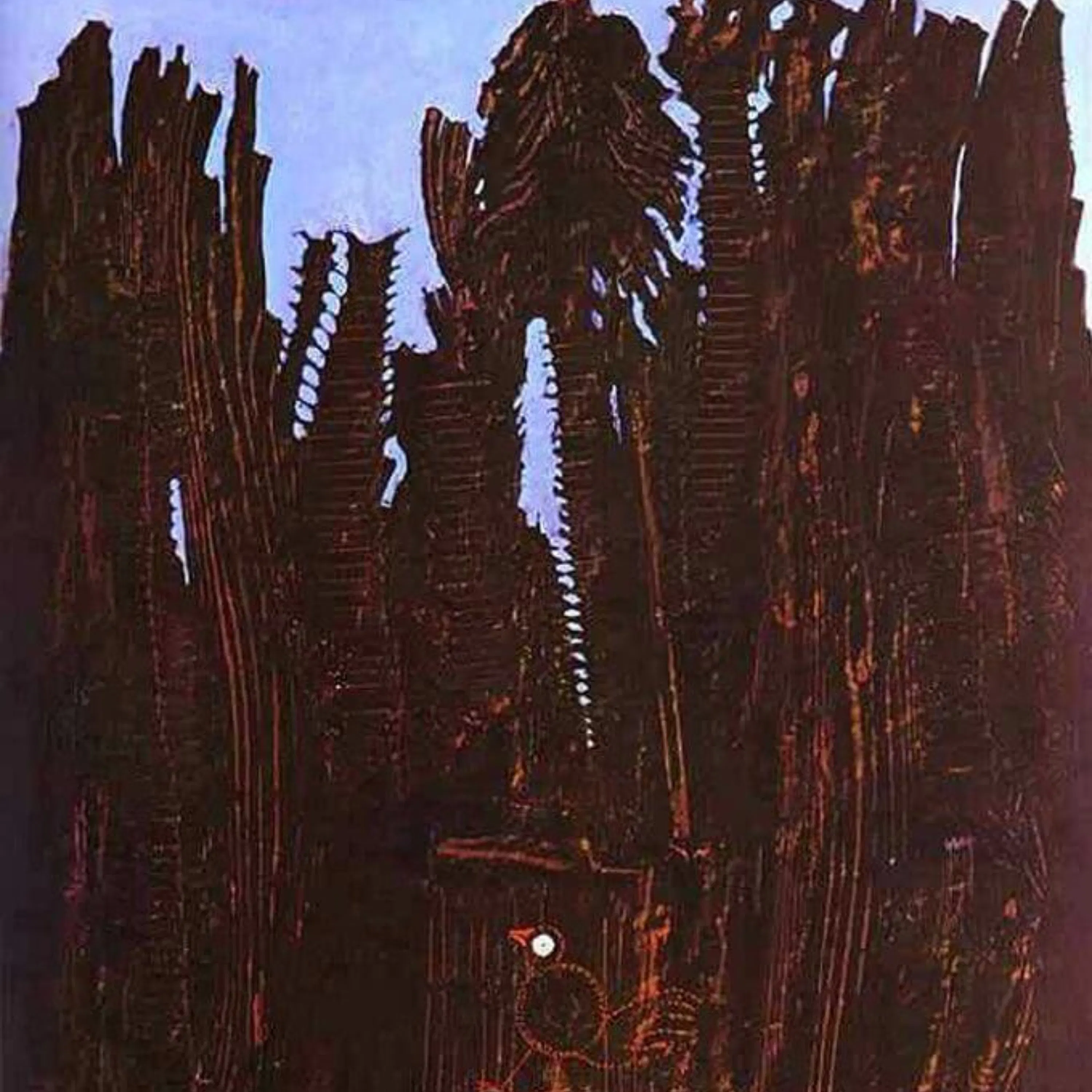
Max Ernst | Forest and Dove
German artist Max Ernst was a pivotal figure in modern art history, bridging the anarchic rebellion of the Dada movement with the psychological depths of Surrealism. Born in Bruehl and deeply scarred by his service in World War I, Ernst rejected the rigid rationality of his upbringing to explore the unconscious mind. His artistic evolution took him from the avant-garde circles of Cologne and Paris to a dramatic escape from Nazi-occupied Europe with the help of Peggy Guggenheim. Settling in Sedona, Arizona, his presence in the United States proved crucial in bridging the gap between European Surrealism and the emerging American Abstract Expressionist movement. Central to Ernst's legacy are his innovative "automatic" techniques, specifically frottage (rubbing) and grattage (scraping), which allowed chance and texture to dictate composition. A close analysis of his 1927 masterpiece, Forest and Dove, illustrates these methods in action. By scraping paint over textured surfaces to create impenetrable, fossil-like forests, Ernst juxtaposed the menacing power of nature with the fragility of the spirit, often represented by his bird alter ego, "Loplop." His work challenges the role of the artist, suggesting that creators should act as spectators to their own materials to unlock the hidden imagery of the subconscious. Check out my other podcasts Fun Facts Daily | Art Smart | Rainbow Puppy Science Lab Who ARTed is an Airwave Media Podcast. If you are interested in advertising on this or any other Airwave Media show, email: [email protected] Learn more about your ad choices. Visit megaphone.fm/adchoices
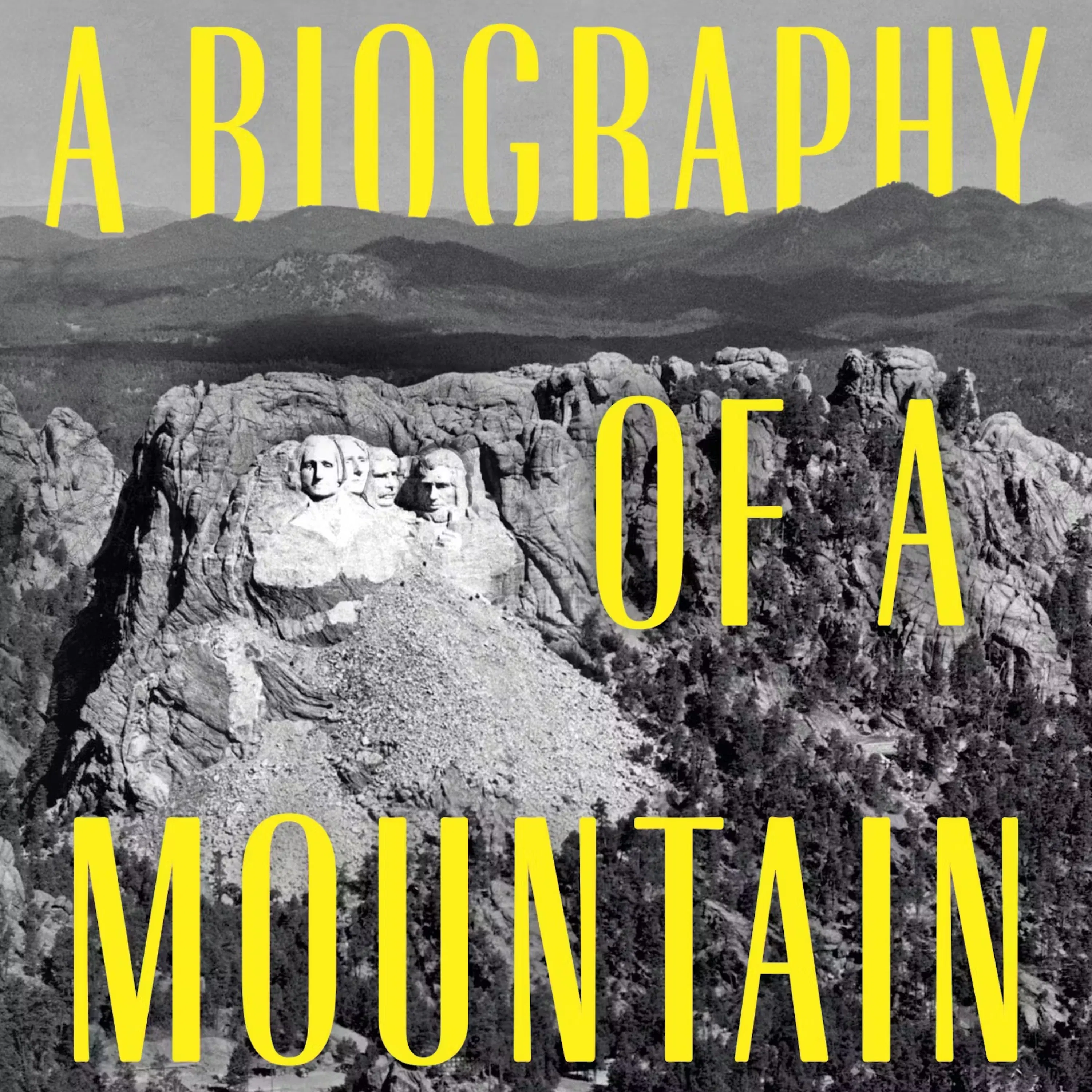
Matthew Davis | The Making and Meaning of Mount Rushmore
Mount Rushmore has a complicated and fascinating history. Long before the faces of American presidents were carved into the granite face of the mountain, the land was sacred to the Lakota. Matthew Davis wrote A Biography of a Mountain: The Making and Meaning of Mount Rushmore. He shares his insights into the history from broken treaties to plans for an attraction to boost tourism. Buy the book A Biography of a Mountain: The Making and Meaning of Mount Rushmore on Amazon or your favorite book store. Check out my other podcasts Fun Facts Daily | Art Smart | Rainbow Puppy Science Lab Who ARTed is an Airwave Media Podcast. If you are interested in advertising on this or any other Airwave Media show, email: [email protected] Learn more about your ad choices. Visit megaphone.fm/adchoices
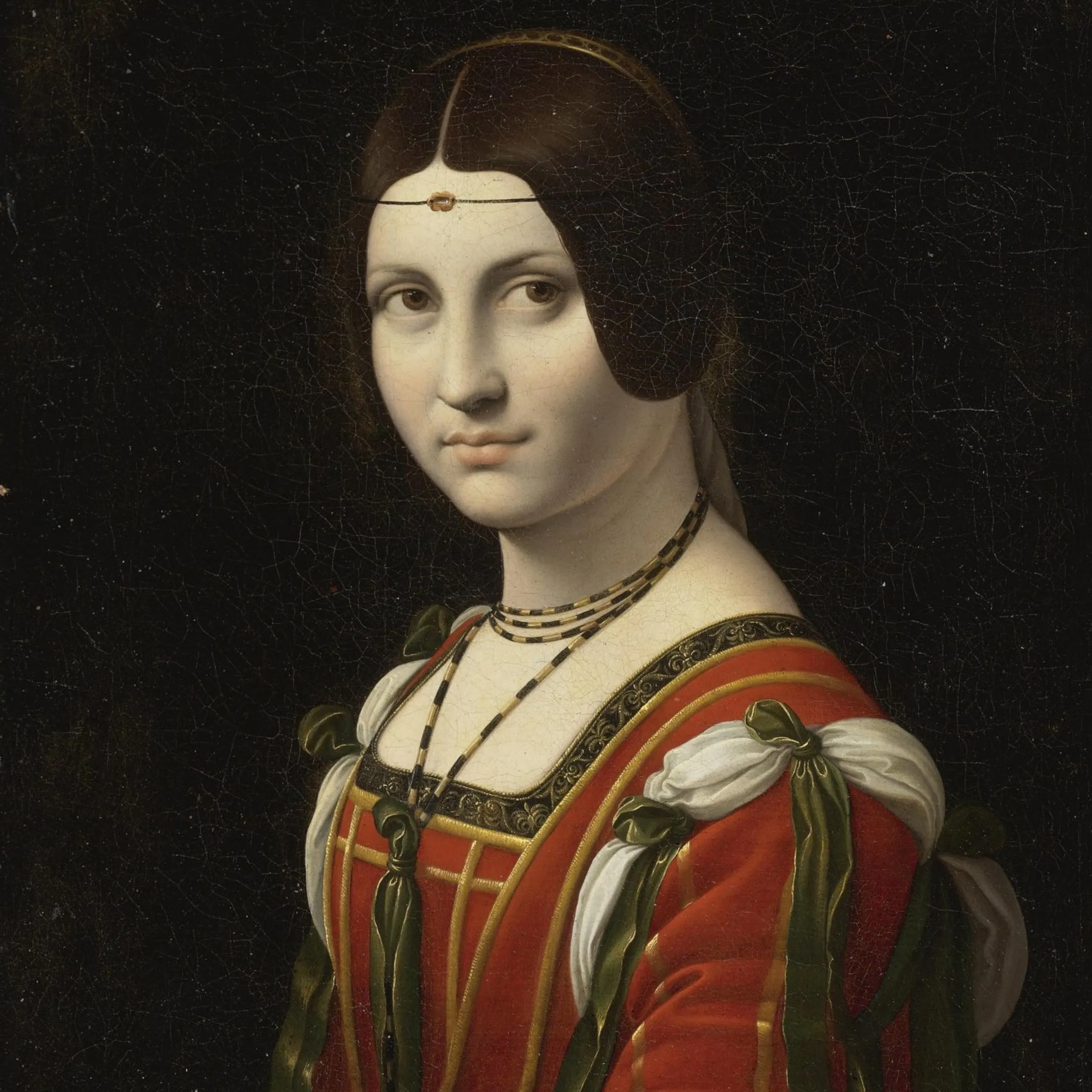
Hahn v Duveen | The Case of the American Leonardo (encore)
An artist’s skillful application of paint will make an artwork good, but a good story makes that artwork great. In 2010, a painting went on auction at Sotheby’s and sold for $1.5 million and I would argue that price is not because of the image, or the artist, but rather the story. Harry Hahn was an American pilot fighting in World War 1. He was fortunate to not only survive the brutal war, but also while serving overseas, he met the love of his life. He married a French woman named Andree Lardoux. Her aunt, the Comtesse Louise de Montaut decided to give the young couple one of the old paintings in her collection as a wedding present. This gift seemed particularly special as a French connoisseur by the name of George Sortais had examined the painting in 1916 and he had declared it to be the work of none other than Leonardo da Vinci. Want to learn more? Head over to my website www.funfactsdailypod.com and be sure to listen to my other podcasts Who ARTed: Weekly Art History for All Ages or Art Smart. For family fun, check out my son's podcast Rainbow Puppy Science Lab Fun Facts Daily is an Airwave Media Podcast. If you are interested in advertising on this or any other Airwave Media show, email: [email protected] Learn more about your ad choices. Visit megaphone.fm/adchoices
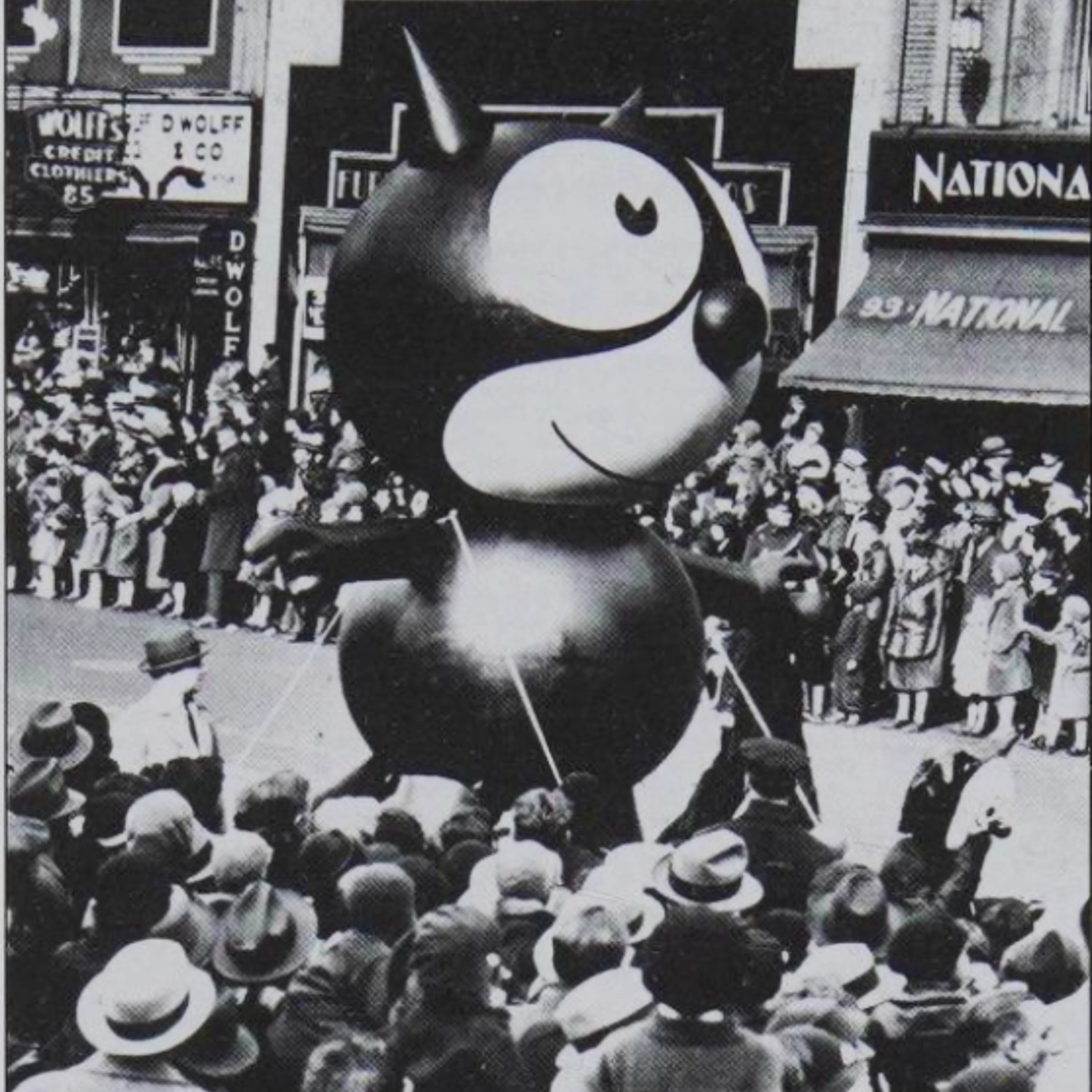
Tony Starg and the Macy's Thanksgiving Parade Balloons
The Macy’s Thanksgiving Day Parade is recognized globally as a holiday spectacle, but it also stands as one of the world's largest exhibitions of public art and engineering. Originating in 1924 as a celebration for the store’s immigrant employees, the event evolved under the artistic direction of puppeteer Tony Sarg. Sarg transformed the parade by replacing live zoo animals with "upside-down marionettes"—sculptures made of rubberized silk that utilized the physics of helium to revolutionize aerial performance. This tradition continues today through the Macy's Parade Studio, where artists blend Old World modeling techniques with 3D computer-aided design to create massive kinetic sculptures capable of navigating the logistical bottleneck of the Lincoln Tunnel. Beyond the floating pop culture icons, the parade features high art installations through the Blue Sky Gallery, an initiative commissioning works from contemporary masters like Jeff Koons, Takashi Murakami, and Yayoi Kusama. The history of these floating giants includes risky experiments, such as the brief era of releasing balloons for a monetary reward, and the development of hybrid vehicles known as "Falloons" and "Balloonicles." From the prototype Felix the Cat to modern masterpieces, the combination of buoyancy and puppetry turns the streets of New York into a moving gallery. Related episodes: Jeff Koons Takashi Murakami Yayoi Kusama KAWS Check out my other podcasts Fun Facts Daily | Art Smart | Rainbow Puppy Science Lab Who ARTed is an Airwave Media Podcast. If you are interested in advertising on this or any other Airwave Media show, email: [email protected] Learn more about your ad choices. Visit megaphone.fm/adchoices

The Highwaymen
In the racially segregated 1950s, a group of twenty-six African American artists from Fort Pierce, Florida, defied the economic limitations of the Jim Crow South by forging a unique path in the art world. Known today as the Florida Highwaymen, these entrepreneurs—including founding figures Alfred Hair and Harold Newton, and the sole female member Mary Ann Carroll—bypassed exclusionary white-only galleries to sell their work directly to the public. Painting vibrant, idealized Florida landscapes on inexpensive Upson board with crown molding frames, they traveled the state's roadways selling their art from the trunks of their cars to banks, motels, and individuals. Their unique "fast painting" technique, often utilizing palette knives and bold colors, allowed them to produce thousands of works featuring iconic Royal Poinciana trees, dramatic "fire skies," and serene backcountries. While originally sold for roughly $25 to $35, these paintings have since gained significant historical acclaim, leading to the group's induction into the Florida Artists Hall of Fame in 2004. Check out my other podcasts Fun Facts Daily | Art Smart | Rainbow Puppy Science Lab Who ARTed is an Airwave Media Podcast. If you are interested in advertising on this or any other Airwave Media show, email: [email protected] Learn more about your ad choices. Visit megaphone.fm/adchoices
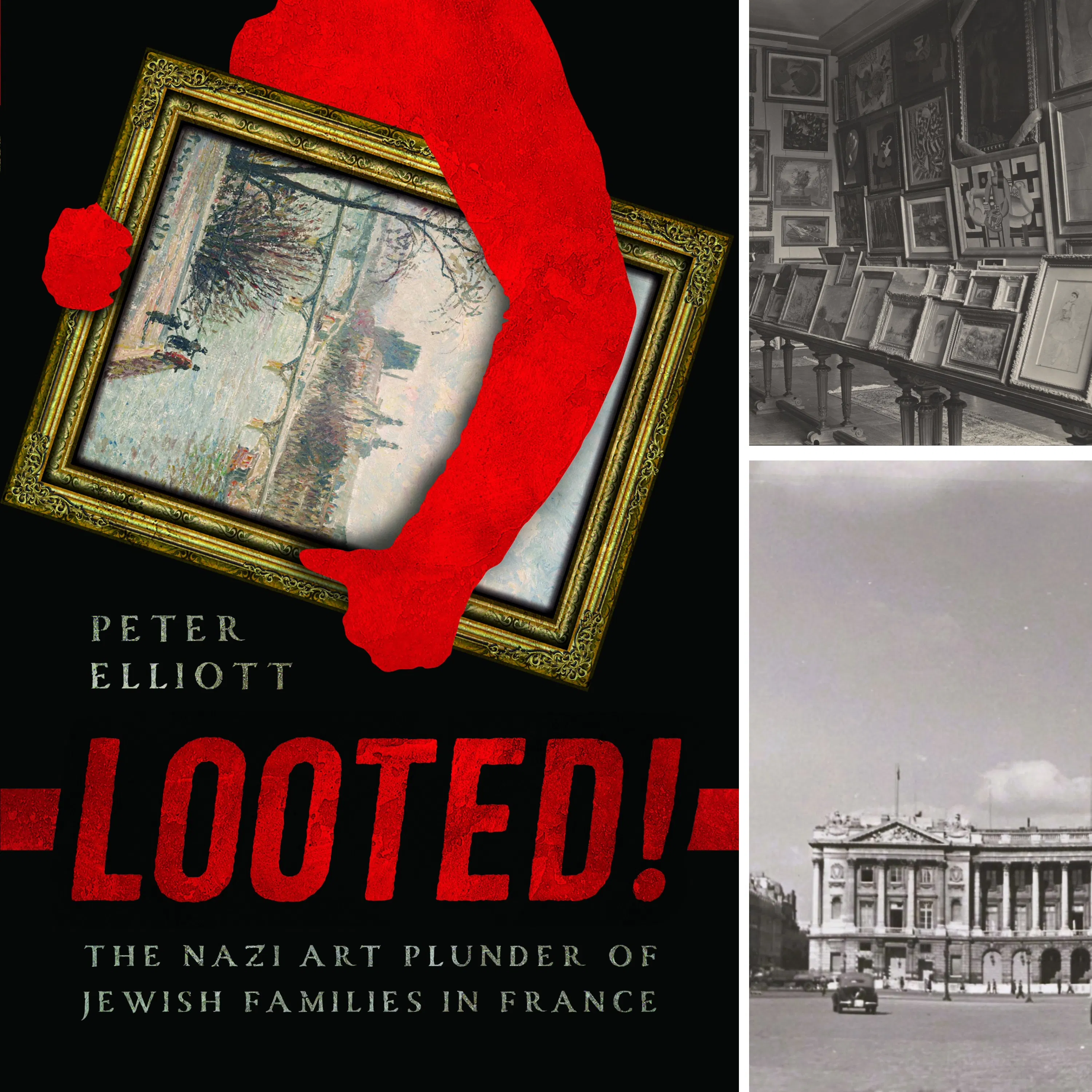
Peter Elliott | Looted! The Nazi Plunder of Jewish Families in France
My guest this week is Peter Elliott, author of the new book, Looted! The Nazi Plunder of Jewish Families in France. Tens of thousands of artworks were taken around the time of World War 2. This new book focuses on the experiences of the families who lost their collections. In the interview, Peter shared his tremendous insights into not only the problems of the theft, but also the struggles with restitution in the decades following the war. Buy Looted! the Nazi Plunder of Jewish Families in France on Amazon Related episodes: The Unbelievable Story of Han van Meegeren Wolfgang Beltrachi The Art Spy Check out my other podcasts Fun Facts Daily | Art Smart | Rainbow Puppy Science Lab Who ARTed is an Airwave Media Podcast. If you are interested in advertising on this or any other Airwave Media show, email: [email protected] Learn more about your ad choices. Visit megaphone.fm/adchoices
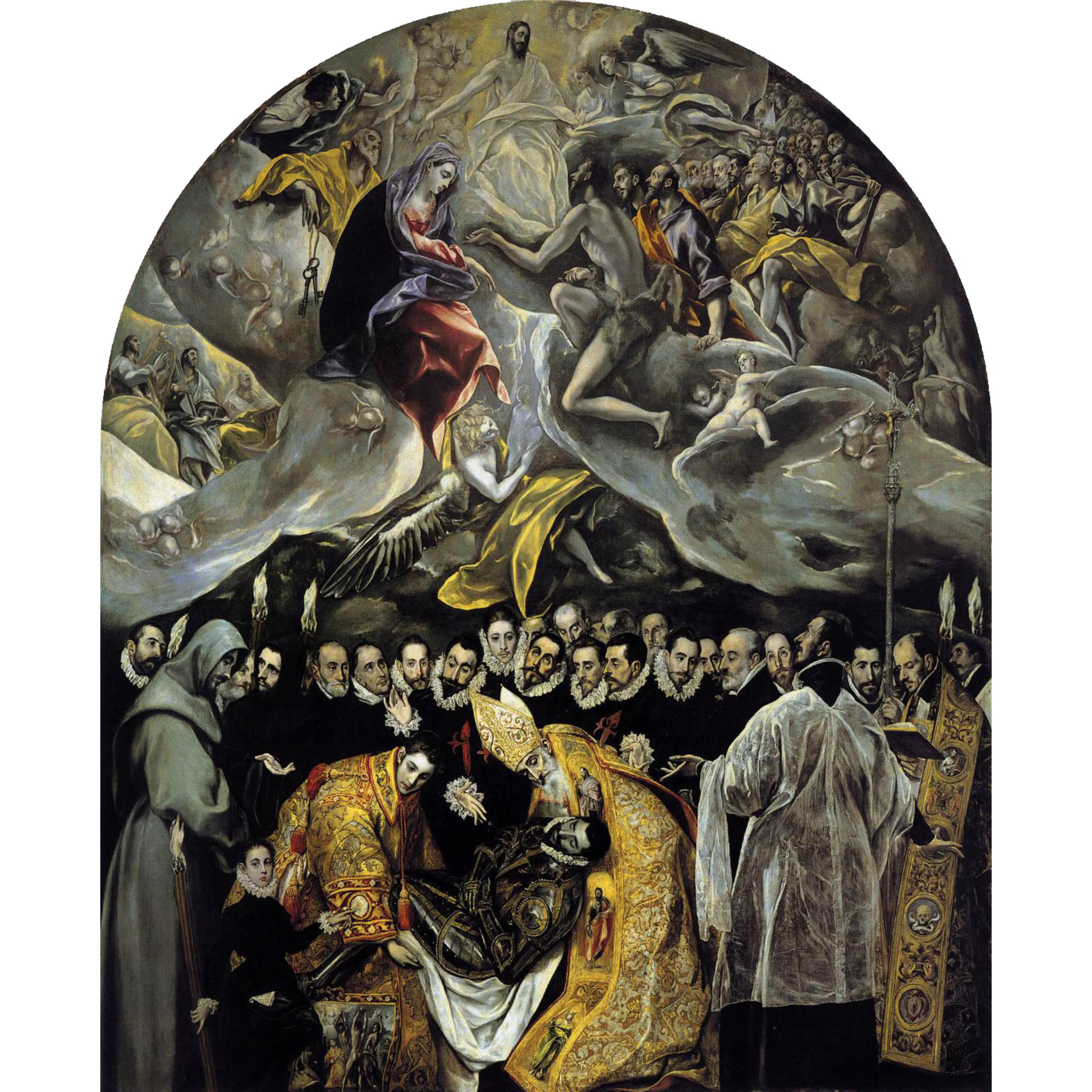
El Greco | The Burial of the Count Orgaz
Domenikos Theotokopoulos, better known as El Greco, was a singular figure in art history who bridged the gap between Byzantine tradition and Western modernism. Born in Crete in 1541, he trained as an icon painter before moving to Venice and Rome, where he absorbed the vibrant colors of the High Renaissance. However, his bold personality and vocal criticism of local heroes like Michelangelo made it difficult for him to thrive in Italy. In 1577, he moved to Toledo, Spain, where he spent the rest of his life creating his most famous works for the Church and private intellectuals. El Greco is best remembered as a leading Mannerist. His style rejected strict realism in favor of emotional intensity, featuring elongated figures twisted in unnatural poses and bathed in eerie, acid-green or blue light. While a popular scientific theory in the early 20th century suggested these distortions were caused by astigmatism, historians have proven they were a deliberate stylistic choice intended to emphasize spiritual mysticism. He was also known for his litigious nature, frequently suing clients to ensure painting was respected as a high intellectual pursuit rather than a common craft. One of his crowning achievements is The Burial of the Count Orgaz (1586). This massive painting, located in the Church of Santo Tomé in Toledo, visually synthesizes his two main influences. The lower half depicts a miraculous funeral with striking realism, including portraits of local contemporaries, while the upper half represents the heavens with swirling, abstract forms. Although El Greco fell into obscurity for nearly three centuries after his death in 1614, he was rediscovered by Romantic and Expressionist artists in the 19th century. His unique approach to form and space became a major influence on modern masters, specifically Pablo Picasso, who used El Greco’s distortion as a blueprint for the development of Cubism. Check out my other podcasts Fun Facts Daily | Art Smart | Rainbow Puppy Science Lab Who ARTed is an Airwave Media Podcast. If you are interested in advertising on this or any other Airwave Media show, email: [email protected] Learn more about your ad choices. Visit megaphone.fm/adchoices
10 Prehistoric Artworks
Explore a global journey through prehistoric art, from the earliest figurative works in Africa to foundational pieces in the Americas, Europe, and Asia. This overview, drawing from the AP Art History Global Prehistory curriculum, examines the complex belief systems, ritual practices, and artistic skills of early humanity through ten key artworks. Apollo 11 Stones (Namibia, c. 25,500–25,300 BCE) Great Hall of the Bulls (Lascaux, France, c. 15,000 BCE) Camelid Sacrum in the shape of a canine (Tequixquiac, Mexico, c. 14,000–7,000 BCE) Running Horned Woman (Algeria, c. 6,000–4,000 BCE) Beaker with Ibex Motifs (Susa, Iran, c. 4,200 BCE) Anthropomorphic Stele (Arabian Peninsula, c. 4,000 BCE) Jade Cong (Liangzhu, China, c. 3,300–2,200 BCE) Lapita Terracotta Fragment (Solomon Islands, c. 1,000 BCE) The Ambum Stone (Papua New Guinea, c. 1,500 BCE) Tlatilco Female Figurine (Central Mexico, c. 1,200 BCE) Related Episodes: Chris Boylan | The Laiagam Stone Lascaux Cave Art Apollo 11 Stones Check out my other podcasts Fun Facts Daily | Art Smart | Rainbow Puppy Science Lab Who ARTed is an Airwave Media Podcast. If you are interested in advertising on this or any other Airwave Media show, email: [email protected] Learn more about your ad choices. Visit megaphone.fm/adchoices
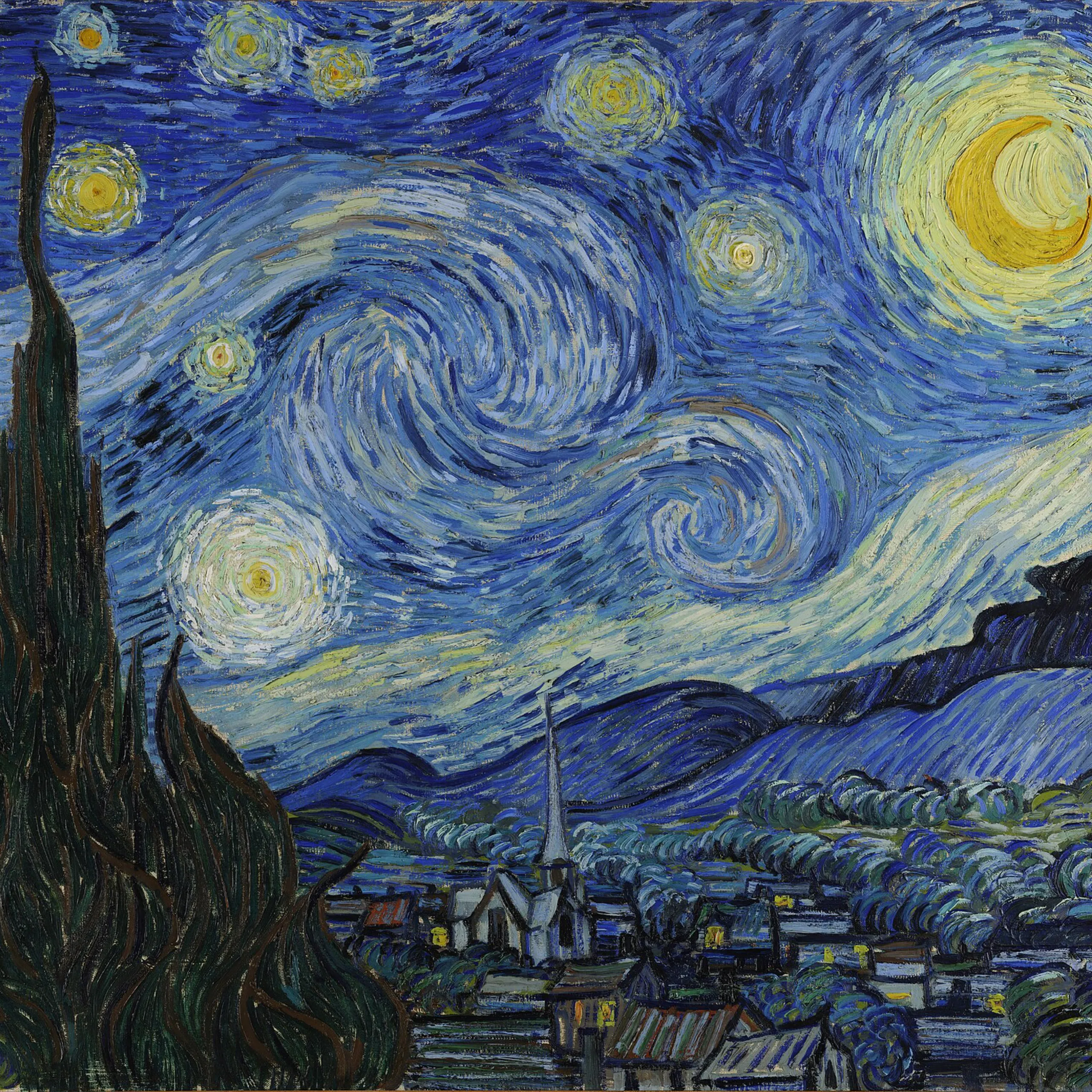
Vincent van Gogh | The Starry Night (encore)
Vincent van Gogh saw little commercial success during his lifetime, but he loved art and he worked to forge relationships with other artists he could learn from. The Starry Night came about late in his short career after Vincent van Gogh was hospitalized. He painted the view from his window, but rather than painting things exactly as he saw them, he painted a sort of composite landscape of views from different nights and even different locations. He moved the cypress tree to the foreground and added a little town nestled in the mountains despite the town not being visible from his window. This marked a major shift in painting away from observation of the external world to artists creating work as a show of their internal thoughts and feelings. Related episodes: Vincent van Gogh (part 1) | The Potatoe Eaters Vincent van Gogh (part 2) | Starry Night Vincent van Gogh | Sunflowers Loving Vincent - a Film Made of Paintings Did Vincent van Gogh Really Only Sell One Painting? Art Smart: Impressionism & Post Impressionism Check out my other podcasts Fun Facts Daily | Art Smart | Rainbow Puppy Science Lab Who ARTed is an Airwave Media Podcast. If you are interested in advertising on this or any other Airwave Media show, email: [email protected] Learn more about your ad choices. Visit megaphone.fm/adchoices
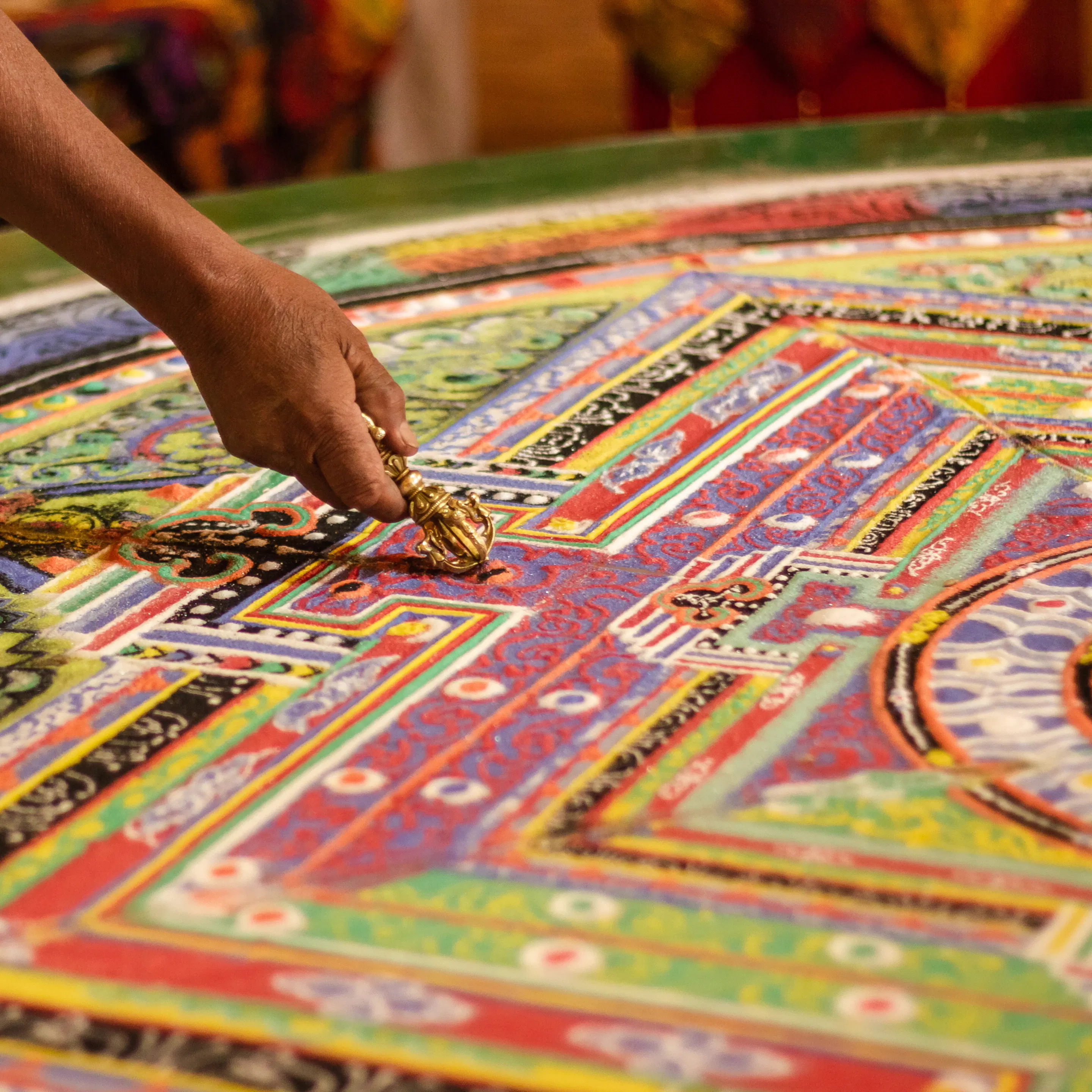
Sand Mandalas (encore)
The Buddhist monks of Tibet who are known for their tradition of sand mandalas destroy the work after completing it. The word mandala comes from Sanskrit meaning “circle” but a mandala is not your average two-dimensional shape consisting of an outer boundary called the circumference made up of points all equidistant from a fixed center point. A mandala representation of the universe. While many people talk about Mandalas in reference to radial symmetry, mandala designs have spiritual significance beyond mere repetition. The act of creating a sand mandala is meditative. It requires monks to focus, to be calm, still and deliberate in their actions. And then, after completing the construction, they move on to a ritual deconstructing the piece. Even the deconstruction is a part of the artistic process with spiritual significance. Destroying the sand art is a reminder of the transitory nature of the universe. Check out my other podcasts Fun Facts Daily | Art Smart | Rainbow Puppy Science Lab Who ARTed is an Airwave Media Podcast. If you are interested in advertising on this or any other Airwave Media show, email: [email protected] Learn more about your ad choices. Visit megaphone.fm/adchoices

Hans Holbein the Younger | The Ambassadors (encore)
Hans Holbein the Younger painted The Ambassadors in 1533. It is a massive, life sized double portrait filled with symbolism that gives us insights into the political and religious upheaval of the day. Still today, it is probably best known for the anamorphic skull cutting across the floor in the composition. In the Ambassadors, Holbein presents the symbol of mortality as a specter that looms ever present though sometimes difficult to make sense of. It can feel like an odd intrusion disrupting a picture carefully and beautifully constructed but if we shift our view a little we can see that nothing lasts forever. Life and the world are constantly changing but there can be a beauty in that too if we can bring ourselves to look at it from the right perspective. Check out my other podcasts Fun Facts Daily | Art Smart | Rainbow Puppy Science Lab Who ARTed is an Airwave Media Podcast. If you are interested in advertising on this or any other Airwave Media show, email: [email protected] Learn more about your ad choices. Visit megaphone.fm/adchoices

Emma Stebbins | Industry & Commerce
My guest for this episode is Karli Wurzelbacher, curator for The Heckscher Museum of Art. She shared her insights into Emma Stebbins, a great neoclassical sculptor from the 19th century. Around the age of 40, Stebbins left America for Europe, where she studied the classic works found around Italy and rose to prominence as a sculptor. Her work was highly prized during her lifetime, but sadly, after she passed away, her work and neoclassical art more broadly fell out of favor. She was long overlooked by history despite high-profile work, including the Bethesda Fountain in New York's Central Park. The Hecksher Museum of Art is hosting the exhibition, Emma Stebbins: Carving Out History. The show is open now through March 26, 2026. For more information, head over to the Heckscher Musuem of Art's website. If you cannot make it out to see the exhibition in person, you can purchase the book https://www.heckscher.org/stebbinscatalog/ Check out my other podcasts Fun Facts Daily | Art Smart | Rainbow Puppy Science Lab Who ARTed is an Airwave Media Podcast. If you are interested in advertising on this or any other Airwave Media show, email: [email protected] Learn more about your ad choices. Visit megaphone.fm/adchoices

Edgar Degas (encore)
Degas is famous for his beautiful depictions of ballet dancers, but he was also giving a glimpse into the tough reality those dancers experienced. Edgar Degas, born Hilaire-Germain-Edgar De Gas in 1834, grew up in a wealthy Parisian family with strong ties to the arts. In 1855, he entered the École des Beaux-Arts, where he trained under Louis Lamothe, a follower of the neoclassical artist Ingres. During this period, Degas focused on traditional subjects, such as historical scenes and portraits and he was fairly successful at it. Degas would be one of the few Impressionists accepted by the Paris Salon although not for the ballet dancers and the style of work we associate with him today. Degas was deeply interested in depicting movement and the human figure in action. Ballet dancers, with their graceful poses and dynamic movements, provided him with a perfect subject to explore these artistic challenges. These works provided Degas with opportunities to experiment with perspective, composition, and lighting. He used unusual angles and cropping to create dynamic and unexpected compositions, often emphasizing the patterns of light and shadow on the dancers' bodies and costumes. Ultimately, I think these works have stood the test of time because we can look at them through different lenses and still find something to appreciate. Whether social commentary, a peek behind the curtain and glimpse into another person’s lived experiences or simply an aesthetic experience reveling in the lights, the colors, the texture and flow of the costumes and the graceful movements of the dancers, there is something beautiful in the work. Related episodes: Claude Monet Pierre-Auguste Renoir Check out my other podcasts Fun Facts Daily | Art Smart | Rainbow Puppy Science Lab Who ARTed is an Airwave Media Podcast. If you are interested in advertising on this or any other Airwave Media show, email: [email protected] Learn more about your ad choices. Visit megaphone.fm/adchoices
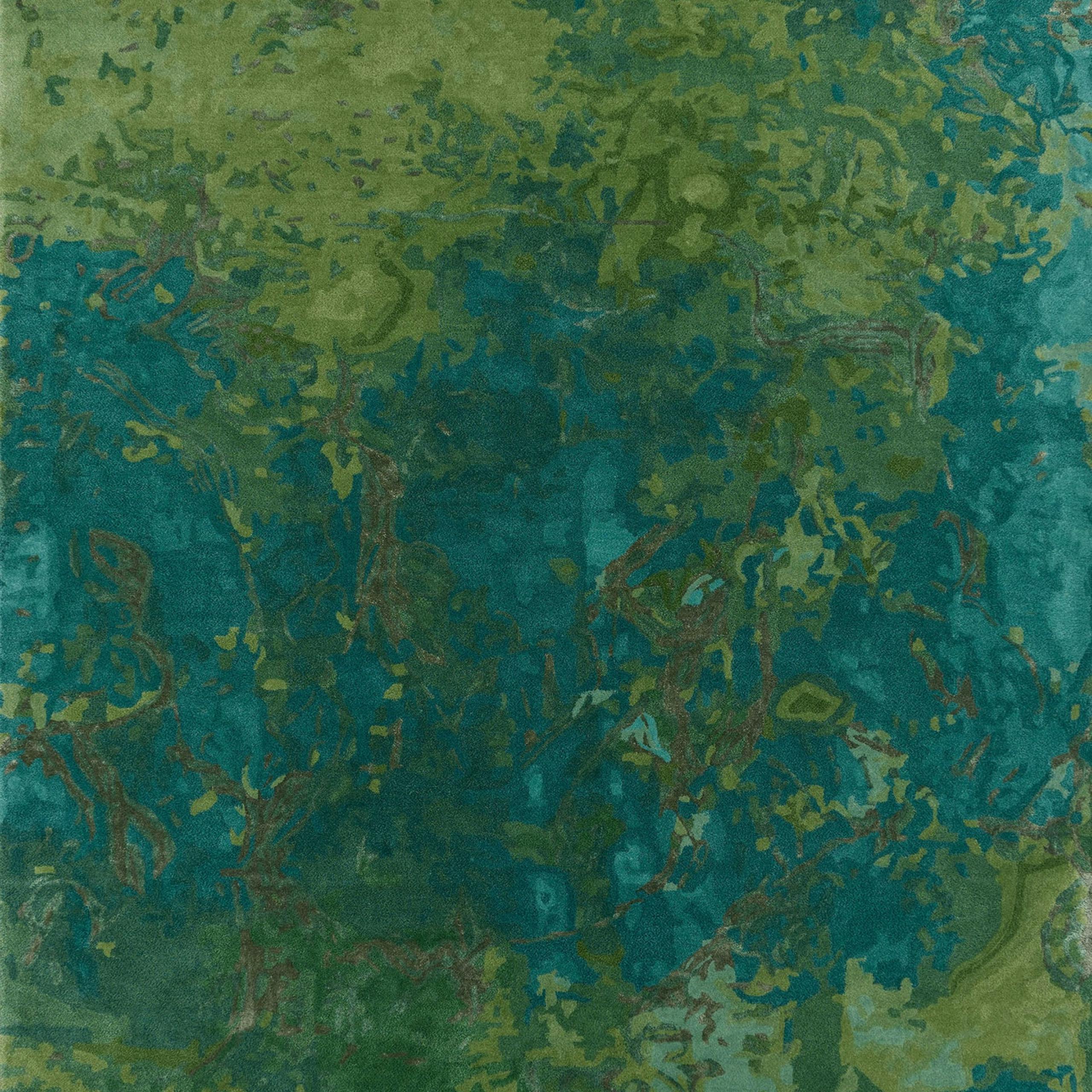
Artist Interview | Laurie Roberts
This week I have part two of my interview with Laurie Roberts. Last week, she shared insights into Larry Roberts, her late husband. He made beautiful abstract paintings known for their rich colors. Laurie has given his paintings some new life as she translates some of those paintings into textiles. It was amazing to learn about her design process and how she and her team translate these complex designs with layered colors and organic shapes into rugs, pillows and wall coverings. You can find Laurie's work at LarryRobertsChicago.com Check out my other podcasts Fun Facts Daily | Art Smart | Rainbow Puppy Science Lab Who ARTed is an Airwave Media Podcast. If you are interested in advertising on this or any other Airwave Media show, email: [email protected] Learn more about your ad choices. Visit megaphone.fm/adchoices

Giovanni Battista Lombardi | Veiled Woman
Giovanni Battista Lombardi (1822-1877) was a prominent Italian sculptor of the 19th century, originally from Rezzato, near Brescia. After moving to Rome, he studied under the leading neoclassical sculptor Pietro Tenerani, which grounded his style in classical ideals of beauty and harmony. Lombardi's work is celebrated for its blend of the cool perfection of Neoclassicism with the growing trend toward the emotional depth of Realism. He became highly sought after for two specialties: moving funerary monuments and idealized female figures. A significant portion of his career was dedicated to creating sculptures for the Campo Santo Vantiniano, a monumental cemetery in Brescia, where his work was praised for its quiet, human emotion. Internationally, Lombardi is best known for his masterful sculptures of veiled women. This subject was a popular test of a sculptor's skill in the 19th century, requiring them to create a trompe-l'œil (deceive the eye) illusion of transparent fabric from a single block of hard marble. This technical brilliance was not just an artistic feat; during the Risorgimento (the unification of Italy), such works were a powerful symbol of renewed Italian cultural pride and artistic genius. Lombardi created several variations of the veiled woman, each unique in its expression and composition. Check out my other podcasts Fun Facts Daily | Art Smart | Rainbow Puppy Science Lab Who ARTed is an Airwave Media Podcast. If you are interested in advertising on this or any other Airwave Media show, email: [email protected] Learn more about your ad choices. Visit megaphone.fm/adchoices

Larry Roberts | From the Beginning
Larry Roberts was a Chicago-based artist best known for his abstract paintings with rich colors and textures. I was able to interview Laurie Roberts, his wife, about how he created his work and how she is carrying on his legacy. This will be a two part interview. This week I have Laurie sharing about Larry's life and his work. In next week's episode, Laurie will share her experience in the design field and how she is translating Larry's work into different media. Check out larryrobertschicago.com to see Larry's work and Laurie's designs based on his paintings. Related episodes: Leonardo da Vinci | The Mona Lisa Salvador Dali | The Persistence of Memory Check out my other podcasts Fun Facts Daily | Art Smart | Rainbow Puppy Science Lab Who ARTed is an Airwave Media Podcast. If you are interested in advertising on this or any other Airwave Media show, email: [email protected] Learn more about your ad choices. Visit megaphone.fm/adchoices

Bridget Riley | Movement in Squares (encore)
Bridget Riley, born in London in 1931, is a prominent figure in the Op Art movement. Early life experiences, including wartime evacuation to Cornwall and exposure to nature's patterns, influenced her artistic sensibilities. Her style evolved with influences from Seurat, Pollock, and Balla. Riley's breakthrough came in the 1960s with black and white geometric paintings like "Fall" and "Current," which created illusions of movement and depth. Her work gained international recognition through exhibitions like "The Responsive Eye" at MoMA. Riley's exploration of color and form continues to challenge viewers' perceptions and solidify her place in art history. A key work, "Movement in Squares" (1961), exemplifies her innovative use of simple elements to produce dynamic optical effects, marking a pivotal moment in Op Art and influencing various fields beyond fine art. Check out my other podcasts Fun Facts Daily | Art Smart | Rainbow Puppy Science Lab Who ARTed is an Airwave Media Podcast. If you are interested in advertising on this or any other Airwave Media show, email: [email protected] Learn more about your ad choices. Visit megaphone.fm/adchoices

Artist Interview Tyler Loftis | The Shell
Tyler Loftis is a contemporary artist based out of New York. Loftis developed a practice rooted that respects traditional practices like drawing and painting from observation, but also celebrating and embracing art as a dialogue with the audience's perceptions having equal weight to the artist's intention. Believing that "artists are course correctors," he is committed to democratizing the art world by removing elitism and fostering human connection. This mission has driven him to found institutions like The Fire Barn Gallery and the platform AllArtWorks, as well as philanthropic initiatives like Portraits for Purpose, all aimed at supporting artists and creating greater access to fine art outside of traditional systems. Find Tyler Loftis online: Official Website All Art Works Foundation Check out my other podcasts Fun Facts Daily | Art Smart | Rainbow Puppy Science Lab Who ARTed is an Airwave Media Podcast. If you are interested in advertising on this or any other Airwave Media show, email: [email protected] Learn more about your ad choices. Visit megaphone.fm/adchoices

Jeff Koons | Pink Panther (encore)
Jeff Koons, born in 1955, displayed an early interest in art. As a teenager, he called Salvador Dali's hotel and arranged to meet the artist. He was inspired by Dali and went on to study art in college. Koons supported himself with various jobs, including working at the Museum of Contemporary Art in Chicago, working the information desk at MoMA and as a commodities broker in New York. He gained recognition in the 1980s with his "The New" and "Equilibrium" series, and achieved international fame with his "Banality" series, which challenged notions of art and taste. Koons's work often explores themes of consumer culture, mass production, and the relationship between art and commerce. He is known for his meticulous approach, often employing skilled artisans to create his sculptures. Koons's "Pink Panther" (1988) exemplifies his exploration of popular culture and kitsch, challenging traditional notions of art and value. Related episodes: Salvador Dali | The Persistence of Memory Andy Warhol Roy Lichtenstein | Look Mickey AP Art History Cram Session playlist on Spotify Check out my other podcasts Fun Facts Daily | Art Smart | Rainbow Puppy Science Lab Who ARTed is an Airwave Media Podcast. If you are interested in advertising on this or any other Airwave Media show, email: [email protected] Learn more about your ad choices. Visit megaphone.fm/adchoices

TLDR Le Corbusier | Villa Savoye
Le Corbusier (born Charles-Édouard Jeanneret) was a pioneer of modern architecture whose ideas reshaped our urban landscapes. A Swiss-born, French-naturalized architect, designer, and urban planner, Le Corbusier championed a new vision for living in the 20th century. His philosophy centered on the idea of a house as a "machine for living in." He envisioned a space defined by function, efficiency, and a stark, geometric beauty stripped of ornamentation. Using modern materials like reinforced concrete, he developed his seminal "Five Points of Architecture," which included lifting buildings on pilotis (columns), open floor plans, non-load-bearing facades, horizontal ribbon windows, and rooftop gardens. These principles found their ultimate expression in iconic buildings like the Villa Savoye. Beyond individual structures, Le Corbusier conceived of grand, often controversial, urban renewal projects, most famously the "Plan Voisin," which proposed demolishing the historic center of Paris to build a "Radiant City" of skyscrapers in parkland. While many of his city plans never materialized beyond paper drafts, his influence was global. 17 of his projects across seven countries are now designated as a collective UNESCO World Heritage site. From co-founding the Purism art movement to writing the influential book Toward an Architecture, Corbu's whose work provoked debate and defined the principles of modernism. Check out my other podcasts Fun Facts Daily | Art Smart | Rainbow Puppy Science Lab Who ARTed is an Airwave Media Podcast. If you are interested in advertising on this or any other Airwave Media show, email: [email protected] Learn more about your ad choices. Visit megaphone.fm/adchoices

TLDR Medieval Architecture
Medieval European architecture is defined by two major successive styles: Romanesque and Gothic. Romanesque architecture (c. 1000–1200 CE) is characterized by massive, thick walls, rounded arches, and a heavy, fortress-like appearance. In the 12th century, Gothic architecture introduced innovations like the pointed arch, the ribbed vault, and the flying buttress. These engineering advancements functioned as an external skeleton, distributing the weight of the roof. This allowed for significantly taller structures with thinner walls that could be opened up for enormous stained-glass windows. Other key facts from the period include the design of medieval castles, which were military fortresses built for defense over comfort. Gargoyles on cathedrals were not merely decorative but were functional water spouts that protected the building's masonry from water erosion. The vibrant stained-glass windows served a practical purpose as well, acting as giant picture books to teach biblical stories to a largely illiterate population. The Cathedral of Notre-Dame de Paris is a primary example of Gothic architecture; its construction began in 1163, took nearly 200 years to complete, and it was one of the first buildings to utilize flying buttresses. Check out my other podcasts Fun Facts Daily | Art Smart | Rainbow Puppy Science Lab Who ARTed is an Airwave Media Podcast. If you are interested in advertising on this or any other Airwave Media show, email: [email protected] Learn more about your ad choices. Visit megaphone.fm/adchoices

TLDR Tarsila do Amaral
Explore the life and work of Tarsila do Amaral, a foundational artist of Brazilian modernism and one of the most celebrated figures in Latin American art history. Born in 1886, Tarsila brought the avant-garde lessons of European Cubism back to her native Brazil, fusing them with local colors and themes to forge a completely new artistic identity for her country. This overview delves into her pivotal role in the Grupo dos Cinco (Group of Five) and the development of the Antropofagia (Cultural Cannibalism) movement, which proposed symbolically "devouring" foreign influences to create a uniquely Brazilian culture. Discover the story behind her iconic 1928 masterpiece, Abaporu, a painting that began as a private birthday gift for her husband and ended up launching a cultural revolution. The summary also highlights Tarsila's signature "caipira" color palette, inspired by the rustic landscapes of Brazil, her status as a fashion icon in 1920s Paris, and her out-of-this-world legacy as the namesake for a crater on the planet Mercury. Tarsila do Amaral's work represents a powerful declaration of cultural independence and remains a vibrant touchstone for artists today. Check out my other podcasts Fun Facts Daily | Art Smart | Rainbow Puppy Science Lab Who ARTed is an Airwave Media Podcast. If you are interested in advertising on this or any other Airwave Media show, email: [email protected] Learn more about your ad choices. Visit megaphone.fm/adchoices

TLDR Illuminated Manuscripts
Illuminated manuscripts are the stunning, handcrafted books of the medieval world, created through a meticulous process in monastery workshops known as scriptoria. Scribes would copy text onto processed animal skin, or vellum, while artists known as illuminators added intricate illustrations and shimmering gold leaf. The term 'illuminated' comes from this dazzling use of gold and silver, which made the pages glitter like sacred objects. While gold provided the glimmer, the most precious material was often the brilliant blue pigment ultramarine, ground from lapis lazuli imported from Afghanistan. In addition to the sacred text, the margins of these books often contained whimsical and bizarre doodles, known as marginalia, featuring everything from knights battling snails to musical monkeys. A pinnacle of this art form is the Book of Kells, a masterpiece of Insular art created by Celtic monks around 800 CE. It is celebrated for its dense, complex Celtic knotwork and vibrant illustrations, most famously on its renowned Chi-Rho page (Folio 34r), a dizzying and meditative work of art that transforms the name of Christ into a sacred image filled with hidden figures and profound symbolism. Check out my other podcasts Fun Facts Daily | Art Smart | Rainbow Puppy Science Lab Who ARTed is an Airwave Media Podcast. If you are interested in advertising on this or any other Airwave Media show, email: [email protected] Learn more about your ad choices. Visit megaphone.fm/adchoices
Introducing If Objects Could Talk
bonusI am putting a special bonus episode in the feed this week to share a new podcast from Getty. If Objects Could Talk is a great family friendly podcast that gives voice to art and artifacts so listeners can explore history in a whole new way. What dangers await Athena’s brave and loyal owl at the Greek marketplace? This Athenian coin shares his take on how money was made and used in ancient Greek city states—and how different states had different rules around the agora, or marketplace, that could sometimes get you into trouble! Find If Objects Could Talk on your favorite podcast platform: https://pod.link/1833978909?view=apps&sort=popularity Learn more about your ad choices. Visit megaphone.fm/adchoices
TLDR Ibrahim El-Salahi | The Inevitable
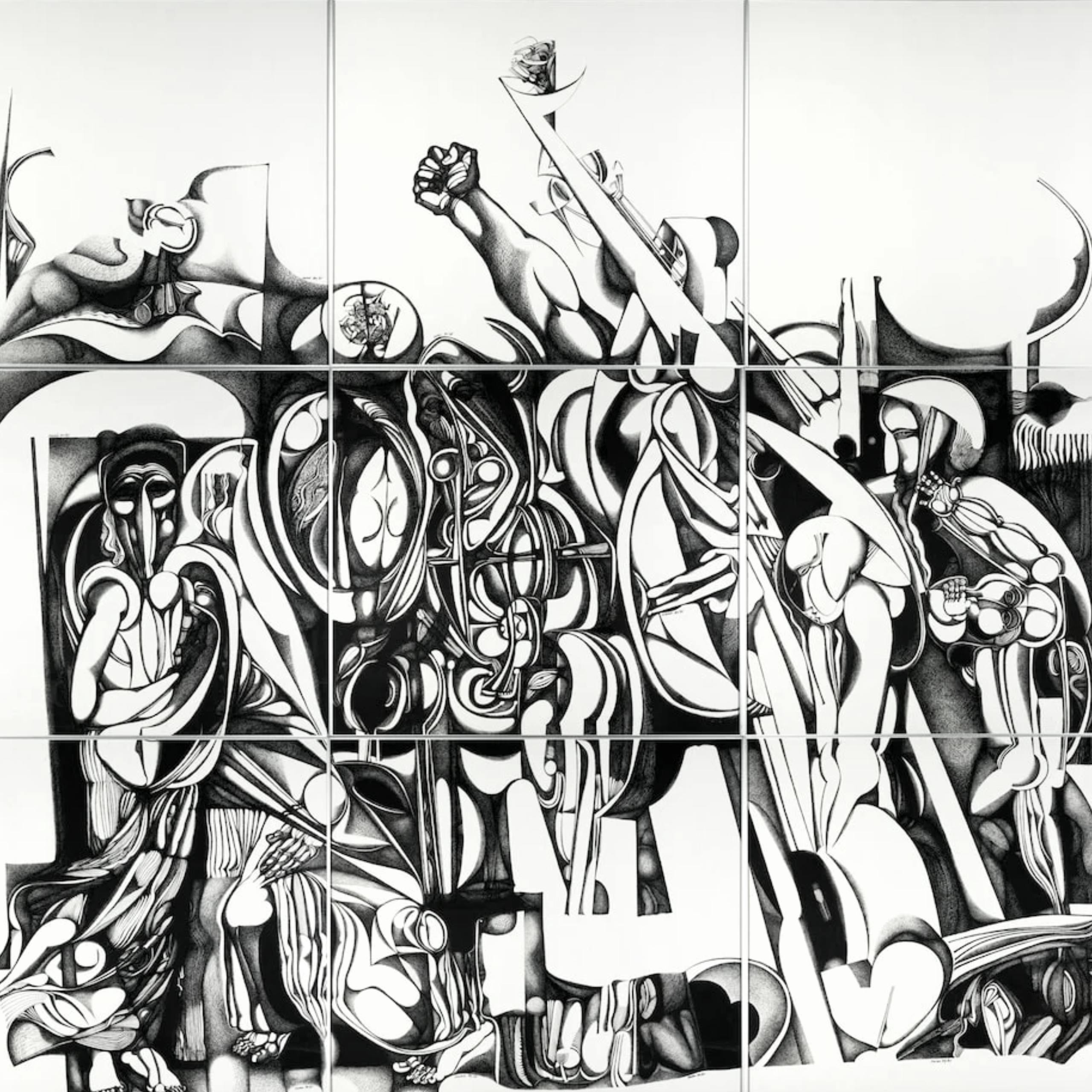
My TLDR episodes are meant to be short and to the point with a few key facts to know about the artist and a look at one of their major works. This episode explores the life and work of Ibrahim El-Salahi, a pivotal figure in Sudanese and African modernism. Born in 1930 in Omdurman, Sudan, El-salahi's artistic journey began with the study of calligraphy under his father. After formal art training in Khartoum and at London's Slade School of Fine Art, he developed a unique visual language that blended Western modernist styles like Cubism and Surrealism with his Islamic and African heritage. This innovative approach, which often incorporated calligraphic forms and earthy tones inspired by the Sudanese landscape, was central to the modernist art movement known as the Khartoum School. His wrongful imprisonment in 1975 profoundly influenced his work, leading to the creation of his "Prison Notebook." His significant contributions to the art world are highlighted by his 2013 retrospective at the Tate Modern, the first for an African artist, and the acquisition of his monumental work, "The Genealogies of Trees," by New York's Museum of Modern Art (MoMA). The Inevitable is a large-scale black and white work, created during a period of personal grief and political turmoil in Sudan. The piece showcases his signature style, combining the fractured forms of Cubism, the dreamlike qualities of Surrealism, and the expressive lines of Arabic calligraphy to create a dense, chaotic, and emotionally charged composition. The Inevitable stands as a testament to El-salahi's ability to transform personal and national trauma into a universal statement on the enduring resilience of the human spirit. Related Episode: Max Beckmann | Night Check out my other podcasts Fun Facts Daily | Art Smart | Rainbow Puppy Science Lab Who ARTed is an Airwave Media Podcast. If you are interested in advertising on this or any other Airwave Media show, email: [email protected] Learn more about your ad choices. Visit megaphone.fm/adchoices
TLDR Georgia O'Keeffe | Sky Above Clouds IV
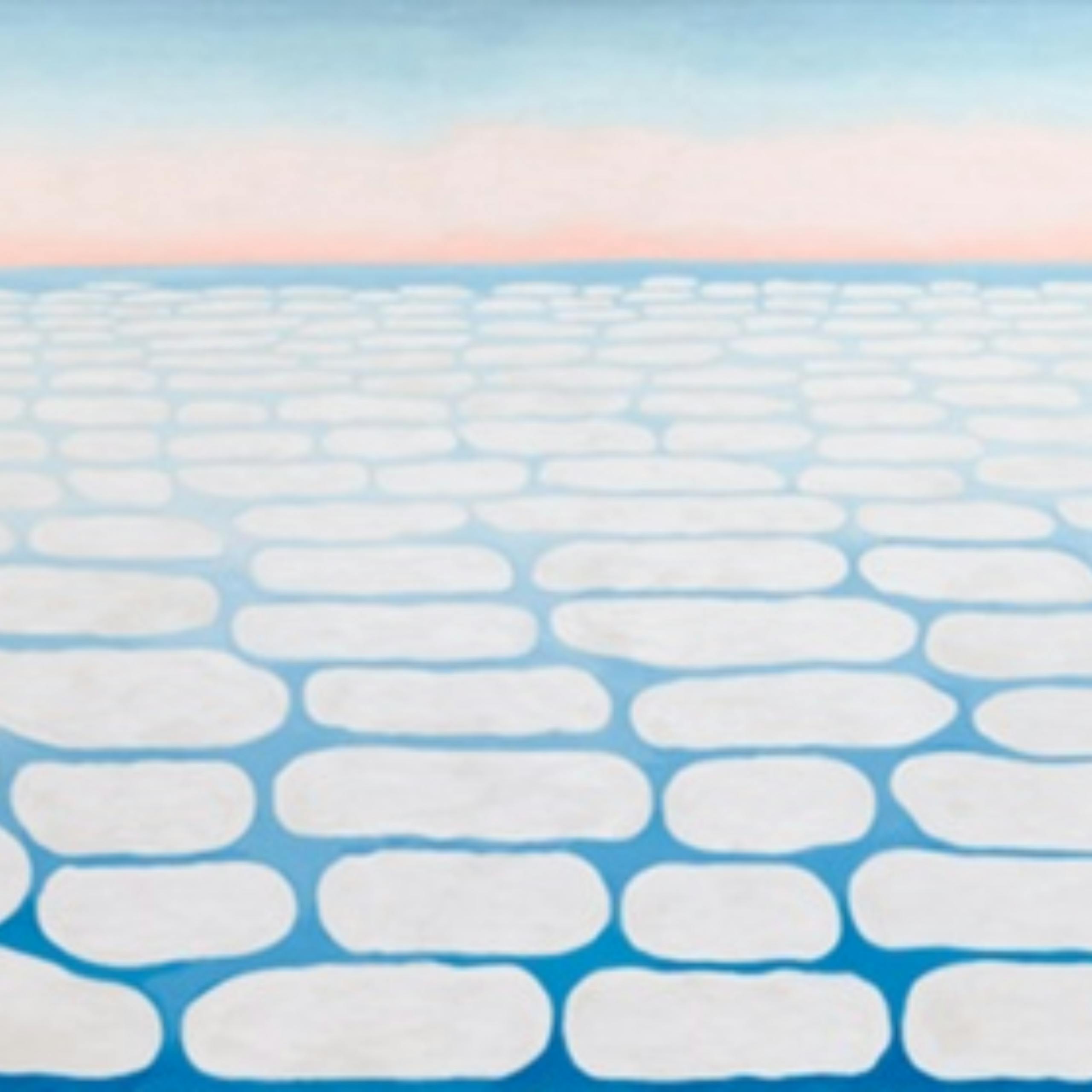
My TLDR episodes give a short and sweet overview with a few interesting facts about a great artist. Georgia O'Keeffe (1887-1986) stands as a foundational figure of American modernism, celebrated for her revolutionary contributions to art. Rising from a Wisconsin dairy farm to the forefront of the New York art world, her unique vision was shaped by the vast landscapes of Texas and, most famously, the American Southwest. O'Keeffe's relationship with photographer and gallerist Alfred Stieglitz, whom she later married, was pivotal in launching her career after he exhibited her abstract charcoal drawings in 1916. While she is renowned for her large-scale, sensual flower paintings, her body of work is vast, capturing the stark beauty of New Mexico's architecture, rolling hills, and sun-bleached desert bones. Discover the fascinating stories behind the artist, from her clever use of a Model A Ford as a mobile studio to paint in the remote desert to her distinct, self-made wardrobe that mirrored the clean, modern lines of her artwork. Learn about the time she was commissioned by the Hawaiian Pineapple Company (now Dole) in 1939 and returned with twenty paintings of the islands' lush scenery—but famously forgot the pineapple. Even after macular degeneration robbed her of her sight in the 1970s, O'Keeffe’s creative spirit endured as she turned to sculpture. Her monumental late-career masterpiece, Sky Above Clouds IV (1965), an enormous 24-foot-wide canvas inspired by her views from an airplane, showcases an artist who never stopped expanding her vision and finding the sublime in the world around her. Check out my other podcasts Fun Facts Daily | Art Smart | Rainbow Puppy Science Lab Who ARTed is an Airwave Media Podcast. If you are interested in advertising on this or any other Airwave Media show, email: [email protected] Learn more about your ad choices. Visit megaphone.fm/adchoices

TLDR Claude Monet | Water Lilies
As it is back to school season, I thought I would try making a series of episodes that are short and to the point to give students and anyone else interested a quick overview of the artist. Each of my TLDR episodes will give a very brief overview of the artist, 5 interesting things to know about them and a little insight into one of their major works. Claude Monet was a central figure in the Impressionist movement. His childhood in the coastal town of Le Havre shaped his lifelong fascination with light and water, leading him and his contemporaries to leave the studio and paint en plein air. This new approach, focused on capturing the fleeting sensory experience of a moment rather than a detailed representation, was initially mocked. The movement itself earned its name from a critic's dismissive review of Monet's painting, Impression, Sunrise. Delve deeper into the obsessive genius of the artist, from his custom-built floating studio on the Seine River to the world-famous garden he cultivated at his home in Giverny. This garden, and particularly its water lily pond, became the sole subject of his work for the last three decades of his life, resulting in approximately 250 oil paintings. Discover fascinating details about Monet's life, including his passion for gourmet food, his perfectionism that led him to destroy hundreds of his own canvases, and the remarkable story of how cataract surgery in his later years allowed him to perceive ultraviolet light, profoundly changing the colors in his final masterpieces. Check out my other podcasts Fun Facts Daily | Art Smart | Rainbow Puppy Science Lab Who ARTed is an Airwave Media Podcast. If you are interested in advertising on this or any other Airwave Media show, email: [email protected] Learn more about your ad choices. Visit megaphone.fm/adchoices

TLDR Gerhard Richter | Betty
Gerhard Richter, born in Dresden, Germany, in 1932, is a towering figure in contemporary art, whose life and work were forged by the tumultuous history of 20th-century Germany. Growing up under the Nazi regime and later living in Communist East Germany, Richter's early artistic education was in the state-sanctioned style of socialist realism. In 1961, he escaped to West Germany, where his career began to flourish. Rejecting adherence to a single style, Richter has spent decades exploring the possibilities of painting. His vast and varied body of work includes blurred photorealistic paintings based on found and personal photographs, monumental abstract pieces created with a giant squeegee, somber historical paintings, and modern stained glass designs. Richter's artistic practice is marked by a systematic and conceptual approach. He meticulously numbers each of his works in a catalogue raisonné, emphasizing their place in an ongoing investigation of how images are made and understood. His iconic abstract paintings are often created by dragging a large squeegee across layers of wet paint, a technique that introduces an element of chance and removes the traditional artist's hand. Richter's work frequently delves into the complex nature of memory and history, using his own family photographs—including a haunting image of his "Uncle Rudi" in a Nazi uniform—as source material. This tension between the personal and the historical, the abstract and the figurative, is powerfully captured in major works like his enigmatic 1988 portrait of his daughter, "Betty," and his celebrated stained-glass window for the Cologne Cathedral. Check out my other podcasts Fun Facts Daily | Art Smart | Rainbow Puppy Science Lab Who ARTed is an Airwave Media Podcast. If you are interested in advertising on this or any other Airwave Media show, email: [email protected] Learn more about your ad choices. Visit megaphone.fm/adchoices
TLDR Georges Braque | Violin and Palette
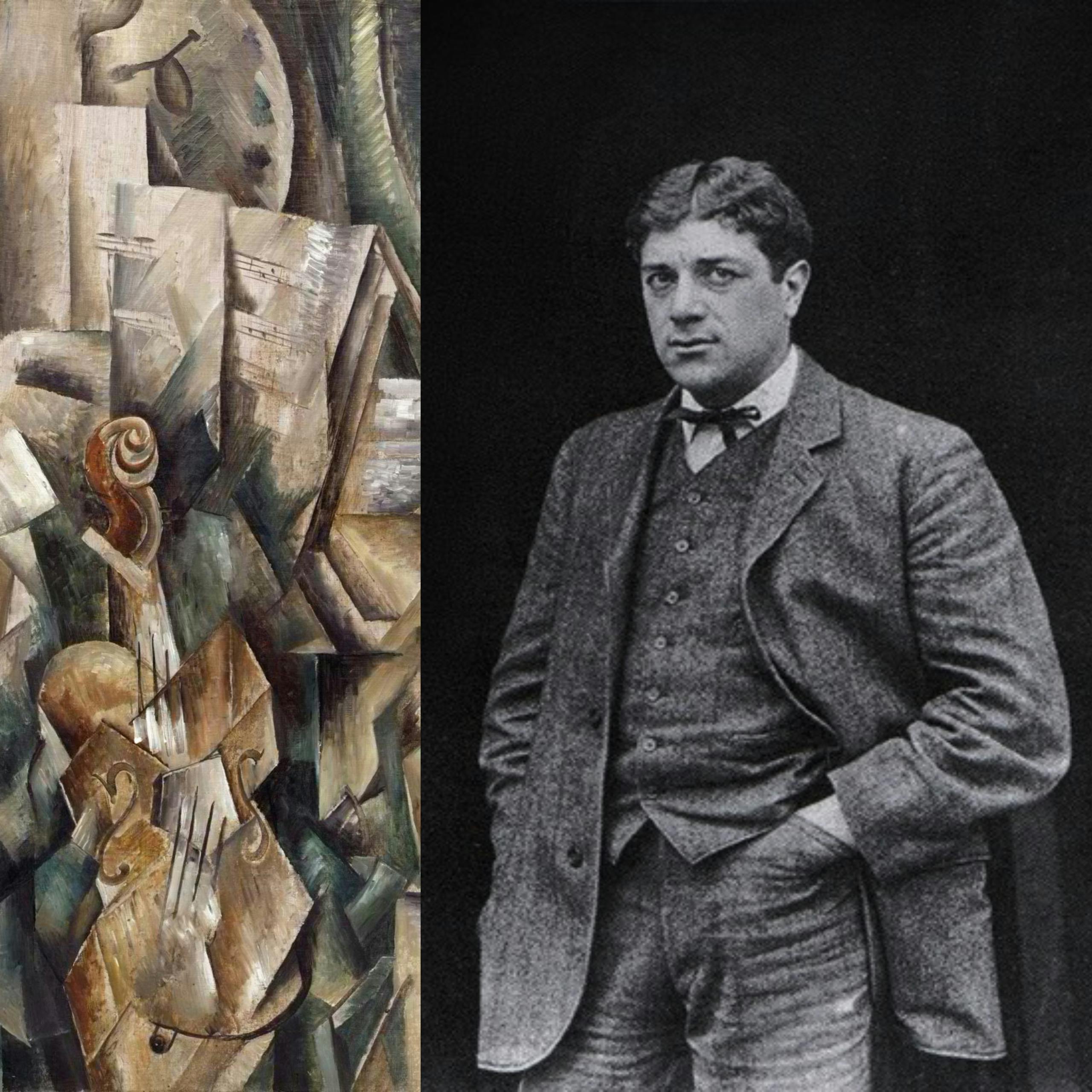
Since it is back to school season, I thought I would make a series of episodes optimized for classrooms to give students a quick overview and a few interesting facts about an artist. I am labeling these episodes with TLDR and each of them will follow the same format. First, I will give a very quick bit of biographical information. Second I'll list 5 interesting facts about the artist. Finally I'll talk about one of the artist's works. This week I covered Georges Braque and his painting Violin and Palette from 1909. Georges Braque co-founded the groundbreaking art movement of Cubism. Discover his beginnings in a family of house painters, where he learned decorative techniques like creating faux woodgrain that would later influence his fine art. The summary traces his artistic journey from early Fauvist-inspired works to the pivotal moment he met Picasso. This led to one of art history's most famous collaborations, an intense period where Braque and Picasso deconstructed traditional perspective to invent Analytic Cubism, working so closely they compared themselves to the Wright brothers. Learn how Braque's service in World War I and a severe head injury profoundly changed him, leading him to develop a more personal, contemplative style focused on still lifes for the remainder of his celebrated career. Delve into the specific innovations that cemented Braque's legacy, including his 1912 invention of papier collé (pasted paper), a technique that evolved into collage and forever changed the definition of art. We also uncover the surprising origin of the term "Cubism," born from a critic's dismissive remark about Braque's paintings being made of "little cubes." The discussion highlights a key masterpiece, Violin and Palette (1909), a prime example of Analytic Cubism. The painting breaks down its subjects into fragmented, geometric planes with a muted color palette, inviting viewers to analyze form and perception from multiple viewpoints at once, challenging the conventions of Western art and paving the way for abstraction. Check out my other podcasts Fun Facts Daily | Art Smart | Rainbow Puppy Science Lab Who ARTed is an Airwave Media Podcast. If you are interested in advertising on this or any other Airwave Media show, email: [email protected] Learn more about your ad choices. Visit megaphone.fm/adchoices

Eadweard Muybridge | The Horse in Motion
Pioneering 19th-century photographer Eadweard Muybridge is celebrated for his groundbreaking work in capturing movement, which laid the foundation for modern cinema. After immigrating to the United States and gaining fame for his stunning landscape photographs of the American West, his career took a decisive turn in 1872. Muybridge was commissioned by railroad tycoon and former California governor Leland Stanford to settle a popular debate and a significant wager of $25,000. Stanford had bet that all four of a horse's hooves leave the ground at once during a gallop. This question pushed the limits of early photographic technology and set Muybridge on a quest to freeze a moment invisible to the naked eye. After years of experimentation, interrupted by a dramatic murder trial, Muybridge devised an ingenious solution in 1878 at Stanford's Palo Alto farm. He arranged a series of cameras along a track, with their shutters triggered sequentially by threads broken by a galloping horse. The resulting sequence of images, famously known as The Horse in Motion, definitively proved that a horse is, for a brief moment, completely airborne. This experiment did more than settle a bet; it revolutionized the scientific study of locomotion. To display his findings, Muybridge later invented the zoopraxiscope, a device that projected the images in rapid succession to create the illusion of movement, directly paving the way for the development of cinematography. Check out my other podcasts Fun Facts Daily | Art Smart | Rainbow Puppy Science Lab Who ARTed is an Airwave Media Podcast. If you are interested in advertising on this or any other Airwave Media show, email: [email protected] Learn more about your ad choices. Visit megaphone.fm/adchoices

William Blake | The Ancient of Days
My guest this week is Mark Vernon, author of Awake! William Blake and the Power of Imagination. We discussed William Blake, the famous poet and visual artist known for his spiritually charged work. The piece we discussed was The Ancient of Days. Check out my other podcasts Fun Facts Daily | Art Smart | Rainbow Puppy Science Lab Who ARTed is an Airwave Media Podcast. If you are interested in advertising on this or any other Airwave Media show, email: [email protected] Learn more about your ad choices. Visit megaphone.fm/adchoices

Fun Facts About Clay and Ceramics
Today, I wanted to share an episode of my other podcast, Fun Facts Daily, with some interesting information about clay and ceramics. You'll learn what makes things blow up in the kiln and how to avoid it. The episode also covers interesting facts from ancient uses of ceramics to modern applications in smartphones and even space shuttles. Check out my other podcasts Fun Facts Daily | Art Smart | Rainbow Puppy Science Lab Who ARTed is an Airwave Media Podcast. If you are interested in advertising on this or any other Airwave Media show, email: [email protected] Learn more about your ad choices. Visit megaphone.fm/adchoices

Amalia Kussner | The Miniature Painter Revealed
My guest for this episode is Kathleen Langore, author of a new book about the artist, Amalia Kussner. She was a highly successful portrait artist who specialized in miniatures. Kussner drew her subjects in a realistic but soft and flattering style that left her patrons feel like she was giving them the best version of their likeness. Her miniature portraits were a big deal as she traveled to Europe painting for royalty. Pick up a copy of The Miniature Painter Revealed: Amalia Kussner’s Gilded Age Pursuit of Fame and Fortune by Kathleen Langone on Amazon or wherever you get your books. Listen to Kathleen Langone's podcast, People Hidden in History Listen to my episode on another royal portrait artist, Elizabeth Vigée Le Brun Check out my other podcasts Fun Facts Daily | Art Smart | Rainbow Puppy Science Lab Who ARTed is an Airwave Media Podcast. If you are interested in advertising on this or any other Airwave Media show, email: [email protected] Learn more about your ad choices. Visit megaphone.fm/adchoices