
Who Arted: Weekly Art History for All Ages
784 episodes — Page 2 of 16

Maria and Julian Martinez | Black on Black Pottery
Maria Martinez belonged to the Tewa-speaking Pueblo people, known for their rich artistic heritage. Pottery-making was deeply rooted in Puebloan culture, serving as a means of artistic expression and a reflection of their close connection with the natural world. Maria grew up watching her family members create pottery, learning the traditional techniques. Of course, we seldom talk about those who simply carry on a tradition. Maria Martinez and her husband Julian revolutionized pottery production and shared their methods with their community. In doing so, they raised the profile of pottery as an art form while helping others understand and appreciate their cultural heritage. If you would like to learn more about modern clay production, check out the clay episode of my other podcast, Art Smart. Art Smart | Clay Art Smart | Glaze This is an encore presentation. Every January/February, I release daily episodes to refresh everyone's memory on the 64 artists and artworks that will be included in my Arts Madness Tournament held in March. While most of these daily episodes will be reruns, I will continue publishing new episodes on Mondays. Vote in Round 1 of Arts Madness https://www.whoartedpodcast.com/arts-madness Check out my other podcasts Fun Facts Daily | Art Smart | Rainbow Puppy Science Lab Who ARTed is an Airwave Media Podcast. If you are interested in advertising on this or any other Airwave Media show, email: [email protected] Learn more about your ad choices. Visit megaphone.fm/adchoices
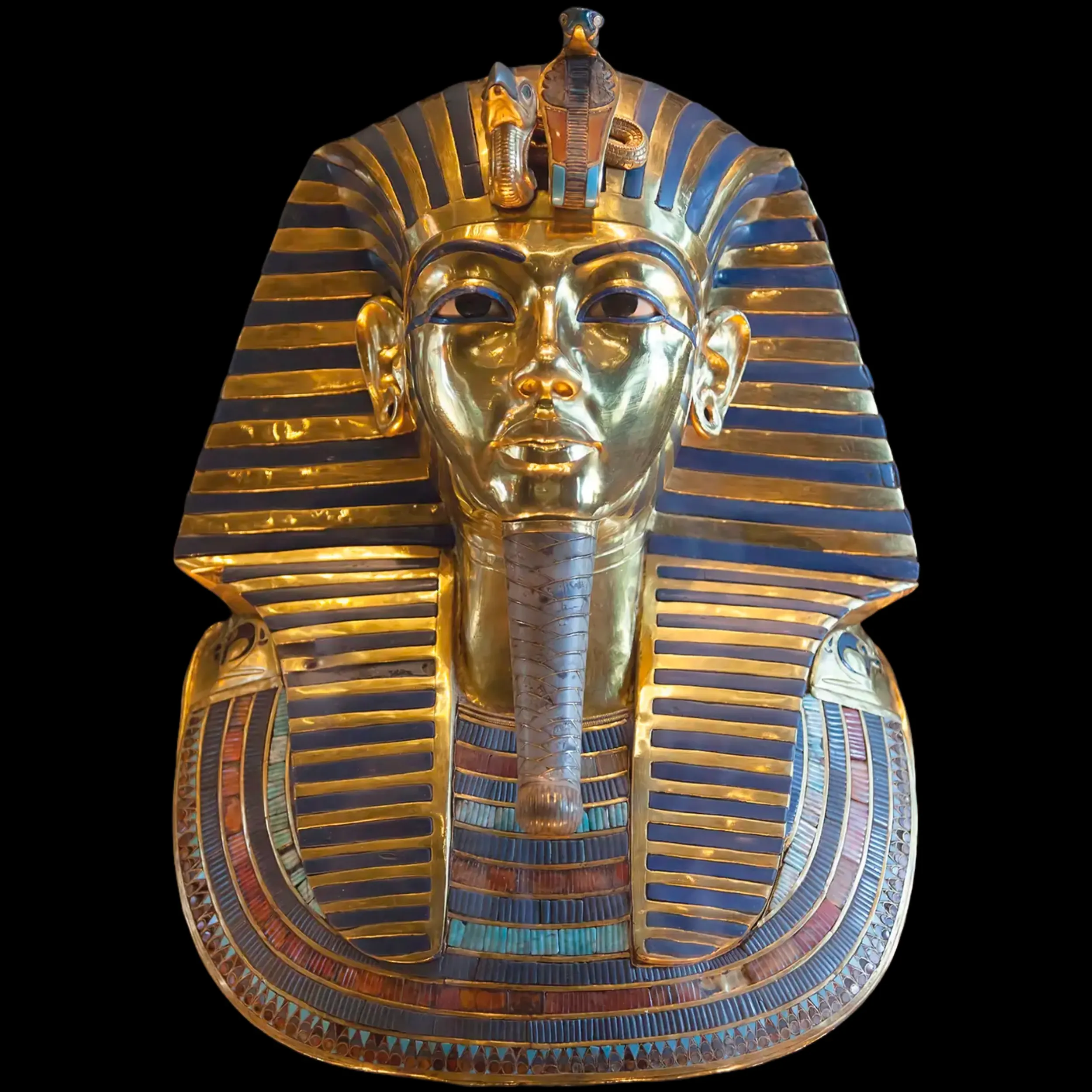
The Treasures of King Tutankhamun's Tomb
On November 26, 1922, Howard Carter prepared to enter the tomb of a little-known pharaoh. Nobody had set foot inside the space for over 3,000 years, but as Carter held up his candle, his partner, Lord Carnarvon who had financed the expedition called out asking if he saw anything. Carter responded, “Yes, wonderful things.” Though his reign may have been short, the treasures found in Tutankhamun’s tomb have given him an outsized place in the history books and popular culture. Related episodes: Art Smart | Ancient Egyptian Art Who ARTed | The Ancient Egyptian Book of the Dead Who ARTed | The Pyramids at Giza This is an encore presentation. Every January/February, I release daily episodes to refresh everyone's memory on the 64 artists and artworks that will be included in my Arts Madness Tournament held in March. While most of these daily episodes will be reruns, I will continue publishing new episodes on Mondays. Check out my other podcasts Fun Facts Daily | Art Smart | Rainbow Puppy Science Lab Who ARTed is an Airwave Media Podcast. If you are interested in advertising on this or any other Airwave Media show, email: [email protected] Learn more about your ad choices. Visit megaphone.fm/adchoices
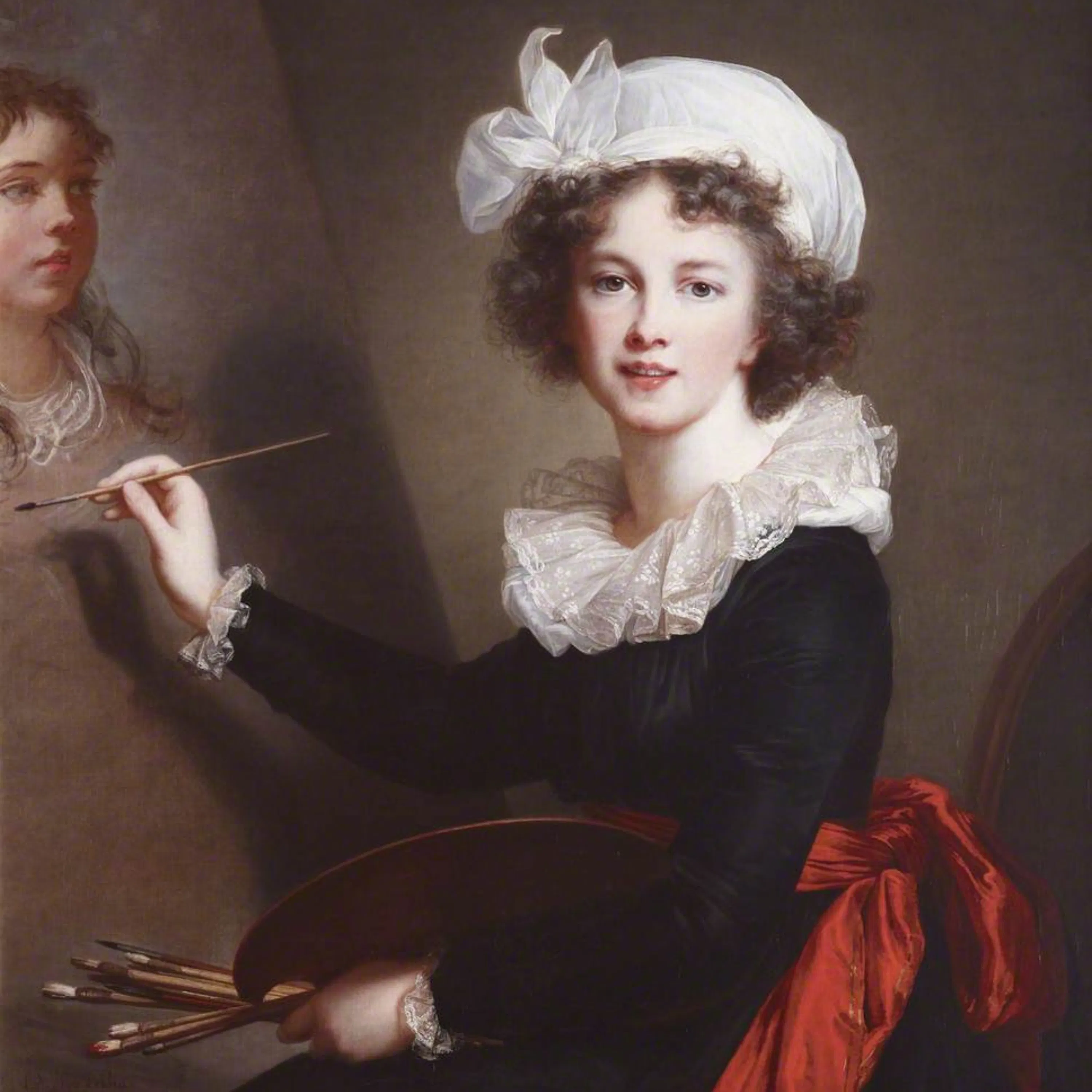
Elisabeth Vigée Le Brun
In 1778, Elisabeth Vigée Le Brun met Marie Antoinette at the Royal palace in Versailles. The queen had heard of Le Brun’s talent and asked to paint her portrait. Marie Antoinette loved the way Le Brun painted her and from that point on, she was pretty much her official royal portrait painter. Le Brun painted 30 portraits of the queen. Almost as quickly as her star rose, her fortunes changed. In 1789, Elisabeth Vigée Le Brun was forced to flee France in a disguise and under the cover of darkness during the early stages of the French Revolution. Le Brun didn’t have the opulent life of luxury that revolutionaries despised, but she had worked her way up to become Marie Antoinette’s favorite portraitist and the French Revolution was not the ideal time and place for friends of the monarch. Be sure to vote for your favorite artists & artworks in Arts Madness 2026 https://www.whoartedpodcast.com/arts-madness Listen to other episodes covering AP Art History content on my Spotify Playlist: AP Art History Cram Session This is an encore presentation. Every January/February, I release daily episodes to refresh everyone's memory on the 64 artists and artworks that will be included in my Arts Madness Tournament held in March. While most of these daily episodes will be reruns, I will continue publishing new episodes on Mondays. Check out my other podcasts Fun Facts Daily | Art Smart | Rainbow Puppy Science Lab Who ARTed is an Airwave Media Podcast. If you are interested in advertising on this or any other Airwave Media show, email: [email protected] Learn more about your ad choices. Visit megaphone.fm/adchoices

Artist Interview | Jason deCaires Taylor
Jason deCaires Taylor, is a UK-based contemporary artist who has seamlessly merged art and environmental activism. Renowned for his captivating underwater sculptures, Taylor's creations serve as a powerful reminder of the urgent need to address environmental concerns. Crafted with meticulous detail, his sculptures not only captivate the eye but also provide a haven for marine life, fostering the growth of coral reefs and supporting fragile ecosystems. Join us as we explore Taylor's artistic journey, his passion for marine conservation, and the profound impact his work has on raising awareness about the delicate balance of our planet's oceans. Find out more and support his work: www.underwatersculpture.com www.underwatermuseum.com Instagram: #jasondecairestaylor YouTube: @jasondecairestaylorstudio This is an encore presentation. Every January/February, I release daily episodes to refresh everyone's memory on the 64 artists and artworks that will be included in my Arts Madness Tournament held in March. While most of these daily episodes will be reruns, I will continue publishing new episodes on Mondays. Check out my other podcasts Fun Facts Daily | Art Smart | Rainbow Puppy Science Lab Who ARTed is an Airwave Media Podcast. If you are interested in advertising on this or any other Airwave Media show, email: [email protected] Learn more about your ad choices. Visit megaphone.fm/adchoices

Angkor Wat
Angkor Wat is the largest religious structure in the world, located in Siem Reap, Cambodia. Built in the 12th century by King Suryavarman II, it is dedicated to the Hindu god Vishnu and was likely intended as the king's tomb. The temple's construction, which involved 300,000 workers and took over 30 years, showcases the Khmer Empire's impressive architectural and engineering skills. Its intricate carvings depict Hindu mythology and historical events, while its design represents Mount Meru, the mythical home of the gods. Angkor Wat served as both a religious center and a symbol of the king's power, reflecting the Khmer belief in the connection between the divine and the earthly realms. Though its original name is unknown, Angkor Wat's grandeur and historical significance have earned it recognition as a UNESCO World Heritage Site. This is an encore presentation. Every January/February, I release daily episodes to refresh everyone's memory on the 64 artists and artworks that will be included in my Arts Madness Tournament held in March. While most of these daily episodes will be reruns, I will continue publishing new episodes on Mondays. Check out my other podcasts Fun Facts Daily | Art Smart | Rainbow Puppy Science Lab Who ARTed is an Airwave Media Podcast. If you are interested in advertising on this or any other Airwave Media show, email: [email protected] Learn more about your ad choices. Visit megaphone.fm/adchoices

Claude Monet | Stacks of Wheat (End of Summer)
My guest this week is Jen Leban from The Art of Education. For any fellow art teachers listening, check out The Art of Ed Community and I had the priviledge of writing for the AOE magazine last year, so check out my articles. We're kicking off the annual Arts Madness Tournament and I thought there would be no better way to start things off than inviting Jen to join me for a friendly discussion about an artist we have different opinions about. Please join in the fun by weighing in and cast your vote for your favorite artists/artworks in this year's tournament. Each week, half will be eliminated until only 1 remains. The impressionist movement in late 19th-century art represented a significant shift away from the rigid, representative styles that had dominated the art world for centuries. Claude Monet, a central figure in this movement, began to experiment with color and light in a way that captured the fleeting essence of a scene rather than its exact details. His series of wheat stack paintings, created around 1890, exemplifies this approach. These works were not just about the subject itself, but about how different lighting and weather conditions at different times of the day transformed the appearance of these common agricultural structures. This innovative technique challenged contemporary notions of art and paved the way for future abstract movements. Monet's wheat stacks were meticulously crafted over months, despite their seemingly rapid, "impressionistic" brushwork. He often worked on multiple canvases simultaneously, switching between them as the light changed in the field to accurately document each subtle variation. This practice was a direct response to the rise of photography, which could capture reality with precision that painters could not match. By focusing on elements that the cameras of the time could not—such as the vibrant play of light and an imaginative use of color—Monet and his peers redefined the role of the artist. Their work, once considered controversial and even "unfinished" by critics, is now celebrated for its revolutionary impact on the history of modern art. Shoutout and a bit thanks to Podranker for including me on their list of Best Art History Podcasts Check out my other podcasts Fun Facts Daily | Art Smart | Rainbow Puppy Science Lab Who ARTed is an Airwave Media Podcast. If you are interested in advertising on this or any other Airwave Media show, email: [email protected] Learn more about your ad choices. Visit megaphone.fm/adchoices
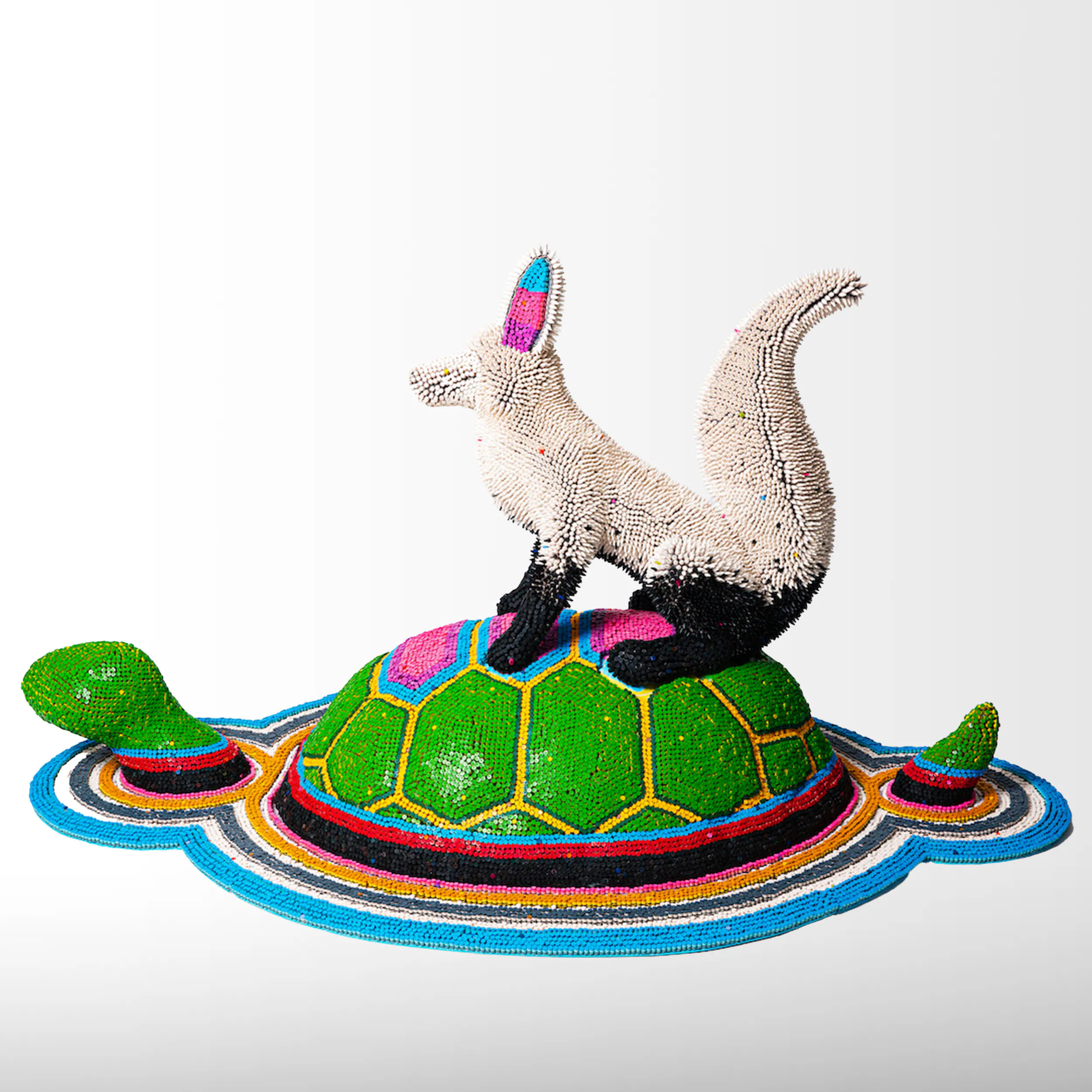
Artist Interview | Herb Williams
Herb Williams is an incredibly talented sculptor bringing crayons to a whole new dimension. I sat down to talk to Williams about his background, his artistic influences, and exactly how and why he uses crayons to sculpt. He shared his memories of making art as a child as well as his experience working in a foundry making lost wax castings before he decided to pursue a literal dream of making sculptures out of crayons. This is an encore presentation. Every January/February, I release daily episodes to refresh everyone's memory on the 64 artists and artworks that will be included in my Arts Madness Tournament held in March. While most of these daily episodes will be reruns, I will continue publishing new episodes on Mondays. Check out my other podcasts Fun Facts Daily | Art Smart | Rainbow Puppy Science Lab Who ARTed is an Airwave Media Podcast. If you are interested in advertising on this or any other Airwave Media show, email: [email protected] Learn more about your ad choices. Visit megaphone.fm/adchoices

Diego Velazquez | Las Meninas
Diego Velazques was one of the most significant painters of Spain's Golden Age in the 17th century. He was a master of both portraiture and genre painting, Las Meninas is a sort of mix of both. We see people who seem rather formally dressed by today’s standards, but the subject is also, it was a peak behind the curtain of royal life. Withing the work, the first focal point would be the little girl, the infanta margarita, daughter of the king and queen of spain. She is dramatically lit from the side by light streaming in from the window. The top half of the composition is essentially in shadow, and we see her looking out at us, the viewers. Diego Velazquez included himself in the scene as he stands before his giant canvas. Within this oil on canvas painting, we see a representation of a painter working on canvas. Velazquez also seems to break the fourth as he looks out at the viewer. There is a figure standing in the doorway in the back of the composition. The strong light in the doorway pulls our focus there as a secondary focal point, and that figure seems to be caught in motion and again, he looks out at us, the viewers. In this episode, I referenced Jan van Eyck's Arnolfini Portrait. To learn more about that, check out my previous episode: Jan van Eyck | The Arnolfini Portrait This is an encore presentation. Every January/February, I release daily episodes to refresh everyone's memory on the 64 artists and artworks that will be included in my Arts Madness Tournament held in March. While most of these daily episodes will be reruns, I will continue publishing new episodes on Mondays. Check out my other podcasts Fun Facts Daily | Art Smart | Rainbow Puppy Science Lab Who ARTed is an Airwave Media Podcast. If you are interested in advertising on this or any other Airwave Media show, email: [email protected] Learn more about your ad choices. Visit megaphone.fm/adchoices
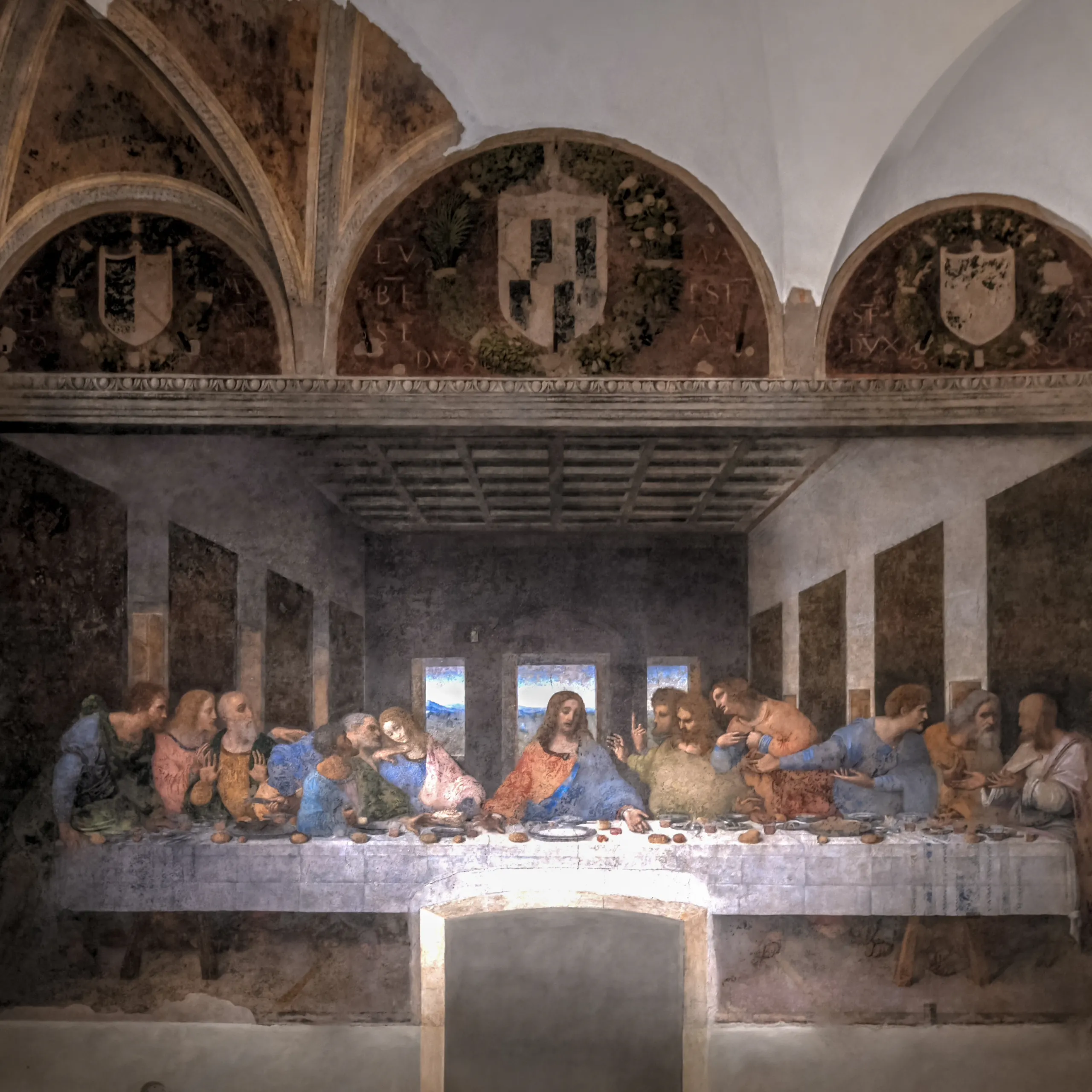
Leonardo da Vinci | The Last Supper
One Leonardo da Vinci’s most famous works is not housed in a museum. It is in the Convent of Santa Maria in Milan Italy. It seems totally fitting for a depiction of the last supper was painted on the wall in the convent’s dining hall. Visitors today are often surprised by how enormous the work it. The People are life sized on this massive 15 by 29 foot painting. Another surprising fact is that while people flock to see Leonardo’s work on the wall of the convent, very little if any of what we see there today was actually painted by Leonardo. This is an encore presentation. Every January/February, I release daily episodes to refresh everyone's memory on the 64 artists and artworks that will be included in my Arts Madness Tournament held in March. While most of these daily episodes will be reruns, I will continue publishing new episodes on Mondays. Check out my other podcasts Fun Facts Daily | Art Smart | Rainbow Puppy Science Lab Who ARTed is an Airwave Media Podcast. If you are interested in advertising on this or any other Airwave Media show, email: [email protected] Learn more about your ad choices. Visit megaphone.fm/adchoices
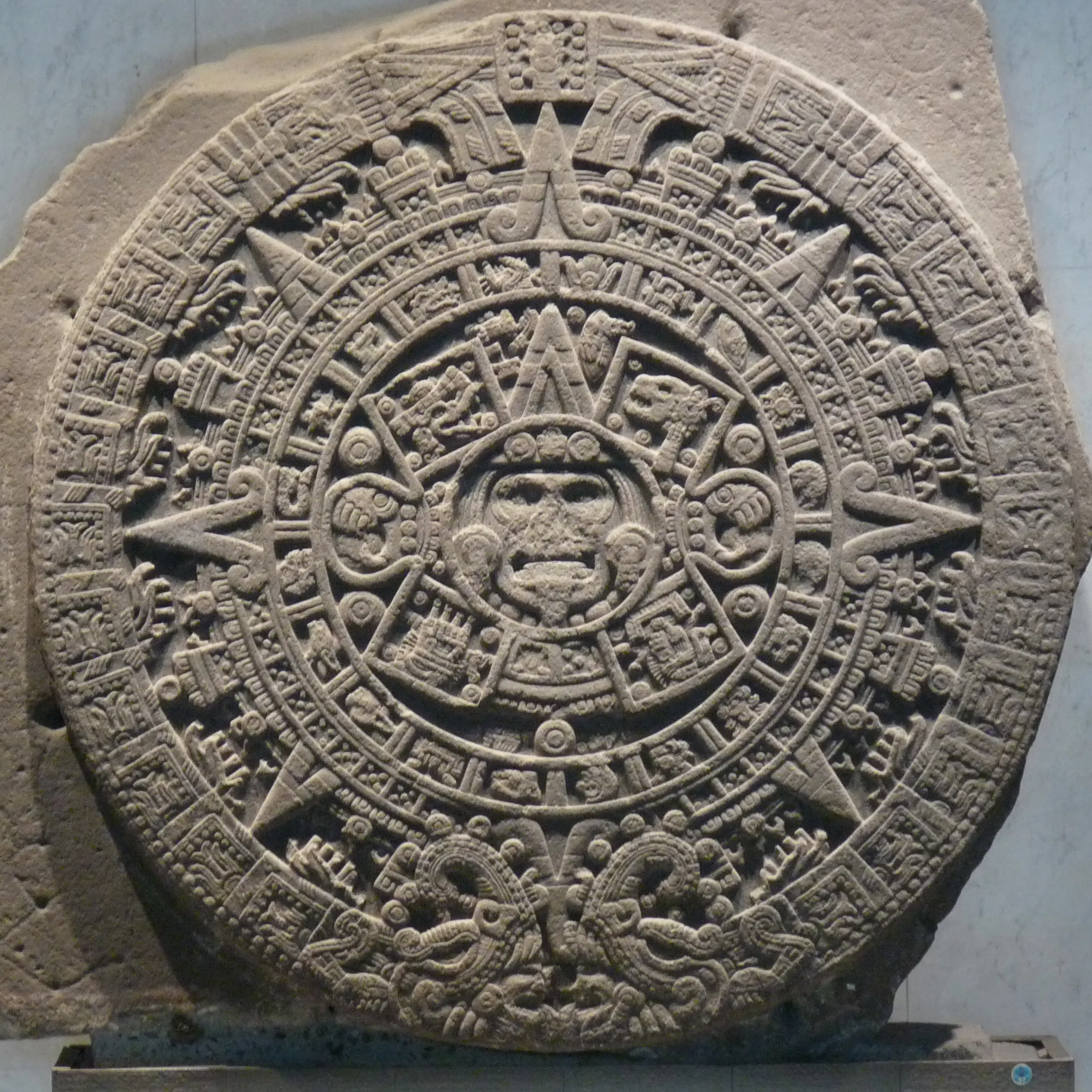
The Aztec Calendar Stone
The Aztec Sun Stone, also known as the Calendar Stone, is a large, round stone carving that represents Aztec mythology and cosmology. It depicts the five consecutive worlds of the sun, with the date 13 Reed marking the start of the fifth and final sun. It was created in the 15th century and is about 3 and a half meters wide, almost a meter thick, and weighs 25 tons. Learn more about the history and symbolism of this famous Aztec piece. This is an encore presentation. Every January/February, I release daily episodes to refresh everyone's memory on the 64 artists and artworks that will be included in my Arts Madness Tournament held in March. While most of these daily episodes will be reruns, I will continue publishing new episodes on Mondays. Check out my other podcasts Fun Facts Daily | Art Smart | Rainbow Puppy Science Lab Who ARTed is an Airwave Media Podcast. If you are interested in advertising on this or any other Airwave Media show, email: [email protected] Learn more about your ad choices. Visit megaphone.fm/adchoices

Caravaggio | The Calling of Saint Matthew
Michelangelo Merisi, born in 1571 amidst the darkness of the plague, would come to be known not by his christened name but by the name of his birthplace – Caravaggio. Orphaned young, the specter of loss would forever paint itself onto the canvas of his life. Yet, from this darkness, a genius of light and shadow would emerge, revolutionizing the art world with his raw and dramatic style. While controversial in some circles, this mix of gritty realism and the divine was exactly what the Catholic church needed at the time. The Protestant Reformation was a backlash against what they considered to be a corrupt and greedy church. The Pope and others within the church commissioned art as a form of damage control. In an era of low literacy rates, images of artworks were powerful tools to spread ideas. Caravaggio’s paintings depicted a faith that was humble as he painted from his real-life observations of people on the streets. Though the subjects of the art were saints, the models were lowly people off the streets and Caravaggio painted every detail down to the stains in their clothing or dirt under their fingernails. The message was that the church was a place for the ordinary people. Using real people as models and placing them in settings familiar to the masses made the stories more immediately accessible and relatable. The Calling of Saint Matthew is one of 250 artworks required for AP Art History. While I have not yet covered all of those artists/works you can find many on my Spotify playlist, AP Art History Cram Session This is an encore presentation. Every January/February, I release daily episodes to refresh everyone's memory on the 64 artists and artworks that will be included in my Arts Madness Tournament held in March. While most of these daily episodes will be reruns, I will continue publishing new episodes on Mondays. Check out my other podcasts Fun Facts Daily | Art Smart | Rainbow Puppy Science Lab Who ARTed is an Airwave Media Podcast. If you are interested in advertising on this or any other Airwave Media show, email: [email protected] Learn more about your ad choices. Visit megaphone.fm/adchoices

Rachel Whiteread | Embankment
Rachel Whiteread is a prominent British sculptor and a leading figure among the Young British Artists (YBAs) who rose to prominence in the late 1980s. Unlike the provocative work of her peers, Whiteread’s art is characterized by a quiet, minimalist focus on "negative space"—the empty air inside or around everyday objects. By casting these voids in industrial materials like plaster, resin, and concrete, she transforms the mundane into the monumental. Her breakthrough work, Ghost (1990), involved casting the entire interior of a Victorian living room, effectively turning a familiar domestic space into a haunting, solid artifact that captures subtle details like light switches and wallpaper textures in reverse. In 1993, Whiteread became the first woman to win the Turner Prize, solidified by her controversial public sculpture, House, where she cast an entire three-story Victorian home in London. Her career continued with significant international commissions, including the Judenplatz Holocaust Memorial in Vienna, also known as the Nameless Library, which serves as a poignant tribute to victims through the imagery of inverted, unreadable books. One of her most massive undertakings was Embankment (2005) at the Tate Modern, consisting of 14,000 translucent polyethylene boxes. Inspired by a box found while clearing her mother’s home, the installation explored themes of memory and the "unforgettable forgotten," utilizing the box as a universal symbol for how humans store and organize their histories. Check out my other podcasts Fun Facts Daily | Art Smart | Rainbow Puppy Science Lab Who ARTed is an Airwave Media Podcast. If you are interested in advertising on this or any other Airwave Media show, email: [email protected] Learn more about your ad choices. Visit megaphone.fm/adchoices
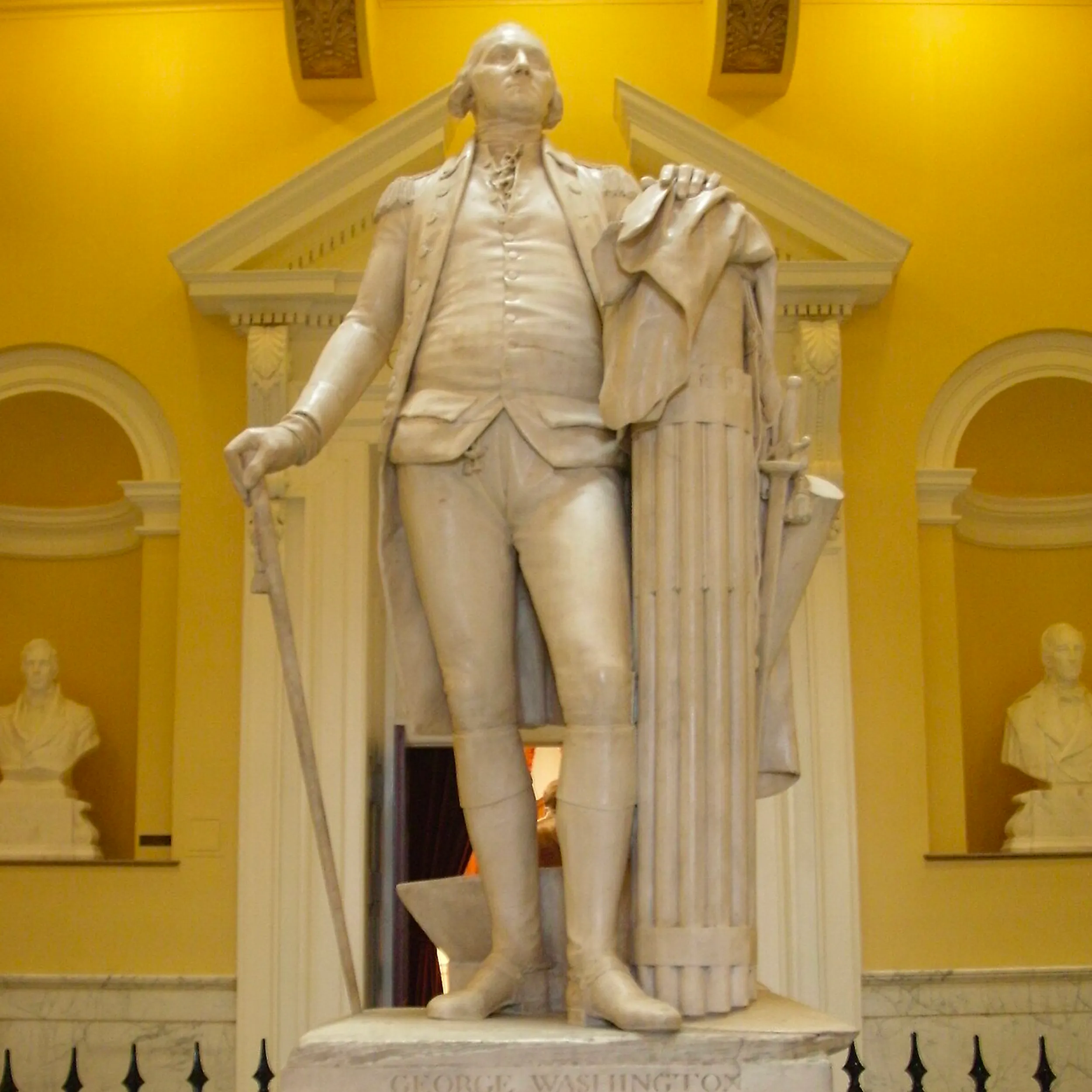
Jean-Antoine Houdon | George Washington
Jean-Antoine Houdon was one of the greatest neoclassical sculptors in the late 18th century. Shortly after the American Revolution, the governor of Virginia asked Thomas Jefferson to find a sculptor to make a marble statue of George Washington for the state capital building. Jefferson was a self-taught architect and a big believer in the neoclassical movement's use of symbolism in art to convey a message that would leave the viewer wiser. He naturally turned to Houdon who traveled from France to Virginia to take Washington's measurements and even made a life mask (a plaster cast of the subject's face). Houdon created what many consider to be the most accurate representation we have today of George Washington. This is an encore presentation. Every January/February, I release daily episodes to refresh everyone's memory on the 64 artists and artworks that will be included in my Arts Madness Tournament held in March. Check out my other podcasts Fun Facts Daily | Art Smart | Rainbow Puppy Science Lab Who ARTed is an Airwave Media Podcast. If you are interested in advertising on this or any other Airwave Media show, email: [email protected] Learn more about your ad choices. Visit megaphone.fm/adchoices
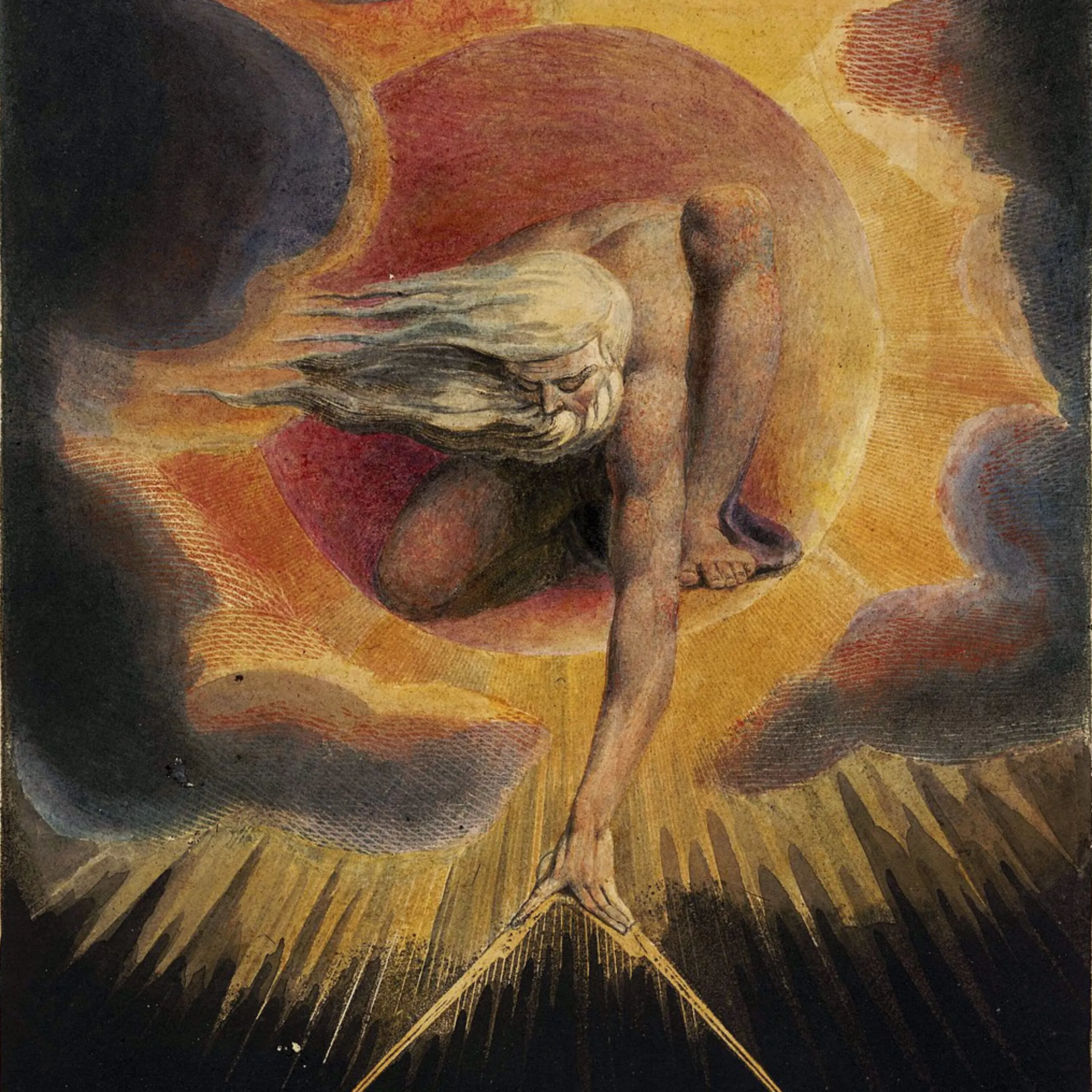
William Blake | The Ancient of Days
My guest this week is Mark Vernon, author of Awake! William Blake and the Power of Imagination. We discussed William Blake, the famous poet and visual artist known for his spiritually charged work. The piece we discussed was The Ancient of Days. This is an encore presentation. Every January/February, I release daily episodes to refresh everyone's memory on the 64 artists and artworks that will be included in my Arts Madness Tournament held in March. While most of these daily episodes will be reruns, I will continue publishing new episodes on Mondays. Check out my other podcasts Fun Facts Daily | Art Smart | Rainbow Puppy Science Lab Who ARTed is an Airwave Media Podcast. If you are interested in advertising on this or any other Airwave Media show, email: [email protected] Learn more about your ad choices. Visit megaphone.fm/adchoices
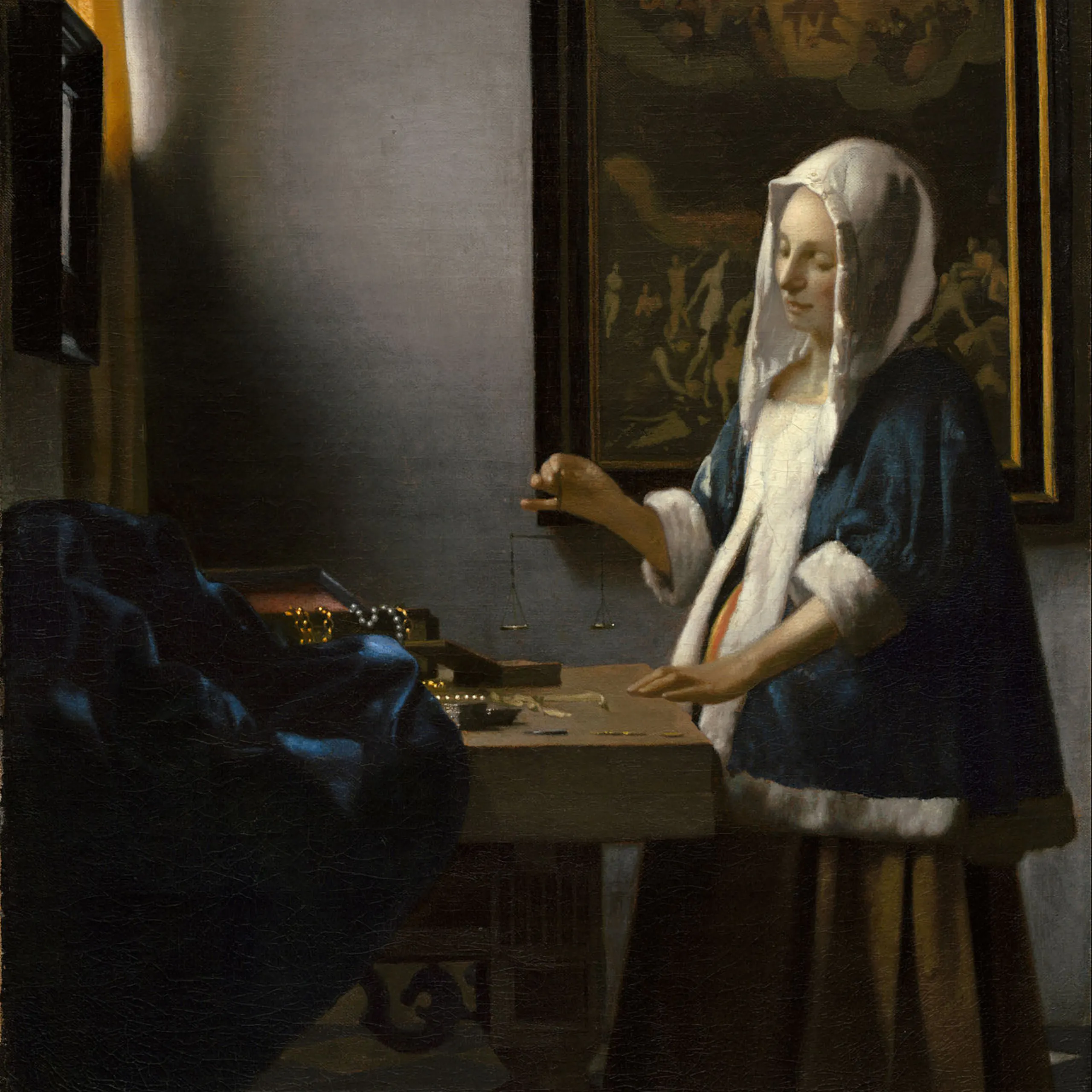
Johannes Vermeer | Woman Holding a Balance
Johannes Vermeer created stunning works and he is widely celebrated as one of the greatest painters of the Dutch Golden Age. This painting, Woman Holding a Balance is a work intended to encourage temperance and moderation being mindful that divine judgment is looming in the end. Related episodes: The Unbelievable Story of Han van Meegeren Jan van Eyck | The Arnolfini Portrait This is an encore presentation. Every January/February, I release daily episodes to refresh everyone's memory on the 64 artists and artworks that will be included in my Arts Madness Tournament held in March. While most of these daily episodes will be reruns, I will continue publishing new episodes on Mondays. Check out my other podcasts Fun Facts Daily | Art Smart | Rainbow Puppy Science Lab Who ARTed is an Airwave Media Podcast. If you are interested in advertising on this or any other Airwave Media show, email: [email protected] Learn more about your ad choices. Visit megaphone.fm/adchoices

The Alexander Mosaic in the House of Faun, Pompeii
The Alexander Mosaic, also known as the Battle of Issus Mosaic, is a masterpiece of ancient Roman artistry that continues to captivate viewers with its detailed depiction of a pivotal moment in history. Unearthed in the House of the Faun in Pompeii, this intricate mosaic offers a glimpse into the military prowess, political ambition, and cultural exchange of the ancient world. The mosaic captures the dramatic clash between Alexander the Great of Macedon and Darius III of Persia in the Battle of Issus in 333 BCE. The scene is filled with action, showcasing the chaos and intensity of the battlefield. Alexander, depicted on horseback, charges towards Darius, who recoils in fear on his chariot. The mosaic portrays the emotional turmoil of the moment, with soldiers engaged in fierce combat, fallen horses, and the palpable sense of impending doom for the Persian army. This is an encore presentation. Every January/February, I release daily episodes to refresh everyone's memory on the 64 artists and artworks that will be included in my Arts Madness Tournament held in March. While most of these daily episodes will be reruns, I will continue publishing new episodes on Mondays. Check out my other podcasts Fun Facts Daily | Art Smart | Rainbow Puppy Science Lab Who ARTed is an Airwave Media Podcast. If you are interested in advertising on this or any other Airwave Media show, email: [email protected] Learn more about your ad choices. Visit megaphone.fm/adchoices

Felix Gonzalez-Torres | Untitled (Portrait of Ross in L.A.)
Felix Gonzalez-Torres was a conceptual artist who became well known in the 1980s and 90s for his works that broke down the barrier between artist and audience. Many of his works invited the audience to become a part of the creative process making the work more dynamic and engaging. This is an encore presentation. Every January/February, I release daily episodes to refresh everyone's memory on the 64 artists and artworks that will be included in my Arts Madness Tournament held in March. While most of these daily episodes will be reruns, I will continue publishing new episodes on Mondays. Check out my other podcasts Fun Facts Daily | Art Smart | Rainbow Puppy Science Lab Who ARTed is an Airwave Media Podcast. If you are interested in advertising on this or any other Airwave Media show, email: [email protected] Learn more about your ad choices. Visit megaphone.fm/adchoices

Jean-Michel Basquiat | Horn Players
Jean-Michel Basquiat has created some of the most highly valued American paintings ever to go on auction. Basquiat sought to remake art history in his image, and I would say he was successful. His triptych, Horn Players, is one of the artworks required for the AP Art History curriculum studied by American high school students. In the middle of February 1981, a group exhibition opened at P.S.1 in New York. The show featured over a hundred different artists from the underground art scene. There were paintings, drawings, photographs, objects and graffiti all mixed together in an explosive portrait of the post-punk scene. The show was called New York/New Wave and many affectionately referred to it as the armory show of the 80s. The armory show was of course the famous exhibition from 1913 that introduced European modern art to the American audience. This time though, it wasn’t European artists upending the New York gallery scene. This time, the revolution was coming from inside the community. Among the artists on display was a 20 year old by the name of Jean-Michel Basquiat. He had previously made a name for himself as a graffiti artist. Basquiat and his friend Al Diaz created a text-based project SAMO spraypainting messages around new york. They were particularly active in the area where numerous gallery spaces were located. SAMO often sought to be a little bit humorous, but also gives an outsider’s perspective on the art world with phrases like “SAMO AS AN END TO PLAYING ART” or “SAMO FOR THE SO-CALLED AVANT-GARDE”. This is an encore presentation. Every January/February, I release daily episodes to refresh everyone's memory on the 64 artists and artworks that will be included in my Arts Madness Tournament held in March. While most of these daily episodes will be reruns, I will continue publishing new episodes on Mondays. Check out my other podcasts Fun Facts Daily | Art Smart | Rainbow Puppy Science Lab Who ARTed is an Airwave Media Podcast. If you are interested in advertising on this or any other Airwave Media show, email: [email protected] Learn more about your ad choices. Visit megaphone.fm/adchoices

Andy Warhol | Marilyn Diptych
Andy Warhol's Marilyn Diptych is a commentary on the nature of fame, celebrity, and mass media. Warhol appropriated a well-known image of Monroe, using repetition and contrasting colors to create a work that is both iconic and unsettling. The diptych format, traditionally used for religious works, elevates Monroe to a figure of almost religious significance, while also highlighting the manufactured nature of her celebrity persona. Through this work, Warhol explores the tension between the public image and the private individual, and the way in which mass media can distort and commodify our understanding of reality. The Diptych serves as a powerful critique of the cult of celebrity and the dehumanizing effects of mass media. This is an encore presentation. Every January/February, I release daily episodes to refresh everyone's memory on the 64 artists and artworks that will be included in my Arts Madness Tournament held in March. While most of these daily episodes will be reruns, I will continue publishing new episodes on Mondays. Check out my other podcasts Fun Facts Daily | Art Smart | Rainbow Puppy Science Lab Who ARTed is an Airwave Media Podcast. If you are interested in advertising on this or any other Airwave Media show, email: [email protected] Learn more about your ad choices. Visit megaphone.fm/adchoices
Dale Chihuly | Seaforms
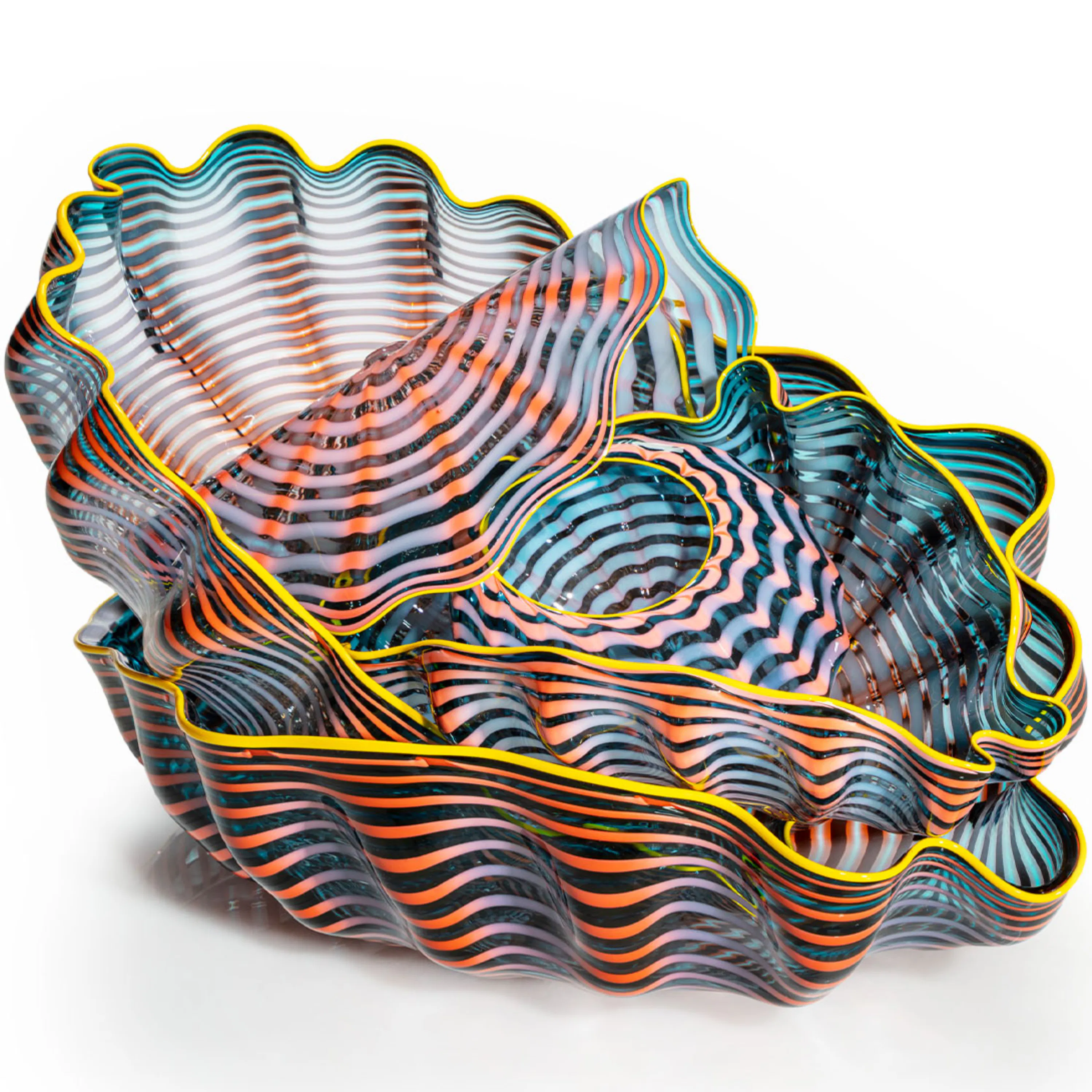
Born in 1941 in Tacoma, Washington, Dale Chihuly is a pioneering figure who transformed glass from a functional, industrial material into a celebrated medium for fine art. Influenced by the rugged landscapes of the Pacific Northwest and early experiences in interior design, Chihuly’s artistic journey began with an experimental weaving project in 1963 where he first fused glass shards into a tapestry. After studying at the University of Wisconsin and the Rhode Island School of Design, Chihuly became the first American glassblower to work at the prestigious Venini Glass Factory in Venice. There, he adopted the collaborative team-based approach to glassblowing that would later define his career and allow him to produce increasingly complex, large-scale installations. The Seaform series, initiated in the early 1980s, stands as one of Chihuly’s most iconic contributions to contemporary art, showcasing a mastery of organic, fluid forms. These sculptures are characterized by their diafananous, shell-like textures created using optical molds and the deliberate use of gravity and centrifugal force to achieve asymmetrical, "slumped" aesthetics. By allowing the molten glass to find its own shape rather than enforcing perfect symmetry, Chihuly evokes the natural growth patterns and light-catching qualities of the ocean. Today, his work is featured in over 200 museum collections worldwide, ranging from the canals of Venice to massive public gardens, solidifying his legacy as an artist who bridged the gap between craft and high art. Check out my other podcasts Fun Facts Daily | Art Smart | Rainbow Puppy Science Lab Who ARTed is an Airwave Media Podcast. If you are interested in advertising on this or any other Airwave Media show, email: [email protected] Learn more about your ad choices. Visit megaphone.fm/adchoices

The Longmen Grottoes
China's Longmen Caves or Longmen Grottoes are a UNESCO world heritage site. Starting in the 5th century CE, artists chiseled away at the limestone carving out around 2300 caves and 110,000 statues. Because they were constructed over such a long period, the sculptures in the Longmen Caves not only reflect the religious tradition, but they track changes in artistic style over the centuries. Related episode: Sand Mandalas This is an encore presentation. Every January/February, I release daily episodes to refresh everyone's memory on the 64 artists and artworks that will be included in my Arts Madness Tournament held in March. While most of these daily episodes will be reruns, I will continue publishing new episodes on Mondays. Check out my other podcasts Fun Facts Daily | Art Smart | Rainbow Puppy Science Lab Who ARTed is an Airwave Media Podcast. If you are interested in advertising on this or any other Airwave Media show, email: [email protected] Learn more about your ad choices. Visit megaphone.fm/adchoices

Keith Haring | Three Eyed Smiley Face
Keith Haring, renowned for his iconic pop art and graffiti, rose to fame in the 1980s New York art scene. His signature style, characterized by bold lines, vibrant colors, and symbols like the radiant baby and barking dog, often conveyed social messages. Haring's art wasn't confined to galleries; it flourished in public spaces, notably subway stations, making it accessible to everyone. Despite his untimely death due to AIDS in 1990, his legacy lives on through his art and the Keith Haring Foundation, which supports children and AIDS/HIV organizations. Haring's work continues to inspire and resonate, bridging the gap between high art and popular culture. This is an encore presentation. Every January/February, I release daily episodes to refresh everyone's memory on the 64 artists and artworks that will be included in my Arts Madness Tournament held in March. While most of these daily episodes will be reruns, I will continue publishing new episodes on Mondays. Check out my other podcasts Fun Facts Daily | Art Smart | Rainbow Puppy Science Lab Who ARTed is an Airwave Media Podcast. If you are interested in advertising on this or any other Airwave Media show, email: [email protected] Learn more about your ad choices. Visit megaphone.fm/adchoices
Jan van Eyck | The Arnolfini Portrait
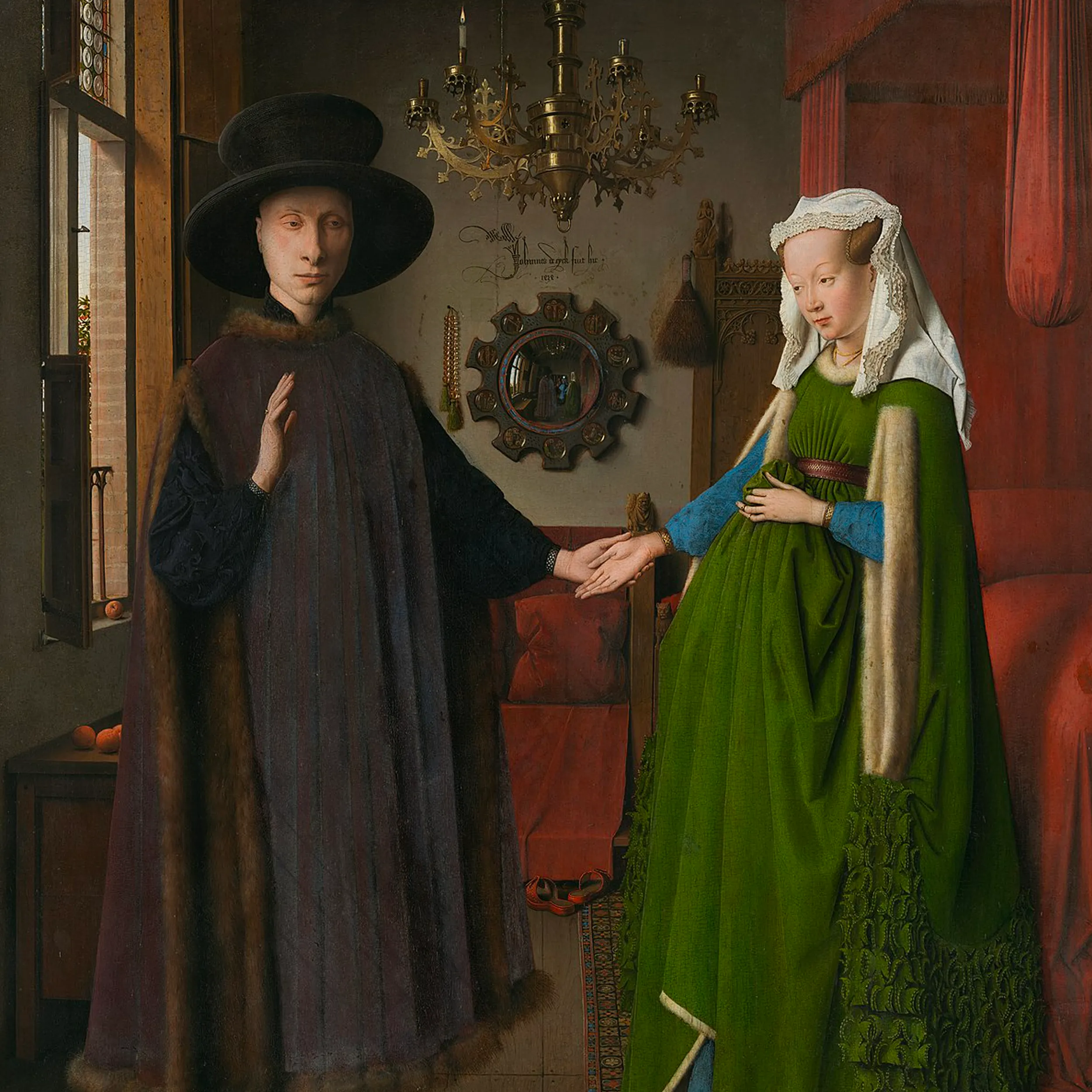
Jan van Eyck was a remarkable painter. He worked in oils during the Renaissance, and created stunning photorealistic portraits centuries before photography was developmed. In the Arnolfini portrait, he captures not only the subjects standing before him, but also a reflection of the room in a convex mirror showing the full scene and accurately rendering the distortions caused by the curved glass. This is an encore presentation. Every January/February, I release daily episodes to refresh everyone's memory on the 64 artists and artworks that will be included in my Arts Madness Tournament held in March. While most of these daily episodes will be reruns, I will continue publishing new episodes on Mondays. Check out my other podcasts Fun Facts Daily | Art Smart | Rainbow Puppy Science Lab Who ARTed is an Airwave Media Podcast. If you are interested in advertising on this or any other Airwave Media show, email: [email protected] Learn more about your ad choices. Visit megaphone.fm/adchoices

Victory Vasarely
Victor Vasarely was a Hungarian-French artist known for his innovative style and contributions to the Op Art movement. One of Vasarely's most famous works is "Zebra," created in 1937. This painting showcases his ability to create optical illusions through the use of black and white stripes. When viewed from a distance, the stripes appear to vibrate and create a sense of movement. This technique, known as the "Vasarely effect," became a hallmark of his style. The Zebra painting is considered to be the first Op Art painting. This is an encore presentation. Every January/February, I release daily episodes to refresh everyone's memory on the 64 artists and artworks that will be included in my Arts Madness Tournament held in March. While most of these daily episodes will be reruns, I will continue publishing new episodes on Mondays. Check out my other podcasts Fun Facts Daily | Art Smart | Rainbow Puppy Science Lab Who ARTed is an Airwave Media Podcast. If you are interested in advertising on this or any other Airwave Media show, email: [email protected] Learn more about your ad choices. Visit megaphone.fm/adchoices

Bridget Riley | Movement in Squares
Bridget Riley, born in London in 1931, is a prominent figure in the Op Art movement. Early life experiences, including wartime evacuation to Cornwall and exposure to nature's patterns, influenced her artistic sensibilities. Her style evolved with influences from Seurat, Pollock, and Balla. Riley's breakthrough came in the 1960s with black and white geometric paintings like "Fall" and "Current," which created illusions of movement and depth. Her work gained international recognition through exhibitions like "The Responsive Eye" at MoMA. Riley's exploration of color and form continues to challenge viewers' perceptions and solidify her place in art history. A key work, "Movement in Squares" (1961), exemplifies her innovative use of simple elements to produce dynamic optical effects, marking a pivotal moment in Op Art and influencing various fields beyond fine art. This is an encore presentation. Every January/February, I release daily episodes to refresh everyone's memory on the 64 artists and artworks that will be included in my Arts Madness Tournament held in March. While most of these daily episodes will be reruns, I will continue publishing new episodes on Mondays. Check out my other podcasts Fun Facts Daily | Art Smart | Rainbow Puppy Science Lab Who ARTed is an Airwave Media Podcast. If you are interested in advertising on this or any other Airwave Media show, email: [email protected] Learn more about your ad choices. Visit megaphone.fm/adchoices

Frank Gehry | Guggenheim Museum in Bilbao, Spain
Modernists said, “form follows function” focusing on how people will use a space, but Gehry focuses on how people will react to the space. His goal is to inspire, to make them feel. He talks about the challenge of creating feeling with inert materials. He says it is the movement that brings out a feeling. With his design in Bilbao, Spain, rather than simply designing a building to house a collection of some of the world’s most beautiful and inspiring art, Gehry made the building itself a work of art that inspires awe and wonder. The Guggenheim Bilbao is one of the required artworks for AP Art History. Check out my Spotify playlist, AP Art History Cram Session to learn about other artists and artworks from that curriculum. This is an encore presentation. Every January/February, I release daily episodes to refresh everyone's memory on the 64 artists and artworks that will be included in my Arts Madness Tournament held in March. While most of these daily episodes will be reruns, I will continue publishing new episodes on Mondays. Check out my other podcasts Fun Facts Daily | Art Smart | Rainbow Puppy Science Lab Who ARTed is an Airwave Media Podcast. If you are interested in advertising on this or any other Airwave Media show, email: [email protected] Learn more about your ad choices. Visit megaphone.fm/adchoices
The Deesis Mosaic in the Hagia Sophia
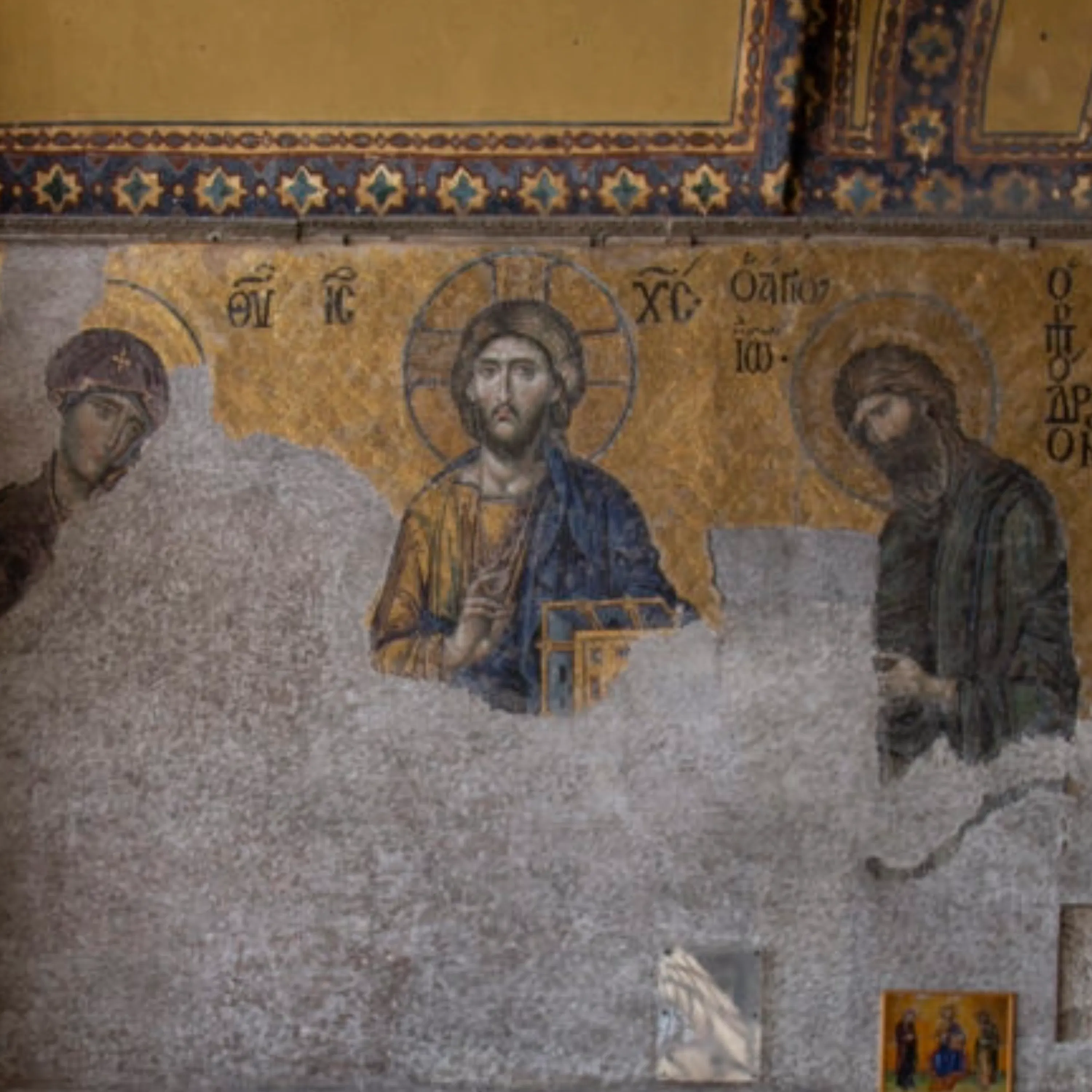
The Deesis mosaic, located in the South Gallery of the Hagia Sophia in Istanbul, Turkey, is a monumental work of Byzantine art dating back to approximately 1261 CE. Created during the Palaeologan Renaissance, a period of cultural and artistic rebirth following the Byzantine recapture of Constantinople, the mosaic represents a departure from the rigid, stylized forms typical of earlier Byzantine art. The term "Deesis" translates to "prayer" or "supplication," reflecting the composition's theme: Jesus Christ is flanked by the Virgin Mary and John the Baptist, both of whom are depicted in poses of intercession, pleading for mercy on behalf of humanity. The mosaic is a marvel of optical engineering. Byzantine mosaicists used thousands of tiny glass and stone cubes, known as tesserae, many as small as a grain of rice for delicate features like skin tones. These tiles were often angled to catch and reflect light from nearby windows and candles, creating a shimmering effect that gave the figures a sense of life and movement. The artist's use of complementary colors for shading, such as greens and olives mixed with pinks, achieved a vibrant, lifelike flesh tone that anticipated techniques used by Renaissance artists centuries later. Although the bottom half of the mosaic was lost to time and water damage, the surviving upper portion remains a profound testament to the emotional depth and technical sophistication of 13th-century Byzantine craftsmanship. Learn more about your ad choices. Visit megaphone.fm/adchoices
Frank Lloyd Wright | Falling Water
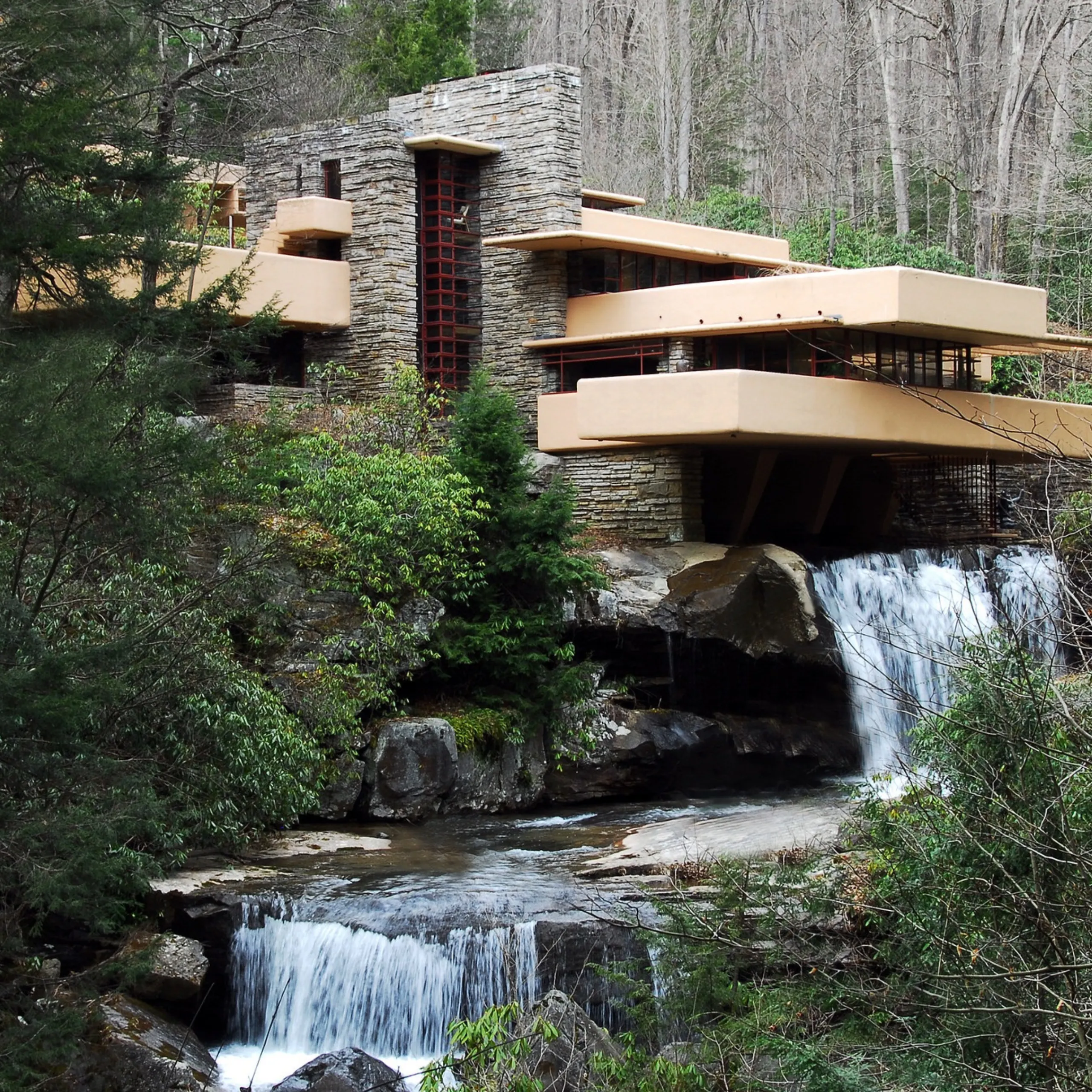
Frank Lloyd Wright was one of America's most famous and influential architects. He famously said, "No house should ever be on a hill or on anything. It should be of the hill. Belonging to it. Hill and house should live together each the happier for the other." It was this emphasis on unity between the construction and the surrounding landscape that made Falling Water such a breathtaking design. Related Episodes: Frank Lloyd Wright | Falling Water (full episode) This is an encore presentation. Every January/February, I release daily episodes to refresh everyone's memory on the 64 artists and artworks that will be included in my Arts Madness Tournament held in March. While most of these daily episodes will be reruns, I will continue publishing new episodes on Mondays. Check out my other podcasts Fun Facts Daily | Art Smart | Rainbow Puppy Science Lab Who ARTed is an Airwave Media Podcast. If you are interested in advertising on this or any other Airwave Media show, email: [email protected] Learn more about your ad choices. Visit megaphone.fm/adchoices
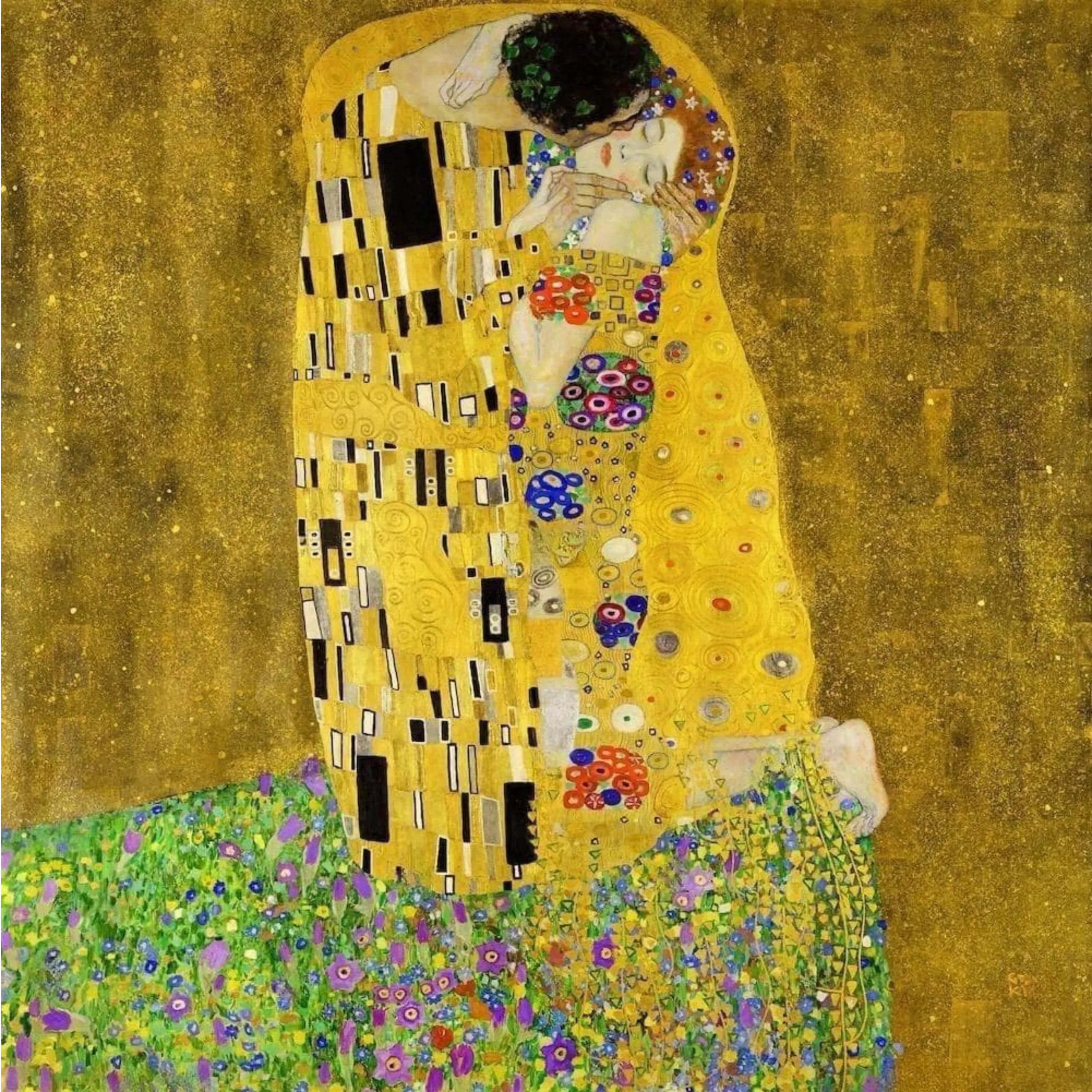
Gustav Klimt | The Kiss
Gustav Klimt's "The Kiss" is an iconic Art Nouveau painting, renowned for its use of gold leaf and intricate patterns. The painting depicts a couple embracing in a passionate kiss, their bodies adorned with abstract designs that symbolize interconnectedness and the natural world. While the identities of the figures are unclear, the painting has been interpreted as representing mythological figures, Klimt and his companion Emilie Floge, or a more allegorical representation of love. The painting's symbolism, including floral motifs and the gold halo effect, contribute to its spiritual dimension. The Kiss sold immediately after Klimt painted it. In 1908, the Austrian Government bought it for their Moderne Galerie. They paid 25,000 crowns which would be the equivalent of about $240,000 today. That was 5 times higher than the price paid for any painting in Vienna up until that time. It quickly became one of Klimt's most celebrated works extremely popular beyond the fine art world. "The Kiss" has permeated popular culture, appearing in countless reproductions, adaptations, and homages. Its iconic image has been used in advertising, fashion, and even movies. This is an encore presentation. Every January/February, I release daily episodes to refresh everyone's memory on the 64 artists and artworks that will be included in my Arts Madness Tournament held in March. While most of these daily episodes will be reruns, I will continue publishing new episodes on Mondays. Check out my other podcasts Fun Facts Daily | Art Smart | Rainbow Puppy Science Lab Who ARTed is an Airwave Media Podcast. If you are interested in advertising on this or any other Airwave Media show, email: [email protected] Learn more about your ad choices. Visit megaphone.fm/adchoices
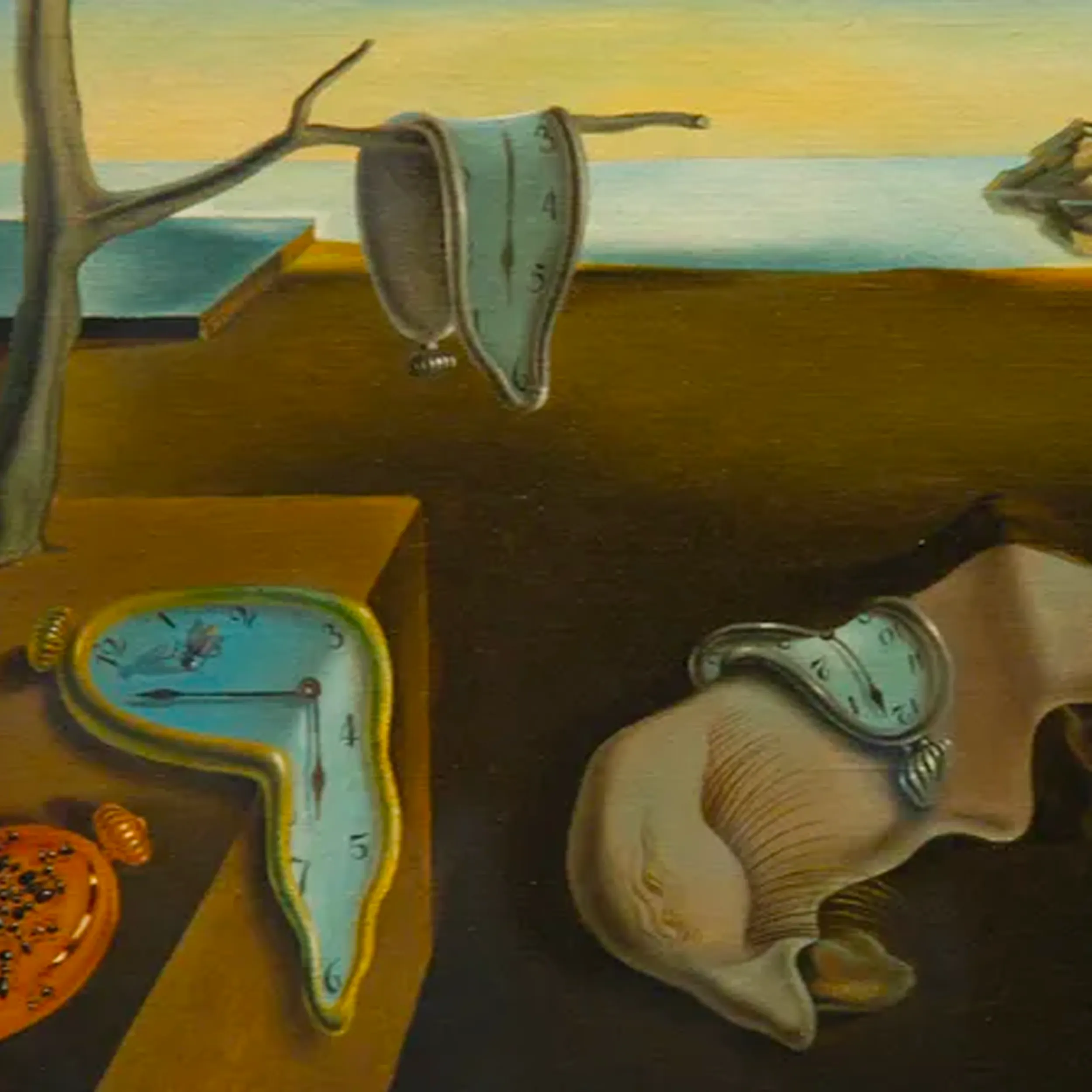
Salvador Dali | The Persistence of Memory
Salvador Dali's most famous painting is The Persistence of Memory from 1931. The painting is surprisingly small just 9 ½ by 13 inches or slightly larger than the average sheet of paper. It is one of the most widely recognized and referenced images of the surrealist movement. For those who don’t know it by name, you will likely recognize the description of clocks melting in the desert. The melting of clocks much like the ambiguous figure in the middle of the composition references a metamorphosis. Things are in a state of flux. Ants crawl all over the clocks like fruit left to rot on the ground. Dali referred to this work describing time as a soft cheese and yet with all of the absurdity, there are realistic elements drawn from the landscape of his home in Spain. There is an unsettling mix of the real and absurd which served as a device surrealist artists would use to call into question the rational world and whether things truly are as hard and fast as we might at first perceive them to be. The clocks melt because even time, like all things, is relative and malleable. This is an encore presentation. Every January/February, I release daily episodes to refresh everyone's memory on the 64 artists and artworks that will be included in my Arts Madness Tournament held in March. While most of these daily episodes will be reruns, I will continue publishing new episodes on Mondays. Check out my other podcasts Fun Facts Daily | Art Smart | Rainbow Puppy Science Lab Who ARTed is an Airwave Media Podcast. If you are interested in advertising on this or any other Airwave Media show, email: [email protected] Learn more about your ad choices. Visit megaphone.fm/adchoices
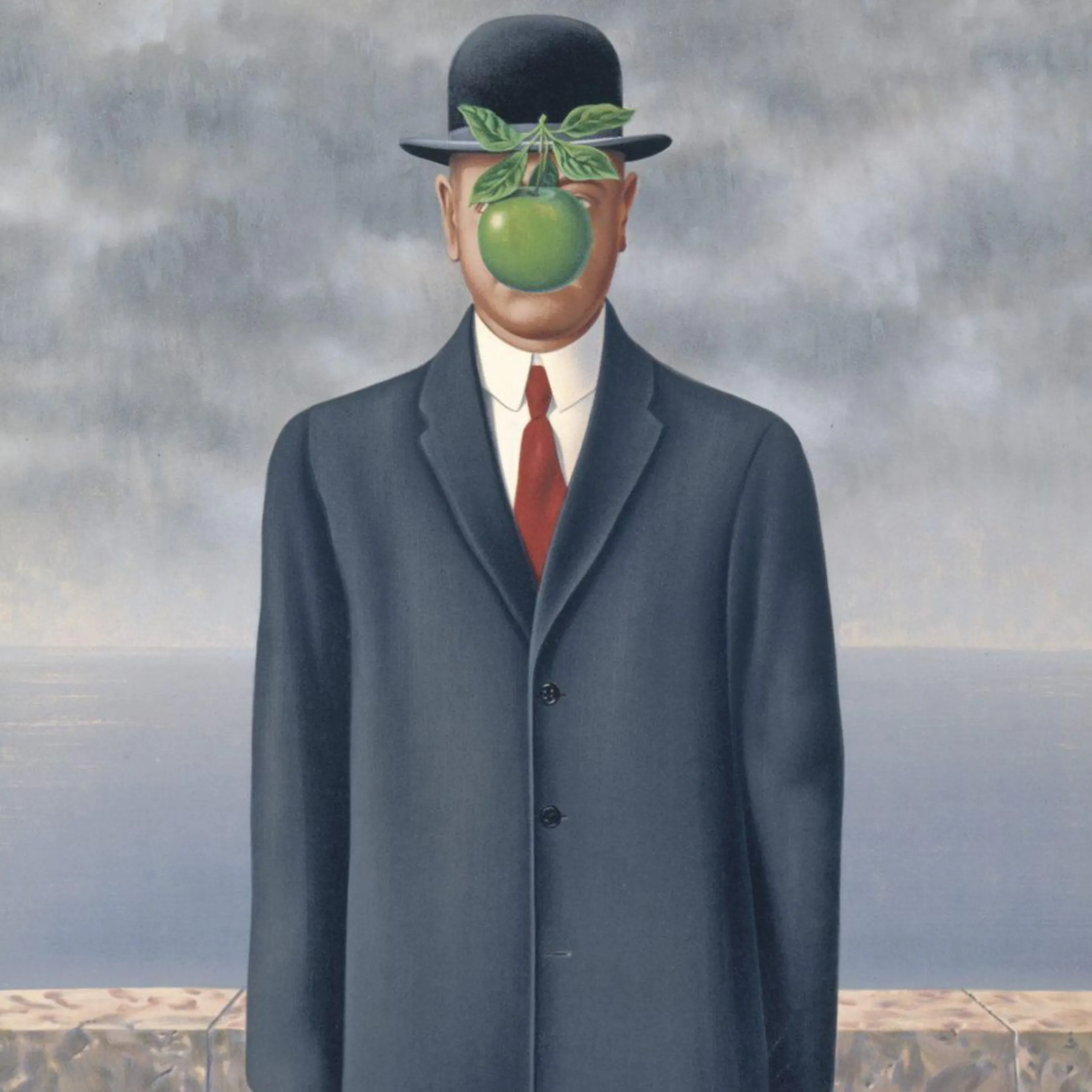
Rene Magritte | The Son of Man
Rene Magritte's painting, Son of Man, is among the most famous images of the Surrealist Movement. It is one of the few artworks that transcends the museum and has become a part of pop culture. Actually, technically it isn’t even in the museums. Son of Man is privately owned and rarely seen on public display, but it has been referenced in books, movies like Stranger than Fiction and The Thomas Crown Affair, tv shows like The Simpsons, music videos by the likes of Michael Jackson. Of course, listeners of this show no doubt recognize that the painting was also the inspiration for the greatest pop culture image of all time, my podcast cover art. Related episodes: Rene Magritte | The False Mirror (full episode) Salvador Dali | The Persistence of Memory This is an encore presentation. Every January/February, I release daily episodes to refresh everyone's memory on the 64 artists and artworks that will be included in my Arts Madness Tournament held in March. While most of these daily episodes will be reruns, I will continue publishing new episodes on Mondays. Check out my other podcasts Fun Facts Daily | Art Smart | Rainbow Puppy Science Lab Who ARTed is an Airwave Media Podcast. If you are interested in advertising on this or any other Airwave Media show, email: [email protected] Learn more about your ad choices. Visit megaphone.fm/adchoices
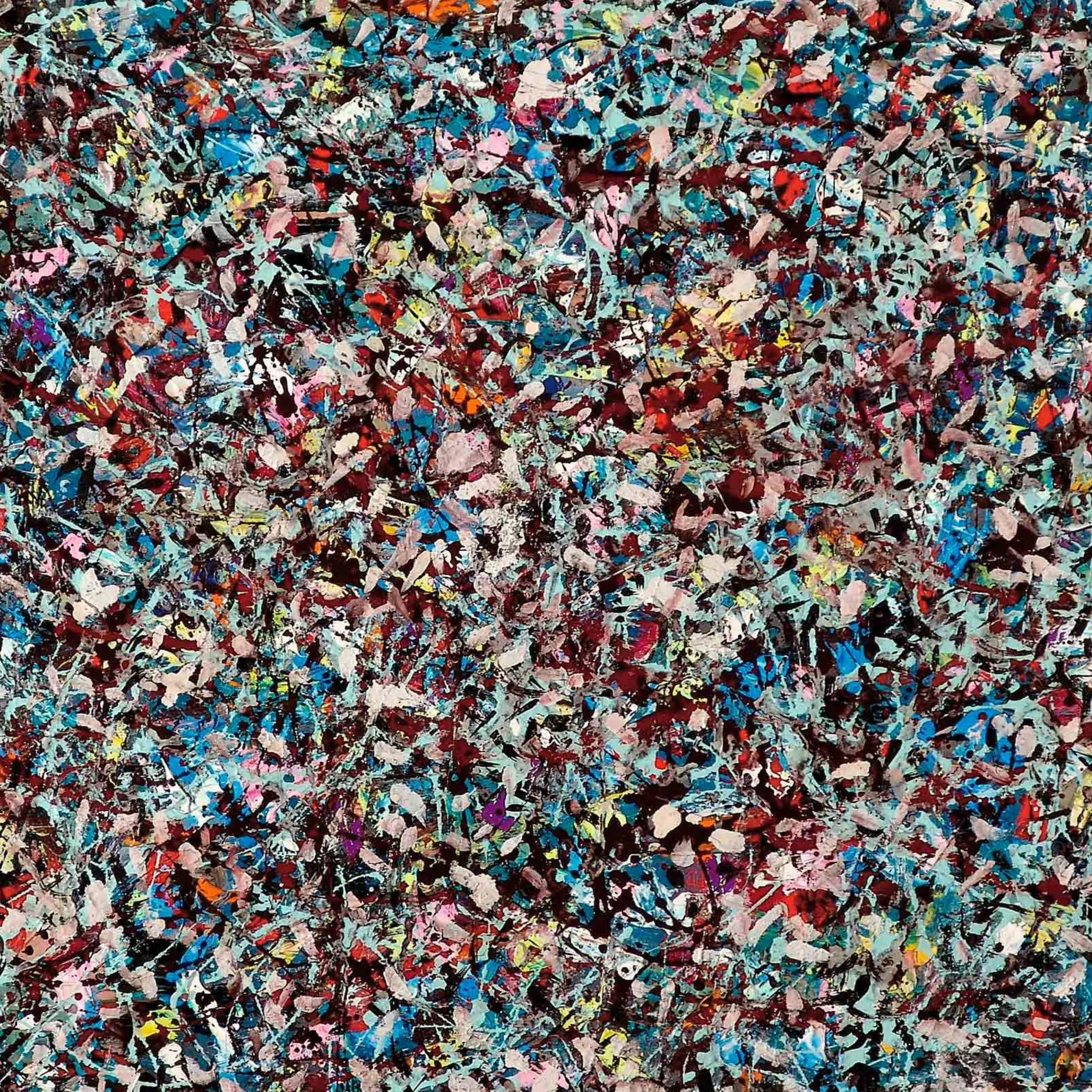
Lee Krasner | Little Images
Lee Krasner, born Lena Krassner in 1908, was a pivotal Abstract Expressionist artist often overshadowed by her marriage to Jackson Pollock. Despite this, she forged a unique artistic path, studying at the Women's Art School of Cooper Union and the National Academy of Design before embracing modernism after the opening of MoMA in 1929. Influenced by Hans Hofmann's Cubist theories, Krasner experimented with abstraction, contributing to the WPA's Federal Art Project and the American Abstract Artists group. Her significant "Little Images" series, collages, and later large-scale works like the "Earth Green" and "Umber" series showcased her evolving style and resilience. While initial critical reception was mixed, Krasner gained recognition later in her career, culminating in retrospectives at the Whitechapel Gallery and the Whitney Museum, solidifying her legacy as a vital figure in 20th-century art. Want to learn more? Head over to my website www.funfactsdailypod.com and be sure to listen to my other podcasts Who ARTed: Weekly Art History for All Ages or Art Smart. For family fun, check out my son's podcast Rainbow Puppy Science Lab Fun Facts Daily is an Airwave Media Podcast. If you are interested in advertising on this or any other Airwave Media show, email: [email protected] Learn more about your ad choices. Visit megaphone.fm/adchoices
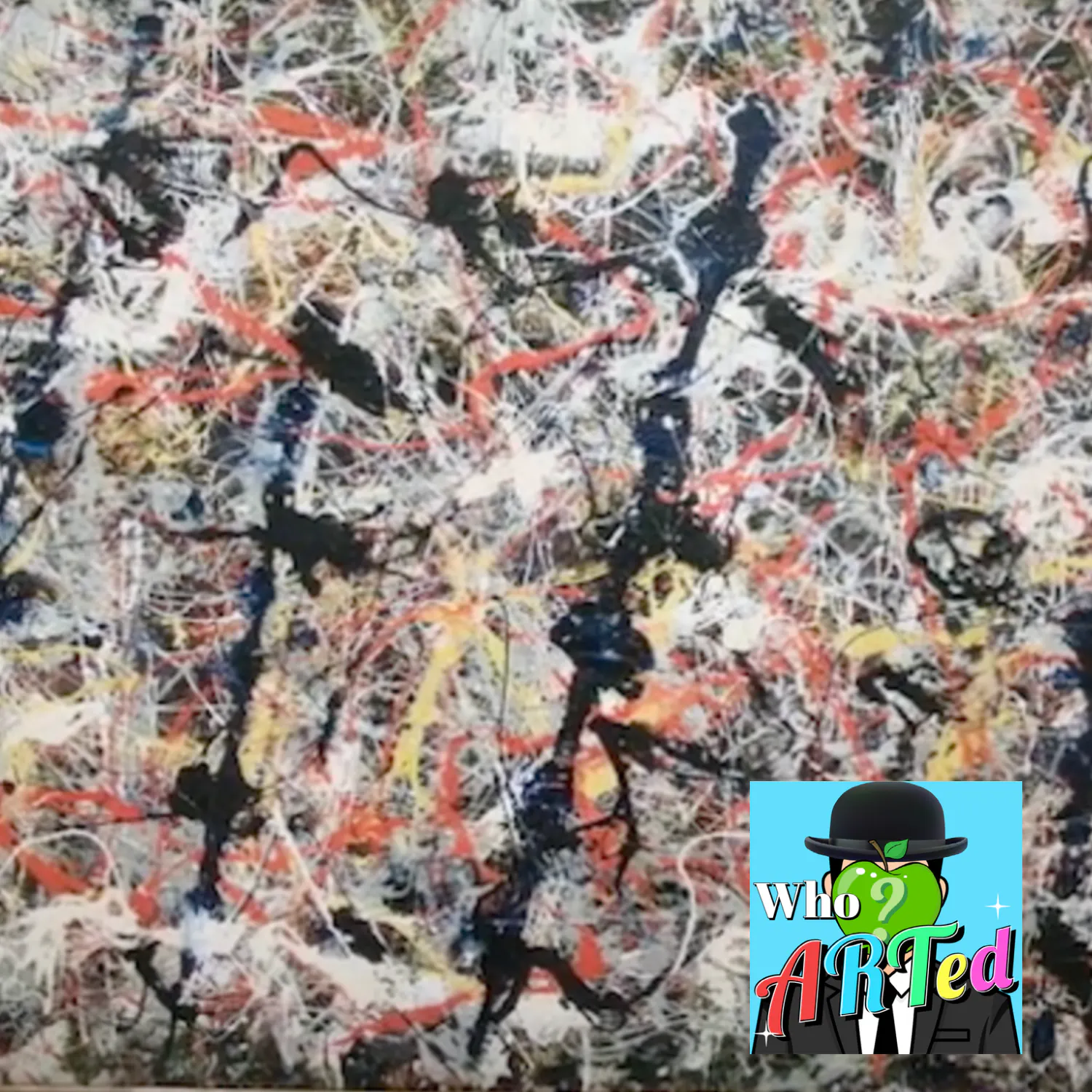
Jackson Pollock | Number 11 (Blue Poles)
In August of 1973, the Australian government bought a Jackson Pollock painting for $2 million. It was the highest price paid for work of an American artist and it was a huge scandal in Australia. Most people thought it was a waste and inconceivable that a Pollock would be worth as much as a Rembrandt. Pollock's work seems so simple and direct that it is easy to forget how revolutionary it was. Related Episodes: Janet Sobel This is an encore presentation. Every January/February, I release daily episodes to refresh everyone's memory on the 64 artists and artworks that will be included in my Arts Madness Tournament held in March. While most of these daily episodes will be reruns, I will continue publishing new episodes on Mondays. Check out my other podcasts Fun Facts Daily | Art Smart | Rainbow Puppy Science Lab Who ARTed is an Airwave Media Podcast. If you are interested in advertising on this or any other Airwave Media show, email: [email protected] Learn more about your ad choices. Visit megaphone.fm/adchoices
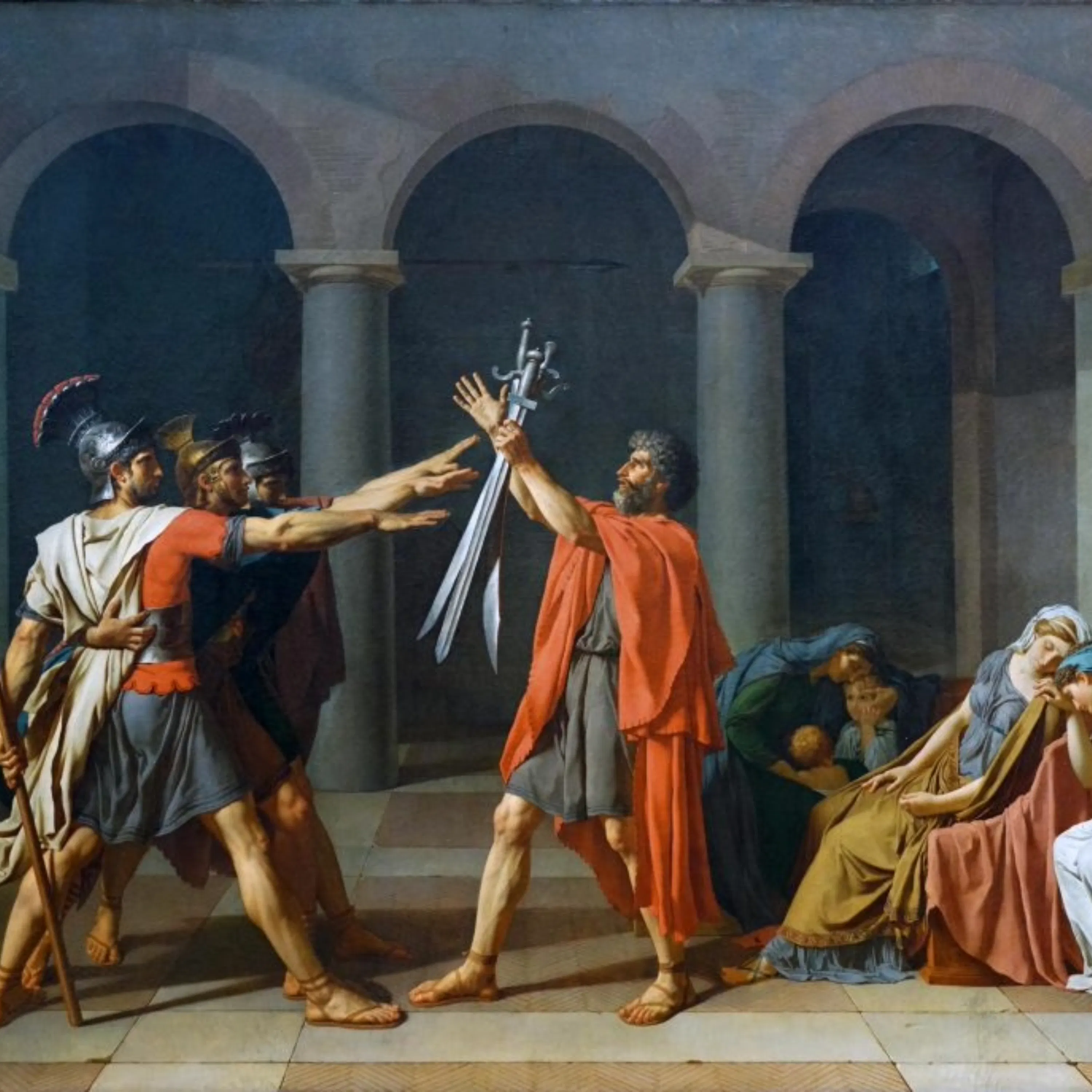
Jacques-Louis David | The Oath of the Horatii
In this episode, I was thrilled to be joind once again by Tim Bogatz, host of Art Ed Radio from The Art of Education University. Writing for The Art of Ed was one of my career and if you want to find my articles, here is a link: https://theartofeducation.edu/author/kylewood/ and fellow art teachers, join Tim, me and thousands of other art teachers on the AOE Community Jacques-Louis David was a foundational figure of the Neoclassical movement, marking a significant departure from the ornate and frivolous Rococo style that dominated 18th-century France. His artistic journey was characterized by a push toward visual languages inspired by the austerity and perceived virtues of Ancient Rome and Greece. David’s personal history was as turbulent as the era he lived in; raised by uncles who were successful architects after his father was killed in a duel, he faced early professional rejection, failing the Prix de Rome several times before finally succeeding in 1774. His radical political involvement during the French Revolution, including his vote to execute Louis XVI and his later role as an artistic authority under Napoleon, deeply influenced his approach to art as a medium for moral and political communication. At the center of David’s portfolio is his 1784 masterpiece, The Oath of the Horatii, a work that exemplifies the Neoclassical ideal of placing patriotism and civic duty above personal or familial ties. The painting depicts a legendary conflict between Rome and the city of Alba Longa, where three brothers from the Horatius family swear an oath to their father to fight to the death for their city. David’s composition utilizes a stark, triptych-like structure created by architectural arches that divide the scene into three distinct groups: the brothers swearing the oath, the father holding the swords, and the grieving women—some of whom are tied by marriage to the opposing side. The work is noted for its dramatic use of linear perspective, a dark, simple background, and a sharp contrast between the rigid, angular forms of the men and the soft, organic curves of the distressed women. Originally commissioned under the king, the painting was eventually adopted as a powerful piece of propaganda by revolutionaries, cementing its status as a landmark of Western art history. Check out my other podcasts Fun Facts Daily | Art Smart | Rainbow Puppy Science Lab Who ARTed is an Airwave Media Podcast. If you are interested in advertising on this or any other Airwave Media show, email: [email protected] Learn more about your ad choices. Visit megaphone.fm/adchoices
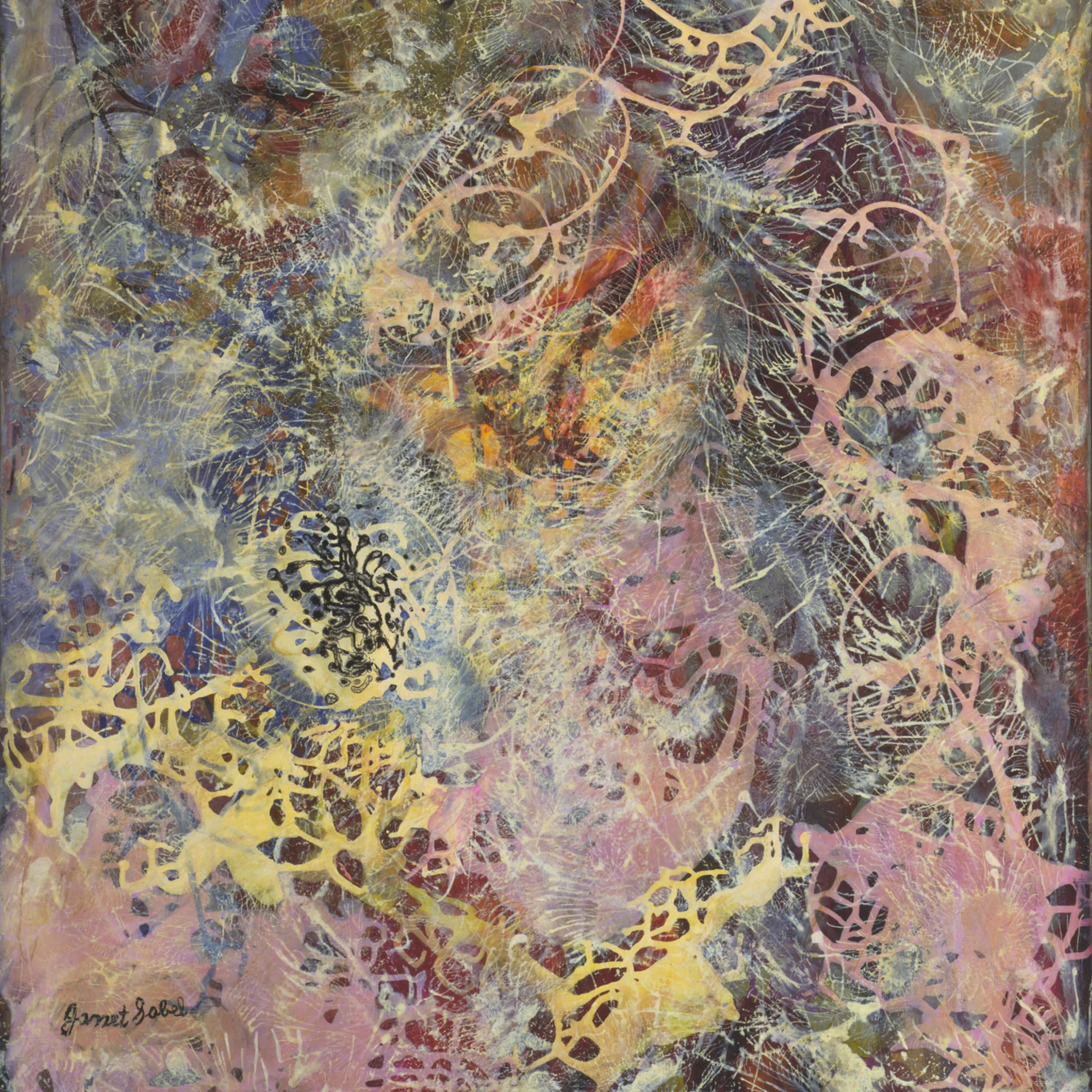
Janet Sobel
When you think of bold and revolutionary modern artists from the 20th century, you probably don't think of a grandmother laying across her living room floor painting, but maybe you should. Janet Sobel was a Ukrainian American painter who was dripping paint across the canvas long before Jackson Pollock "invented" the technique. Other artists mentioned in this episode: Jackson Pollock Alexander Calder Norman Rockwell Roy Lichtenstein Georgia O'Keeffe This is an encore presentation. Every January/February, I release daily episodes to refresh everyone's memory on the 64 artists and artworks that will be included in my Arts Madness Tournament held in March. While most of these daily episodes will be reruns, I will continue publishing new episodes on Mondays. Check out my other podcasts Fun Facts Daily | Art Smart | Rainbow Puppy Science Lab Who ARTed is an Airwave Media Podcast. If you are interested in advertising on this or any other Airwave Media show, email: [email protected] Learn more about your ad choices. Visit megaphone.fm/adchoices
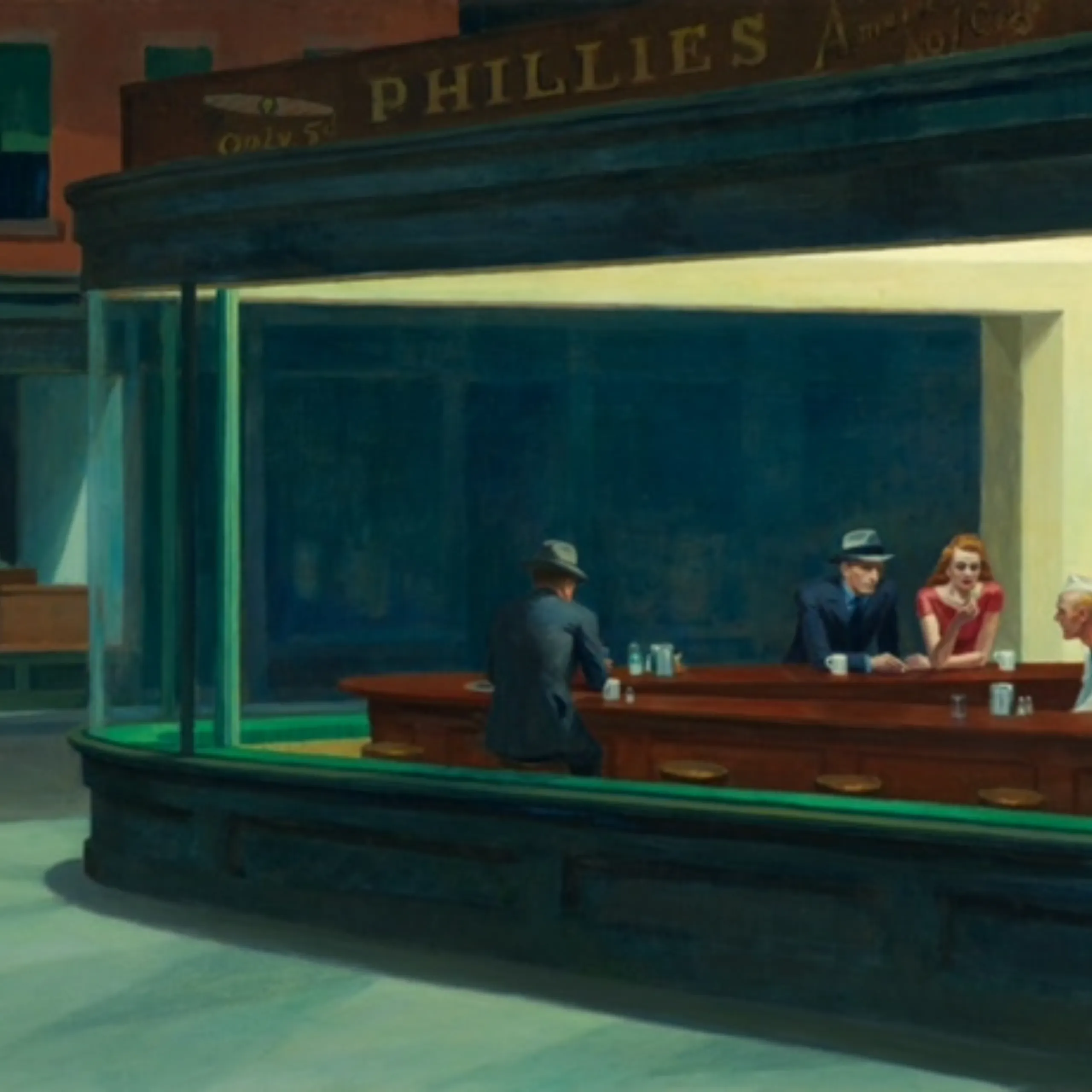
Edward Hopper | Nighthawks
The brilliance of Edward Hopper is that he was able to be simultaneously specific and concrete yet vague and leave a lot up to the viewer to interpret. In a painting like Nighthawks we see people gathered in a diner, but as viewers we are stuck on the outside looking in. We feel isolated and apart from the scene and as we look closer, we discover that the people inside the diner are isolated themselves. It is not a group of four inside the space but rather a collection of four individuals. My guest for this episode was Julie Averbach, the founder of smARTee, a non-profit that helps people feel connected and continue their lifelong learning via free virtual museum tours. She is also the author of the upcoming book, The Art of Trader Joe's (https://theartoftraderjoes.com) which helps readers appreciate the subtle brilliance of the grocery chain. Buy the book on Amazon or at your local bookstore. This is an encore presentation. Every January/February, I release daily episodes to refresh everyone's memory on the 64 artists and artworks that will be included in my Arts Madness Tournament held in March. While most of these daily episodes will be reruns, I will continue publishing new episodes on Mondays. Check out my other podcasts Fun Facts Daily | Art Smart | Rainbow Puppy Science Lab Who ARTed is an Airwave Media Podcast. If you are interested in advertising on this or any other Airwave Media show, email: [email protected] Learn more about your ad choices. Visit megaphone.fm/adchoices
Thomas Hart Benton
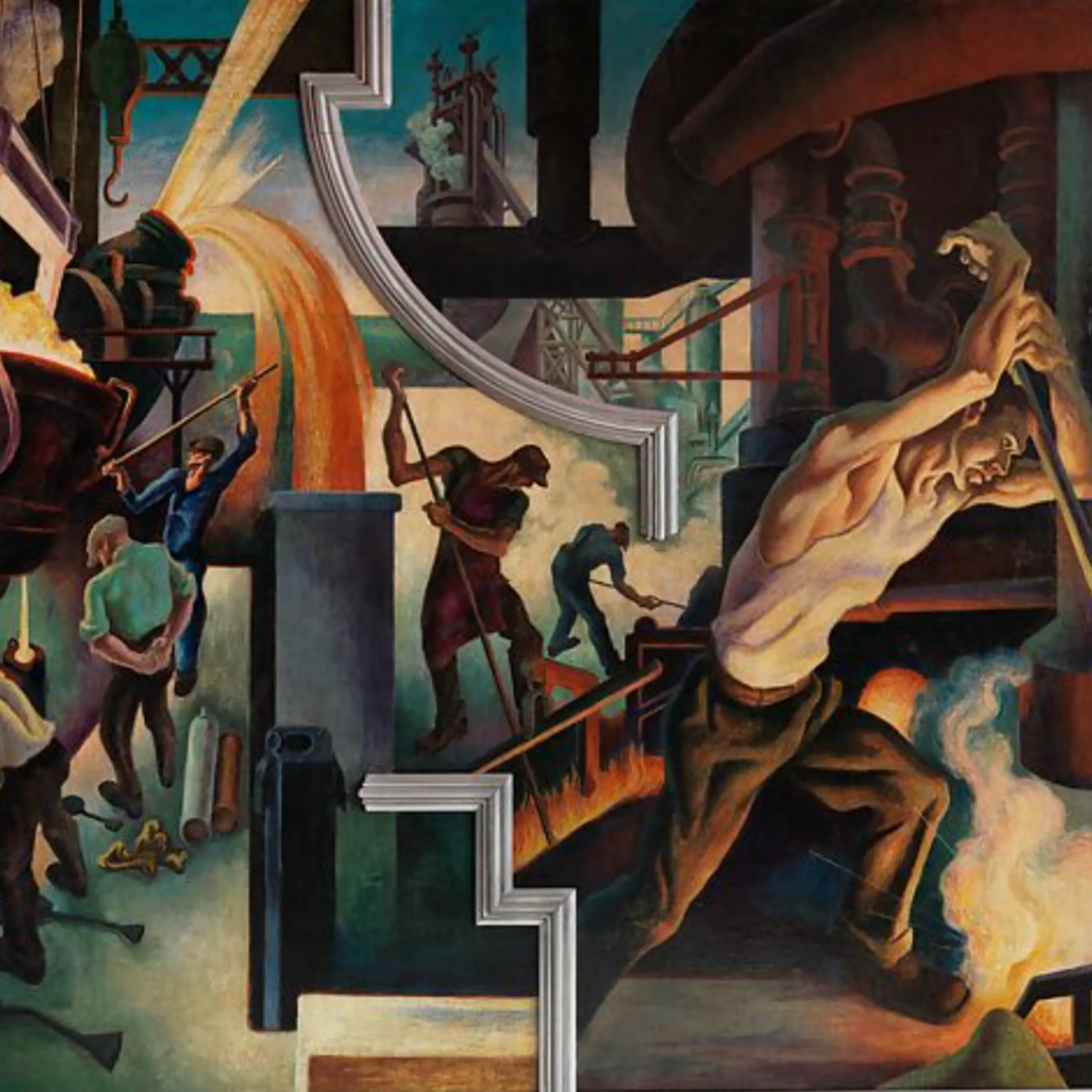
American artist Thomas Hart Benton (1889-1975) was a leading figure of the Regionalist movement, known for his dynamic depictions of American life, labor, and landscapes. Born into a politically prominent Missouri family, Benton initially pursued art against his father's wishes, studying at the Corcoran Gallery of Art and later in Paris, where he engaged with avant-garde movements like Cubism and Synchromism. However, he eventually rejected European modernism, advocating for a distinctly American art form that captured the realities of the nation. His signature "muscular realism" is characterized by swirling forms and vibrant colors, often seen in his prolific murals in public buildings such as the Missouri State Capitol. Benton's monumental mural cycle, America Today, completed in 1931, stands as a prime example of American Regionalism. Executed in egg tempera on linen, these ten panels offer a panoramic view of American life during the Great Depression, featuring scenes of bustling cities, industrial activity, and rural labor. The mural, originally commissioned by The New School for Social Research, showcases figures like steelworkers, farmers, and jazz musicians, with Benton subtly including himself and his family within the work. America Today is a powerful visual narrative that celebrates the resilience of ordinary Americans and critiques the challenges of the era, solidifying Benton's legacy as a chronicler of American history and culture. The mural is now housed at the Metropolitan Museum of Art in New York City. Check out my other podcasts Fun Facts Daily | Art Smart | Rainbow Puppy Science Lab Who ARTed is an Airwave Media Podcast. If you are interested in advertising on this or any other Airwave Media show, email: [email protected] Learn more about your ad choices. Visit megaphone.fm/adchoices
Emily Kame Kngwarreye | Earth's Creation
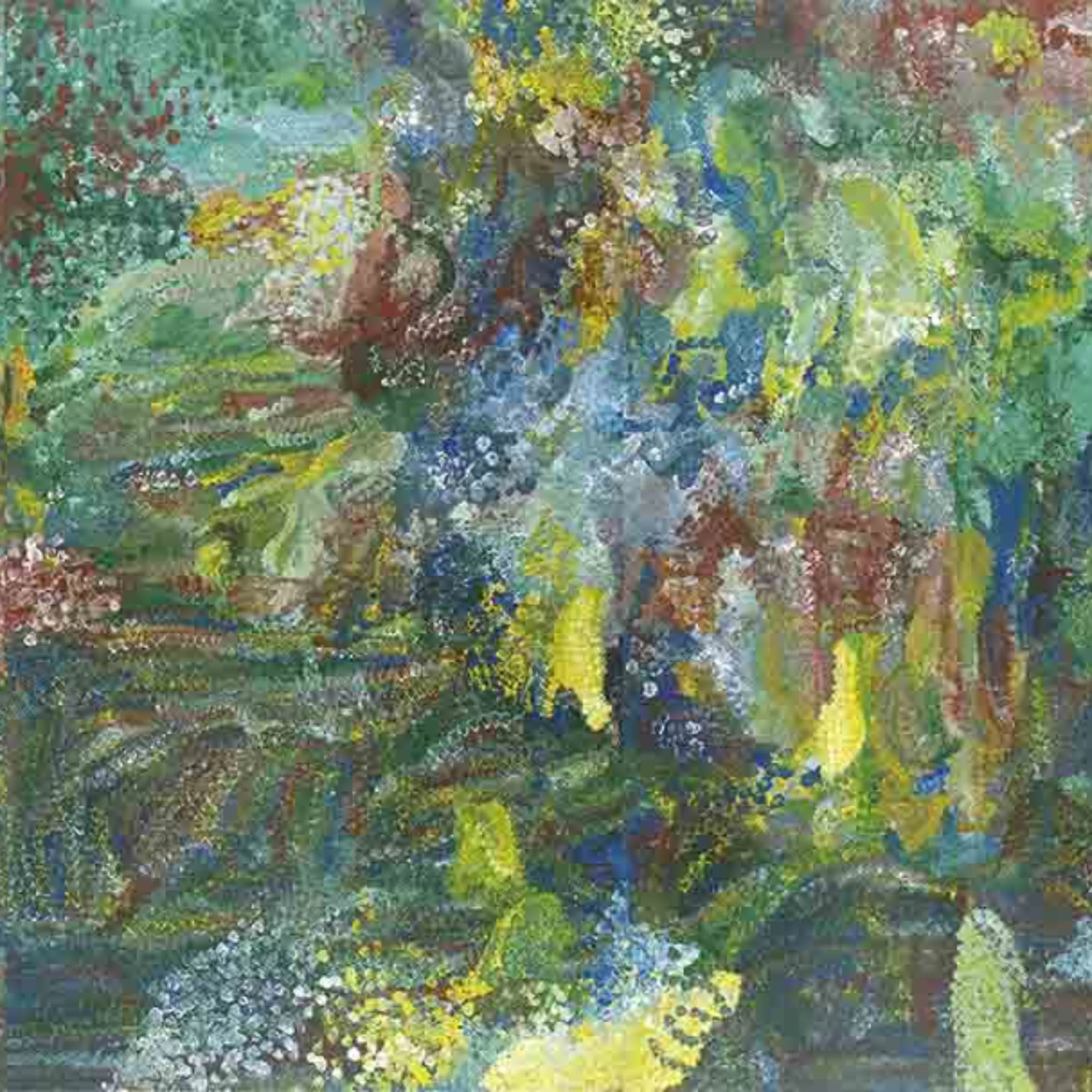
Emily Kame Kngwarreye was born around 1910, a time when the Aboriginal people were not considered full citizens in their own country. Earth’s Creation is an absolutely massive painting about 9 feet tall and 20 feet wide. She painted it in 1994 when she was around 84 years old. Most biographies will say that she only painted for the last 8 years of her life, but really, she was only painting for Western audiences for that period. She spent her life learning, practicing, and creating in line with the Aboriginal customs. Earth’s Creation is an absolutely massive piece she created in 1994. Kngwarreye was about 84 years old when she painted it. It shows an evolution in her style from the more earth toned traditional pieces she painted as she first began to work on canvas. In this piece we see rich blues, yellows, and greens referencing the lush “green times” that follow periods of heavy rain. She was moving beyond the clay and ochre pigments but still creating work deeply rooted in her connection to the land and nature. This painting is about 9 feet tall and 20 feet wide and when it went up for auction in 2007, it sold for an equally large price of just over $1 million. It set a record for the highest price of a work by an aboriginal artist and the highest price for an Australian female painter. A decade later it sold for over $2 million once again setting the record for the highest price by an Australian female painter. This is an encore presentation. Every January/February, I release daily episodes to refresh everyone's memory on the 64 artists and artworks that will be included in my Arts Madness Tournament held in March. While most of these daily episodes will be reruns, I will continue publishing new episodes on Mondays. Check out my other podcasts Fun Facts Daily | Art Smart | Rainbow Puppy Science Lab Who ARTed is an Airwave Media Podcast. If you are interested in advertising on this or any other Airwave Media show, email: [email protected] Learn more about your ad choices. Visit megaphone.fm/adchoices
Wayne Thiebaud | Pie a la Mode
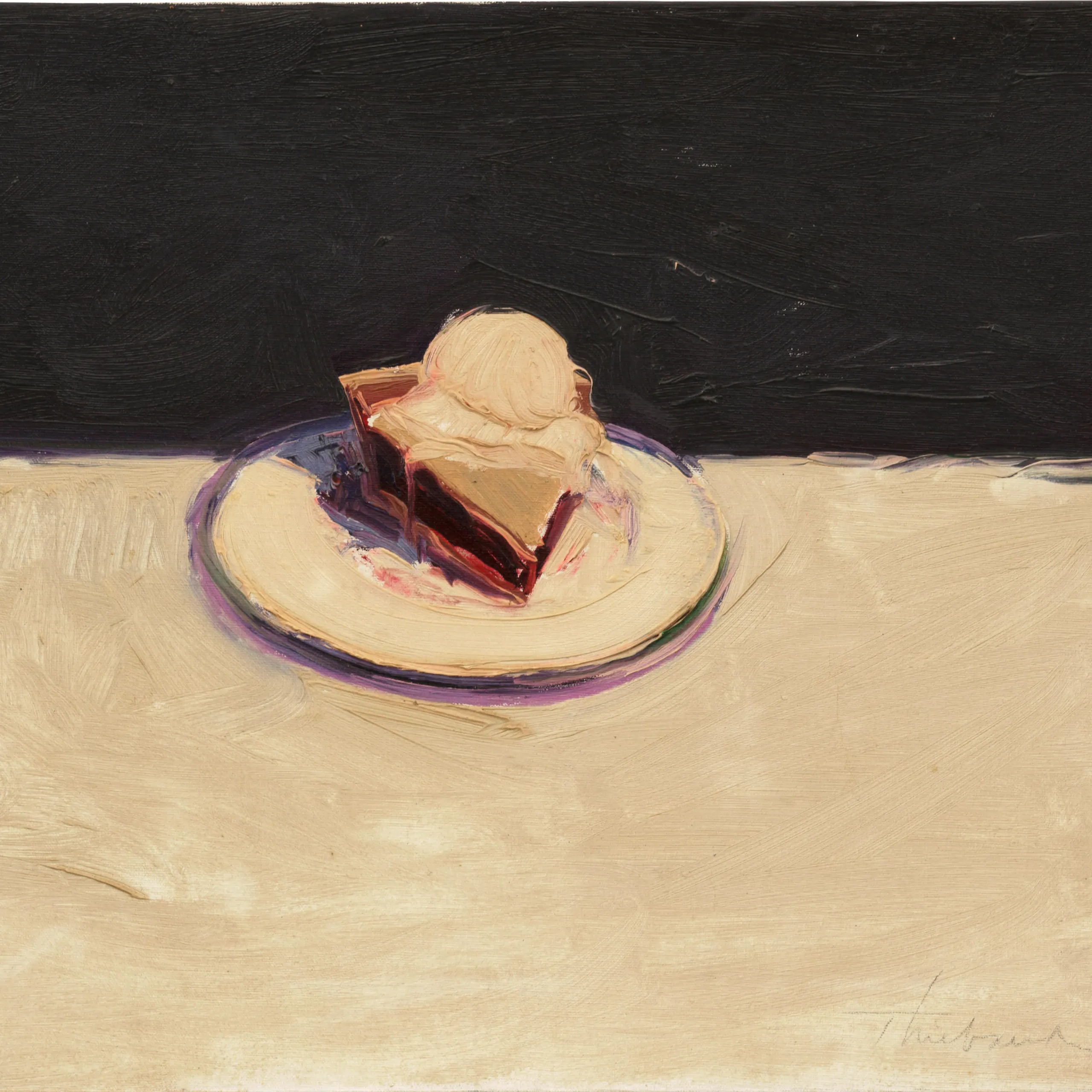
Wayne Thiebaud is known for his paintings of everyday objects. Born in 1920, Thiebaud's early experiences as a sign painter and an apprentice animator at Walt Disney Studios shaped his understanding of visual communication and iconic forms. Though often associated with the Pop Art movement of the 1960s, Thiebaud’s approach was distinct. While artists like Andy Warhol embraced mechanical reproduction, Thiebaud celebrated the painter's touch, using thick impasto, brilliant colors, and strong shadows to bring his subjects to life. His signature works feature commonplace items, particularly diner foods like pies, cakes, and gumballs, transforming them into objects of formal study and cultural nostalgia. Thiebaud's career gained national recognition following his inclusion in the landmark 1962 exhibition, "New Painting of Common Objects," at the Pasadena Art Museum. A deep dive into one of his early masterpieces, Pie a la Mode (1961), reveals the key elements of his style: the luscious, tactile quality of the paint, the signature halos of color outlining the object, and the ability to find artistic complexity in the simple pleasures of American life. Beyond his famous still lifes, Thiebaud also applied his unique vision to compelling landscapes of San Francisco and detailed figure paintings, solidifying his legacy as one of America's most beloved painters and a dedicated long-time professor at the University of California, Davis. Related episodes: Claes Oldenburg Roy Lichtenstein This is an encore presentation. Every January/February, I release daily episodes to refresh everyone's memory on the 64 artists and artworks that will be included in my Arts Madness Tournament held in March. While most of these daily episodes will be reruns, I will continue publishing new episodes on Mondays. Check out my other podcasts Fun Facts Daily | Art Smart | Rainbow Puppy Science Lab Who ARTed is an Airwave Media Podcast. If you are interested in advertising on this or any other Airwave Media show, email: [email protected] Learn more about your ad choices. Visit megaphone.fm/adchoices
The Ardabil Carpet
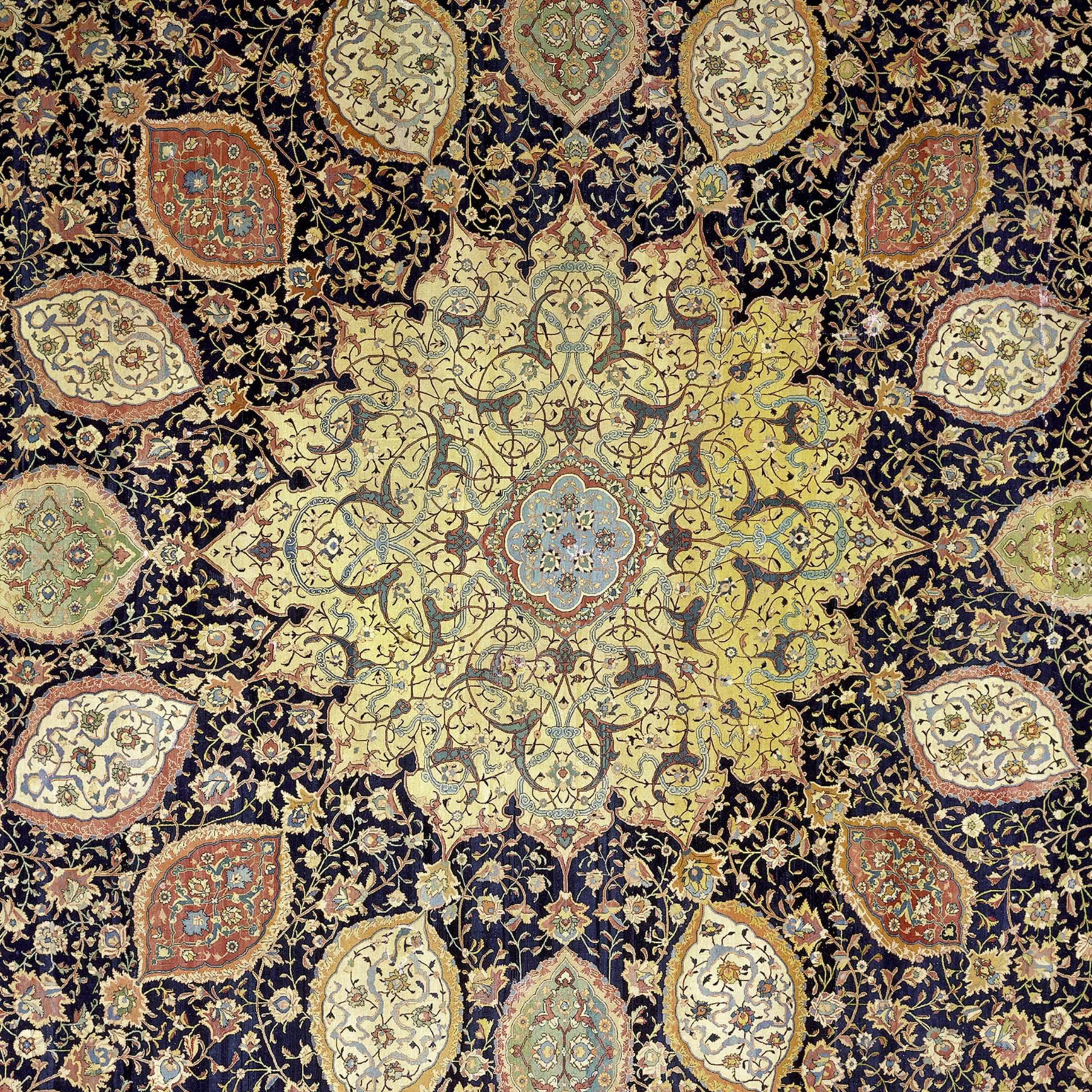
The Ardabil Carpet, a masterpiece of 16th-century Persian weaving, represents a pinnacle of Safavid art. Though associated with Ardabil, scholars suggest it may have been woven in Kashan, a prominent center for carpet production during that era. Commissioned during the reign of Shah Tahmasp I (1501-1736 CE) for the Shrine of Shaykh Safi al-Din Ardabili, this monumental wool pile carpet on a silk foundation measures an impressive 34 feet 6 inches by 17 feet 5 inches and boasts over 25 million knots. The carpet's intricate design features a central medallion surrounded by elaborate floral motifs, scrolling vines, and arabesques, reminiscent of a lush garden, a common theme in Islamic art. Notably, two asymmetrical mosque lamps hang from the central medallion, symbolizing divine knowledge and adding to the carpet's sacred context. Inscriptions include a couplet from the poet Hafiz, emphasizing devotion and humility, fitting for a piece created for a revered shrine. Dated 946 AH (1539-1540 CE), the Ardabil Carpet's precise dating is a rare and valuable historical marker. Its acquisition by the Victoria and Albert Museum in London in 1893 significantly elevated the recognition of Islamic art in Western collections, and its enduring influence continues to inspire textile art and design globally. This is an encore presentation. Every January/February, I release daily episodes to refresh everyone's memory on the 64 artists and artworks that will be included in my Arts Madness Tournament held in March. While most of these daily episodes will be reruns, I will continue publishing new episodes on Mondays. Check out my other podcasts Fun Facts Daily | Art Smart | Rainbow Puppy Science Lab Who ARTed is an Airwave Media Podcast. If you are interested in advertising on this or any other Airwave Media show, email: [email protected] Learn more about your ad choices. Visit megaphone.fm/adchoices
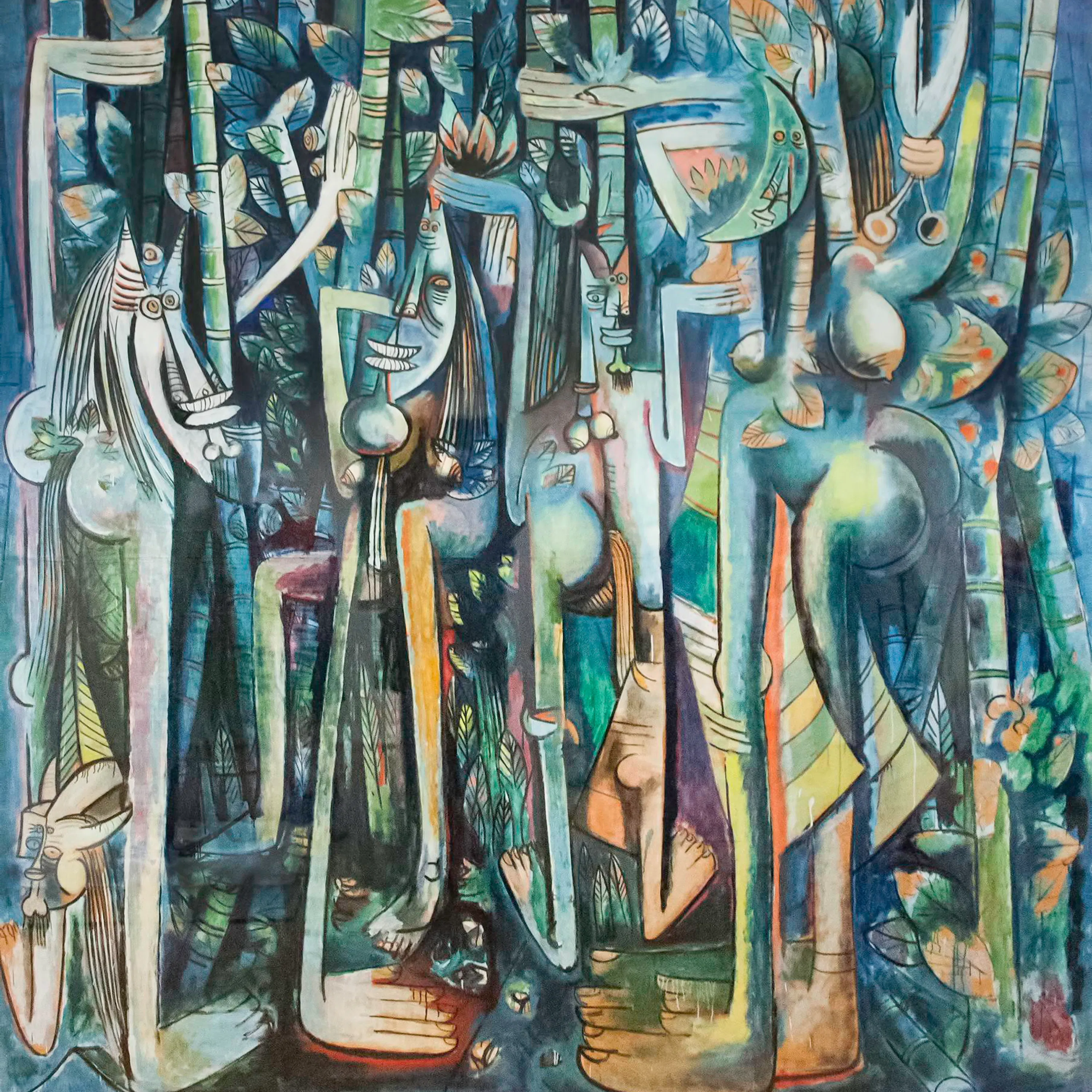
Wifredo Lam | The Jungle
Wifredo Lam was a visionary artist whose work seamlessly blended the diverse influences of his multicultural heritage with the avant-garde movements of the early 20th century. Born in 1902 in Sagua la Grande, Cuba, Lam was the son of a Chinese immigrant father and a mother of mixed African and Spanish descent. This rich cultural tapestry, combined with his early exposure to Santería through his grandmother, deeply informed his artistic vision. Lam’s journey took him from the traditional art academies of Havana and Madrid to the heart of the surrealist and cubist movements in Paris, where he formed a pivotal friendship with Pablo Picasso. His experiences during the Spanish Civil War and his return to Cuba in the 1940s further sharpened his focus, leading him to create works that challenged the status quo and celebrated the spiritual and cultural resilience of the Afro-Cuban people. Lam’s most celebrated masterpiece, The Jungle (1943), serves as a powerful reclamation of Afro-Cuban identity. While the title suggests a literal wilderness, the painting depicts a dense thicket of sugarcane—a crop deeply tied to Cuba’s history of colonial exploitation and enslaved labor. Through a unique visual language that merges cubist fragmentation, surrealist dream-logic, and the geometric forms of West African masks, Lam populates this "jungle" with hybrid, spirit-like figures. This monumental work, now housed in the Museum of Modern Art (MoMA) in New York, stands as a testament to Lam's goal of creating a "hostile" art that would "disturb the dreams of the exploiters." By reappropriating the very African motifs that European modernists had previously "discovered," Lam established a new form of modernism—one that was globally relevant yet deeply rooted in the personal and political realities of the Caribbean. Check out my other podcasts Fun Facts Daily | Art Smart | Rainbow Puppy Science Lab Who ARTed is an Airwave Media Podcast. If you are interested in advertising on this or any other Airwave Media show, email: [email protected] Learn more about your ad choices. Visit megaphone.fm/adchoices
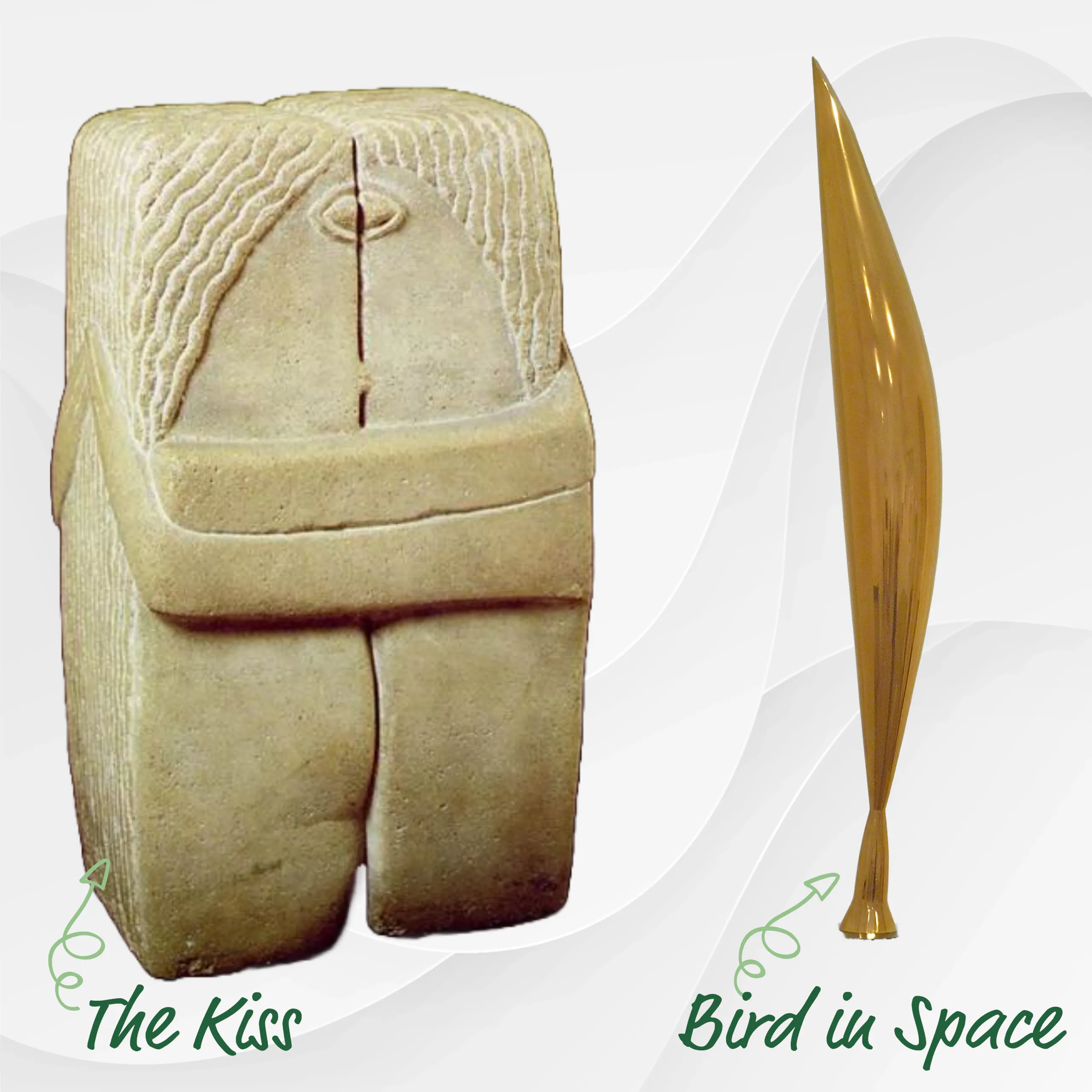
Constantin Brâncuși | The Kiss & Bird in Space
Constantin Brâncuși was a Romanian sculptor who made a significant impact on modern art through his abstract sculptures. His passion and dedication to art is legendary. In the autumn of 1903, he began a months-long walk from Bucharest to Paris, where he sought to immerse himself in the avant-garde art scene. Brâncuși's work, characterized by simplified forms and a focus on the essence of his subjects, often sparked controversy, as seen with his Bird in Space sculpture, which was challenged by U.S. customs officials who didn't recognize it as art. This led to a landmark court case that ultimately recognized abstract art as a legitimate form. Brâncuși's dedication to his unique artistic vision and his exploration of fundamental forms left a lasting legacy on the world of modern sculpture. Related episodes: Auguste Rodin Amedeo Modigliani Henri Matisse Marcel Duchamp This is an encore presentation. Every January/February, I release daily episodes to refresh everyone's memory on the 64 artists and artworks that will be included in my Arts Madness Tournament held in March. While most of these daily episodes will be reruns, I will continue publishing new episodes on Mondays. Check out my other podcasts Fun Facts Daily | Art Smart | Rainbow Puppy Science Lab Who ARTed is an Airwave Media Podcast. If you are interested in advertising on this or any other Airwave Media show, email: [email protected] Learn more about your ad choices. Visit megaphone.fm/adchoices
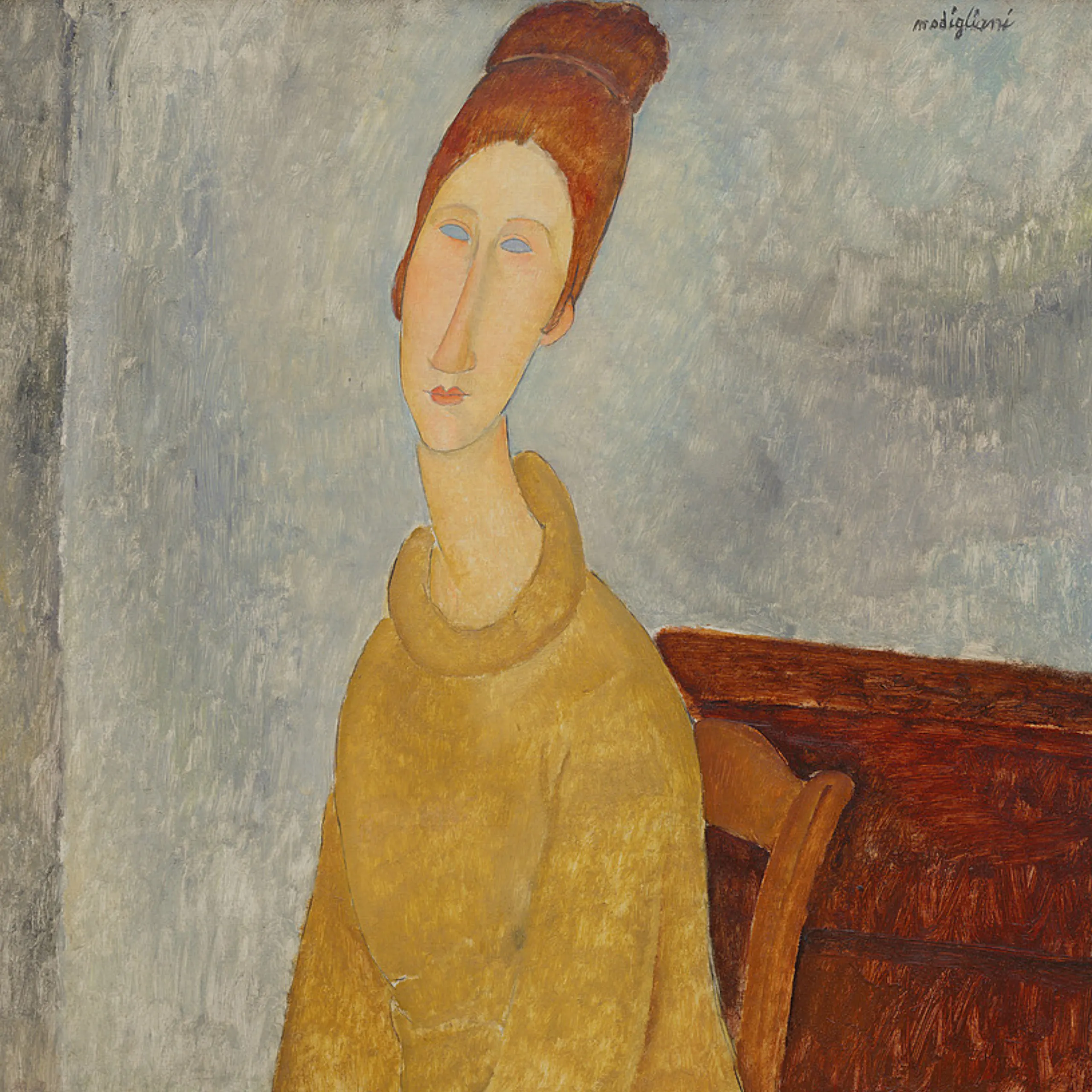
Amedeo Modigliani
Amedeo Modigliani, a rebellious Italian painter, left a lasting mark on the art world with his distinctive style and captivating portraits. Born in Livorno in 1884, his early life was marked by illness and a dramatic incident that saved his family from financial ruin. Modigliani's art, influenced by diverse sources like Cezanne, Brancusi, and African sculpture, is characterized by elongated figures, long necks, and almond-shaped eyes. He moved to Paris in 1906, where he became a part of the bohemian art scene, despite struggling with poverty and rejection. His first solo exhibition in 1917 caused a scandal due to its nude paintings, but it also solidified his position as a major artistic figure. Modigliani's tragic early death at 35 cut his career short, but his legacy lives on through his unique artistic vision, capturing the essence of human emotion and form in his timeless works. Related Episodes: Henri Matisse Henri de Toulouse-Lautrec Pablo Picasso Paul Cezanne This is an encore presentation. Every January/February, I release daily episodes to refresh everyone's memory on the 64 artists and artworks that will be included in my Arts Madness Tournament held in March. While most of these daily episodes will be reruns, I will continue publishing new episodes on Mondays. Check out my other podcasts Fun Facts Daily | Art Smart | Rainbow Puppy Science Lab Who ARTed is an Airwave Media Podcast. If you are interested in advertising on this or any other Airwave Media show, email: [email protected] Learn more about your ad choices. Visit megaphone.fm/adchoices
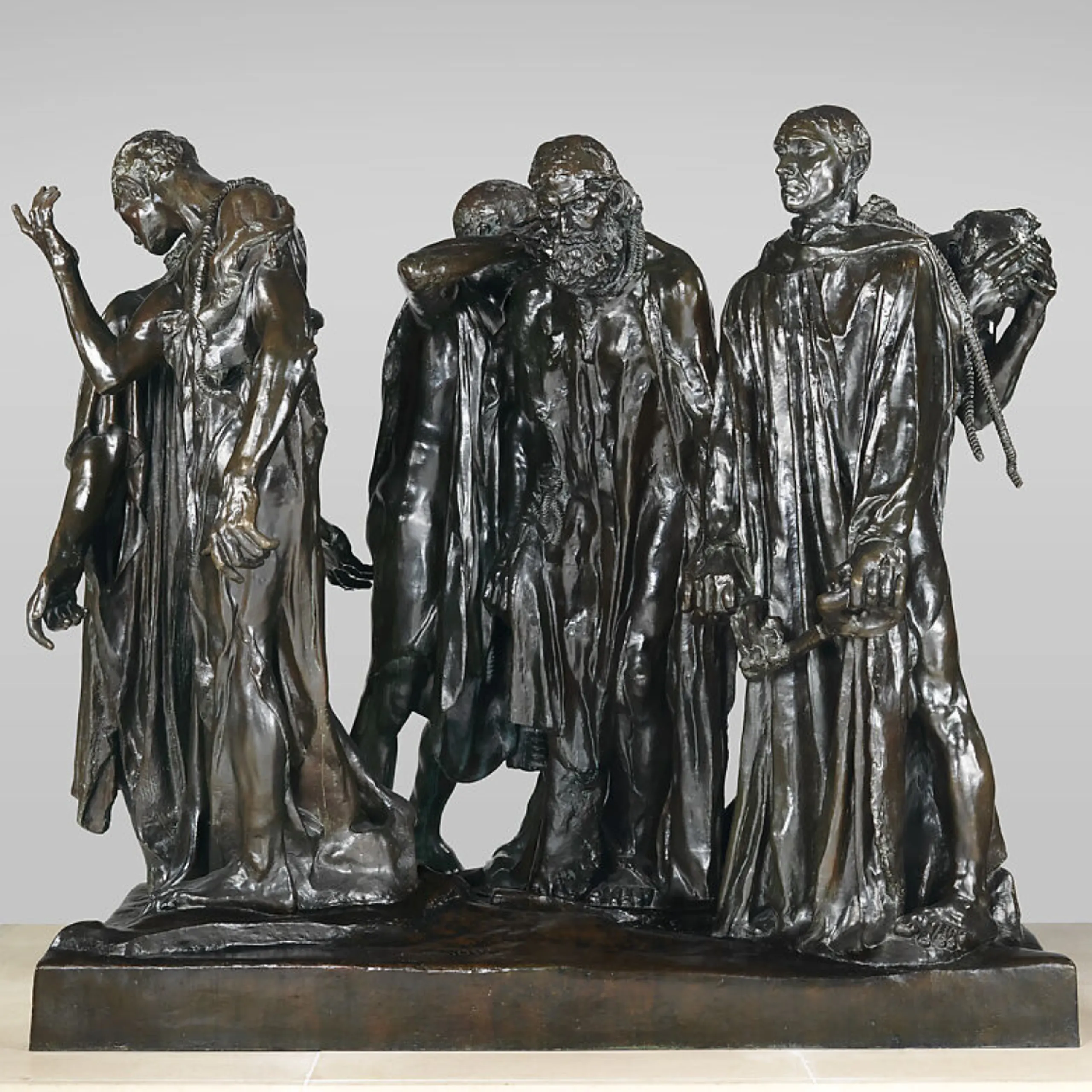
Auguste Rodin | The Burghers of Calais
Today's mini-episode is rebroadcast of one of my favorites, Auguste Rodin and his sculpture of The Burghers of Calais. The story behind the piece is an inspiring tale that defines courage. During the Hundred Years' War, the English had the city of Calais surrounded. As the days went on and the French army was unable to break the siege, the townspeople were forced to begin negotiating terms of surrender. They were told the town would be spared if 6 burghers (a burgher was a title, so these were the town leaders) would sacrifice themselves. Six men stepped up. While they were ultimately spared, one can imagine the mix of feelings as some might feel proud to do something noble and heroic and yet terrified at the grim reality. Traditional depictions of these men showed them as larger-than-life heroic figures, but Rodin gives us the stark reality. I think the brilliance of Rodin's work is that it recognizes that true courage means facing reality, and experiencing fear but still finding the strength to do what is right. This is an encore presentation. Every January/February, I release daily episodes to refresh everyone's memory on the 64 artists and artworks that will be included in my Arts Madness Tournament held in March. While most of these daily episodes will be reruns, I will continue publishing new episodes on Mondays. Check out my other podcasts Fun Facts Daily | Art Smart | Rainbow Puppy Science Lab Who ARTed is an Airwave Media Podcast. If you are interested in advertising on this or any other Airwave Media show, email: [email protected] Learn more about your ad choices. Visit megaphone.fm/adchoices
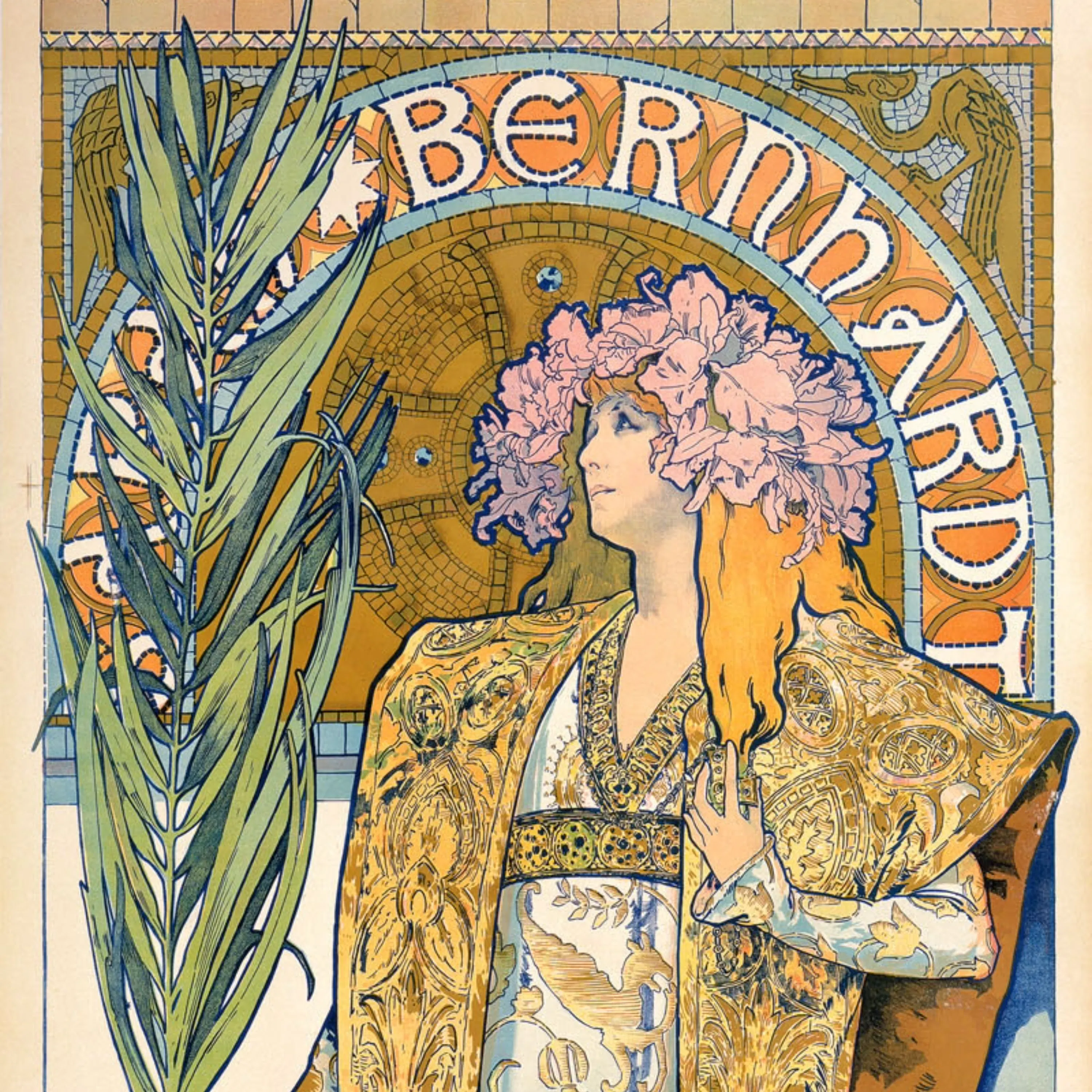
Alphonse Mucha | Gismonda
In December 1894, Alphonse Mucha just happened to be in the print shop checking some proofs for a friend, when in walked an actress, Sarah Bernhardt in need of posters for her upcoming play. All of the regular artists she worked with were off for the holidays leaving Mucha as her only option. It was a tremendous stroke of luck for both of them as Mucha created a stunning poster that not only flattered the actress, it caught the attention of collectors all around Paris. People were cutting the posters off of displays and bribing the poster hangers so they could get copies, and the Mucha style laid the foundation for Art Nouveau. This is an encore presentation. Every January/February, I release daily episodes to refresh everyone's memory on the 64 artists and artworks that will be included in my Arts Madness Tournament held in March. While most of these daily episodes will be reruns, I will continue publishing new episodes on Mondays. Check out my other podcasts Fun Facts Daily | Art Smart | Rainbow Puppy Science Lab Who ARTed is an Airwave Media Podcast. If you are interested in advertising on this or any other Airwave Media show, email: [email protected] Learn more about your ad choices. Visit megaphone.fm/adchoices
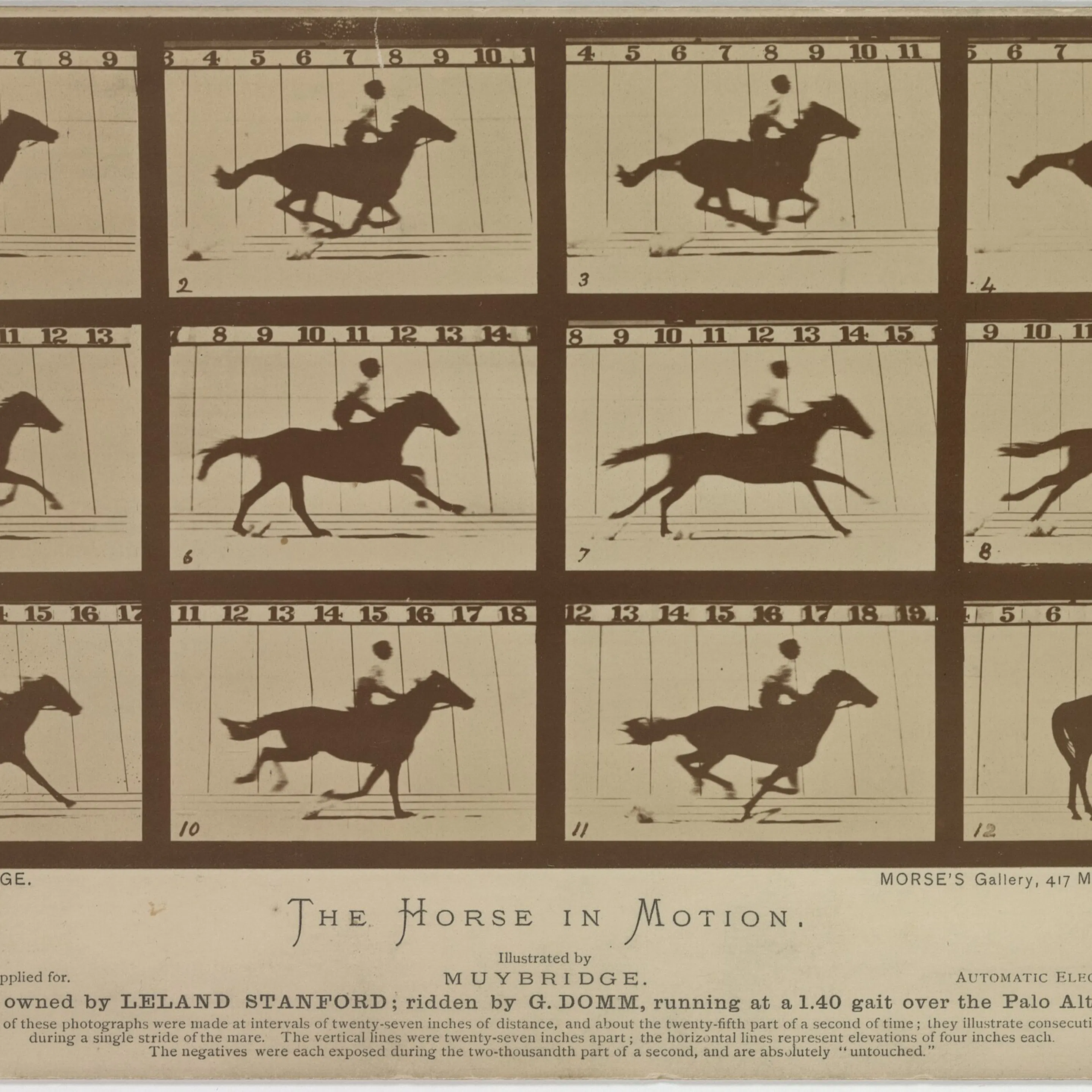
Eadweard Muybridge | The Horse in Motion
Pioneering 19th-century photographer Eadweard Muybridge is celebrated for his groundbreaking work in capturing movement, which laid the foundation for modern cinema. After immigrating to the United States and gaining fame for his stunning landscape photographs of the American West, his career took a decisive turn in 1872. Muybridge was commissioned by railroad tycoon and former California governor Leland Stanford to settle a popular debate and a significant wager of $25,000. Stanford had bet that all four of a horse's hooves leave the ground at once during a gallop. This question pushed the limits of early photographic technology and set Muybridge on a quest to freeze a moment invisible to the naked eye. After years of experimentation, interrupted by a dramatic murder trial, Muybridge devised an ingenious solution in 1878 at Stanford's Palo Alto farm. He arranged a series of cameras along a track, with their shutters triggered sequentially by threads broken by a galloping horse. The resulting sequence of images, famously known as The Horse in Motion, definitively proved that a horse is, for a brief moment, completely airborne. This experiment did more than settle a bet; it revolutionized the scientific study of locomotion. To display his findings, Muybridge later invented the zoopraxiscope, a device that projected the images in rapid succession to create the illusion of movement, directly paving the way for the development of cinematography. This is an encore presentation. Every January/February, I release daily episodes to refresh everyone's memory on the 64 artists and artworks that will be included in my Arts Madness Tournament held in March. While most of these daily episodes will be reruns, I will continue publishing new episodes on Mondays. Check out my other podcasts Fun Facts Daily | Art Smart | Rainbow Puppy Science Lab Who ARTed is an Airwave Media Podcast. If you are interested in advertising on this or any other Airwave Media show, email: [email protected] Learn more about your ad choices. Visit megaphone.fm/adchoices
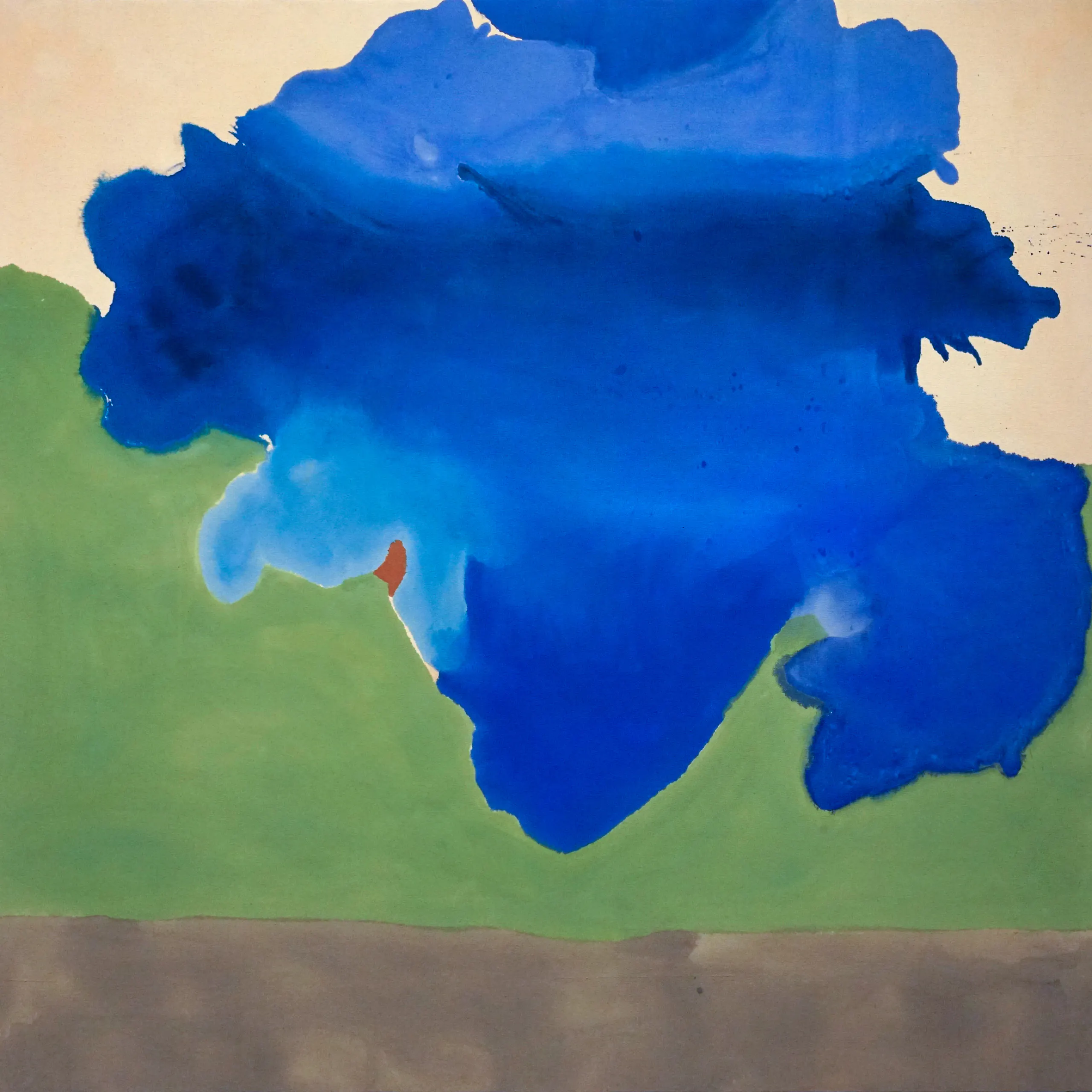
Helen Frankenthaler | The Bay
The Bay was painted in 1963 as Frankenthaler had refined her soak and stain process. While Mountains and Sea was made with diluted oil paints, The Bay is acrylic on unprimed canvas. She had found that using acrylics gave her greater control over the viscosity or how fluid the paint was. As I look at The Bay, the title indicates a landscape and the brightness, the organic shapes of blue and green give me a sense of a Bay, but it feels like it is more about a happy, contented sort of tone. There is movement, but it seems gentle like sitting out on a boat drifting in calm waters. The Bay represents a different sort of take on Abstract Expressionism. While many followed Jackson Pollock’s and Willem de Kooning’s aggressive and agsty style, Helen Frankenthaler’s color fields are more gentle and at peace. Her work was a breath of fresh air showing that painting could reduce art to fundamental elements in line with esoteric modernist philosophy and still be beautiful and joyous. Related episodes: Jackson Pollock Diego Rivera This is an encore presentation. Every January/February, I release daily episodes to refresh everyone's memory on the 64 artists and artworks that will be included in my Arts Madness Tournament held in March. While most of these daily episodes will be reruns, I will continue publishing new episodes on Mondays. Check out my other podcasts Fun Facts Daily | Art Smart | Rainbow Puppy Science Lab Who ARTed is an Airwave Media Podcast. If you are interested in advertising on this or any other Airwave Media show, email: [email protected] Learn more about your ad choices. Visit megaphone.fm/adchoices
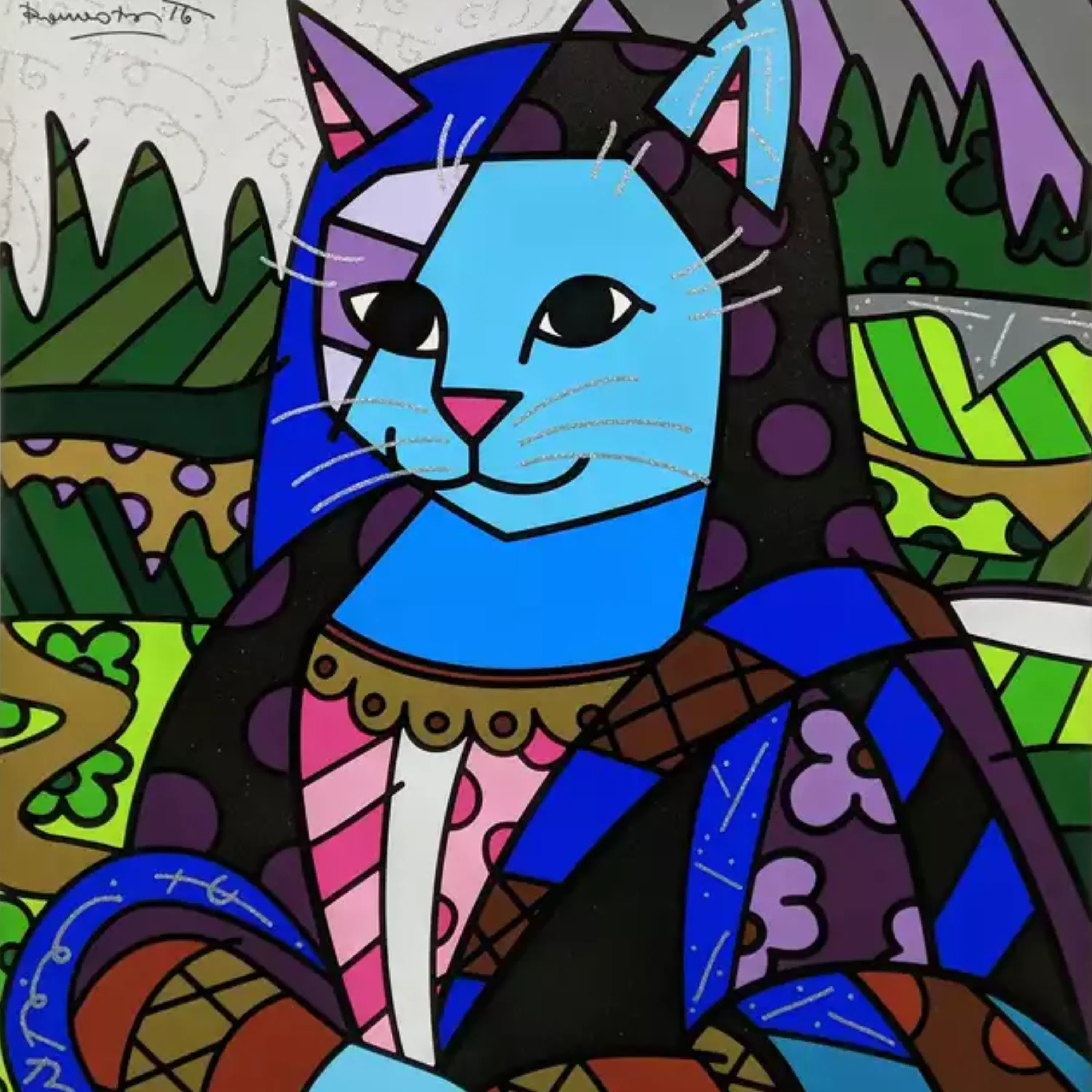
Romero Britto | Mona Cat
From humble beginnings in Recife, Brazil, to international acclaim in Miami, Florida, Romero Britto has redefined the boundaries of contemporary pop art. Born in 1963, Britto developed a signature style known as Neo-pop Cubism, blending the fractured geometric perspectives of Picasso with the vibrant, saturated color palettes of Matisse. His career launched into the stratosphere in 1989 following a collaboration with Absolut Vodka, placing him in the company of icons like Andy Warhol and Keith Haring. Beyond the gallery, Britto has democratized art through extensive licensing and philanthropy, serving on the boards of organizations like Best Buddies International. A closer look at his 2004 work, Mona Cat, reveals how his optimistic, bold aesthetic playfully reinterprets art history, transforming Da Vinci’s masterpiece into a colorful, accessible symbol of joy. Check out my other podcasts Fun Facts Daily | Art Smart | Rainbow Puppy Science Lab Who ARTed is an Airwave Media Podcast. If you are interested in advertising on this or any other Airwave Media show, email: [email protected] Learn more about your ad choices. Visit megaphone.fm/adchoices
Saloua Raouda Choucair | Interform
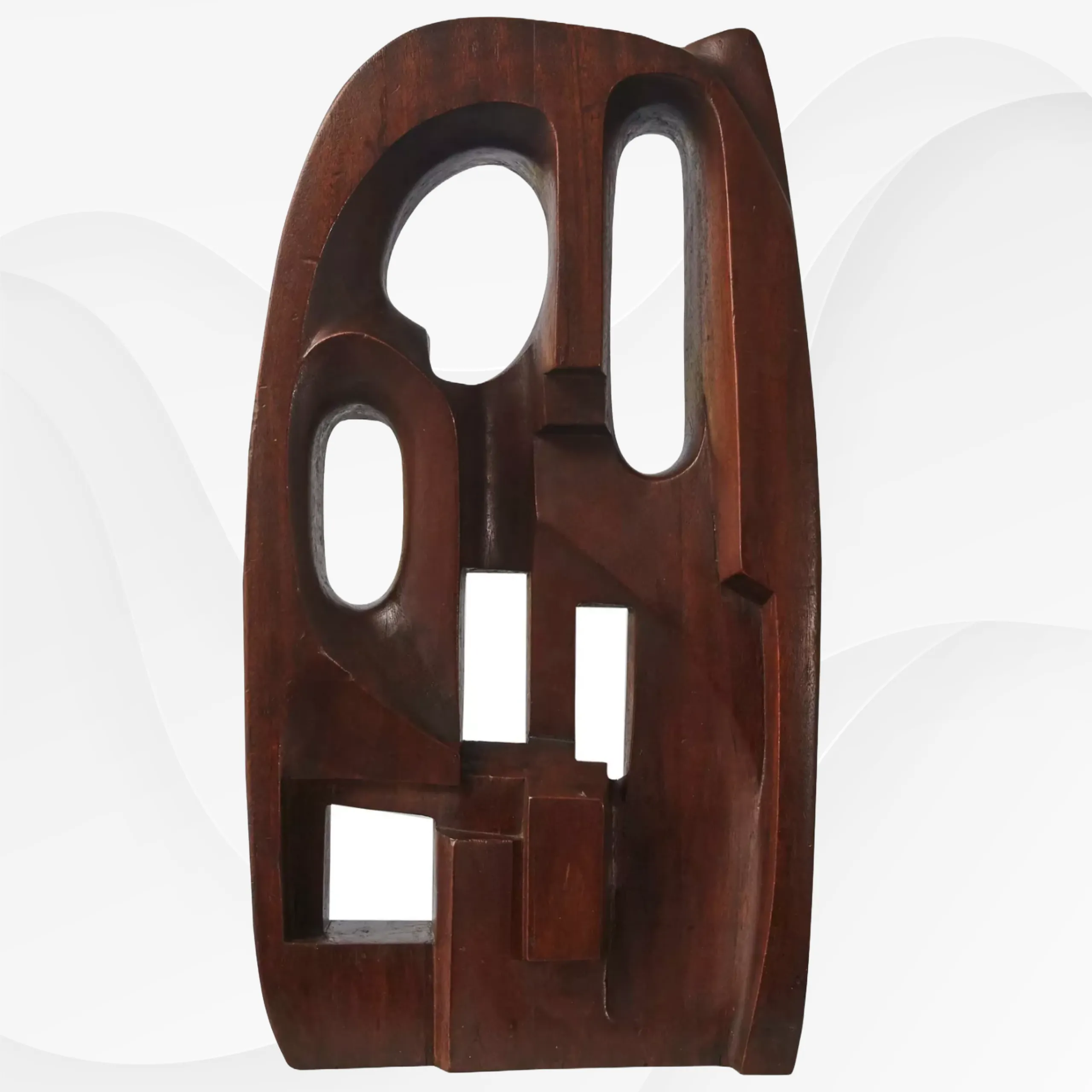
Saloua Raouda Choucair was a pioneer of abstract art born in Beirut in 1916. Despite initial discouragement, she pursued her passion for art, studying in Paris and developing a unique style that blended Western modernism with Islamic artistic traditions. Her work, characterized by geometric forms and a sense of dynamic movement, explored the underlying structures of existence and the concept of infinity. Choucair's art was often met with confusion and misunderstanding, and she faced numerous challenges throughout her career. However, she remained committed to her vision and continued to create art that pushed boundaries. Late in her life, she finally received the recognition she deserved, with a major retrospective at the Tate Modern in 2013 solidifying her place in the history of modern art. This is an encore presentation. Every January/February, I release daily episodes to refresh everyone's memory on the 64 artists and artworks that will be included in my Arts Madness Tournament held in March. While most of these daily episodes will be reruns, I will continue publishing new episodes on Mondays. Check out my other podcasts Fun Facts Daily | Art Smart | Rainbow Puppy Science Lab Who ARTed is an Airwave Media Podcast. If you are interested in advertising on this or any other Airwave Media show, email: [email protected] Learn more about your ad choices. Visit megaphone.fm/adchoices
Ibrahim El-Salahi | The Inevitable
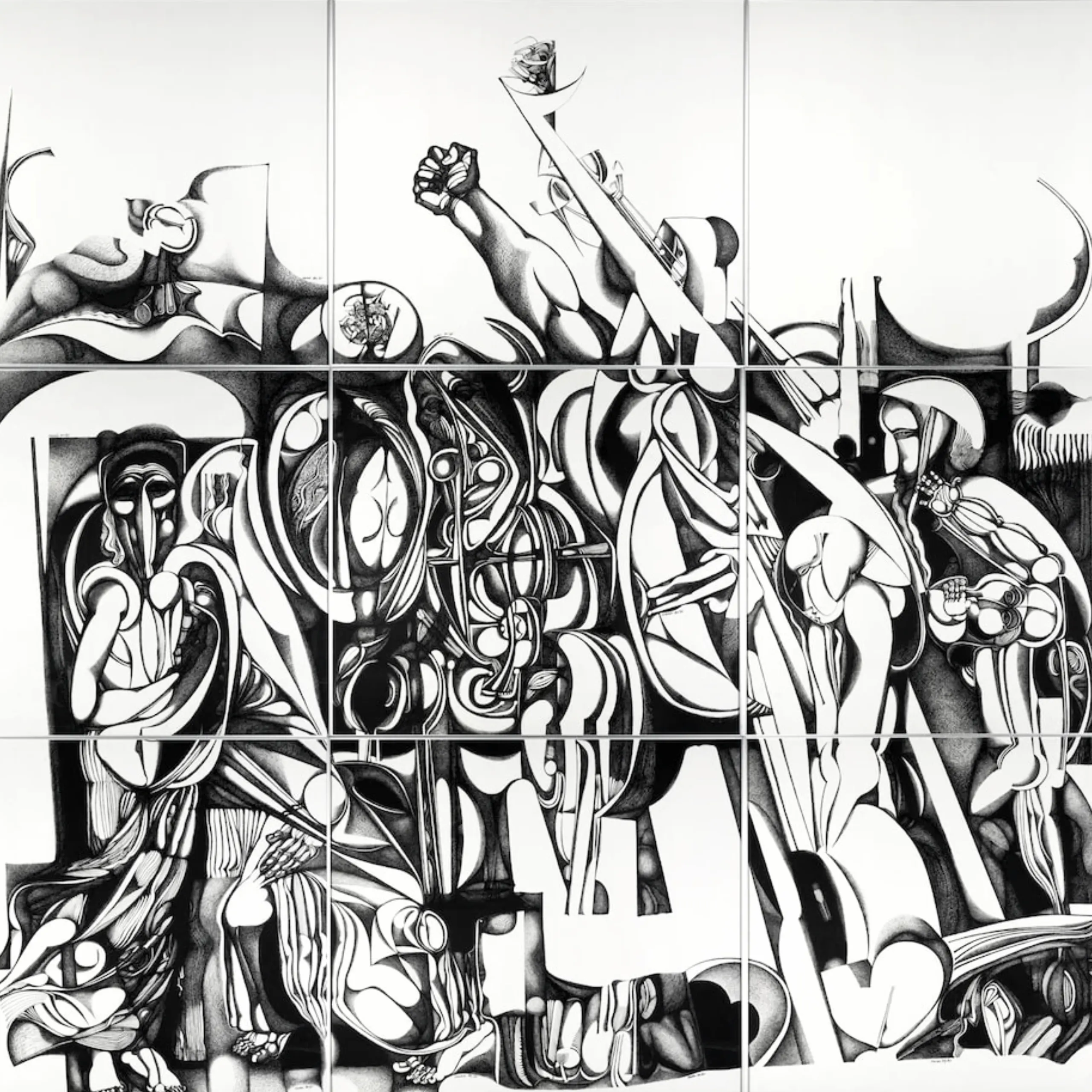
Ibrahim El-Salahi is a pivotal figure in Sudanese and African modernism. Born in 1930 in Omdurman, Sudan, El-salahi's artistic journey began with the study of calligraphy under his father. After formal art training in Khartoum and at London's Slade School of Fine Art, he developed a unique visual language that blended Western modernist styles like Cubism and Surrealism with his Islamic and African heritage. This innovative approach, which often incorporated calligraphic forms and earthy tones inspired by the Sudanese landscape, was central to the modernist art movement known as the Khartoum School. His wrongful imprisonment in 1975 profoundly influenced his work, leading to the creation of his "Prison Notebook." His significant contributions to the art world are highlighted by his 2013 retrospective at the Tate Modern, the first for an African artist, and the acquisition of his monumental work, "The Genealogies of Trees," by New York's Museum of Modern Art (MoMA). The Inevitable is a large-scale black and white work, created during a period of personal grief and political turmoil in Sudan. The piece showcases his signature style, combining the fractured forms of Cubism, the dreamlike qualities of Surrealism, and the expressive lines of Arabic calligraphy to create a dense, chaotic, and emotionally charged composition. The Inevitable stands as a testament to El-salahi's ability to transform personal and national trauma into a universal statement on the enduring resilience of the human spirit. This is an encore presentation. Every January/February, I release daily episodes to refresh everyone's memory on the 64 artists and artworks that will be included in my Arts Madness Tournament held in March. While most of these daily episodes will be reruns, I will continue publishing new episodes on Mondays. Check out my other podcasts Fun Facts Daily | Art Smart | Rainbow Puppy Science Lab Who ARTed is an Airwave Media Podcast. If you are interested in advertising on this or any other Airwave Media show, email: [email protected] Learn more about your ad choices. Visit megaphone.fm/adchoices