
Who Arted: Weekly Art History for All Ages
794 episodes — Page 4 of 16
Introducing If Objects Could Talk
bonusI am putting a special bonus episode in the feed this week to share a new podcast from Getty. If Objects Could Talk is a great family friendly podcast that gives voice to art and artifacts so listeners can explore history in a whole new way. What dangers await Athena’s brave and loyal owl at the Greek marketplace? This Athenian coin shares his take on how money was made and used in ancient Greek city states—and how different states had different rules around the agora, or marketplace, that could sometimes get you into trouble! Find If Objects Could Talk on your favorite podcast platform: https://pod.link/1833978909?view=apps&sort=popularity Learn more about your ad choices. Visit megaphone.fm/adchoices
TLDR Ibrahim El-Salahi | The Inevitable
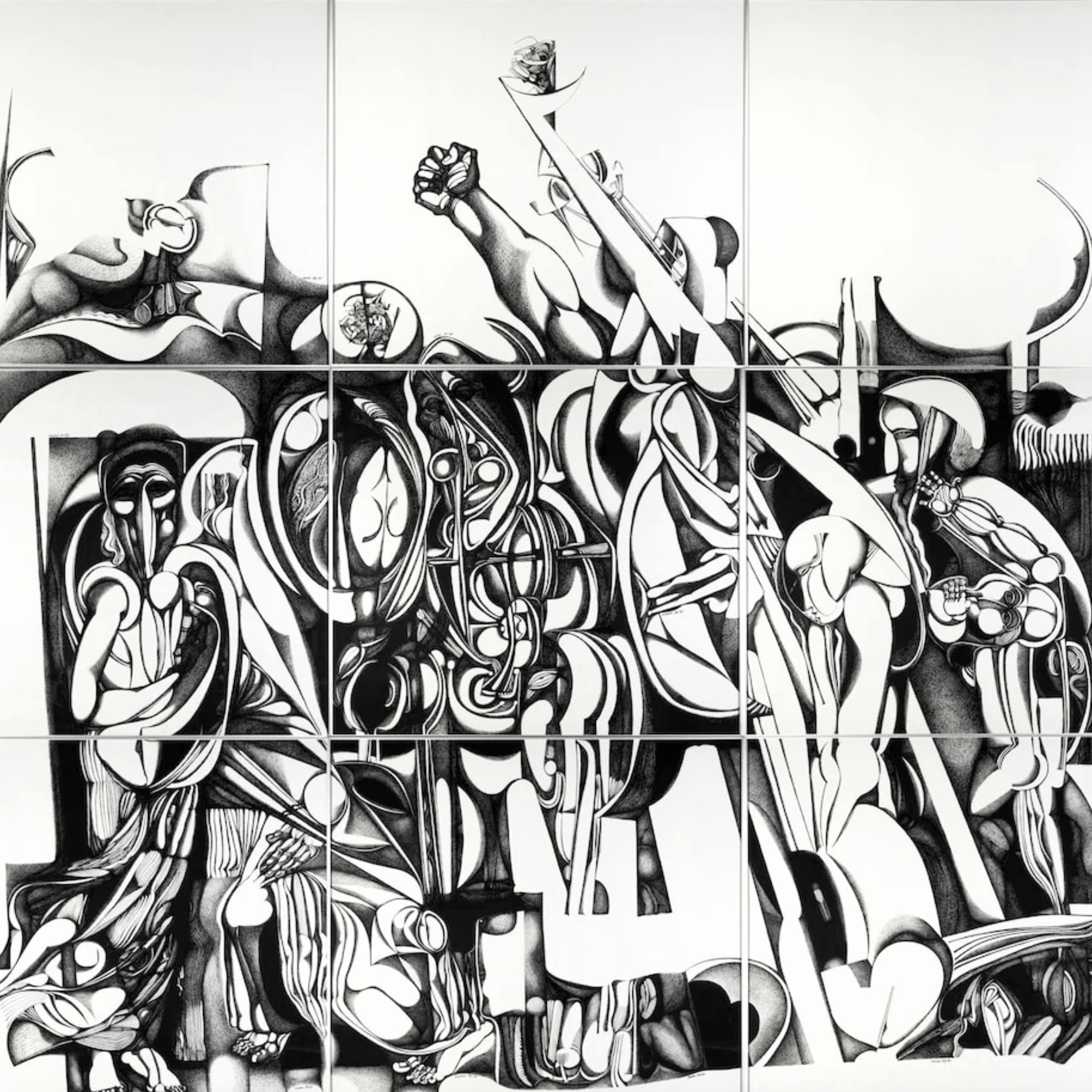
My TLDR episodes are meant to be short and to the point with a few key facts to know about the artist and a look at one of their major works. This episode explores the life and work of Ibrahim El-Salahi, a pivotal figure in Sudanese and African modernism. Born in 1930 in Omdurman, Sudan, El-salahi's artistic journey began with the study of calligraphy under his father. After formal art training in Khartoum and at London's Slade School of Fine Art, he developed a unique visual language that blended Western modernist styles like Cubism and Surrealism with his Islamic and African heritage. This innovative approach, which often incorporated calligraphic forms and earthy tones inspired by the Sudanese landscape, was central to the modernist art movement known as the Khartoum School. His wrongful imprisonment in 1975 profoundly influenced his work, leading to the creation of his "Prison Notebook." His significant contributions to the art world are highlighted by his 2013 retrospective at the Tate Modern, the first for an African artist, and the acquisition of his monumental work, "The Genealogies of Trees," by New York's Museum of Modern Art (MoMA). The Inevitable is a large-scale black and white work, created during a period of personal grief and political turmoil in Sudan. The piece showcases his signature style, combining the fractured forms of Cubism, the dreamlike qualities of Surrealism, and the expressive lines of Arabic calligraphy to create a dense, chaotic, and emotionally charged composition. The Inevitable stands as a testament to El-salahi's ability to transform personal and national trauma into a universal statement on the enduring resilience of the human spirit. Related Episode: Max Beckmann | Night Check out my other podcasts Fun Facts Daily | Art Smart | Rainbow Puppy Science Lab Who ARTed is an Airwave Media Podcast. If you are interested in advertising on this or any other Airwave Media show, email: [email protected] Learn more about your ad choices. Visit megaphone.fm/adchoices
TLDR Georgia O'Keeffe | Sky Above Clouds IV
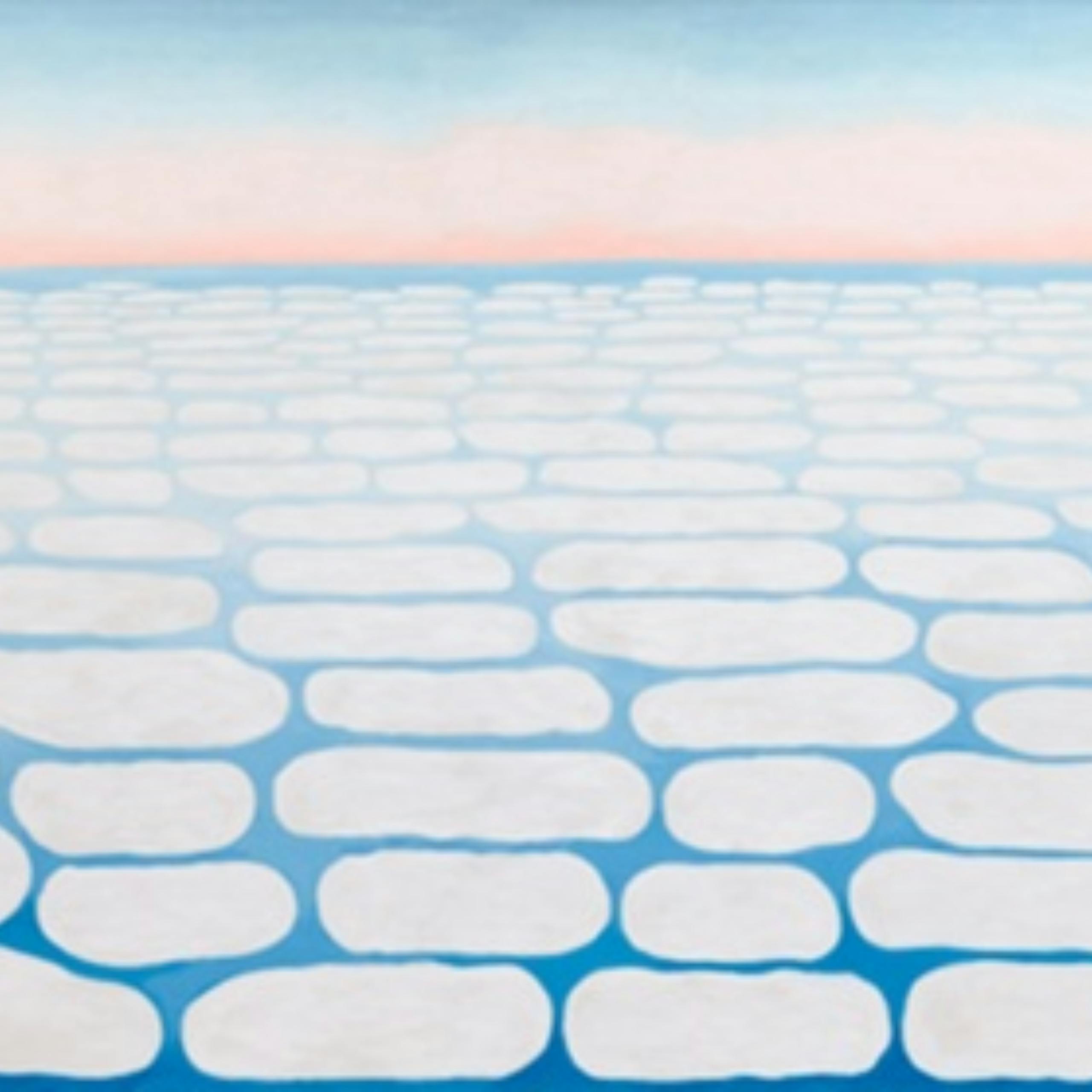
My TLDR episodes give a short and sweet overview with a few interesting facts about a great artist. Georgia O'Keeffe (1887-1986) stands as a foundational figure of American modernism, celebrated for her revolutionary contributions to art. Rising from a Wisconsin dairy farm to the forefront of the New York art world, her unique vision was shaped by the vast landscapes of Texas and, most famously, the American Southwest. O'Keeffe's relationship with photographer and gallerist Alfred Stieglitz, whom she later married, was pivotal in launching her career after he exhibited her abstract charcoal drawings in 1916. While she is renowned for her large-scale, sensual flower paintings, her body of work is vast, capturing the stark beauty of New Mexico's architecture, rolling hills, and sun-bleached desert bones. Discover the fascinating stories behind the artist, from her clever use of a Model A Ford as a mobile studio to paint in the remote desert to her distinct, self-made wardrobe that mirrored the clean, modern lines of her artwork. Learn about the time she was commissioned by the Hawaiian Pineapple Company (now Dole) in 1939 and returned with twenty paintings of the islands' lush scenery—but famously forgot the pineapple. Even after macular degeneration robbed her of her sight in the 1970s, O'Keeffe’s creative spirit endured as she turned to sculpture. Her monumental late-career masterpiece, Sky Above Clouds IV (1965), an enormous 24-foot-wide canvas inspired by her views from an airplane, showcases an artist who never stopped expanding her vision and finding the sublime in the world around her. Check out my other podcasts Fun Facts Daily | Art Smart | Rainbow Puppy Science Lab Who ARTed is an Airwave Media Podcast. If you are interested in advertising on this or any other Airwave Media show, email: [email protected] Learn more about your ad choices. Visit megaphone.fm/adchoices

TLDR Claude Monet | Water Lilies
As it is back to school season, I thought I would try making a series of episodes that are short and to the point to give students and anyone else interested a quick overview of the artist. Each of my TLDR episodes will give a very brief overview of the artist, 5 interesting things to know about them and a little insight into one of their major works. Claude Monet was a central figure in the Impressionist movement. His childhood in the coastal town of Le Havre shaped his lifelong fascination with light and water, leading him and his contemporaries to leave the studio and paint en plein air. This new approach, focused on capturing the fleeting sensory experience of a moment rather than a detailed representation, was initially mocked. The movement itself earned its name from a critic's dismissive review of Monet's painting, Impression, Sunrise. Delve deeper into the obsessive genius of the artist, from his custom-built floating studio on the Seine River to the world-famous garden he cultivated at his home in Giverny. This garden, and particularly its water lily pond, became the sole subject of his work for the last three decades of his life, resulting in approximately 250 oil paintings. Discover fascinating details about Monet's life, including his passion for gourmet food, his perfectionism that led him to destroy hundreds of his own canvases, and the remarkable story of how cataract surgery in his later years allowed him to perceive ultraviolet light, profoundly changing the colors in his final masterpieces. Check out my other podcasts Fun Facts Daily | Art Smart | Rainbow Puppy Science Lab Who ARTed is an Airwave Media Podcast. If you are interested in advertising on this or any other Airwave Media show, email: [email protected] Learn more about your ad choices. Visit megaphone.fm/adchoices

TLDR Gerhard Richter | Betty
Gerhard Richter, born in Dresden, Germany, in 1932, is a towering figure in contemporary art, whose life and work were forged by the tumultuous history of 20th-century Germany. Growing up under the Nazi regime and later living in Communist East Germany, Richter's early artistic education was in the state-sanctioned style of socialist realism. In 1961, he escaped to West Germany, where his career began to flourish. Rejecting adherence to a single style, Richter has spent decades exploring the possibilities of painting. His vast and varied body of work includes blurred photorealistic paintings based on found and personal photographs, monumental abstract pieces created with a giant squeegee, somber historical paintings, and modern stained glass designs. Richter's artistic practice is marked by a systematic and conceptual approach. He meticulously numbers each of his works in a catalogue raisonné, emphasizing their place in an ongoing investigation of how images are made and understood. His iconic abstract paintings are often created by dragging a large squeegee across layers of wet paint, a technique that introduces an element of chance and removes the traditional artist's hand. Richter's work frequently delves into the complex nature of memory and history, using his own family photographs—including a haunting image of his "Uncle Rudi" in a Nazi uniform—as source material. This tension between the personal and the historical, the abstract and the figurative, is powerfully captured in major works like his enigmatic 1988 portrait of his daughter, "Betty," and his celebrated stained-glass window for the Cologne Cathedral. Check out my other podcasts Fun Facts Daily | Art Smart | Rainbow Puppy Science Lab Who ARTed is an Airwave Media Podcast. If you are interested in advertising on this or any other Airwave Media show, email: [email protected] Learn more about your ad choices. Visit megaphone.fm/adchoices
TLDR Georges Braque | Violin and Palette
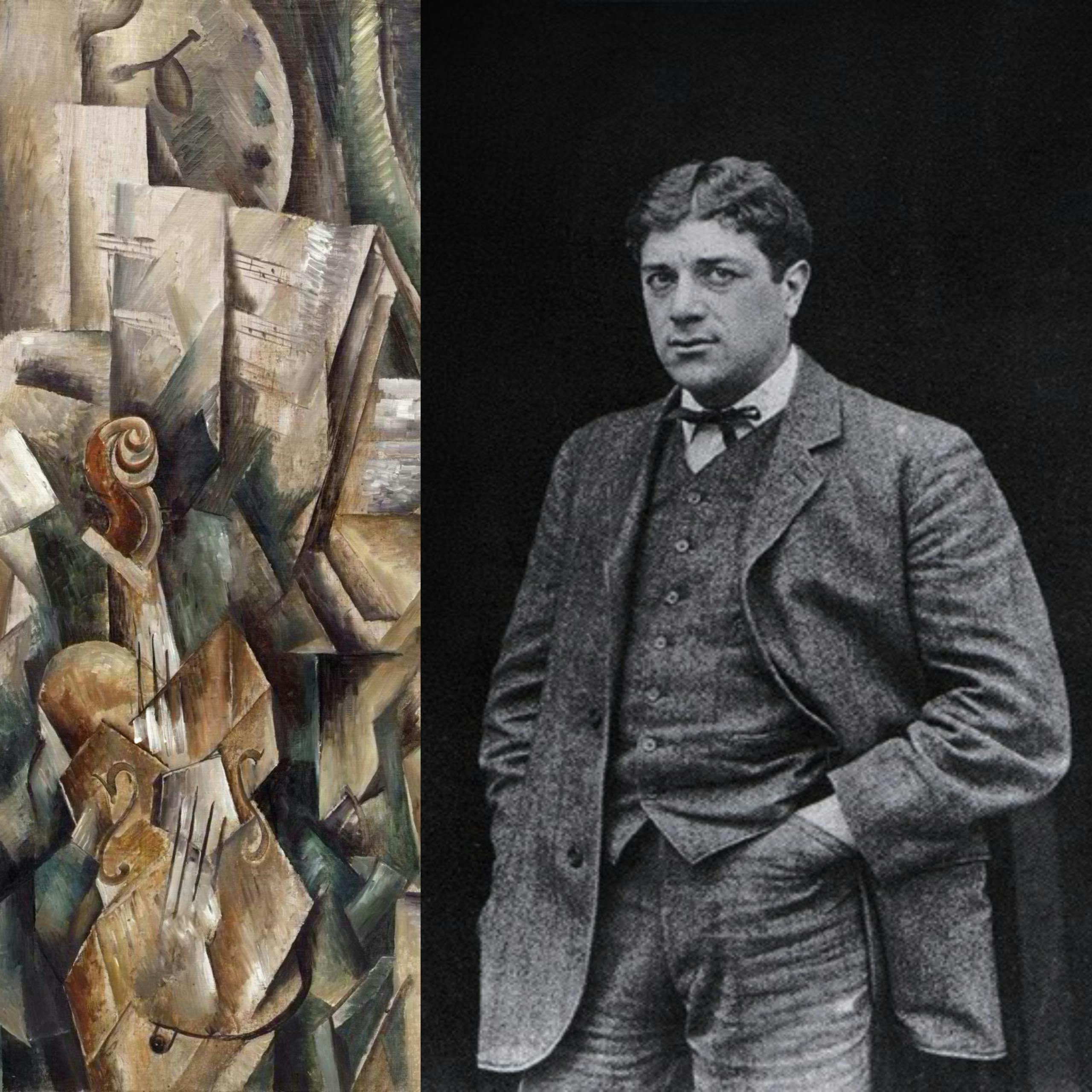
Since it is back to school season, I thought I would make a series of episodes optimized for classrooms to give students a quick overview and a few interesting facts about an artist. I am labeling these episodes with TLDR and each of them will follow the same format. First, I will give a very quick bit of biographical information. Second I'll list 5 interesting facts about the artist. Finally I'll talk about one of the artist's works. This week I covered Georges Braque and his painting Violin and Palette from 1909. Georges Braque co-founded the groundbreaking art movement of Cubism. Discover his beginnings in a family of house painters, where he learned decorative techniques like creating faux woodgrain that would later influence his fine art. The summary traces his artistic journey from early Fauvist-inspired works to the pivotal moment he met Picasso. This led to one of art history's most famous collaborations, an intense period where Braque and Picasso deconstructed traditional perspective to invent Analytic Cubism, working so closely they compared themselves to the Wright brothers. Learn how Braque's service in World War I and a severe head injury profoundly changed him, leading him to develop a more personal, contemplative style focused on still lifes for the remainder of his celebrated career. Delve into the specific innovations that cemented Braque's legacy, including his 1912 invention of papier collé (pasted paper), a technique that evolved into collage and forever changed the definition of art. We also uncover the surprising origin of the term "Cubism," born from a critic's dismissive remark about Braque's paintings being made of "little cubes." The discussion highlights a key masterpiece, Violin and Palette (1909), a prime example of Analytic Cubism. The painting breaks down its subjects into fragmented, geometric planes with a muted color palette, inviting viewers to analyze form and perception from multiple viewpoints at once, challenging the conventions of Western art and paving the way for abstraction. Check out my other podcasts Fun Facts Daily | Art Smart | Rainbow Puppy Science Lab Who ARTed is an Airwave Media Podcast. If you are interested in advertising on this or any other Airwave Media show, email: [email protected] Learn more about your ad choices. Visit megaphone.fm/adchoices

Eadweard Muybridge | The Horse in Motion
Pioneering 19th-century photographer Eadweard Muybridge is celebrated for his groundbreaking work in capturing movement, which laid the foundation for modern cinema. After immigrating to the United States and gaining fame for his stunning landscape photographs of the American West, his career took a decisive turn in 1872. Muybridge was commissioned by railroad tycoon and former California governor Leland Stanford to settle a popular debate and a significant wager of $25,000. Stanford had bet that all four of a horse's hooves leave the ground at once during a gallop. This question pushed the limits of early photographic technology and set Muybridge on a quest to freeze a moment invisible to the naked eye. After years of experimentation, interrupted by a dramatic murder trial, Muybridge devised an ingenious solution in 1878 at Stanford's Palo Alto farm. He arranged a series of cameras along a track, with their shutters triggered sequentially by threads broken by a galloping horse. The resulting sequence of images, famously known as The Horse in Motion, definitively proved that a horse is, for a brief moment, completely airborne. This experiment did more than settle a bet; it revolutionized the scientific study of locomotion. To display his findings, Muybridge later invented the zoopraxiscope, a device that projected the images in rapid succession to create the illusion of movement, directly paving the way for the development of cinematography. Check out my other podcasts Fun Facts Daily | Art Smart | Rainbow Puppy Science Lab Who ARTed is an Airwave Media Podcast. If you are interested in advertising on this or any other Airwave Media show, email: [email protected] Learn more about your ad choices. Visit megaphone.fm/adchoices

William Blake | The Ancient of Days
My guest this week is Mark Vernon, author of Awake! William Blake and the Power of Imagination. We discussed William Blake, the famous poet and visual artist known for his spiritually charged work. The piece we discussed was The Ancient of Days. Check out my other podcasts Fun Facts Daily | Art Smart | Rainbow Puppy Science Lab Who ARTed is an Airwave Media Podcast. If you are interested in advertising on this or any other Airwave Media show, email: [email protected] Learn more about your ad choices. Visit megaphone.fm/adchoices

Fun Facts About Clay and Ceramics
Today, I wanted to share an episode of my other podcast, Fun Facts Daily, with some interesting information about clay and ceramics. You'll learn what makes things blow up in the kiln and how to avoid it. The episode also covers interesting facts from ancient uses of ceramics to modern applications in smartphones and even space shuttles. Check out my other podcasts Fun Facts Daily | Art Smart | Rainbow Puppy Science Lab Who ARTed is an Airwave Media Podcast. If you are interested in advertising on this or any other Airwave Media show, email: [email protected] Learn more about your ad choices. Visit megaphone.fm/adchoices

Amalia Kussner | The Miniature Painter Revealed
My guest for this episode is Kathleen Langore, author of a new book about the artist, Amalia Kussner. She was a highly successful portrait artist who specialized in miniatures. Kussner drew her subjects in a realistic but soft and flattering style that left her patrons feel like she was giving them the best version of their likeness. Her miniature portraits were a big deal as she traveled to Europe painting for royalty. Pick up a copy of The Miniature Painter Revealed: Amalia Kussner’s Gilded Age Pursuit of Fame and Fortune by Kathleen Langone on Amazon or wherever you get your books. Listen to Kathleen Langone's podcast, People Hidden in History Listen to my episode on another royal portrait artist, Elizabeth Vigée Le Brun Check out my other podcasts Fun Facts Daily | Art Smart | Rainbow Puppy Science Lab Who ARTed is an Airwave Media Podcast. If you are interested in advertising on this or any other Airwave Media show, email: [email protected] Learn more about your ad choices. Visit megaphone.fm/adchoices

Wayne Thiebaud | Pie a la Mode
Explore the life and work of celebrated American artist Wayne Thiebaud, known for his vibrant and textured paintings of everyday objects. Born in 1920, Thiebaud's early experiences as a sign painter and an apprentice animator at Walt Disney Studios shaped his understanding of visual communication and iconic forms. Though often associated with the Pop Art movement of the 1960s, Thiebaud’s approach was distinct. While artists like Andy Warhol embraced mechanical reproduction, Thiebaud celebrated the painter's touch, using thick impasto, brilliant colors, and strong shadows to bring his subjects to life. His signature works feature commonplace items, particularly diner foods like pies, cakes, and gumballs, transforming them into objects of formal study and cultural nostalgia. Thiebaud's career gained national recognition following his inclusion in the landmark 1962 exhibition, "New Painting of Common Objects," at the Pasadena Art Museum. A deep dive into one of his early masterpieces, Pie a la Mode (1961), reveals the key elements of his style: the luscious, tactile quality of the paint, the signature halos of color outlining the object, and the ability to find artistic complexity in the simple pleasures of American life. Beyond his famous still lifes, Thiebaud also applied his unique vision to compelling landscapes of San Francisco and detailed figure paintings, solidifying his legacy as one of America's most beloved painters and a dedicated long-time professor at the University of California, Davis. Related episodes: Claes Oldenburg Roy Lichtenstein Check out my other podcasts Fun Facts Daily | Art Smart | Rainbow Puppy Science Lab Who ARTed is an Airwave Media Podcast. If you are interested in advertising on this or any other Airwave Media show, email: [email protected] Learn more about your ad choices. Visit megaphone.fm/adchoices

Man Ray | Ingres's Violin (encore)
Man Ray was a pioneer of cameraless photography. His signature technique was the "Rayograph" created by placing objects directly onto light-sensitive paper often manipulating them during exposure. Of course, that was not his only trick. Man Ray experimented with solarisation and in his piece Ingres's Violin, he painted on a photograph, then took another picture of the manipulated image. For this episode, my guests were Mark Small and Jack Shoulder, the writers of a new book Museum Bums: A Cheeky Loot at Butts in Art. They are also behind the wildly popular Museum Bums Instagram account. Show them some support: Instagram: https://www.instagram.com/museumbums/?hl=en Book: https://a.co/d/fDvMMBb Calendar: https://a.co/d/gWl0QPG Cards: https://a.co/d/4fd1EaJ Learn more about your ad choices. Visit megaphone.fm/adchoices

Amrita Sher-Gil | Bride's Toilet (encore)
Amrita Sher-Gil, born in 1913 to a Sikh aristocrat and a Hungarian-Jewish opera singer, was a trailblazing artist who blended European and Indian influences. After studying art in Paris and achieving early success at the Grand Salon, she returned to India in 1934. Though initially met with resistance due to her modern style, Sher-Gil's evocative portrayals of Indian life and her unique fusion of cultural traditions ultimately garnered critical acclaim. Her paintings, like the renowned "Bride's Toilet," showcased her bold colors, expressive figures, and insightful observations. Despite her untimely death in 1941, Sher-Gil's legacy as a pioneer of modern Indian art endures, inspiring generations of artists and solidifying her place as one of India's most celebrated creative figures. Related episodes: Paul Cezanne | Mont Sainte-Victoire Charuvi Agrawal | 26,000 Bells of Hanuman Shiva Nataraja | Shiva Lord of the Dance Learn more about your ad choices. Visit megaphone.fm/adchoices
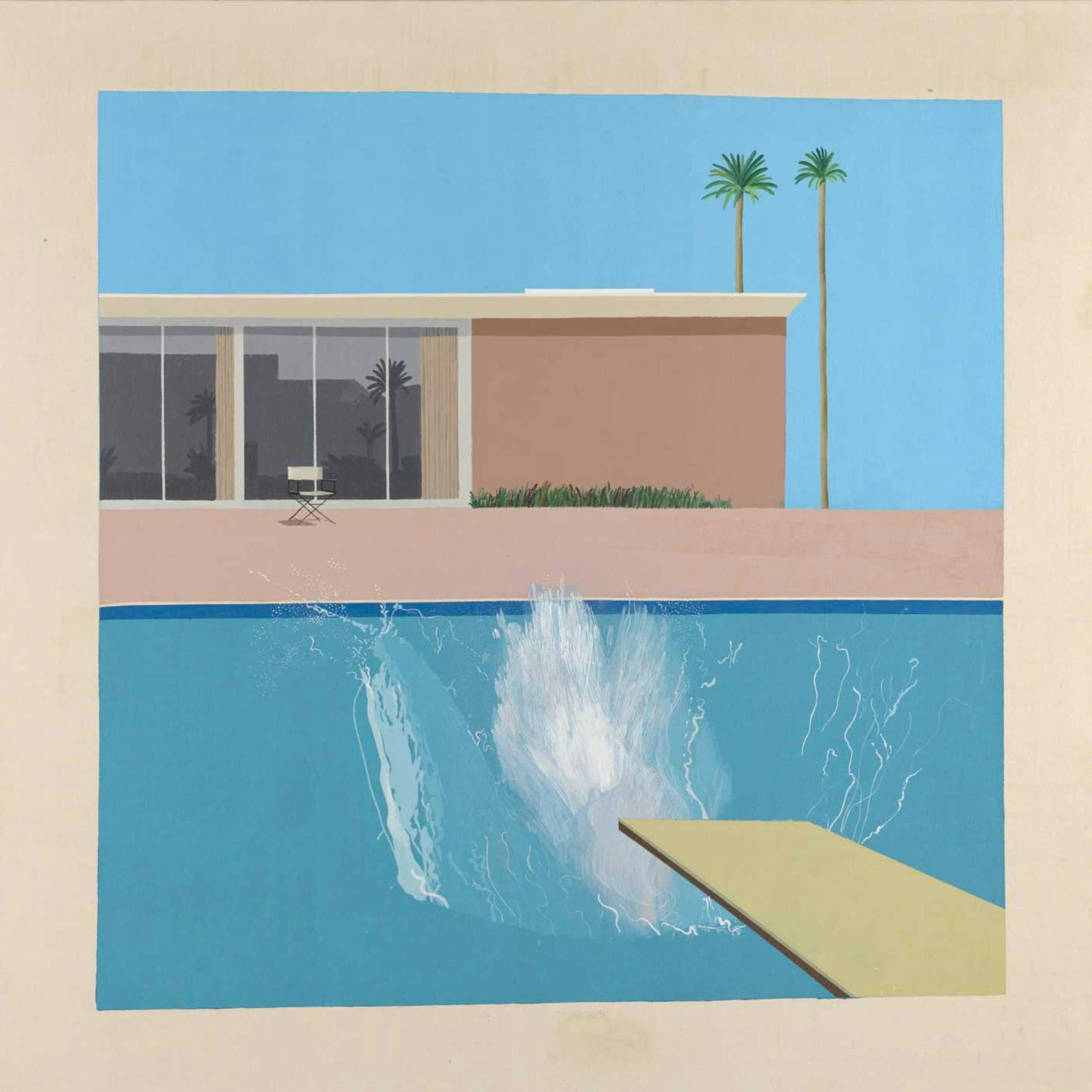
David Hockney | A Bigger Splash
Explore the life and work of David Hockney, one of the most influential British artists of the 20th and 21st centuries. Born in Yorkshire in 1937, Hockney's rebellious spirit and prodigious talent were evident from his early days at the Royal College of Art. His move to Los Angeles in 1964 marked a pivotal moment, as he swapped the grey skies of England for the bright, constant sunlight of California. This new environment inspired his most iconic motifs, including pristine swimming pools, modernist architecture, and a vibrant, flat style perfectly captured with new acrylic paints. Hockney became celebrated for his psychologically rich double portraits, his innovative photographic collages known as "joiners," and in later years, a passionate return to painting the English landscape of his youth. A deep dive into Hockney's 1967 masterpiece, A Bigger Splash, reveals his genius for capturing time, motion, and atmosphere. The large 8 foot by 8 foot painting juxtaposes a serene, California setting with the chaotic, fleeting explosion of water from an unseen diver. While often associated with Pop Art, Hockney's work is deeply personal, celebrating the joy of looking and challenging the conventions of perception. From paintbrushes to the iPad, Hockney has remained a relentless innovator, solidifying his status as a modern master. Check out my other podcasts Fun Facts Daily | Art Smart | Rainbow Puppy Science Lab Who ARTed is an Airwave Media Podcast. If you are interested in advertising on this or any other Airwave Media show, email: [email protected] Learn more about your ad choices. Visit megaphone.fm/adchoices
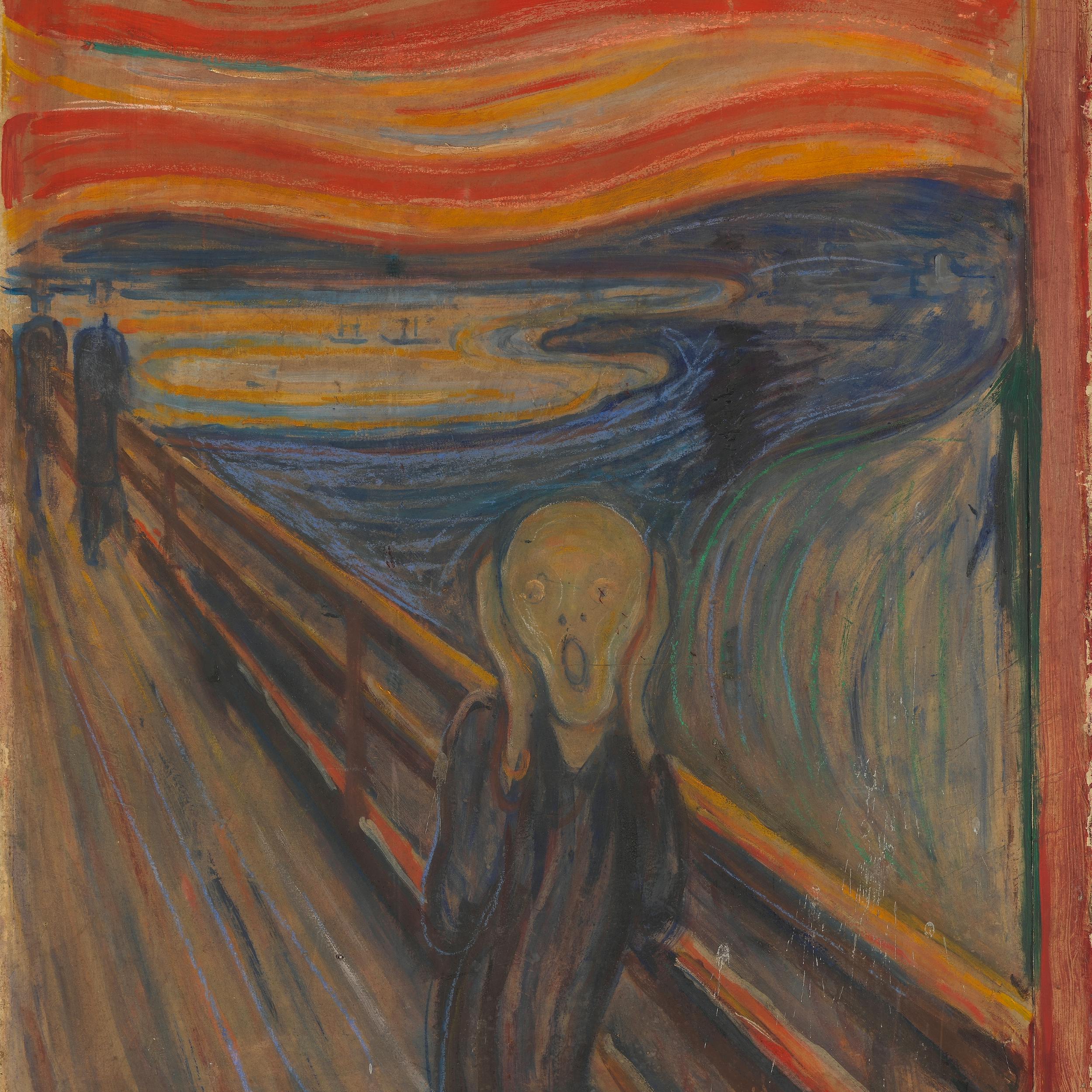
Edvard Munch | The Scream (encore)
As a young adult, Edvard Munch studied art. He was influenced early on by the Impressionists, but he really came into his own when he began using painting as a way of expressing his inner struggles. He is best known today for his expressionistic works like The Scream. Interestingly The Scream is not about a person screaming. The tormented figure in the painting is actually suffering an anxiety attack and overwhelmed by the din or the noise of the world around him. The specific look of the figure may have actually been based on a Peruvian mummy that was on display in the World’s Fair in Paris in 1889. Check out my other podcasts Fun Facts Daily | Art Smart | Rainbow Puppy Science Lab Who ARTed is an Airwave Media Podcast. If you are interested in advertising on this or any other Airwave Media show, email: [email protected] Learn more about your ad choices. Visit megaphone.fm/adchoices

I'm Not Your Muse: Uncovering the Overshadowed Brilliance of Women Artists & Visionaries
My guests this week were the author and illustrator of the fantastic book I’M NOT YOUR MUSE: Uncovering the Overshadowed Brilliance of Women Artists & Visionaries. I spoke with Lori Zimmer and Maria Krasinski about the artists they discovered and the process of creating the book. I'm Not Your Muse tells the stories of thirty-one female artists whose achievements have largely been underappreciated. Find the book on Amazon or wherever you get your books. Related episodes: Frida Kahlo Amrita Sher-Gil The Club: Where American Women Artists Found Refuge in Belle Époque Paris Check out my other podcasts Fun Facts Daily | Art Smart | Rainbow Puppy Science Lab Who ARTed is an Airwave Media Podcast. If you are interested in advertising on this or any other Airwave Media show, email: [email protected] Learn more about your ad choices. Visit megaphone.fm/adchoices

Kwakwaka’wakw artist | Eagle Transformation Mask (encore)
The transformation mask is a carved and painted sculpture, a status symbol, a costume element and a simple machine all at once. Pulling the strings on the mask allows the wearer to move parts that effectively animate the mask and bring it to life in front of the gathered crowd. Kwakwaka’wakw artists created a number of different masks representing different figures. Check out my other podcasts Fun Facts Daily | Art Smart | Rainbow Puppy Science Lab Who ARTed is an Airwave Media Podcast. If you are interested in advertising on this or any other Airwave Media show, email: [email protected] Learn more about your ad choices. Visit megaphone.fm/adchoices

The Woman with Fifty Faces
This week, I have an interview with the author and illustrtor behind a new graphic novel that tackles the story of Maria Lani who convinced over 50 prominent artists to make her portrait. Dozens of artists including Matisse, Derain, and Chagall created portraits of Lani so they could be used in a movie that was never actually produced. When Lani and the collection disappeared, many were left to wonder if the whole thing was an elaborate con to steal masterpieces from Paris's greatest modern artists. Jonathan Lackman and Zachary J. Pinson created a stunning book telling this story through thousands of hand drawn panels. They were kind enough to share their insights into the history and the process of producing the book. For more information, check the links below: https://marialani.com/ https://www.instagram.com/arkansasgreasefire/ https://jonlackman.com/ And of course, you can buy the book from Fantagraphics. It will be available at all major book sellers starting July 22. Check out my other podcasts Fun Facts Daily | Art Smart | Rainbow Puppy Science LabWho ARTed is an Airwave Media Podcast. If you are interested in advertising on this or any other Airwave Media show, email: [email protected] Learn more about your ad choices. Visit megaphone.fm/adchoices

Amedeo Modigliani (encore)
Amedeo Modigliani, a rebellious Italian painter, left a lasting mark on the art world with his distinctive style and captivating portraits. Born in Livorno in 1884, his early life was marked by illness and a dramatic incident that saved his family from financial ruin. Modigliani's art, influenced by diverse sources like Cezanne, Brancusi, and African sculpture, is characterized by elongated figures, long necks, and almond-shaped eyes. He moved to Paris in 1906, where he became a part of the bohemian art scene, despite struggling with poverty and rejection. His first solo exhibition in 1917 caused a scandal due to its nude paintings, but it also solidified his position as a major artistic figure. Modigliani's tragic early death at 35 cut his career short, but his legacy lives on through his unique artistic vision, capturing the essence of human emotion and form in his timeless works. Related Episodes: Henri Matisse Henri de Toulouse-Lautrec Pablo Picasso Paul Cezanne Check out my other podcasts Art Smart | Rainbow Puppy Science Lab Who ARTed is an Airwave Media Podcast. If you are interested in advertising on this or any other Airwave Media show, email: [email protected] Learn more about your ad choices. Visit megaphone.fm/adchoices
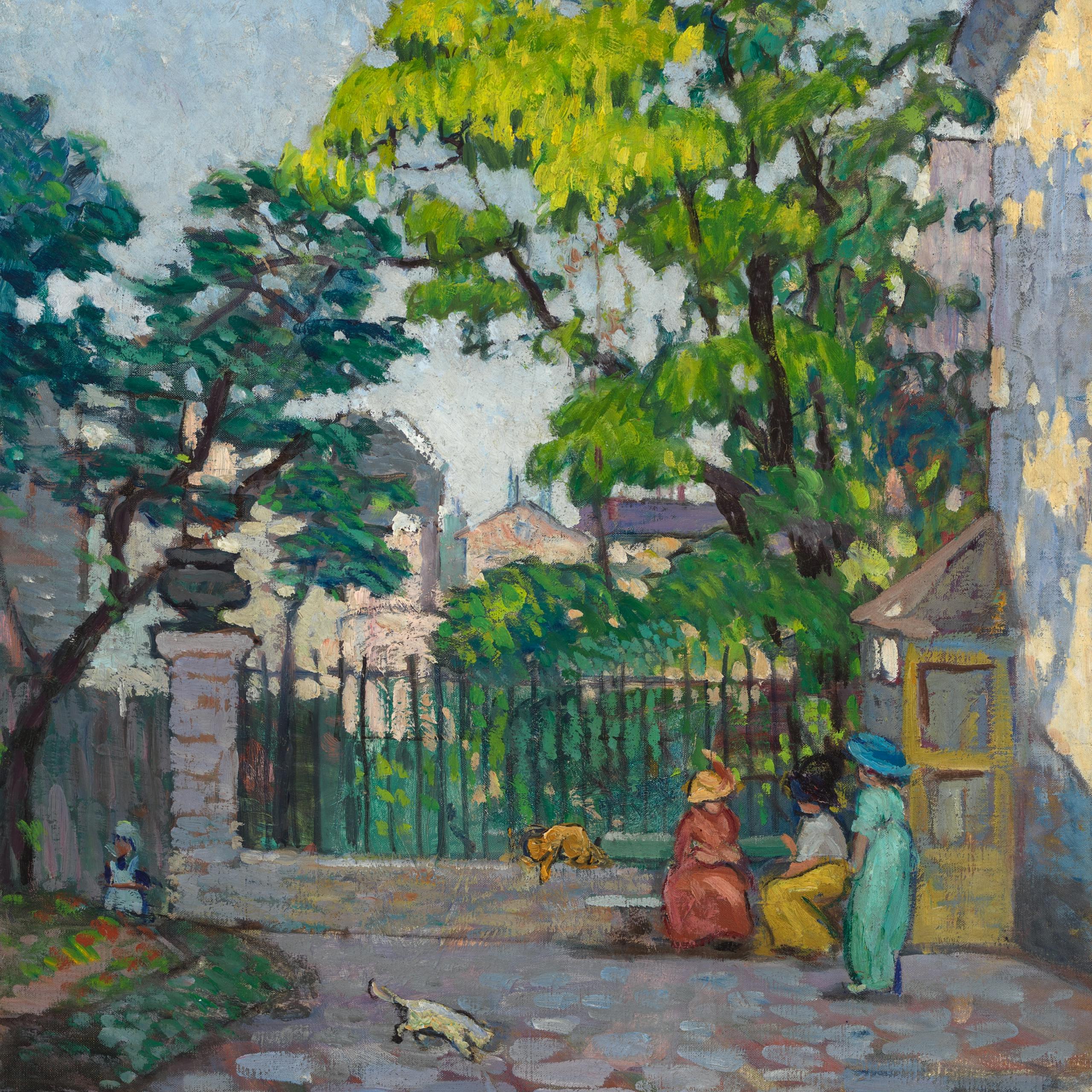
The Club: Where American Women Artists Found Refuge in Belle Époque Paris
It was a tremendous pleasure to get to interview Jennifer Dasal about her new book, The Club: Where American Women Artists Found Refuge in Belle Époque Paris. We discussed the art scene in Paris in the 19th century, particularly the experiences of American women artists. The Club: Where American Women Artists Found Refuge in Belle Époque Paris will be available at your favorite bookstores starting July 15. You can order a copy now from Amazon Listen to Jennifer on ArtCurious wherever you get your podcasts. In this episode, we mentioned other artists. Use the links below if you want to learn more about them: Edmonia Lewis Auguste Rodin Mary Cassatt Check out my other podcasts Fun Facts Daily | Art Smart | Rainbow Puppy Science Lab Who ARTed is an Airwave Media Podcast. If you are interested in advertising on this or any other Airwave Media show, email: [email protected] Learn more about your ad choices. Visit megaphone.fm/adchoices

Thomas Hart Benton
American artist Thomas Hart Benton (1889-1975) was a leading figure of the Regionalist movement, known for his dynamic depictions of American life, labor, and landscapes. Born into a politically prominent Missouri family, Benton initially pursued art against his father's wishes, studying at the Corcoran Gallery of Art and later in Paris, where he engaged with avant-garde movements like Cubism and Synchromism. However, he eventually rejected European modernism, advocating for a distinctly American art form that captured the realities of the nation. His signature "muscular realism" is characterized by swirling forms and vibrant colors, often seen in his prolific murals in public buildings such as the Missouri State Capitol. Benton's monumental mural cycle, America Today, completed in 1931, stands as a prime example of American Regionalism. Executed in egg tempera on linen, these ten panels offer a panoramic view of American life during the Great Depression, featuring scenes of bustling cities, industrial activity, and rural labor. The mural, originally commissioned by The New School for Social Research, showcases figures like steelworkers, farmers, and jazz musicians, with Benton subtly including himself and his family within the work. America Today is a powerful visual narrative that celebrates the resilience of ordinary Americans and critiques the challenges of the era, solidifying Benton's legacy as a chronicler of American history and culture. The mural is now housed at the Metropolitan Museum of Art in New York City. Check out my other podcasts Fun Facts Daily | Art Smart | Rainbow Puppy Science Lab Who ARTed is an Airwave Media Podcast. If you are interested in advertising on this or any other Airwave Media show, email: [email protected] Learn more about your ad choices. Visit megaphone.fm/adchoices

Louise-Élisabeth Vigée Le Brun Portrait of an Artist
Louise-Élisabeth Vigée Le Brun is best known as Marie Antoinette's favorite portrait painter. In this episode, I spoke with Judith Lissauer Cromwell, author of a new biography of Vigée Le Brun. Louise-Élisabeth Vigée Le Brun first studied art with her father. Sadly, he passed away while Vigée Le Brun was just a child. Her mother helped her to gain access to artworks, to gain inspiration and continue developing her talent. By the time Vigée Le Brun was a young adult, she gained a reputation for painting beautiful portraits of the French aristocracy. Marie Antoinette spent years trying to find a painter who could create a portrait that would satisfy her mother. Vigée Le Brun painted a beautiful portrait and quickly became the queen's favorite artist, but being so closely associated with the queen became perilous during the French Revolution. Buy the book on Amazon or wherever you get your books. Check out my other podcasts Fun Facts Daily | Art Smart | Rainbow Puppy Science Lab Who ARTed is an Airwave Media Podcast. If you are interested in advertising on this or any other Airwave Media show, email: [email protected] Learn more about your ad choices. Visit megaphone.fm/adchoices

Constantin Brâncuși | The Kiss & Bird in Space (encore)
Constantin Brâncuși was a Romanian sculptor who made a significant impact on modern art through his abstract sculptures. His passion and dedication to art is legendary. In the autumn of 1903, he began a months-long walk from Bucharest to Paris, where he sought to immerse himself in the avant-garde art scene. Brâncuși's work, characterized by simplified forms and a focus on the essence of his subjects, often sparked controversy, as seen with his Bird in Space sculpture, which was challenged by U.S. customs officials who didn't recognize it as art. This led to a landmark court case that ultimately recognized abstract art as a legitimate form. Brâncuși's dedication to his unique artistic vision and his exploration of fundamental forms left a lasting legacy on the world of modern sculpture. Related episodes: Auguste Rodin Amedeo Modigliani Henri Matisse Marcel Duchamp The Kiss is one of the 250 artworks required for AP Art History. For those students across the US trying to prep for the test, check out my AP Art History Cram Session playlist on Spotify. Check out my other podcasts Fun Facts Daily | Art Smart | Rainbow Puppy Science Lab Who ARTed is an Airwave Media Podcast. If you are interested in advertising on this or any other Airwave Media show, email: [email protected] Learn more about your ad choices. Visit megaphone.fm/adchoices

Hieronymus Bosch | The Garden of Earthly Delights (encore)
Hieronymus Bosch was a 15th-century Dutch painter whose fantastical and often unsettling works continue to captivate viewers today. His most famous painting, "The Garden of Earthly Delights," is a triptych that depicts a complex narrative of creation, temptation, sin, and damnation. Bosch's unique visual vocabulary, drawn from religious iconography, folklore, alchemy, and contemporary social mores, challenged the established norms of religious art and introduced an element of ambiguity into his narratives. Bosch's exploration of human psychology and the darker aspects of human nature contributed to the subversive nature of his art, offering a more nuanced and unsettling view of the human condition. Despite the often disturbing imagery in his paintings, Bosch was a respected member of his community and a devout Catholic. The enduring power of his work lies in its masterful balance between the concrete and the ambiguous, inviting viewers to decipher the complex relationships and narratives within his paintings. Learn more about your ad choices. Visit megaphone.fm/adchoices

The Ardabil Carpet
The Ardabil Carpet, a masterpiece of 16th-century Persian weaving, represents a pinnacle of Safavid art. Though associated with Ardabil, scholars suggest it may have been woven in Kashan, a prominent center for carpet production during that era. Commissioned during the reign of Shah Tahmasp I (1501-1736 CE) for the Shrine of Shaykh Safi al-Din Ardabili, this monumental wool pile carpet on a silk foundation measures an impressive 34 feet 6 inches by 17 feet 5 inches and boasts over 25 million knots. The carpet's intricate design features a central medallion surrounded by elaborate floral motifs, scrolling vines, and arabesques, reminiscent of a lush garden, a common theme in Islamic art. Notably, two asymmetrical mosque lamps hang from the central medallion, symbolizing divine knowledge and adding to the carpet's sacred context. Inscriptions include a couplet from the poet Hafiz, emphasizing devotion and humility, fitting for a piece created for a revered shrine. Dated 946 AH (1539-1540 CE), the Ardabil Carpet's precise dating is a rare and valuable historical marker. Its acquisition by the Victoria and Albert Museum in London in 1893 significantly elevated the recognition of Islamic art in Western collections, and its enduring influence continues to inspire textile art and design globally. The Ardabil Carpet is one of the 250 works required for AP Art History. If you want to learn about more works from that list, check out my AP Art History Cram Session playlist on Spotify. Check out my other podcasts Fun Facts Daily | Art Smart | Rainbow Puppy Science Lab Who ARTed is an Airwave Media Podcast. If you are interested in advertising on this or any other Airwave Media show, email: [email protected] Learn more about your ad choices. Visit megaphone.fm/adchoices
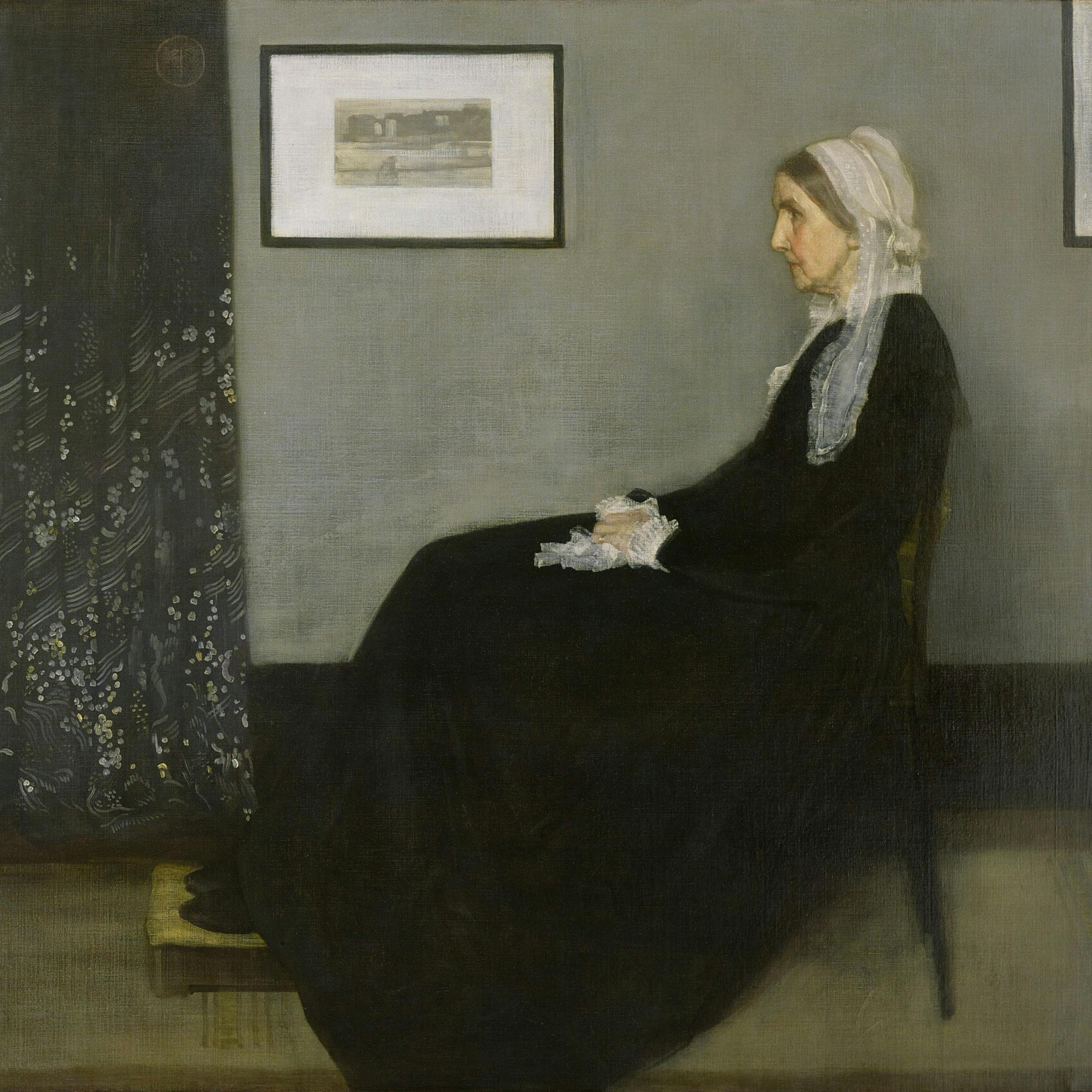
James McNeill Whistler | Arrangement in Grey and Black No. 1 (Whistler's Mother)
James Abbott McNeill Whistler was a prominent figure in the Aesthetic Movement focusing on "Art for art's sake." One of Whistler's most renowned works is "Arrangement in Grey and Black No. 1," widely known as "Whistler's Mother," painted in 1871. This oil on canvas depicts his mother, Anna McNeill Whistler, seated in profile. Despite Whistler's insistence that the painting be appreciated for its formal qualities, its subtle harmonies of grey and black and balanced composition, it has garnered widespread sentimental appeal as a profound depiction of maternal dignity and old age. The painting, initially met with mixed reviews in London, achieved masterpiece status in Paris and was acquired by the French state. Its enduring presence in popular culture, including its use as a symbol of American motherhood during the Great Depression, showcases its unique blend of artistic innovation and emotional resonance, continuing to captivate audiences over a century and a half after its creation. Check out my other podcasts Fun Facts Daily | Art Smart | Rainbow Puppy Science Lab Who ARTed is an Airwave Media Podcast. If you are interested in advertising on this or any other Airwave Media show, email: [email protected] Learn more about your ad choices. Visit megaphone.fm/adchoices

Francisco Goya | The Third of May 1808
Francisco Goya (1746-1828) is one of Spain's most important and complex artists. His career bridged the gap between the Old Masters and the modern era. He found success as a court painter for the Spanish monarchy, creating bright, lively tapestry designs for the royal palaces. However, a devastating illness in 1792 that left him completely deaf marked a profound turning point. His art took on a darker, more critical tone, evident in his series of satirical etchings, Los Caprichos, which targeted the follies of Spanish society. The horrors he witnessed during Napoleon's invasion of Spain (1808-1814) were unflinchingly documented in his print series, The Disasters of War. In his final years in Spain, Goya painted his most enigmatic and disturbing works, the "Black Paintings," directly onto the walls of his country home, creating private, nightmarish visions like Saturn Devouring His Son. The Third of May 1808, painted in 1814, is a monumental and revolutionary depiction of war. Breaking from centuries of tradition that glorified battle, Goya focuses on the brutal, systematized execution of captured Spanish civilians by a faceless French firing squad. The painting's power comes from its raw emotion, its dramatic use of light to illuminate the victims, and its central, Christ-like figure whose gesture of martyrdom has become a universal symbol of protest. As one of the first truly modern paintings, The Third of May 1808 stripped war of its romance and its influence resonates through the history of art, most notably in works by Édouard Manet and Pablo Picasso's famous anti-war mural, Guernica. Related episodes: Édouard Manet Pablo Picasso Auguste Rodin Check out my other podcasts Fun Facts Daily | Art Smart | Rainbow Puppy Science Lab Who ARTed is an Airwave Media Podcast. If you are interested in advertising on this or any other Airwave Media show, email: [email protected] Learn more about your ad choices. Visit megaphone.fm/adchoices

Author Interview: B.A. Shapiro | The Lost Masterpiece
My guest this week is B.A. Shapiro, author of a new historical fiction book, The Lost Masterpiece. Her book focuses on Berthe Morisot and the French Impressionists. In this interview, we dicussed some the things Shapiro learned through her exhaustive research into Morisot and other artists who appear in her book. Images discussed in the episode: Two Sisters on a Couch The Mother and Sister of the Artist Find The Lost Masterpiece at Amazon or wherever you get your books starting July 17. Related podcast episodes: Berthe Morisot Edgar Degas Edouard Manet Claude Monet Mary Cassatt Check out my other podcasts Fun Facts Daily | Art Smart | Rainbow Puppy Science Lab Who ARTed is an Airwave Media Podcast. If you are interested in advertising on this or any other Airwave Media show, email: [email protected] Learn more about your ad choices. Visit megaphone.fm/adchoices

Introducing: Culture Kids Podcast
Today I wanted to share an episode of Culture Kids. Culture Kids is a great podcast for kids and families to enjoy learning about the world. It was a privilege to be a guest on their show talking about art and the moon. If you enjoy the episode, be sure to follow Culture Kids wherever you are listening. Check out my other podcasts Fun Facts Daily | Art Smart | Rainbow Puppy Science Lab Who ARTed is an Airwave Media Podcast. If you are interested in advertising on this or any other Airwave Media show, email: [email protected] Learn more about your ad choices. Visit megaphone.fm/adchoices

Édouard Manet | A Bar at the Folies-Bergère
Édouard Manet, born in Paris in 1832, defied his privileged upbringing to pursue art, despite initial family opposition. Studying under Thomas Couture, Manet diverged from academic traditions, favoring scenes of modern Parisian life. His controversial works, such as Le Déjeuner sur l'herbe and Olympia, challenged artistic and social norms by depicting contemporary figures in realistic settings, notably nudes without mythological context, sparking public outrage but inspiring avant-garde artists. Although not an official Impressionist, Manet's innovative style, characterized by bold brushstrokes and stark contrasts, influenced many in the movement. His final major work, A Bar at the Folies-Bergère, further exemplifies his fascination with modern life, using complex perspectives and reflections to explore themes of reality, illusion, and the social complexities of urban environments. Manet's art redefined the depiction of modern life, challenging accepted artistic and social standards. He moved beyond historical or allegorical subjects, portraying bustling Parisian streets, cafes, and ordinary people. His bold style laid the groundwork for modern art. Despite facing constant criticism and rejection from official art circles, Manet became a pivotal figure, mentoring and inspiring many later Impressionists. His legacy endures through his significant contribution to the evolution of painting, notably his departure from academic rules and commitment to depicting the nuances of everyday life, culminating in his complex and thought-provoking final masterpiece. Related episodes: Diego Velazquez Claude Monet Berthe Morisot Edgar Degas The Salon des Refuses Check out my other podcasts Fun Facts Daily | Art Smart | Rainbow Puppy Science Lab Who ARTed is an Airwave Media Podcast. If you are interested in advertising on this or any other Airwave Media show, email: [email protected] Learn more about your ad choices. Visit megaphone.fm/adchoices

Utagawa Hiroshige (encore)
Utagawa Hiroshige (1797-1858) stands as a titan in the realm of Japanese woodblock prints of the ukiyo-e period. His tranquil landscapes, meticulously detailed cityscapes, and captivating depictions of flora and fauna continue to resonate with viewers centuries after their creation. Hiroshige's life, however, was far from a serene stroll through the picturesque scenes he immortalized. Born into a humble background and navigating a rapidly changing artistic landscape, Hiroshige's artistic journey mirrored the dynamism of his era. Related episodes: Who ARTed | Katsushika Hokusai Art Smart | Ukiyo-e Check out my other podcasts Fun Facts Daily | Art Smart | Rainbow Puppy Science Lab Who ARTed is an Airwave Media Podcast. If you are interested in advertising on this or any other Airwave Media show, email: [email protected] Learn more about your ad choices. Visit megaphone.fm/adchoices

Alberto Giacometti
Alberto Giacometti (1901–1966) was a significant 20th-century artist known for his elongated, attenuated sculptures that often embody post-war existential themes. Born in Switzerland, he was influenced by his artist father and later by Renaissance, Egyptian, and African art. He moved to Paris, studied sculpture, and was briefly involved with the Surrealists before breaking away to focus on working from live models. Giacometti's intense artistic process involved obsessive observation and self-criticism, often leading to the destruction and reworking of his pieces. His later work, characterized by signature elongated figures, resonated deeply in the post-war era, reflecting themes of isolation, fragility, and the human condition, and were linked by philosophers like Sartre to Existentialism. Check out my other podcasts Fun Facts Daily | Art Smart | Rainbow Puppy Science Lab Who ARTed is an Airwave Media Podcast. If you are interested in advertising on this or any other Airwave Media show, email: [email protected] Learn more about your ad choices. Visit megaphone.fm/adchoices
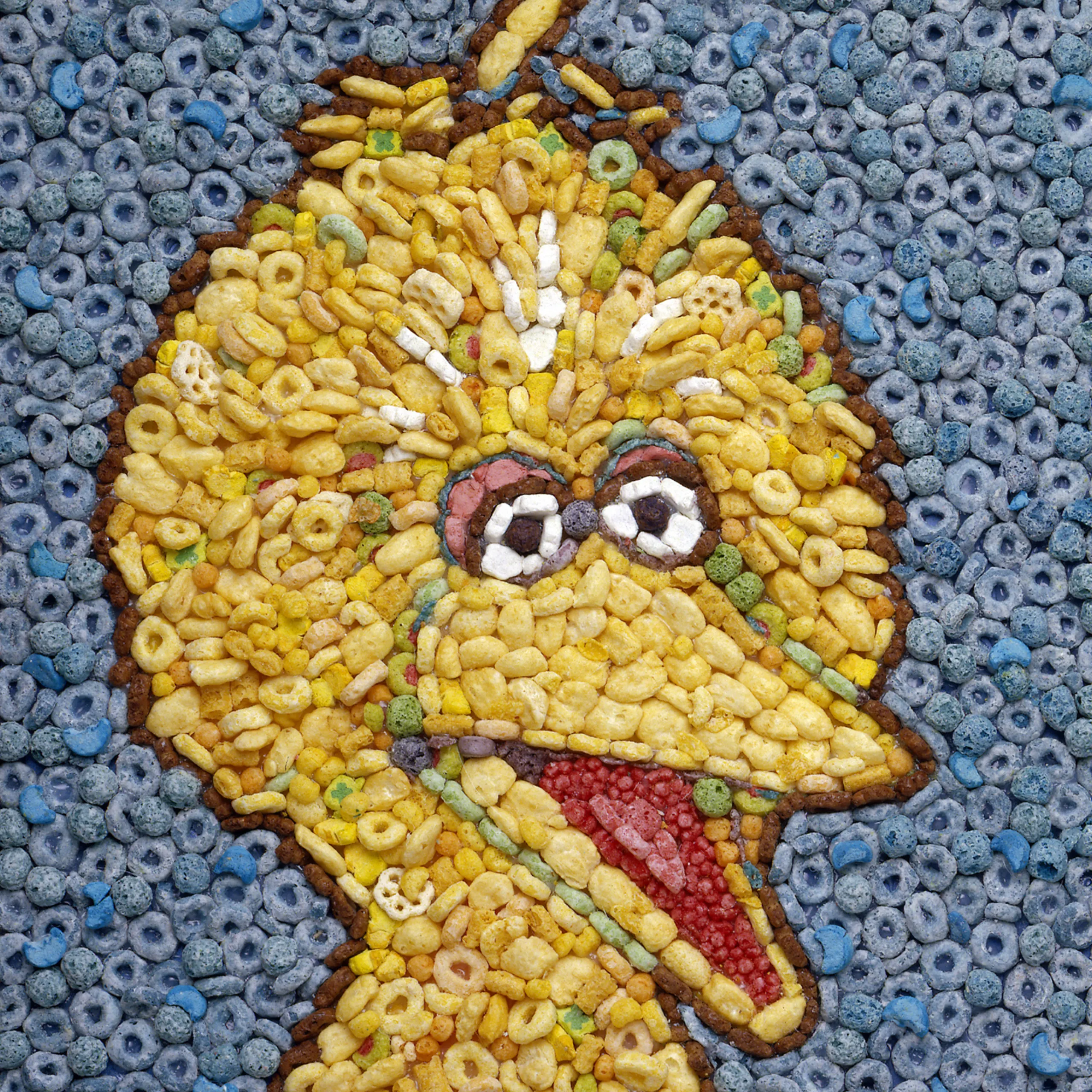
5 Artists Who Take Playing with Their Food to a Whole New Level
Today I thought it would be fun to switch things up a little bit. Instead of focusing on just one artist and artwork, I’ve got 5 artists who work with food in ways most people would never consider. Jason Mecier creates mosaic portraits of celebrities using their favorite snacks, vices, and trash, making him a prominent figure in "junk art." Vik Muniz recreates famous paintings on a large scale using discarded materials, including garbage and chocolate syrup. Conrad Engelhardt crafts pointillist-style mosaics using wine corks, capitalizing on the various wine stains as his color palette. Jim Bachor fills city potholes with custom-made glass and marble tile mosaics, creating unexpected street art. Finally, Kristen Cumings uses thousands of Jelly Belly jelly beans to create vibrant mosaic masterpieces, including portraits and recreations of famous artworks. Cover art for this episode was Big Bird (breakfast cereal) by Jason Mecier. Image courtesy of the artist. If you like mini episode with fun facts, check out my other podcast Fun Facts Daily Who ARTed is an Airwave Media Podcast. If you are interested in advertising on this or any other Airwave Media show, email: [email protected] Learn more about your ad choices. Visit megaphone.fm/adchoices

Charles and Ray Eames | Eames Lounge Chair and Ottoman
Charles and Ray Eames were an iconic husband-and-wife design team who became leaders of the Mid-Century Modern movement. Their partnership began at the Cranbrook Academy of Art, merging Charles's architectural and structural background with Ray's keen artistic eye for color and form. A critical development in their career was perfecting a method for molding plywood into complex shapes, a technique they developed while making leg splints for the U.S. Navy during WWII. They famously applied this innovation to furniture, with their most enduring creation being the 1956 Eames Lounge Chair and Ottoman. Designed to have the "warm, receptive look of a well-used first baseman's mitt," the chair combined luxurious materials with ergonomic comfort, becoming an instant classic and a symbol of sophisticated taste that is still in production today. Beyond furniture, their influential Eames Office also created pioneering films, toys, and architecture, including their own modular Eames House, all driven by the goal of making thoughtful, high-quality design accessible to improve everyday life. Check out my other podcasts Fun Facts Daily | Art Smart | Rainbow Puppy Science Lab Who ARTed is an Airwave Media Podcast. If you are interested in advertising on this or any other Airwave Media show, email: [email protected] Learn more about your ad choices. Visit megaphone.fm/adchoices

Petra (encore)
Petra, the ancient city carved into the sandstone cliffs of Jordan, is a testament to the ingenuity and artistry of the Nabataean civilization. Established in the 4th century BC, Petra's strategic location along trade routes fueled its prosperity. The Nabataeans carved impressive structures like the Treasury and the Monastery directly into the rock face using chisels, hammers, and picks. The city's architecture reflects a blend of Hellenistic, Egyptian, and Assyrian influences. Petra's intricate carvings, water systems, and monumental tombs highlight their advanced skills and cultural beliefs. Though the city declined after an earthquake and shifting trade routes, its rediscovery in the 19th century unveiled its remarkable legacy. Many people today first laid eyes on Petra when it was featured in the popular movie, Indiana Jones and the Last Crusade. Today, Petra stands as a UNESCO World Heritage Site, captivating visitors with its unique blend of history, architecture, and artistry. Check out my other podcasts Fun Facts Daily | Art Smart | Rainbow Puppy Science Lab Who ARTed is an Airwave Media Podcast. If you are interested in advertising on this or any other Airwave Media show, email: [email protected] Learn more about your ad choices. Visit megaphone.fm/adchoices
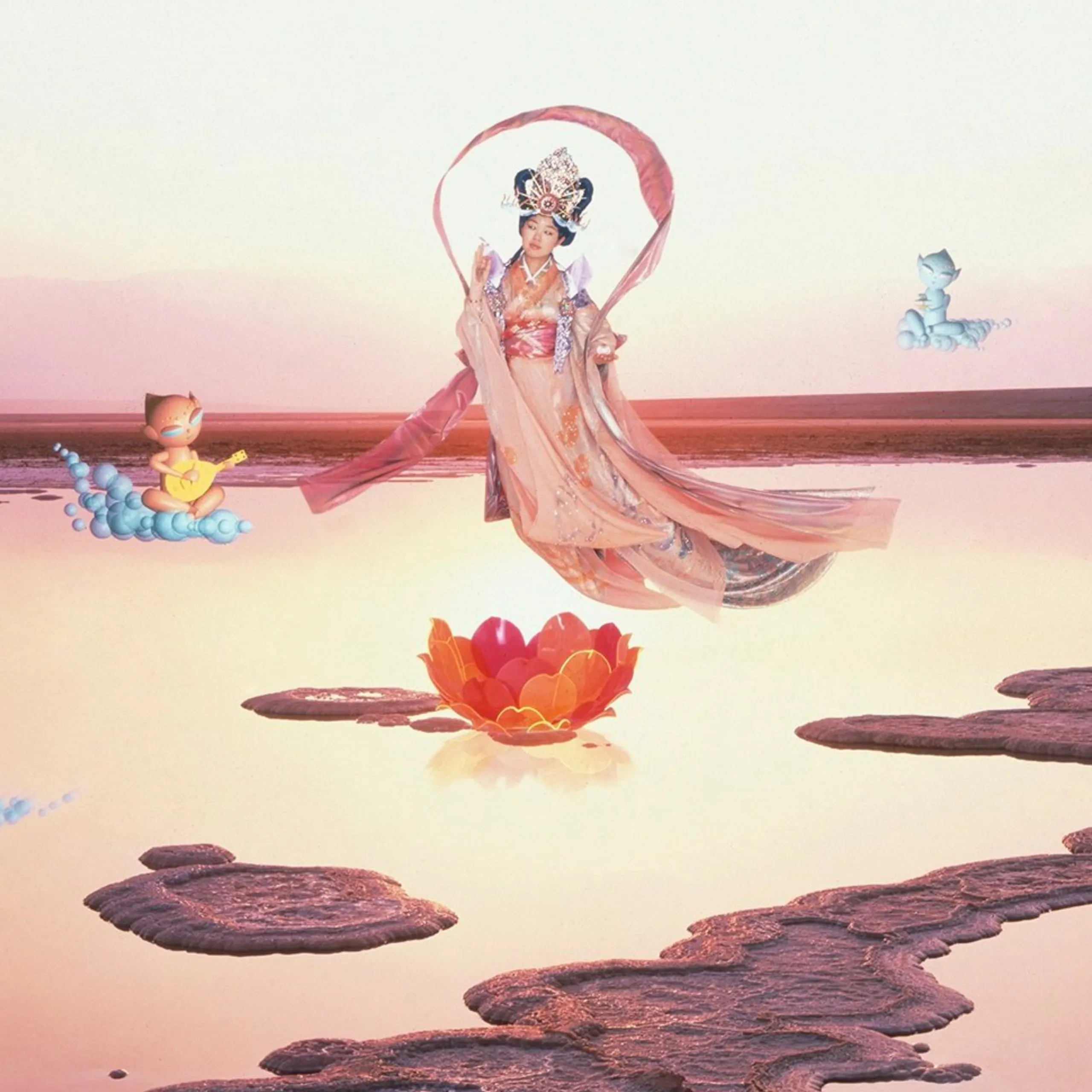
Mariko Mori | Pure Land
Mariko Mori, born in Tokyo in 1967, is a Japanese artist whose work blends traditional Buddhist iconography with futuristic digital art. With a background influenced by her father's inventiveness and her mother's art history knowledge, Mori initially studied fashion design before pursuing visual arts in London and New York. Her early pieces featured herself in elaborate costumes, exploring identity and technology. Mori's notable work, "Pure Land," created between 1996 and 1998, reflects her shift towards spirituality and transcendence. She combines photography with digital manipulation to create surreal, otherworldly scenes, often featuring herself as a goddess figure surrounded by symbolic elements, drawing inspiration from Buddhist art, Japanese mythology, and personal experiences like sleep paralysis. Her art explores themes of enlightenment, technology, and the intersection of tradition and the future. Please note: I will mostly be playing mini episodes through the summer. I have a few full length episodes coming in June and July, but for scheduling reasons, I am mostly going to be making solo mini episodes for a while. Links: AP Art History Cram Session playlist on Spotify Fun Facts Daily on your favorite podcast app. Check out my other podcasts Fun Facts Daily | Art Smart | Rainbow Puppy Science Lab Who ARTed is an Airwave Media Podcast. If you are interested in advertising on this or any other Airwave Media show, email: [email protected] Learn more about your ad choices. Visit megaphone.fm/adchoices

Sandro Botticelli | The Birth of Venus (encore)
Sandro Botticelli, born Alessandro di Mariano di Vanni Filipepi, was a renowned Florentine painter during the Renaissance. By the 1470s, Botticelli established his own workshop and gained recognition for his unique style. He received commissions from wealthy patrons, including the powerful Medici family. For the Medici, Botticelli painted portraits and created allegorical and mythological works that showcased his mastery of line, color, and composition. His most famous paintings, "The Birth of Venus" and "Primavera," were created during this period. "The Birth of Venus" depicts the arrival of the goddess Venus on the shore after emerging from the sea. The painting is rich in symbolism, drawing from classical mythology, Neoplatonic philosophy, and Christian theology. Venus, the Roman goddess of love, beauty, and fertility, is the central figure. Her nudity, while controversial today, was associated with purity in classical art. The painting is filled with symbolic elements, like the wind gods Zephyrus and Aura representing the forces of nature, and the Hora of Spring welcoming Venus with flowers, signifying her connection to fertility. Check out my other podcasts Fun Facts Daily | Art Smart | Rainbow Puppy Science Lab Who ARTed is an Airwave Media Podcast. If you are interested in advertising on this or any other Airwave Media show, email: [email protected] Learn more about your ad choices. Visit megaphone.fm/adchoices

The Art Spy: The Extraordinary Untold Tale of WWII Resistance Hero Rose Valland
My guest this week is Michelle Young, author of The Art Spy. During WWII, French museum curator Rose Valland risked her life to sabotage the Nazi art theft machine, secretly documenting their plunder and saving countless masterpieces. The book is thoroughly researched to not only verify the facts of Valland's work preserving art, but also to gain insights into Valland as a human being. In our interview, Young shared some of her insights into a largely overlooked but incredibly consequential hero of the French Resistance. Buy THE ART SPY: The Extraordinary Untold Tale of WWII Resistance Hero Rose Valland (HarperOne; 5/13/25) from your favorite book seller. Check out my other podcasts Fun Facts Daily | Art Smart | Rainbow Puppy Science Lab Who ARTed is an Airwave Media Podcast. If you are interested in advertising on this or any other Airwave Media show, email: [email protected] Learn more about your ad choices. Visit megaphone.fm/adchoices

The Ultimate Lego House (encore)
In 2009, a television presenter from the BBC, a guy by the name of James May, gathered about 2,000 volunteers and approximately 3.2 million bricks donated by LEGO to create a two-story house out of Legos. He created this for a series called James May's Toy Stories. The house even went so far as it had working plumbing, like it had a working shower and toilet all made of LEGO. May actually spent the night in his LEGO house and he made two important discoveries. First, he found out that a LEGO bed is not the least bit comfortable. And secondly, he discovered the structure that he had built was not waterproof. When it was time for the house to come down, May and LEGO donated all of those bricks to charity. There's something beautiful about the fact that after May got to live out his childhood dream of building a life sized LEGO house, he paid it forward by passing on those bricks to other people in need so that everyone could have a chance to build their vision and live their dreams. Check out my other podcasts Fun Facts Daily | Art Smart | Rainbow Puppy Science Lab Who ARTed is an Airwave Media Podcast. If you are interested in advertising on this or any other Airwave Media show, email: [email protected] Learn more about your ad choices. Visit megaphone.fm/adchoices

Jessica Poundstone | Museum of Dogs
Jessica Poundstone is the author of Museum of Dogs: a Romp through Art History for Dog People. As the name suggests, it is a light and fun look at dogs as portrayed by various artists throughout time and across cultures. In this episode, we discussed dogs in art history and mentioned several artists including Edouard Manet, Pierre-Auguste Renoir, Henri de Toulouse-Lautrec, Berthe Morisot, and Diego Velázquez. In the second segment, we looked at Tama, a dog, as painted by Renoir and another version of the same dog painted by Manet. Buy a copy of Museum of Dogs: a Romp through Art History for Dog People on Amazon or wherever you get your books Contemporary artists we mentioned who are worth supporting: Ryan Berkley Katie Kimmel Check out my other podcasts Fun Facts Daily | Art Smart | Rainbow Puppy Science Lab Who ARTed is an Airwave Media Podcast. If you are interested in advertising on this or any other Airwave Media show, email: [email protected] Learn more about your ad choices. Visit megaphone.fm/adchoices

Marc Chagall | I and the Village
Marc Chagall (born Moishe Shagal, 1887-1985) was a prominent Russian-French modern artist whose life spanned nearly a century of dramatic historical change. Originating from a Hasidic Jewish community near Vitebsk, Russian Empire (now Belarus), Chagall pursued art studies in St. Petersburg before immersing himself in the Paris art scene from 1911-1914. There, he absorbed influences from Cubism and Fauvism, blending them with his unique heritage of Russian folklore and personal memories to forge his signature dreamlike style. Trapped in Russia by World War I, he married his muse, Bella Rosenfeld, and briefly served as Commissar of Arts in Vitebsk after the Revolution. Chagall later returned to Paris, only to flee Nazi persecution during World War II, finding refuge in the United States where Bella tragically died. Returning to France after the war, he married Valentina "Vava" Brodsky and embarked on a prolific late career, expanding into ceramics, sculpture, and notably, magnificent stained glass works, continuing to create until his death at 97. Please help me launch my new show Fun Facts Daily! Give it a listen and leave a kind rating or review to help others find the show. Find Fun Facts Daily on Spotify, Apple Podcasts, Amazon Music, or wherever you get your podcasts. Who ARTed is an Airwave Media Podcast. If you are interested in advertising on this or any other Airwave Media show, email: [email protected] Learn more about your ad choices. Visit megaphone.fm/adchoices

Introducing Fun Facts Daily
Fun Facts Daily is a new podcast I have been working on for a bit. It is exactly what the name suggests. Every Monday through Friday, on Fun Facts Daily, I’ll be sharing five fun facts, a word of the day and practical tips all related to a single topic in around 10-15 minutes. I’ll still be bringing you episodes of Who ARTed on Mondays and Fridays, but I wanted to create another show because there’s a lot of amazing stuff to learn beyond the art world. I have been wanting to do this for a while now because I am not just a teacher, but also a lifelong learner and I love sharing the awesome new things I learn. Over the last year or so I noticed that a lot of news shows I listened to left me feeling wound up and anxious. I decided to create the kind of show I want to listen to, focusing exclusively on the good stuff. Every episode has fun facts and interesting stories that are all clean and appropriate for listeners of all ages, so you can listen with the kids and learn together or take some time for yourself to just relax and learn something awesome. Today, I’m giving you all a sneak peek of two episodes I think you’ll enjoy. First, I’m going to have an episode of Fun Facts Daily on Leonardo da Vinci, then I’ll have my episode on inventions built off NASA technology. I hope you like the show, and if you do, please do me a favor and follow Fun Facts Daily on your favorite podcast app. It’s a brand new show and you really appreciate your help getting it off the ground by giving it a listen, a kind rating or just telling a friend about the show. Thanks! Find Fun Facts Daily on Spotify, Apple Podcasts, Amazon Music, or wherever you get your podcasts. Learn more about your ad choices. Visit megaphone.fm/adchoices

The Codex Borgia
The Codex Borgia is a pre-Columbian Mesoamerican manuscript, a 36-foot folded document made of animal hide, dating from the 13th to early 16th centuries. Created by Indigenous peoples, likely in central Mexico, it serves as a religious and divinatory almanac used by priests. Filled with intricate depictions of deities like Tezcatlipoca, Quetzalcoatl, and Tlaloc, it illustrates the 260-day tonalpohualli ritual calendar. Part of the “Borgia Group,” it survived the Spanish conquest and is now housed in the Vatican Apostolic Library. The codex offers invaluable insight into pre-Hispanic Mesoamerican beliefs, cosmology, and rituals, showcasing complex iconography and artistic skill. It provides crucial information for understanding the history, culture, and religion of ancient Mexican civilizations. Learn more about your ad choices. Visit megaphone.fm/adchoices

Walter De Maria | The Lightning Field
Walter De Maria (1935-2013) was a pivotal figure in Minimalism, Conceptual Art, and Land Art, known for large-scale environmental installations. His significant works include The New York Earth Room and The Lightning Field. The Lightning Field, commissioned by the Dia Art Foundation and completed in 1977 in Catron County, New Mexico, comprises 400 stainless steel poles arranged in a precise grid, designed to interact with light and evoke the sublime. De Maria's art often explores themes of scale, human perception, and the relationship between nature and human intervention, emphasizing direct viewer experience over traditional art consumption. My guest this week is Tim Bogatz, host of Art Ed Radio from The Art of Education University. Tim and I are both active on the Art of Ed Community and I would encourage all my fellow art teachers to join if you haven't already. If you are interested in learning more about The Lightning Field or you would like to try to make the pilgrimage and stay there, check head over to Diaart.org Check out my other podcasts Art Smart | Rainbow Puppy Science Lab Who ARTed is an Airwave Media Podcast. If you are interested in advertising on this or any other Airwave Media show, email: [email protected] Learn more about your ad choices. Visit megaphone.fm/adchoices

Elaine de Kooning | Portrait of John F. Kennedy
Elaine de Kooning (1918-1989) was a vital figure in 20th-century American art. She was a renowned Abstract Expressionist painter, portraitist, and writer. Elaine de Kooning's 1963 portrait of John F. Kennedy, now at the National Portrait Gallery, is a significant work reflecting her Abstract Expressionist style applied to portraiture. Commissioned by the Truman Library, the painting captures Kennedy's dynamic energy and charisma through vibrant colors, bold brushstrokes, and a fragmented, almost unfinished quality. Created during and after Kennedy's time in office, the work became a poignant memorial after his assassination, symbolizing the turbulence and vitality of his presidency, and cementing de Kooning's reputation as a master portraitist. Related episodes: Willem de Kooning Jackson Pollock Janet Sobel Lee Krasner Mark Rothko Erased de Kooning Check out my other podcasts Art Smart | Rainbow Puppy Science Lab Who ARTed is an Airwave Media Podcast. If you are interested in advertising on this or any other Airwave Media show, email: [email protected] Learn more about your ad choices. Visit megaphone.fm/adchoices

Willem de Kooning | Woman, I
Willem de Kooning, a Dutch-American Abstract Expressionist painter, was born in Rotterdam in 1904. He stowed away on a freighter in 1926, eventually settling in New York City. De Kooning's early work transitioned from figurative studies to abstraction, though he never fully abandoned the figure, famously stating, "Flesh was the reason oil paint was invented." He gained recognition for his black-and-white abstract paintings and married fellow artist Elaine Fried. Known for his perfectionism, he often reworked his canvases extensively. He moved to East Hampton in 1963, and despite later suffering from Alzheimer's, continued painting until the late 1980s. De Kooning died in 1997, leaving a lasting legacy as a key figure in 20th-century art. Willem de Kooning's "Woman I," created between 1950 and 1952, is a seminal work of Abstract Expressionism. This large-scale painting, now housed at the Museum of Modern Art, is the first in his "Woman" series and is renowned for its intense process and controversial imagery. De Kooning worked on the canvas for nearly two years, repeatedly painting over and scraping away layers, embodying the "action painting" style. Inspired by diverse sources, from contemporary advertisements to ancient fertility figures, "Woman I" depicts a distorted, powerful female figure with aggressive brushstrokes, vibrant yet garish colors, and a chaotic composition. The painting sparked debate upon its 1953 exhibition, with some critics viewing it as misogynistic, while others recognized its challenge to traditional notions of beauty and the female nude. "Woman I" remains an influential piece, reflecting de Kooning's struggle with representation and solidifying his reputation as a major, albeit provocative, force in post-war art. Related episodes: Jackson Pollock Janet Sobel Lee Krasner Mark Rothko Erased de Kooning Check out my other podcasts Art Smart | Rainbow Puppy Science Lab Who ARTed is an Airwave Media Podcast. If you are interested in advertising on this or any other Airwave Media show, email: [email protected] Learn more about your ad choices. Visit megaphone.fm/adchoices
Was Abstract Expressionism a CIA Psyop?
The CIA secretly leveraged Abstract Expressionism, particularly the art of Jackson Pollock, during the Cold War. This wasn't about controlling artists but using their work as a symbol of American freedom and individualism against Soviet Socialist Realism. Through the Congress for Cultural Freedom (CCF), the CIA funded major art exhibitions like "The New American Painting" and collaborated with institutions like the Museum of Modern Art (MoMA) to promote this art internationally. While the CIA didn't create Abstract Expressionism, they amplified its impact, making it a powerful cultural weapon and shifting the art world's focus to New York. Discover the hidden history of how art became a tool in the battle for hearts and minds during the Cold War. Related episodes: Jackson Pollock Janet Sobel Lee Krasner Mark Rothko Erased de Kooning Check out my other podcasts Art Smart | Rainbow Puppy Science Lab Who ARTed is an Airwave Media Podcast. If you are interested in advertising on this or any other Airwave Media show, email: [email protected] Learn more about your ad choices. Visit megaphone.fm/adchoices

Tembe Denton-Hurst | Fresh Sets: Contemporary Nail Art from Around the World
Tembe Denton-Hurst (@tembae) is a beauty and culture writer at New York magazine and the author of Homebodies. Her newest book Fresh Sets: Contemporary Nail Art from Around the World travels the world to put today’s most inspired nail art at your fingertips. It features profiles of 35 professionals who are carving out a name for themselves on the streets of cities like New York, LA, Vancouver, London, Berlin, Paris, Moscow, Seoul, Tokyo, Punjab, Melbourne/Naarm, and more. In the second segment, we discussed work by Leslie Arrañaga and a photo of her work is used as the cover art for this episode. Photo credit: © Lesly Arrañaga / @leslydidthem Who ARTed is an Airwave Media Podcast. If you are interested in advertising on this or any other Airwave Media show, email: [email protected] Learn more about your ad choices. Visit megaphone.fm/adchoices

Announcing the 2025 Arts Madness Tournament Winner
bonusThank you to everyone who participated in this year's Arts Madness Tournament. After 6 weeks and thousands of votes, we have narrowed the field from 64 down to 1 ultimate artist. Listen for fun facts about our two final artists, Katsushika Hokusai and Maurizio Cattelan, and find out who came out on top in our final round. Check out my other podcasts Art Smart | Rainbow Puppy Science Lab Who ARTed is an Airwave Media Podcast. If you are interested in advertising on this or any other Airwave Media show, email: [email protected] Learn more about your ad choices. Visit megaphone.fm/adchoices

Joan Miró | The Farm
Joan Miró, a renowned Spanish painter, sculptor, and ceramicist, was born in Barcelona on April 20, 1893. Initially steered towards business, Miró's true passion was art. He studied at Barcelona's La Llotja School of Fine Arts and later the Escola d'Art. A period of illness led him to Mont-roig del Camp, a pivotal experience that solidified his commitment to painting and connection to nature. Miró absorbed influences from Fauvism and Cubism, joining the Courbet Group. In 1920, he moved to Paris, befriending Picasso and experiencing poverty, which fueled his art. His work The Farm marked a shift away from realism, and he later embraced Surrealism, developing a unique symbolic language. Arts Madness 2025 Season 11 is all about my Arts Madness Tournament. Once again, I hope you will weigh in on your favorite artists/artworks as we go from 64 down to 1. For this year’s tournament, I put 32 works from the AP Art History list in one bracket, and on the other side, I have 32 artists/works from my personal “Salon des Refusés” that were not included in the curriculum. Voting for Round 2 will begin Monday, March 3. Arts Madness 2025 links: The Brackets Vote in the Current Round at whoartedpodcast.com/vote Check out my other podcasts Art Smart | Rainbow Puppy Science Lab Who ARTed is an Airwave Media Podcast. If you are interested in advertising on this or any other Airwave Media show, email: [email protected] Learn more about your ad choices. Visit megaphone.fm/adchoices