
What Fresh Hell: Laughing in the Face of Motherhood | Parenting Tips From Funny Moms
1,070 episodes — Page 18 of 22

Ask Margaret - My Son Can't Keep His Hands to Himself
Kids often struggle to keep their hands to themselves– and this can be especially true for boys, who love to punch, tackle, and poke at anyone who gets near them. This week Emily asks: As a mom of boys, I am finding that my five-year-old son is very handsy with his friends and boy cousins. It's like my younger son and other boys are magnets that cannot keep their hands off each other. It's not aggressive, it's just constant touching, tickling, purposely running into each other, etc. I am not sure how to curb it,or if it's even possible. And even if I get my son to break the habit, how would I keep other kids from putting their hands all over him? It's not that I am any more of a germaphobe than anyone else, I just feel like it's a recipe for disaster... and when he goes to school in the fall ,I don't want him to be off task and missing directions. Is there anything I can do, or is this just a boy thing? Watch any nature show with a group of young lions and you'll see the cubs wrestling, biting, and tussling with each other (often to the non-delight of their mama). The same holds true for our own kids. Roughhousing and other forms of physical contact serve many purposes, helping youngsters find and test boundaries, express anxieties, manage aggression. So Margaret is extremely pro-touching among kids as long as a few simple guidelines are followed: All physical contact and especially roughhousing should be among "equals" - no big kids whaling on little kids, and no little kids pawing at uninterested bigs. Keep an eye on consent - make sure that everyone involved in the physicality is comfortable with it. Spaces and places- wrestling, roughhousing, and physical play is appropriate in the yard but not in the living room. Kids tend to get less physical as they get older and keeping "touch-free" spaces (this will probably happen naturally at school) is a great way to help kids start to gain control over their physicality. By the way: when it comes to germs, once Covid is taken out of the equation, there's not too much to worry about. While Covid is still a threat physical distancing should be maintained– but post-Covid, check out this article for a reality check on germs. In this episode Margaret also cites this article by Anne-Marie Gambelin for Motherly: Relax, Mama- roughhousing is good for your kids–really Special thanks to our "Question of the Week" sponsor: Jane.com is a boutique marketplace featuring the latest in women’s fashion, accessories, home decor, children’s clothing, and more. You will not believe the prices! Visit jane.com/laughing. Learn more about your ad choices. Visit podcastchoices.com/adchoices

Fresh Take: Michaeleen Doucleff on Raising Happy, Helpful Little Humans
Dr. Michaeleen Doucleff is the author of the New York Times best-seller Hunt, Gather, Parent: What Ancient Cultures Can Teach Us About the Lost Art of Raising Happy, Helpful Little Humans. In this interview, she tells us about the circumstances that inspired her own "aha" parenting moment, and then the book. While on assignment in the Yucatan as a reporter for NPR's Science Desk, Michaeleen saw children helping around the house, unprompted and unapplauded. She wondered how her own life back in the United States, with a tantruming preschooler and chaotic household, could be so different. It inspired Michaeleen's exploration of how the tenets of WEIRD parenting (Western, Educated, Industrialized, Rich, and Democratic) differ from those of more ancient civilizations, and how we might all restore a little sanity by unlearning some of our Western ways. Follow Michaeleen on Twitter @foodiescience and on her website: michaeleendoucleff.com. Special thanks to this month's sponsors: Jane.com is a boutique marketplace featuring the latest in women’s fashion, accessories, home decor, children’s clothing, and more. You will not believe the prices! Visit jane.com/laughing. Parade makes creative underwear and bralettes in a variety of sizes from extra small to 3 XL. Supersoft, super-cute, and prices that start at $8! Get 25% off when you spend $40 or more at yourparade.com/wfh with code WFH. Zocdoc has you covered! Whether you need a primary care physician, dentist, dermatologist, psychiatrist, eye doctor, or any other specialist, you can find top doctors at zocdoc.com.laughing. Audible has everything you love to listen to, INCLUDING this podcast, all in one app! Try Audible free for 30 days by going to audible.com/fresh, or by texting FRESH to 500-500. Pharmaca is a source you can trust for herbal and homeopathic formulas, high-quality vitamins, and organic cruelty-free beauty. Go to Pharmaca.com/laughing right now to save 20% off your first order! Workplace Comedy Podcast is a hilarious new improv podcast set in a fictional water bottling company, hosted by Emmy Laybourne and Tracy Vilar and a lineup of amazing comedy guests. Subscribe wherever you listen to podcasts! Betterhelp allows you to connect with a counselor over text, phone, or video — and everything you say is confidential. Start living a happier life today! Get 10% off your first month by visiting betterhelp.com/fresh. KiwiCo projects make science, technology, engineering, art, and math super fun! Get 50% off your first month plus FREE shipping on any crate line at kiwico.com with code MOTHERHOOD. StoryWorth gives your loved ones the gift of spending time together, wherever you live! Go to storyworth.com/whatfreshhell to get $10 off. Bright Cellars is the wine subscription box that pairs you with wine you'll love, delivered to your door. Get 50% off your first 6 bottle order by heading to brightcellars.com/fresh. Membrasin is the totally natural, estrogen-free, clinically proven feminine dryness formula. It works! Go to membrasinlife.com and use the code FRESH to get 10% off. Prose is the healthy hair regimen with your name all over it! Get 15% off your first order today! Go to prose.com/laughing. Barre3’s workouts combine cardio, strength conditioning, and mindfulness in one workout. Go to barre3.com/FRESH and enter promo code FRESH to unlock 75% off monthly and annual subscriptions. Learn more about your ad choices. Visit podcastchoices.com/adchoices

Ep 205Wait, We're Not Ready
We thought we were ready. We were in fact quite excited for all of this to be over, white-knuckling it until we could run outside and hug everyone we saw. But as freedom comes nearer, we’re less sure we want things to go back to how they used to be. Why is that? This reticence feels like it might go beyond issues of measuring risk. If a Fauci godmother showed up right now to wave her wand and magically declare the world to be fully safe, some of us would probably still stay cozy under our blankets. As it turns out, we've grown accustomed to our Zooms. So what are the things making us feel less than ready for a return to the world? And are some of the things we're dreading a return to things we don't *have* to resume at all? Here are links to some other writing on the topic that we mention in this episode: Adam Grant for The New York Times : There’s a Name for the Blah You’re Feeling: It’s Called Languishing Christine Koh for Washington Post: The pandemic has caused parents to slow down. Here’s how to preserve that pace. Steven Petrow for Washington Post: I’m vaccinated, but I’m really not ready to leave my pandemic cocoon Special thanks to this month's sponsors: Jane.com is a boutique marketplace featuring the latest in women’s fashion, accessories, home decor, children’s clothing, and more. You will not believe the prices! Visit jane.com/laughing. Parade makes creative underwear and bralettes in a variety of sizes from extra small to 3 XL. Supersoft, super-cute, and prices that start at $8! Get 25% off when you spend $40 or more at yourparade.com/wfh with code WFH. Zocdoc has you covered! Whether you need a primary care physician, dentist, dermatologist, psychiatrist, eye doctor, or any other specialist, you can find top doctors at zocdoc.com.laughing. Audible has everything you love to listen to, INCLUDING this podcast, all in one app! Try Audible free for 30 days by going to audible.com/fresh, or by texting FRESH to 500-500. Pharmaca is a source you can trust for herbal and homeopathic formulas, high-quality vitamins, and organic cruelty-free beauty. Go to Pharmaca.com/laughing right now to save 20% off your first order! Workplace Comedy Podcast is a hilarious new improv podcast set in a fictional water bottling company, hosted by Emmy Laybourne and Tracy Vilar and a lineup of amazing comedy guests. Subscribe wherever you listen to podcasts! Betterhelp allows you to connect with a counselor over text, phone, or video — and everything you say is confidential. Start living a happier life today! Get 10% off your first month by visiting betterhelp.com/fresh. KiwiCo projects make science, technology, engineering, art, and math super fun! Get 50% off your first month plus FREE shipping on any crate line at kiwico.com with code MOTHERHOOD. StoryWorth gives your loved ones the gift of spending time together, wherever you live! Go to storyworth.com/whatfreshhell to get $10 off. Bright Cellars is the wine subscription box that pairs you with wine you'll love, delivered to your door. Get 50% off your first 6 bottle order by heading to brightcellars.com/fresh. Membrasin is the totally natural, estrogen-free, clinically proven feminine dryness formula. It works! Go to membrasinlife.com and use the code FRESH to get 10% off. Prose is the healthy hair regimen with your name all over it! Get 15% off your first order today! Go to prose.com/laughing. Barre3’s workouts combine cardio, strength conditioning, and mindfulness in one workout. Go to barre3.com/FRESH and enter promo code FRESH to unlock 75% off monthly and annual subscriptions. Learn more about your ad choices. Visit podcastchoices.com/adchoices

Ask Amy- My 4-Year-Old Hates Transitions
The most important part of addressing our little ones’ challenging behavior is to get curious about what's causing it. For preschoolers struggling with the Covid-Plus restrictions of the moment, it's easy to identify the dysregulation that might accompany post-pandemic expectations. For a 4-year-old who's spent 25% of her life hanging out at home with Mom, all of these new rules are a lot to expect. Our listener Corey wrote in to ask: I'm wondering if you have some tips for helping my 4 1/2 year old in transitioning classrooms at school. She has regressed at home and school... tantrums, arguing everything, crying at dropoff, pouting in class. She has never been easygoing, and always had strong emotions..Today, her teacher called me at work to ask me to calm my daughter down over the phone... she was sitting on the floor crying and refusing to participate. She's been going to daycare since 3 months old, and this is the first time I've ever had to do that. The thing is, she was actually going through a blissful period before this. Mature, helpful, listening, not arguing every little thing. And then this transition happened, and it's like she regressed back to 3. In the "before times" I believe she would have been excited about moving to the older class. Any advice on helping her get excited about school again? And maybe reversing this regression and getting back to that 4 year old I had two months ago? In this episode Amy offers tips on how Corey might support her daughter at home and at school during this time. Getting curious about the "iceberg" underneath the surface tantrums will probably help a great deal. Here's the bottom line: it's developmentally appropriate for kids to cycle between periods of regulation and dysregulation. While this might be a tough season, with a loving and attentive parent, it will get better soon. Special thanks to our "Question of the Week" sponsor: Jane.com is a boutique marketplace featuring the latest in women’s fashion, accessories, home decor, children’s clothing, and more. You will not believe the prices! Visit jane.com/laughing. Learn more about your ad choices. Visit podcastchoices.com/adchoices

Fresh Take: Christina Martin on How Children Learn Through Play
Christina Martin is the Director of Curriculum and Instruction at The Children's School, an independent progressive K-8 school in Oak Park, Illinois. She has taught elementary, middle, and high school, with special areas of interest in play and project-based learning, math, social justice, and democratic practices in the classroom. Progressive education has its roots in play– but for many parents the connection between play and learning is not soobvious. Christina explains why play as simple as building with blocks can teach kids real-life skills from cooperation to physics! "Rich" play doesn't need to (and probably shouldn't) involve expensive toys. Instead, rich play often happens most effortlessly outside, where kids can make a mess, use their imaginations, and learn by exploring their world. When we guide children towards rich play and set up expectations around play in our homes, we offer a world of opportunity to our kids. In this conversation Christina explains why play is central to education at The Children's School, and how all of us can use the progressive-education concepts of play to help our children learn at home. Find out more at www.thechildrensschool.info or on Facebook @TheChildrensSchoolIL. For further resources regarding progressive education, check out these articles: Alfie Kohn, Progressive Education: Why It's Hard to Beat, But Also Hard to Find A Conversation with Vivian Guss Paley on Children's Play Play-Based Learning by Daniel P. Ryan DEY #Teachers Speak Out, a mini-documentary on the importance of play Carol Black, A Thousand Rivers Special thanks to this month's sponsors: Jane.com is a boutique marketplace featuring the latest in women’s fashion, accessories, home decor, children’s clothing, and more. You will not believe the prices! Visit jane.com/laughing. Parade makes creative underwear and bralettes in a variety of sizes from extra small to 3 XL. Supersoft, super-cute, and prices that start at $8! Get 25% off when you spend $40 or more at yourparade.com/wfh with code WFH. Zocdoc has you covered! Whether you need a primary care physician, dentist, dermatologist, psychiatrist, eye doctor, or any other specialist, you can find top doctors at zocdoc.com.laughing. Audible has everything you love to listen to, INCLUDING this podcast, all in one app! Try Audible free for 30 days by going to audible.com/fresh, or by texting FRESH to 500-500. Pharmaca is a source you can trust for herbal and homeopathic formulas, high-quality vitamins, and organic cruelty-free beauty. Go to Pharmaca.com/laughing right now to save 20% off your first order! Workplace Comedy Podcast is a hilarious new improv podcast set in a fictional water bottling company, hosted by Emmy Laybourne and Tracy Vilar and a lineup of amazing comedy guests. Subscribe wherever you listen to podcasts! Betterhelp allows you to connect with a counselor over text, phone, or video — and everything you say is confidential. Start living a happier life today! Get 10% off your first month by visiting betterhelp.com/fresh. KiwiCo projects make science, technology, engineering, art, and math super fun! Get 50% off your first month plus FREE shipping on any crate line at kiwico.com with code MOTHERHOOD. StoryWorth gives your loved ones the gift of spending time together, wherever you live! Go to storyworth.com/whatfreshhell to get $10 off. Bright Cellars is the wine subscription box that pairs you with wine you'll love, delivered to your door. Get 50% off your first 6 bottle order by heading to brightcellars.com/fresh. Membrasin is the totally natural, estrogen-free, clinically proven feminine dryness formula. It works! Go to membrasinlife.com and use the code FRESH to get 10% off. Barre3’s workouts combine cardio, strength conditioning, and mindfulness in one workout. Go to barre3.com/FRESH and enter promo code FRESH to unlock 75% off monthly and annual subscriptions. Learn more about your ad choices. Visit podcastchoices.com/adchoices
Ep 204Are You the 'Good Parent' or the 'Bad Parent' In Your Home?
Are you the “bad parent” in your home? The enforcer of bedtimes, the keeper of deadlines, the stern shusher in the church pew? Or are you the “good parent,” the authority figure more likely to agree that time is a construct and that ice cream not only can, but should, be what’s for dinner? This week we’re breaking down how this dynamic plays out in each of our homes whether the primary caregiver has to always be stuck with the Killer of Joy role how this can play out when parents are divorced how drill sargeants can ease up on the oversight how the “good time Charlies” can become more aware As in most things, change is possible when we watch our stories. These aren’t roles that have to harden in amber and then never change. The Carrier of the Diaper Bag and The Worrier of All Potential Outcomes deserves to kick back once in a while too. Here are links to some of the writing on this subject that we discuss in this episode: Isaac Watts’ poem “Love Between Brothers and Sisters” Julia Austin for Madame Noire: How The Good Cop/Bad Cop Parenting Dynamic Ruins Marriages Megan Glosson for moms.com: Why 'Good Cop, Bad Cop' Parenting Ultimately Hurts Everyone James Lehman for Empowering Parents: Good Cop/Bad Cop Parenting this clip from the movie The Great Santini and our episode Parenting as a Team Special thanks to this month's sponsors: Jane.com is a boutique marketplace featuring the latest in women’s fashion, accessories, home decor, children’s clothing, and more. You will not believe the prices! Visit jane.com/laughing. Parade makes creative underwear and bralettes in a variety of sizes from extra small to 3 XL. Supersoft, super-cute, and prices that start at $8! Get 25% off when you spend $40 or more at yourparade.com/wfh with code WFH. Zocdoc has you covered! Whether you need a primary care physician, dentist, dermatologist, psychiatrist, eye doctor, or any other specialist, you can find top doctors at zocdoc.com.laughing. Audible has everything you love to listen to, INCLUDING this podcast, all in one app! Try Audible free for 30 days by going to audible.com/fresh, or by texting FRESH to 500-500. Pharmaca is a source you can trust for herbal and homeopathic formulas, high-quality vitamins, and organic cruelty-free beauty. Go to Pharmaca.com/laughing right now to save 20% off your first order! Workplace Comedy Podcast is a hilarious new improv podcast set in a fictional water bottling company, hosted by Emmy Laybourne and Tracy Vilar and a lineup of amazing comedy guests. Subscribe wherever you listen to podcasts! Betterhelp allows you to connect with a counselor over text, phone, or video — and everything you say is confidential. Start living a happier life today! Get 10% off your first month by visiting betterhelp.com/fresh. KiwiCo projects make science, technology, engineering, art, and math super fun! Get 50% off your first month plus FREE shipping on any crate line at kiwico.com with code MOTHERHOOD. StoryWorth gives your loved ones the gift of spending time together, wherever you live! Go to storyworth.com/whatfreshhell to get $10 off. Bright Cellars is the wine subscription box that pairs you with wine you'll love, delivered to your door. Get 50% off your first 6 bottle order by heading to brightcellars.com/fresh. Membrasin is the totally natural, estrogen-free, clinically proven feminine dryness formula. It works! Go to membrasinlife.com and use the code FRESH to get 10% off. Prose is the healthy hair regimen with your name all over it! Get 15% off your first order today! Go to prose.com/laughing. Barre3’s workouts combine cardio, strength conditioning, and mindfulness in one workout. Go to barre3.com/FRESH and enter promo code FRESH to unlock 75% off monthly and annual subscriptions. Learn more about your ad choices. Visit podcastchoices.com/adchoices

Ask Margaret - My Spouse and I Disagree About Discipline
When we choose a spouse we look for someone we're attracted to, someone we love, and someone we can have fun with. Then we have kids and find ourselves co-running a household with competing viewpoints that we may not have discussed before. On FB Kelly asked: How should my husband and I navigate differences of opinion on parenting situations? There are a LOT of hills my husband is willing to die on. If I have a difference of opinion on importance, he then gets frustrated with me. The most important relationship in the family is between the parents, so it is crucial not to let disagreements about parenting lead to marital discord. One solution is to use Nick North's number system: when you or your spouse expresses a strong opinion about discipline, give it a number: "I want our kids' rooms kept clean at all times. On a scale of 1 to 10, that's a 9 for me." "I want there to be no cursing in our house, and that's about a 5 for me." When it comes to discipline, if one spouse is finding they have a ton of 8s, 9s and 10s on this scale, it might be an indication that they have unrealistic expectations. It's important for us to support our parenting partners, but equally important for either partner to recognize when their own expectations are a little too intense. This is the kind of marital issue couples can spend a lot of time fighting about if they've never actually had a proper discussion about it. It's worth acting from your place of maximum generosity, but by coming together to set understandings around rules and discipline, this issue doesn't have to lead to ongoing conflict. Listen to these episodes of our podcast which further explore these topics: Making It Worth In the Long Haul Parenting as a Team and check out the book Marriage-ology by Belinda Luscombe Special thanks to our "Question of the Week" sponsor: Jane.com is a boutique marketplace featuring the latest in women’s fashion, accessories, home decor, children’s clothing, and more. You will not believe the prices! Visit jane.com/laughing. Learn more about your ad choices. Visit podcastchoices.com/adchoices

Fresh Take: Julie Lythcott-Haims on Becoming An Adult
Julie Lythcott-Haims is the author of the parenting bestseller How to Raise an Adult, which opened the minds of loving but hovering parents everywhere. Her new book is Your Turn: How To Be An Adult, which Julie calls "a compassionate beckoning into the freedoms and responsibilities of adulthood." Adulting is a mindset. That might explain why many of us whose drivers' licenses indicate grown-up status still don't feel ready to be in charge of anything– including the children with whom we have somehow been entrusted. But trying and failing doesn't mean you're not ready to be an adult. Failing and trying again, Lythcott-Haims argues, is what makes us adults in the first place. This episode is full of advice on how to move the parent/child paradigm (gradually) from vertical to horizontal– and on why becoming an adult is actually a path to joy. As Julie explains in this episode: "Whether we're 8 or we're 18, or 28 or 38 or 48, we are yearning to make our way down a path that is ours to lay. We want to be loved and cared about along the way, but we do not want someone else to lead our lives for us." Find out more at julielythcotthaims.com, on social media @jlythcotthaims, and find YOUR TURN in our Bookshop store: https://bookshop.org/a/12099/9781250137777. Special thanks to this month's sponsors: Jane.com is a boutique marketplace featuring the latest in women’s fashion, accessories, home decor, children’s clothing, and more. You will not believe the prices! Visit jane.com/laughing. Zocdoc has you covered! Whether you need a primary care physician, dentist, dermatologist, psychiatrist, eye doctor, or any other specialist, you can find top doctors at zocdoc.com.laughing. Audible has everything you love to listen to, INCLUDING this podcast, all in one app! Try Audible free for 30 days by going to audible.com/fresh, or by texting FRESH to 500-500. Pharmaca is a source you can trust for herbal and homeopathic formulas, high-quality vitamins, and organic cruelty-free beauty. Go to Pharmaca.com/laughing right now to save 20% off your first order! Workplace Comedy Podcast is a hilarious new improv podcast set in a fictional water bottling company, hosted by Emmy Laybourne and Tracy Vilar and a lineup of amazing comedy guests. Subscribe wherever you listen to podcasts! Betterhelp allows you to connect with a counselor over text, phone, or video — and everything you say is confidential. Start living a happier life today! Get 10% off your first month by visiting betterhelp.com/fresh. KiwiCo projects make science, technology, engineering, art, and math super fun! Get 50% off your first month plus FREE shipping on any crate line at kiwico.com with code MOTHERHOOD. StoryWorth gives your loved ones the gift of spending time together, wherever you live! Go to storyworth.com/whatfreshhell to get $10 off. Bright Cellars is the wine subscription box that pairs you with wine you'll love, delivered to your door. Get 50% off your first 6 bottle order by heading to brightcellars.com/fresh. Membrasin is the totally natural, estrogen-free, clinically proven feminine dryness formula. It works! Go to membrasinlife.com and use the code FRESH to get 10% off. Prose is the healthy hair regimen with your name all over it! Get 15% off your first order today! Go to prose.com/laughing. Barre3’s workouts combine cardio, strength conditioning, and mindfulness in one workout. Go to barre3.com/FRESH and enter promo code FRESH to unlock 75% off monthly and annual subscriptions. Learn more about your ad choices. Visit podcastchoices.com/adchoices

Ep 203Asking For Big Help (And The Best Ways To Give It)
We’ve all been in moments when we have to make a Big Ask. As in: it’s 2 a.m. The baby is throwing up and spiking a high fever. Your partner is out of town. Your other kid is asleep upstairs. Who are you going to call in the middle of the night? Making that ask is never easy. But why? Why is it so hard to ask for big help, especially when we’re usually grateful to be able to assist a friend in need? Anyone who’s been a parent long enough has been on both the giving and receiving side of that Big Help ask. And when we’re on the receiving end of that kind of request, from a friend we know is struggling, we’re usually really happy– even grateful– to be able to help. So how can we become “askable friends” and better helpers? And how can we prepare for the big help times in our own lives before they arrive? In this episode, we discuss the reasons why asking for help can be so hard, especially for mothers when asking for big help is “justified” (and making asking for small help okay) acute needs vs. chronic needs how to really help a struggling friend, rather than saying “let me know if you need anything” some useful ways to help a friend grieving a loss and how we can make that short list of friends, and offer to BE on that short list of friends, before the time comes. In the end, asking for big help is about showing up for ourselves. Here’s how our listener Jennifer put it: “I can ask for help, even if I can technically handle it, but I just want, or need a break. I don't need to drive myself to the edge of the cliff before I ask.” Here are links to some of the writing on the topic that we discuss in this episode: Mayday: Asking For Help In Times Of Need, by Nora Bouchard lotsahelpinghands.com (@lotsahelpinghands on Twitter) Enjoli fragrance commercial Special thanks to this month's sponsors: Jane.com is a boutique marketplace featuring the latest in women’s fashion, accessories, home decor, children’s clothing, and more. You will not believe the prices! Visit jane.com/laughing. Zocdoc has you covered! Whether you need a primary care physician, dentist, dermatologist, psychiatrist, eye doctor, or any other specialist, you can find top doctors at zocdoc.com.laughing. Audible has everything you love to listen to, INCLUDING this podcast, all in one app! Try Audible free for 30 days by going to audible.com/fresh, or by texting FRESH to 500-500. Pharmaca is a source you can trust for herbal and homeopathic formulas, high-quality vitamins, and organic cruelty-free beauty. Go to Pharmaca.com/laughing right now to save 20% off your first order! Workplace Comedy Podcast is a hilarious new improv podcast set in a fictional water bottling company, hosted by Emmy Laybourne and Tracy Vilar and a lineup of amazing comedy guests. Subscribe wherever you listen to podcasts! Betterhelp allows you to connect with a counselor over text, phone, or video — and everything you say is confidential. Start living a happier life today! Get 10% off your first month by visiting betterhelp.com/fresh. KiwiCo projects make science, technology, engineering, art, and math super fun! Get 50% off your first month plus FREE shipping on any crate line at kiwico.com with code MOTHERHOOD. StoryWorth gives your loved ones the gift of spending time together, wherever you live! Go to storyworth.com/whatfreshhell to get $10 off. Bright Cellars is the wine subscription box that pairs you with wine you'll love, delivered to your door. Get 50% off your first 6 bottle order by heading to brightcellars.com/fresh. Prose is the healthy hair regimen with your name all over it! Get 15% off your first order today! Go to prose.com/laughing. Barre3’s workouts combine cardio, strength conditioning, and mindfulness in one workout. Go to barre3.com/FRESH and enter promo code FRESH to unlock 75% off monthly and annual subscriptions. Learn more about your ad choices. Visit podcastchoices.com/adchoices

Ask Margaret - Should I Ever Let My Kids Use "Bad" Words?
Cursing is one parenting dilemma that people have different takes on. Some feel that cursing has no place in the home and some feel that cursing falls firmly in the "no big deal" category. This week's Question of the Week addresses Brooke's dilemma from our Facebook page: How should I handle “bad” words with younger children? My husband wants our children never be exposed to cursing at all. I view them as words with functional meaning beyond their use for disrespect. I want to educate my kids on these words, but my husband fears our kids may use them socially and be punished. Our kids are 4 and 6. While both approaches to cursing (limiting their use at home vs. normalizing cursing at home) may be valid, it is unrealistic to believe that your children will never be exposed to cursing. If you choose to keep a tight reign on cursing (which Margaret is all for) it cuts down on the work of monitoring the "spaces and places" where using "bad" words is allowed as kids move out into the world. On the other hand, cursing, as a fairly low-stakes behavioral issue, can be an area where parents choose to allow more leeway. As long as you and your spouse are comfortable with the way your child is using language in your home and in public you are probably doing fine - but look for a few warning signs: A child that is using curse words frequently, in defiance of your rules A child that is using curse words towards other parents or caregivers A child that is getting in trouble at school for using bad language These uses of "bad language" can be examples of boundary-seeking behavior, and can indicate a child or a family relationship that is veering out of control. If you see these behaviors around language it may be time to revisit and reset your boundaries or seek the help of a professional in resetting the rules at home. Special thanks to our "Question of the Week" sponsor: Jane.com is a boutique marketplace featuring the latest in women’s fashion, accessories, home decor, children’s clothing, and more. You will not believe the prices! Visit jane.com/laughing. Learn more about your ad choices. Visit podcastchoices.com/adchoices
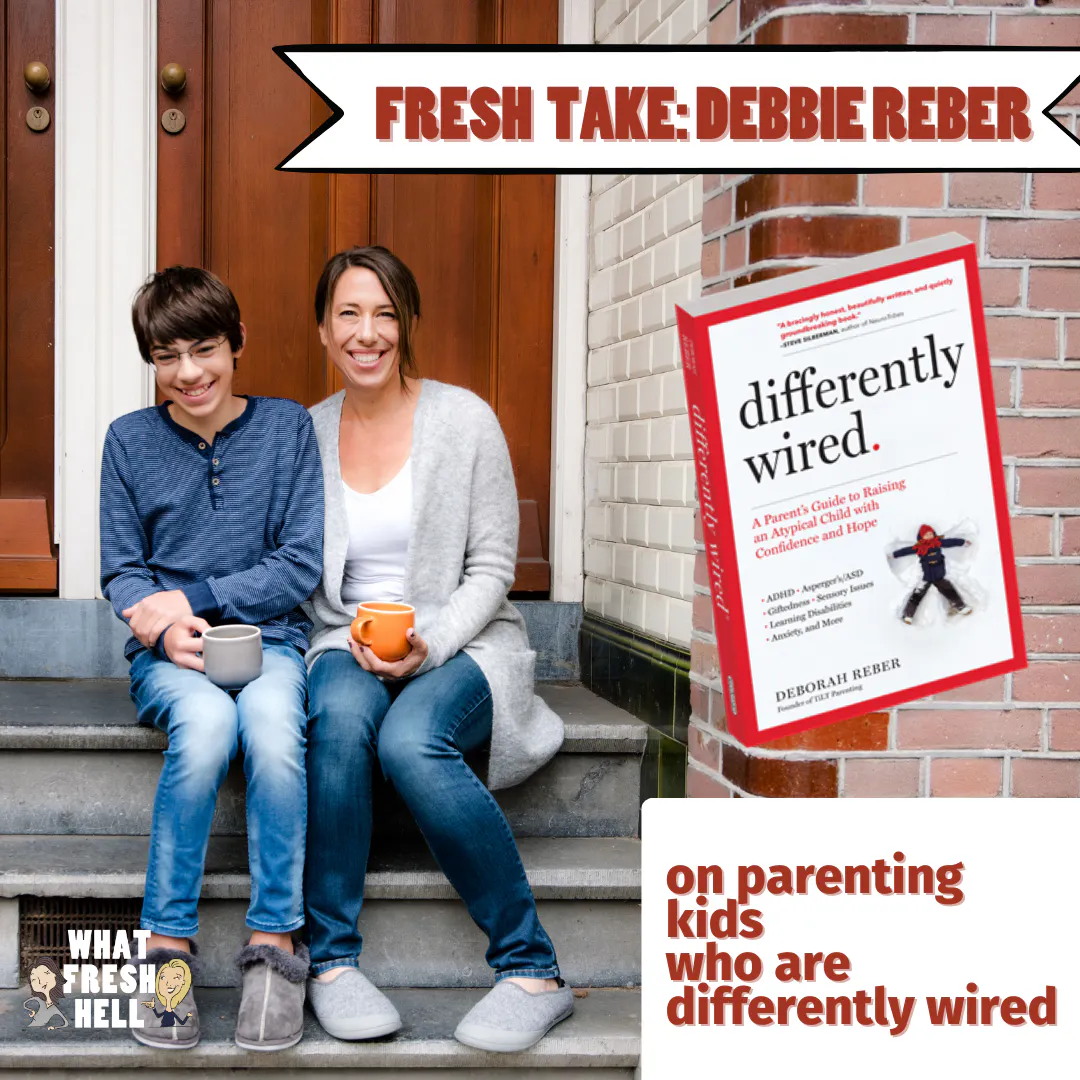
Fresh Take: Debbie Reber on Parenting Kids Who Are "Differently Wired"
Debbie Reber is a parenting activist, bestselling author, speaker, and the founder of TiLT Parenting, a top podcast, community, and educational resource for parents raising differently wired children. Her most recent book is Differently Wired: Raising an Exceptional Child in a Conventional World. At least twenty percent of today's children have differences: anxiety, ADHD, autism, giftedness, processing disorders, and learning disabilities, to name just a few. As Debbie puts it, “It's becoming increasingly clear that different ways of being are more 'normal' than most people realize, and that is truer with each passing year.” In this "Fresh Take" interview we discuss why the expectations and limitations for neurotypical kids, and some of the suggestions for parenting them, can be inadequate when your kid is differently wired. Debbie suggests that such kids might be better served by finding opportunities to "tilt" our parenting, rather than struggle to straighten the child. Small changes can have big impacts for differently wired kids. Debbie's work is full of concrete, actionable ideas that will allow both parents and kids to thrive. Special thanks to this month's sponsors: Jane.com is a boutique marketplace featuring the latest in women’s fashion, accessories, home decor, children’s clothing, and more. You will not believe the prices! Visit jane.com/laughing. Pharmaca is a source you can trust for herbal and homeopathic formulas, high-quality vitamins, and organic cruelty-free beauty. Go to Pharmaca.com/laughing right now to save 20% off your first order! Workplace Comedy Podcast is a hilarious new improv podcast set in a fictional water bottling company, hosted by Emmy Laybourne and Tracy Vilar and a lineup of amazing comedy guests. Subscribe wherever you listen to podcasts! Betterhelp allows you to connect with a counselor over text, phone, or video — and everything you say is confidential. Start living a happier life today! Get 10% off your first month by visiting betterhelp.com/fresh. KiwiCo projects make science, technology, engineering, art, and math super fun! Get 50% off your first month plus FREE shipping on any crate line at kiwico.com with code MOTHERHOOD. StoryWorth gives your loved ones the gift of spending time together, wherever you live! Go to storyworth.com/whatfreshhell to get $10 off. Bright Cellars is the wine subscription box that pairs you with wine you'll love, delivered to your door. Get 50% off your first 6 bottle order by heading to brightcellars.com/fresh. Membrasin is the totally natural, estrogen-free, clinically proven feminine dryness formula. It works! Go to membrasinlife.com and use the code FRESH to get 10% off. Prose is the healthy hair regimen with your name all over it! Get 15% off your first order today! Go to prose.com/laughing. Barre3’s workouts combine cardio, strength conditioning, and mindfulness in one workout. Go to barre3.com/FRESH and enter promo code FRESH to unlock 75% off monthly and annual subscriptions. Learn more about your ad choices. Visit podcastchoices.com/adchoices

Ep 202I've Figured Something Out...
Have you ever figured out a thing and thought everyone must know about this? In this episode we discuss the things that we (and our listeners) have figured out about how to pack freezer organization deciding once (this idea is from the Lazy Genius, and this Instagram thread is full of lazy genius) making yourself want to clean a messy room recognizing your best day deciding where things belong unloading a dishwasher always knowing what’s for dinner finishing what you start snack stashes making lists and how to discern between good ideas for somebody, and good ideas for you Special thanks to this month's sponsors: Jane.com is a boutique marketplace featuring the latest in women’s fashion, accessories, home decor, children’s clothing, and more. You will not believe the prices! Visit jane.com/laughing. Pharmaca is a source you can trust for herbal and homeopathic formulas, high-quality vitamins, and organic cruelty-free beauty. Go to Pharmaca.com/laughing right now to save 20% off your first order! Workplace Comedy Podcast is a hilarious new improv podcast set in a fictional water bottling company, hosted by Emmy Laybourne and Tracy Vilar and a lineup of amazing comedy guests. Subscribe wherever you listen to podcasts! Betterhelp allows you to connect with a counselor over text, phone, or video — and everything you say is confidential. Start living a happier life today! Get 10% off your first month by visiting betterhelp.com/fresh. KiwiCo projects make science, technology, engineering, art, and math super fun! Get 50% off your first month plus FREE shipping on any crate line at kiwico.com with code MOTHERHOOD. StoryWorth gives your loved ones the gift of spending time together, wherever you live! Go to storyworth.com/whatfreshhell to get $10 off. Bright Cellars is the wine subscription box that pairs you with wine you'll love, delivered to your door. Get 50% off your first 6 bottle order by heading to brightcellars.com/fresh. Membrasin is the totally natural, estrogen-free, clinically proven feminine dryness formula. It works! Go to membrasinlife.com and use the code FRESH to get 10% off. Prose is the healthy hair regimen with your name all over it! Get 15% off your first order today! Go to prose.com/laughing. Barre3’s workouts combine cardio, strength conditioning, and mindfulness in one workout. Go to barre3.com/FRESH and enter promo code FRESH to unlock 75% off monthly and annual subscriptions. Learn more about your ad choices. Visit podcastchoices.com/adchoices

Ask Amy- My Teen Has Zero Interest In Getting A Driver's License
Teens today are driving less, and later, and are far less motivated to drive than we were. The number of 16-year-old licensed drivers in the United States decreased from 46.2 percent in 1983 to 25.6 percent in 2018. But shouldn't our teens learn how to drive? Isn't that a skill they're going to want to have at some point? And how do we get them to buy into that, instead of it becoming something else for teens and parents to fight about? This is how a listener put it on our Facebook page: My almost 17-year-old does not want to drive. We put him through drivers ed, and it was like pulling teeth to get him to practice. He has ADHD and is terrified of wrecking. My question is, do we push him to at least get his license or let it go? I’ll give you one guess which parent wants to push…. ADHD is an additional risk factor for young drivers, particularly in the first months of their driving. But ADHD in itself doesn't cause bad driving– it's the risky behaviors to which teens with ADHD are more prone that cause more accidents. This can become a teachable moment to talk with a teen about those behaviors and why they're more dangerous once he's behind the wheel. But giving our kids a sense of self-efficacy isn't just good for them– as Jess Lahey argues in her new book THE ADDICTION INOCULATION, it can be protective, putting them at lower risk for addiction and other risky behaviors. In the long run, a driver's license might help a teen with anxiety. Consistent encouragement, rather than forcing the issue, will hopefully lead to a driving teen– and more independence for everyone in the house– a little sooner. Here are links to some of the writing on the topic that Amy mentions in this episode: Healthline: Teens with ADHD 62% More at Risk of an Accident in First Month of Driving Katharina Buchholz for Statista: Americans Get Driver's Licenses Later in Life American Academy of Pediatrics: Traffic Crashes, Violations, and Suspensions Among Young Drivers With ADHD Jess Lahey for The New York Times: How to Lower Your Child’s Risk for Addiction Special thanks to our "Question of the Week" sponsor: Jane.com is a boutique marketplace featuring the latest in women’s fashion, accessories, home decor, children’s clothing, and more. You will not believe the prices! Visit jane.com/laughing. Learn more about your ad choices. Visit podcastchoices.com/adchoices

Fresh Take: Kim Williams on the Systems That Work For Single Moms
Kim Williams is a change agent and community-builder for single moms. As the host of the podcast Experiencing Motherhood: Single and Black, Kim aspires to help single moms live the lives they desire without feeling alone. Through the podcast and her work on social media, Kim has built a large community of single moms that support one another both online and offline. In this episode, we discuss what systems Kim thinks are particularly essential for single moms– and how single moms can find, ask for, and get the support they need. Find Kim online @singleblackmotherhood, and listen to her podcast here. Special thanks to this month's sponsors: Jane.com is a boutique marketplace featuring the latest in women’s fashion, accessories, home decor, children’s clothing, and more. You will not believe the prices! Visit jane.com/laughing. Pharmaca is a source you can trust for herbal and homeopathic formulas, high-quality vitamins, and organic cruelty-free beauty. Go to Pharmaca.com/laughing right now to save 20% off your first order! Workplace Comedy Podcast is a hilarious new improv podcast set in a fictional water bottling company, hosted by Emmy Laybourne and Tracy Vilar and a lineup of amazing comedy guests. Subscribe wherever you listen to podcasts! Betterhelp allows you to connect with a counselor over text, phone, or video — and everything you say is confidential. Start living a happier life today! Get 10% off your first month by visiting betterhelp.com/fresh. KiwiCo projects make science, technology, engineering, art, and math super fun! Get 50% off your first month plus FREE shipping on any crate line at kiwico.com with code MOTHERHOOD. StoryWorth gives your loved ones the gift of spending time together, wherever you live! Go to storyworth.com/whatfreshhell to get $10 off. Bright Cellars is the wine subscription box that pairs you with wine you'll love, delivered to your door. Get 50% off your first 6 bottle order by heading to brightcellars.com/fresh. Membrasin is the totally natural, estrogen-free, clinically proven feminine dryness formula. It works! Go to membrasinlife.com and use the code FRESH to get 10% off. Prose is the healthy hair regimen with your name all over it! Get 15% off your first order today! Go to prose.com/laughing. Barre3’s workouts combine cardio, strength conditioning, and mindfulness in one workout. Go to barre3.com/FRESH and enter promo code FRESH to unlock 75% off monthly and annual subscriptions. Learn more about your ad choices. Visit podcastchoices.com/adchoices
Ep 201Two Kinds of People: Family Debates
What are the consistent and ongoing family debates in your household? Our Facebook group came through with their most heated family debate topics, and this week we give the ultimate answer for questions like: Should dishes be rinsed clean before they go in the dishwasher? Is it acceptable to call someone after 8 pm? Is a garage for storing stuff, or for storing cars? When you're making a bed, which side is up for the flat sheet? What is the correct pronunciation of "Reese's Pieces"? Here are links to two things we discuss in this episode: Reese's Pieces ad, 1984 (note the repeated and correct pronunciation) "Doorbell" by Sebastian Maniscalco Special thanks to this month's sponsors: Jane.com is a boutique marketplace featuring the latest in women’s fashion, accessories, home decor, children’s clothing, and more. You will not believe the prices! Visit jane.com/laughing. Pharmaca is a source you can trust for herbal and homeopathic formulas, high-quality vitamins, and organic cruelty-free beauty. Go to Pharmaca.com/laughing right now to save 20% off your first order! Workplace Comedy Podcast is a hilarious new improv podcast set in a fictional water bottling company, hosted by Emmy Laybourne and Tracy Vilar and a lineup of amazing comedy guests. Subscribe wherever you listen to podcasts! Betterhelp allows you to connect with a counselor over text, phone, or video — and everything you say is confidential. Start living a happier life today! Get 10% off your first month by visiting betterhelp.com/fresh. KiwiCo projects make science, technology, engineering, art, and math super fun! Get 50% off your first month plus FREE shipping on any crate line at kiwico.com with code MOTHERHOOD. StoryWorth gives your loved ones the gift of spending time together, wherever you live! Go to storyworth.com/whatfreshhell to get $10 off. Bright Cellars is the wine subscription box that pairs you with wine you'll love, delivered to your door. Get 50% off your first 6 bottle order by heading to brightcellars.com/fresh. Membrasin is the totally natural, estrogen-free, clinically proven feminine dryness formula. It works! Go to membrasinlife.com and use the code FRESH to get 10% off. Prose is the healthy hair regimen with your name all over it! Get 15% off your first order today! Go to prose.com/laughing. Barre3’s workouts combine cardio, strength conditioning, and mindfulness in one workout. Go to barre3.com/FRESH and enter promo code FRESH30 to unlock 15 free days plus 30% off your subscription. Learn more about your ad choices. Visit podcastchoices.com/adchoices
Ask Margaret - How Can I Get My Kids to Get Rid of All the Stuff?
One of the greatest obstacles to keeping our houses in order is the sheer amount of stuff that arrives on a daily basis. Kids have a hard time letting go of things, but moms have a hard time having their houses filled with endless clutter! This week Jennifer asks: How do I help my kids (10 and 12 years old) get rid of all the stuff? We have so many toys and books and cardboard creations. They want to keep everything. EVERY. THING. I’ve tried getting them involved in picking stuff to donate to those less fortunate, and they just absolutely flat out refuse. We've all had the experience of trying to get rid of a long-neglected toy, only to have our kid announce suddenly that it is their most beloved possession ever! Four things to do to cut down on "the stuff" are: Cut it off at the source: limit the amount of items coming in to your house by limiting purchases, and taking pictures of school projects instead of saving them. Hold a firm line: decide before you begin a clean up that for every four things you keep, one must go. Cull when they're not around: When you are cleaning without your kids around, you are allowed to get rid of things like cars with broken wheels and forgotten Happy Meal toys without asking permission. Limit collections: Everyone is the family is allowed two, not twenty. Your kids' strong feelings about their stuff does not mean they get to make all the decisions about what remains in your house. It's okay for parents to enforce rules that make your living situation more pleasant for everyone involved. Special thanks to our "Question of the Week" sponsor: Jane.com is a boutique marketplace featuring the latest in women’s fashion, accessories, home decor, children’s clothing, and more. You will not believe the prices! Visit jane.com/laughing. Learn more about your ad choices. Visit podcastchoices.com/adchoices

Fresh Take: Michele Borba on Kids Who Thrive
Dr. Michele Borba is a renowned educational psychologist and an expert in parenting, bullying, and character development. Her latest book is THRIVERS: The Surprising Reason Why Some Kids Struggle and Others Shine. This book offers practical, actionable ways to help kids develop the traits they need to thrive from preschool through high school, teaching them how to cope today so they can thrive tomorrow. In this interview, Michele explains the "seven teachable traits" that allow kids to roll with the punches and succeed in life. Michele says the best parenting starts by meeting any kid exactly where they are, then giving them these tools to struggle less and shine more. * Leave us a rating or review in your favorite podcast app! * Join us on Facebook: https://facebook.com/whatfreshhellcast * Instagram: https://instagram.com/whatfreshhellcast * YouTube: https://www.youtube.com/c/WhatFreshHellPodcast * Pinterest: https://pinterest.com/whatfreshhellcast * Twitter: https://twitter.com/WFHpodcast * questions and feedback: [email protected] Learn more about your ad choices. Visit podcastchoices.com/adchoices

Ep 200When Can We Start Saying Yes?
Vaccines. Mandate-liftings. Scaled reopenings. All of these things are great and long wished for. But we were kind of thinking there'd be a bell, or something. A hard deadline. A day when we'd all dance out into the ticker-taped streets and make out with strangers in Times Square. Without a "you are now free to move about the cabin" announcement, how will we know when it's okay for grandparents to visit? To fly to that wedding? To toss our masks once and for all? When is it okay to start saying yes? Our listener Heather put it this way: I think seeing a light at the end of the tunnel can be unsettling. We've been living in this weird way for a year now. And as much as it seems crazy, we've gotten used to it. Psychologists call the stress this is making us feel the “third-quarter phenomenon.” For people forced to endure long stretches of isolation– astronauts, Arctic explorers, submarine sailors– the most difficult part, regardless of the length of the assignment, has been proven to be about 75% of the way through, precisely when the end of the assignment first comes into distant focus. As things start to open up and some of us don't feel ready, or wonder if the world is ready, it's a new source of stress that we were saved from when we were all apart. Past scientists and astronauts who suffered from the “third-quarter phenomenon" were advised to refocus on their mission- why they were doing what they were doing, and the great worth of seeing it through. Seems like great advice for the rest of us. Focusing on the mission might be what will get us through this last part of the tunnel. Here are links to writing on the topic that we discuss in this episode: Tara Law for Time: We're in the Third Quarter of the Pandemic. Antarctic Researchers, Mars Simulation Scientists and Navy Submarine Officers Have Advice For How to Get Through It Robert Bechtel and Amy Berning: The Third-Quarter Phenomenon: Do People Experience Discomfort After Stress Has Passed? Nathan Smith: The third-quarter phenomenon: the psychology of time in space "Beautiful City" from Godspell (1973) "Brand New Day" from The Wiz (1978) @neilochka on Instagram * Leave us a rating or review in your favorite podcast app! * Join us on Facebook: https://facebook.com/whatfreshhellcast * Instagram: https://instagram.com/whatfreshhellcast * YouTube: https://www.youtube.com/c/WhatFreshHellPodcast * Pinterest: https://pinterest.com/whatfreshhellcast * Twitter: https://twitter.com/WFHpodcast * questions and feedback: [email protected] Learn more about your ad choices. Visit podcastchoices.com/adchoices
Ask Amy - The Return to In-Person School Isn't Going Great
What should parents do when the return to in-person school, after a year of being home with Mommy, is sort of a disaster? This week's question comes from Carrie on Facebook: My 3-year-old just started in-person preschool after being home with us during the pandemic. I figured it would be an adjustment, but it's been brutal. As soon as you so much as mention "school," she starts crying - actual, big tears. She’s been waking up too early and hardly eating. She's never been good with change, and thanks to Covid, she's lived in this tiny bubble up until now. (Her teacher is lovely, by the way.) Will this pass? PS: I'm 31 weeks pregnant with baby number two, so there's also that. This is a lot of change for a little one all at once. Amy offers several different approaches for making this better, including books like SORRY, GROWN-UPS, YOU CAN’T GO TO SCHOOL! by Christina Geist using a three-year-old's love of defying expectations and of knowing more than grownups to your advantage working with the teacher scaffolding the transition By leading with compassion for your daughter's struggle, you'll both make it through. This is a season, and it’s definitely made more complicated by the last year. Have patience with her and with yourself. The dress-up corner is kind of a wonderful place, and we hope that pretty soon your daughter will be pulling on your hand to get inside the classroom faster. Learn more about your ad choices. Visit podcastchoices.com/adchoices

Fresh Take: Joe "Mr. D" Dombrowski on the Fresh Hells of Teaching During a Pandemic
Joe "Mr. D" Dombrowski is a professional comedian. He also teaches kindergarten. In other words: he knows how to work a tough crowd. You probably know Joe from his viral YouTube videos, his many appearances on Ellen, or his Social Studies podcast. In this hilarious and insightful interview, Joe tells us how this crazy school year has gone from a teacher's point of view, what skills our kids might need to relearn as they reenter a classroom, and why kindergarteners are the very best. Follow Joe on all the socials at @mrdtimesthree, and sign up to find out about all his upcoming tour dates at mrdtimesthree.com. * Leave us a rating or review in your favorite podcast app! * Join us on Facebook: https://facebook.com/whatfreshhellcast * Instagram: https://instagram.com/whatfreshhellcast * YouTube: https://www.youtube.com/c/WhatFreshHellPodcast * Pinterest: https://pinterest.com/whatfreshhellcast * Twitter: https://twitter.com/WFHpodcast * questions and feedback: [email protected] Learn more about your ad choices. Visit podcastchoices.com/adchoices

Ep 199Mom Rock-Bottoms
What’s your mom rock-bottom? The moment when you thought I’m just going to head for the border and start a new life? We asked you all for the worst mom moments you were actually willing to share in open court. About 45% of your stories involved vomit and poop, which makes sense, since about 45% of motherhood overall includes those same two factors. But rest assured, the variety in our rock-bottoms is vast, and our listeners came through with many series of unfortunate events that, in our eyes, are all winners. At being the very worst mom life has to offer. * Leave us a rating or review in your favorite podcast app! * Join us on Facebook: https://facebook.com/whatfreshhellcast * Instagram: https://instagram.com/whatfreshhellcast * YouTube: https://www.youtube.com/c/WhatFreshHellPodcast * Pinterest: https://pinterest.com/whatfreshhellcast * Twitter: https://twitter.com/WFHpodcast * questions and feedback: [email protected] Learn more about your ad choices. Visit podcastchoices.com/adchoices
Ask Margaret - How Do I Get My Kids to Play Together?
When we have multiple kids we dream of them romping together all day in the yard as joyful playmates! The reality is often a little more complicated. Ashley asked: How do you encourage older siblings to play with younger ones? Covid has made this even more challenging, since we're all around each other a lot. My kids are four years apart: boy age 9, girl age 5. We need to manage our expectations that siblings will be best friends. It is understandable that our kids are tired of each other's company, especially during the pandemic. But there are ways that we can encourage our kids to play together, and the best way is to model play for them. When we get in there and play with our kids, we set up an expectation that play is part of what we do together as a family. Whether it's simple card games that both older and younger siblings can play together, or showing them how to play H-O-R-S-E at the basketball hoop, we can help our kids improve their ability to play together. Once you've introduced group play to your kids, you need to create expectations around it. Set aside times of day as "playtime," during which your kids are expected to play together. Those expectations need to be consistent to overcome any protestations of "We're bored! We don't know what to do!" If it's really not working, spend the first 20 minutes playing with them. Then step out of the play with the expectation that they will continue for a set amount of time. We think of "play" as something that kids do naturally. In fact, playing together is something that needs to be modeled and encouraged in order for it to happen. Don't be afraid to have firm expectations around play, and spend some time modeling play for your kids, so that they come to value playing together as an important part of their day. * Leave us a rating or review in your favorite podcast app! * Join us on Facebook: https://facebook.com/whatfreshhellcast * Instagram: https://instagram.com/whatfreshhellcast * YouTube: https://www.youtube.com/c/WhatFreshHellPodcast * Pinterest: https://pinterest.com/whatfreshhellcast * Twitter: https://twitter.com/WFHpodcast * questions and feedback: [email protected] Learn more about your ad choices. Visit podcastchoices.com/adchoices
Fresh Take: Janice Johnson Dias on Raising Joyful, Change-Making Kids
Janice Johnson Dias is a professor of sociology at John Jay College. She is co-founder and president of the public health and social action organization GrassROOTS Community Foundation and its SuperCamp for girls. Her collaborative work on black girls’ mental, sexual, and physical health issues earned her a special Congressional recognition. Born in Jamaica, Janice moved to the United States at age twelve and now lives in New Jersey with her husband, daughter, and dog. Janice's new book is PARENT LIKE IT MATTERS: HOW TO RAISE JOYFUL, CHANGE-MAKING GIRLS. In this conversation, Janice explains how we can embolden both our daughters and our sons to find their passions– but only by finding our own passions first. Janice argues that change-making is the path to true joy. You can find PARENT LIKE IT MATTERS here in our Bookshop store: https://bookshop.org/a/12099/9781984819628 * Leave us a rating or review in your favorite podcast app! * Join us on Facebook: https://facebook.com/whatfreshhellcast * Instagram: https://instagram.com/whatfreshhellcast * YouTube: https://www.youtube.com/c/WhatFreshHellPodcast * Pinterest: https://pinterest.com/whatfreshhellcast * Twitter: https://twitter.com/WFHpodcast * questions and feedback: [email protected] Learn more about your ad choices. Visit podcastchoices.com/adchoices
Ep 198Letting Kids Make Mistakes
There are benefits to our kids making mistakes, even when it’s hard. Maybe especially when it’s hard. Some kids have tons of flexibility and safety around trying new things, around failing. Others not so much. In this episode we discuss: how the brain lights up when a mistake is made, paying extra attention why being very wrong about a fact once ensures you will always remember it thereafter the difference between a fixed mindset and a growth mindset– and how mistakes encourage the latter Carol Dweck and what she calls the power of "not yet" how we can make our homes "mistake-friendly environments" Here are links to writing on the topic that we discuss in this episode: Claudia Wallis for Mind/Shift: Why Mistakes Matter in Creating A Path For Learning Dr. Janet Metcalfe, Columbia University: “Learning from Errors,” Carol S. Dweck for TED: "The Power of Yet" Carol S. Dweck: Mindset Jo Boaler for youcubed.org: Mistakes Grow Your Brain Melissa Taylor for Brightly: What Is a ‘Just Right’ Book? Reading Levels Explained Dr. Jason Moser for Frontiers In Human Neuroscience: On the relationship between anxiety and error monitoring: a meta-analysis and conceptual framework Sesame Street: Mary Had a Little Lamb * Leave us a rating or review in your favorite podcast app! * Join us on Facebook: https://facebook.com/whatfreshhellcast * Instagram: https://instagram.com/whatfreshhellcast * YouTube: https://www.youtube.com/c/WhatFreshHellPodcast * Pinterest: https://pinterest.com/whatfreshhellcast * Twitter: https://twitter.com/WFHpodcast * questions and feedback: [email protected] Learn more about your ad choices. Visit podcastchoices.com/adchoices
Ask Amy- When Your Kids' Creative Projects Are Also Huge Messes
How can I encourage my kids’ creativity and self-directed play while also setting limits on the messes they make? Erin emailed us to say: My kids are 3, 5, and 7 and during the pandemic they’ve really played together well and have learned to entertain themselves. BUT they are driving me crazy with all of their “great ideas” and huge projects. I’m talking about packing for an imaginary camping trip with all of their real clothes that I will have to sort and fold later. Putting on swimsuits on the first warm day of fake spring and filling the kiddie pool with water and ending up covered in mud in 60 degree weather. You get the idea. I love their creativity and ambition but I can’t manage and clean up these huge messes every single day. How can I put boundaries around it so it’s not such a disaster afterwards? Anyone who's ever renovated a kitchen or made a short film has heard of the "Golden Triangle" of project management. On the triangle's corners are three goals: Good. Fast. Cheap. You can pick any 2. You can't have all 3. When it comes to kids having fun, the three points on that triangle are Child-Led. Exciting. Neat. Once again, going for all three is not usually a reasonable goal. If the kids' messes are really getting to you–no shame in that, by the way– a little more parental oversight might be required in the planning stages. If you really need an hour to yourself, and they're playing happily, there might be an entirely emptied bookshelf waiting for you on the other side. Even then, there's a difference between a messy playroom and muddy footprints in the kitchen. The latter require immediate and focused effort; the former, if you can stand waiting it out, can be something the kids are in charge of cleaning up, before their next desired activity. It's okay to put parameters around your kids' big plans that work for you. When it comes to cleanup, why not let these big thinkers and team-planners come up with a group solution? Then be sure to "catch them being good" and heap on the praise when they are actually helpful in getting things back to one. * Leave us a rating or review in your favorite podcast app! * Join us on Facebook: https://facebook.com/whatfreshhellcast * Instagram: https://instagram.com/whatfreshhellcast * YouTube: https://www.youtube.com/c/WhatFreshHellPodcast * Pinterest: https://pinterest.com/whatfreshhellcast * Twitter: https://twitter.com/WFHpodcast * questions and feedback: [email protected] Learn more about your ad choices. Visit podcastchoices.com/adchoices
Fresh Take: Michelle Icard on the 14 Talks Parents Need To Have With Their Kids Before They Turn 14
This week we're talking to Michelle Icard, middle-schooler whisperer and author of the new book FOURTEEN TALKS BY AGE FOURTEEN: The Essential Conversations You Need to Have with Your Kids Before They Start High School. Michelle says that tweens have begun "the necessary and difficult work of pulling away," but they're still at an age where what their parents say can have enormous impact. Michelle's work helps parents position themselves so that our kids trust what we have to say, and that we won't freak out when they come to ask us questions or seek guidance. In this episode you'll learn what to say and how to say it when it comes to all the conversations you need to be having with your kids. The conversations in Michelle's book go well beyond the ones we all know and dread (sex, alcohol, drugs, consent) to equally crucial topics you might not have considered (friendships, creativity). You'll find tons of resources and confidence in this book and in this episode. Find FOURTEEN TALKS BY AGE FOURTEEN in our bookshop.org store: https://bookshop.org/a/12099/9780593137512 * Leave us a rating or review in your favorite podcast app! * Join us on Facebook: https://facebook.com/whatfreshhellcast * Instagram: https://instagram.com/whatfreshhellcast * YouTube: https://www.youtube.com/c/WhatFreshHellPodcast * Pinterest: https://pinterest.com/whatfreshhellcast * Twitter: https://twitter.com/WFHpodcast * questions and feedback: [email protected] Learn more about your ad choices. Visit podcastchoices.com/adchoices
Ep 197When It's Okay To Be Emotional In Front of Our Kids
Is it okay for us to be emotional in front of our kids? Julie, one of our podcast listeners, asked this question in our Facebook group: Is it good for kiddos to see their moms have emotions? And how can we talk through our emotions with our kids? My grandmother lost her husband when my dad was 11 years old. She had four kids, no job.She had to take care of everything. Once I asked her how she coped with all of that, and she said she just held it together, always, except when she cried in the shower at night. At first, I thought, wow, how strong of her. Now that I have kids, I kind of wonder: is shower crying always good? Never good. Sometimes good? Shower crying is definitely better than swallowing emotions entirely. And there are times when our emotions, and/or the situations causing them, are too unsettling for our kids to handle. Sometimes it's good for kids to see our emotions, but we shouldn't be asking kids to hold them for us. But studies show that children whose mothers express emotions like sadness or loneliness in their presence are more emotionally literate as they grow. By serving as “emotional coaches” for our kids, and modeling how we process difficult moments in our own lives, we can raise kids more able to handle such moments themselves. In this episode we discuss when it’s okay to be emotional in front of our kids, why suppressing our emotions entirely might not work as well as we think it does, and when shower cries are most certainly called for. Good news: we don't have to fear that showing our vulnerability is a bad thing. Our listener Jennifer summed it up best: "I don’t hide the most intense parts of being human from the people I’m trying to help on their journey as humans.” Here are links to some of the writing on the topic that we discuss in this episode: John Lamble for The Conversation: Should you hide negative emotions from children? Gottman Institute: Parental Meta-Emotion Philosophy and the Emotional Life of Families Bonnie Le for Personality and Social Psychology: The Costs of Suppressing Negative Emotions and Amplifying Positive Emotions During Parental Caregiving Judy Dunn and Jane Brown for Developmental Psychology: Family Talk About Feeling States and Children's Later Understanding Of Others' Emotions Woody Harrelson explains how to handle unpleasant emotions on Cheers "Turn it Off" from The Book of Mormon Toilet-Training Toddler Declares, 'I Didn't Poop, I Peed!' * Leave us a rating or review in your favorite podcast app! * Join us on Facebook: https://facebook.com/whatfreshhellcast * Instagram: https://instagram.com/whatfreshhellcast * YouTube: https://www.youtube.com/c/WhatFreshHellPodcast * Pinterest: https://pinterest.com/whatfreshhellcast * Twitter: https://twitter.com/WFHpodcast * questions and feedback: [email protected] Learn more about your ad choices. Visit podcastchoices.com/adchoices
Ask Margaret - How Should I Talk to My Child's Caregiver About Discipline?
Leaving our kids in the care of others is stressful and tends to bring out a strong need for control. But when it comes to working with a nanny or a day care provider, this may not be the best approach. Rather than trying to control everything your nanny or caregiver does, try to be clear from the very beginning about your expectations about discipline and any other issues that are important to you. Prepare questions when you interview a caregiver that explore a range of scenarios that may come up. Some examples: When a child doesn't listen to your instructions, how would you respond? Have you worked with children who you had to discipline repeatedly? How did you handle it? What are your favorite kinds of meals to prepare? What foods do you think it's important for kids to eat? Once you've employed your caregiver, revisit these conversations often. Strategize at the end of the day about behavior problems that are coming up and how to handle them. Another good idea is to write down your expectations and then prioritize them. For your family, wearing seatbelts and using sunscreen might be non-negotiables, but when it comes to eating healthy, there might be room for the occasional ice cream cone after a day at the park. Being clear with your own expectations means you don't have to have the same conversations over and over– and allows your caregiver to feel more secure in his or her role with your child. A caregiver is not a computer that accepts "if/then" instructions. Being extremely clear on your absolutes and then allowing your caregiver to function with some degree of independence will lead to a happier relationship for everyone. In this episode Margaret cites this article from Very Well Family: https://www.verywellfamily.com/how-to-get-your-nanny-on-board-with-your-discipline-1095068 Learn more about your ad choices. Visit podcastchoices.com/adchoices
Ep 196Extremely Achievable Family Traditions
What are some small traditions we can lean on right now to create more joy and meaning for our families? We’re talking LITTLE. Preferably free. Not exhausting. Super fun. Lifetime of memories created. Our listener Lee inspired this topic in our Facebook group: What about an episode about fun or special traditions for the rest of the year? When I was growing up, the “birthday person” always got breakfast in bed. I’ve brought the tradition to my own family as an adult, and it’s such a fun and special way to start the day. I’ve been trying to build more traditions for my young family (my kids are 3 and 6), especially during the pandemic, since we haven’t seen our extended family much, and a lot of our other markers are missing. In this episode we discuss some of our (and our listeners’) favorite family traditions. A few Rules of Traditions we discovered while recording this episode: Giving the ordinary a special name, song, day of the week is part of what makes it a tradition. Pizza Friday! Porch Popsicle Time! It’s all in the branding. Traditions are like leprechauns: if you go looking for one, you probably won’t find it, but you can tell when one has appeared. Keep your eyes and ears open for fun moments that can become traditions simply by repeating them. Limitations are where the ingenuity– and the fun– comes in. What Rube Goldberg creation can be made exclusively with what’s in this junk drawer? What famous painting can we recreate using old bedsheets? This moment we’re all in is tough. It’s also a crucible where family traditions might be formed. Even thinking about tradition-making has lifted our spirits– the idea that we can find “little fun” that might somehow become what will be remembered of this year we’ve all spent mostly at home. * Leave us a rating or review in your favorite podcast app! * Join us on Facebook: https://facebook.com/whatfreshhellcast * Instagram: https://instagram.com/whatfreshhellcast * YouTube: https://www.youtube.com/c/WhatFreshHellPodcast * Pinterest: https://pinterest.com/whatfreshhellcast * Twitter: https://twitter.com/WFHpodcast * questions and feedback: [email protected] Learn more about your ad choices. Visit podcastchoices.com/adchoices
Ask Amy- Should I Be Worried About My Teen's Isolation?
When is a teen happily isolated– or at least content– and when is it something a parent should be concerned about, particularly during the pandemic? This week's question comes from Kate in our Facebook group: When should one worry about a teenager's lack of desire to be with friends? For my 15-year-old it’s always been an issue, but since we moved two years ago, he’s been even more in the “I don’t care” camp than before. Outside of soccer and school, he doesn’t ever see friends, and says he doesn’t want to. All this is only made worse by the pandemic. Over the last year most of us have had more access to our kids' moment-to-moment existences than we had previously. That means we’re seeing more of things that might have always been there, and are therefore fine– and things that are new to us and actually should spark our concern. Some introverted children really are more content right now. If an adolescent is not expressing signs of depression and anxiety, than a teenager in his room all the time might be a content hermit, even if that has not been his parent's pandemic experience. Some sadness is fine too. Sadness makes sense right now. So how can a parent tell the difference between content self-isolation, some sadness about this tough moment, and depression? NYU child psych Dr. Aleta Angelosante offers this checklist of what to watch for in a teenager's mood: https://nyulangone.org/news/checking-your-teenagers-mood-during-covid-19-pandemic In this episode, Amy discusses some of the behaviors to watch for, and how to address concerns you might have with your teen. Don't put off the conversation because it might go poorly; it very well may, but your loving concern will be heard. I’m putting resources in the show notes- reach out to pediatrician- get a telehealth appointment with a professional if necessary, it can work a lot better than you’d think. one thing the pandemic has actually made easier. Dr. Angelosante further suggests these resources for parents. If you have concerns, don't hesitate to reach out to your child's pediatrician, or to a mental health professional. Anxiety and Depression Association of America: Watch, Ask and Listen: How to Tell if Your Child or Teen Is Anxious or Depressed Society of Clinical Child & Adolescent Psychology: Effective Child Therapy U.S. Department of Health and Human Services: Resources to Support Adolescent Mental Health Send us your parenting questions- we might answer yours next! Email us- [email protected]. Learn more about your ad choices. Visit podcastchoices.com/adchoices
Ep 195Moms Are Not Okay
How we doing, moms? If you're anything like us, your domestic situation has blown past “getting old” to “seriously guys, we cannot do this anymore” to fetal-position numbness and beyond. And there’s nothing for dinner, and the 5th grader is failing math, and our boss just asked if that wasn’t “someone’s kid” he just heard on the background of our work Zoom call. (Why yes. Yes, it was.) The New York Times recently released a series called “The Primal Scream” examining the pandemic’s effect on working moms in America. As we come up on the one-year anniversary of this crisis we thought would take a couple of weeks, let's face it: all moms are kind of falling apart. As Dekeda Brown, a mother of two profiled in the Times’ stories, explains: “We are holding together with the same tape that we have been using since March.” In this episode, we discuss how it’s going for us (not great) and offer a few solutions for making this Groundhog-Day time a tad more survivable. Here are some of the articles we mention in this episode: Jessica Bennett for NYT: Three American Mothers, On The Brink https://www.nytimes.com/interactive/2021/02/04/parenting/covid-pandemic-mothers-primal-scream.html Jessica Grose for NYT: America’s Mothers Are In Crisis https://www.nytimes.com/2021/02/04/parenting/working-moms-mental-health-coronavirus.html Laurel Elder: Parenthood and Politics in the Era of Covid-19 https://papers.ssrn.com/sol3/papers.cfm?abstract_id=3762600 Pooja Lakshmin for NYT: How Society Has Turned Its Back On Mothers https://www.nytimes.com/2021/02/04/parenting/working-mom-burnout-coronavirus.html * Leave us a rating or review in your favorite podcast app! * Join us on Facebook: https://facebook.com/whatfreshhellcast * Instagram: https://instagram.com/whatfreshhellcast * YouTube: https://www.youtube.com/c/WhatFreshHellPodcast * Pinterest: https://pinterest.com/whatfreshhellcast * Twitter: https://twitter.com/WFHpodcast * questions and feedback: [email protected] Learn more about your ad choices. Visit podcastchoices.com/adchoices
Ask Margaret - Do I Get a Say On Who My Kids' Friends Are?
This week's listener question comes from Kristen in our Facebook group: How much input should I have on my kids' choice of friends? This is a hard one. Ceding control over our kids' lives is anxiety-producing, and one of the first ways we need to practice letting go is when our kids choose friends that - let's say - wouldn't have been our first choice for them. So that's the bad news. The good news is that we do still have a role to play in this situation. Just as with our own kids, when we address the behavior of our kids' friends, rather than their character, we'll get better results. We can (and should!) verbalize things like "I don't like when I see [insert friend's name] using bad language." That message will be heard by our child with a lot less defensiveness than if we say "That [insert friend's name] is such a bad kid!" Here are other things you can consider doing if you're worried about the kinds of friends your kid is choosing: Keep your child involved in a range of activities, so they're exposed to a wider potential friend group. Have gatherings at your house so you can get a better sense of your child's friendship dynamics and how they're playing out. Help your child develop "prospecting" by talking about behavior and consequences frequently. Implement concrete consequences for a friend's inappropriate behavior. If your child knows she'll lose her phone for the day if her friend sends her an inappropriate text, she might be more motivate to set her own boundaries on that friend's behavior (or that friendship). Our kids' friends can sometimes seem to have an outsized amount of influence over our kids. Hence our concern as parents. But if we are consistent with our own expectations and discipline, we can help our children navigate a range of friendships successfully. Hear more about this topic in our episode "Kid Friend Breakups": https://www.whatfreshhellpodcast.com/2018/05/kid-friend-breakups-episode-55/ And if you have a question for Margaret or Amy you can submit them to: [email protected]. * Leave us a rating or review in your favorite podcast app! * Join us on Facebook: https://facebook.com/whatfreshhellcast * Instagram: https://instagram.com/whatfreshhellcast * YouTube: https://www.youtube.com/c/WhatFreshHellPodcast * Pinterest: https://pinterest.com/whatfreshhellcast * Twitter: https://twitter.com/WFHpodcast * questions and feedback: [email protected] Learn more about your ad choices. Visit podcastchoices.com/adchoices
BEST OF: Anger Management for Kids
This week we're introducing a "From The Vault" series, reconsidering some of our favorite episodes of the past four years. Our kids still get angry (imagine that) so time to revisit this one. The best way to handle our children’s anger is to equip them with the tools to handle it themselves. You don’t have to smother children's emotions in order to calm them down; as your kids get older, you really can't. But you don’t need to throw up your hands and accommodate their anger and everything that comes with it, either. We talk at length in this episode about an excellent book for kids on this topic: “What To Do When Your Temper Flares: A Kid’s Guide To Overcoming Problems With Anger.”by Dawn Huebner. The book is aimed at grade-schoolers, but there’s much to learn in here for kids of all ages (and their parents)! Whether your kid is 4 or 14, this episode will help you stand outside their storms and get your calm house back a little sooner. If you’d like a transcript of this episode, you can find it here: https://www.whatfreshhellpodcast.com/2021/02/angermanagementtranscript/ If you’d like to do a deep-dive on anger management for parents, check out our “Sometimes We Lose It” episode here. Learn more about your ad choices. Visit podcastchoices.com/adchoices
Ep 194Setting Boundaries
It often becomes clear to us where our boundaries should have been set only after those lines have been crossed and left far behind. But whether it's with overbearing extended family members or partners who leave socks on the floor, how do we create effective boundaries? Especially after it's been established that we're not very good at it, and especially in a world that doesn't very much like women who aren't afraid to set them? In this episode we discuss why boundaries should be set early and often– and not just in problematic relationships, either. Healthy boundaries with our spouses, partners, and co-workers are what make long-term relationships possible. And don't forget positive boundaries. Want to start setting aside more money each month? Having one date night a week, or one weekend morning when you get to sleep in? It starts with saying so. Living in a pandemic has made it unavoidable: we all have to say out loud what feels safe for us and our families. We can seize that opportunity to practice the difficult conversations. Those on the other sides of those conversations are entitled to their reactions and opinions. But that doesn't necessarily mean that setting the boundary was wrong. Here are links to some writing on the topic that we discuss in this episode: Fatherly: 16 Tips For Creating Healthy Boundaries With Your Extended Family Mark Manson: Boundaries Elizabeth Earnshaw for Mind Body Green: A Therapist Explains 6 Things People Get Wrong About Setting Boundaries Sarah Saweikis for Medium: Scared to Set Boundaries? How to Set Boundaries to Improve Your Relationships and Increase Peace of Mind Brianna Wiest: The Honest Truth About Why Some People Can't Set Boundaries * Leave us a rating or review in your favorite podcast app! * Join us on Facebook: https://facebook.com/whatfreshhellcast * Instagram: https://instagram.com/whatfreshhellcast * YouTube: https://www.youtube.com/c/WhatFreshHellPodcast * Pinterest: https://pinterest.com/whatfreshhellcast * Twitter: https://twitter.com/WFHpodcast * questions and feedback: [email protected] Learn more about your ad choices. Visit podcastchoices.com/adchoices
Ask Amy- Surviving The "Only Mommy" Phase
This week's listener question comes from Rosie in our Facebook group: My little guy is in the “only want mommy” slash “must be touching mommy” phase. Any advice on how to not go insane and to still get things done with a 26-pound, 17-month old attached to my hip? Disclaimer: of course i give him all the snuggles, and I know it’s just a phase. But I’m going a little crazy. Yes, the "only mommy" phase isn't forever– and it's not something you have to train out of your kid. But it can be overwhelming while you're in it. It's okay for you to take breaks, and it's okay for your toddler not to like it. But understanding where it's coming from might make getting through this stage a little easier. Toddlers sticking close to their primary caregivers is a biological imperative: if the cave toddler lost his parent, he wouldn't eat. These days, the stakes are more akin to "might not have my cinnamon raisin toast buttered to my exact specifications," but routine and structure and control over the little things are what your toddler is focusing on right now as he figures out his world. If you have a spouse or co-parent, lean in to that person doing some of your toddler's very preferred activities. That partner might also be feeling hurt if the toddler is rejecting them; support them in that disappointment and reassure them that it's temporary. And if there's any small part of you secretly happy to be so indispensable to your child, that’s only human. Just make sure you’re not leaning in to it too much. Hear more about this topic in our episode "When Kids Prefer The Other Parent Over You (Or You Over Them)": https://www.whatfreshhellpodcast.com/2019/07/preferotherparent-ep115/ * Leave us a rating or review in your favorite podcast app! * Join us on Facebook: https://facebook.com/whatfreshhellcast * Instagram: https://instagram.com/whatfreshhellcast * YouTube: https://www.youtube.com/c/WhatFreshHellPodcast * Pinterest: https://pinterest.com/whatfreshhellcast * Twitter: https://twitter.com/WFHpodcast * questions and feedback: [email protected] Learn more about your ad choices. Visit podcastchoices.com/adchoices
Fresh Take: Dr. Harold Koplewicz on the Best Way To Support Our Kids
This week we're talking to Dr. Harold Koplewicz, one of the nation's leading child and adolescent psychiatrists and the founding president of the Child Mind Institute, a national nonprofit dedicated to transforming the lives of children struggling with mental health and learning disorders. Dr. Koplewicz is also the author of the new book THE SCAFFOLD EFFECT: Raising Resilient, Self-Reliant and Secure Kids in an Age of Anxiety, which guides parents through strategies for raising empowered, capable people. In this episode, we discuss Dr. Koplewicz's suggestion that we create scaffolding around our children as they create their own lives. We're not the architects, we're not the builders– as parents, we're there to support the cantilevered balconies of our children's passions and interests, even if they're not at all what we imagined things would look like, or what we would build ourselves. Miscalculations are part of the plan for our children to learn resiliency and self-reliance. Dr. Koplewicz suggests scaffolding as the best way to encourage kids to climb higher and try new things, in order that they can grow from those mistakes. Find The Scaffold Effect in our Bookshop store: https://bookshop.org/a/12099/9780593139349 Learn more about your ad choices. Visit podcastchoices.com/adchoices
Ep 193The Things We're Never Going Back To
This last (almost) year has been full of challenges. On the other hand, so many things that we thought had to be a certain way– weekends packed with travel sports, weddings with hundreds of guests, the wearing of Spanx– have been proven surprisingly optional. In this episode, we discuss the things that we and our listeners are hereby declaring we’ll never do, or wear, or worry about again. From pants with buttons to touching strangers, we are here to say that a new path forward is eminently possible. We mention our episode "What This Has Taught Us About Our Kids"– you can listen to that episode here: https://bit.ly/WFHep162 * Leave us a rating or review in your favorite podcast app! * Join us on Facebook: https://facebook.com/whatfreshhellcast * Instagram: https://instagram.com/whatfreshhellcast * YouTube: https://www.youtube.com/c/WhatFreshHellPodcast * Pinterest: https://pinterest.com/whatfreshhellcast * Twitter: https://twitter.com/WFHpodcast * questions and feedback: [email protected] Learn more about your ad choices. Visit podcastchoices.com/adchoices
Ask Margaret - Talking to Kids About Death
Today's question comes from our Facebook group: "My son is 5 years old and in pre-K. One of the kiddos in his class lost his dad when he was very young. Since learning this, my son has started asking us about death, and has started worrying that something is going to happen to me or my husband. I'm not sure how to talk to him about it. I want him to know that it does happen, and we need to be compassionate to his friend, but also don't want him to worry every day. How can I bring this hard topic down to his level?" Five years old is a developmentally-appropriate age for kids to start having significant questions about death, along with real worries about dying themselves or losing one of their parents. That's true whether or not they've experienced the death of someone close to them. These questions can be hard for parents because, unlike most of the other questions our kids ask, we don't have any perfectly satisfying answers to provide. Questions like "Why did my friend's dad die so young?" or "Are you going to die, Mommy?" can rattle us because we find these questions frightening and difficult ourselves. The solution is to talk openly and honestly with our children about death. Avoid metaphors and imagery like "He's gone to a better place," or "He's sleeping with the angels," which can confuse kids or make them think death is temporary. Instead, try to speak plainly about death, even if you find it very difficult. Explain that when people die, they don't come back. That is why death feels so sad for those who are still living. These discussions can– and should– also involve your own beliefs and religious traditions. Margaret also cites Anya Kamanetz's NPR article "Be Honest and Concrete: Tips for Talking To Kids About Death." Kamanetz reminds us that kids take in knowledge the way they eat an apple - a few small bites at a time. It's a great reminder to avoid overburdening kids with too much information. Instead, answer questions as they come up, read books that deal with death in an age-appropriate way, and discuss them openly– so your kids always feel that they have a chance to talk out things with you, even if those things feel scary. Margaret praises the book 'Tuck Everlasting' in this episode, which is available in our Bookshop store: https://bookshop.org/a/12099/9780312369811 Learn more about your ad choices. Visit podcastchoices.com/adchoices
Fresh Take: Dr. Christine Koh On Building a Family After Adverse Childhood Experiences
Dr. Christine Koh, in her own words, is a "music and brain scientist turned multimedia creative." Christine creates content to help people live better, happier, and with elevated purpose and intention, including the Edit Your Life podcast. She's also someone who grew up with adverse childhood experiences, and has experience in building a family when our family of origin was not the kind of family we want. In this episode we discuss the measurable physiological detriments of toxic stress; the importance of safe, stable, nurturing environments; and most importantly, that it is possible for significant challenges of early adversity to be met once they are no longer cloaked in shame. As Vincent Felitti, co-founder of the ACE Study, explains: “When we make it okay to talk about what happened, it removes the power that secrecy so often has.” Here are links to some of the writing on the topic that we discuss in this episode: Christine Koh: The Adults Who Saved Me And What You Need To Know About ACEs Donna Jackson Nakazawa for Psychology Today: 8 Ways People Recover From Post Childhood Adversity Syndrome Dr. Nerissa Bauer for healthychildren.org: ACEs- Adverse Childhood Experiences NPR.org: Take the ACE Quiz- And Learn What It Does And Doesn't Mean CDC.gov: Adverse Childhood Experiences and follow Christine and her work at christinekoh.com * Leave us a rating or review in your favorite podcast app! * Join us on Facebook, Instagram, Pinterest, TikTok @whatfreshhellcast on Twitter @WFHpodcast questions and feedback: [email protected] Learn more about your ad choices. Visit podcastchoices.com/adchoices
Ep 192How To Stop Having The Same Fight
Having the same fight doesn’t mean your relationship is broken. But it is totally annoying. In this episode we discuss the modes of negativity at play when we repeat the same conflicts- and what we can do to break the cycle, whether it’s our partners or kids. Conflict may be unavoidable- but it can be at least a little more productive. Here are links to some of the takes on this topic that we discuss in this episode: We The Norths on YouTube: How We Avoid Stupid Fights: The Number System Esther Perel for Cosmopolitan: How to Stop Having the Same Fight With Your Boyfriend All the Time Kristine Fellizar for Bustle: 7 Hacks To Avoid Having The Same Fight Over & Over In Your Relationship Charlotte Latvala for Good Housekeeping: More Fun, Less Fighting Ted Lasso on Apple TV Eckhart Tolle on Oprah Super Sunday: How To Identify And Stop Your Pain Body * Leave us a rating or review in your favorite podcast app! * Join us on Facebook: https://facebook.com/whatfreshhellcast * Instagram: https://instagram.com/whatfreshhellcast * YouTube: https://www.youtube.com/c/WhatFreshHellPodcast * Pinterest: https://pinterest.com/whatfreshhellcast * Twitter: https://twitter.com/WFHpodcast * questions and feedback: [email protected] Learn more about your ad choices. Visit podcastchoices.com/adchoices
Ask Amy: When Your Kid is Super-Clingy
This week's parenting question comes from a listener in our Facebook group: I have a clingy 9-year-old. I love her more than life itself, but I am having a hard time with feeling totally smothered. I go for a walk every morning for about 30 minutes (for sanity) and every morning she asks, "How long will you be gone? 30 minutes? Can I come? Pleeease?" I stress the importance of alone time for me and that it makes me a better mama. She watches for me out the window. It's like having a puppy. Yes, it's anxiety related. I had anxiety as a kid and I recognize it, but we are together 24 hours a day and I feel like I'm starting to crack. You're right to suspect that your super-clingy kid is motivated by anxiety. We can meet anxiety with empathy, but we need to beware accommodating it. Don't let those goalposts get moved: a half-hour walk is definitely good, both for your parental sanity and for your kid's realizing she can survive 30 minutes without you. Amy offers a few suggestions that worked with her own clingy kid: "catch her" being independent and offer praise, rather than provide negative attention for the clinginess offer quality time doing her preferred activity when she doesn't complain about your alone time earlier in the day create "special time" for this child and another adult during which No Mommies Are Allowed get your child a pet (a big ask, for sure, but for kids who are physically clingy, something cuddly can be an effective Mom substitute) There are more great suggestions in this Very Well Family article by therapist Amy Morin: https://www.verywellfamily.com/ways-to-deal-with-a-clingy-child-3863401 Send us your parenting questions- we might answer yours next: [email protected]. * Leave us a rating or review in your favorite podcast app! * Join us on Facebook: https://facebook.com/whatfreshhellcast * Instagram: https://instagram.com/whatfreshhellcast * YouTube: https://www.youtube.com/c/WhatFreshHellPodcast * Pinterest: https://pinterest.com/whatfreshhellcast * Twitter: https://twitter.com/WFHpodcast * questions and feedback: [email protected] Learn more about your ad choices. Visit podcastchoices.com/adchoices
Fresh Take: Dr. Edward Hallowell on the Newest Science and Essential Strategies for ADHD
This week we're delighted to be talking to Dr. Edward M. Hallowell– one of the world's leading experts on ADHD. Dr. Hallowell's new book, co-authored with Dr. John J. Ratey, is ADHD 2.0: New Science and Essential Strategies for Thriving with Distraction--From Childhood Through Adulthood. Dr. Hallowell gives us concrete strategies– and tons of optimism– for those lucky enough to possess what Dr. Hallowell calls the "Variable Attention Stimulus Trait." Whether you have a child with ADHD, suspect you might, or even have had some lingering thoughts about your own ability to focus– Dr. Hallowell's cutting-edge research and surprising new strategies will fascinate you. Read the transcript of our entire interview with Dr. Hallowell on our website: https://www.whatfreshhellpodcast.com/2021/01/dredwardhallowell/ grab your copy of ADHD 2.0 from our Bookshop store: https://bookshop.org/a/12099/9780399178733 and connect with Dr. Hallowell: https://drhallowell.com * Leave us a rating or review in your favorite podcast app! * Join us on Facebook: https://facebook.com/whatfreshhellcast * Instagram: https://instagram.com/whatfreshhellcast * YouTube: https://www.youtube.com/c/WhatFreshHellPodcast * Pinterest: https://pinterest.com/whatfreshhellcast * Twitter: https://twitter.com/WFHpodcast * questions and feedback: [email protected] Learn more about your ad choices. Visit podcastchoices.com/adchoices
Ep 191Okay, We Annoy Ourselves Also
This podcast is always here to support moms in their righteous anger at all the completely infuriating and totally trivial things that people all over the world are constantly doing to annoy us. Usually someone related to us. But this week, we're looking inward– because sometimes we totally annoy ourselves also. In this episode we come clean about the things we do that are so irksome that we even annoy OURSELVES. (And then keep doing them anyway.) We also explore some of the confessions of self-annoyance from some of our listeners, like Alexa, who rarely refills the Brita pitcher and so then has to stand there getting old waiting for her next glass of water; or Rachel, who ruins her own life by only ever pulling out of parking spots in a single direction; or Karen, who loads the kids in the car and then goes back inside to do one more thing and who, for all we know, is still in there doing who knows what. Who knows why we do these things? We see you. We feel your self-annoyance. Special thanks to Heather, who wrote in to tell us that if you keep a small bottle of isopropyl alcohol in the car, and have anyone who feels carsick take a deep sniff, you can usually head the vomiting off at the pass. Really! https://www.nytimes.com/2018/03/13/well/live/a-cure-for-nausea-try-sniffing-alcohol.html * Leave us a rating or review in your favorite podcast app! * Join us on Facebook: https://facebook.com/whatfreshhellcast * Instagram: https://instagram.com/whatfreshhellcast * YouTube: https://www.youtube.com/c/WhatFreshHellPodcast * Pinterest: https://pinterest.com/whatfreshhellcast * Twitter: https://twitter.com/WFHpodcast * questions and feedback: [email protected] Learn more about your ad choices. Visit podcastchoices.com/adchoices
Ask Margaret - How To Turn Off Screens Without Tears
Today's question comes from Crystal in our Facebook group (facebook.com/groups/whatfreshhellcast): My six-year-old son is very difficult at the end of screen time. He gets one hour in the afternoon, but always fusses, grunts angrily, or melts down when time is up. I feel like in a normal world, I'd just take screen time away when he gives me attitude. But these days, we are home all the time, and it’s the one thing he enjoys. How do I help him develop the ability to regulate his emotions in this situation? The biggest thing a parent can do to help a child regulate their emotions around transitions is to provide runways. Doing this will ensure that the transition of getting off screens isn't a sudden splash of cold water for your kid. Try using a visual timer - so that kids who struggle with the hypothetical concept of "one hour" can easily see how much screen time they have left. You can also verbally count down the hour by saying "45 minutes left", "30 minutes left," et cetera, but we think it's always better to let the timer be the bad guy. Once it's time to turn screens off, allowing a brief grace period for your child to finish their current level or video helps give them some sense of control. Once that happens, transition immediately to another preferred activity. This does not have to be elaborate; it can be as simple as "let's have a glass of milk together in the kitchen." If your child still melts down after you've implemented these strategies, then it's time for consequences– but make them immediate. Saying "if you fuss now, you'll have no screens later" provides a delayed consequence that doesn't work as well, especially for younger kids. Try addressing the behavior with an immediate consequence– a time out, or loss of access to the preferred activity that was coming up next. Finally, apply all of these techniques consistently. Keep the time remaining clear, allow for grace periods, enforce immediate consequences when necessary, and this behavior should improve. Send us your parenting questions- we might answer yours next! [email protected] * Leave us a rating or review in your favorite podcast app! * Join us on Facebook: https://facebook.com/whatfreshhellcast * Instagram: https://instagram.com/whatfreshhellcast * YouTube: https://www.youtube.com/c/WhatFreshHellPodcast * Pinterest: https://pinterest.com/whatfreshhellcast * Twitter: https://twitter.com/WFHpodcast * questions and feedback: [email protected] Learn more about your ad choices. Visit podcastchoices.com/adchoices
Fresh Take: Mirna Valerio Tells Us How To Find Our Fitness
Mirna Valerio is a runner, adventurer, speaker, and anti-racism educator. In this Fresh Take interview, Mirna tells us how she fell off the fitness wagon after becoming a mom, how that first mile went once she made herself lace up her running shoes again, and her path to becoming an endurance athlete since then. Even if we’re not all cut out to run 100 kilometers in the desert– or even want to– Mirna tells us why fitness is worth it, and how to reacquaint ourselves with fitness, no matter how long we’ve been out of the game. “I believe in having the long view. Look, I'm still a big girl. I’m going to be a big girl. But my long view, my overarching goal, is long-term health and wellness. What am I doing to put long-term health and wellness in the bank for later? What am I doing today to ensure that I have long-term health and wellness?” We also discuss how we, as women, are entitled to name what we need– and how that well-timed help, especially when we ask for it, is the very thing that will allow us to get back up and keep running. Acknowledge how you're feeling. Give yourself some grace. Start today. Find Mirna on her website: https://themirnavator.com/ and at @themirnavator on Instagram and Twitter Catch Mirna’s winter workout on @thev1ve: https://www.instagram.com/p/CKCGndXj-oS/ and join the Fatgirlrunning group on Facebook: https://www.facebook.com/Fatgirlrunning-939724599403584 Here are links to some of the other things we discuss in this episode: Mirna Valerio for Self: Open Letter To Women Who Aren’t Putting Their Needs First https://www.self.com/story/mirna-valerio-open-letter-to-women-who-arent-putting-their-needs-first Kate Martin at Unheard LA: The Rescue https://www.thekatemartin.com/storytelling Caravaggio’s Conversion on the Way to Damascus https://en.wikipedia.org/wiki/Conversion_on_the_Way_to_Damascus * Leave us a rating or review in your favorite podcast app! * Join us on Facebook: https://facebook.com/whatfreshhellcast * Instagram: https://instagram.com/whatfreshhellcast * YouTube: https://www.youtube.com/c/WhatFreshHellPodcast * Pinterest: https://pinterest.com/whatfreshhellcast * Twitter: https://twitter.com/WFHpodcast * questions and feedback: [email protected] Learn more about your ad choices. Visit podcastchoices.com/adchoices
Ep 190The Mom That Covid Has Made Me
We asked our listeners to tell us how life with Covid has affected their own parenting. Some of us have gotten more socially anxious; others, like the moms of kids with severe allergies, have found the isolation reassuring. Some of us have treasured the extra time with our children; others are nearing their breaking point. Some of us are stressing about the screen time; others are thrilled we’re not interrupting our kids to go to travel soccer for a change. This topic was inspired by Kristen Howerton’s essay for The New York Times, “I Hate The Mom That Covid Has Made Me.” Kristen explains how she’s become THAT mom, the kind who spies on her own teenagers and yells at them for not wearing masks. She thought she hated that kind of parent– and now it’s her. How has Covid changed your parenting? Will those changes be longer-term than this pandemic? Here are links to some things we discuss in this episode: Kristen Howerton for The New York Times: I Hate The Mom That Covid Has Made Me https://www.nytimes.com/2020/12/28/opinion/covid-parenting.html Tomas Pueyo: The Hammer and the Dance https://tomaspueyo.medium.com/coronavirus-the-hammer-and-the-dance-be9337092b56 Neil Kramer’s photograph series of life in quarantine: https://petapixel.com/2021/01/09/a-photographers-hilarious-photos-of-being-stuck-in-quarantine-with-ex-wife-and-mother/ David Foster Wallace: This is Water https://fs.blog/2012/04/david-foster-wallace-this-is-water/ as well as our episodes with Katherine May, author of Wintering: http://bit.ly/WFHwintering and "What This Has Taught Us About Our Kids": http://bit.ly/WFHep162 * Leave us a rating or review in your favorite podcast app! * Join us on Facebook: https://facebook.com/whatfreshhellcast * Instagram: https://instagram.com/whatfreshhellcast * YouTube: https://www.youtube.com/c/WhatFreshHellPodcast * Pinterest: https://pinterest.com/whatfreshhellcast * Twitter: https://twitter.com/WFHpodcast * questions and feedback: [email protected] Learn more about your ad choices. Visit podcastchoices.com/adchoices
Ask Amy - My Kid Thinks There Are Monsters Under The Bed
This week’s question comes from Jaclyn in our Facebook group (facebook.com/whatfreshhellcast): "Would love some advice for the "monsters under the bed" phase. My three-year-old is worse than he was as a newborn, waking me up 30 times at night! If I ignore him, he will scream and cry, then come into our room. I could let him sleep with us, but he doesn't sleep well when he is in our bed, and neither do we. I tried to put a bed for him on the floor of our room, but he kept asking for more items-water, blankets, pillows, etc. Help!" In his book The Happiest Toddler on the Block, Dr. Jonathan Karp considers kids' developmental stages as a replay of humanity's evolutionary stages. A 12-18 month old is a "charming chimp-child," 18-24 months is a little Bam-Bam, and by 3 years old, kids have gotten about as sophisticated as someone alive during the Middle Ages might have been. To people alive in the Middle Ages, vampires were real. They didn't have the luxury of going to therapy to unpack what was behind their fear of someone coming to drink their blood; they put some garlic around their necks and went to bed feeling a little better about their chances of waking up in the morning. For kids who still believe in magical things as being fully possible, the best "protection" parents can offer them from something scary but imaginary might be something equally unreal and totally wonderful. For Amy's daughter, drawing a picture of her guardian angel to put next to her bad was enough to move her past her absolute certainty that Edward Scissorhands was coming to get her. All the rationalizing that Amy had tried before that faile, but to her daughter, the angel's protection was real. Instead of talking her daughter out of it, Amy found that a little "good magic" was the far more effective response. To be clear: a preschooler waking up at night that much might have something else going on, from a soaking-wet Pull-Up to something that might be worth mentioning to your pediatrician. But a spray bottle full of water, also known as No-Monsters-In-Here Magic Elixir, might be more effective than you'd think. Send us your parenting questions- we might answer yours next! [email protected] * Leave us a rating or review in your favorite podcast app! * Join us on Facebook: https://facebook.com/whatfreshhellcast * Instagram: https://instagram.com/whatfreshhellcast * YouTube: https://www.youtube.com/c/WhatFreshHellPodcast * Pinterest: https://pinterest.com/whatfreshhellcast * Twitter: https://twitter.com/WFHpodcast * questions and feedback: [email protected] Learn more about your ad choices. Visit podcastchoices.com/adchoices
Fresh Take: Ned Johnson on The Self-Driven Child
This week we’re talking to Ned Johnson, co-author (with William Stixrud) of THE SELF-DRIVEN CHILD: THE SCIENCE AND SENSE OF GIVING YOUR KIDS MORE CONTROL OVER THEIR LIVES, which explores how fostering children’s autonomy can help solve two challenges seemingly endemic to kids today: handling anxiety and developing intrinsic motivation. Ned's research underlines a surprising paradox: when we try to remove stress from our children's lives by smoothing over the bumps in their paths, we inadvertently create MORE stress for our children. As Ned explains: “A sense of control strengthens the regulation of the amygdala. It is by successfully handling stressful situations in a supportive environment that kids develop strong stress tolerance and resilience." In this episode we discuss how one's levels of stress are affected by novelty, unpredictability, and our overall sense of control the difference between "tolerable stress" and toxic stress how to be "homework consultants" for our kids without controlling the outcome why "radical downtime" is so crucial for kids' development Not sure when you should back off, or not? Here's Ned's overall takeaway: "When we talk about kids having a sense of control, it's not that we want to put a toddler in charge of the household, or tell her "you've got to go hunt for your own food" or something. It's simply that we don't want to do for kids that which they can do for themselves." The Self-Driven Child is available from our What Fresh Hell Bookshop page: https://bookshop.org/a/12099/9780735222526 * Leave us a rating or review in your favorite podcast app! * Join us on Facebook: https://facebook.com/whatfreshhellcast * Instagram: https://instagram.com/whatfreshhellcast * YouTube: https://www.youtube.com/c/WhatFreshHellPodcast * Pinterest: https://pinterest.com/whatfreshhellcast * Twitter: https://twitter.com/WFHpodcast * questions and feedback: [email protected] Learn more about your ad choices. Visit podcastchoices.com/adchoices
Ep 189Your Life Begins Again When... (The Second Half of Parenting)
This week we bring a hopeful message from your parenting future: it gets easier. Our listener Kristen went on our Facebook group page with this challenge: The second part of your life begins when your kids can get dressed to go outside in the snow by themselves and play out there without adult supervision. What's your version of “the second part of your life begins…”? In this episode, we talk about when your life of pre-parenting ease comes back into focus. Is it when your kids can go upstairs, take a shower, and put on their own pajamas? Or when you no longer have to push the swing at the playground? Or when they can navigate a flight of stairs safely? Or when they can turn on a screen at 6:30 a.m. without waking you? The answer to all of the above is YES. And we celebrate them all. In this episode, Amy mentions the study "Car Seats as Contraception," and Margaret touts these disposable vomit bags for the carsick kiddos: https://amzn.to/38PHMKU It’s a new year! What better way to start it off than by making sure your kids (and therefore, YOU) are getting more sleep? Make bedtime less stressful with soothing bedtime audio stories set in the magical, moonlit world of Moshi. The Moshi app features hours of bedtime “stories" created by an award-winning team of writers and composers. Download the Moshi app on Apple’s App Store or Google Play Store, and you’ll get access to a 1-week free trial of Moshi Premium, so you can try Moshi Sleep for your family. * Leave us a rating or review in your favorite podcast app! * Join us on Facebook: https://facebook.com/whatfreshhellcast * Instagram: https://instagram.com/whatfreshhellcast * YouTube: https://www.youtube.com/c/WhatFreshHellPodcast * Pinterest: https://pinterest.com/whatfreshhellcast * Twitter: https://twitter.com/WFHpodcast * questions and feedback: [email protected] Learn more about your ad choices. Visit podcastchoices.com/adchoices
Ask Margaret- My Kid Is Sneaking Food and Screens Up To Her Room
Today's question comes from Elizabeth: How do you address sneakiness? Having some trouble with rule-breaking lately. Things that are not totally off-limits but do have limits, like candy or screens, are appearing in bedrooms after the adults go to sleep. It's driving me batty and I'd appreciate any advice! Sneakiness in our kids can really set us off as parents. The idea that our children would directly defy our carefully established rules is often really upsetting. The good news? Our kids, especially when they are young, tend to be really, really bad at being sneaky. This means that we're going to discover the wrappers or the left-behind screens they've been attempting to hide pretty much every time. So how do we react? Margaret suggests a three-step approach: React calmly. Don't give your kiddo the satisfaction of seeing you blow your top. Offer an alternative. ("If you are hungry at night, let's start having something right before bed.") Respond with consistent consequences. ("Every time I find a screen upstairs in your room, you will have no screens at all the following day.") By taking the emotion out of your interaction, and giving your kids consistent negative outcomes, you'll remind them of the boundaries that exist, and make the sneakiness and boundary-testing less interesting. Send us your parenting questions- we might answer yours next! Email us- [email protected]. * Leave us a rating or review in your favorite podcast app! * Join us on Facebook: https://facebook.com/whatfreshhellcast * Instagram: https://instagram.com/whatfreshhellcast * YouTube: https://www.youtube.com/c/WhatFreshHellPodcast * Pinterest: https://pinterest.com/whatfreshhellcast * Twitter: https://twitter.com/WFHpodcast * questions and feedback: [email protected] Learn more about your ad choices. Visit podcastchoices.com/adchoices