VoxTalks Economics
484 episodes — Page 3 of 10

S8 Ep 22S8 Ep22: Do superstar advisors create star students?
Getting accepted to an elite PhD programme with a superstar advisor seems like “making it” if you want a research career in economics. But is it? How productive will those young, talented economists become? Half of elite economics PhDs from programmes at MIT, Harvard, Stanford and similar institutions publish next to nothing in the six years after they get their doctorate, and only 10% publish more than a paper or two. Josh Angrist of MIT & Marc Diederichs, University of Passau have studied what they call the economics PhD education production function at elite universities in the US. Tim Phillips asks them how, if these elite programmes are designed to create scholars who go on to publish their research consistently, can the institutions or their advisors do a better job of helping that to happen?Read about the research on VoxEU https://cepr.org/voxeu/columns/prolific-phd-advisors-are-no-guarantee-graduate-student-research-success

S8 Ep 21S8 Ep21: A meaningful life
What gives a life meaning? Is it about health, friends, family or something else? Do rich people have more meaningful lives than poor people? Do we find meaning in success or problems and failures too? During the Great Depression, the US Government Federal Writers’ Project dispatched a team of writers across the US with a simple brief: talk to people about their lives. The archive that they created, called American Life Histories, tells us what thousands of people across the US found meaningful in their lives. A new project uses artificial intelligence to discover what these documents reveal about the meaning of life. David Lagakos of Boston University, and Hans-Joachim Voth of the University of Zurich are two of the authors. They talk to Tim Phillips about what they discovered, and the message for those of us who seek meaning in our lives today. Read the Discussion Paper https://cepr.org/publications/dp19885American Life histories at the Library of Congress https://www.loc.gov/collections/federal-writers-project/about-this-collection/

S8 Ep 20S8 Ep20: Expelling the experts
President Trump, aided by DOGE under Elon Musk, promised deep cuts to the US federal bureaucracy. In these cases, and many others in recent history, populist politicians complain about a bloated and unelected “administrative state” that they inherit from a previous regime. They say these public employees frustrate their ability to deliver on their promises. Others argue that a bureaucracy contains the experts that are needed to make policy function smoothly – and removing them will make government function less, not more, efficiently.So how do populists typically deal with their bureaucrats, and what are the consequences?An analysis of Italian local politics that was published recently might help us to understand what is happening in the US now, and what might happen next. Matia Vannoni of King’s College London was one of the authors. He talks to Tim Phillips about what happens when we expel the experts.Read Matia’s research on VoxEU (https://cepr.org/voxeu/columns/expelling-experts-cost-populism-bureaucratic-expertise-and-government-performance)Photo: Gage Skidmore

S8 Ep 19S8 Ep19: Central banks as financial agents of the state
Central banks play a crucial role in modern economies, managing money supply, setting interest rates, and ensuring financial stability. But their relationship with governments, particularly their role as financial agents of the state, creates potential risks that could threaten economic stability. Does the way central banks are structured and operate obscure the true fiscal health of the state, and pose risks for the wider economy? That’s what Willem Buiter – former Chief Economist at Citigroup, former member of the Monetary Policy Committee of the Bank of England, among many other things – claims. In conversation with Tim Phillips, he sets out six challenges that central banks may face in the future and explains what central bankers can do about them. The discussion paper is here.

S8 Ep 18S8 Ep18: When our values clash at work
Do you and your boss see the world in the same way and how does that affect your performance at work? You might not agree with your boss about everything. But if you and your boss don’t have the same outlook, does this mean you will be less productive? Alexia Delfino of Bocconi University measured both the values and the performance of employees at a global bank. She tells Tim Phillips whether shared values mean better outcomes – and what this means for diversity and team building.

S8 Ep 17S8 Ep17: The menopause penalty at work
Recorded at the CEPR Paris Symposium. The menopause can be a huge biological shock to women, but there has been almost no research into the consequences for their working lives. A new study uses administrative data from Norway and Sweden to discover the consequences of the menopause, both for health and for earnings. Rita Ginja of the university of Bergen tells Tim Phillips about the surprising size and persistence of the menopause penalty, and the difference that education and choice of career can make.

S8 Ep 16S8 Ep16: The next generation: Paris ‘24
Recorded at the CEPR Paris Symposium. Whenever economists gather, you will find many of tomorrow’s best economists too. They get a rare chance to present their research, and traditionally we like to ask three of them to talk to us about it too. In this episode, Tim Phillips talks to three more young researchers about their work – and about how economics can do better. Matyas Molnar of Central European University describes his paper “International exhibitions as trade promotion”. Laura Arnemann of the University of Mannheim investigated “Taxes and Pay without Performance: Evidence from Executives”. And Gustavo García Bernal of Sciences Po speaks about “From Parent to Child: Intergenerational Wealth Dynamics and Inequalities.”

S8 Ep 15S8 Ep15: Ending period stigma in schools
Recorded at the CEPR Paris Symposium. Everywhere in the world there is still a stigma around periods. That can lead to bullying or exclusion in schools. Girls are stressed, and that affects their ability to study. In Madagascar, an RCT set out to end the stigma by discussing menstruation openly and seeking out Young Girl Leaders who could help their peers understand what was happening, and why it shouldn’t be a source of embarrassment or shame. Karen Macours of the Paris School of Economics tells Tim Phillips about the extraordinary effect of the programme on mental health and graduation rates.

S8 Ep 14S8 Ep14: The laws that protected women from work
Recorded at the CEPR Paris Symposium. During the first half of the 20th century, the US introduced state laws that imposed restrictions on when and how women were permitted to work outside the home. These laws seem bizarre in 2025. Why were they introduced – and why were they eventually repealed? In the first of three episodes to celebrate International Women’s Day, Tim Phillips talks to Anne Hannusch of the University of Mannheim about what motivated the movement to keep women out of the workplace, and what, eventually, brought them back in.

S8 Ep 13S8 Ep13: The class gap in career progression
Recorded at the CEPR Paris Symposium. Recent research shows that our sex and race still affect our life chances. New evidence investigates whether class is still important in one profession that's close to home: academia. Anna Stansbury of MIT talks to Tim Phillips about what we mean when we talk about class, how it affects the careers of academics who get their PhDs from the top universities in the US – and why the class system, at least in academia, still exists.

S8 Ep 12S8 Ep12: Do we work harder when we work from home?
It seems like many more of us have been working from home for at least part of the week. But bosses fret about the effect on productivity when their employees are out of sight. And we’re increasingly hearing about companies who are demanding that their staff to return to the office for four, or even five, days a week. Alessandra Fenizia of George Washington University talks to Tim Phillips about her research into a group of hybrid workers in the UK public sector whose work patterns make it possible to compare productivity at home and in the office.

S8 Ep 11S8 Ep11: How should the EU respond to Trump?
It is now a month since President Trump’s inauguration, and it’s fair to say that a lot has happened already. In a special episode we talk to Moreno Bertoldi of ISPI and Marco Buti of EUI about how the EU can be smart when imposing reciprocal tariffs, whether the US economic agenda and the EU’s growth strategy are sustainable – and how the EU can maintain a united front in response to a looming trade war.

S8 Ep 10S8 Ep10: Who should work, and how much?
Recorded at the CEPR Paris Symposium. Do the most productive people work more or less than others? It’s a question that is constantly asked in economics, not least because the available data that compares the differences in working hours between rich and poor countries, or the same country over time, often seems to confound our expectations. Jonna Olsson tells Tim Phillips about how a simple model gives us an insight into the problem and suggests one way we can make sense of this puzzle.

S8 Ep 9S8 Ep9: A European climate bond
Recorded at the CEPR Paris Symposium. Europe faces a gigantic climate investment gap. Can an EU climate debt financing scheme help to close it? To do this, Irene Monasterolo and her co-authors are proposing the joint issuance of climate bonds by the European Stability Mechanism, funded by selling greenhouse gas emission allowances via the ETS. She talks to Tim Phillips about what this would mean in practice for the greening of the monetary system and the efforts of EU states to counter the effects of climate change – and also the political impact if the funding mechanism creates the EU’s first common fiscal capacity.

S8 Ep 8S8 Ep8: Can planting trees change the climate?
Recorded at the CEPR Paris Symposium. At COPs or the WEF, we regularly hear about ambitious tree-planting initiatives. These massive programs have been praised as a way to motivate entire communities to join the fight against climate change, but do we know what their impact on the environment or the economy would be? An ingenious piece of research that evaluates a century-old environmental policy in the US gives us a valuable new insight into what planting trees, if done carefully, can achieve. Florian Grosset-Touba spoke to Tim Phillips about the history of tree-planting programmes, where and how to plant them, and the potential impact on the climate and the economy.

S8 Ep 7S8 Ep7: The impact of financial deglobalisation
Recorded at the CEPR Paris Symposium. For several decades, global financial markets have been increasingly integrated. But has that process now gone into reverse? If so, what blocs does the fracturing of global financial markets create, and what might be the consequences of what we now call financial deglobalization? Linda Goldberg and Signe Krogstrup spoke to Tim Phillips about what these changes in the global financial system might mean for price stability, financial stability, and payments.

S8 Ep 6S8 Ep6: Do cryptocurrencies matter?
Recorded at the CEPR Paris Symposium. Can cryptocurrencies be useful? Not just for crypto bro speculators, but as a shield against the depreciation of the official currency if a government is determined to pursue inflationary policies – a proposition first argued by Friedrich Hayek in his 1976 book “The Denationalisation of Money”. Bruno Biais tells Tim Phillips how this might work and is already happening in some countries.

S8 Ep 5S8 Ep5: What impact have trade sanctions had on Russia?
Recorded at the CEPR Paris Symposium. How effective have the trade sanctions imposed on Russia in 2022 been? Politically, they were comprehensive and quick. But anecdotal reporting has suggested that Russian firms that wanted to get round the sanctions could do so. To reach a more rigorous conclusion, Tim Phillips spoke to Dzhamilya Nigmatulina about the research that she and her colleagues have done using domestic railway shipments, firm balance sheets, and government procurement data to produce the most comprehensive analysis so far of the economic impact so far of the trade sanctions on Russia.

S8 Ep 4S8 Ep4: Crime and punishment?
Recorded at the CEPR Paris Symposium. When Russia launched its invasion of Ukraine in 2022, it was already under sanctions for annexing Crimea in 2014. But did the gradual way in which these well intended “smart sanctions” were phased in during the 2010s allow many Russian banks, and their customers, to avoid any negative consequences? Mikhail Mamonov tells Tim Phillips about the consequences, or lack of them, of the smart sanctions imposed on Russia.

S8 Ep 3S8 Ep3: Trump’s tariffs: Help for the heartland?
In economically depressed regions of the US – the “heartland” – President Trump’s 2018 trade war was a popular decision: “We’re going to bring jobs back to our country,” he told voters. Did the tariffs he imposed generate jobs? And what was the impact of the retaliatory tariffs imposed by China? David Dorn talks to Tim Phillips about the recent history of US trade policy, and what this means for Trump 2.0.

S8 Ep 2S8 Ep2: What policymakers get wrong about US trade deficits
Recorded at the CEPR Paris Symposium. For two decades Maurice Obstfeld has been researching the causes and consequences of the global trade imbalances in the world economy. Now, as are seeing a retreat from globalisation, they are once again a talking point for President Trump’s trade policymakers. He talks to Tim Phillips about whether the popular narratives about their cause and effect stand up to scrutiny, and the consequences of the Trump 2.0 policy promises that those narratives have inspired.

S8 Ep 1S8 Ep1: Can AI forecasts improve crisis response?
Recorded at the CEPR Paris Symposium. In the first of a series of episodes from CEPR’s annual festival of new research, we ask: can artificial intelligence help agencies and governments cope with natural disasters, by making it more practical to take anticipatory action? The topic is the subject of a new policy insight from CEPR, and Tim Phillips speaks to two of the authors: Margherita Philipp and Hannes Mueller about the potential and problems of AI-driven expert systems that can predict where disasters might happen.

S7 Ep 59S7 Ep59: Spotting social isolation in the classroom
A surprising number of children are isolated at school. How can teachers spot this social exclusion, and what can they do to make every child feel included? An intervention in primary schools in Italy gave teachers the information to help them recognise and help isolated children. Michela Carlana of Harvard tells Tim Phillips how identifying the problem can be the first step to solving it.

S7 Ep 58S7 Ep58: Trading around geopolitics
After Russia after invaded Ukraine, 45 countries imposed sanctions. Turkiye was among those that did not. Have Turkiye’s exporters filled the gap created by the reduction in exports from other sources? If so, how do they manage the reputational and operational risks in trading with Russia? Giancarlo Corsetti, Banu Demir and Beata Javorcik have used firm-level data to discover whether Turkiye’s firms have been “Trading around geopolitics”. They tell Tim Phillips why imposing trade sanctions can be like “squeezing a balloon”.

S7 Ep 57S7 Ep57: Can central banks green the financial system?
Climate change, and policies that governments implement to address it, increasingly have macroeconomic impacts that are relevant for Central banks. But, within their remit, what actions can monetary policymakers take, and what actions should they take? These are questions that Frank Elderson is well qualified to answer. He is a member of the Executive Board of the European Central Bank and Vice-Chair of the Supervisory Board of the European Central Bank, he is co-Chair of the Task Force on Climate-related Financial Risks of the Basel Committee on Banking Supervision, and he was the first Chair of the Network of Central Banks and Supervisors for Greening the Financial System. He tells Tim Phillips about the instruments available to the ECB, the contribution of the NGFS, and the limits of monetary policy in addressing the urgent challenge of climate change.

S7 Ep 56S7 Ep56: Populism and war
What effect do populist rulers of economic superpowers have on international relations, peace, and inequality? If a populist takes power in one of these countries, does it lead to more conflict in other places? Massimo Morelli describes Donald trump as “The quintessential populist”. As Trump prepares to resume his presidency in the US, he shares some surprising conclusions with Tim Phillips about the places that have a higher risk of conflict as a result. The first in a short series of VoxTalks inspired by papers from the 3rd Kiel-CEPR Conference on Geoeconomics.

S7 Ep 55S7 Ep55: Masculinity around the world
How do men think they should behave? How important is it to dominate, to win, to control women, or to refuse help? How do views on this correlate to economic performance, to men’s physical and mental health, even to politics? Ralph De Haas and Victoria Baranov are two of the authors of research into what masculinity means around the world. They tell Tim Phillips about the surprising differences they discovered.

S7 Ep 54S7 Ep54: Banking without branches
Bank branches are closing rapidly as banking activity migrates online. What are the consequences, for the public, for a bank’s business customers, or the wider economy? Niklas Amberg and Bo Becker tell Tim Phillips about the unintended consequences for Sweden’s small businesses – and economic activity – of removing face-to-face banking.

S7 Ep 53S7 Ep53: The price of deforestation
Recorded at the Climate Change and the Environment Conference, organised by the AXA Research Fund and CEPR. We are familiar with frightening images of deforestation, and you’ve heard the warnings of the impact on nature if we do not do a better job of protecting our tropical rainforests. But how can we quantify the gains from reversing deforestation, and at what carbon price is reforestation economically rational? José Scheinkman talks to Tim Phillips about the consequences of deforestation, how to create policy levers to reverse the trend, and the benefits if we use carbon credits as a means of restoring nature.

S7 Ep 52S7 Ep52: Financing the green transition
The second of three special episodes of VoxTalks Economics recorded at the Climate Change and the Environment Conference in Paris, jointly organised by the AXA Research Fund and CEPR. The green transition needs investment. So who will fund it, and under what conditions? Tim Phillips asks Gilles Moec of AXA and Katheline Schubert of the Sorbonne and PSE about how capital can be mobilised to get us to Net Zero.

S7 Ep 51S7 Ep51: Insuring the world of the future
The first of three special episodes of VoxTalks Economics recorded at the Climate Change and the Environment Conference in Paris, jointly organised by the AXA Research Fund and CEPR. Weather patterns are changing around the world, and weather-related insurance claims are rising. As climate change increases losses from these events, is it the responsibility of governments to compensate those who lose their homes and businesses, or can the insurance industry step up to provide that service? Thierry Langreney of the NGO Les Ateliers du Futur, and Mathieu Godart, Head of P&C - AXA France, discuss the issues with Tim Phillips.

S7 Ep 50S7 Ep50: The economic effect of the Great Fire of London
In the early hours of 2 September 1666, a spark in Thomas Farriner's bakery on Pudding Lane in the City of London ignited a blaze that would go on to consume 90% of the City’s houses. But how did economic activity and wealth rebound after the fire? Philipp Ager of the University of Mannheim and Paul Sharp of the University of Southern Denmark have used contemporary records to describe London’s uneven economic recovery. They tell Tim Phillips about the records they uncovered, and what they reveal about London’s economy before and after the fire.

S7 Ep 49S7 Ep49: Young, educated, and unemployed
In some places in Europe, young college graduates are more likely to be unemployed than young high school graduates. We assume that jobs are more likely to go to people with more education, so can economics explain why this is happening? Sena Coskun of tells Tim Phillips what is different about these countries – and the young jobseekers in them.

S7 Ep 48S7 Ep48: NOBEL SPECIAL: James Robinson on antisocial norms
The saying “don’t be a toad” in Colombia tells people to mind their own business and not to tell on others. The warning that “snitches get stitches” is common to many societies. It’s easy to imagine why groups adopt prosocial norms like sharing and volunteering. But what sustains an “antisocial” norm like this one? James Robinson talks to Tim Phillips about why people dislike but adopt antisocial norms, what that means for society, and what we can do to change them.

S7 Ep 47S7 Ep47: Access to opportunity in the sciences
A Nobel season episode: what is the background of the scientists who win the big prize?If talent is equally distributed, but the opportunity to use that talent is not, both individuals and society lose. Paul Novosad and Sam Asher talk to Tim Phillips about the background of the scientists who win the Nobel, and what that tells us about equality of opportunity.

S7 Ep 46S7 Ep46: Food policy in a warming world
In May 2022 the Indian government responded to a heatwave that had cut crop yields by unexpectedly banning wheat exports. Ministers spoke of the need for domestic food security, and the important of reducing wheat prices for the India’s citizens. But the policy was unpopular with domestic farmers and in countries that imported wheat, where prices had already risen following the Russian invasion of Ukraine. Allan Hsiao talks to Tim Phillips about how common these policy interventions really are – and the consequences for governments and trade, consumers and farmers.

S7 Ep 45S7 Ep45: How protests are born, and how they die
Every year we see thousands of protest movements on our city streets. Most are fuelled by social media. But why do some protests persist, and some disappear. Why do some remain peaceful, but others become violent? Benoît Schmutz-Bloch tells Tim Phillips about how social media gives life to protest movements – but can also hasten their destruction.

S7 Ep 44S7 Ep44: The US is in a fiscal mess
US federal debt is expected to grow to historic highs in the next 10 years, and the interest bill for that debt will continue to grow too. But does it matter? Yes, say Giancarlo Corsetti and Riccardo Trezzi They tell Tim Phillips about the unpalatable policy options if the US wants to stabilise its ballooning debt and interest payments.Read their VoxEU column

S7 Ep 43S7 Ep43: Digital access and infectious disease
During the global spread of Covid, governments were forced to rely on NPIs – non-pharmaceutical interventions – such as masks and social distancing. Carol Propper tells Tim about the stunning effectiveness during the pandemic of a less obvious intervention: access to 3G internet in Indonesia.

S7 Ep 42S7 Ep42: The economics of strategy
Organisations don’t just provide employment: they solve, or attempt to solve, important problems in our society. Organisational economics has made some impressive strides in recent years to show what choices organisations make. But there is much less research on how they come up with the strategies that guide those choices. Ghazala Azmat tells Tim Phillips about a new initiative that aims to deepen our knowledge of the economics of organisational strategy.

S7 Ep 41S7 Ep41: The EU miracle
In 2004 75 million people in 10 countries joined the EU. Their GDP per capita has grown dramatically in the last 20 years – but how much of that is due to EU membership, and how much would have happened anyway? Basile Grassi tells Tim Phillips that the enlargement of the EU in 2004 was “a miracle” for the economies of these countries, even though nationalist politicians may argue otherwise.

S7 Ep 40S7 Ep40: The economic burden of burnout
Today doctors recognise the symptoms of burnout from work-related stress. It’s a common problem, but one that can have serious, long-term consequences for sufferers. New research shows that there are measurable consequences for partners and children too, and lasting effects on fertility. Arash Nekoei and Josef Sigurdsson talk to Tim Phillips about the scale of the burnout burden, and what can we do to identify the problem before it happens.

S7 Ep 39S7 Ep39: Getting cash transfers right
Sending regular small sums of money to households or individuals are go-to policy. Should these transfers be universal or targeted? And how big, and how regular, should the sums be? In another episode based on the most interesting presentations from the CEPR-PSE Symposium 2024, Paul Niehaus explains to Tim Phillips how cash transfers work best to relieve poverty.Picture credit: WFP/Simon Pierre Diouf

S7 Ep 38S7 Ep38: Do billionaires pay taxes?
Data about the personal finances of the richest people in our society is hard to find. A team of economists in France have attempted to answer a question that increasing preoccupies both policymakers and the public: how much tax do the ultra-rich actually pay? Antoine Bozio talks to Tim Phillips about why France’s tax regime is no longer progressive – and what would happen if progressivity was restored.

S7 Ep 37S7 Ep37: When development creates conflict
Economic development, especially in Africa, often implies improving crop agriculture. But many rural populations are pastoralists, grazing their cattle on land that policymakers have earmarked for crops. So is good news for crop farmers also a threat to the pastoralists’ way of life? Eoin McGuirk tells Tim Phillips about how some apparently successful development projects create conflict between communities.
S7 Ep 36S7 Ep36: Competence vs gender
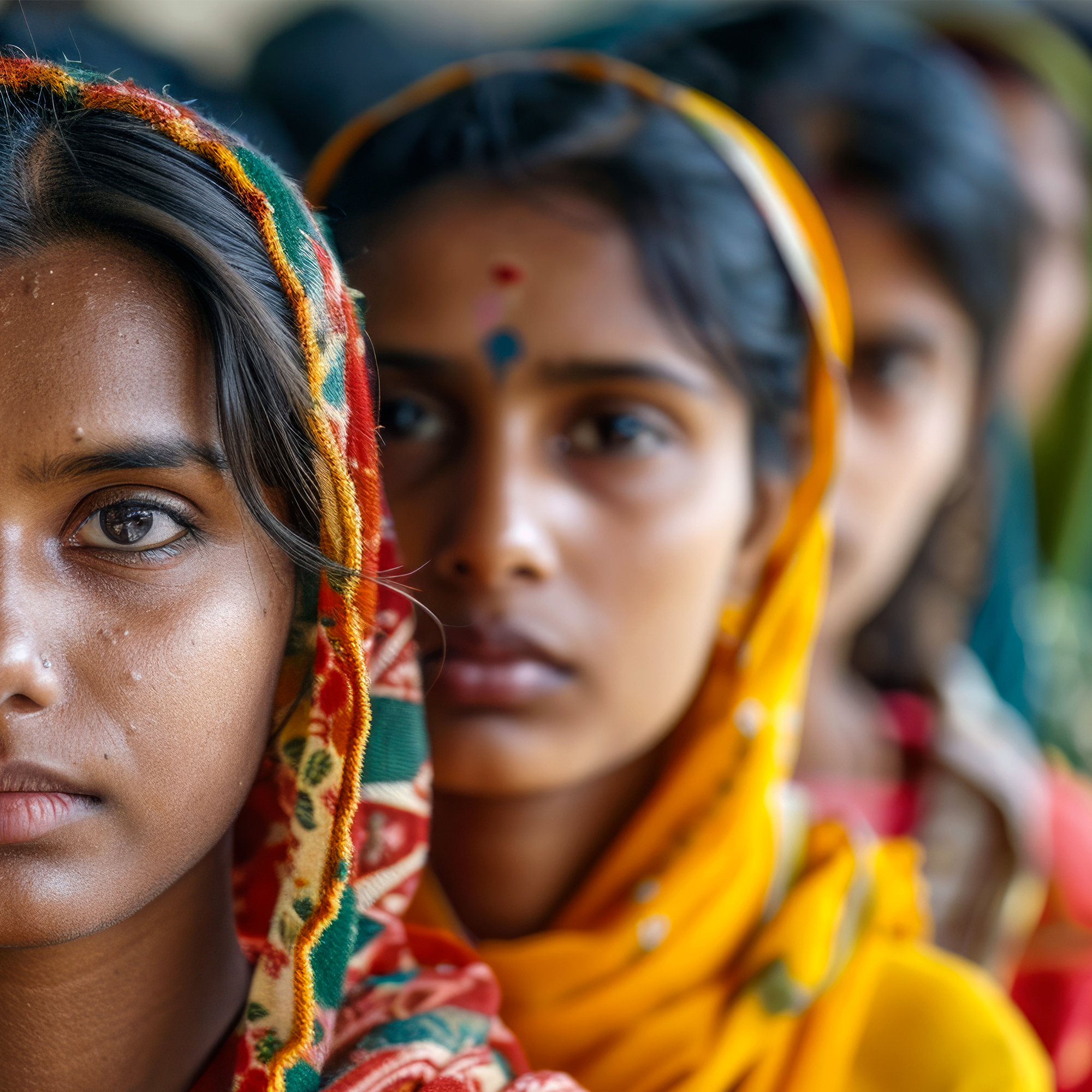
Women are under-represented in politics. If women aren’t chosen to stand for election, and voters are biased against them when they do, what can break this vicious circle? S Anukriti tells Tim Phillips about how local decision-making as part of a school-building programme in India has allowed women to show they are effective leaders, to change the political agenda, and even to convince sceptics that women have a place in politics.

S7 Ep 35S7 Ep35: Improving digital payments for social protection
More new research from the CEPR-PSE Symposium 2024. It’s infuriating when you’re expecting a digital payment to arrive, it is lost in the system somewhere, and no one seems to be able to do anything about it. Now imagine how devastating it is if that payment is all that’s keeping you and your family out of poverty. Yusuf Neggers is one of a team that have created an app to improve the administration of payments for the Indian government’s MGNREGA programme.Photo: MGNREGA/UN Women Asia & Pacific

S7 Ep 34S7 Ep34: The next generation: PSE 2024
In our latest podcast from the PSE-CEPR Policy Forum 2024, we feature three of the young economists who made their mark at the conference. Tim Phillips talks toAlice Chiocchetti about the extent and impact of profit shifting by French firms, Yuan Hu about green technological change after natural disasters, and Christoph Semken about how we all underestimate the impact of our emissions-reducing life changes.

S7 Ep 33S7 Ep33: The effects of disability hiring quotas
More new research from the CEPR-PSE Symposium 2024. More than 100 countries have some form of quota regulation that requires firms to hire people with disabilities. Does this example of affirmative action help people who have a disability to find a job, and what is the impact on the firm, and on fellow workers? Christiane Szerman tells Tim Phillips about the surprising labour market effects of a hiring quota in Brazil.

S7 Ep 32S7 Ep32: Will tax or finance get us to net zero?
If we’re going to get to net zero in time, economists argue that carbon taxation alone is the best policy. But less than a quarter of emissions are subject to any carbon pricing. And even then, the price of carbon is far too low. So how much climate finance will it take to fill that gap to get us to a socially optimal solution? Lasse Heje Pedersen talks to Alissa and Tim about how he estimates the rate of exchange between the cost of capital and a carbon tax, and what that implies for policy.