
Trending Globally: Politics and Policy
221 episodes — Page 2 of 5
How American firearms fuel violence in Mexico
Mexico, like the United States, has a gun violence problem. It has one of the highest murder rates in the world, and most of those murders come from firearms. In 2019, for example, almost 70% of the country's 35,000 murders involved firearms.But unlike the U.S., Mexico doesn’t have tens of thousands of licensed firearms dealers. It has two. So how do so many guns make their way into Mexico? And how do these guns shape Mexican society? These are two of the questions Ieva Jusionyte explores in her new book “Exit Wounds: How America’s Guns Fuel Violence across the Border.” Jusionyte is an anthropologist at the Watson Institute and spent much of the last few years following people whose lives are shaped by guns in Mexico. Guns, which, by and large, come from the United States. On this episode, Jusionyte discusses the impact of American firearms on Mexican society and the role they play in spreading violence and trauma on both sides of the border. Learn more about and purchase "Exit Wounds: How America’s Guns Fuel Violence across the Border"Learn more about the Watson Institute’s other podcastsPhoto credit: Tony Rinaldo
Harm reduction, overdose prevention, and the future of treating America’s overdose epidemic
In February of this year, Providence became the first city in America to approve opening a state-sanctioned overdose prevention center. Sometimes known as safe injection sites, these are facilities where people can bring illegal drugs and consume them under the supervision of trained volunteers and health professionals. It’s one of the boldest experiments in the U.S. of an approach to addressing the drug overdose crisis known as “harm reduction,” which is focused less on forcing people to stop using drugs and instead on helping people use them more safely. It might sound counterintuitive that such an approach could help stem our country’s drug overdose epidemic, which killed over 112,000 Americans in 2023. But as our two guests on this episode explain, overdose prevention centers — along with many other “harm reduction” interventions — work. Studies have shown that they not only help reduce drug-related deaths, they also help people recover from drug addiction more broadly. On this episode, Dan Richards talks with two public health leaders in Rhode Island about this new overdose prevention center — how it will work, why it matters, and what it says about the future of addressing America’s drug overdose crisis. Guests on this episode:Colleen Daley Ndoye, executive director of Project Weber/RENEW, the organization that will be overseeing Rhode Island’s overdose prevention centerBrandon Marshall, chair of epidemiology at Brown University. Learn more about Project Weber/RENEWLearn more about the People, Places, and Health Collective at Brown University’s School of Public HealthLearn more about the Watson Institute’s other podcasts
A new history of the Sandinista Revolution
In the 1970s in Nicaragua, left-wing rebels, calling themselves the Sandinista National Liberation Front, fought to overthrow their country’s dictator. It worked. The Sandinistas led a coalition that took over the government in July 1979, in what became known as the Sandinista Revolution. However, within a few years, the Sandinistas faced a violent backlash, which pushed the country into a state of unrest that lasted for almost a decade. This period of violence, from roughly 1982-1988, was known as the Contra War. To many Americans, it’s often associated with the Cold War and Ronald Reagan. It’s been described as a proxy battle between the Soviet-supported Sandinistas on one side, and the U.S.-supported counter-revolutionaries, or Contras, on the other. But in this episode, we’ll go beyond that Cold War framing of the conflict, to uncover a fuller explanation of why the Sandinista Revolution was successful in Nicaragua in 1979, why it was replaced by a liberal democratic government in 1990, and why that democracy has since fallen apart. Mateo Jarquín is a historian and author of The Sandinista Revolution: A Global Latin American History.” Through interviews with former Sandinistas and archival research conducted across Latin America, Mateo tells the story of this momentous decade in Latin American politics from the perspective of those who lived it. In doing so, he challenges our understanding of the Cold War’s impact on Latin America, from the 1980s straight through to the present. In the second half of the episode, we’ll talk with Watson Senior Fellow Steven Kinzer about Nicaragua’s repressive political regime today, and a surprising act of resistance whose full effects are yet to be seen. Learn about and purchase “The Sandinista Revolution: A Global Latin American History”Listen to episode 1 of “Revolution Revisited” a limited series on the history of the Sandinista Revolution, from Trending GloballyLearn more about the Watson Institute’s other podcasts

What happened to the ‘American dream’?
Here’s a depressing fact: it takes longer to travel from Boston to Los Angeles today than it did 50 years ago. Getting to the airport, getting through the airport, the flight itself — just about every part of the process takes longer than it once did. According to New York Times senior writer David Leonhardt, this is just one example of the stagnation defining so many aspects of America’s society and economy today. From life expectancy to education outcomes to rates of income inequality, by so many measures, American society simply isn’t improving for as many Americans as rapidly as it once did. By some measures, it’s not improving at all.In other words: the American dream is increasingly out of reach. Leonhardt’s newest book, “Ours Was the Shining Future: The Story of the American Dream,” explores the data and the history behind this dimming of the American dream. This spring, he came to the Watson Institute to discuss the book with Jeff Colgan, director of the Watson Institute’s Climate Solutions Lab. In this episode of Trending Globally, Colgan talks with Leonhardt about the cultural and political shifts that have contributed to this change, and about what needs to be done to make widespread prosperity attainable in the decades to come. Learn more about and purchase “Ours Was the Shining Future: The Story of the American Dream”Subscribe to “The Morning”, a newsletter from The New York TimesLearn more about the Watson Institute’s other podcasts

From Black Lives Matter to January 6, how ‘Black grief’ and ‘white grievance’ shape our politics
The last decade has seen the growth of two political movements that appear diametrically opposed: the Black Lives Matter movement and the rise of Donald Trump. But as our guest on this episode explains, these two movements are linked, and can only be understood together. On this episode, Dan Richards talks with political scientist Juliet Hooker about how these movements are just the most recent evolution of two of the most powerful forces in American politics — what she describes as “Black grief” and “white grievance.” Hooker’s new book, “Black Grief/White Grievance: The Politics of Loss,” explores how these two forces have related to each other throughout American history, what they can teach us about how to build a better democracy, and what they tell us about how feelings of loss shape not only our psyches but our politics.Learn more about and purchase “Black Grief/White Grievance: The Politics of Loss”Learn more about the Watson Institute’s other podcastsLearn more about “Humans in Public Health,” a podcast from the Brown University School of Public Health

Mark and Carrie Special: 2024 Primaries, the wars in Ukraine and Gaza, what’s next for the UK’s Labour Party
We’ve got a lot of exciting new Trending Globally episodes coming up in the next few weeks and months, but this week we’re sharing an episode of another podcast from the Watson Institute: Mark and Carrie. The show is hosted by political economist Mark Blyth and political scientist Carrie Nordlund. On each episode, they discuss, debate and, occasionally, make fun of the biggest headlines of the day. The conversations are always thought-provoking and informative, and while the topics are sometimes somber, the show is not. On this episode, they discuss some of the factors shaping the 2024 U.S. elections, the state of the wars in Gaza and Ukraine, and what’s next for the U.K.’s Labour Party. They also ponder: is Mark too old for VR headsets? Listen to more of Mark and Carrie and subscribe. Learn about all of the Watson Institute’s other podcasts.

Ukraine is ‘on the ropes’ two years after Russia’s invasion. What’s next for the Russia-Ukraine War?
February 24, 2024, marks two years since the beginning of the War in Ukraine. In the war’s first year, Russia’s assault on Ukraine shook the West, while Ukraine's defense of the territory captivated the world. While no less deadly or consequential, the war's second year has looked very different. The war has become a stalemate on the battlefield, altering the politics in Kyiv, the Kremlin, and among their respective allies. Neither country’s leaders appear to be looking for a way out of the war anytime soon, and the prospect of peace in Ukraine seems as far away as it’s been at any point in the last two years. On this episode, Dan Richards discusses the state of the War in Ukraine with Lyle Goldstein, a Senior Fellow at the Watson Institute for International and Public Affairs at Brown University and director of Asia Engagement at Defense Priorities. They explore the shifting definitions of “victory” in both Kyiv and the Kremlin over the past 12 months, what an end to this conflict might look like, and what it would take to bring both country’s leaders to the negotiating table. Learn more about the Watson Institute’s other podcasts

The origins of America's separate and unequal schools
In the United States, inequality along the lines of race in education is such a persistent issue that it often fails to make headlines. COVID-19 brought it back to the front of the nation’s consciousness as evidence mounted that nonwhite students were experiencing roughly twice as much learning loss as their white counterparts. Yet, as our guest on this episode explains, if history is any guide, more attention to the issue doesn’t necessarily mean better outcomes for nonwhite and poor students. There’s a long history of well-financed, elite (largely white) institutions investing time and money to try and address inequality in American education with little to show for it. Even more unsettling, these efforts often make the problem worse. On this episode, Dan Richards talks with Noliwe Rooks, chair of Africana Studies at Brown University, and the author of an award-winning book, “Cutting School: Privatization, Segregation, and the End of Public Education.” They discuss the surprising history of some of America’s most influential school reform efforts, and the deeper historical patterns and racist structures that keep our education system broken for so many American children. Learn more about and purchase “Cutting School: Privatization, Segregation, and the End of Public Education.”Learn more about the Watson Institute’s other podcasts

How backlash came to define American politics, and what it means for the future of public policy
Backlash is hardly a new political force — since America’s founding, change has often been driven by citizens mobilizing in opposition to policies, programs, or social movements. But recently, as our guest on this episode explains, backlash movements have come to dominate our politics in unprecedented ways. He argues that to build a more stable and healthy politics, we need to better understand how these forces work. Why do certain policies, movements, or individual politicians incite powerful backlash movements while others don't? And why — whether we’re talking about immigration, healthcare, reproductive rights, or countless other issues — has backlash come to dominate so many different policy realms? On this episode, Dan Richards explores these questions with Eric Patashnik, a political scientist at the Watson Institute, and author of the book “Countermobilization: Policy Feedback and Backlash in a Polarized Age.” In the book, Patashnik provides a theory of political backlash — what causes it, why it’s diffused through our politics over the last few decades, and how policymakers and politicians can learn to remain effective in a political moment dominated by backlash and countermobilization. Learn more about and purchase “Countermobilization: Policy Feedback and Backlash in a Polarized Age”Learn more about the Watson Institute’s other podcasts

The new psychology of nuclear brinkmanship (originally released February 2023)
Trending Globally will be back with all new episodes soon, but in the meantime we’re rereleasing some of our favorite episodes from 2023. We hope you enjoy – and have a great start to 2024!***The beginning of 2023 saw a disturbing milestone: the Bulletin of the Atomic Scientists moved the ‘Doomsday Clock’ forward to 90 seconds to midnight – the closest it’s been to ‘Doomsday’ since the clock was established in 1947. But what would it take for a nuclear weapon to actually be used in the world today? And if one was used, how would the rest of the world respond? In this episode (originally released in February 2023), the second in our limited series on the theory, policies, and practice of conflict escalation, you’ll hear from two experts rethinking how nuclear threats are understood and modeled. Rose McDermott is a professor of International Affairs at the Watson Institute, and Reid Pauly is an assistant professor of Nuclear Security and Policy at Watson. Their paper “Decision-making Under Pressure: The Mechanisms and Psychology of Nuclear Brinkmanship” is the lead article in the current issue of International Security. In it, they reframe one of the most fundamental theories for understanding nuclear risks: nuclear “brinkmanship.” They highlight why conventional models of brinkmanship fail to fully explain how a nuclear crisis might unfold and explore what interventions are needed to prevent one from starting. Read Rose and Reid’s paper, “Decision-making Under Pressure: The Mechanisms and Psychology of Nuclear Brinkmanship.”Listen to the first episode in our limited series, “Escalation,” with Lyle Goldstein. Learn more about the Watson Institute’s other podcasts.

What happens when a prison comes to town (originally released January 2023)
“Trending Globally” will be back with all new episodes soon, but in the meantime, we’re rereleasing a few of our favorite episodes from 2023. We hope you enjoy — and have a great start to 2024!***In 2007, Watson Professor John Eason moved with his family from Chicago to Forest City, Arkansas. At the time Eason was getting his Ph.D. at the University of Chicago, and he moved to Forest City to learn about America’s mass incarceration crisis from a perspective that’s often overlooked: that of the towns where America’s prisons are located. What effect do prisons have in these often underserved rural communities? And what role do these communities play in what scholars and activists often call the “prison industrial complex”? What he found was a story that defied easy explanation. “After a week in Forest City…everything I had thought I'd known about why we build prisons was completely changed,” Eason described. His book about Forest City, “Big House on the Prairie: Rise of the Rural Ghetto and Prison Proliferation,” explores the town’s politics, history, and culture to offer a nuanced picture of how prisons affect the communities that house them. In doing so, he unsettles many of the notions Americans have about the relationship between race, class and mass incarceration. On this episode of “Trending Globally” (originally broadcast in January 2022), Eason explains what brought him to Forest City, what he found once he got there, and how it changed his view of the prison-industrial complex. Whether you see prisons as a necessary part of society or an institution in need of abolition, John’s work provides essential context for envisioning a more humane and just way forward for America’s carceral system. Learn more about and purchase “Big House on the Prairie”Learn more about the Watson Institute’s other podcasts

After four years of COVID-19, are we safer against future pandemics?
This December marks four years since the first confirmed case of COVID-19 in Wuhan, China. On this episode of Trending Globally, Dan Richards speaks with two experts from the Pandemic Center at Brown University’s School of Public Health about the ways our society’s approach to public health has changed since 2019. They discuss how we should be thinking about COVID-19 in our daily lives, the unexpected ways international conflicts have changed conversations around pandemic preparedness, and what the Great Baltimore Fire of 1904 can teach us about how societies learn from disasters.Guest on today’s episode: Jennifer Nuzzo is an epidemiologist and director of the Pandemic Center at the Brown University’s School of Public HealthWilmot James is an internationally recognized leader in the fields of global health, international security, and a Senior Advisor to the Pandemic Center. Watch Jennifer Nuzzo’s TED talk about how to prepare for future pandemicsLearn more about the Watson Institute’s other podcasts

Exploring “the land of inequality” with a Nobel Prize-winning economist Sir Angus Deaton
On this episode, political economist and Watson professor Mark Blyth talks with Nobel Prize-winning economist Sir Angus Deaton about his new book, “Economics in America: An Immigrant Economist Explores the Land of Inequality.” You may not know Angus Deaton by name, but you probably know a phrase he helped to make famous: “deaths of despair.” In 2015, Deaton and his wife and research partner Anne Case published a paper that revealed something startling: an increase in mortality rates among white middle-aged men and women in the 2000s and 2010s in the United States. Deaton and Case attributed this to a confluence of factors, including economic stagnation, social isolation and the opioid crisis. In explaining this topic, they did something economists usually avoid doing: They told a sweeping but still complex and nuanced story about American society and economy in the 21st century.In this conversation, Mark and Angus Deaton discuss Deaton’s new book, as well as its relationship to his work on deaths of despair. They also explore why the field of economics ignored the issue of inequality for so long, and why in the last decade that’s started to change. This episode was originally broadcast on the Rhodes Center Podcast, another podcast from the Watson Institute. If you want to hear a longer version of this conversation, you can find it by subscribing to the Rhodes Center Podcast or by visiting their website. Learn more about and purchase “Economics in America: An Immigrant Economist Explores the Land of Inequality.”Learn more about the Watson Institute’s other podcasts.

Israel, Palestine, and ‘personal history in times of crisis’
How do our individual experiences shape our political views? What role do our own stories and memories play in how we think about the world around us? How can we use our memories — even our most painful ones — to help build a more peaceful politics? These are complicated questions, and not of the variety we often ask on this show. But historian Omer Bartov thinks that trying to answer them is essential to finding political solutions to our most vexing problems. And in his new book “Genocide, the Holocaust and Israel-Palestine: First-Person History in Times of Crisis,” Bartov powerfully makes the case. On this episode of Trending Globally, Dan Richards talks with Bartov about the book — which weaves together personal stories, historical analyses and a moral critique of Israel’s treatment of Palestinians — and how individual stories and personal memories are inextricably linked to the politics we create. Although this podcast was scheduled before the current Israeli-Palestinian crisis, the interview took place in the wake of the events of October 7 and therefore those events are a big part of the conversation. But as this conversation hopefully makes clear, Bartov’s book and analysis are even more important and relevant in our current moment.Learn more about an purchase “Genocide, the Holocuast, and Israel-Palestine: First-Person History in Times of Crisis”Reading recommendations from Omer Bartov:“Gate of the Sun” and “Children of the Ghetto” by Elias Khoury“Khirbet Khizeh” by S. Yizhar“Facing the Forests” A. B. Yehoshua“Return to Haifa” by Ghassan KanafanlLearn more about the Watson Institute’s other podcasts

The political ramifications of a ‘green transition’ in the US
Last year, President Biden signed the Inflation Reduction Act into law. Considered by many to be the biggest climate and energy bill ever passed, the IRA included roughly $370 billion to help shift the U.S. to cleaner forms of power. And it was just one of three laws passed by the administration that will play into the United States’ move away from fossil fuels. The impact of these policies, however, will go far beyond our climate. Indeed, they form the core of “Bidenomics,” and they’re going to reshape our economy and our politics for decades to come. They will do so in ways we can predict, and in ways we can’t. On this episode, Dan Richards speaks with two experts on the politics of climate change about this unprecedented collection of legislation and how it will transform our economy, change our planet and possibly realign our politics. Guests on this episode:Jeff Colgan is a political scientist, and director of the Climate Solutions Lab at the Watson Institute. Robinson Meyer is a contributing opinion writer at The New York Times and the founding executive editor of Heatmap, a new media company focused on climate change. Hear from Robinson Meyer and many others about all things climate change at Heatmap NewsGet 50% off your first year subscription to Heatmap using the code BROWN50 Read Jeff Colgan’s October 2023 Op-Ed in the New York TimesWatch Robinson’s talk in October at the Watson Institute’s Climate Solutions LabLearn more about the Climate Solutions LabLearn more about the Watson Institute’s other podcasts

Archiving the ‘Voices of Mass Incarceration’ at Brown’s John Hay Library
In 1982, Mumia Abu-Jamal was sentenced to death for the murder of a Philadelphia police officer. An ex-Black Panther, he had no prior criminal record. Amnesty International investigated his case and found in many ways that it "failed to meet minimum international standards.” He’s been incarcerated for more than 40 years.Over those decades, Abu-Jamal has become a leader of the anti-death penalty movement and an influential critic of mass incarceration. He’s written multiple books, and appeared on countless radio programs and documentaries — all while serving what is now a life sentence. This fall, scholars and activists met at Brown to mark a new chapter in Abu-Jamal’s story. The John Hay Library at Brown University, in partnership with Brown’s Pembroke Center for Teaching and Research on Women, and the Simmons Center for the Study of Slavery and Justice, acquired Abu-Jamal’s writings — 97 boxes — and opened them to the public. On this episode: Dan Richards talks with two Brown archivists about this new collection, and what it’s like preserving the work of one of the most famous incarcerated people in America. Dan also speaks with a scholar at Brown who is working to collect the histories of incarcerated people about the importance of filling this gap in our nation's historical record. Watch the opening remarks of the "Voices of Mass Incarceration" symposium’ Read more about the collection of Mumia Abu-Jamal’s archivesLearn about the Watson Institute’s other podcastsGuests on this episode:Amanda Strauss – Associate University Librarian for Special Collections and Director of the John Hay LibraryChristopher West – Curator of the Black Diaspora, Brown UniversityNicole Gonzalez Van Cleve – Associate Professor of Sociology, Brown University
Seeing America through the eyes of refugees
One day in the year 2000, in the midst of the Second Congo War, Honoria* fled her home in the Democratic Republic of the Congo and never returned. After 16 years in a refugee camp in Uganda, she relocated to Philadelphia, where she became one of the roughly 80,000 refugees who entered the U.S. that year. Honoria’s family was one of the dozens that Blair Sackett, a sociologist and postdoctoral fellow at the Watson Institute, followed as they navigated life in the U.S. Sackett, whose work focuses on the experience of refugees in the U.S. and abroad, wanted to understand why some refugees thrived in the U.S. while others faltered. The result of Sackett’s research is a new book, co-authored with sociologist Annette Lareau, called “We Thought It Would Be Heaven: Refugees in an Unequal America.” On this episode, Dan Richards talks with Sackett about the book, and about the under-explored factors that play a surprisingly large role in the wellbeing and success of refugees in the U.S. Learn more about and purchase “We Thought It Would be Heaven”Learn more about the Watson Institute's other podcasts*All names of displaced persons in this episode, and in "We Thought It Would Be Heaven," are pseudonyms.

How participatory budgeting can strengthen our democracy
Imagine if, when you were in middle school, an Ivy League professor came to your school and told you that you were going to be part of an experiment. You were going to get to decide how the money in your school was spent. What would you want to spend it on? How would you convince your classmates that your idea was best? Furthermore, would you even believe what this professor was telling you? Jonathan Collins is a professor of political science at the Watson Institute, and has recently been turning this hypothetical into a reality for students in the Providence area. He's been helping to design and evaluate what are known as participatory budgeting projects, and they're not just for students. In towns and cities around the world, everyday people are being let into the budgeting process of their communities. The effects have been profound, both on the local budgets, and on communities that have long felt marginalized and disempowered. "There's just something magical that can happen when there's skin in [the] game…the moment that you give them an opportunity to feel that they are a part of the stakes? I think the possibilities are endless," explained Collins. On this episode Dan Richards talks with Jonathan about participatory budgeting — where it came from, what it looks like on the ground, and how it might help strengthen our democracy, one community at a time. Learn more about the Watson Institute's other podcastsLearn more about participatory budgeting in Rhode IslandLearned about PAVED, Browns democratic innovation research initiativePhoto credit: Nick Dentamaro
Why the West is thinking about the coup in Niger all wrong
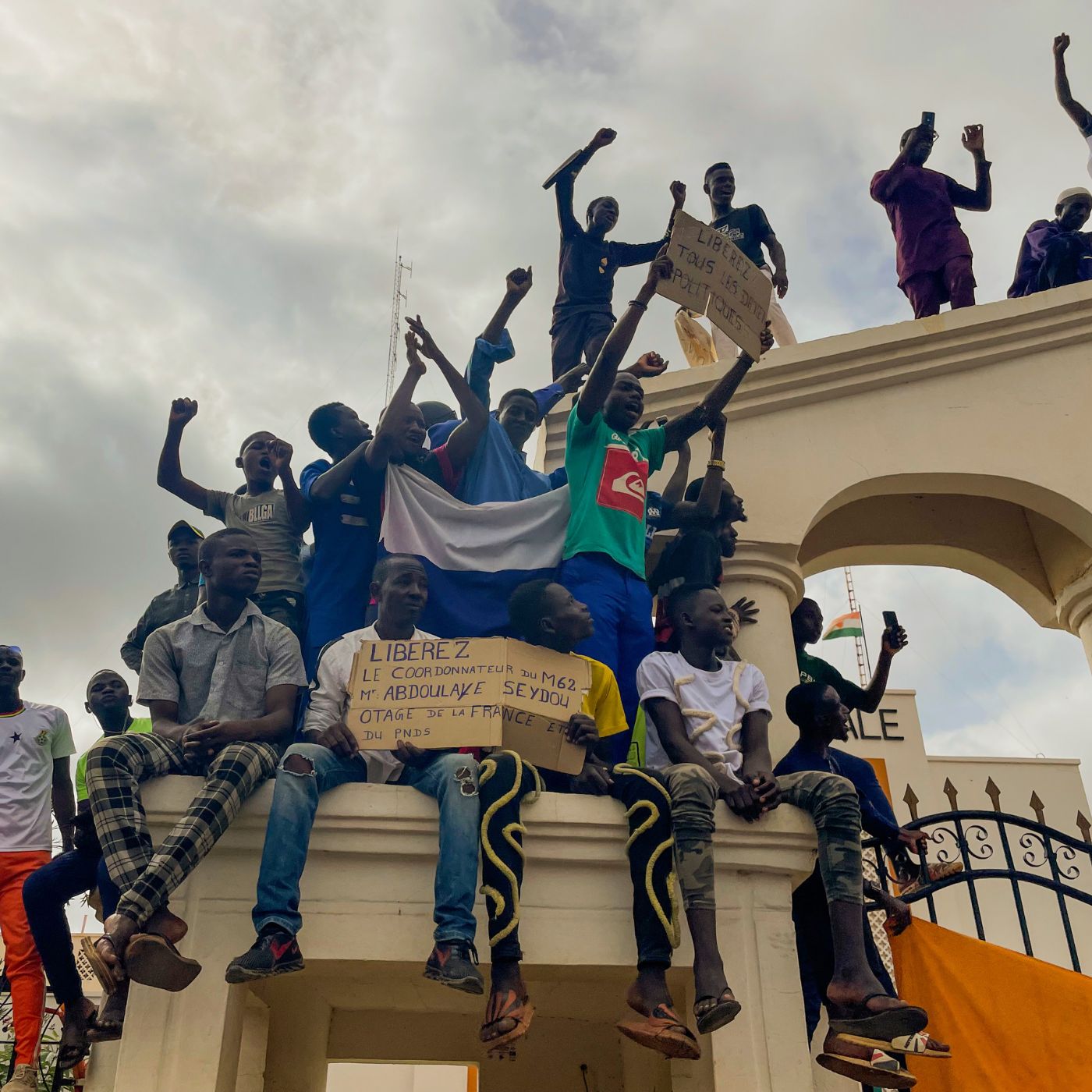
This summer, military forces in the West African country of Niger pushed the country’s president, Mohamed Bazoum, out of power.This was not the first coup in Niger’s history, or in the recent history of the Sahel region of Africa. In the last few years there have been coups in multiple countries in the region, including Burkina Faso and Mali. But this one has put the West especially on edge. Why?Listening to U.S. officials or much of the reporting on the topic, you’d think this coup has huge ramifications for the fight against Islamist militant groups in West Africa, and for the U.S. and Russia’s race to gain influence across Africa. But as Stephanie Savell, an expert on U.S.-Niger relations and a co-director of the Costs of War Project at the Watson Institute, explains, those framings of the coup largely miss what’s really going on in the region. And worse still — they might actually make it more difficult to bring peace and stability to this part of the world. Read more from Stephanie Savell on the coup in NigerLearn more about the Costs of War projectLearn more about the Watson Institute’s other podcasts
The 2024 Election: Voting Laws, Trump's Legal Woes & Political Exhaustion
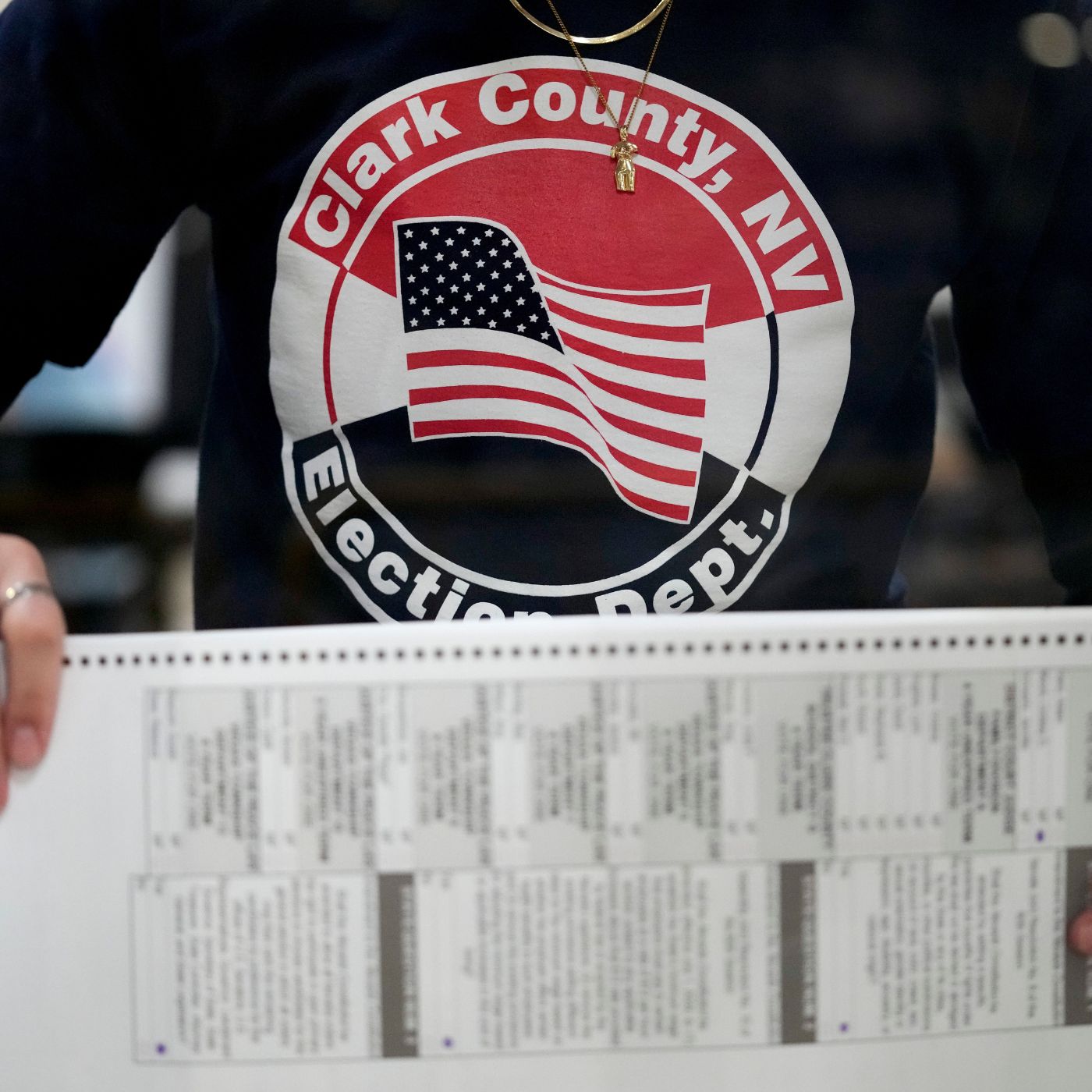
On August 23, at least 5 GOP hopefuls for the party’s presidential nomination will take to the stage in Milwaukee for their first primary debate. In other words, the 2024 election is about to get real.In this episode, Dan Richards talks with Wendy Schiller, professor of political science at Brown University and director of the Watson Institute’s Taubman Center for American Politics and Policy, about where the race stands now, and what to expect in the coming months. They discuss why efforts to unseat Trump as the Republican frontrunner seem destined to backfire, and what it means for our country that a historically high percentage of American voters want neither Trump nor Biden to be president in 2024. In the second half of the show, Dan speaks with Othniel Harris, program manager of the Taubman Center, about a disturbing trend in U.S. politics that could have major implications for 2024 and beyond: the rash of restrictive voting laws passed in recent years in swing states around the country. Learn more about the Taubman Center research project “Democracy’s Price Tag”Learn more about other podcasts from the Watson Institute

The perils and promise of AI
In the last year, programs like ChatGPT, Dall-E and Bard have shown the world just how powerful artificial intelligence can be. AI programs can write hit pop songs, pass the bar exam and even appear to develop meaningful relationships with humans. This apparent revolution in AI tech has provoked widespread awe, amazement — and for some, terror. But as Brown Professor of Data Science and Computer Science Suresh Venkatasubramanian explains on this episode of Trending Globally, artificial intelligence has been with us for a while, and a serious, nuanced conversation about its role in our society is long overdue. Suresh Venkatasubramanian is the Deputy Director of Brown’s Data Science Institute. This past year, he served in the Biden Administration’s Office of Science and Technology Policy, where he helped craft the administration’s blueprint for an “AI Bill Rights.” In this episode of Trending Globally, Dan Richards talks with Suresh about what an AI Bill of Rights should look like and how to build a future where artificial intelligence isn’t just safe and effective, but actively contributes to social justice. Read the blueprint for the AI Bill of RightsLearn more about Brown’s Data Science InstituteLearn more about the Watson Institute’s other podcasts

Is Nigeria ready for political change? The answer might lie in its infrastructure.
In May, Nigerian political veteran Bola Tinubu was sworn in as president of the country. The outcome was predictable, but that doesn’t mean there were no surprises in this year’s election. The biggest, perhaps, was the national rise of progressive politician Peter Obi. Obi galvanized young people around issues of government accountability, transparency, and generational change. In the process, he came closer to winning the presidency than any third-party candidate has in Nigeria’s modern history.What to make of Obi’s unexpected performance in this year’s election? And what does it mean for the future of Nigeria, a country of some 220 million people that, by many estimates, will surpass the US as the world’s third most populous country in the coming decades? Daniel Jordan Smith is the director of the Watson Institute’s Africa Initiative, and as he explains, there’s one realm where many of the issues Obi ran on come to a head, and that can teach us a lot about the country’s future: its infrastructure. Smith’s newest book, “Every Household Its Own Government: Improvised Infrastructure, Entrepreneurial Citizens, and the State in Nigeria” explores why Africa’s most populous, economically powerful country fails so many of its citizens when it comes to providing basic services like water and electricity. He also explores the creative ways that citizens work around these shortcomings and how the government still makes itself, as Smith puts it, “present in its absence.”Learn more about and purchase “Every Household Its Own Government”Learn more about the Watson Institute’s other podcasts

The politics behind Turkey’s pivotal election
On May 14, 2023, Turkey’s President Recep Tayyip Erdoğan faced the most challenging test of his political career from a multi-party coalition led by social democrat and reformer Kemal Kılıçdaroğlu. The diverse coalition Kılıçdaroğlu represents, known as the Table of Six, is united by one cause: removing Erdogan from power and ending the country’s authoritarian turn. The challengers were optimistic, given the multiple crises facing Turkey that Erdogan has struggled to manage: rampant inflation, mass migration of refugees from the Syrian Civil War, and last February’s devastating earthquake. Despite these challenges, Erdogan did better than many expected and pushed the election to a runoff, which is set to be held on May 28. At stake, according to Kılıçdaroğlu and his supporters, is nothing less than democracy itself in Turkey. On this episode, Dan Richards and Center for Middle East Studies postdoctoral scholar Fulya Pinar speak with experts on the ground in Turkey about the stakes of this election and why the race is so incredibly close. They also explore how anti-immigrant politics is driving many Turkish voters in a way it never before has, with ramifications that will extend far beyond this election. Learn more about Fulya Pinar’s research on the experience of undocumented immigrants in Turkey Guests on this episode: Mert Moral, assistant professor of political science at Sabanci University.Ali Fisunoglu, assistant professor of political science at St. Luis UniversityDeniz Sert, professor of political science at Ozyegin University.Learn more about other podcasts from the Watson Institute

How Taiwan became “the most dangerous flashpoint in the world”
This Spring, visiting professor at the Watson Institute for International and Public Affairs’ China Initiative Lyle Goldstein made his first trip to China in five years. He met with military strategists, government officials and scholars to try to better understand China-Russia relations in the wake of the war in Ukraine. He left more concerned about another part of the world just 100 miles off the coast of China—Taiwan. As he described the current tension between China, Taiwan, and the U.S. to Dan Richards on this episode of Trending Globally, “This case, in my view, is extremely dangerous. I would argue that [it’s] the most dangerous flashpoint in the world, by a good margin.”On this episode – our third in our “Escalation” series – you’ll hear from Goldstein about why Taiwan has become a global flashpoint. It’s not the first time a potential crisis in Taiwan has caused alarm, but as he explains, this time is different – it’s much more dangerous. Listen to the other two episodes on our “Escalation” series here and here.Learn more about Watson’s China Initiative Learn more about the Watson Institute’s other podcasts

Cybersecurity is much more than a tech problem
You’ve seen it in the headlines, and maybe you’ve felt it in your own life: over the last few years, cyber attacks have become more frequent and more damaging. They can also vary widely in nature, ranging from minor nuisances to national security crises.Is there anything we can do to secure ourselves – as individuals, and as a society – from these attacks? Is there any way to get ahead of the problem, given the dizzying speed of change in our digital technology? According to our two guests on this episode of Trending Globally, to answer these questions, you need to ask some much deeper questions about the role of technology in society and the relationship between governments, businesses, and individuals. Congressman Jim Langevin represented Rhode Island in the House of Representatives from 2001 until 2023. Chris Inglis served as cyber director for the Biden Administration from 2021 until this past February and as deputy director of the NSA from 2006 until 2014. In this episode, you’ll hear from Chris and Jim about the future of cybersecurity, and why it’s so much more than just a technological problem. This spring, Jim Langevin is leading a study group at the Watson Institute for International and Public Affairs on the issue of cybersecurity. He recently brought Chris Inglis to campus to discuss their work together, including helping to create the Biden Administration’s National Cyber Strategy, which was released in March of this year. Read a summary of the Biden Administration’s National Cyber StrategyLearn more about the Cyber Solarium Commission Learn more about other podcasts from the Watson Institute

What do we mean when we talk about the ‘free market’?
There are some ideas that inform so much of our thinking about the world that we tend to take them for granted. One example: the idea of the “free market.” Whether we’re talking about income inequality, climate change, or the future of U.S.-China relations – even if it doesn’t come up explicitly, the idea of the free market informs how we think about all of these topics and more. But despite its ubiquity, most of us can’t seem to agree what, exactly, we mean by the term. Which is why in this episode we’re going to take a closer look at the history of the concept. Jacob Soll is a professor of philosophy, history and accounting at the University of Southern California, and author of the book “Free Market: The History of an Idea.” On this episode, guest host Mark Blyth talks with Jacob about how the concept has evolved over the centuries (millennia, in fact) into the lightning rod of economic debate that it is today. But Jacob’s fascinating origin story doesn’t just correct the historical record – it also reframes how we should think about modern economies today. This episode first appeared on another podcast from Watson, the Rhodes Center Podcast, which is hosted by the inimitable Mark Blyth. You can listen to the full version of this conversation by subscribing to the Rhodes Center Podcast wherever you listen to podcasts. Learn more about and purchase “Free Market: The History of an Idea”Watch Jacob’s talk on YouTube
How domestic violence legislation has failed to keep women safe
Every minute, roughly 20 people in America (mostly women and children) become victims of domestic violence. The effects of these crimes ripple out to families and communities in every corner of the United States. Yet, despite this, policymakers have failed to address domestic violence in a consistently meaningful way. In this episode, political scientists Wendy Schiller and Kaitlin Sidorsky – authors of the new book "Inequality Across State Lines" - explain how the government fails to protect victims of domestic violence in the U.S. Specifically, they explore how different states have approached (or ignored) the issue and what these test cases can teach us about how to address the crisis going forward. In looking at the policy failures around domestic violence, as well as possible solutions to the crisis, they also make clear: this issue affects us all, whether we know it or not. Kaitlin Sidorsky is an associate professor of political science at Coastal Carolina University. Wendy Schiller is a professor of political science and Director of the Taubman Center for American Politics and Policy at Watson. Learn more about and purchase their book Inequality Across State Lines: How Policymakers Have Failed Domestic Violence Victims in the United StatesLearn more about the Watson Institute’s other podcasts.

How the Inflation Reduction Act will change our country (and our planet)
Last year, the biggest piece of climate legislation in American history was signed into law. However, it wasn’t always touted as such; even its name - “The Inflation Reduction Act” – avoided the topic of climate.This puts it in a long line of federal climate legislation, according to climate policy experts Leah Stokes and Jeff Colgan. As Jeff told Dan Richards in this episode of “Trending Globally,” “Lots of the progress that we make on climate change is best done when the word climate is never mentioned at all.” Jeff is a political scientist and director of the Climate Solutions Lab at Watson. Leah is an associate professor of environmental politics at the University of California at Santa Barbara, and she helped craft the climate-related provisions in the Inflation Reduction Act. To understand the relationship between the science and politics of climate change in the U.S., you couldn’t ask for two better guests. As they explain, the bill’s name is just one example of how this legislation was shaped as much by the politics of a closely divided Senate as it was by the science of climate change and decarbonization. In this episode, Jeff and Leah talk with Dan Richards about the contents of the bill, what it took to get it passed and how it will contribute to the global effort to fight climate change. Listen to Leah Stokes’ podcast “A Matter of Degrees”.Explore the Climate Solutions Lab “Climate Opportunity Map”.Learn more about the Watson Institute’s other podcasts.
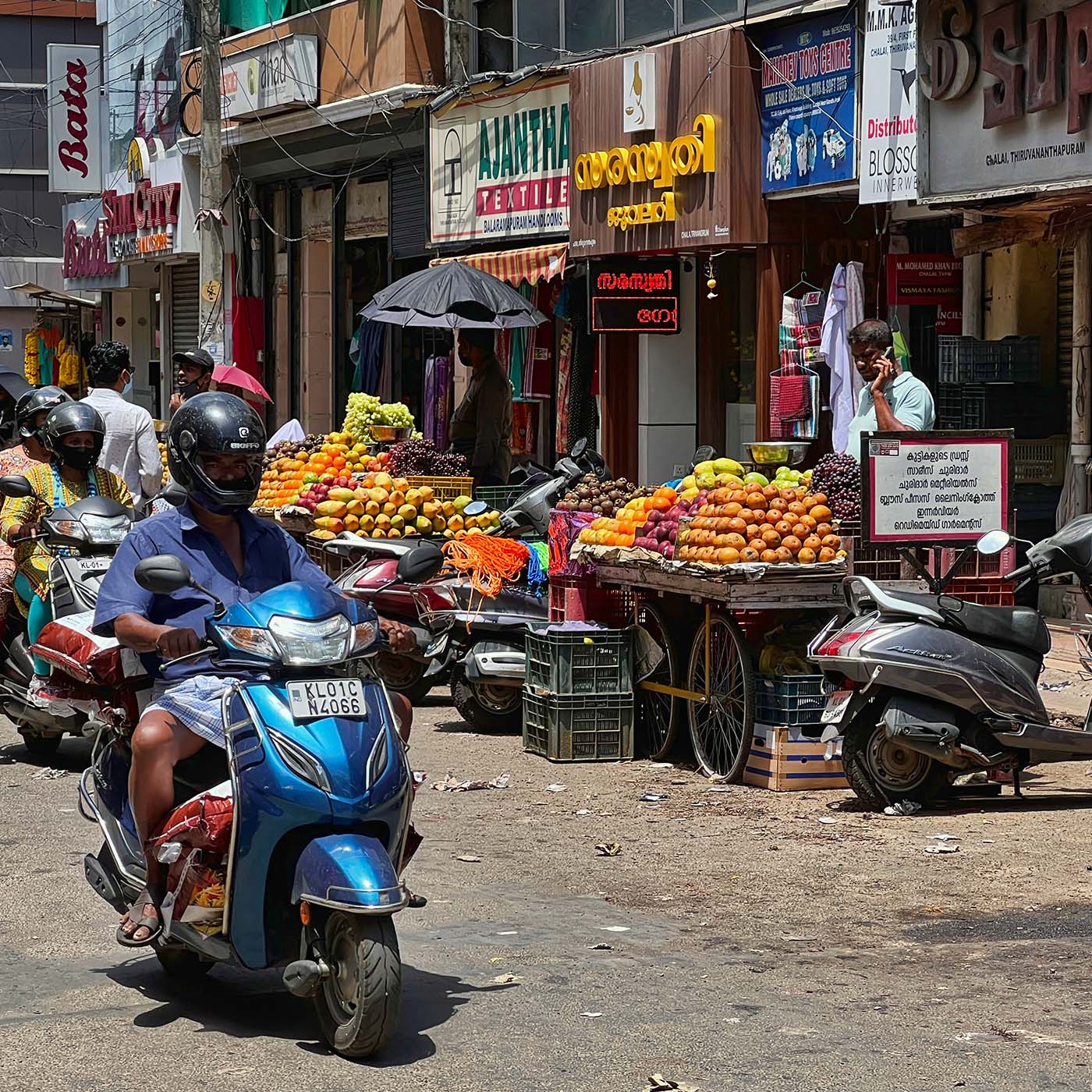
Can Democracy “Deliver the Goods”? Lessons from Kerala, India
If asked to think of parts of the world that have made impressive progress in social measures like literacy rates, life expectancy and infant mortality rates over the last century, you might first imagine a small, affluent country in Northern Europe or East Asia.But in this episode, we explore a place that achieves remarkable results on these and other measures without having the high income levels typically associated with states that have broad-based social welfare programs. Dan Richards talks with Patrick Heller, professor of sociology and international and public affairs at Watson, about the surprising story of the Indian state of Kerala. Despite being a relatively low-income part of the world, Kerala has managed to foster social welfare programs in a way few countries in the world can match. And it does so while maintaining widespread participation in what Heller describes as “India’s noisy democracy.”So how does Kerala do it, and what lessons can the rest of the world learn from its example? Listen to find out. Read Patrick Heller and Olle Törnquist’s recent article on Kerala. Learn more about Watson’s other podcasts.
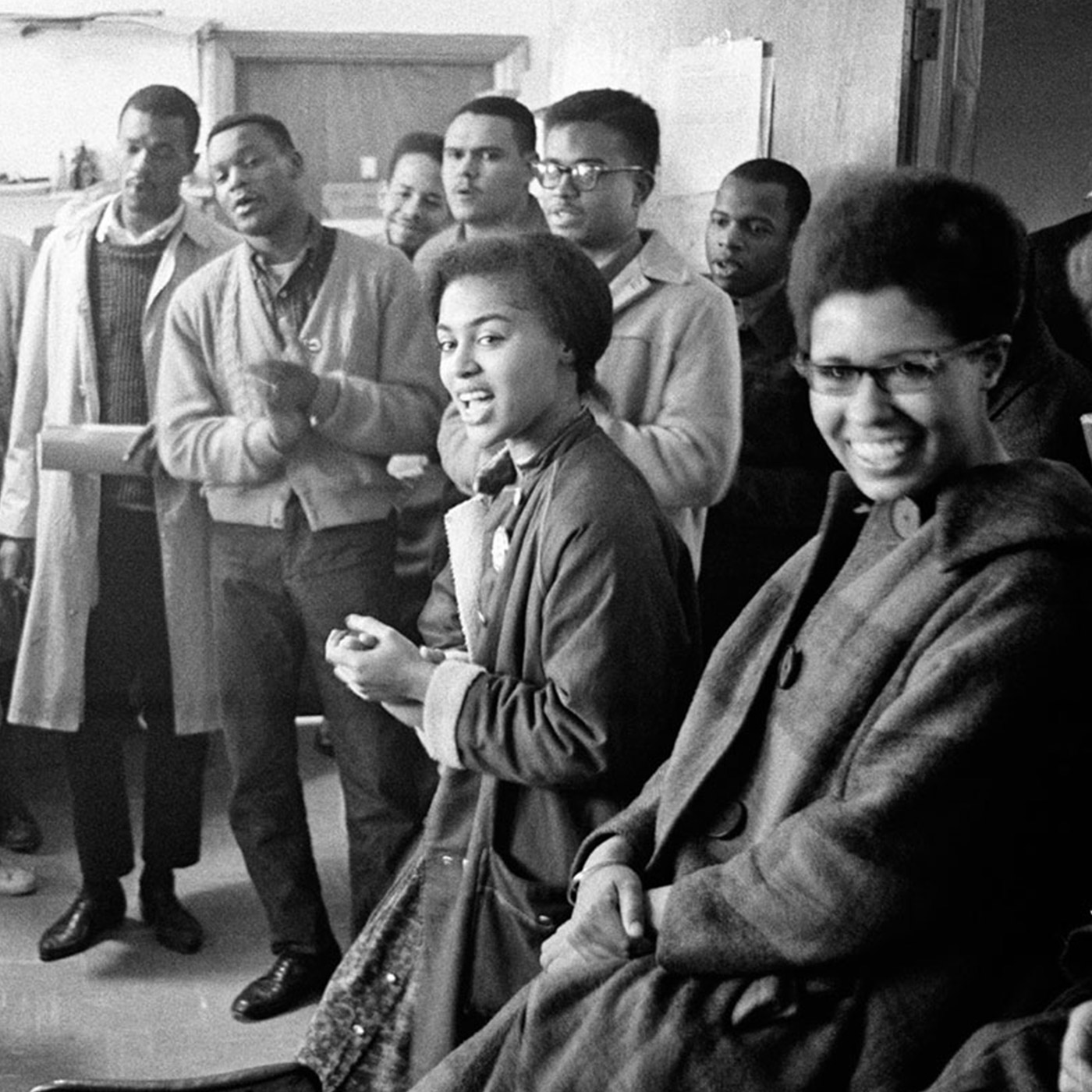
What Stories Are Missing From Black History – and How Should We Tell Them?
February is Black History Month, and in this episode of “Trending Globally,” you’ll hear from two scholars at Brown who are bringing to light overlooked aspects of the Black experience in America. In the first half of the episode, Mack Scott, a visiting professor at Brown’s Center for Slavery and Justice, talks with Dan Richards about the complex relationship between Rhode Island’s Narragansett Nation and the state’s Black communities in the 18th and 19th centuries. It’s a vivid example of how America’s history of anti-Black racism is deeply intertwined with the history of America’s indigenous communities. In the second half, Watson Senior Fellow Geri Augusto talks about a project she’s working on to uncover, preserve, and transmit the history of one of the Civil Rights movement’s most important and unique organizations – the Student Nonviolent Coordinating Committee. Geri is working with scholars and activists to bring this history to life and to find new, more inclusive ways to help people share their stories on their own terms. Explore the SNCC Legacy Project, and the SNCC Digital Gateway. Learn more about the theory and practice of Critical Oral History. Read Mack Scott's recent article in the Providence Journal. Photo by Danny Lyon. Learn more about the image. Learn more about the Watson Institute’s other podcasts.

The New Psychology of Nuclear Brinkmanship
January 24th, 2023 marked an unsettling milestone: the Bulletin of the Atomic Scientists moved the ‘Doomsday Clock’ forward to 90 seconds to midnight – the closest it’s been to ‘Doomsday’ since the clock was established in 1947. But what would it take for a nuclear weapon to actually be used in the world today? And if one was used, how would the rest of the world respond? In this episode, the second in our limited series on the theory, policies, and practice of conflict escalation, you’ll hear from two experts rethinking how nuclear threats are understood and modeled. Rose McDermott is a professor of International Affairs at the Watson Institute, and Reid Pauly is an assistant professor of Nuclear Security and Policy at Watson. Their paper “Decision-making Under Pressure: The Mechanisms and Psychology of Nuclear Brinkmanship” is the lead article in the current issue of International Security. In it, they reframe one of the most fundamental theories for understanding nuclear risks: nuclear “brinkmanship.” They highlight why conventional models of brinkmanship fail to fully explain how a nuclear crisis might unfold and explore what interventions are needed to prevent one from starting. Read Rose and Reid’s paper, “Decision-making Under Pressure: The Mechanisms and Psychology of Nuclear Brinkmanship.”Read their article in "Foreign Affairs"Listen to the first episode in our limited series, “Escalation,” with Lyle Goldstein. Learn more about the Watson Institute’s other podcasts.
What Happens When a Prison Comes to Town
In 2007, Watson Professor John Eason moved with his family from Chicago to Forest City, Arkansas. At the time Eason was getting his PhD at the University of Chicago, and he moved to Forest City to learn about America’s mass incarceration crisis from a perspective that’s often overlooked: that of the towns where America’s prisons are located. What effect do prisons have in these often underserved rural communities? And what role do these communities play in what scholars and activists often call the “prison industrial complex”? What he found was a story that defied easy explanation. “After a week in Forest City…everything I had thought I'd known about why we build prisons was completely changed,” Eason described. His book about Forest City, Big House on the Prairie: Rise of the Rural Ghetto and Prison Proliferation, explores the town’s politics, history, and culture to offer a nuanced picture of how prisons affect the communities that house them. In doing so, he unsettles many of the notions Americans have about the relationship between race, class, and mass incarceration. On this episode of Trending Globally, Eason explains what brought him to Forest City, what he found once he got there, and how it changed his view of the prison-industrial complex. Whether you see prisons as a necessary part of society or an institution in need of abolition, John’s work provides essential context for envisioning a more humane and just way forward for America’s carceral system. Learn more about and purchase Big House on the PrairieLearn more about the Watson Institute’s other podcasts

How to De-Escalate the War in Ukraine
2022 is coming to a close, but one of the most consequential events of the last year continues unabated: the War in Ukraine. As we approach the one-year mark of Russia’s invasion of Ukraine, experts and casual observers (not to mention countless Ukrainians and Russians) are all left wondering: how might this war end? Should the US and NATO support Ukraine at all costs? Or should they push Ukraine and Russia towards a negotiated settlement? What would such a settlement even look like? Meanwhile, new conflicts around the world continue to emerge, each with their own seemingly impossible questions. This is why we’re launching ‘Escalation,’ a new limited series from Trending Globally. Over the next few months, you’ll hear from experts about the history, philosophy, and even psychology of conflict escalation, and what can be done to reduce global conflicts going forward. Our first episode in the series features Lyle Goldstein, a visiting Professor at the Watson Institute and Director of Asia Engagement at the think-tank Defense Priorities. He’s an expert on the effects of great power conflict, and the theories that explain them. Professor Goldstein has been following the war in Ukraine closely through both Western and Russian media. He recently published a paper with Watson’s Costs of War Project looking at how, while there are no obvious paths out of this war, there are at least paths we should know to avoid. Host Dan Richards and Professor Goldstein explore the poor assumptions and misunderstandings that drive many ideas in this conflict, as well as what a better path forward might look like. Learn more about Professor Goldstein’s recent paper with the Costs of War Project. Learn more about the Watson Institute’s other podcasts.

Mark and Carrie Special: World Cup Politics, the Future of the GOP, and Crypto’s Fraud Problem
We’ve got a lot of exciting new Trending Globally episodes coming up in the next few weeks and months, but this week we’re sharing an episode of another podcast from the Watson Institute: Mark and Carrie. The show is hosted by political economist and Rhodes Center Director Mark Blyth, and political scientist Carrie Nordlund. On each episode they discuss, debate, add context to, and, occasionally, make fun of the biggest headlines of the day. The conversations are always thought-provoking and informative, and while the topics are often somber, the show is not. On this episode they discuss the geopolitics of the World Cup, the future of the Republican Party, and how FTX’s complicated crypto-scandal fits into the long lineage of financial fraud. They also briefly play with Mark’s dog. Listen to more of Mark and Carrie and subscribe. Learn about all of the Watson Institute’s other podcasts.

The Historic Opportunities and Challenges for a Post-Bolsonaro Brazil
On October 30, 2022, Luiz Inácio Lula da Silva – known by most simply as Lula – defeated Brazil’s President Jair Bolsonaro in a runoff election.On Lula's agenda: rebuild Brazil’s social safety net, restore the country’s democratic institutions, and advocate for the country's most marginalized citizens -- oh, and save the Amazon rainforest. He'll have to do all of that while navigating a divided government, polarized public, and aggressive far-right opposition.On this episode of Trending Globally Dan Richards explores this historic moment in Brazil with James Green, a historian and professor of Latin American history at the Watson Institute, and the host of the podcast Brazil Unfiltered. They discuss how Lula came to win, and what his victory means for Brazil and the world. They also look at why, contrary to what so many people predicted and feared, Brazil’s election went relatively smoothly. Because, as James makes clear: it easily could have not. Learn more about James Green’s podcast Brazil Unfiltered.Find transcripts and more information about all our episodes on our website.Learn more about the Watson Institute’s other podcasts.
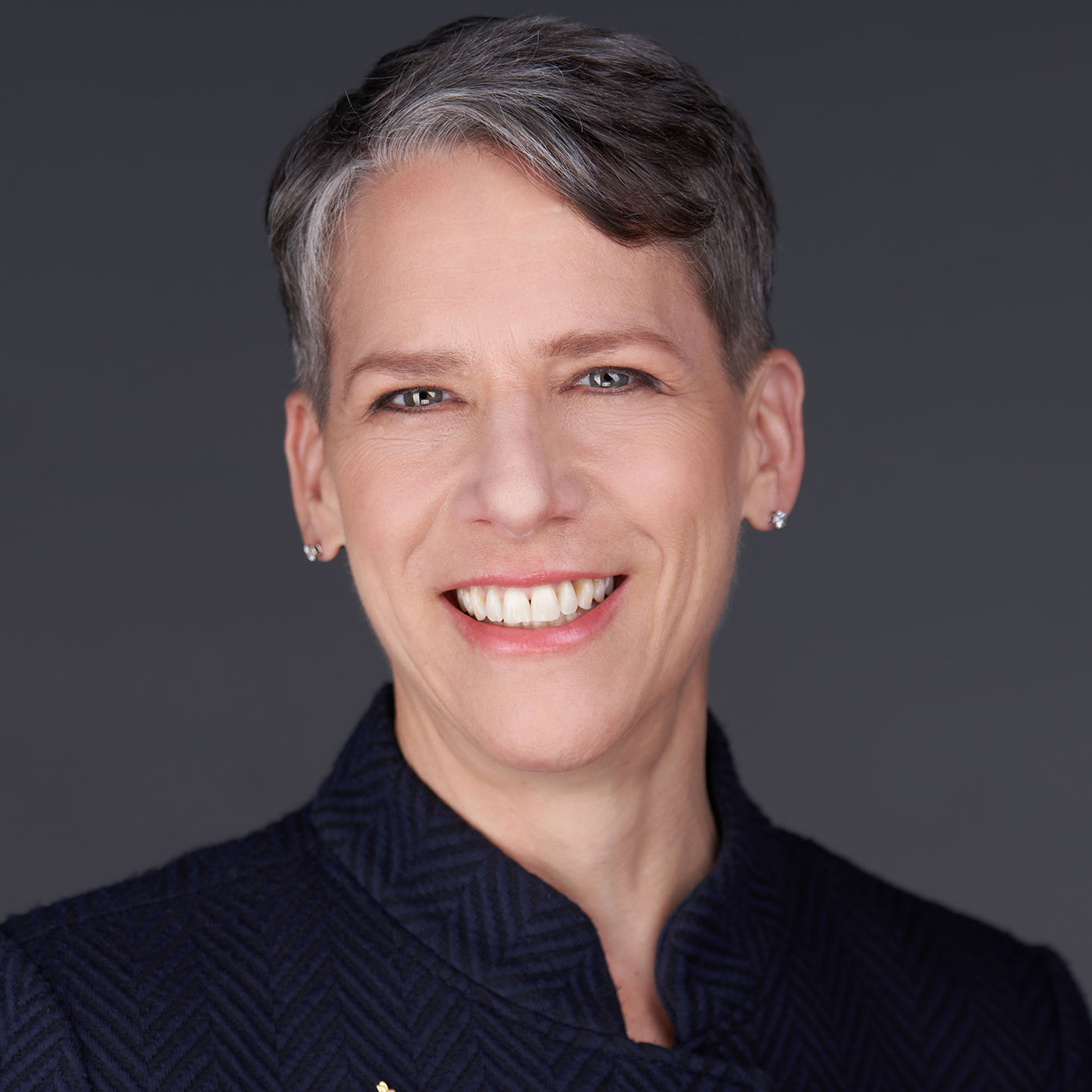
Ambassador Suzi LeVine on the Unsung Power of the States
This year’s US midterm elections were as consequential as any in recent history. But it’s not just the headline-grabbing national races for Congress that will reshape the country in the coming years. There were also thousands of state-level elections on Tuesday, the results of which will have huge implications for Americans on issues including gun control, reproductive rights, the pandemic response, and climate change. On this episode of Trending Globally we’re stepping aside from midterm election analysis (there’s plenty of that to go around) — instead, you’ll hear from an expert on state-level government about the surprising, underappreciated power of US states to change people’s lives. And a warning: whatever your political beliefs, this conversation might actually make you feel optimistic about American government. Ambassador Suzi LeVine '93 is a Senior Fellow of International and Public Affairs at the Watson Institute, and this Fall she’s leading a study group called ‘The Power of the States’. In it, she’s helping students to see the tremendous potential of US state governments to change lives, and the unrecognized potential everyday citizens have to make their voice heard at the state level. Learn more about Ambassador LeVine’s work and her Watson Institute Study Group. Learn more about this episode and all our other episodes on our website. Learn more about the Watson Institute’s other podcasts. A final note: This fall marks Trending Globally’s fifth year at the Watson Institute, and this is the show’s 200th episode. To learn more about our favorite past episodes and stay up to date on ways we’ll celebrate in the coming weeks, follow the Watson Institute on Twitter, Facebook, and Instagram. And thank you all for listening!

What Led to Sri Lanka’s Crisis and Unrest – and Where Does The Country Go From Here?
On the morning of July 9, 2022, tens of thousands of Sri Lankans gathered in front of the country’s Presidential Palace. By the afternoon, they had overwhelmed the guards and entered the grounds. The country’s President, Gotabaya Rajapaksa, fled the property and ultimately, the country. It was the culmination of a protest movement known as the ‘Aragalaya’ which had been growing for months amidst Sri Lanka’s economic crisis and its leaders’ corrupt, inept response. For the next few days, surreal images were broadcast around the world of Sri Lankan citizens of all stripes milling throughout the Palace, picnicking on its lawns, and swimming in its pool. But almost as surprising as the images was how quickly, within weeks, the country seemed to revert to the status quo. Or did it? On this episode, Dan Richards talks with Dr. Paikiasothy Saravanamuttu, an expert on Sri Lankan politics and founder of the Center for Policy Alternatives in Sri Lanka. He explains where the crisis came from, what led to the surreal protests this summer, and where the Aragalaya goes from here. Watch Dr. Saravanamuttu’s talk at the Watson Institute’s Saxena Center for Contemporary South Asia. Learn more about the Center for Policy Alternatives. Learn more about the Watson Institute’s other podcasts.

What Does “Hispanic Heritage” Mean in 2022?
To mark the end of Hispanic Heritage Month, Trending Globally teamed up with the Watson Institute’s Center for Latin American and Caribbean Studies to explore the breadth of ‘Hispanic Heritage’ in 2022. In the first part of the show, Dan Richards talks with Dr. Pablo Rodriguez about how the growing Hispanic and Latinx population in the U.S. is changing the country’s electoral politics. Dr. Rodriguez is a medical doctor, public health advocate, and political commentator based in Rhode Island, and he’s observed and analyzed this transformation first-hand. They discuss the wide-ranging effects of this demographic change, and why its political implications are so hard to predict. In the second half Dan talks with Susan Eckstein, a professor of sociology at Boston University and author of Cuban Privilege: The Making of Immigrant Inequality in America. Her book tells the story of Cuban-American immigration policy since World War II, and the geographic, economic, and geopolitical quirks of history that created it. In telling this singular story, Eckstein casts a new light on all U.S. immigration policy.Questions? Comments? Ideas for topics or guests? Email us at: [email protected] more about Watson’s Center for Latin American and Caribbean Studies. Learn more about and purchase Cuban Privilege: The Making of immigrant Inequality in America. Learn more about the Watson Institute’s other podcasts. Find transcripts and more information about all our episodes on our website.

The Protests in Iran Are About More than Hijabs
From the Watson Institute at Brown University, this is Trending Globally. I’m Dan Richards. On September 13, 2022, a young Iranian woman named Mahsa Amini was detained by the country’s ‘morality police’ for improperly wearing her hijab. Three days later, she was dead. Authorities claimed it was the result of a heart attack, but images of her in the hospital – bruised and bloodied – suggested otherwise. Those images, along with the government’s cover-up surrounding the details of her death, have sparked a protest movement in Iran unlike any the country has seen. On this bonus episode of Trending Globally, Dan Richards spoke with anthropologist and Director of the Center for Middle East Studies Nadje Al-Ali about these protests, and about the unique role gender has come to play in them. These protests are, and always have been, about much more than hijabs, as Nadje explains. They’re part of a much longer story of political resistance in the Middle East. Many of us, especially in the West, would do well to understand that story.Questions? Comments? Ideas for topics or guests? Email us at: [email protected] more about the Watson Institute’s other podcasts. Listen to Shervin Hajipour's song 'Baraye'.

Does Anger Win Elections?
On Sunday, September 25, the far-right Brothers of Italy party won a commanding victory in Italy’s general election. They’ll be the leading party in the country’s right-wing governing coalition, and their leader, Giorgia Meloni, is likely to become prime minister. In Italy’s last general election, in 2018, the Brothers of Italy received roughly 4% of the vote. This year, they received around 26% – more than any other party in the country. Between 2018 and 2022, Meloni and her party rallied voters over common far-right concerns like immigration, the influence of international elites, and the rise of a supposed “LGBTQ Lobby.”Along with ideological concerns, Meloni and her party have employed a consistent mood that’s familiar across our politics: anger. Today, it can seem like cultivating anger is a key to political success. But how effective is it as a political strategy? And how, exactly, is it deployed? These are questions that Watson Professor and Political Economist Mark Blyth, Rhodes Center Postdoctoral Fellow Nicolò Fraccaroli, and Brown University undergraduate Nadav Druker '23 are uniquely suited to answer. Using data from over 18,000 Italian Facebook posts over the last decade, they’ve analyzed the presence of political anger in the rollercoaster of contemporary Italian politics. They then devised a new and fascinating way to measure this anger, and in the process are helping shed light on how the emotion is used, and the effect it can have. On this episode, Dan Richards talked with Mark, Nicolò, and Nadav about Italy's elections, how the results fit into their research on political anger, and what it can teach us about politics in Italy and around the world. Questions? Comments? Ideas for topics or guests? Email us at: [email protected] Mark, Nicolo, and Nadav’s paperListen to the Rhodes Center PodcastListen to Mark and CarrieLearn more about the Watson Institute’s other podcasts
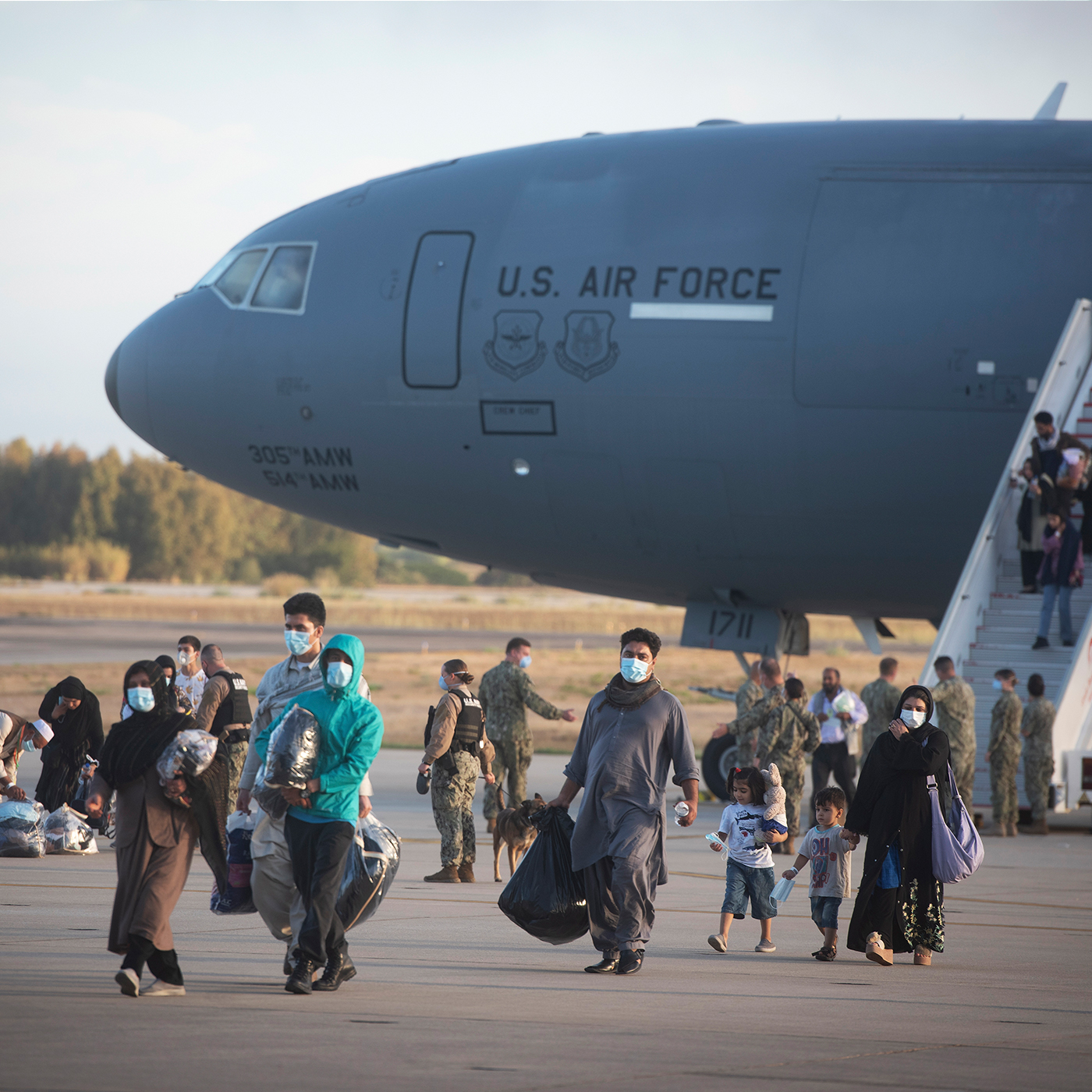
Learning from Afghan Refugee Resettlement in Rhode Island
In the fall of 2021, tens of thousands of Afghan citizens were evacuated out of Afghanistan as the Taliban re-took the country. Many of these people resettled in the United States, and many more will resettle here in the coming years. Yet despite their growing numbers in America, and their unique relationship to the United States, there’s much we don’t know about their specific needs as refugees. On this episode of Trending Globally, you’ll hear from one man who fled Kabul with his family about their journey from Afghanistan and resettlement in Rhode Island. You’ll also hear from researchers at Watson’s Center for Human Rights and Humanitarian Studies and Rhode Island’s Refugee Dream Center, who are working together to learn how these refugees can be better supported after such a traumatic evacuation and rapid resettlement in a new country. In the process of this research, these experts are also learning firsthand what needs to be done to make humanitarian evacuations safer and more humane. Because sadly, whether we’re talking about Myanmar, Ukraine, or countless other places in crisis, there will be many more emergencies requiring humanitarian evacuations in the future, resulting in refugees who must make new lives for themselves in communities around the world. Learn more about the Watson Institute’s Center for Human Rights and Humanitarian Studies. Learn more about the Refugee Dream Center. Meet Omar, Adam, and Alexandria and learn more about their work on Wednesday 9/21 at the Watson Institute. Read a recent article by Brown University on the research collaborationOne final note: This is Sarah Baldwin’s last episode as host of Trending Globally. We’re sad to see her go, but the show won’t be going anywhere. Dan Richards (who you’ve heard before, including on our last episode with Andrew Schrank) will be filling in as our host, and we’ll also be having guest hosts in the coming months. We’re excited for what’s come, and so grateful for everything Sarah brought to the show. Thank you, Sarah!
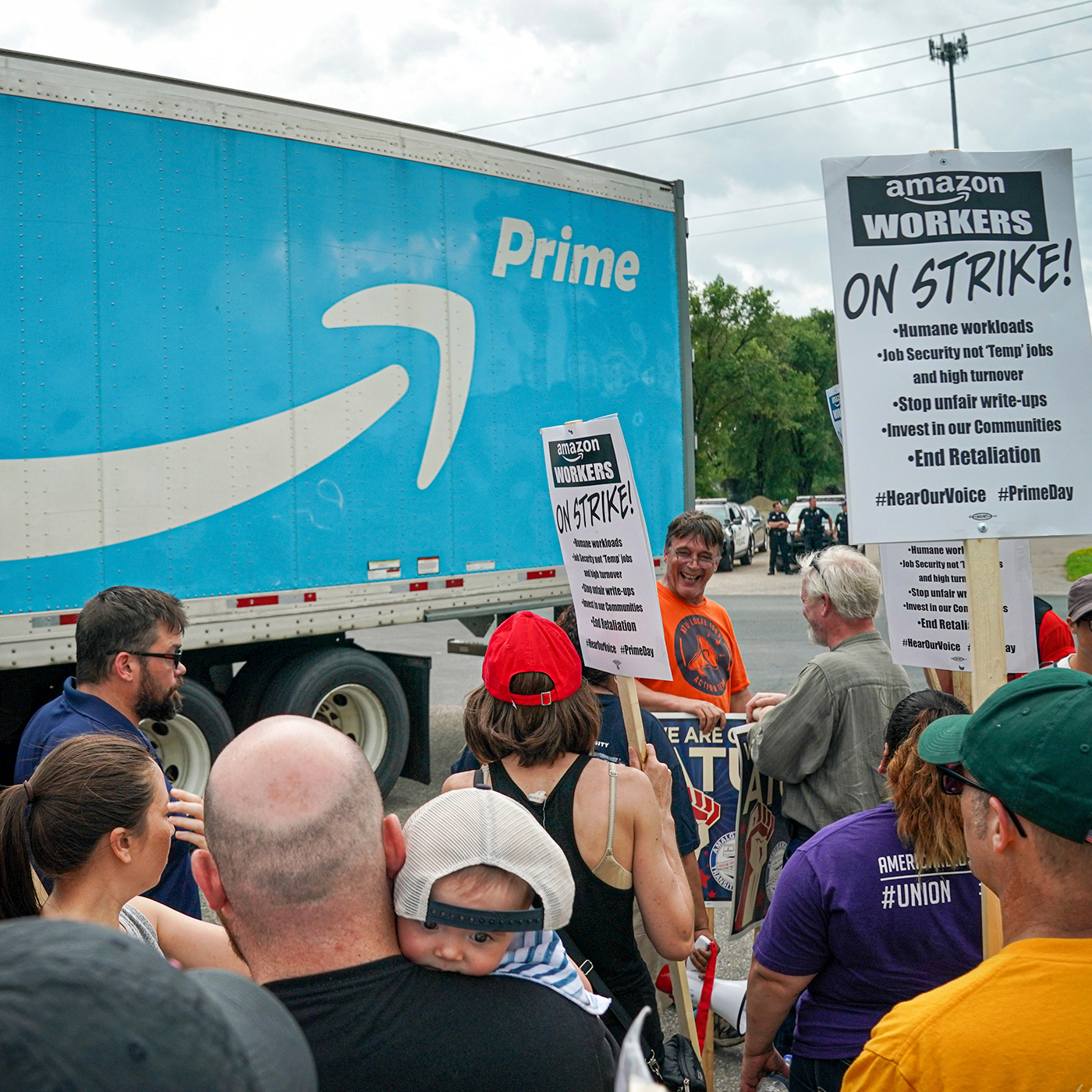
The Past, Present, and Future of Organized Labor in America
High-profile unionization drives at companies like Amazon, Apple, and Starbucks have focused attention on organized labor in the US in a way unseen in half a century. The attention isn’t without merit: there were more successful union elections in 2022 than in any year since 2005, and public approval for organized labor is the highest it's been in over 50 years. Yet despite these signs of a growing labor movement, the percentage of Americans belonging to unions is still substantially smaller than it was during the peak of organized labor participation in the 20th century. So how should one think about the state of organized labor today? On the eve of Labor Day weekend, maybe it’s also worth revisiting why we should care about the state of organized labor in the first place. On this episode of Trending Globally, you’ll hear from Andrew Schrank, professor of sociology and international and public affairs at Watson and an expert on organized labor, about the past, present, and future of the labor movement in America. Because, as he explains, it’s more than just workers’ wages on the line: our country's prosperity and stability might depend on giving workers a greater voice in the future of our economy. Read Andrew Schrank’s 2019 article ‘Rebuilding Labor Power in the Postindustrial United States’Learn more about the Watson Institute’s other podcasts.

The Secret History of the Pope and World War II
In March 2020, the Vatican’s Apostolic Archives of Pope Pius XII – also known as the Vatican’s ‘secret archives’ – were opened to scholars from around the world. Historian and Watson Professor David Kertzer was one of those scholars. What he found there is helping to reframe the role that the Catholic Church – and its then leader, Pope Pius XII – played in World War II. Pius XII’s legacy is heavily debated. Some people want him to be made a saint. Others call him ‘Hitler’s Pope,’ blaming him for aiding the Nazi regime and ultimately, facilitating the Holocaust. What David found is a much more complicated story. He’s put together his research into a gripping new book, The Pope at War: The Secret History of Pius XII, Mussolini, and Hitler. It’s a page-turner of a book, filled with larger-than-life characters, set at a moment in European history when the stakes couldn’t be higher. It’s also completely true. On this episode of Trending Globally: David Kertzer discusses Pope Pius XII and World War II, and what this story can teach us about the need for moral leadership in times of crisis. Learn more about and purchase The Pope at War: The Secret History of Pius XII, Mussolini, and HitlerLearn more about the Watson Institute’s other podcasts
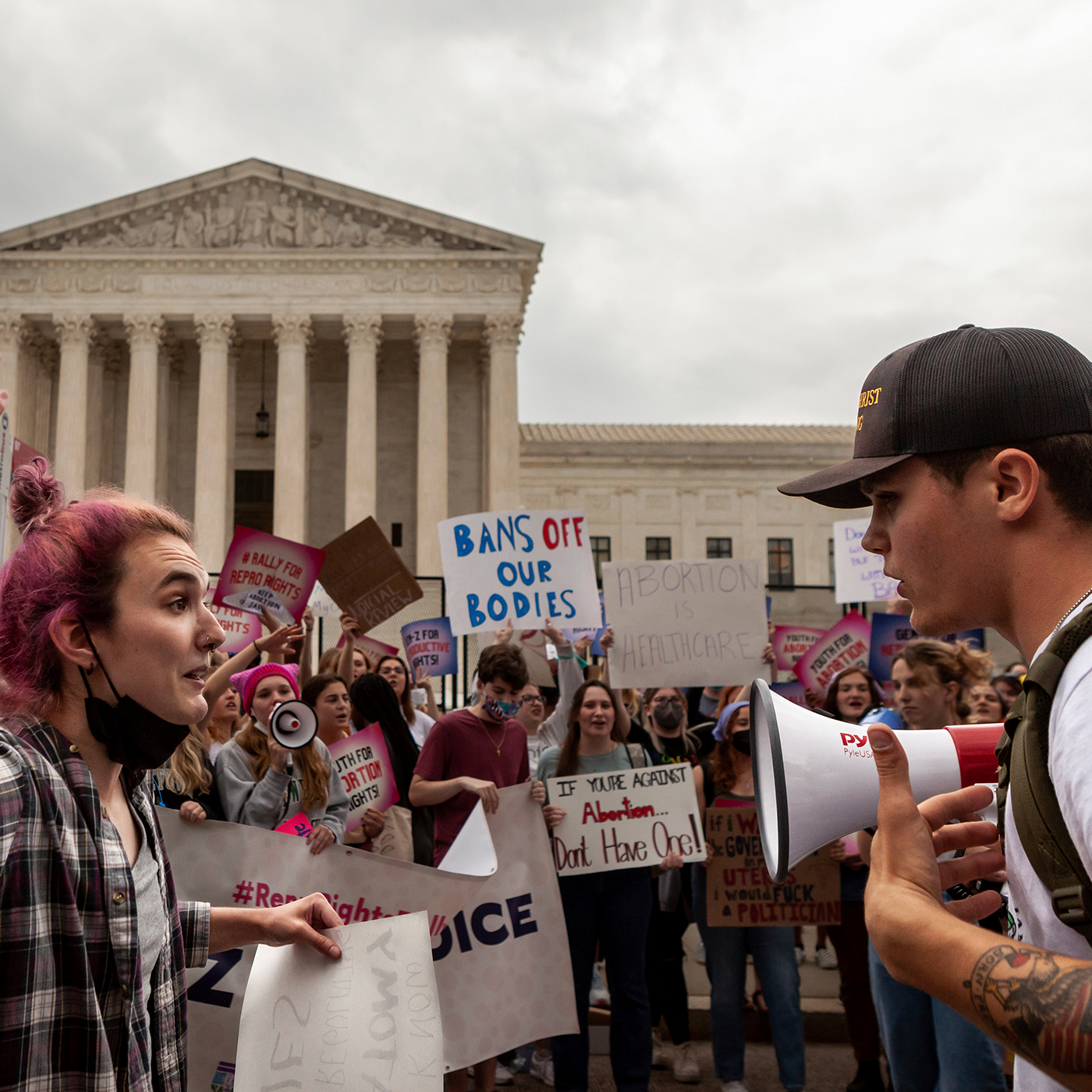
Is the Supreme Court Ready for the 21st Century?
In 1973, the Supreme Court made abortion a constitutional right in its Roe v. Wade decision. This June, in a 6-to-3 decision in Dobbs v. Jackson Women’s Health Organization, the Supreme Court undid that right. The decision set off shockwaves across the country, and brought up questions not only about reproductive rights, but about the relationship between the Supreme Court and US politics at large. Dobbs vs. Jackson was only one of several wide-ranging, polarizing decisions of this Supreme Court term. On this episode of Trending Globally, Wendy Schiller, professor of political science and the director of the Taubman Center for American Politics and Policy at Watson, helps explain this term’s monumental decisions, and ground them in American politics and history. At a moment when the reach of the court seems to extend further than ever and its opinions fall on an increasingly divided nation, there’s never been a more important time to assess how our judicial system works – and how it doesn’t. Learn more about the Watson Institute’s other podcasts
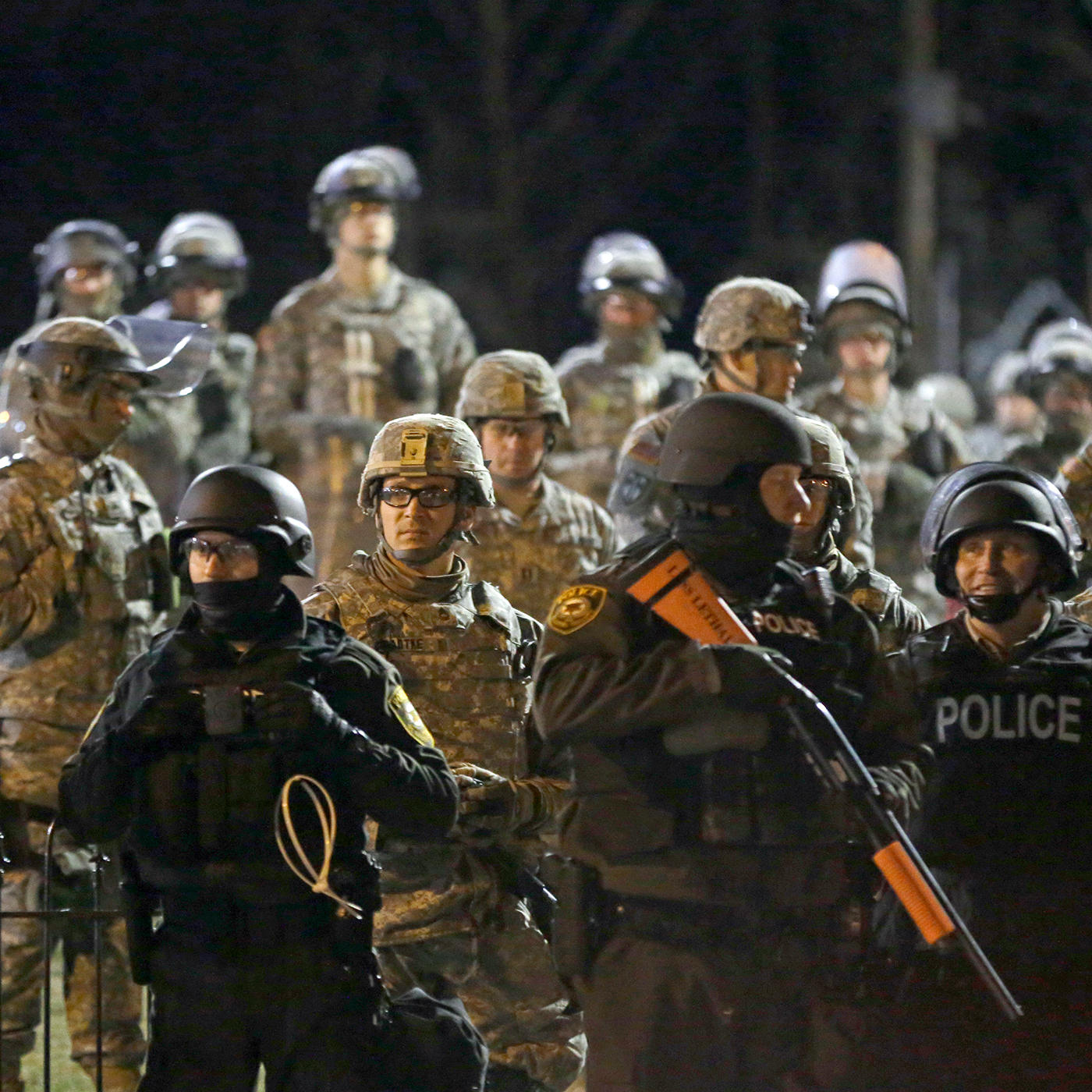
The Domestic Costs of America’s Post-9/11 Wars
This past year, Trending Globally has been teaming up with the Costs of War Project to explore the effects of 20 years of America’s post-9/11 wars. Past episodes have explored America’s growing military presence around the world, the refugee crisis these wars have created, and the effects they’ve had on our planet and environment. This episode takes a closer look at how these wars have changed life in the United States – in cities, towns, and communities across the country. The first part of the episode focuses on a transformation that’s become all too visible in the past few years: the militarization of America’s police. The second part of the episode focuses on a less-visible phenomenon, but one that’s killed more servicepeople and veterans than all 20 years of combat combined. Guests on this episode:Dr. Jessica Katzenstein Dr. Ben Suitt Learn more about the Costs of War ProjectLearn more about the Watson Institute’s other podcasts

Can We Make Social Media Safe for Democracy?
For many politicians, policymakers, and voters, the 2016 election of Donald Trump was a shocking lesson in the massive role tech companies, like Facebook and Twitter, play in our politics. Since then, their role has only gotten bigger. And as our guest on this episode of Trending Globally explains: that’s a huge problem for democracies around the world. Frances Haugen worked as a product manager in Facebook’s Civic Integrity Department from 2019-2021. While there she saw firsthand how Facebook’s algorithms are designed to maximize user engagement at all costs, with disastrous effects.In 2021 Frances anonymously leaked tens of thousands of internal documents to The Wall Street Journal, and became known as the ‘Facebook Whistleblower.’ Since then she’s testified before Congress, and helped start a global movement to better understand and regulate ‘Big Tech.’On this episode of Trending Globally, political economist and Rhodes Center Director Mark Blyth talks with Frances about the problems tech giants like Facebook pose to our politics, and what we can do to fix them. This episode was originally broadcast on the Rhodes Center Podcast, another show from the Watson Institute. If you enjoy this interview, be sure to subscribe to the Rhodes Center Podcast for more just like it. Find transcripts and more information about all our episodes on our website. Learn more about the Watson Institutes other podcasts. Read the Wall Street Journal’s expose on Facebook.
One Economist Makes the Case for Expanding Immigration
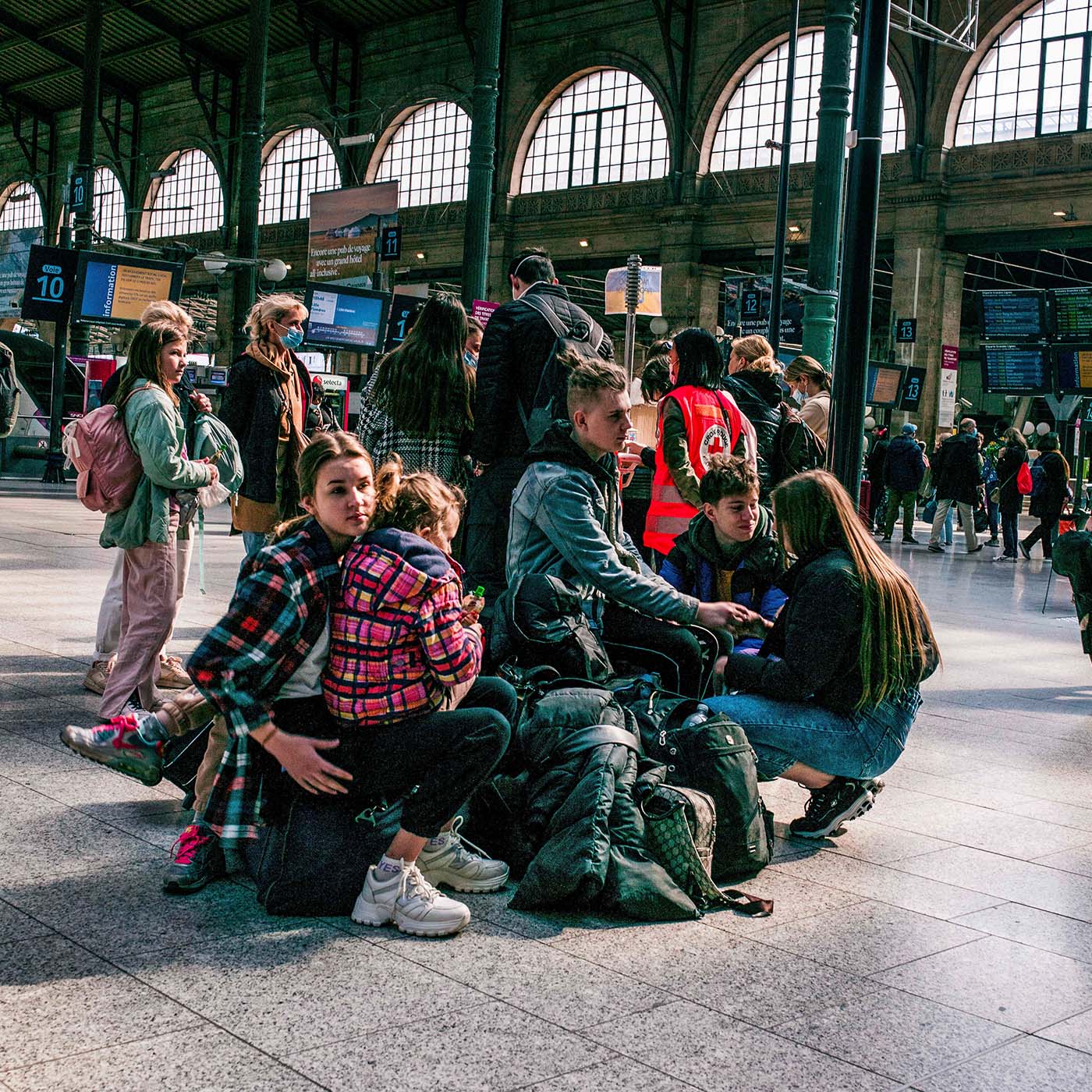
Today, there are over 25 million people living as refugees around the world. Humanitarian crises in Ukraine, Afghanistan, Syria, and countless other countries have led to this staggering figure. No matter the circumstance, it’s a human tragedy – one which we don't seem to have a plan for how to fix.Failing to provide new homes for refugees isn’t only bad for refugees, according to Watson economist Dany Bahar. It’s also a lost opportunity for the countries that could be accepting them. That’s because, as Dany explains on this episode of Trending Globally, immigration of all kinds provides profound economic benefits to host countries in a variety of ways. By looking at data from immigration patterns and refugee crises around the world, Dany and his colleagues are making the case that immigration is a consistent boon for countries, as long as host countries provide the right policies to help immigrants thrive. In the case of the United States, Dany believes that expanding immigration is more than just an economic opportunity — our ability to lead the world as an economic superpower may very well depend on it. Read Dany’s recent article on the topic at Foreign Affairs.Learn more about the Watson Institute’s other podcasts.

Will America Ever Learn from the Mistakes of its ‘Forever Wars’?
Last August, the United States pulled out of Afghanistan, ending its longest-ever military engagement. For a moment, it seemed like the US might be entering a period defined more by its domestic agenda than its international entanglements. But then, of course, Russia invaded Ukraine. The US is getting more involved by the day in this new conflict, and Americans are once again debating what role their military should play in the world. One central question hovering over this debate: as we try to support Ukraine and its people, can we avoid making the same mistakes we made when intervening in Afghanistan and Iraq? Watson Senior Fellow Richard Boucher thinks it’s possible. But first, we need to make sure we’re learning the right lessons. And doing that requires looking back even further in our history than Afghanistan. As Richard explains, understanding how the “Vietnam generation” ended up leading the charge into Afghanistan and Iraq has a lot to teach us about the lessons we should take from past conflicts, and why it can be so difficult to learn them the first time around. From 2006 until 2009, Richard Boucher served as the Assistant Secretary of State for South and Central Asia, where he played a leading role in defining American strategy and diplomacy in Afghanistan. Before that he was the longest-serving Assistant Secretary of State for Public Affairs in American history. You can find more of his analysis and insights on his blog. Learn more about the Watson Institute’s other podcasts.

Debating Progressive Public Policy with Glenn Loury and Briahna Joy Gray
On this episode, Trending Globally was thrilled to welcome a special guest host: Glenn Loury, professor of economics at the Watson Institute. In addition to being a celebrated economist, Loury is also one of America’s most insightful and incisive thinkers on race and public policy. His guest on this episode, Briahna Joy Gray, is a progressive writer and commentator, and former National Press Secretary for the Bernie Sanders 2020 presidential campaign. Glenn and Briahna discussed some of the Left’s most prized policy ambitions, including student debt relief, Medicare-for-all, and increasing taxes on America’s wealthiest citizens. Neither Glenn nor Briahna’s political views fall neatly into America’s two main political parties, so while they don’t see eye to eye on most of the issues, the resulting conversation strays from typical partisan talking points. Instead, you’ll hear two independent thinkers respectfully debating America’s biggest policy problems, sometimes taking positions that cut across the partisan grain. Hopefully it will help you see some of America’s most long-standing political dilemmas in a new light. Briahna is the host of the podcast ‘Bad Faith,’ and Glenn is the host of his own podcast, ‘The Glenn Show.’ Their conversation was edited down for this episode of Trending Globally, but you’ll be able to hear the full, unedited version on each of those podcasts soon. You can find them wherever you listen to podcasts. Find more conversations like this on Glenn Loury’s Substack.

Earth Day Special: What the War in Ukraine Means for a Green Energy Transition
This year, Earth Day marks the beginning of the ninth week of Russia’s invasion of Ukraine. A geopolitical and military crisis that quickly transformed into an energy crisis, this conflict will have far-reaching repercussions for both humanity and our climate. On this episode, Sarah Baldwin ’87 and Dan Richards talk with experts on the politics, economics, and science of fossil fuel about the relationship between war, technological change, and climate change. Sarah talks with Jeff Colgan, political scientist and director of the Climate Solutions Lab at Watson, about how Russia’s invasion of Ukraine (and the resulting sanctions imposed upon them) have altered the global fossil fuel market. They also discuss what Jeff sees as the two different ways this crisis could impact our fight against climate change: one that will leave you hopeful, while the other…less so. In the second half we highlight the work of Deborah Gordon, a senior fellow at Watson and an expert on both the policies and technologies that undergird the fossil fuel industry. In her book ‘No Standard Oil,’ Deborah corrects the flawed assumptions many of us have regarding the fossil fuel industry, and how these assumptions get in the way of finding a realistic way to fight the worst effects of global climate change. Learn more about and purchase Deborah Gordon’s book, No Standard Oil:Managing Abundant Petroleum in a Warming World.Learn more about and purchase Jeff Colgan’s book, Petro-Aggression: When Oil Causes War.Learn more about the Watson Institute’s other podcasts.