
Today's Creation Moment
1,936 episodes — Page 14 of 39
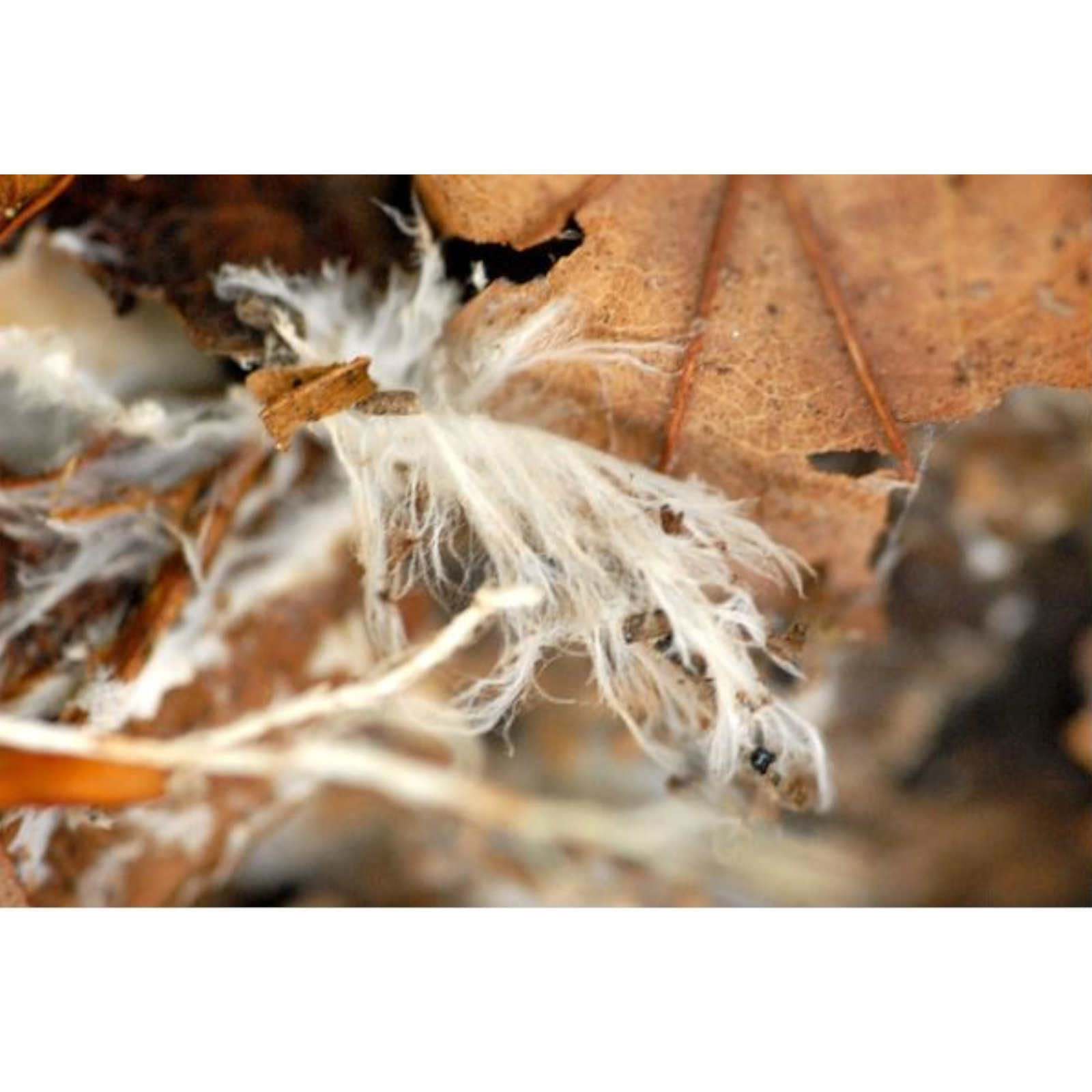
Busy Mushrooms
If it weren't for mushrooms, there would be so many un-decayed dead trees that there would be no room on Earth for anything else to grow. But mushrooms don't just recycle dead trees. They help make the trees grow in the first place. Ref: Discover, 2005, pp. 48-53, Greg Mueller, "Dr. Mushroom.". Photo:Mycelium by James Lindsey CC BY SA 3.0

The Importance of Being Father
How important is father to a child's religious growth? Due to the way in which census information is gathered in Switzerland, researchers were able to find out. And while their conclusions might shock modern sensitivities, they are really not too surprising. Ref: Touchstone Magazine, 2003, Robbie Low, "The Truth About Men and Church." Photo: Father and Child by Ljor Pixabay.com
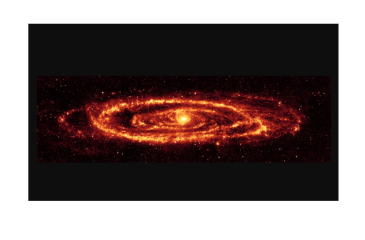
Fresh Dust?
The last few years have seen a good deal of excitement among astronomers over the possibility of discovering planets orbiting distant stars. Astronomers are looking at stars that are surrounded by disks of dust and debris. The idea is that planets form over millions of years from the dust and rock that orbits a star. This was supposedly how the Earth formed billions of years ago.
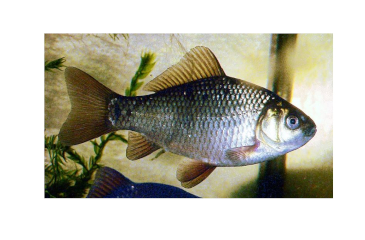
Oxygen Optional Carp
The long, cold winters of Scandinavia not only freeze the lakes, but pile so much snow on the lake ice that no light can penetrate to the cold, unfrozen water beneath. This means that the creatures below the ice can use up all the oxygen in the lake water. How do the fish in the water survive? Photo: Crucian Carp_by Viridflavus CC BY-
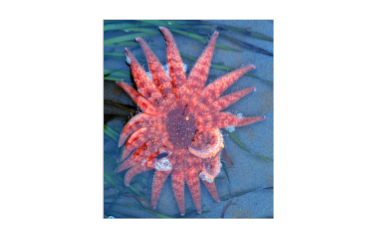
The Monster with 24 Arms
A real monster prowls the ocean floor from the Aleutian Islands to Southern California. It is a terror to even relatively large bottom dwellers. It eats many things, including hermit crabs, clams, sea cucumbers, sea urchins and even abalone. This monster goes by the seemingly innocent name of the Sunflower Star.
Man: The Missing Years
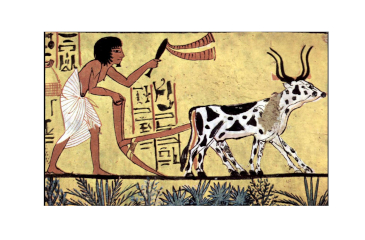
According to the evolutionary timetable, mankind has been on Earth for about 100,000 years. Archeologists and Paleo-archeologists claim that 100,000 years ago the earliest true men began to bury their dead, often with flowers and other trinkets, suggesting that he was capable of abstract thought. Paintings on cave walls and ceilings show that early man was capable of creating exquisite art. Other excavations have yielded scale models, toys and jewelry. It is strange, then, that for these 95,000 years, man left no written record of himself.

Man Is More than Matter
Evolutionary scientists studying the workings of the human brain are trying to find out what the human "mind" is. The problem is that everyone, including scientists, knows that human beings are conscious people with minds. Yet, strict, materialistic science says that there is no scientific evidence for the mind.
Catastrophe!
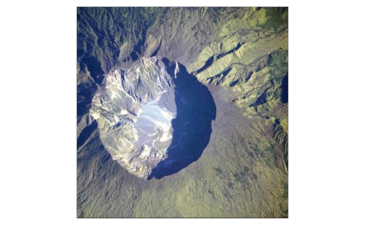
The year of 1816 was called the "year without a summer." Weather records and newspaper clippings offer us a record of the unusual weather that struck all over the Earth in 1816.

An Intelligent Plant
Scientists have known for some time that hummingbirds prefer bright-colored flowers. On the other hand, all of us know that white is most easily seen at night. That means that moths that pollinate flowers will more easily find white flowers. The question is: What is a flower to do when it is pollinated by hummingbirds during part of its flowering season and by night-flying moths later in its flowering season?
The Marvelous Bat
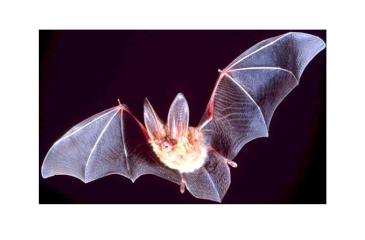
Bats are among the most underappreciated and misunderstood creatures in the entire world. Yet, they are most worthy of our appreciation. Nearly all of the 1,400 species of bats eat either insects or fruit, only three type of Central and South American bats feeds on blood – usually the blood of cattle.
Who Said the Earth Was Flat?!
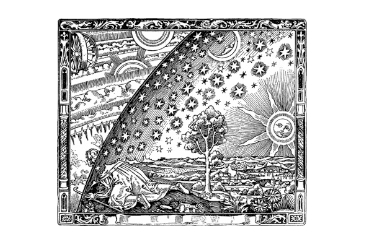
Many of us have heard the old legend about why Christopher Columbus was told he could not sail too far west. According to the legend, Columbus was repeatedly told that he could not sail west to India because the Earth was flat. If he sailed too far, he would fall off the edge. That story was a piece of fiction cooked up by Washington Irving in the 1830s.
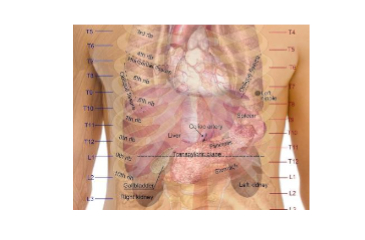
Your Busy Liver
Tucked neatly beneath the ribs, your liver performs more than 500 different tasks. It is a vital link between your heart, lungs and digestive system.
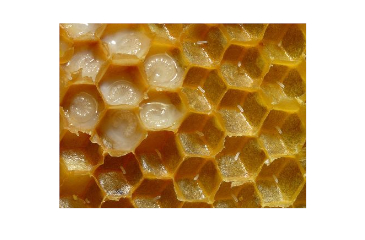
Those Astonishing Bee Engineers
The amazing structure of the honeycomb has fascinated scientists for thousands of years. In the third century, the astronomer and geometer Pappus of Alexandria became the first to offer an explanation for why the honeycomb has a hexagonal shape. Photo: Honeycomb with eggs and larvae. Courtesy of Waugsberg. Licensed under the GNU Free Documentation License, Version 1.2.
The First Five Years of Creation
How old did the Earth look five years after the creation? Geologists tell us that it takes hundreds of thousands of years to wear down new rock into sand and soil and for the sea to cut a beach. If this was true, one would not expect to see beaches or soil on an Earth that was only five years old. Or would we?
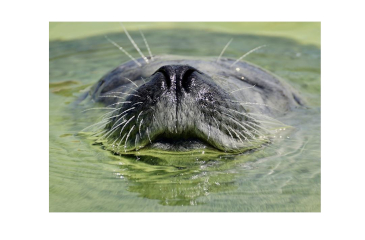
The Greatest Deep-Sea Divers
Even though it's a mammal and not a fish, the Weddell seal of the Antarctic is one of the greatest deep-sea divers in the world. Weighing up to 1,200 pounds, the Weddell seal can cruise under water for up to 70 minutes. It is able to reach depths as great as 1,600 feet. For comparison, the record for a human being is a 13-minute, 43-second dive down to 282 feet.

Could Adam Have Lived that Long?
Most of the effects of aging are due to genetic mistakes that accumulate over generations. This is in addition to the age limitations God imposed on human beings after the Genesis Flood. These early generations, so close to Adam and Eve, would have accumulated comparatively few genetic mistakes.
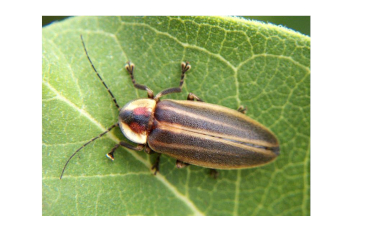
How to Speak Firefly
Those light flashes created by fireflies are actually a quite complex language. The more than 200 species of firefly each have their own language. Each species uses a different combination of color, intensity and flash intervals. Photo: Firefly by Bruce Marlin_CC By SA 2.5.J
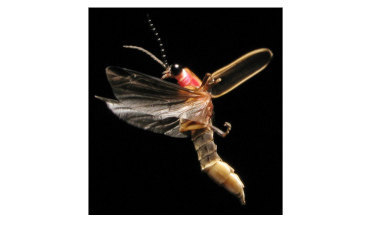
The Efficient Firefly
Fireflies are able to read the light signals of other fireflies. These signals may contain several messages. Photo: Eastern Firefly by art farmer – CCO By SA 2.0.
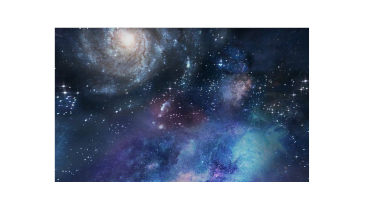
God's Unlimited Generosity
There is nothing our Creator God does that is not intended to bring us closer to Him. Why? Because His purpose in making humans was to make someone to love. We exist because He wanted to love us and be loved by us.

The Gift of Smell
The ability to smell is one gift we often take for granted. That's probably because we usually identify things more quickly with one of our other senses. At the same time, dinner wouldn't be the same without the smells.

The Gift of Humor
Medical researchers are finding out just what a wonderful gift laughter is. Laughter, it has been found, is excellent exercise for the lungs. It clears the respiratory system and is emotionally healthy. Laughter relaxes muscles. It is a proven reliever of emotional tension. Research also suggests that laughter has healing effects, possibly boosting the immune system.
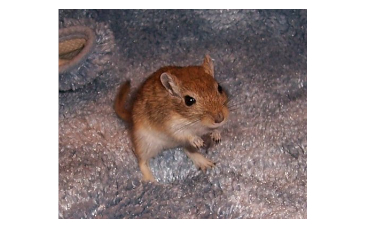
How To Talk Gerbil
For a long time, researchers were confused about the sounds gerbils make because they were only hearing a small part of the communication. This is because our human ears hear sounds that go up to about 20,000 cycles per second. However, gerbils do most of their talking at as high as 32,000 cycles per second. Their talk is too high-pitched for us to hear.
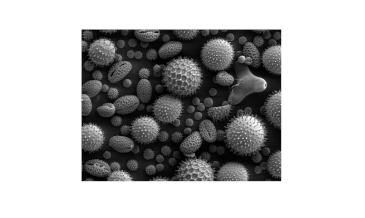
Tiny Bombs
The discovery of tiny pollen grains in rock shows just how inflated the billions of years claimed by evolutionists really are.
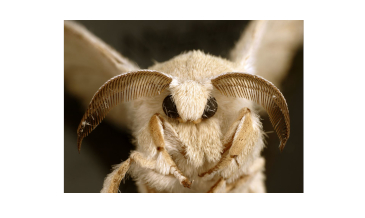
Chemical Communication
There are many methods of communication, some of which we human beings don't often think about. One of these is chemical communication. Photo: Silkworm moth by CSIRO – CCA 3.0 Unported

Nature's Velcro
Humans were not the inventors of the hook-and-loop fastener. The plants which God made were the first to use this principle.

Plants Skilled in Animal Chemistry
It occurred to scientists only about 30 years ago that insect pests might be controlled through hormones.

Plant Self Defense
Every day, all over the Earth, plants engage in chemical warfare against insects and animals that would eat them.
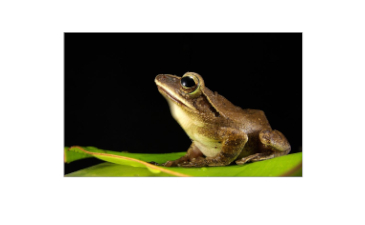
Frog Hibernation
Did you ever wonder where frogs go in the winter?
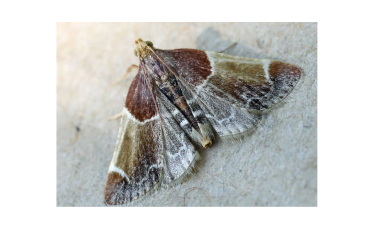
Can Evolution Predict the Future
We have often pointed out the many plants and animals that are interrelated. Their lives depend upon one another. Very often they are interrelated in such a way that creation offers the only reasonable explanation for their special features. Evolution can call on "lucky coincidence" just so many times to explain these relationships. It makes far more sense to say that all living things were carefully planned and designed by an all-wise Master Designer. Photo: Pyralis farinalis moth – courtesy of Entromart_Wikimedia.

The Very Hairs of Your Head
In showing how the Creator is intimately involved with His creation, Jesus Christ said that the very hairs of our heads are numbered by Him.
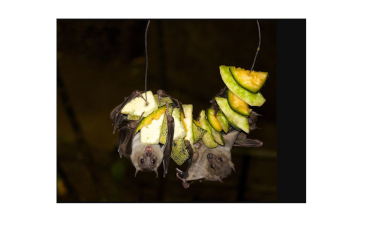
Bats Who Feed Trees
Fruit bats are the collection and transport system for the raw materials that make possible the tropical rain forest.
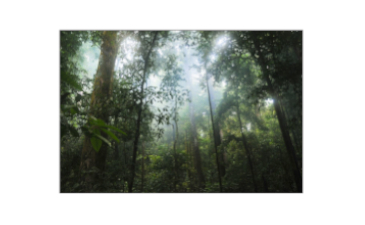
A Community in the Air
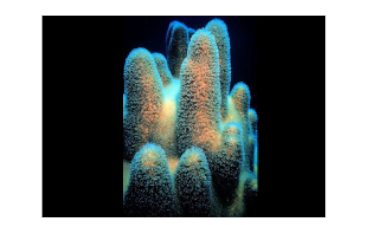
Complex—But No Evolution
According to evolutionists, coral is one of the earlier creatures on the evolutionary time line. If evolutionary theory were fact, one would expect the corals to be very simple. One would also expect them to have changed a lot in over half a billion years of life. However, corals are not at all simple creatures. REF.: What’s in a name. Science Digest, Feb., 1985. p. 87. Photo: Pillar coral. (PD) © 2024 Creation Moments. All rights reserved.
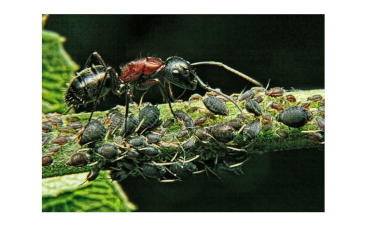
Ants and Their Livestock
Honeydew is one of the favorite foods of ants. There are a number of insects, including thorn bugs and aphids, who consume so much honeydew that they cannot digest it all. These insects are designed so that ants can milk them for the excess honeydew, just the way a farmer obtains milk from a cow. REF.: Thorn bug. Science Digest, Jan., 1985. p. 81. Photo: Ants and Aphids by Agrinberg - CC 2.0 © 2024 Creation Moments. All rights reserved.

A Flood of Flood Legends
If the Bible’s account of a worldwide flood is true, it was witnessed by every person on earth, but only Noah and his family, who survived in the ark, were able to pass down the story of this event to their descendants, who spread across the whole face of the earth. Researchers have catalogued some 270 stories of an ancient destructive flood in various cultures around the world. A large majority of these stories have been shown to predate any Christian influence. REF.: Roth, Ariel A. 1990. Flood stories—can they be ignored? Origins, v. 17, n. 2. p. 51. Photo: Waterfall by Simon Berger – Pixabay.com © 2024 Creation Moments. All rights reserved.
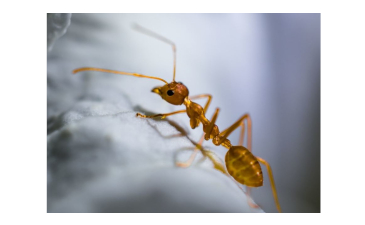
Those Amazing Ants
Like bees, ants have a sophisticated society, which includes workers, nurses, soldiers, hunters, farmers, and even builders. Each of these different classes have specialized organs for their work. REF.: Wilson, Edward O. 1990. Stalking the mighty ant. Discover, March. Photo: Ant by Josch – Pixabay.com © 2024 Creation Moments. All rights reserved.
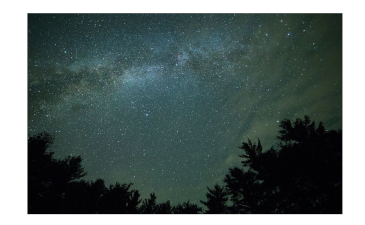
Scientists Question Age of Universe
If your measuring stick is inaccurate, you could end up with too much wallpaper or too little. If your map tells you that your destination is 200 miles away when it’s really only 50 miles away, you might drive right past it. If your map of the universe is inaccurate and stars are a lot closer than you expect, you will arrive at the wrong age for the universe. REF.: Virgo images suggest smaller universe. Science News, v. 139, June 15, 1991. p. 381. Photo: Milky Way – Pexel – Pixaby.com © 2024 Creation Moments. All rights reserved.

Listening to Plants
Some people have the green thumb in their family. Others may complain that they fail with plants because plants don’t tell them when they need care. Of course, most people can do well with family pets, who are enthusiastic about letting their needs be known. Now scientists have learned that plants do indeed cry out when they need attention. We just haven’t heard them because the sounds made by a thirsty plant are about five times higher-pitched than we can hear. But scientists with tiny, specialized microphones have heard corn plants calling for water. REF: Scientists say plants may tell of watering needs in future. Wichita Eagle-Beacon, Jan. 12, 1986. Photo: Corn by couleur -Pixabay.com © 2024 Creation Moments. All rights reserved.

Baby Immunizes Mother
Most of us are familiar with the body’s response to foreign tissue. Transplant patients must be carefully matched and then patients still must be given powerful drugs to prevent destruction of the transplanted tissue. Our bodies’ immune system identifies tissue that’s not its own and then tries to destroy that tissue. REF.: Wechsler, Rob. 1988. Hostile womb. Discover, Mar. p. 83. Photo: Baby and Mom Hands – Pixabay.com © 2024 Creation Moments. All rights reserved.

Moths Poison Eggs
In a clever scheme of self-protection, the more poisonous the male rattlebox moth is, the more prized he is by the female rattlebox moth. REF.: Different strokes for six-legged folks. Discover, June 1988. p. 12. Photo: Rattlebox moth by Judy Gallaghe CC 2.0 © 2024 Creation Moments. All rights reserved.
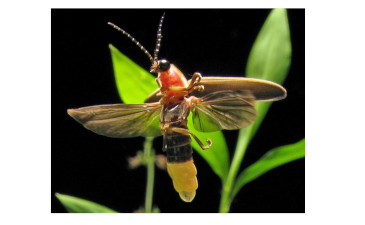
Medical Light on Gene Research
Fireflies may help light the way to new medical break-throughs. The gentle glow of a firefly on a summer evening is produced by the chemical luciferase. The firefly has a gene with the code that makes this chemical. When that gene is added to the genetic information of other plants or animals, the cells begin to glow harmlessly. Researchers have been using the firefly gene to test their ability to add genetic information to a cell. REF.: Glowing evidence of gene-altered arteries. Science News, v. 139, June 22, 1991. p. 391. Photo: Eastern Firefly by Art Farmer CC By SA 2.0 © 2024 Creation Moments. All rights reserved.
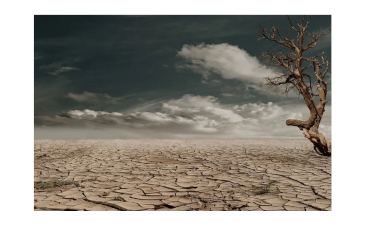
Greenhouse Thermostat Discovered
Knowing the elegance with which God designed everything in creation, creationists suspected that God probably designed the earth with built-in thermostats that help keep it from warming up too much. When the Pacific Ocean warms more than normal, it sends increasing amounts of water vapor into the air. If heating continues, the water vapor will actually cause the heating to increase until vapor is forced higher into the atmosphere, creating icy cirrus clouds. These clouds reflect enough incoming sunlight to shut down the temperature increase and return things to normal. REF.: Clouds keep ocean temperatures down. Science News, v. 139, May 11, 1991. p. 303. Photo: Desert – Pixabay.com © 2024 Creation Moments. All rights reserved.

Designed for Flight
Many textbooks tell young people today that birds are modified reptiles. Suppose, they say, that millions of years ago the scales on some reptiles began to fray along the edges. In time, they say, the frayed scales turned into feathers and birds were born. REF.: Vandeman, George. 1991. The miracle of flight. Signs of the Times, May. p. 25. Photo: Dove – Pixabay.com © 2023 Creation Moments. All rights reserved.
The Most Famous Hurrian
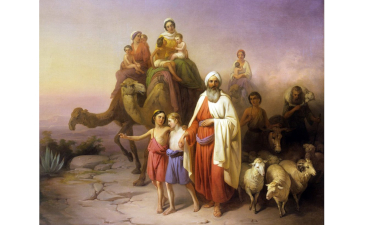
Excavations north of Baghdad, in Iraq, are helping us to understand one of the most famous Old Testament characters. The more than 4,000 ancient documents that have been found there shed detailed light on the life and times of Abraham. Abraham was from Haran, which was an important city in the Hurrian empire. REF.: West, Stuart A. 1981. The Nuzi tablets. Bible and Spade, v. 10, n. 3-4. p. 65. Photo: Departure of Abraham by Jozsef Molar - oil on canvas - PD © 2023 Creation Moments. All rights reserved.
Flying Spiders
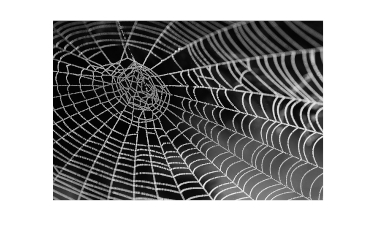
Spider silk begins as a liquid protein made by silk glands on the spider’s abdomen. Spiders make many kinds of silk for different uses. As the liquid silk is forced through the spider’s spinnerets, it begins to dry. The spinnerets pull and stretch the silk, creating just the right kind of silk for the spider’s use. Though the result seems thin and weak to us, ounce for ounce, spider silk is stronger than steel. REF.: Pinkston, William S., Jr. 1980. BIOLOGY for Christian Schools. Greenville, SC: Bob Jones University Press. p. 413. Image by ClaudiaWollesen_pixabay.com © 2023 Creation Moments. All rights reserved.
Life that Can’t Exist
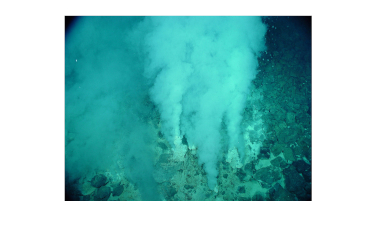
The founders of modern science, on the whole, believed in the Creator. The methods they developed were based upon the truth that the creation is voluntary. This means that God was not confined to what we have later defined as “scientific laws.” God could make anything He wanted in any way He wanted. Science cannot be done from the philosopher’s easy chair. Scientists must go out into the field and study how nature works. When science follows this path, it is open to astonishing discoveries. REF.: Thomas, Lewis. 1983. On life in a hell of a place. Discover, Oct. p. 42. Image: Champagne_vent_white_smokers _ PD © 2023 Creation Moments. All rights reserved.
Self-Centered Ants
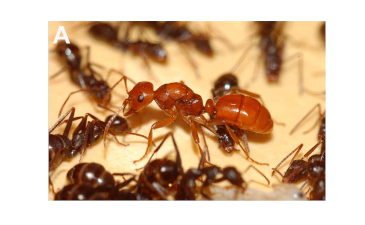
It’s a challenge, even for the Christian, to get along with lazy, selfish people. This is because they also tend to be quarrelsome, especially when their desires are not met. Now scientists have discovered that the phrase “industrious as an ant” does not apply to all ants. They report that they have found an entire ant society that is lazy, selfish and quarrelsome. REF.: Antagonistic ants. Discover, Nov. 1983. p. 14. Photo: Slaves and slave maker ant by Adrian A. Smith-CCA 2.5 © 2023 Creation Moments. All rights reserved.
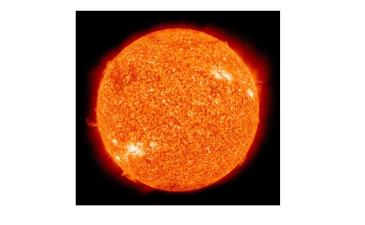
Mystery of the Missing Neutrinos
“Where there’s smoke, there’s fire.” We’ve all heard this familiar saying. In the case of the sun’s fire, scientists expect to find not smoke but tiny particles called neutrinos. The problem is, most of those neutrinos are missing. REF.: Peterson, Ivars. 1989. Making sunshine. Science News, v. 136, Oct. p. 280. Image: Sun – Pixabay.com © 2023 Creation Moments. All rights reserved.

Robot Bee Communicator
Scientists have, for the first time, successfully communicated with honeybees in their own language! Scientists have for some time known how to interpret many of the elements of the bees’ so-called “waggle dance.” This dance is used by scouts to communicate the location of food sources to the food gatherers in the hive. REF.: Weiss, Rick. 1989. New dancer in the hive. Science News, v. 136, Oct. p. 282. Photo: Bees – Pixabay.com © 2023 Creation Moments. All rights reserved.
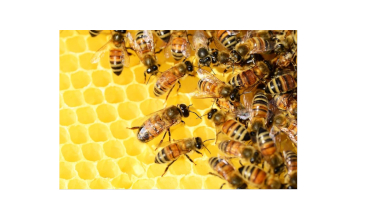
Winged Troops
We have long known that the community within a honeybee hive divides the labor among specialized workers. There are scouts who search for food. Nurses tend the young. Some bees specialized in cleaning. There are even undertaker bees who remove and dispose of dead members of the hive. Scientists have now discovered that honeybee colonies also have brigades of specialized “soldiers.” These bees often seem to be sitting around, not doing much. In fact, they have only one duty—attack large intruders. It appears that these bees are fed and cared for by the hive members while they wait for the alarm. Should a raccoon, bear or human threaten the hive, thousands of soldier bees swarm around the enemy and sting. REF: Soldiers swarm to rescue. The Argus (Fremont, CA), Mar. 17, 1991. Photo: Honey bees by Polly Dot - Pixabay © 2023 Creation Moments. All rights reserved.