
Time To Say Goodbye
346 episodes — Page 7 of 7
Scenes from the Culture War: Tommy Craggs
0:00 — We welcome friend of the show Tommy Craggs, enterprise editor at Mother Jones magazine. We first get Tommy’s thoughts on last summer’s inadvertent strike in the NBA and assess the future of our favorite beleaguered sports league.25:10 — We discuss Tommy’s new piece, “What’s the Matter with Cultural Politics?,” in which he interrogates the “culture contra” stalemate: the idea that what the Democrats need to do is drop the “culture” and “identity” stuff and get back to (white) meat and potatoes. Should we defend “woke” culture? How to distinguish between “good” (materialist) versus “bad” (coopted) identity politics? Can we even tell the difference?Send us your comments and [email protected] Twitter @TTSGPOD This is a public episode. If you'd like to discuss this with other subscribers or get access to bonus episodes, visit goodbye.substack.com/subscribe

Lux magazine and lockdowns with Sarah Leonard
Today, Doctors Liu, Kang, and Kim are joined by Doctor Sarah Leonard, publisher of the soon-to-launch Lux magazine (named after socialist extraordinaire Rosa Luxemburg).0:00 – We respond to accusations of COVID-19 denialism by comparing the US’s lockdown + welfare policies to those of the rest of the (Euro-American) world: Tammy on Canada’s robust wage subsidy and deficit spending; Andy on Sweden’s controversial decision to do voluntary lockdowns (even leftists are fighting over it); and Jay on the German advantage of strong infrastructure.39:45 – Sarah talks about why she created Lux magazine, a socialist, feminist glossy! (Think: Marxist Vogue.) We discuss girl-boss corporate feminism, why there should be more than one socialist outlet, the virtues of social reproduction theory, and who deserves pleasure. Preview issue one here! Subscribe here! Subscribe to TTSG here: https://goodbye.substack.com/aboutSend audio questions and regular-old comments to [email protected] and @TTSGpod! This is a public episode. If you'd like to discuss this with other subscribers or get access to bonus episodes, visit goodbye.substack.com/subscribe
Filipino nurses and "Better Luck Tomorrow"
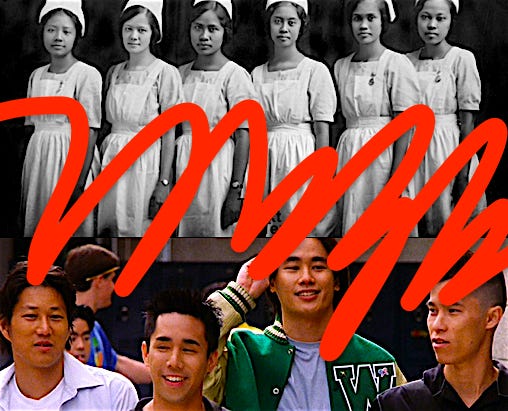
Hello from Neera Tanden’s shoe closet!0:00 – The gang’s back together, with geographic and pandemic updates. 10:00 – Data recently compiled by National Nurses United tell us that nearly a quarter of registered nurses in the US who’ve died from the coronavirus are Filipino. Why this outsized fraction? Can histories of colonization and migration, as well as labor economics, help us make sense of the numbers? 49:07 – In the first of what we hope will become a recurring a segment, we talk about a classic Asian American film: Justin Lin’s “Better Luck Tomorrow.” Does it hold up? Why did Roger Ebert once defend it so vigorously? And how does it compare to Lin’s more famous franchise (“Fast and Furious”)? To “corny” immigrant literature? Our next movie talk, a few weeks from now, will be on “Chan is Missing.” Watch along with us! Thanks, as always, for listening and spreading the word. Please send feedback and audio questions to [email protected] or @ttsgpod. This is a public episode. If you'd like to discuss this with other subscribers or get access to bonus episodes, visit goodbye.substack.com/subscribe

The Asian American voter with Professor Taeku Lee
Hello! This week we have another part of what can now be called a series on the AAPI voter with our guest Taeku Lee, a professor of law and political science at UC Berkeley and the author of several books, including Asian American Political Participation, which he co-authored with Janelle Wong, S. Karthick Ramakrishnan, and Jane Junn. There’s few people more qualified to talk about the enigma of the Asian voter — Taeku has been researching and studying trends in voting since 1988 and was one of the first people to really study and then also generate polling information within AAPI communities. He has also been involved in the Asian American Voter Survey, which you probably saw on social media through this slide. We talk about everything from the history of the Asian vote, the Reagan years in the 80s, the swing towards the Democratic party, the impact that geography has on voting patterns (for example, people who immigrate to Orange County, California or Florida will certainly trend more Republican than people who immigrate to New York City or the Bay Area because their neighbors are more GOP friendly), and how an immigrant, who generally arrives in the United States with a limited understanding of the country’s politics, develops into a voter. Please give a listen! This is a public episode. If you'd like to discuss this with other subscribers or get access to bonus episodes, visit goodbye.substack.com/subscribe

Vaccine apartheid, tankies redux, and the TTSG manifesto
Happy birthday, Jay’s sister!Tammy checks in from a motel in Kennewick, Jay remembers his lost novel, and we talk turkey. 8:30 – On the global vaccine race. The “good” science (from Sarah Zhang), the “bad” vaccine apartheid (Jayati Ghosh, economist at JNU), Macbook vs. Chromebook, and the politics of glorifying private drug companies (as in the NYT).Also, check out this cool new vaccine data center from Duke Global Health Innovation Center: https://launchandscalefaster.org/COVID-1941:00 – A listener question from Kurt: Are tankies real or just an online phenomenon?49:55 – Our first audio listener question! Listener Cody Wilson asks about Jay’s recent NYT op-ed / TTSG manifesto on the value of disaggregating “POC” communities, and offers an explanation for why the Rio Grande Valley went crazy for Trump in 2020 (cf. The Texas Tribune). Thanks for hanging with us. Have a safe, socially-distanced Thanksgiving, and send us your questions and comments! @TTSGPod / [email protected] This is a public episode. If you'd like to discuss this with other subscribers or get access to bonus episodes, visit goodbye.substack.com/subscribe

Asians are white again, pandemic rage, what to expect from Biden, and mega free trade
Hello from White House transition headquarters! This week: literal housekeeping, “students of color” and “students of poverty,” coronavirus nightmares, how not to expect too much from Biden, and a Southeast Asian trade deal. 4:30 – Dads Jay and Andy review right-wing children’s books.9:30 – Asians get lumped in as white again—this time, in the Thurston County, WA public schools. Why does this keep happening, and why do we care? Should the left abandon race-based sorting and affirmative action? 30:20 – The coronavirus is spiking all over the country. Why aren’t we talking about it more? Will Biden do better than Trump did?38:45 – Student debt, the climate catastrophe, foreign policy, immigration, labor rights… What can we expect from Biden? 55:30 – Tammy’s “What you should know” corner: the ASEAN+5 Regional Comprehensive Economic Partnership (RCEP). Is it a big deal or not? How does it compare to the TPP and the CPTPP? And when will we Americans have the energy to start caring about stuff like this again? Plus: Jay promises to manage Tammy’s Fox News career. Thank you for listening! Please spread the word, and stay in touch: @ttsgpod (Twitter) / [email protected]. This is a public episode. If you'd like to discuss this with other subscribers or get access to bonus episodes, visit goodbye.substack.com/subscribe
The history of Filipino DJ culture in the Bay Area with Oliver Wang
Hello,Today we have something a bit different for you. TTSG goes a bit Melvyn Bragg with a history episode about Bay Area Filipino DJ culture. Our guest today is Oliver Wang, professor of sociology at Cal State Long Beach, one of the co-hosts of the Heat Rocks podcast, and the author of Legions of Boom, a fascinating book which tracks the history of Filipino immigrants into the Bay Area after the 1965 Hart-Celler Act — first into San Francisco and then out into suburbs like Daly City, Fremont, and Vallejo. If you’ve ever wondered why so many of the top DJs in the word are Filipino and want to know the creation story behind legends like DJ QBert and the Invizibl Scratch Piklz, this is well worth your time. We discuss the mobile DJ scene in the 90s, the class dynamics of post-1965 Filipino immigrants versus the manongs who came over in the early 20th century and settled in San Francisco, and how music and a party scene can create a sense of cohesion and true identity. Here’s some of the music these DJ crews created so you can play it as you listen along. Enjoy! Spintronix Imagine #8 X-Men vs the Invizibl Skratch Piklz set in 1996Generations: a 25 minute documentary about Spintronix and the mobile DJ scene. This is a public episode. If you'd like to discuss this with other subscribers or get access to bonus episodes, visit goodbye.substack.com/subscribe

National *phew* and your letters
Hello from a USPS mailbag!This week, before getting into your letters, we reminisce about Saturday’s election news a.k.a the international dopamine-flood event. We “wow just wow” at the Democratic establishment’s (ridiculous and ridiculously premature) punch left, and swoon over AOC’s punch back in an interview with the New York Times. We also dissect a viral video of Tucker Carlson explaining why Butler, PA, and so many other places in the US (will) remain loyal to Trump.Listener Questions@irl_neil asks how “small business owners” fit into a broader progressive agenda. How should we confront the bootstraps values so popular with immigrant communities?@hasui_SEA asks what the Biden administration might mean for the US–China Cold War-style tensions we often discuss on TTSG?Listeners Henry and Cathy H. ask about the utility of the “Asian American” (or Asian Canadian) category from the perspective of South Asian and Southeast Asian immigrants.M. asks about the racial landmines, circa 2020, that await her young hapa (mixed-race Asian) child.Finally, Adriana and Ellen ask about the black–white binary in academia—within both the “diversity” bureaucracy complex and the ethnic-studies classroom. This is a public episode. If you'd like to discuss this with other subscribers or get access to bonus episodes, visit goodbye.substack.com/subscribe
The neverending election
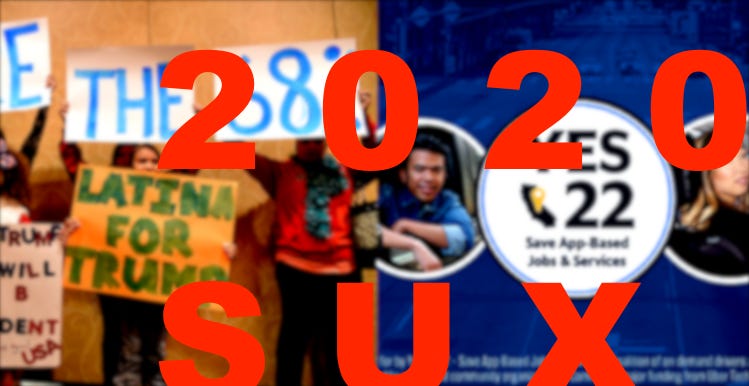
Hello from Philly, Berkeley, and Missoula! In this #2020 special, we share our jaundiced views of the U! S! A! and the election as of Wednesday night, 24 hours after polls closed. Discussed: * Tuesday night’s emotional roller-coaster * Post-vote explanations based on racial and ethnic checkboxes* “Jay Kang, (G.O.P.) political consultant”* Propositions 22 and 16 in California* Tammy’s feel-good corner a.k.a local measures to give us hope going forwardLinks to stuff we mention:* Exit polls (with the usual caveats) showing Trump’s gains with POC voters* Jennifer Medina, of The New York Times, on the macho appeal of Donald Trump* Aída Chávez, of The Intercept, with a pre-election look at Latino/a progressive organizing in Arizona, as well as her write-up on election night, with Ryan Grim* Congratulations to TTSG friend Nikil Saval! He’s a progressive Democrat success story, the first Asian American member of the Pennsylvania State Senate, and we couldn’t be more proud! (ICYMI: our interview with Nikil)How was Election Day/Night/Week for everyone else??? Terrible? Sleepless? Blasé? Send your comments, questions, and reactions to [email protected] or via DM @TTSGPOD! This is a public episode. If you'd like to discuss this with other subscribers or get access to bonus episodes, visit goodbye.substack.com/subscribe

The Asian American vote, with Hua Hsu!
Hello from Tammy’s snowbank! This week, we welcome TTSG friend Hua Hsu, a professor at Vassar and a staff writer at The New Yorker, who just wrote an excellent pre-election story: “Are Asian Americans the Last Undecided Voters?” The piece digs into stuff we’ve been obsessing about, on and off the air, including the fuzziness of the Asian American label, the rise of East Asian Republicans, organizing on ethnicity-specific chat apps, the OC, and Asian-Latino “immigrant” identities. Our discussion also complements Andy’s bonus episode with Bernie folks, Brooke Adams and Tobita Chow, from last week. Then, a quick look at the global crisis playing out in Vietnam.A long episode, but a good one. Big props to listeners who make it all the way through!0:00 – Why does Hua eat “adult pouches”? Can he bring Jay and Andy over to his side?13:00 – California Governor Gavin Newsom “tiniest dog-whistled” Asians in the early days of the American pandemic, by blaming transmission on nail salons. Who’s Janet Nguyen, and how did she fight back?41:00 – “Education and opportunity” are Asian values, right? But are they a sufficient basis for organizing? And are they liberal or conservative, right- or left-wing? 1:05:00 – Do Asian American voters care about foreign policy? 1:26:55 – Maybe Asian American politics can just be, well, politics. How do we make a universalist political program our own? 1:37:55 – You still with us? Tammy gets the guys to talk about the historic, deadly floods in Vietnam, and what they tell us about climate change. What are the overlaps with the Vietnamese economy and the coronavirus? Could the climate catastrophe replicate Asian refugee routes once caused by war? Get woke:* Tomorrow! “Anti-China politics in the US election” (Register here.)* Tomorrow! “Uprising in Thailand” (Register here.)* Thursday! “The Gwangju Uprising and Its 40-Year Global History” (Register here.)* Jay, on musical labor and 30 years of repetition, on This American Life* Andy, on the “China Virus,” in Feral Atlas* Tammy, at a Montana gun range, in The New YorkerThank you, thank you for supporting TTSG (https://goodbye.substack.com). Please stay in touch via Twitter (@ttsgpod) and email ([email protected]), and tell all your comrades and frenemies to subscribe. This is a public episode. If you'd like to discuss this with other subscribers or get access to bonus episodes, visit goodbye.substack.com/subscribe

What's a Bernie person supposed to do now?: A pre-election special with Brooke Adams and Tobita Chow
Bonus pre-election episode!Two weeks ahead of the last judgment, Andy talks with two organizers about the “existential battle” over the soul of the Democratic Party. Brooke Adams, a second-generation Taiwanese Seattleite, worked for the Bernie Sanders 2020 campaign in Iowa, North Carolina, and Pennsylvania before joining People’s Action this summer. Tobita Chow, a Chinese-Japanese-Canadian-American (not making this up, we swear) Chicagoan, is director of “Justice is Global,” part of the People’s Action network.0:00 -- Brooke and Toby discuss their respective experiences organizing while Covid hit the US in March, then we speculate why Sanders was so successful among Asian and Latino groups. Andy has dark fantasies of seeing Trump win again and discrediting the Democratic leadership, while Brooke and Toby think more productively about how progressives might shape a (potential!) Biden-Harris presidency. A WWII analogy.37:20 -- Toby expounds on moving politics in a more internationalist direction, i.e., don’t do a trade war with China. Also, how Toby and others pushed back on Biden’s bad China ad this spring.59:20 -- We look ahead to the election. If (!) Biden-Harris win, how will progressives and centrists square off over the future of the party? Over climate? Covid relief? Electoral strategy?More links and plugs* Brooke and Toby talked “deep canvassing” strategies. Learn more here and here* More from Brooke: People’s Action will hold a deep canvassing event on October 27, featuring appearances from AOC, Bernie, IL state senator Robert Peters, and artist/activist Vic Mensa. If interested, click here!* Justice is Global’s deep canvassing experiment talking to voters about China* Toby and friend-of-show Jake Werner’s nerdy memo on the US-China trade war* Hear Toby and Jake and other great speakers at this Critical China Studies event on October 28, 7-8:30 ET: “Anti-China politics in the US election” (direct link to registration here)* Tammy has a new feature out on the crucial Montana senate race (and she tells us that anti-China politics are alive and well there). Will labor unions and Native Americans make the difference for the state and, by extension, the body politic? Check it out in The New Yorker.* Andy has a new academic/public piece riffing off the “China virus” stuff in the springtime and tracing Covid’s spread from China to the rest of the world. Some talk about “just-in-time” / “lean production” models, from 1960s Japan to China to the US, from the auto industry (think that “American Factory” documentary) to grocery stores and hospitals. Here on Feral Atlas, a new digital humanities project on human-nature-infrastructure relationships. Anthropocene. Synergy. This is a public episode. If you'd like to discuss this with other subscribers or get access to bonus episodes, visit goodbye.substack.com/subscribe

Korean wig stores, with Jenny Wang Medina; and Hunger Games in Thailand
Welcome to the Terrordome!This week, we have a brilliant guest, TTSG pal and Korean literature scholar Jenny Wang Medina, who grew up in her family’s beauty-supply store, to guide us through a mini-PhD on Korean hair, the Black hair market, and Cold War commodity history. Then, a brief look at the ongoing democratic uprising in Thailand. 0:00 – HAIR! * The New York Times’s coverage of the Na family and their Black hair shops in Chicago, one of which was destroyed in the recent Black Lives Matter uprising, launches us into an exploration of harvested hair, nation building, migration, and race relations, from Hong Kong and South Korea to India and Sacramento, CA, where Jenny’s brother now runs her parents’ 40-year-old wig-turned-beauty-supply stores. To enrich our discussion, we draw on a very sharp “commodity history” of Korean hair, by Jenny and Andy’s friend, Jason Petrulis.How did Jenny’s family, and so many other Korean immigrants, come to dominate hair and beauty-supply markets for Black American women? And how does the intimate nature of hair and beauty products shape race relations? What role have hair exports played in the developmental economics of Hong Kong, South Korea, and, more recently, India and Indonesia? How did US Cold War policy shape these markets? 1:14:30 – THAILAND! * In a new segment called “Something you should know,” a.k.a. “What Tammy forced Jay and Andy to talk about,” we bring you an update from Thailand, where a democracy movement that began in 2014, after a military coup, has recently exploded on the streets. We discuss the aims and culture of these Thai protests, the nature of Thailand’s (ostensibly) constitutional monarchy, the economic effect of the pandemic on the nation’s tourist economy, how the current prime minister and monarch are different from those who ruled a decade ago, and the Milk Tea Alliance—the pro-democracy bonds among Thai, Hong Kong, and Taiwanese youth online. (Thanks to TTSG friends Reena and Nick for their insights.)Big thanks for supporting TTSG (https://goodbye.substack.com). Please stay in touch via Twitter (@ttsgpod) and email ([email protected]), and tell all your comrades and frenemies to subscribe. This is a public episode. If you'd like to discuss this with other subscribers or get access to bonus episodes, visit goodbye.substack.com/subscribe

Abolishing Silicon Valley: Wendy Liu
A bonus deep-dive episode into the culture and politics of Big Tech and Silicon Valley! Today Andy chats with the writer Wendy Liu (no relation) about her recent book, Abolish Silicon Valley.A programmer, former Google intern, and startup founder, Wendy has written on a host of political-economic questions swirling around Silicon Valley today: how to organize contract workers in Silicon Valley; Andrew Yang and UBI; and why we should socialize Amazon.Above all, she is interested in spoiling the myths that Silicon Valley tells itself and sells to the public. This episode focuses on her individual reckoning with the reality of Big Tech and capitalism: her distaste for corporate identity politics, how her social position (second-generation Chinese-Canadian woman) shaped her growth, the contrast between STEM and political education, and the mythology of meritocracy.0:00 – Wendy’s own trajectory from youthful adherent of the cult of Silicon Valley (Elon Musk, Elizabeth Holmes) to disillusionment and critique.19:30 – Wendy’s thoughts on entering the tech world as a woman and an Asian-(North) American—from minimizing her feelings of difference in order to fit in to gaining a structural understanding of gender and race. Some choice words for White Fragility-style corporate diversity measures. And a brief discussion of the mind-blowing history of Chinese labor migration to the West Coast. 41:30 – Our thoughts on a previous listener question: why so many Asian-Americans opt for STEM education and career paths. Parental pressure? Culture? 48:00 – We discuss friend-of-the-show Immanuel Wallerstein’s classic, Historical Capitalism (Verso, 1983), and his criticism of the concept of meritocracy. Why is Silicon Valley’s cult of meritocracy a “sham”? How should the rest of us try to process and make sense of this critique? This is a public episode. If you'd like to discuss this with other subscribers or get access to bonus episodes, visit goodbye.substack.com/subscribe
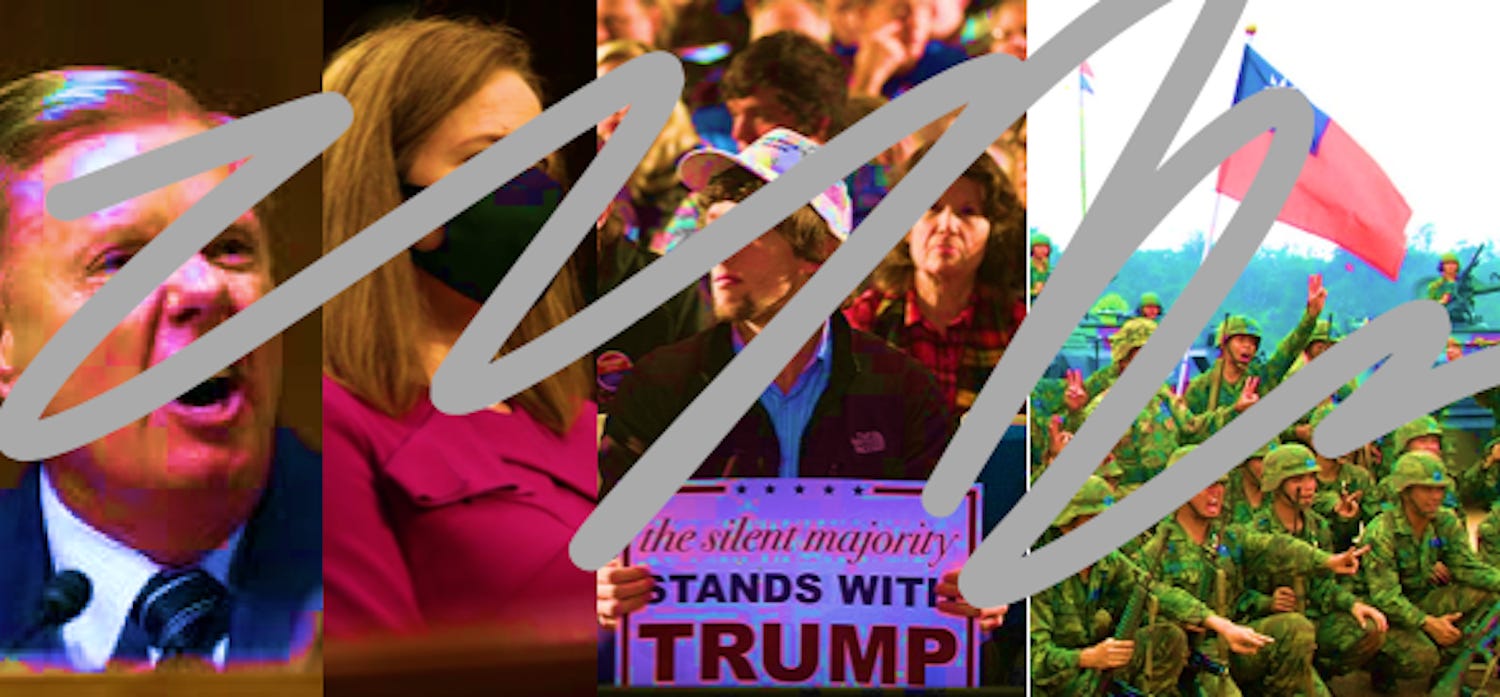
SCOTUS trouble, working-class white people, and Taiwan's military
Hello from the National Speech & Debate Tournament!This week, we unpack the idea of court packing, look for common cause with working-class whites, and ask what’s up with the Taiwanese military. 0:00 – Amy Coney Barrett’s confirmation proceedings began Monday. Will the questioning be more Acoustic Lindsey Graham or Lindsey Graham Unplugged? Inspired by a recent episode of the Dig podcast (Hi, Dan and Amna!), we wonder: Why does the US democracy—or, why do ACLU-cheering liberals—depend on an institution as ridiculously undemocratic as the Supreme Court? Should leftists support court packing or other legal reforms? Plus: Jay’s double-SCOTUS-clerking high school nemesis.36:48 – At the height of the opioid epidemic, and right after Trump’s election, we seemed to talk incessantly about the “white working class.” Not so much anymore. Who are these people, and how can we build a program of social change that benefits everyone? We read Helen Epstein’s analysis of despair and death among “non-BA whites” and a piece by Adam Rothman and Barbara Fields, arguing that “a successful national political movement must appeal to the self-interest of white Americans.” Can we replace our oppression olympics and racial whataboutism with Jesse Jackson’s Rainbow Coalition or William Barber and Liz Theoharis’s Poor People’s Campaign? 1:04:18 – So many anxieties, real and imagined, in the Taiwan Strait. How imminent is the threat of military action by China, and will Taiwan continue to spend billions on its armed forces? Why do younger generations of Taiwanese men resent their mandatory military service? We talk about Taiwan and South Korea’s grudging reliance on the US military and the persistence of neocolonial camptown relationships. Bonus: Andy introduces us to 高粱酒 / 고량주.1:17:05 – Outtro recap: Do we care if people have “racism in their hearts”? And why must Asian Americans borrow other people’s “whatabouts”? Mike Davis continues to school us.Very cool digital conference alert! Join our friends at New Bloom, New Naratif, and Lausan for “Transnationally Asian,” Oct. 19 through 22, which takes its title from an article Tammy wrote over the summer. The sessions will consider postcolonial solidarity, local and global labor movements, and the role of the media in political activism. Tammy will moderate the opening panel, so please tune in. You can register for free here.Many, many thanks for supporting TTSG (https://goodbye.substack.com). Please stay in touch via Twitter (@ttsgpod) and email ([email protected]), and tell all your comrades and frenemies to subscribe. This is a public episode. If you'd like to discuss this with other subscribers or get access to bonus episodes, visit goodbye.substack.com/subscribe
Trump has Covid! Is the virus totally random? And listener questions.
Happy belated Mid-Autumn Festival! We pried Andy away from doomscrolling 45 to bring you this late-night episode of semi-coherent thoughts on the American regime, post-wet market theories of Covid-19, and listener queries on class.0:00 – What is, even, anything? The big, maskless T has Covid, as does everyone around him. We talk conspiracies and sad, middling fantasies of functioning government. Is it time to give up on electoral politics? Will there ever be another Bernie?28:30 – Twitter warrior and coronavirus prophet Zeynep Tufekci is out with a provocative new piece at The Atlantic. We reminisce about the bad old days at the start of this podcast, which we nearly christened “Pangolin Power Hour.” What does it mean for Covid-19 to be an “overdispersed pathogen”? Who is Pareto, and why does nationalized health care matter? 55:40 – We address a composite (brilliant! erudite!) listener question about class and class cosplay. Why do upper-class wokesters downplay their families’ money? Do upper- vs. upper-middle-class distinctions even matter in elite spaces? Should our class backgrounds influence our career choices or social politics? And why do we tell and retell Asian American immigrant tales of overcoming? Thanks to Janis Jin, @Soledad_Kyrie, and Lisa. And thanks to all of you for supporting TTSG (https://goodbye.substack.com). Please stay in touch via Twitter (@ttsgpod) and email ([email protected]), and tell all your friends and enemies to subscribe. This is a public episode. If you'd like to discuss this with other subscribers or get access to bonus episodes, visit goodbye.substack.com/subscribe
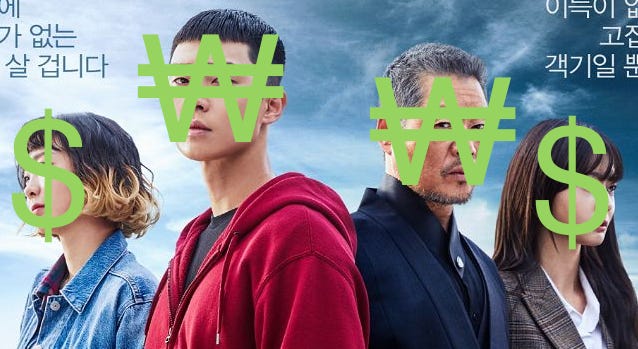
"Itaewon Class" and class politics; and what to make of left-wing utopias
Hello from Andy’s Zoom lecture!This week: the class politics of the Netflix K-drama “Itaewon Class” (이태원 클라쓰), success and failure in leftist utopias, and “slouchy Asian” fashion.0:00 – Happy Birthday, Mama Kang! Plus: Tammy introduces Andy and Jay to Eileen Fisher.6:10 – Jay binge-watches (the notably progressive!) “Itaewon Class,” which Tammy inhaled long ago; Andy makes plans to catch up, and offers his commentary anyway. Why do so many K-/Asian dramas reflect the same theme of capitalist overcoming? Is chaebol / keiretsu resentment baked into all contemporary cultural production (and mass protest)? Why are the protagonists so often middle-class instead of working-class? Other shows mentioned: “Terrace House,” “My Mister” (나의 아저씨), “Dear My Friends” (디어 마이 프렌즈).32:35 – We discuss Wes Enzinna’s recent piece in Harper’s, “The Sanctuary,” about a group of abolitionists who transform a Minneapolis hotel into a mutual-aid encampment after George Floyd’s murder:In the end, the fight fizzled out, but I wondered what Steve or anyone else would have done if the violence had escalated even further, as it was clear the volunteers didn’t have the ability or willpower to intervene…. So, no, it wasn’t that the fight showed that we needed the police, or that the abolitionists were naïve idealists—they didn’t want a thousand Sheratons, they wanted a world in which no Sheratons were necessary—but it did show that the abolitionists weren’t yet sure what to do when the actions of some threatened the well-being of others.What do recent attempts at utopia reveal about young people’s attachment to, or abandonment of, the welfare state and organized politics/Politics? Also: Jay’s time at Standing Rock and his Avakian-loving friend at Revolution Books, Andy’s critique of critiques of corruption, Tammy’s dream of an unemployed people’s union, and a collective boost for a candidate for Oakland City Council: Carroll Fife, of Moms 4 Housing.Big thanks for supporting TTSG (https://goodbye.substack.com), and please stay in touch via Twitter (@ttsgpod) and email ([email protected])! Get all your comrades to subscribe, too.Finally, don’t miss Andy’s webinar, tomorrow night (September 30, 7-830P EDT), with the Critical China Scholars group: “China’s Rural Capitalism: Land, Labor, and Environment.” Sign up here for the link and details! This is a public episode. If you'd like to discuss this with other subscribers or get access to bonus episodes, visit goodbye.substack.com/subscribe
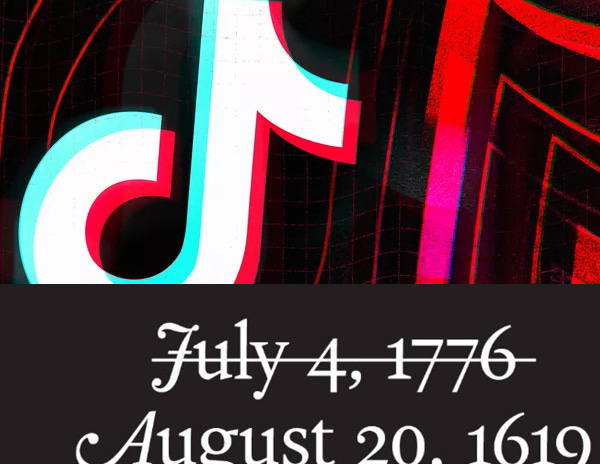
The 1776 Project, TikTok nationalism, and four listener questions
Hello from the TTSG drop-out commune! This week, a longer-than-we-intended show about the TikTok saga, Chinese/US hegemony, and nationalist traps. We also respond to a few of your brilliant emails and DMs. 0:00 – Jay explains his obsession with the history of Jonestown, and we toss around a few theories of left (and right) millenarianisms.5:30 – After all Trump’s blather about security, TikTok, USA looks to be headed toward Oracle and Wal-Mart, with no promises of Internet liberty. Plus: will $5 billion from the deal somehow fund “The 1776 Project” aka Patriot Education aka Uncritical Race Theory? 14:10 – Enter the American splinternet? Or is that what we’ve been surfing all along? We ask why the past couple generations of US leftists seem so local in their thinking. Is a new kind of internationalist organizing possible?34:20 – Our humble (and not-so-humble) takes on listener comments and questions: 1) How to support Chinese international students in this xenophobic age? And what to make of parents on conservative WeChat? Bonus: the surprising demographics of GOP Asian America. (Thanks, Elaine!)2) What to make of the cops’ courting of Asian American communities? (Terima kasi, Megan!)3) What does it mean to “organize,” and do upper-class people have any right to get involved in labor struggles? (감사합니다, Ollie!)4) Is ethnic studies a force for good in politics, or does it just produce diversity aesthetics? (Salamat, Jael!)ありがとう for supporting TTSG (https://goodbye.substack.com), and do reach out any time via Twitter (@ttsgpod) or email ([email protected])! Get all your friends to subscribe, too. This is a public episode. If you'd like to discuss this with other subscribers or get access to bonus episodes, visit goodbye.substack.com/subscribe
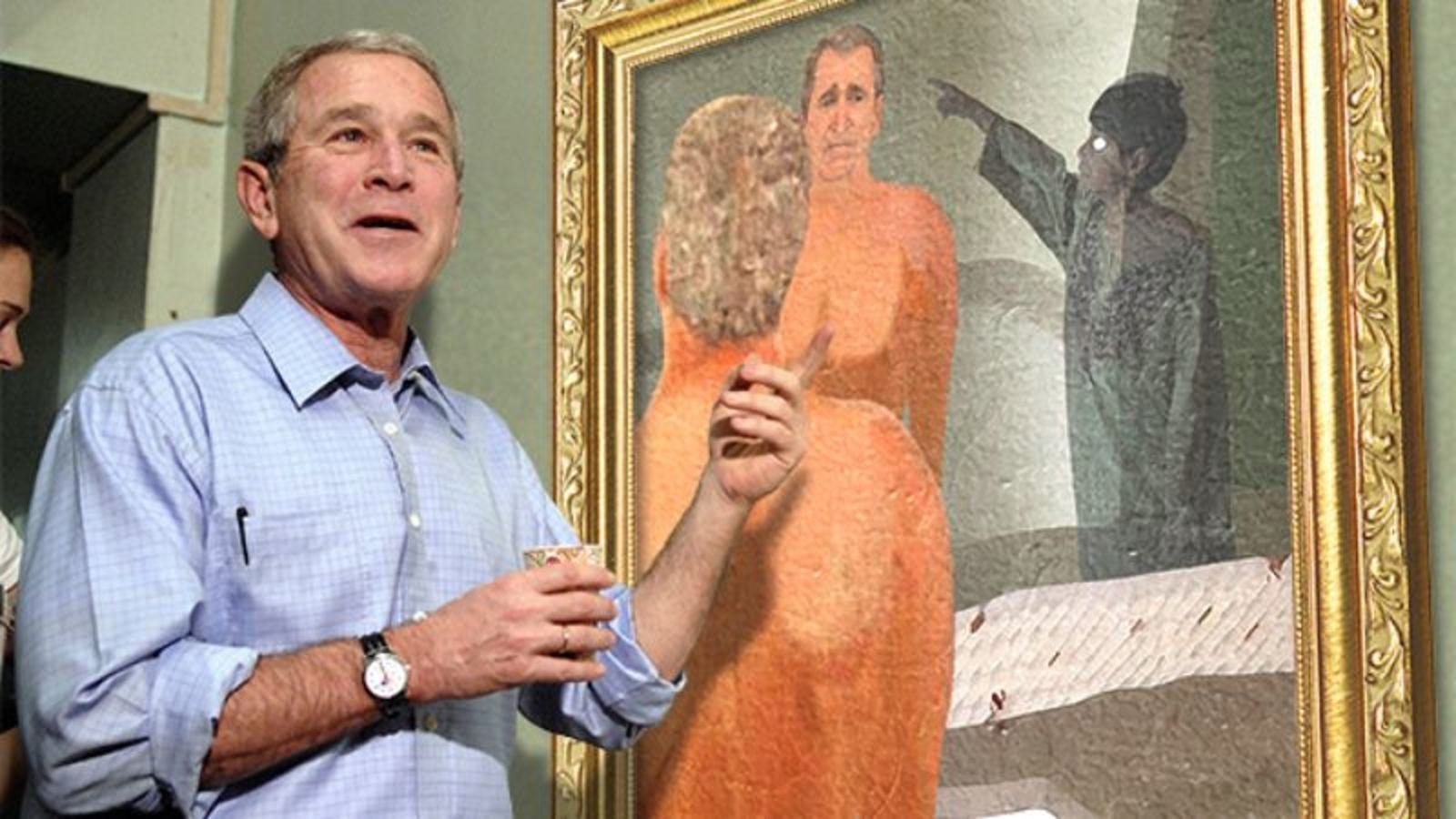
From 9/11 to 45: How Will We Remember Trump, USA?
Whither memory: Guantanamo W. Bush paints over his legacy.Hello from the future! Inspired (triggered?) by last week’s commemorations of 9/11, we get a bit contemplative. How will future generations remember (or suppress) the events of the Trump era, especially the mass death of Covid-19? We discuss state-sanctioned memory in the US and China, how Trump has effectively rehabilitated George W. Bush, and Paul Krugman’s tweet threads (1, 2) about 9/11 and Islamophobia. We conclude with a listener question about how a “corporate Asian” should be. 0:00 – Yet another 9/11 anniversary provokes an imagined retrospective of the Trump era. How will we remember, or try to forget, these years under 45? Andy compares Chinese and US history and how state-sanctioned political narratives have domesticated personal memory and trauma. Tammy and Jay disagree over how we remember the 1960s, and we wonder how the explosive protest movements of 2020 will go down in history: will they be reduced to aesthetic commodity? Bonus: plugs for W. G. Sebald’s The Emigrants and Agnès Varda’s Black Panthers.47:38 – Economist and NYT columnist Paul Krugman got in trouble for Twitterasing/ retconning the Bush administration’s Islamophobic policies and wars in the Middle East as genteel by comparison to Trump. Do his arguments have any merit? Plus, Jay previews his libretto for Lin-Manuel Miranda’s forthcoming coronavirus musical (coming to Broadway in 2026), and we examine the absurd unreliability of hate crimes statistics (tsk tsk, Krugman) in the context of anti-Asian violence. 1:19:05 – TTSG listener Gestational Yuppie asks how Asian Americans should deal with their guilt for outwardly working corporate jobs while inwardly harboring leftist politics, leading all three hosts to do some soul-searching.Thank you for supporting TTSG (https://goodbye.substack.com)! Please reach out via Twitter (@ttsgpod) or email ([email protected]), and tell all your friends to subscribe. This is a public episode. If you'd like to discuss this with other subscribers or get access to bonus episodes, visit goodbye.substack.com/subscribe

Race Fakes, Disparity Discourse, and Mulan in Xinjiang
Greetings from Jay’s 95-degree basement!This week, we start, inevitably, with our takes on Jessica Krug, the historian caught assuming a series of brown and Black identities. We then respond to a provocation by Adolph Reed and Walter Benn Michaels: that talk of racial disparities distracts from the universal thievery of neoliberal capitalism. Finally, we dig into the live-action remake of Mulan—or, um, since we haven’t seen it yet, a human-rights controversy over its partnership with the Chinese government. 3:20 – Did Jessica Krug respond to market incentives for minstrelsy? Do white people feel the need to justify their interest in non-white/Eurocentric fields? Should Andy start using his Chinese name to gain more cred in the academy? Bonus: Jay and Tammy place bets on the number of “academic Dolezals.”23:30 – In a recent paper, Adolph Reed and Walter Benn Michaels explain the “trouble with disparity.” What does a focus on racial disproportionality—in regards to state violence or poor health outcomes or poverty (see Andy’s interview with Merlin Chowkwanyun)—really get us? What, or whom, do we risk losing along the way? 49:40 – First, the cast of Mulan was doing takedowns of the Hong Kong democracy movement. Now, journalist Isaac Stone Fish reports that the production did business in Xinjiang, the site of Chinese internment camps and widespread abuse of Uyghur minority groups (see Andy and Tammy’s interview with Darren Byler). How do we feel about the human-rights strategy of “naming and shaming”? Is the American critique too selective? Frightening reveal: Andy 同志 goes tankie/CCP plant.Thanks for listening! ICYMI, check out Tammy’s newsletter Q&A on San Quentin State Prison’s COVID-19 disaster, with Kony Kim of the Bay Area Freedom Collective.And support us by subscribing and evangelizing to your friends! You can reach us any time via Twitter (@ttsgpod) or email ([email protected]). This is a public episode. If you'd like to discuss this with other subscribers or get access to bonus episodes, visit goodbye.substack.com/subscribe
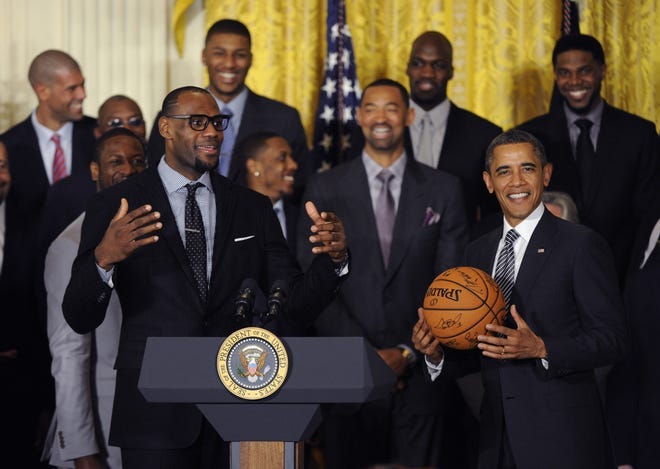
Basketball Revolution? Plus Death and Fear in Kenosha and Portland
Greetings from our virtual union hall! This week, we talk protest and death in Kenosha, Wisconsin, and Portland, Oregon, and consider what to make of the longstanding, but local, street confrontations between the far right and “Antifa.” We then turn to the recent NBA players’ boycott(?) / strike(?) / demonstration(?): What does it mean, in labor terms? Why do we get so excited about bajillionaire athletes’ activism? (Check out what Jay wrote in NYRB and Andy, in n+1.)0:37 – Inspired by the Milwaukee Bucks’ one-day work stoppage, professors plan a #ScholarStrike and labor unions… sign a petition. Which side are we on?9:27 – Following the police shooting of Jacob Blake, a white supremacist killed BLM protesters in Wisconsin, and a white supremacist was killed in Oregon. Is there any reason to fear a Trumpian militia war? What does the filmic replay of Patriot Prayer vs. Antifa do to our collective perception? 25:36 – The NBA, MLB, MLS, Naomi Osaka… a labor uprising or just scattered disaffection? We lit-crit our way through what’s been called a wildcat strike, making stops for the “NBA state media,” LeBron’s Obama-style-school-reform diplomacy, praise of teachers’ unions and old-school boycotts, unpaid college athletes, and the question of whether sports can carry progressive “revolution.” Comments, questions, criticisms always welcome! Reach out via @TTSGpod or [email protected]. And get your friends to subscribe to our Substack! This is a public episode. If you'd like to discuss this with other subscribers or get access to bonus episodes, visit goodbye.substack.com/subscribe

'Racial disparity' and 'race vs. class' debates: historian Merlin Chowkwanyun
Hi everyone:Today we’re presenting a conversation between myself (Andy) and my college friend Merlin Chowkwanyun, assistant professor of sociomedical sciences at Columbia University’s Mailman School of Public Health. For years I’ve peppered Merlin with questions about how to understand the never-ending debate over “race versus class” in the US -- for instance, this New York Times piece from two weeks ago -- a subject that he’s studied for years.We focus on a critique of “racial disparity” discourse that he has written about several times, co-authored with the political theorist Adolph Reed Jr. (University of Pennsylvania). Across discussions of public health, economics, and policing (for instance, their NEJM paper on Covid-19 disparities this spring), they argue that we too often view “race” as a natural and absolute trait, and “racism” as a question of primordial individual prejudice. Racial thinking, they argue, is in fact inseparable from an analysis of the dynamics of economics and class. “Race” as ideology is certainly real, but we should not mistake it as natural. 2:34 -- How did Merlin, a Thai-Chinese-American from the Asian SoCal suburbs find himself studying a primarily “black-white” story of race and racism in US history? Why not Asian American studies? How do his students make sense of the “black-white binary”? Mentioned: the work of Claire Kim, “Are Asians the New Blacks?: Affirmative Action, Anti-Blackness, and the ‘Sociometry’ of Race”18:20 -- We’ve all memorized the mantra “race is a social construct,” but Merlin argues that many old-fashioned nineteenth-century beliefs in the biological reality of race remain in circulation today, even among good liberals (think about the craze for 23andMe). 22:15 -- We touch on a recent New York Times article on the “race versus class” debate within the US left. Merlin has collaborated with Adolph Reed Jr. on several articles, but rather than take sides, we discuss their basic criticism of mainstream social science and its simplistic presentation of “racial disparities,” which often wind up stuck in individualized, psychologized notions of prejudice divorced from broader dynamics. Nate Silver-style quantitative regression analysis has helped reify “race” and “class” as static and natural variables of human existence.30:40 -- Merlin and Reed’s co-authored articles on racial disparity reporting, both for Covid-19 and more generally. How did they come together to co-author these articles? Why is it dangerous to harp on “racial disparity” in a vacuum? 48:20 -- Missing from most discussions of “racial disparity” are the specific political-economic dynamics of capitalism. Specifically, modern “race” ideology originated in efforts to legitimize, justify, and naturalize slavery and Jim Crow in US history. (In short: it’s not that white planters, because they were motivated by the racist ideas in their heads, therefore set up the slavery system; rather, because they profited off slavery and sought to defend it, planters then naturalized “race” as a scientific ideology.)At stake today is this: a primordial account of racism (viz., “everyone’s just born a little racist”) is one that does not challenge the inequities of capitalism and is thus easily embraced by ultra-rich institutions and corporations. Mentioned: The classic historical account from Barbara FieldsAlso Reed’s own interpretation of this history and its implications (how many pop culture podcasts are giving you a discussion of commodity fetishism?)57:20 -- Merlin warns (Andy) against going too far with “the Marxism” and reducing everything to capitalism. But also a warning against “white fragility”-style characterizations of 400 years of continuous white supremacy. 1:01:20 -- Is this historical and economic account of “racism” useful for comparative thinking, both with and beyond the black-white binary? For instance, understanding ethnic and racialized hatred between Dominicans and Haitians, or, further away, can “racial capitalism” be applied to understand China today? Asian American history? What about anti-Semitism? This is a public episode. If you'd like to discuss this with other subscribers or get access to bonus episodes, visit goodbye.substack.com/subscribe
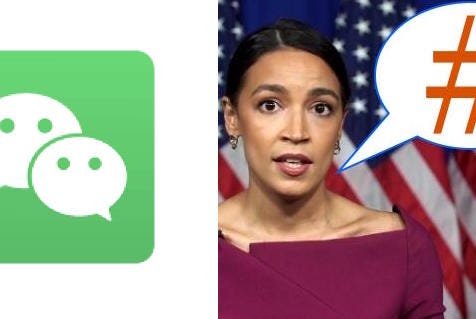
AOC at the DNC, WeChat, and Right-Wing Asians
Hello from behind the Great Firewall!As summer winds down and election season begins to heat up, we reflect on the political prospects of Asian America and the mess that is the Democratic Party. We discuss AOC’s speech at the DNC last week as evidence that the party has lost the thread. We then examine Trump’s WeChat ban and the many uses of this Chinese super app. This leads to a concluding conversation about whether first- and second- (and third-...) generation Asian Americans could trend rightward as part of a racial realignment in both parties.0:00 – An update on the start of school, the wildfires in northern California, and failed Covid policies. 10:40 – Who said it best? We debate the messaging of the Democrats during last week’s convention and whether the speech by the party’s rising star (and TTSG favorite), AOC, captured the urgency of the moment. Are accusations of elitism fair? Or just bad faith? Also, debater Jay makes his return and recites his own version of a convention speech in an effort to get AOC’s attention. 26:05 – Why WeChat? The Trump administration’s ban on TikTok may claim, as a collateral casualty, the messaging-payment-social-media super app WeChat. The administration doesn’t seem to understand what the app is used for, but it’s clear that a WeChat ban would hurt hundreds of millions of Chinese in China and abroad—and tank iPhone sales in China.While free-speech concerns are well founded, we consider how WeChat and other Asian apps have been used to organize right-wing diasporic activism, including anti-affirmative-action drives. We revisit Jay’s interview with Viet Thanh Nguyen about first-generation immigrant conservatism—and “Four Prisons,” an essay by Glenn Omatsu, on the rightward turn of earlier Asian activists. (Thanks to listener Naomi Hirahara.) Edit: see also this 2018 article from Alia Wong on WeChat and anti-affirmative action politics: “The App at the Heart of the Movement to End Affirmative Action.”43:20 – Are we gonna go neocon? Jay worries that, on account of the weird politics around standardized testing and affirmative action, Asian Americans will become more conservative and eventually vote Republican. Is the conservative critique of the Democrats correct: that identity politics have superseded a universal economic focus? Have both parties engaged in a Black/white culture war that leaves many Asians and Latinos bereft? (Caveat: not the Bernie-crats!) Tammy argues that the debate over immigration policy will give the Democrats an edge in the foreseeable future.Feel free to contact us with comments and questions at @TTSGPod or [email protected], and please share and subscribe! This is a public episode. If you'd like to discuss this with other subscribers or get access to bonus episodes, visit goodbye.substack.com/subscribe

Ethnic Studies, Revolutionary Politics, and the Third World Liberation Front with Viet Thanh Nguyen
Hello! We’re very excited to have Pulitzer Prize winner and Macarthur Genius Grant recipient Viet Thanh Nguyen on the show. There was a lot to discuss and a lengthy conversation that I (Jay) found absolutely fascinating about the role of academia, especially during a time of national protests. A lot of history in this one as well — if you didn’t know about AAPA and Third World Liberation Front, there’s a short primer at the beginning of the episode. 1:05 - A conversation about the promise of the Third World Liberation Front (TWLF), a student movement that started at San Francisco State and UC Berkeley in the late sixties and promised an inclusive, solidarity-based activism rooted in anti-imperialism and anti-capitalism. The TWLF fight resulted ethnic studies programs across California and Viet talks about being an ethnic studies student at Cal in the early 90s and gives an assessment of what has happened over the past forty or so years since the establishment of the TWLF and the AAPA (Asian American Political Alliance). 8:00 - Discussion about Viet’s conversation with Pankaj Mishra, which we highly recommend you read. 19:00 - Have Ethnic Studies programs been effective in producing radical thinkers and progressive students? We talk about the early demands of the TWLF, which included a separate school within a school with its own faculty search committee and admissions office. 50:00 - a lengthy discussion about where the focal point of the Asian American identity should lie. Should we talk about immigration and the immigrant experience as much as we do? Or should we think more about where we came from and the effects of American imperialism across Asia? Can Filipinos, Koreans, Cambodians, Vietnamese, and others find common fighting ground in a renewal of “third world” logic? Or are those efforts nullified by the presence of an upwardly mobile, assimilation-driven class of Asian-Americans? Thanks for listening! Jay, Tammy, and Andy This is a public episode. If you'd like to discuss this with other subscribers or get access to bonus episodes, visit goodbye.substack.com/subscribe
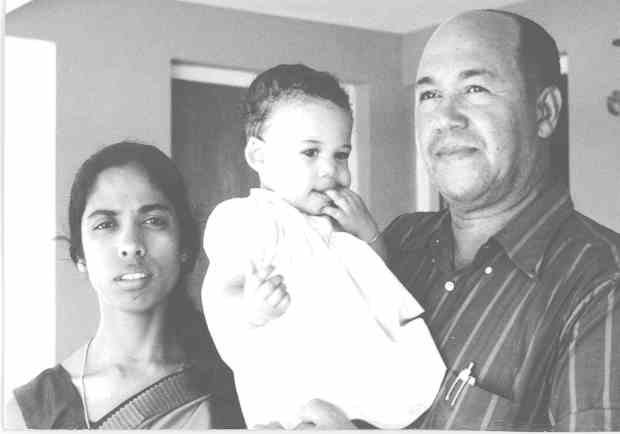
Oh, Kamala!: Harris’s Identity in 3 Acts, Affirmative Action, and the Postal Service
In a late-Sunday-night mega-recording session, we discuss the big news of the past week: Kamala Harris, the first major vice presidential candidate who’s Black, Asian American, and a woman. Commentators have tried to pick apart her identity from countless angles: Is she Black enough? Indian enough? Caribbean enough? An Asian-immigrant icon? In other words, the kind of juicy s**t you KNOW your podcast hosts are ALL ABOUT.0:44 – Our promise to improve TTSG’s audio quality is followed by a recording glitch1:20 – Updates on Tammy’s temporary life in Montana, Andy’s teaching by Zoom, and Jay’s love of nonstop road trips9:40 – Who is Kamala Harris? 17:28 – Identity, Act 1: Kamala the politician: Is she a cop? Is she malleable, or does she have a motivating ideology? Also: Jay and Andy award her 30 speaker points for last year’s debates. 26:42 – Identity, Act 2: Is she a second-generation immigrant? Will her familial ties to Jamaica and India (and, briefly, Zambia) matter to West Indian and Asian voters? What can we glean from her strategic and rhetorical uses of immigrantness? 35:30 – “Two or more races”: Why are we so bad at talking about mixed-race identity? Do hapas have privilege because they’re hot?42:05 – Identity, Act 3: Is she Black? Jamelle Bouie wrote last week that, “because of heritage, upbringing and the realities of American racism, Harris calls herself Black and is also understood as Black by people within and outside the Black community.” ADOS adherents disagree. Is Blackness a matter of choice? Is Blackness international or American? 51:45 – Choice and reparative policiesThe Kamala announcement was followed by the DOJ’s accusation that Yale discriminates against white and Asian applicants. Is anti-Asian discrimination like anti-Black discrimination, or is any similarity negated by the apparent fact that Asians “chose” to come to the US? We dissect this concept of choice, which leads us to a theory of Asian identity that’s less about what we have in common than why we’re here in the first place.1:26:10 – Save the mail!!A look at the US Postal Service, which has one of the largest, most racially diverse, unionized workforces in the country. It is also a paragon of the types of universal, social-welfare services we should defend vigorously. We unpack the November election theories and distinguish them from troubling long-term trends toward privatization, racist dog whistles, and exploitation by Amazon. Bonus: Tammy achieves her dream of discussing Bureau of Labor Statistics data and the USPS in one segment. This is a public episode. If you'd like to discuss this with other subscribers or get access to bonus episodes, visit goodbye.substack.com/subscribe
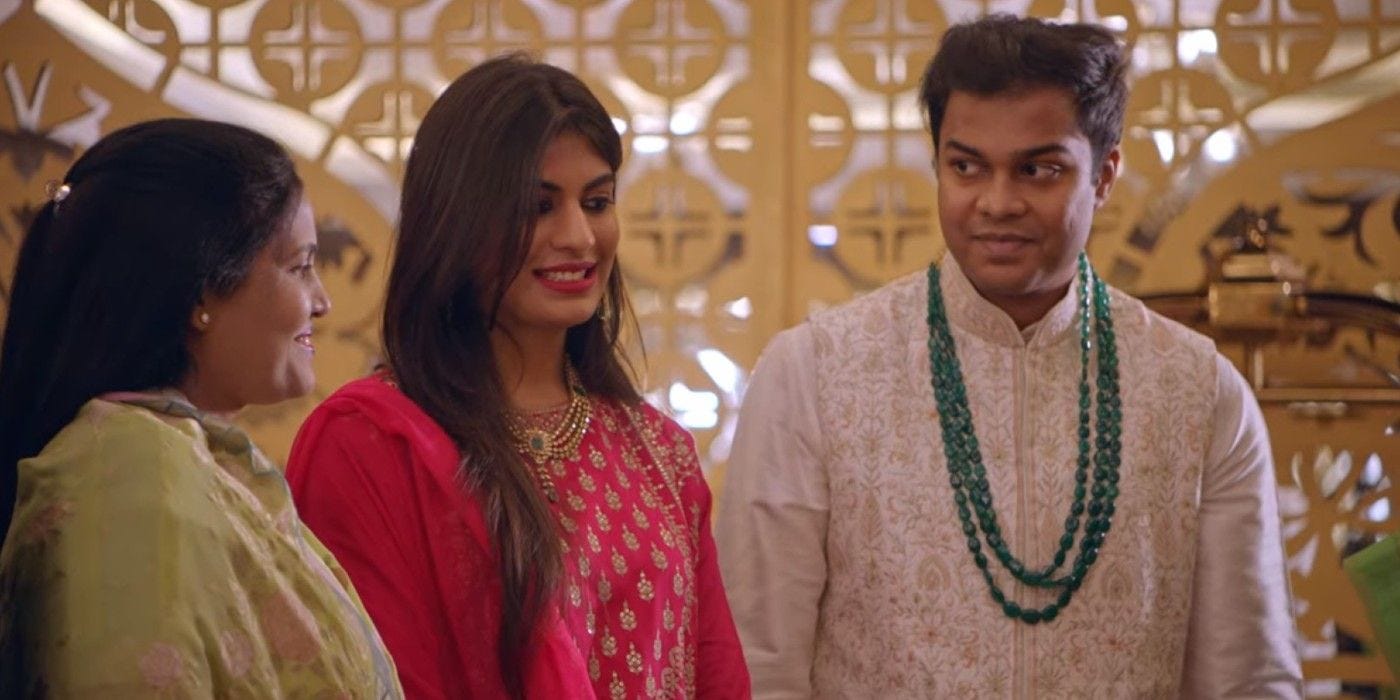
"Indian Matchmaking," BAME, and Portland Whiteness with Historian Radhika Natarajan
In this episode, Tammy gabs with her old friend Radhika Natarajan, a professor of history at Reed College and low-key brilliant TV critic.Radhika talks about her childhood in Ohio, her parents’ emigration from Tamil Nadu (relevant spoiler: an arranged Brahmin marriage), and her scholarly work on post-colonial migration, citizenship, and multiculturalism in Britain. (Bonus: BAME = POC/BIPOC?) She schools Tammy on Portland’s Black and immigrant communities (the city isn’t all white, Radhika softly yells) and describes the local vibe during 74+ days of Black Lives Matter protests. Then, the discussion (takedown? disquisition?) many TTSG listeners have been waiting for: about the Netflix show “Indian Matchmaking”! Tammy and Radhika talk caste, religion, class, and colorism in the series, media representations of South Asians, and Modi’s bloody transnationalism. Radhika invokes the cultural critic Stuart Hall to question the desire for “cheering fictions” over messy depictions of identity, and looks forward to learning more about Dalit–Black American connections in Isabel Wilkerson’s new book on caste.For more, Radhika recommends:* Stephen Frears’s 1985 film, “My Beautiful Laundrette” (per Hall)* Nicholas B. Dirks’s 2001 history, Castes of Mind* Annihilation of Caste, the 1936 book by Dalit revolutionary B.R. Ambedkar (arguing that inter-caste marriages could never solve the problem of caste; take that, Auntie Sima!)And here’s what the TTSG team has been perusing:* Come on, Karen—Indian Food, really? * The political economy of the TikTok and WeChat war * Media savagery at Sports Illustrated* Pankaj Mishra and Adam Shatz talk Anglo-American failure and free speechP.S. – We recorded this episode before the Kamala announcement, but now that she’s every liberal’s favorite Indian… This is a public episode. If you'd like to discuss this with other subscribers or get access to bonus episodes, visit goodbye.substack.com/subscribe
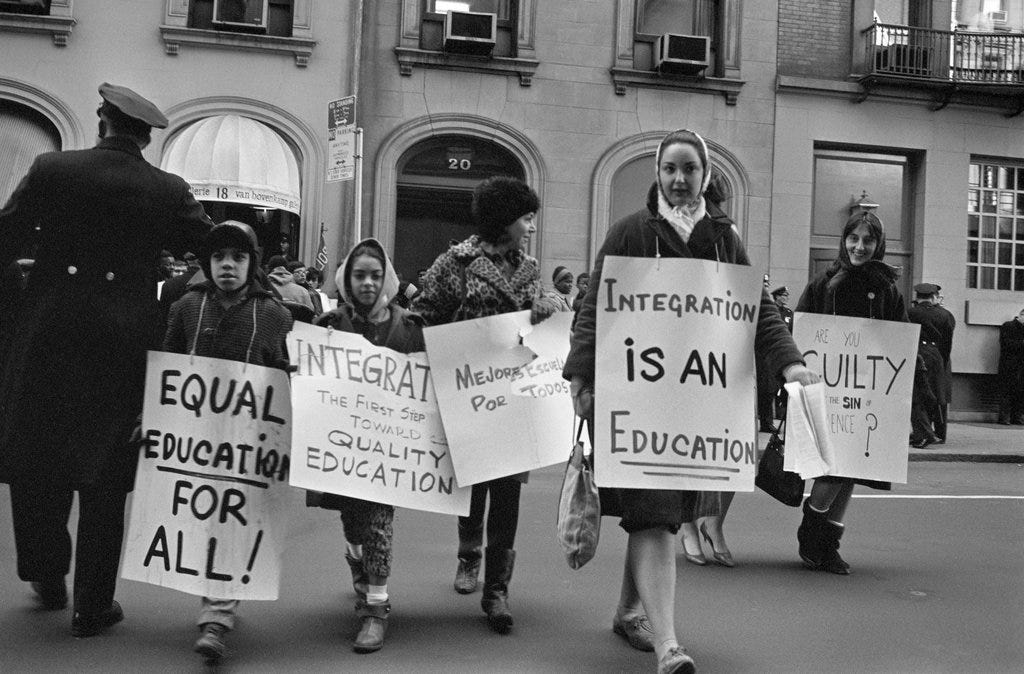
An Intricate Castle of Good Intentions: ‘Nice White Parents,’ Historians vs. Journalists, and AsAm Christianity
Hello from the ledge of cancellation! We have some heady stuff for you this week—on school segregation, the perennial struggle between historians and journalists, and religiosity in Asian America. 0:40 – After a quick update on Tammy’s new life of canoeing in Missoula, Jay describes his roundtrip between Berkeley and Whidbey Island, when he listened to the newest, most Upper West Side podcast ever: “Nice White Parents,” by Chana Joffe-Walt. We discuss the first three episodes of that series—tldr: the road to hell is paved with good intentions—and the broader contours of education, race, and class in the US. Are Asian students missing from the show’s presentation? Can we distinguish “good integration” from “bad integration”? Do individual choices make a difference, or are government policies all that matter? WTF, Rob? Other shows we mention: * The “School Colors” documentary podcast.* An earlier (2015), touchstone series of This American Life, featuring Joffe-Walt and Nikole Hannah-Jones, on school integration in Hartford, Connecticut and Normandy, Missouri.37:04 – Andy shares a NY Mag interview with public intellectual Adam Tooze, which includes hot takes on the role of history vs. journalism. Is the archive-digger the natural enemy of the reporter? In this hellishly unprecedented(?!) moment, are some disciplines especially relevant? What about the political economy of journalism and academia? Included: the 1619 Project, fascism, and ye olde breakfast foods.1:08:34 – Listener Jonathan Tang asks why so many East Asians, especially from the upper middle class, seem to be churched. We apply all kinds of anecdata in the search for truth. (Correction: Tammy references Christian missionaries’ visiting Korea by the early 19th century; she meant the late 19th century.)P.S. – Tammy’s new nightly hike (suckers):Please support us by subscribing and telling friends and family! Also ask a question to [email protected] or @TTSGPod! This is a public episode. If you'd like to discuss this with other subscribers or get access to bonus episodes, visit goodbye.substack.com/subscribe
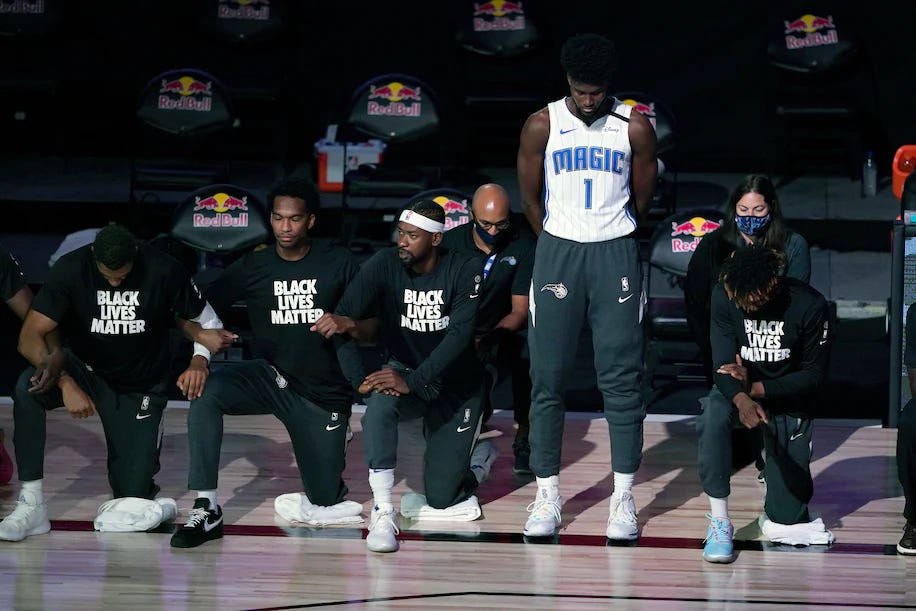
Trump 'bans' TikTok, the NBA Bubble protests, and teaching during COVID-19
Hello from three time zones! This week, we mull the Covid-era classroom (fears of contagion and falling behind), the meaning of Trump’s attack on TikTok, Nike-brand kneeling (and not kneeling) in the NBA bubble, and universalism and particularism in the Black Lives Matter uprising.1:40 – Will Tammy find an Oriental market in Missoula? How does Andy plan to teach through his screen? What will be the impact of these lost semesters on poor and working-class students? Also, should we blame diversity administrators for the collapsing academy? 17:07 – Why is Trump raging against TikTok? Is it because of Sarah Cooper’s impersonations, the Tulsa BTS Army, or his larger vendetta against China? Are we being tricked into siding with a mega-corporation or military state? Further reading: on US fears of the app, Western and Eastern Internets, Microsoft and tech nationalism against China, and whether TikTok is basically just as bad as Facebook. Bonus: Jay reveals his strategy for making Twitter “unusable” through his war with music writers.35:45 – We discuss Tammy’s recent article probing the tensions within the “POC” label. Are Asians excluded from new euphemisms for ethnic minorities (“Black and brown,” “BIPOC”)? Can we include non-Black perspectives without going “all lives matter”? Could a new political bloc emerge amongst immigrants, especially Latinx and Asian Americans (see recent exchange between Pankaj Mishra and Viet Thanh Nguyen)? Does foundation funding keep domestic and global politics separate? Are we helping the right wing capture the immigrant vote? Bonus: an update on the Portland Wall of Moms. 1:01:10 – Jay advances a Manufacturing Consent thesis: the media’s coverage of BLM has kept public discussion within the boundaries of safe and acceptable topics. This leads to a bro-out over the NBA’s cringey coverage, in which the richest companies in the world have turned “social justice” into a profitable brand. (Also, Jay and Andy are hypocritically watching lots of games.) More generally, should we be optimistic or skeptical about the evolution of progressive politics this summer?1:17:50 – Our listener question of the week! We’ve heard from some of you that our podcast is one of your first experiences with politically-oriented Asian Americans, in part because you were too busy studying orgo in college (like this comrade). Is there a split between “STEM Asian Americans” and “humanities Asian Americans”? We can always be reached via @ttsgpod or [email protected]. Tell your friends and family to subscribe! This is a public episode. If you'd like to discuss this with other subscribers or get access to bonus episodes, visit goodbye.substack.com/subscribe
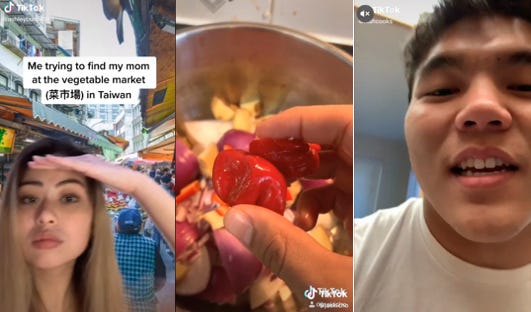
Food and Gender on Asian American TikTok, Portland’s White Protests, and Good Identity Politics
你好 from cyberspace! This week, Jay scuba dived the depths of Asian American TikTok to engage Andy and Tammy in a critique of gendered home-cooking videos. How far have we really come? We then get a bit more serious, with a discussion of the continuing Black Lives Matter protests in downtown Portland and lessons in coalition-building from the 1970s Combahee River Collective. 4:10 – TikTok CookingJay plays several TikTok videos of young Asian Americans cooking their favorite dishes. The men seem to adopt a “Black” style of talking, while the women take on a more childlike “kawaii かわいい” tone. What does this say about the personae available to Asian Americans? Is there such a thing as “pan-Asian”—or even Korean, etc.—English? Also, a “Waysian” TikTok blows Andy’s mind. TikTok Highlights: Kimchi Fried RiceInstapot PhoPopeyes ChickenMiyeok Guk 미역국 (K seaweed soup)Filipino with a Texan accentWaysian34:50 – Portland Protests The feds are still rioting in Portland, Oregon, spurring thousands of locals to fill the streets. The novelist Mitchell S. Jackson, a native of the city, recently described his skepticism about white anarchists in these protests. Contrast this with the big-tent perspective of Kent Ford, founder of Portland’s Black Panthers chapter. What makes a protester, or a protest, really about Black Lives Matter?47:40 – Good Identity PoliticsWe’re all big fans of How We Get Free and other writing by and about the Combahee River Collective. How does this model of Black, queer, socialist feminism apply to our present movement moment? Can we forego an “oppression olympics” for more productive solidarity? Can “identity politics” be redeemed? Also, Tammy’s landline rings. Please send us comments, questions, corrections!@ttsgpod + [email protected] subscribe! This is a public episode. If you'd like to discuss this with other subscribers or get access to bonus episodes, visit goodbye.substack.com/subscribe

Lilith Fair, MOMTIFA, Ross Douthat on white fragility, and Tammy's "Transnationally Asian" article
Hello from 1997! This week, we start by crate-digging our souls, with a discussion of Lilith Fair-era feminist (and feminine?) music. We then ponder the ongoing Black Lives Matter rebellion in Portland, an op-ed on “white fragility” and its race-baiting subconscious by the country’s most lucid Catholic conservative, and what it means to be (or cosplay being) “transnationally Asian.”2:22 – Jay reveals why he’s been tweeting so much about his 1990s playlist. What was Lilith Fair, and is its feely, anti-corporate model of women’s artmaking still relevant? Plus: Nas and Liz Phair and straw(wo)man Beyoncé.11:27 – Unidentified federal cops have been brutalizing protesters in Portland, Oregon. In response, a cadre of “Momtifa” Karens has joined with antifa gutter punks on the streets. Why do certain kinds of protesters get a bad rap? What allyships are needed to keep up the BLM momentum? Bonus: Andy posits a theory of Pacific Northwest anarchism.43:08 – New York Times columnist Ross Douthat recently speculated that, because the old system of so-called meritocracy is collapsing, its guardians are jumping ship and embracing the critique of white privilege. Among his examples are the threat of high SAT scores posed by Asian students(!).Is Douthat right? And are the conditions ripe for a major revolution today? 59:33 – Hot off the press! Tammy’s feature on transnational Asian media, featuring New Naratif (Singapore/Southeast Asia), fellow substackers Chinese Storytellers, and, as featured on TTSG, Lausan (Hong Kong) and New Bloom (Taiwan).The three of us have a group therapy session discussing the differences between our parents’ generation, our own, and these new kids’. Were we raised to think “only losers go back to Asia”? If we tried to return to Asia, would we just be cosplaying? Bonus: Tammy recounts her meeting with Jay’s parents. This is a public episode. If you'd like to discuss this with other subscribers or get access to bonus episodes, visit goodbye.substack.com/subscribe
Darren Byler on the Uyghur people of Xinjiang, China
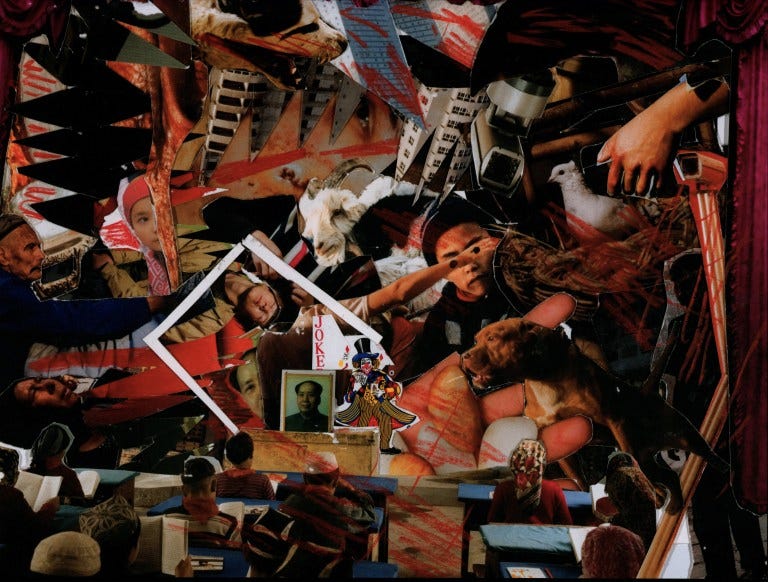
Credit: Carolyn DrakeHello from the greater Sea-Tac area!Andy and Tammy here with a bonus episode, interviewing Darren Byler, a postdoctoral researcher at the University of Colorado and an expert on the Uyghur people, a Muslim community in the Xinjiang Uyghur Autonomous Region in Northwest China. Darren’s years of anthropological research in Xinjiang will be published in a forthcoming book titled Terror Capitalism. Until then, you can find his work at SupChina, Made in China journal, and his own site, “art of life in Chinese Central Asia.” He has also written specially about surveillance technologies in Xinjiang. 5:30 - Is it true that right-wing voices dominate the international conversation about the Uyghurs of Xinjiang? Why isn’t the international left more vocal?9:50 – What is Xinjiang? Who are the Uyghurs? And how has the relationship between Uyghurs and Han (ethnic Chinese) people changed from the 1950s to the present? In recent decades, Xinjiang has become a source for energy resources, the cotton in our clothing, and the tomatoes in our food. We recount the path from “opening up the west” (1990s) to “the people’s war on terror” (2000-10s) to the most recent “reeducation camps.”21:05 – Darren argues that the moralistic paradigm of “cultural difference” and “ethnic genocide” are inadequate. He explains why we need a broader analysis of the social forces producing violence, exploitation, and state repression. Hint: capitalism? Also, how has China appropriated the US’s rhetoric of “war on terror” to racialize the Muslim Uyghurs? Aka “I learned it by watching you, Dad!”Referenced: a new report on Uyghur labor in export-oriented factories in China (Australian Strategic Policy Institute)56:50 – What’s a good leftist to do? Is it okay to back right-wingers who call China morally evil? What are potential avenues for international solidarity (what about the Uyghur diaspora? the Chinese diaspora?)? Also, Darren cites recommended reading on the region and tells us what traps to avoid — and also defends journalists at The New York Times (the ones who wrote this) against Andy’s snobbish dismissal of reportage! Outro: an excerpt from “Uchrashqanda,” by the Uyghur singer and dutar player Abdurehim Heyit, who was imprisoned by the Chinese authorities and has not been heard from since last year.Links:Camp Album project: a multimedia collection by Xinjiang diasporaThe Xinjiang Documentation Project at the University of British ColumbiaFrom the same site, Chinese translations of English publications on XinjiangHistorian David Brophy’s modern account of the region This is a public episode. If you'd like to discuss this with other subscribers or get access to bonus episodes, visit goodbye.substack.com/subscribe
Harper's, Boba Bros, Korean Feminism, and the NBA bubble
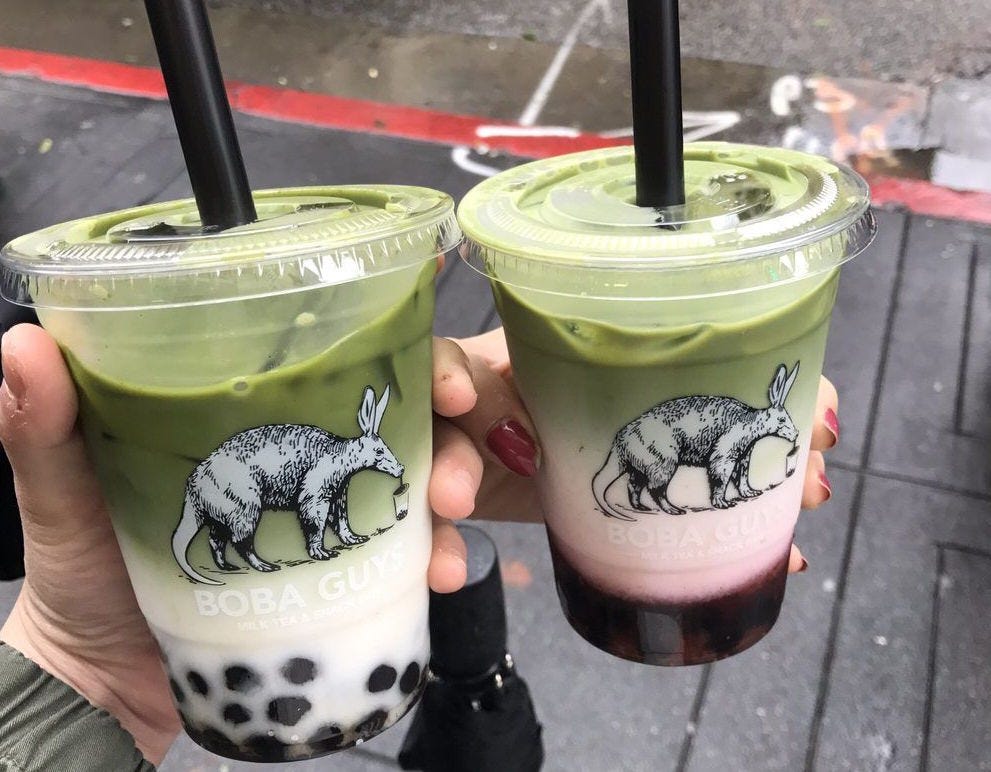
Hello from our galaxy brain! This week, we begin with a brief chat about (social) media “cancel culture,” based on an open letter recently published in Harper’s. We then discuss a workplace controversy at the Boba Guys chain; the suicide of the mayor of Seoul, Park Won-soon, and what his death means in the context of South Korean feminism, per Tammy’s reporting; and a telling exchange about the NBA’s rules of wokeness between Republican US Senator Josh Hawley and ESPN NBA reporter Adrian Wojnarowski.As always, thank you for listening and subscribing. Please spread the word and send feedback via Twitter (@ttsgpod) or email ([email protected])! 0:57 – What are the boundaries of “free speech” on the Internet and in the minds of media elites? Who has the power to cancel whom? 7:29 – Why did the owners of Boba Guys go all out on “Black Lives Matter” while mistreating Black and Latinx employees, and what does their conduct reveal about Asian-American food culture? 31:00 – Why have so many high-profile South Korean men escaped accountability for gender-based misconduct and violence? What are the contours of Korea’s #MeToo movement?56:19 – Is it right for the NBA to host games in Orlando during the pandemic? Should we support “Free Woj” or does the other side have a point about league-sanctioned political slogans? Is it good when radical politics become safe enough to adopt by profit-driven corporations? (also Jay tries to remember what the CLS kritik said.)Share and subscribe! This is a public episode. If you'd like to discuss this with other subscribers or get access to bonus episodes, visit goodbye.substack.com/subscribe
Trump’s Ban on International Students, Latinx Recognition in Black Lives Matter, and Listener Questions
Greetings from our USB microphones! In this episode, we discuss ICE’s recent rule prohibiting international students from staying in the U.S. if their colleges go fully online. We also dig into questions of cross-race solidarity in the Black Lives Matter movement, especially regarding Latinx/brown communities. Finally, we answer our first sampling of listener questions. As always, thank you for listening and subscribing. Please spread the word and continue to send feedback via Twitter (@ttsgpod) or email ([email protected])! 5:09 – How would the ICE crackdown on international students work? Who is the real target (psst China), and what are the broader economic implications for universities and college towns? (i.e., Whither Stonybrook, NY’s glorious Chinese food?) 28:22 – Jennifer Medina wrote a provocative story in the New York Times on Latinx participation in the BLM movement and questions of fit: “Latinos Back Black Lives Matter Protests. They Want Change for Themselves, Too.” Can a focused movement be inclusive? How do we stand up for one another? Do we need to complicate the Black-white paradigm of race in America?53:39 – We attempt to answer very smart questions about our episode on tankie-ism and alternatives to American and Chinese imperialism, how we should actually address anti-black racism in the Asian diaspora (see our post from a few weeks ago), and what a rewriting of Asian-American history (from Chinese Exclusion to Grace Lee Boggs, Yuri Kochiyama, and Vincent Chin) might entail. Thanks to listeners Carlo, Michelle, Chung-chieh, and Sam for their questions. And apols to everyone whose messages we didn’t get to tackle.Please share and subscribe to support us! This is a public episode. If you'd like to discuss this with other subscribers or get access to bonus episodes, visit goodbye.substack.com/subscribe
Immigrant Race Traitors, the International Hotel, and Media Solidarity
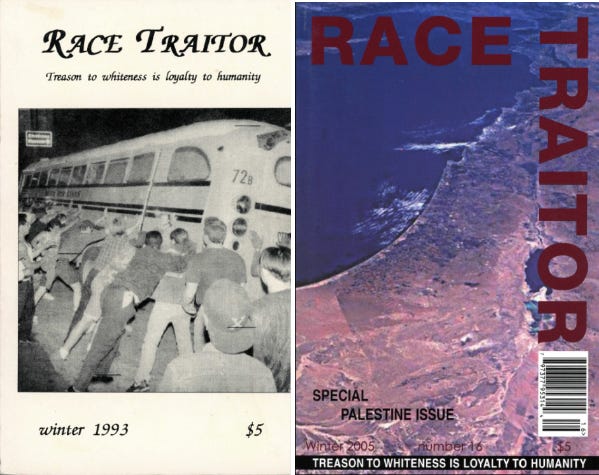
Greetings from Berkeley, Philadelphia, and Tacoma! This week, we chat about Viet Thanh Nguyen’s recent essay on Asian America, race, and class (Time); the abolition of whiteness advocated by Jay’s former mentor, Noel Ignatiev; and the dead-ends and possibilities of race talk in media. * Remember to keep sending us feedback and questions via Twitter at @ttsgpod or via email at [email protected]. * 3:35 – Nguyen’s article on the “trap of the ‘model minority’ stereotype.” In what ways is the category “Asian American” limiting, and in what ways is it enabling—or something we might productively transcend? 30:43 – How to be an Asian American race traitor: we discuss the journal Race Traitor, about “treason to whiteness,” and consider analogies to the professional Asian class. What’s the difference between the radical historians of whiteness and White Fragility? Can we practice anti-racist politics without reifying racial categories?49:48 – Are diversity gestures in the media world distraction from or emulation of real social change? This is a public episode. If you'd like to discuss this with other subscribers or get access to bonus episodes, visit goodbye.substack.com/subscribe
Tankies! with Brian Hioe, New Bloom Magazine
Hi, all:Just Andy this time, with a Thursday edition bonus episode, in which I talk with Brian Hioe of New Bloom, a bilingual online magazine with radical analysis of Taiwan and East Asia. On Monday, New Bloom published an explainer essay on the very confusing phenomenon of “tankies,” aka people who argue that the true leftist position is to support the Chinese Communist Party as a check on US imperialism. Most famously, tankies denounce the Hong Kong protests as bourgeois and right-wing, as puppets of US empire.Their statements are at once funny and depressing, amusing and exhausting. I think Brian and I agree, though, that they are worth taking seriously because they reflect a very real set of tensions in global politics—with few clear solutions.Whom do we “side with” in an increasingly closed-off, nationalistic world? Must critics of US foreign policy — and the long history of Euro-American colonialism and imperialism — choose other states to support instead? For a Gen Z critical of free-market neoliberalism, what “actually existing” alternatives are there to global capitalism?The New Bloom piece explores these questions by examining the mysterious Qiao Collective, whose members ostensibly belong to the left-nationalist Chinese diaspora. When it comes to the Asian diaspora (though not unique to it), there is the always fun, extra ingredient of confused identity and an unfulfilled sense of belonging, heightened by local xenophobic rhetoric.Given these factors, Brian fears that tankie ideology may continue to spread.Issues we touch on:* Are Hong Kong’s protests “right-wing” if their citizens espouse xenophobia?* Is the category “diaspora,” or huaqiao 華僑, good or bad?* The Orientalism and self-orientalizing of tankies* Tankies and US Republicans as bizarro mirror images of one anotherIs there potential for common dialogue? With tankies or with the everyday people of China?!!!Links:* New Bloom: “The Qiao Collective and Left Diasporic Chinese Nationalism”* Today (June 25) marks the 70-year anniversary of the start of the Korean War. KAP SEOL reminds us, “The US Didn’t Bring Freedom to South Korea — Its People Did” (Jacobin).* The Critical China Scholars group (new site) will hold the 2nd of two webinars next Thursday (July 2) on the topic of “Against Racism and Nationalism.” Register at eventbrite here.* A developing story worth monitoring is the border dispute between China and India, about one week old now. In India, there is now a call to boycott Chinese goods (most recently by hotels (SCMP), but analysts in India are skeptical if it’s even possible (The Quint). Worth paying attention to, if only because of the recent calls by other countries to decouple from China.* Under-the-radar news: the Trump administration this week exploited the coronavirus pandemic to extend a ban on multiple visas into the US, from “high-skilled” (H-1B) to seasonal labor (H-2B) and other categories. Early analysis here (Common Dreams).* Part of the hopeful wave of primary victories this week, Yuh-Line Niou successfully defended her seat against challenger Grace Lee in the Democratic primary for New York’s 65th Assembly District (including Wall Street and Chinatown). Beyond the superficial similarities of two Asian-American women running in the Democratic party, the two candidates represented different constituencies and political visions, a microcosm of the ongoing fight between liberals and progressives within the party (The Indypendent): As always, feedback, questions, and comments are welcome. On Twitter, @ttsgpod. By email, [email protected] best way to support us is to: This is a public episode. If you'd like to discuss this with other subscribers or get access to bonus episodes, visit goodbye.substack.com/subscribe

BTS Army in Tulsa, Angela Davis in Oakland, and the problem with "diversity and inclusion"
Hello from Oakland, Philadelphia, and New York!It’s just the three of us this week, talking Koreaboos and soft power, protest goals, and, as promised, Robin DiAngelo’s bestselling book White Fragility.But before we get into all that, a belated shout-out to our long-suffering audio editor (and master gardener) James Nicholson. And warm thanks to you, our dear listeners and subscribers. We hope to make this podcast and newsletter more interactive, so please be in touch with feedback and questions—which we may even answer on air! You can reach us via Twitter at @ttsgpod or via email at [email protected]. (We can keep you anonymous, if you’d like.) 2:57 – Can K-pop fans save us from Trump? Also: the contradictory racial politics of the BTS Army, hallyu (Korean wave) economics (hint: Jurassic Park), Jay on TikTok, and the vindicatory gift of the Koreaboo. This week’s segment on internalized racism: Tammy and Jay call out uncritical Korean nationalism.37:27 – We check in on the protests in New York, the infamous South Philly videos, and Oakland. Jay provides a vicarious boost of internationalist energy from the longshoremen’s union and the great Angela Davis in Oakland. (Fact-check: the #1 busiest port in the US is not Oakland but LA–Long Beach).54:13 – (White) people seem to love White Fragility. We discuss the incredible reach of its overly narrow remit (corporate diversity retreats) and wonder how to get America past “personal responsibility” race talk to an analysis aimed at social transformation. Does “white fragility” get in the way of structural change? And is Gen Z immune to an identity politics based on guilt and deference? This is a public episode. If you'd like to discuss this with other subscribers or get access to bonus episodes, visit goodbye.substack.com/subscribe

BLM Occupation, Tofu, Asian POCs, Keeanga-Yamahtta Taylor on Black Politicians, and Guest Dae Shik Kim, Jr.
Hello from the American rebellion!A packed episode on the BLM protests from our vantage point as cynical Asians and former Seattle residents. (Yes, Mukilteo counts.) We discuss the evolving Capitol Hill Occupied Protest both at the top of the show and in the second half, when we interview special guest Dae Shik Kim, Jr., a Seattle-based journalist and activist. We also get into the latest controversies on Asian American twitter, including a “chewy and bland” tweet about tofu and a handful of viral videos featuring racist Karens. On a more hopeful note, we talk about a writer we admire, Keeanga-Yamahtta Taylor, and her recent piece on the generational divide in black electoral politics. 1:06 – The ongoing occupation of Capitol Hill in Seattle and whether the city can successfully balance its focus on racism-specific issues with more general economic grievances (think “Tax Amazon”; her name is pronounced “Sha-ma”). Bonus: a bizarre Philly DSA statement.15:02 – Bloomberg Asia’s bizarre tweet hating on tofu (screengrab because Bloomberg has since deleted it):Also, why food seems so central to Asian American outrage, the timeless “cultural appropriation” debate, and how much we’d pay for an “authentic” Asian meal (not a lot!).27:35 – This week, a couple videos of white women in California harassing Asian people went viral. Are these videos an appropriate way for Asians to link up with racial-justice struggles? Plus, a hobbyhorse of ours: Asians and the category “POC.”39:56 – We unpack a recent piece by Keeanga-Yamahtta Taylor titled, “The End of Black Politics.” Tammy recently hosted a teach-in with Keeanga and Marc Lamont Hill. 47:25 – Seattle-based journalist and activist Dae Shik Kim, Jr. explains the ongoing Capitol Hill Occupied Protest. Why the name change from “autonomous zone”? What are the demands of the “decriminalize Seattle” group? Finally, how Dae Shik has processed this moment as a mixed-race (Korean and Black) person.Also, a quick announcement: Andy will be participating in a webinar on Thursday (June 18, 7-830P US ET) hosted by a group of scholars of China who want to stake out a left politics against both US and Chinese nationalism. If you’re interested, please register here:https://www.eventbrite.com/e/left-perspectives-on-the-world-and-china-part-one-tickets-109214433310Below, a brief description and poster:Viral Politics: Left Perspectives on the World and China, Part Oneby Verso BooksThe COVID-19 pandemic has become the latest locus of growing US-China tensions, opening crucial conversations for the international left related to the principles of anti-capitalism, anti-authoritarianism, anti-racism, and anti-imperialism.As critical scholars of China, we will take up these issues in a two-part webinar series.We begin with the questions: How can we move from scapegoating China to developing an analysis of capitalism, authoritarianism and imperialism as global systems that produce crises and injustices? How can we address proliferating social inequalities, political oppression, and environmental degradation amid geopolitical tensions? How do we counter China-bashing abroad without sidelining the legitimate concerns of Chinese citizens and social movements in China? How do we address rising xenophobia, racism, and nationalism in pandemic times? And, what is the role of China scholars in producing critical knowledge and engaging with political questions?Co-sponsored by:Haymarket Books, n+1, Made in China Journal, The Nation, New Politics, The Political Economy Research Institute (PERI), Spectre Journal, and Justice is Global This is a public episode. If you'd like to discuss this with other subscribers or get access to bonus episodes, visit goodbye.substack.com/subscribe
Seattle nostalgia and autonomous zones, the ESPN Bruce Lee documentary, and guest Nikil Saval
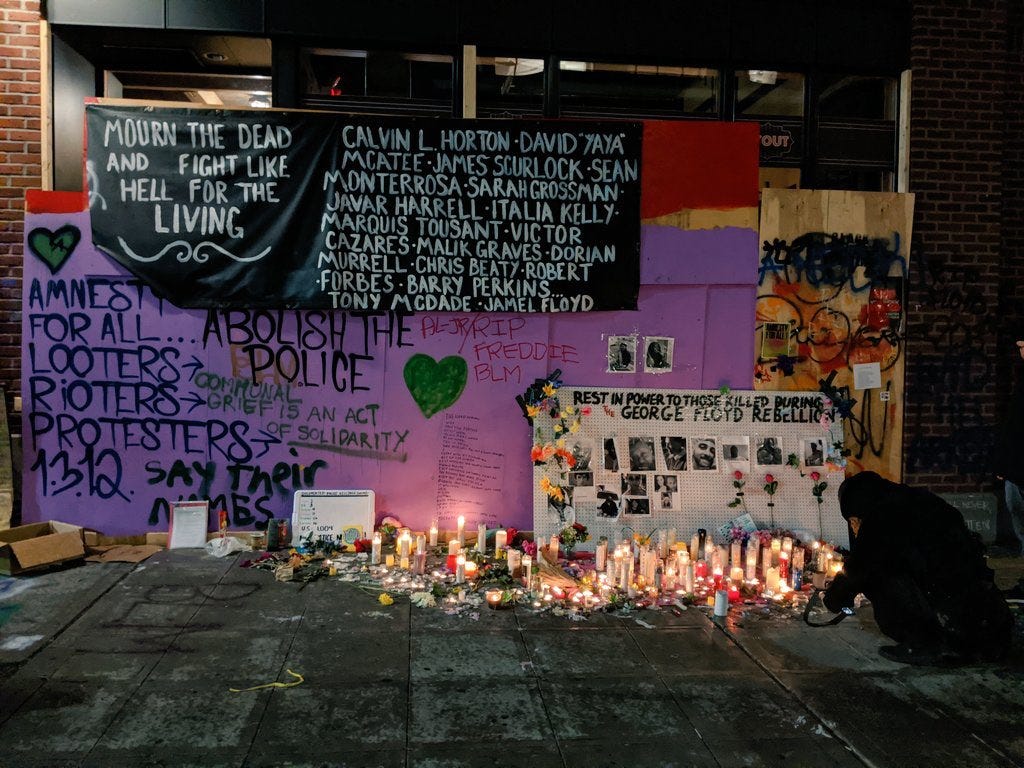
Hello! This is our freshest recording yet—part one made just hours ago. In this episode, we talk about the latest hotspot in the Black Lives Matter uprising: Seattle, near where Andy and Tammy grew up and where Jay has family; and Jay and Andy review the new ESPN documentary on Bruce Lee. We then welcome our special guest (and Andy’s friend and fellow Philadelphian) Nikil Saval, the presumptive winner(!) of a seat in the Pennsylvania State Senate. (There is no Republican in the race.) Follow the results with us here.3:24 - Jay packs his bags for the anarcho-socialist(?), abolitionist commune of Capitol Hill, Seattle. Why such radical resistance in Bezosland? Where does the uprising go from here? (Andy’s audio fails for a bit at 13:15; keep listening!)20:12 - Is Be Water, the Bruce Lee documentary, any good? Does it go beyond representational politics and potted history? Andy and Jay offer their thoughts. (Tammy hasn’t seen it but chimes in anyway.)30:08 - We speak with Nikil Saval (taped Sunday, June 7, 2020) about his recent primary election for State Senate district 1 in Pennsylvania. Nikil gives an update on the votes and talks about balancing his two lives as writer and as labor organizer.Also: Nikil explains how his South Asian background was brought into the campaign and how he had to parry his opponent’s nativist strategy. He discusses how Covid-19 and then the Floyd protests changed the tenor of the campaign. This is a public episode. If you'd like to discuss this with other subscribers or get access to bonus episodes, visit goodbye.substack.com/subscribe

A cop is still a cop; 'PoC' respectability politics, and how China sees the American Uprising
A special welcome to all new subscribers! Today’s episode is about the murder of George Floyd and the actions around the country. A few days ago, Jay wrote in our newsletter about Tou Thao, the Hmong cop who participated in Floyd’s killing, and “the myths of Asian American solidarity.” Jay describes what motivated this post, and we discuss when Asian American self-reflection is useful versus narcissisticTammy and Jay describe the protests they attended in Brooklyn and Oakland, respectively, over the weekend (May 29 and 30). We also discuss the allegation—made by local, state, and national officials as well as liberal media—that the uprisings in Minneapolis and other cities have been the work of “outside agitators.” Finally, Andy asks whether having an international spotlight on these protests could serve progressive ends. 0:30- We discuss Jay’s essay, “Tou Thao and the Myths of Asian American Solidarity,” which preceded the first Minnesota protests.5:45 - Street updates from Tammy (Brooklyn) and Jay (Oakland). 26:50- Tammy explains the theory and practice of mutual aid, and we unpack the unsubstantiated news of “outside agitators.” (Note that the Minneapolis government retracted this claim after an investigation into arrest records, but other parties have continued to run with it.) 59:20- Andy lays out a bizarre parallel: American conservatives support the Hong Kong protests but denounce Black Lives Matter; tankies believe the opposite. Could this moment present an opportunity for international solidarity? How might we use international criticism of the U.S. to support a left agenda?ABOUT USTime to Say Goodbye is a podcast—with your hosts, Jay Caspian Kang, Tammy Kim, and Andy Liu. We launched this thing because, like you, we’ve been sheltering in place and wanted an outlet for our thoughts on the coronavirus, Asia, geopolitics, and Asian Americans.A short introduction to your hosts:Jay Caspian Kang is a writer-at-large for the New York Times Magazine and the author of the forthcoming book The Loneliest Americans.E. Tammy Kim is a magazine reporter, a contributing opinion writer at the New York Times, and a retired lawyer. She co-edited the book Punk Ethnography.Andrew Liu is a historian of modern China. He wrote a book called Tea War, about the history of capitalism in Asia. He remains a huge Supersonics fan. This is a public episode. If you'd like to discuss this with other subscribers or get access to bonus episodes, visit goodbye.substack.com/subscribe

Asian Americans and the SAT; Labor Struggles in Hong Kong and China, with guest Jenny Chan
Hello!In this episode, we chat about relocating during the pandemic, reading (or, in Jay’s case, not reading) physical books, and the University of California system’s recent decision to suspend use of the SAT in admissions.We then give a transnational welcome to Jenny Chan, professor of sociology and China studies at Hong Kong Polytechnic University and co-author of the forthcoming book, Dying for an iPhone. Jenny has devoted the last decade to researching labor conditions and activism in China, especially at Foxconn plants, where migrants and student “interns” build Apple gadgets for export. She speaks with us about the global struggle for workers’ rights and what Beijing’s recent crackdown on Hong Kong means for her community. 1:03 - Andy outs himself as someone who(se employer) hires people to pack his belongings. 5:45 - Is the UC’s rejection of the SAT “anti-Asian”? How do we change the zero-sum game of higher education and prevent Asian American students from getting red-pilled? For background, read Jay’s story on Asian Americans and affirmative action.20:39 - Does the mainstream debate over affirmative action force progressive Asian Americans to act against their own self-interest? Bonus: a ZIP code thought experiment, and why freshman Bill Chang does not want to room with his best friend Bill Chang.30:16 - Jenny explains how Hong Kongers are dealing with the coronavirus and reacting to a new national security law proposed by the central government in Beijing, bypassing Hong Kong. She is hopeful that Hong Kongers will continue to fight for their democratic values.38:16 - Jenny discusses her work on labor issues in the region. In Hong Kong, democracy protests have spurred a historic rise of unionization; in China, labor activists have battled employers and the state, even in the face of repressive tactics. She tells us why people around the world should care about China’s working class.51:06 - Is China the next logical site of a mass labor movement? With a workforce of nearly one billion people, it seems to offer the greatest potential. Elite Chinese university students have taken notice, too, and are organizing in solidarity with workers. Jenny discusses how their generation has been shaped by the negative consequences of globalization. ABOUT USTime to Say Goodbye is a podcast—with your hosts, Jay Caspian Kang, Tammy Kim, and Andy Liu. We launched this thing because, like you, we’ve been sheltering in place and wanted an outlet for our thoughts on the coronavirus, Asia, geopolitics, and Asian Americans.A short introduction to your hosts:Jay Caspian Kang is a writer-at-large for the New York Times Magazine and the author of the forthcoming book The Loneliest Americans.E. Tammy Kim is a magazine reporter, a contributing opinion writer at the New York Times, and a retired lawyer. She co-edited the book Punk Ethnography.Andrew Liu is a historian of modern China. He wrote a book called Tea War, about the history of capitalism in Asia. He remains a huge Supersonics fan. This is a public episode. If you'd like to discuss this with other subscribers or get access to bonus episodes, visit goodbye.substack.com/subscribe

Mike Davis, the Trucker and Meatcutter Turned Marxist Legend
Hello! We’re extremely excited about today’s episode, which includes a lengthy interview with Mike Davis, a friend of the international working class and the author of works such as Prisoners of the American Dream, City of Quartz, and Planet of Slums. We talk about “this moment,” and the need for dissent, street protest and the refusal of the false choice laid out in front of working people between risking their health and complete financial ruin. He also tells us about his rock collection.Mike has been writing and giving a lot of interviews during the pandemic, as many have discovered his prophetic 2005 book, The Monster at Our Door: The Global Threat of Avian Flu. And earlier this year, Mike and his friend, Jon Wiener, published Set the Night on Fire: L.A. in the Sixties, a stunning history of social movements—led by black, Chicano, and Asian Angelenos—that reads like a playbook for organizing against our terrible present. 1:20 - Mike describes his holed-up multigenerational homelife in San Diego—with his wife, the curator and professor Alessandra Montezuma, twin high-schoolers, and Alessandra’s aunt. Also: why working-class leftists should protest the false choice of lockdown or death; and why Biden should be more like AOC. “We cannot yield the street,” Mike tells us.18:08 - Central to the US Covid response has been the literal sacrifice of elders and disabled people in nursing homes. Mike tells us why this constitutes manslaughter, and predicts that Filipino/a health care workers may be among the top casualties of the pandemic. Plus: why food insecurity in Africa, South Asia, and South America should be everyone’s concern. 35:48 - “The Yellow Peril is back,” Mike says. He talks about Trump’s and Biden’s demonization of China, and their neglect of the risk of nuclear war. And he explains why “the world described in Karl Marx’s Capital is most true in China.” 55:00 - Mike is still in touch with white working-class pals from 1952 (some of them Trumpers). He describes multiculturalist thinking as “Janus-faced,” but praises young activists, including his twins, for their instinctively radical conceptions of race, class, and gender.1:08:43 - Can housing organizing be as powerful a vehicle for working-class movements as labor organizing? Mike offers a historical perspective. And a Time to Say Goodbye exclusive: Mike’s extensive rock collection. Click here for a transcript of our conversation. ABOUT USTime to Say Goodbye is a podcast—with your hosts, Jay Caspian Kang, Tammy Kim, and Andy Liu. We launched this thing because, like you, we’ve been sheltering in place and wanted an outlet for our thoughts on the coronavirus, Asia, geopolitics, and Asian Americans.A short introduction to your hosts:Jay Caspian Kang is a writer-at-large for the New York Times Magazine and the author of the forthcoming book The Loneliest Americans.E. Tammy Kim is a magazine reporter, a contributing opinion writer at the New York Times, and a retired lawyer. She co-edited the book Punk Ethnography.Andrew Liu is a historian of modern China. He wrote a book called Tea War, about the history of capitalism in Asia. He remains a huge Supersonics fan. This is a public episode. If you'd like to discuss this with other subscribers or get access to bonus episodes, visit goodbye.substack.com/subscribe

EPISODE 6: The Worst Representatives of AAPI Heritage Month and Who’s Using the Anti-China Playbook.
Hello from the US lockdown!It’s just the three of us this episode, chatting about soggy bread and soggier humans—and all things China, America’s best frenemy and the official scapegoat of the 2020 election. 1:00 - What's the deal with focaccia? Tammy loves it, but Jay and Andy associate it with terrible sandwiches on Manhattan’s Upper West Side.3:17 - The Goopy cook and columnist Alison Roman got semi-canceled last week. We unwisely weigh in on this racialized controversy among wealthy celebrity foodies and lifestyle-brand influencers.7:43 - In honor of Asian American Pacific Islander heritage month, we debate the utility of panels. Why so many? Are they capable of tackling broader structures and patterns, or do they necessarily champion capitalistic upward mobility? Also: the historian checklist of Yellow Peril, the 1882 Chinese Exclusion Act, and the 1982 murder of Vincent Chin; the meaning and coherence of “AAPI”; and the often reactionary history of global pan-Asianism. 24:10 - Trump is predictably blaming China for Covid-19 and everything wrong with his administration, and the Republicans have circulated a template for anti-Beijing electioneering. What does this leaked GOP strategy brief (aka the O’Donnell Memo) say? And why have the Democrats, too, gone all in on China bashing? Hint: polling numbers. Also - What really happened in China at the start of the pandemic? Is “wet market” out and “bat laboratory” in? Bonus: how US nationalism produces Chinese patriotism and whether we’re headed for another Cold War.ABOUT USTime to Say Goodbye is a podcast—with your hosts, Jay Caspian Kang, Tammy Kim, and Andy Liu. We launched this thing because, like you, we’ve been sheltering in place and wanted an outlet for our thoughts on the coronavirus, Asia, geopolitics, and Asian Americans.A short introduction to your hosts:Jay Caspian Kang is a writer-at-large for the New York Times Magazine and the author of the forthcoming book The Loneliest Americans.E. Tammy Kim is a magazine reporter, a contributing opinion writer at the New York Times, and a retired lawyer. She co-edited the book Punk Ethnography.Andrew Liu is a historian of modern China. He wrote a book called Tea War, about the history of capitalism in Asia. He remains a huge Supersonics fan This is a public episode. If you'd like to discuss this with other subscribers or get access to bonus episodes, visit goodbye.substack.com/subscribe

EPISODE 5: American contact tracing, Nimby scolding, and guest, Tre Kwon.
Happy belated May 1st, international workers’ day! This episode is about organizing and health care “heroes.”We talk about cheering for essential workers, Whitmanesque yawps and coyote mewls, and the politics of “shelter in place.” Why are liberals so angry at people who need to get some air? And what’s behind right-wing protests at state capitals? We consider the underlying grievances and explore the possibility of class-based organizing. Our guest, in the second half, is Tre Kwon, an ICU nurse in Manhattan, a shop steward for the New York State Nurses Association, a new mom, and an editor at Left Voice, an international socialist publication. Tre tells us why she gave up half her maternity leave to resume nursing and what she hopes the pandemic will produce in the way of social change. 1:11 - How do we maintain community in a world of social distancing? Tammy describes the nightly ritual of cheering (or playing Korean gongs) for health care workers in New York. Jay recounts his Oakland neighbors’ routine of howling and bongo drums.5:53 - American cities are beginning to hire contact tracers to address Covid-19. Is something resembling the South Korean model possible in the US? Will Americans tolerate it, and can it work with the number of cases continuing to increase? 13:36 - Could contact tracing become a major jobs program? Mulling nationalization and its five government proponents. 21:57 - The debate over whether or not to reopen the economy is dominated by right-wing talking points versus liberal “Nimby” moralism. Why don’t leftists respond more forcefully to the economic disaster felt by the working class and the poor? Jay unleashes a bottled-up rant. Andy contextualizes the language of “freedom.”37:58 - Tre describes the reality of corporate, for-profit medicine and explains why she and her colleagues could foresee the disaster of the pandemic. Also: why we can’t count on Democrats to save us.47:06 - What good are small-scale protests and work stoppages? Tre digs into rage at work, the radicalizing nature of care labor, and why unions, despite their flaws, must be a central pillar of left politics. ABOUT USTime to Say Goodbye is a podcast—with your hosts, Jay Caspian Kang, Tammy Kim, and Andy Liu. We launched this thing because, like you, we’ve been sheltering in place and wanted an outlet for our thoughts on the coronavirus, Asia, geopolitics, and Asian Americans.A short introduction to your hosts:Jay Caspian Kang is a writer-at-large for the New York Times Magazine and the author of the forthcoming book The Loneliest Americans.E. Tammy Kim is a magazine reporter, a contributing opinion writer at the New York Times, and a retired lawyer. She co-edited the book Punk Ethnography.Andrew Liu is a historian of modern China. He wrote a book called Tea War, about the history of capitalism in Asia. He remains a huge Supersonics fan. This is a public episode. If you'd like to discuss this with other subscribers or get access to bonus episodes, visit goodbye.substack.com/subscribe

EPISODE 4: Rejecting Upwardly Mobile Asian-American Politics, Taiwan and the WHO, and guest Wilfred Chan.
Hello!This episode is about the politics of the Asian diaspora. We explain why we named our podcast Time to Say Goodbye and update one another on quarantine pickling (to Maangchi or not to Maangchi?). We then tackle the more serious topic of Asian American politics: How might we move beyond “seat at the table,” professional-class concerns and embrace an “internationalist” perspective that looks to Asia?Andy tells us about his new book, published just last week, which leads to a brief discussion of scholarly trends and why Asian history—that of China and India, in this case—deserves to be studied not only through the lens of tradition and culture but also political economy.In the second half, we speak with Wilfred Chan, a freelance reporter, contributing writer at The Nation, and activist based in New York. Oh, and Andy’s former student! Check out Wilfred’s writing on the 2019 Hong Kong protests and the Lausan 流傘 collective, New York City’s “essential” food couriers, and the WHO’s costly discrimination against Taiwan.1:20 - We answer the burning question of why we’re called Time to Say Goodbye. (Spoiler: Jay loves old-people karaoke; Tammy felt outvoted; Andy just didn’t want to be fired.) Plus disquisitions on authentic YouTube cooking. 9:43 - The last thing the world needs is another podcast, so why us? We assess the state of Asian America and explain why we’re in favor of swerving left. 16:46 - Everyone nerds out in honor of Andy’s new book, Tea War: A History of Capitalism in China and India. Also: the academy’s renewed interest in capitalism, the eighteenth-century French Physiocrats, Jay and Andy’s debate-team credentials and how Agamben (an Italian philosopher) got dunked on.33:40 - Wilfred tells us about his journey from Seattle to New York to writing for CNN in Hong Kong, and how he got politicized.53:00- We ask Wilfred about the “false choice” familiar to many within the Asian diaspora—between criticizing anti-Asian racism and blindly defending the governments and corporations in Asia (China, Korea, Taiwan, Hong Kong, etc.).ABOUT USTime to Say Goodbye is a podcast—with your hosts, Jay Caspian Kang, Tammy Kim, and Andy Liu. We launched this thing because, like you, we’ve been sheltering in place and wanted an outlet for our thoughts on the coronavirus, Asia, geopolitics, and Asian Americans.A short introduction to your hosts:Jay Caspian Kang is a writer-at-large for the New York Times Magazine and the author of the forthcoming book The Loneliest Americans.E. Tammy Kim is a magazine reporter, a contributing opinion writer at the New York Times, and a retired lawyer. She co-edited the book Punk Ethnography.Andrew Liu is a historian of modern China. He wrote a book called Tea War, about the history of capitalism in Asia. He remains a huge Supersonics fan. This is a public episode. If you'd like to discuss this with other subscribers or get access to bonus episodes, visit goodbye.substack.com/subscribe

EPISODE 3: Everything You Ever Wanted to Know about Korean Test-and-Trace
Welcome to Time To Say Goodbye! Today, we have a bonus episode for you about Korean coronavirus test-and-trace—with Max Kim, a journalist living in Seoul who recently wrote a lengthy article for the New Yorker as well as an informative and timely piece a few months back for the MIT Technology Review. We are still experimenting with the format of these emails, so today we thought we’d highlight some of the points we discussed with Max. 1:13 - How the Korean response to Covid-19 was a direct result of a failed response to the MERS epidemic in 2015. 10:39 - How the first days of Covid-19 felt and how quickly the Korean CDC sprung into action with a broad testing program. 16:01 - How Korea “rehearsed” for Covid-19 and how it got a little lucky. 20:40 - What are the actual strategies we can learn from Korea? And what are the particulars of the Korean test-and-trace program? 26:00 - Are there concerns about privacy in Korea? How are they processed? 34:30 - Could Korea have accomplished what it did without universal health care? 38:00 - The million-dollar question: Can we do test-and-trace in America? This is a public episode. If you'd like to discuss this with other subscribers or get access to bonus episodes, visit goodbye.substack.com/subscribe
EPISODE 2: African Guangzhou and Coronavoting in Korea
EPISODE 2: African Guangzhou and Coronavoting in KoreaHello!Time to Say Goodbye is a podcast—with your hosts, Jay Caspian Kang, Tammy Kim, and Andy Liu. We launched this thing because, like you, we’ve been sheltering in place and wanted an outlet for our thoughts on the coronavirus, Asia, geopolitics, and Asian Americans.A short introduction to your hosts:Jay Caspian Kang is a writer-at-large for the New York Times Magazine and the author of the upcoming book The Loneliest Americans.E. Tammy Kim is a magazine reporter, a contributing opinion writer at the New York Times, and a retired lawyer. She co-edited the book Punk Ethnography.Andrew Liu is a historian of modern China. He wrote a book called Tea War, about the history of capitalism in Asia. He remains a huge Supersonics fan. Today’s show is about markets and mandates.The large African immigrant community in Guangzhou, in southern China, has faced persecution on Covid-19 grounds. We discuss this in the context of China-Africa relations and global racism. Soapboxing about: trade routes, multiculturalism, and ancient explanatory power.We return, regrettably, to the topic of Asian American discrimination, America-first navel-gazing, and what it means to declare: “Chinatown is not in China.”Then we welcome our first guest, Victoria Kim, Seoul correspondent for the Los Angeles Times. Victoria tells us about last week’s midterm parliamentary elections in South Korea, the first national vote of the pandemic era. What can we learn from Korea’s election protocols? Why did voters turn out in such large numbers? How has Korea’s successful response to the virus affected its reputation abroad? And how might the ruling liberal Democrats parlay their landslide victory? Show notes:3:05 – Why are Chinese people lashing out against Guangzhou’s African immigrant community? What are the international implications and, without resorting to pop anthropology, can we draw parallels to the xenophobia in the U.S.? The latest, plus background here and here.26:30 – Does a second-generation Chinese American doctor deserve to get “hate-crimed” less than a new immigrant laborer from Hong Kong? Discrimination takes from an Asian American éminence grise and a Joy Luck Club alumna.40:01 – The brilliant Victoria Kim of the Los Angeles Times, on electoral politics and life in a functioning democracy. Sigh. Her coverage of record turnout, the woolly future of human contact, and all things South Korea. This is a public episode. If you'd like to discuss this with other subscribers or get access to bonus episodes, visit goodbye.substack.com/subscribe

EPISODE 1: Pangolin Panic and Why the West Said "No" to Masks
Hello! Time to Say Goodbye is a podcast—with your hosts, Jay Caspian Kang, Tammy Kim, and Andy Liu. We launched this thing because, like you, we’ve been sheltering in place and wanted an outlet for our thoughts on the coronavirus, Asia, geopolitics, and Asian Americans. A short introduction to your hosts:Jay Caspian Kang is a writer-at-large for the New York Times Magazine and the author of the upcoming book The Loneliest Americans. E. Tammy Kim is a magazine reporter, a contributing opinion writer at the New York Times, and a retired lawyer. She co-edited the book Punk Ethnography.Andrew Liu is a historian of modern China. He wrote a book called Tea War, about the history of capitalism in Asia. He remains a huge Supersonics fan. Today’s show is about travel and opulence. We trace the Pangolin market and its wealthy consumers. We then tell you about the city of Wuhan and how its place in the economy all but ensured a global spread of Covid-19. Included in the discussion: supply chains, business travel, car-parts manufacturing, and tourism. We move on to masks and South Korea. Tammy tells us about her recent article in the New York Times, on the government’s efforts to prevent price-gouging and distribute masks through local pharmacies. We talk about why Westerners weren’t initially keen to adopt the mask, then rapidly changed their mind over the past few weeks, at least in the United States. Last, we explore Andrew Yang’s infamous op-ed in the Washington Post—and the backlash. Show notes: 2:41 – Korean quarantine for international travelers. A description of what it’s like here. 6:15 – How coronavirus spread, the politics of the “wet market,” and pangolins. Andy’s article about China and mundane forms of global transmission, plus a follow-up opinion piece here.45:00 – Why did Americans resist wearing masks? Tammy’s article, with lessons from South Korea, and her interview with a lead Korean doctor here. 1:12 – Obligatory conversation about Andrew Yang’s op-ed. This is a public episode. If you'd like to discuss this with other subscribers or get access to bonus episodes, visit goodbye.substack.com/subscribe