
Time To Say Goodbye
346 episodes — Page 5 of 7

GOP cruelty gone wild, a potential train strike, and Jay’s surfing tips
Hello from a beach in Busan! It’s just us this week, talking through the good, bad, and ugly of this week’s news cycle. Just before we recorded, the news dropped that Adnan Syed, the subject of the first season of the hit podcast “Serial,” was released from prison with a vacated conviction after 23 years. We grapple with the opportunity and ethical risks of narrative podcasts, especially when it comes to true crime. We also discuss the railway-union strike that was temporarily averted, thanks in part to the Biden administration, and the brutal conditions imposed by a consolidated freight system and billionaire bosses. Union members will vote soon on what to accept. (Looks like train workers in the UK could go on strike very soon, too.)In our main segment, we discuss Florida Governor Ron DeSantis’s latest stunt: coercing asylum-seekers in Texas to board a plane headed to Martha’s Vineyard, a vacation spot for monied liberals that has no infrastructure to help migrants. How does such an obviously cruel maneuver fit into the right’s Twitter-focused political strategy, centered on “owning the Libs” and diverting attention away from substantive issues and toward a “culture war” (as Tammy witnessed in the Ohio Senate race)? How should the left respond to this type of political theater? Plus: Jay lends some pointers from his quarter-life crisis (spent surfing unrideable waves in NorCal) to Tammy as she navigates a crisis of her own (sublimated through surfing lessons in Korea); and math professor Michael Thaddeus proves the glories of tenure as he knocks Columbia University down a few pegs. Thanks for your support. Please subscribe on Patreon or Substack, stay in touch via email ([email protected]), and follow us on Twitter! This is a public episode. If you'd like to discuss this with other subscribers or get access to bonus episodes, visit goodbye.substack.com/subscribe
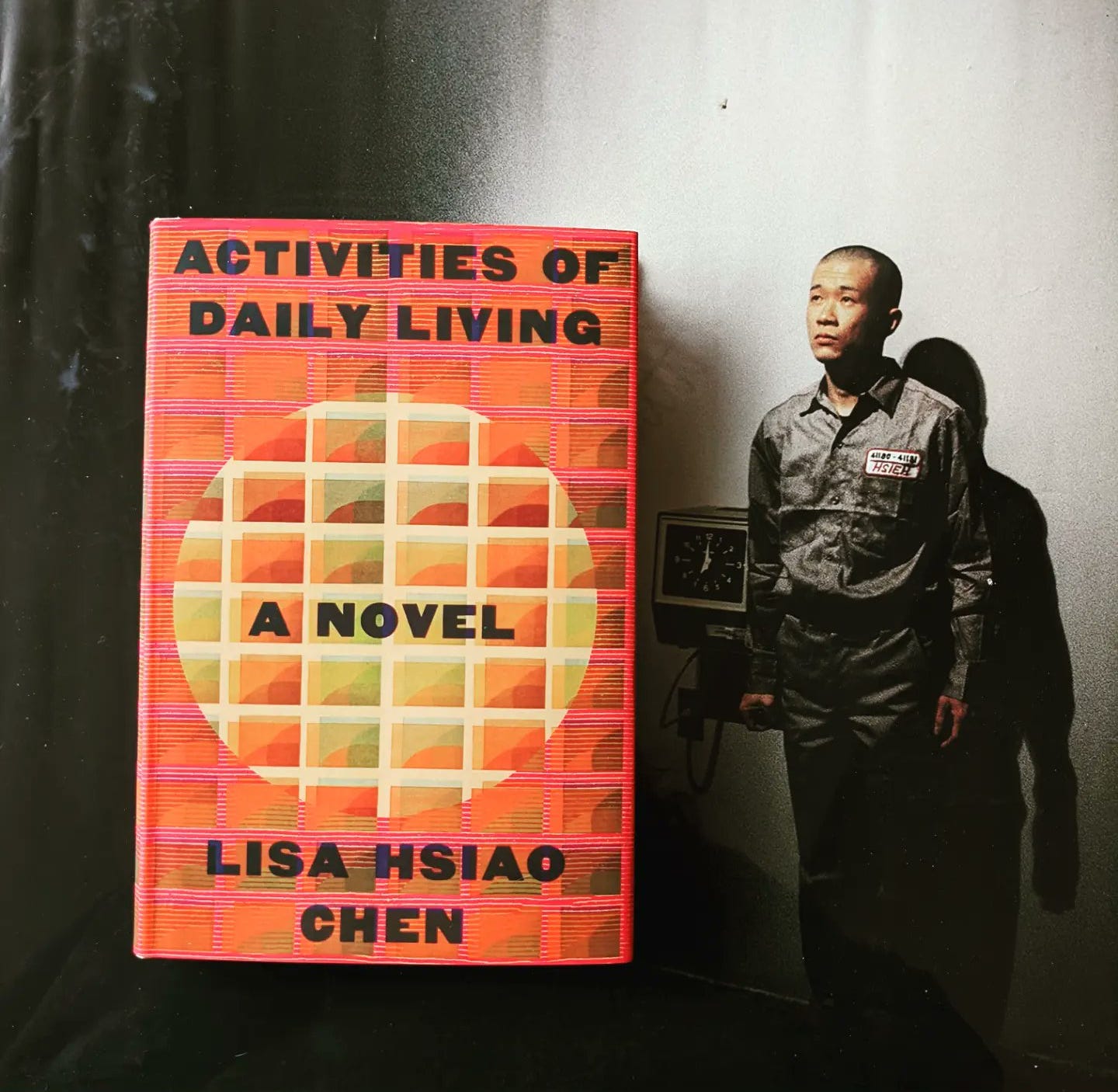
BOOK TIME with Lisa Hsiao Chen
This is a free preview of a paid episode. To hear more, visit goodbye.substack.comHello from Tammy’s apartment! (Please forgive the less-than-stellar audio quality on this one.) For our latest TTSG book club meeting, Tammy is joined by the wonderful Lisa Hsiao Chen to discuss her debut novel “Activities of Daily Living.” The book follows Alice, a Taiwanese American living in Brooklyn in her late thirties, as she simultaneously obsess…

Fantasies of progress on K-TV with Jenny Wang Medina
Hello from Seoul (both real and fictional)!This week, we welcome our friend and K-drama expert Jenny Wang Medina back to the pod to discuss the new Netflix hit “Extraordinary Attorney Woo.” The legal-procedural K-drama follows an autistic attorney, Woo Young-woo, who joins the ranks of a high-powered law firm and quickly proves herself invaluable. It’s wholesome, marginally sea-themed, and set in a fantasy playground of the professional sphere. We discuss the hot-button issues in Korea that form the backdrop of the show, like children’s rights, Buddhism versus Christianity, North Korean defectors, and eminent domain, just to name a few. We reflect on the rise of multiculturalism and minority rights in Korean society, TV, and film, which has led to the increased visibility of people with disabilities. Woo has also sparked a specific discourse around the portrayal of its autistic protagonist. Will the show also inspire a generation of women lawyers to move to Korea, expecting a feminist haven, or convince Korean parents to ease up on their kids’ time at hagwons? Only time will tell. If you plan to watch the series, we should warn you that Jay drops a couple of pretty extreme spoilers towards the end of the ep!Later this week, we’ll be releasing a bonus recording of our book club with Lisa Hsiao Chen, author of “Activities of Daily Living,” for paid subscribers. We’ve also been using our TTSG Discord to plan subscriber meet-ups with Tammy in Seoul. If you’d like to join in, subscribe via Patreon or Substack. And you can always email us at [email protected] and follow us on Twitter! This is a public episode. If you'd like to discuss this with other subscribers or get access to bonus episodes, visit goodbye.substack.com/subscribe
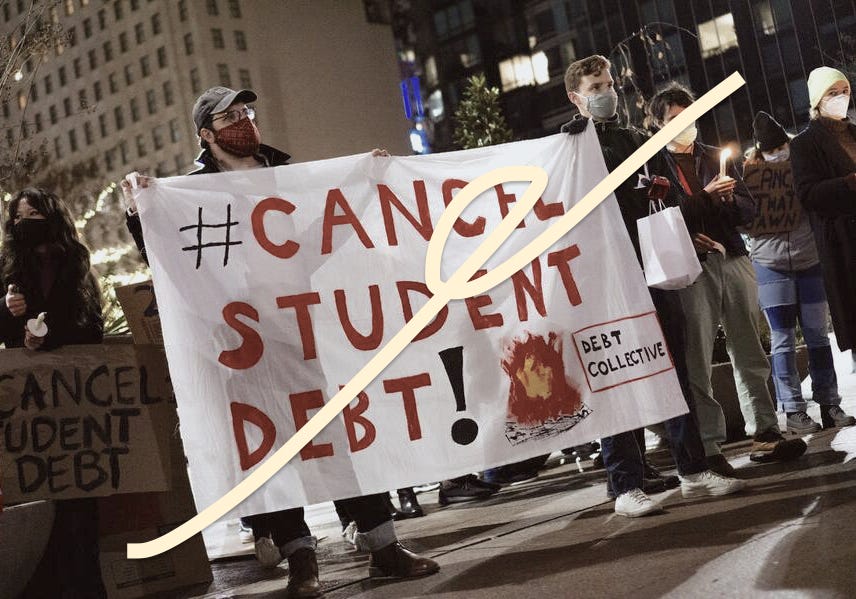
How we won on student debt, with Ann Larson and Eleni Schirmer of the Debt Collective
Hello from three time zones! This week, Tammy is joined by Debt Collective organizers Ann Larson and Eleni Schirmer to reflect on the movement that won historic relief from student debt. But first, we remember the great Barbara Ehrenreich, who passed last week. Ehrenreich was an author and activist best known for her bestselling book Nickel and Dimed, a hard-hitting yet beautifully written dive into the low-wage economy. She also made incredible contributions to leftist movements, from DSA to domestic workers, the Economic Hardship Reporting Project and In These Times, as well as her often-misunderstood warning about the “professional–managerial class.” And Ann reminds us that Ehrenreich wrote about more than just labor! In our main segment, we celebrate and dissect a rare victory on the left. Ann and Eleni talk about their personal journeys toward calling b******t on all kinds of debt—and trace Biden’s recent debt-cancellation announcement to its Occupy Wall Street origins and a decade of painstaking organizing. We reflect on the path forged by the Corinthian debt strikers, the public sector’s broader reliance on debt, the “proof of concept” in Biden’s nowhere-near-enough cancellation policy, and the way that framing debt as a shared economic condition opens up new organizing opportunities. (A real-life case study in solidarity on the basis of class!) Plus: how all of us can get involved to make the debt announcement a reality.Thanks for listening. Please subscribe and stay in touch via Patreon and Substack, email us at [email protected], and follow us on Twitter! This is a public episode. If you'd like to discuss this with other subscribers or get access to bonus episodes, visit goodbye.substack.com/subscribe
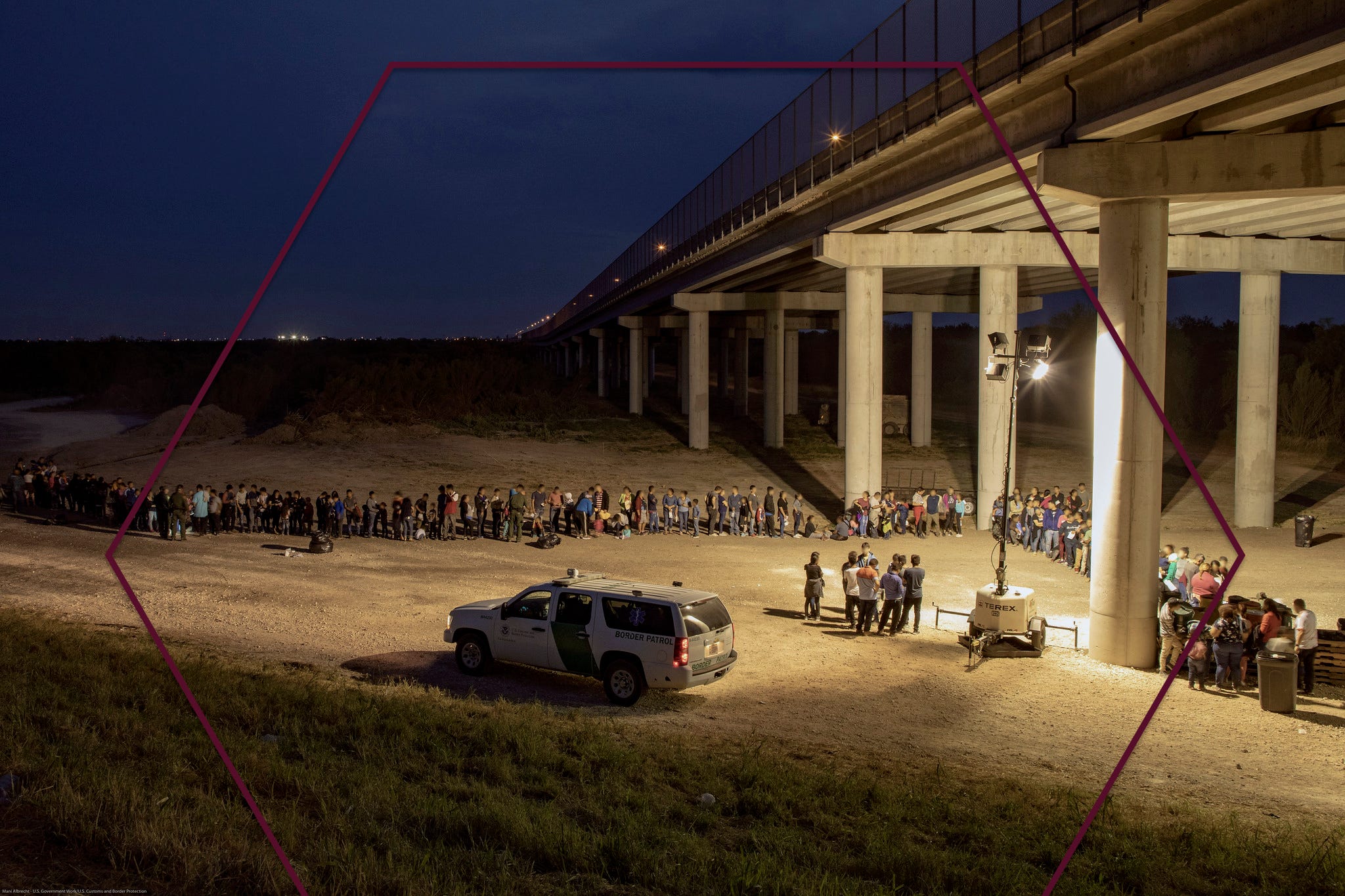
Immigration’s “catalyst moments” with Silky Shah
Hello from Washington state! This week, we’re joined by Silky Shah, executive director of Detention Watch Network and repeat pod guest, to chat about immigration (and, briefly, Nathan Fielder’s bizarre new show, “The Rehearsal”). We start by diving into Caitlin Dickerson’s exhaustive report, in The Atlantic, on the Trump administration's family-separation policy. We reflect on the unique horrors of that period, while locating them in a longer history of cruelty toward immigrants, up to the present. Silky also outlines the current immigration landscape, including Biden’s continuation of Trump’s Title 42 policy (which blocks migration ostensibly on public-health grounds). She explains how the misguided theory of deterrence has governed immigration policy under both Democratic and Republican administrations, aided by skewed media narratives, and suggests what the immigrant-rights movement should do to prepare for the next mass-organizing moment. As always, please subscribe via Patreon and Substack to support the show and gain access to our Discord. Our global, 24/7 community of listeners is currently discussing Leo’s 21-year-old girlfriends, basketball, Seoul fashion, “The Rehearsal,” immigration policy, food in the PNW, and so much more. You can also follow us on Twitter and email us at [email protected]. This is a public episode. If you'd like to discuss this with other subscribers or get access to bonus episodes, visit goodbye.substack.com/subscribe
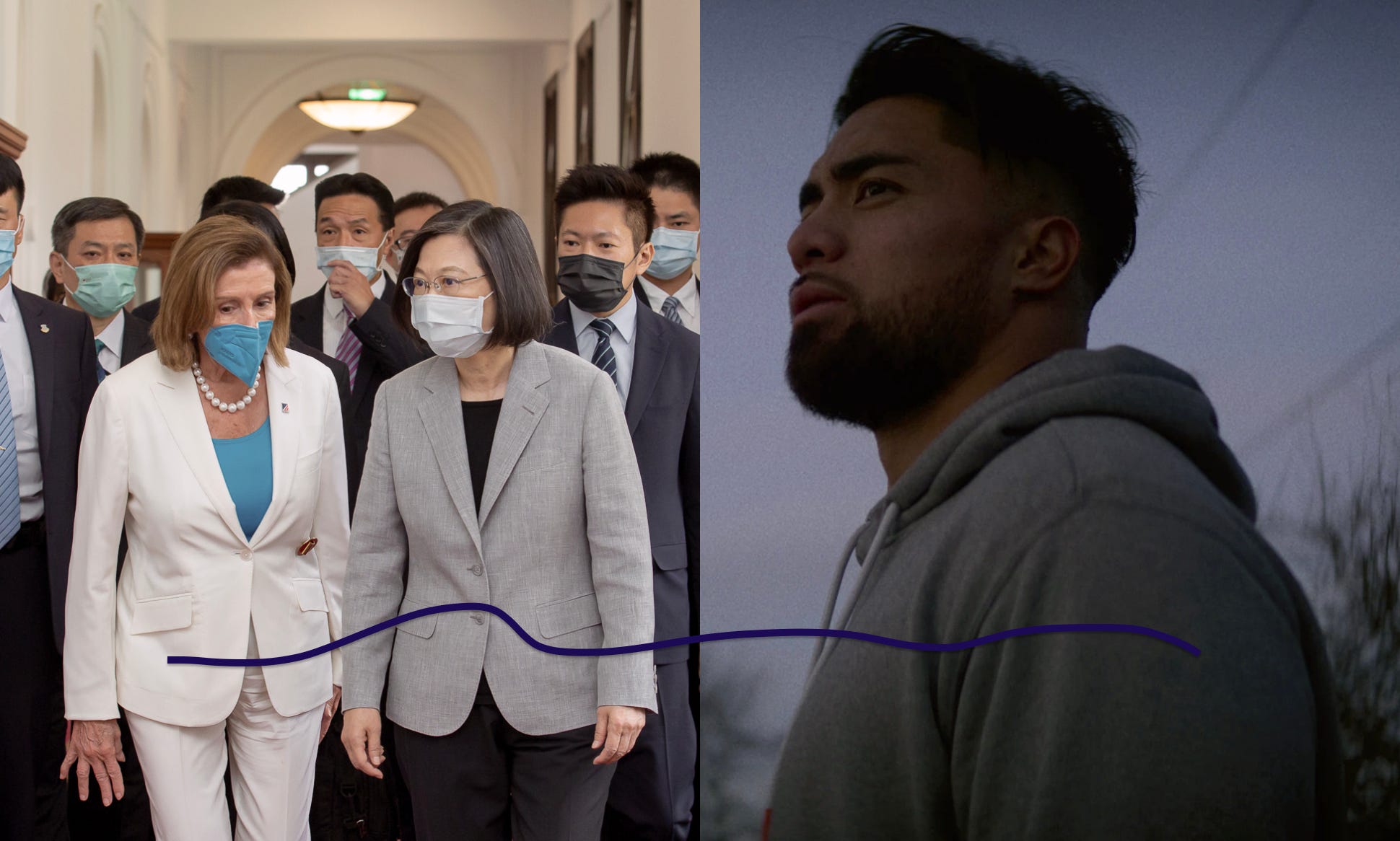
Pelosi in Taipei and Twitterstorians with Andy Liu
Hello from Philly! We’re lucky to be joined this week by former podsquad member Andy Liu, for an in-depth chat about his three favorite things: sports, history, and Taiwan. First, we review the new Netflix documentary about Manti Te'o, the college-football star who fell from grace after being catfished a decade ago. We discuss the many failures that led to Te'o’s ostracization, as well as the role his race may have played in the way the media treated him. Next, Andy catches us up on the latest Twitterstorian goss: the fight over a blog post on “presentism” and identity politics by American Historical Association president James H. Sweet. We interrogate Sweet’s arguments and the coded language that got him in trouble. Lastly, Andy answers our questions about Nancy Pelosi’s trip to Taiwan. Did the House Speaker’s trip escalate tensions between Taiwan and China, or was it all bluster? Is the Democrats’ “tough on China” posturing an effort to wear populist politics? Why are people outside Asia so invested in a story about confronting China? Stick it out til the end to hear Jay and Andy bicker about Kevin Durant. If you’re a paid subscriber, come to our book club this Thursday, 8/26, at 8pm EST, with Lisa Hsiao Chen, author of “Activities of Daily Living” (Zoom info in our Discord). As always, you can subscribe via Patreon or Substack, follow us on Twitter, and email us at [email protected]. This is a public episode. If you'd like to discuss this with other subscribers or get access to bonus episodes, visit goodbye.substack.com/subscribe
A messy Asian American story with filmmaker Julie Ha
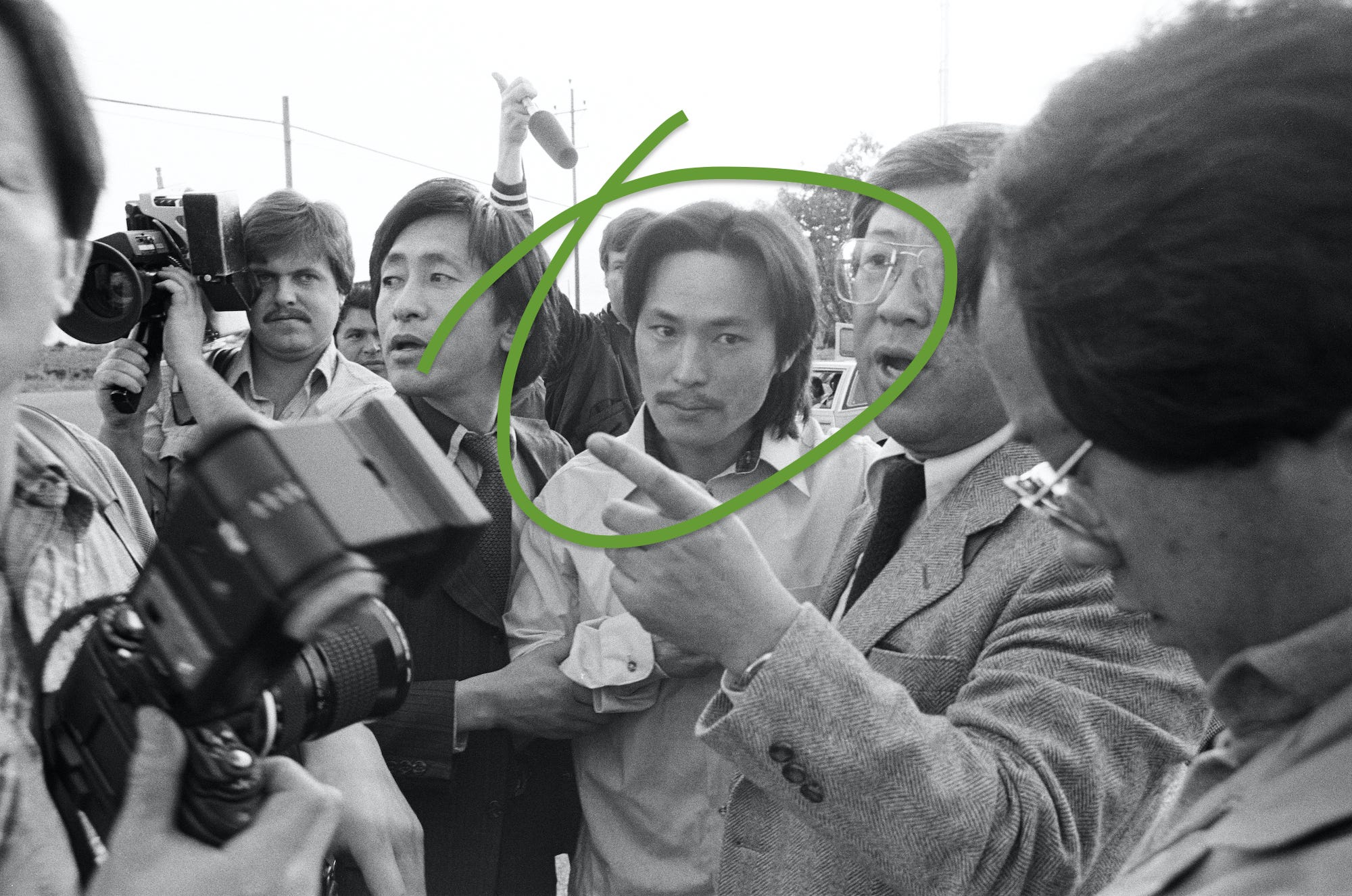
Hello from Mai's high-speed European train! This week, Tammy and Jay watch “Free Chol Soo Lee” and speak with Julie Ha, who co-directed the film with Eugene Yi. The new documentary follows Chol Soo Lee, a Korean man in San Francisco who was wrongfully convicted of murder in the 1970s, highlighting the pan-Asian movement for his release and his troubled readjustment to life outside. Julie discusses her admiration for the pathbreaking investigative journalist K.W. Lee, who brought public scrutiny to the case; the importance of non-canonical archives; and how stories like Chol Soo Lee’s complicate prevailing immigrant identities. The hosts also dig into the Asian American Disinformation Table’s new report on the proliferation of disinformation(?) in immigrant communities. But what's the difference between unsavory conclusions and lies? Is the report yet another elite dismissal of impolitic concerns? As always, please subscribe via Patreon and Substack, follow us on Twitter, and email us at [email protected]. When you become a paid TTSG subscriber, you get access to our lively Discord, where you'll find information about next week’s book club with Lisa Hsiao Chen, author of “Activities of Daily Living” (Thursday 8/26 at 8pm EST). This is a public episode. If you'd like to discuss this with other subscribers or get access to bonus episodes, visit goodbye.substack.com/subscribe

“The inherent violence of all of it” with Jia Tolentino
Hello from the miserable gap between episodes of “Extraordinary Attorney Woo”!This week, Jay and Tammy are joined by the great Jia Tolentino, a writer at The New Yorker and the author of Trick Mirror.We start by talking about Jia’s recent piece on housing (= the rent is too damn high) on the worker-owned site “Hellgate”—and her dreams of organizing her building (not Tammy’s “white projects”) in Fort Greene, Brooklyn, New York. Then, we discuss two provocative essays Jia wrote on abortion after the Dobbs decision: first, on surveillance statism; and second, on the moral (especially Judeo-Christian) sacrifices inherent to pregnancy and human existence, not just to abortion. Plus: Jay and Tammy review Las Vegas's Sino-Korean noodles. As always, thanks to our wonderful producer Mai and all of our subscribers (Jia included!) for keeping the show alive. On Thursday, August 25th, we’ll have our next book club meeting with Lisa Hsiao Chen, the author of the novel Activities of Daily Living. Subscribe via Patreon or Substack to join. This is a public episode. If you'd like to discuss this with other subscribers or get access to bonus episodes, visit goodbye.substack.com/subscribe
Executions in Myanmar with Ali Fowle
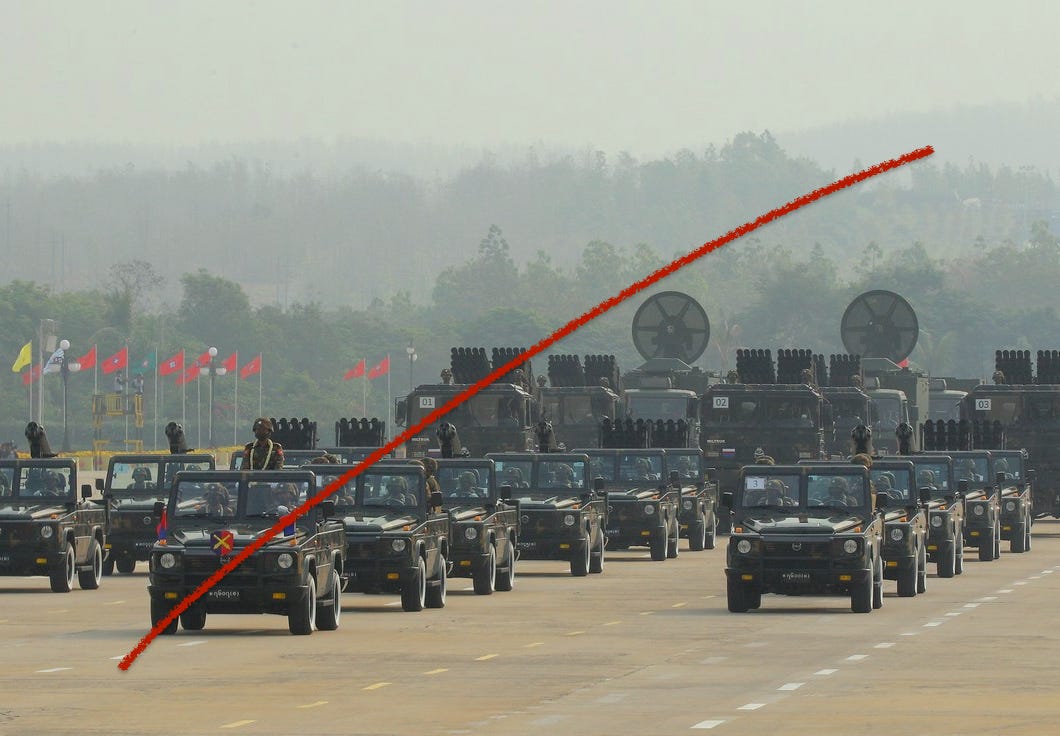
Hello from Tammy’s undisclosed location! The hosts start with a brief discussion of Leanna Louie, a law-and-order Democrat running for District 4 Supervisor in SF. What might she represent for the future of Asian-American politics? Then Jay and Tammy are joined by investigative journalist Ali Fowle to discuss Myanmar. The country’s military regime recently killed four prisoners, including well known pro-democracy activists Phyo Zeya Thaw and Ko Jimmy. These judicial executions, the first since the 1980s, shocked even those inside Myanmar, where extrajudicial murders and widespread arrests have been commonplace since the February 2021 military coup. Ali describes her experience reporting from Myanmar in the decade leading up to the coup, the culture of fear and violence used to suppress last year’s popular uprising, and what the resistance movement looks like today. We ask why the coup in Myanmar has not broken through internationally in the way Russia’s assault on Ukraine has, and what message the recent executions are meant to send. Be sure to watch the short documentary Ali produced last year with Al Jazeera (warning: graphic content), and give a listen to Phyo Zeya Thaw’s music. Please subscribe and stay in touch via Patreon and Substack, follow us on Twitter, and feel free to email us at [email protected]. This is a public episode. If you'd like to discuss this with other subscribers or get access to bonus episodes, visit goodbye.substack.com/subscribe
Fake boba, fake pork with Wei Tchou
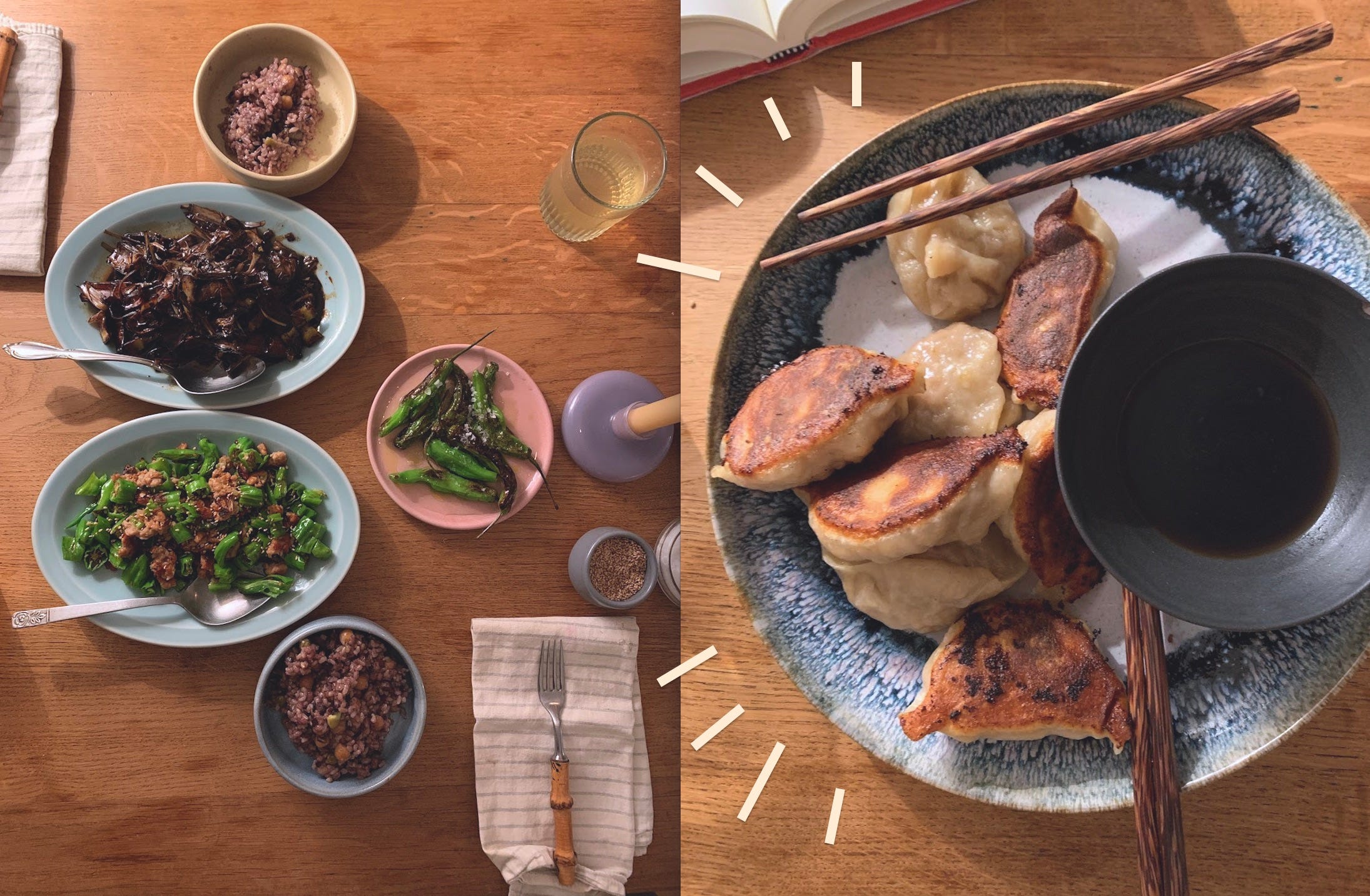
Hello from a walk-up apartment! This week, Tammy and Jay invite food-and-culture writer Wei Tchou to discuss trends in plant-based meat and beverages. Wei has written beautifully about fermenting tempeh, making her own soy sauce, and learning to love baijiu. In our first investigative segment (lol), we send Jay out on the streets of Norcal. The U.S. chain Peet’s Coffee has proclaimed this the “Summer of Jelly,” dropping a new “boba-like” drink addition that’s been deemed cultural appropriation by some, harmless bobafication by others. Jay ventures to the original Peet’s in Berkeley to find out: Is the jelly any good? Then, Wei shills for Big Fake Pig! Could Impossible Pork be the answer to her tireless search for a veg alternative in cooking Chinese? How do new vegan meat products fit into food landscapes that have long used plant-based substitutes? Could vegan pork be an ecological and ethical cure in regions where meat consumption is still on the rise? Plus: David Chan’s unique brand of service journalism and Wei’s problematic cookbook fave. Check out our subscriber Discord for bonus items from Jay’s Peet’s odyssey and Wei’s kitchen. And, on August 25, we’ll be having a subscribers-only book club with the great novelist Lisa Hsiao Chen, author of Activities of Daily Living. Come on through! Thanks as always for your support! Please subscribe and stay in touch via Patreon and Substack, follow us on Twitter, and email us at [email protected]. This is a public episode. If you'd like to discuss this with other subscribers or get access to bonus episodes, visit goodbye.substack.com/subscribe
More Dem failings + a shifting drug culture
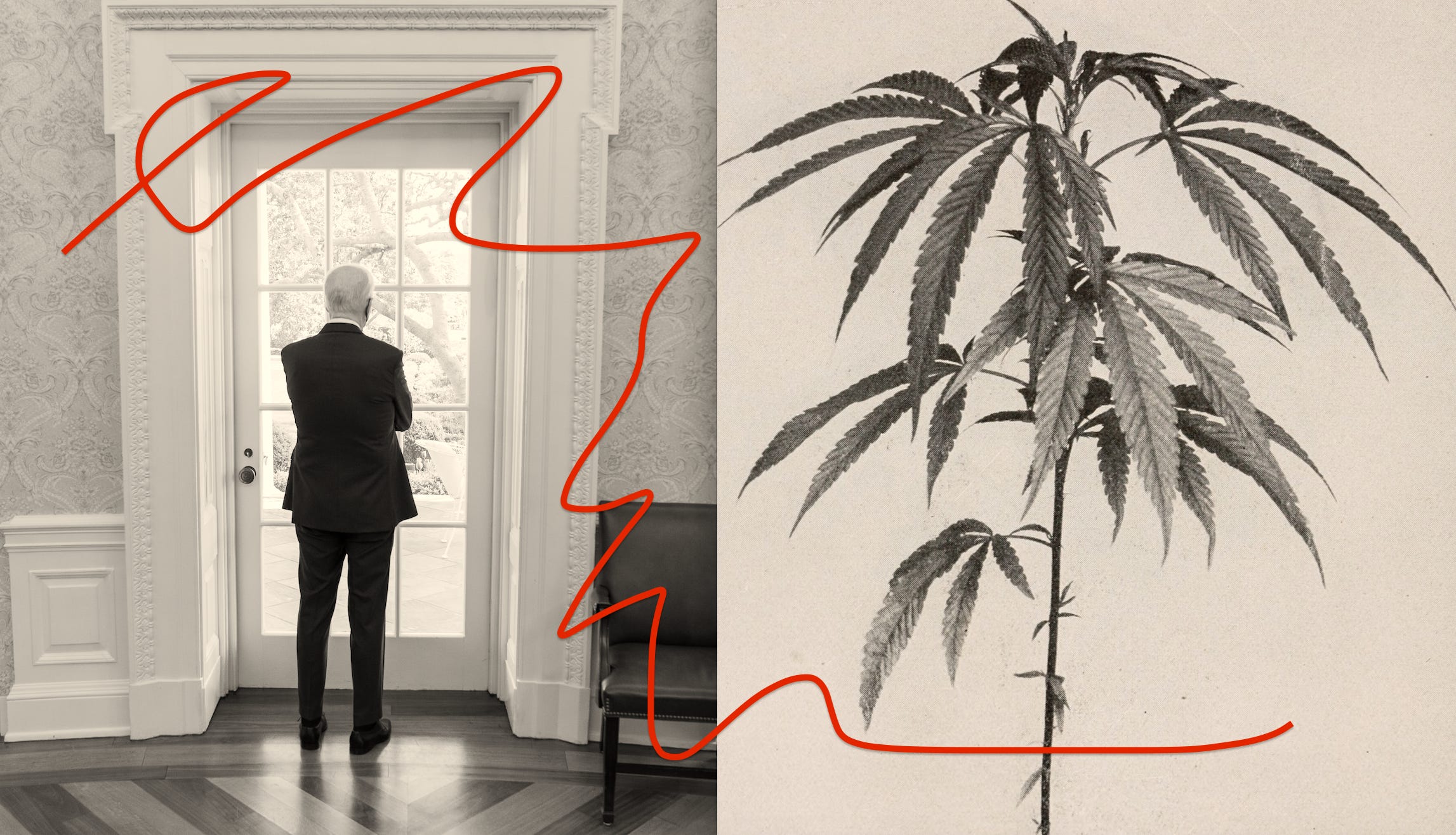
Hello from mild SF and summerpocalypse NYC! This week, Jay and Tammy discuss what’s been on their minds this week: the state of the Democratic party and the shifting culture around drug use in the United States. Plus: Jill Biden on tacos and bogadas! We read New York mag columnist Jonathan Chait’s critique of Biden and ask why the administration has such a failed legislative strategy. What, if anything, is keeping Democrats from taxing the rich? What does a recent poll tell us about the party as the midterms approach? Then, inspired by “How to Change Your Mind,” a new show (and book) from Michael Pollan that explores the history of psychedelics, we consider society’s reassessment of so-called “hard” and “soft” drugs. Have we fully disavowed the War on Drugs? What should we make of this increased acceptance of drug use in a time of huge numbers of opioid and fentanyl overdoses?Thanks as always for your support! Please subscribe and stay in touch via Patreon and Substack, follow us on Twitter, and email us at [email protected]. This is a public episode. If you'd like to discuss this with other subscribers or get access to bonus episodes, visit goodbye.substack.com/subscribe

Why "social housing" with Paul Williams
Hello! This week, Tammy and Jay remember John Bennet, a former New Yorker editor and Columbia journalism professor who passed away this week: They are then joined by policy analyst Paul Williams to discuss the concept of social housing and its potential in the United States. How did we arrive at a political consensus so averse to public housing of any kind? Can other countries’ programs help us reclaim housing as a social good rather than a market commodity? What can we learn from current social-housing proposals across the U.S.? For more, read Paul on “Public Housing for All” and the California bill that made it further than expected, as well as the initiatives being floated in Rhode Island and Seattle and the project underway in Maryland. Thanks for your support. Please subscribe and stay in touch via Patreon and Substack, email ([email protected]) and follow us on Twitter! This is a public episode. If you'd like to discuss this with other subscribers or get access to bonus episodes, visit goodbye.substack.com/subscribe

The end of the American Century with Danny Bessner
Resending because of a tech glitch. Thanks for your patience.Hello from Cleveland! This week, we speak with friend of the pod Danny Bessner, an historian of U.S. foreign relations and co-host of the podcast American Prestige. Danny discusses his new Harper’s essay, which argues for a departure from American exceptionalism, once and for all. He lays out the two main camps in U.S. foreign policy: liberal internationalists, who advocate for the maintenance of U.S. global hegemony, and restrainers, who argue that the country’s influence should be reduced. We also explore how war and politics have changed since the 1950s, the decimation of academic history and other disciplines in the humanities, how the U.S. regulatory apparatus insulates elite decision-makers from public opinion, and what’s needed to fight back. Thanks for listening, and stay in touch via Substack, [email protected], https://twitter.com/ttsgpod, and/or https://www.patreon.com/ttsgpod! This is a public episode. If you'd like to discuss this with other subscribers or get access to bonus episodes, visit goodbye.substack.com/subscribe
A feminist(?) K-drama about abortion
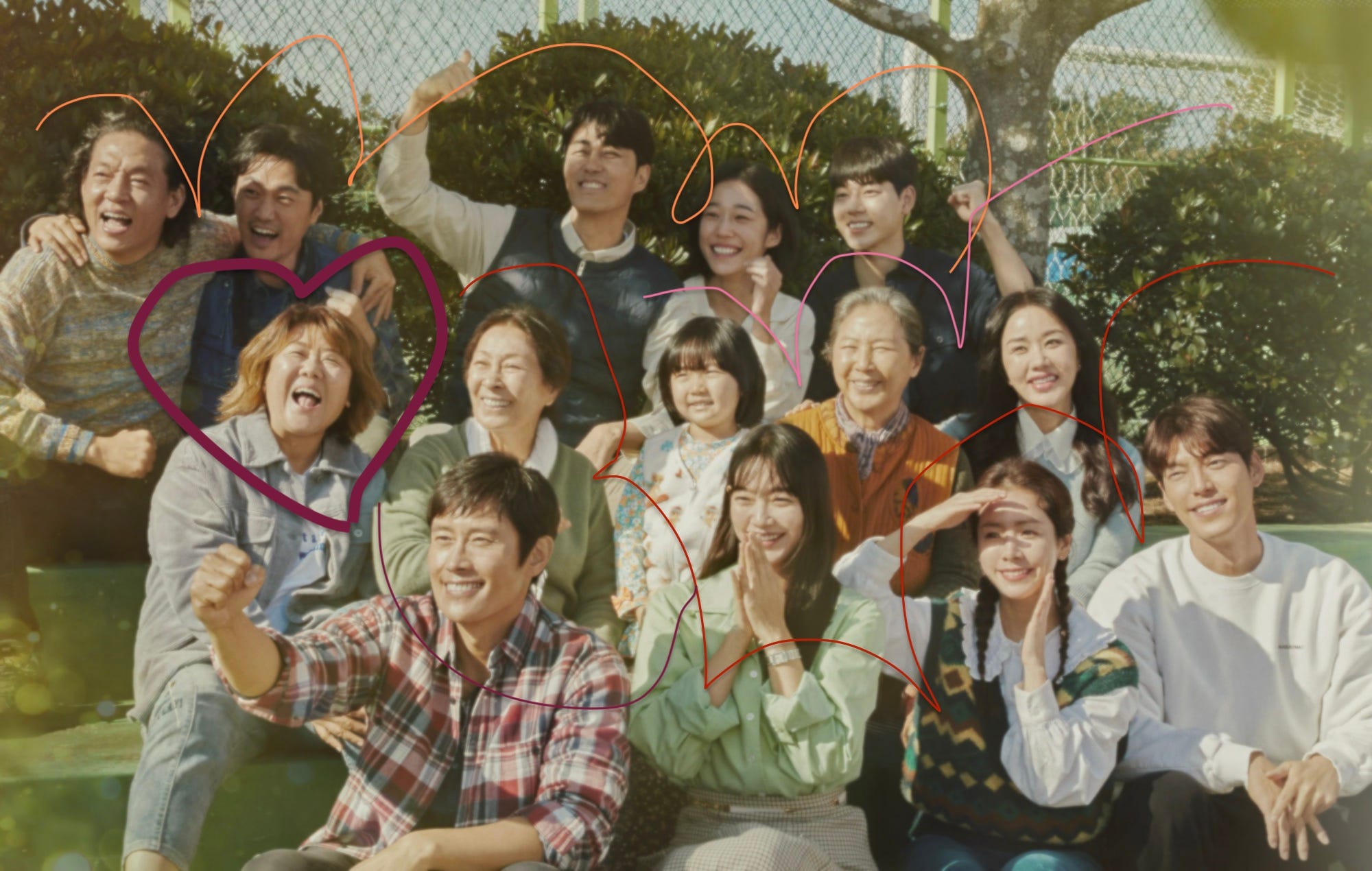
Hello from Jeju-do! This (harrowing news) week, the podsquad welcomes repeat guest Jenny Wang Medina—Emory professor, TV addict, literary translator, and hallyu expert—for a discussion of Jay’s favorite recent K-drama, Our Blues. We talk about abortion, matriarchal haenyeo, regionalism, debt, and goose fathers. What makes Jeju-do such a compelling site for fiction? How are dreams deferred in the East Asian Tigers and other sites of rapid capitalist development? Plus: Jenny’s analysis of the Korean linked-novel form (연작 소설), Chevy product placement, and Tammy’s crush on Kim Woo-bin:If you’re in NYC, come to OG TTSG Discord member (and ceramicist) Stephanie Shih’s art opening on the LES tomorrow night: Thanks for listening! Please subscribe and get in touch via Substack, [email protected], https://twitter.com/ttsgpod, and/or https://www.patreon.com/ttsgpod! This is a public episode. If you'd like to discuss this with other subscribers or get access to bonus episodes, visit goodbye.substack.com/subscribe

Inflaaaation, cool unions, and "We Own This City"
Hi from Chicago! This week, Jay and Tammy talk about a rising tide of worker organizing, rising gas prices (ugh), and a new, very timely TV show. Tammy reports back from her trip to Labor Notes (along with pod listener Matt), starring Amazon Labor Union, Starbucks Workers United, and Tío Bernie. What kind of union moment are we in? Then, what’s the relationship between inflation and the labor market, and what does it mean for electoral politics in the US (and around the world)? How can the left, or even liberals, frame inflation in terms of corporate theft instead of punching down the working class?And we’re starting to watch David Simon’s new show on HBO, based on Justin Fenton’s book of the same title, “We Own This City.” What are cops for?Finally, a quick update on the future of the pod. (Sorry about Tammy’s sound this week; she didn’t have her usual equipment with her on the road.)A couple other things we’re watching:* The WTO met recently and quashed any hope of getting generic Covid vaccines, tests, and medicine distributed around the world. * Very cool about the new Colombian president and vice president! IRL fun: We’re gonna have a send-off for Andy this Sunday in New York. If you’re a subscriber, log into the Discord to get the details and RSVP!Thanks for listening! Please subscribe and reach out to us via Substack, [email protected], https://twitter.com/ttsgpod, and/or https://www.patreon.com/ttsgpod! This is a public episode. If you'd like to discuss this with other subscribers or get access to bonus episodes, visit goodbye.substack.com/subscribe
Battle hymn of a second-gen tiger + Andy's last ep :(
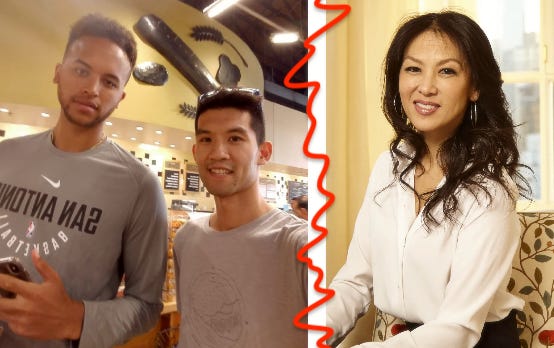
Hello from Andy’s couch! We take a break from the NBA finals to record Andy’s last ep as co-host : (Per his request, the podsquad talks Amy Chua’s now decade-old book, Battle Hymn of the Tiger Mother—and argues about everything in it. Is the Chinese Tiger Mother actually a thing? Does it matter that Chua is an upper-class second-generation parent? What kind of Asian America does the book describe? Can the satirical bent of the book erase its meanness and cultural essentialism? (Note: we focus pretty narrowly on the memoir and don’t get into her husband’s suspension from Yale for sexual harassment or her own professorial misconduct… but yeah, a lot there.)Then, we send Andy off with thanks and And thank you for listening. Spread the word, and reach out to us via Substack, [email protected], https://twitter.com/ttsgpod, and/or https://www.patreon.com/ttsgpod! Jay and Tammy will see you next week. This is a public episode. If you'd like to discuss this with other subscribers or get access to bonus episodes, visit goodbye.substack.com/subscribe
Uvalde aftermath, police, and guns
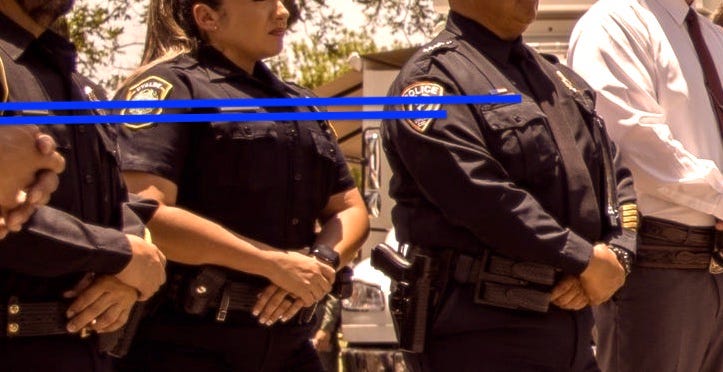
Hello from a 24-hour layover!Tammy returns from her travels and tells us about hanging out with cool Asians at the International Federation of Journalists conference in Oman. Then, we discuss the latest on the Uvalde shootings and the increasingly outrageous reports that local police officers and government officials are bullying parents and evading even the tiniest bit of accountability. How does the Uvalde massacre bolster arguments for police defunding and abolition? Where does abolition intersect with calls for gun control? How pessimistic should we be about the right-wing deadlock of the national government? Finally, an announcement from Andy and some reflections on the two years since the podcast began, roughly 133 episodes(!) ago. Thanks for listening! Please subscribe and reach out to us via Substack, [email protected], https://twitter.com/ttsgpod, and/or https://www.patreon.com/ttsgpod! This is a public episode. If you'd like to discuss this with other subscribers or get access to bonus episodes, visit goodbye.substack.com/subscribe

Interviewing, Uvalde, and NBA finals with Isaac Chotiner
Tammy’s off for the week! Jay and Andy are joined by The New Yorker’s Isaac Chotiner to talk about his viral interrogations of subjects from John Mearsheimer to Amy Wax to that unhinged Covid conspiracy theorist from spring 2020; checking in on the bleak pessimism surrounding last week’s horror in Uvalde, TX; and a wide discussion of this year’s NBA playoffs featuring the Boston Celtics and the Golden State Warriors, tipping off this week!Thanks for listening! Please subscribe and reach out to us via Substack, [email protected], https://twitter.com/ttsgpod, and/or https://www.patreon.com/ttsgpod! This is a public episode. If you'd like to discuss this with other subscribers or get access to bonus episodes, visit goodbye.substack.com/subscribe

"Everything Everywhere All At Once" deep dive
Hello from the Betaverse!This week, we briefly touch on headline news from Asia: that a jet-lagged Biden pledged military support for Taiwan against China—a comment the State Department is now trying to walk back, lol. Then, onto the main event: a deep-dive on the new film, Everything Everywhere All At Once, starring Michelle Yeoh, Jamie Lee Curtis, Ke Huy Quan, and Stephanie Hsu, directed by the Daniels. And yes, we spoil it! Why did one of the hosts hate it? Were the martial arts any good? Was the ending satisfying? And is EEAAO an “Asian American” movie? All this and more in a very long, very in-depth episode. Thanks for listening! Please subscribe and reach out to us via Substack, [email protected], https://twitter.com/ttsgpod, and/or https://www.patreon.com/ttsgpod! This is a public episode. If you'd like to discuss this with other subscribers or get access to bonus episodes, visit goodbye.substack.com/subscribe

American psychos, maternal supply chains, and a new-old leader in the Philippines
Hello from Prague!Tammy tells us about her travels through Czech Republic, and Jay describes his favorite cioppino recipes. Then, a few items from the news:The US is experiencing a critical baby-formula shortage. We get into the political and economic factors behind this crisis; discuss the role of formula and the US’s regressive family leave policies; and dabble in a bit of libertarian pro-free trade contrarianism. Also, Andy recs a book, Lactivism by Courtney Jung, for the history and debate over formula vs. feeding + a segment comparing children strollers.Then we talk about the horrific shooting that took place in east Buffalo over the weekend. What is the history of “replacement theory,” can we do anything about these shootings, and how does this intersect with the Democrats’ recommitment to policing?Finally, Ferdinand “Bongbong” Marcos Jr. has won the Philippines presidential election, 36 years after his authoritarian father was exiled by a popular coup. We get into disinformation, historical whitewashing, US influence, dynastic families, and the false trade of authoritarianism for growth and stability. Scary times in the Philippines going forward.Thanks for listening and supporting the pod! Thanks for listening, and stay in touch via Substack, [email protected], https://twitter.com/ttsgpod, and/or https://www.patreon.com/ttsgpod! This is a public episode. If you'd like to discuss this with other subscribers or get access to bonus episodes, visit goodbye.substack.com/subscribe
Judging the judges on abortion, with Kate Redburn
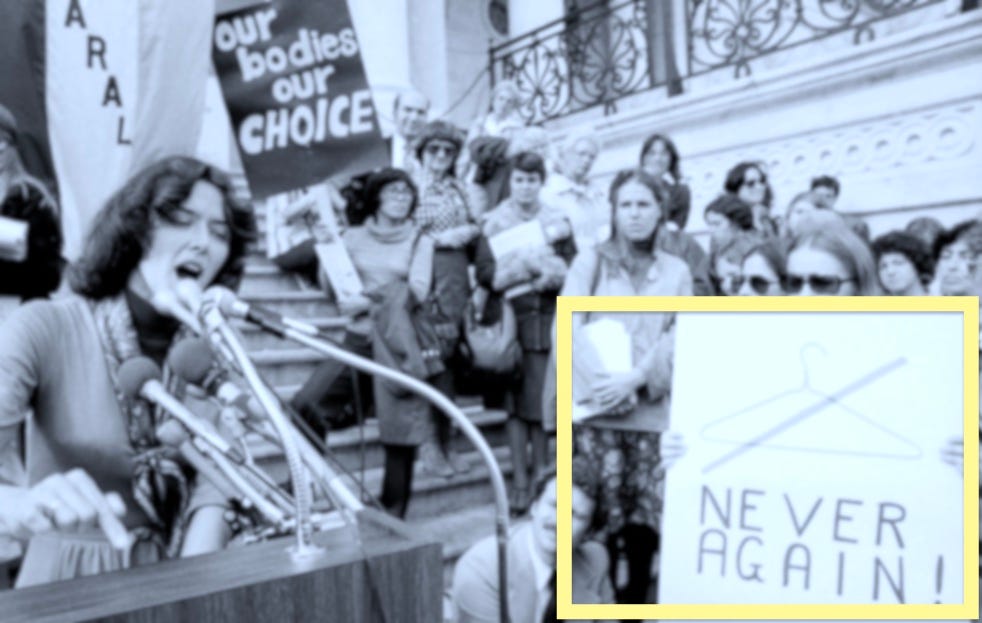
Hello from a million-person protest! We wish…This week, we speak with a brilliant friend of the pod, Kate Redburn, a lawyer and legal historian. Kate takes us through the leaked Supreme Court draft decision that would overturn Roe v. Wade and Planned Parenthood v. Casey, and explains how decades of organizing and legal scheming by Christian conservatives got us to this point. They also predict how the expected ruling in Dobbs v. Jackson Women’s Health Organization could affect the rights of people who use contraception, queer and trans people, and people of color—and exacerbate a chaotic interstate patchwork of abortion laws.Plus: the state of abortion rights today, judicial activism, weaknesses in the feminist movement, and the need for a mass mobilization to advance our collective well being. Thanks for listening, and stay in touch via Substack, [email protected], https://twitter.com/ttsgpod, and/or https://www.patreon.com/ttsgpod! This is a public episode. If you'd like to discuss this with other subscribers or get access to bonus episodes, visit goodbye.substack.com/subscribe
The Wobblies and the end of Covid?
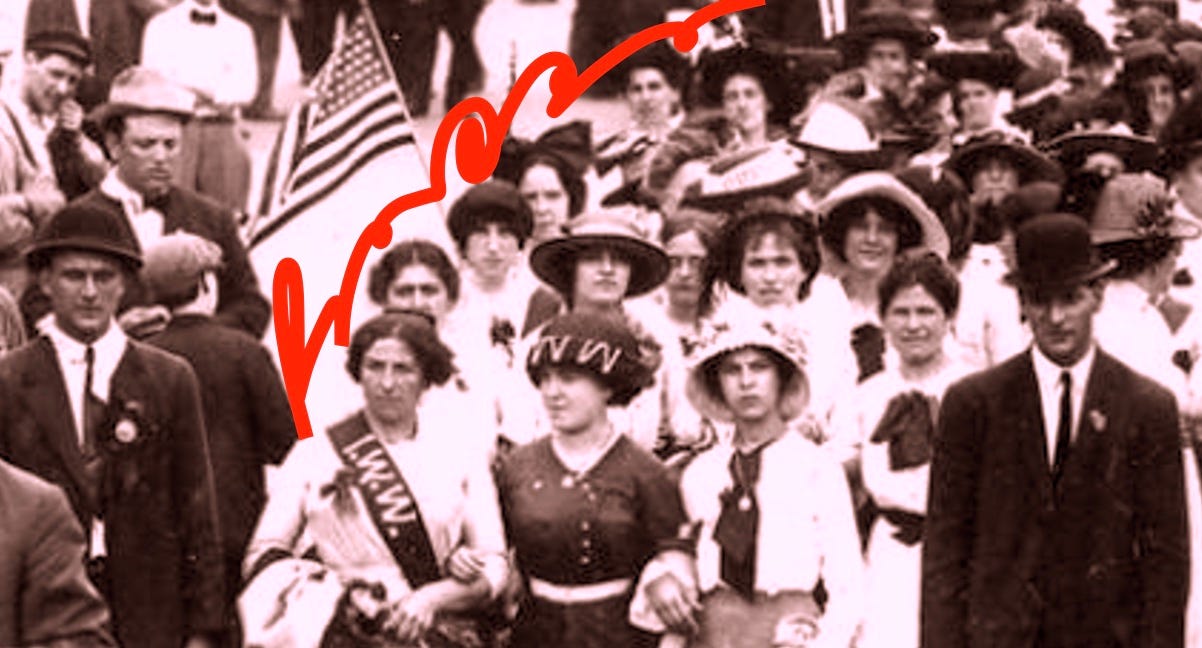
Happy belated May Day!We celebrate international workers’ day by discussing a newly remastered version of the 1979 documentary The Wobblies (directed by Stewart Bird and Deborah Shaffer), now showing in theaters and online. We discuss the continuing relevance of the Industrial Workers of the World for today’s labor movements, its universalist vision (in contrast to that of the AFL), the role of the Pacific Northwest in labor history, and continuities in the organization of labor and business ever since. Plus: a controversy over the screening at Metrograph in New York.Then, we get back to the pod’s roots to talk about what’s next in the pandemic, in a United States that seems increasingly ready to get rid of all of its mandates. What do we make of data suggesting that even the vaccinated are at risk of dying? Are our pandemic responses doomed to be privatized and individualized?Thanks for listening, and get in touch via Substack, [email protected], https://twitter.com/ttsgpod, and/or https://www.patreon.com/ttsgpod! This is a public episode. If you'd like to discuss this with other subscribers or get access to bonus episodes, visit goodbye.substack.com/subscribe
Our warring cultures + Elon / Shanghai lockdown
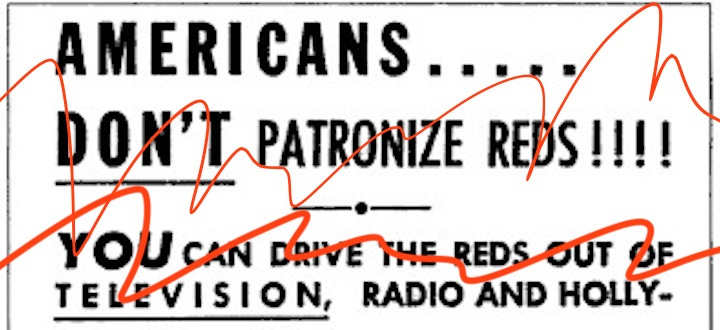
Hello from a reunited podsquad, each back in their natural habitat!This week, taking off from an essay by Jamelle Bouie, we discuss the right wing’s composite attack on queer educators and racial-justice curriculum as an attack on public goods. How should the Democrats—and the left—respond? Plus: notes on and from the lockdown in Shanghai and Elon Musk’s takeover of Twitter. Thanks for listening, and ping us via Substack, [email protected], https://twitter.com/ttsgpod, and/or https://www.patreon.com/ttsgpod! This is a public episode. If you'd like to discuss this with other subscribers or get access to bonus episodes, visit goodbye.substack.com/subscribe
A strike against capital at Amazon
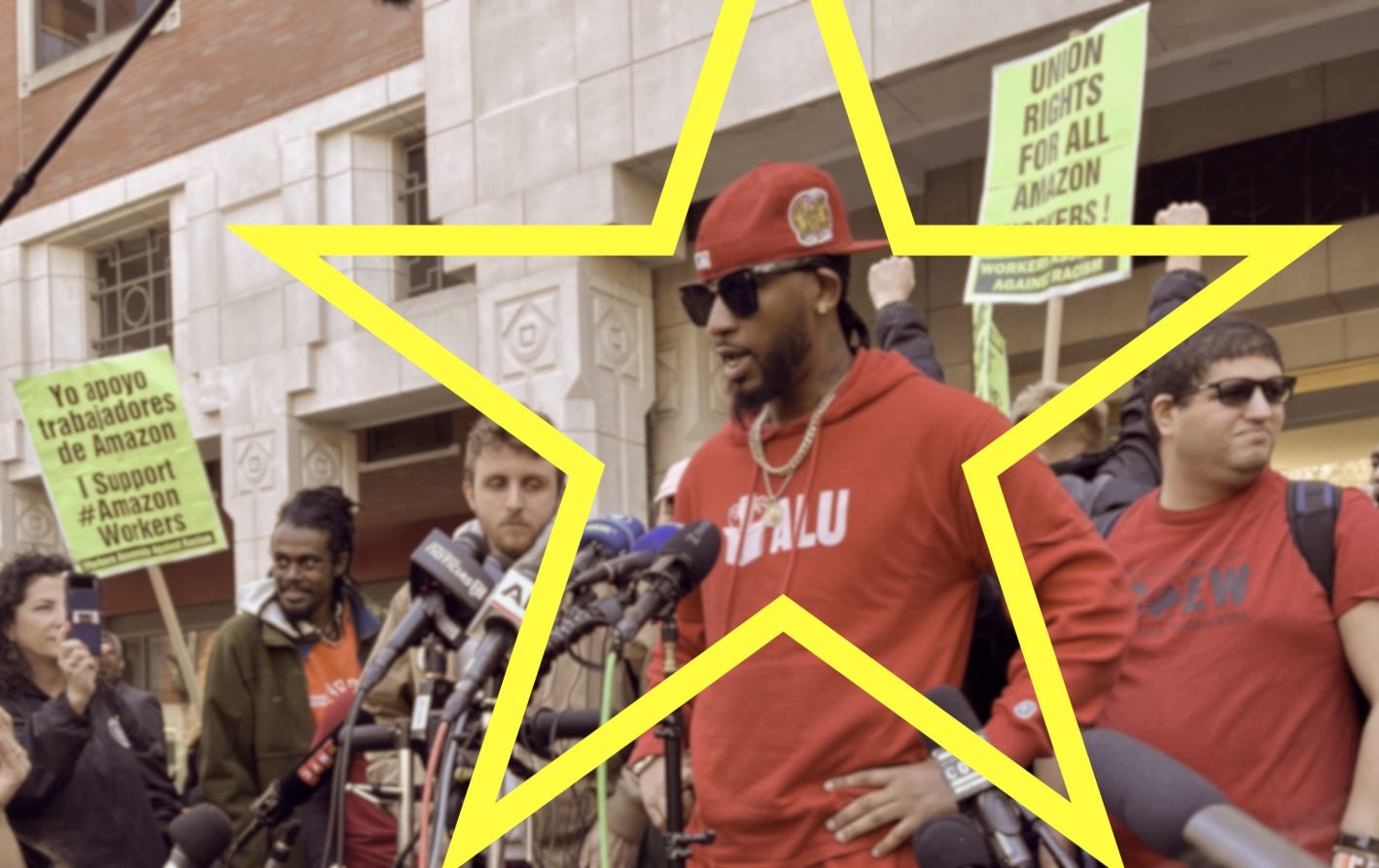
Hello from the Staten Island Ferry!This week, the podsquad reunites for all kinds of $$ talk. We begin with a chat —occasioned by a book prize Andy received — about how to balance leftist politics and theory in journalism and academia. Then, our main topic: the historic victory by Amazon Labor Union (ALU) at the JFK8 warehouse!We discuss Tammy’s reporting in The New Yorker, traditional/large versus small/independent unions, and the links between Amazon, the Democrats, and labor. How did the ALU do it? Is it okay for the left to make celebrities out of Chris Smalls and Derrick Palmer? How do multiracial, immigrant politics intersect with class politics? What’s the next step, both for Amazon and US labor in general?Also, we unpack Ohio politician Tim Ryan’s pathetic new “workers first” ad, which scapegoats China. (If you want to take action, check out the responses of Asian American Midwest Progressives and OPAWL.)Thanks to TTSG Discord member, Lance, and the NBA Dark Web channel for the new theme music :)Thanks for listening! Please get in touch via [email protected] or https://twitter.com/ttsgpod.And subscribe via Substack or https://www.patreon.com/ttsgpod. This is a public episode. If you'd like to discuss this with other subscribers or get access to bonus episodes, visit goodbye.substack.com/subscribe
Adolph Reed Jr: Jim Crow + race/class debates
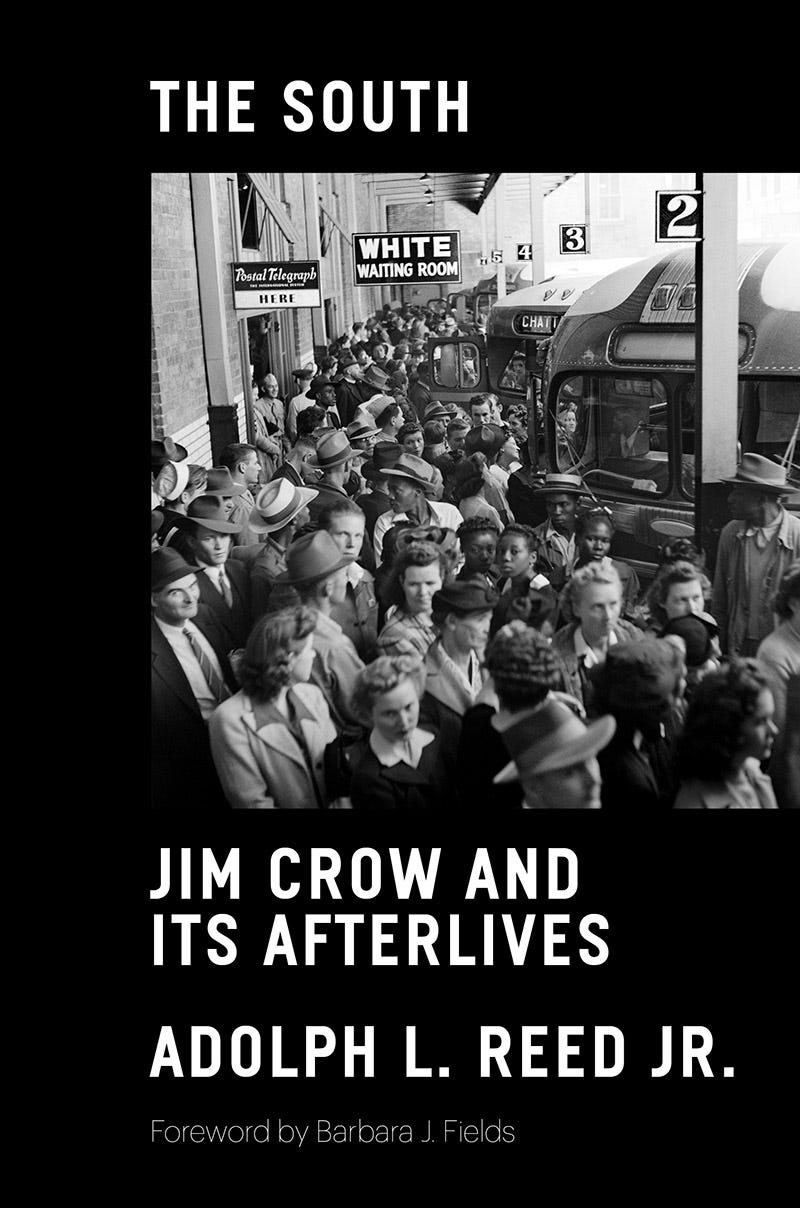
Hi everyone:Today it’s just me, Andy, talking with guest Adolph Reed, Prof. Emeritus at University of Pennsylvania, about his new book The South: Jim Crow and its Afterlives. Drawing from personal experience, he argues that racial segregation cannot be fully explained through abstract ideas about white supremacy and anti-Blackness. It was a coherent social order animated by ruling class power. We talk about what he calls “neoliberal race politics,” the charge against him of “class reductionism” (NYT), and the broader usefulness of this analysis to contexts across the US and the world. Also, a bit of NBA banter. * See: our conversation with Merlin Chowkwanyun (2020) on his work with Reed on racial disparity discourse (their piece on Covid reporting here)* Also: Adolph’s new podcast Class Matters* and Adolph’s essays on nonsite.org0:00: The premise of the book and its reception (The New Yorker, Common Dreams, Harper’s podcast). Adolph periodizes Jim Crow from the 1890s-1960s, and he speaks about his formative years in Louisiana, North Carolina, Arkansas, and Atlanta. He first drafted the book in the 2000s after realizing his would be the last generation with clear memories of the Jim Crow order. Jim Crow, he argues, has been conspicuously overlooked in contemporary discussions about race and slavery, which flatten history (“the bad old timey-times”).20:20: An aside on Adolph’s polemic (2013) on Hollywood “race movies” such as Django Unchained and The Help.28:30: Adolph describes the Jim Crow racial order as a practical and pragmatic strategy of class power over all workers, rather than an abstract hatred of one group. And why it is counterproductive to frame it as a binary story of all white versus all Black people. It’s not like white people had a meeting around the campfire and said, “let’s go put some Jim Crow on some Black people”36:30: Framing Jim Crow as unrelenting oppression in fact mirrors, ironically, the very vision laid out by segregationists themselves. This view, found today in liberal anti-racism discourses, attributes everything to an abstract “white supremacy” and “anti-Blackness.” Class is disavowed. The effect is to help sustain an elite stratum of racial spokespeople. But also, why does this race-first worldview have such broad appeal? 53:15: Adolph responds to charges that his argument is class reductionist. We reference an older exchange with the late political theorist Ellen Meiskins Wood (2002) to clarify the distinctions in Adolph’s arguments (see the original text here, esp. the “Rejoinder”). Race, he argues, is one of many ideologies to sustain accumulation and class power that rest on “ascriptive differences,” or, putative ideas about the natural differences between people: if not race, then sex, gender, religion, caste, tribe, mental and physical abilities, etc. * Also see Adolph’s concise summary in New Labor Forum (2013).1:03:50: Wrestling with common objections, such as, “ethnocentrism predates capitalism, so race is autonomous from class”; or, “upper-class Black people are subject to police violence too, so class doesn’t explain racism.”1:14:20: Adolph on the broader generalizability of his analysis for other groups, in the US and globally (see Clare Kim on comparative analyses of Asian American/Black racial ideology). And where Adolph got his Marxism.I wouldn’t say I’m the most cosmopolitan world traveler. But the thing I will say is that, in every place that I’ve been, what I’ve noticed is that most people are scuffling trying to work for a living. It doesn’t matter what kind of food they eat or the music they listen to. I mean that’s all interesting, more or less. But the basic human condition is that, right?1:30:30: NBA banter.Thanks for listening! Please get in touch via [email protected] or https://twitter.com/ttsgpodYou can subscribe via substack or https://www.patreon.com/ttsgpod This is a public episode. If you'd like to discuss this with other subscribers or get access to bonus episodes, visit goodbye.substack.com/subscribe

SCOTUS cringe and "Turning Red"
Hi from multi-culti Toronto! (We wish.)This week, Jay and Tammy discuss the urban housing crisis, the weird and embarrassing SCOTUS confirmation hearings of (Future Justice) Ketanji Brown Jackson, and the lovely new animated film, “Turning Red” (which Tammy womansplains to Jay). (Andy will be back soon.)Thanks for listening, and K.I.T. via Substack, [email protected], https://twitter.com/ttsgpod, and/or https://www.patreon.com/ttsgpod! This is a public episode. If you'd like to discuss this with other subscribers or get access to bonus episodes, visit goodbye.substack.com/subscribe
TTSG disinformation campaign w/ Max Read
Hello!This week just Jay and Andy and with guest Max Read. We talk about all things “disinformation.” First up is Andy’s n+1 essay last week on the lab-leak Covid conspiracy, what it says about the world’s ideas about China, and the plausibility of conspiracies today. Then a wider discussion about whether the Ukraine invasion and competing claims of “disinformation” have presented a new crisis for media and the framework of fake news installed the last few years. Jay’s got a few recent pieces on disinformation and media coverage of Ukraine.And here is some of Max’s recent commentary on media:* “Mapping the celebrity NFT complex”* “Is web3 b******t?”* “How to have a career as a journalist in 2022”Consider subscribing to the newsletter!Back next week with the full gang! Please get in touch via [email protected] or https://twitter.com/ttsgpodYou can subscribe via substack or https://www.patreon.com/ttsgpod This is a public episode. If you'd like to discuss this with other subscribers or get access to bonus episodes, visit goodbye.substack.com/subscribe

The (queer?) (Asian?) plays of Hansol Jung
Hello from New York! This week, Tammy interviews the playwright and TV writer Hansol Jung. They talk about Hansol’s childhood in South Africa and South Korea, the feeling of being 70% fluent in both Korean and English, religion and structural sexism in the recent Korean presidential election, race in theater and TV, building queer characters, and how Rent changed everything. Hansol’s latest production is Wolf Play — at the Soho Rep, with Ma-Yi Theater Company. She was also a writer on the forthcoming Apple TV+ series, Pachinko, based on the novel by Min Jin Lee. (Sound note: Snippets of live theater from Wolf Play and Cardboard Piano woven into the episode; also, Tammy has a sore throat!)Thanks for listening. Please donate to the Red Cross to help people in Ukraine, and stay in touch with us via Substack or:[email protected]://twitter.com/ttsgpodhttps://www.patreon.com/ttsgpod This is a public episode. If you'd like to discuss this with other subscribers or get access to bonus episodes, visit goodbye.substack.com/subscribe
Hope in a time of war, with Neta Crawford
Hello from a South Korean ballot box! (Tammy wishes.)This week, Andy and Tammy talk to the political scientist Neta C. Crawford* of Boston University (soon, Oxford University) about the human and ecological costs of the war in Ukraine, the China dimension, and what a global movement for peace should strive for.Plus: Andy discusses his review essay on Chinese economic history and neoliberalism in The Nation; Tammy freaks out over the imminent South Korean presidential election and reflects on outgoing leader Moon Jae-in; and Andy reveals his secret recipe for Whole Foods salmon poke (YouTube).Some links:* Brown’s invaluable Costs of War project, co-directed by Neta* Neta commenting on war crimes against civilians * Neta’s forthcoming book, The Pentagon, Climate Change, and War* Rohini Hensman on the long history of Russia–Ukraine* Isaac Chotiner’s interview with John Mearsheimer * Tammy’s profile of the Bulletin of the Atomic Scientists* Apols for mispronouncing “Neta” at the top of the show. It’s NEE-TA. Also: stripe twins!Thank you for listening. Please donate to the Red Cross to help people in Ukraine, and send us feedback via Substack or:[email protected]://twitter.com/ttsgpodhttps://www.patreon.com/ttsgpod This is a public episode. If you'd like to discuss this with other subscribers or get access to bonus episodes, visit goodbye.substack.com/subscribe
Ukraine with Sophie Pinkham
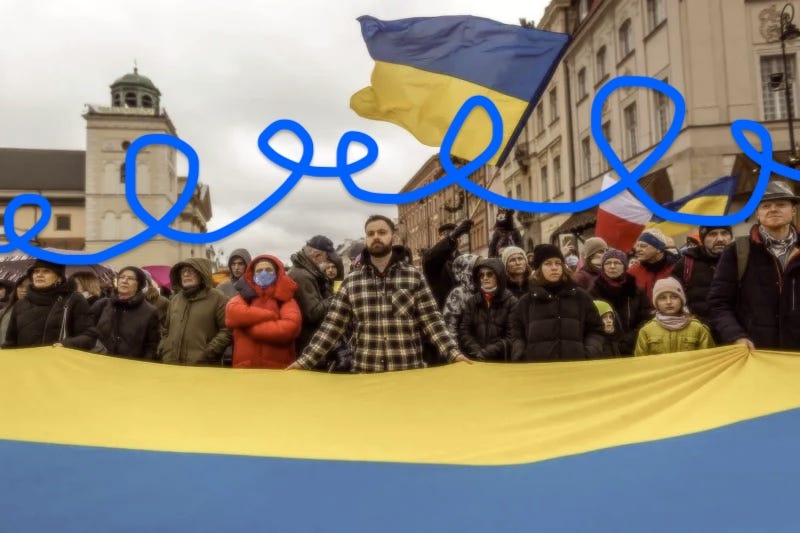
Hello from our doomscroll…Today we talk about—what else?—the events in Ukraine this past week :-(We chat with Sophie Pinkham, an essayist, reporter, and expert on the region. In 2016, she published Black Square: Adventures in Post-Soviet Ukraine (read an excerpt in Dissent). She has written about politics after the Maidan protests (The New Yorker), the election of President Volodymyr Zelensky (The New York Review of Books), and, just yesterday, Zelensky and the war (New York).We discuss our initial reactions to the news of invasion, why so many people didn’t expect it to happen, U.S. jingoism, the impact of social media and propaganda, criticisms of “the left,” speculations about the future, and the comparability of China–Taiwan. Some stuff we’ve been reading:* “Ukraine: What Russia wants, what the West can do,” Anatol Lieven, Responsible Statecraft* “A letter to the Western Left from Kyiv,” Taras Bilous, Open Democracy* “News from Natoland,” Tariq Ali, New Left Review* Background on history and political economy in Adam Tooze’s newsletter* Friends of the show Michelle Kuo and Albert Wu on reactions to Ukraine from Taiwan.Thank you for listening. Please donate to the Red Cross to help people in Ukraine, and send any questions or comments via Substack or: [email protected]://twitter.com/ttsgpodhttps://www.patreon.com/ttsgpod This is a public episode. If you'd like to discuss this with other subscribers or get access to bonus episodes, visit goodbye.substack.com/subscribe
RIP Christina Yuna Lee and Michelle Go + San Francisco school board recall
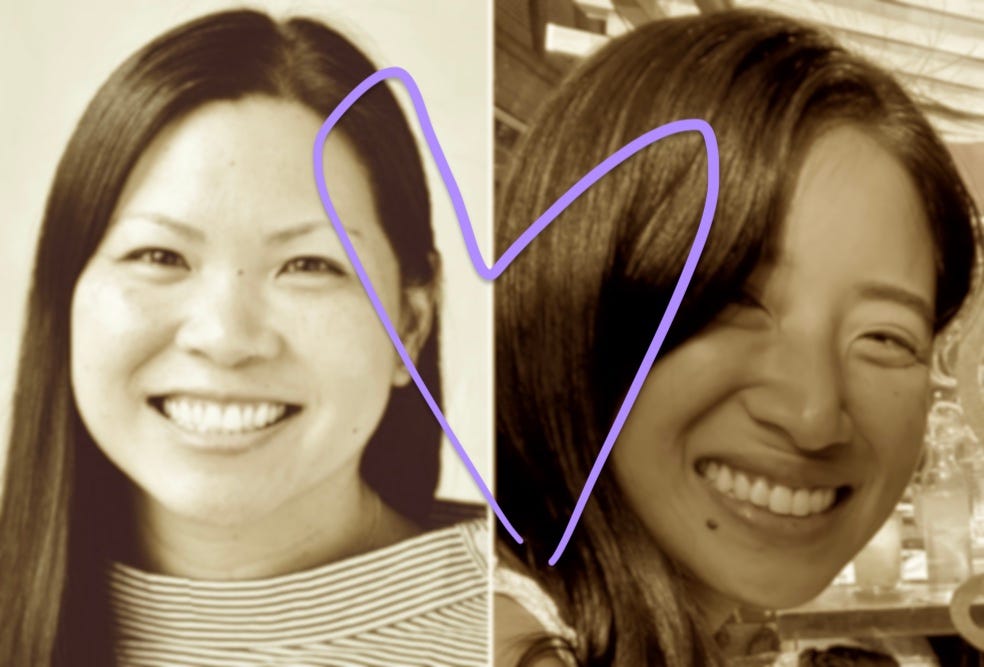
Hi from the United States of empire! The podsquad reunites in Amurica. This week, we talk about the murders of two women in New York City and the recall of school board members in San Francisco. Christina Yuna Lee and Michelle Go died in nightmarish attacks. We process our feelings and explore how Asian Americans, policymakers, and members of the general public are interpreting/using the women’s deaths. Why do we always fall back on law-enforcement responses? How do stigmas against people who aren’t housed, or those who have mental illness, affect our analysis of “hate crimes”? How are Asian communities in New York and New Jersey responding? What does women’s safety mean? What’s the abolitionist horizon? San Franciscans recently voted to remove three people from the school board—and Asian Americans were a big part of the action. Jay wrote about how this all boils down to anxiety over admissions to a selective high school. But the recall might also be seen as a tech-funded campaign against all things “woke.” What’s going on? How do immigrant politics graft onto the US’s left-right spectrum? Are Asian voters basically social Darwinians? What does this mean for criminal-legal policy, specifically the upcoming Chesa Boudin recall? For Asian-American organizing? Thanks to the PNW listeners who came to our IRL lunch over the weekend. And thanks to all of you for supporting the pod. Stay in touch via Substack or:[email protected]://twitter.com/ttsgpodhttps://www.patreon.com/ttsgpod This is a public episode. If you'd like to discuss this with other subscribers or get access to bonus episodes, visit goodbye.substack.com/subscribe

BOOK TIME with Eugene Lim
Today’s episode is a conversation with Eugene Lim, the author of the novel Search History. Eugene’s one of our favorite writers. We talk about experimental fiction, Asian writers, Eugene’s life as a school librarian, what constitutes good and bad writing, identity questions in fiction, and we even take questions from the audience who watched this talk on Discord. If you’d like to be part of our next BOOK TIME, please sign up for our newsletter subscription at goodbye.substack.com for $5 a month and you can join our discord community. This is a public episode. If you'd like to discuss this with other subscribers or get access to bonus episodes, visit goodbye.substack.com/subscribe
Beijing Olympics and Linsanity
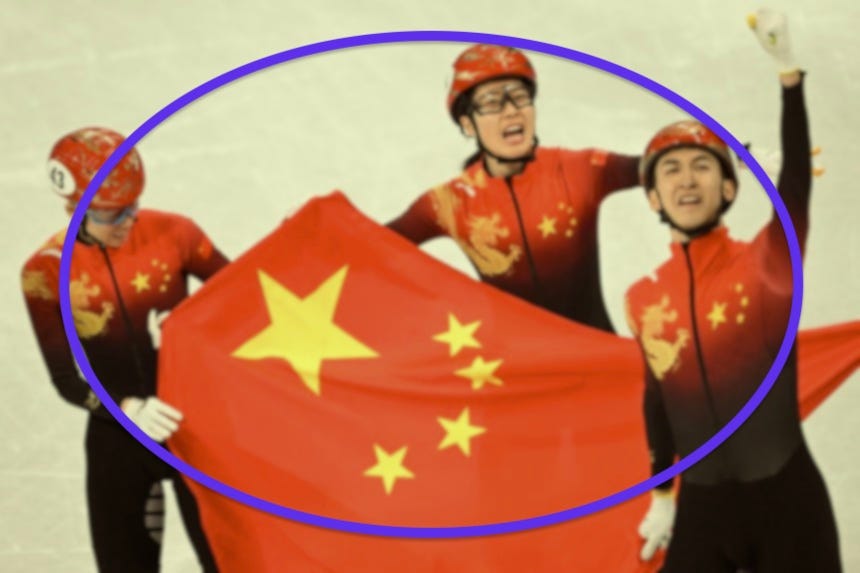
Hi from Seoul! The podsquad returns for a wide-ranging chat on all things, sort of, broadly, sometimes diasporically China. Awkwafina made the rounds on social media, with a screenshot semi-apology(?) regarding her use of Black speech. We offer a hermeneutic reading.It’s the 10th anniversary of Linsanity. What did, and what does, Jeremy mean to Asian America? Jay and Andy revisit analyses from the time. Chinese government bros have upped their game, offense and defense, on English-language Twitter. What’s the use of an official reply guy? And finally, we’re watching the Olympics in Beijing! Yes, all Olympics are terrible (insert leftist critique), but so are the short track judges, says Tammy. Plus: Andy on the opening ceremonies and Jay on Eileen Gu.We have an IRL picnic coming up in Seattle and an ongoing book club. Subscribe and join our Discord community to find out more. Thanks for hanging with us! Please share, subscribe, and ping us via Patreon and Substack; email ([email protected]), Twitter, and Discord! This is a public episode. If you'd like to discuss this with other subscribers or get access to bonus episodes, visit goodbye.substack.com/subscribe
'Ascension' and the Chinese Dream, with Jessica Kingdon and Kira Simon-Kennedy
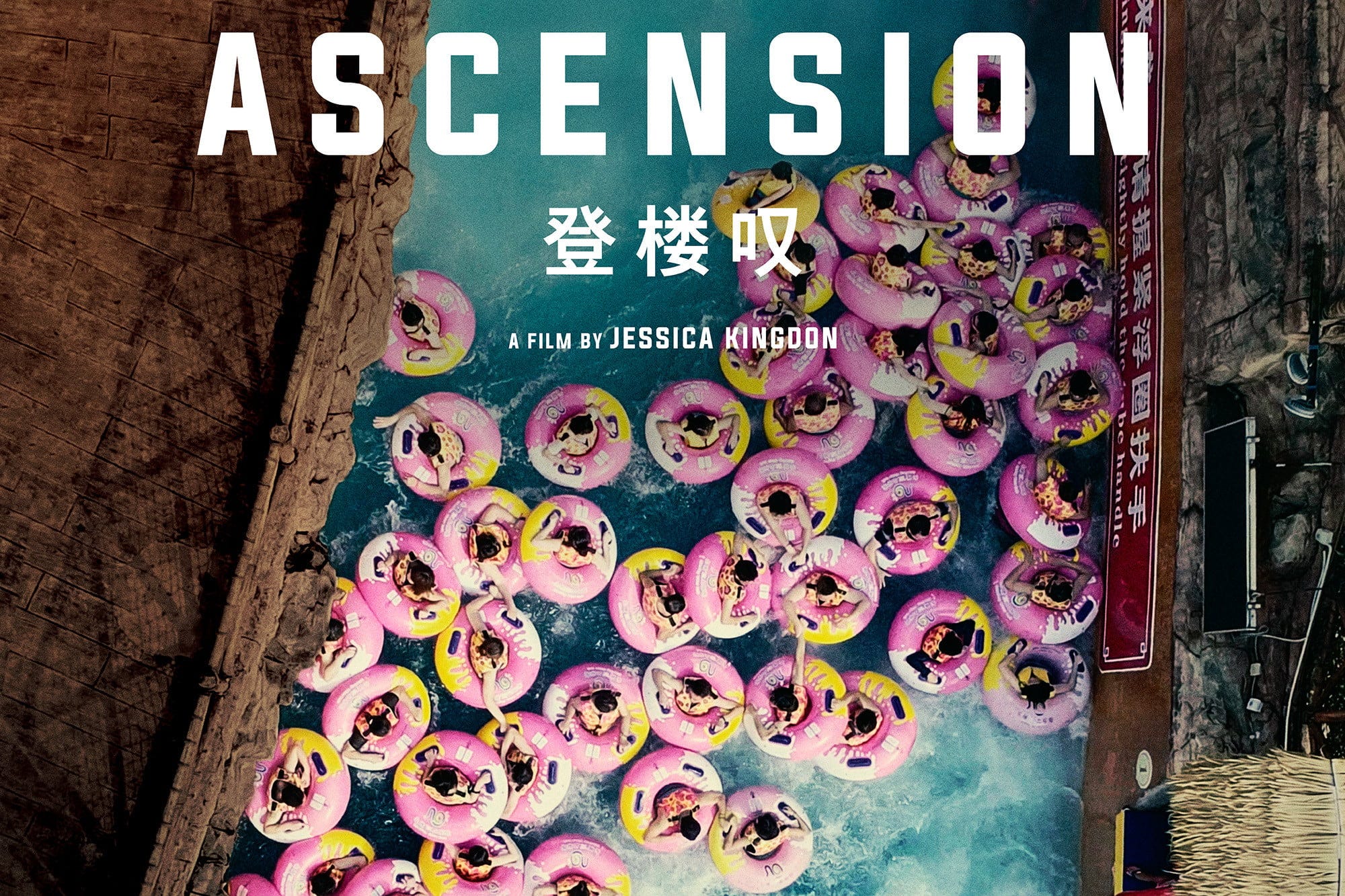
Hello from a crypto farm in rural China!This week Andy talks with the director (Jessica Kingdon) and producer (Kira Simon-Kennedy) of the new film Ascension, a documentary about working life in contemporary China. Ascension has received critical acclaim and garnered major awards and nominations, including being shortlisted for the Academy Awards!The film features scenes of quotidian working life in a period when the government has begun to promote the “Chinese Dream,” spanning textile and sex doll factories to etiquette school and social media influencers all the way to luxurious water parks and tropical vacation resorts. Together, these scenes raise provocative questions about China’s blindingly rapid development, the uneven pace of upward mobility, and whether China is an exotic outlier or a recognizably modern society, comparable with life in the US and other societies worldwide (all to music by Dan Deacon).Jessica and Kira took the time to chat with us and many from our Discord community about the film’s initial conception, the origins of the title and Jessica’s own exploration of family history, the strangeness of the major award circuit, and the ethics of making a commercial documentary. They also break down many of the more memorable scenes, including a dinner party among the ultra-rich and a crypto farm in the middle of the countryside.You can look for ways to watch it on the film’s website, the linktree, and its IG account.But for most of us, the easiest way to watch it at home is to subscribe to and stream from Paramount+ (look for trial offers!).The second half of this episode consists of questions from our Discord members. If you’re interested in joining the conversation with us and tons of other cool people, please think about subscribing! Check us out via Patreon and Substack, contact us via email ([email protected]), Twitter, and the Discord! This is a public episode. If you'd like to discuss this with other subscribers or get access to bonus episodes, visit goodbye.substack.com/subscribe
Inflated burritos and SCOTUS race quotas
Hi from a Korean hot-stone bed!It’s Jay and Tammy this week, talking trash about Andy. Plus:* Pandemic alcoholism and human bonds: We read and discuss an essay in Jezebel, “I Got Sober in the Pandemic. It Saved My Life.” What has this tragic time clarified and obscured? What’s the off-ramp? * Does a day-trader’s lunch budget say anything about inflation? People were mad about this New York Times story, but the Big Mac Index remains durable (Tammy gets the description about half-right). The tech stock market (read: Peloton, Netflix, Amazon) seems less durable. * The Supreme Court will hear the Harvard / University of North Carolina case on affirmative action, with Asian American plaintiffs front and center. We assess the history of race and class in admissions and consider the wedge that is Asian America.Thanks for hanging out! Please share, subscribe, and stay in touch via Patreon and Substack; email ([email protected]), Twitter, and Discord! This is a public episode. If you'd like to discuss this with other subscribers or get access to bonus episodes, visit goodbye.substack.com/subscribe

Racism, speech, and tenure + "we Americans" on China
Greetings from the Philly planetarium! This week, we discuss academic tenure, “disgusting” ideas, and left foreign policy.0:00 – A troll-y tenured law prof at UPenn is back on her race-science kick—this time, arguing on Glenn Loury’s interview show that, “the United States is better off with fewer Asians and less Asian immigration.” What to do about Amy Wax and the Amy Waxes of the world? Should her tenure be repealed, as local politicians are demanding? Who and what is tenure for? Is it about free speech? Workers’ rights? 58:30 – Does this issue intersect with tech companies’ censorship via terms of service? 1:08:00 – If you’re on China/international relations/war/basketball/tech Twitter, you’ll have seen that Chamath went full-on tankie… which relates to the debate over a recent article in The Nation: “What Should the Left Do About China?” by David Klion. The piece explores the lefty political spectrum, and features input from Andy and several friends of the pod. We dig in on the question of how complicit we are as “Americans.” In a time of (cold-)warring hegemons, what kind of dissenters should we be? Thanks for being in dialogue with us! Please share, subscribe, and stay in touch via Patreon and Substack; email ([email protected]), Twitter, and Discord! This is a public episode. If you'd like to discuss this with other subscribers or get access to bonus episodes, visit goodbye.substack.com/subscribe

Blaming teachers' unions for Covid
Hello from pandemic year 3!There seems to be a panic over school closures—and a backlash against teachers and their unions. But how many US public schools have had to “go remote” because of Covid? Are these physical closures reasonable? Why are people blaming educators for everything from “learning loss” to the downfall of the Democratic party? What “shock doctrine” tactics do we need to look out for?Check out:* Jay in The New York Times, on the value of public schools and a post-Hurricane Katrina cautionary tale* A common, cynical take in The Atlantic* Arguments for parent-teacher solidarity in The New Yorker and Jacobin* An explainer on the teacher shortage and our stingy approach to public K–12 education, at VoxWe really appreciate your listening and spreading the word. Please subscribe and stay in touch via Patreon and Substack, email ([email protected]) and Twitter! See you in the Discord. This is a public episode. If you'd like to discuss this with other subscribers or get access to bonus episodes, visit goodbye.substack.com/subscribe
RIP 2021 and "Don't Look Up"
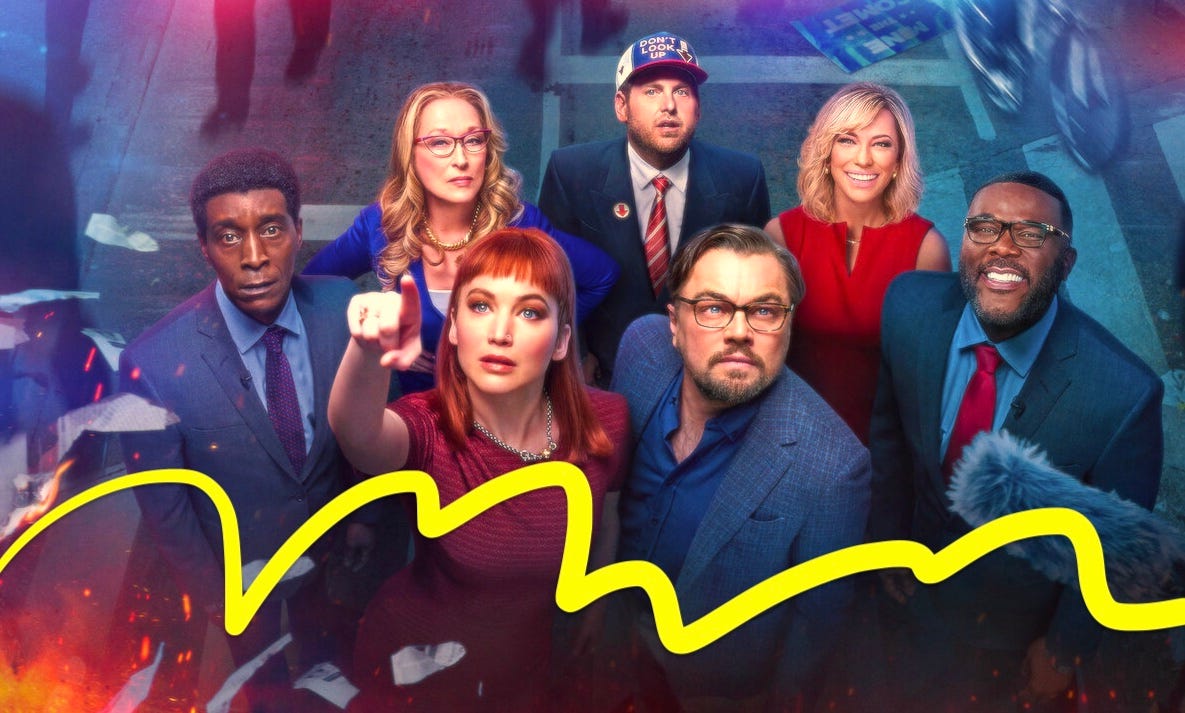
New year, new pod! “Same pod, though…”0:00 – We discuss various New Year’s Day soups and East Asian black beans.7:50 – Many influential writers died at the end of 2021. We explore the legacies of Joan Didion, bell hooks, and historian Jonathan Spence. 44:40 – Why is the Netflix climate change film, “Don’t Look Up,” so polarizing? Written by Adam McKay and Bernie pal David Sirota, and starring basically all of Hollywood, it has inspired a lot of commentary. Is it a good leftist film? Is it funny? Effective? What about its portrayal of the media and academia? (Check out these think-pieces from “Money on the Left” and Current Affairs.)Thanks for listening and spreading the word. Please subscribe and stay in touch via Patreon and Substack, email ([email protected]) and Twitter! This is a public episode. If you'd like to discuss this with other subscribers or get access to bonus episodes, visit goodbye.substack.com/subscribe
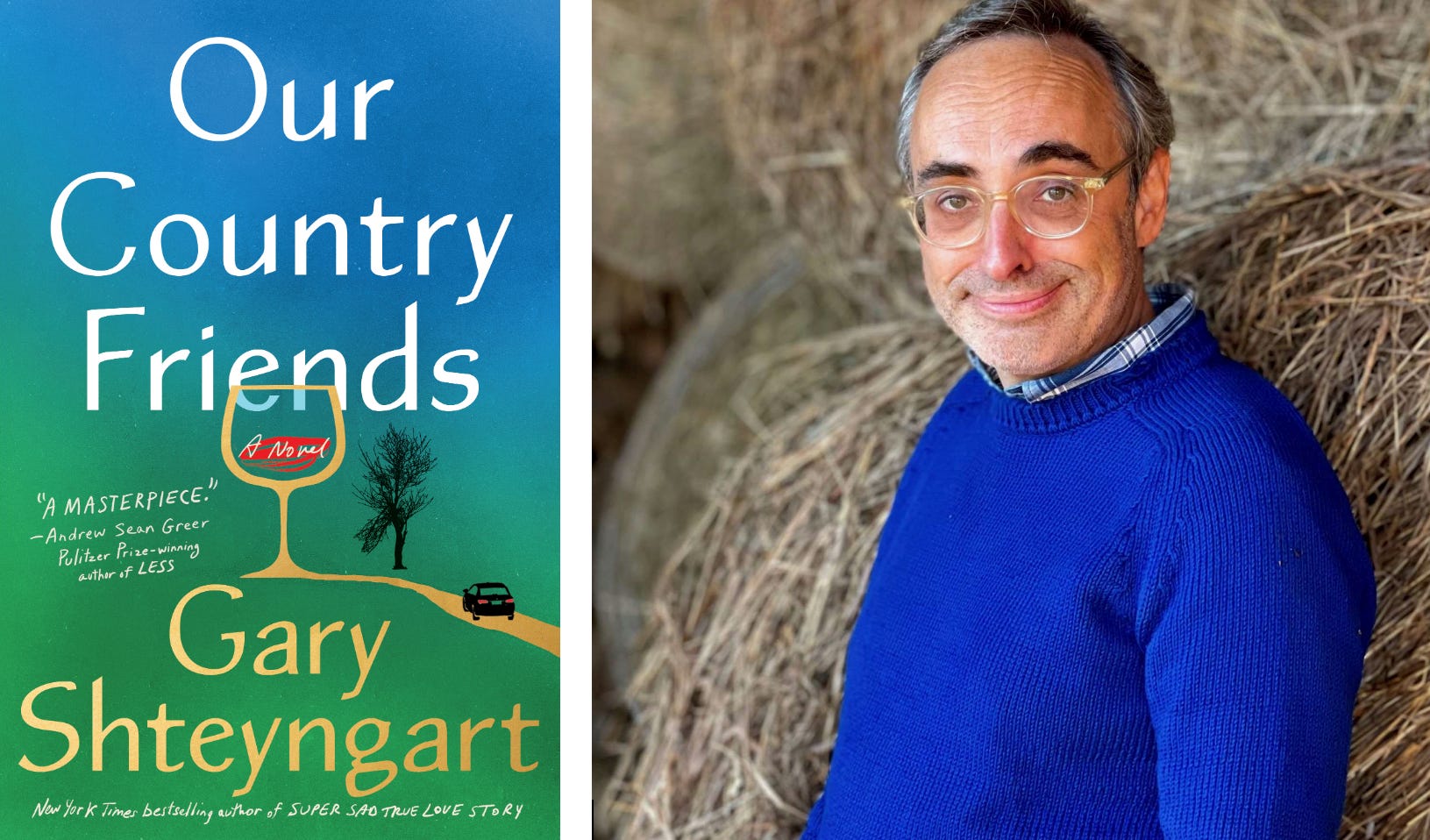
Gary Shteyngart, our country friend
Hello from a pandemic bungalow! This week, we are joined by Gary Shteyngart, creator of the brilliant new novel, Our Country Friends. We talk about immigrant fiction, elite high schools, exile feelings, the Asian pop-cultural future, and Gary’s run-in with a fascist elementary school teacher.Gary is the author of the memoir Little Failure (2014) and four previous novels: Super Sad True Love Story (2010), Lake Success (2018), Absurdistan (2007), and The Russian Debutante’s Handbook (2002). Also check out his recent essay in The New Yorker, “A Botched Circumcision and Its Aftermath.”Photo credit: Tim DavisThanks for listening and spreading the word. Please subscribe and stay in touch via Patreon and Substack, email ([email protected]) and Twitter! This is a public episode. If you'd like to discuss this with other subscribers or get access to bonus episodes, visit goodbye.substack.com/subscribe
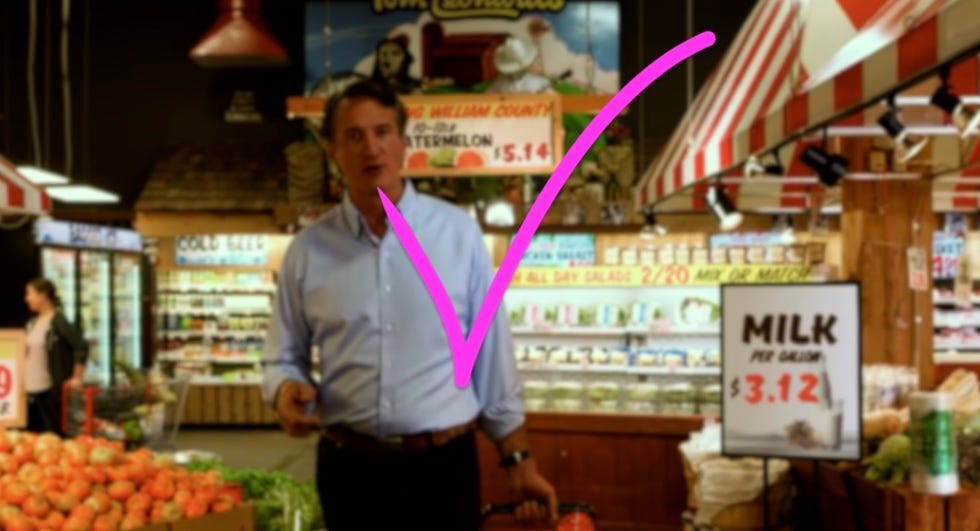
Democrat dilemmas with Brian Stryker
Hello from the Quiz Bowl room!Today we’re talking with Democratic pollster and Andy’s high school friend Brian Stryker of ALG research. Recently, the Democratic Party circulated a memo Brian wrote about the Democrats’ poor showing in some of the November elections and their uneven prospects for the 2022 midterms. You can read his interview with The New York Times here. The main topics we hit on are: how much do cultural wedge issues like critical race theory matter over bread-and-butter questions like jobs, wages, and inflation; the balance between a focus on economic versus social issues; whether emphasizing “social justice” concerns could (ironically) deter Asian and Latino/a voters; and Brian’s crystal ball for the 2024 election. 0:00 – Tammy in Korea update6:40 – Brian explains his polling research on the Virginia elections and what it tells us about the state of the Democrats: CRT, school closures, the economy and Covid stimulus plans, and supply chains.17:40 – The prospect of Asian and Latino voters going Republican (see Jay’s pieces on this topic) and why the Democrats struggle to convey economic messages.34:30 – The gap between the Democrats’ “white woke consultants” and the reality and diversity of “voters of color.” Is there common ground between patriotic Democrats and the left?45:30 – How can the Democrats speak to different racial groups in a more nuanced way? What’s the role of organized labor in the Party? Is the future of the Dems just a lot of moderate POC candidates? Is the average POC more conservative than the average wealthy white liberal? And some scary thoughts about Trump 2024.Thanks for your support! Please subscribe and stay in touch via Patreon and Substack, email ([email protected]) and Twitter! This is a public episode. If you'd like to discuss this with other subscribers or get access to bonus episodes, visit goodbye.substack.com/subscribe
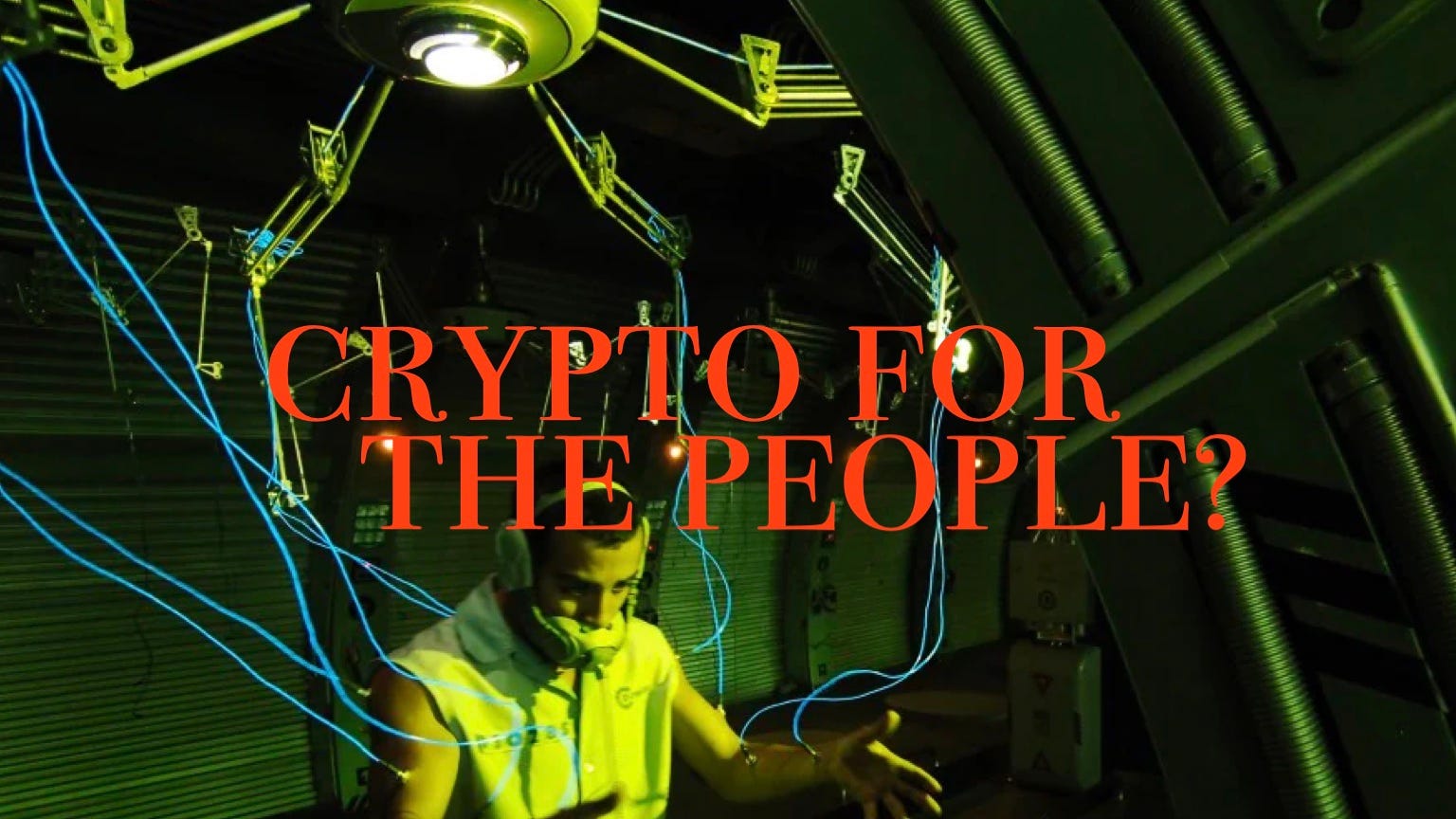
Crypto leftism? With Alex Rivera
Hello from a blockchain!This week, Jay and Tammy talk with Alex Rivera, a filmmaker, media artist, immigrant rights activist, and MacArthur genius, about crypto. What is crypto currency? How does it work? And why is it often cast as a right-wing, libertarian, carbon-depleting project? Can the left reclaim crypto for the people? How might decentralized financial networks power social movements? Post-national transactions? Worker cooperatives? Global decision-making?For more, check out:* The National Day Laborer Organizing Network (Donate and get yourself some merch!)* Alex and Cristina Ibarra’s film, The Infiltrators* Alex’s film, Sleep Dealer (pictured above)* Jay and Aaron Lammer’s podcast, “CoinTalk”* Jay on his toad NFT* Alex on border technologies, via “Tech Won’t Save Us”* Crypto Communism by Mark Alizart, translated by Robin Mackay* Murtaza Hussain on crypto remittances* Crypto POC economiesThanks for your support. Please subscribe and stay in touch via Patreon and Substack, email ([email protected]) and Twitter! This is a public episode. If you'd like to discuss this with other subscribers or get access to bonus episodes, visit goodbye.substack.com/subscribe
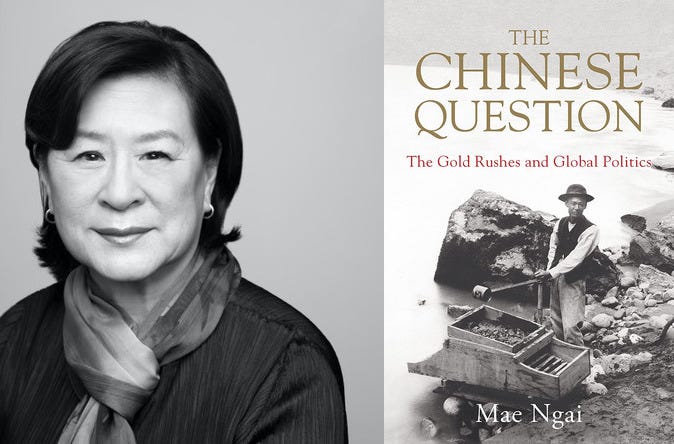
'History is not a straight line': on the Chinese Question with Prof. Mae Ngai
Hello from the 19th century!Today’s episode features Andy in conversation with Prof. Mae Ngai, Lung Family Professor of Asian American Studies and Professor of History at Columbia University. Her new book has just come out this fall, titled, The Chinese Question: the Gold Rushes and Global Politics. She takes a story we are somewhat familiar with but presents it in ambitious, new terms, tracing three major gold rushes from the 1850s to 1900s, across California, Australia, and South Africa, and along the way, the origins of Chinese communities in the Anglo-American world:The gold rushes occasioned the first mass contact between Chinese and Euro-Americans. Unlike other encounters in Asian port cities and on Caribbean plantations, they met on the goldfields both in large numbers and on relatively equal terms, that is, as voluntary emigrants and independent prospectors. Race relations were not always conflictual, but the perception of competition gave rise to a racial politics expressed as the ‘Chinese Question.’ This is a history of labor and migration, but it is also a book about race and racial ideology. Ngai traces the origins of politics organized around Chinese, and eventually Asian, exclusion at the turn of the twentieth century in the world’s white settler colonies. It’s a story most popularly known by the 1882 Chinese Exclusion Act in the US, but it also had many parallels worldwide — a “global anti-Chinese ideology” that “gave rise to a global race theory,” as Ngai puts it. We discuss the fine details of her research and then try to tease out some bigger implications of the “Chinese Question” for today.(0:00): Mae’s own trajectory in migration and Asian American history and how she came to undertake this project.(15:30): We dig into the Chinese Question: how did Mae wind up writing about Australia and South Africa? what was the “coolie myth” that dogged Chinese migrants in the 19th century? how did “free soil” and “anti-slavery” politics dovetail with racist exclusion laws? if Chinese migrants were not “coolies,” then what was life really like on the gold mines? (44:15): The theoretical stakes of the Chinese Question: how to think about ‘race’ historically and the political value of doing so; Mae’s intervention into the headlines about anti-Asian violence during Covid; thoughts on the “racial pessimism” trend in academia and popular media and the relationship between “anti-Black” and “anti-Asian” racism; the “Chinese Question” today, e.g., the China initiative at universities, ongoing US-China tensions, and the flexible class politics of its racial ideology. Thanks for listening and supporting us via Patreon and Substack! Stay in touch by email ([email protected]) or Twitter. This is a public episode. If you'd like to discuss this with other subscribers or get access to bonus episodes, visit goodbye.substack.com/subscribe
Nothing to lose but your supply chains
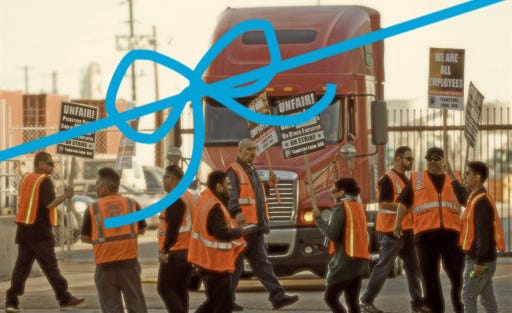
Hello from both sides of the Pacific! This week, a reunited, international podsquad talks K-quarantine, Enes Kanter’s Sinopportunism, and how the left should think about the “supply chain crisis.”* Tammy’s first few days in South Korean quarantine:* What’s going on with the Celtics center’s anti-China rants (and shoes)? * How can leftists think beyond shopping in our relationship to global supply chains? Tammy wrote about this recently for The New York Times, with a focus on port truckers. (Photos below by Sean Rayford.)* More on the transport workforce here—by longshore activist Peter Olney, friend of the pod Charmaine Chua, and logistics scholars Jake Alimohamed-Wilson and Ellen Reese.While recording this episode, the Korean media reported the death of the murderous dictator Chun Doo-hwan. Here’s cartoonist Kim Wan’s take: “karma” on the left; “Gwangju massacre” on the right. Thanks for your support. Please subscribe and stay in touch via Patreon and Substack, email ([email protected]) and Twitter! This is a public episode. If you'd like to discuss this with other subscribers or get access to bonus episodes, visit goodbye.substack.com/subscribe
"Taiwan?" with New Bloom: Brian Hioe and Wen Liu
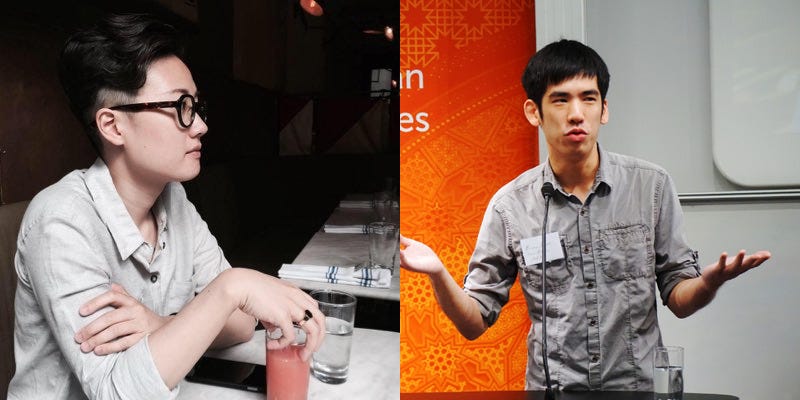
Hello!Guest episode this week with Andy talking to Brian Hioe and Wen Liu, writers and academics based in Taipei, with the online magazine New Bloom. We talk about the scary headlines warning of a Chinese invasion of Taiwan, why the global left seems to dismiss Taiwan in favor of romanticizing the PRC, and what is the relationship between Asian and Asian American politics (if there is any)?0:00 - Banter7:00 - Recent headlines over the US’s commitment to defend China + Chinese fighter planes in Taiwanese air space + what is life like for regular Taiwanese people as a chip between two global superpowers + why New Bloom is skeptical about the probability of Chinese invasion.22:00 - Why the western left reflexively dismisses Taiwanese concerns. We explore a few: PRC romanticism, anti-Republican Party liberalism, anti-US imperialism (esp. among Asian Americans), all kinds of weird racial assumptions, horseshoe anti-war politics, etc. And what Brian and Wen say in response to these. 58:30 - Some takeaways: what distinguishes a “leftist” position on Taiwan? what is the ideal relation between Taiwan and China? what can people in the rest of the world “do”? what is the role of Asian American and Asian diasporic politics for Asia, and vice versa?Stuff mentioned/reference materials:* Brian’s recent piece on Taiwan for Spectre journal* John Oliver’s recent 20-minute history + summary of Taiwanese politics * The Intercept’s recent weird piece on Taiwan* Brian interviews Wen about activism and the 2014 Sunflower Movement* Last June, we first talked with Brian about the “tankie” phenomenonThanks for your support! Be sure to sign up via substack or Patreon. Find us on twitter (@ttsgpod) or email [email protected]! This is a public episode. If you'd like to discuss this with other subscribers or get access to bonus episodes, visit goodbye.substack.com/subscribe
Another election, another culture war
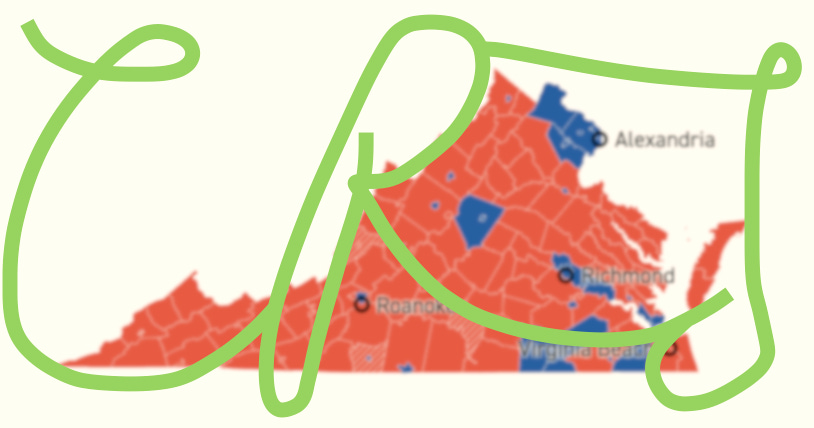
Hello from our election hangover!This week, we talk about last week’s mid-mid-mid-midterm results. * Did the very rich Republican win Virginia’s gubernatorial race on account of critical race theory—or not?* Are the Democrats continuing to lose the Asian/Latinx/POC vote? * Should we take hope in local progressive wins? (Yay, Boston, Missoula, Dearborn, Hamtramck, Cleveland…)* Whatever happened to bread and butter economic concerns like housing and healthcare? Plus: podsquad digressions and a Taiwan preview.See you at the subscriber-only Ishiguro book club tomorrow! Thanks for your support. Please subscribe and stay in touch via Patreon and Substack, email ([email protected]) and Twitter! This is a public episode. If you'd like to discuss this with other subscribers or get access to bonus episodes, visit goodbye.substack.com/subscribe

Kori Graves on Black Korean adoptees
Hello from HISTORY!This week, Tammy interviews Professor Kori A. Graves, a historian of adoption and the family at the University at Albany, SUNY. Kori’s 2020 book, A War Born Family: African American Adoption in the Wake of the Korean War, explores how Black Americans came to adopt Black Korean children. Tammy and Kori talk about the history of transnational, transracial adoption — and the special place of Korea and the Korean diaspora in adoptee activism and the contemporary architecture of family. For more on this subject, Kori recommends:* Global Families: A History of Asian International Adoption in America by Catherine Ceniza Choy* Adopted Territory: Transnational Korean Adoptees and the Politics of Belonging by Eleana J. Kim* Disrupting Kinship: Transnational Politics of Korean Adoption in the United States by Kimberly D. McKee* “Side x Side” (documentary film project) by Glenn Morey and Julie Morey* To Save the Children of Korea by Arissa H. Oh* Framed by War: Korean Children and Women at the Crossroads of US Empire by Susie WooTammy adds:* All You Can Ever Know: A Memoir by Nicole Chung* Interrogation Room (poetry) by Jennifer Kwon Dobbs* Dust of the Streets: The Journey of a Biracial Orphan of the Korean War by Thomas Park Clement* “Made in Korea: A One Way Ticket Seoul-Amsterdam?” (film) by In-Soo Radstake* Palimpsest: Documents from a Korean Adoption (graphic novel) by Lisa Wool-Rim Sjöblom* The Language of Blood: A Memoir by Jane Jeong Trenka* Older Sister. Not Necessarily Related.: A Memoir by Jenny Heijun WillsOn November 16, Also-Known-As will host an event with deported adoptees. Register for free:Tomorrow, November 3, catch Andy at NYU’s Skirball Center (via Zoom; register for free), in conversation with Prof. Charmaine Chua of UC-Santa Barbara. He’ll revisit some themes in his “‘Chinese Virus,’ World Market” essay from March 2020 in n+1 — twenty months later, twenty months into the pandemic!We appreciate your support! Please subscribe and stay in touch via Patreon and Substack, email ([email protected]) and Twitter! This is a public episode. If you'd like to discuss this with other subscribers or get access to bonus episodes, visit goodbye.substack.com/subscribe
Ultimate Kangbook episode
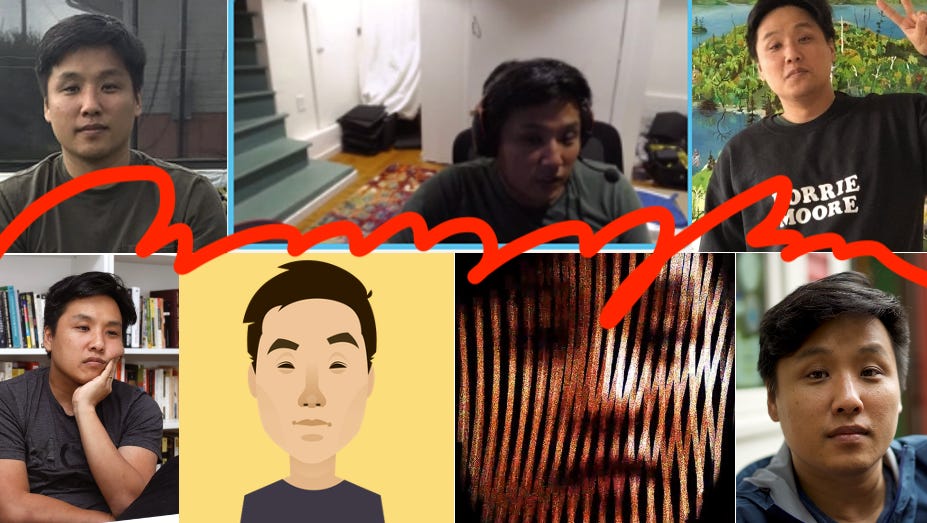
Note: Apologies for resending + reposting; some technical errors earlier.Hi from TMZ studio!Like all of Asian American Twitter, we’ve been talking about The Loneliest Americans quite a bit. But this week, Andy and Tammy get a full-on, personal Jay AMA.Thanks to all our new listeners and everyone who joined our Discord subscriber book club last week.Event announcement:Next week, on November 3rd, Andy will be giving a talk at NYU’s Skirball Center (via Zoom), in conversation with Prof. Charmaine Chua of UC-Santa Barbara, Global Studies. He’ll revisit some themes in his “‘Chinese Virus,’ World Market” essay from March 2020 in n+1 — twenty months later, twenty months into the pandemic!We appreciate your support! Please subscribe and stay in touch via Patreon and Substack, email ([email protected]) and Twitter! This is a public episode. If you'd like to discuss this with other subscribers or get access to bonus episodes, visit goodbye.substack.com/subscribe

Kangbook, "umami," Striketober
Hello from the John Deere picket line!This week is, um, eclectic and slightly technologically challenged. Thanks for bearing with us. 4:15 – Jay’s book is out! Thursday evening, Oct. 21, Jay will be doing a Discord AMA about The Loneliest Americans. It’s for subscribers only, so if you want to ask Jay any burning questions about the book, sign up now via Patreon or Substack!7:13 – MSG—we all love it, even though it’s bad for us. Or is it? We discuss a recent piece (short and fun) about the history of the seasoning, the veracity of “Chinese restaurant syndrome,” and MSG’s rebranding as umami. 27:49 – TTSG labor reporter Tammy Kim updates us on “Striketober.” From John Deere to Hollywood to healthcare, we are seeing record unemployment (quitting! switching sectors!) and labor militancy. Tammy is here to break it all down for us. 56:40 – Joe Manchin is holding up the Biden infrastructure bill and gutting our hopes for a livable climate. WTF?!?!Thanks for listening and supporting the pod. Please stay in touch via Patreon and Substack, email ([email protected]) and Twitter! This is a public episode. If you'd like to discuss this with other subscribers or get access to bonus episodes, visit goodbye.substack.com/subscribe
"The Loneliest": Jay's book + Kidneygate
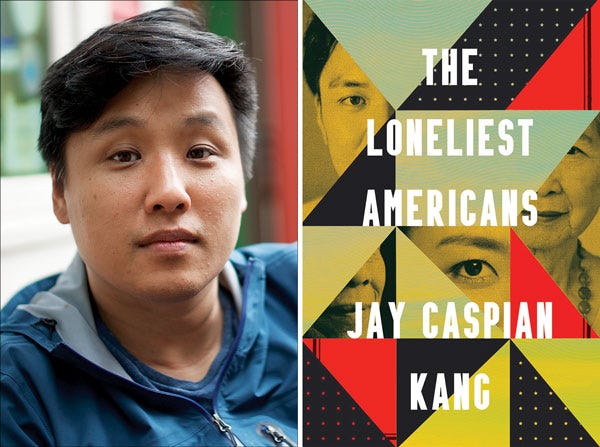
Hello from a spicy group chat!This week, we begin by celebrating the release of Jay’s book, The Loneliest Americans, which was just excerpted in NYT Mag. Congrats, Kang! Order it now for yourself and family and friends! Then, we talk the Kidneygate controversy (from the same issue of NYT Mag) aka Bad Art Friend, the long story based on a short story that launched a million Discord chats. Who’s really “kind”? Is the art any good? Finally, a dip into the cancellation(?) of Bright Sheng, the composer and music professor at the University of Michigan who got in trouble for showing a film featuring blackface in class.Reminder to catch Tammy in conversation with Noam Chomsky tomorrow, Wednesday, October 13:Thanks for supporting the pod. Please stay in touch via Patreon and Substack, email ([email protected]) and Twitter!Kindly,The TTSG Podsquad This is a public episode. If you'd like to discuss this with other subscribers or get access to bonus episodes, visit goodbye.substack.com/subscribe
"Squid Game:" Some of us are not horses.
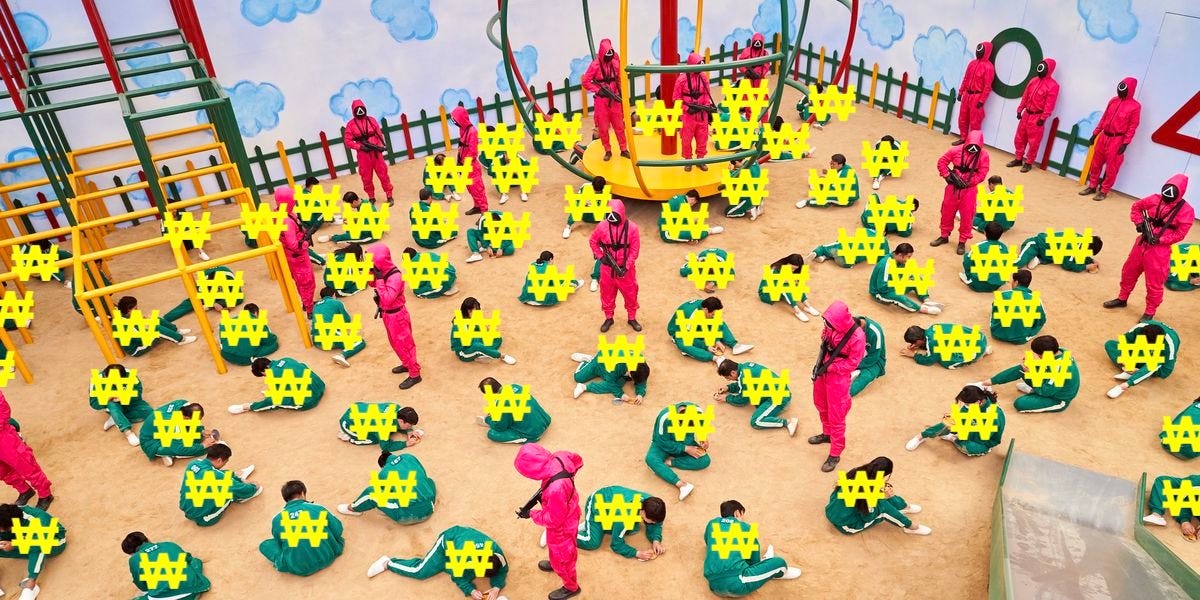
Hello from Capitalist Playground of Death!This week, we talk 100% “Squid Game.” Warning: Don’t listen until you’ve watched it all.Does the show constitute anti-capitalist critique? Why does the ending suck? Did Park Chan-wook make the West permanently love K-horror? Will Asian art soon displace Asian American art? What’s with the weird ‘noble savage’ thing going on in the show?Plus: the dialogue genius in “The Wire”’s writers’ room, fantasy basketball, Gary Shteyngart (i.e., three Asian Americans trashing neoliberalism), and solidarity with subtitle translators. Thanks for supporting the pod. Please stay in touch via Patreon and Substack, email ([email protected]) and Twitter! This is a public episode. If you'd like to discuss this with other subscribers or get access to bonus episodes, visit goodbye.substack.com/subscribe